Kielten vaihtaminen – Les Paul -tyyliset kitarat

Kuvat: Miloš Berka

****

Kielten vaihtamiseen tarvitaan Les Paul -tyylisessä kitarassa kielisatsin lisäksi terävän leikkurin, viritysmittarin ja kitarajohdon. Halpa muovikamppi nopeuttaa virityskoneiston kääntämistä.

Metalliviivoittimella taas mitataan ennen kuin aloittaa kielten korkeus 12:n nauhan kohdalla. Mittaamisen ansiosta kitaran säätäminen soittokuntoon helpoittuu huomattavasti, esimerkiksi jos on jouduttu poistamaan talla.

****

Pidän minun 80-luvun Les Paul Juniorissa kielet pujotettuna kieltenpitimeen edestä vintage-tyylisesti. Seurauksena on hieman pehmeämpi tatsi.

Tällä tavalla Les Paul -tyyliset kitarat nykyään kielitään, mikä näyttää siistimmältä. Molemmat tavat ovat ”sallittuja” – valitse omasi.

****
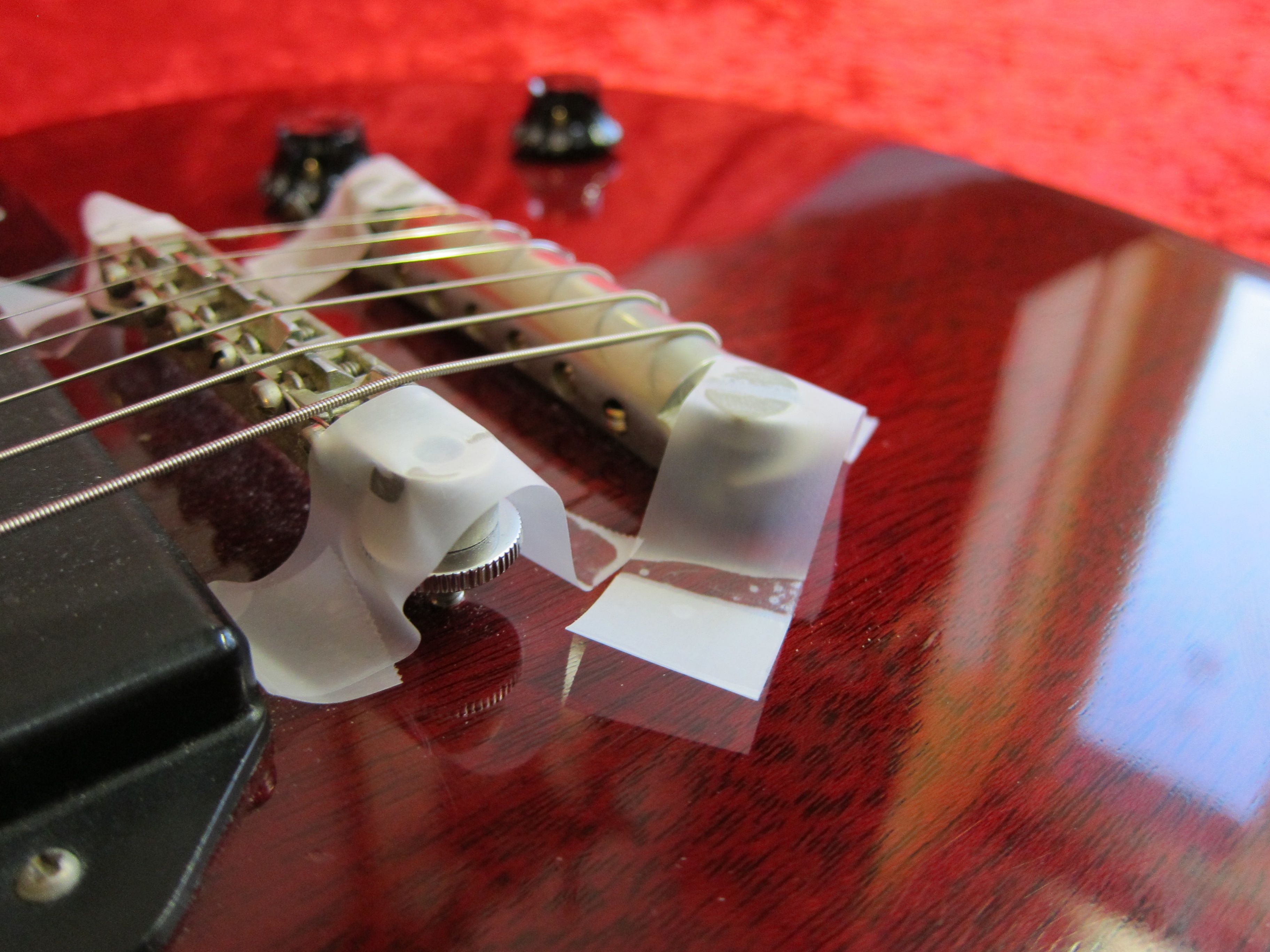
Teippaan sekä tallan että kieltenpitimen kiinni kitaran kanteen, koska ilman kielten vetoa ne lähtevät helposti irti, mikä voi kieltenvaihdon yhteydessä vahingoittaa kitaran runkoa. Älä missään nimessä käytä sellaista teippiä, joka jättää ikävät (ja usein ikuisetkin) jäljet kitaran lakkaukseen (esim. ilmastointi teippi). Samasta syystä on myös viisasta irrottaa teipit heti kuin kielet on vaihdettu.

Jos kitarasi on uudempi Epiphone tai se on varustettu Tone Pros -metalliosilla teippaamisen ei tarvitse, koska sekä talla että kieltenpidin ovat kiinni tolpissaan.

****
Mielestäni on helpointa ottaa ensin kaikki kielet pois.

****
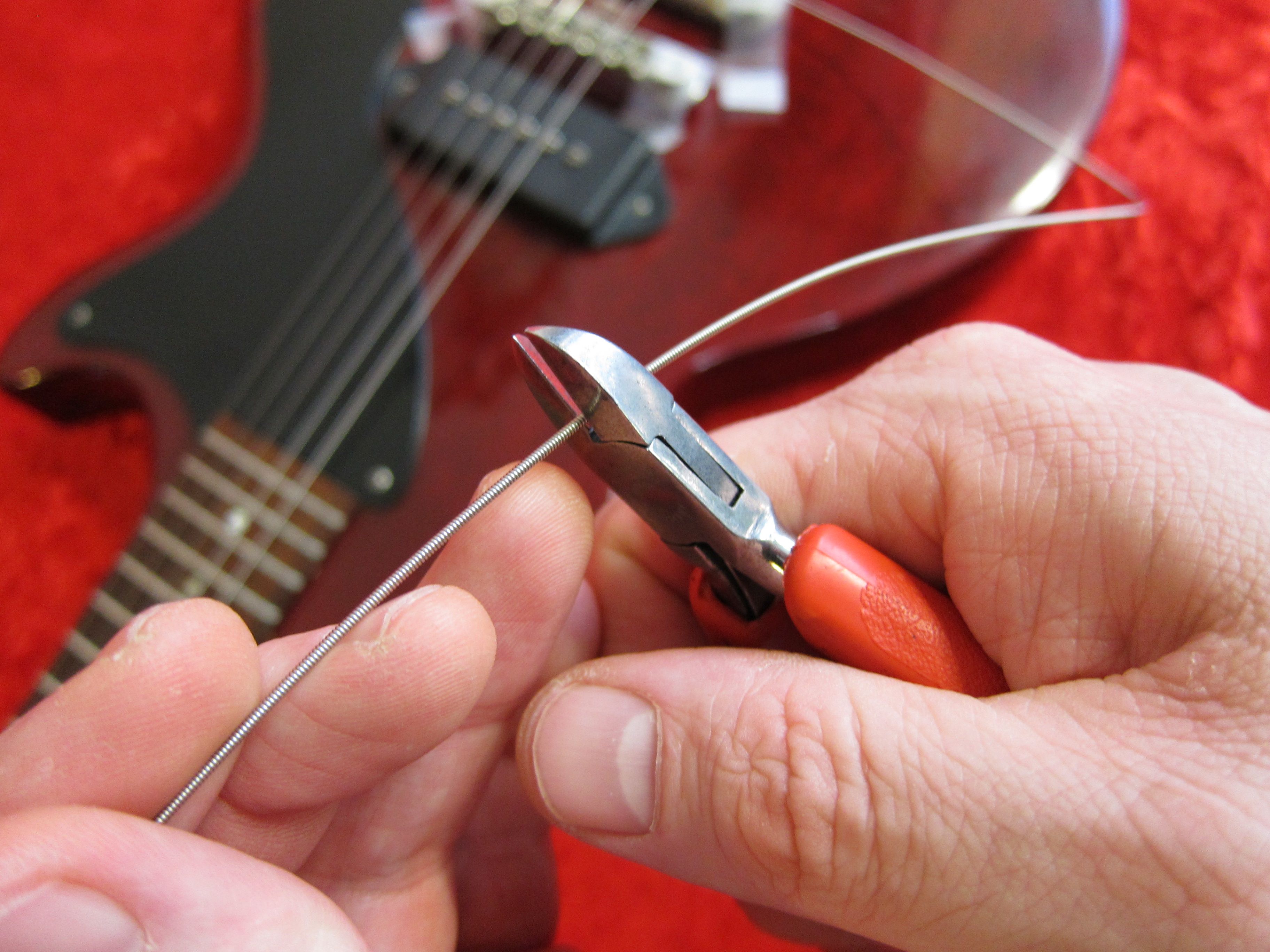
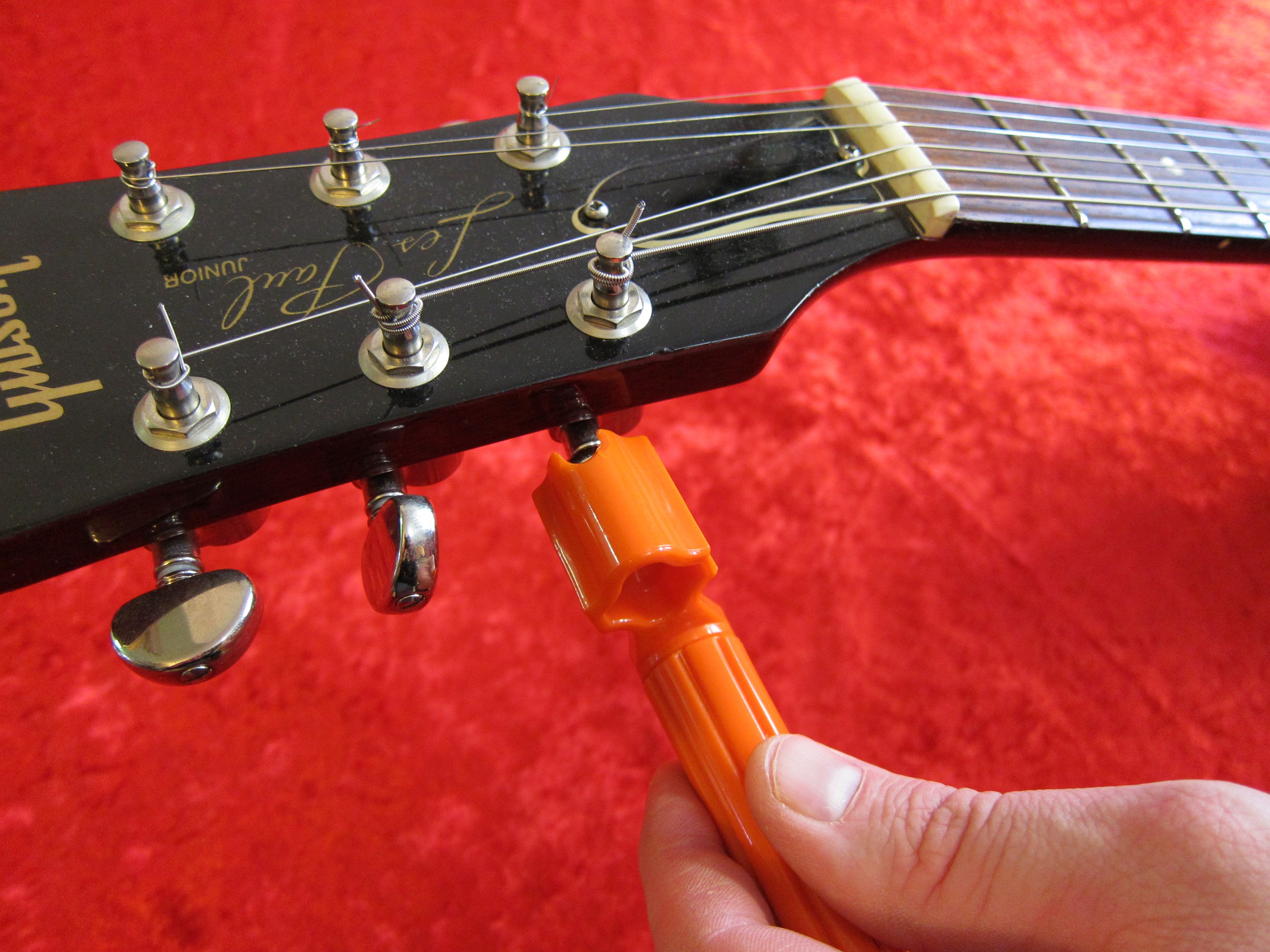
Kun poistaa ensin virittimen aiheuttama kierre, kielen voi vetää kieltenpitimen läpi ilman turhaa kitkaa.

****

Työnnän kielen kieltenpitimen läpi.

****

Alun perin Juniorini oli varustettu Grover minivirittimillä, mutta vaihdoin vanhat Schaller M6-Vintage -virittimiin muutama vuosi sitten.

****
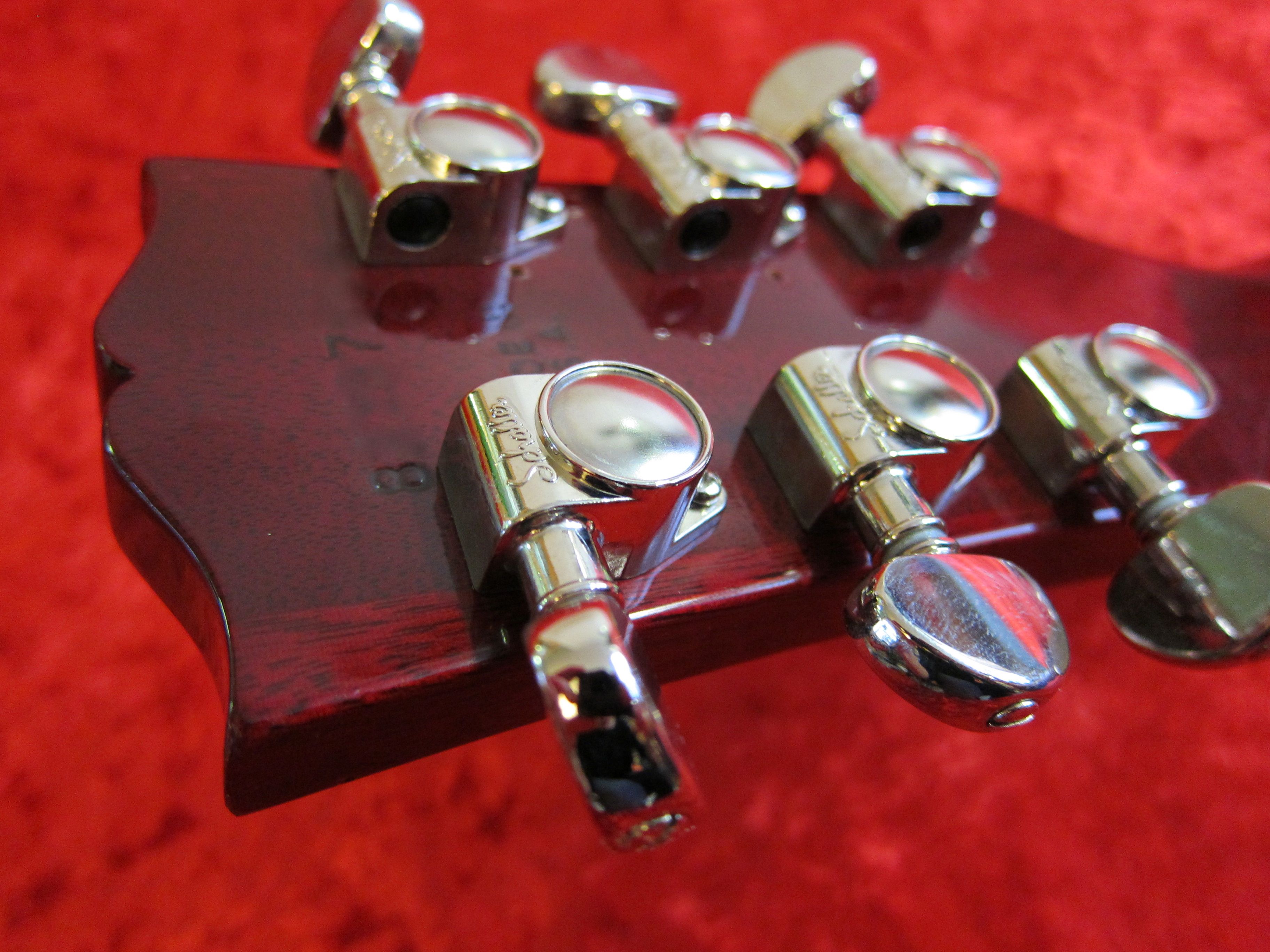
Suljetut virittimet ovat käytännössä huoltovapaita. Niiden tuntuma voi säätää nupin keskellä olevalla ruuvilla.

****
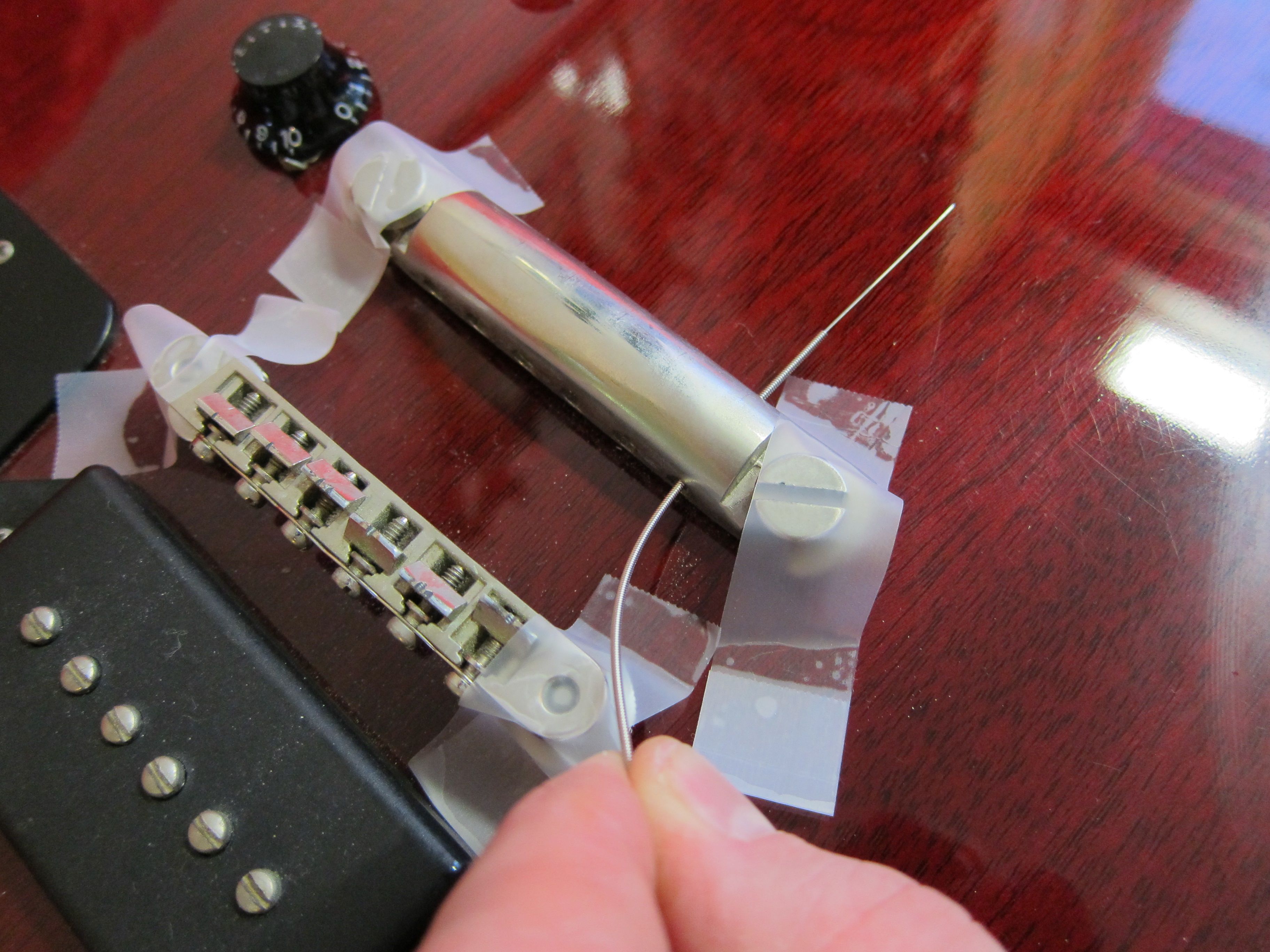
Minä suosittelen että aloitat uusien kielten laittamisen ”alhaalta” (lähellä satulaa) ja etenet pareissa (E-e, A-h, D-g).

Uusi kieli pujotetaan kokonaan kieltenpitimen läpi. Vasta kuin ball-end-rengas on turvallisesti paikoillaan kieli vedetään tallan yli kohti viritinlapa.

****
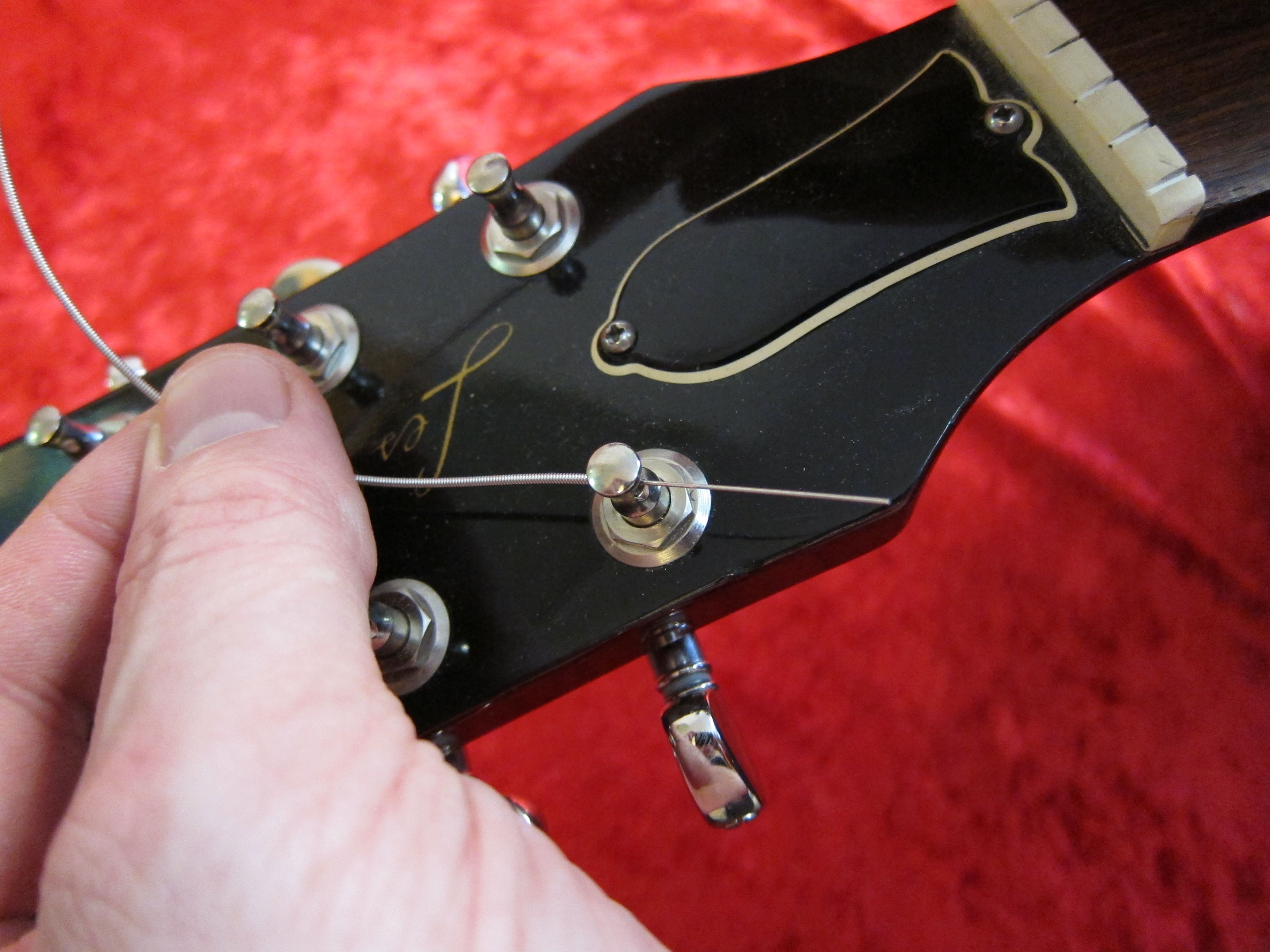
Kieli työnnetään virittimen läpi…
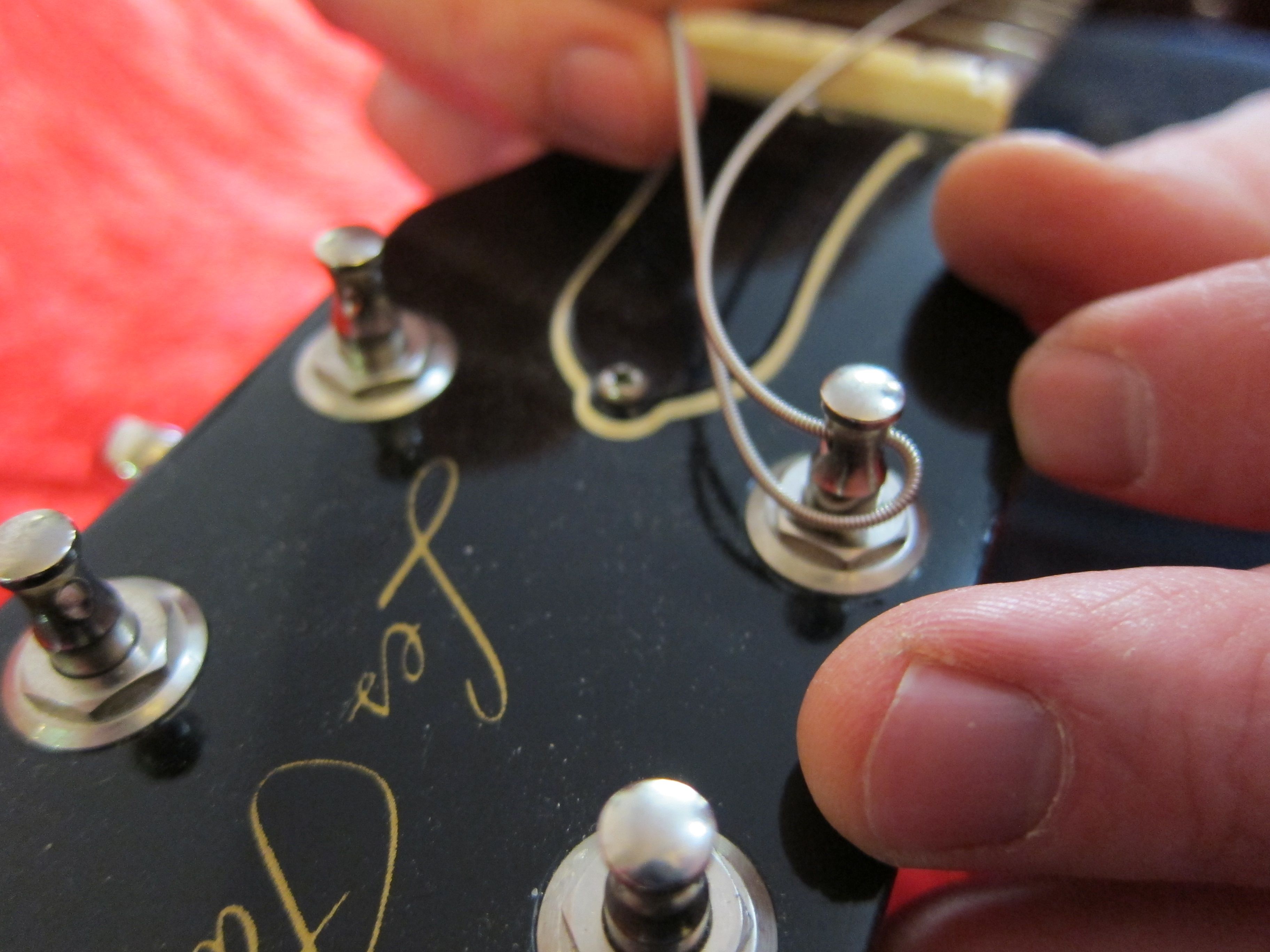
…vedetään viritintapin ympäri…
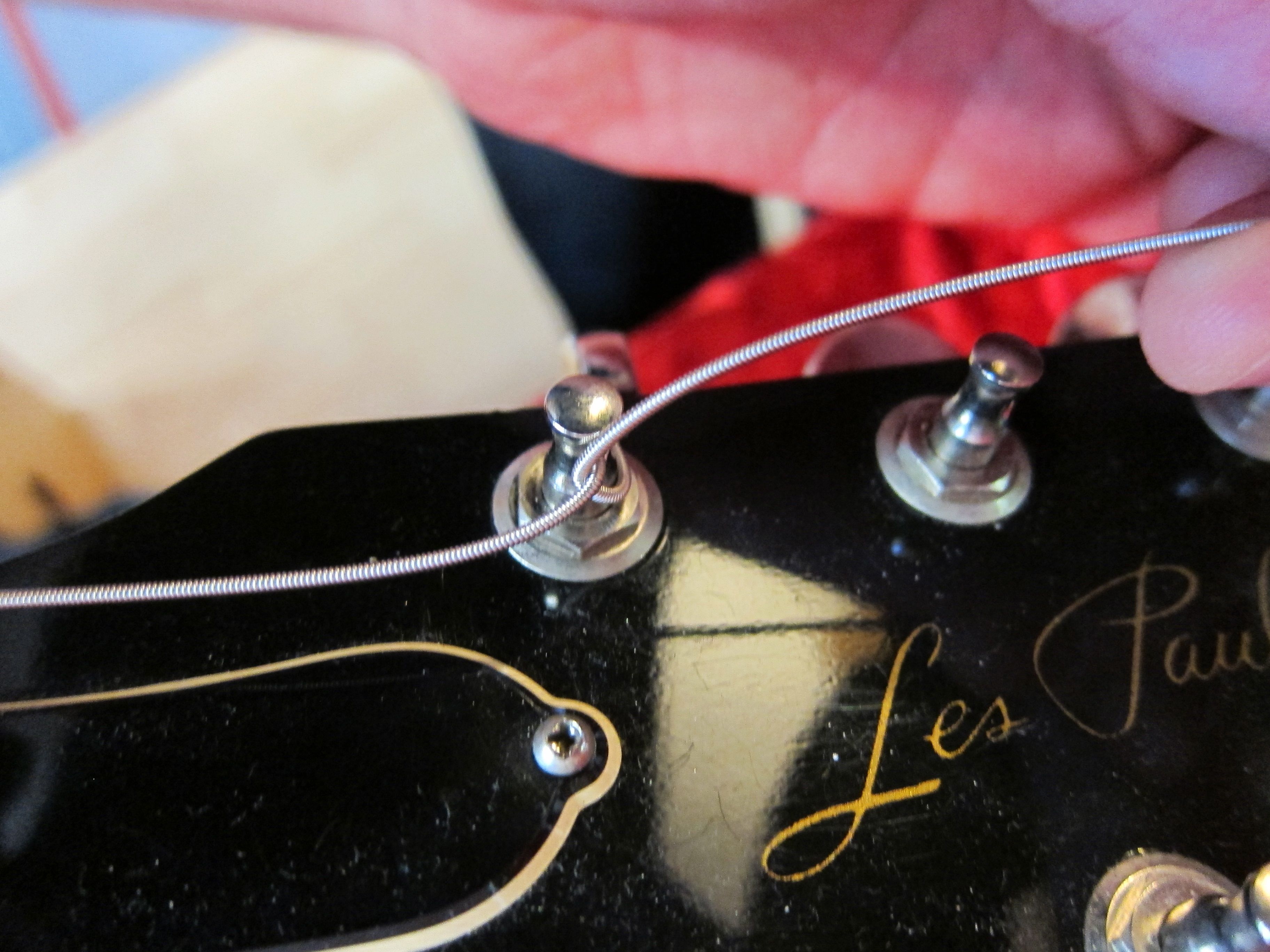
…ja lukitaan paikoilleen vetämällä sitä kohti kitaran logoa.

****

Yksi käsi painaa kielen alas, kun toinen kiertää sen kireäksi. Kielen pitää kiertää tapin ympäri ylhäältä yhä alemmas.

****
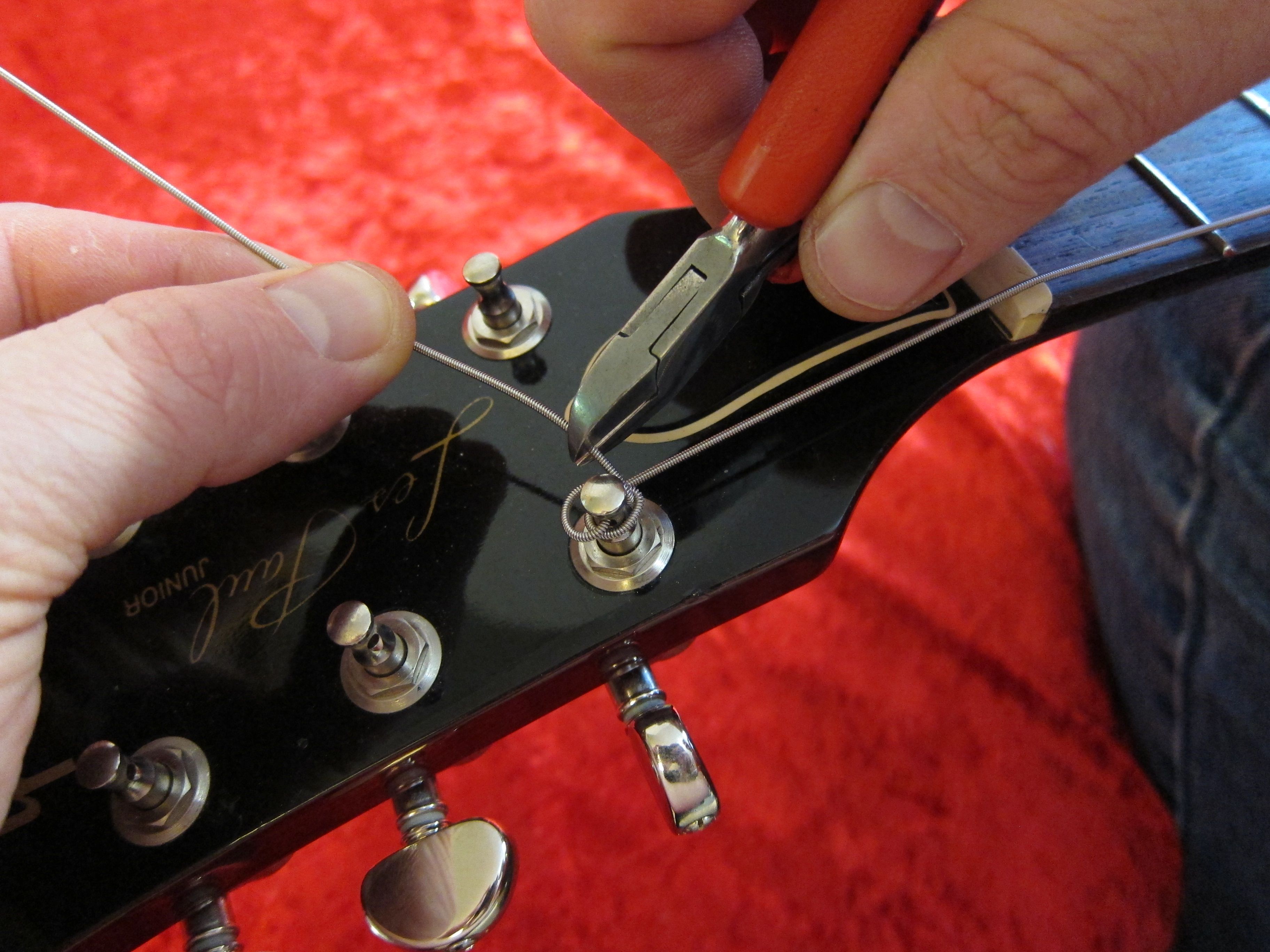
Suosittelen ylijäävän palan poistamista katkaisemalla sitä lähellä viritintappia. Sen jälkeen taivutan varovaisesti kielitynkän hieman kohti lapaa. Ole varovainen, katkaistu kieli on hyvin terävä!

****

Jos kaikki meni suunnitelman mukaan, näyttää uusi ala-E tältä.

****

Kielet pitävät virettä nopeammin, jos niitä venytetään ensimmäisten viritysten yhteydessä: ensin viritetään, sitten venytetään…neljän-viiden kerran jälkeen viritys pitäisi alkaa asettua.

Otekäsi pitää kielen alhaalla venymisen yhteydessä, jottei satulaan kohdistaisi liikkaa rasitusta.

Kun kitara on viritetty voidaan mitata uusien kielten korkeus 12:n nauhan yllä. Tarvittaessa säädetään kielten korkeutta nostamalla tallaa (tai laskemalla sitä).

****

Viimeinen vaihe on intonaation tarkistus ja (jos on tarve) säätäminen. Intonaatiota tarkistetaan kitara sylissä soittamalla ensin avoimen kielen (tai kielen huiluääntä 12:n nauhan kohdalla) ja sen jälkeen kieli painettua alas 12:n nauhalla.

Jos alaspainetun kielen sävel on matalampi kuin tavoitettu sävel, tallapalan täyttyy säättää lähemmäksi tallamikrofonia. Tämän jälkeen viritetään uudestaan ja tarkistetaan intonaatiota uudestaan.

Jos alaspainetun kielen sävel on korkeampi kuin tavoitettu sävel, tallapalan täyttyy säättää tallamikrofonista poispäin. Tämän jälkeen viritetään uudestaan ja tarkistetaan intonaatiota uudestaan.

PS: Vanhoissa kitaroissa tune-o-matic-talla voi istua hieman löysästi tolppien päällä. Itse joudun kieltenvaihdon jälkeen aina työntämään tallan bassopuoli varovaisesti kieltenpitimeen suuntaan. Vaikka kyse on vain todella pienestä virheasennosta, seikka vaikuttaa tuntuvasti kitaran intonaatioon!

***

Changing strings – Les Paul -type guitars

Photos: Miloš Berka

****

Here’s what you need:

A pack of strings, a wire cutter, a tuner and a guitar lead. A cheap plastic crank speeds up the whole process of string winding.

A metal ruler comes in handy for measuring the action at the 12th fret before you start. If you take down these measurements it will be easy to readjust your guitar’s action, if you’ve taken off the guitar’s hardware, for example.

****

I keep my 1980s Les Paul Junior strung in the old-school way, with the strings going over the stopbar. This approach gives you a slightly looser feel.

This is how Les Paul -type guitars are usually strung these days, which looks cleaner and neater. Both approaches are valid – take your choice.

****

I use sticky tape to secure the tune-o-matic bridge and stopbar to the body to prevent them from falling off and damaging the guitar. Don’t use adhesives that could mark your guitar, like duct tape, and don’t keep the tape on the guitar for longer than it takes to change strings, if you don’t want to leave (possibly permanent) marks on your finish.

If you own a recent Epiphone guitar, or your guitar is equipped with Tone Pros hardware, the tape is not needed. In these cases the hardware is already fixed to their posts.

****

It’s easiest, in my opinion, to take off all strings once.

****

The old strings are much easier to pull out of the stopbar, once you’ve snipped off the coiled end that was formed by the tuner post.

****

Here I’m pushing the old string through the stopbar.

****

My Junior was equipped originally with Grover Minis, which I replaced with Schaller M6-Vintage tuners a few years ago.

****

Sealed tuners are practically maintenance-free. You can adjust their feel with the small screw at the tip of the tuner buttons.

****

I’d recommend you work your way up from the wrist of the headstock and work in pairs: first E-e, then A-b, and lastly D-g.

Pull the new string all the way through the stopbar, and only pull it over the bridge, once the string’s ball-end is in place inside the stopbar.

****

Insert the string…

…pull it around the post…

…and lock the string in by pulling it up away from the body.

****

Keep the string pressed downwards, while you’re turning the crank. Each new winding should pass under the one before it.

****

I’d recommend cutting off the surplus string in close proximity to the tuning post. Then I bend the stub down towards the headstock face. Be careful, a cut off string is very sharp!

****

If everything went according to plan this is how the new low E-string should look in the tuner.

****

Getting new strings to stay in tune is a much faster process, if you stretch each string carefully. It works like this: First you tune to pitch, then you stretch each string, and retune again. Once you’ve repeated this process four to five times, you should be ready to go.

Your fretting hand should hold down the string you’re stretching at the first or second fret to avoid damage to the top nut.

Once the guitar is in tune you should check the string action at the 12th fret and compare it with the values measured with the old string set. Raise (or lower) the bridge as needed.

****

The last stage should be checking and resetting the guitar’s intonation. Always check your intonation with the guitar in playing position, by comparing the correctly tuned open string (or its 12th fret harmonic) to the fretted pitch at the 12th fret.

If the fretted note is flat (its pitch too low), you need to adjust the bridge saddle closer to the bridge pickup. Give the screw a few turns, then retune and check again. Repeat if necessary.

If the fretted note is sharp (its pitch too high), you need to adjust the bridge saddle further away from the bridge pickup. Give the screw a few turns, then retune and check again. Repeat if necessary.

PS: On older guitars the tune-o-matic-bridge’s bridge post holes may be worn. After a string change, I always have to give the bridge’s bass side a little push towards the stopbar to get it back into its correct position on my Junior. The actual difference in terms of millimeters is only incremental, but it does make a discernible difference to the guitar’s intonation!

***

Ace Frehley ”Budokan” Lespat tulossa!

Kiss-yhtiön alkuperäinen kitaristi Ace Frehley on saanut uudet nimikkomallit sekä Gibsonilta että Epiphonelta.

Gibson-malli tulee markkinnoille kolmena eri versioina:

• 50 relicoitua kitaraa Acen allekirjoituksella varustettuna

• 100 reilcoitua kitaraa ilman allekirjoitusta

• 150 VOS-mallia

Gibson ”Budokan” -malli on tarkka jäljitelmä vuoden 1974 LP Custom mallista: runko on rakennettu kahdesta mahonkikerroksista, vaahterakansi on kolmiosainen, samoin mahonkikaula. Kitaraan on asennettu kolme DiMarzio-humbuckeria, joista kaksi (kaula- ja keskimikki) ovat PAF-tyyppiä, kun taas tallamikrofoni on DiMarzion Super Distortion.

****

Epiphone ”Budokan” -malli on speksiltään aika lähellä USA-mallia, ja viritinlavan muodon lisäksi ainoa suurempi ero on perinteinen, paksuista mahonkilankuista tehty rungon takaosa. Kapea kaulaprofiili on kopioitu suoraan alkuperäisestä mallista ja mikrofonivarustus on sama kuin Budokan-Gibsonissa – kaksi DiMarzio PAFia sekä Super Distortion -tallahumbuckeri.

****

Maahantuoja: Into-Luthman

Changing strings – vintage-style Stratocaster

Photos: Miloš Berka

****

Here’s what you need:

A pack of strings, a wire cutter, a tuner and a guitar lead. A cheap plastic crank speeds up the whole process of string winding.

A metal ruler comes in handy for measuring the vibrato’s tip-up (the distance between the back of the baseplate and the face of the guitar), as well as the action at the 12th fret before you start. If you take down these measurements it will be easy to readjust your guitar’s vibrato and action, should the need arise, due to the new string set differing in gauge compared to the old set.

****

It’s easiest, in my opinion, to take off all of a Strat’s strings once.

****

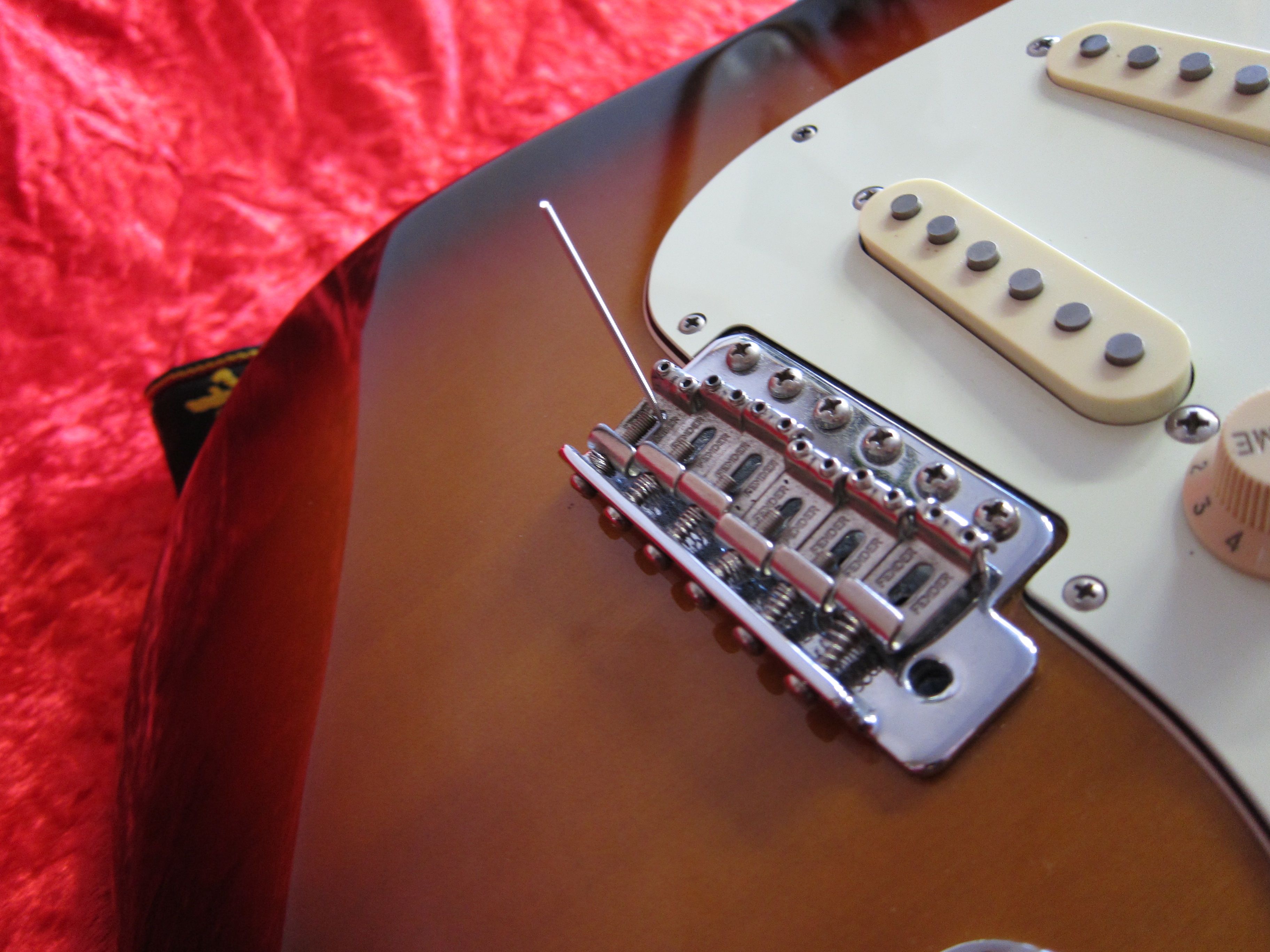
The old strings are much easier to pull out of the vibrato block, once you’ve snipped off the coiled end that was formed by the tuner post.

****

And out the string comes…

****

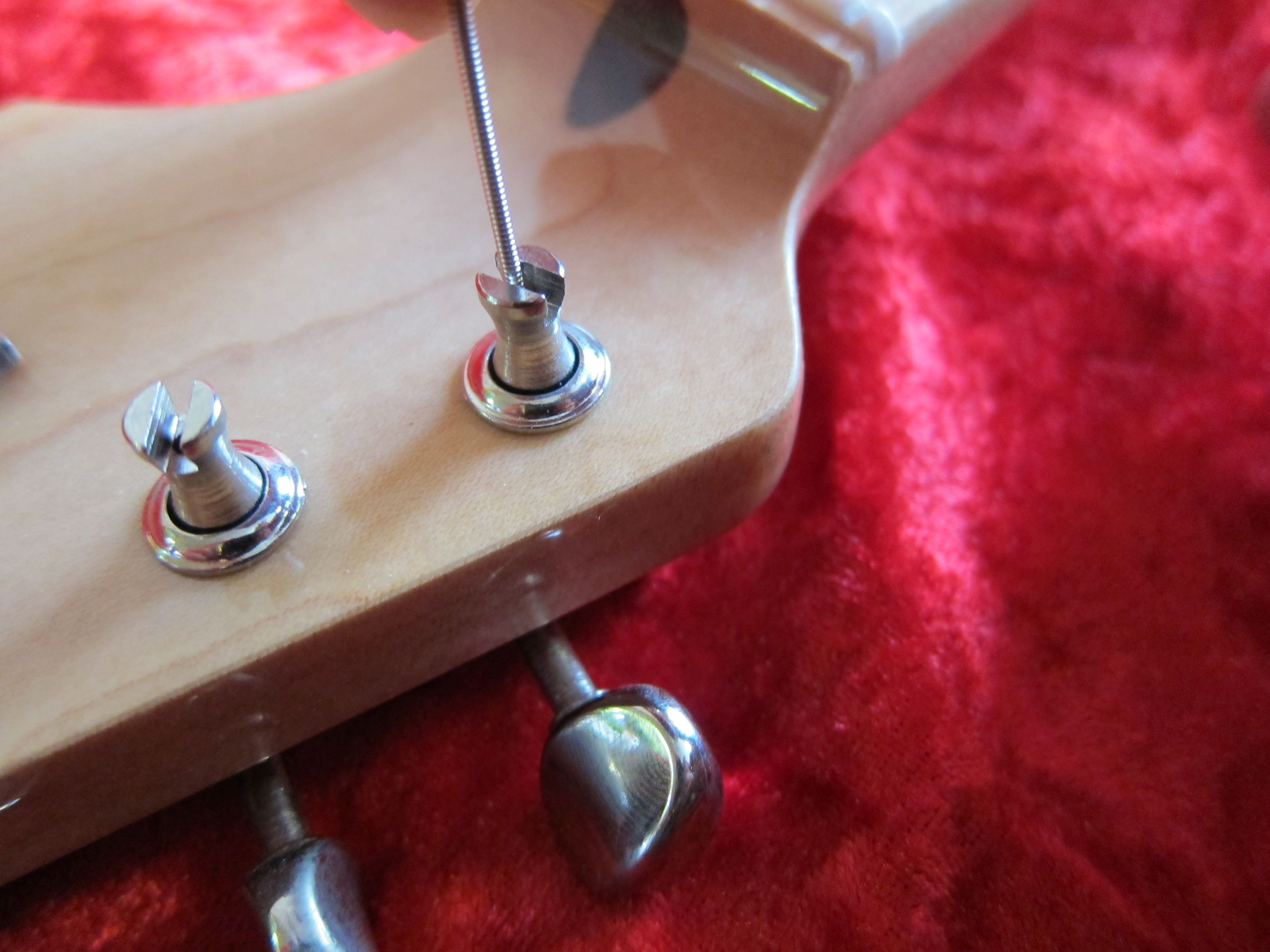
On vintage-style Stratocasters the tuners are copies of old Kluson-machines, which feature a well inside the tuner post for the string to go in.

****

It’s a good idea to check the tuners for loose fixing screws, and tighten them carefully, if necessary. Slightly stiff tuners benefit from a drop of oil, applied via the small hole in the tuner’s back cover.

****

I recommend starting with the low E-string, working your way up. This way offers you slightly more manoeuvering space on the headstock than doing it the other way around.

The new string is fed into the vibrato block and through the vibrato’s base plate. Pull the string up first in a straight line away from the body, until you feel the ball-end hitting the top of the vibrato block, before pulling the string towards its tuner.

If you pull the string carelessly through the vibrato block, pulling it towards the tuner before the ball-end has travelled fully through the block, you can easily end up with a kink in the brand-new string, which may well cause breakage, possibly already during the first tune-up.

****

Because of the handy hole in the tuner post, you won’t need the full length of string. Shorten it, by cutting it off at about the second next tuner post (in this case at the D-string’s tuner). Be careful, cutting through a string may cause it to jump at you. The cut-off point is very sharp, so mind your eyes!

****

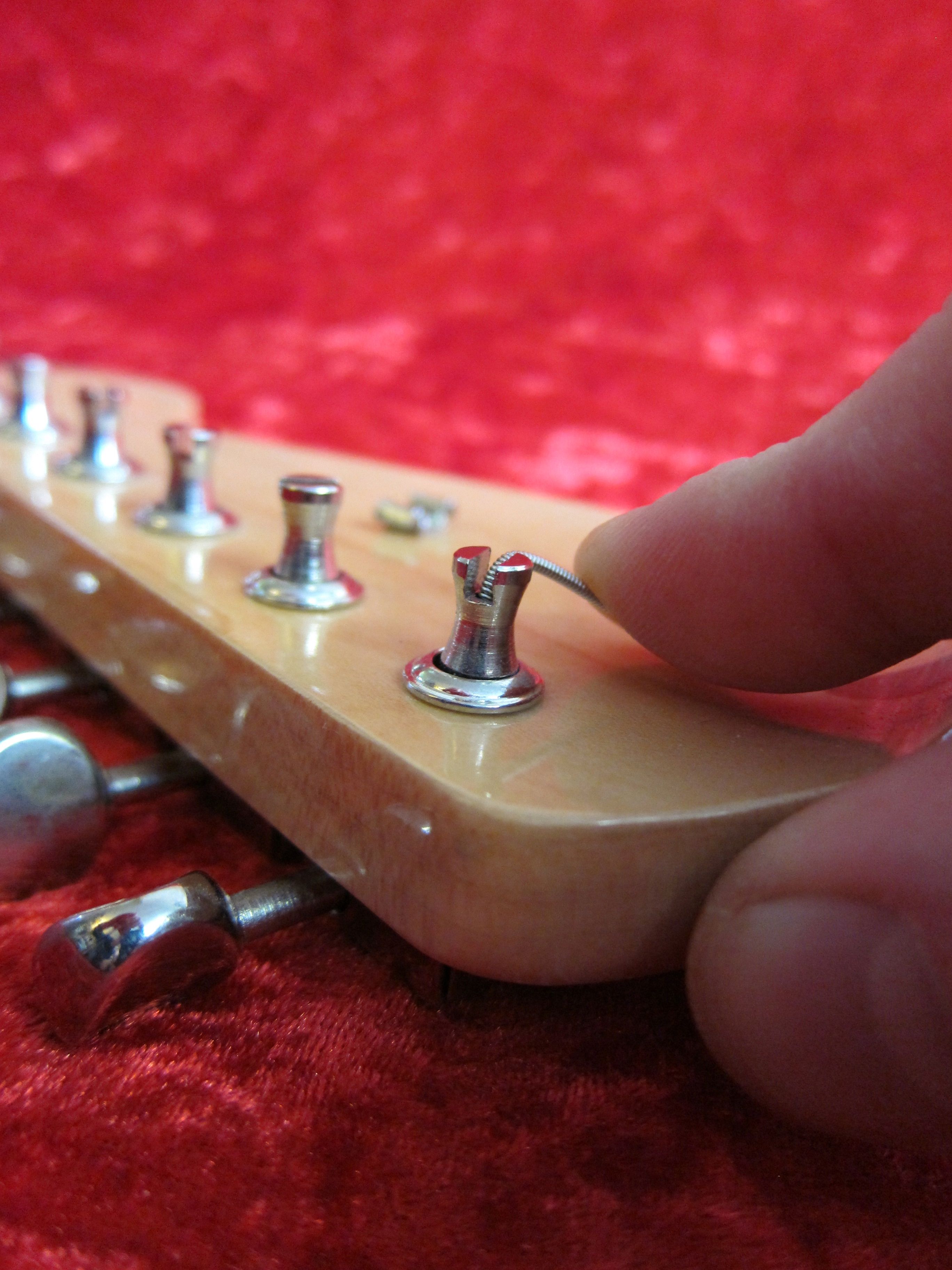
Feed the start of the new string all the way into the tuner post…

…then bend it towards the headstock, once it’s in.

****

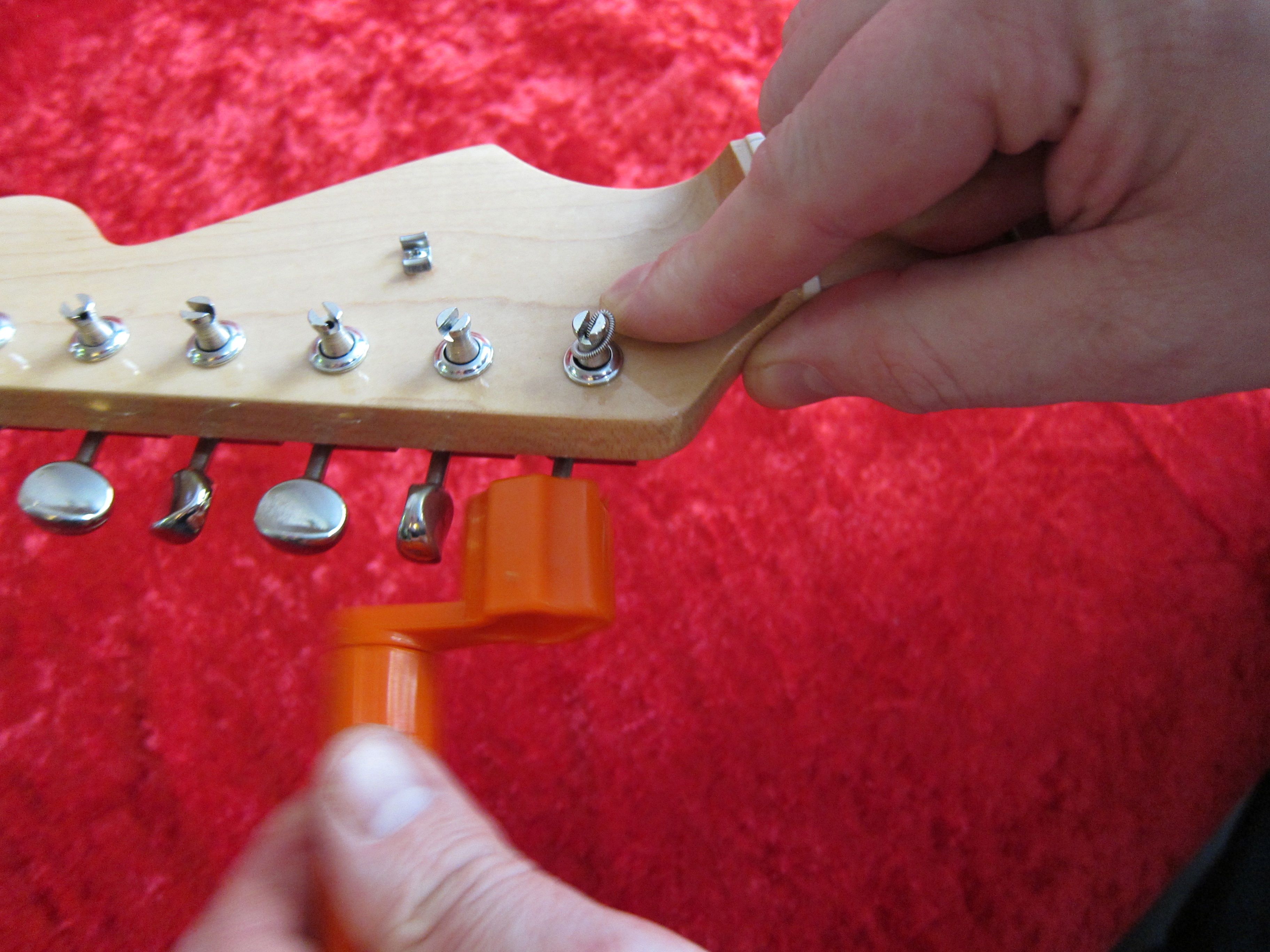
Keep the string pressed downwards, while you’re turning the crank. Each new winding should pass under the one before it.

****

Note that the bridge saddles on a vintage-type Strat feature no groove for string alignment. You can check the correct alignment by looking at the middle pickup. Each string should pass over its magnet approximately through the middle.

Realigning a string is much easier, if you remember to tune down a few turns before pushing the string over the saddle’s surface.

****

Getting new strings to stay in tune is a much faster process, if you stretch each string carefully. It works like this: First you tune to pitch, then you stretch each string, and retune again. Once you’ve repeated this process four to five times, you should be ready to go (a floating vibrato may need a few tugs and retunings more).

Your fretting hand should hold down the string you’re stretching at the first or second fret to avoid damage to the top nut.

Once the guitar is in tune you should check the tip-up of the bridge and the string action at the 12th fret and compare it with the values measured with the old string set. Adjust the tip-up first by changing the position of the spring claw inside the back compartment, before adjusting the action via the bridge saddles’ adjustment screws.

****

The last stage should be checking and resetting the guitar’s intonation. Always check your intonation with the guitar in playing position, by comparing the correctly tuned open string (or its 12th fret harmonic) to the fretted pitch at the 12th fret.

If the fretted note is flat (its pitch too low), you need to adjust the bridge saddle closer to the bridge pickup. Give the screw a few turns, then retune and check again. Repeat if necessary.

If the fretted note is sharp (its pitch too high), you need to adjust the bridge saddle further away from the bridge pickup. Give the screw a few turns, then retune and check again. Repeat if necessary.

***

Kielten vaihtaminen – vintage-tyylinen Stratocaster

Kuvat: Miloš Berka

****

Kielten vaihtamiseen tarvitaan vintage-tyylisessä Stratocasterissa kielisatsin lisäksi terävän leikkurin, viritysmittarin ja kitarajohdon. Halpa muovikamppi nopeuttaa virityskoneiston kääntämistä.

Metalliviivoittimella taas mitataan ennen kuin aloittaa vibraton aluslevyn takareunan etäisyyttä runkoon sekä kielten korkeus 12:n nauhan kohdalla. Mittaamisen ansiosta kitaran säätäminen soittokuntoon helpoittuu huomattavasti, silloin kun on vaihdettu kielten paksuutta.

****

Mielestäni Stratossa on helpointa ottaa ensin kaikki kielet pois.

****

Kun poistaa ensin virittimen aiheuttama kierre, kielen voi vetää vibrablokin läpi ilman turhaa kitkaa.

****

Vanha kieli vedetään rungon takaosasta ulos.

****

Vintage-tyylisissä Stratoissa käytetään vanhojen Kluson-virittimien kopiot, joissa on tapin keskellä kanava terävälle kielipäälle.

****

Nyt on hyvä hetki kiristää varovaisesti virittimien kiinnitysruuveja. Jos virittimet ovat hieman jäykistineet voi kotelon reiän läpi lisätä tilkkua öljyä koneistoon.

****

Aloitan aina ala-E-kielestä ja jatkan sitten ylöspäin.

Uusi kieli pujotetaan vibrablokin läpi ja vedetään ensin suoraan poispäin rungon etupuolesta. Vasta kun ball-end-niminen metallirengas on saavuttanut kanavan loppupään, vedetään kieli viritinlavalle.

Jos ball-end-rengas ei ole vielä oikeassa kohdassa uusi kieli taipuu ensin väärästä kohdasta, mikä voi aiheuttaa sen katkeamista viritettäessä.

****

Uusi kieli lyhennetään sopivasti – noin kaksi virittimiä oikean tapin ohi. Varo silmiäsi, kieli voi tulla yllättävästi vastaan! Kielipää on aika terävä!

****

Kielipää upotetaan huolellisesti tapin kanavaan…

…ja kieli taivutetaan lapaa kohti.

****

Yksi käsi painaa kielen alas, kun toinen kiertää sen kireäksi. Kielen pitää kiertää tapin ympäri ylhäältä yhä alemmas.

****

Vintage Straton tallapaloissa ei ole kieltä kohdistava ura. Kun kaikki kielet ovat paikoillaan tasaisen etäisyyden voi tarkistaa keskimikistä. Jokaisen kielen pitäisi mennä kutakuinkin keskimikrofonin magneetin keskikohtaa läpi.

Kun virittää kielen ensin hieman alas, on helpompi työntää sen oikeaan paikkaan.

****

Kielet pitävät virettä nopeammin, jos niitä venytetään ensimmäisten viritysten yhteydessä: ensin viritetään, sitten venytetään…neljän-viiden kerran jälkeen viritys pitäisi alkaa asettua (jos vibra on säädetty kelluvaksi, se voi kestää kauemminkin).

Otekäsi pitää kielen alhaalla venymisen yhteydessä, jottei satulaan kohdistaisi liikkaa rasitusta.

Kun kitara on viritetty voidaan mitata uusien kielten korkeus 12:n nauhan yllä sekä tarkistaa onko tallan asento sama kuin vanhoilla kielillä. Tarvittaessa säädetään ensin vibran aluslevyn korkeutta (kiristimällä tai löystämällä jouset rungon takapuolella). Tämän jälkeen viritetään uudestaan ja säädetään tarvittaessa kielten korkeus uudestaan tallapalojen ruuveilla.

****

Viimeinen vaihe on intonaation tarkistus ja (jos on tarve) säätäminen. Intonaatiota tarkistetaan kitara sylissä soittamalla ensin avoimen kielen (tai kielen huiluääntä 12:n nauhan kohdalla) ja sen jälkeen kieli painettua alas 12:n nauhalla.

Jos alaspainetun kielen sävel on matalampi kuin tavoitettu sävel, tallapalan täyttyy säättää lähemmäksi tallamikrofonia. Tämän jälkeen viritetään uudestaan ja tarkistetaan intonaatiota uudestaan.

Jos alaspainetun kielen sävel on korkeampi kuin tavoitettu sävel, tallapalan täyttyy säättää tallamikrofonista poispäin. Tämän jälkeen viritetään uudestaan ja tarkistetaan intonaatiota uudestaan.

***

Review: Boss BC-2 Combo Drive – English summary

****

The legendary Vox AC30 was the first successful British guitar amplifier.

Originally the 2 x 12 -combo had been designed especially for The Shadows, aiming at a louder and cleaner tone than what their old AC15s could provide. It didn’t take long, though, for experimentally inclined guitarists to realise they could get nicely toasted drive sounds out of the amp, especially when using a distortion- or treble booster -pedal in front of the combo.

In addition to the Shadows, famous AC30-users are (or have been) The Beatles, The Kinks, Queen, Bryan Adams, Tom Petty and U2’s The Edge.

The famous combo’s greatest drawback – in its original guise – is the lack of a master volume control, meaning meaty, overdriven tones only could be had at great volume.

Luckily, these days we have the wonders of digital amp modelling at our disposal, which means classic tones without the need for ripping one’s head off.

****

The new Boss BC-2 Combo Drive -pedal (current price in Finland: 106 €) is specialised in producing the whole range of AC30-type sounds. You’re supposed to use it like a regular overdrive pedal in front of your amp or, say, a recording interface. The BC-2 can be run on either a 9 V battery or a regular Boss power supply (not included).

The BC-2 is very easy to use. The Sound-control works similarly to a distortion pedal’s gain knob. Next up you’ll find controls for treble and bass, as well as the master volume control, labelled ”Level”.

****

The sound of the digital Boss BC-2 is astonishingly close to the valve-driven original combo.

Clean sounds have the same type of dry mid-range and slight boxiness of the original, along with its clarity and presence bite. Just the ticket for playing British guitar instrumentals:

Shadowy Wonderland – Boss BC-2

U2’s guitar wizard The Edge often uses his AC30s inside their fabulous gray area of slightly roasted sounds, where the guitar sounds almost clean, but breaks up nicely. The BC-2 has no problems in delivering fine examples of these types of tones:

Proud Echoes – Boss BC-2

Turning the Sound knob all the way up gives you the legendary tones of Queen’s Brian May in all their throaty and creamy glory. Boss have managed to build in both the extra amount of gain produced by a virtual overdrive plugged into the virtual amp, as well as the resonance of an AC30’s cabinet running at full tilt. Here’s what I came up with using only a maple-necked Fender Stratocaster, the BC-2 and a sprinkling of reverb from the sequencer:

The Queen’s Pomp – Boss BC-2

My tests really left nothing to be desired – the Boss BC-2 is a very satisfying pedal for seekers AC30-style tones.

****

Boss BC-2 Combo Drive

106 €

Finnish distributor: Roland Scandinavia

****

Pros

+ small size

+ tones

+ flexibility

+ price

****

Testipenkissä: Boss BC-2 Combo Drive

****

Englantilainen Vox AC30 on legendaarinen kombovahvistin, ja ensimmäinen menestyksekäs brittivahvistin.

Alun perin kombo oli sunnitteltu The Shadowsia varten, ja tarkoitus oli tuottaa mahdollisimman kovaääninen ja puhdas rautalankasoundi. Kitaristit kuitenkin huomasivat hyvin pian, että mallista saa myös mahtavia puolilikaisia soundeja, sekä treble-boosterin (tai säröpedaalin) kanssa myös varsin maukkaita, tiheitä särösoundeja.

Käyttäjäkaartiin kuuluvat The Shadowsin lisäksi esimerkiksi The Beatles, The Kinks, Queen, Bryan Adams, Tom Petty ja U2:n The Edge.

Vanhojen AC30-kombojen suurin ongelma oli, ettei vahvistimessa ollut master volume -säädintä, minkä seurauksena vahvistimen omat säröt sai esiin vain todella kovilla volyymeillä.

Onneksi meillä on tänä päivänä digitaalinen mallinnusteknologia, jolla legendaarisien vahvistimien soundeihin pääsee käsiksi helposti ja korvia särkemättä.

****

Upouusi Boss BC-2 Combo Drive (106 €) on erikoistunut AC30-tyylisiin soundeihin. Pedaali kytketään tavallisen kitaraefektin tavoin vahvistimen tuloon (tai tietokoneen äänikorttiin). Pedaali toimii joko 9 V -paristolla tai virtalähteellä (ei kuulu hintaan).

BC-2:n käyttö on erittäin helppoa. Sound-säädin vastaa käytännössä säröpedaalin gain-säädintä. Sen jälkeen on tarjolla kaksikaistainen EQ-osasto, ja signaalitien lopussa on volume-säädin nimeltään Level.

****

Digitaalisen Boss BC-2:n soundi on ällistyttävän lähellä legendaarista putkikäyttöistä esikuvaansa.

Puhtaissa soundeissa on se alkuperäisestä kombosta tuttu keskialueen kuivuus ja laatikkomaisuus, sekä diskantin maukas ja hieman rouhea purevuus. Juuri tämä soundi on aidon brittirautalangan peruspilari:

Kaunis varjojen maa – Boss BC-2

U2-yhtyeen kitaristi The Edge käyttää usein AC30:n laajaa ”harmaata” breakup-aluetta, jossa kitarasoundi ei ole enää täysin puhdas, vaan kevyt särö maustaa signaalin juuri tälle vahvistimelle tunnusomaisella rapeudella. Nämäkin soundit saa BC-2:sta kuulolle helposti ja yllättävän autenttisesti:

Ylpeys ja toistot – Boss BC-2

Kun vääntää Sound-säädintä vielä enemmän auki, esillä astuvat yhä maukkaampia särösoundeja. Kasvavalla gain-määrällä myös esikuvan tuttu laulava nasaalisuus nousee hienosti esiin. Boss on nimittäin mallintanut myös AC30:n avoimen kaapin tuoman lisävärin taitavasti BC-2:ssa. Pedaalin Drive-soundeja voi käyttää esimerkiksi rakentaakseen Brian May -tyylisiä kitarasymfonioitat:

Kuningattaren loisto – Boss BC-2

Kokeilujeni perusteella voin vain todeta, että Boss BC-2 on mielestäni erittäin onnistunut pedaali AC30-soundeja kaipaavalle.

****

Boss BC-2 Combo Drive

106 €

Maahantuoja: Roland Scandinavia

****

Plussat

+ pieni koko

+ soundi

+ monipuolisuus

+ hinta

****

Pidä blogia WordPress.comissa.

Ylös ↑