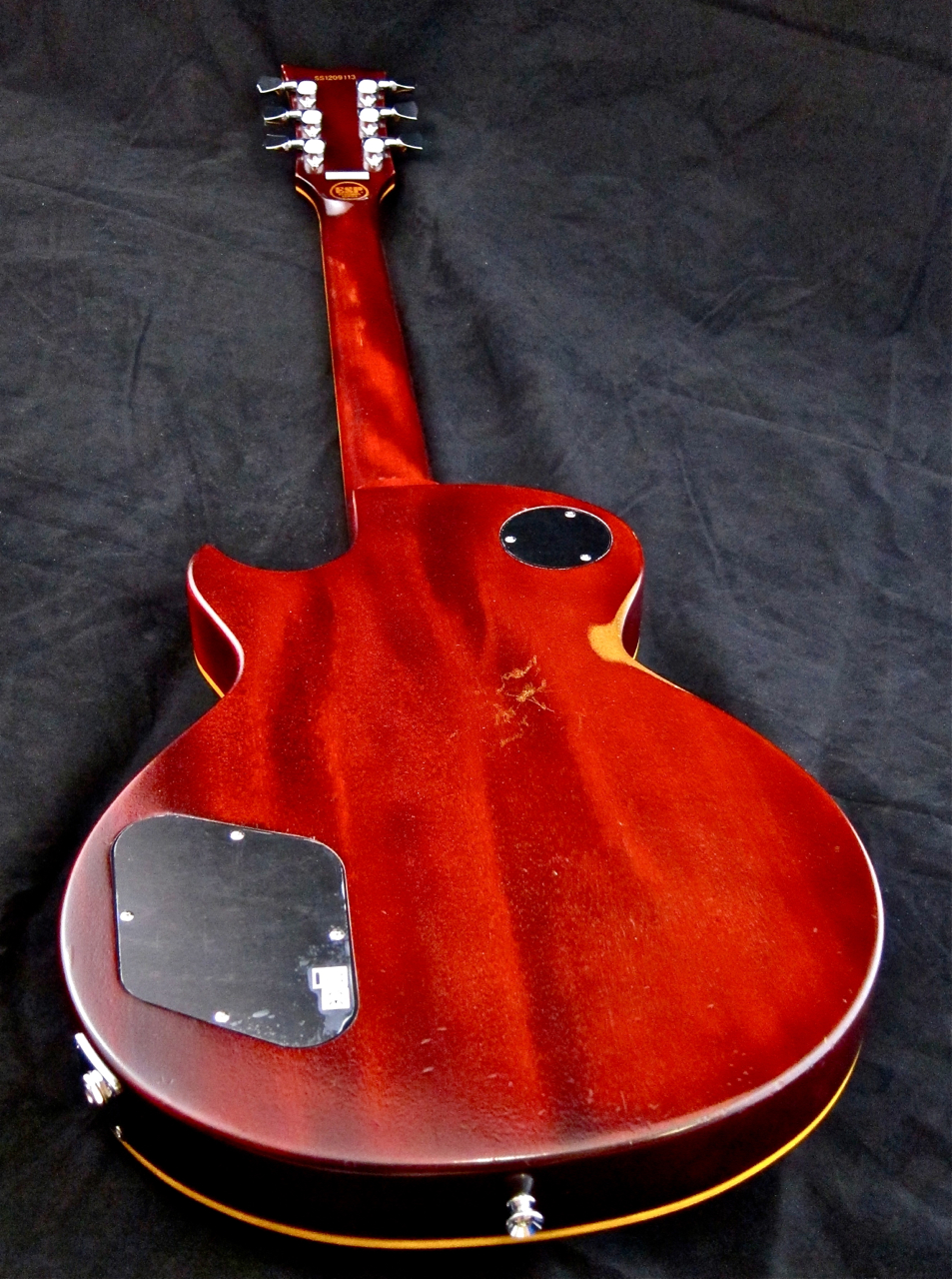
Classic Guitars, part 10: PRS Custom 24

In the mid-Seventies both of the guitar industry’s giants – Fender and Gibson – had lost their innovative edge and much of their corporate prestige. Both companies had been taken over by large corporations, and profit margins started to push quality control into the background.

Many discerning guitarists were starting to subscribe to the notion of ”They’re not making ’em like they used to”, which left the doors wide open to Far Eastern copy guitars, as well as to small boutique makers.
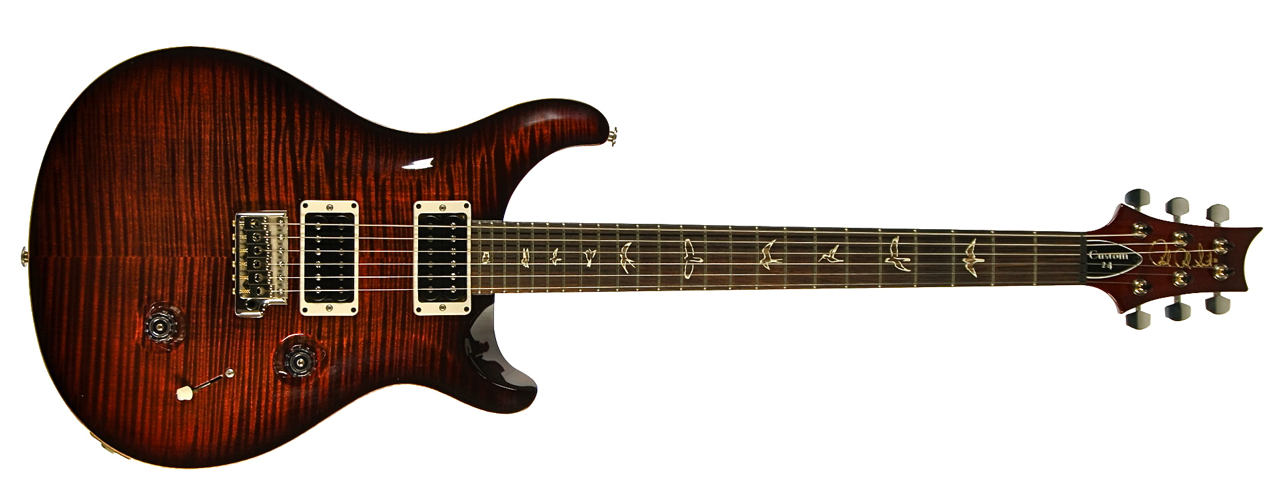
PRS Guitars, just like Hamer Guitars, took Gibson’s classic solidbody designs as a basis for their ”modern vintage” models.

With PRS Guitars it all started with a young Paul Reed Smith converting one spare bedroom at his childhood home into a workshop in 1975. By the next year he had already moved into a small workshop in Annapolis, and started attracting customers such as Ted Nugent and Peter Frampton. His first guitars were based closely on the double cutaway Gibson Les Paul Special, but featured humbucking pickups.

A few years down the road Paul Smith added fancy flame maple tops into the mix, and he managed to sell four of these guitars to Carlos Santana. Santana’s signature PRS models are still based on these original guitars.

But Smith wasn’t satisfied with simply producing refined versions of past Gibson-classics, so he set out to develop the ultimate solidbody guitar.

By 1985 Paul Smith had finalised his vision and started his own production facility. At the NAMM shows of 1985 Smith unveiled the PRS Custom 24 – the model that has defined the whole brand to this day. The new guitar ingeniously combined the best features of a Gibson Les Paul Standard and a Fender Stratocaster, as well as including many of Smith’s own improvements – not least the smooth and reliable PRS-vibrato and his own (Schaller-made) locking tuners.

The PRS Custom 24 combines Gibson-style materials and construction with a Fender-like outline, balance and (in most cases) a vibrato bridge. Added into the mix are a middle-of-the-road 25-inch (63.5 cm) scale length – about halfway between the softer Gibson (24.75″/62.9 cm) and the harder Fender (25.5″/64.8 cm) scale lengths – as well as two PRS-humbuckers with coil-splits.

Originally the Custom 24 came equipped with two knobs and one mini-switch. The knob closest to the bridge pickup was (and still is) the master volume control, with the second knob actually being a five-way rotary pickup selector, and not a control pot. The mini-switch was called the Sweet Switch, and served in lieu of a regular tone control, by giving you a set tone with rolled-off highs.
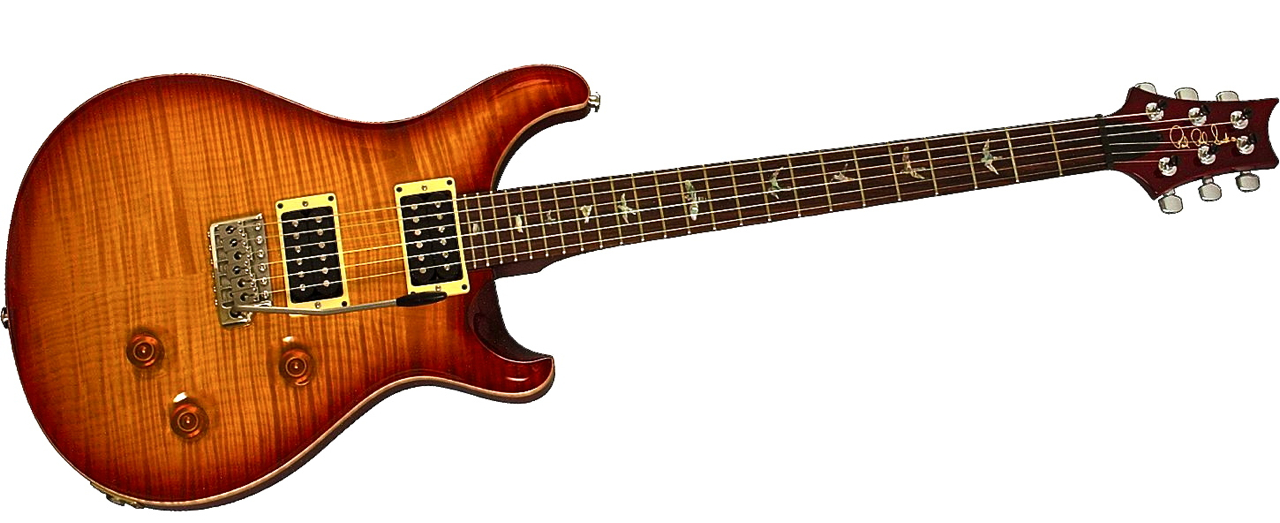
The Sweet Switch was replaced by a regular tone control around 1989, and these days many Customs also feature a regular five-way pickup selector.
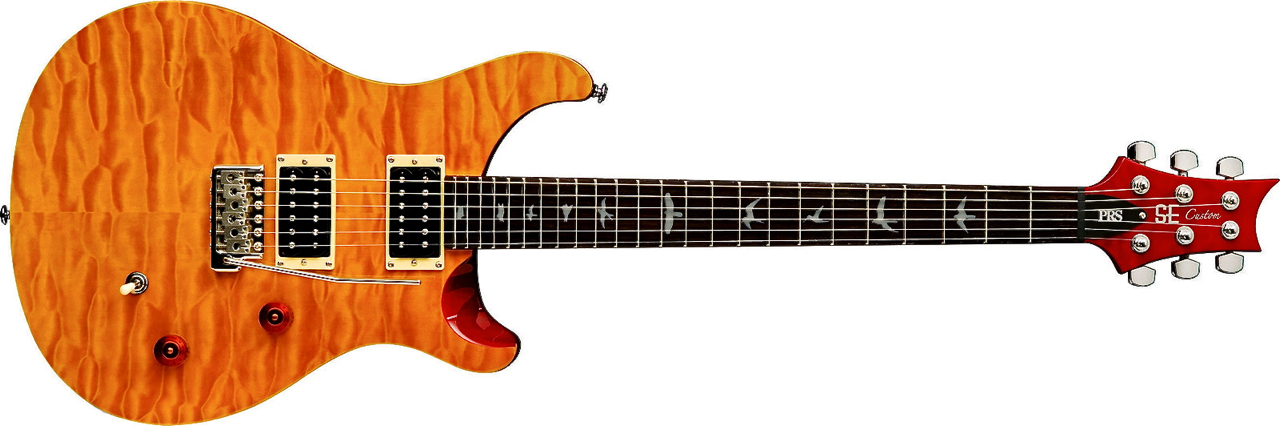
Over the years PRS have changed many details in the construction, harware and electronics of their guitars, but the Custom 24 still carries the essence of what PRS Guitars are all about – it is a beautiful, yet practical quality instrument. Or as Carlos Santana put it in an interview with Paul Reed Smith a few years ago: ”It’s a guitar that gives you no excuses not to play to the best of your abilities.”

Review: Roland GA-112

****

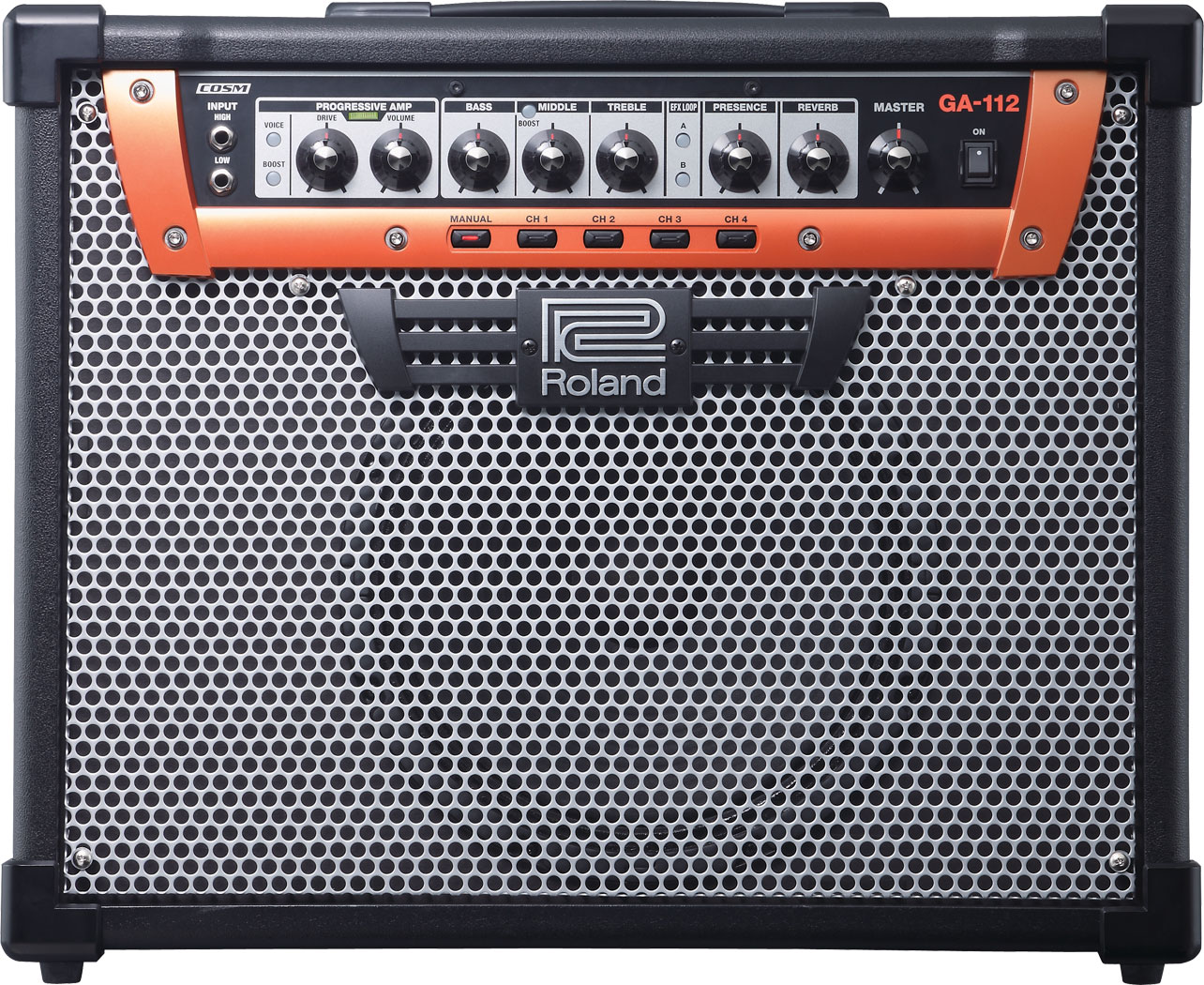
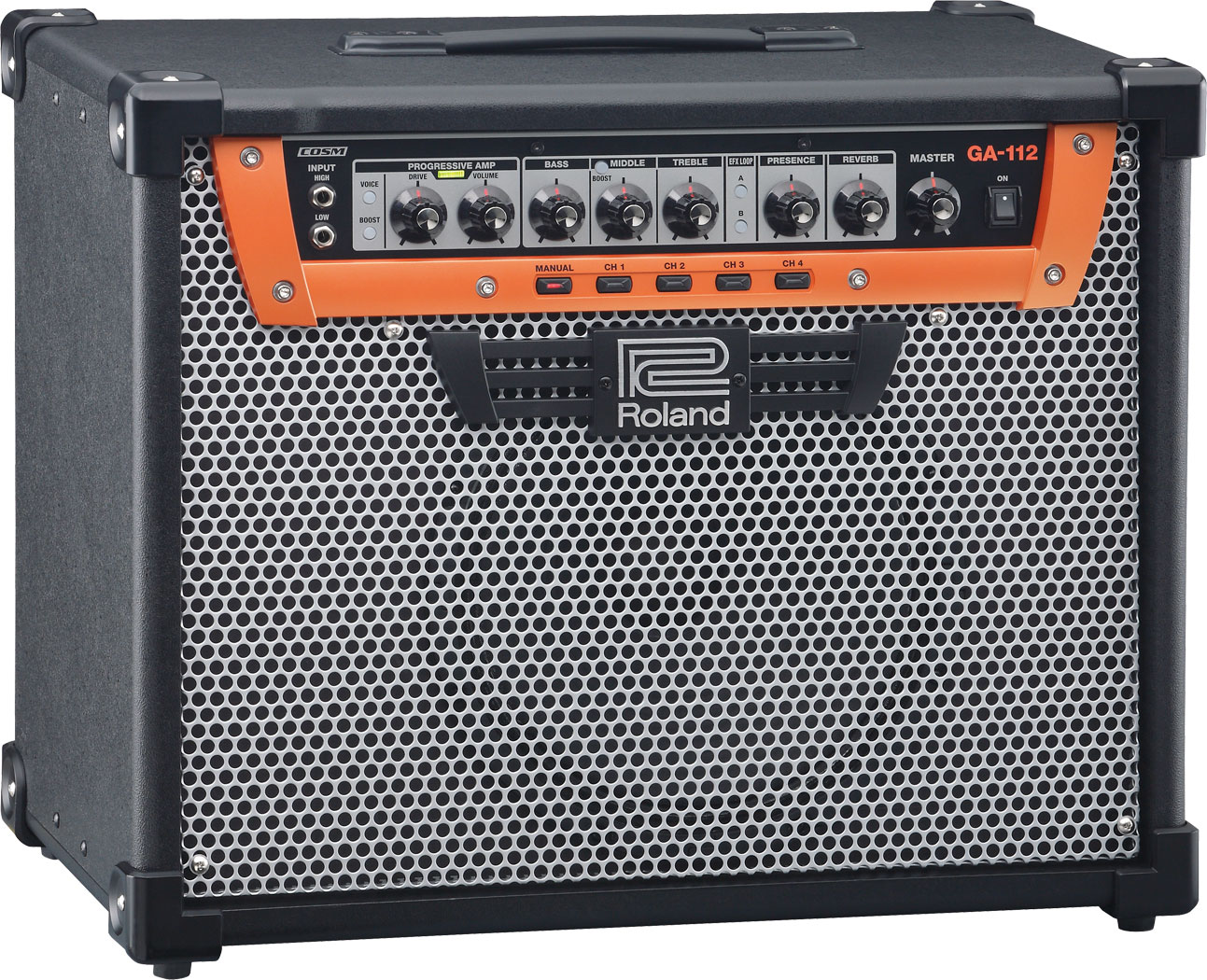
One of Roland’s many new products for 2012 is the GA-112 – a COSM-based guitar combo using the company’s modelling technology to come up with a sound all of its own.

The GA-112 – as well as its larger 2 x 12″ brother, the GA-212 – utilises a specially designed COSM-model called Progressive Amp. Progressive Amp promises to give you the full scale of possible amp tones – from ultra-clean all the way to bone-crushingly dirty – from a single digital amp model, using only the gain-control and the combo’s EQ.

The 100-Watt Roland GA-112’s (current price in Finland: 844 €) looks combine many features from older Roland guitar amps.

The front panel is somewhat reminiscent of the legendary Jazz Chorus combo, while the cabinet’s black vinyl cover, as well as the extremely sturdy metal speaker grille have been borrowed from the company’s long-running Cube-range.

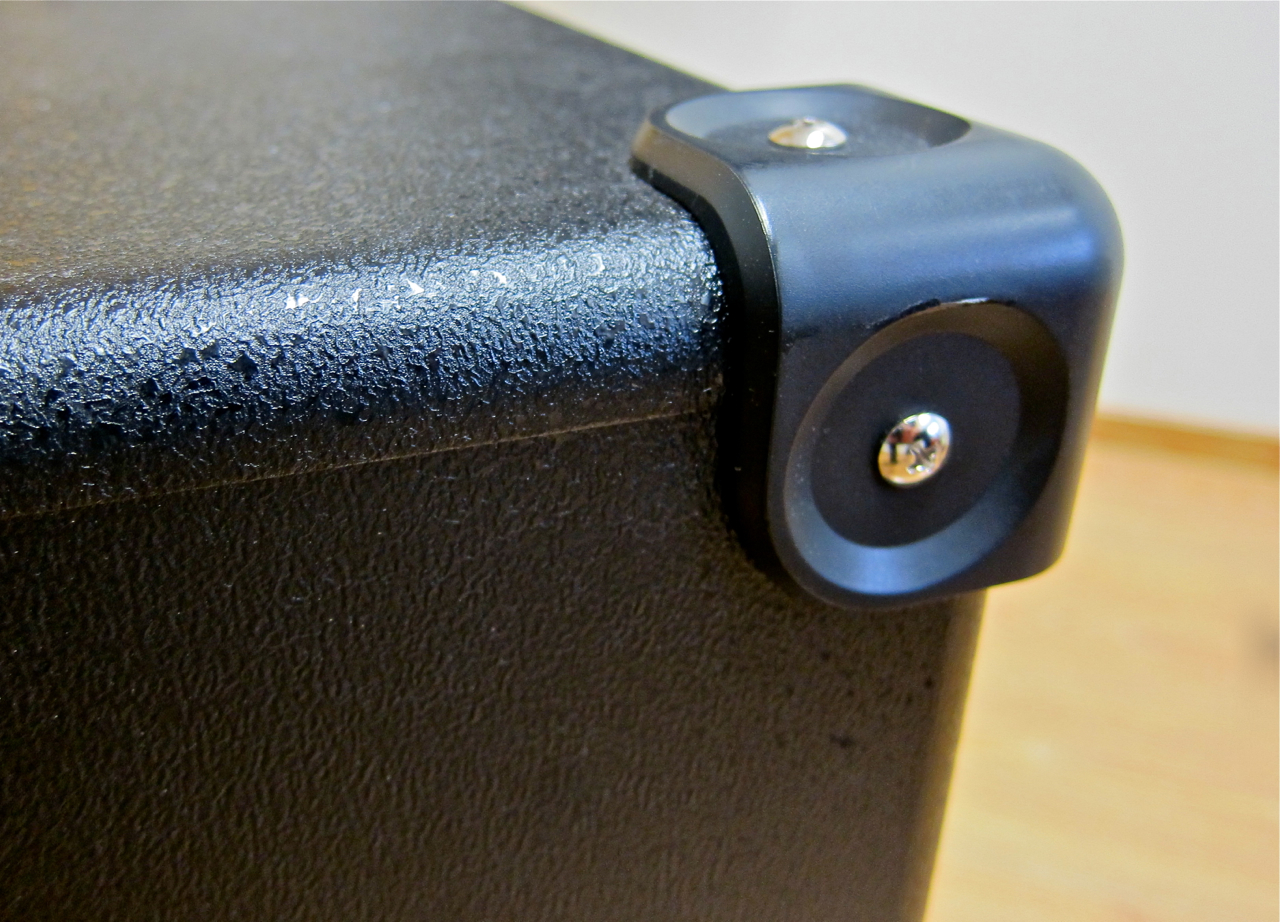
The GA-112’s chunky plastic corner protectors are designed to withstand the rough life of a gigging amplifier.

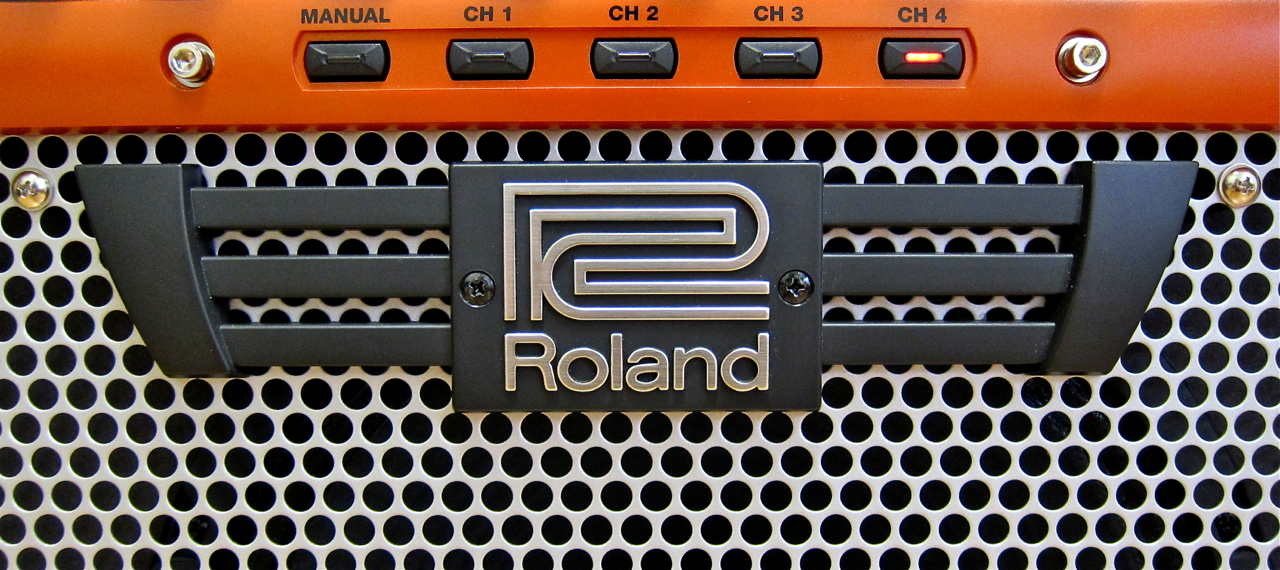
This Roland is equipped with a fully-digital preamp section offering a whopping five channels – four user-storable selections, plus the current control knob settings in Manual-mode.

Regardless of all the digital circuitry inside, the GA-112’s front panel is very clean and easy to understand. All push-buttons are backlit, and all the knobs for storable parameters (meaning all, but the Master Volume) have been equipped with red position LEDs. This combo’s settings are easy to read even on a completely darkened stage.

Apart from its two input jacks, the front section offers two buttons – Boost and Voice, which adds a slight loudness EQ-curve to the signal.

The Progressive Amp -section’s oblong LED-indicator is a great way to keep you in the picture in regard to the character of the current amp channel/settings, by changing its colour according to the gain setting. A green light, for example, tells you that you are paddling safely in totally clean waters, while purple or white means you are sailing close to distortion meltdown.

The EQ-section is a three-band affair with an added mid-boost for fattening up your tone.

Before travelling onward to the Presence- and reverb-controls your signal can be send to either or both of the GA-112’s effect loops. Both loops’ on/off-status is stored channel-specifically along with all the other channel data, which means that changing channels also automatically switches the loops on or off.

The GA-combo’s only internal effect is its lushly-voiced digital reverb.

Roland’s GA-112 stores all changes to one channel’s settings automatically each time you switch to another channel, which makes the combo quite intuitive to work with.

The effect loops have been placed alongside all the other connectors on the back panel.

You can choose between a parallel and a series signal path for each loop, and set the correct nominal signal level (-10 dB or +4 dB) for your chosen outboard effects.

The back panel also gives you a tuner output and a line level output for connection to a mixer. You can also daisy-chain two GA-112s for large venues.

For full switching control on-stage you have to buy Roland’s own GA-FC-footcontroller, which allows you to switch channels, turn the boost on or off, as well as switch on/off the effect loops and the reverb.

It would have been a nice move, though, if Roland had included a simple up/down-footswitch for channel-switching with the amp.

****

Roland’s GA-112 isn’t your traditional modelling amp, as it doesn’t feature heaps of different models of famous amps, vintage and new, or loads of different internal effects. The approach has been radically different here.

The GA-112’s main advantages are its healthy basic sound, as well as the Progressive Amp’s huge versatility and tweakability, giving you everything from totally clean to full-on metal.

The Roland isn’t about the authenticity of vintage amp models when compared to the physical originals from yesteryear. This is a modelling amp that isn’t modelling any specific amps, but uses it digital power to offer the guitarist a blank canvas with a large palette of colours.

The Roland GA-112 makes a great job of offering most guitarists their sound with the minimal amount of fuss and a practically flat learning curve.

Warm Jazz-cleans or biting Country-picking can be dialled in in no time. Organic and dynamically rich Trad Blues and Seventies Rock can also be had. And the GA-112’s merciless Metal-riffing will have you headbanging until the janitor takes the main fuse hostage.

Roland’s two switching effect loops open up many interesting possiblilities for seasoning your tones.

I suggest you make a beeline for your nearest Roland-dealer, if you are interested in making the GA-112 your personal command centre on-stage or in the studio.

****

Here are a couple of examples using the Roland GA-112 without any external effects:

Stratocaster – clean

Kasuga semi – clean

Stratocaster – overdriven

Kasuga semi – overdriven

Stratocaster – full gain

Kasuga semi – lead sound

****

Roland GA-112

844 €

Finnish distribution: Roland Scandinavia

****

Pros:

+ basic sound

+ extremely wide scale of gain

+ programmable

+ two effect loops

+ power

+ sturdy build

Cons:

– footcontroller optional

****

Review: ESP Eclipse II FM FT Distressed

****

A pre-aged guitar – to some people it’s the daftest idea ever, while others think relicing imbues the instrument with its own type of charm.

But one thing is clear: artificial ageing is here to stay!

This time we will take a new-old ESP for a spin – the Eclipse II FM FT Distressed.

****

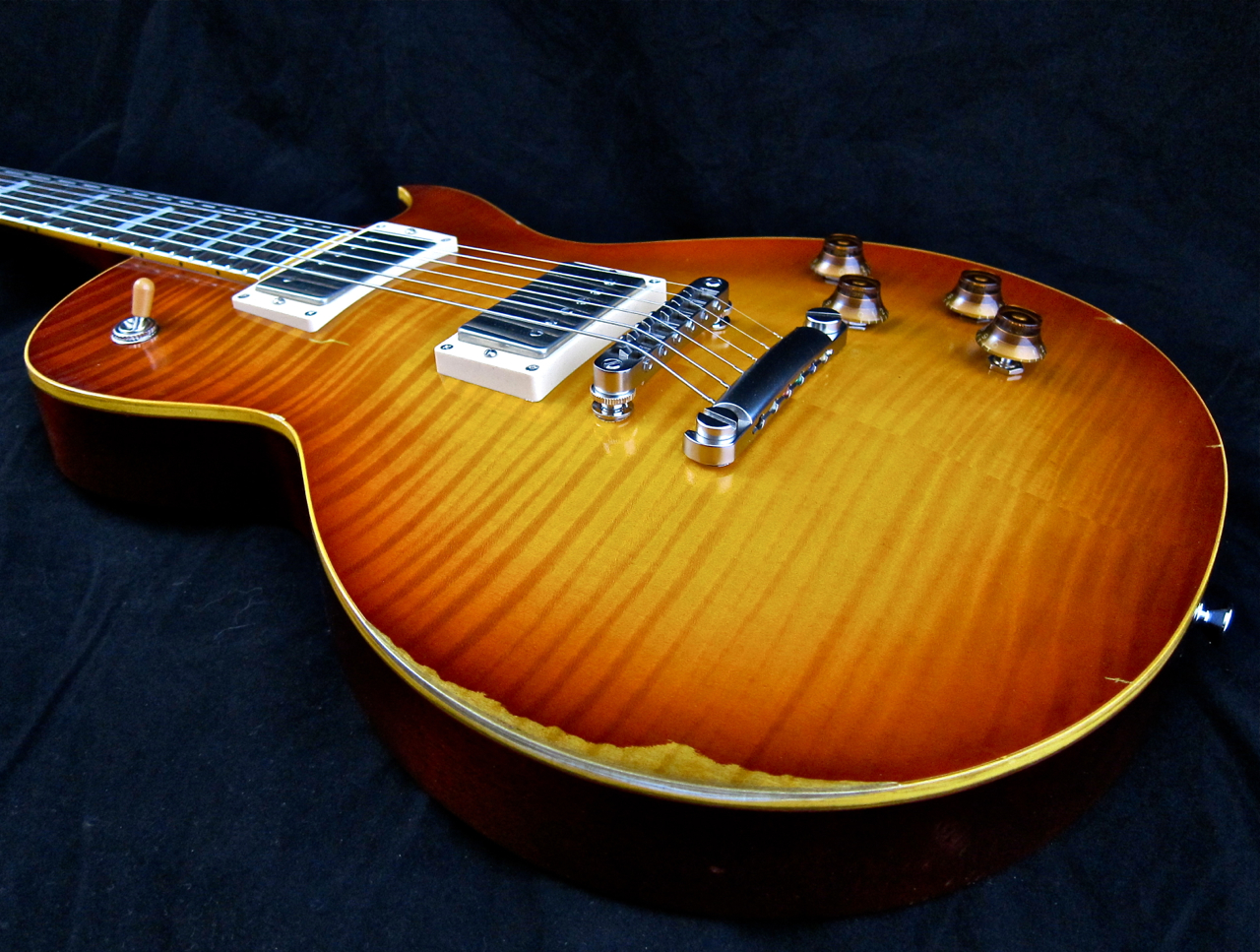
The ESP Eclipse II Distressed (current price in Finland: 1.889 €) is a Japanese quality instrument treated to look and feel like a 50-year-plus veteran of the stage and studio.

The rather realistic impression is achieved not only by dings, dents and scratches, but also by using a laqcuer that looks old and sunken in.

The flip side of the Eclipse II Distressed’s body has also received lots of scratches and a bout of artificial belt buckle rash. The neck, though, has been left fairly clean.

The mahogany looks scrumptious, and the finish does its bit to underscore the lively wood grain.

ESP have restrained themselves from adding over-the-top finish cracks, which is a good decision, in my opinion.

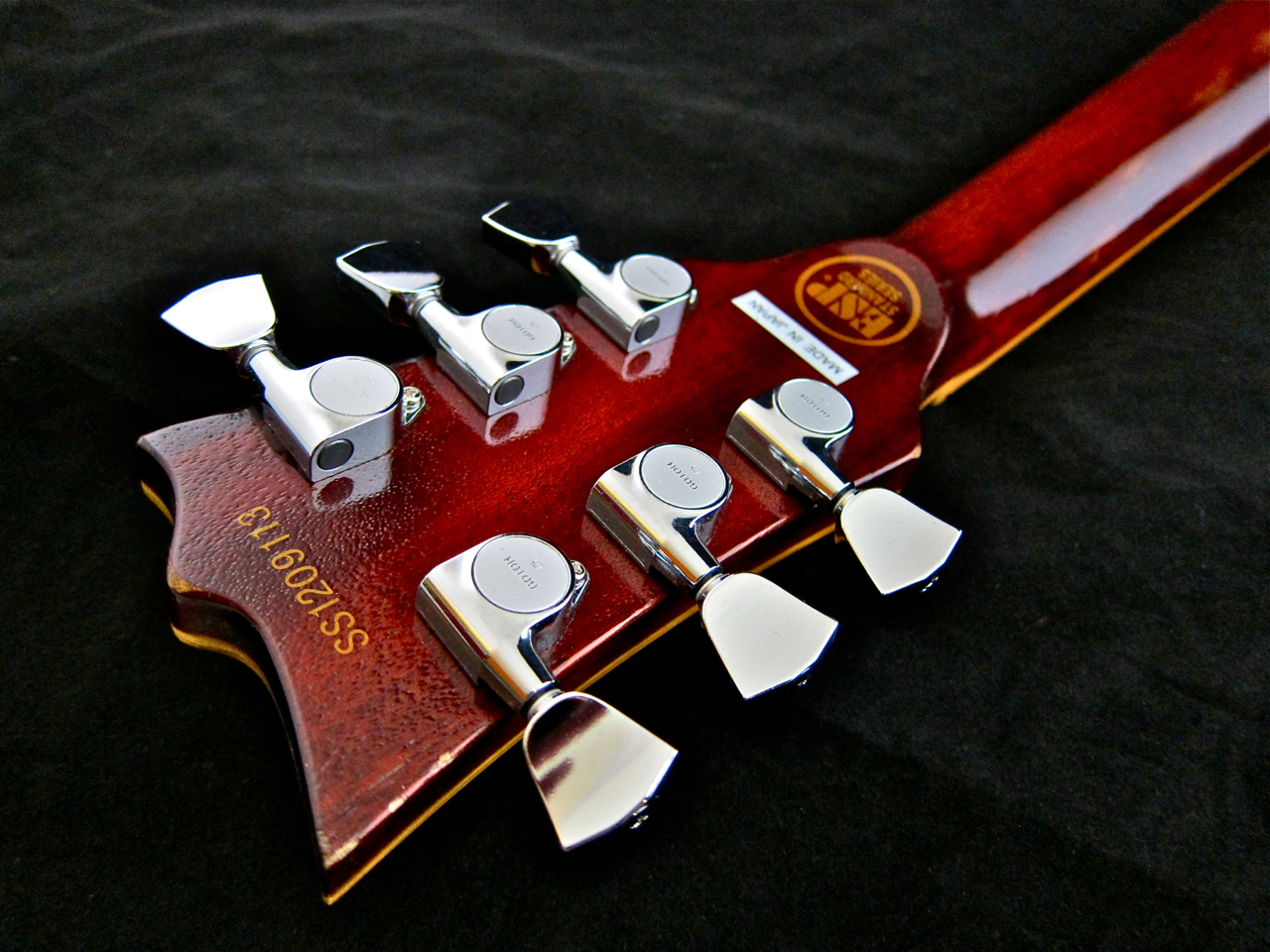
The Gotoh-machines look traditional, but are in fact up-to-date locking tuners.

The Eclipse’s beautiful rosewood ’board and jumbo-sized frets have been left untouched by relicing – this is a brand-new guitar with a pristine playing feel, great!

The neck joint is a traditional set-in job.

This viewing angle makes it easy to spot all the dents in the sunken in finish (click the picture for a larger view).

The Distressed-model comes fitted with Seymour Duncans: The neck unit is a ’59-model, while a Duncan JB -humbucker has been installed near the bridge.

The brushed metal covers fit the ESP’s lightly-aged look to a tee.

The neck pickup’s tone control is equipped with a push/push-switch that splits the humbuckers in the up-position.

Everything’s hunky-dory in the control cavity – quality parts, clean workmanship and thorough shielding wherever you look.

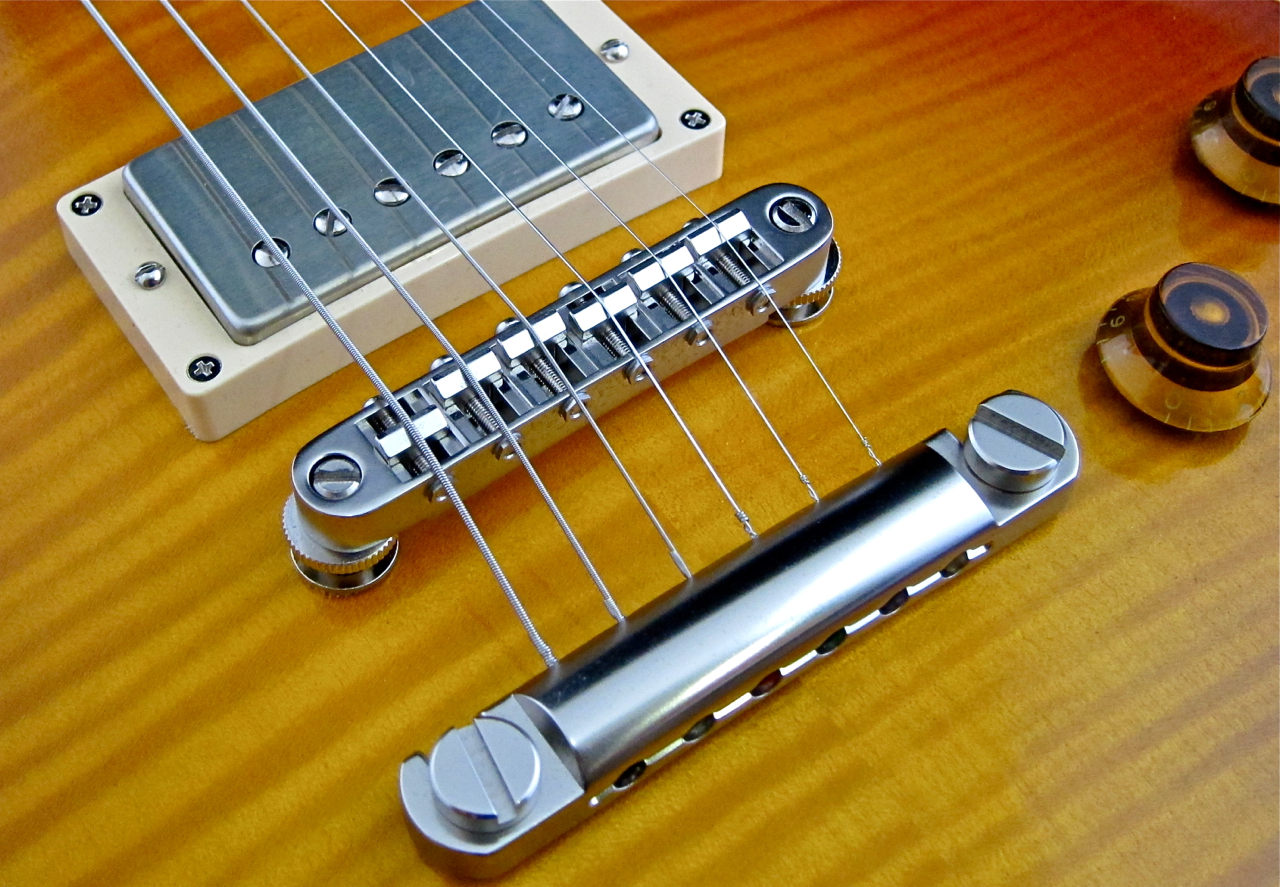
The tune-o-matic-type bridge and the guitars tailpiece are quality parts made by Gotoh.

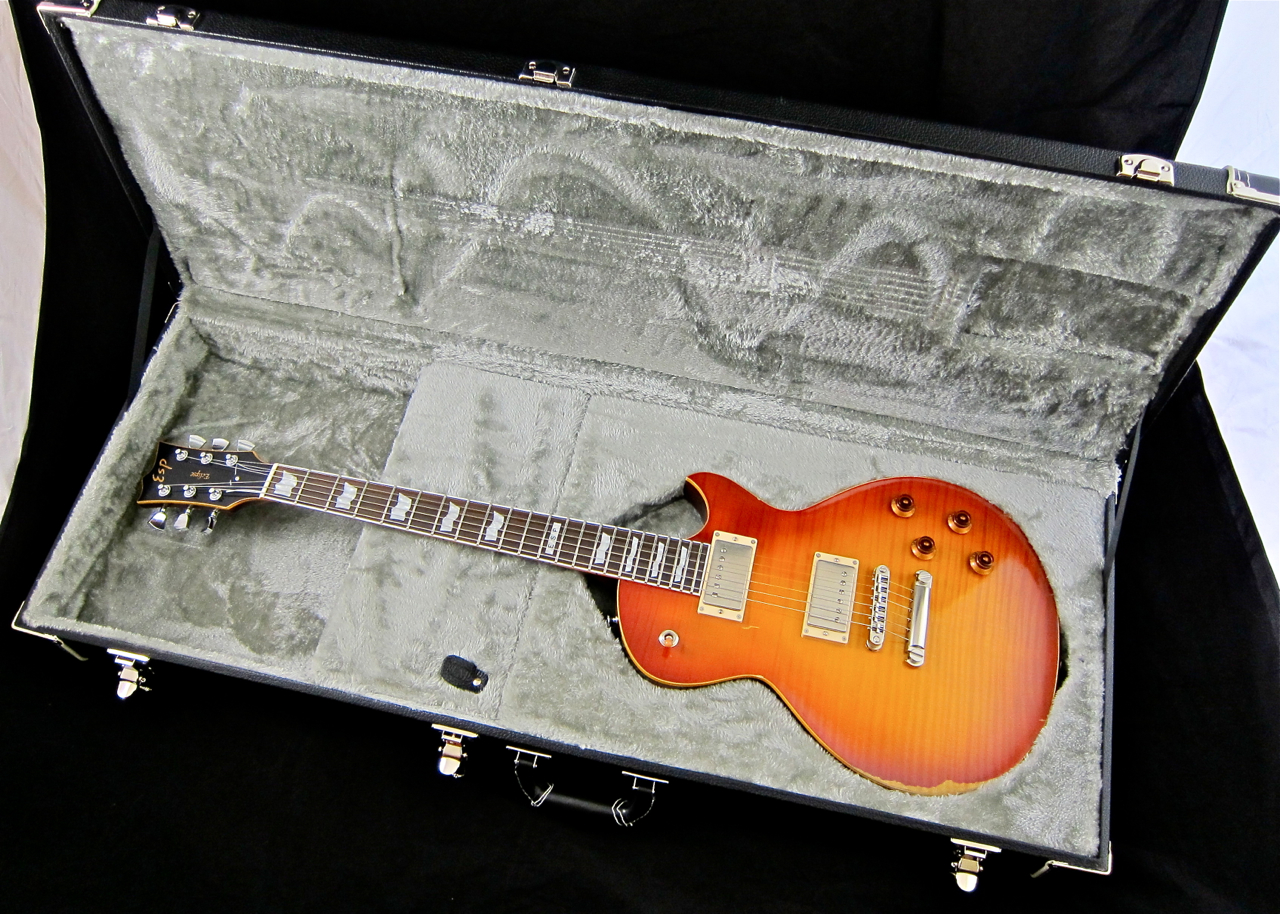
The ESP Eclipse II Distressed is sold in its own, beautiful case.

****

Many players complain about the weight of a good deal of LP-type electrics, which can give you a sore shoulder or a hurting back. I can only suggest that these guitarists take a stoll to their friendly ESP-dealer, if this test sample is anything to go by!

I don’t know whether it’s in the wood selection or whether ESP employ an Emmental-method (like Gibson) for weight-relief – by drilling large-diameter holes into the mahogany before gluing the maple top on – but this ESP is the most lightweight LP-style guitar I have ever played!

The neck profile is a very friendly medium-depth ”D”, not far removed from Gibson’s 60s-neck. The sunken-in finish feels smooth and fast, and the fine fretwork and large fretboard radius make for an easy playability.

It’s hard to gauge whether this is due to the relicing or not, but the ESP Eclipse II Distressed feels really live. The guitar breathes and resonates freely, and its fine acoustic tone has a nice warmth and a sinewy midrange.

Seymour Duncan’s ’59/JB-pairing is an excellent choice for the ESP Eclipse II. The pickups have a good balance between themselves, and manage to convey this instrument’s tonefulness onwards to the amp with fine detail. The ability to split the ’buckers adds three fresh and springy selections to your arsenal.

Both sound examples start with the split neck pickup, followed by the full neck pickup, and so on:

ESP Eclipse II Distressed – clean

ESP Eclipse II Distressed – distorted

Regardless of your stance towards pre-aged guitars, there’s no denying that ESP’s Eclipse II Distressed is a fine, high-quality instrument, with its own hefty dose of charm. Shame we had to give it back…

****

ESP Eclipse II FM FT Distressed 

Current price in Finland: 1.889 €

Finnish distributor: Musamaailma

Pros:

+ looks

+ sound

+ weight

+ playability

+ coil-split 

+ workmanship

****

Pidä blogia WordPress.comissa.

Ylös ↑