I don’t know who these guys are, but this is a great version!
Review: Roland Micro Cube GX + Cube-80 GX


Roland’s popular Cube-series of COSM-combos has recently been updated.
The new Cube GX-amps boast some new features, like the iCube Link (first seen in the Cube Lite), which allows you to use the guitar combo as a soundcard with Apple iOS devices.
****

The Roland Micro Cube GX (current price in Finland 134 €) is the newest version of one of the most successful battery-powered practice amps ever.
At first glance the GX-version looks very similar to the Micro Cube’s previous incarnation, with only the large Cube logo on the metal grille hinting at the combo’s updated status.
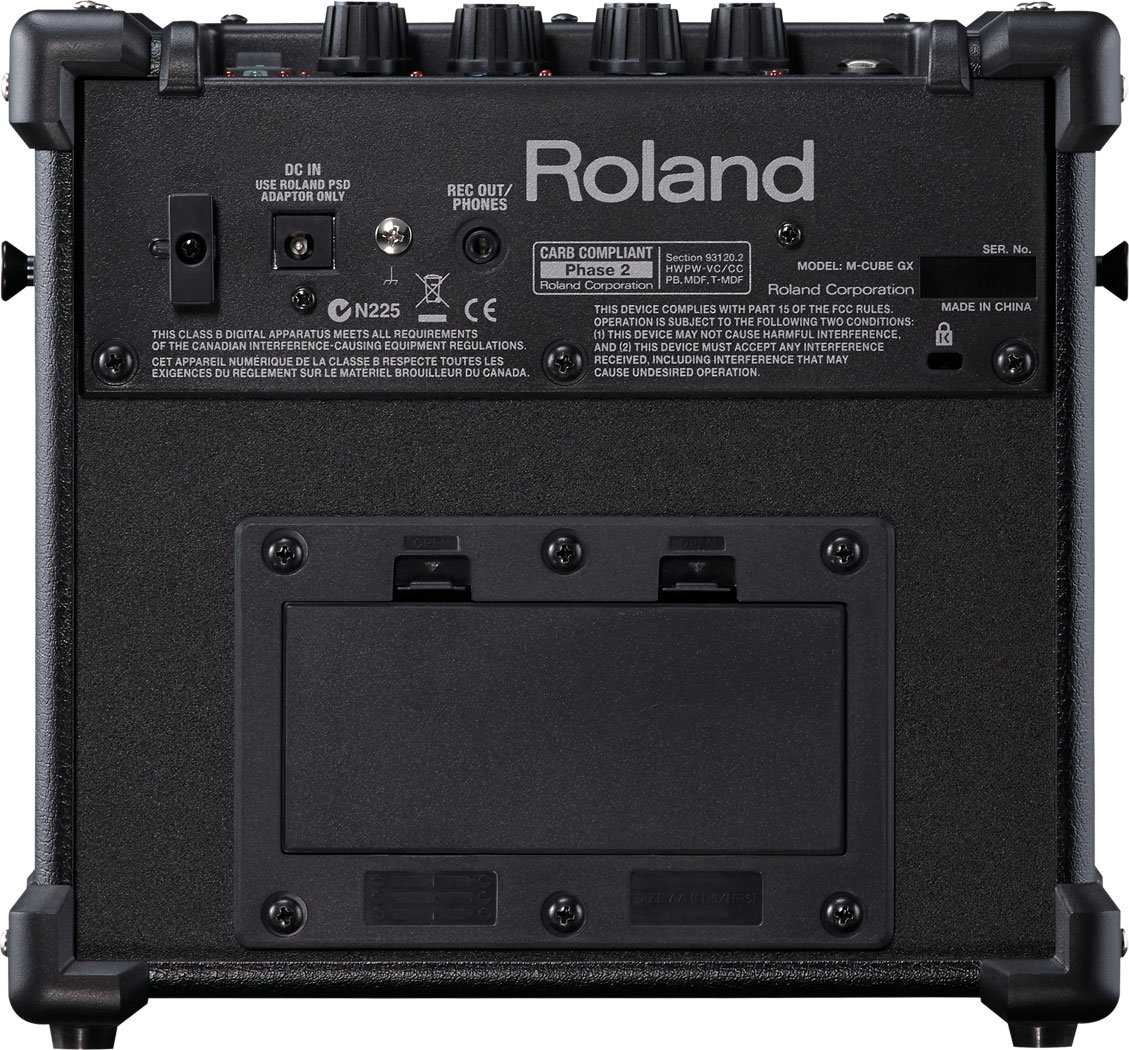
The Micro Cube GX’ back panel is a good deal smaller than on the last version.
The new combo sports mini-sized headphone and line-level outputs.

The GX still runs on six AA-batteries, but the new battery compartment is much easier to use.
A power supply can be found in the box.

The front panel has gotten a serious overhaul:
Above the guitar input you can find the i-Cube Link connector, which allows you to hook up you iPad or iPhone to the combo using the supplied cable. Thanks to the i-Cube Link you can use the GX-amp as the iDevice’s sound-card, as well as record and practice using Roland’s free Cube Jam-app. You can get more info on the Cube Jam-app in Kitarablogi’s Cube Lite review.
Another important new feature of the Micro Cube GX is the Memory-function, which offers you one memory slot per COSM Amp Type. Memory stores all settings of the chosen Amp Type, namely the settings of the Gain-, Volume-, EFX- and Delay-controls.
The tuner section has also received an overhaul. The old Micro Cube came with an electronic tuning fork on-board, giving you an ”a” (or Ab or Abb) to tune to. The brand-new Micro Cube GX comes equipped with a genuine digital tuner. The default setting for the tuner is chromatic, but it can also be set to A-only, which comes in handy when changing strings.
****
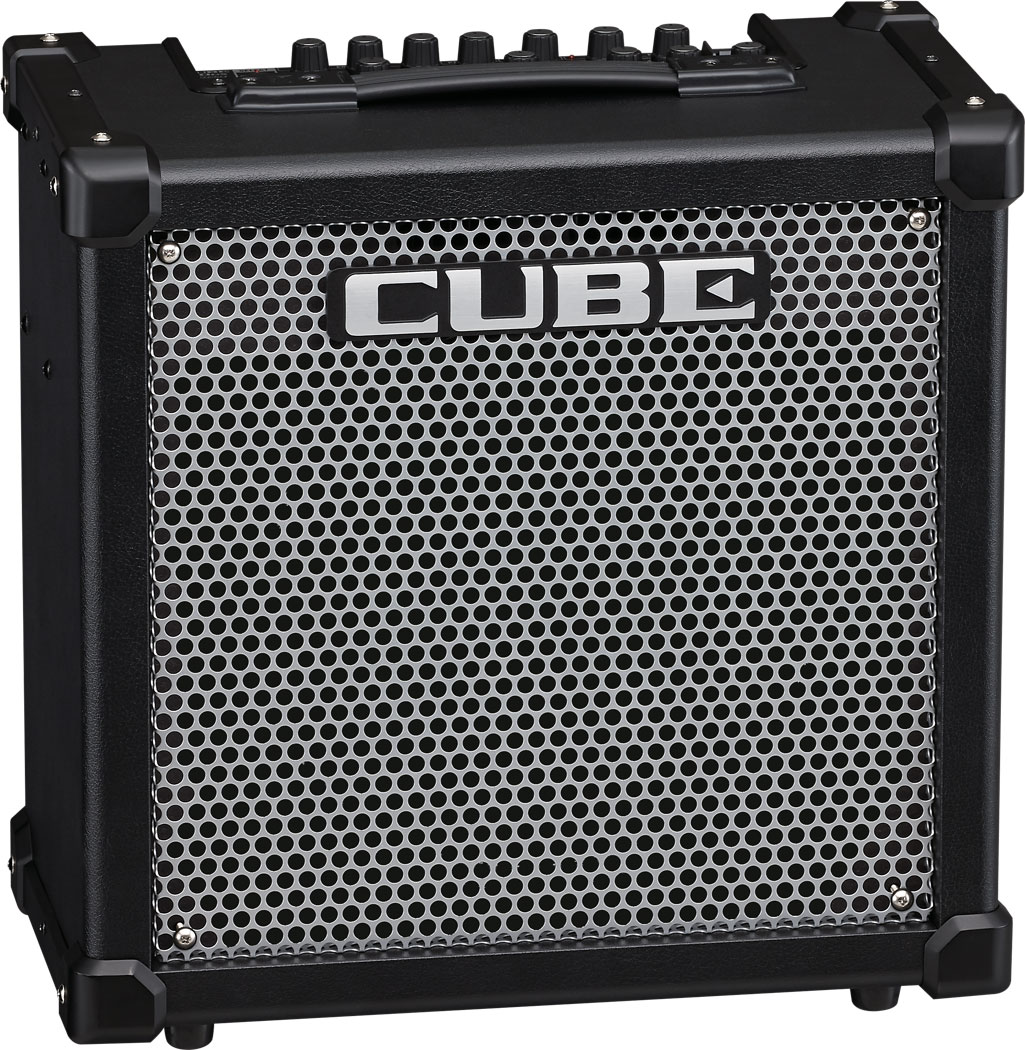
The Roland Cube-80 GX (current price in Finland 384 €) is the current top model in the GX-series, offering you 80 Watts of output power through a single 12-inch speaker.
The clearest difference between the predecessor – the Cube-80 XL – and the GX-version is the addition of the i-Cube Link in favour of the old model’s built-in looper.

Also new is the GA-FC-connector on the amp’s back panel, which allows you to use Roland’s guitar amp foot-controller the GA-FC (optional) with the Cube-80 GX.

This is what the foot-controller looks like. When used with the GX, you can switch amp channels and turn the combo’s EFX-, Delay- and Reverb-sections on/off separately. You can also connect two expression pedals to the GA-FC, if you want to adjust input and output levels on the fly. The Cube-80 GX comes supplied with a special overlay for the foot-controller, so you can change the GA-FC’s labelling to match the correct functions.
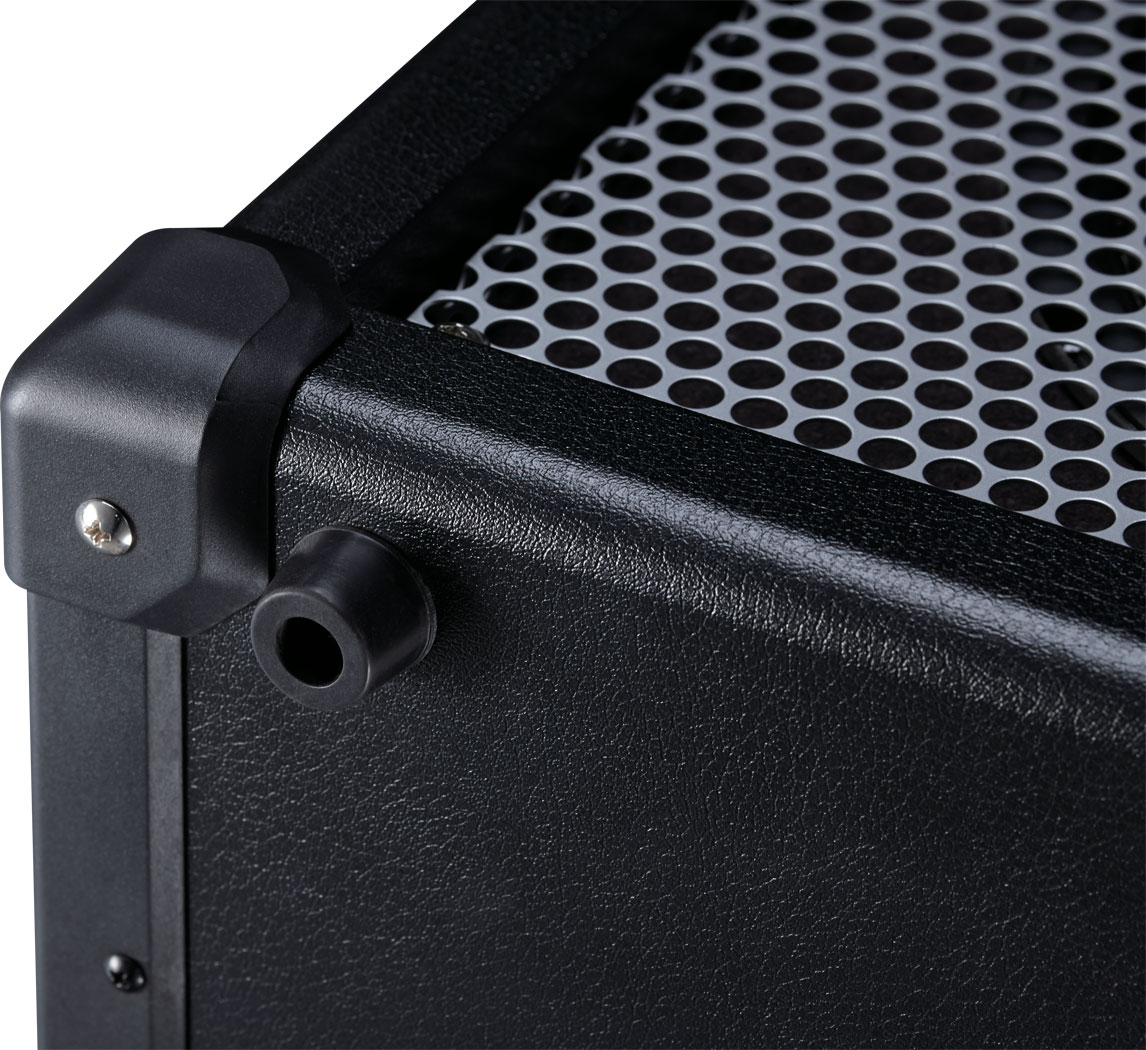
Some things have stayed the same, though, like the rugged design of the Cube-series.

The Cube-80 GX is a three-channel guitar amplifier:
The JC Clean-channel is reserved for ultra-clean tones in the style of Roland’s legendary Jazz Chorus-combo. The Lead-channel, on the other hand, offers you nine different COSM-models, as well as an acoustic simulator for your occasional steel-string needs.
The third channel is the so-called Solo-channel. I say ”so-called”, because actually the Solo-channel is the Cube-80 GX’ memory slot, which you can fill with any amp setting you wish, regardless of whether it is a setting for soloing or not. The crucial difference between the Solo-channel and the other two channels is the fact that the Solo-channel uses its own (stored) settings for the EQ-, EFX-, Delay- and Reverb-sections, while JC Clean- and Lead-channels have to share the current control settings.
Apart from the i-Cube Link, the Cube-80 GX’ features list is very similar to the Cube-80 XL-version. You can get more info on the i-Cube Link and Roland’s free Cube Jam-app in Kitarablogi’s Cube Lite review.
****

Roland’s brand-new Micro Cube GX offers you even more than its already legendary predecessor. The built-in tuner makes life much easier, and the new i-Cube Link/Cube Jam functionality genuinely adds value to this diminutive powerhouse. If you own an iDevice you will have your own practice set-up up and running in no time.
The little GX-combo also gives you three new sounds – the fantastically über-Metal amp type called Extreme, a fine polyphonic octaver effect, as well as a spring reverb model. The Micro Cube GX’ spring reverb simulation sounds good, but very small area designated for it on the Reverb-control doesn’t allow for much in terms of tailoring the spring reverb. It’s more of an on/off affair.
Overall the GX sounds better than the original Micro Cube, with more realistic amp simulations and clearly less hiss in the effect section.
These four clips have been recorded using a dynamic mic in front of the combo, and playing a Fender Stratocaster:
****

Roland’s new Cube-80 GX is a compact, yet powerful guitar combo for the gigging guitarist.
The sounds on offer cover all bases, and the amp types and effects all sound great. Depending on your guitar of choice there can be a very slight tendency toward a crowded lower-midrange – especially with clean sounds – but this can be easily kept in check with the amp’s nice EQ-section.
I feel that if you want to use the Cube-80 GX live, buying the GA-FC-controller is almost compulsory, as it is the only way you can fully control all the combo’s functions on the fly. 100 euros seems a bit steep in relation to the Cube’s own price tag, but from a practical standpoint the additional outlay makes a whole lot of sense.
Be that as it may, Roland’s Cube-80 GX is a cool amp for both gigging and studio use.
These four examples have been recorded with the same set-up are the Micro Cube GX-clips:
****

Roland’s Cube GX-series is a good choice if you want a wide variety of different amp tones and effect sounds to choose from. For teaching and/or practising purposes the iOS-compatibility and Roland’s own Cube Jam-app add a lot of value to an already very enticing package.
****
Roland Cube GX-series
Micro Cube GX – 134 €
Cube-80 GX – 384 €
Finnish distributor: Roland Scandinavia
****
Pros:
+ value for money
+ i-Cube Link
+ Micro Cube GX: new Memory-feature
+ Cube-80 GX: GA-FC-compatibility
+ sound
+ rugged build
Cons:
– Micro Cube GX: spring reverb effect hard to adjust
– Cube-80 GX: price of GA-FC-controller


Review: Marshall Custom JTM1 Offset

****
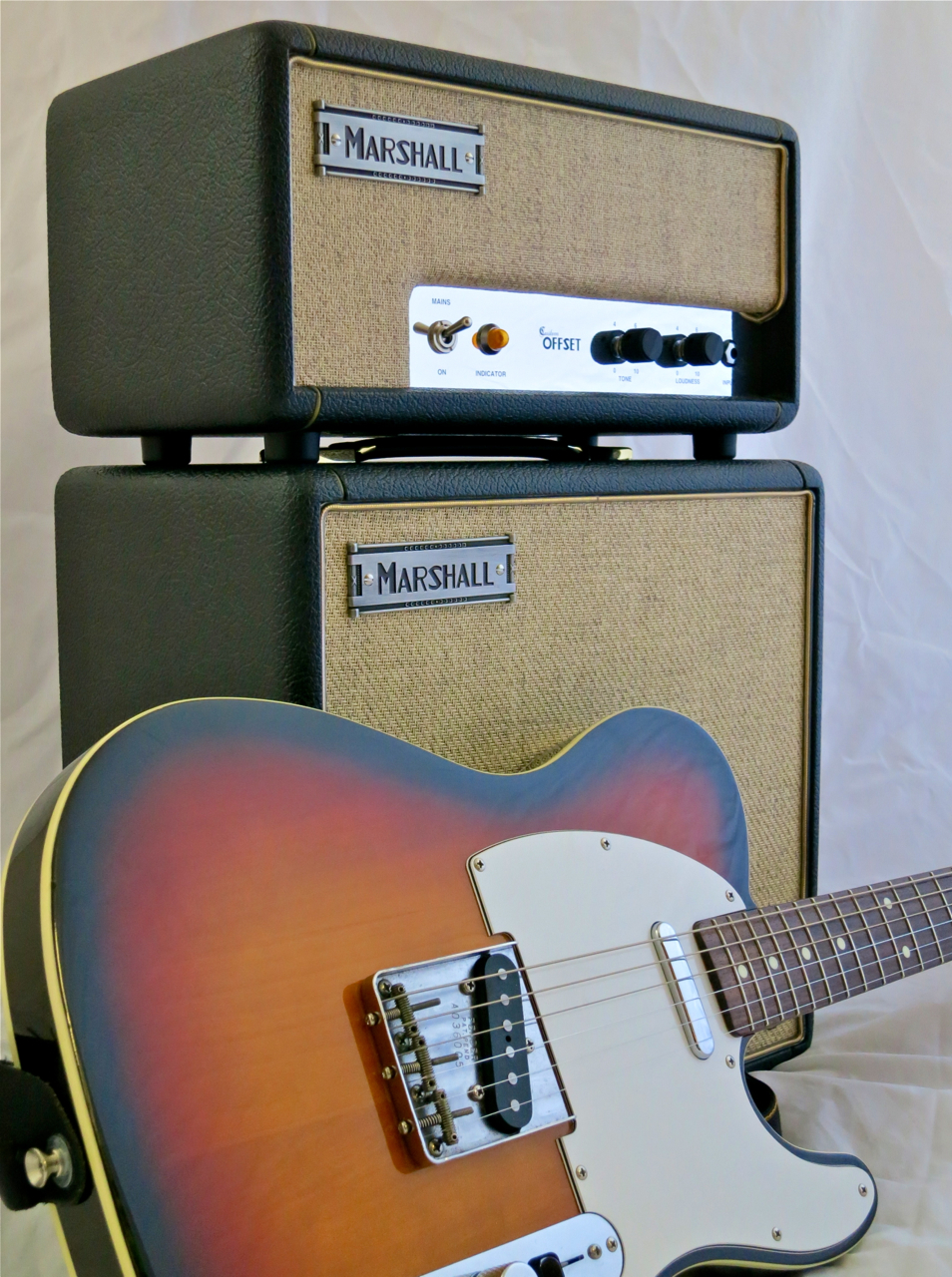
Last year Marshall celebrated their 50th anniversary by releasing a whole range of limited-edition one-watt combos and half-stacks.
Now we’re in for a cool reprise, as Marshall announced a limited edition of 1,111 of a Custom Offset half-stack in Frankfurt earlier this year. The Custom Offset is based on their JTM1 50th Anniversary amp.
A couple of these rare amps even made it to Finland. Kitarablogi.com managed to get hold of one half-stack for a quick review.
****
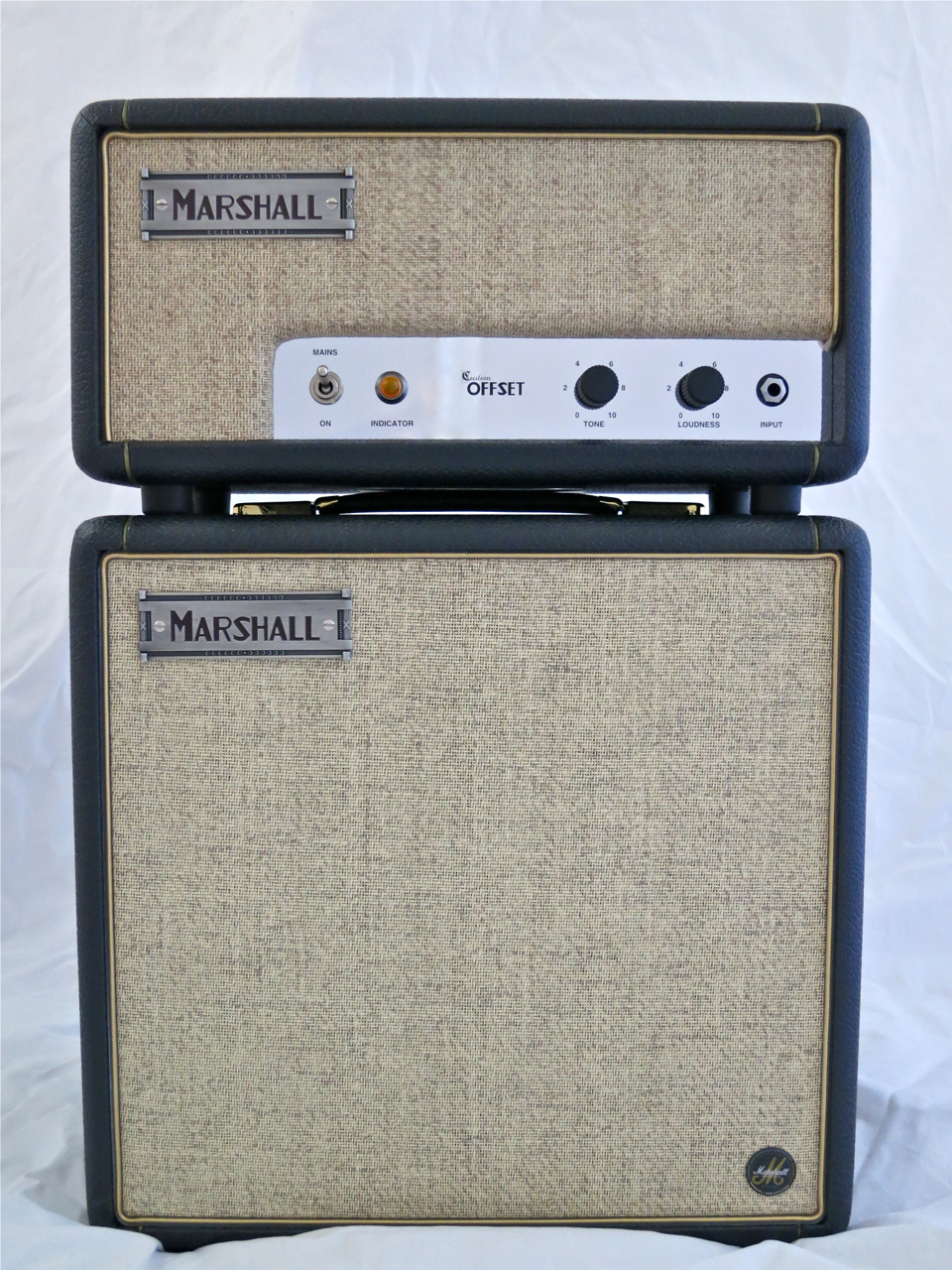
The Marshall Custom JTM1 Offset (price in Finland approx 1,000 €) takes the JTM1 as its starting point, but takes the concept even further down the vintage road to give the Custom Offset the look the company’s first batch of JTM45 models. There’s the famous light grey/beige grille cloth, and the offset control panel, which has given this amp its name.

As can be expected at this price point, the overall workmanship is of a very high standard, indeed.

The head’s gleaming, chrome-plated front panel, as well as the two black metal control knobs, are clear hints at this amp’s exalted limited edition status.
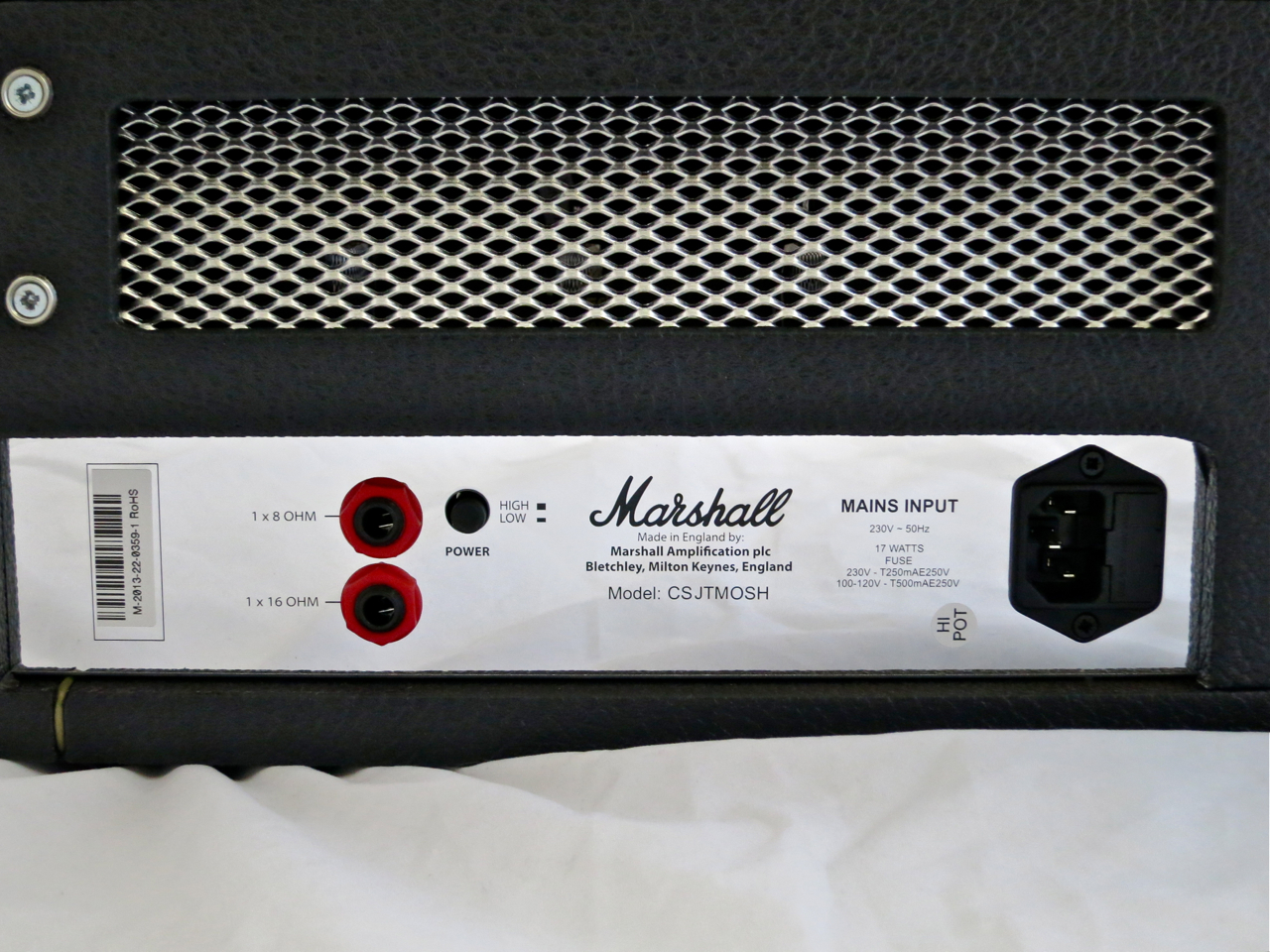
On the chromed back panel you will find the same Power-switch as on last year’s anniversary models. It drops the amp’s output from one Watt down to one-tenth of a Watt.
The Custom JTM1 Offset’s matching cabinet has an impedance of 16 Ohms, but you can also connect 8 Ohm speaker loads via the second output jack.

The Custom head is build around the same valve types as the JTM1 head – we find two ECC83/12AX7-valves, as well as a model ECC82/12AU7.
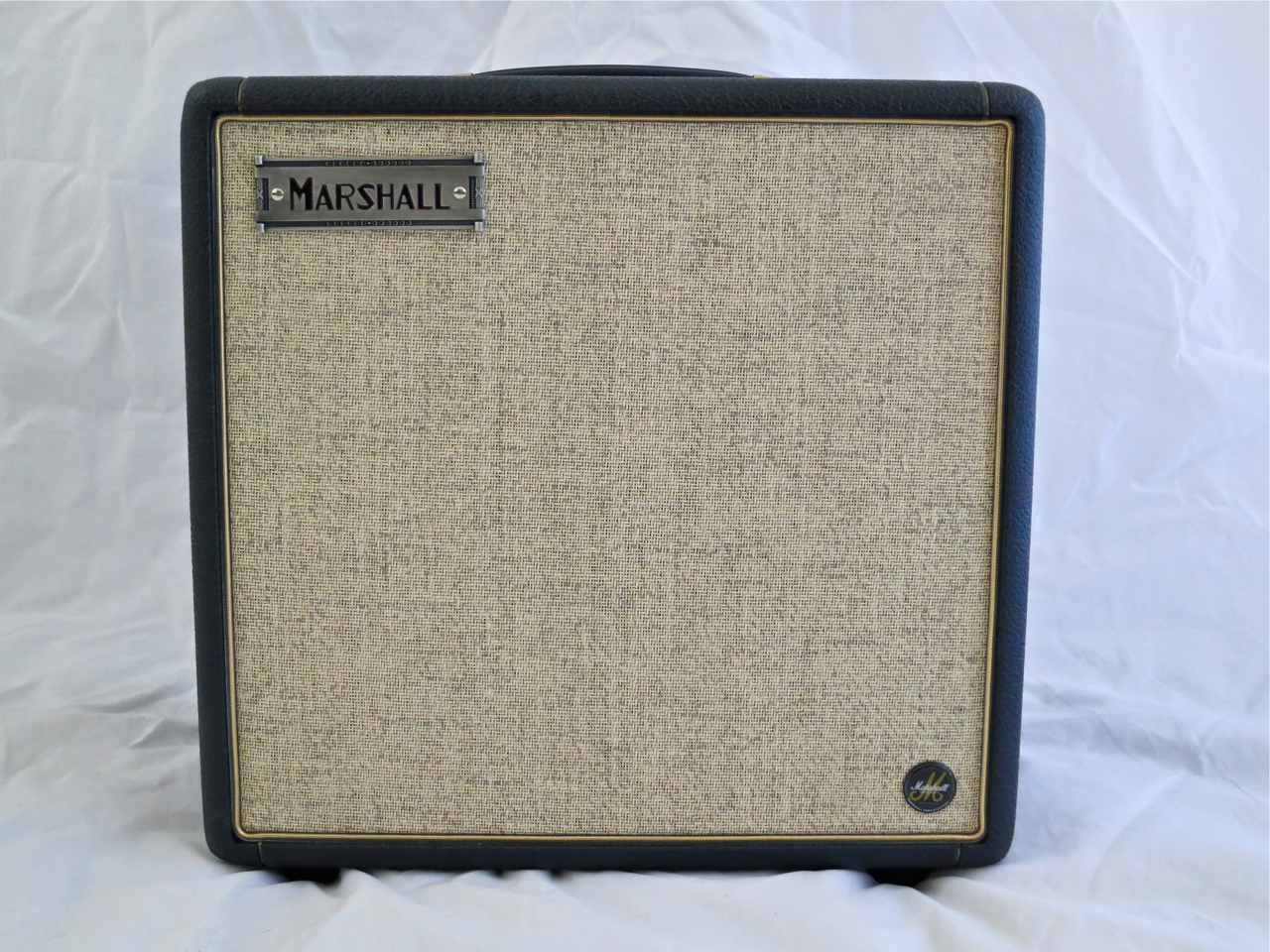
The closed-type Marshall cab holds a single Celestion G10F-15 10-inch speaker.
****

What kinds of sounds do we usually associate with a vintage-style Marshall? Probably clean tones with a dry character and not very much headroom. On the overdriven and distorted side of things we’d definitely look for creamy compression with a good sprinkling of mid-range grunt and presence bite .
…and these are exactly the types of tones the Marshallin Offset dishes out in a very tasty manner!
A vintage-reissue Fender Telecaster stays fairly clean at the beginning of the Custom Offset’s gain range, but the British type of dryness is clearly present:
The higher output of my Gibson Les Paul Junior’s P-90 clearly drives the preamp more, which results in a nice bit of added graininess at the same settings, especially in the attack phase of each note:
A double-humbucker’d Hamer USA Studio Custom finally pushes this Marshall into real break-up territory – fantastic for old-school Blues. For completely clean tones with humbuckers you will have to turn down your guitar’s volume control:
****
Turning up the Marshall’s Loudness-control adds more gain to preceedings, but also raises volume levels considerably. The Custom JTM1 Offset is quite a belter for a one-watter, meaning it’s too loud to be played at full-tilt in most apartment buildings.
Luckily for us, there’s the nifty Power-switch on the back panel, which drops the volume down to neighbour-friendly levels. A nice side effect of going oh-point-one Watts is that it also adds another wallop of overdrive into the mix, which is why you can even get some decent Hard ’n’ Heavy-tones out of this tiny rig.
Here’s a taste of what I got at 0.1 Watts and Loudness turned all the way up.
First the Tele…
…next up the Junior…
…and last, but not least, the Hamer:
****

In my view the Marshall Custom JTM1 Offset is a great-sounding little bugger of a half-stack, giving you most of the classic Marshall tones.
Yes, I know that 1,000 euros is a lot of money for such a tiny amp. If you’re purely on the look-out for a very small valve amp for your living-room or project studio, you will probably get more features (and Watts) for your money from other makes or models.
But the Custom Offset clearly isn’t only about being a small amp; instead there’s a great deal of added prestige in such a well-made, limited edition amp build in England by a company of such standing. The Marshall Custom JTM1 Offset is a boutique-class amp for collectors and purists, and seen in this light the price seems rather fair.
If you’re interested I’d recommend speedy action, though, because the availability is, indeed, very limited!
****
Marshall Custom JTM1 Offset
Finnish distributor: EM Nordic
Thanks to DLX Music Helsinki for the loan of the review sample!
****
Pros:
+ quality of workmanship
+ sound
+ Power-switch
+ small size
+ collectability
****
Testipenkissä: LTD AJ-1 Andy James + EC-1000ET Evertune

Tällä kertaa testin aiheina ovat kaksi uutta LTD-mallia:

LTD AJ-1 on brittiläisen kitaristin, Andy Jamesin nimikkomalli. Andy James on tunnettu progressiivista metallia soittavan Sacred Mother Tongue -bändin kitaristina.

LTD EC-1000ET Evertune ei ole jonkun räppärin uusi nimikkomalli, vaan uudenlaisella Evertune-tallalla varustettu sähkökitara. Evertunen juju piilee siinä, että se käytännössä poistaa virittämisen tarpeen sen jälkeen, kun kitara on viritetty kerran.
****

Vaikka Andy Jamesin LTD AJ-1 (986 €) pohjautuukin selvästi firman Horizon/MH-sarjalaisiin, nimikkomallissa on huomioitu monta Jamesin toivomia detajiratkaisuja.

Silmiinpistävin ero rivi-Horizoniin on AJ-1:n satiinipintainen musta viimeistely, joka tuntuu erittäin mukavalta, eikä myöskään muutu hikisillä käsillä niin liukkaaksi kuin useat kiiltävät viimeistelyt.
LTD:n vaahterakaula jatkuu yhtenäisenä koko mahonkirungon läpi. Rungon kaareva etupuoli, sekä takapuoleen lisätty syvä viiste tekevät kitarasta hyvin mukavan.

Andy Jamesin toiveesta LTD AJ-1:n viritinlavan muoto poikkeaa MH-kitaroiden tavallisesti käytetystä jääkiekkomaila-tyypistä.
Minä en ole henkilökohtaisesti tämän LTD-lavan suurin fani – sen kärjekäs ulkonäkö on minulle yksinkertaisesti jo liian ”Metal”, mutta objektiivisesti katsottuna ei tässä lavassa ole kuitenkin mitään vikaa.
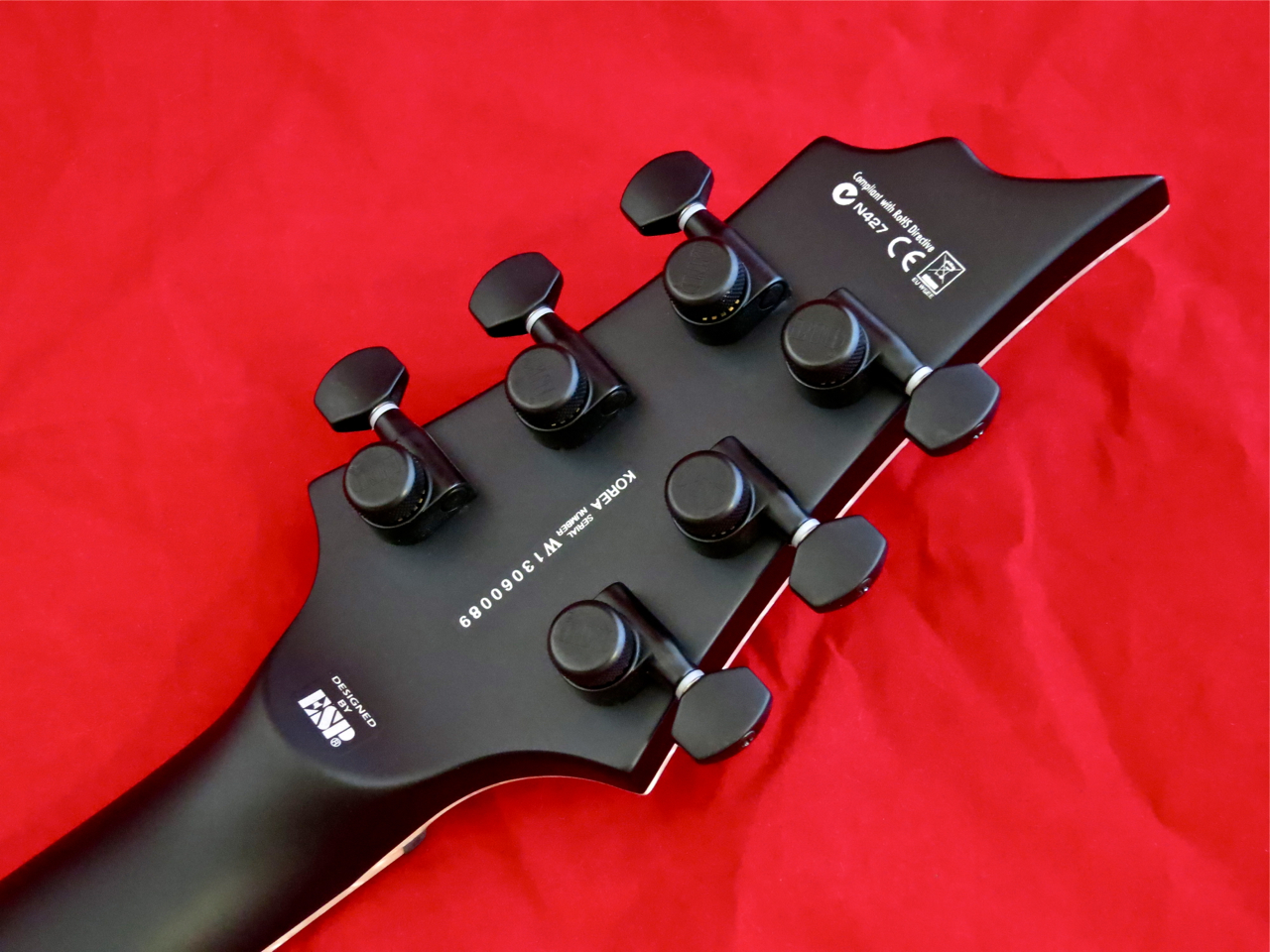
AJ-1:n grafiittipitoinen satula tukee laadukkaiden lukkovirittimien toimintaa hienosti.
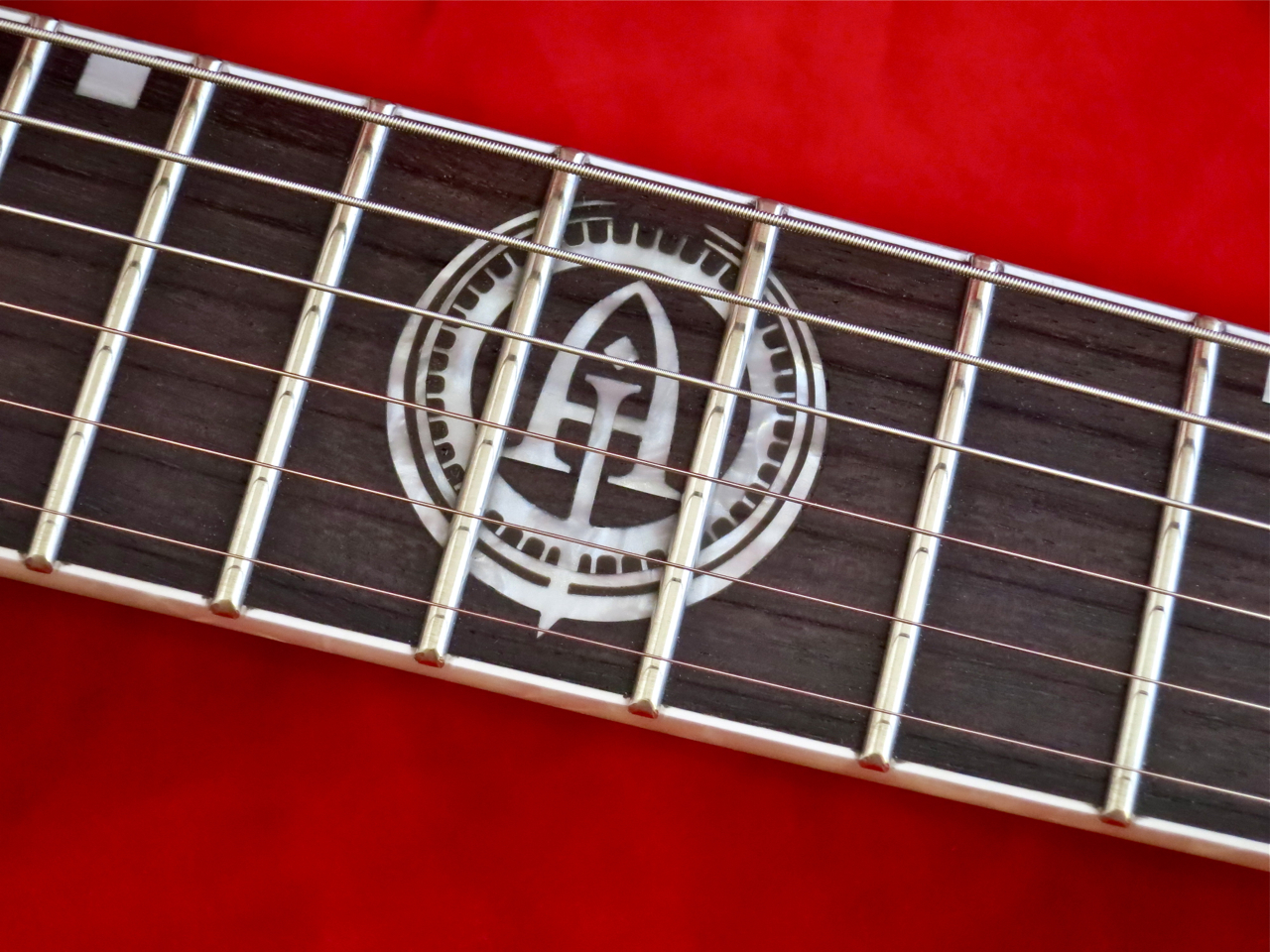
Andy Jamesin oma logo toimii 12:n nauhan kauniina otemerkkinä.

Testiyksilön reunalistoitukset, upotukset sekä nauhatyö ovat erittäin korkeaa tasoa.

LTD:n sulavasti toteutettu ylimeno kaulalta runkoon helpottaa tuntuvasti otekäden pääsemistä 24:lle nauhalle.
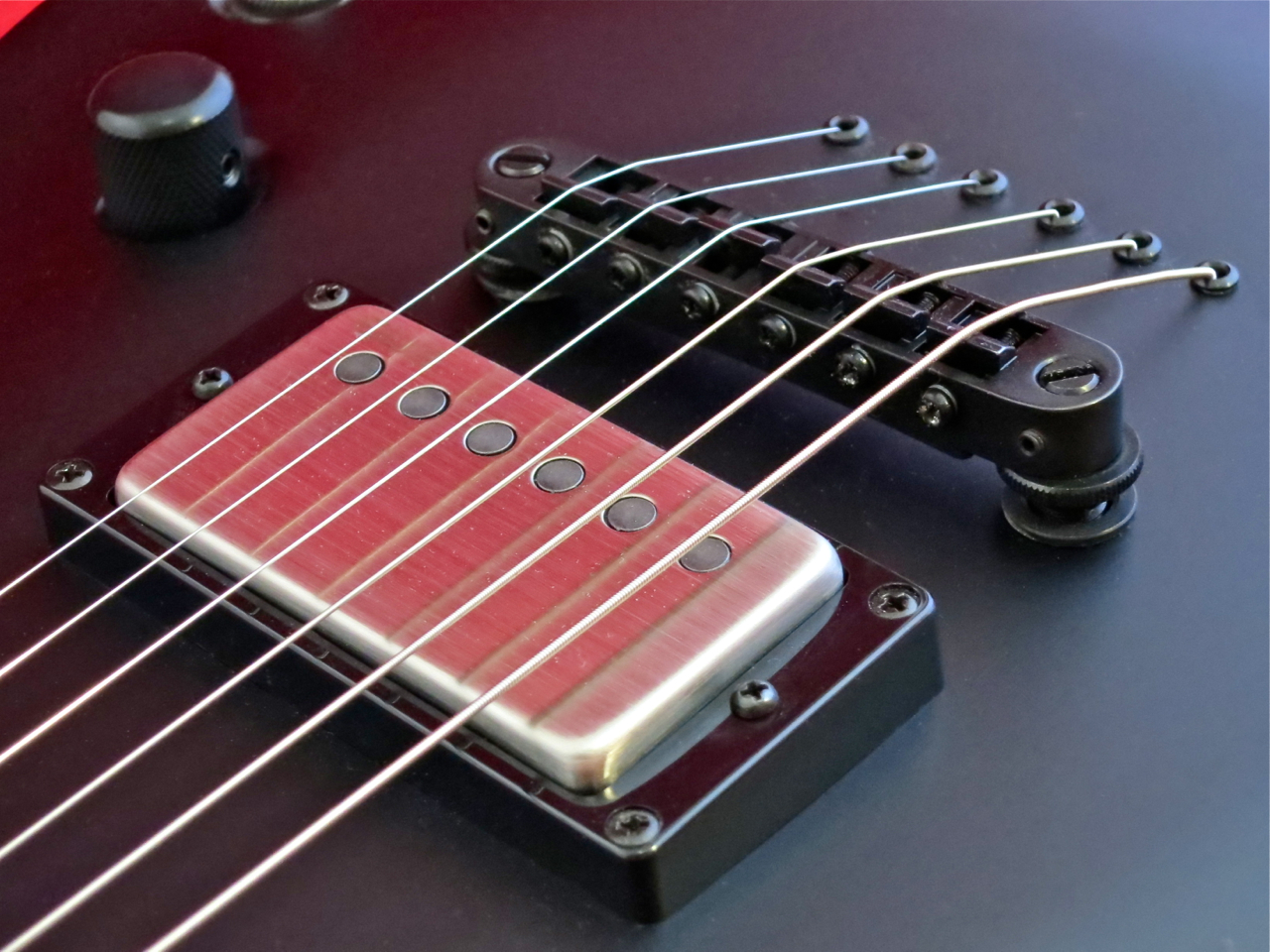
Herra James on valinnut omaan nimikkosoittimeensa lukittavan TonePros-tallan. Ylimääräisen, ei-toivotun lisävärähtelyn tehokas poistaminen parantaa yleensä kitaran sointia ja sustainea.

LTD AJ-1 -mallin mikrofonit ovat aktiivit ja tulevat EMG:n melko tuoreelta Metal Works -sarjalta.
Kaulan viereen on asennettu EMG 66 -humbucker, joka on varustettu Alnico V -magneetilla ja keraamisilla napapaloilla. EMG 66:lle luvataan vintage-tyylistä soundia aktiivipotkulla, mutta ilman bassokaistan puuroutumista.
Tallamikrofoniksi taas on valittu EMG 57, jossa Alnico V:n kumppaneiksi on lisätty teräsnapapaloja hieman pehmeämpää, PAF-maista sointia varten.

Andy James ei tarvitse tone-säädintä lainkaan, minkä takia se on jätetty hänen nimikkomallistaan kokonaan pois.
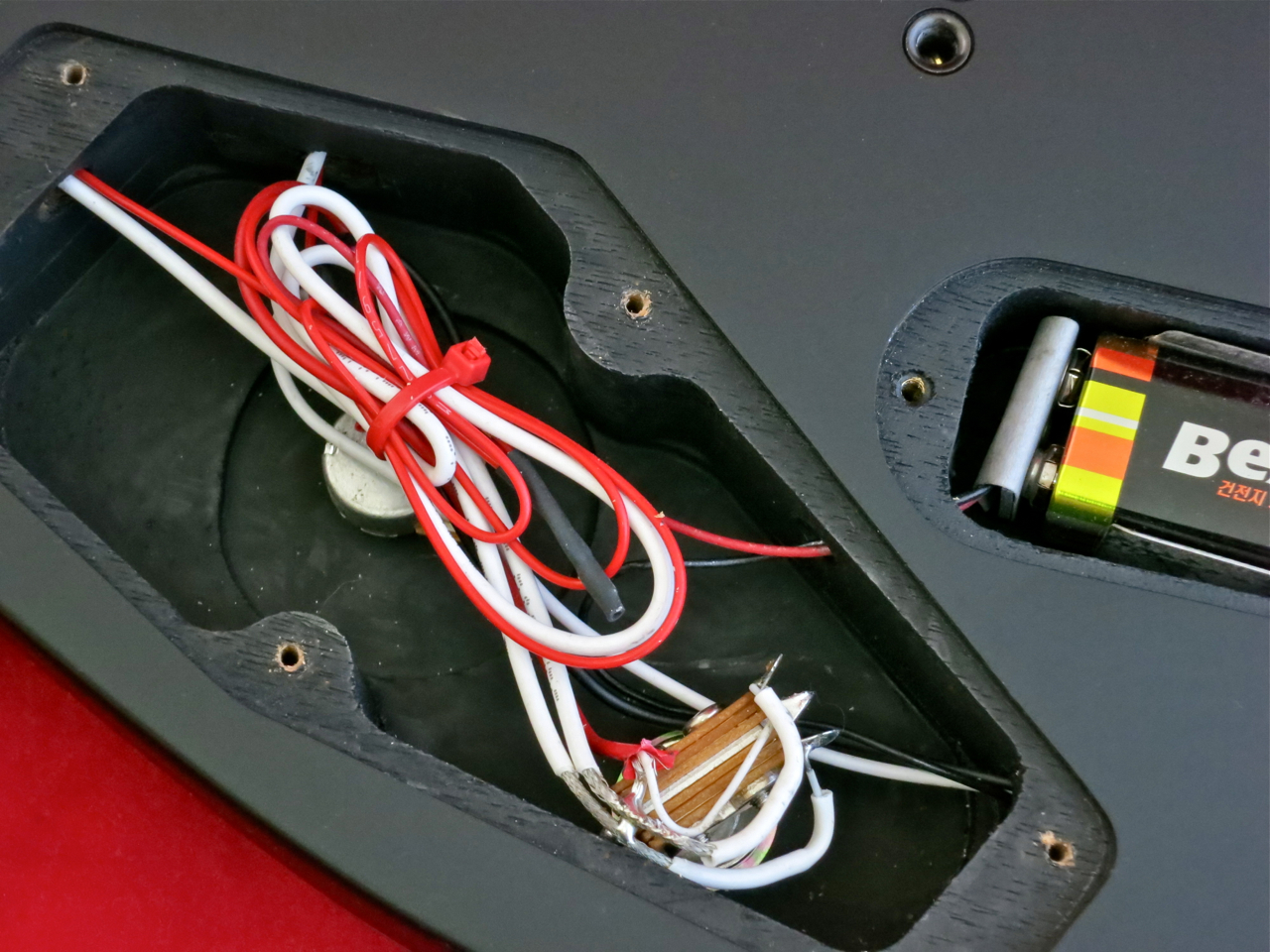
Takalokeroiden työnjälki on hyvin siisti. Paristolokeron kansi on kiinnitetty koneruuveilla, mikä on selvästi puuruuveja kestävämpi ratkaisu.
****
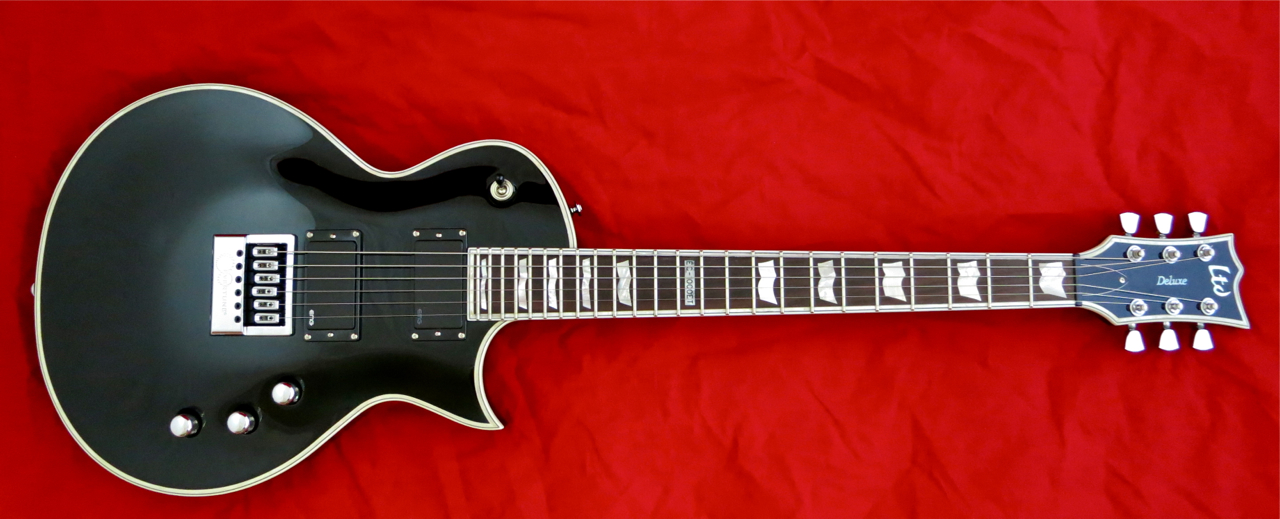
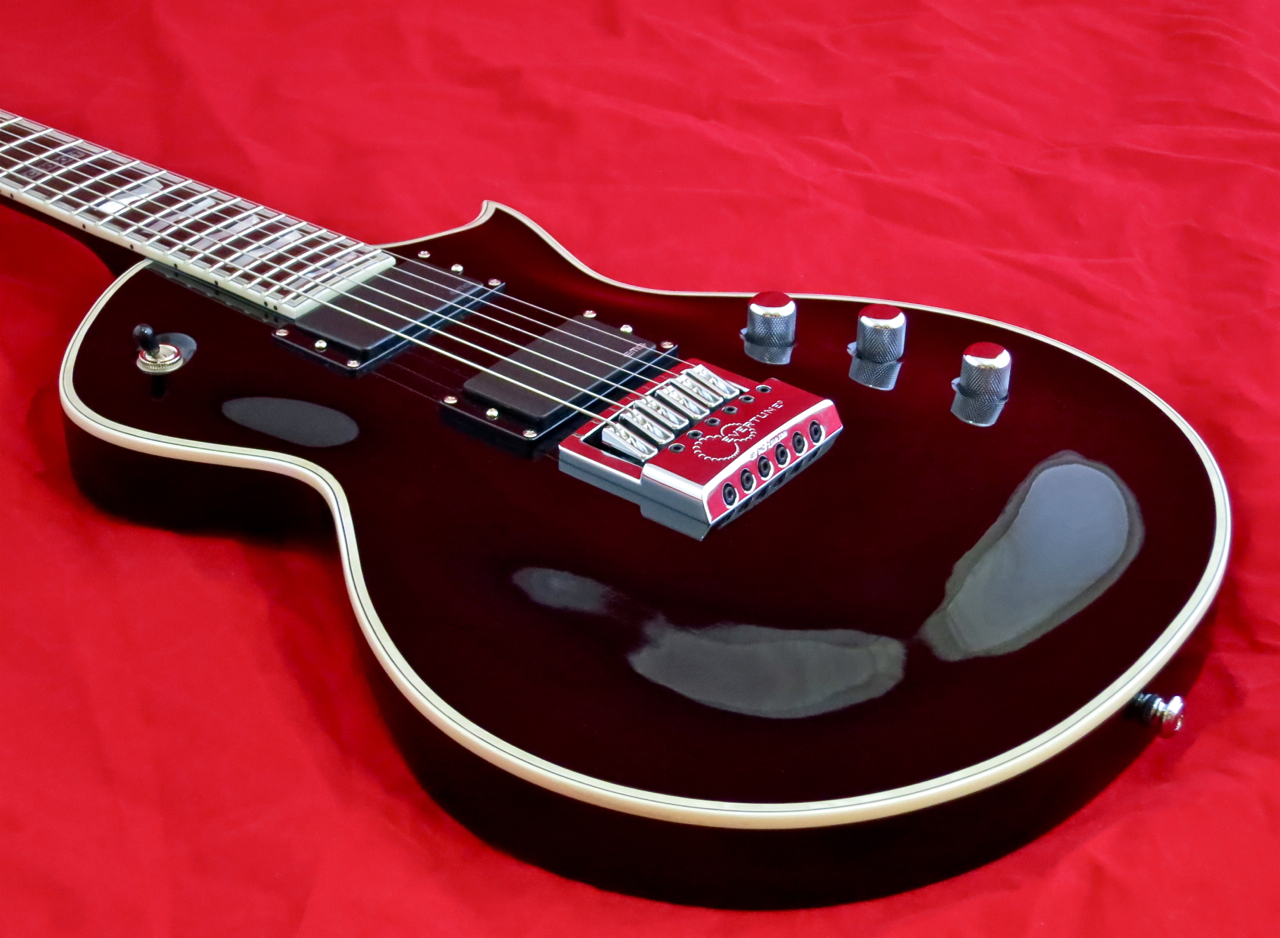
LTD EC-1000ET (986 €) on tavallisen EC-1000:n Evertune-tallalla varustettu sisarmalli.
Kyseessä on siis liimakaulainen kitara, jolla on mahonkikaulan lisäksi samasta puusta veistetty runko vaahterakannella.

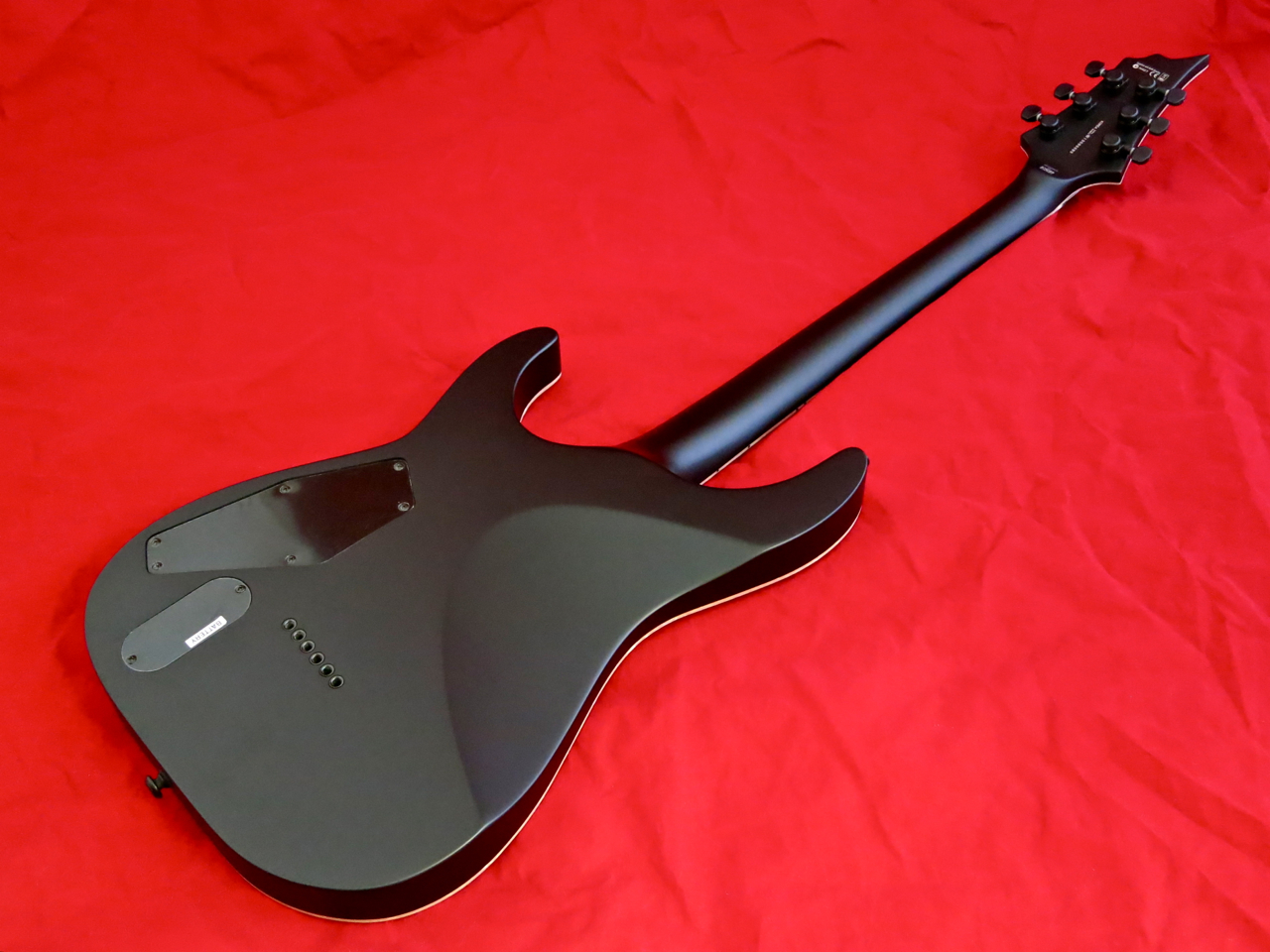
Kielitys hoituu EC-1000ET:ssä rungon takapuolelta tallan läpi.

Aitona LTD Deluxe -malliston jäsenenä soittimella on upeat helmiäisupotukset, sekä monikerroksinen reunalistoitus sekä kaulassa että kannessa.

Tyylikkäissä Grover-virittimissä yhdistyy nykyaikainen tarkkuus ja vintage-tyylinen ulkonäkö.

Palisanteriotelaudassa kohtaavat upeat helmiäisupotukset ja erittäin korkeatasoinen nauhatyö.

LTD EC-1000ET:n mikrofonivarustus koostuu – jo klassikoksi varttuneesta – EMG 60/EMG 81 -parivaljakosta. Tarjolla on siis hyvin fokusoitu keskialue, heleä diskantti, sekä muhkea basso tehokkaassa, aktiivisessa paketissa.
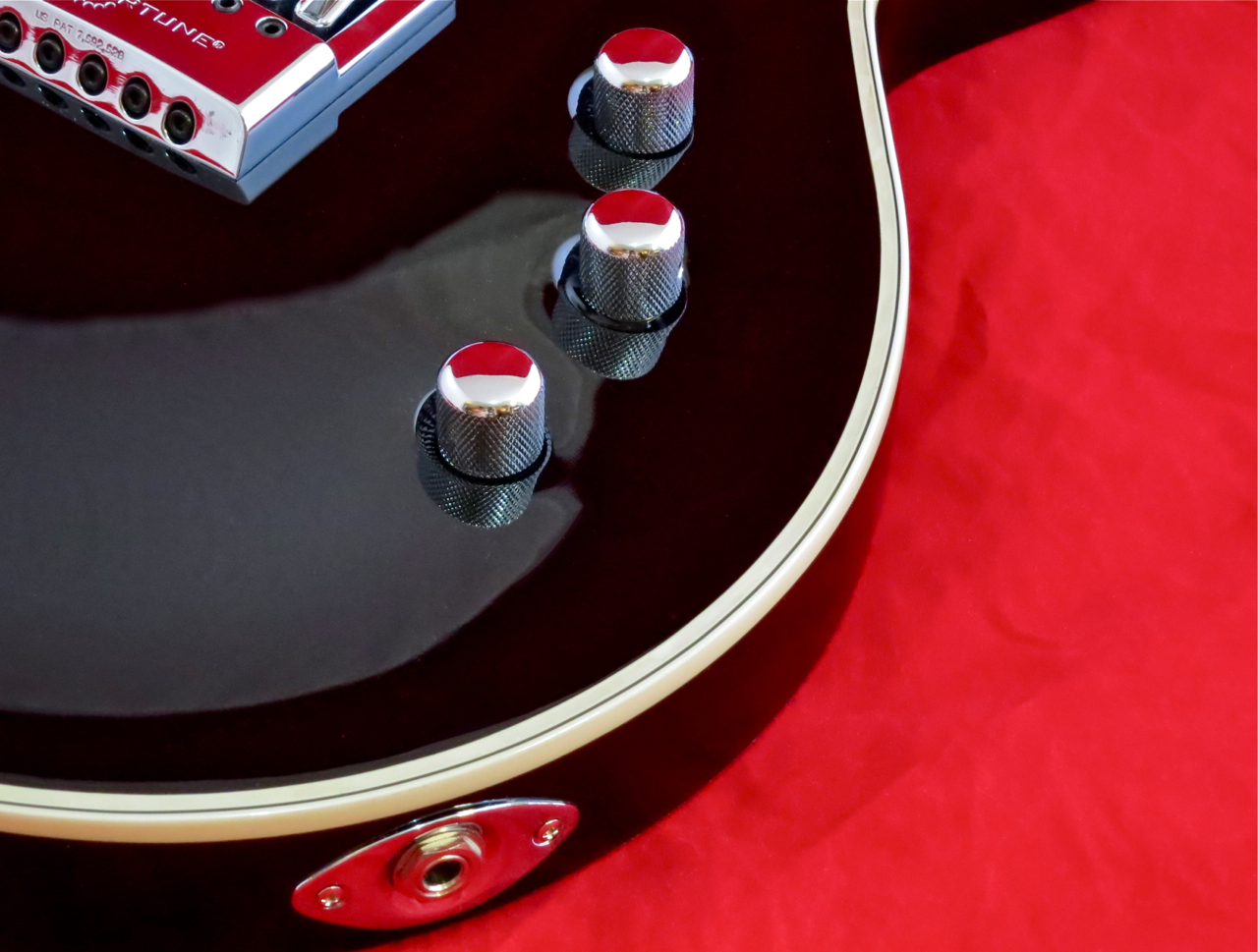
Lähimpänä tallaa oleva säädin on tallamikrofonin (!) volume, keskeltä löytyy kaulamikin volume-säädin, ja viimeiseksi tulee EC-1000ET:n master tone.

Myös tässäkin kitarassa elektroniikkalokero näyttää hyvin asialliselta.

Evertune-tallan toiminta perustuu käytännössä samoihin fysikaalisiin periaatteisiin kuin esimerkiksi nykyaikainen vibratalla: Evertunen tapauksessa jokaisella kielellä on oma laakeroitu jousijärjestelmä, joka pyrkii pitämään kielen vetoa aina samansuuruisena.
Tallan takareunalla näkyy intonaatiosäätöruuvit, kun taas Evertune-logon yllä olevilla kuusiokoloruuveilla säädetään kielten korkeutta.

Tällaiselta Evertune-systeemi näyttää silloin kun takalevy on poistettu.
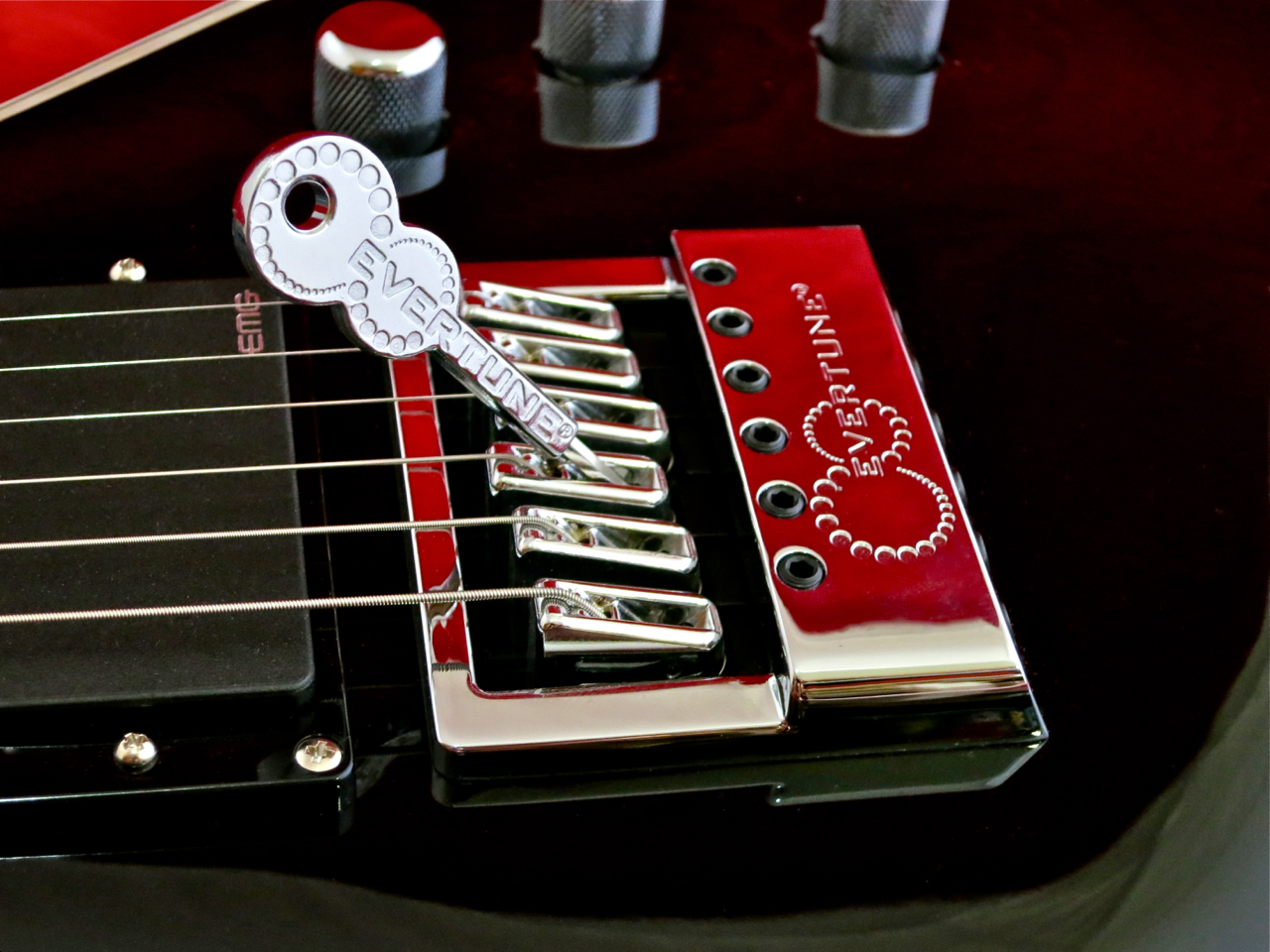
Evertune-kitaroilla lavalla olevilla virittimillä ei viritetä soitinta perinteisellä tavalla, vaan niillä säädetään kuinka herkästi kielet reagoivat venytyksiin ja sormivibratoon.
Virittäminen sinänsä hoidetaan kuusiokoloavaimella tallapaloissa. Kuvassa näkyvä avain tulee paketissa mukana, mutta tavallinenkin kuusiokoloavain käy.
Evertunen mukaan talla toimii tehdasvarustuksella normaalivirityksessä (E-e, a = 440 Hz) tavallisilla 009-012 kielisatseilla. Myös toisenlaisten virityksien käyttö pitäisi onnistua, mutta se vaatii aina hieman säätöä (sekä virittimillä että tallassa), minkä takia nopea vaihtaminen esimerkiksi standardivirityksestä drop-D:hen ei onnistu kesken livekeikan.
Hyvin paljon tavallisesta poikkeavia virityksiä – tai kielityksiä – varten täytyy tilata Evertunelta sopivia vaihtoyksiköitä, joita asennetaan perus tallapalojen sijasta. Lisätietoa saa Evertunen käyttöoppaasta: Evertune User Manual
****

Testissä käynyt LTD AJ-1 on hyvin kevyt kitara, joka tuntuu erittäin mielyttävältä.
Kaulaprofiiliksi on valittu melko matala, mutta kuitenkin pyöreä D, joka antaa soittimelle – yhdessä suuren otelaudan radiuksen kanssa – vauhtikepille tyypillisen tatsin ja soitettavuuden. Andy James -nimikkomalli ei selvästikään ole nuotiokitaraksi tarkoitettu, vaan täysverinen nopeasormisen metallivelhon luottokitara.
Kun EMG käyttää sanaa ”vintage”, se viittaa ilmiselvästi uusien mikrofoniensa mehevään soundiin, eikä lähtötasoon. Tällä Metal Works -humbuckerilla nimittäin puhtia riittää rutkasti.
Joissakin tapauksissa joutuu varmaan säätämään kitaran volumea hieman pienemmälle, jotta vahvistin pysyisi täysin puhtaana:
Särösoundit taas vain hyötyvät tehokkaista ja täysin hiljaisista EMG-mikrofoneista:
****

LTD EC-1000ET on jämäkän tuntuinen Rock-keppi mukavalla keskivertopainolla.
Kaulassa on hivenen verran enemmän lihaa ja pyöreyttä kuin AJ-1-mallissa. Kiiltävän lakkauksen ja EC-1000ET:n hieman kaarevamman otelaudan ansiosta, nojaa tämä kitara enemmän vintagen suuntaan. Klassikkoainesta siis…
On mahdollista, että Evertune-talla lisää soittimelle vähän painoa, mutta selkeästi havaittavissa on, että erikoistallan ansiosta kitara soi erittäin puhtaasti ja pitkällä, tasaisella sustainella.
Vaikka olin säätänyt LTD:n pääsääntöisesti sellaiseksi, että kielten venytykset ja sormivibratot onnistuvat mahdollisimman helposti, oli mukava havaita, että vire pysyy myös rankalla kädellä soitettaessa horjumatta.

Soundiltaan tämän kitaran EMG-setti on ehkä neutraalimpi kuin Andy James -mallin varustus, muttei missään nimessä huonompi:
****

Vau, mikä soitin! LTD AJ-1 on mielestäni erinomainen esimerkki virtaviivaistetusta heavykitarasta. Andy James -malli tarjoaa loistavaa soitettavuutta ja soundia, asianmukaisen tuhdilla lähtötasolla.

LTD EC-1000ET on erittäin tyylikäs ja laadukas alusta erikoiselle tallaratkaisulle. Evertune ei ole ehkä paras valinta, jos haluaa vaihtaa nopeasti yhdestä virityksestä toiseen, mutta tavallisessa yleiskäytössä se on suorastaan lyömätön. Tällä kitaralla virittäminen ei enää kuulu kitaristin jokapäiväisiin toimenpiteisiin!
****
LTD AJ-1 Andy James Signature
• 986 €
LTD EC-1000ET Evertune
• 986 €
Maahantuoja: Musamaailma
****
LTD AJ-1 Andy James Signature
Plussat:
+ kevyt paino
+ mattaviimeistely
+ soitettavuus
+ työnjälki
+ soundi
Miinukset:
– jotkut ehkä kaipaa tone-säätimen
****
LTD EC-1000ET Evertune
Plussat:
+ Evertune-tallan toimivuus
+ klassinen ulkonäkö
+ soitettavuus
+ työnjälki
+ soundi
Miinukset:
– ei voi nopeasti vaihtaa virityksien välillä
****



 Kitarablogi.com – Finland's premier Guitar and Bass blog
