Bluetone Black King 15 Reverb + Testi tulossa + Working on a review

The Bluetone Black King 15 Reverb is a lightweight 15-watt all-valve guitar combo handmade in Finland. The preamp is inspired by a Fender Vibro King amp. The power amp runs on two 6V6GT tubes. Find out more HERE.

****

• lead guitar: Hamer USA Studio Custom; neck pickup; distortion adjusted with the guitar’s volume control

• rhythm guitars: Fender (Japan) ’62 Telecaster Custom reissue + Epiphone Casino with Göldo pickups

• all guitar tracks were recorded with a Shure SM7B microphone running into a Cranborne Audio Camden EC2 preamp

• no pedals used

• a little bit of delay and reverb was added during mix down

****

• rhythm guitars: Brownsville Choirboy 12-string electric (left), Fender Stratocaster (centre), Fender Telecaster (right) – no pedals used

• lead guitar: Hamer USA Studio Custom through a Uraltone Fuzz Face Si clone with delay added at mixdown

• mic used: Shure SM7B

• audio interface: Universal Audio Volt 2

Mono, Fake Stereo, Capitol Duophonic – What does it mean?

Listen to these examples through a good set of stereo speakers or using headphones.

Before 5.1 or Atmos, back in the 1960s, there was only mono and stereo audio. True mono meant that there was only a single audio track that was played back through a single speaker.

• Once stereo arrived on the scene, mono was put out as the exact same signal coming from both speakers at the exact same time. As stereo started becoming the norm, many record labels set about to reprocess mono recordings to produce a quasi-stereo signal.

• ”Regular” Fake Stereo simply slashed all the treble from one stereo channel and all the bass from the other, sometimes adding a hint of reverb to the treble channel. As both channels remained in synchronisation, fake stereo folded back nicely into mono.

• Capitol Records’ Duophonic process added a time delay of a few milliseconds to the treble channel in order to create more (fake) spatial information. Sometimes the mastering engineer also added an additional layer of compression/limiting to the signal to make it seem more lively. The problem with Duophonic was (and is) that the mono signal sounds a mess, because the left and right channels aren’t in synchronisation anymore.

Play-along – ”Spanish Eyes”

The tab I use is read as follows:
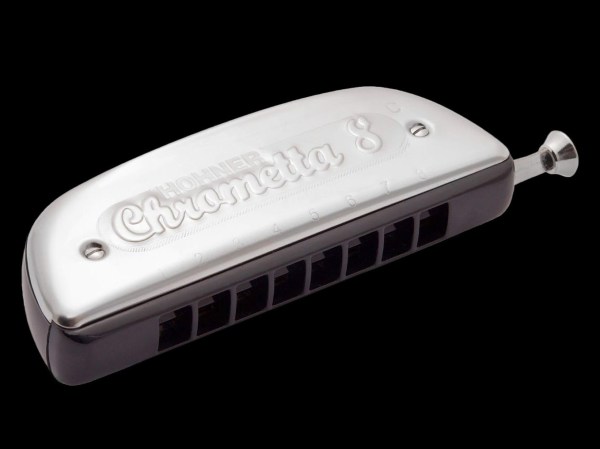
• plain numbers are ”channel blown”; 2 = second channel blow
• minus numbers are ”channel drawn”; -4 = fourth channel draw
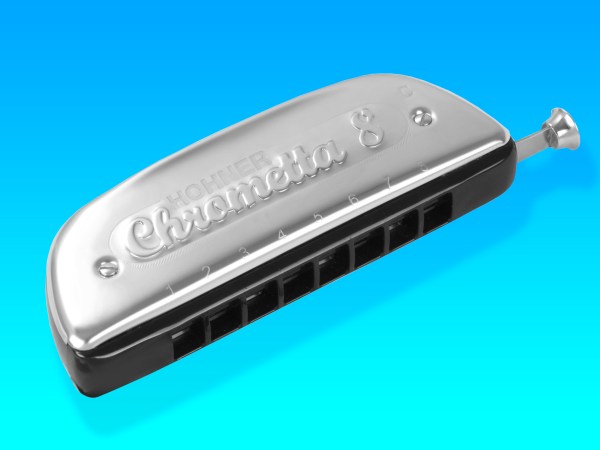
• brackets mean ”slider pressed in”; (-7) = seventh channel draw with the slider pushed in

Pidä blogia WordPress.comissa.

Ylös ↑