Testipenkissä: Raato Guitars Fuzzrocity
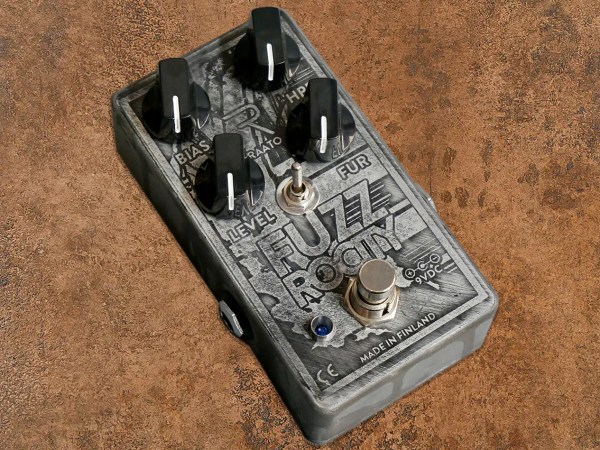
Raato Custom Guitars on tunnettu pajan nykytarpeisiin tehdyistä huippulaadukaista sähkö- ja bassokitaroistaan. Raato Guitarsin pomo Mika Ruotsalainen on hiljattain lisänyt kolme efektipedaalia brändin valikoimaan – yhden trebleboosterin, sekä pari fuzzia.
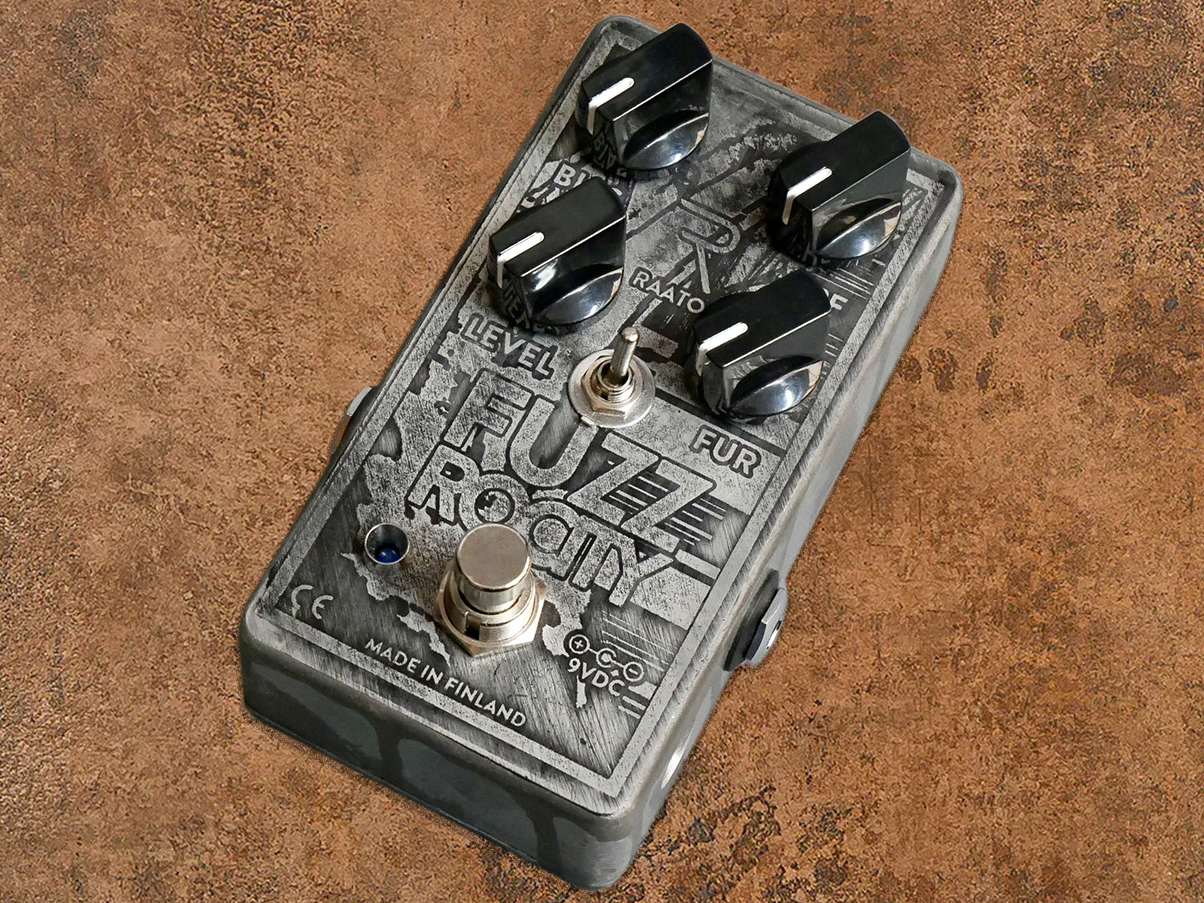
Upouusi Raato Fuzzrocity (268 €) on Fuzz Face -tyylinen piipohjainen fuzz-särö nykyajan kitaristeille. Tässä yhteydessä ”Fuzz Face -tyylinen” tarkoittaa nimenomaan efektin soundimaailma, sillä Fuzzrocity ei ole missään nimessä jonkun vintage-pedaalin klooni.
Kun kävin pajalla, Mika näytti minulle muutaman työn alla olevan Fuzzrocity-pedaalin. Hän käyttää erittäin laadukkaita osia, sekä oman suunnittelun mukaan tehtyjä piirilevyjä. Myös pedaalien grafiikat etsataan itse Raato Guitarsilla. Toimiakseen Raato-pedaalit tarvitsevat Boss-standardin mukaista yhdeksän voltin virtalähdettä.
Hyvä vintage Fuzz Face voi olla taivaallinen soundikokemus, mutta valitettavasti sillä ei ole paljon mahdollisuuksia säätää sitä soundia, kun tarjolla on ainoastaan Fuzz- ja Volume-säätimet. Riippuen soittajan musikkillisista tarpeista, sekä käytetystä kitarasta ja vahvistimesta, vintage-fuzz voi kuulostaa liian terävältä tai liian mutaiselta, etenkin nykyaikaisten alavireisten (tai seitsenkielisten) kitaroiden kanssa.
Lisäksi vanhat Fuzz Facet voivat aiheuttaa ongelmia yhteiskäytössä wah-pedaalin kanssa. Pedaalien välinen impedanssin yhteensopimattomuus voi aiheuttaa korvia raastavaa ulinaa.
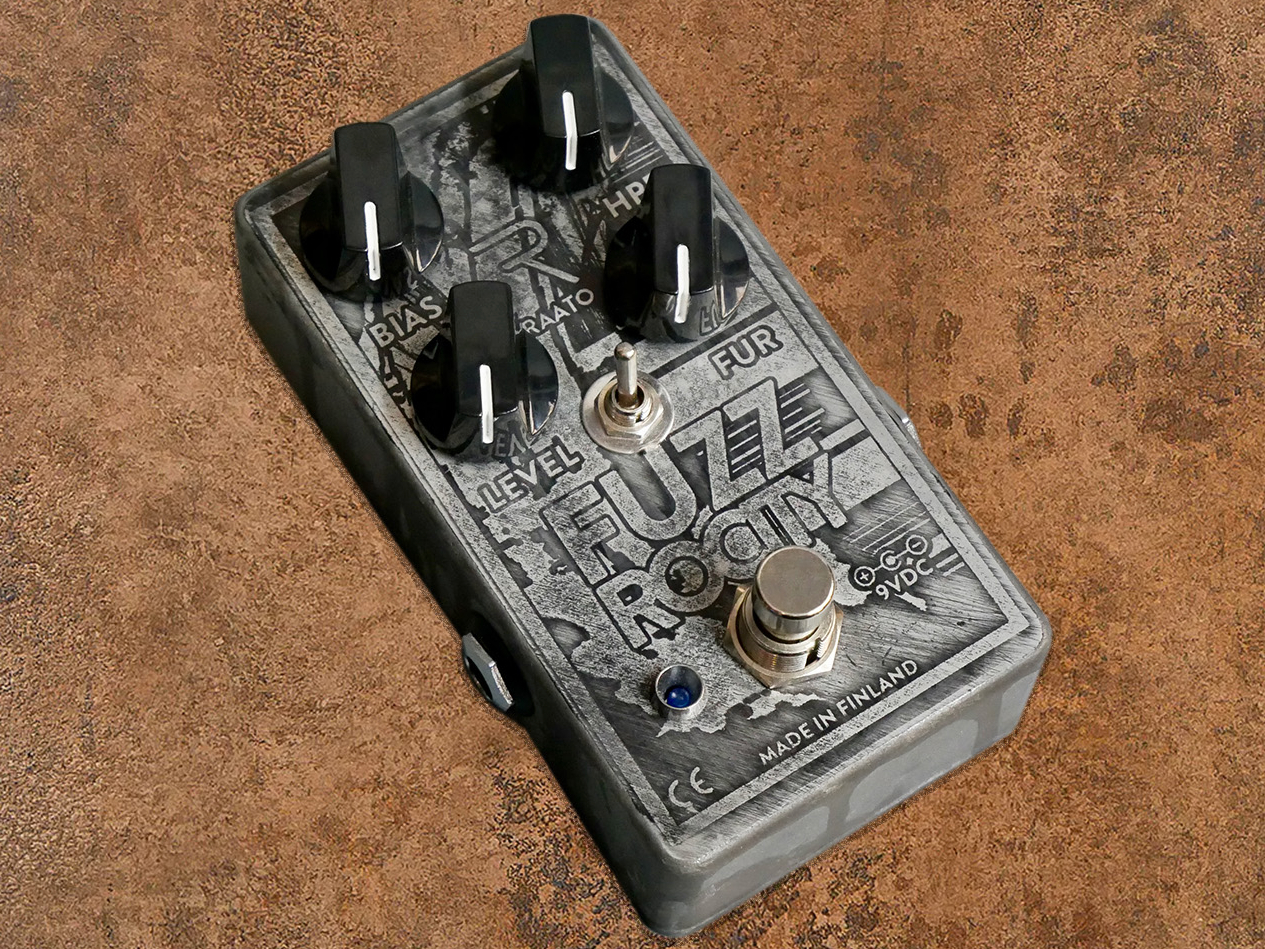
Raato Fuzzrocity on suunniteltu nykykitaristin tarpeita silmällä pitäen – pedaali tarjoaa laajan valikoiman herkullisia säröjä, sekä paljon säätövaraa eri genrejä ja tarpeita varten. Efektistä löytyy neljä säädintä:
BIAS antaa sinun säätää piitransistorien käyttöjännitettä, kun taas HPF tarkoittaa ylipäästösuodatinta, jolla voit poistaa särösignaalista mahdollisesti häiritseviä bassotaajuuksia. FUR vastaa tavallista fuzz- tai gain-säädintä tulosignaalille, kun taas LEVEL ohjaa lähtösignaalin voimakkuutta.
Lisäksi Fuzzrocitysta löytyy kolmisuuntainen minikytkin, joka antaa sinulle kaksi eri treble-filtteriä (sekä ohituksen keskiasennossa), jolla voi kesyttää tarvittaessa signaalin diskanttia.
Saat nykyaikaisen version Fuzz Face soundista, kun BIAS on lähes täysillä ja HPF pois päältä, jolloin FUR ja LEVEL toimivat vintage-faced Fuzz- ja Volume-säätimien tavalla. Ehdottaisin, että laitat tässä tapauksessa diskanttifiltterin kytkimen ala-asentoon.
Raato Fuzzrocity tarjoaa kuitenkin paljon laajemman kattauksen eri fuzz-soundeja, kun ottaa kaikki säätimet käyttöön.
BIAS-säätimen asetuksilla on erittäin suuri vaikutus tämän pedaalin luonteeseen ja dynamiikkaan. Matalilla BIAS-asetuksilla saat ”kuolevan pariston” soundeja, joissa esiintyy vahva geittaaminen ja hyvinkin rakeinen särösoundi. Avaamalla BIASia fuzz-sounds muuttuu kiinteämmäksi ja dynaamisemmaksi. Monet nyky-rock- ja metal-kitaristit hyötyvät pedaalin HPF-säätimestä, joka on tärkeä työkalu, silloin kun halutaan pitää mutaisia bassotaajuuksia aisoissa. FUR-säädin käyttäytyy – luonnollisesti – vuorovaikutteisesti BIAS-säätimen kanssa, ja sen soundien skaala ulottuu ”rikkinäisen sitarin” soundeista mietojen overdrive-soundien kautta tuomiopäivän fuzziin. Kolmiasentoinen treble-kytkin toimii hienosti purevuuden annostelijana.
Mika Ruotsalainen on suunnittelut Raato Fuzzrocity -pedaalinsa toimimaan saumattomasti myös vintage-tyylisten wah-wah-pedaalien kanssa, niin kuin kuulee tämän jutun alussa olevassa videossa, jossa käytin Voxin V845 suoraan Fuzzrocityyn.
Jutun lopussa oleva video taas näyttää, kuinka hyvin Fuzzrocity reagoi kitaran volume-säätimen muutoksiin.
Minun mielestäni Raato Guitarsin Fuzzrocity-särö on täysosuma, koska sillä saa erittäin laajan valikoiman erilaisia vintage-vivahteisia fuzz-soundeja, täysin ilman vintage-klooneille tyypillisiä ongelmia monissa nykypäivän genreissä.
Fuzzrocity-pedaali on piensarjoissa käsin tehty efekti, ja saatavilla hyvin järkevällä hinnalla. Pedaalilla on selkeästi luottotyökalun ainekset.
Takamine GD10-NS, Tanglewood TWD-ST & Yamaha FG800MII – tulossa Rockway-blogiin
Here’s a demo of three affordable dreadnought-sized acoustic guitars. The demo is based on Anssi Kela’s classic track ”Kaksi sisarta”.
****
• Tanglewood TWD-ST
• Takamine GD10-NS
• Yamaha FG800MII
****
• first verse: Yamaha (lead), Takamine (left rhythm), Tanglewood (right rhythm)
• second verse: Tanglewood (lead), Yamaha (left rhythm), Takamine (right rhythm)
• third verse: Takamine (lead), Yamaha (left rhythm), Tanglewood (right rhythm)
• rhythm guitar tracks recorded with a Shure 545SD
• lead guitar tracks recorded with an AKG C3000
• mic preamp: Cranborne Audio Camden EC2
****
Testi tulossa:
blogi.rockway.fi
****
****



Review: Raato Guitars Fuzzrocity
Raato Custom Guitars is a Finnish maker of ultramodern handcrafted electric guitars and basses. Recently Raato’s main man Mika Ruotsalainen has introduced three effect pedals – a treble booster, as well as a pair of fuzz-boxes.
The Raato Fuzzrocity (268 €) is a Fuzz Face-flavoured silicon fuzz made for the modern guitarist. When I say ”Fuzz Face-flavoured” I mean the character of the fuzz sound, but the Fuzzrocity is not a clone of a vintage Fuzz Face.
Mika showed me a few Fuzzrocity pedals he was working on, when I visited his workshop, and I could see he was using high-quality parts and bespoke pcbs to assemble his pedals. The custom graphics are also etched into the pedals’ casings right there in the workshop. The pedal is powered by a Boss-standard 9V power supply.
A vintage Fuzz Face can be a thing of beauty, but it doesn’t offer much scope for adjustment, offering only Fuzz- and Volume-controls, without any option to adjust the resulting fuzz sound itself. Depending on the player’s requirements and equipment a vintage fuzz can sound too bright or too muddy, especially with modern downtuned (or seven-string) guitars.
Additionally, many original Fuzz Faces have a tendency to self-oscillate when used in conjunction with a wah-wah, due to impedance mismatching caused – in most cases – by the wah-pedal.
The Raato Fuzzrocity has been designed from the ground up to give you all of that delicious sound, while also offering plenty of scope for adjustment. There are four controls on offer:
BIAS lets you adjust the operating voltage for the silicon transistors, while HPF stands for ”high-pass filter” and lets you dial out any bottom end that might be clogging up your sound. FUR corresponds to your regular fuzz- or gain-control for the input signal, and LEVEL controls the output level.
Additionally, there’s a three-way mini-toggle that gives you two low-pass filter setting (plus bypass in the middle position) to tame the signals treble content, if necessary.
To get a modern version of a Fuzz Face sound, start off with the BIAS around 4 o’clock and the HPF turned to 7 o’clock. With this setting FUR and LEVEL correspond to a two-knob fuzz’s Fuzz- and Volume-controls, respectively. I’d recommend you set the three-way toggle to the downward position in this case.
But there’s a much wider array of tones to be gleaned from the Raato Fuzzrocity by using the controls to their fullest.
Settings of the BIAS-control have a very large bearing on the character and dynamics of this pedal. Set low BIAS will give you the sound of a ”dying” battery with plenty of gating and graininess. Turning BIAS up gradually will give you firmer fuzz sounds and more dynamic variation. For modern applications with drop-tuned and/or seven-string electrics and baritones, the HPF-knob is a crucial tool to keep any unwanted wooliness at bay. The FUR-control is – naturally – interactive with the BIAS settings, and it will take you all the way from ”broken sitar” tones and mild overdrive to doomsday fuzz. The three-way treble switch is really useful in tailoring the table content to suit your needs.
Mika Ruotsalainen has designed the Raato Fuzzrocity to work well with vintage-style wah-pedals, as you can easily hear in the video at the top of this review, where I have a Vox V845 running directly into the Fuzzrocity.
The video at the bottom of this video will show you for its part how well the Fuzzrocity responds to changes at your guitar’s own volume control.
In my view the Raato Fuzzrocity is a success on all fronts, because it manages to give you a wide variety of vintage-inspire fuzz sounds, without the drawbacks of vintage clones, and with far greater scope for adjustments.
The Fuzzrocity is handcrafted in Finland in very limited numbers and sold at a very reasonable price. This could easily become your go-to fuzz from now on.
Review: Bluetone Black King 15 Reverb
****
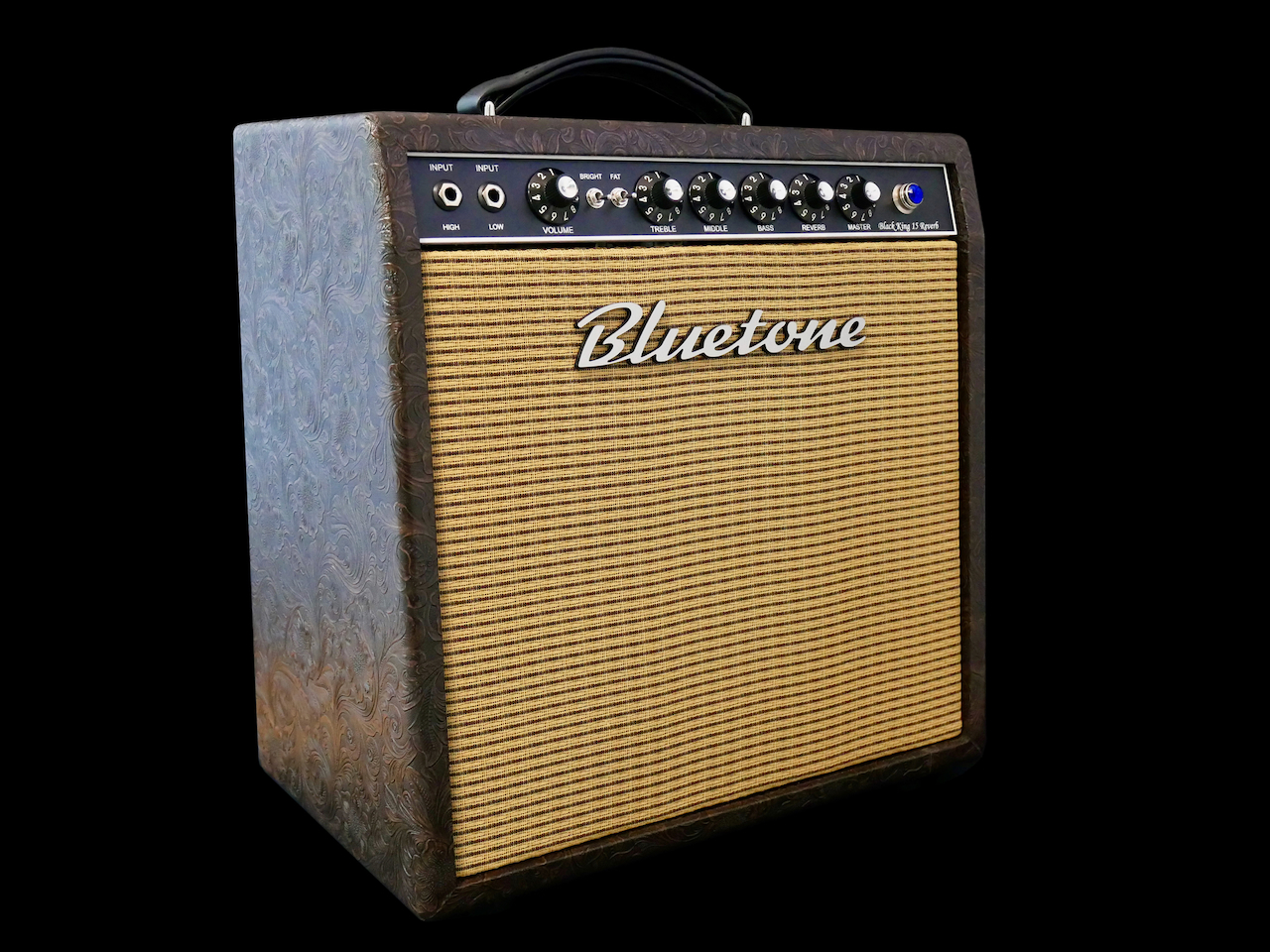
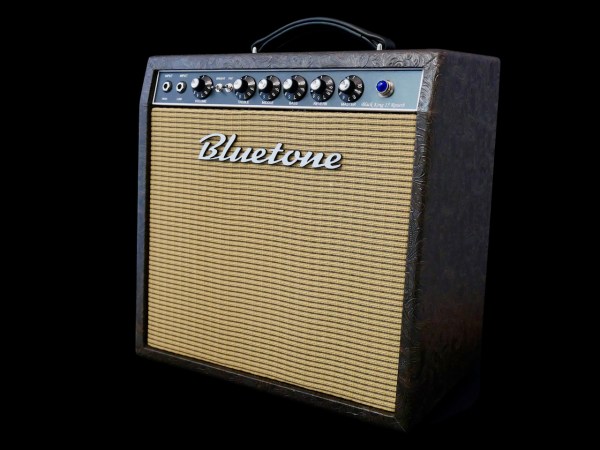
Bluetone’s new combo, the Black King 15 Reverb (prices start from 1,440 €), is a compact and lightweight (9 kg), handcrafted single-channel all-valve guitar amplifier. It’s the small brother of the Black King Reverb, offering 15 watts of output power from a pair of 6V6GT-valves.
The Black King 15 Reverb’s sound takes its cue from a rather rare Fender combo, the Vibro King, which was in production between 1993 and 2003, and which has become The Who’s Pete Townshend’s favourite live amp.
In terms of its sound and touch sensitive behaviour, the most crucial feature of the Black King 15 is the preamp’s gain structure and character, which is more aggressive than, say a Fender ”Blackface” amp, putting the new Bluetone combo squarely in the middle between ”Blackface”, ”Tweed” and Marshall-style amps.
****
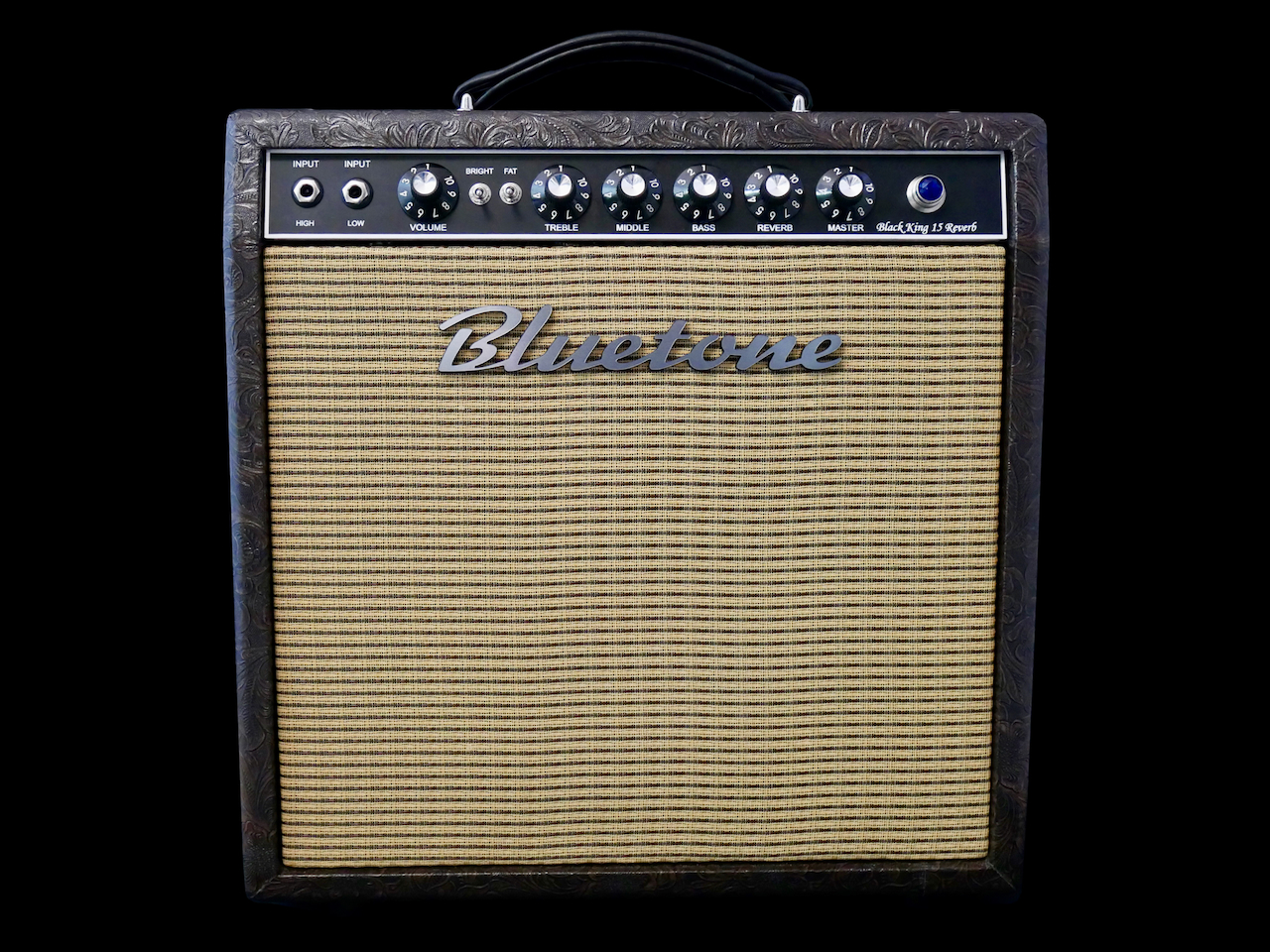
Bluetone’s Black King 15 Reverb comes in a Fender-type combo cabinet of approximately the same size as a 1960s Fender Princeton combo. The fetching Country & Western covering, as well as the wheat-coloured grille cloth come as standard.
In addition to the Volume-control the front panel gives you access to a three-band EQ-section with two additional switchable boosts – Bright and Fat. There’s a control for the spring reverb, as well as for the (post phase inverter) Master Volume.
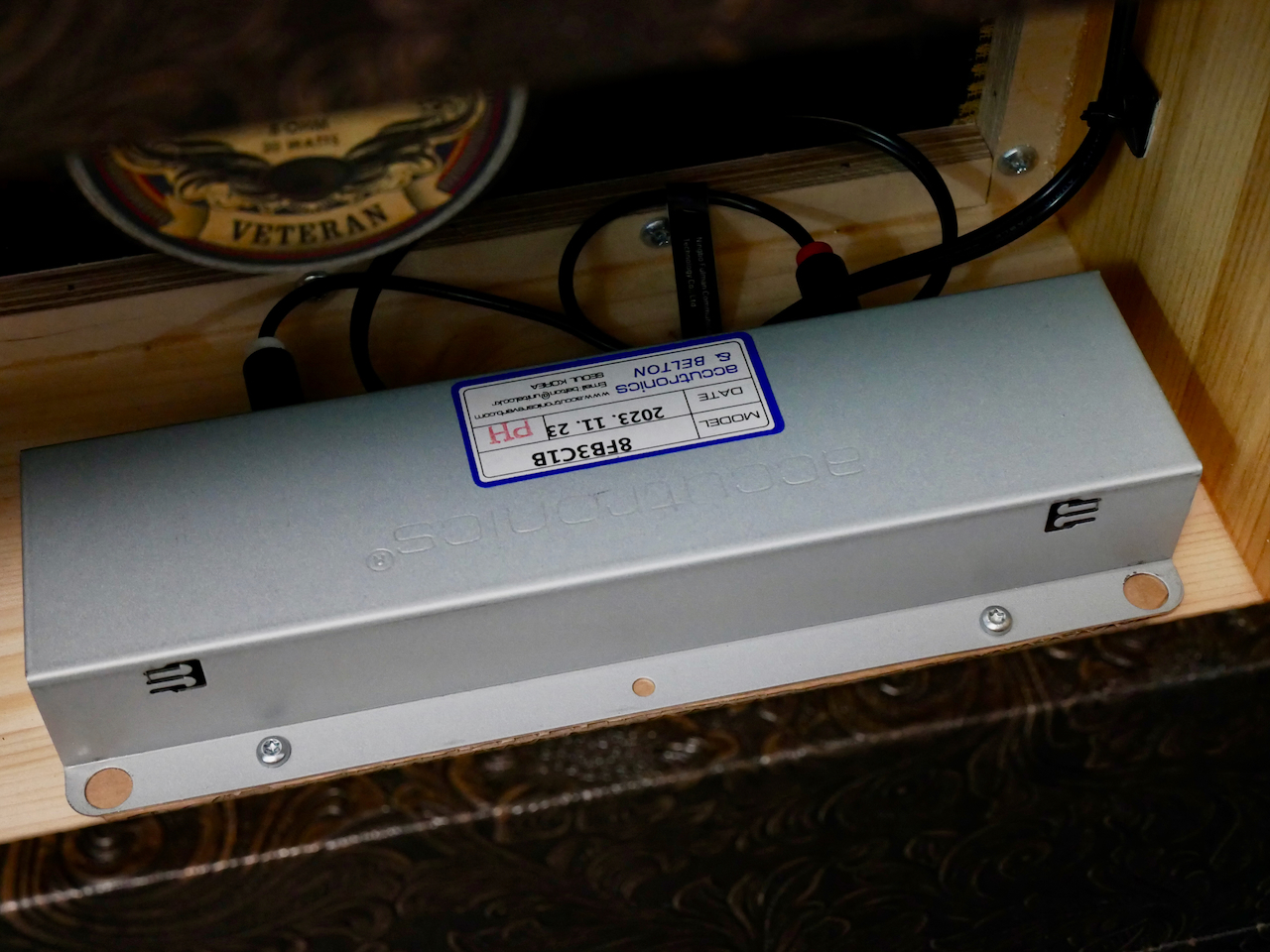
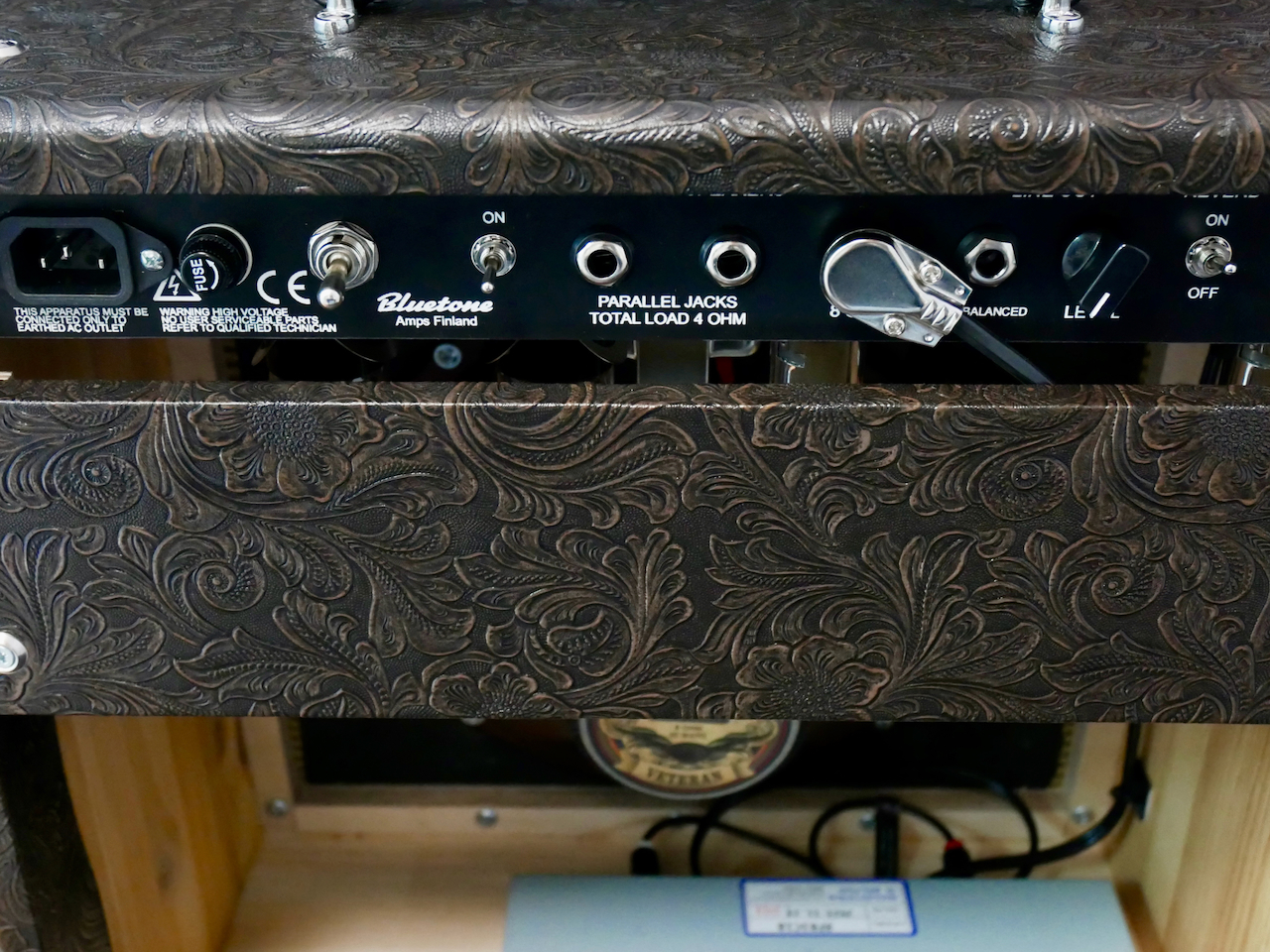
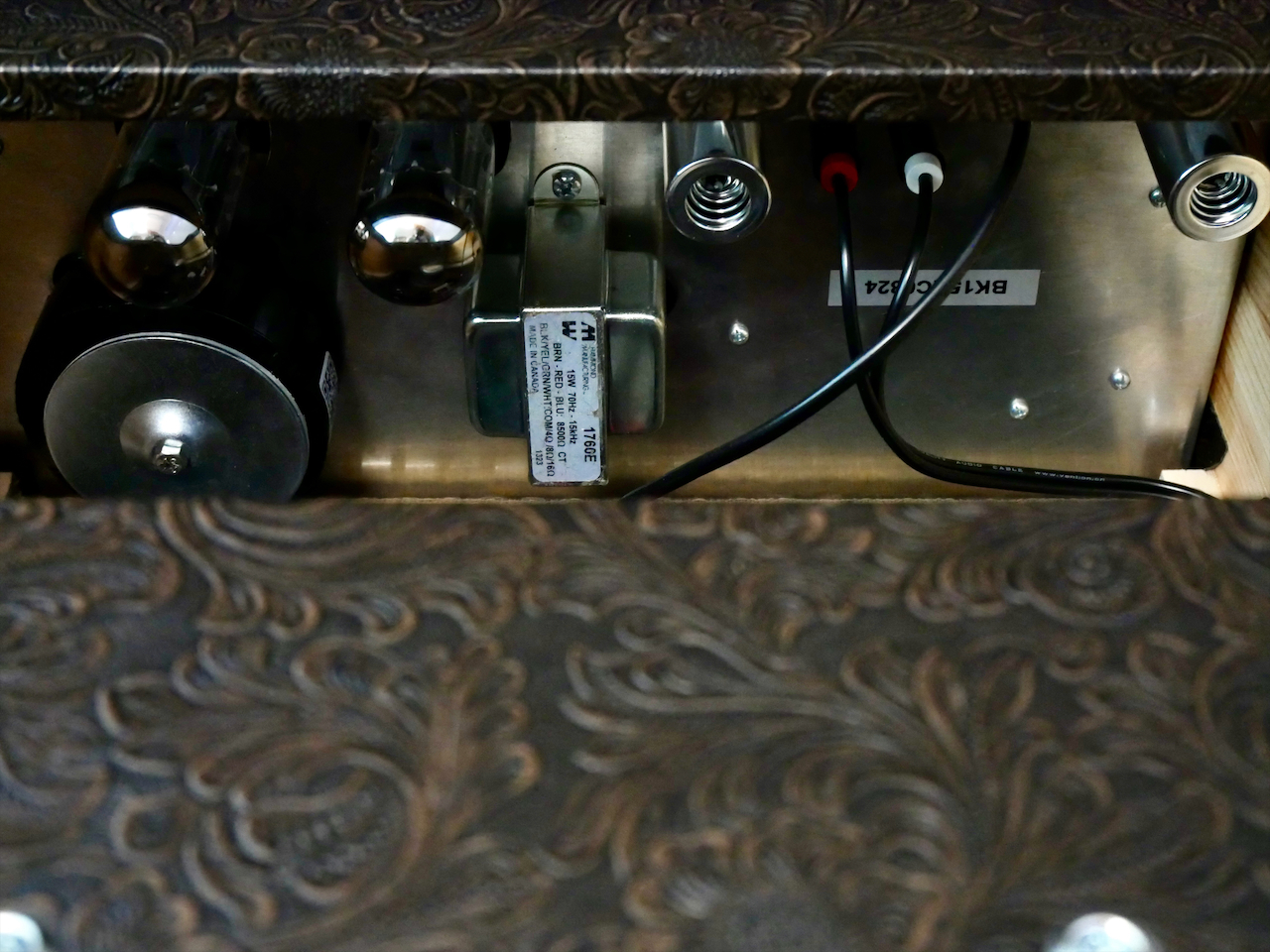
In addition to the Power On/Off-switch the back panel gives you a switchable internal dummy load that makes it possible to record the amp direct via its line output with the speaker turned off. There are also two outputs for external speakers, as well as an on/off-switch for the spring reverb.
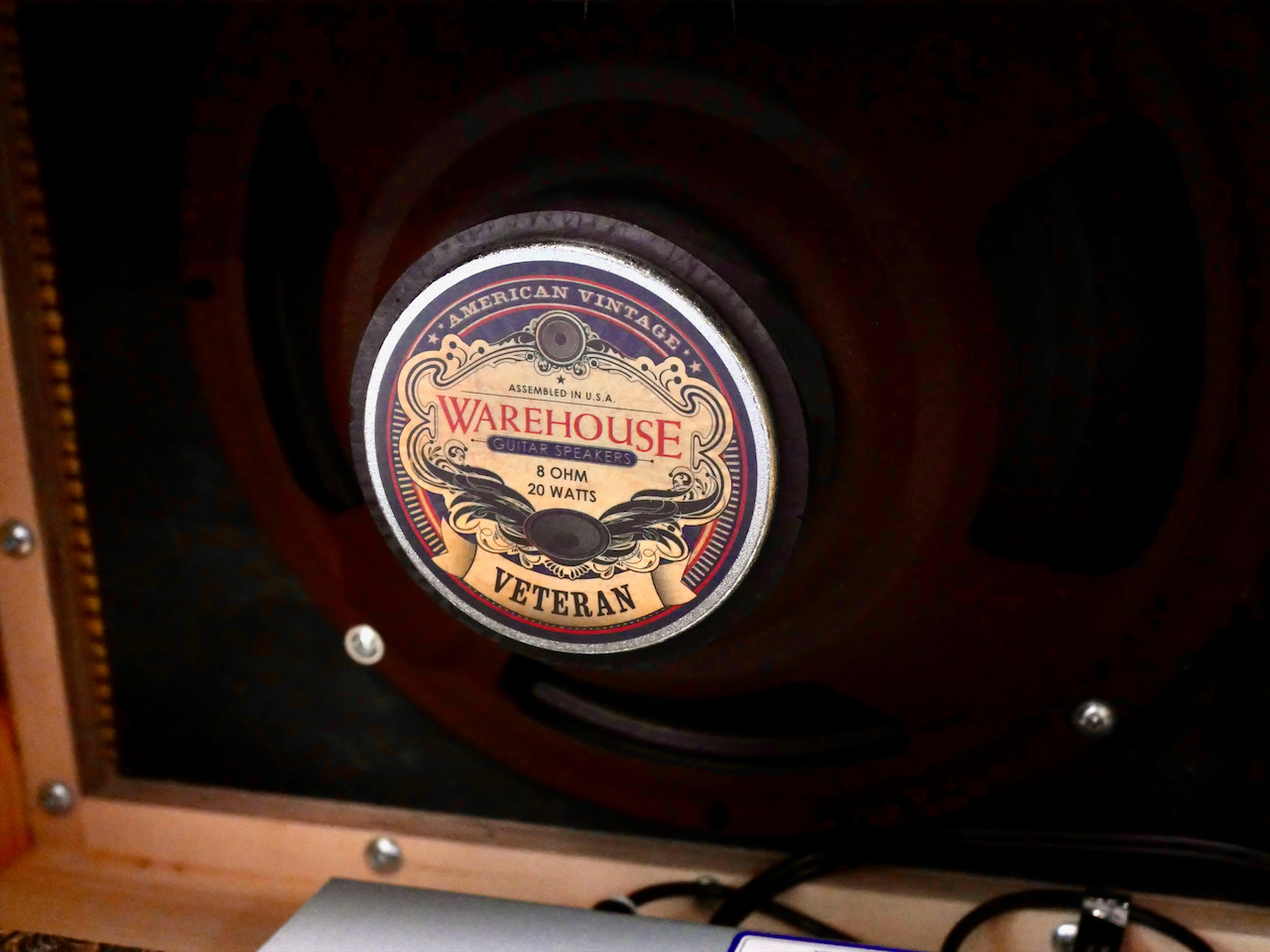
The combo we got for review came with a ten-inch 20 watts Warehouse Speakers Veteran speaker. You can also order your Black King 15 Reverb with a model G10-C/S from the same company.
****
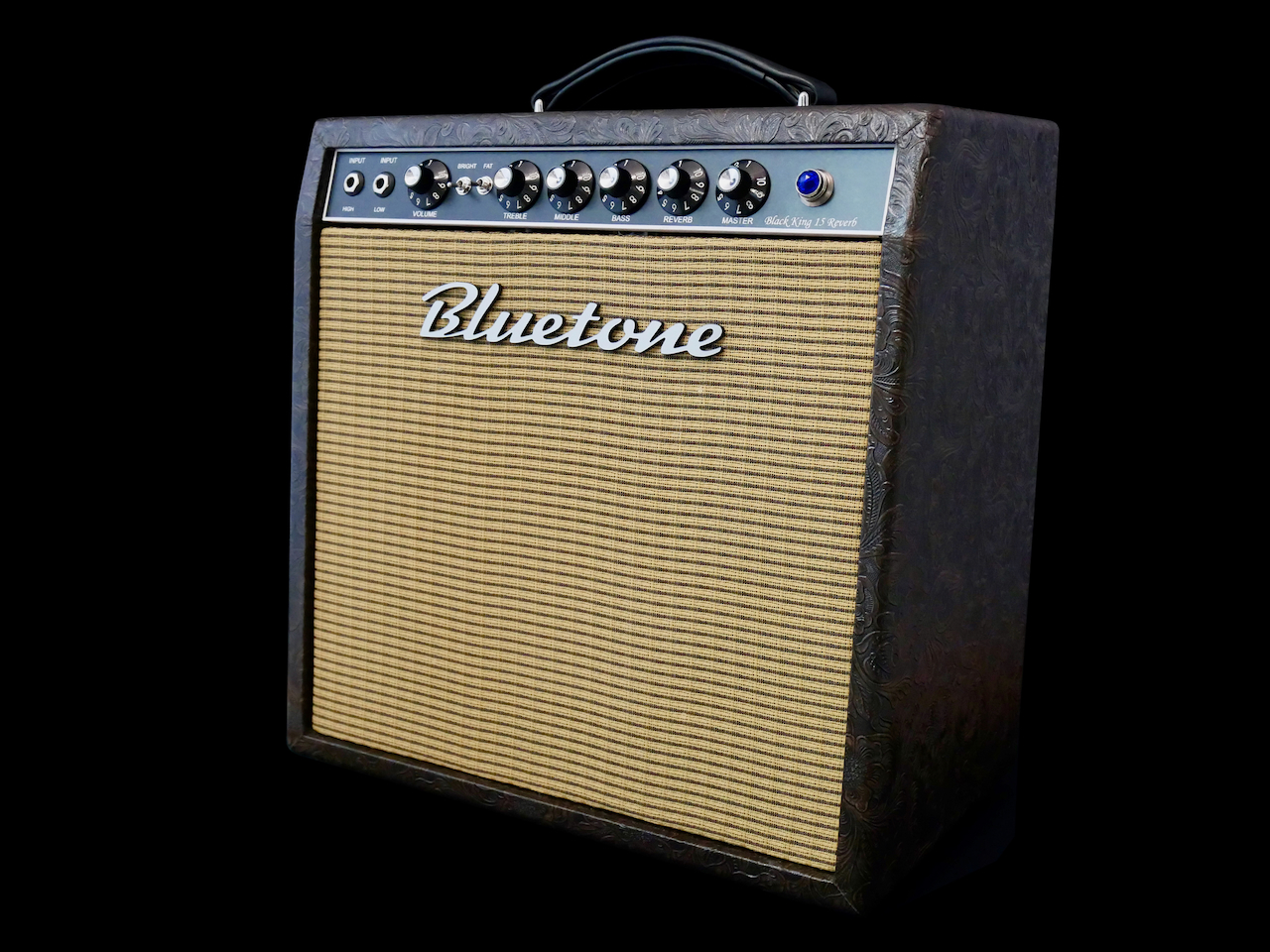
The Bluetone Black King 15 Reverb exudes an air of top-notch quality right from the get-go. Switching the combo on you’ll find an extremely low noise floor – the mark of a well-made boutique amp. Low self-noise is a direct result of careful planning, low-tolerance components, and the sensible placement of hum-inducing transformers on the amp chassis.
The Black King 15’s 6V6GT-powered power amp naturally adds a nice dose of Fender-ish character to proceedings. There’s a healthy amount of clean headroom to be had from this combo’s preamp, but tasty break-up sounds start entering the picture earlier than in a typical ”Blackface” amplifier.
In the ”break-up zone” the Black King Reverb 15 is very touch sensitive and dynamic. The more you put in the more distortion you get out.
The Black King 15 Reverb offers plenty of distortion, which can be had at low volume levels, thanks to the master volume control. This combo also likes effect pedals.
Thanks to the preamp’s excellent EQ-section and the additional boosts, dialling in a wide range of sounds is easy, making the Black King 15 suitable for many different musical genres.
If you’re looking for a combo with more aggression than a ”Blackface” has to offer, you should definitely try the Bluetone Black King 15 Reverb. This amp offers boutique-grade quality a a very reasonable price.
Raato Guitars Fuzzrocity – Demo Song
Here’s a demo featuring the Raato Fuzzrocity Silicon Fuzz. The Raato Fuzzrocity is handmade in Finland.
• Rhythm guitars – Squier Sonic Mustang SS & Harley Benton DC-60 Jnr
• Harmony guitars – Hamer USA Studio Custom
• Lead guitar – Jackson JS32 Dinky Archtop
• Pedals used – Raato Fuzzrocity & Vox V845 Wah-Wah
• Amp used – Bluetone Black Prince Reverb
• Mic used – Shure SM7B
 Kitarablogi.com – Finland's premier Guitar and Bass blog