

TÄLLAINEN oli meininki viime vuonna.
Kitarablogi.com – Finland's premier Guitar and Bass blog
Juttuja kitaroista ja bassoista


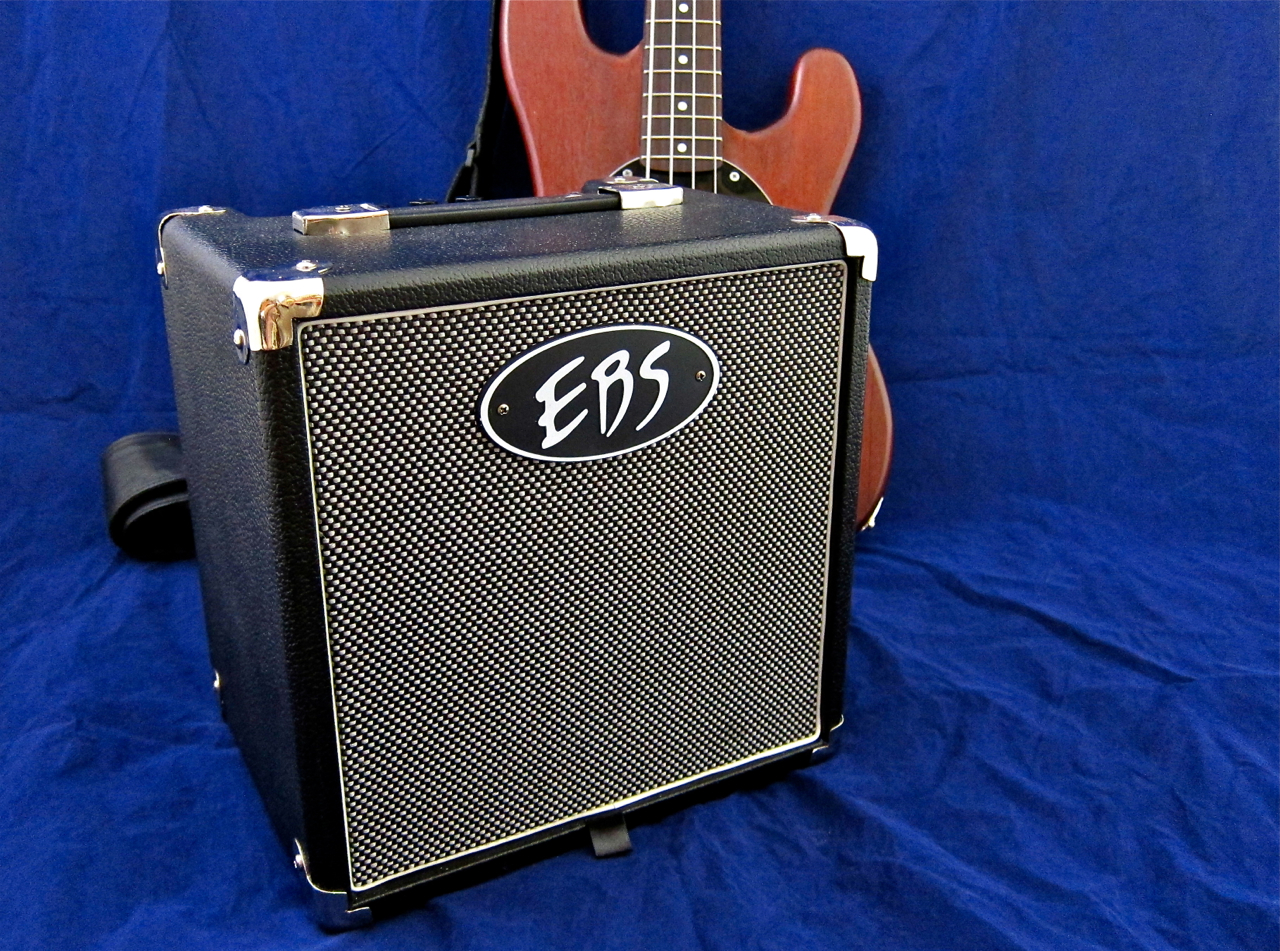
EBS Sweden’s latest product – the Session 30 – is the company’s smallest bass combo to date, and meant for practicing, recording and home use.
****
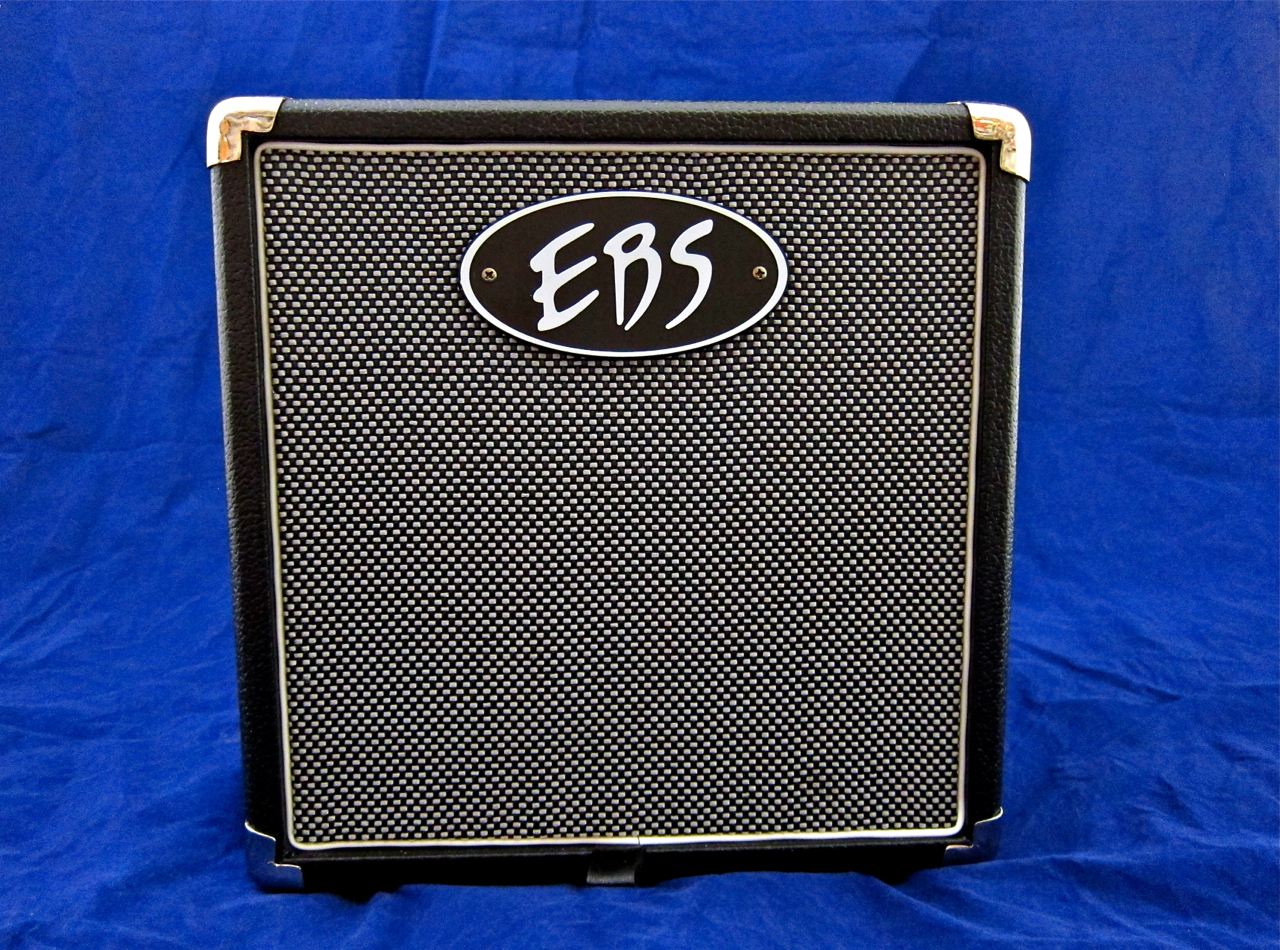
The diminutive and lightweight EBS Classic Session 30 (current price in Finland approx. 169 €) is part of EBS’ Made-in-China Classic-series.
As its name suggests, the Session 30 offers 30 Watts of rms-power.
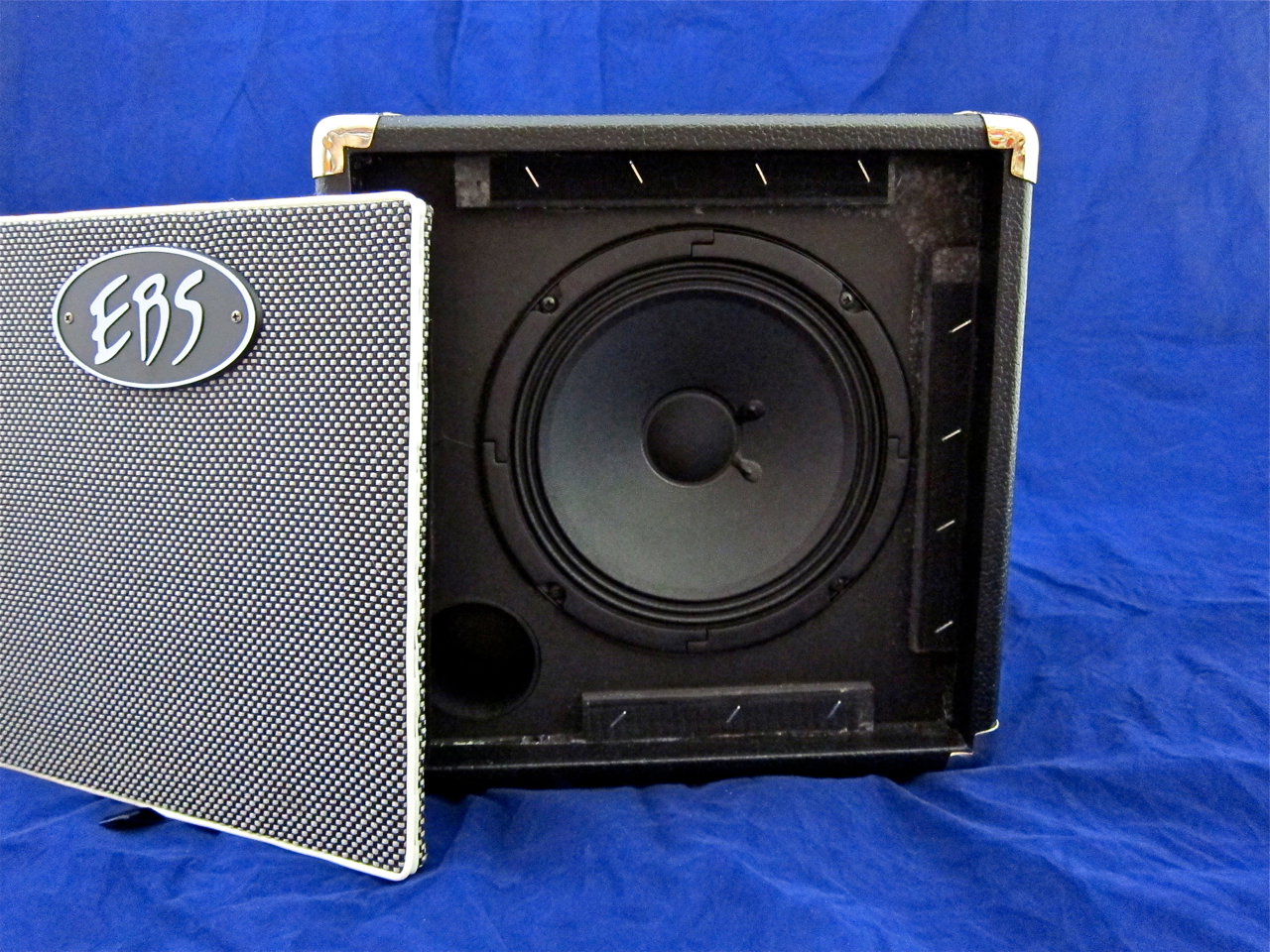
Its eight-inch speaker sits in a front-ported baffle. The stylish grille cloth is attached in a traditional way using velcro.
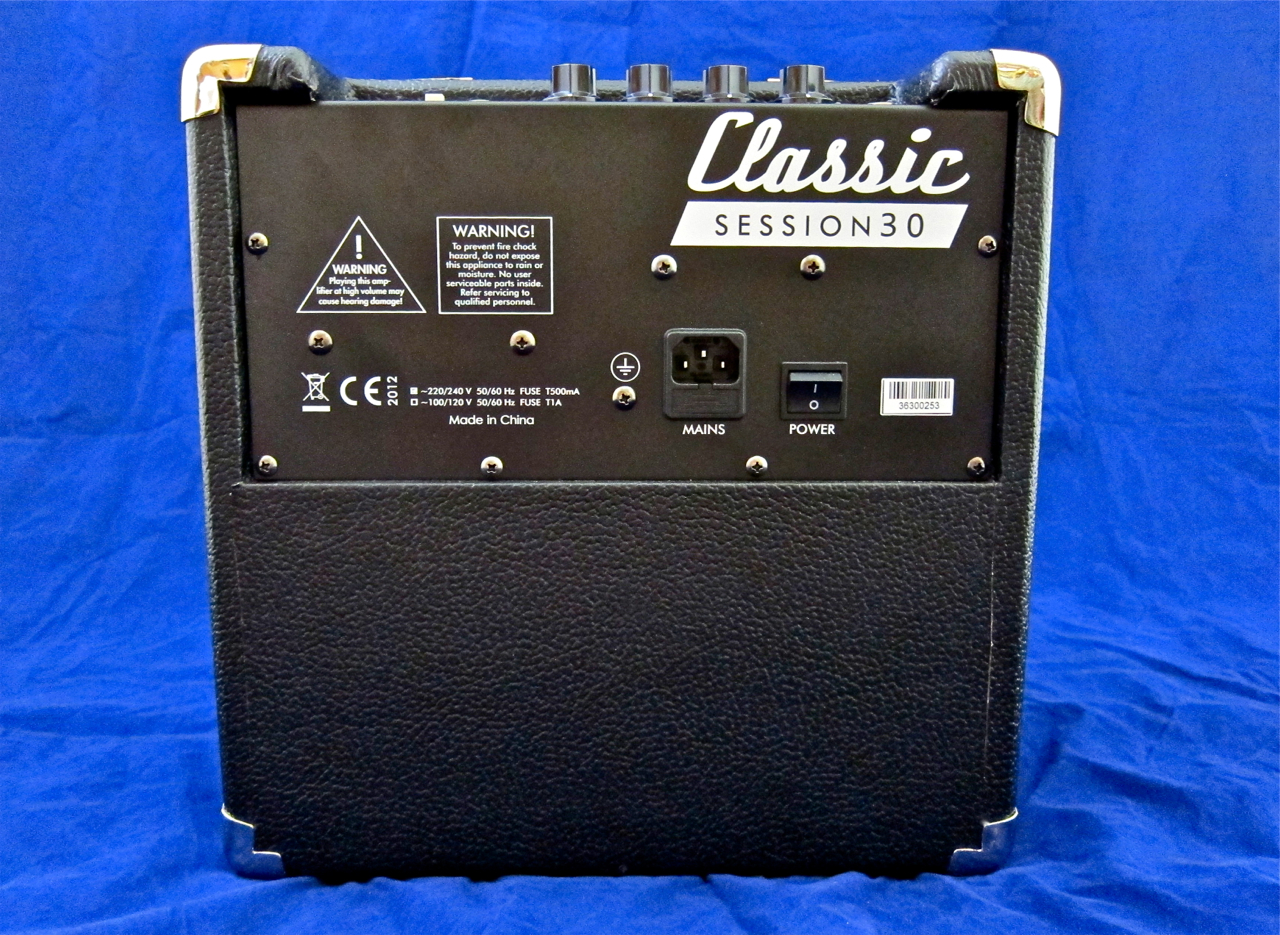
The combo’s back is fully closed. EBS have added a separate grounding point next to the power connector, which may come in handy in the studio for combatting mains hum.
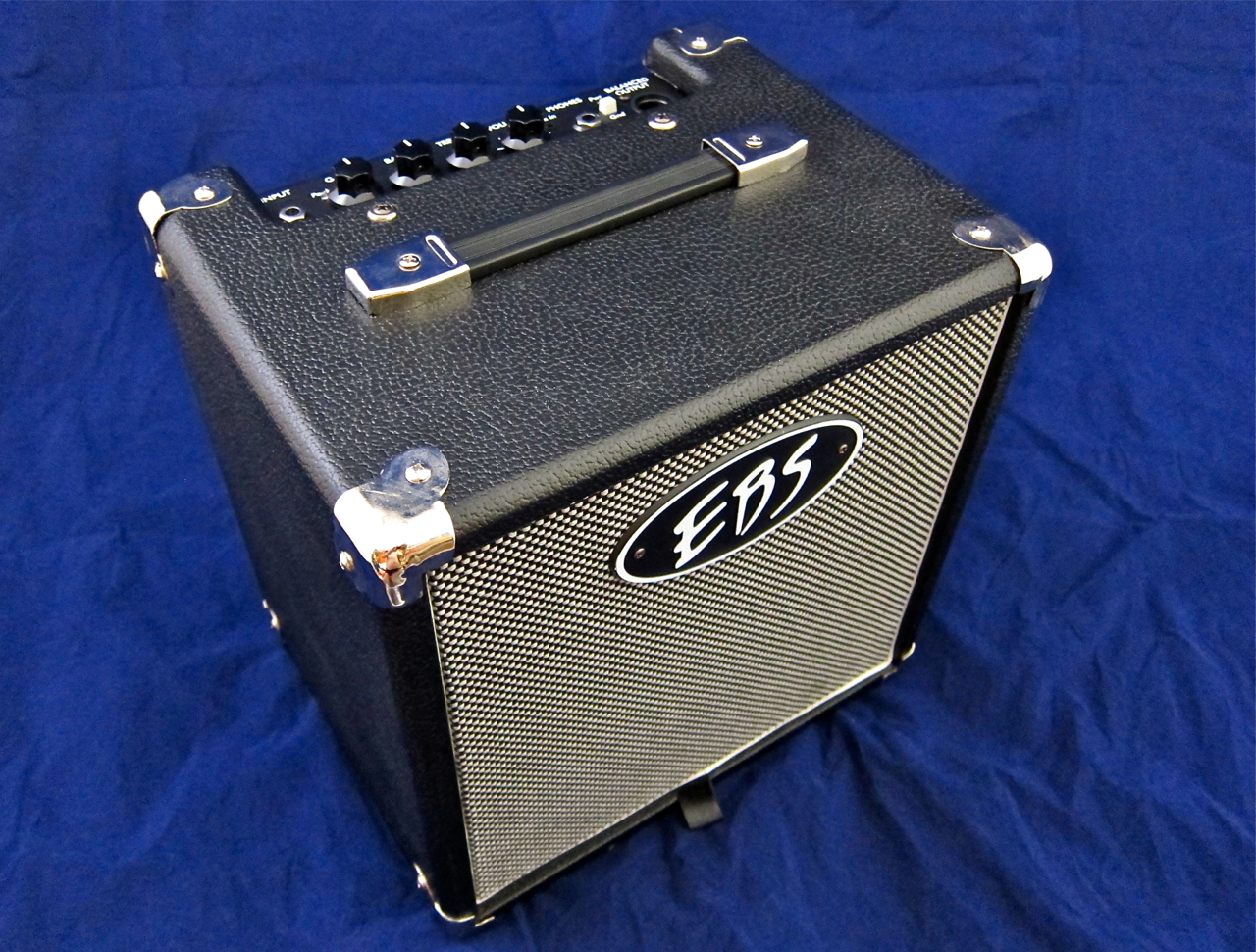
The Session 30 weighs just under nine kilos, so it is very easy to carry around by its top handle.
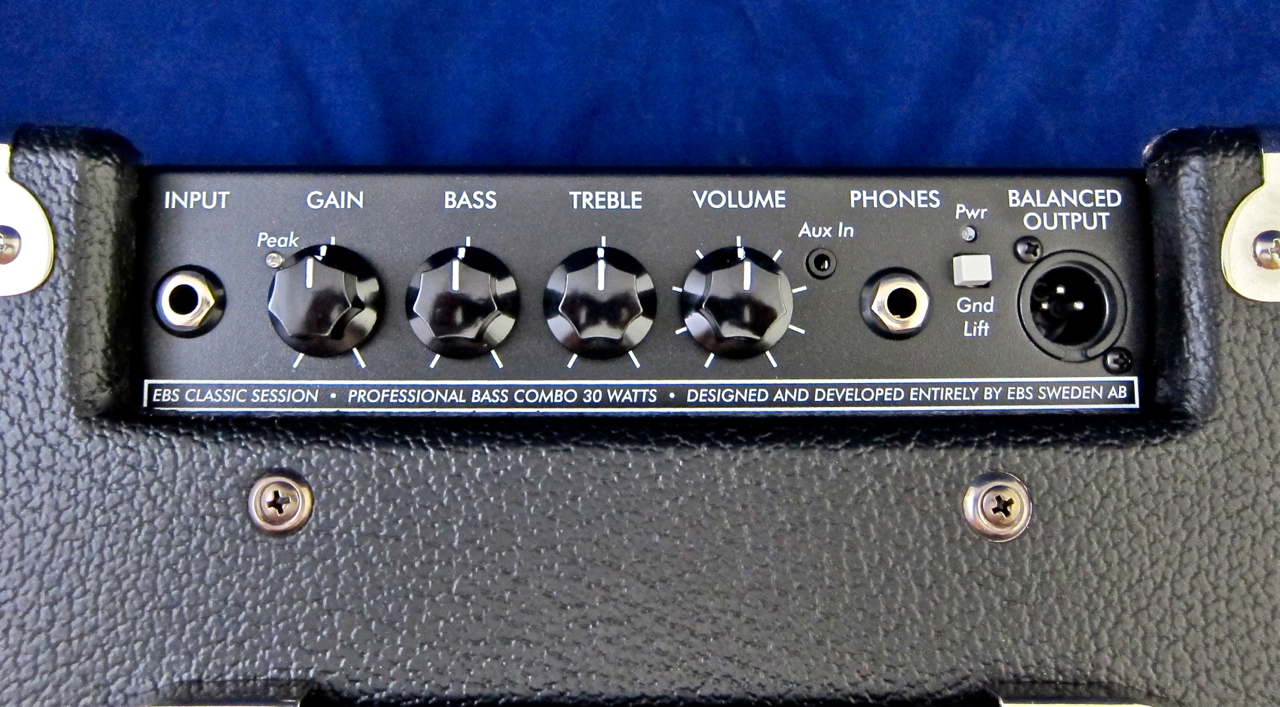
The control panel comprises of four control knobs – with a peak indicator next to the gain control.
For practicing, EBS have added a mini-jack, so you can connect an mp3-player, as well as a full-sized headphones output.
A very rare feature in this price range is the combo’s balanced XLR-output, which makes the Session 30 handy as a studio DI-box with its own monitor. Using the Ground Lift -switch enables you to break possible earth loops safely.
****
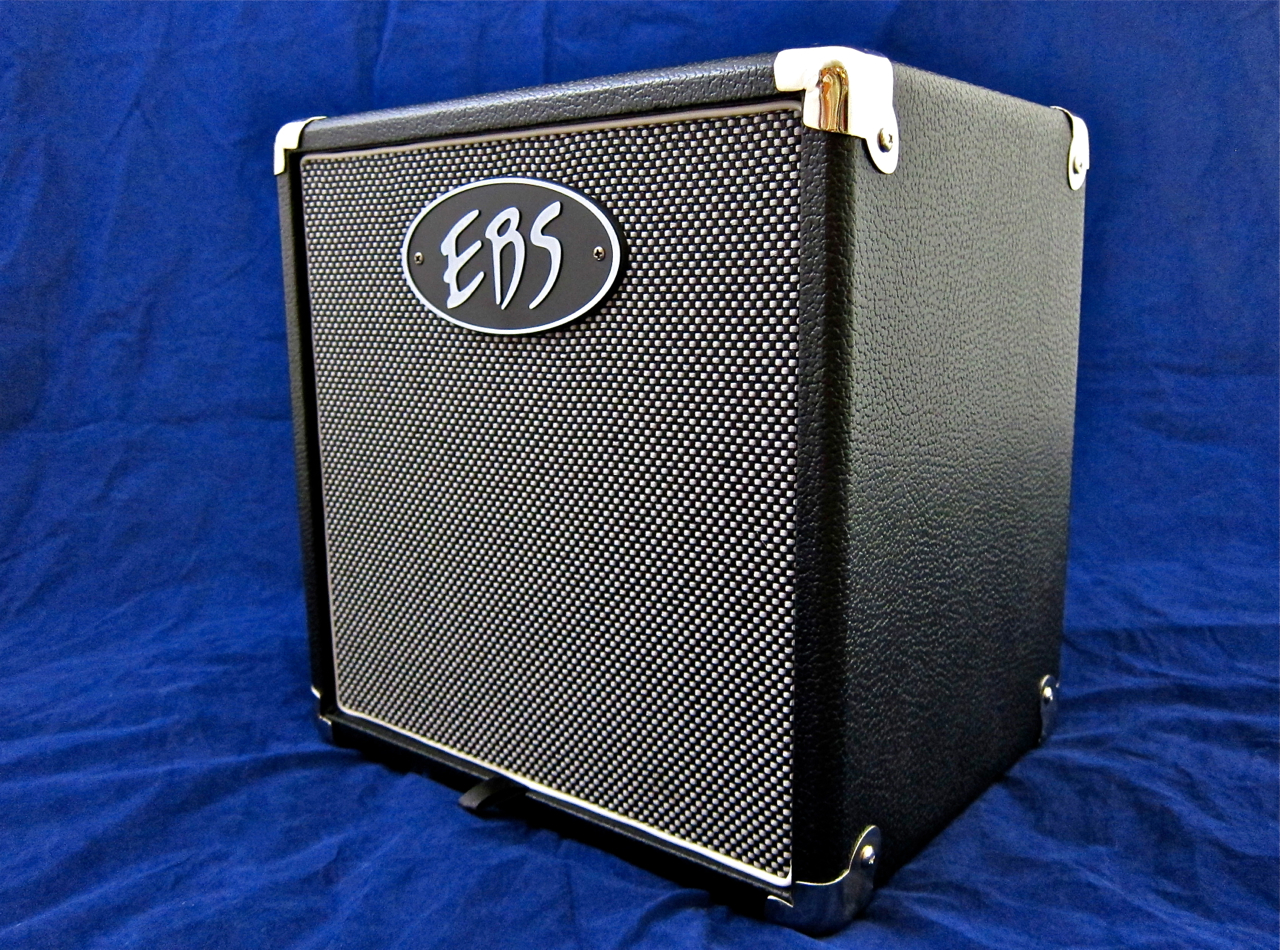
It would be completely unrealistic to expect a mighty roar from such a tiny bass combo.
But I must stress that the EBS Classic Session 30 really delivers the good in terms of its sound quality. This isn’t a murky-sounding piece of junk, but a great little tool – regardless of its very fair price.
This little ’un delivers genuine EBS Classic Series -tone at levels fit for tuition and home use. The bass register is warm, the mid-range tone clear, and the top end has a nice, soft silkiness to it.
The eight-inch speaker and small cabinet will show you the white flag, if the combo is taken to its limits, by vibrating and buzzing, but used sensibly, the EBS Session 30 holds its own nicely.
The combo’s XLR-output works great, and sends a healthy, pristine signal to your console or sound-card.
In my opinion, the EBS Classic Session 30 is a fine little practice amp and a handy tool in the small project studio.
****
The sound bites were recorded by mixing the combo’s DI-signal with the sound picked up by a condenser mic placed in front of the speaker:
****
EBS Classic Session 30
169 €
Finnish distributor: F-Musiikki
****
Pros:
+ value-for-money
+ size
+ weight
+ sound
+ DI-output
****

****

The Zoom Q2HD (current rrp in Finland: 205 €) is the company’s brand-new lightweight video recorder. Aside from full-HD video recording this new unit also offers MS-stereo.
In MS-stereo two different microphone types are used to create two discrete signals, called Mid and Sides. The advantages of MS are that placement of the two mics in relation to each other isn’t as critical for overall phase coherence as in other techniques, and that you can adjust the amount of room in relation to the mid-signal during mixing.
Classic MS-stereo uses a cardioid microphone for picking up the mid-signal with a bidirectional mic turned 90 degrees (= shooting sideways) to record the side-sound. You will get a stereo sound picture from these two discrete signals by ”decoding” them: The mid-mic’s signal will be sent to the mixing console and panned dead centre. The sides-mic’s signal must be split to two channels, with one being panned hard left, and the other hard right with its polarity switched.
But, luckily, the Zoom Q2HD’s user won’t have to bother with the technical background, because you are only required to set the correct recording level and choose the stereo width you want from one of the five different options (mono to 150 deg) .
Naturally, the Q2HD can also record with Auto Gain (three settings: Concert, Solo and Meeting), and its high-pass filter will keep low end rumbling at bay.
Zoom’s Q2HD records incoming audio as linear wave-files (44,1/48/96 kHz, 16/24-bit) or using AAC-compression (64–320 kbps, 48 kHz). The unit also allows you to record audio-only files.
****

The Q2HD is a typical Zoom video recorder in the sense that it is used with the unit in a vertical position. All inputs, outputs and controls have been placed on the recorder’s sides, while all transport and menu functions are controlled using the buttons below the crisp two-inch display. There’s even a tiny loudspeaker built in for a quick preview of the recorded material.
The camera uses a 3.2-inch CMOS-sensor with five million pixels, and a fixed focus and aperture (1,32 m – ∞, F: 3,2). There are three lighting presets on offer – Auto, Concert Lighting ja Night – a well as a digital zoom (4 x).
The video is processed and stored in H.264/Mpeg-4-format as MOV-files.
****

The Zoom Q2HD is extremely user-friendly: all of its menu-icons fit onto one screen, and the device’s parameters have been kept to a minimum. The unit’s well-made graphics enhance the user-experience nicely.
The Q2HD is powered by two AA-batteries (or rechargeables), giving you approximately two hours of video filming or four hours of audio recording.
****

You can watch recorded video in a slightly larger format using Zoom’s Landscape-feature (see picture above).
Zoom’s Q2HD also lets you perform the most basic of video editing inside the recorder itself , offering Divide- and Trim-operations.
****
Zoom also supply their basic Handy Share software on the mini-SD-card that comes with the recorder. The software works on both Windows- (XP 32-bit or better) and Mac-run computers (Mac OSX 10.4.6 or better).

Handy Share offers basic video editing…
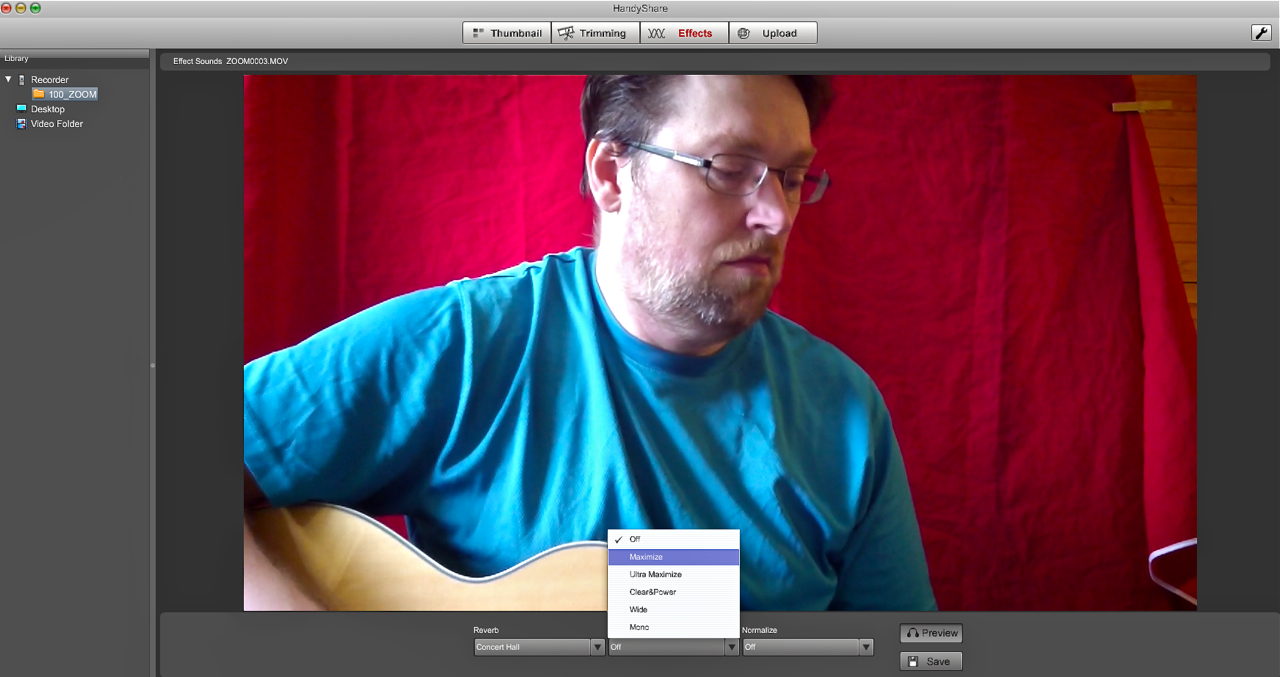
…as well as audio processing using reverb, compression and normalisation. The audio effects can be previewed before rendering them to the video-file.
Zoom’s Handy Share is quite OK for starters, even though many free video editing programmes, like Windows’ Movie Maker or Apple’s iMovie, will offer a lot more features and larger scope for adjustment.
****

The Zoom Q2HD can also be used as a stereophonic usb-microphone, or as a webcam for chatting or live-streaming (for example via UStream). In streaming mode Zoom’s handy delay-parameter allows you to compensate for audio-video-offsets (bad synchronisation).
****
In my opinion the Zoom Q2HD is a nice little tool for making You Tube -videos.
Although the video quality of some digital still cameras is even better than that of the Zoom, the Q2HD’s far superior audio will swing many buying decisions.
The Zoom Q2HD’s clean and clear audio will enable you to make full-HD net videos you can listen to, as well as watch.
The following audio snippets were recorded to give you an idea of what the different stereo-width settings sound like. The distance between the Q2HD and the acoustic guitar stays the same from clip to clip:
****
Zoom Q2HD
205 €
Finnish distributor: Studiotec
Pros:
* HD-video
* quality MS-stereo sound
* easy to use
* lightweight
* can also be used as an MS-stereo usb-microphone
* can be used to stream video
****

In the mid-Seventies both of the guitar industry’s giants – Fender and Gibson – had lost their innovative edge and much of their corporate prestige. Both companies had been taken over by large corporations, and profit margins started to push quality control into the background.
Many discerning guitarists were starting to subscribe to the notion of ”They’re not making ’em like they used to”, which left the doors wide open to Far Eastern copy guitars, as well as to small boutique makers.
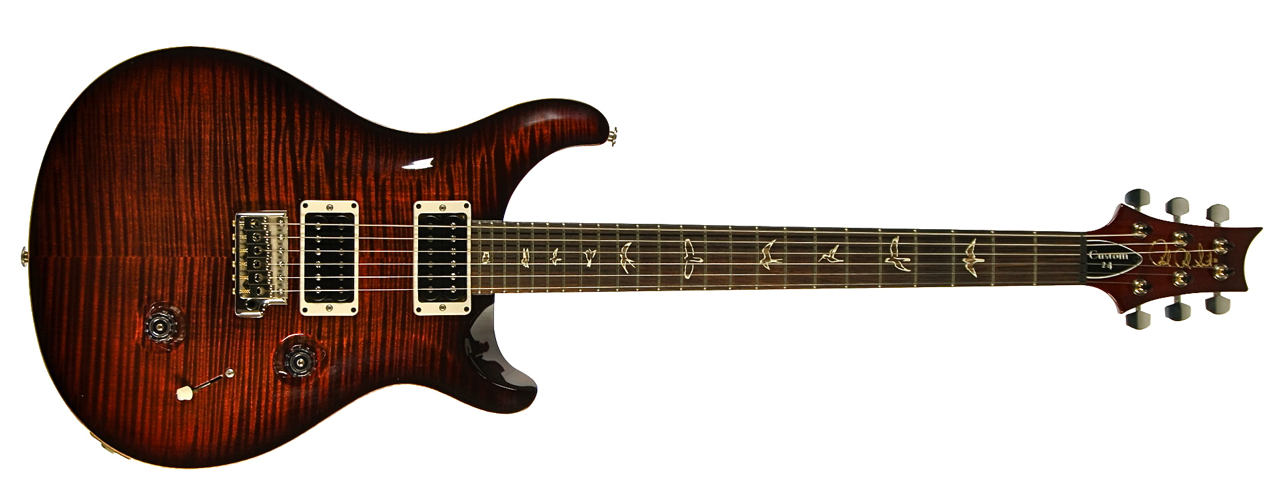
PRS Guitars, just like Hamer Guitars, took Gibson’s classic solidbody designs as a basis for their ”modern vintage” models.
With PRS Guitars it all started with a young Paul Reed Smith converting one spare bedroom at his childhood home into a workshop in 1975. By the next year he had already moved into a small workshop in Annapolis, and started attracting customers such as Ted Nugent and Peter Frampton. His first guitars were based closely on the double cutaway Gibson Les Paul Special, but featured humbucking pickups.

A few years down the road Paul Smith added fancy flame maple tops into the mix, and he managed to sell four of these guitars to Carlos Santana. Santana’s signature PRS models are still based on these original guitars.
But Smith wasn’t satisfied with simply producing refined versions of past Gibson-classics, so he set out to develop the ultimate solidbody guitar.
By 1985 Paul Smith had finalised his vision and started his own production facility. At the NAMM shows of 1985 Smith unveiled the PRS Custom 24 – the model that has defined the whole brand to this day. The new guitar ingeniously combined the best features of a Gibson Les Paul Standard and a Fender Stratocaster, as well as including many of Smith’s own improvements – not least the smooth and reliable PRS-vibrato and his own (Schaller-made) locking tuners.

The PRS Custom 24 combines Gibson-style materials and construction with a Fender-like outline, balance and (in most cases) a vibrato bridge. Added into the mix are a middle-of-the-road 25-inch (63.5 cm) scale length – about halfway between the softer Gibson (24.75″/62.9 cm) and the harder Fender (25.5″/64.8 cm) scale lengths – as well as two PRS-humbuckers with coil-splits.
Originally the Custom 24 came equipped with two knobs and one mini-switch. The knob closest to the bridge pickup was (and still is) the master volume control, with the second knob actually being a five-way rotary pickup selector, and not a control pot. The mini-switch was called the Sweet Switch, and served in lieu of a regular tone control, by giving you a set tone with rolled-off highs.
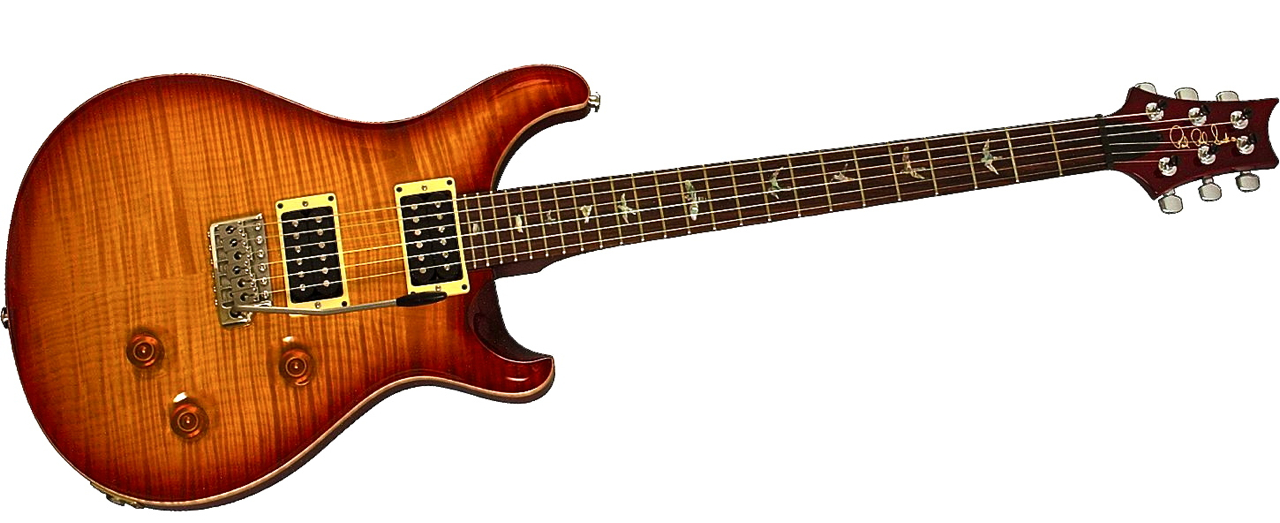
The Sweet Switch was replaced by a regular tone control around 1989, and these days many Customs also feature a regular five-way pickup selector.
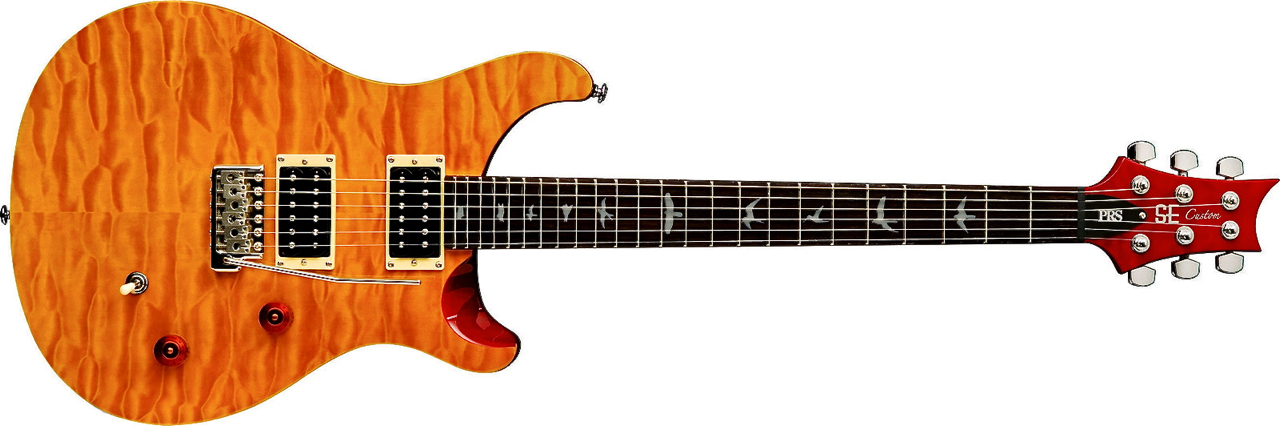
Over the years PRS have changed many details in the construction, harware and electronics of their guitars, but the Custom 24 still carries the essence of what PRS Guitars are all about – it is a beautiful, yet practical quality instrument. Or as Carlos Santana put it in an interview with Paul Reed Smith a few years ago: ”It’s a guitar that gives you no excuses not to play to the best of your abilities.”


Today shredder-par-excellence Jeff Loomis took time out before his Helsinki gig to meet fans and sign autographs at Helsinki’s Sound-Shop store.
Jeff even signed one of Sound-Shop’s Schecter Jeff Loomis Signature models.





 Kitarablogi.com – Finland's premier Guitar and Bass blog