Review: Yamaha Pacifica 611H

****
When Yamaha introduced the first Pacifica-model, way back in the 1990s, no-one would have thought that this guitar would become such a runaway success, spawning a whole range of Pacificas over the years. Originally the Pacifica was developed as a sort of test instrument by Yamaha’s West Coast Custom Shop, with its fathers being Rich Lasner and Leo Knapp.
Over the years different guitars have carried the Pacifica monicker, but most Pacificas were (and still are) loosely related to the Strat – just like the current top production-line model, the Pacifica 611H.
****

Unbelievable as it may sound: This beauty of a guitar comes out of Yamaha’s Indonesian factory, which explains the Yamaha Pacifica 611H’s very moderate price (current price at F-Musiikki 595 €).
The Pacifica sticks with traditional tonewoods: The bolt-on neck has been carved from hard rock maple and carries a rosewood fingerboard. The body is almost entirely made of alder – three pieces in our review sample’s case – with just a beautiful bookmatched flame maple veneer glued onto its front for embellishment.

The deep chamfers on the body make for a very comfortable feel.
Vintage-type specs seem to be on the rise again – the Pacifica 611H’s neck comes with a tinted gloss finish.
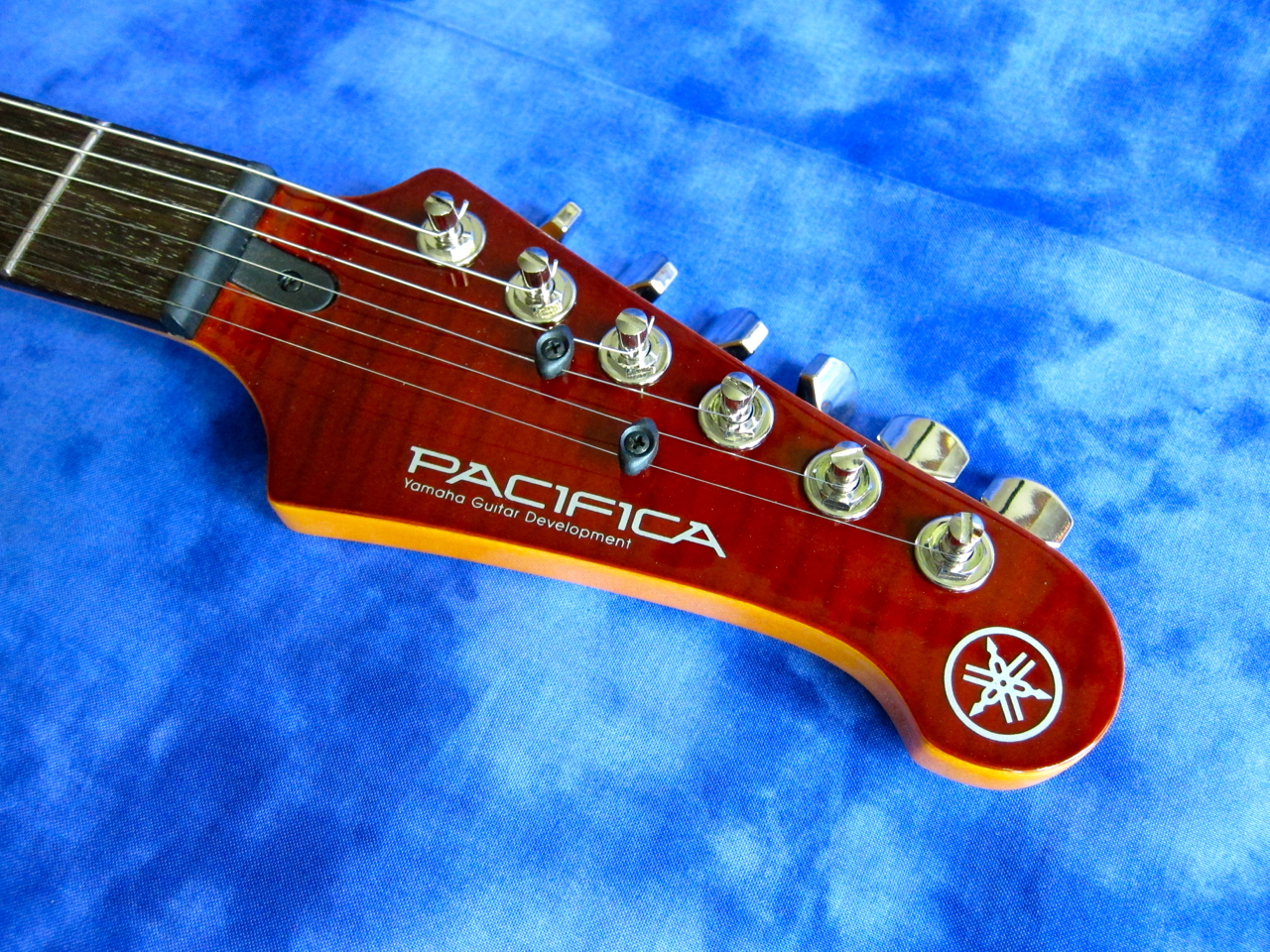
The headstock matches the body with its flame maple veneer and Root Beer finish.
The top nut, as well as the string trees, are made from Graph Tech’s Black Tusq. This Teflon-impregnated ceramic material is hard and slippery, resulting in better tone and improved tuning stability.
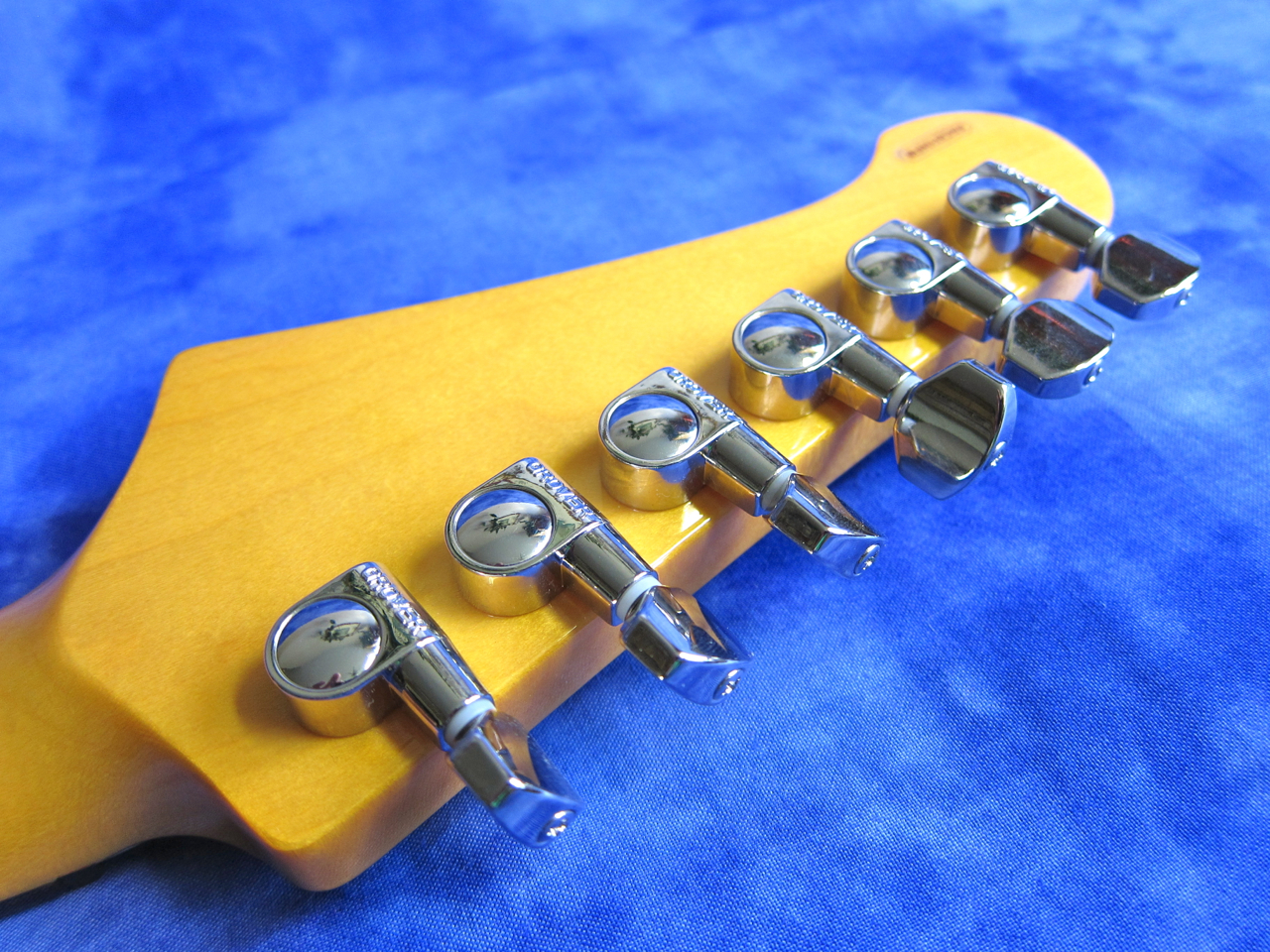
Even though this model isn’t equipped with a vibrato bridge, Yamaha have nonetheless chosen to use a set of Grover locking tuners. The biggest advantage of the Grover units is that you don’t need any tools to change strings. You simply thread the string through the tuning post, and then turn the tuner head. This first engages the locking mechanism, and once the string is locked, the tuning post starts to turn.

Whatever Yamaha do regarding their quality control, they must be doing it dead right! The fret job on our test sample is remarkably clean, which makes the guitar feel far pricier than it really is.

A traditional neck joint – why change something, when it works so well?
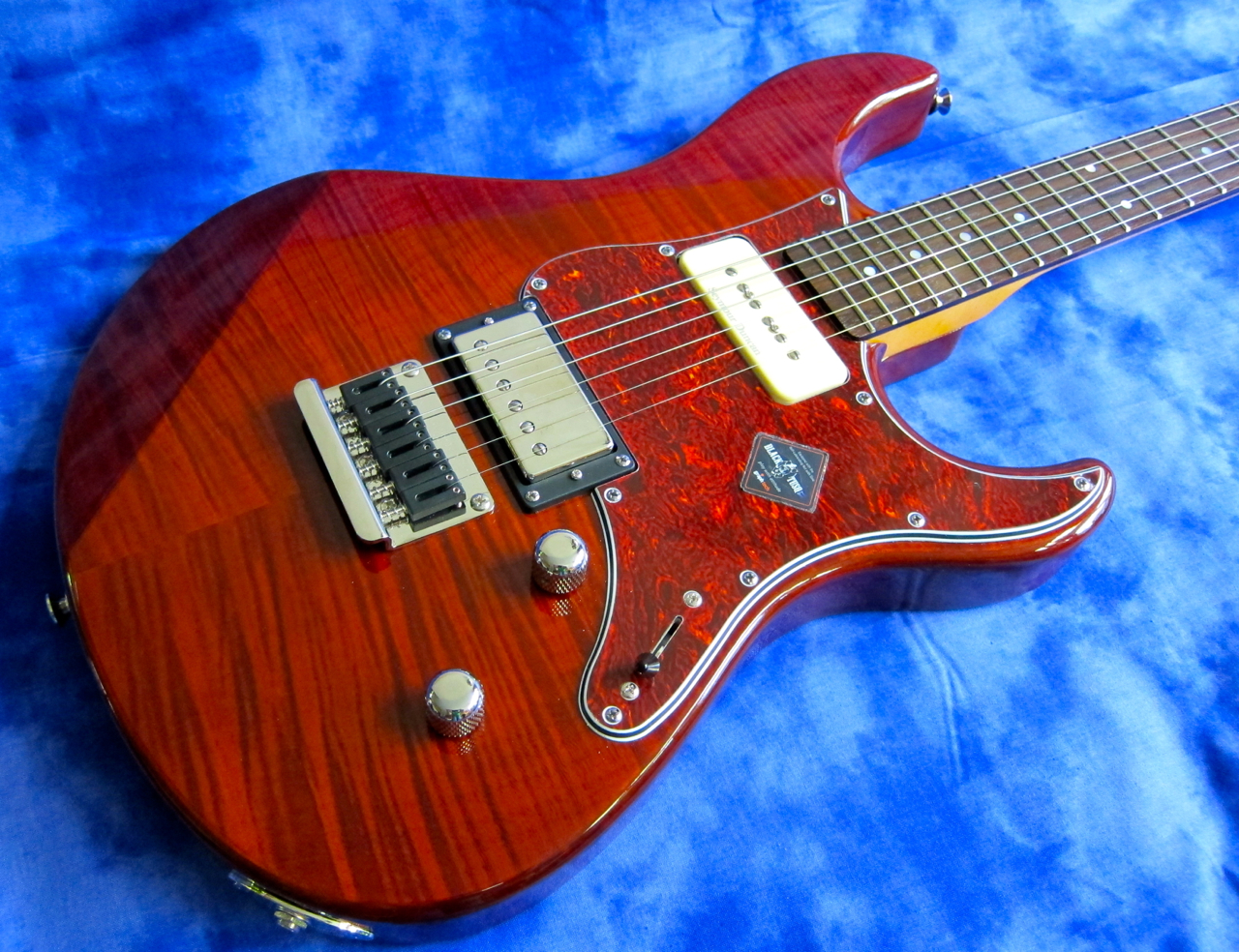
The faux-tortie scratchplate is the perfect companion to the 611H’s Root Beer finish – yummy.

Yamaha uses Graph Tech’s String Saver bridge saddles on this Pacifica-model. This self-lubricating material prolongs string-life and takes away some of the nasty twang of many metal saddles.
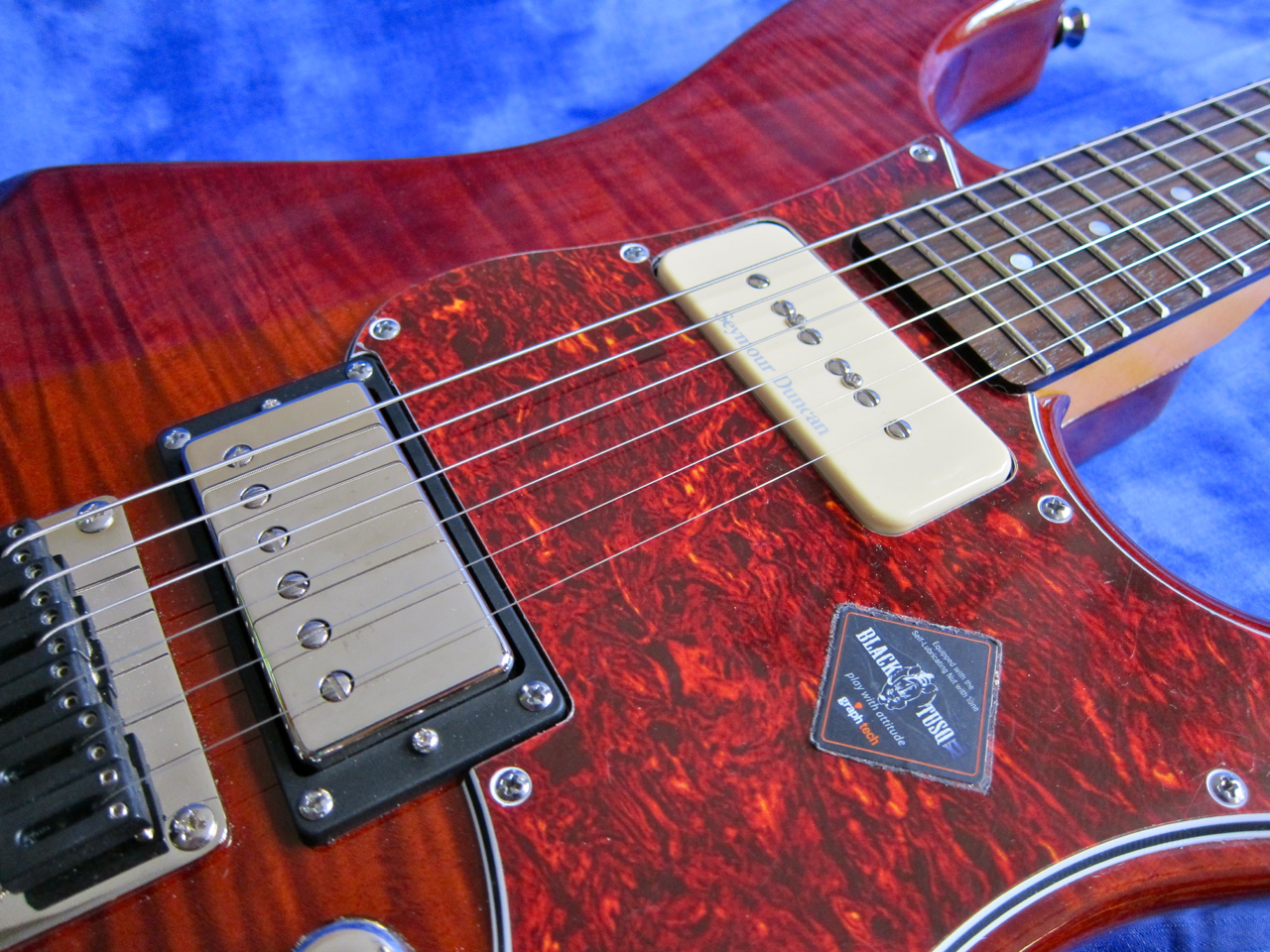
This quality guitar comes loaded with quality pickups: The P-90/humbucker-combination seems to be en vogue these days – in the case of the Pacifica 611H we find a Seymour Duncan SP-90 in the neck position, with the same manufacturer’s Custom 5 -humbucker mounted next to the bridge. Seymour Duncan say the SP-90 is their most authentic reproduction of a Gibson P-90 from the late Forties, while the Custom 5 is an Alnico V -powered humbucker with a moderate output level.
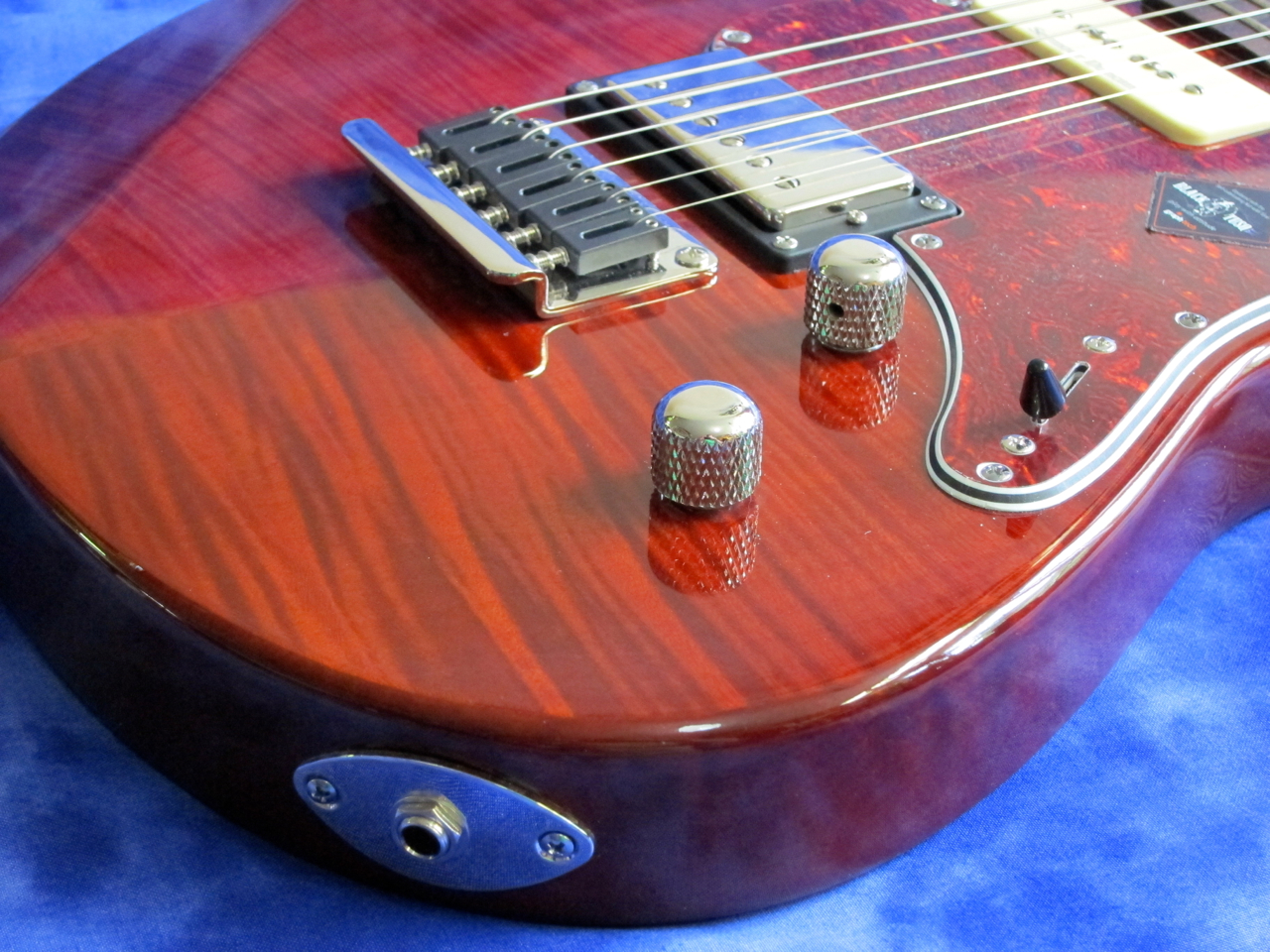
The controls comprise a master volume and a master tone control, plus a three-way blade switch. The tone control sports a push/pull-switch, splitting the humbucker in the ”up” position.
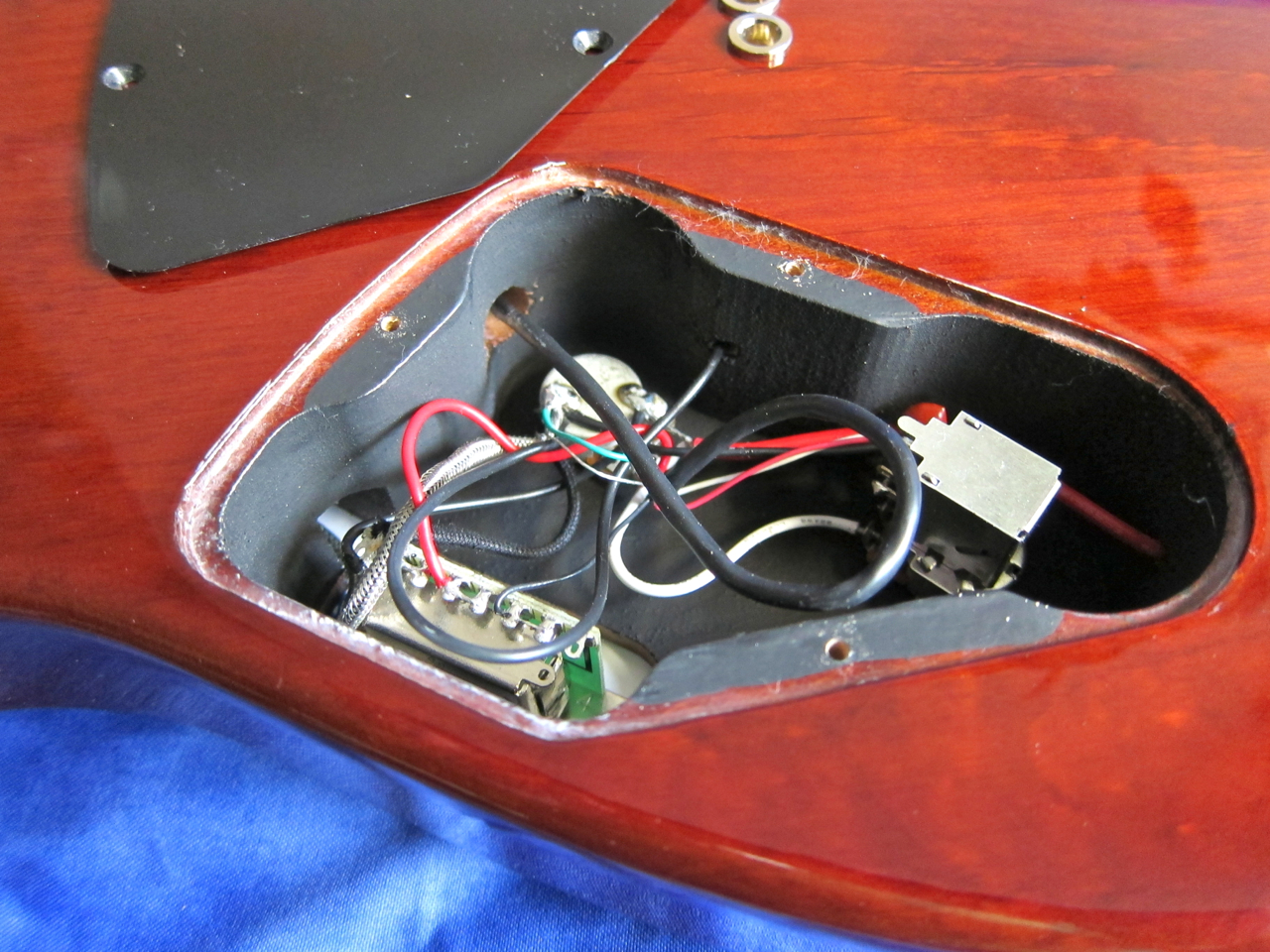
Clean and competent workmanship can also be found in the control cavity, which has been thoroughly shielded with conductive paint.
****
The Pacifica 611H feels great, thanks to the fine fret job and the very comfortable, oval C-shaped neck profile. Our review sample was also nicely lightweight.
The Yamaha’s clean and transparent acoustic character translates into a healthy amplified tone. In the Pacifica’s case combining a P-90 with a humbucker works exceedingly well. The fat singlecoil easily holds its own against the bridge humbucker, and keeps the signal devoid of any trace of muddiness.
Both soundbites start with the neck singlecoil, then switch to both pickups with the humbucker split, and lastly to the split humbucker on its own. The last two motifs are the combined setting, followed by the bridge pickup on its own, both with the full humbucker switched on:
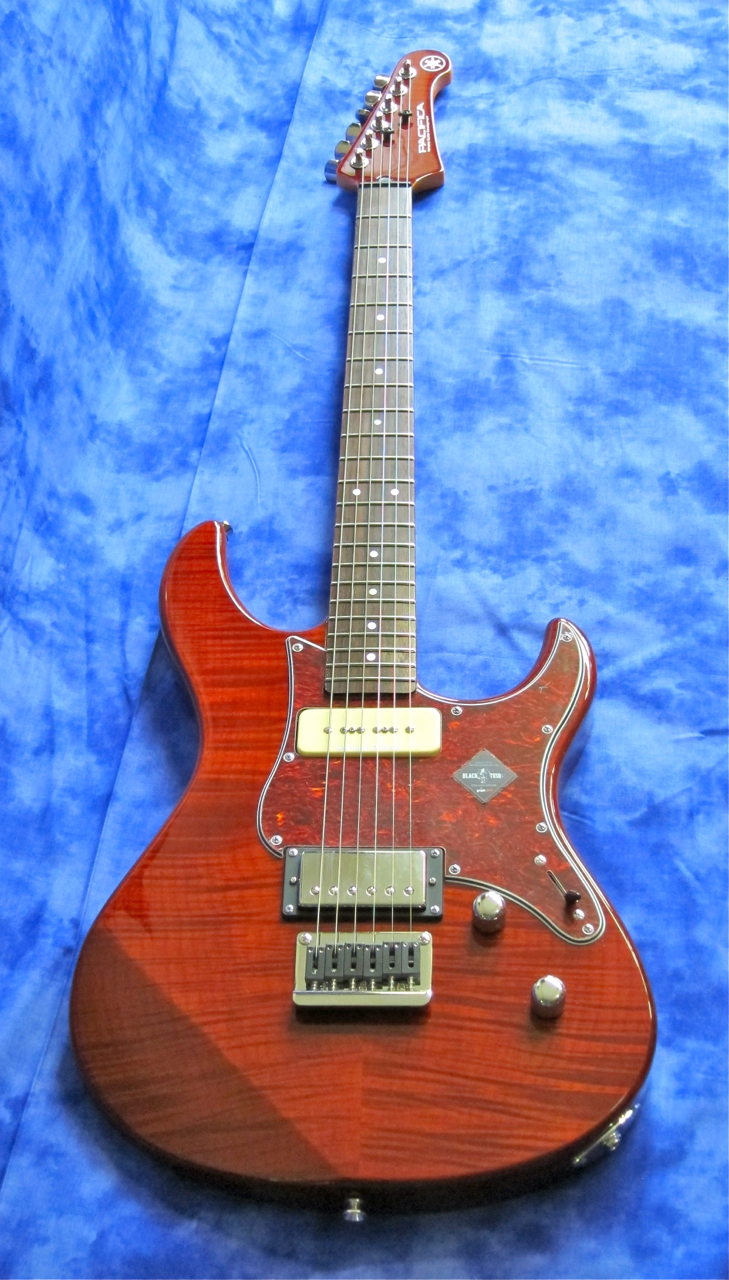
In my opinion the Yamaha Pacifica 611H represents fantastic value-for-money. I wouldn’t hesitate dragging one onto stage (or into a studio) straight out of its shipping box!
****
Yamaha Pacifica 611H
Current price at F-Musiikki: 595 €
Finnish distributor: F-Musiikki
Pros:
• great value-for-money
• locking tuners
• Graph Tech -nut and -bridge
• workmanship
• playability
• sound
• versatility
****
Yamaha Pacifica 611H – the track from the video
****

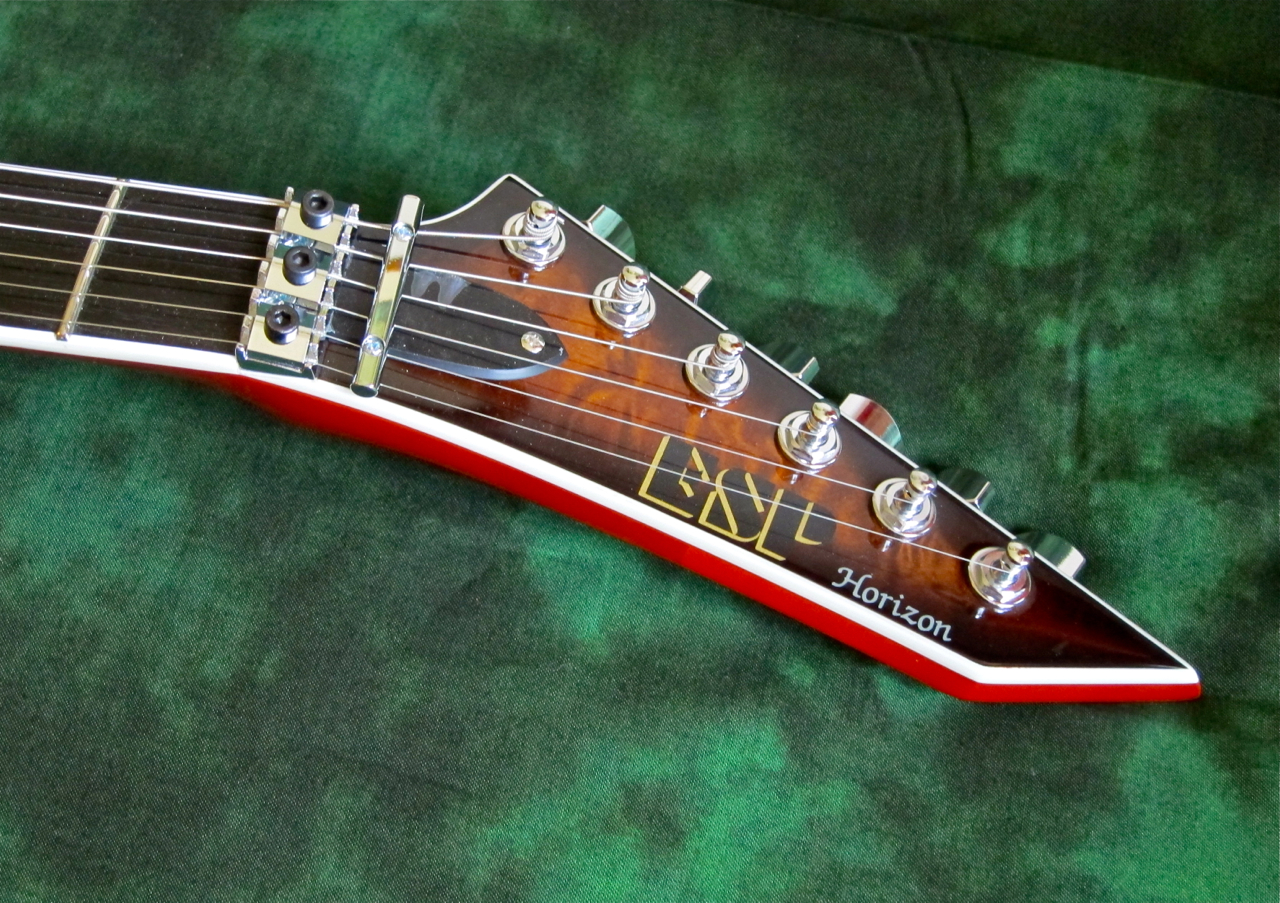

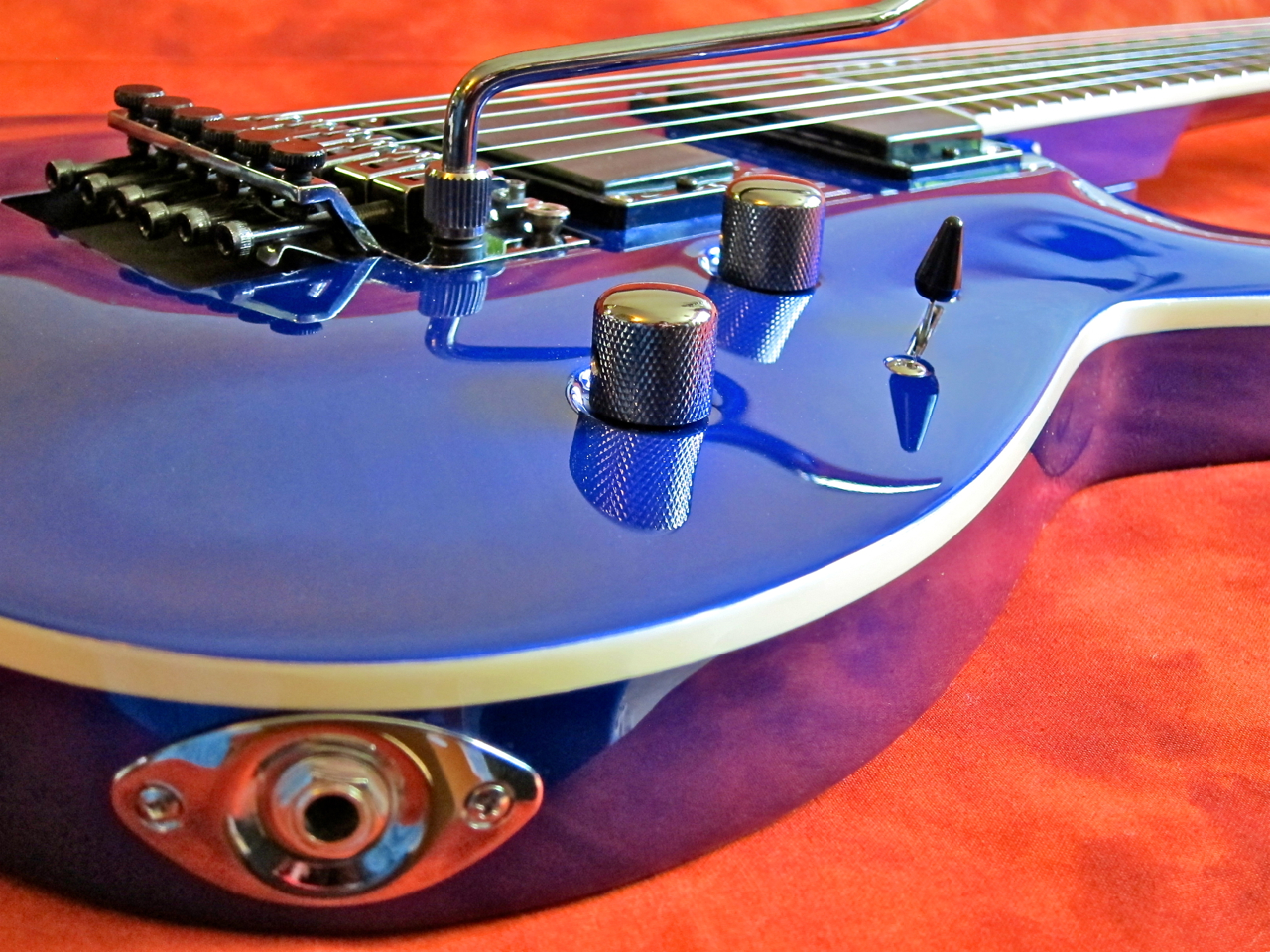
Testipenkissä: Yamaha CG142C + NTX900FM

Klassisista (nylonkielisista) kitaroista löytyy yllättävän vähän tietoa netissä, ja myös musiikkilehdissä niistä puhutaan vain todella harvoin.
Oli siis korkea aika tehdä asialle jotain:
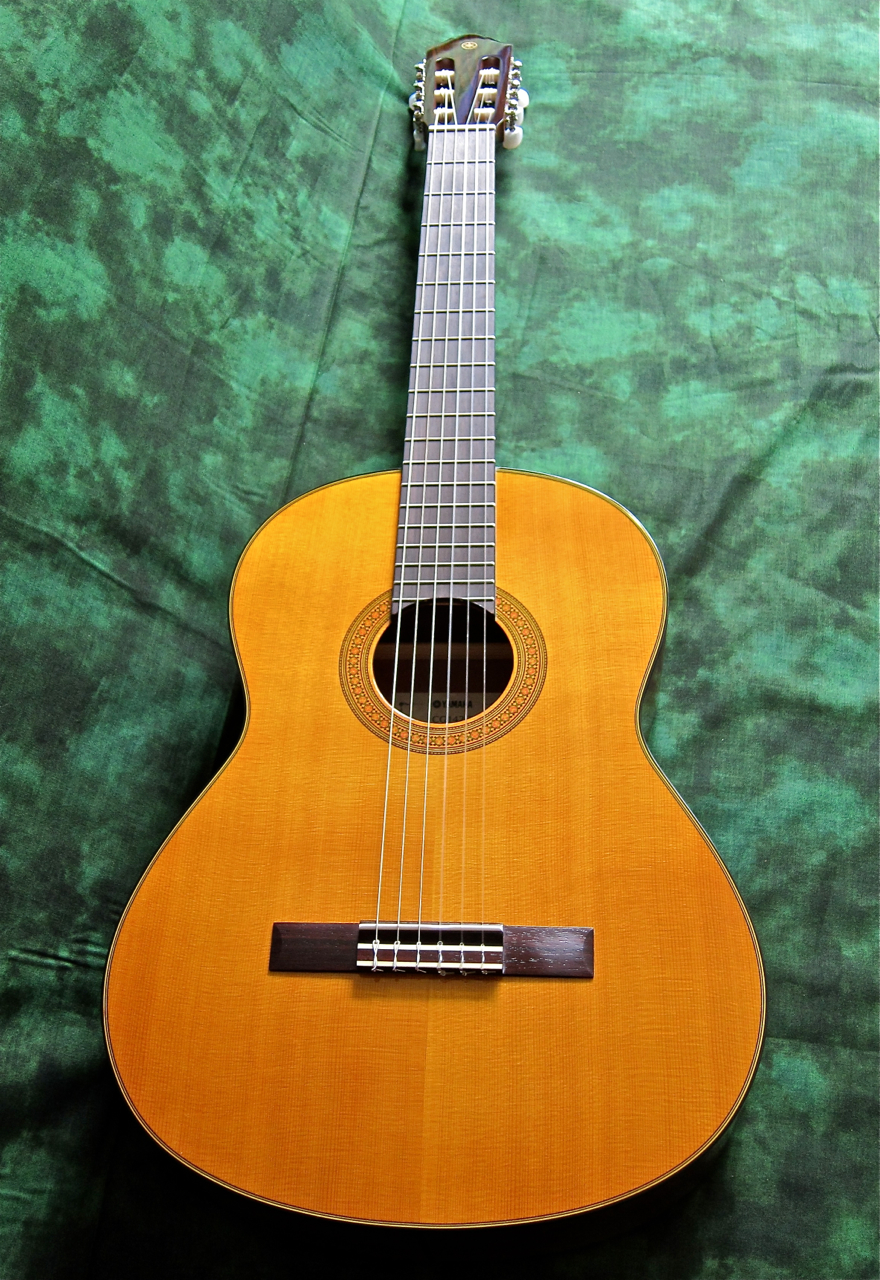
Yamahan C- ja CG-sarjojen klassiset kitarat ovat erittäin suosittuja Suomessa. Testattavaksi saimme kokopuisella setrikannella varustetun CG142C-mallin.
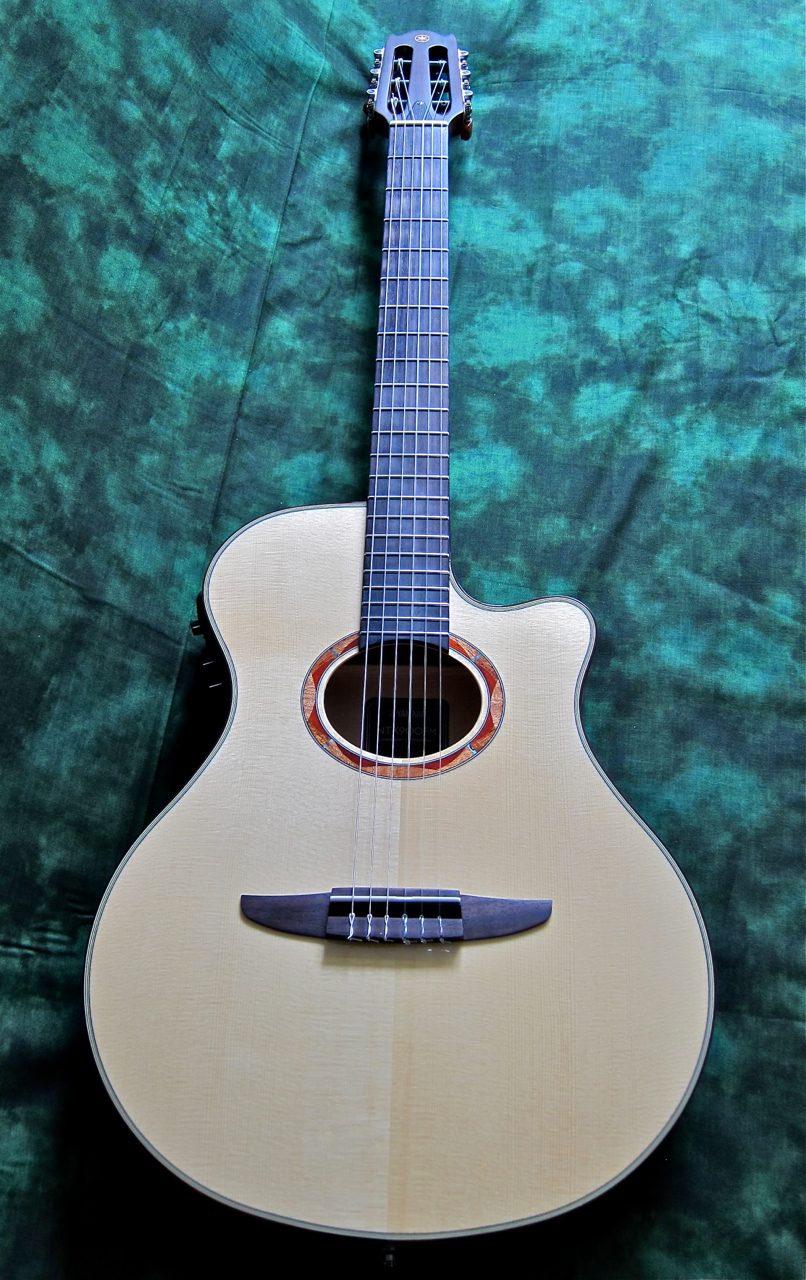
Yamaha NTX900FM taas on mielenkiintoinen hybridimalli – mikitetty nylonkielinen kapeammalla kaulaprofiililla.
****

Yamaha CG142C (F-Musiikin hinta: 299 €) on firman tapaan erittäin siististi rakennettu klassinen kitara hillityllä charmilla. Kaikilla CG-sarjan soittimilla on kokopuiset kannet. Jokaisesta mallista on kaksi eri versiota – kuusi- (mallitunnus loppuu S-kirjaimella) tai setrikannella (mallitunnuksen viimeinen kirjain on C) varustettuna.

Kaula sekä rungon sivut ja pohja on veistetty nato-puusta, joka on Kaakkois-Aasiasta peräisin oleva, ominaisuuksiltaan mahonkia muistuttava lehtipuulaji (lat. Palaquium). Kaula on kokopuuta, kun taas koppaan on käytetty natovaneria.
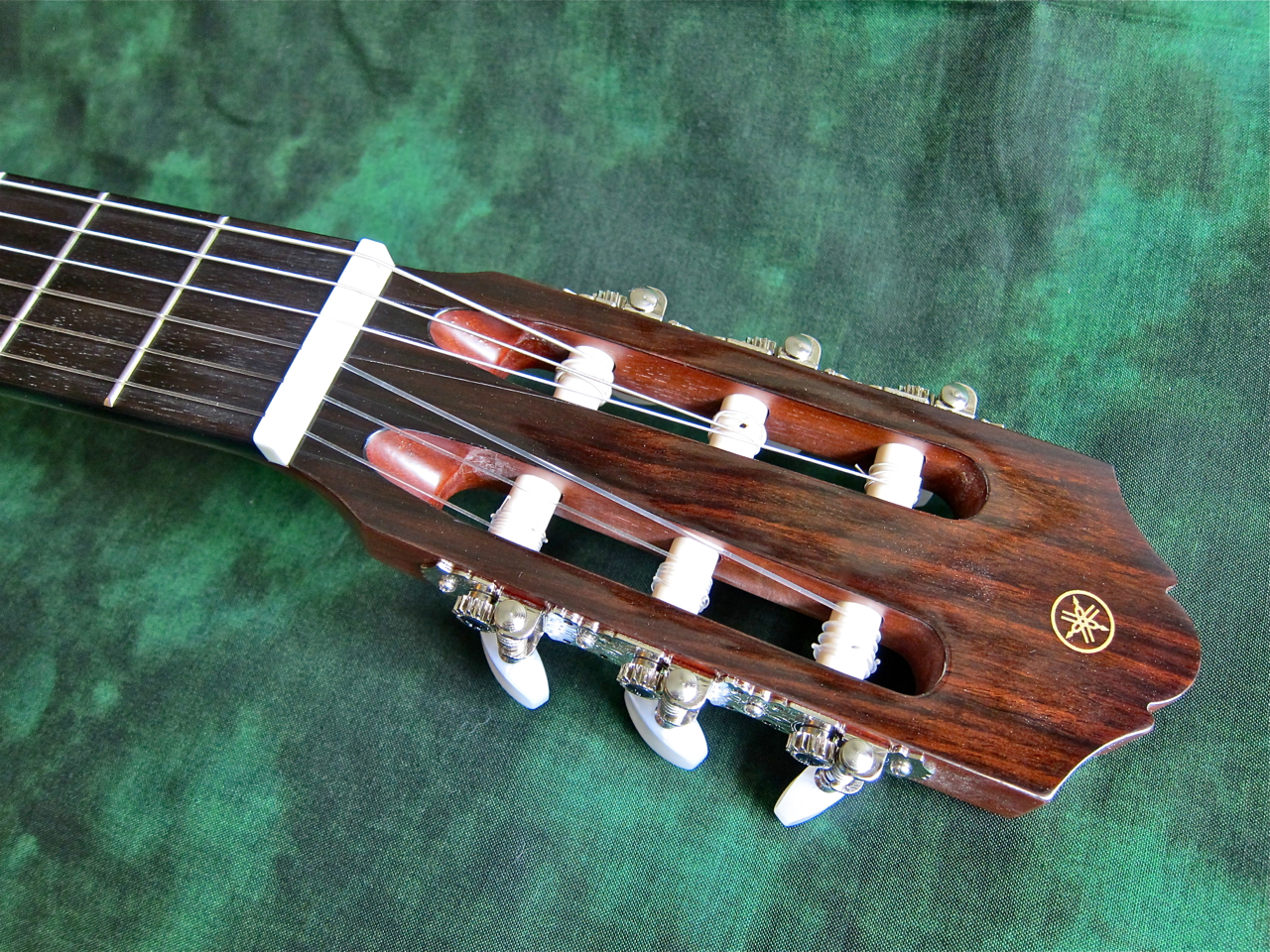
Lavan etupuolta koristaa palisanteriviilu.
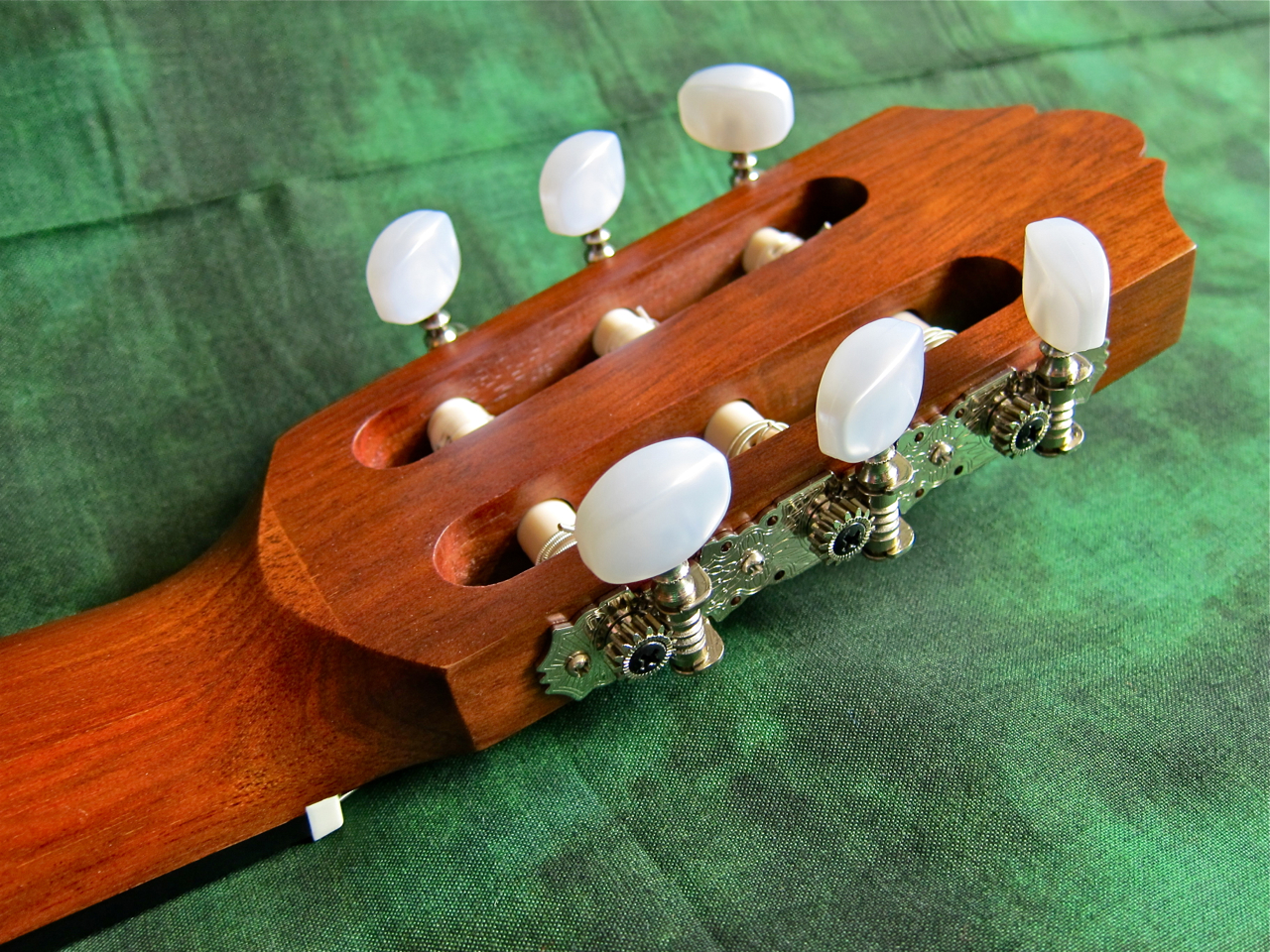
CG142C:ssä on perinteiset, avoimet viritinkoneistot. Lapa on liitetty taidokkaasti kaulaan.

Mattaviimeistelty kaula koostuu yhdestä pitkästä osasta, johon on käytetty kolme vieräkkäistä natopalaa. Tähän pitkään osaan on liimattu lapa sekä useasta palasta koostuva kaulakorko. Tapa säästää sekä kustannuksia että luonnonvaroja.

Reunalistoitettuun palisanteriotelautaan on istutettu huolellisesti lajille tyyppilliset pienet nauhat.
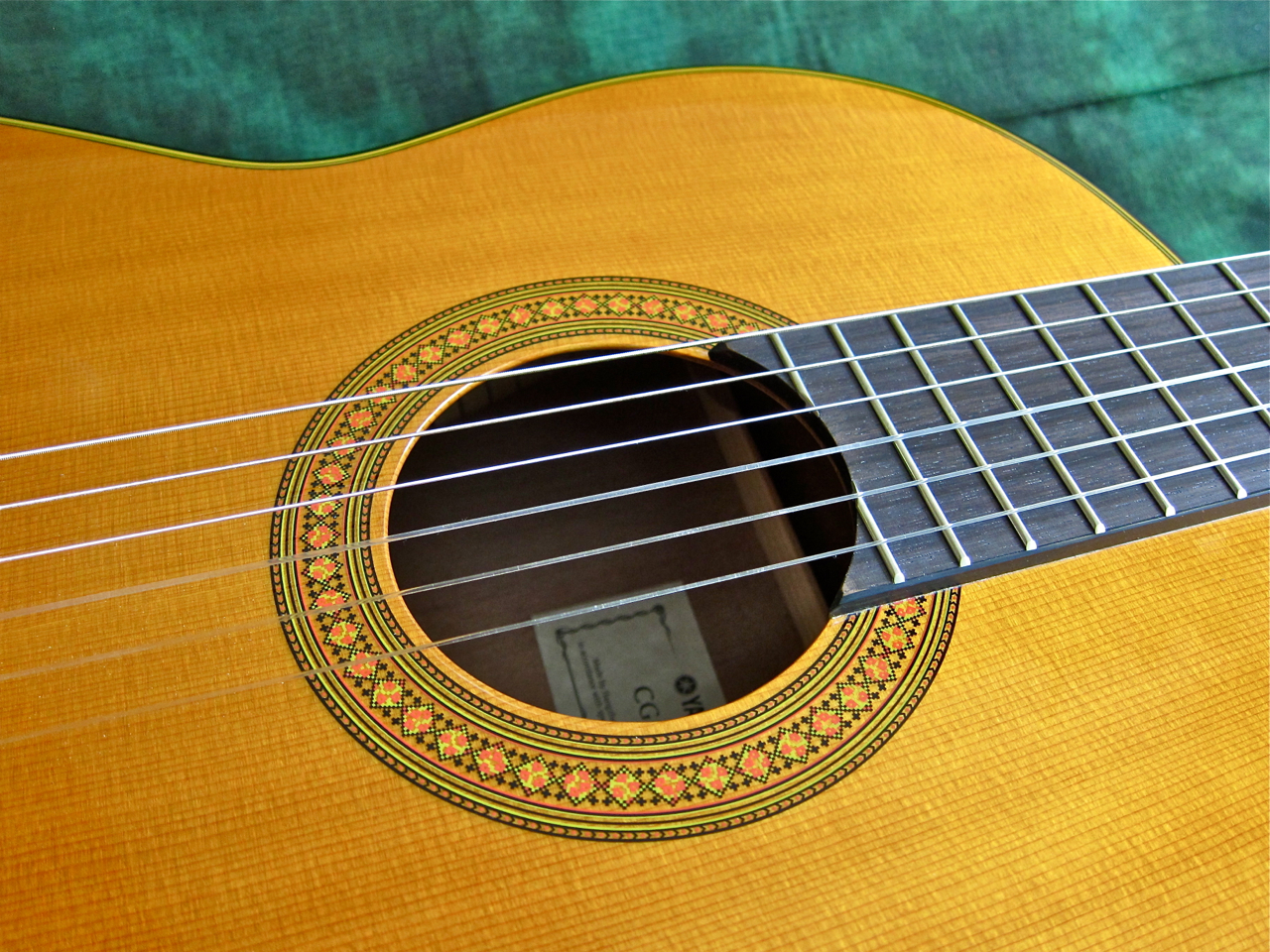
Kaunis rosetti on CG142C:ssä – kuten lähes kaikissa tämän hintaluokan kitaroissa – ennen lakkaamista kannen päälle liimattu folio. Kalliissa klassisissa taas rosetti on aikaa vievää upotustyötä, joka koostuu pienistä puu-, muovi- ja helmiäispaloista.

Kannessa on viisikerroksinen reunalistoitus.
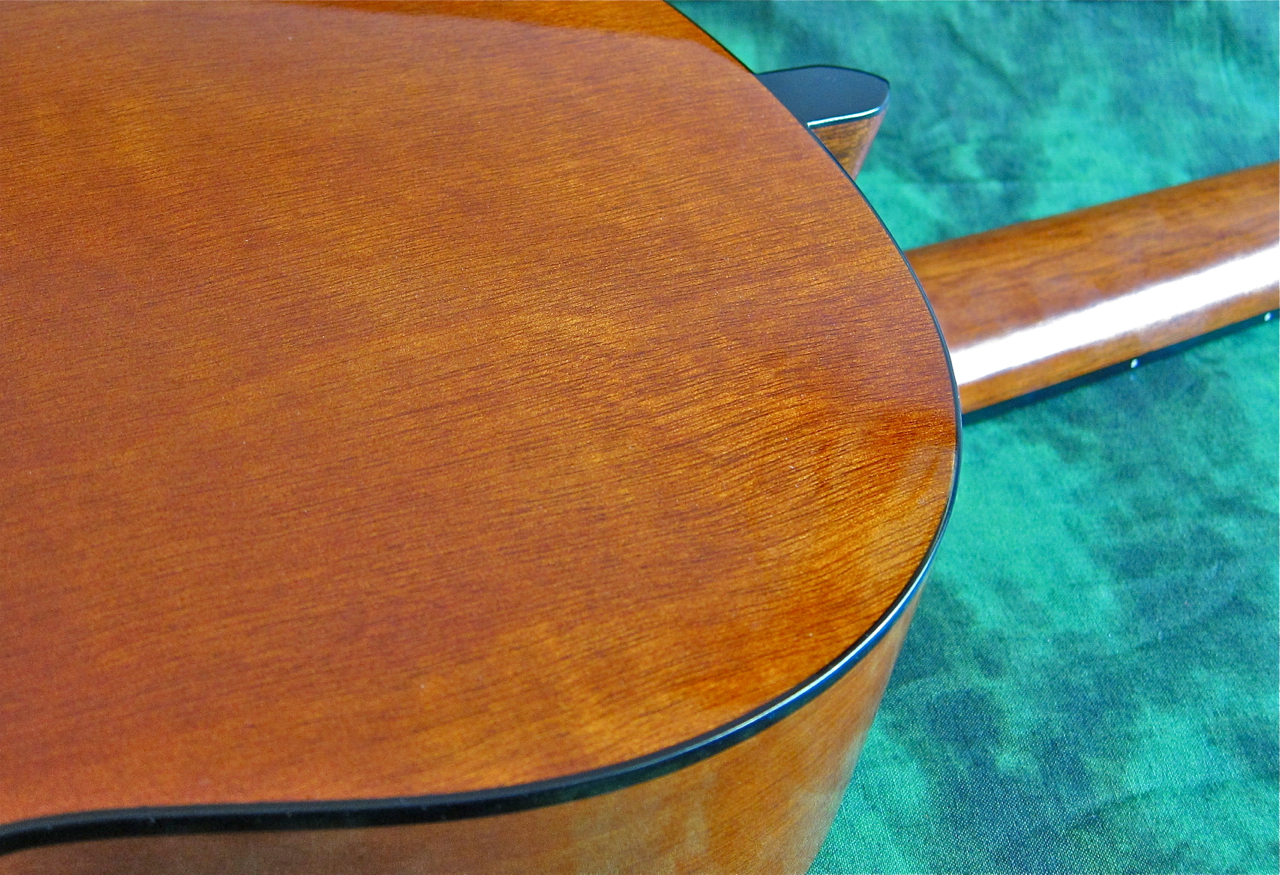
Pohjan musta reunalistoitus saa ikäänkuin jatkoa kaulakoron päällystyksessä.
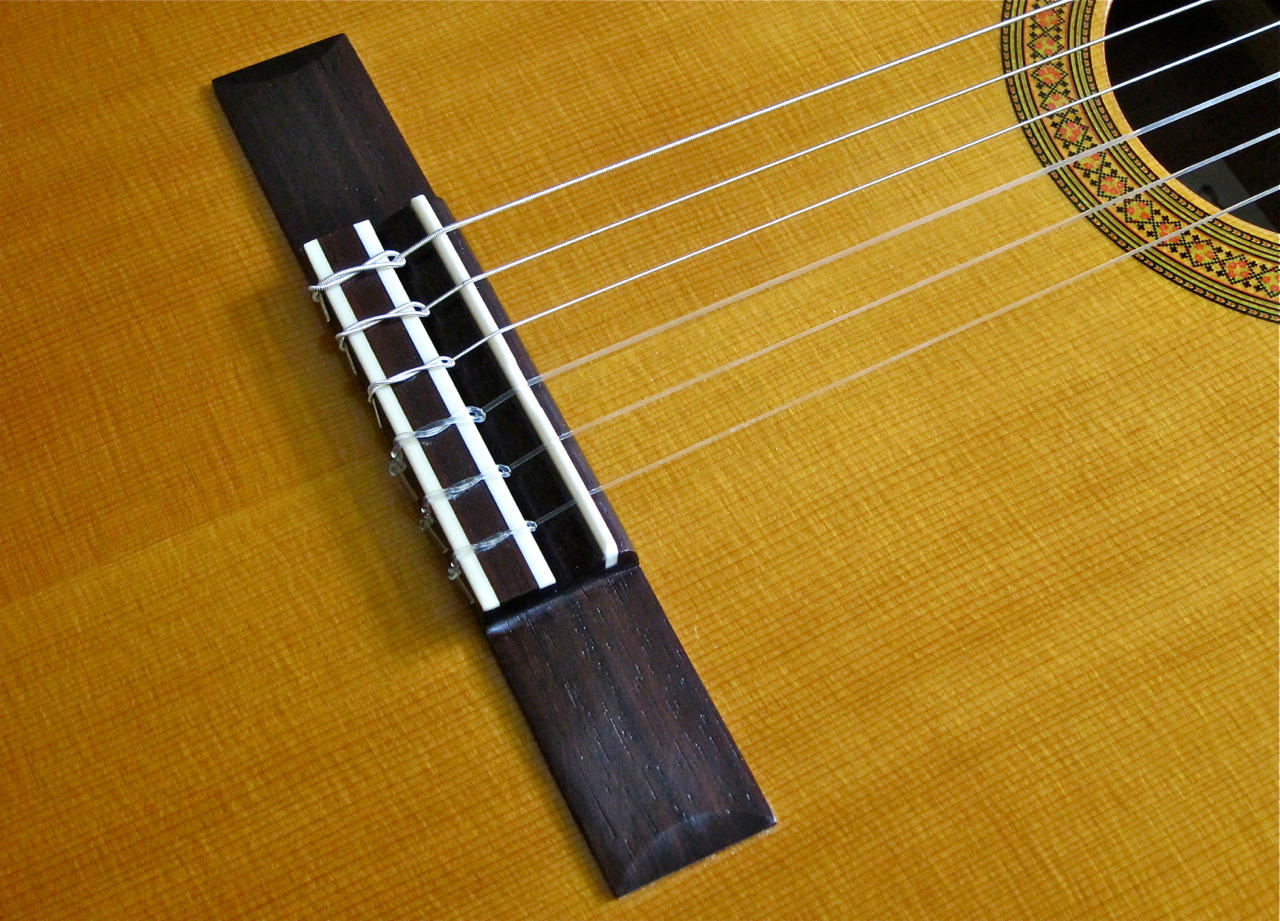
Kaunis, tyylikäs, ja konstailematon – tällainen on Yamaha CG142C:n palisanteritalla.

Yamahan klassinen on myös erittäin siisti kopan sisällä.
****

Yamaha NTX900FM (F-Musiikin hinta: 719 €) on APX-kitaroiden nylonkielinen serkku. Se on tarkoitettu sellaisille kitaristeille, joille laadukas etuvahvistin hyvällä sähköisellä soundilla, sekä rivikitaristeille mukava kaulaprofiili ovat tärkeämpiä seikkoja kuin sataprosenttisesti perinteitä kunnioittava klassinen kitara.
NTX900FM:n kansi on kokopuista Engelmann-kuusta.
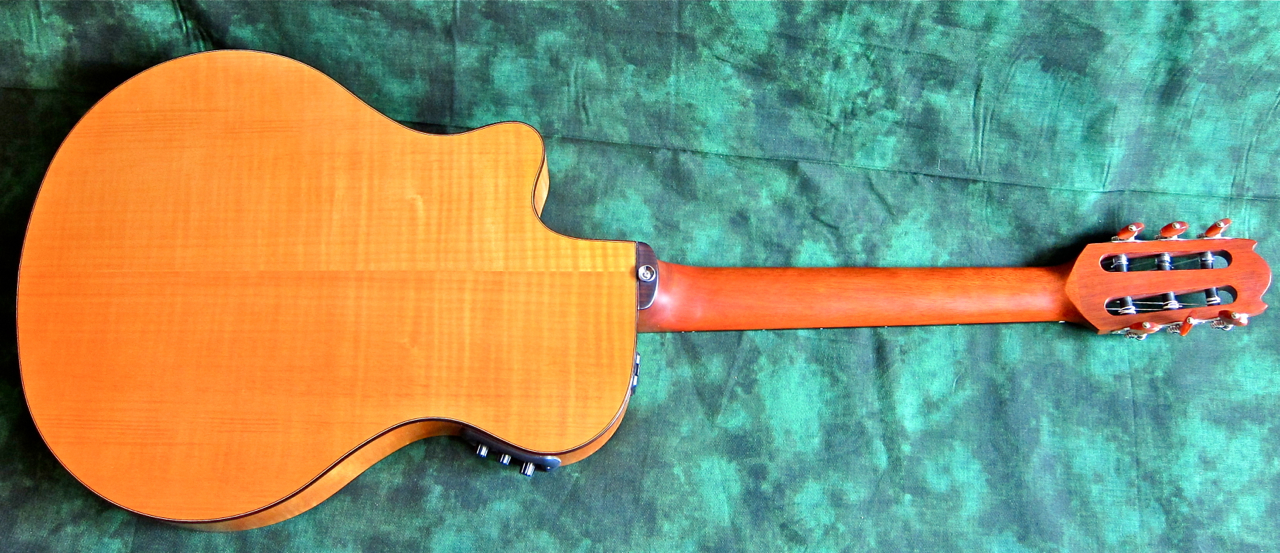
Natokaula on liitetty loimuvaahtervanerista tehtyyn koppaan perintesesti liimaamalla.
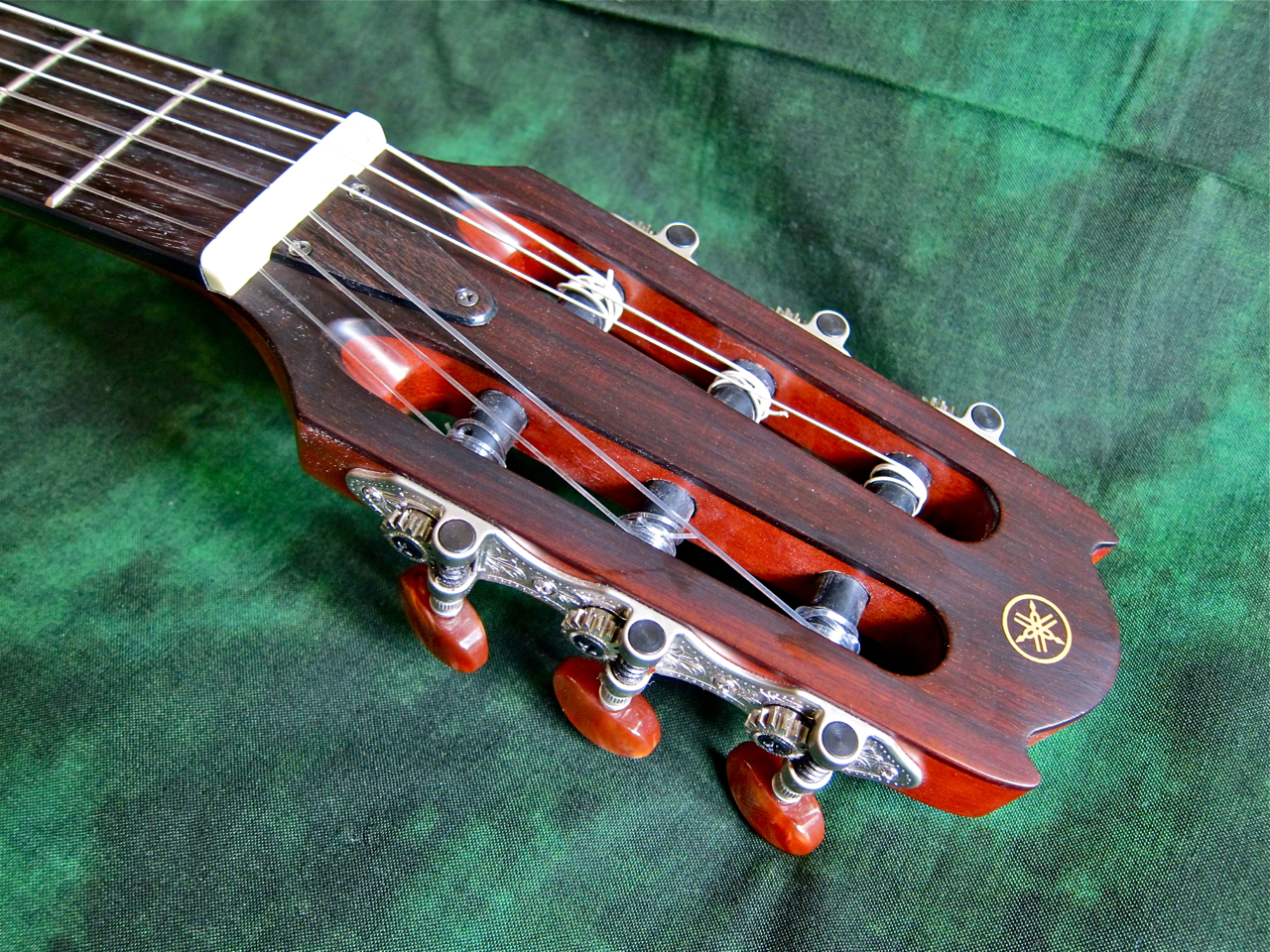
Lavan muoto on tuore ja nykyaikainen…
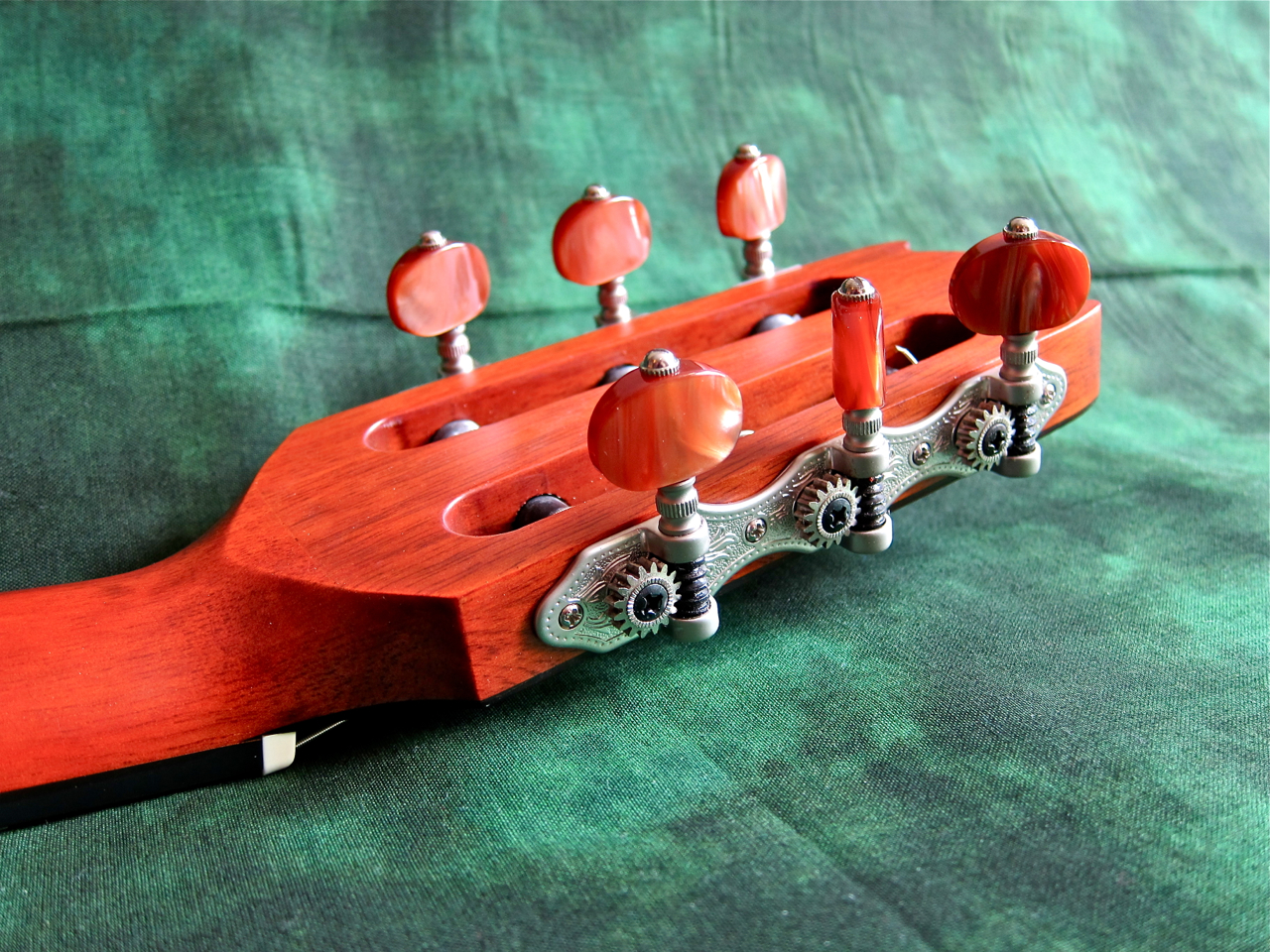
…ja kauniit, laadukkaat virittimet sopivat kitaran ilmeeseen erittäin hyvin. Myös NTX:n lapa on liimattu kaulaan.
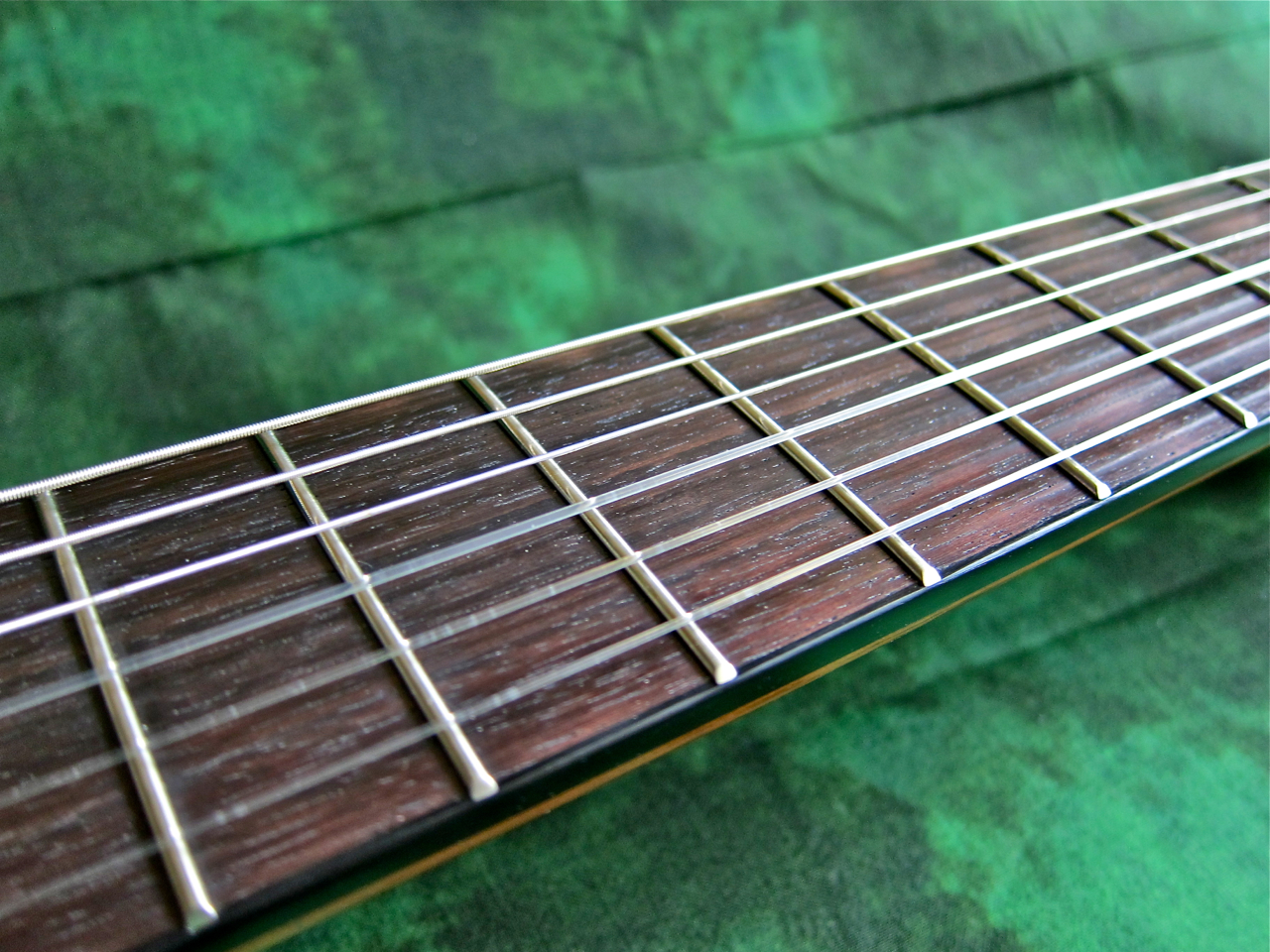
Reunalistoitettu otelauta on tässäkin kitarassa palisanteria.

NTX-kitaroissa on sama runkomuoto kuin teräskielisissä APX-soittimissa, ja myös nylonkielisten NTX:n rungot ovat perinteistä klassista kitaraa litteämpiä (noin 75 %).
NTX900FM:n rosetti on kasattu huolella useista eri puulajeista sekä pienistä helmiäispaloista.
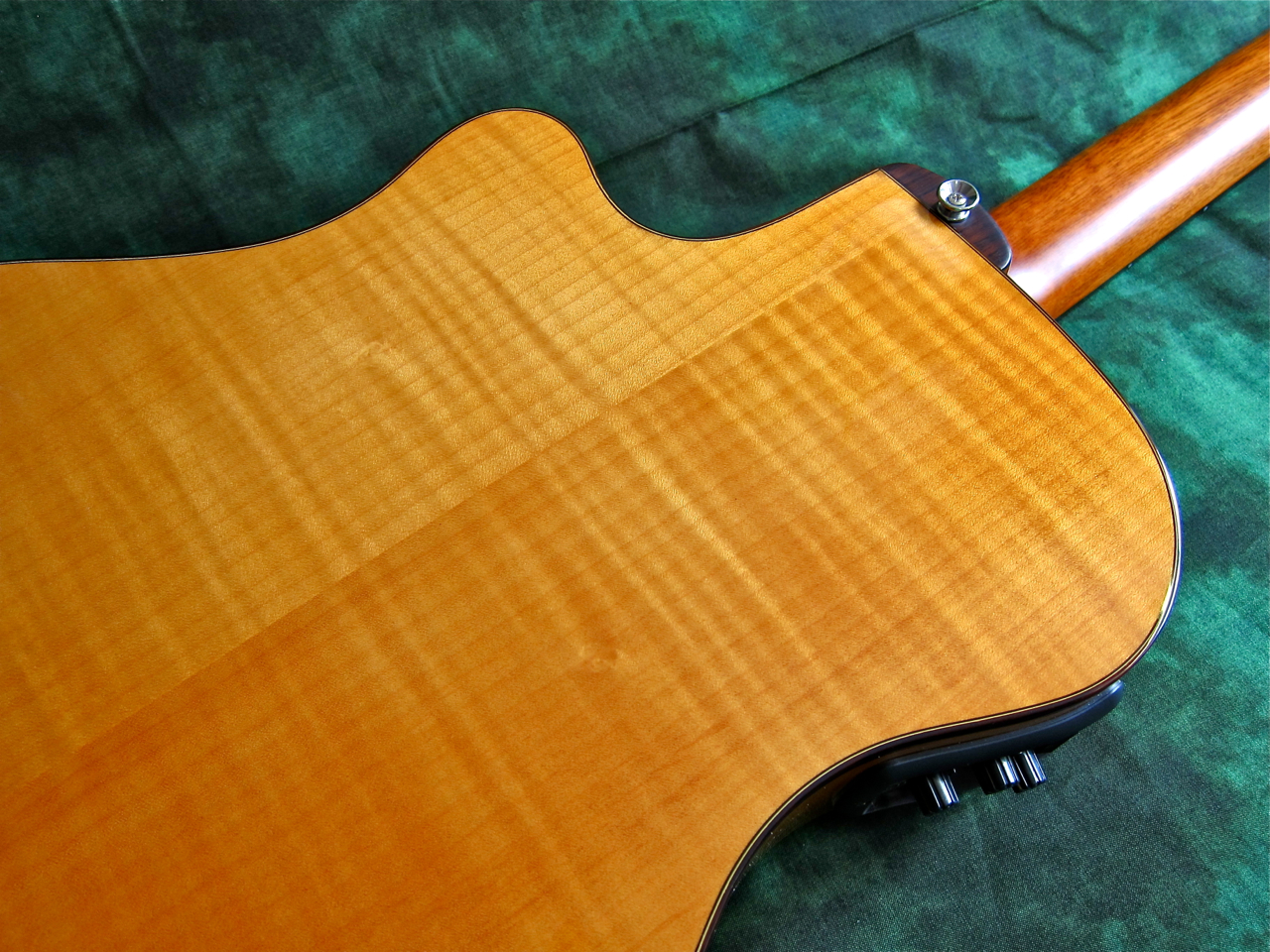
Näyttävä loimuvaahterakoppa on saanut ylleen hunajavärisen lakkakerroksen.

Myös NTX900:n palisanteritallan muotoilu tekee selväksi, ettei kyse ole perinnemallista.

Etuvahvistin on Yamahan oma ART System 61 -malli, joka on kaksitie-järjestelmä. Tämä tarkoittaa, että basso- ja diskanttikielille on erilliset pietsomikrofonit, joiden äänenvoimakkuutta voi säätää toisistaan riippumatta. ART System 61:ssä on tämän lisäksi kolmialueinen EQ, sekä viritysmittari.
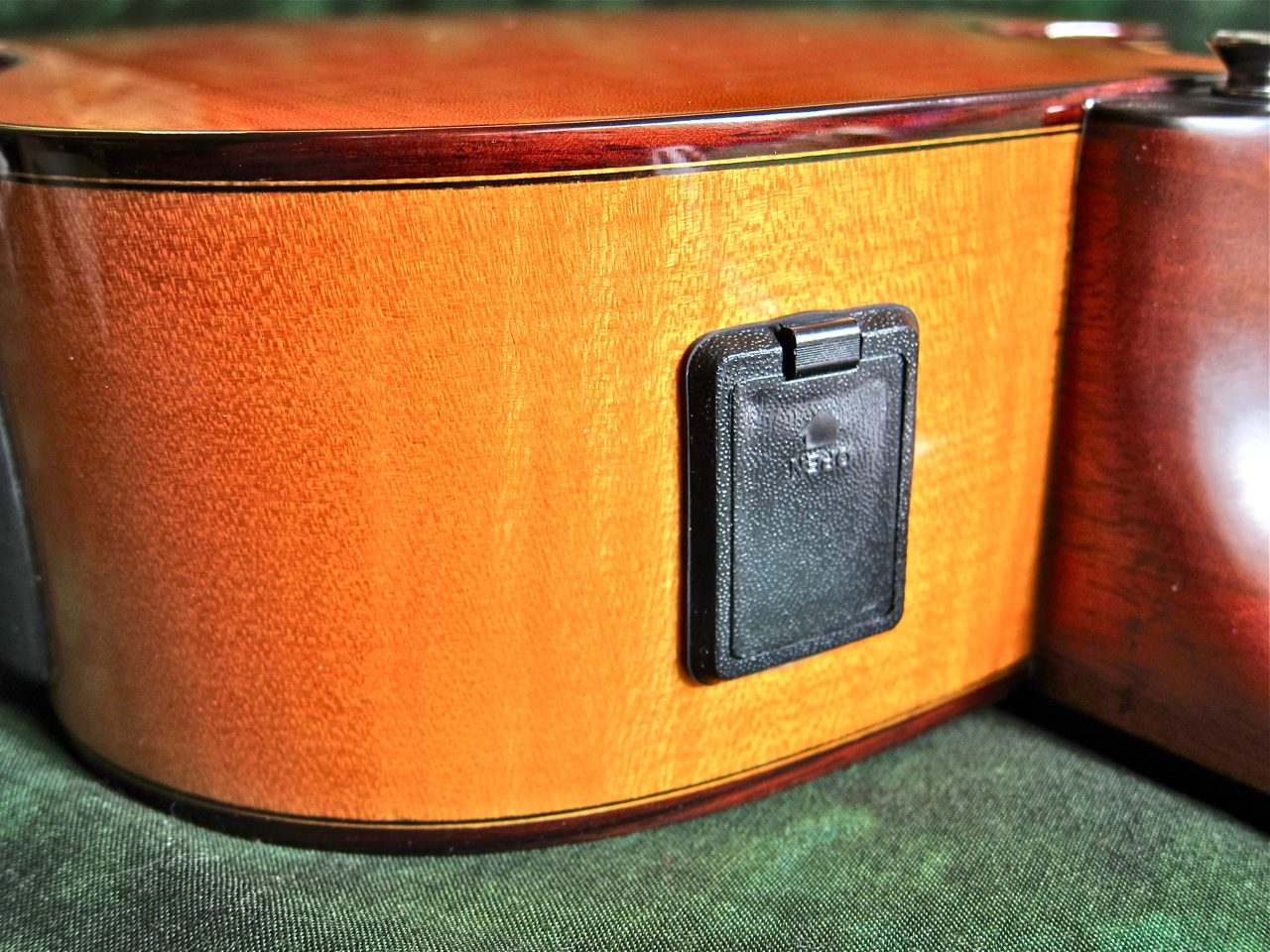
Yhdeksän voltin pariston lokero on sijoitettu kaulan viereen.
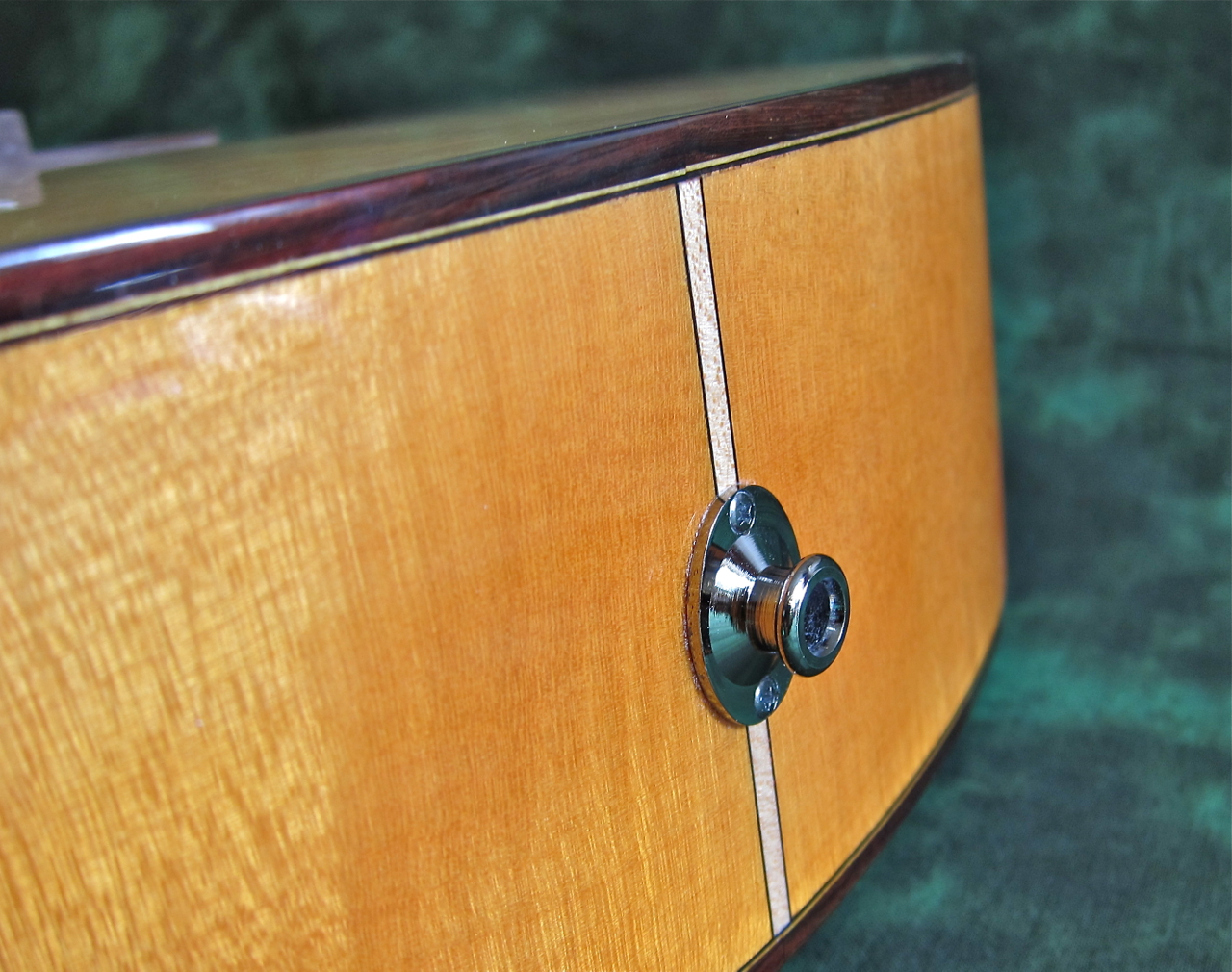
NTX900FM:ssä on valmiiksi asennettuna kaksi hihnatappia. Rungon hihnatappi on samalla jakkilähtö kitaran signaalille.
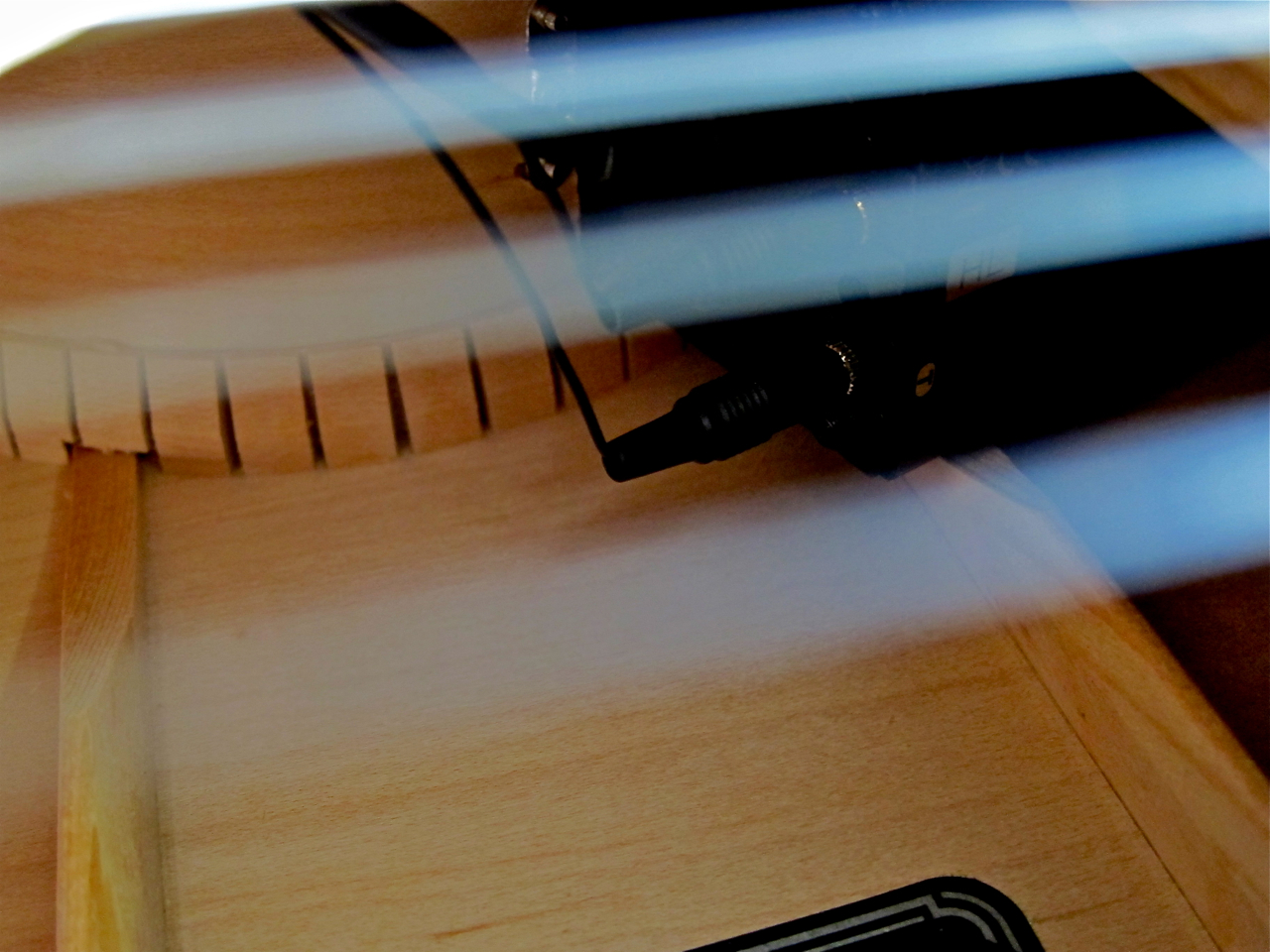
Työnjälki kitaran sisäpuolella on jälleen varsin siistiä.
****
****

Yamaha CG412C on soittotuntumalta tyyppillinen klassinen kitara: kaula on oikeanoppisesti todella leveä (satulan kohdalla 52 mm) ja kaulaprofiili on suhteellisen matala, mutta hyvin harteikas. Perinteisen klassisen kitaran leveä kaula antaa riittävästi tilaa kaikenlaisille sormituksille, mutta barreé-soinnut vaativat enemmän tarkkuutta ja voimaa kuin useimmilla teräskielisillä soittimilla.
Kielten korkeus kuulostaa sähkökitaran näkökulmasta kamalan korkealta – matala E: 3,7 mm, korkea e: 3,2 mm – mutta se on klassisella kitaralla vielä hyvin maltillinen. Nylonkielet ovat teräskieliä huomattavasti pehmeämpiä, ja niiden liikerata on soiton aikana myös paljon suurempi, minkä takia kielten etäisyys nauhoihin täyttyy olla suurempi kuin teräskielisissä kitaroissa.
CG412C soi kauniilla täyteläisellä, mutta samalla avoimella äänellä. Kitara ei projisoi niin hyvin kuin kallis pro-luokan soitin, mutta omassa luokassaan – hyvänä harrastelijakitarana – Yamaha CG142C kuuluu selvästi parhaimmistoon.
****

Yamaha NTX900FM:n kaula on leveydeltään perinteisen klassisen ja teräskielisen akustisen välillä. Satulan kohdalla leveys on 48 mm. Kapeammat mitat ja täyteläinen D-profiili tekevät kaulasta huomattavasti yleiskitaristille ystävällisemman.
NTX:ssä kielet ovat myös lähempänä otelautaa (ala-E: 3,1 mm/ylä-e: 2,6 mm). Tämä kaventaa akustista soittodynamiikkaa, mutta tekee kitarasta helpommin soitettavan.
Tavallista ohuemman rungon ja runsaan vaahtera-annoksen takia, soi NTX900FM vähän hiljaisemmalla ja ontolla äänellä. Volyymi riittää hyvin omaan harjoittelluun kotona tai biisintekovälineeksi, mutta kitara ei kanna akustisesti niin hyvin kuin ”oikea” nylonkielinen.
Linjasoitossa asiat muuttuvat dramaatisesti, ja Yamaha NTX900FM:stä kuoriutuu erittäin makeasoundinen lisäys soitinarsenaaliin. Yamahan ART-järjestelmä toimii todella hyvin, ja mahdollisuus säätää basso- ja diskanttikielten tasoja itsenäisesti helpottaa huomattavasti soundin hienovirittämistä. Tallan alla sijaitsevat mikrofonit eivät ole liian herkkiä oikean käden aiheuttamille häiriöäänille, ja etuvahvistimesta lähtevässä signaalissa on kiitettävän alhainen kohinataso.
Yamaha NTX900FM on mielestäni hieno peli, jos tarvitaan nylonkielistä soundia teräskielisellä tatsilla – tai, jos haluaa kokeilla nylonsoundia efekteillä.
****
Yamaha CG142C + NTX900FM – nylonkieliset kitarat
Maahantuoja: F-Musiikki
****
Yamaha CG142C
F-Musiikin hinta: 299 €
Plussat:
+ hinta-laatu-suhde
+ työnjälki
+ perinteinen klassinen kaulaprofiili ja tatsi
+ soundi
Miinukset:
– perinteinen kaulaprofiili vaatii harjoittelua
****
Yamaha NTX900FM
F-Musiikin hinta: 719 €
Plussat:
+ hinta-laatu-suhde
+ työnjälki
+ rivikitaristeille ystävällinen kaulaprofiili ja tatsi
+ mikrofonijärjestelmän soundi
Miinukset:
– ohut akustinen soundi
****


Epiphone SG sai rullatallan *** An Epiphone SG got a roller bridge

Asensin tänään poikani Epiphone SG:hen rullatallan. Nyt Bigsby B5 toimii paljon sulavammin!
Tilasin rullatallan SP-Elektroniikalta.
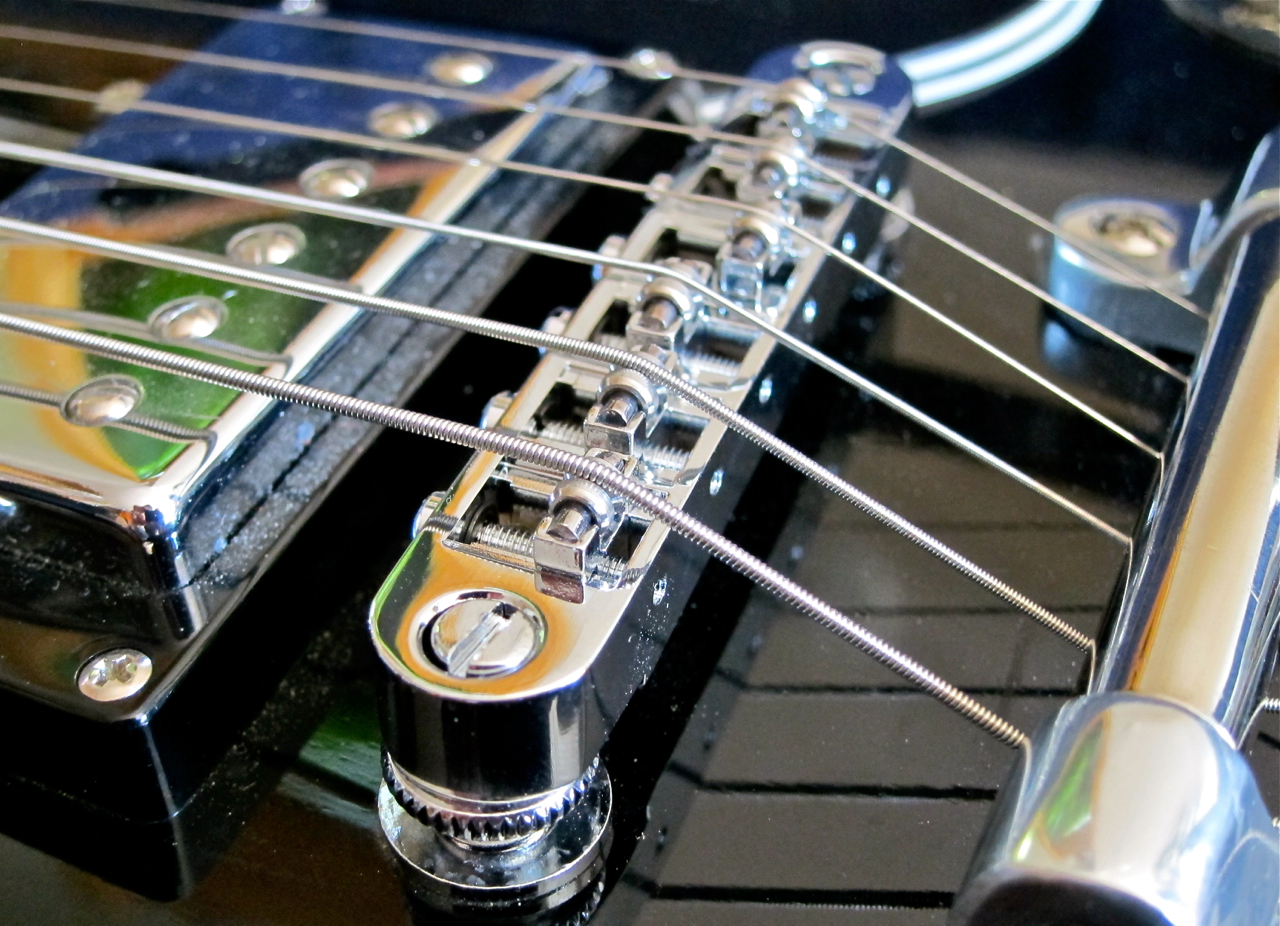
I installed a roller bridge on my son’s Epiphone SG. Now the Bigsby B5 works much better!
I got the bridge from SP-Elektroniikka.


Review: PRS Studio

****

The PRS Studio -model, which was introduced last year, bundles all the improvements of the last few years in one single instrument. The Studio sports a long list of new – or improved – features, such as the Narrowfield-humbuckers.
****

In Gibson-speak ”studio” usually means a less expensive, slightly scaled-down model. In the PRS Studio’s case the word ”studio” denotes a guitar that is meant to be very versatile.
The PRS Studio (current price in Finland around 3,000 €) is a set-neck electric guitar, with the company’s traditional 25-inch (63,5 cm) scale. A great-looking flame maple top comes as standard on the Studio. PRS offer several different colour finishes, as well as a choice between a wraparound bridge or a PRS vibrato.
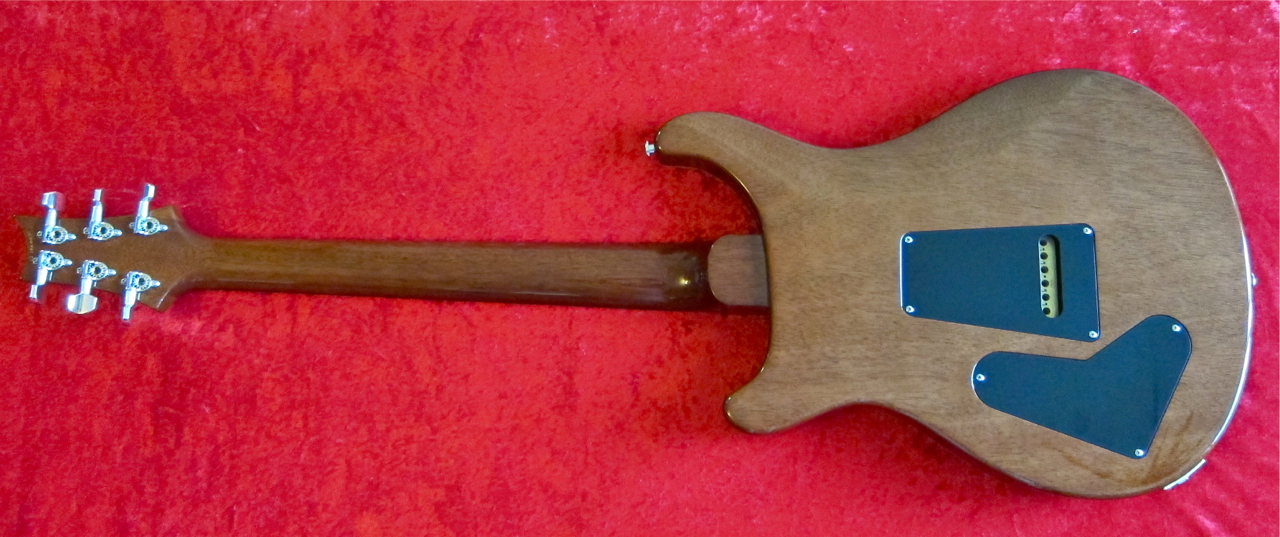
Both the neck and the back of the body are crafted from top-quality mahogany. The Studio is offered with two new neck profiles: The fuller version is called Pattern Neck, while its slimmer counterpart is designated as Pattern Thin.
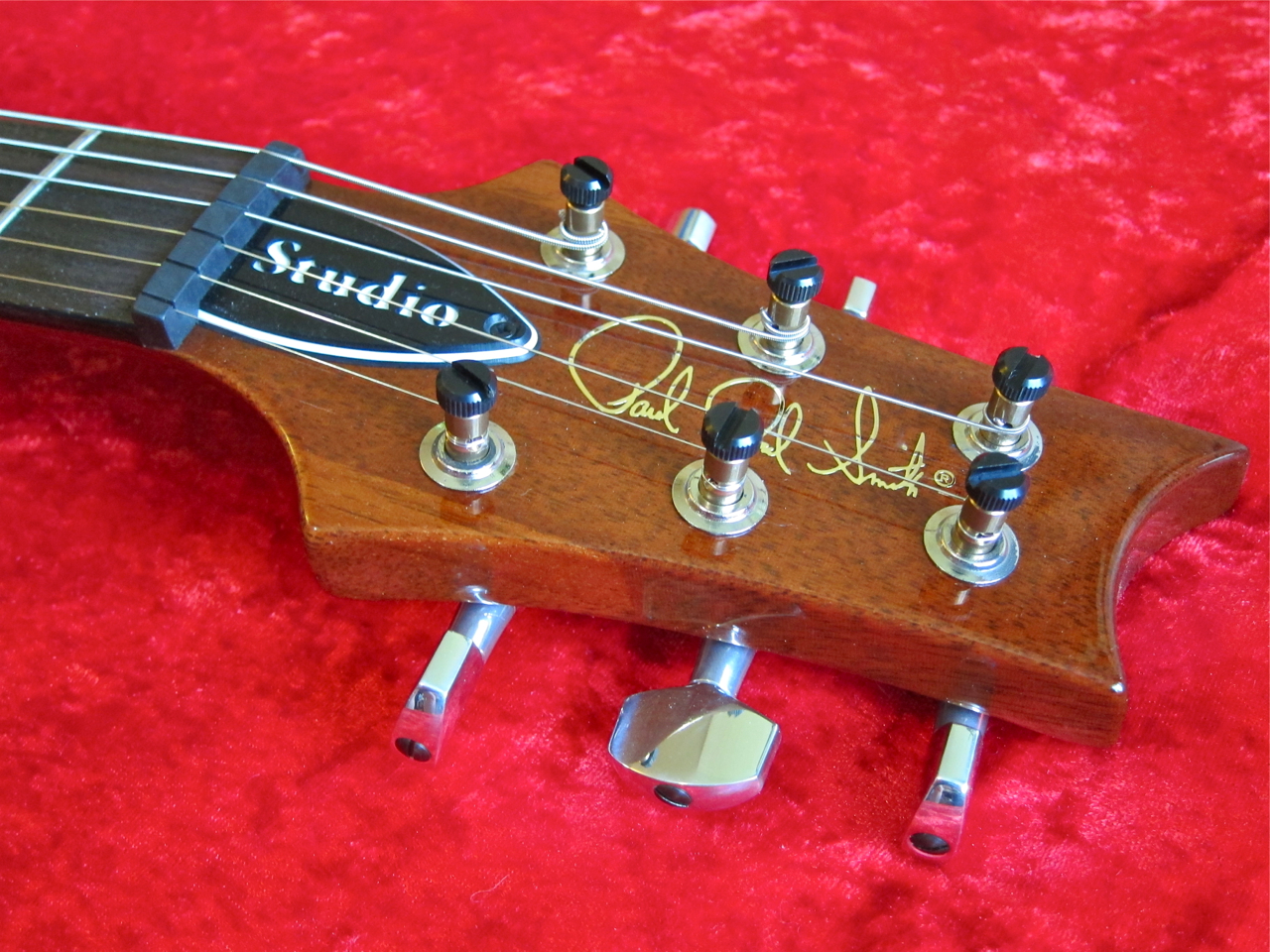
The new PRS Phase III locking tuners feature brass string posts and bushings with a much tighter fit.

I assumed that the reason for the open casings was weight reduction, but I was wrong. In one of PRS’ You Tube videos Mr Smith states that the main reason for this design change were the cool looks.

The company’s new bird inlays are standard on the Studio-model – cream coloured outlines filled with walnut.
The fretwork on our test sample was truly exemplary.

Here’s a good look at PRS’ customary neck joint – its big heel is good for sustain.

Over the past decades the PRS body shape has become a classic design in itself.

A breath-taking view for most guitar connoisseurs – the famous ”fake” binding, which is achieved by leaving the rim of the maple top unstained.
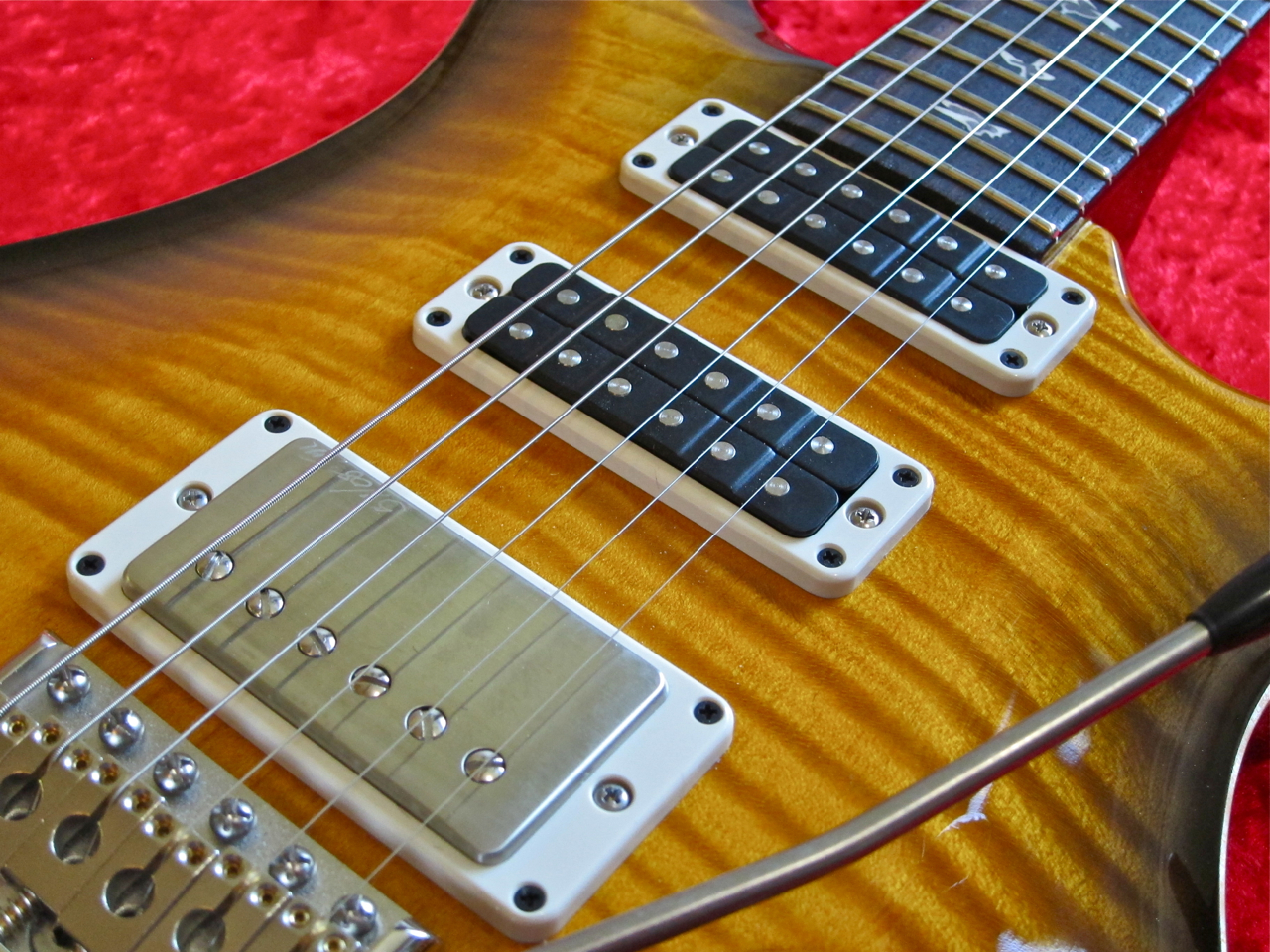
In the last years PRS has given its pickups a thorough overhaul, which has spawned a few new models: The Studio comes equipped with the new PRS 57/08 -humbucker in the bridge position. Many PRS-fans claim that this is the company’s best-ever vintage-type humbucker. The 57/08’s metal cover is brushed aluminium, and bridge versions have their model number deliberately engraved upside-down.
The brand new Narrowfield-humbuckers are very special beasts, indeed, with a sound of their own. The Narrowfield has a full-size humbucker’s output level and warm basic character, but thanks to its much narrower magnetic window the higher-mids and treble range both sound fresher and more transparent.

A push-pull-switch inside the tone control lets you split the bridge pickup.

PRS’ vintage-style vibrato is a fine improvement on Leo Fender’s original Stratocaster-bridge.

The vibrato block is milled from solid brass.

This is what the review sample’s control cavity looks like – not the cleanest PRS I’ve ever seen. Luckily the sawdust doesn’t seem to hamper the guitar’s functionality.

A classy hard case rounds out this package.
****

According to Paul Reed Smith himself, the Studio’s new Pattern neck profile is actually a return to the very beginning of PRS Guitars, when PRS was a tiny little workshop. The Pattern Neck isn’t miles away from the famous Wide-Fat-profile, but it is clearly rounder with much less shoulders to it.
The Studio’s ergonomics and playability can be summed up in one word – fantastic. The guitar is feather-light, and its slender body with the long upper horn balances perfectly on a strap – despite the neck joining the body at the 20th fret.
The PRS vibrato comes set up with four springs and works buttery and precisely with perfect return-to-pitch.
Acoustically the Studio performs like a true PRS – there’s a good dose of Gibson-ish set-neck character, mixed with a drier and and tighter attack. The warm, well-rounded, but fresh character is carried evenly across the whole fretboard.
The Narrowfield-pickups are a very interisting new breed. They don’t pretend to be sound like Strat-sized ’buckers, but give you plenty of humbucker warmth, coupled with more presence and a nice top end sheen. The Narrowfields work well in combinations, where you’d normally expect a couple of Fender-style singlecoils. In my opinion this is the first time I’ve heard a guitar, where a third humbucker makes tonal sense.
The moderately-powered PRS 57/08 -humbucker is the perfect partner for the Narrowfields, because it, too, has a fresh and dynamic tone. Splitting the 57/08 even gives you quite credible Fender-sound approximations.
The soundbites all start with the neck pickup on its own, flicking through all the switch positions with the bridge humbucker split. The final two repeats are the middle-plus-bridge and bridge-alone selections with the full humbucker in use:
****

Three thousand Euros is quite a lot of money for one guitars. True, but I feel the PRS Studio is really worth each Cent – it is a guitar crafted to the highest standards from top-quality materials. The result is one of the best guitars coming from a large-volume manufacturer. Outstanding playability, coupled with the fantastic tone of the new pickups put this PRS in a league of its own.
****
PRS Guitars Studio
Current price in Finland: approx. 3,000 €
Finnish distributor: EM Nordic
A big thank you to DLX Music Helsinki for the loan of the review sample!
Pros:
• sheer quality
• workmanship
• playability
• smooth vibrato
• sound
• versatility
Cons:
• sawdust in the control cavity
****
Review: Kataja Guitars – three basses

****
Ari Kataja’s Kataja Custom Shop is a small builder from Tampere (Finland), who has concentrated on one-offs for his clients up to now (alongside repair work).
Kataja Guitars have recently come out with their line of Fender-inspired basses, produced in small runs; the new models were also on display at this year’s Bassopäivä (the annual Bass Day at the Pop-Jazz-Academy in Helsinki).
Kitarablogi.com jumped at the opportunity to get three models for a review:
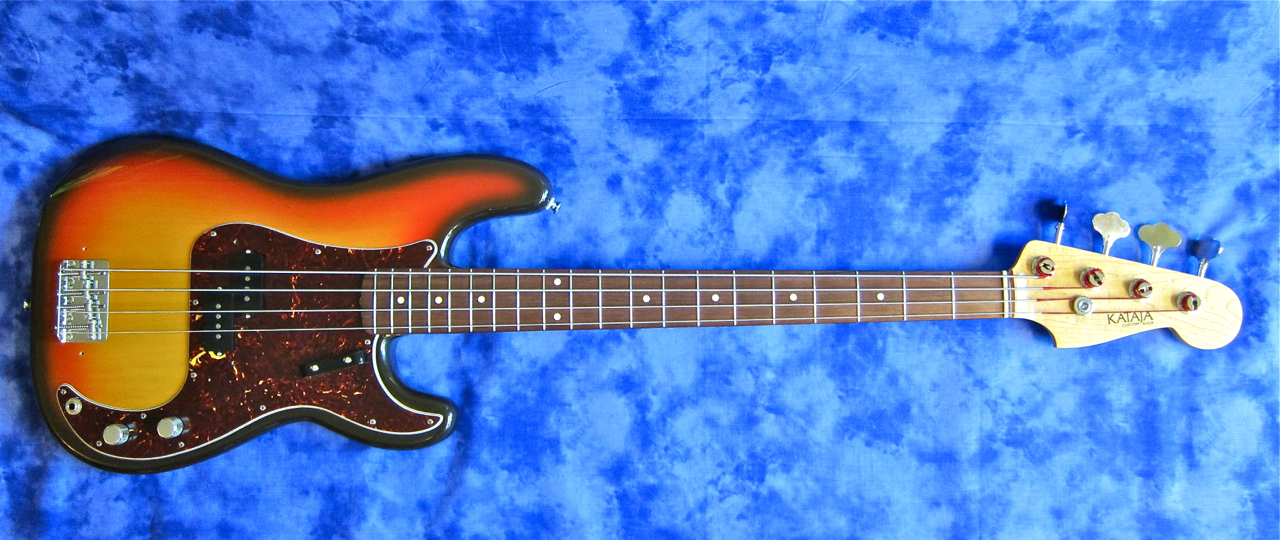
Ari Kataja’s version of a P-bass…

…a model based on a 1960 Jazz…

…as well as a ca 1962/63 Jazz Bass -based bass (current prices in Finland start from 1,920 €, incl gigbag).
****

Kataja Custom basses are crafted in Finland – start to finish. Even though there is quite a number of so-called custom builders, who use pre-fabricated bodies and necks as their basic ingredients, this is not the way for Mr Kataja. His instruments start life as wood blanks, carefully dried to a correct moisture content.
Shared features among the three review basses are bodies crafted from alder and maple necks sporting rosewood fingerboards.

Ari Kataja is also a stickler for period-correct parts and hardware. Take the tortie ’guard on the white 1960 J-model, for example, which is a special item using vintage-style celluloid for its top layer.

All three models have been finished using a modern type of nitrocellulose lacquer. The resulting finish is very thin and hard, protecting the wood, but not inhibiting the instruments’ vibrations.

The P-model’s headstock comes finished in clear lacquer…
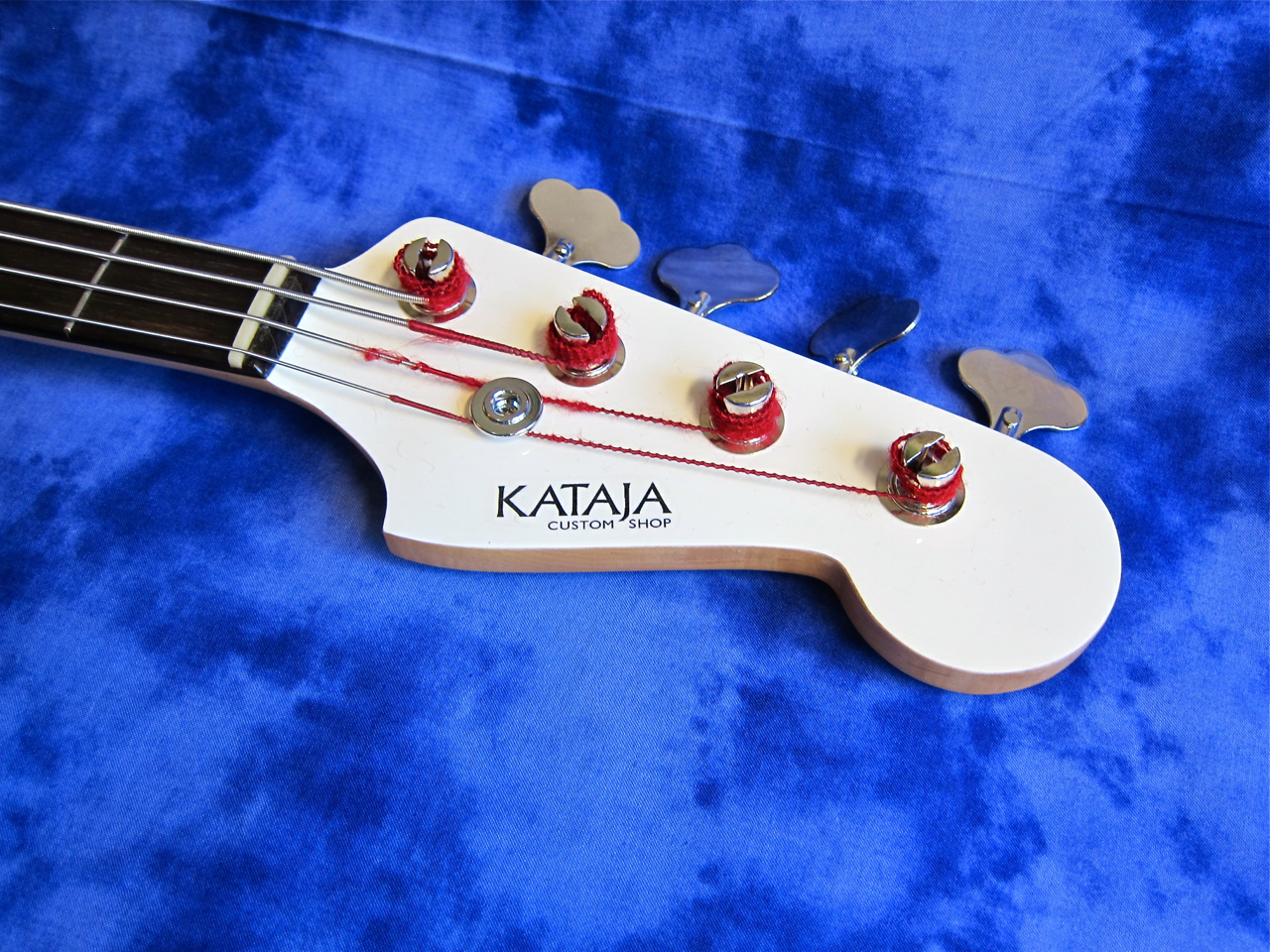
…while both of the J-models on review here…

…sport colour finishes, matching their bodies.

The tuning machines are modern reproduction of the reverse-action Klusons from the 1950’s and 60s. The keys still have to be turned the ”wrong” way around, compared to modern machine heads, but the tuning ratio is finer on these improved vintage reissues.
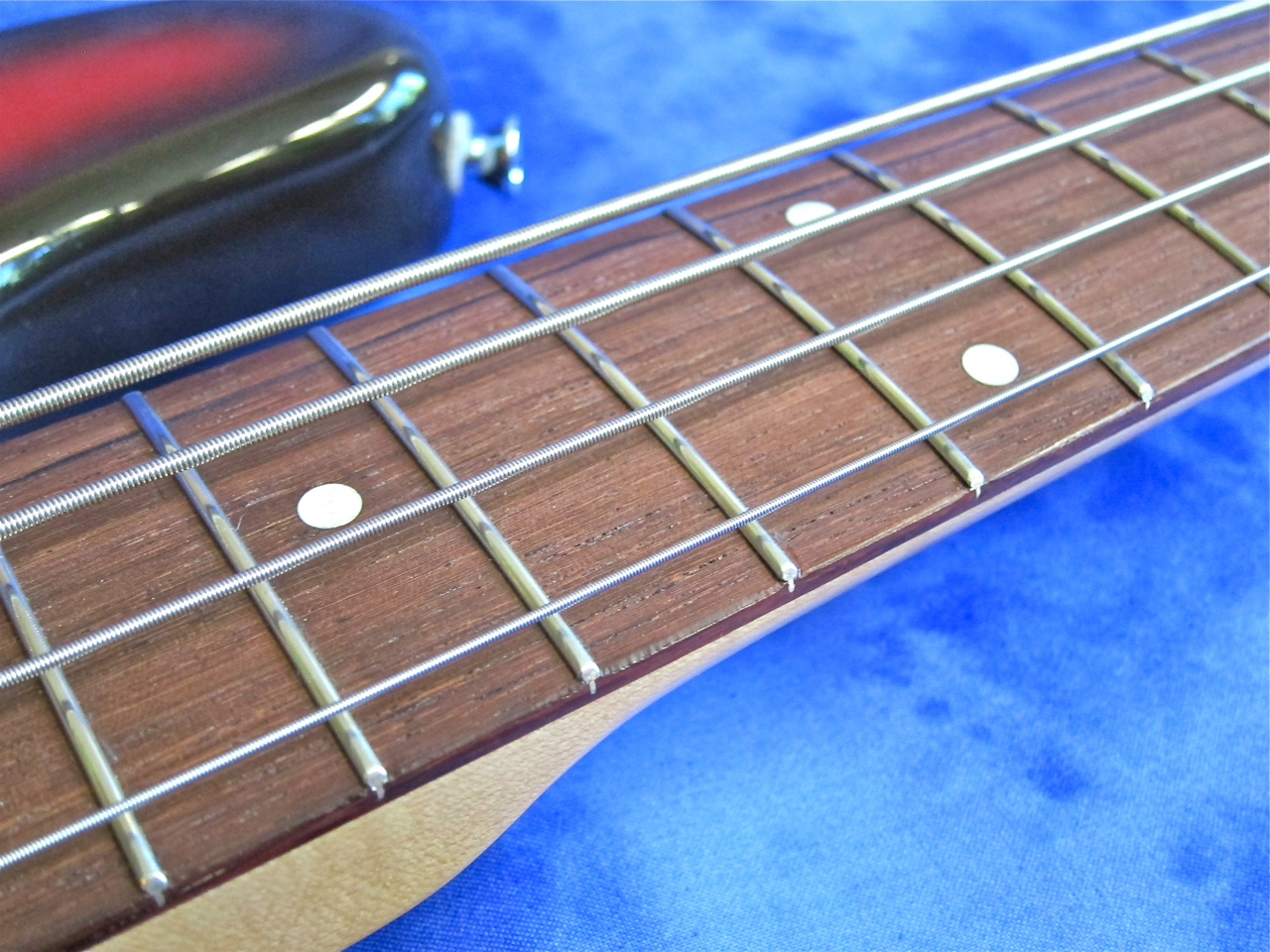
The review basses sport gorgeous Madagascar rosewood fingerboards.

The white 60 J comes with small vintage-sized frets…

…while the P-model and the 62 J both come equipped with medium-sized frets.
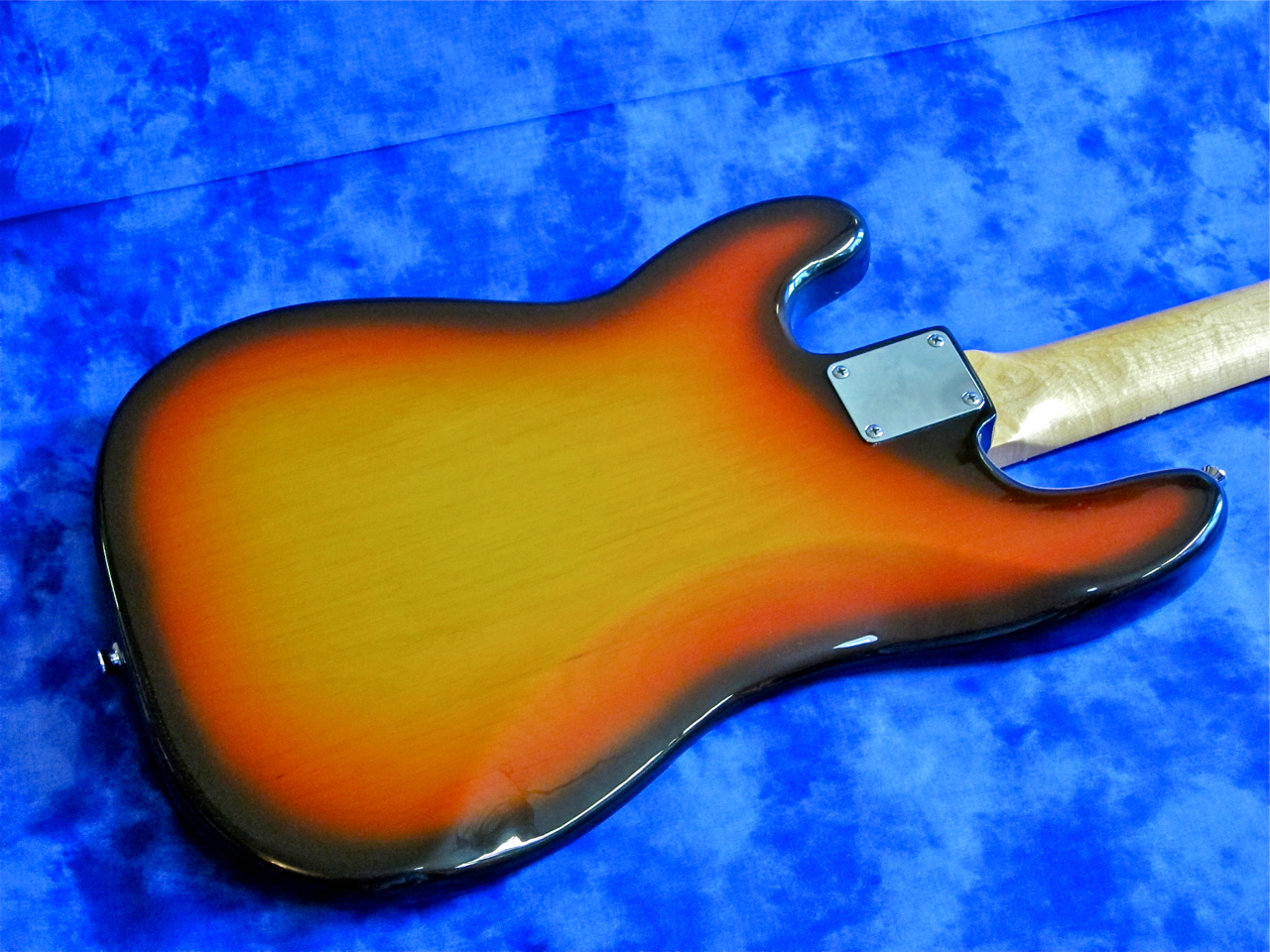


The neck joints are traditional. Following a late-50s/early-60s pattern, all basses have deep contouring for added comfort.

All three instruments come with a period-correct vintage bridge with threaded bridge saddles. This makes it possible to set the distance between the strings simply by lifting each string from one ”groove” to another.
****

The Kataja 60 P and 60 J have pickups loaded with 0,195″-diameter (4,95 mm) alnico magnets with bevelled tips.

The bevelling was used to prevent the magnets from chipping the vulcanised fibreboard coil formers, when the magnets were tapped through their holes.

The guitar boom of the 1960s made it paramount to increase production numbers and production efficiency. One step was bringing down the diameter of the pickup magnets marginally to 0,187″ (4,75 mm). The slightly slimmer magnets were easier to get through the fibreboard coil formers, which made the bevelling unnecessary. Thrue to style, Kataja’s 62 J model uses this type of magnet in its pickups.
There are also other differences between the pickups that aren’t easy to spot: The P and 60 J models’ pickups are wound with the period-correct Heavy Formvar -wire, while the blue Kataja’s pickups use the Plain Enamel -variety. Also, the fibreboard coil formers are coloured differently, according to the bass’ respective ”vintage”.

The white J-type features two stacked, concentric controls, with the silver top being each pickup’s volume control, and the lower ”ring” being the pickup’s own tone roll-off.

This set-up was changed in 1962 to the control lay-out we all know and love so well – separate volumes, one per pickup, with a shared master tone control.
****
These three basses by the Kataja Custom Shop are amazing, top-drawer instruments, designed for the vintage fanatic. The workmanship on display is first-rate, and the way with which Ari Kataja is able to zone in on each minute detail says a lot about this craftsman’s dedication and passion.
As is implied in the name, a Custom Shop’s forte is the flexibility with which it can accommodate a customer’s special wishes into the finished instrument. In the case of these three basses, Mr Kataja fattend up the neck profiles a little bit to his own preference.
The Kataja basses play like a dream and sound fantastic.
I recorded the following soundbites direct, using a Sans Amp Bass Driver DI plugged into a Focusrite Saffire 6 USB -soundcard. Each style has been recorded with one set of Sans Amp settings, taking care to keep the differences between each bass in terms of output level and sound intact. With the J-types each bass line is first played using only the neck pickup, then repeated with both pickups on full, and lastly recorded via the bridge unit on its own.
……
……
****
As you can clearly hear, the Kataja-basses deliver great, vintage tones. The pickups vintage-style medium output only helps in achieving the clear and dynamic tones the originals of yore are so famous for.
In light of the offered build quality and the tasty tones on tap, Kataja’s pricing can only be seen as truly affordable.
If you’re on the lookout for an investment-grade, vintage-style bass, you should definitely try one of Kataja Custom Shop’s creations!
****
Kataja Custom Shop – vintage-style basses
current prices in Finland start from 1,920 €, incl gigbag
Contact: Kataja Guitars
Pros:
+ Made in Finland
+ workmanship
+ playability
+ sound
+ Kataja-pickups
+ satin finishes necks on review samples
+ fair price
****
The Ruokangas Mojo King in action!
Played by Antti Paranko.
Testipenkissä: Yamaha Pacifica 611H
Kun Yamaha esitteli ensimmäisen Pacifica-mallinsa 1990-luvun alussa, varmasti kukaan ei olisi uskonnut, että kyseisestä mallista syntyisi näin menestyksekäs ja laaja mallisto. Alkuperäinen Pacifica kehiteltiin kokeilumielessä Yamahan USA Westcoast Custom Shopissa, ja soittimen isät ovat Rich Lasner ja Leo Knapp.
Vuosien aikana Pacifica-nimitystä kantoi hieman laajempi katras erimuotoisia kitaroita, mutta pääsääntöisesti Pacificat ovat olleet Strato-tyylisiä – näin myös tämänhetkinen top-malli Pacifica 611H.
****
Uskomatonta, mutta totta: laadukas ja kaunis Yamaha Pacifica 611H –kitara valmistetaan Indonesiassa, mikä selittää sen erittäin maltillisen hinnan (F-Musiikin hinta: 595 €).
Puut on valittu perinteitä kunnioittaen: ruuvikaula on veistetty vaahterasta, otelauta palisanterista, ja runkopuuna on käytetty kolme palaa leppää. Koristeeksi on liimattu loimuvaahteraviilut sekä rungon että lavan etupuolelle.
Rungon viisteiden ansiosta kitara istuu mukavasti soittajan sylissä.
Vintage on tulossa jälleen muotiin – Pacifica 611H:lla on uutena ominaisuutena kiiltävä (ja kellertävä) lakkaus kaulassa.
Sekä satula että kieliohjaimet tulevat Graph Techiltä, ja niiden materiaali on Teflonia sisältävä, itsevoiteleva keraaminen Black Tusq. Black Tusqin lujuus parantaa kitaran sointia, samalla kun itsevoitelu vähentää tehokkaasti kitkaa virittäessä.
Vaikka tässä Yamahassa ei ole vibratallaa, on soittimen virittimiksi valittu laadukkaat Grover-lukkovirittimet. Uusien Groverien suuri etu on, että kielten vaihtoon ei tarvitse työkaluja, vaan nuppia kääntämällä kieli ensin lukitetaan viritintappiin, ennen kuin tappi alkaa kääntyä.
Miksi ei kaikilla valmistajilla voi olla näin tiukka laadunvalvonta? Pacifican nauhatyö on hintaluokassaan esimerkkilistä sorttia – sileän soittopinnan sekä pyöristettyjen nauhapääiden ansiosta 611H tuntuu huomattavasti kaliimmalta soittimelta kuin mikä se on.
Perinteinen ruuviliitos – kun se kerran toimii, niin miksi sitä pitäisi muuttaa?
Kilpikonnakuvioinen plektrasuoja istuu tyylikkäästi Yamahan kauniiseen punaruskeaan Root Beer -väritykseen.
Yamaha käyttää Graph Techin String Saver -tallapaloja 611-mallin kiinteassä tallassa. Itsevoiteleva materiaali pidentää kielten käyttöaikaa ja vähentää huomattavasti joistakin metallisatuloista tuttua, ikävää nasaalisuutta.
Laatukitaraa on varustettu laatumikrofoneilla: monissa kitaroissa näkyy nykyään P-90:n ja tallahumbuckerin yhdistelmää. Pacifica 611H:n tapauksessa kaulamikrofoniksi on valittu Seymour Duncanin SP-90-mikkiä, joka on firman pikkutarkka jäljennös alkuperäisestä 1950-luvun Gibson P-90:stä. Kitaran tallahumbucker on Duncanin Custom 5 -malli, joka on keskivahva mikrofoni Alnico 5 -magneettilla.
Säädinosasto koostuu yhdestä kolmiasentoisesta vipukytkimestä, sekä master volumesta ja master tonesta. Tone-potikassa on nostokytkin, jolla voi puolittaa tallahumbuckerin.
Erittäin siistiä työtä voi löytyä myös elektroniikkalokerossa, joka on suojattu ulkoisilta häiriöiltä grafiittimaalilla.
****
Pacifica 611H:n soittotuntuma on hyvin mukava, loistavan nauhatyön, sekä kaulan hyvin mukavan, keskipaksun C-läpileikkauksen ansiosta. Testiyksilö oli myös miellyttävän kevyt.
Yamahan selkeä ja avoin akustinen luonne säilyy myös vahvistetussa soundissa. Yksikelaisen P-90:n yhdistäminen tallahumbuckeriin on Pacifican tapauksessa hyvin toimiva ratkaisu. Kaulamikrofoni ei jää teholtaan lainkaan humbuckein varjoon, ja yksikelainen pystyy tuottamaan huomattavasti selkeämpää soundia kaulan lähellä kuin monet humbuckerit.
Esimerkkipätkissä aloitan kaulamikrofonista, minkä jälkeen kuullaan puolitettua humbuckeria ensin kaulamikrofonin kanssa ja sen jälkeen ilman. Lopuksi tulevat kytkimen keski- ja talla-asento täydellä humbuckerilla soitettuna:
Yamaha Pacifica 611H – säröllä
Mielestäni Yamaha Pacifica 611H tarjoaa uskomattoman hyvää vastinetta rahalle. Tällä soittimella riittää rahkeet myös ammattimuusikon käyttöön, suoraan paketista ja ilman modausta!
****
Yamaha Pacifica 611H
F-Musiikin hinta: 595 €
Maahantuoja: F-Musiikki
Plussat:
• hinta-laatu-suhde
• lukkovirittimet
• Graph Tech -satula ja -tallapalat
• työnjälki
• soitettavuus
• soundi
• monipuolisuus
****
****
Yamaha Pacifica 611H – videon audioraita
****
 Kitarablogi.com – Finland's premier Guitar and Bass blog