Review: Bluetone Bluesmaster – Straightforward and to the point

No effect pedals were used on the guitar parts in this demo.
The original Fender Musicmaster Amp is a practice bass amp from the 70s and early 80s.

Fender’s original Musicmaster Bass amplifier was an odd concoction. The Musicmaster Amp was meant as a practice amplifier for beginning bassists – and sometimes even sold in a pack with the starter bass guitar of the same name – but it fell strangely flat of expectaions. The amp was underpowered and sounded flabby and uninspiring as a bass amp.

More recently, though, guitarists on the hunt for good bargains have come to realise that the Musicmaster Amp is a relatively inexpensive way to buy a genuine ”silverface” Fender. It’s a stripped-down valve amp for sure, but it still deliveres a lot of character, when used with an electric guitar. And because it isn’t a collectable Fender model, people feel free to modify the original for their own purposes.

This is where it starts to get interesting:

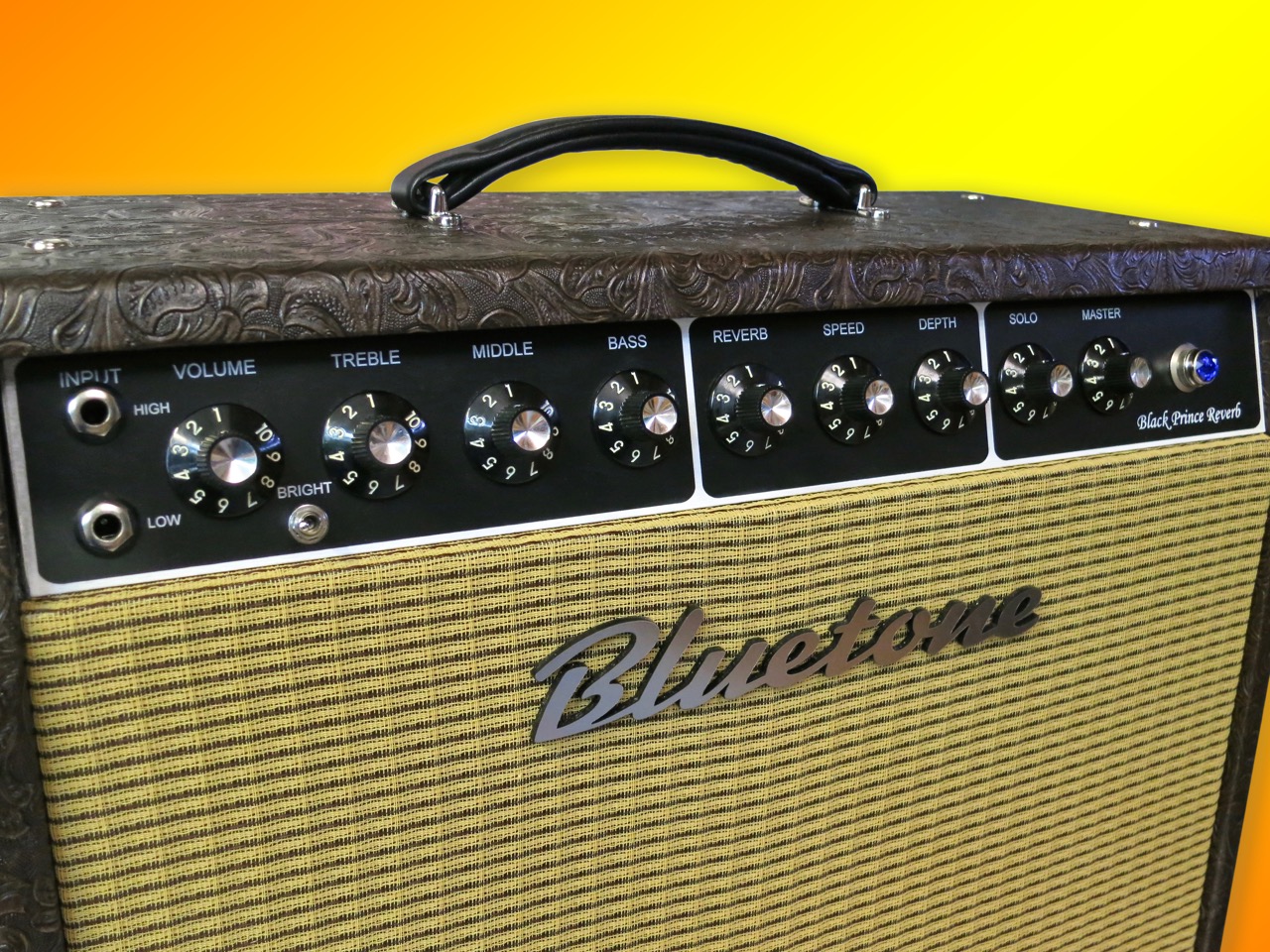
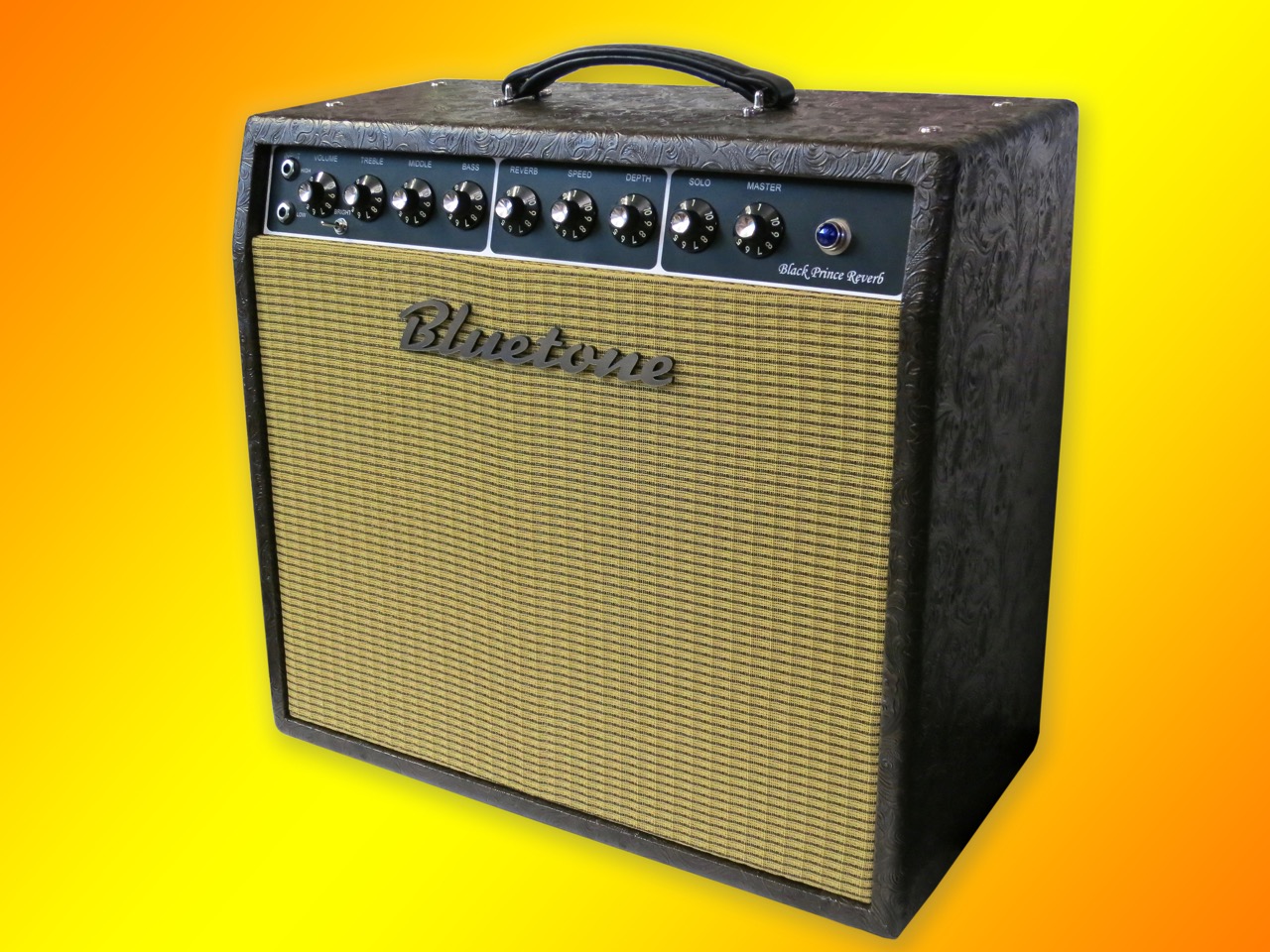
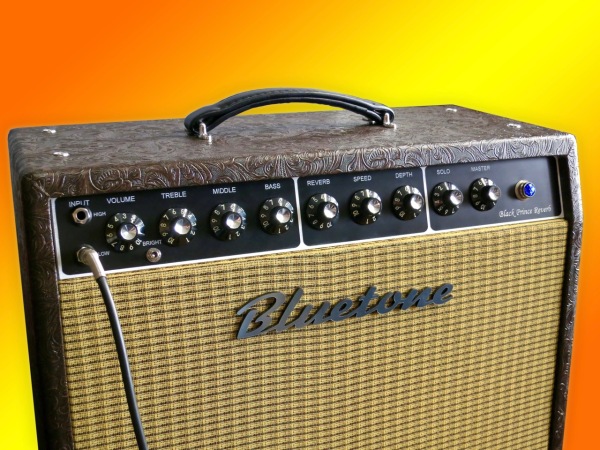
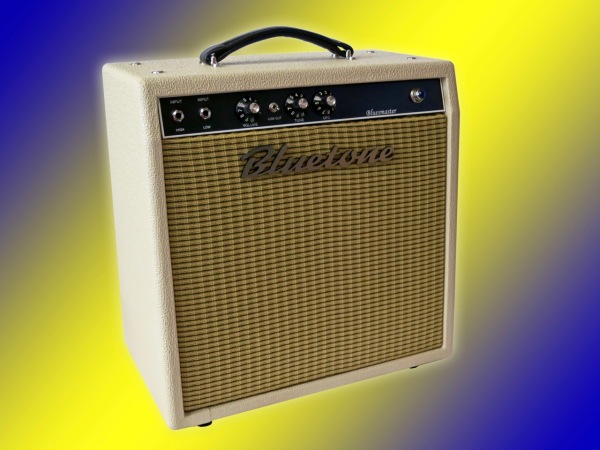
Finnish boutique amp maker Bluetone has released its own handcrafted and improved version of the Fender Musicmaster a few weeks ago, meant expressly for guitarists. This new guitar combo is called the Bluetone Bluesmaster, and it will set you back between 960 to 1,190 euros, depending on your chosen options and finish.

The signal path closely follows that of the original, but the Bluetone Bluesmaster adds such handy features as a Low Cut switch and the company’s own three-way rotary OPC-switch. The OPC-circuit (Output Power Control) enables you to drop the Bluesmaster’s output power from its full 10-12 watts down to something like 2 watts, virtually without any negative impact on the amplifier’s tone.

The original Musicmaster amp had been designed to reflect its low price tag. Fender’s engineers got rid of any components that weren’t strictly necessary to get the audio signal from the input to the speaker. Their most interesting – and quite unique, as it turns out – decision was to use an audio transformer for phase inverter-duties, instead of the much more common option of using a valve.

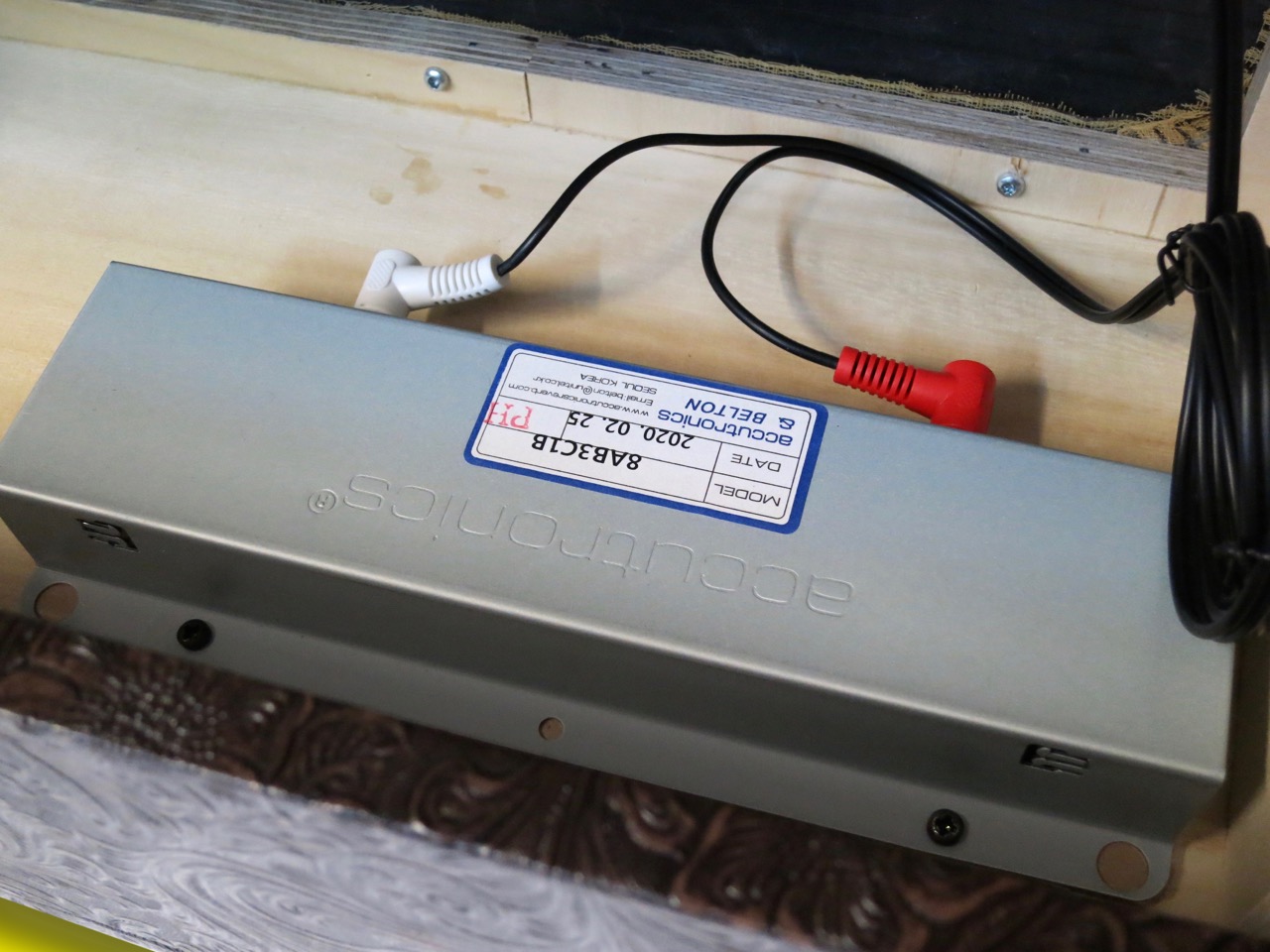
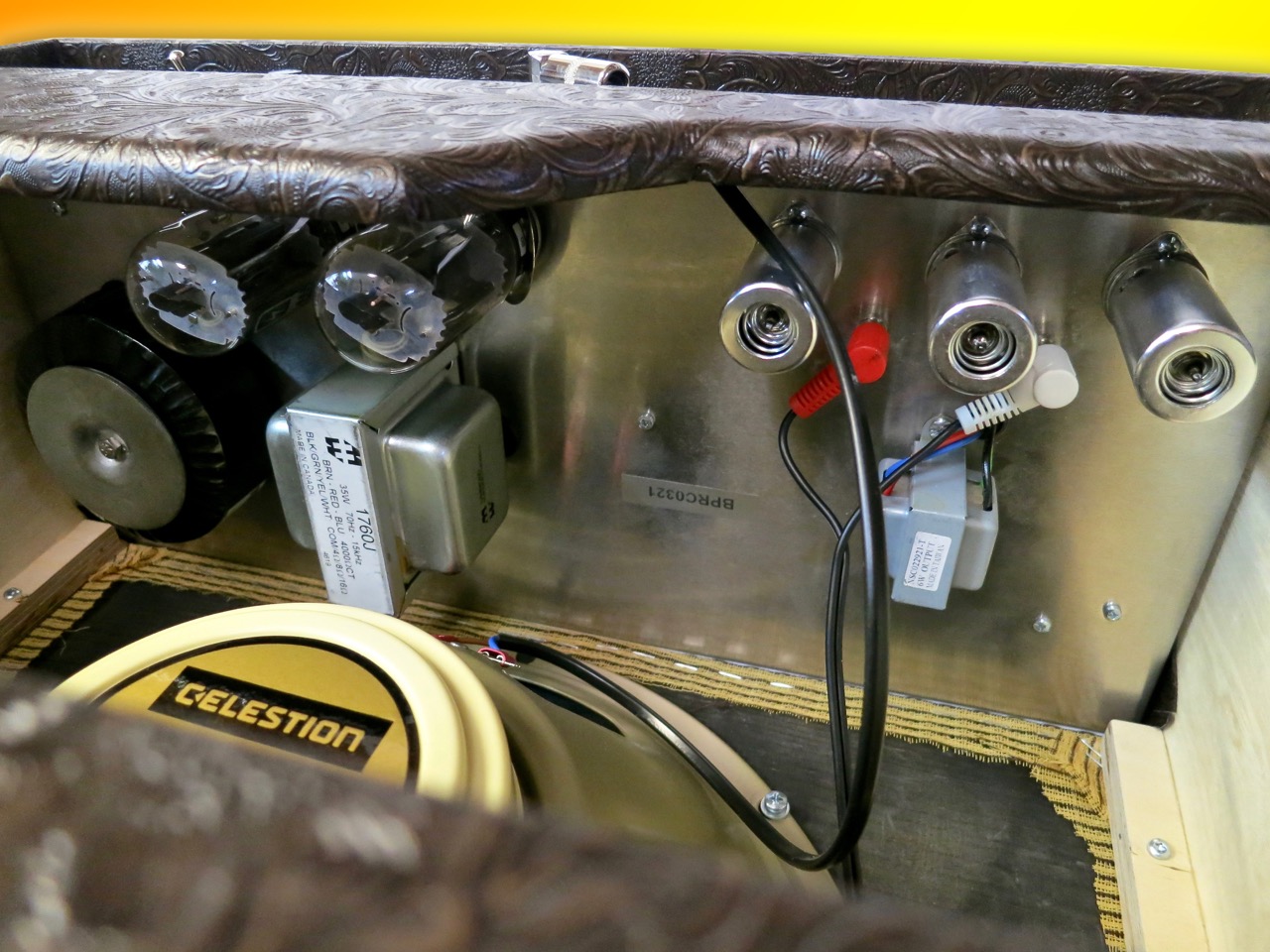
As you can see in the photo above, Bluetone has used the same basic design for the new Bluesmaster combo. Next to the three tubes – a single 12AX7 for the preamp, and a pair of 6V6GTs for the power amp – there are three (!) transformers. Two small ones for phase inversion and signal output, respectively, as well as a larger toroidal transformer for the combo’s power requirements.

The favourite modification on old Musicmasters is swapping the weedy-sounding original Fender for a beefier speaker.

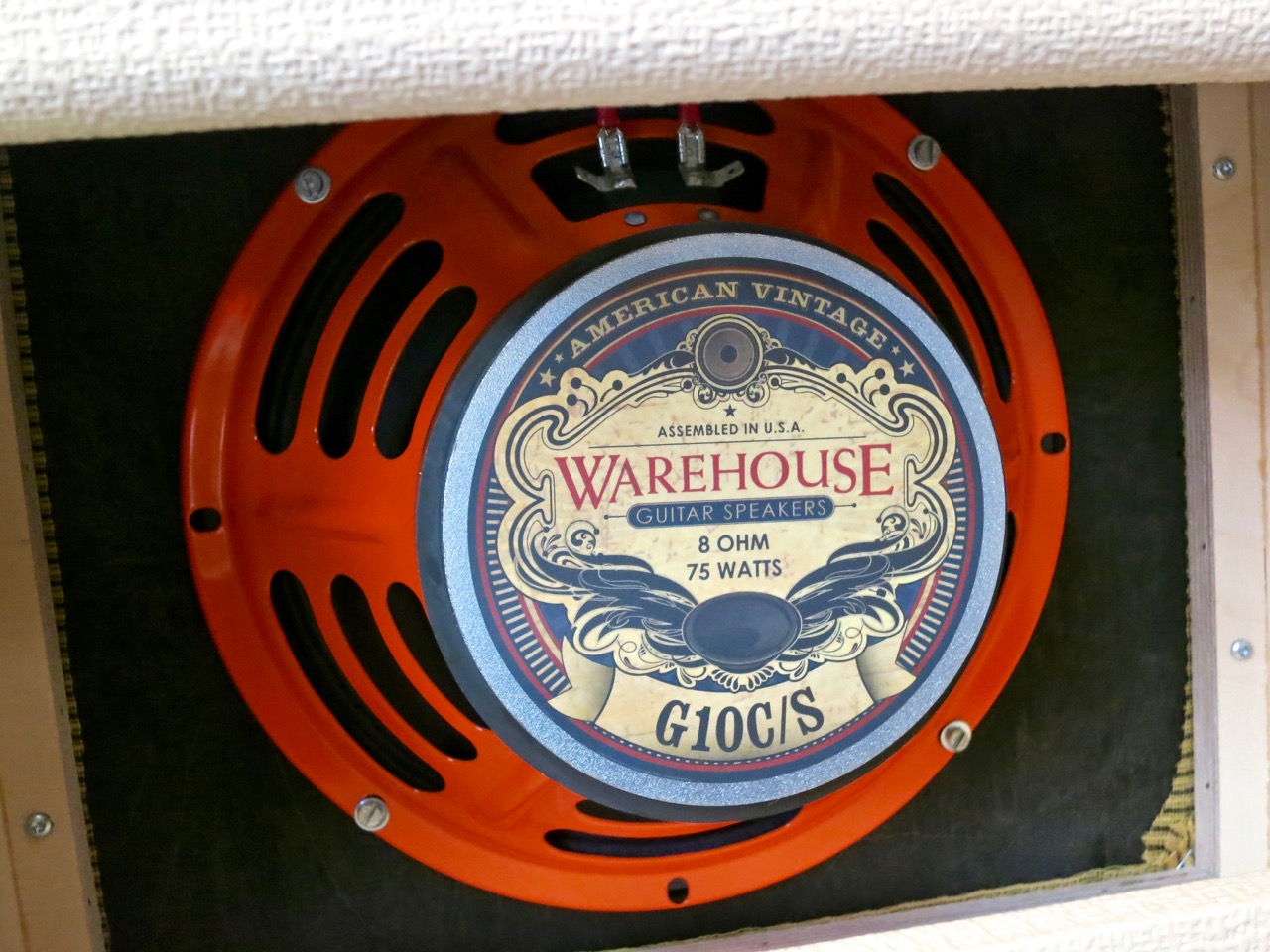
The Bluetone Bluesmaster does this for you and comes workshop-equipped with a 10-inch Warehouse Guitar Speaker G10C/S. The G10C/S is part of WGS’s American Vintage range and is known for its clear, but round top end, as well as for its pedal-friendliness and smooth breakup. Other speakers are available as an option, too (see Bluetone’s website).

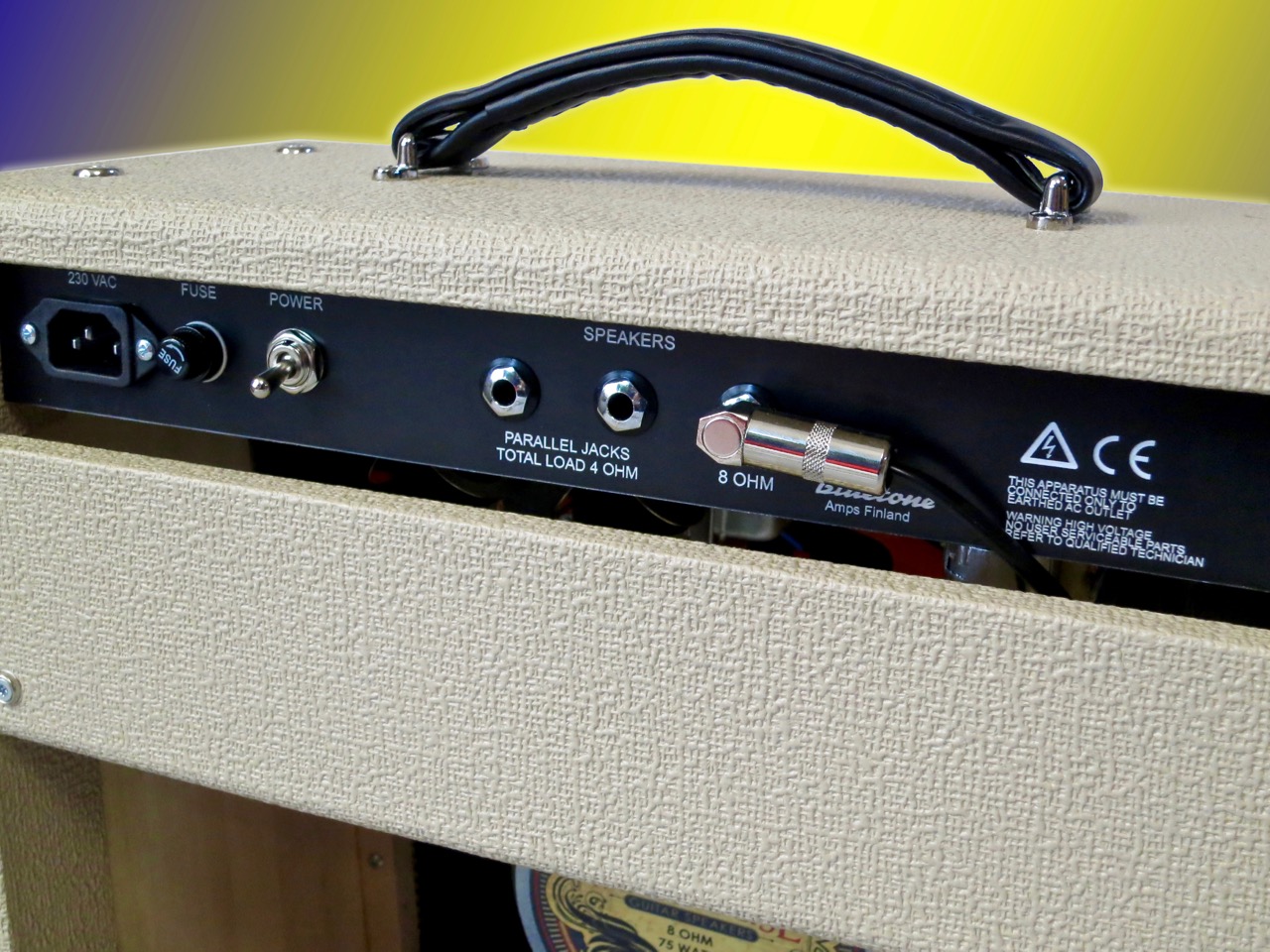
Apart from the power switch, the back panel offers a trio of speaker outputs.

****

Although the Bluetone Bluesmaster seems very straightforward and upfront at the beginning, there really is some sort of magic tone thing going on with this all-valve combo.

The sound may seem a bit dryish at first, but you will quickly notice a very enticing dose of juicy compression, even on very clean tones. This compression isn’t the ducking type, well known from many master volume amps and distortion pedals, which ducks the note attack and squashes the whole signal. Here we have a Country- and clean Blues-friendly type of compression that seems to lift the sustain phase of each ringing note.

Because this is a relatively low-powered tube combo without separate gain and master volume controls, it really makes sense to experiment with the Bluesmaster’s High- and Low-inputs and the combo’s volume control, to get the full picture of what sounds you can glean from which combination of guitar and settings.

The Bluetone Bluesmaster doesn’t offer tons of clean headroom, instead it has that magic clean-but-breaking-up tone zone down to a tee. The combo also works well with effect pedals.

There are also some chunky overdrive and distortion voicings available in the higher reaches of the Bluesmaster’s Volume-control. You should be aware, though, that, this being a non-master volume combo, running this amp at full tilt even at only 2 watts of output might get you into trouble with your neighbours in a block of flats.

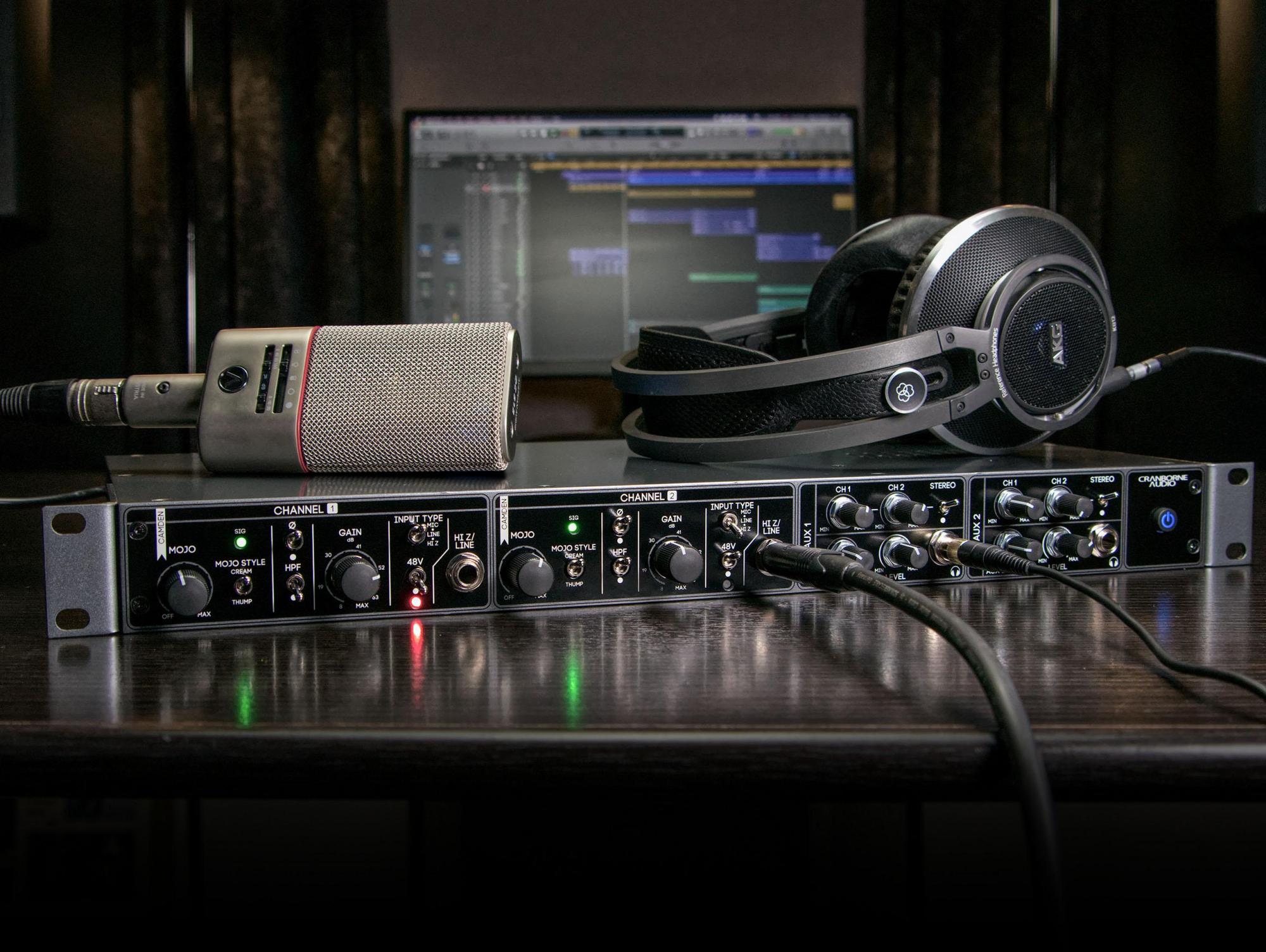
All of the demo song’s guitar parts were played through the Bluetone Bluesmaster without any effect pedals. The guitar tracks were recorded with a Shure 545SD going into a Cranborne Audio Camden preamp.

• Rhythm guitars: Gibson Les Paul Junior (left), Fender Stratocaster (middle), Fender Telecaster (right)

• Lead guitar: Hamer USA Studio Custom

****

The Bluetone Bluesmaster does what it says on the proverbial tin. In my opinion, this is a very nice and straightforward silverface-inspired Blues amp for guitar. The excellent build quality and very sensible modifications and improvements result in a quality tube combo that will surely give you a lifetime of aural pleasure.

****

Bluetone Bluesmaster

Prices starting from € 960.

• Based on a Fender Musicmaster Bass Amp

• 10-12 W of all-valve power

• 1 x 12AX7; 2 x 6V6GT

• Volume, Tone, Low Cut-switch, and three-stage OPC rotary switch

• 1 x 10″ Warehouse Guitar Speakers model G10C/S

Review: Shure 545SD – Daddy’s Home

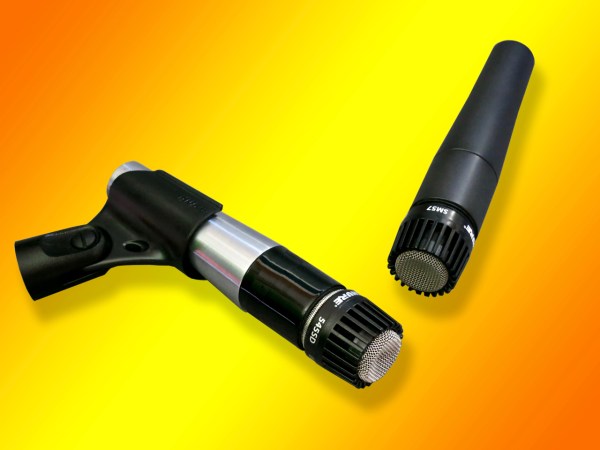
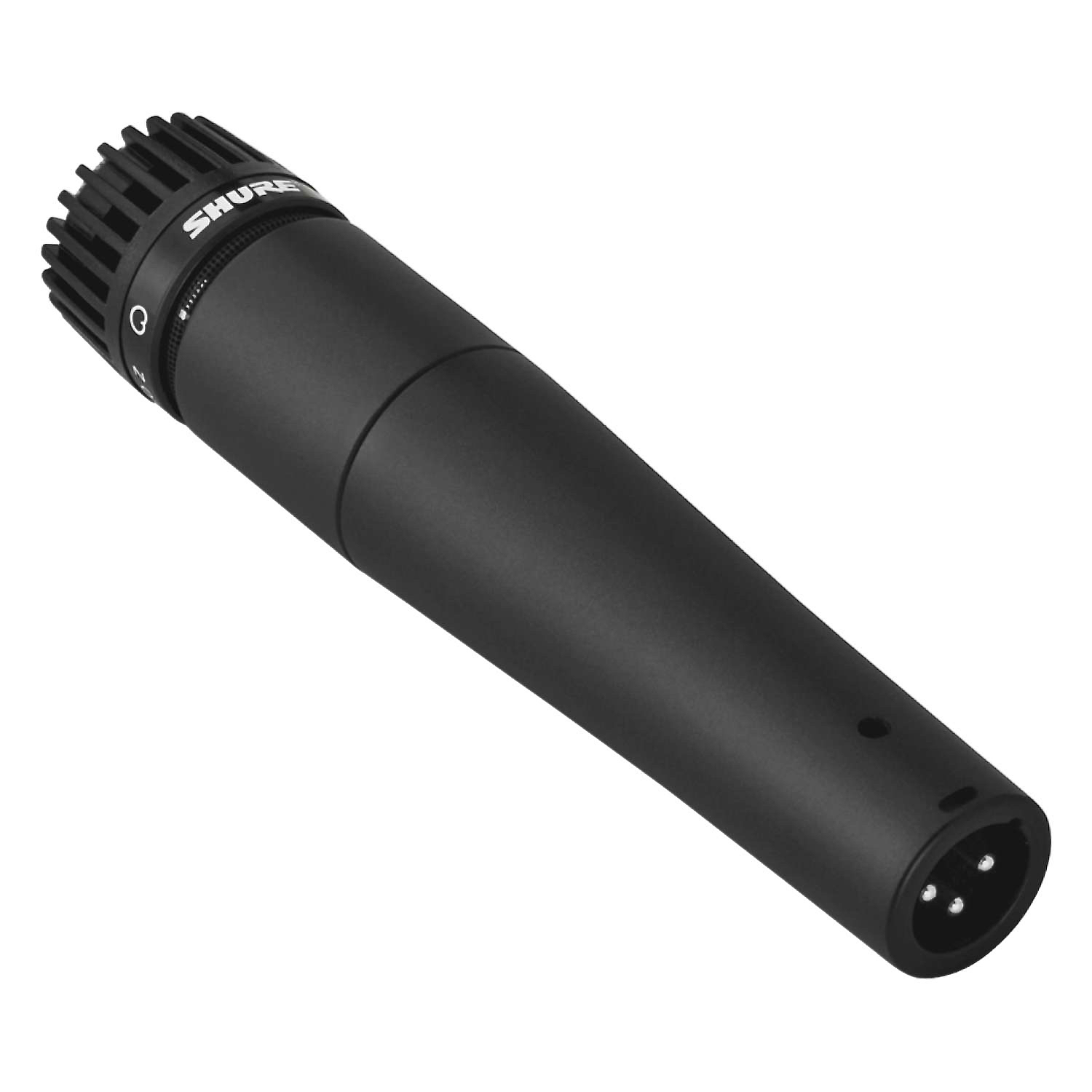
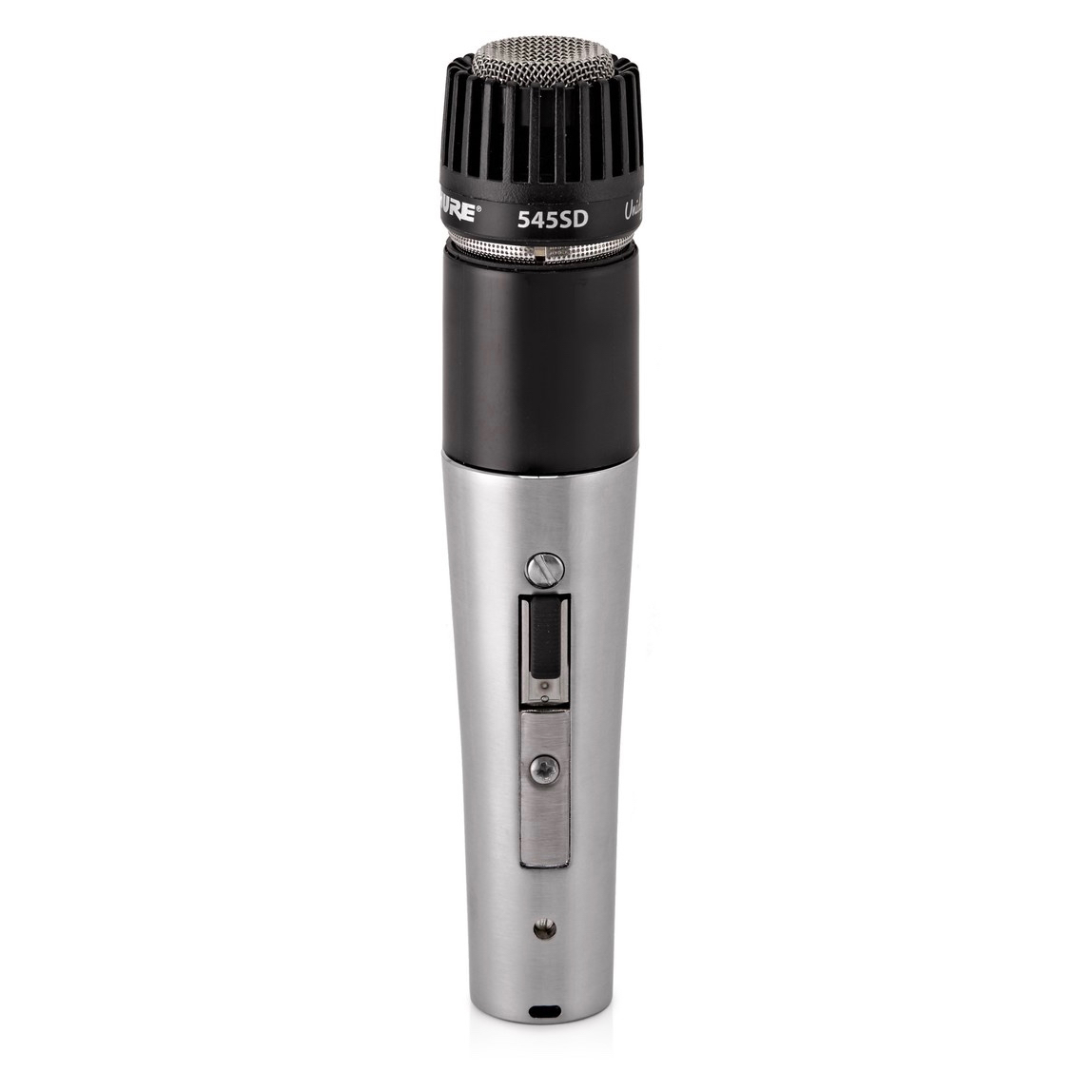
The Shure 545SD (left) is the famous predecessor of the legendary Shure SM57 (right).

US-company Shure started out in the mid-1920s selling DIY kits and electronic parts to radio enthusiasts. During the Great Depression the company’s focus shifted to microphones and – only a little later – to record player cartridges.

The original company’s first breakthrough came in 1939 with the Shure Model 55 Unidyne. The Model 55 Unidyne was the world’s first single-element, unidirectional (read: cardioid) dynamic microphone, making it the earliest cost-effective choice for any application, where you wanted to reduce bleed from other sound sources and feedback from the PA-system. An updated version of the Model 55 – colloquially known as the ”Elvis Mic” – is still produced today as the SH55.

By the 1950s microphone development had progressed from the original Unidyne capsule to the Unidyne II. All these mics were still so-called side-address, best kept attached to a stand, because you had to speak or sing into them sideways, like you still do with most large-diaphragm condenser microphones.

In 1959 Shure managed again to develop the right product at the right time:

Their new Shure 545SD Unidyne III model was the first ”end-firing” unidirectional dynamic mic. The 545’s improved pneumatically isolated capsule also drastically reduced handling noise. This meant that the user could take the microphone into his/her hand and move around the stage, without having to worry about handling noise and feedback obliterating the performance or speech.

The 545SD – and its only slightly younger brother the 565SD Unisphere I – quickly superseded the Model 55 as the preferred performance mic on stage and on the telly.

Speaking of TV:

Television studios loved the 545SD, because it sounded really good, while being small enough to not hide the face of the performer. There was one point of criticism, though, and that had to do with the mic’s finish.

The 545SD’s plain metal housing and its black plastic collar made the model very reflective under studio lighting. Before the advent of digital cameras, reflections were a real problem for TV cameras, because they caused ”burn marks” in the transmitted pictures. On black and white TV you would see large black blots or squiggles (during movement), while on colour TV these burned-through areas would often appear dark violet or brown. These marks would only be temporary – lasting for 10-15 seconds – but nevertheless annoying.

Shure listened to its customers and came up with a new model as a remedy in 1965. This new model was (and still is) the legendary Shure SM57, which features an all-metal housing sporting a non-reflective matte finish.

The SM in the model designation stands for ”Studio Microphone”, with the word ”Studio” hinting at a TV studio.

While the R & D team where at it, they tweaked the capsule’s/cartridge’s frequency response a little bit to distinguish the new model further from its predecessor, which was kept in production.

Along with its brother – the SM58 from 1966 – the Shure SM57 has become the company’s biggest selling microphone. This has led to the SM57 and SM58 also becoming the most-copied and most-pirated microphones ever.

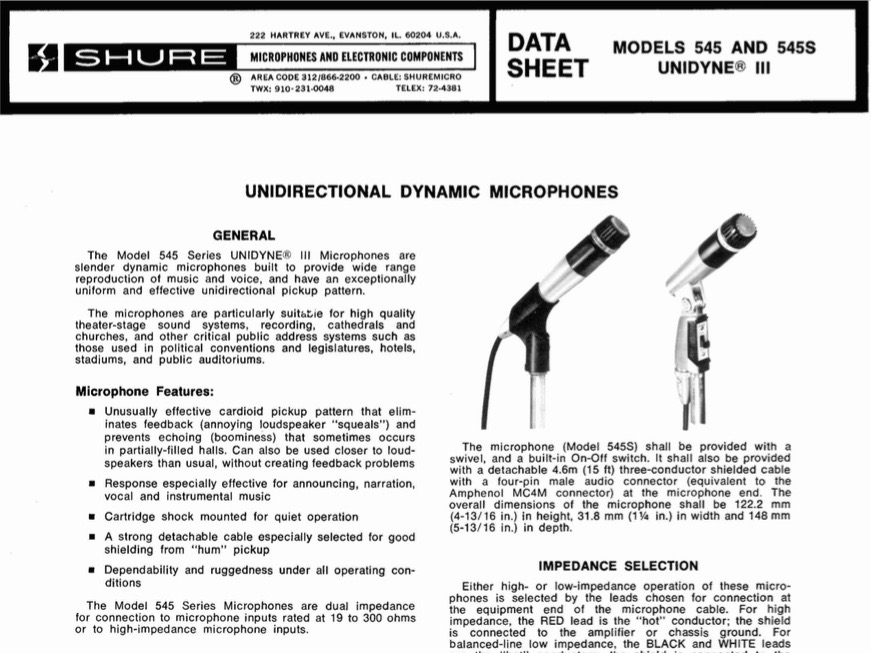
The 545SD was the main product and could be handheld or placed on a stand by using a mic clip. Shure expanded the line by using the same design for a whole range of products, from a lavalier version to an installation version that was mounted permanently on a gooseneck.

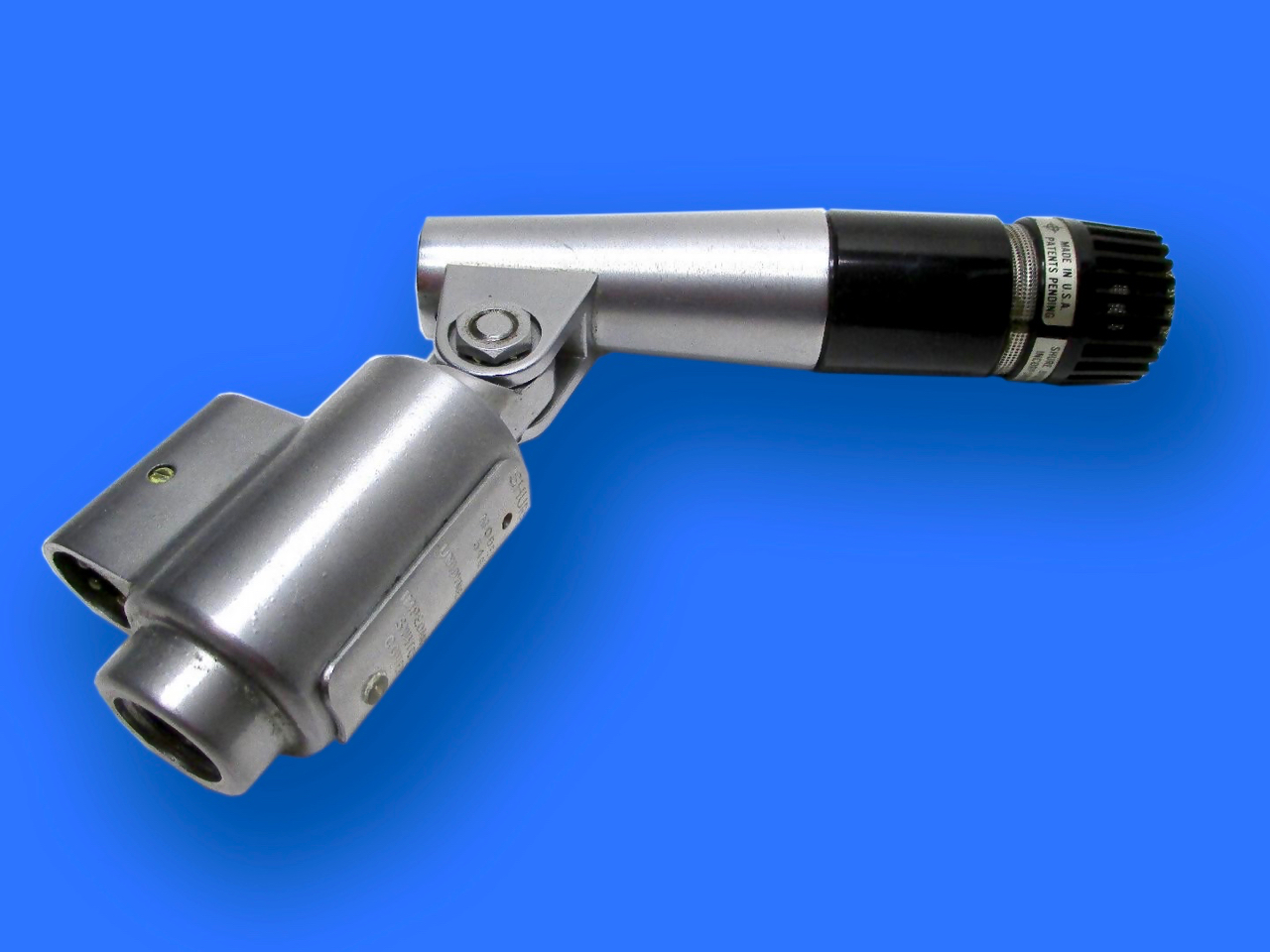
The Shure 545S (shown above) was a so-called pistol version with the on/off-switch moved to the same position as on the Model 55.

The broadcast version for radio stations, the Shure 546, came with a special suspension inside its stand adapter to cut down handling noise even further.

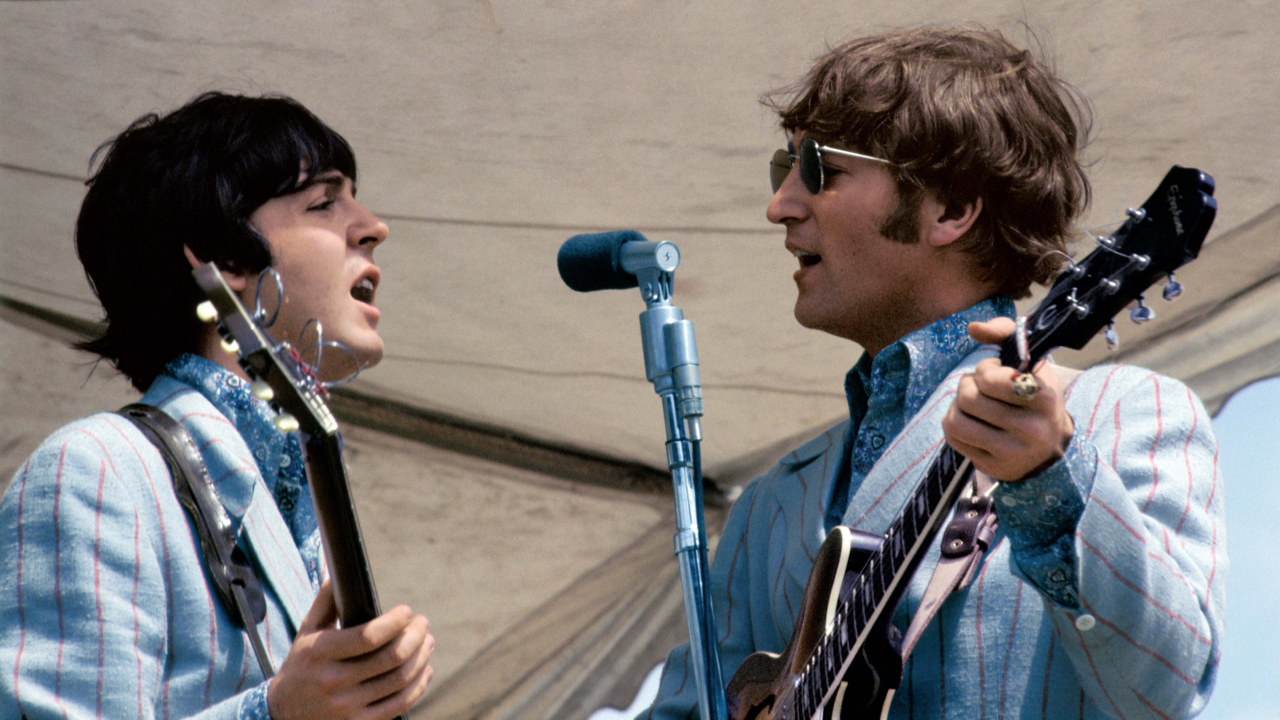
One of the first touring PA-companies in the USA – Hanley Sound – quickly adopted the 546 as their main stage mic. Bill Hanley handled the Beatles’ final US tour in 1966 (see picture above). He was also responsible for the PA at the legendary Woodstock Festival in 1969, where he used the Shure 565 Unisphere I model as the main microphone.

Apart from its metal-cum-plastic body, there are three main features that differentiate the Shure 545SD from the SM57:

  1. The 545SD can be switched from its default setting of low impedance to high impedance, simply by unscrewing the XLR-connector and moving a little jumper to a different position. Although there are much less applications in 2021 that require a high impedance mic (also called Hi-Z), this feature will come in very handy if you want to use the mic for Blues harp playing into a guitar amp.
  2. The 545SD features Shure’s special magnetic reed on/off-switch, which works without annoying pops or crackles. If you want to avoid accidentally switching the mic off, you can lock the switch in the ”on” position using the metal plate just below the switch.
  3. If you surf around the Internet you will find many claims from self-styled microphone experts that the SM57 was/is simply a way for Shure to use up factory seconds of the cartridges produced for the 545SD. This is simply not true! The Shure 545SD uses the cartridge model R45, while the SM57 uses a slightly different cartridge, called R57. The basic ingredients of both capsules are almost identical, and the plastic grille assembly is interchangeable between the two models, but the cartridges have been deliberately ”tuned” to slightly different frequency responses.

The SM57 has an all-metal body, a different cartridge (R57), no on/off-switch, and is low impedance (Low-Z) operation only.

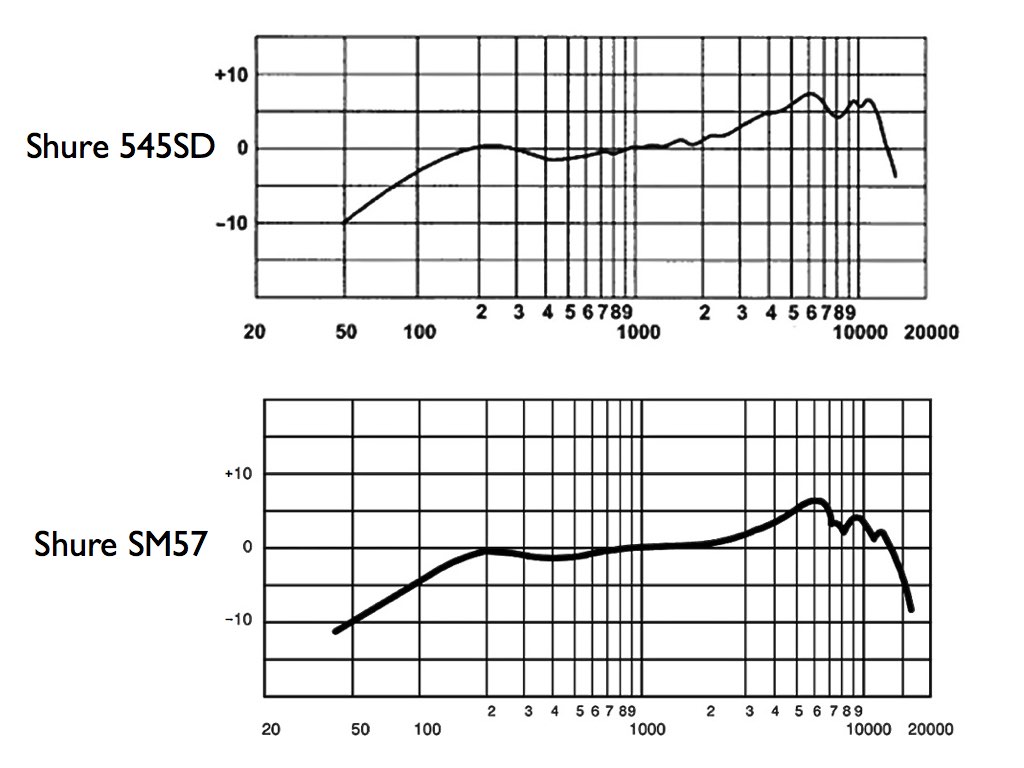
With both models set to low impedance their nominal frequency response curves look like this (above):

The Shure 545SD’s bass response only goes down to 50 Hz, while there’s clearly a little boost in the region between 8 and 10 kHz. The SM57 offers a little more bass (down to 40 Hz), while there’s an earlier treble roll-off. The most critical frequencies between 200 Hz and 6 kHz look virtually identical in these graphs.

As a hands-on test I ran some pink noise through my Genelec 8030A monitors and recorded it simultaneously with both mic models. I used two Cranborne Audio Camden 500 preamps running at the same settings to record the microphones. A/B’ing reveals – at least to my ears – that, while both mics sound very similar, the 545SD really has a more open treble range compared to the SM57.

Here’s another A/B-clip, using the percussion tracks from the demo song.

****

Here’s my opinion:

Although the differences between the Shure 545SD and the later SM57 aren’t really that obvious in real-life use, there’s still a place for the ”daddy of them all” on stage and in the studio. As always, everything has to do with the source material and knowing your equipment inside out.

If you’re looking to capture that elusive little smidgen of treble content off of a snare drum or vocal, the 545SD can make your work a bit easier. But if you’re running the 545SD in front of an already face-meltingly harsh guitar amp, this model’s treble response could be a little too much, making the SM57 a better choice.

In any case, both the Shure 545SD and the SM57 are bona fide classics with sterling track records. Either of these can hold its own for a wealth of applications on stage or in the studio.

Shure 545SD & SM57

Shure 545SD – current price in Finland approx. 159 €

Shure SM57 – current price in Finland approx. 99 €

Finnish distrubutor: Intersonic

Bluetone Bluesmaster – now on You Tube!

All guitar parts played through the Bluetone Bluesmaster all-valve combo, straight without any effect pedals.

All guitar tracks recorded with a Shure 545SD going into a Cranborne Audio Camden preamp.

• Rhythm guitars: Gibson Les Paul Junior (left), Fender Stratocaster (middle), Fender Telecaster (right)

• Lead guitar: Hamer USA Studio Custom

****

Bluetone Bluesmaster

• Based on a Fender Music Master

• 10-12 W of all-valve power

• 1 x 12AX7; 2 x 6V6GT • Volume, Tone, Low Cut-switch, and three-stage OPC rotary switch

• 1 x 10″ Warehouse Guitar Speakers model G10C/S

And then there were three… Sire, Vintage (by JHS) & Yamaha

Here’s a short cover of Wilton Felder’s classic bassline on the Jackson 5 track ”I Want You Back”.
The bass was recorded straight via a Focusrite Saffire 6 USB sound card.
****
SIRE Marcus Miller V5 Alder-4 (2nd generation)
• alder body
• heat-treated maple neck with maple fingerboard
• 20-fret, bound fingerboard with rolled edges
• two Sire Vintage J Revolution pickups
• passive electronics – volume, volue, tone
• Sire Premium open tuners
• Sire Marcus Miller Vintage bridge (can also be strung through-body)
• front pickup cover supplied with the bass (not installed)
More info: Soundtools

Here’s a short cover of Wilton Felder’s classic bassline on the Jackson 5 track ”I Want You Back”.

The Vintage takes the first turn, with the Yamaha going second.
****
• Vintage (by JHS) VJ74
– Swamp ash body
– Maple neck with maple fingerboard
– Black block markers
– Two Wilkinson J-type singlecoil pickups
– Wilkinson vintage-type tuners
– Wilkinson vintage-type bridge with brass saddles
More info: aronsoitin.fi/
****
• Yamaha BB234
– Alder body
– Maple neck with rosewood fingerboard
– Dot markers
– One P-type pickup; one J-type pickup
– Yamaha vintage-type tuners
– Yamaha vintage-type bridge
More info: f-musiikki.fi/
****
Both basses were recorded direct via a Focusrite Saffire 6 USB interface.

Tulossa: Kaksi bassoa – Rockway-blogi

Here’s a short cover of Wilton Felder’s classic bassline on the Jackson 5 track ”I Want You Back”.

The Vintage takes the first turn, with the Yamaha going second.
****
• Vintage (by JHS) VJ74
– Swamp ash body
– Maple neck with maple fingerboard
– Black block markers
– Two Wilkinson J-type singlecoil pickups
– Wilkinson vintage-type tuners
– Wilkinson vintage-type bridge with brass saddles
More info: aronsoitin.fi/
****
• Yamaha BB234
– Alder body
– Maple neck with rosewood fingerboard
– Dot markers
– One P-type pickup; one J-type pickup
– Yamaha vintage-type tuners
– Yamaha vintage-type bridge
More info: f-musiikki.fi/
****
Both basses were recorded direct via a Focusrite Saffire 6 USB interface.

Pidä blogia WordPress.comissa.

Ylös ↑