Contact: Musamaailma
Review: Bluetone Fried Eye 2+2 Reverb
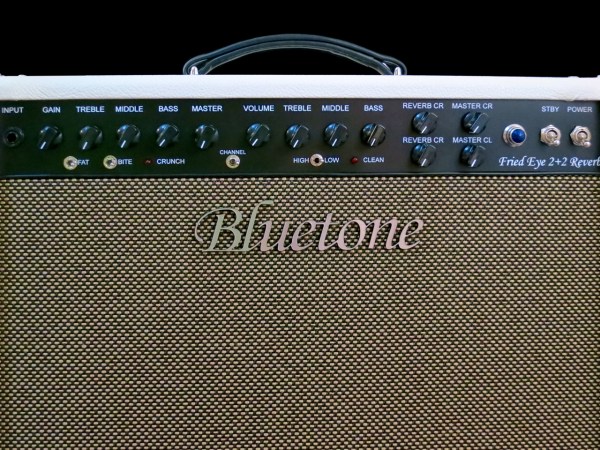

OK, people, let’s go wild here and start with the summary for a change:
In my view the good people at Bluetone Amps have outdone themselves with their Fried Eye 2+2 Reverb Combo.
I will stick my neck out really far by claiming that the Fried Eye 2+2 is the best-sounding and most-versatile compact two-channel boutique valve combo I’ve ever come across. This guitar combo is all tone and no hype!
If the demo video and this summary are enough to whet your appetite, I’d suggest you head over to Bluetone Amps’ website right away.
If you want to know more, read on…
****

Helsinki-based Bluetone is a small boutique amp maker that handcrafts each and every one of their guitar and bass amplifiers, combos and cabinets. Bluetone offers a wide range of customisable options, both on the electronic as well as on the cosmetic front.
Our review combo (price of this version: 2,400 €; incl. footswitch and cover) is a two-channel all-valve affair comprising a Bluetone Clean channel partnered with a Fried Eye crunch channel, which is Bluetone’s take on the hot-rodded Marshall theme.
The 2+2-monicker in the combo’s name points to the special power amp architecture applied here. Instead of trying to emulate or approximate the different power amp sounds of, say, a Blackface-style clean channel and a Marshall-style crunch channel using heavy filtering and electronic trickery, Bluetone Amps go for maximum authenticity.
The 2+2 power amp uses two different pairs of output tubes – one pair for each channel. Selecting the clean channel switches on the power amp’s pair of 6L6GC-valves, while switching over to the Fried Eye channel will see a pair of EL34s spring into action.
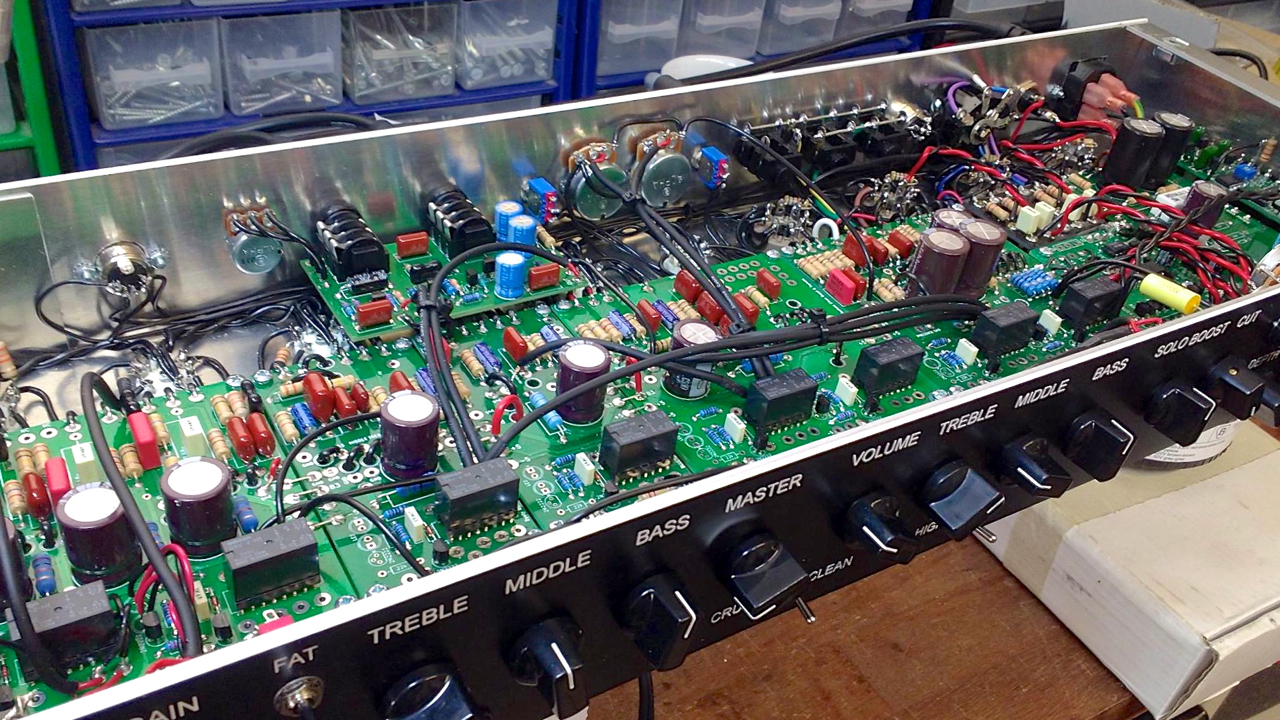
(Photo courtesy of Bluetone Amps)
Bluetone Amps have recently been moving away from building their complete model range using only point-to-point building techniques. Certain models are now available as modular designs, which makes production less time-consuming, and thus more affordable. Still, like the point-to-point amplifiers, Bluetone hand-solders all its PCB-based modules at their workshop.
The Fried Eye 2+2 Reverb has been made in this modular fashion.
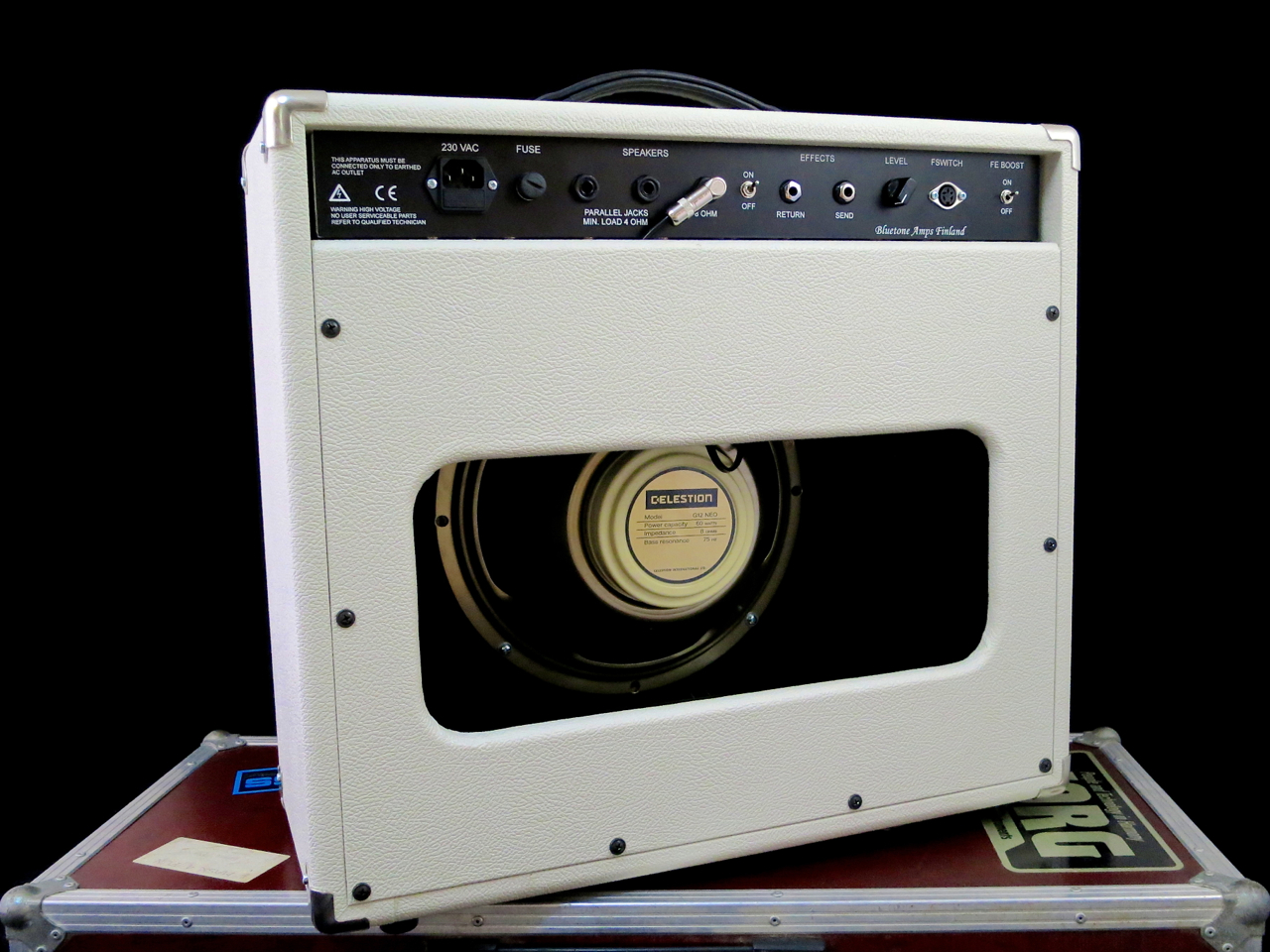
Like most Bluetone combos the Fried Eye is constructed with an open back.
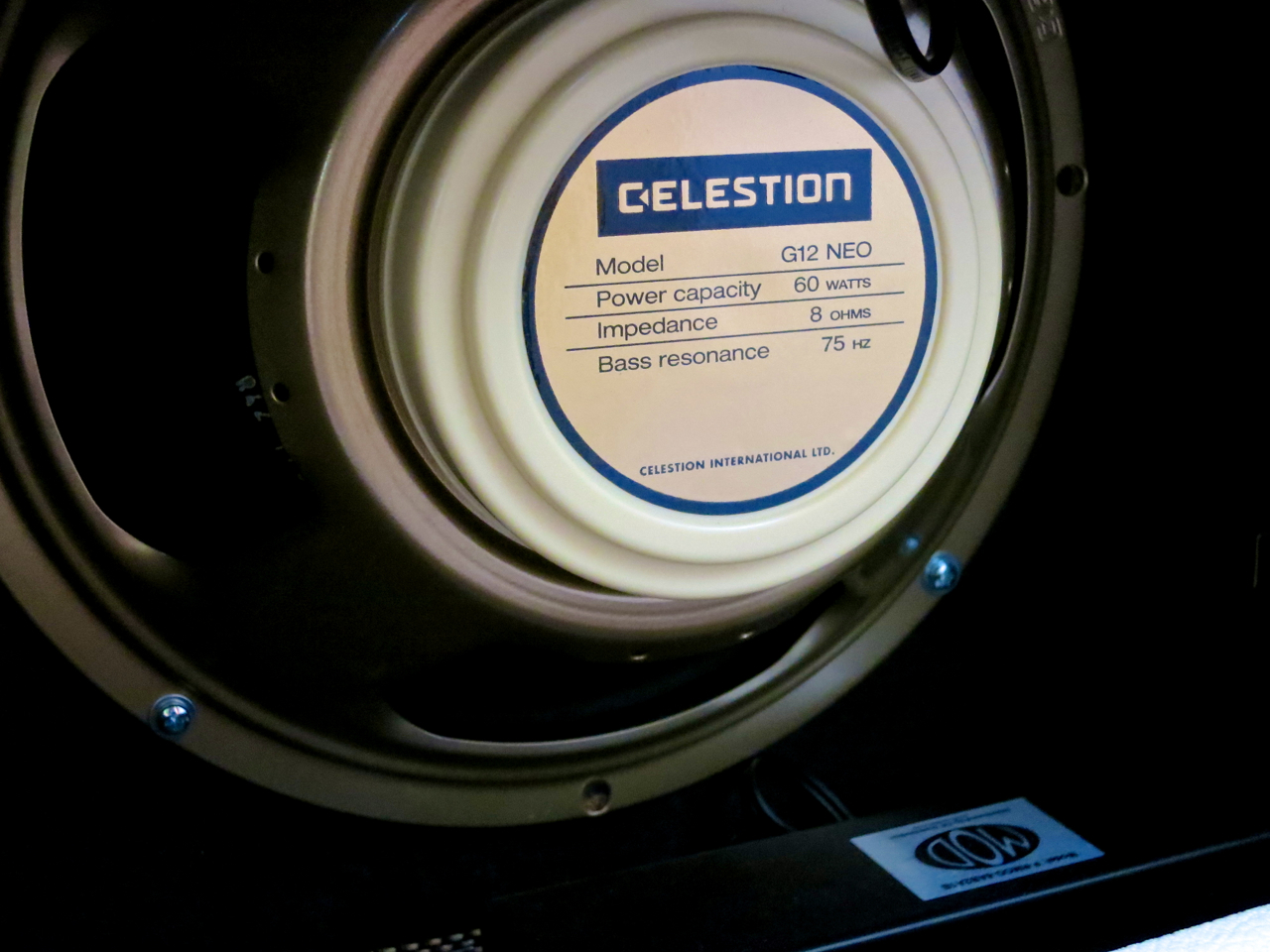
Our review sample is one of the first Bluetone amps to feature a Celestion neodymium speaker.
The 12-inch G12 NEO promises genuine Celestion Creamback tones coupled with the benefit of considerably lighter weight.
The Fried Eye 2+2 Reverb uses an MOD reverb tank and Bluetone’s own valve-driven circuitry.
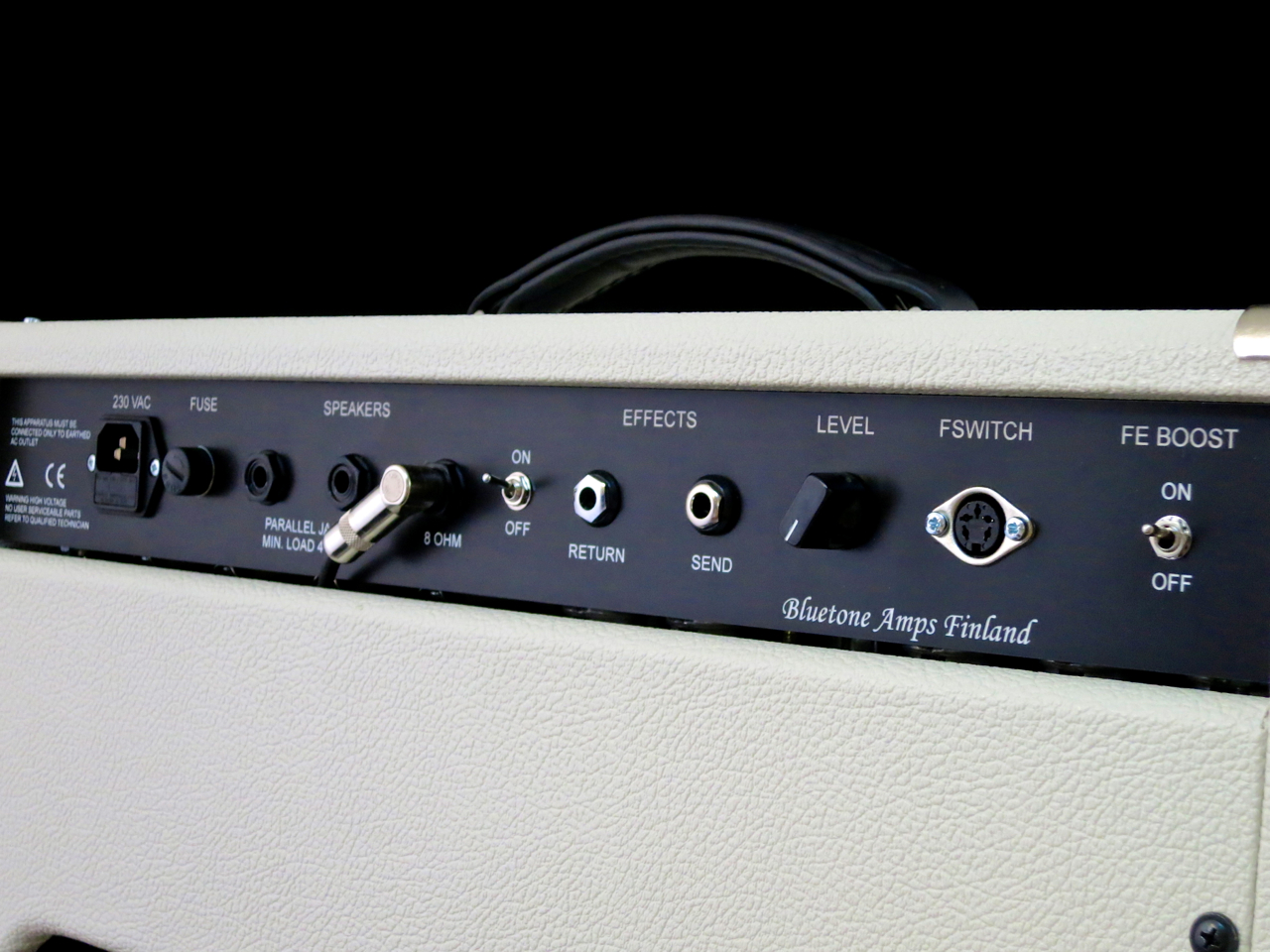
This Fried Eye combo comes with some interesting back panel features:
There’s a Front End signal booster, amplifying the signal right at the beginning of the signal path.
The Fried Eye’s switchable effects loop is an active affair, complete with a dedicated level control. If you don’t run any effects in the loop, you can use the loop’s make-up gain as an additional, foot-switchable boost in the signal path.
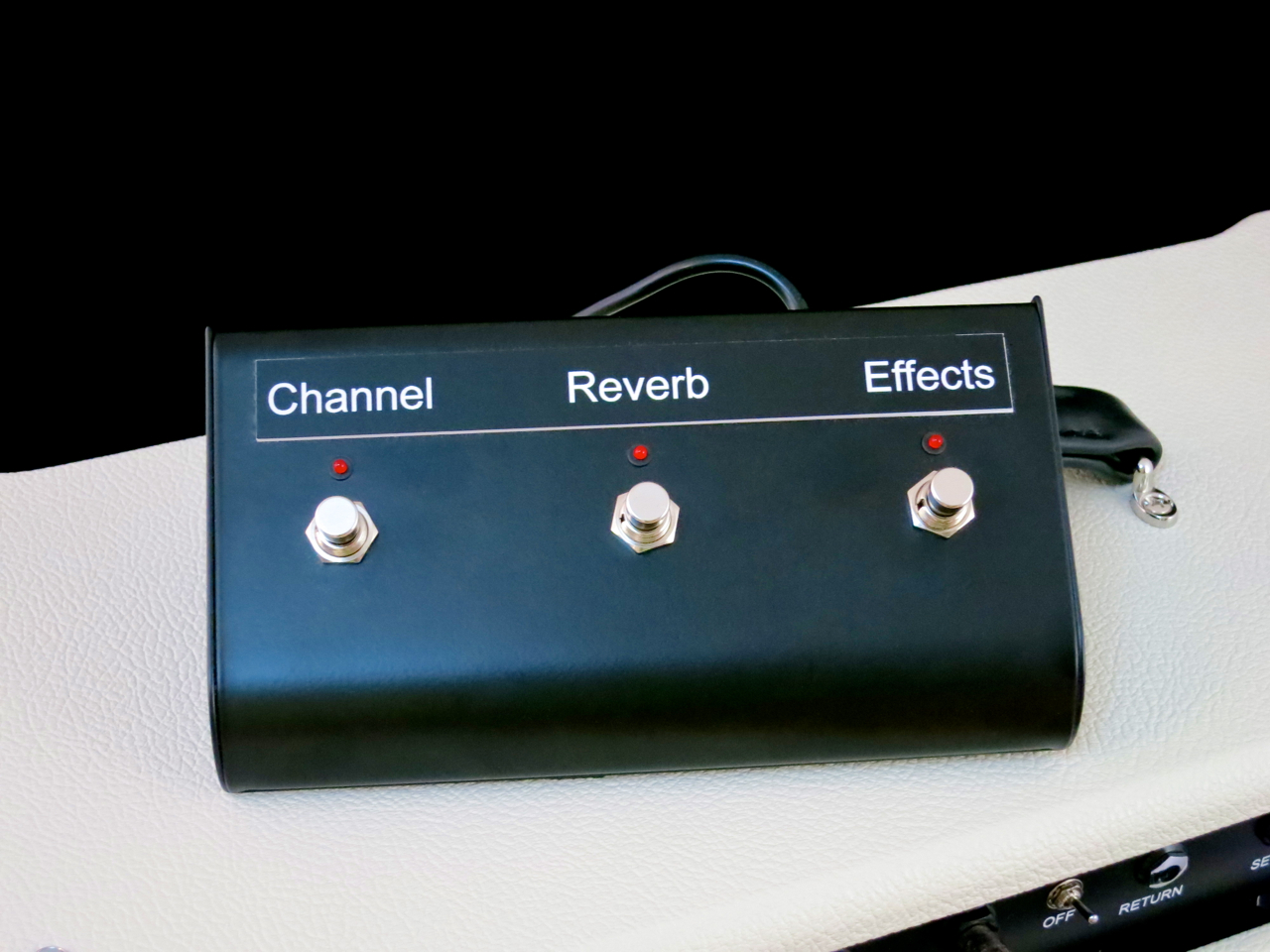
A chunky three-button footswitch unit is supplied with the Bluetone combo.
****
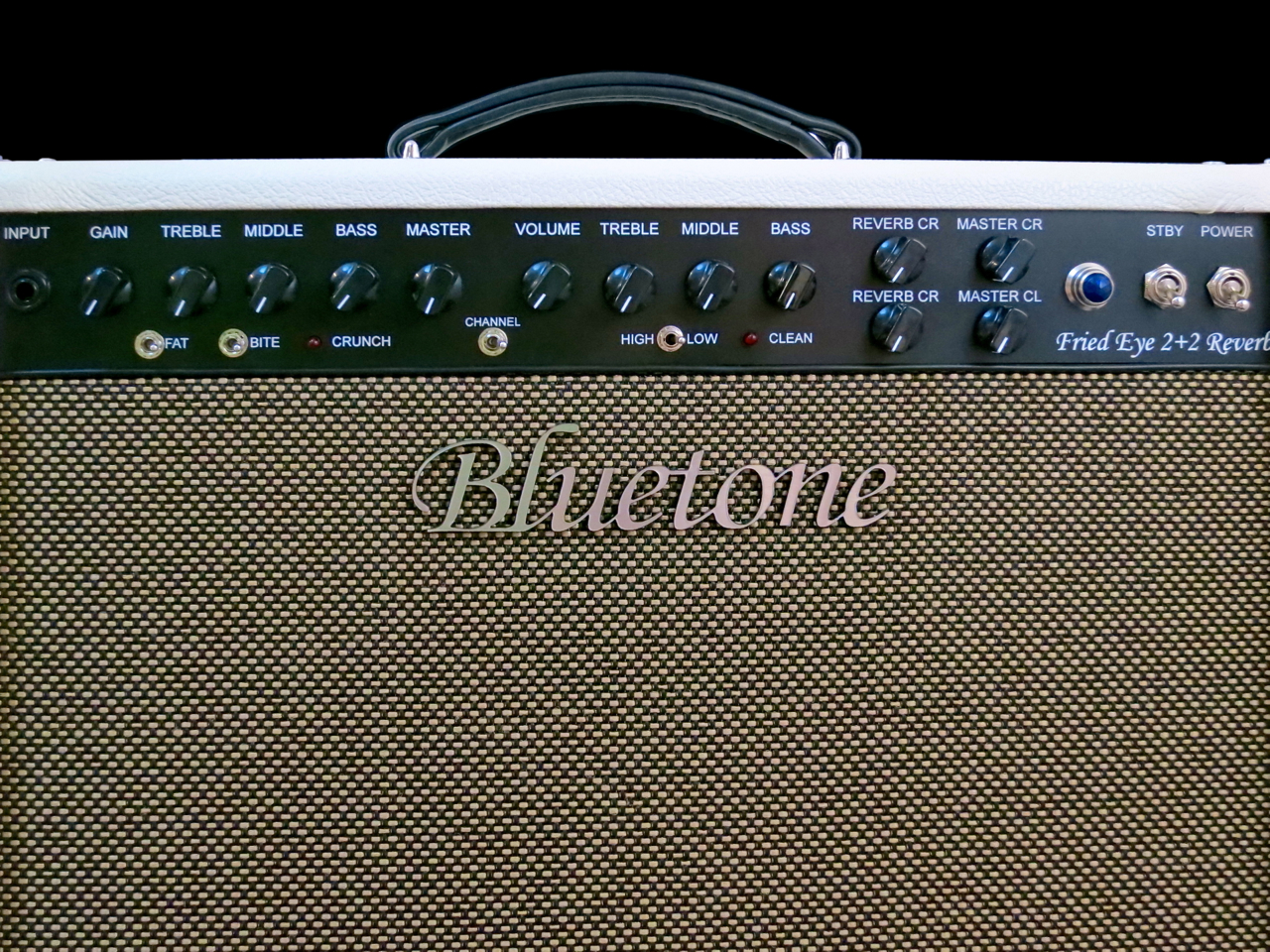
Bluetone’s Fried Eye 2+2 Reverb combo offers a wide range of options on its front panel. Thanks to the logical layout and the clear lettering, the front panel never seems complex or crowded, though.
The Fried Eye Crunch channel offers you a 3-Band EQ-section, plus Fat and Bite switches, to fine-tune your crunch tones.
The Bluetone Clean channel’s High/Low-switch offers two different pre-gain settings, which change the amount of available clean headroom.
Each channel features its own reverb level knobs – so you don’t have to compromise lush reverbs for clean tones with drier settings for crunch – as well as dedicated master volume controls.
Using all the different front panel and back panel features offers you a mind-boggling array of different tonal and drive options. With just a couple (or three) well-chosen guitars, Bluetone’s Fried Eye 2+2 Reverb will give you access to virtually any classic guitar tone you could dream up (with the exception of contemporary Metal).
Bluetone’s clean channel will take you from pristinely shimmering cleans well into Blues break-up territory.
This clip steps through the different boost options offered by the Fried Eye’s clean channel (using a Hamer USA Studio Custom). The sequence is Low dry –> Low plus reverb –> High –> High + FE Boost –> High + FE Boost + FX Boost:
Being able to use the FX loop as an additional booster turns the Fried Eye 2+2 into a two-channel-plus-solo-boost machine.
This clip steps through the different boost options offered by the Fried Eye’s crunch channel (using a Hamer USA Studio Custom). The sequence is Crunch –> Crunch + FE Boost –> Crunch + FE Boost + FX Boost:
Cleaning up the crunch channel using your guitar’s volume control works like a dream here. The Bluetone’s Fried Eye Crunch sounds juicy and lively, even with the guitar turned down to almost zero:
The demo track’s rhythm guitar parts were played on a Gibson Melody Maker SG (stereo left) and a maple-necked Fender Stratocaster (stereo right). The lead part was recorded with a modern Tele-type guitar, using the instrument’s volume control to adjust the amount of overdrive:
****
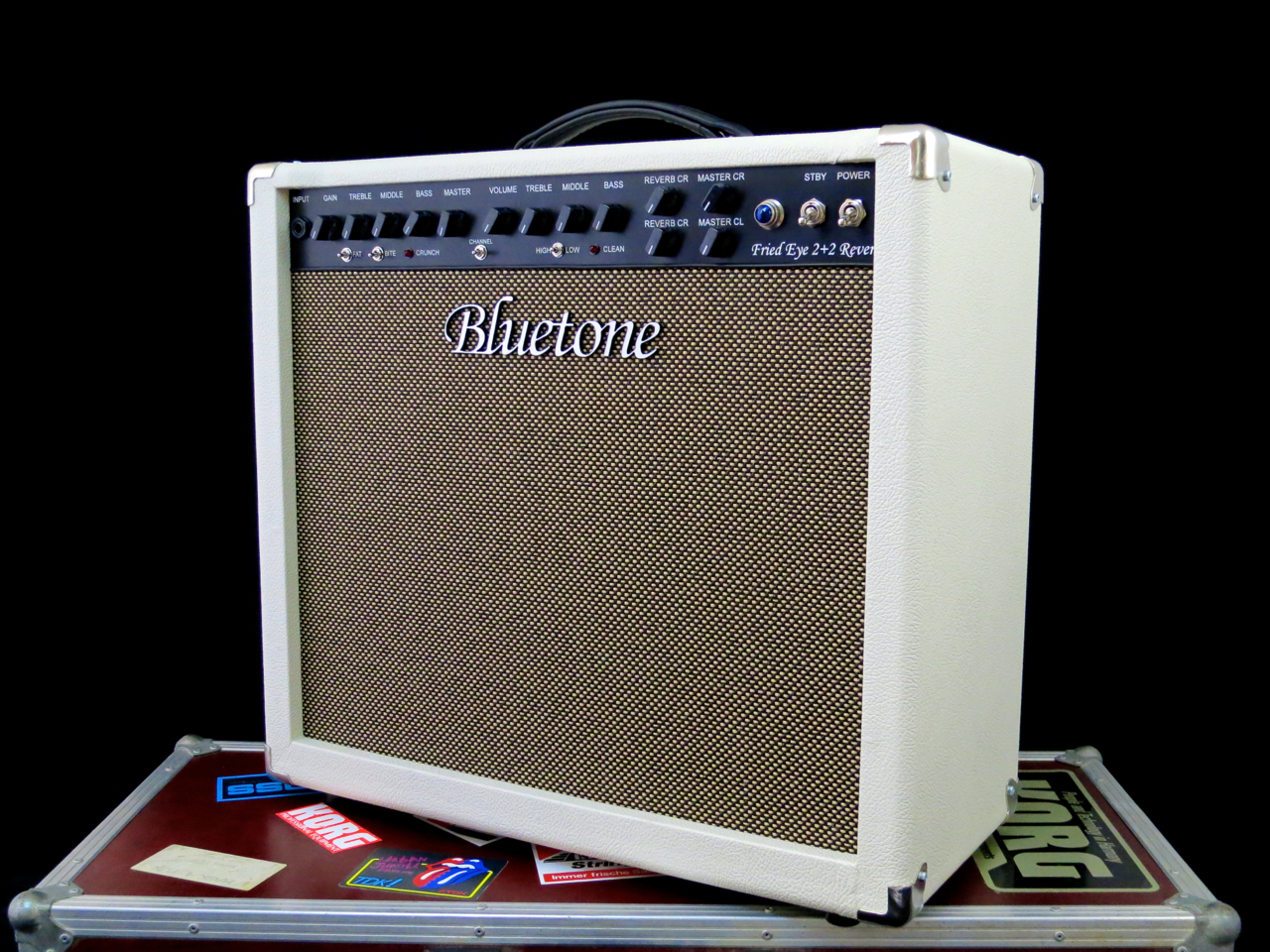
In my view the good people at Bluetone Amps have outdone themselves with their Fried Eye 2+2 Reverb Combo.
I will stick my neck out really far by claiming that the Fried Eye 2+2 is the best-sounding and most-versatile compact two-channel boutique valve combo I’ve ever come across. This guitar combo is all tone and no hype!
Messrs. Kneckt and Vauhkonen don’t run around wearing strange clothes or wild hairdos, pretending to be exalted tone gurus. You also won’t be required to send in mp3s of your guitar playing to prove you’re worthy to join the ”Bluetone Cult”.
Bluetone’s dynamic duo are down-to-earth guys, out on an ongoing quest to bring you maximum tone and usability, and no bullsh*t.
For a genuine boutique-grade amp of its calibre, I can only call the Bluetone Fried Eye 2+2 Reverb’s price tag extremely fair.
****
Bluetone Fried Eye 2+2 Reverb Combo
This version: 2,400 € (including footswitch unit and dust cover)
Contact: Bluetone Amps
Pros:
+ handmade in Finland
+ lightweight
+ multiple boost stages
+ versatility
+ reverb sound
+ dedicated reverb and master controls for each channel
Testipenkissä: Gurus Amps Sinusoid

****

Italiasta on kovaa vauhtia muodostumassa eräänlainen Mekka meille kitaristeille, tai ainakin siltä vaikuttaa, kun tarkastelee saapasmaan alati kasvavaa ryhmää innovatiivisia vahvistin- ja efektipajoja.
Yksi todella kuuma nimi on Gurus Amps Faenzasta (noin puolessa välissä matkaa Bolognasta Riminiin). Gurus valmistaa sekä vahvistimia että efektipedaaleita – heidän analoginen, putkivahvistettu Echosex-viivepedaali on saavuttanut jo miltei legendastatuksen.
Gurus Ampsin Sinusoid (479 €) kuuluu samaan efektisarjaan, ja se on todella kiehtova yhdistelmä vanhaa ja uutta. Ison pokkarin kokoinen Sinusoid tarjoaa kaksi putkisoundilla höystettyä efektiä samoissa kuorissa– optisen tremolon, sekä aidon jousikaiun.
Sinusoid myydään ilman virtalähdettä. Pedaali toimii 9-12 voltin tasavirralla, ja virtajakin polariteetti on Boss-standardin mukainen. On kuitenkin tärkeää valita sen kanssa käytettäväksi astetta järeämpi virtalähde, sillä kyseinen Gurus-efekti on melko janoinen kaveri, joka tarvitsee toimiakseen 230-400 milliampeeria. Sinusoid toimi testin ajan ongelmattomasti Kitarablogin Cioks-pedaalilautavirtalähteen kanssa käytettynä.
Gurusin Sinusoid-pedaali on monofoninen tuplaefekti. Kitaran (tai kosketinsoittimen) voi liittää joko suoraan Sinusoidin tuloon, tai vaihtoehtoisesti pedaalin voi sijoittaa vahvistimen efektilenkkiin.
Remote control –jakin ansiosta Sinusoidin efektit voi kytkeä päälle ja pois ulkoisella kytkimellä, mikä mahdollistaa Sinusoidin sijoittamisen kauas muista efekteistä, mikä puolestaan voi auttaa häiriöäänten hillitsemisessä.
****

Guru Ampsin Sinusoid on todella helppokäyttöinen:
Kummallekin efektille on varattu oma jalkakytkin, kaksi säädintä sekä (vanhoista putkiradioista tuttu) vihreä Magic Eye -merkkivalo.
Tremolopuolella merkkivalo ilmaisee vatkauksen nopeuden. Jousikaiun Magic Eye -valo taas ilmaisee Accutronics-jousitankille ohjattavan signaalin volyymitason, jota säädetään Volume-säätimellä. Volumen ”väärinkäyttö” on mahdollista, ja sen myötä Sinusoidilla voi tuottaa hyvinkin rapeita ja säröisiä Surf- ja Rockabilly-kaikuja.
Sinusoid on saanut nimensä laitteen muhkeasta, siniaaltoon pohjautuvasta tremoloefektistä. Intensityllä säädetään efektin voimakkuutta, ja siinä riittää säätövaraa lähes huomaamattomasta aina rajuun vatkaukseen. Myös Speed-säädin tarjoaa laajan säätövaran tremolon nopeudelle.
Tämä klippi esittelee Gurus Sinusoidin tremoloefektiä eri säädöillä. Testikitarana toiminut Fender Stratocaster oli kytketty suoraan pedaaliin:
Ensimmäinen ajatukseni oli ”Hullut italialaiset!”, kun kuulin että Sinusoidin uumenin on asennettu aito jousikaiku. Kaikua testattuani täytyy kuitenkin myöntää, että pedaalin herkulliset kaikusoundit voittivat minut nopeasti puolelleen. Sinusoidin kaikusoundi ei ehkä ole ihan niin vivahteikas ja tiheä, kuin esimerkiksi Fender Blackface Deluxe Reverb -kombossa. Mutta täytyy muistaa, että tässä on kyse huomattavasti pienemmästä jousitankista, ja siihen nähden Gurus Sinusoidin tarjoama jousikaiku kuulostaa jopa hämmästyttävän hienolta:
Tässä on vielä yksi esimerkki, jossa hyödynnetään molempia efektejä yhtä aikaa:
Mainitsin aiemmin, että Sinusoid-pedaali toimii, kitaran lisäksi, myös todella hyvin koskettimien/synan kanssa. Äänitin siksi demobiisissä kitararaitojen lisäksi myös kosketinosuudet Gurus-pedaalin kautta:
****
Gurus Sinusoid on vallan mainio laite, jos kaipaa omaan soundiinsa putkivahvistettuja, aitoja tremolo- ja jousikaiku-efektejä. Laite on helppokäyttöinen ja samalla myös suhteellisen kompakti.
Keikkaympäristössä täytyy kuitenkin tarkkaan miettiä Sinusoidin sijaintia pedaalilaudassa sähköisten tai mekaanisten häiriöäänten ehkäisemiseksi. Nimensä mukaisesti jousikaiku tuottaa efektinsä sähkömekaanisesti resonoivilla metallijousilla, minkä vuoksi kaikki kaikutankit ovat herkkiä tärinälle ja iskuille. Tavallisesti jousikaiku on sijoitettu turvallisesti kombovahvistimen pohjaan tai sille on jopa rakennettu oma kotelo. Gurusin Sinusoidin tapauksessa jousitankki on lattiaefektin uumenissa, ja laite kytketään päälle ja pois jalkakytkimellä. Jalkakytkimen ytimekäs käyttö ja/tai vahinkopotku laitteen kylkeen voi saada jouset rämisemään, mikä kuulostaa eriasteiselta ukkosen jyrinältä. Suosittelen siis solumuovikerroksen tms. asentamista pedaalin pohjan ja pedaalilaudan rungon väliin iskujen vaimentamiseksi.
Minun mielestäni Gurus Sinusoid -tuplapedaali on mainio valinta vintageen kallistuvalle soundiesteetikolle. Tiedän, että nykyään on tarjolla loistavia vintage-tremolon ja -kaiun mallinnuksiakin, mutta aitoja analogiefektejä arvostaville Sinusoid on juuri oikea valinta.
****
Gurus Amps Sinusoid
479 €
Maahantuoja: NordSound
Plussat:
+ kaksi aitoa analogiefektiä putkivahvistuksella
+ tukeva rakenne
+ kompakti koko
+ soundien laatu
+ toimii efektiloopperin kanssa
Miinukset:
– jousikaikujen yleinen herkkyys tärinälle
Comparison: Fender Japan ’62 Telecaster Custom vs Fender American Professional Telecaster
A short comparison clip of a Japanese Fender ’62 Custom Reissue (c. 1990) and a brand-new American Professional Telecaster. Both guitars were played through a Juketone True Blood tweed-style amp (volume at 7) and recorded with a single Shure SM57.
The order is neck pickup, both pickups, bridge pickup. The ’62 Reissue plays the first two chords for each pickup selection, with the Am Pro taking over for the second two chords.
First View: Bluetone Fried Eye 2+2 Reverb
Bluetone Fried Eye 2+2 Reverb
• Handmade in Finland
• Two-channel valve amp
• Class AB
• 20-40 W
• 5 x 12AX7 plus 1 x 12AT7
• Two pairs of power amp valves – 2 x 6L6GC (Clean channel) and 2 x EL34 (Crunch channel)
• Switchable boost
• Switchable effects loop
• Switchable spring reverb
• Single Celestion G12 Neo speaker
****
Demo Track
• Two rhythm guitars (Clean channel) – Gibson Melody Maker SG (left) and Fender Stratocaster (right)
• Lead guitar (Crunch channel) – modern Tele-type guitar
Contact: Bluetone Amps

 Kitarablogi.com – Finland's premier Guitar and Bass blog