
****
Juttu on nyt luettavissa TÄÄLTÄ.
****

Kitarablogi.com – Finland's premier Guitar and Bass blog
Juttuja kitaroista ja bassoista
Tämän jutun alkuperäinen versio löytyy ROCKWAY-blogista.
****
****
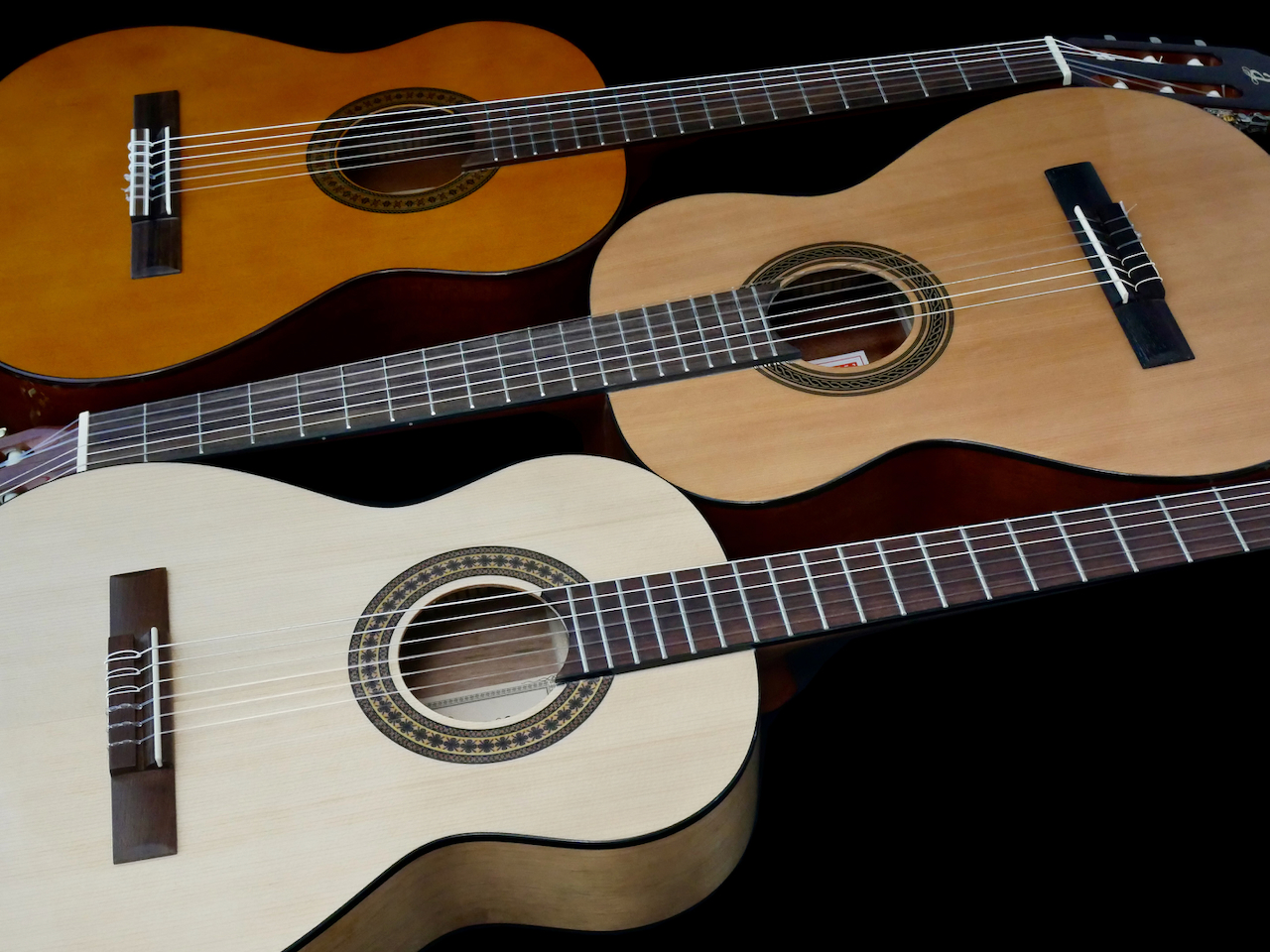
Who is a 3/4-size classical guitar for?
The classical – or nylon-string – guitar is still the first instrument for many beginners, which is why this type of guitar is also available in smaller versions, like stringed instruments.
A three-quarter-size guitar is suitable for people 130-155 centimeters tall. It is also a great choice as a travel or summer cottage guitar, because it takes up less space than a full-size guitar, and its 58-59 cm scale length does not feel too loose in larger hands.
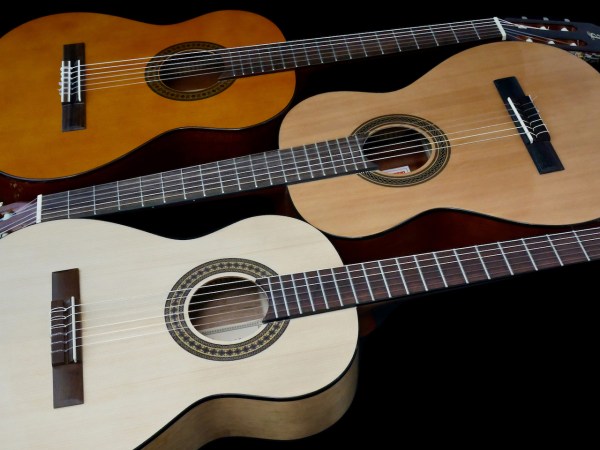
In this review, I will introduce you to three high-quality 3/4-size guitars in the 200 euro price range.
****

The Admira Juanita (€229; Musamaailma) is a beginner’s instrument from this well-known Spanish guitar manufacturer, available in all traditional sizes, and is made in Spain, despite its affordable price.
The top of the Juanita 3/4 model is made of Douglas fir plywood, while the back and sides are made of sapele mahogany. The long part of the mahogany neck, as well as the lower part of the headstock, are carved from three adjacent pieces of wood. An additional piece is glued to this to complete the headstock, as well as for the traditional neck heel of a classical guitar.
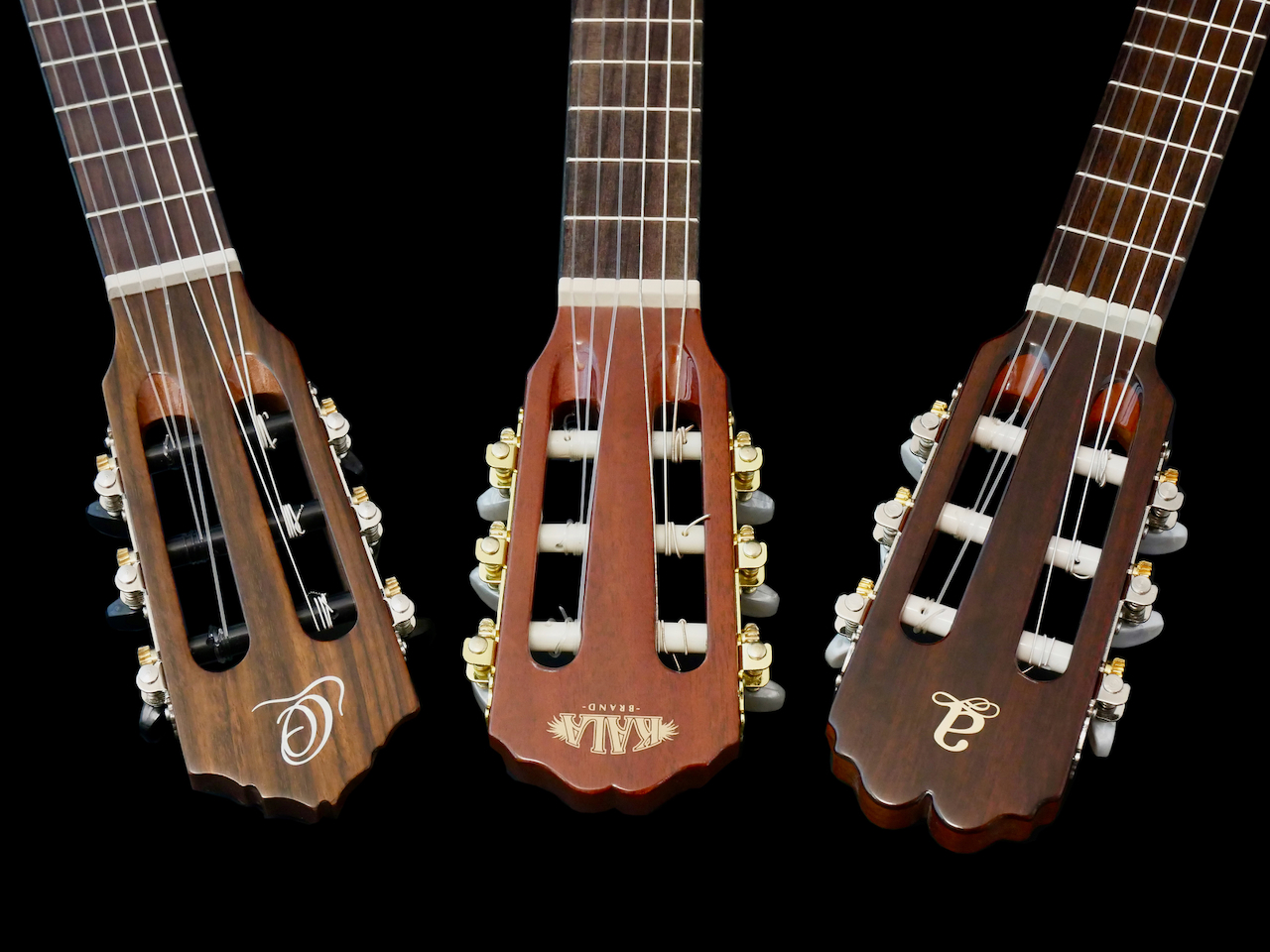
The fingerboard and bridge of the Admira Juanita are made of a beautiful wood called mangoy. The name was unknown to me, but after googling I found out that it is just another name for a familiar instrument wood, ovangkol. The fingerboard has 18 traditional, narrow frets, which have been installed very neatly. The chrome-plated tuners seem to be of high quality. The Juanita 3/4 model’s top nut and bridge saddle appear to be made of Graph Tech’s Tusq material.

In terms of appearance, the Admira Juanita clearly presents a beautiful traditional line with the guitar’s honey finish.
The guitar arrived in excellent trim and equipped with high-quality strings.
Three-quarter guitars usually also have a narrower neck than full-size classical guitars. In the Juanita 3/4 model, the reading at the top nut is 44 millimeters. The guitar’s neck profile is a flat D, but the traditional, relatively angular shoulders, have been softened quite a bit in this model, and that’s a good thing.
Anyway, the playing feel is excellent. The sound of a plywood-bodied guitar can never be as big and full-bodied as a solid-top one, but the Admira Juanita 3/4 is a far cry from the lifeless sound of cheap instruments. The Juanita 3/4 plays with a beautiful and warm sound, offering plenty of dynamic nuances.
****
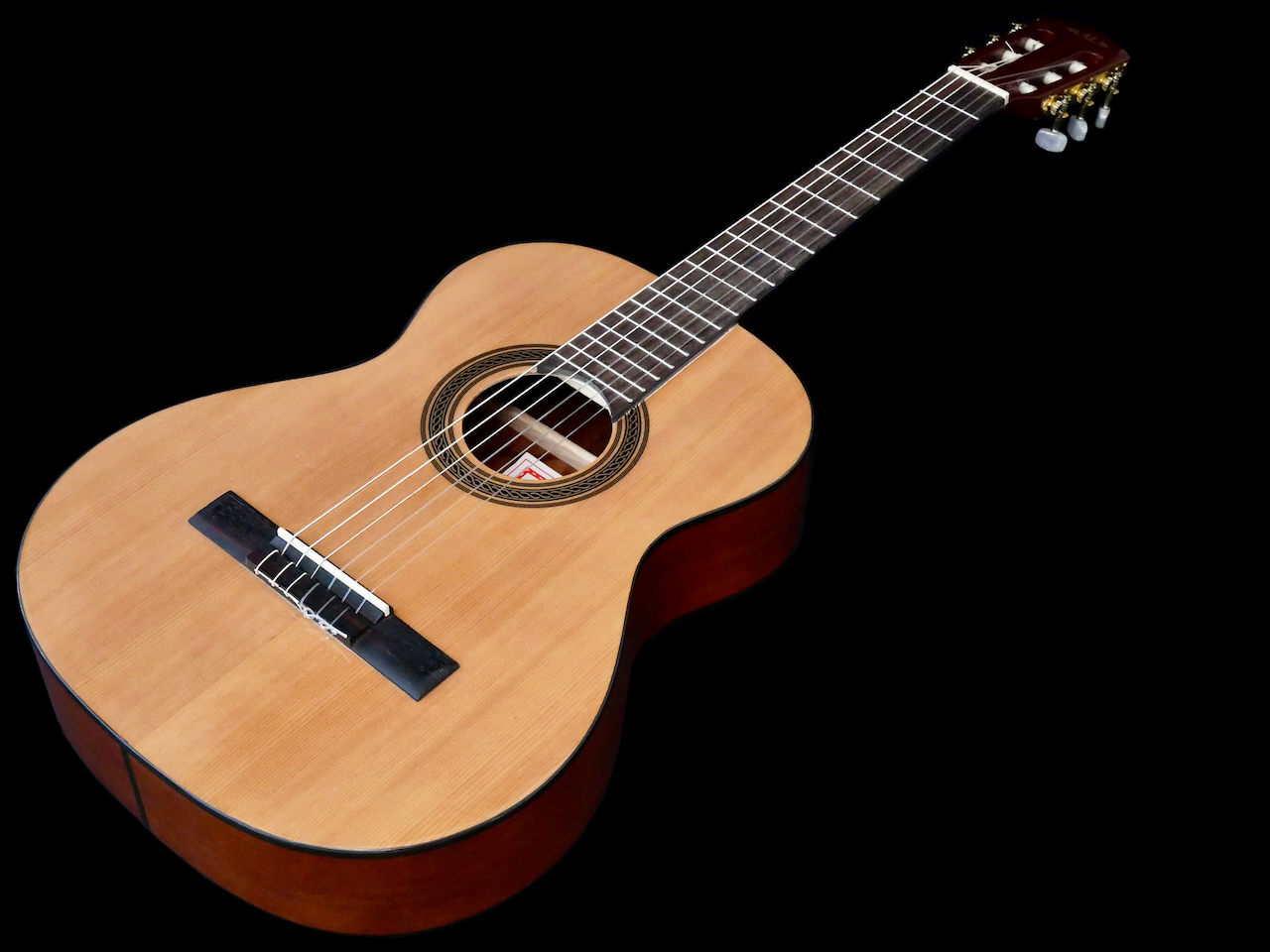
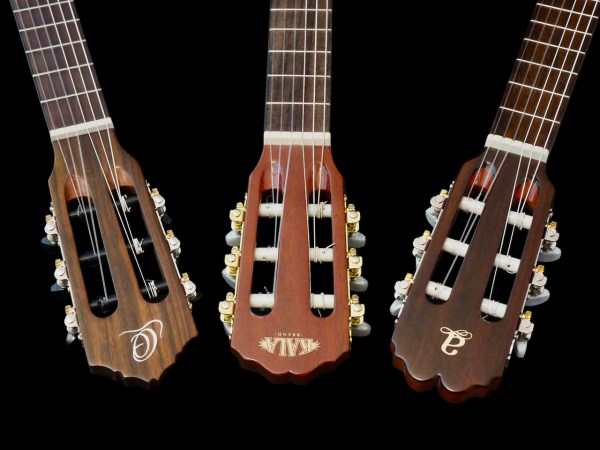
Kala Brand is known as a ukulele manufacturer with a very wide range of these small instruments. However, Kala also makes a few classical guitar models, of which the 3/4-size Kala NY-23 is one.
Made in China, the Kala NY-23 (€198; St. Paul’s Sound) has a beautiful natural finish that brings out the wood grain patterns very well.
The Kala NY-23’s plywood top is made of cedar, while the back and sides are made from mahogany. The long section of the mahogany neck is carved from a single piece, to which separate pieces for the headstock and neck heel are then glued. The grain pattern of the heel piece is so well matched to the neck in the instrument reviewed that it was very difficult to find a glue joint.
According to the manufacturer, the NY-23’s fingerboard and bridge are made of rosewood. The fingerboard has a thin black binding. The Kala model offers no less than 19 narrow frets. The tuners are gold-colored and have pearloid-patterned plastic buttons.

The test instrument’s high-quality plastic bridge saddle was left a bit too high at the factory, and the bass strings had also seemed to have taken taken a bit of a beating on the way from the Chinese factory to Finland. The trim on the test instrument didn’t match the high-quality image I have come to expect from Kala instruments thus far. This one must have slipped past quality control.
I usually try to always test instruments with the so-called factory settings, and I usually do not make fundamental adjustments either. Due to scheduling reasons and the poor playability of the guitar, however, I decided to lower the bridge saddle myself, and to also change the strings on the test guitar. In a purchase situation, such things are the responsibility of the instrument store, and St. Paul’s Sound in Nummela is known for its very good customer service. This time I was simply in a bit of a hurry.
The nut width on the Kala NY-23 is 48 mm. The guitar’s neck profile is closer to steel-string necks, as it is a very nice rounded C.
Lowering the bridge – and putting on a new set of strings – really paid off. The bass E height is now 3.4 mm at the 12th fret, and the playability of the NY-23 has become very comfortable. The sound of the Kala NY-23 has also come into full bloom, and is now beautifully lyrical and lively.
****
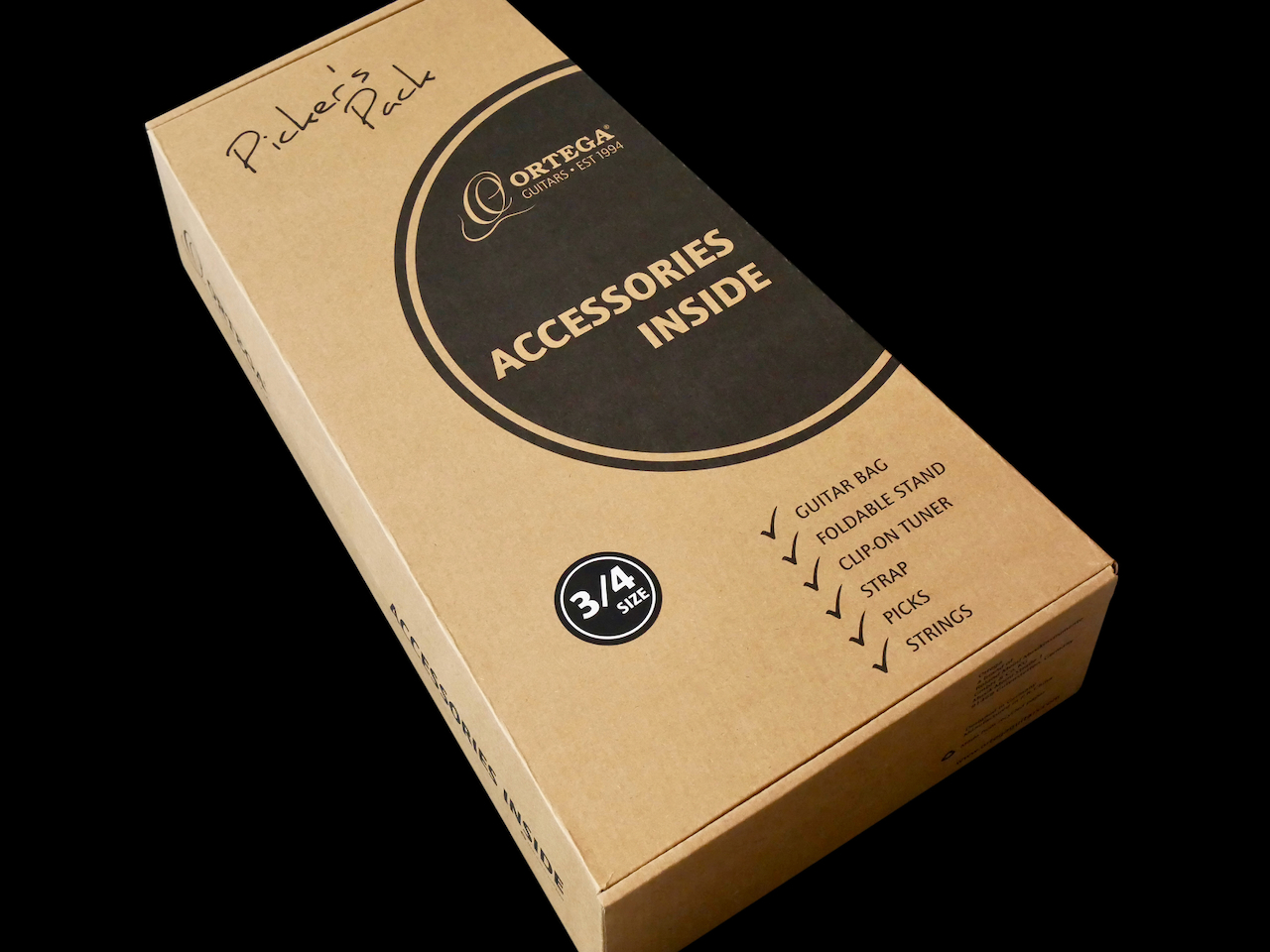
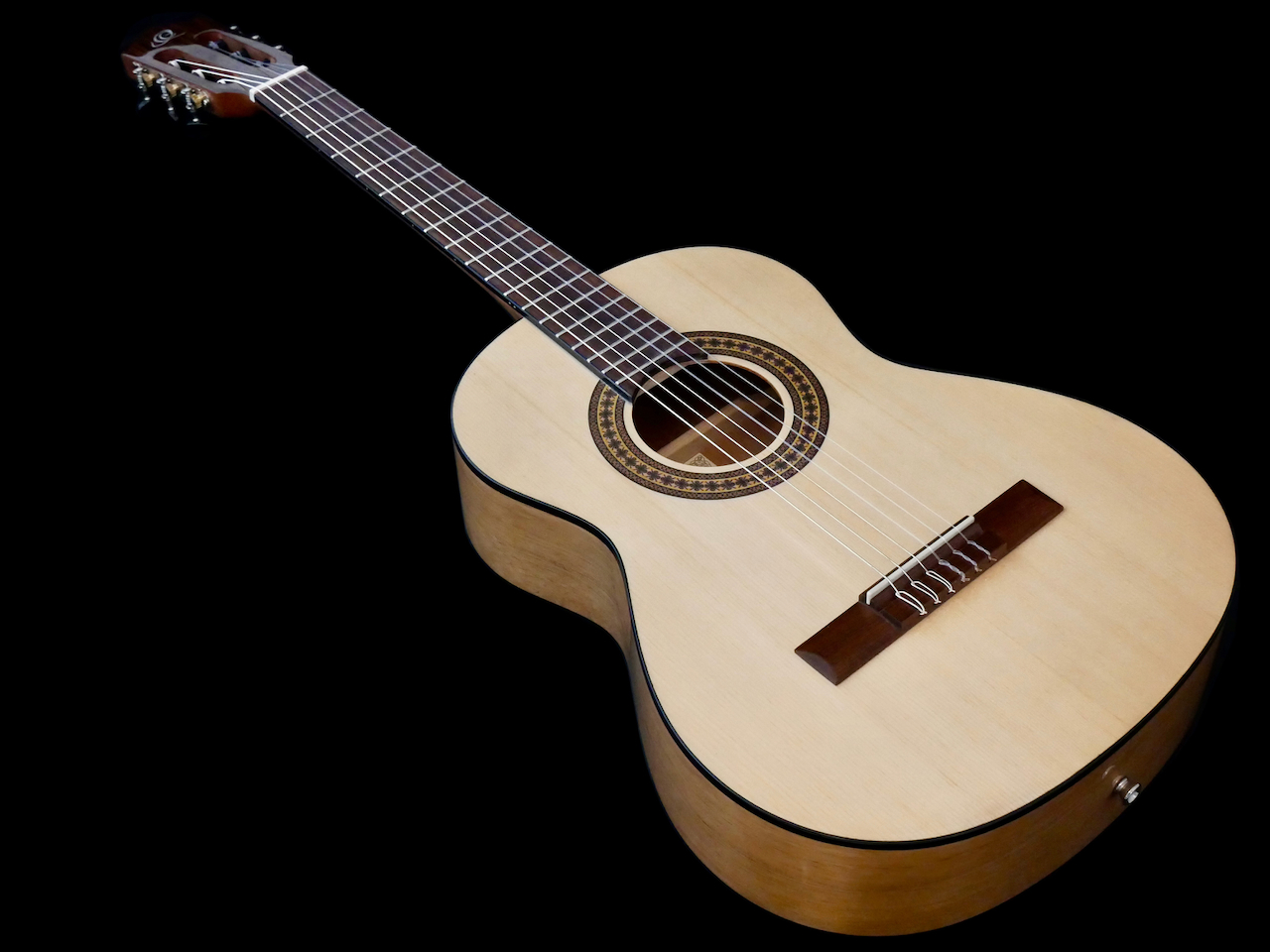
The Ortega Picker’s Pack Classic 3/4 (203 €; F-Musiikki) is a package aimed at beginners, which includes a lightly padded bag, a strap, three picks, a digital tuner, a set of strings, and a foldable guitar stand.
However, the main focus of this article is the excellent 3/4-size guitar in the package called the Ortega RPPC34. The RPPC34, made in China, has been given a beautiful natural finish. The plywood body has a spruce top, while the sides and back are made of very light-coloured catalpa wood. This gives the Ortega an appearance very much like that of a flamenco guitar, which traditionally use very light-coloured cypress or maple for the back. The RPPC34’s mahogany neck is carved from three parts, with additional parts for the neck heel and headstock glued to the long neck.
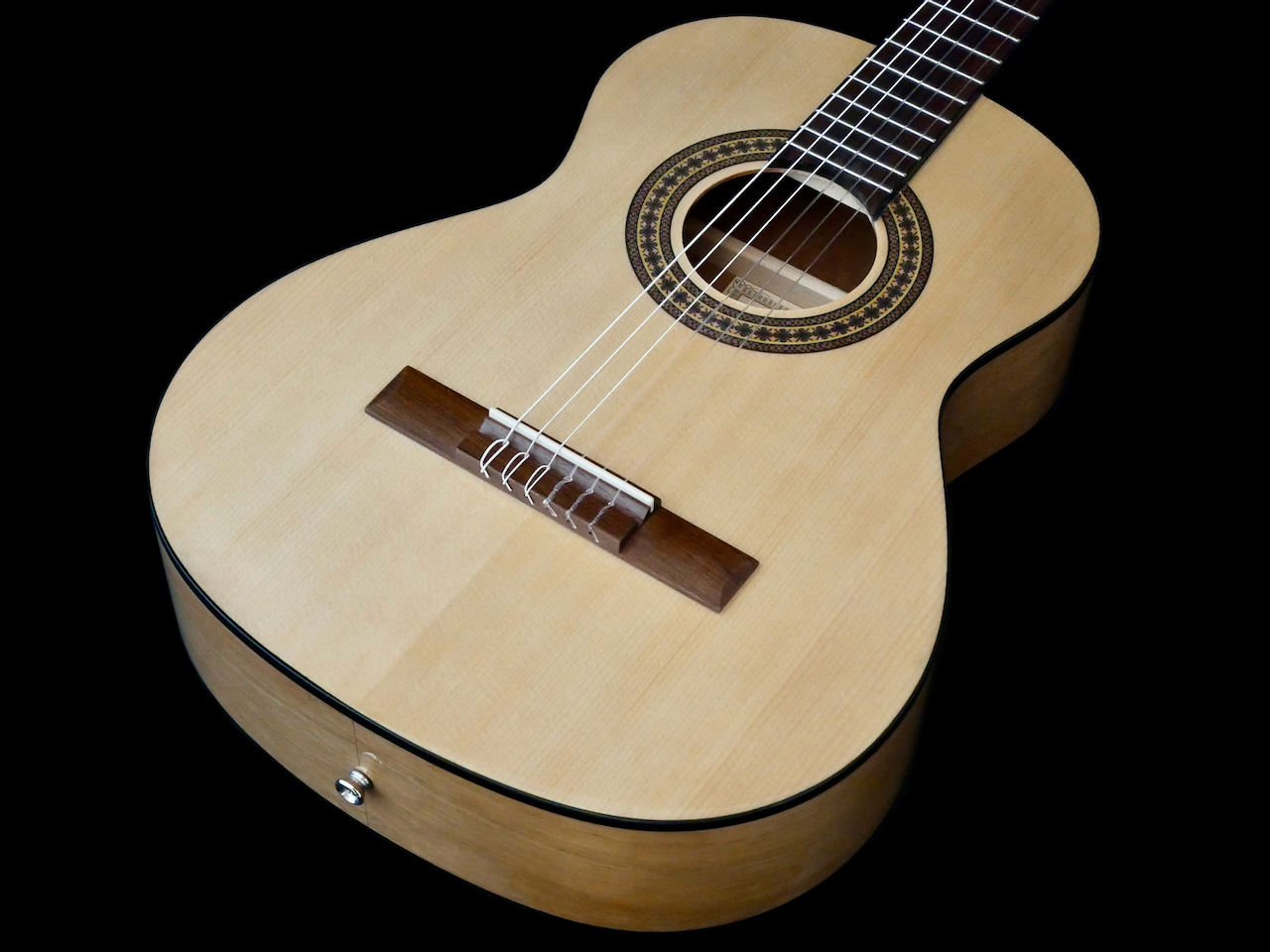
Both the Ortega’s fingerboard and bridge are made of walnut. A thin black binding has been added to the fingerboard. The RPPC34 has 18 narrow frets. The Ortega’s fretwork is of high quality. The chrome tuners have black buttons.
The guitar arrived in excellent trim and equipped with high-quality strings.
The Ortega RPPC34’s neck width at the nut is 45 mm. The neck profile is a bit unusual for a classical guitar, but at the same time very comfortable. It’s a nice mash-up of a C- and a soft V-profile.
The Ortega’s playing feel is excellent. The RPPC34 model plays with a very dynamic sound, with a tight bass register and a sparkling touch of treble.
Here’s a demo of three affordable dreadnought-sized acoustic guitars. The demo is based on Anssi Kela’s classic track ”Kaksi sisarta”.
****
• Tanglewood TWD-ST
• Takamine GD10-NS
• Yamaha FG800MII
****
• first verse: Yamaha (lead), Takamine (left rhythm), Tanglewood (right rhythm)
• second verse: Tanglewood (lead), Yamaha (left rhythm), Takamine (right rhythm)
• third verse: Takamine (lead), Yamaha (left rhythm), Tanglewood (right rhythm)
• rhythm guitar tracks recorded with a Shure 545SD
• lead guitar tracks recorded with an AKG C3000
• mic preamp: Cranborne Audio Camden EC2
****
Testi tulossa:
blogi.rockway.fi
****
****
****
Testissä ovat mukana:
• Admira Juanita 3/4
• Kala NY-23
• Ortega RPPC34
****
Äänitetty RÖDE M5 -mikrofoniparilla ja CRANBORNE AUDIO EC2 -etuasteella.
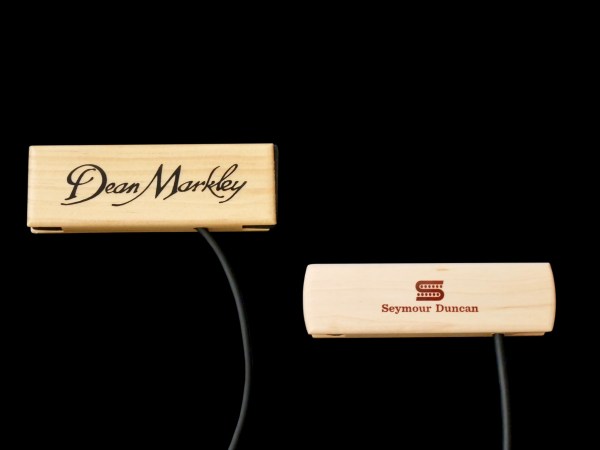
Magneettisien ääniaukolle menevien mikrofonien testi löytyy TÄÄLTÄ.





 Kitarablogi.com – Finland's premier Guitar and Bass blog