



****
Lisätiedot: F-Musiikki
Kitarablogi.com – Finland's premier Guitar and Bass blog
Juttuja kitaroista ja bassoista

Amfisound Guitars is run by two master luthiers in the outskirts of the northern Finnish city of Oulu.
Sampo Leppävuori (say ’SUM-poe’) and Tomi Korkalainen (’Tommy’) met while studying at the Ikaalinen College of Crafts and Design. They became friends and decided to set up shop together near Sampo’s hometown.
Amfisound is able to offer a very wide selection of different guitar and bass models, because the company combines both Sampo’s and Tomi’s strengths.

Sampo Leppävuori loves classic bass and guitar designs, as you can see in Amfisound Guitars’ tasty Classic Line -models, such as the Halti-, Kaira-, Halla- and Kobalt-guitars.
These instruments are far from being straight copies of vintage guitars, though, as all Amfisound models feature a long list of updates and improvements (mostly in the hardware, electronics and pickup departments), as well as special Amfisound-features, such as the company’s special, heel-less set-neck joint.

Tomi Korkalainen’s creative activities are mostly zoned in on the Metal and Hard Rock genres, where he strives to come up with the ultimate Metal-guitars in terms of playablity, tone and visual impact.
Amfisound’s Extreme Line of Metal axes – comprising such guitars, as the Routa, Atrain, Railo and Roster models – bears clear testament to Tomi’s creative genius.
****
Kitarablogi: What’s the philosophy behind Amfisound Guitars?
Tomi: We wanted to set in motion a fresh and youthful custom guitar culture in Finland. Being based up here in the north strengthens our North-European image and appeal, which we try to underline further by making our guitars very visual. We came up with our Finnish model names around 2003/2004. The model names are quite easy to get to grips with even for foreigners, and it’s cool to hear them spoken in different accents at trade shows.
KB: Your visual approach sets you apart from many other makers.
Sampo: We had to come up ourselves with practically all of our special finishes, treatments and woodworking techniques. And you still keep on learning something new while working on new designs. When it comes to making guitars for the Hard ’n’ Heavy -crowd, there was basically no precedent over here in Finland. We simply had to dig in and come up with all the solutions by ourselves. All this hard graft has reaped rewards and Amfisound instruments are held in high regard at home as well as abroad. It is also great to be involved in the evolution of the art and culture of guitar-making in Finland. Since we started our company, people’s attitudes towards Finnish Metal guitars have changed dramatically for the better, which is a good indicator for the kind of mind-boggling progress guitar-making in this country has seen.
KB: How do you approach the building process?
Tomi: At the moment most of our instruments are ordered from abroad. Each order is treated individually, and each guitar is built by hand from start to finish. We don’t build in production runs, and we never use prefabricated bodies or necks, which is actually a great advantage for our customers. Our instruments are played by a lot of great artists from all sorts of different musical genres, in Finland and abroad. Our branding has taken a large leap in my opinion, when we introduced our current, round company logo. For us it means that we can make Amfisound Guitars a real Finnish guitar brand, instead of us being merely some small custom maker from northern Finland.
****
Amfisound Guitars’ range of models offers a very broad scope for customisation, because Sampo and Tomi want to make sure that each and every customer gets exactly the guitar or bass he or she wants.
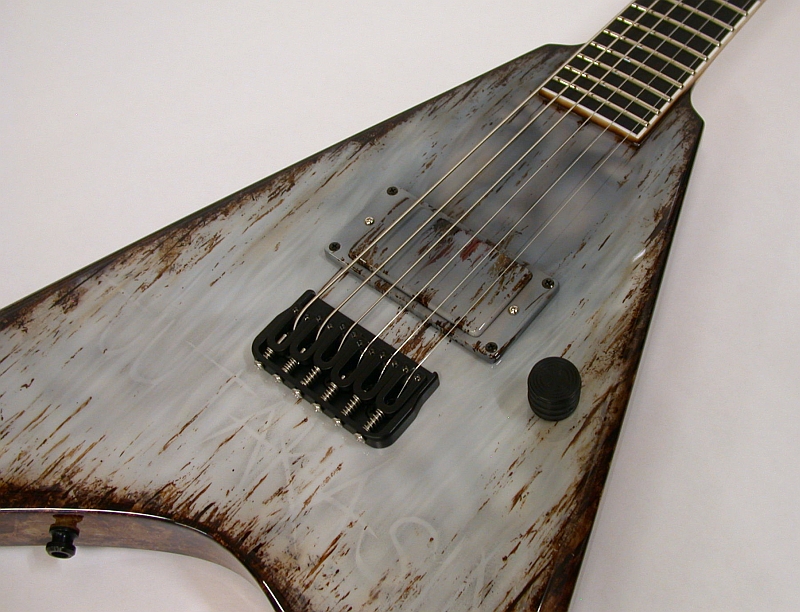
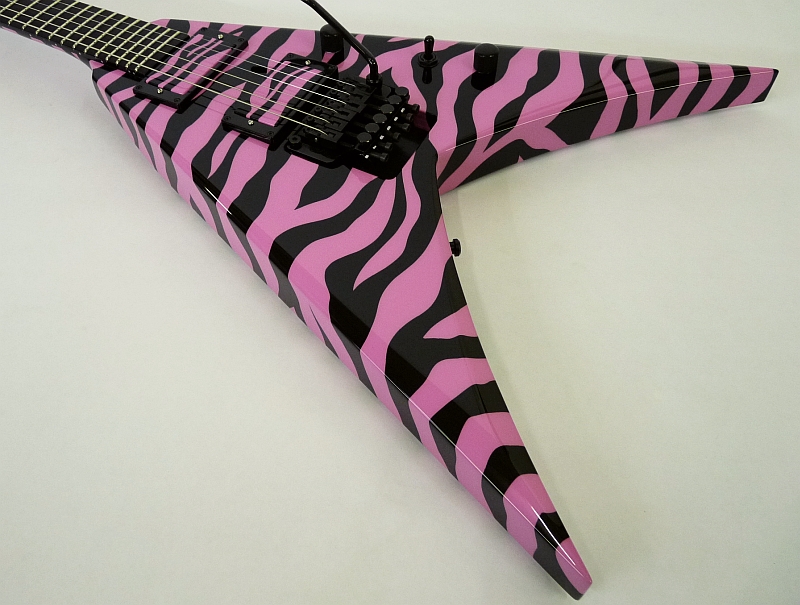
Amfisound’s unbelievable custom finishes are fast becoming the stuff of guitar legend. These guys are real wizards when it comes to using the spray gun and the airbrush! Regardless of whether you want an instrument that looks like and ancient piece of wood, complete with runic writings, or rather a real shocker in neon green with leopard spots, the dynamic duo of Amfisound will do it with style.
****
Besides making their own models Amfisound Guitars also take on repair and customising work.
****

Every Amfisound instrument once started out as a heap of wooden planks.

Amfisound very often use native Finnish wood species, like figured arctic birch and black alder, in their body designs, alongside more exotic timber, such as African mahogany (khaya ivorensis).

Here’s a close-up of a stack of ebony fingerboard blanks. Naturally, Amfisound has all the necessary paperwork to prove it comes from legal sources.
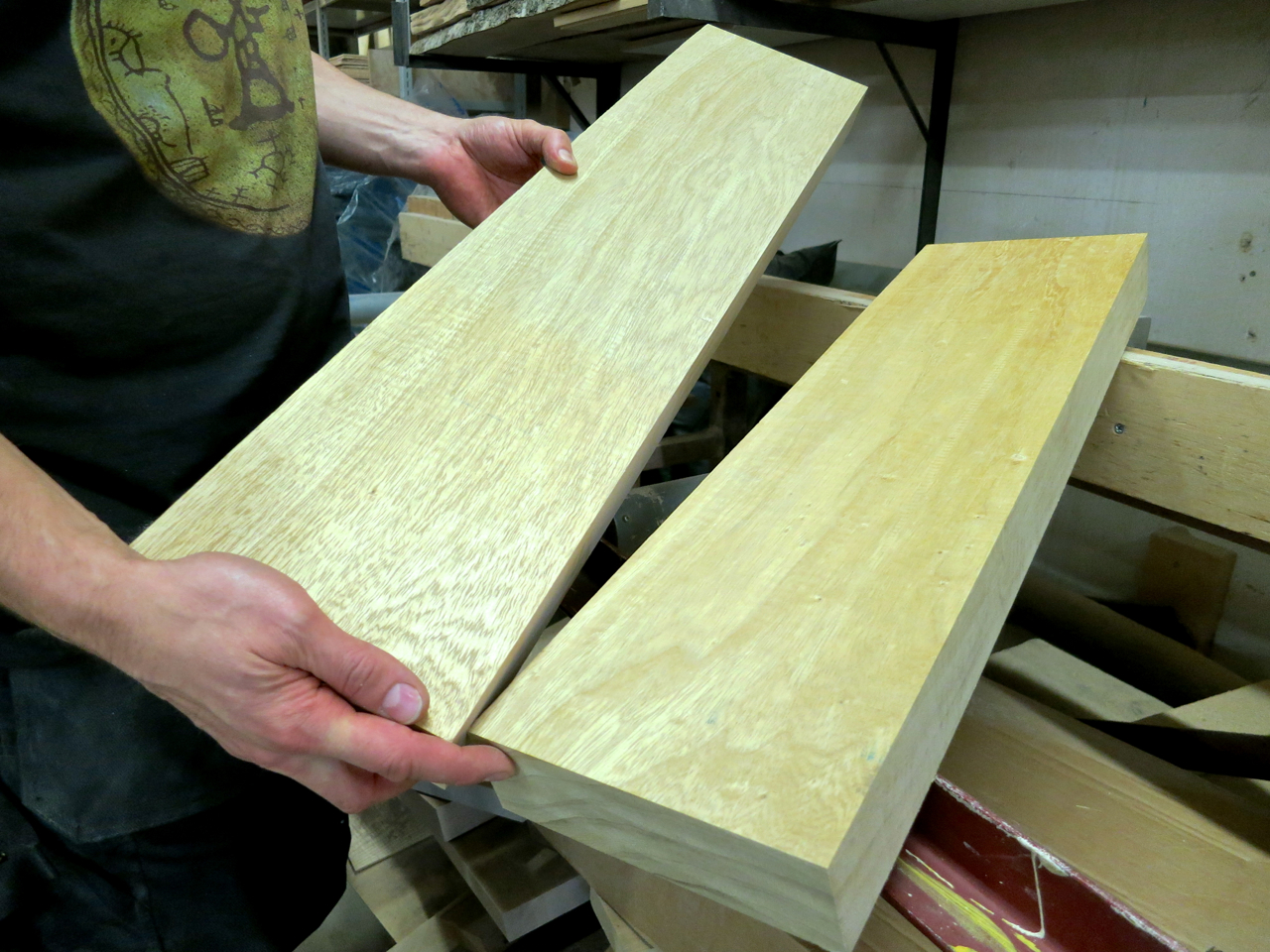
If you’d rather have something more exotic for your guitar’s body, there are such alternatives as korina, which is also known as (black) limba.

A lot of work has gone into Sampo’s and Tomi’s own routing templates, jigs and fixtures. Most of the building process at Amfisound Guitars is old-school instrument-making.
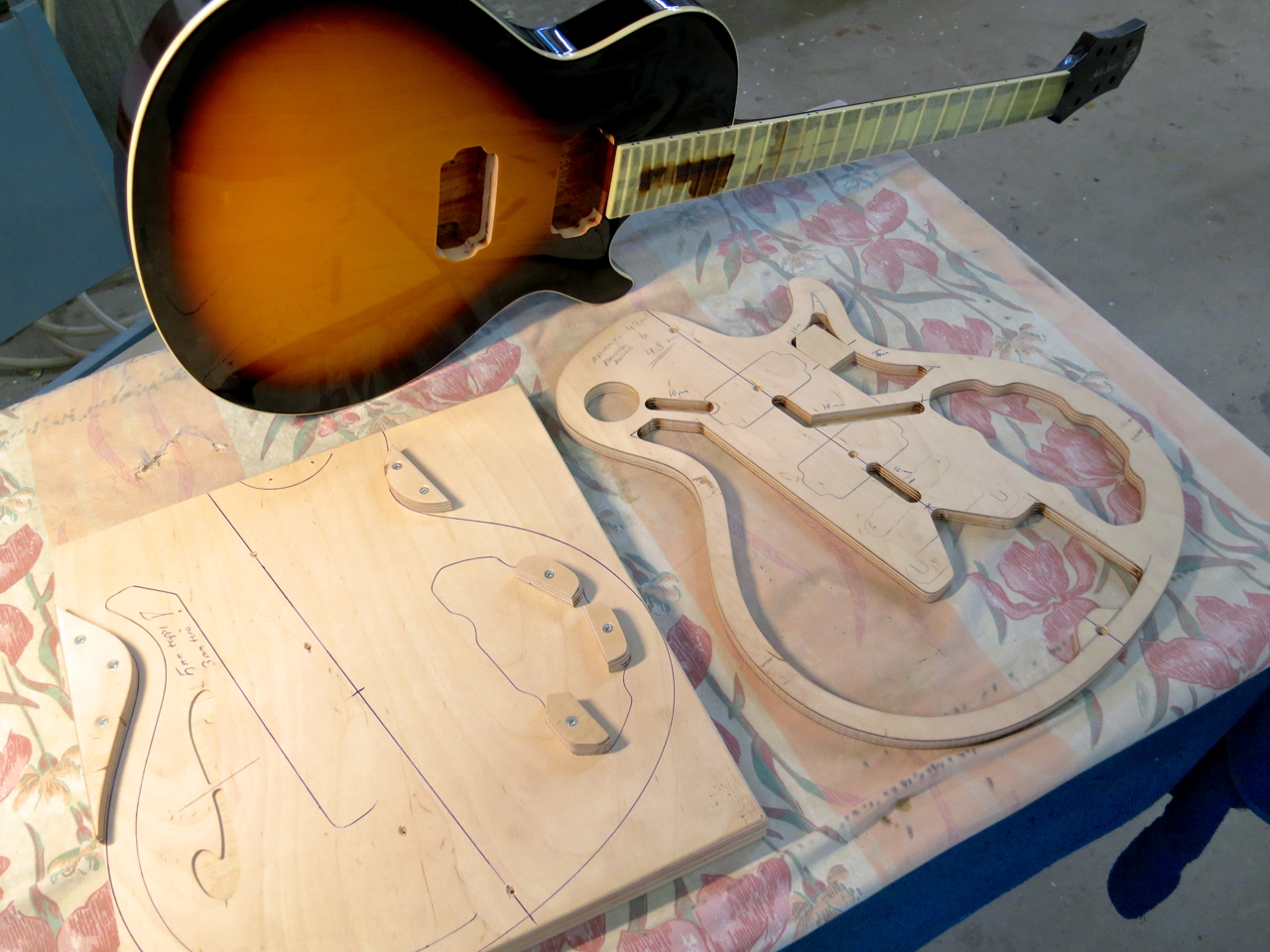
A semi-solid version of the Amfisound Halti is in the works. The routing template gives you a good view on all the cavities that will be covered by the carved top.

On through-neck designs the neck blank is glued together from three strips of maple.
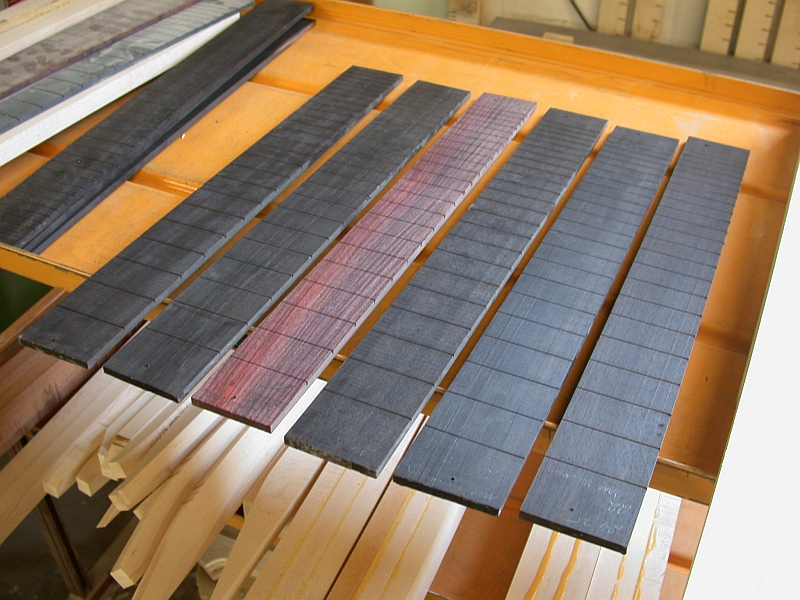
Here we have some rosewood and ebony fingerboards with the fret slots already sawn.

For some more demanding operations a copy carver is used to ensure consistency.
In this picture a Halti-model receives its deep neck joint cutaway…
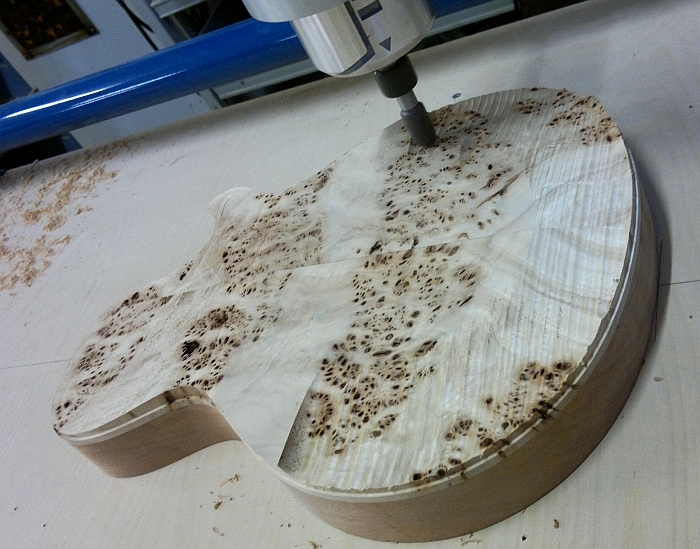
…while here the copy carver is used to rough out the dished shape of the top.
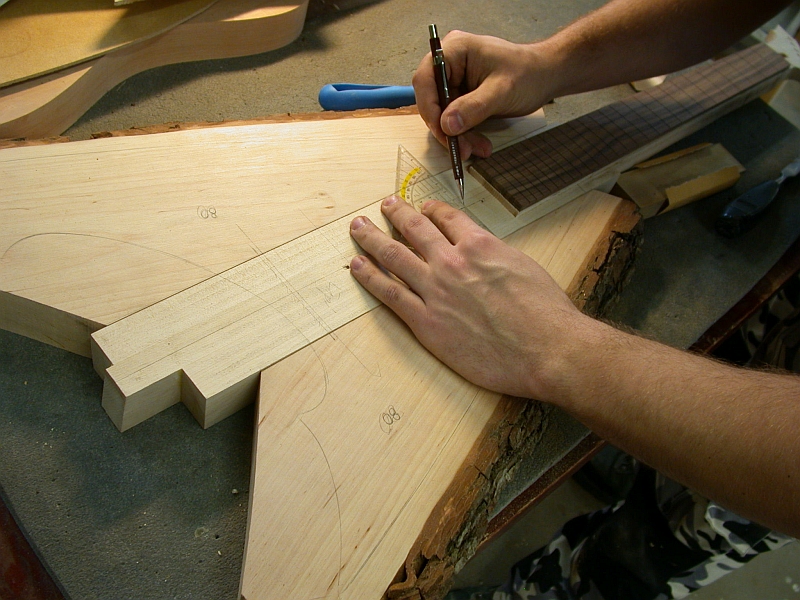
But often only handwork will do for an Amfisound guitar:
The outlines of an Atrain-guitar, as well as the positions of the bridge and the pickups, are drawn onto the wood with a pencil.

A wood rasp is a good tool to start shaping a smooth neck heel, if you know what you do.

A router table is used for a lot of things in guitar-building:
Here a pickup cavity is routed into a bass body…
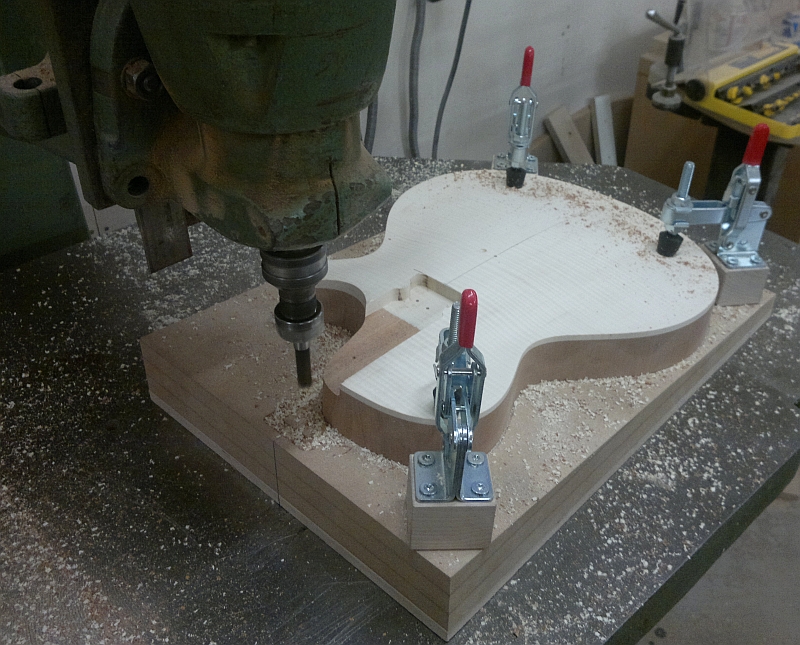
…while this picture shows a neck slot being cut…

…and this picture shows a pickup cavity and the necessary recesses for a vibrato being routed out.
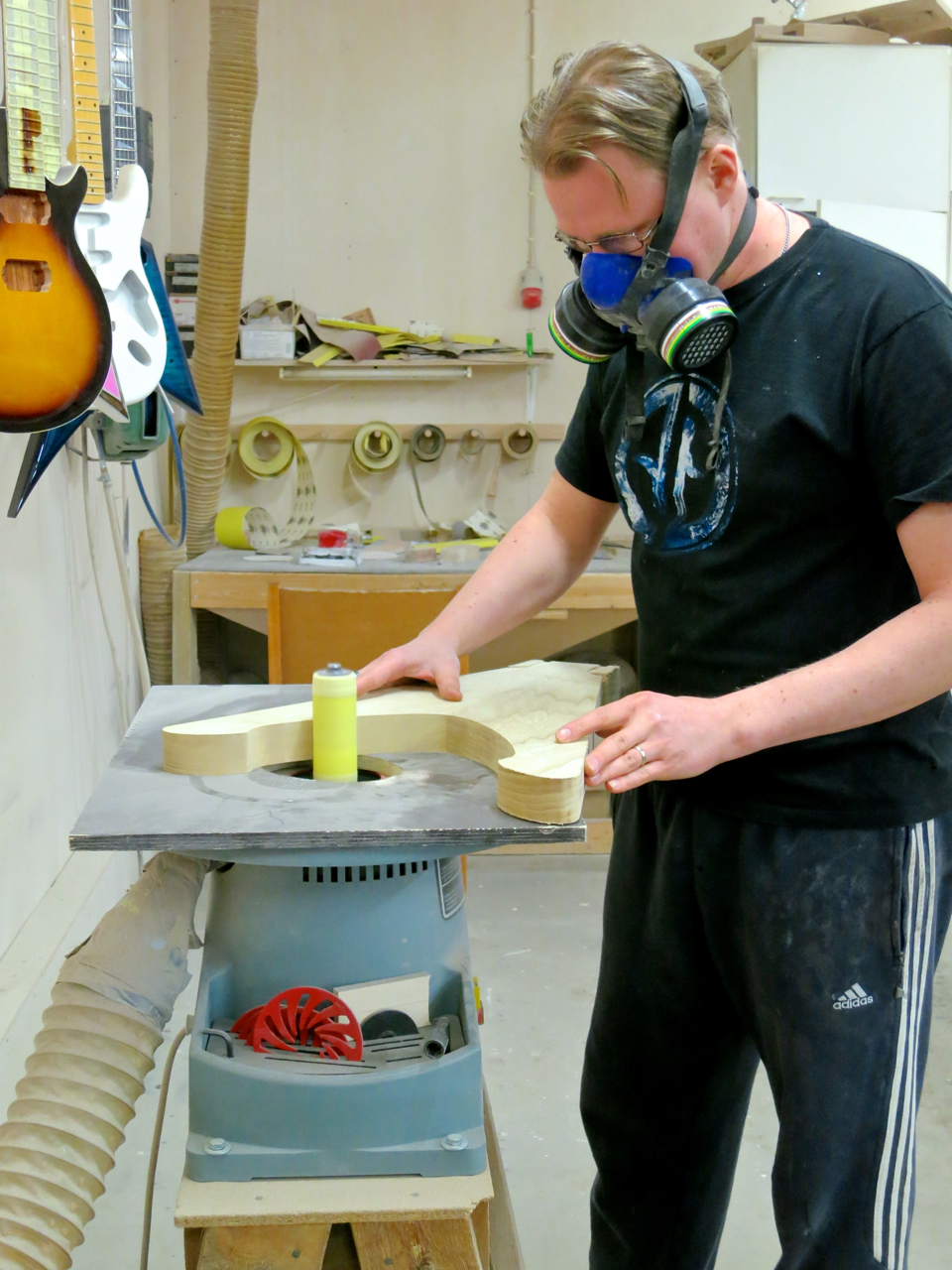
Tomi makes sure the outlines of this Railo-body are crisp and clean.

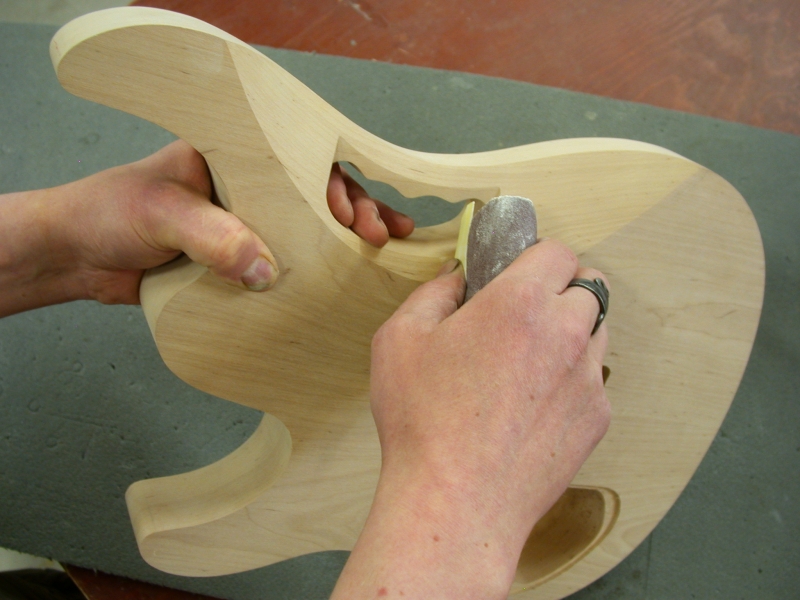
Many spots need hand-sanding, though.

After levelling a special file is used to put the rounded playing surface back into the frets.
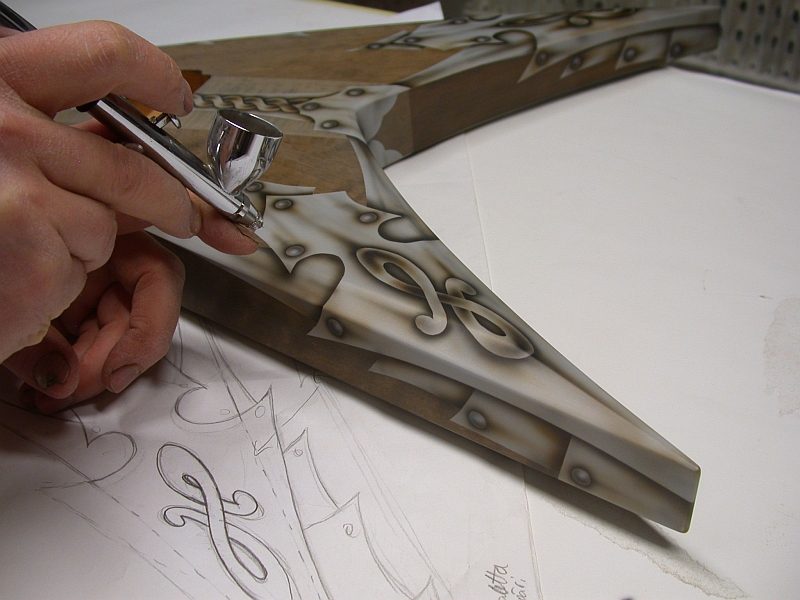
Stunning visuals need a good amount of planning and a very steady hand.


When it comes to graphic finishes, at Amfisound only the sky’s the limit.
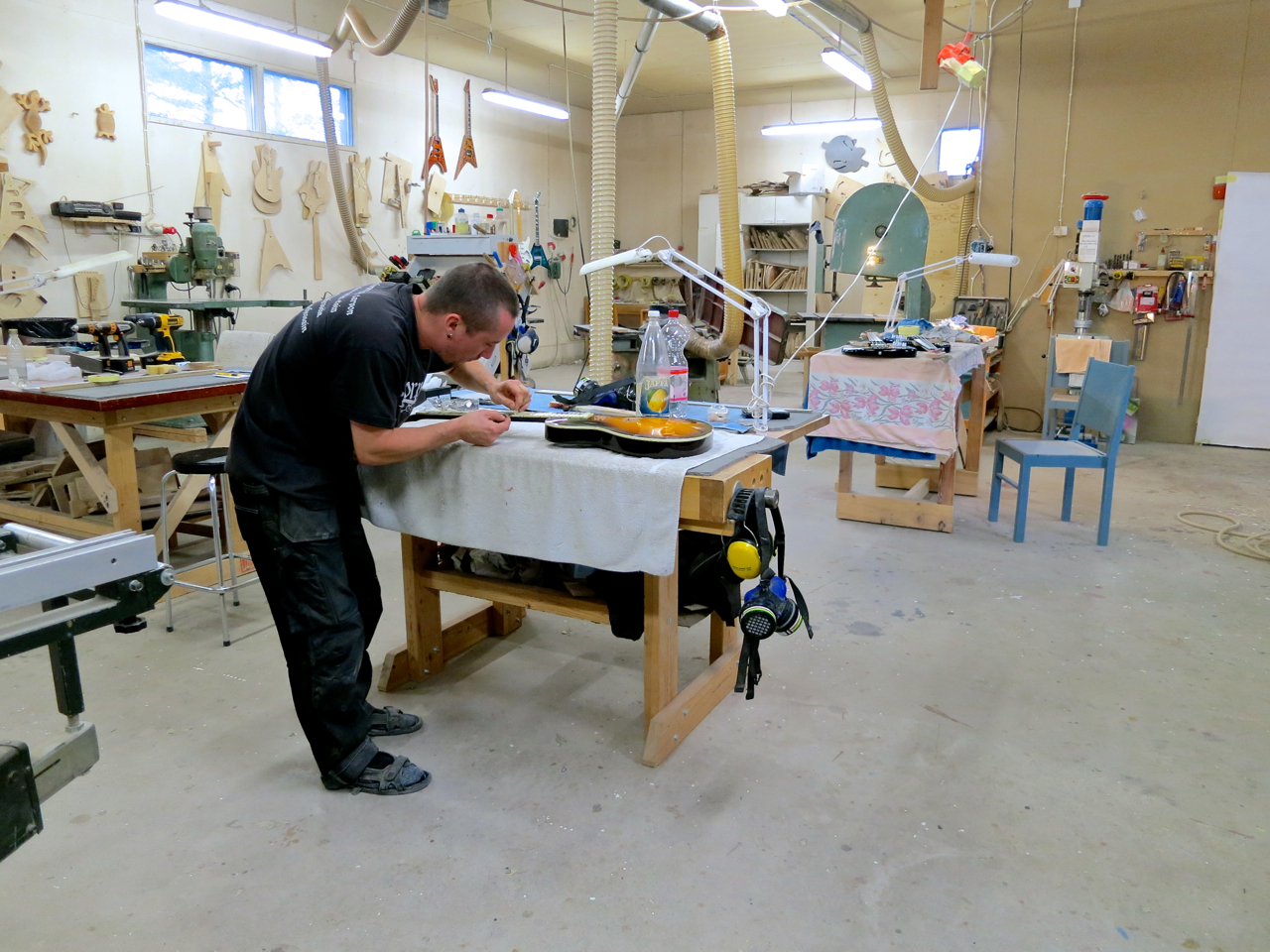
Sampo scrapes the fingerboard binding after the finish has dried.
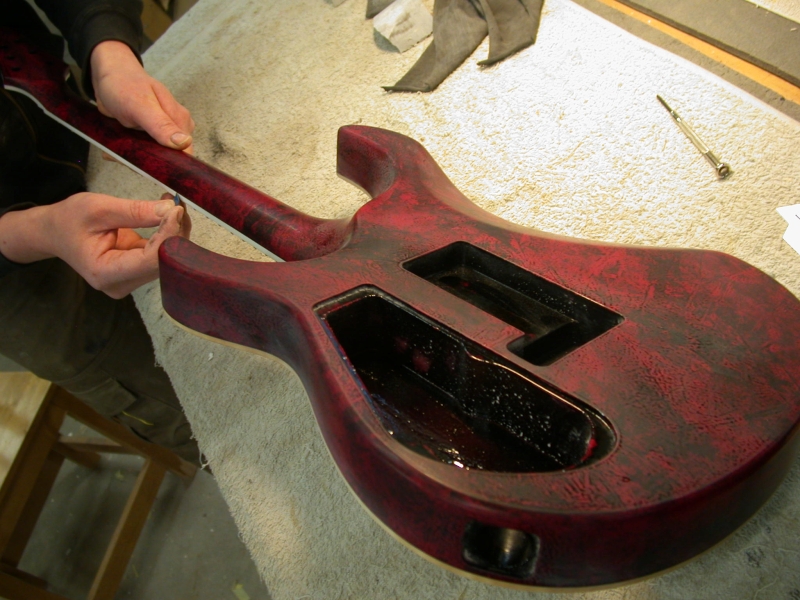
Same procedure, different guitar.

The holes for the switches, pots and the hardware are drilled quite late in the process.


A Sustainer-equipped guitar in final assembly.
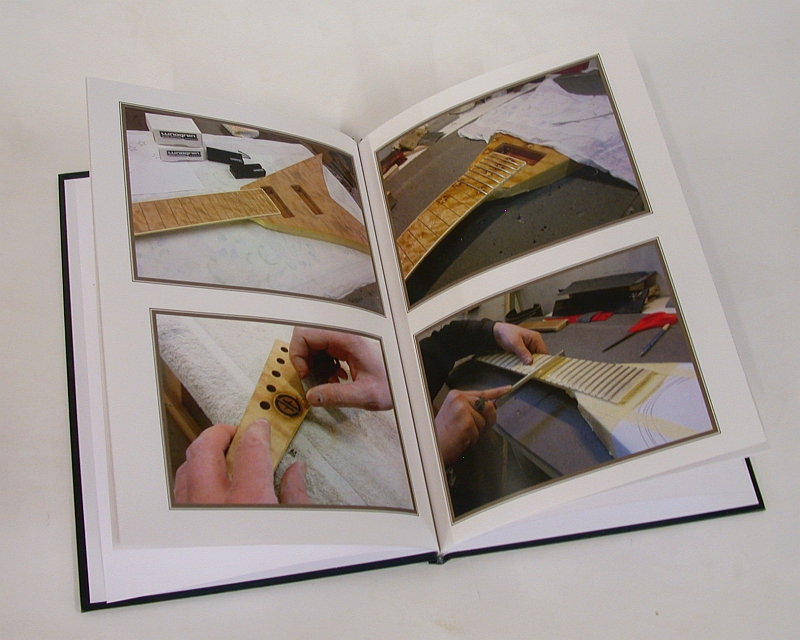
Amfisound offer their customers the option to order a Building Process -book along with their guitar or bass, detailing its genesis from raw wood into a fine instrument.
****
Amfisound’s Sampo Leppävuori and Tomi Korkalainen are both members of The Finnish Guild Of Luthiers.
****
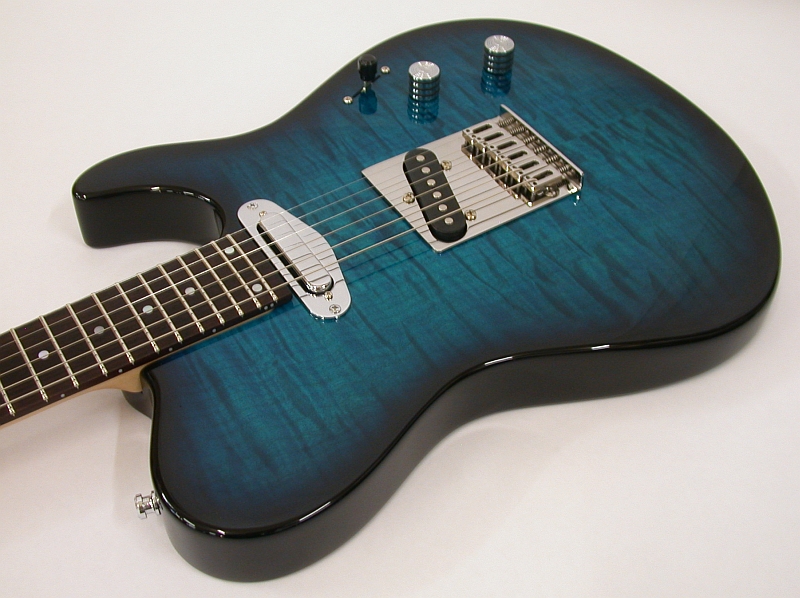
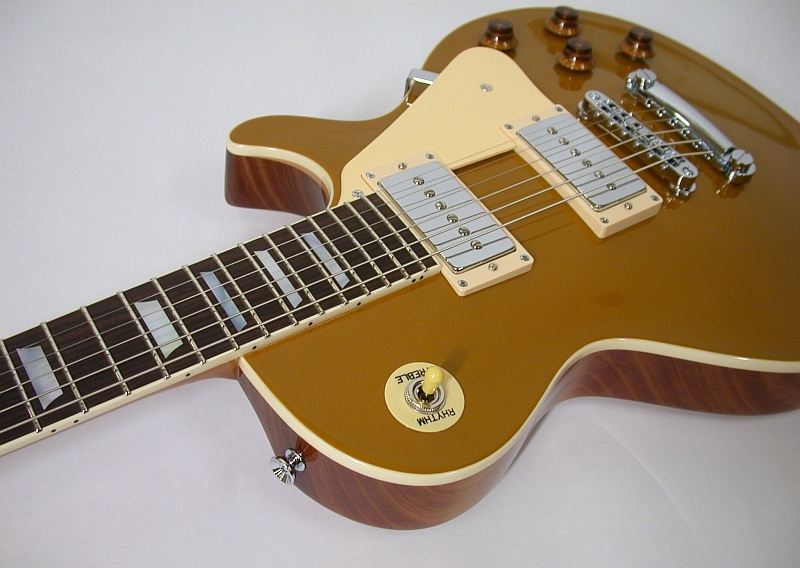
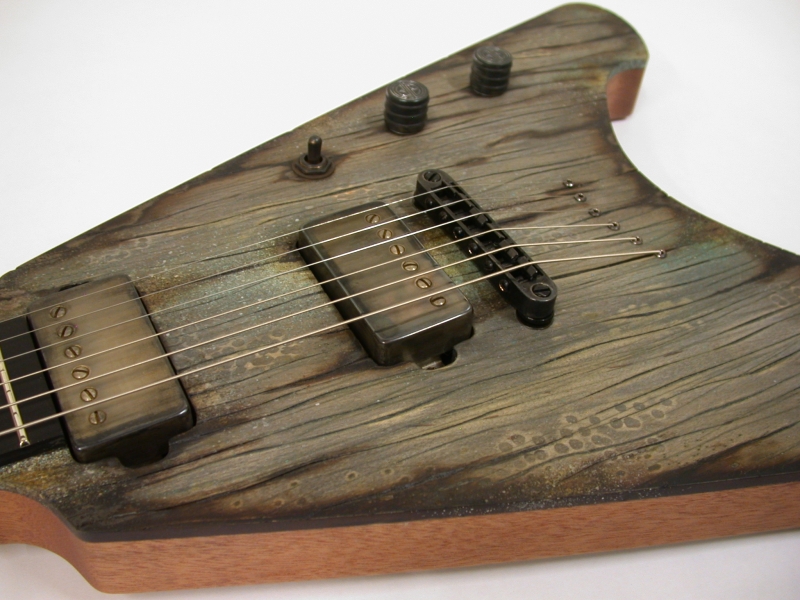
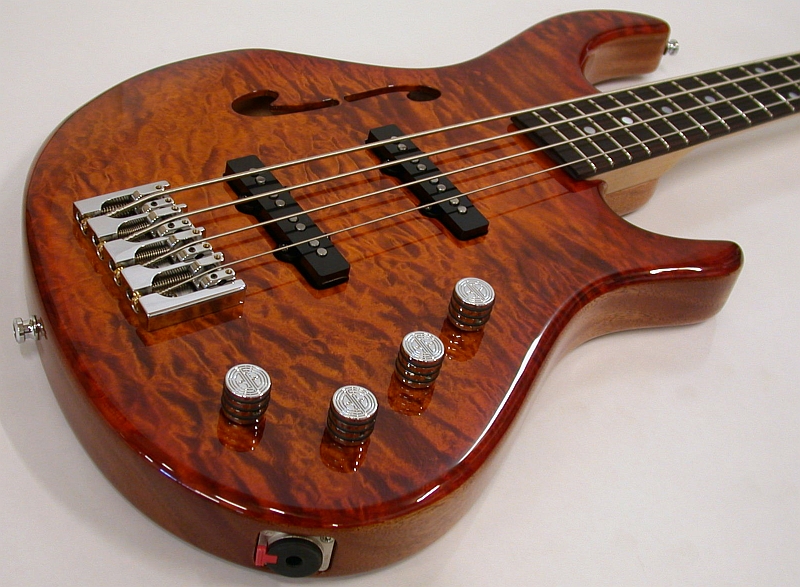
Here are a few examples of finished instruments (photos: Amfisound).

****




****

****


****

****

****
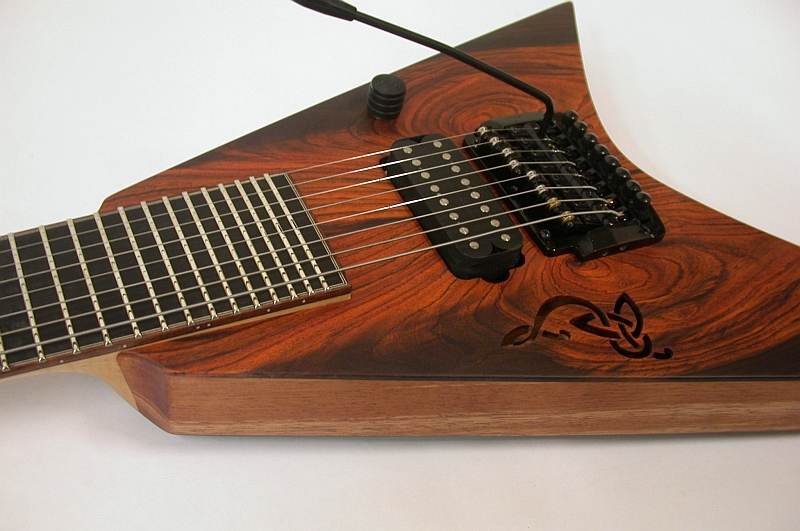
Eight-string!
****

****


****
Amfisound Guitars on kahden soitinrakentajamestarin yhdessä vetämä kitarapaja Oulun Haukiputaassa.
Sampo Leppävuori ja Tomi Korkalainen tapasivat IKATA:n kitararakennuslinjalla, ystävystyivät, ja päätyivät perustamaan oman yrityksensä Pohjois-Suomeen, Sampon kotiseudulle.
Amfisoundin mallisto on erittäin laaja, koska Sampon ja Tomin eri mieltymykset ja vahvat alueet täydentävät toisiaan.
Sampo Leppävuori saa inspiraatiota klassikkokitara- ja -bassomalleista, joihin esimerkiksi Amfisoundin Classic Line -malliston Halti-, Kaira-, Halla- ja Kobalt-kitarat perustuvat.
Näissä kitaroissa ei kuitenkaan ole kysymys väsyneistä kopioista tai vintage-voodoon metsästämisestä, koska Amfisound-kitaroissa on pitkä lista detaljipäivityksiä (esim. mikrofoneissa ja metalliosissa) ja omia ominaisuuksia (esim. puuvalinnoissa ja kaulaliitoksissa).
Tomi Korkalainen taas on parivaljakon vannoutunut heavymies, joka visioi ja toteuttaa metallikitaristeille äärimmäisen hienoja erikoissoittimia – ei ainoastaan soitettavuuden ja soundin kannalta, vaan myös mikä tulee kitaroiden ulkonäköön.
Tomin käsiala näkyy parhaiten Amfisoundin Extreme Line -mallistossa, johon kuuluvat mm. sellaiset soittimet kuin Routa, Atrain, Railo ja Roster.
****
Kitarablogi: Mikä on Amfisound Guitarsin filosofia?
Tomi: Haluttiin luoda Suomeen varsinainen täysin uusi ja nuorekas customkitara-kulttuuri. Pohjoinen sijainti edesauttaa myös pohjois-eurooppalaista imagoa, koska varsinkin visuaalisuus näyttelee suurta osaa työssämme. Mallien suomalaiset nimet keksittiin vuonna 2003-2004. Nimet ovat helposti lausuttavia myös ulkomaalaisille, ja onkin hienoa messuilla aina kuulla jos jonkinlaista versiota näistä.
KB: Visuaalisuudella näyttää olevan iso rooli teidän soittimissa.
Sampo: Kaikki erikoispintakäsittelyt ja puuntyöstötaidot on pitänyt opiskella itse käytännön kautta. Tämä opiskelu on jatkuvaa ja jatkuu edelleen. Varsinkin heavykitara-alalla Suomessa ei ole ollut minkäänlaista historiaa, joten kaikki tämä on pitänyt opiskella ja luoda itse. Kova työ on tuottanut tulosta ja olemme saaneet suurta arvostusta niin Suomessa kuin ulkomaillakin. On myös itse ollut ilo seurata kuinka paljon tämä on vaikuttanut tämähetkisen suomalaisen soitinrakennuskulttuurin kehittymiseen. Asenteet varsinkin heavykitaroiden suhteen ovat parantuneet firman perustamisen ajoista 100%. Se kertoo kyllä alan huimasta kehityksestä Suomessa.
KB: Millainen on Amfisoundin toimintaperiaate? Perustuuko toimintanne sarjatuotantoon?
Tomi: Tällä hetkellä suurin osa tilauksista menee ulkomaille ja jokainen tilaus on aina yksilö, joka valmistetaan käsin alusta loppuun saakka. Sarjatyötä tai valmiita aihioita emme tee, emmekä käytä ollenkaan. Tämä tuo todella paljon lisäarvoa asiakkaalle. Meillä on myös aika laaja ja nimekäs artistiperhe. Löytyypi artisteja kevyen ja raskaan musiikin nimiä niin Suomesta kuin ulkomailtakin. Vuonna 2007 muutettiin myös se meidän vanha logo uudeksi ympyränmuotoiseksi logoksi. Pidän tuota itse merkittävänä tapahtumana, koska silloin viimeistään päästiin kehittämään omaa brändiä suomalaisena kitaramerkkinä. Haluttiin tehdä Amfisound-merkkistä kitaraa eikä pysyä ainoastaan paikallisena soitinrakentajana.
****
Amfisound Guitarsin omille kitaramalleille tarjoamat kustomointimahdollisuudet ovat lähes loputtomat, koska Sampo ja Tomi haluavat, että jokainen asiakas saa juuri sellaisen kitaran tai basson, jonka hän itse haluaa.
Uskomattoman hienot graafiset viimeistellyt ovat muuten Amfisoundin erikoisalaa. Riippumatta siitä onko hakusessa kitara, joka näyttää monta sataa vuotta vanhalta mökin ovelta, jossa on riimukirjoitukset, tai haluaako asiakas limettivihreän soittimen leopardikuviolla, Amfisoundilta sellaisen saa.
****
Oman kitaratuotannon ohella Amfisoundissa hoidetaan laadukkaasti myös sähkökitaroiden ja -bassojen korjaukset ja kustomoinnit.
****
Jokainen Amfisound-kitara on joskus ollut pelkkä puulankkujen kasa.
Amfisound käyttää ulkomaisten jalopuulajien (kuten khaya-mahongin) ohella usein myös kotimaisia puulajeja, kuten tervaleppää ja loimukoivua, runkopuuksi.
Tässä kuvassa näkyy otelauta-aihiot eebenpuusta.
Oman kitaran voi myös tilata hieman harvinaisemmasta puusta veistettynä. Tässä näkyy kaksi korina-lankkua.
Sampo ja Tomi luottavat perinteisiin rakennusmenetelmiin, mikä tarkoittaa, että jokaiseen Amfisound-soittimeen valmistukseen menee paljon käsityötä.
Pajassa käytetään itse tehtyjä jigejä ja sapluunoita jyrsimelle.
Tällaiset ovat Halti-kitaran puoliakustisen version kanavat ja kolot, jotka jäävät valmiissa kitarassa kaarevan kannen alle.
Kaula-läpi-rungon-rakenteisten soittimien kaulat liimataan kolmesta vierekkäisestä vaahterapalaista.
Eeben- ja ruusupuisia otelautoja nauhaurilla.
Joitakin vaativia työvaiheita varten käytetään kopiojyrsintä tasaisen laadun varmistamiseksi.
Tässä kuvassa Halti-kitaran syvä kaulaliitos saa muotonsa…
…kun taas tässä kitaran kanteen jyrsitään raakaversio sen lopullisesta kaarevuudesta.
Käsityöllä on kuitenkin erittäin tärkeä asema Amfisound-soitinten valmistuksessa:
Tässä kuvassa Atrain-mallin ulkomuodot, sekä mikrofonien ja tallan paikat merkitään suoraan puuhun lyijykynällä.
Osaavissa käsissä raspi on sulavan kaulaliitoksen alku.
Jyrsimellä työstetään runkoon kaikki tarvittavat kolot, niin kuin esimerkiksi mikrofonikolot…
…kaulataskut…
…sekä elektroniikkalokerot ja kolot vibratalloille.
Tomi hioo Railo-kitaran ulkoreunat hiomakoneella.
Monet kohtat vaativat kuitenkin loppusilauksen hiomapaperilla käsin.
Tasoittamisen jälkeen palautetaan nauhaviilulla nauhojen puolipyöreätä profiilia.
Onnistunut grafiikka vaati tarkkaa suunnittelua ja erittäin rauhallista kättä.
Amfisoundin graafisissa viimeistelyissä vain taivas on rajana.
Sampo siistimässä otelaudan reunalistoja lakkauksen jälkeen.
Sama työvaihe, mutta toinen soitin.
Säätimille ja tallalle tarvitsemat reiät porataan vasta melko myöhäisessä vaiheessa.
Sustainer-elektroniikalla varustetun, keinotekoisesti esikulutetun kitaran loppuasennus.
Amfisound-soittimen omistaja voi halutessaan tilata myös oman kitaran (tai basson) rakentamisesta kertovan kuvakirjan.
****
Amfisoundin Sampo Leppävuori ja Tomi Korkalainen ovat Suomen Soitinrakentajien Killan jäseniä.
****
Tässä vielä muutama kuva valmiista Amfisound-soittimista (kuvat: Amfisound).
****
****
****
****
****
****
8-kielinen
****
****
****

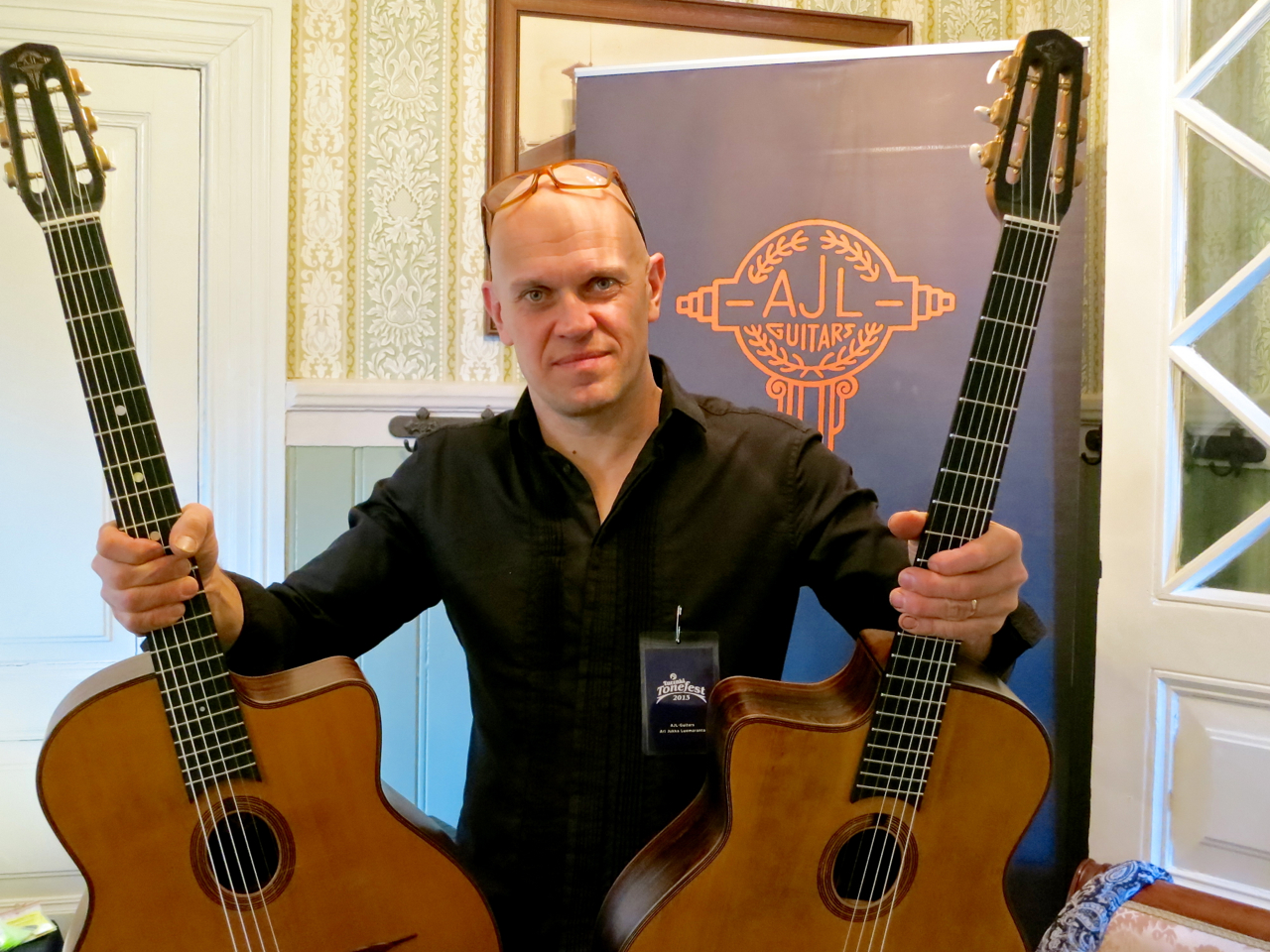
Ari-Jukka Luomaranta and a pair of AJL-Guitars’ XO-models.
****
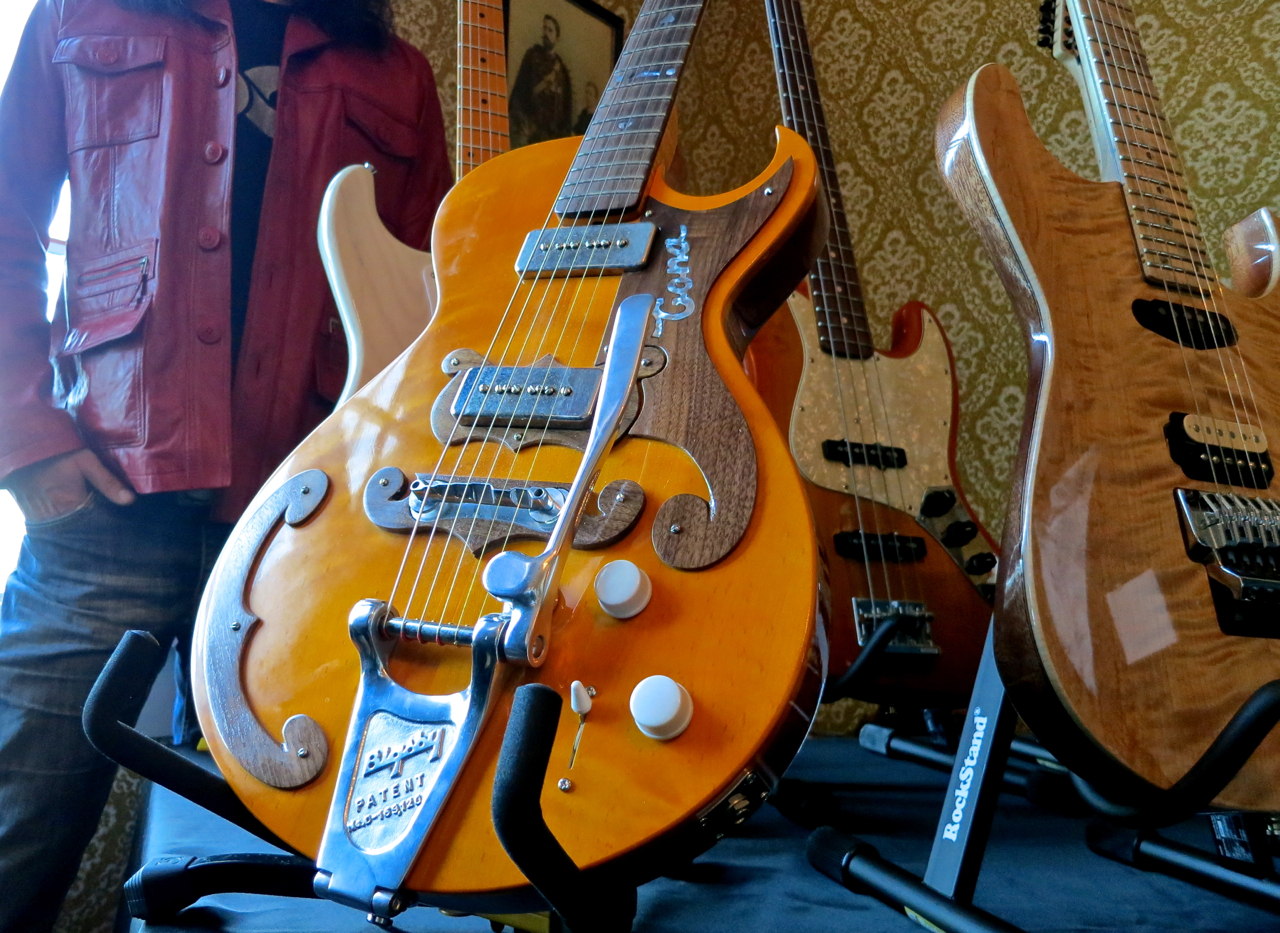
Aurora Guitars, and their slant on the famous Bigsby solidbody.
****

A tasty Bluetone Amps tweed combo.
****

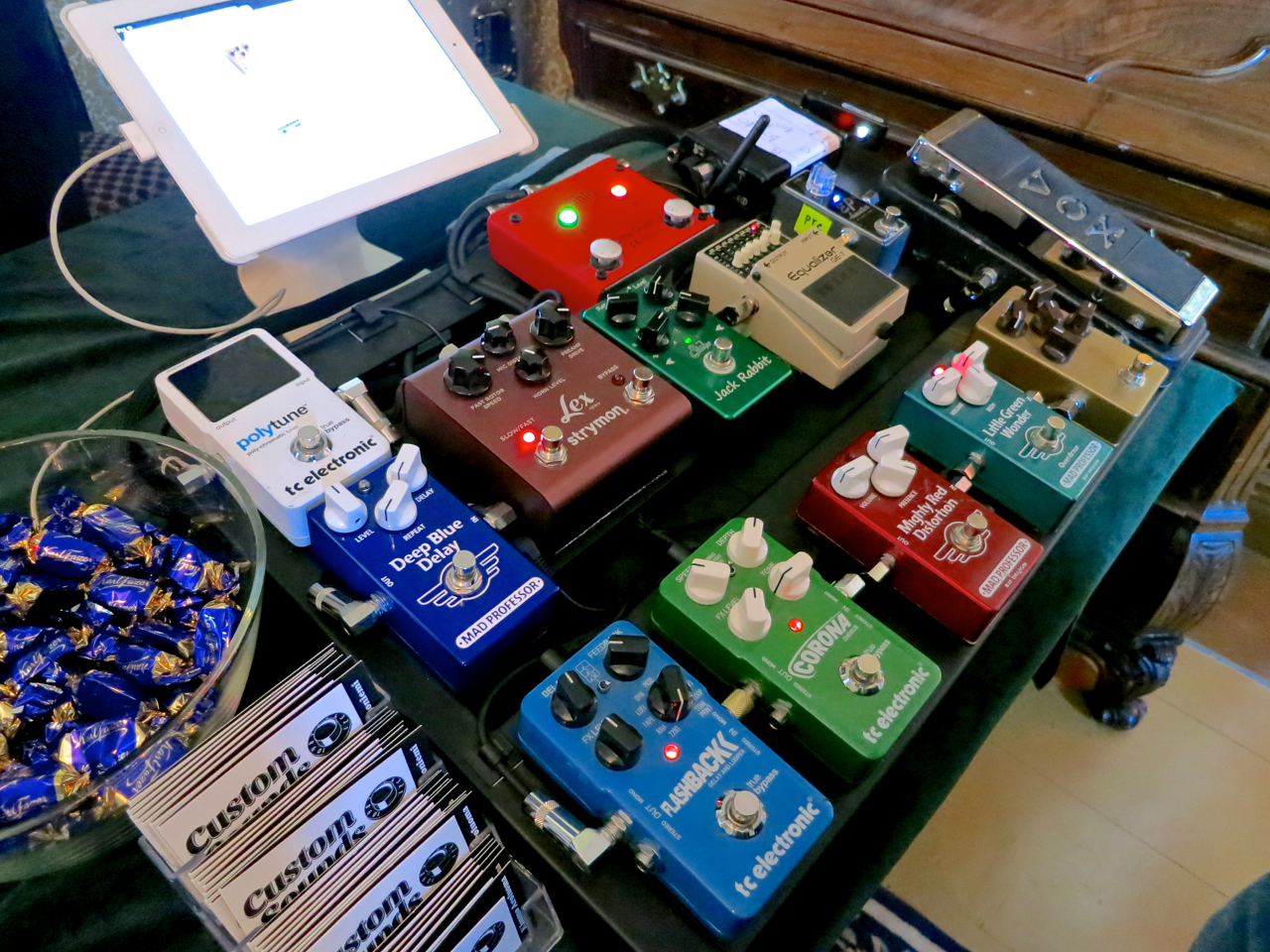
Custom Sounds display some of their custom-made pedalboards.
****

Finlandia Instruments’ Costellobird (on the right) is based on an old JAK model.
****
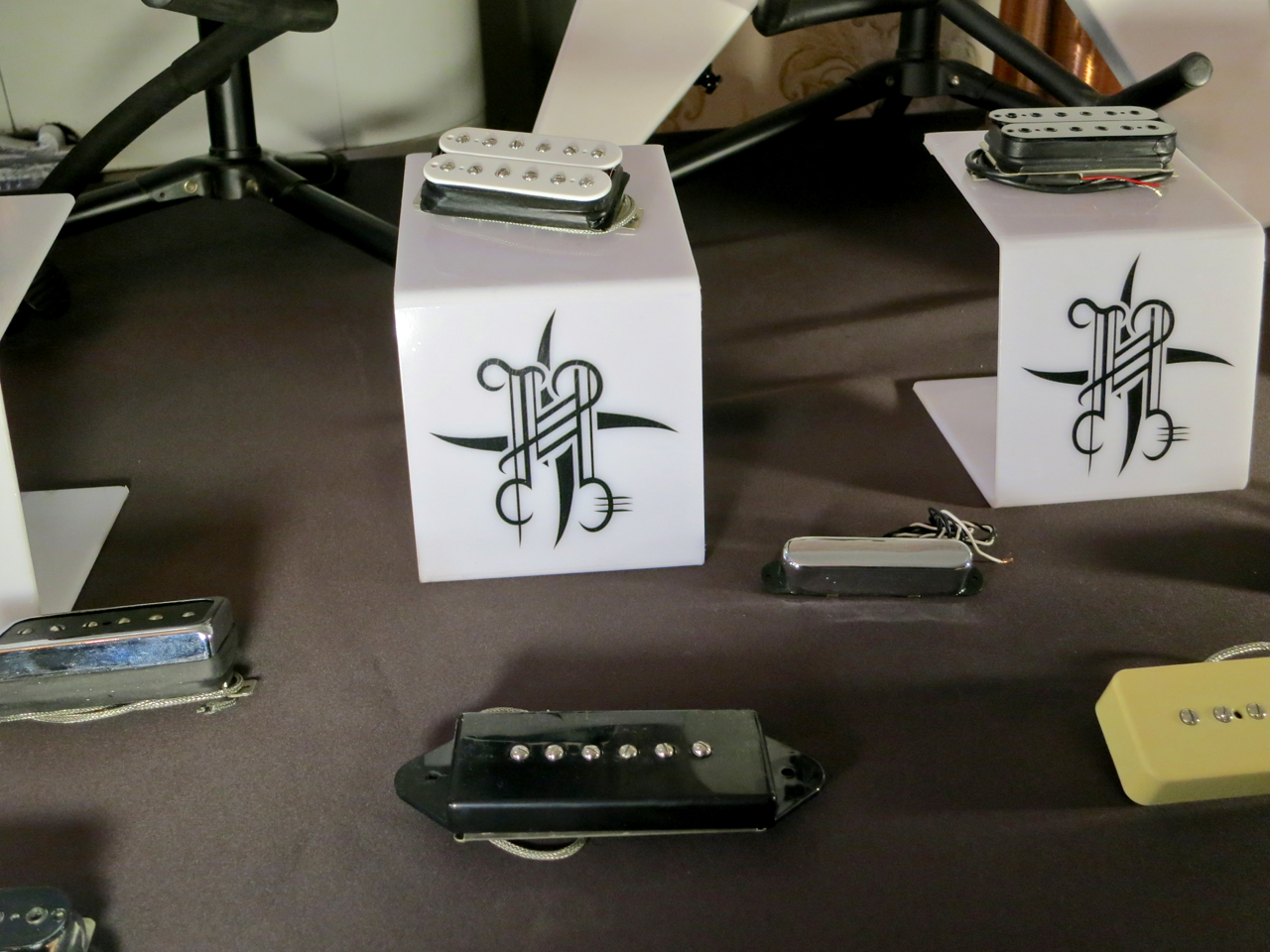
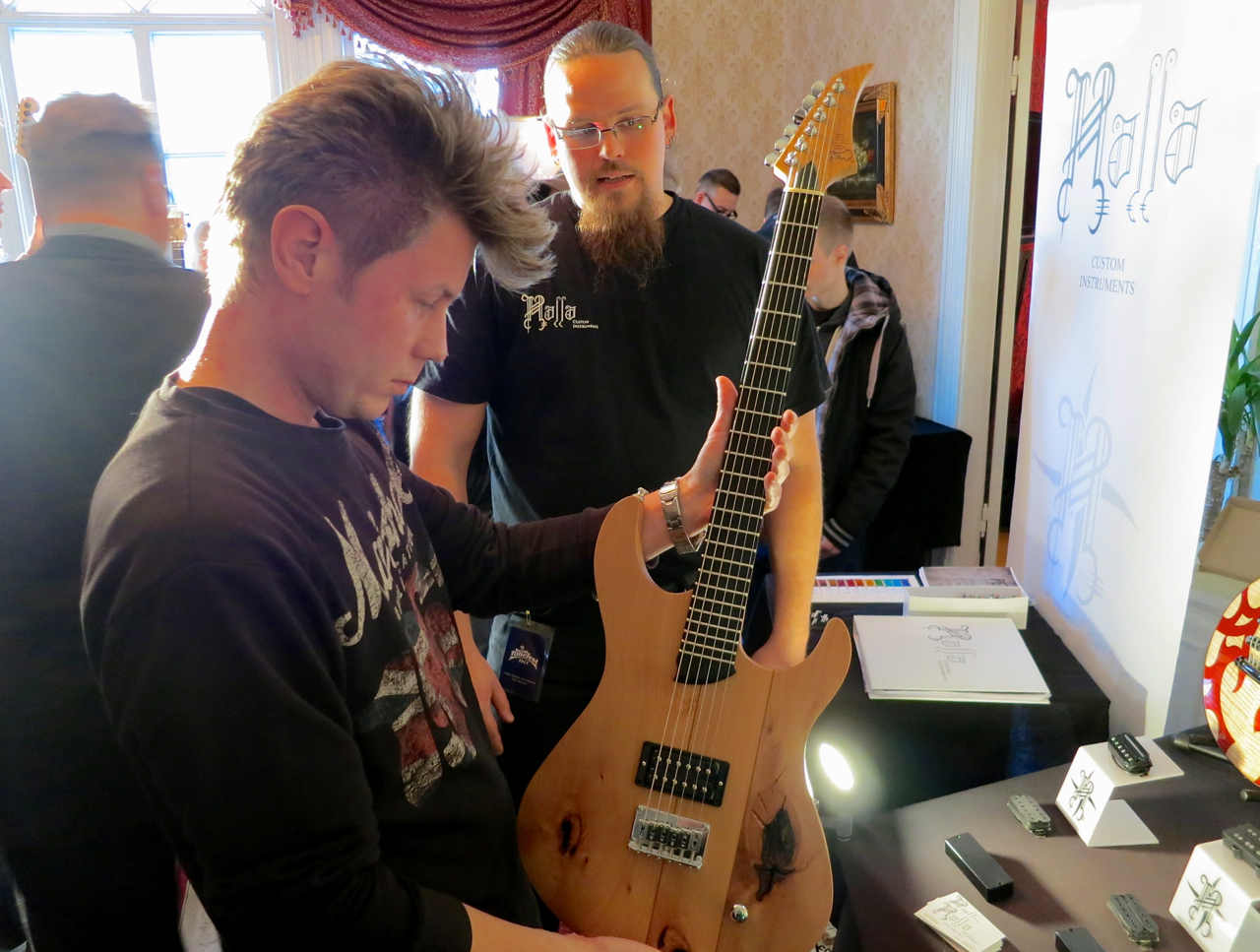
A real eye-catcher from Halla Custom Instruments – a guitar with a body made from very rustic alder.
****
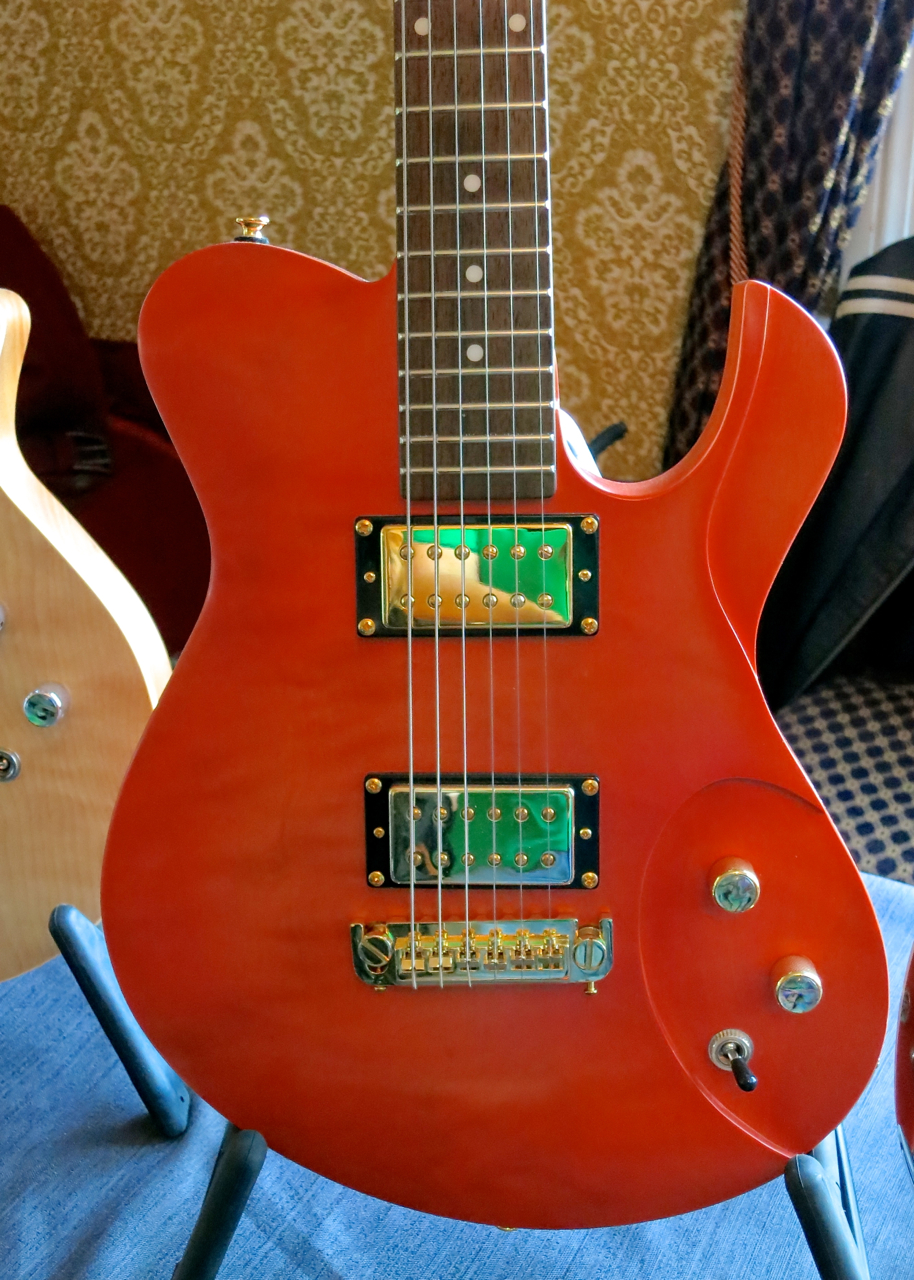
A futuristic-looking HOS Guitars model.
****
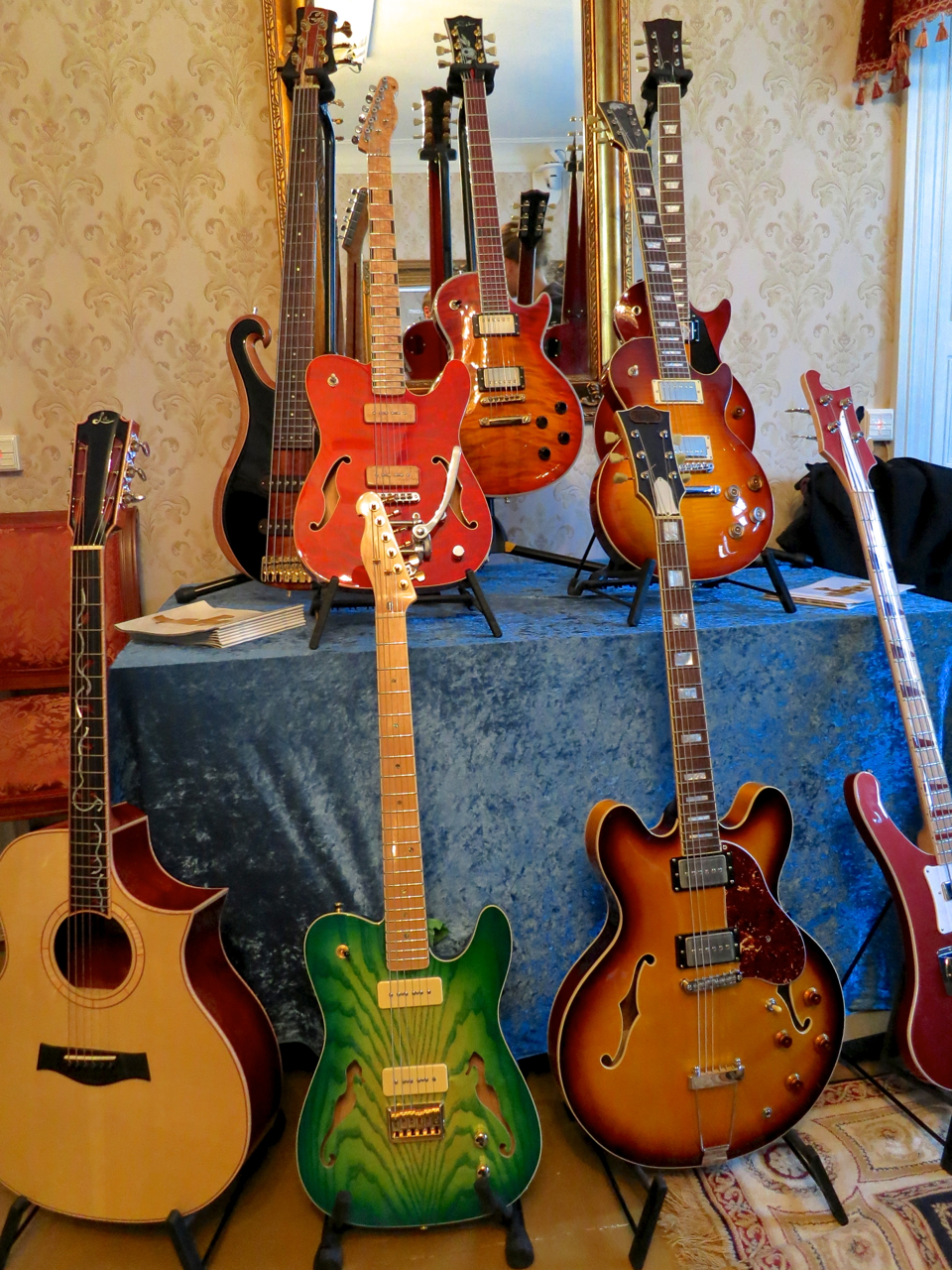

These instruments were made by luthiery students at IKATA.
****
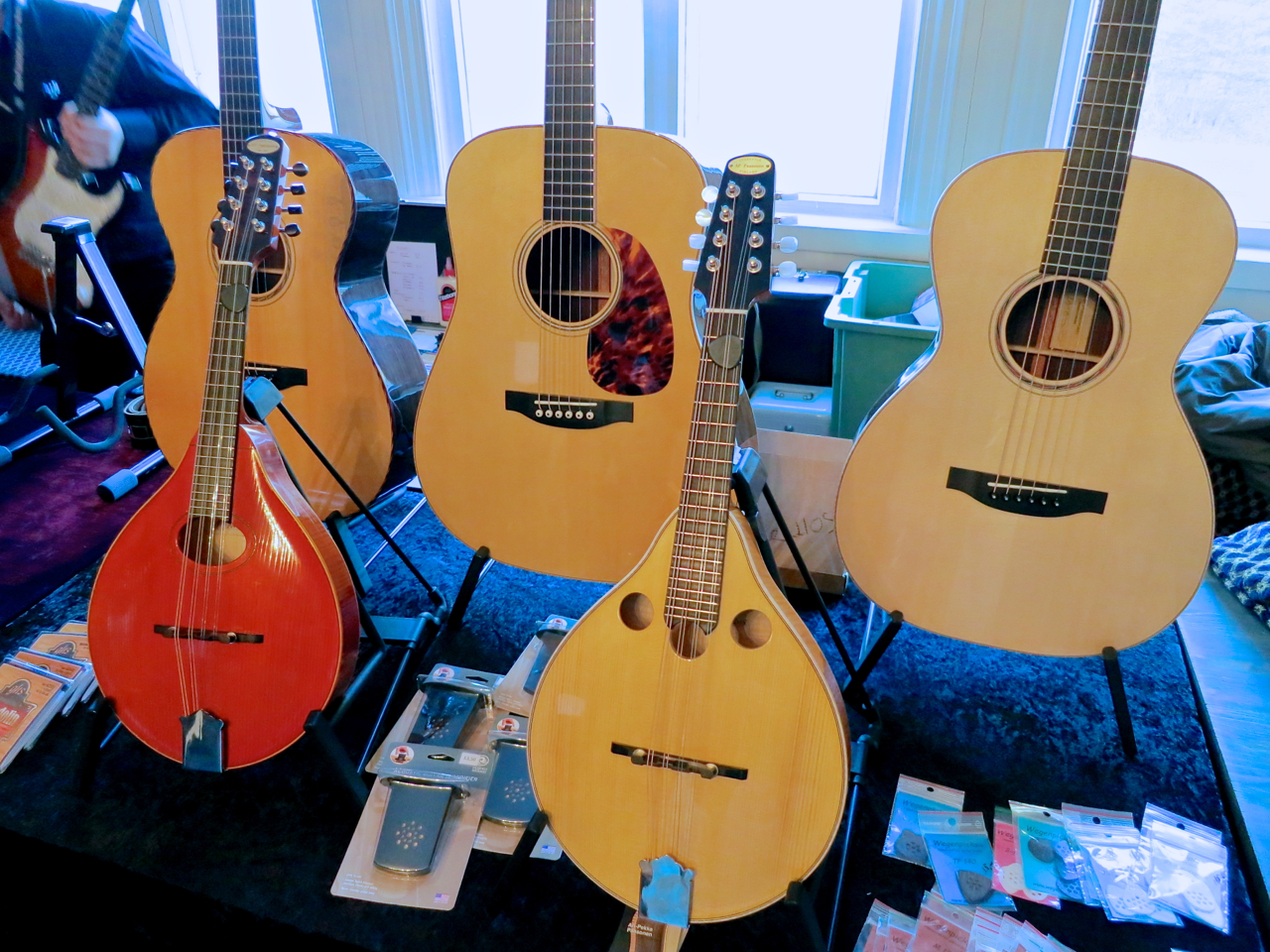
Some of Soitinpaja JaSeSoi’s acoustic models.
****

Kalluste Guitars from Estonia.
****

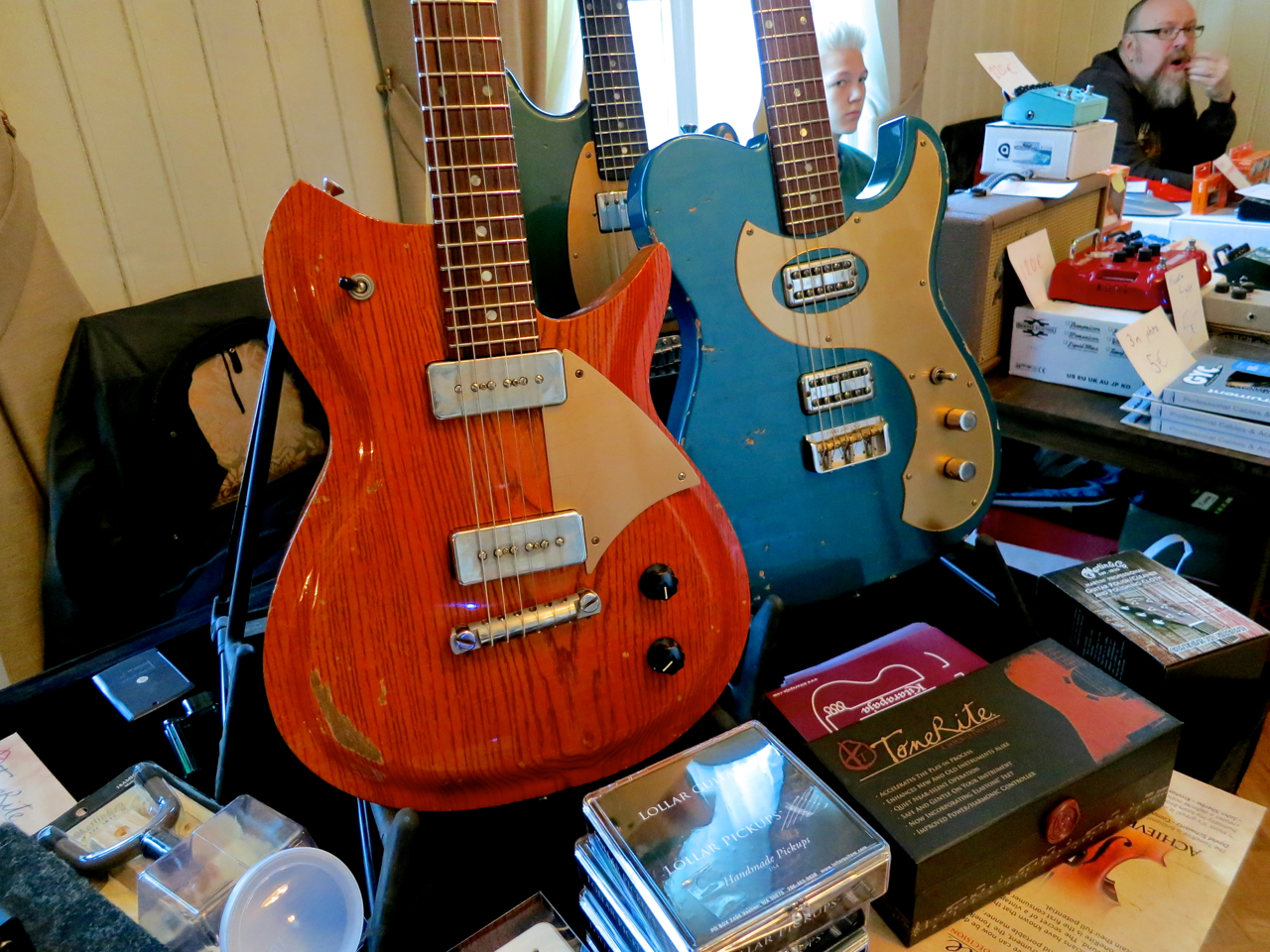
Swart amps and Fano guitars are among the brands displayed by Kitarapaja.
****

Koivisto Guitars with two electric models and an interesting lute-type design.
****


Monster Custom Amps and Visual Clone Guitars – the cool factor is built-in.
****


Oakbridge Instruments specialise in acoustic instruments.
****



Veijo Rautia gives you lots of electric mojo with his custom guitars and pickups.
****

Romu Amps from Estonia
****

German master bassist Markus Setzer digs the new fretless version of the Ruokangas Steambass.
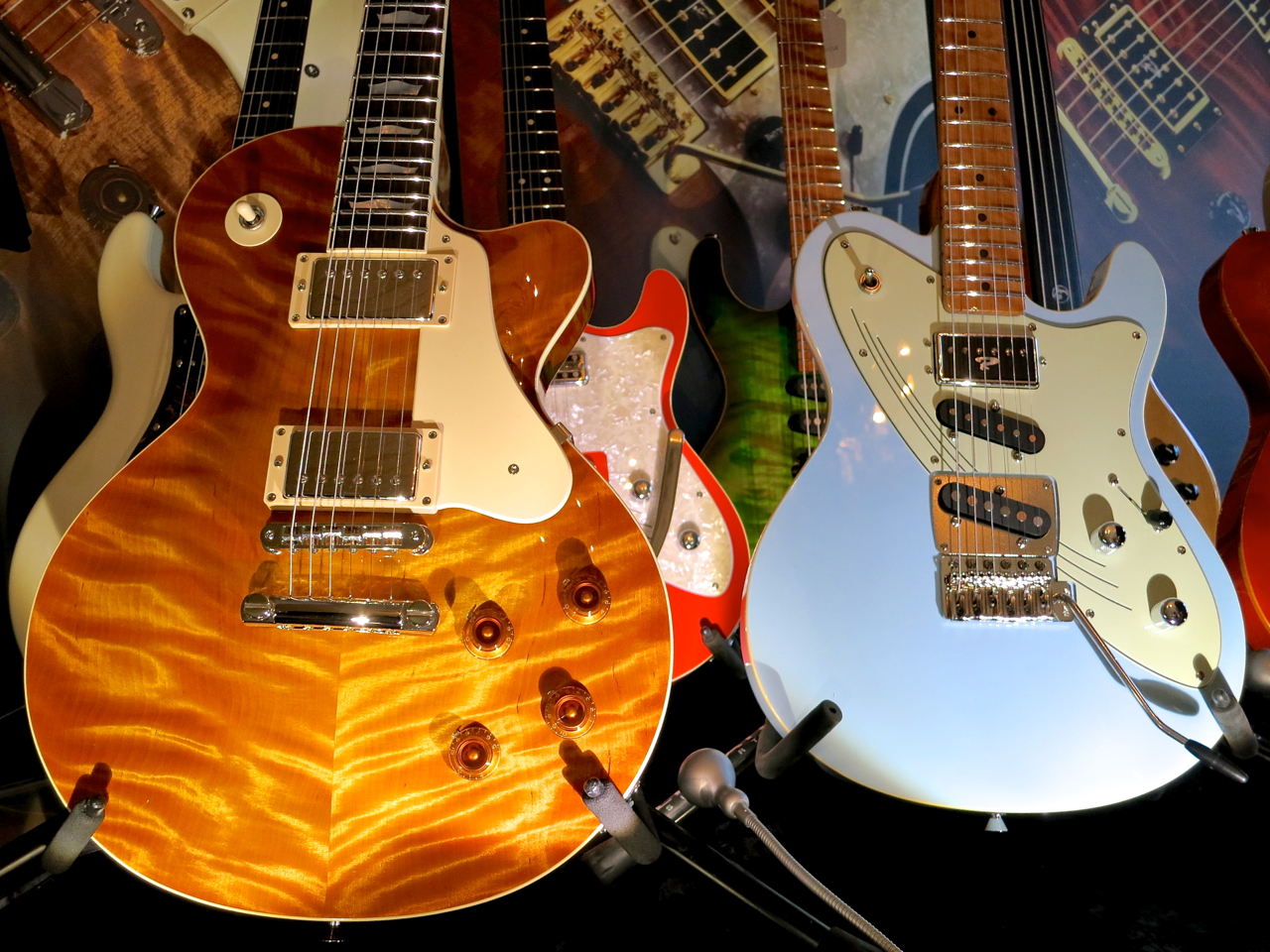


Antti Paranko and Markus Setzer in action with their Ruokangas instruments.
****
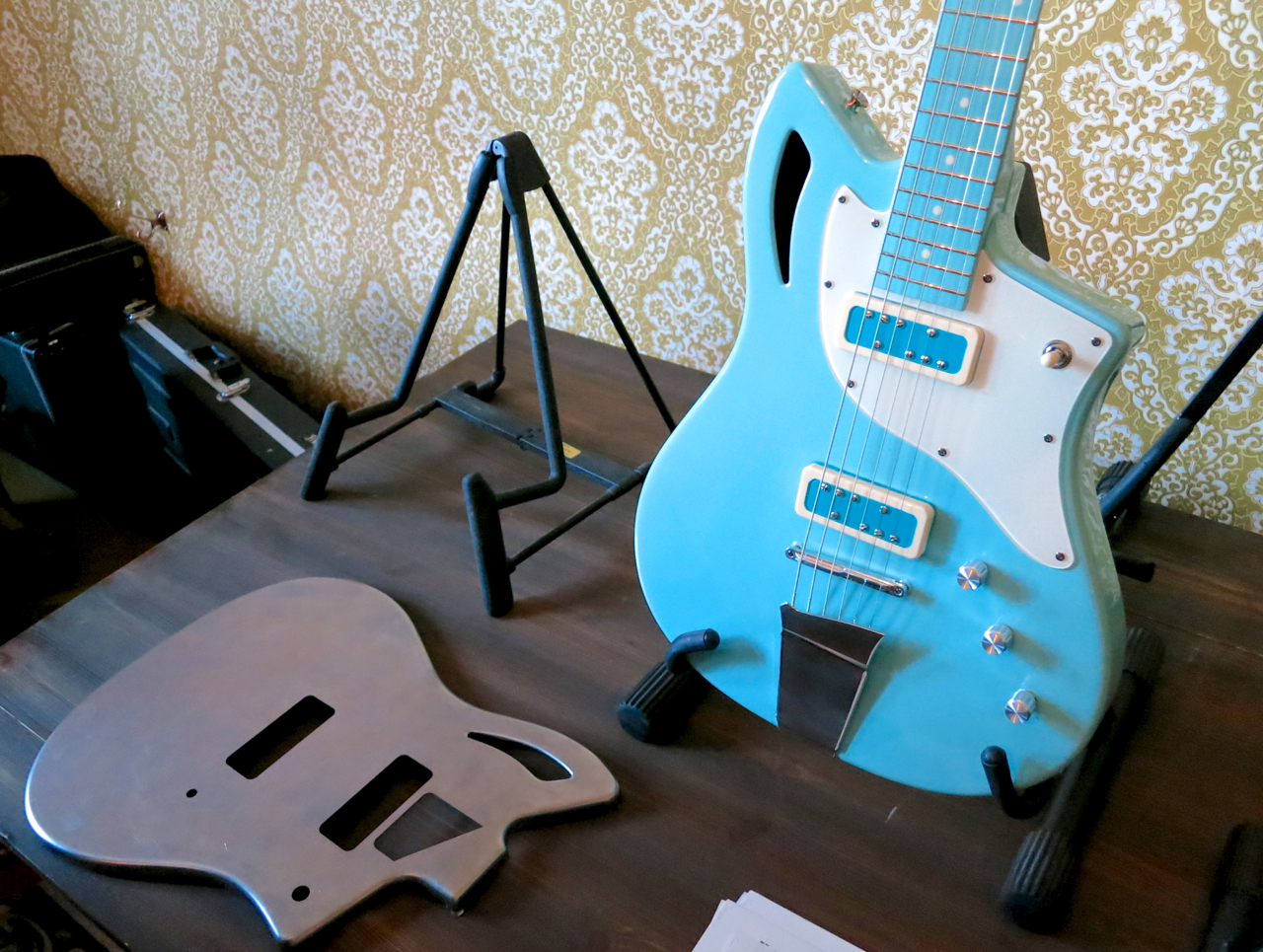
Tyyster gives you plenty of rootsy tone and cool retro looks from metal topped guitars.
****

Saturday saw lots of live action from Pauli Halme’s record release gig…

…to Anssi Kela and Tuomas Wäinölä.
****
Turenki Tonefest 2013 (16. + 17.11.2013)


We bassists owe a lot to Mr Leo Fender – Mr Fender was the father of the electric bass, which he introduced in 1951, as well as the man behind three of the most classic bass designs ever.
After inventing the Fender Precision and the Jazz Bass for the company that still bears his name, Leo Fender carried on designing and building instruments for Music Man, with the StingRay becoming a true classic. The StingRay wasn’t the first bass with active electronics, yet it was the design that brought the active bass into the mainstream.
Since 1984 Music Man is part of the Ernie Ball-company. The company’s current boss – Sterling Ball – is behind the more recent moves to also bring out affordable Music Man-instruments in the guise of a new brand – Sterling (by Music Man).
****

Sterling’s brand-new SUB-series offers even more affordable versions of Music Man’s classics.
The Sterling SUB Ray4 (approx. 360 €) is a made-in-Indonesia licensed copy of a four-string StingRay. The Ray4 is available either in gloss black (with rosewood fretboard), gloss white (maple ’board) or in a Seventies-inspired satin finish called Walnut (and with a rosewood ’board).
****

Sterling won’t go into detail with regard to the body woods used for the SUB-series – the spec sheet only says ”hardwood body”. On the other hand, genuine Music Man StingRays also feature different wood species, depending on availability and the respective model’s finish, using ash, alder, poplar or basswood.
The test sample sports a body made from four pieces, with their looks matched reasonably well.

The SUB Ray4’s maple neck comes with a tinted satin finish.

Six wood screws and a well-cut neck pocket make for a very strong joint.

The classic StingRay-headstock makes tuning easier, as well as cutting down on headstock weight, making for a better balanced instrument.
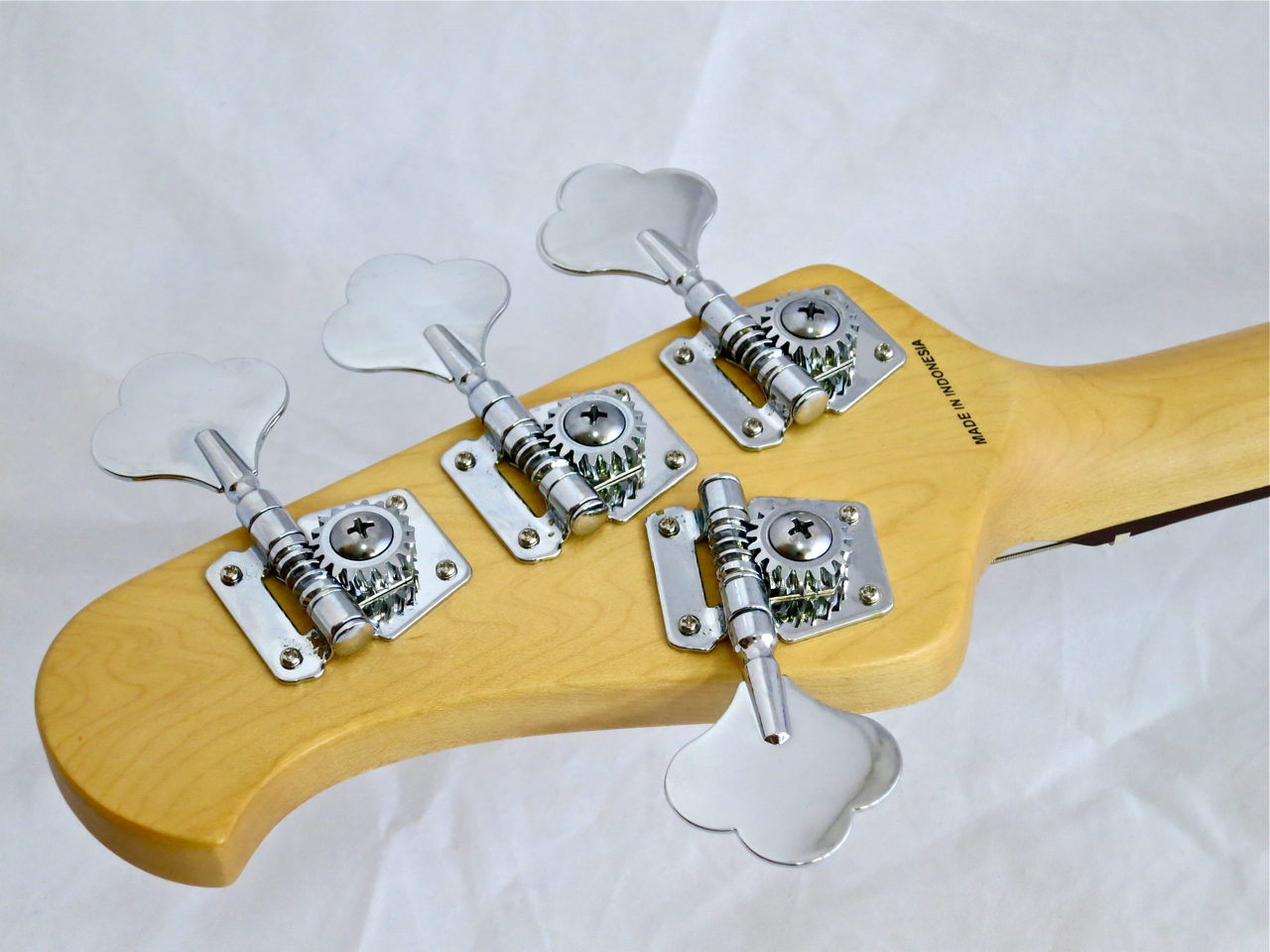
The Sterling comes equipped with a set of decent Asian Schaller-copies.

In light of its affordability the SUB Ray4 displays surprisingly well-dressed and finished frets. The rosewood fingerboard looks nice and sport clean inlay work.

Music Man’s nifty trus rod adjustment wheel has also been included in the Sterling SUB-series. Insert the small metal rod that comes with the bass (or any other suitable object) into the wheel and turn for adjustment. It’s quick, it’s clean, and no further tools are required!
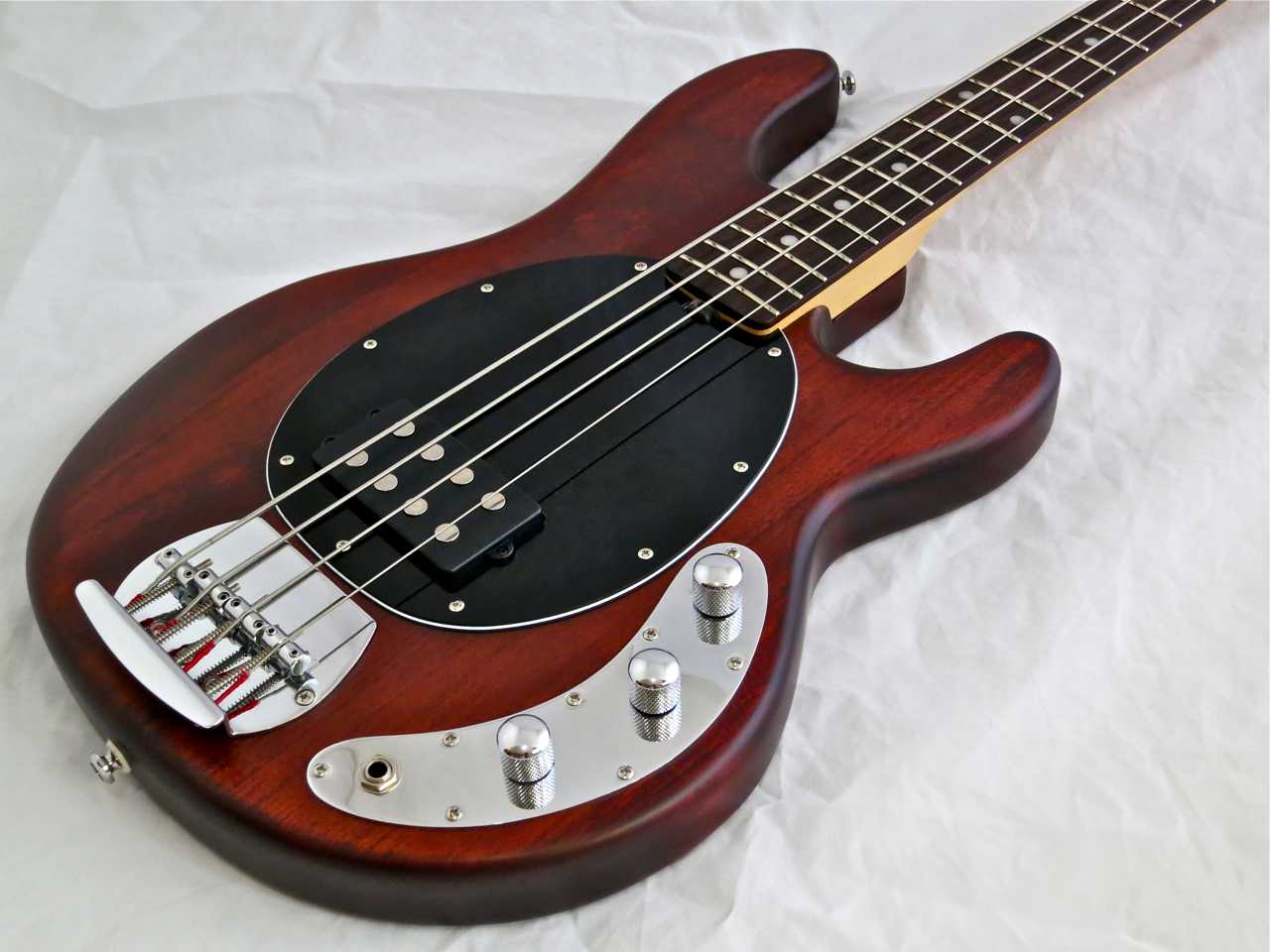
The StingRay was Leo Fender’s updated version of his Precision Bass, and the well-rounded body still looks great today.

The SUB Ray4 uses a version of the Music Man bass bridge that retains the large base plate, but does away with the original adjustable string mutes of yore. Current StingRays use a shortened bridge design.

The large humbucking pickup is the Sterling Ray4’s juice machine.
The pickup keeps hum and buzz at bay efficiently, while its placement near the bridge is crucial for obtaining a StingRay’s fat attack and vocal mid-range character.

It’s three controls on the Ray4’s metal plate – master volume, treble boost/cut and bass boost/cut.
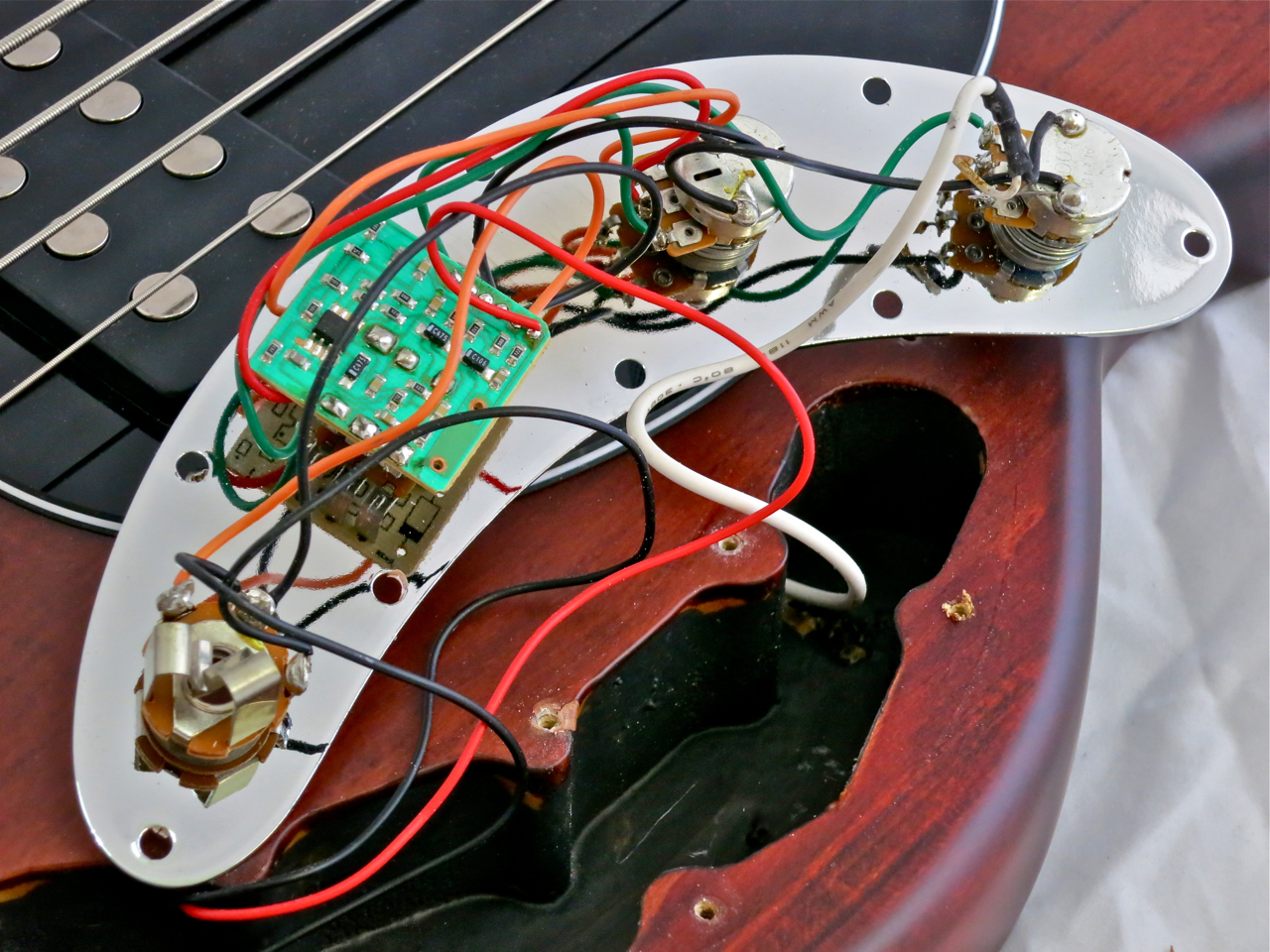
The Sterling SUB-basses come equipped with a very compact preamp that fits easily into the control cavity. The quality of the parts, as well as the workmanship on display, is quite decent.

The Ray4’s battery compartment is found on the back of the body.
****
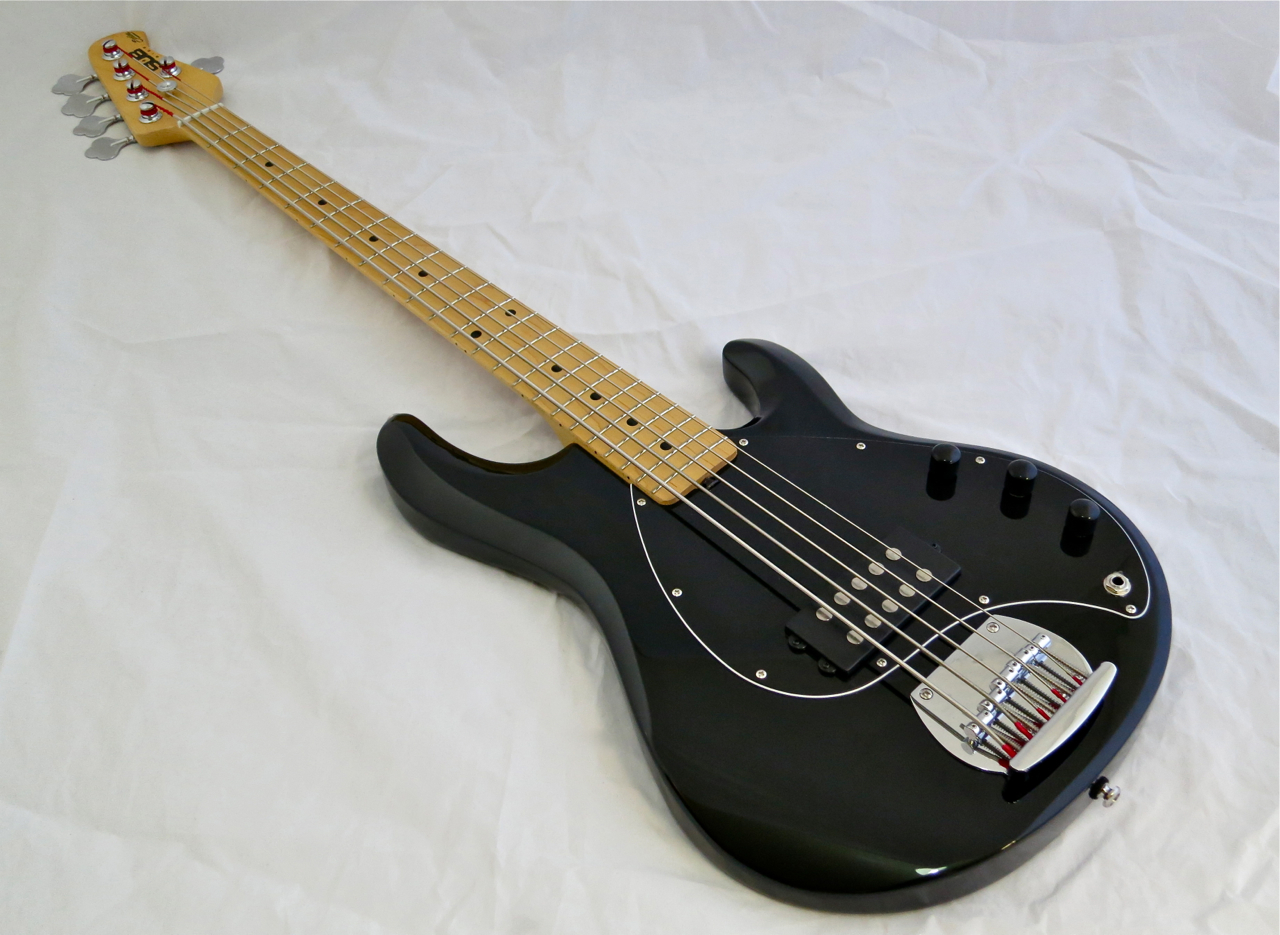
In 1988 Music Man broadened its StingRay-range with the five-string StingRay 5, which features a slightly different body design, as well as a much larger scratchplate.
****

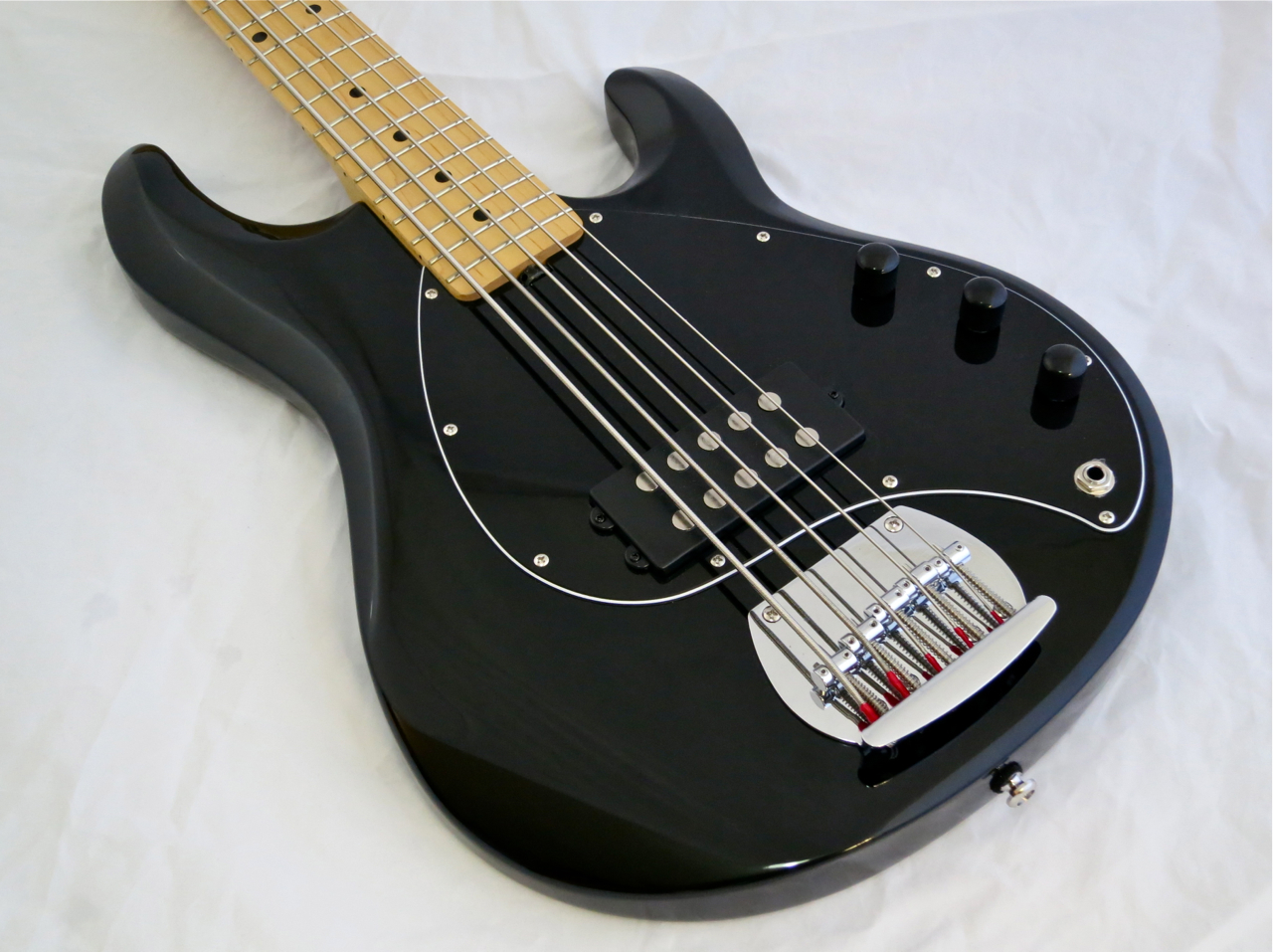
Sterling’s SUB Ray5 (approx. 390 €) is available in gloss black (with a maple fretboard) or satin walnut (rosewood ’board).
The finish on our test sample looks great.

The five-string version also sports a tinted maple neck.

The SUB Ray5’s battery compartment has been placed near the treble horn.

The famous headstock in its five-string guise.

These Schaller-copies do a good job of keeping the bass in tune.

The fretwork Sterling Ray5 is surprisingly good, keeping in mind the bass’ low price.

The StingRay is one of my all-time favourite bass designs – timeless, classic beauty.

On the five-string the bridge saddles are somewhat smaller to accommodate the SUB Ray5’s narrower string spacing (compared to the Ray4).

A chunky pickup for a chunky sound…
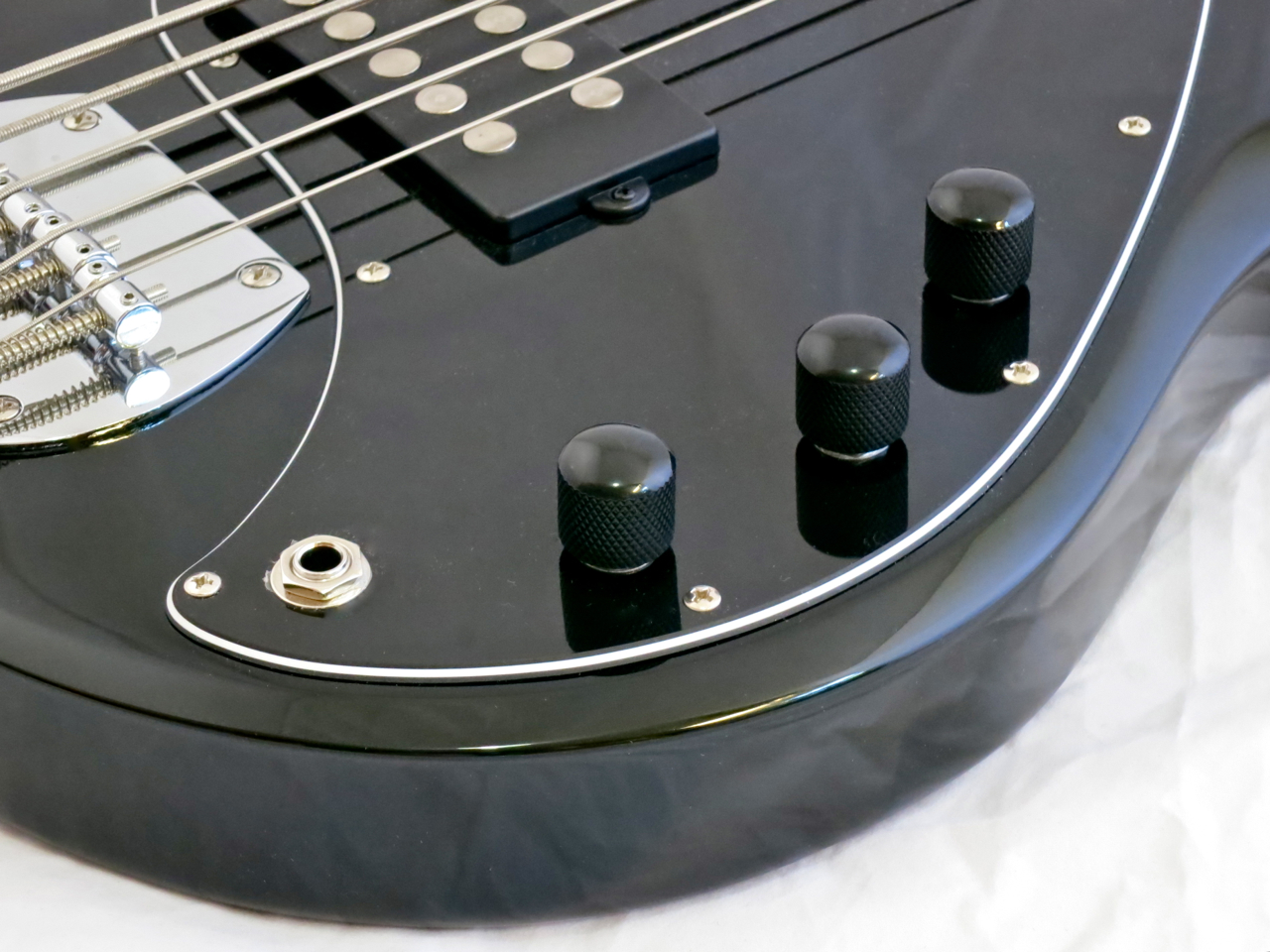
A genuine Music Man StingRay 5 usually comes equipped with a three-way blade switch, offering you series, parallel and coil-split switching, in addition to a three-band EQ.
To keep the price in check the Sterling SUB Ray5 offers you a more concise set of controls – a master volume and a two-band EQ.
****
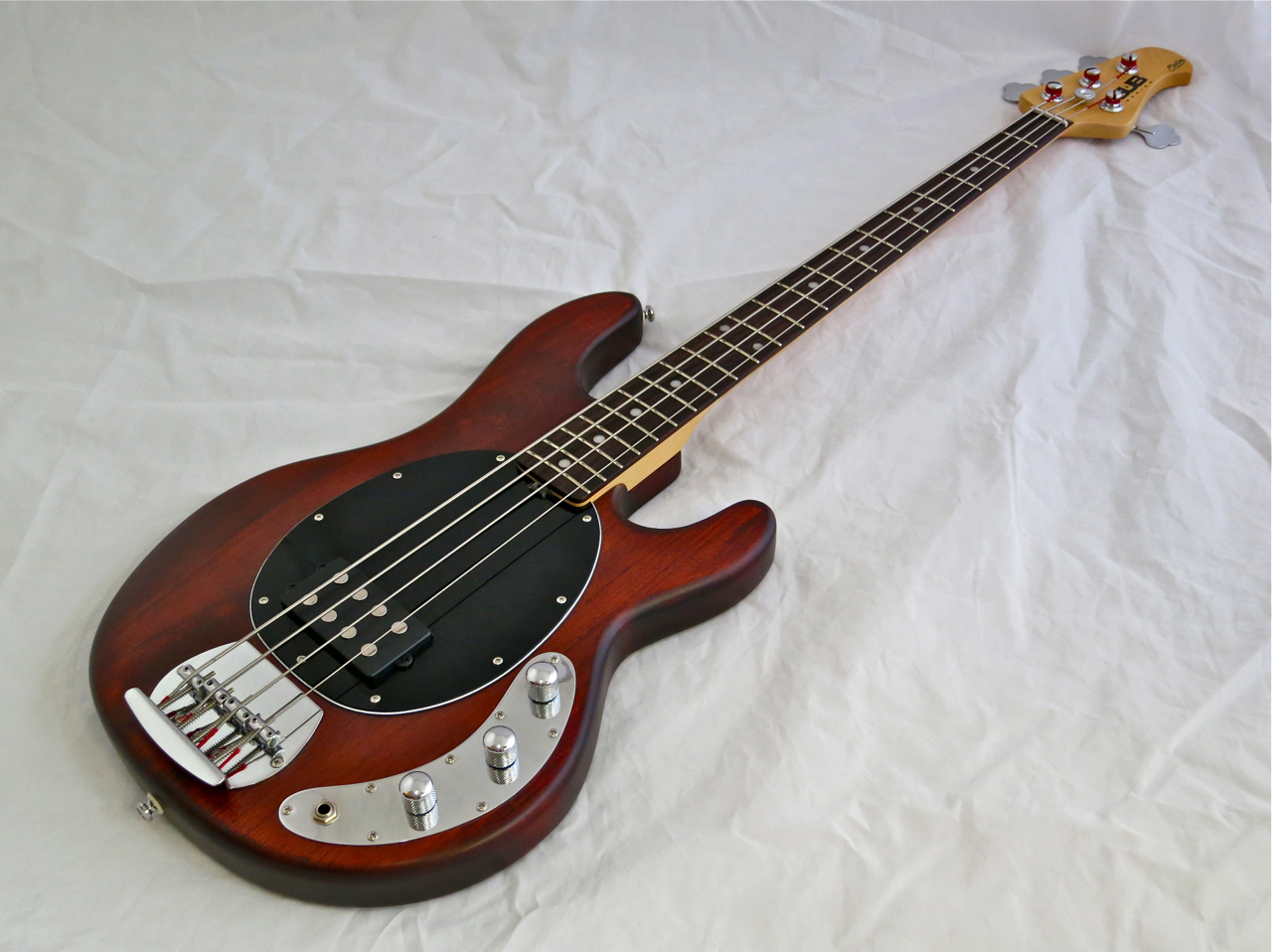

The Sterling SUB Ray4 is a cool bass, but the test sample we got weighed a ton – this is exactly the one feature from the 1970s that shouldn’t have been brough back. On the other hand, Sterling promise lightweight bodies on their website, so let’s hope that this was the one who slipped through quality control.
Apart from this, the Sterling Ray4’s ergonomics are great. Sterling have slightly changed the neck profile on its SUB-basses from the original, somewhat chunkier Precision-style profile, giving you a more tapered, Jazz-type shape.
Thanks to the good fretwork the factory set-up was comfortably low (E: 2,1 mm/ g: 1,9 mm).
Regardless of its weighty body (or because of the added heft?) the SUB Ray4’s acoustic delivery is stonking. I don’t know what wood species the body is, but the sound has a hefty dose of clear attack coupled with a good dose of ash-style growl and clarity!
This tasty combination translates into a very powerful and dynamic amplified tone. Sterling’s preamp displays a satisfying lack of hiss, and all of its controls work in a musical way (in fact better than on some, quite drastic-sounding 70s originals). This means you’re in for a real treat – genuine StingRay-character made very affordable.
Legendary bass player Tony Levin (Paul Simon, Peter Gabriel, John Lennon, King Crimson) is one of the most loyal StingRay-fans, which is why I chose to record the soundbites in his style as a tribute. The clips have been recorded straight from the bass into the sound-card without additional EQ’ing:


For a five-string bass our Sterling SUB Ray5 test instrument was refreshingly lightweight!
Just like on the original the Ray5’s neck profile gives your fretting hand something to hold on to. The rounded, moderately chunky D-profile is good news for the tone of the instrument, and it feels great, at least in my hands.
I had to give the neck a little more relief, and the intonation adjustment was off, too. But it only took me a couple of minutes to get this bass’ action and intonation up to snuff, after which the SUB Ray5 was a joy to play and listen to (low-B: 2,6 mm/g: 1,9 mm).
In a straight acoustic A/B between both Sterlings, the SUB Ray5 had a slightly rounder mid-range than the four-string counterpart
The big-sounding humbucker coupled to the instrument’s very decent preamp makes for a winning combination. The tone is pure Music Man – a fat, but precise bottom end, lots of mid-range character, and a dose of treble zing. It may not be as versatile as its famous big cousin, but the Sterling SUB Ray5 gives you most of the Music Man-experience at a pocket-friendly price.
****
Sterling (by Music Man) have managed to pack a lot of bass into their SUB-series. The Ray4 and Ray5 are fantastic value for money, offering you that sound at very player-friendly prices.
****
Sterling (by Music Man) SUB Ray4 + Ray5
SUB Ray4 – approx. 360 €
SUB Ray5 – approx 390 €
Finnish distributor: EM Nordic
A big thank you to DLX Music Helsinki for the loan of the review samples!
****
Pros (both models):
+ value-for-money
+ fretwork
+ playability
+ quality preamp
+ sound
Cons (only Ray4):
– review sample’s weight
****



 Kitarablogi.com – Finland's premier Guitar and Bass blog