****
Musamaailma on Spector-bassojen maahantuoja.
Kitarablogi.com – Finland's premier Guitar and Bass blog
Juttuja kitaroista ja bassoista


Squier Vintage Modified Telecaster Bass on mielenkiintoinen sekoitus 1950-luvun Presarista ja Telecaster-kitarasta.
Bassossa on keskipitkä mensuuri (32 tuumaa/81,3 cm) ja yksi yksikelainen Duncan Designed -mikrofoni. Kolmiasentoinen kytkin mahdollistaa tavallisen sähköbassosoundin lisäksi myös erittäin tummia vaihtoehtoja tai nasaaleja baritoni-soundeja.
****

Squier Vintage Modified Telecaster Bass Special taas tarjoaa kaksi hyvin erilaista mikkiä samassa paketissa. Kaulan läheltä löytyy Fender Wide Range -humbuckeri ja tallan viereen on asennettu Duncan Designed -merkkinen Jazz-basson yksikelainen.

****
Ari Kataja’s Kataja Custom Shop is a small builder from Tampere (Finland), who has concentrated on one-offs for his clients up to now (alongside repair work).
Kataja Guitars have recently come out with their line of Fender-inspired basses, produced in small runs; the new models were also on display at this year’s Bassopäivä (the annual Bass Day at the Pop-Jazz-Academy in Helsinki).
Kitarablogi.com jumped at the opportunity to get three models for a review:
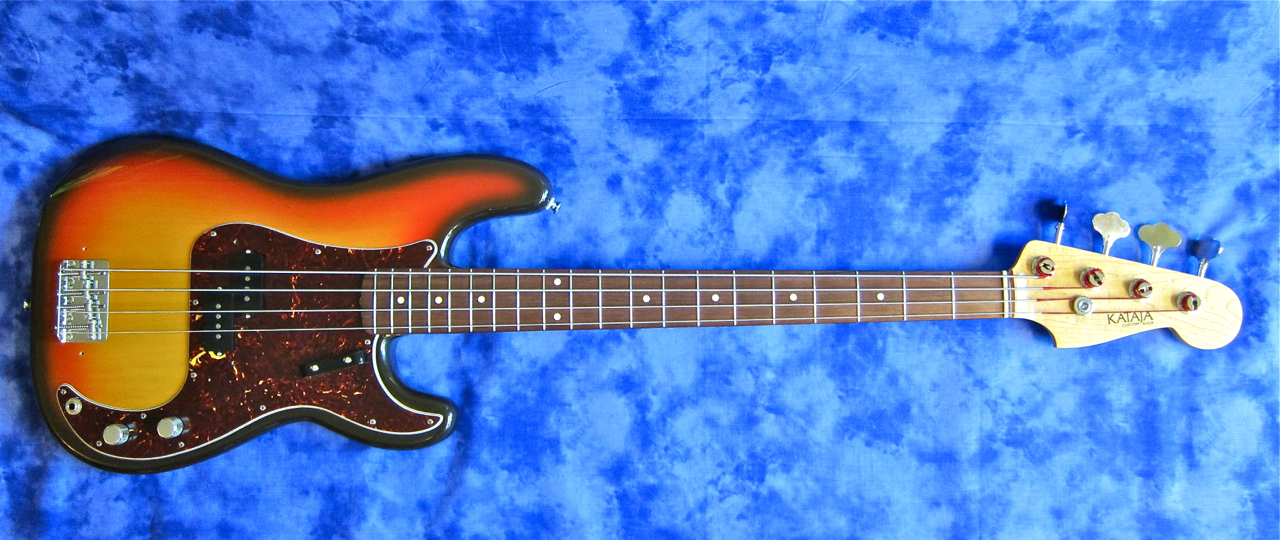
Ari Kataja’s version of a P-bass…

…a model based on a 1960 Jazz…

…as well as a ca 1962/63 Jazz Bass -based bass (current prices in Finland start from 1,920 €, incl gigbag).
****

Kataja Custom basses are crafted in Finland – start to finish. Even though there is quite a number of so-called custom builders, who use pre-fabricated bodies and necks as their basic ingredients, this is not the way for Mr Kataja. His instruments start life as wood blanks, carefully dried to a correct moisture content.
Shared features among the three review basses are bodies crafted from alder and maple necks sporting rosewood fingerboards.

Ari Kataja is also a stickler for period-correct parts and hardware. Take the tortie ’guard on the white 1960 J-model, for example, which is a special item using vintage-style celluloid for its top layer.

All three models have been finished using a modern type of nitrocellulose lacquer. The resulting finish is very thin and hard, protecting the wood, but not inhibiting the instruments’ vibrations.

The P-model’s headstock comes finished in clear lacquer…
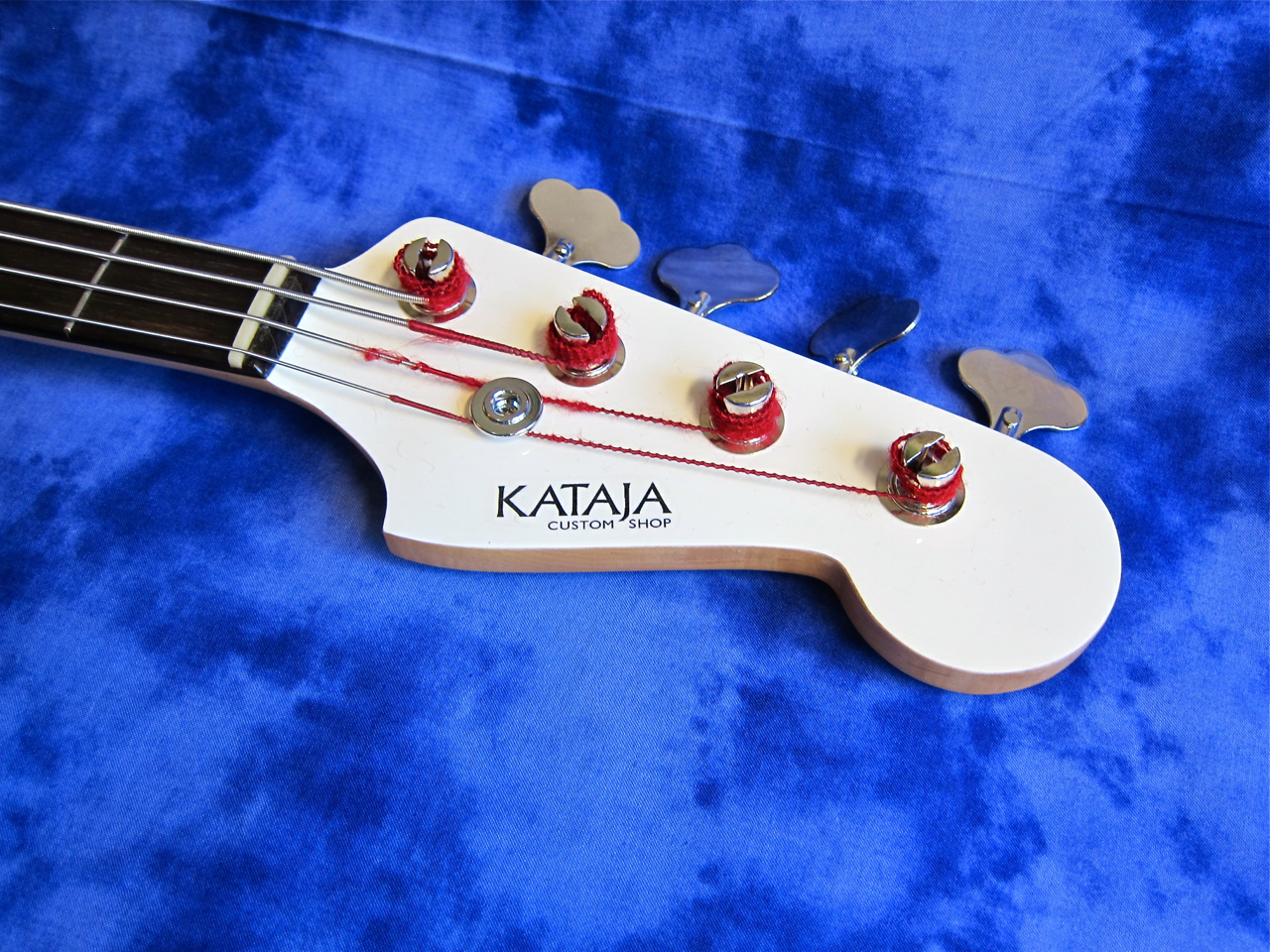
…while both of the J-models on review here…

…sport colour finishes, matching their bodies.

The tuning machines are modern reproduction of the reverse-action Klusons from the 1950’s and 60s. The keys still have to be turned the ”wrong” way around, compared to modern machine heads, but the tuning ratio is finer on these improved vintage reissues.
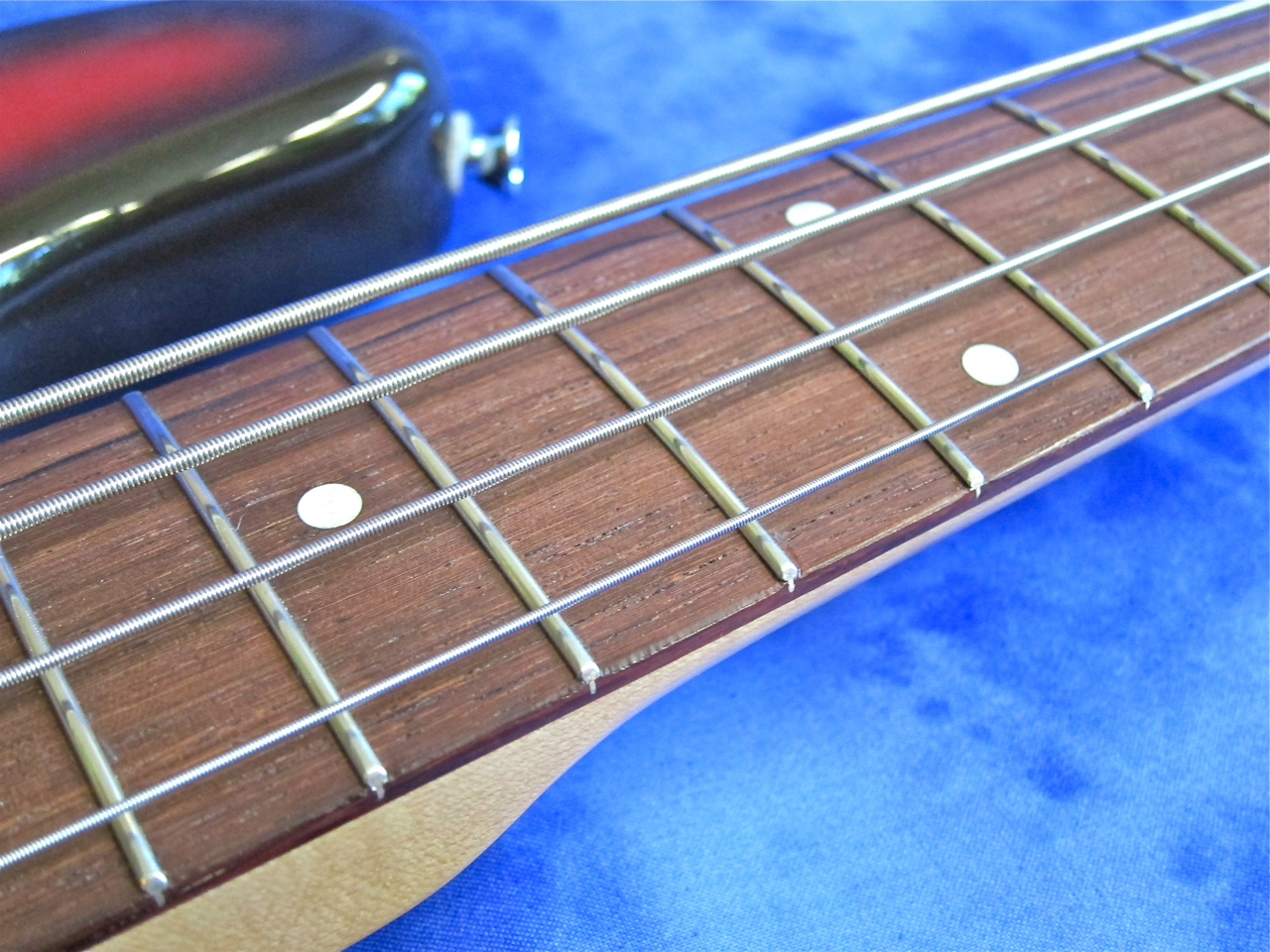
The review basses sport gorgeous Madagascar rosewood fingerboards.

The white 60 J comes with small vintage-sized frets…

…while the P-model and the 62 J both come equipped with medium-sized frets.
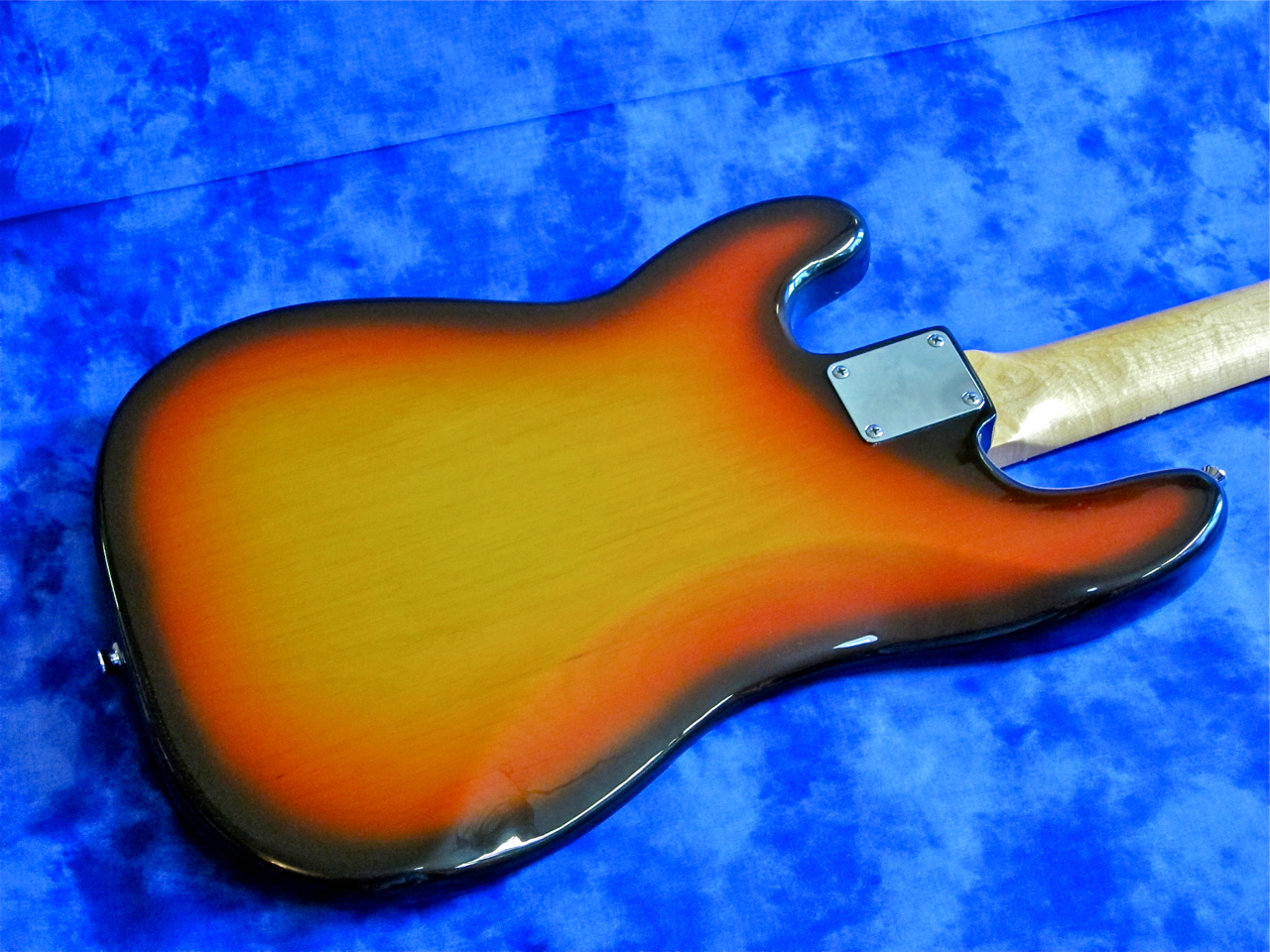


The neck joints are traditional. Following a late-50s/early-60s pattern, all basses have deep contouring for added comfort.

All three instruments come with a period-correct vintage bridge with threaded bridge saddles. This makes it possible to set the distance between the strings simply by lifting each string from one ”groove” to another.
****

The Kataja 60 P and 60 J have pickups loaded with 0,195″-diameter (4,95 mm) alnico magnets with bevelled tips.

The bevelling was used to prevent the magnets from chipping the vulcanised fibreboard coil formers, when the magnets were tapped through their holes.

The guitar boom of the 1960s made it paramount to increase production numbers and production efficiency. One step was bringing down the diameter of the pickup magnets marginally to 0,187″ (4,75 mm). The slightly slimmer magnets were easier to get through the fibreboard coil formers, which made the bevelling unnecessary. Thrue to style, Kataja’s 62 J model uses this type of magnet in its pickups.
There are also other differences between the pickups that aren’t easy to spot: The P and 60 J models’ pickups are wound with the period-correct Heavy Formvar -wire, while the blue Kataja’s pickups use the Plain Enamel -variety. Also, the fibreboard coil formers are coloured differently, according to the bass’ respective ”vintage”.

The white J-type features two stacked, concentric controls, with the silver top being each pickup’s volume control, and the lower ”ring” being the pickup’s own tone roll-off.

This set-up was changed in 1962 to the control lay-out we all know and love so well – separate volumes, one per pickup, with a shared master tone control.
****
These three basses by the Kataja Custom Shop are amazing, top-drawer instruments, designed for the vintage fanatic. The workmanship on display is first-rate, and the way with which Ari Kataja is able to zone in on each minute detail says a lot about this craftsman’s dedication and passion.
As is implied in the name, a Custom Shop’s forte is the flexibility with which it can accommodate a customer’s special wishes into the finished instrument. In the case of these three basses, Mr Kataja fattend up the neck profiles a little bit to his own preference.
The Kataja basses play like a dream and sound fantastic.
I recorded the following soundbites direct, using a Sans Amp Bass Driver DI plugged into a Focusrite Saffire 6 USB -soundcard. Each style has been recorded with one set of Sans Amp settings, taking care to keep the differences between each bass in terms of output level and sound intact. With the J-types each bass line is first played using only the neck pickup, then repeated with both pickups on full, and lastly recorded via the bridge unit on its own.
……
……
****
As you can clearly hear, the Kataja-basses deliver great, vintage tones. The pickups vintage-style medium output only helps in achieving the clear and dynamic tones the originals of yore are so famous for.
In light of the offered build quality and the tasty tones on tap, Kataja’s pricing can only be seen as truly affordable.
If you’re on the lookout for an investment-grade, vintage-style bass, you should definitely try one of Kataja Custom Shop’s creations!
****
Kataja Custom Shop – vintage-style basses
current prices in Finland start from 1,920 €, incl gigbag
Contact: Kataja Guitars
Pros:
+ Made in Finland
+ workmanship
+ playability
+ sound
+ Kataja-pickups
+ satin finishes necks on review samples
+ fair price
****

Epiphonen kolme uutta Pro-versiota vievät firman klassikkomalleja entisestäkin lähempää alkuperäisiä Gibson-soittimia:

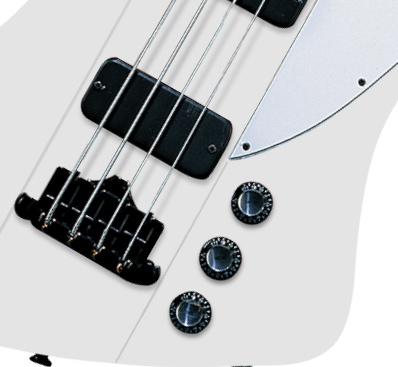
Epiphone Thunderbird Classic-IV Pro -bassossa on kaula-läpi-rungon rakenne mahongista ja pähkinäpuusta. Mikrofonit tulevat Gibson USA:lta – ne ovat aidot Gibson TB-Plus -humbuckerit keraamisilla magneeteilla.
****
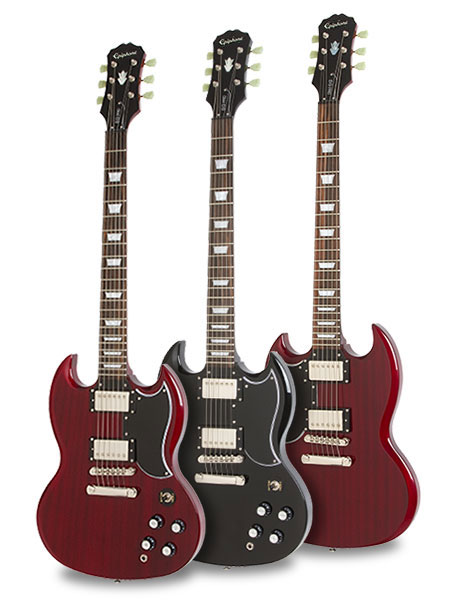
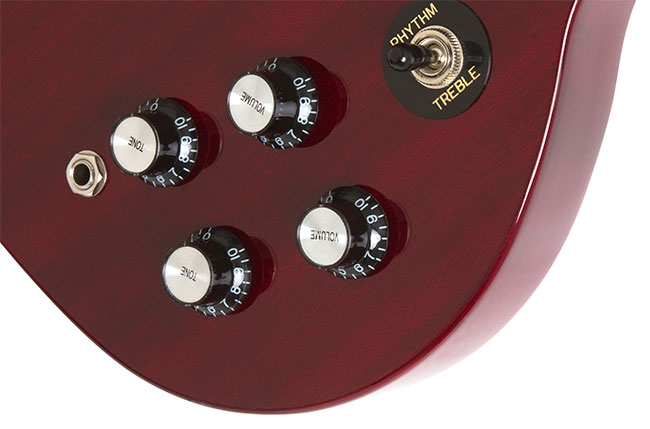
Epiphone G-400 Pro -malli komeilee Epiphone Alnico Classic Pro -humbuckereilla, joita voi volume-potikoihin piilotetuilla nostokytkimillä puolittaa. Kirsikanpunainen G-400 Pro on saatavilla myös vasenkätisenä.
****

Näyttävillä loimuvaahteraviilulla koristeltu Epiphone Les Paul Standard Plustop Pro taas on varustettu puolitettavilla Epiphone ProBucker-2 ja ProBucker-3 -humbuckereilla. Oikeankätisille kitaristeille on tarjolla viisi värivaihtoehtoa, kun taas vasenkätisen soittajan on tyydyttävä Heritage Cherry Sunburst -väritykseen.

****


Something for the Estonian-speaking fans of all things guitar.
Check out Ajakiri Kitarr’s website HERE!
****
Ari Katajan vetämä Kataja Custom Shop on Tamperelainen paja, joka on tähän mennessä keskittynyt rakentamaan yksilöllisiä soittimia asiakkaiden toiveiden mukaan (korjaus- ja kustomointipalvelujen ohella).
Kataja Guitars on hiljattain ruvennut tuottamaan vahvasti Fender-henkisiä bassomalleja piensarjassa, joista muutama oli esillä myös tämän vuoden Bassopäivällä.
Kitarablogi.com tarttui heti tilaisuuteen ja pyysi kolme bassoa testiin:
Ari Katajan näkemys vuoden 1960 P-bassosta…
…varhaiseen, vuoden 1960 Jazz-bassoon perustuva soitin…
… sekä 1962/63 Jazz-bassoon pohjautuva malli (hinnat alk. 1.920 €, sis. gigbag).
****
Kataja Custom -bassot ovat kokonaan aitoa suomalaista käsityötä. Vaikka maailma on pullollaan Fender-mittoihin tehtyjä kauloja ja runkoja, veistetään Kataja-soittimet täydellisen laadun varmistamiseksi aina kokonaan itse, monta vuotta rauhassa kuivuneista puulankuista.
Kolmen testibasson rungot ovat leppää ja kaulat vaahteraa.
Ari Kataja on myös todella tarkka muista käyttämistään osista. Esimerkiksi kilpikonnakuvioiset pleksit ovat erikoisvalmisteisia, joissa käytetään päällimmäisessä kerroksessa alkuperäistä selluloidi-materiaalia.
Kaikki kolme mallia on lakattu alkydivahvistetulla nitroseluloosalakalla, mikä mahdollistaa erittäin ohuen, mutta samalla kovan maalipinnan, joka ei vaimenna puun värähtelyä.
Bassojen viritinlavoilla on klassinen muotoilu. P-tyylisessä bassossa lavan etupuoli on viimeistelty värittömällä lakalla…
…kun taas testin J-tyylisissä soittimissa…
…lavoissa toistuu rungon väri.
Virittimet ovat nykyaikaisia versioita alkuperäisistä Kluson-koneistoista: virittäminen toimii edelleen ”väärinpäin” — ylöspäin mennään myötä- ja alas vastapäivään – mutta välityssuhde on nykyään isompi, mikä helpottaa hienovirittämistä.
Testisoittimissa otelautoihin on käytetty kaunista ja kovaa Madagaskarin palisanteria.
Valkoiseen 60 J -bassoon on asennettu vintage-kokoiset bassonauhat…
…kun taas P-tyylisessa ja metallinsinisessä 62 J -mallissa on käytetty keskikokoista nauhaa.
Kaulan kiinnitys on perinteinen. Sähköbassojen mukavuusviisteet ovat varhaisen 1960-luvun tapaan todella syviä, ja niiden ansiosta bassot istuvat erittäin mukavasti soittajan kehoa vasten.
Kaikissa malleissa on käytetty samaa 50/60-lukujen taitteesta peräisin olevaa tallamallia, jossa tallapalat on tehty kierretangosta. Tämän tallan etu on, että kielten välistä etäisyyttä pystyy säätämään nostamalla kieli viereiseen ”uraan”.
****
Sekä Kataja 60 P- että 60 J -mallissa käytetään Kataja-mikrofoneissa alnico-magneetteja, joiden läpimitta on 0,195 tuumaa (4,95 mm), ja joiden päitä on hieman viistoitettu.
Viistoitukset auttoivat estämään kuitulevyen vaurioittuminen, silloin kun magneetit taputettiin kelarungon reikien läpi mikrofonin rakentamisen alkuvaiheessa.
1960-luvun kitara- ja bändibuumi kuitenkin johti tuotantomäärien räjähdysmäiseen nousuun, minkä takia yhden soittimen rakentamiseen tarvittu aika piti saada lyhyemmäksi. Yksi rationalisaation askel oli hieman ohuempien magneettien käyttö mikrofoneissa. Uusi koko oli läpimittoiltaan 0,187 tuumaa (4,75 mm), ja se meni samoista rei’istä helpommin läpi, minkä ansiosta magneettien hiominen putosi työvaiheena pois. Kataja 62 J -bassossa käytetään tyylinmukaisesti juuri tällaisia magneetteja yksikelaisissa Kataja-mikrofoneissa.
Testisoittimien mikrofoneissa on myös toisenlaisia eroja, joita ei huomaa avaamatta niitä: P-tyylisessä bassossa ja 60 J -mallissa käytetään ajanjakson mukaisesti Heavy Formvar -nimistä käämilankaa, kun taas sinisessä Katajassa käämilanka on Plain Enamel -laatua. Myös magneettien pituuksissa ja kelarunkojen väreissä on eroja bassojen ”vuosikertojen” mukaisesti.
Valkoisessa J-tyylisessä soittimessa on tuplapotikat, joista päällimmäinen nuppi on mikrofonin volyymisäädin ja musta levy sen alla mikrofonin oma tone-säädin.
Vuonna 1962 elektroniikka muutettiin meille kaikille tutuksi Jazz Bass -asetelmaksi – kummallekin mikrofonille on oma volume-säätimensä ja kolmas säädin on yhteinen master tone.
****
Kataja Custom Shopin kolme bassoa ovat laatusoittimia isolla L:llä, jotka lämmittävät jokaisen perinnebassojen ystävän sydäntä. Työnjälki on ensiluokkaista, ja Ari Katajan into hienovirittää myös bassojensa pienimpiä yksityiskohtia juuri oikeanlaisiksi kertoo paljon tämän kitararakentajan omistautumisesta aihepiiriin.
Custom-pajan suuri etu on, että jokaista soitinta pystyy tarvittaessa myös muokkaamaan asiakkaan pyyntöjen mukaisesti. Testikolmikon kohdalla Kataja suunnitteli bassot juuri itselleen sopiviksi, minkä vuoksi kaikkien kolmen basson kaulaprofiili on alkuperäistä aavistuksen verran tuhdimpi.
Kataja-bassojen soitettavuus on ensiluokkainen, samoin niiden soundi.
Äänitin seuraavat esimerkkipätkät Sans Amp Bass Driver DI -boksin ja Focusrite Saffire 6 USB -äänikortin kautta suoraan Garagebandiin. Jokaisen soittotyyli-ryhmän pätkät on äänitetty ja miksattu keskenään samoilla säädöillä, bassojen välisiä soundieroja säilymällä. J-tyylisillä bassoilla sama kuvio soitetaan aina ensin kaulamikrofonilla, minkä jälkeen kuvio toistetaan molemmilla mikrofonilla poimitettuna, ja lopuksi soi tallamikrofoni yksin.
……
……
****
Kuten jokainen voi klipeistä kuulla, Kataja-bassojen soundi on loistava ja perinteille uskollinen. Mikrofonien teho pysyy vintage-tyylisesti hyvin maltillisena, mikä on, oikeiden magneettien ja käämilangan ohella, omiaan antamaan soittimille esimerkkillisen avoimen ja dynaamisen soundin.
Laaduiltaan nämä soittimet ovat ainakin ison F:n Custom Shopin tasolla, mutta niiden hinta on selvästi amerikkalais-serkkujaan alhaisempi.
Jos etsit sitä ultimatiivista vintage-tyylistä soitinta, kannattaa mielestäni ilman muuta tutustua Kataja Custom -soittimiin!
****
Kataja Custom Shop – Vintage-tyyliset bassot
hinnat alk. 1.920 €, sis. gigbag
Lisätiedot: Kataja Guitars
Plussat:
+ Made in Finland
+ työnjälki
+ soitettavuus
+ soundi
+ valmistajan omia mikrofoneja
+ testisoittimien kauloissa mattaviimeistely
+ hinta-laatu-suhde
****


The Boss Micro BR BR-80 is a very interesting little device packed with three different basic operating modes: It can be a full-blown digital eight-track recorder, a stereo recorder with built-in mics or a Roland eBand-compatible one-stop solution for all your practicing needs. The Boss BR-80 uses SD-HC-cards as its recording medium.
This little box of tricks is aimed mainly at guitarists, but the Micro BR offers many features that make it very useful for bass players or vocalists, too.
****

The Boss BR-80 (current price in Finland: 284 €) is only a little bit larger than most smartphones, but Boss have succeeded in keeping the device surprisingly easy to use, regardless of its feature-packed nature.
The Micro BR’s transport buttons have been placed at the bottom of the front panel, between the built-in stereo condenser microphones. Left of the display you’ll find access to the unit’s three operating modes – MTR, eBand and Live Rec. The buttons for access to the BR-80’s menus, drum machine, tuner and effects are also found here.
Right of the display the navigation buttons are situated, as well as the data wheel.
The four push-buttons underneath the display have different functions, which relate directly to the currently selected operating mode.

The Micro BR can be powered by two AA-size batteries (or rechargable batteries) or by using an optional power supply.
The switch placed on the Boss’ bottom plate changes the 1/4-inch input’s impedance from high impedance, for use with electric guitar, to low impedance, when using an external microphone.


All of the BR-80’s inputs and outputs can be found on the unit’s sides: The left-hand side has the usb-port, the headphones/line-output and the corresponding volume control. On the other side you’ll find a 1/4-inch mono input, a mini-jack for the stereo line-level input, as well as the recording level control.
****

In MTR-mode the BR-80 works as a typical Roland/Boss multitrack recorder, offering eight tracks of simultaneous playback with a stack of eight virtual tracks (V-Track) per track (64 V-Tracks in all). One typical use for the V-Tracks would be recording eight takes of the same guitar solo from which to choose the best one during mixing.
The main screen (pictured above) shows you the signal metering and indicates which track is currently assigned to recording.

Navigating ”down” toggles you through different mixer views, so you can set fader levels and pan positions, as well as select tracks for muting or soloing.

Boss’ on-board tuner is very easy to use.

It is a real joy to work with the BR-80’s fantastic COSM-effects. In its ultra-compact league the Micro BR’s multi-effects clearly are among the best. There are 156 factory presets loaded into the BR-80, containing effects tailoured to acoustic and electric guitar, electric bass, vocals and stereo signals – and there’s also plenty of space for your own creations. The factory presets can be browsed by signal type (guitar, bass, vocals etc.) or by musical style (Jazz, 80s Metal etc).

The Boss also features a built-in drum-pattern-player, packed with loads of different drum patterns, as well as metronome clicks. You can choose from nine different drum kits. Each Song features a rhythm track (pictured above), which allows you to chain patterns into a complete drum track for your projects. Alternatively, you can also import a SMF-midifile into the pattern player – the file can contain a single pattern or even a whole drum song.
The drum track’s signal has its own mixer channel feeding straight into the master buss, and it doesn’t need to be recorded, saving you two tracks for other uses.
Once you’ve recorded all your audio, the song (drums and all audio) can then be mixed and mastered inside the BR-80. Master stereo-files can then be exported to your computer via usb or used for practising in the unit’s eBand-mode.
****

In eBand-mode the BR-80 turns into the Boss JS-8 eBand’s kid brother. eBand-mode is meant as a practising platform, with the unit playing back WAV- and MP3-files, which can either be eBand-loops (of which there are many already loaded into the Micro BR) or whole songs (either imported from your computer or recorded using the BR-80).
You can play along to the tracks or eBand-loops, utilising the unit’s COSM-effect section. If you want, you can also record your playing for later review of your improvement.

The Center Cancel -feature helps you to home in on a part you want to attenuate in a stereo mix. Regardless of its name Center Cancel can be directed to any point in the stereo field. Choosing one of three frequency bands helps to limit the cancelling to the chosen part’s musical range, keeping the rest of the music more natural in turn.

The second important feature in eBand-mode is called Speed & Pitch, which allows you to change the current loop’s or backing track’s tempo and/or pitch on the fly.
****
Live Rec is the most basic of the BR-80’s operating modes, turning the Micro BR into a portable stereo recorder that uses only its built-in, high-quality microphones.
Live Rec can be used for quickly recording new song ideas, as well as for making recordings of your rehearsals or live shows. The only tools on offer are a metronome click and the tuner.
****
The Boss BR-80 has one last ace firmly up its sleeve: The device can also be used as a usb-soundcard – along with its effects section – in your favourite audiosequencer.

Boss even include the Sonar LE -software (Windows only) along with the Micro BR.
****
In my opinion the Boss Micro BR is an amazing little box. Yes, we’ve all seen miniature stereorecorders, pocket-sized effect-units and compact multitrack machines, but the BR-80 is something special: It manages to combine successfully all of the above functions without any weak points or strange compromises.
Each of the Micro BR’s sections works at least decently: The built-in mics have a good, clean sound, the rhythm section patterns and eBand-loops really groove and inspire, the COSM-effects are fantastic (especially considering this unit’s size and price bracket), and the multi-tracker allows you to record anywhere and anytime.
And still, regardless of the wealth of features on offer here, Boss have managed (once again) to keep the Micro BR extremely easy to use.
Here’s a track I recorded, mixed and mastered using only the BR-80 for the whole process. A few instruments and a lead (cable) were all I needed in addition to the Micro BR:
****
In 1985 I owned a C-cassette four-track machine – despite it being a model from a very reputable manufacturer, it sounded completely rubbish.
In AD 2012 we are offered devices like the BR-80 – they fit in your shirt-pocket, are multi-track recorders packed full of fine effects, they can also help you improve your playing, and offer very decent stereo recording – is this fantastic, or what!?
****
Boss BR-80 Micro BR
current price in Finland: 284 €
Finnish distributor: Roland
Pros:
+ size
+ audio quality
+ quality of built-in microphones
+ quality of effects
+ eBand-mode
+ built-in drum machine
+ ease of use
+ value for money
****
Boss Micro BR BR-80 on hyvin mielenkiintoinen laite, kun pieneen ja kevyeen koteloon on mahdutettu peräti kolme eri käyttömoodia. BR-80 on kasiraituri, stereotallennin, sekä Rolandin eBand-formaatissa toimiva harjoituskumppani. Tallennusvälineenä toimivat SD-HC-kortit.
Bossin pääkohderyhmä ovat kitaristit, mutta Micro BR tarjoaa riittävästi hyödyllisiä ominaisuuksia myös basisteille tai laulajille.
****
Boss BR-80 (284 €) on vain vähän isompi kuin iso älypuhelin, mutta valmistaja onnistui tekemään laitteesta hyvin selkeän, sen runsaista ominaisuuksista huolimatta.
Micro BR:n alalaidasta löytyy tallentimen sisäinen stereomikrofoni, sekä kuljetusnäppäimet. Näytön vasemmanpuoleisessa alueessa valitaan ja vaihdetaan laitteen toimintatilaa – MTR, eBand tai Live Rec. Sieltä pääsee myös menuihin, sekä rumpukoneeseen, viritysmittariin ja multiefektiin käsiksi. Oikealla puolella taas sijaitsevat datapyörä ja navigointinapit.
Näytön alla olevilla neljällä napilla on eri tehtävät riippuen siitä onko BR-80 moniraituri- vai eBand-tilassa.
Micro BR saa virtansa joko kahdesta AA-kokoisesta paristosta/akusta tai erikseen ostettavista virtalähteestä.
Laitteen pohjaan upotetulla kytkimellä asetetaan kitara-/mikkitulon impedanssia tulosignaalille sopivaksi.
BR-80:n tulot ja lähdöt on sijoitettu tallentimen molempiin reunoihin: vasemmalta löytyy USB-portti, stereolähtö ja volume-säädin, kun taas oikeaan reunaan on upotettu analogiset tulot sekä tulosignaalin tasosäädin.
****
MTR-moodissa BR-80 siis toimii tyypillisen Roland/Boss-kasiraiturin lailla, sillä jokaisella raidalla on kahdeksan haamuraitaa (V-Track), joille voi äänittää esimerkiksi saman kitaraosuuden eri ottoja ja valita niistä kahdeksasta sen parhaan.
Perusnäkymä (ylläolevassa kuvassa) näyttää käyttäjälle kaikki signaalitasot, sekä mikä (tai mitkä) kanavista on tällä hetkellä valittu äänityskohdaksi.
Navigoinnin alas-napilla pääsee suoraan Micro BR:n mikserinäkymiin, jossa voi säätää kanavien tasot ja panorointi tai sooloilla ja mykistää haluamansa kanavat.
Kitaristille tarkoitetussa laitteessa täytyy myös olla kunnollinen viritysmittari, ja Bossin mittari on erittäin selkeää sorttia.
BR-80:n erinomaisten COSM-efektien kanssa on todellakin iloa työskennellä. Multiefektit kuuluvat selkeästi Micro BR -tyylisien pikkulaitteiden parhaimistoon. Tarjolla on 156 valmiita efektiä akustiselle, sähkökitaralle, bassolle, laululle ja stereo signaalille, sekä runsaasti tilaa omia efektipatchea varten. Tehdasefektit on valmiiksi lajiteltu käyttötarkoituksen (kitara, basso jne.) ja tyylin (Jazz, 80s Metal jne.) mukaan.
Bossissa on myös sisäinen rumpukone – tai ehkä paremmin sanottuna pattern playeri – joka tarjoaa runsaasti eri tyylilajin rumpukuvioita, sekä metronomiklikkejä. Käyttäjä voi valita yhdeksän eri rumpukitin välillä. Patternit pystyy ketjuttamaan Rhythm-näkymässä (ylläoleva kuva) kokonaiseksi biisiksi. Micro BR -tallentimeen voi myös tuoda SMF-muotoisia midi-tiedostoja, jotka voivat olla joko patterneja tai kokonaisia rumpu-biisejä.
Rumpukoneella on mikserissä oma stereoraitansa, jonka lähtö on kytketty masterlohkoon. Laitteen rumpuosastoa ei siis tarvitse äänittää, eikä se näin myöskään syö audioraitoja.
Valmiin biisin – audio ja rumpukone – voi lopuksi miksata ja masteroida, ja tästä syntyvän WAV-tiedoston pystyy eksportoimaan tietokoneelle tai käyttämään BR-80:n eBand-moodissa harjoittelupohjaksi.
****
eBand-tilassa BR-80:sta tulee Boss JS-8 eBand-järjestelmän pikkubroidi. Harjoitteluun tarkoitetussa eBand-moodissa Micro BR toistaa WAV- tai MP3-tiedostoja, jotka voivat olla joko eBand-formaatissa olevia audiolooppeja – joita on iso kasa jo valmiiksi ladattuina pikku-Bossissa – tai kokonaisia biisejä (esimerkiksi tietokoneelta tuotuja tai laitteella itse äänitettyä pätkiä).
Biisien ja looppien kanssa voi harjoitella soittamalla mukana – COSM-efektiosasto on luonnollisesti käytettävissä – tai sitten voi myös äänittää oman soittonsa kriittistä kuuntelua varten.
Center Cancel -toiminnolla pystyy tehokkaasti vaimentamaan (tai jopa poistamaan) halutun soittimen stereomiksauksesta. Nimestään huolimatta Center Cancel ei toimi ainoastaan keskellä stereokuvassa olevien signaalien poistajana, vaan vaimennuksen pystyy kohdistamaan tarkasti stereokuvassa. Valitsemalla vielä yhden kolmesta eri taajuuskaistasta voi pyyhkiä vain sen taajuuskaistan, jossa poistettava soitin soittaa.
Toinen eBand-tilan lisäominaisuus on Speed & Pitch, jolla voi muuttaa soivan loopin tai biisin tempoa ja/tai sävelkorkeutta.
****
Live Rec on pelkistetty BR-80:n käyttötila. Live Rec-moodissa Micro BR:stä tulee kannettava stereotallennin, joka äänittää ainoastaan laitteen sisäisillä, laadukkailla mikrofoneilla.
Live Rec on pääsääntöisesti tarkoitettu uusien ideoiden, bändiharkkojen tai omien keikkojen tallentamiseen. Apuvälineinä on tarjolla metronomi ja viritysmittari.
****
Boss BR-80:llä on vielä yksi ässä hihassa – se voi toimia myös äänityssoftan ulkoisena USB-äänikorttina, jolloin käytössä ovat myös sisäiset COSM-multiefektit.
Micro BR:n mukaan toimitetaan Sonar LE -audiosekvensseriä, joka toimii Windows-ympäristössä.
****
Mielestäni Boss Micro BR on vallan mainio laite. Stereotallentimia, pikkuisia efekti- tai harjoituslaiteita, sekä kompaktia moniraitureitakin on jo nähty aiemminkin, mutta BR-80 on silti huomiota herättävä erikoistapaus: Boss on nimittäin onnistunut pakkaamaan kaikkia toimintoja ja ominaisuuksia sulavasti samaan laitteeseen ilman häiritseviä kompromisseja.
Jokainen osa-alue toimii Micro BR:ssä ainakin kiitettävästi: sisäisillä mikrofoneilla on terve soundi, sekä rumpupatternit että eBand-loopit groovaavat – ja ovat inspiroivia – COSM-efektilla on ilo soittaa, ja moniraiturilla voi äänittää missä ja milloin vain.
Ja jotenkin, kaikien ominaisuuksien runsaudesta huolimatta, Boss on (jälleen kerran) onnistunut pitämään käyttökynnystä todella matalalla – Micro BR on erittäin helppokäyttöinen.
Äänitin, miksasin ja masteroin tämän biisin kokonaan BR-80:ssä. Rummut tulevat Micro BR:stä samoin kaikki efektit. Muutama soitin ja yksi johto, enempää en tarvinnut:
****
Vuonna 1985 minulla oli C-kasetilla toimiva neliraituri – vaikka se oli silloin laadukas vekotin, sen soundi oli hirveä.
Vuonna 2012 meillä on Boss BR-80 – housuntaskuun mahtuva, laadukkailla efekteillä höystetty digitaalinen kasiraituri, joka on samalla myös oiva harjoitustyökalu ja stereotallennin – mahtavaa!
****
Boss BR-80 Micro BR
284 €
Maahantuoja: Roland
Plussat:
+ pieni koko
+ audiolaatu
+ sisäisten mikrofonien soundi
+ efektien laatu
+ eBand-tila
+ sisäinen rumpukone
+ helppo käyttää
+ hinta-laatu-suhde
****


AJB-55BB? Is this bass Tokai’s Big Brother -special edition? No!
The BB stands for ”big blocks”.
****

The Tokai AJB-55BB is a special edition run of the company’s Jazz Bass -inspired model with block inlays instead of the usual small dots. Finnish importer Musamaailma has equipped the test sample with a pair of Seymour Duncan Basslines SJB-3s, which promise a hotter-than-vintage output. As supplied, the whole package would set you back about 888 € here in Finland.
This Japanese bass is a streamlined beauty with a maple fingerboard and a tortie-type scratchplate (sometimes this model also comes with a three-ply black pickguard).

Even though the large block inlays invoke a Seventies-look, the Tokai’s deep body chamfers talke you back all the way to the Sixties-period Fender Jazz.

Tokai uses Gotoh-tuners with smaller diameter tuning posts on the AJB-55BB, compared to the usual Kluson- or Schaller-types on many other basses of this type.
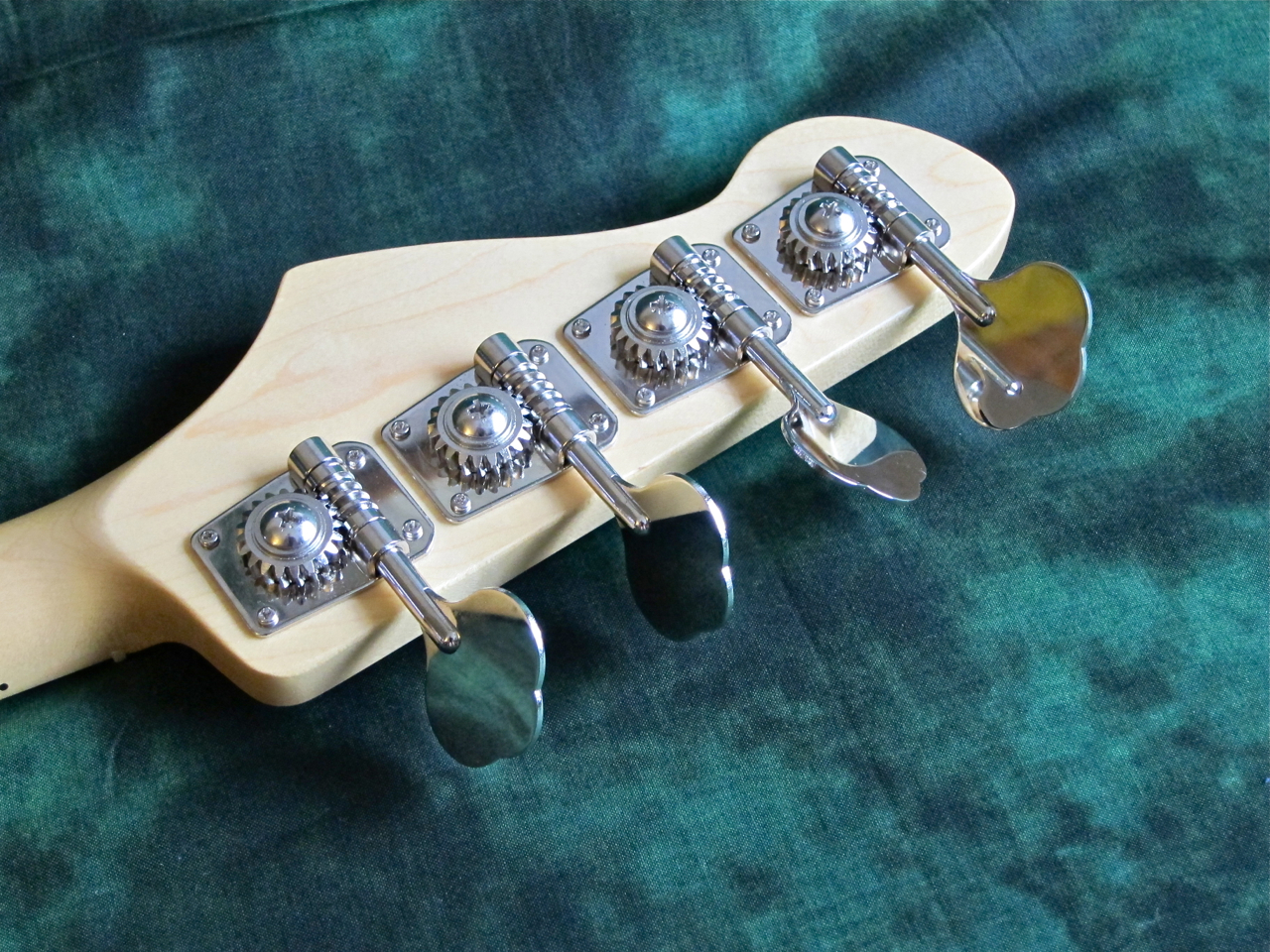
Slimmer tuning posts, as well as smaller base plates, translate into less weight on the headstock – which is great for the instrument’s overall balance.

The whole of the neck – fingerboard and all – has been finished in a super-smooth clear satin finish. The fretwork as well as the workmanship on the inlays is exemplary. The AJB-55BB sports 20 medium-sized frets.

The test sample’s sturdy and tight neck joint is executed in traditional fashion, employing four wood screws and a steel neck plate.
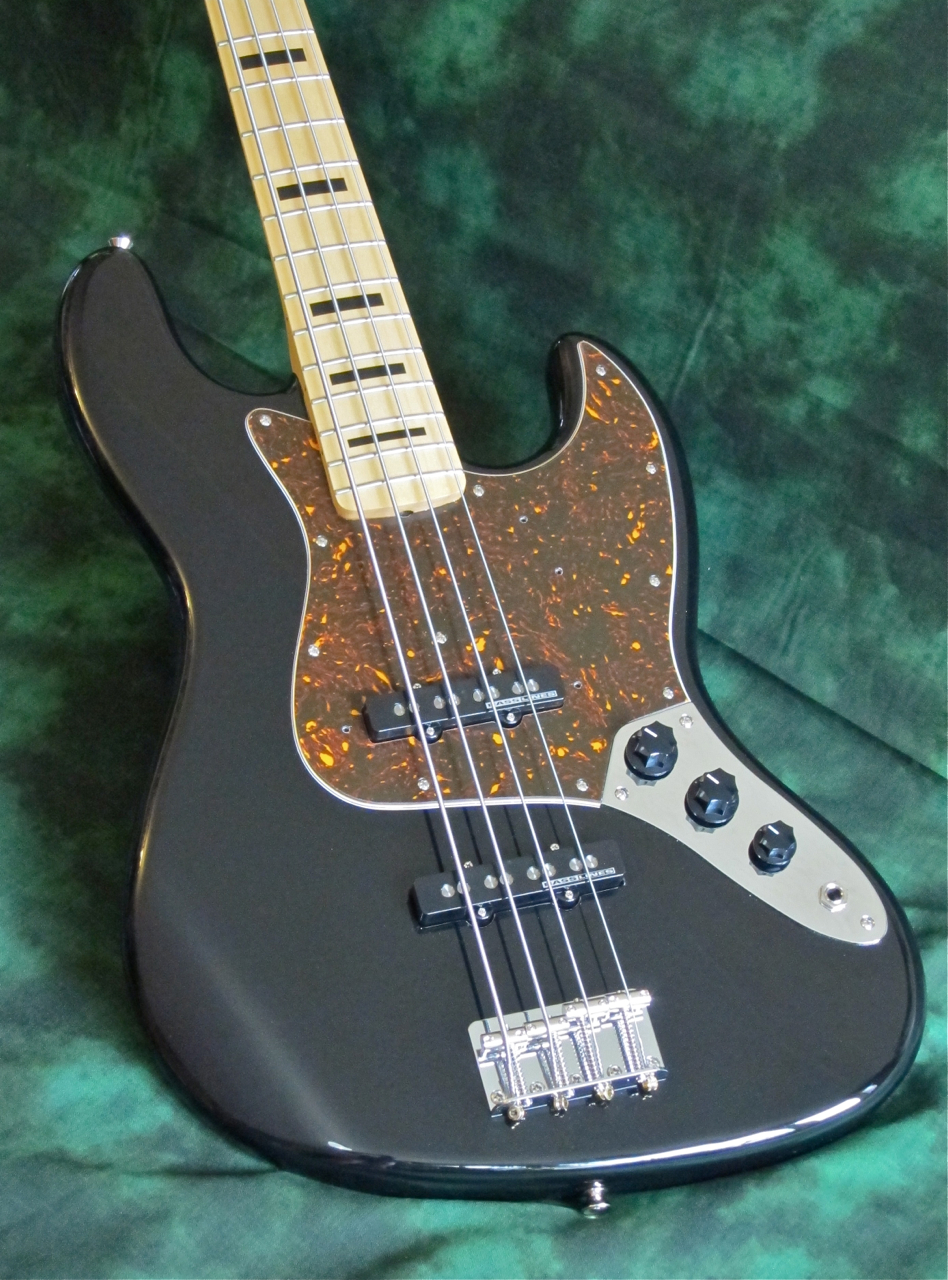
The Tokai AJB-55BB leaves the factory with the company’s own, high-quality 60s-type MK2-pickups.

As already mentioned before, this bass has been customised by Musamaailma with two Basslines SJB-3 -pickups, which are also known as Quarter Pounds for Jazz Bass, as their polepieces have a diameter of a quarter of an inch. The polepieces are left inside the pickup covers on purpose, to avoid the unpleasant noises made by the strings hitting the polepieces.
For some reason the test bass’ neck pickup was contained in a (slightly wider) bridge pickup cover, which is why the holes in the cover don’t correlate exactly with the polepiece positions. But this is really only a small cosmetic glitch, which doesn’t affect the bass’ playability or amplified performance in any way.

The Tokai AJB-55BB’s passive controls follow tradition offering two volume controls (one per pickup) and a shared master tone control.

Japanese quality-parts and clean soldering – what more can one ask for?

The AJB’s bridge is Gotoh’s copy of a 70s Fender bass bridge – simple, yet toneful.
For some reason Tokai have chosen to place the bridge in the same position it was on Fender’s 1970s originals, meaning about 3 mm further from the neck as on 60s examples. With normal string gauges this placement often results in the bridge saddles sitting near the tip of the intonation screws. In extreme cases the intonation screw (especially on the g-string) may work itself loose, and fall off in the middle of a performance, leaving the bassist red-faced. The current set-up works OK, but I’d rather see a Sixties-style bridge placement on Tokai-basses in the future.
****
Many players feel that the Jazz Bass – as well as the basses it inspired – is the best of the classic designs. The reasons for this are its excellent balance, its narrow and tapered neck, as well as the versatility of its singlecoil pickups.
The Tokai AJB-55BB nails these features to a tee: It is a winner in the ergonomics stakes and sounds great.
I have to admit, I was a bit sceptical concerning hot pickups, but the Duncan Quarter Pounds are really doing it for me. These Basslines pickups offer plenty of dynamics and don’t take away anything from the bass’ inherent tonal character. The SJB-3s take the vintage Jazz Bass tone and remaster it for today’s bassist – the bass sounds louder, bigger and even better.
****
Tokai AJB-55BB + Basslines SJB-3
Current price in Finland: 888 €
Finnish distributor: Musamaailma
Pros:
+ value-for-money
+ workmanship
+ playability
+ sound
Cons:
– bridge placement
– neck pickup’s cover (see text)
****


 Kitarablogi.com – Finland's premier Guitar and Bass blog