
Tokai T-SG -video

Kitarablogi.com – Finland's premier Guitar and Bass blog
Juttuja kitaroista ja bassoista

In the mid-Seventies both of the guitar industry’s giants – Fender and Gibson – had lost their innovative edge and much of their corporate prestige. Both companies had been taken over by large corporations, and profit margins started to push quality control into the background.
Many discerning guitarists were starting to subscribe to the notion of ”They’re not making ’em like they used to”, which left the doors wide open to Far Eastern copy guitars, as well as to small boutique makers.
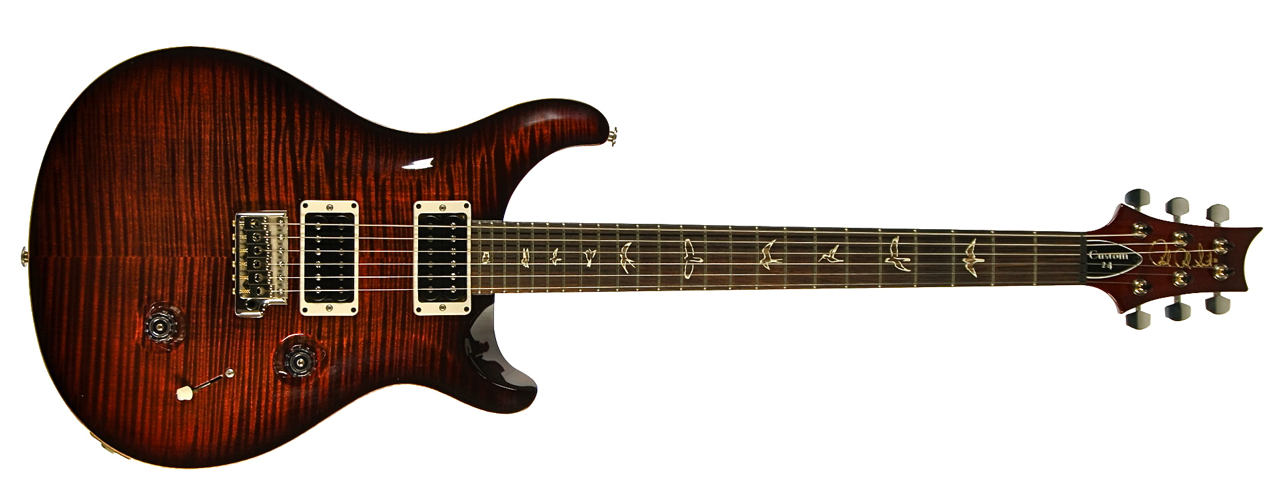
PRS Guitars, just like Hamer Guitars, took Gibson’s classic solidbody designs as a basis for their ”modern vintage” models.
With PRS Guitars it all started with a young Paul Reed Smith converting one spare bedroom at his childhood home into a workshop in 1975. By the next year he had already moved into a small workshop in Annapolis, and started attracting customers such as Ted Nugent and Peter Frampton. His first guitars were based closely on the double cutaway Gibson Les Paul Special, but featured humbucking pickups.

A few years down the road Paul Smith added fancy flame maple tops into the mix, and he managed to sell four of these guitars to Carlos Santana. Santana’s signature PRS models are still based on these original guitars.
But Smith wasn’t satisfied with simply producing refined versions of past Gibson-classics, so he set out to develop the ultimate solidbody guitar.
By 1985 Paul Smith had finalised his vision and started his own production facility. At the NAMM shows of 1985 Smith unveiled the PRS Custom 24 – the model that has defined the whole brand to this day. The new guitar ingeniously combined the best features of a Gibson Les Paul Standard and a Fender Stratocaster, as well as including many of Smith’s own improvements – not least the smooth and reliable PRS-vibrato and his own (Schaller-made) locking tuners.

The PRS Custom 24 combines Gibson-style materials and construction with a Fender-like outline, balance and (in most cases) a vibrato bridge. Added into the mix are a middle-of-the-road 25-inch (63.5 cm) scale length – about halfway between the softer Gibson (24.75″/62.9 cm) and the harder Fender (25.5″/64.8 cm) scale lengths – as well as two PRS-humbuckers with coil-splits.
Originally the Custom 24 came equipped with two knobs and one mini-switch. The knob closest to the bridge pickup was (and still is) the master volume control, with the second knob actually being a five-way rotary pickup selector, and not a control pot. The mini-switch was called the Sweet Switch, and served in lieu of a regular tone control, by giving you a set tone with rolled-off highs.
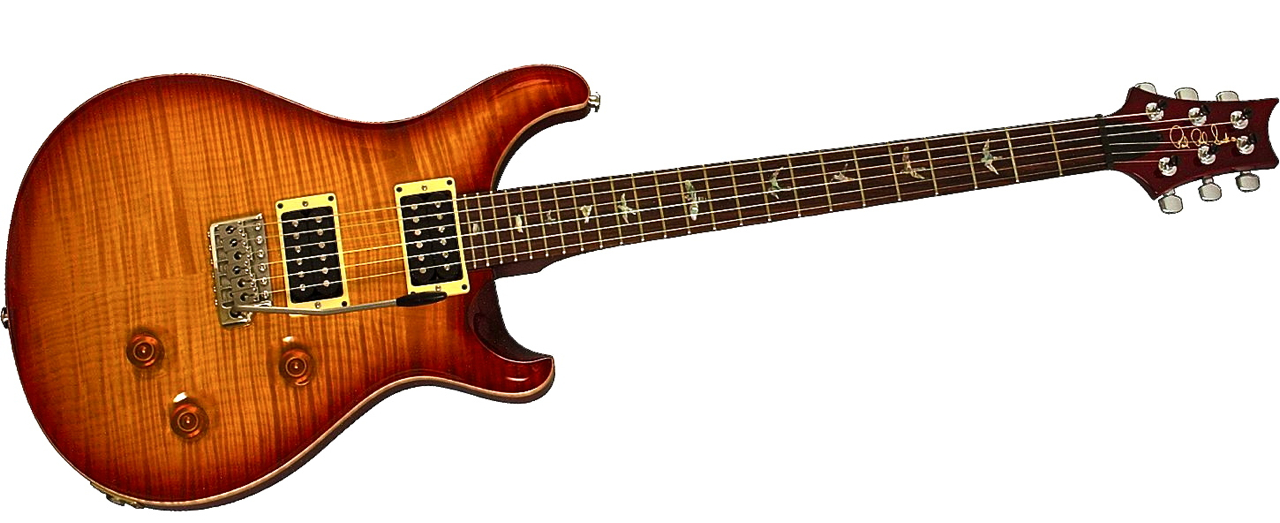
The Sweet Switch was replaced by a regular tone control around 1989, and these days many Customs also feature a regular five-way pickup selector.
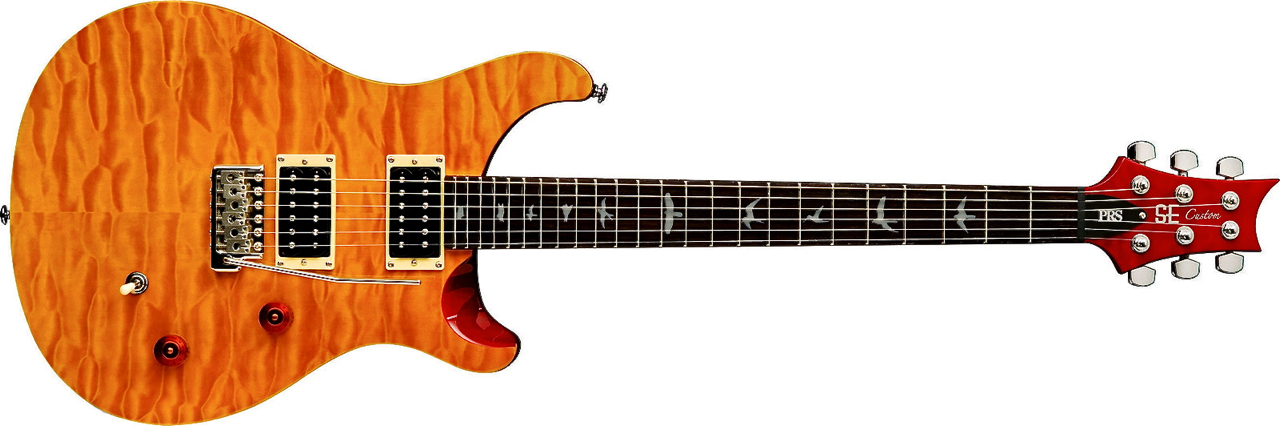
Over the years PRS have changed many details in the construction, harware and electronics of their guitars, but the Custom 24 still carries the essence of what PRS Guitars are all about – it is a beautiful, yet practical quality instrument. Or as Carlos Santana put it in an interview with Paul Reed Smith a few years ago: ”It’s a guitar that gives you no excuses not to play to the best of your abilities.”

****

A pre-aged guitar – to some people it’s the daftest idea ever, while others think relicing imbues the instrument with its own type of charm.
But one thing is clear: artificial ageing is here to stay!
This time we will take a new-old ESP for a spin – the Eclipse II FM FT Distressed.
****

The ESP Eclipse II Distressed (current price in Finland: 1.889 €) is a Japanese quality instrument treated to look and feel like a 50-year-plus veteran of the stage and studio.
The rather realistic impression is achieved not only by dings, dents and scratches, but also by using a laqcuer that looks old and sunken in.

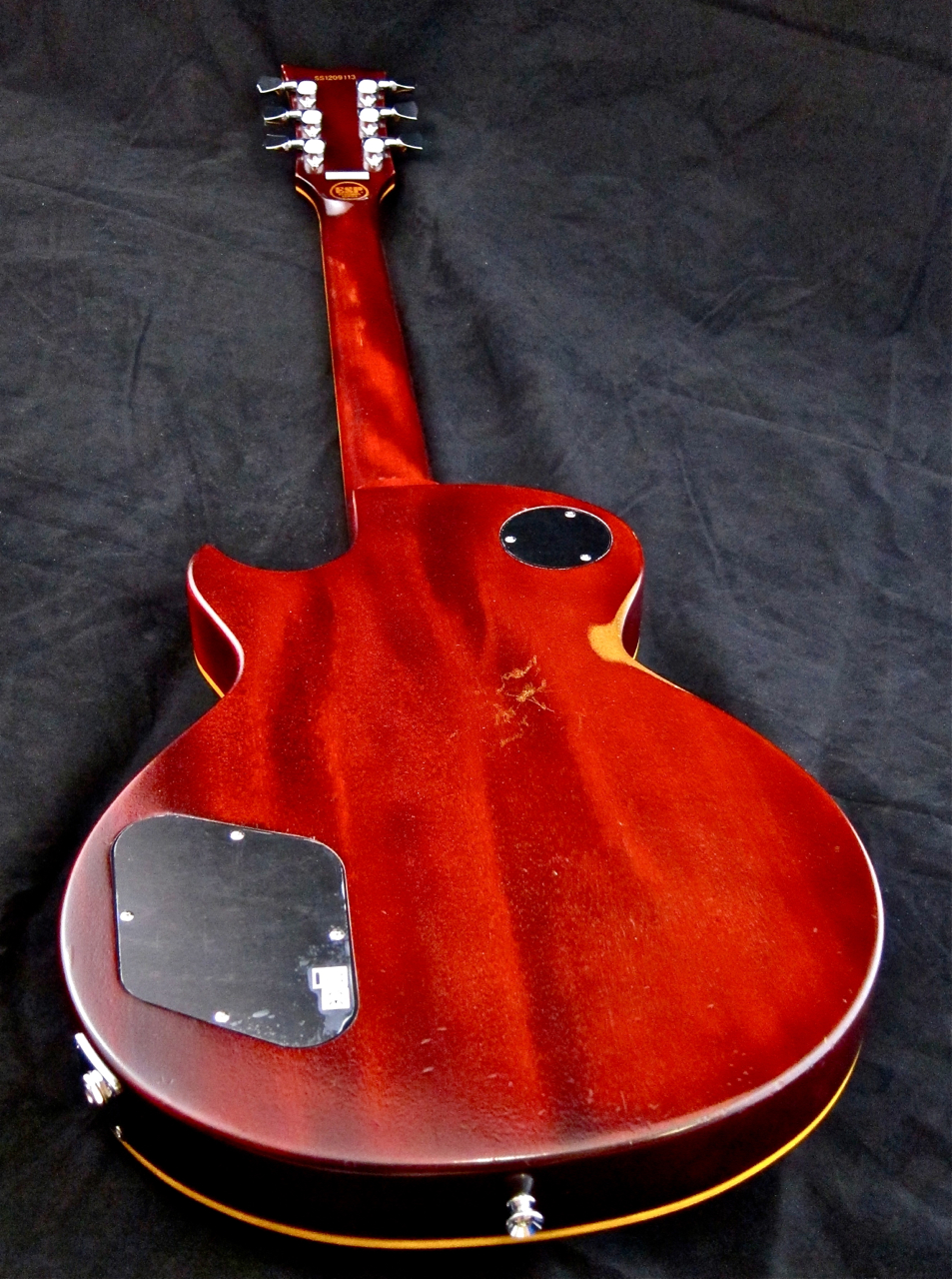
The flip side of the Eclipse II Distressed’s body has also received lots of scratches and a bout of artificial belt buckle rash. The neck, though, has been left fairly clean.
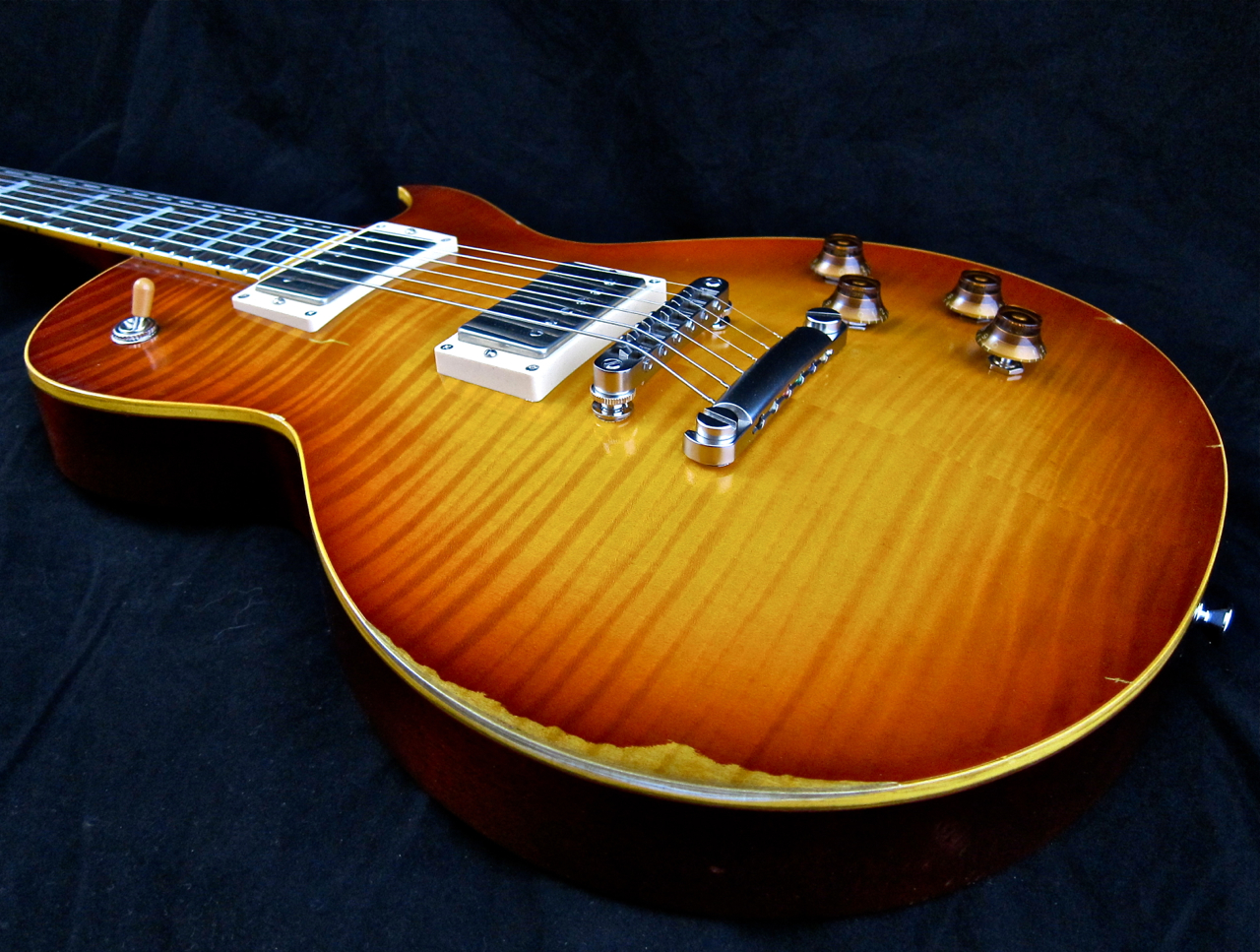
The mahogany looks scrumptious, and the finish does its bit to underscore the lively wood grain.

ESP have restrained themselves from adding over-the-top finish cracks, which is a good decision, in my opinion.
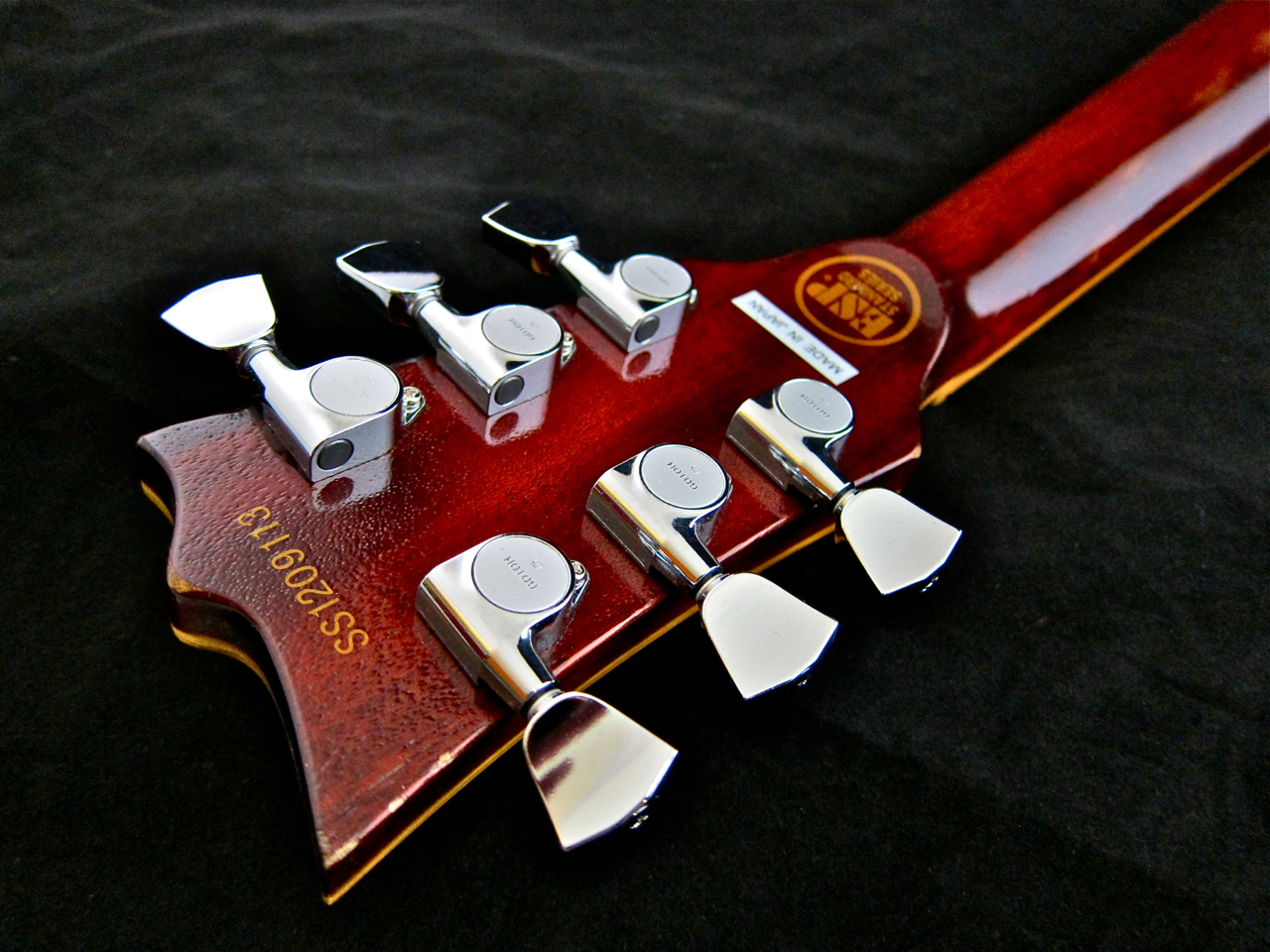
The Gotoh-machines look traditional, but are in fact up-to-date locking tuners.

The Eclipse’s beautiful rosewood ’board and jumbo-sized frets have been left untouched by relicing – this is a brand-new guitar with a pristine playing feel, great!

The neck joint is a traditional set-in job.

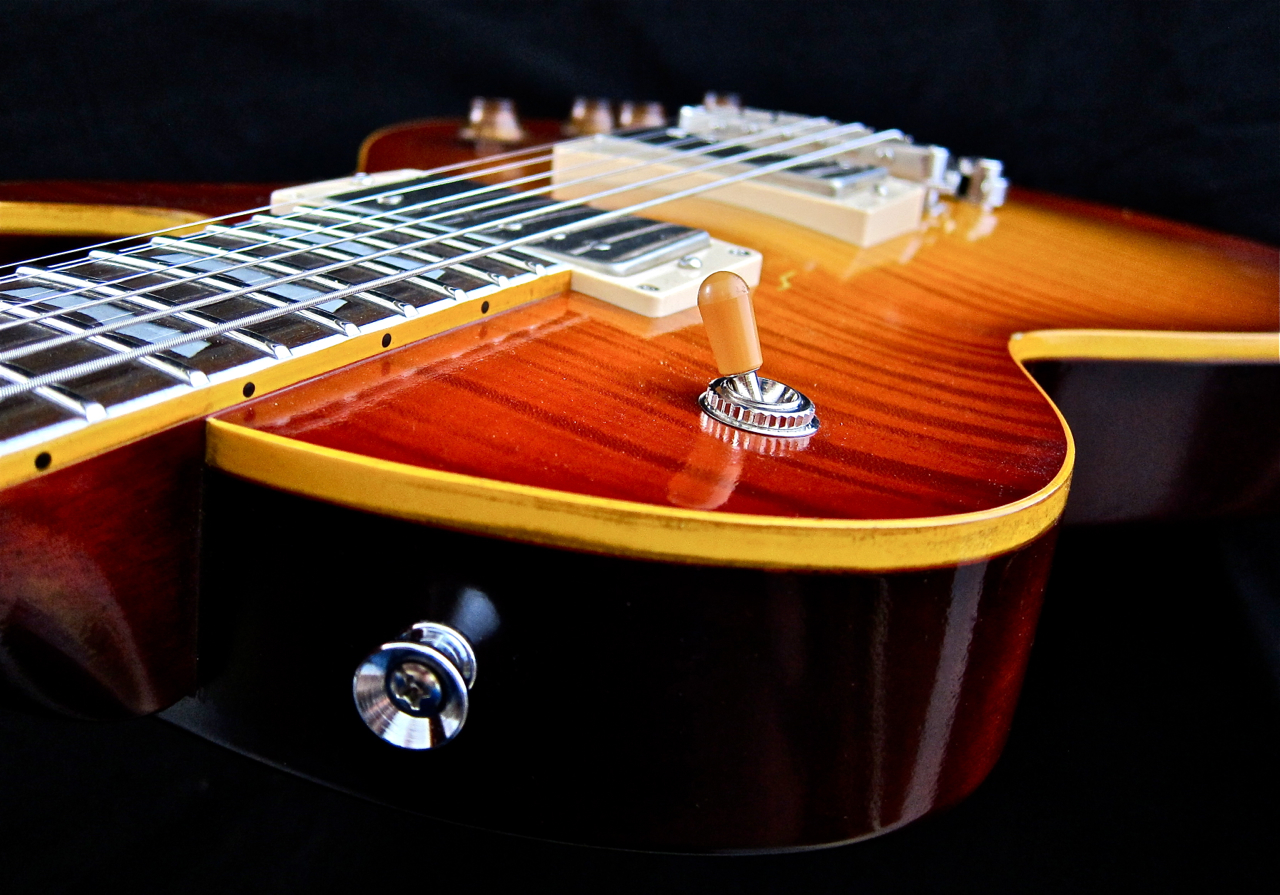
This viewing angle makes it easy to spot all the dents in the sunken in finish (click the picture for a larger view).

The Distressed-model comes fitted with Seymour Duncans: The neck unit is a ’59-model, while a Duncan JB -humbucker has been installed near the bridge.
The brushed metal covers fit the ESP’s lightly-aged look to a tee.
The neck pickup’s tone control is equipped with a push/push-switch that splits the humbuckers in the up-position.

Everything’s hunky-dory in the control cavity – quality parts, clean workmanship and thorough shielding wherever you look.
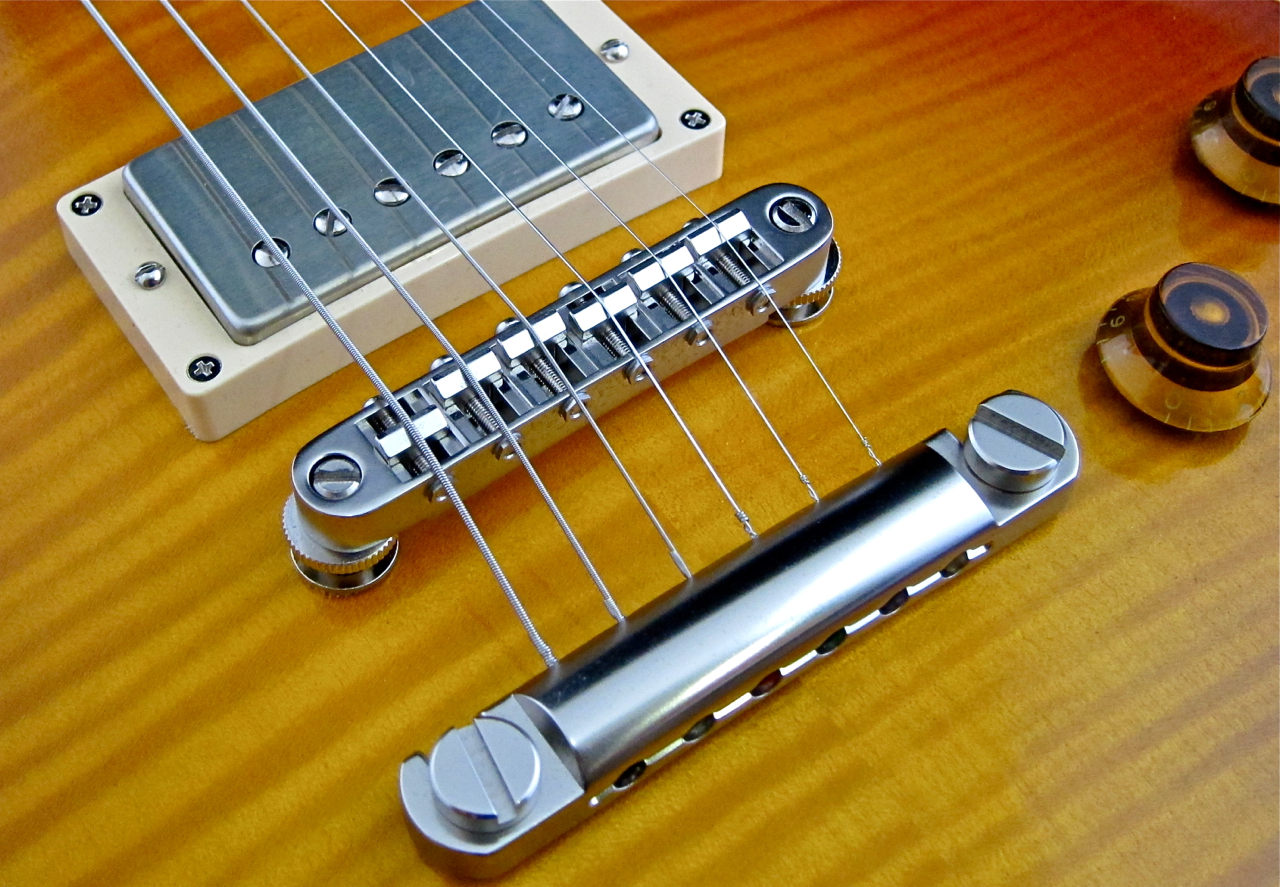
The tune-o-matic-type bridge and the guitars tailpiece are quality parts made by Gotoh.
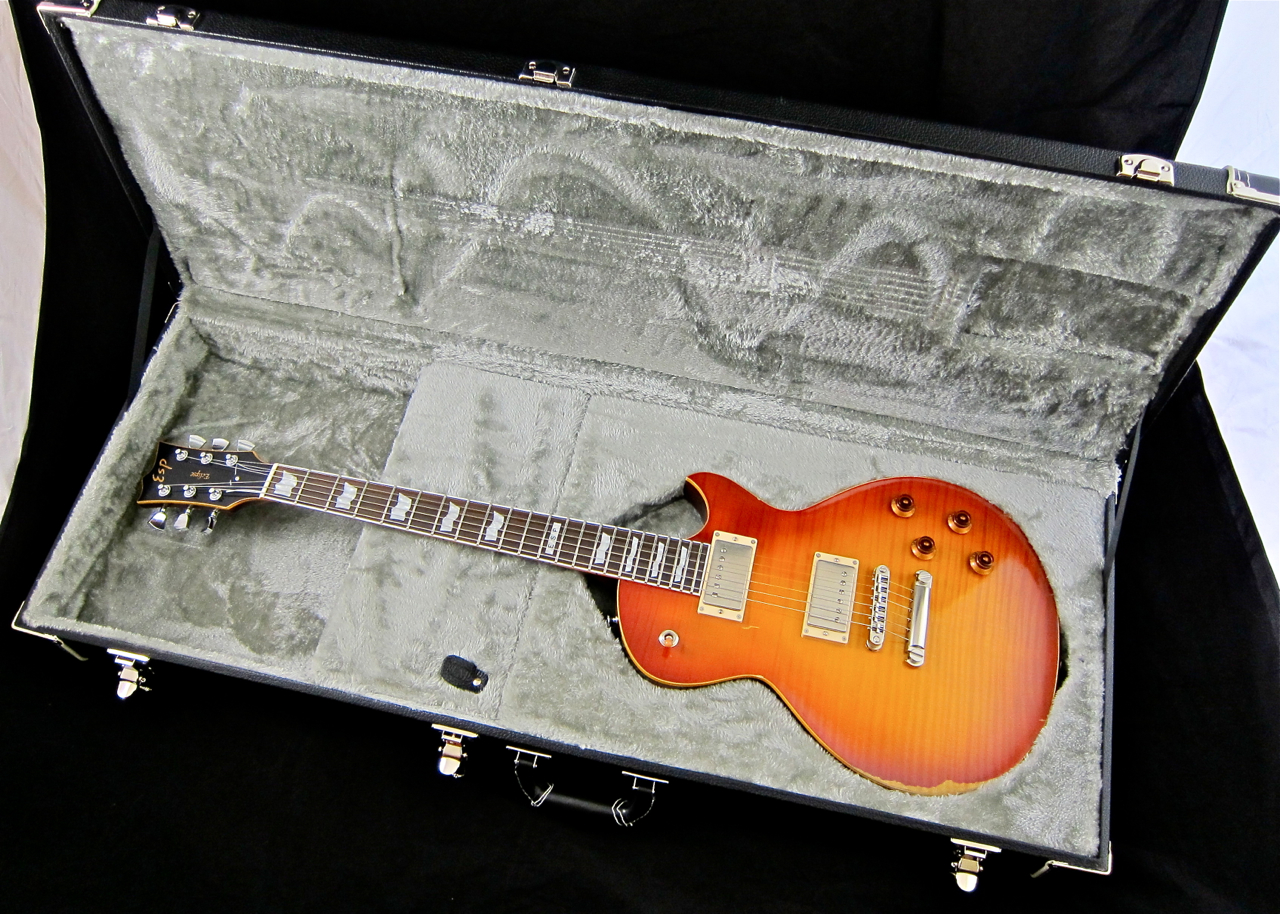
The ESP Eclipse II Distressed is sold in its own, beautiful case.
****

Many players complain about the weight of a good deal of LP-type electrics, which can give you a sore shoulder or a hurting back. I can only suggest that these guitarists take a stoll to their friendly ESP-dealer, if this test sample is anything to go by!
I don’t know whether it’s in the wood selection or whether ESP employ an Emmental-method (like Gibson) for weight-relief – by drilling large-diameter holes into the mahogany before gluing the maple top on – but this ESP is the most lightweight LP-style guitar I have ever played!
The neck profile is a very friendly medium-depth ”D”, not far removed from Gibson’s 60s-neck. The sunken-in finish feels smooth and fast, and the fine fretwork and large fretboard radius make for an easy playability.
It’s hard to gauge whether this is due to the relicing or not, but the ESP Eclipse II Distressed feels really live. The guitar breathes and resonates freely, and its fine acoustic tone has a nice warmth and a sinewy midrange.
Seymour Duncan’s ’59/JB-pairing is an excellent choice for the ESP Eclipse II. The pickups have a good balance between themselves, and manage to convey this instrument’s tonefulness onwards to the amp with fine detail. The ability to split the ’buckers adds three fresh and springy selections to your arsenal.
Both sound examples start with the split neck pickup, followed by the full neck pickup, and so on:
ESP Eclipse II Distressed – clean
ESP Eclipse II Distressed – distorted
Regardless of your stance towards pre-aged guitars, there’s no denying that ESP’s Eclipse II Distressed is a fine, high-quality instrument, with its own hefty dose of charm. Shame we had to give it back…
****
ESP Eclipse II FM FT Distressed
Current price in Finland: 1.889 €
Finnish distributor: Musamaailma
Pros:
+ looks
+ sound
+ weight
+ playability
+ coil-split
+ workmanship
****


****

DLX Musiikilla on iso kitaraosasto, jossa ovat esillä mm. …

…Hagström…

…ja Vox.
****
DLX:n akustisessa puolessa oli mukana myös Taylor Guitars.


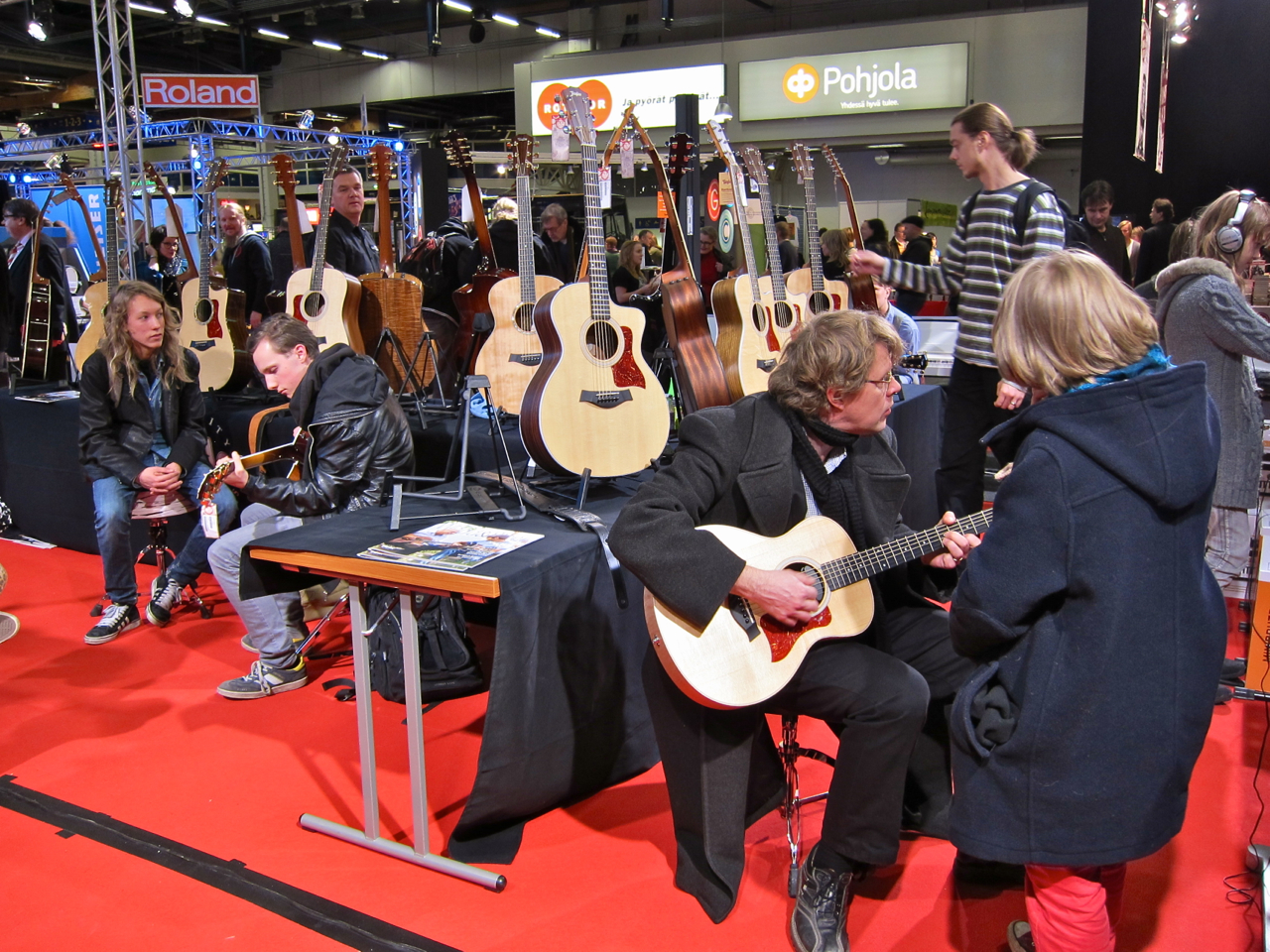

Myös 8-kielistä baritoni-Tayloria voi kokeilla…

****

Riffi-julkaisujen Tommi Posalla on kädessään kustantamon uunituore Country Guitar Workshop 2 -kirja. Kirjan tekijä on Jarmo Hynninen.
****
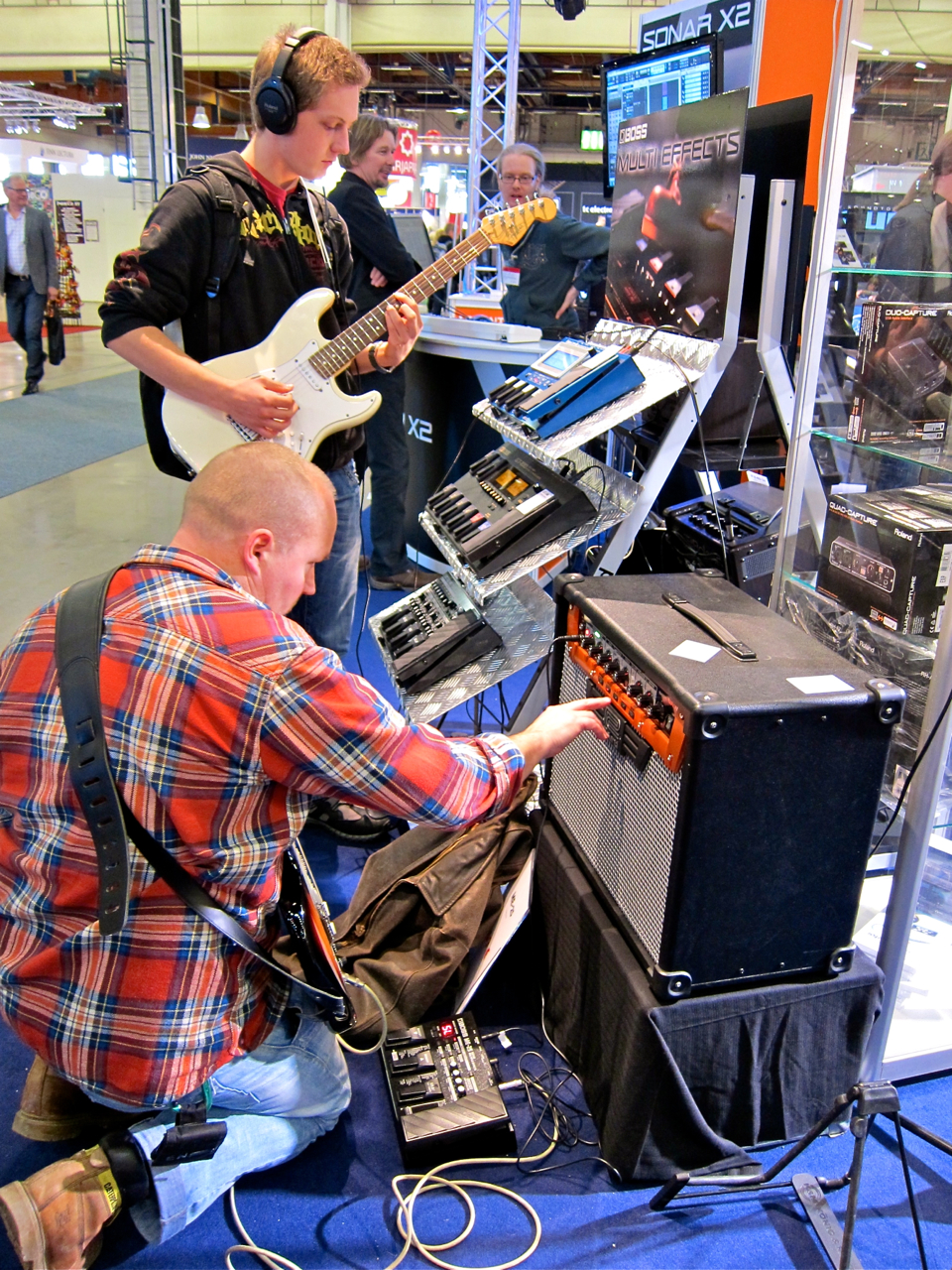
Rolandilla voi tsekata mm. digitaalista GA-112-komboa.
****

Jos Schecter, TC Electronic tai Ampeg kiinnostavat, kannattaa käydä Soundtoolsin osastolla!
****

Messut jatkuvat vielä sunnuntaihin saakka.
****
Esivanhennettu kitara – joidenkin mielestä se on typerin keksintö ikinä, kun taas toisten mielestä naarmuuntuneissa kitaroissa on oma charminsa.
Yksi asia on kuitenkin selvä: relic-ilmiö on tullut jäädäkseen!
Tällä kertaa testissä kävi ESP:n näkemys uusvanhasta kitarasta – Eclipse II FM FT Distressed.
****
ESP Eclipse II Distressed (1.889 €) on laadukas japanilainen sähkökitara, joka on esikulutettu näyttämään yli 50-vuotiaalta, paljon käytetyltä soittimelta.
Hyvin realistinen tuntuma on saatu aikaiseksi käyttämällä kolhujen, naarmujen ja lommojen lisäksi myös sellaista lakkausta, joka näyttää hieman ajan jälkeen kuluneelta ja puun syykuvioihin uponneelta.
Myös Eclipse II Distressed -rungon takapuoli on täynnä pieniä naarmuja ja painaumia, mutta kitaran kaula on jätetty lähes kokonaan siistiksi.
Runkoon ja kaulaan käytetty mahonki näyttää herkullisen eloiselta.
ESP ei kuitenkaan vetänyt relikoinnilla överiksi, eikä viimeistelyssä ole keinotekoisia halkeamia.
Gotohin kromatut virittimet näyttävät hyvin perinteisiltä, mutta kyseessä ovat nykyaikaiset lukkovirittimet.
Eclipsen kaunista palisanteriotelauta ja sen jumbokokoiset nauhat on jätetty tarkoituksella neitseelliseksi: uudella kitaralla on uuden kitaran tatsi ja soitettavuus, hyvä niin!
Kaula on liitetty runkoon perinteisesti liimaliitoksella.
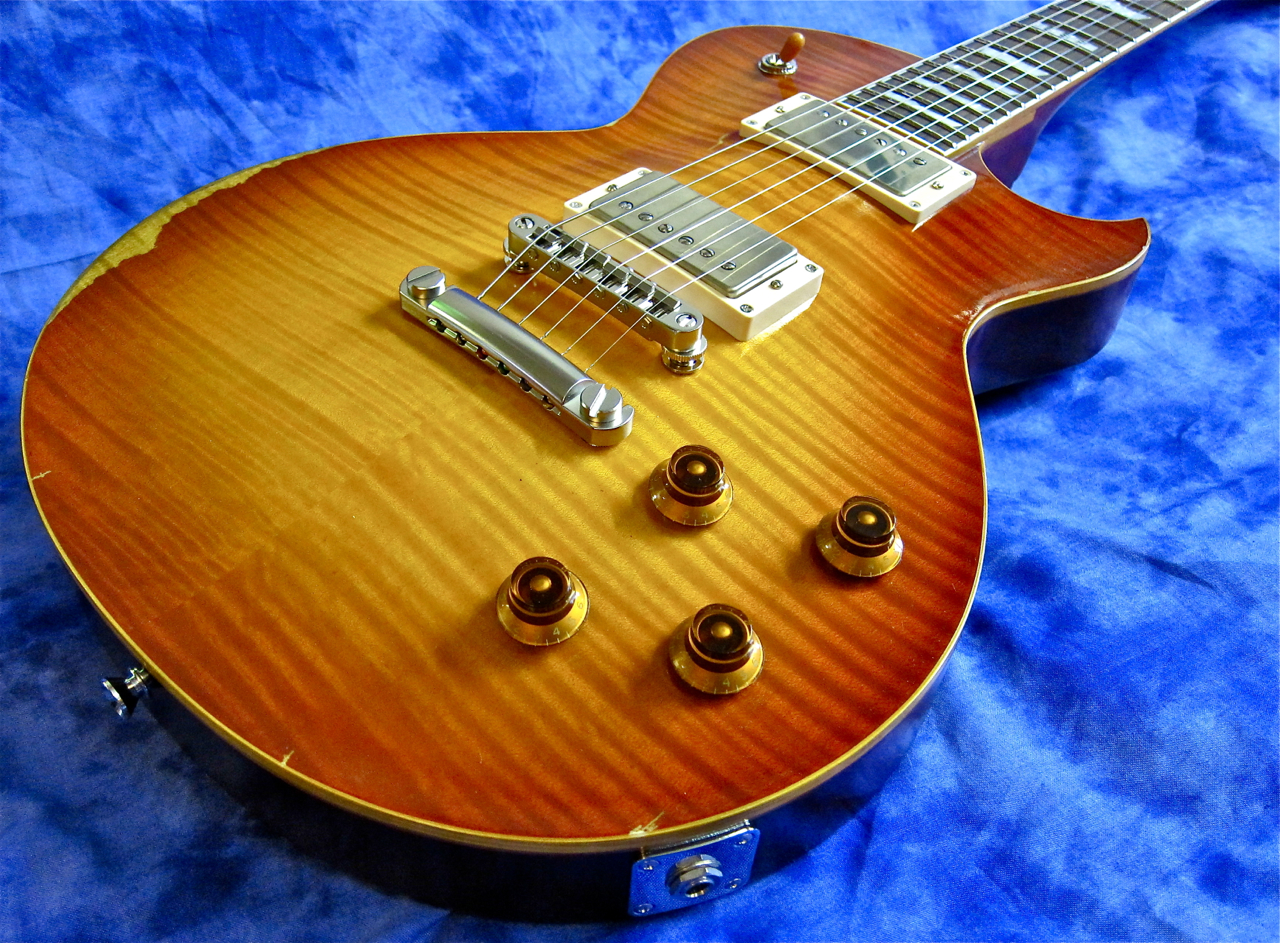
Tässä kuvassa näkyvät hyvin relikoidun Eclipse II Distressed -kitaran kulumat, naarmut ja viimeistelyn epätasainen pinta.
Distressed-mallin mikrofonit tulevat Seymour Duncanilta: kaulamikrofoniksi on valittu ’59-humbuckeri, kun taas tallan viereen on asennettu firman JB-malli.
Mikkien harjatut suojakuoret tukevat omalta osaltaan vanhan soittimen vaikutelmaa.
Kaulan tone-potikkaan on lisätty push/push-kytkin, jolla saa molemmat mikrofonit puolitettua.
Elektroniikkalokerosta löytyy laadukkaita osia, siistiä juotostyötä, sekä huolellista häiriösuojausta grafiittimaalilla ja alumiinilla vuoratulla kannella.
Samoin kuin Eclipse II:n virittimet myös tune-o-matic-tyylinen talla ja palkkimainen kieltenpidin ovat laatuosia Gotohin valikoimasta.
Erittäin hieno kova laukku kuuluu ESP:n hintaan.
****
Monet valittavat LP-tyylisten kitaroiden paino-ongelmista, jotka tekevät kitaran soitosta epämukavan. Näille soittajille voin vain suosittaa ESP Eclipse II Distressed -mallin koeajoa, koska ainakin testiyksilö on uskomattoman kevyt!
En tiedä johtuuko tämä ominaisuus huolellisesta puuvalinnasta vai käytetäänkö myös ESP:n tehtaalla Gibsonilta tuttua ”Emmental-menetelmää”, jossa porataan rungon mahonkiin ensin isokokoisia reikiä, ennen kuin vaahterakansi liimataan paikkoilleen. Oli miten oli – tämä ESP on kevyin soittamani LP-tyylinen kitara ikinä!
Kaulaprofiili on erittäin mukavantuntuinen keskikokoinen ”D”, joka on hyvinkin lähellä Gibson-kitaroista tuttua 60s-kaulaa. Hiukan epätasainen ”vanhennettu” lakka tuntuu liukkaalta ja luonnolliselta. Esimerkkillisen nauhatyön ja otelaudan loivan kaarevuuden ansiosta, soittotatsi on nopea ja vaivaton.
En tiedä johtuuko tämä relikoinnista tai muista seikkoista, mutta ESP Eclipse II Distressed tuntuu suorastaan elävältä. Kitara resonoi vapaasti ja sen loistavassa akustisessa äänessä löytyy sopivasti sekä ryhdikkyyttä, että lämpöä.
Seymour Duncanin ’59/JB-kattaus on ESP Eclipse II:lle mahtava valinta. Mikrofonit ovat keskenään loistavassa tasapainossa, ja ne onnistuvat täydellisesti välittämään kitaran oman äänen uskollisesti eteenpäin vahvistimelle. Lisäksi humbuckerien puolitus yksikelaisiksi lisää tutuille humbucker-soundeille vielä hyvin hyödylliset kevyemmät ja kirkkaammat vaihtoehdot.
Esimerkkipätkissä aloitan aina puolitetusta kaulamikrofonista, sen jälkeen tulee täysi kaulamikki ja niin edelleen:
ESP Eclipse II Distressed – puhtaat
ESP Eclipse II Distressed – säröllä
Kitaroiden keinotekoisesta vanhenemisesta voi olla mitä mieltä tahansa, mutta ESP Eclipse II Distressed on mielestäni loistava laatusoitin, jolla on omaa luonetta ja charmia vaikka muille jakaa. Sääli, että se piti palauttaa…
****
ESP Eclipse II FM FT Distressed
1.889 €
Maahantuoja: Musamaailma
Plussat:
+ ulkonäkö
+ soundi
+ paino
+ soitettavuus
+ mikkien puolitus
+ työnjälki
****

Testi tulossa lähiaikoina…
A review is coming up soon…
****

****

****
Roland’s brand-new G-5 VG-Stratocaster (current RRP in Finland: 1.583 €) is the result of Roland’s and Fender’s cooperation. The guitar offers the player the genuine ”Stratocaster Experience”, as well as a wide variety of built-in, digitally modelled guitar tones and virtual tunings.

From the front the Hecho-en-Mexico G-5 VG-Stratocaster differs only slightly from your basic Strat. Only the bright blue status LED, as well as the two small black rotary switches, hint at the digitally souped-up nature of this electric guitar.

The VG-Strat’s back sports two additional cavities on the back of its alder body. The larger one holds all the digital shenanigans (courtesy of Roland), while the smaller one is the battery compartment.

The G-5 uses an up-to-date Stratocaster-neck, which allows for truss rod adjustment from the headstock end.

The sealed Fender-tuners are a quality touch.
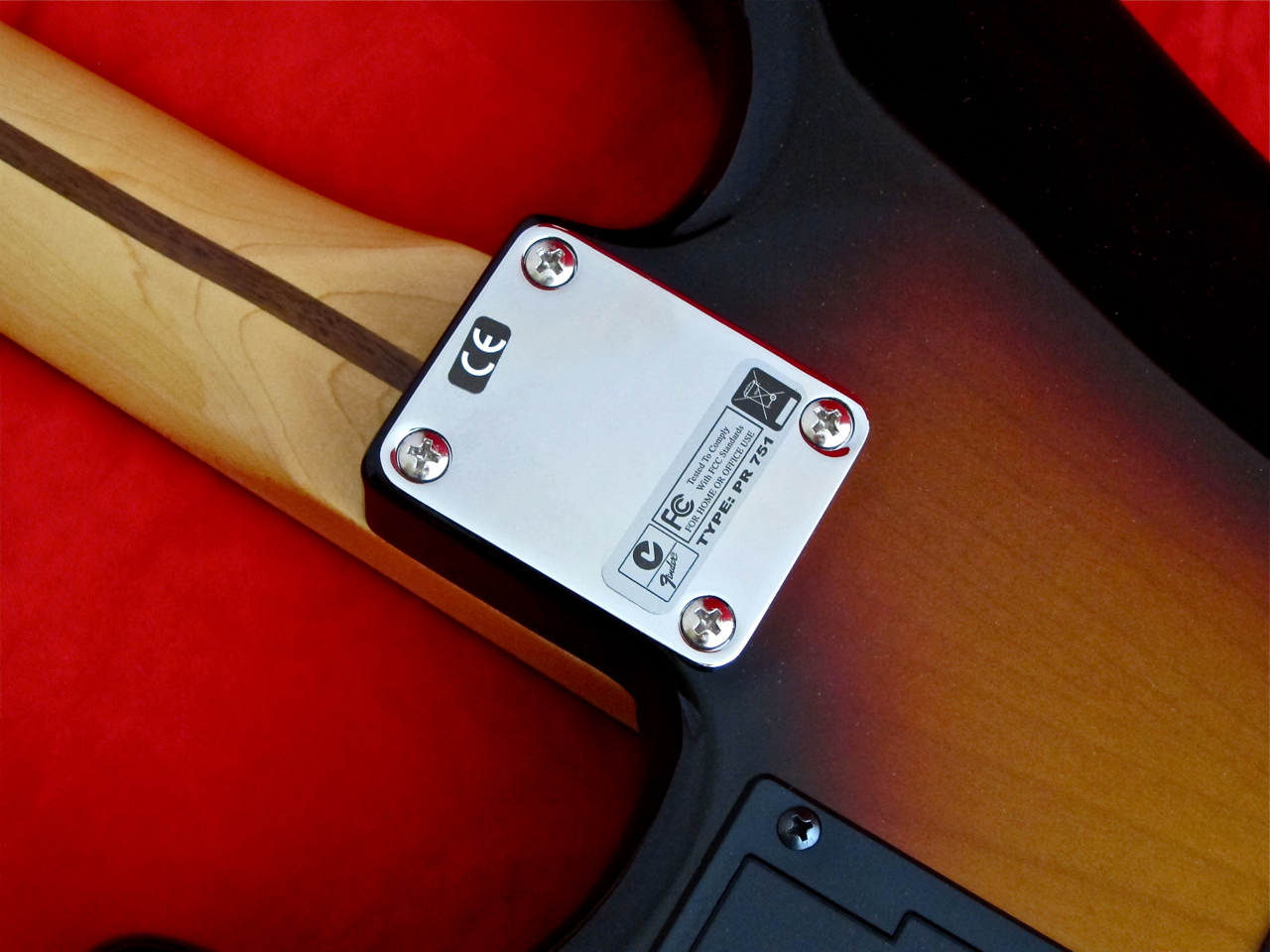
The neck joint, on the other hand, is executed in the most traditional of Fender methods.

The fingerboard curves in a 9,5-inch radius, which gives it a very comfortable, middle-of-the-road feel, right between a vintage-Fender’s curved chunkiness and a typical Gibson’s sleek flatness.
Well-set and finished jumbo frets guarantee an almost effortless playing experience. Thanks to a small fretboard ledge, the VG-Stratocaster even comes with a 22nd fret.

The traditional magnetic pickups on the Roland G-5 come straight from Fender’s Standard series – nothing esoteric, but good meat-and-potato workhorses.

Roland’s own GK-pickup sits between the traditional bridge pickup and the vintage-type vibrato bridge. The GK-pickup’s signal feeds the much-needed raw material to the modelling circuit.
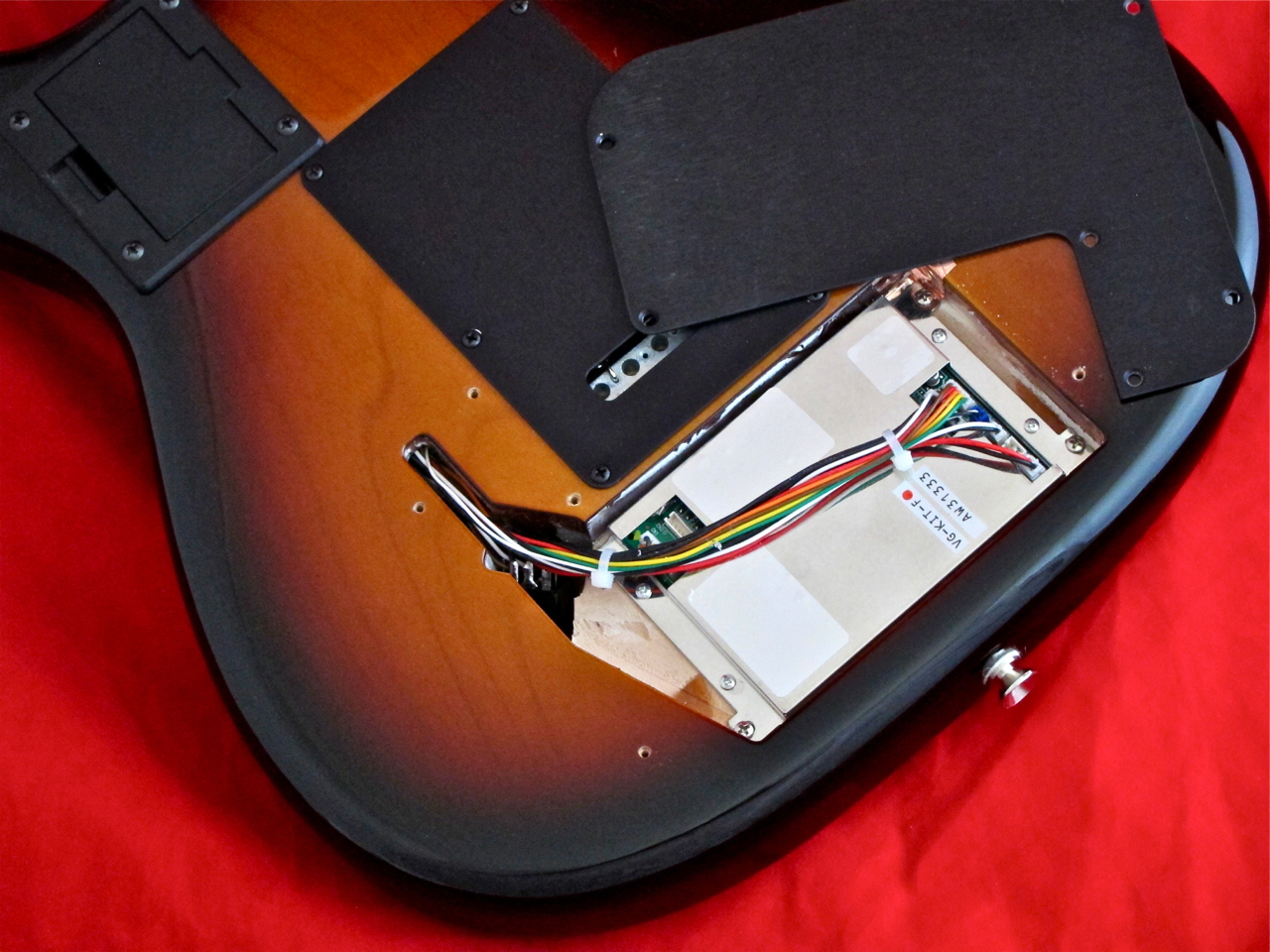
To keep electromagnetic interference into the digital COSM-circuit to a minimum, both of the guitar’s two black lids are crafted from aluminium. Additionally, the modelling department is encased in its own, shiny metal box.

The Roland G-5’s only real drawback is its large power consumption: four alkaline AA-batteries will give you about six hours of continual playing time. Using Ni-MH-rechargeables will give you approximately nine hours of fun on a full charge. Connecting a guitar lead to the VG-Strat automatically turns the digital side on, using up the battery power even if you’re only using the guitar’s traditional magnetic pickups. A simple on/off-switch might have been a welcome addition to the G-5.
In comparison to other virtual guitars Roland’s G-5 does have one advantage, though: You can use the VG-Stratocaster even without any batteries, just like a traditional Fender Stratocaster.
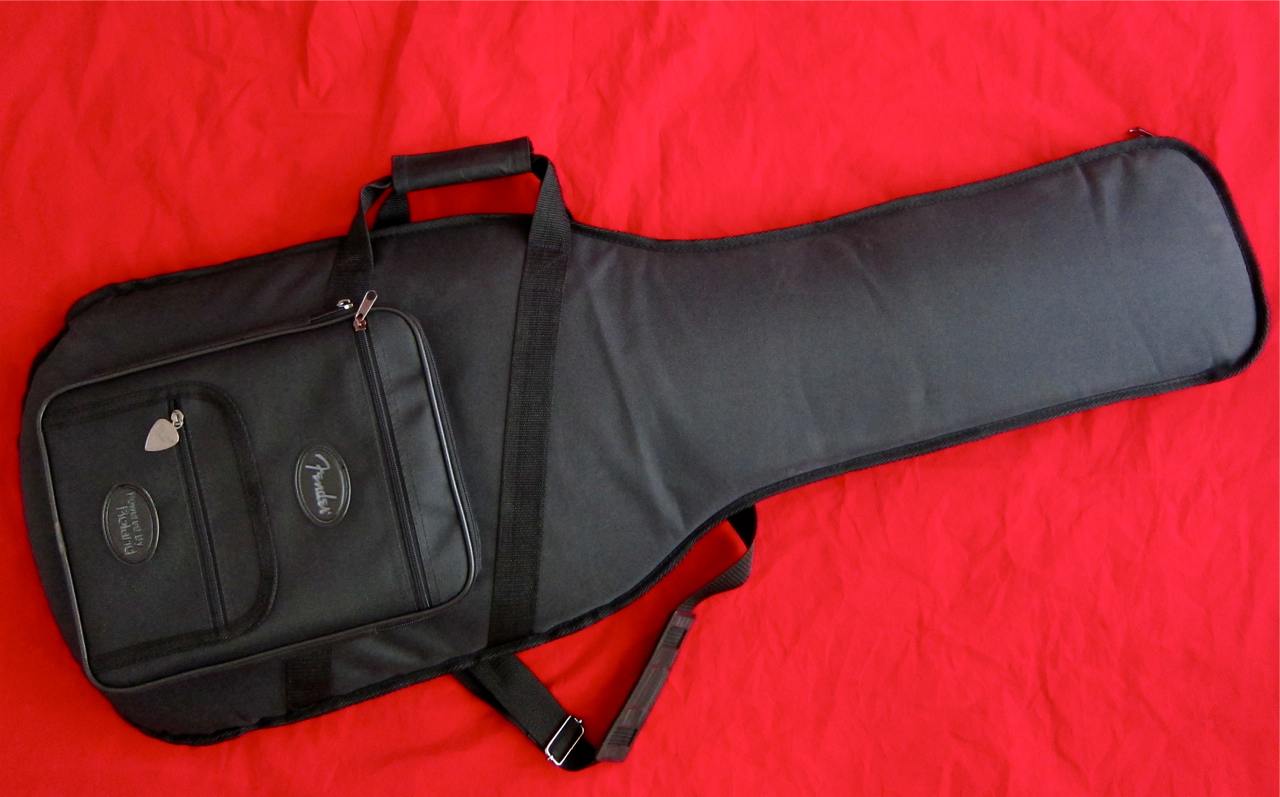
The Roland G-5 comes with its own padded gig bag.
****

The VG-Stratocaster’s oval C-profile feels very nice in the hand. The overall ergonomics are what you’d expect from a Strat – very comfortable.
Bypassing the modelling department the Roland G-5 sounds just like a good Strat should, which really shouldn’t come as a surprise to anybody.
The pickups are traditional singlecoil units with a crisp and dynamic basic tonality. Thanks to the reverse wound/reverse polarity middle pickup the in-between settings are hum free.
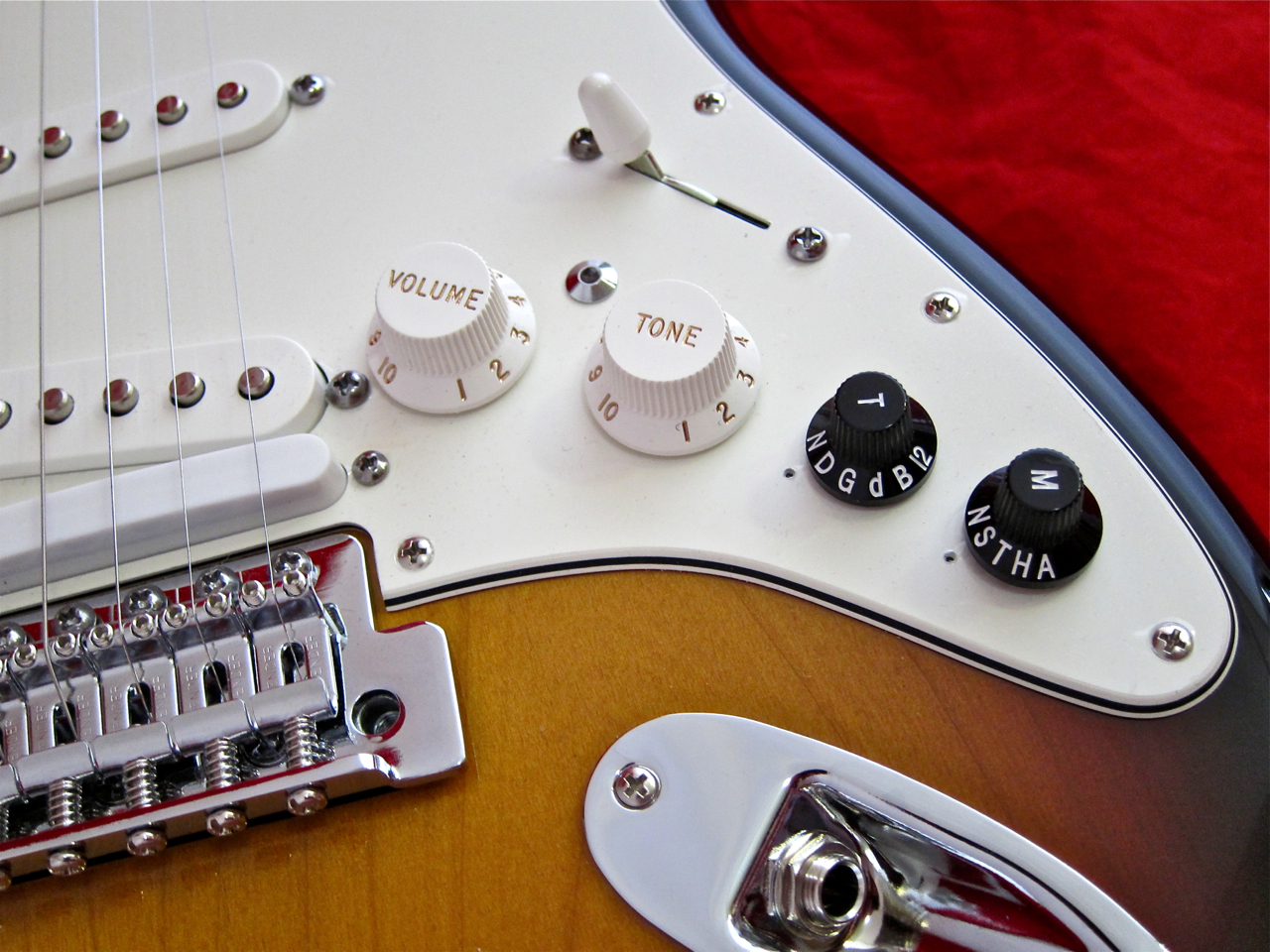
The instrument’s digital side opens up a whole wealth of possibilities.
The M-rotary offers you four basic pickup modes:
”S” is a virtual Strat. It might seem a bit daft, at first thought, to include a modelled Strat in a real Strat, but don’t forget that the modelled virtual pickups are all completely free of hum and other interference.
”T” stands for Telecaster. In addition to the three standard Tele-selections (neck, both, bridge), switch positions one and five add overwound versions of the bridge and neck pickup, respectively, to the mix. The overwound options dish out more power, as well as more bite.
The H-model gives you five virtual humbucker tones. Just like on the Telecaster-model ”H” also offers a brighter neck and bridge pickup in the selector switch’s outermost positions.
Turning the M-rotary to ”A” puts five different acoustic settings at you fingertips. You will find an archtop acoustic, a sitar, a nylon-string and two different steel-string guitars on offer. In the acoustic guitar models the G-5’s Tone-pot adjusts the digital reverb level, with the exception of the sitar model, where the control adjusts the volume of the virtual sympathetic drone strings.
In my opinion most of the models on offer hit the proverbial nail right on the head; especially the authenticity of the electric models is breathtaking. On the acoustic side of things, my favourite setting are the acoustic guitar (at the first switch position), as well as the fantastic virtual sitar. The nylon-string is perhaps the weakest model in the VG-Stratocaster — it’s useable, but not very authentic sounding.
****
The G-5’s T-rotary accesses the guitar’s virtual tunings: ”D” gives you Drop-D, ”G” stands for open G (a la Keith Richard), ”d” calls up the modal DADgad-tuning, ”B” turns the guitar into a virtual baritone guitar (Metal fans will like this), and ”12” adds six more strings to proceedings.
The virtual tunings sound great and the whole thing works without any perceivable latency or wobbling.
****
The Roland G-5 VG-Stratocaster is a fantastic package, because it gives you a great real guitar to begin with, and then adds the whole new dimension of digital modelling on top of this. A Fender Stratocaster feels safe and familiar to us – it’s a well-playing guitar with great ergonomics and a classic, versatile sound.
The digitally modelled virtual pickups, guitars and tunings take your guitar experience much, much further. The tones sound really organic, and most of the settings offer a high degree of authenticity. The amount of versatility on tap, coupled with the option to change guitar types and/or tunings in mid-song, make the Roland G-5 a very intriguing instrument for studio guitarists or players in a covers band.
The audio clips have all been recorded using the VG-Stratocaster’s digital models and tunings:
Humbucker-model in virtual Drop-D
Humbucker-model in virtual baritone-tuning
The guitar parts from the video
****
Roland G-5 VG-Stratocaster
current RRP in Finland: 1.583 €
Finnish distributor: Roland Scandinavia
****
Pros:
+ genuine Fender Stratocaster
+ playability
+ analogue side works without batteries
+ analogue tone
+ quality and versatility of COSM-models
+ speed and reliability of virtual tunings
+ workmanship
Cons:
– power consumption
****




 Kitarablogi.com – Finland's premier Guitar and Bass blog