Kielten vaihtaminen – Floyd Rose -vibralla varustettu kitara

Kuvat: Miloš Berka

****

Kielten vaihtamiseen tarvitaan kielisatsin lisäksi terävän leikkurin, viritysmittarin ja kitarajohdon. Halpa muovikamppi nopeuttaa virityskoneiston kääntämistä.

Tärkeintä ovat kuitenkin oikeankokoiset kuusiokoloavaimet. Muista, että amerikkalaisissa Floyd Rose -vibroissa käytetään lähes aina tuumakokoja, kun taas monissa lisenssiversioissa (Schaller tai Gotoh) tarvitaan metrisiä avaimia. Älä koskaan käytä metrisiä avaimia tuumakokoisissa pulteissa (tai toisinpäin), rikot muuten pulttin ja/tai avaimen!

Metalliviivoittimella taas mitataan ennen kuin aloittaa kielten korkeus 12:n nauhan kohdalla. Mittaamisen ansiosta kitaran säätäminen soittokuntoon helpoittuu huomattavasti, silloin kun on vaihdettu kielten paksuutta.

****

Koska tuplalukittu vibrasysteemi on tarkassa balanssissa kelluva viritelmä, suosittelisin kielten vaihtaminen peräkkäin, yksi kerrallaan. Aloitan ala-E:llä ja jatkan sieltä ylöspäin.

Koko kielisatsin poistaminen aiheuttaa sen, että vibrajouset vetävät systeemin voimakkaasti runkoa vasten, ja tästä syntyvät nopeasti rumia painautumia. Tämän lisäksi tallan veitsenterät voivat silloin hypätä ulos säätöholkkien urista, ja tallan saaminen takaisin paikoilleen on vaikeampi kuin uskoisi.

Jos kuitenkin pitää poistaa kaikki kielet – esimerkiksi otelaudan puhdistamista varten – laita rungon ja vibraton väliin sopivan paksuista palaa korkkia, solukumia tai puuta ennen kuin poistat kielet. Suojaus pitää tallan oikeassa asennossa. Ei kannata tunkea suojausta kuitenkin liian syvälle, muuten hienovirittimien lehtijouset lukitusruuvien alla (katso hienovirittimien lähikuva) voivat taipua.

****

Tältä aloitetaan – lukittu satula.
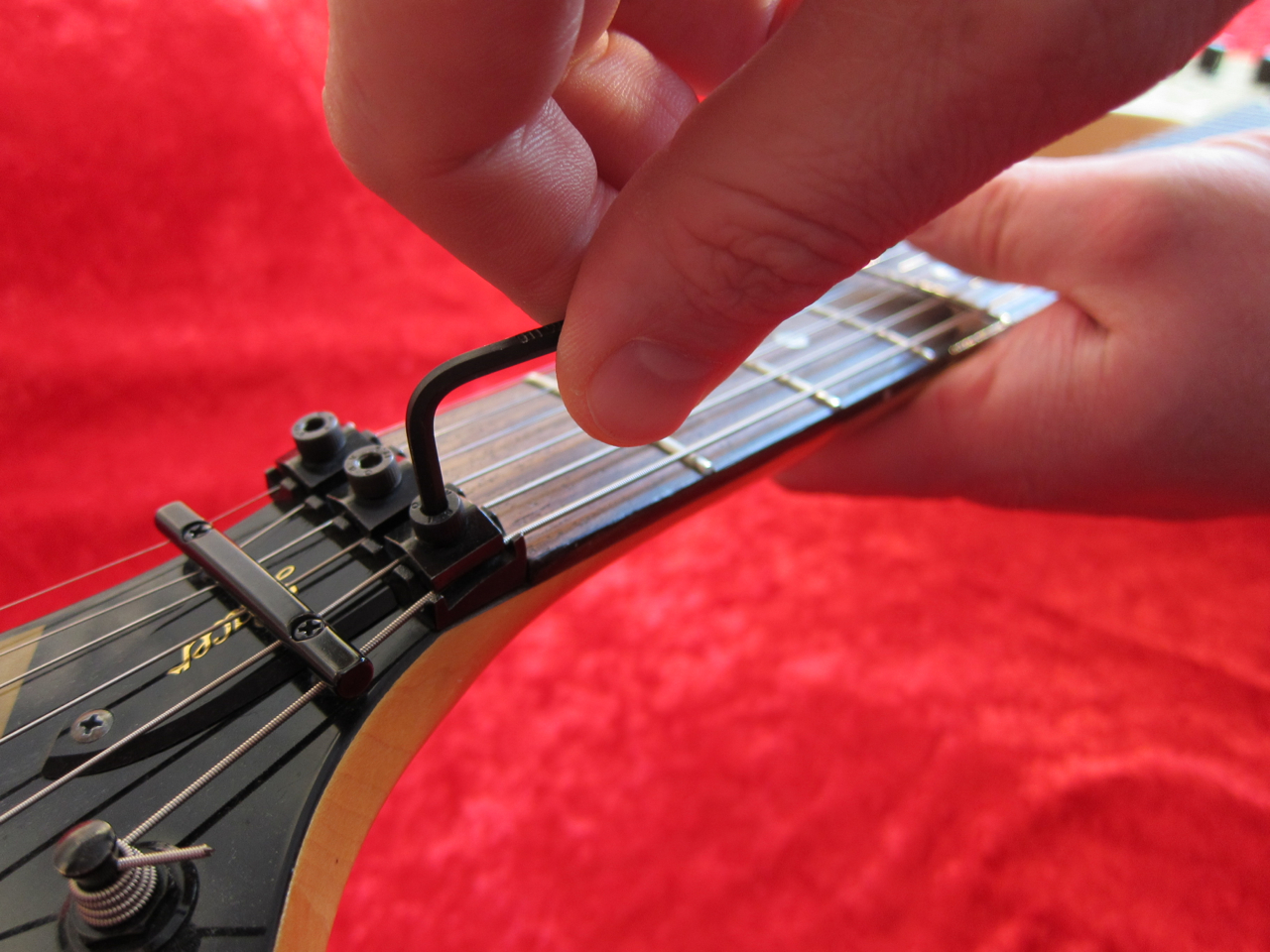
Kieliparin lukkoa avataan oikeankokoisella avaimella.

Poista (ja säilytä) huolellisesti lukon ja ruuvin.

Hyvin asennetussa Floikka-satulassa kielet makaavat koko pituudellaan satulan pinnan päällä.

Joissakin edullisissa kitaroissa kielet jäävät hieman satula yläpuolella. Se ei ole iso ongelma, mutta satulan lukitseminen aiheuttaa silloin vireen nousemista.

****

Kielen pitää olla täysin löysänä.

****
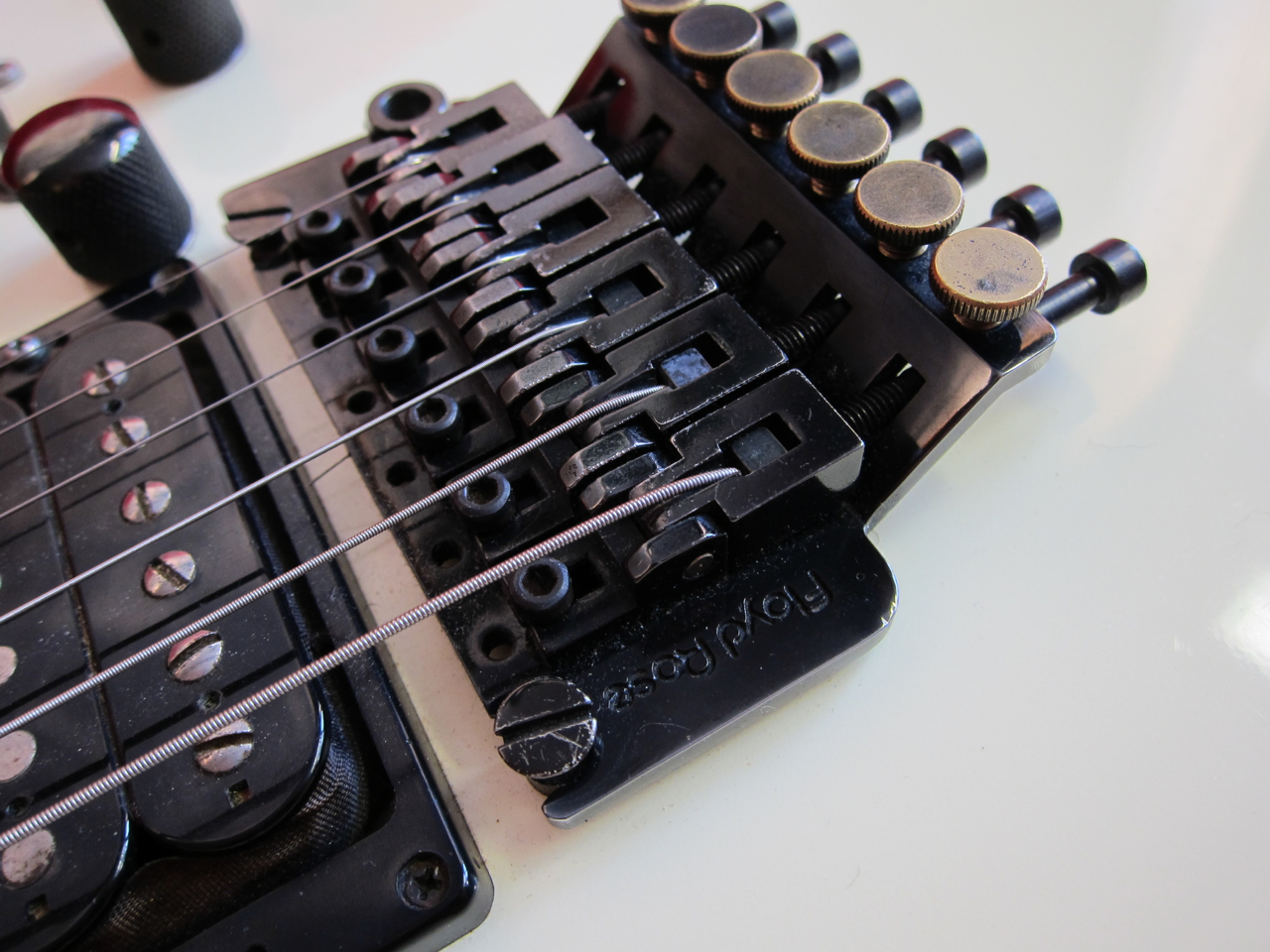
Tältä Floikan talla näyttää. Kielet on lukittu omaan satulaansa pitkillä mustilla lukituspulteilla, jotka pilkistävät ulos hienoviritysruuvien alta tallan takaosasta.

Eri Floyd Rose -versioissa viritysruuvien sijainti voi olla hieman erilainen, mutta toimintaperiaate on kaikissa sama.

Avaa lukitusta käyttämällä oikeankokoista kuusiokoloavainta. Lukitusta täytyy avata vain sen verran, että vanhan kielen saa pois ja tuoreen sen tilalle.

Vanha kieli nostetaan pois satulasta.

****

Tuoreen kielen laittaminen alkaa vibratallan päästä.

Ensin täytyy leikata pois kielen ball-end-rengas (varo silmiäsi), minkä jälkeen kieli työnnetään niin syvälle tallapalaan kuin mahdollista, ja lopuksi lukitaan sitä paikoilleen lukituspultilla.

Varmista, että hienoviritysruuvit on säädetty puoleenväliin. Näin sinulla jää riittävästi pelivaraa virittämiseen.

****

Kieli työnnetään virittimen läpi…
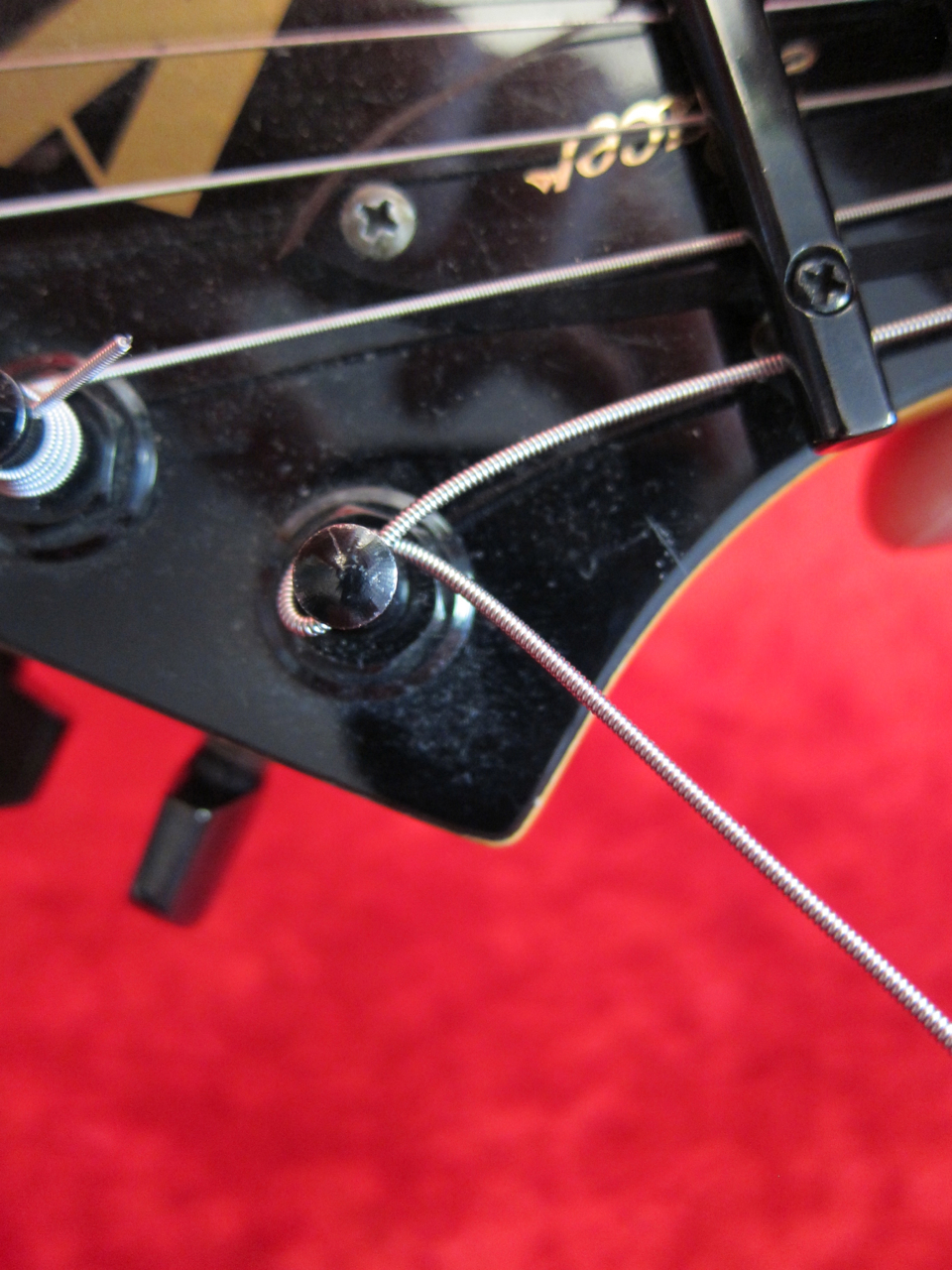
…vedetään viritintapin ympäri…
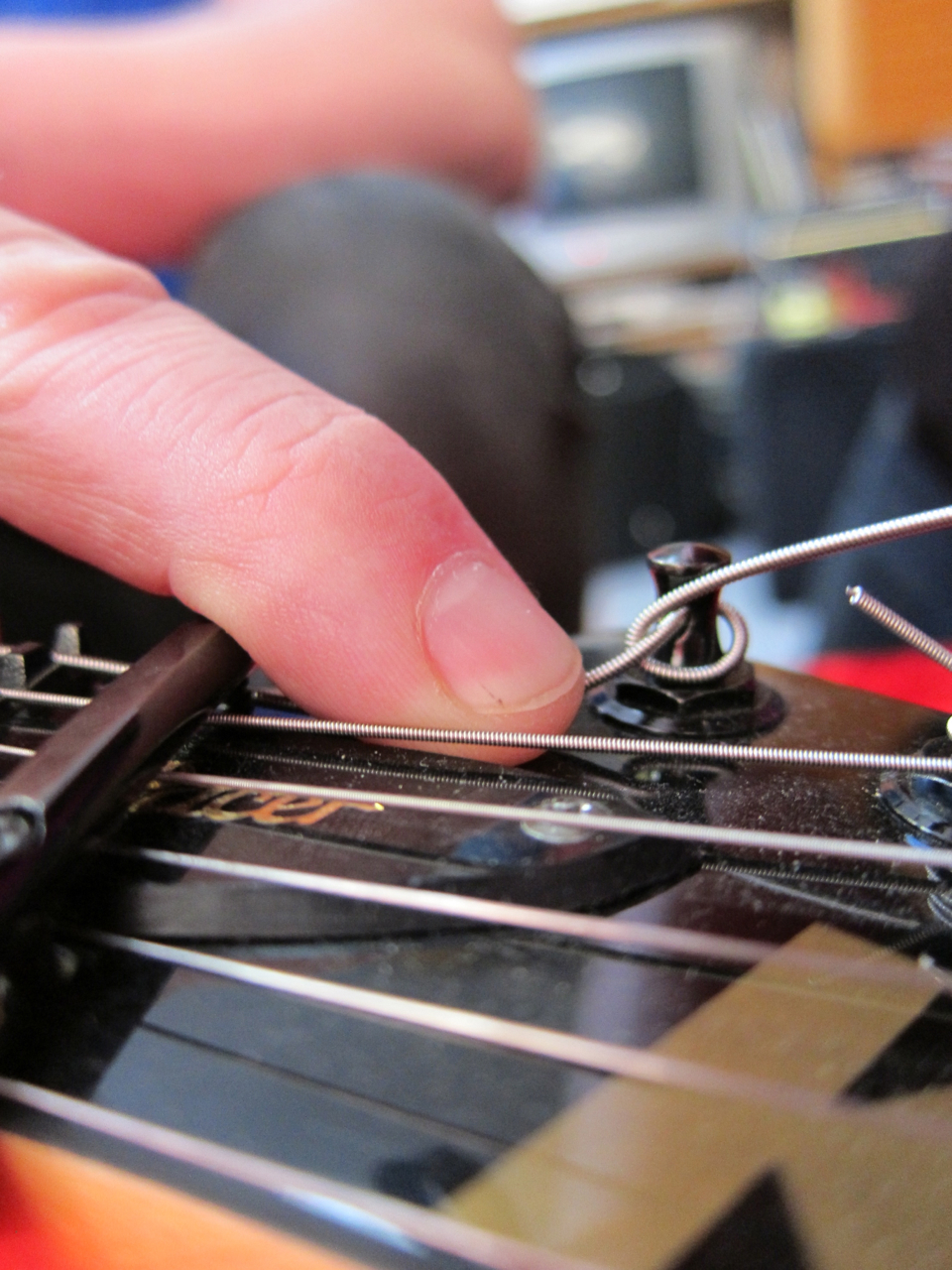
…ja lukitaan paikoilleen vetämällä sitä rungosta poispäin.

****
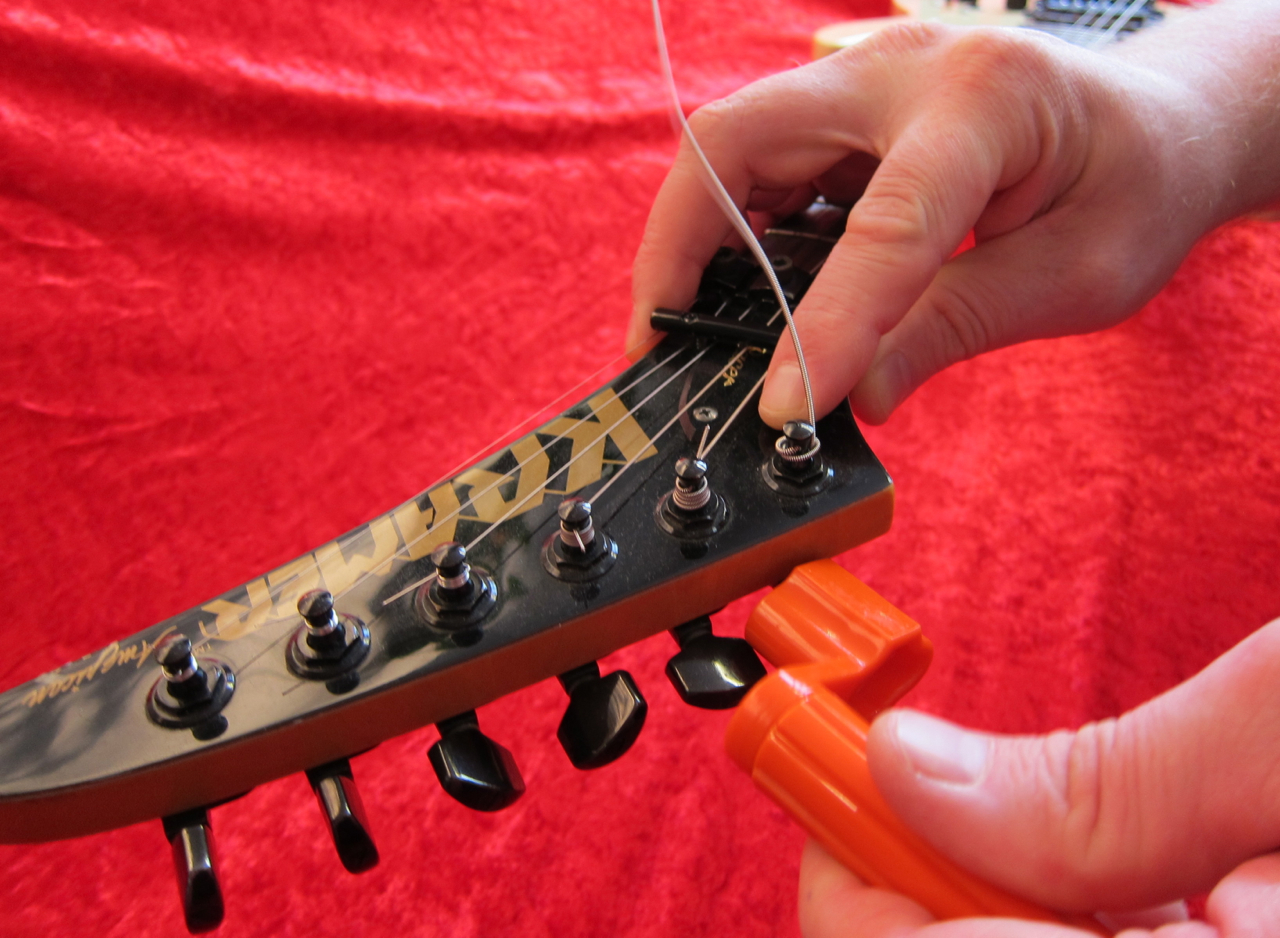
Yksi käsi painaa kielen alas, kun toinen kiertää sen kireäksi. Kielen pitää kiertää tapin ympäri ylhäältä yhä alemmas.

****

Suosittelen ylijäävän palan poistamista katkaisemalla sitä lähellä viritintappia. Sen jälkeen taivutan varovaisesti kielitynkän hieman kohti lapaa. Ole varovainen, katkaistu kieli on hyvin terävä!

****

Ennen kuin lukitset satulaa, kielet täytyy venyttää. Ensin viritetään, sitten venytetään…kuuden-kahdeksannen kerran jälkeen viritys pitäisi alkaa asettua.

Pidä venymisen ajaksi kielet alaspainettua ensimmäisen tai toisen nauhan kohdalla, ettei ne hyppii ulos satulasta.

Kun viritys pitää ja talla on oikeassa asennossa – tallan pohjalevy on paralleeli rungon pinnan kanssa – voi satulaa lukita.

Jos tallan tasapaino on häiritty, esimerkiksi eripaksuisen kielensatsin takia, täytyy ennen satulan lukitsemiseta säätää vibran jousia uudelleen. Vibrakolon jousipidikkeen asentoa säädetään uusiksi haluttuun suuntaan ristipääruuvarilla.

Eteneminen pienissä erissä on suositeltava, äläkä unohda jokaisen etapin jälkeen virittää kitaraa uudelleen.

****
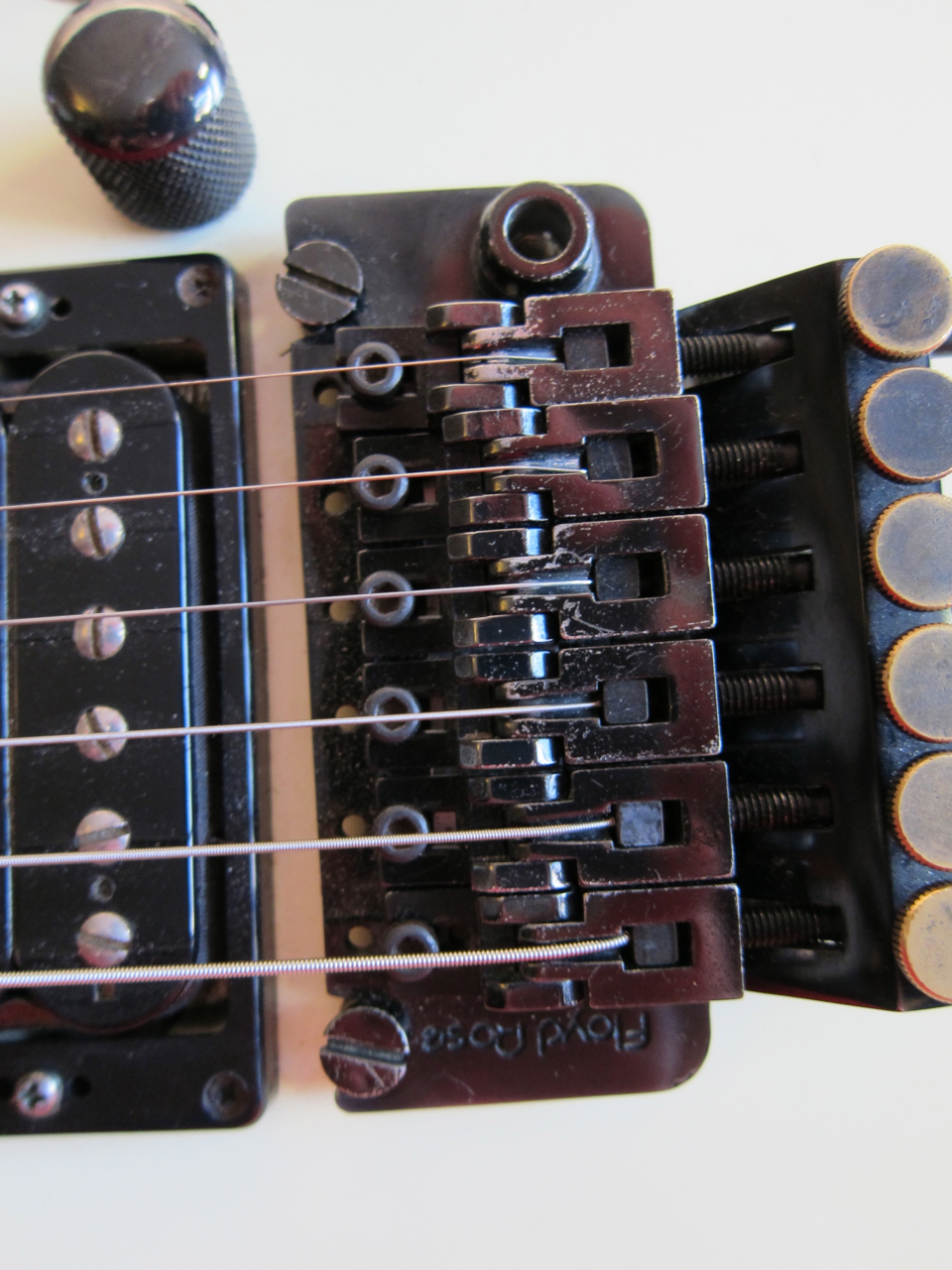
Viimeinen vaihe on intonaation tarkistus ja (jos on tarve) säätäminen. Intonaatiota tarkistetaan kitara sylissä soittamalla ensin avoimen kielen (tai kielen huiluääntä 12:n nauhan kohdalla) ja sen jälkeen kieli painettua alas 12:n nauhalla.

Valitettavasti intonaation säätäminen Floyd Rose -talloissa on hieman työläs homma. Kieli täyttyy löysätä taas kokonaan – siis satulalukko auki. Suoraan kielen alla, tallapalan edessä on pikkuinen kuusiokoloruuvi, joka pitää satulan paikoilleen. Avaa ruuvia ja työnnä satulan haluttuun paikkaan. Laita ruuvi kiinni, viritä uudestaan ja tarkista intonaatio uudelleen.

Jos alaspainetun kielen sävel on matalampi kuin tavoitettu sävel, tallapalaa täyttyy säättää lähemmäksi tallamikrofonia.

Jos alaspainetun kielen sävel on korkeampi kuin tavoitettu sävel, tallapalaa täyttyy säättää tallamikrofonista poispäin.

Floikassa on muuten kolme kierteellä varustettua reikkää jokaista intonaatioruuvia kohden. Jos yhdeltä paikalta säätövaraa loppuu, voi siirtää ruuvin parempaan paikkaan.

***

Kuvattu 1980-luvun Kramer Pacer Custom II oli lainassa Tommi Posalta – kiitos!

NAMM 2012 – Fender Mustang Floor -efektilauta

Fender on tuonut markkinnoille ensimmäisen digitaalisen multiefektilaudan – Fender Mustang Floor.

Mustang Floorin FUSE-aivot on siirretty suoraan digitaaliselta Mustang-vahvistinsarjalta. Laite tarjoaa 12 vahvistinmallia, 37 efektejä, ja 100 muistipaikkaa omille luomuksille.

USB:n kautta voi ohjelmoida kaikki laudan parametrit helposti tietokoneella, ja lisäksi portti mahdollistaa myös laudan käyttöä ääni-interfacena.

Tässä mainio video Premier Guitarilta:

Sound-Inn Soitinmessut Lahdessa

Sound-Innin väki järjesti tänään soitinmessut omissa tiloissaan Lahdessa.

****

Esillä olivat Sound-Shopin, Soundtoolsin, SMI:n ja Studiotecin uutuustuotteet:

Dean– ja G&L-soittimet.

****

Mayones– ja Dean-kitarat.

****

Lisää Sound-Shopin tuotteita: Diago-pedaalilautoja, Taurus-pedaaleja sekä Clayton-hoitotuotteita.

****

BBE:n pedaaleja.

****

Bullet Cable -johtoja.

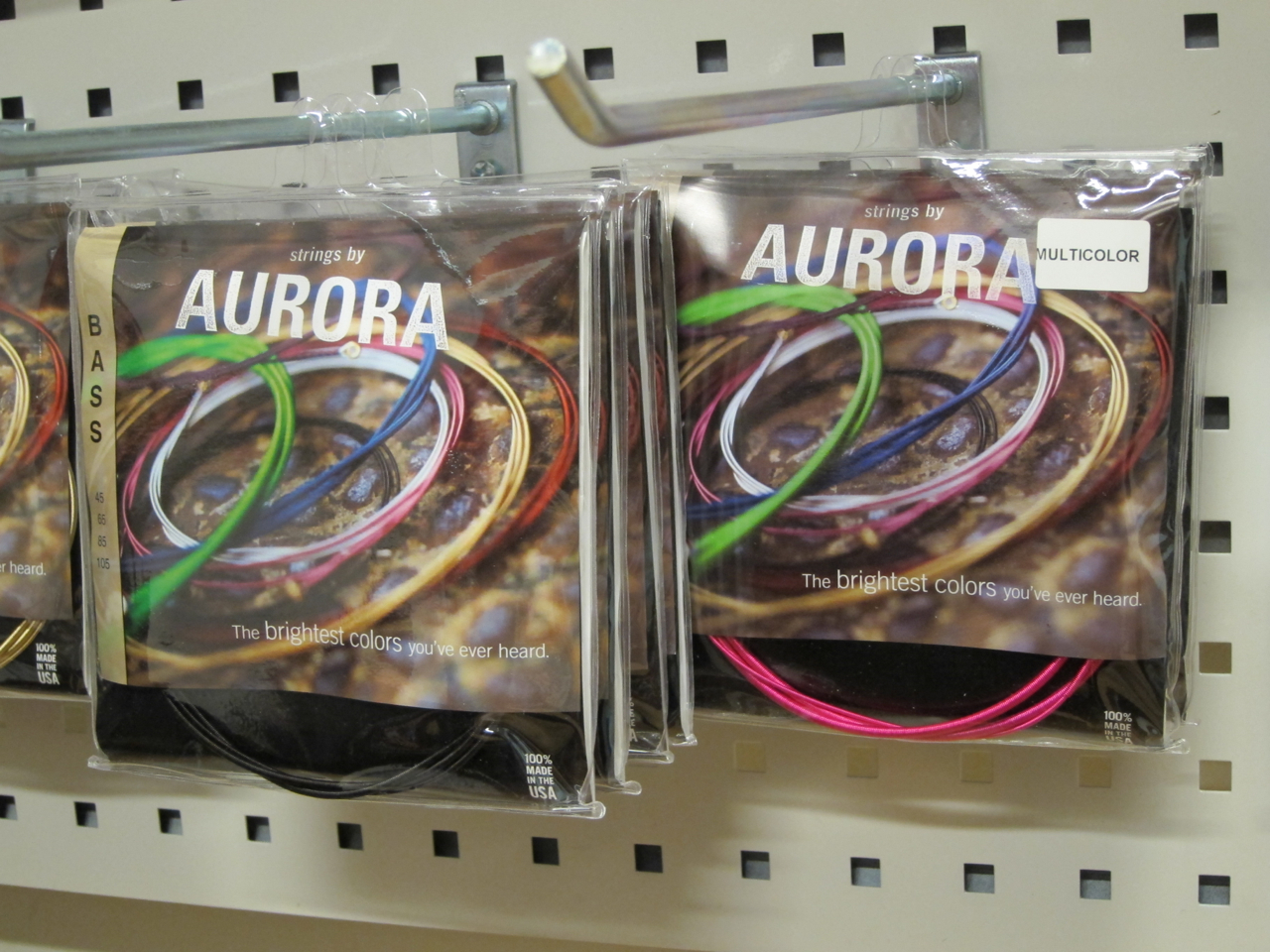
Värilliset Aurora-kielet.

Tämän tyylikkään G&L ASAT -kitaran runko on veistetty korina-puusta.

****

Luonnollisesti oli mahdollista kokeilla kaikki esillä olevat uutuudet rauhassa:

****

Jan-Olof Strandberg esitteli EBS-pedaaleja, sekä TC Electronic– ja Ampeg-vahvistimia…

…sekä piti oman bassoklinikan.


****

Tuotepäälliköt Topi Suuronen ja Perttu Siren esittivät Studiotecin tuoteuutuudet:

Changing strings – Floyd Rose -equipped guitars

Photos: Miloš Berka

****

Here’s what you need:

A pack of strings, a wire cutter, a tuner and a guitar lead. A cheap plastic crank speeds up the whole process of string winding.

Most important of all are allen/hex keys in the correct sizes. Note that US-made Floyds tend to use imperial (inch-sized) keys, while most licensed vibratos (for example Schaller and Gotoh) use metric (millimetre) keys. Never, I repeat, never use the wrong type of hex key, as it will ruin the bolts in no time!

A metal ruler comes in handy for measuring the action at the 12th fret before you start. If you take down these measurements it will be easy to readjust your guitar’s action, should the need arise, due to the new string set differing in gauge compared to the old set.

****

Because a double-locking vibrato is such a finely balanced affair, I’d recommend changing strings one at a time – starting with the low E-string and working my way up to the high e.

Taking all strings off at once will push bridge’s locking screws into the face of the guitar, leaving nasty marks. Furthermore removing the string-pull completely may cause the bridge plate’s knife-edges to jump out of their grooves in the height-adjusting posts, and getting the bridge back in place without damage is a nightmare.

If you need to remove all strings – for example to clean and oil the fingerboard – keep the vibrato in place by placing a suitably sized cushion/protector (cork, wood, stiff foam) between the locking screws and the body face before you slacken the strings. Don’t push the cushion in too deep or you might bend the steel leaf springs, which counterbalance the fine-tuners (look at the fine-tuner picture further down).

****

We start here, at the locked top nut.

Open the string lock using the correct hex key.

Remove the lock and bolt and put both away safely.

A well-installed Floyd Rose nut should look like this: The strings rest firmly against the whole surface of the metal top nut.

On some cheaper guitars the part of the string that’s facing the tuners may be lifting off slightly. Per se this is not a real problem, you only have to factor in that the string’s pitch will rise noticeably when you tighten the lock.

****

Slacken the string completely.

****

This is what the bridge looks like. The strings are locked in their respective bridge saddles with the long bolts protruding at the back of the bridge.

Different versions can have the fine-tuners – the knurled, upward-facing screws – in a slightly different position, but the principle is the same cross the board.

Open the string lock using the correct hex key. All you need is a gap wide enough for the old string to come out and the fresh string to go in.

Remove the old string.

****

Putting a new string on starts at the bridge on Floyd Rose -equipped guitars.

Snip the ball-end off (mind your eyes), then insert the string as deep as it will go into the bridge saddle and lock it in place (in the reverse process of the removal).

Make sure to set the fine-tuner to about halfway. This will give you enough leeway for tuning.

****

Insert the string…

…pull it around the post…

…and lock the string in by pulling it up away from the body.

****

Keep the string pressed downwards, while you’re turning the crank. Each new winding should pass under the one before it.

****

I’d recommend cutting off the surplus string in close proximity to the tuning post. Then I bend the stub down towards the headstock face. Be careful, a cut off string is very sharp!

****

Before you lock the top nut it is vital to thoroughly stretch the string. It works like this: First you tune to pitch using the tuner on the headstock, then you stretch each string, and retune again. Once you’ve repeated this process six to eight times, you should be ready to go.

Your fretting hand should hold down the string you’re stretching at the first or second fret to keep the string from jumping out of the top nut.

When the tuning is settled and the vibrato is in the right position – meaning its baseplate is parallel to the body – you can lock the top nut.

If the vibrato’s equilibrium has been upset by changing the string gauges you will have to readjust the vibrato springs (in the back compartment) by moving the spring claw with a Phillips-head screwdriver.

Move the spring claw in small increments, then retune the guitar and check if the vibrato is now parallel with the body’s top. Repeat this if necessary.

****

The last stage should be checking and resetting the guitar’s intonation. Always check your intonation with the guitar in playing position, by comparing the correctly tuned open string (or its 12th fret harmonic) to the fretted pitch at the 12th fret.

Sadly, intonation adjustment on Floyds is a pain in the proverbial: You have to completely loosen the string, open the small hex bolt that locks the saddle’s intonation (directly underneath the string), and then push the saddle manually to the desired new position. Then you lock the saddle in its new position using the correct hex key, retune and check again for correct intonation.

If the fretted note is flat (its pitch too low), you need to adjust the bridge saddle closer to the bridge pickup.

If the fretted note is sharp (its pitch too high), you need to adjust the bridge saddle further away from the bridge pickup.

Note that the bridge plate has three tapped holes for each intonation bolt. If you run out of space you have to completely remove the bolt and move it to a hole that will work with the saddle’s new position.

***

Thanks to Tommi Posa for the loan of his vintage 80s Kramer Pacer Custom II!

Kurt tuli takaisin // Kurt’s back – Fender Kurt Cobain Mustang

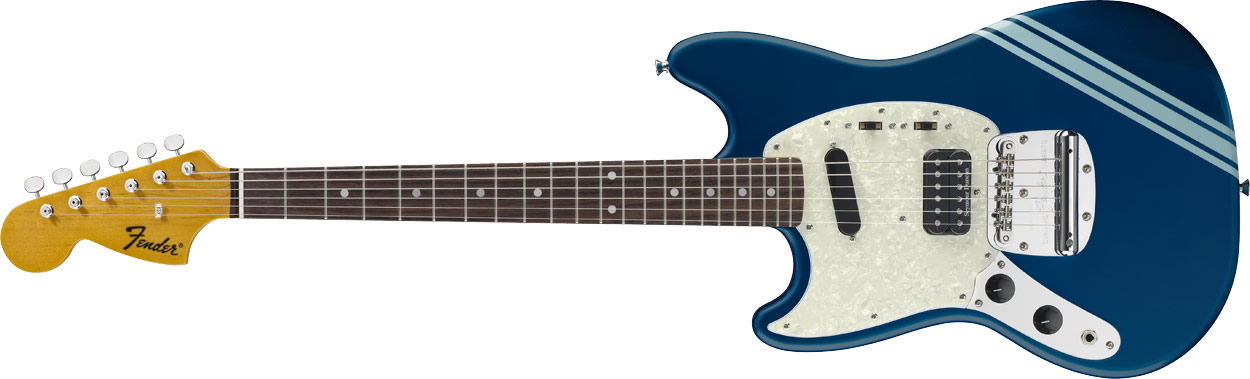
Tähän mennessä Nirvanan edesmennyttä keulahamoa, Kurt Cobain, on muistettu ainoastaan kummallisella Jagstang-kitaralla sekä erittäin kalliilla Custom Shop -kitaralla.

Nyt fanit saavat vihdoin autenttisemman Cobain-mallin: Fender Kurt Cobain Mustang.

Uusi kitara on kopio Cobainin päätyökalusta – Fenderin lyhytmensuurinen Mustang modattu Seymour Duncan -tallahumbuckerilla (JB Model).

Malli on saatavilla sekä oikea- että vasenkätisenä (ilman lisämaksua).

Until now Nirvana’s late frontman Kurt Cobain had only been honoured with the strange Jagstang-mongrel and the short run, expensive Custom Shop model.

But here’s something authentic for the fans: The Fender Kurt Cobain Mustang.

The new model is a copy of Cobain’s main tool – a short-scale Fender Mustang souped up with a Seymour Duncan JB humbucker.

The guitar is available in right- and left-handed versions (no additional charge).

****

Makea uusinta Gibsonilta // Sweet reissue from Gibson – ES-330

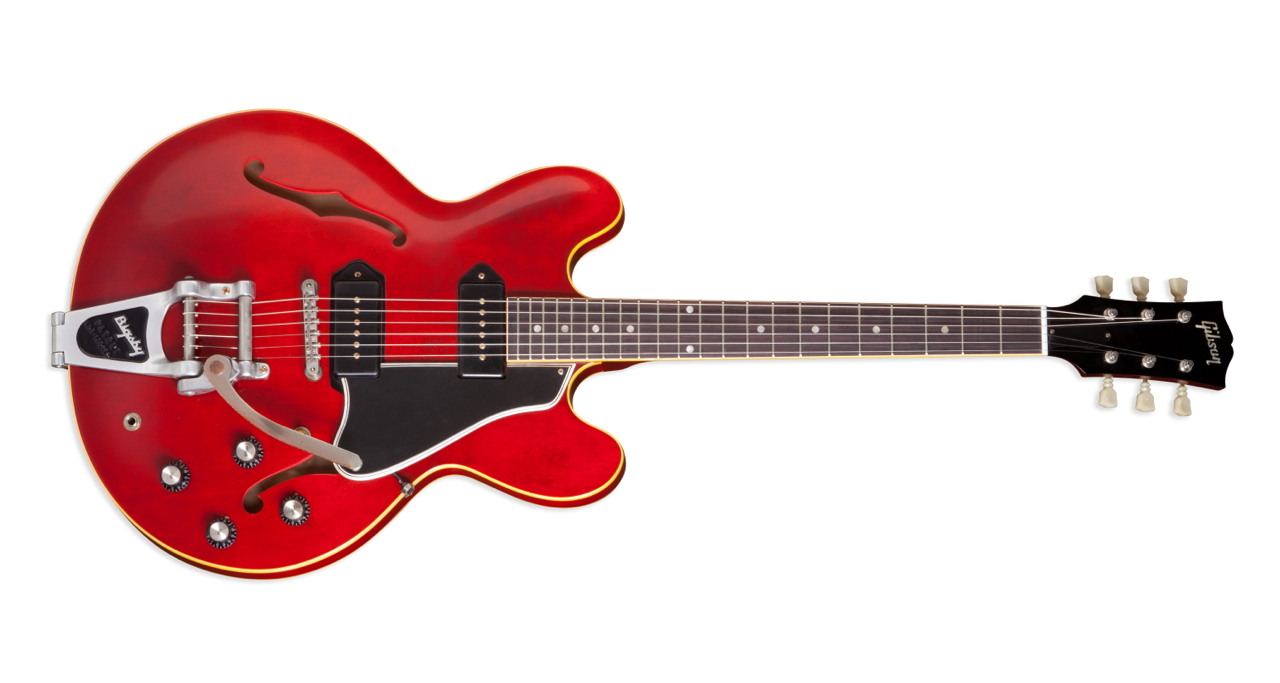
Gibson on laittanut vanhan klassikkonsa ES-330 uudelleen tuotantoon.

ES-330:lla on sama ohut vanerirunko kuin esimerkiksi ES-335, mutta ilman keskipalkkia, minkä takia kaulaliitos on tässä jo 16. nauhan kohdalla.

Mikrofonivarustus on sekin klassinen: kaksi Alnico II -magneetteilla varustettua P-90-mikkiä.

Malli on saatavilla sekä Bigsbyllä että tavallisella trapetsilla varustettuna.

****

Maahantuoja: Into-Luthman

Gibson has chosen to re-release its classic ES-330-model.

The ES-330 shares the ES-335’s thinline plywood body, but is fully hollow (no centre block), which is why the neck joint is already at the 16th fret.

The pickups in this reissue are a pair of Alnico II -equipped P-90s.

The models is available with a Bigsby or with a trapeze tailpiece.

****

What do the terms ”Gibson 50’s neck” and ”Gibson 60’s neck” mean?

When Gibson overhauled their very successful Les Paul Standard -guitar about ten years ago, it was decided to offer the model with two different neck profiles.

Most Gibson-fans agree that the best Les Paul necks were the ones on the original Sunbursts, produced from 1958 to 1960:

• In 1959 the neck profile was a well-rounded, but not too big D-shape

• In 1960 the profile was changed to a flatter and thinner shape, resulting in a C-profile

These two neck profiles are today represented in Gibson’s 50’s- and 60’s-necks. Their cross-sections look something like this:

****

As most things in life, Gibson’s neck profiles aren’t as simple a matter as the company’s terminology will have us believe:

• The ”50’s neck” should really be called a ”1959”-profile, because earlier in the Fifties Gibson-necks were much fatter.

• The ”60’s neck”, on the other hand, is really an ”early 60’s”-profile, as the company moved on to an even flatter – as well as narrower – profile in the latter part of the Sixties.

But still, Gibson’s current 50s/60s-terminology works well with most players when talking about neck shapes.

****

Gibson’s newest feature on some models is an asymmetrical neck profile, which has a fuller bass side and a thinner treble side.

Pidä blogia WordPress.comissa.

Ylös ↑