


Contact: Halla Custom Instruments
Kitarablogi.com – Finland's premier Guitar and Bass blog
Juttuja kitaroista ja bassoista

****

We’ve all seen the memes on social media, haven’t we? And let’s be honest – there’s plenty of truth in them!
Many – if not most – of us guitarists seem to have an annoying tendency to want to amass a wide selection of instruments and/or effect pedals and/or guitar amps for personal use. This gear lust, which often leads to crammed living conditions, empty pockets, and considerable trouble with our significant other, is generally known as Gear Acquisition Syndrome, colloquially shortened to G.A.S. (or GAS).
It seems that GAS has become ever more prevalent over the last couple of (or three) decades, but the roots of this problem reach as far back as popular music and the advent of mass media.
****
The early days

It’s hard to pinpoint exactly the onset of GAS, but many people would agree that Gibson’s Nick Lucas Special signature model (first released in 1927) played a crucial part.
Nick Lucas (1897-1982) was an accomplished guitarist and popular crooner, whose biggest hits (in the late Twenties and early Thirties) coincided with the popularity of the radio and the wider availability of phonograph records.
The Nick Lucas Special was Gibson’s first signature guitar, laying the groundwork for the endorsement deals we’re familiar with these days. Apart from riding on an artist’s popularity, a signature guitar also tends to suggest to the guitarist that, were he (or she) to play this particular instrument, some of the magic (as well as the technical prowess) of the endorsing artist might rub off. In short, the message is ”buy this guitar, and you will become a better and more popular player!”
As most male guitarists not only care for their playing technique, but also for the opposite sex, becoming more popular always sounded (and still sounds) like a good idea.
The Fifties and Sixties – the guitar boom

During the first half of the 20th Century the guitar grew from a not-very-common, specialist instrument into a popular mainstream choice – not least thanks to Country music and the ”singing cowboys” featured on radio and records, as well as in the movie theatres.
But it was Rock ’n’ Roll that put the guitar in all its shapes on the top of the desirability list for masses of youngsters in the so-called Western World.
Yet, GAS wasn’t such a serious issue at that time, because musical instruments were outrageously expensive then, and some of the top US-brands almost impossible to get hold of in Europe.
Andy Babiuk’s fantastic book ”Beatles Gear” gives the reader a very good idea of how difficult it was for the guitarists of the late Fifties and early Sixties to even scrape together enough money to buy a single guitar (or amp). Owning multiple guitars was the privilege of the biggest stars only. Back in 1965 a new, baby blue Fender Stratocaster would have set you back around 3,000 euros in today’s money! This makes a current American Standard Stratocaster seem dead cheap at approximately 1,500 euros. And remember, back then there was no such thing as a quality (licensed) copy, and even substandard instruments from Eastern Europe weren’t really cheap (Harrison’s Czech-made Futurama cost him the better part of 1,200 euros in today’s money).
Still, young players were brand-conscious, at least to some degree, and lusting for the exact guitar they knew their idol was playing. Even if they couldn’t afford it…
They don’t make ’em like they used to

The transition of the plain old ”used guitar” to the ”vintage guitar” we all know today got to a start in the late Sixties, mostly fuelled by the two best-known brands – Gibson and Fender:
When flagging sales of the Gibson Les Paul prompted the company to scuttle the model in favour of the instrument we now know as the Gibson SG, nobody could have foreseen that the move would lead to the first run on a discontinued electric guitar model ever. Caused by the exposure given to the ”out of print” Les Paul Standard by the new wave of Blues players, spearheaded by Mike Bloomfield and Eric Clapton, many serious guitarists started actively searching for used Les Pauls. The fact that Gibson chose to reissue the Les Paul in the late Sixties, but failed to sense that the crowd lusted for the double-humbucker Burst (instead of the Goldtop and the Custom), quickly turned the original Standards produced between 1958 and 1960 into the stuff of legend.
Both Fender and Gibson became parts of large business conglomerates before the Sixties were over, and a feeling started to seep into the guitar community that the earlier instruments were of a higher quality than those produced under the new managements.
Big in Japan

The proliferation of reasonably well-made guitars from Japan – often dead-on copies of US classics – at reasonable prices was what truly kicked off the phenomenon we now call GAS.
For the first time amateur and semi-professional guitarists could afford to own more than a couple of guitars. Effect pedals, too, would start to benefit from Far Eastern efficiency and mass-production.
Many of the 1970s Tokai-, Ibanez- and Yamaha-guitars – as well as the earliest Roland/Boss-effects – are now considered vintage classics in their own right.

Licensed copies
The Eighties finally ”sealed our fate”, when it comes to GAS.
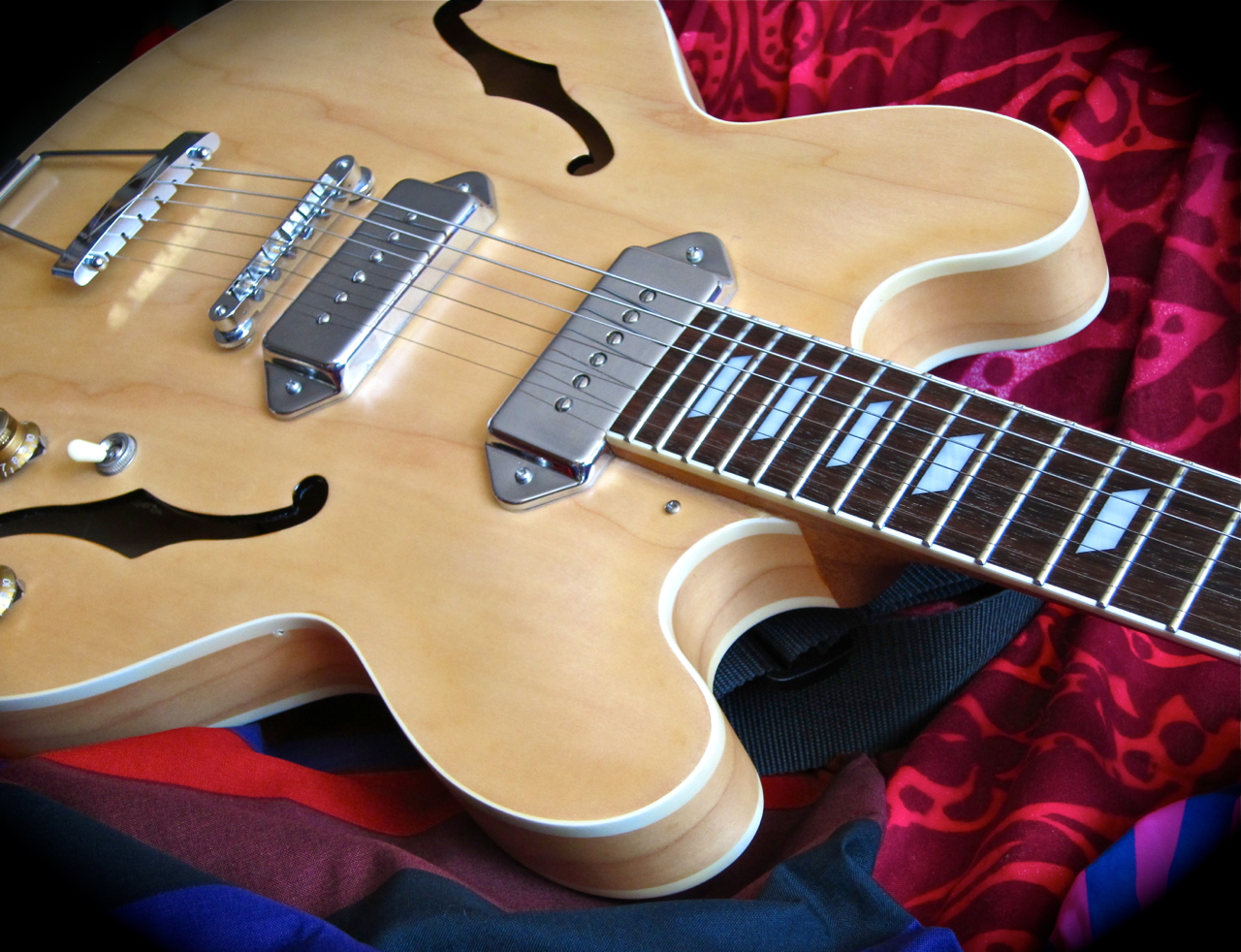
Many large brands started to release official (=licensed) copies of their own instruments in the 1980s, with the rest following suit in the following decades. Brands like Squier, Epiphone, or Sterling make it affordable to hoard instruments that offer at least some of the clout of their famous, upmarket brethren.

****

We are all different – we don’t all lust after the same guitars, and we don’t all accumulate gear for the same reasons or in the same way.
I think one could divide us Gassers up into five basic categories, according to how and why we ”simply have to have that guitar”.
1. The Fan
The Fan is a hardcore follower of one (or two) Rock bands (or guitar gods), and he (or she) focusses on acquiring as much of the gear used by their idol as humanly possible. The Fan hopes to come as close as possible to their idol’s famous guitar tone, and he/she wants to feel (and look) the way his (or her) idol does when playing those classic riffs and songs.
2. The Nostalgist
The Nostalgist comes from a similar place as the Fan, having a clear vision of what it is he’s looking for. But, instead of trying to relive a certain band’s or player’s tone, as the Fan does, the Nostalgist wants to reclaim the (his/her own?) past. The Nostalgist longs for the classic looks and tones gleaned off vintage equipment, the sounds of a cooler, more vibrant place than the current here-and-now. Some Nostalgists also buy all the stuff they wanted, but couldn’t afford to get, when they were young.
3. The Hunter and Gatherer
The Hunter and Gatherer simply loves to get new toys, especially when he can claim to have ”snapped up a real bargain”. These are the guys that constantly trail the Internet, on the lookout for something, anything really, that might whet their considerable appetite. Very often it doesn’t even matter if it is an instrument (or other piece of gear) the Hunter and Gatherer really ”needs”; as long as it’s cool and ”a bargain” it’s a viable acquisition.
4. The Specialist
The Specialist has a strong focus on one, two or three specific pieces of equipment, that he (or she) simply cannot get enough of. These are the guys who seem to have a perfectly good reason for buying several dozen Telecasters, or a whole flock of Fender Tweed-era amps – or maybe they zone in solely on gear manufactured during one specific year…
5. The Pragmatist
The Pragmatist comes over as very reasonable, even though he’s an addict like the rest of us. The Pragmatist tells his wife that he doesn’t yet own an archtop guitar with DeArmond pickups, but that he needs just such a guitar to complete his ”colour palette” or ”toolbox”. Some Pragmatists – like professional guitarists, studio owners, or guitar reviewers – can make a real art form of their Gassing, meaning it takes the unsuspecting wife years (if not decades) to see through this charade.

Naturally, things aren’t always as clear cut in real life as they might seem on paper. Most of us GAS-sufferers tend to display a mixture of two of three of the above GAS-categories.
****
Does owning more than one or two guitars have real advantages? If you ask me, my answer would be a resounding ”yes and no”!
The ”yes” part of my answer has to do with the fact that playing guitar (or bass guitar) is always a tactile experience. Different instruments have different neck profiles, they have different overall dimensions, different actions, different fret sizes, different fingerboard radii, and they simply smell and feel differently.
This is probably the main reason why we don’t all play Line 6 Variax guitars. They might be decent instruments with an astonishingly realistic array of different tones, but they completely lack the important tactile element that is so crucial in inspiring you to come up with different licks and different ways of approaching the guitar as an instrument.
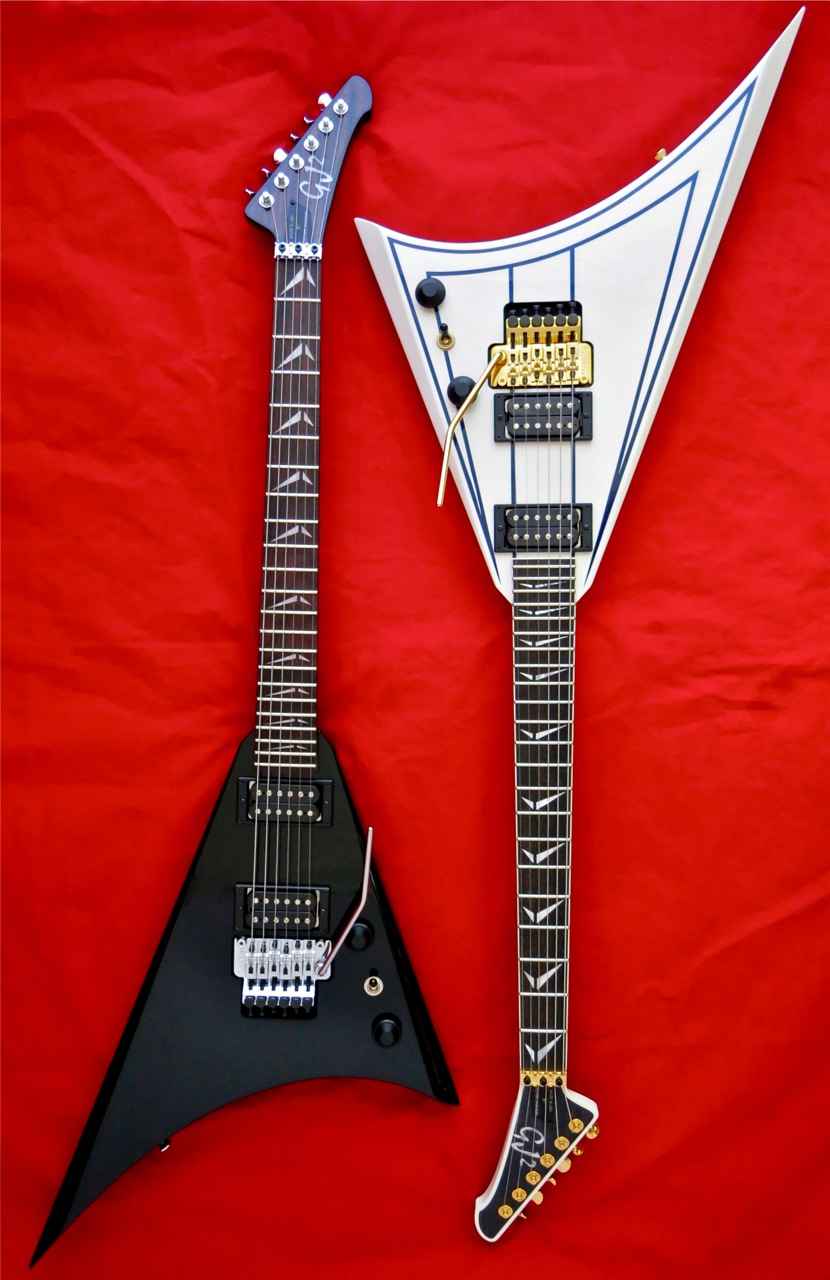
A big, fat Jazz box will make you play noticeably differently to a sleek Strat or SG, and the same holds true for the differences between, say, an ES-335 and a Floyd Rose-equipped Metal axe.
On the ”no” side of the equation, buying a new piece of equipment will surely inspire you, but it won’t automatically turn you into a ”better” guitarist. Even though it’s hard to admit, only regular practice will move you forward on the long and winding road to improvement.

****
In a way, we’re extremely lucky these days. There has never been a better time to be a guitarist than now. There’s an abundance of cool gear available, and much of it at rather reasonable prices.
The downside to this is, of course, that it’s so much easier to become a gear addict, because the price tag doesn’t necessarily act as much of a threshold, anymore.
Still, I tend to see the positive side of things, because the affordability of decent equipment makes it much easier for guitarists these days to try out different stuff on their way to finding the gear that’s most suitable for the music they make.


The Fuzz Guitar Show 2015 in Gothenburg (Sweden) runs May 9th and 10th, 2015.
Four Finnish brands garnered considerable interest at the show:

Juha Lottonen and Juha Rinne (Lottonen Guitars) are fast becoming the go-to guys for small-bodied Folk and Blues guitars off the beaten path.
Lottonen Guitars mostly use alder (!) for their necks, as well as birch for many of their backs and sides.

Lottonen employ different bracing patterns and bridge designs to achieve a multitude of different guitar timbres.
Eric Bibb is the most famous Lottonen user.

Fingerstylists and Blues-pickers simply can’t get enough of the Lottonen tone.

Tyyster Guitars’ dynamic duo and their mouth-watering metal-bodied guitars.
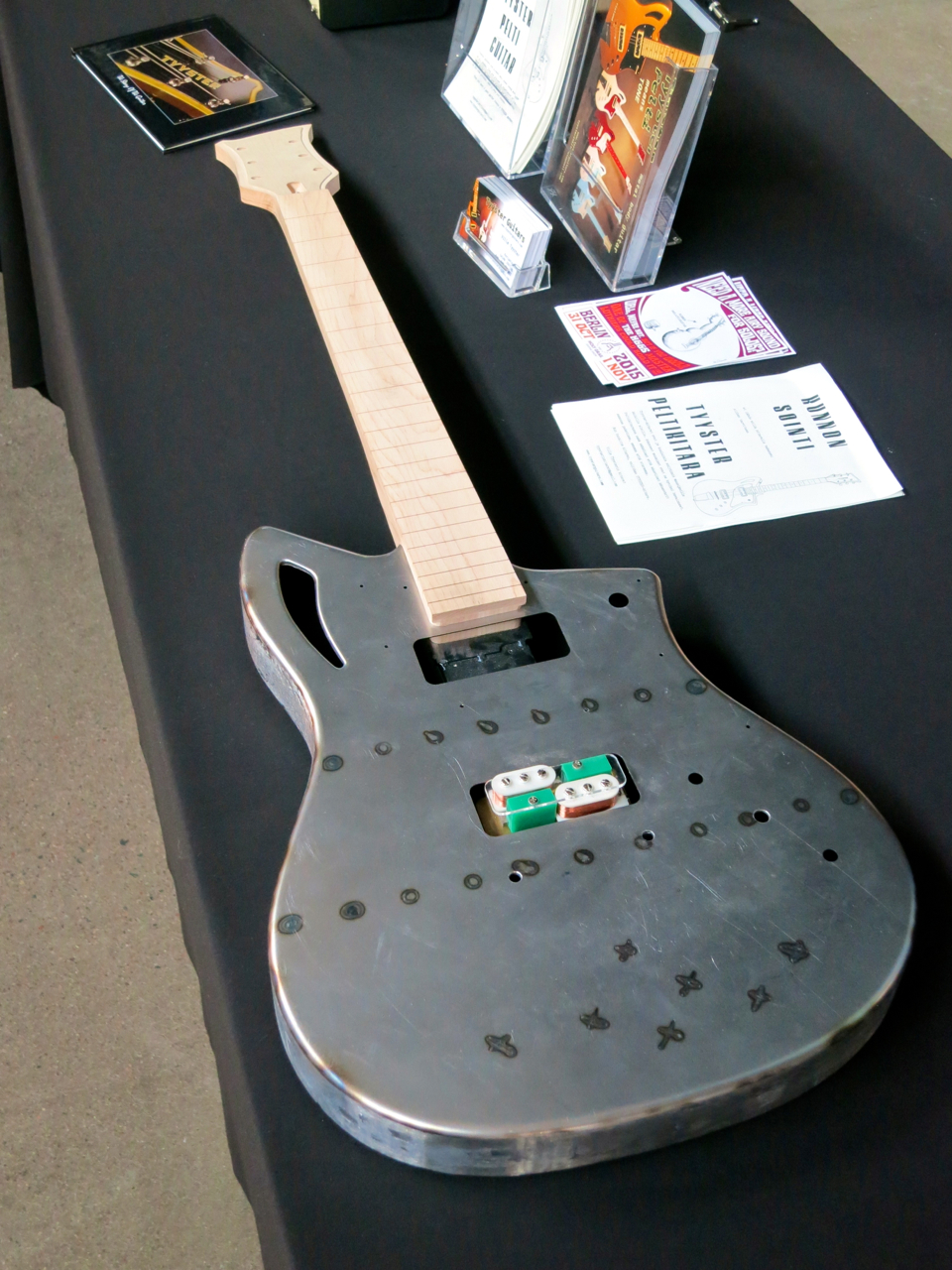
Ville Tyyster brought along an unfinished guitar to give you an idea of what goes into the making of a Tyyster Pelti.
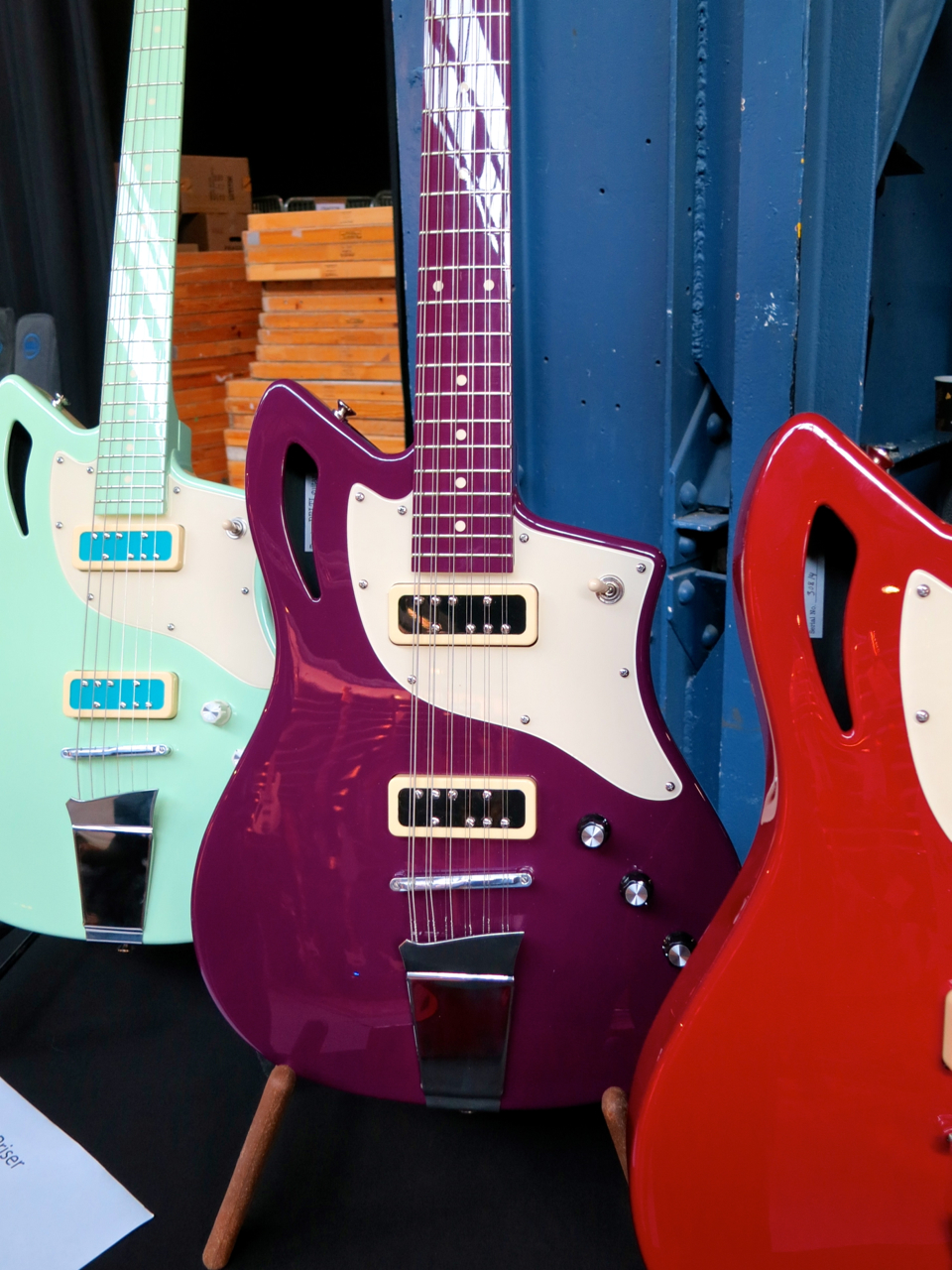
Tyyster’s clear lines and cool colours whet your appetite. Their playability and sound will make you want one!

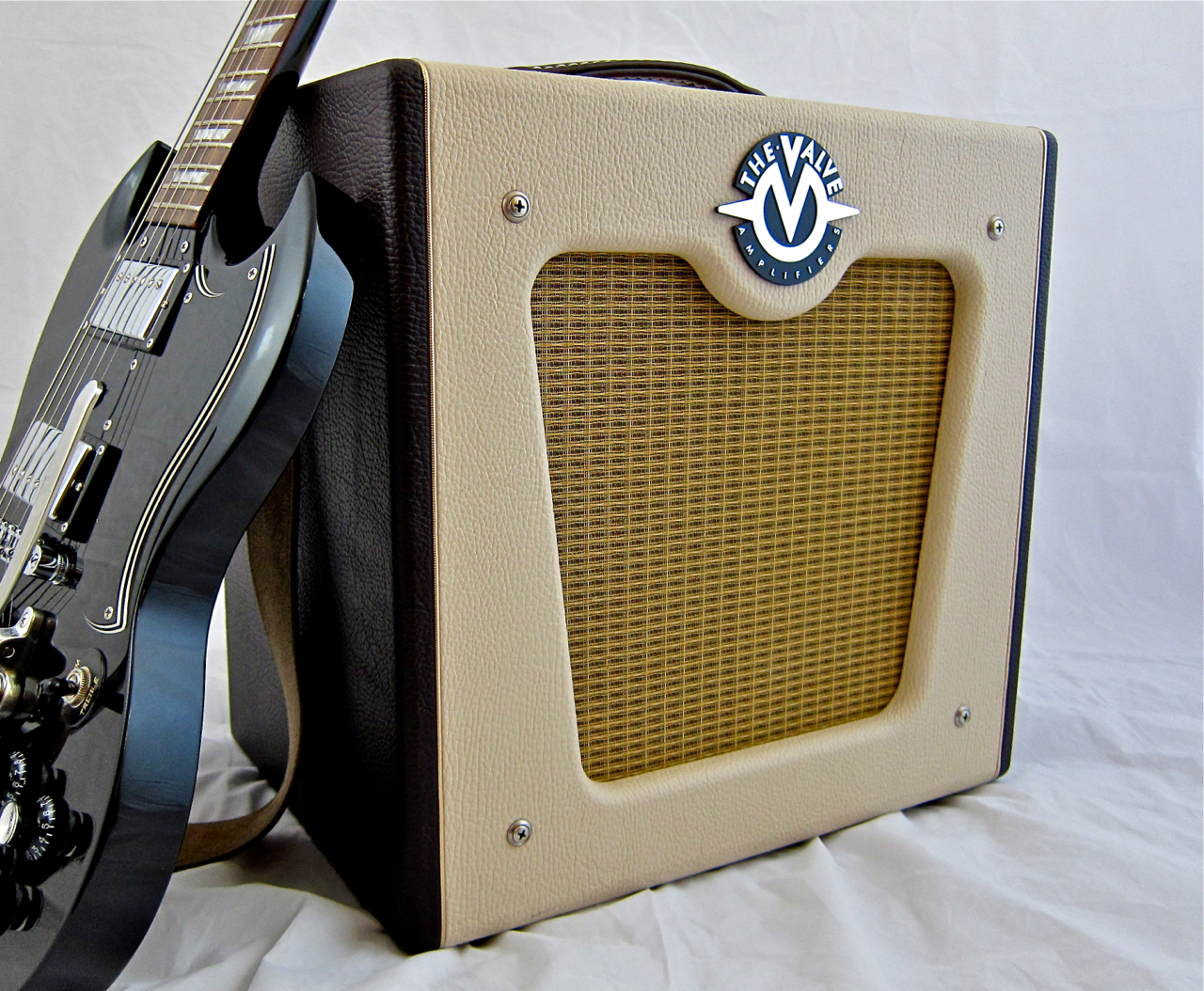
Kari Nieminen’s tasteful Versoul Instruments have found their way into the hands of many serious guitar collectors and guitar heroes alike (Ron Wood, Billy Gibbons, just to name two in a long list).

This salmon skin-covered 4-watter was definitely one of the show stoppers at this year’s Fuzz.
The all-valve combo can be modified to the user’s requirements by changing the tube types.

…and if you have a salmon-skinned amp, you will need the matching, breathtakingly beautiful Versoul Guitar, too!


Amp and effect specialists Mad Professor were represented at Fuzz by their Swedish distributors.

For more Fuzz Guitar Show pictures visit Kitarablogi’s Fuzz 2015 page.

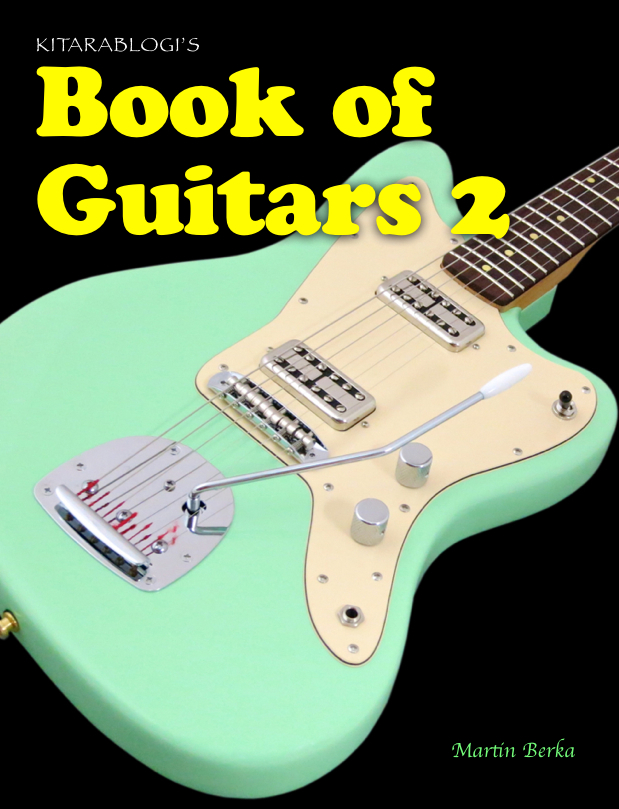
Download your FREE Apple iBooks-version of Kitarablogi’s brand-new electronic book using this link:
Kitarablogi’s Book of Guitars 2
(You don’t need to have a Dropbox account to download – simply close the Sign In-window!)
An Android-compatible PDF-version will be released in early May.
****
Lataa itsellesi nyt ILMAISEKSI Apple iBooks -versio Kitarablogin uudesta e-kirjasta tästä linkistä:
Kitarablogi’s Book of Guitars 2
(Voit imuroida tiedoston myös ilman omaa Dropbox-tiliä – klikkaa yksinkertaisesti Dropboxin Sign In -ikkuna pois!)
Android-yhteensopiva PDF-versio ilmestyy toukokuun alussa.


Yamaha has recently upgraded its very successful L-Series of steel-string guitars.
The most important update, at least in terms of sound quality, is the use of A.R.E.-treated spruce tops across the whole range of models. Yamaha’s proprietary Acoustic Resonance Enhancement is a wood treatment that uses heat, changes in humidity and pressure, to artificially age tonewoods. The aim is to produce brand-new acoustic instruments, which sound played-in from the get-go.
L-Series guitars come in three body sizes – LJ (Medium Jumbo), LS (Small Body = Folk-sized) and LL (Original Jumbo = Dreadnought-sized).
Kitarablogi had the pleasure to take a Yamaha LL6 ARE (current price in Finland: 534,90 €) for a spin.
****

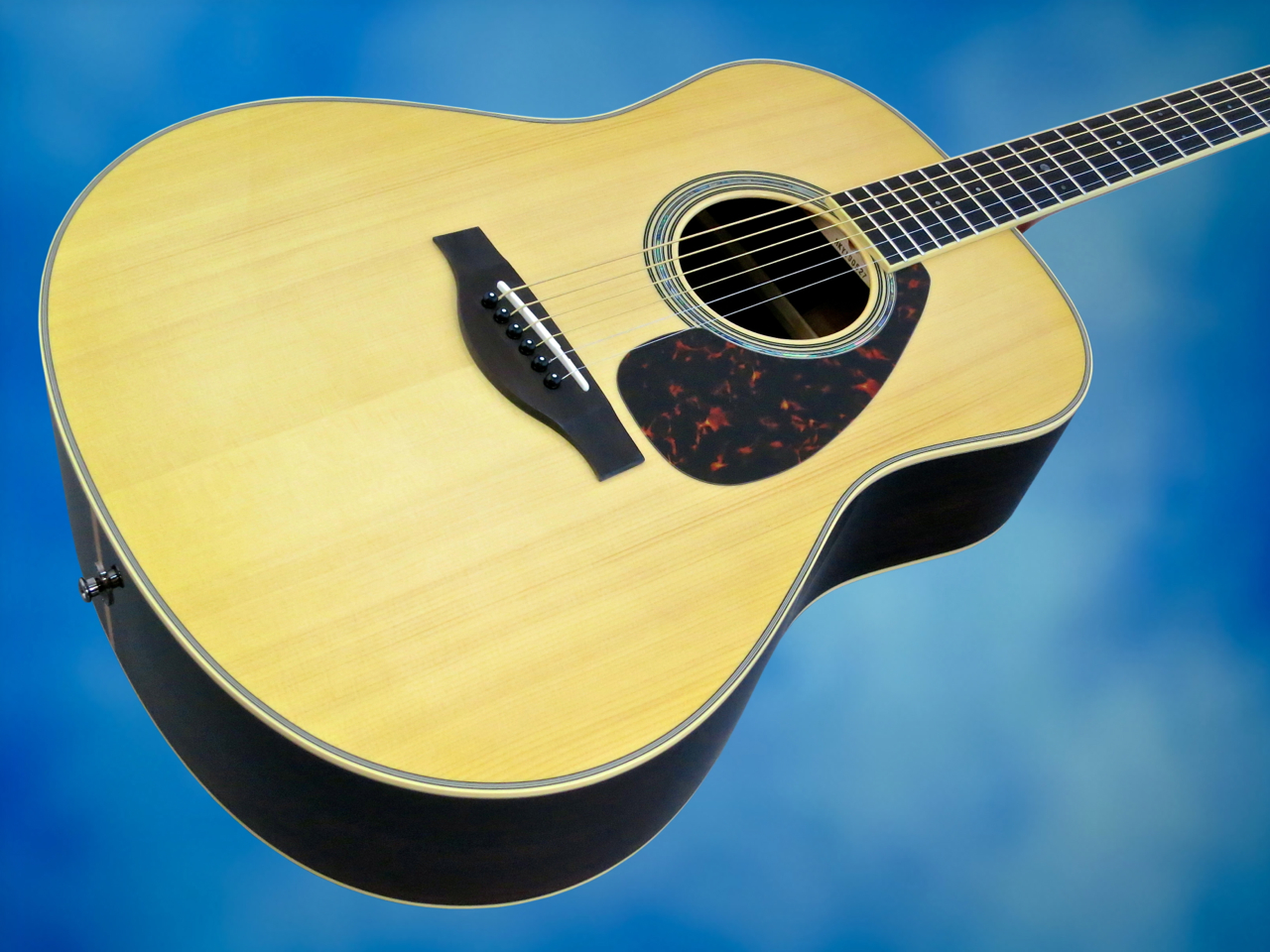
Yamaha’s Original Jumbo body style is the company’s own design, set apart from a traditional Dreadnought by its slimmer shoulders and its more rounded lower bout. The result looks nicely balanced.
Yamaha uses solid Engelmann spruce for all of their L-Series tops. Engelmann spruce has a reputation for sounding warmer and less constricted, when compared to Sitka spruce.
The LL6 is available in four different finishes – natural, brown sunburst, black and Dark Tinted (a deep reddish-brown hue).
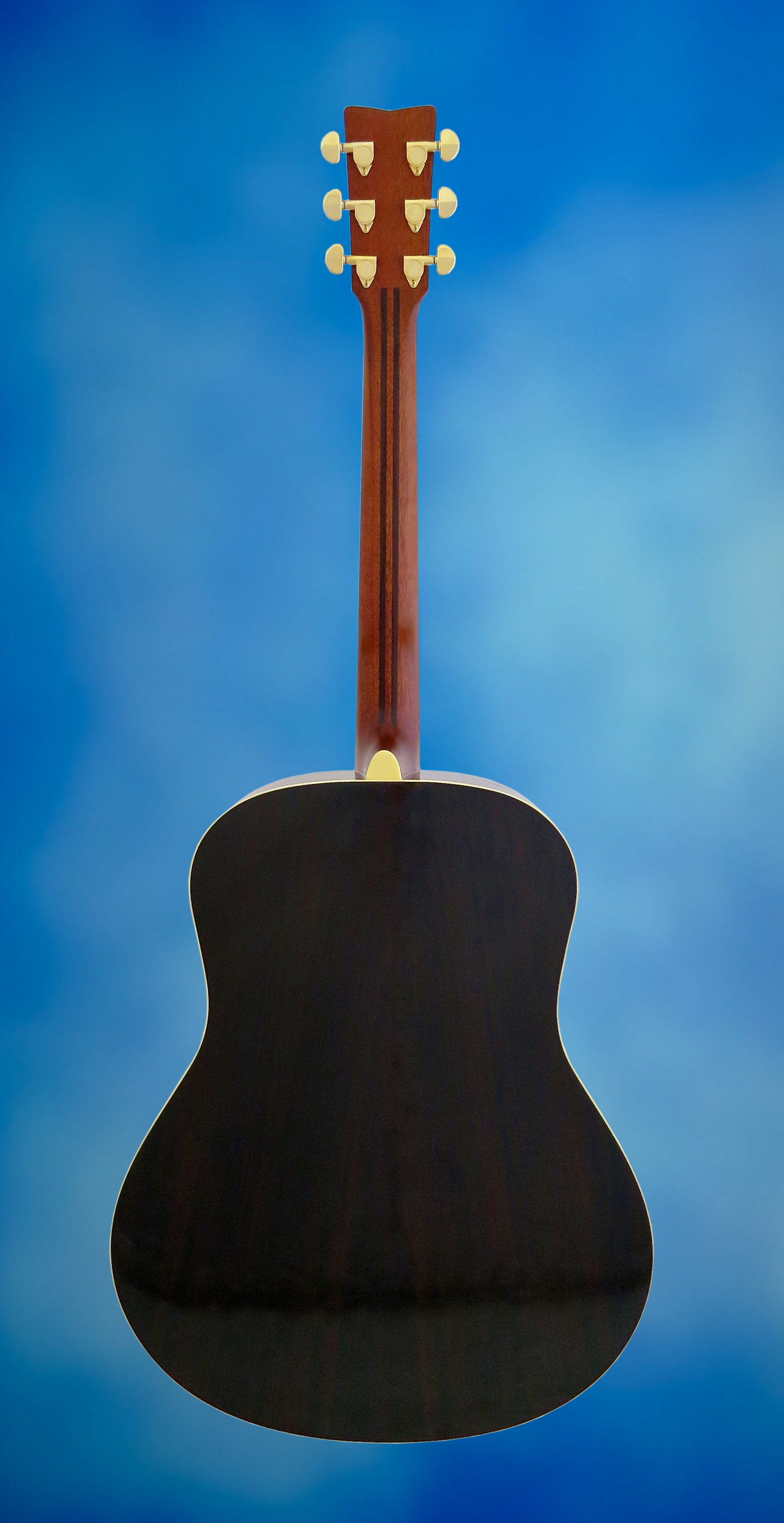
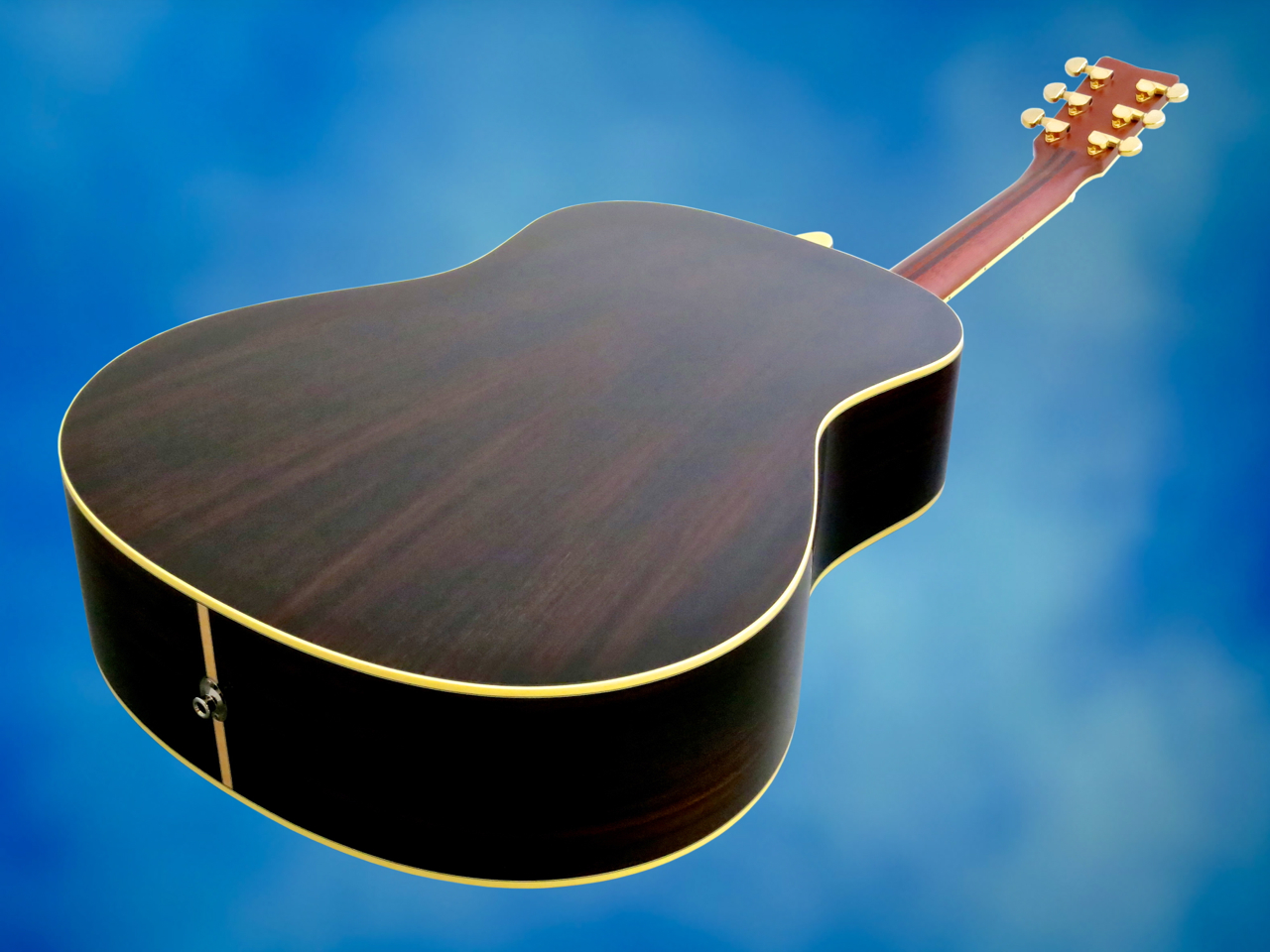
The Yamaha LL6’s sides and back are made from beautifully grained laminated rosewood. There’s a mahogany backed version available, too, the Yamaha LL6M ARE.
The guitar’s body has received a gloss finish, while the back of the neck sports a thin satin finish.

The bound headstock is home to a set of TM-29G tuning machines.

All new L-Series instruments come with five-piece necks. In the LL6’s case this means three pieces of mahogany with two strips of rosewood sandwiched between them. The idea behind this type of construction is to add stiffness to the neck, and thus sustain.
The LL6’s headstock and neck heel are crafted from separate pieces of mahogany, which are then glued to the main part.

The quality of the fretwork on this Yamaha is very good.
Another new feature across all L-Series models are rolled-in fingerboard edges for an even more comfortable playing experience.

Yamaha uses a modified type of non-scalloped X-bracing on all L-Series tops, which is meant to add a healthy dose of punch and warmth into the mix.

The centre ring of this beautiful soundhole rosette has been crafted from genuine abalone shell.
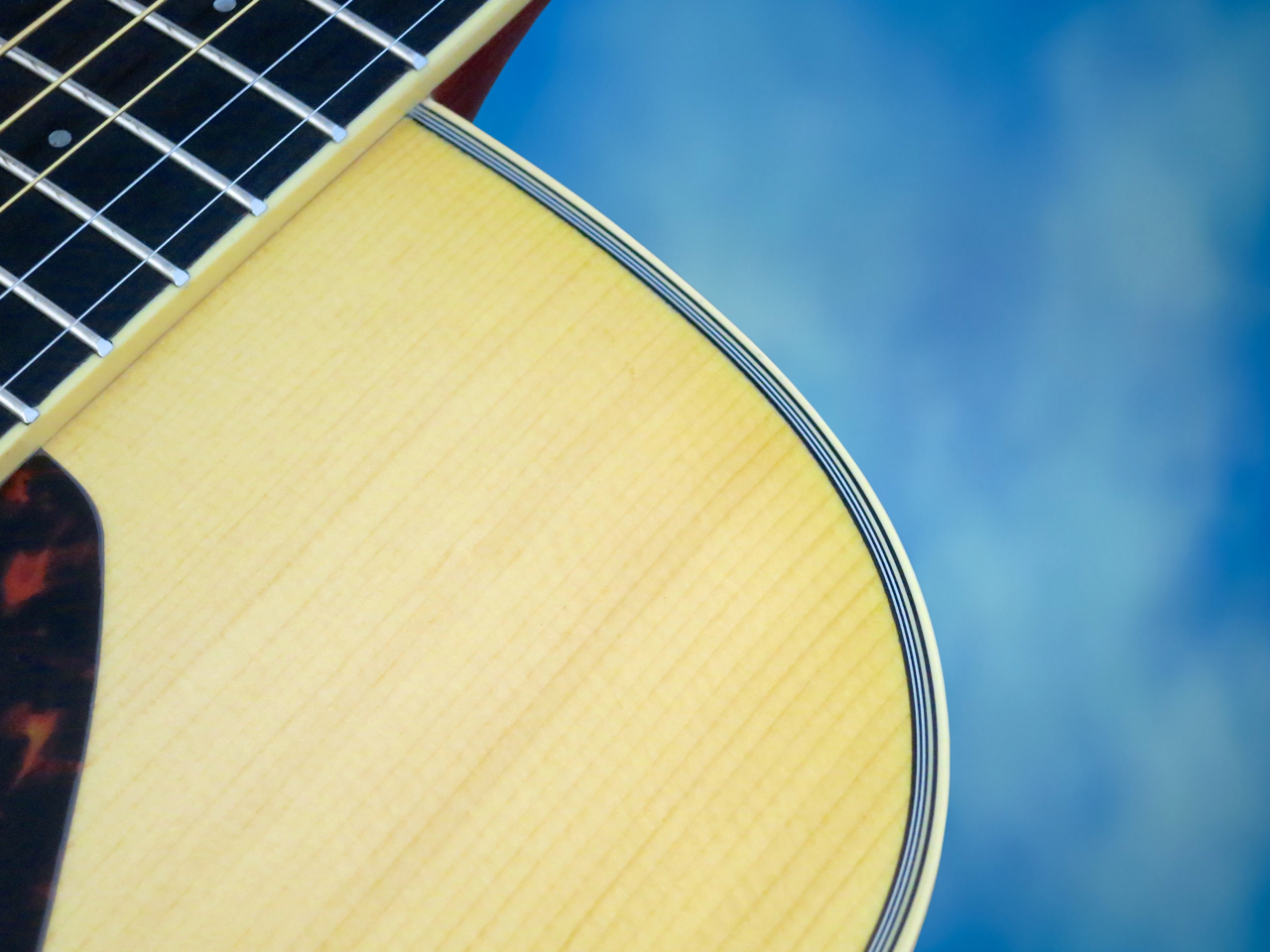
There’s multiple binding on the Yamaha’s top, as well as single ply cream binding around the back.

The LL6 comes with a Yamaha SRT Zero Impact piezo pickup hidden beneath its compensated bridge saddle.

As the main focus of the LL6 lies on its acoustic performance, Yamaha wanted an unobtrusive pickup system without the need for an on-board preamp or a battery compartment. This is why the LL6 comes equipped with a passive pickup that is wired directly to the output jack.

Yamaha’s LL6 ARE is sold in its own soft case, which is a nice hybrid of a gig bag and a hard case.
****

It speaks volumes about Yamaha’s high standards of craftsmanship, as well as the company’s stringent quality control, when the importer’s product specialist takes you to the warehouse, and simply hands you an untouched shipping carton, without even opening it. His only question was: ”Which colour would you prefer?”
And, judging from the review guitar, this trust in Yamaha’s quality control seems totally justified. When I opened the soft case I found a great instrument in fine fettle.
The neck’s new-and-improved oval C-profile feels fantastic, and the nut width of 44 mm offers enough room for complex fingerings. Yamaha have gone for a good working compromise at the bridge, too, with an E-to-e-string spacing of 55 mm, that most strummers and fingerpickers will get to grips with nicely.
The playability was first rate (remember this is a sub-600 € guitar):
The action with the factory-installed 012-gauge set was really comfortable (string height at the 12th fret: low E – 2.1 mm/high e – 1.6 mm), and the guitar played beautifully, without any rattles or buzzes whatsoever.
It’s virtually impossible to verify any claims that Yamaha’s A.R.E.-treatment makes the LL6 ARE sound like well played-in ”old ’un”, because no two vintage guitars are the same, and also because I didn’t have a ”non-A.R.E.” Yamaha to hand.
What I can say, though, is that the Yamaha LL6 ARE sounds very open, dynamic and mature, right out of the shipping carton. Many brand-new steel-string acoustics require a playing-in period to lose a certain restricted sense of dynamics and a spiky top end. The LL6 ARE sounds warm, well-balanced and open right from the start.
Fingerstyle playing comes across well-articulated. The LL6 has a clear top end and a rich bass register; it’s a warm tone, but the bottom end never gets overbearing.
The first example has been close-miked with an AKG C3000 microphone:
For a no-frills, passive piezo system the LL6’s SRT-pickup sounds rather nice:
Combining both signals works well, too:
Strumming the LL6 gives you great punch, a sparkling top end, and plenty of mid-range character (AKG C3000):
The piezo-powered version is a bit drier, but still work well in my view:
Using both signals together sounds like this:
The rhythm guitar tracks in this short Beatles-cover have been recorded with a Shure SM57, while the lead guitar parts have been recorded direct off the built-in pickup:
****
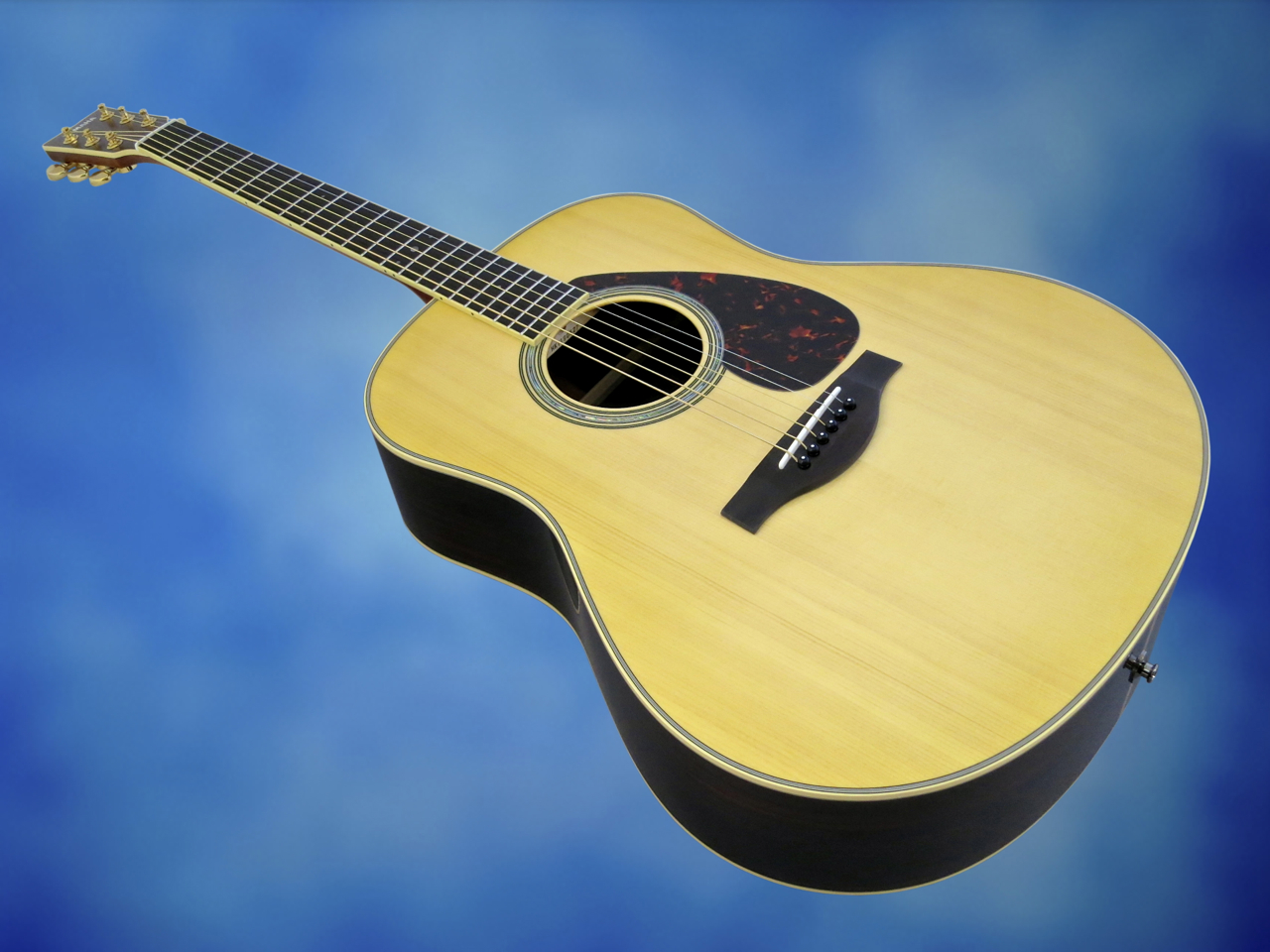
The Yamaha LL6 ARE might be the most-affordable member of the L-Series, but it most certainly is a thoroughbred example of its species. The improved neck profile is a real treat, and the A.R.E.-treatment seems to make a clear difference. This is a beautiful instrument with a voice to match. I also like the straightforward pickup system, which offers a decent sound with no fuss. I’d really recommend you try out one of these guitars, as the LL6 ARE punches well above its weight.
****
Yamaha LL6 ARE
534,90 €
Finnish distributor: F-Musiikki
****
Pros:
+ workmanship
+ A.R.E.-treated solid top
+ neck profile
+ acoustic sound
+ unobtrusive pickup system
+ soft case included
Yamaha on hiljattain päivittänyt erittäin suositun L-sarjan teräskielisiä kitaroita.
Soundin kannalta tärkein uudistus on, että koko sarjassa käytetään nyt Yamaha A.R.E. -prosessin läpi käyneitä kansia. Acoustic Resonance Enhancement on firman kehittämä puunkäsittelytapa, jossa esivanhennetaan soitinpuita lämpökäsittelyllä, sekä ilmankosteutta ja ilmanpainetta tarkoin säätämällä. Koko prosessin idea on saada uusia kitaroita soimaan heti kättelyssä sisäänsoitetun soittimen lailla.
L-sarjan kitaroita tarjotaan kolmessa eri koppakoossa – LJ (Medium Jumbo), LS (Small Body = Folk-kokoinen) ja LL (Original Jumbo = Dreadnought-kokoinen).
Kitarablogi sai tällä kertaa testattavaksi Yamaha LL6 ARE -mallin (534,90 €).
****
Yamahan Original Jumbo -koppa on firman omaa designia, jolla on selvästi kapeammat hartiat ja pyöreämpi alaosa kuin perinteisissä Martin D -malleissa. Lopputulos on sulava ja sopusuhtainen.
Yamaha käyttää LL6 ARE -mallissa (niin kuin nykyisin koko L-sarjassa) kokopuista Engelmann-kuusta kansimateriaalina. Engelmann-kuusen soundista sanotaan, että se on usein lämpimämpi ja avoimempi kuin sitkankuusikannella varustetuissa kitaroissa.
LL6-mallia saa natural-vaihtoehdon lisäksi myös sunburst-värityksellä, sekä mustana ja ruskeana.
Yamaha LL6:n sivut ja pohja on tehty kauniista ruusupuuvanerista. Mallista on saatavilla kuitenkin myös LL6M ARE -versio, jos tykkää enemmän mahongista.
Kitaran runko on lakattu kiiltäväksi, kun taas sen kaulaa on mattaviimeistelty.
Reunalistoitettuun lapaan on asennettu kuusi nykyaikaista TM-29G-viritinä.
Uudistetun LL6:n kaula tehdään kolmesta pitkästä mahonkipalasta ja kahdesta ruusupuupalasta. Rakenteen tarkoitus on lisätä kaulan lujuutta.
LL6:n viritinlapa sekä kaulakorko on veistetty kahdesta erillisestä mahonkipalasta, jotka on liimattu kaulan pitkänomaiseen osaan.
Yamahan nauhatyö on hyvin kiitettävällä tasolla.
Reunalistoitetun palisanteriotelaudan reunoja on hieman pyöristetty, mikä lisää tuntuvasti LL6:n soittomukavuutta.
L-sarjan kansissa käytetään Yamahan omaa versiota perinteisestä X-rimoituksesta (non-scalloped), jolla halutaan lisätä sopivasti potkua ja lämpöä raikkaaseen kuusikansi-perussoundiin.
Kitaran kauniissa rosetissa keskimmäinen rengas on koottu abalone-helmiäisestä.
Kannessa on monikerroksinen reunalistoitus.
LL6:n kompensoidun tallaluun alle on piilotettu Yamahan oma SRT Zero Impact -piezomikrofoni.
LL6:ssa pääpaino on kitaran akustisessa soundissa, eikä soitinta haluttu pilata monimutkaisella etuvahvistimella tai paristolokerolla. Tämän vuoksi LL6:n systeemi on täysin passiivinen ja SRT-mikrofoni on kytketty suoraan lähtöjakkiin.
Yamaha LL6 ARE:n hintaan kuuluu myös erittäin laadukas soft case -laukku, joka on oiva kovan laukun ja tavallisen gigbagin hybridi.
****
Se sanoo mielestäni aika paljon Yamahan työnjäljestä ja laadunvalvonnasta, kun maahantuojan tuotespesialisti ottaa testaajan mukaan varastoon ja antaa hänelle täysin avaamattoman kuljetuslaatikon suoraan hyllyltä. Ainoa kysymys oli: ”Minkä värin haluat?”
Ja tämä luottamus Yamahan laatuun oli täysin oikeutettua, sillä testiin saapunut kitara on todella hyvässä trimmissä oleva laatusoitin.
Kaulan uudistettu, ovaali C-profiili tuntuu erittäin mukavalta kädessä, ja 44:n millimetrin kaulaleveys satulan kohdalla antaa otekädelle riittävästi liikkumatilaa myös monimutkaisia sointuja varten. Myös Yamahan valitsema e-kielten välinen etäisyys tallan kohdalla (55 mm) on loistavasti toimiva kompromissi sekä plektra- että sormisoittoa varten.
Soittotatsi oli testiyksilössä säädetty tehtaassa hyvin mukavaksi 012-paksuisella kielisatsilla (kielten korkeus 12. nauhan kohdalla – matala-E: 2,1 mm/korkea-e: 1,6 mm), ja LL6 ARE soi kauniisti ja täysin rämisemättä.
On mielestäni miltei mahdotonta sanoa, soiko tämä Yamaha ARE-prosessin ansiosta ”kuin vanha vintage-soitin”, koska vintage-kitaroissakin on isoja eroja, eikä minulla ole ollut mahdollisuutta verratta LL6 ARE -mallia suoraan vastaavaan ”ei-ARE-Yamahaan”.
Minun on kuitenkin todettava, että Yamaha LL6 ARE soi uunituoreenakin hyvin avoimella ja dynaamisella äänellä. Tässä ei esiinny lainkaan – niin monia uusia (= ei sisäänsoitettuja) teräskielisiä vaivaava – uudenkarheus tai dynamiikan ja diskantin kireys, vaan ääni on lämmin, avoin ja erittäin hyvässä tasapainossa.
Sormisoitossa LL6 ARE artikuloi erittäin hyvin. Soitossa on aimo annos helisevää diskanttia ja lämmintä bassoa, mutta bassot eivät kumise tai dominoi tämän mallin äänimaailmaa.
Tätä pätkää on lähimikitetty AKG C3000 -mikrofonilla:
Passiiviseksi piezosysteemiksi LL6:n SRT-mikrofoni soi mielestäni hyvin kauniisti:
Myös stereoyhdistelmä molemmista signaaleista kuulostaa hyvältä:
Plektrasoitossa kuuluu LL6:n mukavasti helmeilevä atakki ja sen lämmin, mutta avoin keskialue (C3000):
Piezoversio on suorasukkaisempi, muttei missään nimessä huono:
Yhdistelmä kuuluu tältä:
Tässä Beatles-coverissa komppiraidat on äänitetty dynaamisella Shure SM57 -mikrofonilla, kun taas soolo-osuudet on poimittu mukaan linjasoittoina:
****
Vaikka Yamaha LL6 ARE on edullisin tapa tutustua L-sarjan konseptiin, on malli silti täysverinen lajinsa edustaja. Päivitetyn kaulaprofiilin ansiosta LL6 ARE on entistäkin mukavampaa soittaa, ja kannen A.R.E.-käsittely näyttää toimivan. Tämä on kaunis ja kaunisääninen soitin. Pidän myös tämän Yamaha-mallin kytke-ja-unohda-periaatteella toimivasta mikkisysteemistä. LL6 ARE on mielestäni ehdottomasti kokeilemisen arvoinen teräskielinen. Tämän Yamahan rahkeet riittävät – edullisen hintansa huolimatta – varmasti myös ammattikäyttöön.
****
Yamaha LL6 ARE
534,90 €
Maahantuoja: F-Musiikki
****
Plussat:
+ työnjälki
+ A.R.E.-käsitelty kansi
+ kaulaprofiili
+ akustinen soundi
+ huomaamaton mikkisysteemi
+ soft case kuuluu hintaan





 Kitarablogi.com – Finland's premier Guitar and Bass blog