
………………………………………………………………………………………………………………………………
Kitarablogi.com – Finland's premier Guitar and Bass blog
Juttuja kitaroista ja bassoista

………………………………………………………………………………………………………………………………

Everybody has heard of Tokai, and there’s plenty of knowledge about Greco’s and Ibanez’ copycat instruments around.
The Kasuga-brand is a much rarer beast, even though the company produced many decent instruments (many of those were copies) between the mid-Sixties and the Eighties.
I own a Kasuga-version of Gibson’s classic ES-335, which was most likely produced in the late 1970s, judging by its main specs.


I found my Kasuga by chance in a flea-market in the early Nineties. The price asked was so low and the guitar so red, it was a no-brainer. 😉
The classic curves of a Gibson ES-335/345/355 are one of the prettiest guitar shapes, in my opinion.
In some respects this copy is a funny hodgepodge of different attributes lifted from different periods of the original’s lifespan. Additionally there are also some of Kasuga’s own details added.

Take the headstock, for example, which is the larger version, generally used for the bound headstock of the Gibson ES-355 model.
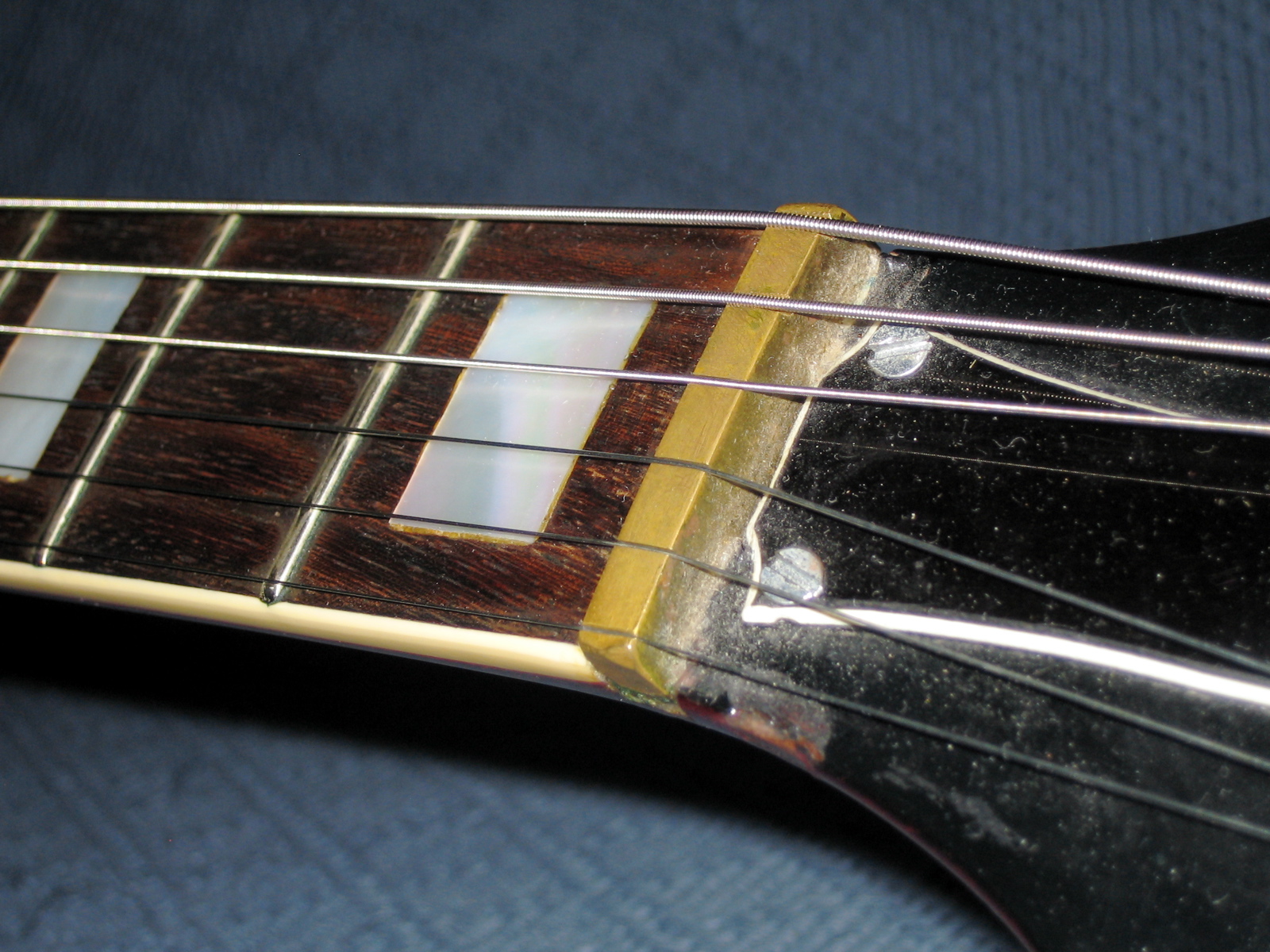
A previous owner had installed a brass nut – very much in fashion in the early Eighties. The extremely low frets are original, as are the large pearl inlays. The neck profile is a copy of Gibson’s 1970’s slim type.

The sealed tuners are of a make that I’ve never seen before or since. There’s the typical 1970s volute, meant to strengthen the neck’s wrist and the headstock.
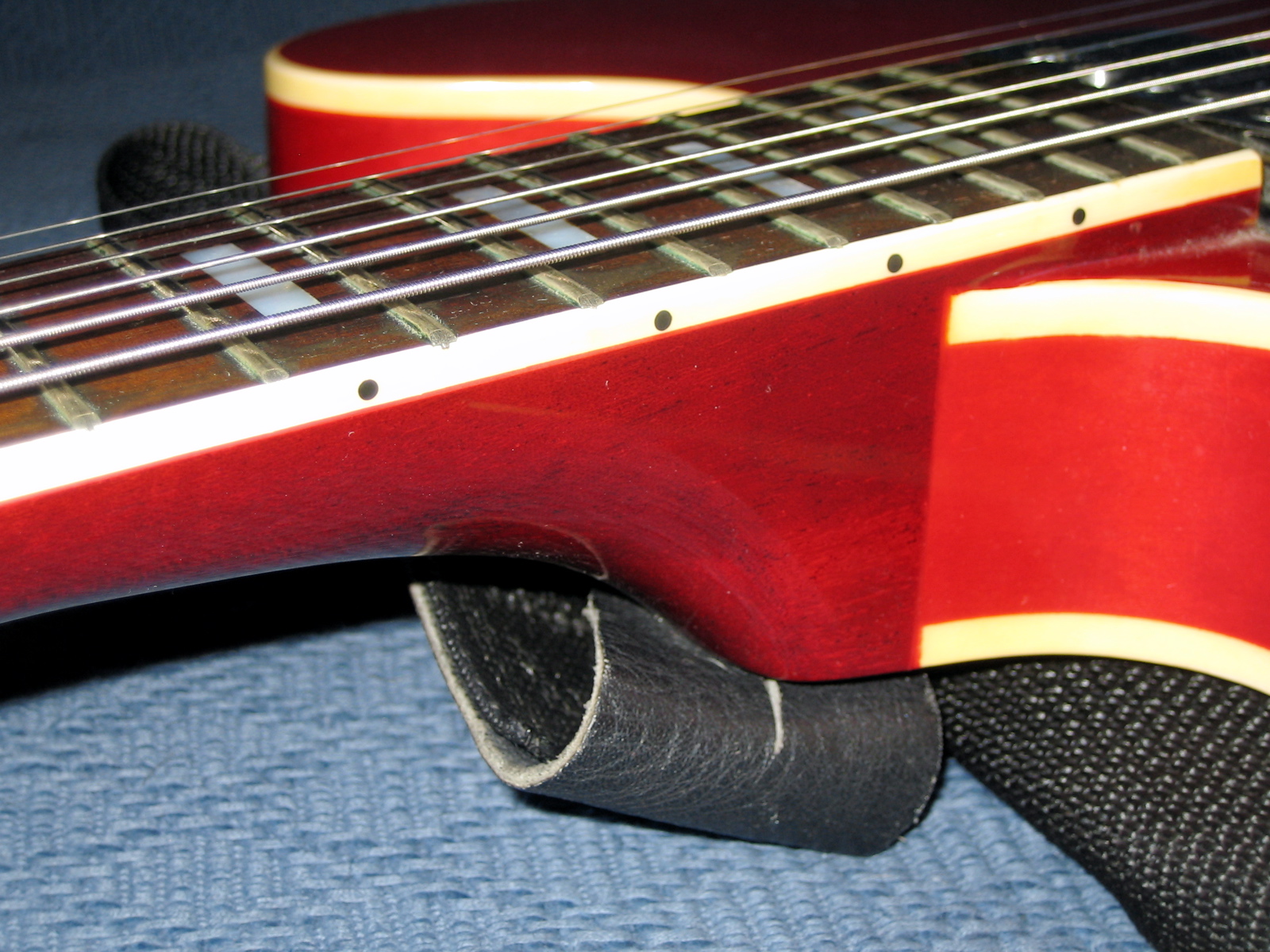
Genuine mahogany has been used for the set neck.

One of the f-holes reveals the body’s five-ply laminate, which seems to be maple/mahogany/maple/mahogany/maple.

The Kasuga even mimics Gibson’s Seventies short centre block, that only starts at the bridge. The neck has its own little block. In this case the centre block has been fashioned from mahogany.

The electronics are high quality – the original pots all still work fine, as does the switch. I only had to replace the output jack some ten years ago.

Strangely enough the arch of the body is not as pronounced and graceful, as on the originals. The humbuckers are standard sized, but the bezels are wider than normal.

The body ears have been left completely flat on the Kasuga, while the original sports very attractive arching both on the top as well as the back. The ears are slightly pointed, as was usual in post-1964 Gibsons as well.
Here are some Kasuga soundbites:
Kaikki tuntevat Tokain, ja myös Ibanezin ja Grecon kopiosoittimista löytyy tietoa laajasti.
Harvinaisempi tapaus on japanilainen merkki Kasuga, joka oli rakentanut soittimia – monet niistä kopiosoittimia – 1960-luvulta lähtien.
Minulla on (luultavasti 1970-luvun loppupuolelta peräisin oleva) Kasugan kopio Gibson ES-335 -puoliakustisesta.
Löysin Kasugani sattumoisin yhdeltä kirpputorilta 1990-luvun alussa. Kitaran hinta oli niin alhainen, että ostos kannatti jo kaunottaren punaisen värin takia 😉
Gibsonin klassinen ES-335/345/355-muoto on mielestäni yksi kauniimmista kitaratyypeistä.
Tämän kopion yksityiskohdat sekoittavat hauskasti (eikä mitenkään vintage-tietoisesti) eri aikakausien ominaisuudet, ja valmistajakin on lisännyt soppaan muutaman oman ratkaisun.
Viritinlapa on kopio Gibson ES-355:n isommasta mallista, vaikka tässä tapauksessa koristus on selvästi ES-335:n mukainen (ei reunalistoitus, pieni kukka-upotus).
Edellinen omistaja oli asentanut 1980-luvun alussa niin suosittua messinkisatulaa. Alkuperäiset nauhat ovat erittäin matalat ja helmiäisupotukset isot – niin kuin tavallisesti ES-355-kitarassa. Kaula on siro kuin 1970-luvun Gibsoneissa.
Suljetut virittimet ovat minulle tuntemattomasta brändistä. Satulan vastapuolella on kaulassa 1970-luvulle tyyppillinen paksunnos (engl. volute), joka on tarkoitettu suojaamaan lapaa murtumisestä.
Kaula on veistetty oikeasta mahongista, ja se on liimattu vanerirunkoon perinteisellä tavalla.
F-aukon reunalla näkyy, että vaneri on viisikerroksinen – ilmeisesti vaahtera/mahonki/vaahtera/mahonki/vaahtera.
Kasugalla on 1970-luvulle tavanomaista lyhyttä keskipalkkia, joka menee tallasta runkoon loppuun. Kaula istuu omassa pienessä blokissa. Kitarani tapauksessa blokki on tehty mahongista.
Elektroniikka on toteutettu laadukkaasti – Kasugassa on yhä alkuperäinen kytkin ja potikat, ainoastaan jakin joutuin vaihtamaan jonkin aikaa sitten.
Rungon muotoilussa valmistaja on ollut yllättävän suurpiirteinen, eikä kansi kaareutuu ihan niin kauniisti kuin alkuperäisessä Gibsonissa. Humbuckerit ovat standardikokoa, mutta niiden kehykset ovat hieman perinteisiä isompia.
Rungon korvat ovat sitä hieman terävämpi sorttia, joka on tavallinen 1964-1981 välillä rakennetuissa oikeissa Gibsoneissa. Mutta myös tässä sekä kansi että pohja ovat tasaisia, eivät ne kaartu holvimaisesti niin kuin oikeassa Gibsonissa.
Tältä Kasugan ES-335-kopio kuulostaa:


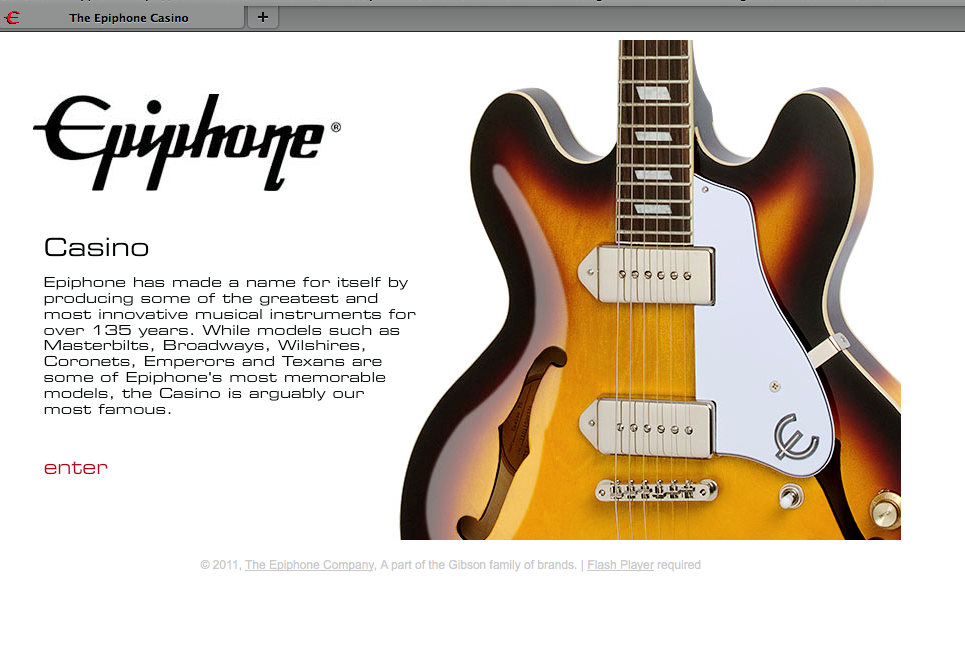
Vaikka se ei ole ihan uusi, on tämä microsaitti kauniisti tehty.
Even though it isn’t exactly new, I still dig this microsite.

Epiphonelta on tulossa uusia malleja, joita pitäisi olla saatavilla lähiaikoina – juuri oikealla hetkellä joulutoiveitamme varten:
Epiphone will be releasing some tasty new models – just in time for your Christmas wish-lists:
****
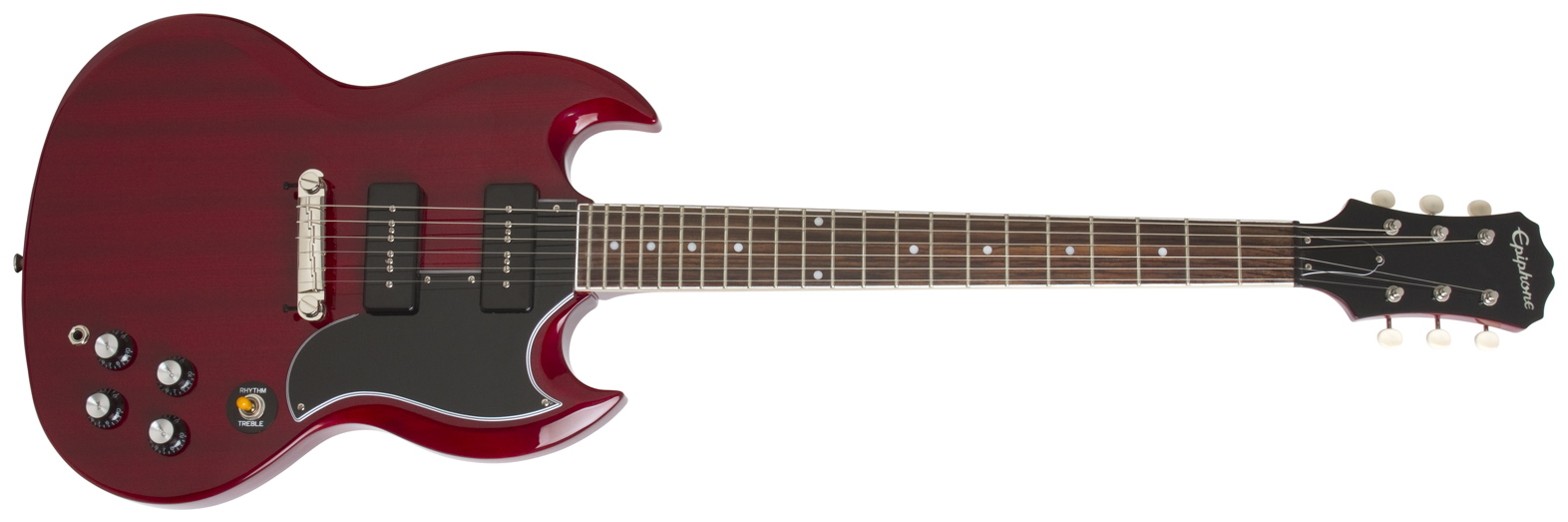
Pete Townshend -faneille tarjotaan viimein kunnon Epiphone-versio vanhasta SG Special -kitarasta. Reunalistoitettu, liimattu kaula, kaksi P-90-mikrofonia sekä kiinteä talla – todella jeeeeees!
At last Epiphone is releasing a Pete Townshend -style SG Special with a bound fretboard, a glued-in neck, two P-90s and a wraparound bridge – Who-tastic!
****


Les Paul Ultra III on päivitetty versio Ultra kakkosesta. Ultra III:lla on vielä paremmat humbuckerit sekä USB-lähtö (NI:n Guitar Rig LE -ohjelmapaketti kuuluu hintaan).
The Les Paul Ultra III is a further improvement on the Ultra II. The Ultra III has even better humbuckers, as well as a USB-port (NI’s Guitar Rig LE is included in the package).
****
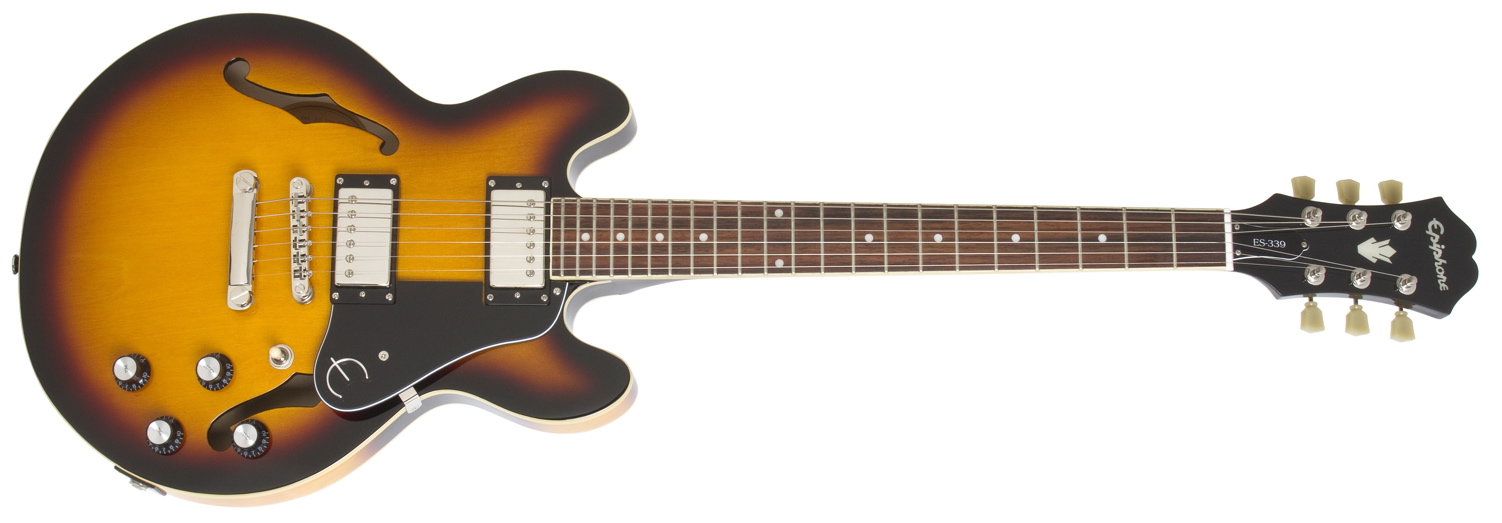
Ja puoliakustisen kitaran ystäville on tarjolla Epiphonen oma versio ES-339-mallista, jolla on ES-335:n rakenne, mutta pienemmällä kopalla klassikkoon verrattuna.
Friends of semis are treated to the Epiphone ES-339, which is basically an ES-335, only with a smaller body.

Once you’ve learnt how to get to grips with a guitar, learning to play a different stringed instrument is relatively straightforward, broadening your outlook in the process.
Take the mandolin, for example – a great second instrument for any guitarist. Its courses (pairs of strings) are tuned to the same pitch as the strings of a violin – g-d-a-e – which throws all your scale and chord shapes right overboard.
There are three different basic types of mandolin: the bowlback Italian mandolin is the senior member of the family, and closely related to Middle Eastern instruments, such as the saz.
The Portugese/Irish mandolin is build with a straight back, much like a guitar, making it easier to hold and play.
The carved-top Bluegrass-mandolin is an American invention from the very last years of the 19th Century, taking its cue from the building principles behind a violin. Orville Gibson’s (1856–1918) quality mandolins laid the groundwork for what was to become the famous Gibson-brand. Renowned musician and luthier Lloyd Loar finalised the Gibson-mandolin around 1920.

My own mandolin is a Chinese-made, all solid wood Kentucky KM-630, pattered after a typical F-Style Gibson-mandolin.

It features a spruce top as well as a back and sides made from maple.

The headstock is replete with fine inlay work.
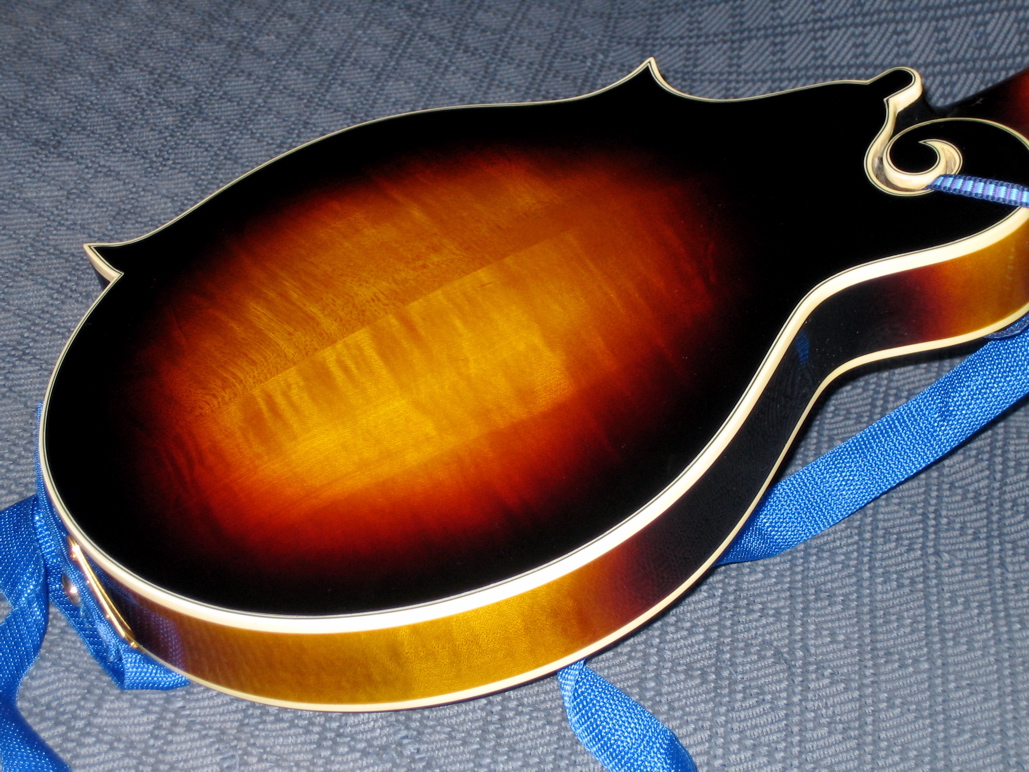
The well-applied finish really shows off the back’s figuring (flame).

The maple neck too is finished in a rich sunburst.

Gold-coloured tuners round off the picture.
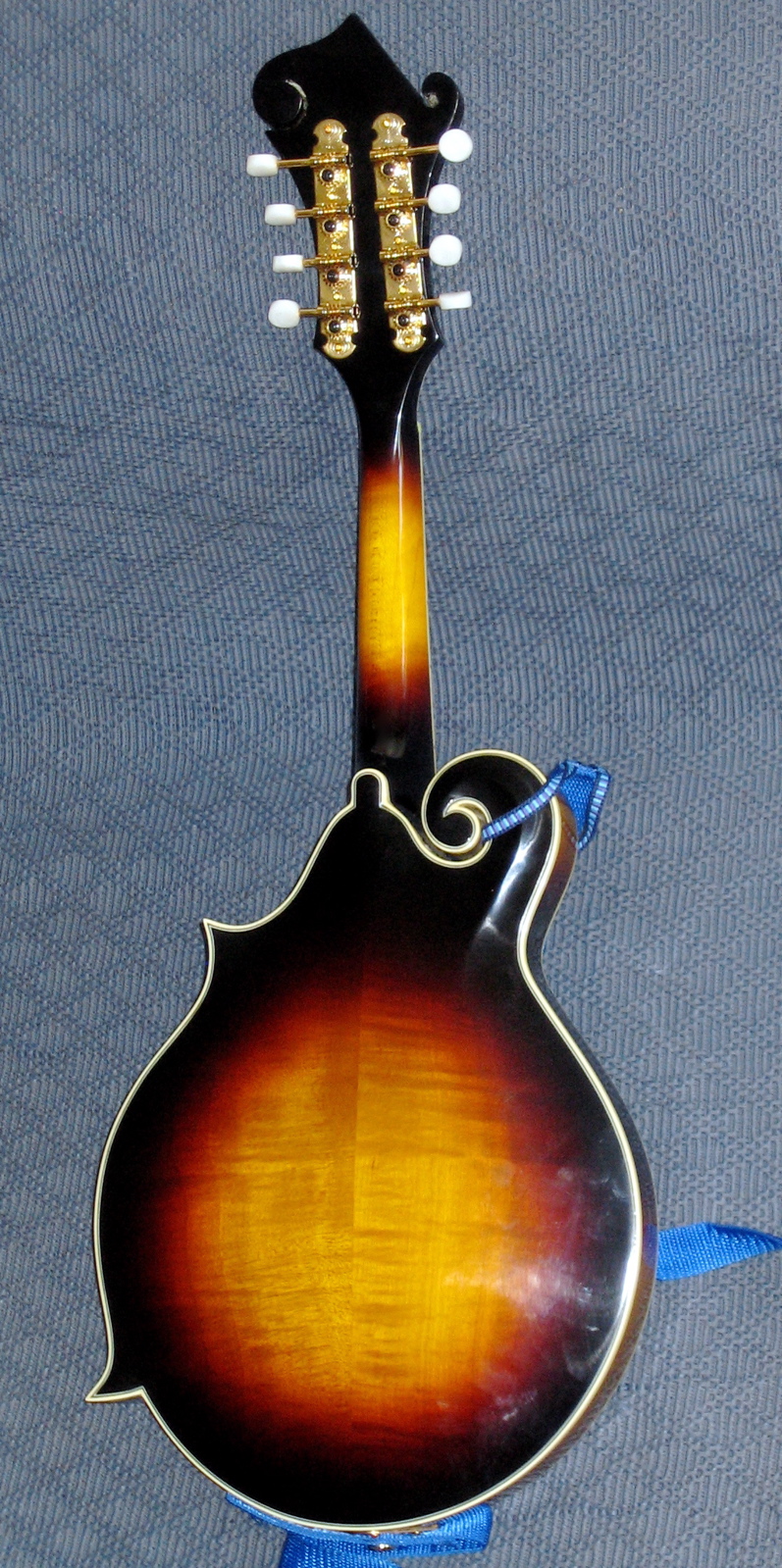
When shopping for a mid-price Bluegrass-mandolin check the neck for straightness, as well as the quality of the fretting. Make sure the free-standing bridge is OK and works as it should. The relatively hard string pull, along with transport/storage in too dry a place can sometimes lead to a cracked or collapsing bridge.
****
Here’s a recording featuring my KM-630:
Lucy (Frank Badenius/Martin Berka)
****
Check out these links for further info:
A genuine Gibson/Lloyd Loar -mandolin from 1923
Kun kerran kitaristina musiikin tuottaminen kielisoittimella on tullut tutuksi, on toisen kielensoittimen soittamisen oppiminen suhteellisen helppo, mutta samalla horisonttia laajentava kokemus.
Esimerkiksi mandoliini on oiva kakkossoitin kitaristille. Sen kieliparit viritetään samoille sävelkorkeuksille kuin viulussa – g-d-a-e – minkä vuoksi soinnut ja skaalojen soormitukset menevät heti uusiksi.
On olemassa kolme päätyypejä: kulhomaisella, kaarevalla kopalla varustettu italialainen mandoliini on soittimen vanhempi alkuperäinen muoto, joka on sukua Lähi-Idän kielisoittimille (esimerkiksi saz).
Portugalilainen/irlantilainen mandoliini on tasakanttinen, kitaratyylinen ratkaisu, joka on helpompi pitää sylissä.
Kaarevalla kannella ja pohjalla varustettu Bluegrass– tai Archtop-mandoliini kehiteltiin 1800-luvun loppumetreillä Yhdysvalloissa, ja sen lähtökohta oli viulussa. Orville Gibsonin (1856–1918) laadukkaat mandoliinit ovat nykyisen Gibson-firman alkupiste. Soittaja ja soitinrakentaja Lloyd Loar sitten kehitti Gibson-mandoliineja loppullisen muotoon 1910-luvun loppussa.
Oma mandoliinini on Kiinassa rakennettu, kokopuinen Kentucky KM-630, jonka esikuva on ollut Gibsonin koristettu F-malli.
Kansi on kuusesta ja sivut sekä pohja vaahterasta.
Lavassa on runsaasti kauniita helmiäisupotuksia.
Pohjan hieno viimeistely tuo esiin loimuvaahteran näyttävät syykuviot.
Myös vaahterakaula on saanut ylleen sunburst-värityksen.
Kullanväriset virittimet antavat soittimelle viimeisen silauksen.
Kun ostaa edullisen Bluegrass-mandoliinin kannattaa tarkistaa, että kaula on suora, nauhat kunnossa, eikä vapaasti kannella seisova talla vioittunut. Kielten voimakas veto sekä liian kuiva ilma kuljetuksen tai varastoinnin aikana voivat nimittäin johtua siihen, että talla repii tai korkeussäädön kierretangot löystyvät tallapuussa.
Suomessa suurin mandoliinivalikoima löytyy Millbrook Musiikista, joka tuo myös maahan esimerkiksi Kentucky– ja Eastman-soittimet.
****
Tässä hauskassa biisissä soitan mandoliinia:
Lucy (san. Frank Badenius/säv. Martin Berka)
****
Tässä vielä muutama mielenkiintoinen linkki aiheesta kiinnostuneille:
Aito Gibson/Lloyd Loar -mandoliini vuodelta 1923

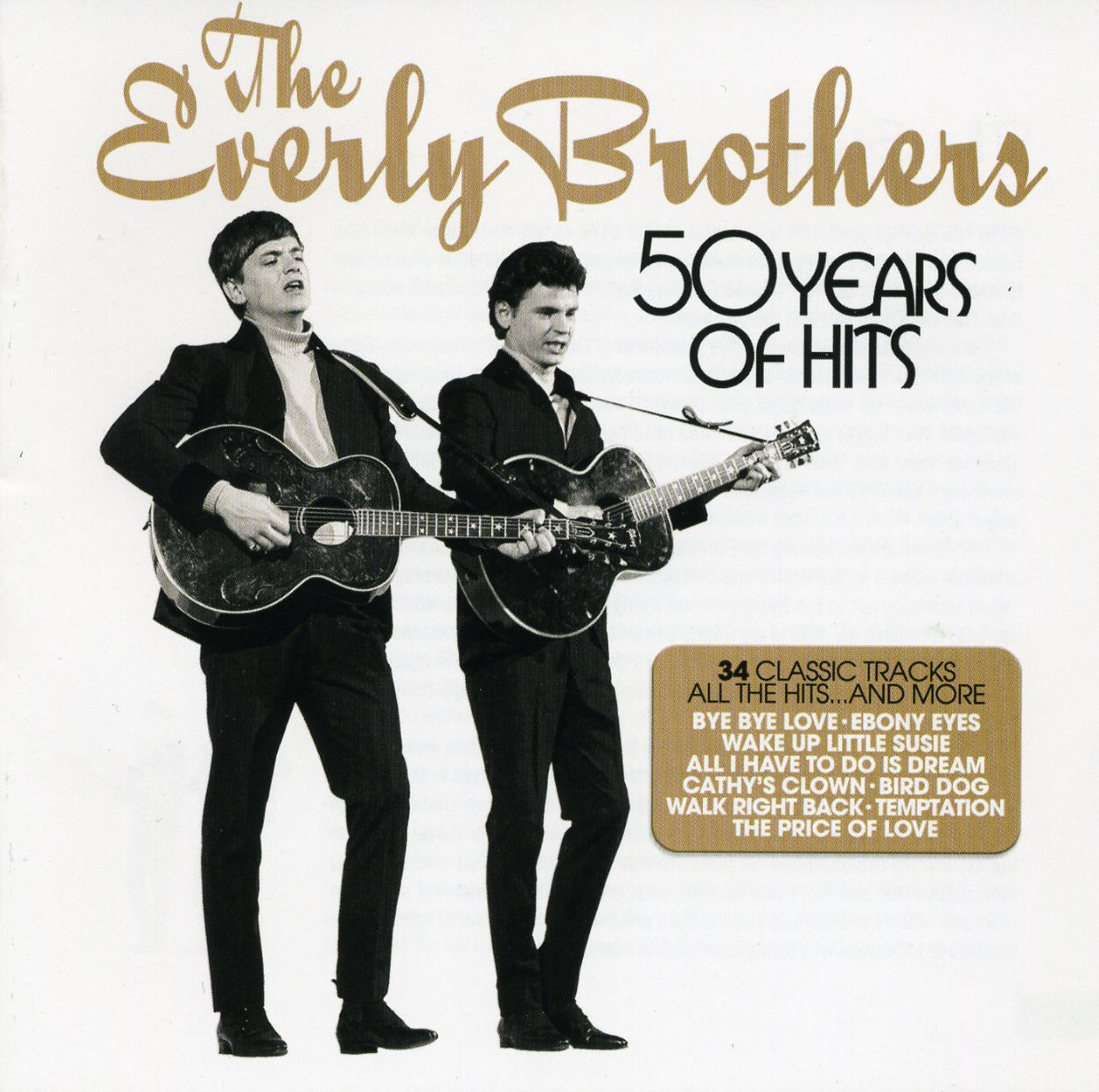
Post- Les Paul & Mary Ford and pre-Beatles the Everly Brothers were, without doubt, the Pop music sensation in the USA. The brothers – Phil and Don – provided a great mix of Rock’n’Roll -raucousness and Country -cleanliness to reach mass appeal. Their hits are true Pop gems and their golden vocal harmonies are legendary, inspiring many other acts, such as Simon and Garfunkel and the Beatles.

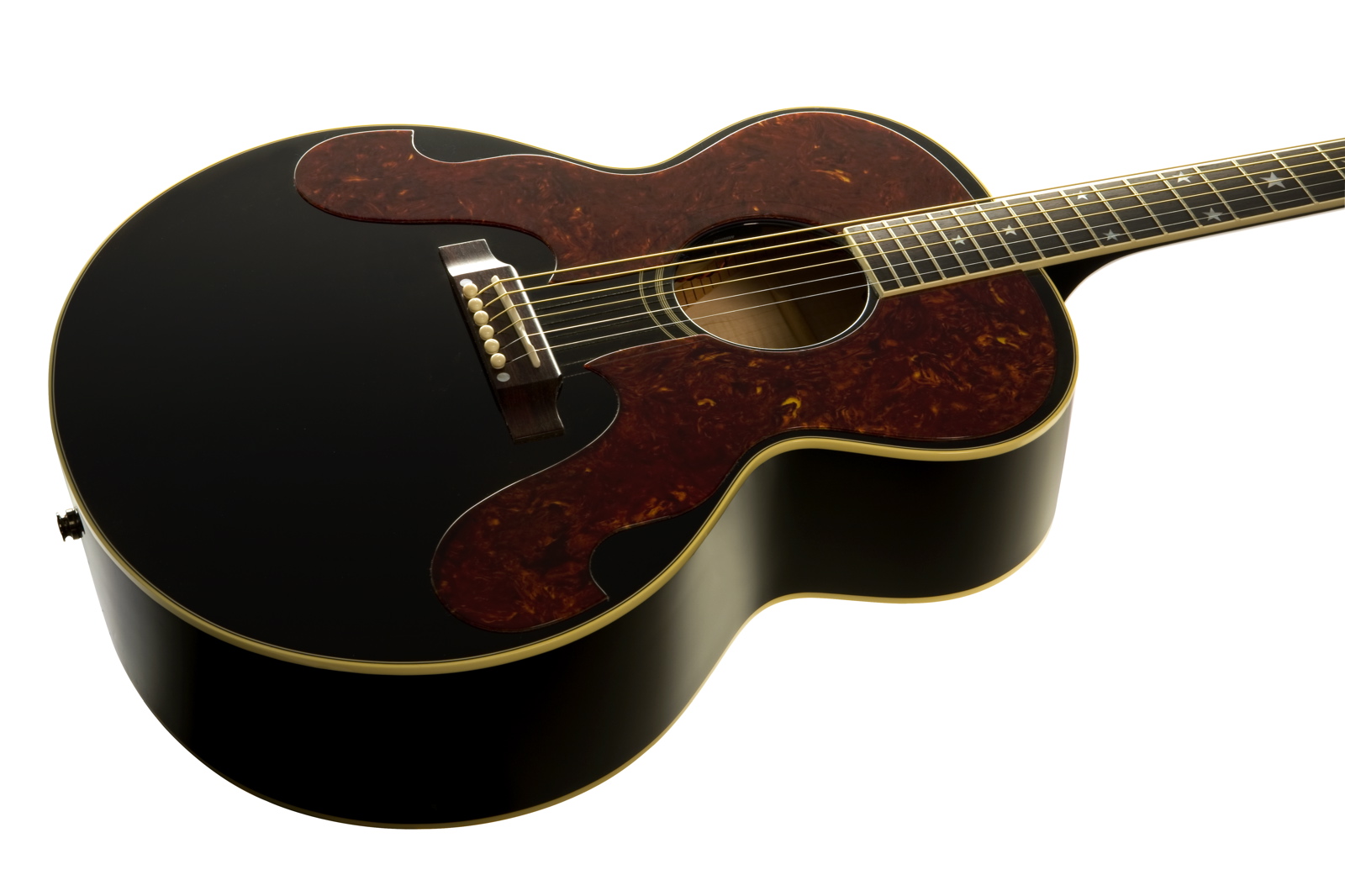
In 1962 Gibson released a signature model, based on a downsized Super Jumbo body, and featuring two large pickguards, star-shaped inlays and a pin-less, adjustable bridge. The large tortoise-pattern pickguards dampen the spruce top somewhat. In conjunction with the maple back and rims this results in a great strummer with a very precise attack and a transparent mid-range, extremely well suited to accompany vocals, and belting out those strummed Everly-riffs.
There were also versions with white pickguards.
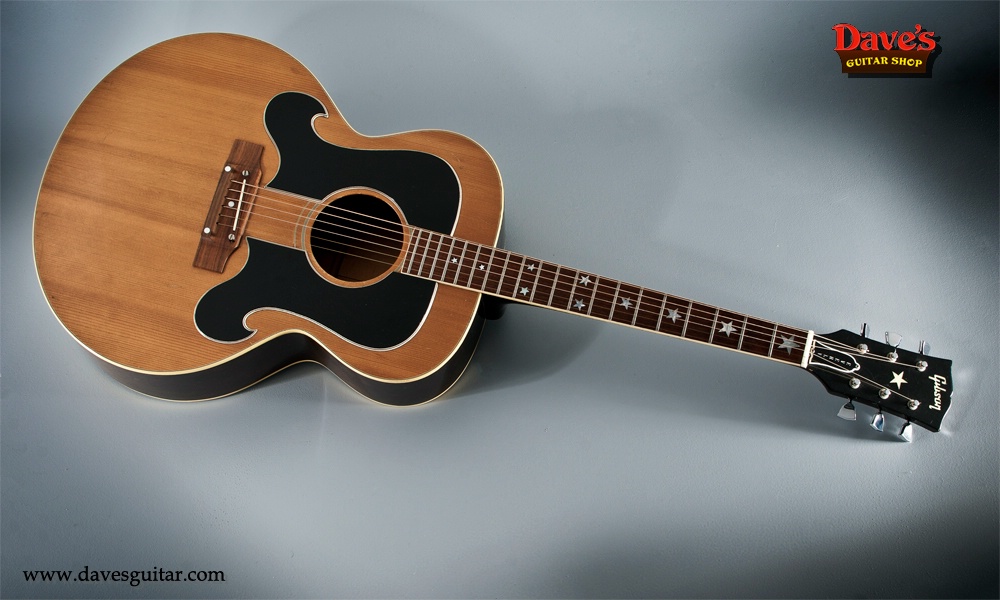
In the late Sixties Gibson changed the pickguards’ size and shape, and also started offering the Everly Brothers -model in natural finish alongside the original black.
The Gibson Everly Brothers -model is one of the few cases of an acoustic guitar having its own owners’ club. Proud users include stars like Paul McCartney and Albert Lee.

Epiphone and Orville have issued their own reissues over the years – called the SQ-180 and Don Everly Signature.
Gibson Acoustic is offering a brand-new Billie Joe Armstrong Signature J-180, which is basically an Everly Brothers -model with an added Fishman -pickup system. A review of this model will be published in Riffi-magazine in our issue 5/2011.



 Kitarablogi.com – Finland's premier Guitar and Bass blog


