Klassikkobassot, osa 6: Höfner 500/1

Saksalainen Höfner 500/1 ilmestyi vuonna 1956.

Hyvin suurella todennäköisyydellä tämä onttokoppainen, lyhyellä mesuurilla (76,2 cm = 30″) varustettu basso olisi muuten jäänyt historian alaviiteeksi, mutta onneksi nuori brittiläinen muusikko Paul McCartney löysi vuonna 1961 Hampurilaisessa musiikkiliikkeessä juuri sellaisen Höfner 500/1 -basson. Höfner-basso oli kevyt, edullinen sekä tilattavissa vasenkätisenä – siis juuri sellainen soitin, jota McCartney etsi.

****

Tuotannon ensimmäisissä vuosissa 500/1-mallin speksit muuttuivat nopeaan tahtiin.

Ihan alussa bassolla oli kaksi kapeaa yksikelaista mikrofonia, jotka asennettiin lähellä toisiaan. Yksi oli heti otelaudan vierellä ja toinen keskiasennossa. Basson neljä säädintä – oma volume ja tone kummallekin mikrofonille – oli asennettu soikeaan muovilevyyn.

50058_front_01

****

Vuonna 1959 Höfner muutti elektroniikan speksejä: suorakulmaisessa muovilevyssä oli nyt tarjolla kaksi volume-säädintä. Kolmella liukukytkimillä laitetaan mikrofonit yksitellen päälle/pois, sekä valita täyden tehon soolo-moodin ja hieman vaimennetun rytmi-moodin välillä. Tähän kytkentään on lisätty myös Höfnerin erikoinen tapa poistaa signaalista kaikki diskantit, aina kun laitetaan keskimikrofonin (myöhemmin tallamikin) pois päältä liukukytkimellä – reggae-basistin unelma.

h5001-59_01

****

Vuonna 1960 päivitettiin 500/1:n mikrofonit humbuckereihin. Mikrofonien metallikuoreen oli painettu vinoneliö sekä Höfner-logo, minkä takia niitä kutsutaan englanniksi Diamond-pickupiksi. Juuri tällaisen basson Paul McCartney tilasi Hampurissa:

5001-61-14-br-to-01g

****

Vuonna 1962 toinen mikrofonista siirrettiin lähempää tallaa. Mikkien rakenne muutettiin jälleen (nämä mikrofonit ovat ulkonäköönsä huolimatta yksikelaisia): tallanpuoleisellä kelalla oli nyt näkyvät suorakulmeiset napapalat, jotka pilkistivät metallikuoreen läpi. Kaulanpuoleisellä kelalla taas oli säädettävät naparuuvit. Koska kiinteät napapalat muistuttavat ulkonäöltään nitomanastoja näitä mikrofoneja kutsutaan englanniksi staple-top-pickupiksi. Vuonna 1963 Paul McCartney sai tämän version lahjaksi silloiselta brittiläiseltä maahantuojilta Selmer – ja hän käyttä tätä yksilöä yhä!

h500-1-62_01

****

Vuonna 1967 mikrofonit muutettiin sellaiseksi, että yksikelaisten keskellä on pitkä, terämäinen magneetti ja sen yläpuolella on ohuita naparuuveja.

Höfner 500/1 pysyi tällaisena 1990-luvun loppupuoleen saakka, ennen kuin Beatles Anthology -sarjan myötä kiinnostus 500/1-mallia kohti kasvoi jälleen.

Oma Höfner 500/1 -bassoni on valmistettu tammikuussa 1990. Silloin Beatle-basson kysyntä oli niin alhainen, että 500/1-tehtiin ainoastaan tilauksesta, ja hinta oli yllättävän alhainen.

Hofner full

Minun Höfnerissä kaula on veistetty vaahterasta – pitkän yhtenäiseen osaan on liimattu erillinen pala kaulakorkoa varten. Virittimet ovat Gotohin koteloidut kitaravirittimet.

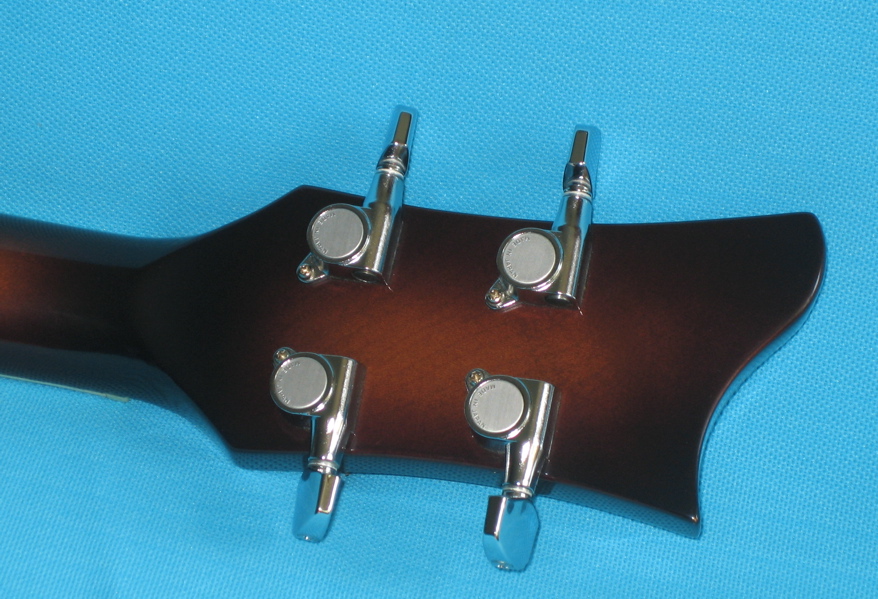
Hofner headstock

Hofner tuners

Runko on tutun tapaan täysin ontto. Kansi on kuusivanerista, kun taas sivut ja pohja tehtiin silloin anigré-vanerista (lat. aningeria spp.).
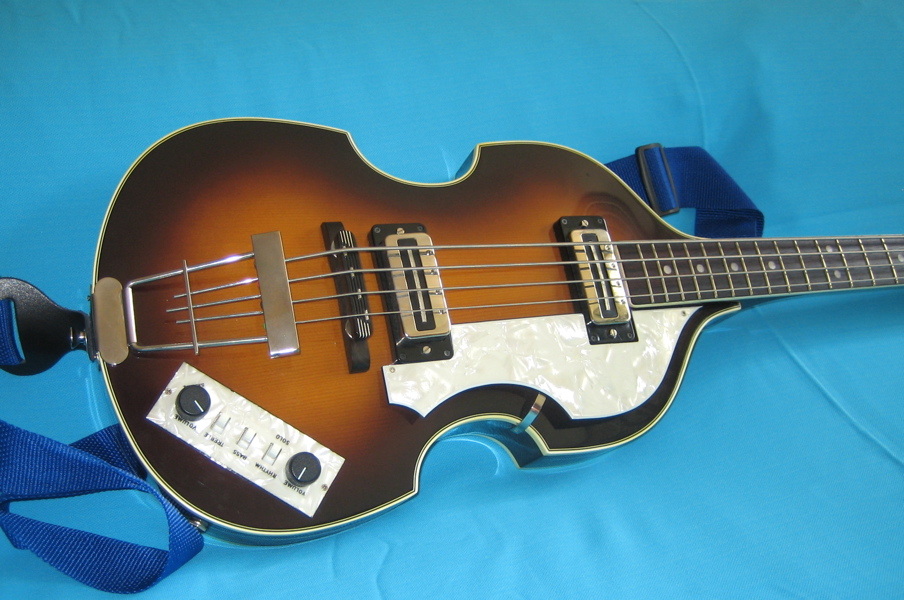
Hofner body

Hofner back

Höfner 500/1:n soundi on iso, lämmin ja pyöreää, mutta bassolta saa myös mukavasti murahdusta mukaan, etenkin roundwound-kielillä.

Vaikka soitan pääsääntöisesti sormityylillä, käytän Höfnerillä aina plektran, koska kielet istuvat melko korkealla kannen yllä ja myös hyvin lähellä toisiaan.

Hofner side

Jostain kumman syystä aidot Beatle-bassot voidaan usein syöttää suoraan mikseriin (tai ulkoiseen äänikortiin) ilman DI-boksia – suora soundi on ja pysyy mehukkaana!

****

Vanhojen mallien uusintapainoksien lisäksi Höfner teettää nykyään myös laadukkaan kiinalaisen Contemporary-sarjan:

hct-500_1-sb_01

Pääero Contemporary-sarjan Beatle-bassossa on, että edullisen mallin runko on puoliakustinen – rungon sisällä on vaahterasta veistetty keskipalkki, minkä ansiosta sustain on hieman pidempi.

****

Höfner 500/1 -mallin soundi on laajasti tuttu kaikista Beatles-levyistä ennen 1966. Hyvät esimerkit ovat myös Beatles-biisit Get Back ja Come Together, sekä McCartneyn soolosinkku My Brave Face.

Soitan oman Höfnerin esimerkiksi tässä ja tässä.

…ja tämän lisäksi vielä lyhyt ote yhden biisin bassoraidasta: Höfner 500/1 sound

Classic Basses, part 5: The Gibson SG-bass (EB-0/EB-3)

I don’t quite know why, but the Gibson EB-3 has long seemed very exciting to me.

Probably, this is because it was the first electric bass I ever played.

I was only 14 years old, and played with architecture students – all the guys were much older than me. But I had two trump cards, which were my door into this band: a) I could play the piano and b) I was rather good at transcribing songs off records (or tape machines). The bassist was the band’s leader, and he played a genuine Gibson EB-3, which I was allowed to play a few times – wow!  🙂

In its day the Gibson EB-3 was the company’s most popular bass by far. The now legendary Thunderbird, for example, was a complete and utter flop, and only in production for six years (1963-1969). The EB-3, on the other hand, was in continuous production from 1961 all the way to 1979.

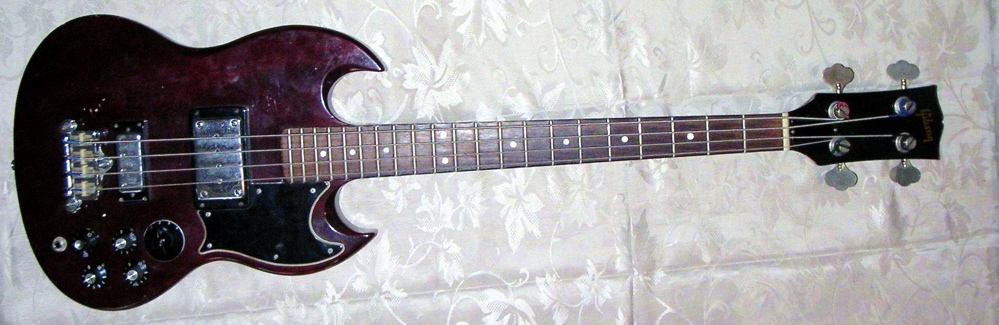
The EB-3 shared the same mahogany body, as its SG-cousins, and because it was a short-scale bass, the whole package was comfortably compact and light.

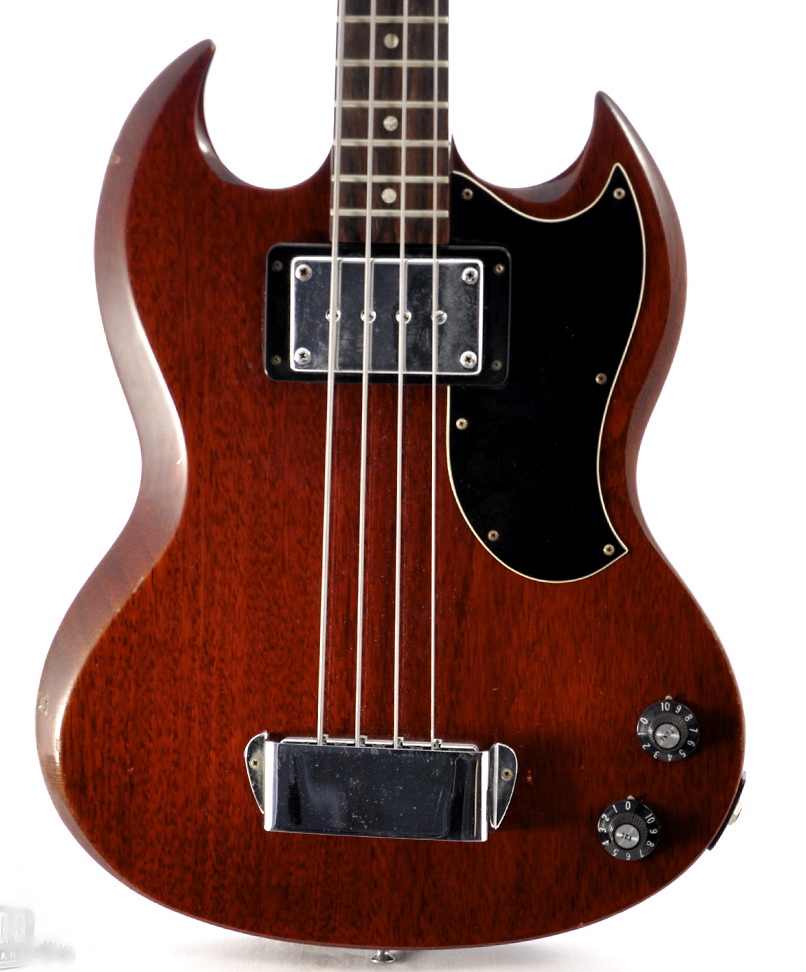
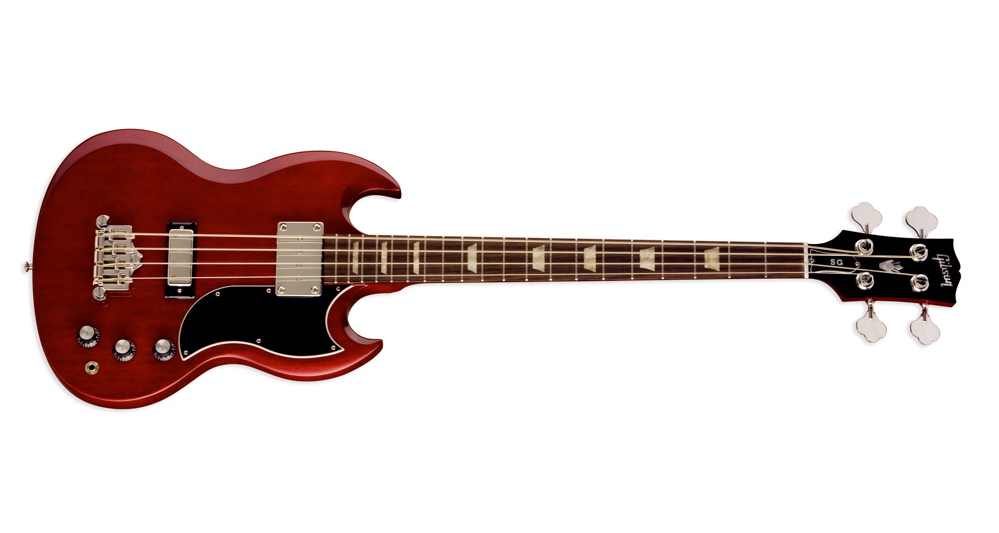
The neck pickup is a huge mother of a humbucker, with a much smaller companion mounted close to the bridge. The very first instruments had a black plastic cover on the front pickup, which was painted silver-metallic, but soon Gibson introduced a proper metal cover on the neck humbucker. The four-way rotary selector gives you each pickup on its own, both pickups together, as well as the rather strangled-sounding baritone-variant.

At the start of the Seventies the neck material was changed to maple for added strength, with the neck humbucker’s position moved to halfway between the end of the fingerboard and the bridge pickup.

During the years 1969-74 Gibson also offered a long-scale version – the EB-3L – most of which featured a spanish-style headstock (see below). Because of its longer neck the EB-3L was noticeably neck-heavy, though.

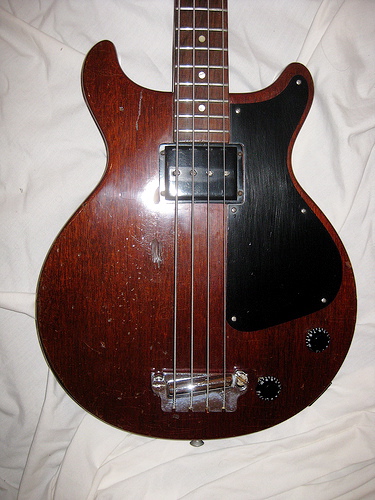
The EB-3’s kid brother is actually the model’s predecessor: the EB-0 was first introduced in 1959 with a double-cutaway Les Paul Junior -style body (see above).

In 1961 the EB-0 was changed to conform to the SG-look. In the mid-Seventies the EB-0’s single pickup was also moved closer to the bridge. From 1962 to ’65 a fuzz-equipped version was also available (the EB-0F).

****

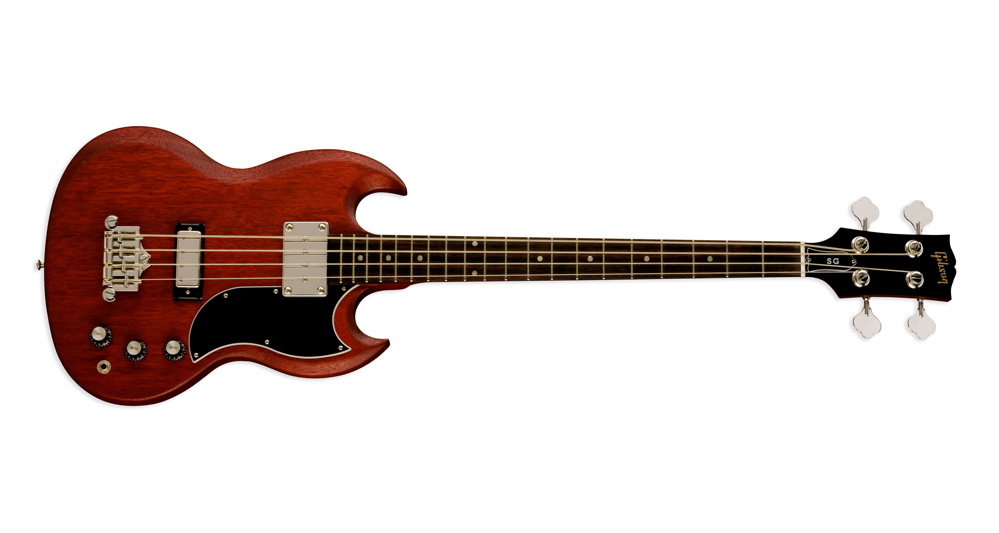
At the moment Gibson offers two USA-made SG-basses: The SG Standard Bass Faded comes in Gibson’s faded finish and sports dot inlays in the fretboard.  The SG Standard Bass is gloss-finished and features crown-style inlays. Both basses use a Jazz Bass -style volume-volume-tone-setup in place of the original four controls plus rotary switch.

****

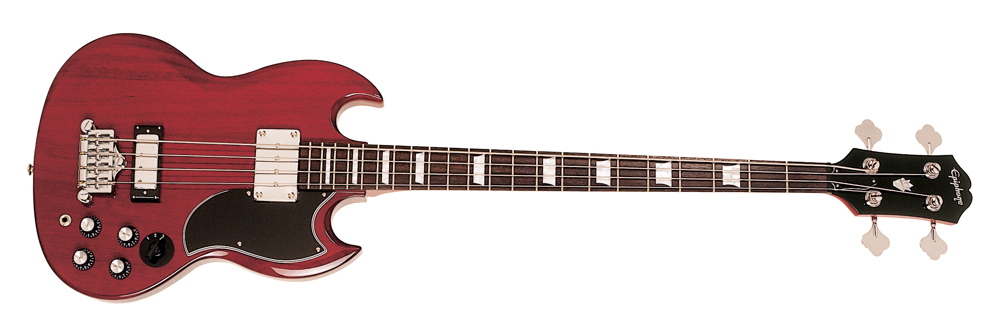
Epiphone’s cost-conscious EB-3 is only offered as in a long-scale version.

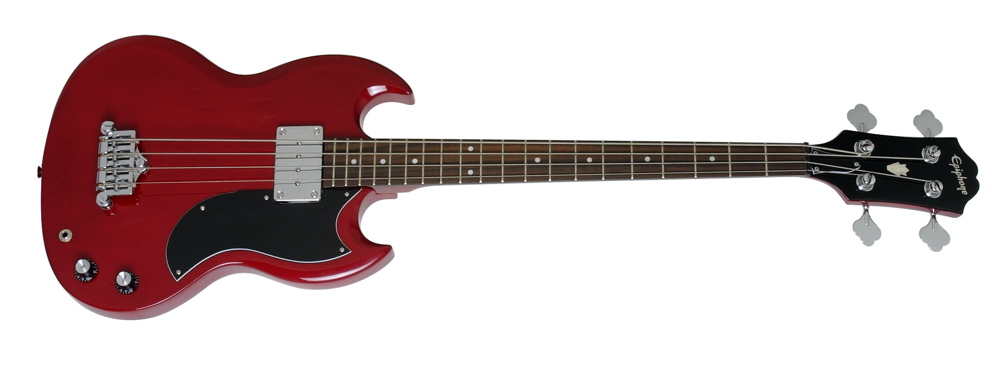
The Epiphone EB-0 is an even more affordable, bolt-on short-scale bass.

****

The fat and flexible tone of the EB-3 (as well as the EB-0) was well received by many Blues and Rock bassists in the late-Sixties and early-Seventies.

The best-known EB-3-users have been The Cream’s Jack Bruce and Free’s bassist Andy Fraser.

Here are Gibson’s own sound examples for the SG Standard Bass:
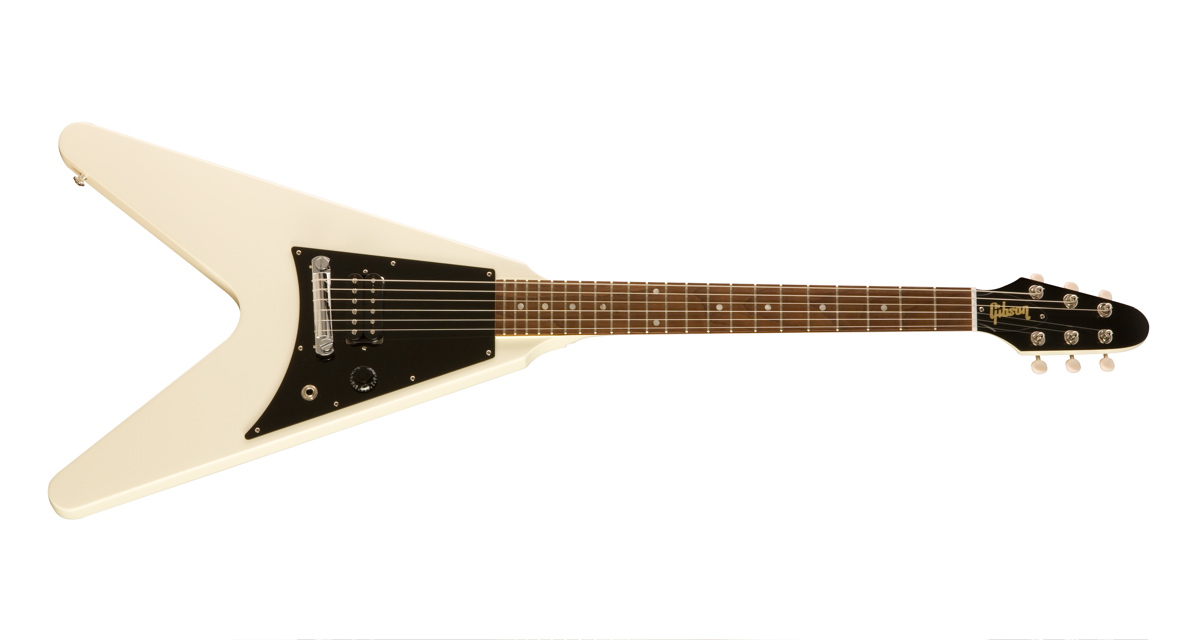
bridge pickup

both

neck pickup

Classic Basses, part 4: Gibson EB-2

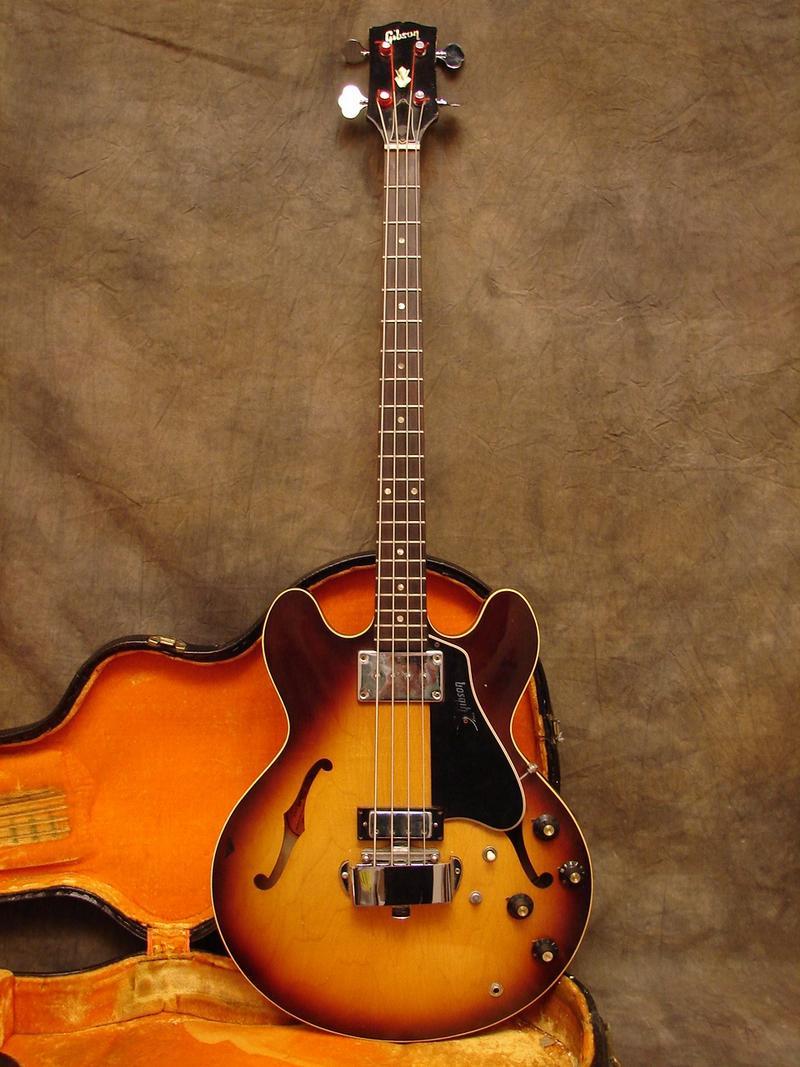
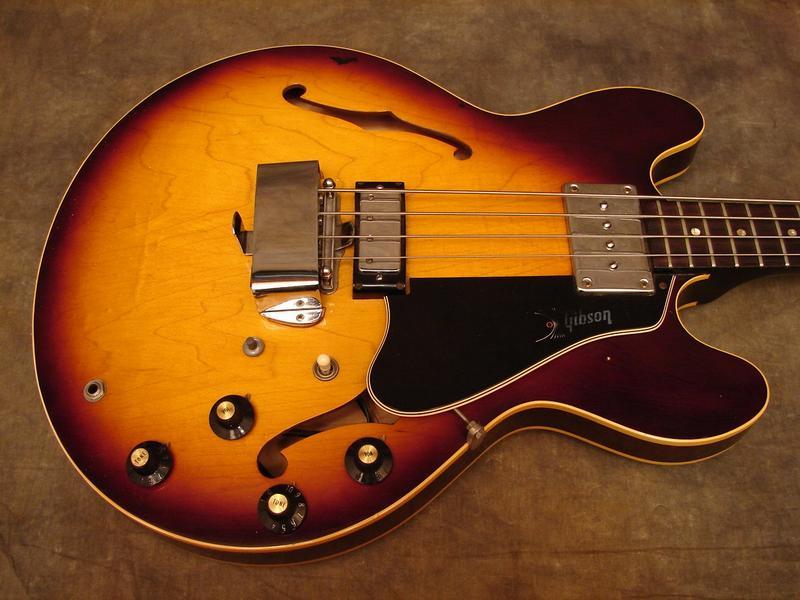
The Gibson EB-2 was the company’s bass counterpart to its classic ES-335/345/355-range of semiacoustic guitars. This short-scale bass was built with the same body as the guitars: steam-pressed maple plywood (4-ply) with a maple centre block to suppress feedback. The neck was crafted from mahogany and rosewood was used for the unbound fingerboard.

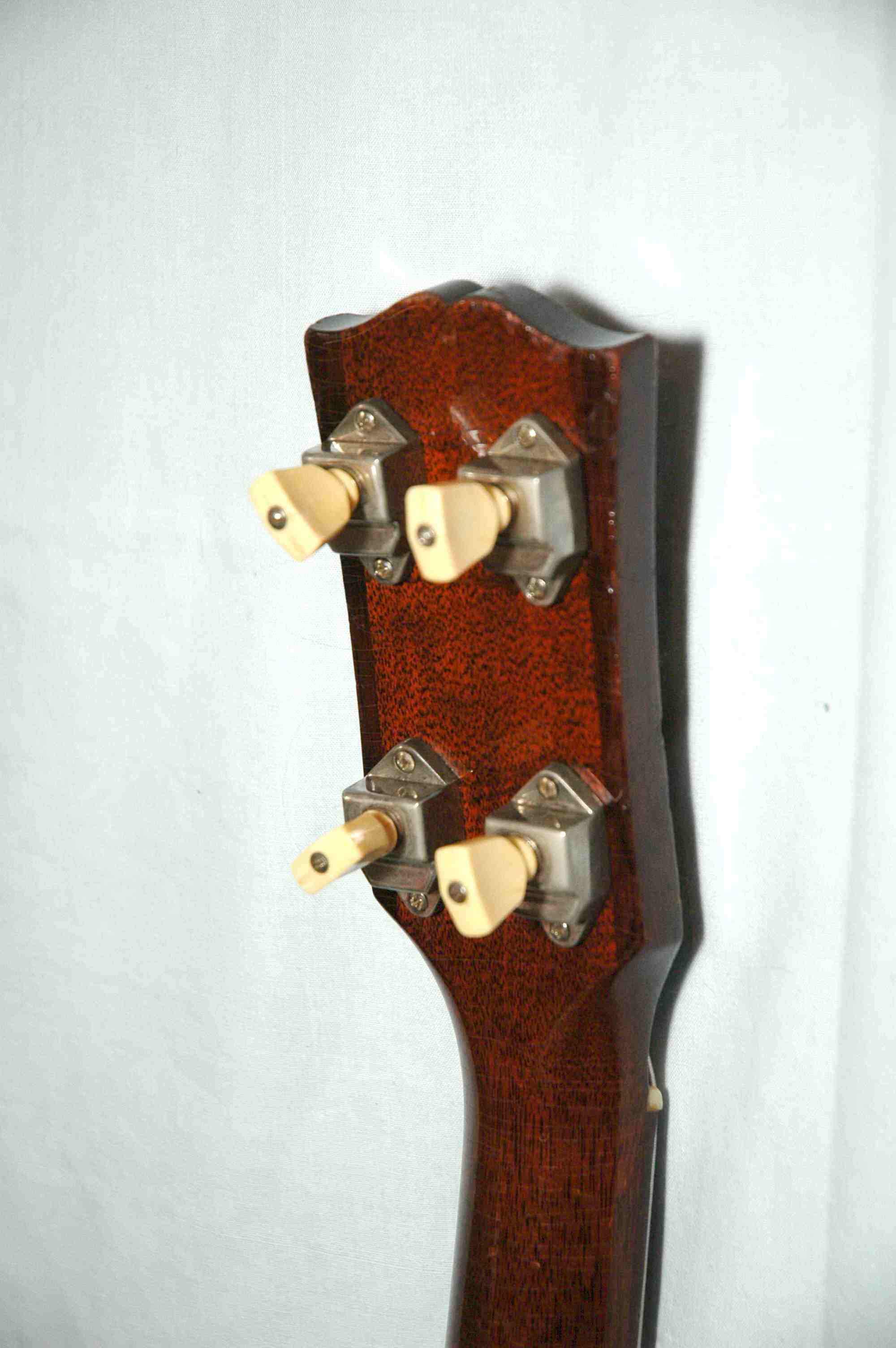
The first run of EB-2-basses (1958–’61) was equipped with back-facing, banjo-style tuning machines (until 1960), as well as a large neck humbucker with a black plastic (Bakelite) cover. A pushbutton next to the pre-compensated one-piece stud bridge engaged the ”baritone”-filter.

****

After a short break in production the EB-2 was reintroduced in 1964, now with the same metal-covered pickup as used on the EB-0/EB-3 solid-body bass.

In 1966 Gibson came out with the EB-2D – a version equipped with two pickups.

Starting in 1960, all Gibson-basses had a (detachable) mute attached to their bridges (on the photo below you can see the mute between the bridge and the bridge pickup).

Production of the Gibson EB-2 was phased out at the end of 1970, while the EB-2D stayed in production until 1972.

****

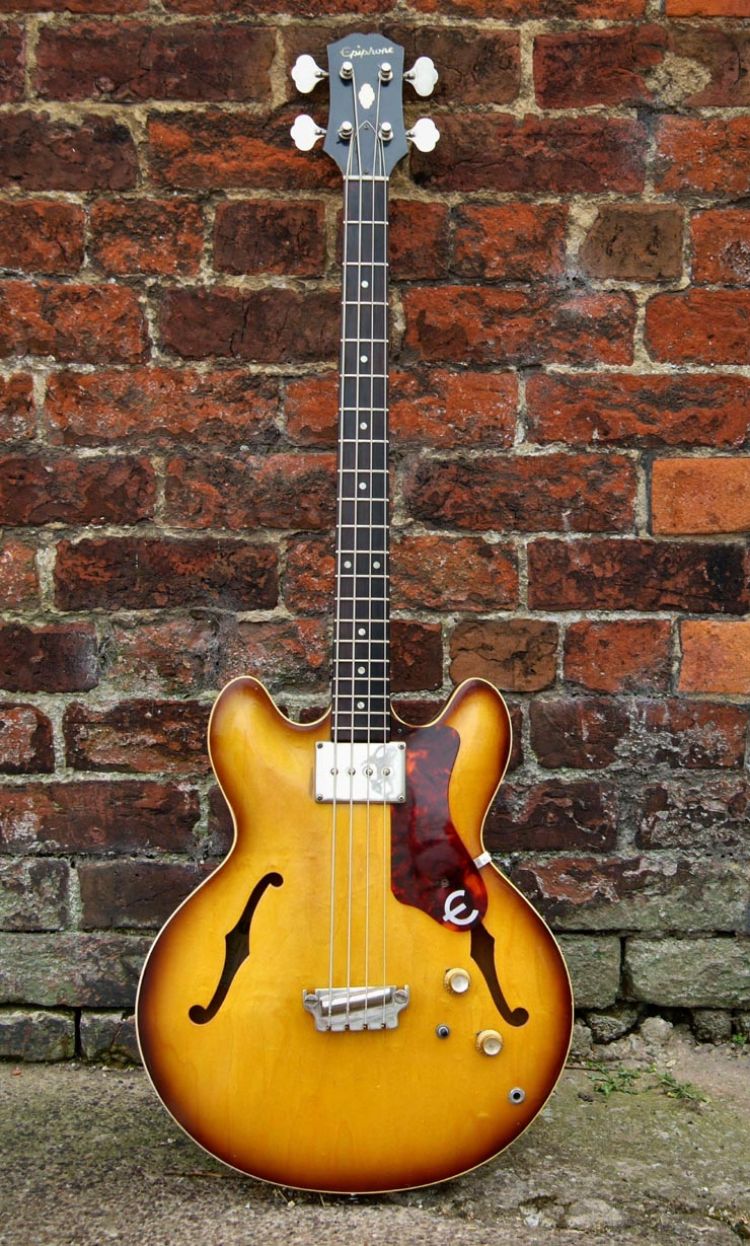
Between 1960 and 1970 Gibson also produced an alternative version of the EB-2 – the Epiphone Rivoli EBV-232.

Both the Gibson EB-2 as well as the Epiphone Rivoli were especially popular among British Blues Boom bands in the Sixties (famous users include the Yardbirds’ Paul Samwell-Smith, as well as the Animals’ Chas Chandler).

Klassikkobassot, osa 4: Gibson EB-2

Gibson EB-2 oli ES-335/345/355-mallistoon kuuluva basso. Lyhytskaalaisella bassolla oli samankokoinen runko kuin kitaramalleissa. Runko tehtiin muotoon prässätystä vaahteravanerista (neljä kerrosta), ja sen sisällä oli vaahterasta veistetty keskipalkki, joka vähensi feedbackia. Kaula oli mahonkia ja otelauta palisanteria.

Ensimmäisissä EB-2-bassoissa (1958–’61) oli taakse osoittavat, banjo-tyyliset virittimet (vuoteen 1960), sekä kaulahumbuckerilla musta muovikansi. Yksiosaisen tallan vierellä olevalla kytkimellä voi valita ”basso-” ja ”baritonisoundin” välillä.

****

Lyhyen tauon jälkeen EB-2 tuotiin takaisiin mallistoon vuonna 1964, nyt uudistetulla, metallisella mikrofonin kannella.

Kaksi vuotta myöhemmin Gibson esitteli EB-2D-version kahdella mikrofonilla.

Vuodelta 1960 kaikkiin Gibson-bassoihin asennettiin sordino, joka oli kiinnitetty suoraan tallaan (näkyy kuvassa tallan ja mikrofonin välillä).

Gibson EB-2:n tuotanto lopetettiin vuonna 1970, kun taas EB-2D pysyy mallistossa vuoteen 1972 saakka.

****

Gibson möi EB-2:lta 1960-’70 välisenä aikana myös rinnakkaisversion – Epiphone Rivoli EBV-232.

Gibson EB-2 ja Epiphone Rivoli olivat suosittuja soittimia useissa Brittiläisissä bluesbändeissä 1960-luvulla (esim. Yardbirds – Paul Samwell-Smith, Animals – Chas Chandler).

Klassikkokitarat, osa 8: Gibson Firebird

Gibson Firebird VII – beauty shot 1 – black

Tämän jutun otsikko olisi voinut olla ”Firebird: suuri tuntematon”, Gibson Firebird kun on jostain syystä firman klassikkomalleista vähiten laajasti tuttu. Syitä tähän ilmiöön ovat alkuperäisen malliston lyhyt tuotantokausi, sekä todella nimekkäiden soittajien puuttuminen Firebirdin käyttäjälistalta.

Firebird/Thunderbird-mallisto oli vuoden 1963 versio Gibsonin yrityksistä luoda moderneimman kitaran kuin Fender. Yritykset alkoivat jo vuonna 1958 Explorer- ja Flying V -malleilla. Gibsonin silloinen toimitusjohtaja, Ted McCarty, halusi luoda pramean soittimen, joka todistaisi kaikille, että firma ei ollut vanhanaikainen pitkäveteisien soittimien valmistaja. Firebird oli Gibsonin vastaus Fender Jazzmasterille.

Gibson Firebird VII – pickups and Maestro

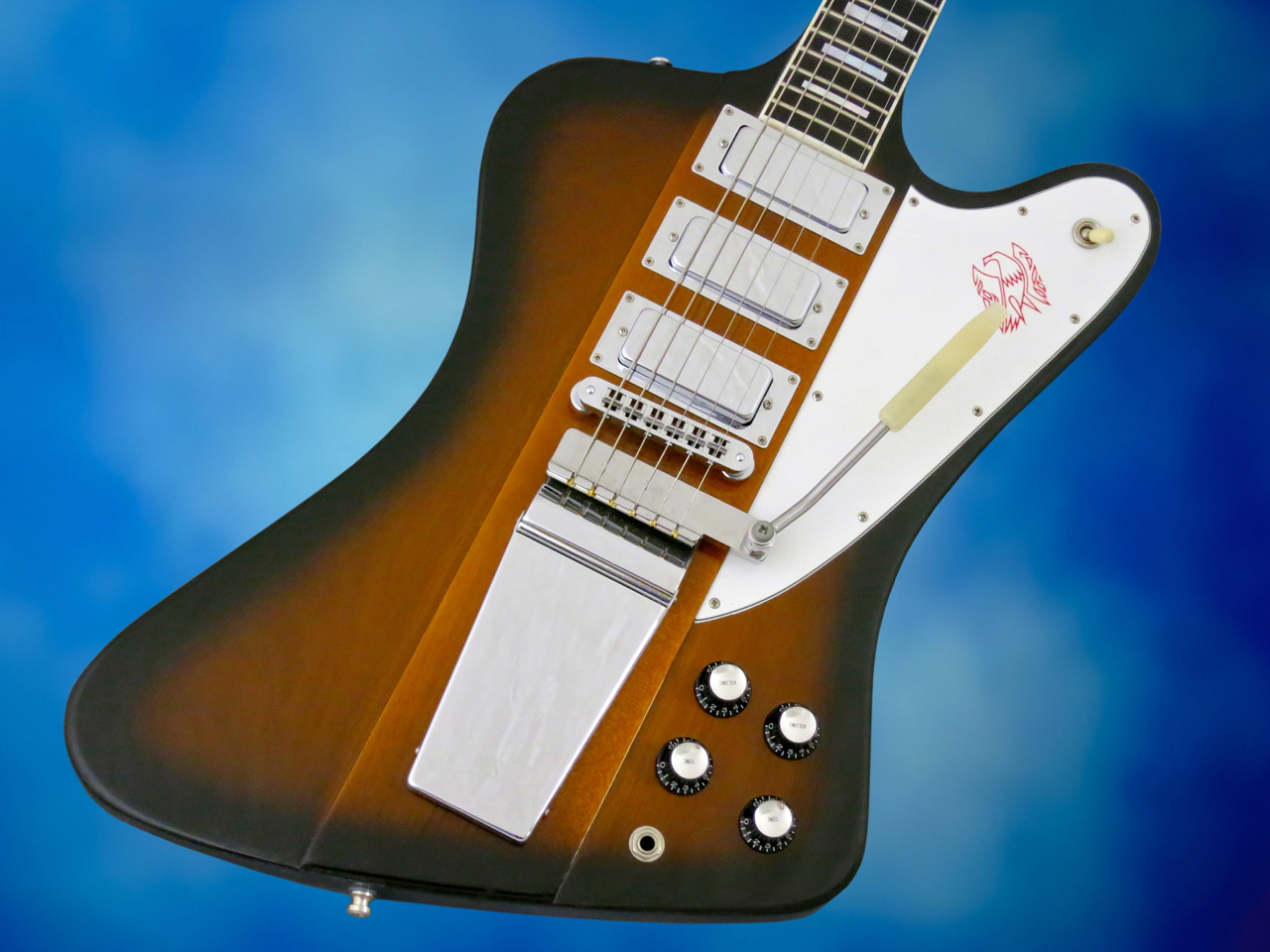
Tällä kertaa McCarty haki ulkopuolista apua: autoteollisuudesta tuttu suunnitelija Ray Dietrich sai tehtävän luoda soittimen designerin näkövinkkelistä. Dietrichin innovaatio oli ensimmäinen Firebird/Thunderbird-sarja (kuva yllä), jonka kutsutaan nykyään reverse-runkoiseksi (reverse = käänteinen), koska sen runko näyttää vähän kuin oikeankätinen kitara, joka on vasenkätisen kitaristin käytössä.

Gibson Firebird VII – tuners

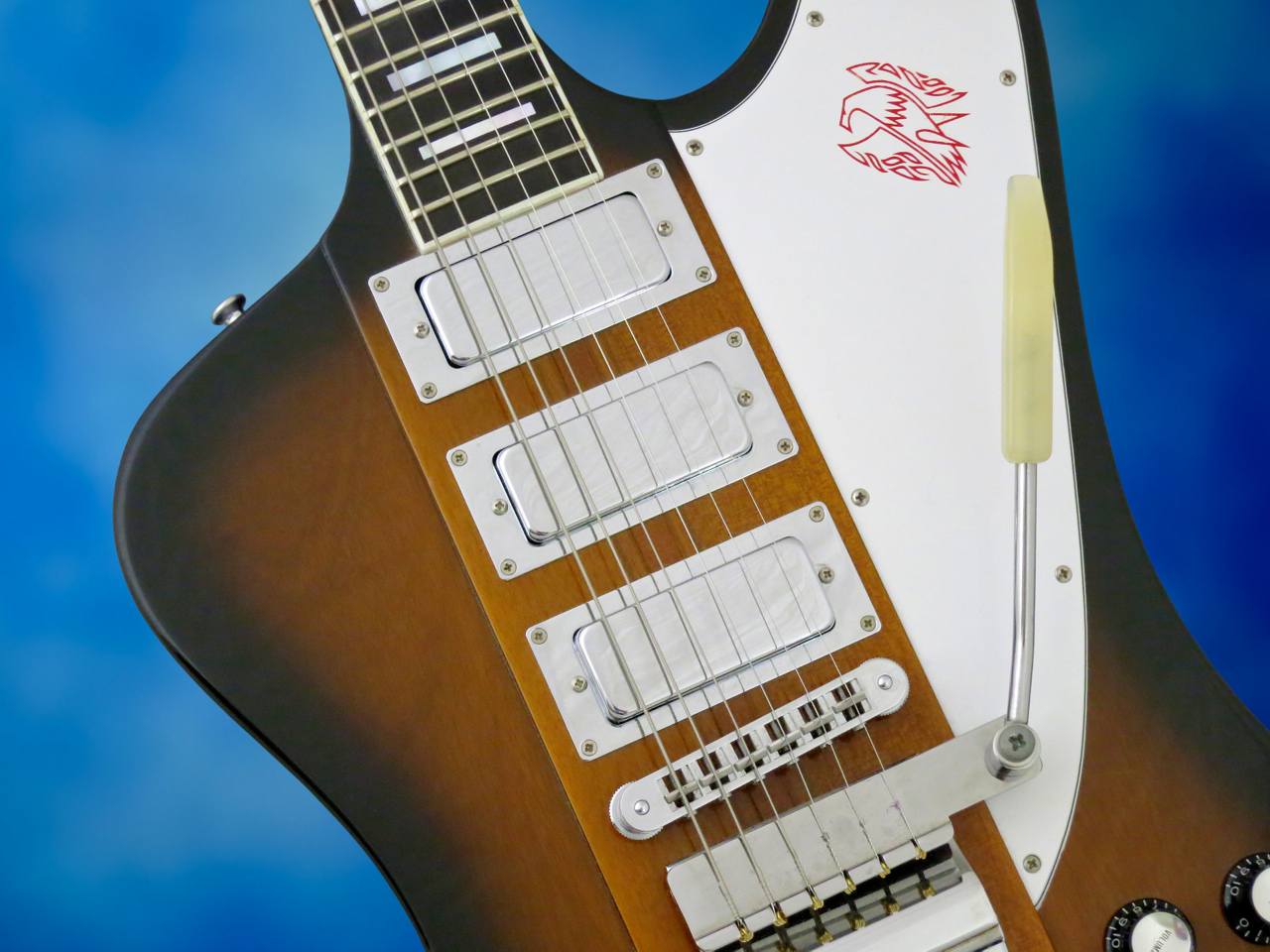
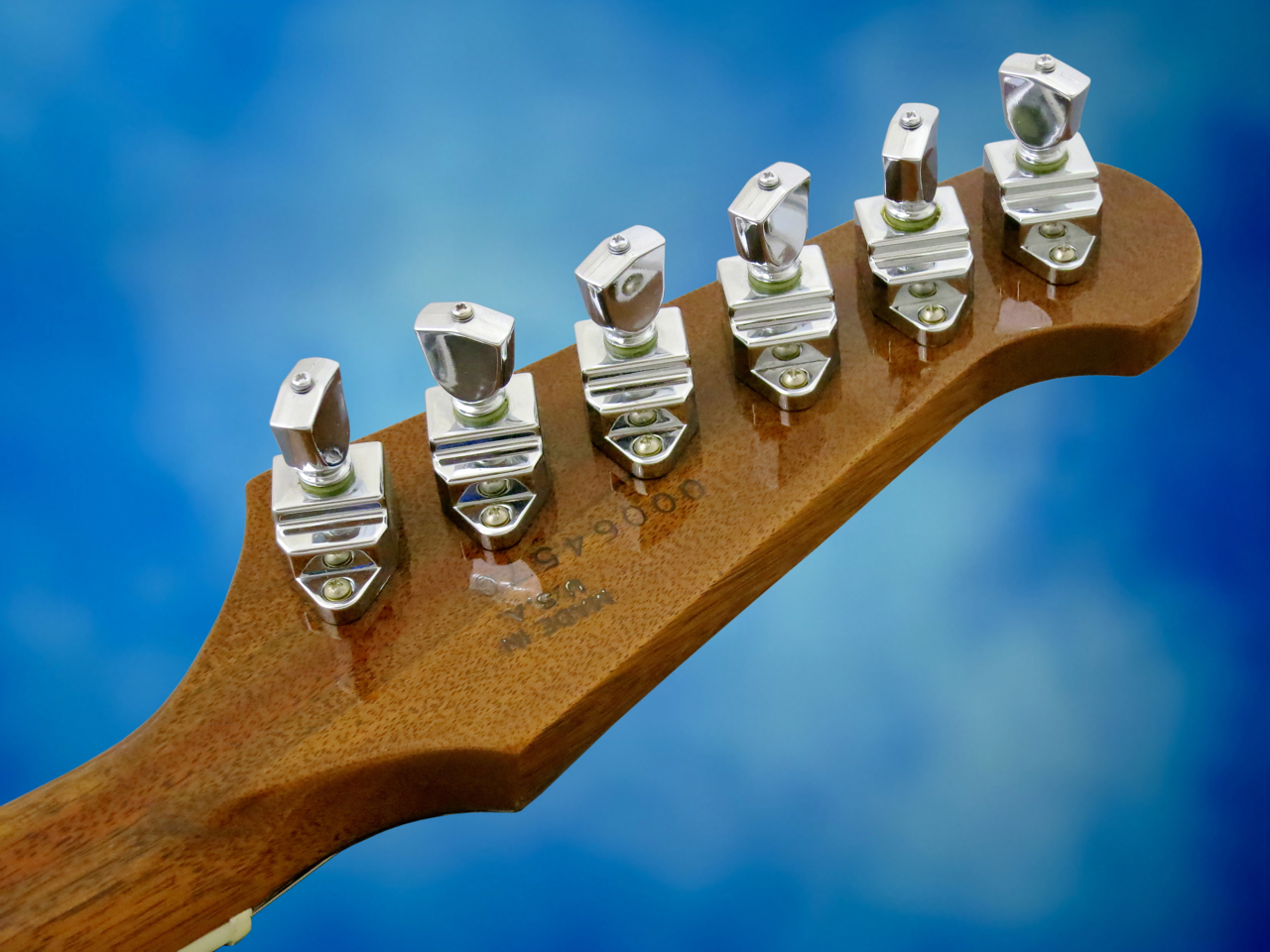
Gibson päätti kokeilla firmalle uutta rakennustapaa: reverse-Firebirdeillä kaula jatkuu yhtenäisenä koko soittimen pituudella (through-neck). Tähän mahongista ja pähkinäpuusta veistettyyn  keskiosaan lisättiin mahonkiset runkosiivet. Sarjan toinen erikoisuus ovat banjo-tyyliset virittimet, joissa nupit ovat samassa linjassa viritystappien kanssa.

Alkuperäinen reverse-sarja (1963–’65) koostui neljästä mallista:

• Firebird I: yksi mini-humbuckeri tallan lähellä, palisanteriotelauta, pyöreät otemerkit, wraparound-talla

• Firebird III: kaksi mini-humbuckeria, reunalistoitettu palisanteriotelauta, pyöreät otemerkit, wraparound-talla, yksinkertainen vibrato

• Firebird V: kaksi mini-humbuckeria, reunalistoitettu palisanteriotelauta, Les Paul Standard -tyyliset otemerkit, pitkä Gibson Vibrola lyyra-kaiverruksella

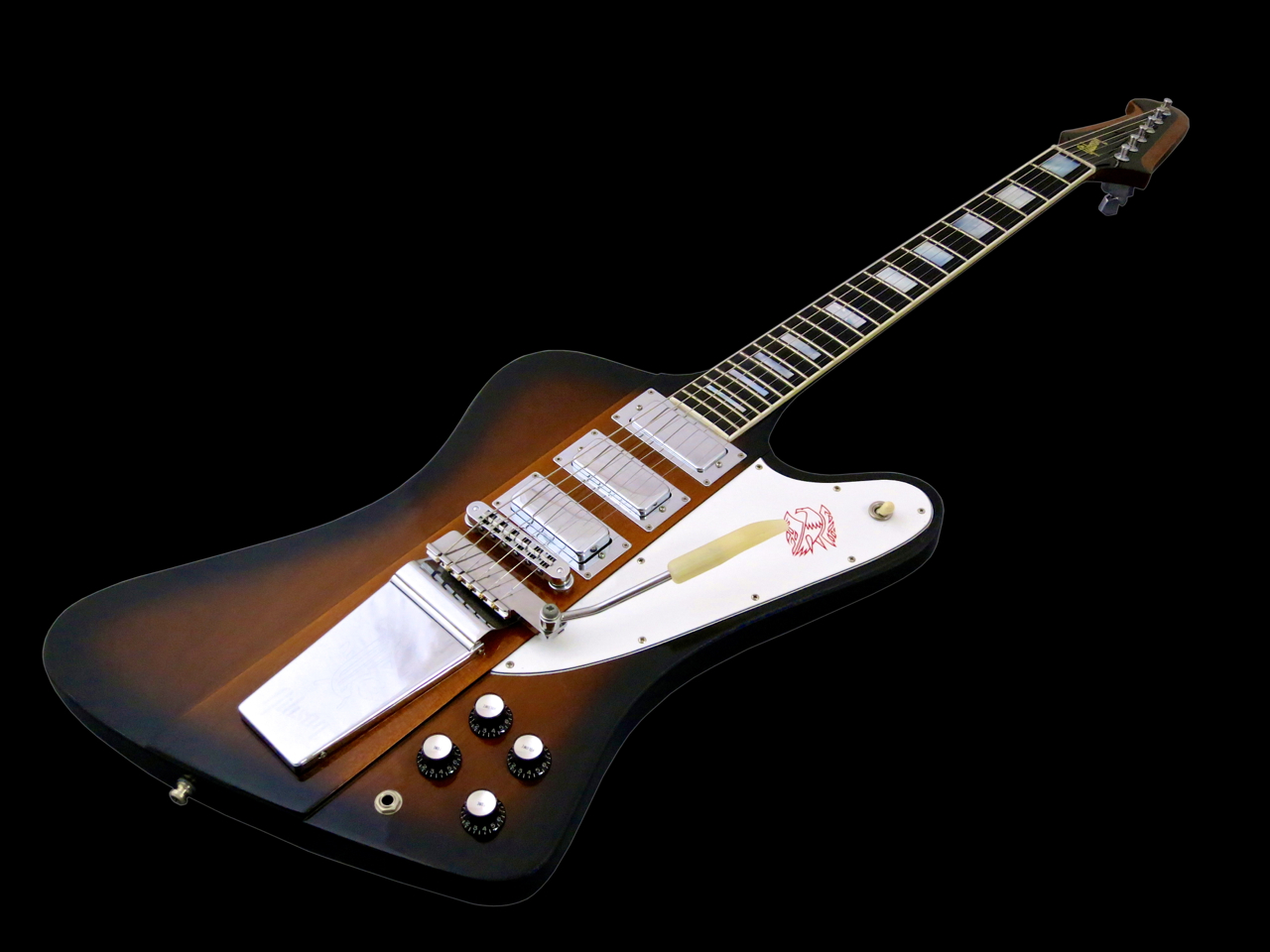
• Firebird VII: kolme mini-humbuckeria, reunalistoitettu otelauta eebenpuusta,  neliskulmaiset otemerkit helmiäisistä, pitkä Gibson Vibrola lyyra-kaiverruksella, kullanväriset metalliosat

Standardiviimeistely oli kaikissa malleissa sunburst-liukuväritys, mutta ensimmäistä kertaa Gibson tarjosi asiakkailleen myös Fender-tyyliset, standardisoidut custom-värit optiona.

****

Valitettavasti Firebirdin alkuperäinen painos ei ollut kovin suosittu. Pienten myyntilukujen lisäksi Fender alkoi valittaa, että Firebirdin ulkomuoto oli rikkomus omaa Offset-waist-patenttia vastaan, ja uhkasi oikeustoimilla. Seikat johtuivat koko sarjan muuttamiseen tällaiseksi:

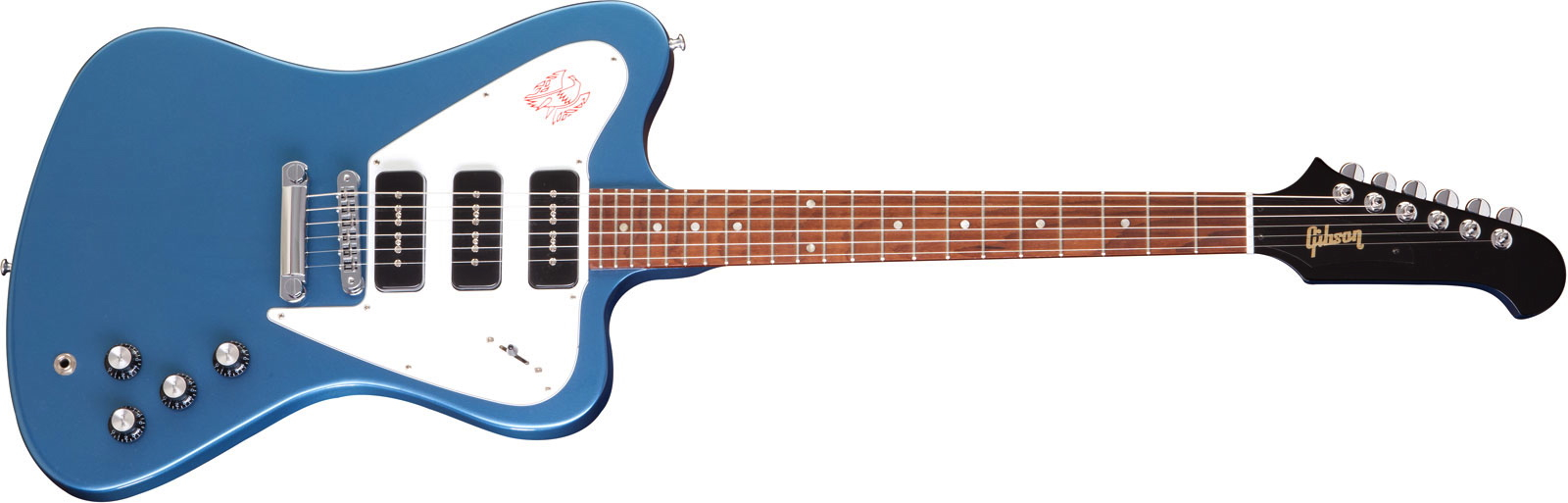
Kummallista kyllä, mutta non-reverse Firebirdit (1965–’69) näyttivät jopa enemmän Fender-kitaroilta kuin reverse-runkoiset vastineet. Non-reverse Firebirdeissä kaulaliitos oli muutettu takaisin Gibsonin perinteiseksi liimaliitokseksi. Firebird I- ja III-malleissa oli nyt P-90-mikrofonit – kaksi kappaletta I:ssä ja kolme III:ssa – kun taas Firebird V- and VII-malleilla oli yhä käytössä edeltäjänsä mini-humbuckerit. Otelauta oli kaikissa non-reverse Firebirdeissä palisanteria pyöreillä otemerkeillä, mutta ilman reunalistoitusta.

Firebirdin tuotantoa lopetettiin vuonna 1969 huonon myyntimenestyksen takia.

****

****

Sitemmin Firebirdit on otettu aina välillä uudelleen tuotantoon, mutta silti näitä kitaroita näkee edelleen suhteellisen harvoin.

Gibson Firebirdien tunnetuimmat soittajat ovat/olivat Johnny Winter, Phil Manzanera (Roxy Music), Brian Jones (Rolling Stones), Clarence ”Gatemouth” Brown, sekä Allen Collins (Lynyrd Skynyrd).

Gibson Firebird VII – full front

Classic Guitars, part 8: Gibson Firebird

Gibson Firebird VII – beauty shot 1 – sky

This piece could also have been titled ”The Firebird: A famous enigma”, as the Gibson Firebird is the least well-known of the company’s classic solid body electrics. The reason for this relative lack in interest is down to the short production run of the original series, as well as the fact that only a few famous guitarists have used a Firebird as their main axe.

The Firebird/Thunderbird-line of guitars and basses was the 1963-version of the ”Let’s beat Fender”-game that Gibson started in 1958 with the Flying V and the Explorer. Gibson’s then-president Ted McCarty wanted to come out with a snazzy guitar that proved that a) Gibson wasn’t a behind-the-times, old-fashioned company of old farts, and b) could compete with Fender’s current glitzy offerings (the Jazzmaster and the Jaguar) in the looks stakes.

Gibson Firebird VII – body

This time McCarty looked for help from outside the guitar industry. He hired renowned car designer Ray Dietrich to design a guitar purely from a designer’s viewpoint. What Dietrich finally came up with is now known as the ”reverse-body” Firebird-line (see picture above). These guitars (and their Thunderbird bass-brethren) are called ”reverse”, because, contrary to tradition (and ergonomical logic), the bass side of the body leans away from the neck, while the treble side is longer on the neck-facing side.

Gibson Firebird VII – tuners

Gibson decided on a novel way (for them) of building the guitar: reverse Firebirds feature a through-neck construction, with the neck and the body’s central section being crafted from the same laminated mahogany/walnut blank. The body wings are made from mahogany, while the tuners are very interesting back-facing machines.

The original run (1963–’65) of reverse Firebird-guitars comprised four models:

• Firebird I: one mini-humbucker in bridge position, unbound rosewood fretboard, dot inlays, wraparound bridge

• Firebird III: two mini-humbuckers, bound rosewood fretboard, dot inlays, dot inlays, wraparound bridge, simple vibrato

• Firebird V: two mini-humbuckers, bound rosewood fretboard, trapezoid (crown) inlays, long engraved Gibson Vibrola

• Firebird VII: three mini-humbuckers, bound ebony fretboard,  pearl block inlays, long engraved Gibson Vibrola, gold-coloured hardware

The standard finish was sunburst, but as as a Gibson-first, the Firebirds were also offered in a range of custom finishes, which weren’t very popular with the dealers, though.

****

Sadly, the reverse Firebirds weren’t selling very well. And then, when Fender started claiming Gibson had infringed on their ”offset waist”-patent and threatened a law suit, McCarty’s team decided on a swift redesign, which looked like this:

The non-reverse Firebirds (1965–’69) looked even more like a Fender-design, and abandoned the through-neck in favor of Gibson’s conventional set neck-joint. The Firebird I and III now sported P-90-pickups – two on the I and three on the III – while the Firebird V and VII stuck to their mini-humbuckers. All non-reverse models featured unbound rosewood fingerboards with dot inlays.

The non-reverse ’Birds didn’t set the guitar-playing world on fire either, so the company axed the series in 1969.

****

****

Since the mid-70s there have been plenty of reissues, as well as updated Firebird-models, but these clear-sounding guitars still tend to find favour with only a small clientele, compared to the rest of Gibson’s classics.

The best known users of Gibson Firebirds were/are Johnny Winter, Phil Manzanera (Roxy Music), Brian Jones (Rolling Stones), Clarence ”Gatemouth” Brown and Allen Collins (Lynyrd Skynyrd).

Gibson Firebird VII – full front

Kaksi joululahjaideaa

Tässä kaksi ideaa kitaristin joululahjaksi:

The Interactive Gibson Bible (2008)

Dave Hunter

(Jawbone/Outline Press, ISBN 978-1-906002-10-7)

Dave Hunterin kirja on ehkä hieman kuiva, sillä se sisältää kaikkien Gibson-sähkökitaroiden speksit, mutta ostos kannattaa jo pelkästään mukana tulevan, erinomaisen DVDn ansiosta.

DVDllä Dave Hunter ja sessioässä Carl Verheyen esittävät ja soittavat laajan kattauksen vanhoja Gibsoneita 1940-, -50 ja 60-luvuilta.

Tyylipuhdas kitaraporno – sekä silmälle että korvalle!

*******

Jeff Beck – Rock’n’Roll Party (DVD, 2010, Eagle Vision)

Jeff Beckin kunnianosoitus vuonna 2009 kuolleelle Les Paulille on suurella sydämellä toteutettu livetallenne. Beck heitti yhdessä Imelda Mayn, Mayn bändinsä ja usean yllätysvieraan kanssa kaksi upeaa keikkaa Iridium-klubissa, jossa Les Paul soitti vuosia säännöllisesti lähes kuolemaansa saakka.

Tämä levy, joka on saatavilla myös CD-versiona, pitäisi löytyä jokaisen kitaristin kokoelmasta!

Irrottaako Gibson itseään liialliselta perinnetietoisuudelta?

Onko ketään teistä huomannut, että Gibson on alkanut ”salaa”, takaportin kautta kokeilla muita puulajeja kuin niitä, joita on firmassa perinteisesti käytetty?

Voi olla, että tämä johtuu firman huolesta maapallon hupenevista raaka-aineista jalopuiden sektorissa. Mutta voi ollakin, että muutosta tehdään puhtaasti kokeilumielessä. Riippumatta syistä ainakin minusta tällainen muutos on hyvästä.

Tässä muutama esimerkki viime vuosista:

Upouusi Midtown Custom on veistetty suurilta osin perinteisistä puulajeista – vaahterasta ja mahongista – mutta sen sysimusta otelauta on Richlite-materiaalia. Richlite on puukuidun ja hartsin mikstuura, vähän samalla tavalla kuin Hagströmin Resinator. Myös Martin Guitars käyttää Richlitea joissakin malleissaan.

***

Raw Power -sarjan Les Paulit ja SG:t olivat mielenkiintoisia, koska ne oli tehty kokonaan vaahterasta.

***

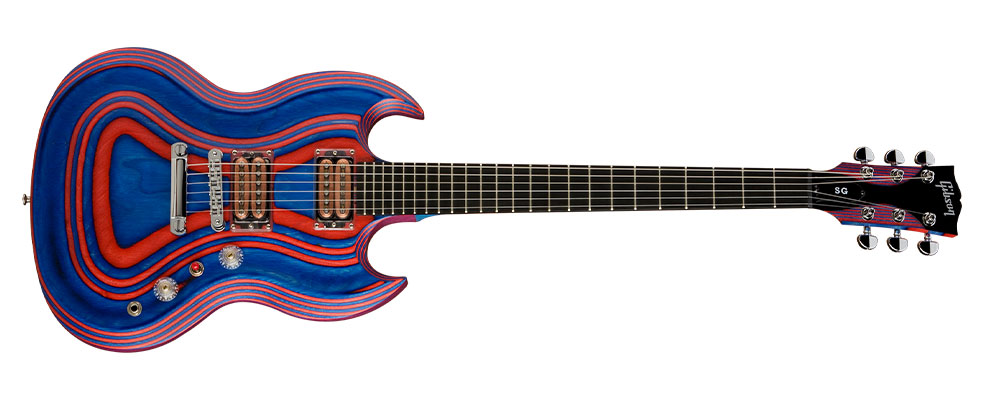
Zoot Suit SG:ssä käytettiin runsaasti värikästä Stratabond-materiaalia. Stratabond on tavaramerkki laadukkaalle koivuvanerille.

***

Tämänhetkiset Melody Maker-mallit – Flying V, Les Paul, SG ja Explorer – rakennetaan kyllä tavallisilla mahonkikauloilla ja (ei ihan perinteisillä) vaahterarungoilla, mutta otelaudat ovat kuitenkin ruskeaksi ”paahdetusta”, lämpökäsitellystä vaahterasta.

***

Uuden Les Paul Studio Swirlin otelauta on apassista – ei-uhatusta afrikkailaisesta puulajista – joka on tullut käytöön viime aikoina myös useissa muissa Gibson-kitaroissa.

***

…ja myös Les Paul Classic Customin otelauta on lämpökäsiteltyä vaahteraa.

Review: Lakland Skyline 44-60 Custom – English summary

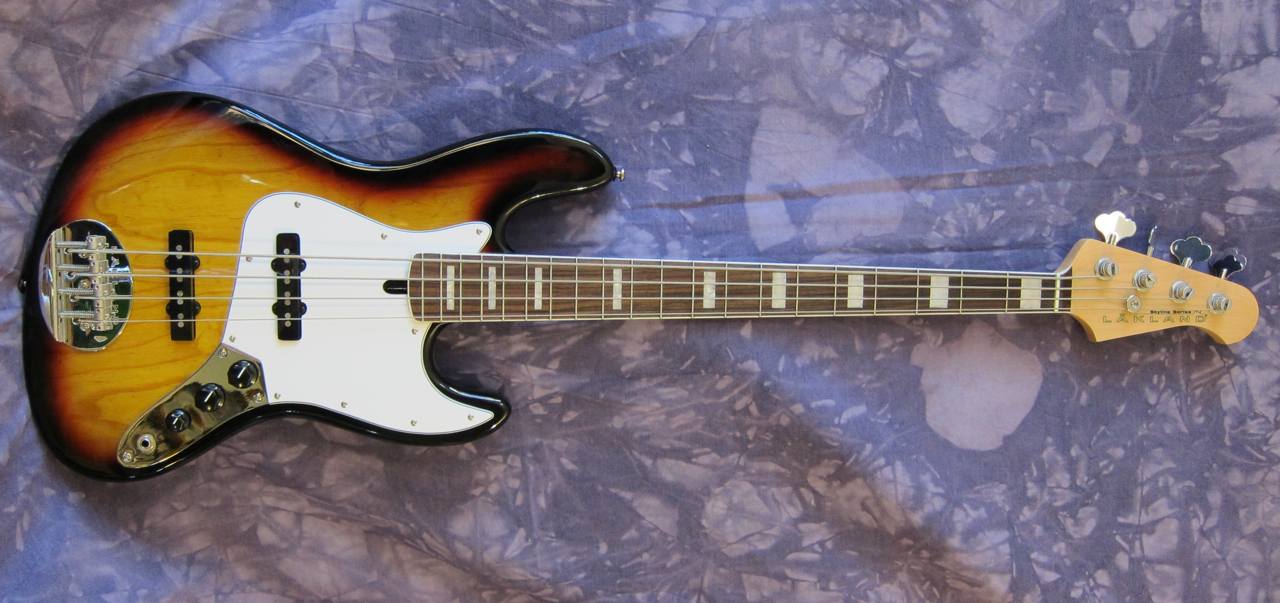
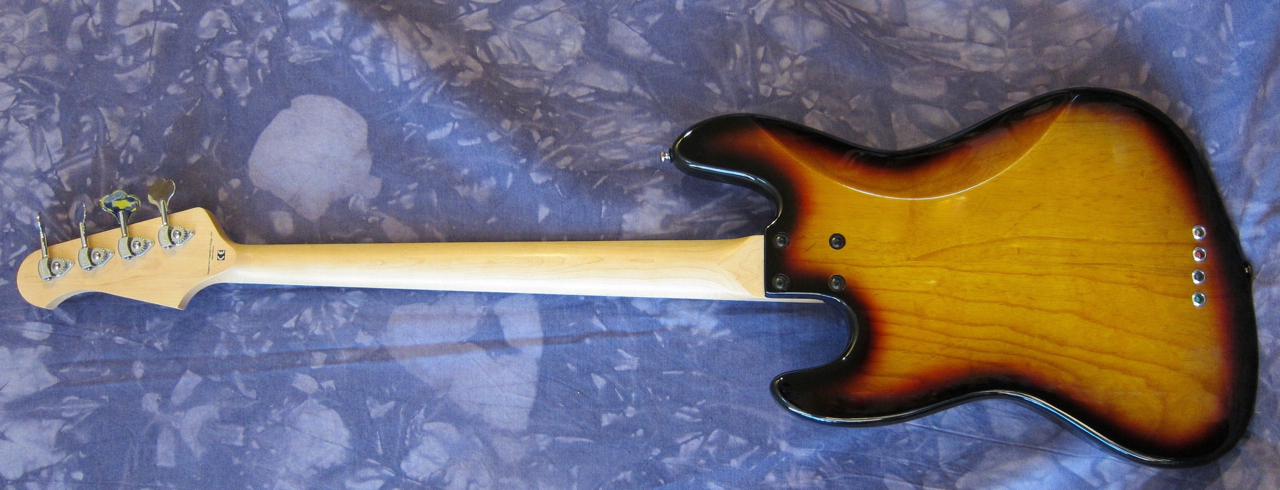
Lakland are offering their basses in two distinct lines: The US-series comprises of instruments made completely at Lakland’s own workshop, while the Skyline-series has the woodwork and finishing performed in Indonesia. The Skyline-basses are then shipped to Chicago, where they are equipped with the electronics and set up, using human craftsmanship alongside a German PLEK-machine.

Kitarablogi.com tested the passive Skyline 44-60 Custom (current price in Finland: 1.599 €), which is the company’s take on the venerable Fender Jazz.

The review sample is a beautiful instrument, very carefully crafted from quality woods, hardware and passive electronics.

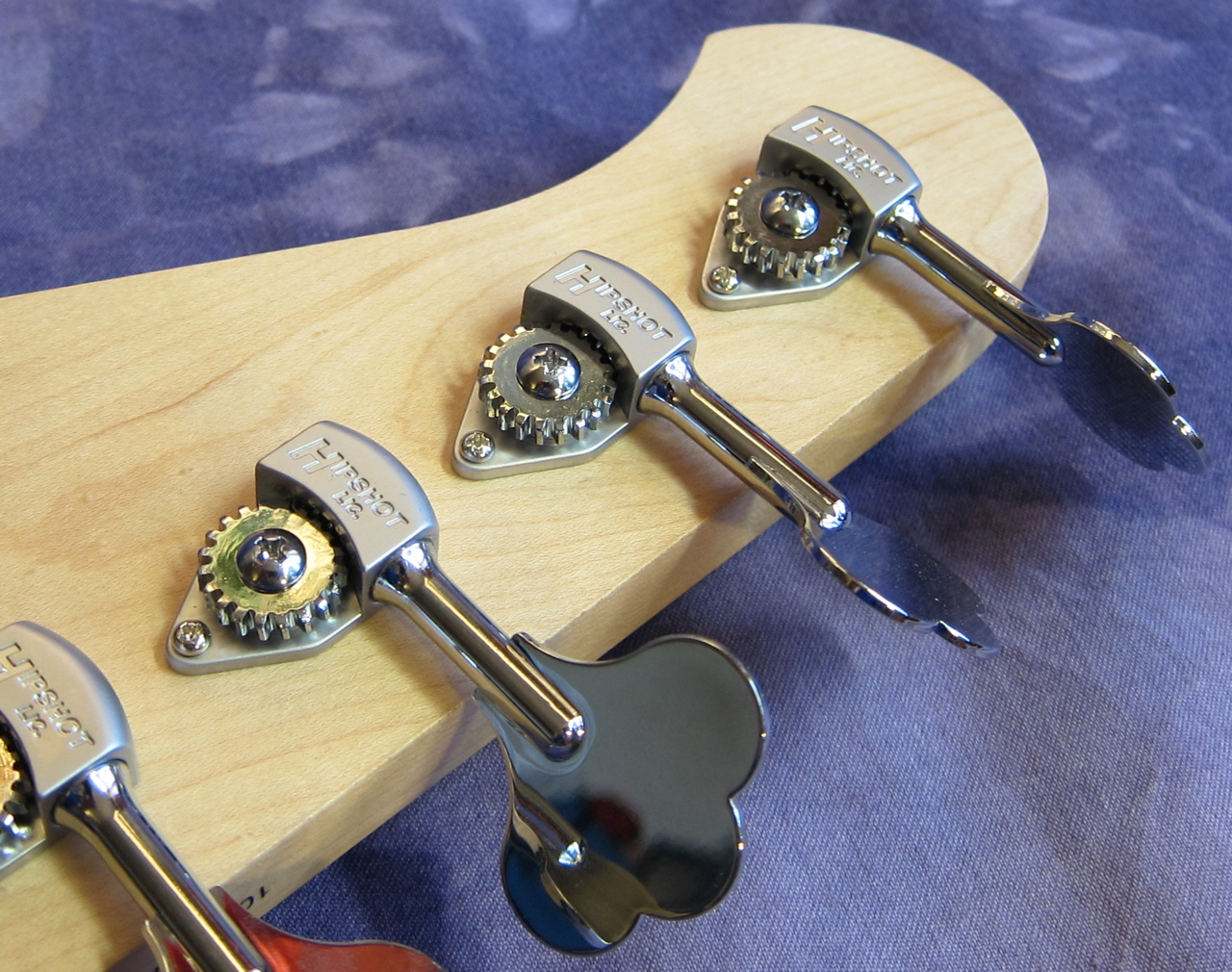
These very nice, licensed versions of Hipshot’s Ultra-Lite tuners keep the headstock’s weight down.

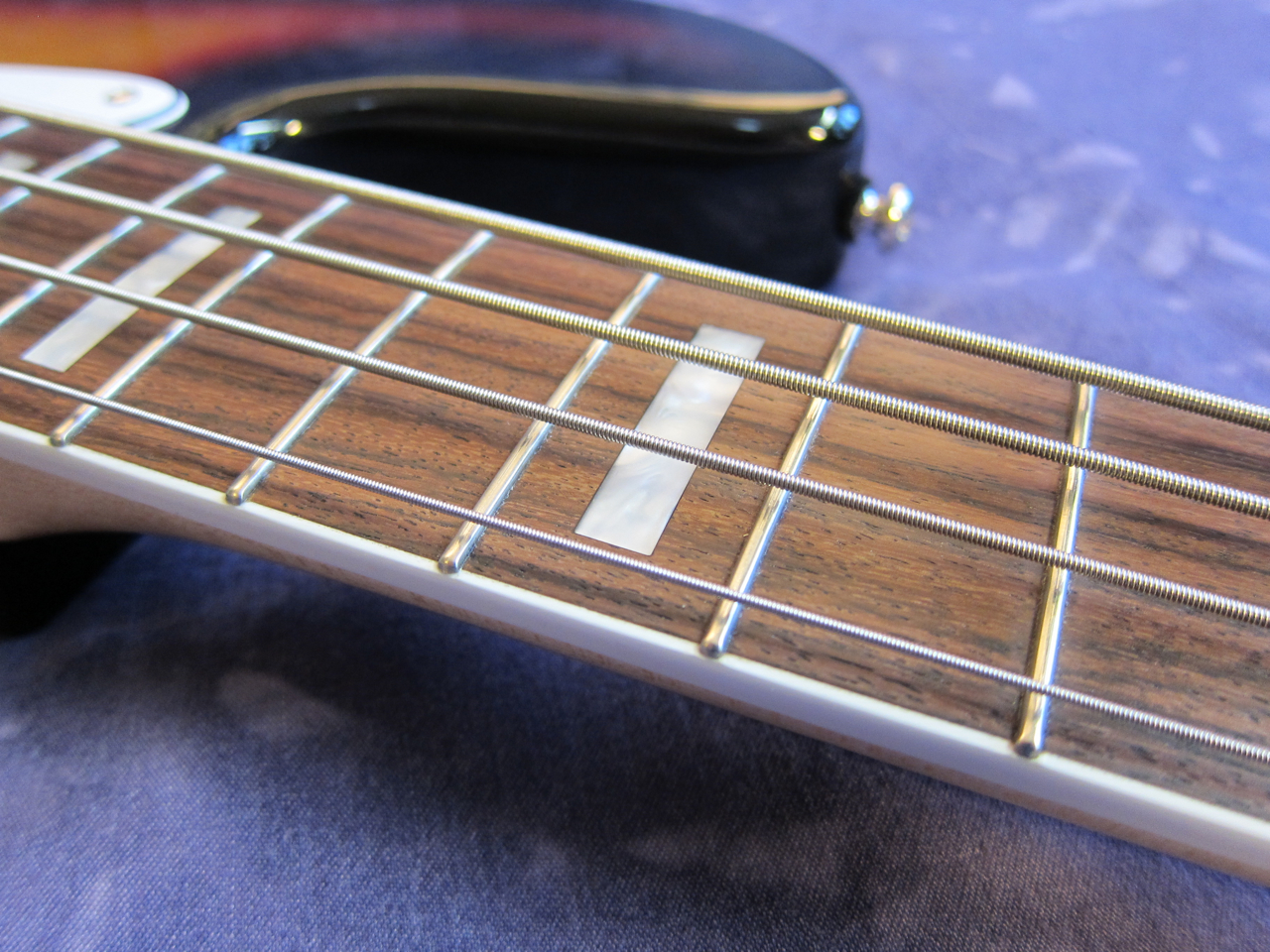
Lakland-basses tend to feature quite low and slim frets, which probably add a percussive element to the attack of each note. Some players will be concerned about how well small frets hold up to modern roundwound strings, though.

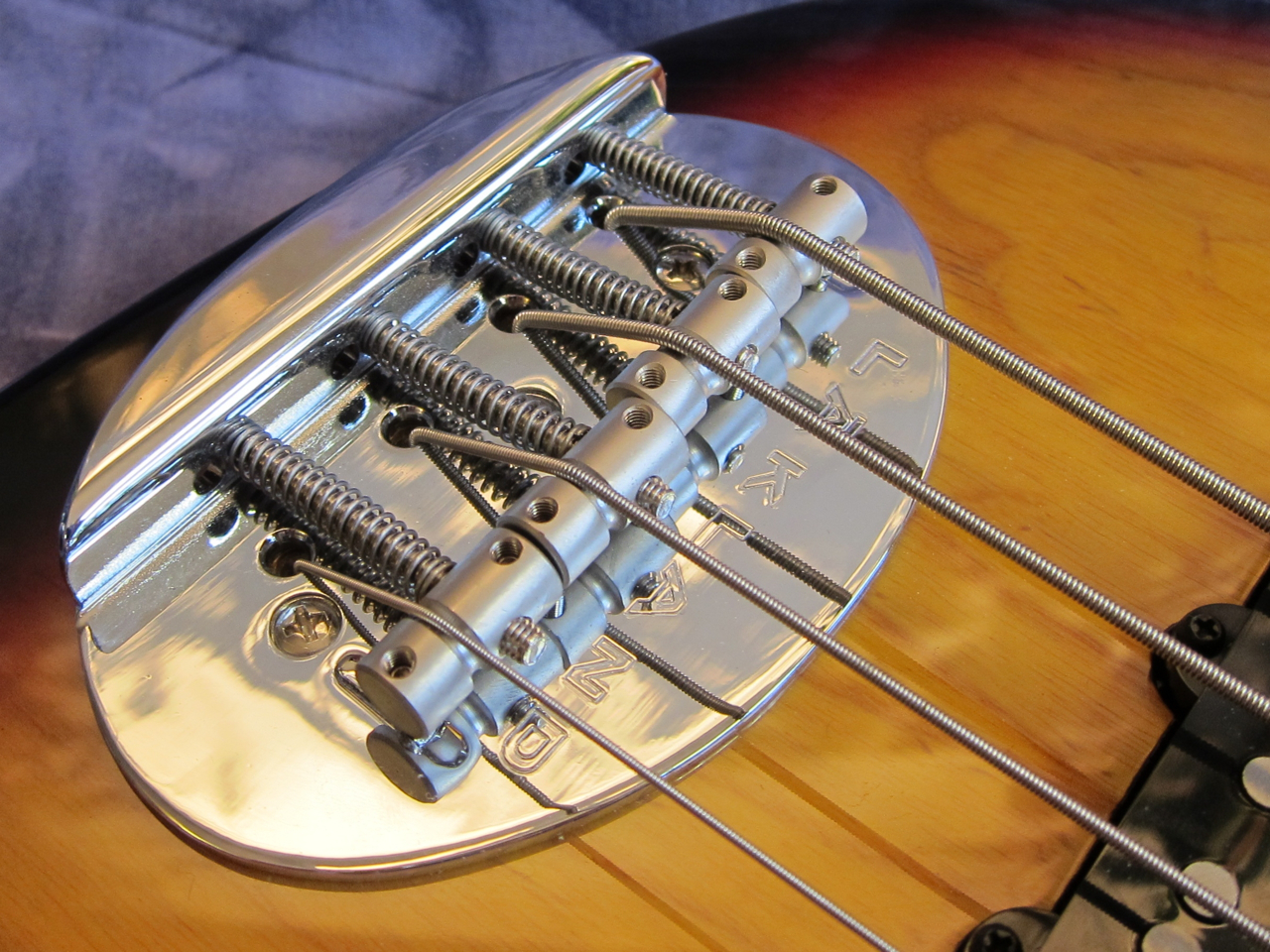
Lakland’s own bridge is a fine and sturdy design offering both through-body stringing, as well as the traditional Fender-style of stringing through the raised lip of the bridge plate.

****

The lightweight Lakland Skyline 44-60 Custom plays like a dream, thanks to the expert set-up, the flatter-than-vintage fretboard radius (10″) and the slim neck profile. The action was effortless with no string buzz whatsoever.

The Skyline 44-60 is a prime example of a J-type bass’ versatility. This bass really covers all of the usual bases with plenty of panache. The singlecoil pickups sound great and don’t pick up excessive amounts of electromagnetic buzz. When used together they act as a humbucker, because the bridge pickup is reverse-wound/reverse-polarity in relation to the neck unit.
Here’s what the Lakland sounds like recorded through a SansAmp Bass Driver DI:

neck pickup – fingerstyle

both pickups – fingerstyle

bridge pickup – fingerstyle

both pickups – plectrum

both pickups – slap

Lakland strike a home run with their Skyline 44-60 Custom. This bass proves that a joint venture, coupled with the appropriate amount of quality control, can really result in excellent musical instruments.

****

Lakland Skyline 44-60 Custom

1.599 €

Finnish distributor: Modulen-Music Group

****

Pros

+ workmanship

+ PLEK-set-up

+ playability

+ weight

+ sound
Cons

– small frets not everyone’s cup of tea

Pidä blogia WordPress.comissa.

Ylös ↑