Tokai LC-85 – Sounds! [][][][][] Tokai LC-85 – Soundeja! [][][][][]

Tokai LC-85 neck PU clean (kaulamikki puhtaana)

Tokai LC-85 both PUs clean (molemmat mikit puhtaina)

Tokai LC-85 bridge PU clean (tallamikki puhtaana)

πππππππππππ

Tokai LC-85 neck PU crunch (kaulamikki säröllä)

Tokai LC-85 both PUs crunch (molemmat mikit säröllä)

Tokai LC-85 bridge PU crunch (tallamikki säröllä)

πππππππππππ

Tokai LC-85 bridge PU lead (soolosoundi soitettu tallamikillä)

More information on the guitar HERE.

Lisätiedot löydät TÄSTÄ tai suoraan Musamaailmalta.

Tokai LC-85 Ltd Ed – parempi kuin alkuperäinen?

Ovelien vaihtokauppojen ansiosta yksi minun pojista on saanut ostettua itselleen Tokai LC-85 -kitaran.

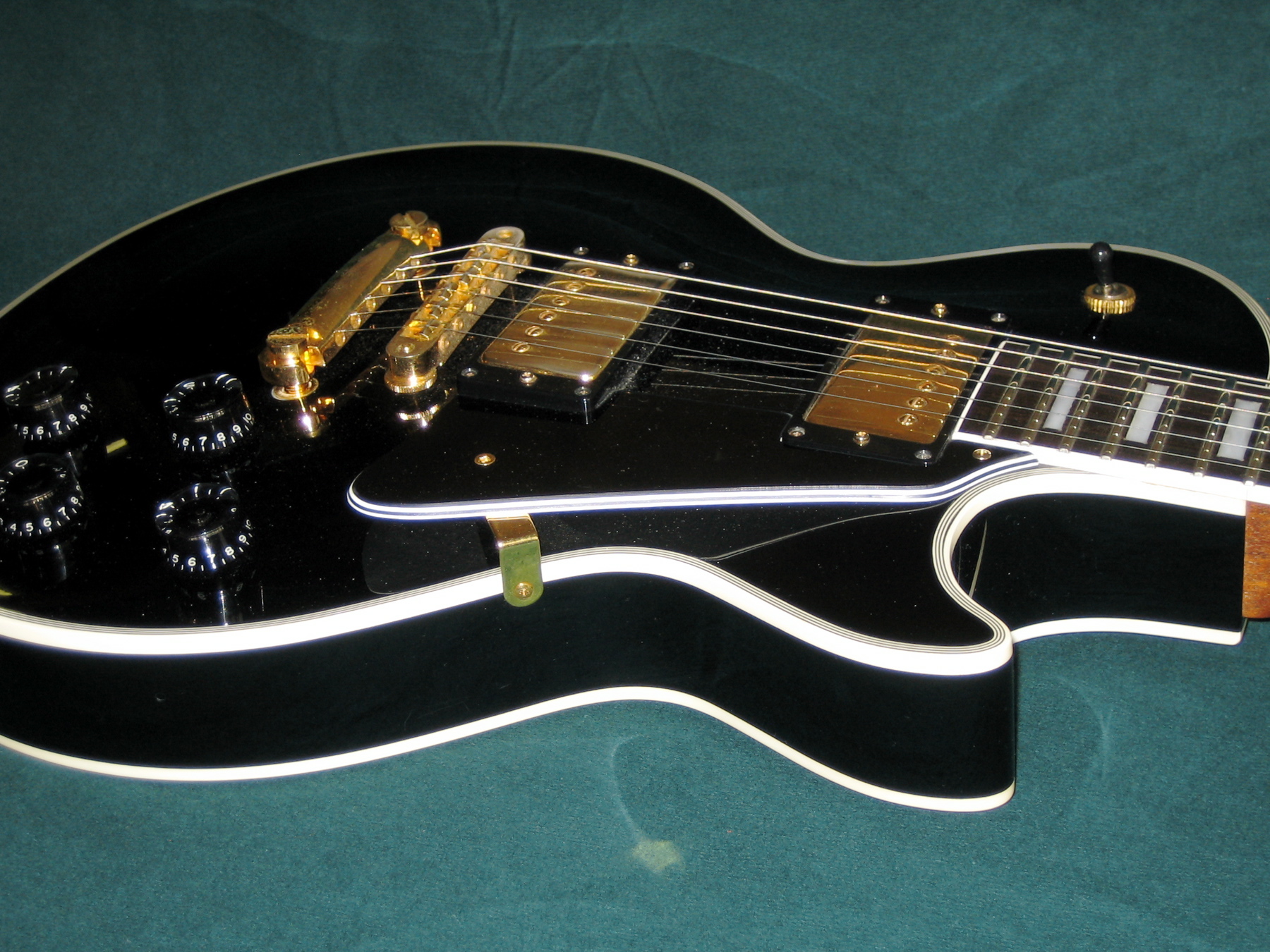
LC-85-malli on yksi firman kalleimmasta kitaroista, joita valmistetaan Japanissa käsityöllä. Tämä Tokai on ”kunnianosoitus” kahdella humbuckerilla varustetulle Gibson Les Paul Custom -kitaralle.

Limited edition -version yksiosainen mahonkikaula on viimeistelty öljyämällä, tavallisissa malleissa se on lakattu kiiltävän mustaksi.

Eebenpuiseen otelautaan on asennettu 22 jumbo-kokoista nauhaa, sekä neliskulmaisia otemerkkejä helmiäisjäljitelmästä. Juha Lottonen on oston jälkeen hionut soittimen nauhat ja asentanut kitaralle uuden satulan luusta.

Runko on valmistettu perinteisellä tavalla: paksun mahonkisen takaosan päälle on liimattu vaahterakansi. Mustavalkoinen reunaloitus näyttää kyllä juhlavalta.

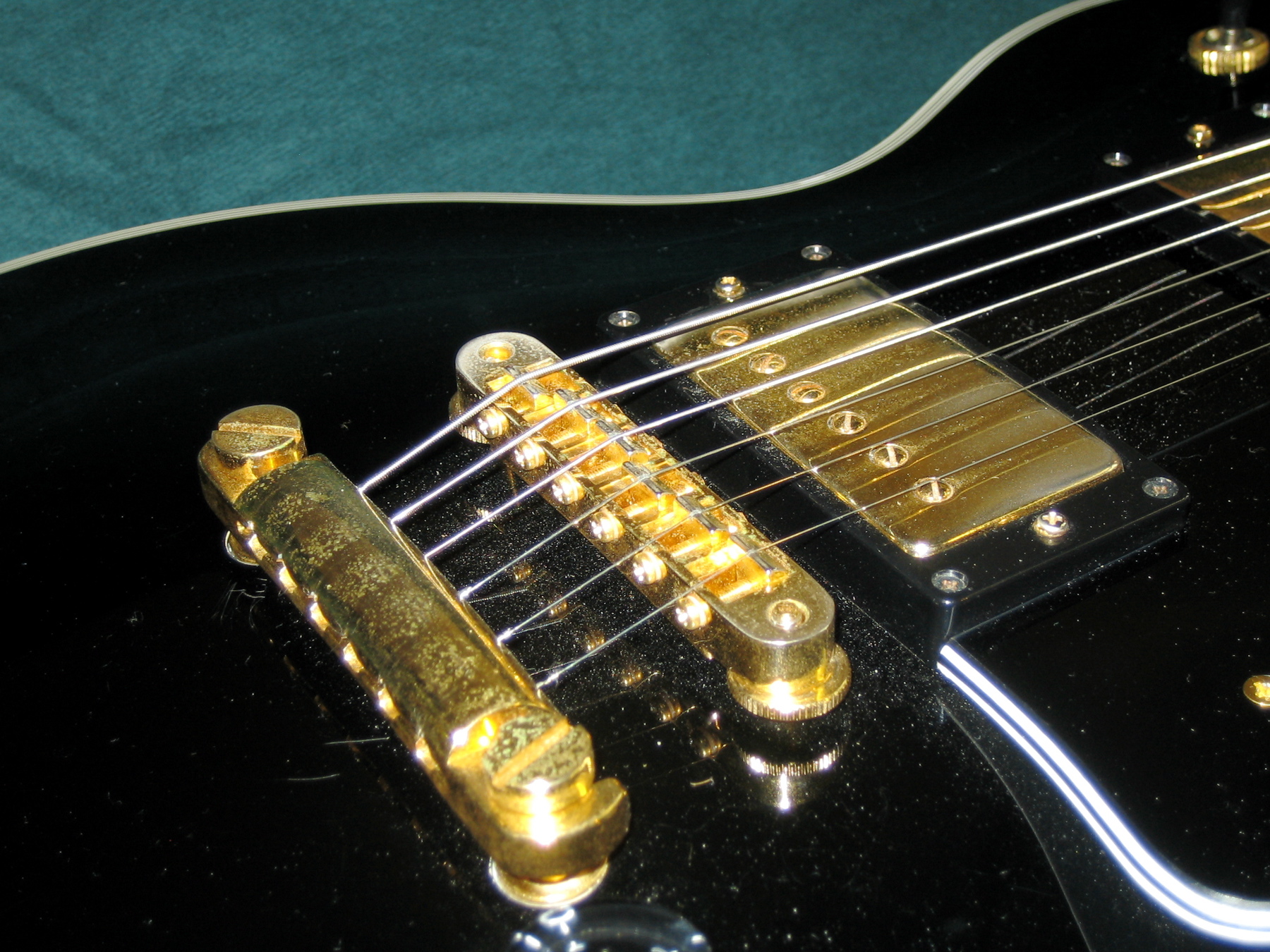
Käytetyn kitaran kultaisilla metalliosilla on asiaankuuluvat kulumanjäljät, niin kutsuttu ”patina”. Tallaksi on valittu Gotohin tune-o-matic. Mikrofonit taas ovat Tokain omia, vintage-tyylisiä PAF-Vintage Mark II -malleja.

Ja tässä kuvassa näkyy LC-85:n Gotoh-virittimiä…

Tämän kitaran soitettavuus on ensiluokkainen – kevyt ja notkea.

Tokain PAF-tyyliset mikrofonit kuulostavat isoilta ja eloisilta, ja niissä on maltillinen teho. Tästä syntyy fantastinen humbucker-soundi, jolla on oiva annos pirteyttä, kiitos vaahterakannen (jonka alkuperäinen Les Paul Custom sai vasta 1960-luvun loppumetreillä) ja eebenpuisen otelaudan.

Ainoastaan hieman jäykässä, laatikkomaisessa kytkimessä olisi mielestäni vielä pikkusen parantumisen varaa.

Aion lisätä lähipäivinä vielä esimerkkisoundeja blogille…

Tokain maahantuoja on Suomessa Musamaailma. Uusimmassa Riffi-lehdessä (6/2011) on mukana monisivuinen Tokai-liite!

Tokai LC-85 Ltd Ed – Even better than the real thing?

Through some rather clever bargaining on his part, one of my sons recently got his hands on this – a Tokai LC-85.

The LC-85 is one of the top-end, Made-in-Japan-Tokais, and is their – shall we say – ”tribute” to the post-1969 Gibson Les Paul Custom.

We have a one-piece mahogany neck, which in this limited edition version is oil-finished, instead of lacquered in black.

The ebony fingerboard carries jumbo frets, as well as pearloid fret markers. Master luthier Juha Lottonen has given this guitar a fret polishing, as well as a new bone nut.

The body is made from a mahogany back and a carved maple top. Black and white binding gives the guitar a deluxe look.

As this guitar was acquired used the gold-coloured plating on the hardware shows some cool signs of wear. The bridge is a Gotoh tune-o-matic. The pickups are Tokai’s own PAF-Vintage Mark II -models.

And here’s a look at the sealed Gotoh-tuners…

This guitar plays like a dream – the feel is really effortless and fluid.

Tonally the Tokai PAF-style pickups sound great and lively, and they have a vintage style, medium output. It’s a fantastic humbucker tone with a little added sprinkle of bite, brought to the mix by the maple top and the ebony fretboard.

The only thing probably worth upgrading sometime, may be the slightly stiff, boxed three-way toggle selector.

Stay tuned for some soundbites in the near future…

Epiphone Phant-o-matic

Uusi Epiphone Phant-o-matic on My Chemical Romance -bändin kitaristin, Frank Ieron, nimikkomalli. Kitara perustuu Epiphone Wilshire -malliin, mutta sillä on Les Paul Custom -tyylinen kaula, täyskokoiset humbuckerit, mykistysnappi sekä Gibson ES-345:stä tuttu Varitone-kytkin.

The new Epiphone Phant-o-matic has been developed with My Chemical Romance’s Frank Iero. The model is based on the Epiphone Wilshire, but features a Les Paul Custom -neck, full-sized humbuckers and a kill-switch, as well as the Varitone-switch first seen on the Gibson ES-345.

Schecter PT – the guitar that started it all

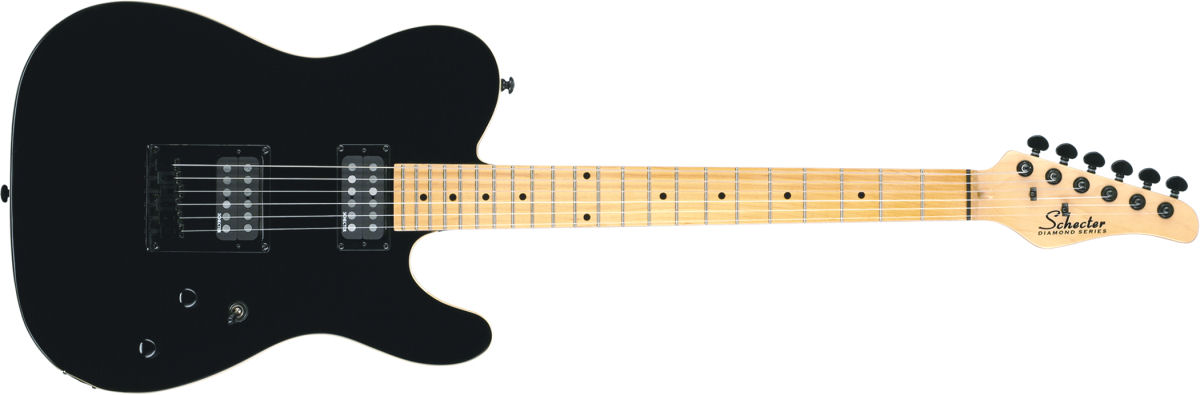
The year was 1979 and The Who’s Pete Townshend was looking for a sturdier and lighter guitar than his modded Gibson Les Paul Deluxe.

Townshend’s then guitar technician Alan Rogan went out and bought a humbucker-equipped Telecaster-style guitar made from Schecter parts in New York.

Pete fell in love with the guitar, and a while later commisioned more guitars using Schecter parts from British luthier Roger Giffin.

When Giffin went to the USA to work for Gibson’s West Coast Custom Shop, Schecter started building the Townshend-model themselves (before this they had mostly manufactured parts, and only a handful one-off-guitars).

Schecter is still manufacturing the PT-model, these days it’s part of their mid-priced Diamond-series.

Schecter PT – firman kulmakivi

The Who -yhtyeen kitaristi Pete Townshend oli etsimässä vuonna 1979 kestävämmän ja kevyemmän kitaran kuin hänen silloin käyttämä modifioitu Gibson Les Paul Deluxe.

Townshendin silloinen kitarateknikko Alan Rogan hanki pomolleen Schecter-osista kasatun, Telecaster-tyylisen kitaran kahdella humbuckerilla.

Pete innostui kitarasta niin, että pyysi brittiläisen kitararakentajan Roger Giffiniä valmistamaan hänellä vielä muutama soitin lisää Schecter-osista.

Kun Giffin sai työtä Gibson Custom Shopilta, Schecter itse aloitti Townshend-kitaran valmistuksen piensarjassa, josta alkoi firman varsinainen taival kitaravalmistajana (ennen sitä ne möi vain kitaraosia).

Schecter valmistaa vielä nykyäänkin PT-mallia osana Kaukoidassä valmistetusta Diamond-sarjasta.

Squier Musicmaster Bass – Sounds!

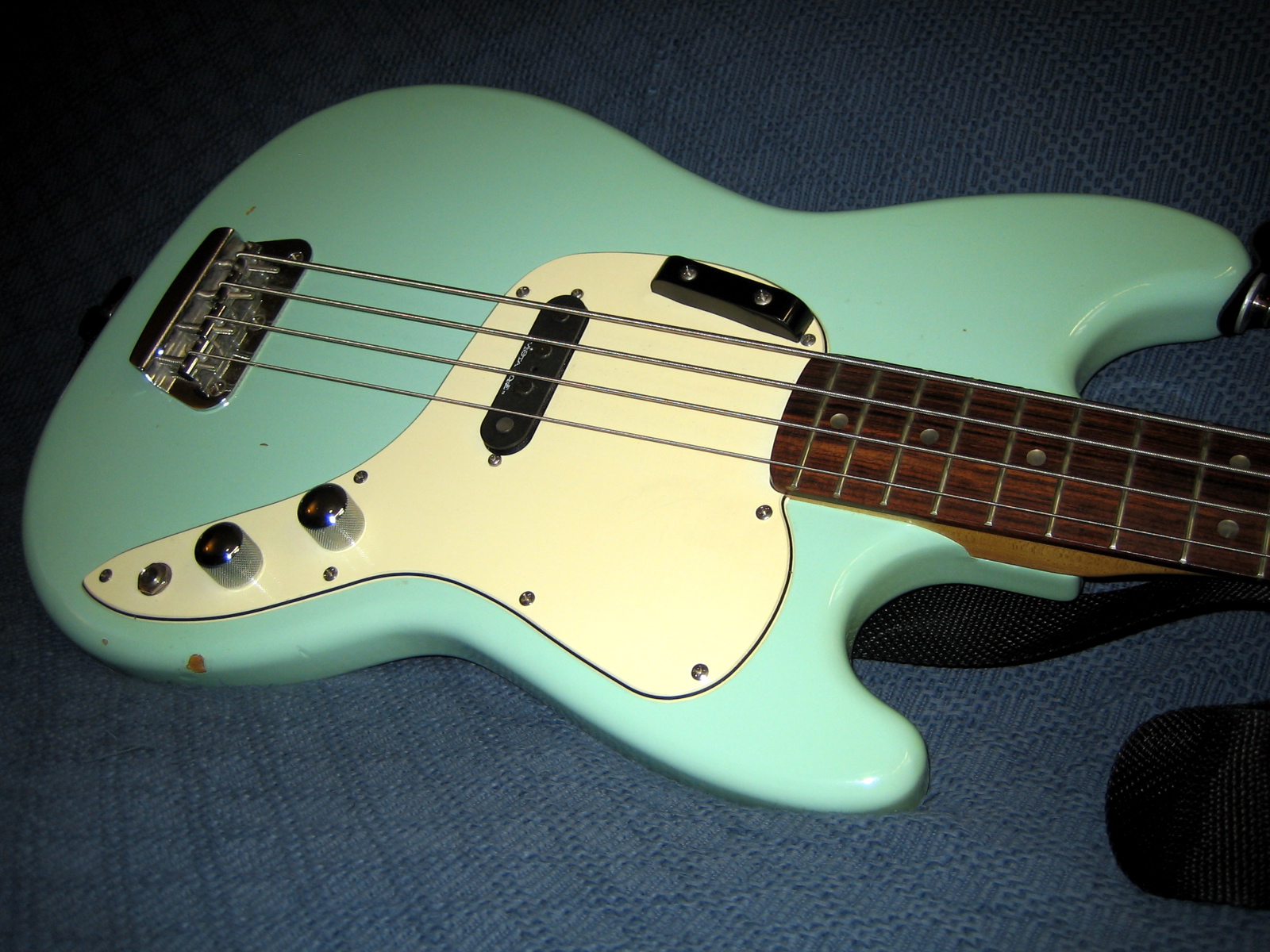
The Squier Vista Musicmaster Bass (introduced in 1997) has been produced only for a short time, despite having been one of the best bang-for-the-buck-machines in the stable.

The original Fender Musicmaster Bass from 1971 was Fender’s most inexpensive short-scale bass at the time (probably ever). Many were sold as part of a two-piece set, which included a low-powered practice amp.

Squier’s version was one of the company’s first instruments made in China, and featured several genuine improvements over the Fender original.

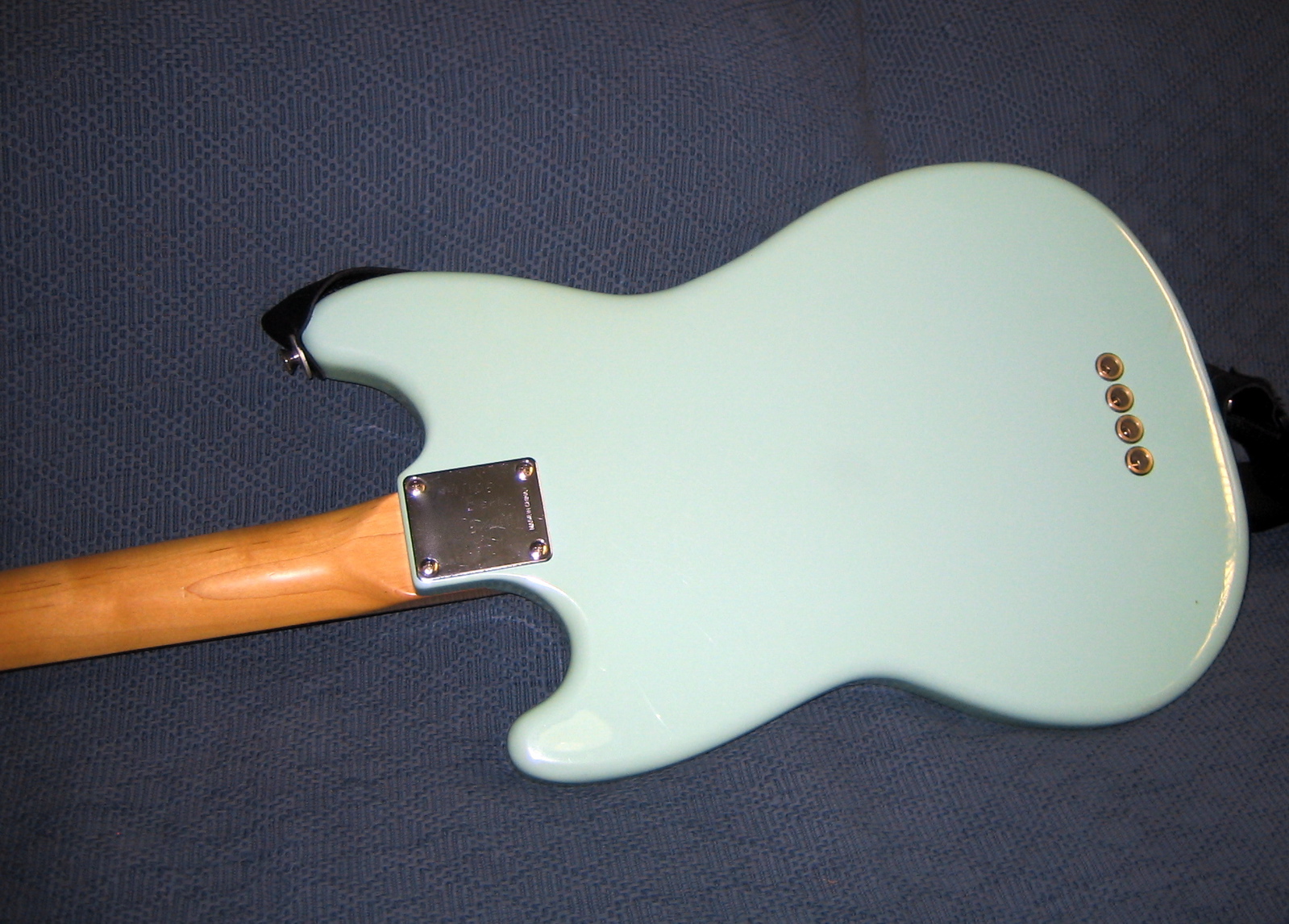
The Squier features through-body stringing resulting in better sustain.

Instead of the Fender’s spartan two-saddle bridge, here we have an intonation-friendly four saddle bridge.

The headstock is finished in the same tasty seafoam green as the body.

The decent, full-sized tuners are good replicas of 1970s Schallers.

The best bit, though, is the Squier Vista Musicmaster Bass’ pickup. The Fender had been equipped with a rather weak Strat-style pickup. The Squier went for the singlecoil Precision Bass pickup, that had been on the first P-Basses (1951-56) – the result is a very healthy output and a full-bodied sound.

I used a Sans Amp Bass Driver for the Pro Tools -soundbites:

Musicmaster/fingerstyle

Musicmaster/plectrum

^^^^^^^^^^^^^^^^^^^^^^^^^^^^^^^^^^^^^^^^^^^^^^^^^^^^^^^^^^^^^^^^^^^^^^^^^^^

Squier’s current bass lineup includes the Bronco Bass, which is clearly derived from the Musicmaster. The Bronco’s bridge is the 70s two-saddle type and the pickup comes from a guitar (!) – it’s a Bullet-series Strat-pickup.

Squier Musicmaster -basson soundeja

Squierin 1997 vain lyhyesti markkinnoille tuotu Vista-sarjan Musicmaster-basso tarjoaa erittäin hyvän vastineen pienelle hinnalle.

Alkuperäinen Fender Musicmaster Bass tuli ulos vuonna 1971, ja tämä lyhytskaalainen basso oli silloin firman edullisin basso. Saatavana oli myös Musicmaster-setti, jossa myytiin basson lisäksi pientä harjoitusvahvistinta.

Squier Musicmaster oli yksi firman ensimmäisistä Kiinassa tuotetuista soittimista, ja sillä oli muutama parannettu yksityiskohta alkuperäiseen Fenderiin nähden.

Kielet kiinnitetään Squierissa rungon läpi, mikä parantaa soittimen sustainea.

Yksinkertaisen, kahdella tallapalalla varustetun alkuperäisosan sijaan käytetään tässä tallassa neljä tallapalaa, minkä ansiosta intonaatio on täsmällinen.

Lapa on viimeistelty tyylikkäästi samassa Seafoam Green -sävyssä kuin runko.

Isokokoiset avoimet virittimet ovat varsin käyttökelpoisia kopioita 1970-luvun Schallereista.

Parasta Squier Vista Musicmaster -bassossa on kuitenkin sen mikrofonivarustus. Alkuperäisessä Fenderissä oli melko heikkotehoinen, Strato-tyylinen mikrofoni. Squierissa taas käytetään samaa mikrofonia kuin ensimmäisissä Precision-bassoissa (1951-56) – ja soundi on erittäin mehukas ja itsevarma.

Ääniesimerkit tallennettiin Sans Amp Bass Driver -boksin kautta Pro Toolsiin:

Musicmaster/sormisoitto

Musicmaster/plektralla

^^^^^^^^^^^^^^^^^^^^^^^^^^^^^^^^^^^^^^^^^^^^^^^^^^^^^^^^^^^^^^^^^^^^^^^^^^^

Squierin mallistossa on ollut viime vuosina Bronco-niminen basso, joka on Musicmasterin johdannainen. Broncon tallassa on vain kaksi tallapalaa ja mikrofonina toimii Bullet-sarjan Stratomikrofoni.

The Red Riddle – my Kasuga ES-335 -copy

Everybody has heard of Tokai, and there’s plenty of knowledge about Greco’s and Ibanez’ copycat instruments around.

The Kasuga-brand is a much rarer beast, even though the company produced many decent instruments (many of those were copies) between the mid-Sixties and the Eighties.

I own a Kasuga-version of Gibson’s classic ES-335, which was most likely produced in the late 1970s, judging by its main specs.

I found my Kasuga by chance in a flea-market in the early Nineties. The price asked was so low and the guitar so red, it was a no-brainer.  😉

The classic curves of a Gibson ES-335/345/355 are one of the prettiest guitar shapes, in my opinion.

In some respects this copy is a funny hodgepodge of different attributes lifted from different periods of the original’s lifespan. Additionally there are also some of Kasuga’s own details added.

Take the headstock, for example, which is the larger version, generally used for the bound headstock of the Gibson ES-355 model.

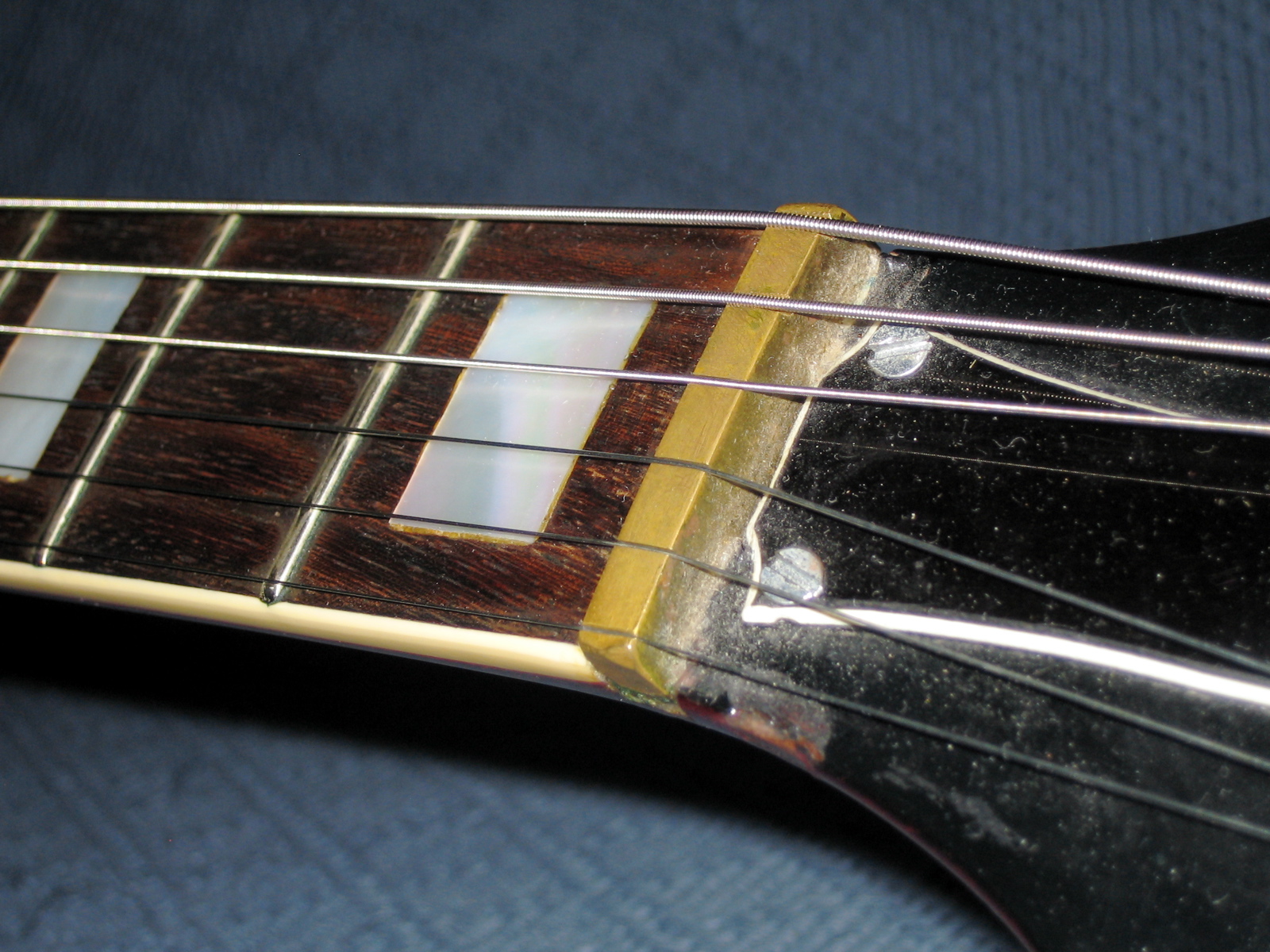
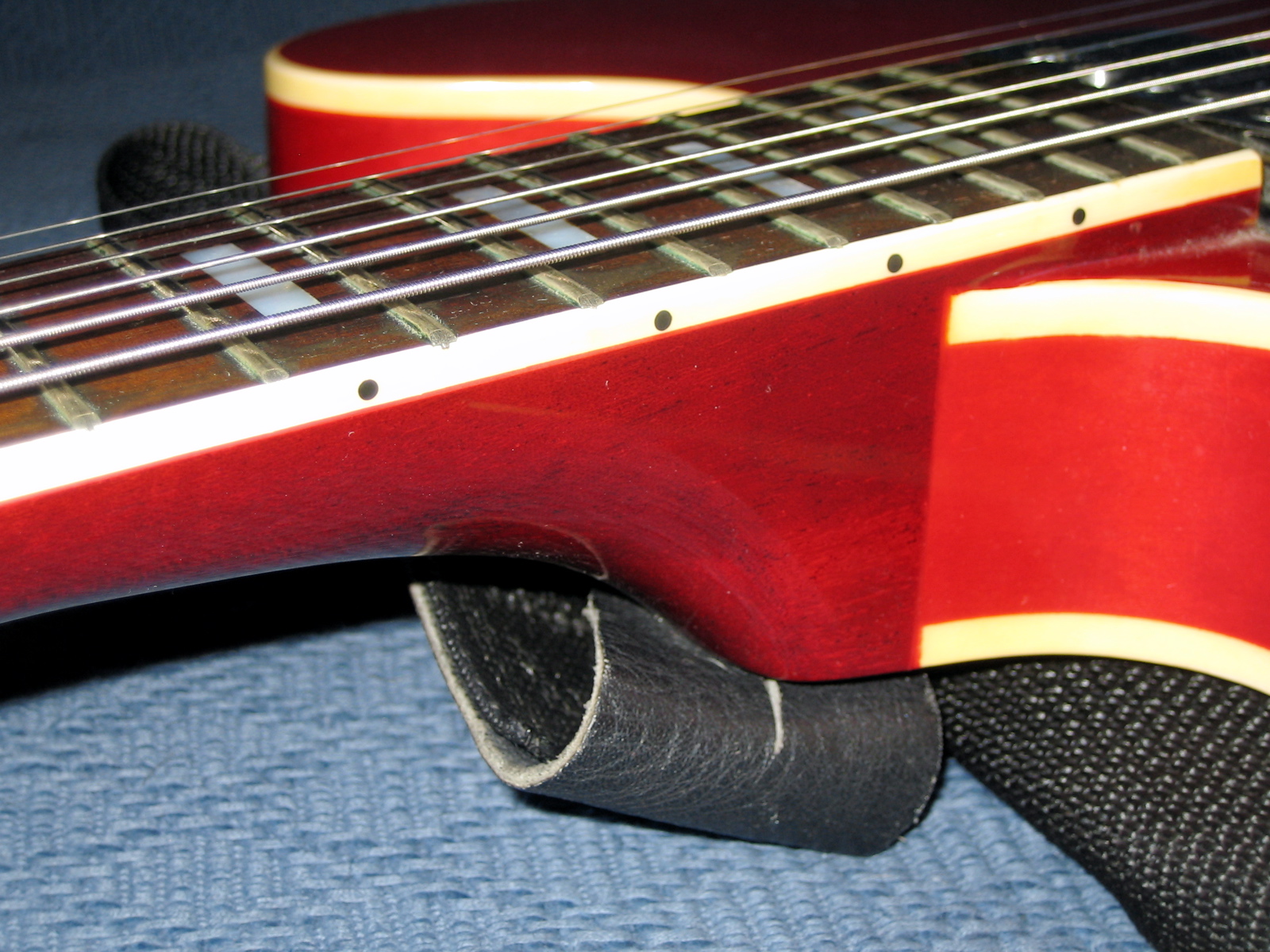
A previous owner had installed a brass nut – very much in fashion in the early Eighties. The extremely low frets are original, as are the large pearl inlays. The neck profile is a copy of Gibson’s 1970’s slim type.

The sealed tuners are of a make that I’ve never seen before or since. There’s the typical 1970s volute, meant to strengthen the neck’s wrist and the headstock.
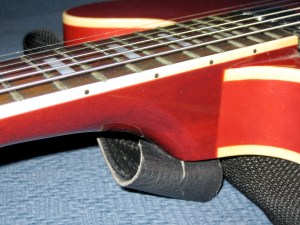
Genuine mahogany has been used for the set neck.

One of the f-holes reveals the body’s five-ply laminate, which seems to be maple/mahogany/maple/mahogany/maple.
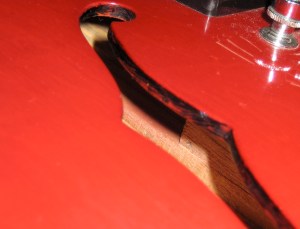
The Kasuga even mimics Gibson’s Seventies short centre block, that only starts at the bridge. The neck has its own little block. In this case the centre block has been fashioned from mahogany.

The electronics are high quality – the original pots all still work fine, as does the switch. I only had to replace the output jack some ten years ago.

Strangely enough the arch of the body is not as pronounced and graceful, as on the originals. The humbuckers are standard sized, but the bezels are wider than normal.

The body ears have been left completely flat on the Kasuga, while the original sports very attractive arching both on the top as well as the back. The ears are slightly pointed, as was usual in post-1964 Gibsons as well.

Here are some Kasuga soundbites:

Kasuga – neck PU

Kasuga – both PUs

Kasuga – bridge PU

Kasuga – plus lead

Pidä blogia WordPress.comissa.

Ylös ↑