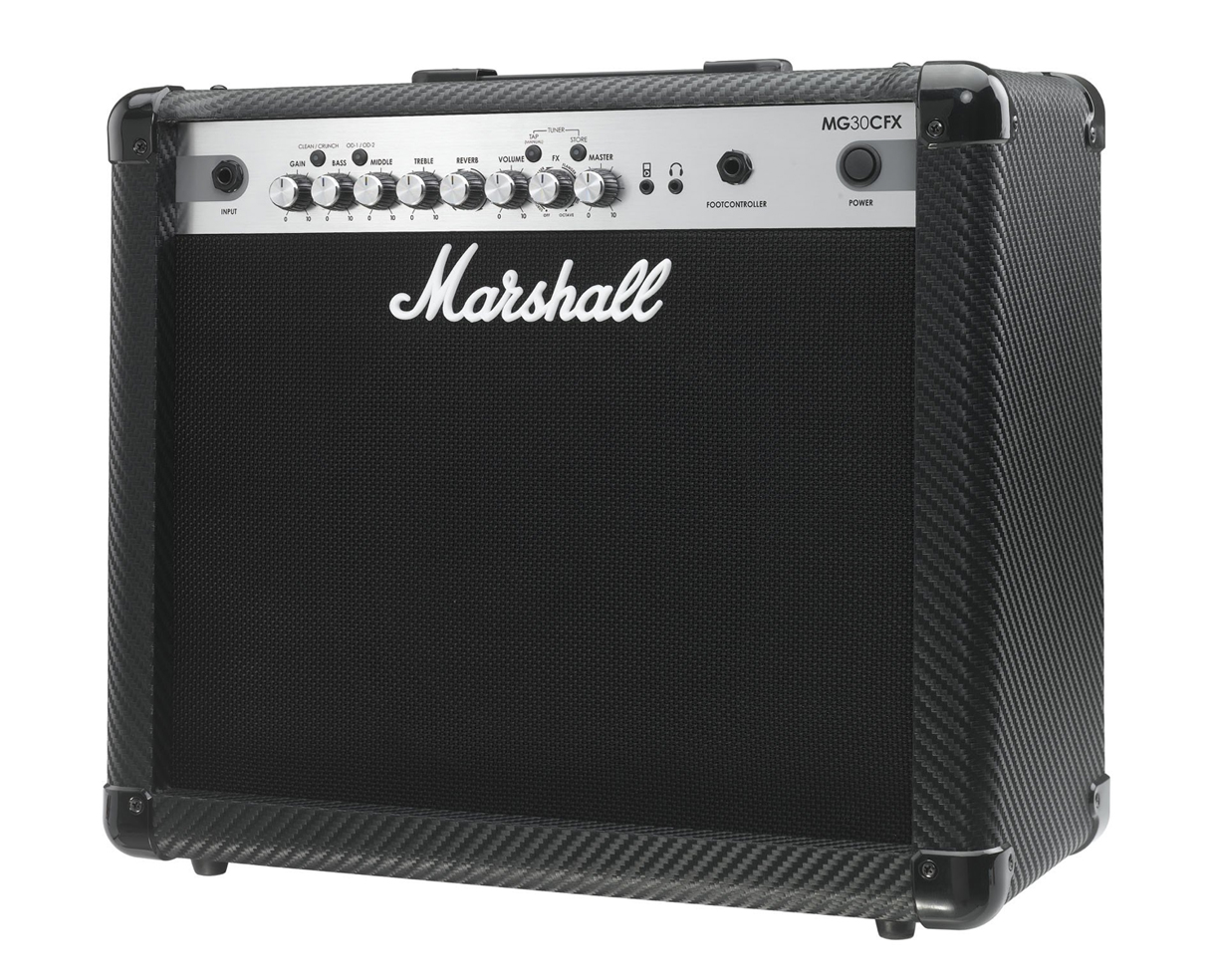
Vahvistimien ilme on nykyaikaistettu hyvin selkeillä etupaneeleilla ja grafiittikangansmaisella vinyylipäällysteellä.
Vahvistinosasto sinänsä on edelleen analoginen, mutta useissa malleissa on nyt myös digitaalisia efektejä (esim. chorus, flanger, oktaaveri, phaser ja delay) digikaiun lisäksi.
Mallisto ulottuu kaksiwattisesta MG2CFX-mallista ihan satawattiselle puolistäkille.
The new Boss JS-10 eBand (current RRP in Finland: 422 €) is the perfect companion for all of a guitarist’s entertainment, practicing and teaching needs.
The Boss JS-10 combines a wave-/mp3-player with a high-quality multi-effects unit – chock full with amp models and effects taken from the GT-100 – two guitar inputs, special features for practicing, as well as a full-toned 2.1 loudspeaker system.
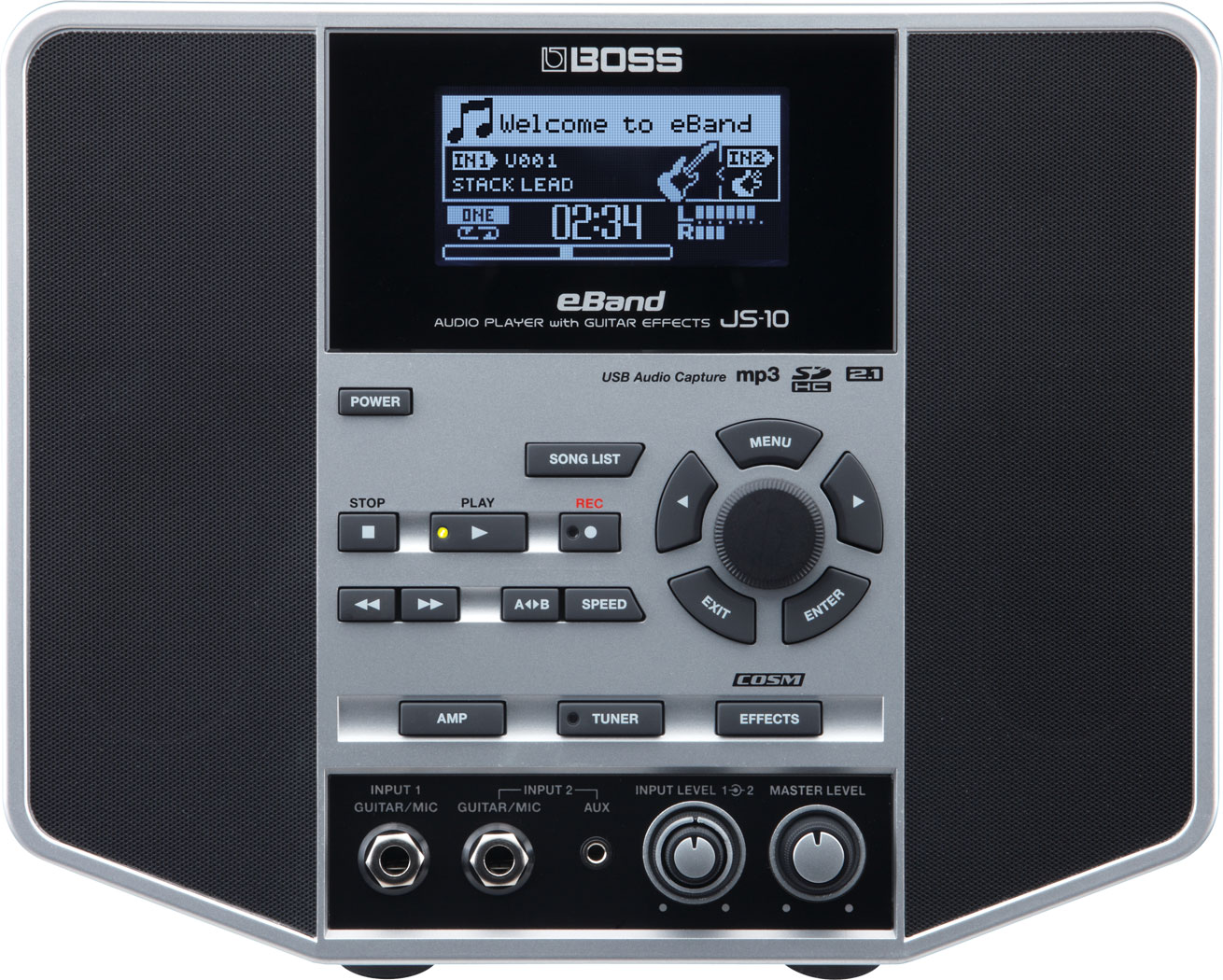
The front panel is the eBand’s command central with a very clear and concise layout.
The playback and recording functions are catered for by the usual transport buttons we all know so well. Backing tracks (the eBand calls them songs), effects and menus can be accessed via their own buttons, and then changed using the navigation buttons and the large data wheel.
The lowest row of buttons gives you quick access to the current amp model and effect chain, as well as the digital tuner.
The lowermost, black section is home to the two instrument (or microphone) inputs. You can even plug in an outboard stereo signal source into channel two’s mini-jack if your keyboarder turns up for a little jam.
You can find all other connectors on the unit’s back:
There are two usb-port – one for connection to your computer, one for a usb-stick. You can connect a footswitch or an expression pedal to the JS-10, to switch effects on-the-fly, start or stop songs, or for wah-wah or volume pedal duties.
There is also a slot for a SD/SDHC-card. The SD-card included in the package also includes the eBand Song List Editor software, which enables you to sort and swap eBand-songs using your computer, as well as for ripping CD-tracks directly into eBand-mode (PC and MAC supported). The necessary drivers for using the JS-10 as an external sound card are also included on the SD-card.
Two analogue outputs are provided in the form of a pair of RCA-connectors and one mini-jack.
Thanks to its large woofer – installed into the unit’s base, firing down – the Boss JS-10’s sound is considerably fatter and punchier than what you’d expect from such a compact piece of gear.
****
The Boss comes preloaded with a large number of eBand-songs.
eBand-songs are basically very long audio loops, sorted according to their musical genre and BPM. The library includes drums only -songs, as well as eBand-songs with full arrangements for you to solo over.
The preloaded eBand-songs are all of a very high quality and musicianship. The tracks groove thanks to the fact that they’ve been recorded using real musicians, and not just programmed midi-patterns!
Still, you are free to use whatever you choose as your backing track in the JS-10 – regardless of whether the tracks are imported using the Song List Editor or whether you’re playing them directly off a usb-stick as wave- (44,1 kHz/16 Bit) or mp3-files (64-320 kbps).
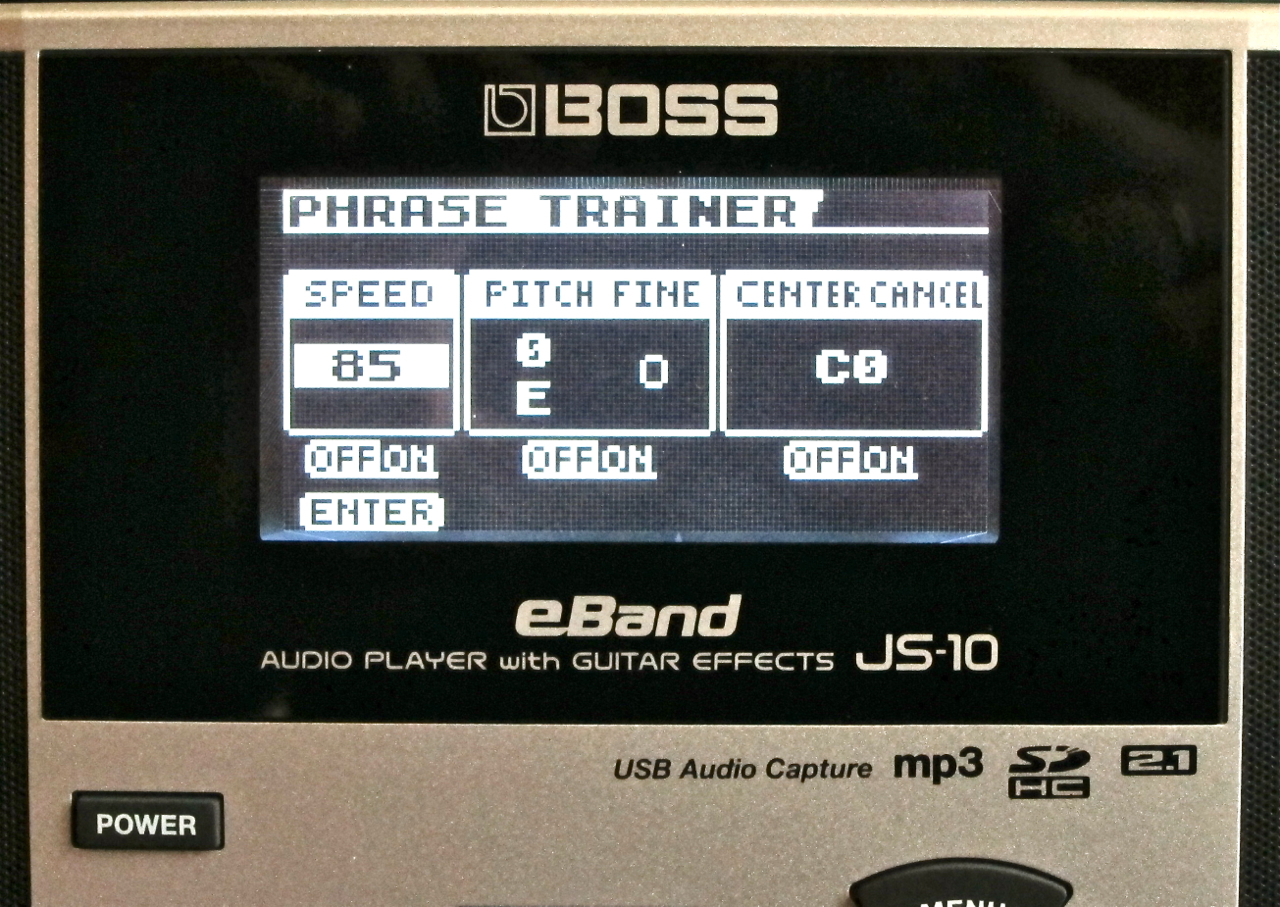
To access Boss’ Phrase Trainer -section you have to push the Speed-button:
As their names give away, Speed is used for slowing down and speeding up the playback of the current song, while Pitch is responsible for changing the pitch.
Center Cancel will be familiar to most from many Karaoke DVD-players, using phase cancellation to mute parts of the stereo image. The effect can be assigned to work only on the stereo picture’s middle…
…but one of the JS-10’s specialities is its ability to cancel out signals from elsewhere in the panorama as well (say, for example, the lead guitar in a 1960s, ping-pong-stereo recording).
How well the Phrase Trainer -section’s features work is tied directly to the technical quality and resolution of the chosen eBand-song. This means that a wave-file or a higher quality mp3 (256 or 320 kbps) will sound more natural even with larger changes, than a lower resolution mp3.
This is what the built-in tuner looks like.
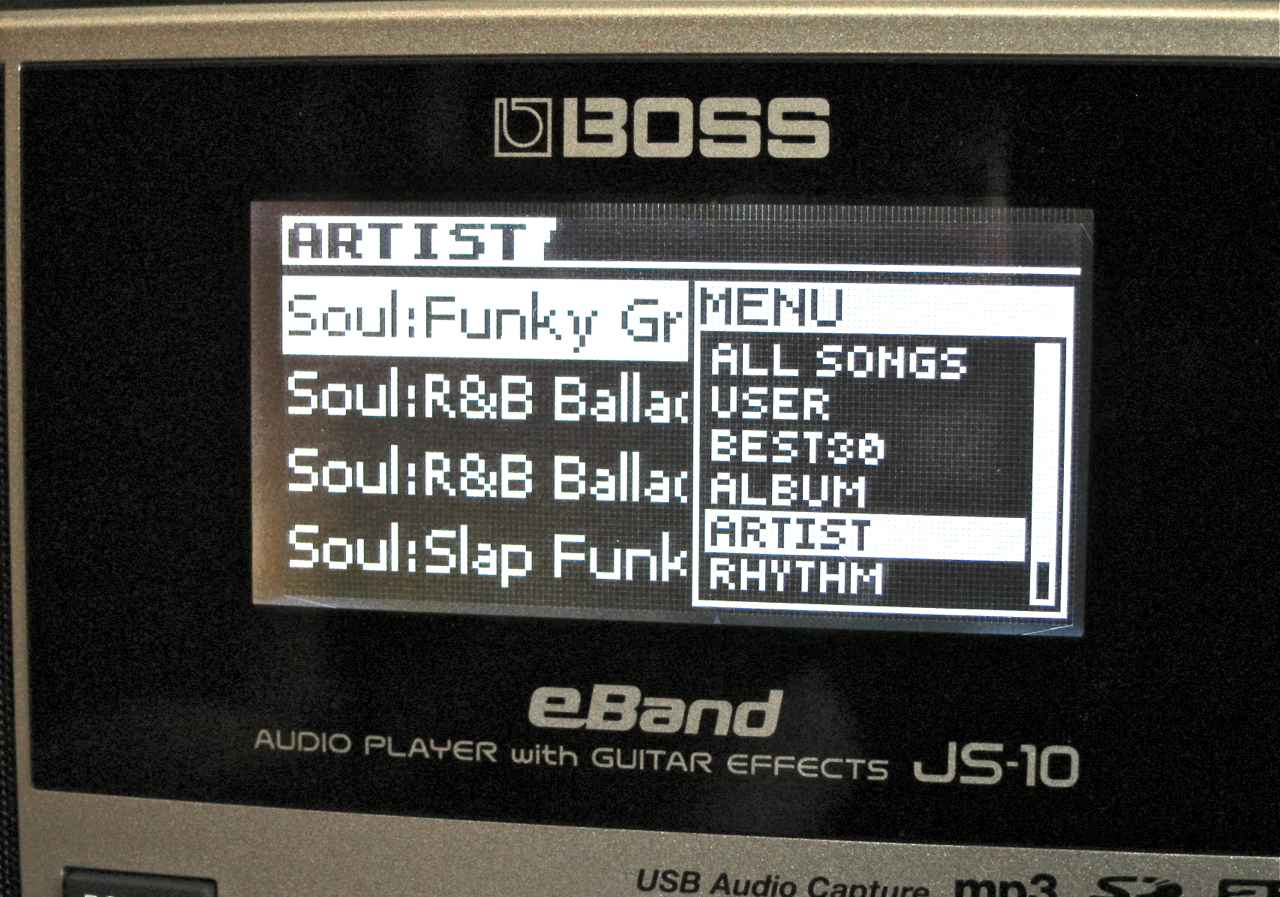
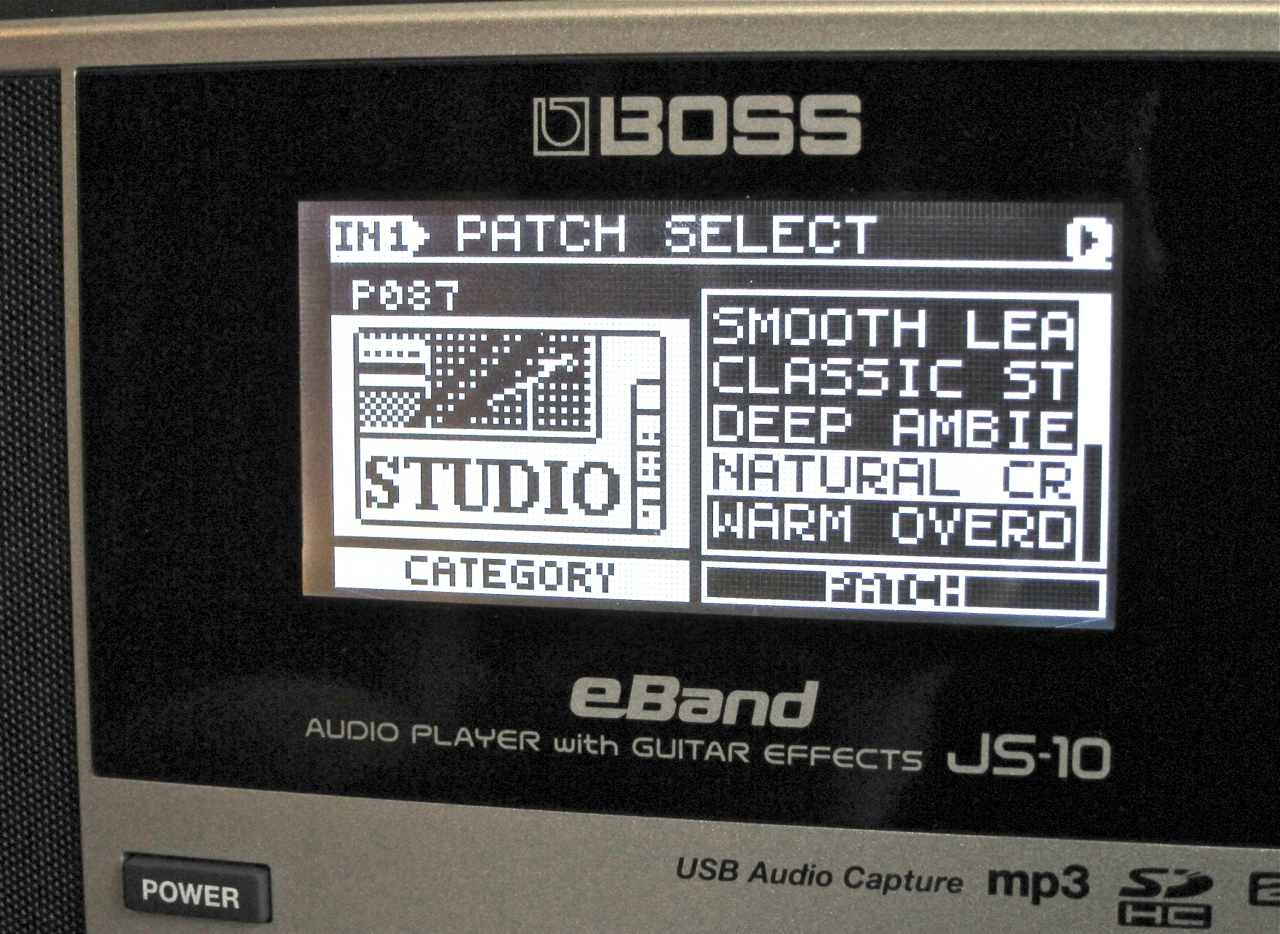
The eBand contains a long list of factory effect patches, which can be sorted according to genre. There are even a few patches for vocals and bass.
Additionally, you can also programme your own effect patches and store them in the effect section’s user library.
Each guitar input is assigned their own effect patch.
The eBand-songs already factory-loaded into the JS-10 are all tied to predetermined effect patches.
For quick editing Boss’ EZ Edit -function is most convenient. No need to fiddle with many different parameters – you simply move the cursor in the desired direction on the Solo/Backing- and Soft/Hard-axes and change the amount of ambience in the sound, and you’re set.
The Patch Edit -menu, on the other hand, gives you detailed access to all effect parameters in the signal chain.
****
There aren’t really many direct competitors to the Boss JS-10, which is kind of strange: Using the eBandin really is a faster and smoother ride than having to deal with a bunch of different devices, as well as their power supply units and connecting leads.
The Boss JS-10 is a great piece of gear, both for getting your own chops up, as well as for guitar teaching. It is straightforward in use, the effects sound great, the Phrase Trainer allows you to get to grips with devilish details, and you can check on your progress by recording your playing.
Here are three short pieces I recorded to demonstrate the quality of the eBand-songs and effects on offer:
Uusi Boss JS-10 eBand (suositushinta: 422 €) on kitaristin viihde-, harjoitus- ja opetuskeskus yhdessä kätevässä paketissa.
Boss JS-10:ssä yhdistyvät wav- ja mp3-soitin, efektilaite laadukkailla multiefekteillä ja vahvistinmallinnuksilla (lainattuja suoraan GT-100-pedaalista), kaksi tulokanavaa, erilaiset harjoitukseen sopivat apuvälineet, sekä laadukas 2.1-äänijärjestelmä (kokonaisteho 12 W).
eBandin etupaneeli on laitteen komentokeskus, ja sen rakenne on ilahduttavan selkeä.
Taustaraitojen toistoon – ja oman soiton äänitykseen – löytyy tutut transportti-näppäimet. Biisien ja efektien valintaan, sekä muihin menuvalintoihin ja parametrisäätöihin löytyy selkeät navigointinapit ja iso datapyörä.
Viimeiset kolme nappia tarjoavat meille kitaristeille suoran pääsyn vahvistimallinnukseen, efektiketjuun sekä viritysmittariin.
Mustataustaiseen master-osioon on sijoitettu laitteen kaksi analogista tuloa, joihin voi liittää joko sähkökitaran (tai -basson) tai laulumikrofonin. Kakkostulon mini-jakkiin (stereo) voi myös kytkeä ulkoisen mp3-soittimen tai bändikaverin synan yhteistä harjoittelua varten.
Kotelon kääntöpuolelta löytyy kaksi usb-porttia – yksi tietokonetta varten, toinen usb-tikulle.
Pedaali-jakkiin voi kytkeä joko jalkakytkimen (tai tuplapedaalin) tai ekspressiopolkimen. Kytkimellä saa potkaistua biisit käyntiin tai vaihdettua efektipatcheja ilman käsiä. Ekspressiopedaali taas toimii Boss JS-10:ssa joko wah-pedaalina tai volumesäätimenä.
Oikeassa laidassa on paikka SD/SDHC-kortille (1-32 GB). Boss eBandin mukaan tulevalla SD-kortilla on eBand Song List Editor -softa, jolla pystyy kätevästi järjestellä eBand-biisejä, siirtää niitä tietokoneen ja JS-10:n välillä sekä ripata biisejä suoraan CD:ltä eBand-muotoon usb-johdon kautta (PC ja Mac). Myös eBandin ajurit on pakattu mukaan, minkä ansiosta JS-10:tä voi käyttää ulkoisena usb-äänikorttina, ja hyödyntää eBandin laadukkaita efektejä sekvensseriäänityksissä.
Analogiset lähdöt on sijoitettu laitteen kylkeen – rca-pari sekä mini-jakki.
Ison subbarinsa ansiosta kätevän kokoisen JS-10:n soundi on huomattavasti muhkeampi ja isompi kuin luulisi näin kompaktista laitteista irtoavan.
****
Bossin mukana tulee erittäin tuhti paketti erilaisia eBand-biisejä.
Valmiit eBand-biisit ovat periaatteessa pitkiä audiolooppeja eri tyylilajeissa ja nopeuksissa. Biisikirjastosta löytyy sekä sellaisia kappaleita, jotka ovat pelkkiä rumpukomppeja, että kokonaisia bänditaustoja, joiden päälle voi sooloilla.
Valmiiden eBand-biisien laatu on erittäin korkea ja taustat groovaavat ja svengaavat kuin hirvi. Taustat on nimittäin äänitetty oikeilla soittajilla, sen sijaan että ne olisi luotu ohjelmoimalla midi-soittimia!
Taustoina voi kuitenkin käyttää myös Song List Editorilla ripattuja biisejä tai suoraan usb-tikulta soitettuja wav- (44,1 kHz/16 Bit) tai mp3-tiedostoja (64-320 kbps).
Speed-näppäimen takaa löytyy Bossin Phrase Trainer -osasto:
Speed-toiminto muuttaa soivan biisin nopeutta sekä ylös että alaspäin, ja Pitch käytetään audion transponointiin ja/tai hienovirittämiseen.
Center Cancel taas on monille tuttu karaoke-laitteista, ja se poistaa vaihemanipuloinnilla tehokkasti osan stereokuvan signaalista. Efekti voidaan kohdistaa perinteisesti stereon keskelle…
…mutta JS-10:n ässä hihassa on vapaasti kohdistettava poistaja, jolla pyyhkäistään tehokkaasti myös muualla stereo-kuvassa esiintyviä soittimia (esim. 1960-luvun ping-pong-stereossa).
Phrase Trainerin toiminta ja lopputuloksen soundi on suoraan sidoksissa audion tekniseen laatuun – siis: wav-tiedosto tai iso mp3-audio (256 tai 320 kbps) kestää isompiakin muutoksia paremmin kuin matalalla resoluutiolla pyörivä mp3.
Tältä näyttää Bossin viritysmittari.
eBandistä löytyy pitkä lista valmiita efektipatcheja, joita voi valita myös tyylilajin mukaan. Jopa muutama valmis laulu- ja bassoohjelma on mahdutettu mukaan.
Valmiiden efektien lisäksi voi luonnollisesti ohjelmoida myös omia efektipatcheja, joita pystyy kirjoittamaan muistin user-osioon.
Kummallekin tulolle on tarjolla oma efektiohjelmansa.
Laite valitsee omatoimisesti jokaiselle eBand-biisille siihen sopivan efektiohjelman.
Soundin nopeaan hienosäätimiseen voi käyttää Boss-multiefekteistä tuttua EZ Edit -toimintoa, jossa kursoria liikkumalla ristikossa saadaan nopeasti ja helposti soundi halutunlaiseksi. Ei tarvitse siis ruuvailla montaa parametriä peräkkäin, vaan tässä toimitaan pehmeä-aggressiivinen, komppi-soolo ja kuiva-kaikuisa akseleilla.
Patch Edit -ikkunoissa pääsee sitten yksityiskohtaisesti jokaisen efektiparametriin kiinni.
****
Boss JS-10:n kaltaiset laiteet ovat erittäin harvinaisia, mikä on tavallaan ihmeellistä: eBandin käyttö on nimittäin paljon sujuvampaa, nopeampaa ja siistimpää kuin kamppailu erillislaitteiden johto- ja adapteriviidakossa.
Boss JS-10 on loistava vehje, sekä harjoitteluun kotioloissa, että kitaraopetukseen. Se on erittäin mutkaton laite, jossa on hyvä soundi, toimvat Phrase Trainer -ominaisuudet, loistavat efektit, sekä mahdollisuus oman soiton äänittämiseen.
Tässä on kolme lyhyttä pätkää, joissa soitan soolo-osuudet JS-10:n omien eBand-biisien päälle:
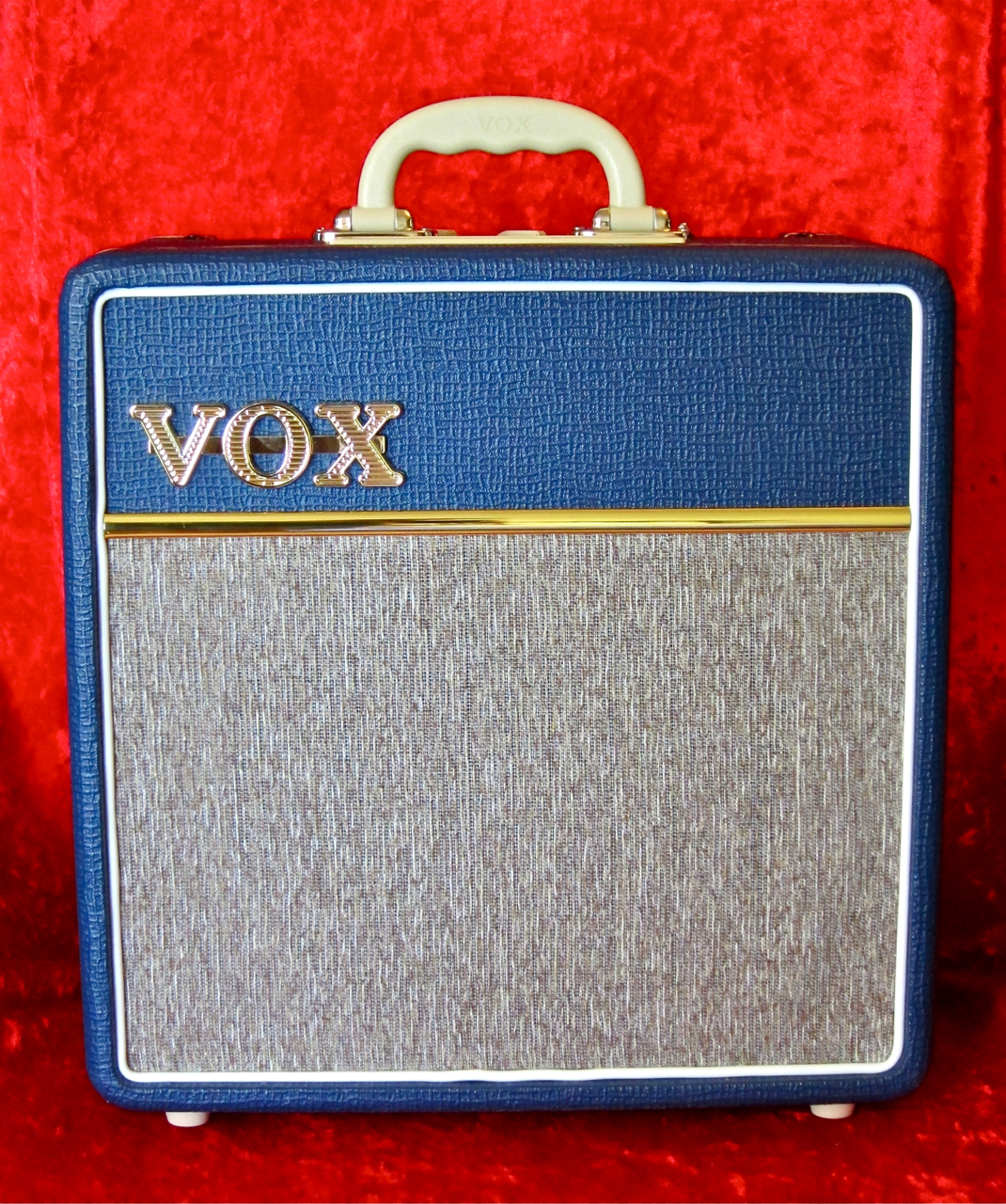
This is what it looks like – the brand-new Vox AC4 C1 Blue. I can already hear many of you thinking “What? Another AC4? Is it any different to the white AC4 TV?”
Granted, it is somewhat bewildering that Vox have several similarly named products in their range, so let me run you through the differences quickly:
At the moment of writing there are five different Vox AC4 valve amplifiers available. The Vox AC4 TV – which is available in three different guises – is the most affordable alternative, and aimed at the same market segment as ultra-compact modelling combos, such as the Roland Micro Cube.
At the other end of the price spectrum you can find the Vox AC4 HW, which is a very stylish hand-wired (HW) combo for the vintage fanatic. Just like the Sixties original, the AC4 HW is also equipped with a 12” Celestion speaker.
The new AC4 C1 Blue conveniently slots into the range between the two other AC4s. Vox’ C–series comprises new versions of the company’s most famous models, updated with nifty modern features.
****
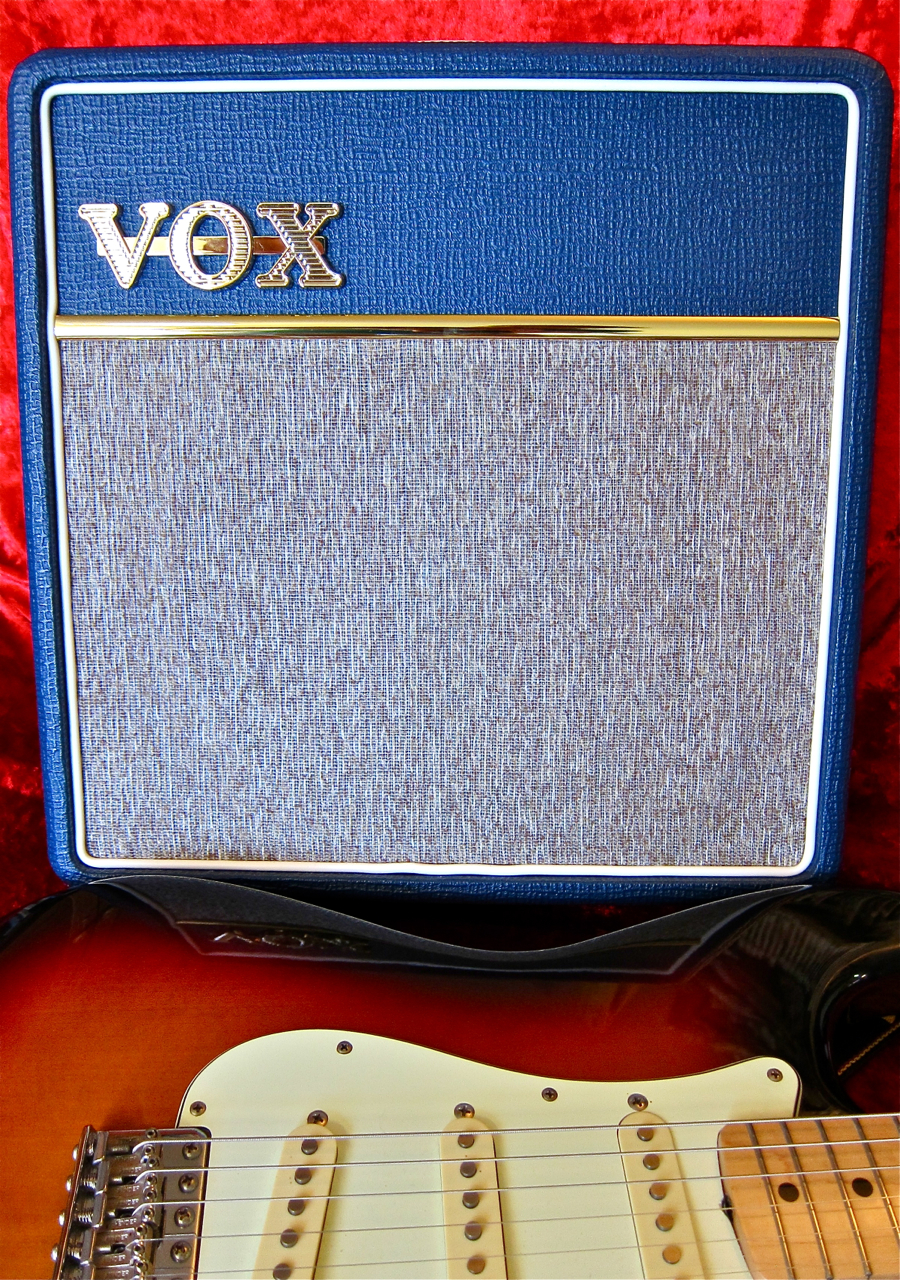
The Vox AC4 Blue (current street price in Finland 349 €) is a very beautiful combo amp, sporting the blue vinyl finish found on one special run from the Sixties, complete with the salt-and-pepper grille cloth.
Two 12AX7 valves are making up the preamplifier section, while the power amp is utilizing a single EL84. Output power is rated at four Watts (RMS) using a 16 Ohms speaker impedance.
The combo’s almost completely closed from the back. The back panel sports only two connectors – one for the power lead and another for connection of an external speaker. Ventilation is provided by a small opening right at the bottom of the combo’s back, as well as the customary small grille next to the carrying handle.
As is the case in quite a number of modern small valve combos, access to the valves is rather restricted in the AC4 C1 Blue. To change preamp valves you have to completely take off the whole back wall to get to the valves, which sit directly on the PCB-board. The owner’s manual recommend leaving valve exchanges to qualified service personnel to avoid the risk of an electric shock.
The Vox AC4 Blue comes equipped with the same special design already used successfully in the AC4 TV – a 10-inch Celestion VX10.
The front panel comprises controls for gain, bass, treble and master volume.
****
Vox has aimed to deliver genuine Top Boost –tone in a small package, and the AC4 C1 Blue really dishes out the goods. This little combo gives you all the legendary AC30 sounds, but at volume levels that fit your living room or home studio to a tee.
The AC4 C1 BL’s clean tones have plenty of jangle, coupled with Vox’ typical dose of grit and attitude. If your’re using powerful humbuckers, you’d better turn down your guitar’s volume a bit, unless you want to drive the combo into light Blues-overdrive.
For my taste the little Vox could do with a little bit less bite in the top end, but I got the trebles reigned in easily with the Treble-knob.
Upping the gain gets you into overdriven territory fairly quickly – from creamy Blues all the way to early Heavy Metal via Seventies Classic Rock. For out-and-out Nu-Metal the Vox AC4 Blue isn’t really the right amp, it just wasn’t designed to dish out that much grunt. For Brian May –type fat lead tones I’d recommend using a distortion pedal in front of the combo.
With its four Watts the AC4 C1 Blue has just enough power to annoy your neighbours – and for small gigs you could stick a microphone in front of it.
Here are a few soundbites (all clips start from the neck pickup):
Tässä se siis on – upouusi Vox AC4 C1 Blue. Kuulen jo melkein lukijoiden kysymykset: ”Hä? Taas yksi AC4? Onko eroja valkoiseen AC4:een uuden värimaailman lisäksi?”
On kenties hieman hämmentävää, että firman mallistossa on useita samannimisiä tuotteita, mutta kuten usein elämässä, myös Vox-malleissa tärkeitä tietoja saa mallitunnuksen lisäyksistä.
Tällä hetkellä Voxilla on viisi Vox AC4 -nimistä putkivahvistinta tuotannossaan: Vox AC4 TV – josta on olemassa kolme versiota (pikkustäkki, AC4 TV Mini ja AC4 TV) – on edullisin vaihtoehto, joka on tarkoitettu mallintavien pikkustyrkkäreiden täysputkiseksi kilpailijaksi.
Skaalan toisessa päässä on Vox AC4 HW, joka on tyylikäs käsinjuotettu (HW = hand-wired) peli vintage-faneille. Alkuperäisen AC4:n lailla myös AC4 HW on varustettu 12-tuumaisella Celestion-kaiuttimilla.
Uusi AC4 C1 Blue on sijoitettu näiden kahden mallin väliin. Voxin C-sarja koostuu legendaarisien vahvistinmallien uusintapainoksista, joissa mallien ominaisuudet on kehitetty eteenpäin nykyaikaista kitaristia varten.
****
Vox AC4 Blue (katuhinta 349 €) on kuvankaunis kombo, jonka ulkonäkö on lainattu yhdestä 1960-luvun erikoispainoksesta, jolla oli sininen vinyylipäällystys ja vaaleanharmaa etukangas.
Etuasteputkina toimivat kaksi 12AX7-mallia, kun taas päätevahvistin on rakennettu yhden EL84-putken ympärille. Päätetehoksi ilmoitetaan neljä wattia (rms) 16 ohmiseen kaiuttimeen tai kaappiin.
Kombon kotelo on lähes täysin suljettu, ja takakannesta löytyy ainoastaan liittimet sähköjohdolle sekä ulkoiselle kaiutinkaapille. Putkien jäähdytykseen tarvittu ilma kulkee takakannen pienestä aukosta ja kantokahvan edessä sijaitsevan muoviritilän kautta.
Kuten monissa nykyaikaisissa pikkustyrkäreissä myös AC4 C1 Blue -kombon putkiin on vaikea päästä. Putkien vaihtamista varten täytyy nimittäin irrottaa koko takakansi, minkä jälkeen pääsee suoraan piirilevyillä istuviin putkiin käsiksi. Käyttöohje neuvookin sähköiskun välttämiseksi kääntymään putkivaihdon tarpeessa valtuutetun tekniikon puoleen.
Kaiuttimena toimii AC4 Bluessa jo TV-mallista tuttu kymmentuumainen Celestion VX10 -kaiutin.
Etupaneeli tarjoaa yhden kitaratulon, sekä säätimet gaineille, bassolle, diskantille sekä master volumelle.
****
Vox lupaa AC4 Blue -kombolle aidon Top Boost -soundin pikkupakkauksessa, ja pikkuvahvistin lunastaa tämän lupauksen avokätisesti. Tästä styrkkarista löytyy kaikki ne soundit, jotka tekivät AC30:sta legendaarisen, mutta nyt ne ovat saatavilla myös pienellä volyymillä, juuri koti- tai projektistudioon sopivaksi.
AC4 C1 BL:n puhtaat soundit helisevät kauniisti, mutta niissä on aina mukana myös se Voxeille tyyppillinen pikkuannos rouhevuutta. Tehokkailla humbuckereilla on syytä pitää kitaran omat volyymit maltillisenä, muuten AC4:sta alkaa kuulla kevyen Blues-särön sävyjä.
Minun makuuni pikku-Voxin perussoundissa voisi olla hivenen verran vähemmän yläpään terävyyttä, mutta sain diskantin kuitenkin hyvin toimivalla Treble-säätimellä riittävästi aisoihin.
Avaamalla Gain-säätimen astutaan sitten reippaasti säröpuolelle, jossa AC4 Bluen gain-varat vievät meitä kermaisesta Bluesista 1970-luvun Rockille ja varhaiseen Heavy-osastoon. Moderneja Metal-soundeja on turha etsiä tästä kombosta, eikä AC4 ole semmoiseen tarkoitettukaan. Brian May -tyylisiin solosoundeihin suosittelisin säröpedaalin lisäämistä kitaran ja kombon väliin.
Neljällä putkiwatilla pystyy muuten jo hyvinkin ärsyttämään kerrostalon naapureita – siis tarvittaessa AC4 Bluen kanssa voi lähteä soittamaan myös pienempiä keikkoja mikittämällä pikkukomboa.
Tässä muutama soundiesimerkki (pätkissä aloitetaan aina kaulamikrofonilla):
Digital amp-modelling has come to stay, no doubt about it. But while some form of amp-modelling is used almost daily by many guitarists, the good old valve amp isn’t really fading away. On the contrary – it seems that these days especially low-powered valve amps are experiencing something of a renaissance.
A good example of this type of all-valve amp is Ampeg’s new GVT15-112.
****
The Ampeg GVT15-112 (current street price in Finland: 620 €) is a relatively compact 15-Watt valve amp, which can also be used at home, thanks to its half-power power amp mode.
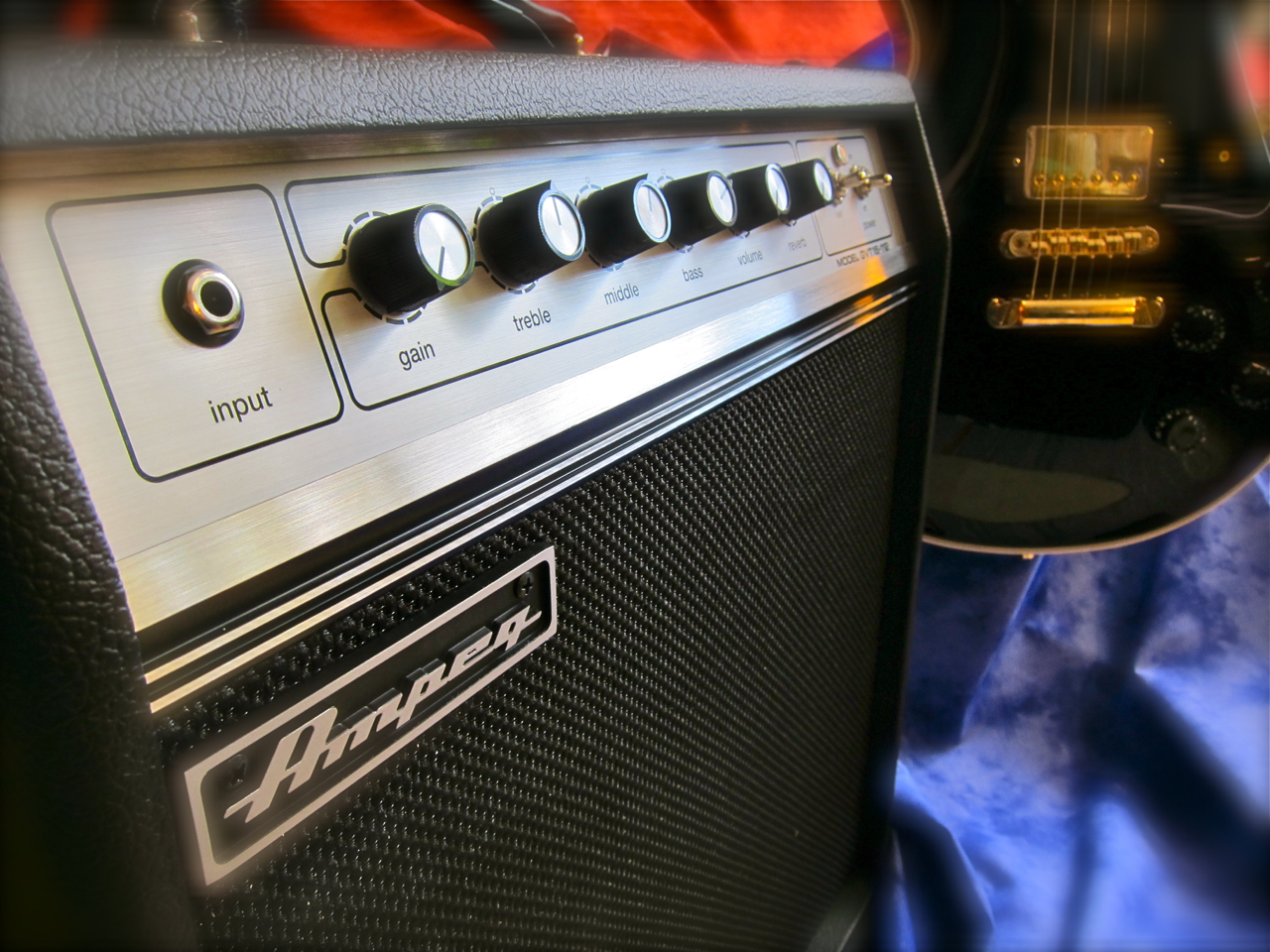
Made in South Korea, the combo’s cabinet seems very well made, and the amp’s looks have a stylish retro touch. Our test sample receives a small cosmetic mark-down, because the decorative metal rail below the control panel sits slightly askew.
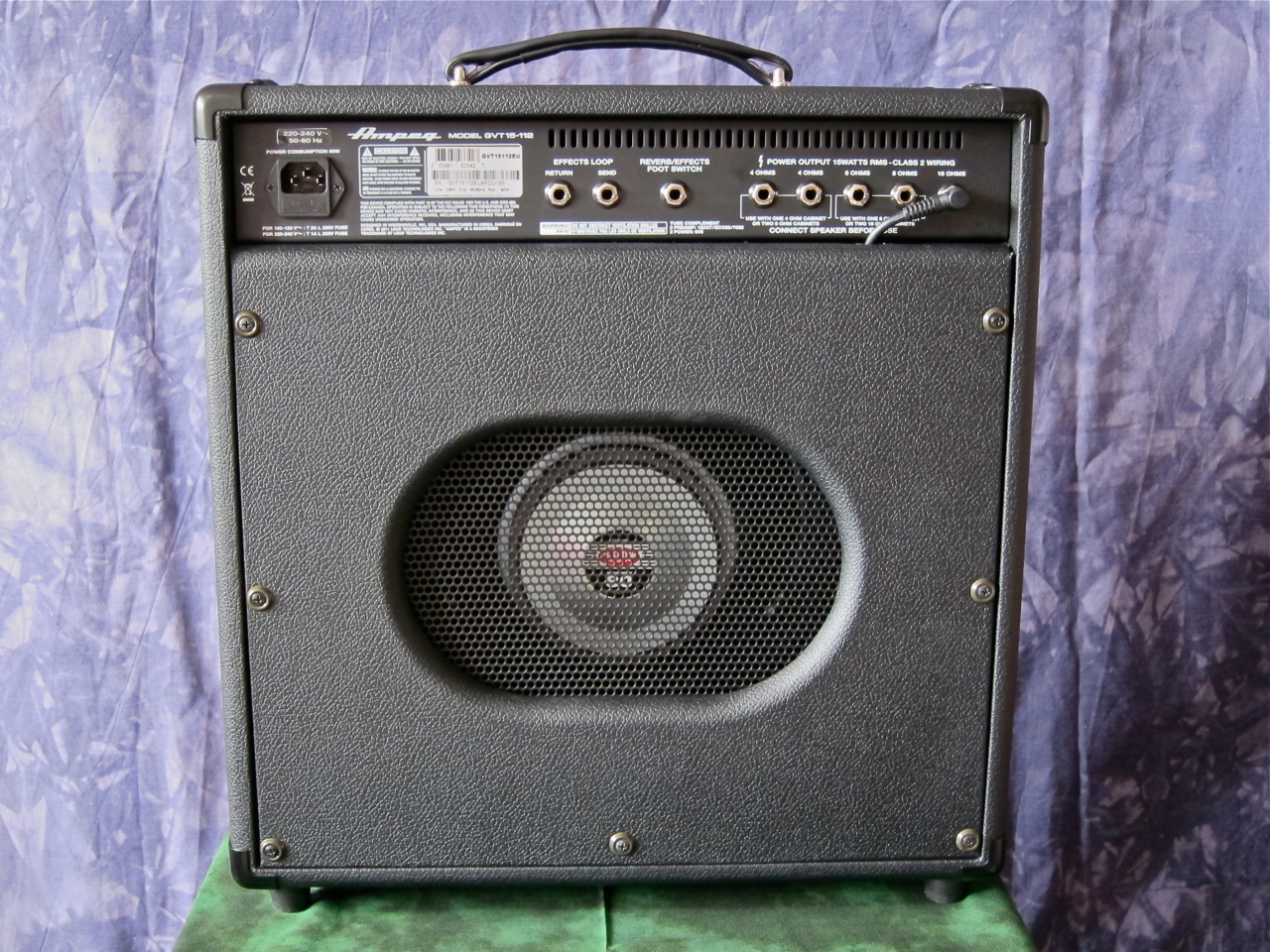
The clean and understated look carries over onto the Ampeg’s back as well. The cabinet is half-closed, with the Celestion Seventy 80 -speaker visible behind a metal grille.
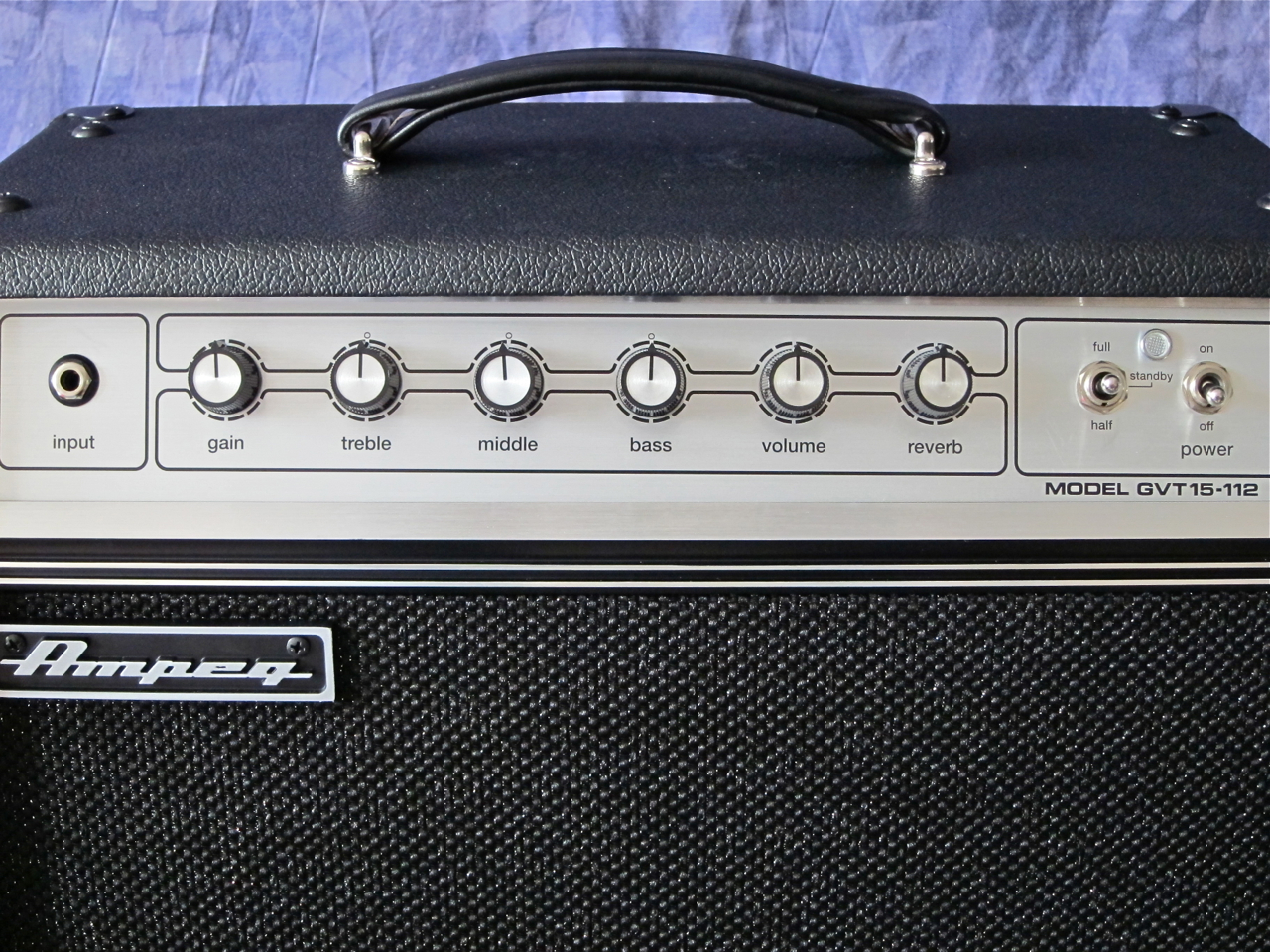
The Ampeg GVT15-112 is a single-channel design. The controls comprise gain, treble, middle, bass, master volume and reverb level. The standby switch is a three-way toggle giving you the full 15 Watts in the ”up” position, as well as half-power when switched downward.
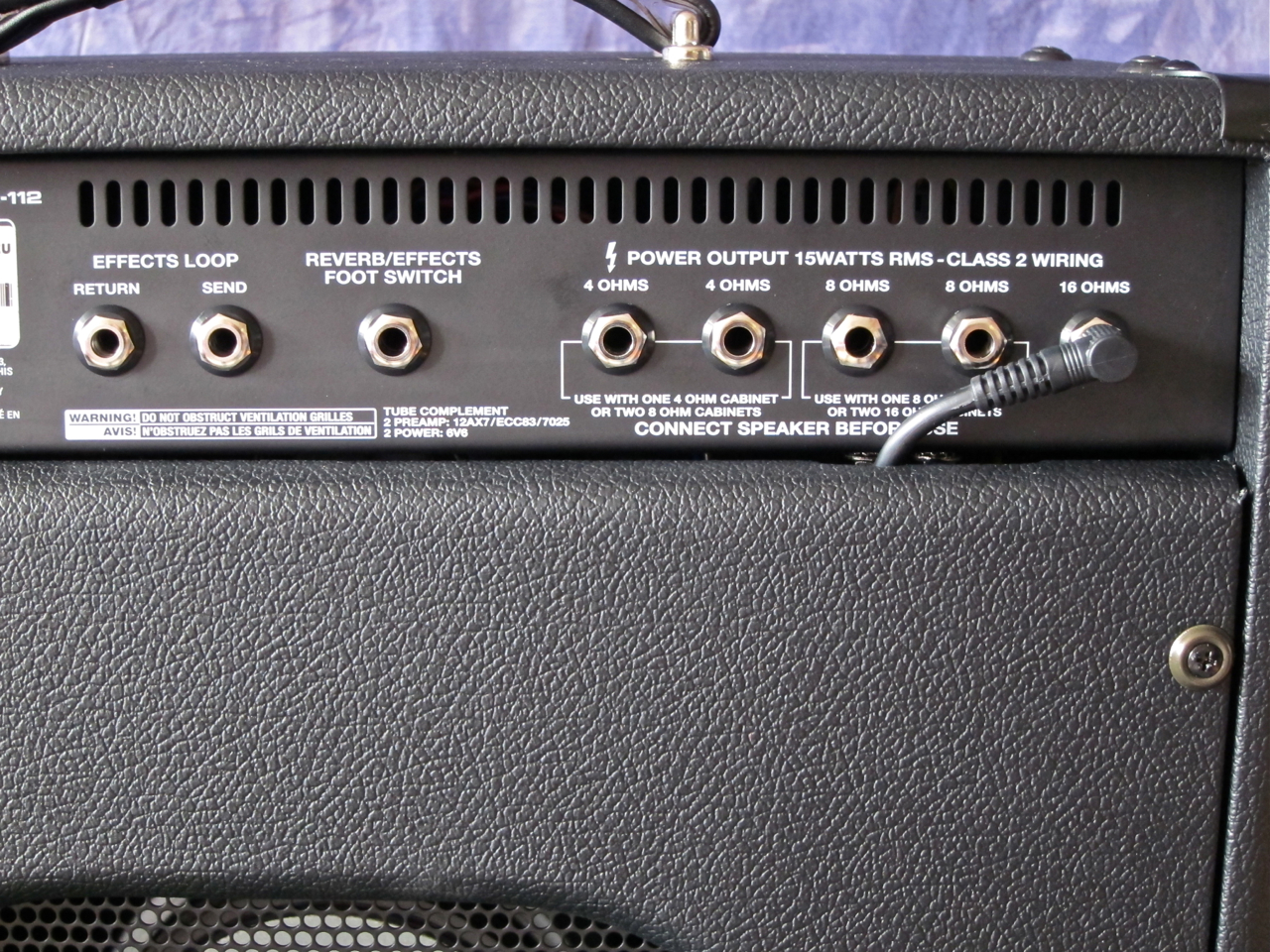
The preamp section is powered by two 12AX7/ECC83-valves (or ”toobs” as the Americans say), while two 6V6-valves take care of business on the power amp side of things – this means we can expect an American-type tone and response.
The spring reverb has been placed at the bottom of the cabinet, neatly tucked away in its own padded bag.
The back panel is home to the speaker outputs, as well as the connectors for the effects loop. You can also connect a footswitch (not included) to the combo to mute the reverb and the effects loop on the fly.
****
The Ampeg GVT15-112 has been designed as a classic 1960s clean amp with loads of headroom. Using a guitar with traditional singlecoil pickups, you’d be hard pressed to get the combo to distort even at the highest gain levels.
The sound is warm, big and organic, with a nice ring and sheen in the top end. The Ampeg’s reverb-circuit is one of the best spring reverbs I have heard on a new amp for quite some while.
If you’re into classy clean tones this Ampeg is just the amp for you. The GVT15-112 has a great clean tone and a gorgeous spring reverb. Just pack one or two overdrive pedals, and maybe a chorus or delay – and you’re ready to gig!

















 Kitarablogi.com – Finland's premier Guitar and Bass blog