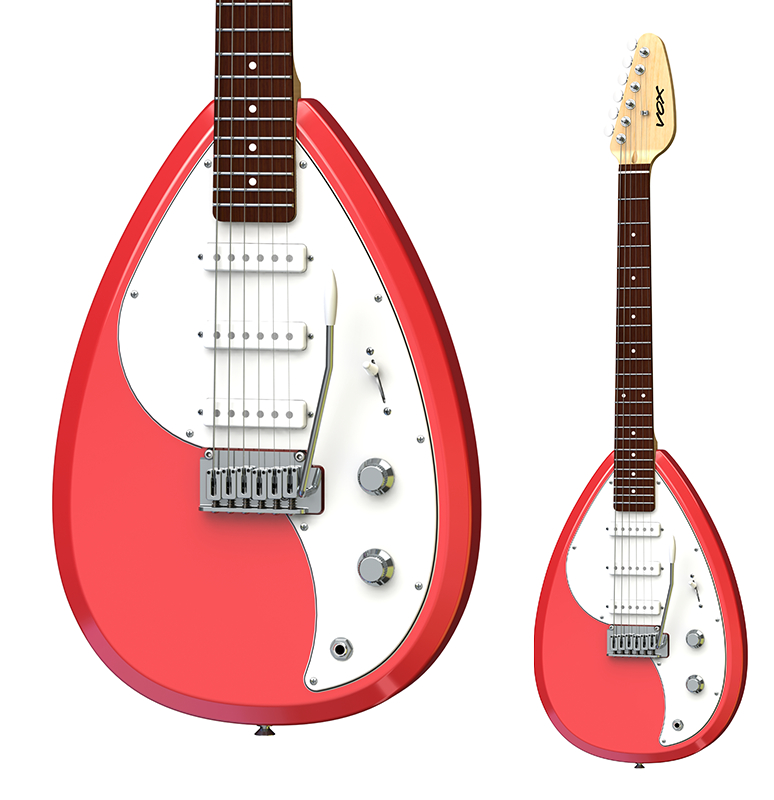
Vox’ legendary Sixties guitars, the Mark III and the Mark V – aka the Vox Teardrop (Mark III) and the Vox Phantom (Mark V) – have made a comeback! These Brit Boom-guitars have claimed their place in history as the chosen axes of the Rolling Stones’ original lead guitarist Brian Jones (Mark III) and Tony Hicks (Mark V) of the Hollies.
But the best news is that these new versions come at quite affordable prices!
****
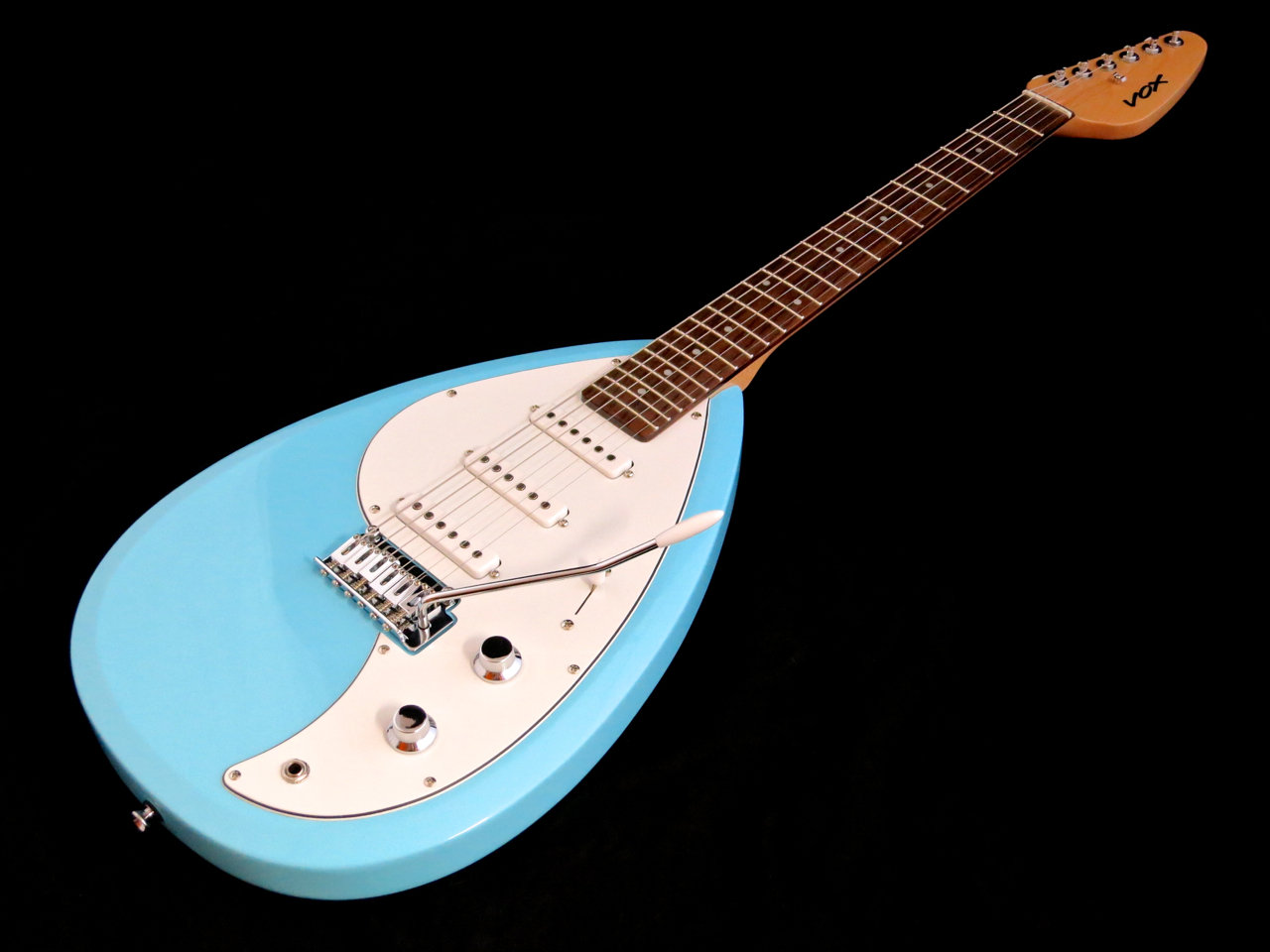
The Vox Mark III (current price in Finland approx. 355 €) sports a symmetrical body, which calls to mind old lutes or the Greek bouzouki.
This reissue comes with a short 22-inch scale (610 mm), making it an ideal beginner’s instrument.
The Teardrop is build from a basswood body and a bolt on maple neck. The fretboard is crafted from rosewood.
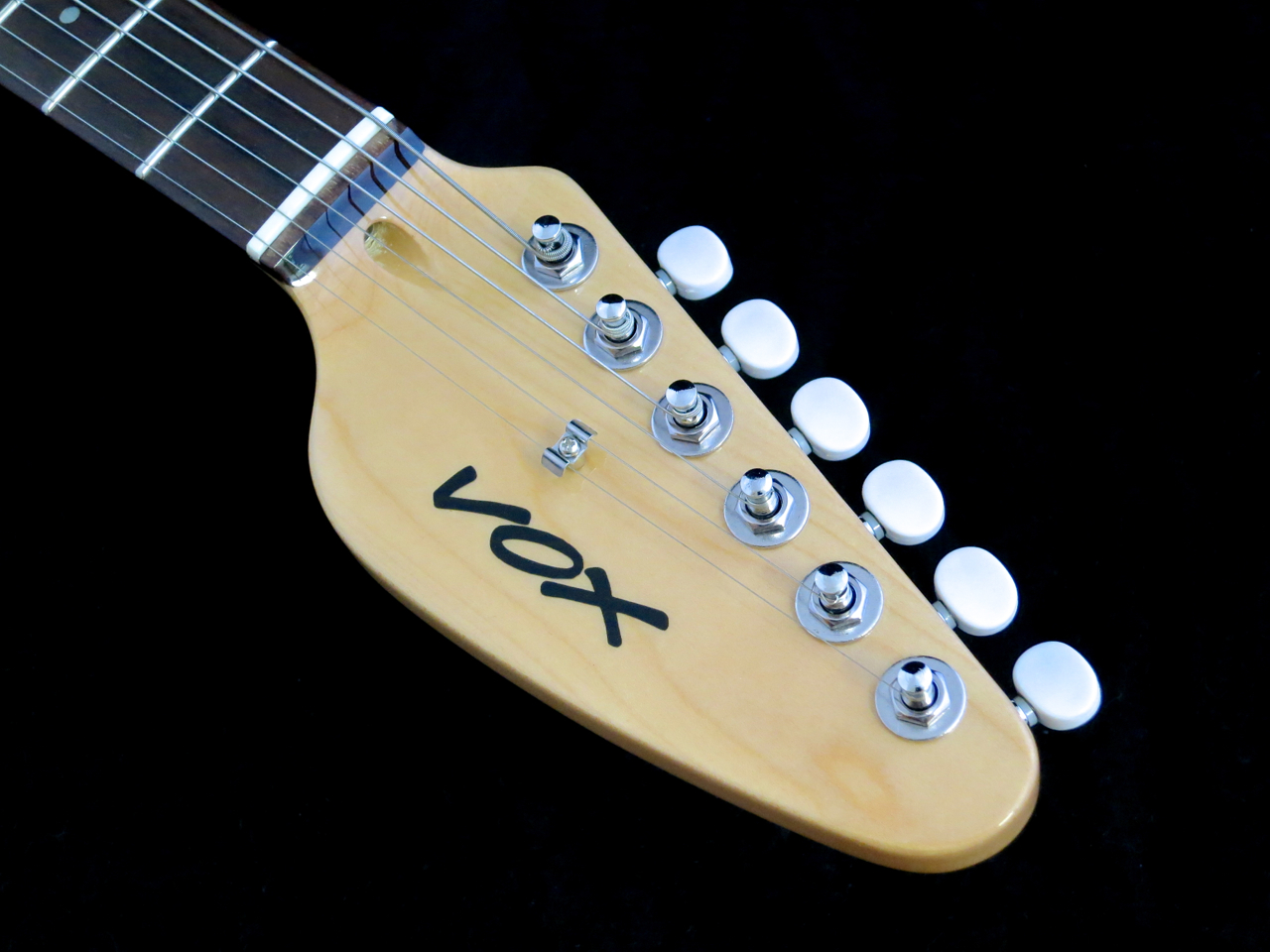
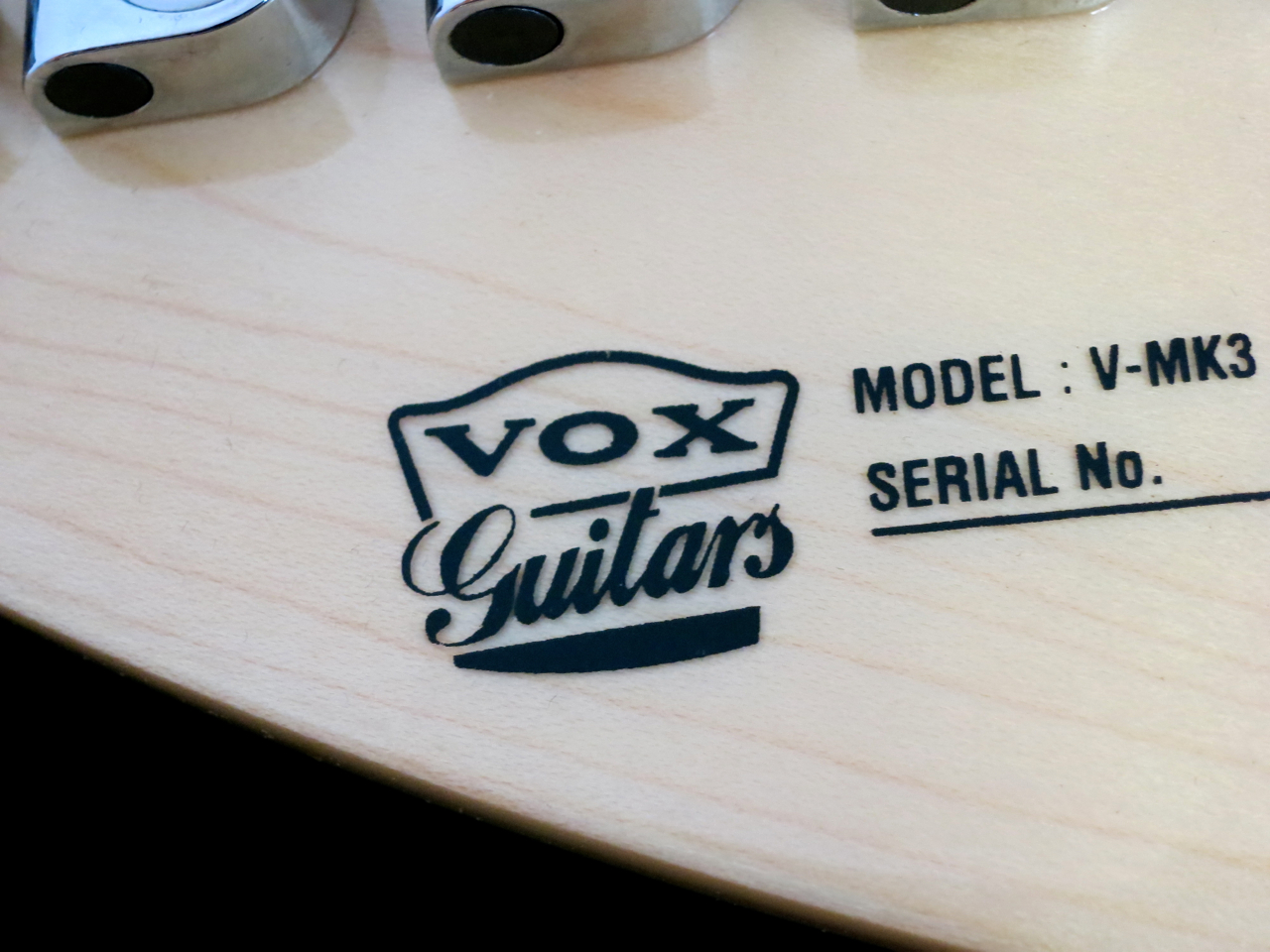
The new, smaller version of the legendary Vox-headstock cuts down on neck weight and thus improves the guitar’s balance.
The Mark III is equipped with a set of modern sealed tuning machines that sport off-white buttons.
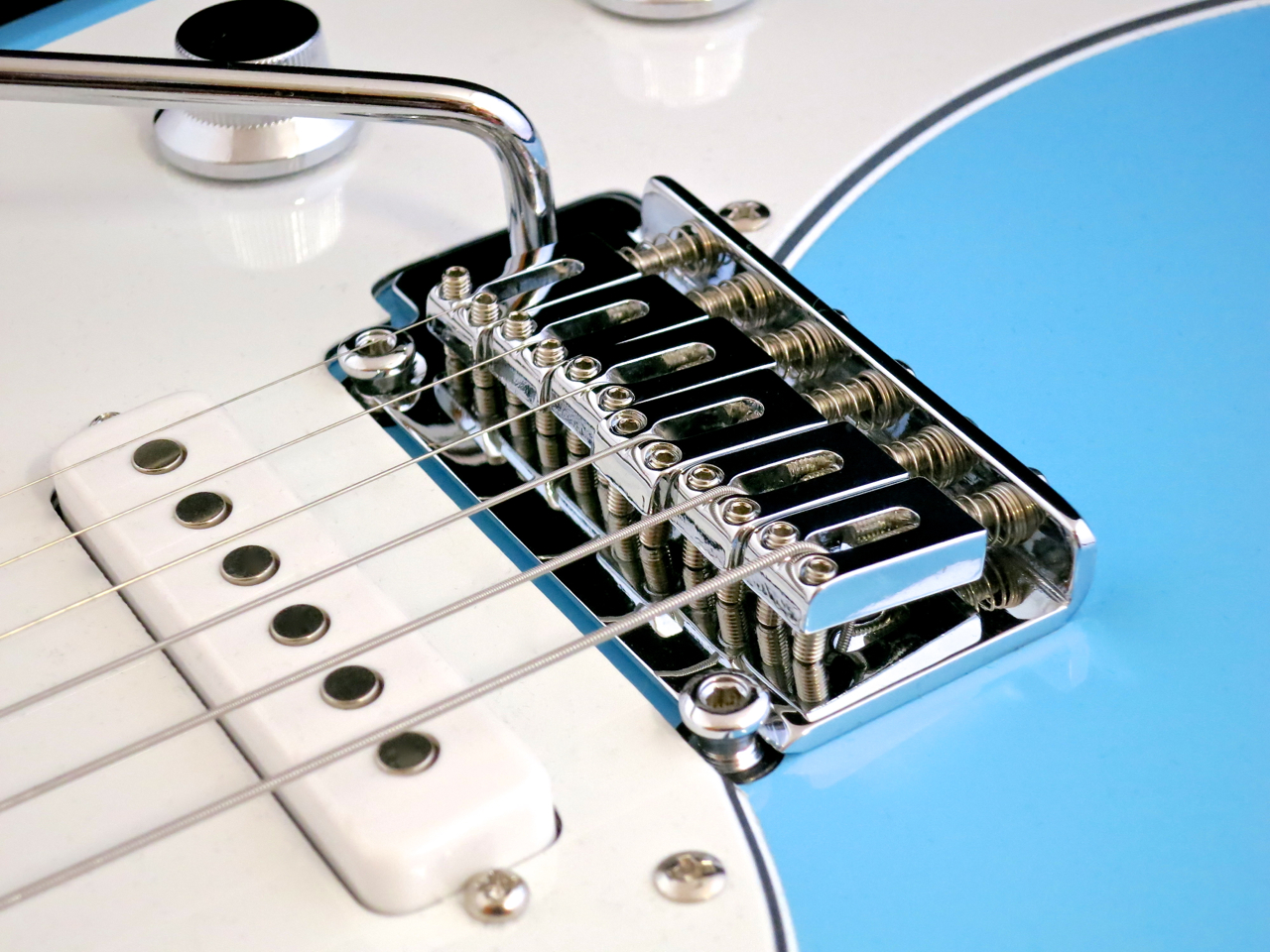
Both Voxes comes with a modern two-post vibrato bridge.
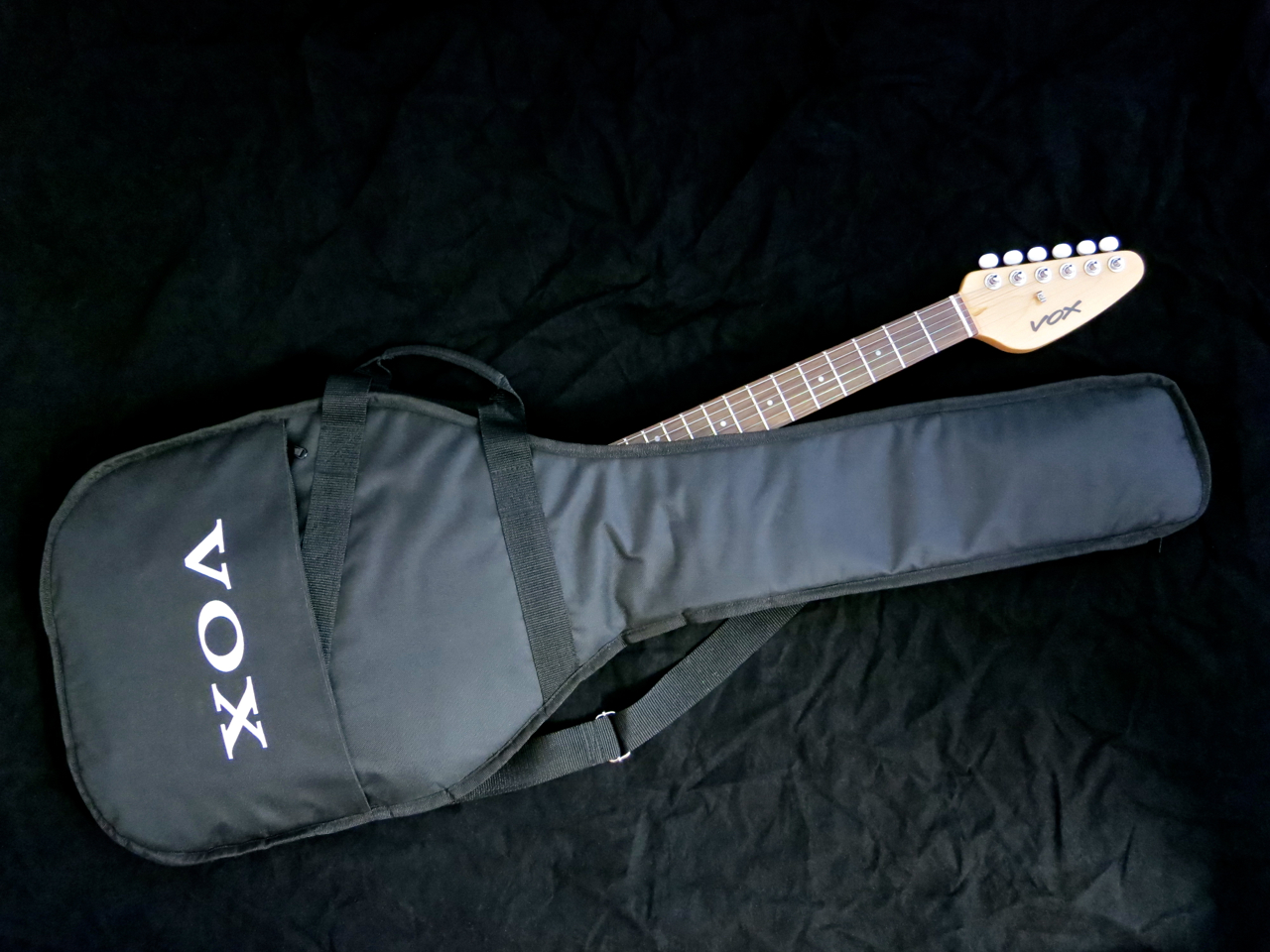
Three springs are factory-installed, but you can find a fourth spring in the gig bag, should you desire a firmer feel.
Vintage-snobs probably will scoff at the narrow tremolo block used in this vibrato. There are claims that this type of block diminishes sustain, but on the other hand Floyd Rose systems also use narrow blocks and nobody’s complaining.
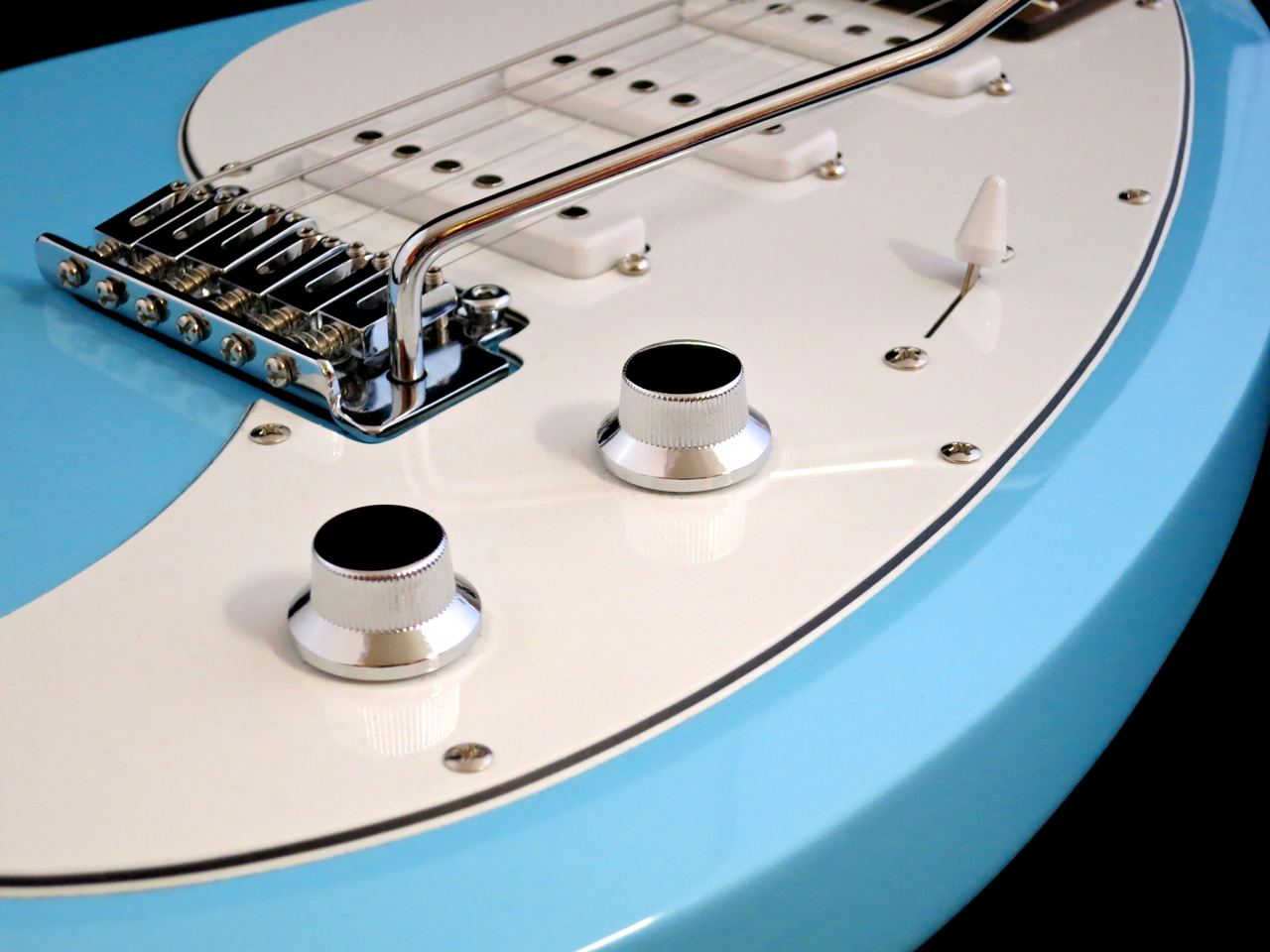
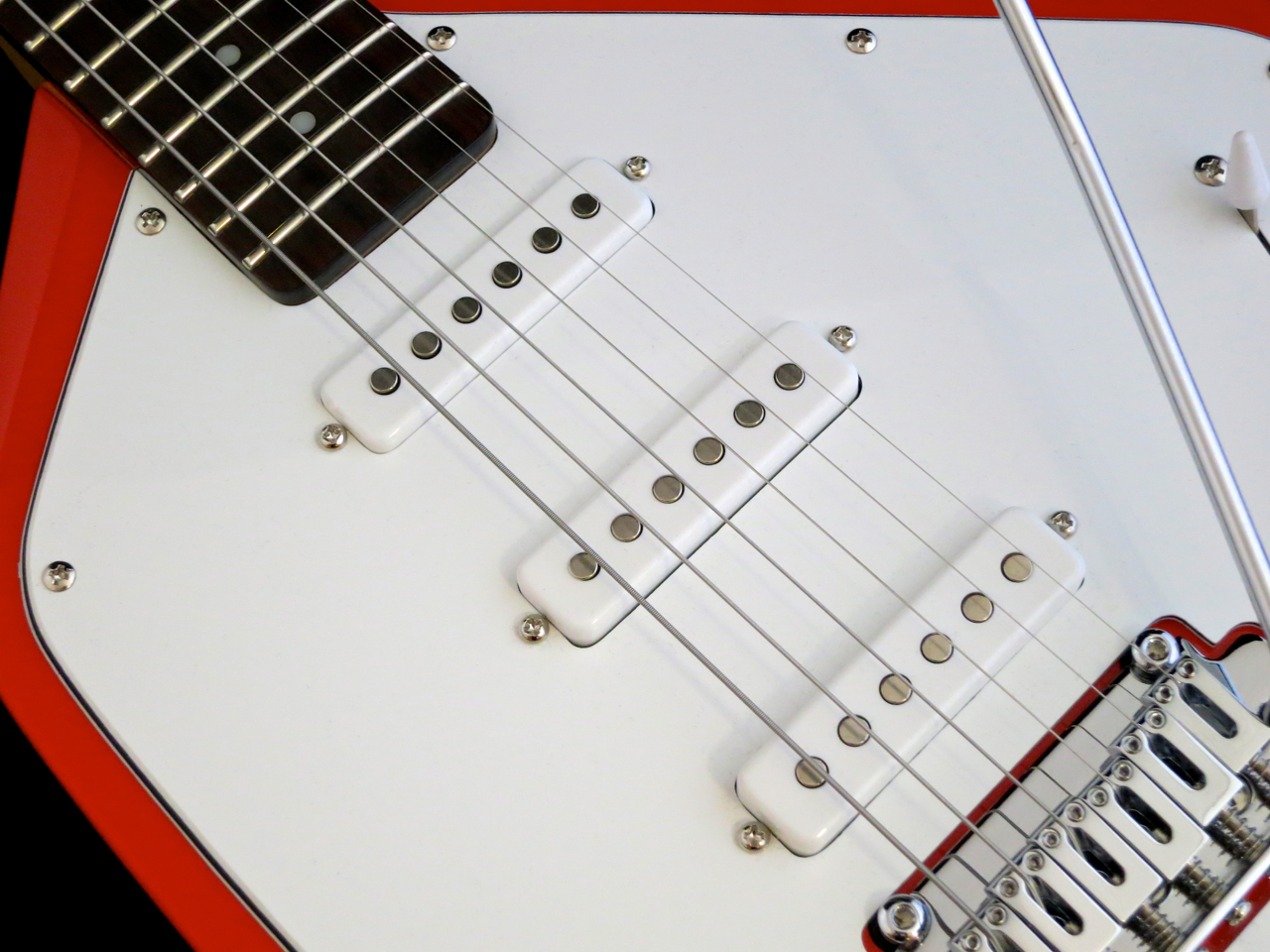
There are three singlecoil pickups mounted to the three-ply scratchplate, meaning we’re in for a nice, sprightly vintage tone in all likelihood.
The traditional passive electronics comprise a five-way switch, as well as a master volume and a tone control.
****
The basic ingredients for the angular Vox Mark V (current price in Finland approx. 355 €) are virtually the same as in the Mark III.
There’s a rib cage contour in the Phantom’s basswood body, too.
Both Mark-models feature gloss-finished maple necks with truss rod access at the headstock.
The vibrato bridge is surrounded the large pickguard of the Mark V.
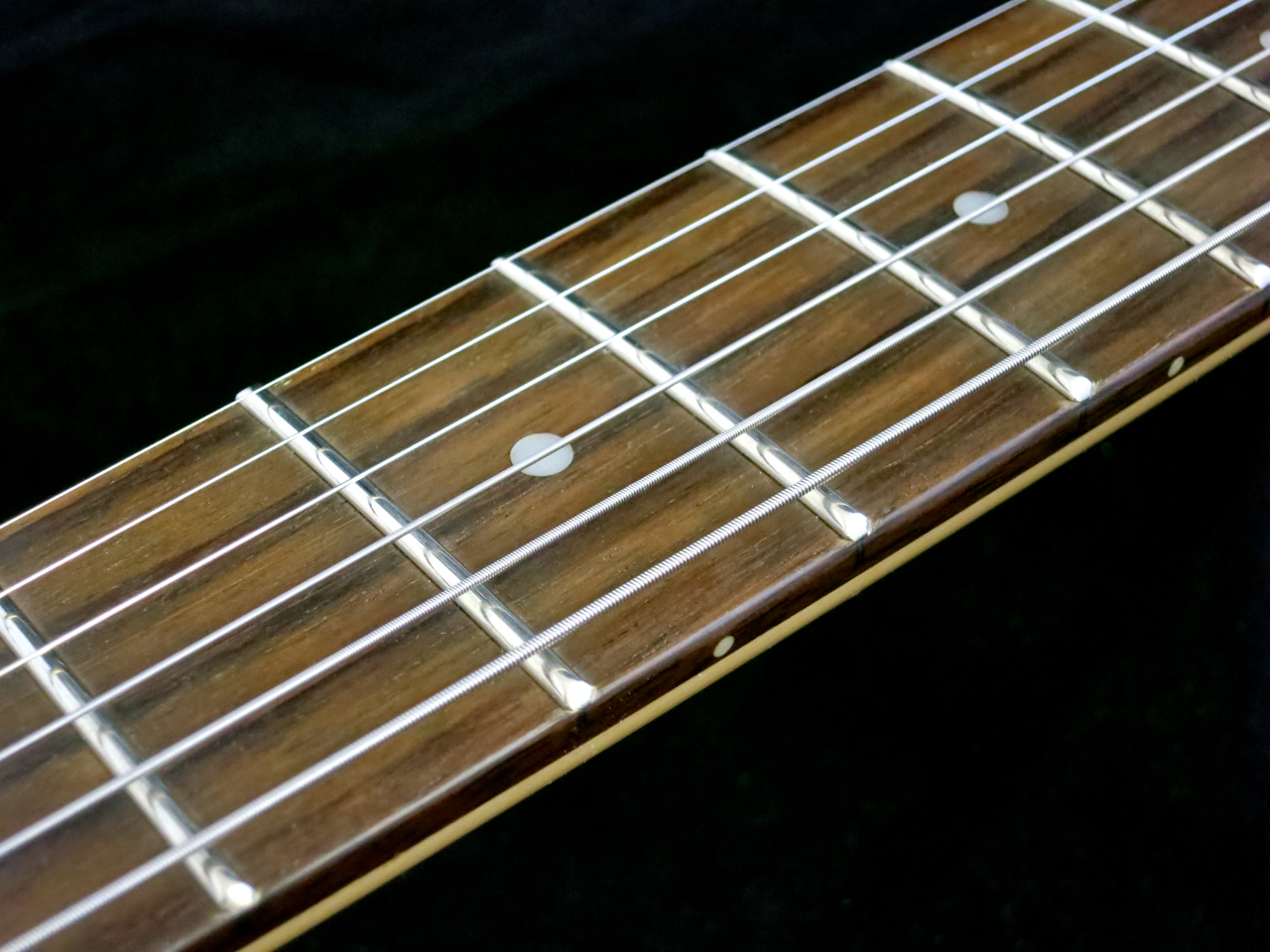
Both Voxes display very decent fretwork, which isn’t always a given in this affordable price bracket. The frets have been polished to a gleam and all ends have been rounded off carefully.
Vox Mark V Phantom is equipped with the same pickups…
…and the same controls as the Mark III Teardrop.
Both Vox Marks are sold with a nice gig bag!
****
The Vox Mark III is a very compact electric guitar, with our test sample also being nicely light in weight. Due to its very rounded body the Terdrop probably isn’t the most comfortable ”sofa guitar”, but on a strap everything feels hunky dory.
The whole vibe is quite reminiscent of, say a Fender Mustang, no doubt because of the Mark III’s short-scale, gloss-finished neck with its round D-profile. With the factory set of 010-gauge strings bending is very effortless. Our test sample’s very low – but buzz free – action (E: 1,6 mm/e: 1,3 mm) pays testament to Vox’ workmanship. Used in moderation the vibrato works decently, but don’t expect Floyd Rose-style return to pitch.
The Vox Mark III rings very nicely with a fresh and firm acoustic voice.
The clean tones of the Vox Teardrop works great in a Sixties-style poppy, jangly context or for funky workouts:
Add some overdrive for some nice, sinewy vintage Rock-sounds:
****
The Vox Mark V doesn’t seem to want to fit in you lap – it takes a while to get comfortable, when playing sitting down. Our lightweight test samples’ strapped-on balance proved to be excellent, though.
In most respects the Phantom feels very similar to the Mark III, with its comfortable, vintage-style neck. Straight out of the gig bag our test sample’s intonation was a bit fruity on a couple of strings, but this was corrected in no time with the correct screwdriver. The action was set quite low (E: 1,6 mm/e: 1,1 mm) on the Mark V, too. And again, as with the Teardrop, the Phantom still rang nice and true without any rattling. Well done, Vox! Should you prefer a slightly firmer feel, I’d suggest moving up to a 011-gauge string set.
Both Voxes sound almost indentical – acoustically, as well as amped up.
This is the Mark V Phantom’s clean delivery, played through a small Marshall combo:
I really like the gritty and slightly rude Rock-sounds you can get from the Mark V:
****
Due to their unconvetionally-shaped bodies, Vox’ Mark range always runs the slight risk of being regarded as mere ”poser guitars”, better suited to music videos that to actually making music.
This is far from the truth, though, because these new versions of the Mark III and Mark V really deliver nicely vintage-tinged sounds for the Pop, Beat, Blues, and Classic Rock genres. In view of their pocket-friendly prices, quality workmanship, quirky looks and great sounds, I can only applaud Vox for bringing back the classic Teardrop and Phantom models. Try one!
Voxin 1960-luvun Mark III- ja Mark V -kitarat – jotka tunnetaan myös nimillä Teardrop (Mark III) ja Phantom (Mark V) – ovat jälleen saatavissa musiikkikaupoista. Brittiboomi-mallien tunnetuimmat käyttäjät olivat 1960-luvulla Rolling StonesienBrian Jones (Mark III) ja Hollies-yhtiön Tony Hicks (Mark V).
Todella ilahduttavaa on, että uusi Vox-kaksikko on saatavilla erittäin maltillisella hinnalla.
****
Vox Mark III (355 €) muistuttaa symmetrisellä rungollaan hieman kreikkalaista busukia.
Uusintapainos valmistetaan lyhyellä 22-tuuman (610 mm) mensuurilla, minkä ansiosta se sopii hyvin myös nuorten soittimeksi.
Lehmusrunkoon ruuvattu kaula on veistetty vaahterasta, ja Teardropin otelauta on palisanteria.
Legendaarinen Vox-lavan uusi versio on hieman pienempi kuin alkuperäinen ja mielestäni paljon alkuperäistä kätevämpi.
Nykyaikaisissa suljetuissa virittimissä on valkoisia muovinuppeja.
Vox Mark III on varustettu nykyaikaisella vibratallalla.
Tehtaalta Mark III ja Mark V lähtevät kolmella jousella varustettuina, mutta topatussa pussissa on pakattu vielä yksi jousi mukaan.
Vintage-snobit eivät luultavasti tykkää tämän vibran ohuesta blokista, koska sanotaan, että sustainin kannalta massiivisempi on parempi. Toisaalta myös Floyd Rose -vibroissa käytetään vintagea ohuempaa blokkia.
Vox-mallin kolmesta yksikelaisista voi varmasti odottaa raikasta soundia kuuskytluvun hengessä.
Elektroniikka koostuu yhdestä viisipykäläisestä kytkimestä, sekä master tone- ja master volume -säätimistä.
****
Kulmikkaan Vox Mark V:n (355 €) perusresepti on periaatteessa sama kuin Mark kolmosessa.
Myös Fantomin lehmusrunkoon on lisätty mukavuusviiste soittajan kylkiluita/vatsaa varten.
Mark-mallien kaulat ovat samanlaisia, aina kiiltävää viimeistelyä myöten.
Mark V:ssa kolmikerroksinen pleksi ympäröi kitaran vibratallaa.
Vox-soittimien nauhatyö on yllättävän laadukasta, kun katsoo Mark-mallien hintalappuja. Nauhat on kiillotettu ja niidet päät on pyöristetty huolellisesti.
Vox Mark V Phantom -kitarassa käytetään samoja mikrofoneja…
…sekä samaa elektroniikkaa kuin Mark III Teardropissa.
Topattu pussi kuuluu Mark-malleissa hintaan!
****
Vox Mark III on erittäin kompakti kitara, ja testissä käynyt yksilö mukavan kevyt. Rungon pyöreän muotoilun takia Teardrop ei ole ehkä maailman luontevin ”sohvakitara”, mutta hihnan varressa kitaraa on hyvin mukava kantaa.
Lyhyen skaalan ja kiiltäväksi lakatun, pyöreällä D-profiililla varustetun kaulan ansiosta tällä Voxilla on samantyyppiset vibat kuin esimerkiksi Fenderin Mustang-mallissa, ja tehdaskieliä (010-satsi) on erittäin helppoa venyttää. Vaikka kielet oli säädetty hyvin lähelle otelautaa (E: 1,6 mm/e: 1,3 mm), Mark III Teardrop soi puhtaasti ja rämisemättä. Vibratalla toimii maltillisesti käytettynä hyvin, mutta Floyd Rosen haastajaksi sitä ei tietenkään ole.
Vox Mark III:n akustinen ääni on hyvin Fender-mainen, mutta samalla kauniin lämmin.
Vox Teardrop -mallin puhdas soundi sopii vaikkapa rautalankaan tai funk-musiikkiin:
Säröpuolella homman nimi on Vintage Rock:
****
Vox Mark V on sylissä hieman vastahakoinen tapaus, ja hyvän soittoasennon löytämiseen menee tovi. Kevyt testiyksilö roikkuu kuitenkin hihnassa todella hyvässä tasapainossa.
Phantomin soittotuntuma on erittäin lähellä Teardrop-mallia, nimittäin vintage-tyylinen ja mukava. Testiyksilössä intonaatio oli säädetty kahdelle kielelle hieman nuotin vierestä, mutta homma hoitui nopeasti ristiruuvarilla. Kitaran tatsi oli säädetty myös Vox Mark V:ssa hyvin kevyeksi (E: 1,6 mm/e: 1,1 mm). Jos haluaa soittotuntumasta vielä kiinteämmän, suosittelisin pykälän paksumman 011-satsin käyttämistä.
Molemmat Vox-kitarat kuulostavat miltei samalta, sekä akustisesti että vahvistimen kautta soitettuina.
Tällainen on Mark V Phantomin puhdas soundi pienen Marshall-kombon kautta soitettuna:
Mark V:n Rock-soundista löytyy mukavasti karkeutta ja asennetta:
****
Vox Mark -mallien erikoisten runkomuotojen takia voisi helposti erehtyä lokeroimaan Teardrop- ja Phantom-kitarat pelkiksi ”musiikkivideo-kitaroiksi”.
Totuus on kuitenkin, että sekä Mark III että Mark V toimivat ilahduttavan hyvin Pop-, Beat-, Blues- ja Classic Rock -genreissä. Uudet Voxit tarjoavat roimasti vastinetta rahalle, koska niiden soitettavuus ja soundi ovat enemmän kuin kohdillaan. Suosittelen!
1960-luvun legendaariset Vox III– (aka Teardrop) ja Mark V -mallit (aka Phantom) ovat tulleet takaisin, uusina edullisina versioina.
Kitaroissa on ruuvikaula vaahterasta palisanteriotelaudalla, sekä lehmusrunko. Molemmat mallit ovat lyhytskaalaisia (61 cm), ja niissä on kolme yksikelaista mikrofonia ja moderni Strato-tyylinen vibratalla.
American guitar guru Grover Jackson is a genuine living legend. When Jackson bought Wayne Charvel’s small shop (in 1978) nobody would have guessed that this man would single-handedly define two new types of electric guitars.
The – mostly bolt-on necked – Charvel guitars from the Eighties kicked off the Superstrat-phenomenon in earnest.
The original Jackson-branded instruments became famous as hiogh-octane Metal-guitars, which combined first class playability with bold graphic finishes. The most legendary Jacks model is surely the Concorde/RR, which Grover Jackson developed for Randy Rhoads.
Grover Jackson left Charvel/Jackson at the end of the 80s, and he went on to design instruments for a number of different brands, like Washburn for example. The Charvel and Jackson brands are nowadays part of the huge Fender conglomerate.
Grover Jackson has recently launched a new guitar-making outfit, together with (ex-Fender man) Jon Gold. GJ2 Guitars is a small Californian outfit which concentrates on small-run high-end guitar making.
Kitarablogi.com takes the first five instruments to arrive in Finland for a spin.
****
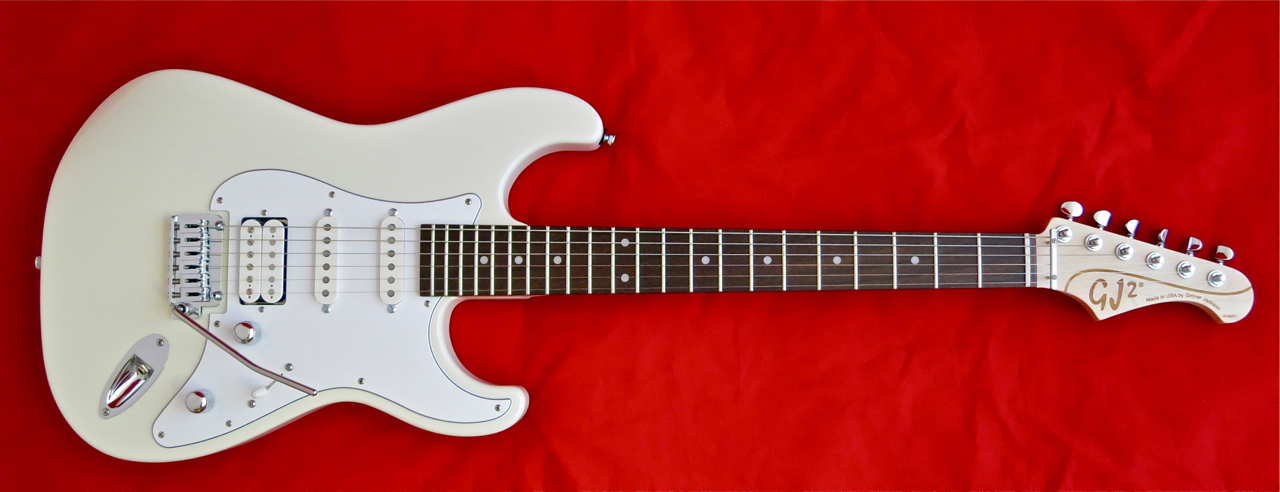
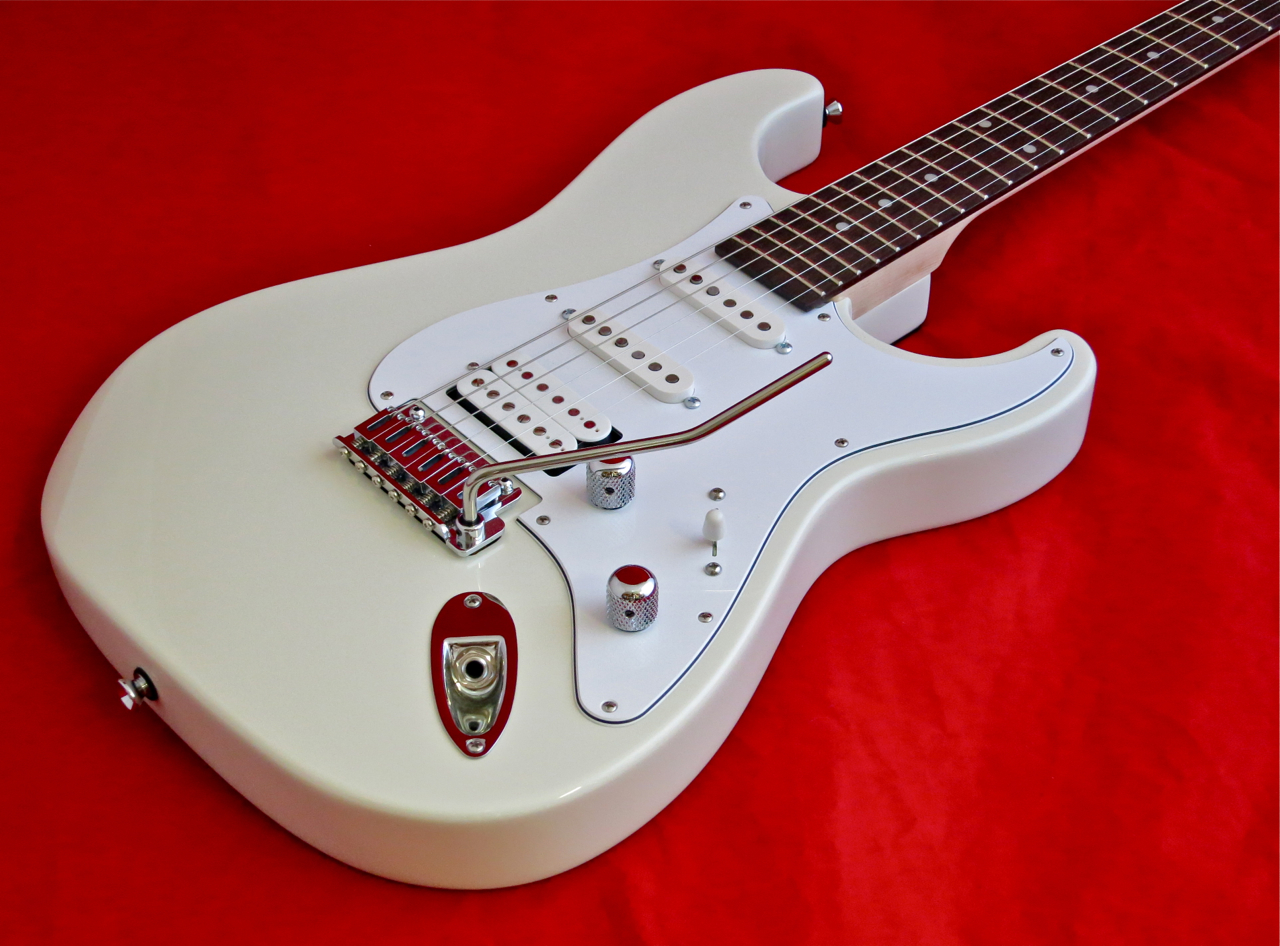
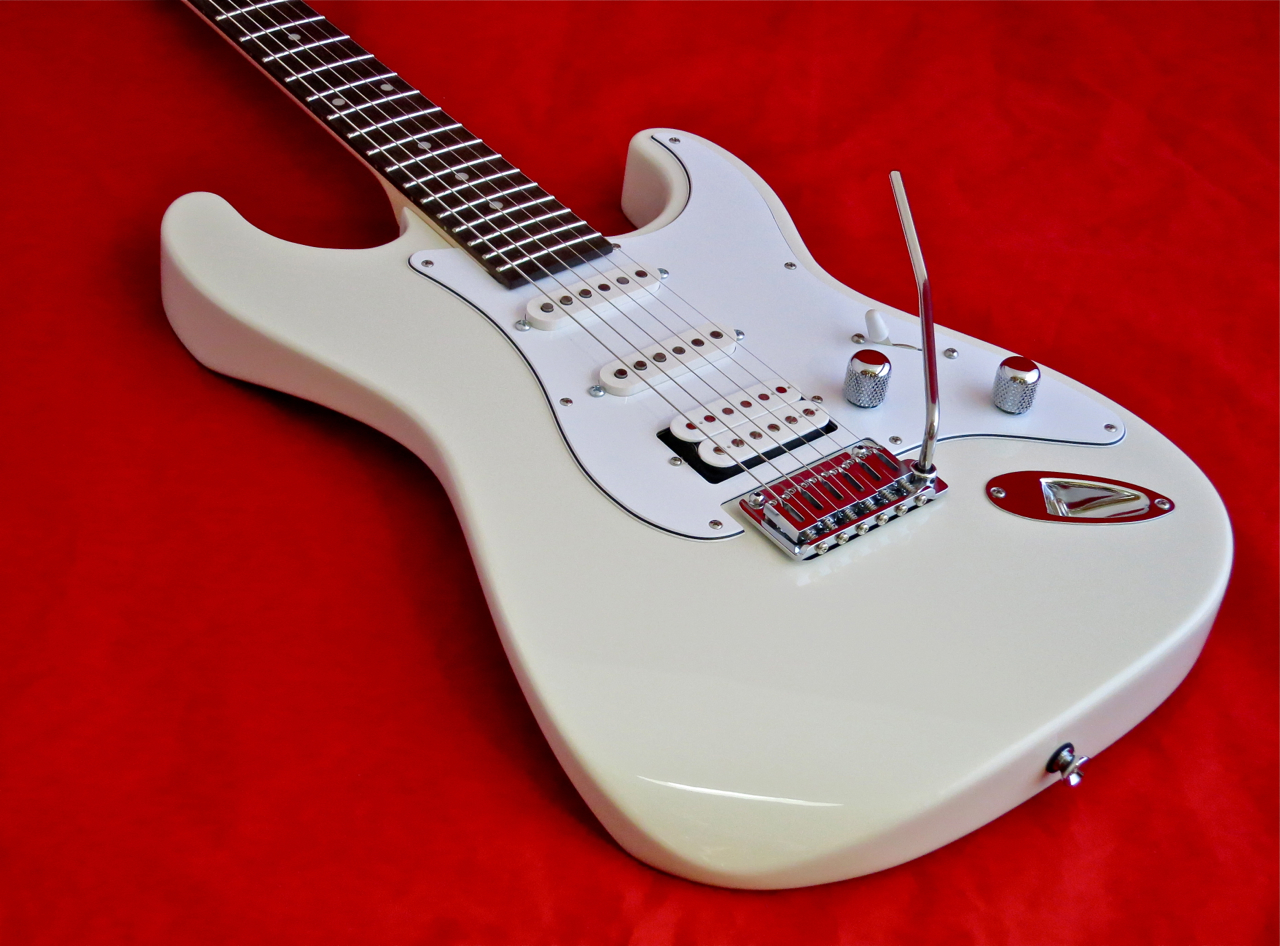
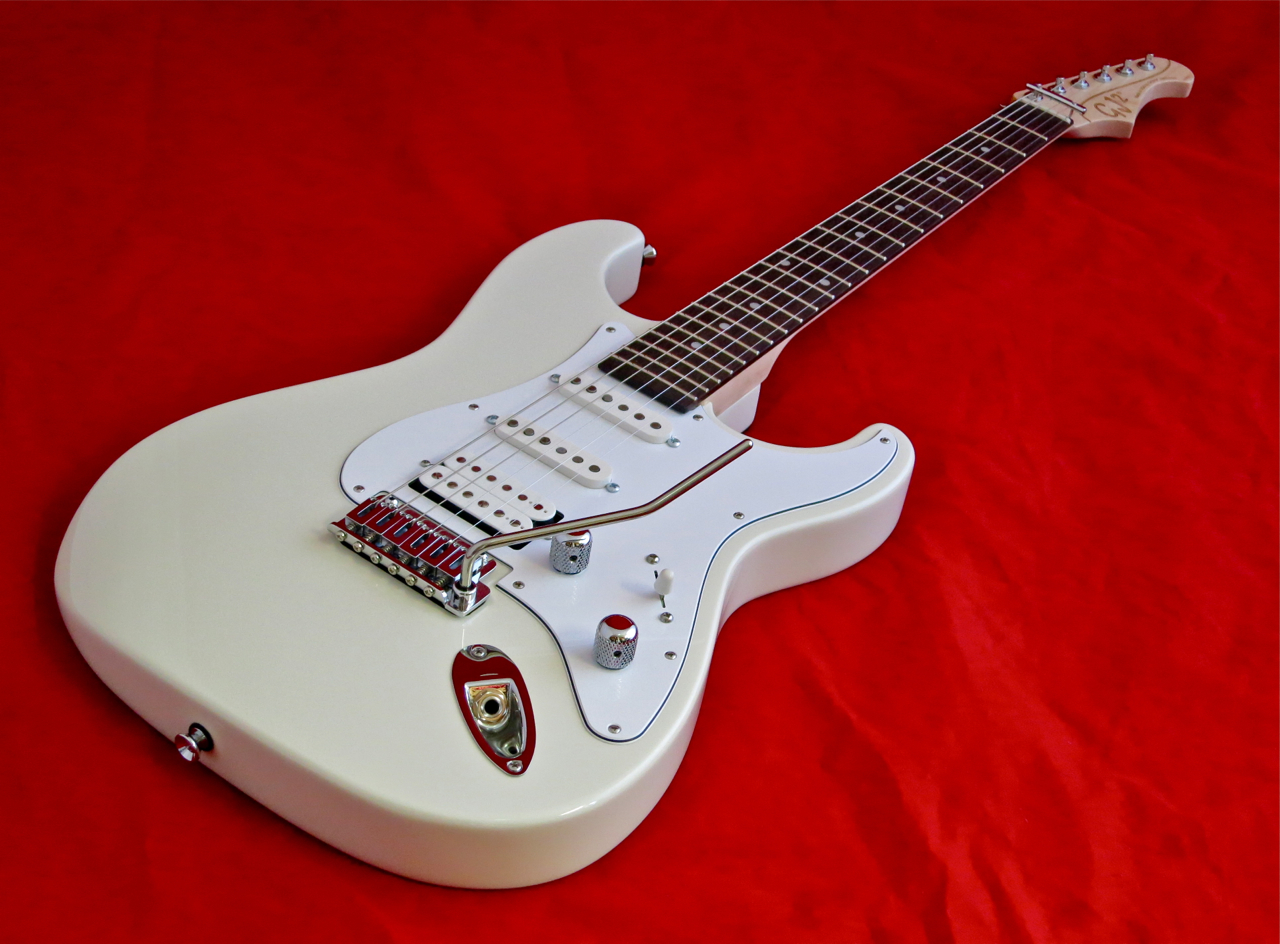
The GJ2 Glendora NLT (this version 1,717 €, incl. gigbag) is the most traditional guitar of our group of five.
The review sample’s body has been crafted from light ash (custom option) and finished in gloss Antique White. The basic version of the Glendora comes with a body made from either basswood, alder or poplar.
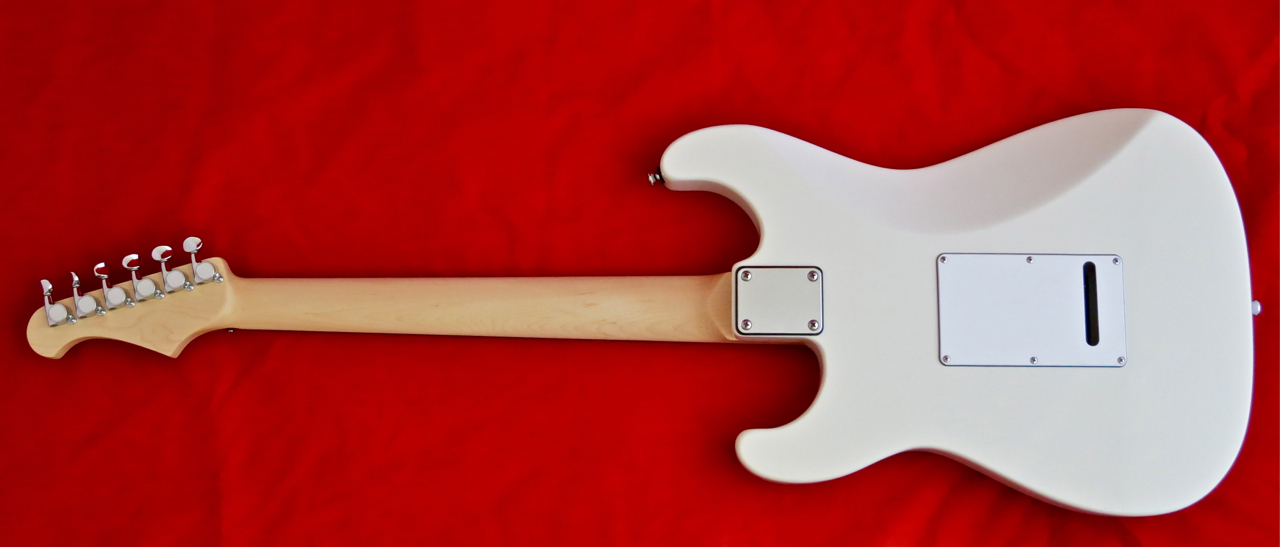
The satin-finished maple neck joins the body in traditional fashion.
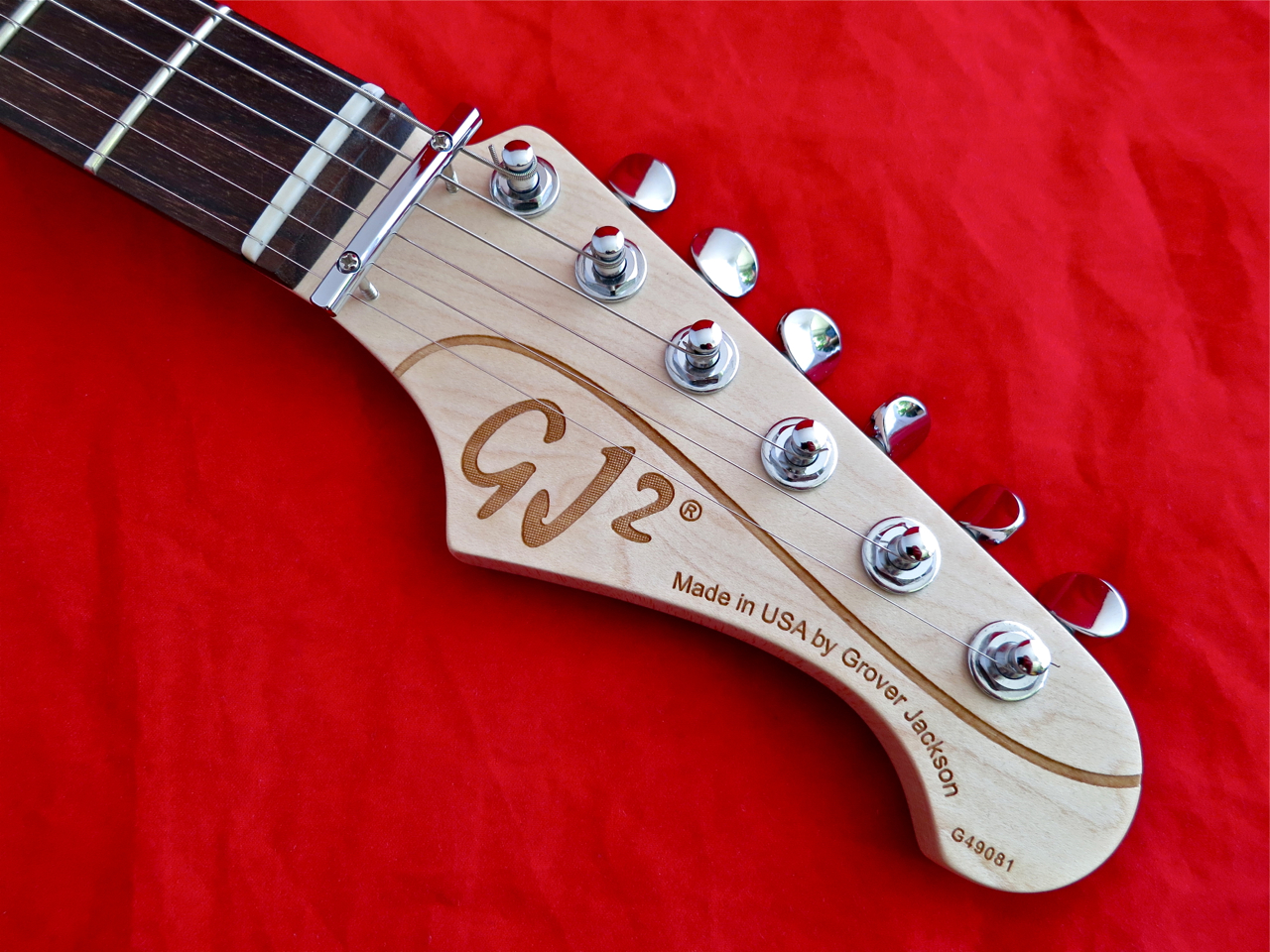
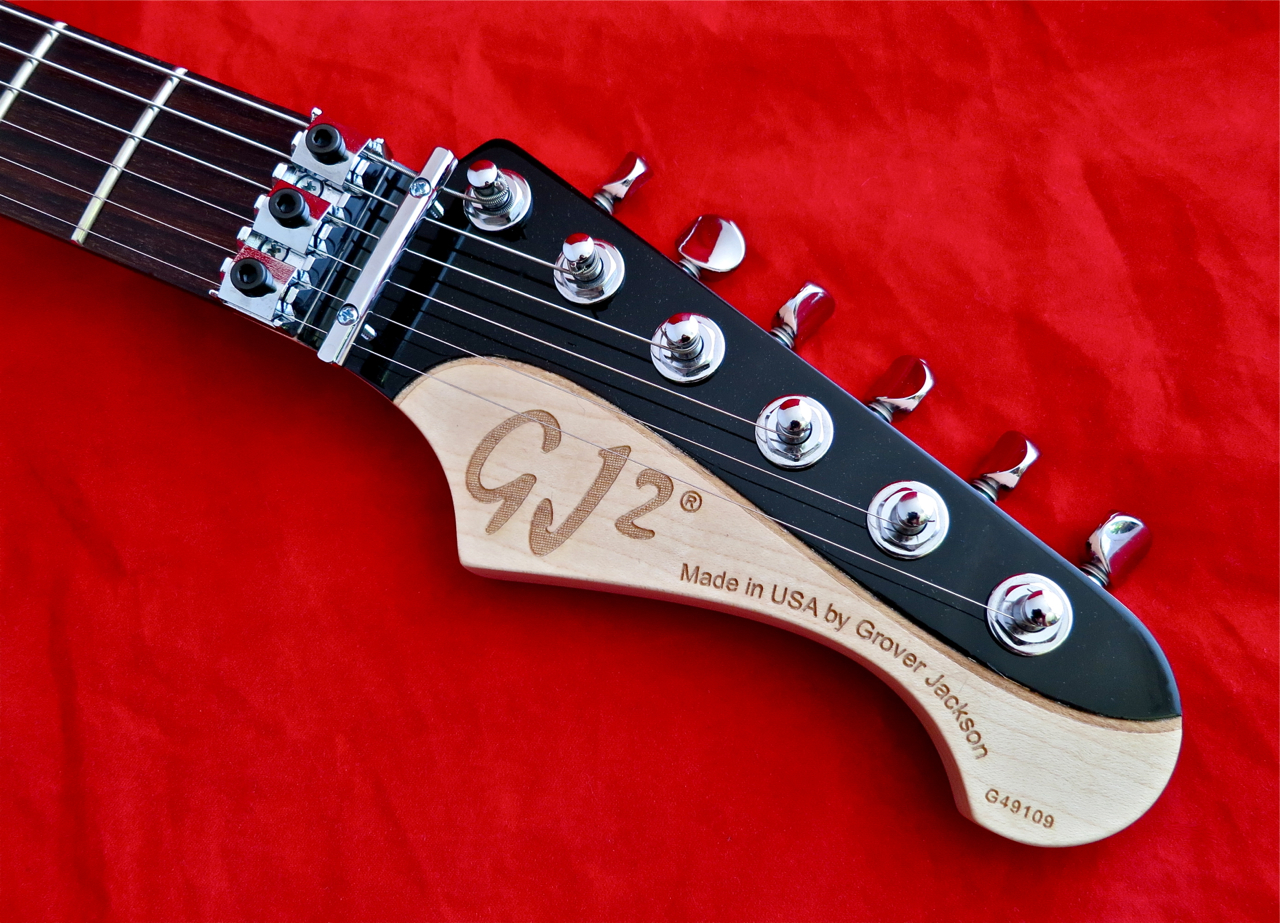
The Glendora’s headstock is a stylish variation on the classic six-in-a-row design.
The tuning machines are quality units from Gotoh.
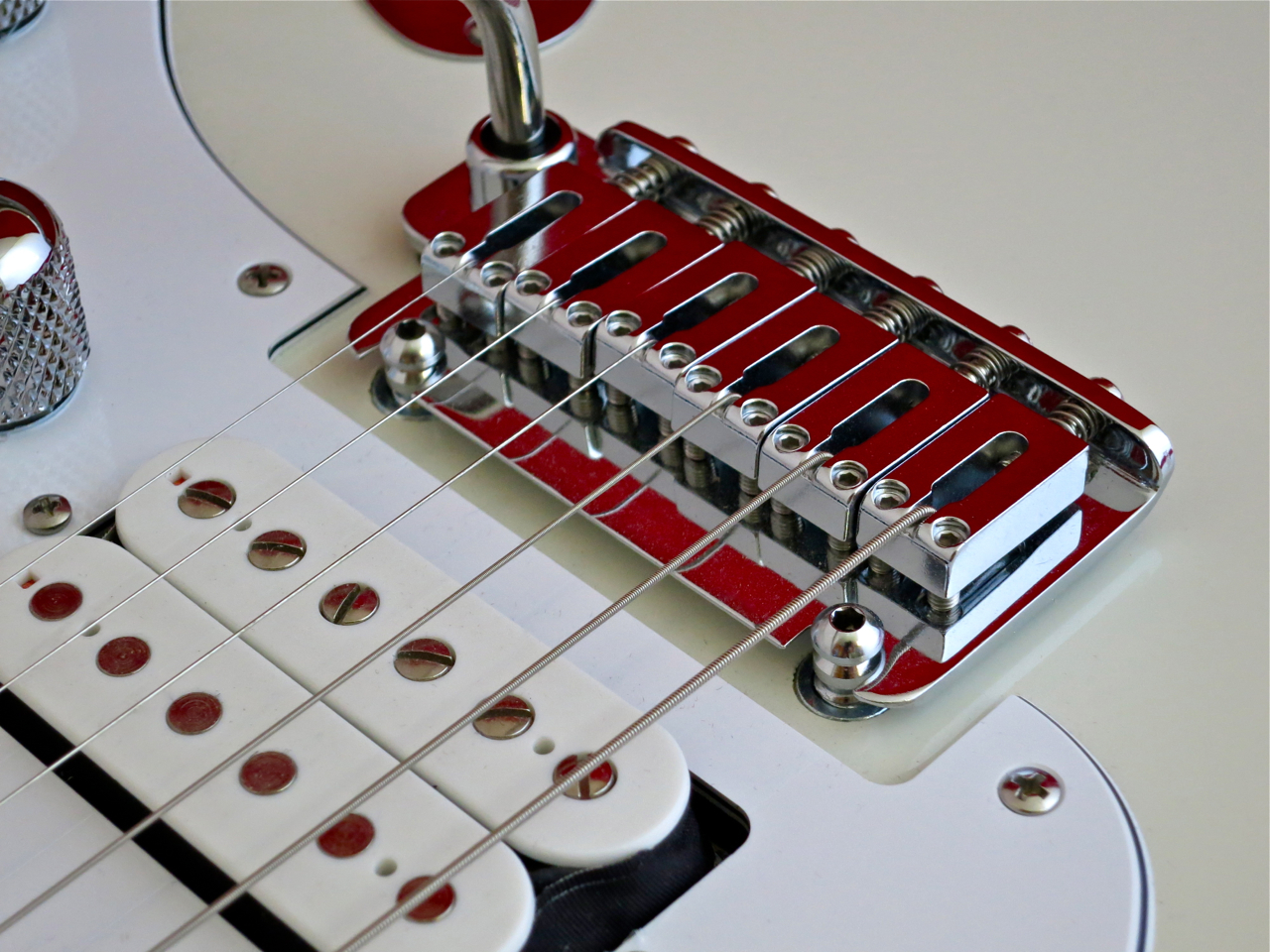
The contemporary two-post vibrato bridge is also a Gotoh design. The bar is simply pushed into the block and kept in place by an adjustable nylon collar.
The rosewood fingerboad sports 22 gleaming jumbo-sized frets.
For his new GJ2 guitars Grover Jackson has perfected a new method of applying a compound radius to the fretboard. A compund radius means that the frets have a steeper curve near the nut and get shallower further up towards the body. This gives you the best of both worlds with easy open position chording and effortless string bending higher up the neck without string choking.
GJ2 Guitars use their own Habanero pickups as standard. Our review sample comes equipped with an HSS-setup, but you can order your Glendora with several different pickup combinations, like the vintage-style SSS or two humbuckers.
The controls comprise a five-way switch, as well as master volume and tone controls.
****
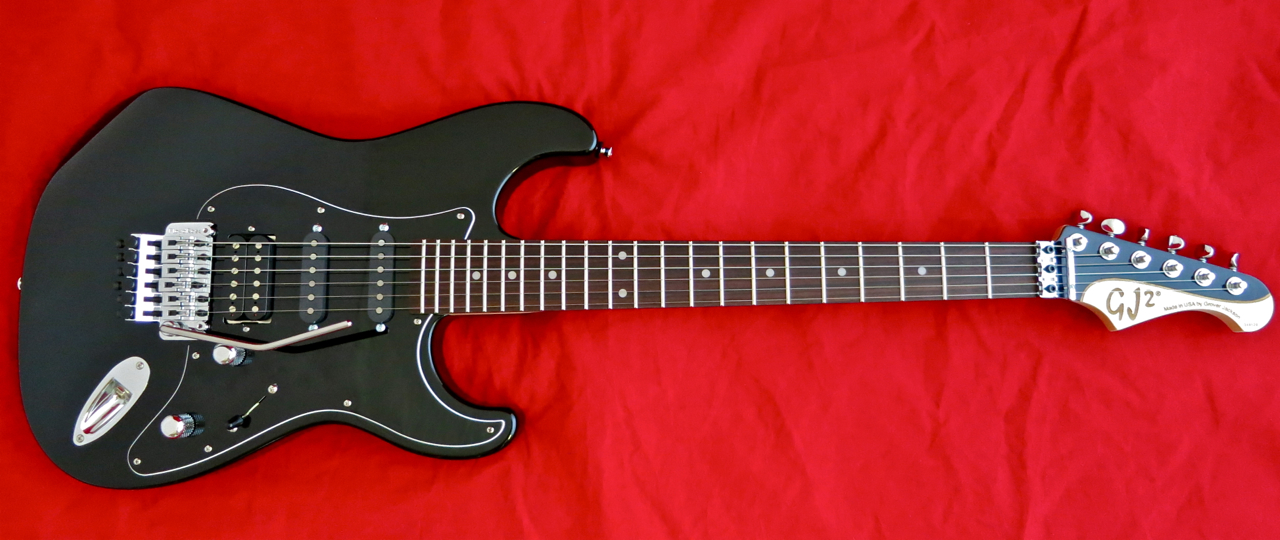
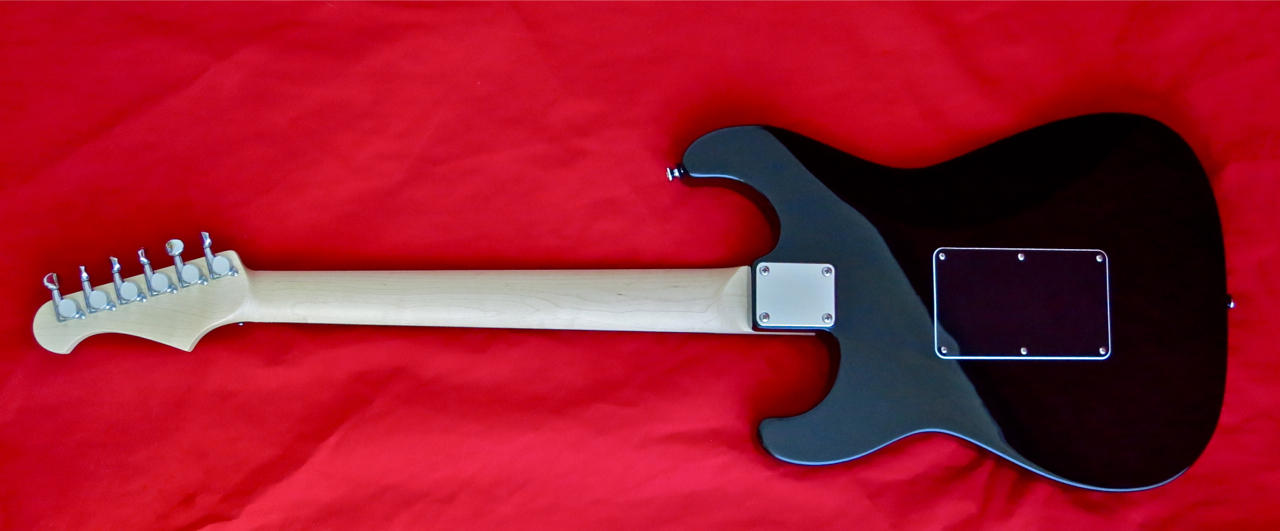
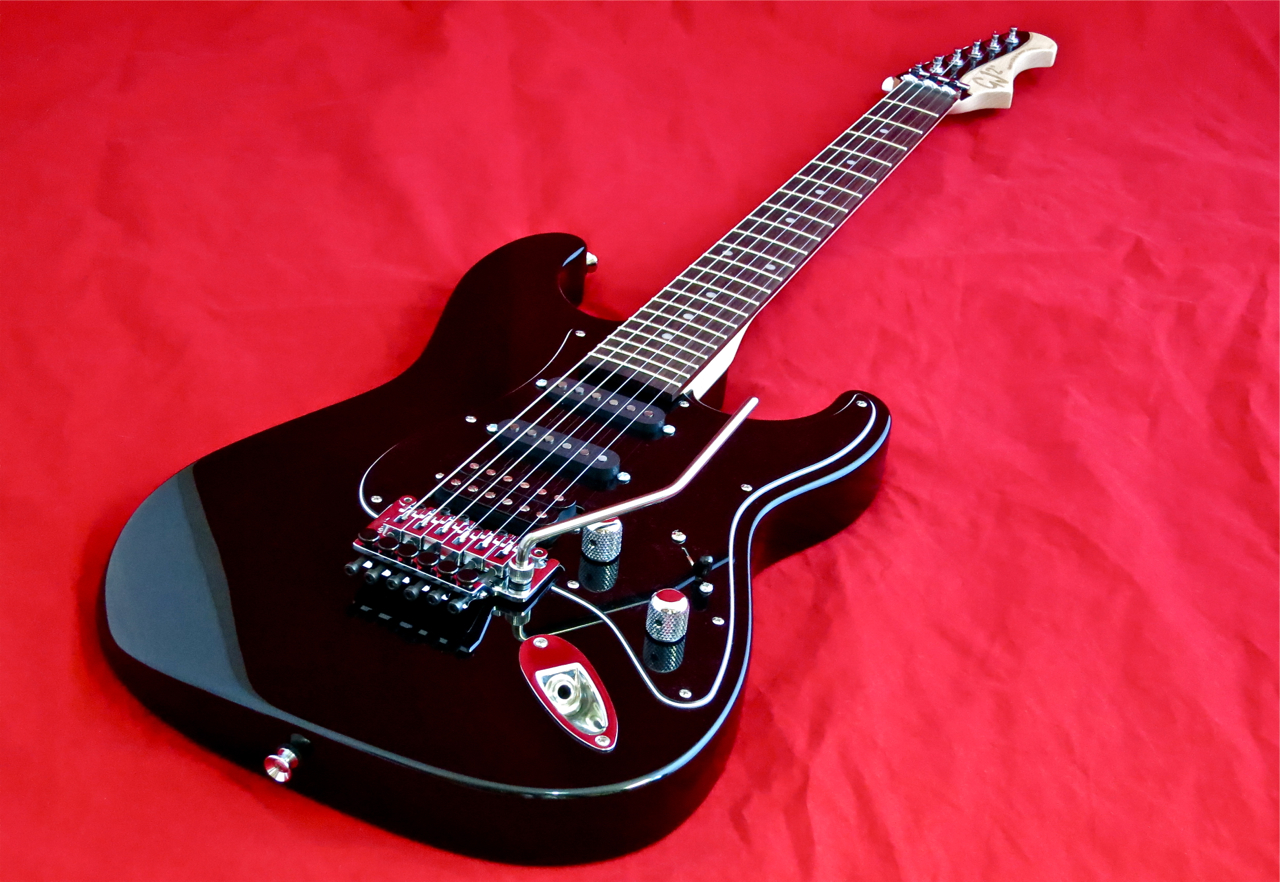
The Glendora FR (this version 1,930 €, incl. lightweight case) is the Floyd Rose-equipped version of the Glendora.
Our review instrument comes with a standard body (basswood, alder or poplar), but apart from that the basic build is the same as on the Glendora NLT.
One of the custom options available for a surcharge in the Glendora-range is a matching headcap, just like on this guitar.
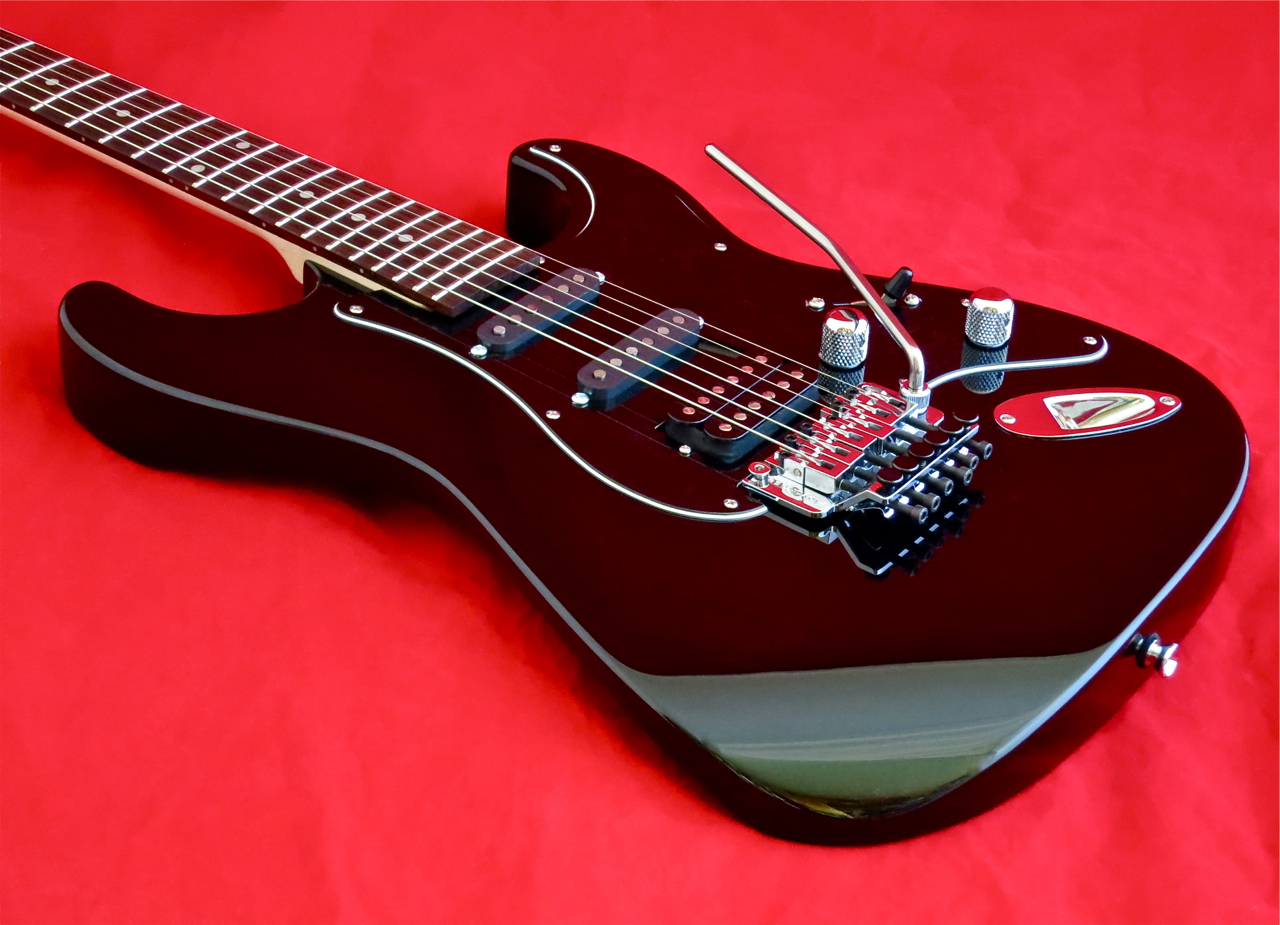
GJ2 Guitars use only top-drawer quality parts, like the Schaller-made steel Floyd Rose bridge on the Glendora FR.
It’s a Habanero-set of two single-coils and one humbucker for this guitar.
****
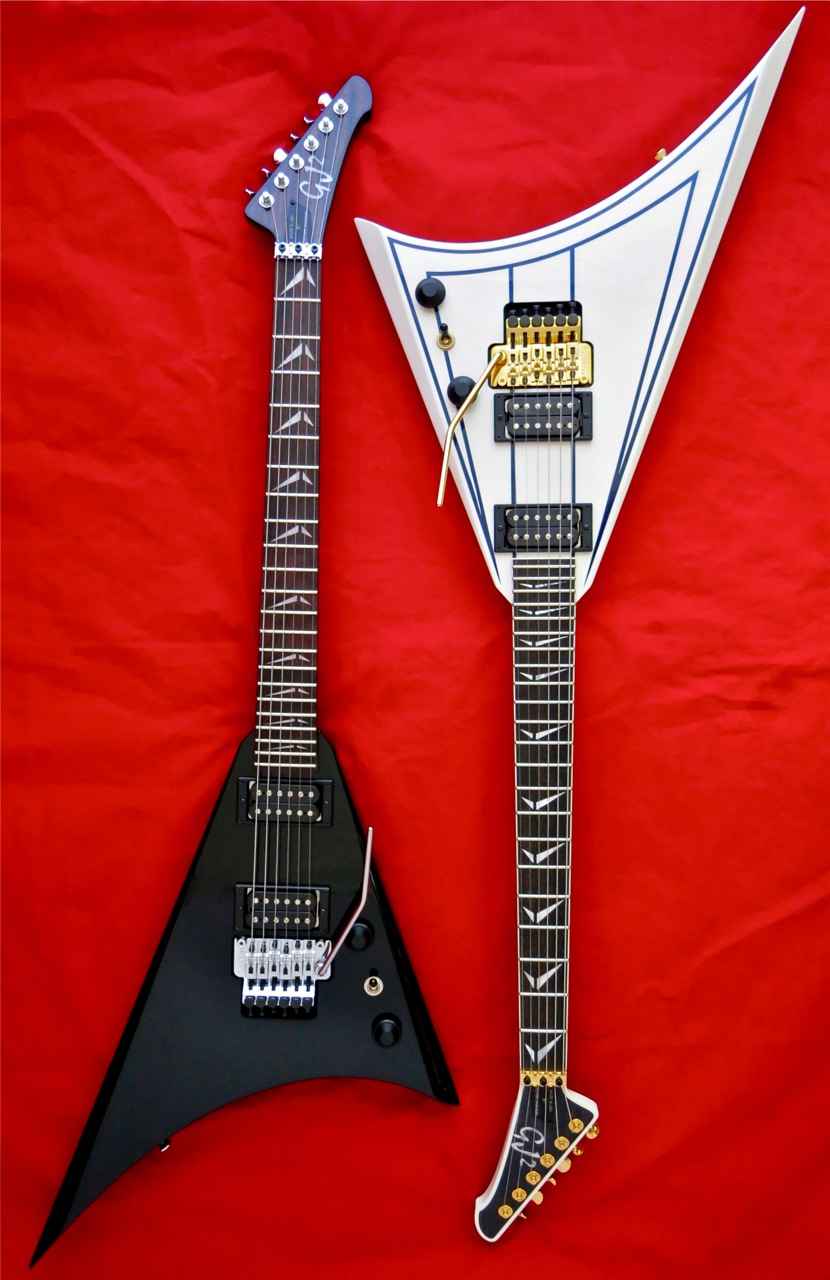
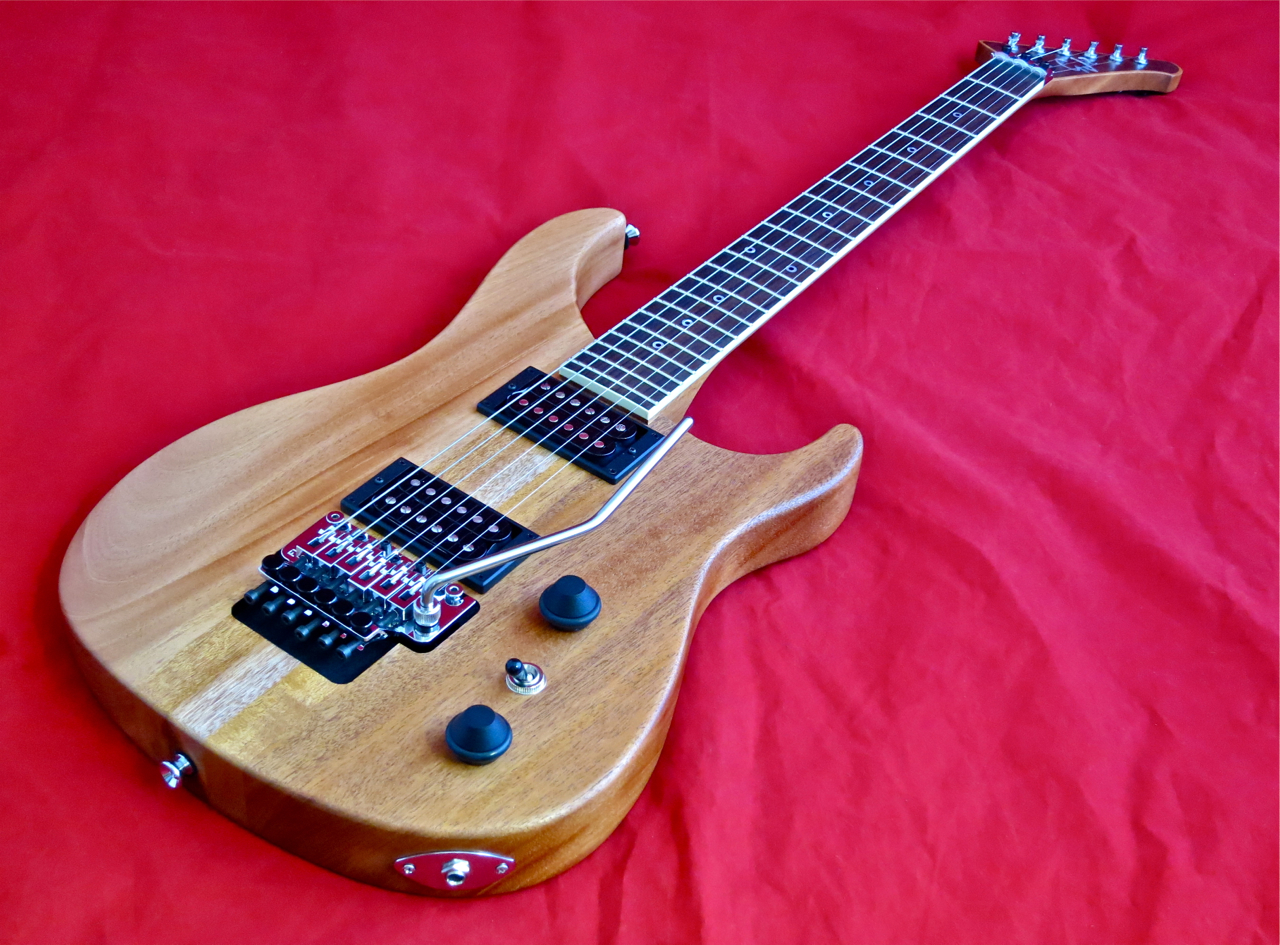
The GJ2 Arete is one of Grover Jackson’s new designs based on a through-neck. There are three different basic versions of the Arete available, called 3-Star, 4-Star and 5-Star.
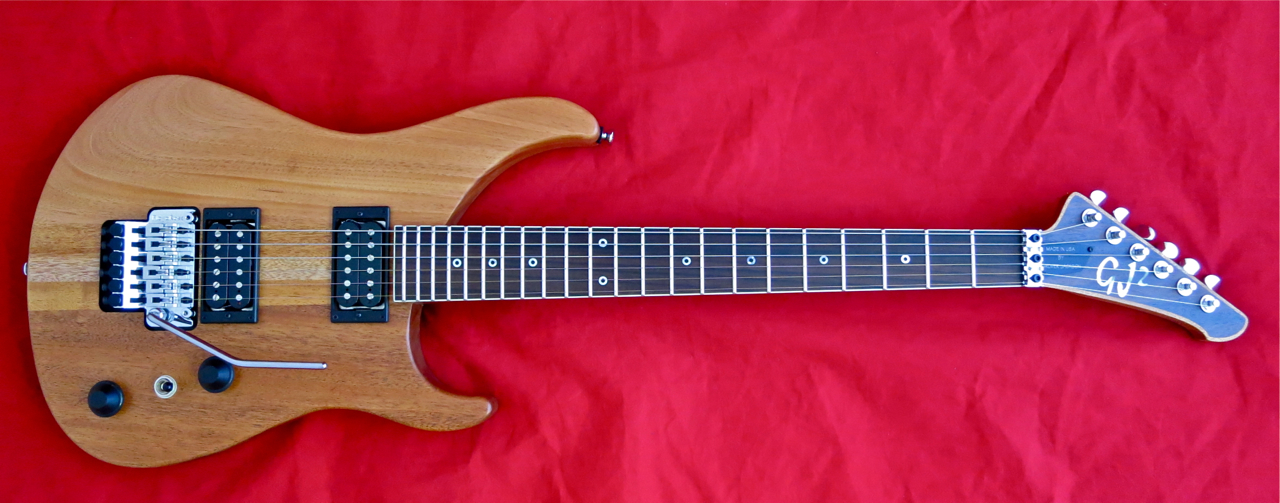
The Arete 4-Star (this version 2,231 €, incl. lightweight case) is the middle model, which is crafted almost completely from South-American mahogany. The neck uses three long strips side-by-side for added stiffness.
Two mahogany wings make up the streamlined body. The more affordable Arete 3-Star is made from sapele, while the more expensive 5-Star counterpart gives you several different body woods to choose from.
The Arete 4-Star comes in a hand-rubbed oil finish. The cover plates are made from aluminium.
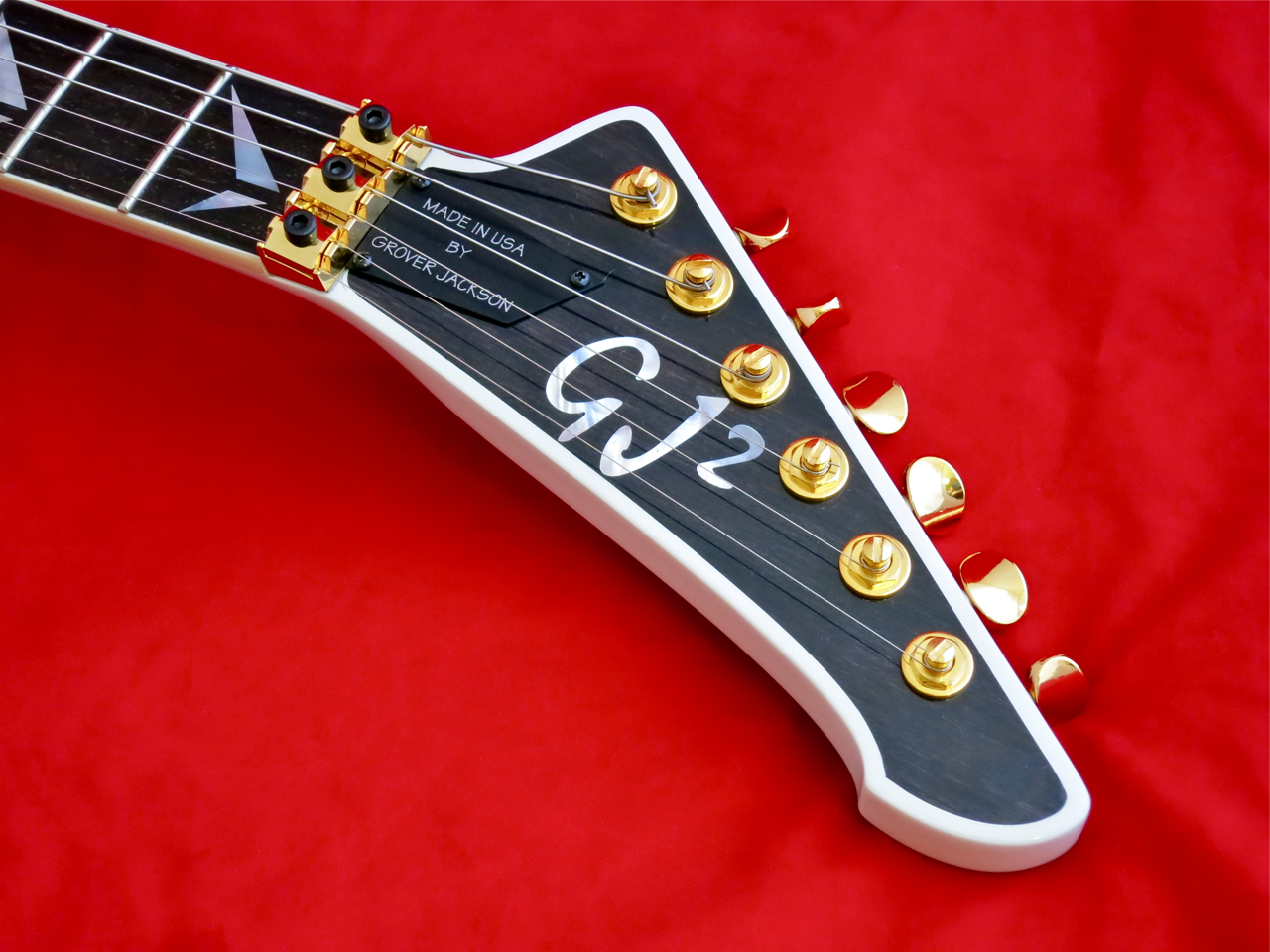
The headstock sports one of GJ2 Guitars’ special features – the Invisible Binding. This is achieved by routing out a shallow ”pool” on the headstock’s face, into which a large rosewood plate is then inlaid.
All Arete 4-Star guitars are vibrato-equipped – they come either with the same knife-edge bridge as on the Glendora NTL, or with a steel Floyd Rose as on our review instrument.
The black pickup bezels feature a structured surface.
The bound rosewood fingerboard sports Mini Bull’s Eye inlays, as well as 22 jumbo frets.
The basic version of the Arete 4-Star is equipped with two Habanero humbuckers, but you can also order HSS- or HSH-configurations, should you so desire.
The three-way toggle is mounted between the master volume and tone controls. GJ2 Guitars’ cool Flying Saucer-knobs not only look great, but are also easy to adjust.
****
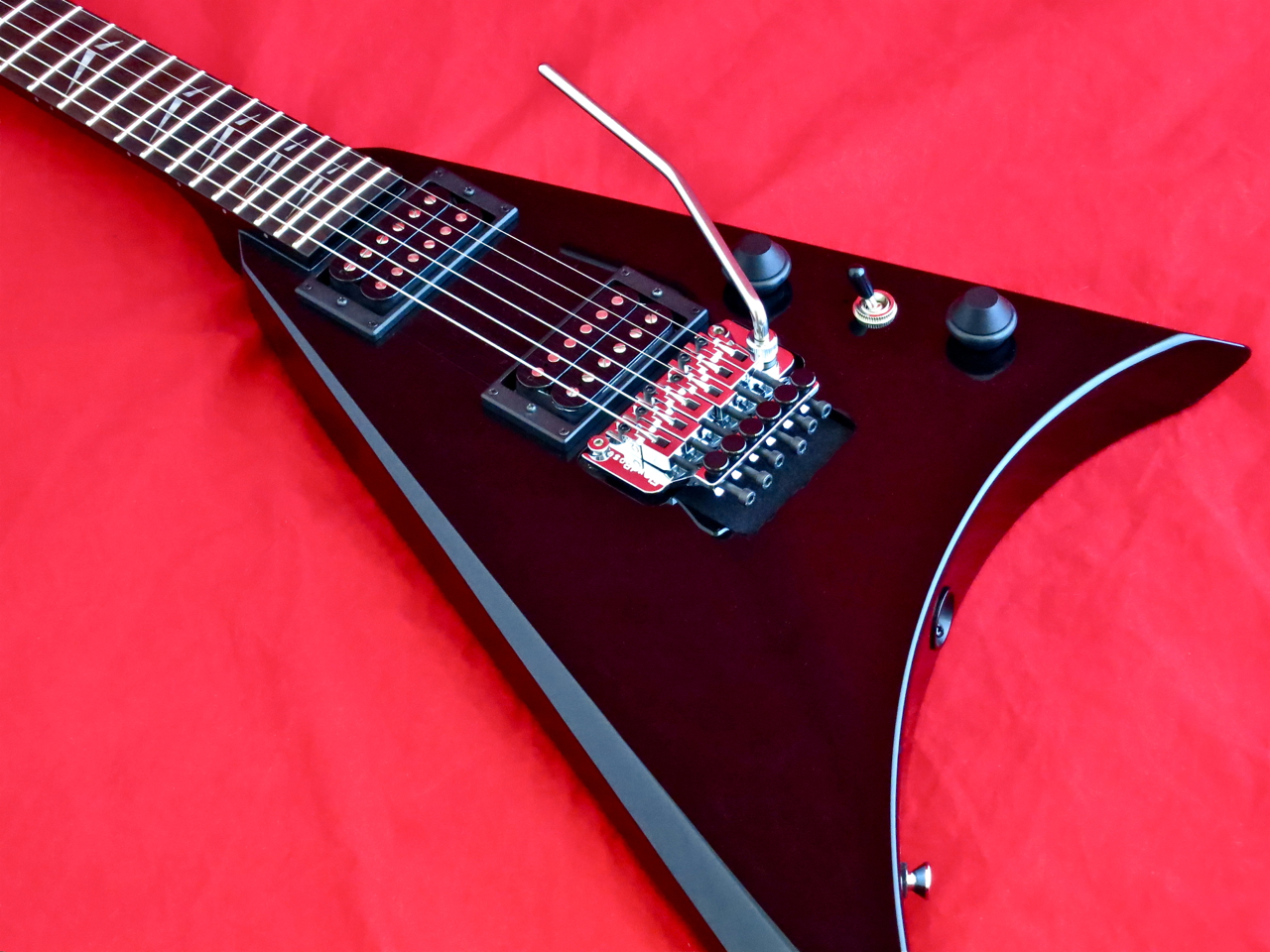
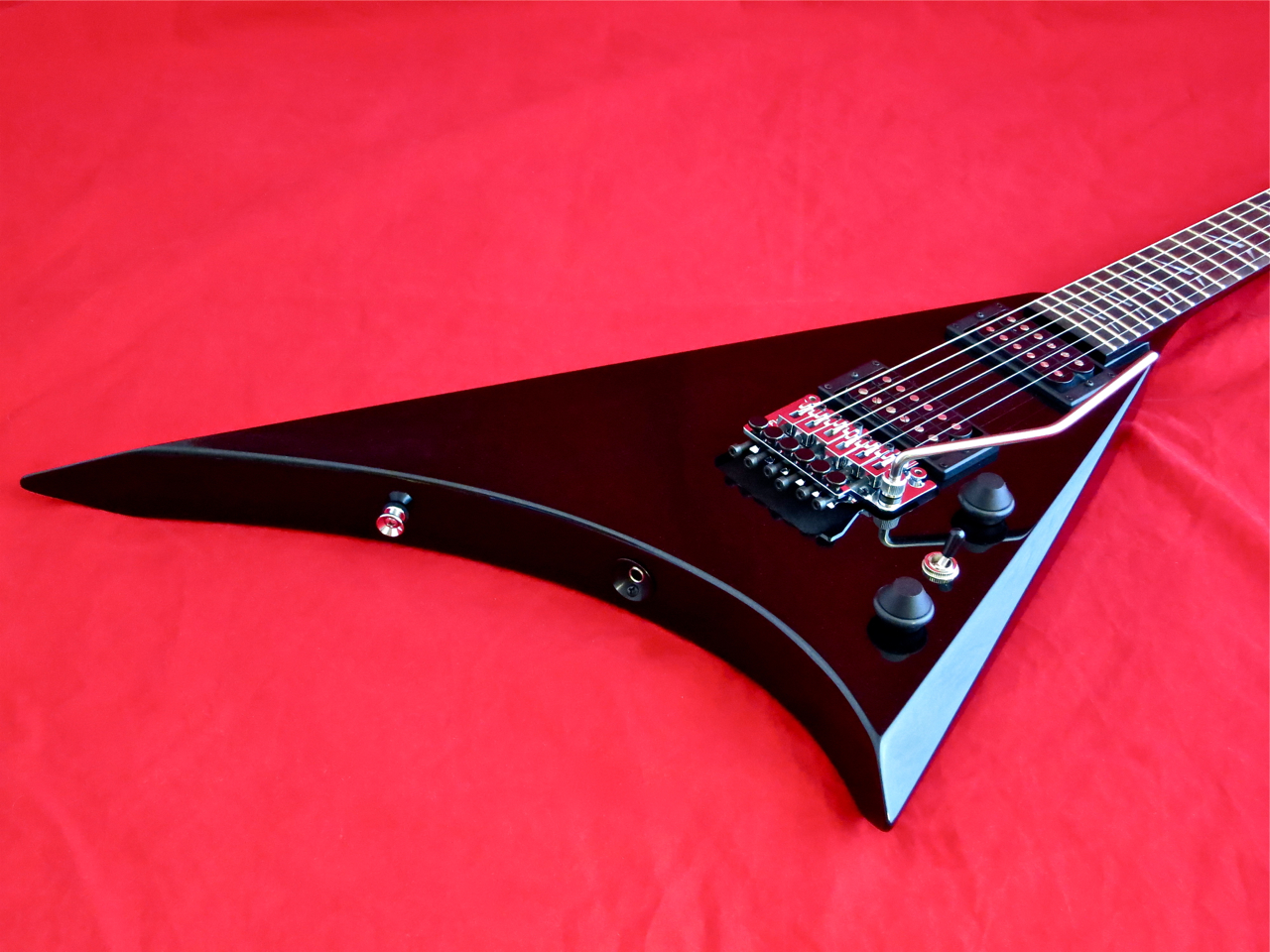
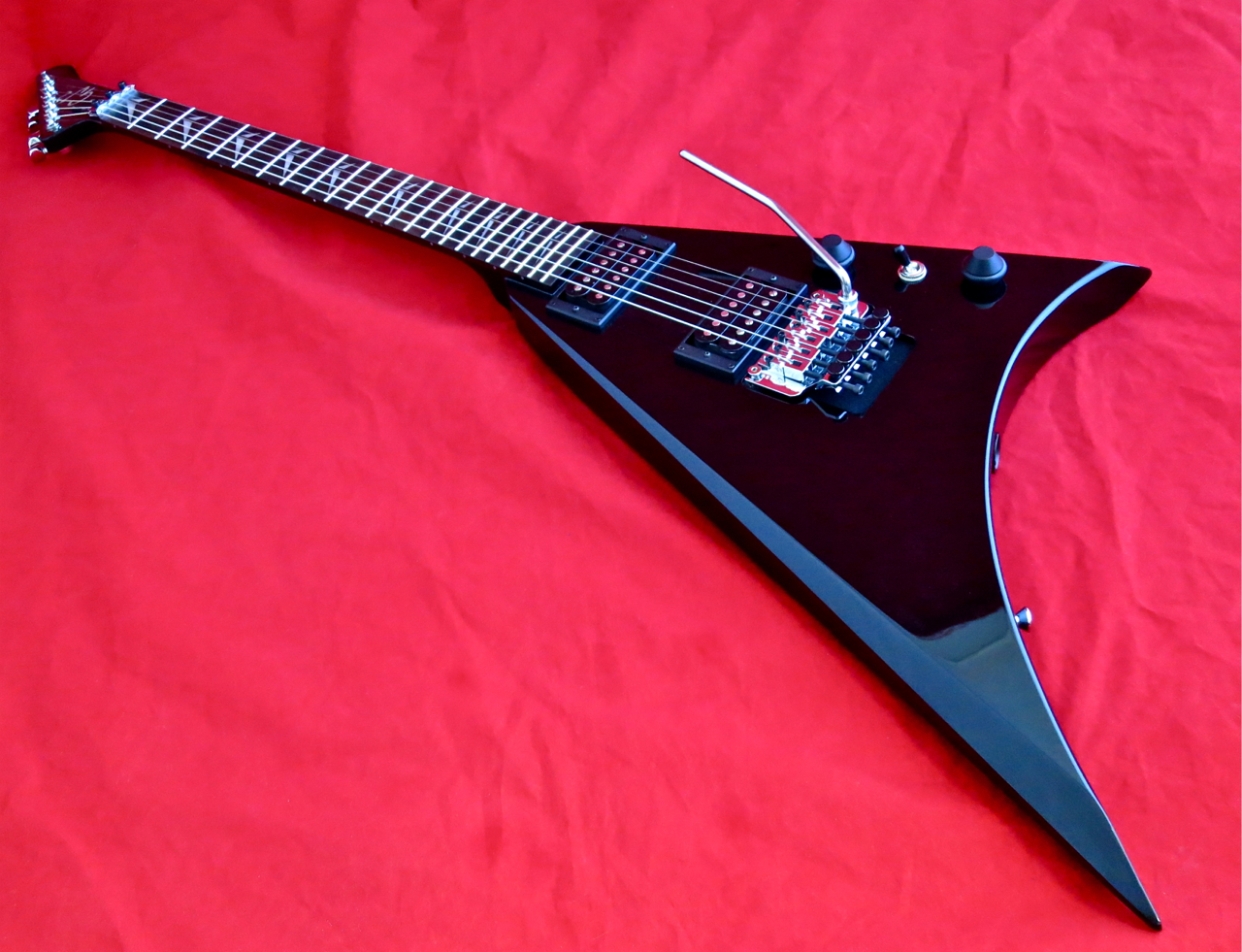
A through-neck crafted from three side-by-side strips of maple flanked by basswood wings – this is the basic recipe behind the GJ2 Concorde 4-Star (this version 2,768 €, including hard case).
All Concorde-models feature a full-length, 64.8 cm (25.5-inch) scale.
The Concorde 4-Star is available in five gloss finishes – Jet Black, Stark White, Antique White, Sports Car Red and GJ Blue – and either a Floyd Rose vibrato (as on the review sample) or a Gotoh hardtail bridge.
The hardware on a Concorde 4-Star is chrome-plated.
The fretboard is equipped with 22 jumbo frets and pearloid inlays.
The volume knob is easy to reach with your pinkie.
Two Hanbanero humbuckers, one master volume, one master tone control and a three-way toggle – what more does a Rock God need?
The placement of the output jack is a nifty little feature.
****
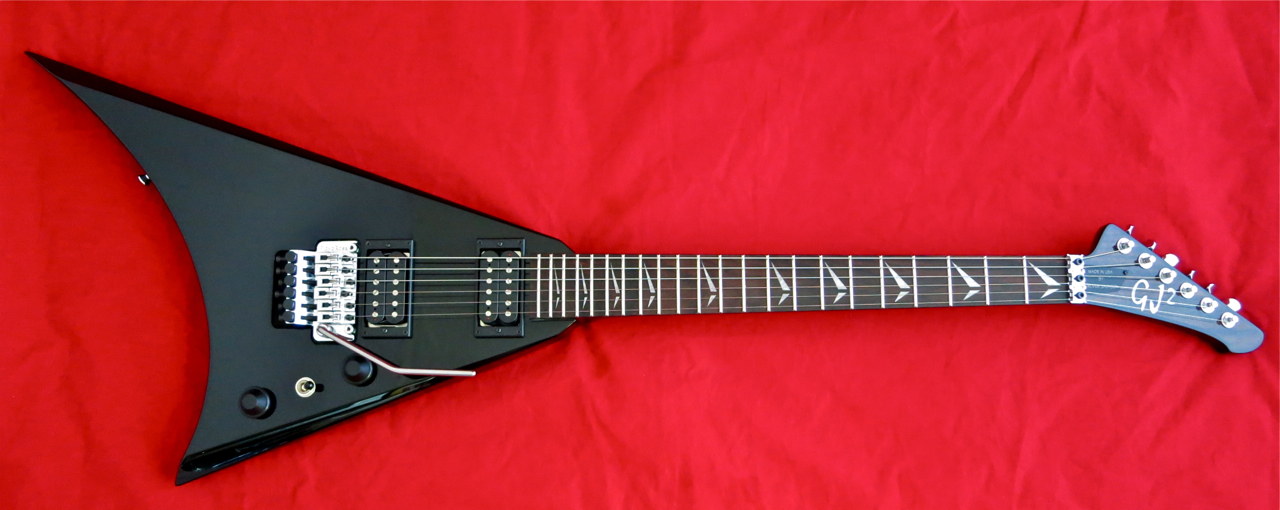
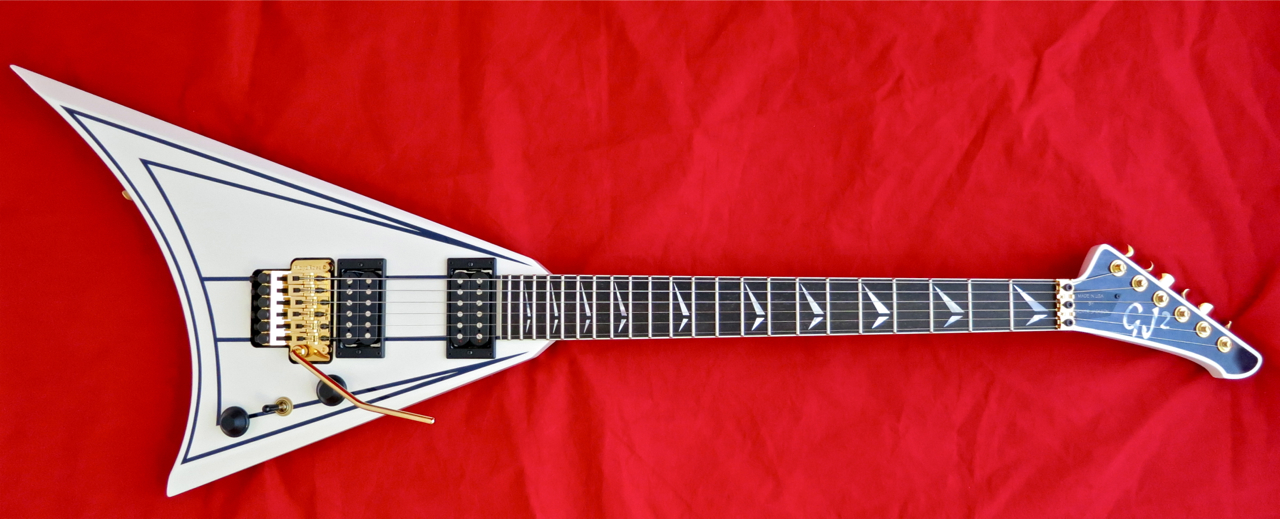
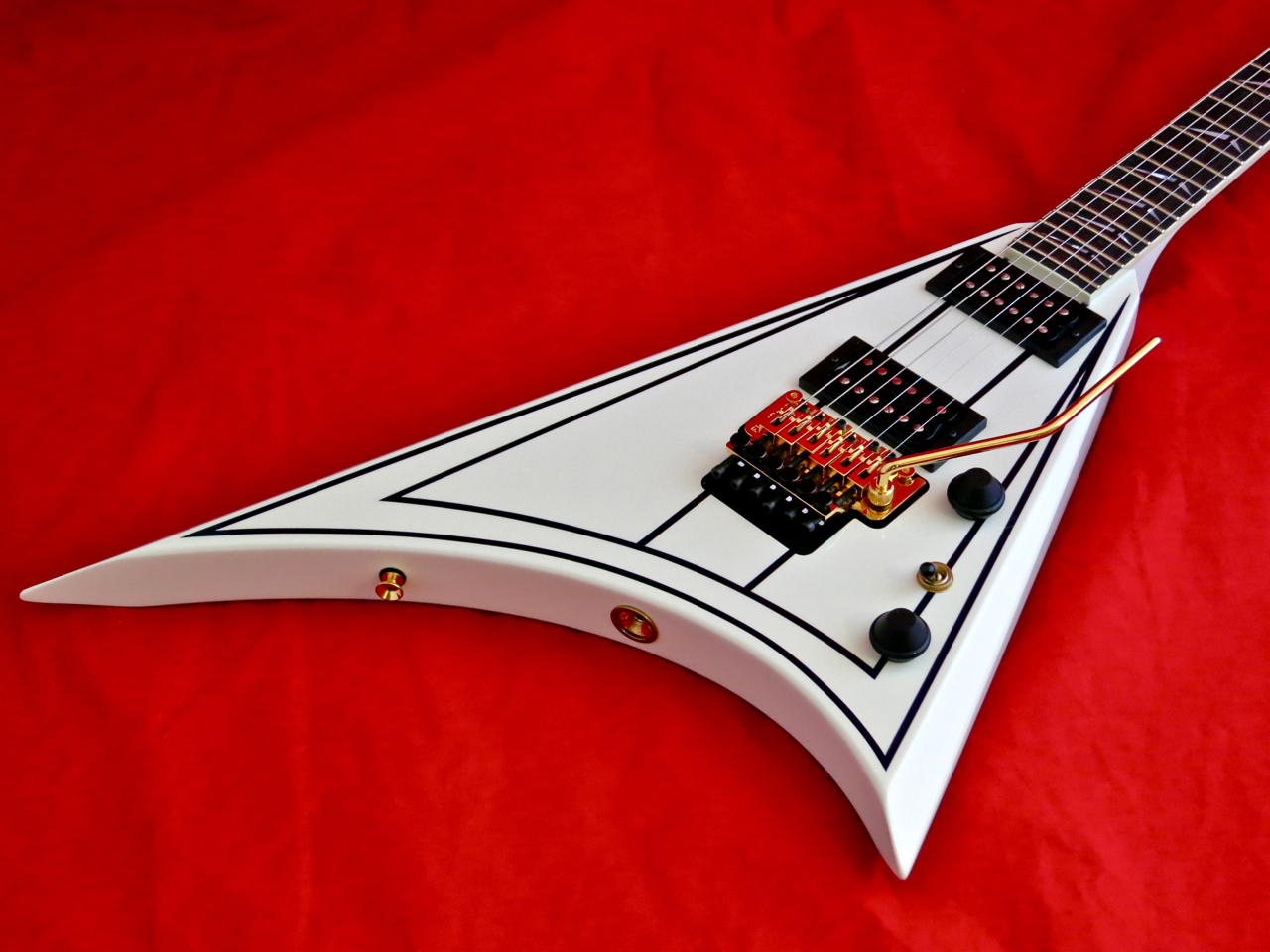
This is GJ2 Guitars’ ultimate Heavy Dream Machine:
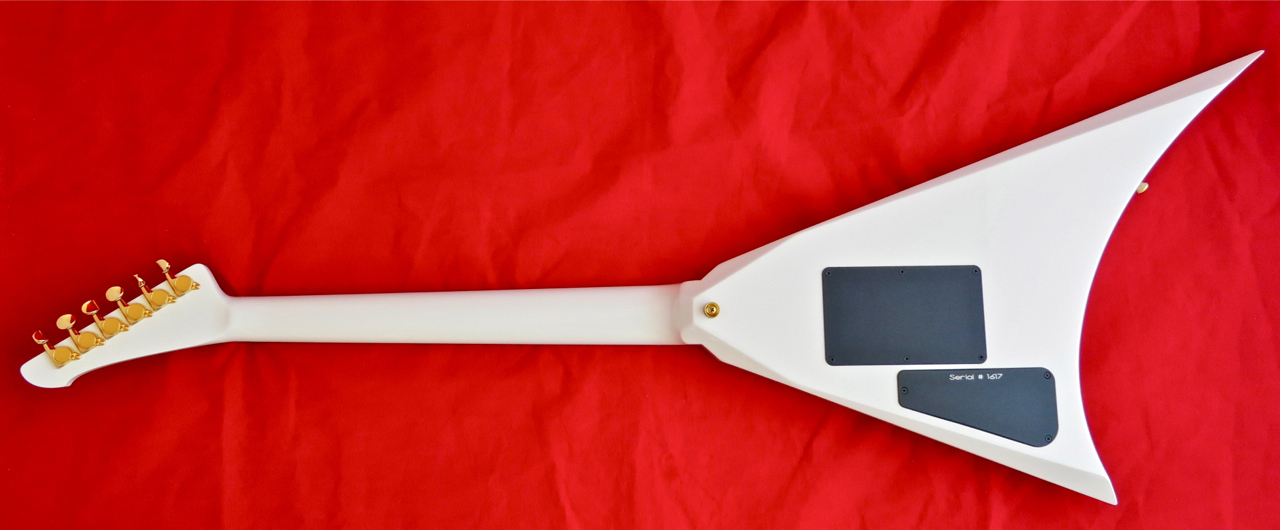
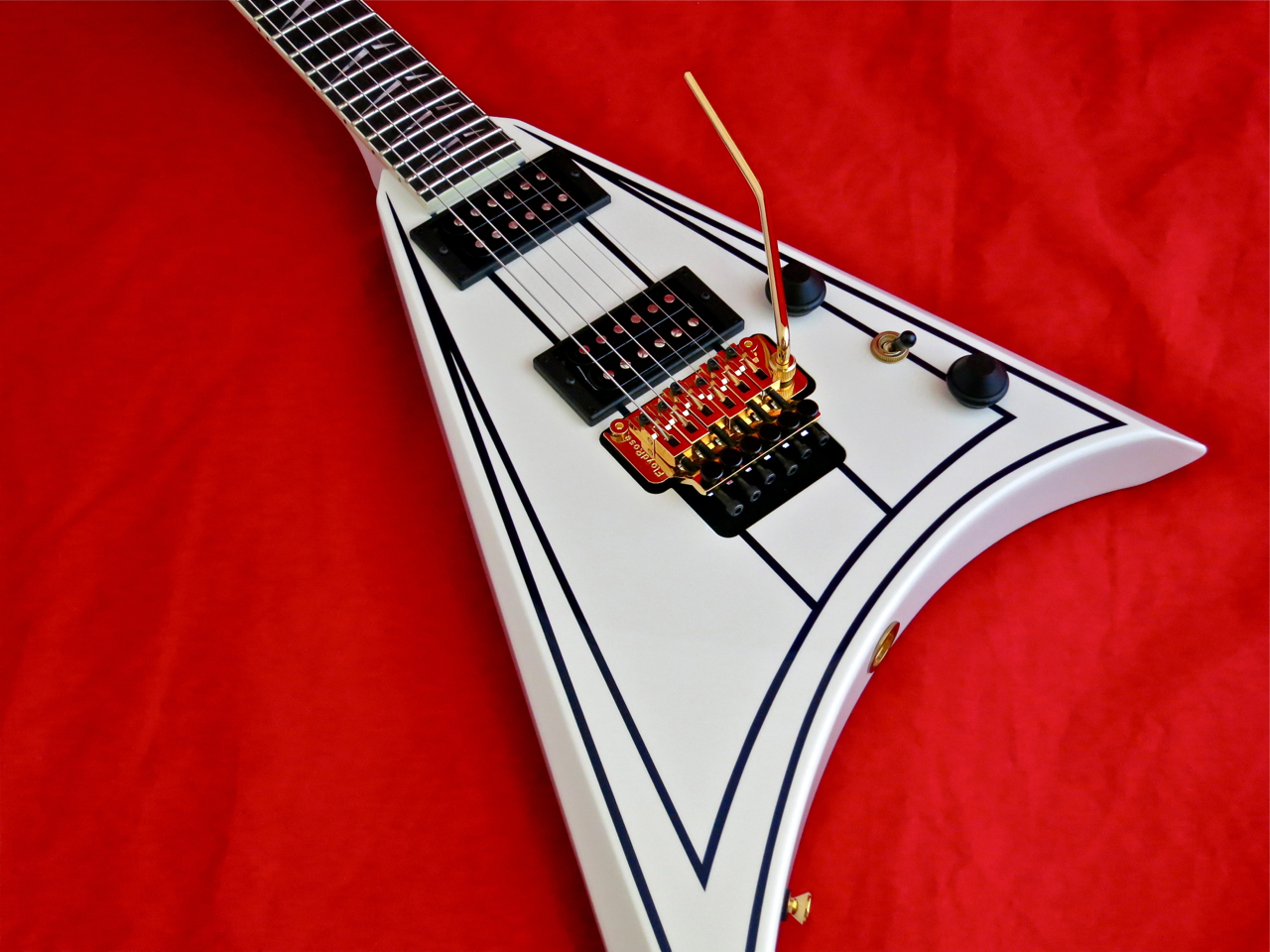
The Concorde 5-Star (this version 4,103 €, incl. hard case) can be had – for an additional charge – finished in a custom finish, such as the Randy Rhoads-style pinstripe graphics on this guitar.
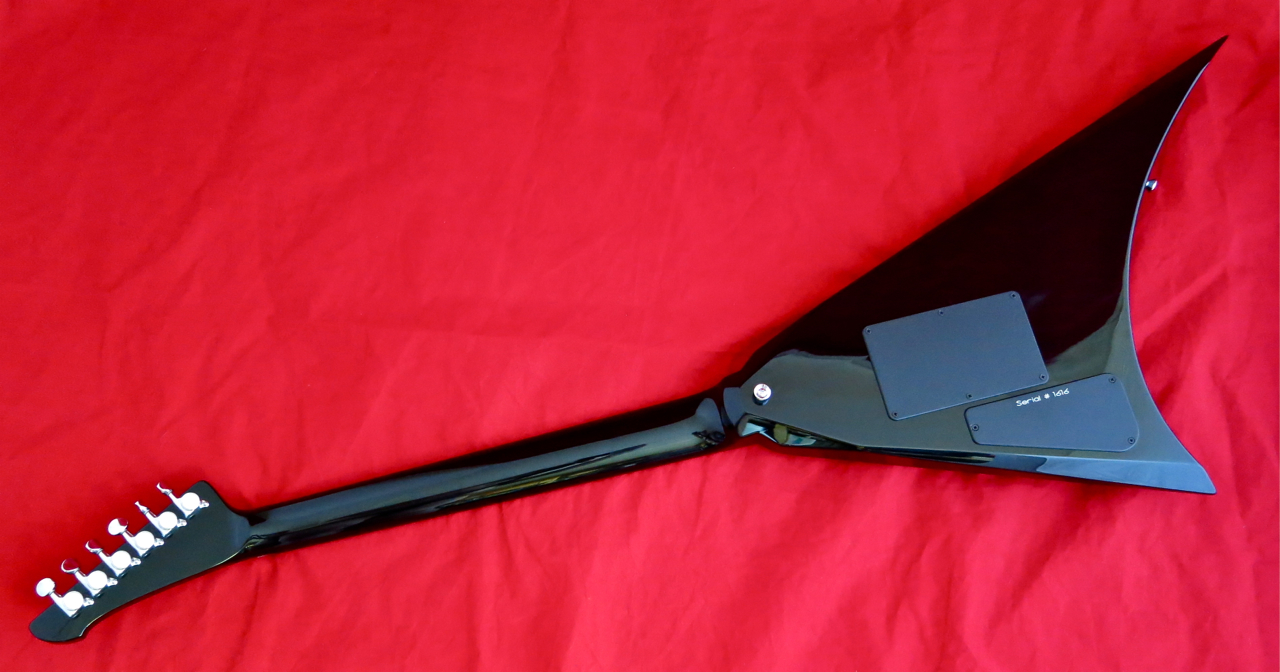
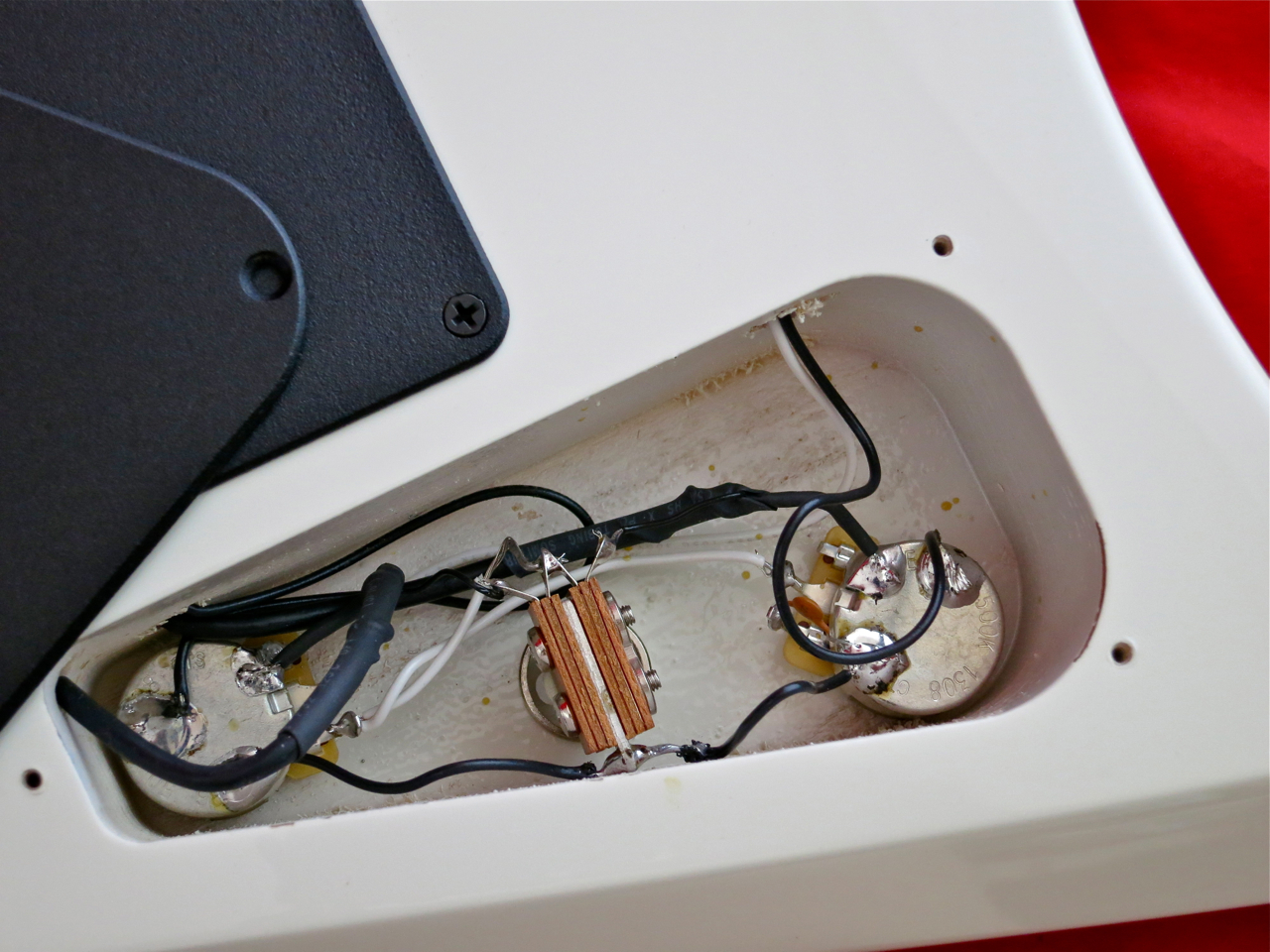
The back plates of the Concorde-models are made of aluminium.
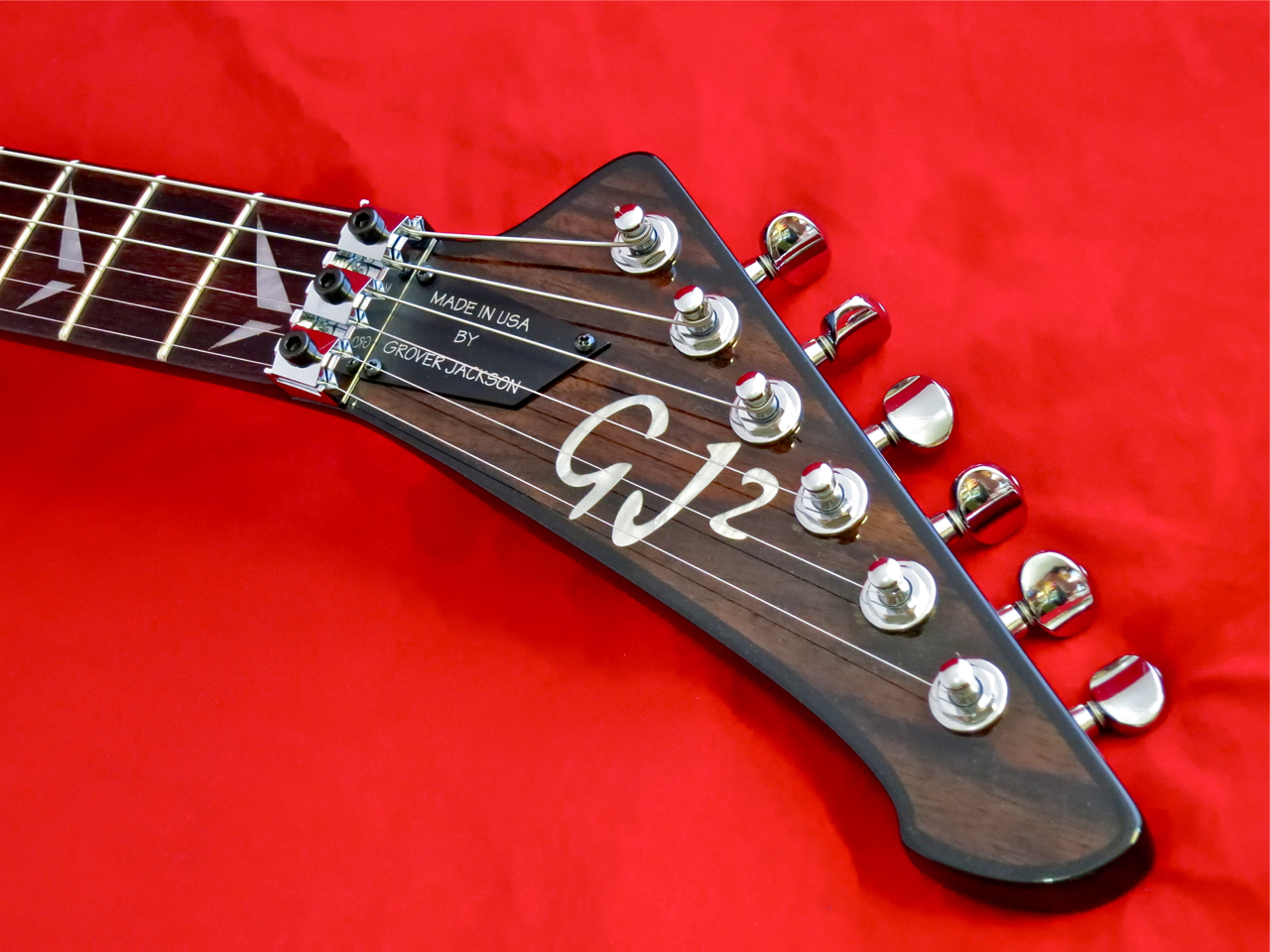
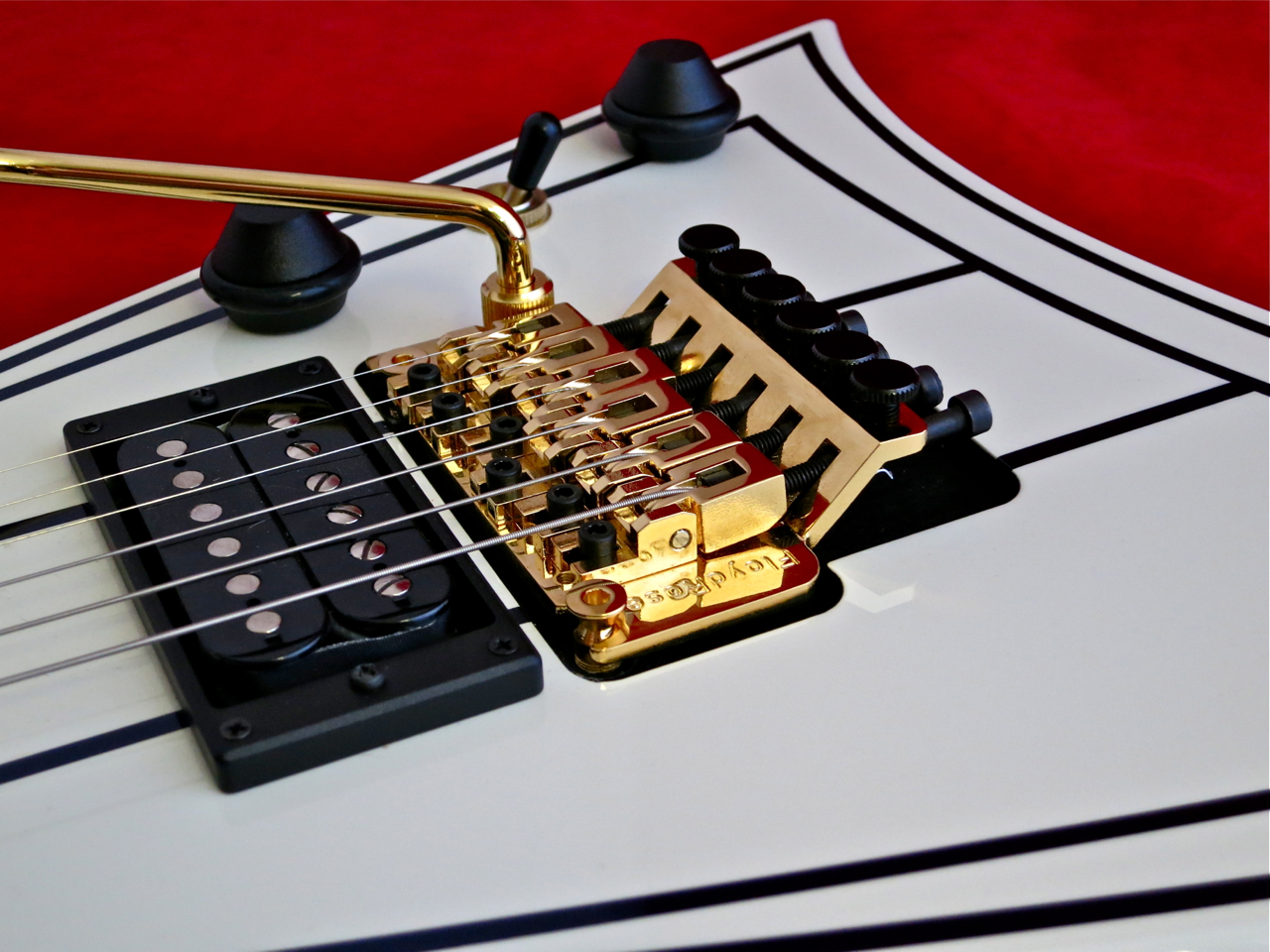
The Concorde 5-Star sports gold-coloured hardware. Our review sample had optional, locking Gotoh-tuners installed.
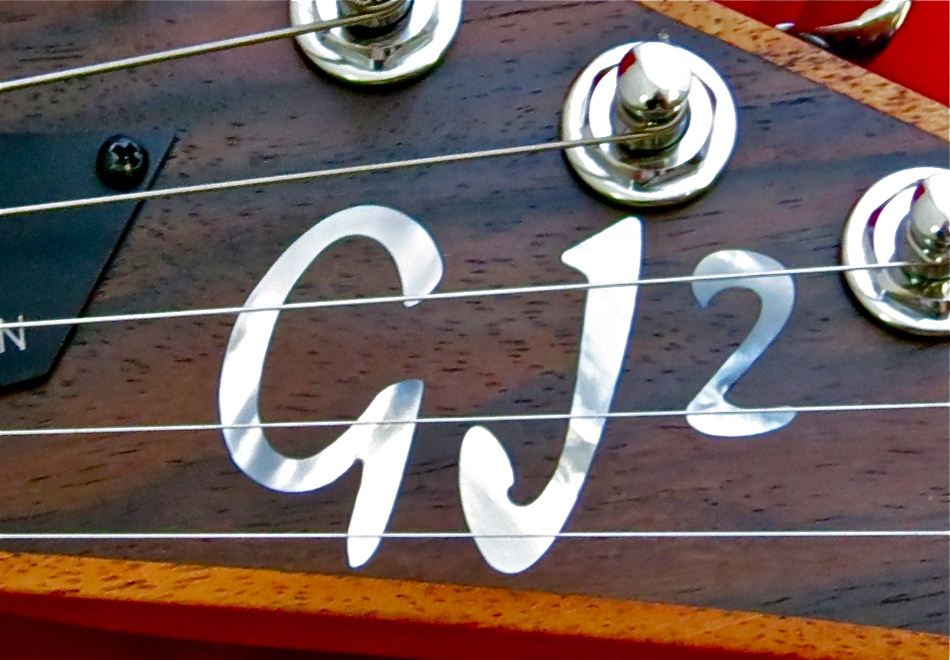
Ebony is the material of choice for the bound fretboard, as well as the headstock inlay.
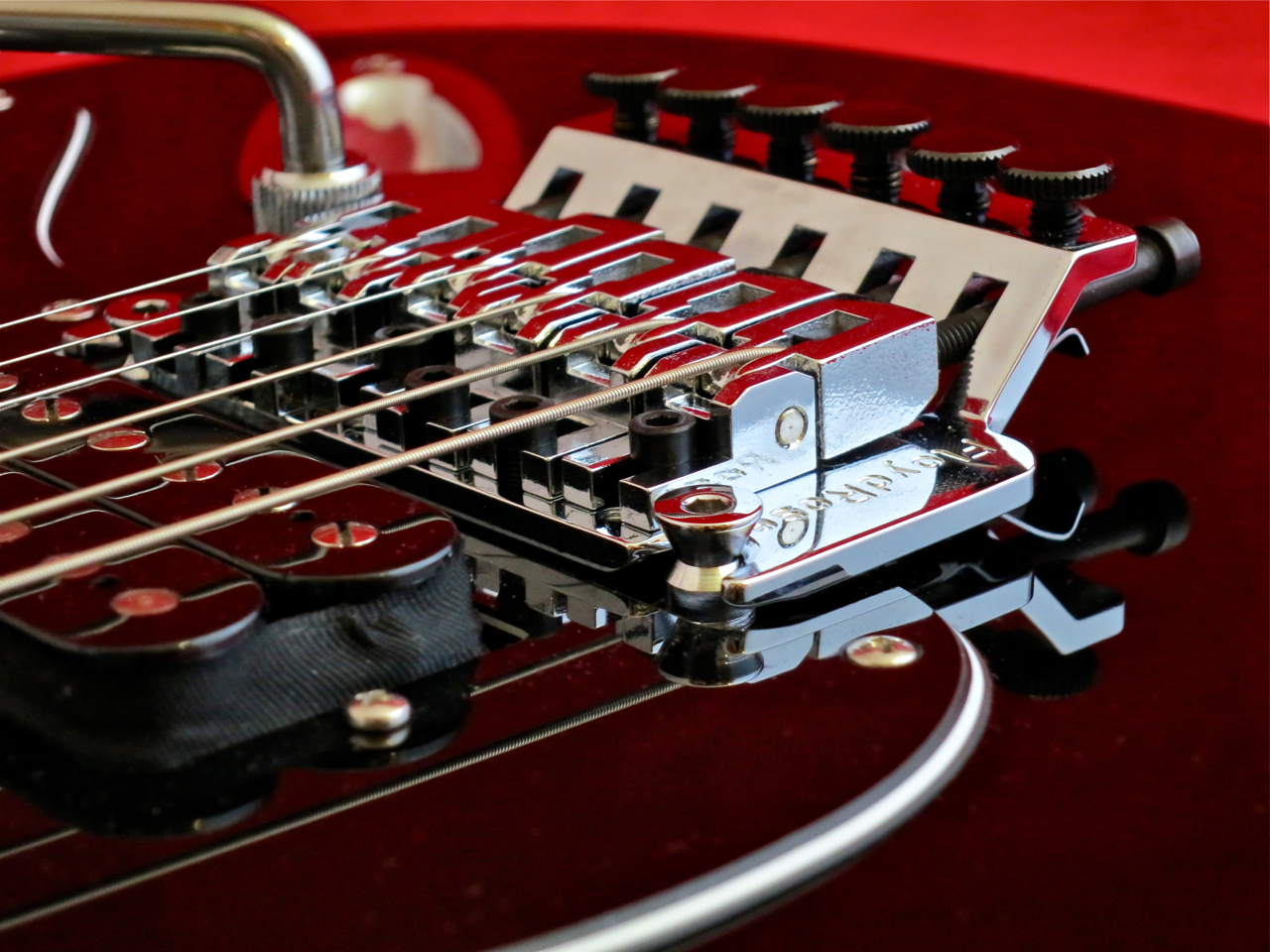
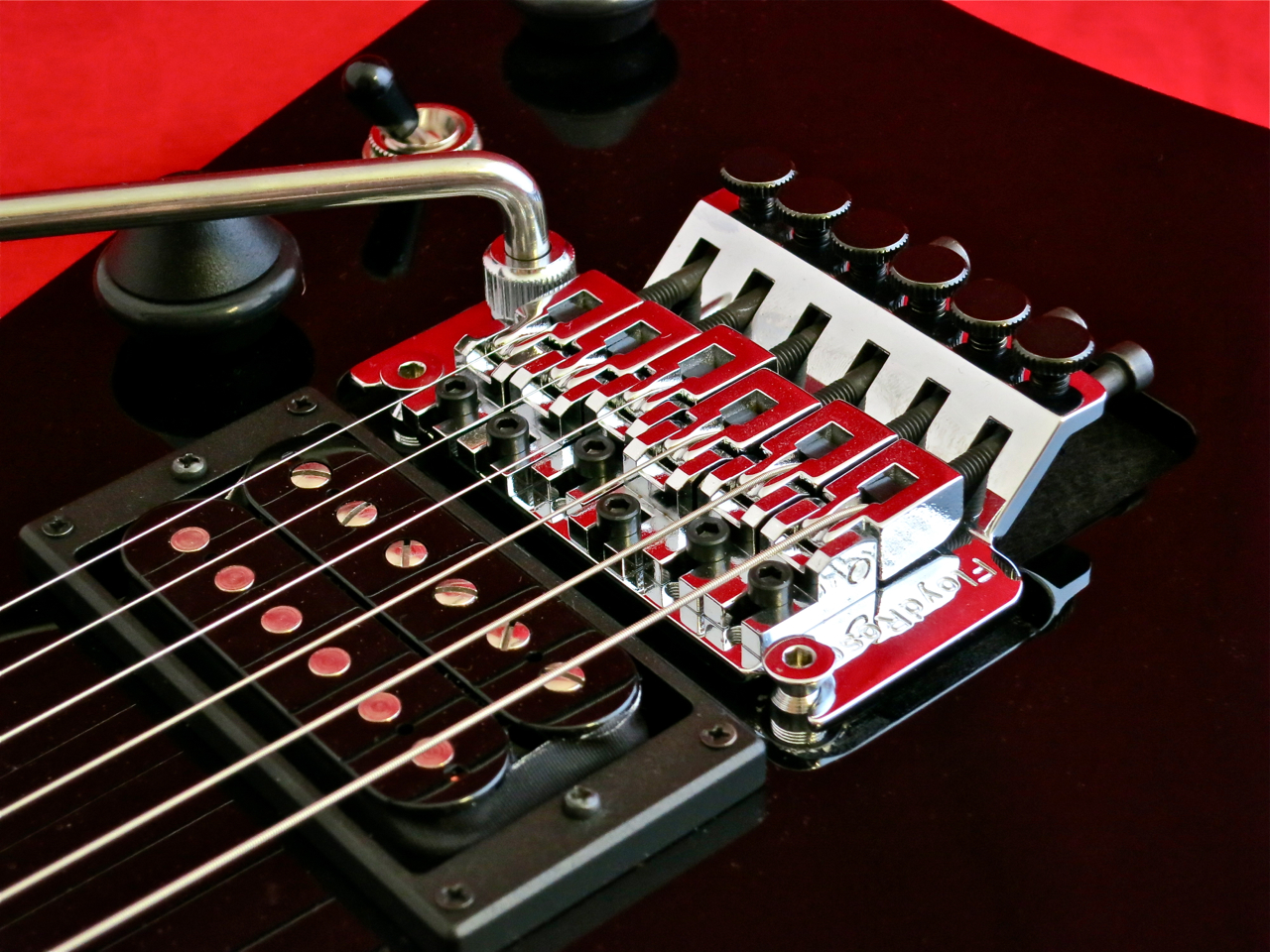
Here’s a closer look at the golden Floyd Rose bridge.
The inlays on the Concorde 5-Star are genuine pearl.
…and here’s a little peek into the very clean control cavity.
****
The feather-light ash-bodied GJ2 Glendora NLT is a fantastic S-style guitar for the connoisseur!
The Glendora’s playability is first-rate, and the guitar’s satin-finished neck, with its oval C-profile feels like an old friend.
Played acoustically there’s a hefty dose of woody dryness and sparkling top end, no doubt thanks to the ash body. The Glendora NLT’s displays an open voice with a nicely clucking attack.
I have only good things to say about GJ2’s Habanero pickups – they sound great, they are dynamically rich and the whole set is well balanced in terms of tone and output level.
Here’s a short clip played using the neck pickup:
The workmanship, feel and playability of the Glendora FR is the same as in the NLT-version – simply fantastic!
Acoustically there’s maybe a tad more roundness in the mid-range and a slightly fatter bass on display in the Glendora FR, which is probably a result of its standard body. On the other hand, the steel Floyd Rose adds its own sprinkling of presence bite into the mix.
Because the bridge humbucker isn’t overpowering the guitar’s single-coils, there’s plenty of fun to be had using the second switch position (bridge and middle):
The lightweight GJ2 Arete 4-Star is a very comfortable guitar to hold and play.
Thanks to its hand-rubbed oil finish the Arete feels very organic. If you’re a fan of nice wood, then this is the guitar for you.
The neck profile has a nice bit of shoulders to its slightly flattened D-section, and fills out your hand rather nicely.
The Arete’s acoustic voice is warm and open.
GJ2’s Habanera humbuckers clearly follow the boutique-vintage route, which puts tone and dynamics front and centre, instead of sheer brute force. Thanks to this it is very easy to coax a whole trainload of different tasty humbucker-tones from the Arete 4-Star, which will satisfy both the traditionalist, as well as modern Rock- and Fusion-guitarists.
The Flying Saucer knobs have a very positive grip, allowing you to adjust the guitar’s controls precisely.
Here’s a clip I recorded using the bridge humbucker:
It may come as a surprise to a newbie, but the Concorde 4-Star actually feels extremely comfortable hanging suspended from a guitar strap. Sure, the visuals are very angular, but the feel isn’t.
On the other hand I should stress that the Concorde most probably isn’t the right choice as a couch guitar, because it won’t really stay in your lap. And one more thing – beware of the sharp top horn! But as long as you know this guitar’s boundaries, your in for a fun ride with a light and well-balanced studio- and stage-guitar.
The neck has a chunky D-profile, which is good news for tone and sustain.
The Concorde’s long scale, its maple through-neck, as well as the Floyd Rose system give this guitar a clearer, more precise – and in a positive way – more neutral acoustic tone, when compared, say, to a Gibson Flying V.
The guitar’s Habanero humbuckers do a fantastic job in getting the Concorde 4-Star’s precise attack and growling mid-range across.
The neck ’bucker displays a fluid, flute-like timbre, without any sign of muddiness:
In terms of playablity and ergonomics there’s not much to divide the Concorden 5-Star from its 4-Star sibling.
But there are some clear differences in tone, most probably due to the posher 5-Star-version’s ebony ’board. The Concorde 5-Star has some added presence bite and a tad more twang in its attack, resulting in an even livelier tone.
Here’s a clip played using the bridge humbucker:
****
What a great thing that Grover Jackson isn’t content with resting on his (considerable) laurels. These new instruments build upon Mr Jackson’s rich past and vast knowledge, while managing to stay foward-facing and fresh.
The sum of this knowledge and experience, coupled with new building techniques and GJ2 Guitars’ obvious attention to detail, result in a range of instruments I would call the best guitars Grover Jackson has ever made.
This type of quality naturally comes at a price. But in light of GJ2’s comparatively small production runs and the sheer quality on offer here, you truly get what you paid for – boutique quality, made in the USA.
We bassists owe a lot to Mr Leo Fender – Mr Fender was the father of the electric bass, which he introduced in 1951, as well as the man behind three of the most classic bass designs ever.
After inventing the Fender Precision and the Jazz Bass for the company that still bears his name, Leo Fender carried on designing and building instruments for Music Man, with the StingRay becoming a true classic. The StingRay wasn’t the first bass with active electronics, yet it was the design that brought the active bass into the mainstream.
Since 1984 Music Man is part of the Ernie Ball-company. The company’s current boss – Sterling Ball – is behind the more recent moves to also bring out affordable Music Man-instruments in the guise of a new brand – Sterling (by Music Man).
****
Sterling’s brand-new SUB-series offers even more affordable versions of Music Man’s classics.
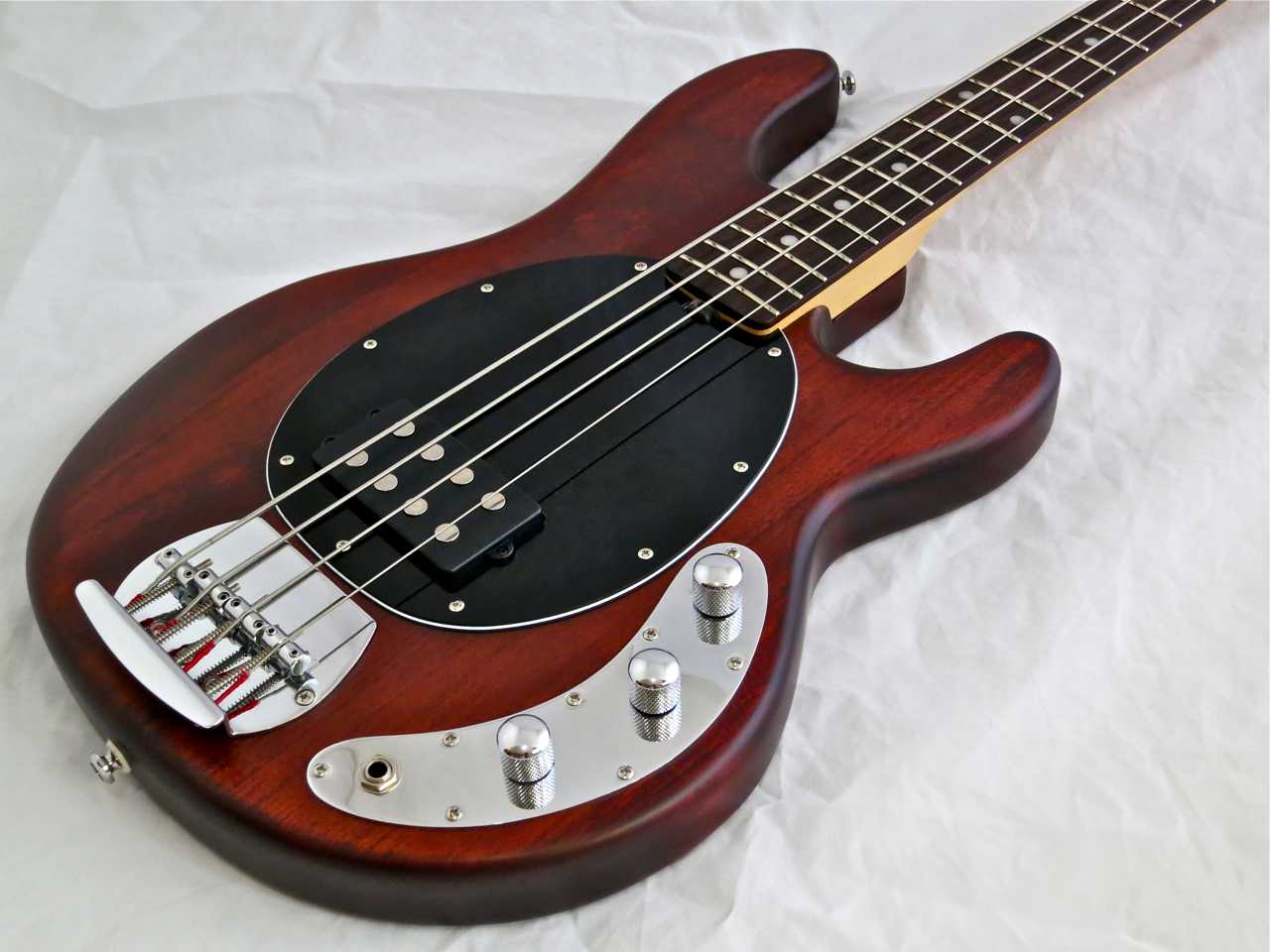
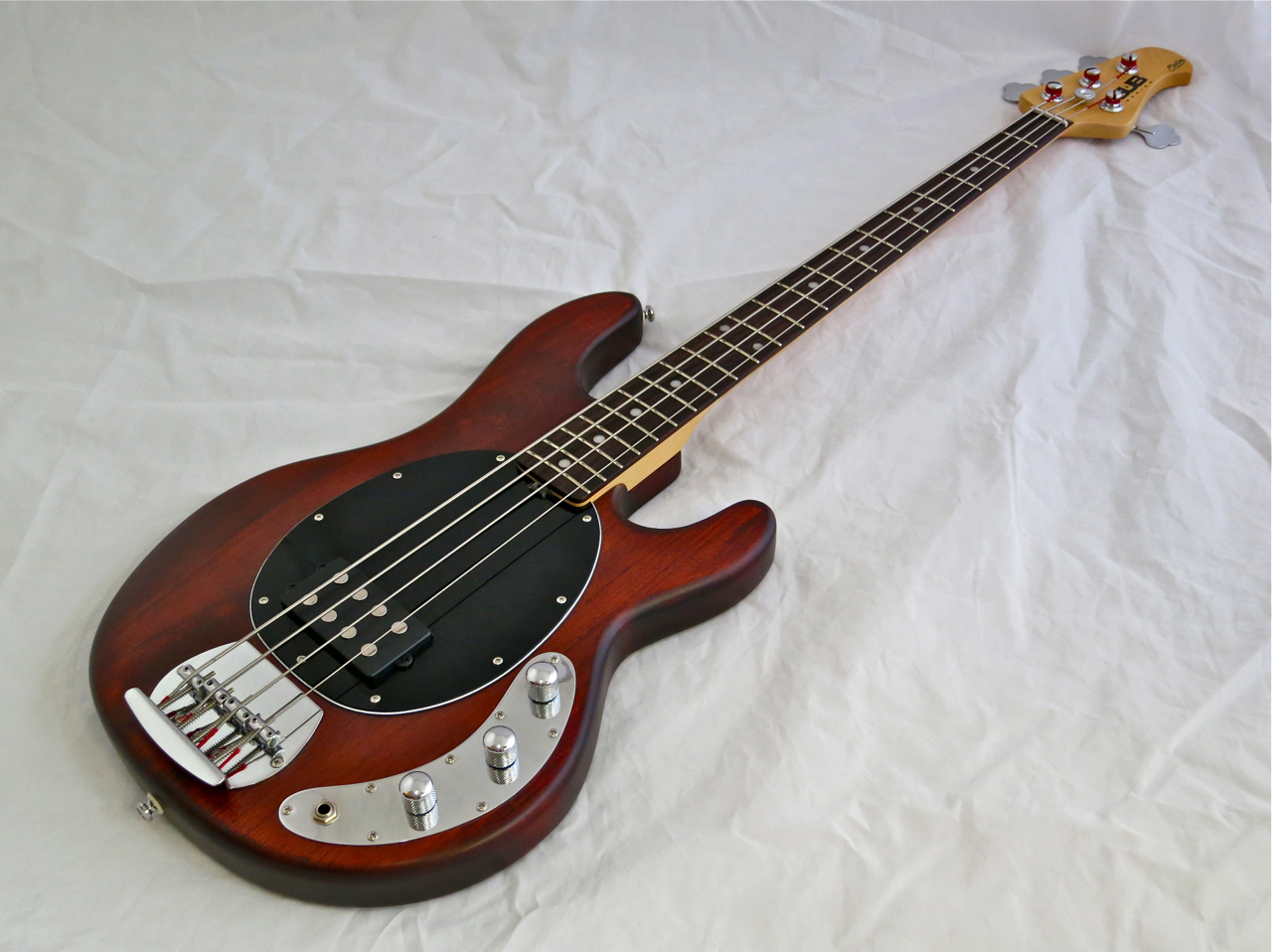
The Sterling SUB Ray4 (approx. 360 €) is a made-in-Indonesia licensed copy of a four-string StingRay. The Ray4 is available either in gloss black (with rosewood fretboard), gloss white (maple ’board) or in a Seventies-inspired satin finish called Walnut (and with a rosewood ’board).
****
Sterling won’t go into detail with regard to the body woods used for the SUB-series – the spec sheet only says ”hardwood body”. On the other hand, genuine Music Man StingRays also feature different wood species, depending on availability and the respective model’s finish, using ash, alder, poplar or basswood.
The test sample sports a body made from four pieces, with their looks matched reasonably well.
The SUB Ray4’s maple neck comes with a tinted satin finish.
Six wood screws and a well-cut neck pocket make for a very strong joint.
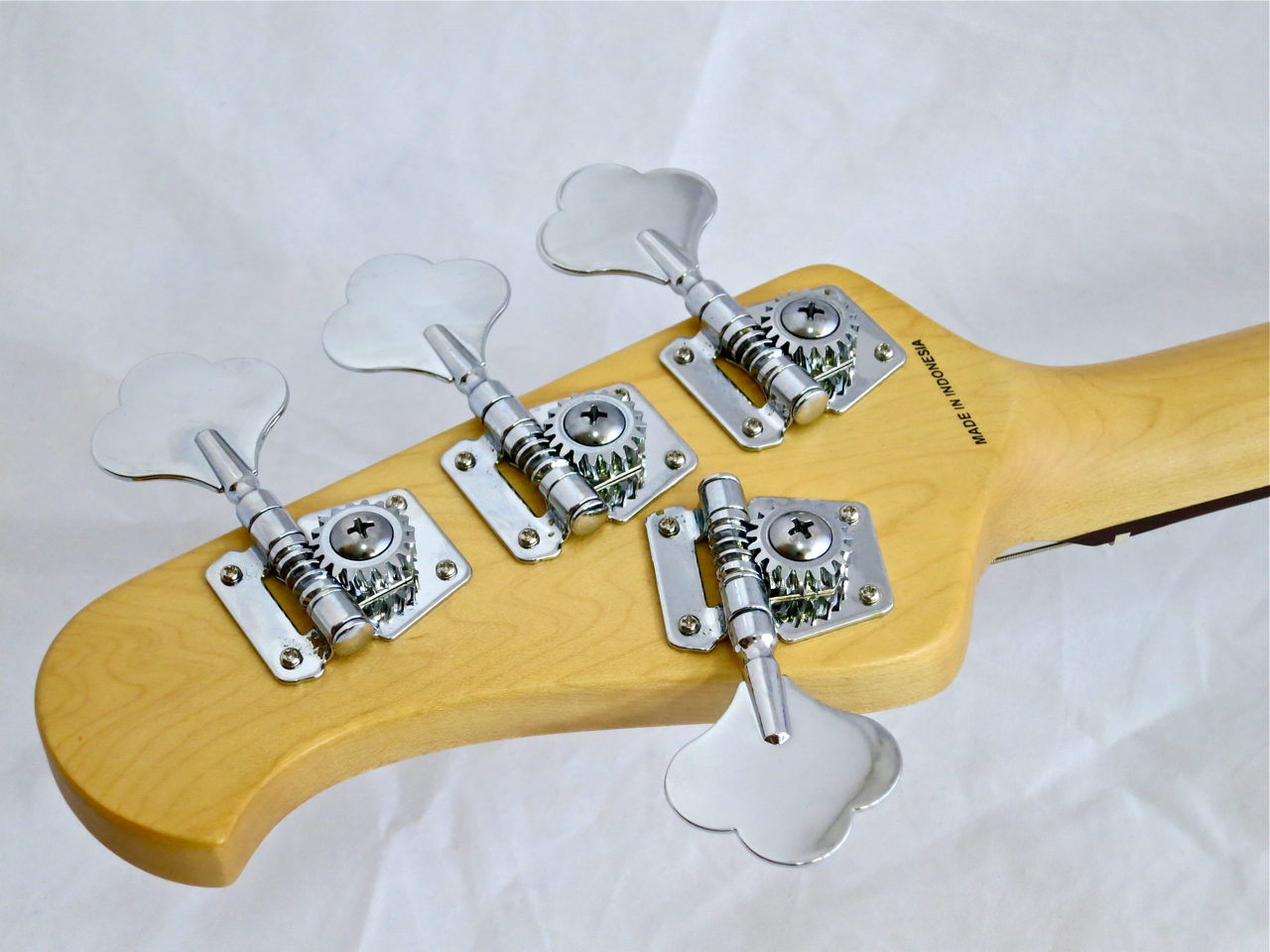
The classic StingRay-headstock makes tuning easier, as well as cutting down on headstock weight, making for a better balanced instrument.
The Sterling comes equipped with a set of decent Asian Schaller-copies.
In light of its affordability the SUB Ray4 displays surprisingly well-dressed and finished frets. The rosewood fingerboard looks nice and sport clean inlay work.
Music Man’s nifty trus rod adjustment wheel has also been included in the Sterling SUB-series. Insert the small metal rod that comes with the bass (or any other suitable object) into the wheel and turn for adjustment. It’s quick, it’s clean, and no further tools are required!
The StingRay was Leo Fender’s updated version of his Precision Bass, and the well-rounded body still looks great today.
The SUB Ray4 uses a version of the Music Man bass bridge that retains the large base plate, but does away with the original adjustable string mutes of yore. Current StingRays use a shortened bridge design.
The large humbucking pickup is the Sterling Ray4’s juice machine.
The pickup keeps hum and buzz at bay efficiently, while its placement near the bridge is crucial for obtaining a StingRay’s fat attack and vocal mid-range character.
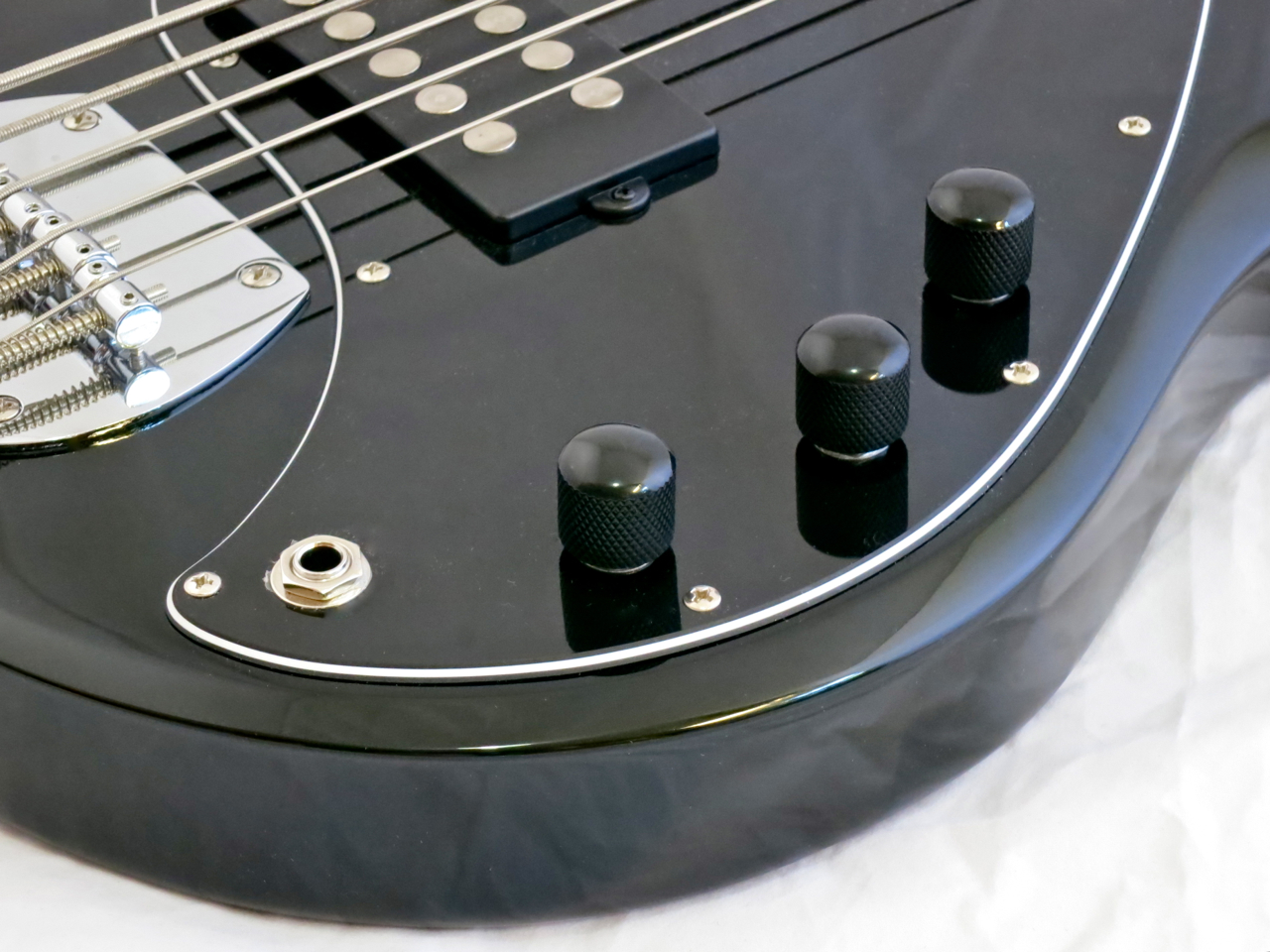
It’s three controls on the Ray4’s metal plate – master volume, treble boost/cut and bass boost/cut.
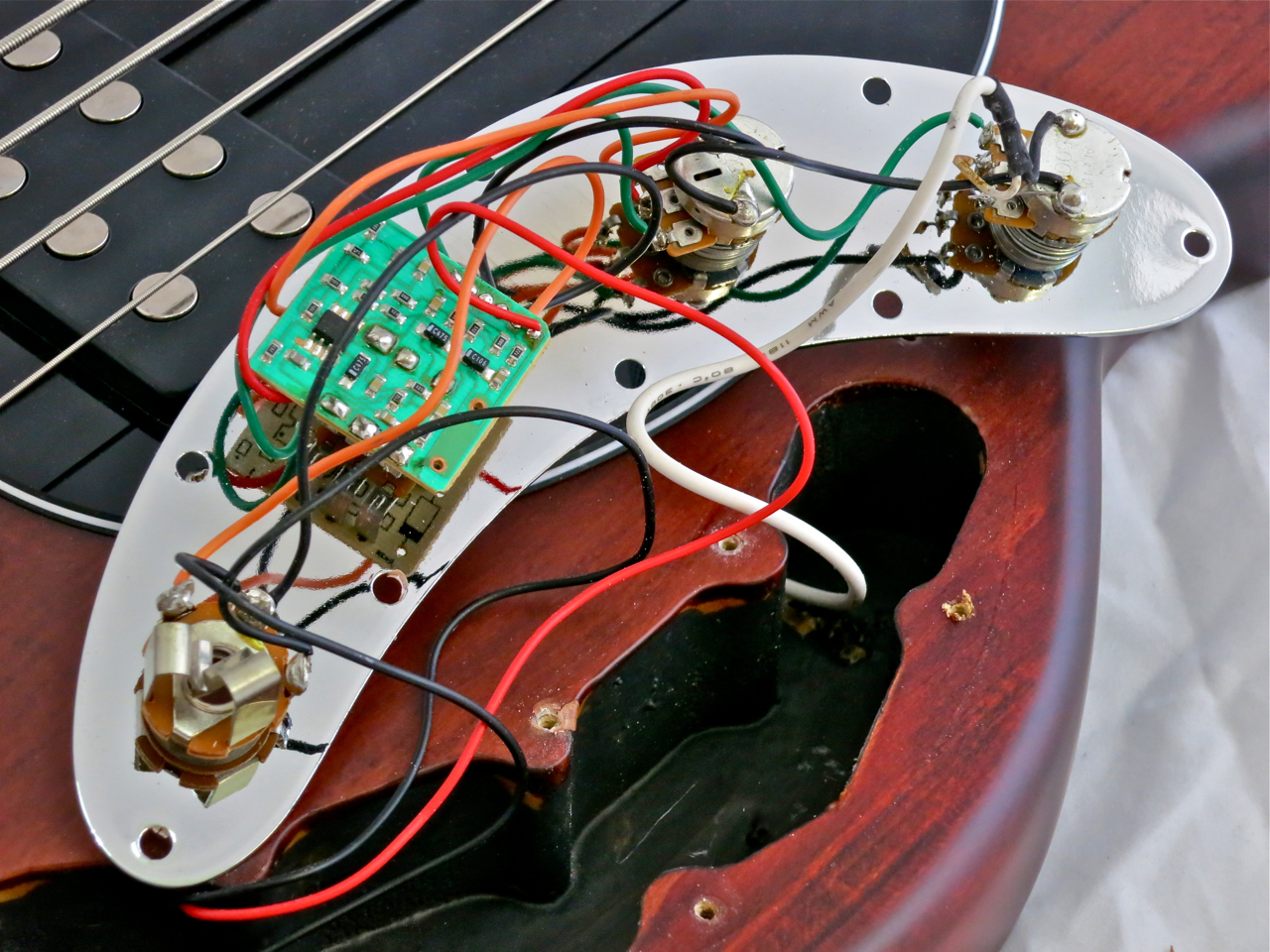
The Sterling SUB-basses come equipped with a very compact preamp that fits easily into the control cavity. The quality of the parts, as well as the workmanship on display, is quite decent.
The Ray4’s battery compartment is found on the back of the body.
****
In 1988 Music Man broadened its StingRay-range with the five-string StingRay 5, which features a slightly different body design, as well as a much larger scratchplate.
****
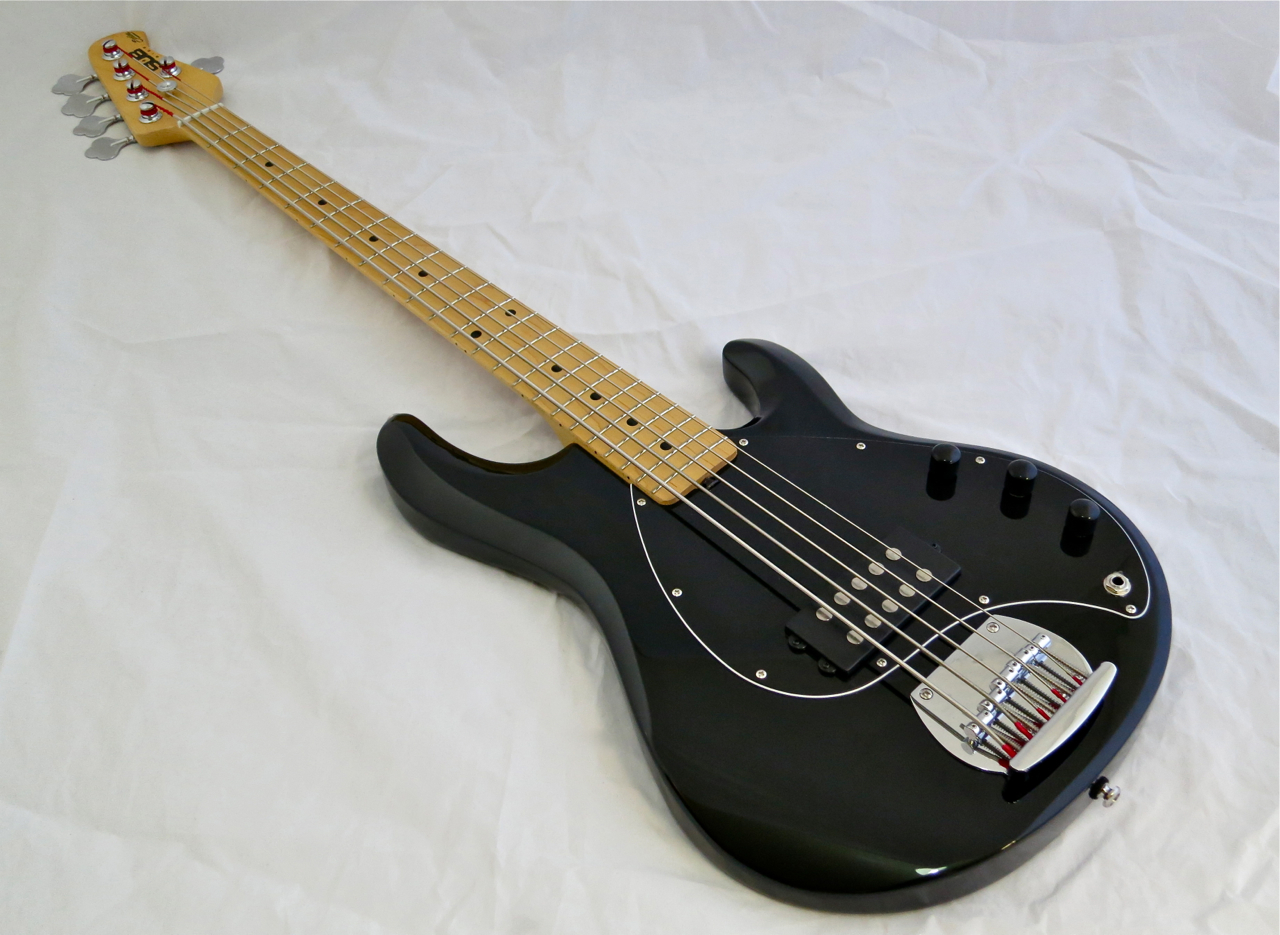
Sterling’s SUB Ray5 (approx. 390 €) is available in gloss black (with a maple fretboard) or satin walnut (rosewood ’board).
The finish on our test sample looks great.
The five-string version also sports a tinted maple neck.
The SUB Ray5’s battery compartment has been placed near the treble horn.
The famous headstock in its five-string guise.
These Schaller-copies do a good job of keeping the bass in tune.
The fretwork Sterling Ray5 is surprisingly good, keeping in mind the bass’ low price.
The StingRay is one of my all-time favourite bass designs – timeless, classic beauty.
On the five-string the bridge saddles are somewhat smaller to accommodate the SUB Ray5’s narrower string spacing (compared to the Ray4).
A chunky pickup for a chunky sound…
A genuine Music Man StingRay 5 usually comes equipped with a three-way blade switch, offering you series, parallel and coil-split switching, in addition to a three-band EQ.
To keep the price in check the Sterling SUB Ray5 offers you a more concise set of controls – a master volume and a two-band EQ.
****
The Sterling SUB Ray4 is a cool bass, but the test sample we got weighed a ton – this is exactly the one feature from the 1970s that shouldn’t have been brough back. On the other hand, Sterling promise lightweight bodies on their website, so let’s hope that this was the one who slipped through quality control.
Apart from this, the Sterling Ray4’s ergonomics are great. Sterling have slightly changed the neck profile on its SUB-basses from the original, somewhat chunkier Precision-style profile, giving you a more tapered, Jazz-type shape.
Thanks to the good fretwork the factory set-up was comfortably low (E: 2,1 mm/ g: 1,9 mm).
Regardless of its weighty body (or because of the added heft?) the SUB Ray4’s acoustic delivery is stonking. I don’t know what wood species the body is, but the sound has a hefty dose of clear attack coupled with a good dose of ash-style growl and clarity!
This tasty combination translates into a very powerful and dynamic amplified tone. Sterling’s preamp displays a satisfying lack of hiss, and all of its controls work in a musical way (in fact better than on some, quite drastic-sounding 70s originals). This means you’re in for a real treat – genuine StingRay-character made very affordable.
Legendary bass player Tony Levin (Paul Simon, Peter Gabriel, John Lennon, King Crimson) is one of the most loyal StingRay-fans, which is why I chose to record the soundbites in his style as a tribute. The clips have been recorded straight from the bass into the sound-card without additional EQ’ing:
For a five-string bass our Sterling SUB Ray5 test instrument was refreshingly lightweight!
Just like on the original the Ray5’s neck profile gives your fretting hand something to hold on to. The rounded, moderately chunky D-profile is good news for the tone of the instrument, and it feels great, at least in my hands.
I had to give the neck a little more relief, and the intonation adjustment was off, too. But it only took me a couple of minutes to get this bass’ action and intonation up to snuff, after which the SUB Ray5 was a joy to play and listen to (low-B: 2,6 mm/g: 1,9 mm).
In a straight acoustic A/B between both Sterlings, the SUB Ray5 had a slightly rounder mid-range than the four-string counterpart
The big-sounding humbucker coupled to the instrument’s very decent preamp makes for a winning combination. The tone is pure Music Man – a fat, but precise bottom end, lots of mid-range character, and a dose of treble zing. It may not be as versatile as its famous big cousin, but the Sterling SUB Ray5 gives you most of the Music Man-experience at a pocket-friendly price.
****
Sterling (by Music Man) have managed to pack a lot of bass into their SUB-series. The Ray4 and Ray5 are fantastic value for money, offering you that sound at very player-friendly prices.
Tokain Jazz Sound -bassoilla on – ansaittu – maine erinomaisina tulkintoina Fenderin klassikkomallista. Seymour Duncan taas on kiistämättä tunnetuin nimi kitara- ja bassomikrofonien maailmassa.
Molempien firmojen maahantuoja on Musamaailma, joka tarjoaa nyt kaksi uutuusmallia yhdistettyinä valmiiksi modatuksi paketiksi:
Japanilainen Tokai TJB-55 on varustettu Seymour Duncan Custom Shop ”Weather Report” mikrofonisetillä.
****
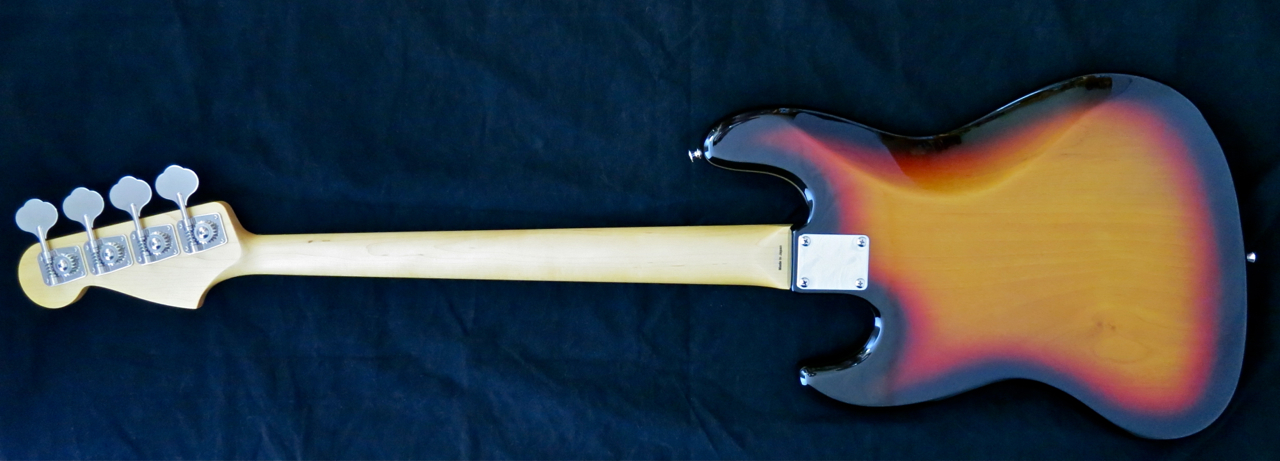
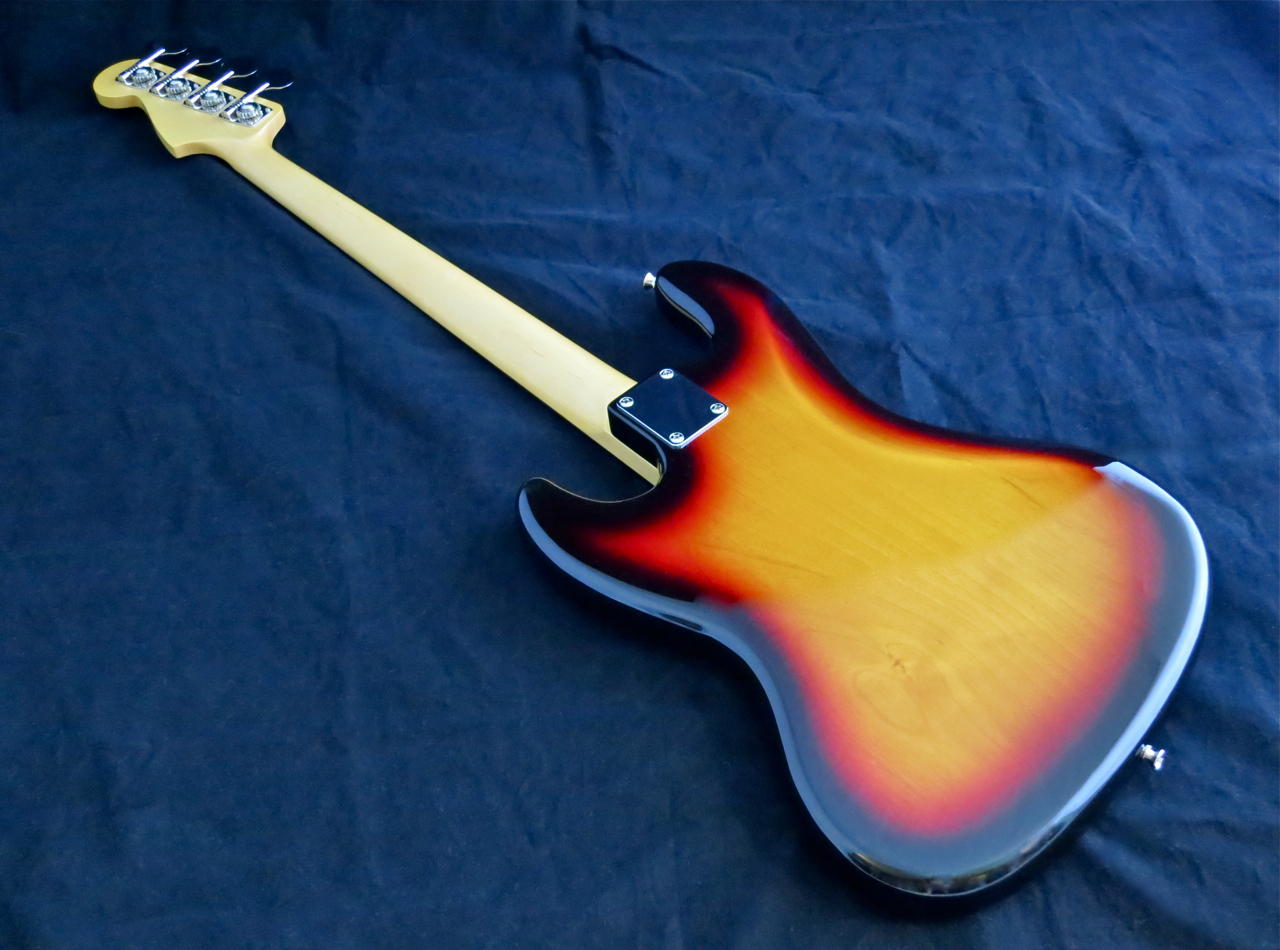
Tokai TJB-55 (hinta ”Weather Report” -mikrofoneilla: 1.177 €, perusversion hintaluokka noin 850 €) on firman kevyesti nykyaikaistettu versio 1970-luvun Jazz-bassosta. Tällä hetkellä malli on saatavilla joko mustana vaahteraotelaudalla (ja mustilla blokkeilla) tai kolmivärisellä liukuvärityksellä, jolloin basson otelauta on veistetty palisanterista.
Rungossa on kiiltävä viimeistely, kun taas kaulassa on nykyaikainen, satiinipintainen lakkaus.
Ensisilmäykseltä TJB-55:n kromatut virittimet vaikuttavat vintage-kopioilta.
Todellisuudessa kyseessä on kuitenkin Gotohin kevyempi vastine, jolla on vintageen verrattuna hieman sirompi viritystappi…
…sekä pienempi pohjalevy.
Virityskoneistojen pienempi paino parantaa soittimen balanssia entisestään.
Tokai TJB-55 tarjoaa mielenkiintoisen variaation tutusta teemasta – vaikka otemerkit ovat 1970-luvun tyylisesti isot suorakaiteet, on jätetty palisanterilauta 60-luvun tavalla ilman reunalistoitusta.
Nauhatyö on kiitettävällä tasolla, ja otelautaan on asennettu 20 medium-kokoista nauhaa.
Vintage-tyylinen kaulaliitos on toteutettu hyvin tarkasti ja lujasti.
Perinteinen – ja monien mielestä ruma – metallinen maadoitusliuska tallan ja tallamikrofonin välillä on Tokaissa korvattu sisäisellä maadoitusjohdolla.
Leo knew best! Jostain syystä tämä vanha tallamalli ei lakkaa toimimasta, vaikka se onkin melko yksinkertainen designiltaan.
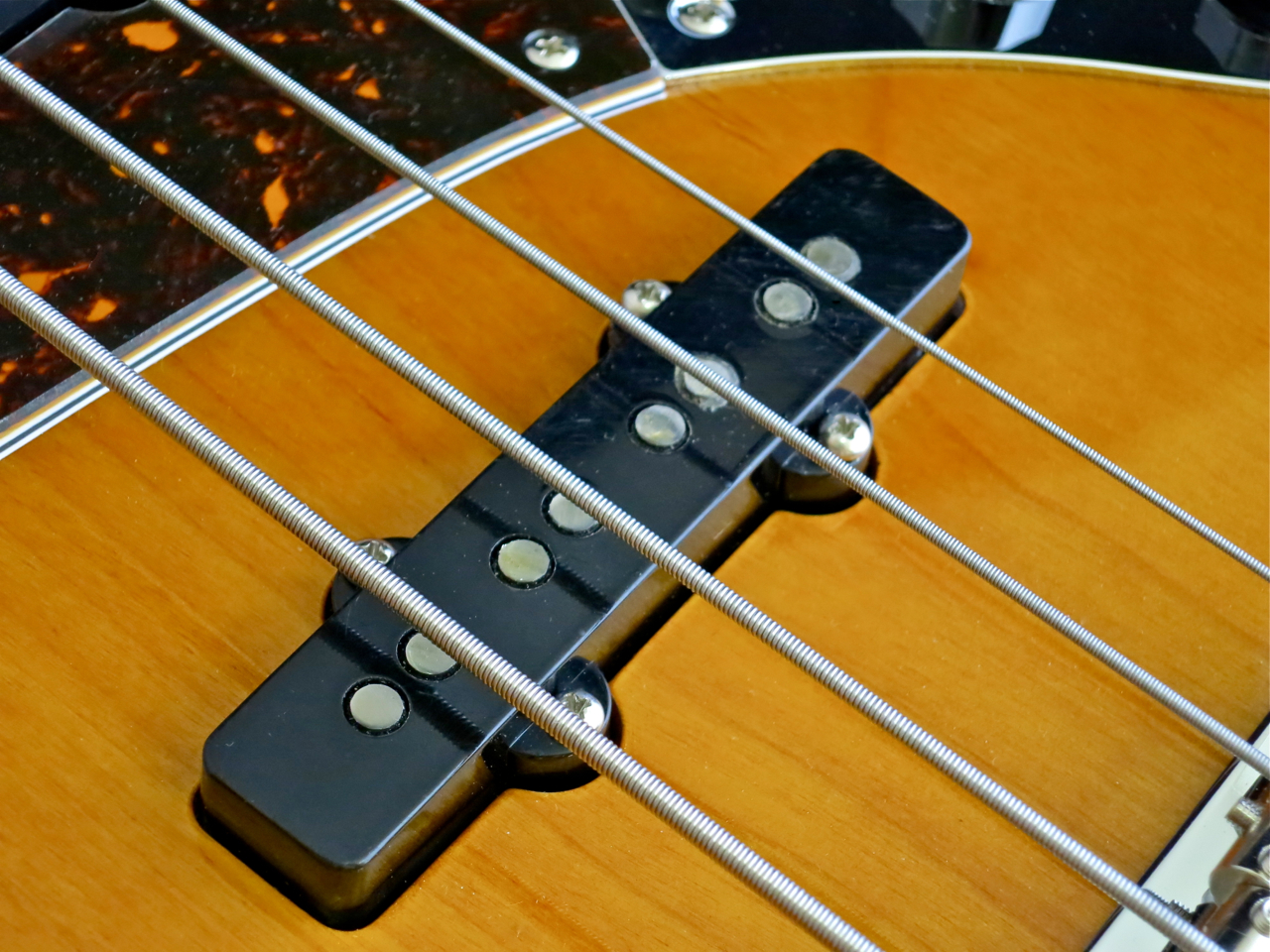
Testibasson salainen ase on Musamaailmassa jälkiasennettu Seymour Duncan Weather Report Jaco Jazz Bass -mikrofonisetti, joka on mikkigurun uusintapainos Jaco Pastoriukselle 1980-luvulla kustomoiduista kuuskytluvun Fender-mikrofoneista.
Kumpikin yksikelainen on kevyesti ylikäämitty (lue: soundiltaan tuhdimpi ja signaalitasoltaan voimakkaampi kuin vintagemikki), vaikkakin setin tallamikrofoni on vielä hivenen verran kuumempi kuin kaulamikki.
Mustat muoviset mikrofonikuoret on kevyesti esikulutettu, samoin kuin magneettien kirkaslakkapinta.
Vanhoissa Fender-bassoissa kuitulevyistä ja magneeteista koostuva kelarunko on saannut ylleen kirkaslakkakerroksen, ennen kuin käämilankaa alettiin kelata magneettien ympäri. Näissä Seymour Duncan Custom Shop mikrofoneissa käytetään alkuperäistä valmistusmenetelmää autenttisuuden nimessä.
Tokain TJB-55 tarjoaa klassista Jazz-basso passivisuutta – kummallekin mikrofonille oma volume-säädin, sekä yhteinen master tone.
Konepellin alta löytyy huolellista työnjälkeä ja laadukkaita osia.
****
Myönnän sen – olen aina ollut Jazz-basson suuri ystävä! Minusta tämä soitintyyppi on yksinkertaisesti kaunein, ergonomisesti parhaiten toimiva ja soundiltaan yleispätevin kaikista passiivisista klassikkomalleista. Se toimii mielestäni aina!
Tokain TJB-55 on erinomainen lajinsa edustaja, joka tarjoaa kaikki tälle soitintyypille ominaiset edut, kuten esimerkiksi hyvin solakan kaulaprofiilin.
Seymour Duncan Weather Report -mikkisetin tarkoitus ei tietenkään ole muokata soittimen JB-tyylistä soundia joksikin ihan muuksi, vaan tarjota laadukkaan version Jazz-basson soinnista Jaco Pastoriuksen maun mukaan.
Tarjolla on hieman ryhdikkäämpi ja myös pikkuisen tuhdimpi muunnelma aiheesta, joka maistuu ainakin allekirjoittaneelle. Etenkin tallamikrofonissa on mukana myös Jaco-soundille niin tärkeä lisäannos nasaalista keskialuetta.
Mikrofonisetin absoluutisesta autenttiuudesta en voi päätellä kovinkaan paljon, koska en ole koskaan soittanut Pastoriuksen bassoilla. Tämän testin perusteella voin kuitenkin todeta, että Weather Report -setillä varustetulla Tokai TJB-55 -bassolla pääsee lähellä mestarin soundia.
Rumpu- ja perkussioraitojen lisäksi tässä pätkässä soi vain ja ainoastaan testin Tokai-basso:
Testin päätelmä on minun mielestäni, että Tokai TJB-55 -basso ja Seymour Duncanin Weather Report -mikrofonisetti on erittäin toimiva yhdistelmä – myös monelle muulle basistille kuin pelkästään Jaco-faneille.
****
Tokai TJB-55 + Seymour Duncan Weather Report Jaco Pickup Set




































 Kitarablogi.com – Finland's premier Guitar and Bass blog