Klassikkokitarat, osa 8: Gibson Firebird

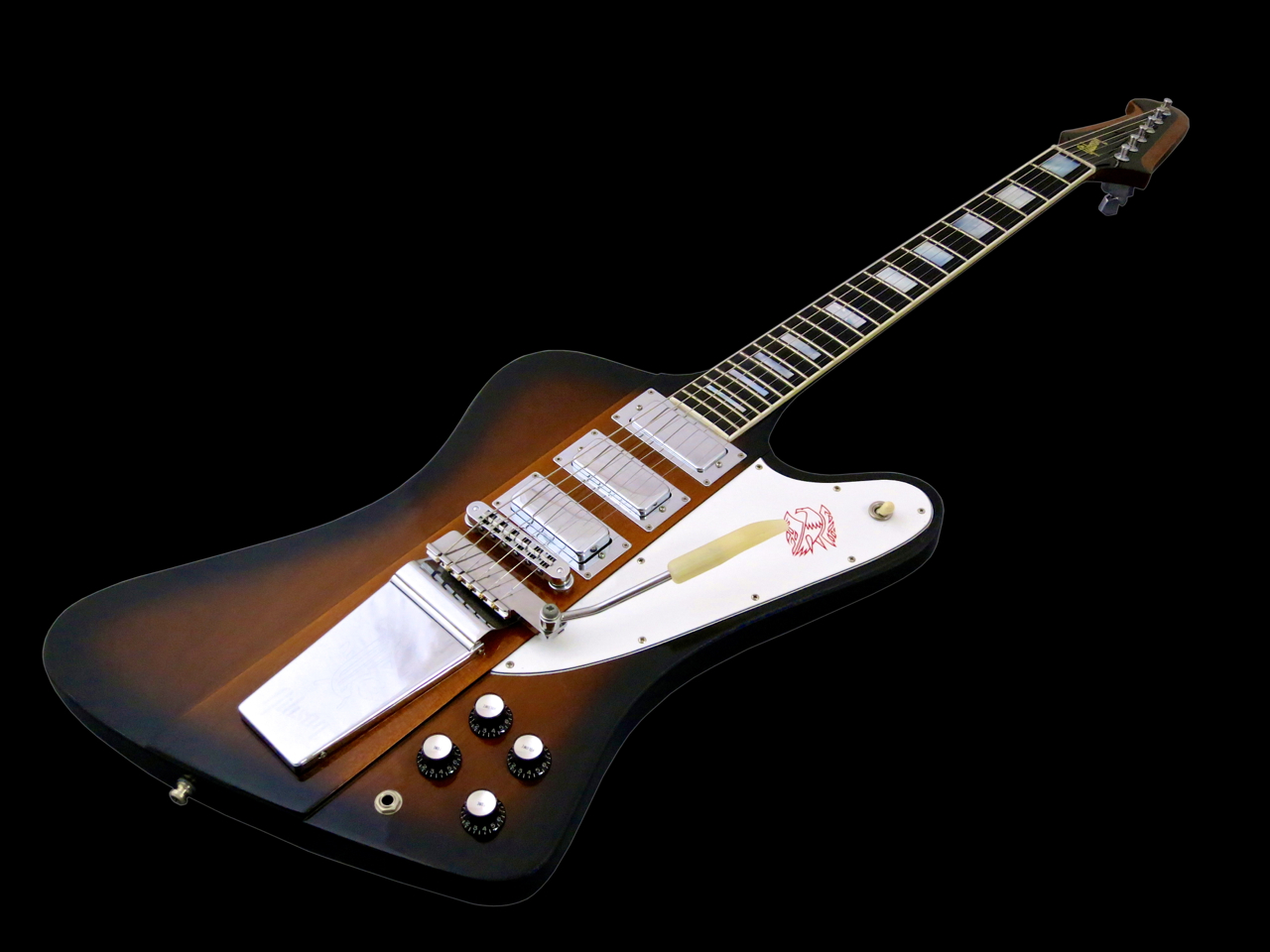
Gibson Firebird VII – beauty shot 1 – black

Tämän jutun otsikko olisi voinut olla ”Firebird: suuri tuntematon”, Gibson Firebird kun on jostain syystä firman klassikkomalleista vähiten laajasti tuttu. Syitä tähän ilmiöön ovat alkuperäisen malliston lyhyt tuotantokausi, sekä todella nimekkäiden soittajien puuttuminen Firebirdin käyttäjälistalta.

Firebird/Thunderbird-mallisto oli vuoden 1963 versio Gibsonin yrityksistä luoda moderneimman kitaran kuin Fender. Yritykset alkoivat jo vuonna 1958 Explorer- ja Flying V -malleilla. Gibsonin silloinen toimitusjohtaja, Ted McCarty, halusi luoda pramean soittimen, joka todistaisi kaikille, että firma ei ollut vanhanaikainen pitkäveteisien soittimien valmistaja. Firebird oli Gibsonin vastaus Fender Jazzmasterille.
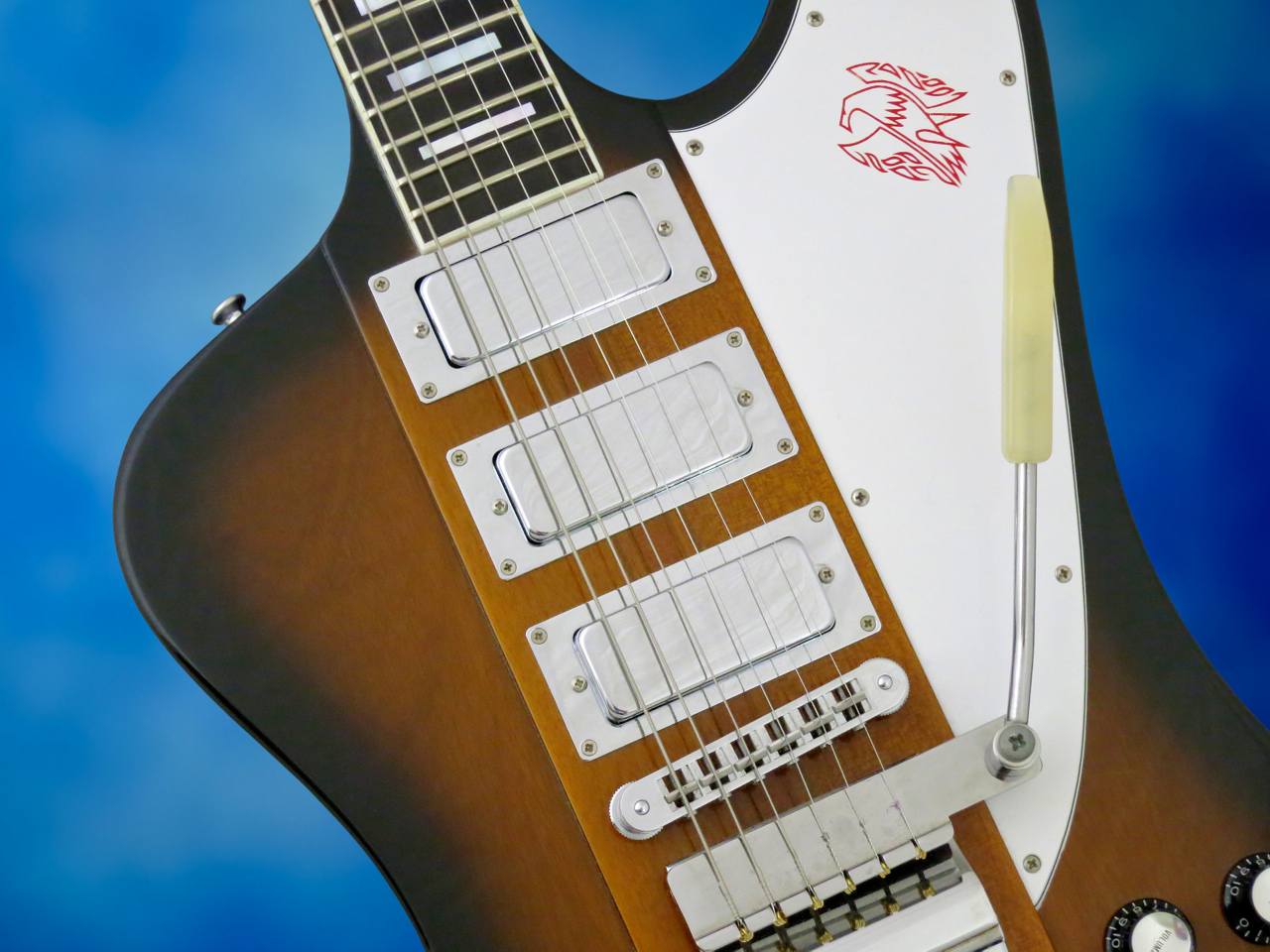
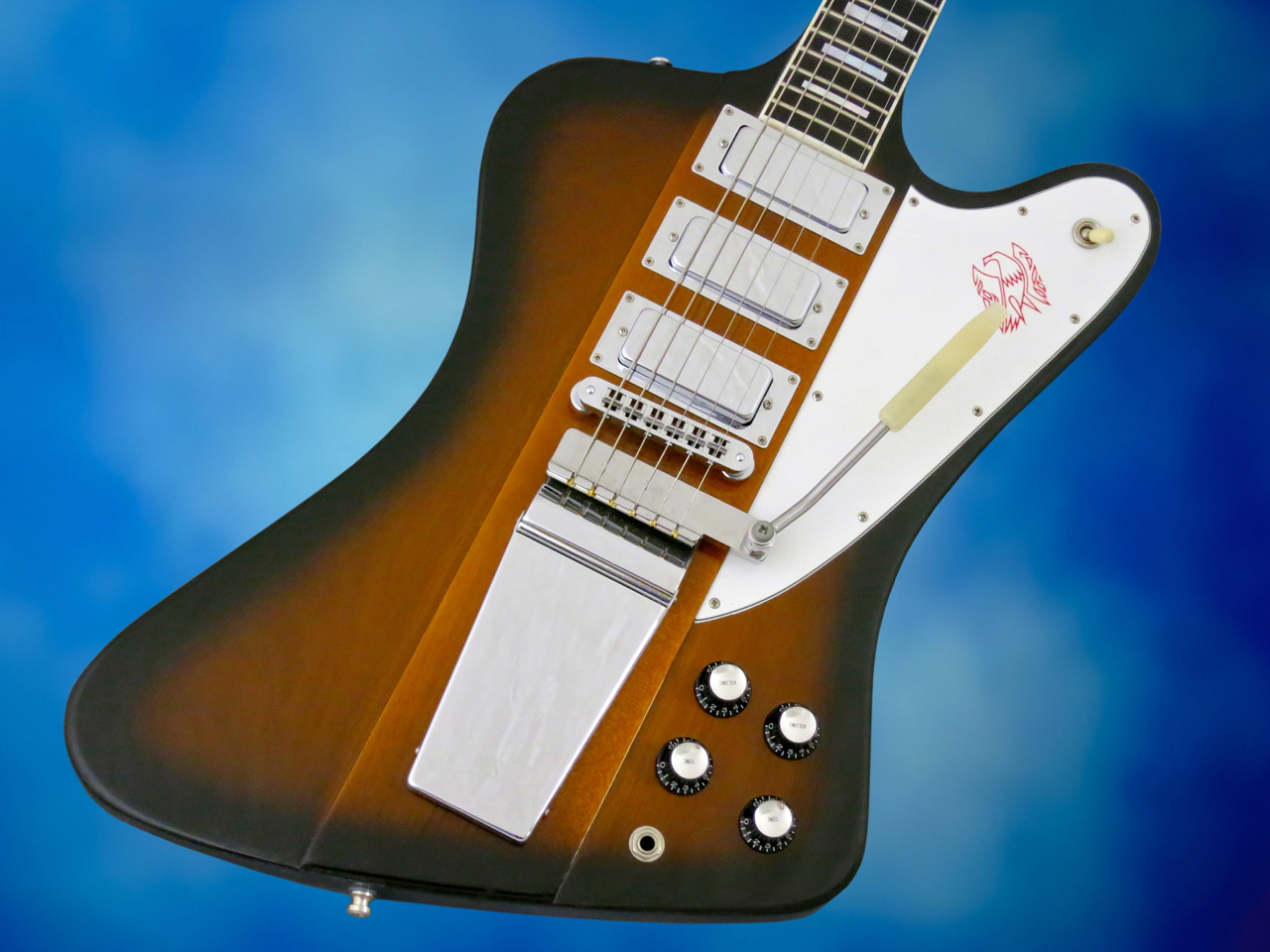
Gibson Firebird VII – pickups and Maestro

Tällä kertaa McCarty haki ulkopuolista apua: autoteollisuudesta tuttu suunnitelija Ray Dietrich sai tehtävän luoda soittimen designerin näkövinkkelistä. Dietrichin innovaatio oli ensimmäinen Firebird/Thunderbird-sarja (kuva yllä), jonka kutsutaan nykyään reverse-runkoiseksi (reverse = käänteinen), koska sen runko näyttää vähän kuin oikeankätinen kitara, joka on vasenkätisen kitaristin käytössä.
Gibson Firebird VII – tuners

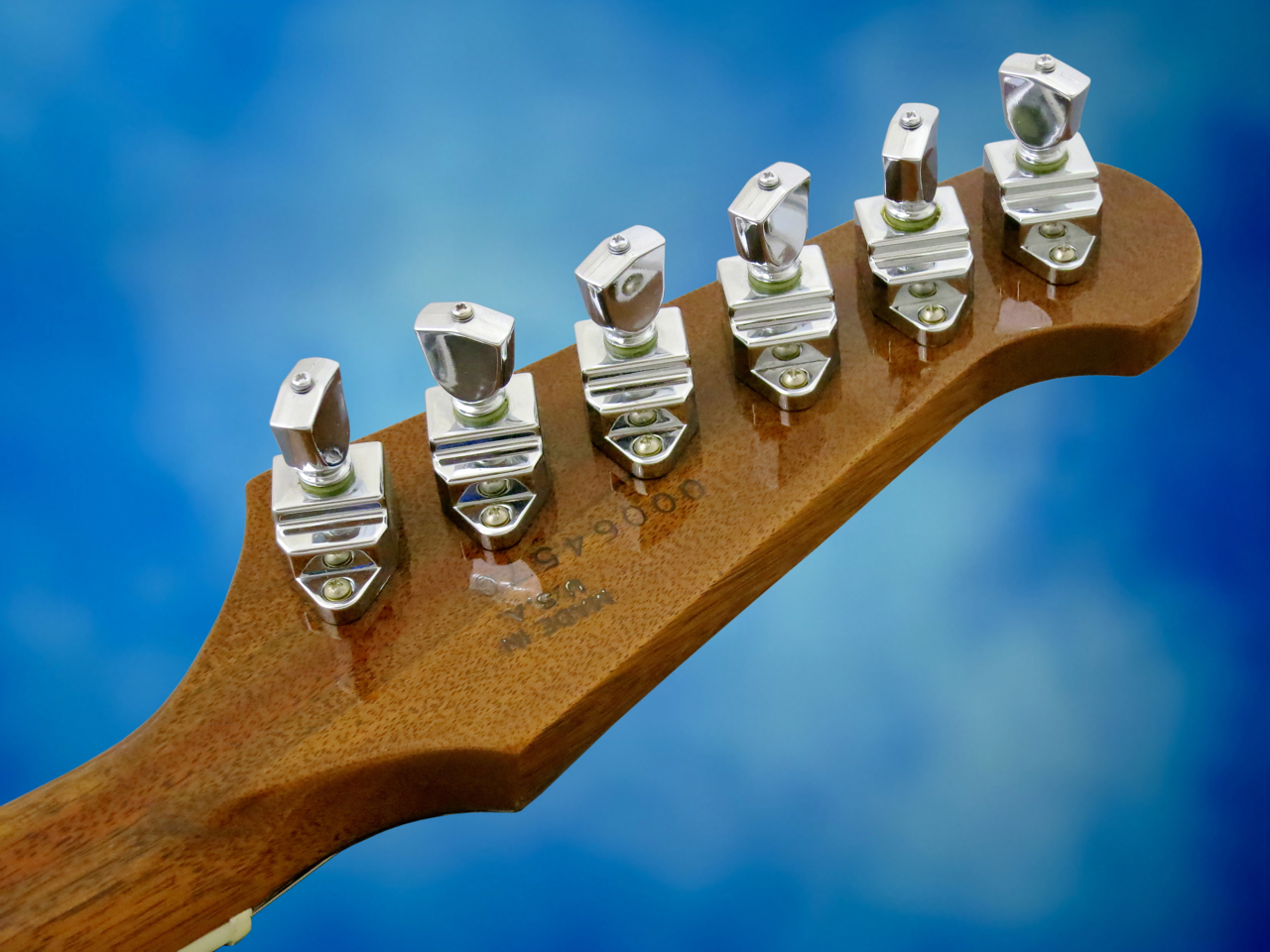
Gibson päätti kokeilla firmalle uutta rakennustapaa: reverse-Firebirdeillä kaula jatkuu yhtenäisenä koko soittimen pituudella (through-neck). Tähän mahongista ja pähkinäpuusta veistettyyn  keskiosaan lisättiin mahonkiset runkosiivet. Sarjan toinen erikoisuus ovat banjo-tyyliset virittimet, joissa nupit ovat samassa linjassa viritystappien kanssa.

Alkuperäinen reverse-sarja (1963–’65) koostui neljästä mallista:

• Firebird I: yksi mini-humbuckeri tallan lähellä, palisanteriotelauta, pyöreät otemerkit, wraparound-talla

• Firebird III: kaksi mini-humbuckeria, reunalistoitettu palisanteriotelauta, pyöreät otemerkit, wraparound-talla, yksinkertainen vibrato

• Firebird V: kaksi mini-humbuckeria, reunalistoitettu palisanteriotelauta, Les Paul Standard -tyyliset otemerkit, pitkä Gibson Vibrola lyyra-kaiverruksella

• Firebird VII: kolme mini-humbuckeria, reunalistoitettu otelauta eebenpuusta,  neliskulmaiset otemerkit helmiäisistä, pitkä Gibson Vibrola lyyra-kaiverruksella, kullanväriset metalliosat

Standardiviimeistely oli kaikissa malleissa sunburst-liukuväritys, mutta ensimmäistä kertaa Gibson tarjosi asiakkailleen myös Fender-tyyliset, standardisoidut custom-värit optiona.

****

Valitettavasti Firebirdin alkuperäinen painos ei ollut kovin suosittu. Pienten myyntilukujen lisäksi Fender alkoi valittaa, että Firebirdin ulkomuoto oli rikkomus omaa Offset-waist-patenttia vastaan, ja uhkasi oikeustoimilla. Seikat johtuivat koko sarjan muuttamiseen tällaiseksi:
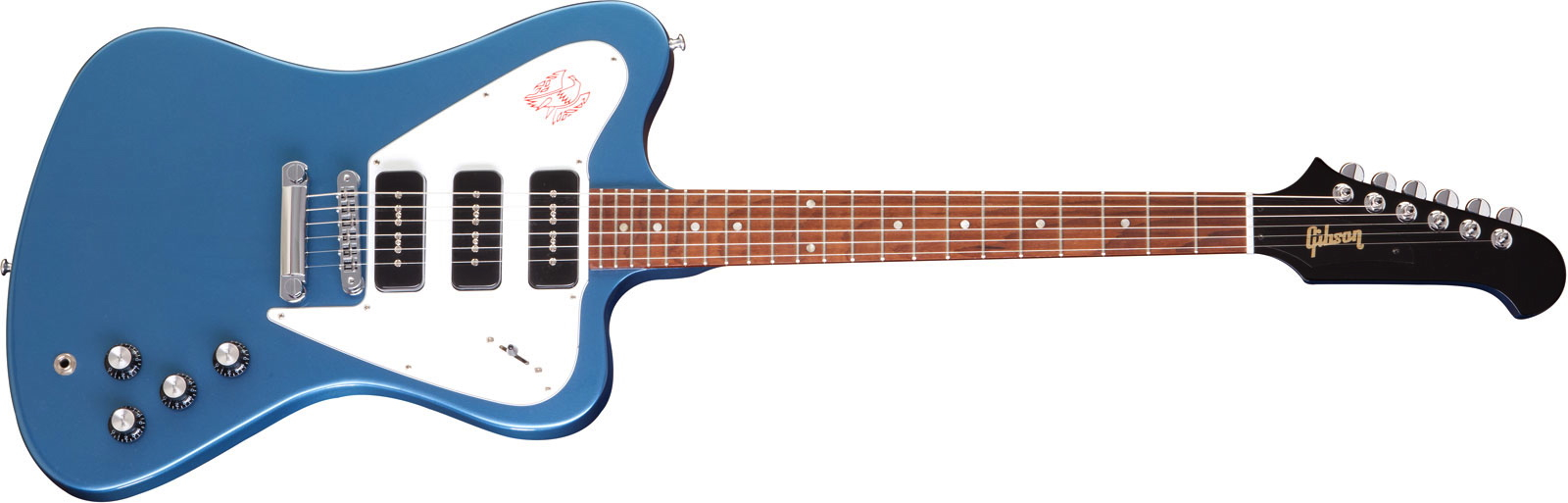
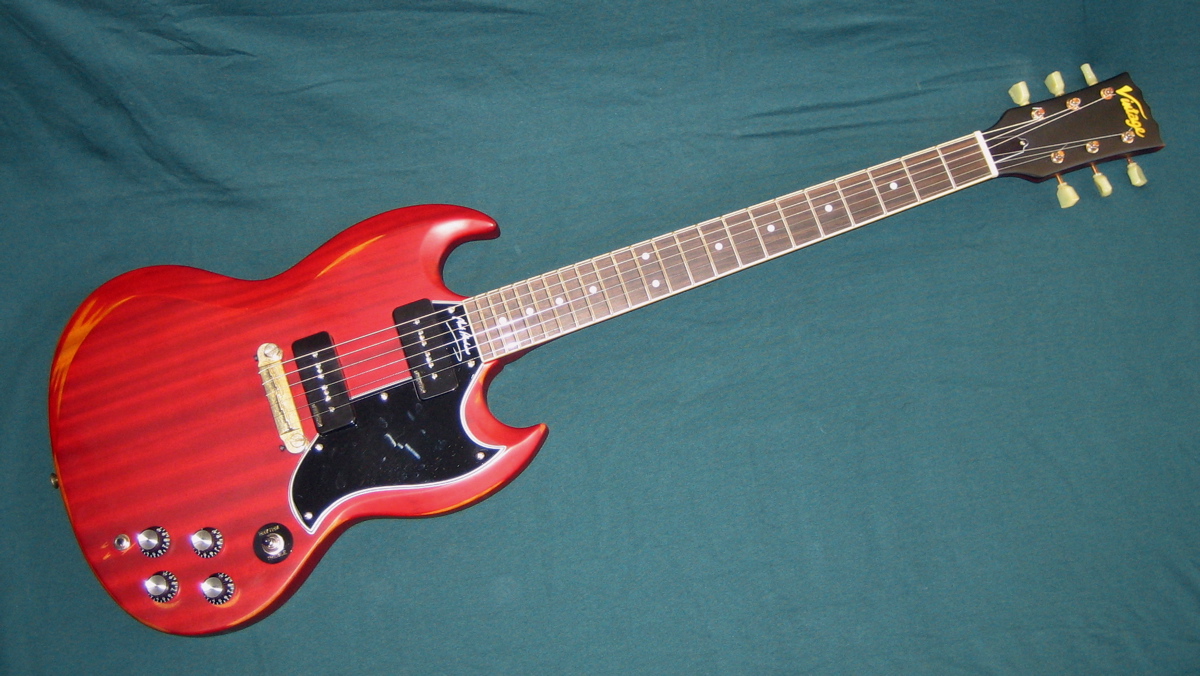
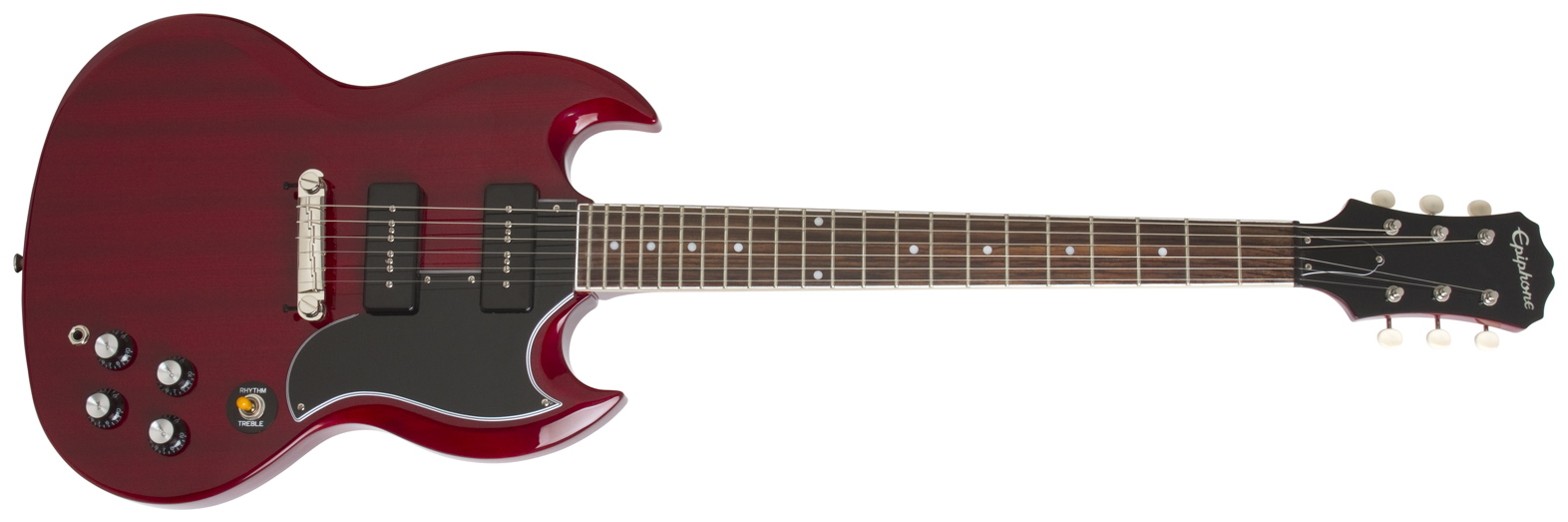
Kummallista kyllä, mutta non-reverse Firebirdit (1965–’69) näyttivät jopa enemmän Fender-kitaroilta kuin reverse-runkoiset vastineet. Non-reverse Firebirdeissä kaulaliitos oli muutettu takaisin Gibsonin perinteiseksi liimaliitokseksi. Firebird I- ja III-malleissa oli nyt P-90-mikrofonit – kaksi kappaletta I:ssä ja kolme III:ssa – kun taas Firebird V- and VII-malleilla oli yhä käytössä edeltäjänsä mini-humbuckerit. Otelauta oli kaikissa non-reverse Firebirdeissä palisanteria pyöreillä otemerkeillä, mutta ilman reunalistoitusta.

Firebirdin tuotantoa lopetettiin vuonna 1969 huonon myyntimenestyksen takia.

****

****

Sitemmin Firebirdit on otettu aina välillä uudelleen tuotantoon, mutta silti näitä kitaroita näkee edelleen suhteellisen harvoin.

Gibson Firebirdien tunnetuimmat soittajat ovat/olivat Johnny Winter, Phil Manzanera (Roxy Music), Brian Jones (Rolling Stones), Clarence ”Gatemouth” Brown, sekä Allen Collins (Lynyrd Skynyrd).

Gibson Firebird VII – full front

Classic Guitars, part 8: Gibson Firebird

Gibson Firebird VII – beauty shot 1 – sky

This piece could also have been titled ”The Firebird: A famous enigma”, as the Gibson Firebird is the least well-known of the company’s classic solid body electrics. The reason for this relative lack in interest is down to the short production run of the original series, as well as the fact that only a few famous guitarists have used a Firebird as their main axe.

The Firebird/Thunderbird-line of guitars and basses was the 1963-version of the ”Let’s beat Fender”-game that Gibson started in 1958 with the Flying V and the Explorer. Gibson’s then-president Ted McCarty wanted to come out with a snazzy guitar that proved that a) Gibson wasn’t a behind-the-times, old-fashioned company of old farts, and b) could compete with Fender’s current glitzy offerings (the Jazzmaster and the Jaguar) in the looks stakes.

Gibson Firebird VII – body

This time McCarty looked for help from outside the guitar industry. He hired renowned car designer Ray Dietrich to design a guitar purely from a designer’s viewpoint. What Dietrich finally came up with is now known as the ”reverse-body” Firebird-line (see picture above). These guitars (and their Thunderbird bass-brethren) are called ”reverse”, because, contrary to tradition (and ergonomical logic), the bass side of the body leans away from the neck, while the treble side is longer on the neck-facing side.

Gibson Firebird VII – tuners

Gibson decided on a novel way (for them) of building the guitar: reverse Firebirds feature a through-neck construction, with the neck and the body’s central section being crafted from the same laminated mahogany/walnut blank. The body wings are made from mahogany, while the tuners are very interesting back-facing machines.

The original run (1963–’65) of reverse Firebird-guitars comprised four models:

• Firebird I: one mini-humbucker in bridge position, unbound rosewood fretboard, dot inlays, wraparound bridge

• Firebird III: two mini-humbuckers, bound rosewood fretboard, dot inlays, dot inlays, wraparound bridge, simple vibrato

• Firebird V: two mini-humbuckers, bound rosewood fretboard, trapezoid (crown) inlays, long engraved Gibson Vibrola

• Firebird VII: three mini-humbuckers, bound ebony fretboard,  pearl block inlays, long engraved Gibson Vibrola, gold-coloured hardware

The standard finish was sunburst, but as as a Gibson-first, the Firebirds were also offered in a range of custom finishes, which weren’t very popular with the dealers, though.

****

Sadly, the reverse Firebirds weren’t selling very well. And then, when Fender started claiming Gibson had infringed on their ”offset waist”-patent and threatened a law suit, McCarty’s team decided on a swift redesign, which looked like this:

The non-reverse Firebirds (1965–’69) looked even more like a Fender-design, and abandoned the through-neck in favor of Gibson’s conventional set neck-joint. The Firebird I and III now sported P-90-pickups – two on the I and three on the III – while the Firebird V and VII stuck to their mini-humbuckers. All non-reverse models featured unbound rosewood fingerboards with dot inlays.

The non-reverse ’Birds didn’t set the guitar-playing world on fire either, so the company axed the series in 1969.

****

****

Since the mid-70s there have been plenty of reissues, as well as updated Firebird-models, but these clear-sounding guitars still tend to find favour with only a small clientele, compared to the rest of Gibson’s classics.

The best known users of Gibson Firebirds were/are Johnny Winter, Phil Manzanera (Roxy Music), Brian Jones (Rolling Stones), Clarence ”Gatemouth” Brown and Allen Collins (Lynyrd Skynyrd).

Gibson Firebird VII – full front

Kaksi joululahjaideaa

Tässä kaksi ideaa kitaristin joululahjaksi:

The Interactive Gibson Bible (2008)

Dave Hunter

(Jawbone/Outline Press, ISBN 978-1-906002-10-7)

Dave Hunterin kirja on ehkä hieman kuiva, sillä se sisältää kaikkien Gibson-sähkökitaroiden speksit, mutta ostos kannattaa jo pelkästään mukana tulevan, erinomaisen DVDn ansiosta.

DVDllä Dave Hunter ja sessioässä Carl Verheyen esittävät ja soittavat laajan kattauksen vanhoja Gibsoneita 1940-, -50 ja 60-luvuilta.

Tyylipuhdas kitaraporno – sekä silmälle että korvalle!

*******

Jeff Beck – Rock’n’Roll Party (DVD, 2010, Eagle Vision)

Jeff Beckin kunnianosoitus vuonna 2009 kuolleelle Les Paulille on suurella sydämellä toteutettu livetallenne. Beck heitti yhdessä Imelda Mayn, Mayn bändinsä ja usean yllätysvieraan kanssa kaksi upeaa keikkaa Iridium-klubissa, jossa Les Paul soitti vuosia säännöllisesti lähes kuolemaansa saakka.

Tämä levy, joka on saatavilla myös CD-versiona, pitäisi löytyä jokaisen kitaristin kokoelmasta!

Klassikkokitarat, osa 7: Gibson ES-175

Pisin jatkuvassa tuotannossa ollut Gibson-sähkökitara on Gibson ES-175.

Kun sitä esiteltiin ensimmäistä kertaa vuonna 1949 malli oli varustettu ainoastaan yhdellä P-90-mikrofonilla, joka sijaitsi lähellä kaulaa. Koska ES-175 oli alusta asti tarkoitettu sähköistettuksi jazzkitaraksi, runkoa rakennettiin muottiin prässätystä vaahteravanerista, eikä kokopuusta. Kitaran kaula on mahongista ja reunalistoitettu otelauta on palisanteria.

Ensimmäisinä vuosina kitaran talla oli kokonaan puusta, mutta 1950-luvun loppupuolesta lähtien on käytetty lähes aina Tune-o-matic-tallaa.

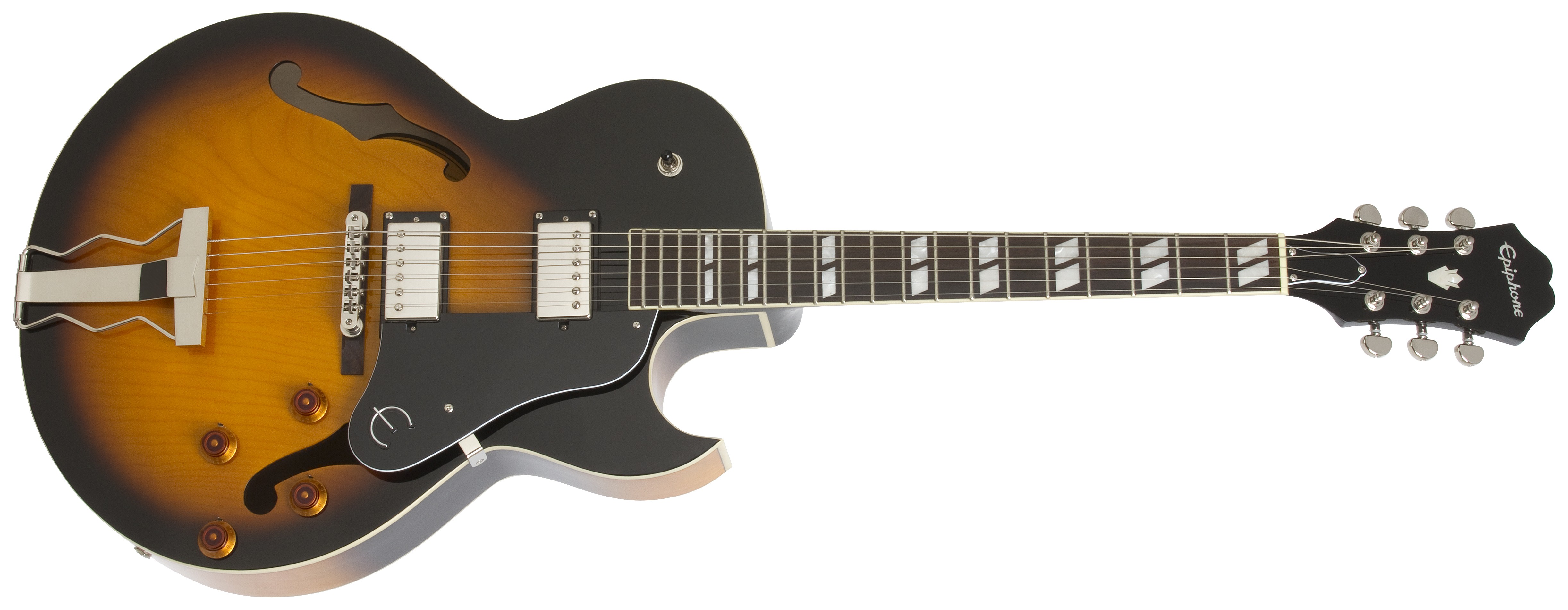
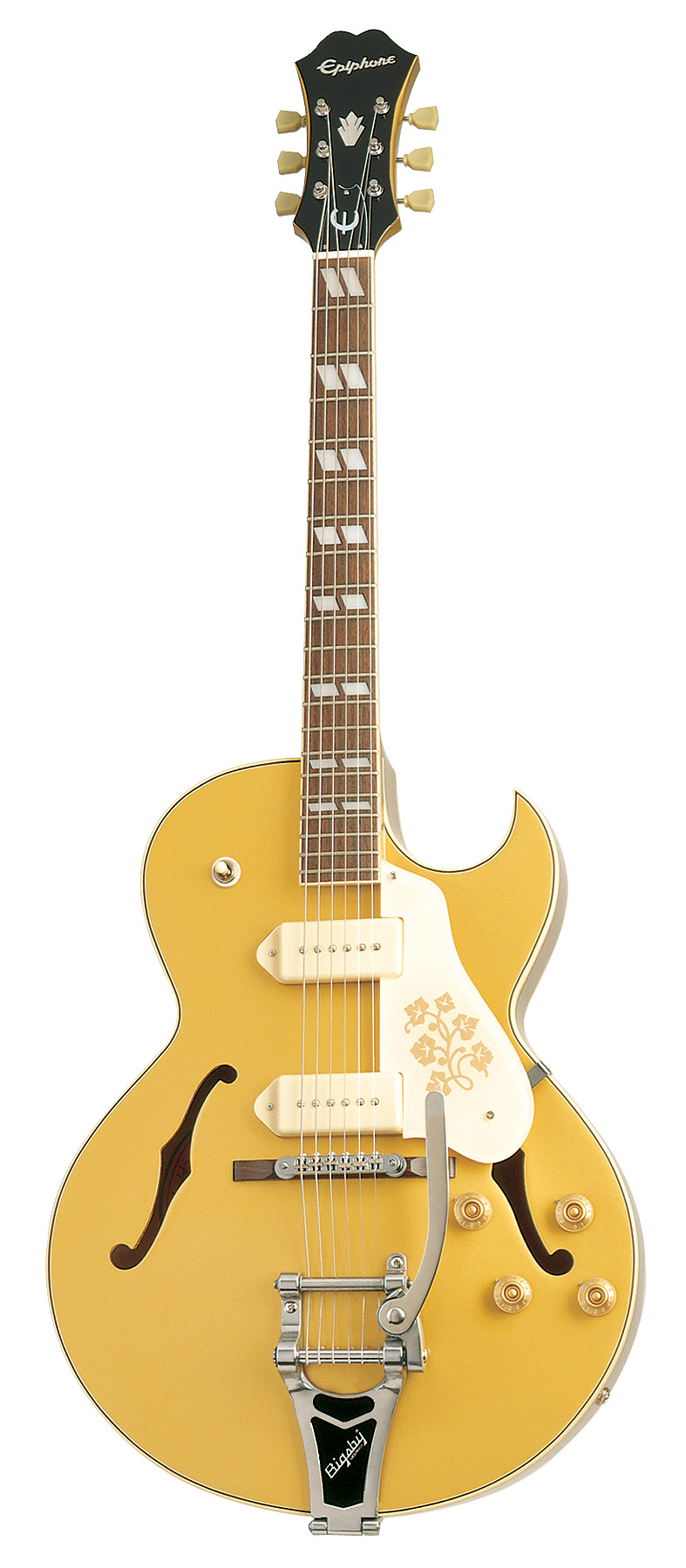
ES-175-mallissa esintyvät kaksi erilaista kieltenpidinmallia: ensimmäisissä tuotantomalleissa oli trapetsin muotoinen kieltenpidin (katso Gibsonia ylhäällä), myöhemmin kitara sai ihan oman mallinsa, jonka näkyy Epiphonen ES-175-versiossa. Molemmat versiot käytettiin vaihtelevasti 1970-luvusta lähtien.

Vuonna 1953 syntyi se varsinainen klassikko – kahdella mikrofonilla varustettu ES-175D. Vuodelta 1957 lähtien humbuckerit kuuluvat molemman mallin vakiovarusteisiin.

Vuonna 1971 lopetettiin yksimikrofonisen version sarjatuotantoa, ja kaksimikkisesta mallista tuli ES-175, ilman D:tä.

ES-175 on orkesterikitaroiden klassikko – kitara, joka on yhä monen orkesterikitaran esikuva.

Yes-yhtiön Steve Howe on rock-piireissä mallin tunnetuin käyttäjä.

Vuosina 1952-’58 oli ES-175:lla myös hieman näyttävämpi sisarmalli, nimeltään ES-295:

ES-295 on periaatteessa sama kitara kuin ES-175, paitsi että se on kokonaan kullanvärinen, muoviosat ovat valkoisia, ja alussa ES-295:llä oli alkuperäisen Les Paul -mallin pitkä trapetsitalla.

Monien mielestä ES-295 on se ”Elvis-malli”, koska Presleyn alkuperäinen kitaristi, Scotty Moore, käytti tätä soitinta usein.

Save

Classic Guitars, part 7: Gibson ES-175

The Gibson ES-175 is the Gibson guitar, that has been in continuous production for the longest.

When it was first introduced in 1949 it was a single-pickup model, with a P-90 in the neck position. The ES-175 was meant to be an electric Jazz-guitar from the start, so the body was constructed from laminated, pressed maple, instead of featuring a solid carved top. The neck is mahogany and the bound fingerboard made from rosewood.

For the first few years the guitar was equipped with a pre-compensated ebony bridge, later models feature a tune-o-matic bridge.

Two different tailpieces can be found on an ES-175: at first it featured a trapeze, like the Gibson at the top, later models were equipped with the special T-shaped tailpiece of the Epiphone below, but since the 1970s both types have been used on and off.

In 1953 the original ES-175 was joined by the now classic two-pickup model, the ES-175D. From 1957 onwards both models have been equipped with humbucking pickups.

In 1971 the single-pickup model was deleted from Gibson’s range, and the two-pickup model’s designation thus changed to ES-175 without the ”D”.

The ES-175 is an absolut classic among full-body Jazz-guitars, and its has become the yardstick most newcomers have to live up to.

In Rock-circles Steve Howe of Yes is by far the most famous user.

From 1952 to ’58 the ES-175 also had a foxier sister, called the ES-295:

The ES-295 is built exactly like an ES-175, except for the all-gold finish, the cream pickguard, and the fact that the original incarnation featured the long Les Paul -trapeze-bridge.

Most people associate this model with early Rock’n’Roll as well as Country-music. Elvis Presley’s original guitarist, Scotty Moore, was often spotted with an ES-295.

Save

George Benson – loistava kitaristi ja kaunis kitara

George Bensonin biisi Breezin’ on mielestäni yksi onnistuneimmista crossovereista, jossa jazz- ja pop-musiikki elävät sulassa sovussa. Komppi groovaa ja melodia kulkee kevyesti – loistava.

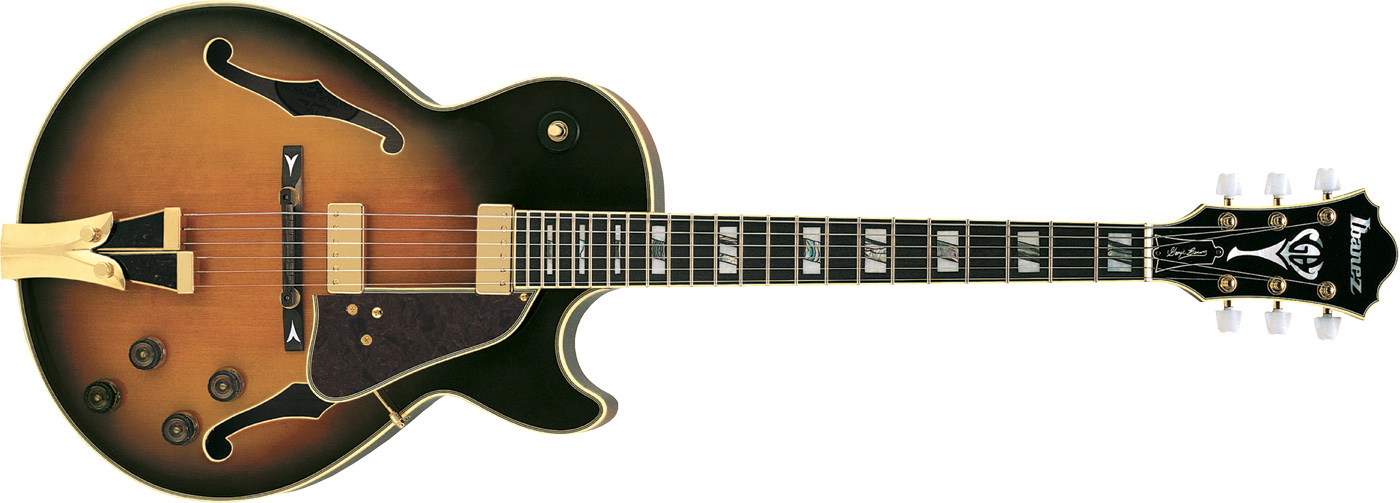
Pidin myös aina George Bensonin kitarasta. Ibanez George Benson -malli (GB-10) on klassikko, ja se oli ensimmäinen kitara, jonka kokeilin nuorena soitinliikkeessä 1970-luvun loppupuolella. Se oli yksi ensimmäisistä japanilaisista kitaroista, jotka todistivat, että laadukas kitara ei välttämättä tarvitse tulla USA:sta tai Euroopasta. Erikoista GB-10:ssä on sen – perinteistä orkesterikitaraa nähden – pienempi runko.

George Benson – cool crossover and nice guitar

George Benson’s track Breezin’ must be one of the most successful cases of a Jazz-artist crossing over into the Pop realm. The track grooves and the music seems to flow effortlessly – magic.

I always fancied his guitar, too. The classic Ibanez George Benson -model (GB-10) was the first electric guitar I ever picked up and played at my local guitar shop in the late Seventies. It was one of the models that proved that a Japanese guitar could really be a quality instrument. An excellent scaled-down take on the classic jazz guitar format.

Pidä blogia WordPress.comissa.

Ylös ↑