The mandolin – a fantastic opportunity to broaden your vocabulary

Once you’ve learnt how to get to grips with a guitar, learning to play a different stringed instrument is relatively straightforward, broadening your outlook in the process.

Take the mandolin, for example – a great second instrument for any guitarist. Its courses (pairs of strings) are tuned to the same pitch as the strings of a violin – g-d-a-e – which throws all your scale and chord shapes right overboard.

There are three different basic types of mandolin: the bowlback Italian mandolin is the senior member of the family, and closely related to Middle Eastern instruments, such as the saz.

The Portugese/Irish  mandolin is build with a straight back, much like a guitar, making it easier to hold and play.

The carved-top Bluegrass-mandolin is an American invention from the very last years of the 19th Century, taking its cue from the building principles behind a violin. Orville Gibson’s (1856–1918) quality mandolins laid the groundwork for what was to become the famous Gibson-brand. Renowned musician and luthier Lloyd Loar finalised the Gibson-mandolin around 1920.

My own mandolin is a Chinese-made, all solid wood Kentucky KM-630, pattered after a typical F-Style Gibson-mandolin.

It features a spruce top as well as a back and sides made from maple.

The headstock is replete with fine inlay work.
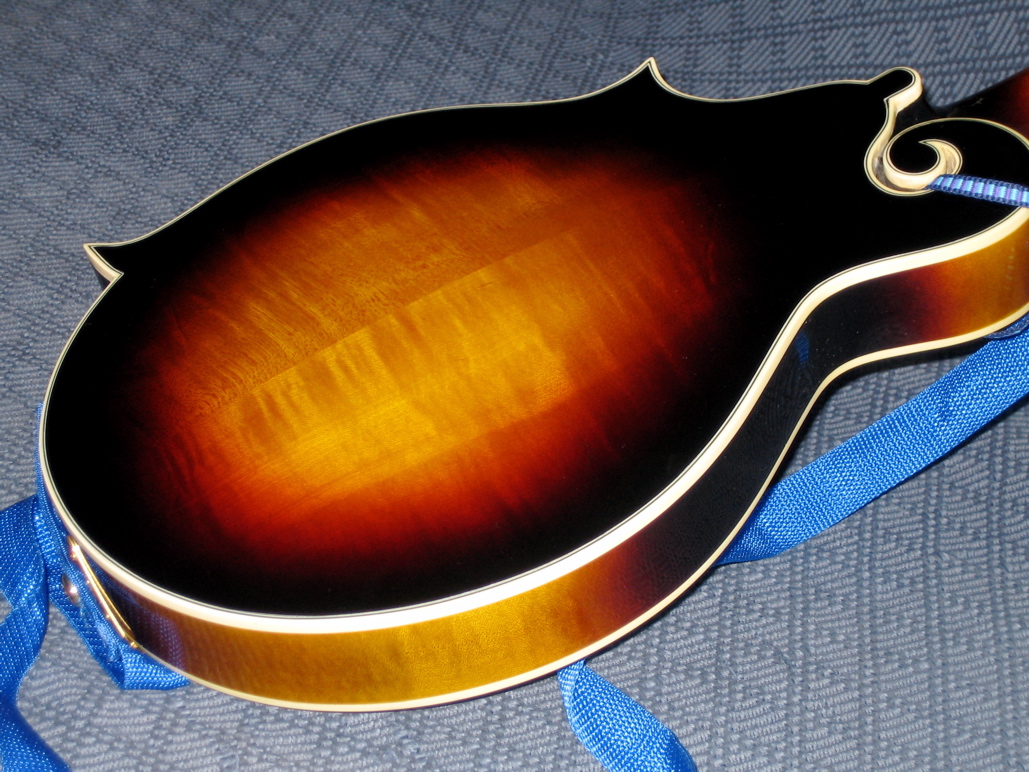
The well-applied finish really shows off the back’s figuring (flame).

The maple neck too is finished in a rich sunburst.

Gold-coloured tuners round off the picture.
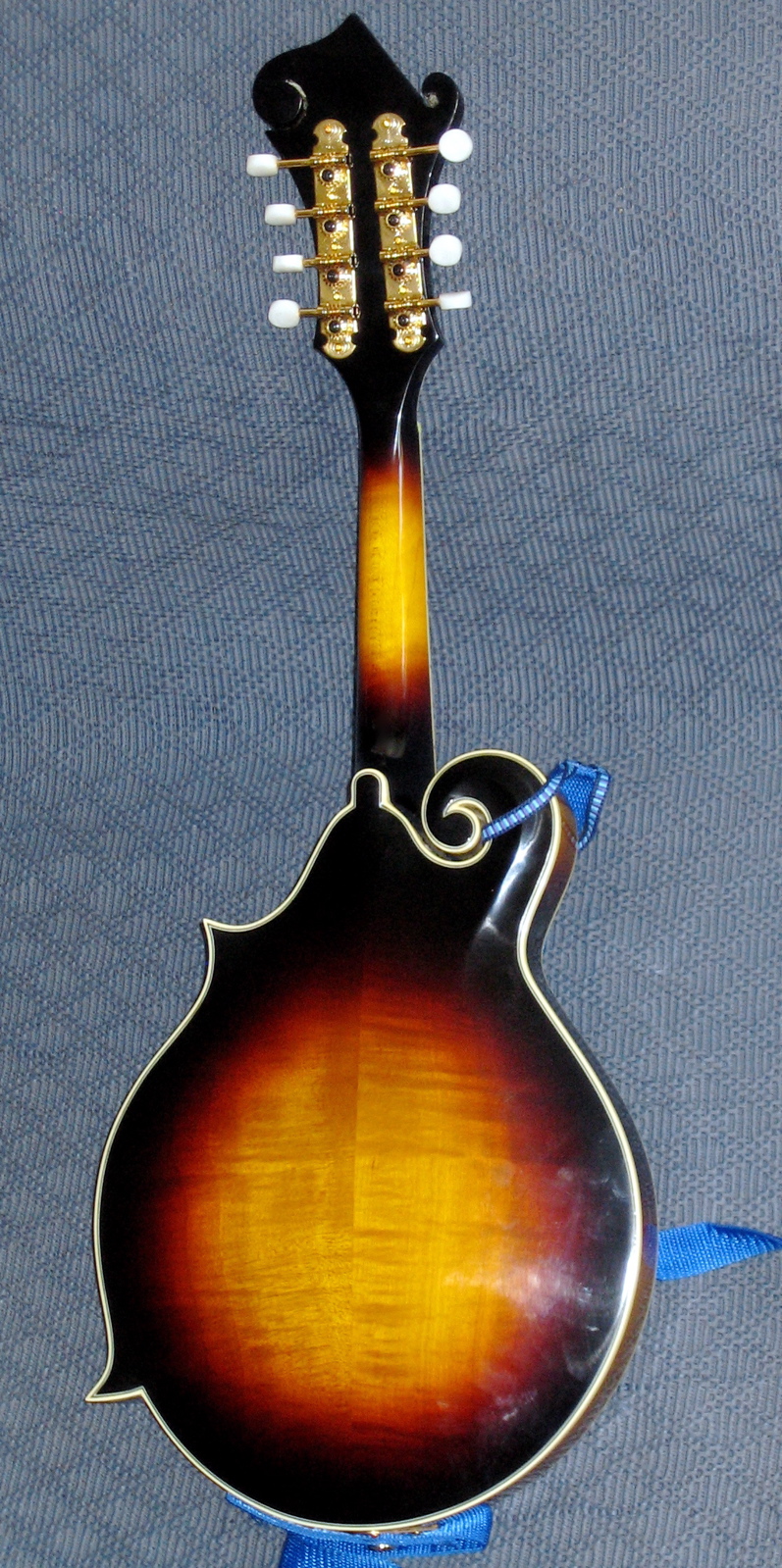
When shopping for a mid-price Bluegrass-mandolin check the neck for straightness, as well as the quality of the fretting. Make sure the free-standing bridge is OK and works as it should. The relatively hard string pull, along with transport/storage in too dry a place can sometimes lead to a cracked or collapsing bridge.

****

Here’s a recording featuring my KM-630:

Lucy (Frank Badenius/Martin Berka)

****

Check out these links for further info:

Mandolin tuner

Mandolin chords

A genuine Gibson/Lloyd Loar -mandolin from 1923

Build your own mandolin!

Mandoliini on oiva lisäys kitaristin soitinvalikoimaan

Kun kerran kitaristina musiikin tuottaminen kielisoittimella on tullut tutuksi, on toisen kielensoittimen soittamisen oppiminen suhteellisen helppo, mutta samalla horisonttia laajentava kokemus.

Esimerkiksi mandoliini on oiva kakkossoitin kitaristille. Sen kieliparit viritetään samoille sävelkorkeuksille kuin viulussa – g-d-a-e – minkä vuoksi soinnut ja skaalojen soormitukset menevät heti uusiksi.

On olemassa kolme päätyypejä: kulhomaisella, kaarevalla kopalla varustettu italialainen mandoliini on soittimen vanhempi alkuperäinen muoto, joka on sukua Lähi-Idän kielisoittimille (esimerkiksi saz).

Portugalilainen/irlantilainen mandoliini on tasakanttinen, kitaratyylinen ratkaisu, joka on helpompi pitää sylissä.

Kaarevalla kannella ja pohjalla varustettu Bluegrass– tai Archtop-mandoliini kehiteltiin 1800-luvun loppumetreillä Yhdysvalloissa, ja sen lähtökohta oli viulussa. Orville Gibsonin (1856–1918) laadukkaat mandoliinit ovat nykyisen Gibson-firman alkupiste. Soittaja ja soitinrakentaja Lloyd Loar sitten kehitti Gibson-mandoliineja loppullisen muotoon 1910-luvun loppussa.

Oma mandoliinini on Kiinassa rakennettu, kokopuinen Kentucky KM-630, jonka esikuva on ollut Gibsonin koristettu F-malli.

Kansi on kuusesta ja sivut sekä pohja vaahterasta.

Lavassa on runsaasti kauniita helmiäisupotuksia.

Pohjan hieno viimeistely tuo esiin loimuvaahteran näyttävät syykuviot.

Myös vaahterakaula on saanut ylleen sunburst-värityksen.

Kullanväriset virittimet antavat soittimelle viimeisen silauksen.

Kun ostaa edullisen Bluegrass-mandoliinin kannattaa tarkistaa, että kaula on suora, nauhat kunnossa, eikä vapaasti kannella seisova talla vioittunut. Kielten voimakas veto sekä liian kuiva ilma kuljetuksen tai varastoinnin aikana voivat nimittäin johtua siihen, että talla repii tai korkeussäädön kierretangot löystyvät tallapuussa.

Suomessa suurin mandoliinivalikoima löytyy Millbrook Musiikista, joka tuo myös maahan esimerkiksi Kentucky– ja Eastman-soittimet.

****

Tässä hauskassa biisissä soitan mandoliinia:

Lucy (san. Frank Badenius/säv. Martin Berka)

****

Tässä vielä muutama mielenkiintoinen linkki aiheesta kiinnostuneille:

Mandoliinin virittäminen

Mandoliinisoinnut

Aito Gibson/Lloyd Loar -mandoliini vuodelta 1923

Rakenna oma mandoliinisi!

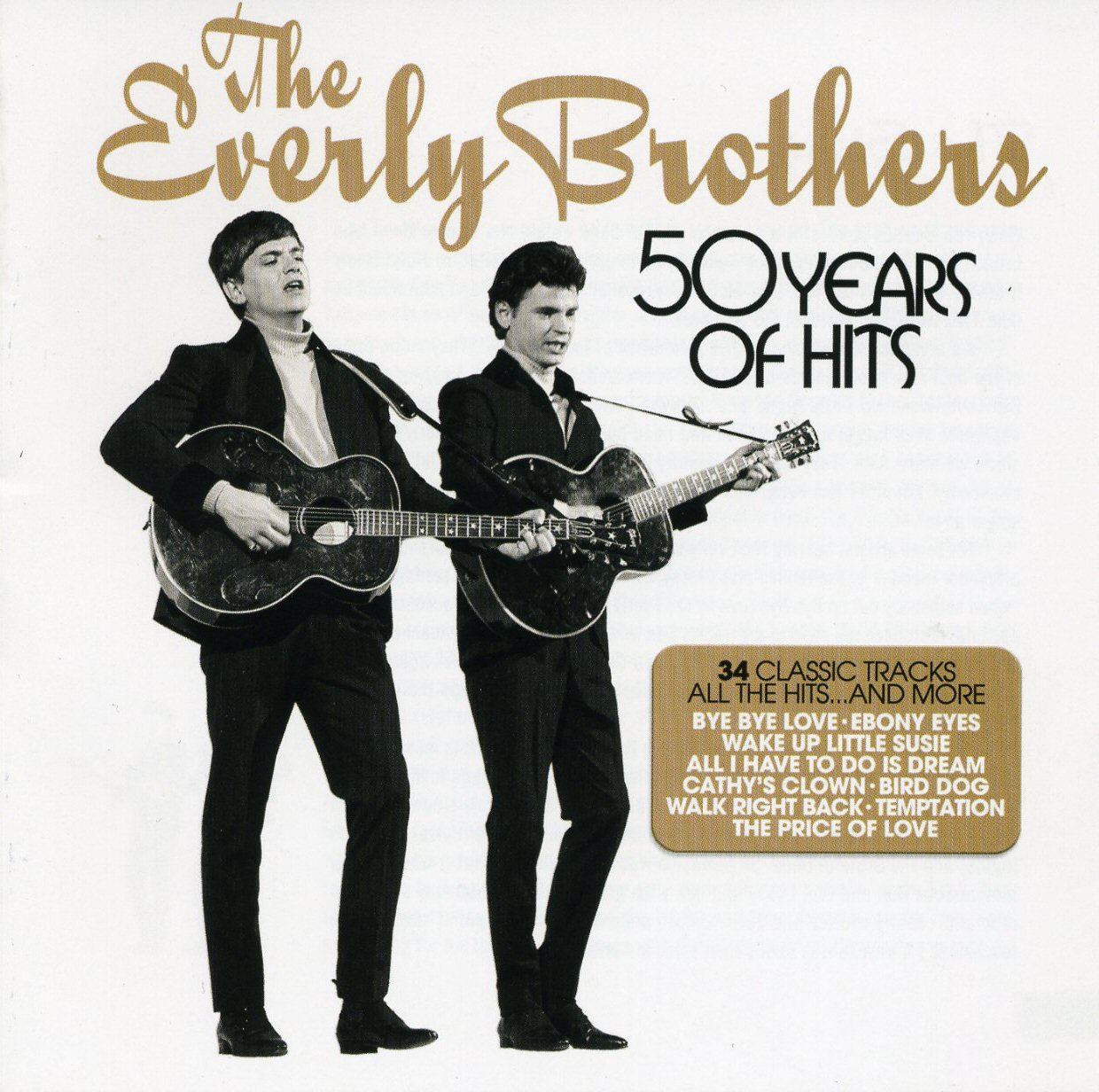
Gibson Everly Brothers – when a guitar becomes a star

Post- Les Paul & Mary Ford and pre-Beatles the Everly Brothers were, without doubt, the Pop music sensation in the USA. The brothers – Phil and Don – provided a great mix of Rock’n’Roll -raucousness and Country -cleanliness to reach mass appeal. Their hits are true Pop gems and their golden vocal harmonies are legendary, inspiring many other acts, such as Simon and Garfunkel and the Beatles.

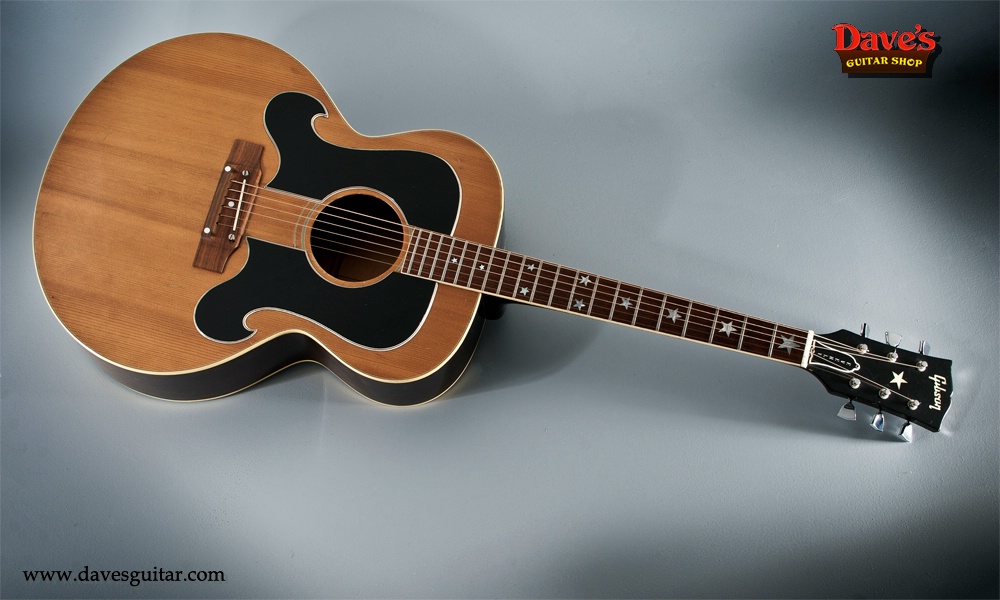
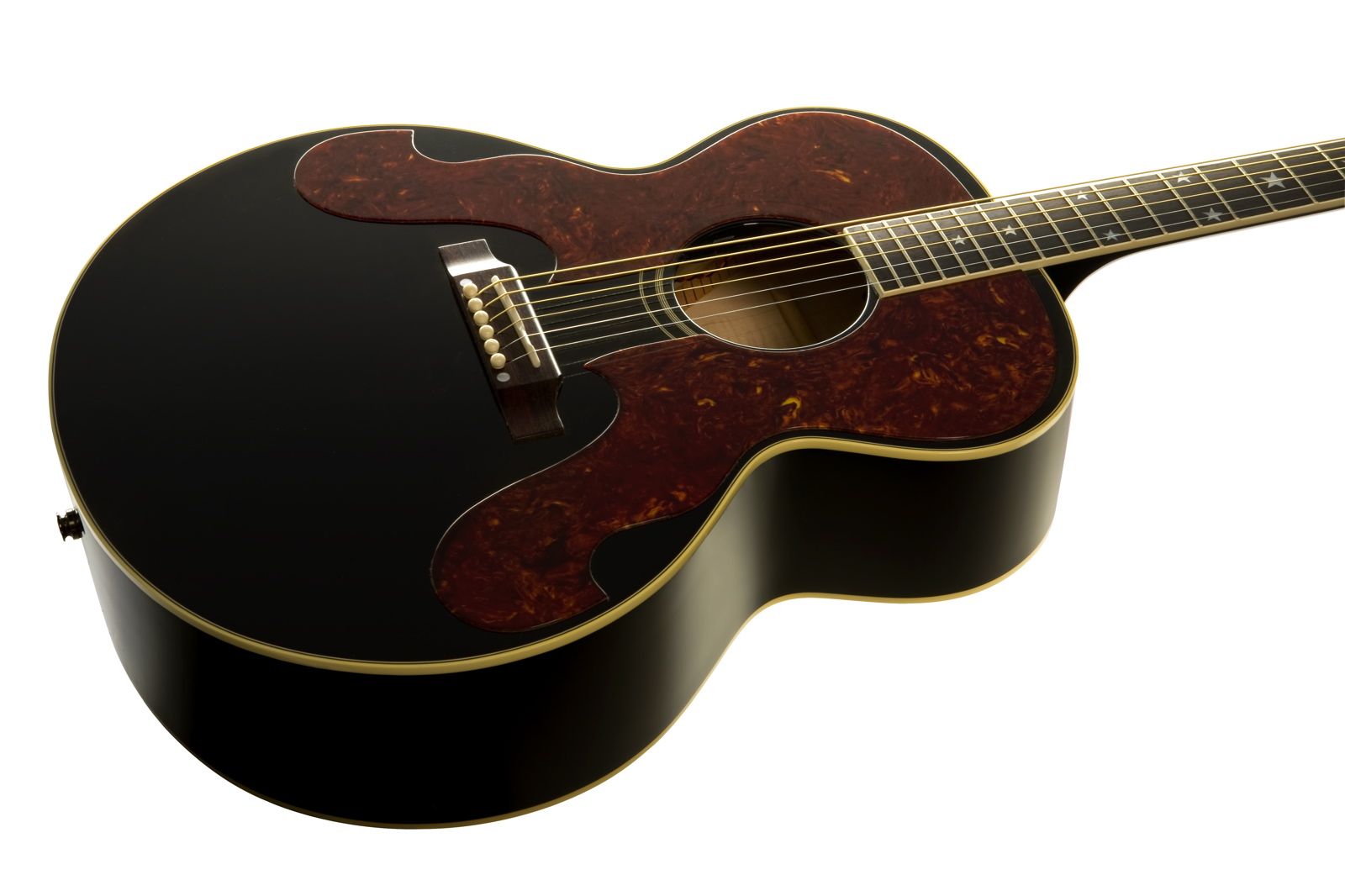
In 1962 Gibson released a signature model, based on a downsized Super Jumbo body, and featuring two large pickguards, star-shaped inlays and a pin-less, adjustable bridge. The large tortoise-pattern pickguards dampen the spruce top somewhat. In conjunction with the maple back and rims this results in a great strummer with a very precise attack and a transparent mid-range, extremely well suited to accompany vocals, and belting out those strummed Everly-riffs.

There were also versions with white pickguards.

In the late Sixties Gibson changed the pickguards’ size and shape, and also started offering the Everly Brothers -model in natural finish alongside the original black.

The Gibson Everly Brothers -model is one of the few cases of an acoustic guitar having its own owners’ club. Proud users include stars like Paul McCartney and Albert Lee.

Epiphone and Orville have issued their own reissues over the years – called the SQ-180 and Don Everly Signature.

Gibson Acoustic is offering a brand-new Billie Joe Armstrong Signature J-180, which is basically an Everly Brothers -model with an added Fishman -pickup system. A review of this model will be published in Riffi-magazine in our issue 5/2011.

Gibson Flying V – tai: kaksi vuosikymmentä etuajassa

Vuonna 1957 Ted McCartyn mitta oli täynnä. Gibsonin toimitusjohtajaa ärsyttivät ainaiset puheet firman vanhanaikaisuudesta ja tylsyydestä muiden valmistajien ja joidenkin kitaristien keskuudessa. Etenkin Fenderin tuomat uudet tuulet kitaroiden valmistuksessa ja markkinoinnissa saivat McCartya uskomaan, että Gibson tarvitsi jotain mullistavan uutta mallistossansa.

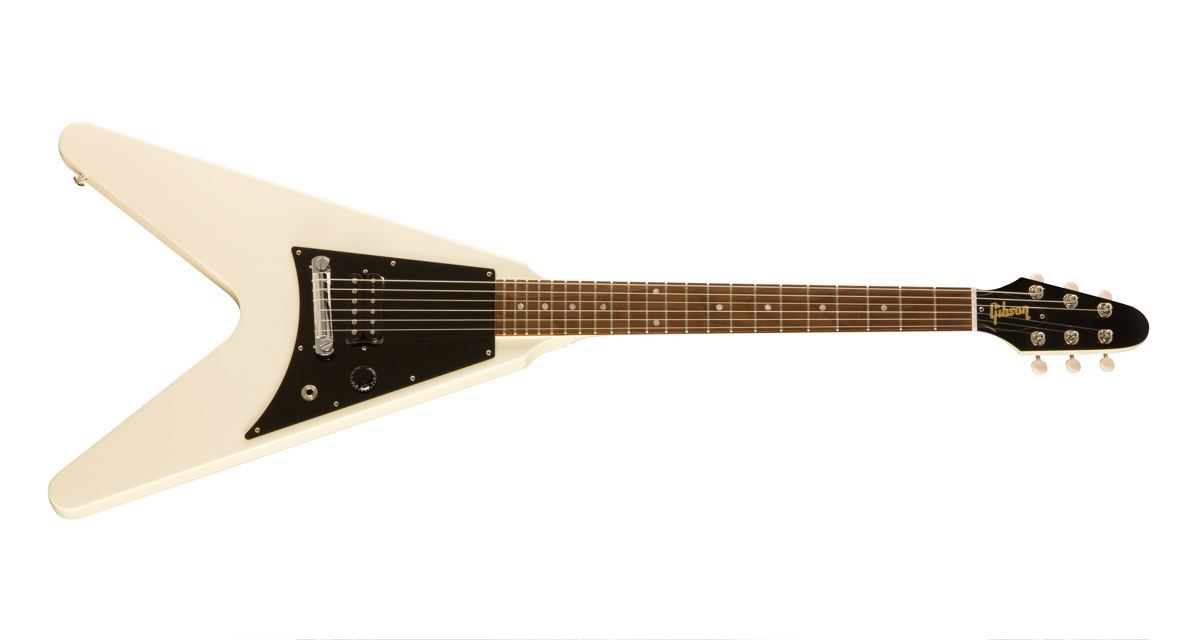
Pidettiin kokonainen sarja aivoriihi-istuntoja, jossa yritettiin löytää mahdollisimman omanlaatuisia kitaroita. Pomo itse keksi tällaiset muodot:

Kun ensimmäinen prototyyppi oli valmis, joku nauroi ”Hehee, tämä näyttää lentävältä V-kirjaimelta!”, ja siinä olikin uutukaiselle sopiva nimi.

Kun Flying V näytettiin ensimmäistä kerta NAMMissa (1958, samalla esiteltiin myös Explorer-mallin), varsin erikoinen kitara oli yksi messujen kohokohtista. Kaula ja runko veistettiin korina-puusta ja metalliosat olivat kullattuja.

Ongelma oli vain, että omintakeinen kitara oli aikansa edellä, minkä takia siitä ei tullut myyntimenestys. Alkuperäinen painos (1958–’59) jäi alle 100 kappaletta, ja myös niistä jotkut käytettiin vain mainoskylttinä joidenkin musiikkiliikeiden edessä.

Kuuskytluvun keskivaiheella musiikkimaku oli jo muuttanut sen verran raskaampaan suuntaan, että Gibson päätti yrittää uudestaan. Uusi Flying V oli mahongista, ja sillä oli perinteinen Gibson-kieltenpidin. Myös säätimet oli hieman eri järjestyksessä tässä uusintapainoksessa (katso alle).

Jimi Hendrix käytti juuri sellaista 60-luvun mallia, aina kun halusi Stratoa paksumpia soundeja.

Mutta vasta 1970-luvulla, kun Hard Rock ja Metal keksittiin, tuli Veestä muodikas lavakitara, sekä lavakarismansa että Gibson-soundinsa ansiosta.

Ja se lentää yhä vain eteenpäin; juuri tällä hetkellä Gibson tarjoaa upouuden seitsenkielisen Veen aktiivimikityksellä rankkaan riffitykseen.

Myös uudesta, laajennetusta Melody Maker -sarjasta löytyy Flying V – Flying V Melody Maker – jolla on mahonkikaula, vaahterarunko, tallahumbucker omalla volume-säätimellä sekä yksinkertainen wraparound-talla – that’s it.

Flying V:n ainoa huono ominaisuus on, ettei mallia voi soittaa istuen. Toisaalta, kukahan moshaa istuen?

😉

The Gibson Flying V, or: Two Decades Ahead Of Its Time

In 1957 Gibson’s then president, Ted McCarty, grew tired of the company being slagged off as ”boring old farts” by some of its competitors. Especially the fresh touch brought to guitar-making (and marketing) by young upstarts Fender, made McCarty determined that something had to be done to put the ”stuffy” image behind them.

They held a series of brain-storming sessions with a view to coming up with the most outrageous designs imaginable. Ted McCarty himself came up with this:

When the first prototype was built somebody said (laughing, no doubt): ”Hey, this thing looks like a flying Vee!”, and the name stuck.

When the Flying V was first shown at the Winter NAMM show in 1958 – along with its sister model the Explorer – it sure was the show-stopper McCarty had hoped for, with its radical shape, korina neck and body and gold parts.

The problem was the model was way ahead of its time, and didn’t really sell well in its original form. Less than 100 Flying V’s were shipped to dealers during 1958-9, with some ending up as shop signs (!) to draw in customers.

In the mid-60s times had changed, though, and heavier music was becoming en vogue, so Gibson decided to reissue the Flying V, albeit with a standard stop-tailpiece, a different control layout and the company’s customary mahogany used for the body and neck.

It was this version that Jimi Hendrix used whenever he needed a fatter sound than his Stratocaster could provide him with.

But it was really only with the advent of Hard Rock and Metal in the 1970s that the Vee really took off as a fashionable guitar, as it offered both cool looks and fat Gibson-tone in the right proportions.

Since then the Flying V has never really left us; right now, for example, Gibson are offering an EMG-equipped, active 7-string version for ultra-brutal riffing.

And brand-new is a budget version of the Vee, called the Flying V Melody Maker, which gives you the essence of what the Vee’s about in a nutshell: a mahogany neck glued to a maple body, one powerful humbucker, a single volume control and a simple wraparound bridge topping it all off – that’s it.

The Flying V only has one single drawback – you can’t play the model sitting down. But then again, headbanging doesn’t really work sitting down…

😉

Classic Guitars, part 6: Rickenbacker 330/360

”Braaaaaaannnng!!!”

The opening chord to the Beatles’ classic ”A Hard Day’s Night” says it all; this is what Rickenbacker-guitars are all about: clarity, jangle and a piano-like attack.

Rickenbacker’s most successful models are the 300-series, especially the models 330 and 360.

In 1958 the Californian company introduced its brand-new Capri-range – 12 semiacoustic models designed by German luthier Roger Rossmeisl. The whole range featured bodies that started out as a solid slab of wood, into which large hollow pockets were carved. The glued-in neck was made from maple or a combination of maple and walnut.

The model designations started with 310, with the lower numbers indicating a short-scale model – just like John Lennon’s 325 (= short scale, three pickups, vibrato).

Full-scale guitars carried higher model numbers, with 360 and above being Deluxe-versions featuring bound necks and bodies, as well as large triangular pearloid inlays in their fingerboards.

Between ’58 and ’64 all models had a rather angular body shape with pointed horns and sharp edges. In 1964 Rickenbacker switched the Deluxe models to a more rounded shape with a softly radiused top, which is why these versions only carry body binding on the back.

Famous users of the edgier, early versions were John Lennon (325) and George Harrison (a 12-string 360/12) as well as Pete Townshend, who used and smashed a whole load of the 370’s ”Export” version (called the ”1998” by British importer Rosetti), which featured traditionally shaped f-holes in place of Rickenbacker’s own scimitar-shaped openings.

Roger McGuinn (The Byrds) and REM’s Peter Buck are known for using Ricks with the newer body design.

In addition to a Rickenbacker’s idiosyncratic sound, relatively narrow necks are also typical of the company, as is the Rick-O-Sound stereo output option (only on the Deluxe guitars).

Three shades of P-90 **** Kolme kertaa P-90

Here are three soundbites I recorded for you of three different P-90 bridge pickups on three different guitars:

• the Epiphone Casino has Göldo pickups with metal covers

• the Vintage VS6 Mick Abrahams has Wilkinson soapbars with plastic covers

• the Gibson Les Paul Junior comes with a Gibson P-90 and a plastic dog-ear cover

All guitars were played through a clean Fender-type amp model with a Boss SD-1 in front.

Casino bridge P-90

VS6 Mick Abrahams bridge P-90

Junior P-90

Tässä ovat kolme soundiesimerkkiä kolmesta kitaroista ja niiden P-90 tallamikrofoneista:

• Epiphone Casinossa on Göldo-mikit, joilla on metallikansi

• Vintage VS Mick Abrahams -nimikkomallissa on Wilkinson-mikit muovikansilla (saippuapalat)

• Gibson Les Paul Juniorissa on firman oma P-90 muovikannella

Kaikki kitarat soitettiin puhtaan Fender-tyylisen mallinnuksen ja Boss SD-1 pedaalin läpi.

Pidä blogia WordPress.comissa.

Ylös ↑