Hotel California on ukulele!
I don’t know who these guys are, but this is a great version!
Review: GJ2 Guitars

****

American guitar guru Grover Jackson is a genuine living legend. When Jackson bought Wayne Charvel’s small shop (in 1978) nobody would have guessed that this man would single-handedly define two new types of electric guitars.
The – mostly bolt-on necked – Charvel guitars from the Eighties kicked off the Superstrat-phenomenon in earnest.
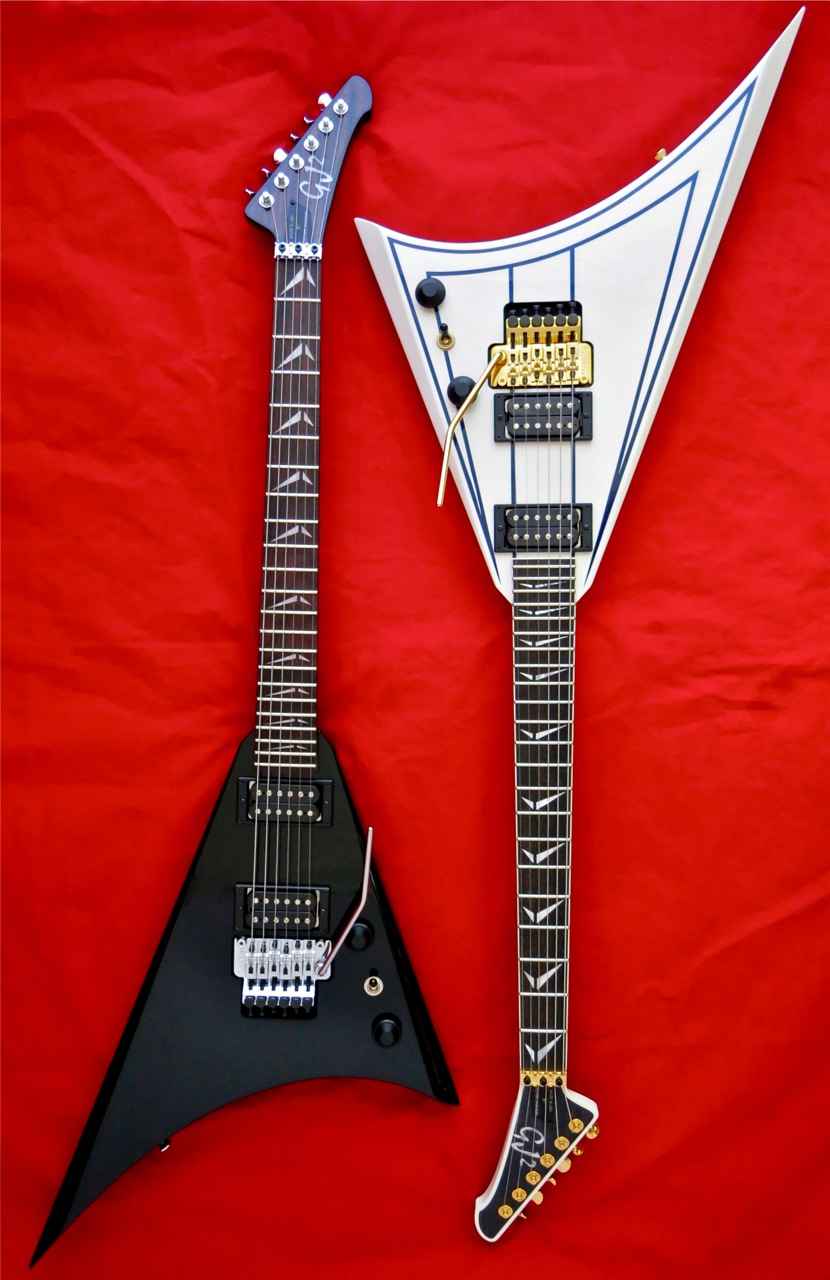
The original Jackson-branded instruments became famous as hiogh-octane Metal-guitars, which combined first class playability with bold graphic finishes. The most legendary Jacks model is surely the Concorde/RR, which Grover Jackson developed for Randy Rhoads.
Grover Jackson left Charvel/Jackson at the end of the 80s, and he went on to design instruments for a number of different brands, like Washburn for example. The Charvel and Jackson brands are nowadays part of the huge Fender conglomerate.
Grover Jackson has recently launched a new guitar-making outfit, together with (ex-Fender man) Jon Gold. GJ2 Guitars is a small Californian outfit which concentrates on small-run high-end guitar making.
Kitarablogi.com takes the first five instruments to arrive in Finland for a spin.
****
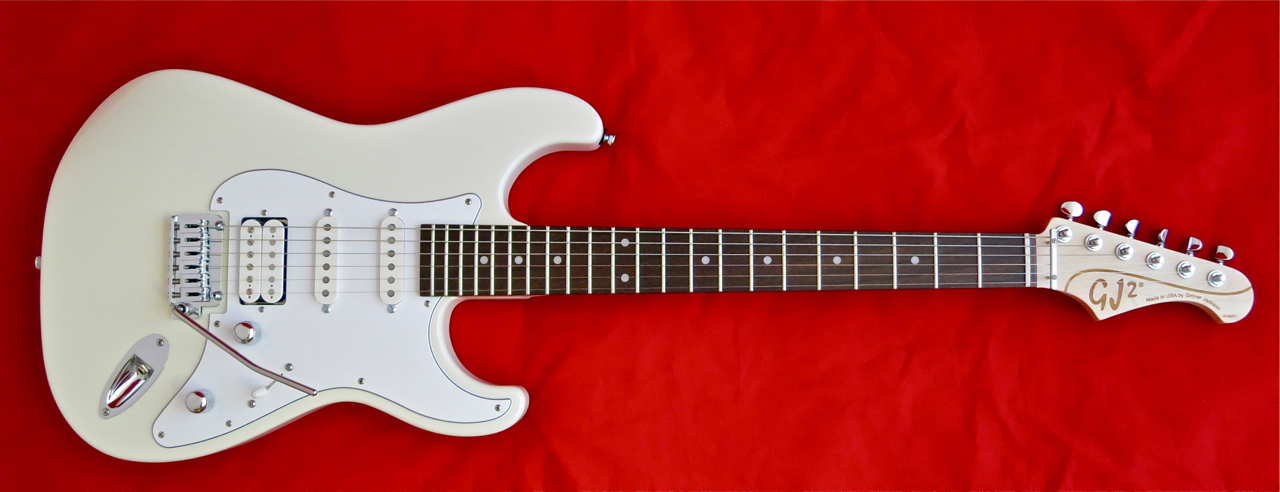
The GJ2 Glendora NLT (this version 1,717 €, incl. gigbag) is the most traditional guitar of our group of five.
The review sample’s body has been crafted from light ash (custom option) and finished in gloss Antique White. The basic version of the Glendora comes with a body made from either basswood, alder or poplar.
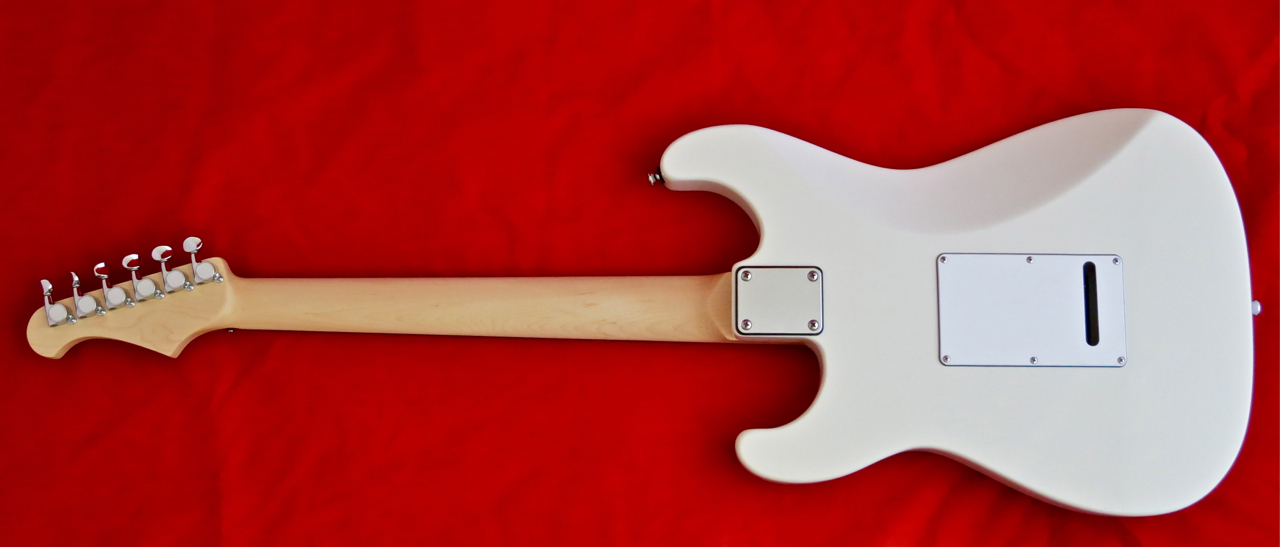
The satin-finished maple neck joins the body in traditional fashion.
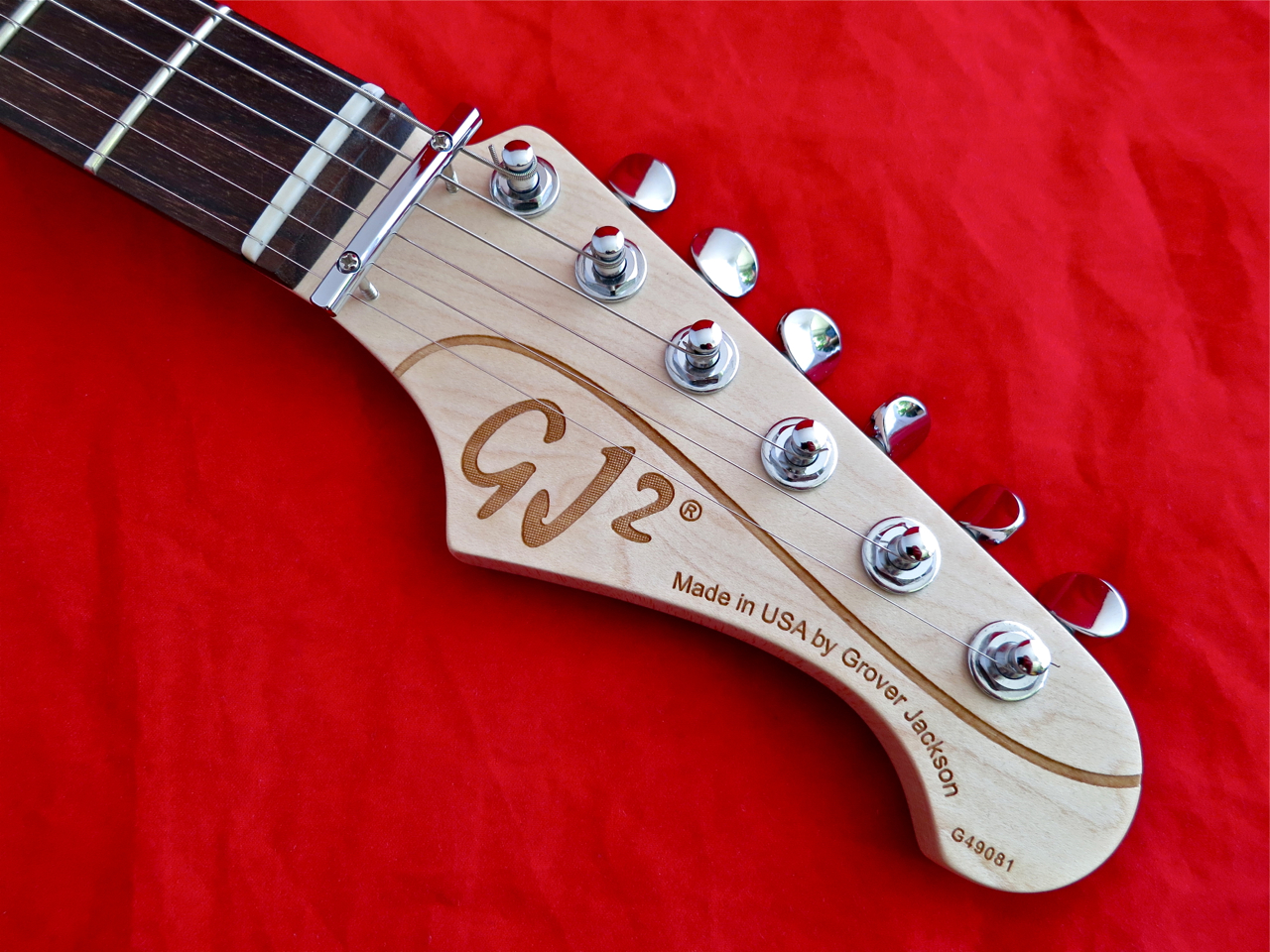
The Glendora’s headstock is a stylish variation on the classic six-in-a-row design.
The tuning machines are quality units from Gotoh.
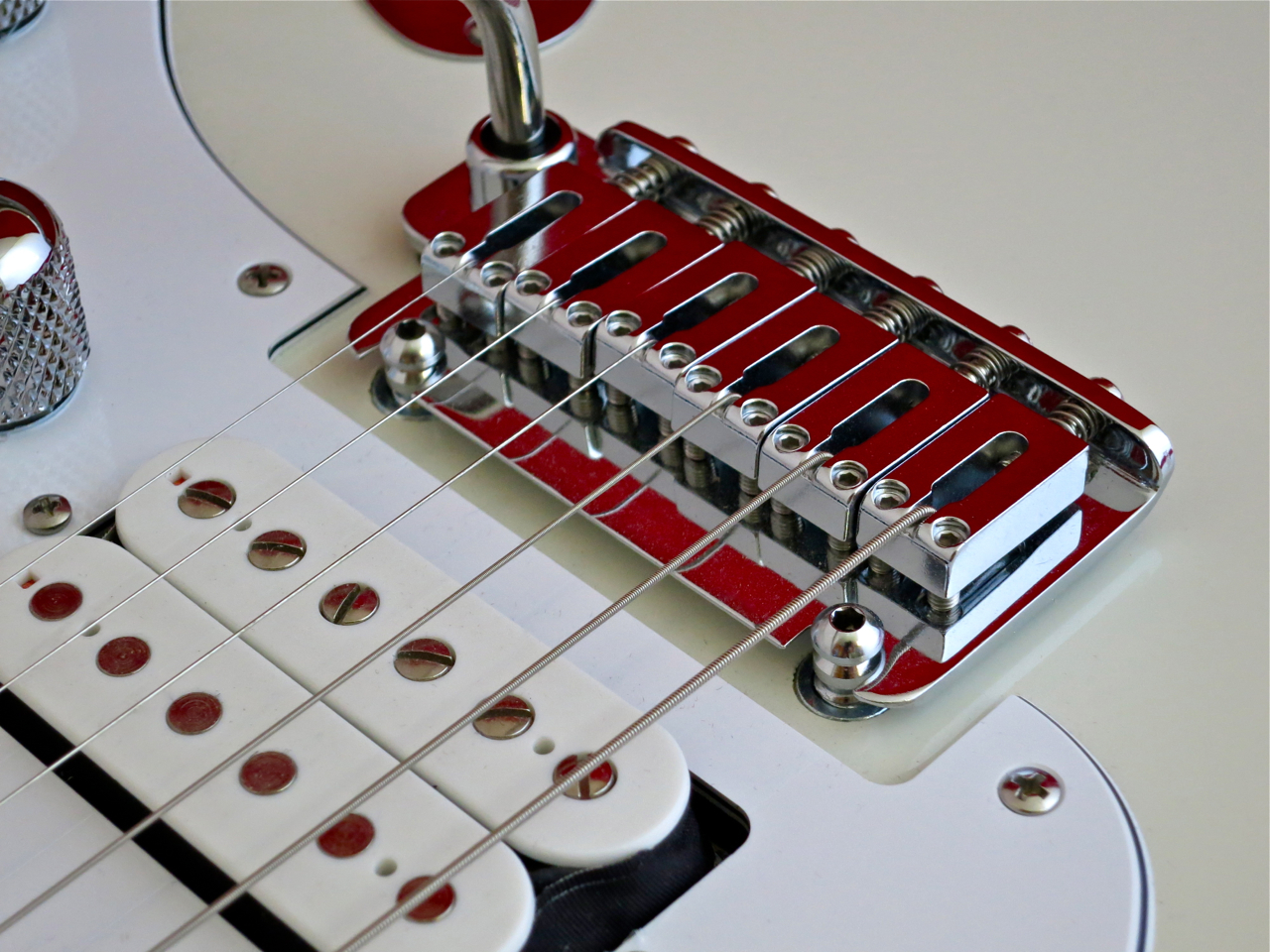
The contemporary two-post vibrato bridge is also a Gotoh design. The bar is simply pushed into the block and kept in place by an adjustable nylon collar.
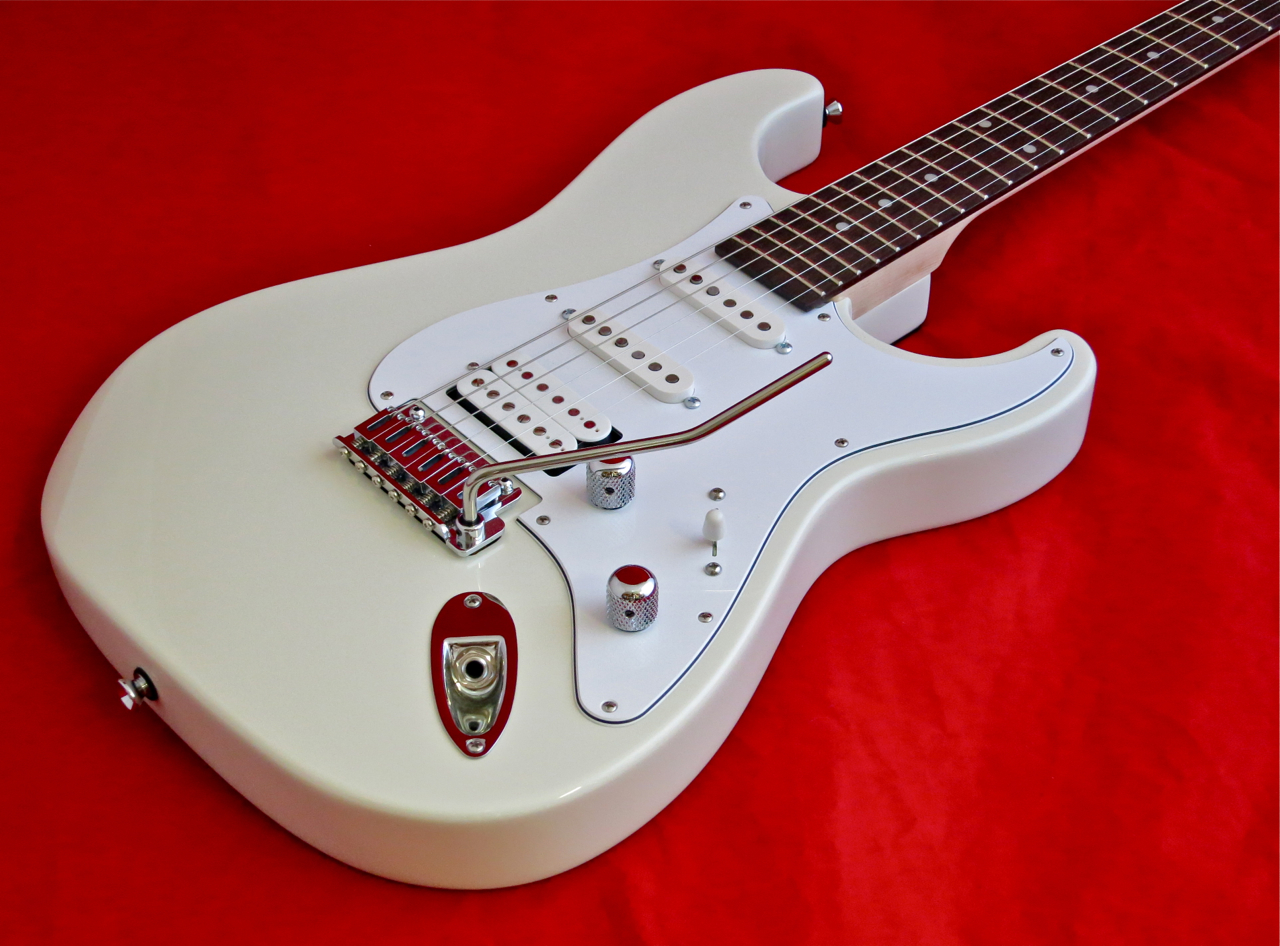
The rosewood fingerboad sports 22 gleaming jumbo-sized frets.
For his new GJ2 guitars Grover Jackson has perfected a new method of applying a compound radius to the fretboard. A compund radius means that the frets have a steeper curve near the nut and get shallower further up towards the body. This gives you the best of both worlds with easy open position chording and effortless string bending higher up the neck without string choking.
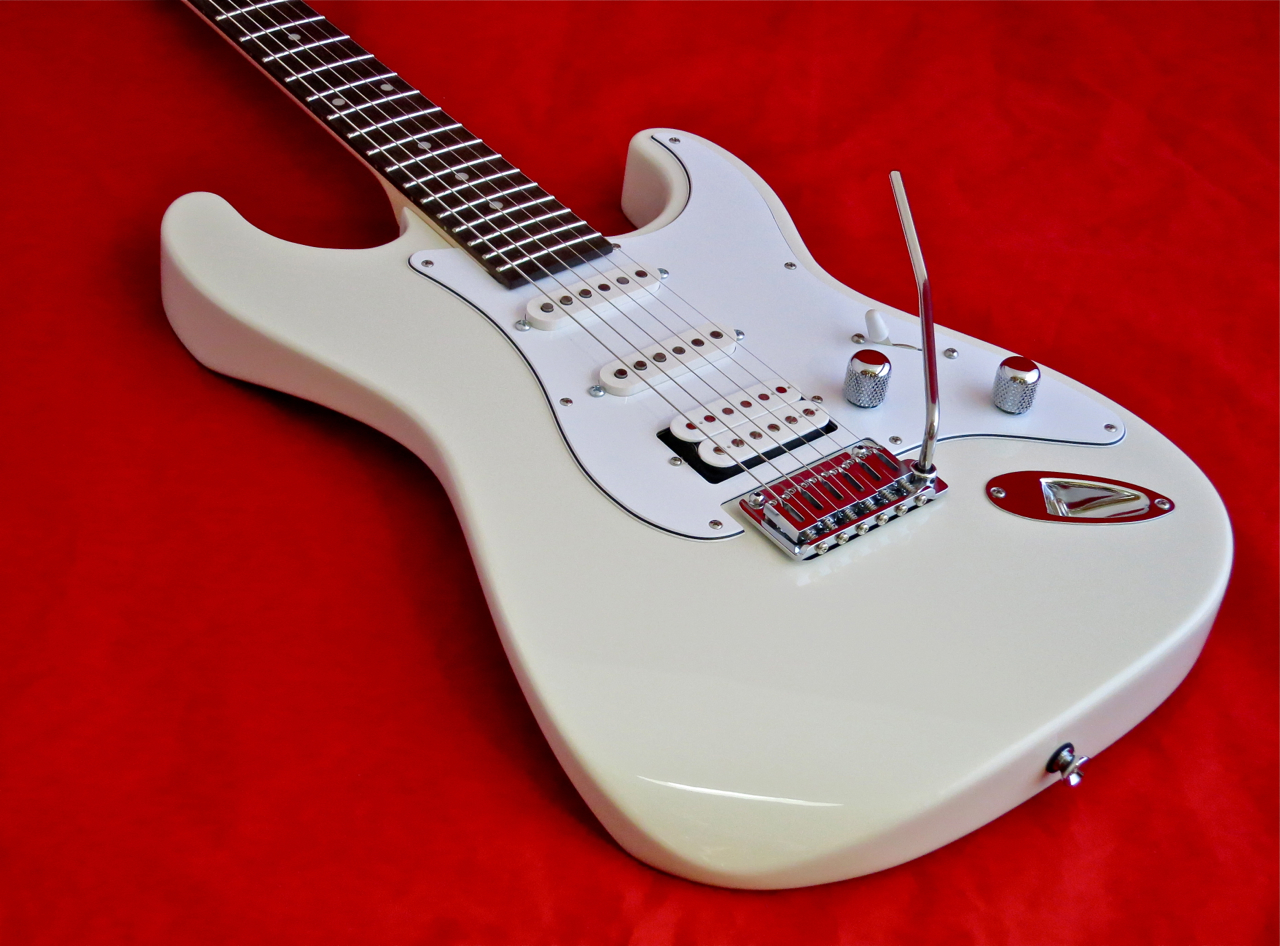
GJ2 Guitars use their own Habanero pickups as standard. Our review sample comes equipped with an HSS-setup, but you can order your Glendora with several different pickup combinations, like the vintage-style SSS or two humbuckers.
The controls comprise a five-way switch, as well as master volume and tone controls.
****
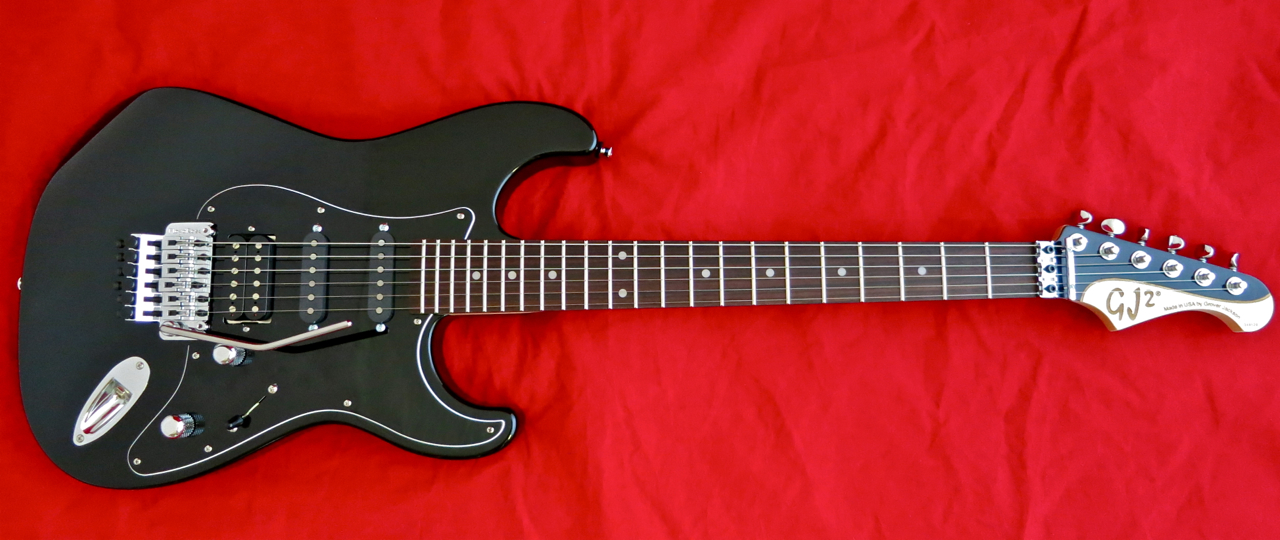
The Glendora FR (this version 1,930 €, incl. lightweight case) is the Floyd Rose-equipped version of the Glendora.
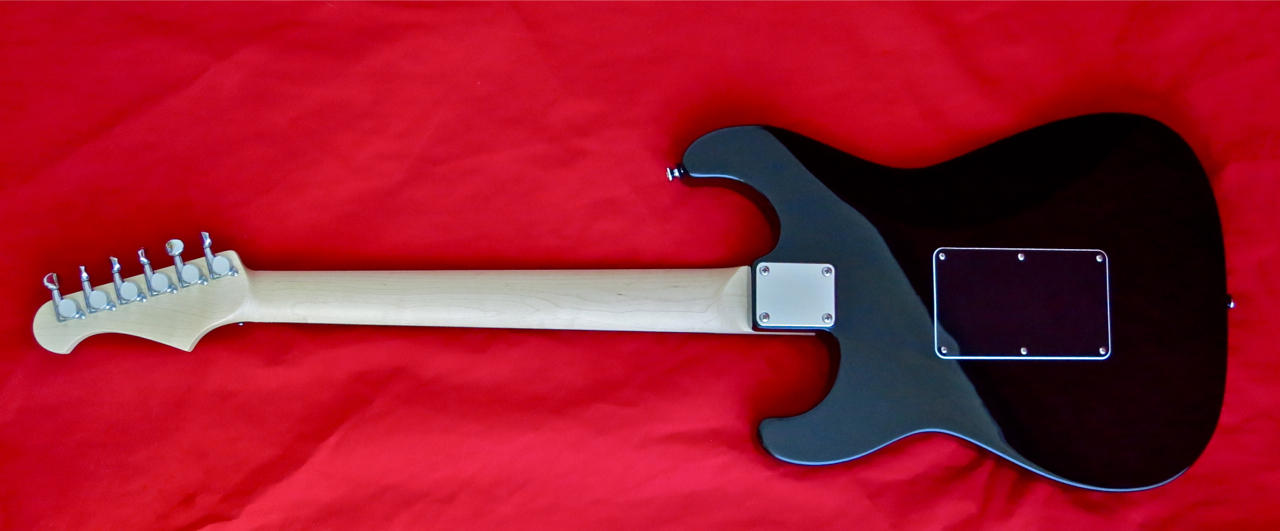
Our review instrument comes with a standard body (basswood, alder or poplar), but apart from that the basic build is the same as on the Glendora NLT.
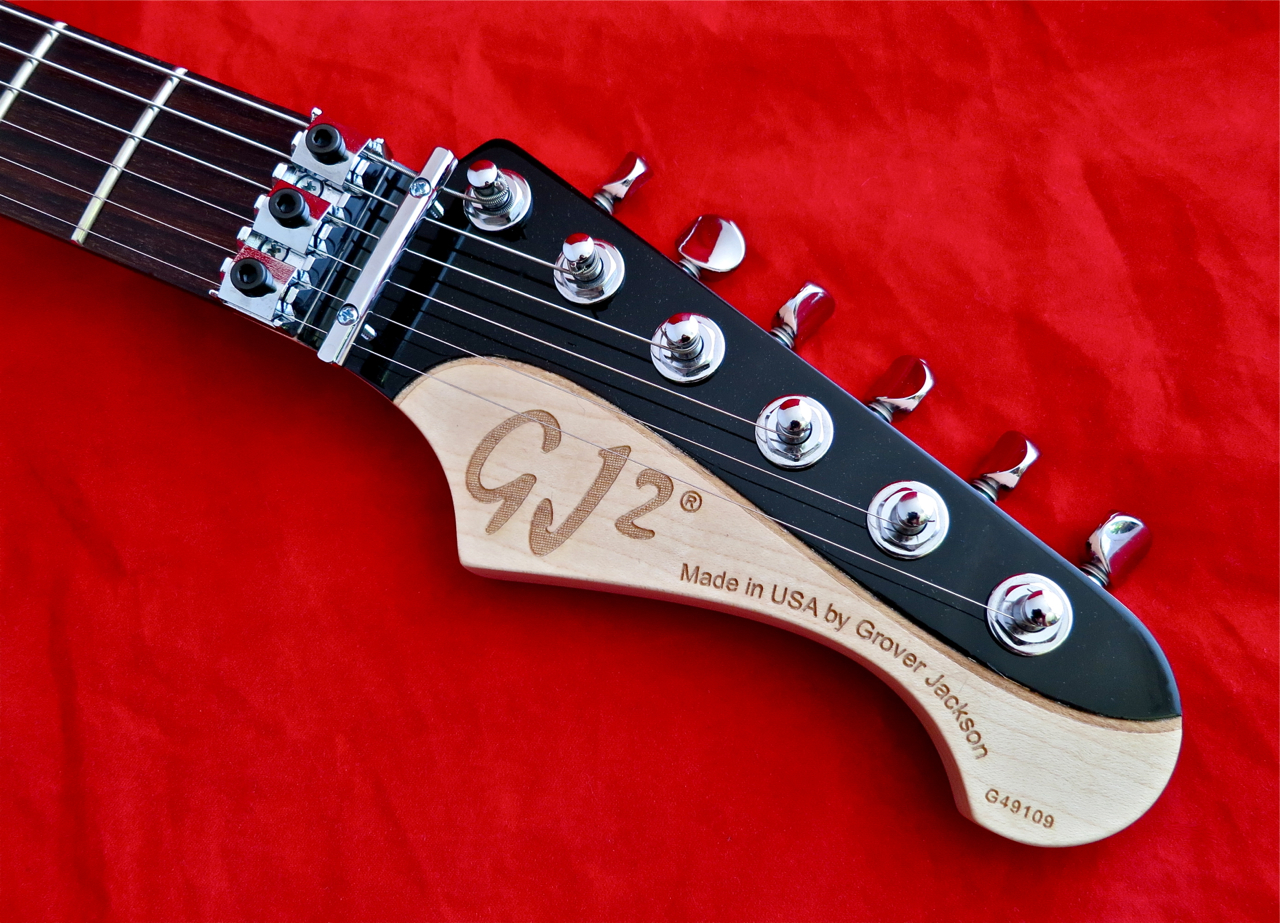
One of the custom options available for a surcharge in the Glendora-range is a matching headcap, just like on this guitar.
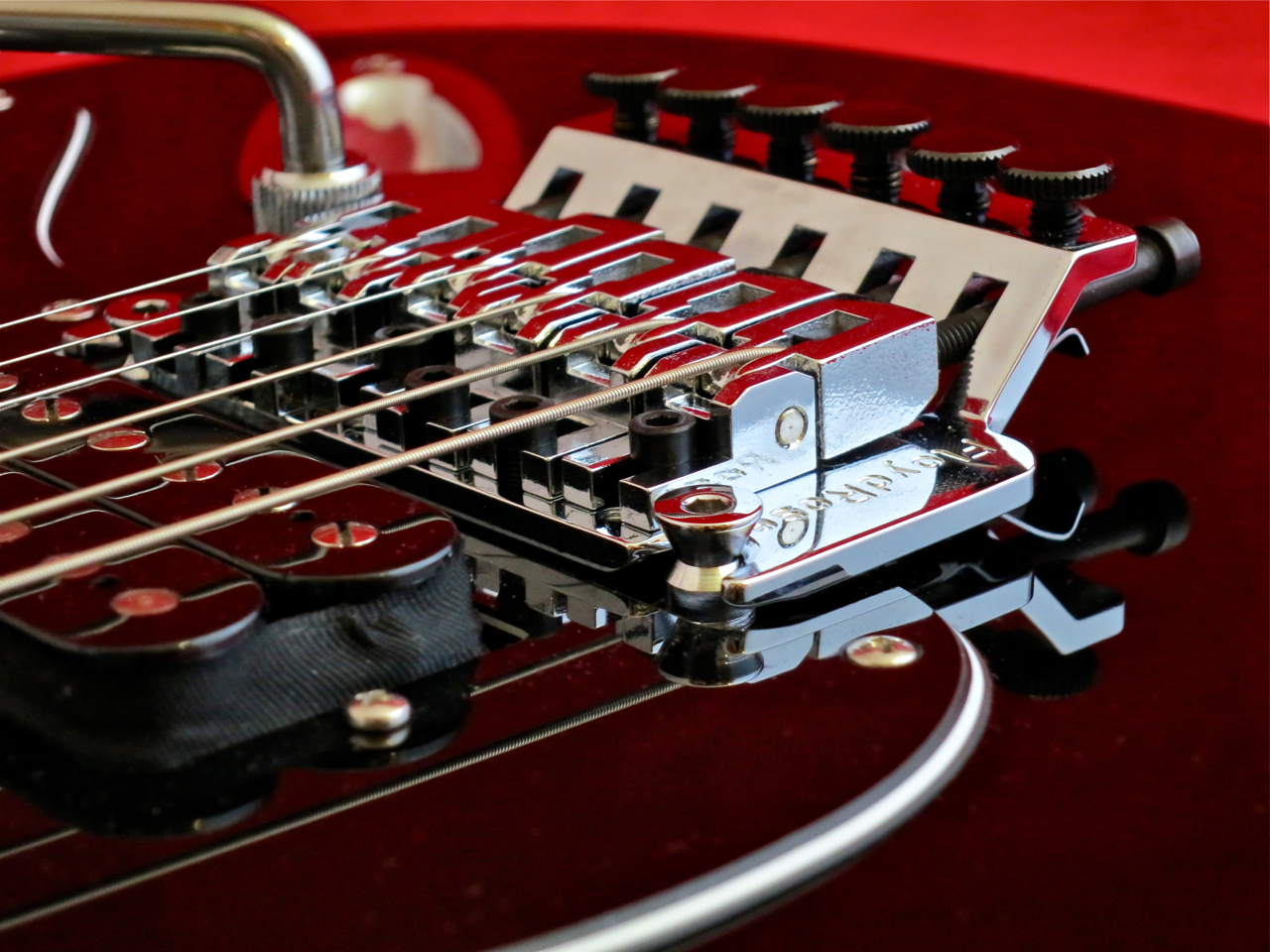
GJ2 Guitars use only top-drawer quality parts, like the Schaller-made steel Floyd Rose bridge on the Glendora FR.
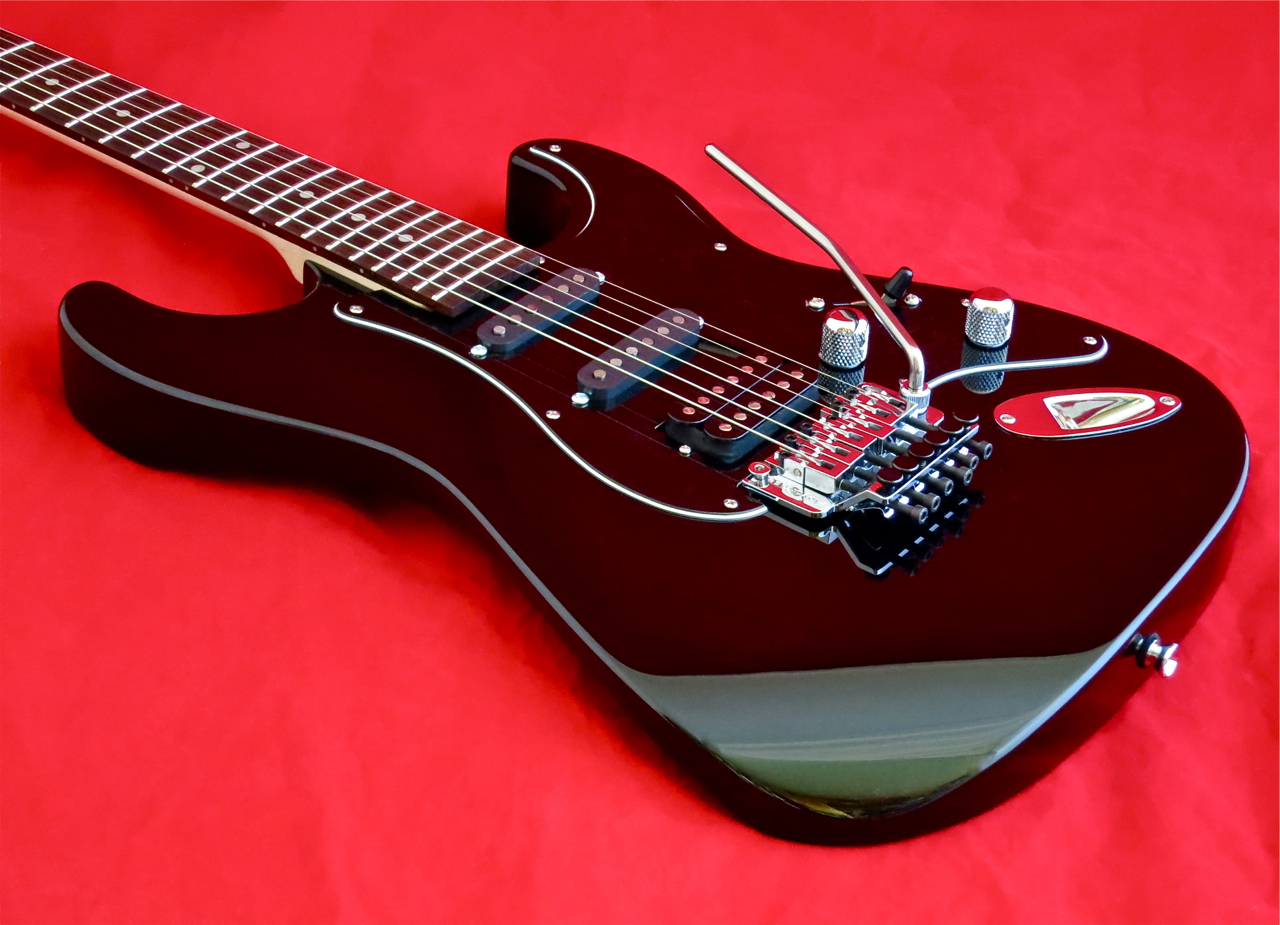
It’s a Habanero-set of two single-coils and one humbucker for this guitar.
****
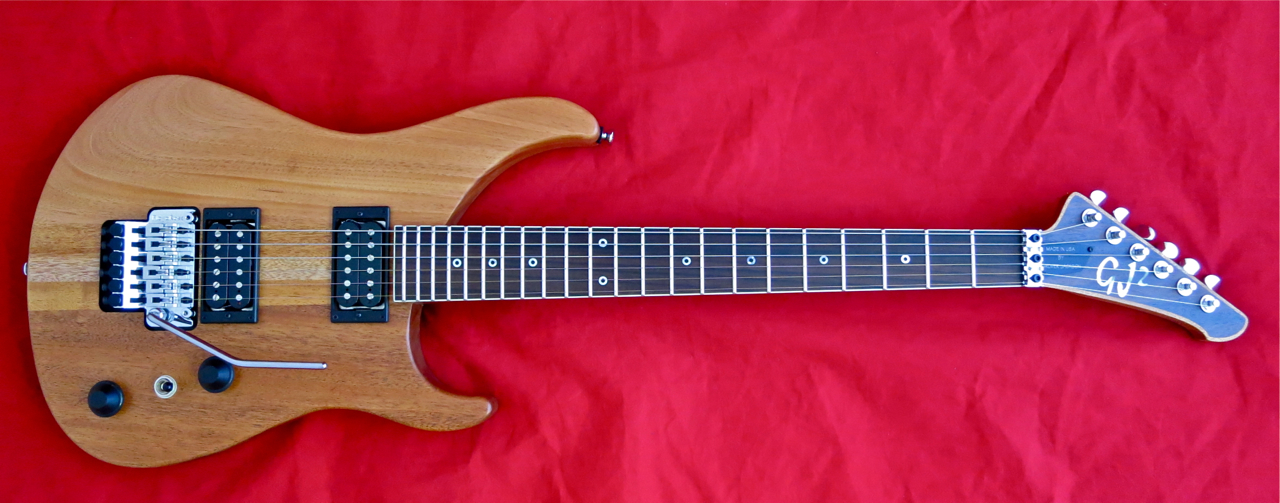
The GJ2 Arete is one of Grover Jackson’s new designs based on a through-neck. There are three different basic versions of the Arete available, called 3-Star, 4-Star and 5-Star.
The Arete 4-Star (this version 2,231 €, incl. lightweight case) is the middle model, which is crafted almost completely from South-American mahogany. The neck uses three long strips side-by-side for added stiffness.
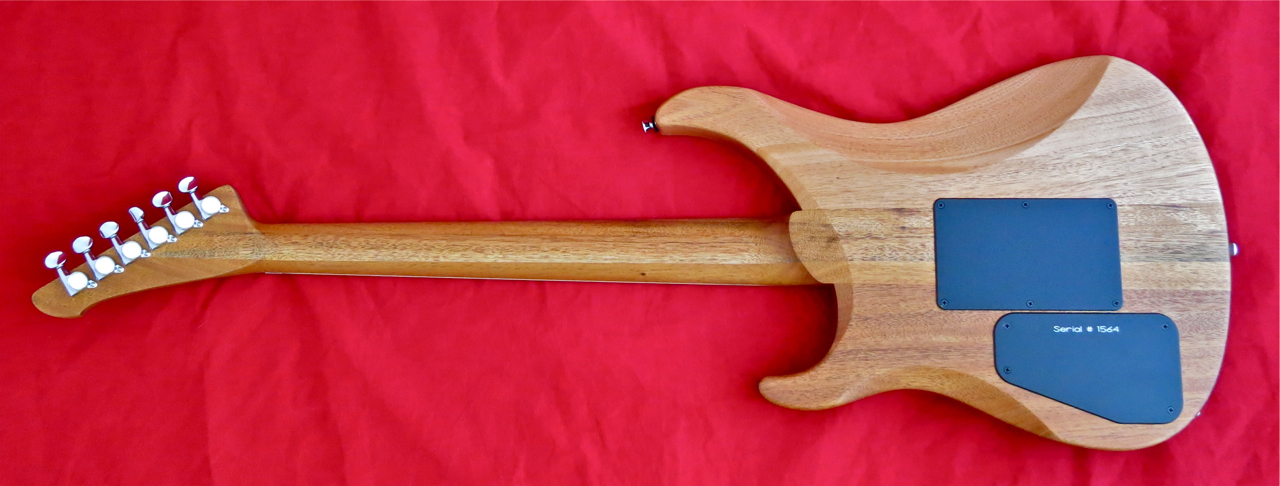
Two mahogany wings make up the streamlined body. The more affordable Arete 3-Star is made from sapele, while the more expensive 5-Star counterpart gives you several different body woods to choose from.
The Arete 4-Star comes in a hand-rubbed oil finish. The cover plates are made from aluminium.
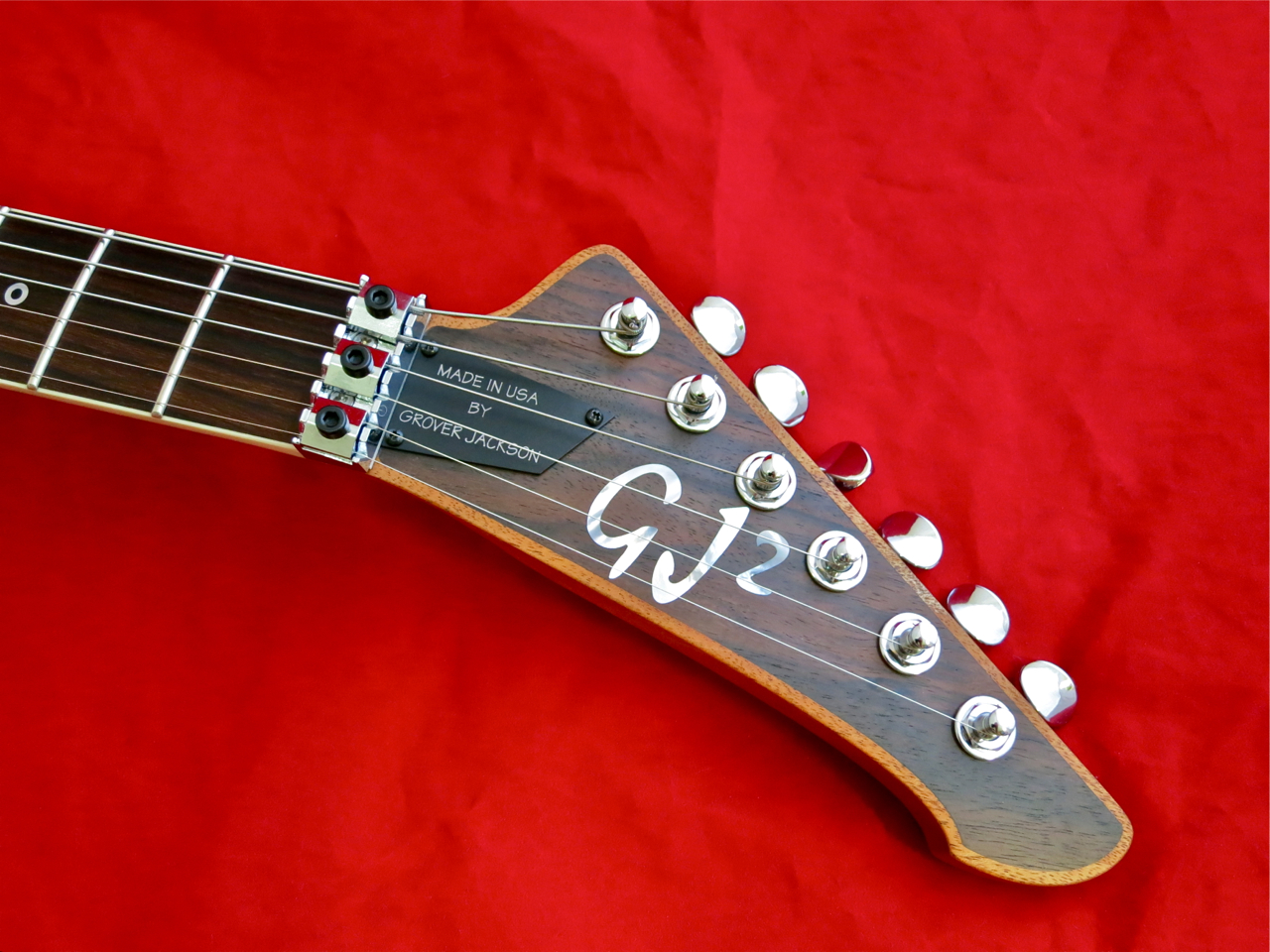
The headstock sports one of GJ2 Guitars’ special features – the Invisible Binding. This is achieved by routing out a shallow ”pool” on the headstock’s face, into which a large rosewood plate is then inlaid.
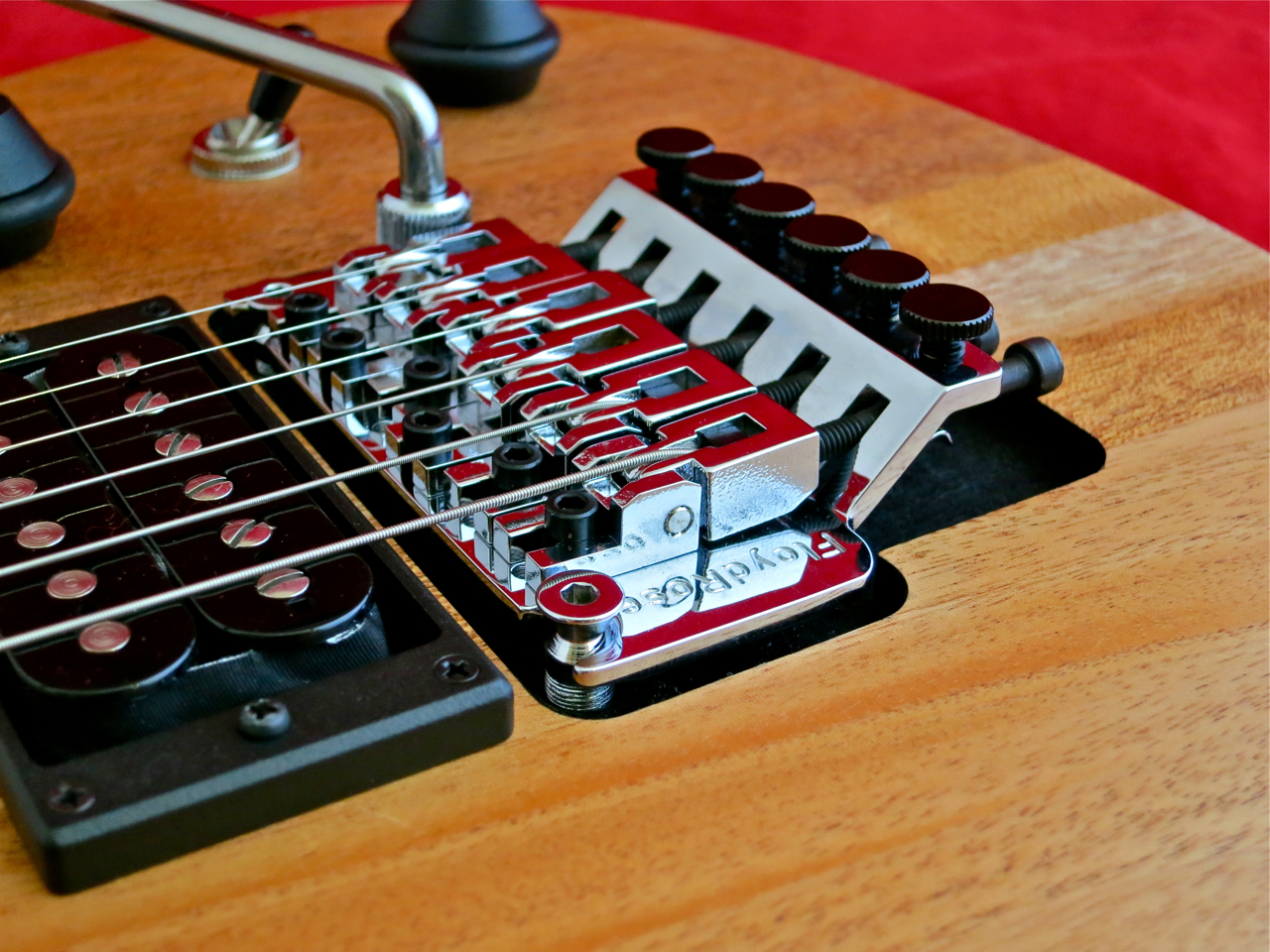
All Arete 4-Star guitars are vibrato-equipped – they come either with the same knife-edge bridge as on the Glendora NTL, or with a steel Floyd Rose as on our review instrument.
The black pickup bezels feature a structured surface.

The bound rosewood fingerboard sports Mini Bull’s Eye inlays, as well as 22 jumbo frets.
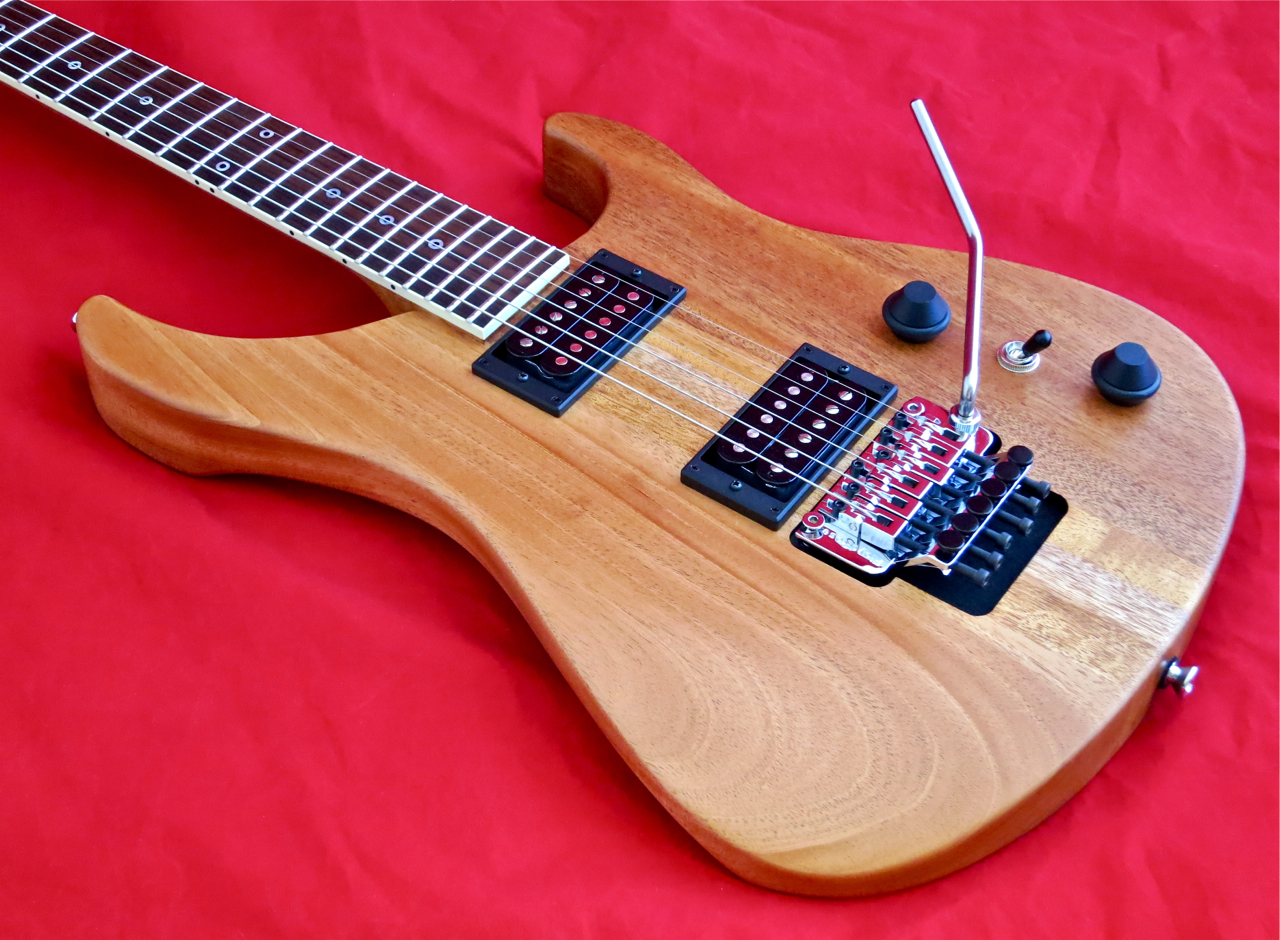
The basic version of the Arete 4-Star is equipped with two Habanero humbuckers, but you can also order HSS- or HSH-configurations, should you so desire.
The three-way toggle is mounted between the master volume and tone controls. GJ2 Guitars’ cool Flying Saucer-knobs not only look great, but are also easy to adjust.
****
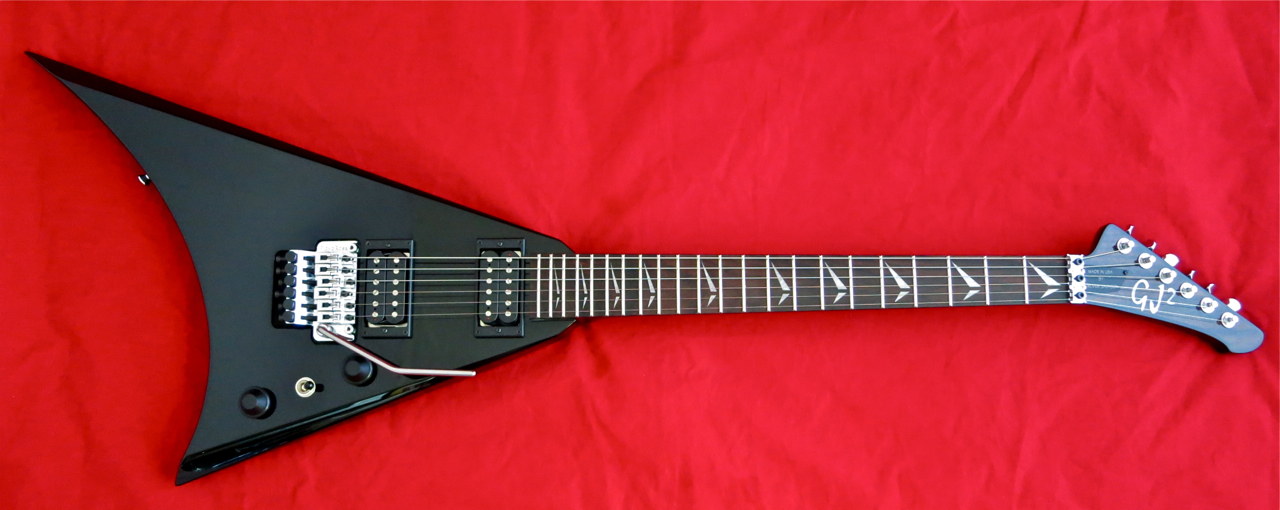
A through-neck crafted from three side-by-side strips of maple flanked by basswood wings – this is the basic recipe behind the GJ2 Concorde 4-Star (this version 2,768 €, including hard case).
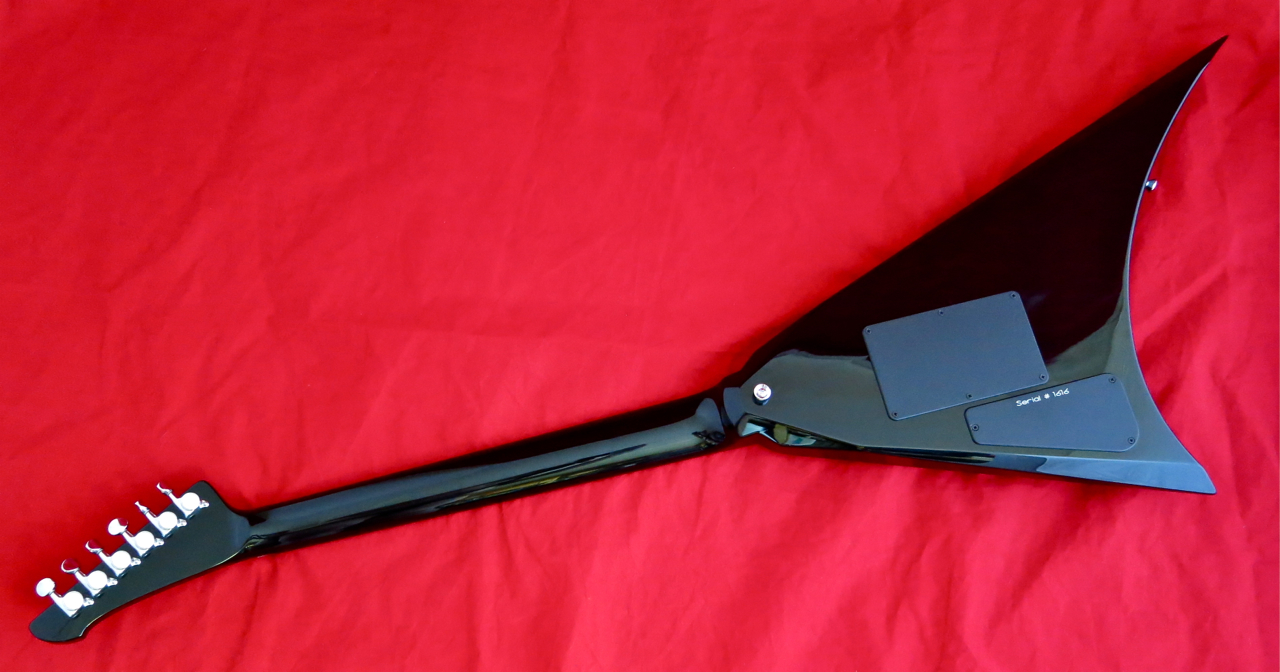
All Concorde-models feature a full-length, 64.8 cm (25.5-inch) scale.
The Concorde 4-Star is available in five gloss finishes – Jet Black, Stark White, Antique White, Sports Car Red and GJ Blue – and either a Floyd Rose vibrato (as on the review sample) or a Gotoh hardtail bridge.
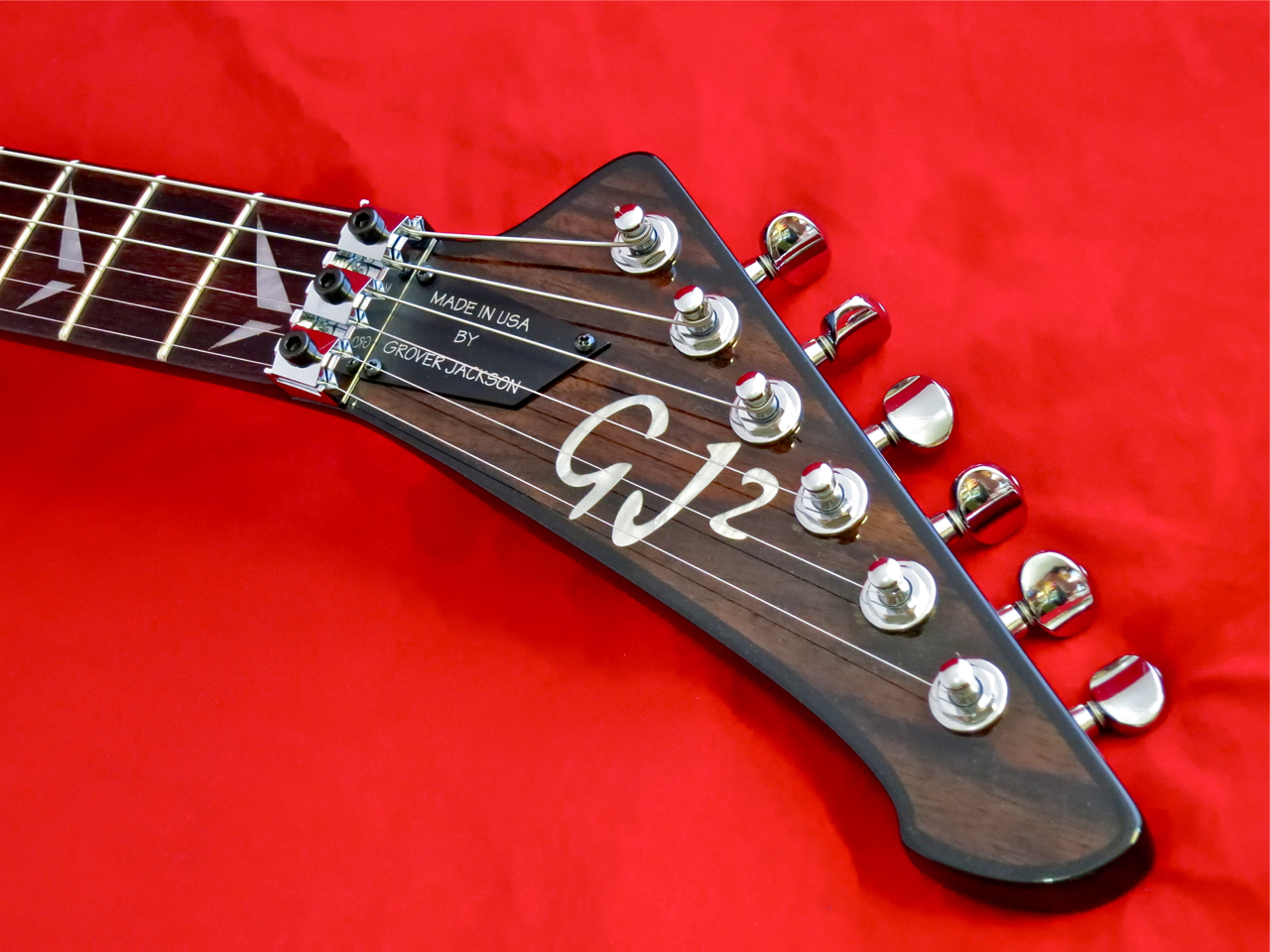
The hardware on a Concorde 4-Star is chrome-plated.
The fretboard is equipped with 22 jumbo frets and pearloid inlays.
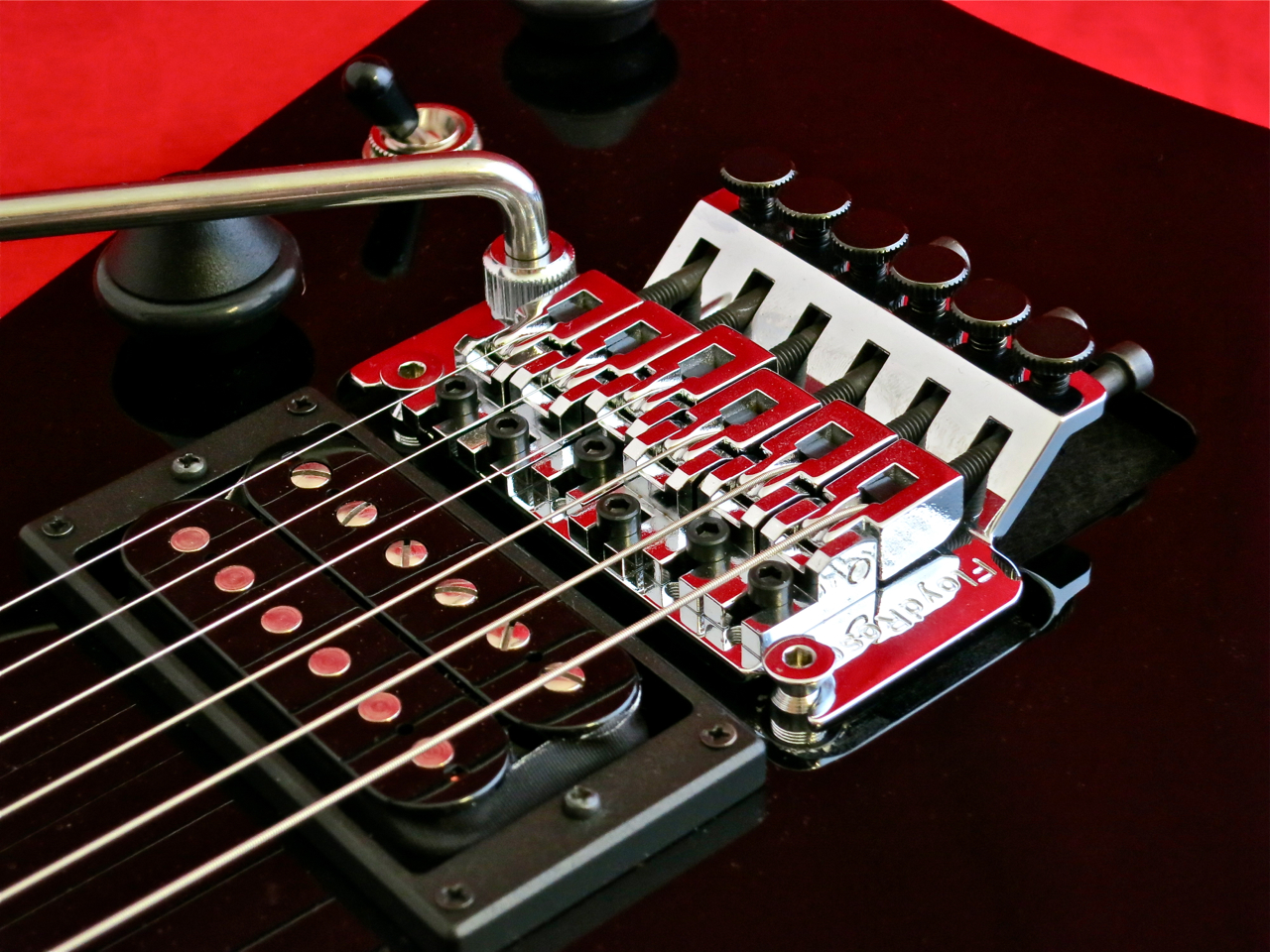
The volume knob is easy to reach with your pinkie.
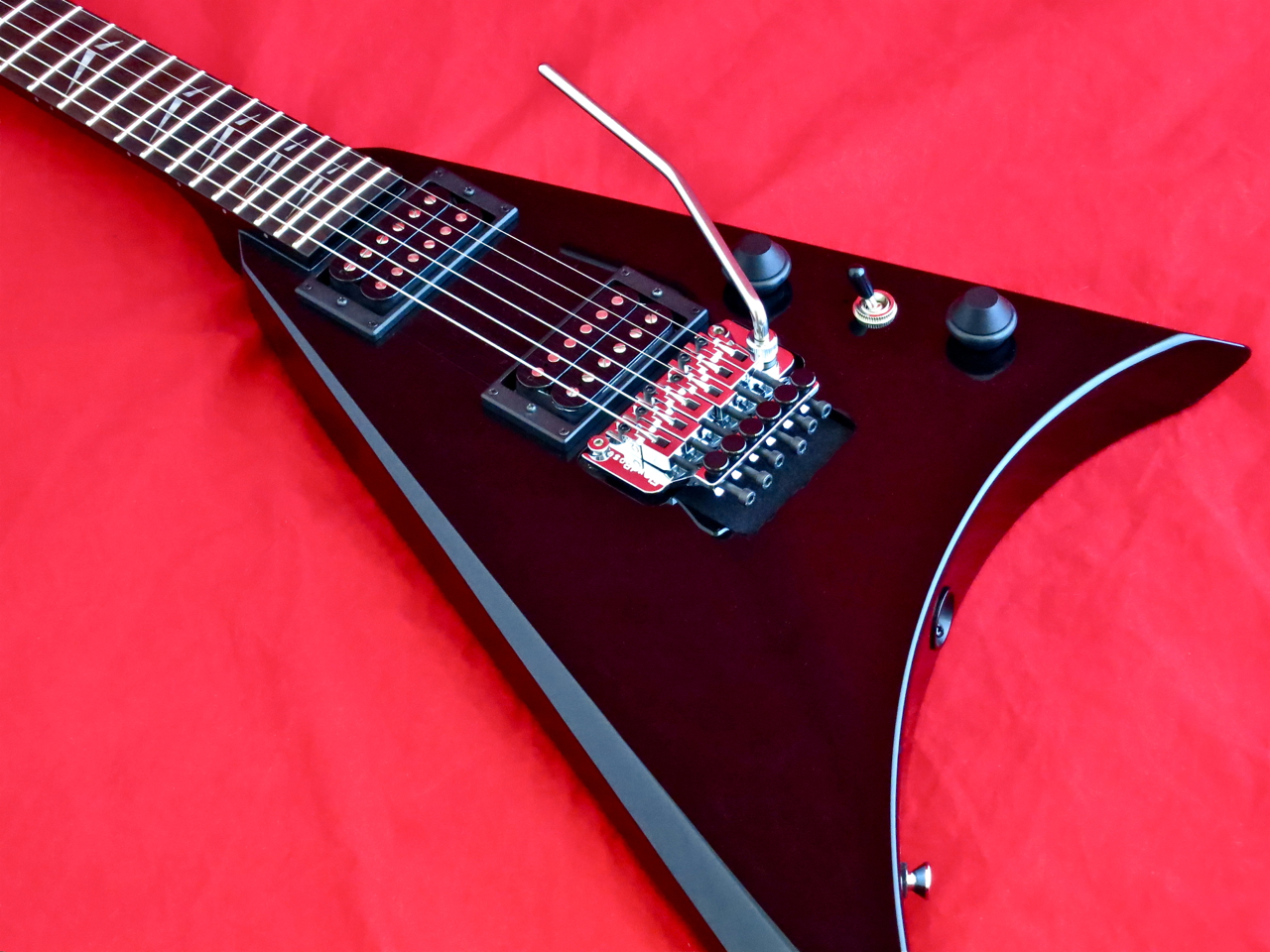
Two Hanbanero humbuckers, one master volume, one master tone control and a three-way toggle – what more does a Rock God need?
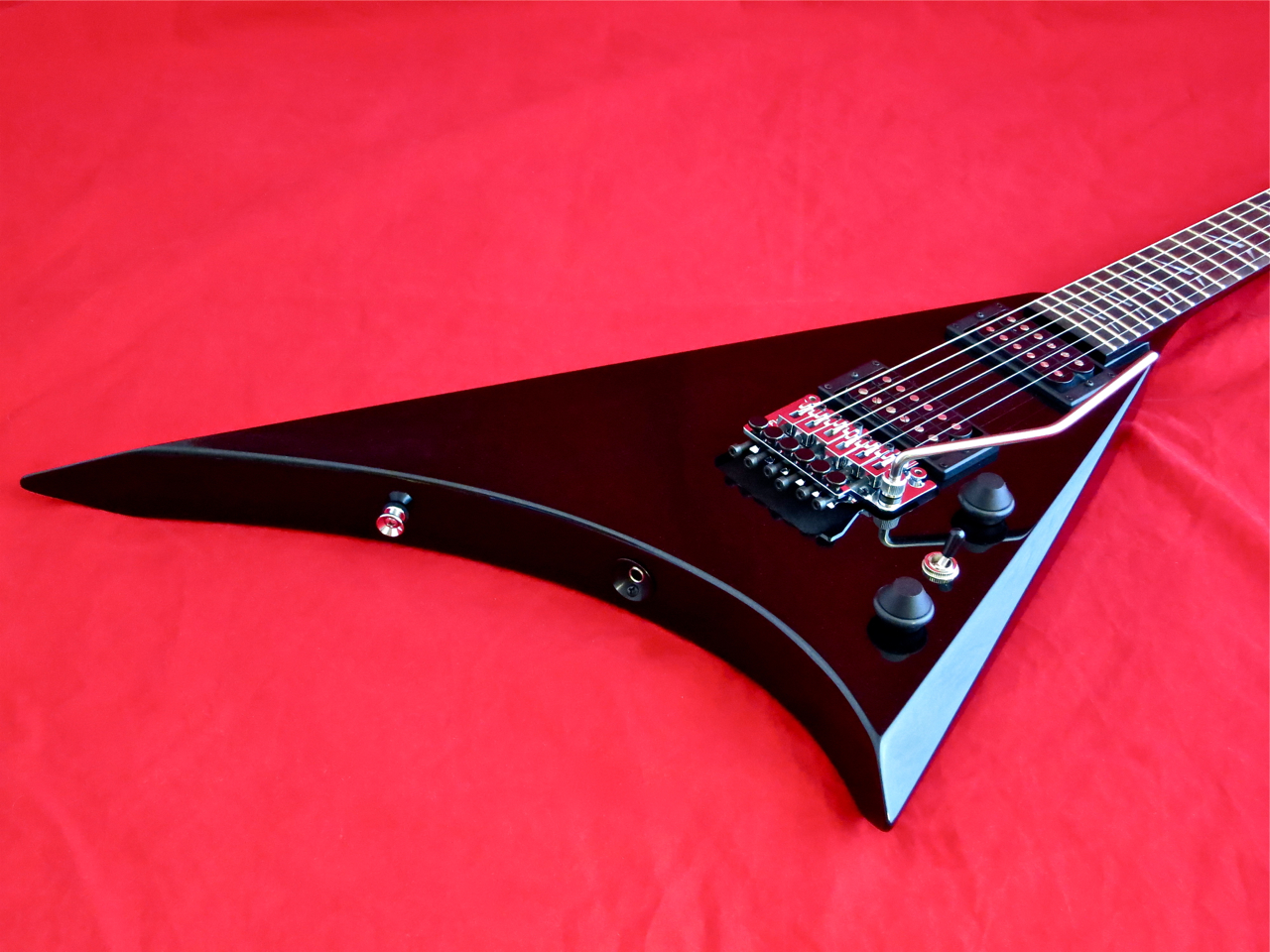
The placement of the output jack is a nifty little feature.
****
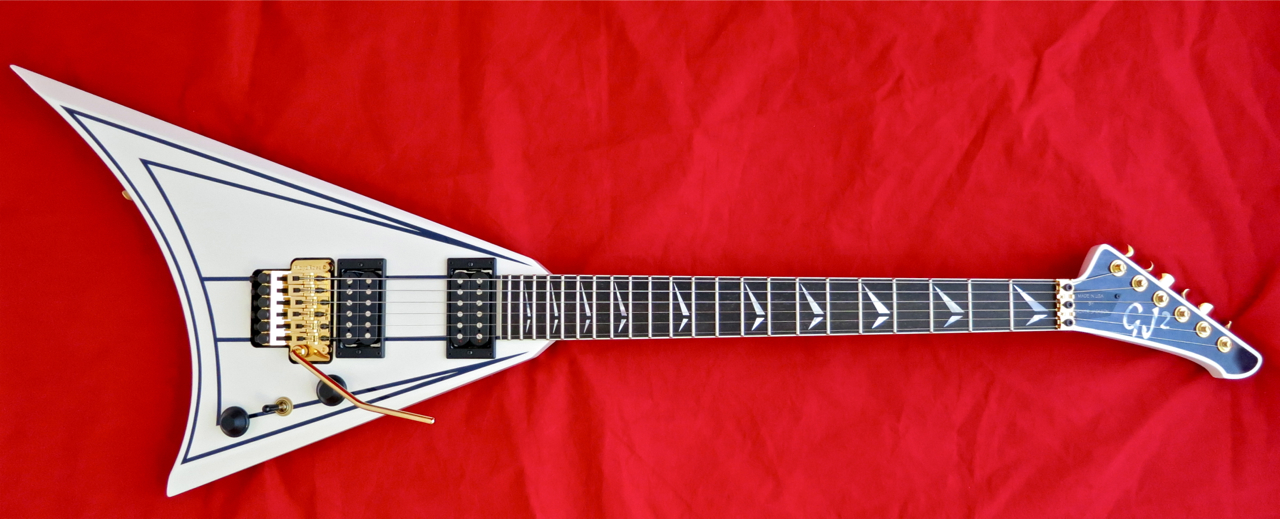
This is GJ2 Guitars’ ultimate Heavy Dream Machine:
The Concorde 5-Star (this version 4,103 €, incl. hard case) can be had – for an additional charge – finished in a custom finish, such as the Randy Rhoads-style pinstripe graphics on this guitar.
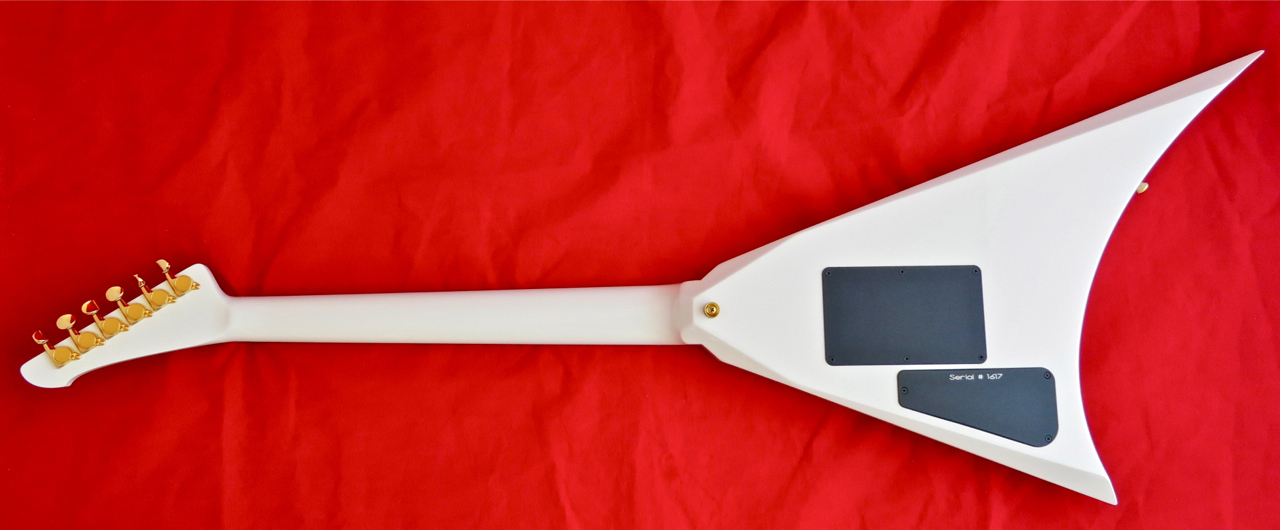
The back plates of the Concorde-models are made of aluminium.
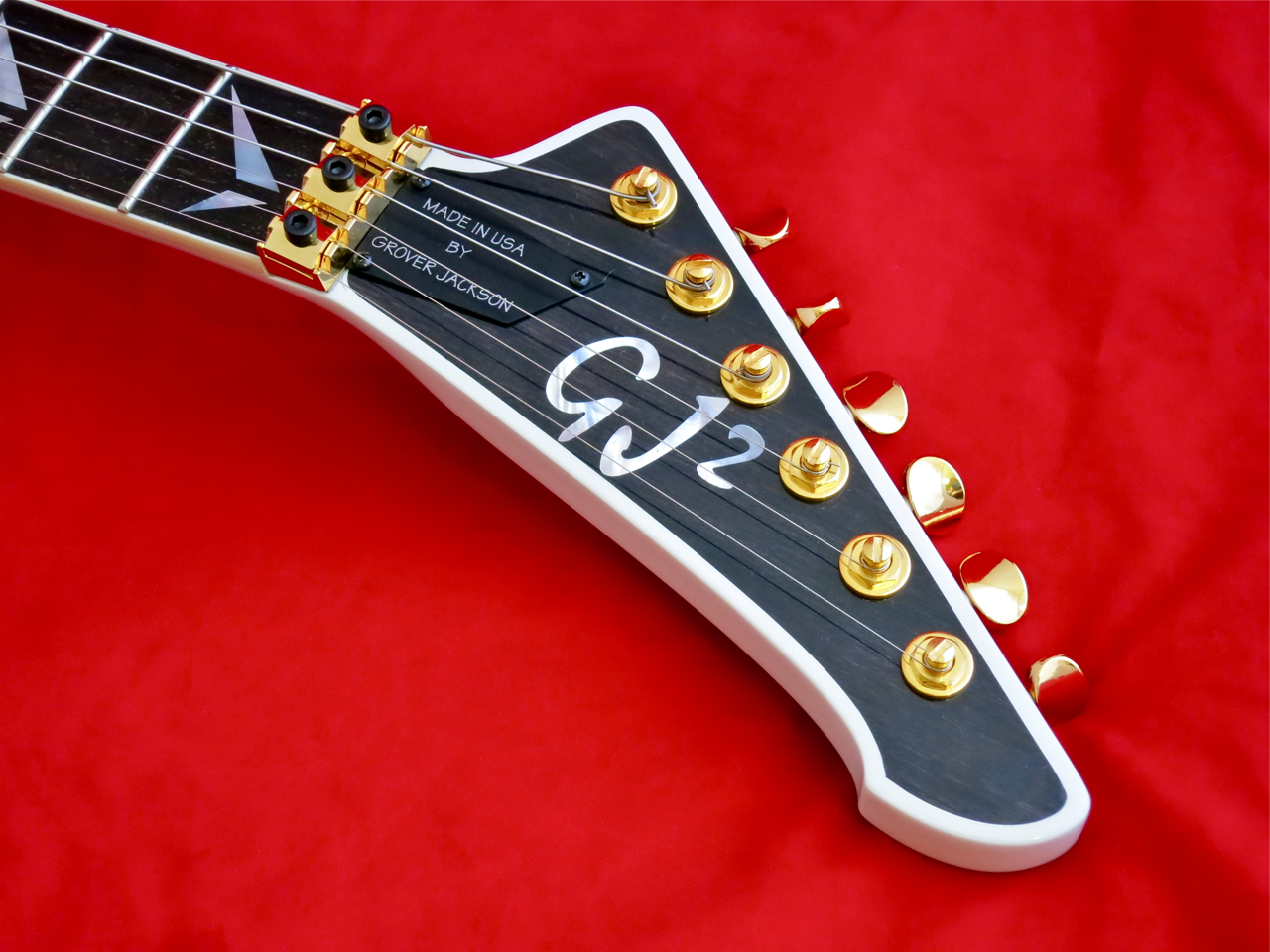
The Concorde 5-Star sports gold-coloured hardware. Our review sample had optional, locking Gotoh-tuners installed.
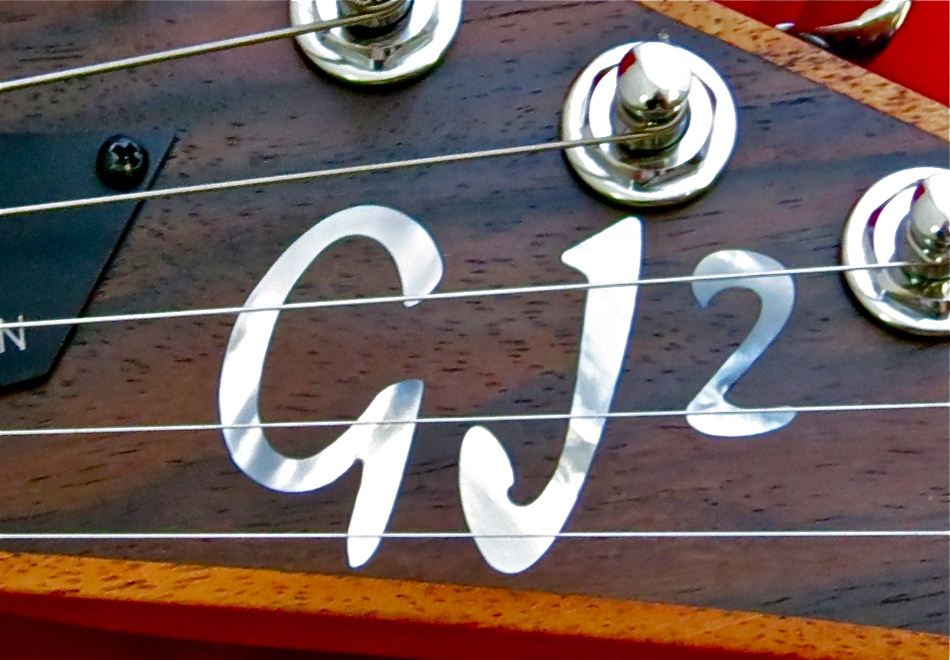
Ebony is the material of choice for the bound fretboard, as well as the headstock inlay.
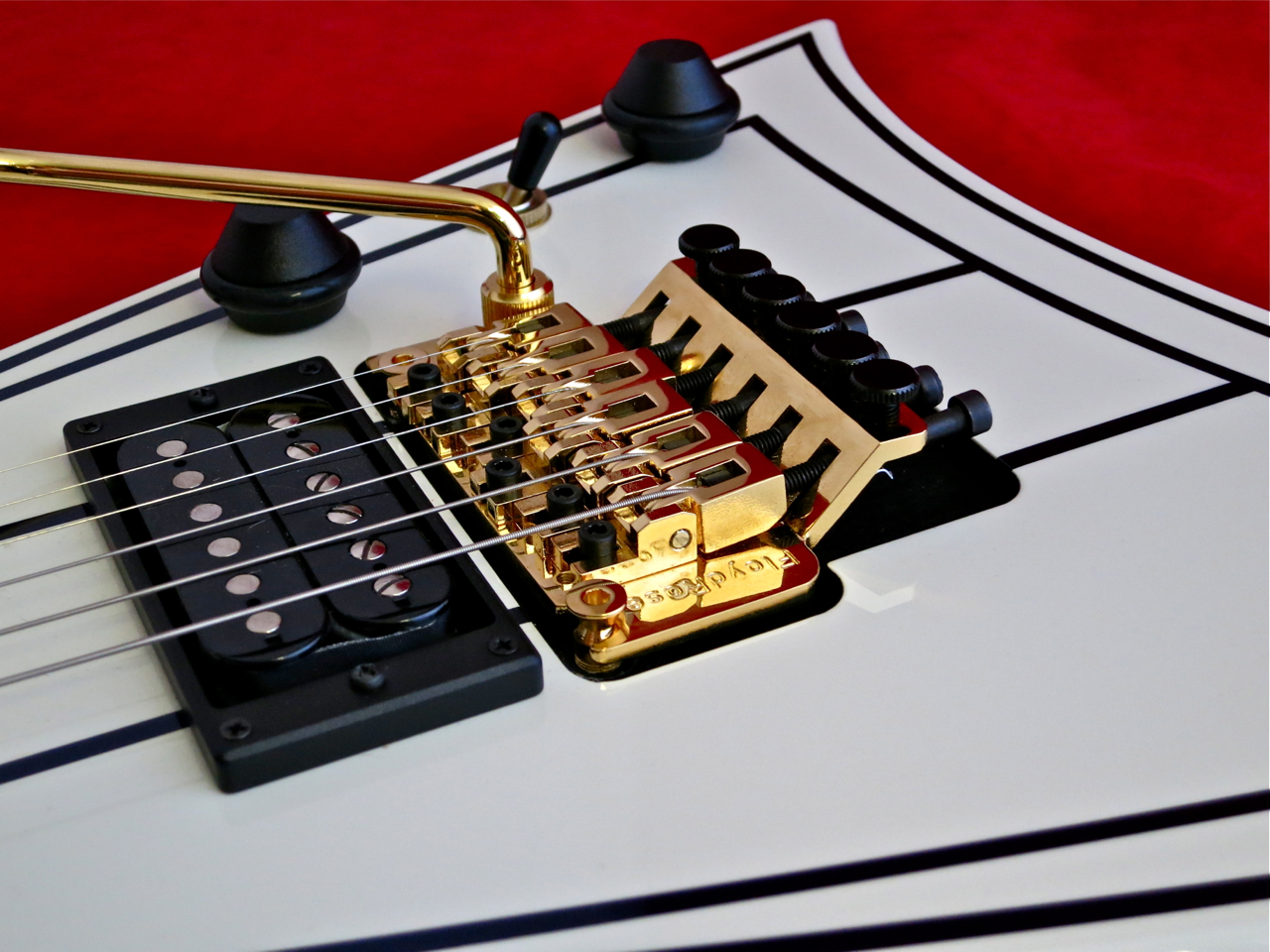
Here’s a closer look at the golden Floyd Rose bridge.
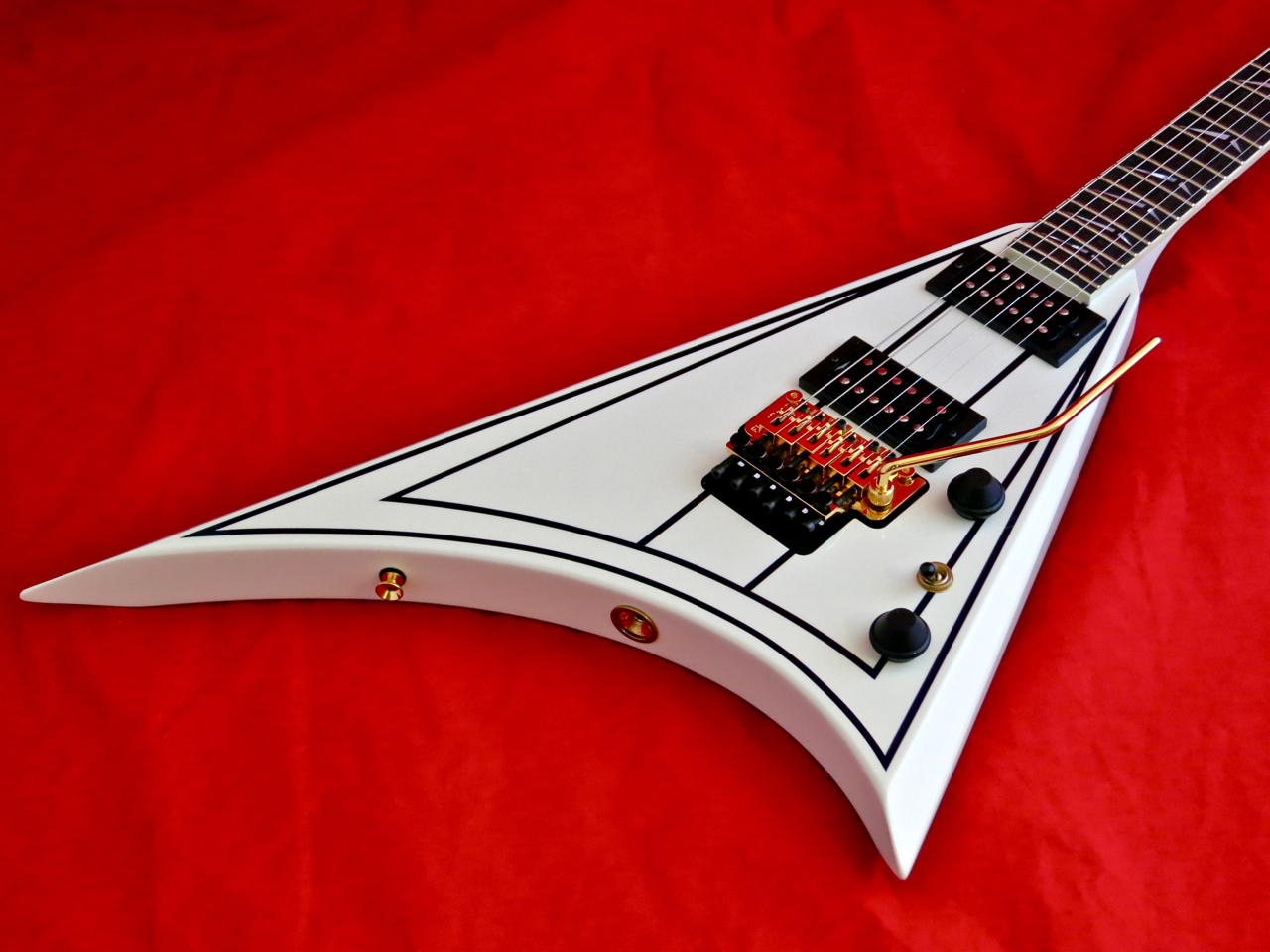
The inlays on the Concorde 5-Star are genuine pearl.
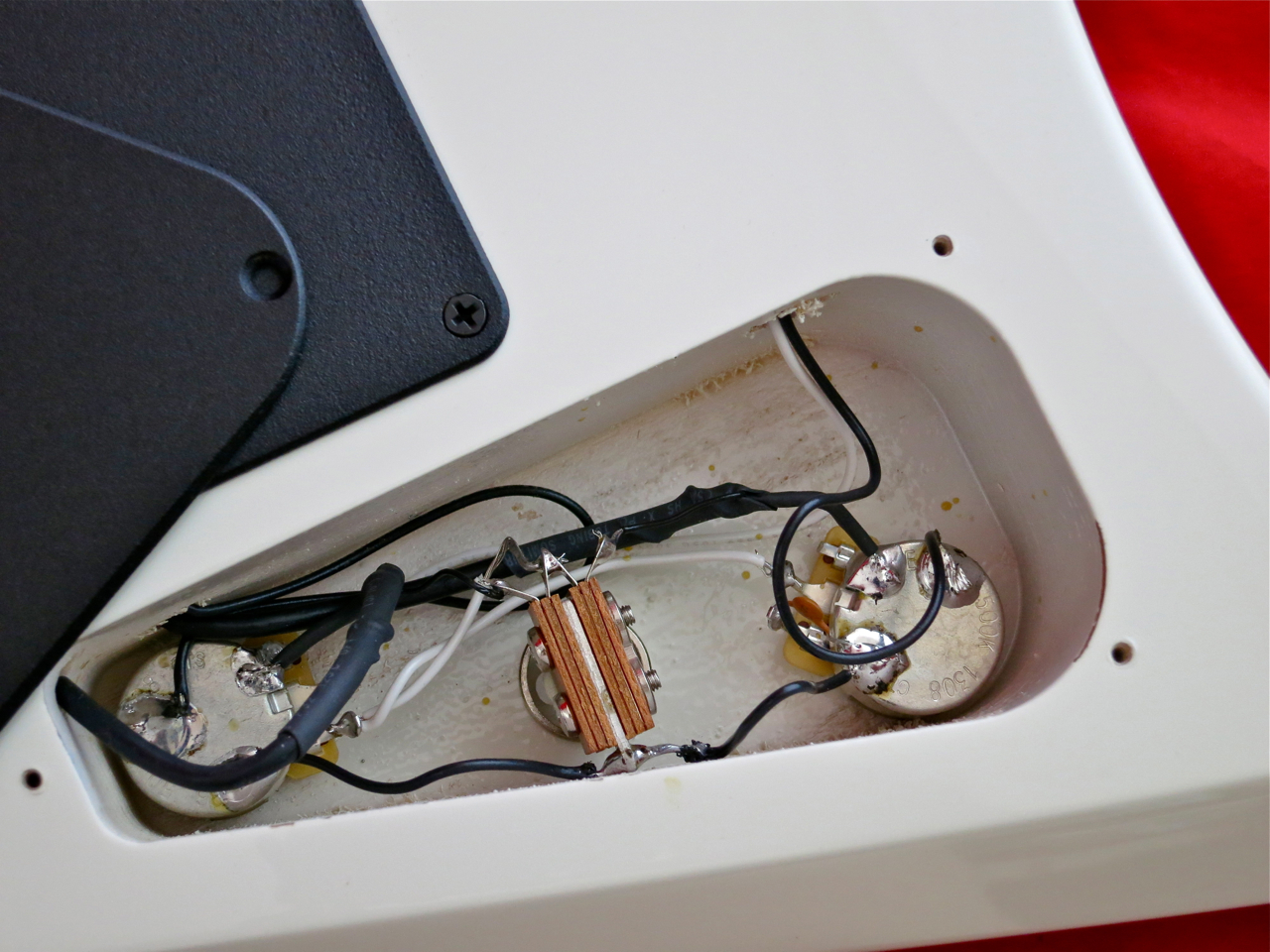
…and here’s a little peek into the very clean control cavity.
****
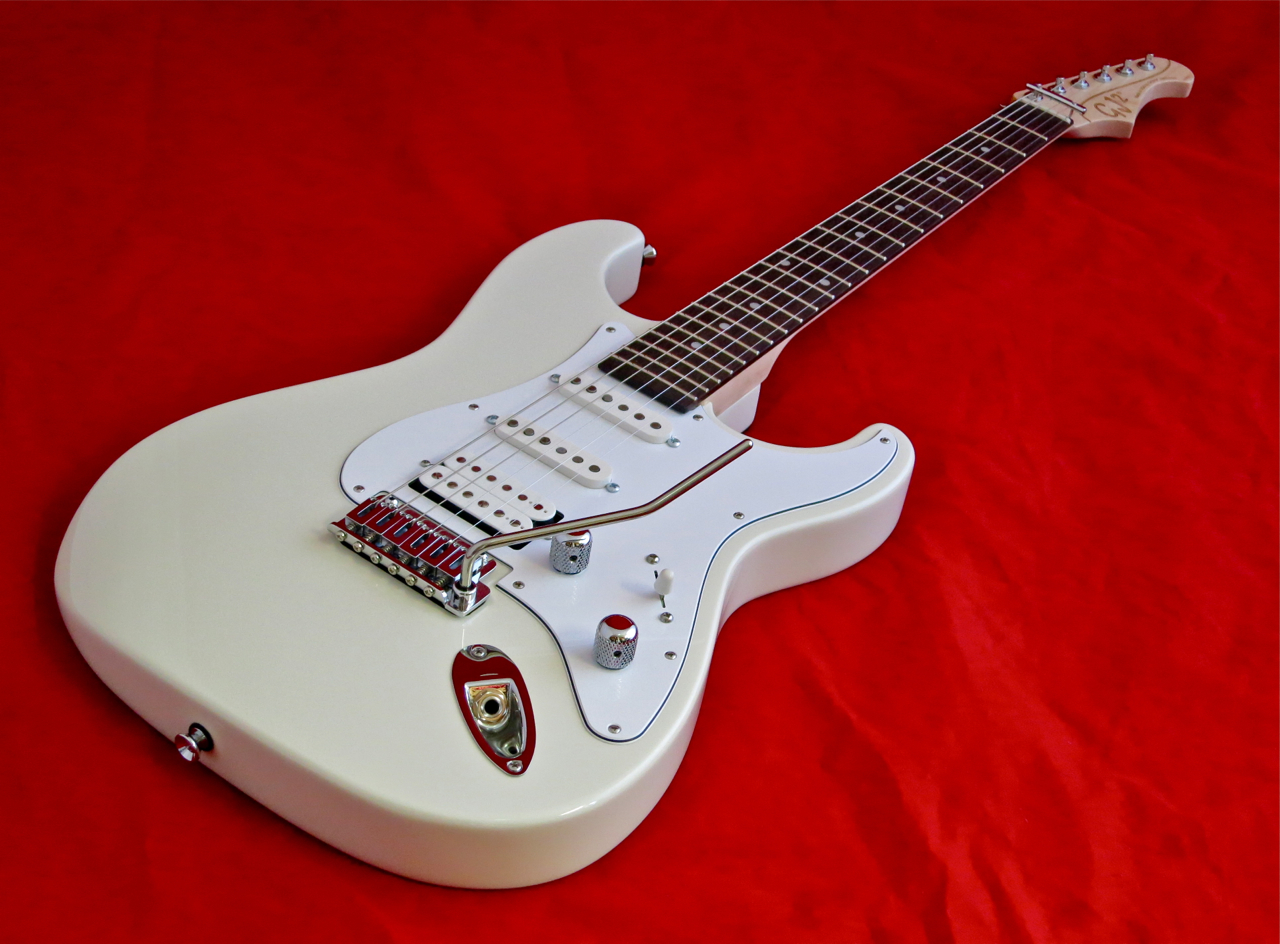
The feather-light ash-bodied GJ2 Glendora NLT is a fantastic S-style guitar for the connoisseur!
The Glendora’s playability is first-rate, and the guitar’s satin-finished neck, with its oval C-profile feels like an old friend.
Played acoustically there’s a hefty dose of woody dryness and sparkling top end, no doubt thanks to the ash body. The Glendora NLT’s displays an open voice with a nicely clucking attack.
I have only good things to say about GJ2’s Habanero pickups – they sound great, they are dynamically rich and the whole set is well balanced in terms of tone and output level.
Here’s a short clip played using the neck pickup:
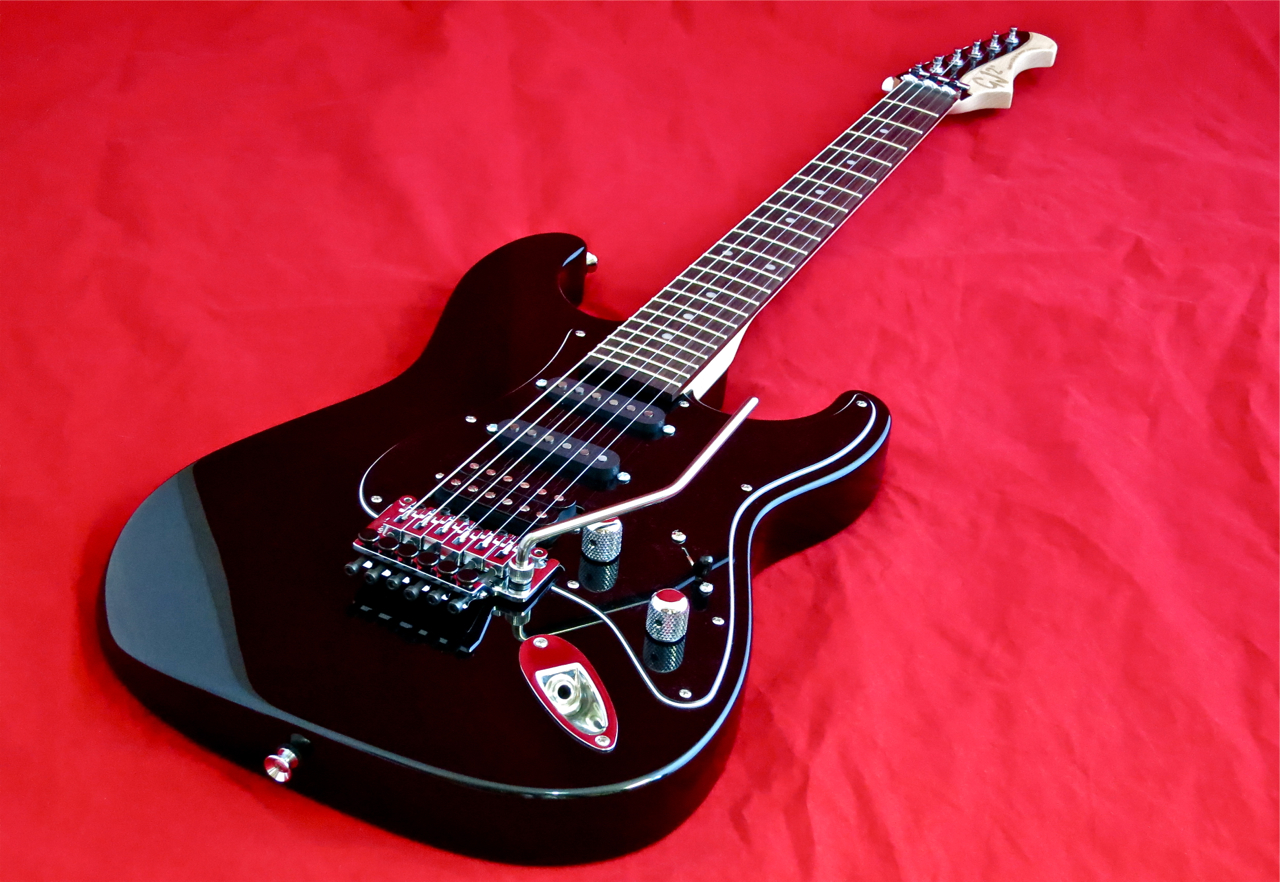
The workmanship, feel and playability of the Glendora FR is the same as in the NLT-version – simply fantastic!
Acoustically there’s maybe a tad more roundness in the mid-range and a slightly fatter bass on display in the Glendora FR, which is probably a result of its standard body. On the other hand, the steel Floyd Rose adds its own sprinkling of presence bite into the mix.
Because the bridge humbucker isn’t overpowering the guitar’s single-coils, there’s plenty of fun to be had using the second switch position (bridge and middle):
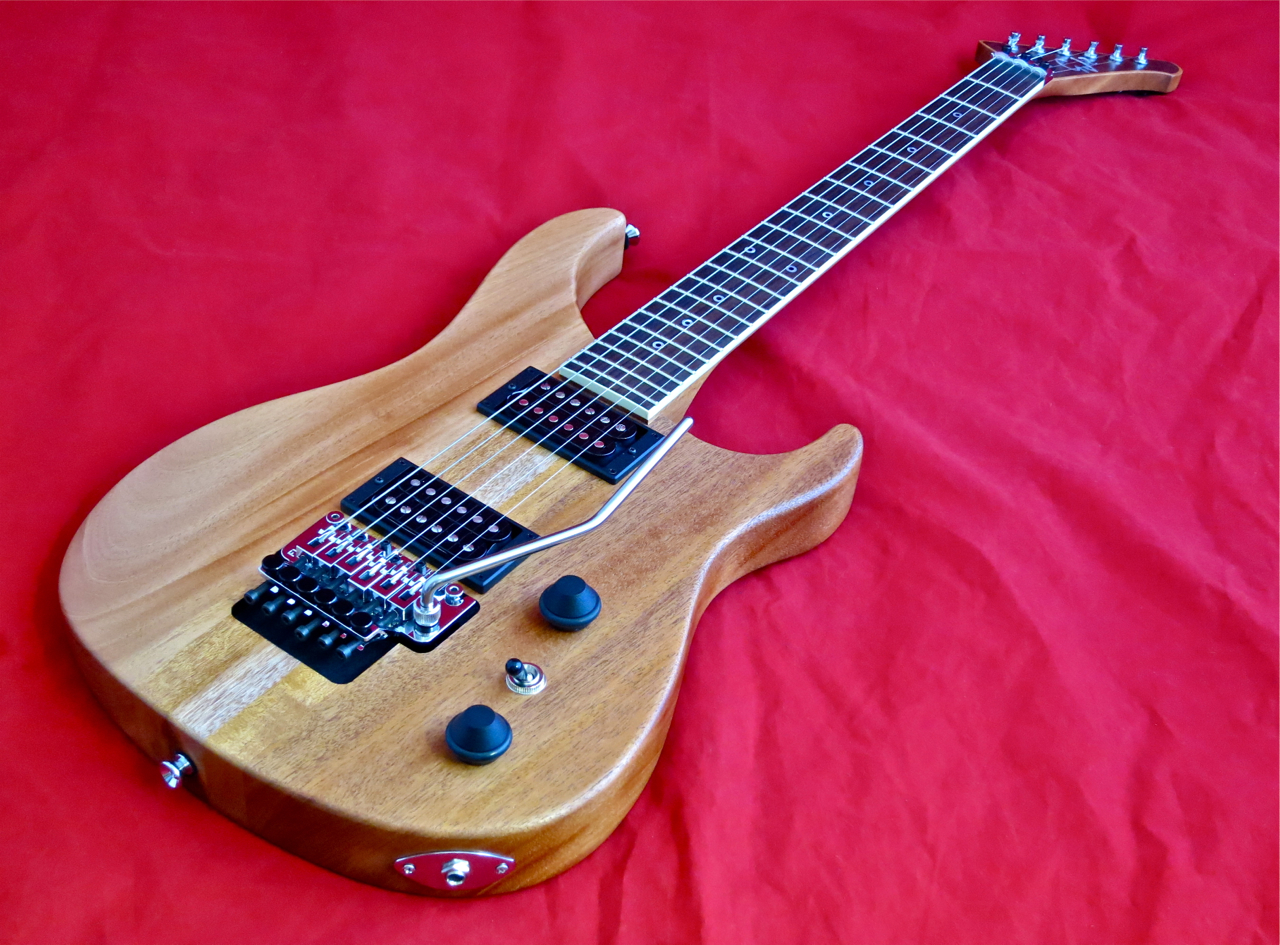
The lightweight GJ2 Arete 4-Star is a very comfortable guitar to hold and play.
Thanks to its hand-rubbed oil finish the Arete feels very organic. If you’re a fan of nice wood, then this is the guitar for you.
The neck profile has a nice bit of shoulders to its slightly flattened D-section, and fills out your hand rather nicely.
The Arete’s acoustic voice is warm and open.
GJ2’s Habanera humbuckers clearly follow the boutique-vintage route, which puts tone and dynamics front and centre, instead of sheer brute force. Thanks to this it is very easy to coax a whole trainload of different tasty humbucker-tones from the Arete 4-Star, which will satisfy both the traditionalist, as well as modern Rock- and Fusion-guitarists.
The Flying Saucer knobs have a very positive grip, allowing you to adjust the guitar’s controls precisely.
Here’s a clip I recorded using the bridge humbucker:
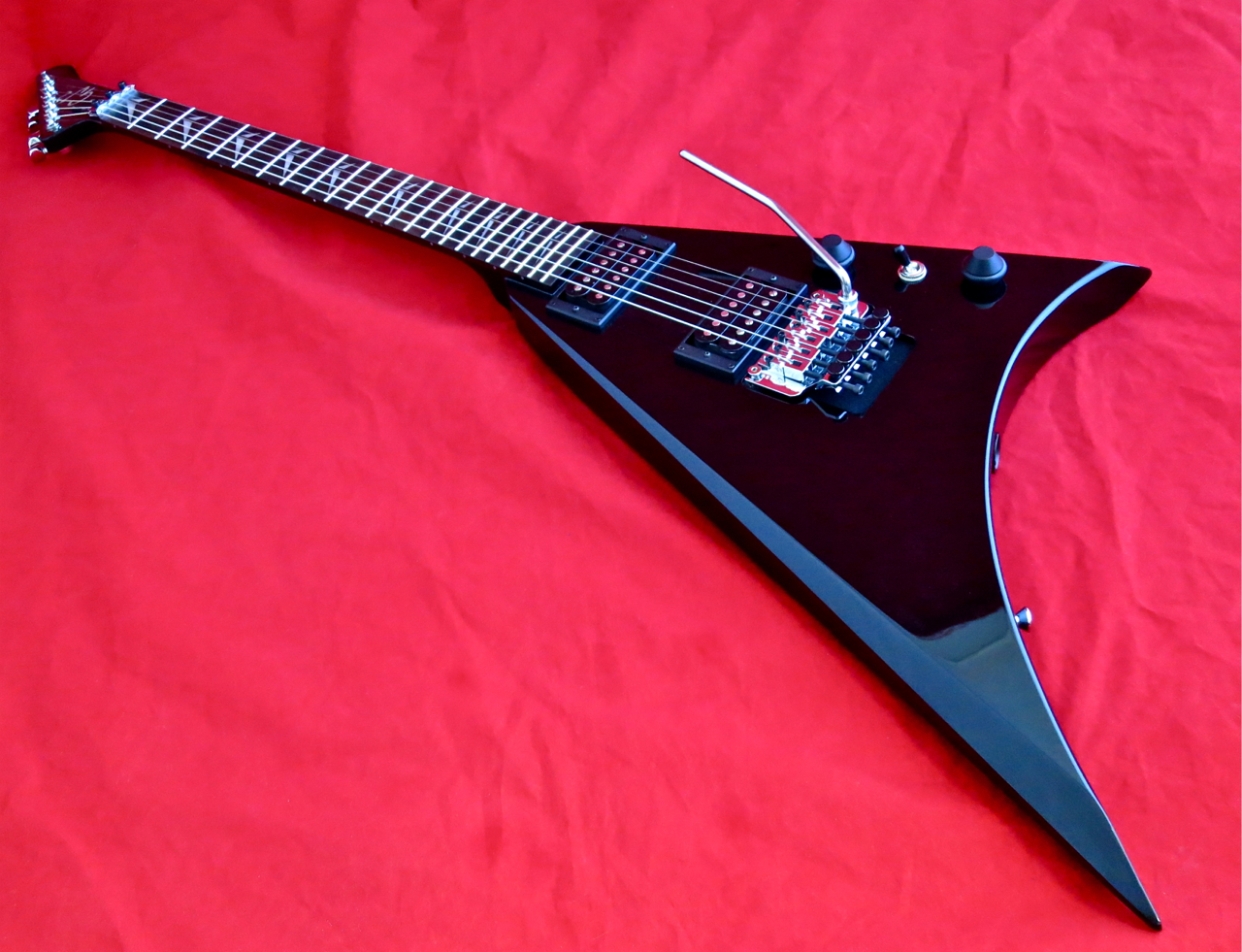
It may come as a surprise to a newbie, but the Concorde 4-Star actually feels extremely comfortable hanging suspended from a guitar strap. Sure, the visuals are very angular, but the feel isn’t.
On the other hand I should stress that the Concorde most probably isn’t the right choice as a couch guitar, because it won’t really stay in your lap. And one more thing – beware of the sharp top horn! But as long as you know this guitar’s boundaries, your in for a fun ride with a light and well-balanced studio- and stage-guitar.
The neck has a chunky D-profile, which is good news for tone and sustain.
The Concorde’s long scale, its maple through-neck, as well as the Floyd Rose system give this guitar a clearer, more precise – and in a positive way – more neutral acoustic tone, when compared, say, to a Gibson Flying V.
The guitar’s Habanero humbuckers do a fantastic job in getting the Concorde 4-Star’s precise attack and growling mid-range across.
The neck ’bucker displays a fluid, flute-like timbre, without any sign of muddiness:
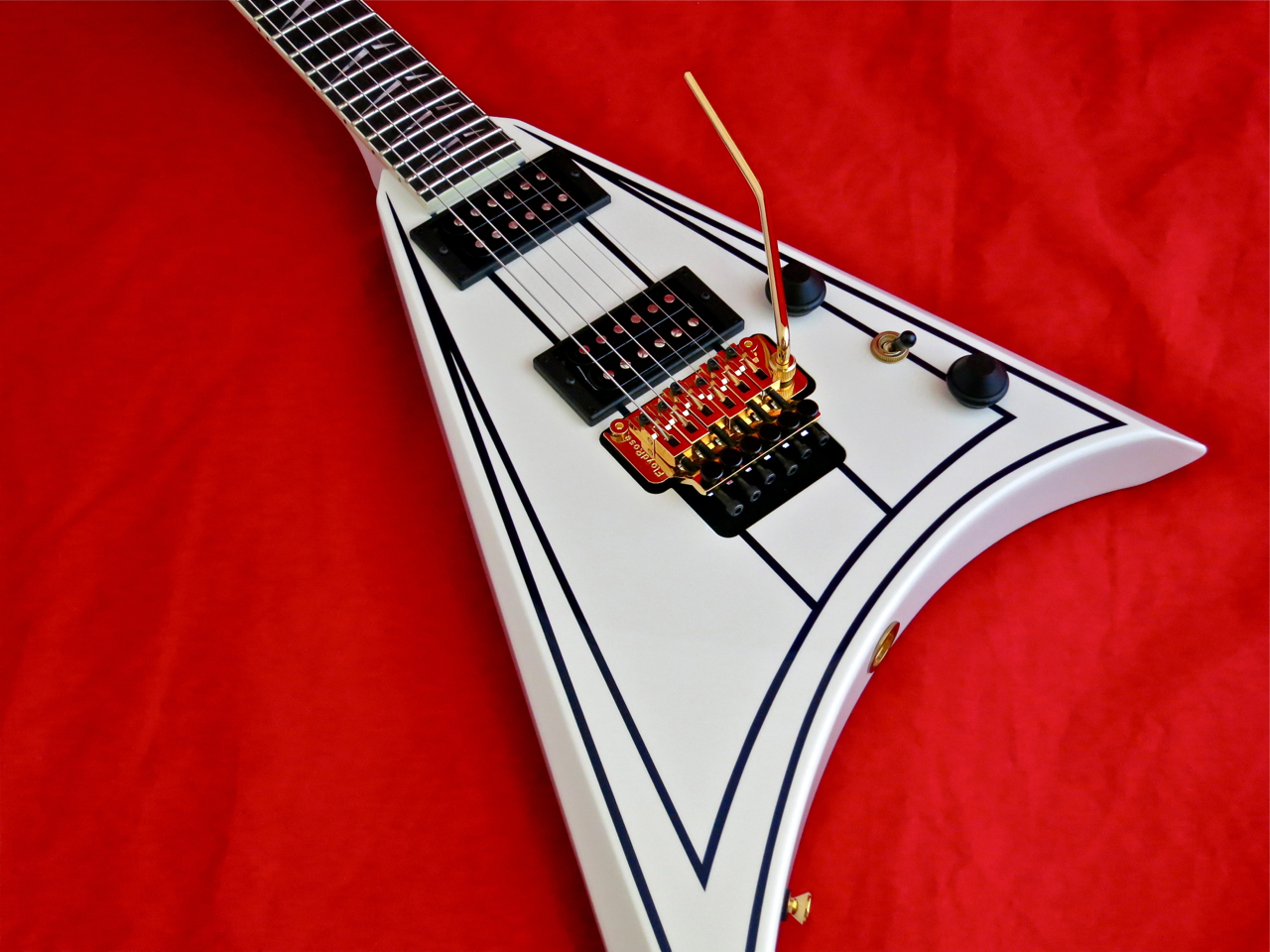
In terms of playablity and ergonomics there’s not much to divide the Concorden 5-Star from its 4-Star sibling.
But there are some clear differences in tone, most probably due to the posher 5-Star-version’s ebony ’board. The Concorde 5-Star has some added presence bite and a tad more twang in its attack, resulting in an even livelier tone.
Here’s a clip played using the bridge humbucker:
****
What a great thing that Grover Jackson isn’t content with resting on his (considerable) laurels. These new instruments build upon Mr Jackson’s rich past and vast knowledge, while managing to stay foward-facing and fresh.
The sum of this knowledge and experience, coupled with new building techniques and GJ2 Guitars’ obvious attention to detail, result in a range of instruments I would call the best guitars Grover Jackson has ever made.
This type of quality naturally comes at a price. But in light of GJ2’s comparatively small production runs and the sheer quality on offer here, you truly get what you paid for – boutique quality, made in the USA.
****
GJ2 Guitars
Glendora NLT – starting from 1,368 €
Glendora FR – starting from 1,541 €
Arete 4-Star – starting from 2,594 €
Concorde 4-Star – starting from 2,779 €
Concorde 5-Star – starting from 3,335 €
Finnish distributor: Musamaailma
****
Pros:
+ genuine boutique quality
+ playability
+ sound
+ many custom options
+ GJ2 Habanero-pickups
Cons:
– Concorde-models’ G&G-cases weigh a ton
Review: Sterling SUB Ray4 + Ray5


We bassists owe a lot to Mr Leo Fender – Mr Fender was the father of the electric bass, which he introduced in 1951, as well as the man behind three of the most classic bass designs ever.
After inventing the Fender Precision and the Jazz Bass for the company that still bears his name, Leo Fender carried on designing and building instruments for Music Man, with the StingRay becoming a true classic. The StingRay wasn’t the first bass with active electronics, yet it was the design that brought the active bass into the mainstream.
Since 1984 Music Man is part of the Ernie Ball-company. The company’s current boss – Sterling Ball – is behind the more recent moves to also bring out affordable Music Man-instruments in the guise of a new brand – Sterling (by Music Man).
****

Sterling’s brand-new SUB-series offers even more affordable versions of Music Man’s classics.
The Sterling SUB Ray4 (approx. 360 €) is a made-in-Indonesia licensed copy of a four-string StingRay. The Ray4 is available either in gloss black (with rosewood fretboard), gloss white (maple ’board) or in a Seventies-inspired satin finish called Walnut (and with a rosewood ’board).
****

Sterling won’t go into detail with regard to the body woods used for the SUB-series – the spec sheet only says ”hardwood body”. On the other hand, genuine Music Man StingRays also feature different wood species, depending on availability and the respective model’s finish, using ash, alder, poplar or basswood.
The test sample sports a body made from four pieces, with their looks matched reasonably well.

The SUB Ray4’s maple neck comes with a tinted satin finish.

Six wood screws and a well-cut neck pocket make for a very strong joint.

The classic StingRay-headstock makes tuning easier, as well as cutting down on headstock weight, making for a better balanced instrument.
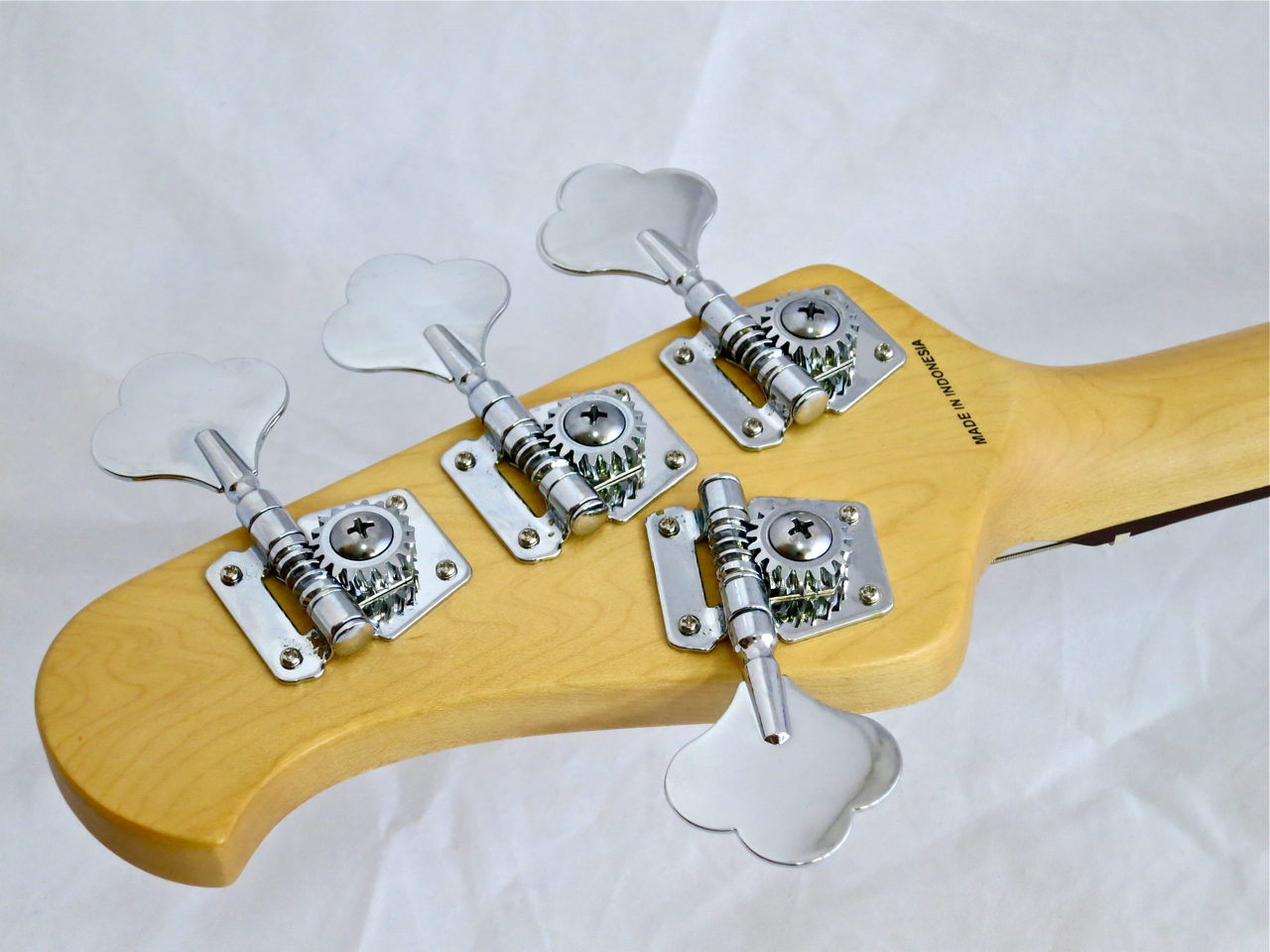
The Sterling comes equipped with a set of decent Asian Schaller-copies.

In light of its affordability the SUB Ray4 displays surprisingly well-dressed and finished frets. The rosewood fingerboard looks nice and sport clean inlay work.

Music Man’s nifty trus rod adjustment wheel has also been included in the Sterling SUB-series. Insert the small metal rod that comes with the bass (or any other suitable object) into the wheel and turn for adjustment. It’s quick, it’s clean, and no further tools are required!
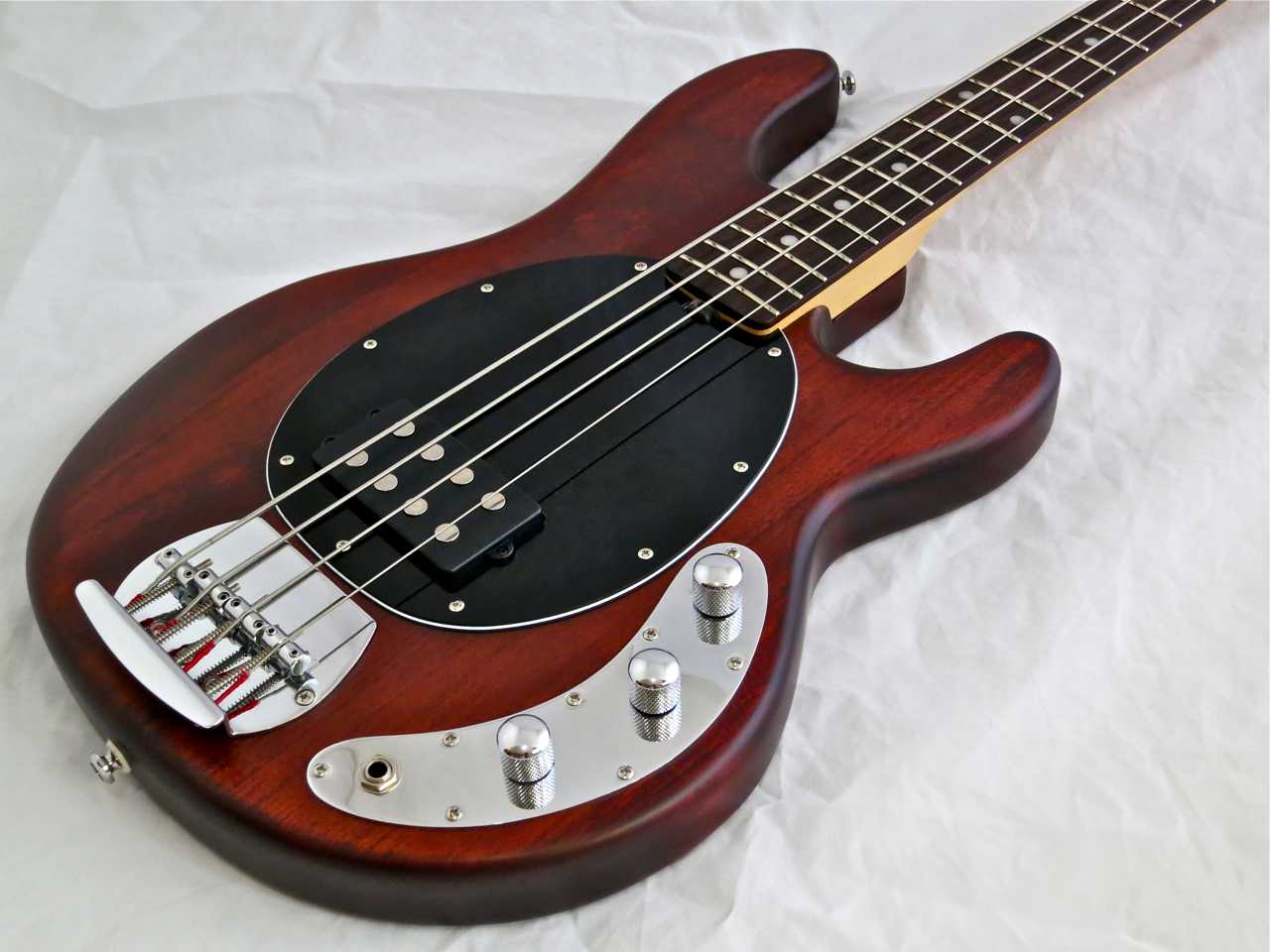
The StingRay was Leo Fender’s updated version of his Precision Bass, and the well-rounded body still looks great today.

The SUB Ray4 uses a version of the Music Man bass bridge that retains the large base plate, but does away with the original adjustable string mutes of yore. Current StingRays use a shortened bridge design.

The large humbucking pickup is the Sterling Ray4’s juice machine.
The pickup keeps hum and buzz at bay efficiently, while its placement near the bridge is crucial for obtaining a StingRay’s fat attack and vocal mid-range character.

It’s three controls on the Ray4’s metal plate – master volume, treble boost/cut and bass boost/cut.
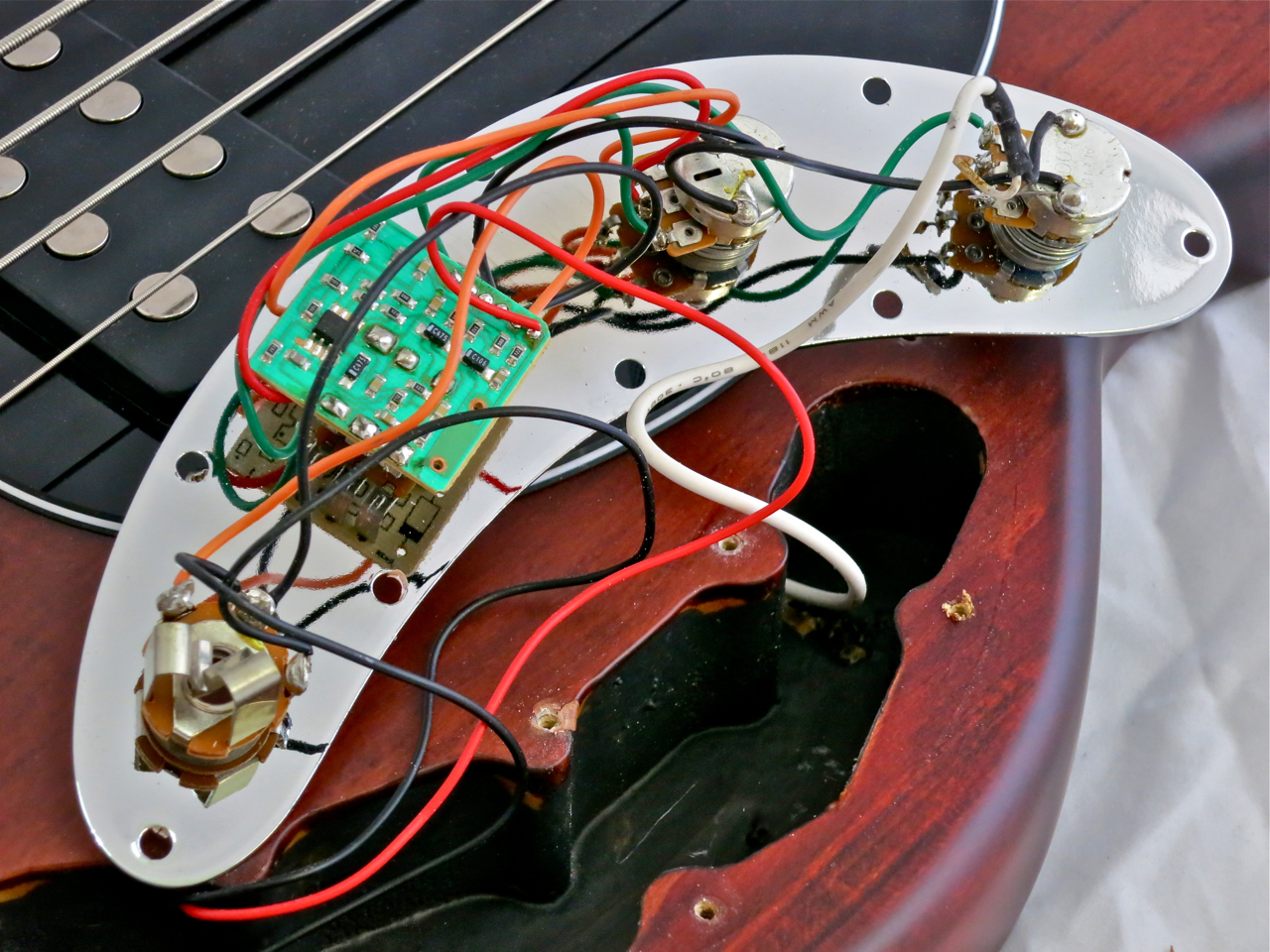
The Sterling SUB-basses come equipped with a very compact preamp that fits easily into the control cavity. The quality of the parts, as well as the workmanship on display, is quite decent.

The Ray4’s battery compartment is found on the back of the body.
****
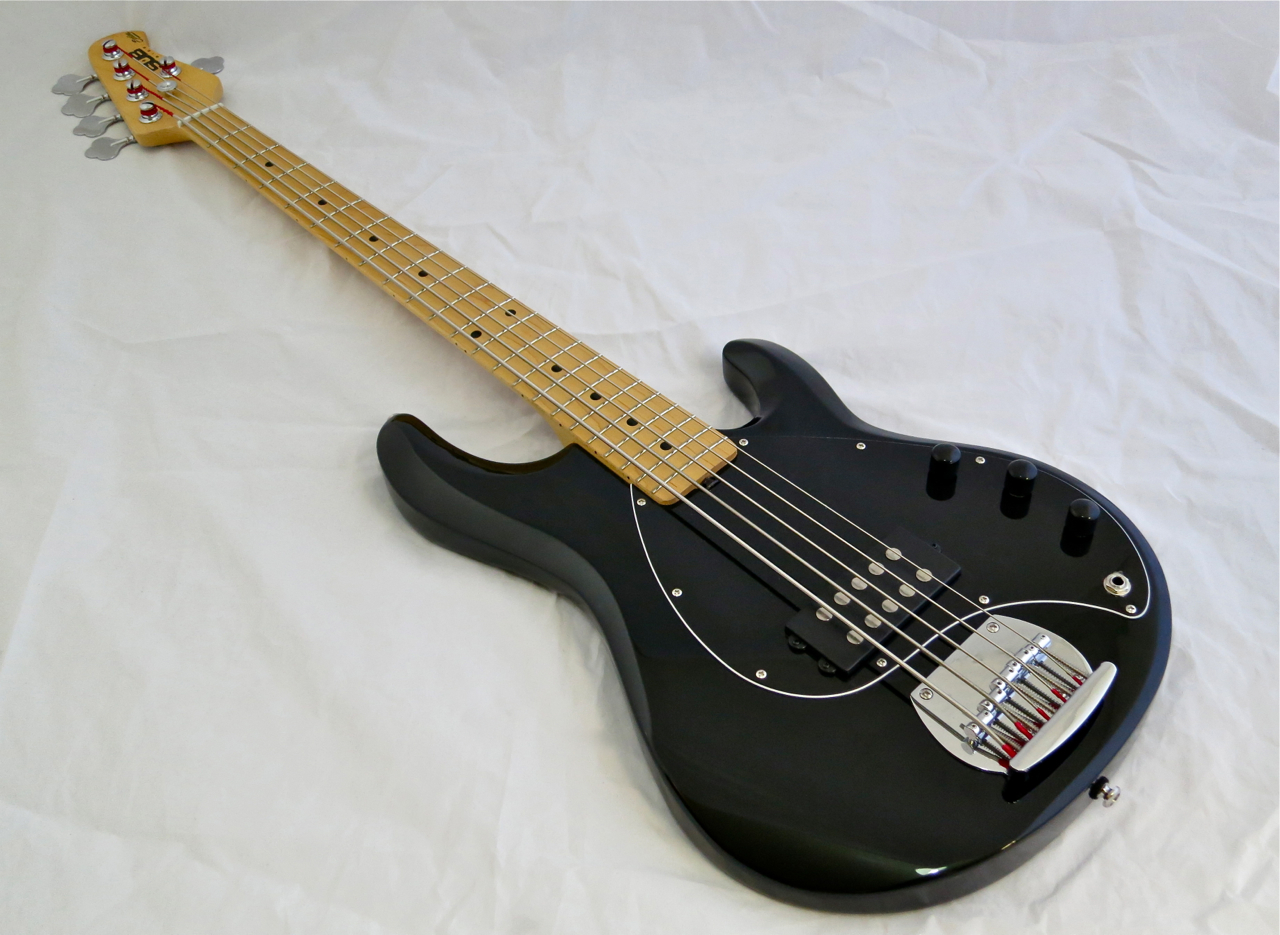
In 1988 Music Man broadened its StingRay-range with the five-string StingRay 5, which features a slightly different body design, as well as a much larger scratchplate.
****

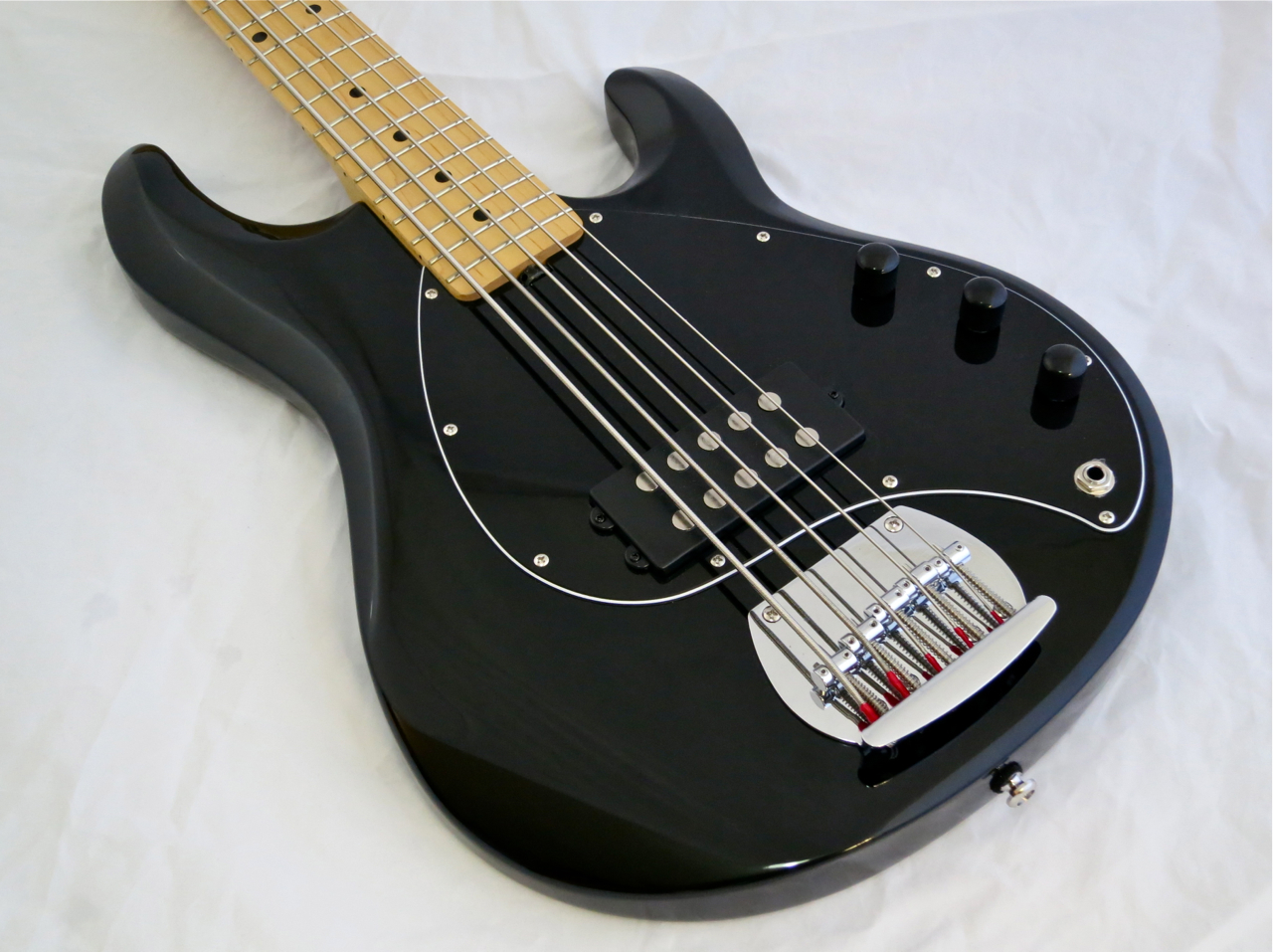
Sterling’s SUB Ray5 (approx. 390 €) is available in gloss black (with a maple fretboard) or satin walnut (rosewood ’board).
The finish on our test sample looks great.

The five-string version also sports a tinted maple neck.

The SUB Ray5’s battery compartment has been placed near the treble horn.

The famous headstock in its five-string guise.

These Schaller-copies do a good job of keeping the bass in tune.

The fretwork Sterling Ray5 is surprisingly good, keeping in mind the bass’ low price.

The StingRay is one of my all-time favourite bass designs – timeless, classic beauty.

On the five-string the bridge saddles are somewhat smaller to accommodate the SUB Ray5’s narrower string spacing (compared to the Ray4).

A chunky pickup for a chunky sound…
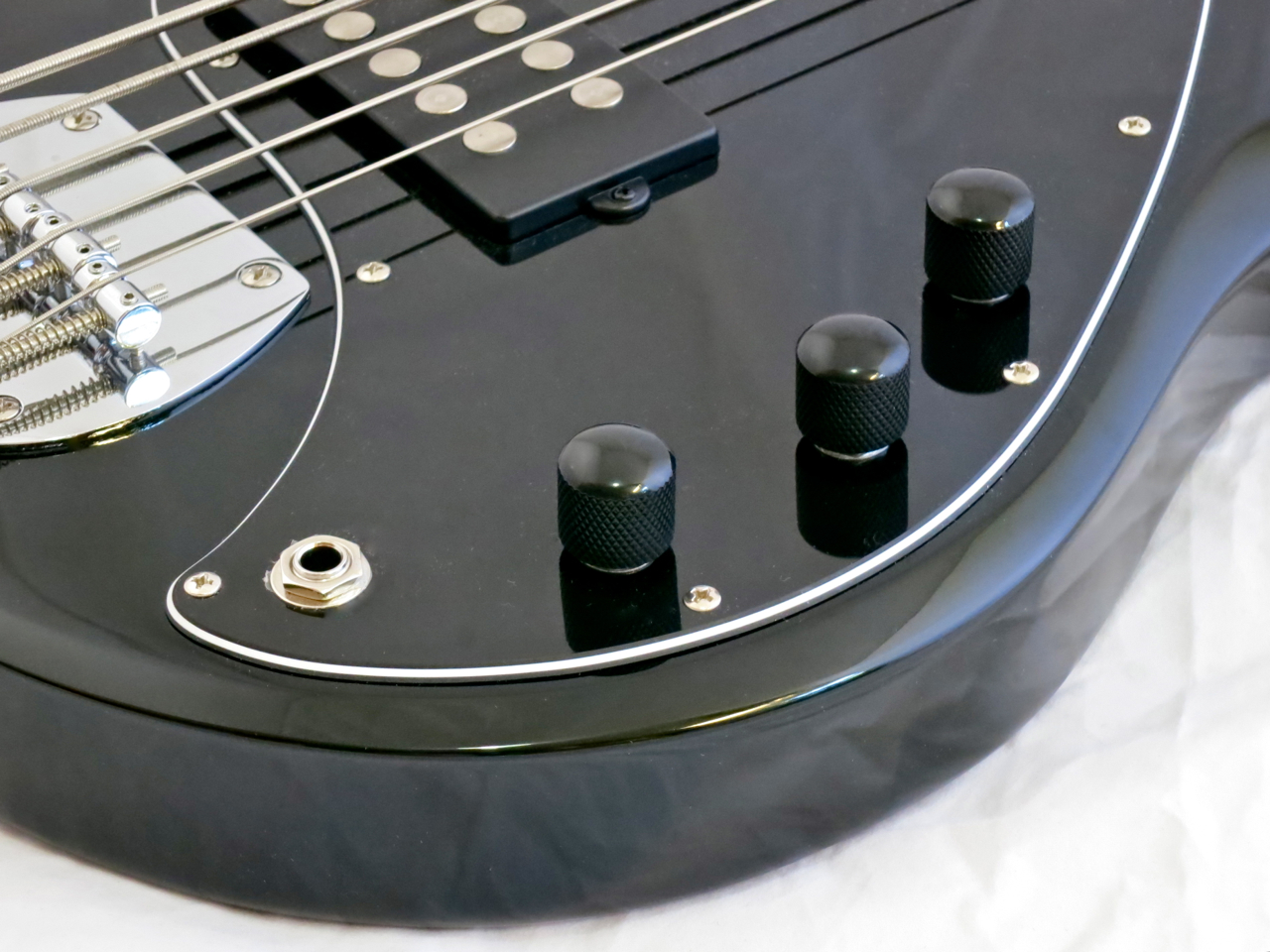
A genuine Music Man StingRay 5 usually comes equipped with a three-way blade switch, offering you series, parallel and coil-split switching, in addition to a three-band EQ.
To keep the price in check the Sterling SUB Ray5 offers you a more concise set of controls – a master volume and a two-band EQ.
****
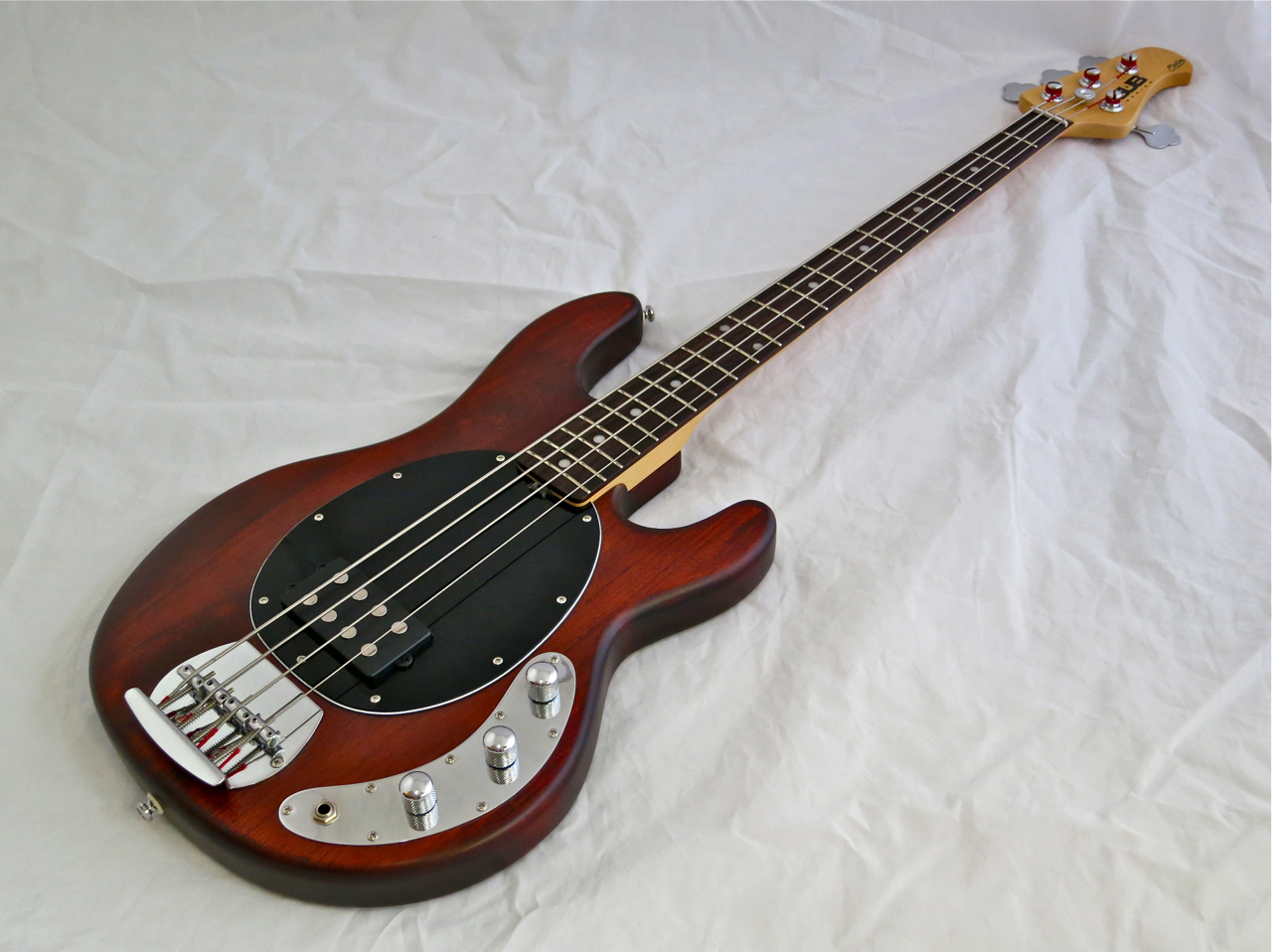

The Sterling SUB Ray4 is a cool bass, but the test sample we got weighed a ton – this is exactly the one feature from the 1970s that shouldn’t have been brough back. On the other hand, Sterling promise lightweight bodies on their website, so let’s hope that this was the one who slipped through quality control.
Apart from this, the Sterling Ray4’s ergonomics are great. Sterling have slightly changed the neck profile on its SUB-basses from the original, somewhat chunkier Precision-style profile, giving you a more tapered, Jazz-type shape.
Thanks to the good fretwork the factory set-up was comfortably low (E: 2,1 mm/ g: 1,9 mm).
Regardless of its weighty body (or because of the added heft?) the SUB Ray4’s acoustic delivery is stonking. I don’t know what wood species the body is, but the sound has a hefty dose of clear attack coupled with a good dose of ash-style growl and clarity!
This tasty combination translates into a very powerful and dynamic amplified tone. Sterling’s preamp displays a satisfying lack of hiss, and all of its controls work in a musical way (in fact better than on some, quite drastic-sounding 70s originals). This means you’re in for a real treat – genuine StingRay-character made very affordable.
Legendary bass player Tony Levin (Paul Simon, Peter Gabriel, John Lennon, King Crimson) is one of the most loyal StingRay-fans, which is why I chose to record the soundbites in his style as a tribute. The clips have been recorded straight from the bass into the sound-card without additional EQ’ing:


For a five-string bass our Sterling SUB Ray5 test instrument was refreshingly lightweight!
Just like on the original the Ray5’s neck profile gives your fretting hand something to hold on to. The rounded, moderately chunky D-profile is good news for the tone of the instrument, and it feels great, at least in my hands.
I had to give the neck a little more relief, and the intonation adjustment was off, too. But it only took me a couple of minutes to get this bass’ action and intonation up to snuff, after which the SUB Ray5 was a joy to play and listen to (low-B: 2,6 mm/g: 1,9 mm).
In a straight acoustic A/B between both Sterlings, the SUB Ray5 had a slightly rounder mid-range than the four-string counterpart
The big-sounding humbucker coupled to the instrument’s very decent preamp makes for a winning combination. The tone is pure Music Man – a fat, but precise bottom end, lots of mid-range character, and a dose of treble zing. It may not be as versatile as its famous big cousin, but the Sterling SUB Ray5 gives you most of the Music Man-experience at a pocket-friendly price.
****
Sterling (by Music Man) have managed to pack a lot of bass into their SUB-series. The Ray4 and Ray5 are fantastic value for money, offering you that sound at very player-friendly prices.
****
Sterling (by Music Man) SUB Ray4 + Ray5
SUB Ray4 – approx. 360 €
SUB Ray5 – approx 390 €
Finnish distributor: EM Nordic
A big thank you to DLX Music Helsinki for the loan of the review samples!
****
Pros (both models):
+ value-for-money
+ fretwork
+ playability
+ quality preamp
+ sound
Cons (only Ray4):
– review sample’s weight
****

Testipenkissä: Tokai TJB-55 + Seymour Duncan Weather Report -setti

****

Tokain Jazz Sound -bassoilla on – ansaittu – maine erinomaisina tulkintoina Fenderin klassikkomallista. Seymour Duncan taas on kiistämättä tunnetuin nimi kitara- ja bassomikrofonien maailmassa.
Molempien firmojen maahantuoja on Musamaailma, joka tarjoaa nyt kaksi uutuusmallia yhdistettyinä valmiiksi modatuksi paketiksi:
Japanilainen Tokai TJB-55 on varustettu Seymour Duncan Custom Shop ”Weather Report” mikrofonisetillä.
****

Tokai TJB-55 (hinta ”Weather Report” -mikrofoneilla: 1.177 €, perusversion hintaluokka noin 850 €) on firman kevyesti nykyaikaistettu versio 1970-luvun Jazz-bassosta. Tällä hetkellä malli on saatavilla joko mustana vaahteraotelaudalla (ja mustilla blokkeilla) tai kolmivärisellä liukuvärityksellä, jolloin basson otelauta on veistetty palisanterista.
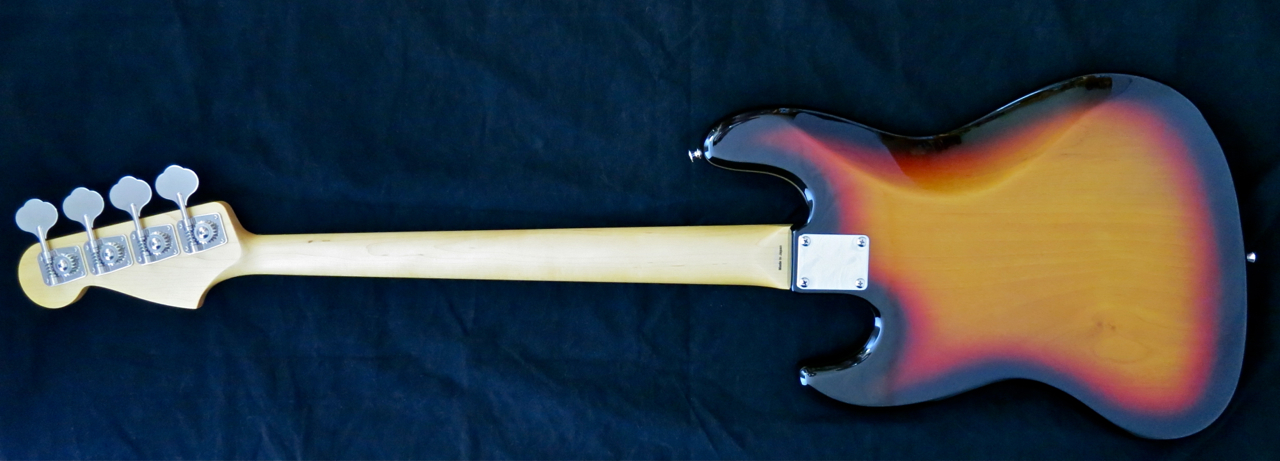
Rungossa on kiiltävä viimeistely, kun taas kaulassa on nykyaikainen, satiinipintainen lakkaus.

Ensisilmäykseltä TJB-55:n kromatut virittimet vaikuttavat vintage-kopioilta.
Todellisuudessa kyseessä on kuitenkin Gotohin kevyempi vastine, jolla on vintageen verrattuna hieman sirompi viritystappi…

…sekä pienempi pohjalevy.
Virityskoneistojen pienempi paino parantaa soittimen balanssia entisestään.

Tokai TJB-55 tarjoaa mielenkiintoisen variaation tutusta teemasta – vaikka otemerkit ovat 1970-luvun tyylisesti isot suorakaiteet, on jätetty palisanterilauta 60-luvun tavalla ilman reunalistoitusta.
Nauhatyö on kiitettävällä tasolla, ja otelautaan on asennettu 20 medium-kokoista nauhaa.

Vintage-tyylinen kaulaliitos on toteutettu hyvin tarkasti ja lujasti.

Perinteinen – ja monien mielestä ruma – metallinen maadoitusliuska tallan ja tallamikrofonin välillä on Tokaissa korvattu sisäisellä maadoitusjohdolla.

Leo knew best! Jostain syystä tämä vanha tallamalli ei lakkaa toimimasta, vaikka se onkin melko yksinkertainen designiltaan.

Testibasson salainen ase on Musamaailmassa jälkiasennettu Seymour Duncan Weather Report Jaco Jazz Bass -mikrofonisetti, joka on mikkigurun uusintapainos Jaco Pastoriukselle 1980-luvulla kustomoiduista kuuskytluvun Fender-mikrofoneista.
Kumpikin yksikelainen on kevyesti ylikäämitty (lue: soundiltaan tuhdimpi ja signaalitasoltaan voimakkaampi kuin vintagemikki), vaikkakin setin tallamikrofoni on vielä hivenen verran kuumempi kuin kaulamikki.
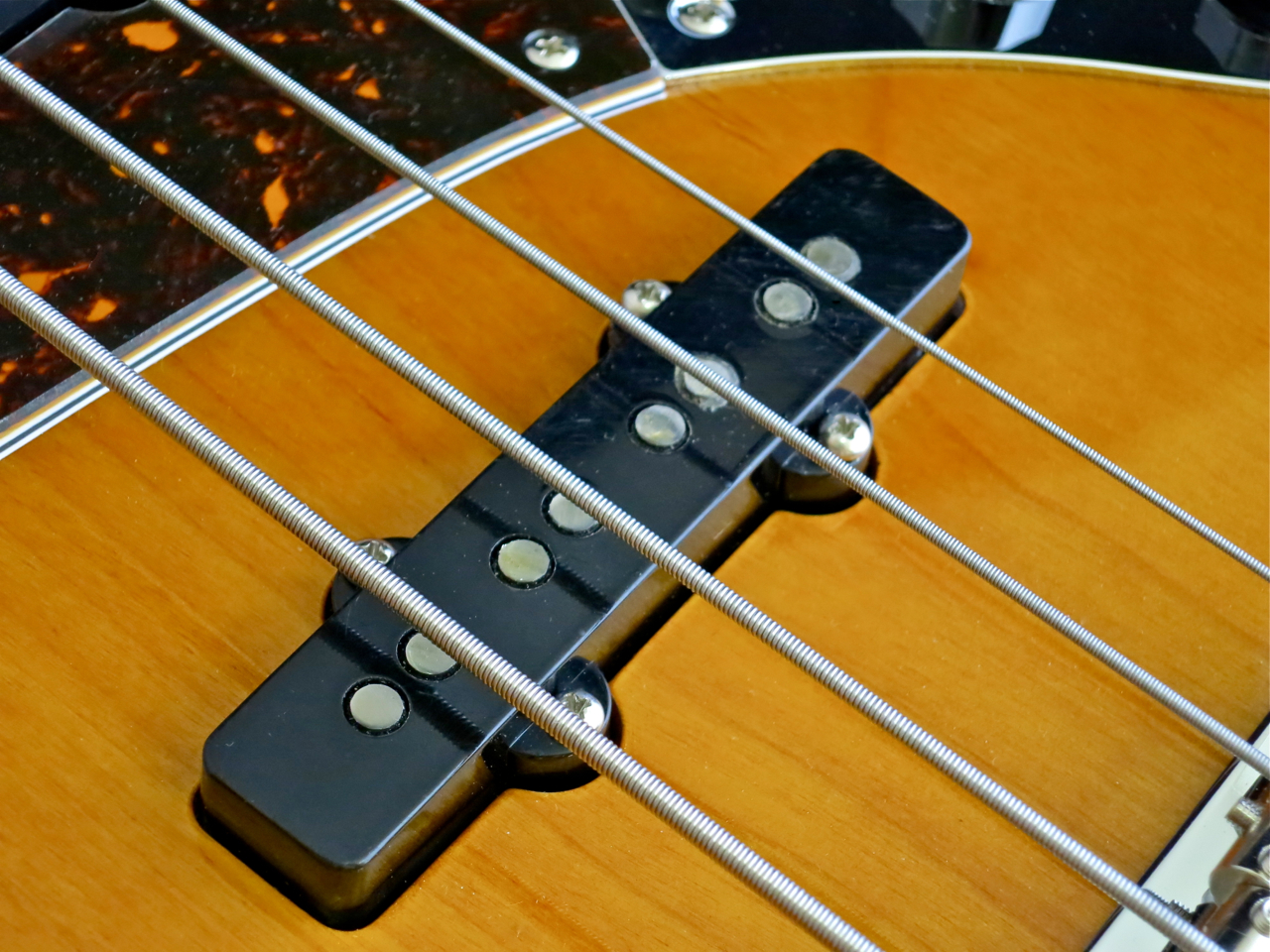
Mustat muoviset mikrofonikuoret on kevyesti esikulutettu, samoin kuin magneettien kirkaslakkapinta.
Vanhoissa Fender-bassoissa kuitulevyistä ja magneeteista koostuva kelarunko on saannut ylleen kirkaslakkakerroksen, ennen kuin käämilankaa alettiin kelata magneettien ympäri. Näissä Seymour Duncan Custom Shop mikrofoneissa käytetään alkuperäistä valmistusmenetelmää autenttisuuden nimessä.

Tokain TJB-55 tarjoaa klassista Jazz-basso passivisuutta – kummallekin mikrofonille oma volume-säädin, sekä yhteinen master tone.
Konepellin alta löytyy huolellista työnjälkeä ja laadukkaita osia.
****

Myönnän sen – olen aina ollut Jazz-basson suuri ystävä! Minusta tämä soitintyyppi on yksinkertaisesti kaunein, ergonomisesti parhaiten toimiva ja soundiltaan yleispätevin kaikista passiivisista klassikkomalleista. Se toimii mielestäni aina!
Tokain TJB-55 on erinomainen lajinsa edustaja, joka tarjoaa kaikki tälle soitintyypille ominaiset edut, kuten esimerkiksi hyvin solakan kaulaprofiilin.

Seymour Duncan Weather Report -mikkisetin tarkoitus ei tietenkään ole muokata soittimen JB-tyylistä soundia joksikin ihan muuksi, vaan tarjota laadukkaan version Jazz-basson soinnista Jaco Pastoriuksen maun mukaan.
Tarjolla on hieman ryhdikkäämpi ja myös pikkuisen tuhdimpi muunnelma aiheesta, joka maistuu ainakin allekirjoittaneelle. Etenkin tallamikrofonissa on mukana myös Jaco-soundille niin tärkeä lisäannos nasaalista keskialuetta.
Mikrofonisetin absoluutisesta autenttiuudesta en voi päätellä kovinkaan paljon, koska en ole koskaan soittanut Pastoriuksen bassoilla. Tämän testin perusteella voin kuitenkin todeta, että Weather Report -setillä varustetulla Tokai TJB-55 -bassolla pääsee lähellä mestarin soundia.
Rumpu- ja perkussioraitojen lisäksi tässä pätkässä soi vain ja ainoastaan testin Tokai-basso:
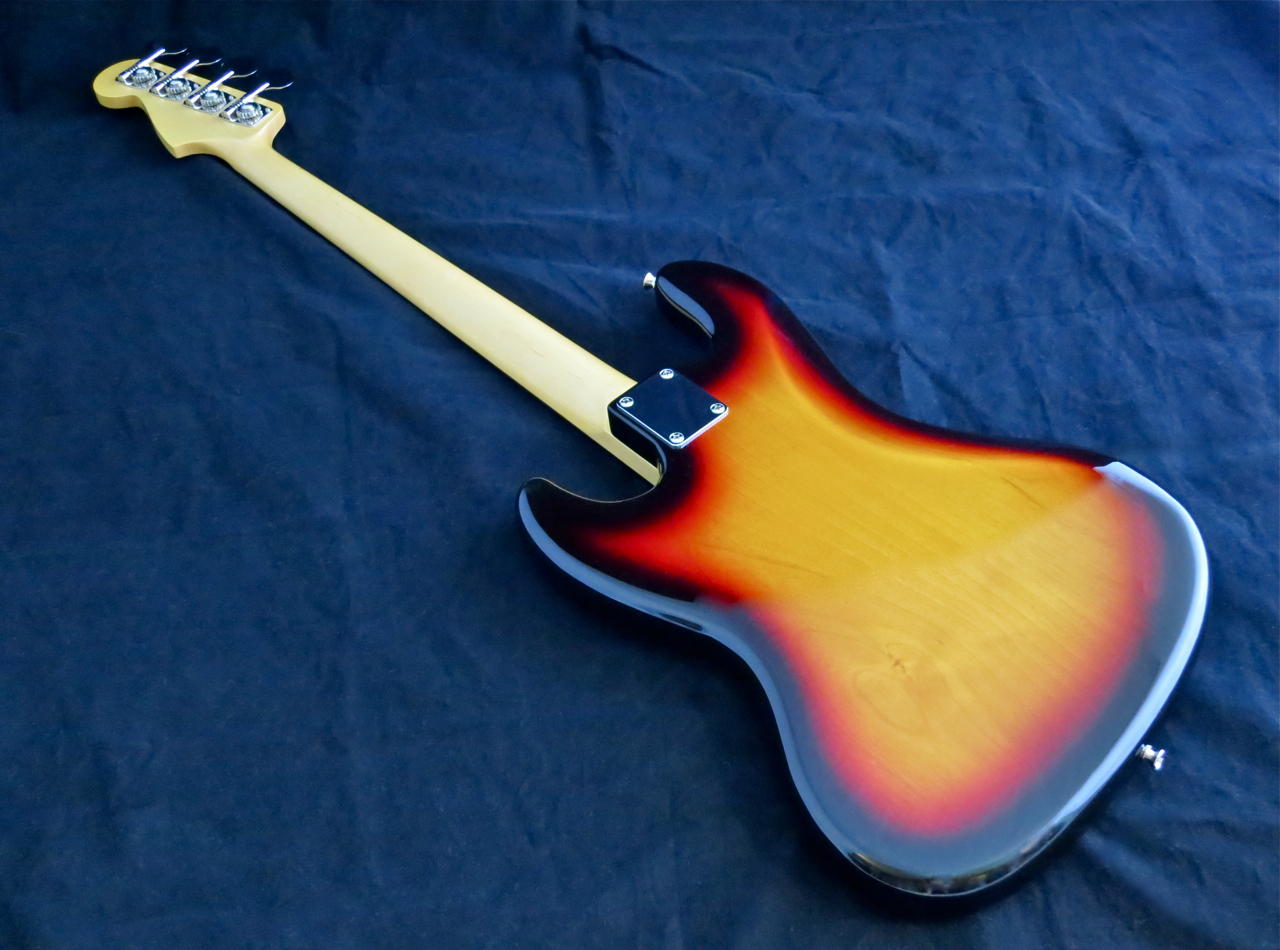
Testin päätelmä on minun mielestäni, että Tokai TJB-55 -basso ja Seymour Duncanin Weather Report -mikrofonisetti on erittäin toimiva yhdistelmä – myös monelle muulle basistille kuin pelkästään Jaco-faneille.
****
Tokai TJB-55 + Seymour Duncan Weather Report Jaco Pickup Set
1.177 €
Lisätiedot: Musamaailma
****
Plussat (Tokai):
+ hinta-laatu-suhde
+ työnjälki
+ soitettavuus
+ akustinen soundi
+ paino
****
Plussat (Duncan):
+ teho
+ soundi
+ kevyt relikointi
+ autenttinen valmistusmenetelmä
Miinukset (Duncan):
– korkea hinta
– relikointi ei kaikkien makuun

Testipenkissä: GJ2 Guitars
****
Amerikkalainen kitaraguru Grover Jackson on aito elävä legenda. Kun Jackson osti Wayne Charvelin pikkupajan (vuonna 1978), kukaan ei olisi uskonut, että miehen soittimet tulisivat luomaan vankan perustan heti kahdelle uudelle soitintyypille.
Usein ruuvikaulalla varustetut Charvel-soittimet olivat 1980-luvun Superstrato-ilmiön alkulähde.
Jackson-nimellä varustetut kitarat taas olivat korkeaoktaanisia Metal-kitaroita, joissa erinomainen soitettavuus meni usein käsi kädessä rohkean graafisen viimeistelyn kanssa. Legendaarisin Jackson on ehkä Randy Rhoadsin kanssa kehitelty Concorde/RR-malli.
Grover Jackson lähti 80-uvun loppupuolella uusiin haasteisiin ja suunnitteli kitaroita esimerkiksi Washburnille. Charvel- ja Jackson-brändit kuuluvat nykyään Fender-konsernille.
Nyt mies on palannut omille juurilleen: Grover Jackson on hiljattain perustanut uuden custompajan nimeltä GJ2 Guitars, joka keskittyy pienimuotoiseen sarjatuotantoon Kaliforniassa.
Nyt Kitarablogilla on suuri kunnia testata ensimmäiset Suomeen saapuneet GJ2-mallit!
****
GJ2 Glendora NLT (tämä versio 1.717 €, sis. gigbag) on tämän viisikon perinteisin, S-tyylinen malli.
Testiyksilön runko on erittäin kevyestä saarnista (maksullinen optio), ja se on saanut ylleen kiiltävän Antique White -viimeistelyn. Glendoran perusversio valmistetaan kevyellä lehmus-, leppä- tai poppelirungolla.
Ohuesti mattalakattu vaahterakaula on liitetty runkoon perinteisellä tavalla.
Glendoralla on perinnetietoinen, mutta samalla hyvin tyylikäs uusi tulkinta klassisesta viritinlavasta.
Kitaran laadukkaat virittimet tulevat Gotohilta.
Nykyaikainen vibratalla tulee myös Gotohilta. Vibrakampea ei tarvitse ruuvata blokkiin, vaan se pysyy paikallaan kuusiokoloavaimella säädettävän kauluksen ansiosta.
Palisanteriotelautaan on istutettu 22 jumbo-kokoista nauhaa.
Grover Jackson on kehittellyt GJ2-kitaroita varten uuden menetelmän saada pituussuunnalla muuttuvan kaarevuuden (engl. compound radius) otelautaan. Muuttuva kaarevuus auttaa parantamaan entisestään kitaran soitettavuutta, ja se estää isoissa venytyksissä ns. string choking -ilmiön, jossa seuraava nauha dempaa ei-toivotusti kielten värähtelyä.
GJ2 Guitars -malleissa käytetään tavallisesti omia Habanero-mikrofoneja. Testiyksilöön oli asennettu HSS-satsi, mutta Glendorat saa myös muilla yhdistelmillä, kuten esimerkiksi perinteisesti kokonaan yksikelaisilla tai vaikkapa kahdella humbuckerilla varustettuna.
Säädinosasto koostuu viisipykäläisestä kytkimestä, sekä master volumella ja tonella.
****
Glendora FR (tämä versio 1.930 €, sis. lightweight case) on Floyd Rosella varustettu versio Glendora-teemasta.
Testikitarassa käytetään sarjan perusrunkoa (lehmus, leppä tai poppeli), mutta muuten perusrakenne on sama kuin NLT-mallissa.
Lisäoptiona on Glendora-sarjassa tarjolla rungon värillä viimeistelty lavan yläpuoli.
GJ2 luottaa vain huippulaatuun – Floyd Rose -systeemi on Schallerin valmistama teräsversio.
Mikrofonit ovat GJ2:n Habanerot: kaksi yksikelaista, sekä tallahumbuckeri.
****
GJ2 Arete on Grover Jacksonin uusin luomus – kaula-läpi-rungon periaatteella rakennettu soitin. Arete-sarjan kitaroita on saatavilla kolmena eri perusversioina – 3-Star, 4-Star ja 5-Star.
Arete 4-Star (tämä versio 2.231 €, sis. lightweight case) on sarjan keskimmäinen malli, joka veistetään kokonaan etelä-amerikalaisesta mahongista. Kaula on koottu kolmestä vieräkkäisestä palasta, mikä lisää siihen lujuutta.
Sulavalinjainen runko koostuu kahdesta mahonkipalasta. Edullisemmassa Arete 3-Starissa käytetään sapele-puuta perusaineena, kun taas 5-Star-versio tarjoaa laajemman valikoiman runkopuuksi käytettäviä puulajeja.
Kitaralla on öljyviimeistely. Soittimen takalevyt ovat alumiinista.
Viritinlavassa on käytetty GJ2 Guitarsin ”näkymätön reunalistoitus”, jossa iso palisanterilevy on upotettu erittäin siististi kitaran mahonkilapaan.
Arete 4-Star -mallissa on aina vibrato mukana – joko sama Gotoh-talla kuin Glendora NTL:ssä tai teräksinen Floikka.
Mustilla mikrofonikehyksillä on strukturoitu pinta.
Reunalistoitettuun palisanteriotelautaan on upotettu Mini Bull’s Eye -nimisiä pyöreitä otemerkkejä ja 22 jumbo-kokoista nauhaa.
Arete 4-Star -mallissa on perusversiossa kaksi Habanero-humbuckeria, mutta optiona tarjotaan myös HSS- ja HSH-varustuksia.
Kolmiasentoinen vipukytkin istuu master volumen ja tone-säätimen välissä. GJ2 kutsuu säätimien nuppeja flying saucer -nupeiksi (= lentävä lautanen).
****
Rungon läpi menevä kaula kolmesta vierekkäisestä vaahterapalasta ja lehmussiivekkeet – tällaiset ovat GJ2 Concorde 4-Starin (tämä versio 2.768 €, sis. kova laukku) perusainekset.
Kaikissa Concorde-malleissa on täyspitkä 64,8 cm (25,5 tuumaa) mensuuri.
Concorde 4-Star on saatavilla viidessä eri värissä – Jet Black, Stark White, Antique White, Sports Car Red, sekä GJ Blue – ja kaikissa on joko kiinteä Gotoh-talla tai Floyd Rose -systeemi.
Metalliosat ovat 4-Starissa aina kromattuja.
Palisanteriotelauta tarjoaa 22 jumbo-kokoista nauhaa. Otemerkit ovat helmiäisjäljitemästä.
Volume-säätimen ufo-nuppi on juuri oikeassa paikassa plektrakäden pikkurilliä varten.
Kaksi Habanero-humbuckeria, master volume, master tone, sekä kolmiasentoinen vipukytkin – mitä muuta Rock-jumala tarvitsee?
Lähtöjakki on Concordessa erittäin kätevässä paikassa rungon alareunalla.
****
Tässä on GJ2 Guitarsin ultimatiivinen Heavy-kitara:
Concorde 5-Star (tämä versio 4.103 €, sis. kova laukku) on saatavilla – lisämaksua vasten – myös erikoisviimeisteltynä, Randy Rhoadsilta tuttulla liituraita-kuviolla.
Myös Concorde-mallien vibran ja elektroniikkalokeron kannet on tehty alumiinista.
5-Starissa metalliosien väri on kultainen. Testikitarassa on asennettu lukittavat Gotoh-virittimet (lisäoptio).
Reunalistoitettu otelauta, sekä viritinlavan koriste ovat eebenpuuta.
Tällaiseltä näyttää kultainen Schaller-Floikka läheltä katsottuna.
Concorde 5-Star tarjoaa 22 jumbo-kokoista nauhaa.
Otemerkit ovat aitoa helmiäistä.
…ja tässä vielä pieni vilkaisu elektroniikkalokeroon.
****
Höyhenenkevyt, saarnirunkoinen GJ2 Glendora NLT on mahtava S-tyylinen kitara vaativalle soittajalle!
Glendoran soitettavuus on ensiluokkaista, ja satiinipintaisen kaulan keskivahva, ovaali C-profiili tuntuu vanhalta ystävältä.
Akustisessa klangissa on mukana aimo annos saarnirungon tuomaa ”puuta” ja brilianttia diskanttia. Glendora NLT tukee dynaamista soittoa avoimella äänellään ja maiskuvalla atakillaan.
Myös GJ2:n Habanero-mikrofoneista voin vain hehkuttaa, niiden tarjoaman loistavan soundin ja mikrofonien täydellisen keskenäisen balanssin ansiosta.
Tässä yksi pätkä kaulamikrofonilla soitettuna:
Painossa, työnjäljessä tai soitettavuudessa en löytänyt minkäänlaista eroa Glendora-mallien välillä – yksi sana riittää kuvailuun: loistava!
Akustisessa soinnissa on Glendora FR:ssa havaittavissa tietynlaista, varmasti perusrungosta johtuvaa keskialueen pyöreyttä, sekä aavistuksen verran muhkeampi basso. Toisaalta teräs-Floikka lisää sekoitukseen vielä oman ripauksen preesensalueen tuoreutta.
Koska tallamikrofoni ei ole liian tehokas yksikelaisten suhteen, keskimikrofonin ja tallahumbuckerin yhteiseltä soundilta löytyy hyvin viehättäviä vivahteita:
Sulavarunkoinen ja kevyt Arete 4-Star on erittäin mukava soittaa sekä sylissä että hihnassa.
Öljyviimeistelyn ansiosta kitara tuntuu hyvin orgaaniselta. Tämä on kitara kauniin puun ystäville.
Kaulaprofiiliksi on valittu positiivisella tavalla harteikas ja hieman laakea D-poikkileikkaus, joka tuntuu mukavan tilaavalta otekädessä.
Areten akustinen soundi on lämmin ja avoin.
GJ2:n Habanera-humbuckerit edustavat selvästi boutique-vintage-osastoa, jossa hyvä soundi ja laaja dynamiikka menevät raa’an voiman edelle. Tämän ansiosta tarjoaa Arete 4-Star laajan valikoiman humbuckersoundeja, jotka sopivat sekä perinnetietoiselle että uudemman musiikin ystäville.
Firman UFO-nupit näyttävät ehkä hieman hassuilta, mutta ne ovat mielestäni käytössä erittäin käyttäjäystävällisiä ja tarkkoja.
Tässä on tallamikrofonilla soitettu esimerkki:
Ensikertalaiselle voi tulla yllätyksenä kuinka mukavasti Concorde 4-Star tuntuu soittimena hihnassa. Vaikka kitara näyttää kulmikkaalta, se ei tunnu siltä.
On kuitenkin myös totta, että Concorde ei ole ehkä luontevin valinta sohvakitaraksi, koska se ei oikein istu sylissä. Ja lavashowssa täyttyy varoa rungon yläkärjen terävyyttä. Mutta kun tietää nämä käyttörajoitteet, jää käteen kuitenkin erinomainen, kevyt ja hyvässä tasapainossa oleva live- ja studiokitara.
Täyteläinen D-profiili antaa otekädelle reilusti tukea ja soittimelle reilusti sustainea.
Concorden pitkä mensuuri, sen rungon läpi jatkuva vaahterakaula, sekä kitaran lukittava vibrasysteemi antavat tälle soittimelle selvästi täsmällisemmän – ja positiivisella tavalla neutraalimman – akustisen soinnin, jos vertaa esimerkiksi Gibson Flying V:hen.
Tällä alustalla loistavat Habanero-mikit onnistuvat täysin välittämään eteenpäin Concorden täsmällistä atakkia ja mureaa keskialuetta.
Kaulamikrofonista kuulee huilumaisia vivahteita, ilman minkäänlaista soundin puuroutumista:
Ergonomialtaan ja soitettavuudeltaan Concorden 5-Star-painos on miltei samanlainen kuin 4-Star-vaihtoehto.
Soundeissa löytyy kuitenkin selviä eroja, jotka johtuvat hyvin todennäköisesti kalliimman 5-Star-mallin eebenpuisesta otelaudasta. Tässä Concordessa löytyy vielä enemmän purevuutta preesensalueella ja lisäannos twängia atakissa, lisätuloksena syntyy vielä eloisampi sointi.
Tässä lyhyt näyte tallahumbuckerin soundista:
****
On ihan selvää, ettei Grover Jackson jaksa levätä vanhoilla laakereillaan. Uusi mallisto on syntynyt miehen pitkästä kokemuksesta sähkökitara-alalla, mutta Jacksonin katse kohdistuu eteenpäin, eikä taakse.
Uudet rakennusmenetelmät ja malliston monet detaljiparannukset ovat kokemuksen lisäksi tärkeä syy siihen, miksi GJ2 Guitarsin uudet kitarat ovat mielestäni parasta, mitä Grover Jackson on ikinä luonut.
Tällaisella laadulla on tietenkin hintansa, mutta pidän GJ2-kitaroiden hintoja pienen firman tuotantokapasiteettiin – ja tietysti kitaroiden ylivoimaiseen laatuun – nähden reiluna. GJ2 Guitars edustaa putiikkilaatua parhaimmillaan.
****
GJ2 Guitars
Glendora NLT – hinnat alk. 1.368 € (ilman laukkua)
Glendora FR – hinnat alk. 1.541 € (ilman laukkua)
Arete 4-Star – hinnat alk. 2.594 € (ilman laukkua)
Concorde 4-Star – hinnat alk. 2.779 € (ilman laukkua)
Concorde 5-Star – hinnat alk. 3.335 € (ilman laukkua)
Lisätiedot: Musamaailma
****
Plussat:
+ aitoa boutique-laatua
+ soitettavuus
+ soundi
+ runsaasti custom-optioita
+ Habanero-mikrofonit
Miinukset:
– Concorde-mallien G&G-laukkujen paino
 Kitarablogi.com – Finland's premier Guitar and Bass blog