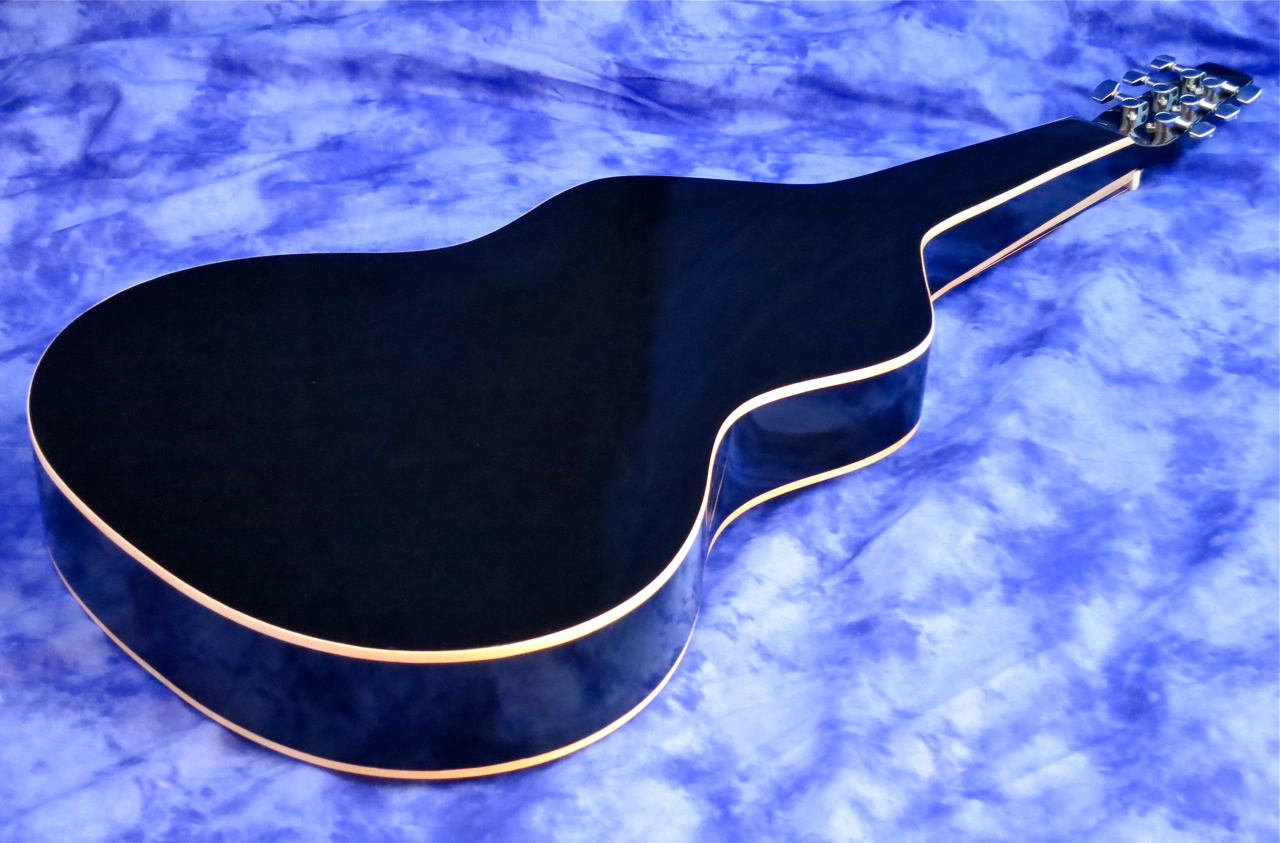
Testipenkissä: Sterling SUB Ray4 + Ray5

Sterling SUB Ray4 – SUB logo

Me basistit olemme Leo Fenderille aika paljon velkaa – herra Fender keksi sähköbasson uutena soitinlajina vuonna 1951, ja hän on mies peräti kolmen klassikkobasson takana.

Leo Fender jatkoi Fender-kautensa – jossa hän keksi mm. Fender Presarin ja Jazz-basson – jälkeen nimittäin Music Manissa, jossa hänen kehittämästä, aktiivisesta StingRay-bassosta kuoriutui aito klassikko. Vaikka aktiivibasso sinänsä ei ollut herra Fenderin keksintö (vaan Alembic-yhtiön luomus), vuonna 1976 julkaistu StingRay oli ensimmäinen etuvahvistimella varustettu mainstream-basso.

Vuodesta 1984 lähtien Music Man on ollut Ernie Ball -yhtiön omistuksessa. Nykyinen pomo – Sterling Ball – on tuonut markkinoille 2000-luvulla myös edullisimpia, Kauko-Idässä valmistettuja versioita Music Man -soittimista. Alamerkin nimi on Sterling (by Music Man).

****

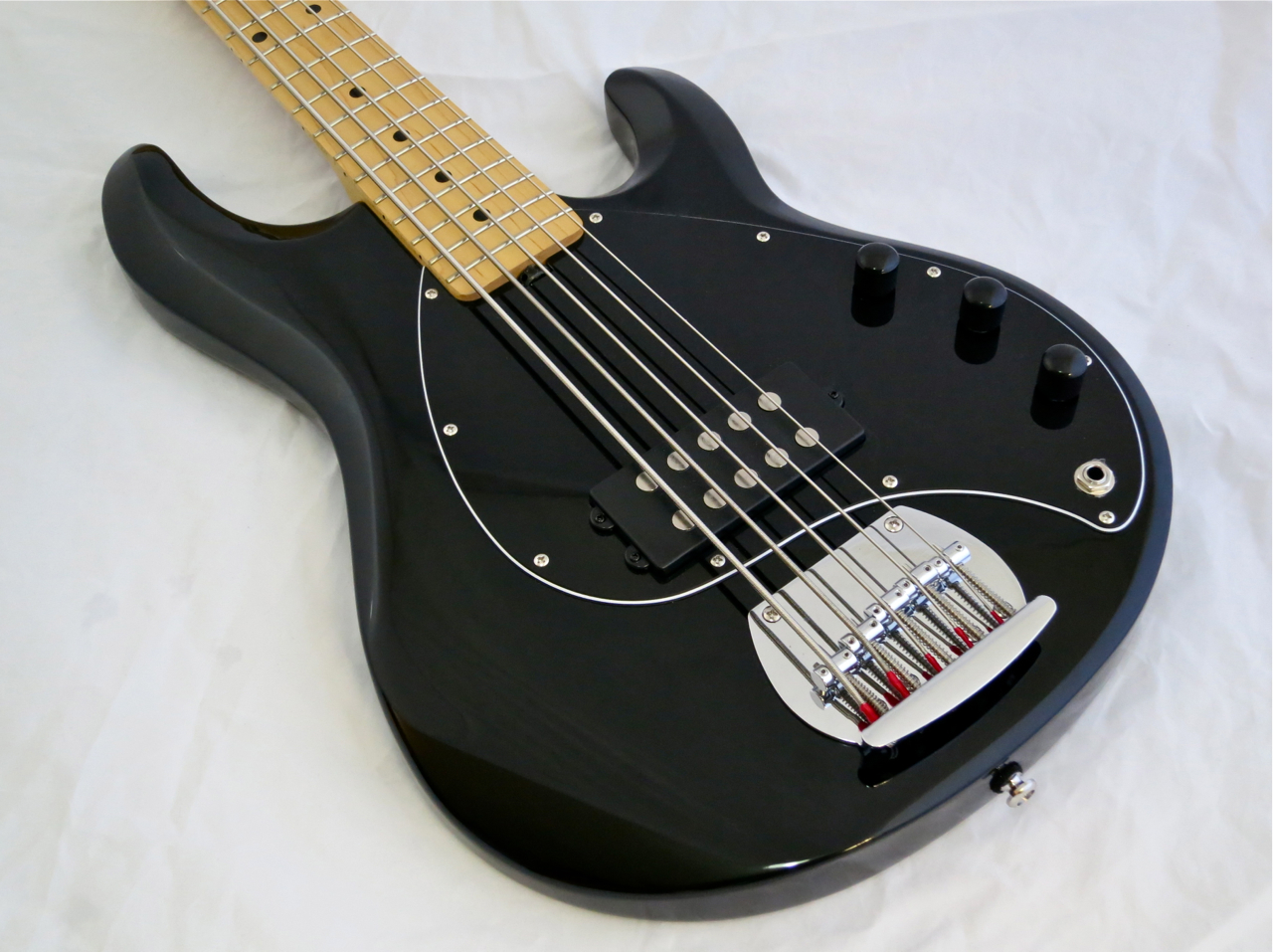
Sterling SUB Ray4 – beauty shot 2

Sterling-merkin upouusi SUB-sarja tarjoaa entistäkin edullisempia versioita Music Man -klassikoista.

Sterling SUB Ray4 (hintaluokka noin 360 €) on Indonesiassa rakennettu lisenssikopio nelikielisestä StingRay-bassosta. Ray4 on saatavilla joko kiiltävän mustana vaahteraotelaudalla, kiiltävän valkoisena palisanteriotelaudalla tai 1970-luvun tyylisesti pähkinäpuun ruskealla mattaviimeistelyllä ja palisanteriotelaudalla.

****

Sterling SUB Ray4 – full front

Sterling ei kerro, millaista puuta se käyttää SUB-sarjan soittimissa – spekseissä mainitaan vain ”hardwood body”. Toisaalta myös alkuperäisissä StingRayssä runkopuu vaihtuu saatavuuden (ja soittimen värityksen mukaan), ja siellä käytössä ovat saarni, leppä, lehmus ja poppeli.

Testiyksilön runko koostuu neljästä vierekkäisestä palasta, joiden syykuviot on sovitettu toisiinsa yllättävän hyvin.

Sterling SUB Ray4 – full back

SUB Ray4:n vaahterakaula on saanut ylleen kellertävän mattaviimeistelyn.

Sterling SUB Ray4 – neck plate

Kaulan kiinnitys on hyvin luja, isokokoisen aluslevyn ja kuuden puuruuvin ansiosta.

Sterling SUB Ray4 – headstock

Klassikkolavan idea on helpottaa pääsyä g-kielen virityskoneeseen, sekä pienentää lapaa kaulapainoisuuden torjumiseksi.
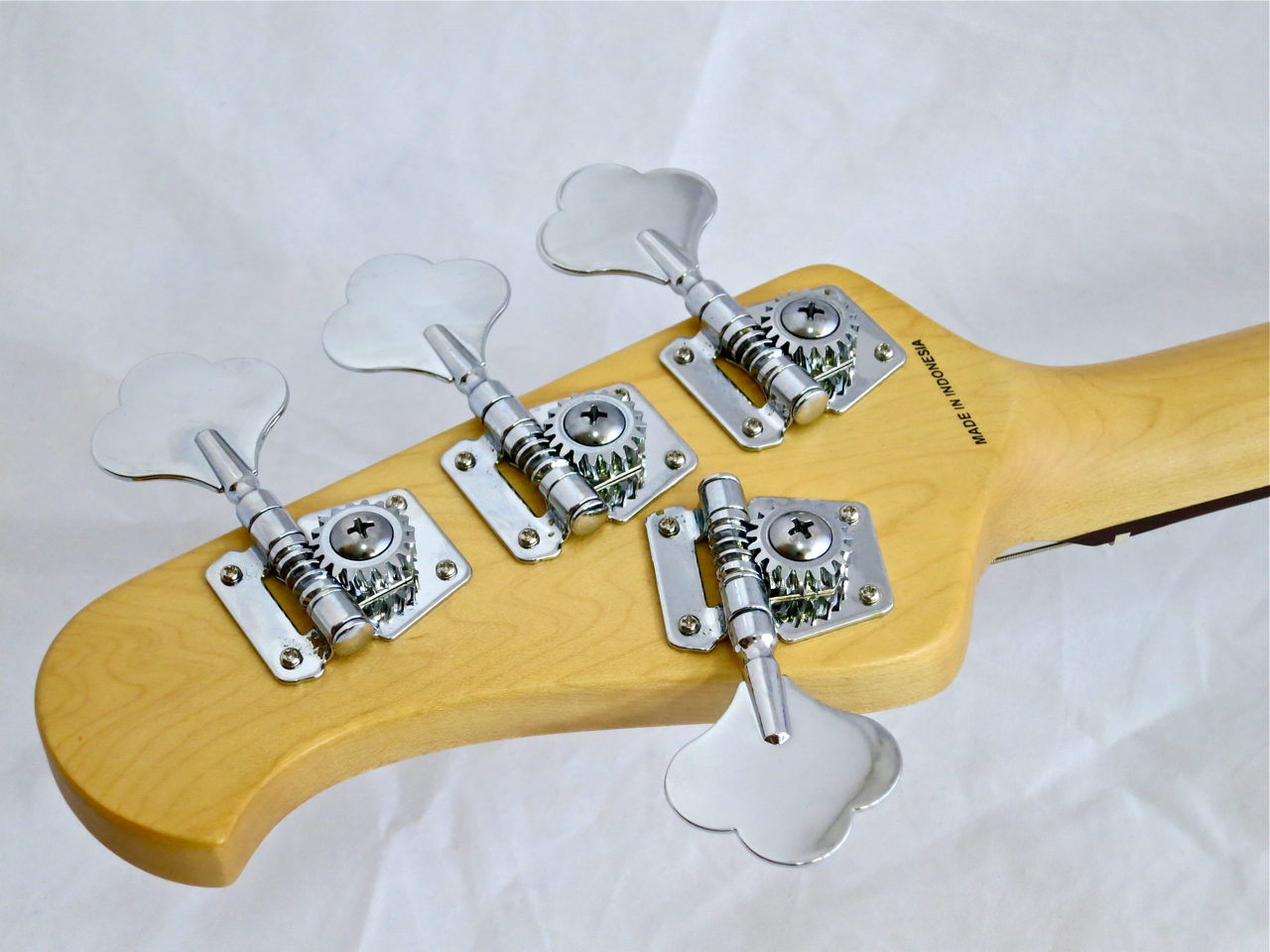
Sterling SUB Ray4 – tuners

Sterlingissä käytetään edullisia, mutta hyvin asiallisia aasialaisia kopioita avoimista Schaller-virittimistä.

Sterling SUB Ray4 – fingerboard

Edulliseen hintaan suhtautettuna SUB Ray4:n nauhatyö on erinomainen. Palisanteriotelauta näyttää erittäin siistiltä, samoin basson pyöreät otemerkit.

Sterling SUB Ray4 – truss rod wheel

Aidoista Musareista tuttu, todella kätevä kaularaudan säätöpyörä löytyy myös Sterling SUBeissa. Paketeihin kuuluvalla metallitangolla – tai vaikkapa pienellä ruuvimeisselillä – raudan säätäminen onnistuu muutamassa sekunnissa.
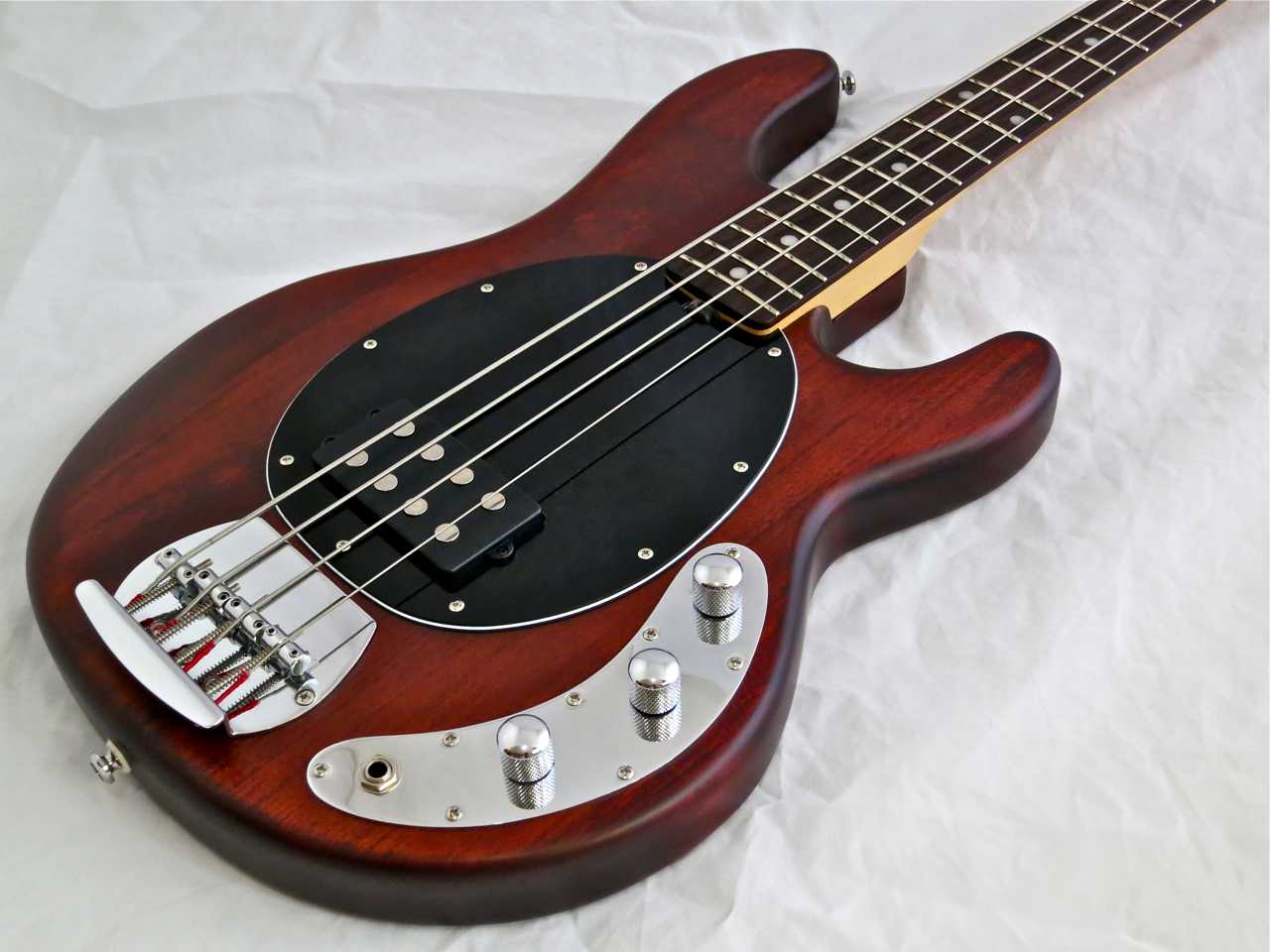
Sterling SUB Ray4 – body beauty 2

StingRayn pyöreänmuotoinen runko oli aikoinaan Leo Fenderin päivitetty versio Precisionista, ja se näyttää edelleen tyylikkäältä Ray-nelosessa.

Sterling SUB Ray4 – bridge

SUB Ray4:n tallassa käytetään 70-luvulta tuttua valtavaa pohjalevyä. Levyn etuosaan asennettiin silloin tehtaalta säädettäviä sordinoja solukumista, Music Manin nykymalleissa pohjalevy on lyhennetty.

Sterling SUB Ray4 – pickup

Isokokoinen humbuckermikrofoni on Sterling Ray4 -basson soundin sydän.

Kaksikelainen mikrofoni torjuu tehokkaasti kaikki ulkoiset häiriöäänet, ja sen sijainti tallan lähellä antaa soundille sen StingRaylle tyypillisen potkun ja preesensalueen naksahduksen.

Sterling SUB Ray4 – controls

Ray4:n säätimet istuvat omassa metallilevyssään – tarjolla on master volume, diskanttikorostus/-vaimennus, sekä bassokorostus/-vaimennus.
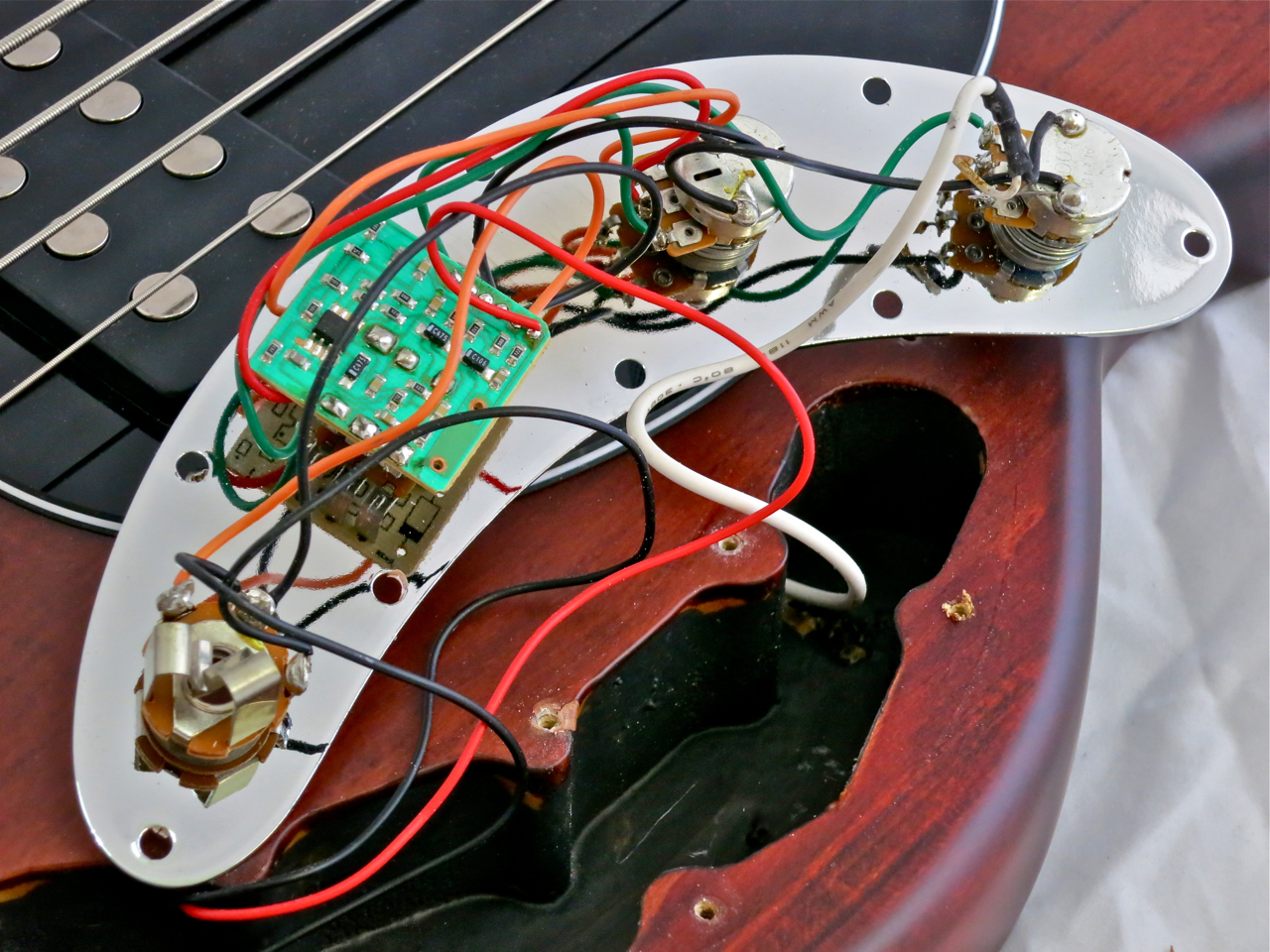
Sterling SUB Ray4 – preamp

Sterling SUB -bassoissa etuvahvistimen piirilevy on saatu mahtumaan elektroniikkalokeroon. Hintaan nähden osien laatu ja työnjälki on ilahduttavan asiallinen.

Sterling SUB Ray4 – battery compartment

Ray4:n paristolokero on upotettu rungon selkään säätimien ja mikrofonin väliin.

****
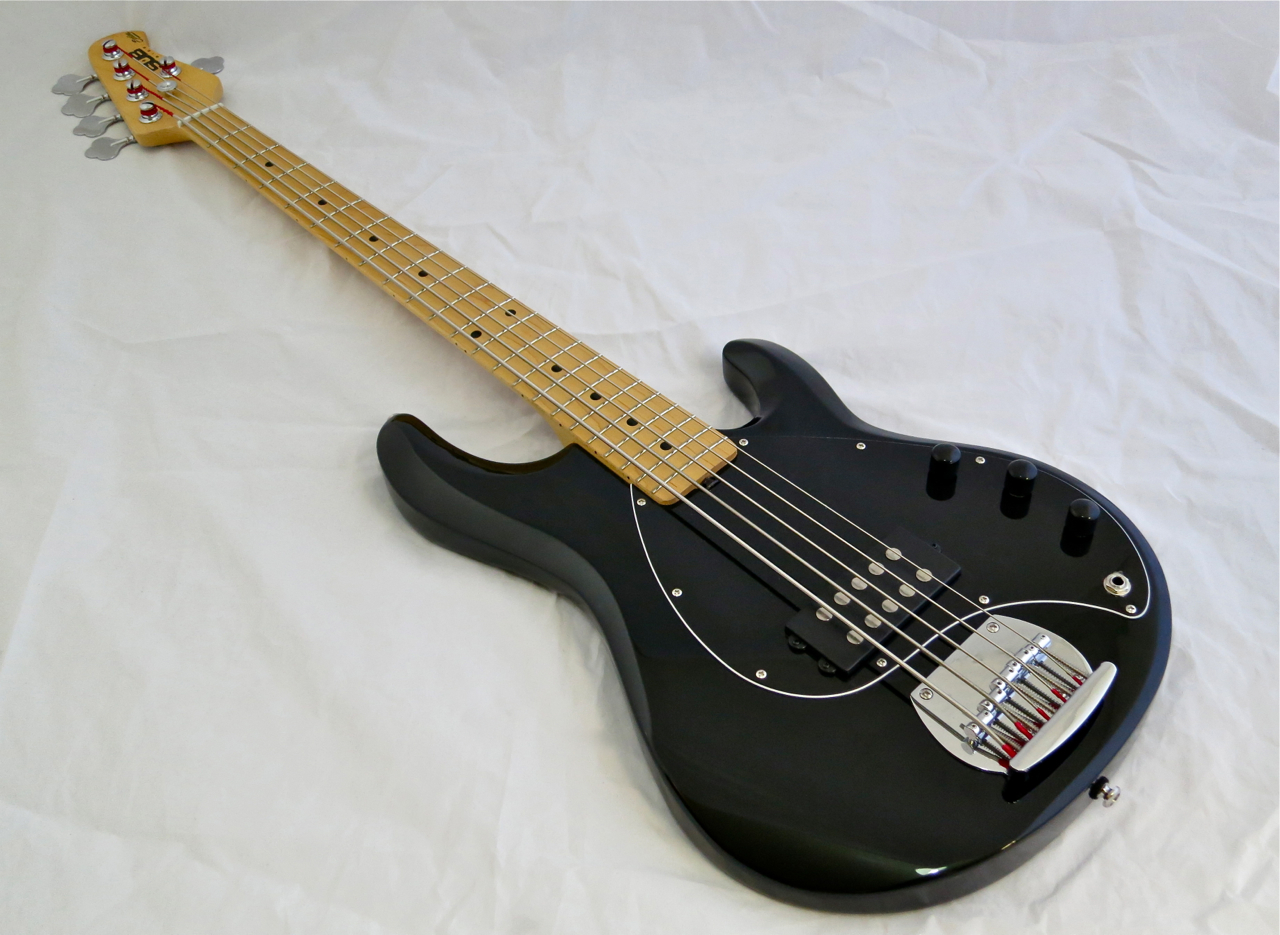
Sterling SUB Ray5 – beauty shot 2

Vuonna 1988 Music Man laajensi StingRay-valikoimansa viisikielisella StingRay 5 -mallilla, jonka tunnusmerkkejä ovat sen harjanteilla varustetut runkosarvet ja nelikielistä versiota isompi pleksi.

****

Sterling SUB Ray5 – full front

Sterling SUB Ray5 (hintaluokka noin 390 €) on saatavilla joko kiiltävän mustana (vaahteraotelaudalla) tai mattaruskeana (palisanteriotelaudalla).

Testiyksilön viimeistely on erittäin siisti.

Sterling SUB Ray5 – full back

Myös viisikielisessä versiossa vaahterakaulassa on kellertävä mattaviimeistely.

Sterling SUB Ray5 – neck plate + battery

SUB Ray-viitosessa paristolokero on sijoitettu diskanttisarven tyveen.

Sterling SUB Ray5 – headstock

Tällaiselta näyttää viisikielinen versio Musari-lavasta.

Sterling SUB Ray5 – tuners

Myös tässä mallissa on käytetty asiallisia Schaller-kopioita.

Sterling SUB Ray5 – fretboard

Nauhatyön laatu on Sterling Ray5:ssäkin hintaan nähden todella hyvällä tasolla.

Sterling SUB Ray5 – body beauty 2

StingRay edustaa mielestäni aidon klassikkosoittimen ajatonta kauneutta.

Sterling SUB Ray5 – bridge

Viisikielisessä tallassa tallapalat ovat hieman pienempiä, koska kielten välinen etäisyys on hieman pienempi kuin nelikielisessä bassossa.

Sterling SUB Ray5 – pickup

Sama tuttu rakenne, sama tuttu sijainti – vain hieman kookkaampi, tällainen on Ray5:n mikrofoni.
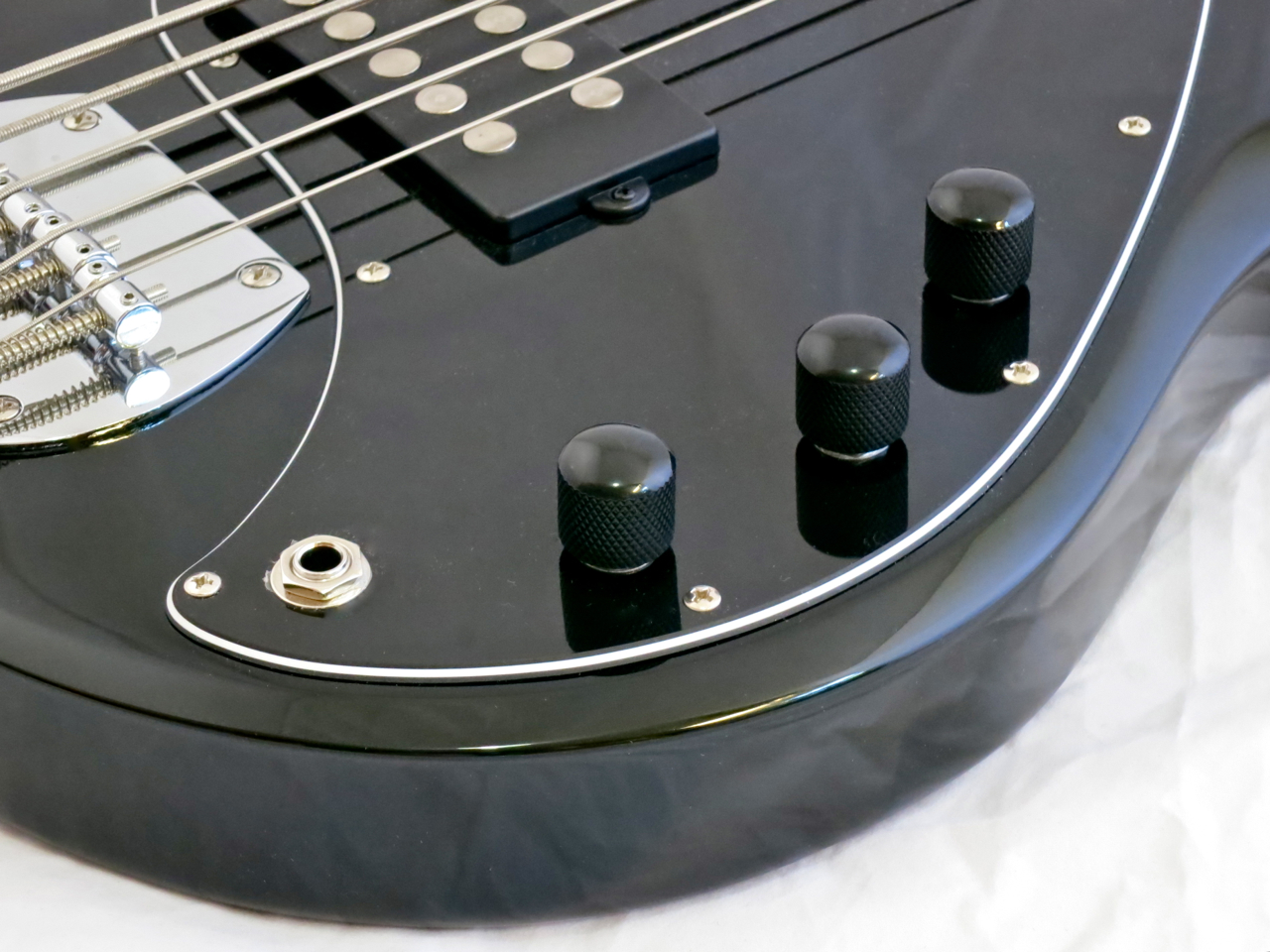
Sterling SUB Ray5 – controls

Alkuperäisessä StingRay 5 -bassossa on tavallisesti kolmiasentoinen kytkin, jolla voi puolittaa mikin tai vaihtaa kelojen kytkentää sarjasta rinnakkaiseen, sekä kolmialueinen EQ.

Kustannussyistä Sterling SUB Ray5 tarjoaa samat säätimet kuin nelikielinen sisarmallinsa – master volume, sekä kaksialueinen EQ.

****
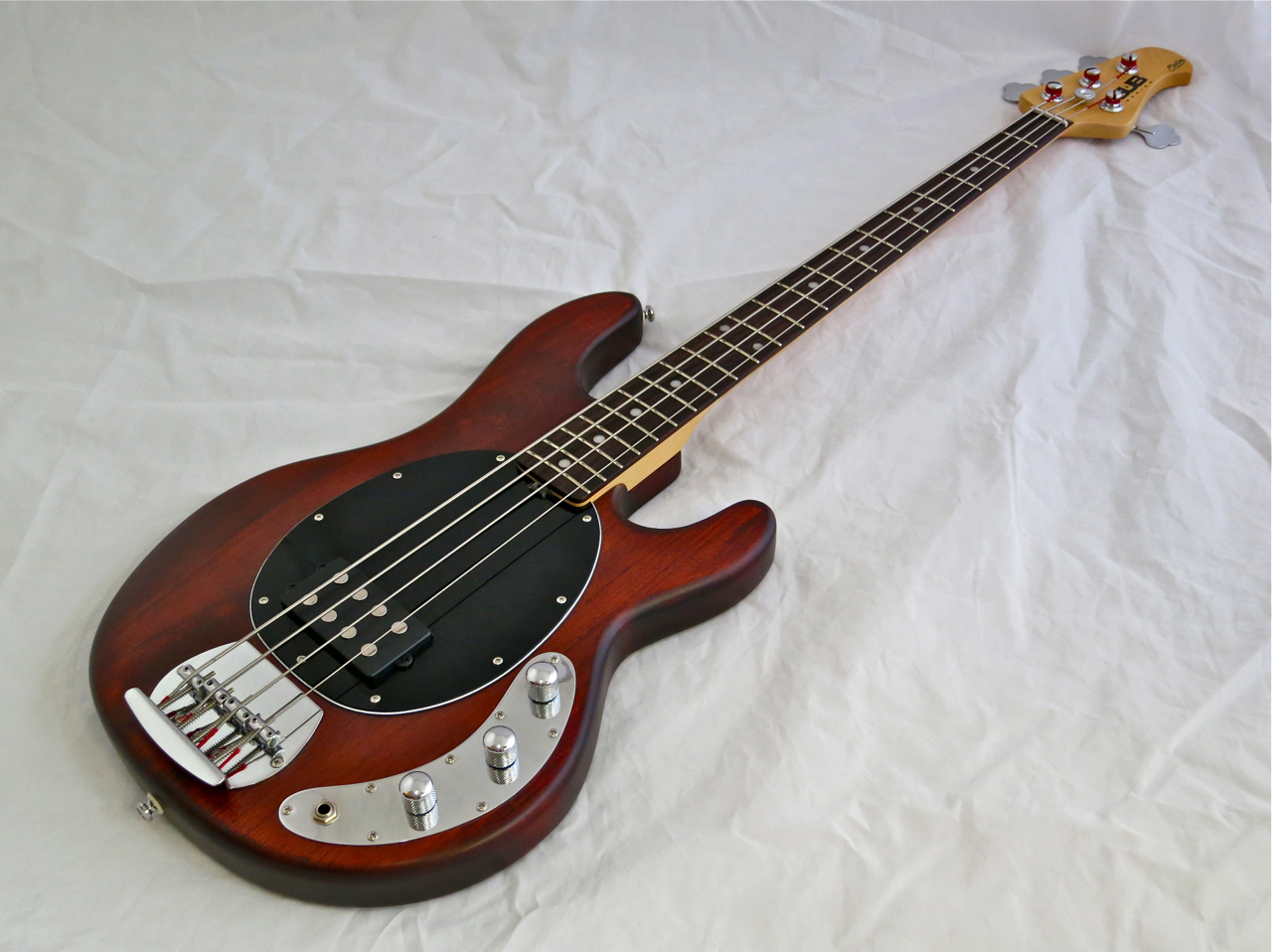
Sterling SUB Ray4 – beauty shot

Sterling SUB Ray4 – full back beauty 2

Sterling SUB Ray4 -basson testiyksilö on valitettavasti painonsa suhteen raskaansarjalainen – tämä on juuri se 1970-luvun ominaisuus, jota ei olisi pitänyt tuoda takaisin. Toisaalta Sterling lupaa nettisivullaan, että SUB-bassoihin valitaan kevyitä puita runkopuuksi, niin voidaan toivoa, että tämä oli se yksilö, joka pääsi läpi vahingossa.

Muuten Sterling Ray4:n ergonomia on erittäin hyvä. Sterling on muuttanut SUB-bassojen kauloja alkuperäistä Musaria nähden aavistuksen verran kapeammaksi, mikä tekee Ray-nelosen kaulan profiilista hyvin Jazz-basson kaltaisen.

Testiyksilön soitettavuus on erittäin vaivatonta, ja sen tatsi säädetty mukavan kevyeksi (E: 2,1 mm/ g: 1,9 mm).

Painavasta rungosta huolimatta (vai juuri sen ansiosta?) SUB Ray4 -basson akustinen sointi on erittäin ryhdikäs ja tiukka. En tiedä mitä puulajia on tässä käytetty, mutta testisoittimen soundissa on aimo annos saarnirunkoisen Musarin atakista ja tuoreudesta!

Basson herkullisesta akustisesta äänestä syntyy erittäin dynaaminen ja vahva sähköinen olemus. Sterlingin etuvahvistin on yllättävän vähäkohinainen, ja uutukaisen taajuuskorjaimet toimivat hyvin musikaalisesti (itse asiassa jopa paremmin kuin ensimmäisten 70-luvun Musarien vastineet). Luvassa on siis aito StingRay-soundi hyvin pienellä budjetilla.

Bassomestari Tony Levin (esim. Paul Simon, Peter Gabriel, John Lennon, King Crimson) on yksi uskollisimmista StingRay-faneista. Olen soittanut tämän jutun soundiesimerkit basistilegendan hengessä. Pätkät on äänitetty suoraan äänikortin kautta sekvensseriin ilman lisä-EQ:ta:

Sterling SUB Ray5 – beauty shot

Sterling SUB Ray5 – full back beauty

Testissä käynyt Sterling SUB Ray5 on viisikieliseksi bassoksi jopa yllättävän kevyt! Tämän basson kohdalla firman lupaus kevyistä runkopuista on siis lunastettu.

Aidon Musarin tavoin myös Ray-viitosen kaulaprofiilissa on riittävästi lihaa. Pyöreä, keskipaksu D-profiili on hyväksi basson soinnille, ja se kaula tuntuu ainakin omasta mielestäni erittäin hyvältä.

Tehtaalla testisoittimen kaularauta oli säädetty liian tiukaksi, eikä kielten intonaatio ollut ihan kohdillaan. Säätämiseen meni kuitenkin vain muutama minuutti, minkä jälkeen SUB-sarjan viisikielinenkin oli kevyt soittaa (H: 2,6 mm/g: 1,9 mm) ja itsensä kanssa vireessä.

Suorassa vertailussa Ray4:n kanssa viisikielisen SUB-basson akustisessa soundissa oli hieman enemmän keskialueen pyöreyttä, mutta yleisilme on Ray5:ssäkin tunnistettavasti Musari-mainen.

Vahvaääninen humbucker ja basson laadukas etuvahvistin toimivat myös Sterling Ray5 -mallissa erittäin hyvin yhteen. Lopputulos on varsin maukas versio aiheesta. SUB Ray5 tarjoaa aidon StingRay 5 -kokemuksen murto-osalla alkuperäisen USA-basson hinnasta.

****

On mielestäni erittäin hienoa, että Sterling (by Music Man) on onnistunut näiden SUB-bassojen myötä tarjoamaan myös alle-500-euron-hintaluokassa autenttisen StingRay-kokemuksen! Ray4 ja Ray5 eivät ole pelkkiä USA-Musareiden näköispainoksia, vaan oikeita aktiivi-bassoja, joilla pääsee varsin edullisesti melko lähelle esikuvan soitettavuuteen ja soundiin.

****

Sterling (by Music Man) SUB Ray4 + Ray5

SUB Ray4 – hintaluokka noin 360 €

SUB Ray5 – hintaluokka noin 390 €

Maahantuoja: EM Nordic

Suuri kiitos DLX Musiikille testisoittimien lainasta!

****

Plussat (molemmat bassot):

+ hinta-laatu-suhde

+ nauhatyö

+ soitettavuus

+ laadukas etuvahvistin

+ soundi

Miinukset (vain Ray4):

– testiyksilön paino

****

Sterling SUB Ray4 – body beauty

Sterling SUB Ray5 – body beauty

Review: LTD Elite ST-1

****

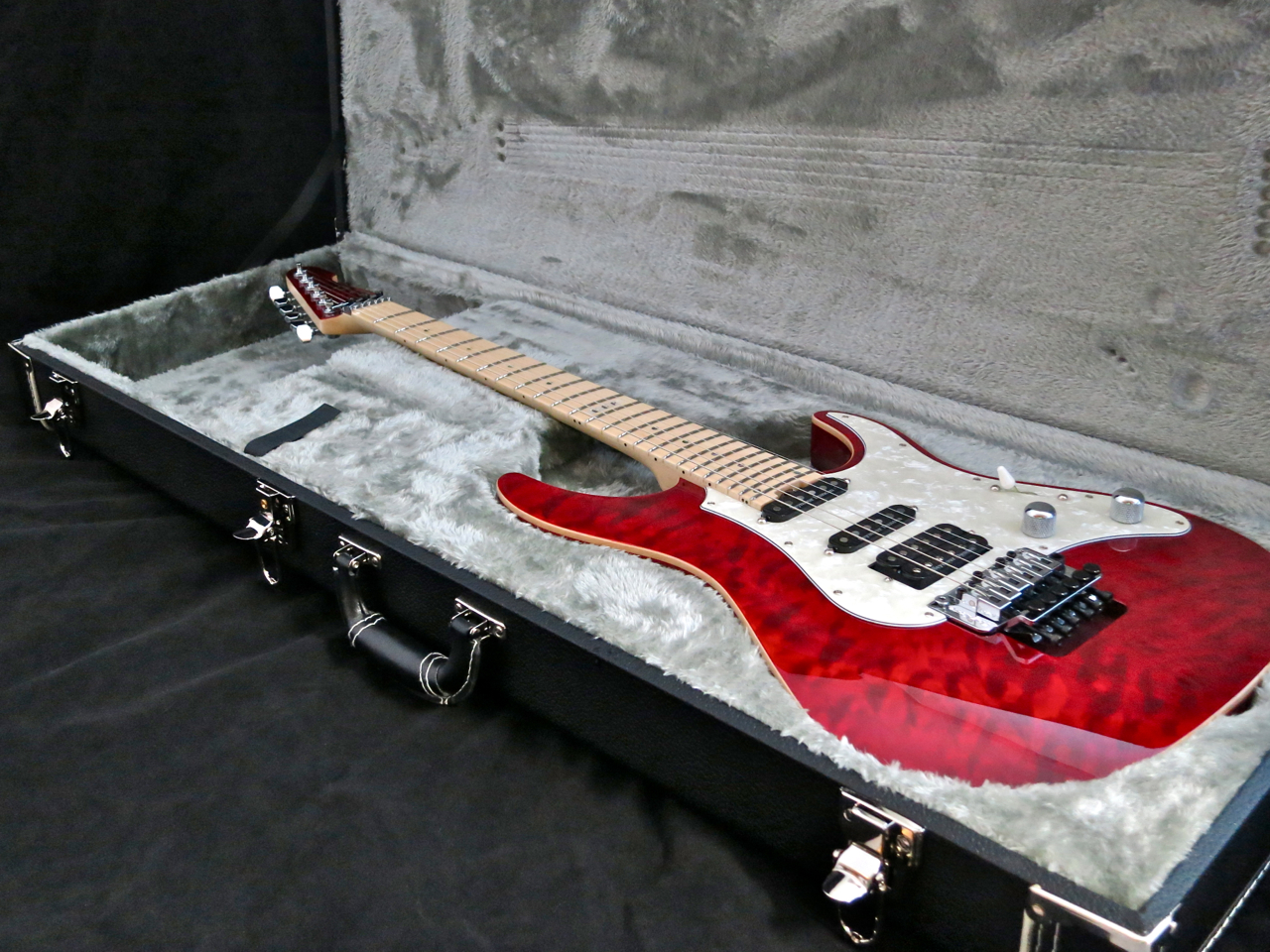
LTD Elite ST-1 – beauty shot 2

There are a lot of changes in store for ESP/LTD-instruments in 2013, because ESP have decided to reshuffle and restructure their whole product range.

In future the name ESP will only appear on the headstocks of Japanese ESP Custom Shop instruments. ESP’s Standard series will be renamed E-II.

New for LTD in 2013 is their Made-in-Japan Elite series, which has been designed to offer the very best of what this brand has to offer.

Kitarablogi has received a brand-new LTD Elite ST-1 -guitar for review. The model is available in two permutations – either equipped with a rosewood ’board neck and active EMG-pickups (LTD Elite ST-1/R EMG) or (like our review sample) sporting a maple fretboard and passive Seymour Duncan pickups (LTD Elite ST-1/M).

****
LTD Elite ST-1 – full front

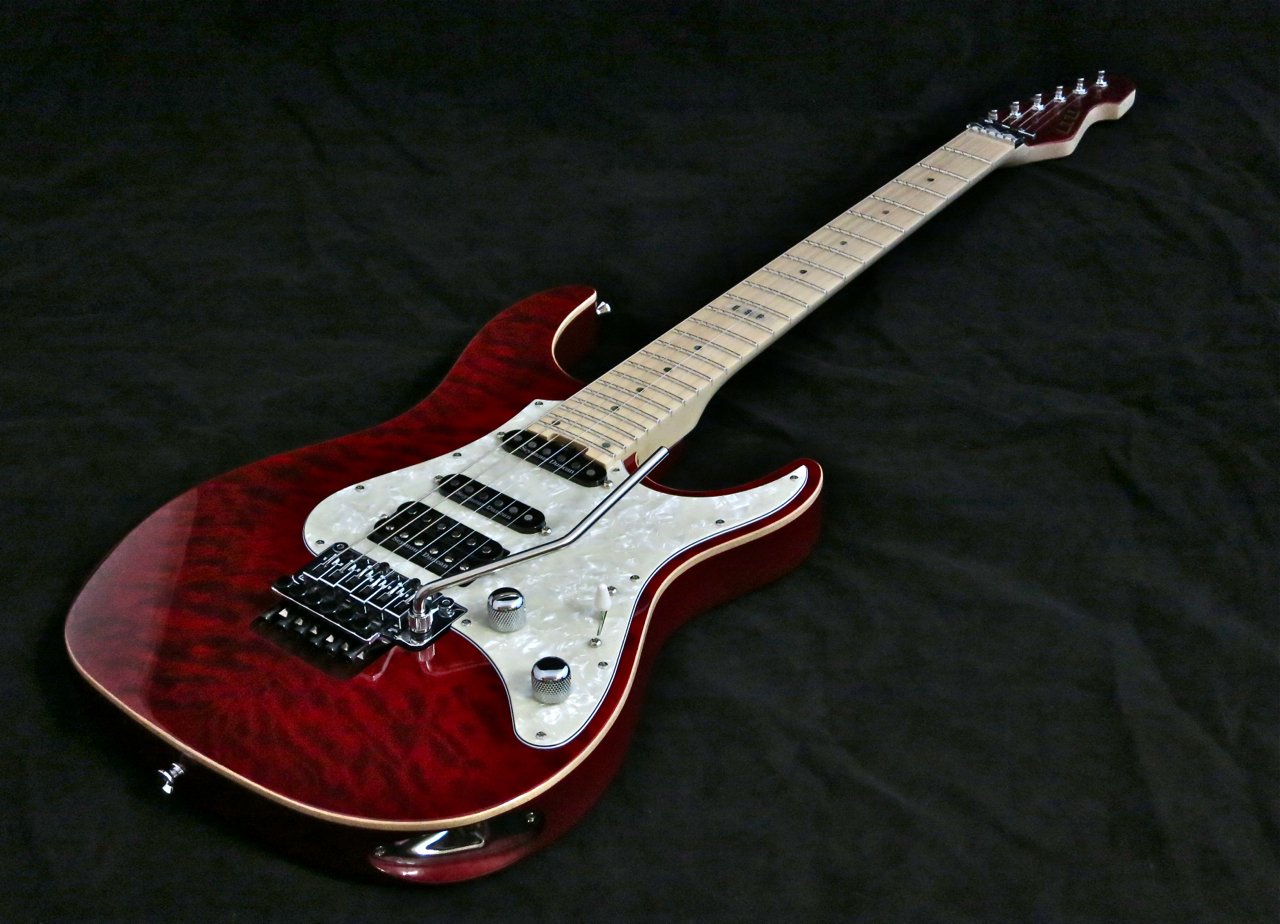
The brand-new LTD Elite ST-1/M (1.387 €) is a stunningly beautiful guitar, which manages to blend successfully an air of timelessness with the appeal of a sleek widdle-machine.

This version is released in two different finishes – the blue Aqua Marine and the See-Through Black Cherry of our test sample – while the EMG-version is only available in See-Through Black.

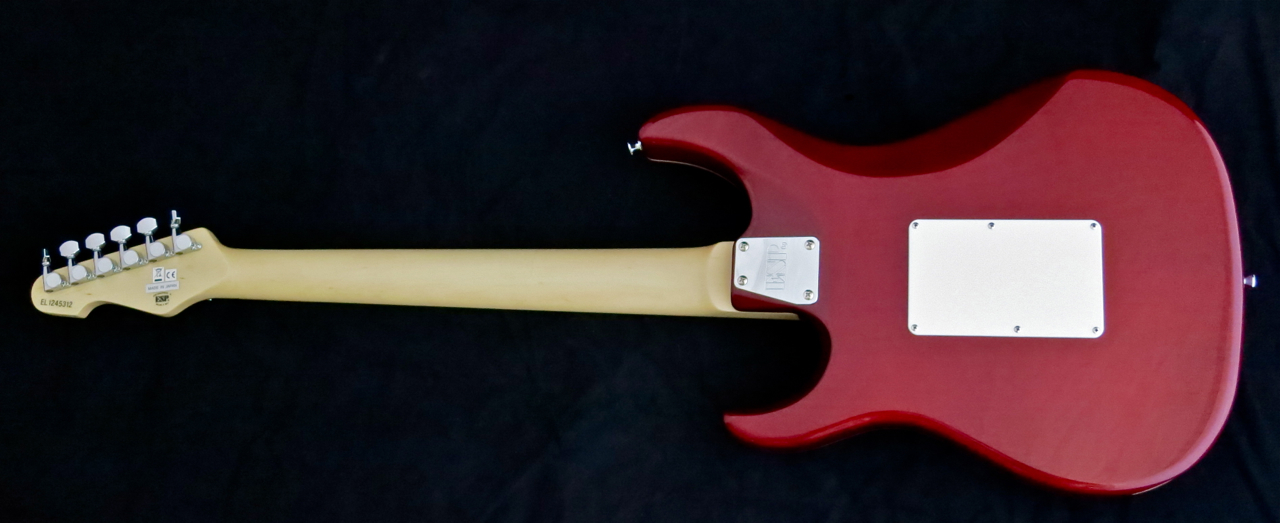
LTD Elite ST-1 – full back

The basic ingredients making up the Elite ST-1 follow a traditional recipe: A bolt-on maple neck and an alder body.

LTD Elite ST-1 – neck joint

The sleek ESP-neck joint makes excursions to the dusty end of the fingerboard just that bit more comfy.

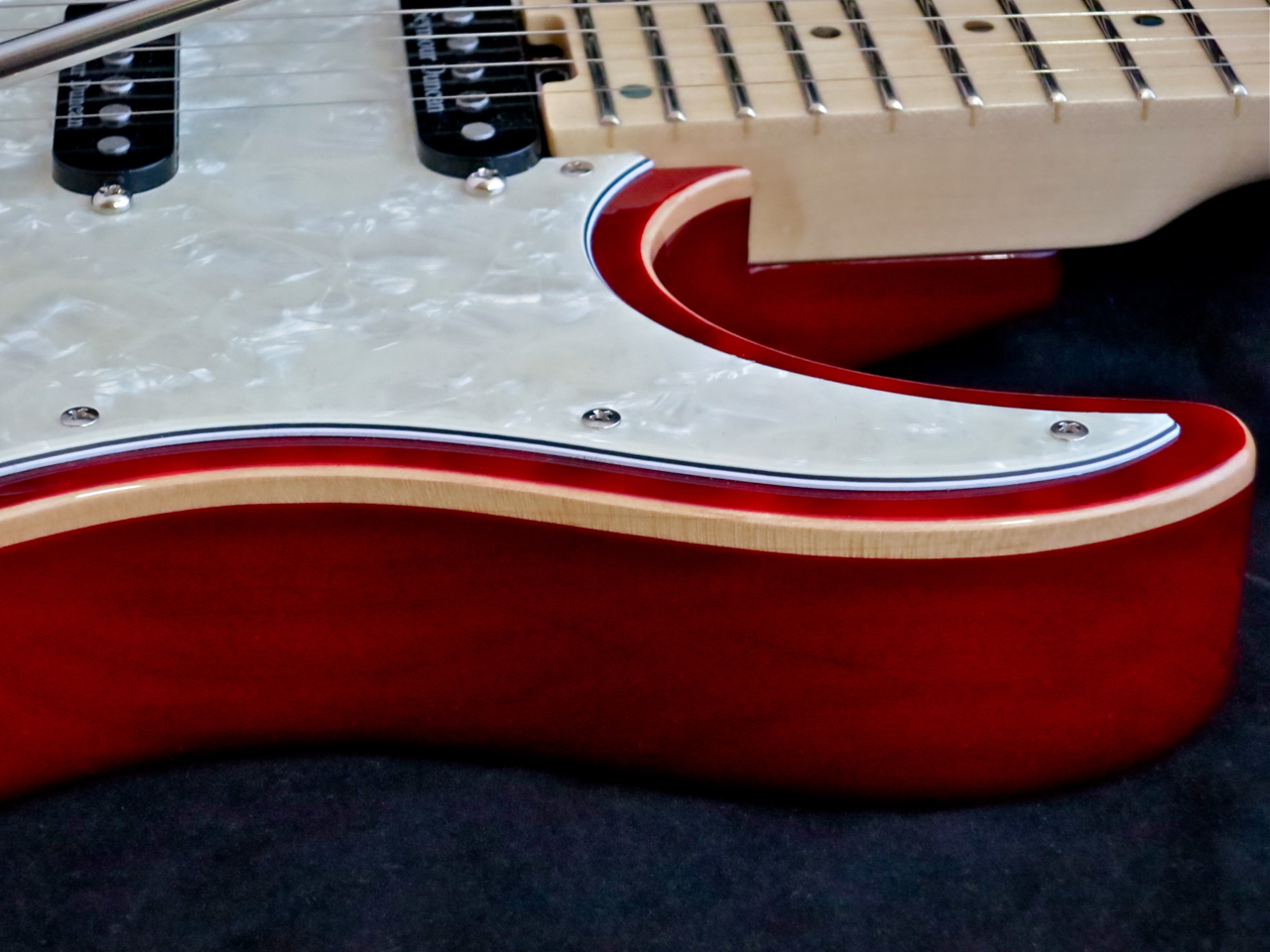
LTD Elite ST-1 – body angle

The front of the body is spruced up by a maple top carrying a quilt maple veneer.

LTD Elite ST-1 – fake binding

By leaving the edges of the maple top uncoloured you get what is known as ”fake binding”.

LTD Elite ST-1 – frets + inlays

The ST-1 is equipped with 24 jumbo frets. The quality of the fretwork is exemplary, and the same holds true for the finish of the neck, which blends a satin-lacquered back with a gloss-finished fretboard.

LTD Elite ST-1 – headstock

Quality is also the name of the game when it comes to the guitar’s hardware.

LTD Elite ST-1 – tuners

The chrome-plated, sealed tuning machines are Gotoh units.

LTD Elite ST-1 – Floyd Rose

The Floyd Rose vibrato is the top-drawer Original-version, made from steel in Germany by the Schaller company.

LTD Elite ST-1 – nut

This is what a well-installed locking nut looks like.

The string retainer bar pulls the strings down onto the nut, so the tuning doesn’t change when a string lock is opened or closed.

LTD Elite ST-1 – pickups

Seymour Duncan is the brand of choice for the LTD Elite ST-1/M when it comes to pickups:

The neck and middle units are stack-coil STK-S4-models, which promise genuine singlecoil tone bar the usual hum. The bridge humbucker is the company’s excellent, hotter-than-vintage Custom-model (SH-11).

The LTD’s truss rod can be adjusted without any component removal. Simply turn the wheel between the 24th fret and the neck pickup, using something like a small screwdriver or a nail.

LTD Elite ST-1 – body beauty

The ST-1’s comprises a five-way switch, as well as master volume and tone controls.

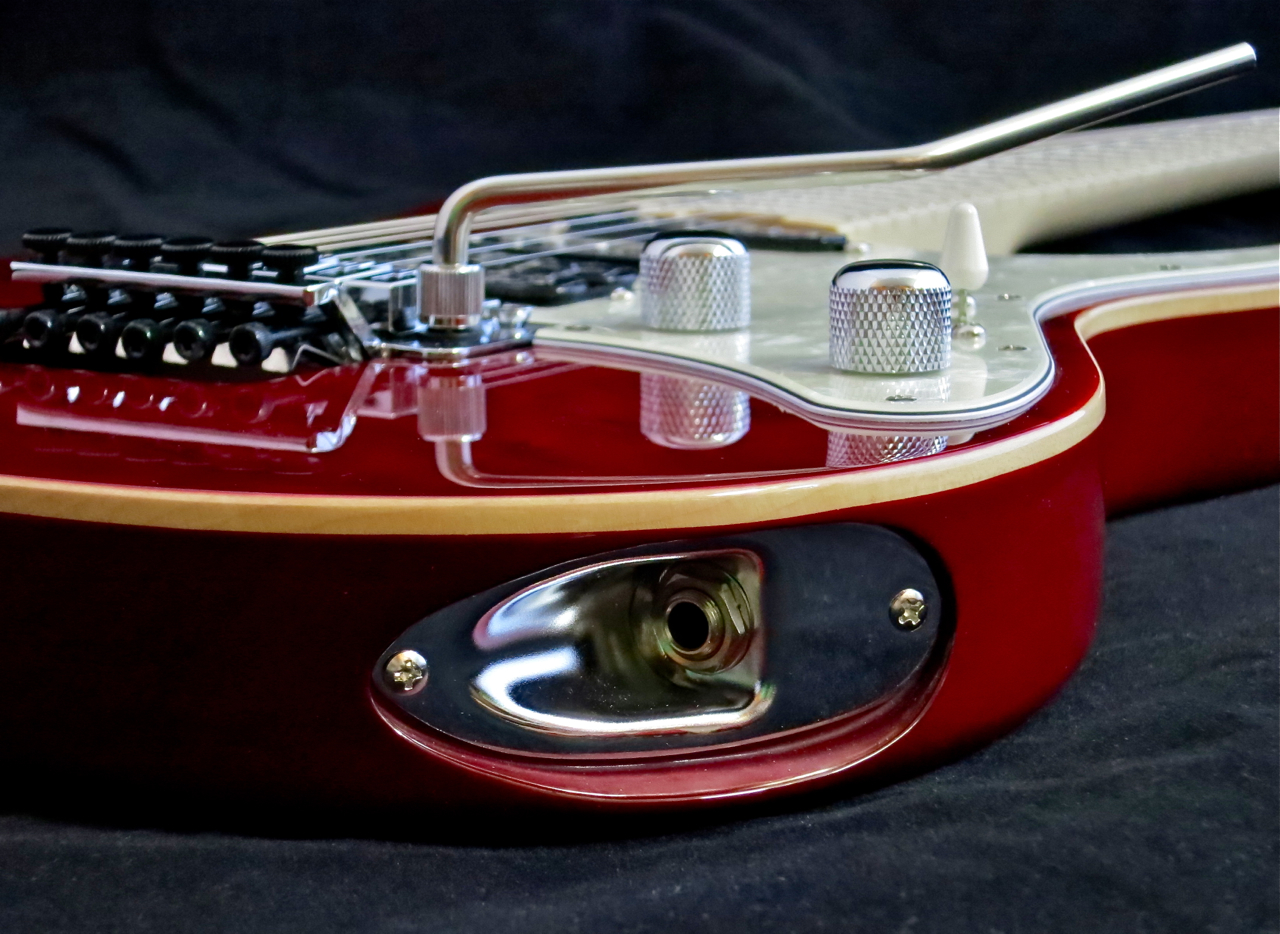
LTD Elite ST-1 – output jack

The jack plate has been sunk into the side of the body, making it easy to secure your guitar lead between the guitar and your strap.

LTD Elite ST-1 – hard case

All LTD Elite series instruments are sold with their own quality hard case!

****
LTD Elite ST-1 – beauty shot

The LTD’s specs sheet mentions a ”thin U-profile”, which calls to mind the 1990s and dreadful, hand-tiring ”speed necks”.

I needn’t have worried, though, because in fact the Elite ST-1’s neck turns out to be a reasonably chunky affair – very good for both playing comfort and good sustain. I would call this neck profile a ”medium-thickness D”.

The review instrument arrived with an excellent set-up, making the guitar very easy to play. Even though the action was adjusted quite low (E: 1,6 mm/e: 1,4 mm), the Elite’s acoustic tone was superb and totally free of fret rattling. The fat and tall frets feel great and provide a fast launch pad for your fingerboard excursions.

A cheap – or badly installed – Floyd Rose bridge can be a real headache, when it comes to tuning stability and sound.

Luckily, the excellent LTD Elite doesn’t suffer from any vibrato-related problems, making this instrument a real showcase for Japanese quality and workmanship. The guitar plays great and sounds fantastic, and the vibrato bridge works like a dream, even if you like to abuse your whammy bar.

The beautiful voice of the ST-1 carries over nicely into a clean amp’s signal. The sound sample starts with the neck pickup:

In an overdriven and distorted context the Elite ST-1’s hum-cancelling stack-coil pickups are a real treat. The Seymour Duncans give you authentic and wiry Strat-type tones, but completely free from hum and buzz.

Switching to the Custom-humbucker is like engaging an additional afterburner for that extra kick:

At first  the reorganisation of all things ESP might be a bit confusing, but I’m sure we’ll all get to grips with the new nomenclature quickly. One thing is clear, though:

The LTD Elite ST-1 is one of the best Superstrat-style guitars that I’ve ever had the pleasure to play. This LTD is a top-drawer, professional instrument with a fantastic feel and outstanding tone.

Based on this review it seems clear that the Elite-series really offers you the best of LTD at a fair price.

LTD Elite ST-1 – body back angle

All of the five guitar tracks on this tune have been played using the LTD Elite ST-1:

****

LTD Elite ST-1/M

1.387 €

Finnish distributor: Musamaailma

****
Pros:

+ value-for-money

+ workmanship

+ playability

+ Floyd Rose set-up and tuning stability

+ sound

+ hard case included

Testipenkissä: LTD Elite ST-1

LTD Elite ST-1 – beauty shot 2

ESP/LTD-tuoteperhe elää vuonna 2013 murroksessa, koska ESP on päättänyt jakaa eri sarjansa uudelleen.

Tulevaisuudessa ESP tulee esiintymään brändinä ainoastaan japanilaisen ESP Custom Shop -soittimissa. ESP:n Standard-sarjan soittimille on luotu uusi brändi: E-II.

Uusi on myös LTD:n japanilainen Elite-sarja, joka on suunniteltu edustamaan LTD-soittimien absoluutista parhaimmistoa.

Saimme testiin uunituoreen LTD Elite ST-1 -kitaran. Malli on saatavilla kahtena versiona, joko palisanteriotelaudalla ja EMG-mikrofoneilla varustettuna (LTD Elite ST-1/R EMG) tai – testikitaran lailla – vaahteraotelaudallisena ja Seymour Duncan -mikeillä (LTD Elite ST-1/M).

****

LTD Elite ST-1 – full front

Upouusi LTD Elite ST-1/M (1.387 €) on kyllä häkellyttävän upea kitara, jossa yhdistyvät ajaton kauneus ja huipputrimmatun soittimen ominaisuudet herkullisella tavalla.

Tätä mallia saa kahdella eri värillä – sininen Aqua Marine tai testisoittimen See-Through Black Cherry – kun taas EMG-version viimeistely on läpikuultava See-Through Black.

LTD Elite ST-1 – full back

Elite ST-1:n perusainekset ovat hyvinkin perinteiset: ruuvikaula on veistetty vaahterasta, ja kitaran runko on leppää.

LTD Elite ST-1 – neck joint

Kaulaliitos taas on veistetty perinteistä katsoen huomattavasti sulavampaan muotoon.

LTD Elite ST-1 – body angle

Rungon etupuolella komeilee quilt-kuvioisella loimuvaahteraviilulla päällystetty vaahterakansi.

LTD Elite ST-1 – fake binding

Kannen reunat on jätetty taidokkaasti värjäämättä, mistä syntyy kaunis ”reunalistoitus” (engl. fake binding).

LTD Elite ST-1 – frets + inlays

ST-1:n vaahteraotelautaan on asennettu 24 jumbo-kokoista nauhaa. Nauhatyön laatu on esimerkillinen, samoin kuin kaulan viimeistely, jossa mattapintainen kaulan takaosa yhdistyy kiiltävään lakkaukseen otelaudassa.

LTD Elite ST-1 – headstock

Myös metalliosien sarakkeella LTD Elitessä luotetaan ainoastaan vankkaan laatuun.

LTD Elite ST-1 – tuners

Kromatut virittimet tulevat Gotohin japanilaisesta tuotannosta.

LTD Elite ST-1 – Floyd Rose

Kitaran Floyd Rose -vibratalla on se aito, saksalaisen Schallerin valmistama teräksinen Floyd Rose Original -malli.

LTD Elite ST-1 – nut

Tältä näyttää huolellisesti asennettu lukkosatula.

Lavanpuoleinen palkki vetää kielet oikeassa kulmassa satulan yli, minkä ansiosta soittimen vire ei muutu lukkojen avaamisessa tai sulkemisessa.

LTD Elite ST-1 – pickups

LTD Elite ST-1/M -mallin mikrofonit tulevat Seymour Duncanin valikoimasta:

Kaula- ja keskimikki ovat STK-S4-mallia, joissa kaksi päällekkäistä kelaa pitävät hurinan loitolla. Tallamikki taas on Duncanin loistava, hieman vintagea tuhdimpi Custom-malli (SH-11).

Kaularaudan säätö hoidetaan ST-1:ssä kätevästi kääntämällä kaulamikrofonin ja viimeisen nauhan välistä pyörää.

LTD Elite ST-1 – body beauty

ST-1:n kytkentä koostuu viisiasentoisesta mikkivalitsimesta, sekä master volume ja master tone -säätimistä.

LTD Elite ST-1 – output jack

Lähtöjakki on asennettu rungon reunaan niin, että johto voidaan viedä luontevasti soittimen ja hihnan välistä eteenpäin vahvistimeen.

LTD Elite ST-1 – hard case

LTD Elite -sarjan soittimissa laadukas laukku kuuluu hintaan!

****

LTD Elite ST-1 – beauty shot

LTD:n spekseissä lukee kaulaprofiilin kohdalla ”ohut U-profiili”, ja jotenkin tämä kuvaus tuo minulle mieleen 1990-luvun karseita, kättä väsyttäviä ”vauhtikauloja”. Mutta ei ole syytä paniikkiin, sillä Elite ST-1:n kaula tarjoaa riittävästi ”lihaa” mukavaa soittotuntumaa ja hyvää sustainea varten! Itse käyttäisin mieluummin ilmaisun ”keskivahva D-profiili” tämän kaulan kuvaamiseen.

Testikitara oli erinomaisessa trimmissä ja erittäin helpposoittoinen. Akustisesti LTD ST-1 soi kauniisti ja täysin rämisemättä, vaikka kielet oli säädetty hyvin matalalle (E: 1,6 mm/e: 1,4 mm). Paksut ja korkeat jumbo-nauhat luovat nopean soittoalustan, jossa kielten venyttäminen sujuu kuin tanssi.

Halpa – tai huonosti asennettu – Floikka voi helposti pilata kitaran soundin, ja tehdä virittämisestä suoranaista helvettiä.

Laadukas LTD Elite ei tunne tällaisia ongelmia lainkaan, sillä se on varustettu laatuosilla ja rakennettu japanilaisella pikkutarkkuudella. Kitara soi eloisasti ja pitkään, ja sen jouhevasti toimiva vibrato pitää vireen esimerkillisesti rankasta kammen käytöstä huolimatta.

ST-1:n kaunis akustinen ääni säilyy hyvin puhtaan vahvistinkanavan läpi soitettuna (liikkeelle lähdetään kaulamikrofonista):

Särökäytössä Elite ST-1:n hurisemattomat stack coil -mikrofonit ovat huima etu, jos vertaa niihin perinteisten yksikelaisten toimintaa. Erinomaisista Seymour Duncan etu- ja keskimikrofoneista lähtee aito, tuore Strato-tyylinen sointi, mutta täysin häiriöäänistä vapaana.

Custom-humbuckerin valinta viisiasentoisella kytkimellä taas polkaise kitaran turboa päälle, ja meno vaan kuin paranee:

ESP:n brändien uudelleen strukturoiminen voi olla ensialkuun kitaristeille hieman hämäävää, mutta yksi asia tuli tässä testissä hyvinkin selvää:

LTD Elite ST-1 on yksi parhaimmista Superstrat-tyylisistä kitaroista, joilla minulla oli koskaan iloa soittaa. Tämä LTD on selvästi pro-luokan soitin erinomaisella soittotuntumalla ja laadukkaalla äänellä.

Elite-sarjaan myötä LTD tarjoaa japanilaista huippulaatua reiluun hintaan.

LTD Elite ST-1 – body back angle

Tämän biisin viisi kitararaitaa on kaikki soitettu LTD Elite ST-1:llä:

****

LTD Elite ST-1/M

1.387 €

Maahantuoja: Musamaailma

****

Plussat:

+ hinta-laatu-suhde

+ työnjälki

+ soittotuntuma

+ Floyd Rose -tallan toiminta

+ soundi

+ kova laukku kuuluu hintaan

****

Review: Zoom A3

****

Zoom A3 + Godin Acousticaster A6

Zoom’s A3 is the company’s brand-new, next-generation modelling effects unit for acoustic guitar.

The Zoom A3’s user interface is very similar to the one used in their MS-50G-pedal for electric guitar, but in terms of its features the A3 offers a whole plethora of stuff developed specially for use with acoustic guitars.

****

zooma3

Zoom have managed to pack an unbelievable amount of processing prowess into its new compact contender (current street price in Finland approx. 170 €), yet the A3 is still easy to use. The most vital functions have been given their own knobs and pushbuttons, which makes the A3 easy to use and cuts back on unnecessary menu-jumping at the same time.

The Zoom’s main sections are the quality dual preamp with its three-band EQ, the pedal’s versatile guitar-modelling department, as well as the A3’s large assortment of effects.

Additionally, the pedal offers a switchable solo boost (up to 12 dB) with its own tone control, an automatic feedback remover (that can defeat up to three different frequencies simultaneously) and a digital tuner.

a3_memory

The Zoom A3 is a programmable unit, which can store up to 20 patches. The patches can also be lined up in an A/B-list, which enables you to select patches for on-the-fly switching.

a3_battery

The effect pedal comes with its own power supply unit, but it can also be run on four AA-size batteries.

Zoom A3 – mic input

The A3’s microphone input – which can run phantom power (+24V or +48V) for condenser mics – and the unit’s balanced XLR-output (with a dedicated ground lift switch) have been placed on the front panel.

Zoom_A3_right_side

Your guitar’s output goes into the Zoom’s pickup input on the unit’s right hand side. A three-way slider lets you select two pre-EQ curves – magnetic or piezo – as well as a linear option (flat).

Zoom_A3_left_side

The stereo outputs have been placed on the opposite side, next to the USB-port for (firmware updates).

****

Zoom A3

Each of the A3’s patches can run up to three different effects simultaneously, so you could use the first slot for one of the Zoom’s 28 virtual guitars, the second slot for one of three virtual microphones (SM57, C414, U87) and the third for something like a reverb.

On the other hand, you can also use the A3 as a ”pure” multieffect, by not using any digital guitar-modelling and creating patches with three effects in them. You can choose from 40 different effect types – from compression and chorus all the way to pitch-shifting and reverb. The sound quality is very good, and each effect offers plenty of leeway for precise adjustment.

16_body_types

Still, I think the A3’s biggest selling point is its excellent modelling section, which makes it possible to achieve astonishingly realistic results with only a few clicks of a button.

To work properly the modelling section needs a clean guitar signal, so the first thing is to make sure you’ve got the input gain settings for your straight guitar output and/or the mic put in front of your guitar just right.

Once the levels are OK, miraculously changing the character of your guitar is quick and easy: First, use the rotary switch above the Zoom’s display to select the body type corresponding best to the guitar you’re using – for example, choose ”Mold Body” if you’re playing an Ovation or ”YMH” if your guitar is a Yamaha LL-series instrument.

acoustic_preamp

Next, you select a virtual guitar of your liking for the first effect slot in the chosen patch. You can access all of the A3’s 28 virtual guitars by using the Type-buttons. The guitars are displayed using their model names – like J-45, LG-2 or F-55 – as well as by an icon in the display.

If you’re using only a direct piezo signal as a starting point, you can add a good dose of authenticity by selecting a virtual microphone for the second effect slot of the patch. Each of the three virtual mics lets you choose between close- and ambient-miking, and whether the mic has been placed in front of the virtual sound-hole or near the virtual guitar’s bridge.

I have recorded three audio examples to give you an idea of the modelling technology’s sound:

The first clip features a Godin Acousticaster with an LR Baggs piezo system. First you’ll hear the straight piezo signal, followed by the these virtual guitars: A D-28, an OM-28, a 00-18 and an SJ-200. I’ve used Zoom’s virtual version of an AKG C414, and a touch of reverb:

The second clip has been recorded with me playing my Takamine N-20 -jumbo into a real condenser mic (an AKG C3000). The sequence of virtual guitar models is the same as above:

In the third clip I play my Tanglewood TW28-CSN -dreadnought, with the physical microphone and the sequence of virtual guitars staying the same:

****

In my opinion the Zoom A3 is a very serious contender for the title of ”Best compact multieffect for acoustic guitar”. It is a fantastic little tool for both live use and in the studio, where it can act as your own production centre for acoustic guitars. The Zoom is very easy to use and it sounds great. The on-board anti-feedback circuitry works very nicely and the solo boost is a handy tool to have in a unit such as this.

The best bit is, nonetheless, the A3’s surprisingly organic-sounding modelling section. The Zoom’s biggest advantage, when compared to other similar effect units, lies in its versatility and the wide range of different virtual guitars on offer. It is very easy to find a good body-style match for your physical guitar’s input signal, and the amount of different virtual guitar models makes it almost hard to choose. The option to creatively misuse the Zoom A3 – by selecting the ”wrong” body-type for your input signal – is also fun, and yields some nice new flavours.

But, don’t listen to me, go out and give it a try yourselves.

****

Zoom A3

Current street price in Finland approx. 170 €

Finnish distributor: Studiotec

****

Pros:

+ value-for-money

+ quality preamp

+ mic input with phantom power

+ great-sounding virtual guitar models

+ effect quality

+ EQ-section has physical control knobs

+ Boost & Anti-Feedback functions

****

Review: Roland Cube Lite

****

cube_lite_front_gal

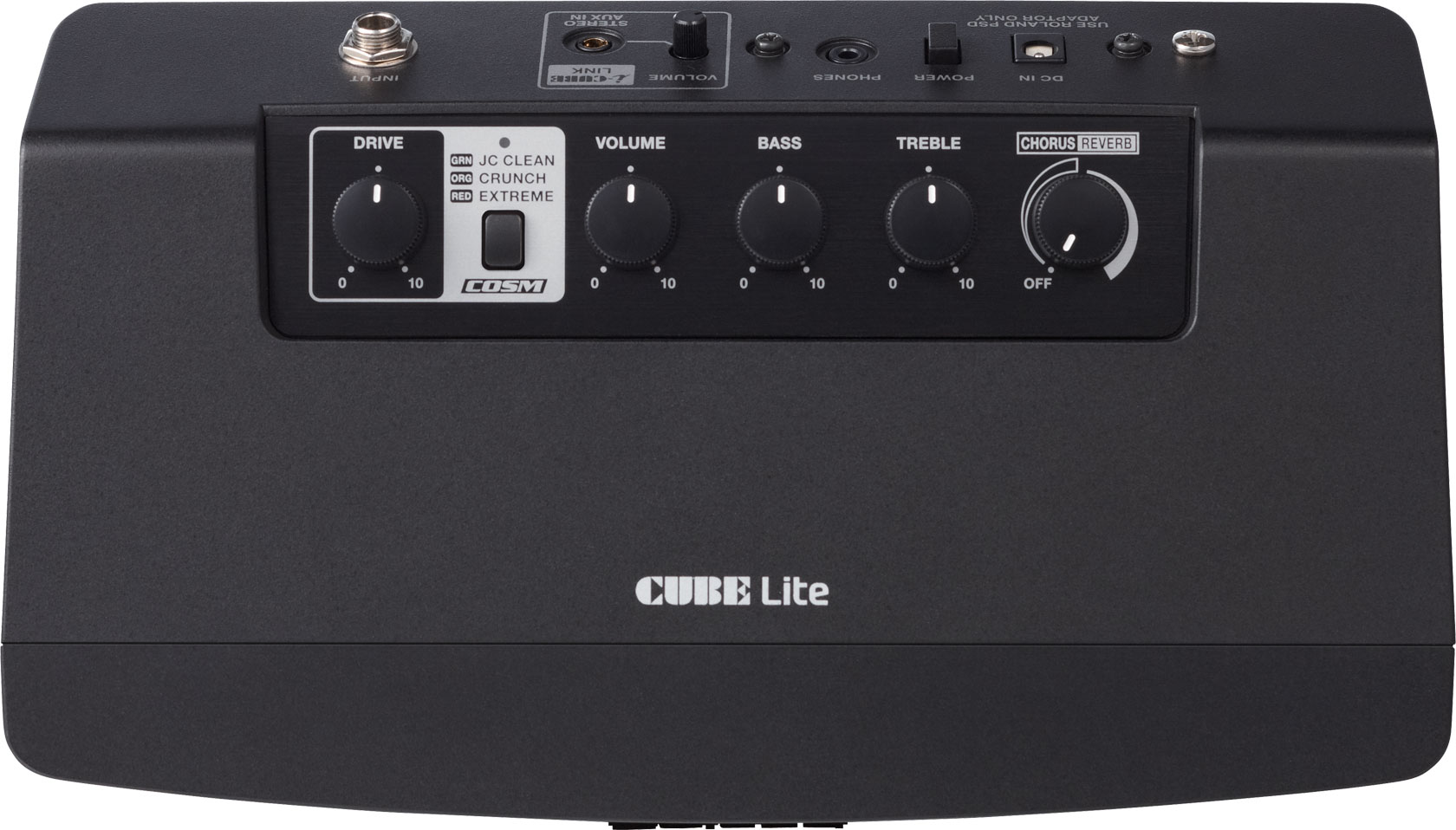
The brand-new Roland Cube Lite (current price in Finland: 155 €) is the latest model in Roland’s successful Cube-range, and the mega-selling Micro Cube’s little sibling.

Contrary to its name the Cube Lite isn’t square-shaped, but rather a stylish stereophonic (2.1) practice amp that looks more like the company’s acoustic combos. Due to its very compact size there wasn’t enough space left for batteries – the Cube Lite runs exclusively on its PSU, which is included in the package.

cube_lite_top_gal

The Cube Lite offers you three different COSM-modelled amplifier choices, called JC Clean, Crunch and Extreme. Apart from the Drive- and Volume-controls you’ll also find a two-band EQ-section.

The combo’s effect selection has been simmered down to a chorus and a reverb.

cube_lite_back_gal

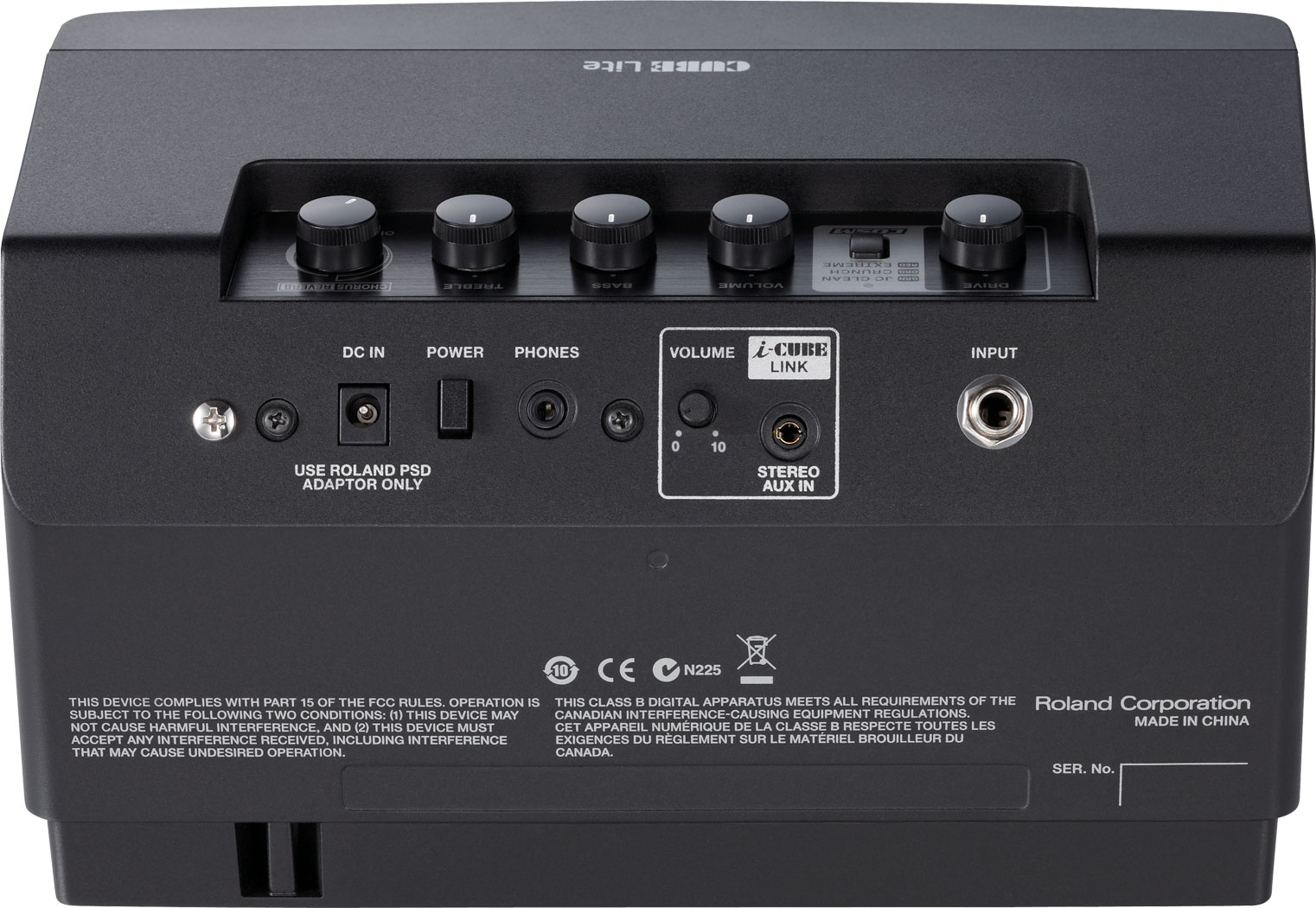
All of the Roland’s inputs and outputs are found on the combo’s back panel: In addition to the regular guitar input and the mini-jack for the headphones, you’ll find an input labelled ”i-Cube Link” with its own small volume control next to it.

Thanks to the i-Cube Link Roland’s Cube Lite is able to communicate directly with your Apple iPhone, iPad or iPod Touch. When hooked up with the special lead found in the box, the combo becomes your iWhatsit’s sound card.

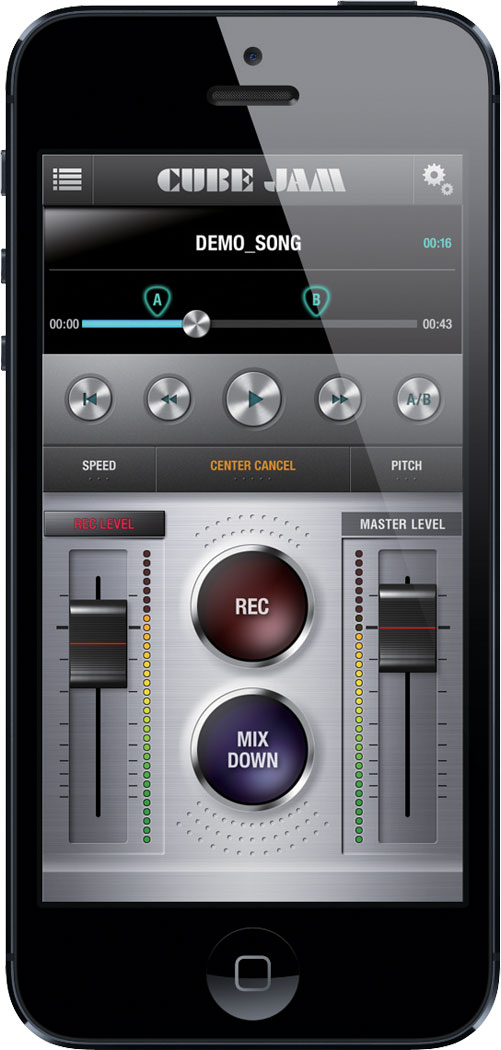
Roland offers you their Cube Jam-app – which turns your iPhone/iPad into your own guitar practicing and recording machine – for free download.

The Cube Lite will also work as your personal stereo, when using a standard stereo cable with mini-plugs connected to the i-Cube Link input.

****

cube_lite_angle_gal

Roland’s Cube Lite is a refreshingly compact and lightweight piece of gear. Granted, its plastic chassis may not be as trustworthy as the Micro Cube’s sturdier exterior, but on the other hand the Cube Lite will look much nicer in your living room.

I was blown away by the surprisingly full-bodied sound coming off the combo’s speakers – thanks in no small part, I’d reckon, to the 2.1-system’s subwoofer. The sound quality is definitely on a par with most personal hi-fi systems, except maybe in terms of the Cube Lite’s slightly narrower stereo spread.

The combo’s three COSM-models cover virtually all bases of electric guitardom. I don’t think anyone will leave their gig rig at home in favour of the Cube Lite, but this dwarf is well up for inspiring training sessions and on-the-spot song demoing. I kind of missed a delay as an additional effect option, but you can’t have everything, now, can you?

cube_jam_iphone_gal

While this little Roland already works fine as a stand-alone practice amp, the cool Cube Jam-app adds a lot of fun and value to the whole package.

Cube Jam can use your iPhone’s/iPad’s whole music library as backing track material (except for copy-protected files). The app allows you to change playback speed and transpose your backing track, as well as to run a loop using the A/B-function. Center Cancel does what it says on the tin – you can dial out parts like the main vocal or lead guitar on-the-fly.

My favourite Cube Jam-features are Record and Mixdown, which allow you to play along to the backing track and record the whole thing. The app automatically stores each pass as a separate take, which makes it possible to select the best take for eventual mixdown, using the two virtual faders. Pressing the Mixdown-button creates a new WAV-file (44.1 kHz/16-bit) and stores it in your iThingy’s memory.

You can even overdub by selecting the latest mix as your new backing track and adding a new guitar track on top. The only drawback here is that the newly recorded track is always panned to centre, but that’s a compromise I could live with, as this app is meant mainly for practice and not for multitrack recording purposes.

I had prepared a backing track for this review using my iMac’s Garageband-software. I exported the backing track onto my iPad, and then recorded a guitar solo, playing my Epiphone Casino through the Roland Cube Lite (on Crunch), while recording it all onto Cube Jam.

Here’s what the Cube Jam-mix sounds like:

And here’s the guitar track on its own:

****

Here are two examples of the JC Clean- and Extreme-models played with a Stratocaster, and recorded with a Zoom H1:

****

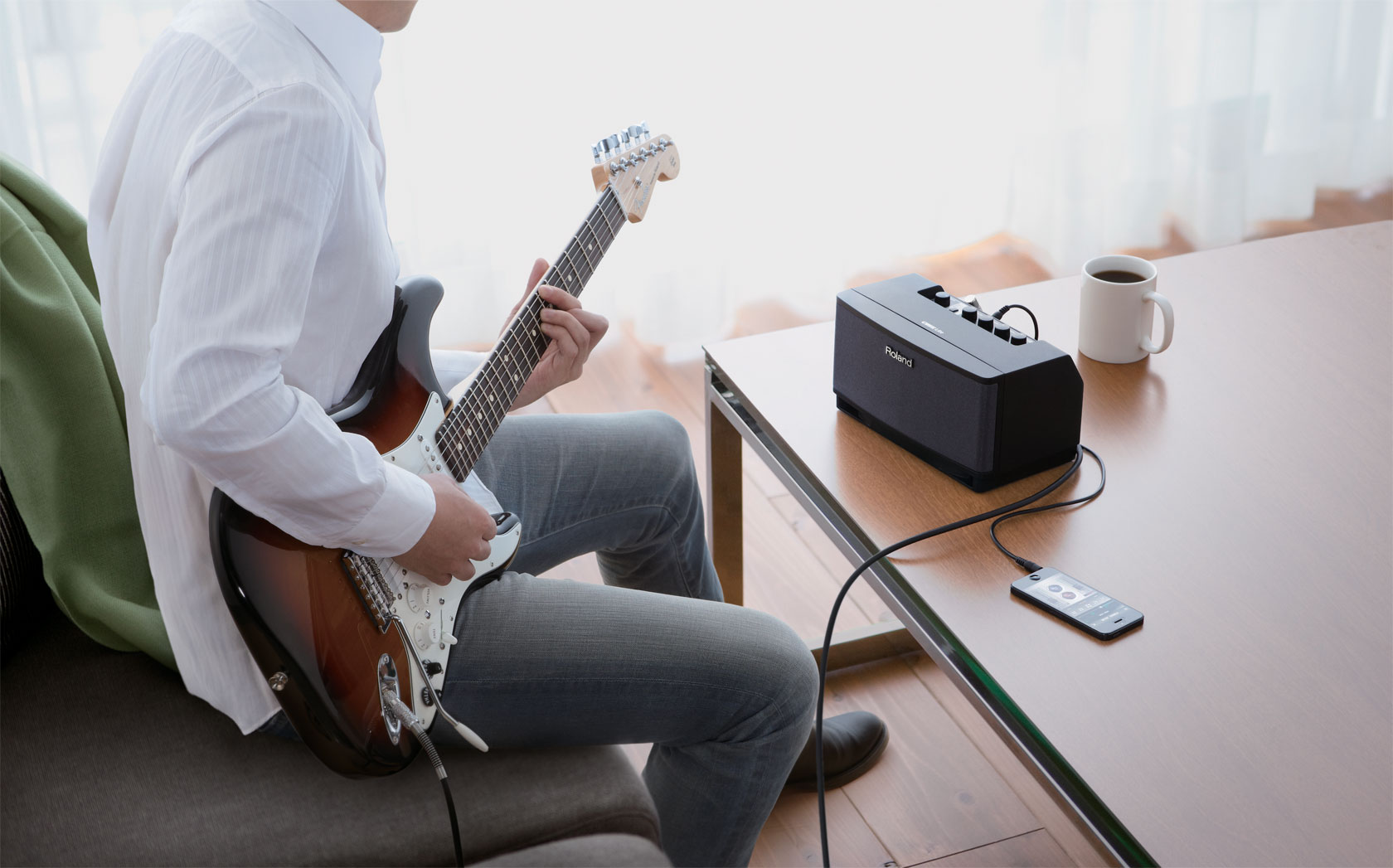
cube_lite_table_gal

In my opinion the Roland Cube Lite is a fine little practicing amp. You’ll get the most fun out of it if you’re already an Apple iPhone or iPad user, but the Cube Lite also works nicely as a stand-alone combo.

****

Roland Cube Lite

155 €

Finnish distribution: Roland

****

Pros:

+ COSM-models

+ 2.1 stereo system

+ external sound card for iPhone/iPad

+ compact

+ Cube Jam-app

Cons:

– no battery option

The acoustic lap steel – a very interesting challenge

****

If you feel your guitar-playing is stuck in a rut, it might be a good idea to broaden your horizon – either by immersing yourself in a new genre, or by taking up a different string-instrument.

For some time I have been interested in lap steels, and for some reason – probably due to their their special sound – especially in Weissenborn-type, acoustic lap steels.

About 100 years ago a Californian luthier (of German origin), named Hermann Weissenborn, came up with an idea to make the then-popular acoustic lap steel guitar louder: Weissenborn simply extended the body into the neck, all the way up to the top nut. As the neck was sort of redundant on a lap steel anyway, the luthier figured, he might as well use it to further amplify the instrument’s voice.

Although the new instrument worked very well, Weissenborns were supplanted relatively quickly by even louder designs, such as resonators and electric steel guitars. Over recent years interest in Hermann Weissenborn’s invention has been growing slowly but steadily, thanks to this guitar’s idiosyncratic looks and sounds being featured by such musicians as Ben Harper and Xavier Rudd.

Thanks to this renaissence, new and affordable Weissenborn-copies are readily available for the beginner. Most of these guitars are built in China to the distributors’ specifications and then branded with the respective company’s logo.

There are also a few luthiers out there who build high-quality replicas of Weissenborn-type lap steels for the connoisseur – check Google (”Weissenborn guitar”).

At the moment of writing no Finnish distributor is importing Weissenborn-style guitars, so I got some support for preparing this article from Germany: Bediaz Music are a small, specialised company, dealing mostly in acoustic lap steels – starting with vintage Weissenborns and modern boutique-versions – but the guys are also importing their own range of affordable Bediaz-branded instruments.

****

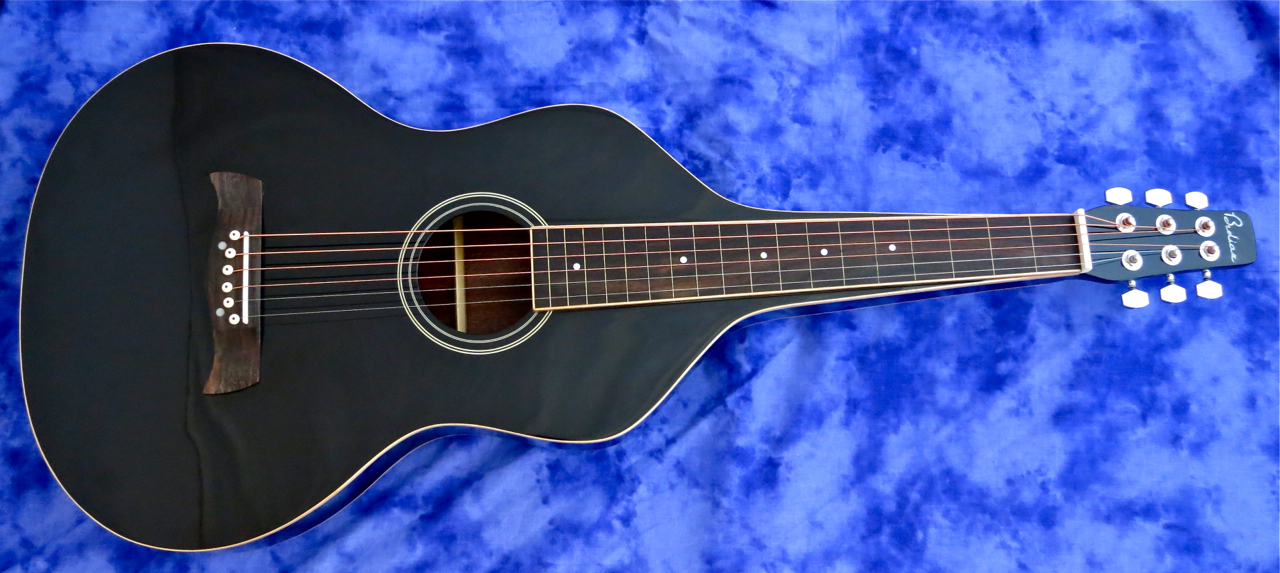
Bediaz Weissenborn – full front

I decided to get acquainted with a Bediaz Black Gloss, the company’s most affordable model (289 €).

This is a copy of the guitar-shaped Weissenborn, but Bediaz also offer Teardrop-models, as well as deep-bodied and/or wider alternatives.

Bediaz Weissenborn – back angle

At this price point you cannot expect solid-wood bodies. The Bediaz has a body build from laminated mahogany, and sports a gloss black finish.

Only the guitar’s headstock – which is glued into the hollow neck near the first fret – is a solid piece of wood.

Bediaz Weissenborn – neck

Affordable doesn’t mean cheap, though:

The Bediaz displays a very clean build (for the most part), and looks rather fetching with its luscious finish and the stylish, contrasting maple binding.

The fret lines seem to be maple, too. There were a couple of slightly wobbly-looking fret lines, but this is a mere cosmetic glitch on a lap steel, and nothing to worry about in this price range.

Bediaz Weissenborn – headstock

The silkscreened silver logo also isn’t the crispest either, due to some bleed, but this also is a very minor cosmetic niggle, which surely won’t spoil our fun.

A chunky bit of bovine bone has been used for the Bediaz’ tall top nut.

Bediaz Weissenborn – tuners

Tuning is simple and steady, thanks to the modern sealed tuning machines.

Bediaz Weissenborn – soundhole

Stylishly understated white rings make up this instrument’s rosette.

Bediaz Weissenborn – interior

The Bediaz also displays rather clean workmanship on the inside – something which isn’t always a given in this low price bracket.

Bediaz Weissenborn – bridge

A Weissenborn-bridge is a steel-string bridge’s taller sister. On the Bediaz it has been crafted from a sandwich of two pieces of rosewood.

****

This is what a Weissenborn can sound like in the right hands:

****

Playing a lap steel guitar opens up the gates to a new kind of playing-experience, and forces you to readjust your approach.

In a certain way, a lap steel is much more restricted than a standard (Spanish) guitar, as you’re always tied closely to your chosen tuning, with the bar giving you only a little room for breaking out of the key you’re in. If you’re in an open major-tuning, for example, achieving minor chords requires you to apply string muting, if you want to go somewhere else than the parallel minor tonic chord (like: Em –> G).

On the other hand, the tone bar frees you from the constraints of the traditional western 12-semitone scale, making it possible to find notes outside our usual major/minor-tonalities. This is one of the reasons why acoustic lap steels are gaining a growing following among Blues-guitarists and World-musicians.

Playing in tune and hitting the correct pitch takes a lot of practice on a lap steel, though. I, for my part, am still on the way there…

😉

Bediaz Weissenborn – beauty shot

Due to their hollow neck Weissenborn-type guitars are a little more delicate when it comes to the rigours of string-pull. High-pitched open tunings should only be attempted with lighter gauge strings. It’s best to start your Weissenborn-journey with lower tunings, such as open D (D-A-D-f#-a-d), open C (C-G-C-e-g-c), open G (D-G-D-g-h-d) or DADGAD. Many lap steel buffs also use their own – often ”secret” – tunings to fit their own signature sound and style.

Click HERE for more information, or try Google.

The Bediaz Black Gloss has a nice fresh and open tone with a charmingly raunchy mid-range. For a standard-depth acoustic Weissenborn-copy the sheer volume on offer is a positive surprise.

Tonebars

A lap steel’s sound is also defined by which tone bar is used, and the bar also has an influence on the guitar’s playability. I have taken my first steps using a classic bullet-shaped tone bar – the sound was good, but I found the bar hard to hold. I have since switched to a Shubb SP-1 bar, which I find much easier to hold and manoeuvre. Other players swear by much lighter ceramic tone bars, so check them out as well.

Bediaz Weissenborn – back beauty

While I don’t kid myself into thinking I might become a great lap steel guitarist, I still find playing the Bediaz-Weissenborn very refreshing and fun.

The affordable Bediaz-guitar makes it easy to start your own path down a new road – it’s a pretty and well-sounding instrument. And once you progress you can always step up to an even better model.

****

Here are two tracks I recorded on the Bediaz:

The Bediaz Weissenborn-copy even made it onto a song demo already:

****

I’d like to thank Bediaz Music for their vital support in making this article happen!

Review: Tokai AJG-88

****

Tokai AJG-88 – body angle

Are you looking for something off the beaten path of Strat- and Les Paul-clones? One interesting guitar might be the Tokai AJG-88 – an homage to the Fender Jazzmaster, factory-modded for the modern player.

****

Tokai AJG-88 – full front

The Tokai AJG-88 (current price in Finland: 1,099 €) is a bolt-on-neck instrument with a long scale.

Tokai AJG-88 – full back

We find a one-piece maple neck fastened to a streamlined alder body, crafted from three side-by-side pieces.

The Tokai comes in an all-gloss finish: The neck has been sprayed with clear lacquer, with the body showing off a sumptuous three-tone sunburst.

Tokai AJG-88 – headstock

One welcome nod to the 21st century is the AJG-88’s truss rod access, which has been moved from the traditional body-facing end of the neck up to the headstock for easy accessibility.

Tokai AJG-88 – tuners

The AJG-88 comes equipped with a nice set of sealed Gotoh tuners.

Tokai AJG-88 – fretboard

The chocolate-coloured rosewood fingerboard sports 22 medium-jumbo frets, which have been expertly seated and well polished. That’s full full marks for Tokai’s fretwork!

Tokai AJG-88 – neck joint

The classic screw-on neck joint coupled with Japanese workmanship…

Tokai AJG-88 – body beauty

Up to this point Tokai’s AJG-88 may have looked like a full-on Jazzmaster-copy, but the pickups, wiring and the choice of bridge make quite clear that this Tokai has its own, more contemporary, thing going.

Tokai AJG-88 – bridge + tailpiece

Original Jazzmasters feature a front-mounted vibrato paired with a rocking bridge, designed to work correctly with the fat string gauges of yore (.012 or bigger). Putting a .009-set on a vintage-type Jazzmaster will lead to all sorts of problems, from rattling bridge saddles to strings not staying in their respective grooves – not good for sustain or tone.

On the Tokai AJG-88 these problems won’t occur, because this model is equipped with a tune-o-matic and stopbar combination (made by Gotoh). As a result the tuning is rock solid regardless of string gauges or tuning preferences. Tuning down for Metal isn’t a problem for the Tokai.

Tokai AJG-88 – pickups

Both the original Jazzmaster, as well as its younger sister the Jaguar, were equipped with singlecoil pickups and rather complicated electronics with a separate rhythm-circuit for their neck pickup.

Instead of a dizzying array of knobs and switches, Tokai offer you two genuine Seymour Duncan humbuckers. The neck pickup is their famous Jazz-model (SH-2N), with the slightly chunkier-than-vintage Jeff Beck-model (SH-4) placed next to the bridge.

Tokai AJG-88 – controls

A three-way toggle switch and master volume and tone controls – nice and easy does it…

****

Tokai AJG-88 – full front angle

I can only recommed giving the Tokai AJG-88 a spin. If you haven’t tried a Jazzmaster-style guitar before, you’ll be surprised at the well-balanced ergonomics that this large-bodied classic holds in store. The feel is different – in a very good way – and the AJG-88 is easy to hold, both standing up and sitting down.

The neck profile is a nice, medium-thickness vintage-style ”D”. Thanks to the excellent fretwork our test sample came with a really low action (low E: 1.6 mm, high e: 1.0 mm), yet was free from fret buzz.

Acoustically Tokai’s AJG-88 sounds open with a tight bottom end, as well as a charming, slightly hollow mid-range.

Played with a clean amp the Tokai’s neck pickup gives you warm and full tones with a nicely rounded top end. As is the case with most two-humbucker guitars, putting the AJG-88’s toggle in the centre position will result in the most useable clean rhythm tones. The sound is open and airy, with a nice helping of plectrum attack. The bridge pickup on its own displays a chunky mid-range colour – quite useable for clean tones, but, naturally, not as biting and wiry as a Fender-type singlecoil.

This Tokai really loves overdriven sounds, with the excellent-sounding humbuckers dishing out the goods aplenty for all your Blues-, Rock- and Metal-needs. This isn’t your granddad’s Jazzmaster – this Tokai really knows how to rock:

Tokai’s AJG-88 is a classy quality-guitar from Japan. I found it to be a very intriguing and well-executed mix of Fenderish looks and playability, coupled with Gibson-style tones, and offered at a fair price.

****

Tokai AJG-88

1,099 €

Finnish distributor: Musamaailma

****

Pros:

+ Made in Japan

+ value for money

+ workmanship

+ playability

+ Seymour Duncan pickups

+ sound

****

Tokai AJG-88 – beauty shot

Testipenkissä: Zoom A3

****

Zoom A3 + Godin Acousticaster A6

Uusi Zoom A3 on firman uusimman sukupolven mallintava etuvahvistin ja efektipedaali akustisille kitaroille.

Zoom A3:n käyttölogiikka on pitkälti samanlainen kuin firman sähkökitaralle tarkoitetussa MS-50G-pedaalissa, mutta ominaisuuksiltaan uutuus tarjoaa monia uusia ominaisuuksia, joita on kehitetty varta vasten akustiselle kitaralle.

****

zooma3

Uutuuspedaali (katuhinta noin 170 €) tarjoaa uskomattoman paljon pienessä koossa, mutta samalla käyttäjälle ystävällisellä tavalla. Kaikilla tärkeimmillä toiminnoilla on omat säätimensä ja/tai napinsa, minkä ansiosta valikkojen välinen hyppäily on pidetty A3:ssa minimissä.

Zoomin kolme pääpilaria on sen erittäin laadukas, kaksikanavainen etuvahvistin kolmialueisella EQ:lla, laitteen monipuolinen digitaalinen kitaramallinnus, sekä sen runsas efektiosasto.

Tämän lisäksi on tarjolla vielä tehokas (12 dB) boosteri omalla EQ:lla, sekä kierronpoistaja, jolla voi vaimentaa jopa kolme eri feedbacktaajuutta samanaikaisesti. Myös digitaalinen viritysmittari on mahdutettu mukaan.

a3_memory

Zoom A3 on ohjelmoitava laite, ja se tarjoaa 20 muistipaikkaa omille patcheille. Patcheja voi myös ketjuttaa A/B-List-tilassa niin, että omassa setissä käytettäviä patcheja voi vaihtaa lennossa kytkinpolkaisulla.

a3_battery

Efektipedaali toimii joko pakettiin kuuluvalla yhdeksän voltin virtalähteellä, tai sitten vaihtoehtoisesti neljällä AA-paristolla.

Zoom A3 – mic input

A3:n etupuolelta löytyy laitteen mikrofonitulo – johon voi kytkeä phantomvirran (+24V tai +48V) kondensaattorimikrofoneja varten – balansoitu XLR-lähtö (maadoituskytkimellä), sekä liitin virtalähteelle.

Zoom_A3_right_side

Soittimen sisäiselle mikrofonille on omistettu oma tulo Zoomin oikeassa kyljessä. Kolmiasentoisella kytkimellä voi kytkeä päälle etuvahvistimen esisuodatusta piezo- tai magneettiselle mikrofonille, tai päästää muokkaamaton signaali eteenpäin (Flat).

Zoom_A3_left_side

Zoomin toisesta laidasta löytyy stereofoniset jakkilähdöt (vasempaan jakkiin voi kytkeä suoraan myös kuulokkeet), sekä USB-portti firmwarepäivityksiä varten.

****

Zoom A3

Jokaiseen Zoom A3:n efektipatchiin kuuluu maksimissaan kolme yksittäistä efektiä, joista ensimmäinen voisi olla esimerkiksi yksi laitteen 28:sta digitaalisista kitaramalleista, toinen yksi kolmesta mikrofonimallinnuksista (SM57, C414, U87) ja kolmas vaikkapa kaiku.

Zoomia voi toki käyttää myös ”pelkkänä” efektilaitteena, ilman kitara- ja mikkimallinnuksia, jolloin patchin kaikki kolme palikkaa vapautuvat puhtaaseen efektikäyttöön. Tarjolla on 40 eri efektityyppiä laidasta laitaan – kompressorista chorukseen ja pitch shifteristä kaikuun. Jokaista efektityyppiä voi räätälöidä omien tarpeiden mukaan, ja efektien laatu on kauttaaltaan hyvin korkea.

16_body_types

Veikkaisin kuitenkin, että monien käyttäjien näkökulmasta mielenkiintoisin ominaisuus Zoom A3:ssa on juuri sen digitaalinen kitaramallinnus. Ja syystäkin, sillä mallinnusosastoa on helppo käyttää, ja sen tuottama soundi useimmissa tapauksissa jopa ällistyttävän autenttinen.

Mallinnusosaston toimivuuden kannalta on tietysti hyvin tärkeää, että soitetun kitaran tulosignaali on mahdollisen laadukas, ja kitaran piezomikrofonin ja/tai kitaran eteen laitetun mikrofonin tasot on säädetty sopiviksi.

Tämän jälkeen fyysisen kitaran soinnin muuttaminen toisen kitaratyypin soundiksi on hyvin helppoa: Ensin valitaan 16-pykäläisestä kiertokytkimestä sen koppatyypin, joka vastaa eniten käytettyä fyysistä kitaraa – esimerkiksi ”Mold Body”, jos käytössä on Ovation-malli, tai vaikkapa ”YMH”, kun soitetaan yhden Yamahan LL-malleista.

acoustic_preamp

Tämän jälkeen valitaan patchin ensimmäiselle efektilohkolle Type-napeilla sen Zoomin tarjoamista 28 kitaramallista – esimerkiksi J-45, LG-2 tai F-55 – joksi halutaan tulosignaalia muuttaa.

Jos fyysiseltä kitaralta tulee pelkästään piezosignaali A3:een, voi lisätä lopputulokseen vielä aimo annoksen autenttisuutta käytämällä patchia toisessa lohkossa yhden Zoomin kolmesta virtuaalimikrofoneista. Virtuaalimikrofonin kohdalla pystyy säätämään, onko kitara läheltä mikitetty vai ei, ja onko virtuaalimikki laitettu virtuaalisen kaikuaukon eteen vai suunnattu virtuaalikitaran tallaa kohti.

Tässä ovat kolme esimerkkipätkää Zoom A3:n mallinnuksista:

Ensimmäiseksi äänitin sähkökitaraa muistuttavaa Godin Acousticasteria, jossa on LR Baggs -mikrofonijärjestelmä. Virtuaalikitaramallien järjestys – efektoimattoman osion jälkeen – on D-28, OM-28, 00-18 ja SJ-200. Virtuaalimikrofoniksi valitsin Zoomin versiota C414-studiomikrofonista:

Toinen esimerkki on äänitetty Takamine N-20 -jumbolla ja fyysisellä AKG C3000 -mikillä. Myös tämä pätkä alkaa muokkaamattomalla osiolla, minkä jälkeen seuraa samat virtuaalikitarat samassa järjestyksessä kuin yllä:

Kolmas – ja viimeinen – esimerkki on äänitetty C3000:n kautta Tanglewood TW28-CSN -kitaralla. Virtuaalikitarat ovat jälleen samat (ja samassa järjestyksessä) kuin muissa pätkissä:

****

Mielestäni uusi Zoom A3 kuuluu selvästi pienten, akustisille kitaroille tarkoitettujen, multiefektien aatelistoon. A3 on erinomainen työkalu sekä livekäytössä lavalla että akustisten raitojen tuotantokeskukseksi studiossa. Zoomia on helppo käyttää, ja sen efektit kuulostavat erittäin terveeltä. Kierronpoistaja toimii tehokkaasti, ja sooloboosteri omalla tone-asetuksella on todella tervetullut lisäys tällaiselle multiefektille.

Parasta A3:ssa on omasta mielestäni kuitenkin sen kitaramallinnusosasto. Mallinnuksen luonnollisuus ja autenttisuus on erittäin hyvällä mallilla. Moniin muihin systeemiin verrattuna Zoomin suurin etu on sen monipuolisuudessa ja mallien runsaudessa. On hyvin vaivatonta löytää omalle kitaralle sopiva koppa-asetus, ja virtuaalikitaroiden määrä luo jo lähes liikkaakin valinnanvaraa. Myös tahallisesta väärinkäyttämisestä – valitsemalla tulopuolella väärää koppatyyppiä – voi saada monta käyttökelpoista soundia aikaiseksi.

Kokeileminen kannattaa siis.

****

Zoom A3

Katuhinta noin 170 €

Maahantuoja: Studiotec

****

Plussat:

+ hinta-laatu-suhde

+ etuvahvistimen laatu

+ phantomsyöttö

+ virtuaalikitaroiden soundi

+ efektien laatu

+ EQ:n säätimet suoraan etupaneelissa

+ Boost- ja Anti-Feedback-toiminnot

****

Pidä blogia WordPress.comissa.

Ylös ↑