Testipenkissä: Tokai LSS-47C + LS-98S

On totta, että joidenkin mielestä kopiokitaroiden tekeminen ei ole kovin reilua toimintaa. Toisaalta on myös totta, että kopiokitaroille löytyy niin suuri kysyntä, että monet isot brändit ovat jo pitkään kopioineet itse itseään. Parhaat esimerkit tästä ovat Fenderin Squier, Gibsonin Epiphone, PRS Guitarin SE-mallisto ja Music Manin Sterling by Music Man -soittimet.

On myös olemassa brändejä, jotka tekevät hyvinkin laadukkaita kopioita klassikkosoittimista, kuten Greco, Nash Guitars, Rock ’n’ Roll Relics tai Maybach. Tunnetuin nimi kopiobrändien keskuudessa on varmaan Tokai, jonka laajasta tarjonnasta löytyy sekä edullisia kitaroita ja bassoja, sekä korkealaatuisia käsintehtyjä jäljennöksiä.

Tällä kertaa saimme testiin kaksi eri P-90-yksikelaisilla varustettua sähkökitaraa – edullisen Tokai LSS-47C:n (505 €) ja japanilaisen Goldtopin, Tokai LS-98S:n (1.276 €; kova laukku kuuluu hintaan).

****

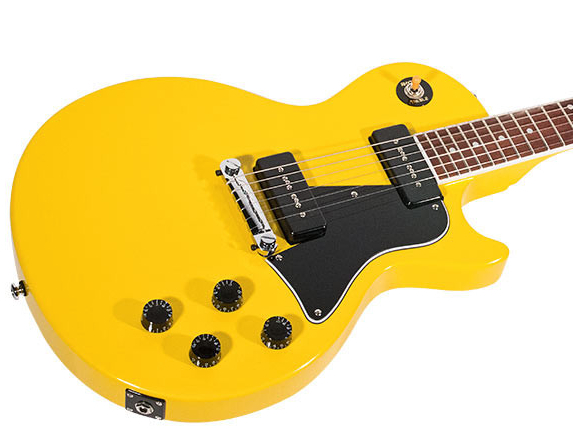
Kiinalaista Tokai LSS-47C:tä voisi luonnehtia erääksi best of -kopioksi 1950-luvun Gibson Les Paul Specialista. Kitaran peruslinja mukailee vuosien 1955-57 single-cut-mallia, keltainen väri tulee suoraan double-cut-versiosta (1958-60), ja kopion esikompensoitu palkkimainen talla on lainattu LP Specialin seuraajalta, SG Specialista.

Tokaissa runkoon liimattu kaula on veistetty kovasta vaahterasta, kun taas reunalistoitetun otelaudan puulajiksi on ilmoitettu (kestovärjättyä) jatobaa. Jatoba on eteläamerikkalainen puulaji, jota usein kutsutaan myös brasilialaiseksi kirsikaksi, vaikka todellisuudessa tämä puu kuuluu palkokasveihin. Viime aikoina jatobasta on tullut suosittu korvike CITES-listatulle ruusupuulle edullisissa ja keskihintaisissa kielisoittimissa.

Soittimen tasakanttinen runko on tehty mahongista.

Virittimet ovat hyvin toimivia Kluson-kopioita, kun taas tallaksi on valittu nykyaikainen versio Gibsonin 1960-luvun ”salama-tallasta”, jossa on kompensaatio ei-punotulle g-kielelle.

LSS-47C:n P-90-mikrofoneilla on mustat muovikuoret. Kitaran setti on päivitetty versio alkuperäisestä, jossa molempien mikkien käyttäminen samanaikaisesti mykistää ulkoisia häiriöääniä.

Ainoa, pieni kritiikin kohteeni on soittimen hieman liian isot, ja reunoissa pikkasen epäsiistit kolot mikrofoneille.

Kitarassa löytyy kolmiasentoinen kytkin, sekä kummallekin mikrofonille omat volume- ja tone-säätimet.

****

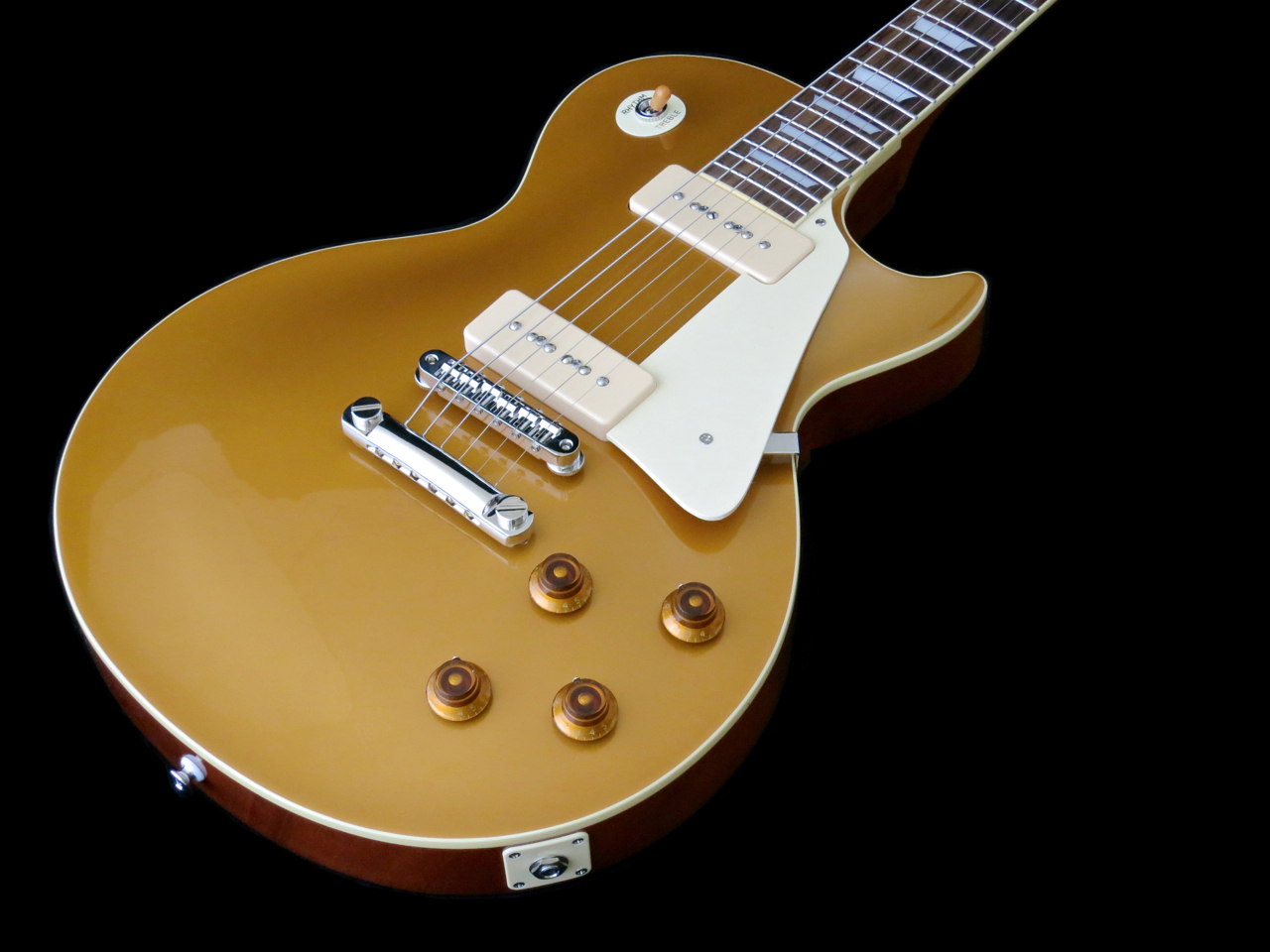
Japanilainen Tokai LS-98S on erittäin laadukas ja pikkutarkka uudelleenpainos vuoden 1956 Les Paul Standardista, siis mallista, joka tunnetaan nykyään nimellä LP Goldtop. LS-98S:een valitut puut ja komponentit ovat kauttaaltaan korkealaatuisia, ja työnjälki on erittäin huolellinen.

Kitaran yksiosainen mahonkikaula on liimattu mahonkirunkoon pitkällä sormella (long tenon). Soittimen reunalistoitettu kaareva kansi on vaahterasta, kun taas sen otelauta on aitoa intialaista ruusupuuta.

Toisin kuin vuoden 1958-60 LP Standardeissa, joilla on tavallisesti punaiseksi petsattuja runkoja ja kauloja, Goldtop-malleissa on miltei aina ”luonnollinen” viimeistely (= ruskea tasoite ja kiiltävä lakka sen päällä).

Tämän kitaran kaikki metalliosat on valittu Gotoh-malliston laadukkaammasta päästä.

LS-98S:n Tokai P-90 Mark II -mikrofoneissa on alnico-magneetteja. Alkuperäisen kaavan mukaan molemmat mikit on valmistettu täysin identtisillä spekseillä.

Laadukas kova laukku kuuluu LS-98S:n hintaan.

****

Testissä käynyt Tokai LSS-47C on todella kevyt ja erittäin mukava soitin.

Kaulaprofiili on suhteellisen matala, mutta pyöreä D, siis juuri sitä mitä Gibson-slangissa kutsutaan vuoden 1960 profiiliksi. Kun tähän lisätään vielä otelaudan 12 tuuman radius, testikitaran kiitettävä nauhatyö, sekä pro-luokan säädöt, lopputulos on erittäin vaivaton ja bendauksille suotuisa.

Vaikka kyseessä on verrattaen edullinen soitin, kuulostavat Tokain mikrofonit yllättävän hyviltä. Niissä on juuri oikea annos purevuutta, voimaa ja basson lämpöä, että ne pystyvät tyydyttämään P-90-soundin ystäviä. Kaula- ja tallamikin keskinäinen balanssi on myös todella hyvä.

****

Painonsa suhteen Tokai LS-98S on keskipainoisten kitaroiden tukevammasta päästä. Soittimen paino ei tässä vielä ole mielestäni ongelma, mutta tämän Tokain kyllä huomaa aina, kun se roikkuu hihnasta.

Työn laatu on yhdellä sanalla sanottu erinomainen. Se, että Tokain Goldtopin pyöreä C-kaulaprofiili maltillisella paksuudella on lähempänä vuoden 1959 LP Standardia, kuin hyvin paksua 1956 Goldtop -kaulaa, on varmasti enemmistölle vain hyvä asia.

Niin kuin monissa aidoissa, P-90-mikrofoneja käyttävissä LP Goldtopissa, myös Tokai LS-98S:n tapauksessa kaulamikrofoni soi selvästi kovemmalla kuin tallamikki. Tämä johtuu mikrofonien asennustavasta ja mikrofonikolojen syvyydestä – minkä takia kaulamikkiä ei pysty ruuvaamaan vielä syvemmälle runkoon – sekä siitä, että kaulamikrofonit sijaitsevat lähempänä kielten keskiväliä, jossa kielten liikerata on suurempi. Yleinen ratkaisu tähän Goldtop-ongelmaan/-ominaisuuteen on nostaa tallamikrofonin naparuuveja korkeammalle, sekä laittaa kaulumikin volume-säädin lukemaan 8,5.

Paksun vaahterakantensa ansiosta P-90-mikeillä varustettu Goldtop soi kirkkaammin kuin monet ehkä odottaisivat, etenkin tallamikin kautta. Tällä kitaralla kattaa laajan soundivalikoiman helposti ja suvereenisti, ja sopii lähes kaikkiin genreihin Jazzista ja Countrysta Bluesiin ja Rockiin.

****

LSS-47C ja LS-98S antavat vastauksen kysymykseen miksi Tokai on arvostetuin klassikkokopioiden valmistaja:

LSS-47C on hyvin edullinen versio legendaarisesta LP Specialista. Tämä soitin ei ehkä ole riittävän tarkka jäljennös useimmille vintage-faneille, mutta sen soitettavuus on vaivaton ja kitaran soundeissa on runsas annos mojoa.

LS-98S taas on pro-luokan uudelleenpainos vuoden 1956 LP Goldtopista. Tämä soitin on mainio osoitus japanilaisesta tarkkuudesta ja työnjäljestä – tämä on kerrassaan upea kitara erittäin kohtuulliseen hintaan.

****

Tokai Guitars LSS-47C + LS-98S

Tokai LSS-47 – 505 €

Tokai LS-98S – 1.276 € (kova laukku kuuluu hintaan)

Maahantuoja: Tokai Guitars Nordic/Musamaailma

****

LSS-47C – Plussat:

+ paino

+ nauhatyö

+ soundi

+ hinta-laatu-suhde

Miinukset:

– pieni epäsiisteys mikrofonikoloissa

****

LS-98S – Plussat:

+ työnjälki

+ viimeistely

+ soitettavuus

+ soundi

+ hinta-laatu-suhde+ value for money• Made in Japan
• Body: Mahogany
• Top: Maple
• Neck: One Piece Mahogany Set-Neck, Long Tenon
• Fingerboard: Rosewood
• Frets: 22
• Bridge: LS-VB, LS-VT Tailpiece
• Neck Pickup: P-90 MK2
• Bridge Pickup: P-90 MK2
• Electronics: 2x Volume, 2x Tone, 3-way Switch
• Inlays: Pearloid
• Pickguard: Cream
• Bindings: Cream, Body & Neck
• Headstock: Black with Logo Inlay & Gold Text
• Hardware Color: Chrome
• Color: Gold Top (GT)
• Case includedSave

Save

Save

Save

Save

Save

Save

Save

Save

Save

Save

Save

Save

Save

Save

Save

Save

Save

Save

Review: Tokai LSS-47C + LS-98S

While some may question the ethics behind copying classic guitar models, the fact is that there definitely is a market for such instruments. This is underlined by the licensed copies and sub-brands many well-known companies produce. There’s Fender’s Squier, Gibson’s Epiphone, PRS Guitar’s SE range and Music Man’s Sterling by Music Man, to name just a few.

Some companies have even made a name for themselves as makers of copy guitars, such as Greco, Nash Guitars, Rock ’n’ Roll Relics and Maybach. Probably the best known name in this field is Tokai, who make both affordable copies, as well as handcrafted high-quality replicas.

This time we’ll have a look at two different P-90 models – the affordable Tokai LSS-47C (current price in Finland: 505 €) and a Japanese ”Goldtop”, the Tokai LS-98S (1,276 €; case incl.).

****

The Chinese Tokai LSS-47C could be seen as a ”best of” version of Gibson’s 1950s Les Paul Special. We find the general outline of a 1955-57 single-cut model, a yellow finish very reminiscent of the 1958-60 double-cut, combined with the pre-compensated bridge used on the follow up instrument, the SG Special.

The set neck has been made from hard rock maple, while the bound fingerboard is carbonised (dyed) jatoba. Jatoba is a South-American tree that is also called Brazilian Cherry, even though it actually belongs to the bean family of plants. Recently, Jatoba has seen wider use as a replacement for rosewood on many affordable and mid-priced guitars and basses.

The slab body has been crafted from mahogany.

While the machine heads are decent Kluson copies, the bridge is a lightweight lightning bar wrapover model, pre-compensated for modern string sets with a plain g-string.

The P-90 singlecoil pickups sit inside black soapbar covers. This is a modern set with reverse-wound/reverse-polarity pickups, which makes the middle setting hum-free.

My only small criticism would concern the slightly oversized and not super tidy pickup routs on the LSS-47C.

The passive controls comprise the classic Gibson set of a three-way toggle plus volume and tone controls for each pickup.

****

The Tokai LS-98S is a high-quality replica of a 1956 Les Paul Standard, called the LP Goldtop these days. The woods and components chosen for the LS-98S are top grade and the attention to detail is stunning.

We find a one-piece mahogany neck, glued into the mahogany body with a long tenon. The guitar’s carved top is maple, while the bound fretboard is made from rosewood.

In contrast to post-1957 LP Standards, which usually come with the neck and body back dyed with red filler, most Goldtops sport a ”natural” look (i.e. brown pore filler).

The machine heads, the stopbar tailpiece and the tuneomatic bridge all come from Gotoh’s professional grade range.

The P-90s on the LS-98S are alnico-powered Tokai P-90 Mark II units. True to vintage specs the guitar uses identical pickups in both positions.

The LS-98S come in its own high-quality case.

****

Our review sample of the Tokai LSS-47C is really light in weight and very comfortable to play.

The neck profile is a relatively thin D, or what Gibson fans would describe as a 60s profile. Combined with the 12-inch fretboard radius, the well-dressed frets and the excellent set-up, this makes the LSS-47C a really bend-friendly instrument.

Despite having a rather affordable pedigree, the pickups on this Tokai sound surprisingly good, offering the typical combination of grit, power and roundness so loved by P-90 fans. There is also a nice balance in output levels between the neck pickup and the bridge unit.

****

In terms of its weight, the Tokai LS-98S lies in the heavier side of medium. The weight isn’t really an issue per se, but you sure notice it whenever you have this Tokai strapped on.

The workmanship is simply flawless and leaves nothing to be desired. The neck profile is much closer to a late-59 LP neck than the clubby profile of a genuine 1956 Goldtop, meaning we’re dealing with a very comfortable, rounded C of medium depth.

As on many Gibson originals from the early to mid-Fifties, the Tokai LS-98S’ neck P-90 sounds a fair deal louder than its bridge pickup. This is due to the way the identical units are suspended inside the body – which means the neck pickup can’t be screwed quite far enough into the body – as well as the neck unit’s placement closer to the strings’ mid-point. You simply have to adjust the neck pickup’s volume control to 8.5 to even out the signal levels.

The thick maple top makes a P-90-equipped Les Paul-style guitar sound brighter than you’d probably expect, especially with the bridge pickup selected. This guitar can really take you from warm Jazz to spiky Country, and on to Blues and Rock sounds, without the slightest problem.

****

The LSS-47C and LS-98S give you a very good idea why Tokai is the top name in copy guitars:

The LSS-47C is a very reasonably priced version of a classic LP Special. It may not be ”vintage correct” in many of its details, but it plays and sounds very well, and gives you a lot of that classic flavour.

The LS-98S is a professional grade recreation of a 1956 LP Goldtop. Made with typical Japanese attention to detail, this is a stunning guitar at an extremely fair price.
****

Tokai Guitars LSS-47C + LS-98S

Tokai LSS-47 – 505 €

Tokai LS-98S – 1,276 € (case included)

Distributor: Tokai Guitars Nordic/Musamaailma

****

LSS-47C – Pros:

+ weight

+ fretwork

+ sound

+ value for money

Cons:

– pickup routs a little untidy

****

LS-98S – Pros:

+ workmanship

+ finish

+ playability

+ sound

+ value for money+ value for money• Made in Japan
• Body: Mahogany
• Top: Maple
• Neck: One Piece Mahogany Set-Neck, Long Tenon
• Fingerboard: Rosewood
• Frets: 22
• Bridge: LS-VB, LS-VT Tailpiece
• Neck Pickup: P-90 MK2
• Bridge Pickup: P-90 MK2
• Electronics: 2x Volume, 2x Tone, 3-way Switch
• Inlays: Pearloid
• Pickguard: Cream
• Bindings: Cream, Body & Neck
• Headstock: Black with Logo Inlay & Gold Text
• Hardware Color: Chrome
• Color: Gold Top (GT)
• Case includedSave

Save

Save

Save

Save

Save

Save

Save

Save

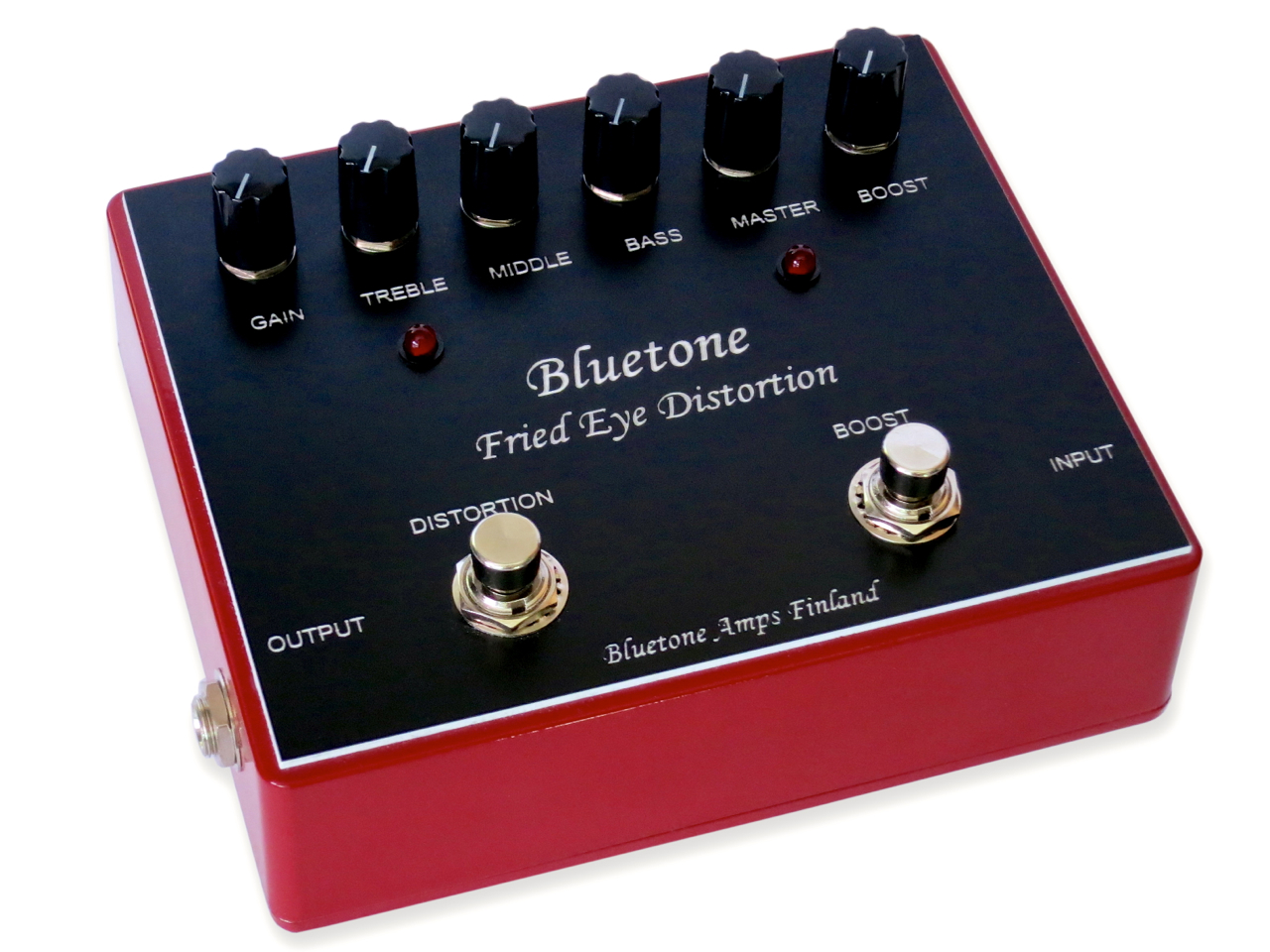
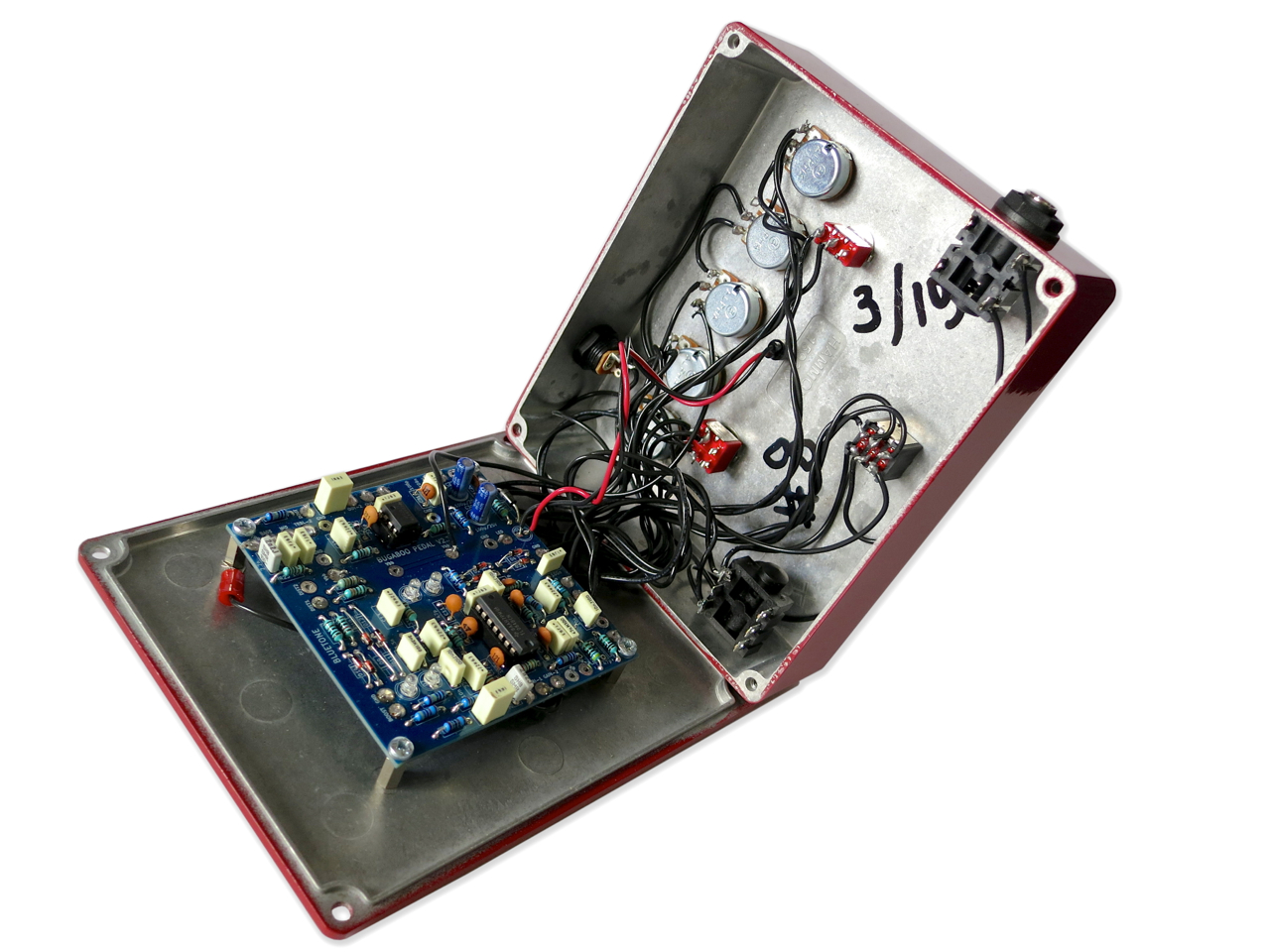
Now on Soundcloud: Bluetone Fried Eye Distortion

Bluetone Fried Eye Distortion

• handcrafted in Finland

• distortion & boost

****

Demo based on Muse’s song ”Supermassive Black Hole”

• rhythm guitars – Hamer USA Studio Custom (left channel), Gibson Melody Maker SG (centre), Fender Stratocaster (right channel)

• lead guitar – Hamer USA Studio Custom, Morley wah-wah

• reverse guitar – Gibson Melody Maker SG

• amp used – Bluetone Shadows Jr.

Now on SoundCloud – Tokai LSS-47C + LS-98S


Tokai LSS-47C

• Made in China
• Body: Mahogany
• Neck: Maple Set-Neck
• Fingerboard: Carbonized Jatoba
• Frets: 22
• Bridge: LS-VBC Wraparound Tailpiece Bridge
• Pickups: 2 x P-90
• Electronics: 2x Volume, 2x Tone, 3-way Switch
• Inlays: Dots
• Pickguard: Three-Ply Black
• Bindings: Cream, Neck
• Headstock: Black with Logo Inlay & Gold Text
• Hardware Color: Chrome
• Color: Yellow (YW/C)

Tokai LS-98S

• Made in Japan
• Body: Mahogany
• Top: Maple
• Neck: One Piece Mahogany Set-Neck, Long Tenon
• Fingerboard: Rosewood
• Frets: 22
• Bridge: LS-VB, LS-VT Tailpiece
• Neck Pickup: P-90 MK2
• Bridge Pickup: P-90 MK2
• Electronics: 2x Volume, 2x Tone, 3-way Switch
• Inlays: Pearloid
• Pickguard: Cream
• Bindings: Cream, Body & Neck
• Headstock: Black with Logo Inlay & Gold Text
• Hardware Color: Chrome
• Color: Gold Top (GT)
• Case included

****

Guitar tracks – signal chain: Simble Overdrive -> Bluetone Shadows Jr -> Timbre Tones mic -> Focusrite Saffire 6 USB -> Garageband

• Made in Japan
• Body: Mahogany
• Top: Maple
• Neck: One Piece Mahogany Set-Neck, Long Tenon
• Fingerboard: Rosewood
• Frets: 22
• Bridge: LS-VB, LS-VT Tailpiece
• Neck Pickup: P-90 MK2
• Bridge Pickup: P-90 MK2
• Electronics: 2x Volume, 2x Tone, 3-way Switch
• Inlays: Pearloid
• Pickguard: Cream
• Bindings: Cream, Body & Neck
• Headstock: Black with Logo Inlay & Gold Text
• Hardware Color: Chrome
• Color: Gold Top (GT)
• Case includedSave

Review: Raato Custom PenetRaatoR 6 Multiscale

Kitarablogi jumped at the opportunity to take a new Raato Custom Guitars PenetRaatoR Multiscale 6 for a spin.

****

The PenetRaatoR 6 Multiscale (prices starting at 3,270 €; this guitar: 3,900 €) is a handcrafted electric solidbody guitar, which offers each string its own scale length. Here the bottom E-string has a scale length of 27.75 inches, while the treble e-string’s scale is 26.5 inches. A previous review explains the ideas behind multi-scale guitars in more detail.

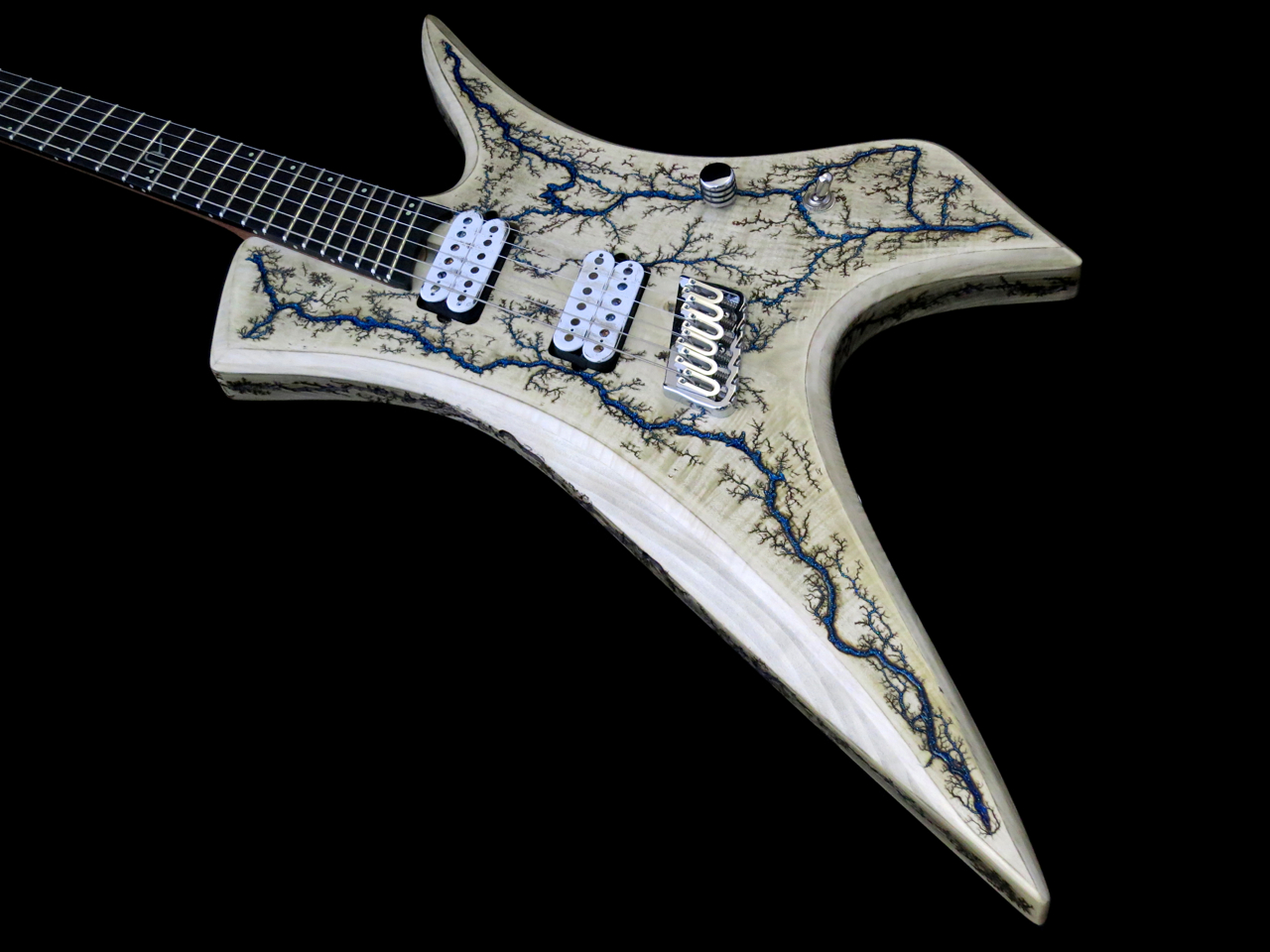
I must say that I rather like Raato Guitar’s crossbreed of Gibson and B. C. Rich elements, which make for a stylish instrument. The body’s core is crafted from basswood, with an added pear back and figured maple top.

This model’s neck consists of three long strips of wood – a centre piece of hard rock maple flanked on both sides by sapele mahogany.

The PenetRaatoR sport’s a very strong bolt-on neck joint using six screws and washers.

The neck has received an oil-and-wax finish. The body, as well as the headstock’s facing, have been bleached and finished with a thin satin lacquer.

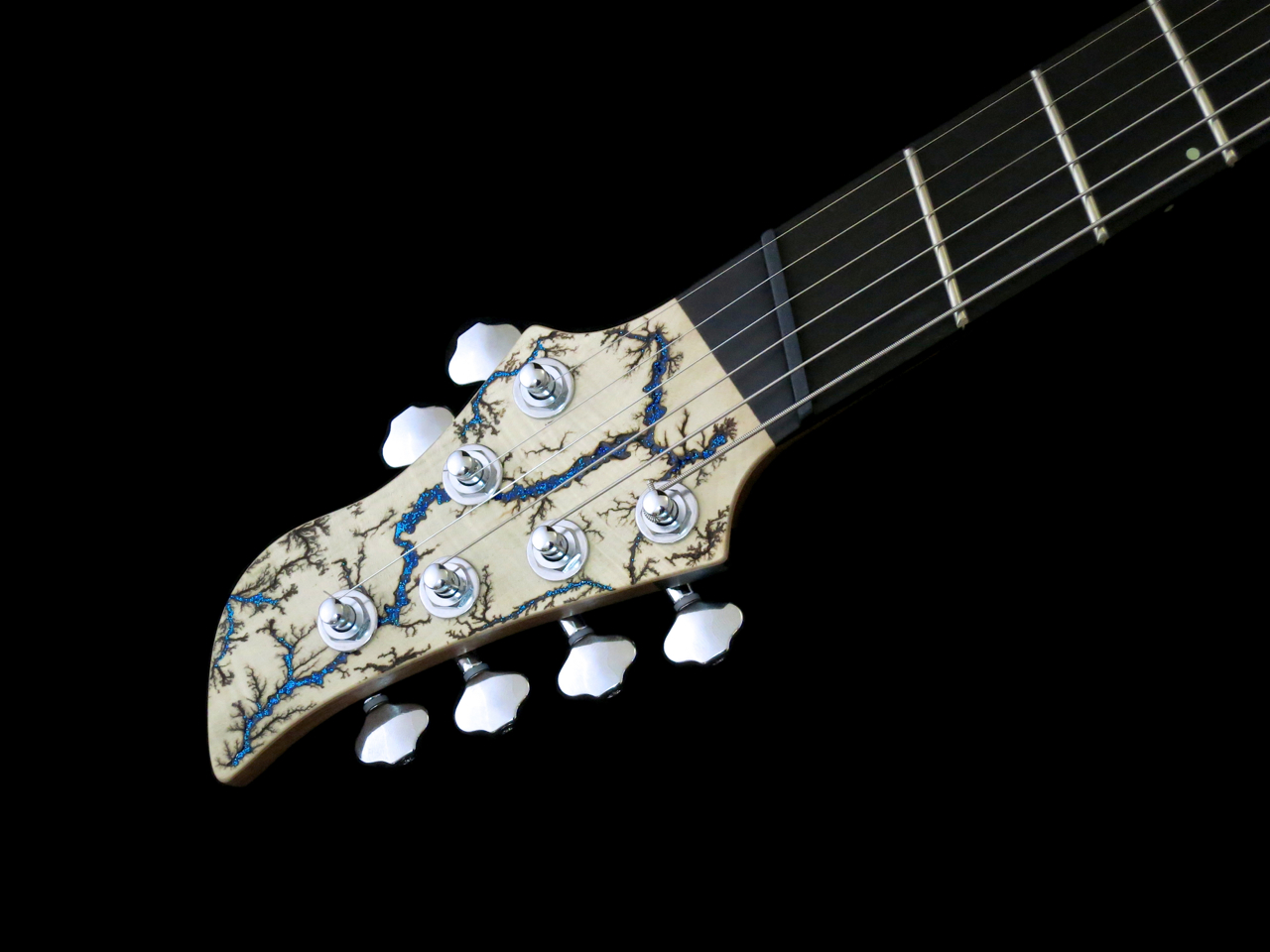
One of the custom options on this PenetRaatoR is Raato Custom Guitars’ Lichtenberg Figure process used on the body and headstock face.

Putting Lichtenberg figures into wood is a relatively dangerous procedure (”don’t try this at home”), in which an electrical current is carefully used to produce lightning-like burns in the wood. You can take a look at the process in this Raato Guitars VIDEO.

Mika Ruotsalainen has gone even a bit further by filling the figures on the front with a gorgeous mixture of blue resin and holo-glitter flakes.

The PenetRaatoR 6 Multiscale’s fretboard is made of African ebony, and it sports two octaves’ worth of expertly finished jumbo-sized frets.

This guitar comes with glow-in-the-dark side dots – and company logo – made of Luminlay.

Locking Hipshot Grip-Lock machine heads make sure you tuning stays spot on, even in the middle of Metal Mayhem.

The well designed hardtail bridge is also a Hipshot product.

This PenetRaatoR comes with a pair of Bare Knuckle Pickups’ Nailbomb humbuckers with ceramic magnets. You can already guess from the name that these pickups are meant for all types of Hard Rock and Metal genres.

The review guitar’s controls are spartan and to the point:

We find a three-way toggle pickup switch, as well as a master volume control with an integrated push/pull-switch for pickup splitting.

This is what a boutique class control cavity should look like. The soldering is clean as a whistle, and the electric shielding is thorough.

****

Despite Raato Custom Guitars’ PenetRaatoR 6 Multiscale being a rather large electric guitar, its weight is surprisingly moderate. The instrument sits comfortably in the lap, proving equally well-balanced hanging on a strap.

This guitar’s lucky owner (thank you for the loan!) has chosen an asymmetrical neck profile for his own Raato guitar. The neck, which is thicker on the bass side, fits very nicely into my own hand.

The workmanship on this guitar is top notch throughout. Take the fretwork on the PenetRaatoR, for example, that makes this instrument very fast and easy to play. The owner requested his guitar be set up for drop-C tuning.

Played acoustically this Raato displays a fast and precise attack followed by long and smooth sustain.

Bare Knuckles’ considerable expertise in the field of pickup making is clearly evident in the Nailbombs’ sounds, which is couples merciless power with a high degree of musicality. Yes, these are high-octane pickups, but one-dimensional there not.

Here’s a clean audio clip that starts off with the split settings (neck, both, bridge), before switching to the full humbuckers:

The Raato PenetRaatoR 6 Multiscale has been crafted to rock hard, and rock it does indeed:

****

It is very clear to me, judging by this review, that Raato Custom Guitars stands for top class workmanship combined with a fresh and fearless approach, when it comes to body shapes and different finishes. PenetRaatoR 6 Multiscale is a fine example of what a boutique grade modern Metal guitar can be.

****

Raato Custom PenetRaatoR 6 Multiscale

Prices starting from 2,890 € (traditional scale) and 3,270 € (multiscale)

Reviewed guitar: 3,990 €

Contact: Raato Custom Guitars

****

Pros:

+ handmade in Finland

+ wide range of custom options available

+ workmanship

+ playability

+ soundSave

Save

Save

Save

Save

Save

Save

Save

Save

Save

Save

Save

Save

Testipenkissä: Raato Custom PenetRaatoR 6 Multiscale

Kitarablogilla oli mahdollisuus testata Helsinki Tonefestilläkin esillä ollutta Raato Custom Guitars -mallia – kuusikielistä PenetRaatoR Multiscalea.

****

PenetRaatoR 6 Multiscale (hinnat alk. 3.270 €; tämä soitin 3.900 €) on käsintehty sähkökitara, jossa jokaisella kielellä on oma mensuurin pituus. Basso-E:n mensuuri on 27,75 tuumaa, kun taas diskantti-e:n soiva pituus on 26,5 tuumaa. Multiscalen toimintaperiaatteesta voi lukea enemmän TÄÄLLÄ.

Raato Guitarsin risteytys Gibson Explorer- ja Flying V-malleista näyttää mielestäni todella tyylikkäältä. Rungon pääaines on lehmus, johon on lisätty päärynäpuusta tehty pohja, sekä loimuvaahterainen kansi.

Tämän mallin kaula on veistetty kolmesta pitkästä puupalasta – reunapalat ovat sapelimahonkia, kun taas kaulan keskeltä löytyy vaahteraa.

PenetRaatoRin vankka ruuviliitos on toteutettu kuudella ruuvilla ja alusprikalla.

Kaula on öljytty ja vahattu. Rungon puita, sekä viritinlavan etupuolia, on ensin valkaistu ja sitten viimeistelty ohuella mattalakkauksella.

Yksi tämän PenetRaatoRin erikoisvaihtoehdoista on Raato Custom Guitarsin Lichtenberg-sähköpolttaminen rungossa ja lavan etupuolessa.

Lichtenberg-viimeistely on suhteellisen vaarallinen prosessi (”don’t try this at home”), jossa puuhun poltetaan salamaa muistuttavia kuvioita sähkön avulla. Löydät Raato Guitarsin videon aiheesta TÄSSÄ.

Testikitarassa on täytetty rungon etupuolen Lichtenberg-kuvioit vielä erittäin kauniilla sinisellä hartsin ja hologlitterin sekoituksella.

PenetRaatoR 6 Multiscalen otelauta on afrikkalaista eebenpuuta, ja siihen on asennettu 24 jumbokokoista nauhaa.

Kitaran otemerkit – ja myös firman R-logo – on tehty Luminlay-materiaalista, joka hohtaa pimeässä.

Laadukkaat Hipshot Grip-Lock virittimet pitävät soittimen vireessä myös rankimmissa soittotilanteissa.

Hipshotin kiinteä multiscale-talla on tyylikäs valinta.

PenetRaatoRin humbuckerit ovat Bare Knuckle Pickupsin Nailbomb-mallit keraamisilla magneeteilla. Kuten jo mikkien nimestä voi päätellä, ovat nämä humbuckerit tarkoitettu juuri tällaiseen metallikitaraan.

Testikitaran elektroniikka on hyvin virtaviivainen – Raato-malli tulee toimeen kolmiasentoisella mikkikytkimellä, sekä master volumella, johon on lisätty nostokytkin humbuckerien puolittamista varten.

Tältä boutique-luokan elektroniikkalokeron pitää näyttää. Juotostyö on erittäin siistiä ja häiriösuojaus esimerkillistä.

****

Raato Custom Guitarsin PenetRaatoR 6 Multiscale on hyvin kookas soitin, mutta sen paino on ilahduttavan maltillinen. Kitara istuu hyvin sylissä, ja se roikkuu myös rauhallisesti ja hyvässä tasapainossa hihnan varassa.

Kitaran tuleva omistaja (kiitos soittimen lainaamisesta!) on valinnut omaan Raato-kitaraan tuhdin ja epäsymmetrisen kaulaprofiilin (paksumpi bassokielten alla), joka istuu ainakin minuun käteeni erinomaisesti.

Työnjälki on kauttaaltaan erittäin siisti. Hyvänä esimerkkinä tästä voi pitää mm. PenetRaatoRin nauhatyö, joka tekee testikitaran soitosta hyvin vaivatonta ja nopeaa. Asiakkaan toiveesta kitara on säädetty Drop C -viritystä varten.

Akustisesti soitettuna löytyy Raadon soundista rutkasti potkua atakissa, sekä pitkä ja tasainen sustainvaihe.

Bare Knucklesin osaaminen tulee selvästi esille Nailbombien soinnissa, sillä humbuckereiden soundissa löytyy armottoman tehon lisäksi myös musikaalisuutta. Nämä mikit ovat tehokkaita, mutta ei missään nimessä yksitoikkoisia.

Tässä puhdas klippi, jossa soivat ensin puolitetut vaihtoehdot (kaula, molemmat, talla) ja sitten täydet humbuckerit:

Raato PenetRaatoR 6 Multiscale on kuitenkin tehty rokkaamaan kovasti ja vailla kompromisseja; ja sen se tekeekin mainiosti:

****

Myös tämän testin perusteella voin sanoa hyvällä omatunnolla, että Raato Custom Guitarsissa yhdistyy vankka osaaminen soitinrakennuksessa ja taiteilijan näkemys sekä soittimen ulkomuodossa että viimeistelyssä. PenetRaatoR 6 Multiscale kuuluu mielestäni selvästi nykyaikaisten hevikitaroiden parhaimmistoon.

****

Raato Custom PenetRaatoR 6 Multiscale

Hinnat alk. 2.890 € (perinteinen nauhoitus) ja 3.270 € (multiscale-nauhoitus)

Testisoittimen hinta: 3.990 €

Lisätiedot: Raato Custom Guitars

****

Plussat:

+ käsintehty Suomessa

+ runsaasti custom-optioita

+ työnjälki

+ soitettavuus

+ soundiSave

Save

Save

Save

Save

Save

Save

Save

The new Bluetone Plexi 10 demoed by Matti Vauhkonen

Bluetone’s own Matti Vaukhonen demoes the new Bluetone Plexi 10 head through a Bluetone 4 x 10 cabinet loaded with WGS Green Beret speakers.

BLUETONE PLEXI 10

• 10 watts maximum output

• 2 x 12AX7

• 4 x EL91

• two volume controls (Normal & Bright)

• 3-band EQ plus Presence control

• PPIMV master volume

• 3-step Output Power Control (OPC)

Pidä blogia WordPress.comissa.

Ylös ↑