Lisätiedot: Fender

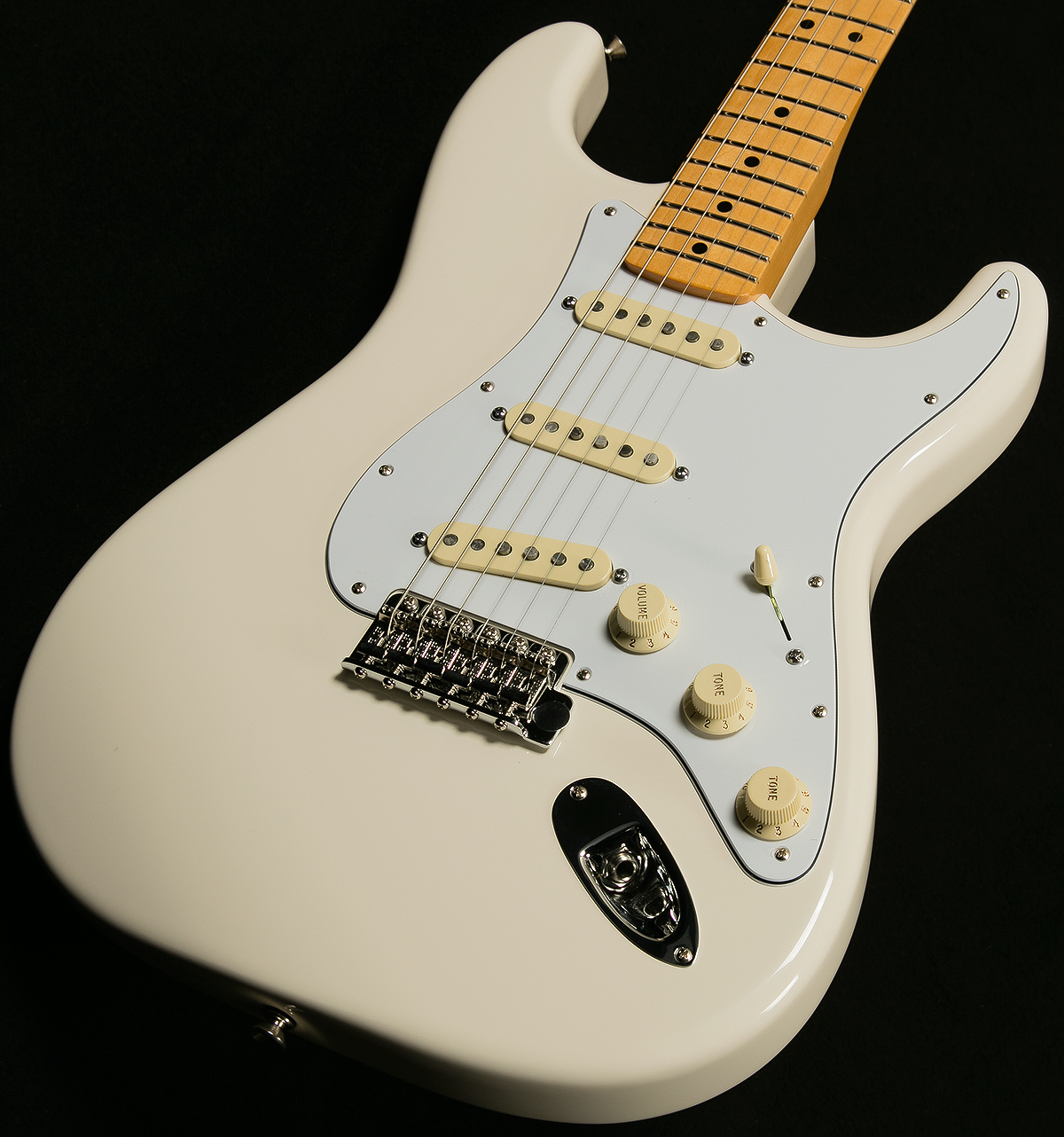
Review: Boss SY-300

When guitar synthesisers first came into being (at the beginning of the 1970s) they all were fully analogue and used the actual guitar signal as the raw material of their output. The guitar’s output was fed into a chain of different effects, including distortion, octaving, filters and modulation, to make the sound resemble that of an analogue synth.
Many old guitar synths sound great, but they require a very clean playing technique to track cleanly, and almost all of the devices were purely monophonic (meaning: no chords).
Roland’s GK-pickup – as well as the MIDI standard – changed all that drastically:
Thanks to the GK-pickup it was (and still is) possible to make use of chords, bends and double stops, and incorporate them all in your synth performance. The GK system also makes it easy to trigger rack synths, software synths or samplers using your guitar, turning the instrument into a full-blown orchestra.
The brand-new Boss SY-300 (street price in Finland approx. 720 €) returns to the original idea of the guitar synth, but takes advantage of the huge advances that have been made in digital technology recently. Boss say the SY-300 tracks quickly and accurately, while delivering huge and fat sounds with lots of scope for editing. But the best thing about it is: The synth is polyphonic and works straight off the regular guitar signal.
****
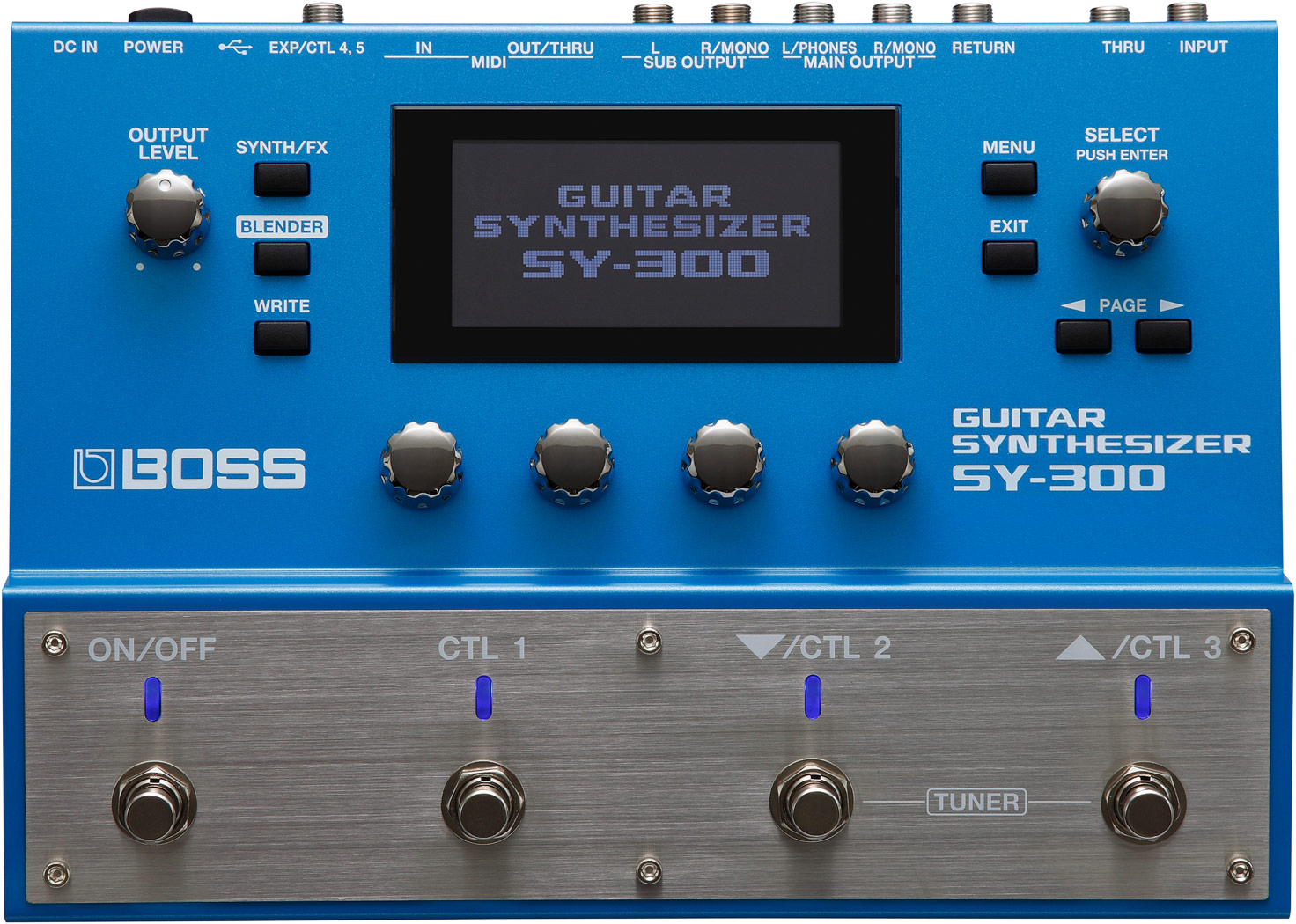
The Boss SY-300 is a chunky piece of gear and looks like a compact multi-effects unit. The external power supply unit is included in the price.
You can assign the synth’s four footswitches to different functions, but in the factory default they work as follows:
The switch on the far left is the On/Off-switch (well, actually the bypass). CTL 1 is used to change a predetermined parameter in the chosen patch (like vibrato or modulation). The last two switches (CTL 2 and CTL 3) take over patch changing duties; step on them both, and you’ll switch on the built-in digital tuner.
As we are talking about a fully featured digital piece of equipment, the amount of editable parameters is quite staggering. Luckily, the graphics-based user interface in the Boss SY-300 is well-designed, making it fairly easy to programme the synthesiser using the controller knobs beneath the display, and the navigation buttons to the right of it.
****

The SY-300’s well-spec’ed back panel will not leave you wanting:
Placed next to the guitar input are the phone jacks for the guitar synth’s external effects loop. The Ground/Lift-switch makes it safe and easy to break any hum-inducing earth loop. Boss even included two sets of stereo outputs in their synth. The Main Output could be sent to your onstage amplifiers, for example, while the Sub Output feed could be connected to the FOH console. The Main Output’s left output also doubles as a headphones jack.
It’s also easy to integrate the Boss guitar synth into any MIDI-setup, thanks to its two MIDI-ports. The jack labelled EXP/CTL 4,5 is for use with additional (optional) footswitches and/or expression pedals. The SY-300 is compatible with EV-5- and FS-7-pedals, as well as the FS-5U- and FS-6-footswitch units.
The Boss SY-300 can also be utilised as a versatile external soundcard, with the synth offer four different USB Audio-modes for just this purpose, like the nifty Re-Synth-mode, which works in the same way as reamping. The unit also sends and receives MIDI-data using USB. You can also edit patches, load new ones or share your settings with other SY-300 users with the free Boss Tone Studio software (Win/Mac OS).
****
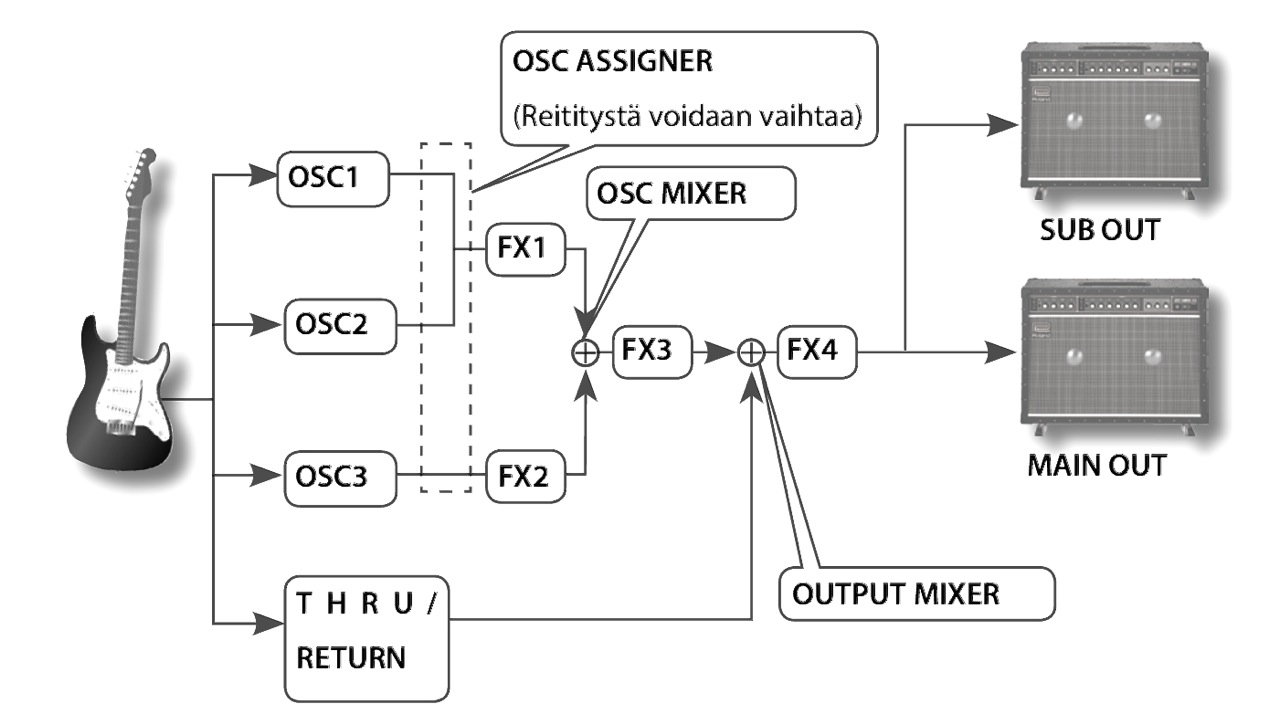
The above graphics show you the internal architecture and the signal path of the Boss SY-300. Each patch (Preset: 70; User: 99) can use up to three oscillators as sound sources (OSC1-OSC3). Each oscillator comes with a number of different waveforms to choose from (from saw to PWM, and beyond), as well as its own set of dedicated filters, LFOs and ADSR-envelope modules. A good indication of the SY-300’s versatility lies in the fact that exact placement of the oscillators in the signal path can be changed. You could have two oscillators running in parallel, with the third one placed behind the pair in series. Furthermore, the Sequencer feature makes it possible to use each oscillator as a 16-step sequencer, turning each note you play into a rhythmic and melodic pattern.
But there’s still more to come:
Boss’ new guitar synth also comes with four FX modules, each offering a very wide selection of different pro-quality effects. Depending on the chosen oscillator routing, the signal routing of the FX modules can also be changed by the user.
****

The new Boss SY-300 is a very user-friendly device, but due to its versatility – as well as the huge amount of editable parameters – you should take some time to read the user manual, before trying to programme your own patches. Especially if you’re new to the subject of synthesis, you shouldn’t be disappointed if it takes a little time, before your creations sound the way you intended.
I’m old enough to have learned synthesiser programming in the age of polyphonic analogue synths and the Yamaha DX7, which meant I felt right at home with the SY-300.
A good test of any user interface is trying to create something completely from scratch. I chose to use the Boss synth to come up with a slightly Eastern-influenced patch, that uses two oscillators in series to produce a sitar-style twangy tone, with the third oscillator assigned to produce shimmering overtones.
The resulting patch sounds like this (a single guitar synth track, plus three tracks of Roland HandSonic-percussion):
This clip gives you some idea of the types of patches included in the factory settings:
I also recorded a demo track that uses the Boss SY-300 for everything, except for the drum tracks:
****

Boss’ new guitar synth is a fantastic piece of gear, if you’re a fan of real synthesiser sounds.
The SY-300 locks on to your guitar signal very well and it tracks like a dream, staying true to both the dynamic, as well as the melodic and harmonic content of your playing.
The SY-300 isn’t meant to replace Roland’s GK-/GR-products – if you’re after realistic-sounding, multitimbral sounds, using a GK-pickup is still the easiest and best option. The Boss SY-300 is meant as a fantastic choice if you’re looking for a genuine guitar synth – in the original sense of the term. You will get huge and fat synthesiser sounds, seasoned with great effects, from the SY-300, not pianos, violins or trumpets.
****
Boss SY-300
Street price in Finland approximately 720 €
Contact: Roland
****
Pros:
+ graphic user interface
+ polyphonic
+ three OSC-modules
+ four FX-modules
+ external effects loop
+ sound
+ USB-soundcard


Uutuuskitarat +++ New models out +++ Yamaha Revstar


Yamaha on eilen esitellyt uuden sähkökitara-mallistonsa – Yamaha Revstar.
Tässä otteita F-Musiikin (Yamahan maahantuoja Suomessa) lehdistötiedotteesta:
Löydä uusi puoli itsestäsi!
Yamaha Revstar -mallistoa suunniteltaessa haettiin inspiraatiota Lontoon ja Tokion katupyöristä.
Toteutuksessa hyödynnettiin Japanilaista insinööri- ja käsityötaitoa yhdistettynä Yamahan 50-vuotiseen perinteeseen kitaranrakentamisessa. Jokainen yksityiskohta kaikissa Revstar-malleissa on tarkkaan harkittu antamaan kullekin kitaramallille oman persoonallisen luonteensa.
Tämä on Revstar – uusi kumppanisi!
Mallisto:
RS320 in Black Steel, Red Copper or Stock Yellow high gloss finish (katuhinta noin 450 €)
RS420 in Black Steel, Fired Red or Factory Blue high gloss finish (katuhinta noin 550 €)
RS502 in Shop Black or Billet Green steel wool finish (katuhinta noin 670 €)
RS502T in Bowden Green high gloss finish (katuhinta noin 775 €)
RS620 in Brick Burst or Burnt Charcoal steel wool finish (katuhinta noin 890 €)
RS720B in Ash Grey or Wall Fade steel wool finish with licensed Bigsby (katuhinta noin 1.100 €)
RS820CR in Rusty Rat or Steel Rust steel wool finish (katuhinta noin 1.100 €)
RSP20CR in Brushed Black or Rusty Rat steel wool finish – Made in Japan (katuhinta noin 1.700 €)
Revstar: Tärkeät ominaisuudet
* Ensimmäinen täysin uusi Yamaha sähkökitaramallisto 20:een vuoteen
* 8 persoonallista mallia yksilöllisillä ominaisuuksilla
* Rouhea teollinen viimeistely
* Livenä testattu tekniikka
* Yksilölliset mikrofonit
* Huippumiellyttävä soitettavuus
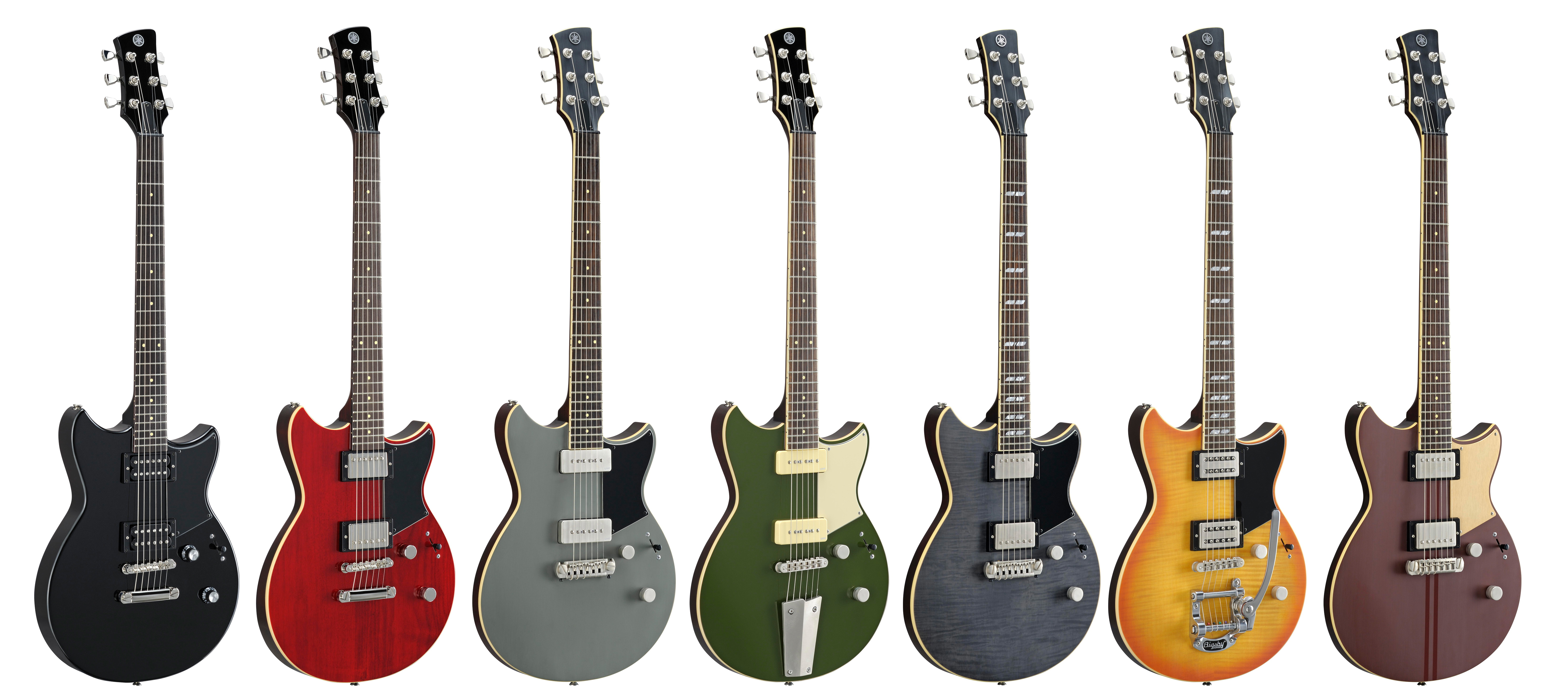
Yahama Guitars have introduced their brand-new Revstar Series of solidbody electric guitars yesterday.
The Revstar Series, which was over three years in the making, encompasses eight different models – from the affordable RS320 (street price in Finland approx. 450 €) to the pukka Made-in-Japan RSP20CR (1,700 €).
Finnish distribution: F-Musiikki
Testipenkissä: Boss SY-300
Ensimmäiset kitarasynat (1970-luvun alussa) olivat täysin analogisia ja käyttivät kitaran omaa ääntä soundin perusteena. Kitarasignaali vietiin läpi pitkän muokkausketjun, jossa oli eri särö-, oktaaveri-, filtteri- ja modulaatiovaiheita, joiden kautta kitaran ääni muuttui analogisynan kaltaiseksi.
Vanhoissa kitarasynoissa oli kyllä paljon hienoja soundeja, mutta ne vaativat soittajalta todella tarkkaa soittotekniikkaa, ja tämän lisäksi monet toimi vain monofonisella kitarasignaalilla (ei sointuja).
Rolandin kehittämä GK-mikrofoni muutti (MIDI-standardin lisäksi) nämä asetelmat sitten täydellisesti:
GK-mikin ansiosta oli (ja on edelleen) mahdollista käyttää myös sointuja, sekä sähkökitaran laajaa valikoimaa eri soittotekniikkoja. GK-järjestelmä mahdollistaa myös räkkisynojen, softasynojen ja samplerien soittamista kitaralla. Sähkökitarasta tuli kokonainen orkesteri.
Upouusi Boss SY-300 (katuhinta noin 720 €) tuo alkuperäisen idean kitarasynasta takaisin, mutta digitaalisen nykyteknologian saavutuksilla höystettynä. SY-300:lle luvataan erittäin tarkkaa ja nopeata triggausta, todella isoa soundia, laajoja mahdollisuuksia muokkaukseen – ja mitä parasta: syna toimii tavallisella kitarasignaalilla.
****
Kestävänoloinen Boss SY-300 näyttää kompaktilta multiefektiltä, ja se saa käyttövirtansa ulkoiselta virtalähteeltä (kuuluu hintaan).
Kitarasynan neljää jalkakytkintä voi käyttää erilaisien toimintojen ohjaamiseen, mutta peruskäytössä ne toimivat näin:
Vasen kytkin on On/Off-kytkin (tai oikeastaan bypass-kytkin). CTL 1 -jalkakytkimellä voi polkaista valitussa patchissa etukäteen määriteltyä parametrimuutosta päälle (esim. vibratoa tai filtteriä). Viimeisellä kahdella kytkimellä (CTL 2 ja CTL 3) vaihdetaan patchista toiseen, ja niillä saa myös SY-300:n viritysmittarin päälle.
Koska kyseessä on erittäin hyvin speksattu digitaalilaite, muokattavien parametrien määrä on aika iso. Onneksi Boss SY-300:n graafinen käyttöliittymä on erittäin onnistunut, ja synan ohjelmointi näytön alle sijoitetuilla säätimillä ja oikeanpuolisella navigointiosastolla sujuu vaivattomasti.
****
SY-300:n takapaneelin runsas liitinvalikoima ei todellakaan jätä toivomiseen varaa:
Kitaratulon vieressä näkyy kitarasynan efektilenkin Thru- ja Return-liittimet. Ground/Lift-kytkimellä pystyy katkaisemaan turvallisesti mahdollisen maalenkin aiheuttaen brummin. Bossin uutuuslaite tarjoaa peräti kaksi stereolähtöä. Päälähdön (Main Output) signaalia voi esimerkiksi kytkeä livekäytössä kitaravahvistimiin, samalla kun Sub-lähdön signaali menee livemikserille. SY-300:aan voi kytkeä myös kuulokkeita suoraan päälähdön vasempaan jakkiin.
MIDI-porttien ansiosta Boss-syna toimii myös saumattomasti MIDI-järjestelmässä. EXP/CTL 4,5 -niminen jakki on tarkoitettu lisäkytkimiä tai ekspressiopedaaleja (saatavilla erikseen) varten. SY-300:n kanssa voi käyttää EV-5- ja FS-7-pedaaleja, sekä FS-5U- ja FS-6-jalkakytkimiä, eri parametrien ohjaamiseen.
SY-300 toimii myös monikäyttöisenä ulkoisena äänikorttina, ja kitarasyna tarjoaa tätä varten peräti neljä erilaista USB audio -tilaa, mm. Re-Synth-moodin, joka toimii samalla tavalla kuin re-amping. Kitarasyna myös lähettää ja vastaanottaa MIDI-dataa USB-portin kautta. Myös patchien ohjelmointi, lataaminen ja jakaminen hoituu USB:n kautta Boss Tone Studio -ohjelmalla (Win/Mac OS).
****
Yllä olevasta kuvasta näkyy Boss SY-300:n sisäinen arkkitehtuuri ja signaalitiet. Jokaisessa patchissa (Preset: 70; User: 99) voi käyttää maksimissaan kolmea oskillaattoria samanaikaisesti (OSC1-OSC3). Jokainen oskillaattori tarjoaa erittäin monipuolisen listan eri aaltomuotoja (sahalaidasta PWM:ään), sekä omat filtterit, LFO:t ja ADSR-moduulit. SY-300:n monipuolisuudesta kertoo myös, että oskillaattorien reititystä pystyy muuttamaan melko vapaasti, jolloin esimerkiksi osa signaalista voi kulkea rinnakaisten OSC-lohkojen sijasta myös sarjakytkennössä olevien oskillaattorien läpi. Sequencer-toiminnolla pystyy tämän lisäksi vielä muuttamaan tavallisen oskillaattorin 16-askeleen sekvensseriksi, joka tekee tulevasta signaalista tahdistettuja melodioita tai arpeggioita.
Mutta lysti ei vielä läheskään loppu tähän:
Bossin uudesta kitarasynasta löytyy nimittäin peräti neljä erillistä efektilohkoa, joiden efektivalikoima on hyvin kattava ja laadullisesti erinomainen. Myös efektilohkojen reititykseen pystyy vaikuttamaan tietyissä raameissa (OSC-lohkojen reitityksestä riippuen).
****
Boss SY-300 on todella käyttäjäystävällinen laite, mutta tämän kitarasynan monipuolisuuden – ja tarjottujen muokkausmahdollisuuksien määrän – takia kitarasyna-untuvikolla menee varmasti jokunen tovi käyttöoppaan kanssa, sekä kokeilemalla, ennen kun patchien ohjelmointi tyhjästä onnistuu toivotulla tavalla.
Itse opin synojen ohjelmoinnin onneksi vielä silloin, kun analogisynat ja Yamaha DX7 kohtasivat, minkä ansiosta tulin heti hyvin toimeen SY-300:n kanssa.
Kokeilin Bossin käyttöliittymä kirjoittamalla kitarasynalle hiukan itämaisen patchin, jossa sitar-tyylinen twang syntyy kahden sarjakytkentäisen oskillaattorin keskenäisestä moduloinnista, samalla kun kolmas OSC-lohko tuottaa soundin ylä-äänet.
Tältä lopputulos kuulostaa (yksi kitararaita, sekä kolme Roland HandSonic -perkussioraitaa):
Täma klippi taas on pieni läpileikkaus Boss SY-300:n soundeista:
Äänitin myös demokappaleen, jossa – rumpuraitoja lukuun ottamatta – kaikki soundit on äänitetty kitarasynalla:
****
Omasta mielestäni Bossin uutukainen on todella mahtava laite aitojen, analogihenkisien synasoundien ystäville.
SY-300 on erittäin varmatoiminen ja salamannopeasti trakkaava kitarasyna, joka seuraa esimerkillisesti kitarasignaalin tonaalista ja dynaamista sisältöä, ja toimii myös loistavasti polyfonisella tulosignaalilla.
SY-300:n ei ole tarkoitus korvata Rolandin GK-/GR-perheen tuotteita – jos etsit realistisia, multitimbraaleja soundeja GK-mikrofonia käyttävä soitin on yhä se helpoin tie onneen. Boss SY-300 on sen sijaan oiva rinnakaistuote – kitarasyna, jossa painopiste sijoittuu nimenomaan sen mahtaville synasoundeille ja laadukkaille efekteille, eikä perinteisten soittimien korvaamiseen.
****
Boss SY-300
Katuhinta noin 720 €
Lisätiedot: Roland
****
Plussat:
+ onnistunut käyttöliittymä
+ polyfoninen
+ kolme OSC-lohkoa
+ neljä FX-lohkoa
+ ulkoinen efektilenkki
+ soundi
+ USB-äänikortti
F-Musiikista Line 6 -kitaratuotteiden maahantuoja
Mallinnustekniikan edelläkävijäksi tunnetun Line 6:n maahantuonti on siirtänyt F-Musiikille.
Line 6 -tuotevalikoimaan kuuluvat niin mallintavat kitaravahvistimet, efektipedaalit ja POD-multiefektit, kuin myös – yhteistyössä Yamahan kanssa syntynyt – uusi mallintava Variax Standard -kitaramalli.

Lisätiedot: F-Musiikki
****
Huom: Line 6:n langattomien vokaalijärjestelmien ja PA-tuotteiden jakelijana toimii vastedes Yamaha Europe.

Review: Spin X guitar cable (aka Mad Professor RED Cable)
N.B.:
When I wrote the original (Finnish) version of this review, the company behind this guitar lead, Spindeco Oy, had been making tentative noises about marketing the cable using the Spin X brand name. Since then I have been informed that Spindeco won’t start marketing this lead, after all. The cable will continue to be sold as the Mad Professor RED Cable – same specifications, different colour.
For the sake of clarity, the English version the review will refer to the product as the Spin X cable, too.

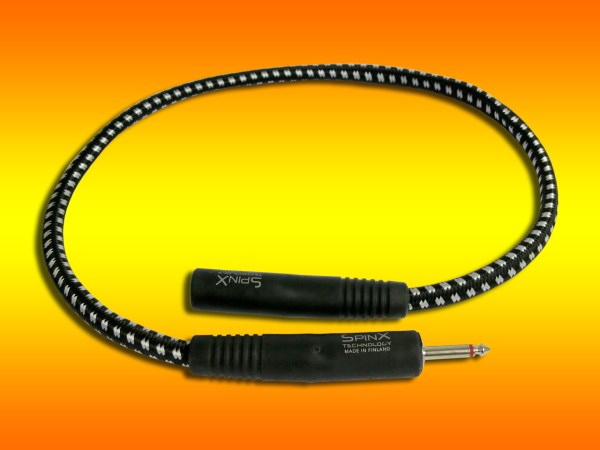
Seldom has there been this amount of Internet chatter and general hysteria about any guitar accessory, as there has been about the Finnish Spin X cable, which is only a guitar lead of approximately 75 cm length, with two giant 1/4-inch connectors (a female input; a male output).
The Spin X cable (sold for 129 € as the RED Cable by Mad Professor) is manufactured by a Finnish company called Spindeco Oy. The cable promises to improve the efficiency of its conductors by means of a nano-electrical phenomenon, known as the electron spin. Special graphite-coated conductors are meant to rearrange the signal-carrying electrons in such a way, that the signal flow is improved. Spindeco claim that the main benefit of this technology in a guitar lead is an improved phase correlation between the different frequency bands of the signal. Apparently, traditional leads tend to pass high frequencies quicker than low frequencies, which tend to arrive at the amplifier with a very tiny time lag.
Using the benefits of the noble search engine, I quickly ascertained that the electron spin is, in fact, no voodoo, but rather generally acknowledged quantum physics. Still, we guitarists are interested in audible results; we ask questions like:
Does the Spin X cable do what it says on the tin? Is there truly a discernible difference in sound? Do I have to own one if I want to be a Tone God?
****
I was given a Spin X cable for reviewing purposes.
There’s been some rumours about miniature transformers, or buffers, inside the lead’s giant connectors, which is why I had to take a closer look inside. Nope, it’s just a bunch of different conductors – some left unused – attached with traditional soldering tin!
The short length of the Spin X cable has also been the centre of some speculation. Guitarists have been asking: ”Why is it just a short extension cord, instead of a full-length guitar lead?”
Take a closer look at these pictures (click on them for a larger view), and the answer becomes rather obvious:
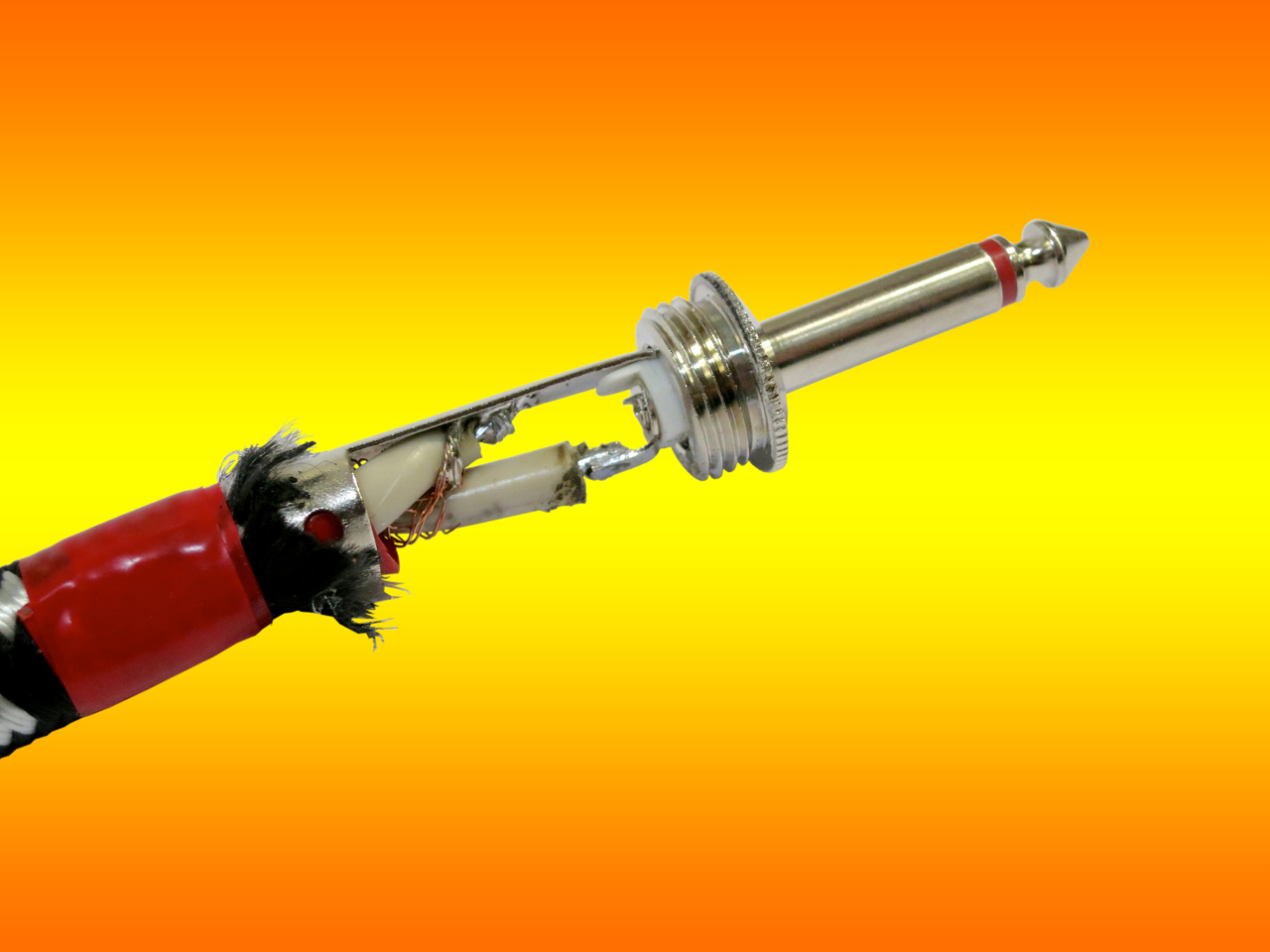

It seems that Spin X relies on two identical conductors to function in the desired way. One is the hot (signal) conductor, while the other goes to earth (ground). But using this type of cable results in a less-than-ideal setup, when it comes to mains hum and electromagnetic interference.

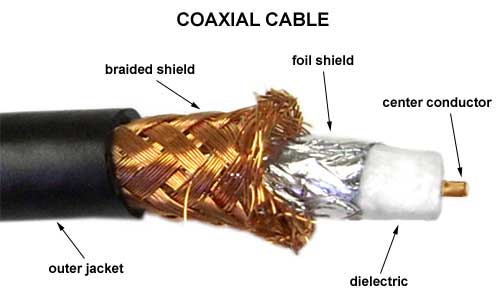
Traditional guitar cables are built as coaxial leads, where a centre conductor carries the guitar signal. The centre conductor runs inside a layer of insulation, which in turn is covered by one (or several) shields. The shield is connected to ground and serves two purposes – one: its the audio signal’s earth; two: it’s a Faraday cage that shields the signal conductor from extraneous interference, like mains hum.
If you connect only the Spin X cable to an amp, and turn up the volume, you will be greeted by an unacceptable amount of hum and microphonics, but as soon as you plug your regular lead into the Spin X, all the noises disappear. This means that the Spin X needs the traditional, coaxial guitar lead to do away with all the interference.
****
The Spin X cable seemed reasonably rugged and well made.
The only thing that bothered me in the road-worthiness department were the badly secured strain relief cuffs in both connectors of our review sample.
****
I wanted to find out, whether you could ”measure” any real speeding up of the guitar signal in the confines of a home studio. I came up with the following setup:
I recorded the acoustic sound of a Fender Stratocaster using an AKG C3000 condenser microphone onto the left channel of a stereo signal, while direct-injecting the high-impedance guitar signal going through a Whirlwind Leader cable into my sound card.

As you can see above, the DI’ed guitar signal (waveform on the bottom) is a tiny bit behind the miked up acoustic sound.

This picture shows clearly that the Spin X doesn’t ”speed up” the guitar signal in any way noticeable in a standard audio sequencer.
The listening test also doesn’t reveal any noticeable differences between using only the traditional lead or adding the Spin X cable. If anything, adding the Spin X might even add a minuscule amount of time lag to proceedings, at least to my ears:
****
I then recorded a series of sound clips, using my trusty Blackstar HT-1R valve combo. In each clip the first half is played through just the traditional Whirlwind lead, while the second half has the Spin X cable added into the signal chain.
For comparison purposes here’s a clip of a Fender Stratocaster DI’ed into the sequencer (first half Whirlwind only; second half Whirlwind plus Spin X):
A Strat through the Blackstar:
Gibson LP Junior:
Hamer USA Studio Custom:
Gibson Melody Maker SG:
****
Next I took the Spin X to the guitarist of Rock-Ola & The Freewheelers. Sami Saarinen went through several different vintage and custom shop guitars and amps at band rehearsal volumes – both straight into the amp, as well as using a pedalboard.
The differences in sound between using only a traditional guitar lead and adding the Spin X cable seemed a little bit more pronounced using Sami’s setup at higher volume levels, compared to what I could make out in my home studio.
****

For the last bit I wanted to make sure that the Spin X cable’s function was not dependent on valve technology:
I borrowed my son’s Marshall MG30CFX combo for a short test run. All sound clips start with only the Whirlwind cable connected; the Spin X comes in at the halfway point.
Fender Telecaster (neck pickup):
Both pickups:
Bridge pickup:
****
Based on my tests I have to state that the Spin X cable really does add a little ”something” to the sound. The Spin X’ effect is more easily spotted with a quality guitar and a quality amp at slightly higher volume levels. It also seems that the tonal effects are more pronounced in singlecoil-equipped guitars – like a Stratocaster, a Telecaster, a Les Paul Junior, or a non-reverse Firebird – than when using humbucker-carrying guitar models.
The Spin X’ ”sound” is similar to the effect a buffer amp has on a long signal chain. You will get a slightly more refined top end, a whiff of added presence and openness, as well as a tighter and more pronounced bass. Strats and Teles will sound a tiny bit more HiFi, while a P-90 pickup will lose a little of its lower-mid congestion.
The Spin X seems to make the signal louder by an inkling, but this could also be a mere psychoacoustic effect, caused by the added presence.
****

There’s no simple and straight answer to the question, whether the Spin X cable genuinely ”improves” your tone. Many Rockabilly, Punk or Metal guitarists wouldn’t want to make their guitars sound ”more polite”. Some styles and genres simply demand a gritty, unruly top end, and some chunky mid-range grind.
For some tone hounds and sound aesthetes, however – players following the in the footsteps of guitarists, such as David Gilmour, Michael Landau or Eric Johnson – the Spin X cable’s tiny tonal changes might make all the difference.
In any case, it is up to you to decide how much this minuscule fine-tuning of your guitar signal is worth to you.
****
Spin X Cable
For more info on the Mad Professor RED Cable go HERE.

