
Video by Vincenzo Lodolini.
Lisätiedot: EM Nordic
Kitarablogi.com – Finland's premier Guitar and Bass blog
Juttuja kitaroista ja bassoista


This time Kitarablogi has had the pleasure to review the fruits of a cooperation between two legendary designers:
Custom amp guru Reinhold Bogner…

…and the grand old man of recording studio electronics Rupert Neve have unveiled a line of three Bogner effect pedals (made in the USA), which were designed around Rupert Neve’s famous audio transformers.
Audio transformers are rarely seen (or mentioned) when it comes to pedal effects, for both reasons of price and mass production.
In valve amplifiers audio transformers play a crucial role, because they are the last stage before the signal reaches the speaker. Audio transformers ”translate” the signal for the speaker, which is why they have a direct impact on the tone and dynamic behaviour of a tube amplifier.

At the moment three different Bogner/Neve-pedals are available – the Harlow booster (current price in Finland: 235 €), the Wessex overdrive (229 €), and the Burnley distortion (235 €).
Each pedal has a glowing ”eye” indicating the current signal strength of the stompbox.
****

The Bogner Harlow gives you two effects in one pedal:
In addition to it’s boost function, the Harlow also incorporates Bogner’s Bloom compression circuit, which promises to give you a very natural, three-dimensional and musical type of compression.
You’ll find three control knobs on the Harlow – a level control for the booster, a Bloom-control for the compressor, and a master tone.

****

Bogner’s Wessex is the overdrive pedal in the Bogner/Neve-family.
In addition to its gain and level controls the Wessex also includes a two-band EQ, as well as a E/N-switch. ”N” stands for ”normal” and this mode will give you a slightly more traditional, mid-range centred sound. Switching to ”E” (for ”enhanced”) there’s more gain on tap, coupled with a fatter, more full-range tone.

****
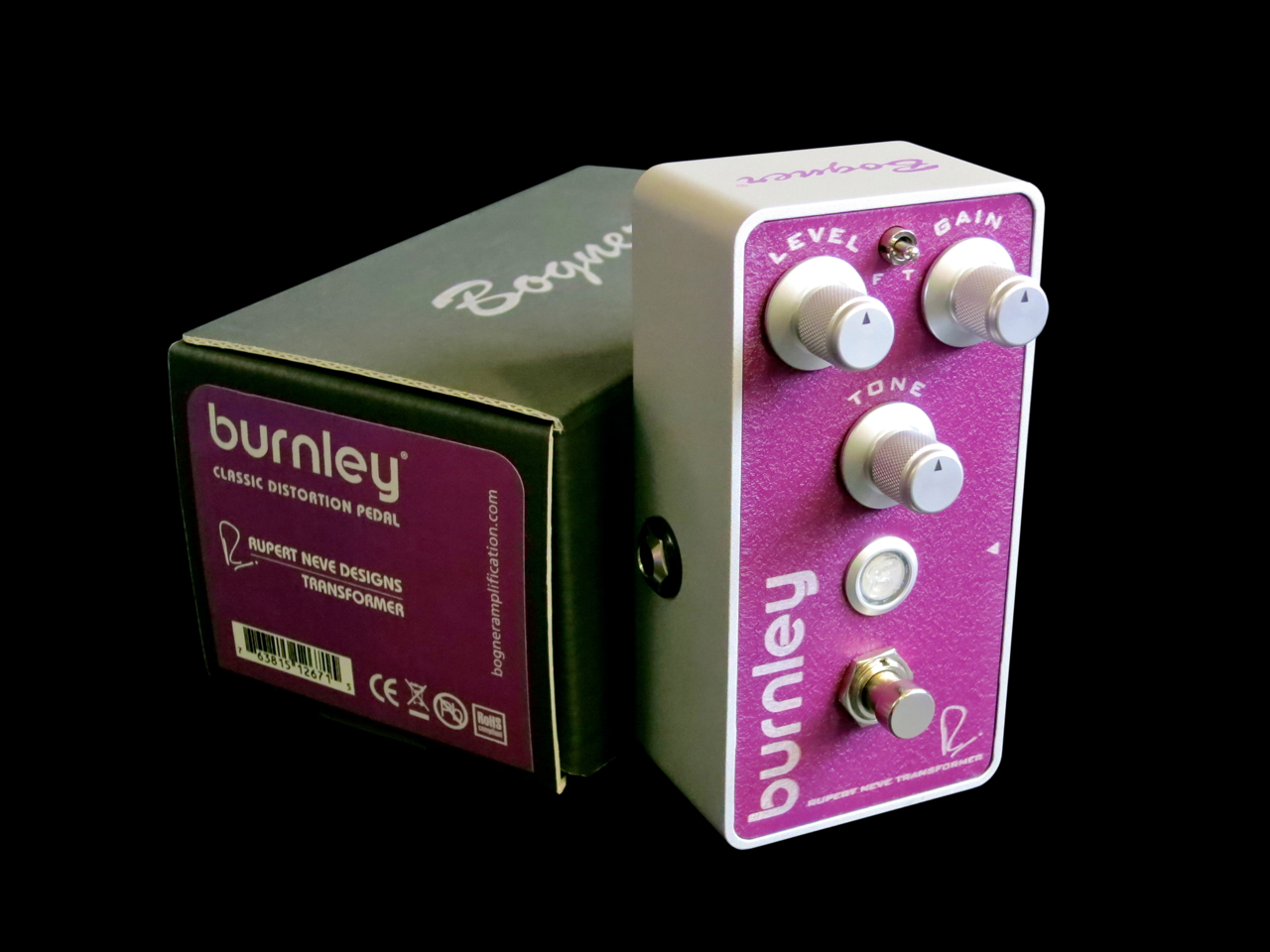
The third pedal, the Bogner Burnley, is a distortion effect.
The Burnley offers three controls – level, gain and tone – plus an F/T-switch. ”T” (for ”tight”) promises you a more aggressive distortion effect than the warmer and fatter ”F” mode.

****

Both Mr Bogner and Mr Neve are known for their uncompromising commitment to both sound and workmanship. This commitment is well represented in this range of pedal effects.
In the Bogner-pedals the circuit board is hidden inside a black plastic box. This is a workable solution weighing the risk of direct backwards engineering against the possible future need for repair or servicing. Components completely covered in black resin (some boutique manufacturers do this) are the bane of any guitar technician!
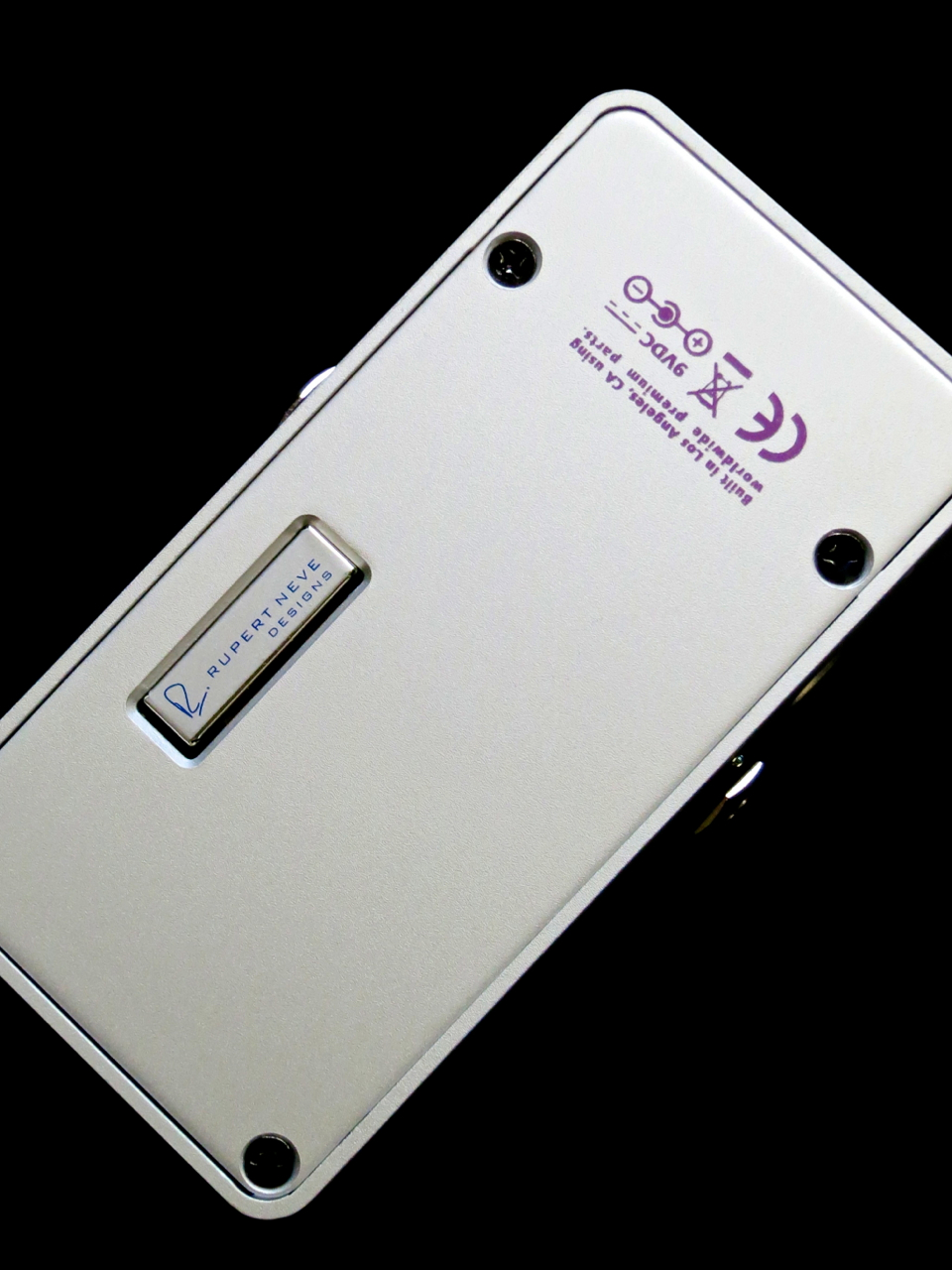
As you can clearly see in the pictures, all three stompboxes can be run using a nine volt battery or an external PSU (using the Boss-standard).
****

Bogner doesn’t divulge the precise amount of boost that can be had from the Harlow, but let me tell you it will most probably be enough to overdrive even the cleanest of amplifiers.
The Bloom-circuit in the Bogner Harlow sounds deliciously chewy and reacts very musically.
Bogner’s Harlow is the type of pedal you want to leave on the whole time, because any guitar will sound better with this box running. This pedal also reacts very well to changes in your guitar’s volume control setting.
There’s a nice attack click, when played with a Stratocaster:
The Harlow stays clear and clean, even when you play a neck humbucker (I’m using my Hamer USA Studio Custom):

The overdrive and distortion tones of Bogner amplifiers are already the stuff of legend, and the amp guru has managed to pack these sounds into two Bogner/Neve-pedals.
The Bogner Wessex luckily isn’t just another Tubescreamer clone; instead this stompbox gives you Mr Bogner’s vision of the perfect overdrive sound.
Even though there’s a healthy amount of gain on offer in the Wessex, the sound always stays transparent and well-defined. This pedal also keeps the inherent character of your guitar intact.
Wessex’s Enhanced mode will even make your vintage-styled Strat sing:
On the other hand there won’t be any boxiness, or mud, when using humbuckers:

If you’re a Hendrix fan you should definitely try the Burnley’s Fat mode. It will make your Strat sing and growl in Woodstock-fashion, even when played into a clean amp channel at bedroom volume levels:
Bogner’s Burnley, too, is sensitive to guitar volume changes. Using Tight mode and humbuckers will give you a modern distortion tone:

Here’s the audio track off the Youtube video. All guitar parts have been played on a P-90-equipped Gibson Les Paul Junior:
****


Rupert Neve and Reinhold Bogner aren’t men ho do things by half – and these pedals are a fitting testament to this commitment!
The Bogner/Neve-series of guitar effects offers you Bogner’s boutique tones in a very compact guise, and at a very fair price. Try these pedals out – you won’t be disappointed!
****
Bogner Amplification Harlow, Wessex & Burnley
Harlow – 235 €
Wessex – 229 €
Burnley – 235 €
Finnish distributor: Musamaailma
****
Pros:
+ workmanship
+ compact size
+ genuine boutique amp tones

Tämä kuvio on varmasti kaikille tuttu:
On keskiviikkoilta – nyt olisi nastaa jammailla tunti tai pari, mutta rumpalilla on biljarditurnaus ja basistin täytyy vahtia lapsiaan.
Lopputulos on jälleen kerran ilta yksin telkkarin edessä ja kitara sylissä…
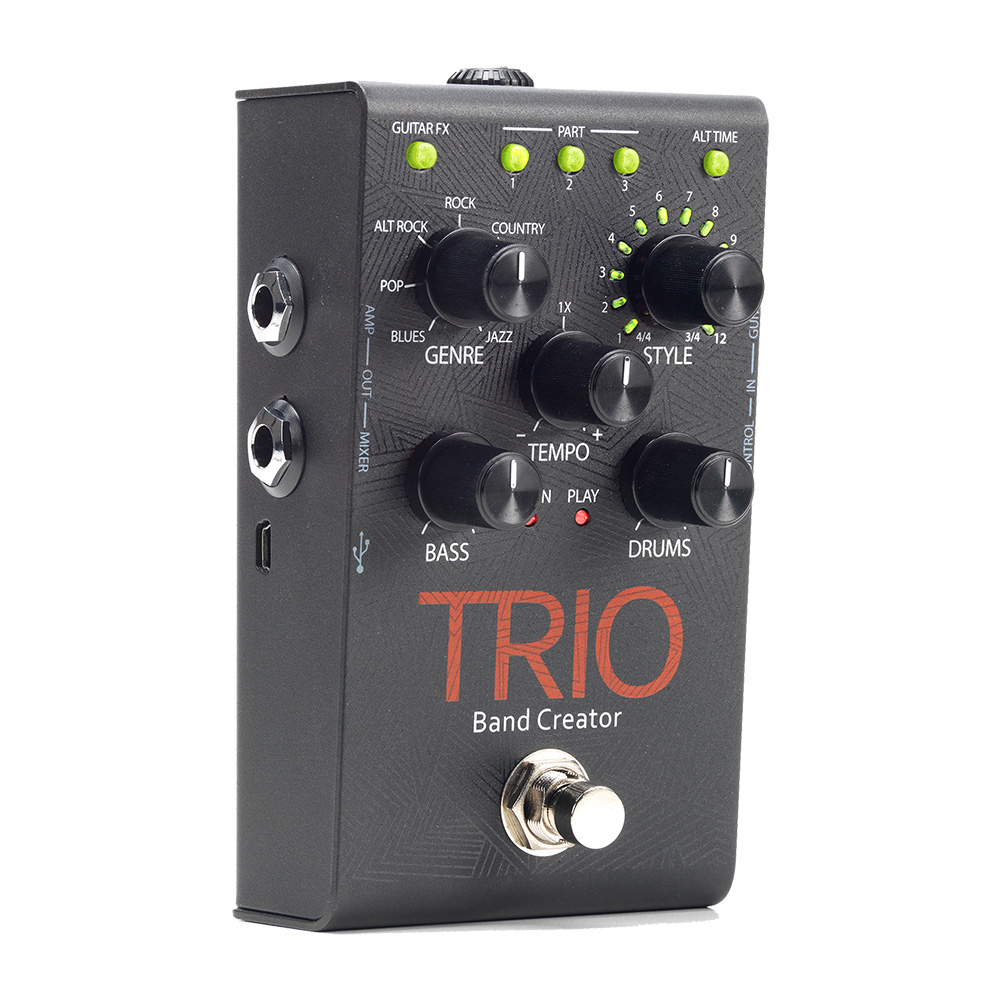
Onneksi nyt on olemassa paljon luovempi ratkaisu jammailuun ja treenaamiseen – Digitechin uusi Trio Band Creator -pedaali tarjoaa väsymättömän rytmisektion hyvin kompaktissa muodossa.
****

Digitech Trio -pedaali (katuhinta noin 240 €) oppii Learn-moodissa biisin (tai biisiosan) soinnut ja rakenteen suoraan kitarasignaalista. Trioon kytketään ihan tavallinen kitarajohto – käyttöön ei siis tarvita kallista MIDI-mikrofonia tai kömpelöä ohjelmointia käsin.
Trio osaa soittaa komppikuvioita seitsemästä eri musiikkigenrestä (Genre). Jokaisessa genressä on 12 eri tyylivaihtoehtoa (Styles), siis eri tavalla soitettuja rumpupatterneja ja bassokuvioita. Kaikki tyylit on kehitetty yhteistyössä Band In A Box -softan valmistajan kanssa.
Digitechin uusi ihmerasia tunnistaa biisin tempon automaattisesti analysoimalla sisään tulevaa audiosignaalia Learn-moodissa, mutta sitä voi hienosäätää jälkikäteen Trion Tempo-säätimellä. Alt Time -kytkimellä voi myös valita tavallisen tempon ja half-timen välillä.
Digitech Triosta löytyy lisäksi alkeellinen efekti- ja kaiutinsimulaatio-osasto, jos haluat jammailla ilman erillistä vahvistinta.
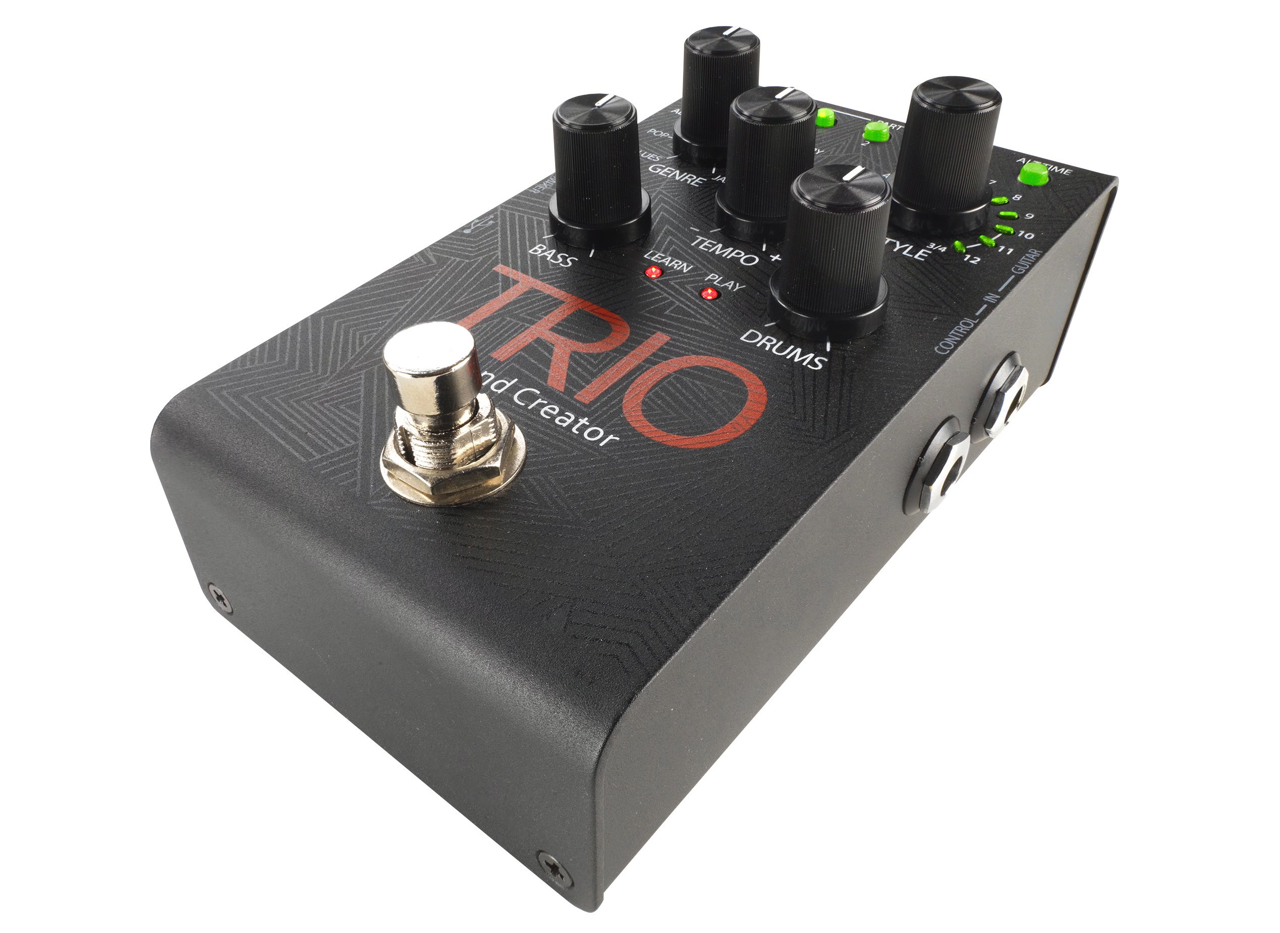
Kompakti Trio Band Creator -pedaali vaikuttaa hyvin kestävältä.
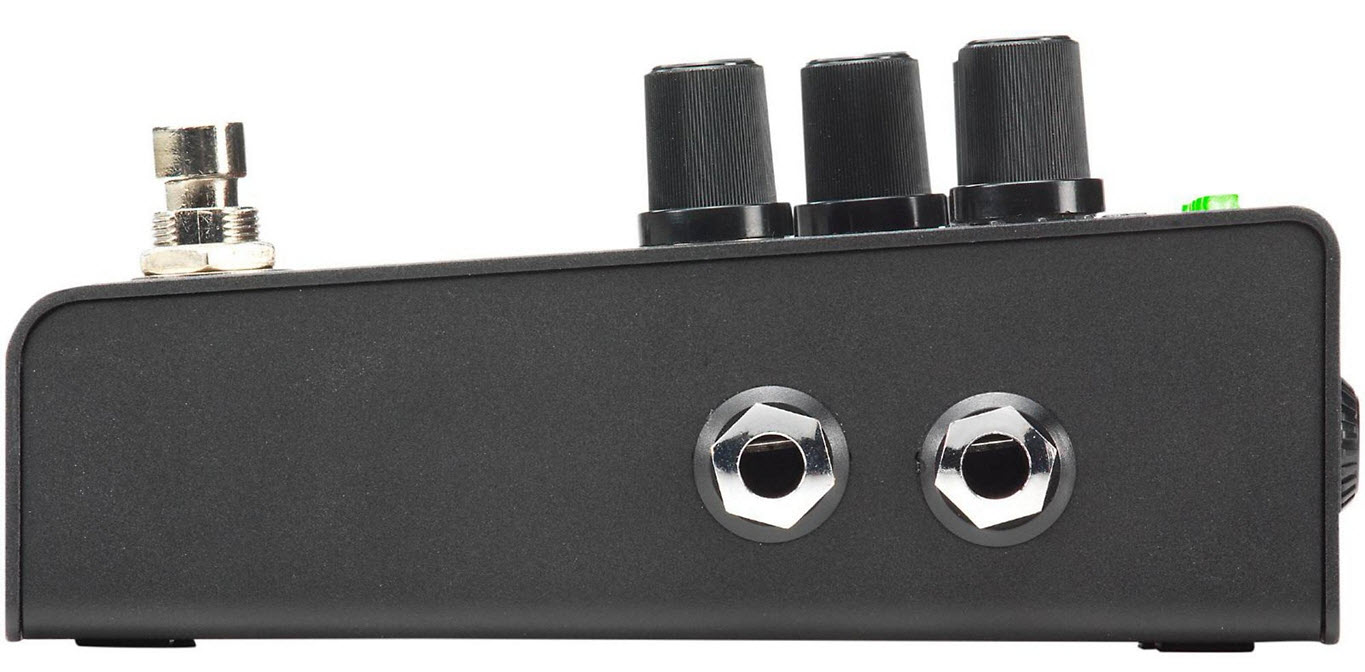
Laitteen oikeaan kylkeen on sijoitettu kaksi tuloa, joista toinen on kitarasignaalille ja toinen (lisävarusteena saatavalle) Digitech FS3X -jalkapedaalille, jolla Trioa voi ohjailla ilman käsiä.
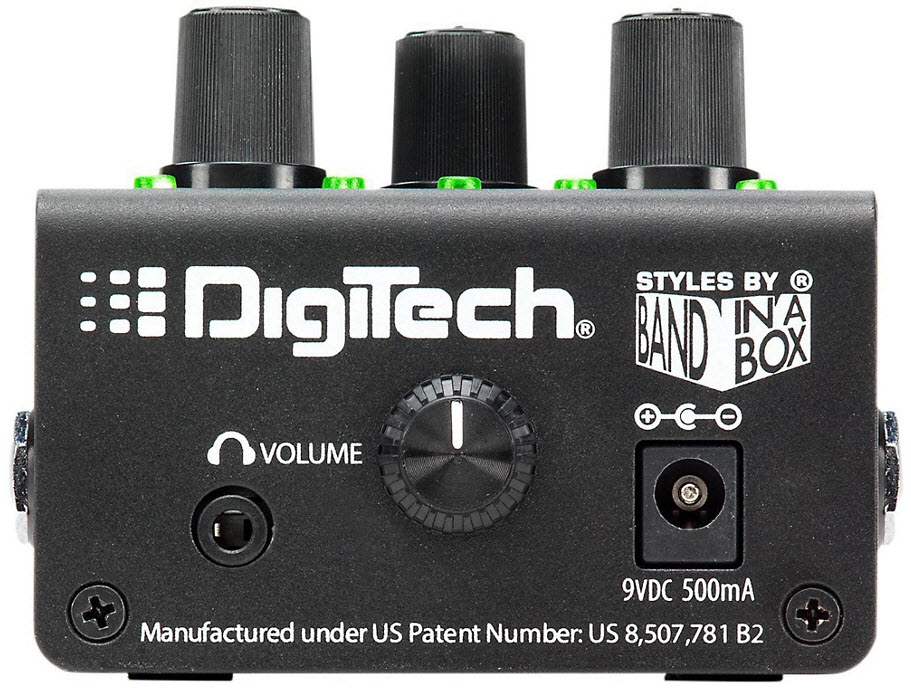
Pedaalin edessä on tulo pakettiin kuuluvalle virtalähteelle, sekä kuulokelähtö omalla volume-säätimellään.
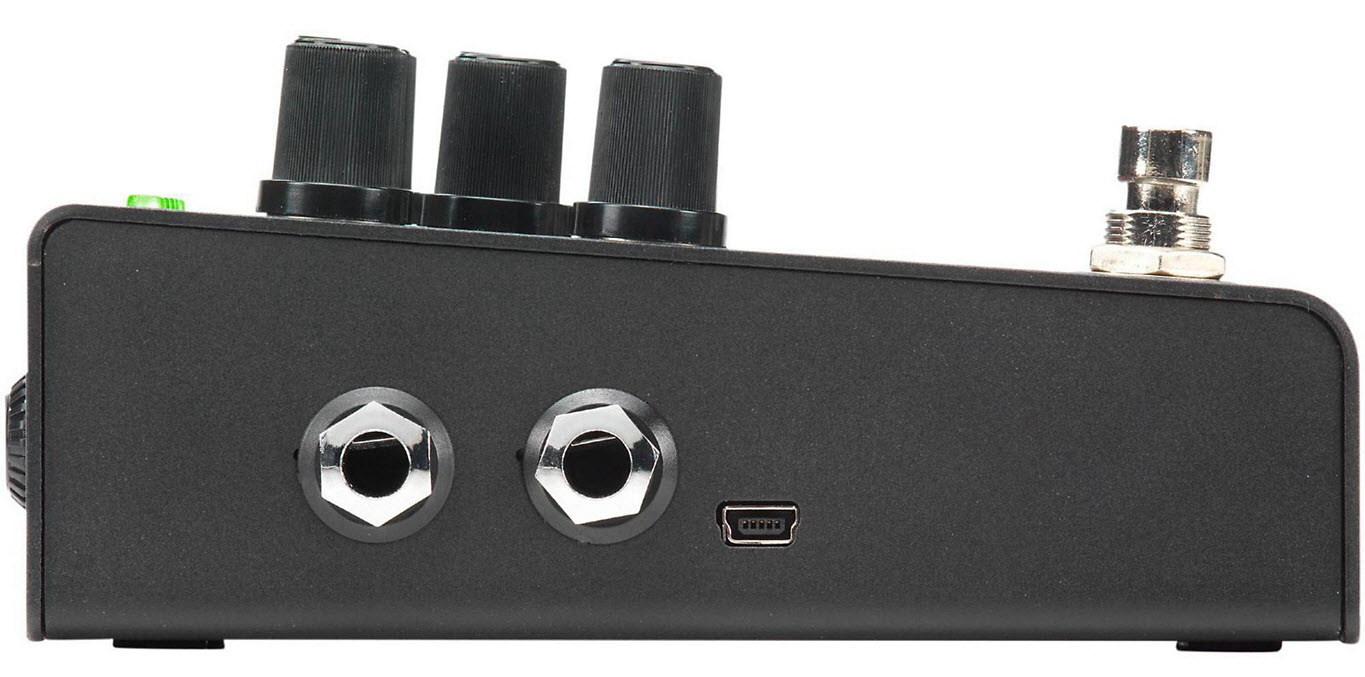
USB-portti on firmware-päivityksiä varten, kun taas vasemman kyljen jakit ovat audiolähdöt kitaravahvistimelle ja mikserille/äänikortille.
Digitechin Trio tunnistaa automaattisesti mikä lähtö on käytössä:
Kun vain vahvistinlähtöön on kytketty plugi, rumpu- ja bassosignaali säädetään vahvistinkanavalle sopivaksi. Kun vain mikserilähtö on käytössä, kitarasignaaliin lisätään kaiutinsimulaatiota. Kun taas molempia lähtöjä käytetään samanaikaisesti, kitarasignaalia ohjataan vain vahvistinlähtöön, ja rumpu- ja bassokuviot tulevat vain mikserilähdöstä. Kuulokkeen kytkeminen Trioon mykistää automaattisesti sekä vahvistin- että mikserilähdön.
****
Tässä Kitarablogi-videossa näytetään miten Digitech Trio -pedaalia käytetään:
****
Toisen videon musiikkia on äänitetty käyttämällä Digitech Trio -pedaalia, soittamalla kolme Alt Rock -genren Styles-tyyliä:
****
Testin perusteella voin todeta, että Digitech Trio on hyvin helppo ja intuitiivinen käyttää. Minun mielestäni se on fantastinen laite olohuone-jammailuun, sekä uusien biisien työstämiseen.
Trio Band Creator -pedaali onnistuu tunnistamaan biisinpätkän tempon ja sointukierron yllättävän hyvin edellyttäen, että a) Learn-vaiheessa ei esiinny kitaransoitossa liikkaa synkopaatiota, ja että b) opetusvaiheessa käytetään selkeästi tunnistettavia duuri, molli- ja seiskasointuja.
Trion rumpu- ja bassosoundit ovat hyvin kelvollisia, ja Style-kuvioissa esiintyy riittävästi automaattista live-tyylistä vaihtelua, ettei lopputuloksesta tulee turhauttavan robottimaista.
Metal-genren puuttuminen on valitettavaa, mutta riffien tunnustaminen suoraan audiosignaalista (ja riffien tarkka toistaminen) olisi varmaan ollut niin monimutkaista, että laitteesta olisi tullut yksinkertaisesti liian kallis ja liian hankalaa käyttää.
Ei-metallimiehille (ja -naisille) Trio Band Creator on kuitenkin todella mahtava työkalu harjoitteluun, jammailuun, sekä biisien kirjoitteluun. ylös sohvalta, siis!
****
Digitech Trio Band Creator
katuhinta noin 240 €
Maahantuoja: EM Nordic
Suuri kiitos DLX Musiikille testilaitteen lainaamisesta!
****
Plussat:
+ vankka tekoa
+ kompakti
+ interaktiivinen
+ monipuolinen Genre- ja Styles-tarjonta
+ hyvät rumpu- ja bassosoundit
Miinukset:
– Metal-genre ei edustettu
– laite ei pysty oppimaan riffejä
We’ve all been there, haven’t we? It’s a Wednesday evening, and you want to jam; but the drummer’s at the hairdresser’s and the bassist has to babysit all evening long.
So what do you do? You get bored to tears sitting on the sofa with your fingers widdling away idly on your favourite couch guitar…
Actually, now there’s a better, much more creative way to spend your spare time – Digitech’s brand-new Trio Band Creator pedal lets you jam and work on new song ideas by supplying an indefatigable rhythm-section-in-a-box.
****
The Digitech Trio (current street price in Finland approx. 240 €) uses a learn function that detects the chord changes (and tempo) of a part straight off your guitar’s audio signal. There’s no need for complicated step-by-step programming or an expensive (and fiddly) MIDI-pickup – just plug in your guitar lead, and you’re ready to go.
The Trio offers you seven musical Genres to choose from, each offering a whopping 12 Styles (meaning: different pattern templates for the drum rhythm and bass pattern). The patterns have all been developed for the best-selling Band In A Box computer software.
Digitech’s new wonder box picks up the tempo directly from your playing, but you can fine-tune the speed after the fact using the Tempo control. You can also switch between a normal and a half-time feel.
Digitech’s Trio also includes a very rudimentary guitar effects section, should you want to jam without using your guitar amp.
The Trio Band Creator comes in a very compact, yet very sturdy pedal format.
There are two jacks on the right side of the pedal – one is the guitar input, while the second one allows you to connect Digitech’s own FS3X footswitch unit for hands-free Part-switching.
The pedal’s front sports the input for the power supply unit (included), as well as a headphones output with its own volume control.
The USB-port on the unit’s left side is for firmware updates, while the two output jacks are the guitar amp and mixer outputs.
The Digitech Trio automatically detects which of the outputs are in use:
If only the amp output is used the drum and bass parts are pre-EQ’d to work well with a clean guitar amp. When using only the mixer out the guitar signal will run through the pedal’s cabinet emulation. Using both outputs simultaneously sends the guitar signal to the amp output and the rhythm section to the mixer. Plugging in headphones into the pedal’s headphone output automatically mutes both the mixer and amp outputs.
****
Here’s Kitarablogi’s video clip showing you how to use the Digitech Trio:
****
And here’s the Digitech Trio used in context, playing a three-part song (using Alt Rock styles):
****
I found Digitech’s Trio very easy and intuitive to use. In my view it’s a fantastic little unit in a living room jamming and song developing context.
The Trio Band Creator does a surprisingly good job of learning the tempo and chord changes of a part straight off your guitar playing, provided you a) don’t syncopate too wildly, and b) stick to major, minor and 7th chords for the most part.
The drum and bass sounds are very decent, and an ample amount of automatic Style variation keeps enough semblance of the ”human” element in the accompaniment, to keep it from sounding robotic.
I would have liked to have seen a Metal Genre included in the Digitech Trio. On the other hand, this would have meant the inclusion of a riff-learning function of some sort, which probably would have made the pedal too complicated and expensive.
For non-Metal guitarists, though, the Trio Band Creator is a fantastic tool to keep your playing chops up, as well as for jamming and coming up with new songs. No need to noodle aimlessly on the sofa, anymore!
****
Digitech Trio Band Creator
Current street price approximately 240 €
Finnish Distributor: EM Nordic
A big thank you to DLX Music Helsinki for the loan of the review unit!
****
Pros:
+ build quality
+ compact
+ interactive
+ large variety of Genres and Styles
+ quality of drum and bass sounds
Cons:
– no Metal genre available
– cannot learn riffs


”What – yet another Stratocaster model!? Who needs another Strat? Yeah, man, I’ve noticed there’s a ’bucker at the bridge position, but that’s been done before, hasn’t it!”
True, but this is a new American Standard model you should definitely try out, because the guys at Fender R&D have come up with a couple of nifty improvements that haven’t been available on HSS-Strats thus far.

”A Shaw-what?”
Fender calls its newest bridge humbucker the Shawbucker in honour of the man who designed it, Tim Shaw. Mr Shaw is a genuine living legend, and held in high esteem amongst people in the know. In the 1970s and 80s he worked for Gibson, and helped to turn around the company’s flagging fortunes and decline in quality. As the resident electronic guru he played a pivotal role during the design of models, such as the Gibson Les Paul Heritage 80, coming up with the first reissue of the original PAF-humbucker. This pickup is still in production, now known as the ’57 Classic. Later, Shaw moved on to Guild, and from there to Fender Musical Instruments.
****

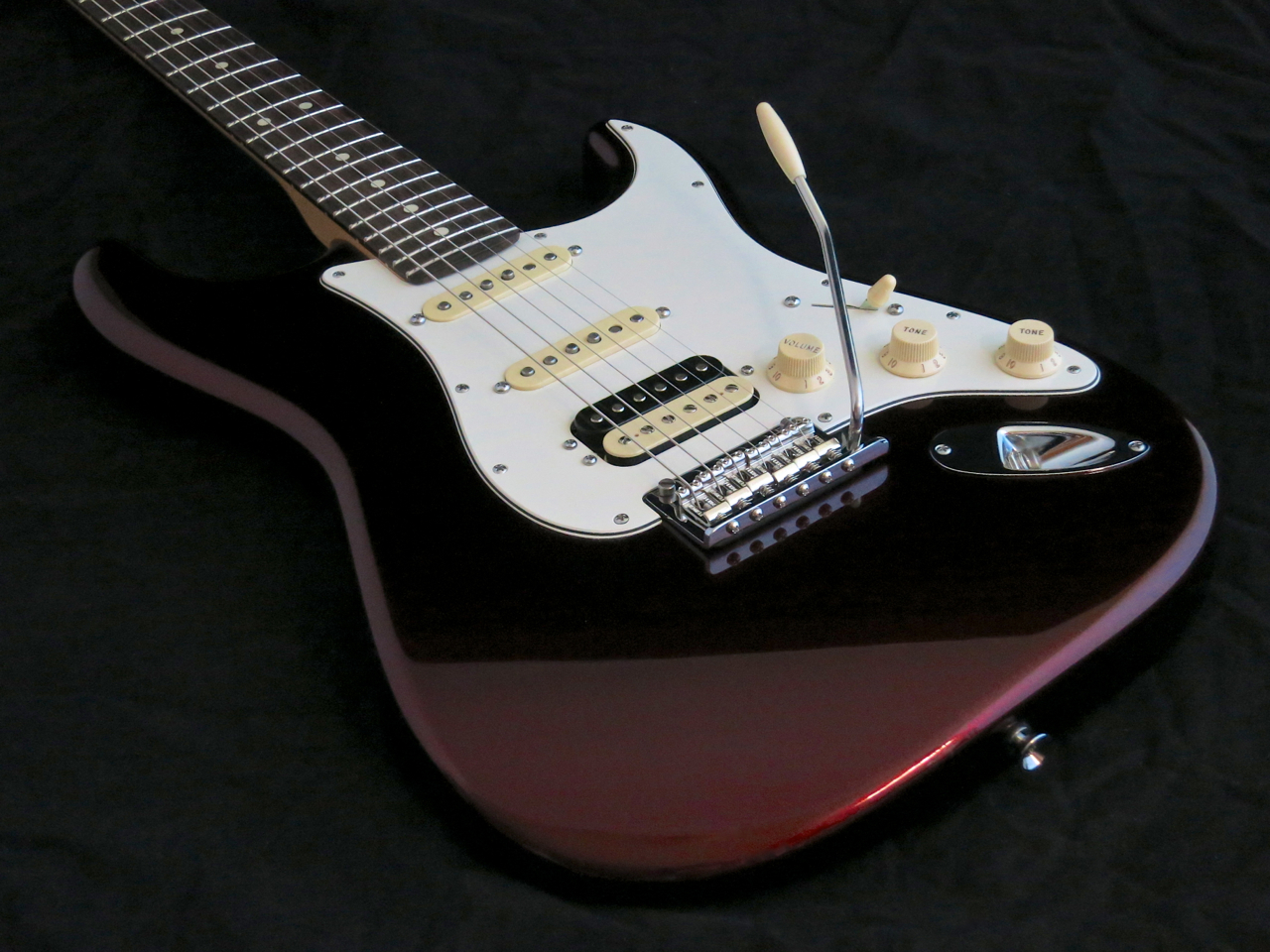
Most of the improvements in the Fender American Standard Stratocaster HSS Shawbucker (current price in Finland approx. 1,600 €) centre around the electronic side of things.
In terms of its basic build the model continues within the time-tested parameters of the American Standard product line.

The Shawbucker Strat is built using a solid ash body and a bolt-on maple neck.
The neck profile is a friendly, modern ”C”, with the rosewood fingerboards flatter-than-vintage radius of 9.5″ and the 22 jumbo-sized frets further contributing to a contemporary playing feel.

The two-way truss rod is adjusted from the headstock.

Fender’s Deluxe machine heads work smoothly and accurately.

The American Standard Shawbucker also sports the company’s patented neck angle adjustment.

The current American Standard vibrato bridge combines a modern, knife-edge, twin-post base plate with vintage-type bridge saddles made from folded steel.
Our review sample came with a slightly steep bridge tip up, which I adjusted back to factory specs in no time, using the correct Phillips head screwdrivers.
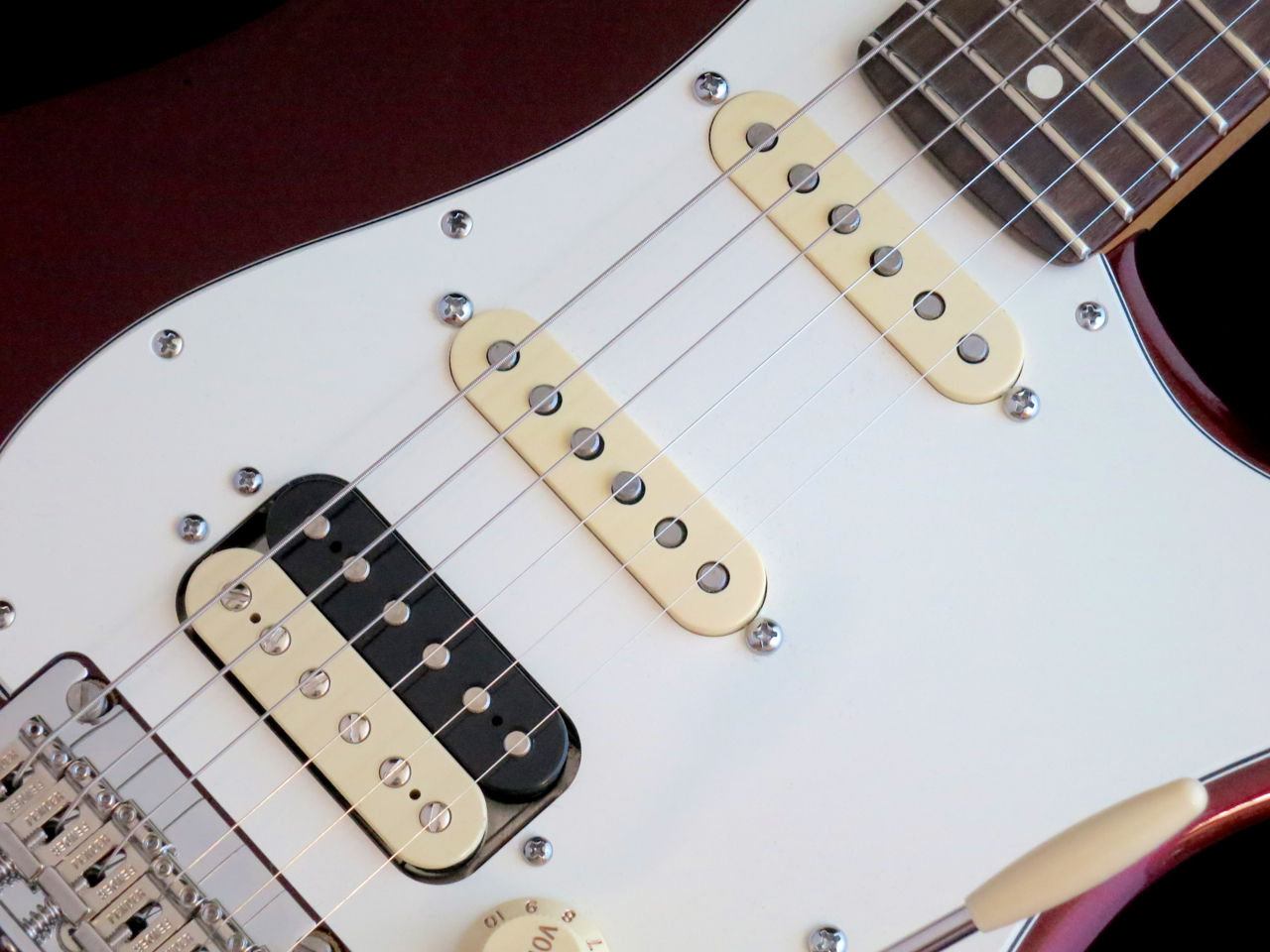
The HSS Shawbucker features a well-balanced set of pickups:
A pair of Custom Shop Fat ’50s single coils have been selected for neck and middle pickup duties. The middle pickup is RW/RP, making position four on the five-way switch humbucking.
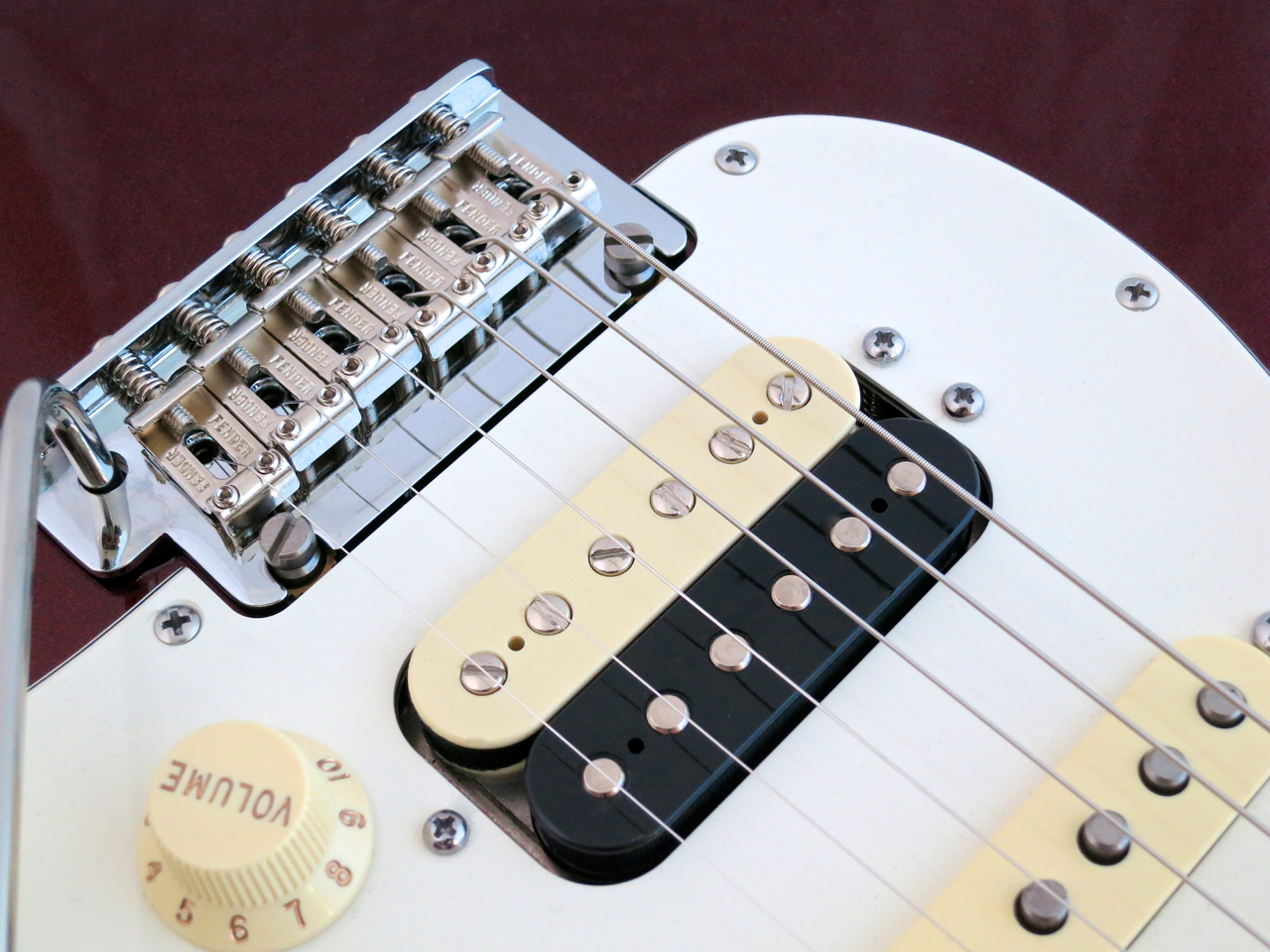
The Shawbucker is a moderate-output, vintage-voiced humbucker with a PAF-type tone.
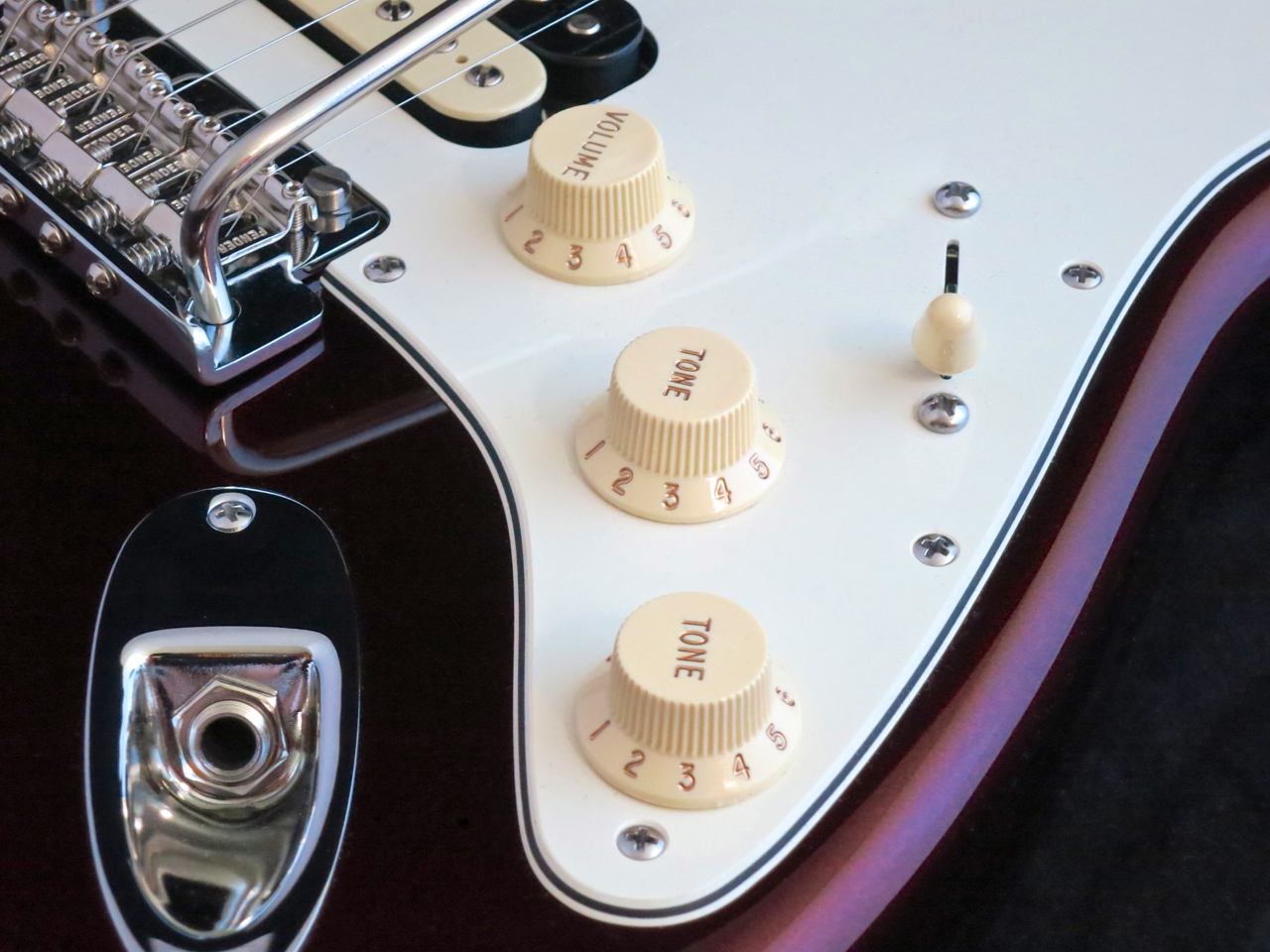
The control set-up looks pretty standard, but there’s more to the Shawbucker Strat than meets the eye:
Single coil pickups and humbuckers usually require different types of potentiometers to function satisfactorily. Single coils tend to sound best with 250k controls, as they attenuate some of the sharpest, most biting trebles in the signal. Humbuckers, on the other hand, tend to work better with higher resistance values – 500k, usually – which keep this pickup type’s softer top end intact. Tone control circuits usually also employ differently valued capacitors for single coils and humbuckers, respectively.
Most HSS- and HSH-loaded guitars suffer from the compromises shared control pots and tone circuits entail, when mixing the different pickup types. As a result, you either end up with muddy-sounding humbuckers or uncomfortably scratchy single coils.
The genius of the Shawbucker Strat lies in the two stacked potentiometers it uses. The same pot shaft simultaneously turns both a 250k and a 500k pot stacked on top of each other. The Shawbucker Stratocaster employs these stacked pots for the master volume control and for the joint bridge-and-middle tone circuit. The 500k side deals with all things humbucker, while the 250k layer is reserved for the single coil signals. As the neck tone is reserved for the neck pickup only, it uses a traditional 250k pot.
The second position on the five-way switch gives you the middle pickup together with the split Shawbucker.
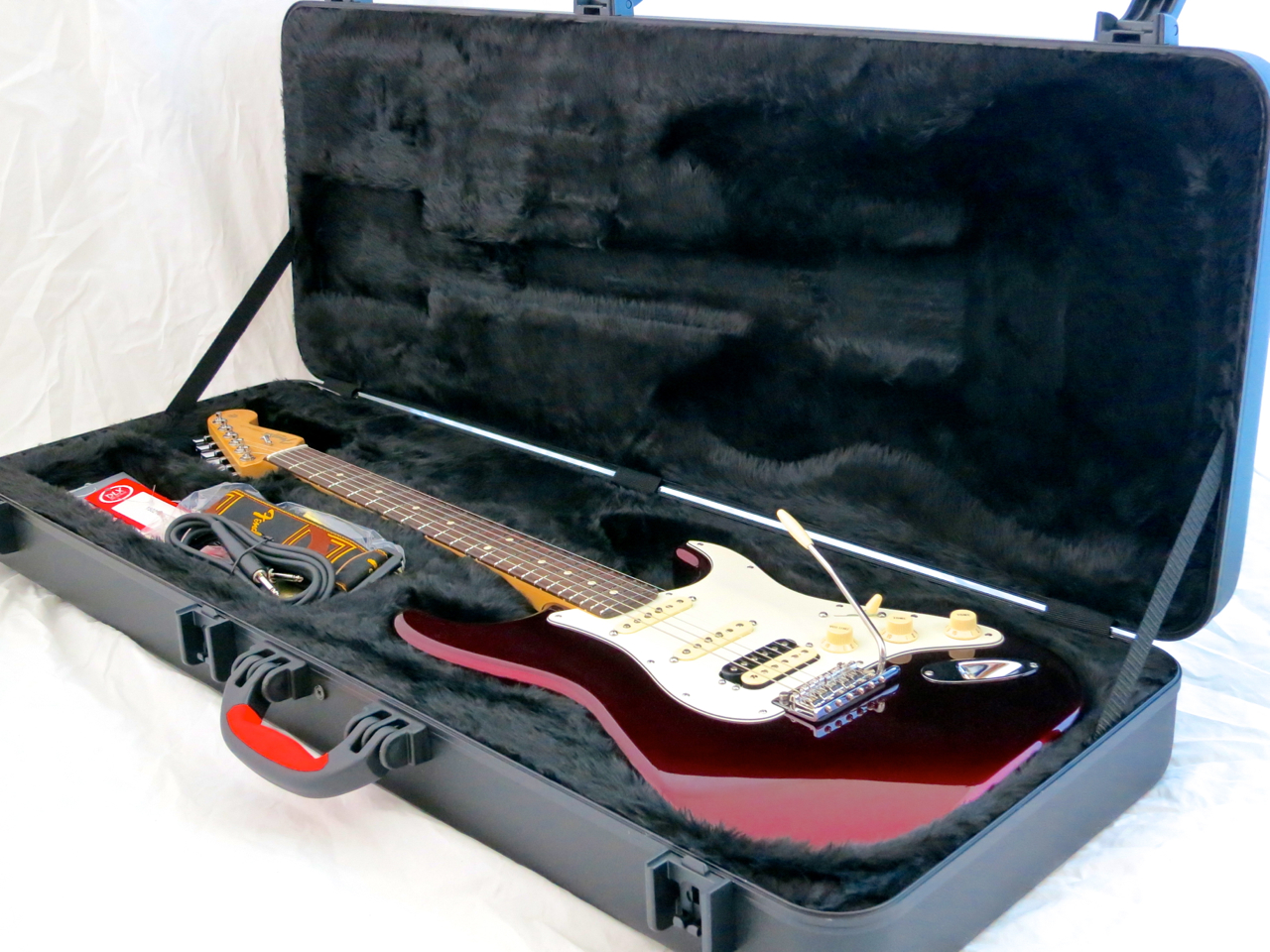
The American Standard Stratocaster HSS Shawbucker guitar comes in its quality hard case, with a strap and a guitar lead also included in the price.
****

I don’t think there’s much need to talk about the Stratocaster’s time-proven ergonomics. Same goes for the well thought-out contemporary improvements the American Standard series offers. The American Standard Stratocaster has been the top seller of Fender’s US output for decades.
The review instruments is a fitting torchbearer for this industry standard – it’s a great-feeling, great-playing, lightweight guitar.
Its acoustic voice is fresh, dynamic and strong, and the Shawbucker Strat’s vibrato works very well in the middle ground between a vintage vibrato and a double-locking Floyd Rose whammy.
Thanks to the chunky nature of the Custom Shop Fat ’50s, this model’s bridge humbucker never manages to overpower the single coils. Yes, there is a slight jump in signal level, when you switch from the Fat ’50s to the Shawbucker, but here it feels very organic and musical.
To my ears the HSS Shawbucker sounds fantastic, offering a bridge position signal boost, while retaining plenty of that ”stratty” character. The improved control set-up works just like it should – there’s a healthy dose of top end airiness in the bridge humbucker, while the single coils sound chiming, but fat. Now, here’s an HSS-Strat that finally does away with any unnecessary compromises!

****

Despite the long-winded name, Fender’s American Standard Stratocaster HSS Shawbucker is an outstanding new variation on a proven theme. The Shawbucker-model takes the sound of HSS-guitars to a whole new level.
****
Fender American Standard Stratocaster HSS Shawbucker
price around 1.600 €
A big thank you to DLX Music Helsinki for supplying the review guitar!
Pros:
+ value for money
+ playability
+ updated electronics
+ vibrato action and stability
+ sound
”Taasko uusi Strato-malli? Ketä tällainen enää kiinnostaa? Juu, juu, kyllä, siinä on humbucker tallamikkinä…näitäkin on jo nähty!”
Totta, mutta tähän uuteen American Standard -malliin kannattaa mielestäni ehdottomasti tutustua, koska Fenderin R&D-ryhmä on keksinyt Shawbucker-Stratoon muutamia uusia, oivia detaljiratkaisuja, joita tähän mennessä puuttuivat HSS-mikitetyiltä Stratocastereilta.
”Mikä ihmeen Shawbucker?”
Shawbucker on Fenderin uuden tallahumbuckerin nimi, joka on nimetty sen kehittäjän, Tim Shawn, mukaan. Tim Shaw on oikea elävä legenda kitarapiireissä, joka on ollut 1970- ja 1980-luvulla Gibsonilla töissä. Myöhemmin hän siirtyi Guildiin ja sittemmin Fenderiin. Elektroniikka-guruna hän oli ratkaisevassa asemassa esim. Gibson Les Paul Heritage 80 -projektissa, ja kehitteli firmalle mm. PAF-mikrofonin uusintapainoksia, joita nykyään tunnetaan nimellä ’57 Classic.
****
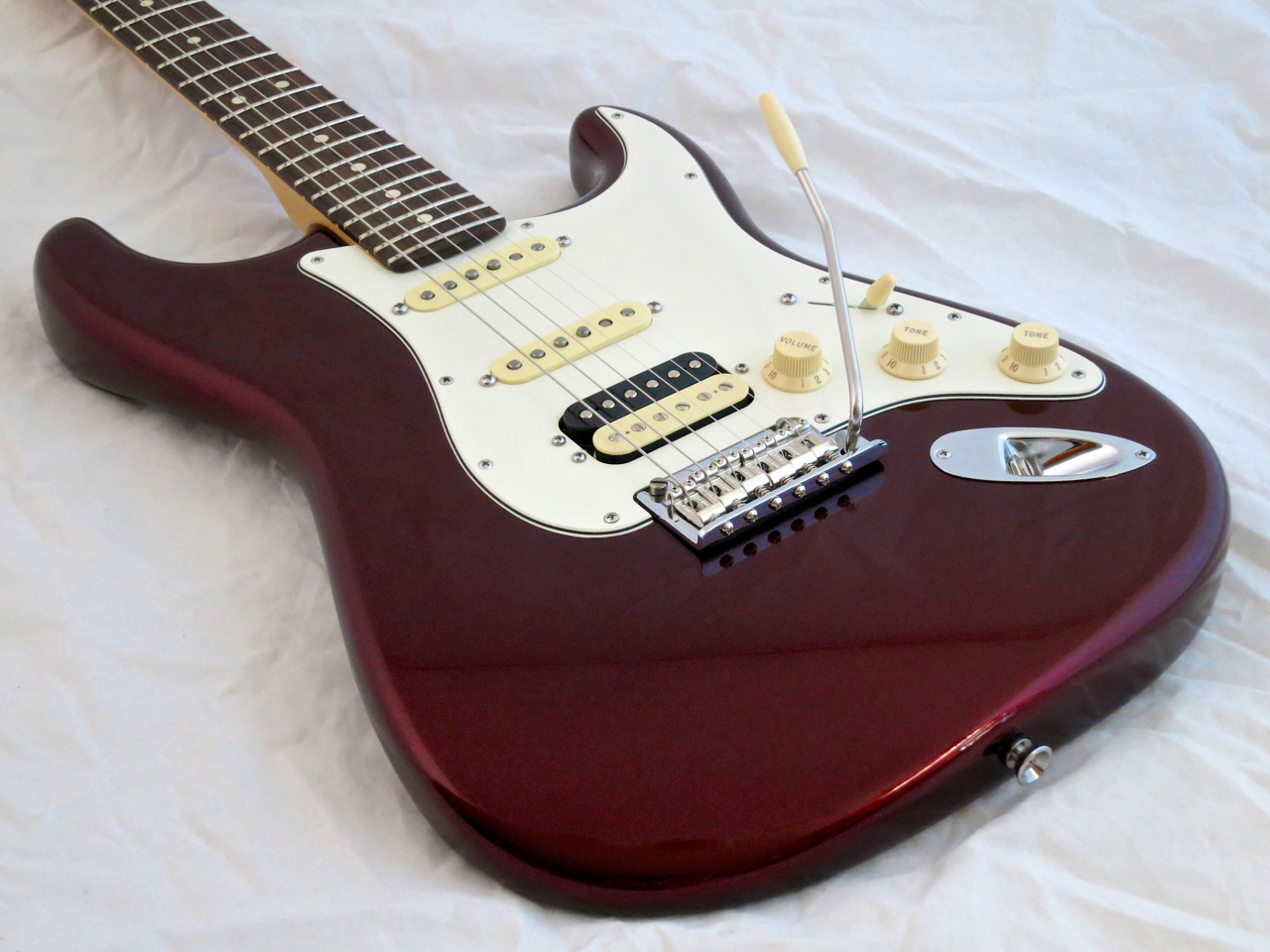
Fender American Standard Stratocaster HSS Shawbuckerin (hintaluokka noin 1.600 €) parannukset koskevat pääosin soittimen elektroniikkaa.
Perusrakenteeltaan malli jatkaa saumattomasti Fenderin erittäin suosittua American Standard -linjaa.
Shawbucker-Straton saarnirunkoon on liitetty vaahterasta veistetty ruuvikaula.
Kaulaprofiiliksi on valittu nykyaikainen C-profiili, ja myös ruusupuisen otelaudan vintagea loivempi radius (9,5 tuumaa) sekä kitaran 22 jumbokokoiset nauhat tekevät soittimesta nykyaikaisen.
Kaksisuuntaista kaularautaa säädetään kätevästi lavan puolelta.
Hyvästä vireestä pitävät huolen Fenderin Deluxe-koneistot.
American Standard Shawbucker -mallista löytyy myös firman patentoitu säätömekanismi kaulan kulmalle.

Nykyisissä American Standard -vibratalloissa on moderni aluslevy veitsenterä-laakereilla, mutta vintage-Stratoista tuttuja tallapaloja muotoon taivutetusta teräksestä.
Testisoittimessa vibran tip up -kulma oli säädetty hieman liian jyrkäksi, mutta asia oli helppo korjata itse sopivilla ristipääruuvareilla.
HSS Shawbuckerin mikrofonivarustus on tarkoin valikoitu:
Kaula- ja keksimikrofoneina toimivat kaksi Custom Shop Fat ’50s -yksikelaista. Vastakkaiseen suuntaan käämitty – ja vastakkaista magneetista napaisuutta omaava – keskimikrofoni poistaa tehokkaasti ulkoisia häiriöitä, kun sitä käytetään yhdessä kaulamikin kanssa.
Shawbucker-kaksikelainen on vintage-tyylinen humbucker avoimella, PAF-tyylisellä soundilla.
Kytkin- ja säädinosasto näyttää hyvin perinteiseltä, mutta siihen on piilotettu tämän kitaran kätevimmät parannukset:
Yksikelaiset ja humbucker-mikrofonit vaativat periaatteessa erilaisia potentiometrejä toimiakseen toivotulla tavalla. Yksikelaisten mikkien kanssa käytetään yleisesti potikoita 250 kilo-ohmin vastuksella, jotta niiden soundista ei tulisi liiankin terävä. Humbuckereilla taas on perinteisesti käytetty 500 kilo-ohmin potentiometrejä, jotta diskantti säilyisi paremmin niiden signaalissa. Myös tonepiirissä toimivan kondensaattorin kapasitanssi-arvo on usein syytä olla erilainen, riippuen siitä onko käytössä yksikelainen vai kaksikelainen mikrofoni.
HSS- ja HSH-kitaroiden ongelma piilee usein juuri potikoiden ja konkkien valinnassa, koska sekä yksikelaisten että kaksikelaisten signaalit reititetään yhteisten volume- ja tone-potikoiden läpi. Lopputuloksena joko humbucker soi hieman mutaisesti tai sitten yksikelainen on hieman liian terävä.
Shawbucker-Stratossa nämä ongelmat on hoidettu pois päiväjärjestykseltä käyttämällä sekä volume- että toisen tone-säätimessä tuplapotikoita, joissa samaan akseliin on liitetty sekä 250 k:n että 500 k:n potentiometri päällekkäin. Humbuckerin signaali on kytketty tuplapotikan 500 k -tasoon, kun taas yksikelaisen soundi muokataan 250 k -tasolla. Keskimmäinen, perinteinen tone-säädin vaikuttaa kaulamikrofoniin, kun taas pleksin reunalla oleva toinen tone toimii keski- ja tallamikrofoneilla.
Viisiasentoisen kytkimen kakkosasennossa keskimikrofoni soi yhdessä puolitetun humbuckerin kanssa.
American Standard Stratocaster HSS Shawbucker -pakettiin kuuluu myös laadukas kova laukku, olkahinka, sekä kitarajohto.
****
Stratocasterin hyvästä ergonomiasta ei tarvitse varmasti puhua enempää. American Standard -sarjan soittimien erittäin mukavasta, nykyaikaisesta soittotuntumasta on myös hehkutettu jo pitkään, ja syystäkin. American Standard -Strato on jo vuosikymmeniä ollut firman eniten myyty kitara USA-valikoimastaan.
Testikitara tuntuu juuri sellaiselta kuin sopii odottaa alan merkkipaaluusta – soitin on kevyt, ja se sopii erinomaisesti ainakin minun käteeni.
Akustinen ääni on tutun raikas, dynaaminen ja vahva. Vibratallakin toimii kiitettävästi perinne-Straton ja Floikan välimaastossa.
Fat ’50s -mikrofonien valinta Shawbuckerin aisapareiksi takaa, etteivät yksikelaiset jää missään tilanteessa humbuckeriin nähden alakynteen. Vaihdossa Fat ’50s -mikrofonista Shawbuckerin kyllä huomaa edelleen signaalitason eron, mutta tässä kitarassa boostaus tuntuu hyvin orgaaniselta ja musikaaliselta.
Mielestäni HSS Shawbuckerin soundi on kauttaaltaan hyvin herkullinen ja sopivasti Straton omalla luonteella höystetty. Päivitetty elektroniikka toimii vallan mainiosti – humbucker soi raikkaasti, eikä mene tukkoon, mutta samalla yksikelaisissa diskantilta on leikattu kaikki epämiellyttävä piikikkyys sopivasti pois. Viimeinkin HSS-Strato joka toimii vailla soundillisia kompromisseja!
****
Fender American Standard Stratocaster HSS Shawbucker on – hassusta nimestään huolimatta – mainio sähkökitara todella hyvillä päivityksillä. Shawbucker-Strato vie HSS-mikkitetyn kitaran konseptin viimein seuraavalle tasolle.
****
Fender American Standard Stratocaster HSS Shawbucker
hintaluokka noin 1.600 €
Kiitos DLX Musiikille testikitaran lainaamisesta!
Plussat:
+ hinta-laatu-suhde
+ soitettavuus
+ parannettu elektroniikka
+ vibratallan toiminta
+ soundi
Lisätiedot: EM Nordic

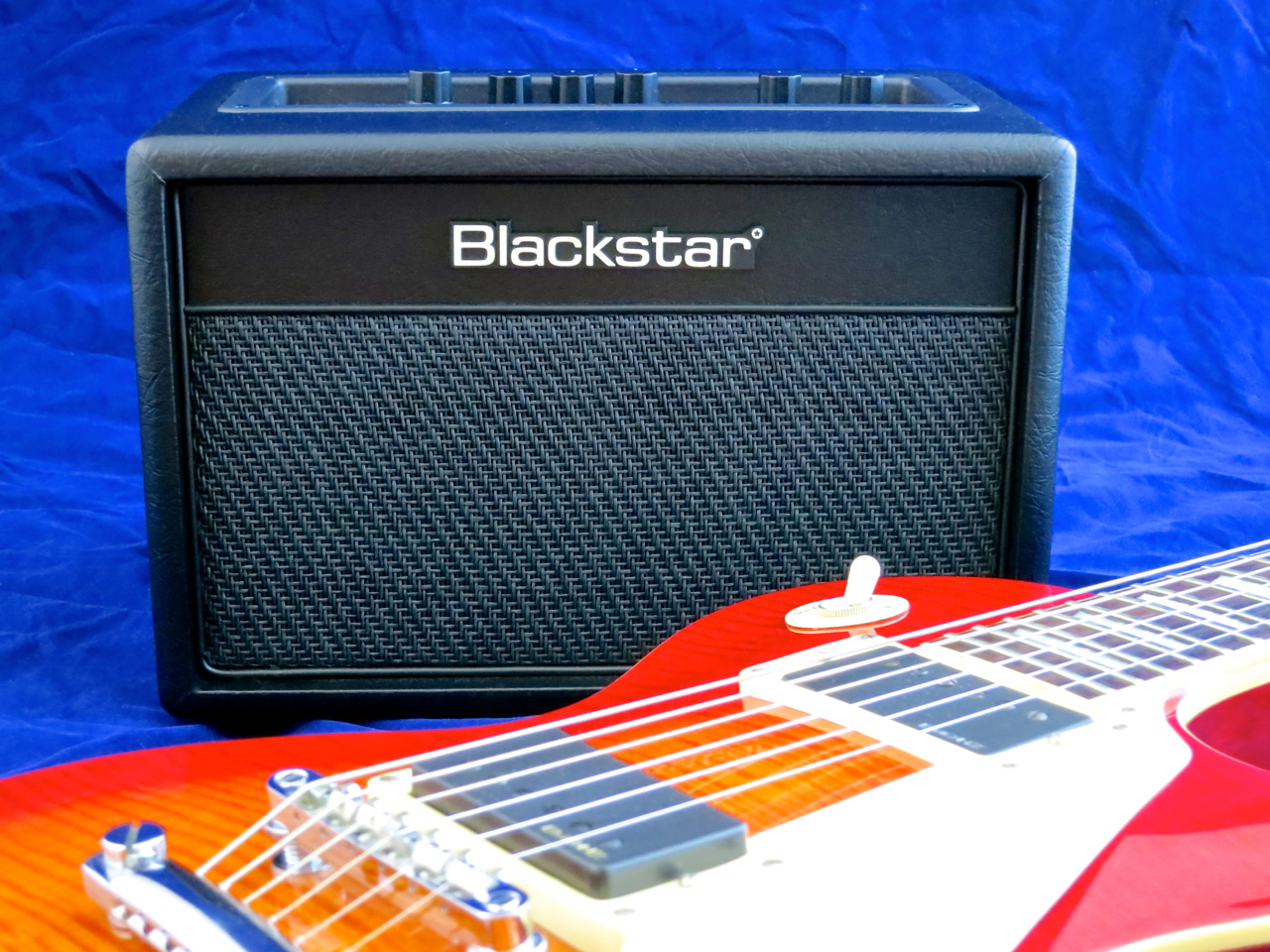
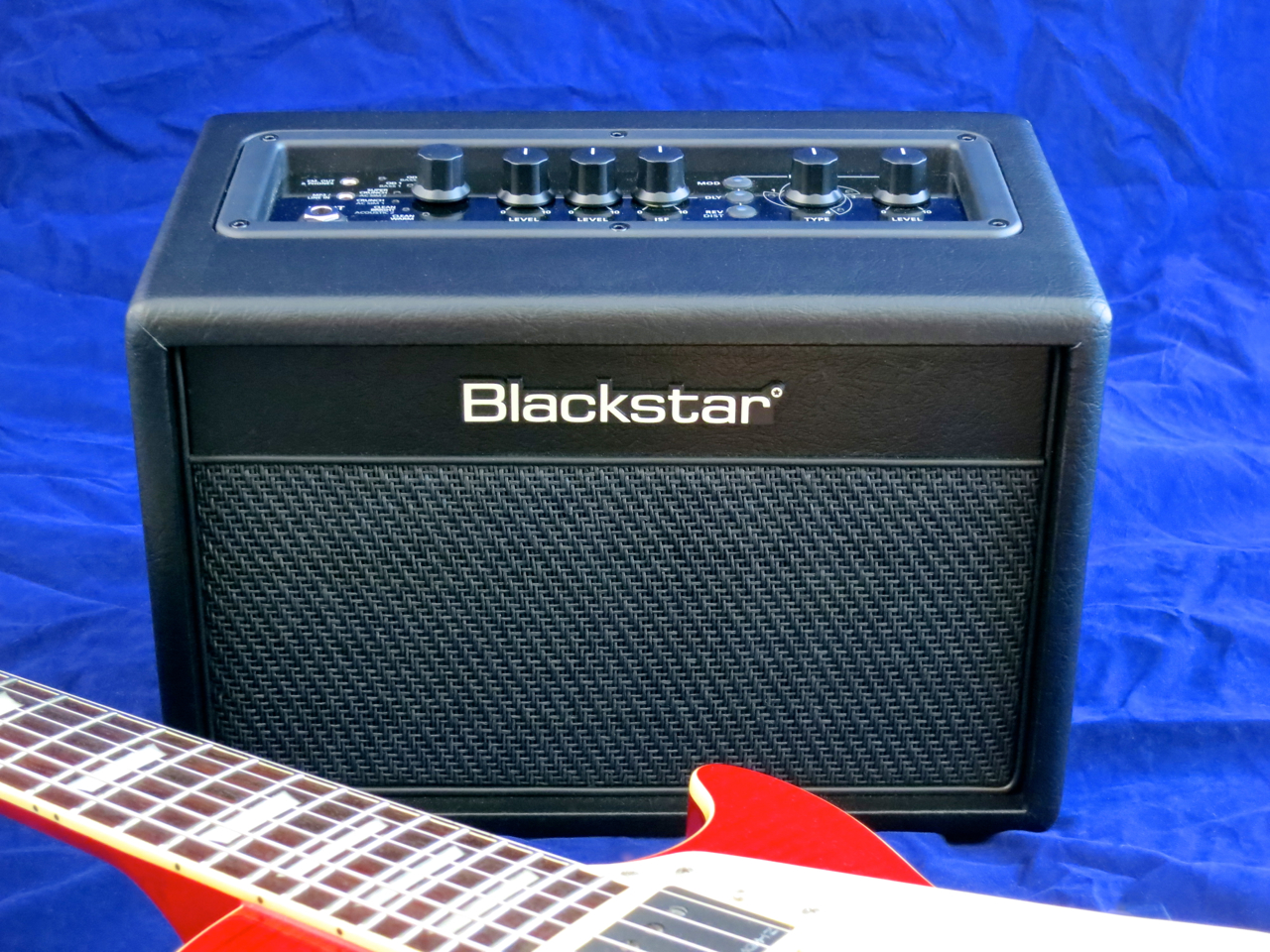
Blackstar’s ID:Core BEAM (current price in Finland: 299 €), which was introduced at this year’s NAMM Show, is one of a new breed of amplifiers:
The BEAM is a so-called ”lifestyle amp” that combines a practical solution for living room practising with a Bluetooth stereo system with a suitable Rock look.
****

The Blackstar ID:Core BEAM is a genuine ID:Core-combo, which means that all its parameters are accessible via Blackstar’s Insider software.
The newcomer is a stereophonic amp with its 20 watts of power running into a pair of three-inch speakers. Blackstar’s Super Wide Stereo-effect – a feature taken from the company’s larger ID:Core combos – can also be applied to the BEAM’s music player, with its own, separate width adjustment.

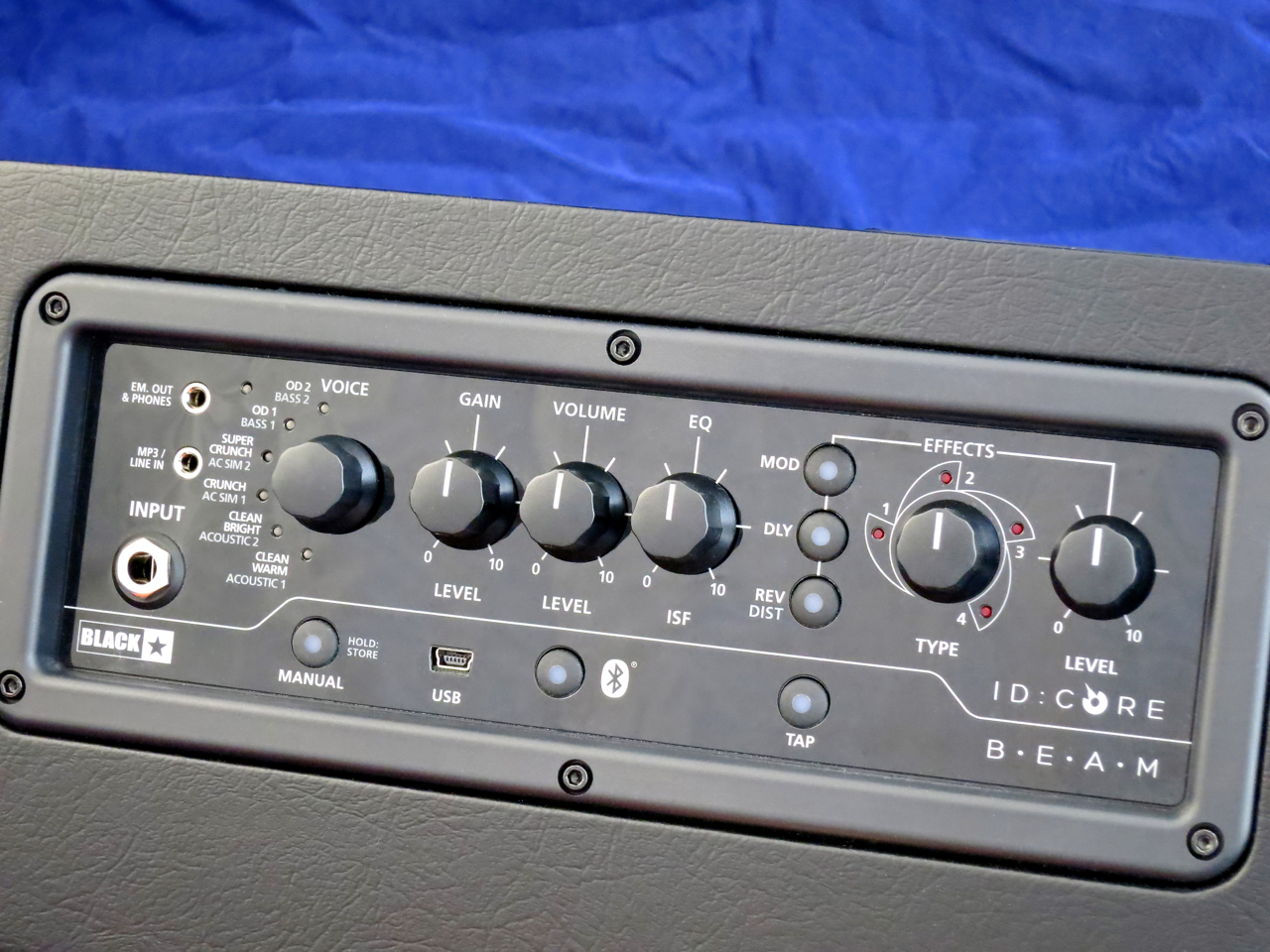
Apart from the power switch, the ID:Core BEAM’s back panel features the input jack for the (optional) footswitch. The rest of the combo’s controls and connectors can be found on the top-mounted control panel.
The larger ID:Core combos are well-equipped practice amps, but the BEAM has a couple of additional aces up its sleeve:
The ID:Core BEAM offers you 12 amp models (Voices). The first set (the Voices LED glows red) deals with six amp models for electric guitar, while the second set (green LED) gives you two Voices each for acoustic guitar, electric bass, and acoustic guitar simulation.
The amp section has three physical knobs for adjustment – gain, volume, and Blackstar’s patented ISF-control, which control’s the amp’s overall tonal character. Using the Insider-software you will be able to access additional parameters for deep editing, like a three-band EQ-section or a noise gate.
The effects department features four different modulation effects, four delay types, and four reverbs. The two Voices for bass swap the reverbs for bass distortion. You can choose one effect from each effect section for a Voice (meaning up to three simultaneous effects).
The small combo also features a built-in tuner.
The music signal, sent to the BEAM from your mobile device via Bluetooth, naturally isn’t sent through the combo’s amp modelling circuits. It is fed into the signal chain just before the power amp section. The ID:Core BEAM allows you to play along to the Bluetooth signal, of course!
The USB-port isn’t only used to remote control the amp’s parameters via Insider – this lifestyle combo doubles as a full-blown USB sound card. The BEAM can be run in three different USB-modes, which allows you to either send a stereo signal of the amp sound to your sequencer, or send two discrete mono signals (with one channel completely dry, and the second channel with all the amp modelling and effects) to your recording software. The third USB-mode is called Reamping, and it’s used to feed a dry guitar signal off your audio sequencer into the ID:Core BEAM and record the effected signal onto a separate recording track simultaneously.
The signal level of the USB-audio can be controlled directly (and independently of the amp’s master volume settings), making it very easy to set the correct recording levels for your personal studio setup.
****
Blackstar have really hit the bull’s eye with their new lifestyle combo!
Listening to music with a very critical ear you can hear a little bit of hiss, but it isn’t loud enough to spoil the fun. Remember, the ID:Core BEAM isn’t meant to be a studio monitor, but rather a nifty, compact music player for your bookcase – something this little combo handles with much aplomb. You wouldn’t necessarily expect such a full and strong delivery from such a compact unit.
The ID:Core BEAM also sounds great as a guitar and bass amp, which isn’t quite as surprising, considering this combo’s pedigree.
The guitar amp voices have plenty of character, and the effects have more than ample depth and width:
The high quality of the acoustic simulator was something of a positive surprise:
Despite its diminutive size, the BEAM also delivers when it comes to electric bass tones:
****

The Blackstar ID:Core BEAM succeeds to combine a programmable practice combo for guitar and bass, a Bluetooth-player, and a USB sound card into a very enticing package. In addition to being a great living room amp, the BEAM could also prove a handy little amp for guitar instructors.
****
Blackstar ID:Core BEAM
299 €
Finnish distributor: Musamaailma
****
Pros:
+ well thought-out concept
+ value for money
+ feature-packed guitar and bass amp
+ adjustable Super Wide Stereo-function
+ USB sound card
+ full sound
Cons:
– high noise gate setting on default bass distortion

 Kitarablogi.com – Finland's premier Guitar and Bass blog