****
Lisätiedot: Musamaailma
Kitarablogi.com – Finland's premier Guitar and Bass blog
Juttuja kitaroista ja bassoista


Tanglewood-testi työn alla. Kuvassa näkyvät mallit:
A Tanglewood-review is in the making. The following models are shown:
• TU-1CE
• TU-5
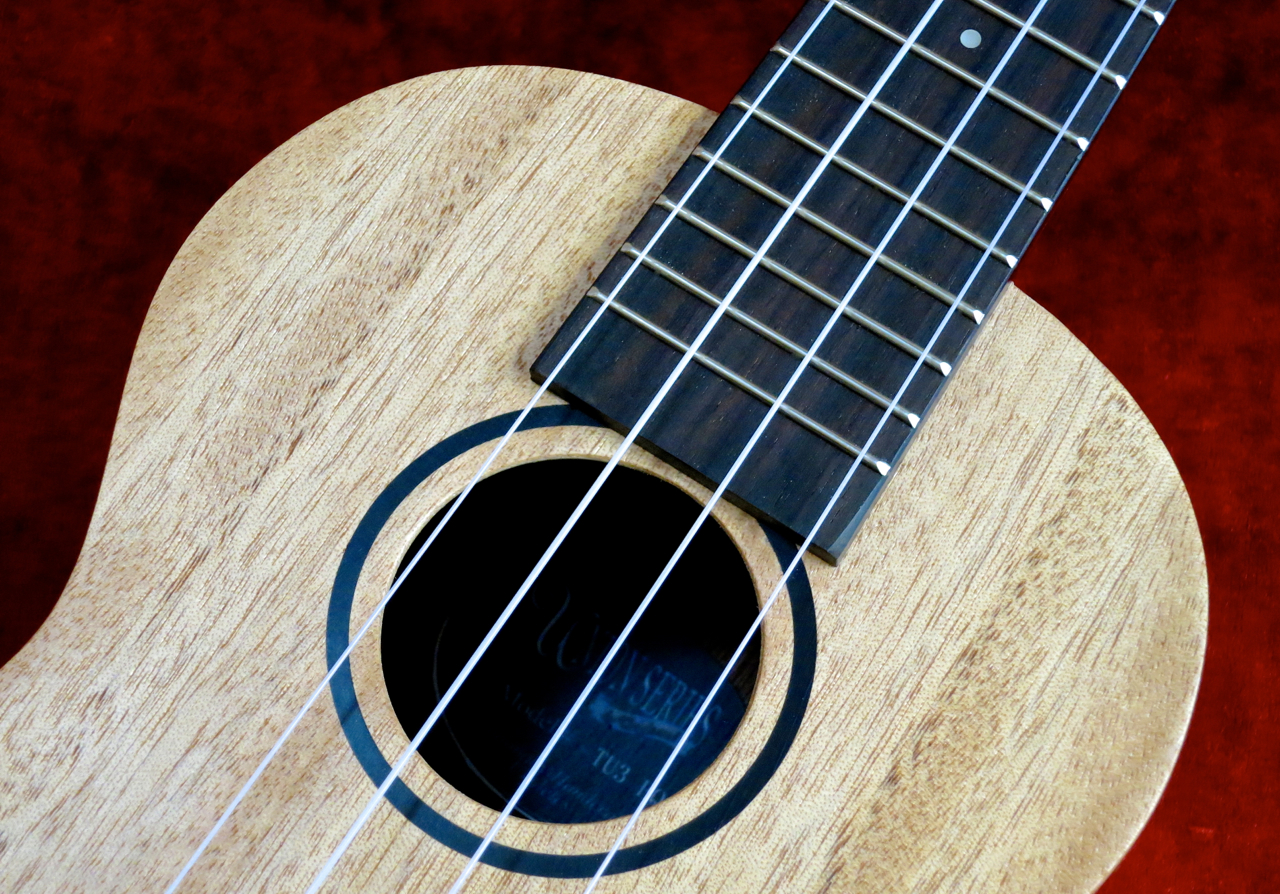
• TU-3
• TU-3E
****
Lisätiedot/Contact: Musamaailma


This time we take two new LTD-models for a spin:

The LTD AJ-1 is the brand-new signature model for British guitarist Andy James. Mr James is best known for his stellar work with the Prog Metal outfit Sacred Mother Tongue.

The LTD EC-1000ET Evertune isn’t some rocking rapper’s axe of choice, instead it is one of currently two LTD-guitars factory-equipped with an Evertune-bridge. The Evertune-system promises to do away with the chore of having to tune your guitar for virtually the whole lifespan of a set of strings.
****

The Andy James LTD AJ-1 (current price in Finland: 986 €) is clearly based on the Horizon/MH-series of instruments, but fine-tuned in many details to Andy’s requirements.

The most obvious difference to your regular Horizon is the AJ-1’s satin black finish, which feels very smooth to the touch and doesn’t get all slippery when you’re starting to sweat (in contrast to some gloss finishes).
The guitar is build around a maple through-neck, with mahogany used for the body. The AJ-1’s slightly curved body top and the deep rib-cage chamfer make for a very comfortable fit.

Andy James also requested a non-standard headstock shape for the LTD AJ-1, instead of the usual pointed hockey stick type shape found on regular MH-series guitars.
I’m probably just being a boring old fart here, but I must say I’m not the greatest fan of this style of über-Metal headstock. Objectively, though, there’s nothing wrong with this functional three-a-side design.
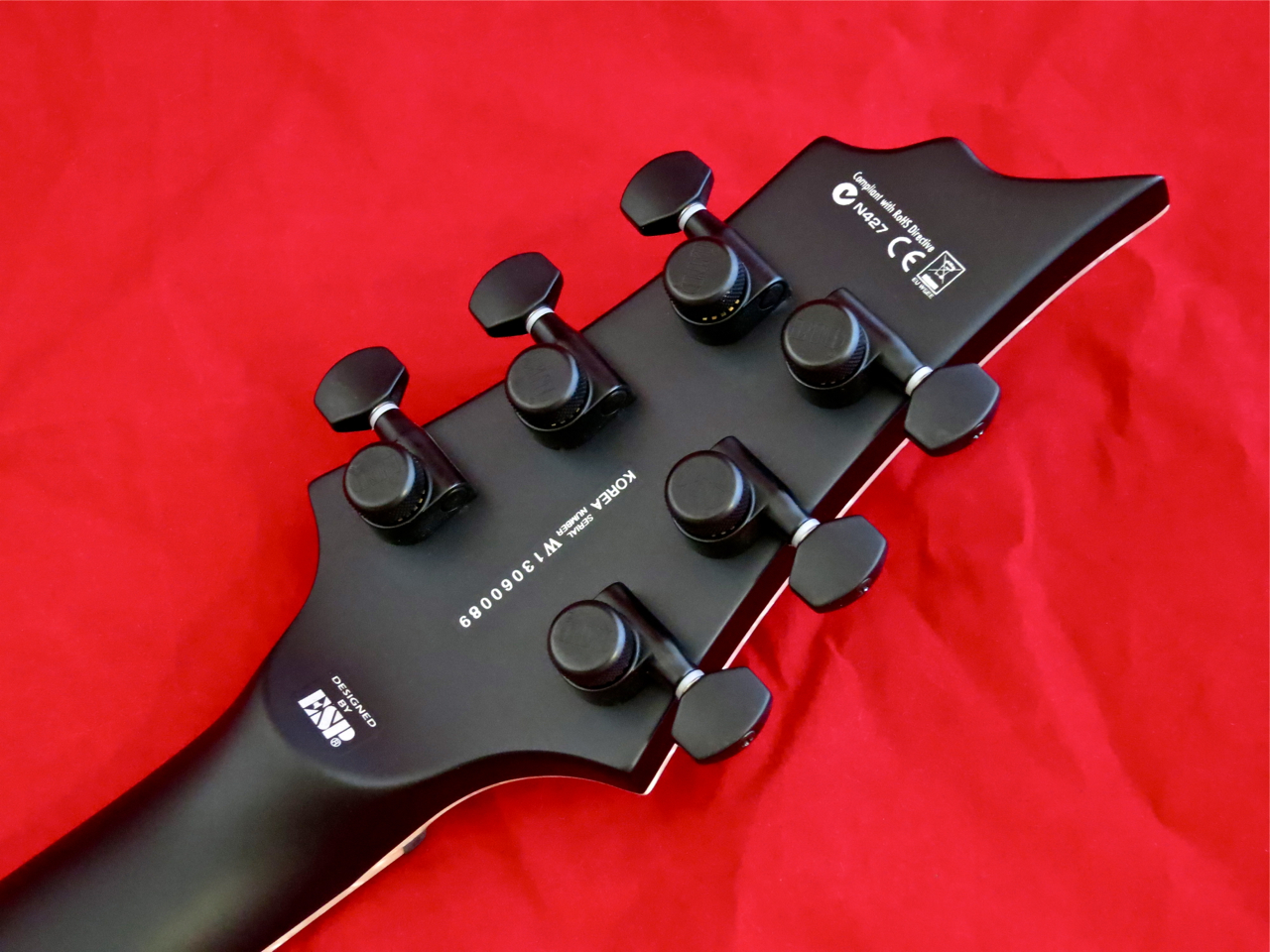
The AJ-1 sports a graphite top nut, as well as black locking tuners, to keep the guitar’s tuning rock solid.
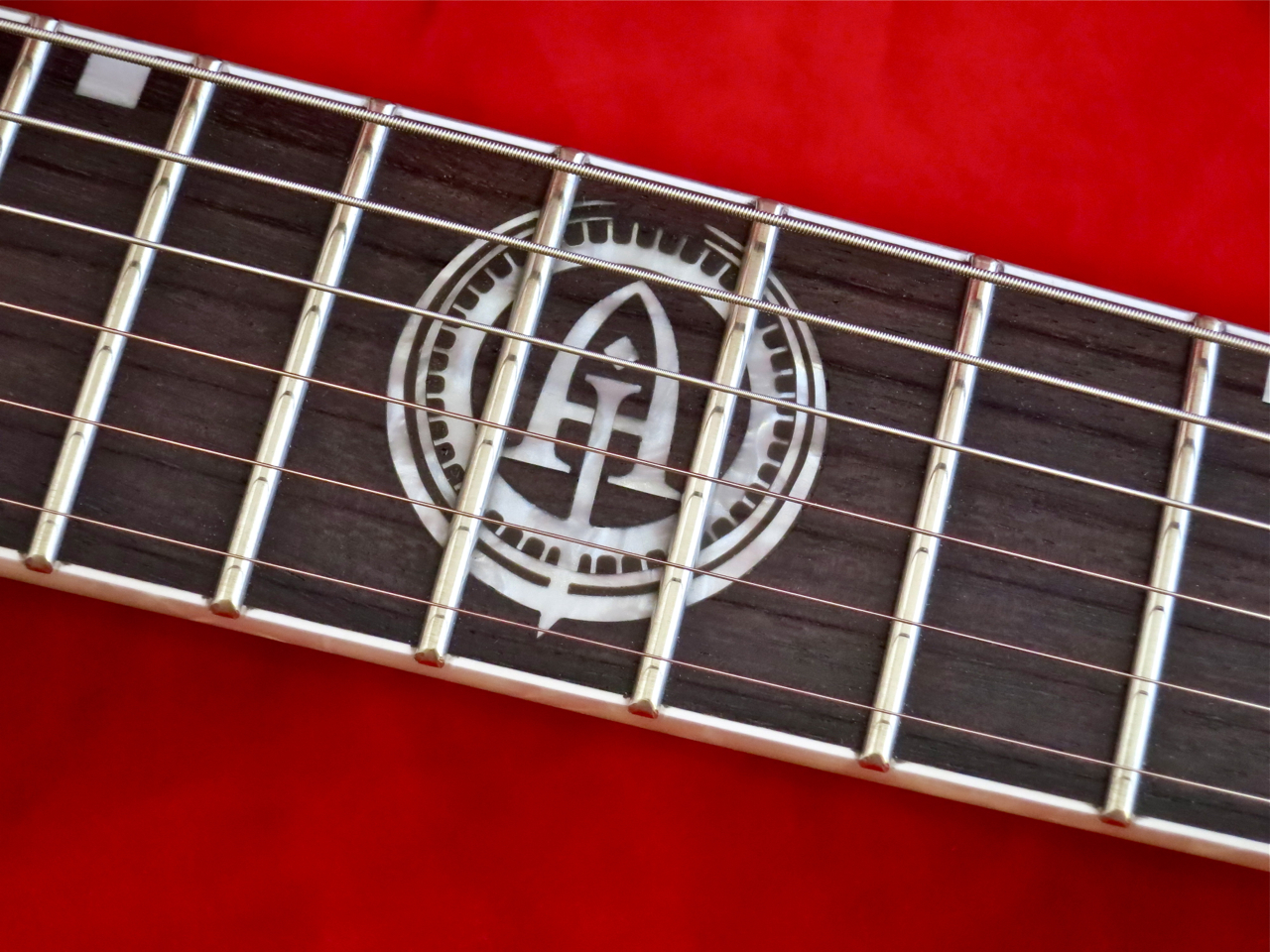
The inlaid Andy James-crest at the 12th fret is a very beautiful touch.

The quality of workmanship in the fretting and binding departments leaves nothing to be desired in our test sample.

Smooth is the right word to describe this type of neck-to-body-junction, which makes excursions to the dusty end of the fretboard a doddle.
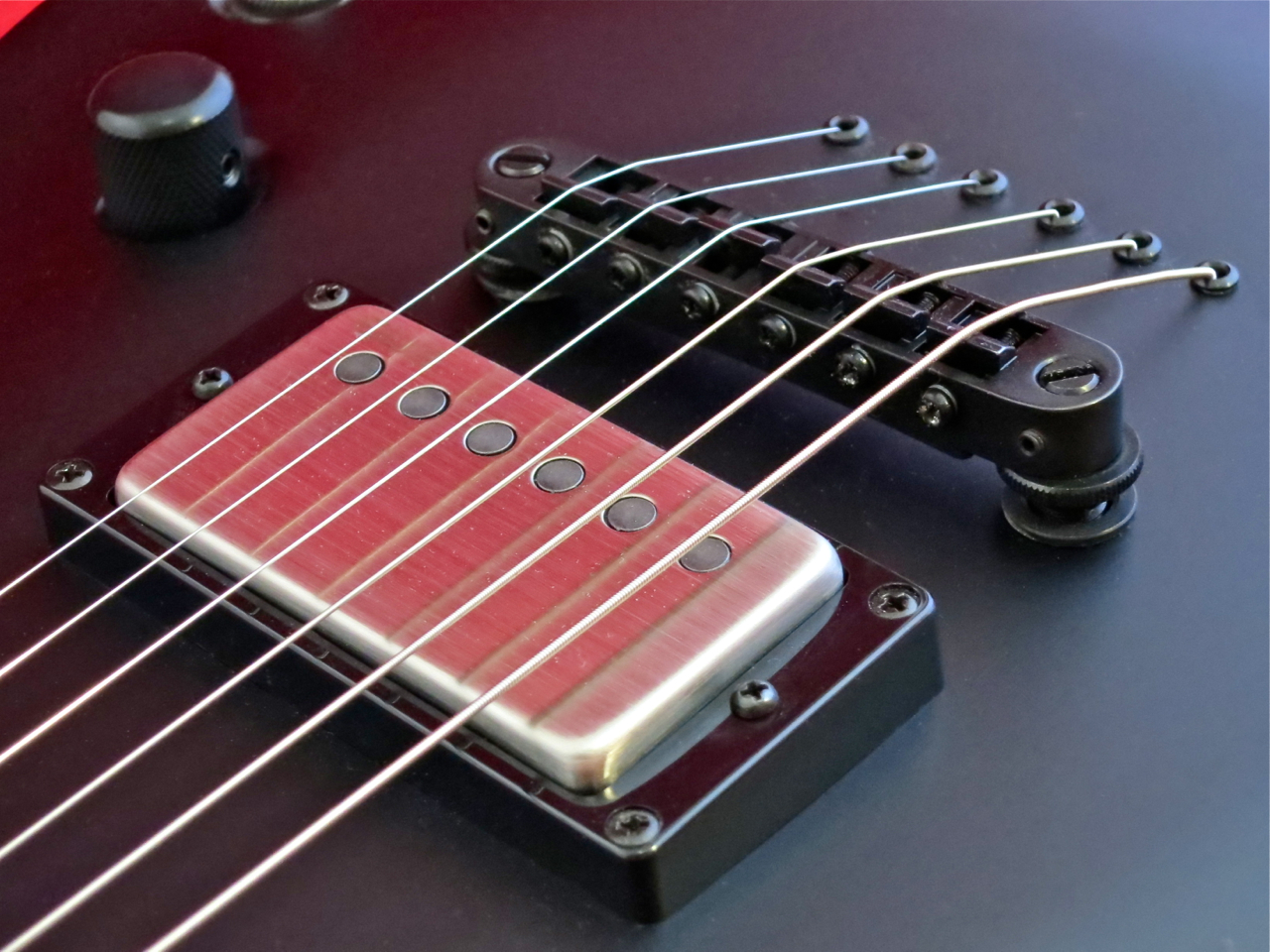
Mr James has specified a TonePros-bridge for his main squeeze. Two grub screws lock the Tune-o-matic to the bridge posts for better vibrational transfer from the strings to the body, and thus a better tone and more sustain.

The LTD AJ-1 comes equipped with a set of active EMGs from their recent Metal Works-series.
An EMG 66-humbucker is used in the neck position. This pickup is build around an Alnico V-magnet and ceramic pole-pieces for a rich tone with good string separation and clarity.
The bridge ’bucker is an EMG 57, which pairs the Alnico V with steel pole-pieces for a slightly warmer, vintage inspired sound.

Andy James doesn’t use a tone control on his guitars, which is why the signature model only comes with a three-way switch and a master volume control.
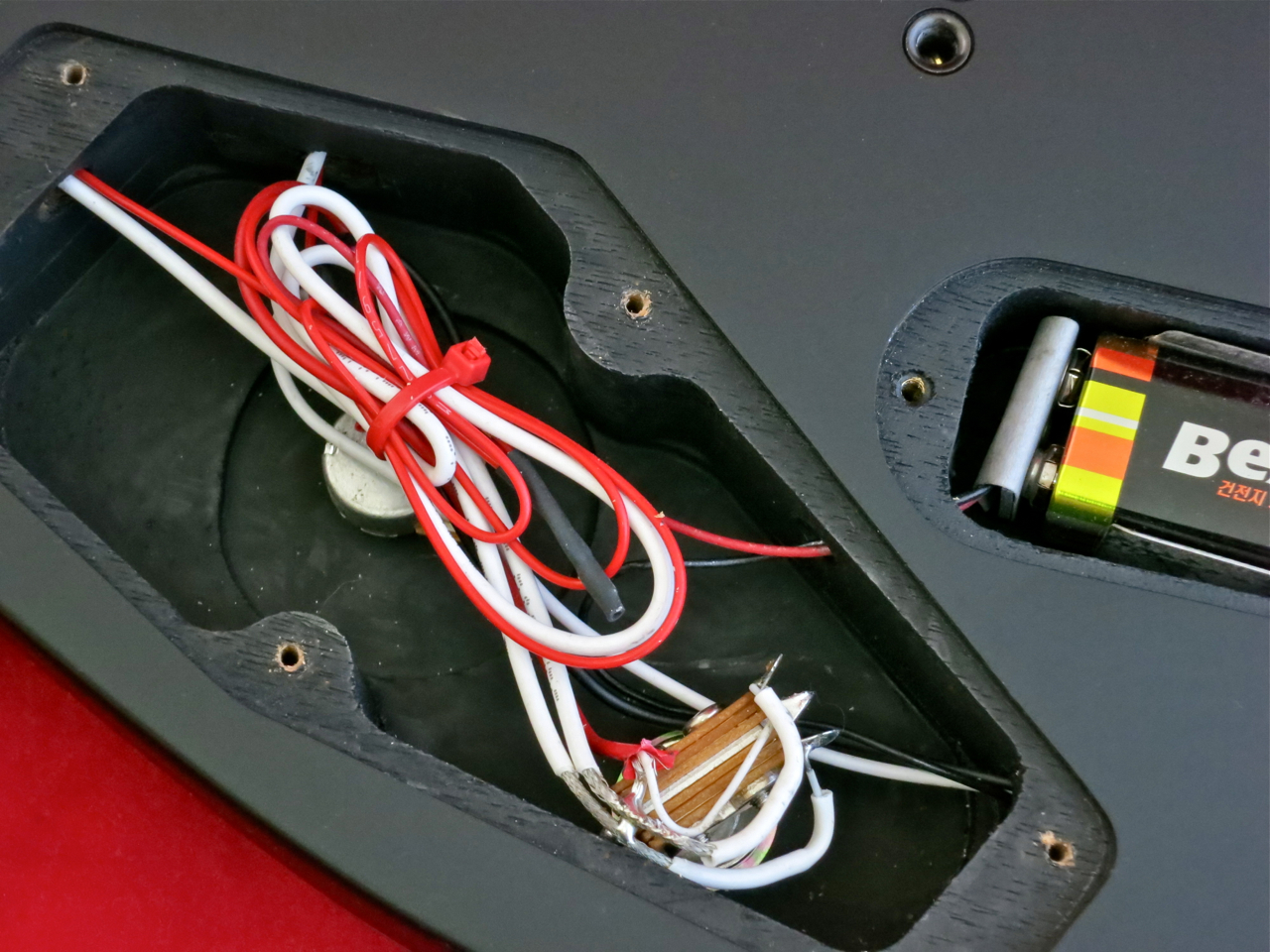
The control cavity displays clean workmanship. The battery compartment’s lid is screwed on with machine screws that grip into threaded inlets sunk into the body wood, which is a roadworthy solution.
****
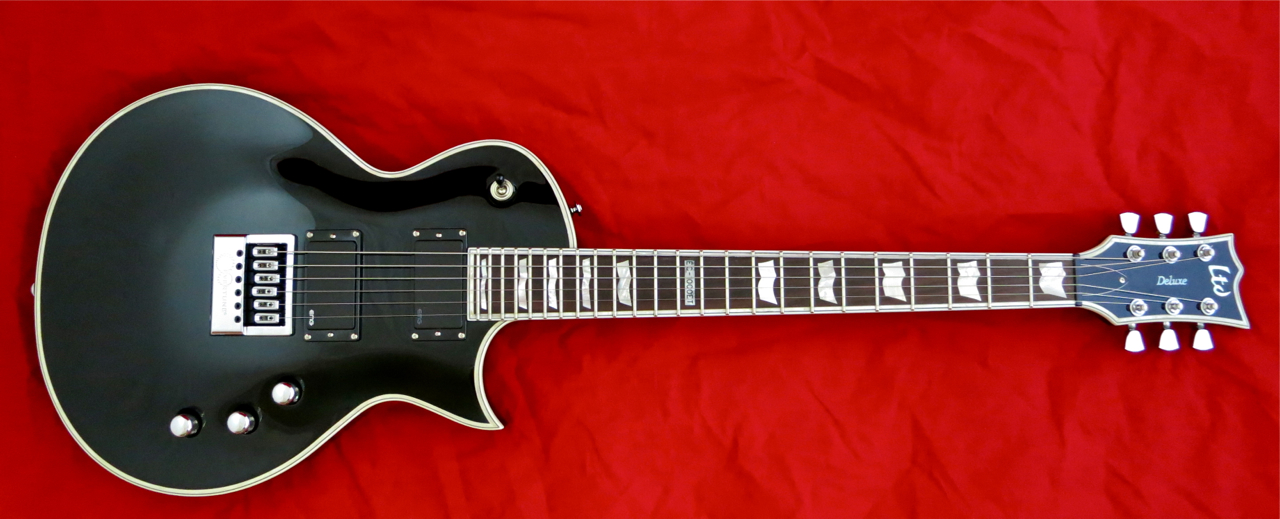
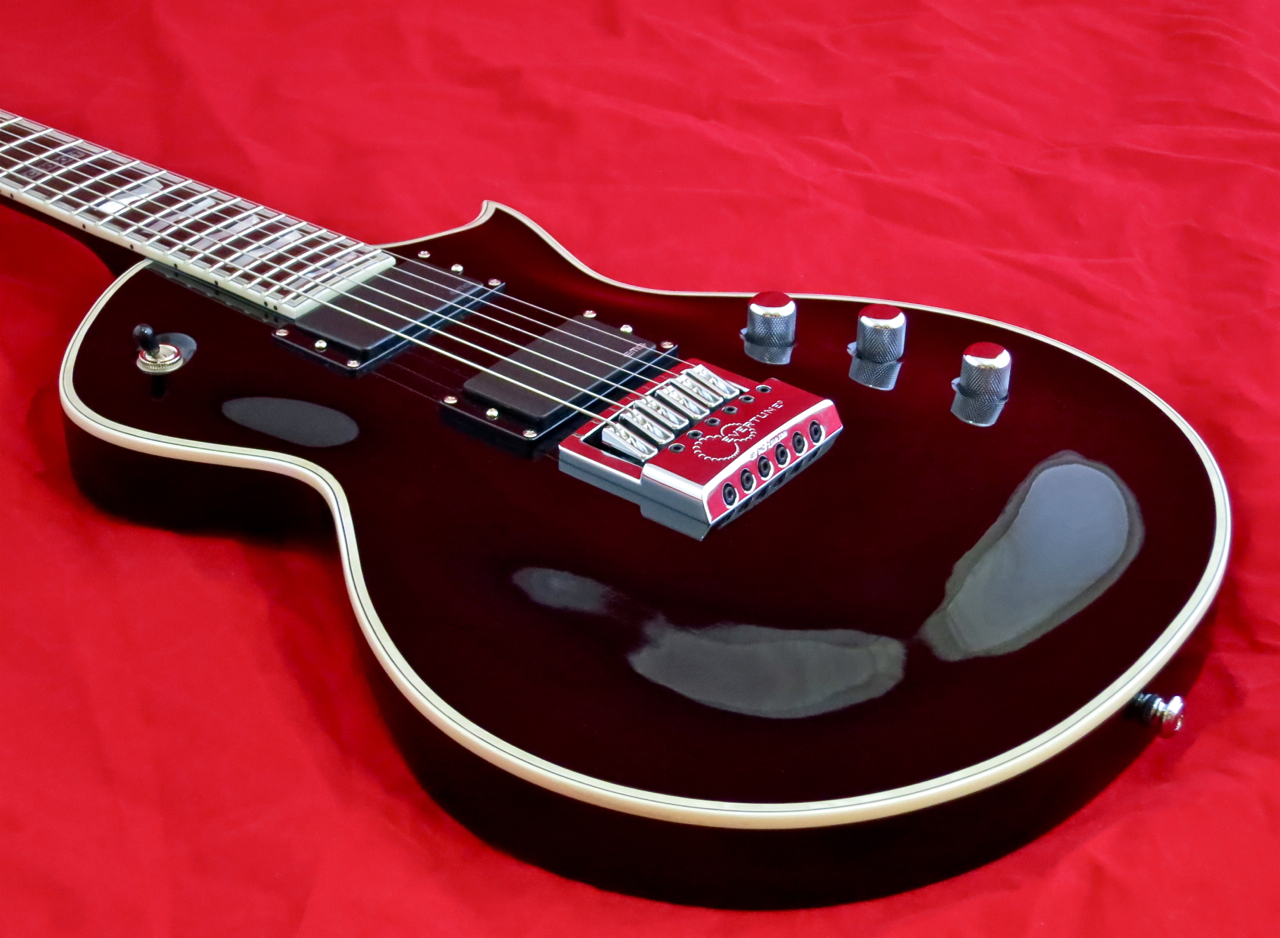
The LTD EC-1000ET (current price in Finland: 986 €) is the Evertune-equipped sister model of the regular EC-1000.
It is a set-neck guitar featuring a mahogany neck, as well as a mahogany body with a maple top.

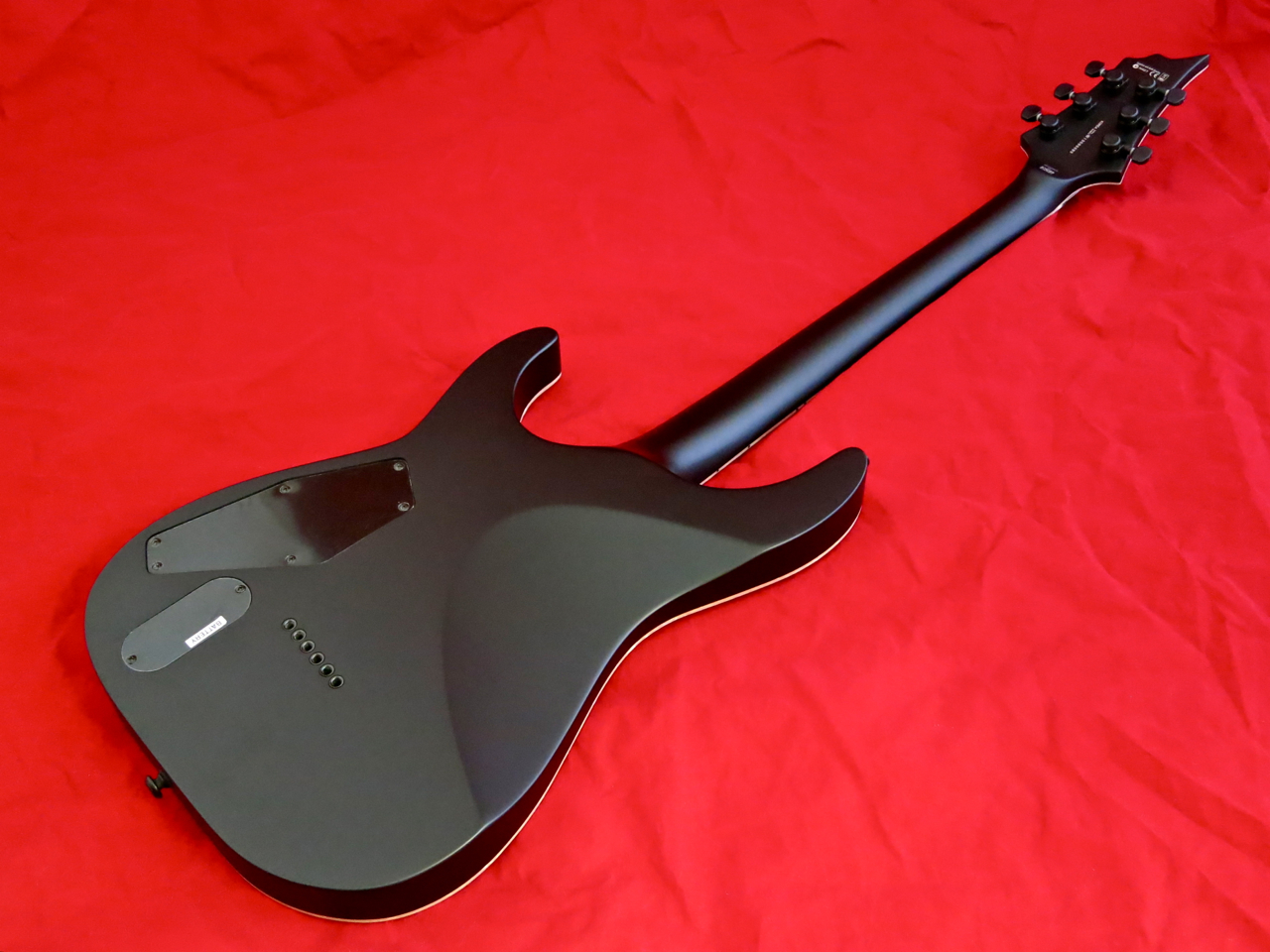
The EC-1000ET’s strings are loaded into the bridge from the guitar’s back.

As a card-carrying member of the LTD Deluxe-range the instrument is adorned with multiply binding and pearl inlays.

These classy Grover-tuners manage to combine contemporary functionality with vintage looks.

Look at the crisp inlay work in the rosewood fingerboard and the great fret job!

The LTD EC-1000ET comes equipped with EMG’s classic EMG 60/EMG 81-combination, which means we’re in for a strong output signal with a well-focused mid-range, clean highs and a very precise bottom end.
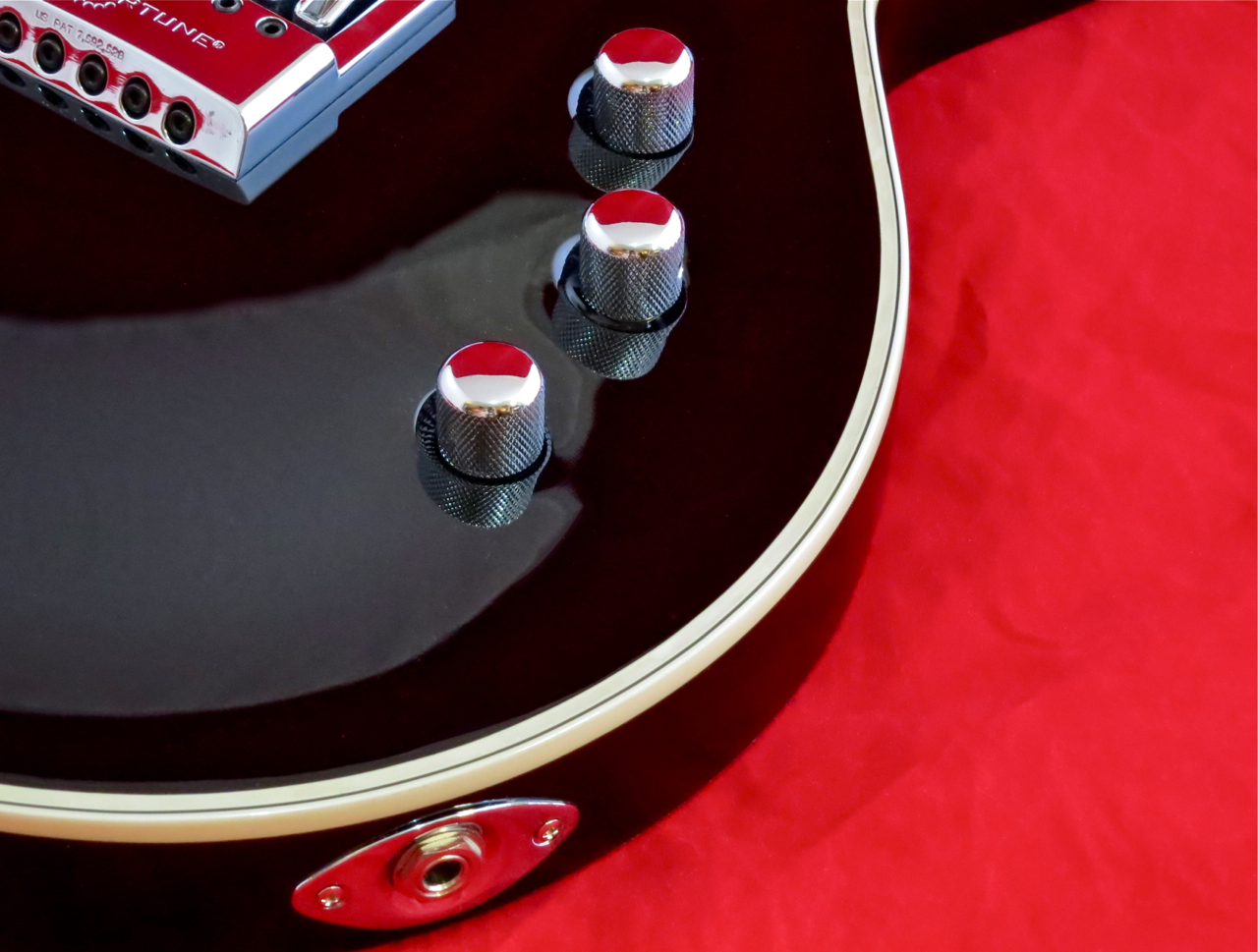
The control nearest to the bridge is the EC-1000ET’s bridge pickup volume [sic!], with the middle control being the neck volume and the third knob adjusting master tone.

This guitar is almost as clean on the inside as it is on the outside.

The Evertune-bridge is based on very similar physical principles as modern knife-edge vibrato bridges. In the Evertune’s case there is a separate spring-loaded mechanism with a knife-edge bearing for each of the guitar’s strings, trying to keep the string’s tension (read: tuning) unchanged for practically the whole of its lifespan.
The allen screws visible at the back of the Evertune-bridge are the intonation screws, while the ones on top of the bridge are for string-height adjustment.

This is what the Evertune looks like underneath the back cover plate.
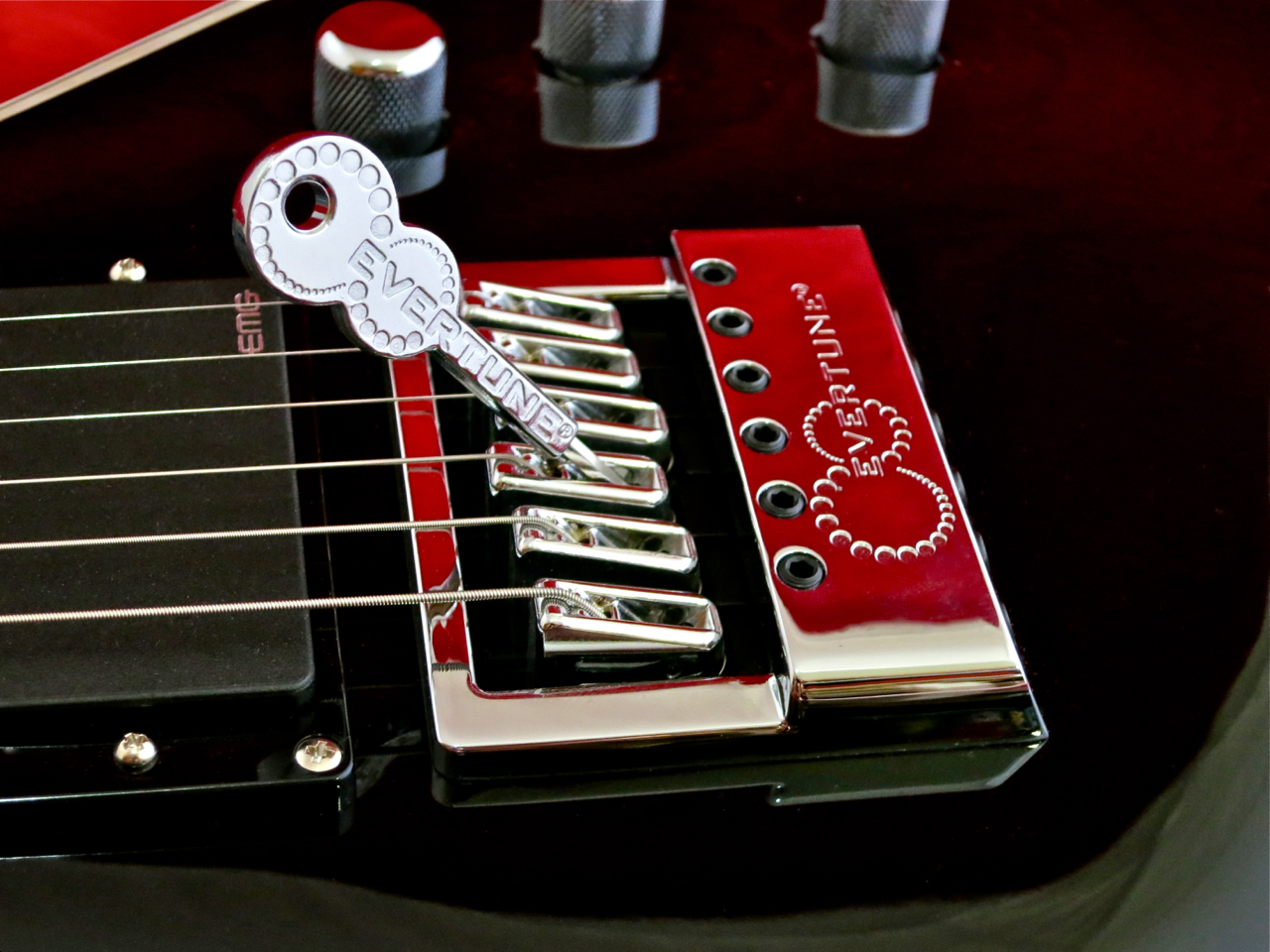
An Evertune-equipped guitar is not tuned at the headstock. The traditional tuners are instead used to correctly tension each string, as well as to adjust how much (if at all) each string reacts to finger vibrato and string bending.
You tune the guitar at the bridge by turning a hex screw inside the bridge saddle. The picture shows the handy key included with the guitar, but a regular allen key will also work fine.
According to Evertune its factory-speced bridge should work correctly at standard tuning (E-e, a = 440 Hz) using regular 009-012 string sets. Many other tunings, like drop-D or DADGad, should also be possible with the regular Evertune-bridge, but you will need to make changes to the tuner- and bridge-settings, meaning a change in tuning mid-gig is practically out of the question.
If you’re using very heavy (or very light) string gauges and/or very unusual tunings, you will in all likelihood have to swap a few of the bridge’s spring-loaded saddle-units for differently tensioned ones, which are available as options from Evertune.
You can read the Evertune-manual here: Evertune User Manual
****

Judging by the review sample, the LTD AJ-1 is a very lightweight guitar with a nice balance.
The neck profile is is comparatively shallow, yet round-backed ”D” that gives you the typical feel and playability of a widdle-meister guitar. The Andy James-signature very clearly isn’t for the campfire guitarist, but for the fleet-fingered Metal-shredder.
EMG seem to use the expression ”vintage” more interms of a tonal reference that with regard to a pickup’s output level, judging by this very punchy set of Metal Works-humbuckers.
Depending on the rest of your signal chain, you may be forced to turn the guitar’s volume control down to keep your signal clean:
But for overdriven and distorted use these powerful pickups have just what it takes:
****

The LTD EC-1000ET is a dyed-in-the-wool Rock-machine – it’s chunky, but not too too heavy.
The neck profile is fuller and more rounded compared to the AJ-1. The all-gloss finish of the EC-1000ET and its smalle fingerboard radius give this guitar a more vintage-type, classic feel.
It is possible that the Evertune-bridge adds a little to this model’s weight, but what is very clear to me is the added ring and sustain of the Evertune-equipped LTD.
I set the strings to high-sensitivity for easy bending and vibrato. Regardless of this the Evertune-system managed to win me over by absorbing efficiently any tuning issues caused by too much left-hand pressure or a very heavy-handed approach to right -hand strumming. The guitar stays in tune and rings freely nonetheless.

This EMG-set sounds a little bit more neutral to my ears. It’s maybe a tad dryer than the Andy James-model’s tone – it’s different, but still very good:
****

Brother, what an axe! In my opinion the LTD AJ-1 is a fine example of a streamlined instrument for the hard and heavy-crowd. The Andy James-model plays like a dream, and it gives you a chunky, buzz- and squeal-free signal with plenty of tonal character as a solid basis for you string excursions.

Is there a classier chassis for the novel Evertune-bridge than the LTD EC-1000ET? Probably not!
This is a very cool guitar if you want to cut down drastically on the amount of time spent tuning. The Evertune-bridge probably isn’t the best choice if you need one guitar to cover all sorts of different tunings. But if you stay in one tuning, you’ll quickly appreciate the (tonal and practical) benefits of this new bridge system, and tuning a guitar becomes something that you do only very occasionally.
****
LTD AJ-1 Andy James Signature
• 986 €
LTD EC-1000ET Evertune
• 986 €
Finnish distributor: Musamaailma
****
LTD AJ-1 Andy James Signature
Pros:
+ lightweight
+ matte finish
+ playability
+ workmanship
+ sound
Cons:
– some players might crave a tone control
****
LTD EC-1000ET Evertune
Pros:
+ Evertune-bridge
+ classic design
+ playability
+ workmanship
+ sound
Cons:
– no tuning changes mid-set
****



The Passport C200/SMe-T acoustic-electric guitar is inspired by the Breedlove Custom Shop concert in it’s shape and voice. The Passport C200/SMe-T is a versatile, comfortable, and efficient traveler guitar. This instrument plays like a full-scale guitar just with a slightly smaller body. The Breedlove Passport C200/SMe-T guitar features amazing tone, sustain, and complexity in each note. A solid Sitka Spruce top and beautiful mahogany back and sides generate a warm sound with good note clarity. The Breedlove Passport C200/SMe-T has both integrated electronics and top-quality bracing in the top and back for increased resonance. The Passport Active VTC pickup lets you be heard in any venue and a built-in chromatic tuner with backlit screen makes it easy to stay in tune. A 9-volt battery is easily accessed near the endpin area.
****
Lisätiedot: EM Nordic





 Kitarablogi.com – Finland's premier Guitar and Bass blog