****
Lisätiedot: Profitron
Kitarablogi.com – Finland's premier Guitar and Bass blog
Juttuja kitaroista ja bassoista


Bass Day Finland 2014 had a programme filled to the brim with highlights.
In addition to artist clinics there were gear demos, featuring Amfisound Guitars, Fender, DLX Music, among others.
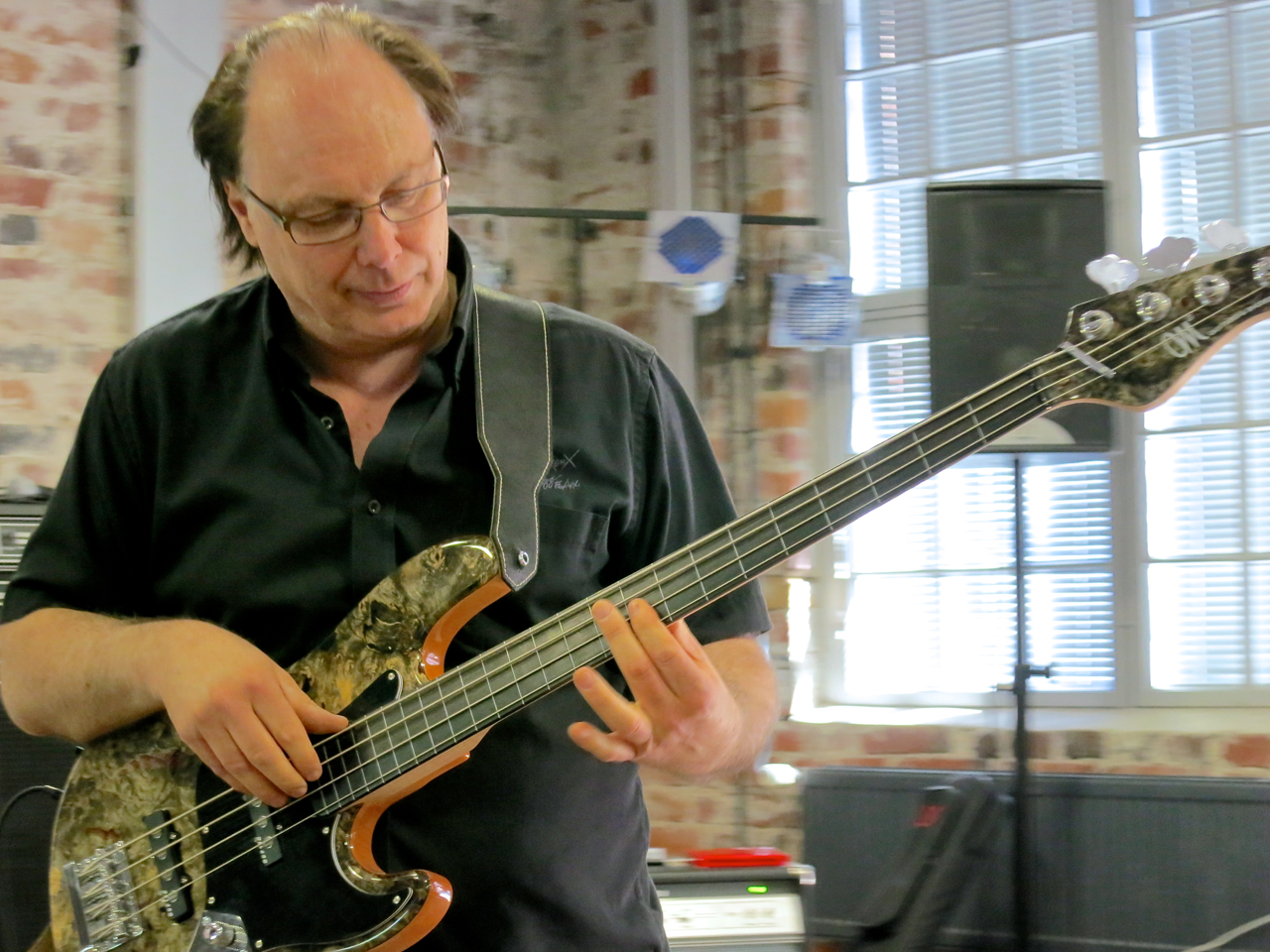

Here you can seen Soundtools’ product specialist (and bassist extraordinaire) Jan-Olof Strandberg demoing gear from Mayones, Ampeg, TC Electronic and Audio-Technica.
****

For The Imperium’s super-tight rhythm section of Jyri Helko (bass) and Tuomas Rauhala (drums), showed the audience the inner workings of a Progressive Metal band.


****

Bass Day main man Marko Liski’s biggest coup was securing Robbie Williams’ rhythm section of Jerry Meehan (bass) and Karl Brazil (drums) for a clinic.
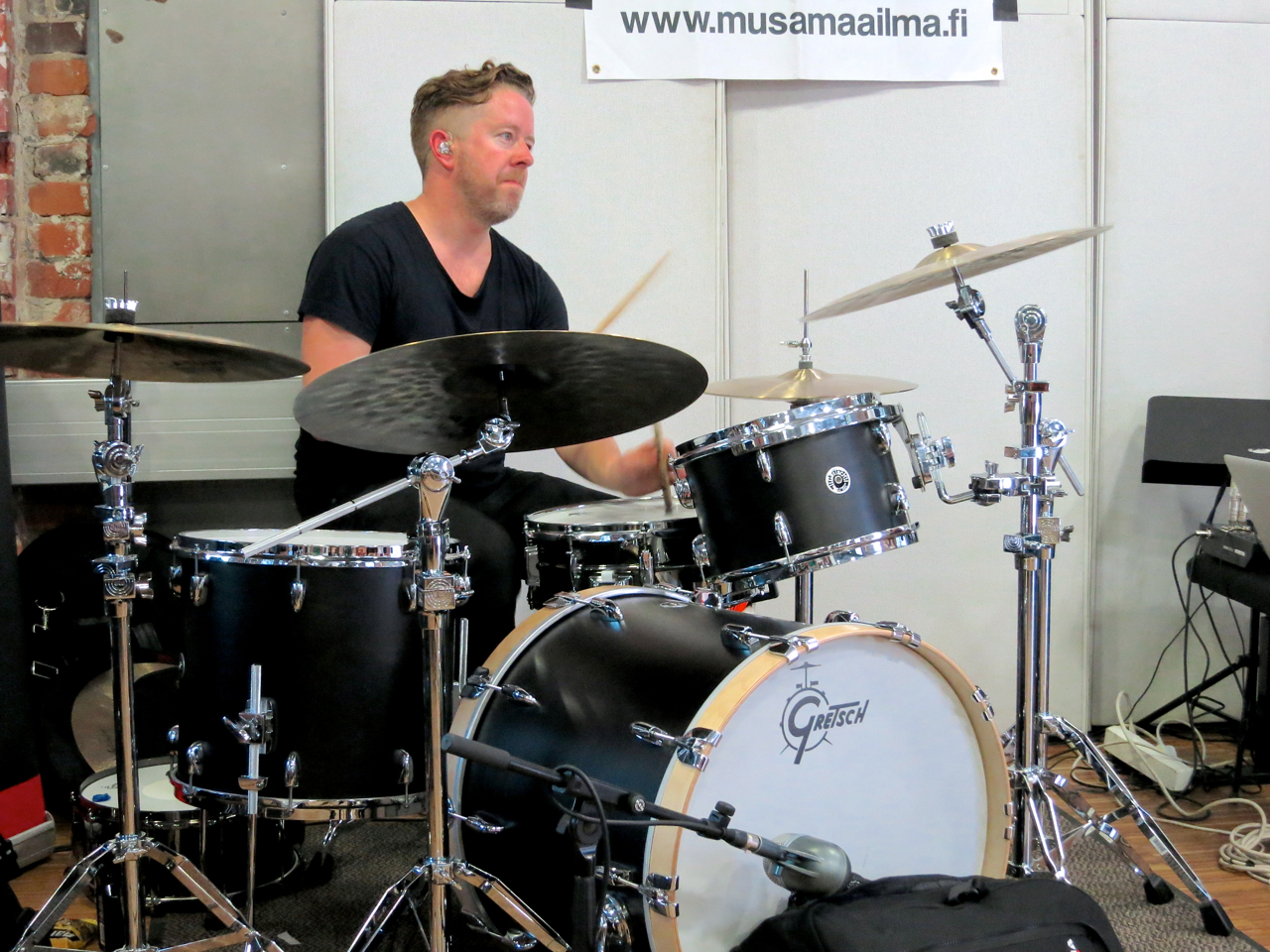


10:00-10:45 Päivitteleme yhdessä uutuuksia ja vaihdamme kuulumiset. Tulkaa ajoissa, mainio tilaisuus testata uutuudet. Ampeg, Mayones, Amfisound, Hipshot, Aquilar, Eden, Fender, Gretsch.
—-
11:00-12:00 Klinikka: Jyri Helko. For The Imperium hämmästyttää energialla, anarkialla tai taidolla. Jyri kertoo niksit kitaristien peittoamiseen ja yhteiseloon. Soundi on särön ystäville hunajaa. Tuomas Rauhala hämmentää pakkaa ilmiömäisellä soitollaan.
—-
12:30-12:45 Soundtools: esittelyssä uutuudet, Ampeg V4B ja SVT 212 AV sekä MAYONES bassot.
—-
13:00-14:00 Klinikka Jerry Meehan. Mitä tarvitset päästäksesi RW ryhmään? Jerry kertoo (in English) ajatuksiaan ja soittaa näytteitä kiertueelta. Loistava KARL BRAZIL antaa groovelle puitteet. Klinikka touteutuu Metropolia Musiikki, Fender Scandinavia ja DLX Music yhteistyöllä, bassopäivät kiittää.
—-
14:30-14:45 Deluxe Music: Aguilar ja Eden basso stäkit esittelyssä.
—-
15:00-16:00 Klinikka: Tero Tuovinen. Teron puhutteleva ja taidokas kontratyöskentely ihastuttaa kerta toisensa jälkeen. Nyt tämä on todettavissa myös bassopäivillä! Tule kysymään Tomi Kettunen ja Olli Soikkeli täydentävät kolmion nurkat.
—-
16.00-17.00 Last call kamojen ja kavereiden moikkaamiseen!

Amfisound Guitars is a small company from the northern Finnish town of Oulu. Run by two master luthiers, Amfisound offers a surprisingly wide variety of different guitar and bass models, as well doing a lot of customising and repair jobs. Kitarablogi visited Amfisound’s workshop late last year – read all about it HERE.
Amfisound have introduced a new bass model recently, called the Raudus Bass, which is the subject of this review.
****

The Amfisound Raudus Bass (prices for EU-customers starting from 2,520 €) clearly takes its inspiration from Fender’s classic Jazz Bass, but this new Finnish (passive) bass offers a number of modern updates and improvements. The easiest things to notice on first sight are probably the added 21st fret and the much deeper cutaway.

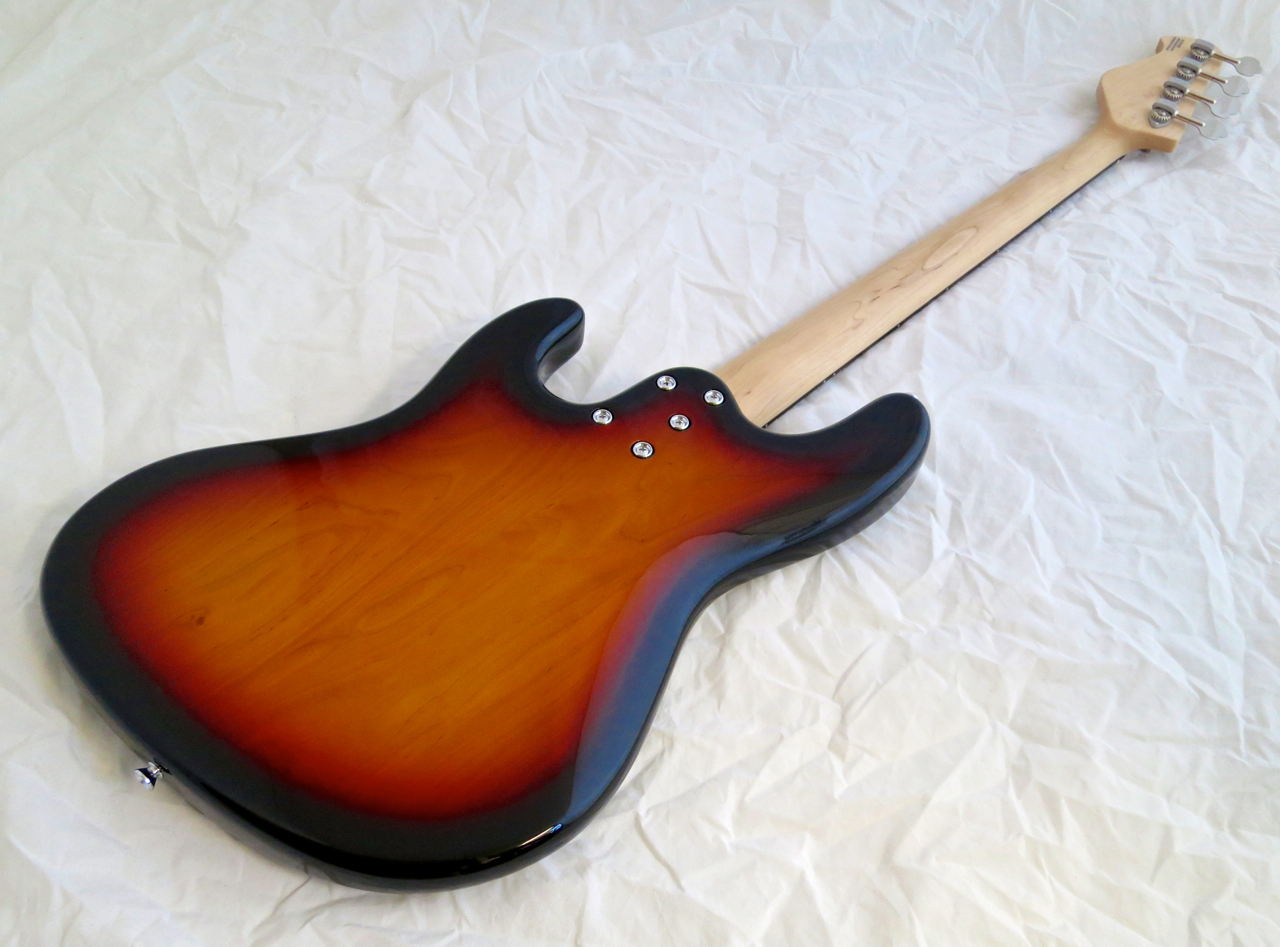
The Raudus sports a body made from Finnish alder and a bolt-on maple neck.
The neck comes finished in a very thin satin lacquer, while the body is gloss finished in a glorious tri-colour sunburst.

Our review sample of the Amfisound Raudus features two differences to the basic model – different tuning machines and different pickups.

This Raudus comes equipped with a set of Hipshot’s UltraLite tuners (additional charge: 50 €), which are built from aircraft-grade aluminium. The UltraLite machines work extremely smoothly and precisely, and they efficiently cut down on surplus headstock weight, which is a good thing on such a traditionally-inspired long scale bass, such as the Raudus.
The two-way truss rod is accessed from the headstock side of the neck.

The outstanding standard of workmanship displayed in the Raudus-model’s fretwork, is but one of many points bearing clear testament to the world-class standard of Finnish luthiery! This is genuine custom shop quality.
The fretboard is made of Indian rosewood, and it’s sporting 21 medium-jumbo sized frets.
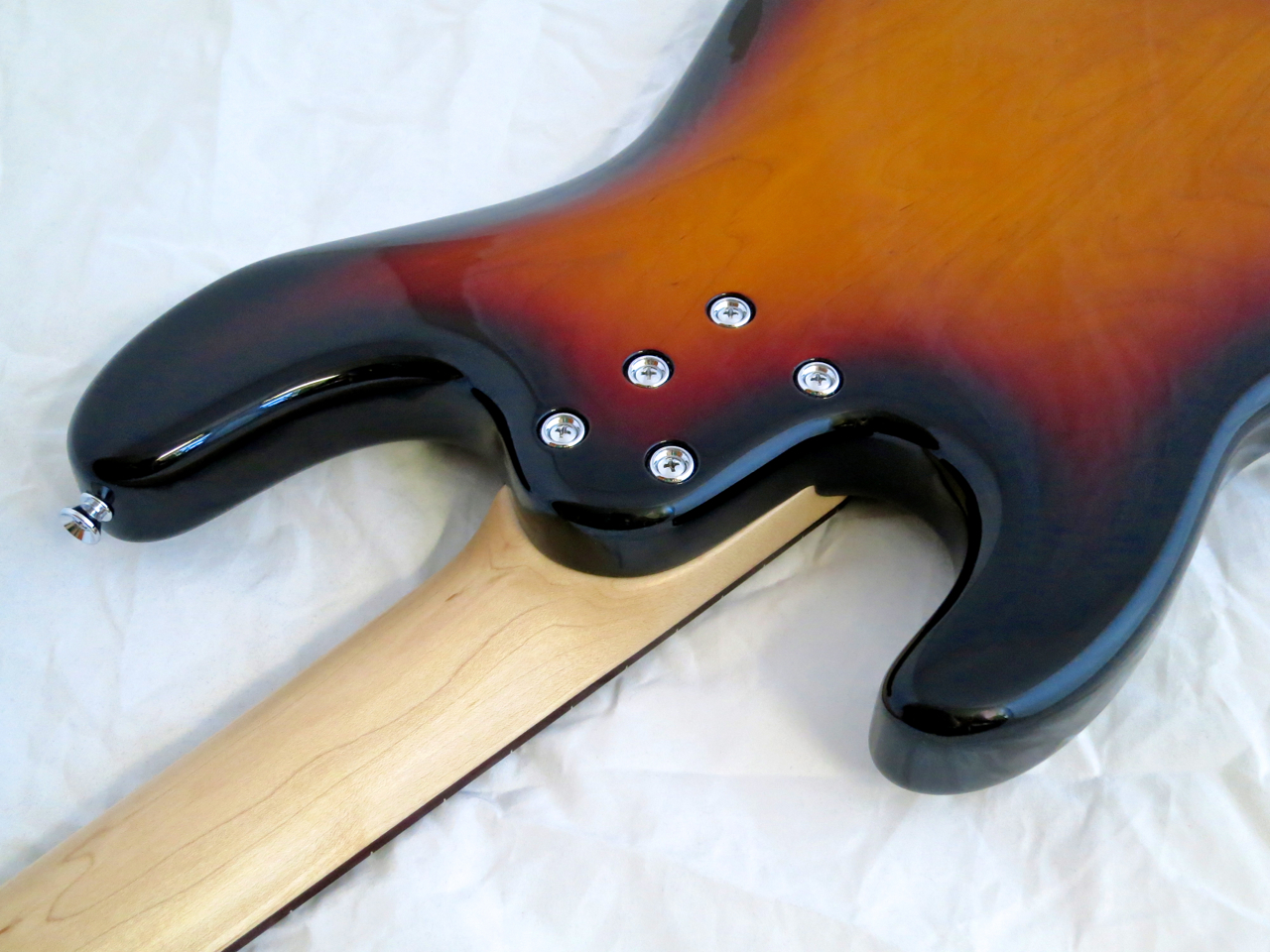
Amfisound’s rounded body heel makes excursions to the dusty end of the neck very comfortable, indeed.

The bridge is a quality copy of the original, late-Sixties Fender bridge – if it ain’t broken, don’t fix it.
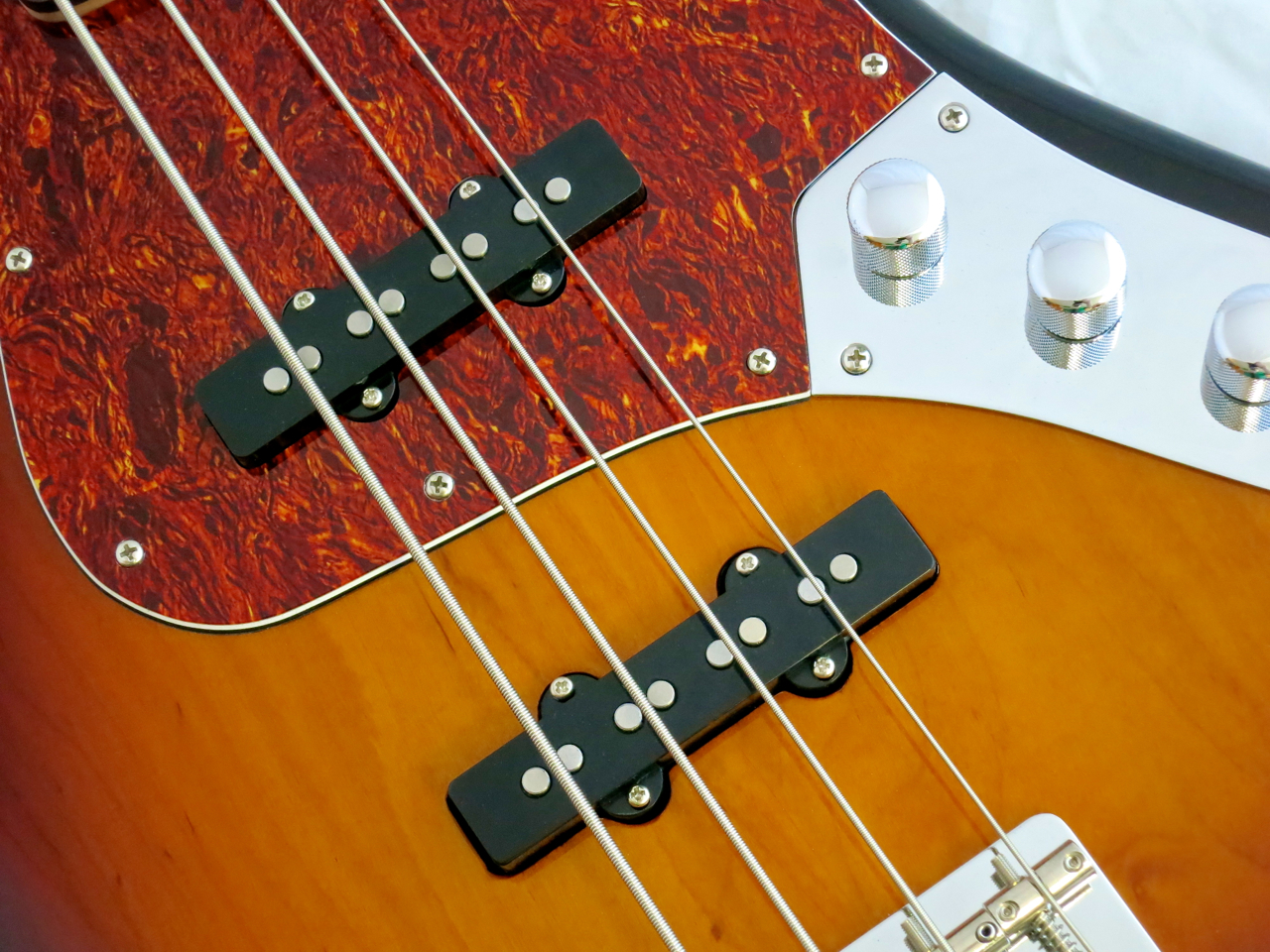
The review sample comes with a set of Jarno Salo Pickups from Finland. The basic version uses Swedish Lundgrens.

This instrument offers you Jazz Bass-type controls – separate volume-knobs for each pickup, plus a master tone-control.

Amfisound’s workmanship is spot-on and very crisp – even under the hood.
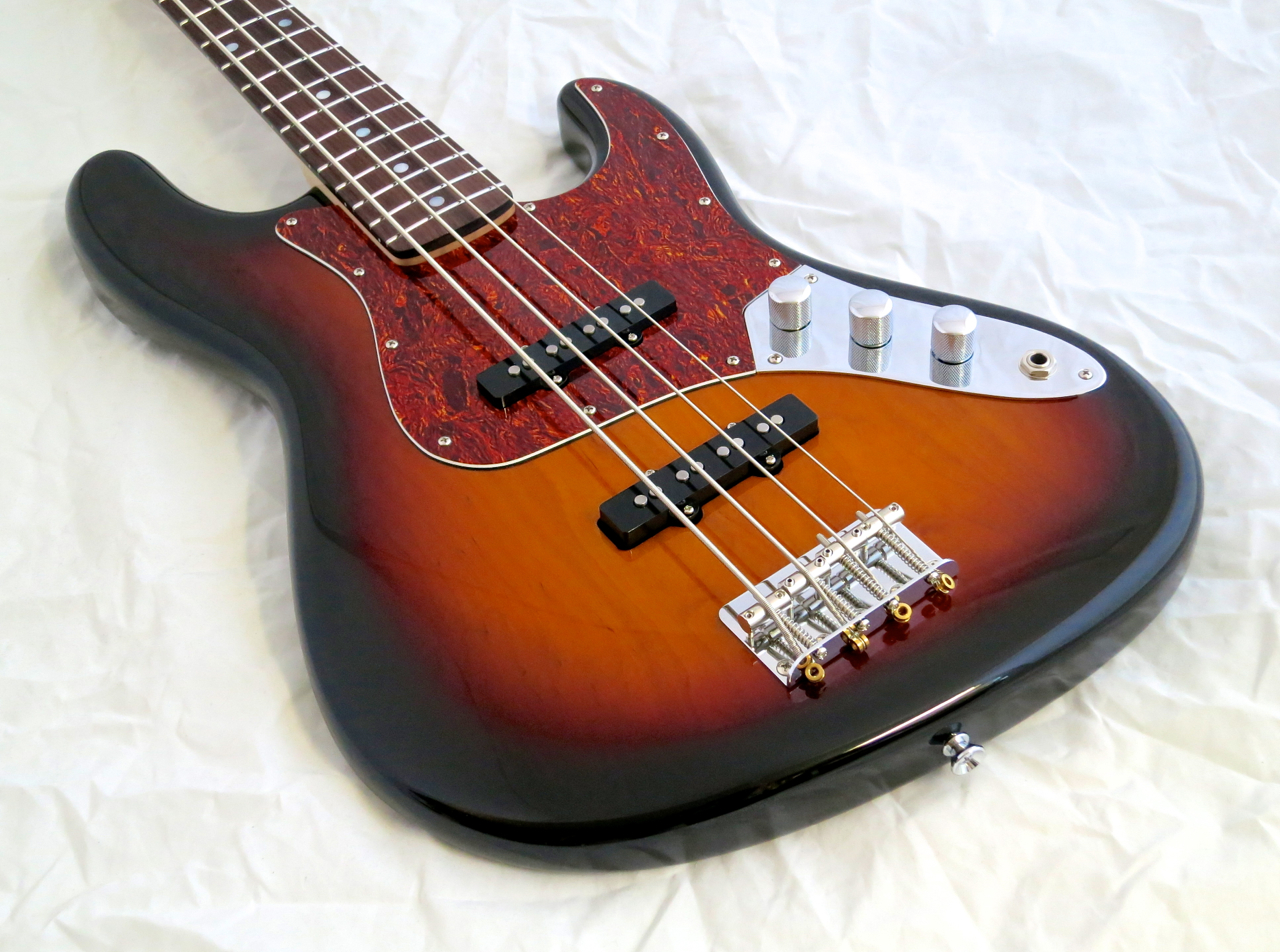
The list of available custom options from Amfisound is very long, and includes (in the Raudus-model’s case) an ash body, different bridges and/or tuners, as well as active Glockenklang-electronics (among other things). For more detailed information you should contact Amfisound’s Tomi or Sampo.
There’s also a five-string Raudus on offer, which is built with a longer scale of 35 inches.
****

Amfisound’s Raudus Bass is a real corker of an instrument, with its sound and playability second to none.
The flatter-than-vintage fingerboard radius (9.5″) gives the slender neck a suitably modern playing feel. Thanks to Amfisound’s exemplary fretwork, our review sample’s low action (E: 2.0 mm/g: 1.6 mm) was completely free of annoying fret buzz or string rattle.
I’m a devoted Jazz Bass-fan, which made me feel right at home playing the Raudus. Yes, it’s true that the Amfisound offers much better top fret access, but overall this new bass feels like a dear old friend.
And this bass’ sound is outstanding, too, dishing out oodles of classic, Jazz Bass-style tones.
Jarno Salo’s excellent pickups are singlecoil designs, with the bridge pickup being reverse-wound and reverse-polarity in relation to the neck unit. This means that using both pickups together gets rid of any possible electromagnetic hum and buzz (from transformers, lighting or displays).
In terms of sound, these Salo-pickups really give you all those classic tones you’d expect from a bass such as this.
Listen to these three audio clips. Each clip has the neck pickup first, followed by both pickups on, and the bridge pickup going last:
****
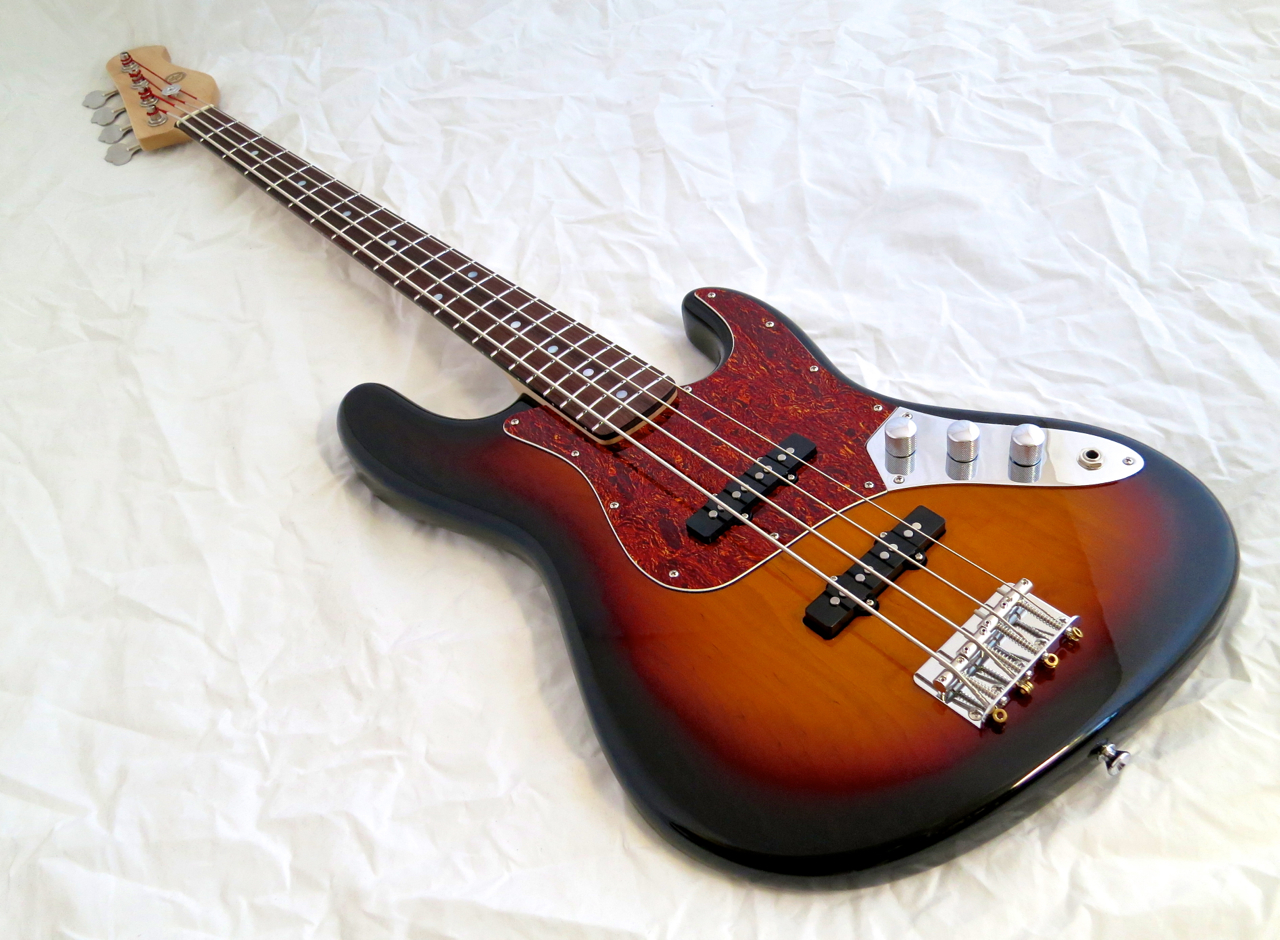
The Amfisound Raudus Bass is a very fine example Finnish luthiery, there’s no two ways about this. Finns must be very lucky to find such fine instruments right at their doorstep!
****
Amfisound Guitars Raudus Bass
Prices starting from 2,520 € (EU-customers) & 2,032 € (outside the EU)
Hard case included.
Contact: Amfisound Guitars
****
Pros:
+ Made in Finland
+ handmade
+ workmanship
+ playability
+ sound


Tuhannen tykkääjän raja on mennyt rikki! Kiitos teille kaikille!
We have made it to the 1,000 likes mark! Thanks to you all!


Blackstar Amplification’s very popular HT Venue-series has recently been joined by the company’s brand-new HT Metal-range, which offers you valve amplifiers tailored specifically to the needs of Metal-guitarists.
Kitarablogi has received the compact five Watt HT Metal 5-combo – meant for use at home, for warm-up and in the studio – and the chunky three-channel, 60 Watt HT Metal 60 -combo for this review.
****
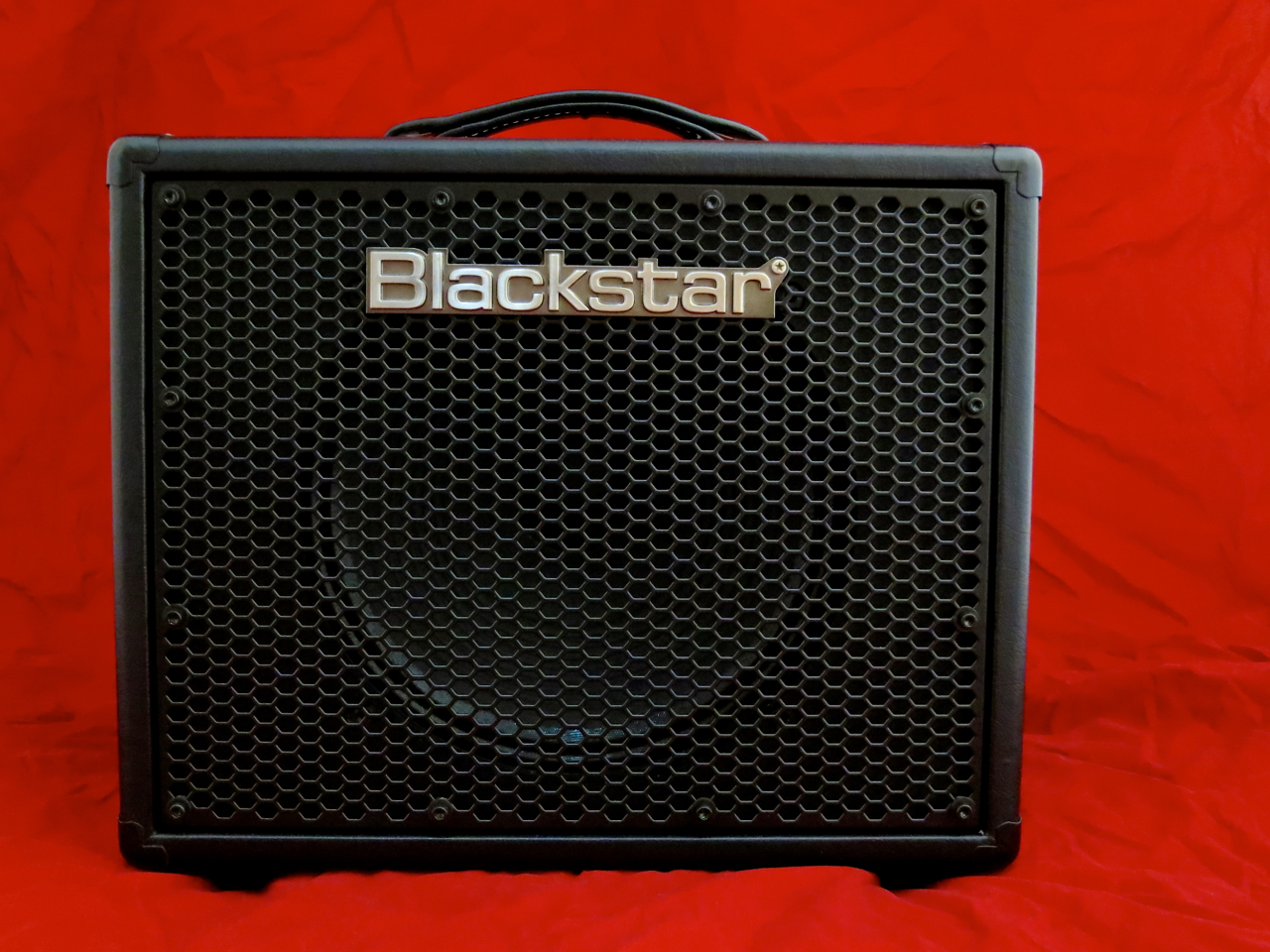
The Blackstar HT Metal 5 (street price around 450 €) is based on the company’s extremely successful HT-5R-valve combo, with the new amp sharing the older model’s main architecture and push-pull power amp.
The HT Metal 5 uses two different valves to amplify your guitar signal – one is an ECC83 (aka 12AX7), the other a model 12BH7.
Instead of a woven speaker cloth – like on the HT-5R – the HT Metal 5-combo sports a very sturdy metal grille.
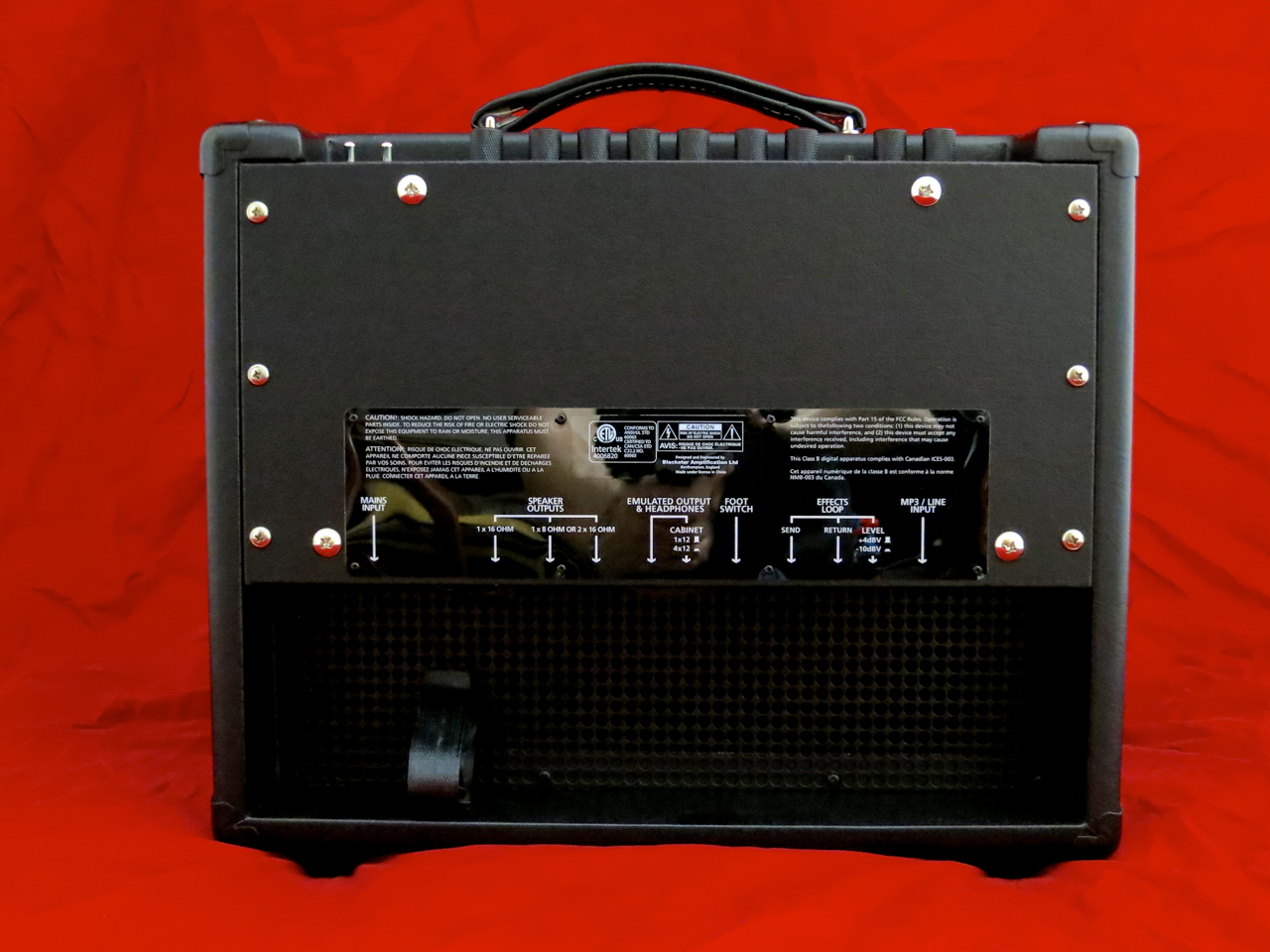
The cabinet is a half-closed affair. The lower third of the back is covered by a metal grille, through which you can spot this Blackstar’s Chinese 12-inch speaker.
This compact combo weighs only 14 kilos, making it very easy to lift and carry around by its single top handle.

The Metal 5’s control panel looks like this (click for a larger picture):
This valve combo features two channels, called Clean and Overdrive. The Clean channel is equipped with a simple tone control, while Overdrive comes with a full 3-band EQ, as well as Blackstar’s patented ISF-control. Turning the ISF-control (ISF stands for Infinite Shape Feature) you can go from a USA-type response (with a loudness-style sound) all the way to what is known as a British tone (with its fatter mid-range).
The HT Metal 5 also comes equipped with a very nice digital reverb.
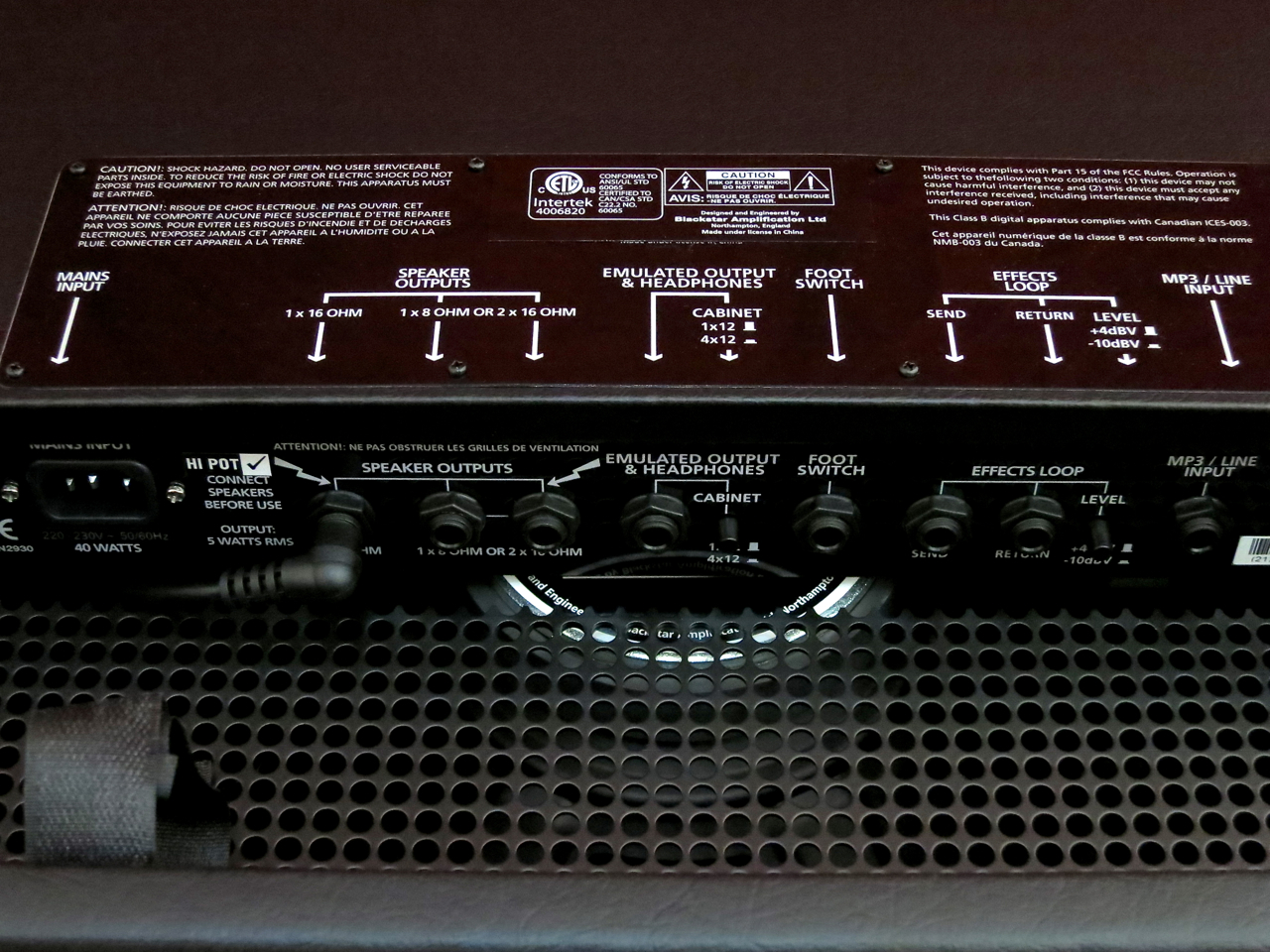
It is rather surprising to find so many different connectors and pushbuttons on such a small amp:
On the left, you will find the combo’s three speaker outputs.
Next up is Blackstar’s speaker-emulated output. A switch lets you choose between a virtual combo and an emulated stack sound. This output also works with headphones, and when the combo runs on standby.
The effects loop on the Metal 5 can be switched from a nominal signal level of -10 dB to +4 dB.
The line input on the far right allows you to connect your mp3-player to the combo.

A footswitch for channel switching is included in the price of Blackstar HT Metal 5!
****

Blackstar’s HT Metal 60 (street price around 1.000 €) is a three-channel powerhouse meant for live use.
This combo is build around a pair of ECC83-preamp valves and two 6L6s in the power amp.
The HT Metal 60 is equipped with two 12-inch Celestion speakers.
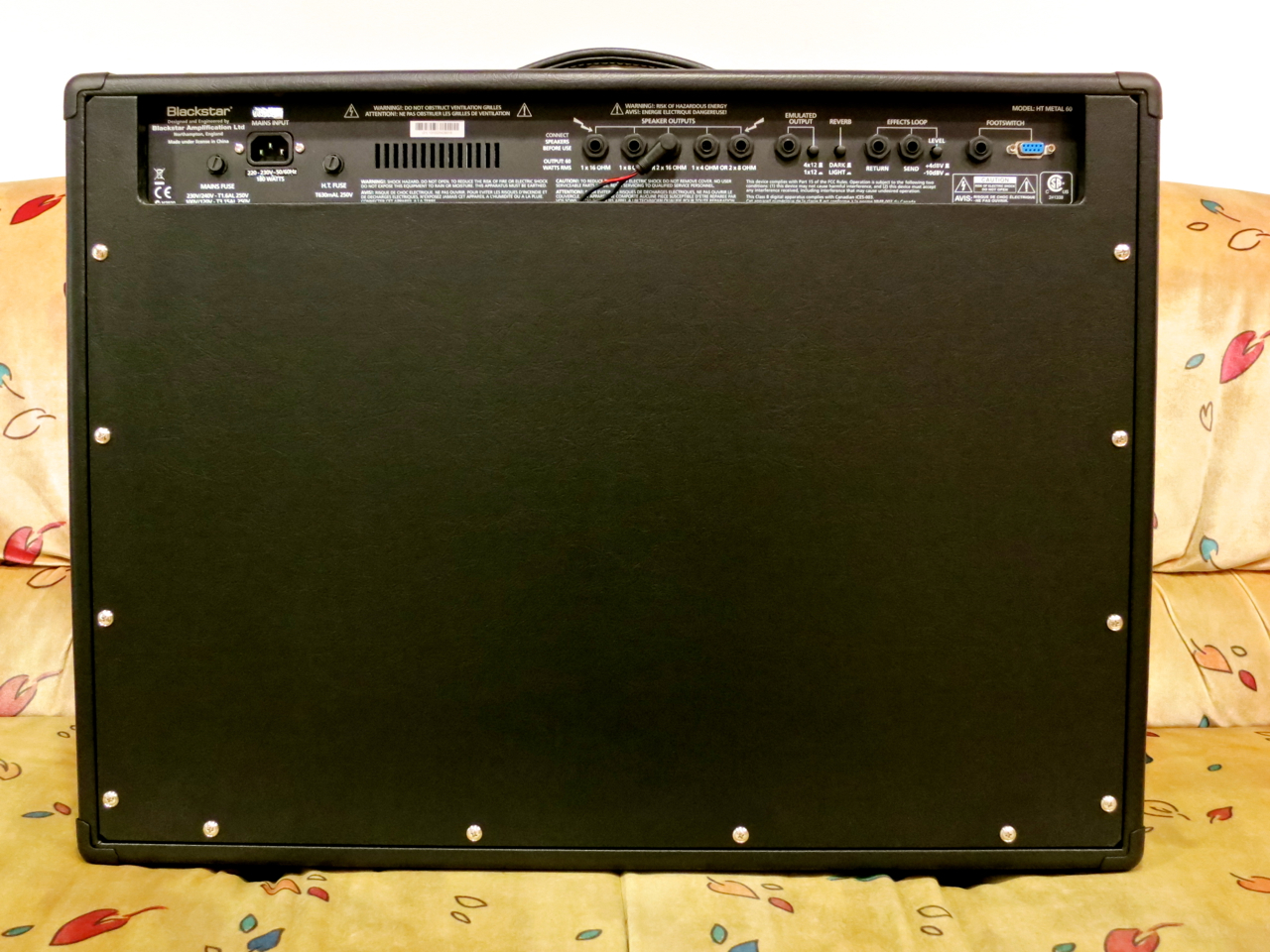
The closed-back cabinet aims at giving this amp a stack-style tonality and punch.

Because of the considerable weight (30 kg) of a large tube combo, such as this, the HT Metal 60 has been equipped with two metal handles, installed into the amp’s sides.
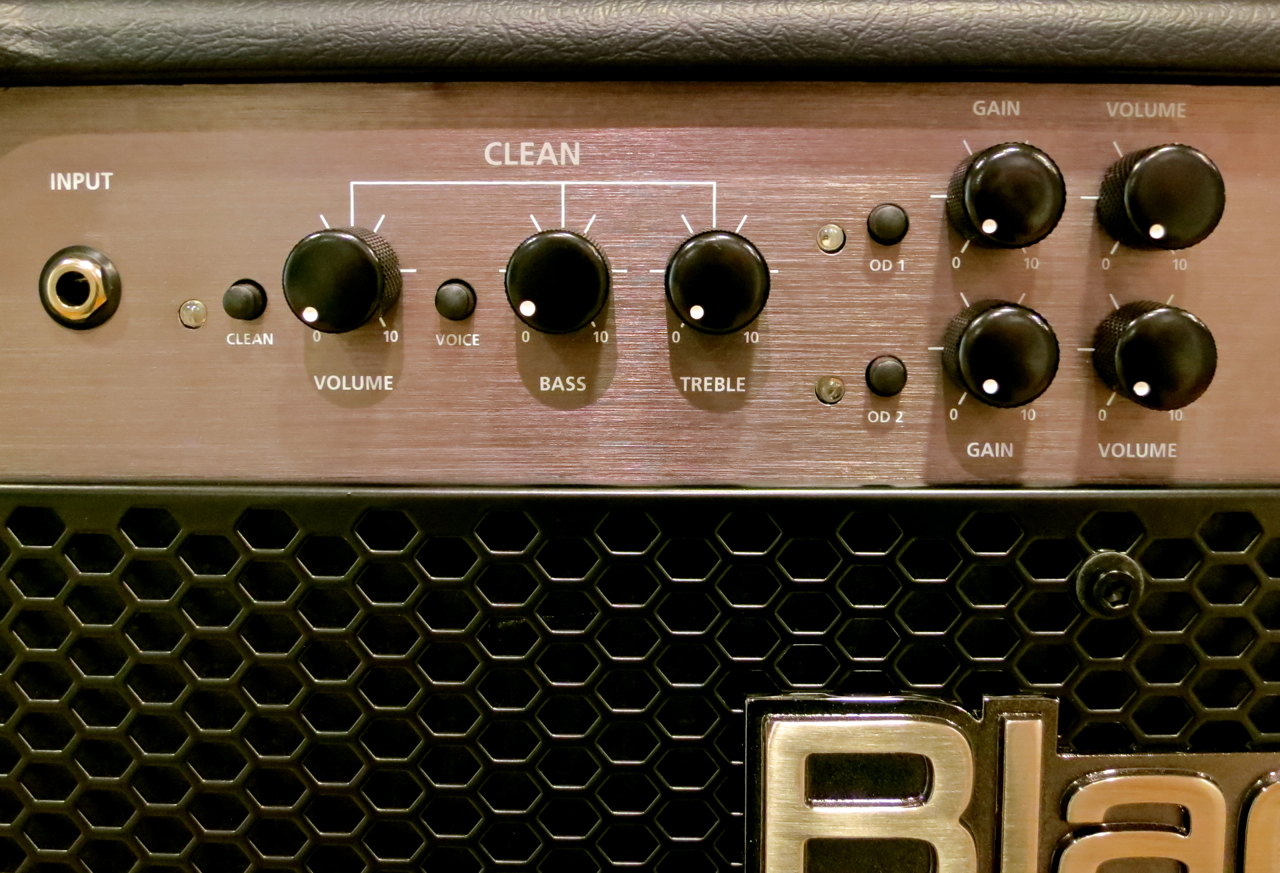
You can choose between two different tonal characters in this Blackstar’s Clean channel, using the Voice-switch: Boutique Clean puts the amp in Class A mode, giving you a very dynamic response, but with less clean headroom than the voicing called Modern Clean.
The channel’s Bass- and Treble-controls make it very easy to find your sound.
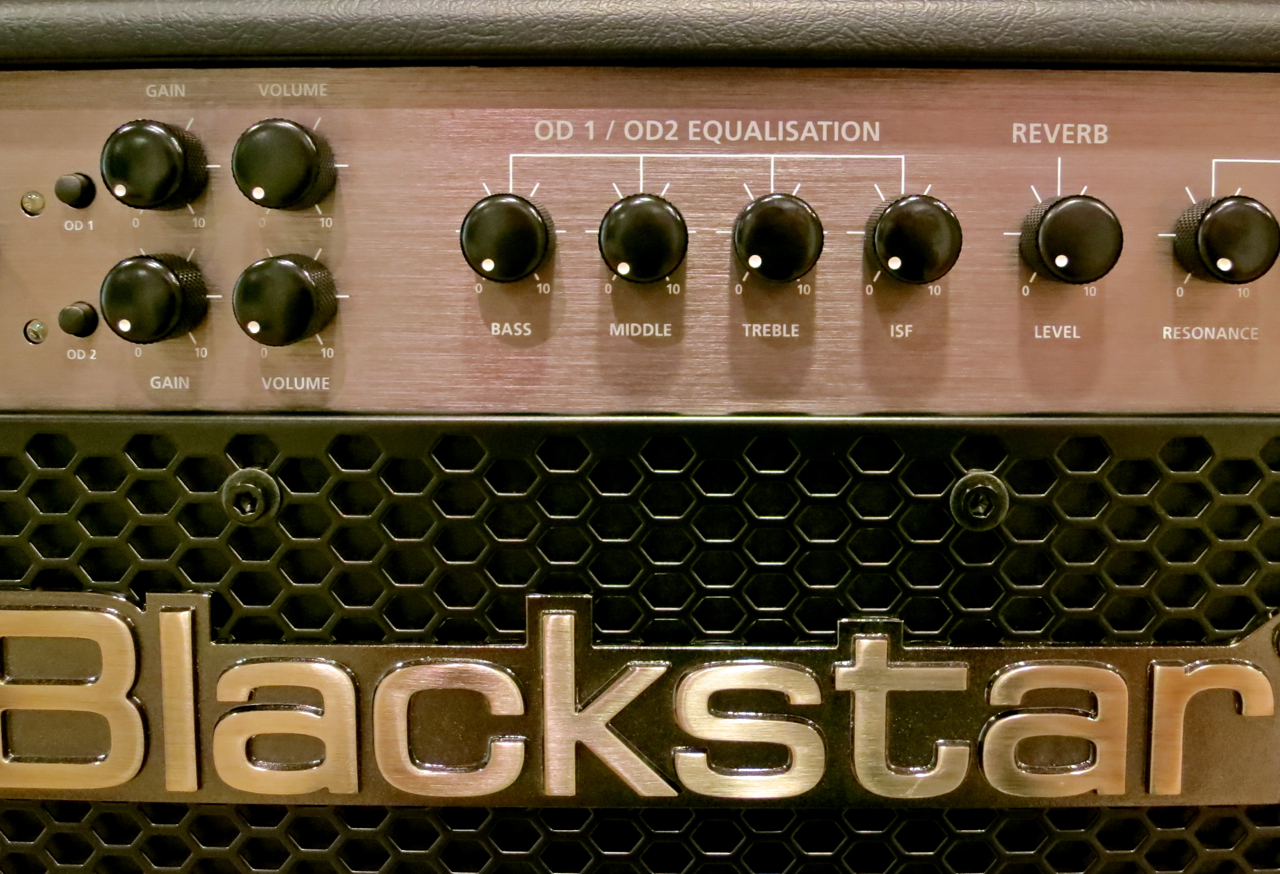
The HT Metal 60 offers you two distinct overdrive channels – named OD1 and OD2 – which share the three-band-plus-ISF equalisation section.
OD1 has a tad less gain than OD2. Thanks to its slightly less compressed sound, as well as its drier bottom end, OD1 is the ideal choice for chunky and precise rhythm parts.
OD2’s massive gain reserves are combined with very creamy compression, but there’s plenty of bite here, too, to make sure your lead lines cut through with authority.

The master section comprises controls for the HT Metal 60’s digital reverb, overall resonance and presence, as well as master volume.

You can connect the HT Metal 60 to virtually any other speaker cabinet, thanks to the five speaker outputs found on the back panel.
In addition to Blackstar’s well-designed speaker-emulated output, and the combo’s effects loop, there’s also a switch to access two different types of reverb (labelled ”light” and ”dark”).

The blue D-SUB-port is meant for the combo’s chunky FS-7-board (included, see below), that handles channel-switching duties and allows you to turn off the reverb on the fly.
The regular Footswitch-jack allows you to connect an additional footswitch to activate the combo’s internal boost. This boost is factory preset, and its amount cannot be changed by the user.

****

The Clean-channel on the Blackstar HT Metal 5 takes you from totally clean all the way to a mild Blues-crunch.
There’s more than enough volume on tap for living room and studio use. There’s a limited amount of clean headroom, though, which means that you will have to turn down the volume pot on a humbucker-equipped guitar.
This clip is played on a Hamer USA Studio Custom into the Blackstar’s Clean-channel, and recorded using a Shure SM57:
Here’s what the same clip sounds like recorded direct via the speaker-emulated output:
The HT Metal 5 dishes out delicious overdriven and distorted tones by the bucket load. Blackstar’s 12-inch speaker sounds fat and muscular, and makes it hard to believe that you’re listening to such a compact little combo!
Turning the ISF-control up full gives you a great Marshall-style tone, regardless of whether you’re using a mic…
…or the built in DI-output.
With ISF turned to zero the sound leans heavily in a Rectifier-type direction (first the SM57-clip, then the speaker-emulated output):
****
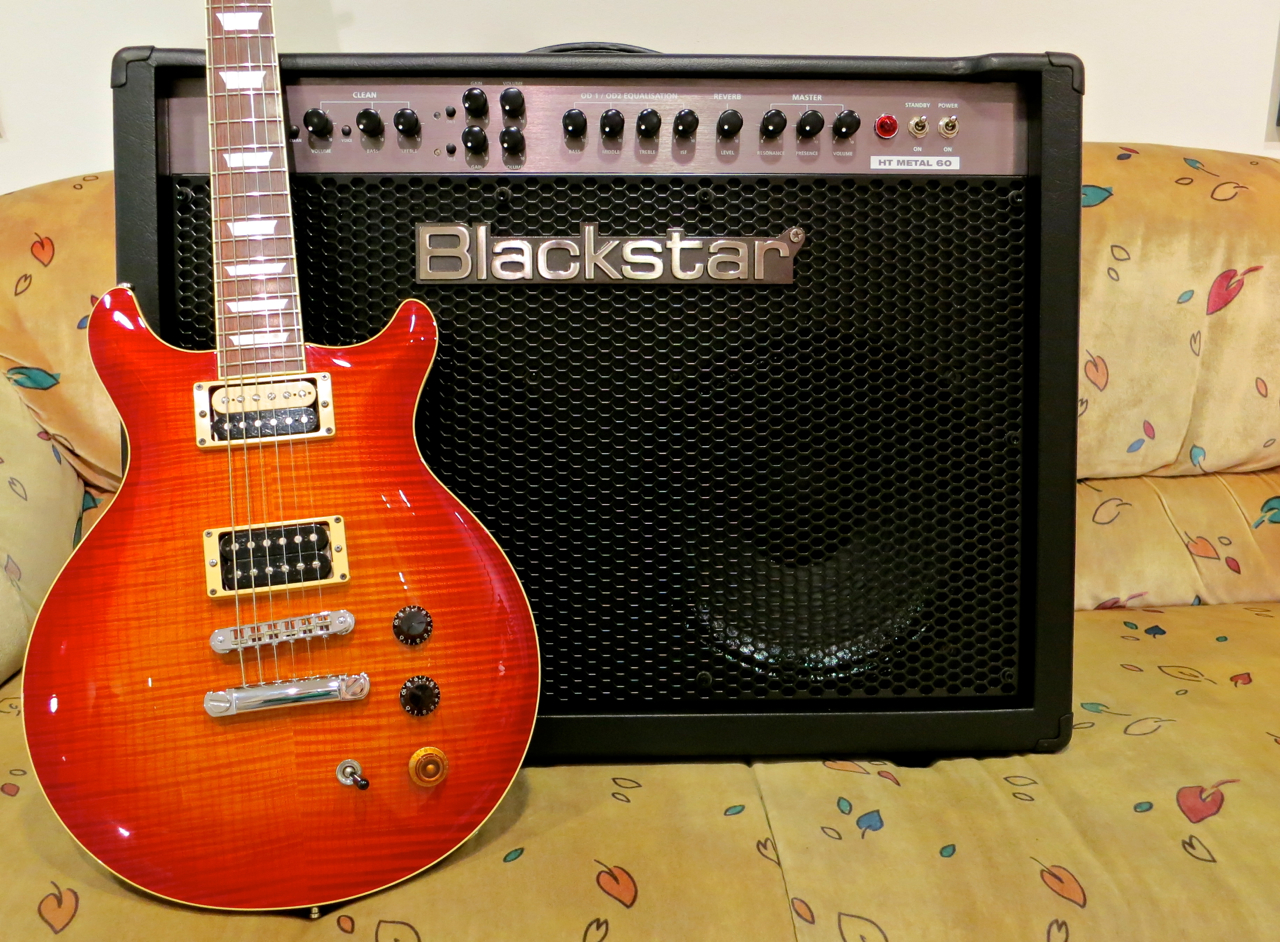
Blackstar’s HT Metal 60 naturally offers a much wider tonal palette than its small brother.
You can get two different types of clean sounds, with Boutique Clean being the rounder alternative of the two.
SM57:
Line output:
Modern Clean comes across as brighter and somewhat more compact (first the Shure SM57 -clip, then the speaker emulated output):
Here’s an example of the OD1-channel with the guitar tuned to drop-D.
First the ”British” version (ISF=10):
Then its ”US” counterpart (ISF=0):
With the exact same EQ settings, OD2 has more bite.
ISF=10 (”UK”):
ISF=0 (”USA”):
****

In my view, Blackstar’s new HT Metal-series is a fantastic addition to the company’s line-up, which takes the needs of modern Metal-guitarists into full account.
The HT Metal 5’s clean sound is very decent, even if the available headroom isn’t on a par with some larger amps. The distortion-channel is really where it’s all at with this compact combo – you will be floored by the big and fearless nature of the Metal 5’s mighty roar!
The Blackstar HT Metal 60 is the workingman’s Metal-combo. This is a professional grade combo offering both very tasty clean tones, as well as bone-crushingly powerful overdrive and distortion with spades of creamy compression. In all but the largest of venues this combo’s volume levels will surely be more than sufficient, even without adding any external cabinets.
****
Blackstar HT Metal 5 & HT Metal 60
HT Metal 5 – street price ca 450 €
HT Metal 60 – street price ca 1.000 €
Finnish distributor: Musamaailma
****
Blackstar HT Metal 5
Pros:
+ workmanship and finish
+ separate tone-control for Clean-channel
+ OD-channel’s 3-band EQ and ISF
+ big tone
+ speaker-emulated DI-output
+ footswitch inluded
Cons:
– Clean-channel’s restricted headroom
****
Blackstar HT Metal 60
Pros:
+ workmanship and finish
+ metal grips
+ Clean-channel’s Voice-feature
+ Clean-channel has own EQ-section
+ OD-channels’ 3-band EQ and ISF
+ big tone
+ speaker-emulated DI-output
+ FS-7-board included