Review: Tokai TST-50 + Seymour Duncan Little ’59

****

Finnish importer and retailer Musamaailma offer an in-house customising service, which is still a rather rare thing over here. For a fair price you can order your guitar with your choice of EMG- or Seymour Duncan -pickups. Musamaailma employ their own luthiers, so all this work is done professionally and in-house.

Kitarablogi got to try out the brand-new Tokai TST-50 -model (current price in Finland: 699 €), which is an addition to the brand’s high-quality Japanese line-up.

In our case the Tokai TST-50’s stock, singlecoil bridge pickup has been swapped for a humbucking Seymour Duncan Little ’59 (current price in Finland: 84,60 €), which promises authentic PAF-type tones from a Strat-sized unit.

****

Tokai’s TST-50 gives more than a passing nod to traditional S-style guitars in an early Sixties vein:

The alder body has all the characteristic flowing curves and deep body chamfers, and it has been finished in beautiful three-colour sunburst. The bolt-on maple neck with a small headstock, the rosewood fretboard and the three-ply white scratchplate complete the picture.

****

Gorgeous Canadian hard rock maple has been used for the test sample’s neck – there are even some bird’s eyes sprinkled across the neck. In keeping with the vintage-look the Tokai sports a set of high-end Gotoh Kluson-copies.

For the TST-50 Tokai have nonetheless made the sensible decision to stray from the vintage path by employing a thin satin finish on the neck. The result feels extremely comfortable and ”fast”.
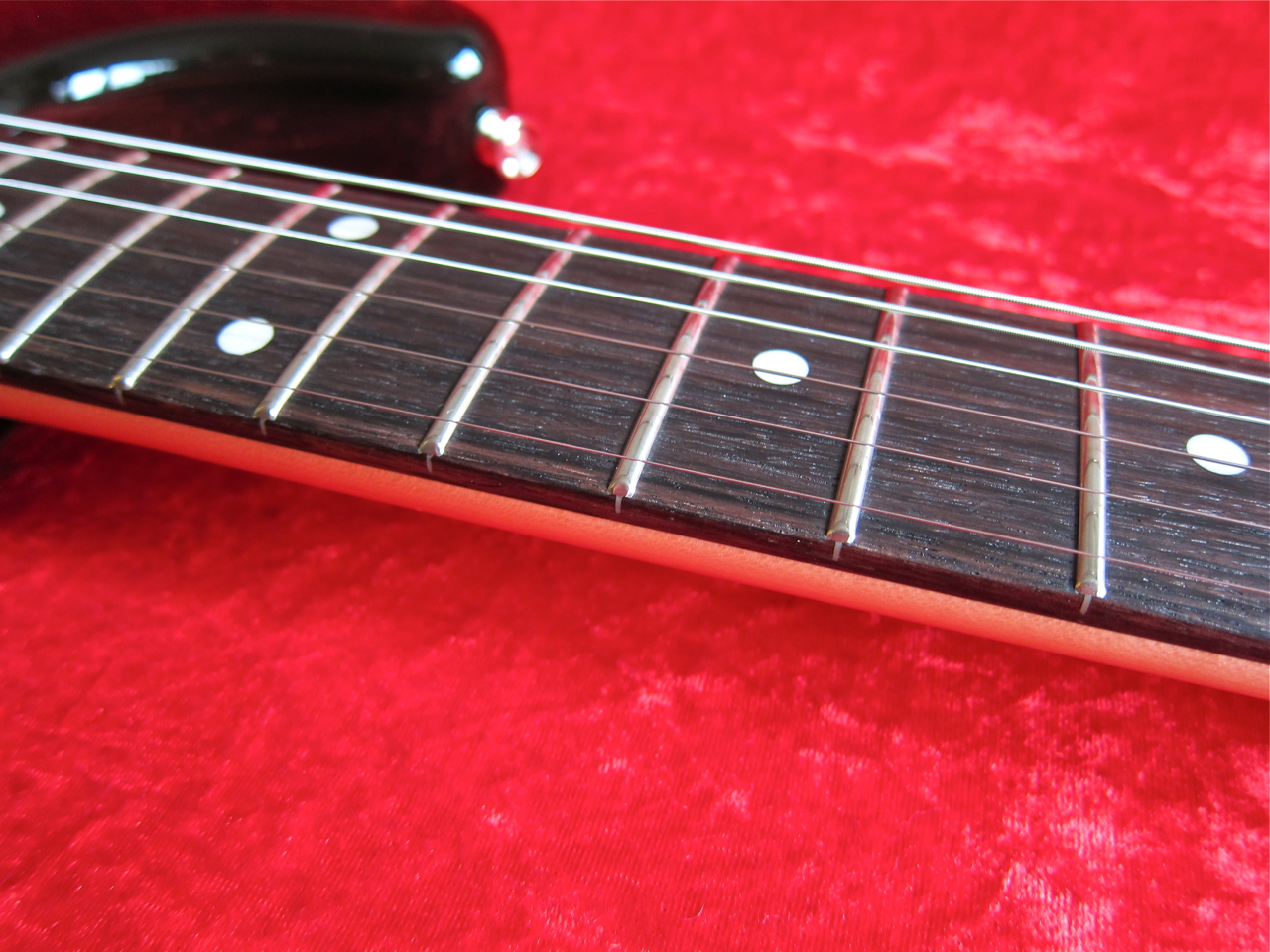
The medium-sized frets are another welcome upgrade, giving you more purchase for precise string-bending action.

This model’s stock pickups come from Gotoh’s Japan Vintage series – pro-quality singlecoils. The TST-50 also sports a vintage-correct, Japanese Gotoh-vibrato.

Seymour Duncan’s Little ’59 has become a classic itself by now. When this model was introduced over two decades ago, it was one of the first Strat-sized humbuckers with side-by-side coils.

The rest of our test sample’s electronics has been left untouched – the controls work in the traditional way, with one tone control for the neck pickup and one for the middle pickup. The bridge pickup is left without a tone control, its signal going only through the master volume.

****

A Strat-style guitar’s great ergonomics are well documented by now, so there’s really no need to reiterate common knowledge. No wonder the Fender Stratocaster (and all its copies) is the best-selling electric guitar of all times – this model sits comfortably in you lap, regardless of the player’s size and physique.

Tokai’s TST-50 is an outstanding variation on this theme, delivered with crisp and clean workmanship.

We find a comfortable, oval C-shaped neck profile, resulting in a quite authentic early Sixties feel.

Acoustically this Tokai displays all of the classic traits of a guitar of this type – a well-defined, clucking attack in fine balance with the warmth and character an alder body and rosewood fingerboard bring, seasoned with a sprinkle of vibrato-induced sparkle.

Many guitarists find the cutting tone of a bridge singlecoil too much to bear with this type of guitar, especially in an overdriven or distorted musical context. This is just where Duncan’s Little ’59 comes to the rescue. This humbucker with its moderate, PAF-type output level lends proceedings a healthy kick up the proverbial. There’s more beef and mid-range in the tone, as well as the dynamics and fat-ness you’d associate with a full-sized humbucker. Staying in clean territory the resulting jump in the guitar’s output might be a bit too much for some purists, but for overdriven Blues, Rock and high-gain tones the Little ’59 is a great way to fly.

The soundbites all feature the stock neck/middle-combination for starters, moving on to the Duncan Little ’59 about halfway through:

Soundbite 1

Soundbite 2

Soundbite 3

****

Tokai-instruments and Seymour Duncan -products

Finnish distributor: Musamaailma

****

Tokai TST-50

Current price in Finland: 699 €

Pros:

+ outstanding value-for-money

+ sound

+ workmanship

+ quality vibrato

****

Seymour Duncan Little ’59 for Strat

Current price in Finland: 84,60 €

Pros:

+ fits most Strat-type guitars directly

+ tone

+ PAF-type output

+ four conductors for different wiring options

****

Classic Basses, part 6: Höfner 500/1

The Höfner 500/1 is a German electric bass guitar, which has been in production since 1956.

It is quite likely that this hollow-body, short-scale model (76,2 cm = 30″) would have been destined to become a mere footnote in bass history, if not for one small incident in 1961. A young, newly ”elected” bass player from Liverpool – named Paul McCartney – was browsing the local instrument stores in Hamburg (Germany), for a mid-priced electric bass, preferably left-handed. He found the Höfner 500/1 – and the rest, as they say, is history…

****

During the first years of production many of the  500/1’s specifications were changed on nearly a yearly basis.

The first production models came equipped with two long and narrow singlecoil pickups, which were placed in the neck and middle positions. An oval control plate sported two volume and two tone controls.

50058_front_01

****

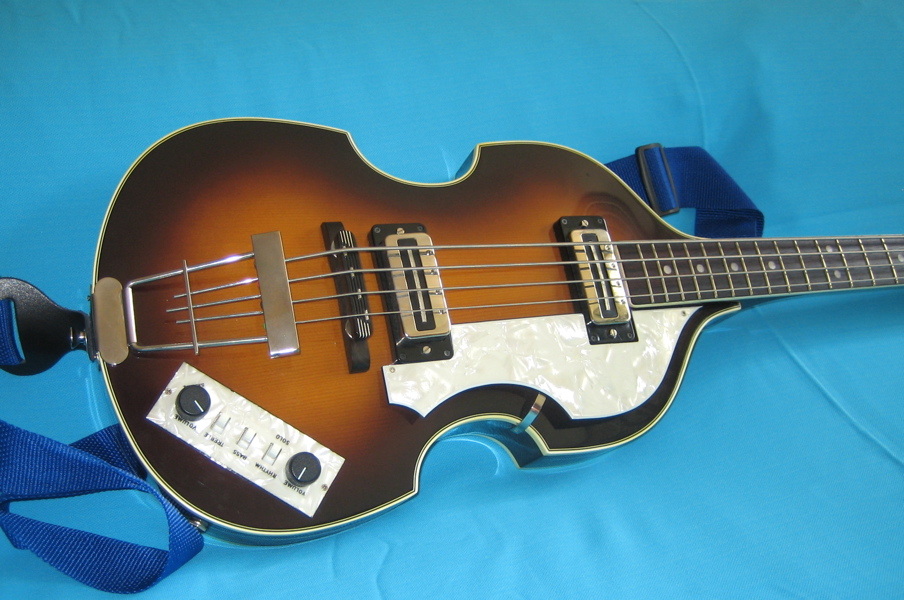
In 1959 Höfner changed the control layout: a long rectangular plate offered two separate volume controls, as well as three two-position sliders for turning each pickup on or off and choosing between solo (full power) and rhythm mode (slightly dampened). This switching (Aggregat E2 B) also gives you a fat, treble-deprived signal, whenever the middle (later bridge) pickup is turned off using the slider switch – Reggae-bass galore.

h5001-59_01

****

The singlecoils were switched to humbucking pickups in 1960. The metal covers on these units are stamped with a diamond and the Höfner-logo. This model is the bass that Paul McCartney bought in Hamburg (it had to be ordered left-handed):

5001-61-14-br-to-01g

****

In 1962 the second pickup was moved close to the bridge. Shortly hereafter it the 500/1’s humbuckers were switched to the so-called staple-top-pickups, which, despite their look, are singlecoils. The pickups got their nickname, because the bridge-facing polepieces look somewhat like staples. In 1963 Paul McCartney received/bought (the available info is not quite clear on this) this type of Höfner 500/1 – which he continues to use to this day!

h500-1-62_01

****

From 1967 onwards Höfner’s new blade-pickups were installed on the 500/1.

The Höfner 500/1 stayed more or less this way until the latter part of the Nineties, before the Beatles Anthology -series kicked off a renaissance.

My own 500/1 -bass is a January 1990 -model. Then, demand for Beatle-basses was so low, that Höfner only built them on order, and for a very advantageous price.

Hofner full

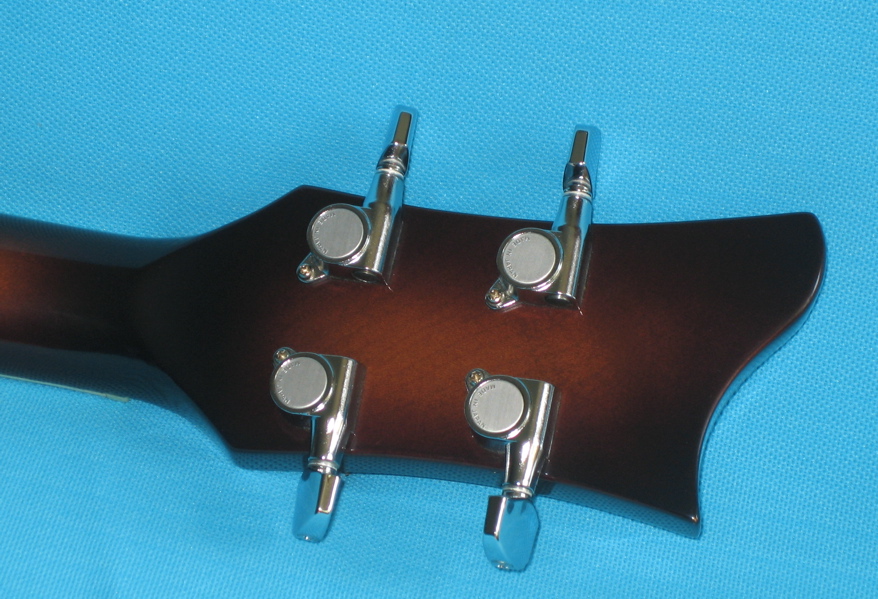
My Höfner sports a maple neck, which is one-piece save for the neck heel. The tuners are sealed Gotoh guitar models.

Hofner headstock

Hofner tuners

The top of the hollow body is spruce plywood, while the sides and back have been crafted from anigré-plywood (lat. aningeria spp.).

Hofner body

Hofner back

The Höfner’s sound is big, fat, huge and warm, but still has ample zing and growl with roundwound strings.

I’m mainly a fingerstyle player, but tend to use a plectrum whenever I play the 500/1, because its strings sit rather high above the body and are quite close to each other.

Hofner side

For some strange reason my Beatle-bass sounds fantastic plugged directly into a mixing console or soundcard, even without using a DI-box!

****

These days Höfner produces the excellent mid-price Contemporary-version (made in China) alongside its more pricier German reissues:

hct-500_1-sb_01

The main difference is that the Contemporary 500/1 is semi-solid, with a maple centre block running the length of its body. This adds some sustain, as well as making the bass less susceptible to feedback than an original.

****

The Höfner 500/1 -sound is probably known to all of us – listen to virtually any Beatles-record pre-1966. Later examples include the Beatles-tracks Get Back and Come Together, as well as McCartney’s solo-single My Brave Face.

You can also check out my Höfner here and here.

…and rounding it all off, here’s a snipped I copied from one of my ProTools-sessions:

Höfner 500/1 sound

Klassikkobassot, osa 6: Höfner 500/1

Saksalainen Höfner 500/1 ilmestyi vuonna 1956.

Hyvin suurella todennäköisyydellä tämä onttokoppainen, lyhyellä mesuurilla (76,2 cm = 30″) varustettu basso olisi muuten jäänyt historian alaviiteeksi, mutta onneksi nuori brittiläinen muusikko Paul McCartney löysi vuonna 1961 Hampurilaisessa musiikkiliikkeessä juuri sellaisen Höfner 500/1 -basson. Höfner-basso oli kevyt, edullinen sekä tilattavissa vasenkätisenä – siis juuri sellainen soitin, jota McCartney etsi.

****

Tuotannon ensimmäisissä vuosissa 500/1-mallin speksit muuttuivat nopeaan tahtiin.

Ihan alussa bassolla oli kaksi kapeaa yksikelaista mikrofonia, jotka asennettiin lähellä toisiaan. Yksi oli heti otelaudan vierellä ja toinen keskiasennossa. Basson neljä säädintä – oma volume ja tone kummallekin mikrofonille – oli asennettu soikeaan muovilevyyn.

50058_front_01

****

Vuonna 1959 Höfner muutti elektroniikan speksejä: suorakulmaisessa muovilevyssä oli nyt tarjolla kaksi volume-säädintä. Kolmella liukukytkimillä laitetaan mikrofonit yksitellen päälle/pois, sekä valita täyden tehon soolo-moodin ja hieman vaimennetun rytmi-moodin välillä. Tähän kytkentään on lisätty myös Höfnerin erikoinen tapa poistaa signaalista kaikki diskantit, aina kun laitetaan keskimikrofonin (myöhemmin tallamikin) pois päältä liukukytkimellä – reggae-basistin unelma.

h5001-59_01

****

Vuonna 1960 päivitettiin 500/1:n mikrofonit humbuckereihin. Mikrofonien metallikuoreen oli painettu vinoneliö sekä Höfner-logo, minkä takia niitä kutsutaan englanniksi Diamond-pickupiksi. Juuri tällaisen basson Paul McCartney tilasi Hampurissa:

5001-61-14-br-to-01g

****

Vuonna 1962 toinen mikrofonista siirrettiin lähempää tallaa. Mikkien rakenne muutettiin jälleen (nämä mikrofonit ovat ulkonäköönsä huolimatta yksikelaisia): tallanpuoleisellä kelalla oli nyt näkyvät suorakulmeiset napapalat, jotka pilkistivät metallikuoreen läpi. Kaulanpuoleisellä kelalla taas oli säädettävät naparuuvit. Koska kiinteät napapalat muistuttavat ulkonäöltään nitomanastoja näitä mikrofoneja kutsutaan englanniksi staple-top-pickupiksi. Vuonna 1963 Paul McCartney sai tämän version lahjaksi silloiselta brittiläiseltä maahantuojilta Selmer – ja hän käyttä tätä yksilöä yhä!

h500-1-62_01

****

Vuonna 1967 mikrofonit muutettiin sellaiseksi, että yksikelaisten keskellä on pitkä, terämäinen magneetti ja sen yläpuolella on ohuita naparuuveja.

Höfner 500/1 pysyi tällaisena 1990-luvun loppupuoleen saakka, ennen kuin Beatles Anthology -sarjan myötä kiinnostus 500/1-mallia kohti kasvoi jälleen.

Oma Höfner 500/1 -bassoni on valmistettu tammikuussa 1990. Silloin Beatle-basson kysyntä oli niin alhainen, että 500/1-tehtiin ainoastaan tilauksesta, ja hinta oli yllättävän alhainen.

Hofner full

Minun Höfnerissä kaula on veistetty vaahterasta – pitkän yhtenäiseen osaan on liimattu erillinen pala kaulakorkoa varten. Virittimet ovat Gotohin koteloidut kitaravirittimet.

Hofner headstock

Hofner tuners

Runko on tutun tapaan täysin ontto. Kansi on kuusivanerista, kun taas sivut ja pohja tehtiin silloin anigré-vanerista (lat. aningeria spp.).

Hofner body

Hofner back

Höfner 500/1:n soundi on iso, lämmin ja pyöreää, mutta bassolta saa myös mukavasti murahdusta mukaan, etenkin roundwound-kielillä.

Vaikka soitan pääsääntöisesti sormityylillä, käytän Höfnerillä aina plektran, koska kielet istuvat melko korkealla kannen yllä ja myös hyvin lähellä toisiaan.

Hofner side

Jostain kumman syystä aidot Beatle-bassot voidaan usein syöttää suoraan mikseriin (tai ulkoiseen äänikortiin) ilman DI-boksia – suora soundi on ja pysyy mehukkaana!

****

Vanhojen mallien uusintapainoksien lisäksi Höfner teettää nykyään myös laadukkaan kiinalaisen Contemporary-sarjan:

hct-500_1-sb_01

Pääero Contemporary-sarjan Beatle-bassossa on, että edullisen mallin runko on puoliakustinen – rungon sisällä on vaahterasta veistetty keskipalkki, minkä ansiosta sustain on hieman pidempi.

****

Höfner 500/1 -mallin soundi on laajasti tuttu kaikista Beatles-levyistä ennen 1966. Hyvät esimerkit ovat myös Beatles-biisit Get Back ja Come Together, sekä McCartneyn soolosinkku My Brave Face.

Soitan oman Höfnerin esimerkiksi tässä ja tässä.

…ja tämän lisäksi vielä lyhyt ote yhden biisin bassoraidasta: Höfner 500/1 sound

Tokai LC-85 – Sounds! [][][][][] Tokai LC-85 – Soundeja! [][][][][]

Tokai LC-85 neck PU clean (kaulamikki puhtaana)

Tokai LC-85 both PUs clean (molemmat mikit puhtaina)

Tokai LC-85 bridge PU clean (tallamikki puhtaana)

πππππππππππ

Tokai LC-85 neck PU crunch (kaulamikki säröllä)

Tokai LC-85 both PUs crunch (molemmat mikit säröllä)

Tokai LC-85 bridge PU crunch (tallamikki säröllä)

πππππππππππ

Tokai LC-85 bridge PU lead (soolosoundi soitettu tallamikillä)

More information on the guitar HERE.

Lisätiedot löydät TÄSTÄ tai suoraan Musamaailmalta.

Tokai LC-85 Ltd Ed – parempi kuin alkuperäinen?

Ovelien vaihtokauppojen ansiosta yksi minun pojista on saanut ostettua itselleen Tokai LC-85 -kitaran.

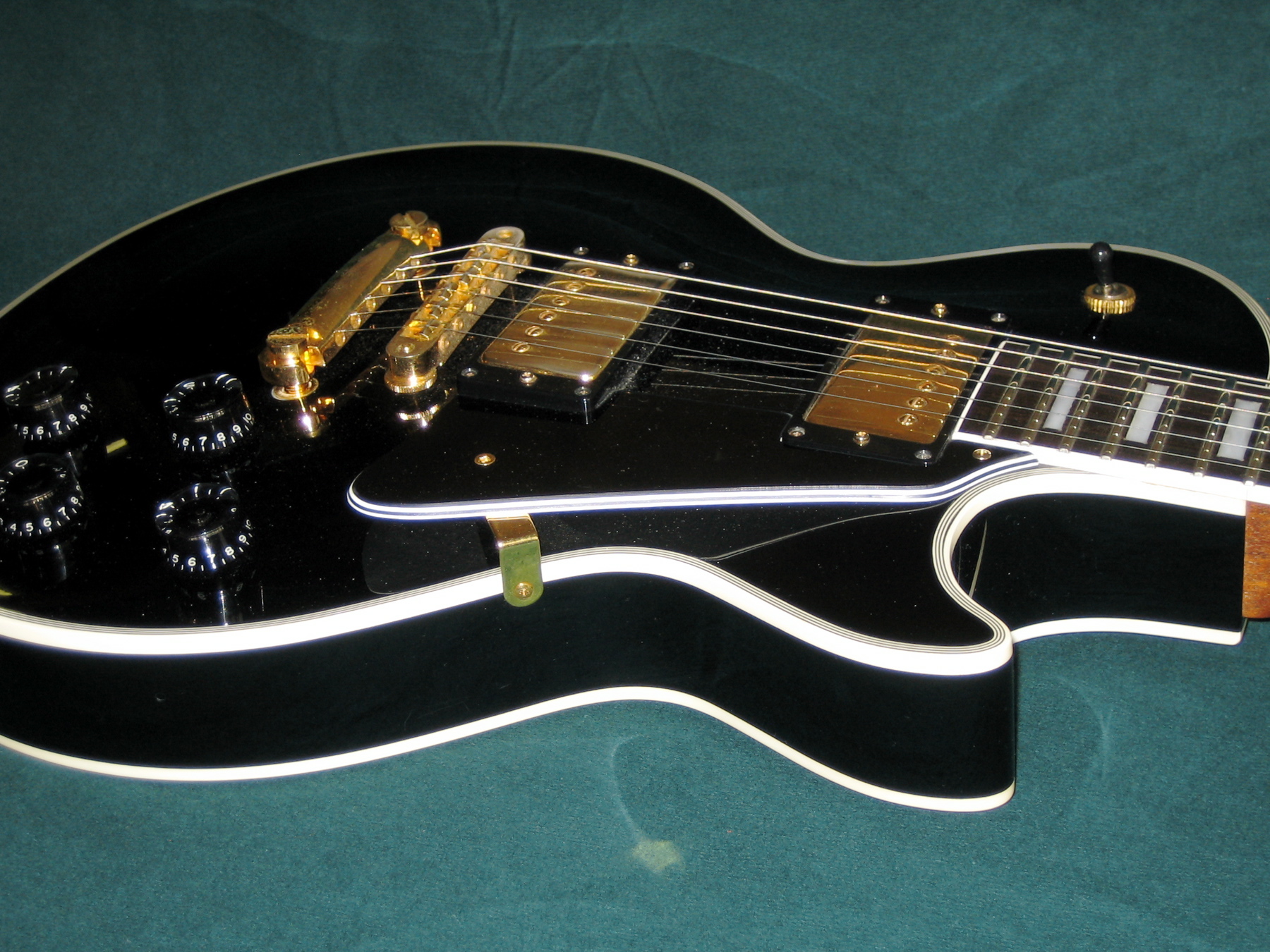
LC-85-malli on yksi firman kalleimmasta kitaroista, joita valmistetaan Japanissa käsityöllä. Tämä Tokai on ”kunnianosoitus” kahdella humbuckerilla varustetulle Gibson Les Paul Custom -kitaralle.

Limited edition -version yksiosainen mahonkikaula on viimeistelty öljyämällä, tavallisissa malleissa se on lakattu kiiltävän mustaksi.

Eebenpuiseen otelautaan on asennettu 22 jumbo-kokoista nauhaa, sekä neliskulmaisia otemerkkejä helmiäisjäljitelmästä. Juha Lottonen on oston jälkeen hionut soittimen nauhat ja asentanut kitaralle uuden satulan luusta.

Runko on valmistettu perinteisellä tavalla: paksun mahonkisen takaosan päälle on liimattu vaahterakansi. Mustavalkoinen reunaloitus näyttää kyllä juhlavalta.

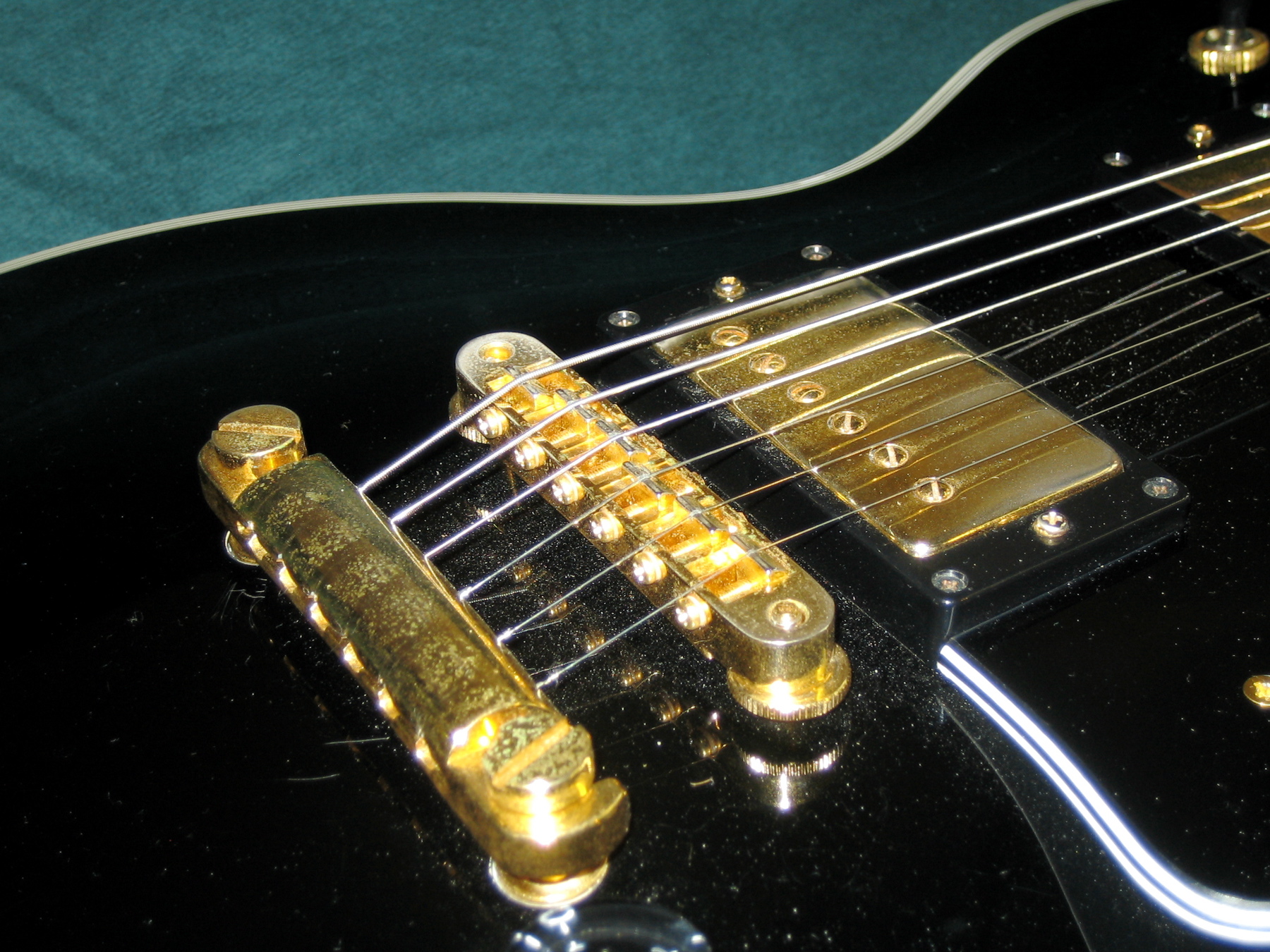
Käytetyn kitaran kultaisilla metalliosilla on asiaankuuluvat kulumanjäljät, niin kutsuttu ”patina”. Tallaksi on valittu Gotohin tune-o-matic. Mikrofonit taas ovat Tokain omia, vintage-tyylisiä PAF-Vintage Mark II -malleja.

Ja tässä kuvassa näkyy LC-85:n Gotoh-virittimiä…

Tämän kitaran soitettavuus on ensiluokkainen – kevyt ja notkea.

Tokain PAF-tyyliset mikrofonit kuulostavat isoilta ja eloisilta, ja niissä on maltillinen teho. Tästä syntyy fantastinen humbucker-soundi, jolla on oiva annos pirteyttä, kiitos vaahterakannen (jonka alkuperäinen Les Paul Custom sai vasta 1960-luvun loppumetreillä) ja eebenpuisen otelaudan.

Ainoastaan hieman jäykässä, laatikkomaisessa kytkimessä olisi mielestäni vielä pikkusen parantumisen varaa.

Aion lisätä lähipäivinä vielä esimerkkisoundeja blogille…

Tokain maahantuoja on Suomessa Musamaailma. Uusimmassa Riffi-lehdessä (6/2011) on mukana monisivuinen Tokai-liite!

Tokai LC-85 Ltd Ed – Even better than the real thing?

Through some rather clever bargaining on his part, one of my sons recently got his hands on this – a Tokai LC-85.

The LC-85 is one of the top-end, Made-in-Japan-Tokais, and is their – shall we say – ”tribute” to the post-1969 Gibson Les Paul Custom.

We have a one-piece mahogany neck, which in this limited edition version is oil-finished, instead of lacquered in black.

The ebony fingerboard carries jumbo frets, as well as pearloid fret markers. Master luthier Juha Lottonen has given this guitar a fret polishing, as well as a new bone nut.

The body is made from a mahogany back and a carved maple top. Black and white binding gives the guitar a deluxe look.

As this guitar was acquired used the gold-coloured plating on the hardware shows some cool signs of wear. The bridge is a Gotoh tune-o-matic. The pickups are Tokai’s own PAF-Vintage Mark II -models.

And here’s a look at the sealed Gotoh-tuners…

This guitar plays like a dream – the feel is really effortless and fluid.

Tonally the Tokai PAF-style pickups sound great and lively, and they have a vintage style, medium output. It’s a fantastic humbucker tone with a little added sprinkle of bite, brought to the mix by the maple top and the ebony fretboard.

The only thing probably worth upgrading sometime, may be the slightly stiff, boxed three-way toggle selector.

Stay tuned for some soundbites in the near future…

Squier Musicmaster Bass – Sounds!

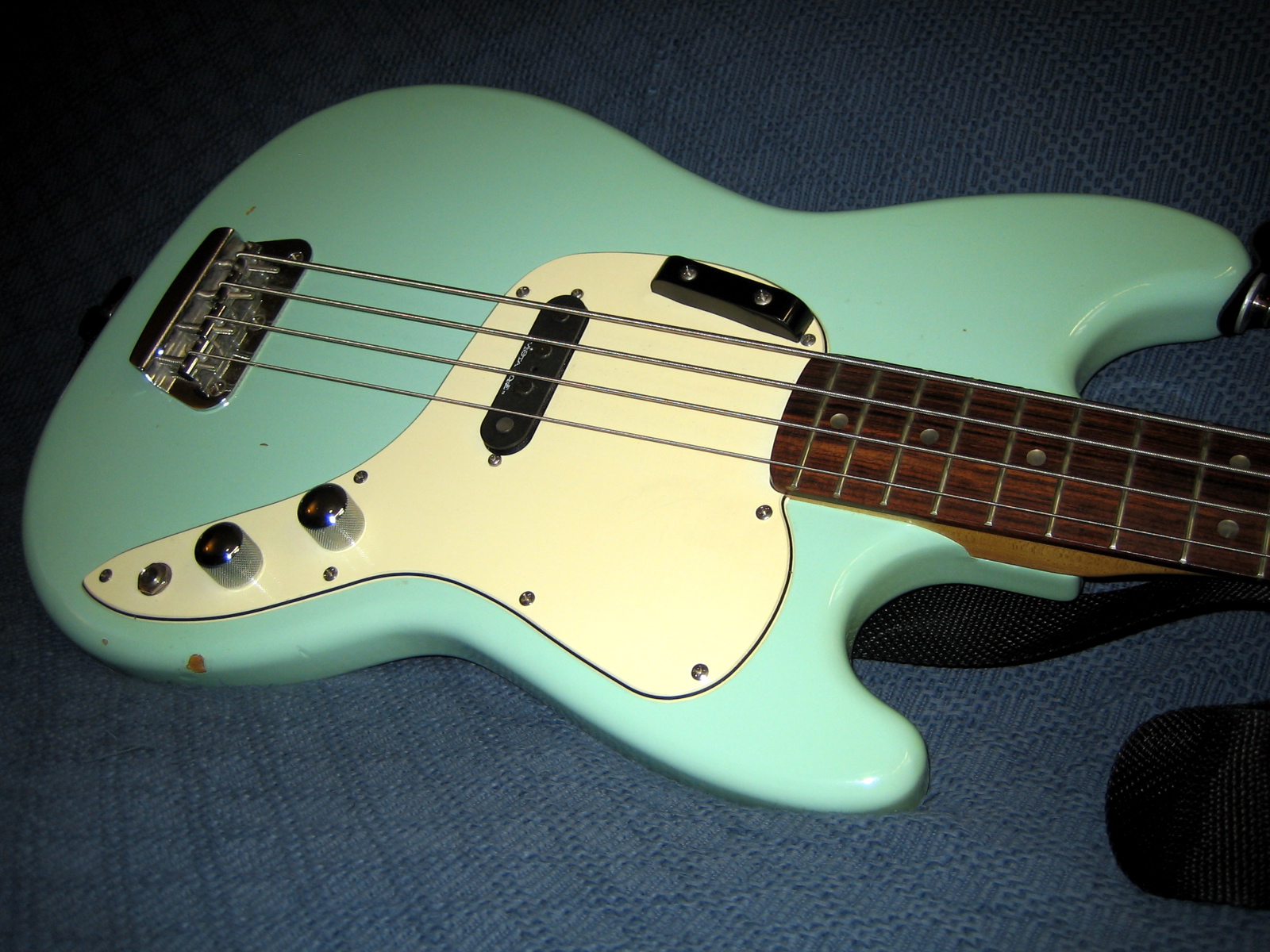
The Squier Vista Musicmaster Bass (introduced in 1997) has been produced only for a short time, despite having been one of the best bang-for-the-buck-machines in the stable.

The original Fender Musicmaster Bass from 1971 was Fender’s most inexpensive short-scale bass at the time (probably ever). Many were sold as part of a two-piece set, which included a low-powered practice amp.

Squier’s version was one of the company’s first instruments made in China, and featured several genuine improvements over the Fender original.

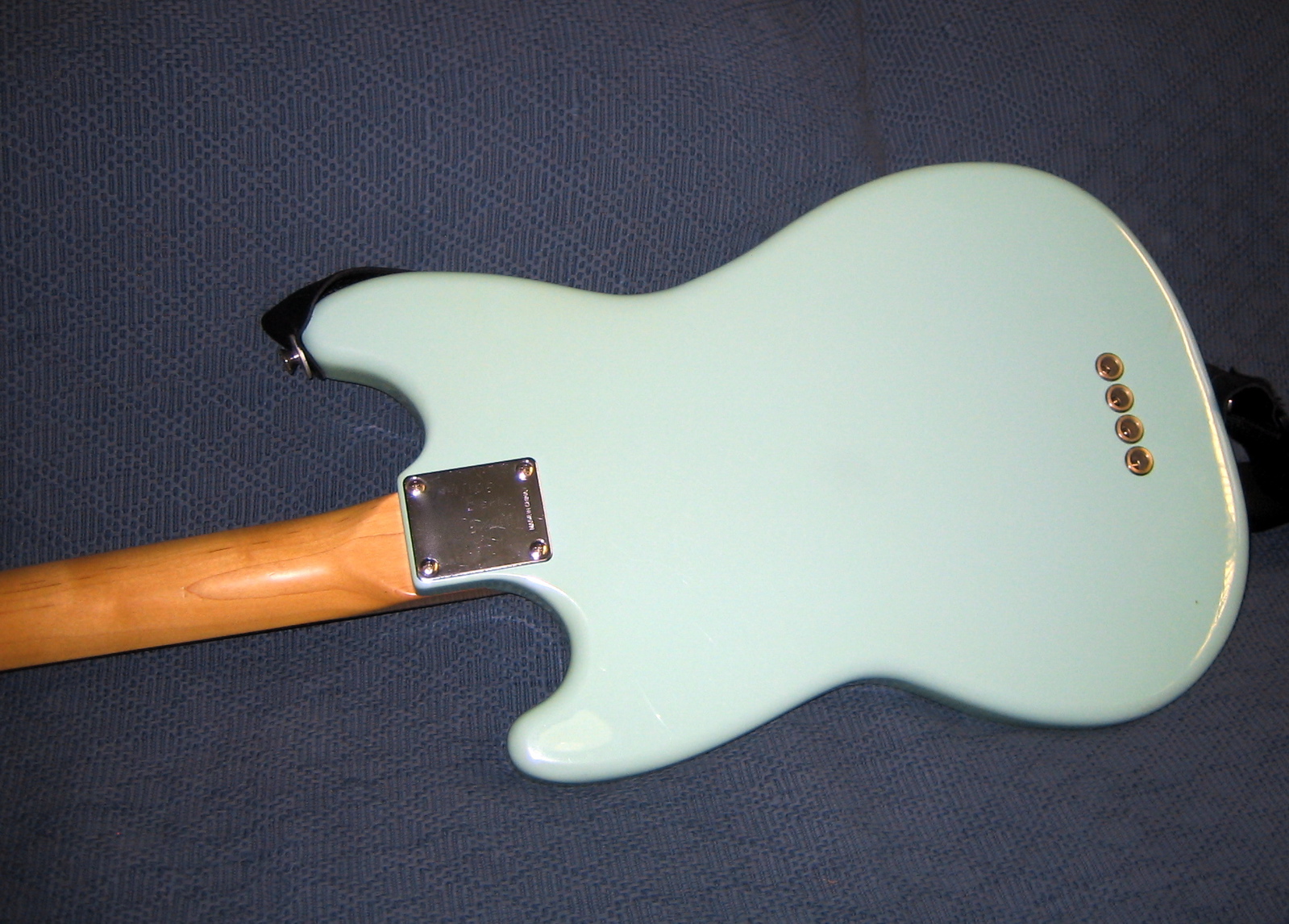
The Squier features through-body stringing resulting in better sustain.

Instead of the Fender’s spartan two-saddle bridge, here we have an intonation-friendly four saddle bridge.

The headstock is finished in the same tasty seafoam green as the body.

The decent, full-sized tuners are good replicas of 1970s Schallers.

The best bit, though, is the Squier Vista Musicmaster Bass’ pickup. The Fender had been equipped with a rather weak Strat-style pickup. The Squier went for the singlecoil Precision Bass pickup, that had been on the first P-Basses (1951-56) – the result is a very healthy output and a full-bodied sound.

I used a Sans Amp Bass Driver for the Pro Tools -soundbites:

Musicmaster/fingerstyle

Musicmaster/plectrum

^^^^^^^^^^^^^^^^^^^^^^^^^^^^^^^^^^^^^^^^^^^^^^^^^^^^^^^^^^^^^^^^^^^^^^^^^^^

Squier’s current bass lineup includes the Bronco Bass, which is clearly derived from the Musicmaster. The Bronco’s bridge is the 70s two-saddle type and the pickup comes from a guitar (!) – it’s a Bullet-series Strat-pickup.

Squier Musicmaster -basson soundeja

Squierin 1997 vain lyhyesti markkinnoille tuotu Vista-sarjan Musicmaster-basso tarjoaa erittäin hyvän vastineen pienelle hinnalle.

Alkuperäinen Fender Musicmaster Bass tuli ulos vuonna 1971, ja tämä lyhytskaalainen basso oli silloin firman edullisin basso. Saatavana oli myös Musicmaster-setti, jossa myytiin basson lisäksi pientä harjoitusvahvistinta.

Squier Musicmaster oli yksi firman ensimmäisistä Kiinassa tuotetuista soittimista, ja sillä oli muutama parannettu yksityiskohta alkuperäiseen Fenderiin nähden.

Kielet kiinnitetään Squierissa rungon läpi, mikä parantaa soittimen sustainea.

Yksinkertaisen, kahdella tallapalalla varustetun alkuperäisosan sijaan käytetään tässä tallassa neljä tallapalaa, minkä ansiosta intonaatio on täsmällinen.

Lapa on viimeistelty tyylikkäästi samassa Seafoam Green -sävyssä kuin runko.

Isokokoiset avoimet virittimet ovat varsin käyttökelpoisia kopioita 1970-luvun Schallereista.

Parasta Squier Vista Musicmaster -bassossa on kuitenkin sen mikrofonivarustus. Alkuperäisessä Fenderissä oli melko heikkotehoinen, Strato-tyylinen mikrofoni. Squierissa taas käytetään samaa mikrofonia kuin ensimmäisissä Precision-bassoissa (1951-56) – ja soundi on erittäin mehukas ja itsevarma.

Ääniesimerkit tallennettiin Sans Amp Bass Driver -boksin kautta Pro Toolsiin:

Musicmaster/sormisoitto

Musicmaster/plektralla

^^^^^^^^^^^^^^^^^^^^^^^^^^^^^^^^^^^^^^^^^^^^^^^^^^^^^^^^^^^^^^^^^^^^^^^^^^^

Squierin mallistossa on ollut viime vuosina Bronco-niminen basso, joka on Musicmasterin johdannainen. Broncon tallassa on vain kaksi tallapalaa ja mikrofonina toimii Bullet-sarjan Stratomikrofoni.

Pidä blogia WordPress.comissa.

Ylös ↑