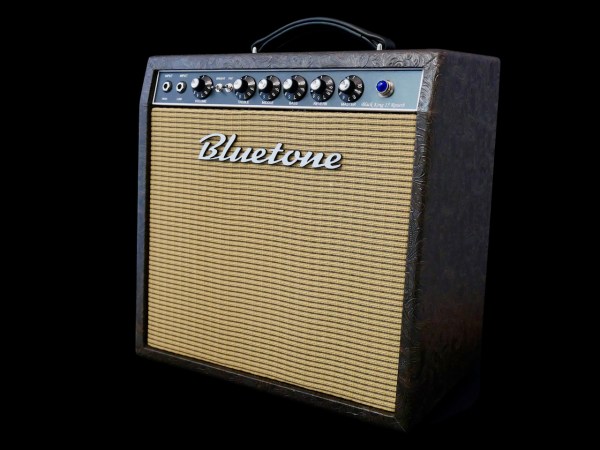
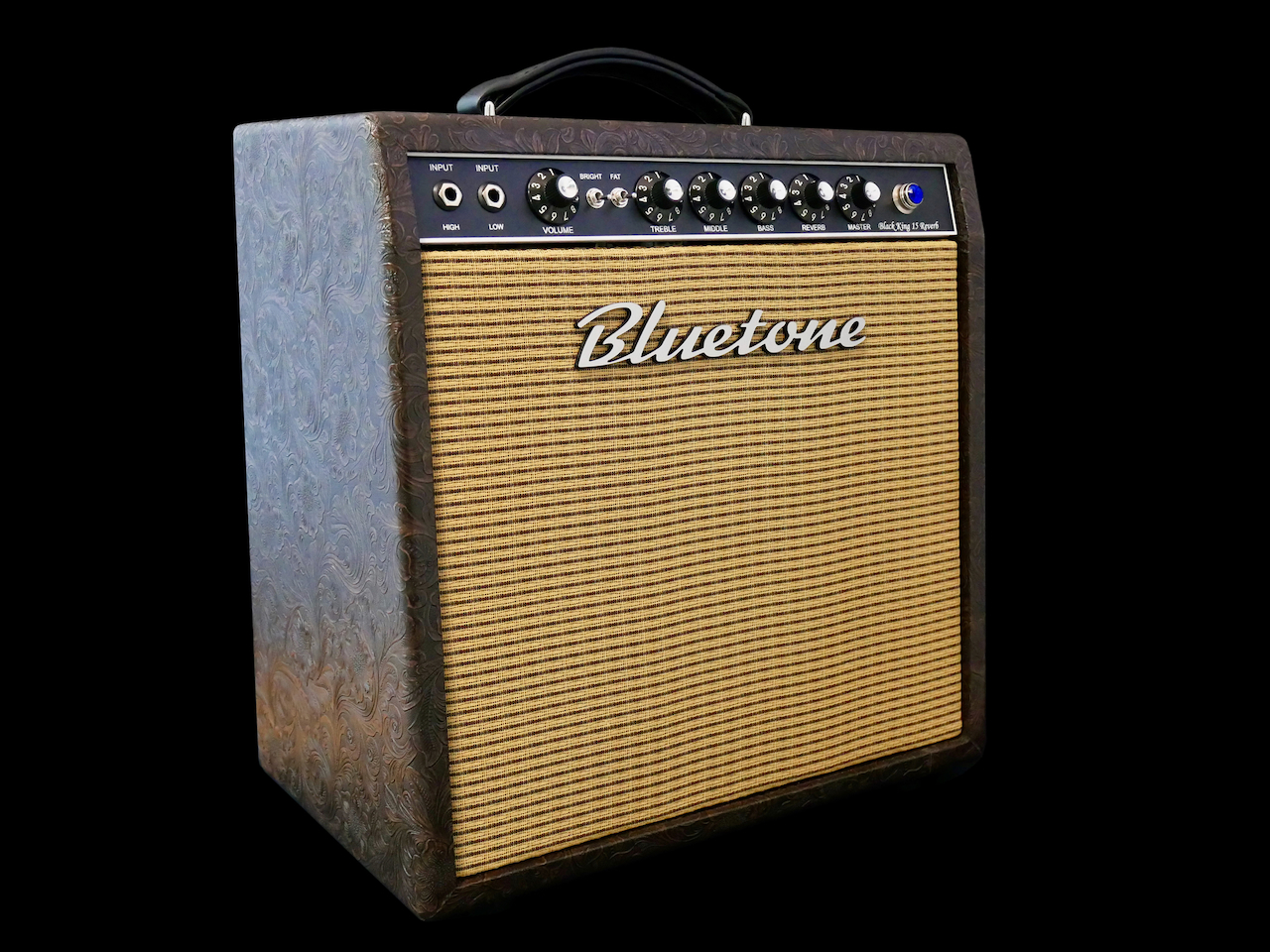
Testipenkissä: Bluetone Black King 15 Reverb

****

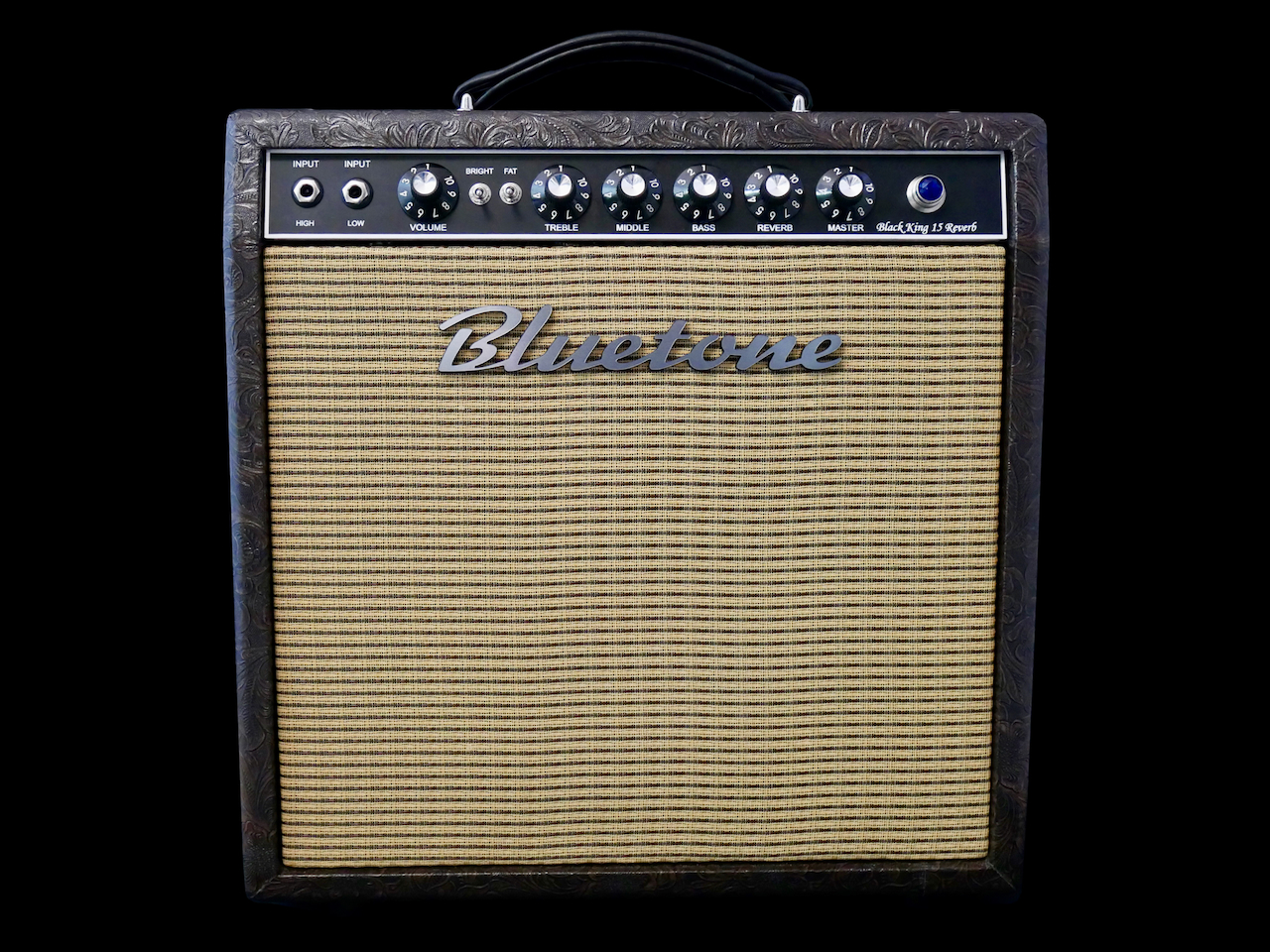
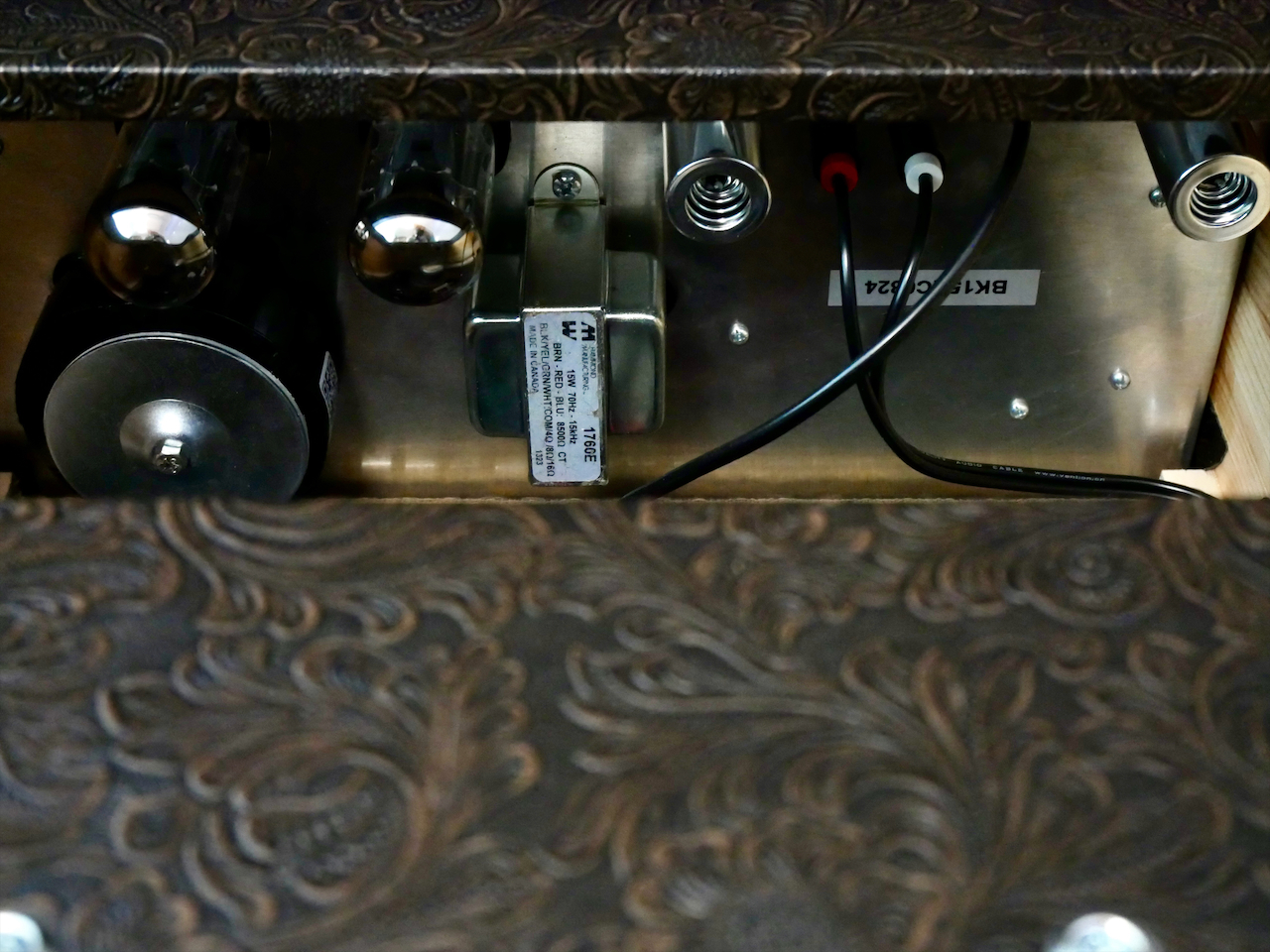
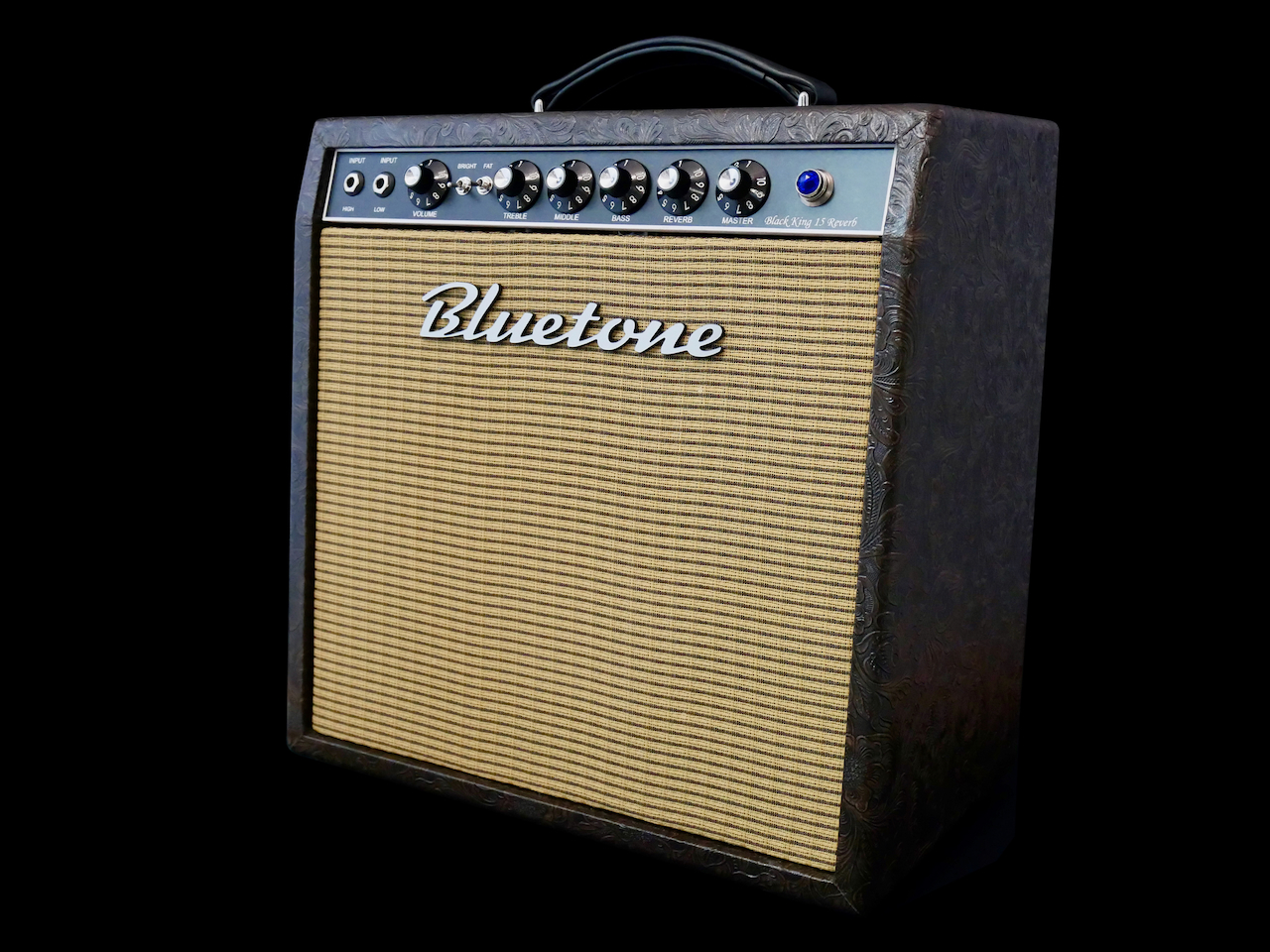
Bluetonen uusi Black King 15 Reverb (hinta alkaen 1.440 €) on kätevän kokoinen (9 kg), yksikanavainen ja käsintehty putkivahvistin. Se on vuoden alussa ilmestyneen Black King Reverb -kombon pikkuveli, joka tarjoaa 15 wattia päätetehoa kahdesta 6V6GT-putkista.

Black King 15 Reverbin soundillinen esikuvana on toiminut suhteellisen harvinainen Fender Vibro King -vahvistin, joka oli tuotannossa vuodesta 1993 vuoteen 2003, ja josta on sittemmin tullut The Who -yhtiön Pete Townshendin luottotyökalu livenä.

Tärkein ominaisuus soundin ja soitettavuuden kannalta on Bluetone Black King 15 -kombossa etuvahvistimen gain-rakenne, joka on hieman Blackface-tyyliä ärhäkkäämpi, ja joka istu soundiltaan Blackface-, Tweed- ja Marshall-tyypisten vahvistimien muodostuman kolmion keskipisteellä.

****

Bluetone Black King 15 Reverb -kombo on Fender-tyylisessä kotelossa, joka on samaa kokoluokkaa 1960-luvun Princeton-kombon kanssa. Country and Western -tolex ja vaaleanruskea etukangas ovat tässä mallissa standardia.

Etupaneelista löytyy etuasteen Volume-säätimen lisäksi kolmialueinen EQ-osasto kahdella lisäboosteilla – Bright (diskantti) ja Fat (ala-middle). Jousikaiulle löytyy oma säädin, samoin kuin vaihekääntäjän jälkeiselle Master-volyymille.

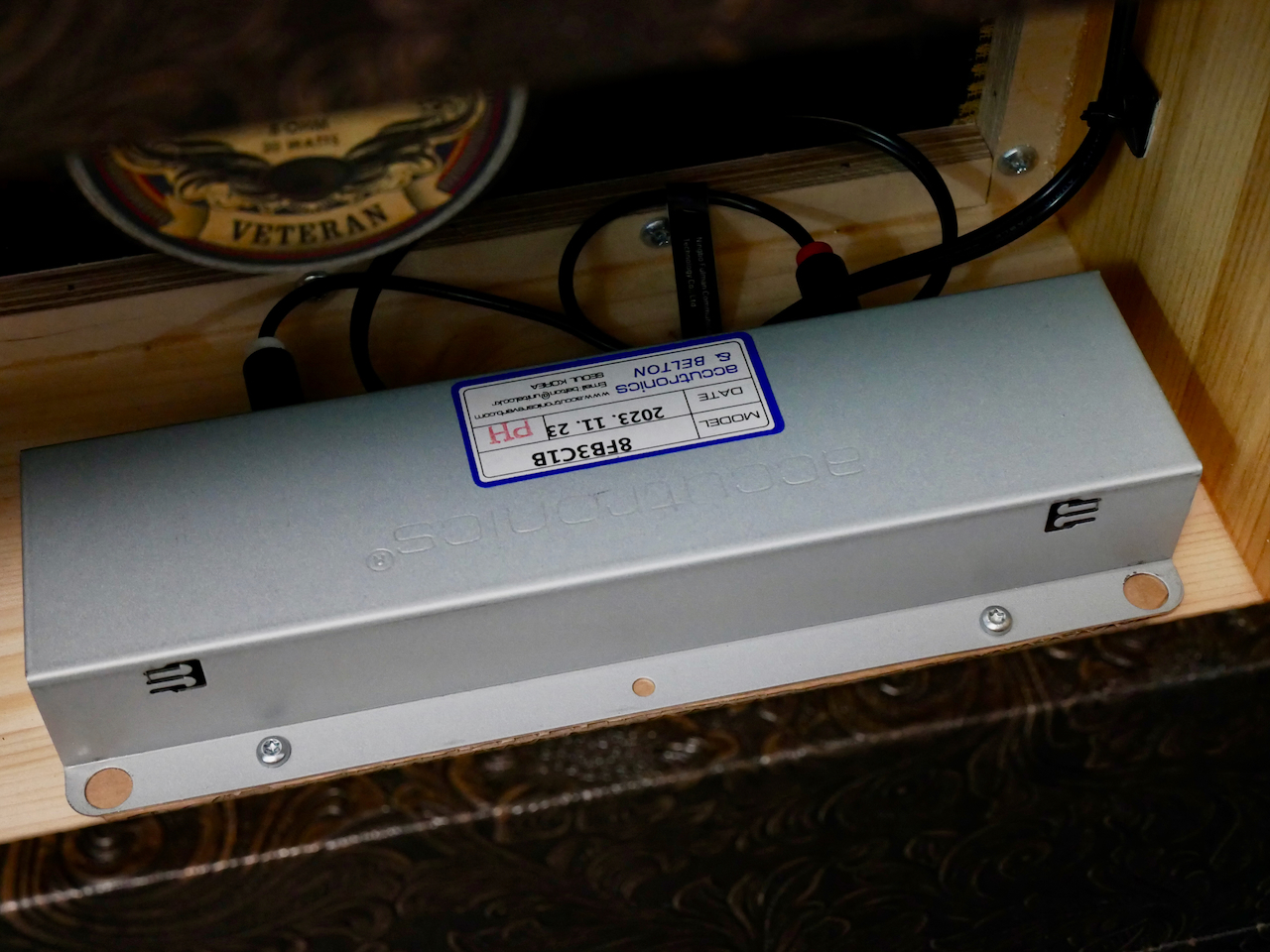
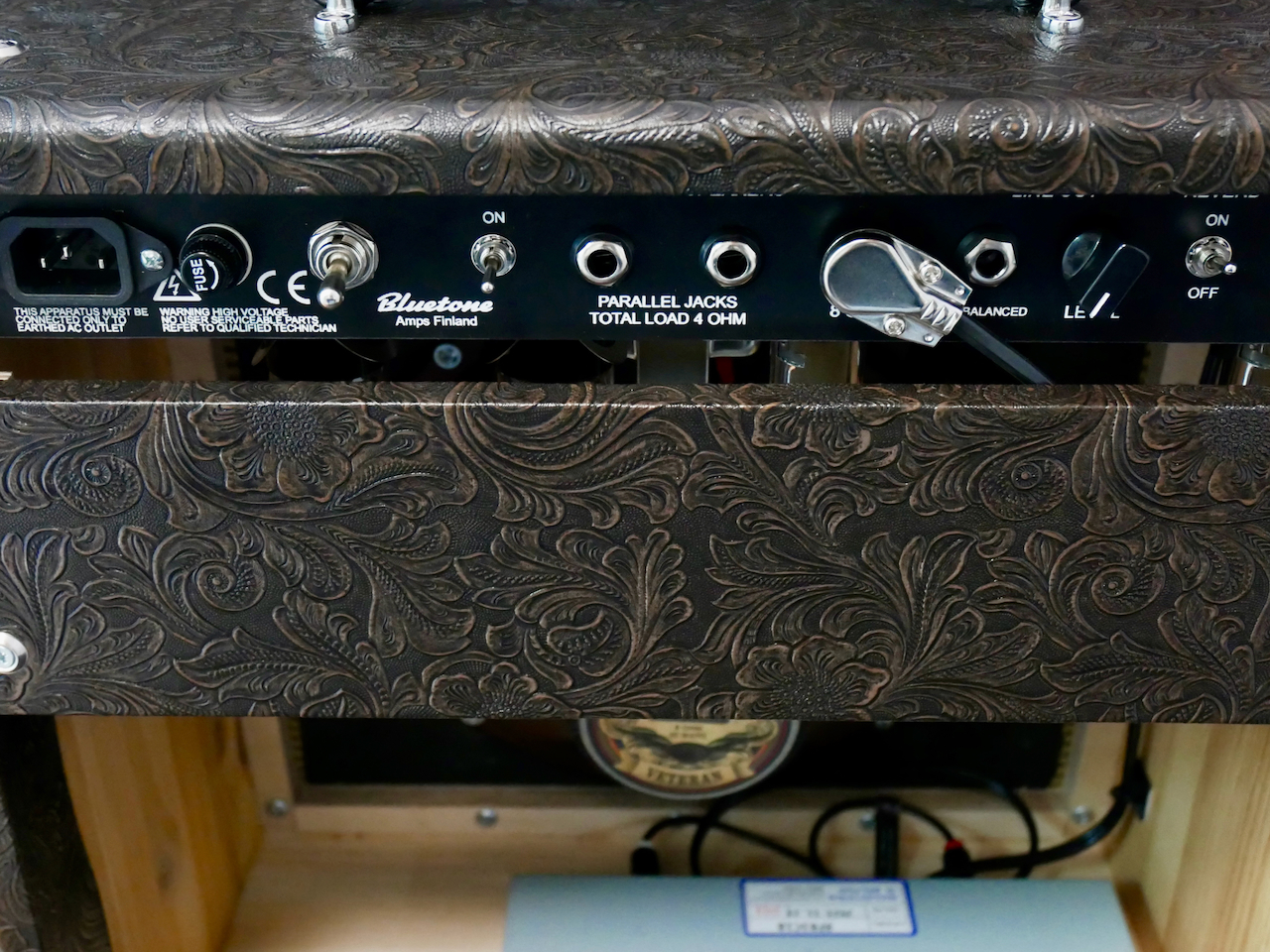
Takapaneeliin on päälle/pois-kytkimen lisäksi sijoitettu sisäisen keinokuorman kytkin, jolla saa kombon oman kaiuttimen kytkettyä turvallisesti pois päältä, jos haluaa käyttää pelkästään Black King 15:n omaa linjalähtöä. Lisäksi takapaneelista löytyy jakkeja ulkoisille kaiuttimille, sekä jousikaiun oma päälle/pois-kytkin.

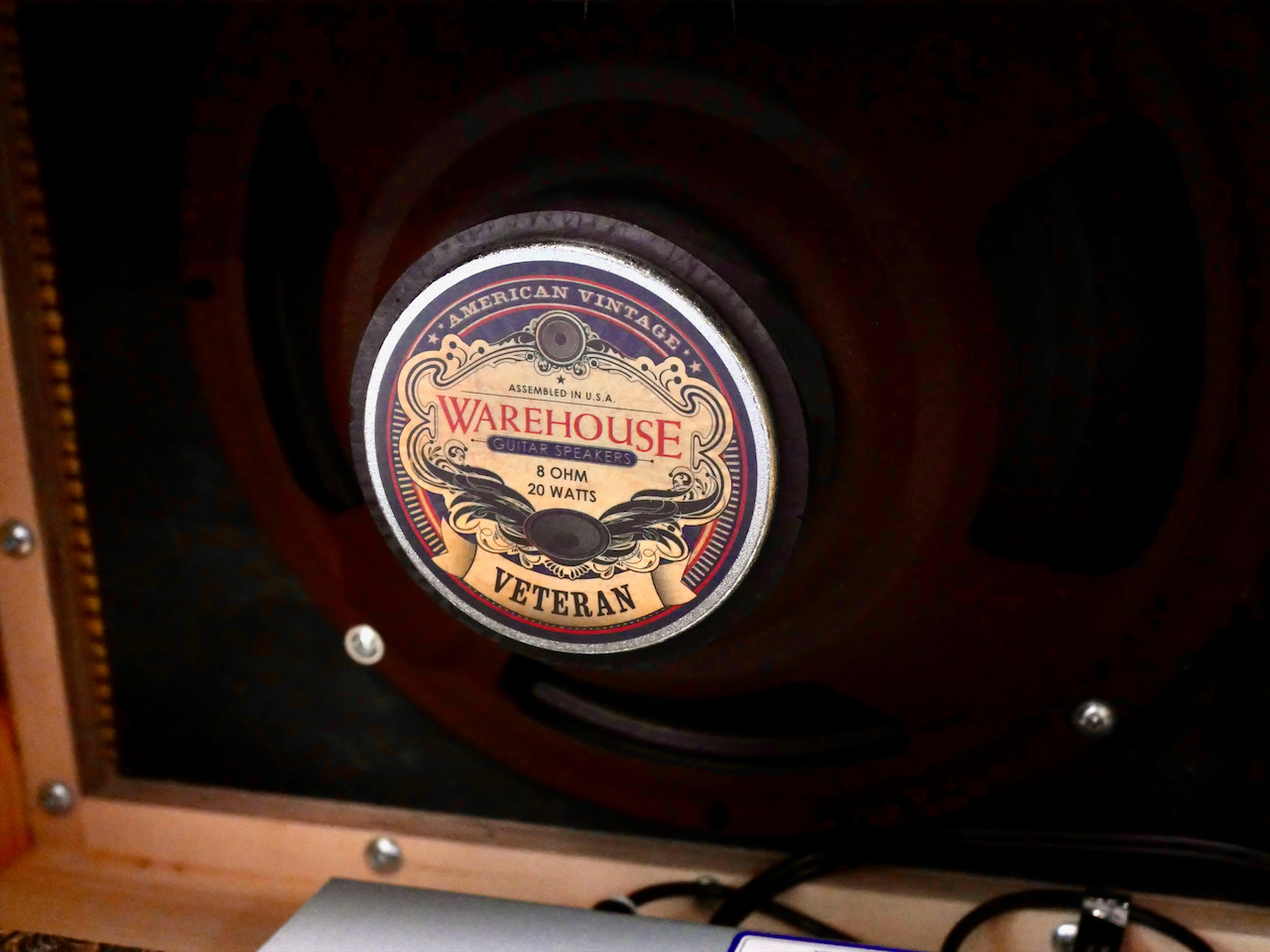
Testikomboon on asennettu Warehouse Speakersin 20-wattinen kymppituumainen Veteran-kaiutin. Vaihtoehtoisesti Black King 15 Reverbiä saa myös saman firman G10-C/S-kauittimella varustettuna.

****

Bluetone Black King 15 Reverb -kombo on erittäin siististi toteutettu vahvistin, joka vaikuttaa laadukkaalta heti kättelyssä. Yksi silmiinpistävä ero tällaisen laadukkaan boutique-vahvistimen ja monen massatuotetun putkikombon välillä on Bluetonen todella alhainen kohina- ja hurinataso. Se kielii kombon laaddukkaista komponenteista ja tärkeiden osien – esimerkiksi muuntajien – osaavasta sijoittelusta laitteessa.

Black King 15 -vahvistimen 6V6GT-putkilla toimiva päätevahvistin antaa soundille luonnollisesti hyvin Fender-maisen karakteerin. Etuvahvistimen gain-rakenne tarjoaa hyvin headroomia puhtaille soundeille, mutta alkaa lisätä herkullista rosoa selvästi aiemmin kuin esimerkiksi tyypillinen Blackface-kombo.

Breakup-vyöhykkeellä Black King 15 Reverb mahdollistaa hyvin dynaamista soittoa, jossa vahvistin reagoi dynamiikkaan eriasteisella säröllä.

Black King 15 Reverb tarjoaa runsaasti säröä, ja kombon Master-volumen ansiosta se on saatavilla myös hyvin maltillisella volyymitasolla. Vahvistin myös pelaa erittäin hyvin efektipedaalien kanssa.

Etuvahvistimen loistava EQ-osasto Bright- ja Fat-lisäkytkimillä antaa kitaristille laajan skaalan erilaisia soundeja, minkä ansiosta Bluetone Black King 15 toimii ongelmitta monissa genreissä.

Jos Blackfacea hieman ärhäkkäämpi kompakti Fender-tyylinen kombovahvistin kiinnosta, kannattaa minun mielestäni ehdottomasti tutustua Bluetone Black King 15 Reverbiin. Se tarjoaa ehtaa boutique-laatua reiluun hintaan.

Bluetone Black King 15 Reverb + Testi tulossa + Working on a review

The Bluetone Black King 15 Reverb is a lightweight 15-watt all-valve guitar combo handmade in Finland. The preamp is inspired by a Fender Vibro King amp. The power amp runs on two 6V6GT tubes. Find out more HERE.

****

• lead guitar: Hamer USA Studio Custom; neck pickup; distortion adjusted with the guitar’s volume control

• rhythm guitars: Fender (Japan) ’62 Telecaster Custom reissue + Epiphone Casino with Göldo pickups

• all guitar tracks were recorded with a Shure SM7B microphone running into a Cranborne Audio Camden EC2 preamp

• no pedals used

• a little bit of delay and reverb was added during mix down

****

• rhythm guitars: Brownsville Choirboy 12-string electric (left), Fender Stratocaster (centre), Fender Telecaster (right) – no pedals used

• lead guitar: Hamer USA Studio Custom through a Uraltone Fuzz Face Si clone with delay added at mixdown

• mic used: Shure SM7B

• audio interface: Universal Audio Volt 2

”Sleep Walk” + Jackson JS32 Dinky

• Alun perin ”Sleep Walk” oli Santo ja Johnny Farinan kirjoittama instrumentaalikappale, joka ilmestyi vuonna 1959
• Joe Satriani levytti biisistä hyvän version vuonna 2002. Se on juuri Satrianin versio, josta sain inspiraatiota äänittää oman coverin.
• Kitara: Jackson JS32 Dinky
• Pedaalit: Mad Professor Simble OD ja EHX Memory Toy
• Vahvistin: Bluetone Black Prince Reverb
Here’s my version of the Santo & Johnny classic ”Sleep Walk”, inspired by Joe Satriani’s cover version.
****
• Guitar: Jackson JS32 Dinky
• Pedals: Mad Professor Simble OD & Electro-Harmonix Memory Toy
• Amp: Bluetone Black Prince Reverb
• Microphone: Shure SM7B
• Interface: Universal Audio Volt 2

Review: Squier Sonic Mustang SS

From the late 1970s on, Fender’s student-oriented models began to find their way into the hands of musicians from the Punk, New Wave, Grunge and Alternative Rock genres.

The reasons for this can be found both in the musicians’ budgets, as well as in the guitars’ image. The average guitarist wanted to play with ”familiar and safe” models, and in Fender’s case, these were the Telecaster and Stratocaster.

At the end of the 1970s, Fender’s so-called student instruments, that were very popular in the 1950s and 60s, could be found very inexpensively second-hand. With the Mustang, Duo-Sonic or Musicmaster, the young New Wave musician got genuine Fender quality at a very affordable price, and since these instruments were not – at least at the time – collector’s items, modifying the guitars to suit the needs of the ”new music” was no problem.

Many guitarists of the new genres – e.g. the Talking Heads’ David Byrne, Sonic Youth’s Thurston Moore and Nirvana’s Kurt Cobain – added more powerful pickups to their Duo-Sonic or Mustang to better suit their sound. This resulted in distinctive guitars that certainly weren’t ”your dad’s Country guitar”.

Last year, Fender’s subsidiary Squier Guitars changed the name of its most affordable line from Affinity to Sonic, and at the same time expanded the range of instruments in the series.

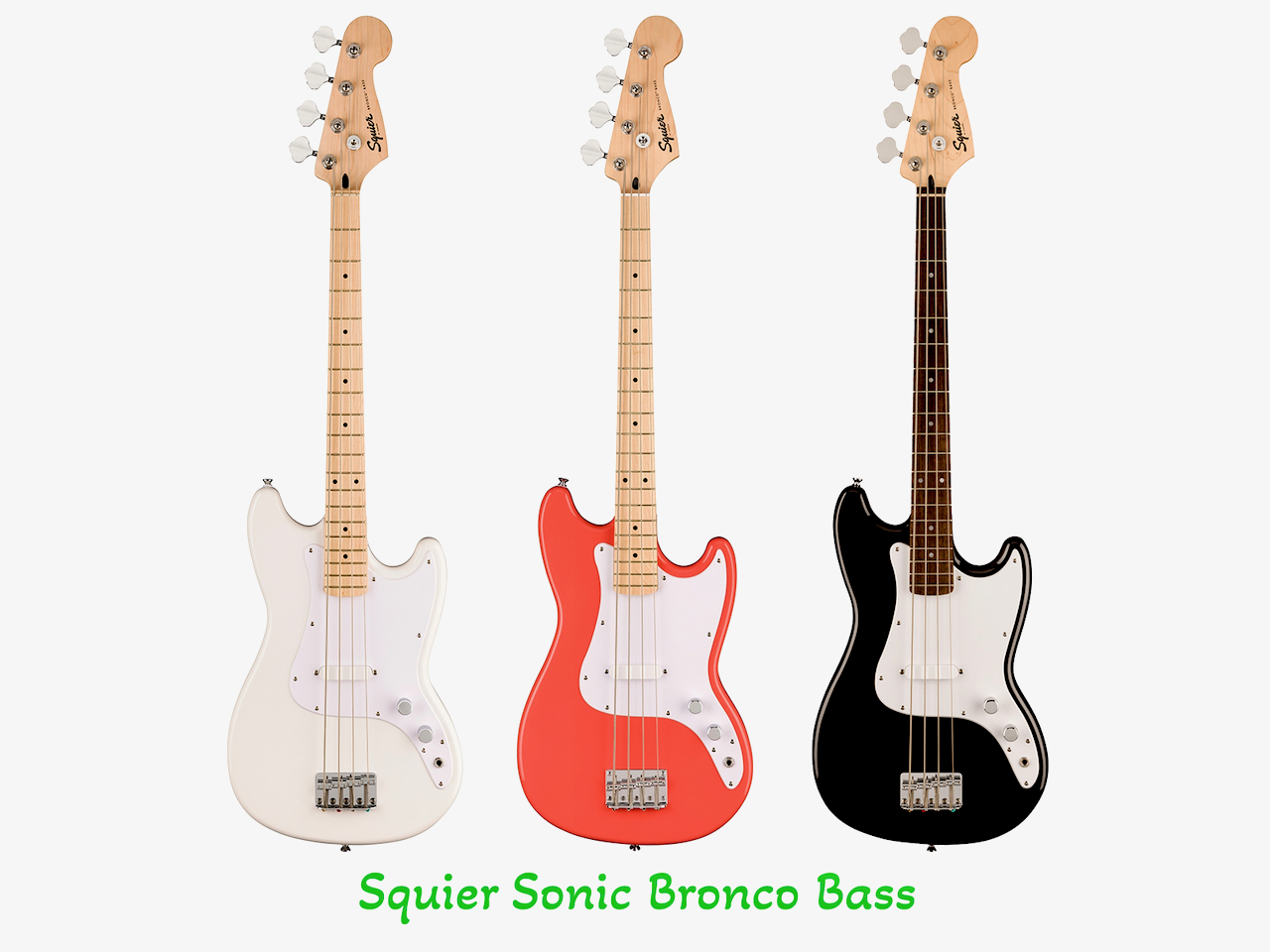
There are now two different Mustang guitars in the Sonic series, of which the Mustang HH offers two humbucker pickups, while the Mustang SS, like the original Fender, comes equipped with two single coils. Both models are offered in two different colour options as standard, which in the case of the Mustang SS model are sunburst and Torino Red. The Mustang HH comes in light blue and pink. The Sonic Bronco bass is now available in three different colors – white, red and black.

A vintage enthusiast would be the first to point out that, according to Fender’s original terminology, the Squier Sonic Mustang SS (street price approx. 180-200 €) is not a Mustang, but a Duo-Sonic, as the model has a fixed bridge and a three-position pickup selector. I would bet that Fender and Squier have decided that the name Mustang is simply cooler and better known than Duo-Sonic, which is why all their short-scale models with the same body shape are currently called Mustangs, despite the streamlined electronics and bridge.

However, the familiar basic recipe still applies:

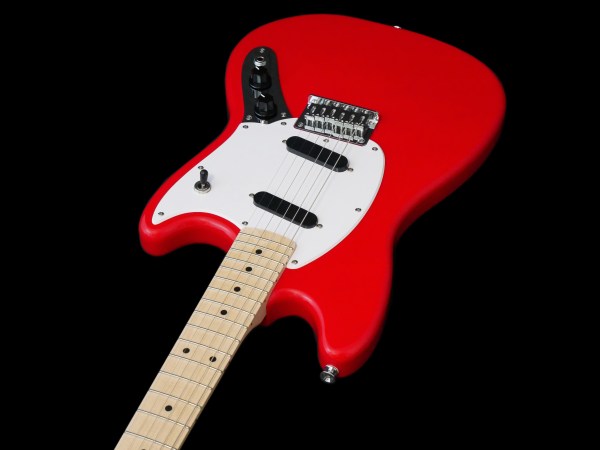
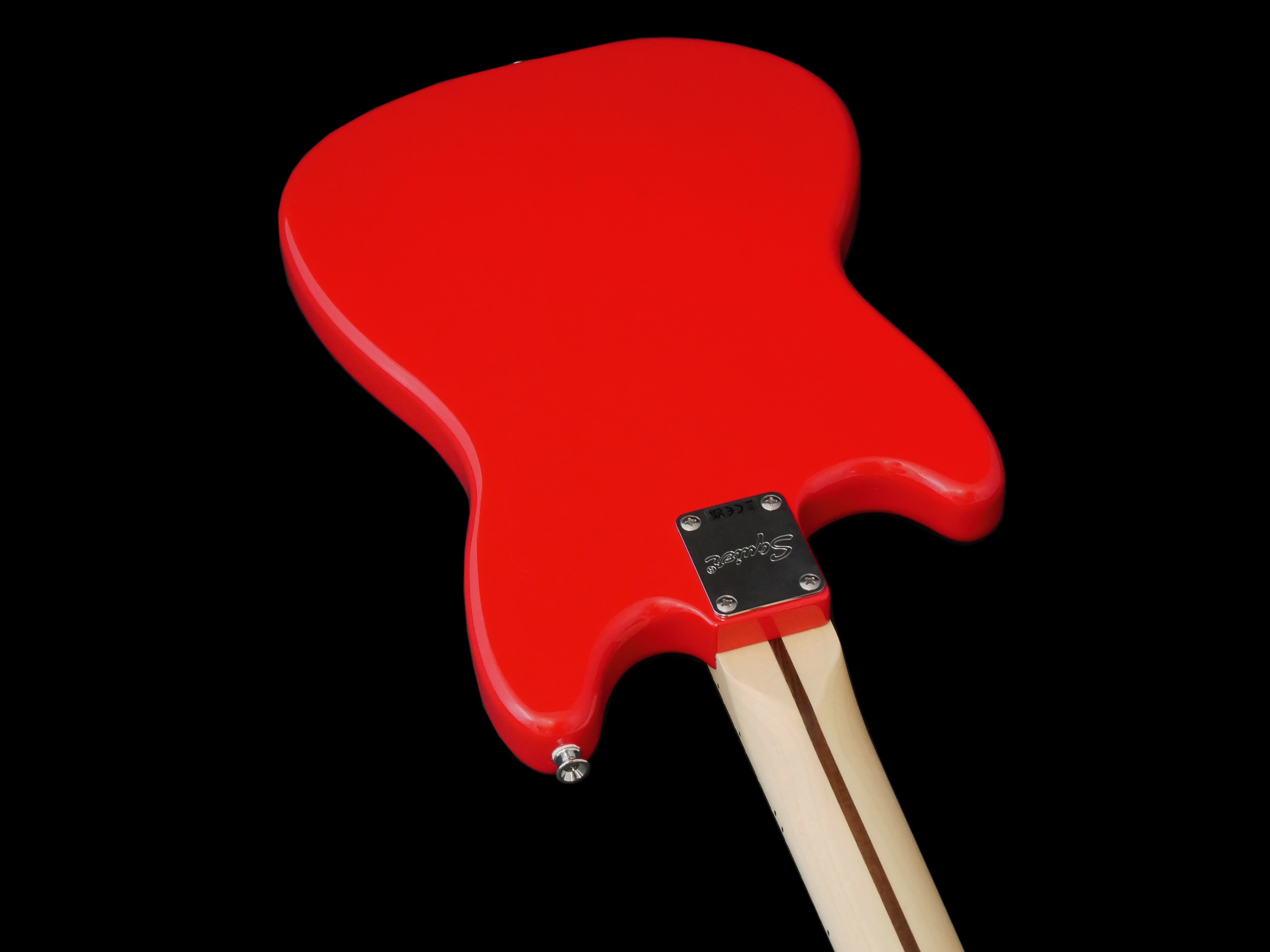
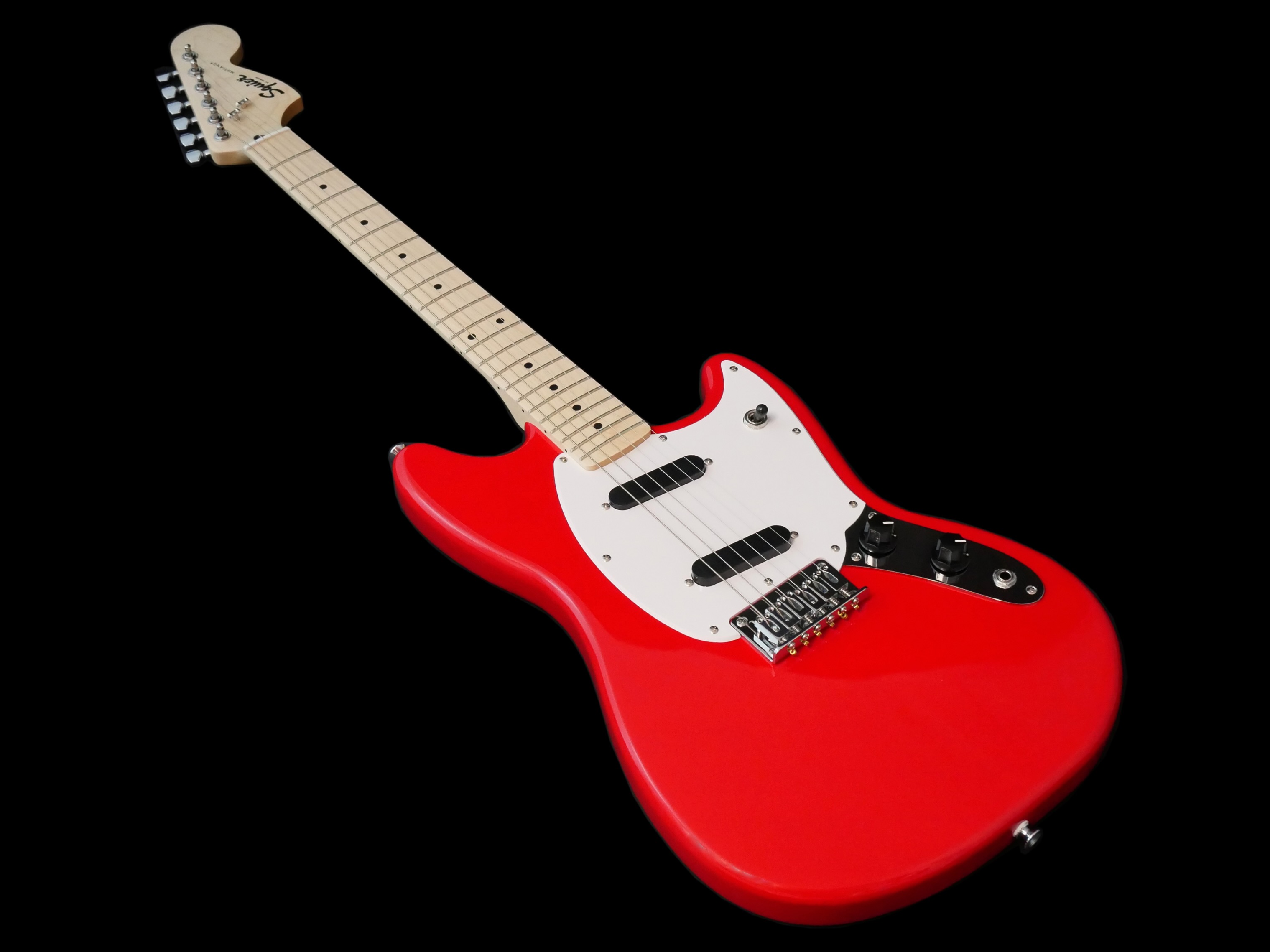
The Squier Mustang SS is an electric guitar with a 24-inch scale. The bolt-on maple neck has a maple fingerboard and well-installed 22 vintage-style frets.

The offset body of the Mustang SS is a slab number with rounded edges, but without any chamfers.

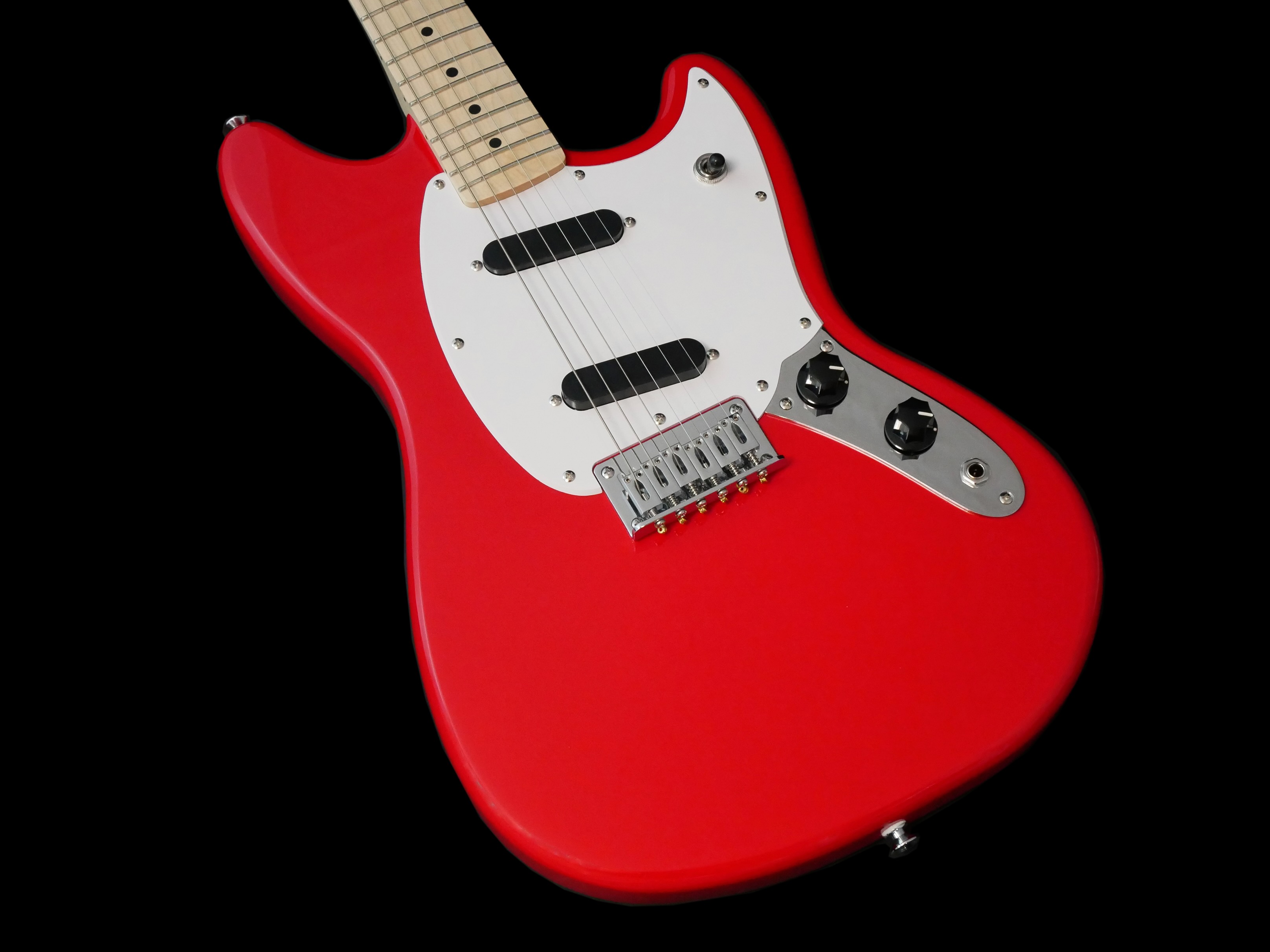
The thick single-layer plastic pickguard is typical for Sonic series instruments. Mustang’s two single-coil pickups – with closed black plastic covers – and a three-position mic selector are installed onto the pickguard.

The Squier guitar’s volume and tone controls, as well as the output jack, are placed on a chrome-plated metal plate.

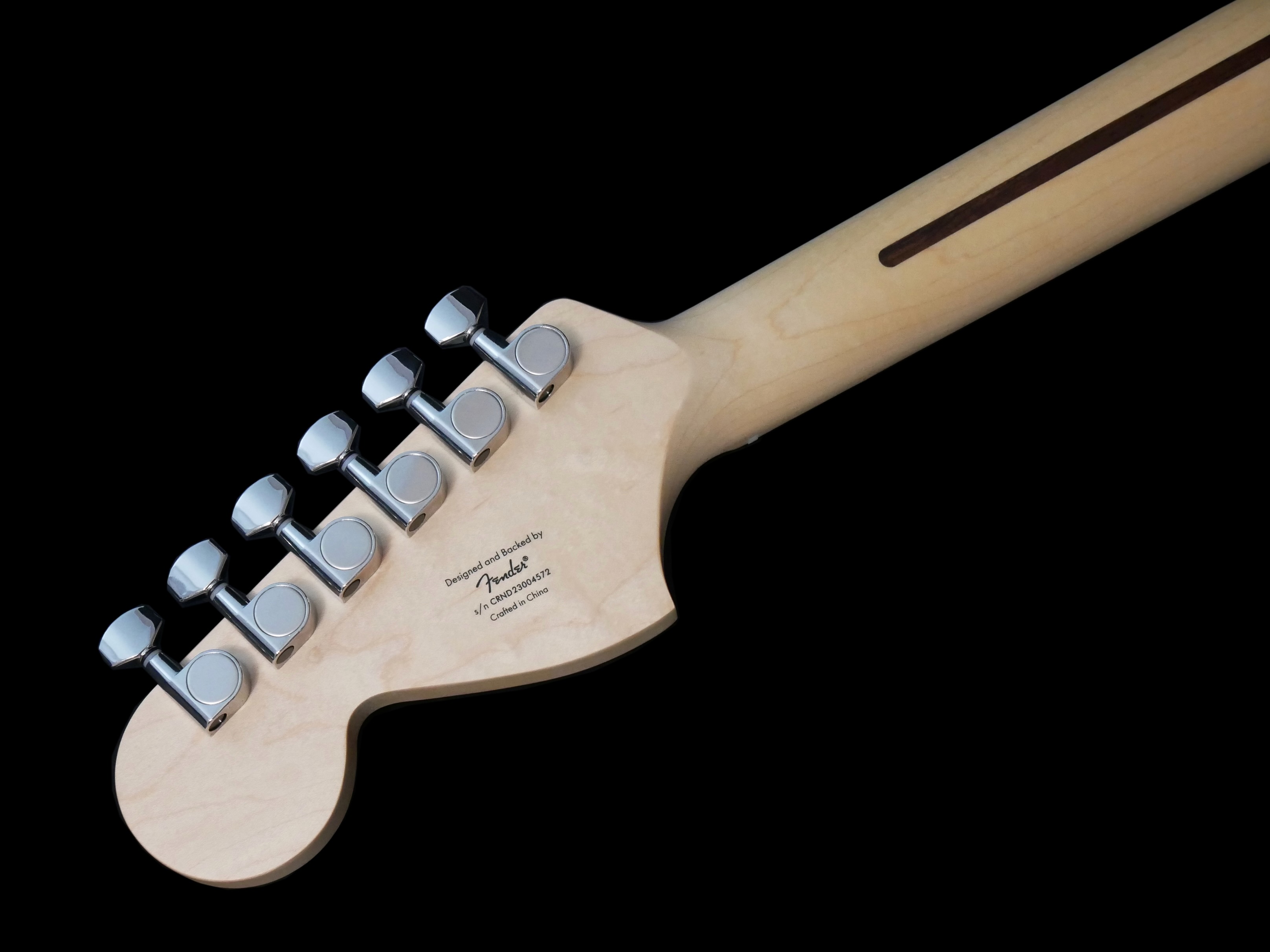
The Mustang’s modern sealed tuners work well, as does the Sonic model’s fixed bridge with six separate saddles.

Straight out of the shipping carton, the test guitar is almost ready to play – only the action and intonation had to be fine-tuned. The guitar doesn’t suffer from sharp fret ends sticking, or other ”cheap guitar” problems. The workmanship seems fine.

The new Squier Sonic Mustang SS weighs a bit more than the original edition from the 1960s, but in light of the Mustang’s very affordable price, this is to be expected and perfectly okay.

The Squier Sonic Mustang SS model has a decent 009 set of strings installed at the factory, which is probably a good choice for the guitar’s target group (children and young people). The playing feel is very effortless and light, and the Mustang chimes very nicely. I played all the guitar tracks in the demo video with Squier’s factory-installed strings.

However, the feel of the 009 string set on a guitar with a 61 cm scale is too loose for me, which is why I changed over to the same 010-052 strings that I use in all my electric guitars. With these strings, the Sonic Mustang SS immediately has a firmer playing feel, which is not very different from, for example, a Gibson SG.

Although the scale of the Sonic Mustang is much shorter than that of Telecasters or Strats, there is a definite dose of ”Fender-ism” in the sound of the guitar, thanks to the single-coil pickups. Because the Mustang’s pickups are placed in somewhat different places relative to the scale than, for example, in the Telecaster, the model always displays its own recognisable sound. The Mustang’s tone rings like a bell, but is never as biting as, for example, the output of a Stratocaster.

”Paranoid” pienellä budjetilla +++ ”Paranoid” on a small budget

Silloin kun aloitin kitaran soittamista – 1970-luvulla – ”halvat” kitarat ja vahvistimet olivat yleensä huonoja. Nykypäivänä asiat ovat onneksi muuttuneet, ja edullisilla soittovehkeillä pystyy saamaan tarpeeksi hyviä soundeja, ettei innostus musiikin tekemiseen loppu.

Jos budjetti on pieni, eikä tarkoitus ole soittaa kokonaisen bändin kanssa, saa jo tällaisella kattauksella aikaiseksi ”olohuonekitaristia” tyydyttäviä soundeja.

When I first started playing guitar – in the 1970s – ”cheap” guitars and amps were generally bad. Fortunately, things have changed, and you can get satisfying sounds with relatively inexpensive equipment.

If your budget is small, and you don’t aim at playing with a whole band, a small set-up like the above will keep you going for a good while.

Pidä blogia WordPress.comissa.

Ylös ↑