
Uusi Rockway-juttu löytyy TÄÄLTÄ.


Kitarablogi.com – Finland's premier Guitar and Bass blog
Juttuja kitaroista ja bassoista

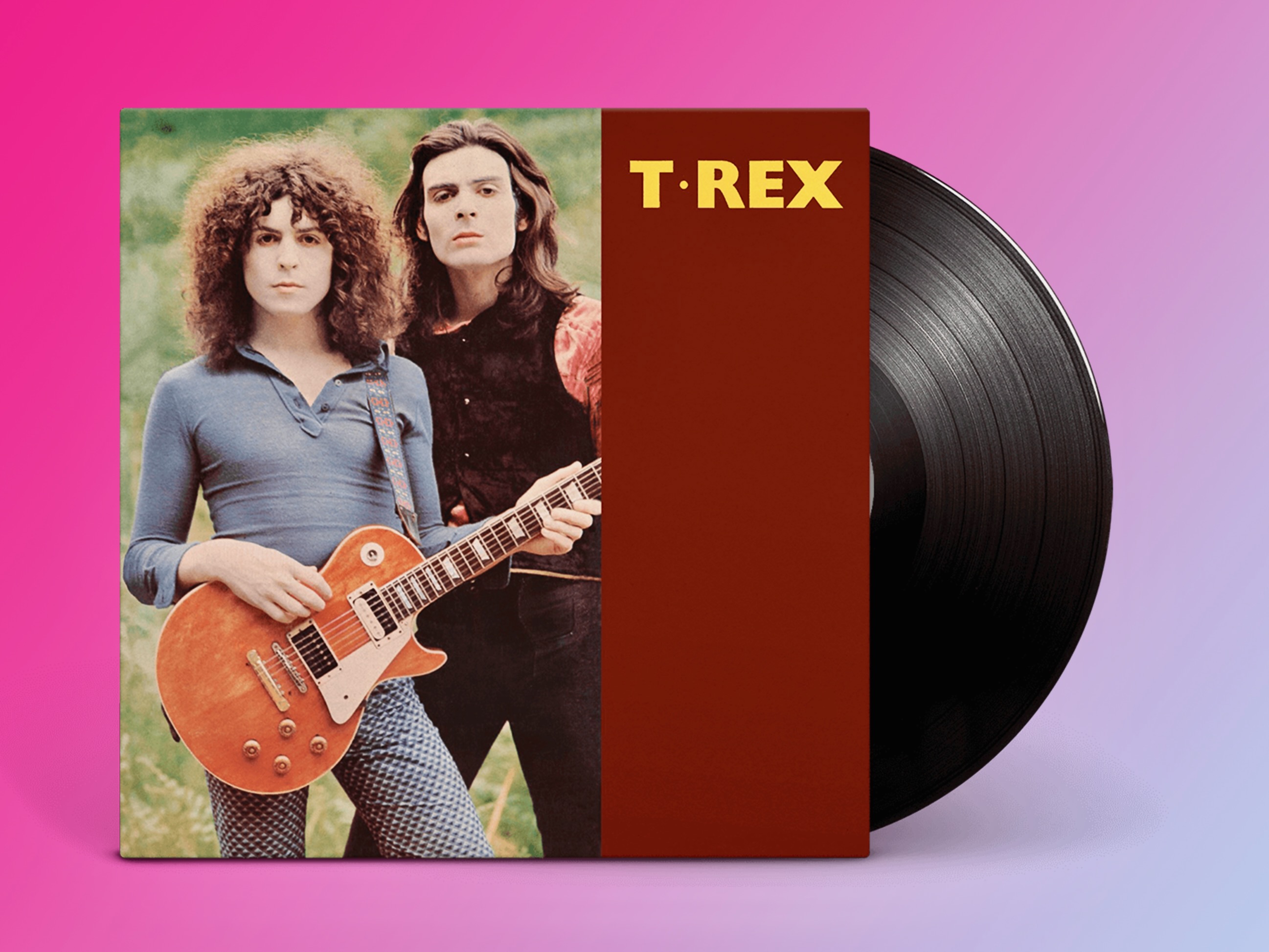
To many the Glam Rock genre was born with the release of T. Rex’ eponymous album in December 1970, as well as with the band’s two standalone singles ”Ride A White Swan” (10/1970) and ”Hot Love” (02/1971). The album ”Electric Warrior” (released in September ’71) – and especially its huge hit single ”Get It On (Bang A Gong)” – then shot the band into the stratosphere.
Marc Bolan’s idiosyncratic vocal delivery, charged with unveiled eroticism, was an important ingredient in the band’s success, but for many the real magic happened in the T. Rex guitar sound. Probably the most important ingredient in Bolan’s tone was a rather rare British fuzz box, called the John Hornby Skewes Shatterbox. Even though the Shatterbox was a two-in-one box that added a switchable treble booster to the fuzz, Marc Bolan tended to rely on the fuzz effect only, while using a Dallas Rangemaster for boosting purposes.
Fans of the T. Rex guitar sound were facing a dilemma; Rangemaster copies aren’t that hard to come by, but Shatterbox Fuzz copies are almost impossible to find. That is, until now…

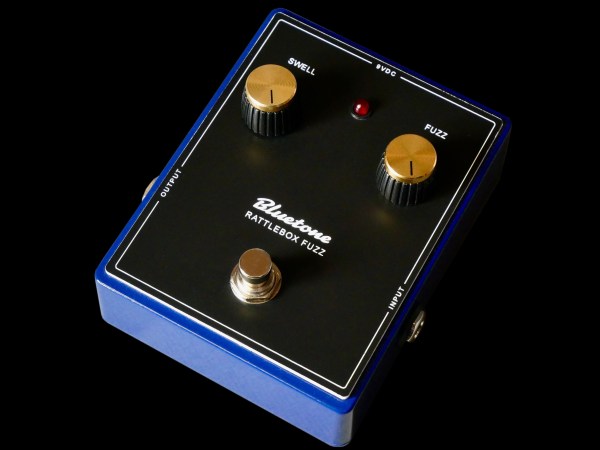
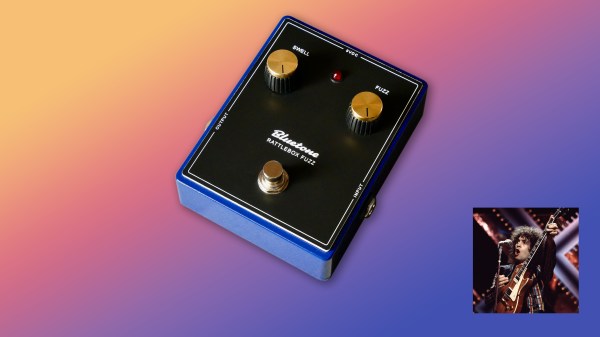
The brand-new Bluetone Rattlebox Fuzz (220, – €) is a slightly modernised version of the original 1960s Shatterbox.
Bluetone’s Rattlebox contains a sensibly updated version of the Shatterbox’ original fuzz circuit. The Rattlebox is extremely easy to use, because it sports only two controls – Swell (the gain control) and Fuzz (the volume).
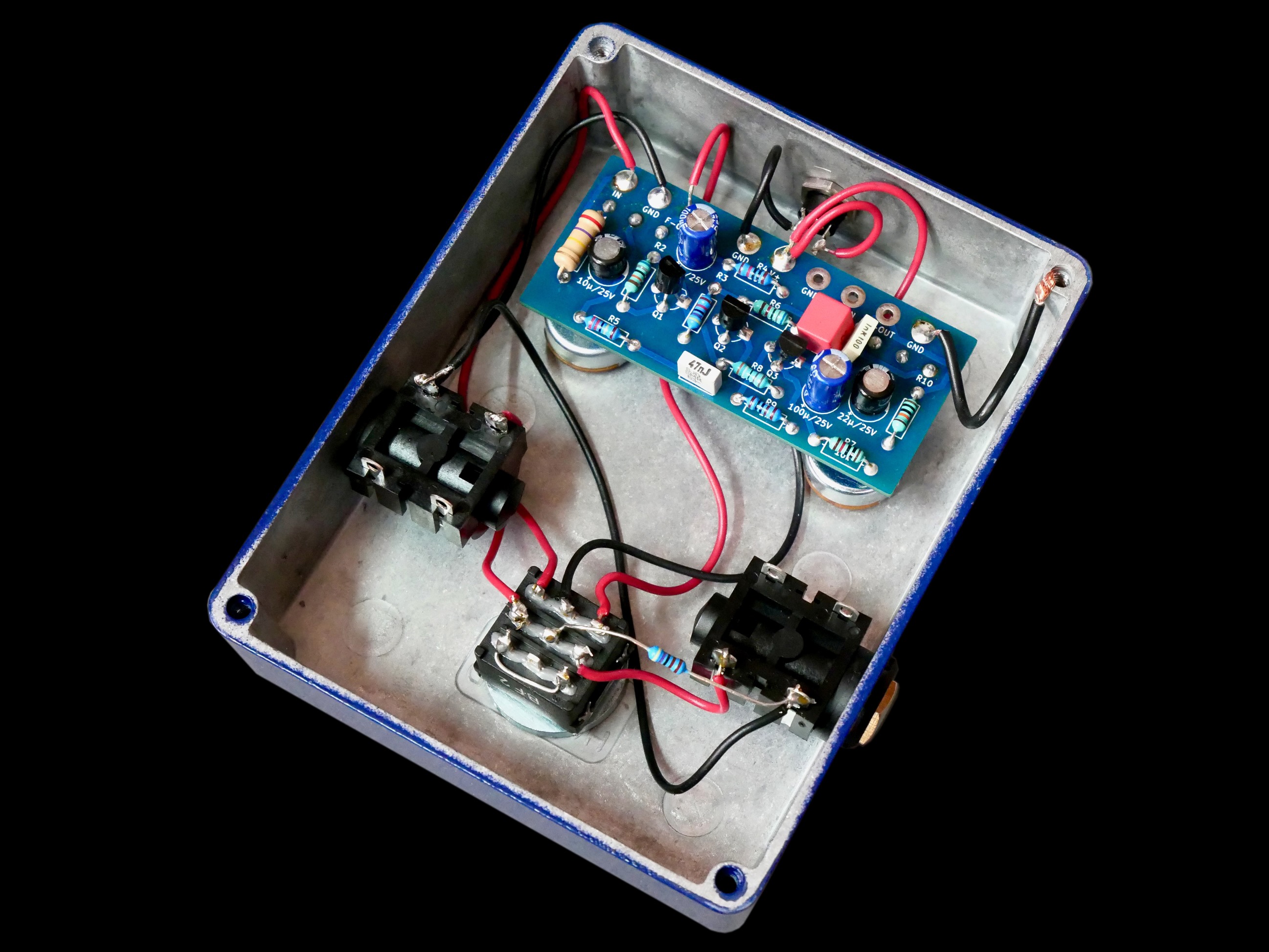
The Bluetone Rattlebox’ circuit is designed around three silicon transistors. The built-quality is top notch, without resorting to any point-to-point-voodoo. This effect runs on any Boss-type nine-volt power supply.
****
What does the Bluetone Rattlebox offer you that you cannot get from other fuzz pedal?
Compare to a silicon Fuzz Face, for example, the Rattlebox sounds much fatter, and its bite is situated in a slightly lower frequency range.
Speaking of which: Fuzz Faces – and similar designs – are usually used with the gain turned up full or almost full. Then you use you guitar’s volume control to find your personal sweet spot.
This ”pedal to the metal” approach doesn’t work that well, when applied to the Bluetone Rattlebox. There are two reasons for this:
For one, Bluetone’s new fuzz reacts very interactively to the pickup feeding the signal to the pedal, and, secondly, the ”wrong” choice of Swell setting will make the pedal gate rather easily, sometimes even sounding like a broken guitar cable.
The Rattlebox is best approached by carefully going over the settings across the whole range of the Swell control to find the best spots to achieve the desired sound with your guitar.
In this example I recorded a silicon Fuzz Face clone (first half) and the Bluetone Rattlebox (second half) with the controls turned full up on both pedals. With these settings the Rattlebox leaves clearly audible gating artefacts with the guitar’s (SG Junior copy) own volume turned down.
****
You can get beautiful and creamy rhythm sounds from the Bluetone Rattlebox, as the demo song proves. The lead guitar’s strong gating, on the other hand, is used here deliberately to accentuate each note’s start and finish.
Monien mielestä Glam Rock -genren lähtölaukaus oli T. Rex -bändin vuoden 1970 joulukuussa ilmestynyt albumi ”T. Rex”, sekä yhtiön singlet ”Ride A White Swan” (10/1970) ja ”Hot Love” (02/1971). Syyskuussa 1971 ilmestynyt albumi ”Electric Warrior” – ja etenkin sen sinkku ”Get It On (Bang A Gong)” – lähetti T. Rexiä sitten lopullisesti rakettimaiseen nousuun.
Marc Bolanin omintakeisen, eroottisesti latautuneen laulutyylin lisäksi, T. Rexin menestys perustui pitkälti Bolanin rouheaan kitarasoundiin. Tämän kitarasoundin tärkeä ainesosa oli melko harvinainen brittiläinen John Hornby Skewes Shatterbox Fuzz -pedaali. Vaikka Shatterboxissa oli fuzzin lisäksi vielä treble booster -osio, Bolan käytti mieluummin pelkästään Shatterboxin fuzz-osiota, jonka jälkeen hän ajoi signaalinsa vielä erillisen Dallas Rangemasterin kautta vahvistimeen.
T. Rex -fanien ongelma on pitkään ollut että, vaikka Rangemasterin kopioita on suhteellisen laajasti saatavilla, Shatterbox Fuzzin uusia versioita on ollut tähän mennessä erittäin hankala löytää.
Upouusi Bluetone Rattlebox Fuzz (220, – €) on nykyaikaistettu versio 60-luvun Shatterboxista.
Bluetone Rattleboxista löytyy pieteetillä päivitetty versio esikuvan fuzz-osiosta. Rattlebox on erittäin helppoa käyttää, kun laitteesta löytyy vain Swell- (gain) ja Fuzz-säätimet (volume).
Bluetone Rattleboxin fuzz-piiri on toteutettu kolmella piitransistorilla (engl.: silicon). Toteutus ja työnjälki on kauttaltaan ensiluokkaisen siisti. Rattlebox toimii ainoastaan ulkoisella yhdeksän voltin virtalähteellä.
****
Mitä erikoista Bluetone Rattlebox sitten tarjoaa muihin, enemmän tunnetuihin fuzz-laatikoihin nähden?
Esimerkiksi pii-Fuzz Faceen verrattuna Rattlebox tarjoaa runsaasti enemmän bassoa, ja sen purevuutta löytyy hieman matalammasta keskirekisteristä.
Fuzz Face -tyyliset fuzzit käytetään usein näin, että gainia laitetaan täysille (tai lähes täysille), minkä jälkeen käytetään kitaran volume-säädintä ns. sweet spotin hakemiseen.
Tämä ”nupit kaakkoon” -tyylinen lähestymistapa ei toimi kovin hyvin Rattleboxin kanssa kahdesta syystä:
Ensinnäkin tämä Bluetone-fuzz reagoi hyvin interaktiivisesti eri kitaroiden mikrofoneihin, ja toiseksi ”huonosti” asetettu Swell-arvo johtaa suhteellisen rankkaan geittaukseen, joka voi ääritapauksessa jopa kuulostaa rikkinäiseltä lähtöjakilta.
Rattleboxia kannattaa siis käyttää enemmän niin, että etsii rauhassa eri kitaroiden kanssa ne pisteet Swell-säätimen koko kaaresta, jossa soundi on omasta mielestä paras mahdollinen.
Tässä yksi soundiesimerkki Fuzz Face -kloonista (ensimmäinen puolisko) ja Bluetone Rattleboxista (toinen puolisko), jossa molempien pedaalien säätimet on avattu täysin. Näillä säädöillä ei pysty soittamaan SG Junior -tyylisellä kitaralla hiljaisia fraaseja, ilman Rattleboxin geittaamista.
****
Demobiisi kuitenkin todistaa, että oikeilla Swell-säädöillä löytyy Bluetone Rattleboxista myös herkullisia mietoja särösoundeja. Soolokitara taas käyttää pedaalin geittaamista tehokeinona, jolla alleviivataan jokaisen nuotin alku ja loppu.
****

All pre-WWII guitar amps are muddy-sounding and uninspiring pieces of junk. Right? No, wrong!
Granted, some of those old-timers are almost completely geared towards clean Jazz tones, but you might be surprised by some of the forward-thinking features many of the early guitar amplifiers include.
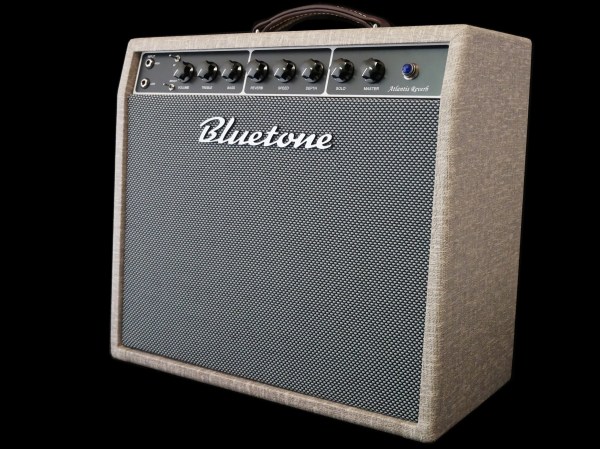
The brand-new Bluetone Atlantis Reverb combo (1,950 €) is a handcrafted Finnish all-valve amp, that is based on one of the most fascinating old designs, the Gibson EH-185 (c. 1940). The original Gibson combo included an active two-band tone stack, which is a feature still only found in a handful of guitar amp designs.
For Bluetone’s Harry and Lauri the ball started rolling, when a customer ordered a quasi-replica of the EH-185 from Bluetone. Intrigued by the challenge, the guys came up with a number of ways to realise the vintage circuit with modern components.
The Bluetone Atlantis Reverb takes these updated circuits, and combines them with a number of Bluetone’s modern features, to arrive at a modern and roadworthy alternative to the late-1930s original.
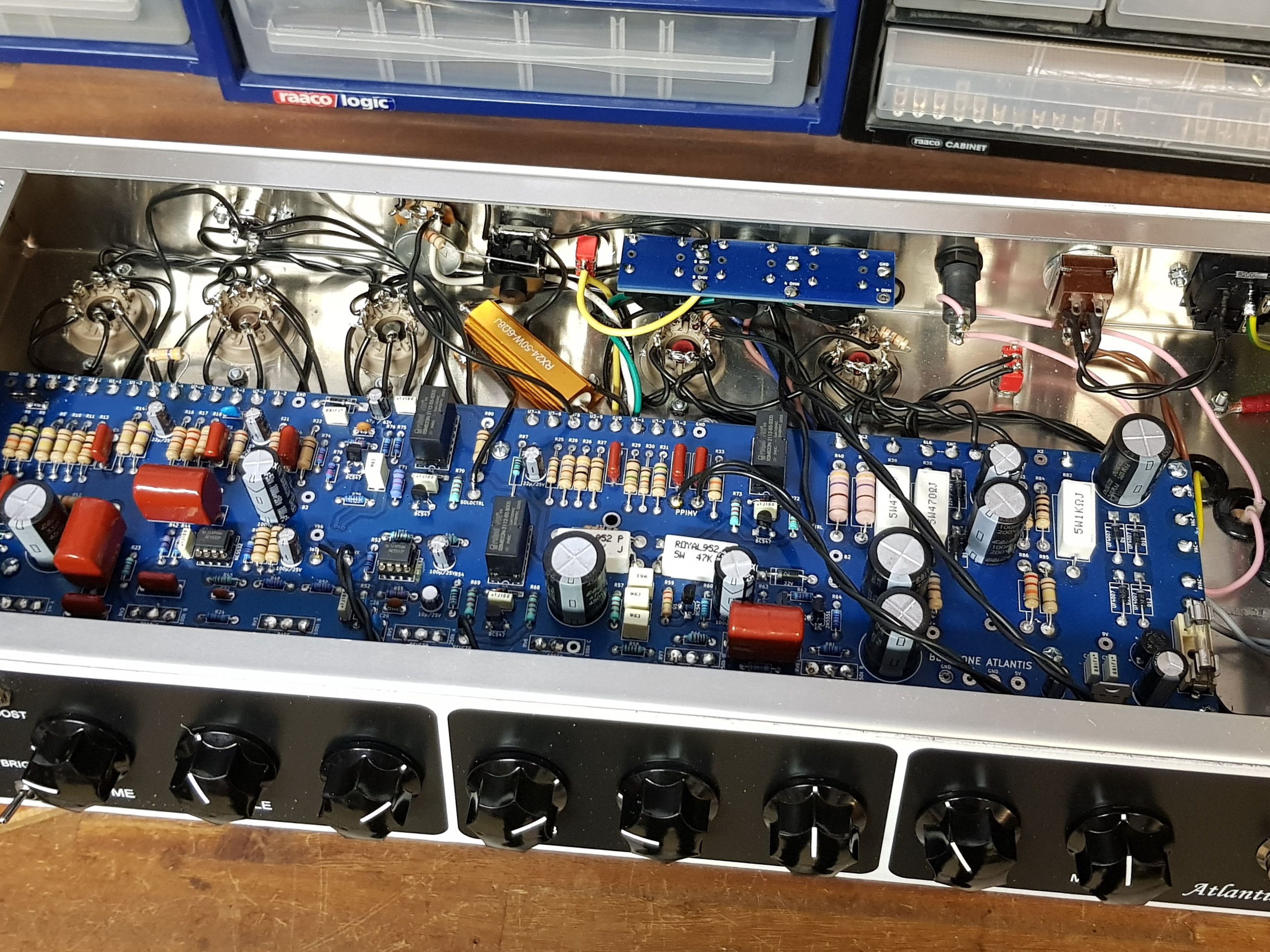
This is what the Atlantis Reverb looks like on the inside – super clean workmanship and top-notch components in a easy-to-service PCB layout.
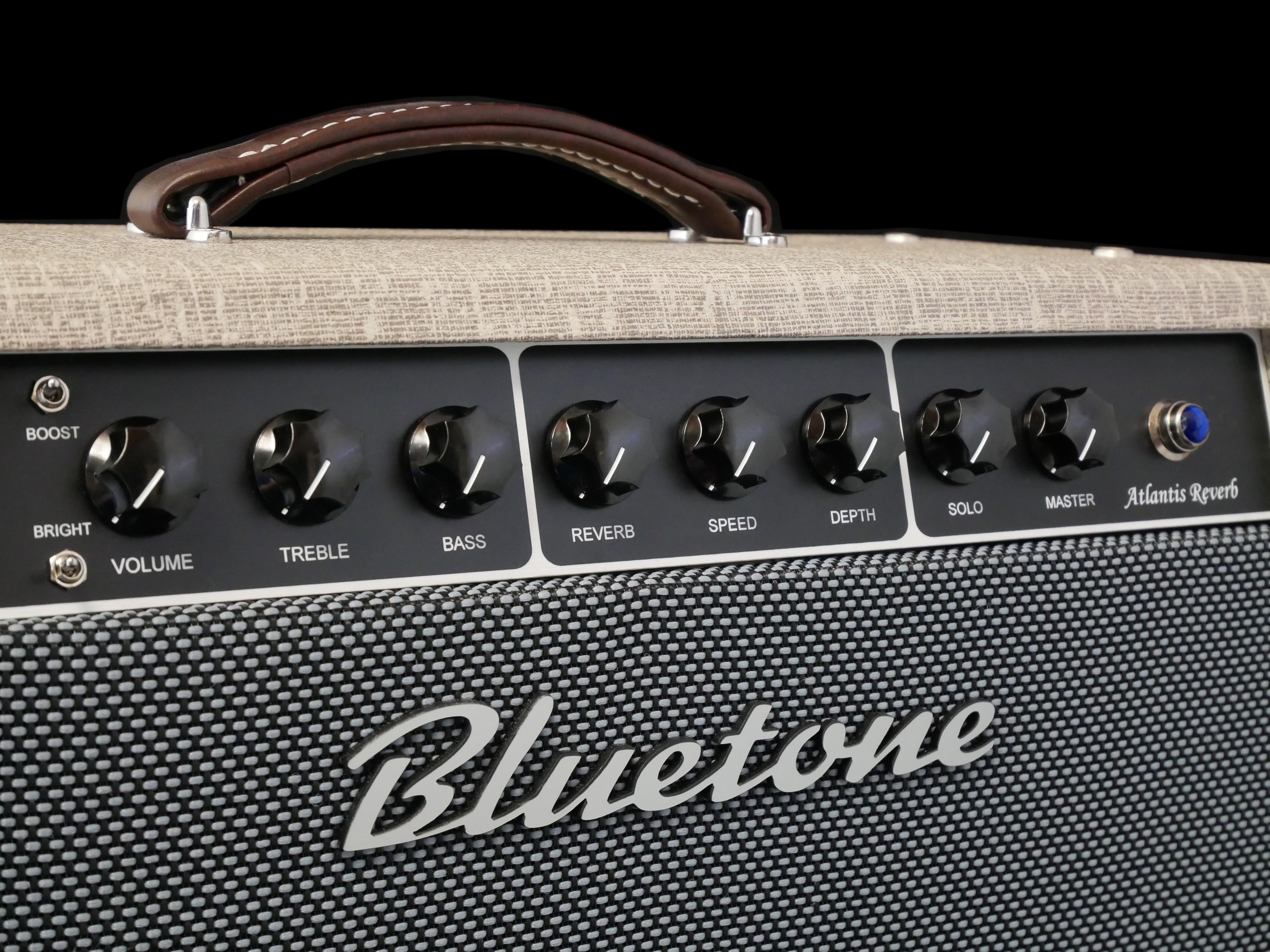
The Atlantis is a single-channel guitar amp; the input section comprises controls for volume (gain) and the two-band active EQ (cut and boost), as well as a switchable preamp boost and a Bright-switch.
The effect section features an Accutronics spring reverb unit and Bluetone’s own, beautiful bias-modulated tremolo. Both effects can be switched on and off.
The output section sports a switchable Solo-boost and a post phase-inverter Master-volume control. The post phase-inverter design means that turning the Master full up takes the control out of the circuit completely.
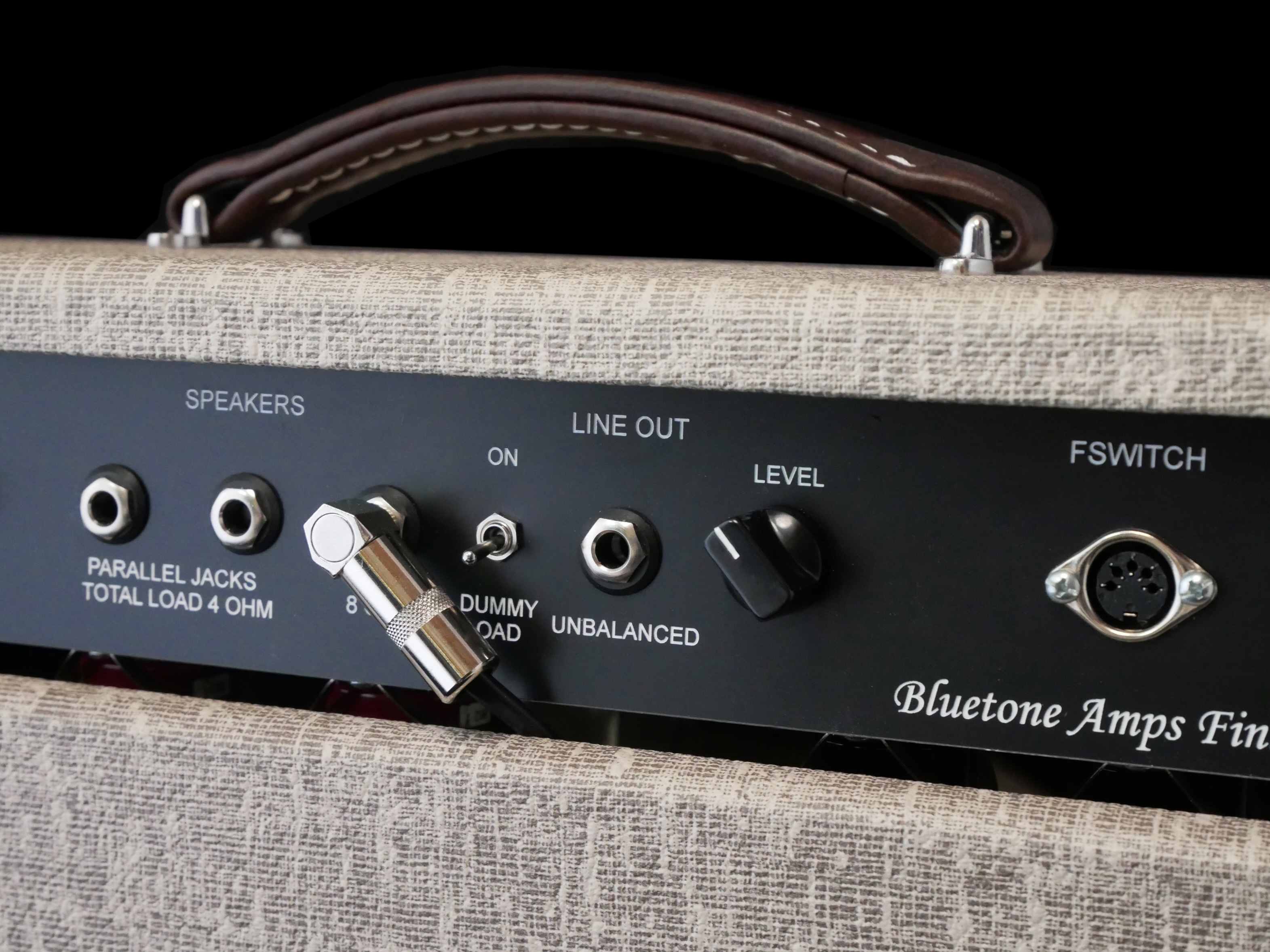
The back panel offers additional speaker outputs, an unbalanced line-level output – with its own, built-in dummy load and level control – as well as the DIN-port for the footswitch unit.
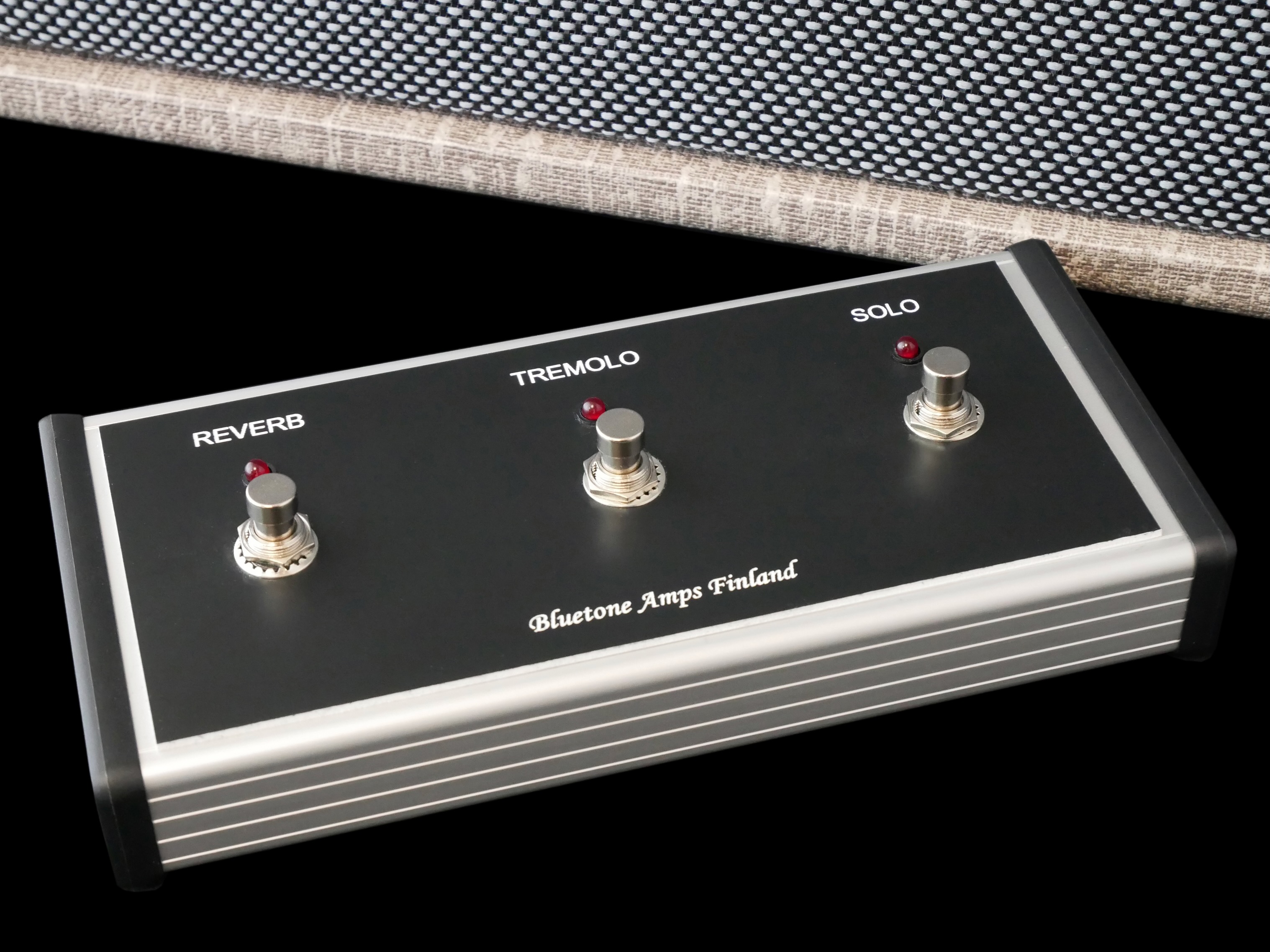
A three-switch footswitch unit is included with the Atlantis Reverb combo, as is the necessary cable.
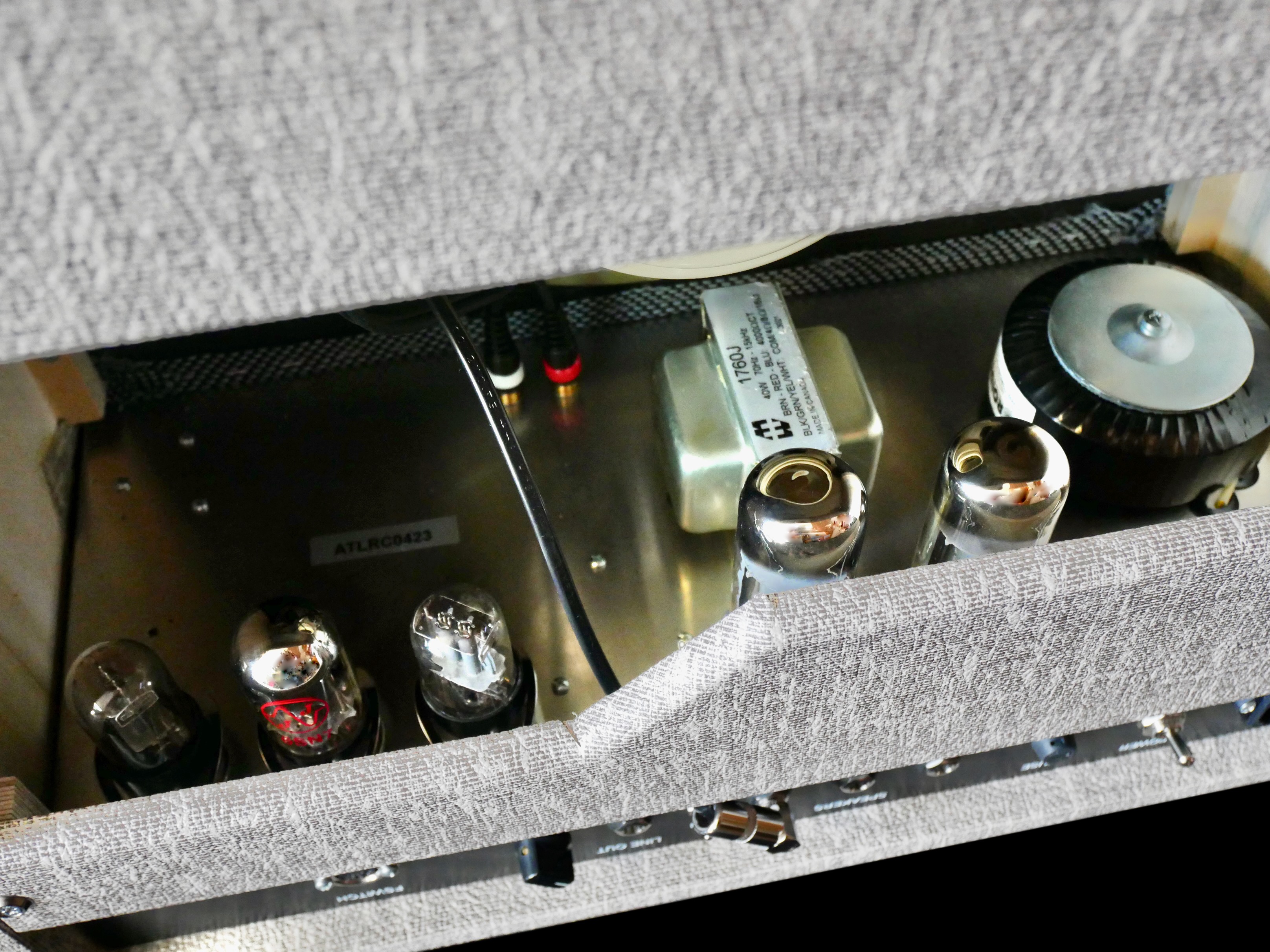
The Bluetone Atlantis’ preamp isn’t your run-in-the-mill 12AX7-based design, but instead runs a pair of NOS 6SL7-tubes and one 6SN7 to achieve its special tones. Both models were very popular among tube HiFi enthusiasts in the 1990s, but are extremely rarely seen in modern guitar amps.
The power amp can run most of the common octal power amp valves, such as the 6V6GT, the EL34, the 5881 or the KT66. The design is cathode-biased, which means you can drop in a new pair of tubes without the need for manual biasing. The only thing to remember is that if you want to use a pair of 6V6GTs you have to put the small switch (hidden in the picture by the back panel) to ”6V6GT” to prevent any damage to the amp. All other valves are supposed run on the 6L6GC setting.
From the workshop the Bluetone Atlantis Reverb comes equipped with a pair of 6L6GCs, giving you a Fender-style power amp with an output somewhere between 25 and 30 watts.
The black round thing in the picture’s right-hand corner is a toroidal mains transformer. The guys at Bluetone swear by toroidal mains transformers, because of their reduced weight, great reliability and superior (read: lower) hum-induction levels.
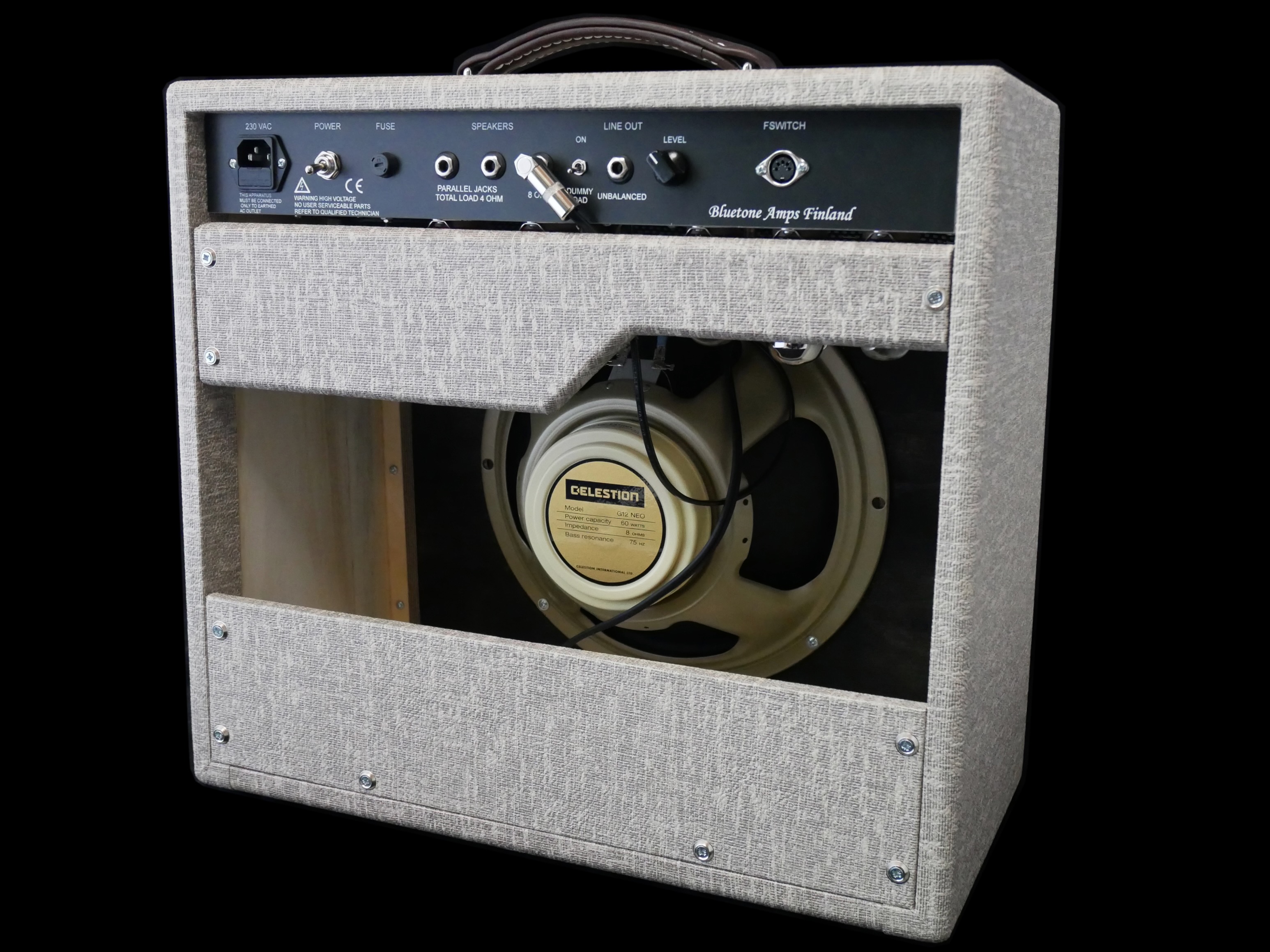
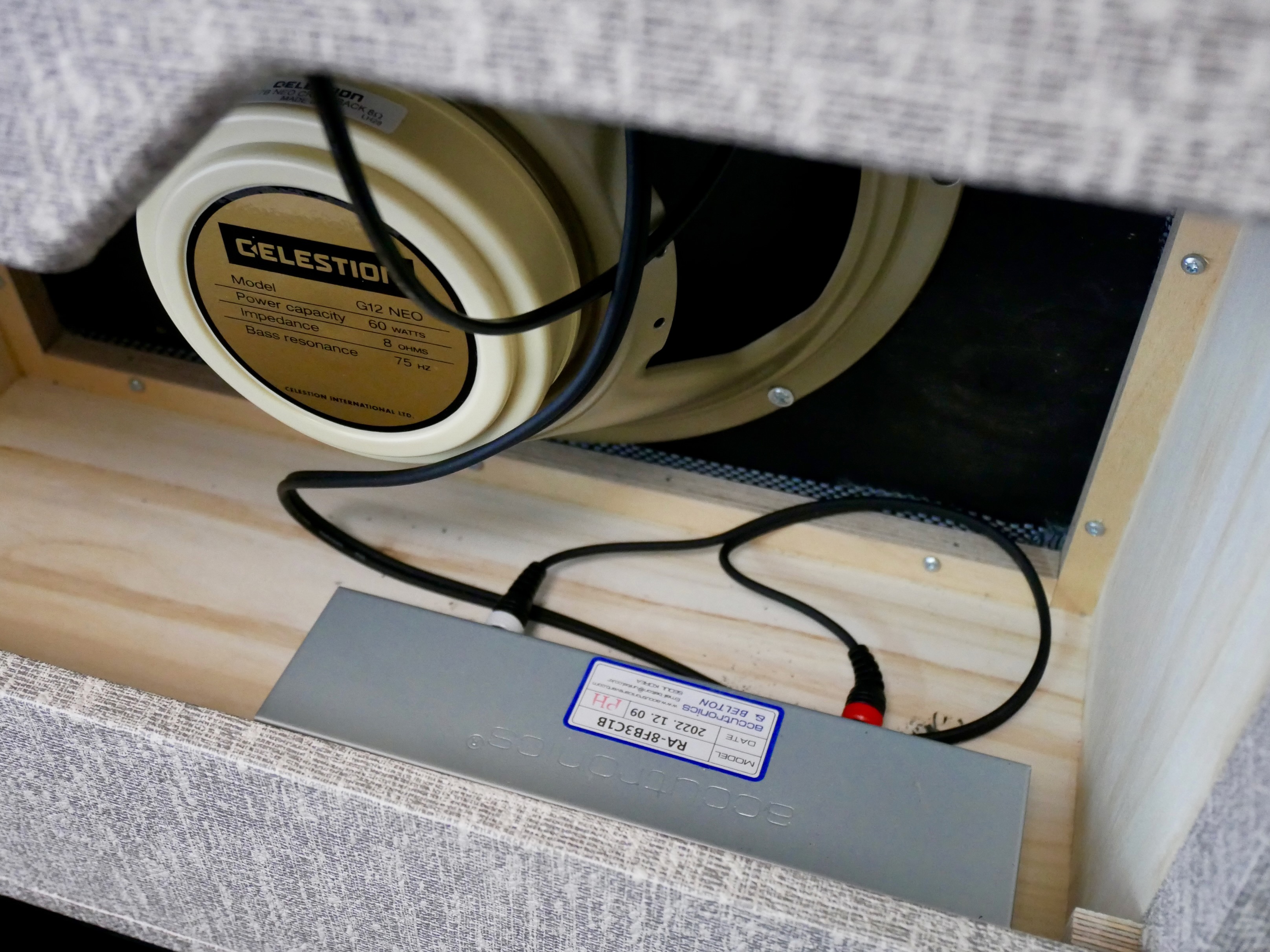
The combo’s cabinet is a traditional Fender-type open-back design. The speaker is a 12-inch Celestion Neo Creamback unit rated at 60 watts.
The cabinet is made of lightweight and ecologically sound solid paulownia wood, making the Bluetone Atlantis Reverb far lighter to carry than what you’d expect from a 12-inch speaker equipped traditional design.
****
****
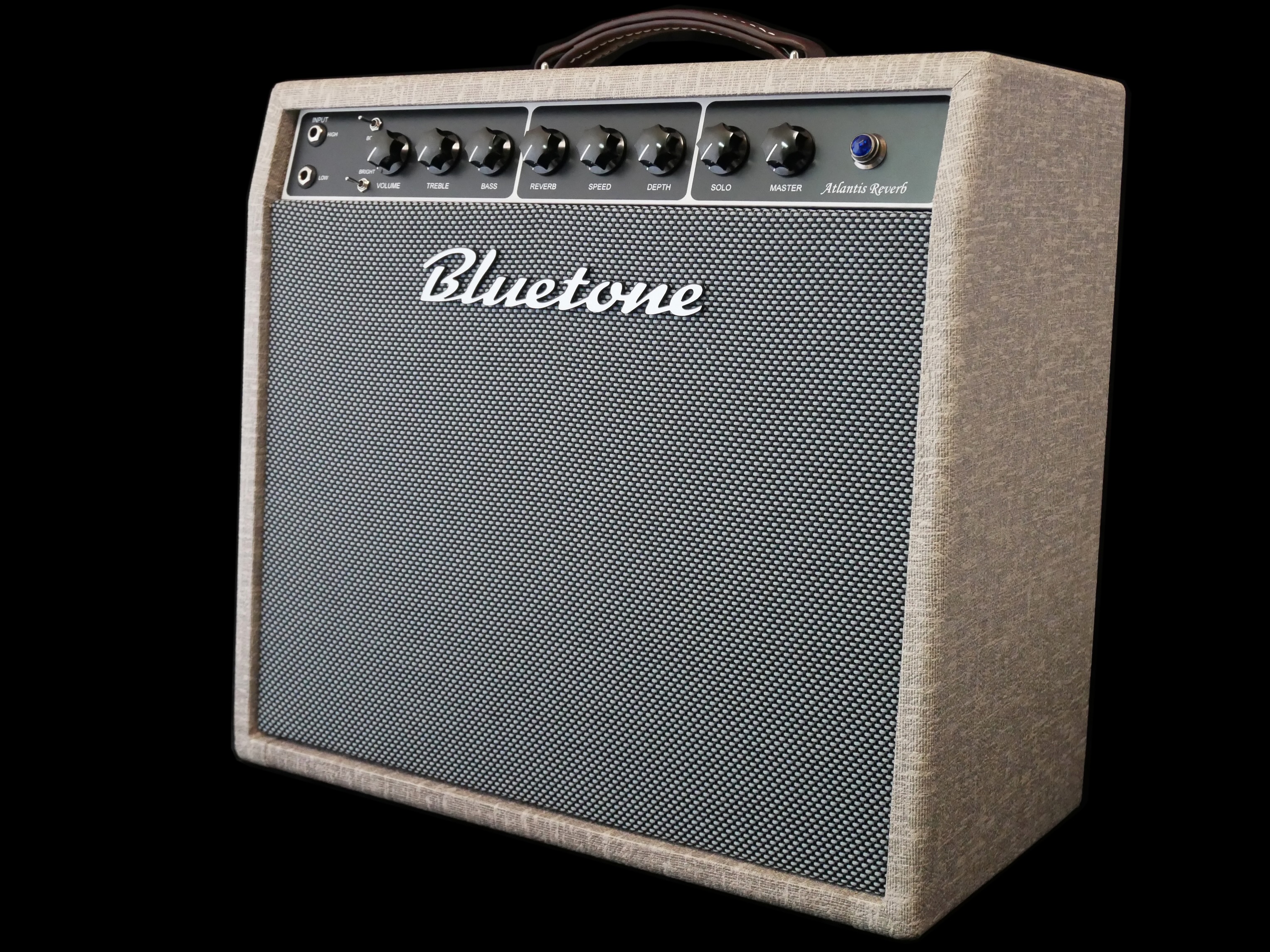
The Bluetone Atlantis Reverb combo’s forte definitely lies in its clean and break-up tones. The cleans have a charming chime to them that’s all their own – the sound, at least to my ears, is even sweeter than on a Fender ”Blackface” offering a lot of three-dimensional depth to your playing.
The two-band active EQ allows you to tailor the amp perfectly to any guitar you might pick, proving to be a very effective tool both on stage and in recording situations.
Overdriven sounds have their charms, too, as long as you don’t expect any creamy distortion from the Atlantis Reverb on its own. This combo’s crunch is of the late-Sixties/early-Seventies type, perfect for early-Santana, classic The Who, or T. Rex style excursions, which put dynamics and attitude front and centre.
The Atlantis also works exceedingly well with all types of effect pedals.
If you have an opportunity to test drive one of these beautiful handcrafted gems, you should definitely grab it!
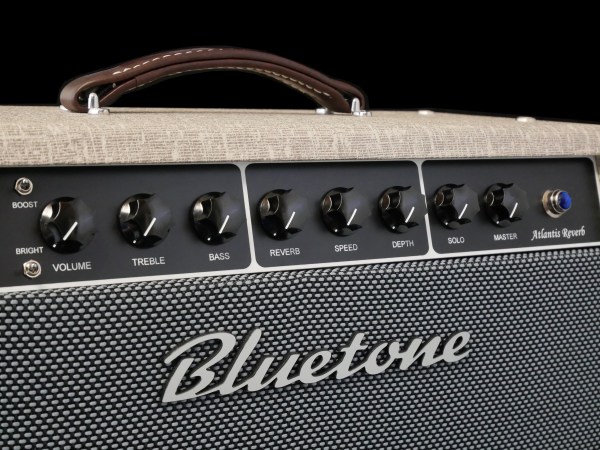
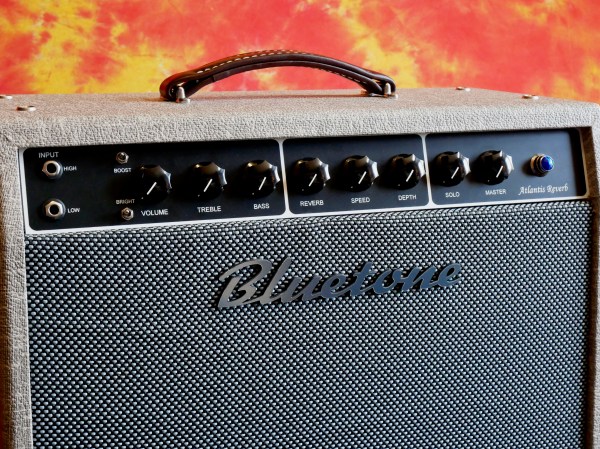
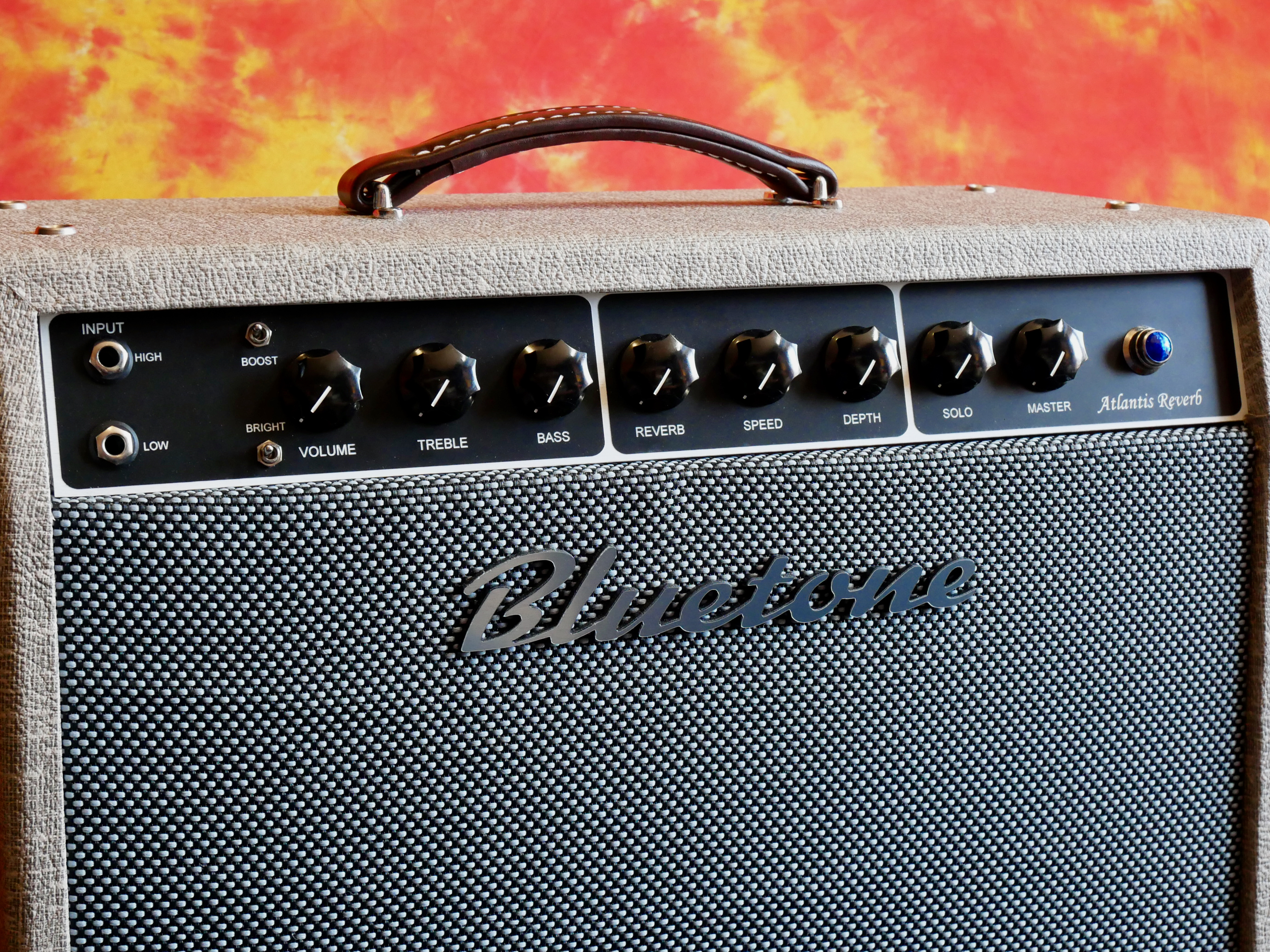
Bluetonen Atlantis Reverb -kombo on käsintehty suomalainen putkivahvistin, joka perustuu Gibson EH-185 -malliin nykyaikaisilla parannuksilla.
Demobiisi on coverversio Fleetwood Macin klassikosta ”Albatross”.
****
• Kaikki kitararaidat on soitettu Bluetone Atlantis Reverb -kombon läpi
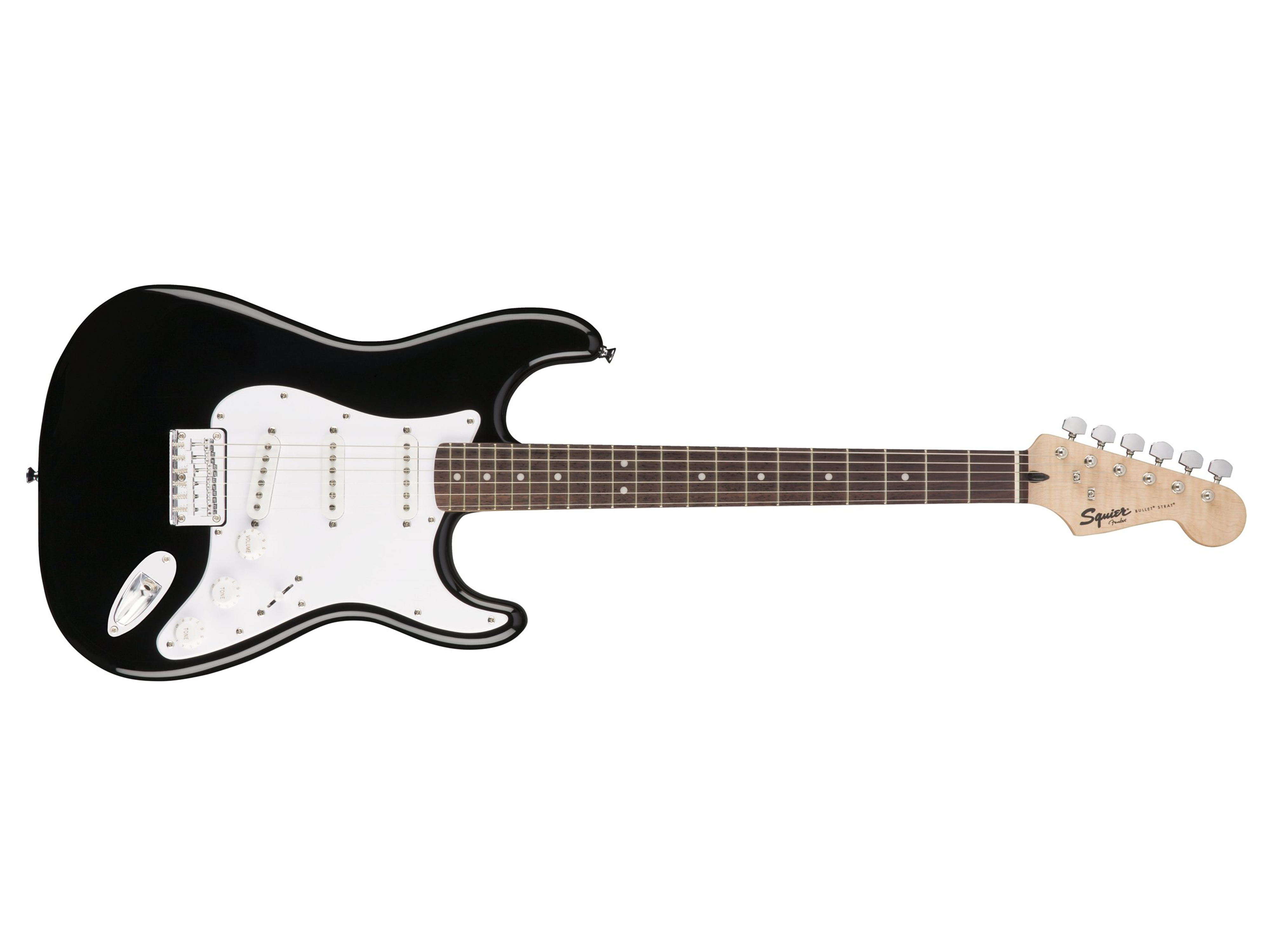
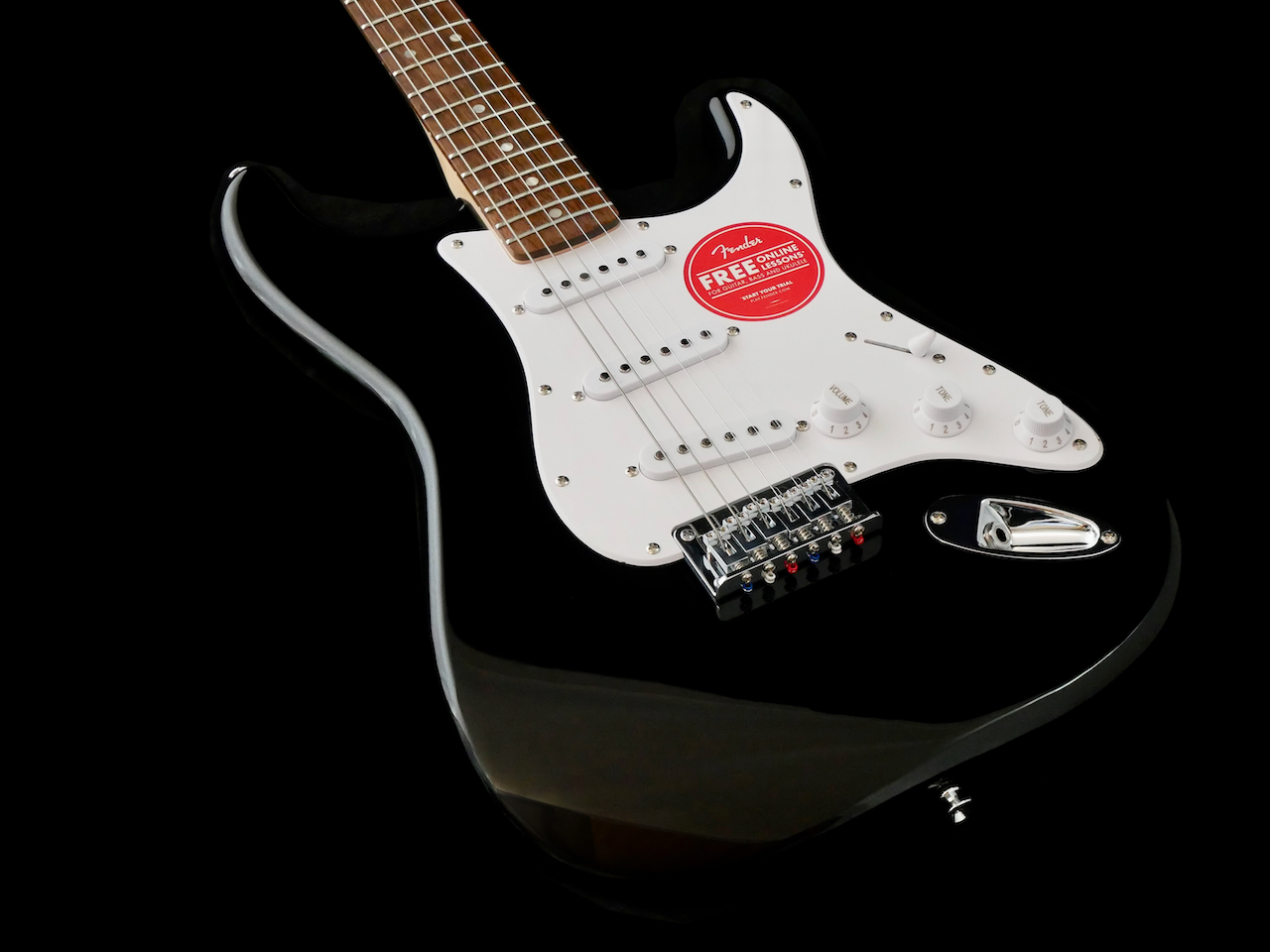
• Kitarat: Epiphone Casino (päämelodia, stereokuvassa keskellä), Hamer USA Studio Custom (kaksiääninen melodia, vasemmalla ja oikealla, sekä komppikitara keskellä), Squier Bullet Stratocaster (bottleneck-kitara)
• Mikrofoni: Shure 545SD
• Esivahvistin: Cranborne Audio Camden EC2


 Kitarablogi.com – Finland's premier Guitar and Bass blog