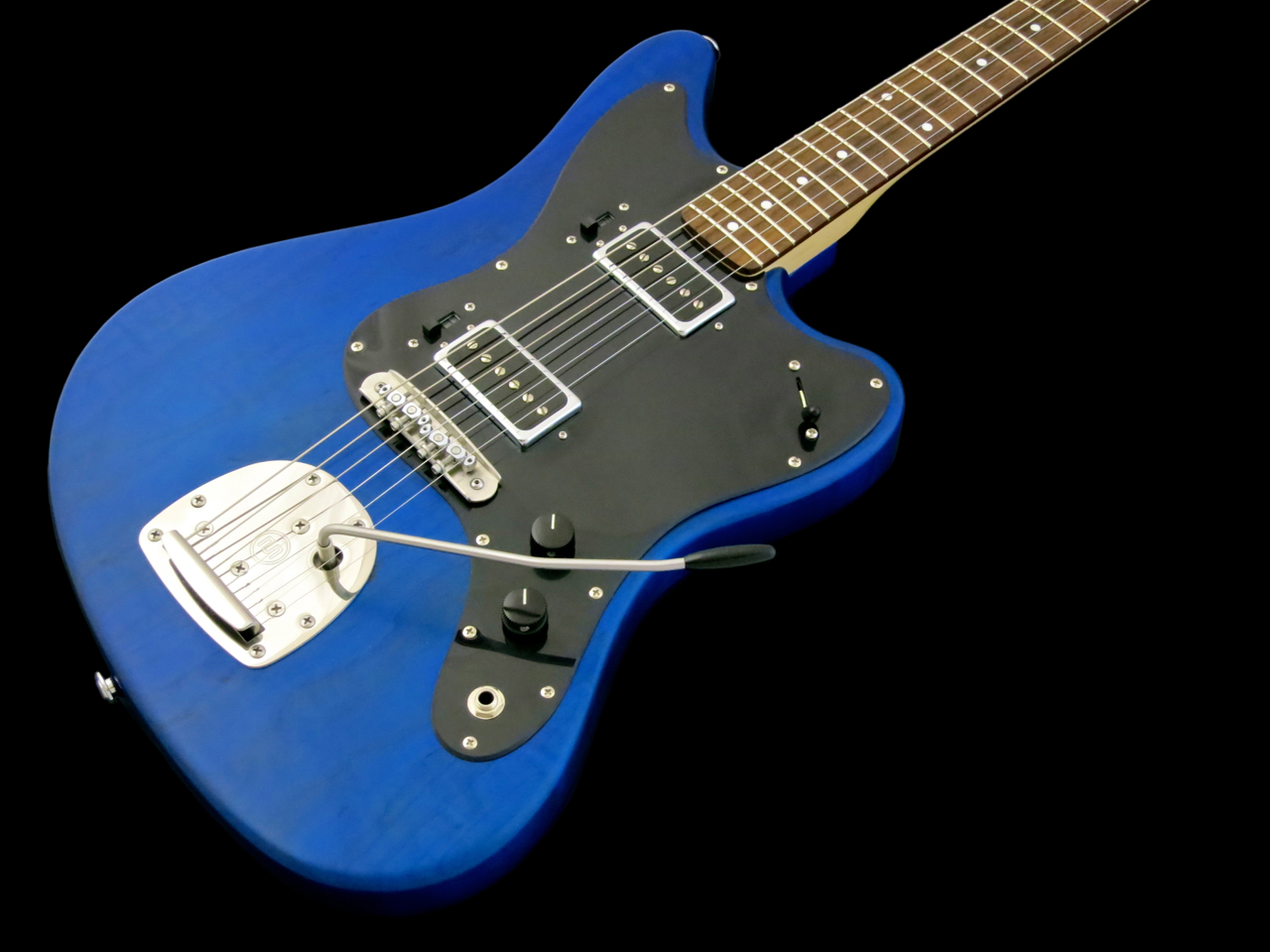
Review: ESP LTD Thinline TL-6Z, TL-4Z + TL-6N

Playing an acoustic guitar live on stage in a Rock/Pop-band setting is not as easy as one might think. A large acoustic body that has a floor monitor pointing straight at it is a recipe for howling feedback.

There are ways to lessen the danger of feedback, like applying equalisation in strategic frequency bands or using a mechanical sound-hole plug, but the easiest road to pursue, by far, is using a thinline (or even solid-body) acoustic guitar onstage.

ESP offers a model range for just this purpose, called LTD TL (TL = Thinline):

esp-ltd-tl-6z-flying

The steel-string acoustic guitar goes by the model name TL-6.

esp-ltd-tl-4z-flying

The bass guitar is called TL-4.

esp-ltd-tl-6n-flying

And there’s the TL-6N, a nylon-string acoustic guitar.

****

esp-ltd-tl-6z-beauty-shot-1

esp-ltd-tl-4z-beauty-shot-1

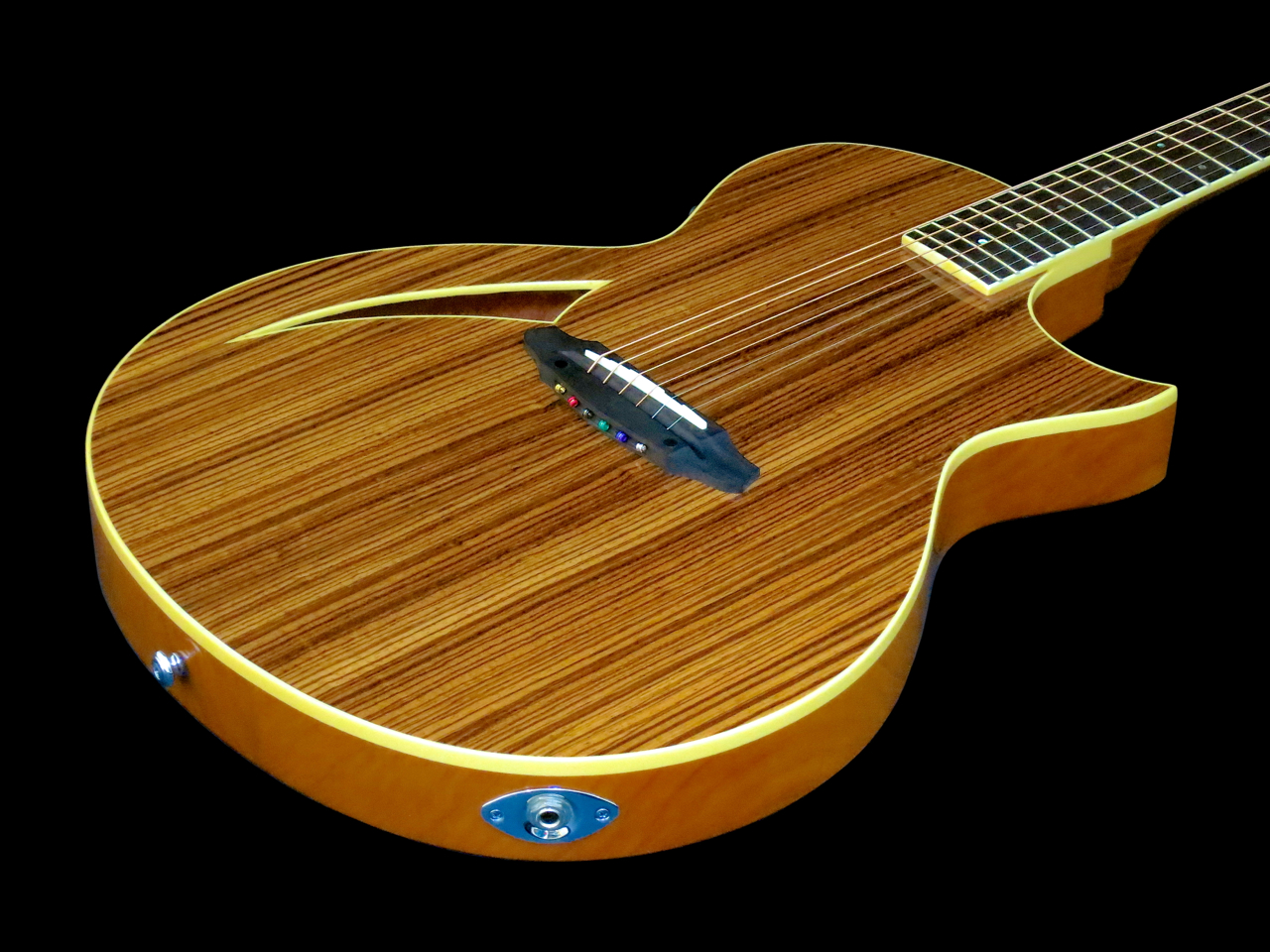
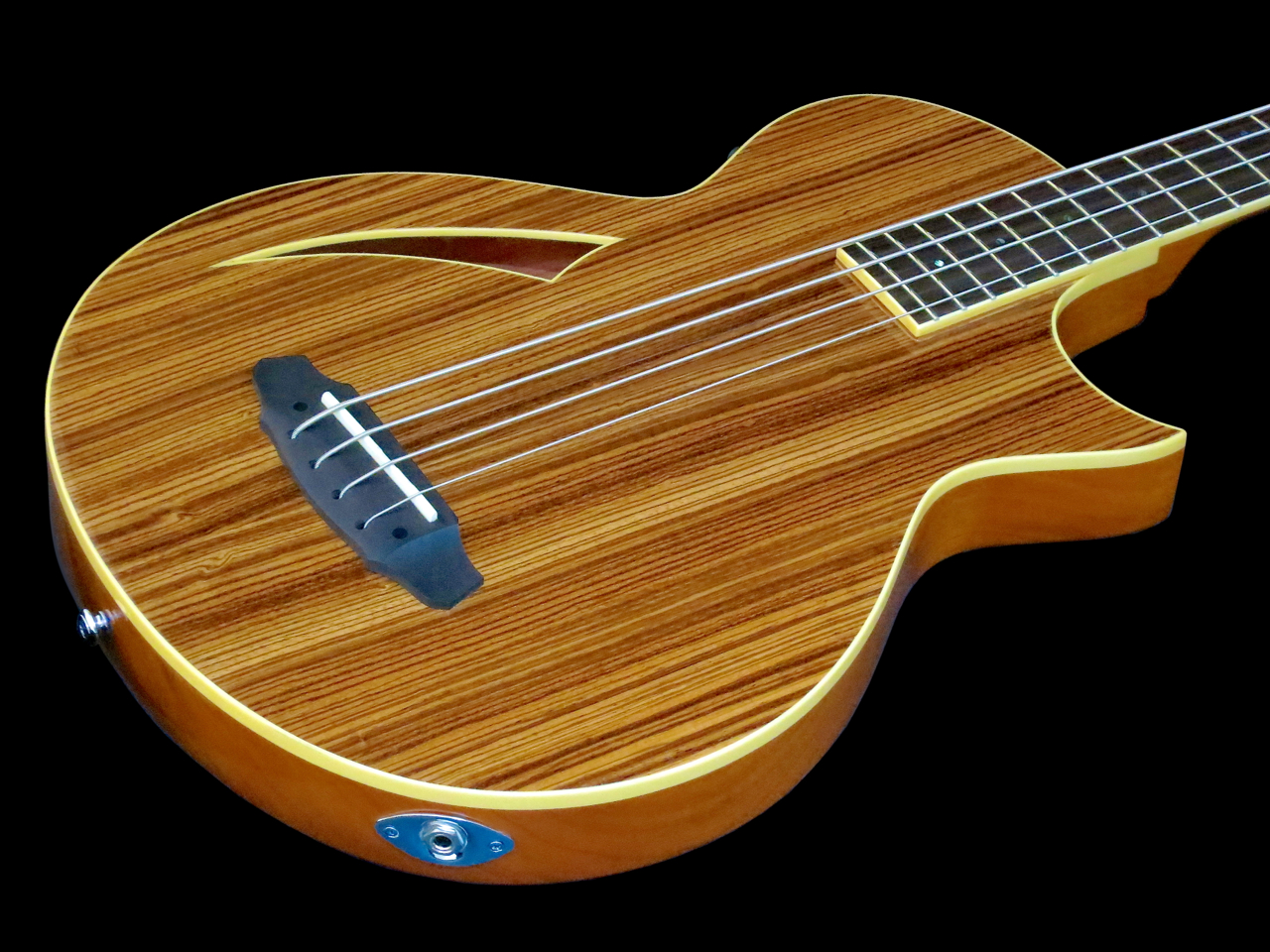
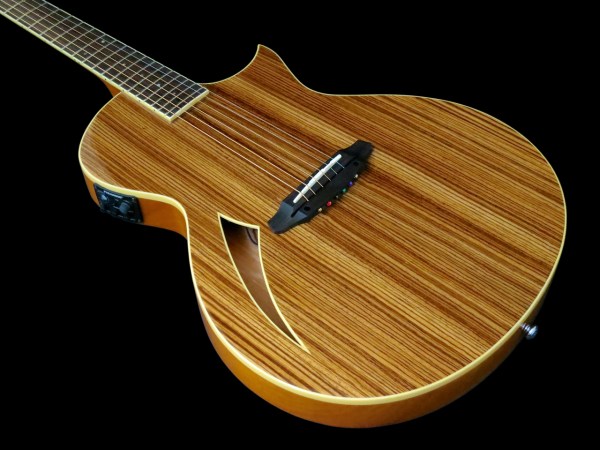
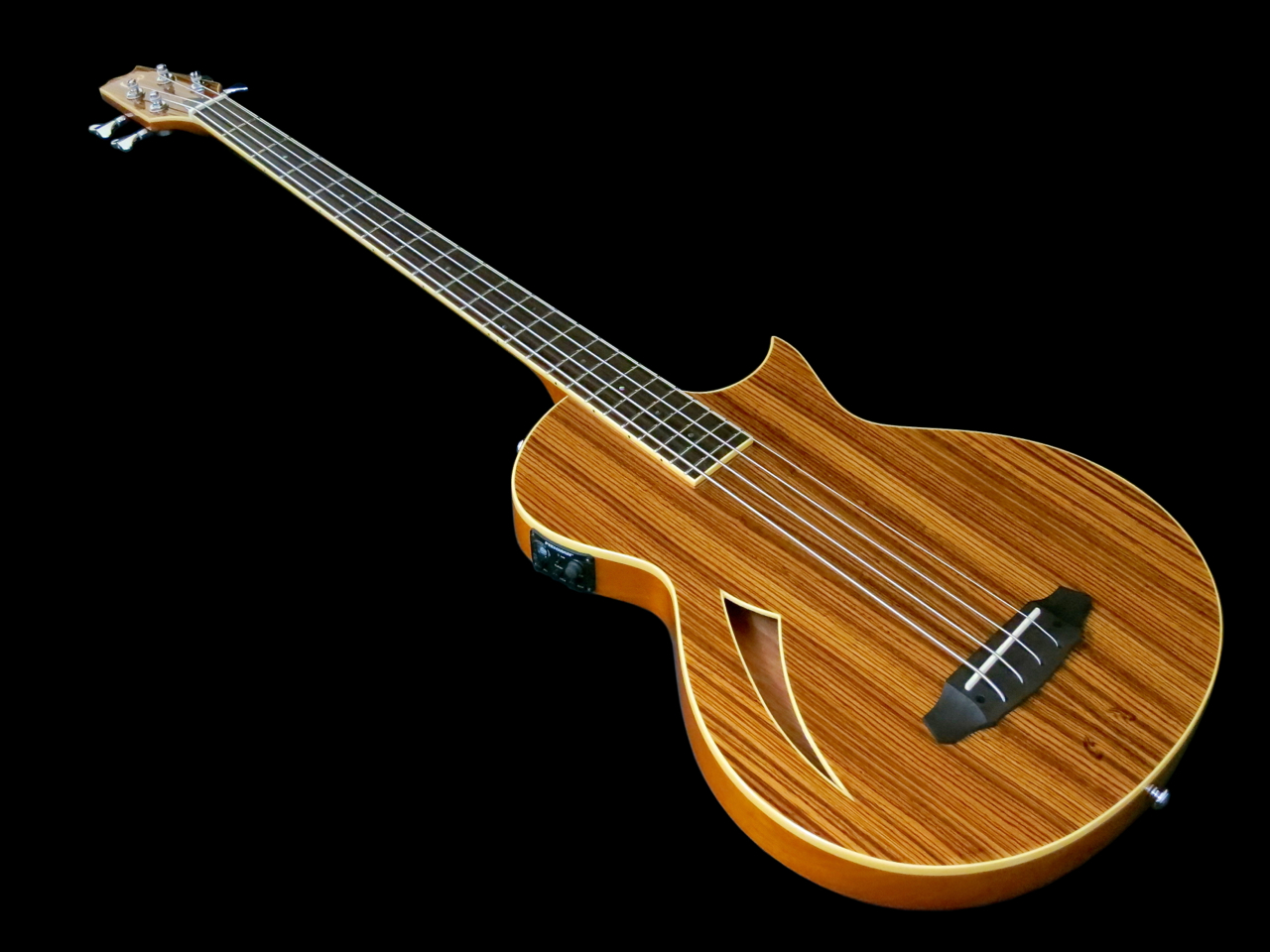
Kitarablogi received the bass and steel-string models in their most visually stunning versions – the ESP LTD TL-6Z  (650 €) and the LTD TL-4Z (682 €).

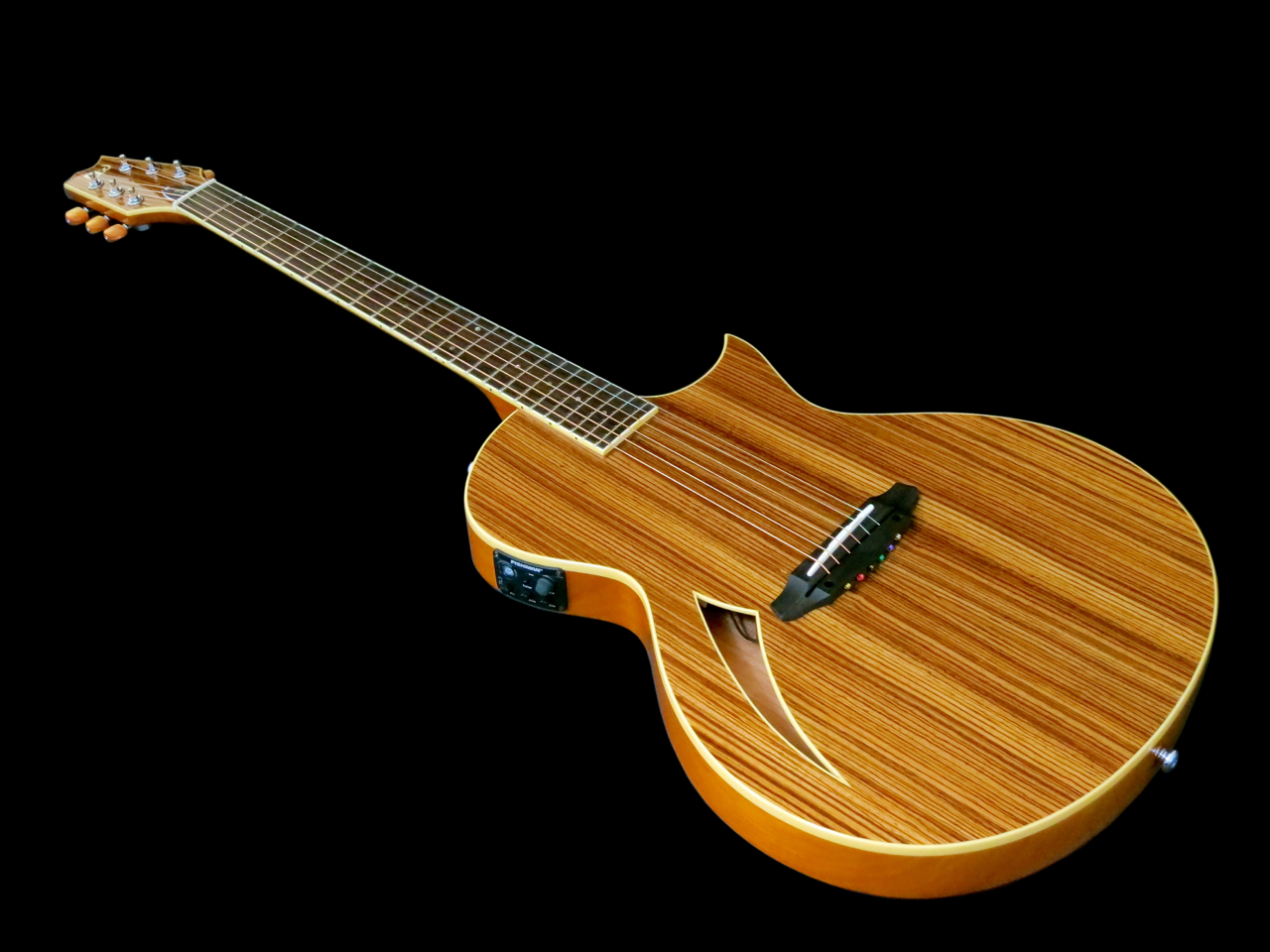
Both instruments sport zebrano tops. Zebrano is an African hardwood with a very striking wood grain that is reminiscent of a zebra’s stripes (hence the name). Zebrano has been in use since the 1990s in some boutique-grade bass guitars, but it has recently been adopted for more and more acoustic guitars and ukuleles, too.

The TL-6 is also available in a plainer, maple-topped version (in natural or black).

esp-ltd-tl-6n-beauty-shot-1

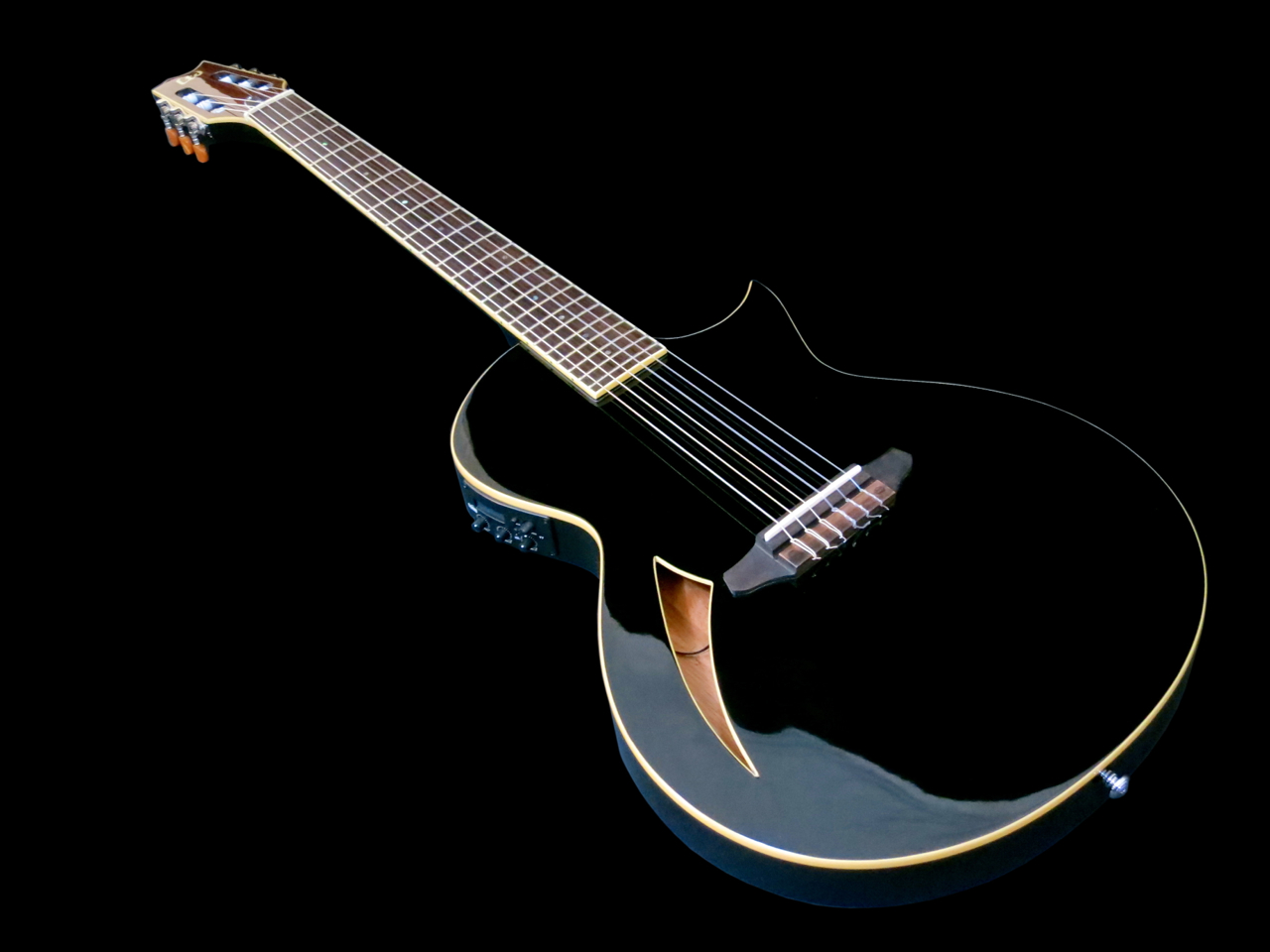
The nylon-string LTD TL-6N (625 €) comes with a maple top, either with a gloss natural or a piano black finish (as reviewed).

esp-ltd-tl-6n-centre-block

These instruments aren’t super shallow acoustic instruments, instead LTD’s TL-range features genuine thinline construction.

The bodies are based on solid mahogany backs, which have large areas routed out from the front before the top is glued into place. A ”centre block” is left standing from beneath the bridge all the way to the end of the body.
esp-ltd-tl-6z-neck-joint

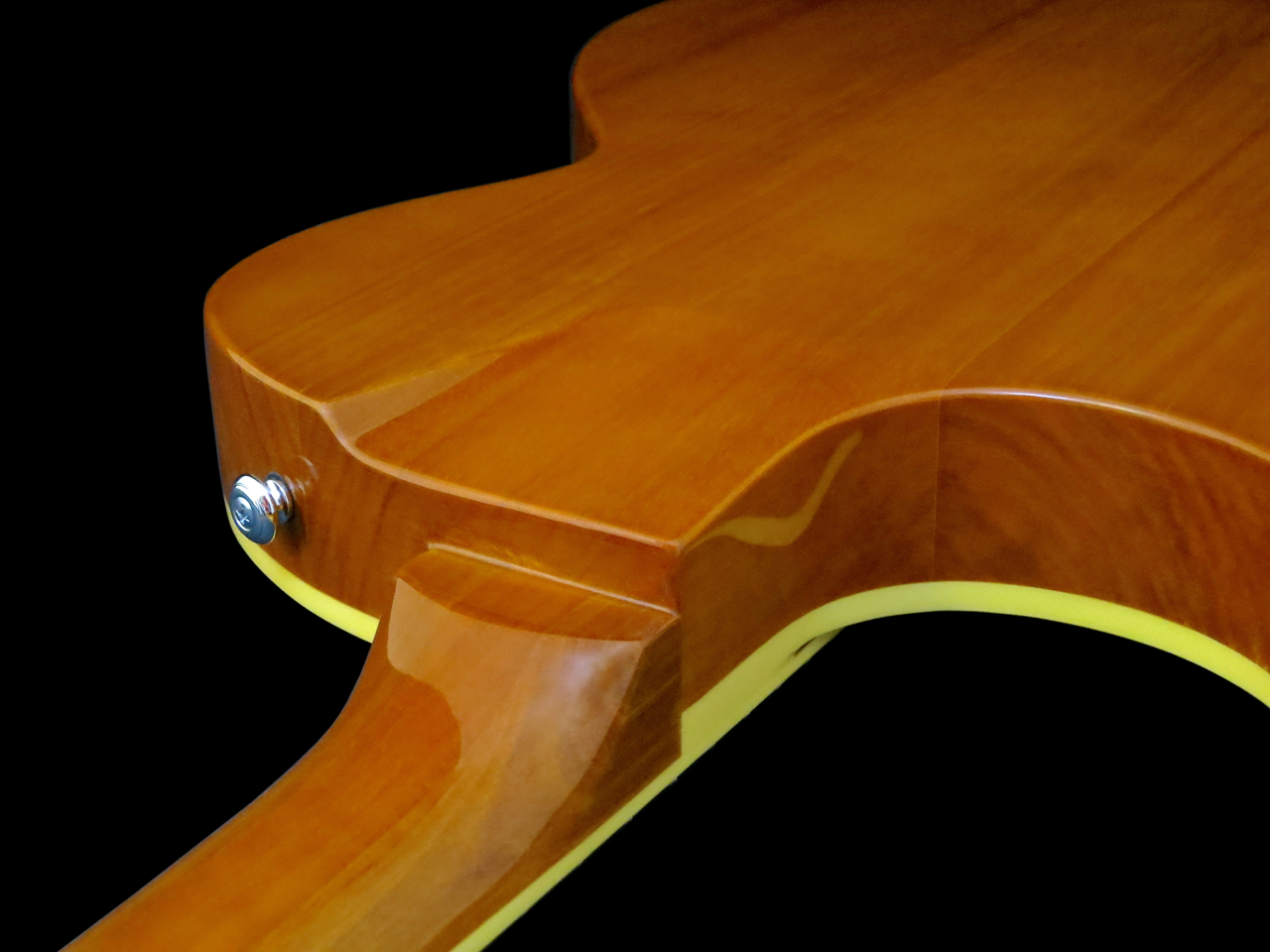
A body chamfer next to the neck heel makes reaching the top frets a little easier.

The mahogany neck is glued together from three long side-by-side strips.
esp-ltd-tl-6z-tuners

esp-ltd-tl-4z-headstock

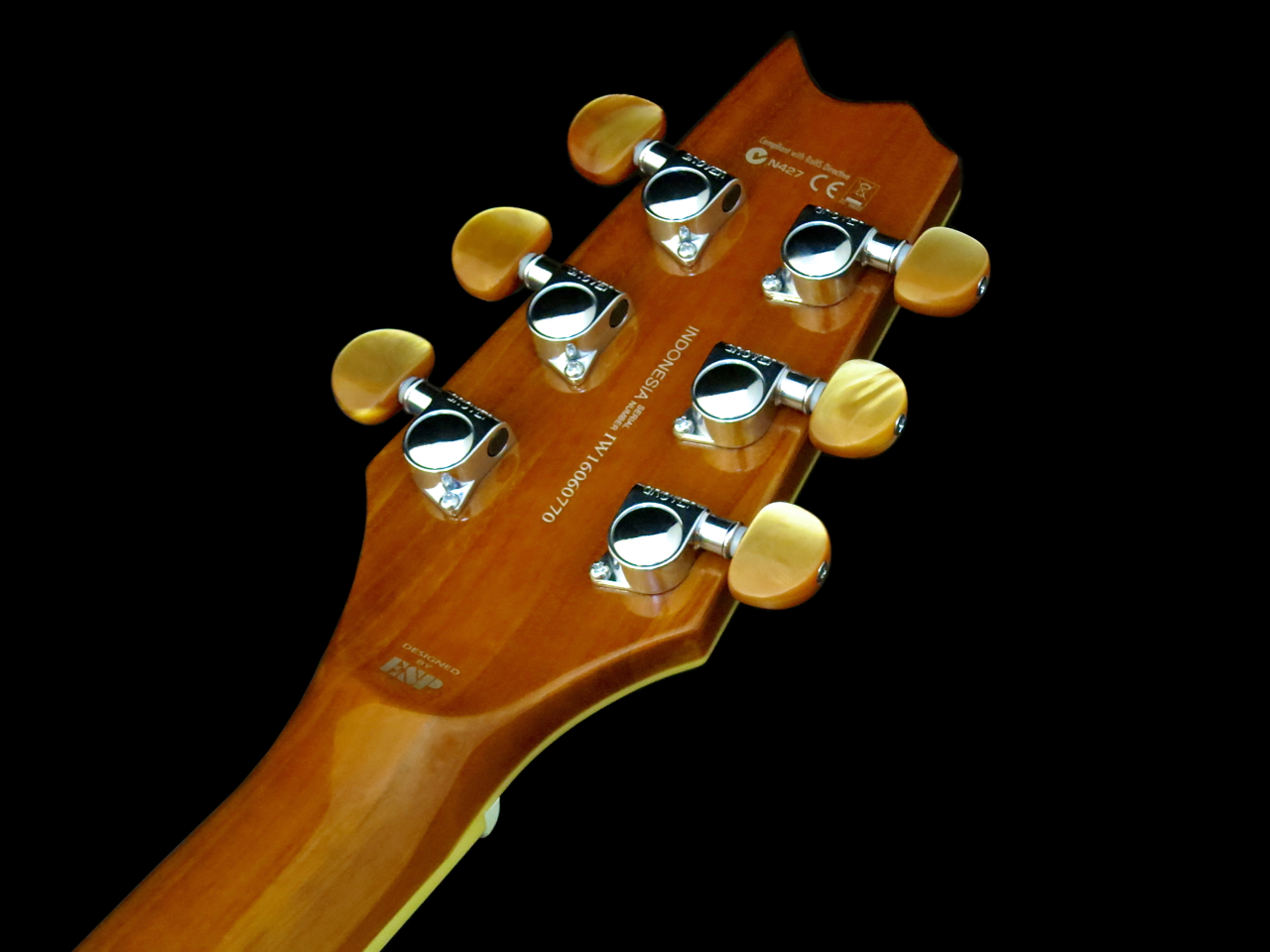
All TL-instruments come with quality tuning machines:

The steel-string instruments use Grover machine heads.

esp-ltd-tl-6n-headstock

LTD’s TL-6N sports a set of open Hauser-style tuners.

esp-ltd-tl-6z-bridge

On the TL-6Z the strings are fed through the back part of the rosewood bridge, which makes for much faster and easier restringing than a traditional pin bridge.

esp-ltd-tl-4z-bridge

We find through-body stringing (with back ferrules) on the TL-4Z bass.
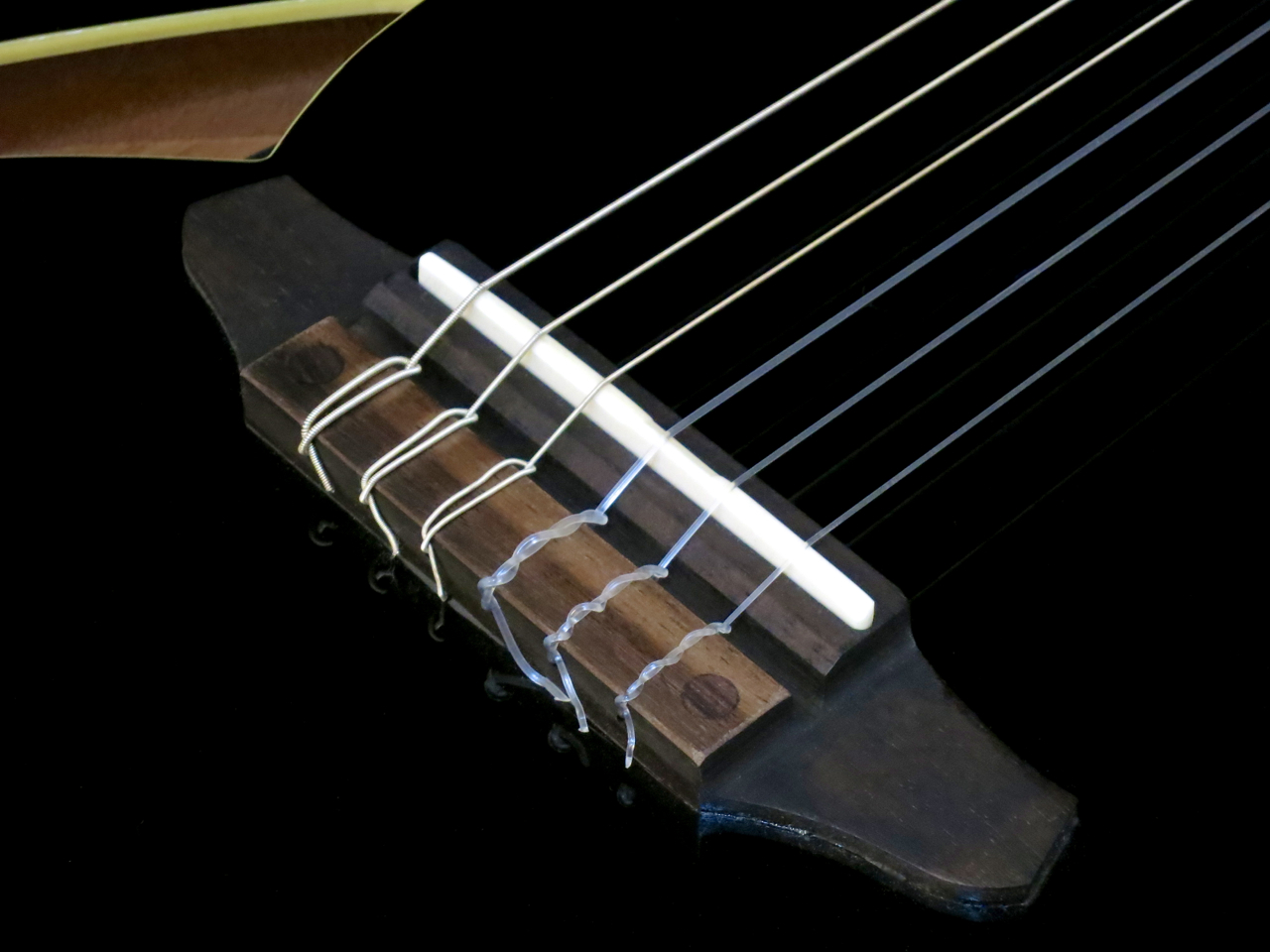
esp-ltd-tl-6n-bridge

It’s traditional knot-stringing for the nylon-string version (TL-6N).

All top nuts and compensated bridge saddles on these TL-Series instruments are made from Graph Tech’s high-quality NuBone material, a man-made alternative to bovine bone.

esp-ltd-tl-6z-fishman-tl3

Both the TL-4Z and TL-6Z come with a Fishman under-saddle-transducer and a TL-3 preamp.

The Fishman TL-3 features a built-in chromatic tuner and a three-band EQ section.

esp-ltd-tl-6n-b-band

For the nylon-string guitar ESP has chosen B-Band’s T7 system, which features a tuner, a three-band EQ section, and a feedback-reducing phase reverse-switch.

****

esp-ltd-tl-6z-body-beauty-2

Our review sample of the TL-6Z was the lightest guitar of the trio. Its thin body (5 cm) makes it sit nicely in your lap. This guitar’s strapped-on balance is also very good.

ESP call the neck profile a Thin U – I’d say the neck feels very comfortable, with a nicely rounded, not-too-thick cross section.

You can’t say anything negative about the workmanship on this guitar – this is a cleanly built guitar with a great feel, not least because of the smooth fret job.

Played unplugged, the TL-6Z isn’t very loud. In terms of volume it is on a par with an ES-335-style semi.

Plug the TL-6Z in, though, and it really comes alive. This is what this LTD is meant for, and the guitar delivers a quality piezo sound with plenty of dynamics:

esp-ltd-tl-4z-body-beauty-2

The LTD TL-4Z-bass is a well-made quality instrument, and plays great.

The TL-4Z’s neck profile is similar to that of a Jazz Bass, but the LTD’s jumbo frets and flatter-than-vintage fretboard radius take this bass into a much more modern direction.

The basic amped-up sound of this bass is fantastic. Our review sample suffered from a mild volume reduction in the g-string’s output level, though. Usually, problems like this one are caused by a tiny piece of wood, caught between the underside of the bridge saddle and the surface of the piezo pickup, which prevents the bridge saddle from making full contact with the pickup. In most cases this is very easy to remedy.
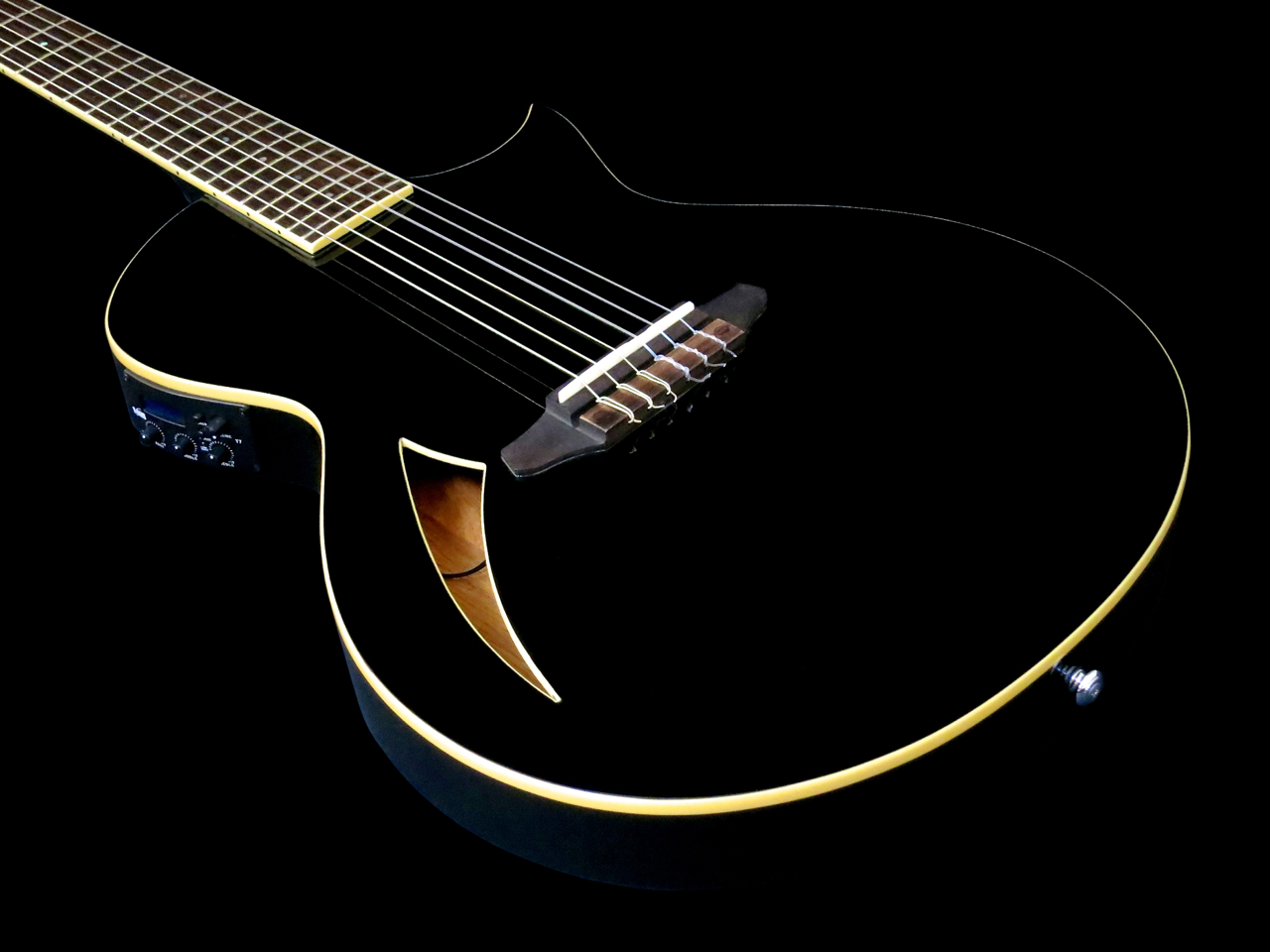
esp-ltd-tl-6n-body-beauty-2

As a builder of thinline classical guitars you have the choice between two options:

Some manufacturers equip a guitar of this type with an electric or steel-string neck, to make it easier for an occasional nylon-string user to switch between different types of guitar.

ESP has gone for the second option, namely for making a thinline instrument with a neck that feels like the neck of a full-blown classical guitar. The LTD-6N has the wide and flat neck profile so typical of most traditional nylon-string acoustics. In my opinion this is a good choice, because the neck profile has a bearing on how you approach and play such a guitar. This is a thinline classical that feels ”real”.

Because of the much lower string-pull of nylon strings – when compared to steel strings – the TL-6N is the quietest instrument of this trio, when played unplugged.

The TL-6N will win you over with its tasty amplified voice, though. The B-Band pickup system is a fantastic choice for a nylon-string guitar, because the B-Band pickup – which works similar to an electret microphone – won’t give you any of that infamous piezo quack, which tends to make nylon-string guitars sound rather annoying.
esp-ltd-tl-6z-beauty-shot-2

Here are two different versions of the demo song:
esp-ltd-tl-6n-beauty-shot-2

****

esp-ltd-tl-6z-body-beauty-1

esp-ltd-tl-4z-body-beauty-1

In my view, ESP’s LTD TL-Series is a great choice if you want to add acoustic guitar tones to your onstage arsenal.

The TL-Series features instruments that combine stylish looks, great playability and quality electronics into instruments, which will give you a fine range of acoustic tones in a live setting, combined with a far lower susceptibility to feedback.

esp-ltd-tl-6n-body-beauty-1

****

LTD Thinline TL-6Z, TL-4Z + TL-6N

TL-6Z: 650 €

TL-4Z: 682 €

TL-6N: 625 €

Finnish distributor: Musamaailma

****

Pros (all models):

+ stylish design

+ workmanship

+ playability

+ amplified sounds

Cons (TL-4Z only):

– slight volume drop on g-string
esp-ltd-tl-4z-beauty-shot-2

Save

Save

Save

Save

Save

Save

Save

Save

Save

Save

Save

Save

Save

Save

Save

Save

Save

Save

Save

Save

Save

Save

Save

Save

Save

Save

Save

Save

Save

Save

Save

Save

Testipenkissä: ESP LTD Thinline TL-6Z, TL-4Z + TL-6N

Akustinen kitara on Pop/Rock-bändin kontekstissa aina hieman haasteellinen soitin keikkatilanteessa, koska iso, akustinen kaikukoppa ja siihen suunnattu lavamonitori ovat herkästi feedbackia tuottava yhdistelmä.

Tarkalla ekvalisoinnilla ja mekaanisella kaikuaukon tulpalla pystyy kyllä vähentämään kiertämisen riskiä ideaalitapauksissa huomattavasti, mutta helpompi ratkaisu on käyttää keikoilla livetilanteita varten kehitettyä, lankkumallista akustista.

ESP tarjoaa nyt myös tällaisia soittimia LTD TL –sarjan muodossa (TL = Thinline):

esp-ltd-tl-6z-flying

Kuusikielisen, teräskielisen kitaran mallitunnus on TL-6.

esp-ltd-tl-4z-flying

Basson nimi on TL-4.

esp-ltd-tl-6n-flying

Ja nailonkielisen kitaran mallitunnus on TL-6N.

****

esp-ltd-tl-6z-beauty-shot-1

esp-ltd-tl-4z-beauty-shot-1

Kitarablogi sai testiin teräskielisestä kitarasta ja bassosta erittäin näyttävät ESP LTD TL-6Z  (650 €) ja LTD TL-4Z (682 €) -versiot, joissa on upeat kannet zebrano-puusta.

Zebrano on afrikkalainen jalopuulaji, jonka vahva syykuvio muistuttaa seepran raitoja. Zebranoa on käytetty jo 1990-luvulta lähtien mm. useissa boutique-luokan sähköbassoissa, mutta viime vuosina puulajia on nähty käytettävän yhä useammin myös akustisissa kielisoittimissa.

TL-6 on saatavissa myös vaahterakannella (värivaihtoehtoina musta tai natural).

esp-ltd-tl-6n-beauty-shot-1

Nailonkielinen LTD TL-6N:ssä (625 €) on varustettu vaahterakannella, ja soitin on saatavilla vaaleana natural-versiona sekä kiiltävän mustaksi lakattuna.

esp-ltd-tl-6n-centre-block

LTD TL-sarjan soittimissa on aito thinline-rakenne, sen sijaan että ne olisivat ainoastaan hyvin ohutkoppaisia akustisia.

Soittimien mahonkirunkoihin on jyrsitty edestä suuret kolot, ennen kuin kansi on liimattu paikalleen. Tallan alta rungon päätyyn asti ulottuu TL-soittimissa ”keskipalkki” runkopuusta.

esp-ltd-tl-6z-neck-joint

Kaulaliitoksen kohdalla runkopuuhun on veistetty kätevä viistotus, joka helpottaa otekäden pääsyä ylimpiin nauhoihin.

Mahonkikaula on kolmiosainen.

esp-ltd-tl-6z-tuners

esp-ltd-tl-4z-headstock

TL-soittimet on varustettu laadukkailla virittimillä:

Teräskielisiin soittimiin on asennettu nykyaikaiset Grover-koneistot.

esp-ltd-tl-6n-headstock

TL-6N:ssä taas on sulavasti toimivat, Hauser-tyyliset, avoimet virittimet.

esp-ltd-tl-6z-bridge

Teräskielisen TL-6Z:n ruusupuisen tallan takaosassa on reiät, joista kielet kulkevat läpi. Kielten pallopäät juttuvat reikiin, mikä on nopeampi ja varmempi tapa kiinnittää kielet kuin perinteinen tappikiinnitys.

esp-ltd-tl-4z-bridge

TL-4Z-basson kielet taas vedetään rungon läpi.

esp-ltd-tl-6n-bridge

Nailonkielinen TL-6N luottaa perinteiseen solmukiinnitykseen.

TL-sarjan satulat ja kompensoidut tallaluut valmistetaan Graph Techin laadukkaasta NuBone-materiaalista, joka on synteettinen vaihtoehto naudanluulle.

esp-ltd-tl-6z-fishman-tl3

TL-4Z ja TL-6Z on molemmat varustettu samalla Fishman TL-3 esivahvistimella, jossa on sisäinen viritysmittari.

Volume-säätimen lisäksi TL-3 tarjoaa kolmikaistaisen taajuuskorjaimen.

esp-ltd-tl-6n-b-band

Nailonkitaran tapauksessa ESP taas luottaa B-Band T7 -järjestelmään, jossa on viritysmittarin ja kolmikaistaisen EQ:n lisäksi vielä vaiheenkäännin.

****

esp-ltd-tl-6z-body-beauty-2

Testissä käynyt TL-6Z on tämän kolmikon kevyin soitin, ja sen ohut runko (5 cm) istuu hyvin syliin. Myös hihnan varassa tasapaino on hyvä.

ESP kutsuu tämän kitaran kaulaprofiilia Thin U:ksi – minä taas sanoisin, että se on oikein mukavan tuntuinen kaula, pyöreällä, hieman keskivertoa ohuemmalla läpimitalla.

Työnjälki on kiitettävää tasoa – erittäin siisti nauhatyö (22 jumbo-kokoista nauhaa) on tästä vain yksi esimerkki.

Akustisesti soitettuna TL-6Z ei ole kovinkaan äänekäs. Lankkuakustisen tuottaman äänen taso on samalla viivalla esimerkiksi ES-335-tyylisen puoliakustisen kanssa.

TL-6Z onkin tarkoitettu akustisen vahvistimen kautta tai suoraan linjasoitolla miksauspöytään (tai äänikorttiin) soitettavaksi, jolloin se todellakin herää henkiin. Tarjolla on todella laadukas ja dynaaminen piezosoundi:

esp-ltd-tl-4z-body-beauty-2

TL-4Z-basso on laadukkaasti toteutettu lajinsa edustaja, jota on erittäin mukava soittaa.

TL-4Z:n kaulaprofiili on Jazz-basson kaltainen, mutta LTD:n jumbo-kokoiset nauhat ja tasaisempi otelaudan kaarevuus (= isompi radius) tekevät soittotuntumasta selvästi nykyaikaisemman.

Basson vahvistettu ääni on sinänsä erittäin laadukas, mutta testiyksilön hieman muita kieliä vaimeammin soiva g-kieli johtaa lievään pistevähennykseen. Usein tämänkaltaiset ongelmat johtuvat pienestä puulastusta, joka on päässyt tallan uraan, luun ja mikrofonin väliin, estäen kielen värähtelyn optimaalisen välityksen piezomikrofoniin. Tämä ei ole iso ongelma, vaan sen saa ratkaistua useimmiten hyvinkin nopeasti.

esp-ltd-tl-6n-body-beauty-2

Tämän kitaratyypin ”klassisissa kitaroissa” kitaravalmistaja voi valita kahden koulukunnan välillä:

Jotkut valmistajat tekevät nailonkielisiä lankkukitaroita teräskieli-tyylisillä kauloilla, koska he uskovat tällaisen kitaran käyttäjän todennäköisesti olevan pääasiallisesti sähkökitaran soittaja.

ESP taas kuuluu niihin valmistajiin, jotka haluavat, että myös nailonkielinen lankkukitara tuntuu aidolta klassiselta kitaralta. LTD TL-6N -mallissa on siis aito klassisen kitaran kaulaprofiili, joka on tunnetusti teräskielisen kitaran kaulan profiilia leveämpi ja harteikkaampi. Minusta tämä on ainoastaan hyvä asia, koska soittotuntuma on sen ansiosta ”aidompi”.

Nailonkielten teräskieliin verrattuna heikomman kielivedon vuoksi TL-6N on akustisesti tämän kolmikon hiljaisin soitin.

TL-6N:n vahvistettu soundi kuulostaa erittäin terveeltä. B-Band-mikrofonijärjestelmä on mielestäni todella hyvä valinta juuri nailonkieliseen kitaraan, koska elektrettimikrofonin tavalla toimivasta B-Band-mikistä puuttuu täysin se useista piezomikrofoneista tuttu ärsyttävänkin naksahteleva atakki.

esp-ltd-tl-6z-beauty-shot-2

Tässä vielä kaksi versiota demobiisistä:

esp-ltd-tl-6n-beauty-shot-2

****

esp-ltd-tl-6z-body-beauty-1

esp-ltd-tl-4z-body-beauty-1

ESP LTD:n TL-sarjan soittimet tarjoavat mielestäni erittäin toimivia ratkaisuja tilanteisiin, joissa halutaan tuoda bändisoundiin akustisia vaikutteita.

TL-soittimissa tyylikäs ulkonäkö, hyvä soitettavuus ja laadukas elektroniikka muodostavat toimivan kokonaisuuden, jolla saa vaivattomasti hyvän lavasoundin todella vähäisellä feedback-vaaralla.

esp-ltd-tl-6n-body-beauty-1

****

LTD Thinline TL-6Z, TL-4Z + TL-6N

TL-6Z: 650 €

TL-4Z: 682 €

TL-6N: 625 €

Maahantuoja: Musamaailma

****

Plussat (kaikki mallit):

+ tyylikäs ulkonäkö

+ työnjälki

+ soitettavuus

+ sähkösoundi

Miinukset (vain TL-4Z):

– g-kieli soi hieman muita heikommin

esp-ltd-tl-4z-beauty-shot-2

Save

Save

Save

Save

Save

Save

Save

Save

Save

Save

Save

Save

Save

Save

Save

Save

Save

Review: Bluetone Shadows Reverb

For many guitarists the Vox AC30 is the greatest guitar amp ever made – bar none.

The combo was originally designed for the instrumental group The Shadows, but it became known worldwide as ”The Beatles Amp”. Over the decades, many other guitarists have favoured Vox’ best known design. Users include people like Brian May (Queen), Rory Gallagher and U2’s The Edge. Many Finnish Shadows-/Ventures-style bands (”rautalankka”) also favour the AC30.

Despite their legendary status, vintage Vox AC30s also do have their issues:

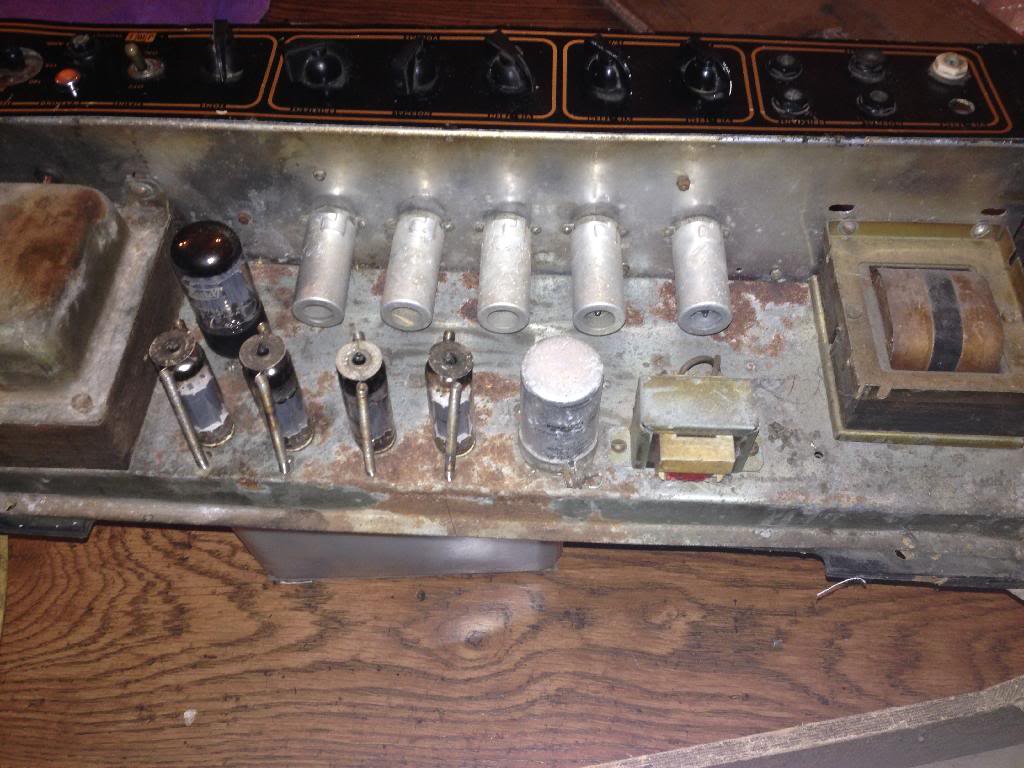
This large 2 x 12″ combo weighs quite a lot, making it a little hard to carry alone. Old Voxes also are non-master volume amps, which means that attaining natural distortion comes at the cost of serious sound pressure levels – often too much for small clubs and function gigs. Old AC30s also have all their valves – yes, also the power amp tubes – placed inside an almost completely closed metal chassis. This has led to vintage-Voxes getting an infamous reputation as relatively prone to catching fire.

vox-chassis-studiofreak-photobucket

(photo: Studiofreak/Photobucket)

Boutique amp makers Bluetone (from Helsinki, Finland) have recently come up with their special take on the beloved classic combo. Their new amp is called Bluetone Shadows Reverb, and it comes with a whole number of welcome improvements and modern features.

****

bluetone-shadows-reverb-front-angle

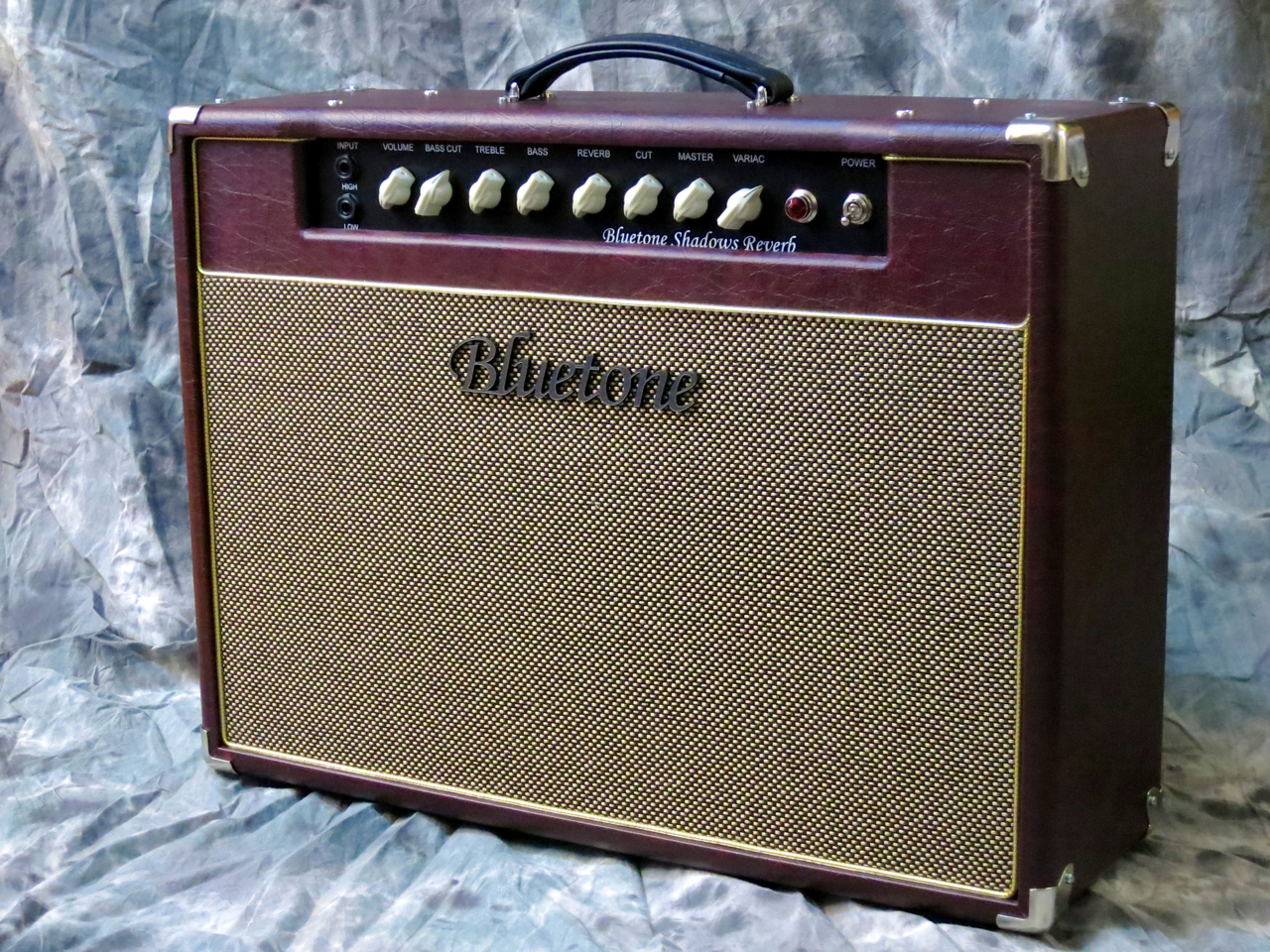
Bluetone’s Shadows Reverb (reviewed version: 1,950 €) is a single-channel all-valve amp loaded with a genuine spring reverb. The combo represents the company’s view of what constitutes a perfect Top Boost-channel tone, all presented in a much more compact format.

The Shadows Reverb is a class AB amp, and it offers between 15 and 30 Watts of output power, depending on the setting of its built-in Variac.

bluetone-shadows-reverb-back-angle

The combo’s cabinet is made from high-grade plywood. The Shadows Reverb is a good deal smaller and less deep than its classic forebear from the 1960s.

bluetone-shadows-reverb-speakers

This reduction in heft is due mostly to the use of 10-inch Celestion Alnico Gold speakers in place of the AC30’s 12-inch speaker pair.

The speakers in the Shadows Reverb combo have been ”played in” for a number of hours (using an oscillator) to get rid of the typical tightness of brand-new Alnico Golds.

bluetone-shadows-reverb-power-amp-valves

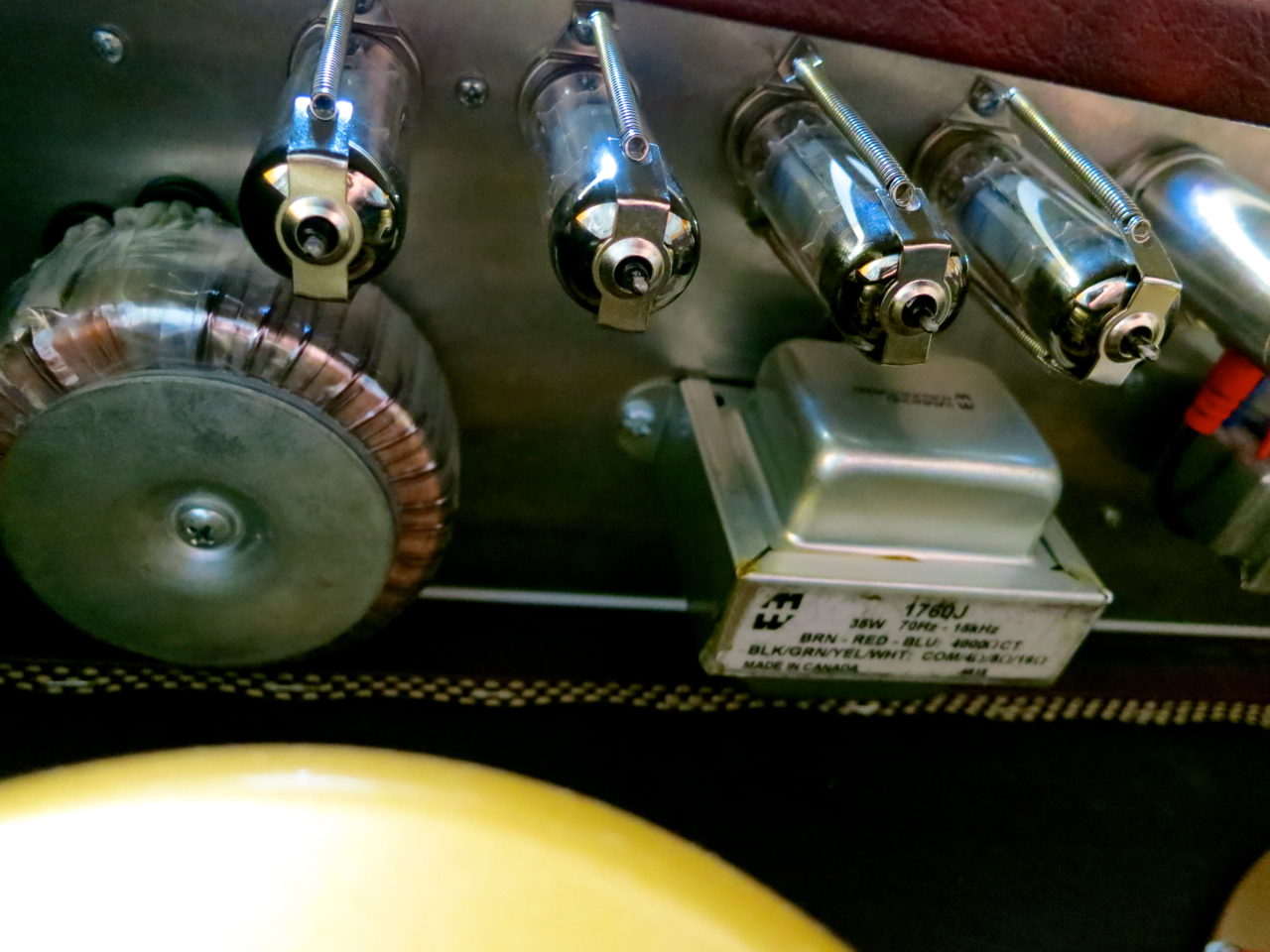
This Bluetone-combo uses three 12AX7-tubes, and a single 12AT7 in its preamp section.

bluetone-shadows-reverb-premp-valves-transformers

The power amp runs on a quartet of EL84 valves. The Shadows Reverb is a cathode-biased valve amp, which means that replacing the power amp tubes doesn’t usually necessitate any rebiasing.

****

bluetone-shadows-reverb-front-panel

Yes, the Bluetone Shadows Reverb is ”just” a single-channel combo, but it is far from a single sound guitar amplifier. In large part this is thanks to the brilliant modern features Bluetone has incorporated into this homage.

The Shadows Reverb offers you two guitar inputs – High and Low – for use with single coil- and humbucker-equipped instruments.

The preamp features a two-band Baxandall EQ-section – with typically interactive controls for Bass and Treble – as well as a three-stage Bass Cut rotary switch, which offers you two fatter alternatives to the famously bright and wiry Vox Top Boost sound.

The onboard spring reverb sounds fantastic and is a real treat to work with, giving you everything from completely dry tones to Surf Music antics.

The power amp section comes with three controls:

Cut allows you to make overall adjustments to the combo’s treble output.

Bluetone’s Master Volume-control is placed after the phase inverter, right at the end of the signal chain. This allows you to get juicy power amp distortion at low volume levels, and with only minimal changes in the amp’s tone.

As mentioned before, the Shadows Reverb comes with a built-in Variac circuit. Although the Variac also has a bearing on the combo’s output level, it works in a completely different way to the master volume, namely by dropping the voltage the power amp runs on. Turning the Variac down will result in a good deal less clean headroom and more power amp sag.

Due to large public interest, I had to return the Shadows Reverb much earlier than anticipated, but I still managed to record two different demo tracks with the Bluetone amp.

The first (clean) track features rhythm guitar tracks played on a Fender Telecaster (left channel) and a 1970s Japanese copy of a Gibson ES-335 (Kasuga; right channel). The lead guitar part was played on a Fender Stratocaster. All guitar tracks have been recorded with an AKG C3000 microphone placed approximately 80 cm from the combo’s front:

The second track (overdriven) has been recorded with a Stratocaster. The distortion comes from the Shadows Reverb (no pedals used), and all tracks have been close-miked with a pair of Shure SM57s:

bluetone-shadows-reverb-master-section

****

Bluetone’s Shadows Reverb is an outstanding boutique amp take on the Vox AC30 motif. Like all other Bluetone amps, the Shadows Reverb is carefully handmade in Finland to the company’s strict quality standards. This results in reliable top-drawer tools for the musician, with extremely low levels of hiss and negligible AC hum.

I had a great time test driving this combo. The Bluetone Shadows Reverb simply delivers all it promises with style and panache. The combo weighs approximately half of the original classic (AC30s usually weigh between 31 to 36 kg, depending on their specific vintage and the speakers they come loaded with). The reduced size means you won’t be having any problems lifting this beauty into the boot of a small car, such as a Ford Fiesta.

Thanks to the additional features of this Bluetone combo – like the Bass Cut and the Variac – you will be able to enjoy the great sound of the Shadows Reverb anywhere you want, be it at home or on stage.

****

Bluetone Shadows Reverb

Prices starting at approx. 1,700 € (reviewed version: 1,950 €)

Manufacturer: Bluetone Amps

****

Pros:

+ handmade in Finland

+ size

+ weight

+ valve-powered spring reverb

+ Variac- and Master Volume-controls

+ sound

Save

Save

Save

Save

Save

Save

Save

Save

Save

Save

Save

Save

Save

Save

Save

Save

Save

Save

Save

Save

Save

Save

Save

Save

Save

Save

Testipenkissä: Bluetone Shadows Reverb

Monelle kitaristille Voxin AC30-kombo on se yksi ja ainoa varteenotettava kitaravahvistin.

Alun perin brittiyhtye The Shadowsia varten kehitetty AC30 tuli kuuluisaksi The Beatles -vahvistimena, mutta se on löytänyt tiensä monien erityylisten kitaristien backlineen. Tunnetuimpiin käyttäjiin kuuluvat mm. Brian May (Queen), Rory Gallagher sekä U2:n The Edge. Myös Suomen rautalankabändien keskuudessa AC30 kuuluu vakiovarustukseen.

Suosiosta huolimatta vanhoilla AC30-komboilla on myös huonot puolensa:

Isokokoinen, kahdella 12-tuumaisella kaiuttimella varustettu putkikombo on melko painava ilmestys. Vanhoissa Voxeissa ei myöskään ole master volume -säädintä, mikä tarkoittaa sitä että vahvistimen omaa säröä pystyy hyödyntämään asianmukaisesti vain isoissa keikkapaikoissa. Lisäksi vintage-Voxeissa kaikki putket – kyllä, myös pääteputket – on sijoitettu lähes kokonaan suljettuun metallikoteloon, minkä takia vintage-AC30:t voivat (käyttötavasta rippuen) syttyä palamaan herkemmin kuin moni muu vanha kombovahvistin.

vox-chassis-studiofreak-photobucket

(kuva: Studiofreak/Photobucket)

Helsinkiläinen vahvistinpaja Bluetone tarjoaa nyt oivan ratkaisun klassikkovahvistimen ongelmiin Bluetone Shadows Reverb -nimisen putkikombon muodossa.

****

bluetone-shadows-reverb-front-angle

Bluetone Shadows Reverb (testattu versio: 1.950 €) on yksikanavainen, jousikaiulla varustettu täysputkikombo, joka lupaa aitoa Top Boost -soundia selvästi pienemmässä paketissa ja nykyaikaisilla ominaisuuksilla höystettynä.

Shadows Reverb on AB-luokan vahvistin, joka tarjoaa 15-30 wattia tehoa, riippuen Variac-säätimen asennosta.

bluetone-shadows-reverb-back-angle

Shadows Reverbin kaiutinkotelo tehdään vanerista, ja se on selvästi pienempi ja litteämpi kuin 1960-luvun esikuvansa.

bluetone-shadows-reverb-speakers

Pienempi koko on osittain mahdollistettu käyttämällä klassikkokombon 12-tuumaisten kaiuttimien sijaan 10-tuumaisia Celestion Alnico Gold -kaiuttimia.

Shadows Reverbin kaiuttimia on, siniaaltogeneraattoria käyttäen, ajettu sisään useamman tunnin ajan, minkä ansiosta on saatu vähennettyä uusille Alnico Gold -elementeille tyypillistä alkukireyttä.

bluetone-shadows-reverb-power-amp-valves

Tässä Bluetonessa käytetään etuasteessa kolmea 12AX7-putkea, sekä yhtä 12AT7:ää.

bluetone-shadows-reverb-premp-valves-transformers

Päätevahvistin tuottaa tehonsa neljän EL84-putken voimalla. Shadows Reverb on katodibiasoitu kombo, mikä tarkoittaa sitä, ettei pääteputkia yleensä tarvitse biasoida vaihdon yhteydessä.

****

bluetone-shadows-reverb-front-panel

Vaikka Bluetone Shadows Reverb on ”vain” yksikanavainen kombo, sen soundimaailma on selvästi laajempi kuin uskoisi. Kiitos siitä kuuluu Bluetonen monipuolisille ominaisuuksille.

Shadows Reverb tarjoaa kaksi kitaratuloa – High ja Low – single coil- ja humbucker-mikrofoneja varten.

Etuasteesta löytyy kaksikaistainen Baxandall-EQ – interaktiivisilla basso- ja diskanttisäädöillä – sekä kolmiasentoinen Bass Cut -bassoleikkuri, joka tarjoaa aidon Vox Top Boost -soundin lisäksi kaksi hieman muhkeampaa vaihtoehtoa.

Reverb-säätimellä hallitaan kombon putkivahvistettua jousikaikua. Kaiun soundi on erinomainen, ja säätimen skaala yltää täysin kuivasta kaikuisaan Surf-vatkaukseen.

Päätevahvistimelle on varattu jopa kolme säädintä:

Cut-säätimellä voidaan säännöstellä kombon kokonaisdiskanttia.

Bluetonen Master Volume -säädin on signaaliketjun loppupäässä (vaihekääntäjän jälkeen), ja sen ansiosta voidaan tuottaa päätesäröä myös pienillä volyymeillä.

Shadows Reverbissä on myös kolmiasentoinen Variac-tehonsäädin. Variac toimii eri tavalla kuin perinteinen master volume -säädin, se nimittäin muuttaa pääteasteen sisäistä jännitettä. Tehoa laskettaessa päätevahvistimen puhdas headroom ja putkikompressio muuttuvat.

Testikombon palautuksen suhteen tuli ylättäen hieman kiire, mutta ehdin kuitenkin äänittää kaksi erilaista demobiisiä Bluetone Shadows Reverbillä.

Ensimmäisessä kappaleessa komppikitarat soitettiin Fender Telecasterilla (vasen kanava) ja vanhalla japanilaisella puoliakustisella (Kasuga, oikea kanava). Soolokitarana toimi Fender Stratocaster:

Toisessa biisissä särösoundi tulee pelkästään kombosta itse. Kaikki raidat on soitettu Stratolla:

bluetone-shadows-reverb-master-section

****

Bluetone Shadows Reverb -kombo on erinomainen boutique-luokan muunnelma Vox AC30 -teemasta. Kuten muutkin Bluetone-vahvistimet, Shadows Reverb rakennetaan kokonaan käsin Suomessa tiukkojen laatustandardien mukaan, mistä kielivät mm. kombon erittäin alhainen kohinataso, sekä käytännössä olematon verkkohumina. Vahvistimen laatuun suhteutettuna pidän Shadows Reverbin hintaa erittäin reiluna.

Testikokemuksen perusteella voin vain todeta, että Bluetone Shadows Reverb lunastaa lupauksensa avokätisesti ja tyylikkäästi. Bluetone-kombo painaa lähes tarkalleen puolet vanhan klassikon painosta (AC30 painaa noin 31-36 kg, vuosimallista ja kaiutinvarustuksesta riippuen), ja sen pienempi koko tarkoittaa, että Shadows Reverb mahtuu helposti esimerkiksi Ford Fiestan takakonttiin (kokeiltu on).

Bluetonen lisäominaisuuksien – kuten bassoleikkurin ja Variacin – ansiosta Shadows Reverbin tarjoama soundikattaus on yllättävän laaja, ja kombon erinomaisista soundeista voi nauttia sekä omassa olohuoneessa että keikkalavalla.

****

Bluetone Shadows Reverb

Hinnat alk. 1.700 € (testattu version 1.950)

Valmistaja: Bluetone Amps

****

Plussat:

+ käsintehty Suomessa

+ koko

+ paino

+ jousikaiku

+ Variac ja Master Volume

+ soundi

Save

Save

Save

Save

Save

Save

Save

Save

Save

Save

Save

Save

Save

Save

Save

Save

Save

Review: Tokai TST-50-FS Modern

tokai-tst-50-fs-ysb-body-beauty-vs-2

The guitar maker Tokai is known worldwide for its high-quality versions of classic vintage guitars, and the instruments are loved and played by many.

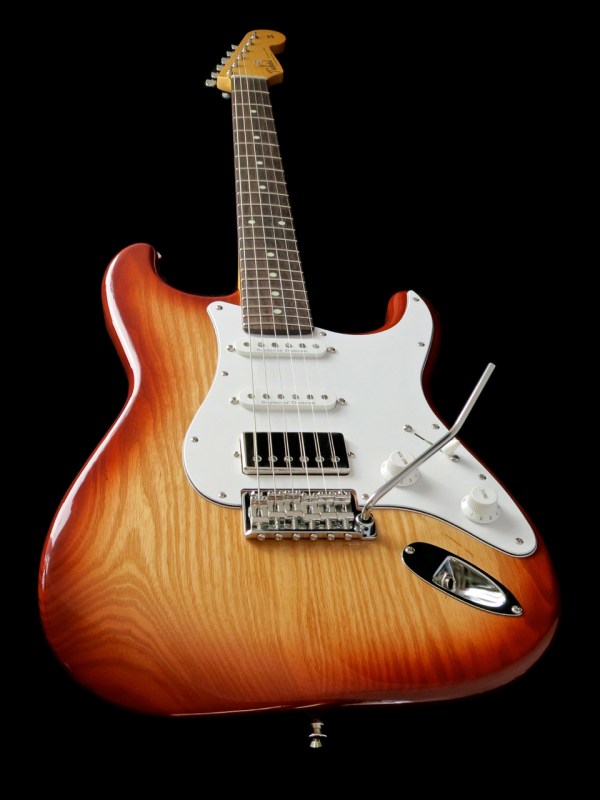
But now there’s an interesting new model, devised by Tokai Guitars Nordic, called the Tokai TST-50-FS Modern (current price in Finland: 1,650 €; hard case included). This is an S-type guitar for the player who wants classic looks combined with modern features.

****

tokai-tst-50-fs-ysb-flying

Tokai’s brand-new TST-50-FS Modern is available in three different versions, which share the same basic build and features, but which differ in terms of finish and pickup choice.

The Modern is available in a traditional Three-Tone Sunburst

tokai-tst-50-fs-ssb-flying

… a beautiful Sienna Sunburst

tokai-tst-50-fs-et-flying

… and in a cool, dark Ebony Transparent.

The TST-50-FS’ body is made from two pieces of beautiful swamp ash, with a – near invisible – centre glue line.

tokai-tst-50-fs-headstock

The new model makes it a jiffy to adjust the truss rod by moving the adjustment to the headstock side of the neck.

tokai-tst-50-fs-locking-tuners

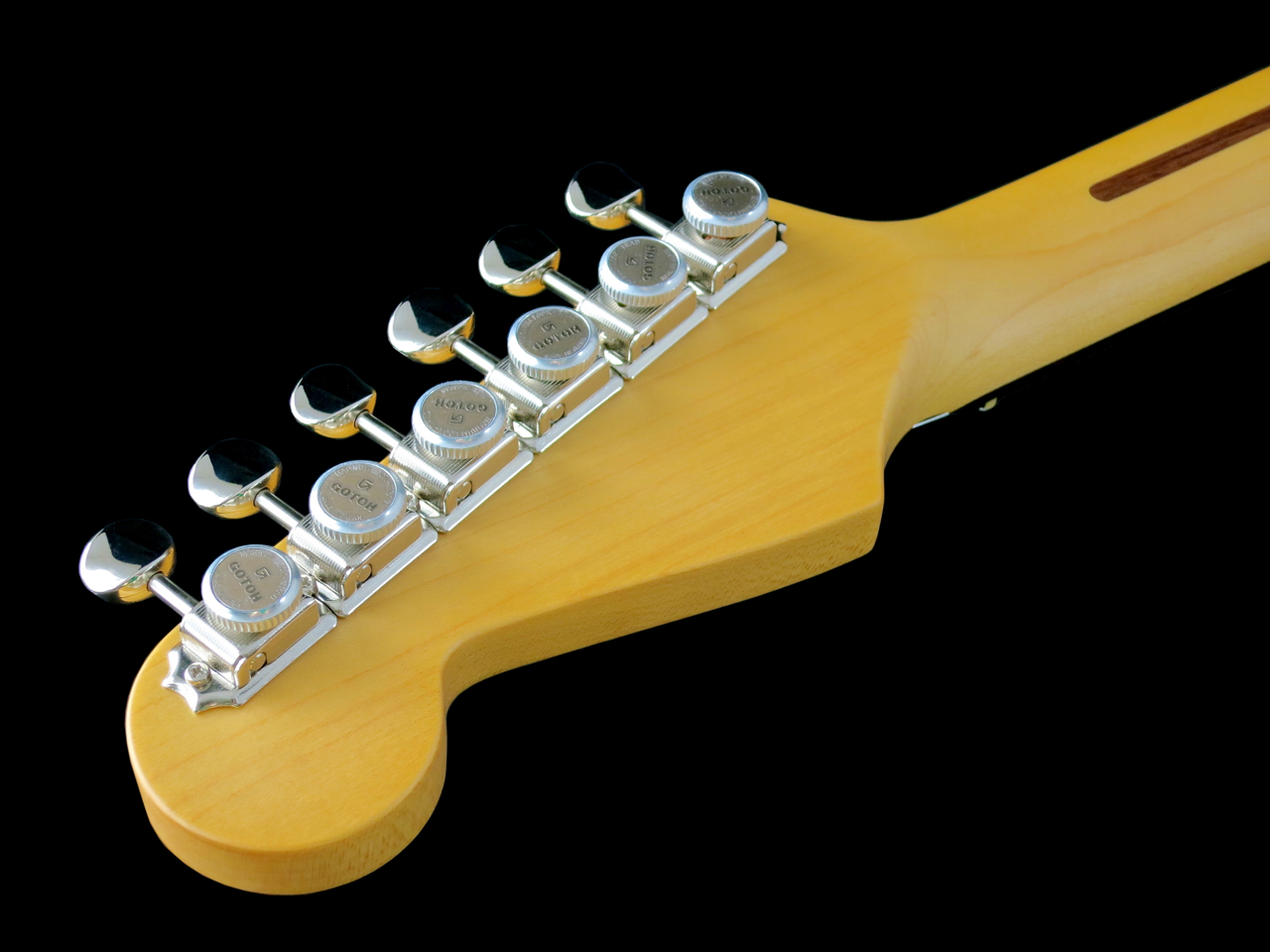
The TST-50-FS Modern sports a high-quality set of Gotoh Magnum Lock locking machine heads, resulting in lightning-fast string changes and rock steady tuning stability.

The neck comes with a thin satin finish.

tokai-tst-50-fs-fretboard

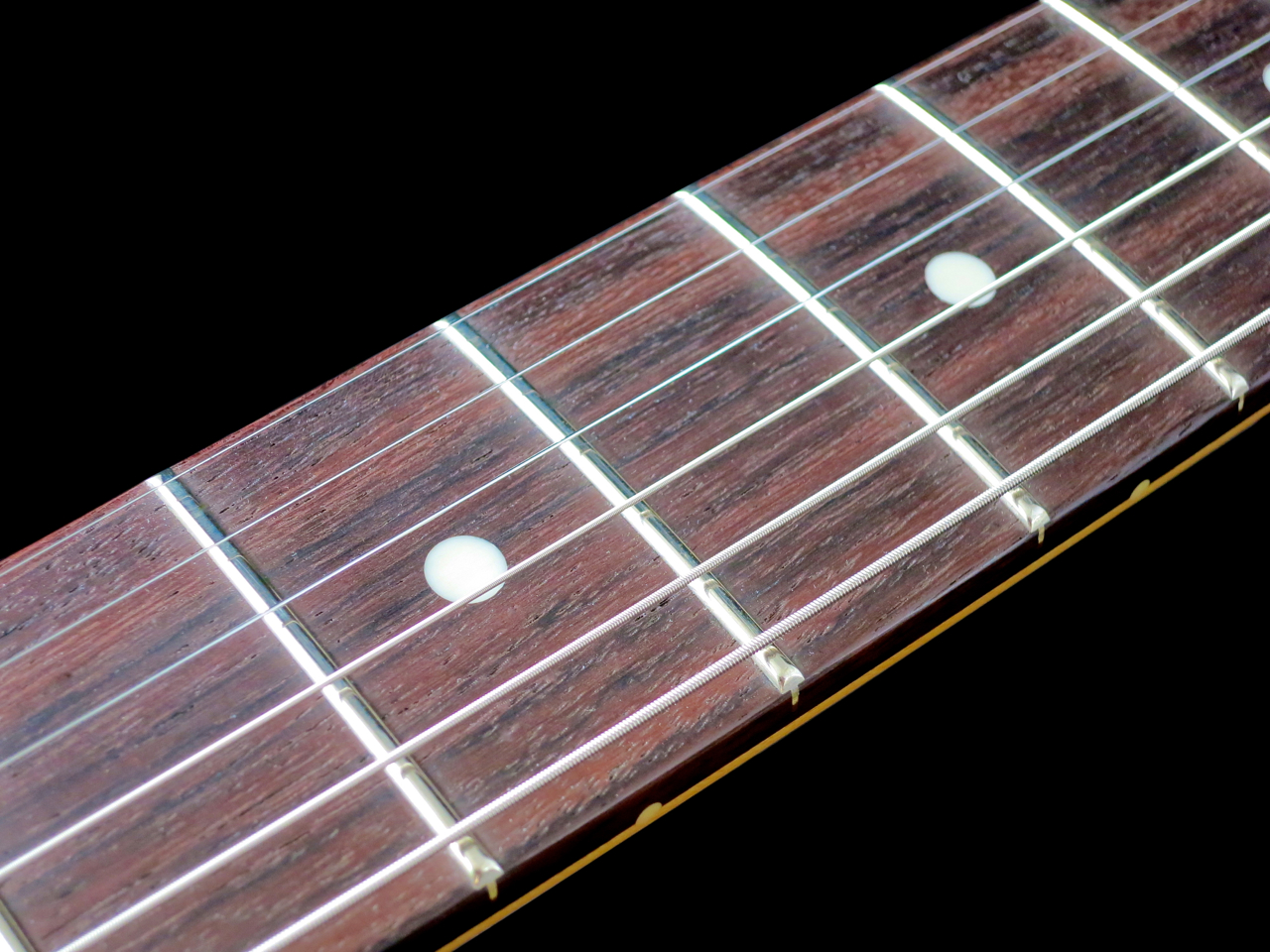
We find a rosewood fretboard with a modern radius (9.5″), as well as 22 gleaming medium jumbo-sized frets (Dunlop 6105), making string bending much easier than on a vintage guitar.

tokai-tst-50-fs-two-post-vibrato

The bridge on the Tokai TST-50-FS Modern represents Gotoh’s view of the perfect updated Strat-style vibrato.

Gotoh’s 510T-SF bridge is a two-post affair made of steel. The height-adjustable posts can be locked inside the threaded ferrules to increase vibrational transfer into the body.

tokai-tst-50-fs-ysb-pickups

In terms of its pickups, the Three-Tone Sunburst version is the most traditional of the new trio:

The neck and middle pickups are genuine single coils (Seymour Duncan SSL-1), while the bridge humbucker is Duncan’s vintage-voiced Model ’59 (SH-1B Zebra).

tokai-tst-50-fs-ssb-pickups

The Sienna Sunburst-variant is completely noise-free thanks to its stacked-coil neck and middle pickups (Seymour Duncan STK-S4; aka Classic Stack Plus). The bridge unit is a hotter-than vintage, covered JB (SH-4).

tokai-tst-50-fs-et-pickups

The hottest guitar in our trio is the TST-50-FS in Ebony Transparent, which comes with a pair of Hot Stack Plus pickups (STK-S7) and the sheer force of nature that is Seymour Duncan’s SH-14 Custom 5 humbucker.

****

The Tokai TST-50-FS Modern is part of the brand’s Made-in-Japan Premium Series, and all three instruments are perfect examples of the excellent workmanship Tokai has to offer.

The new model comes with a rounded neck profile (Tokai call it ”Thin U”) that feels and plays like a dream. The modern fingerboard radius and excellent fretwork make string choking a thing of the past.

The vibrato feels very precise and stays in tune far better than any vintage-style vibrato bridge ever could.

The ash body, locking tuners and steel bridge give the TST-50-FS Modern a sparkling unplugged voice with a long and clear sustain.

Played with an amp the differences between the three versions become very clear:

tokai-tst-50-fs-ysb-body-beauty

The Three-Tone Sunburst version gives you the tones you’d expect from a factory-modded vintage S-type.

Thanks to the vintage-style single coils – as well as the PAF-inspired bridge humbucker – you get a lot of clarity, dynamics and spank.

tokai-tst-50-fs-ssb-body-beauty

I’d call the FS Modern’s Sienna Sunburst variant the ”LA Studio model”, which will deal with any musical situation by giving you a first-rate West Coast sound.

The stacked coil pickups are free from hum and buzz, and they give you a fine, slightly ”pre-compressed” sound that sits well in any mix. The JB-humbucker offers just the right amount of ”push” to complement the neck and middle pickups perfectly.

tokai-tst-50-fs-bb-body-beauty

If you look for an S-style electric that will take to high gain settings like the proverbial duck to water, you need look no further. The TST-50-FS Modern in Ebony Transparent simply loves gain and distortion, while still making a great figure when it comes to clean tones.

This is noise-free high gain heaven with a healthy dose of bottom end punch and a chunky mid-range.

The demo track features the trio in the following order: Sienna Sunburst –> Ebony Transparent –> Three-Tone Sunburst. Each guitar plays both the rhythm as well as the lead parts of its section:

****

tokai-tst-50-fs-et-beauty-shot

The new Tokai TST-50-FS Modern really made a big impression on me.

This is a fantastic alternative to the traditional, vintage-flavoured Tokai models. Both the playability and sounds this trio has to offer are top-notch, and I’m sure you will find your favourite modern S-type guitar from one of the three alternatives.

Tokai’s TST-50-FS Modern offers you custom shop quality at a very fair price.

****

Tokai TST-50-FS Modern

1,650 € (hard case included)

Distributor: Musamaailma

****

Pros:

+ value-for-money

+ workmanship

+ three different pickup configurations

+ playability

+ sound

Save

Save

Save

Save

Save

Save

Save

Save

Save

Save

Save

Save

Save

Save

Save

Save

Save

Save

Save

Save

Save

Save

Save

Save

Save

Save

Save

Save

Save

Save

Save

Testipenkissä: Tokai TST-50-FS Modern

tokai-tst-50-fs-ysb-body-beauty-vs-2

Kitaravalmistaja Tokai tunnetaan laadukkaista klassikkokitaroiden uusintapainoksista, ja soittimet ovat löytäneet tiensä monen vintage-fanin käsiin.

Tokai Guitars Nordicin kehittämä uutuusmalli Tokai TST-50-FS Modern (1.650 €, sis. kova laukku) on sen sijaan suunnattu kitaristeille, jotka haluavat tuttua Tokai-laatua nykyaikaisilla ominaisuuksilla.

****

tokai-tst-50-fs-ysb-flying

Tokai TST-50-FS Modern on saatavilla kolmessa eri versiossa, joiden rakenteelliset ominaisuudet ovat samat, mutta jotka eroavat toisistaan värityksen ja mikrofonien suhteen.

Kitaran värivaihtoehtoina on Three-Tone Sunburst

tokai-tst-50-fs-ssb-flying

… vaalea Sienna Sunburst

tokai-tst-50-fs-et-flying

… ja tumma Ebony Transparent.

Kaikissa versioissa runko on veistetty kuvankauniista suosaarnista. Rungot on koottu kahdesta saarnipalasta, joiden (käytännössä näkymätön) liimasauma kulkee siististi keskeltä runkoa.

tokai-tst-50-fs-headstock

Kaularaudan säätäminen on TST-50-FS-mallissa todella helppoa, koska säätöruuvi on sijoitettu viritinlavan puolelle.

tokai-tst-50-fs-locking-tuners

Tässä mallissa on erittäin laadukkaat Gotoh Magnum Lock -lukkovirittimet – kieltenvaihto sujuu nopeasti ja vire pysyy.

Kaulassa on ohut mattapintainen viimeistely.

tokai-tst-50-fs-fretboard

Otelaudan radius on selvästi vintagea loivempi, ja ruusupuuhun on siististi asennettu 22 medium jumbo -kokoista nauhaa (Dunlop 6105), minkä ansiosta venytykset vaativat vähemmän voimaa.

tokai-tst-50-fs-two-post-vibrato

Tokai TST-50-FS Modernin talla on huippulaadukas, Gotohin valmistama modernisoitu versio Strato-vibratallasta.

Gotoh 510T-SF -talla on valmistettu teräksestä ja se on veitsenterälaakeroitu. Vibraton tapit lukitaan kierreholkkeihinsa, mikä parantaa tallan sustainia.

tokai-tst-50-fs-ysb-pickups

Three-Tone Sunburst -version mikrofonitarjonta on tästä kolmikosta se perinteisin:

Kaula- ja keskimikki ovat aitoja yksikelaisia (Seymour Duncan SSL-1) ja talla-asemasta löytyy Duncanin ’59-humbucker (SH-1B Zebra).

tokai-tst-50-fs-ssb-pickups

Sienna Sunburstin mikrofonivarustus on täysin hurinaton, sillä kaula- ja keskimikrofonit ovat kahdella päällekkäisellä kelalla varustettuja Seymour Duncan STK-S4 -mikrofoneja (Classic Stack Plus), kun taas tallahumbuckerina toimii vintagea kuumempi JB-malli (SH-4 JB).

tokai-tst-50-fs-et-pickups

Malleista lähtöteholtaan kuumin on Ebony Transparent -versio, joka yhdistää tehokkaat Hot Stack Plus -mikrofonit (STK-S7) Seymour Duncan SH-14 Custom 5 -humbuckerin tarjoamaan täyslaidalliseen.

****

Tokai TST-50-FS Modern kuuluu valmistajan japanilaiseen Premium-sarjaan, ja testissä käynyt kolmikko on – jälleen kerran – täydellinen esimerkki japanilaisesta, erinomaisesta soitinrakennusosaamisesta.

Uutuusmallin pyöreä, mutta suhteellisen ohut kaulaprofiili tuntuu erittäin nopealta, ja nykyaikainen nauhoitus ja otelautaradius luovat kevyen soittotuntuman.

Vibratalla toimii sulavasti ja erittäin tarkasti.

Saarnirungon, lukkovirittimien ja teräsvibran ansiosta TST-50-FS Modernin akustinen ääni on hyvin raikas ja pitkällä sustainilla höystetty.

Versioiden väliset erot tulevat esiin vahvistimen kautta soitettaessa:

tokai-tst-50-fs-ysb-body-beauty

Three-Tone Sunburst -versio antaa soittajalle aimon annoksen kustomoidun vintage-kitaran hehkua.

Aitojen yksikelaisten mikkien, sekä PAF-tyylisen tallahumbuckerin ansiosta vahvistettu ääni on tuore ja erittäin dynaaminen. Pletraniskujen naksahteleva luonne tuo väkisinkin mieleen vintage-Straton.

tokai-tst-50-fs-ssb-body-beauty

Kutsuisin 50-FS Modernin Sienna Sunburst -kitaraa LA Studio -malliksi, jolla hoituu sessio kuin sessio aidolla länsirannikon soundilla.

Stacked coil -mikrofonit eivät hurise, ja niillä on oikein mainio, hieman ”esikompressoitu” soundi, jonka saa mukavasti istutettua miksaukseen. JB-humbucker on sekä teholtaan että soundiltaan oiva valinta näiden ”yksikelaisten” rinnalle.

tokai-tst-50-fs-bb-body-beauty

Jos etsit S-tyylistä kitaraa, joka tarjoaa loistavia high gain -särösoundeja, mutta joka samalla kuulostaa myös mehevältä puhtaasti soitettuna, Ebony Transparent on sinulle oikea valinta.

Tämä kitara tarjoaa hurinatonta high gain -meinikiä tuhdilla alakerralla ja herkullisella keskialueella.

Demobiisissä testikitarat kuullaan järjestyksessä Sienna Sunburst –> Ebony Transparent –> Three-Tone Sunburst. Samalla kitaralla soitetaan aina sekä komppiosuudet että soolo:

****

tokai-tst-50-fs-et-beauty-shot

Minun mielestäni Tokai TST-50-FS Modern lunastaa lupauksensa täydellisesti ja avokätisesti.

Uutuusmalli on huippulaadukas, nykyaikainen vaihtoehto vintage-tyylisille Tokai-kitaroille. Soittotuntuma ja soundi ovat enemmän kuin kohdillaan, ja jokainen meistä löytää varmasti kolmesta vaihtoehdoista sen itselleen sopivan.

TST-50-FS Modern tarjoaa custom shop -tasoista laatua reiluun hintaan.

****

Tokai TST-50-FS Modern

1.650 € (kova laukku kuuluu hintaan)

Maahantuoja: Musamaailma

****

Plussat:

+ hinta-laatu-suhde

+ työnjälki

+ kolme mikrofonivaihtoehtoa

+ soitettavuus

+ soundi

Save

Save

Save

Save

Save

Save

Save

Save

Save

Save

Save

Save

Save

Save

Save

Save

Save

Save

Save

Save

Save

Save

Save

Save

Review: Farida M-2 & B-10E

Farida M-2NS – soundhole rosette

Kitarablogi.com had the pleasure to review two acoustic steel-string guitars from Chinese brand Farida Guitars:
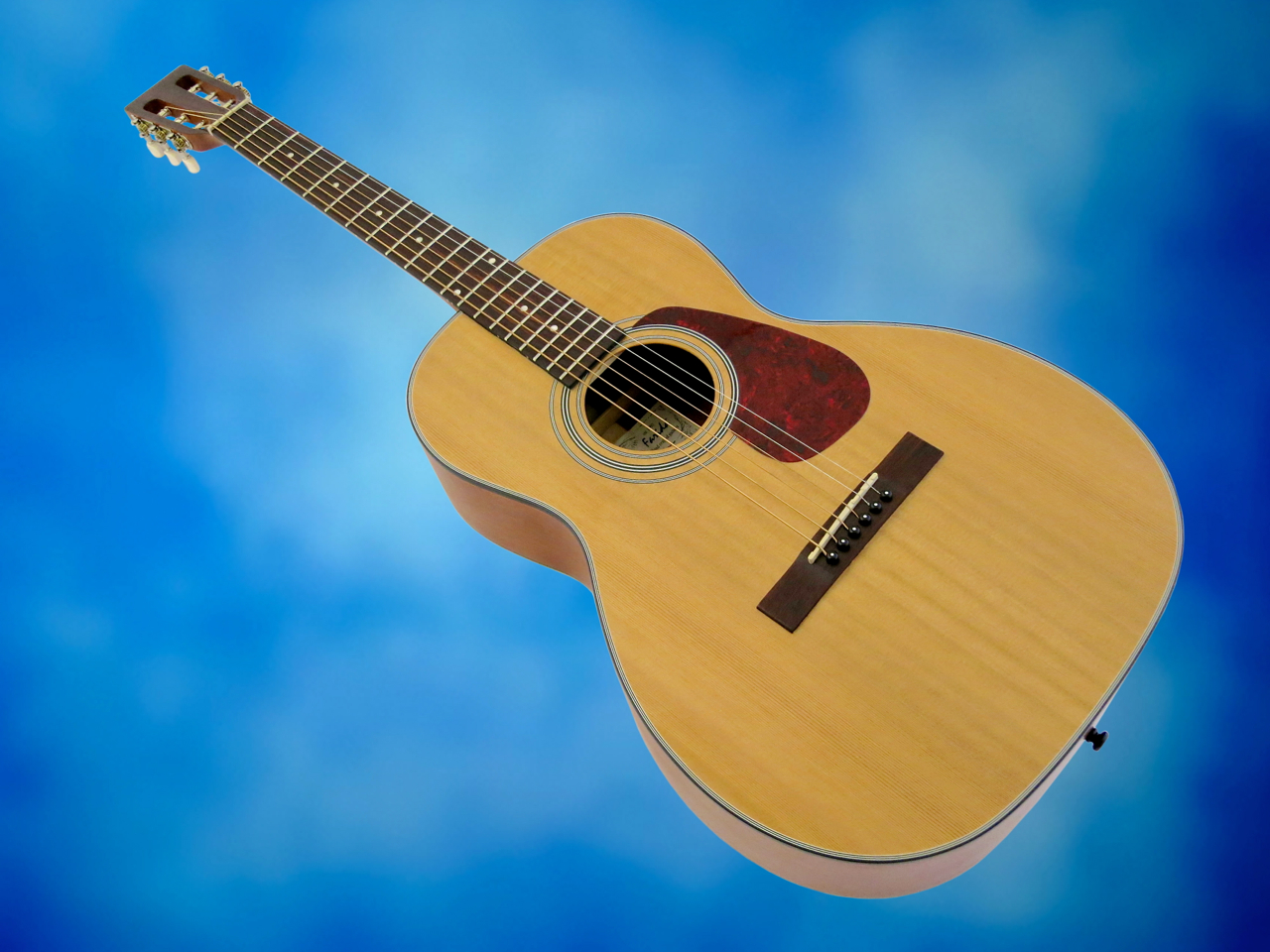
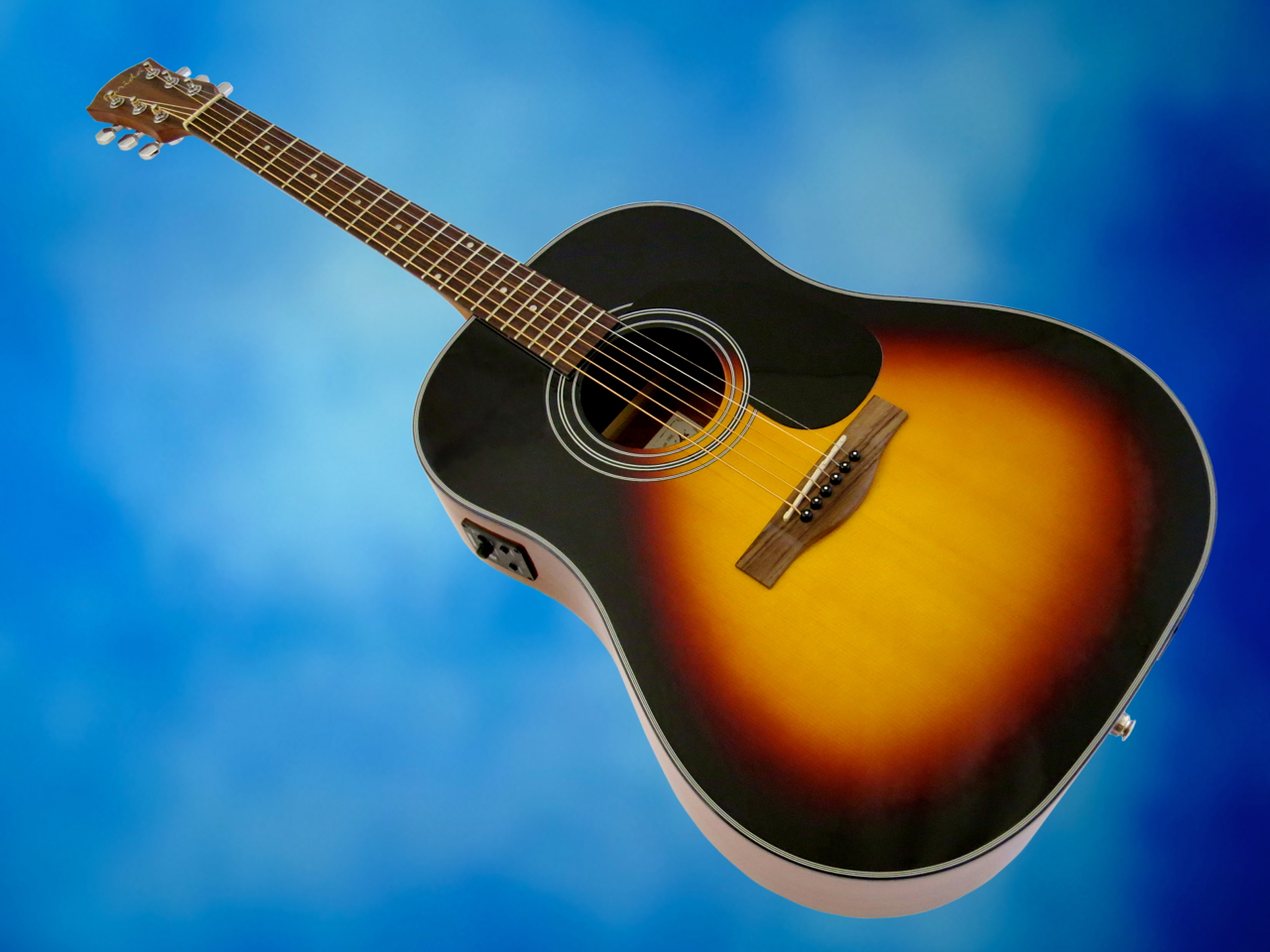
The Farida M-2 is a parlour-sized guitar, while the Farida B-10E gives you this company’s take on a miked-up, slope-shouldered Gibson steel-string.

Farida B-10E – soundhole rosette

****

Farida M-2NS – beauty shot 1 – new

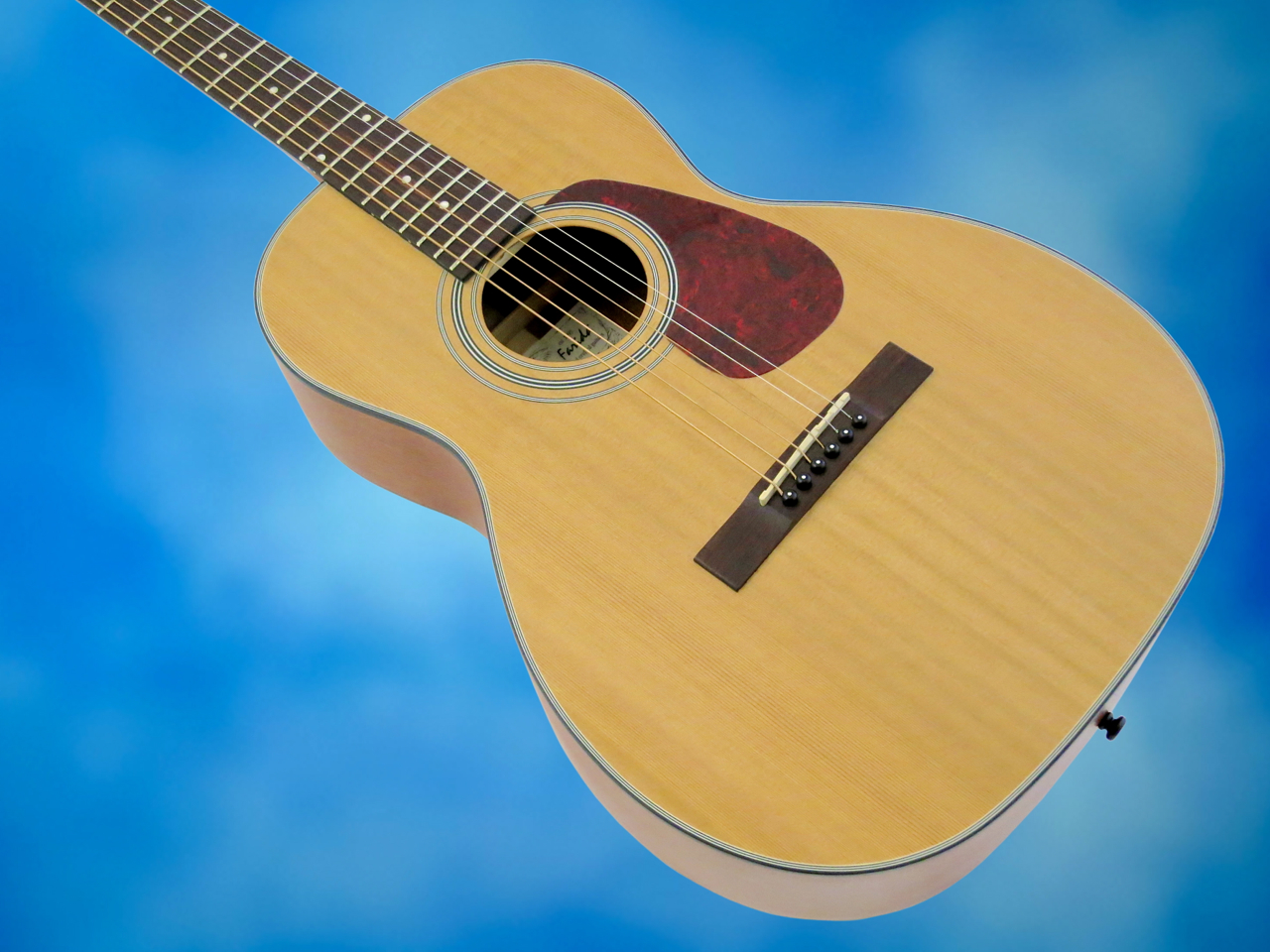
These days a guitar is called a parlour (or parlor, if you’re so inclined), if its soundbox is smaller than a Martin OM- or 000-body. While parlour guitars have gained a growing followership over the last few years, it is still surprisingly difficult to find reasonably priced exponents of this species.

Farida Guitars’ M-2 (current price in Finland: 465 €) ticks all the right boxes to whet a parlour lover’s appetite – a slightly shorter scale length (62.8 cm/24.7″), a 12th fret neck joint, and a classical-type open headstock.

Farida M-2NS – back beauty

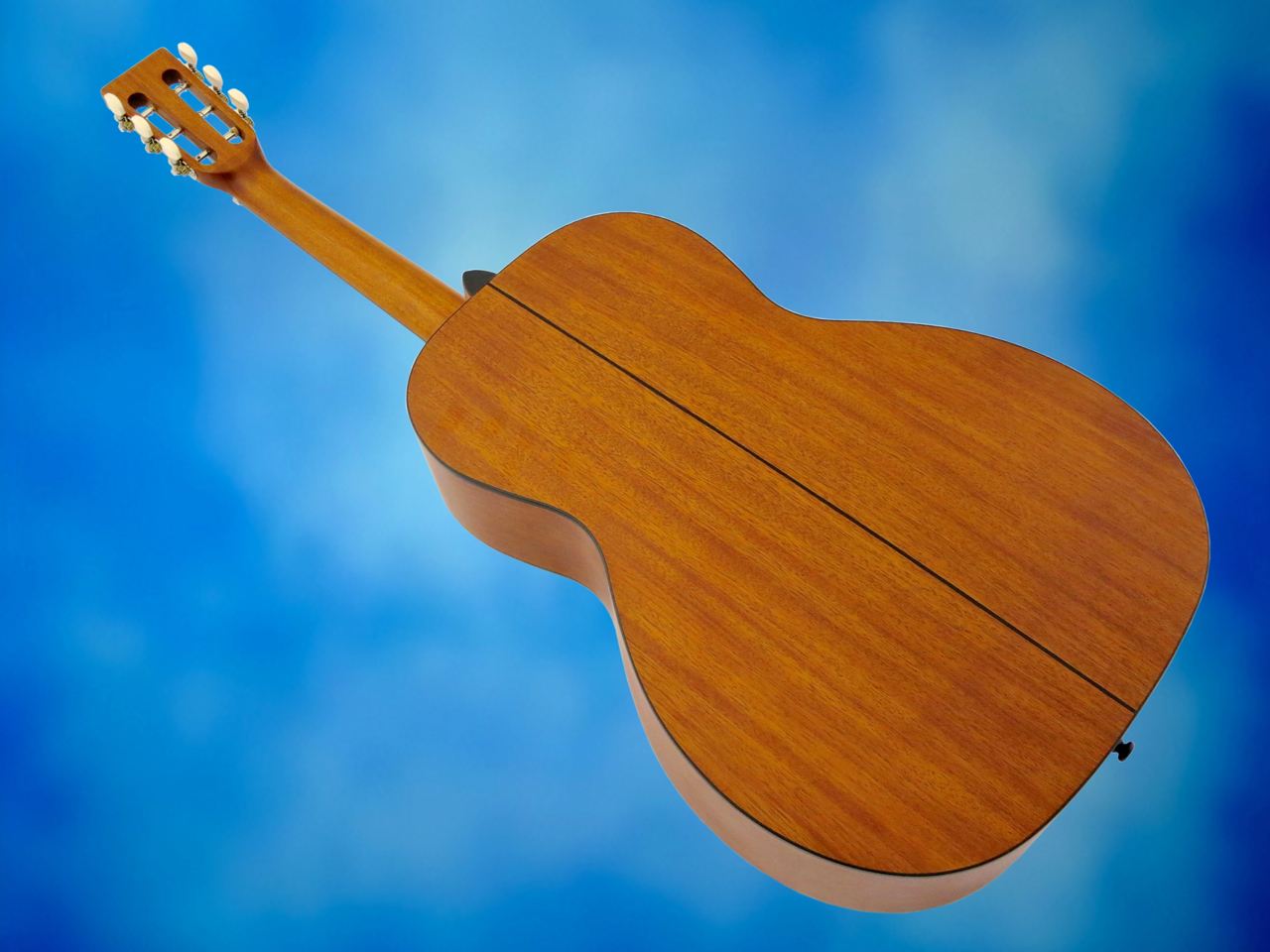
The M-2’s soundbox is made from a beautiful solid red cedar top, and laminated mahogany for the rims and the back.

The mahogany neck is glued into the body in traditional fashion.

Farida M-2NS – headstock

The three-on-a-strip tuners are of a decent quality.

Farida M-2NS – bridge

The Farida M2’s top nut and compensated bridge saddle are both made from a man-made bone substitute.

Farida M-2NS – fretboard

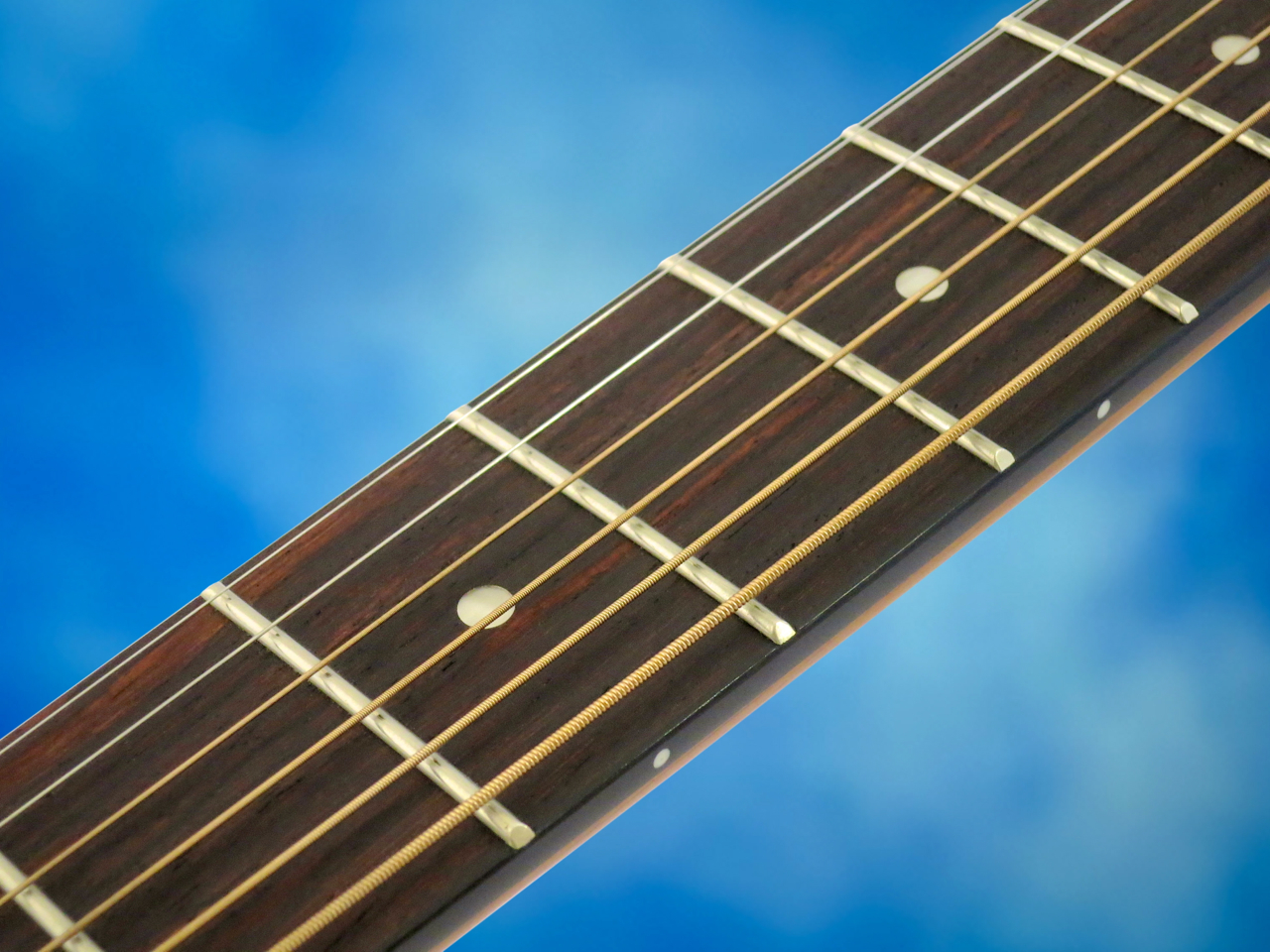
The fretwire used on this parlour has a narrow and medium-height profile.

There’s a very nice red hue to the M-2’s rosewood fretboard.

Farida M-2NS – body beauty 2

This very cleanly built acoustic instrument comes in a thin natural satin finish.

****

Farida B-10E – beauty shot 1 – new

Farida’s B-10E (425 €) is the brand’s affordable version of Gibson’s famous slope shoulder (or round shoulder) dreadnought design (first released in the mid-1930s as the Advanced Jumbo). Like the name says, this guitar type differs from the more common Martin dreadnought by virtue of its rounded ”shoulders”.

The B-10E sports a solid spruce top finished in a gorgeously deep gloss sunburst.

Farida B-10E – back beauty

The mahogany soundbox has also received a gloss finish, while the mahogany neck goes for a modern satin finish.

Farida B-10E – headstock

Farida have come up with a good-looking headstock shape, at least in my opinion. The B-10E’s headstock face sports a beautiful rosewood veneer.

Farida B-10E – tuners

The machine heads are very decent Schaller-style models.

Farida B-10E – bridge

As with the parlour model, Farida’s slope shoulder dread also comes equipped with a self-lubricating Tusq-type nut and compensated bridge saddle.

Farida B-10E – Fishman Isys T

The B-10E features a Fishman Sonicore under-saddle transducer connected to an Isys T preamp.

In addition to the large volume control, the preamp also comes with a phase inverse switch (to combat feedback), a pre-EQ curve (called Contour), and a digital tuner.

Farida B-10E – output jack + battery

The output jack is found in the end pin, with the easy access battery compartment nearby.

Farida B-10E – fretboard

Despite this model’s rather affordable status, the fret job on the B-10 is actually surprisingly clean.

Farida B-10E – body beauty 2

****

Farida M-2NS – body beauty 1

To some parlour snobs – yes, there are such people – the only ”correct” neck profile for a guitar of this type is a wide and massive V-neck (also called a boat neck). True, a boat neck is the authentic option, but many modern players do feel quite alienated by such a profile.

Luckily (and sensibly) the Farida Guitars M-2 comes with a very player-friendly, modern D-style neck profile.

Talking about comfortable: The M-2 is a very lightweight and compact little instrument, which fits effortlessly in your lap. This means that this parlour is a great choice for young players and many women, too. You don’t need to be a Folk music fan.

Farida’s M-2 delivers the sound you’d expect from a small-bodied steel-string guitar. There’s not a lot of deep bass, the mid-range has a certain boxy quality, and the whole is rounded off by a healthy dose of chiming top end.

The M-2 is a fabulous choice for fingerstyle players, because the tight bass response of a parlour leaves ample room for the full character of the mid-range to shine through:

But a small body doesn’t necessarily mean a puny sound – this Farida is a nice little barker when played with a plectrum. Thanks to its sinewy bass register this guitar is also easy to record:

The rhythm guitar parts on this demo song feature both test guitars. The Farida M-2 is in the left channel and the B-10E can be heard coming from the right:

****

Farida B-10E – body beauty 1

Farida’s B-10E offers a lot of value and enjoyment for a very moderate price.

Here the neck profile is a slightly more rounded, oval C.

This Farida gives you the punch you’d associate with a well-made dreadnought guitar, suitably seasoned with the warmth this model’s Gibson-type scale length brings into the mix.

In contrast to the parlour, the much larger body of the B-10E equates a hefty boost in the bass and treble registers.

Played fingerstyle you’ll get a stronger bass content and more top end sparkle:

This larger-than-life persona, so typical of dreadnoughts, is also present when you switch over to a plectrum:

Fishman’s Isys T system is a very workable addition for live use. A piezo-only pickup system is always a bit of a compromise, in terms of sound fidelity, but the Isys T does a good job. In these clips the first phrase has been recorded with Contour off and the second phrase with Contour on:

The rhythm guitar parts on this demo song feature both test guitars. The Farida M-2 is in the left channel and the B-10E can be heard coming from the right:

****

Farida M-2NS – beauty shot 2

Based on this review, Farida seem to offer a lot of guitar at very fair prices. Both the Farida M-2 and the B10E are beautiful steel-string guitars that offer easy playability and inspiring sounds.
Farida B-10E – beauty shot 2

****
Farida Guitars M-2 + B-10E

M-2 – 465 €

B-10E – 425 €

Finnish distribution: Vantaan Musiikki

****

Pros (both models):

+ value-for-money

+ finish

+ fretwork

+ acoustic sound

+ easy to use pickup system (B-10E only)

Save

Save

Save

Save

Save

Save

Save

Save

Save

Save

Save

Save

Save

Save

Save

Save

Save

Save

Save

Save

Save

Save

Save

Save

Review: Bluetone Black Prince Reverb

The Bluetone Black Prince Reverb guitar combo sees the boutique amp makers from Helsinki branch out into a new and interesting direction.
Bluetone Crossroad head – 1

All the Bluetone models we have known thus far have been (and still are) produced as pure and genuine custom-made valve amplifiers.

This means that each new amp is ordered by the customer based on a certain Bluetone configuration on their website – like an à la carte-menu. The chosen model is then tweaked according to the customer’s wishes, and there are plenty of different options available – from the details of the amplifier’s internal specifications all the way to the type of finish of the cabinet and the font on the control panel.

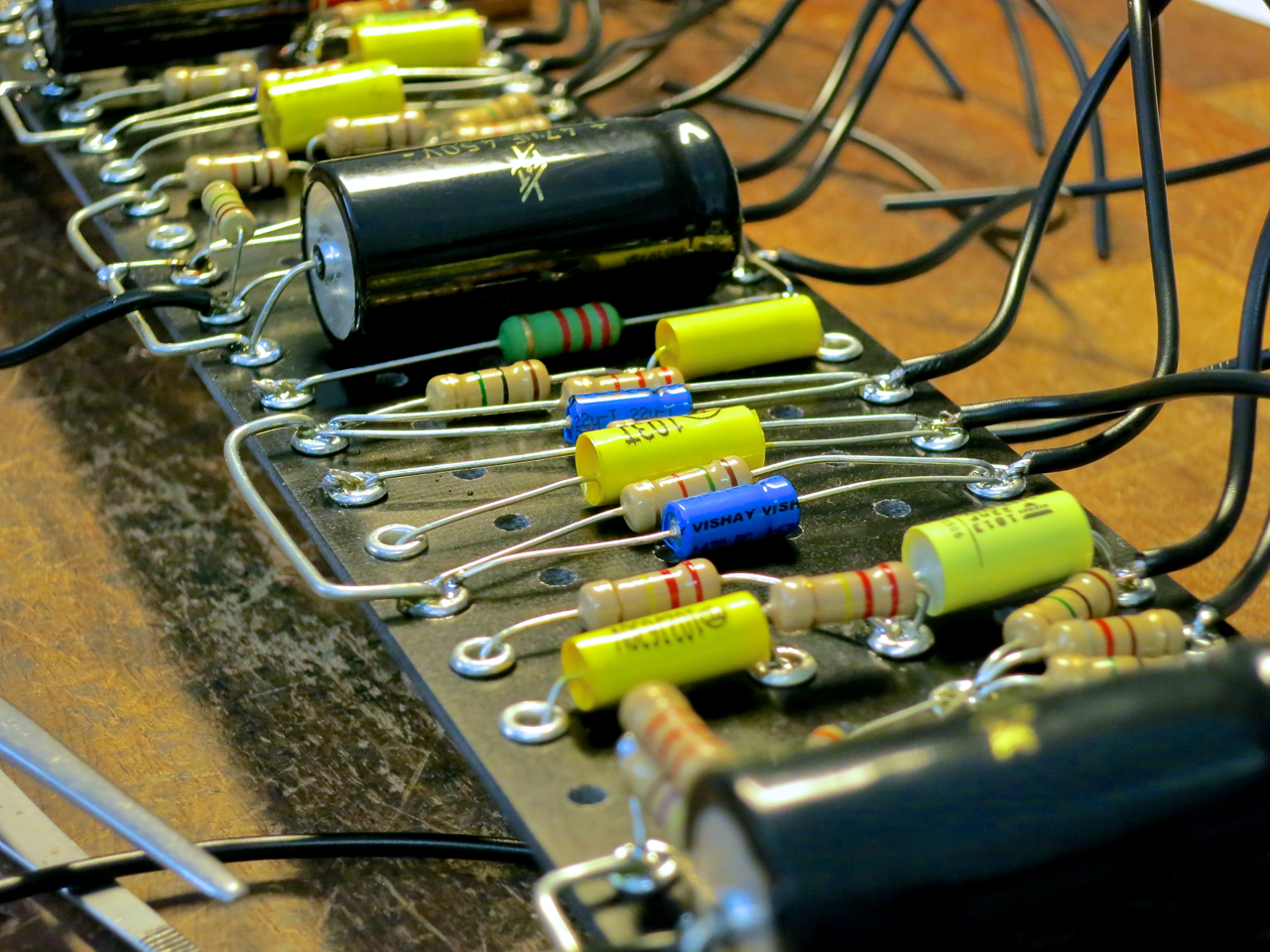
Bluetone Crossroad – handwired board 3

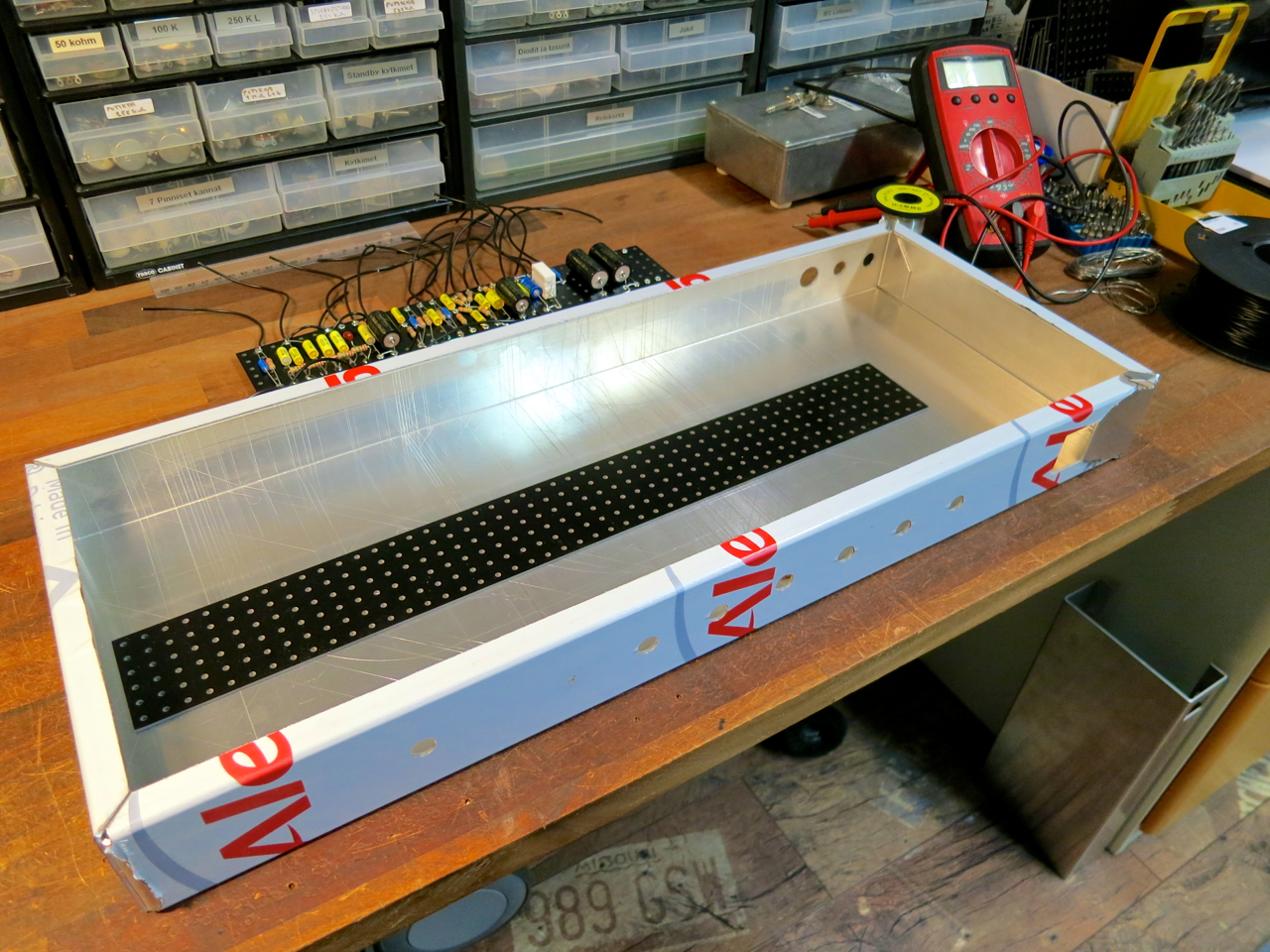
Due to the nature of custom amps, such as these, every Bluetone Custom amp is built completely by hand, starting with a clean slate – meaning: an empty metal chassis, and an empty fibreglass eyelet-board.

The board is then riveted at the right spots to take all the necessary wiring and electronic components going into this specific custom order. Everything is soldered into place by hand (point-to-point).

This is a very involved and time-consuming process, requiring a steady hand and a keen eye, which of course is reflected in the price of a Bluetone Custom amp. The advantage of building this type of point-to-point amp is, of course, that it gives the customer free reign to have his dream amp built.

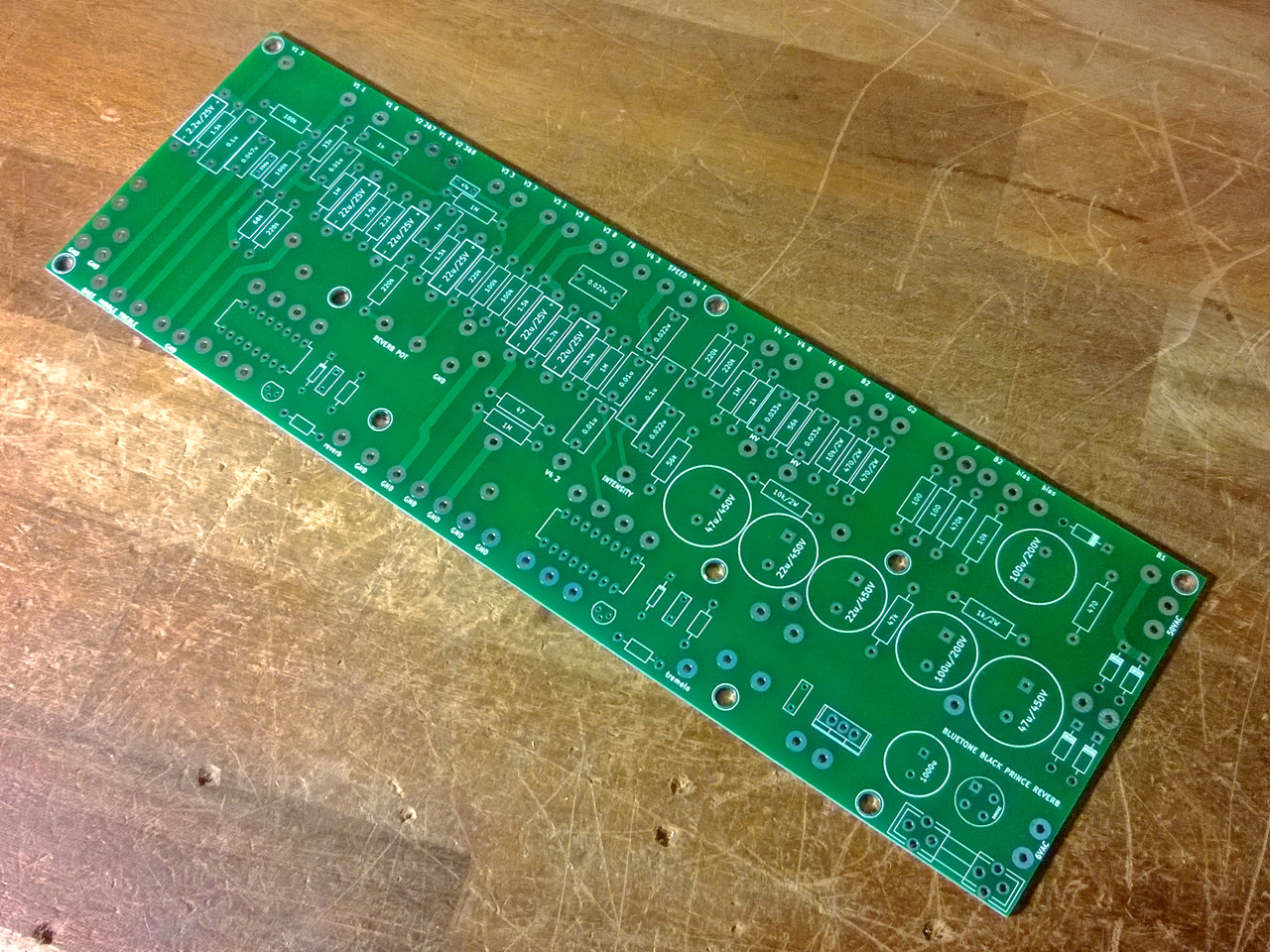
Bluetone Black Prince Reverb – hybrid PCB 2

Bluetone’s dynamic duo – Harry Kneckt and Matti Vauhkonen – have recently decided to launch a second model range alongside their strictly custom-made amps. The new range will include a few models that will be made and sold ”as is”, with only very limited options to choose from.

These new amps will be made using so-called hybrid boards.

Bluetone’s hybrid boards are very sturdy PCBs made of fibreglass, and are of a considerably higher quality than what you’d find in mass-produced valve amplifiers. Each component’s place on the hybrid is clearly labelled, and some of the ”wiring” is already incorporated into the board itself. In contrast to many mass-produced affordable amps, Bluetone’s new range will see all tubes and transformers mounted securely to the metal chassis (like on their custom-made amps, too), and not directly on the PCB (like on many affordable Far Eastern designs).

The rest of the building process is virtually identical to the more costly custom-made amplifiers – the components are fitted to the hybrid board by hand (from the top) and hand-soldered to the board. Thanks to the hybrid board the new amplifier range will be much easier and faster to produce, which will be reflected in the pricing of the new hybrid amps vis-à-vis the point-to-point custom orders.

****

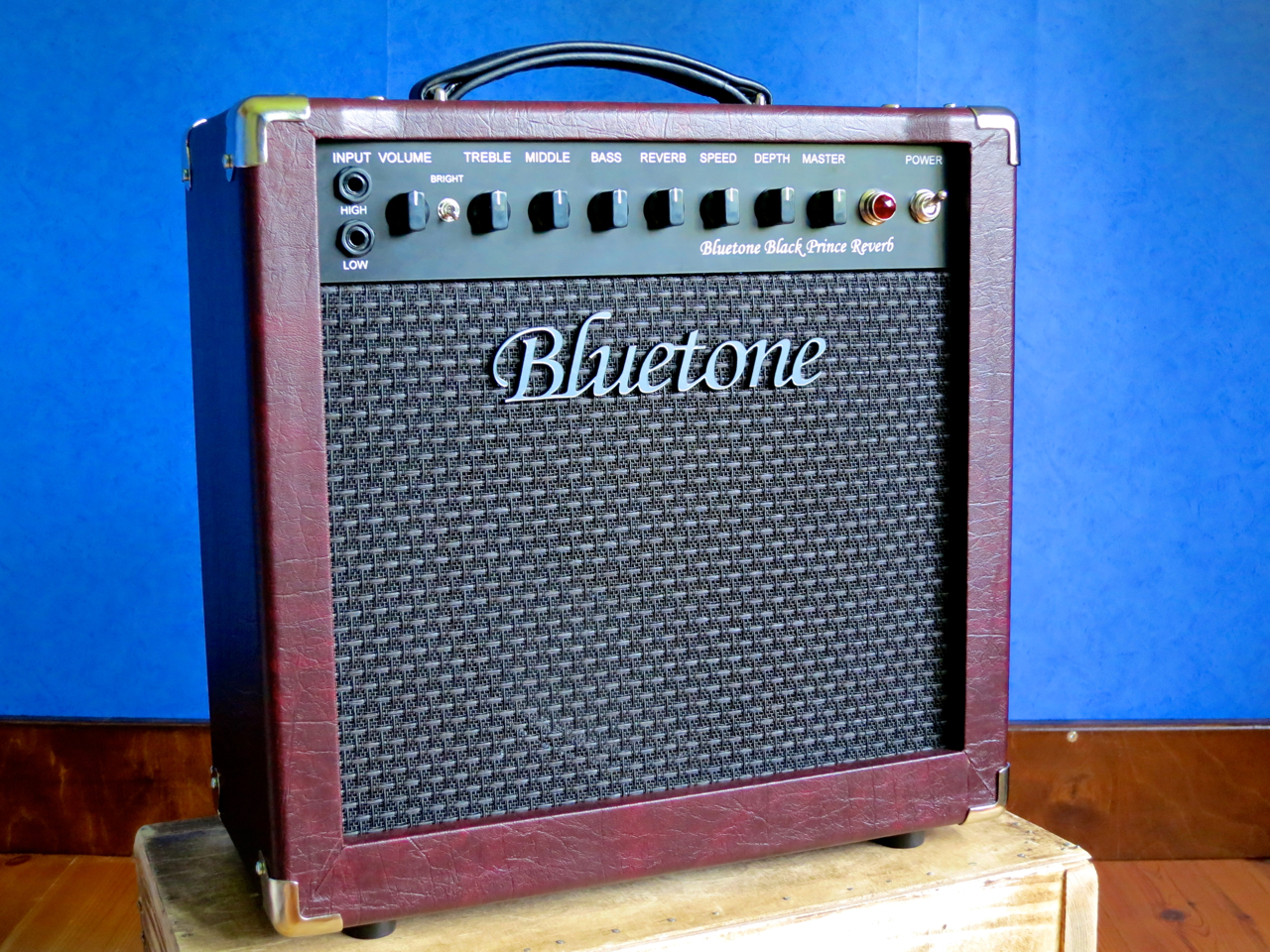
Bluetone Black Prince Reverb – front view 1

The first new Bluetone-combo is called the Bluetone Black Prince Reverb (approx. 1.500 €).

This compact and handy combo takes a lot of inspiration from Fender’s legendary ”Blackface” Princeton Reverb (version AA1164), but due to the Bluetone’s many refinements you can’t really call the Black Prince a straight copy.

In addition to the basic version in wine red tolex, you can also order the Black Prince Reverb in genuine tweed, or with an oiled cabinet made from mahogany (both at extra cost).

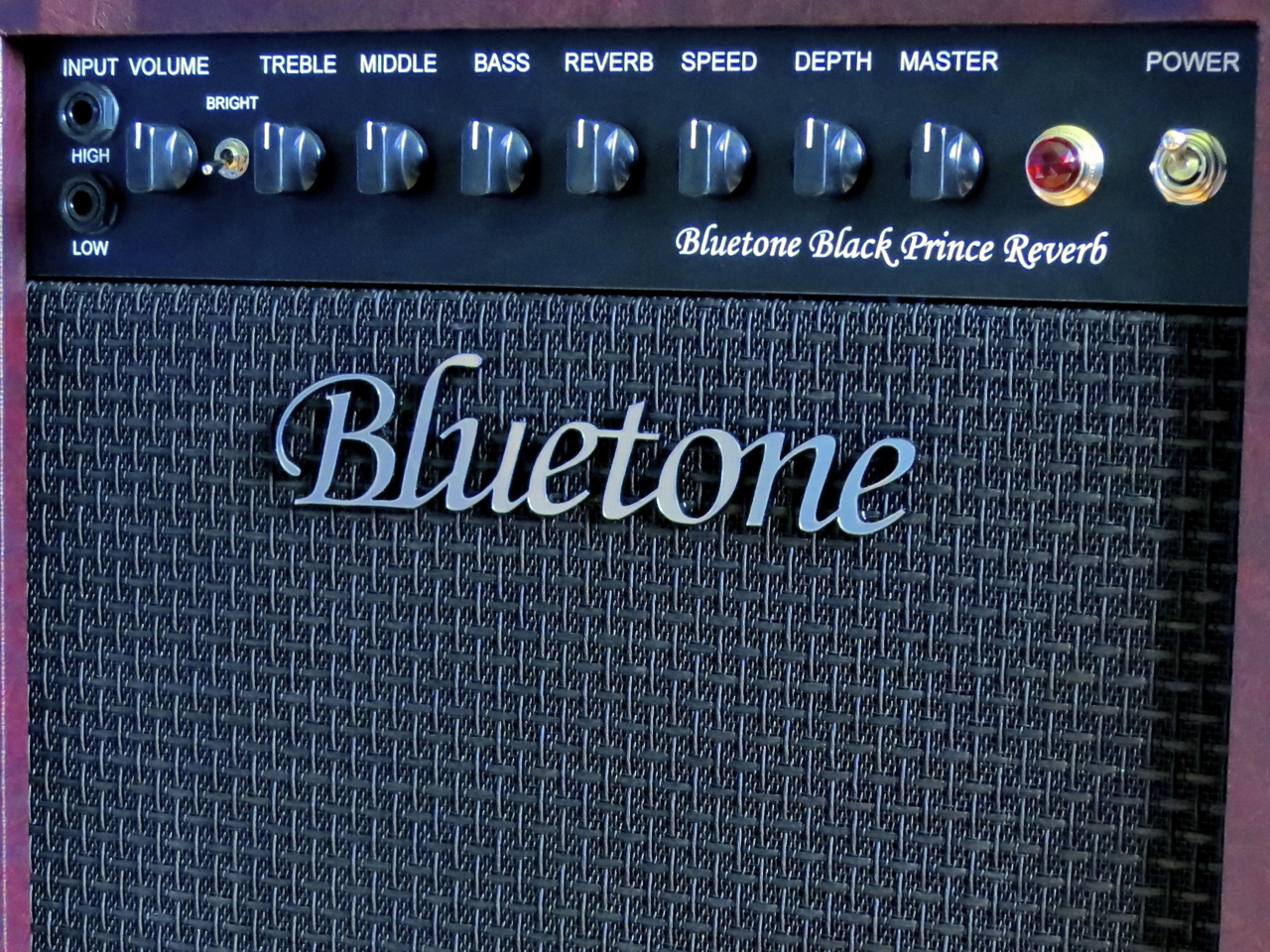
Bluetone Black Prince Reverb – control panel

I very much like the businesslike and sober look of the Blacktone’s front panel. Everything is clearly labelled, which can be a great plus on a dimly lit stage.

The Bluetone Black Prince Reverb offers two different inputs for singlecoil and humbucker-equipped guitars (High and Low). The EQ-section is a three-band affair, with an additional Bright switch to liven up dull sounding pickups.

Even though the Black Prince Reverb is such a compact combo, it still featured both a genuine, valve-driven spring reverb and a tube tremolo.

Bluetone uses a post phase-inverter master volume in most of their designs, because it has the least negative impact on an amp’s tone and feel.

Bluetone Black Prince Reverb – back panel

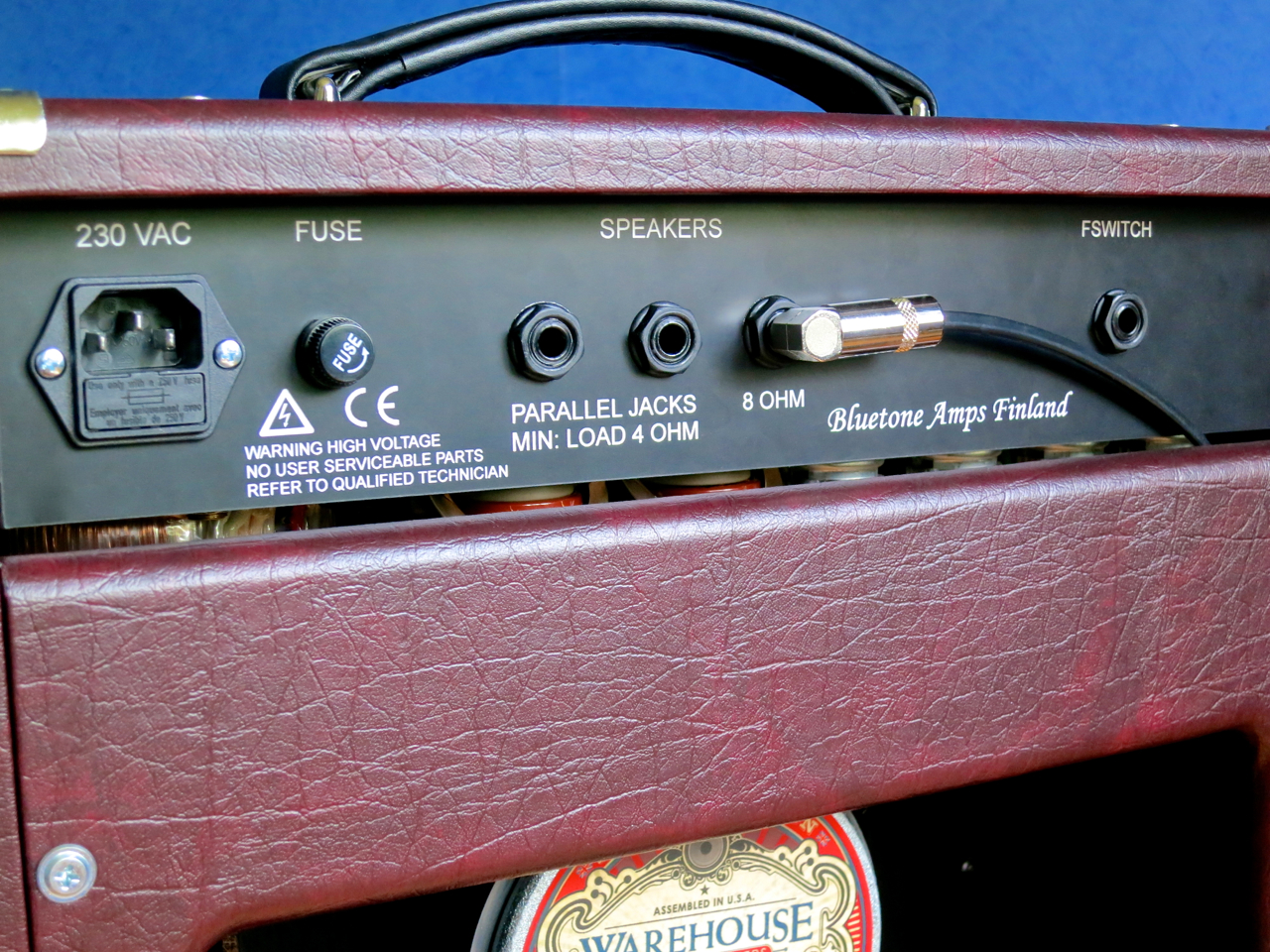
There’s a Fender-style open back on the Black Prince.

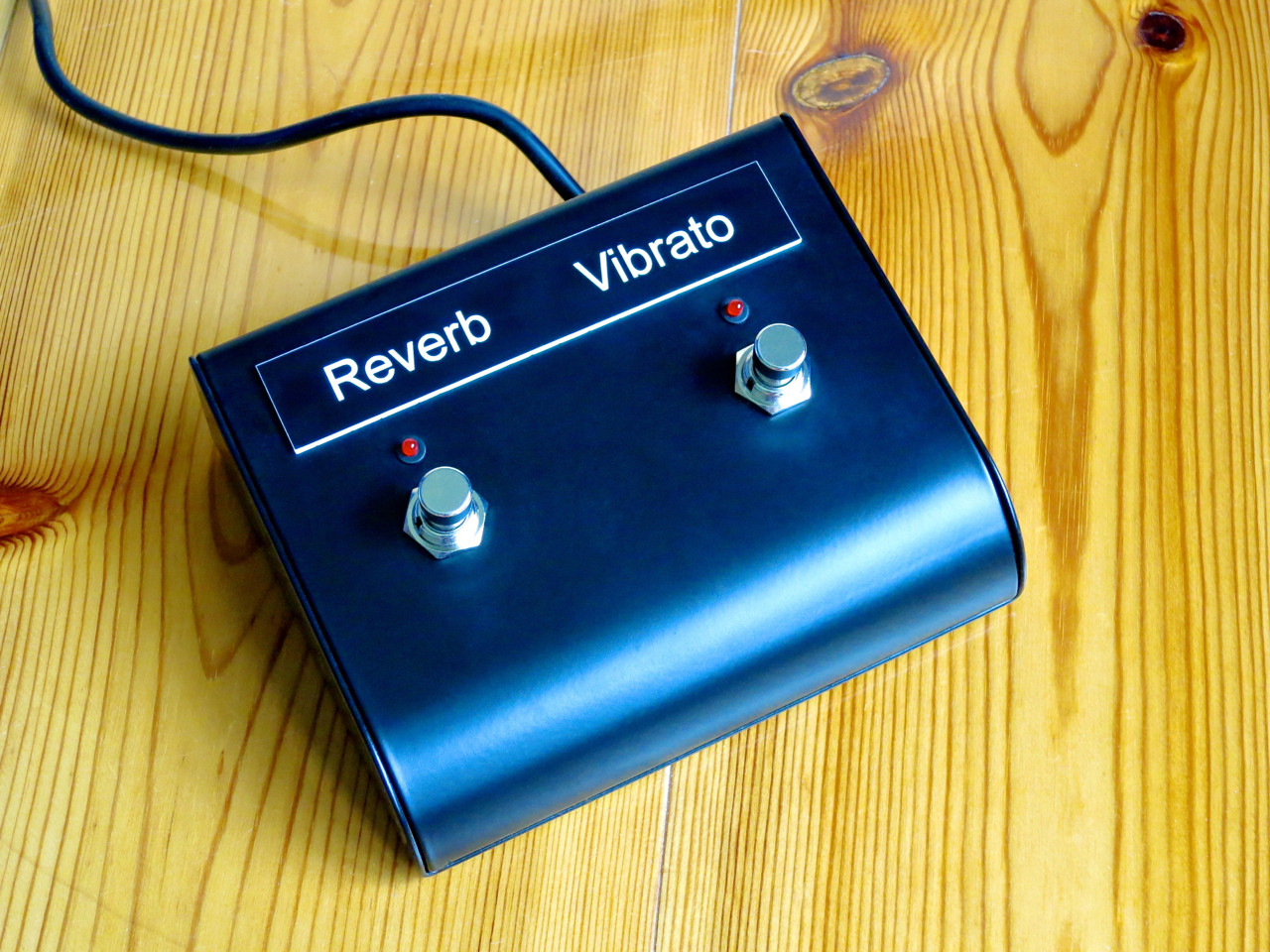
The back panel sports outputs for additional speakers, as well as the jack for the combo’s two-button footswitch unit (included).

Bluetone Black Prince Reverb – footswitch

Bluetone Black Prince Reverb – back view

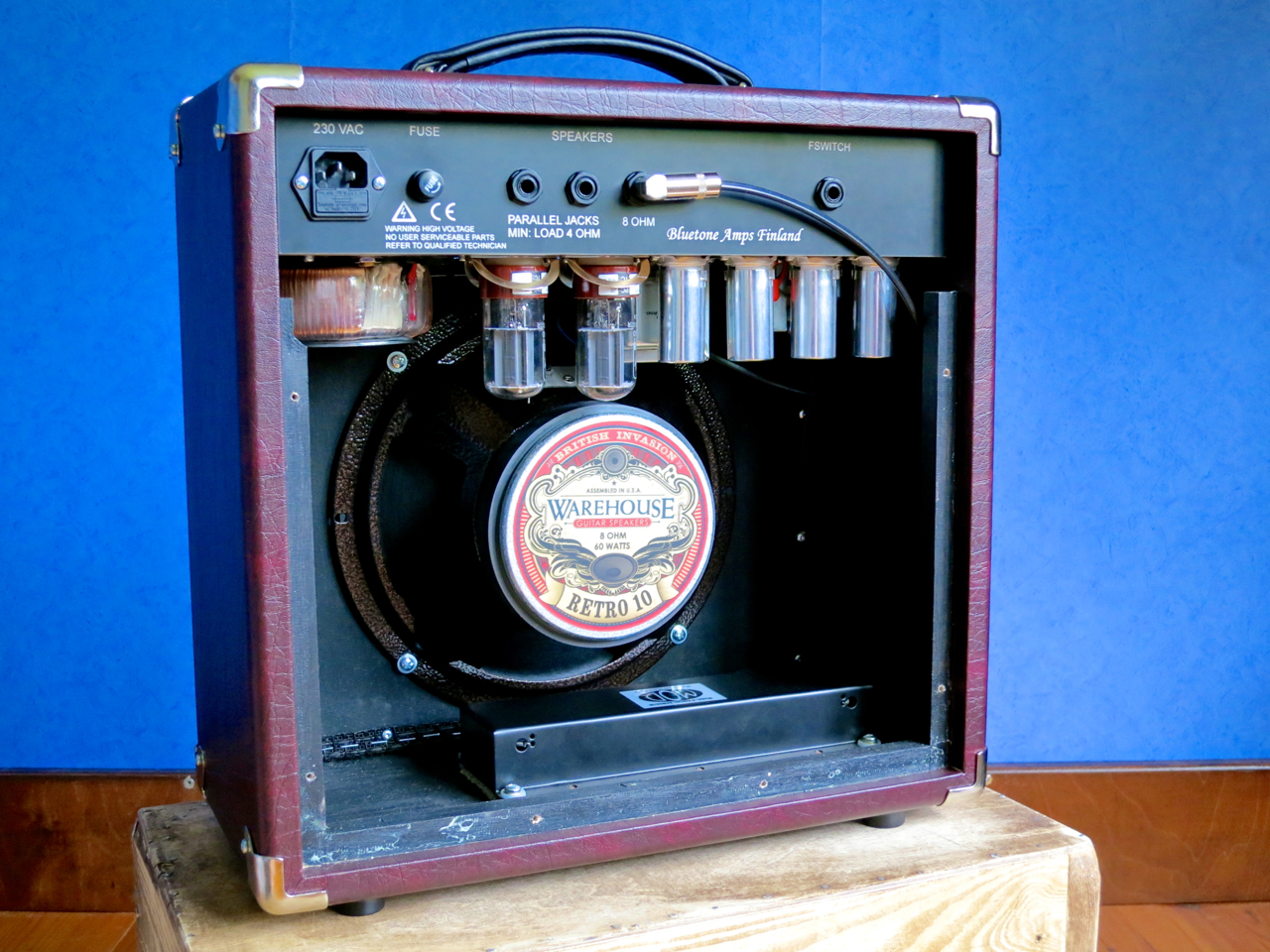
This is what the Bluetone looks like with the open back removed.

Bluetone Black Prince Reverb – valves

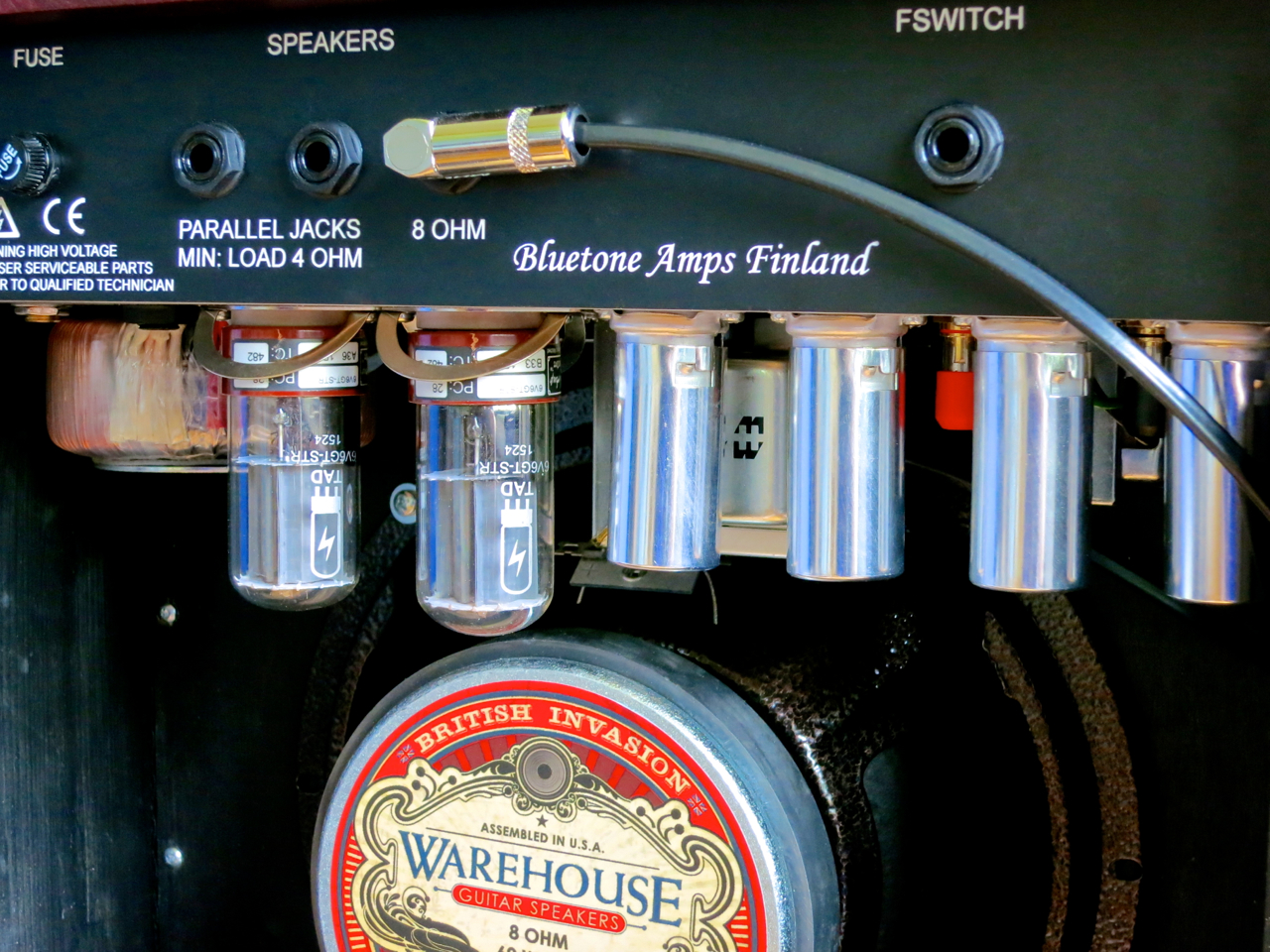
The Black Prince Reverb combo is an all-valve machine, loaded with the following tube types (from right to left):

The first 12AX7 is the combo’s preamp valve. The spring reverb circuit uses a 12AT7 and a 12AX7 valve. The 12AX7 works as the amp’s phase-inverter and tremolo tube.

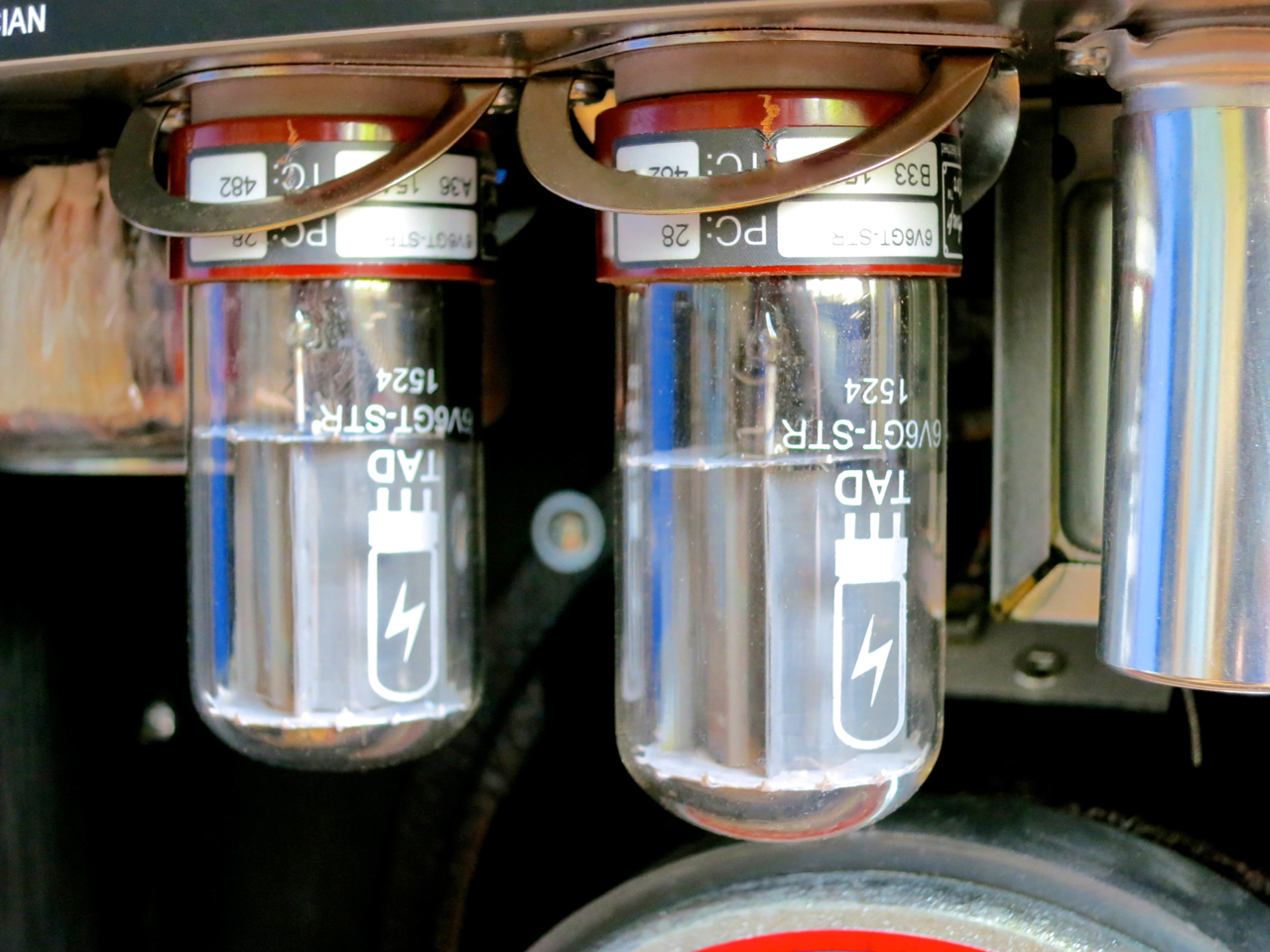
The Black Prince leaves Bluetone’s workshop equipped with a pair of 6V6GT power valves, which will translate to about 20 watts of output. You can also re-bias this amp for a pair of 6L6GCs, which would boost the output to almost 30 watts.

Bluetone Black Prince Reverb – spring reverb

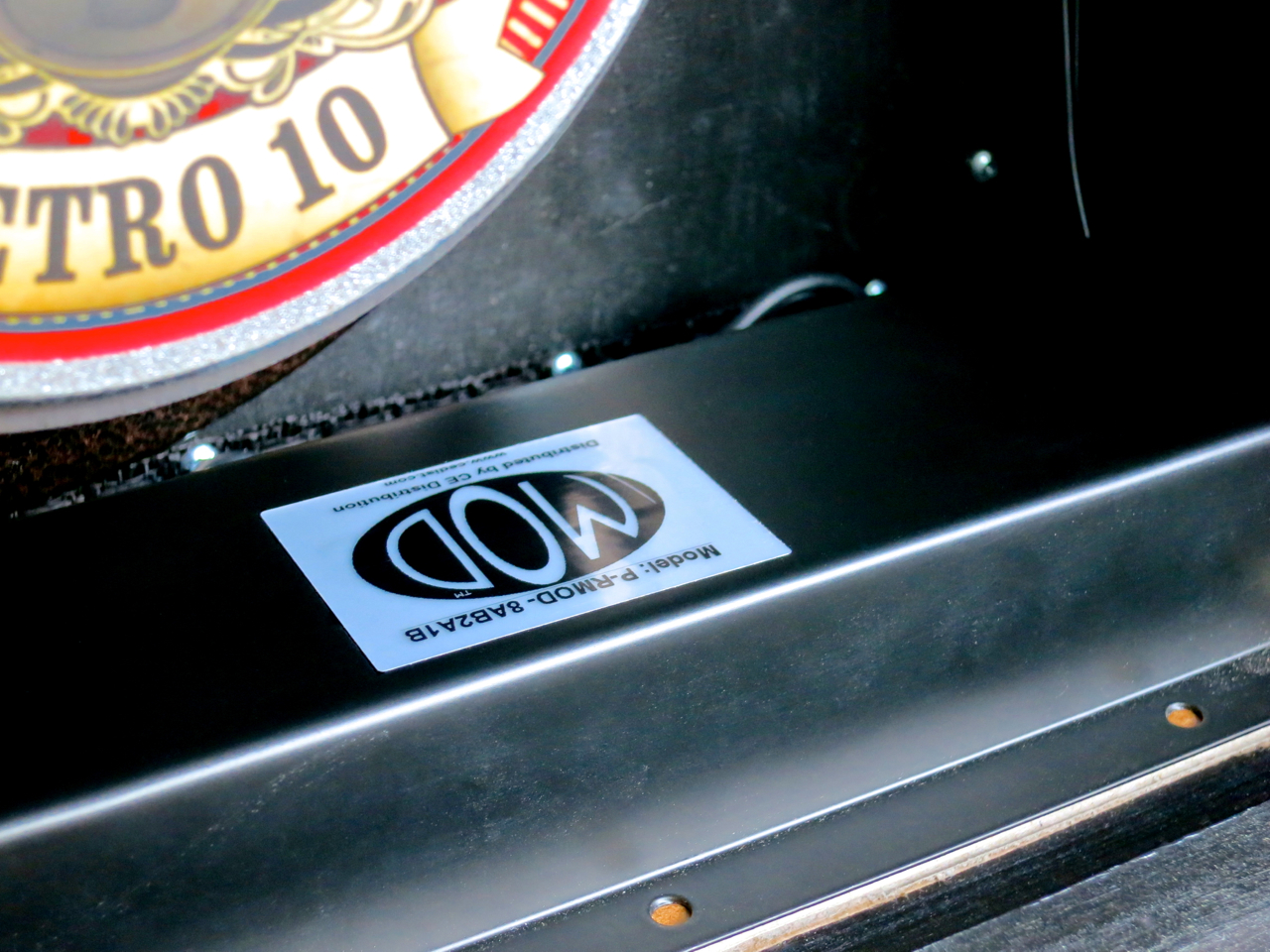
This combo’s short reverb tank is supplied by MOD.

Bluetone Black Prince Reverb – Warehouse Retro 10 speaker

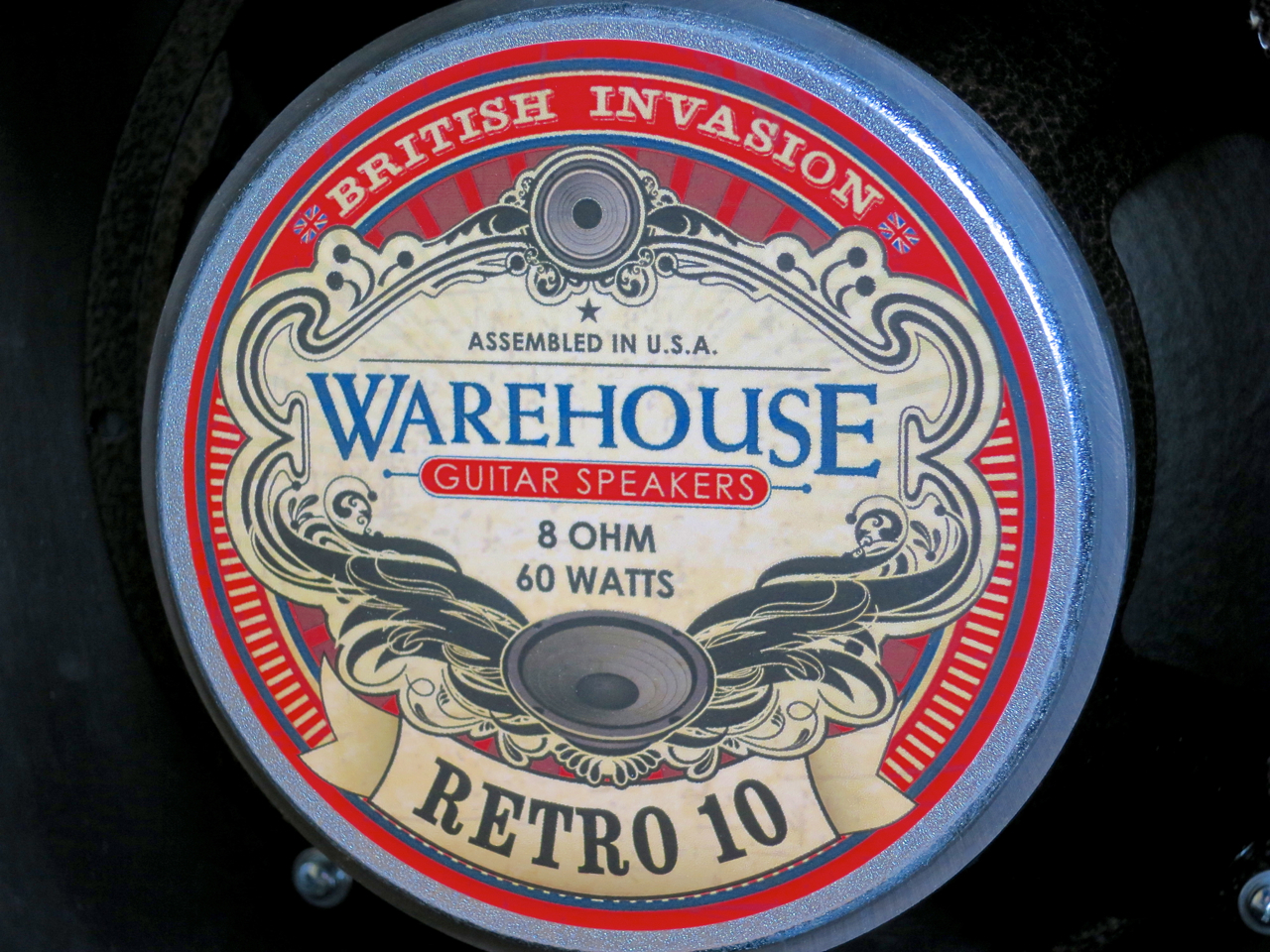
Bluetone have chosen a Warehouse Guitar Speakers Retro 10-speaker for their new combo, even though this model is distinctly different from the old Jensen speakers in vintage Fender designs.

This choice is, of course, deliberate and based upon many listening tests:

The WGS Retro, which is made to withstand far more output than this combo can deliver, keeps the Black Prince Reverb’s tones clean and dynamic under all circumstances. This speaker’s British character also makes the Bluetone-combo sound larger and fatter than you’d expect.

****

Bluetone Black Prince Reverb – pilot light from PS

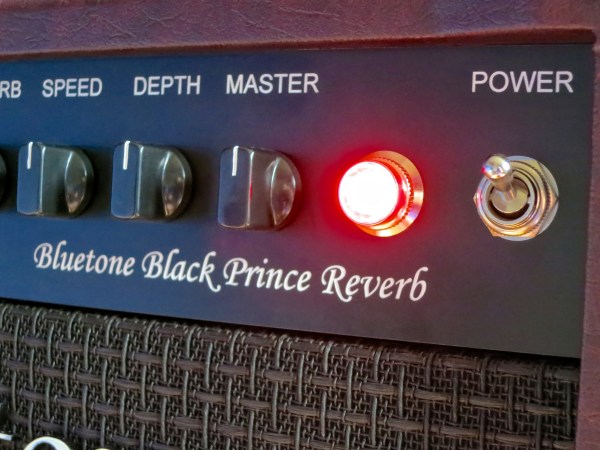
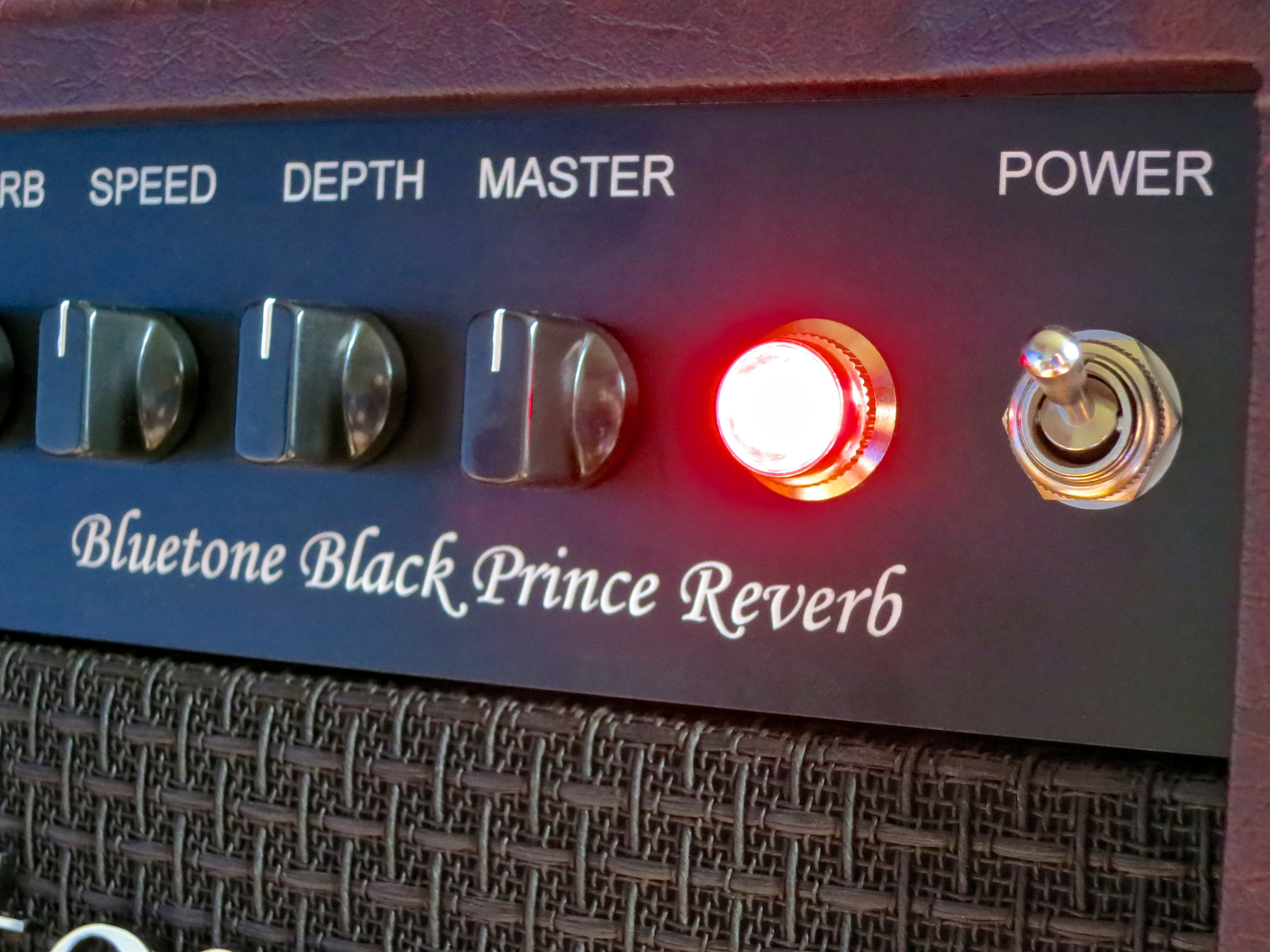
Oh, boy, this is a sound you cannot get enough of! At least in my case only a minute or two of playing the Black Prince was enough to make me consider getting myself in debt.

It’s hard to put into words what that special ingredient is, but this is what a clean electric guitar should sound like! This combo sounds clean, fresh and dynamic, but never clinical, cold or brittle. There a good dose of chime, but it doesn’t hurt your ears. The bass strings sound big, but never mushy.

The sound of the short MOD reverb tank is surprisingly dense and complex, and there’s more than enough of it to satisfy Surf Music fans. The Black Prince Reverb’s tremolo works like a treat, too, offering you anything from slow and soft to machine-gun mania.

Here’s a clip, recorded with a Fender Telecaster, gives you an idea of the Bluetone Black Prince Reverb’s dry tone, as well as its spring reverb and tremolo effects:

The Black Prince also excels in keeping your guitar’s own character intact. These three clips feature a Fender Telecaster…

…an Epiphone Casino…

…and a 1970s Japanese ”lawsuit” copy of a Gibson ES-335:

This combo’s fantastic clean tone is a fantastic platform for pedal addicts. The demo track was recorded using an analogue chorus pedal, a tube screamer-type overdrive, as well as the amp’s built-in reverb and tremolo.

The rhythm parts were played on a Fender Stratocaster, while the lead was played on a Hamer USA Studio Custom:

Bluetone Black Prince Reverb – power valves

****

Bluetone Black Prince Reverb – front view 1

In my view, Bluetone’s Black Prince Reverb is a top-drawer choice as a combo for use at home or in the studio. It’s also great for smaller gigs, when too much noise on stage can be a problem, or you can mike it up for larger venues.

The Black Prince Reverb is a nicely compact boutique-grade valve combo offering fantastic cleans, as well as fine reverb and tremolo effects.

This amp hasn’t been spoiled by unnecessary ”tube voodoo” or distracting graphic. I’m all for the clean and understated looks this Bluetone has to offer!

This is a handmade, Finnish boutique combo, offered at a very fair price.

****

Bluetone Black Prince Reverb

1.500 €

Contact: Bluetone Amps

****

Pros:

+ value-for-money ratio

+ handmade in Finland

+ workmanship

+ fine spring reverb and valve tremolo

+ sound

+ master volume-control

Save

Save

Save

Save

Save

Save

Save

Save

Save

Save

Save

Save

Save

Save

Save

Save

Save

Save

Save

Save

Save

Save

Save

Save

Save

Save

Save

Save

Review: Blackstar Artist 15

Blackstar Artist 15 – logo

In a way Blackstar Amplification’s new Artist Series breaks new ground for the British amp maker.

Until now most of Blackstar’s designs were based on the typically British tones of EL34 and EL84 power tubes, often associated with Marshall designs.

The new Artist combos feature power amps built around 6L6 valves, as used in many of Fender’s classic designs. According to Blackstar the new Artist amps are designed to combine the best bits of the typically British Class A tone (with two ECC83s in the preamp section) with the dynamic range and chiming top end of a 6L6 power section.

Kitarablogi.com was given the opportunity to take the smaller Artist model – the Blackstar Artist 15 (current price in Finland: 799 €) for a spin.

****

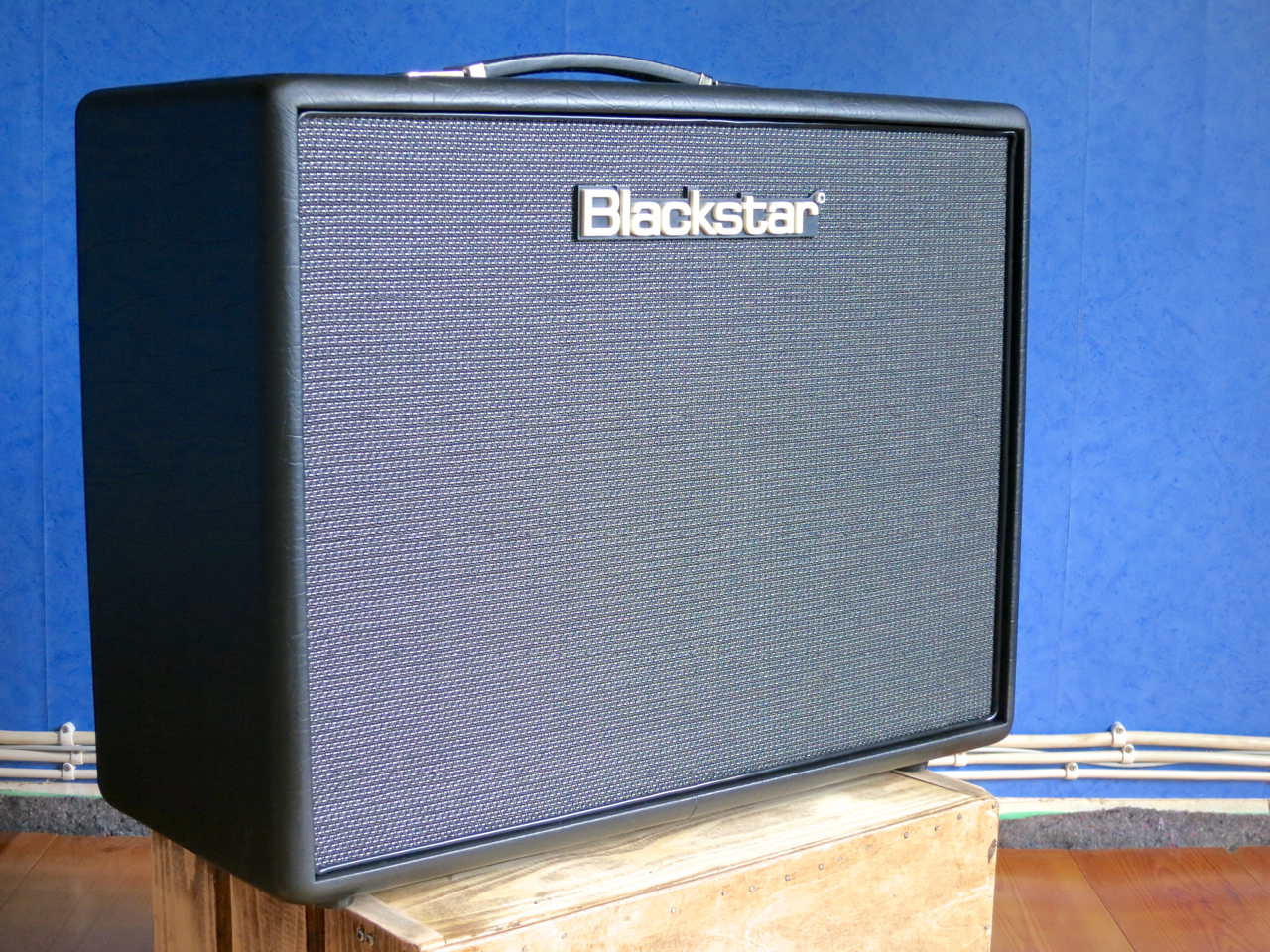
Blackstar Artist 15 – full front

The Blackstar Artist 15 looks like a typical Blackstar combo – black vinyl covering and a dark grey grille cloth.

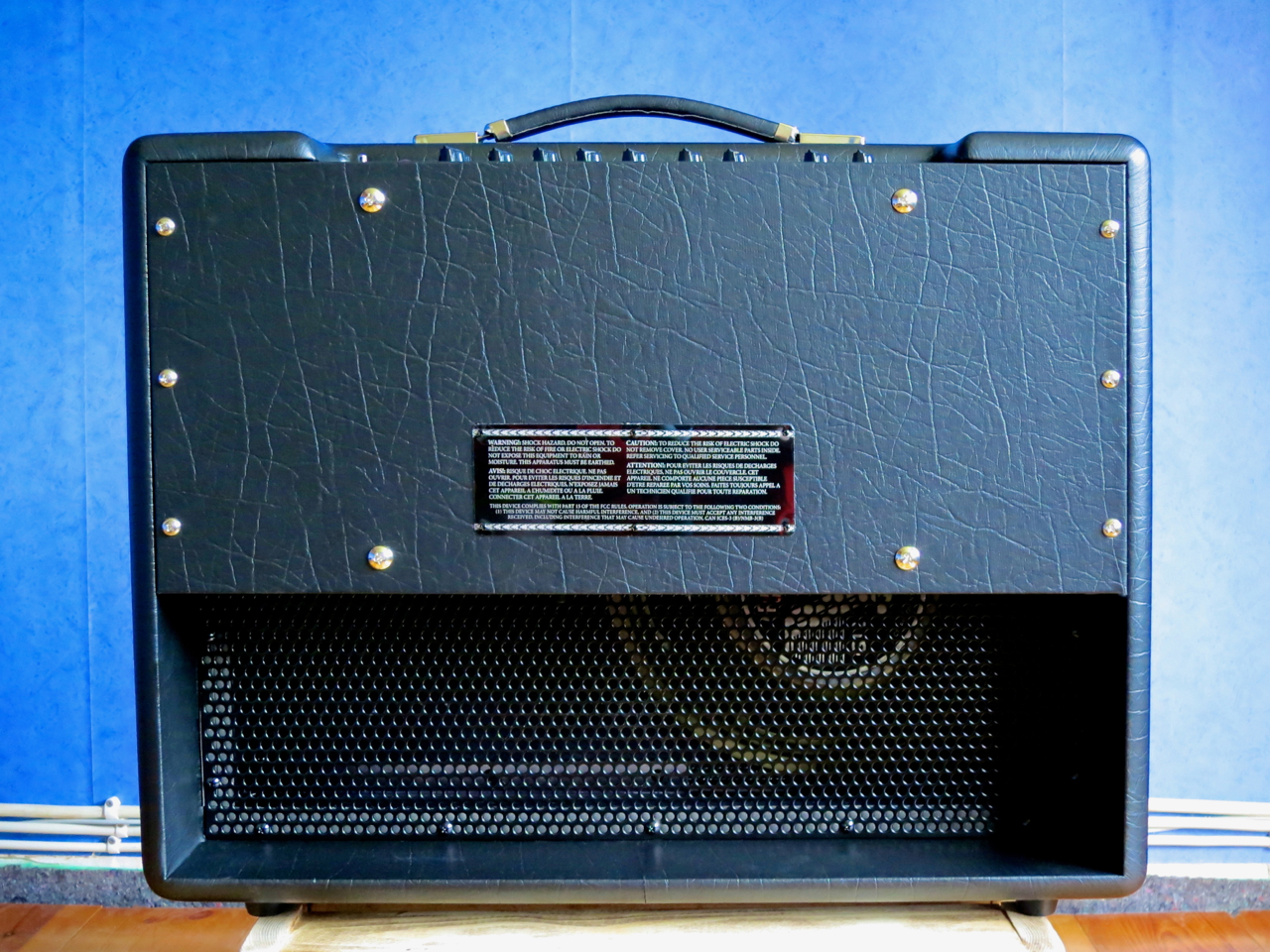
For a combo that comes equipped with a single 12-inch speaker the amp’s cabinet is rather large. The reason for the cabinet’s size becomes clear when you look at the Artist 15 from behind.

Blackstar Artist 15 – full back

The combo’s Celestion V-Type G12-speaker has been placed deliberately to one side of the combo. Blackstar doesn’t tell us exactly why this configuration has been chosen, but I’d wager that the idea behind this is to harness the benefits of a large, stiff front baffle and a larger cabinet – namely: a crisp attack, and a warm, full bottom end.

Blackstar Artist 15 – Celestion V-Type speaker

Celestion’s V-Type comes loaded with a ceramic magnet. According to Celestion this speaker combines a classic tonality with a modern power rating.

Blackstar Artist 15 – back panel

The Blackstar’s back panel sports a whole array of connectors for things such as external speaker cabinets, a speaker-emulated line out, an effects loop, as well as the channel footswitch that comes with the amp.

****

Blackstar Artist 15 – controls 1

Blackstar’s Artist 15 is rated at 15 watts of output and features two preamp channels:

Channel 1 is the so-called boutique channel, designed to put the least possible amount of components between your guitar and the speaker. This channel sports only two controls – Volume and Tone – before the signal is sent on to the master section.

Channel 2 gives you the full Blackstar-experience – you’ll find separate Gain and Volume knobs, a three-band EQ section, as well as Blackstar’s proprietary ISF-control. Setting the ISF knob to zero will result in bright and sinewy Fender Blackface-style sounds, while ISF at full on will give you muscular, Marshall-type tones from this channel.

In addition to the Master Volume control, the Artist 15’s master section also includes the level control for the combo’s very nice digital reverb.

Channel 1 clearly has a much rounder and warmer basic tonality than the (more versatile) second channel. With clean settings Channel 1 will give you a fuller mid-range compared to the more Fender-like, chimey Channel 2.

Here’s what Channel 1 sounds like played clean with an Epiphone Casino (first clip) and a Gibson Melody Maker SG (second clip):

…and here’s Channel 2 played with the same guitars:

The Artist 15’s channels also differ in the amount of gain they offer:

Channel 1 will take you from clean all the way to Rockbilly-style breakup and traditional Blues overdrive, while Channel 2 offers more than enough dirt for chunky Rock tones.

Here’s Channel 1 at full gain (Casino and Melody Maker SG):

…and here are two clips of Channel 2 with Gain full up:

The rhythm guitar tracks on the demo song have been recorded with a 1970s Japanese ES-335 copy (made by Kasuga; left channel) and a maple-necked Fender Stratocaster (right channel). The lead is played on the Kasuga:

Blackstar Artist 15 – angled

****

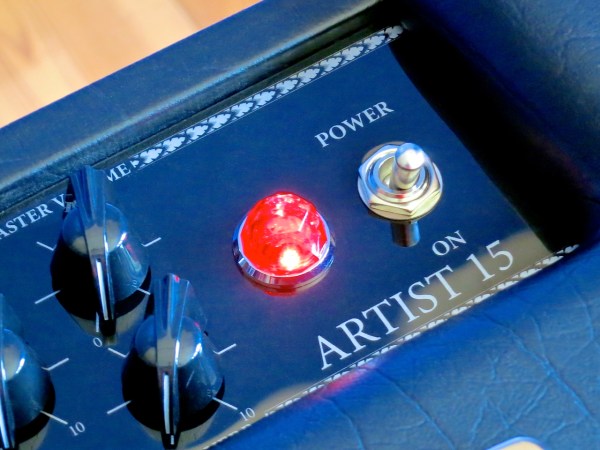
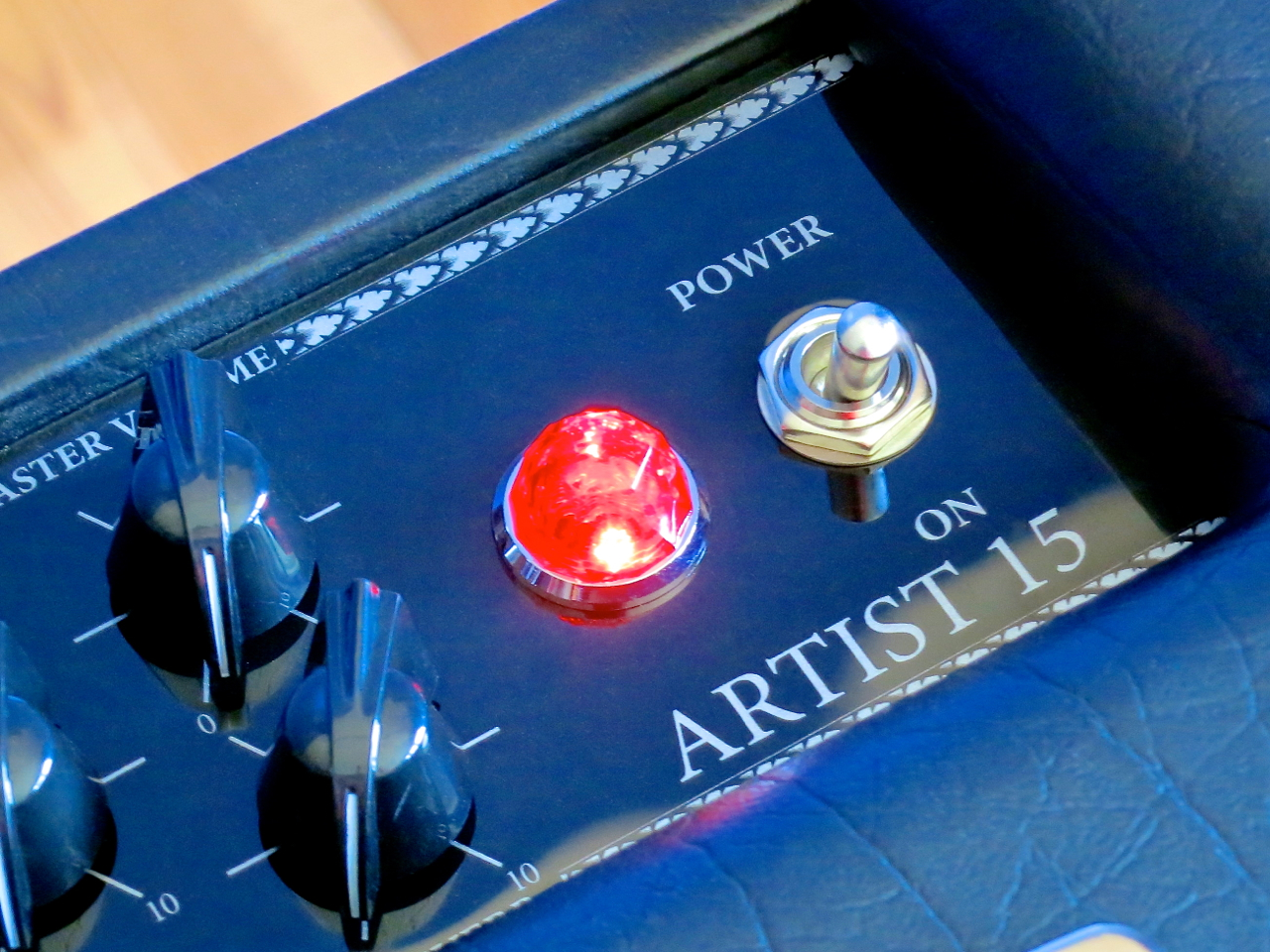
Blackstar Artist 15 – pilot light

The new Blackstar Artist 15 isn’t your typical two-channel combo, which offers you a clean channel and a dirty channel. This is a valve amp that’s all about choices and flexibility.

Blackstar have noticed that pedalboards are becoming en vogue again, which is why their new Artist combos offer enough headroom for clean tones in both of their two channels.

For pedal users the big advantage of the Artist 15’s architecture lies in the fact that the combo offers two high-quality clean variants in the same amp. Channel 1 is a back-to-basics boutique-/AC30-style channel, while Channel 2 offers a much broader range of clean tones, all the way from Fender to modern Marshall.

Of course, you’re free to use the Blackstar Artist 15 in the traditional channel-switching fashion, too, which will give you a top-notch clean sound from Channel 1, and a very versatile array of quality overdriven and distorted tones from Channel 2.

Either way – the Blackstar Artist 15 hits bull’s-eye, in my opinion, and I can only recommend checking one out for yourselves.

****

Blackstar Artist 15

799 €

Finnish distribution: Musamaailma

Pros:

+ workmanship

+ clean headroom

+ versatile amp sound

+ great reverb

Save

Save

Save

Save

Save

Save

Save

Save

Save

Save

Save

Review: Viitasaari Guitars OM

Viitasaari OM – headstock

Olli Viitasaari is a young luthier from Järvenpää in the south of Finland.

After completing his training at IKATA, Olli has been working on his own electric guitar model (in addition to doing repairs and customising jobs), which he since displayed at Fuzz Guitar Show (Gothenburg, Sweden) and Turenki Tonefest (Finland).

Turenki Tonefest 2015 016

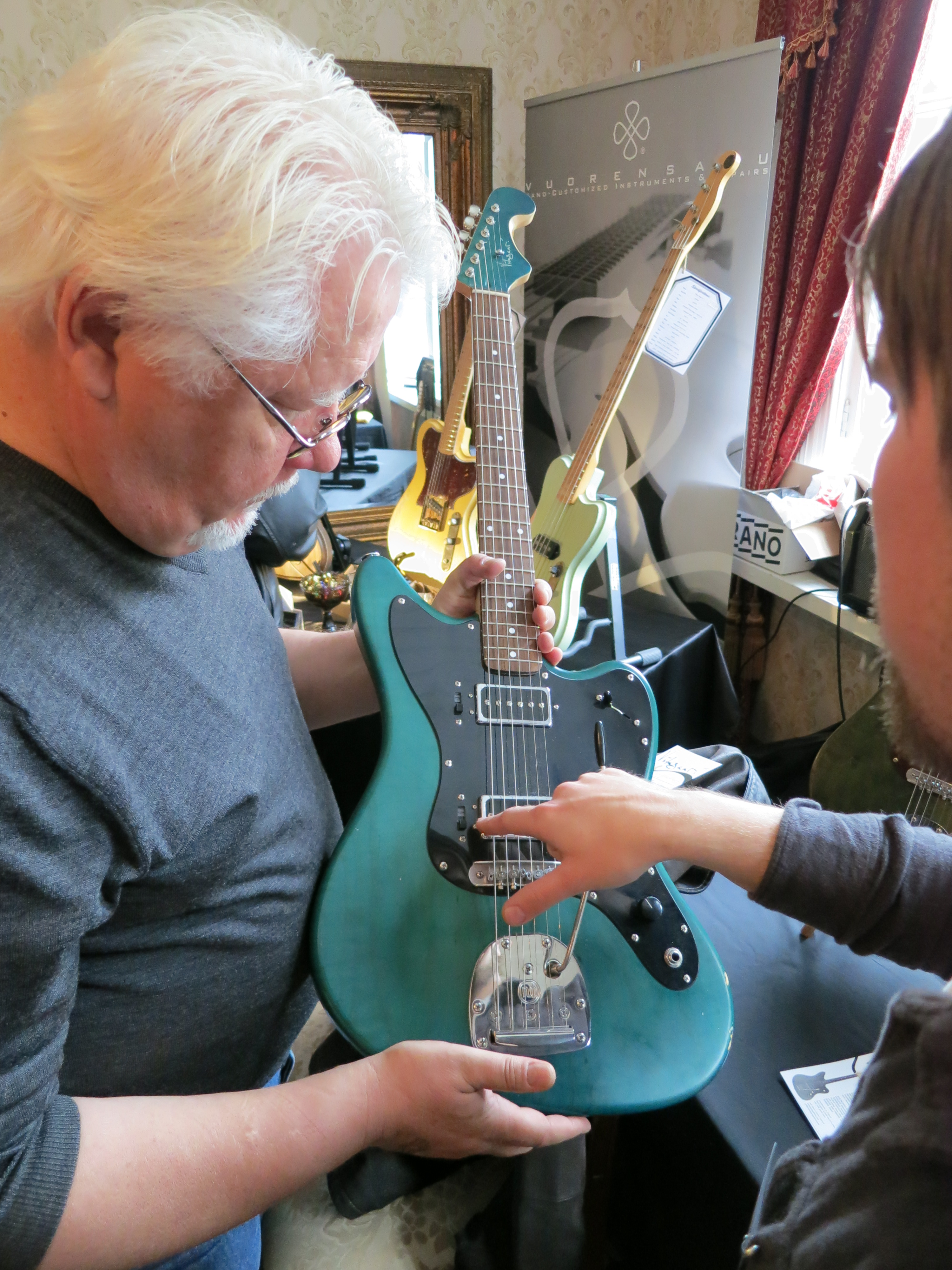
Fuzz 2016 – visitor at Viitasaari Guitars

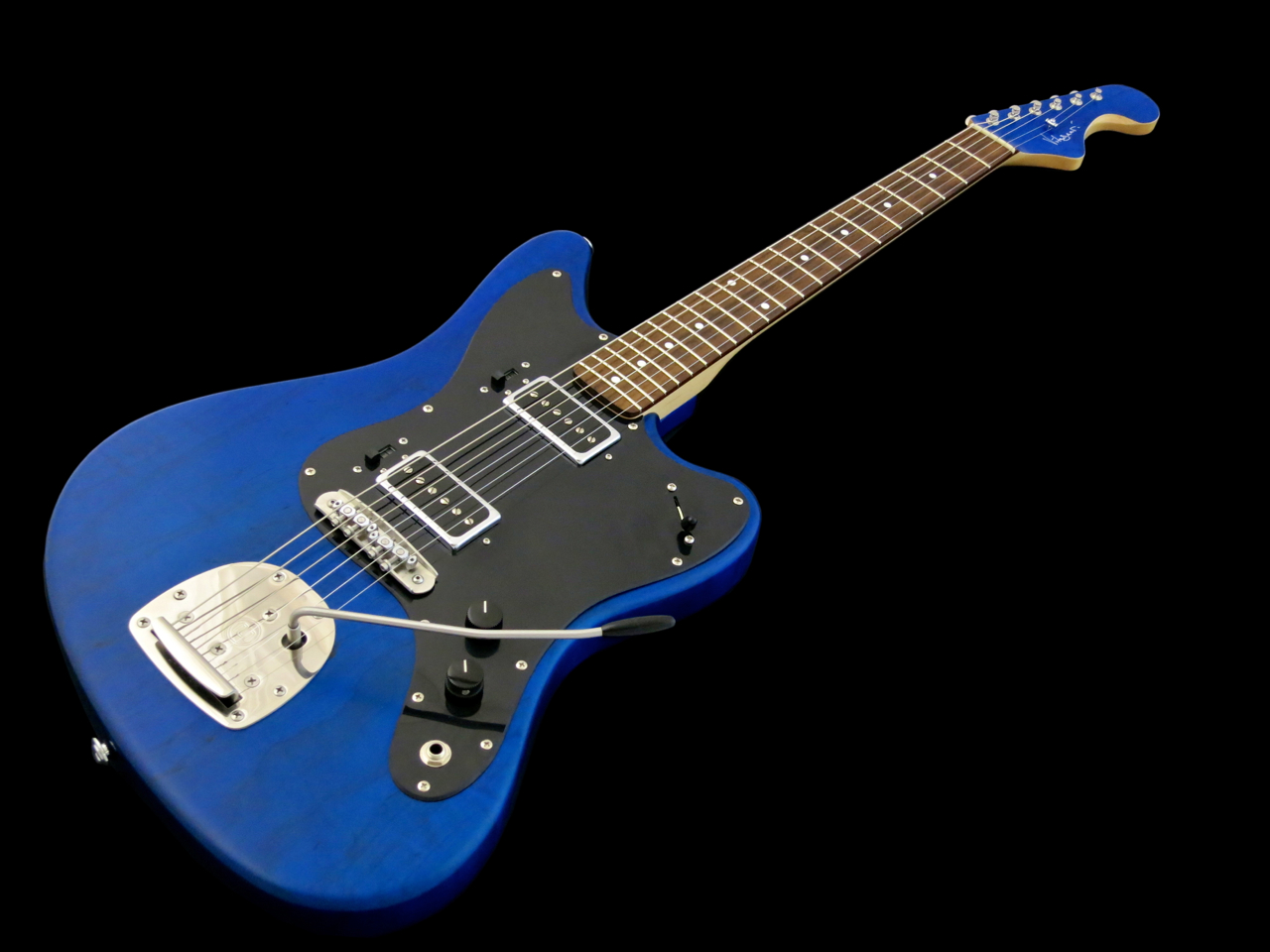
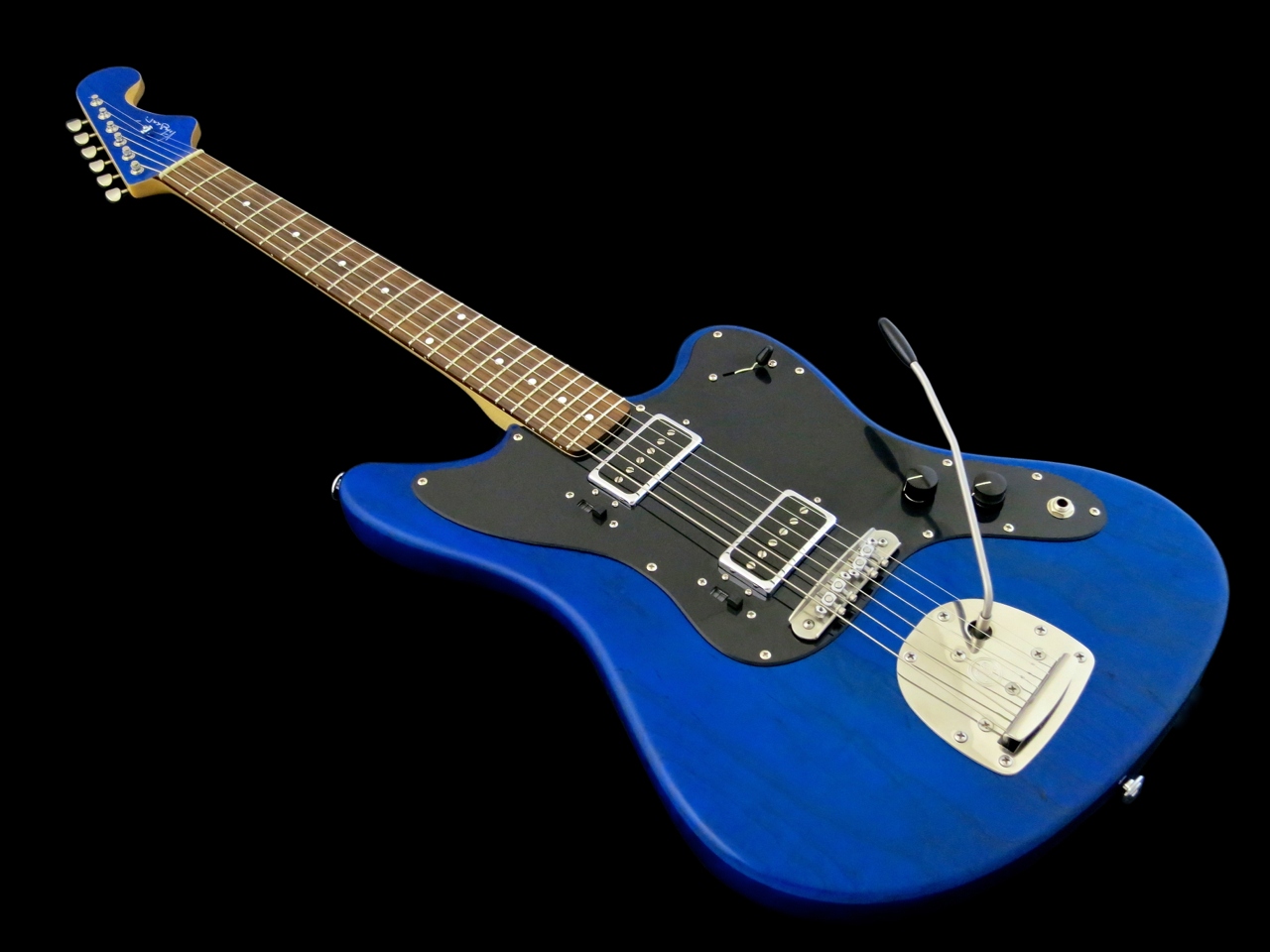
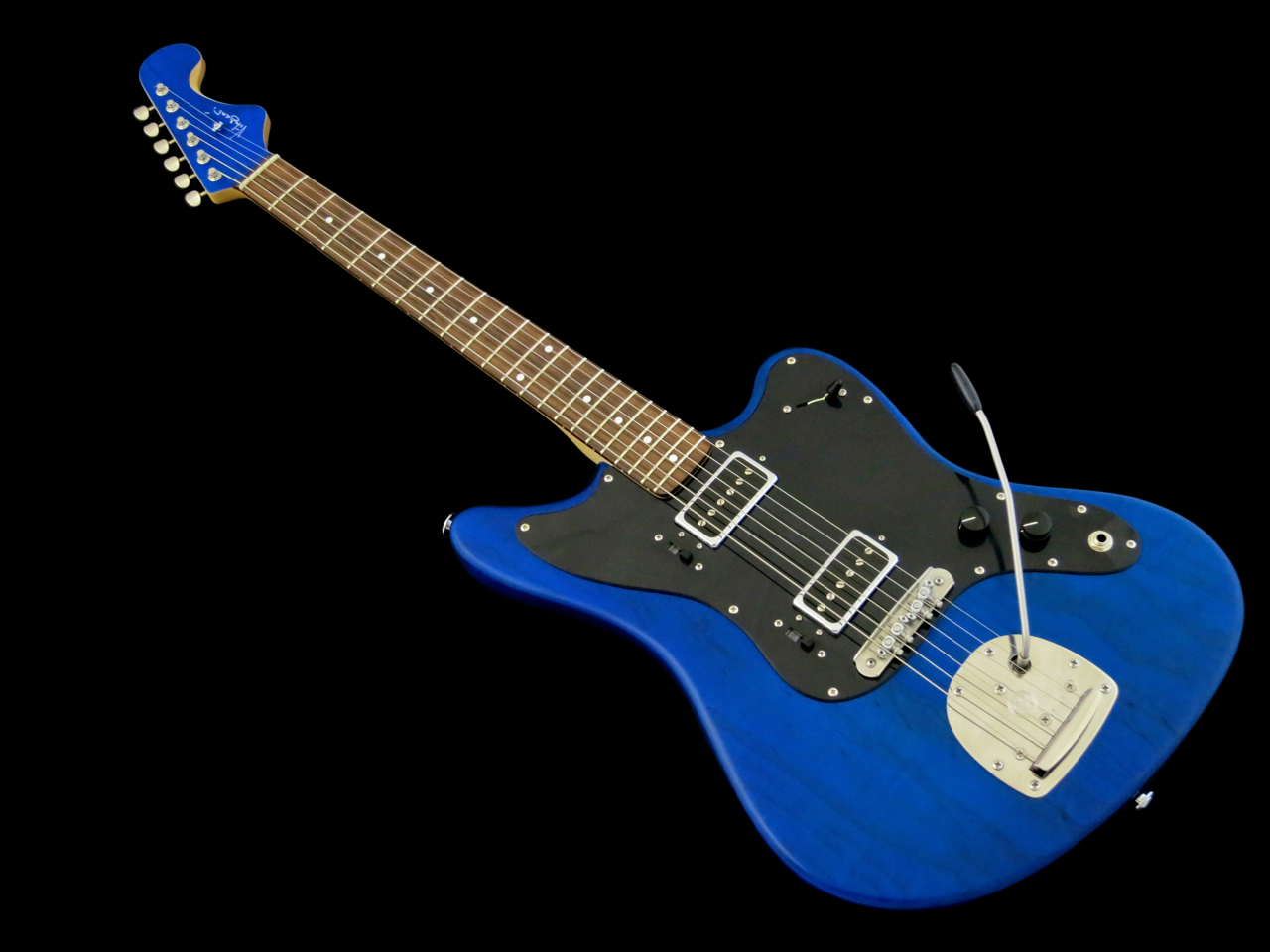
Olli’s guitar model is called the Viitasaari OM (OM = Offset Model, prices starting from 2,500 €; a Hiscox case is included), and it represents Olli’s vision of the perfect Jazzmaster-style guitar. Guitarists have reacted very positively to the Viitasaari OM, and there are already a few guitars in active use by Finnish and Swedish guitarists.

Kitarablogi.com would like to thank Mr. Juha Pöysä for the loan of his personal guitar!

****

Viitasaari OM – full front 1

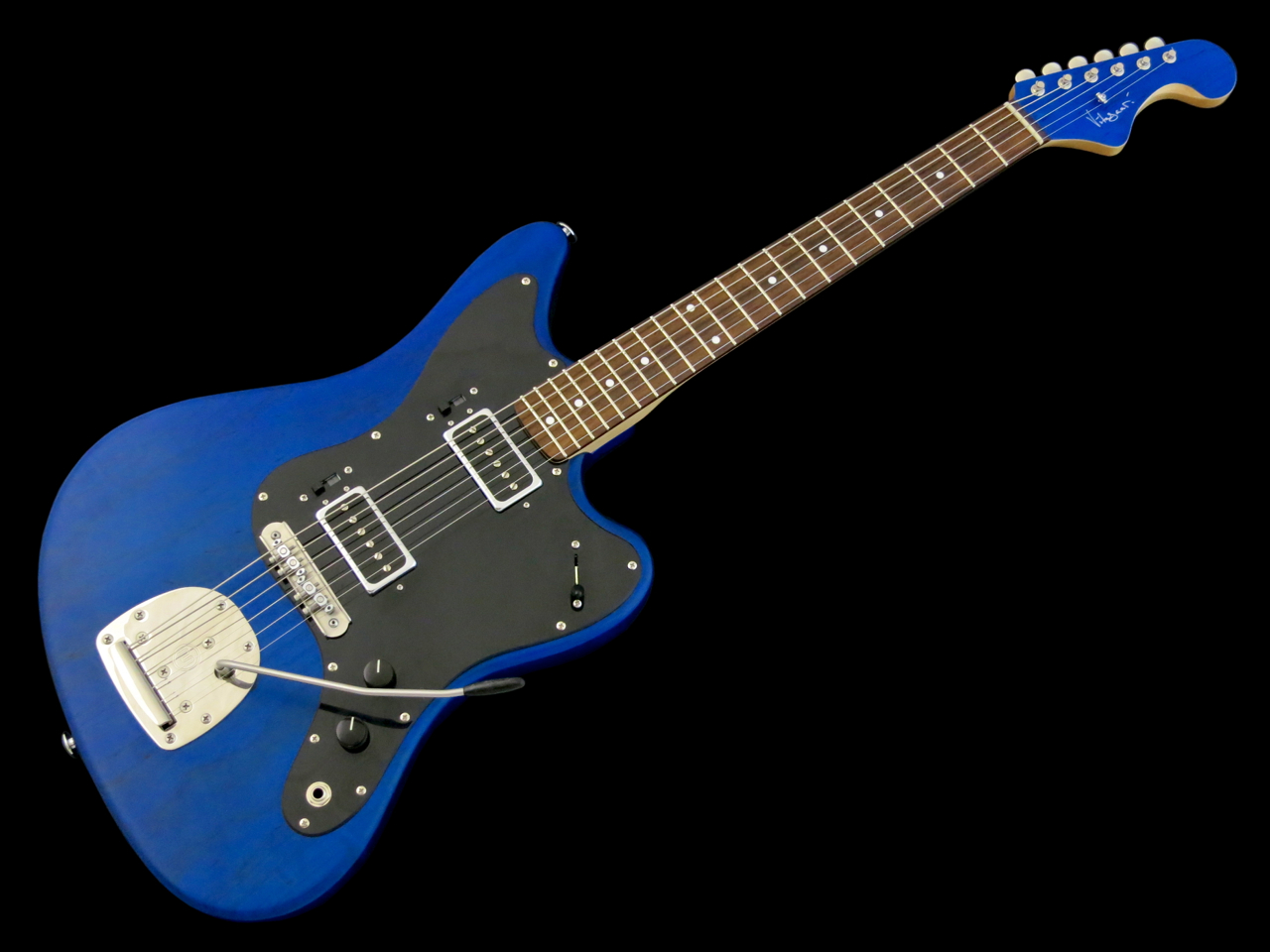
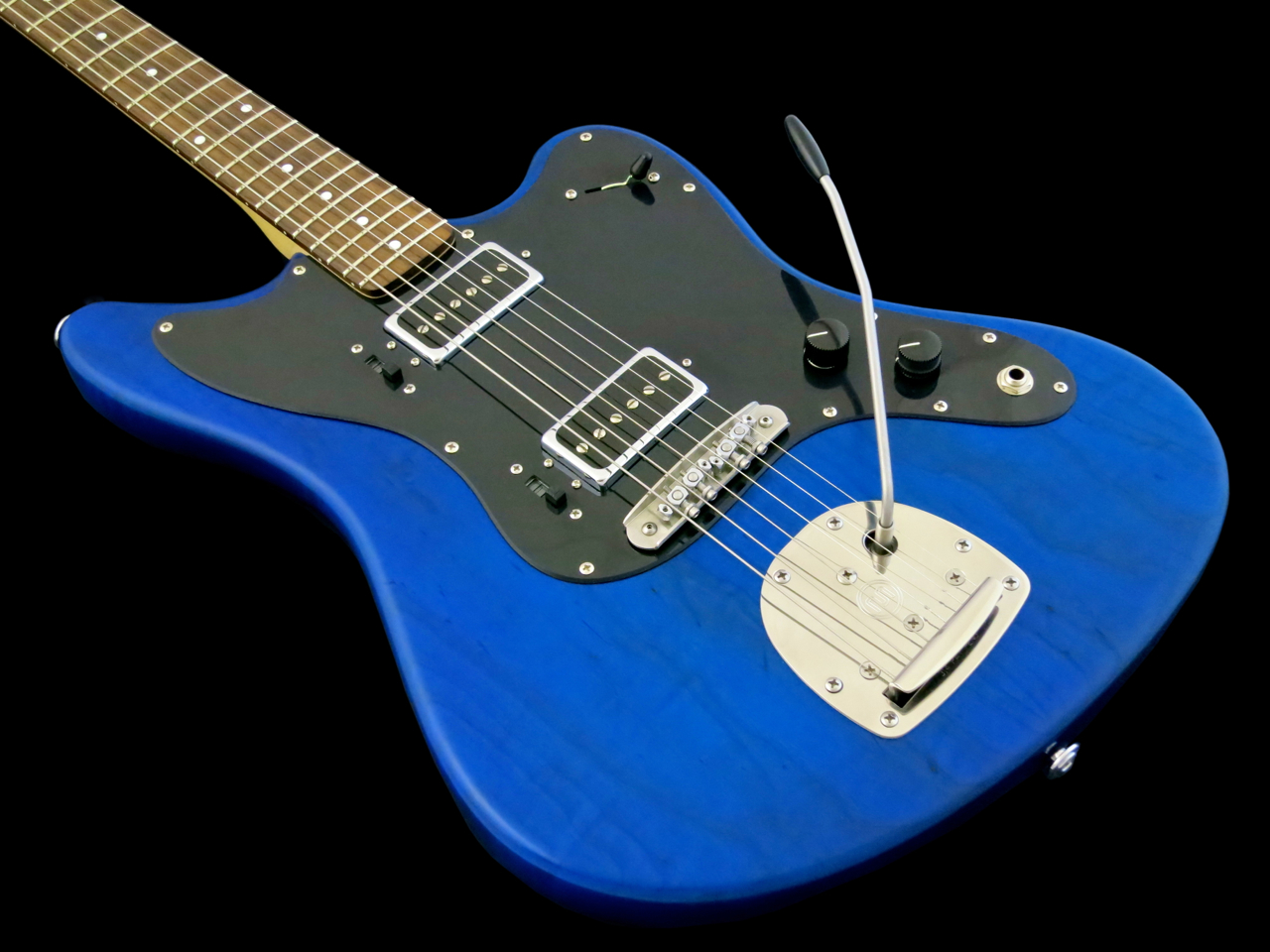
The basic building blocks of the Viitasaari OM use the tried and trusted recipe of its 1950s forefather:

The OM’s body is made from alder, while the bolt-on neck has been carved from hard rock maple. The fretboard is rosewood.

The first indication that this isn’t your run-in-the-mill Fender-clone lies in the scale length. Olli has chosen 25 inches for his model, which places this guitar’s scale length in the same territory as a PRS – right in the middle between traditional Fender and traditional Gibson.

Viitasaari OM – back beauty

As Viitasaari Guitars is a true boutique builder there’s plenty of options for the customer to choose from, both in terms of pickups and electronics, as well as the guitar’s finish.

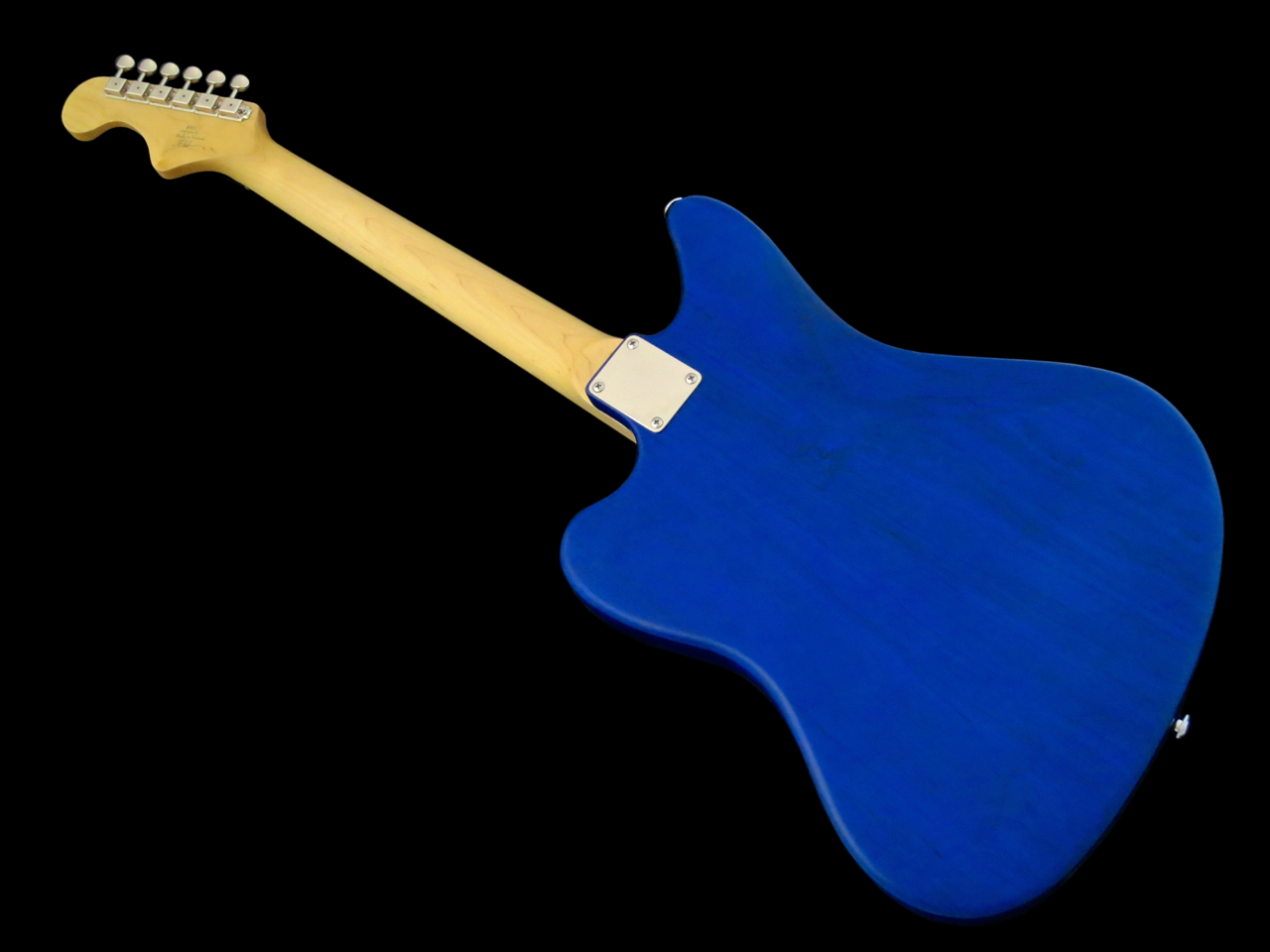
Juha Pöysä’s OM comes in a very fetching blue satin finish for the body, and a natural satin finish for the neck. The customer can also specify gloss finishes or oil-based finishes for his (or her) own guitar.

Viitasaari OM – Gotoh tuners

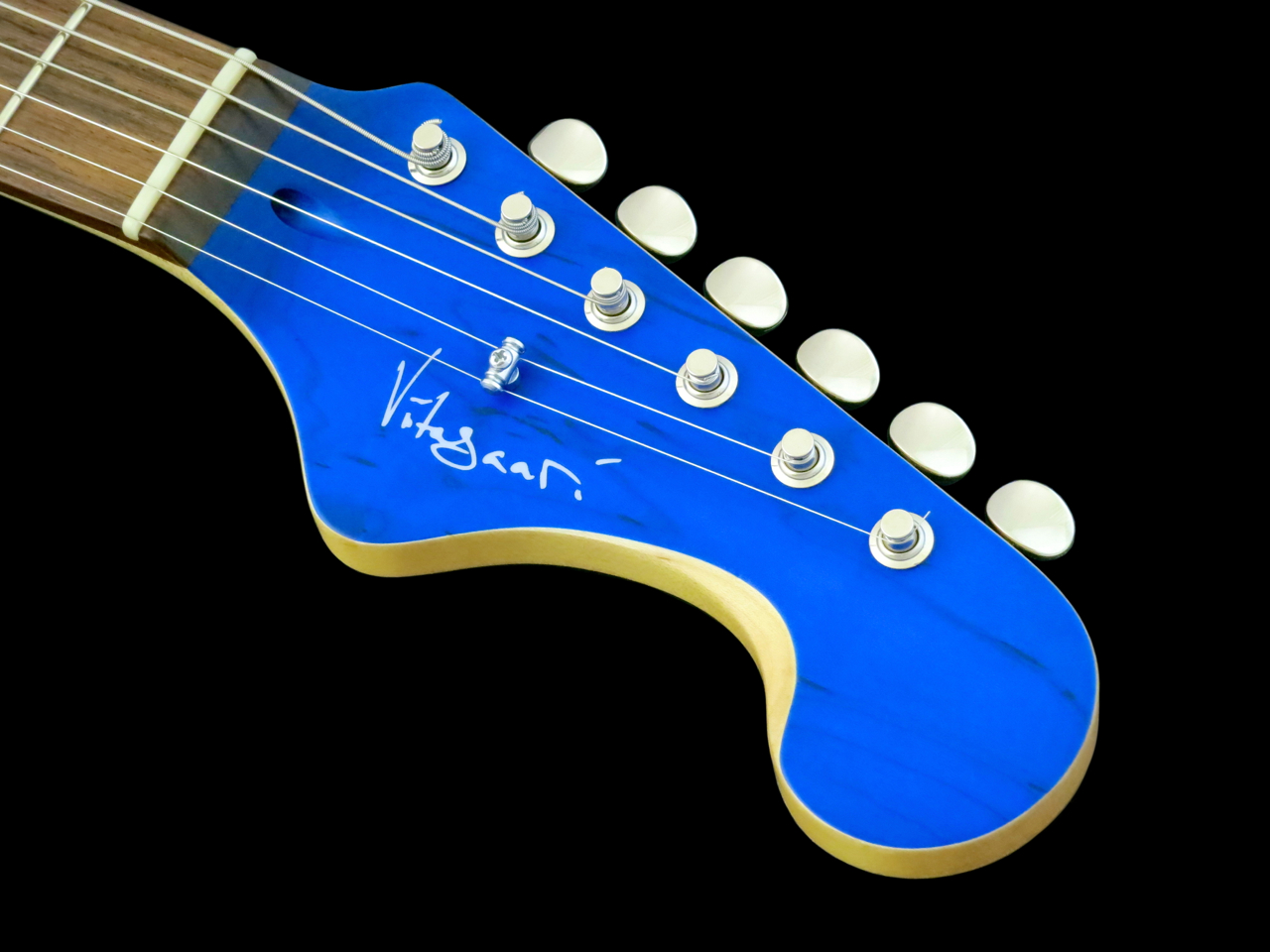
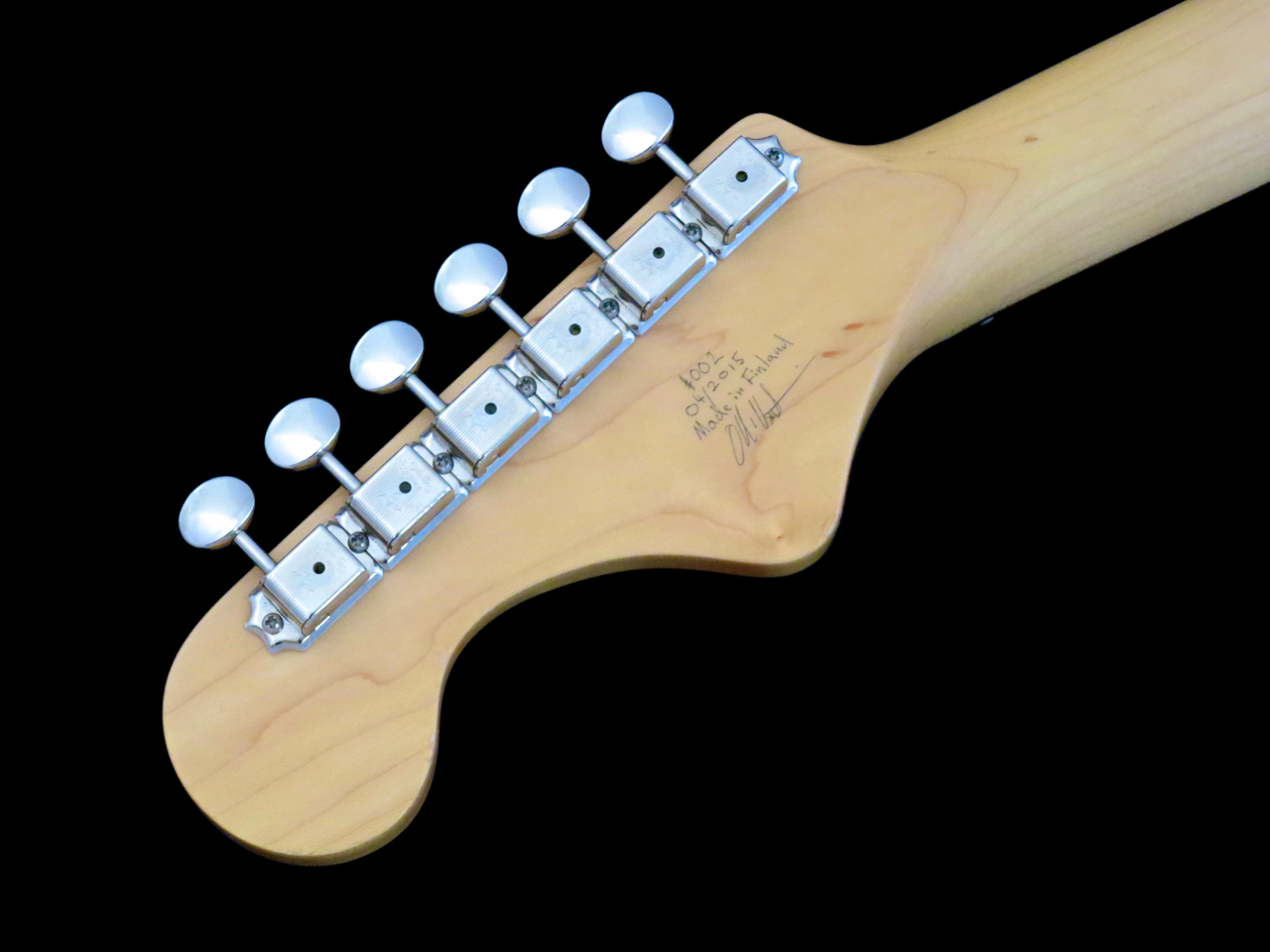
This guitar sports a set of Gotoh HAP-tuners, which combine vintage looks with height-adjustable tuner posts.

Viitasaari OM – Mastery bridge

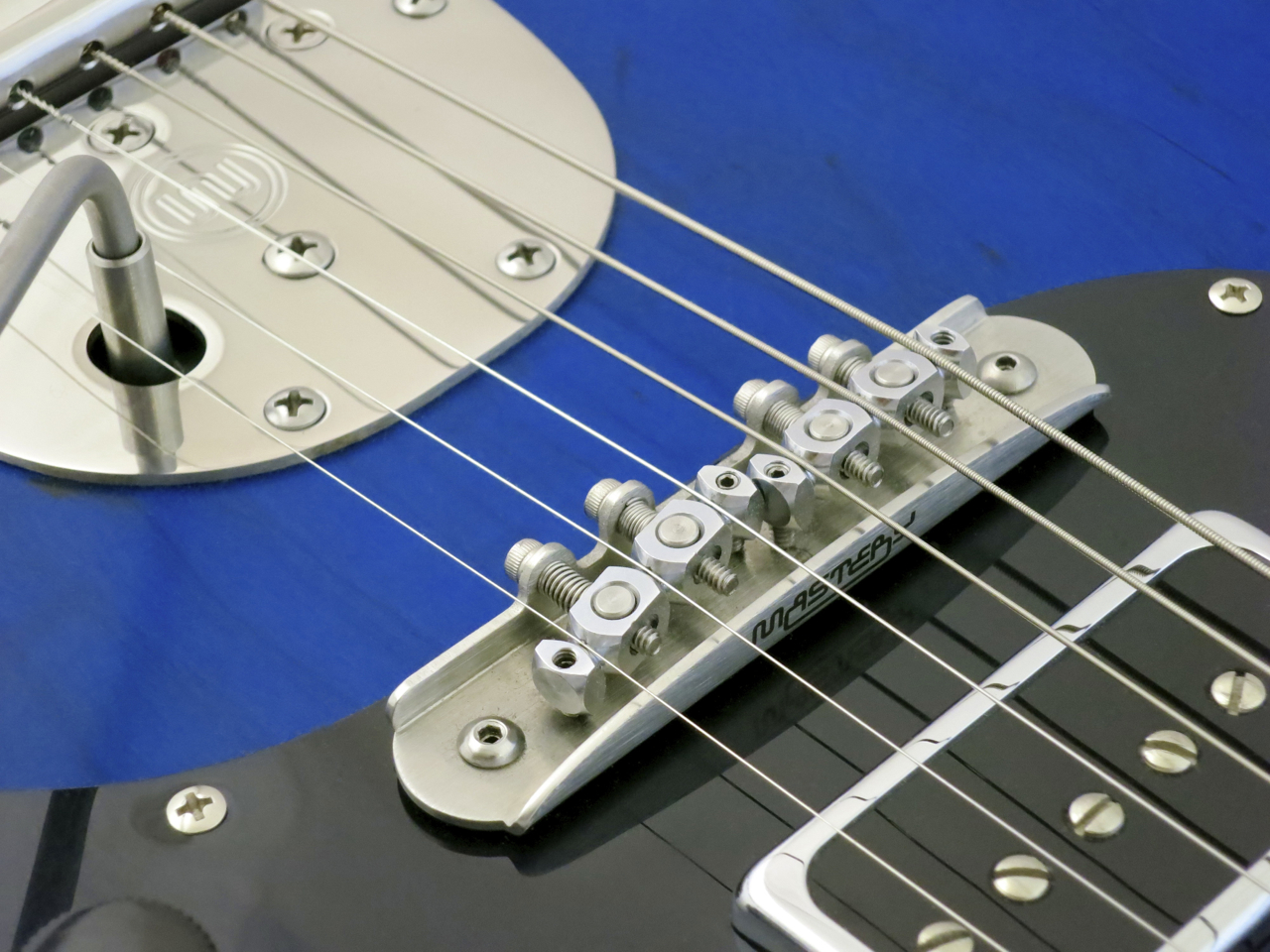
Leo Fender’s original Jazzmaster/Jaguar-vibrato is both loved and loathed among guitarists. Players tend to love the soft and slightly spongy action, but often tend to find the original design’s many quirks and idiosyncrasies extremely annoying.

Fender’s original design features tiny grub screws for the height-adjustment of the bridge’s separate bridge saddles. These screws often tend to work loose during playing, causing rattles and involuntary changes in string action. Additionally, there’s only a relatively shallow string angle over the bridge, exacerbating the string rattling, and sometimes even causing a string to jump out of position, especially with modern light gauge strings. In extreme cases, a bridge saddle may even turn upside down in the middle of a solo.

US-based hardware company Mastery has put a stop to all these problems by redesigning the Offset Bridge from the ground up. Naturally, this fantastic system has been chosen for the Viitasaari OM.

Viitasaari OM – body beauty 2

The OM’s 9.5-inch radius and fatter-than-vintage frets give the Viitasaari a modern playing feel.

Viitasaari OM – J Salo pickups

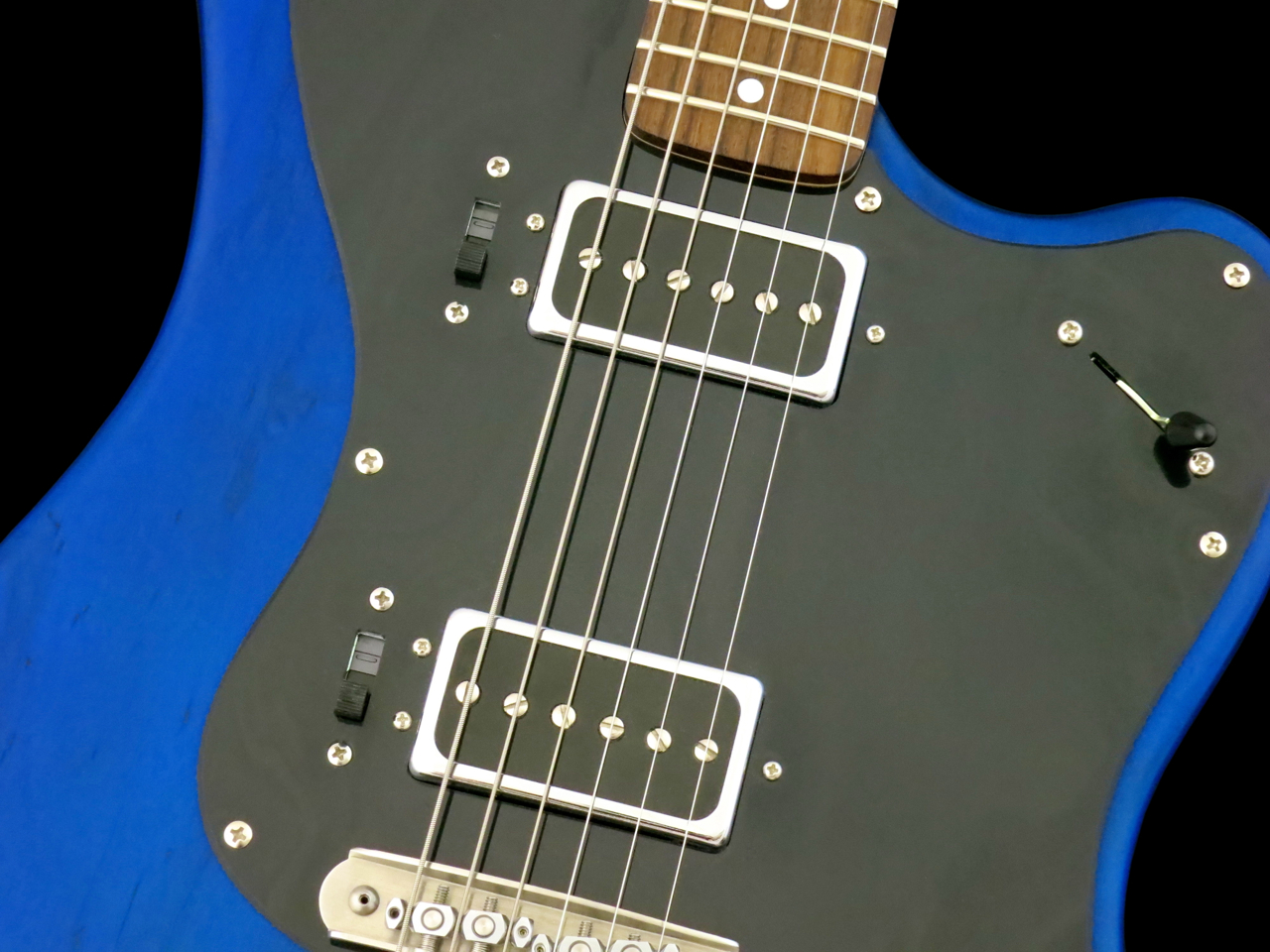
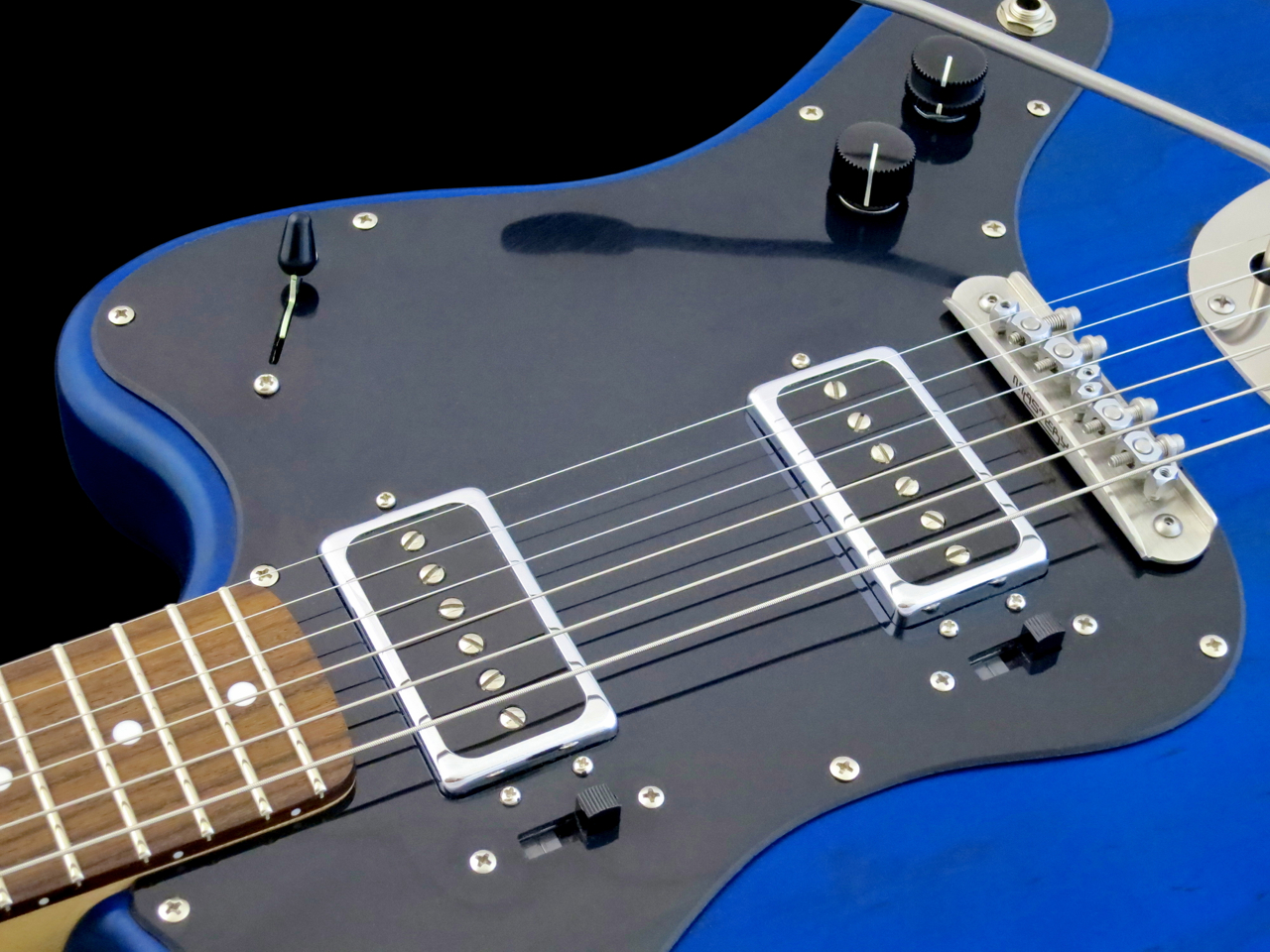
The two P-90-type pickups have been developed especially for the Viitasaari OM by Olli and Finnish pickup maker Jarno Salo.

Viitasaari OM – pickups and controls

The special feature of these Viitasaari/Salo-pickups are their dual coil taps, giving you three different basic sounds (and output levels) per pickup. A slide switch above each pickup lets you select between the full coil and the two coil tapped variations.

You can choose between a three-way blade switch (as on the reviewed instrument) or a three-way rotary for the pickup selector.

The controls are master volume and master tone. You can also specify a built-in fuzz effect as an option, which is then activated by a push/pull-switch inside the tone control.

****

Viitasaari OM – beauty shot 1

The Viitasaari OM is a top-drawer boutique guitar; it is lightweight and easy to play.

Comparing a Viitasaari to a mass-produced guitar makes the differences blatantly obvious – even though the Jazzmaster/Jaguar-shape is already a very ergonomic design, Olli Viitasaari’s craftsmanship takes the smoothness to new levels. The OM feels like a natural extension of the player’s body.

The workmanship and finish on this guitar couldn’t possibly be any neater – you could call t exemplary. The playing feel with the 0105 [sic!] set of strings is precise and bendy at the same time.

Mastery’s Offset vibrato system really is the best that has happened to the offset-vibrato since its inception in 1958. This is how the bridge and vibrato should have been designed right from the start! The Mastery Offset takes all the whammy abuse you can throw at it without any untoward side effects – no tuning problems, no strings jumping about. No wonder so many Jazzmaster and Jaguar-players have already updated to the Mastery Offset-system.

Viitasaari OM – beauty shot 2

The clean sound of the Viitasaari OM is Fender-ish in its fresh brightness and clean midrange, even though these P-90s are slightly more powerful than Fender Jazzmaster pickups. We get a high quality version of the Jazzmaster-tone with clearly less hum and buzz, thanks to the fine Viitasaari/Salo-pickups.

Using the coil taps will give you two quieter and slightly more rounded versions of the full pickup tone.

Here are the neck pickup’s three variations:

And the same for the bridge pickup:

As we all know, P-90s love chunky overdrive sounds, which opens the Viitasaari OM up to all sorts of tasty crunch tones:

I feel the coil taps are especially useful in distorted Rock/Blues-settings, making it possible to go from rhythm to lead playing without having to step onto an effects pedal. The shorter coil variations cool things down nicely, while the full coil gives you a ”boost” in volume and bite for lead guitar parts.

Here are the neck pickup’s three variations:

And the same for the bridge pickup:

In recorded the demo track’s guitar parts using a T-Rex Replicator analogue tape delay:

****

Viitasaari OM – full front 2

What a gorgeous guitar! To me the Viitasaari OM is simply the best Jazzmaster-type guitar I have ever played.

The workmanship is boutique grade and the OM plays like a dream. The Master vibrato is the icing on the cake, taking this design to new levels.

In my view the best thing about the OM, though, is the way Olli has incorporated double coil taps in his design. The OM takes the lead/rhythm idea of the original Jazzmaster, but transforms it into something that actually works much better in a modern context.

Viitasaari OM – body beauty 1

****

Viitasaari Guitars OM

from 2,500 €

Contact: Viitasaari Guitars

Pros:

+ handmade in Finland

+ workmanship

+ finish

+ Finnish pickups

+ Mastery-vibrato

+ sound

Save

Save

Save

Save

Save

Save

Save

Save

Save

Save

Save

Save

Save

Save

Save

Save

Save

Save

Save

Save

Save

Save

Save

Save

Save

Save

Save

Save

Save

Save

Save

Save

Save

Save

Save

Save

Pidä blogia WordPress.comissa.

Ylös ↑