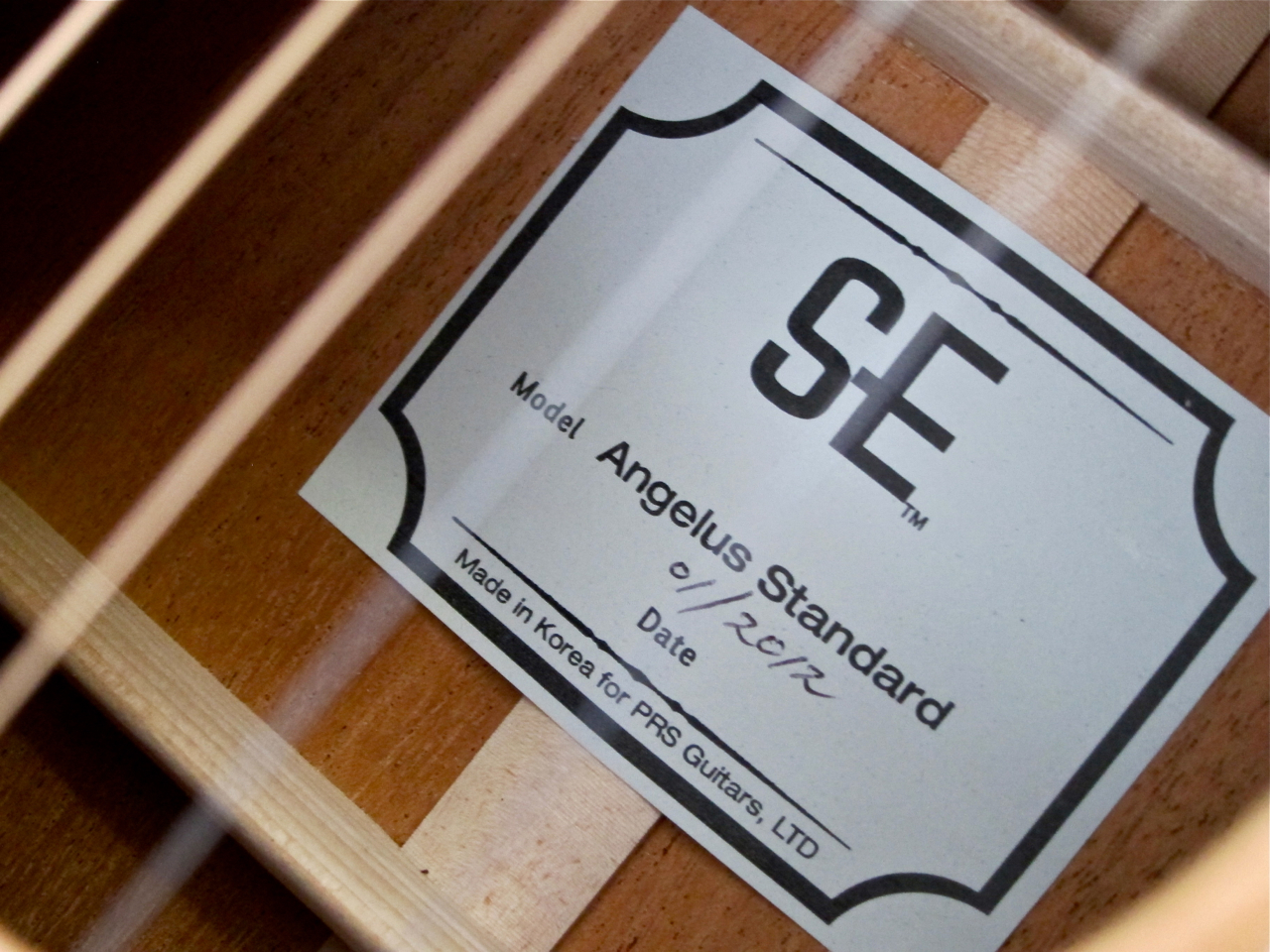
Testipenkissä: PRS SE Angelus Standard

****

SE Angelus Standard on Grand Auditorium -kokoinen teräskielinen akustinen kitara PRS Guitarsin upouudesta SE Acoustic -mallistosta.

PRS SE -teräskielisten erikoisuus piilee firman omassa erikoisrimoituksessa, jossa käytetään saumattomasti X-rimoituksen ja fan-rimoituksen parhaita elementtejä. Lopputuloksena pitäisi syntyä erittäin dynaaminen ja avoin akustinen klangi.

****

PRS SE Angelus Standard (katuhinta noin 730 €) on erittäin komea ja tyylikäs ilmestys suositussa Grand Auditorium -koossa.

Grand Auditorium -kitaroissa kopan tilavuus on kutakuinkin sama Dreadnought-kitaroiden kanssa. Pyöreämmän ulkomuodon ja kapeamman vyötärön ansiosta Grand Auditorium kuitenkin istuu sylissä vielä Dreadnoughtia mukavammin. Lisäksi kopan muodolla on myös vaikutusta sointiin – Grand Auditorium -kitarat soivat yleensä avoimemmin ja ilman kumisevaa keskirekisteriä (noin 600 – 800 Hz) kuin Dreadnought-soittimet, minkä ansiosta nitä on hyvin helppo äänittää.

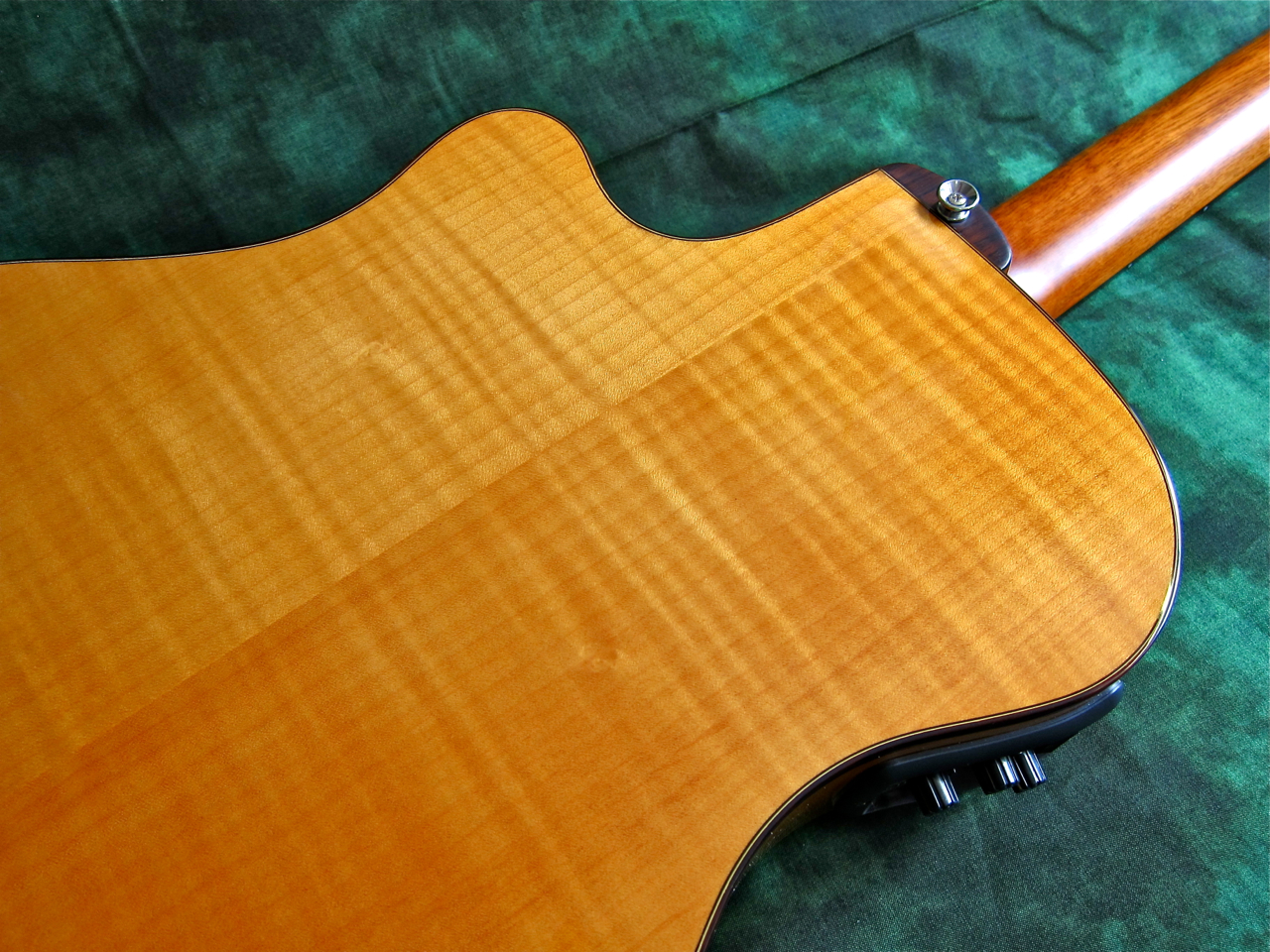
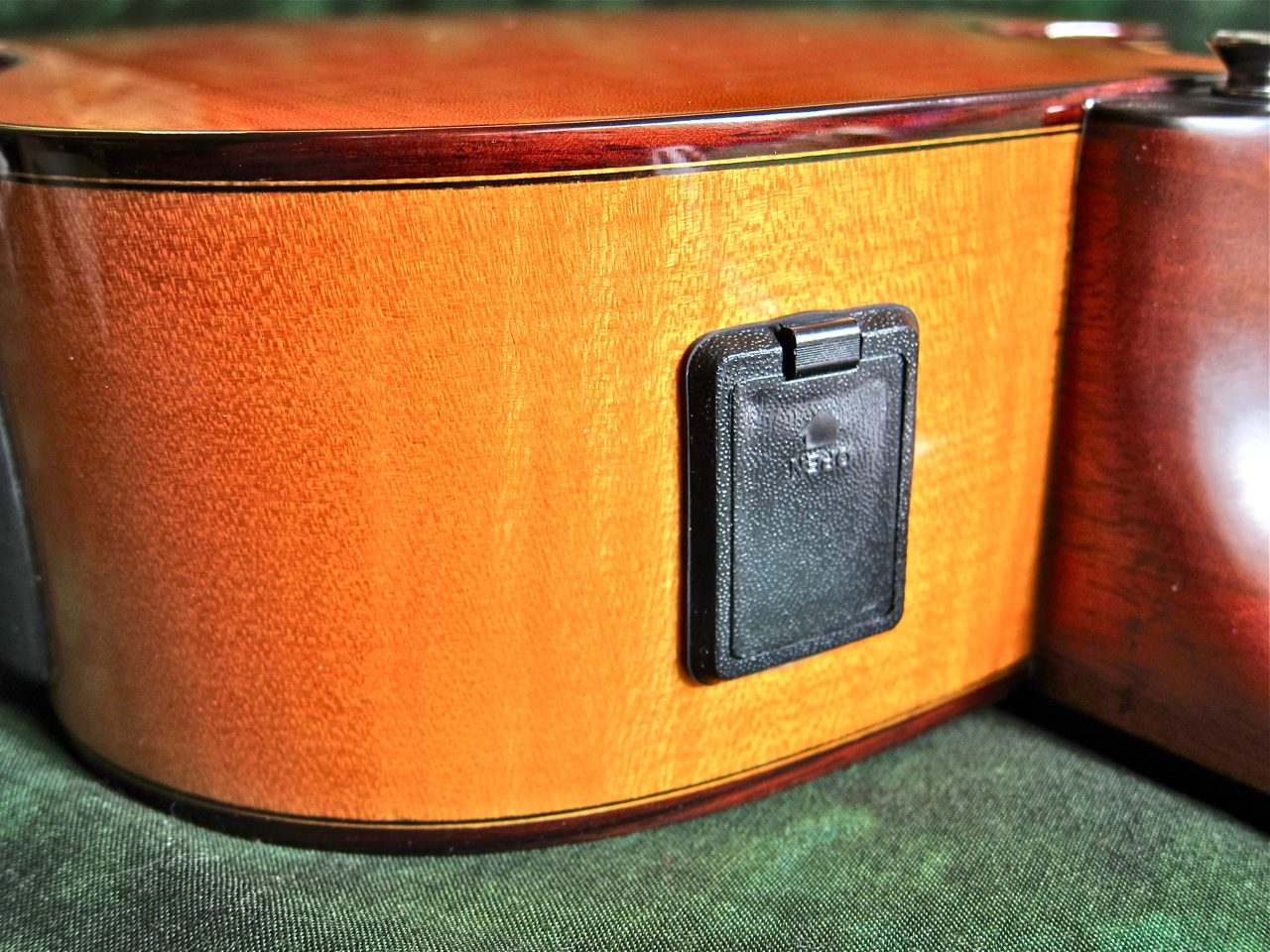
SE Angelus Standardin koppa on veistetty kokopuisesta sitkakuusikannesta ja mahonkipohjasta. Kopan reunat ovat muotoon prässätystä mahonkivanerista, mikä lisää niihin jäykkyyttä.

Myös Angeluksen kaula valmistetaan mahongista.

PRS:n perinteinen lapamuoto istuu yllättävän hyvin myös akustiseen kitaraan. SE Angeluksen tapauksessa lapa on reunalistoitettu valkoisella muovilla, ja päällystetty kuvankauniilla palisanteriviilulla (palisanteri = ruusupuu).

Satula on veistetty aidosta naudanluusta.

Suljetut virittimet ovat samat laadukkaat mallit, joita käytetään myös SE-sähkökitaroissa.

SE Angeluksen kaula koostuu yhdestä pitkästä palasta, johon on liimattu kaksi lisäpalaa – yksi muodostaa lavan, kun taas toinen on kaulan korko.
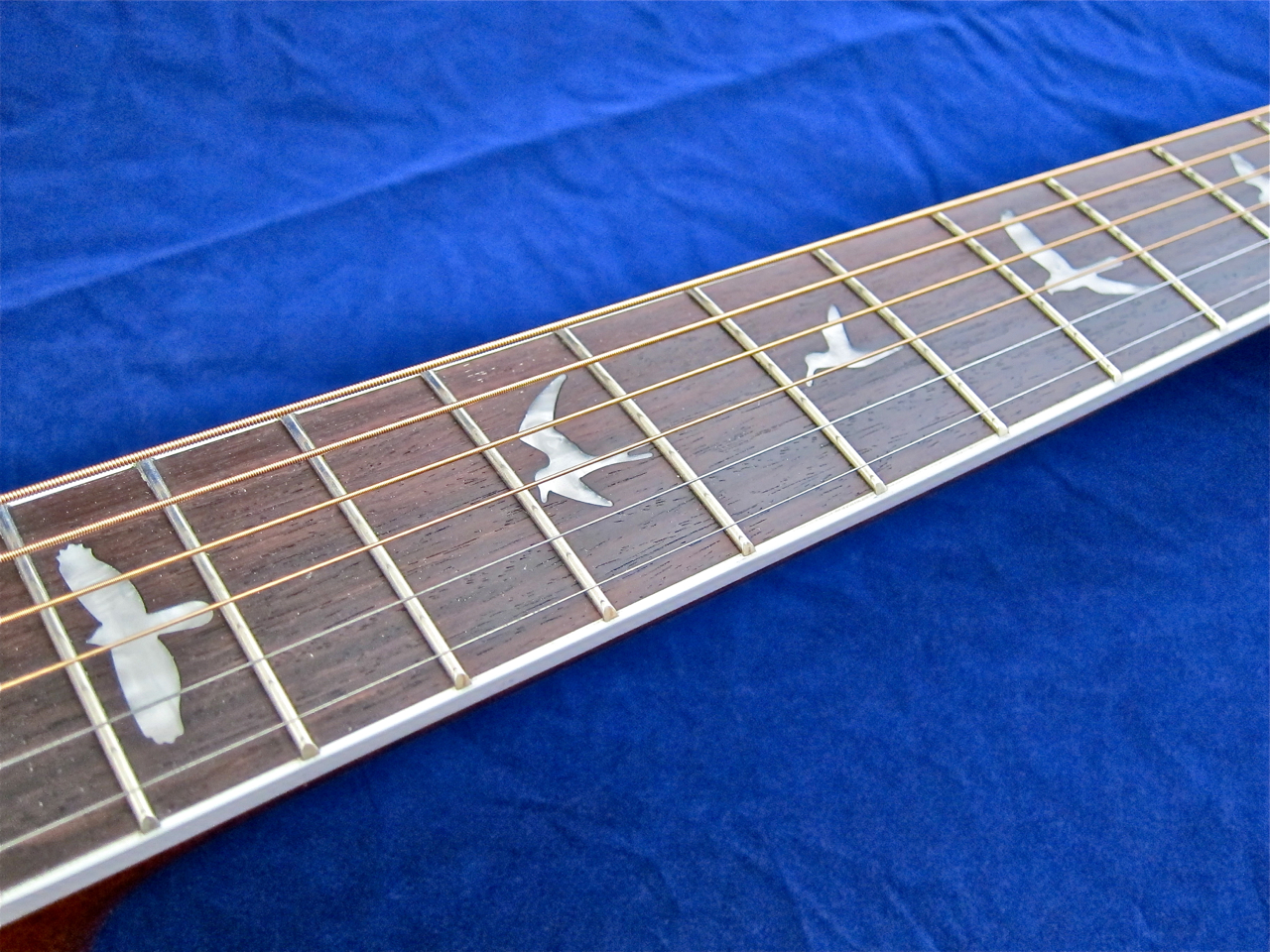
Palisanteriotelauta on reunalistoitettu ja koristeltu taitavasti PRS-sähkökitaroista tutuilla lintu-upotuksilla. Sekä upotus- että nauhatyö on toteutettu erittäin siististi.
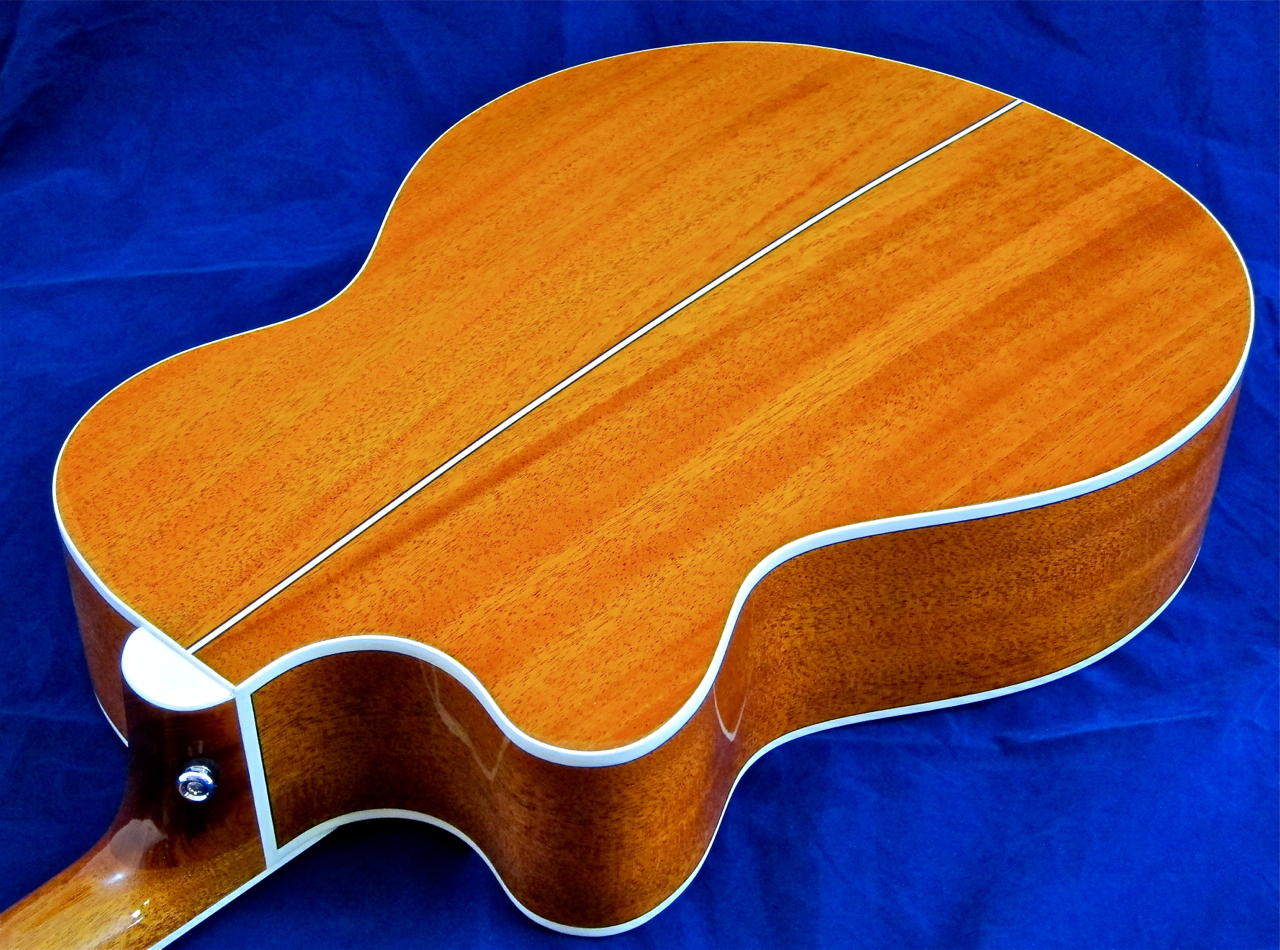
Kun kerran käytetään laadukasta puuta, on ilo myös näyttää se kaikille. Koppa on viimeistelty erittäin ohuesti kirkaslakalla – mahongin hunajankultainen sävy on varsinaista silmänruokaa.

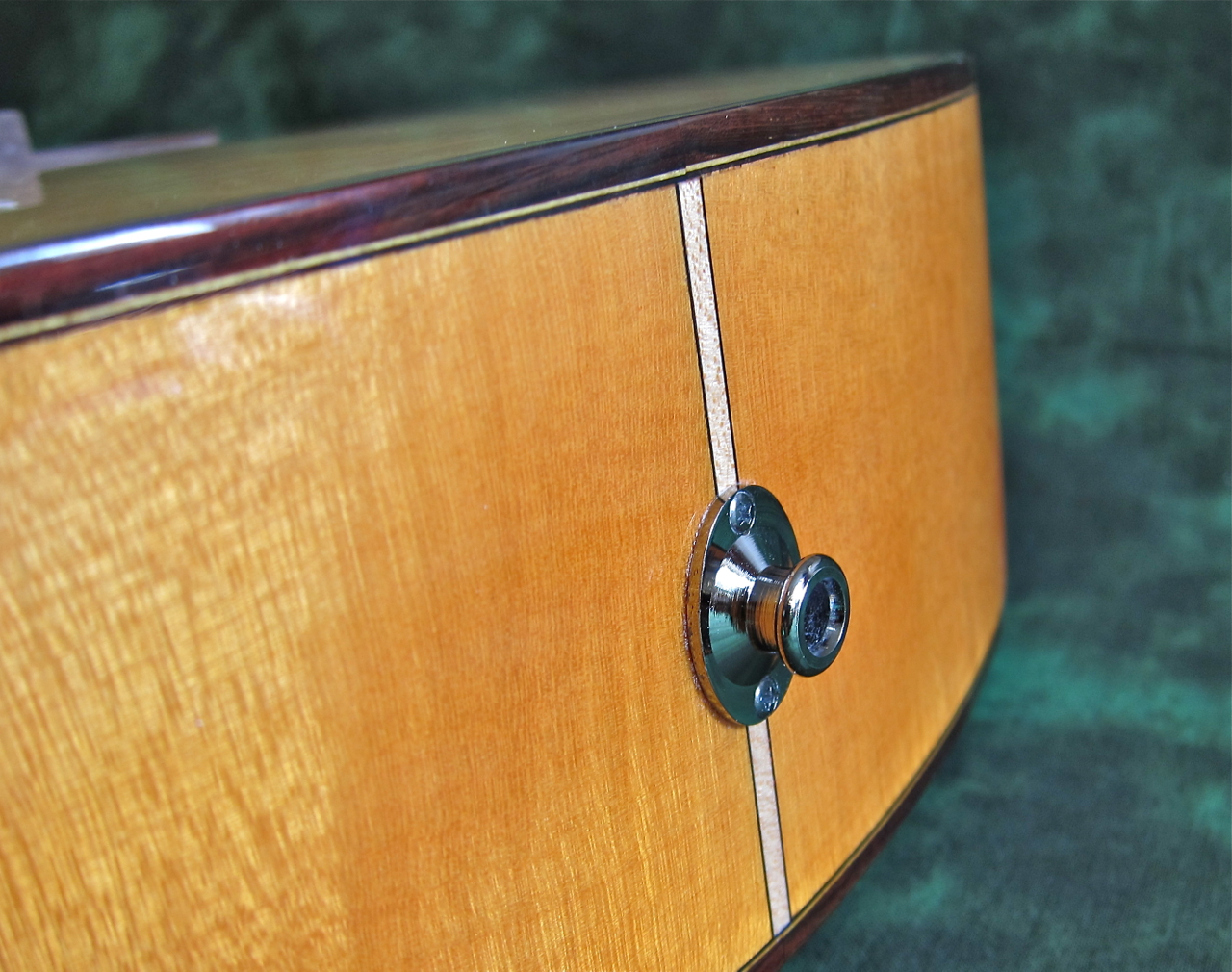
SE Angelus Standardissa toinen hihnatappi on muuten vakiovaruste – hyvä niin!

Kuten monilla Grand Auditorium -kitaroilla myös Angeluksella on pyöreä soololovi.
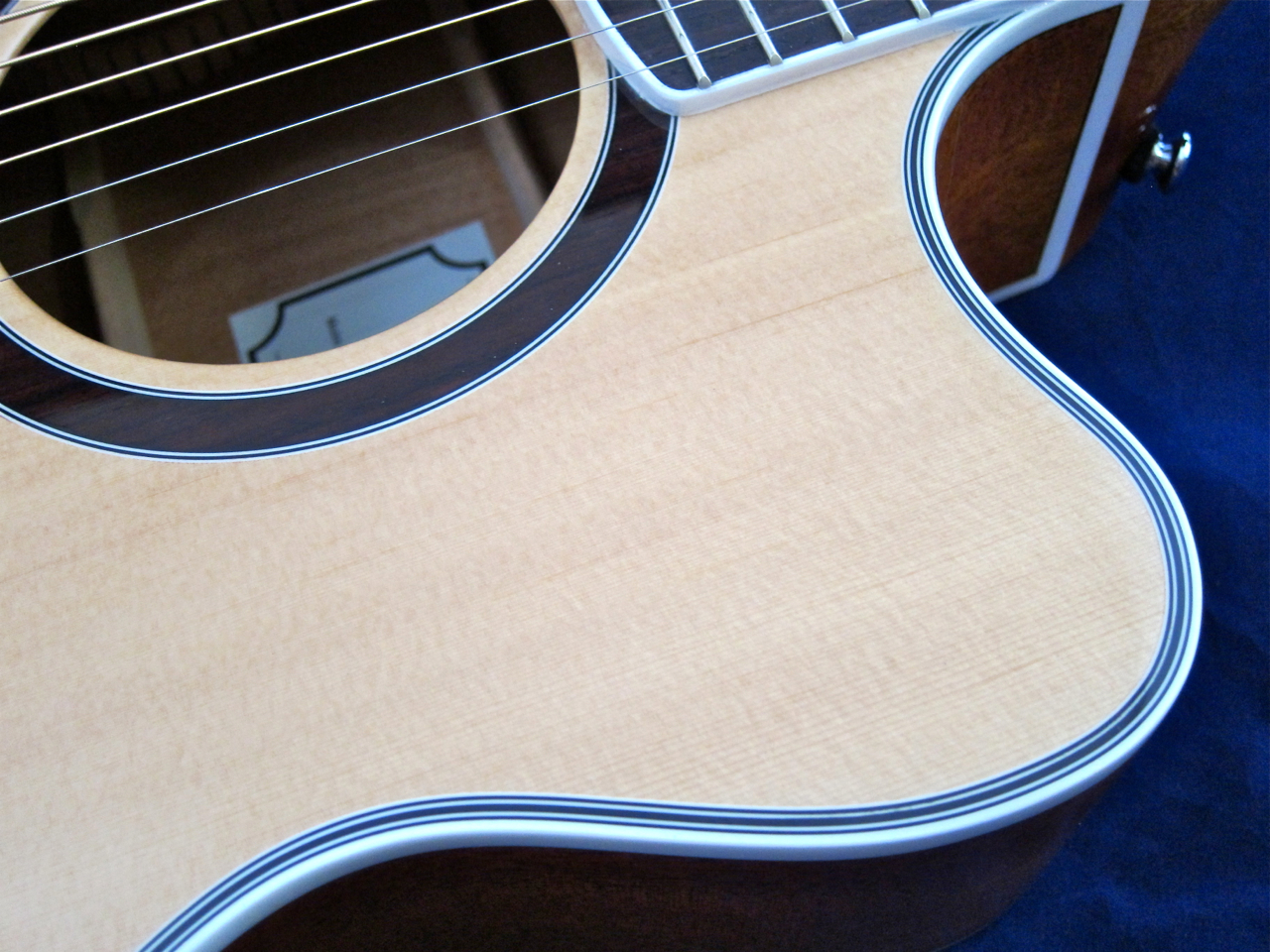
Kuusikansi on reunalistoitettu monikerroksisilla mustavalkoisella muovilistoilla.
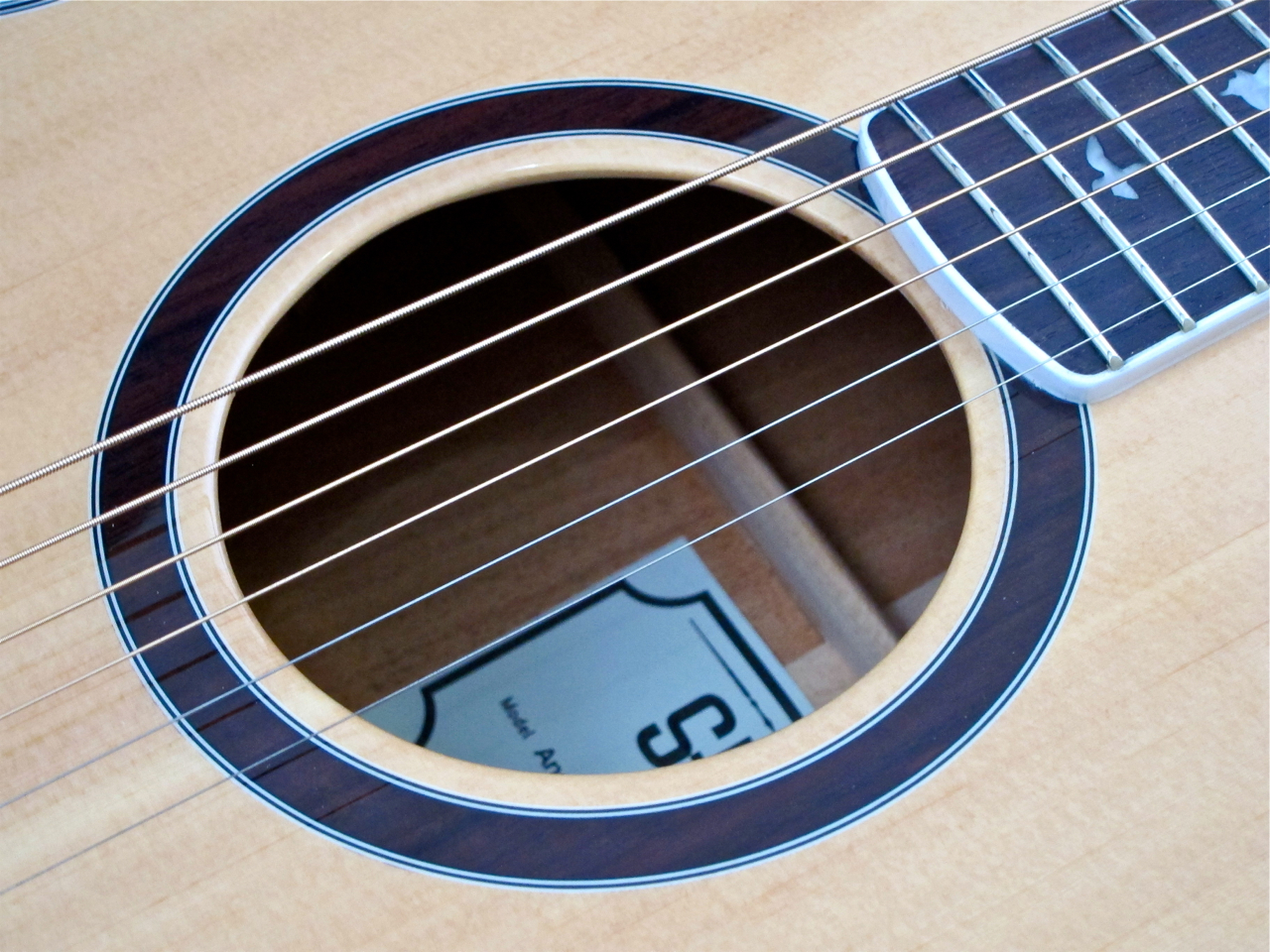
Tumma palisanterirosetti huokuu hillittyä tyylikyyttä.
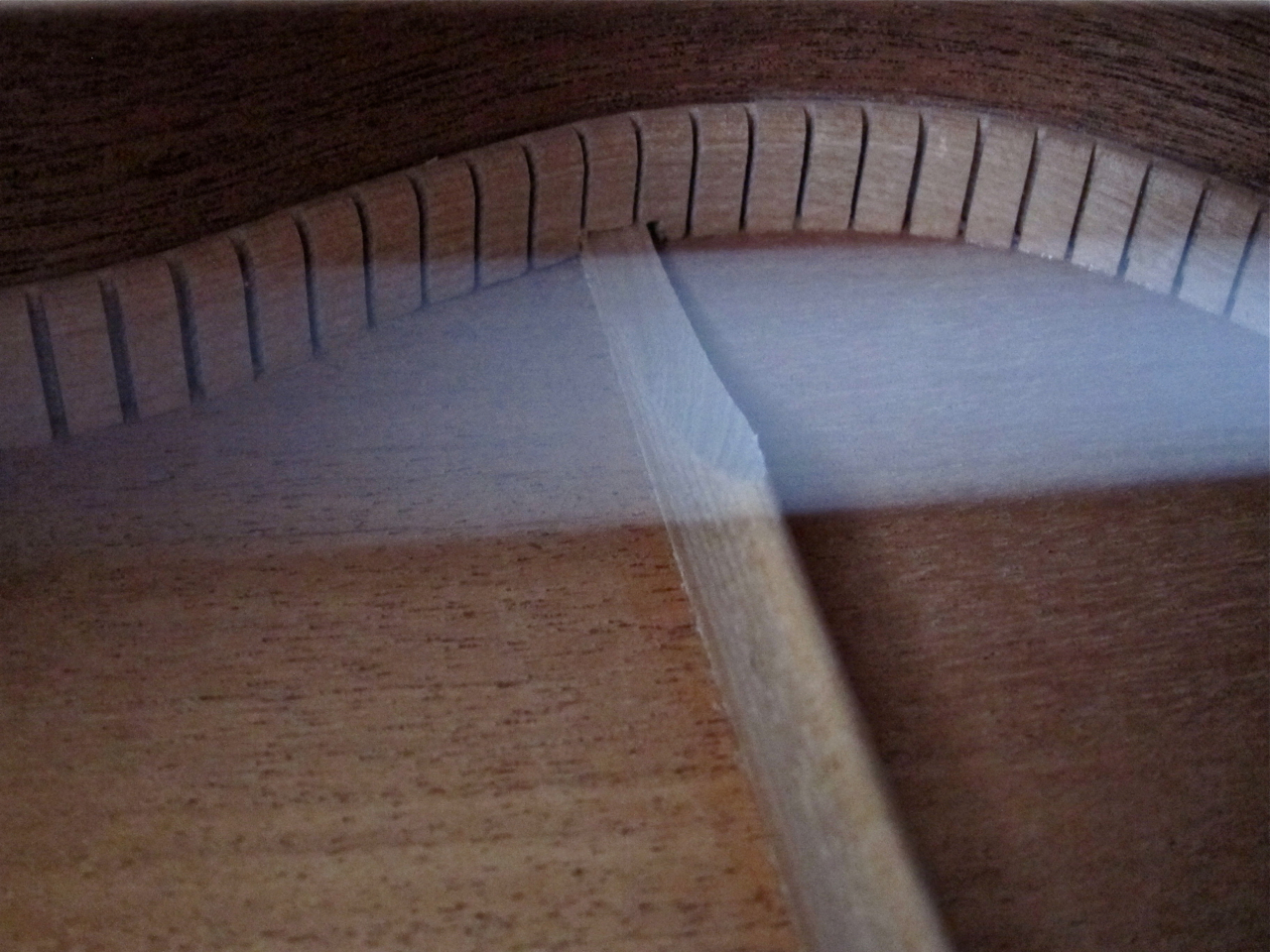
Myös kopan sisällä jatkuu SE Angeluksen esimerkkillisen siisti linja.

Samoin kuin satula, myös palisanteritallan kompensoitu tallaluu on aitoa luuta.

****

PRS SE Angelus Standard -kitaraa ei ole ainoastaan kiva katsella, vaan sillä on myös ilo soittaa!

Kitara on hyvin kevyt, ja jo pelkästä kosketuksesta käy selväksi, että tämä soitin resonoi vapaasti.

PRS on Angeluksen kaulaprofiilin kohdalla tehnyt mielestäni parhaan mahdollisen päätöksen: Angelus Standardin kaula on nimittäin täysverinen teräskielisen kaula. Tässä ei tehdä minkäänlaisia kompromisseja tai myönnytyksiä sähkökitaristien suuntaan, vaan tarjoilla on on täyteläinen ja vankka D:n ja U:n risteytys.

Ensikertalaiselle – tai tavalliseen elektroakustiseen tottuneille – ensivaikutelma voi tuntua hivenen verran liian lihaksikkaalta, mutta muutaman soittominuutin jälkeen soittaja alkaa arvostaa kaulan mukavaa täyteläisyytä. Tuhti kaula tukee hyvää soittotekniikkaa, ja se parantaa myös roimasti kitaran yleissointia.
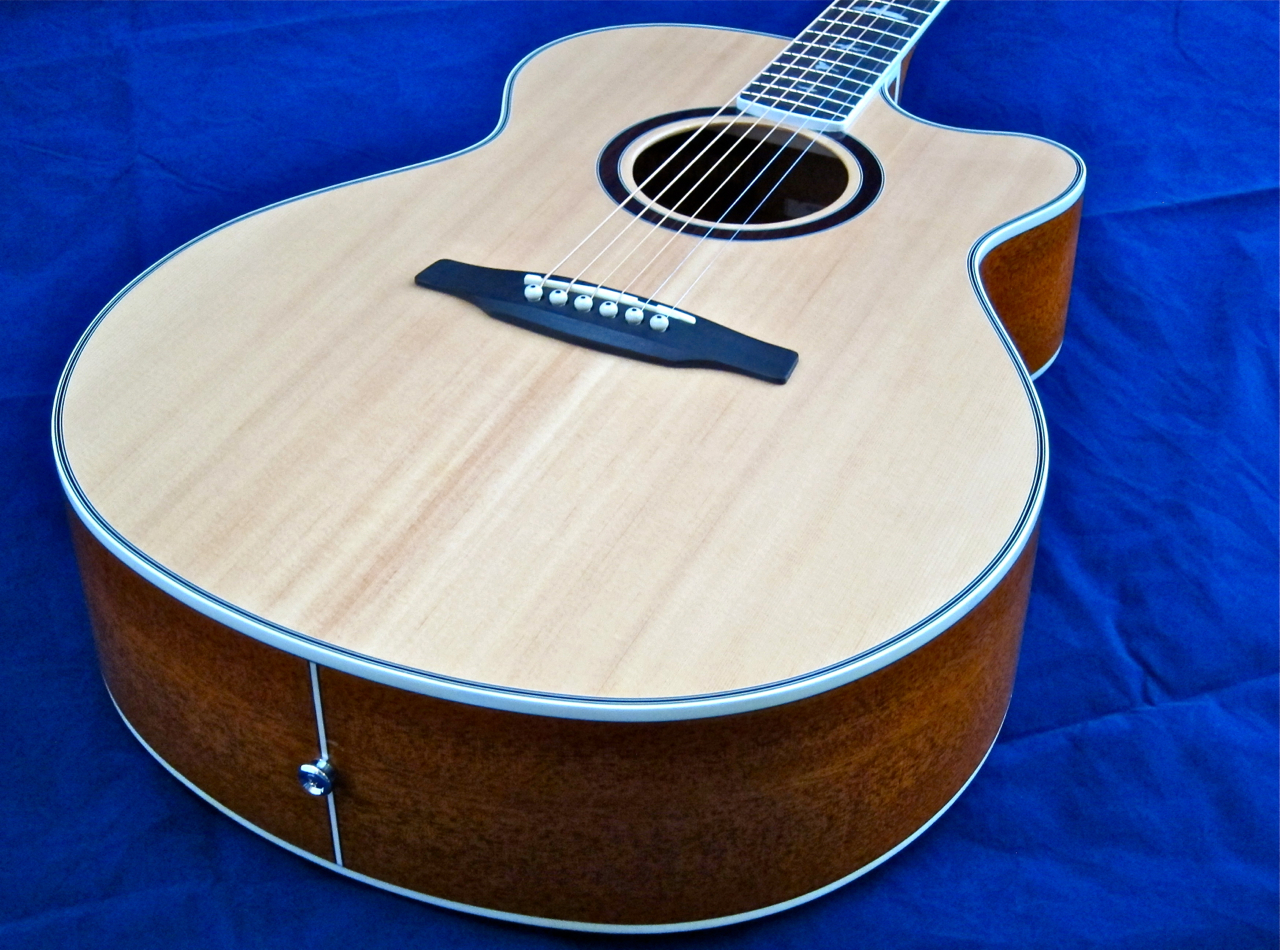
Ja mikä sointi tästä kitarasta lähteekin! Soundia ja soittodynamiikan toistoa voi kuvailla vain ylistyssanoilla, niin upeasti, kauniisti ja avoimesti SE Angelus Standard soi.

Kielet ovat esimerkkillisesti tasapainossa toisiaan, sekä volyymiä, että sävyä katsoen, ja loistava tasapaino säilyy ehjänä soittotekniikasta tai -rekisteristä riippumatta. On hyvin harvinaista saada suoraan pakasta vedettyä teräskielistä syliin, joka soi alusta asti näin hyvin – etenkin tässä hintaluokassa!

Kokeilin SE Angelus Standardia myös erilaisilla äänityskalustoilla, ja oli lähes mahdotonta saada tästä kitarasta huonoa tai tunkkaista soundia.

Tältä Angelus kuulostaa Zoom Q2HD:llä äänitettynä:

SE Angelus – plektralla – Q2HD

…ja tässä ovat kaksi pätkää, joissa käytin AKG C3000 -mikrofonia edestä, lähellä 14. nauhaa, sekä Samson C02-mikrofonia minun oikean olkapään yllä, osoittamassa kitaran tallaa kohti (–> Focusrite Saffire 6 USB –> Apple Garageband):

SE Angelus – sormisoitto

SE Angelus – plektralla

****

PRS SE Angelus Standard

katuhinta noin 730 €

Maahantuoja: EM Nordic

Kiitos DLX Music Helsingille testiyksilön lainaamisesta!

****

Plussat:

+ kokopuinen kansi ja pohja

+ tuhti kaulaprofiili

+ soitettavuus

+ avoin ja dynaaminen soundi

+ työnjälki

+ hinta-laatu-suhde

****

Review: Roland G-5 VG-Stratocaster

****

Roland’s brand-new G-5 VG-Stratocaster (current RRP in Finland: 1.583 €) is the result of Roland’s and Fender’s cooperation. The guitar offers the player the genuine ”Stratocaster Experience”, as well as a wide variety of built-in, digitally modelled  guitar tones and virtual tunings.

From the front the Hecho-en-Mexico G-5 VG-Stratocaster differs only slightly from your basic Strat. Only the bright blue status LED, as well as the two small black rotary switches, hint at the digitally souped-up nature of this electric guitar.

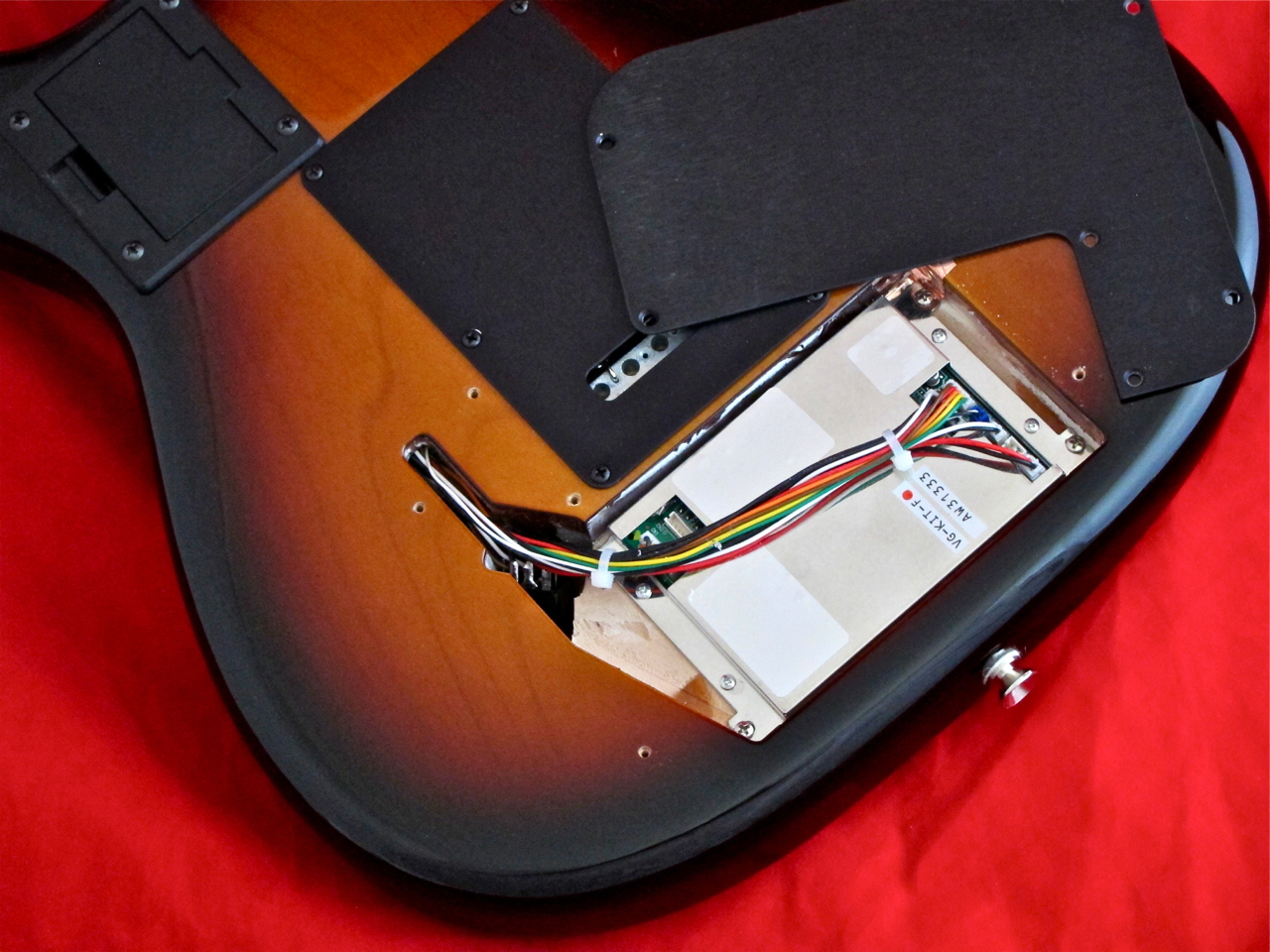
The VG-Strat’s back sports two additional cavities on the back of its alder body. The larger one holds all the digital shenanigans (courtesy of Roland), while the smaller one is the battery compartment.

The G-5 uses an up-to-date Stratocaster-neck, which allows for truss rod adjustment from the headstock end.

The sealed Fender-tuners are a quality touch.

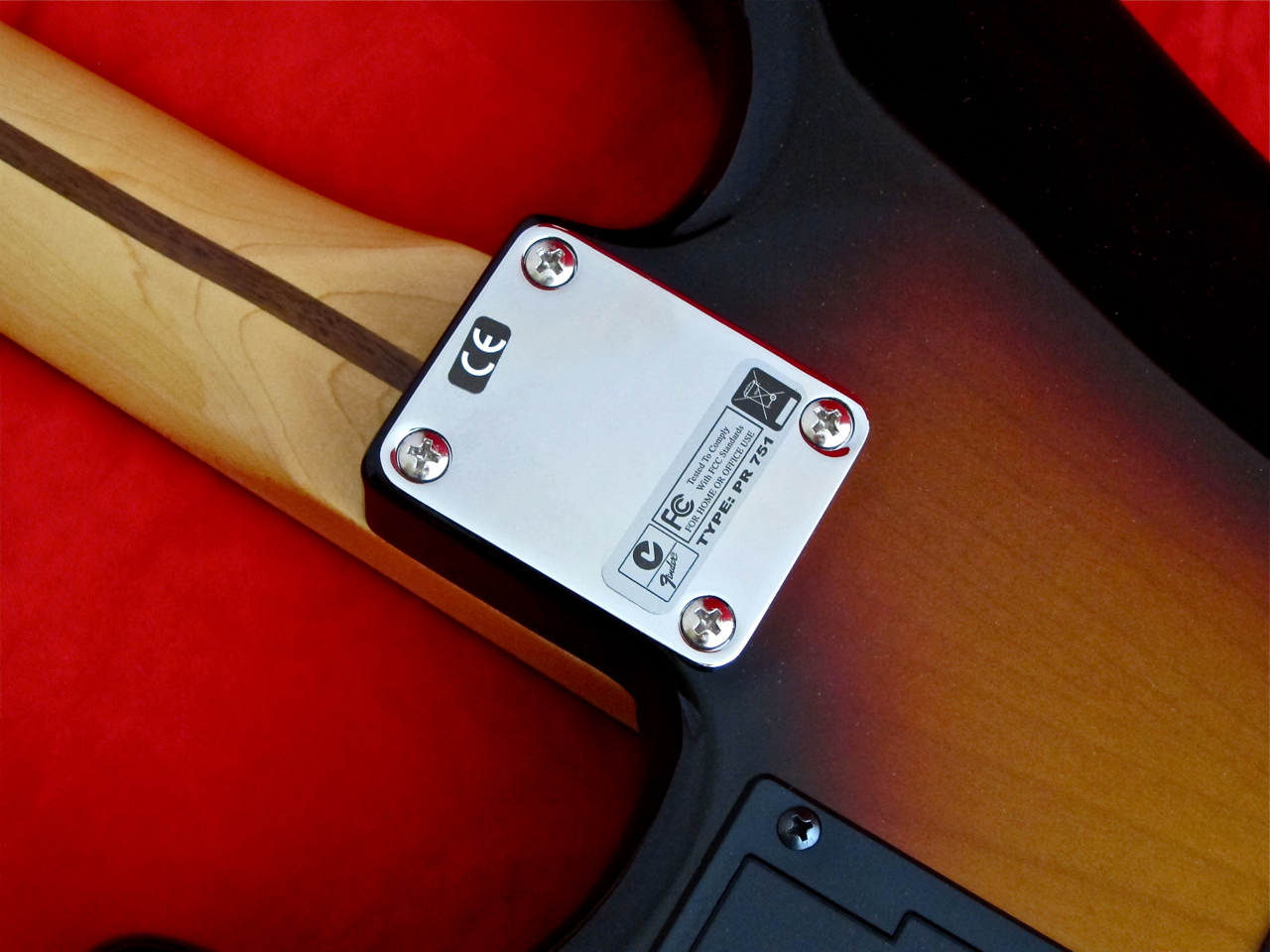
The neck joint, on the other hand, is executed in the most traditional of Fender methods.

The fingerboard curves in a 9,5-inch radius, which gives it a very comfortable, middle-of-the-road feel, right between a vintage-Fender’s curved chunkiness and a typical Gibson’s sleek flatness.

Well-set and finished jumbo frets guarantee an almost effortless playing experience. Thanks to a small fretboard ledge, the VG-Stratocaster even comes with a 22nd fret.

The traditional magnetic pickups on the Roland G-5 come straight from Fender’s Standard series – nothing esoteric, but good meat-and-potato workhorses.

Roland’s own GK-pickup sits between the traditional bridge pickup and the vintage-type vibrato bridge. The GK-pickup’s signal feeds the much-needed raw material to the modelling circuit.

To keep electromagnetic interference into the digital COSM-circuit to a minimum, both of the guitar’s two black lids are crafted from aluminium. Additionally, the modelling department is encased in its own, shiny metal box.

The Roland G-5’s only real drawback is its large power consumption: four alkaline AA-batteries will give you about six hours of continual playing time. Using Ni-MH-rechargeables will give you approximately nine hours of fun on a full charge. Connecting a guitar lead to the VG-Strat automatically turns the digital side on, using up the battery power even if you’re only using the guitar’s traditional magnetic pickups. A simple on/off-switch might have been a welcome addition to the G-5.

In comparison to other virtual guitars Roland’s G-5 does have one advantage, though: You can use the VG-Stratocaster even without any batteries, just like a traditional Fender Stratocaster.

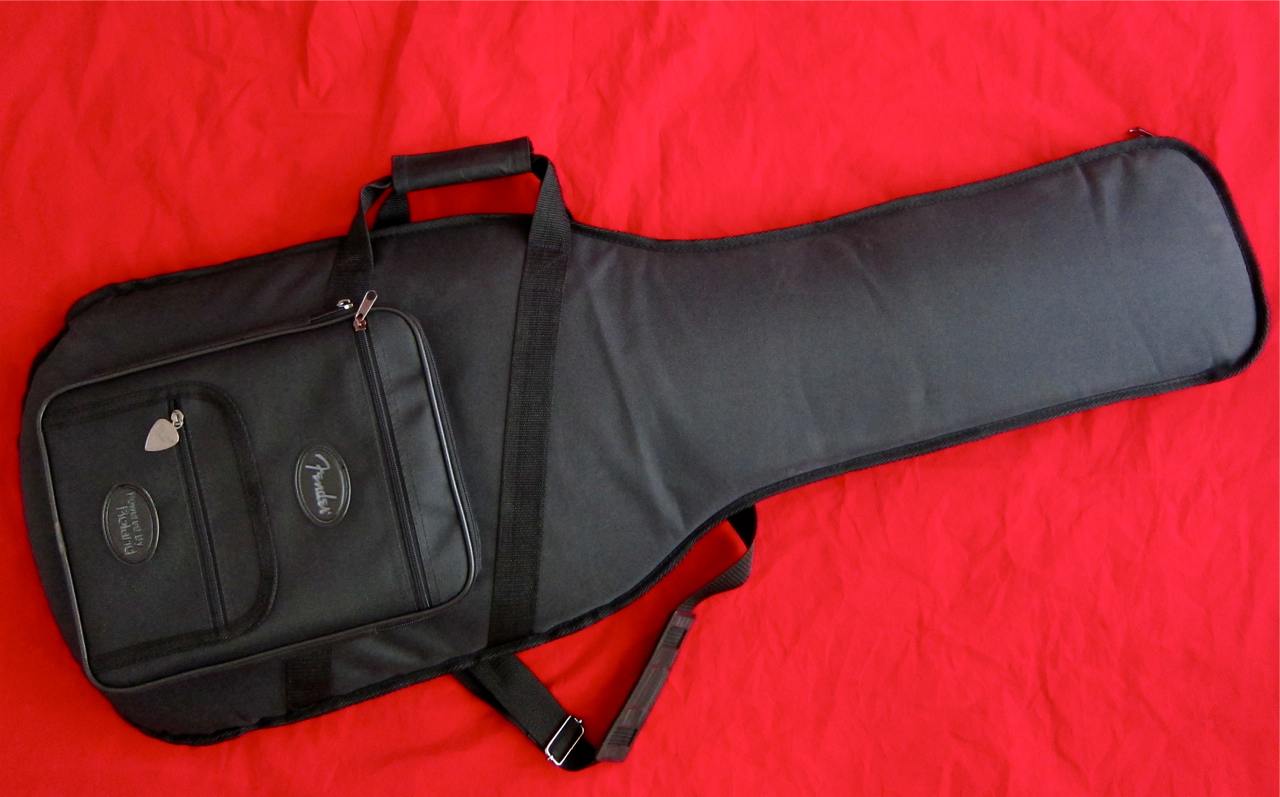
The Roland G-5 comes with its own padded gig bag.

****

The VG-Stratocaster’s oval C-profile feels very nice in the hand. The overall ergonomics are what you’d expect from a Strat – very comfortable.

Bypassing the modelling department the Roland G-5 sounds just like a good Strat should, which really shouldn’t come as a surprise to anybody.

The pickups are traditional singlecoil units with a crisp and dynamic basic tonality. Thanks to the reverse wound/reverse polarity middle pickup the in-between settings are hum free.

The instrument’s digital side opens up a whole wealth of possibilities.

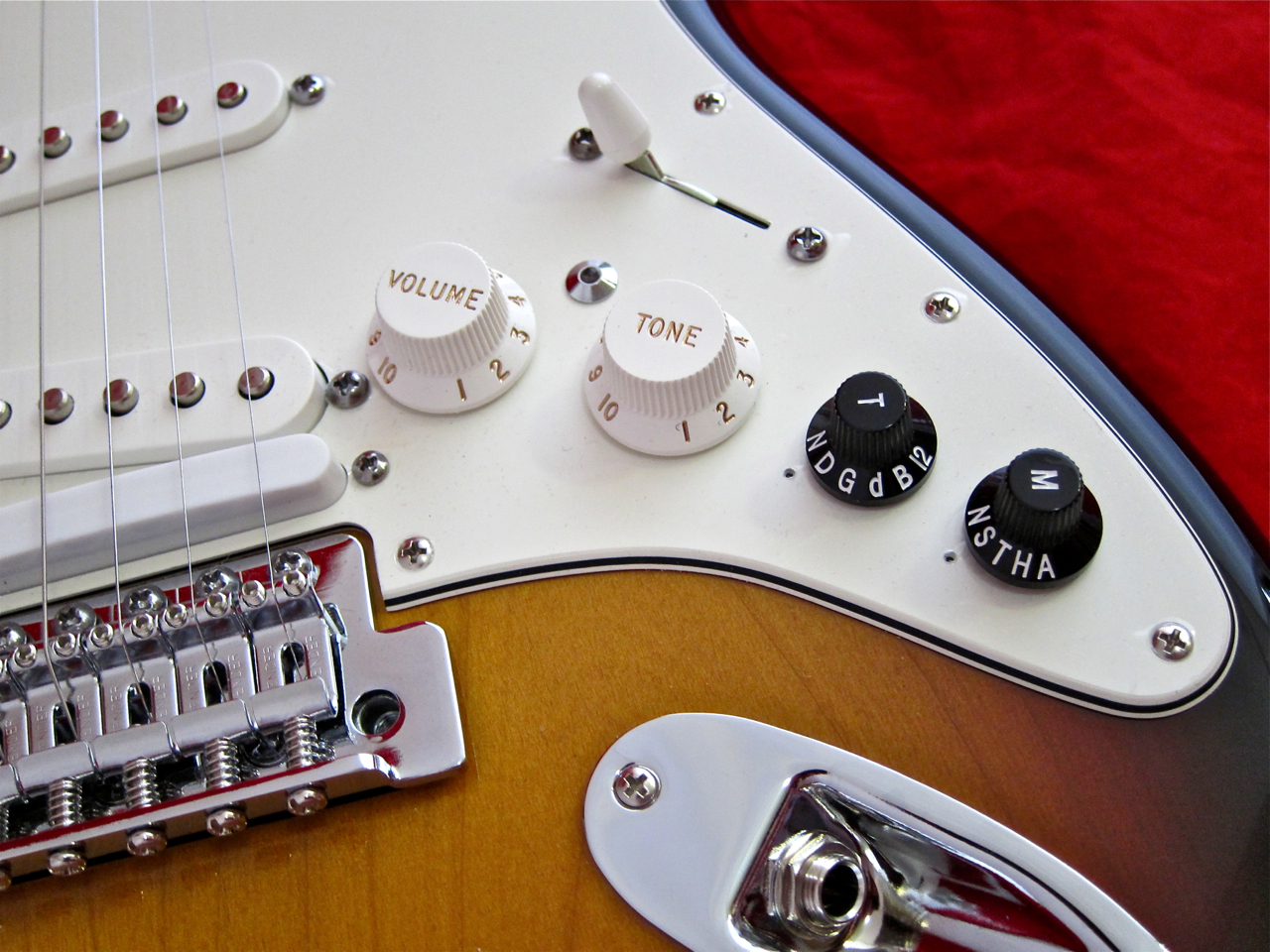
The M-rotary offers you four basic pickup modes:

”S” is a virtual Strat. It might seem a bit daft, at first thought, to include a modelled Strat in a real Strat, but don’t forget that the modelled virtual pickups are all completely free of hum and other interference.

”T” stands for Telecaster. In addition to the three standard Tele-selections (neck, both, bridge), switch positions one and five add overwound versions of the bridge and neck  pickup, respectively, to the mix. The overwound options dish out more power, as well as more bite.

The H-model gives you five virtual humbucker tones. Just like on the Telecaster-model ”H” also offers a brighter neck and bridge pickup in the selector switch’s outermost positions.

Turning the M-rotary to ”A” puts five different acoustic settings at you fingertips. You will find an archtop acoustic, a sitar, a nylon-string and two different steel-string guitars on offer. In the acoustic guitar models the G-5’s Tone-pot adjusts the digital reverb level, with the exception of the sitar model, where the control adjusts the volume of the virtual sympathetic drone strings.

In my opinion most of the models on offer hit the proverbial nail right on the head; especially the authenticity of the electric models is breathtaking. On the acoustic side of things, my favourite setting are the acoustic guitar (at the first switch position), as well as the fantastic virtual sitar. The nylon-string is perhaps the weakest model in the VG-Stratocaster — it’s useable, but not very authentic sounding.

****

The G-5’s T-rotary accesses the guitar’s virtual tunings: ”D” gives you Drop-D, ”G” stands for open G (a la Keith Richard), ”d” calls up the modal DADgad-tuning, ”B” turns the guitar into a virtual baritone guitar (Metal fans will like this), and ”12” adds six more strings to proceedings.

The virtual tunings sound great and the whole thing works without any perceivable latency or wobbling.

****

The Roland G-5 VG-Stratocaster is a fantastic package, because it gives you a great real guitar to begin with, and then adds the whole new dimension of digital modelling on top of this. A Fender Stratocaster feels safe and familiar to us – it’s a well-playing guitar with great ergonomics and a classic, versatile sound.

The digitally modelled virtual pickups, guitars and tunings take your guitar experience much, much further. The tones sound really organic, and most of the settings offer a high degree of authenticity. The amount of versatility on tap, coupled with the option to change guitar types and/or tunings in mid-song, make the Roland G-5 a very intriguing instrument for studio guitarists or players in a covers band.

The audio clips have all been recorded using the VG-Stratocaster’s digital models and tunings:

Stratocaster-model

Telecaster-model

12-string Telecaster-model

Humbucker-model in virtual Drop-D

Humbucker-model in virtual baritone-tuning

Virtual steel-string acoustic

Sitar-model

The guitar parts from the video

****

Roland G-5 VG-Stratocaster

current RRP in Finland: 1.583 €

Finnish distributor: Roland Scandinavia

****

Pros:

+ genuine Fender Stratocaster

+ playability

+ analogue side works without batteries

+ analogue tone

+ quality and versatility of COSM-models

+ speed and reliability of virtual tunings

+ workmanship

Cons:

– power consumption

****

Testipenkissä: Roland G-5 VG-Stratocaster

****

Uusi Roland G-5 VG-Stratocaster (suositushinta 1.583 €) on Rolandin ja Fenderin yhteistyön hedelmä, joka tarjoaa, sekä aidon, analogisen Strato-kokemuksen, että laajan valikoiman digitaalisesti mallinnettuja kitarasoundeja ja virtuaalivirityksiä.

Meksikossa valmistettu G-5 VG-Stratocaster poikkeaa edestä vain vähän tavallisesta rivi-Stratosta. Vain pieni sininen status-ledi ja mallinnusosaston kaksi mustaa kiertokytkintä antavat ymmärtää, että kyseessä on digitaalisesti turboahdettu sähkökitara.

VG-Straton leppärunkoon on lisätty takapuolesta kaksi lokeroa, joista isompi on Rolandin mallinnuselektroniikkaa varten ja pienempi paristoille.

G-5:ssa käytetään nykyaikaista Stratocaster-kaulaa, jossa kaularaudan säädön pystyy hoitamaan kätevästi lavan puolelta.

Sujetut Fender-virittimet hoitavat hommansa mallikkaasti.

Kaulan ruuvikiinnitys on perinteiden mukainen.

Otelaudan radius on 9,5 tuumaa, mikä on hyvin toimiva keskitie vintage-Fendereiden jäntevän soittotuntuman ja Gibson-tyylisen venyvyyden välillä.

Jumbo-kokoiset nauhat ja huolellinen nauhatyö takaavat kitkatonta soittokokemusta. Otelaudan lisäkielikkeen ansiosta VG-Stratoon on mahdutettu mukaan jopa 22 nauhaa perinteisten 21:n sijaan.

Roland G-5:n magneettiset mikrofonit ovat Fenderin Standard-sarjasta – erittäin asiallisia pelejä siis.

Perinteisen tallamikrofonin ja vintage-vibran väliin on mahdutettu Rolandin oma GK-mikrofoni, josta VG-Straton mallinnuspiiri saa tarvitsemansa raakasignaalia.

Digitaalisen COSM-elektroniikkan häiriösuojaukseen on satsattu – kitaran mustat takakannet ovat alumiinista ja piirilevyn päälle on laitettu vielä oma metallikansi.

Roland G-5 on aikamoinen sähkösyöppö: virtuaalipiiri toimii neljällä AA-paristolla noin kuusi tuntia. Ni-MH-akuille luvataan peräti yhdeksän tuntia soittoaikaa latausta kohti.

Muihin virtuaalikitaroihin kohti Roland VG:llä on kuitenkin se etu, että se toimii ilman sähköäkin ihan tavallisena Stratocasterina.

G-5 VG-Stratocaster toimitetaan omassa topatussa pussissaan.

****

VG-Stratocasterin ovaali, C-muotoinen kaulaprofiili tuntuu mukavalta. Myös koko kitaran ergonomia on Stratolle tyyppillinen – siis erittäin hyvä.

Ilman digitaalitekniikka Roland G-5 -kitara soi kuin perushyvä Fender Stratocaster, minkä ei pitäisi olla kenellekään iso yllätys.

Mikrofonit ovat perinteisiä yksikelaisia, joilla on raikas ja dynaaminen soundi. Vastasuuntaan käämityn keskimikin ansiosta kitaran kuuluisat väliasennot ovat häiriövapaita.

Kitaran digitaalipuoli taas on tämän soittimen varsinainen runsaudensarvi.

M-kiertokytkin tarjoaa neljä mallinnusryhmää:

”S” on virtuaali-Strato, ja vaikka se tuntuu ensin hieman hullulta lisätä oikeaan Stratoon saman kitaratyypin mallinus, mallin etu on, että virtuaalimikrofonit eivät hurise lainkaan.

”T” tarjoaa kolmen perinteisten Telecaster-soundien (kaula, molemmat, talla) lisäksi vipukytkimen ääriasennoissa vielä ylikäämityn kaula- ja tallamikrofonin soundeja. Lisäsoundeissa on enemmän tehoa, sekä hieman lisättyä purevuutta keskialueella.

H-malli on tietysti virtuaalinen humbucker. Tämän mallin kohdalla vipukytkimen ääriasennot valitsevat kirkkaampia versioita kaula- ja tallahumbuckereista.

A-asento tarjoaa viisi erilaista digitaalista mallia vipukytkimen asennon mukaan. Tarjolla ovat akustinen orkesterikitara, sitar, nylonkielinen kitara, sekä kaksi teräskielistä. Akustisissa malleissa kitaran tone-potikalla säädetään sisäisen digikaiun signaalitasoa, paitsi sitar-mallissa, jossa tonella määrätään resonoivien virtuaalikielten volyymiä.

Omasta mielestäni lähes kaikki mallinnukset ovat tässä kitarassa täysosumia, etenkin sähkökitara-osastossa autenttisuus on suorastaan ällistyttävää. Akustisista malleista omat suosikit ovat kytkimen tallamikki-pykälästä löytyvä teräskielinen akustinen, sekä loistava virtuaali-sitar (jolla on intonaatio kohdallaan). Nylonkielisen imitaatio, sen sijaan, on mielestäni VG-Stratocasterin heikoin soundi – käyttökelpoinen, muttei kovin auttentinen.

****

G-5:n T-kiertokytkimellä pääsee virtuaalisiin virityksiin käsiksi: ”D” on Drop-D-viritys, ”G” on avoin G-viritys (esim. Keith Richardsin suosima viritys), ”d” on modaalinen DADgad-viritys, ”B” tarjoaa Metal-kitaristeille matalaa baritoni-viritystä, ja ”12” lisää menoon kuusi virtuaalikieltä.

Virtuaaliviritykset toimivat suorastaan mallikkaasti ilman viiveitä ja erittäin varmalla otteella.

****

Roland G-5 VG-Stratocaster on mielestäni loistava kokonaisuus, koska se yhdistää erittäin monipuolisen virtuaalitarjonnan toimivaan fyysiseen alustaan. Stratocaster on kitarana meille kaikille tuttu ja turvallinen – soittotuntuma ja ergonomia ovat tunnetusti hyviä ja perinteinen soundi melko monipuolinen.

Digitaalisen mallinnuksen ansiosta soundi- ja virityksien tarjonta kasvaa räjähdysmäisesti. Soundi on orgaaninen ja mallinnukset ovat suurilta osin erittäin uskottavia. Laaja soundi- ja viritystarjonta, sekä VG-Straton tarjoama mahdollisuus muuttaa virtuaalisoitinta ja/tai -viritystä jopa kesken biisin tekevät G-5:sta erittäin varteenotettavan valinnan esimerkiksi coverbändin kitaristille tai mainosmusiikin tekijölle.

Ääniesimerkit on äänitetty käytämällä VG-Straton mallinnuksia ja virtuaalivirityksiä:

Stratocaster-malli

Telecaster-malli

12-kielinen Telecaster-malli

Humbucker-malli Drop-D-virtuaaliviritys

Humbucker-malli baritoni-virtuaaliviritys

Virtuaalinen teräskielinen

Sitar-malli

Videon kitaraosuudet

****

Roland G-5 VG-Stratocaster

suositushinta: 1.583 €

Maahantuoja: Roland Scandinavia

****

Plussat:

+ aito Fender Stratocaster

+ soitettavuus

+ toimii myös ilman paristoja

+ analoginen soundi

+ mallinnuksien monipuolisuus ja laatu

+ virtuaalivirityksien varmuus ja nopeus

+ työnjälki

Miinukset:

– virrankulutus

****

Review: Spector Legend 4 Classic + Custom

****

The Legend 4 Classic and Legend 4 Custom basses are Spector Bass’ affordable, Korean versions of the company’s NS-2-bass, the famous model that Stuart Spector designed in co-operation with Ned Steinberger.

****

The Spector Legend 4 Classic (current RRP in Finland: 672 €) is a long-scale active bass.

The body is crafted from three pieces of maple, with its frontside spruced up with a very pretty quilted maple veneer.

The bass’ bolt-on neck is put together using three long strips of hard rock maple.

The neck joint features rounded edges for added comfort, while five screws with separate, countersunk washers make for a very precise and sturdy fit.

The pearl SSD-logo has been cleanly inlaid into the back-angled headstock.

A self-lubricating top nut makes tuning a smooth experience. The nut’s corners have been rounded – a nice upmarket touch in this price bracket.

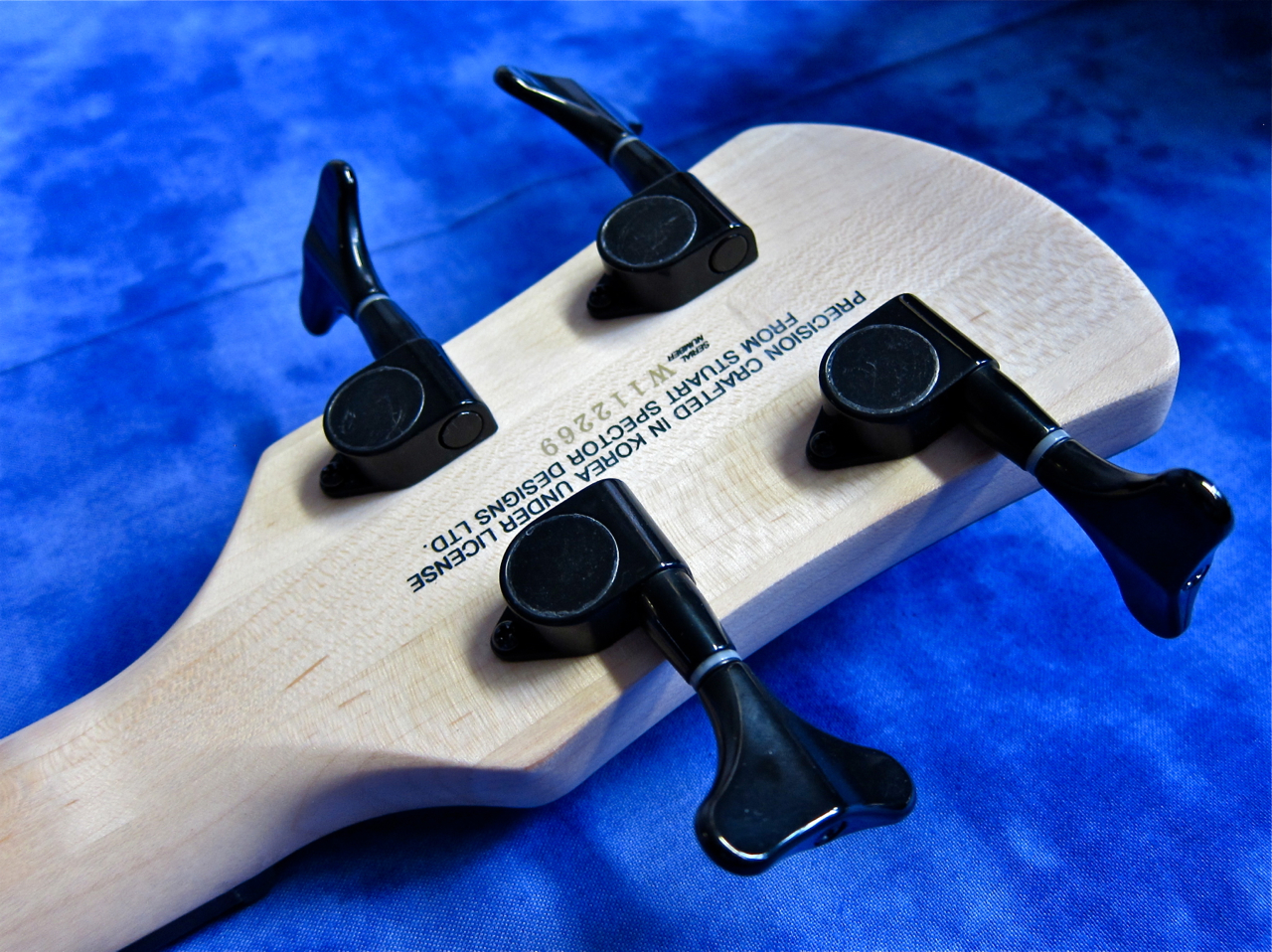
Black is the colour of choice for all of the Legend 4 Classic’s hardware. The modern, sealed tuners keep the tuning rock steady.

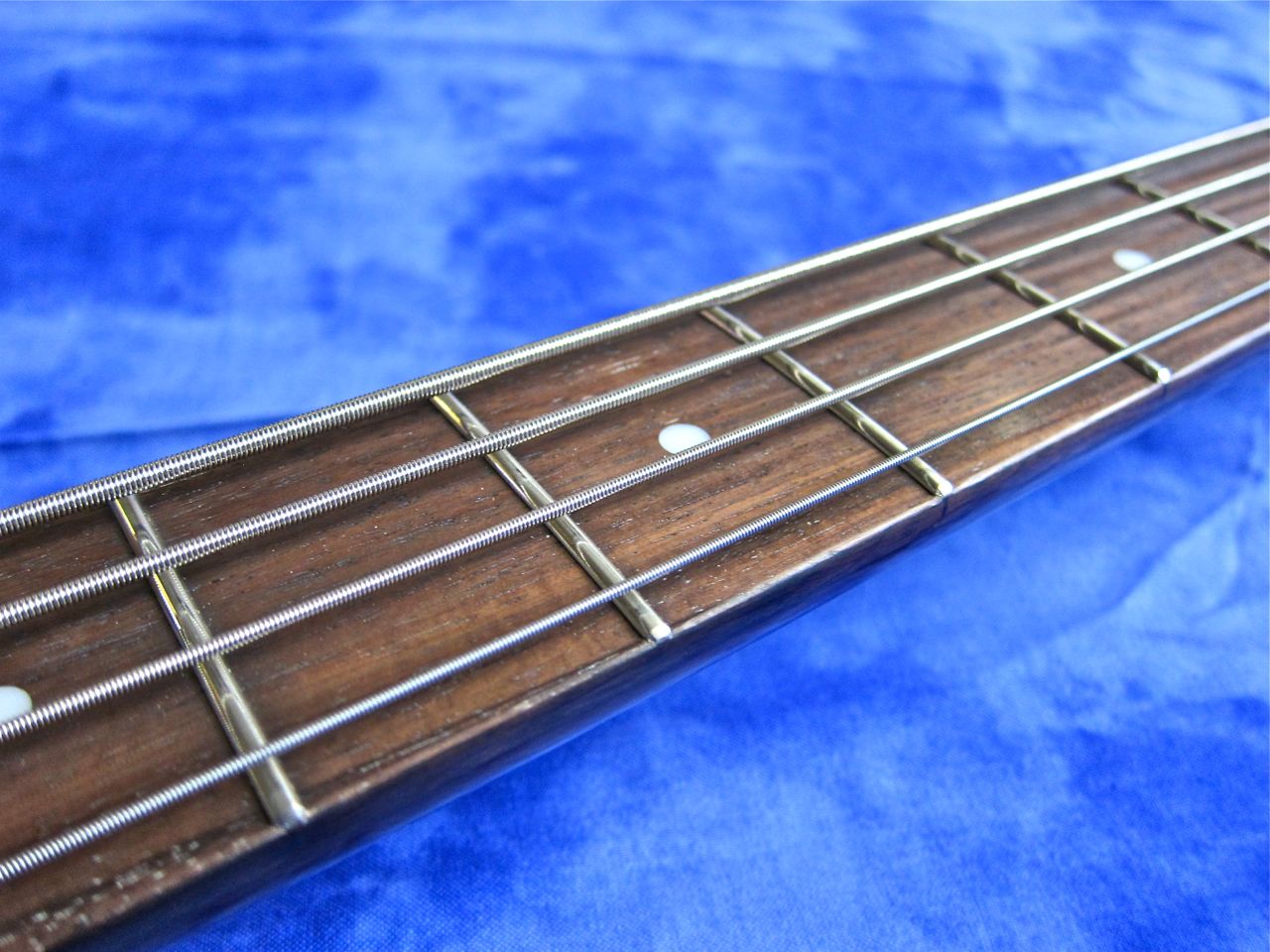
The rosewood fingerboard sports 24 jumbo frets, which are well seated and nicely polished, making for a smooth playing surface.

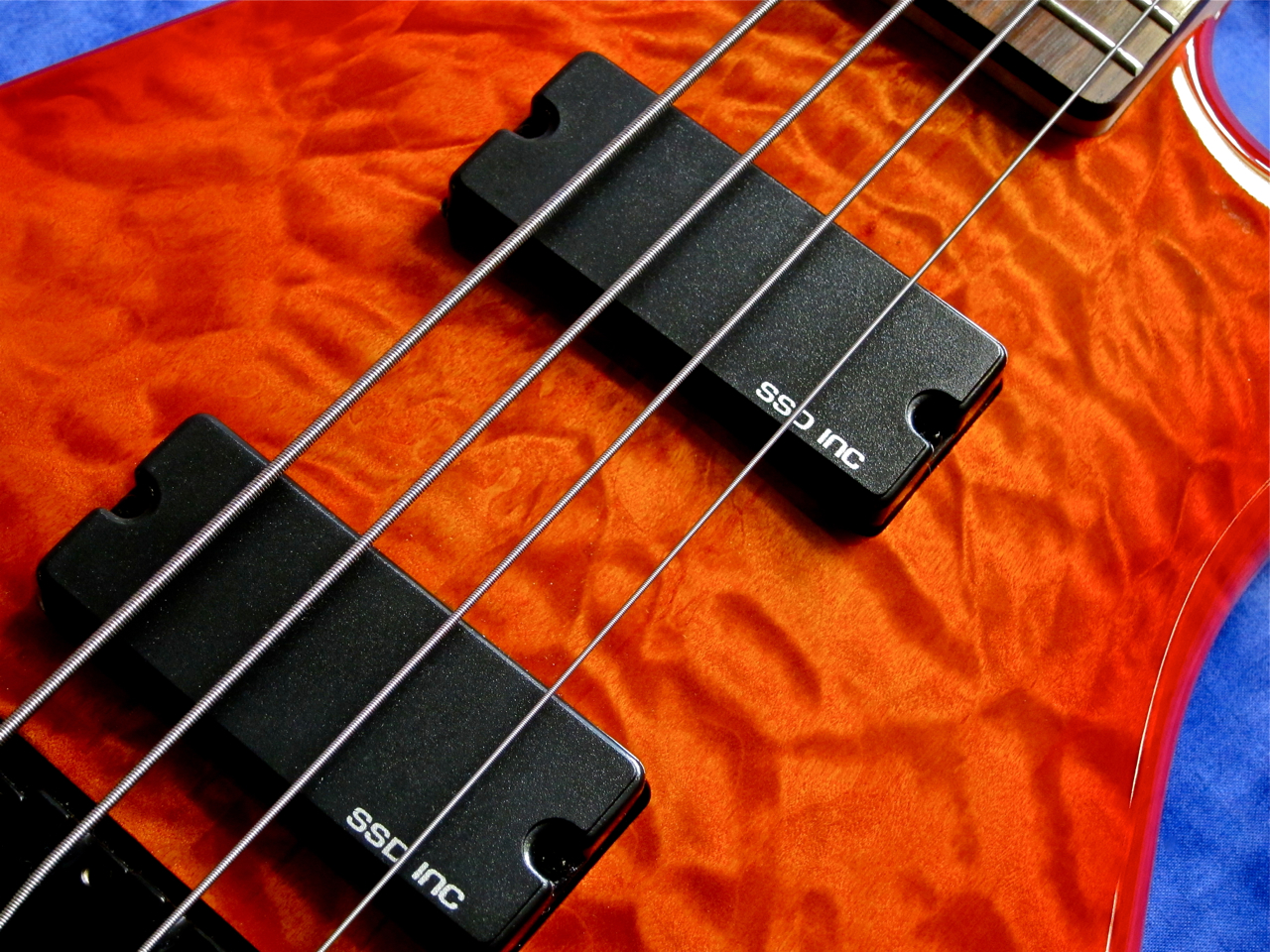
The Classic-model’s passive SSD-humbuckers are manufactured by EMG. These units – designed specifically for this bass – use the EMG-HZ-pickups as a starting point, but add a good helping of mid-range for a meatier tone.

This Spector’s controls comprise two separate volume knobs (one for each pickup), as well as active boost controls for bass and treble, respectively.

The preamp – which is boost-only – is Spector’s own Tone Pump Jr -circuit, which has been glued to the control cavity’s side wall.

To minimise interference buzz the whole cavity has been covered in conductive paint, and the lid lined with aluminium foil. The lid is fixed to the body using machine screws and threaded inlets – a much better choice on an active bass than plain wood screws.

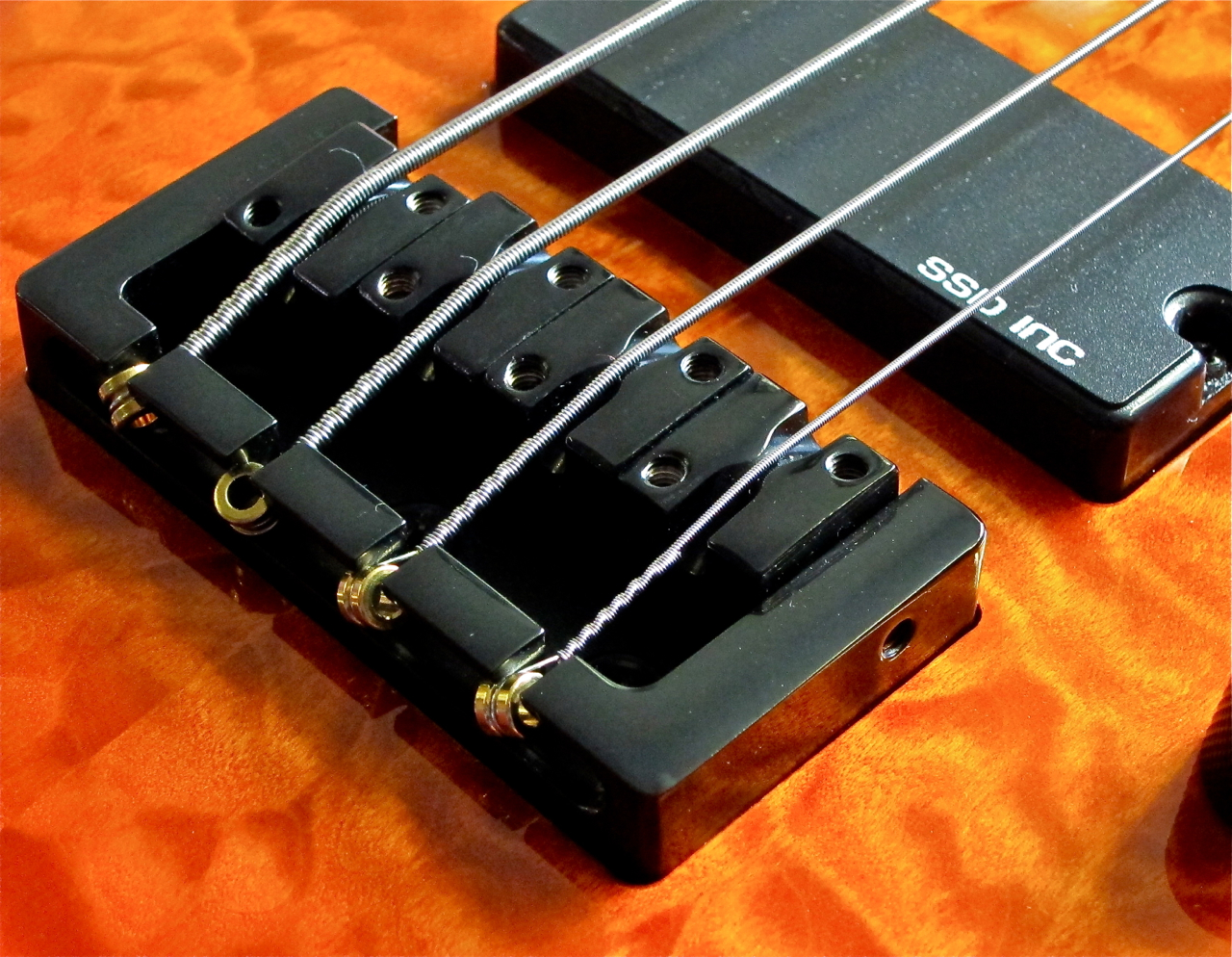
The Legend 4 Classic’s bridge is a hefty design. The saddles are locked in place with grub screws to prevent any rattling, thus enhancing the instrument’s sustain.

****

The Spector Legend 4 Custom (current RRP in Finland: 855 €) is the Classic’s higher-spec’d sibling.

Here the body uses two, centre-joined pieces of basswood with a quilted maple veneer on top.

The Custom’s neck is glued into the body, and features graphite rods reinforcing the neck.

Just like the NS-2, both basses reviewed here feature curved bodies, even though the arch is much less pronounced in these more affordable instruments.

The beer-belly chamfer adds to the bass’ strapped-on comfort.

The Custom features the same graceful headstock as the classic…

…but here the back of the neck is finished in gloss lacquer, and all the hardware is gold-coloured.

The fretwork on the Legend 4 Custom is of an even higher standard than on the Classic – you can clearly spot the well-rounded fret ends in the photo.

EMG’s HZ bass humbuckers are known for their excellent, wide-range tone.

The preamp is an EMG B30, which offers you a full three-band EQ-section in addition to the separate pickup volume knobs. The mid-range has it’s own full-sized control, while the stack knob deals with treble (tip) and bass (ring).

Here’s a peek into the Custom’s control cavity – everything’s clean, neat and tidy.

And here we have the excellent Spector-bridge in a golden finish.

****

The neck profile on the Spector Legend 4 Classic is a very comfortable D-shape. The neck is a close cousin to a Jazz Bass neck, but offers a slightly more contemporary, flatter slant on the theme.

The large fretboard radius combined with the jumbo frets lends this bass a slick and fast action and feel.

Our test sample’s considerable weight is really the only point that I can criticise – get yourselves a wide, comfortable strap, and everything will work out fine.

The Legend 4 Classic’s SSD-pickups have quite a high output, with the signal being rich in deliciously growling mids. I also enjoyed the Classic’s clear, yet warm high-mid presence, which keeps the sound nicely organic.

This bass’ basic tone is really good, so I didn’t particularly miss the ability to cut any frequencies – the Tone Pump Jr’s bass and treble boosts work fine in this context.

I recorded the audio clips via a Focusrite Saffirer 6 USB -soundcard straight into the audiosequencer, without any kind of amplifier modelling. Each clip starts with the neck pickup:

Spector Legend 4 Classic – fingerstyle

Spector Legend 4 Classic – Reggae

Spector Legend 4 Classic – slap

Spector Legend 4 Classic – pleck

****

The Spector Legend 4 Custom’s neck profile is a tiny bit meatier and rounder, when compared to the Classic. Together with the gloss finish this results in a slightly more grown-up and steadier feel. Somehow the Custom feels like a more expensive bass to this reviewer.

Due to the set neck and the stiffening graphite rods inside the neck the Custom’s acoustic tone is clearly punchier and fatter, with a nice bit of ”wire” in its attack.

The neutral-sounding – in the best sense of the word – EMG-HZs, combined with the bass’ nice preamp, lend the Custom an air that is distinctly ”active”, with a healthy dose of presence, clarity and a fresh top end.

The three-band EQ – offering boost as well as cut – naturally is a more versatile tone-shaping tool than the Classic’s more concise Tone Pump Jr.

Here are the same bass lines as above, this time played on the Legend 4 Custom:

Spector Legend 4 Custom – fingerstyle

Spector Legend 4 Custom – Reggae

Spector Legend 4 Custom – slap

Spector Legend 4 Custom – pleck

****

I think it is great that Spector is offering us bassists more affordable versions of its US- and Euro-models. Both the Legend 4 Classic as well as the Legend 4 Custom are quality instruments and a pleasure to play.

The Spector Legend 4 Classic is your key to Stuart Spector’s world, offering you a straightforward, streamlined and easy-to-use active bass for a very reasonable price.

The Legend 4 Custom, for its part, clearly is a large step towards the full-blown Spector-experience, in both playability and sound. This beautiful quality instrument could easily become a professional’s main squeeze.

****

Spector-basses

Finnish distributor: Musamaailma

****

Spector Legend 4 Classic

Current price in Finland: 672 €

Pros:

+ price

+ finish

+ workmanship

+ playability

+ high-output SSD-pickups

+ easy-to-use preamp

+ sound

Cons:

– review sample’s weight

****

Spector Legend 4 Custom

Current price in Finland: 855 €

Pros:

+ price

+ finish

+ workmanship

+ playability

+ graphite-reinforced neck

+ versatile preamp

+ sound

****

Testipenkissä: Spector Legend 4 Classic + Custom

****

Legend 4 Classic ja Legend 4 Custom ovat Spector Bassin edulliset, korealaiset versiot Spectorin kuuluisasta NS-2-bassosta, jonka Stuart Spector aikoinaan suunnitteli yhteistyössä Ned Steinbergerin kanssa.

****

Spector Legend 4 Classic (672 €) on pitkällä mensuurilla varustettu aktiivibasso.

Runko on veistetty kolmesta vaahterapalasta, ja etupuoleen on liimattu näyttävä loimuvaahteraviilu.

Ruuvikaula taas on koottu kolmesta vierekkäisistä vaahterapalasta.

Liitoskohta on veistetty hyvin sulavaksi, ja viidellä ruuvilla toteutettu kiinnitys on hyvin luja.

Taakse kalistuvassa viritinlavassa komeilee siististi upotettu helmiäisupotus.

Itsevoitelevan satulan reunat on muotoiltu mukavan sulavaksi.

Legend 4 Classic -mallissa käytetään mustia metalliosia. Nykyaikaiset virityskoneistot toimivat tarkasti ja pitävät basson hyvässä vireessä.

Palisanteriotelautaan on asennettu huolellisesti 24 jumbokokoista nauhaa.

Classic-basson passiiviset SSD-humbuckerit tulevat EMG:ltä, ja niitä on kehitelty EMG-HZ-mikrofonien pohjalta juuri tätä mallia varten.

Spectorin neljästä säätimestä kaksi ovat volume-säätimet kummallekin mikrofonille, kun taas toinen pari tarjoaa aktiivista korostusta basso- ja diskanttitaajuuksille.

Etuvahvistin – joka siis tarjoaa ainoastaan boostin – on Spector Bassin oma Tone Pump Jr -piiri, joka on liimattu elektroniikkalokeron reunaan.

Ulkoisten häiriöiden minimointia varten lokero on penslattu grafiittimaalilla ja muovikansi taas on vuorattu alumiinifoliolla. Kannen kiinnitys hoidetaan mallikkaasti koneruuveilla ja runkopuuhun upotetuilla vastakappaleilla.

Legend 4 Classic -mallin talla on varsin jämäkkää sorttia. Tallapalat voi lukita säätämisen jälkeen paikoilleen kuusiokoloruuveilla, mikä parantaa basson sustainea.

****

Spector Legend 4 Custom (855 €) on Classic-mallin isoveli.

Basson runko on tässä mallissa valmistettu kahdesta lehmuspalasta. Etupuoli on tässäkin tapauksessa loimuvaahteralla koristeltu.

Customissa on runkoon liimattu vaahterakaula, jota on vahvistettu kaulapuuhun upotetuilla grafiittitangoilla.

Molempien bassojen rungot ovat (NS-2:n tavoin) hieman kaarevat, vaikka niiden kaari on selvästi loivempi kuin amerikkalaisessa alkuperäisversiossa.

Yläreunan viisteen ansiosta molemmat mallit istuvat mukavasti soittajan kehoa vasten.

Customissa on sama tuttu lapa kuin Classic-bassossa…

…mutta sen kaula on viimeistelty kiiltävällä lakalla, ja sen metalliosat ovat kullanväriset.

Legend 4 Custom -basson nauhatyön laatu on vielä huolellisempi kuin Classicissa – kuvassa näkyy hyvin nauhojen sulavaksi pyöristetyt päät.

EMG-HZ-humbuckereille luvataan hieman neutraalimpaa sointia, kuin mikä Classic-basson SSD-mikeistä lähtee.

EMG B30 -etuvahvistin tarjoaa kahden erillisten volumesäätimien lisäksi sekä vaimennusta että vahvistusta keskialueelle, bassolle ja diskantille.

Tältä näyttää Legend 4 Customin siististi toteutettu elektroniikka.

Customissa vankalla Spector-tallalla on kullanvärinen viimeistely.

****

Spector Legend 4 Classicin kaulaprofiili on erittäin mukavantuntuinen D. Mitoiltaan kaula on läheistä sukua Jazz-bassolle, mutta nykyaikaistetulla, aavistuksen verran matalammalla läpileikkauksella.

Otelaudan loiva kaarevuus ja jumbokokoiset nauhat antavat bassolle hyvin nopean ja modernin tuntuman.

Testisoittimen ainoa miinuspiste menee basson painon tilille – hyvin vuorattu, leveä hihna on tässä käytännössä pakollinen lisävaruste.

Legend 4 Classic -basson SDD-humbuckereistä lähtee hyvin voimakas signaali, jolla on herkullisesti muriseva keskialue. Pidin myös Classicin selkeästä, mutta lämpimästä preesensalueesta, jonka ansiosta tämän basson soundi pysyy aina mukavan maanläheisenä.

Perusääni on mielestäni niin hyvä, etten kaivannut lainkaan vaimennusta aktiivielektroniikasta – tulin mainiosti toimeen pelkällä boostilla.

Ääniesimerkit on äänitetty suoraan Focusrite Saffire 6 USB -äänikortin kautta audiosekvensseriin, ilman mitään vahvistinmallinnusta. Jokainen pätkä lähtee liikkeelle kaulamikrofonista:

Spector Legend 4 Classic – sormisoitto

Spector Legend 4 Classic – Reggae

Spector Legend 4 Classic – slap

Spector Legend 4 Classic – plektralla

****

Spector Legend 4 Customin kaulaprofiili on hivenen verran paksumpi ja pyöreämpi kuin Classicin kaula. Sen kiiltävän lakkauksen seurauksena Customin soittotuntuma on jotenkin ”aikuisempi” ja tasaisempi. Ainakin minun mielestä tämä Spector tuntuu kalliimmalta, kuin mitä se on.

Liimaliitoksen ja kaulan grafiitivahvistuksien ansiosta Legend Customin akustisessa soinnissa on enemmän alakertaa ja potkua, sekä aavistuksen verran purevampi atakki.

Positiivisella tavalla värjäämättömät EMG-HZ-humbuckerit ja saman firman etuvahvistin antavat Custom-bassolle selkeästi ”aktiivisemman” soundin, jossa on aina läsnä tietty annos preesensalueen selkeys ja diskantin tuore pirteys.

Kolmialueinen EQ, jossa on sekä vaimennus että korostus, on luonnollisesti selvästi monipuolisempi työkalu kuin Classicin yksinkertaisempi Tone Pump Jr -etunen.

Tässä ovat samanlaiset esimerkkipätkät Spector Legend 4 Custom -bassolla soitettuna:

Spector Legend 4 Custom – sormisoitto

Spector Legend 4 Custom – Reggae

Spector Legend 4 Custom – slap

Spector Legend 4 Custom – plektralla

****

Mielestäni on loistava asia, että Spector tarjoaa basistille US- tai Euro-malliensa edullisempia vaihtoehtoja. Sekä Legend 4 Classic, että Legend 4 Custom ovat laadukkaita soittimia, joilla on ilo soittaa.

Spector Legend 4 Classic toimii avaimena Stuart Spectorin maailmaan, ja basso on mukavan suoraviiveinen aktiivibasso erittäin reilulla hinnalla.

Legend 4 Custom taas on soundiltaan ja soittotuntemukseltaan selvästi muutaman askeleen lähempänä Spectorin USA-soittimia. Tämän kauniin laatubasson rahkeet riittävät mielestäni mainiosti myös ammattikäyttöön.

****

Spector-bassoja

Maahantuoja: Musamaailma

****

Spector Legend 4 Classic

672 €

Plussat:

+ hinta

+ viimeistely

+ työnjälki

+ soittotuntuma

+ voimakkaat SDD-mikrofonit

+ helppokäyttöinen etuvahvistin

+ soundi

Miinukset:

– testiyksilön paino

****

Spector Legend 4 Custom

855 €

Plussat:

+ hinta

+ viimeistely

+ työnjälki

+ soittotuntuma

+ grafiittivahvisteinen kaula

+ monipuolinen etuvahvistin

+ soundi

****

Review: Orange Terror Bass TB500C-212

****

Orange Amplification have a long and illustrious tradition in the building of guitar and bass amplifiers, a fact that shows in many of the company’s current products.

But that doesn’t mean that Orange are a backward-facing company – far from it. The brand-new Terror Bass combo, for example, is very much a contemporary product – a compact, yet powerful valve-hybrid amp.

****

The Orange Terror Bass TB500C-212 (current RRP in Finland: 994 €) melds the company’s 500-Watt BT-500H-head with their 2 x 12″ SP-212-cabinet.

The Orange TB500C is a valve-hybrid amplifier, which in this case means that its preamp section is powered by two 12AX7 valves. The tubes imbue the combo with a warm basic tonality, nicely seasoned with mild and organic compression. I’d also wager that a bit of overdrive will be on the menu at some point.

The power amp, on the other hand, uses modern technology to its best advantage: A Class D amplifier manages to produce lots of volume in a very energy efficient way. Because this technology cuts down drastically on heat dissipation as a byproduct of amplification, manufacturers are now able to build smaller and lighter amps.

Orange’s Smart Power bass cabinets are built according to the isobaric principle.

An isobaric speaker cabinet basically uses two identical speakers – in the TB500C’s case two 12-inch neodymium speakers – mounted one behind the other in a straight line, resulting in fatter tones and more sound pressure than you’d expect from a relatively compact design.

Take a look at Orange’s own video to get more of an insight into their Smart Power cabinets:

But we bassists needn’t trouble ourselves with too much theory, we only have to use the combo.

The front panel is typical of Orange-amps: There are the famous pictograms above the clearly labelled controls for gain and master volume, as well as the three-band EQ section, which make it even easier to know your way around the amp.

The amplifier section is connected to the combo’s speaker using the provided Speakon-lead.

Because the amplifier allows you to daisy-chain two cabinets…

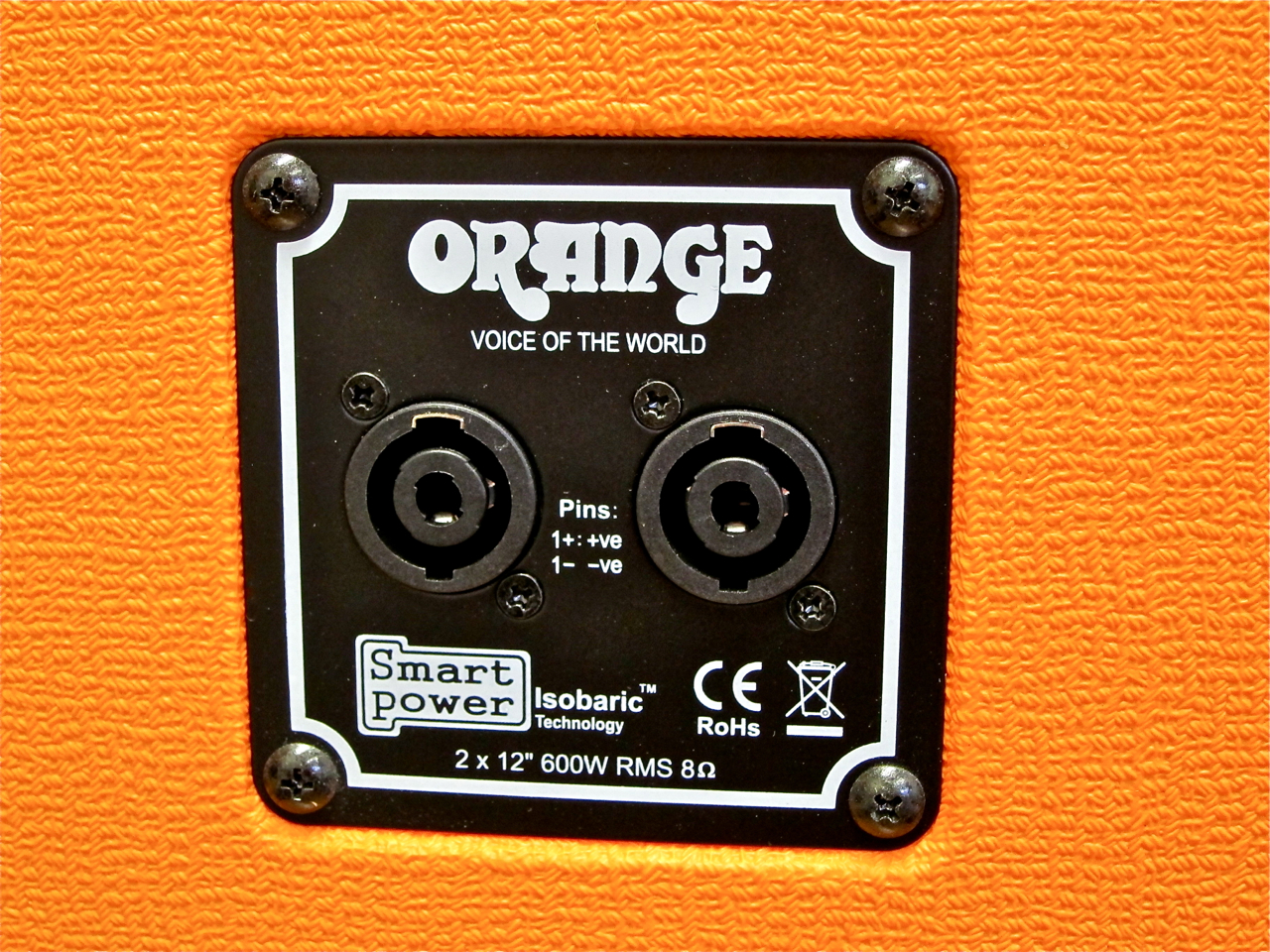
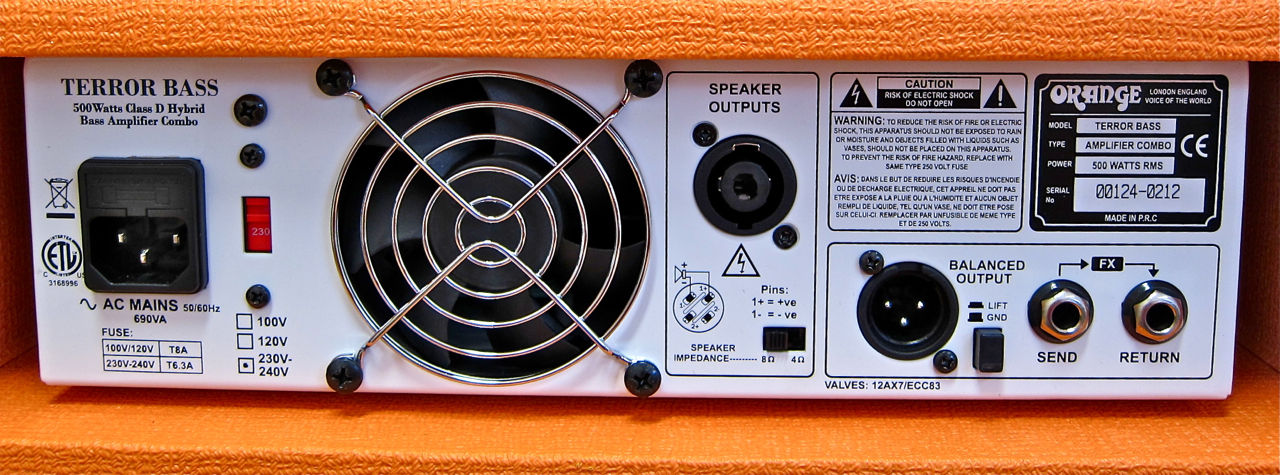
…you will find the necessary impedance switch on the back panel underneath the Speakon-jack.

The other connectors on the back panel are for the effects chain and the balanced DI-output.

****

Whoa, watch out – this combo is a real shouter!

I’ve got to admit right away that I tend to dislike the use of single 12-inch speakers in bass amps. More often than not I find these designs to lack real bottom end and transparency in their tonal delivery.

But this isn’t a thing that you could accuse the Orange Terror Bass of, by any stretch of the imagination! The isobaric Smart Power cabinet is quite a different beast, sounding large and muscular, with more than enough clarity and punch for most applications.

In terms of its basic sound the Orange TB500C is clearly a dyed-in-the-wool, card-carrying member of the Orange-family: If you’re looking for extreme clarity and hi-fi-style response, this isn’t really the right amp for you. We’re talking about earthy and muscular bass tones here. Dialling in more gain gradually adds delicious grit and graininess to proceedings. Above 3 o’clock on the gain control any bass will drive the Orange well into classic, glorious overdrive.

Even though the Terror Bass combo is part of Orange’s cost-conscious Terror-range, I am rather sure this powerful and compact bass amp will find its way into many professional backlines.

I recorded the audio clips using my trusty Japanese 1985 Squier Jazz Bass and my own P-Man bitser equipped with a MM-humbucker and passive controls:

Jazz Bass – fingerstyle

P-Man – fingerstyle

Jazz Bass – slap

P-Man – slap

Jazz Bass – pleck

P-Man – pleck

Jazz Bass – full gain

P-Man – full gain

****

Orange Terror Bass TB500C-212

current RRP in Finland: 994 €

Finnish distributor: Musamaailma

Pros:

+ size

+ power

+ valve preamp

+ sound

+ weight

****

Testipenkissä: Orange Terror Bass TB500C-212

****

Orange Amplificationilla on hyvin pitkä perinne kitara- ja bassovahvistimien valmistuksessa, ja se näkyy monissa firman nykyisissä tuotteissakin.

Se ei kuitenkaan tarkoita, ettei Orange olisi avoin myös uudelle teknologialle. Esimerkkinä kelpaa hyvin upouusi Terror Bass -kombo, joka on kompakti, mutta silti tehokas nykyaikainen putkihybridivahvistin.

****

Orange Terror Bass TB500C-212 (994 €) yhdistää firman 500-wattisen BT-500H-nupin ja kahdella 12-tuumaisella varustetun SP-212-kaapin yhdeksi kombovahvistimeksi.

Orange TB500C on putkihybridivahvistin, mikä tarkoittaa Bass Terrorin tapauksessa, että sen etuvahvistin on rakennettu käyttäen kahta 12AX7-putkea. Putkilla saa aikaiseksi lämpimän perussoundin, joka on valmiiksi höystetty miedolla ja orgaanisella kompressiolla, ja myös aitoa putkisäröä voi odottaa tästä kombosta.

Päätevahvistin taas käyttää huipputehokasta, mutta kevyttä nykyteknologiaa: D-luokan päätevahvistin pystyy tuottamaan paljon ääntä – tässä tapauksessa 500 wattia (rms) – hyvin kompakteilla komponenteilla ja energiatehokkaasti vähällä hukkalämmöllä.

Orangen Smart Power -bassokaapit rakennetaan isobaarisen toimintaperiaatteen mukaisesti.

Isobaarisessa kaapissa käytetään kahta samanmallista kaiutinta – TB500C:n tapauksessa kaksi 12-tuumaista, kevyttä neodyymi-kaiutinta – asennettuna peräkkäin samassa linjassa. Lopputulos on syvempi bassotoisto ja isompi äänenpaine verrattuna samankokoiseen perinteiseen bassokaappiin.

Tässä on Orangen oma video, jossa Smart Power -kaappien isobaarista teknologiaa esitellään tarkemmin:

Mutta Orange Terror Bass -kombo ei vaivaa basistia lainkaan sen sisäisellä teknologialla.

Ulospäin näkyy vain varsin perinteinen Orange-etupaneeli, joka tarjoaa gain- ja master-säätimien lisäksi kolmialueisen EQ-osaston.

Vahvistimen- ja kaappipuolien liittäminen tapahtuu mukaantulevalla Speakon-johdolla.

Koska kaksi Orange-kaappia pystyy ketjuttaa…

…löytyy vahvistimen takapaneelista kaiutinlähdön alla myös impedanssikytkin.

Muut liittimet ovat efektilenkin lähtö- ja tulojakki, sekä balansoitu DI-lähtö mikseriin.

****

Whoa, watch out – tästä paketista lähtee rutkasti ääntä!

Täytyy myöntää, etten ole yksittäisellä 12-tuumaisella varustettujen bassokombojen suurin ystävä. Usein niiden soundi on melko honottava ja vähän puuroinen alhaisessa keskialueessa.

Orangen Terror Bass -kombo on kuitenkin ihan oma tapauksensa! Isobaarinen Smart Power -kaappi kuulostaa ilahduttavan isolta ja lihaksikkaalta, ja myös potkua löyttyy mielin määrin.

Soundillisesti Orangen TB500C kuuluu selvästi samaan perheeseen kuin muut Orangen bassovahvistimet: täällä ei hifistellä, vaan tarjolla on reilu annos maanläheistä bassottelua. Gain-namikan avaaminen lisää menoon aluksi vain hieman lämpöä ja särmikästä rosoisuutta, mutta liikeradan loppupuoliskolla astuu kuvaan myös herkullista putkisäröä.

Vaikka Terror Bass -kombo on osaa Orangen edullisemmasta Terror-sarjasta, olen melko varma, että tämä voimapesä löytää tiensä myös monen ammattibasistin backlineen.

Äänitin seuraavat esimerkipätkät japanilaisella Squier Jazz -bassolla, sekä passivisella MM-humbuckerilla varustetulla P-Man-bassollani:

Jazz Bass – sormilla

P-Man – sormilla

Jazz Bass – slap

P-Man – slap

Jazz Bass – plektralla

P-Man – plektralla

Jazz Bass – säröllä

P-Man – säröllä

****

Orange Terror Bass TB500C-212

994 €

Maahantuoja: Musamaailma

Plussat:

+ koko

+ teho

+ putkietuaste

+ soundi

+ paino

****

Review: Ampeg Micro-CL -stack

****

At NAMM 2012 Ampeg introduced their second micro stack to the public – the Ampeg Micro-CL.

The company’s first foray into this market segment came in the guise of the very successful Micro-VR (currently still available), which is a 200 Watt miniature version of Ampeg’s classic 1970s SVT. The brand-new Micro-CL takes its starting point from the Eighties version of the venerable Ampeg bass stack (the SVT-CL), offering 100 Watts of bass tone.

Ampeg’s Micro-CL -stack (current RRP in Finland: 505 €) brings the company’s classic look down to an easily manageable size.

The solid-state head weighs in at only about six kilos, with the cabinet clocking in at a very moderate 15 kg. The whole miniature stack is only about 80 cm tall – making it a very easy fit with almost any car boot.

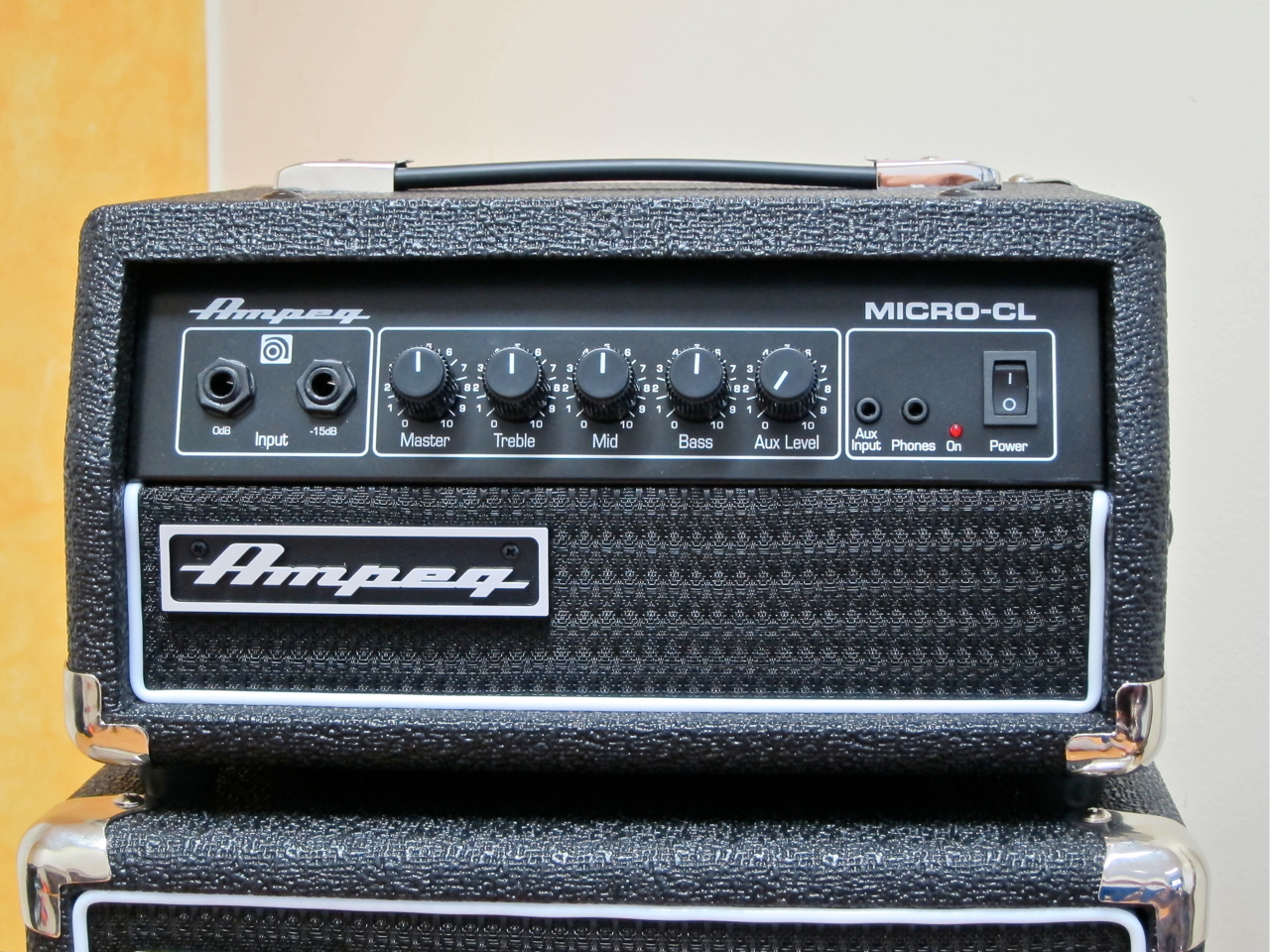
The Micro-CL-head comes equipped with two inputs – one for passive and the other for active bass guitars – as well as a three-band EQ-section.

Because this amp is also very handy as a practice amp at home, Ampeg have added an Aux-input (with its own volume control) and a headphones output to the front panel.

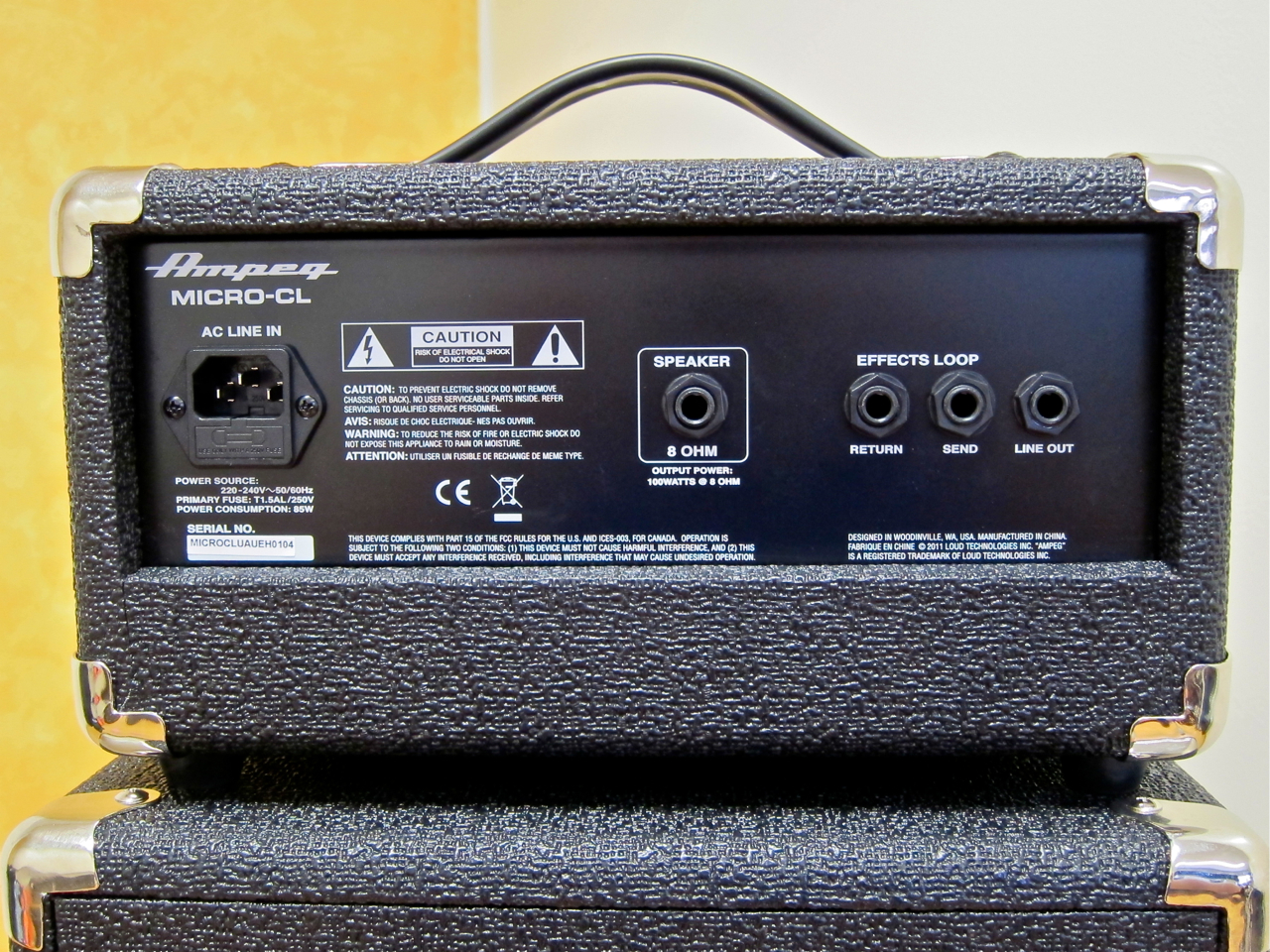
On the head’s flip side you’ll find the speaker output, as well as phone jacks for the effects loop and the line-level output.

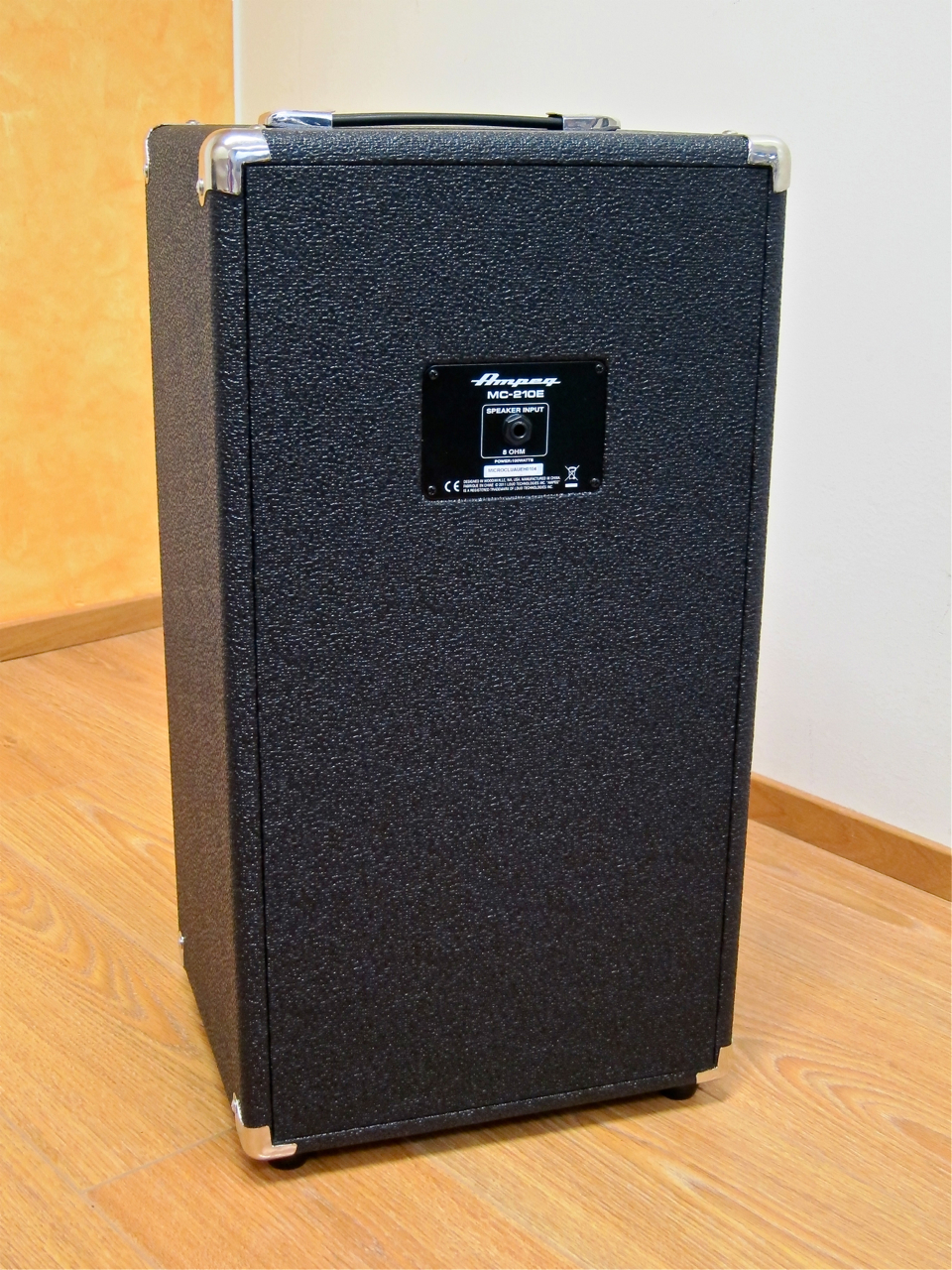
The stack’s cabinet – called the Ampeg MC-210E – is built using the same Infinite Baffle -principle also applied to the company’s famous (and huge) 8 x 10″ cabinets.

The completely enclosed cab comes loaded with two 10-inch speakers. The front grille is attached in the traditional way using velcro.

The workmanship seems spot on, with the miniature cabinet exuding the same air of rugged roadworthiness that its big brothers are known for.

The speaker input sits on its own metal plate.

Just to put things into perspective for you: Here’s the stack and a regular bass guitar case – yup, this stack really is small…

****

The amp may be small and cuddly, but don’t forget we have a genuine 100 W Ampeg system here!

I was positively surprised by the sound levels this small bass amp dishes out. Using it at home I wouldn’t recommend turning the master volume anywhere above number three, if you want to stay on good terms with your neighbours.

In the rehearsal studio – where I also recorded the audio clips for this review – the Micro-CL left me in no doubt that it would be fully up to its task at rehearsals and even smaller gigs.

With regard to its sound the tiny stack proved to be a thoroughbred Ampeg: The tones on offer are fat and juicy, with the raunchy midrange growl this company’s bass amps are famous for.

With the master volume approaching 10 you will also be able to coax some tasty, tube-like overdrive from the Micro-CL – but I’d suggest using earplugs then.

Granted, the Ampeg Micro-CL -stack is something of a cutie, but this isn’t a fancy toy, it’s a real bass amp with a lot of Ampeg-tone to boot.

The audio clips have been recorded using my ’87 Rickenbacker 4003 (starting with the neck pickup):

Ampeg Micro-CL – fingerstyle

Ampeg Micro-CL – slap

Ampeg Micro-CL – pleck

****

Ampeg Micro-CL -stack

current price in Finland 505 €

Finnish distributor: Soundtools

****

Pros:

+ size

+ weight

+ sound

+ output levels

+ workmanship

+ authentic looks

****

Review: Yamaha CG142C + NTX900FM

There’s surprisingly little information available on the net when it comes to classical/nylon-string guitars.

Now Kitarablogi.com comes to the rescue:

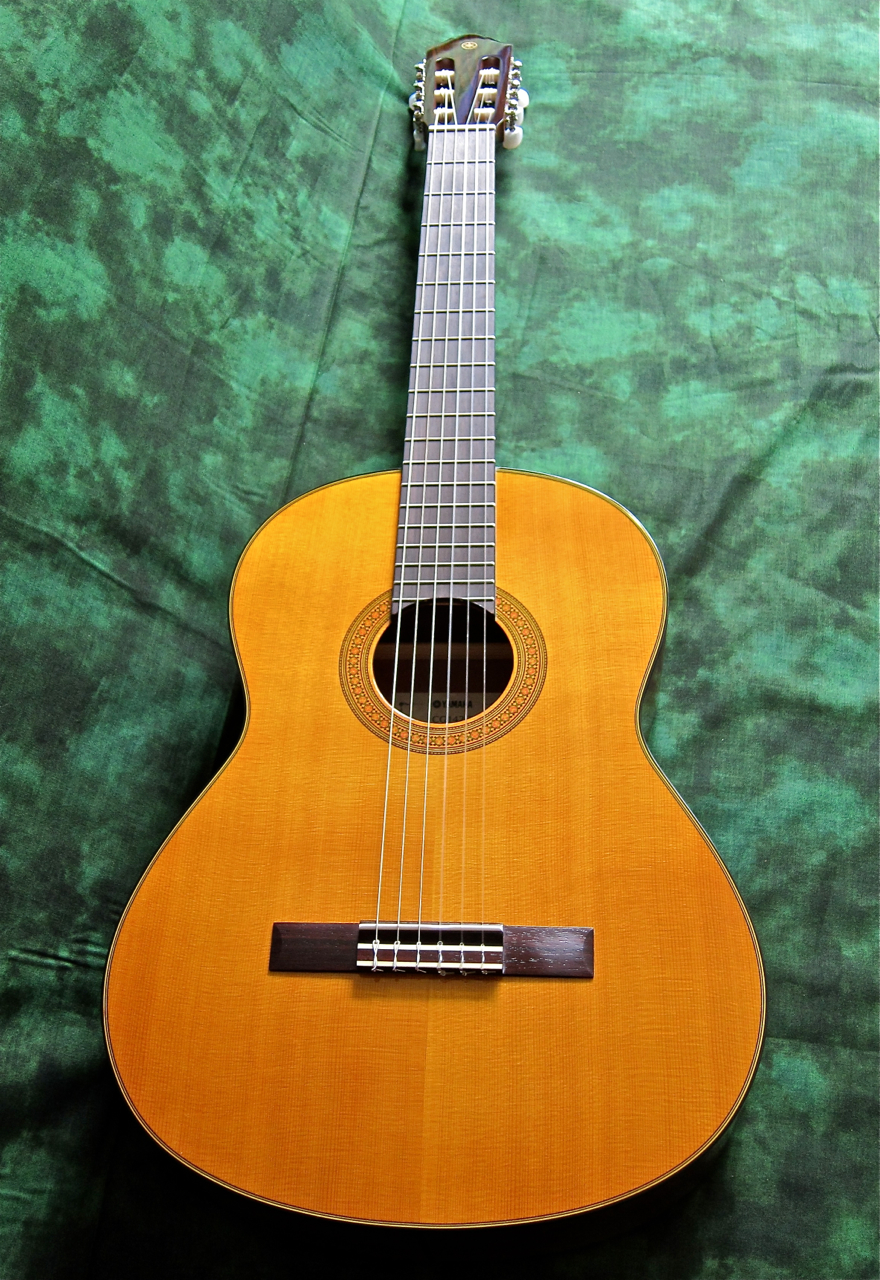
Yamaha’s C- and CG-series instruments are the best-selling classical guitars in Finland. We selected a solid cedar -topped Yamaha CG142C for this review.

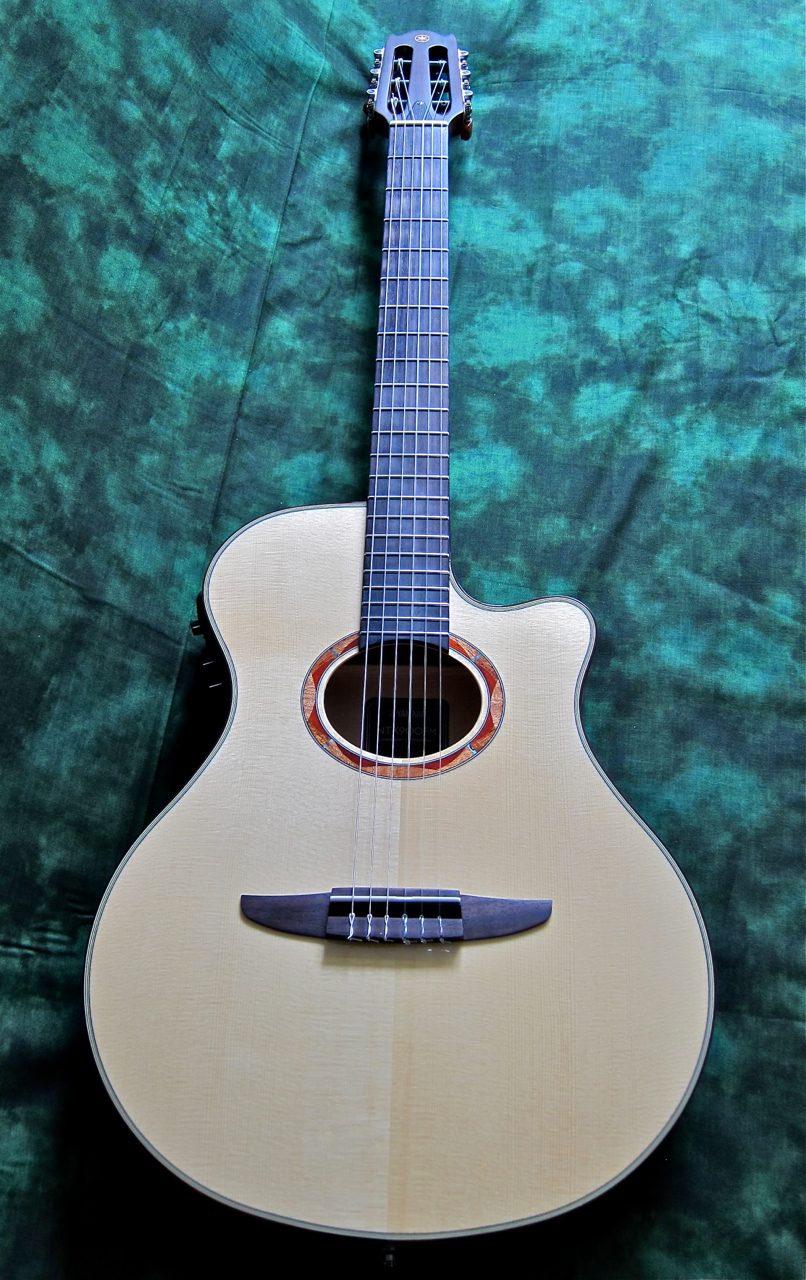
The Yamaha NTX900FM is a very interesting hybrid model – a nylon-string with a pickup and preamp system, as well as a narrower-than-classical nut width.

****

Typical of the company’s output, Yamaha’s CG142C (current street price in Finland approx. 300 €) is an extremely clean piece of work with the understated charm of a classical guitar. All CG-series guitars are build with solid tops – spruce-topped models have an ”S” suffix to their name, while cedar models are denoted with a ”C” at the end of their model name.

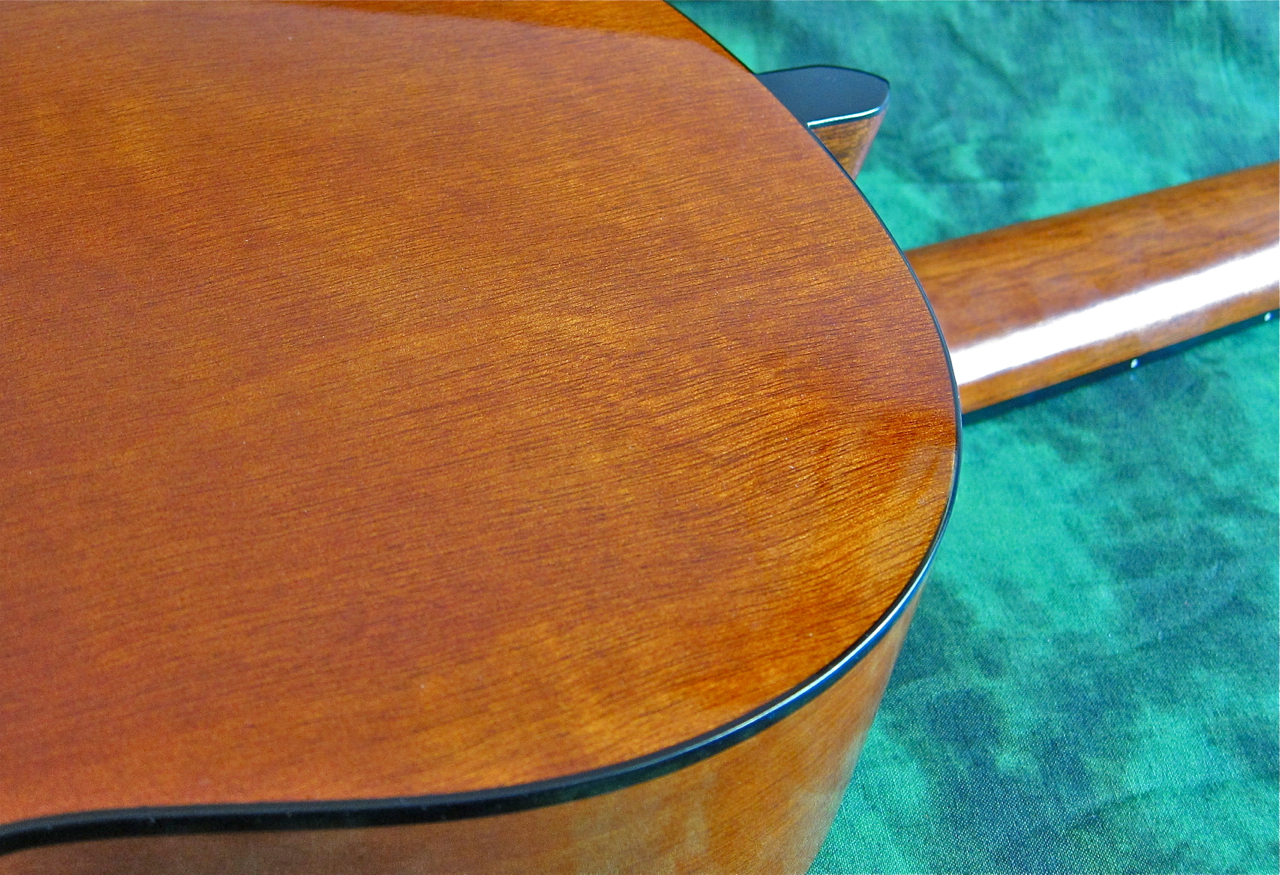
The neck, as well as the body’s back and rims, has been crafted from nato-wood. Nato is a South-East Asian tree species (lat. Palaquium) which looks and sounds similar to mahogany. The neck is solid wood, while the body (apart from the top) uses nato-plywood.

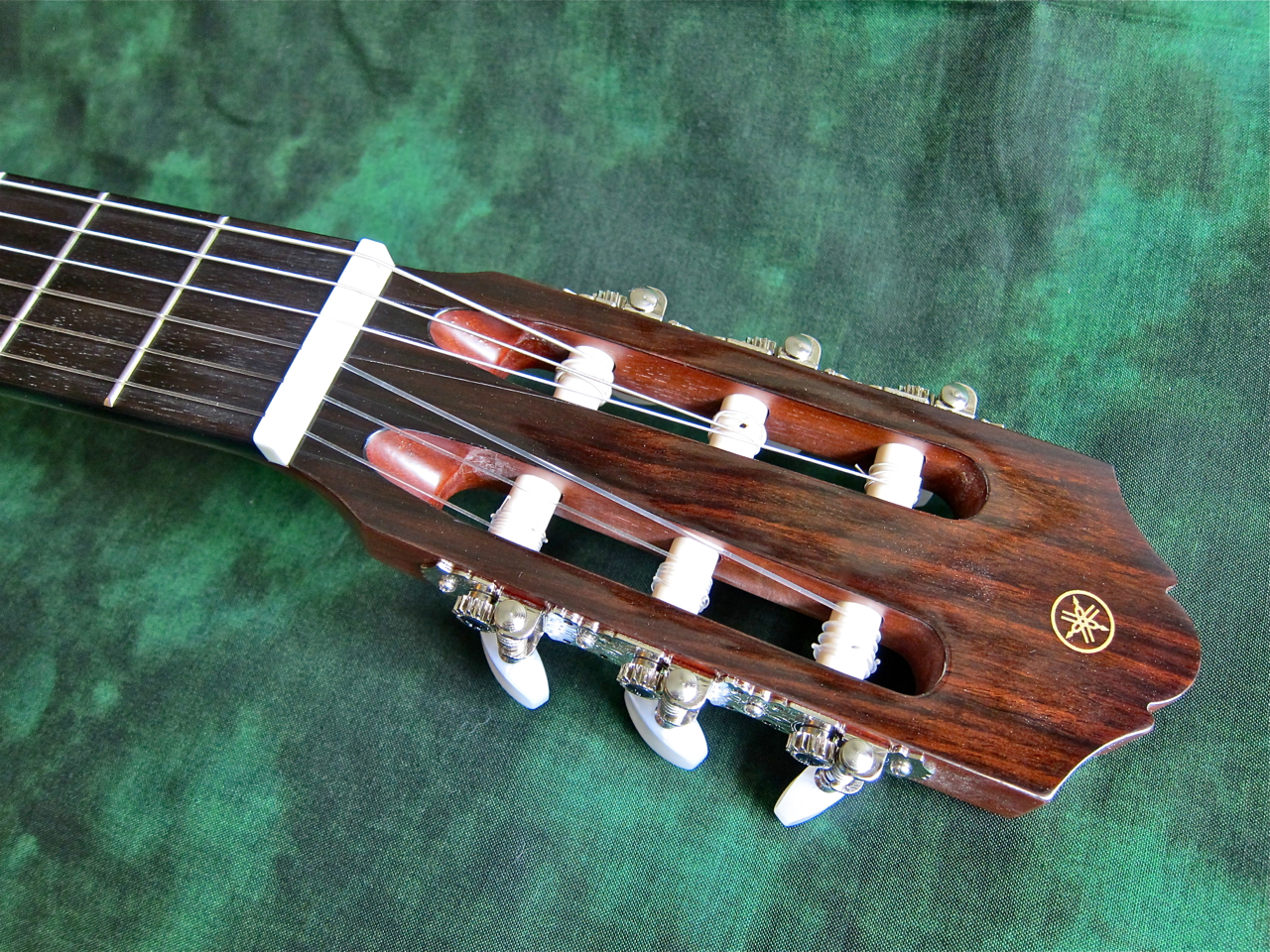
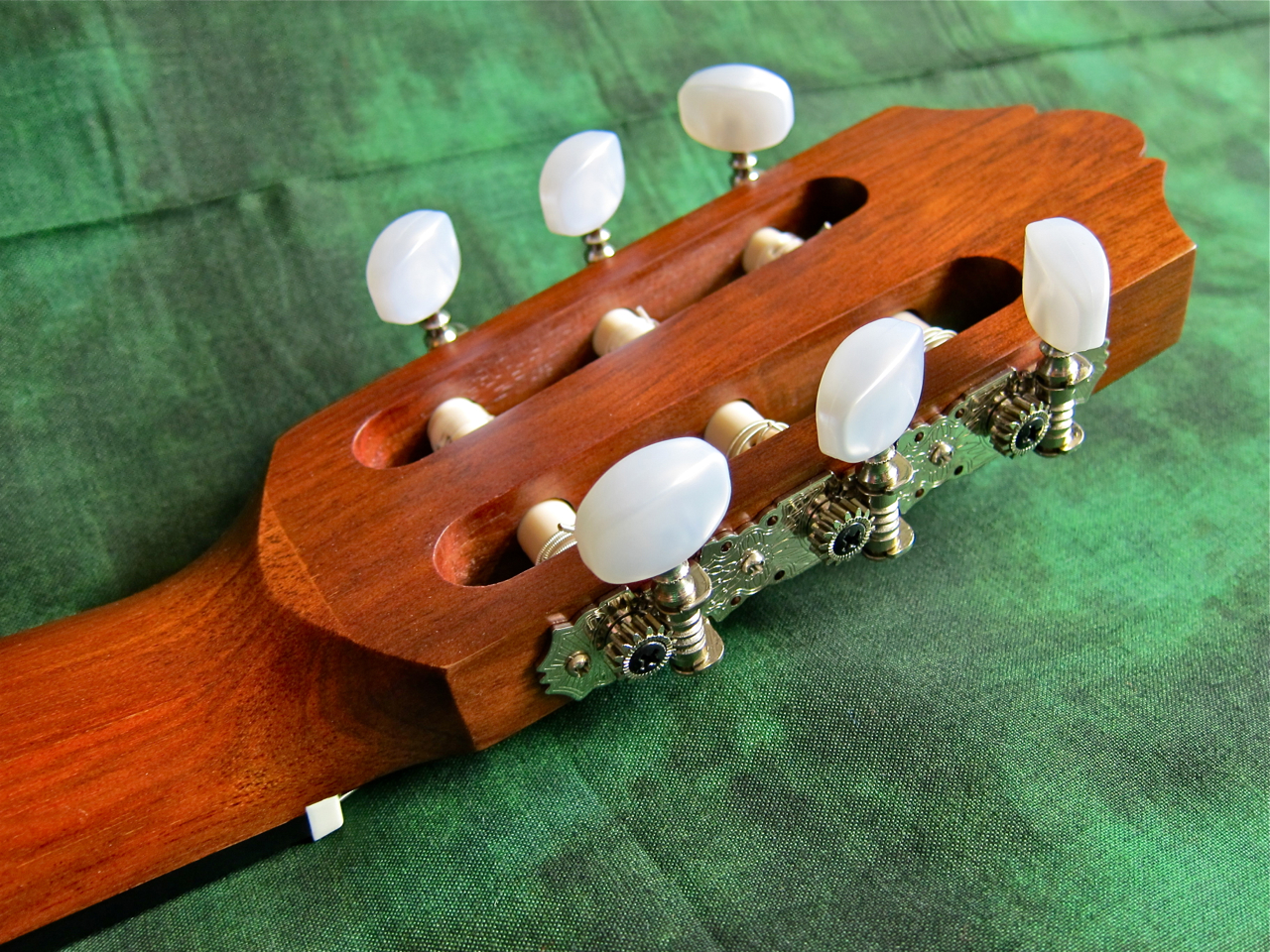
The headstock sports a beautiful rosewood veneer.

The CG142C comes equipped with traditional, open tuners. The headstock has been glued to the main part of the neck right above the neck wrist.

The satin-finished neck has been made by gluing together three strips of nato side-by-side. Added onto this main part is the neck heel, built up from several pieces of nato. Using small cut-offs in this way not only keeps costs sufficiently low, but also helps to save natural resources.

The bound rosewood fretboard sports traditional small and narrow frets.

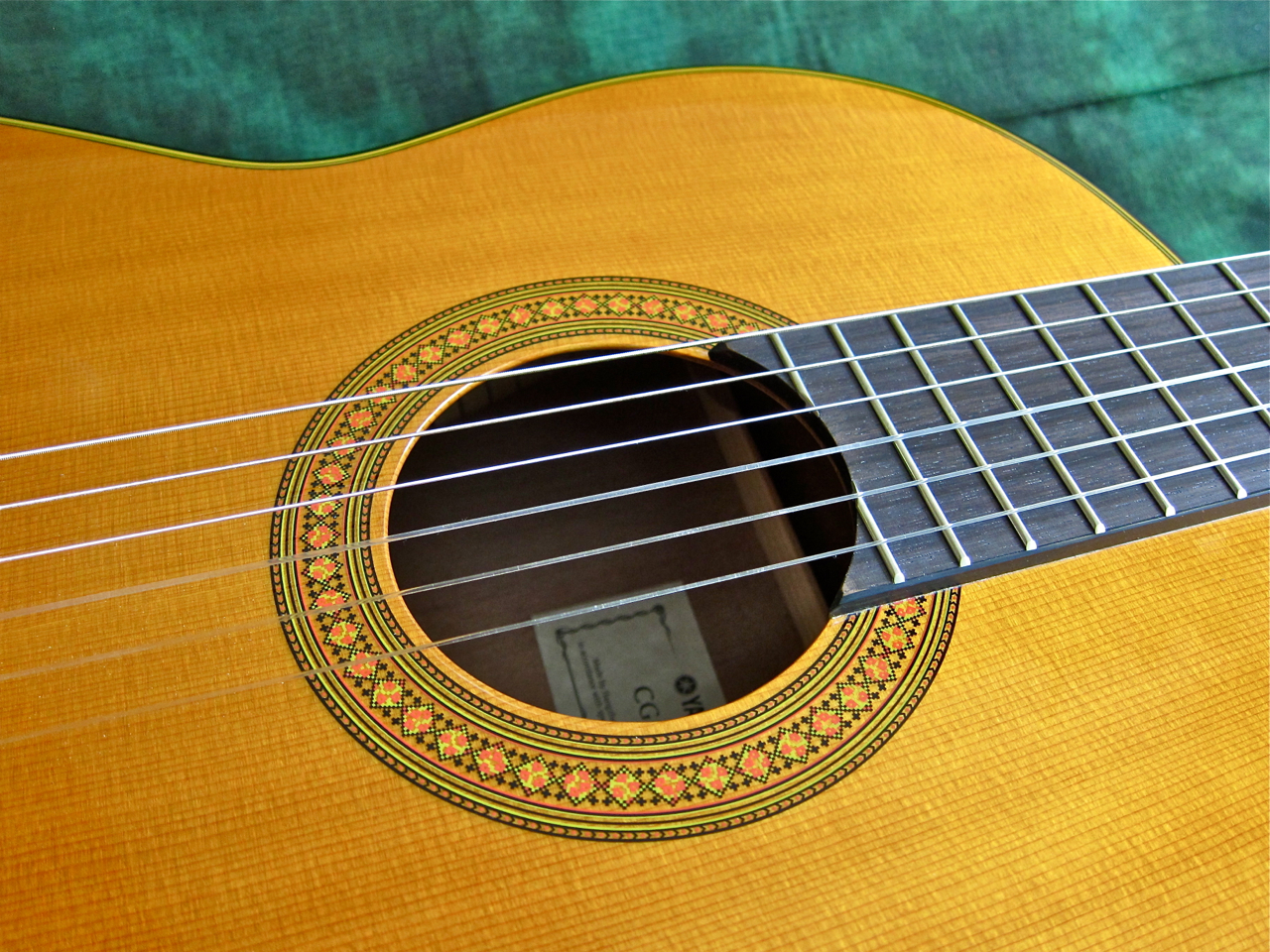
The CG142C’s beautiful rosette is actually a decal, stuck onto the top prior to lacquering, which is common practice on many budget classicals. Higher-priced models feature rosettes crafted from many small pieces of wood and other materials.

Here’s a close-up look at the top’s five-ply binding.

The back’s black binding is carried across to the heel cap.

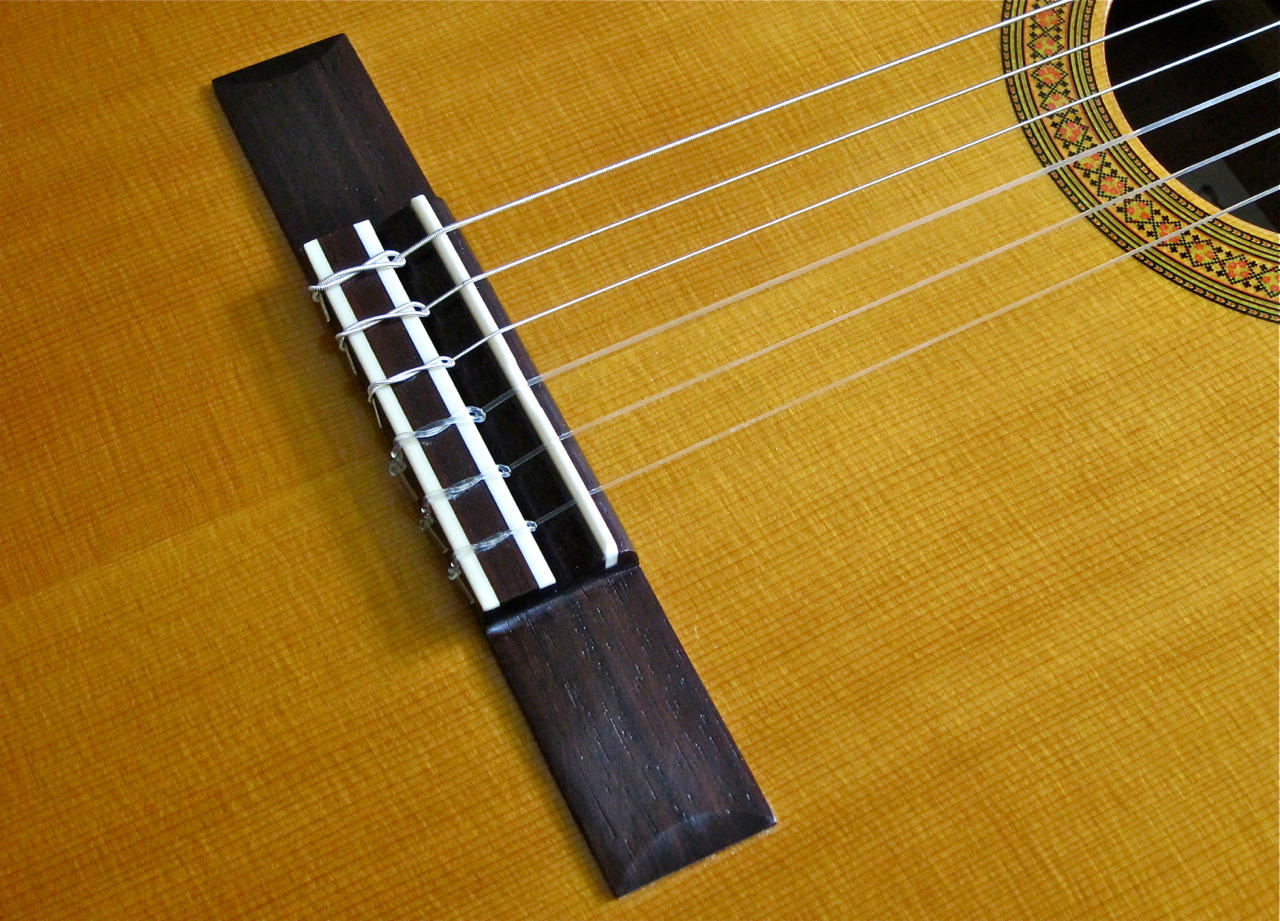
The Yamaha CG142C’s rosewood bridge is quite fetching in its poised simplicity.

Yamaha’s classical guitars tend to display clean workmanship on the inside also.

****

The Yamaha NTX900FM (current street price in Finland approx. 800 €) is the nylon-string cousin of the company’s APX-guitars. It has been designed for the guitarist who needs a quality pickup system, but doesn’t necessarily like the traditional wide and flat classical neck profile.

The NTX900FM’s top has been crafted from solid Engelmann-spruce.

The nato neck has been glued to the maple body.

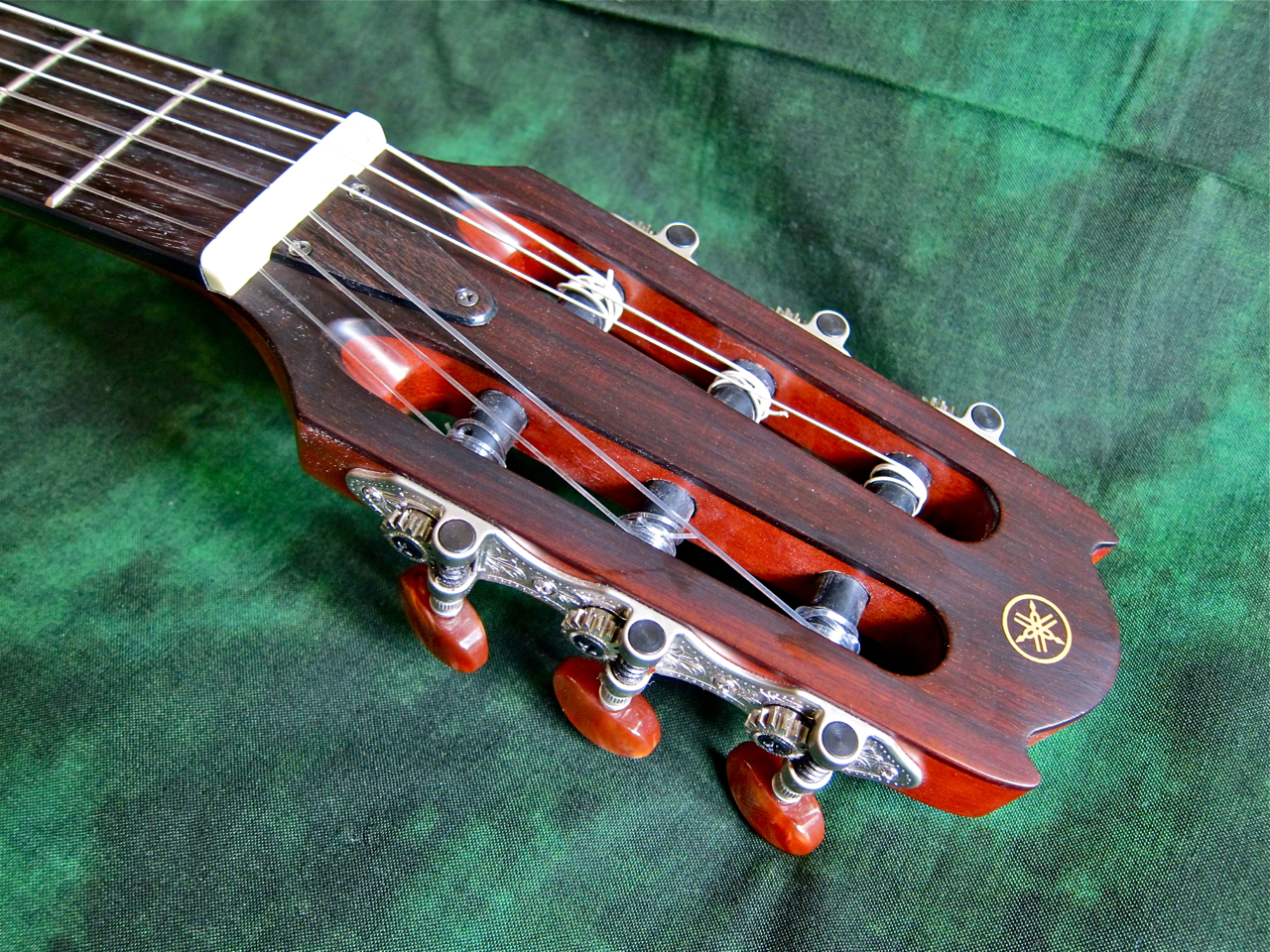
The headstock displays a cool and contemporary look…

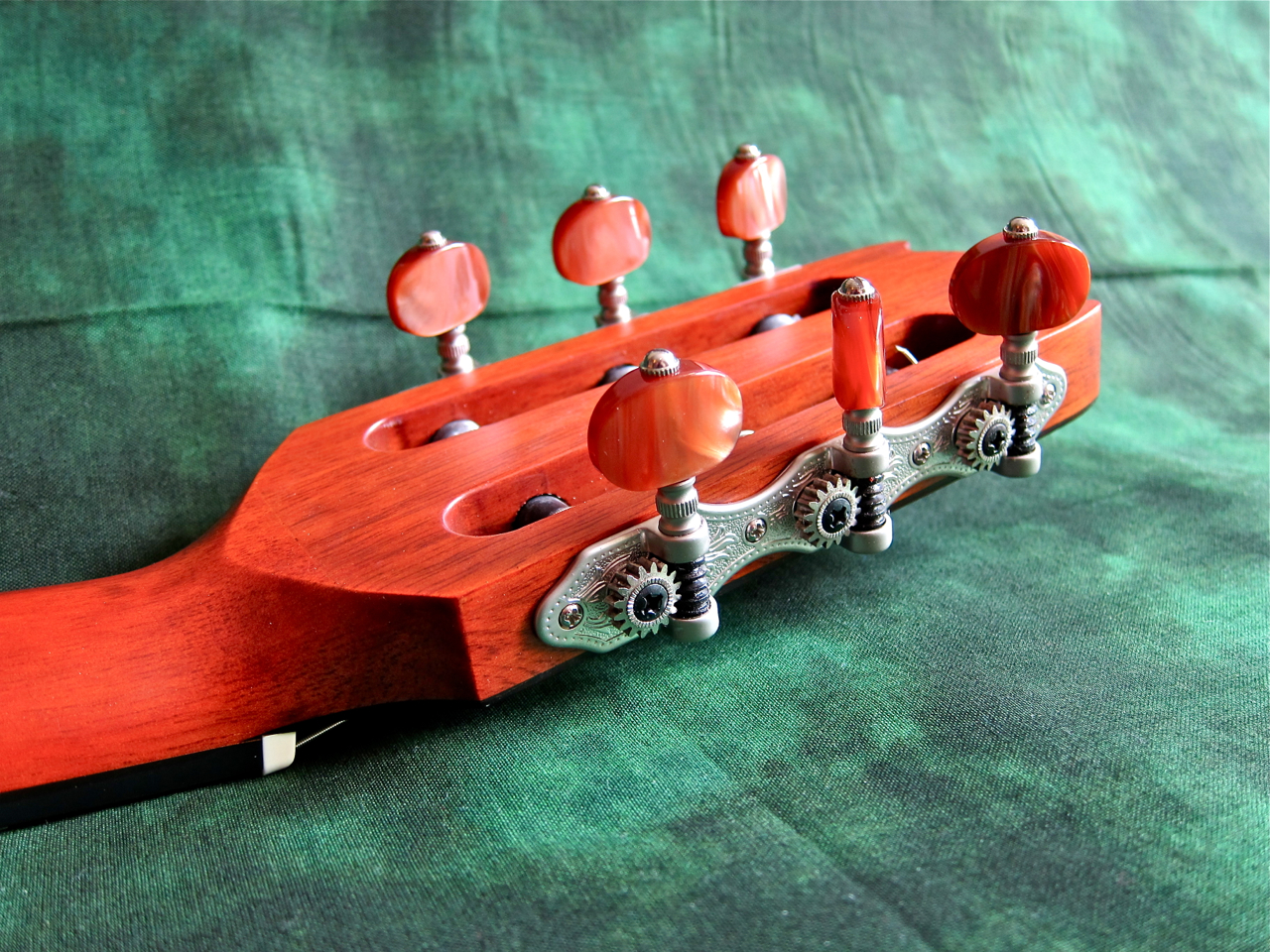
…which is complemented by the nice tuners.

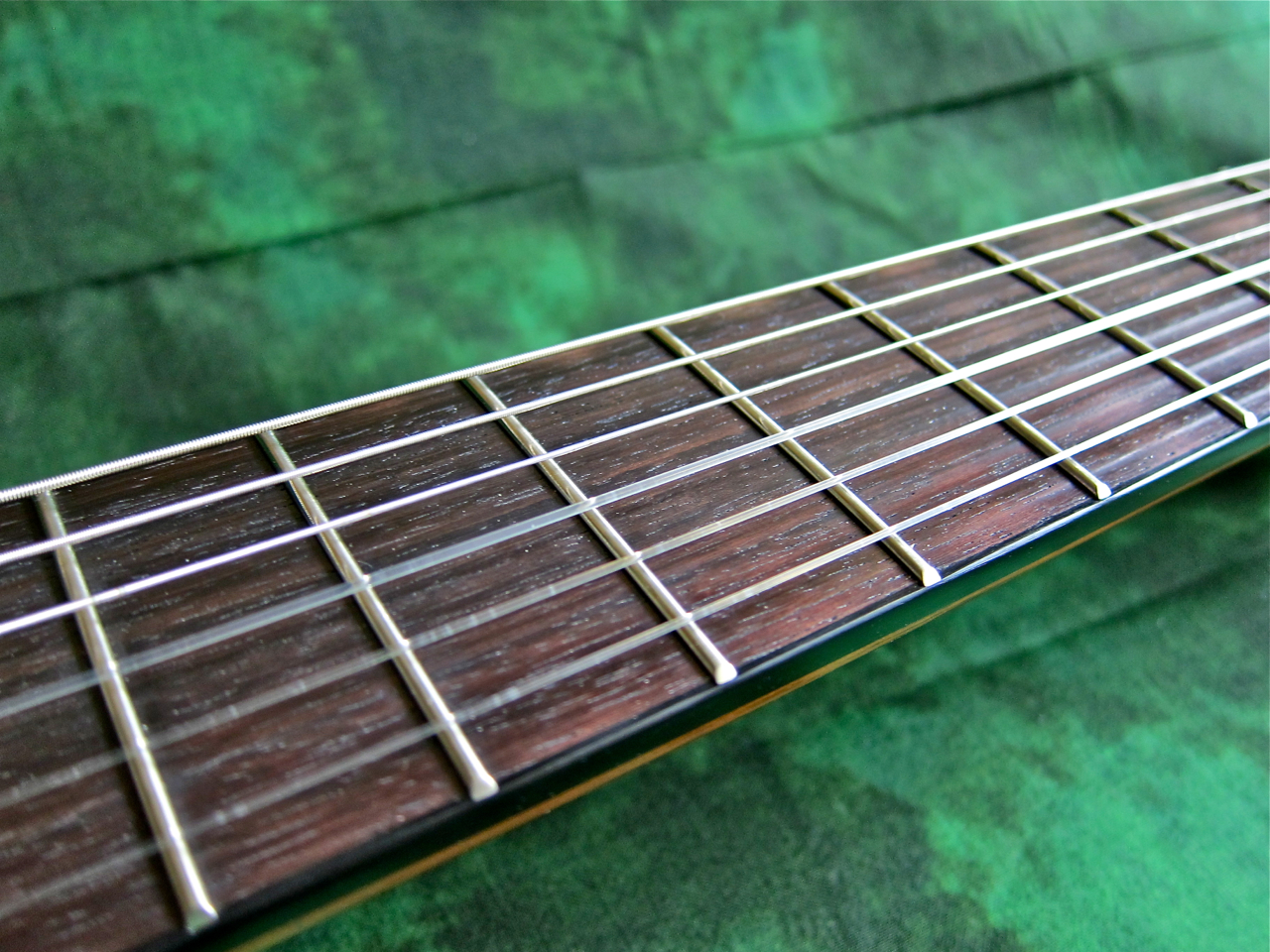
The NTX’ bound fingerboard is rosewood and comes with traditional frets.

NTX-guitars have the same type of body shape as their APX-brethren, and, just like the APX-guitars, the NTX-body is also shallower than what you’d expect from a classical guitar (with a depth of about 75 %).

The NTX900FM’s rosette has been beautifully crafted from various pieces of wood, as well as small bits of abalone.

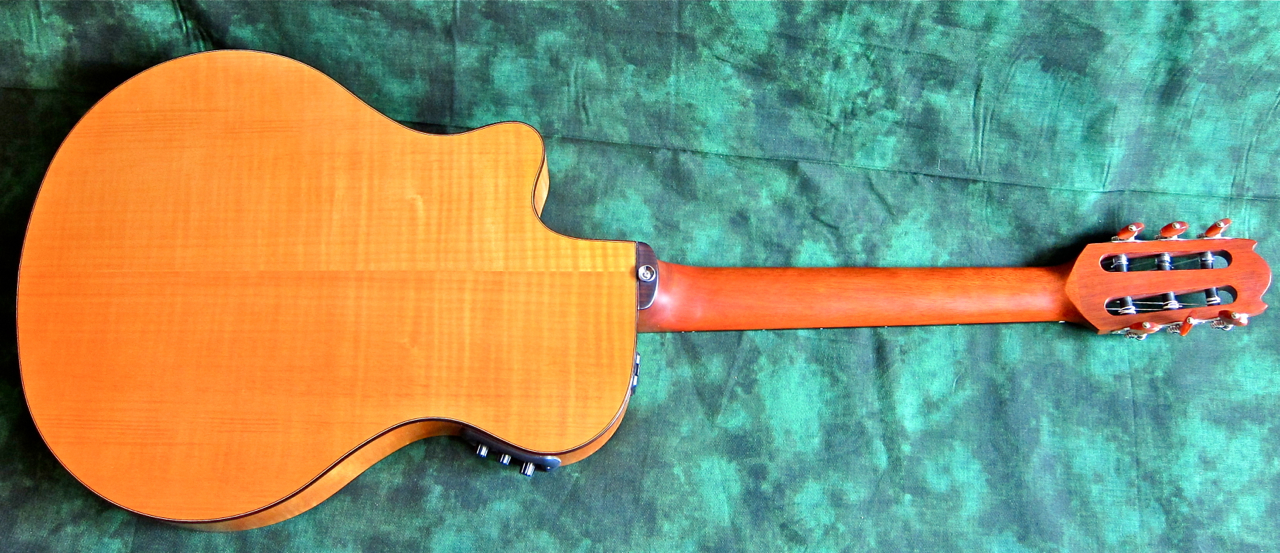
The honey-coloured finish of the flame maple soundbox looks good enough to eat.

Thes NTX900’s rosewood bridge also breaks with classical tradition in a stylish way.

This guitar’s preamp is Yamaha’s ART System 61, which is a two-band preamp with separate piezo transducers for the bass and treble string triplets. This enables you to adjust signal levels independently for the bottom and top halves. The ART System 61 preamp is equipped with a three-band EQ and a digital tuner.

The battery compartment has been placed next to the neck heel.

NTX900FM carries two strap buttons, with the bottom one doubling as the piezo system’s output jack.

The workmanship is clean and neat all around – inside and out.

****

****

Yamaha’s CG412C feels like a typical classical guitar: The nut width is a whopping two inches (52 mm) and the neck profile is true to style, namely flat and broad-shouldered. Such a traditional neck gives your left hand plenty of breathing room for complex fingerings, but barre chords require more attention and strength compared to a steel-string.

From an electric player’s standpoint a traditional classical set-up looks impossible, with the action at the 12th fret typically somewhere around 3.5 mm, but this is standard, comfortable fare on a nylon-string. Nylon strings are much softer than steel strings, and they also require a higher action to allow for their larger excursion.

Yamaha’s CG412C sings with a nice, full-bodied voice and an open tonal character. The guitar doesn’t project as well as an expensive classical does, but in its own price bracket the Yamaha CG142C clearly is a winner.

Yamaha CG142C

****

The nut width of the Yamaha NTX900FM’s neck lies halfway between a standard steel-string and a classical guitar, measuring 48 mm. The neck’s more tapered, slimmer and rounder D-profile makes for a much friendlier feel for the non-classical guitarist.

The NTX also comes with a lower string action (bottom-E: 3,1 mm/high-e: 2,6 mm at the 12th fret). This clearly narrows the guitar’s dynamic range, but also makes it easier to play for most of us.

Due to its shallower body and the use of maple for the soundbox, the NTX900FM isn’t particularly loud or full-bodied acoustically. The available volume is enough for practicing or song-writing, but this guitar doesn’t project in the way a traditional nylon-string does.

Yamaha NTX900FM – acoustically

Using the on-board pickup system changes things dramatically, turning the Yamaha NTX900FM into an interesting addition to your guitar arsenal. Yamaha’s ART-system works extremely well, and the separate volume controls for the bass and treble sides come in handy for fine-tuning your tone. The under-saddle transducers are also quite immune against handling noises, and the whole system is refreshingly low on hiss.

In my opinion the Yamaha NTX900FM is a good choice if you’re looking for nylon-string tones with a steel-string feel – or if you’re into juicing up your nylon with effects.

Yamaha NTX900FM – ART System 61

****

Yamaha CG142C + NTX900FM – nylon-string guitars

Finnish distributor: F-Musiikki

****

Yamaha CG142C

current street price in Finland around 300 €

Pros:

+ value-for-money

+ workmanship

+ traditional neck and action

+ sound

Cons:

– traditional neck requires different technique

****

Yamaha NTX900FM

current street price in Finland around 800 €

Pros:

value-for-money

+ workmanship

+ rounder and narrower neck profile

+ tone/pickup system

Cons:

–  acoustically rather quiet

****

Pidä blogia WordPress.comissa.

Ylös ↑