
Kitarablogi.com – Finland's premier Guitar and Bass blog
Juttuja kitaroista ja bassoista


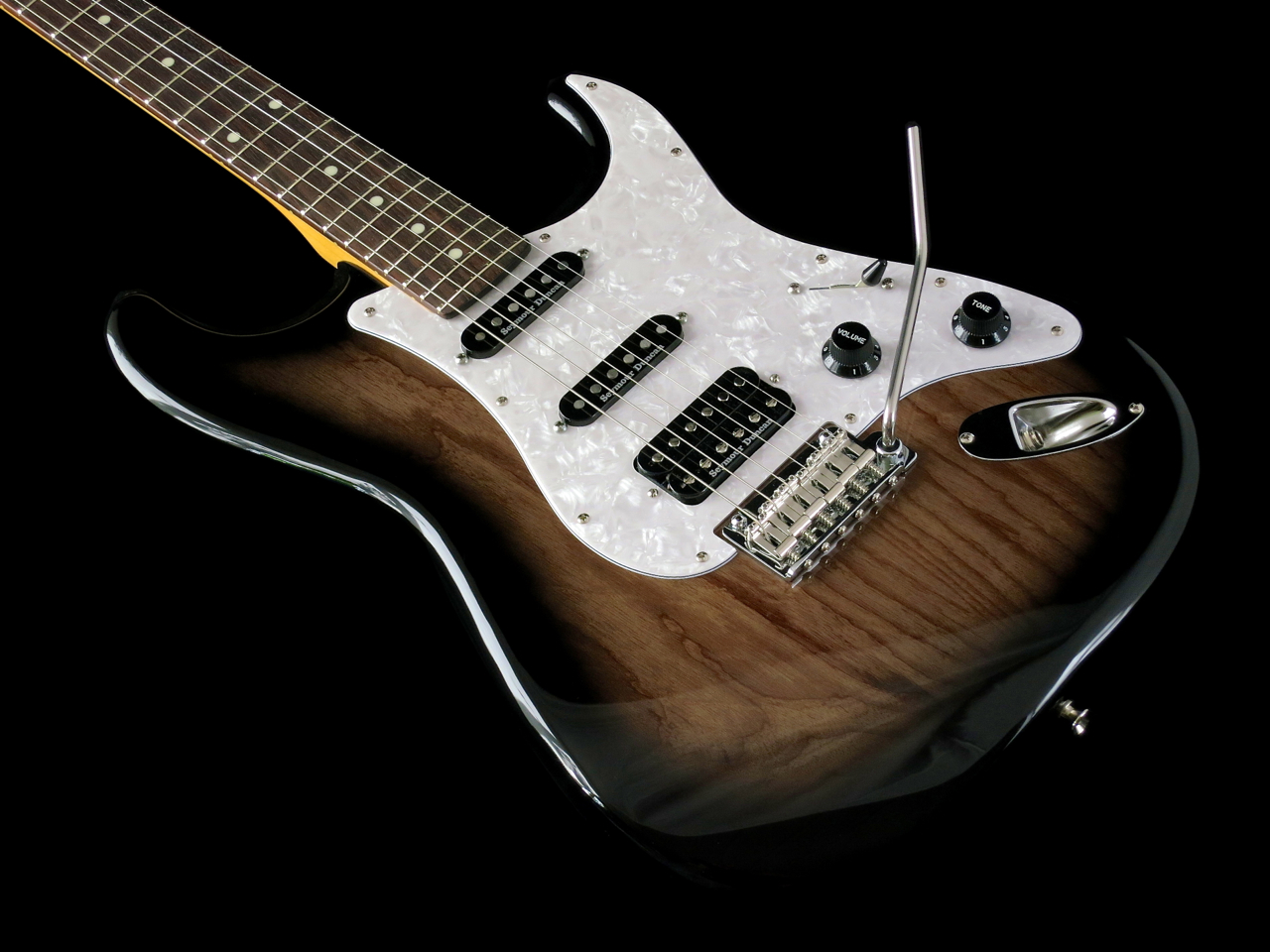
Uusi Tokai TST-50-FS on tällä hetkellä saatavilla kolmella eri mikrofonivarustuksilla:
• Three-Tone Sunburst -versiossa on kaksi yksikelaista SSL-1-mikrofonia, sekä Seymour Duncan ’59 -humbucker.
• Sienna Sunburst -mallissa on kaksi SD Classic Stack Plus -mikrofonia (hurinattomia, stacked-coil mikrofonia), sekä JB-humbucker metallikuorella.
• Ebony Transparent -kitarassa taas on kaksi Duncanin Vintage Hot Stack -mikrofonia (hurinattomia) ja tallamikrofonina toimii saman firman Custom 5 -humbucker.
Kitarablogin testi on tulossa lähiaikoina!
****
The new Tokai TST-50-FS is currently available with three different pickup configurations:
• The Three-Tone Sunburst version has a pair of SSL-1 single-coils and a Seymour Duncan ’59 humbucker.
• The Sienna Sunburst model comes with two noiseless SD Classic Stack Plus pickups, as well as a covered JB model.
• The Ebony Transparent guitar sports two noiseless Duncan Vintage Hot Stacks and a Custom 5 in the bridge position.
Watch this space for a full review in the very near future!




This year’s Holy Grail Guitar Show will be held on the 8th and 9th of October in Berlin.
For more information click HERE.


Musamaailman tiedote:
”… Avaamme Turussa!
Maanantaina 5. syyskuuta avaamme Musamaailman uuden soitinkaupan osoitteessa Yliopistonkatu 13. Nyt saat aivan torin kulmalta laadukkaat soittimet edulliseen hintaan.
Palveleva ja asiantunteva myymälämme tarjoaa kaikki Musamaailman maahantuomat kitarat, bassot, vahvistimet, PA-kamat ja tarvikkeet kätevästi aivan Turun ydinkeskustassa. Meiltä saat mm. seuraavat huippumerkit: Tokai, ESP Guitars, Markbass, Bogner, DV Mark, Seymour Duncan, EMG, Tanglewood, GJ2, Tech 21, DR Strings ja Regal Tip.
Vastaamme asiakkaidemme toiveisiin: Turkulaiset soittajat ovat jo pitkään asioineet http://www.musamaailma.fi -verkkokaupassamme ja nyt laaja valikoimamme on asiakkaiden saatavilla myös uudessa Turun myymälässä! Myymälämme vetäjäksi valikoitui pitkän linjan soittaja ja Turun soitinkaupan ammattilainen Rami Leino, jolla on alalta jo yli 20 vuoden kokemus. Rami auttaa sinua oikeanlaisten soittokamojen hankinnassa, olitpa sitten harrastaja tai ammattilainen.
Toivotamme kaikki lämpimästi tervetulleiksi Turun uuteen Musamaailma-kivijalkamyymälään alkaen 5.9.! …”
Musamaailma Turku
Yliopistonkatu 13
20100 Turku
Puhelin 044 720 6128
turku@musamaailma.fi
musamaailma.fi



Kitarablogi.com had the pleasure to review two acoustic steel-string guitars from Chinese brand Farida Guitars:
The Farida M-2 is a parlour-sized guitar, while the Farida B-10E gives you this company’s take on a miked-up, slope-shouldered Gibson steel-string.

****

These days a guitar is called a parlour (or parlor, if you’re so inclined), if its soundbox is smaller than a Martin OM- or 000-body. While parlour guitars have gained a growing followership over the last few years, it is still surprisingly difficult to find reasonably priced exponents of this species.
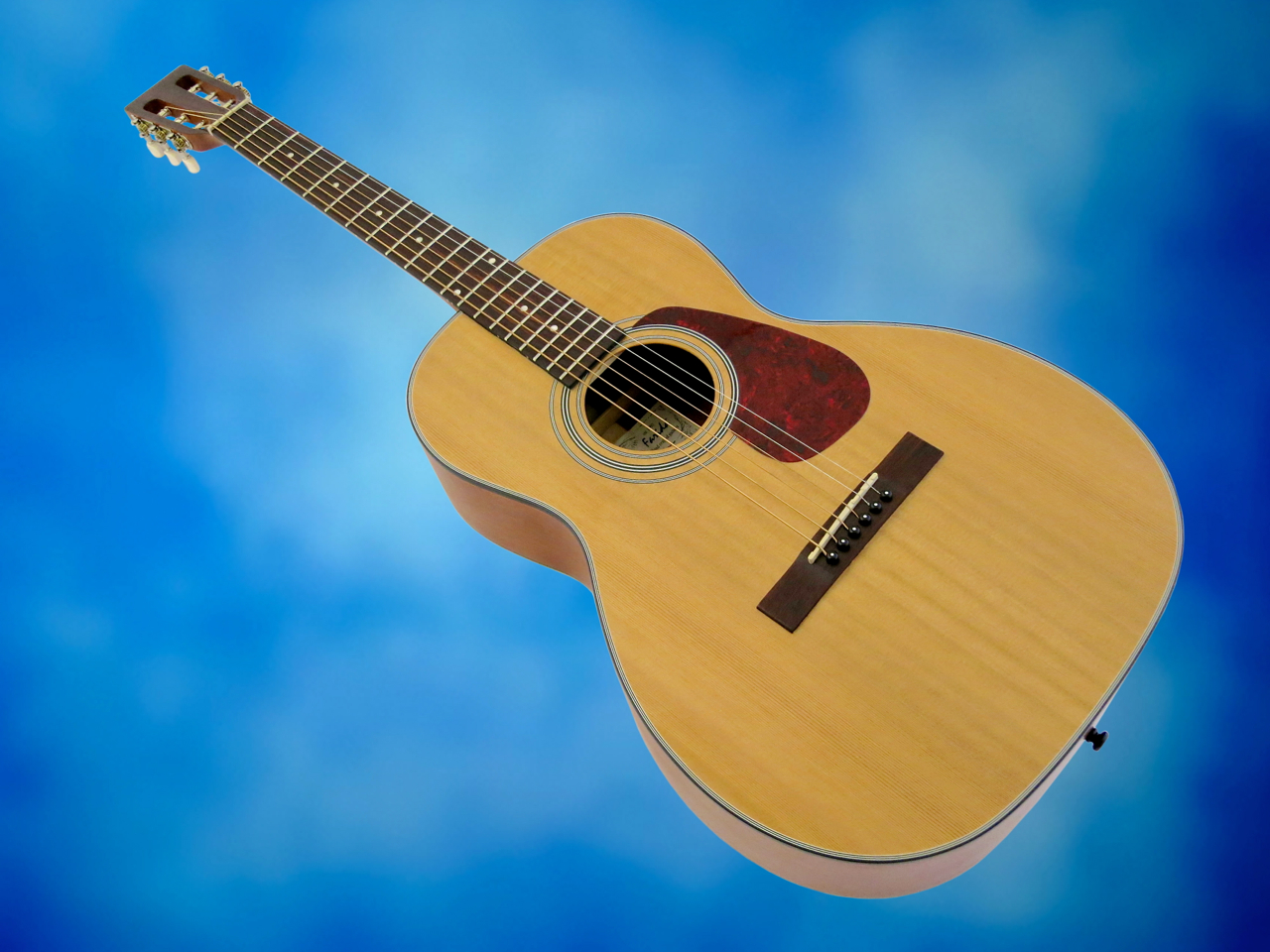
Farida Guitars’ M-2 (current price in Finland: 465 €) ticks all the right boxes to whet a parlour lover’s appetite – a slightly shorter scale length (62.8 cm/24.7″), a 12th fret neck joint, and a classical-type open headstock.
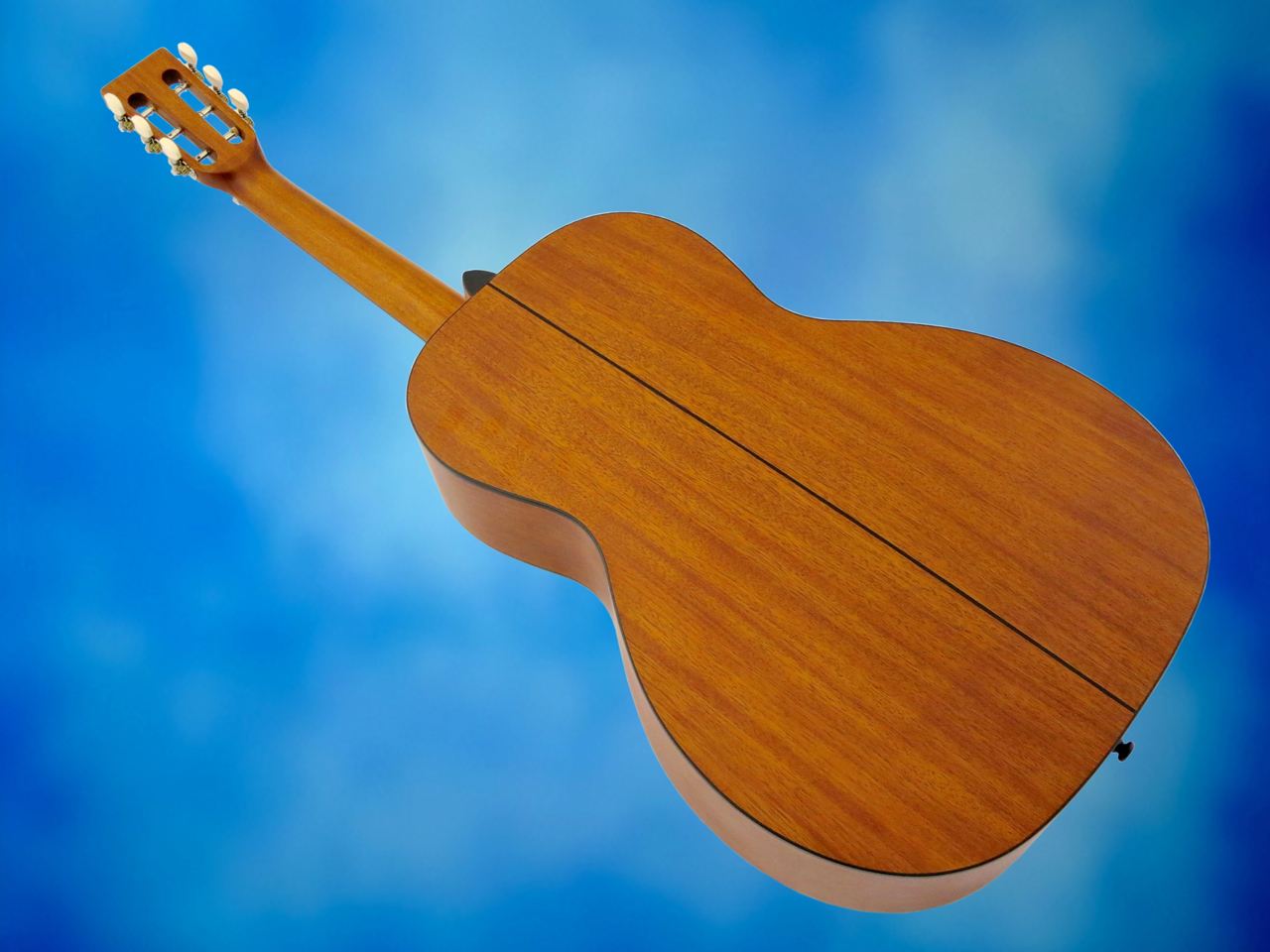
The M-2’s soundbox is made from a beautiful solid red cedar top, and laminated mahogany for the rims and the back.
The mahogany neck is glued into the body in traditional fashion.

The three-on-a-strip tuners are of a decent quality.

The Farida M2’s top nut and compensated bridge saddle are both made from a man-made bone substitute.
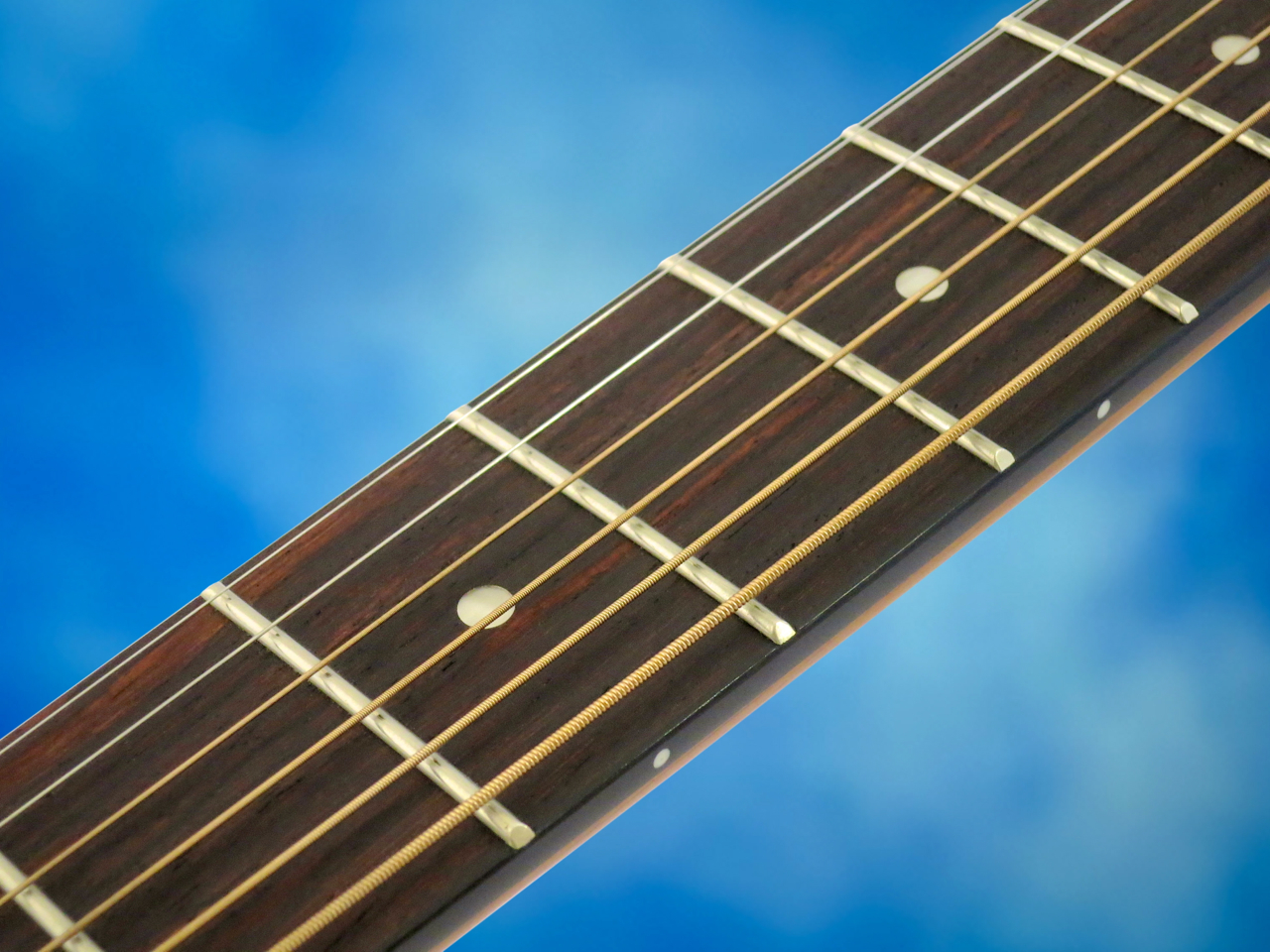
The fretwire used on this parlour has a narrow and medium-height profile.
There’s a very nice red hue to the M-2’s rosewood fretboard.
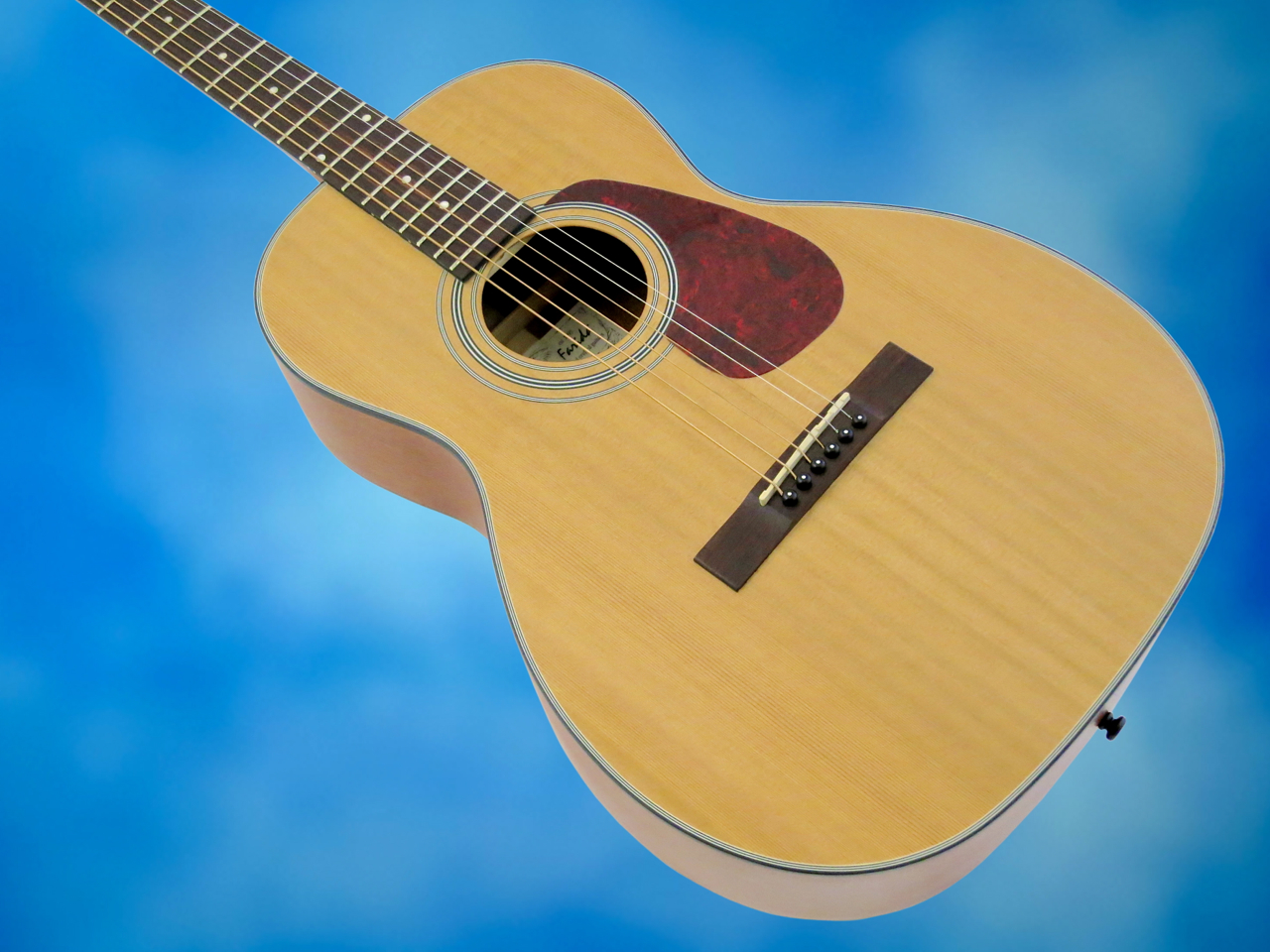
This very cleanly built acoustic instrument comes in a thin natural satin finish.
****

Farida’s B-10E (425 €) is the brand’s affordable version of Gibson’s famous slope shoulder (or round shoulder) dreadnought design (first released in the mid-1930s as the Advanced Jumbo). Like the name says, this guitar type differs from the more common Martin dreadnought by virtue of its rounded ”shoulders”.
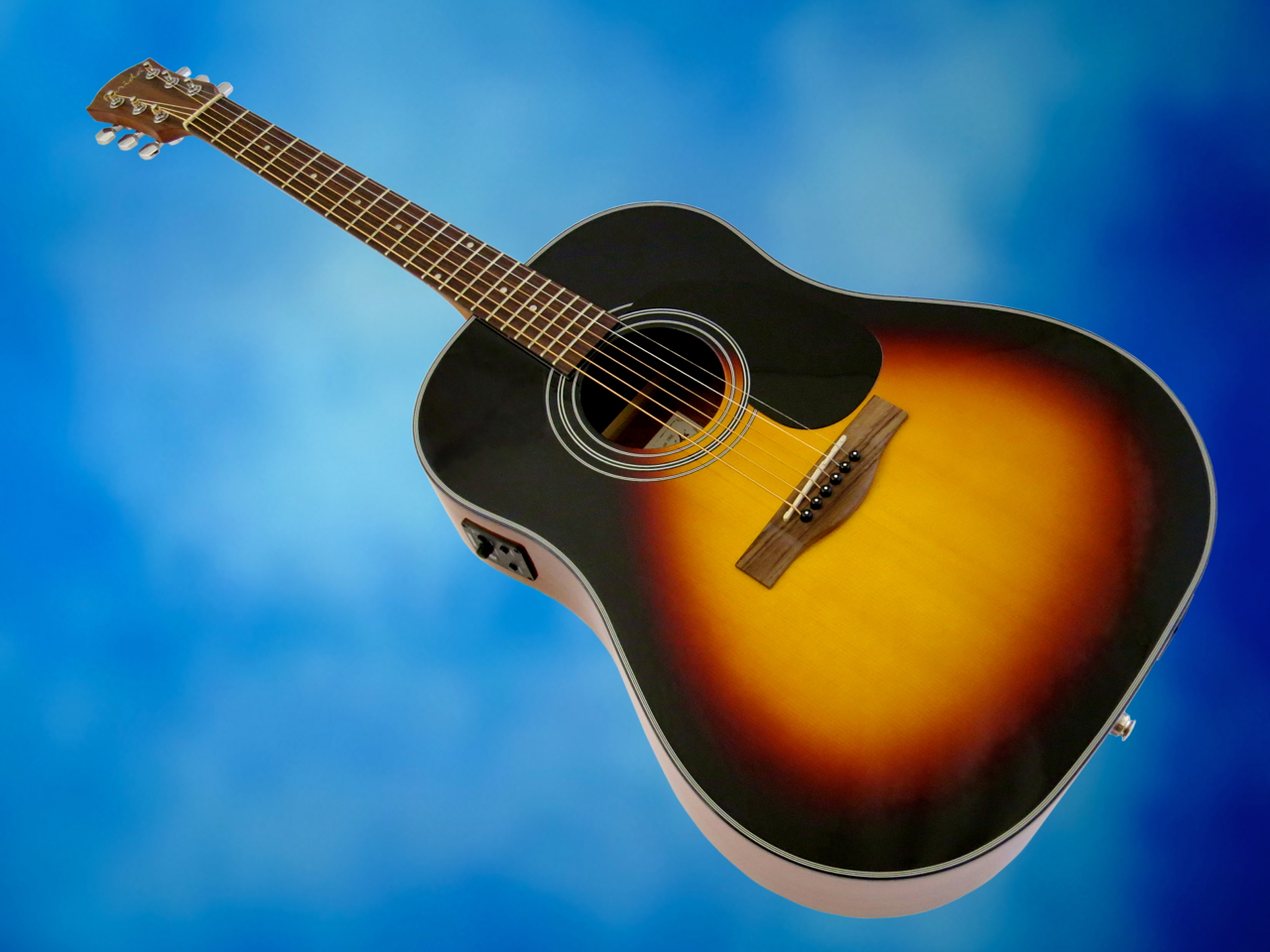
The B-10E sports a solid spruce top finished in a gorgeously deep gloss sunburst.

The mahogany soundbox has also received a gloss finish, while the mahogany neck goes for a modern satin finish.

Farida have come up with a good-looking headstock shape, at least in my opinion. The B-10E’s headstock face sports a beautiful rosewood veneer.
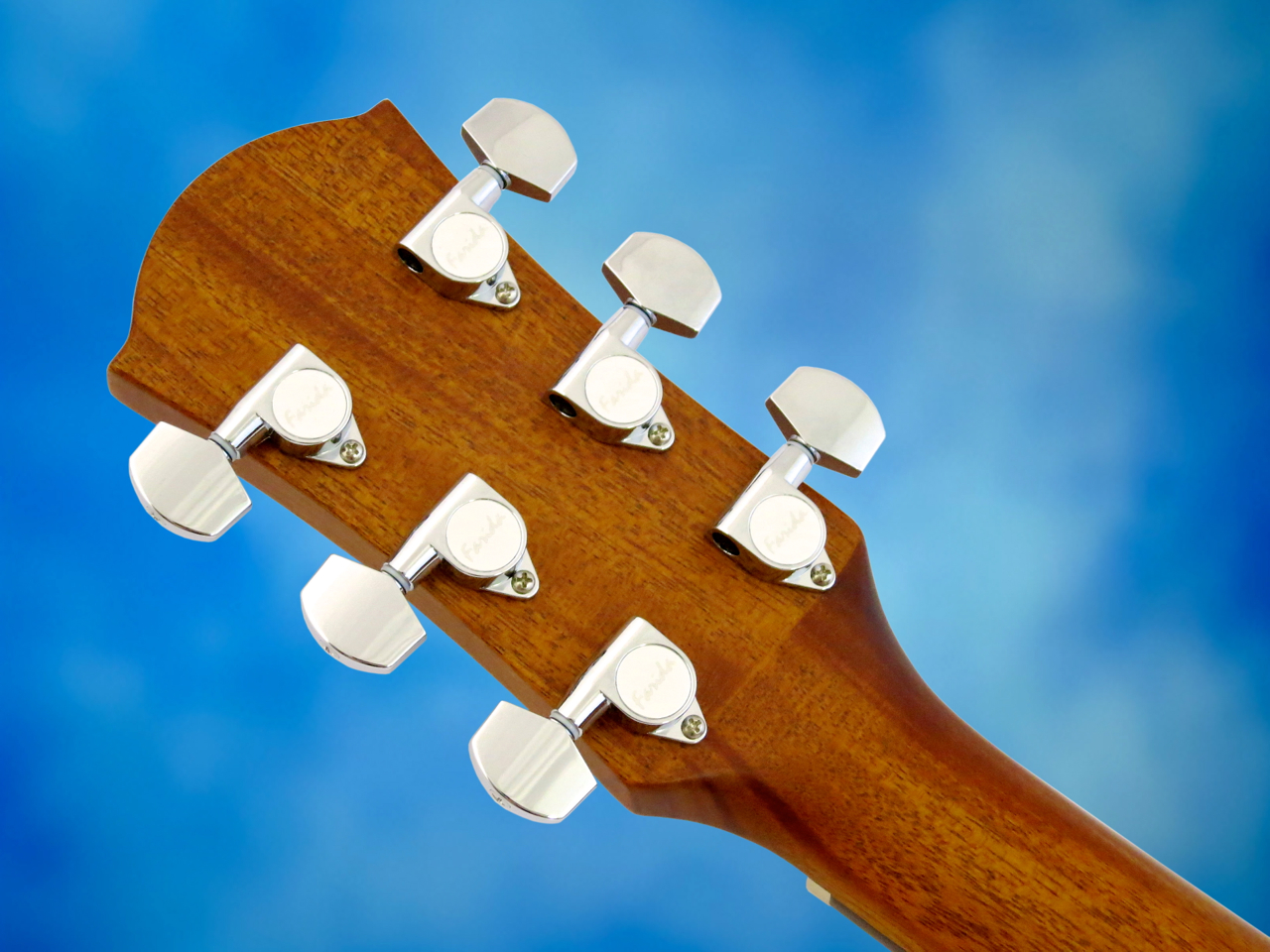
The machine heads are very decent Schaller-style models.

As with the parlour model, Farida’s slope shoulder dread also comes equipped with a self-lubricating Tusq-type nut and compensated bridge saddle.
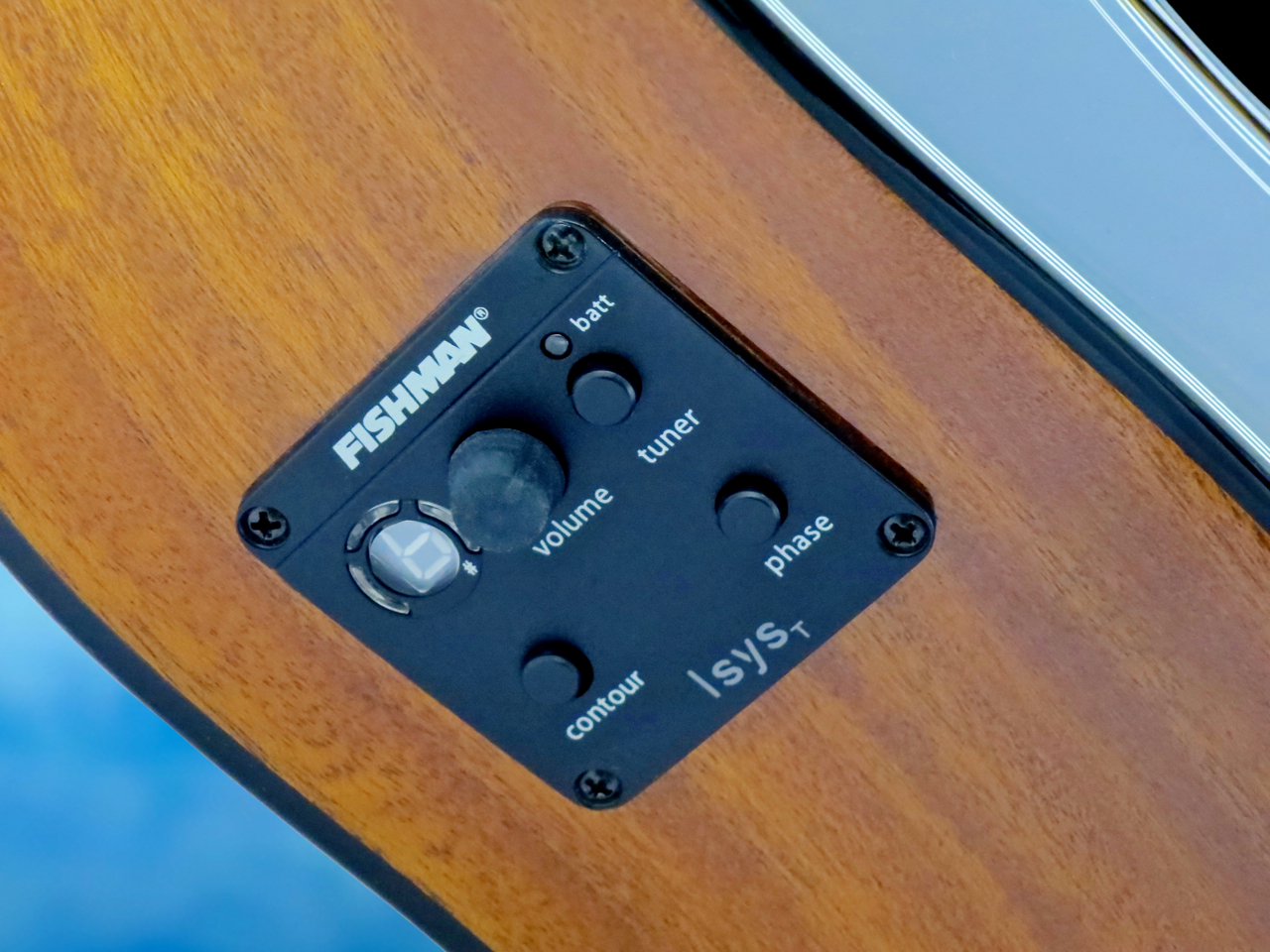
The B-10E features a Fishman Sonicore under-saddle transducer connected to an Isys T preamp.
In addition to the large volume control, the preamp also comes with a phase inverse switch (to combat feedback), a pre-EQ curve (called Contour), and a digital tuner.

The output jack is found in the end pin, with the easy access battery compartment nearby.

Despite this model’s rather affordable status, the fret job on the B-10 is actually surprisingly clean.

****

To some parlour snobs – yes, there are such people – the only ”correct” neck profile for a guitar of this type is a wide and massive V-neck (also called a boat neck). True, a boat neck is the authentic option, but many modern players do feel quite alienated by such a profile.
Luckily (and sensibly) the Farida Guitars M-2 comes with a very player-friendly, modern D-style neck profile.
Talking about comfortable: The M-2 is a very lightweight and compact little instrument, which fits effortlessly in your lap. This means that this parlour is a great choice for young players and many women, too. You don’t need to be a Folk music fan.
Farida’s M-2 delivers the sound you’d expect from a small-bodied steel-string guitar. There’s not a lot of deep bass, the mid-range has a certain boxy quality, and the whole is rounded off by a healthy dose of chiming top end.
The M-2 is a fabulous choice for fingerstyle players, because the tight bass response of a parlour leaves ample room for the full character of the mid-range to shine through:
But a small body doesn’t necessarily mean a puny sound – this Farida is a nice little barker when played with a plectrum. Thanks to its sinewy bass register this guitar is also easy to record:
The rhythm guitar parts on this demo song feature both test guitars. The Farida M-2 is in the left channel and the B-10E can be heard coming from the right:
****

Farida’s B-10E offers a lot of value and enjoyment for a very moderate price.
Here the neck profile is a slightly more rounded, oval C.
This Farida gives you the punch you’d associate with a well-made dreadnought guitar, suitably seasoned with the warmth this model’s Gibson-type scale length brings into the mix.
In contrast to the parlour, the much larger body of the B-10E equates a hefty boost in the bass and treble registers.
Played fingerstyle you’ll get a stronger bass content and more top end sparkle:
This larger-than-life persona, so typical of dreadnoughts, is also present when you switch over to a plectrum:
Fishman’s Isys T system is a very workable addition for live use. A piezo-only pickup system is always a bit of a compromise, in terms of sound fidelity, but the Isys T does a good job. In these clips the first phrase has been recorded with Contour off and the second phrase with Contour on:
The rhythm guitar parts on this demo song feature both test guitars. The Farida M-2 is in the left channel and the B-10E can be heard coming from the right:
****
Based on this review, Farida seem to offer a lot of guitar at very fair prices. Both the Farida M-2 and the B10E are beautiful steel-string guitars that offer easy playability and inspiring sounds.
****
Farida Guitars M-2 + B-10E
M-2 – 465 €
B-10E – 425 €
Finnish distribution: Vantaan Musiikki
****
Pros (both models):
+ value-for-money
+ finish
+ fretwork
+ acoustic sound
+ easy to use pickup system (B-10E only)
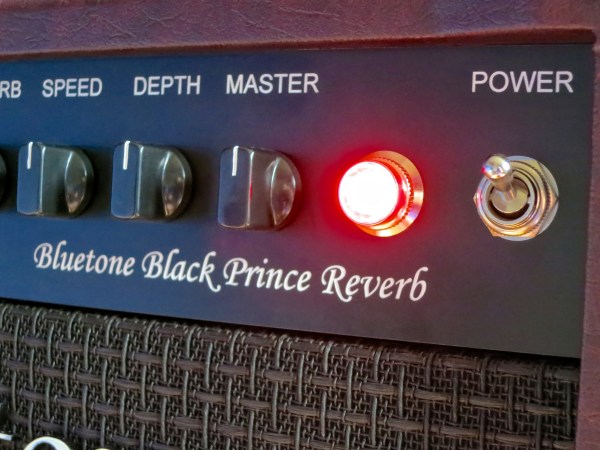
The Bluetone Black Prince Reverb guitar combo sees the boutique amp makers from Helsinki branch out into a new and interesting direction.
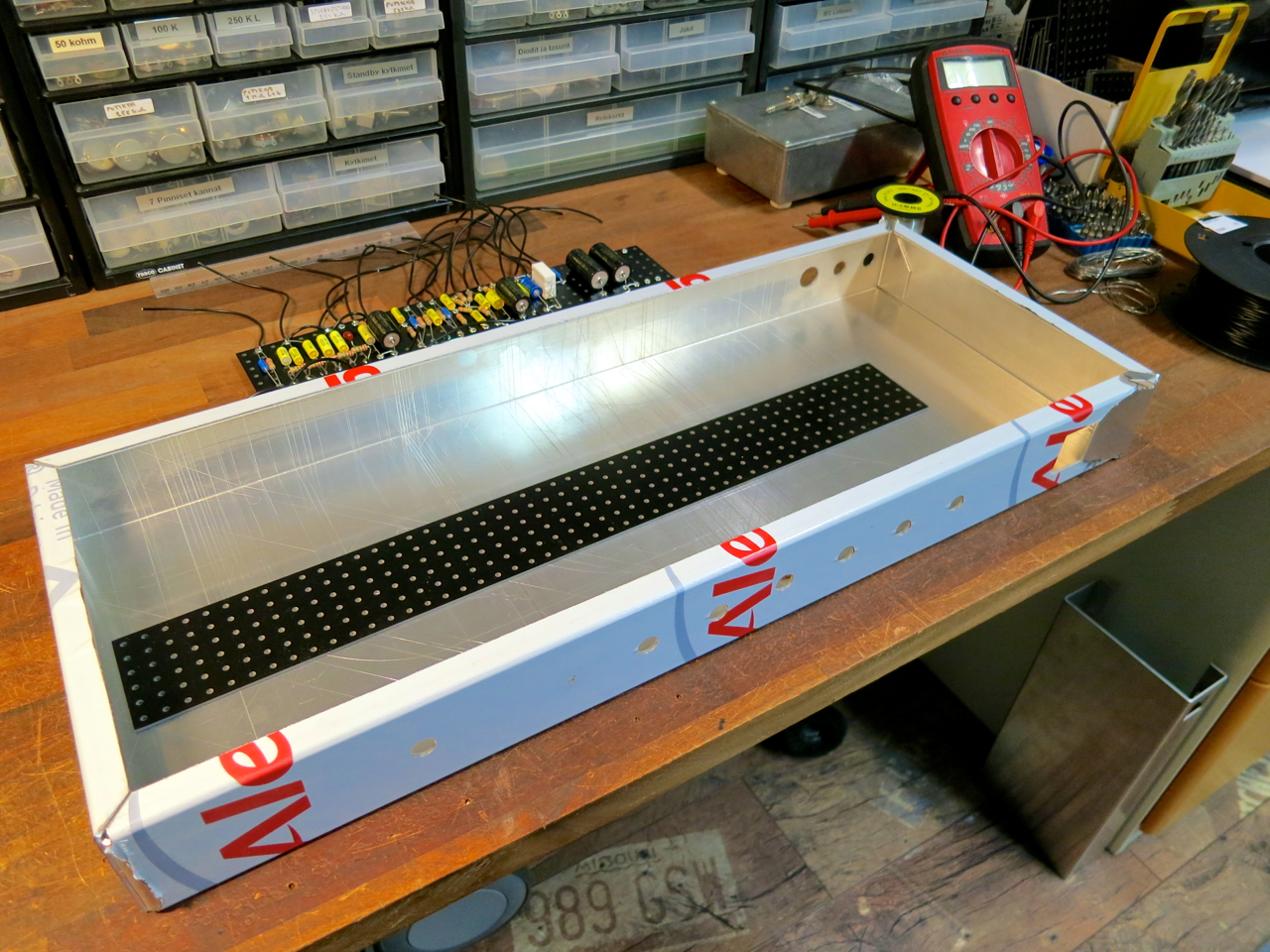
All the Bluetone models we have known thus far have been (and still are) produced as pure and genuine custom-made valve amplifiers.
This means that each new amp is ordered by the customer based on a certain Bluetone configuration on their website – like an à la carte-menu. The chosen model is then tweaked according to the customer’s wishes, and there are plenty of different options available – from the details of the amplifier’s internal specifications all the way to the type of finish of the cabinet and the font on the control panel.
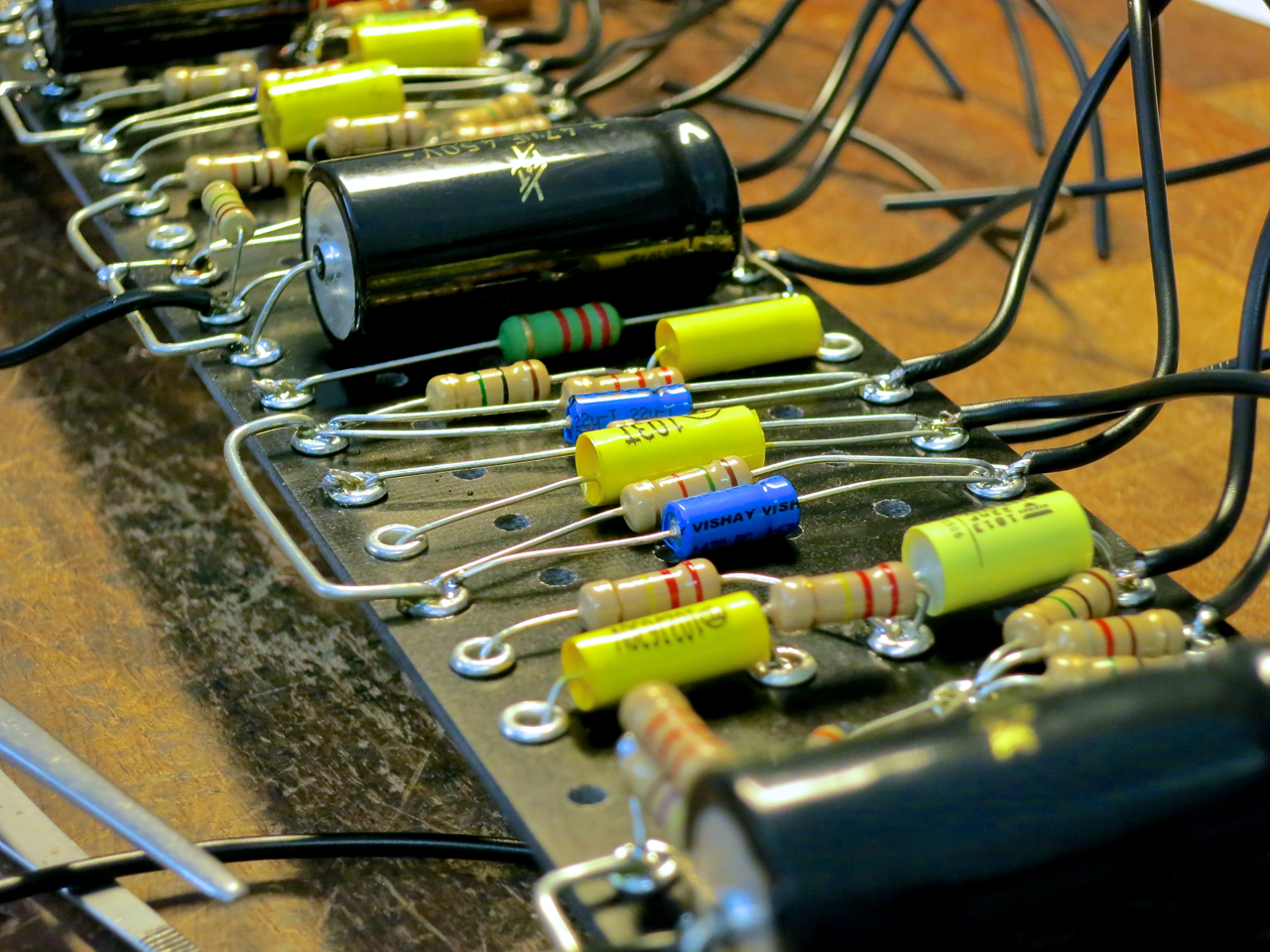
Due to the nature of custom amps, such as these, every Bluetone Custom amp is built completely by hand, starting with a clean slate – meaning: an empty metal chassis, and an empty fibreglass eyelet-board.
The board is then riveted at the right spots to take all the necessary wiring and electronic components going into this specific custom order. Everything is soldered into place by hand (point-to-point).
This is a very involved and time-consuming process, requiring a steady hand and a keen eye, which of course is reflected in the price of a Bluetone Custom amp. The advantage of building this type of point-to-point amp is, of course, that it gives the customer free reign to have his dream amp built.
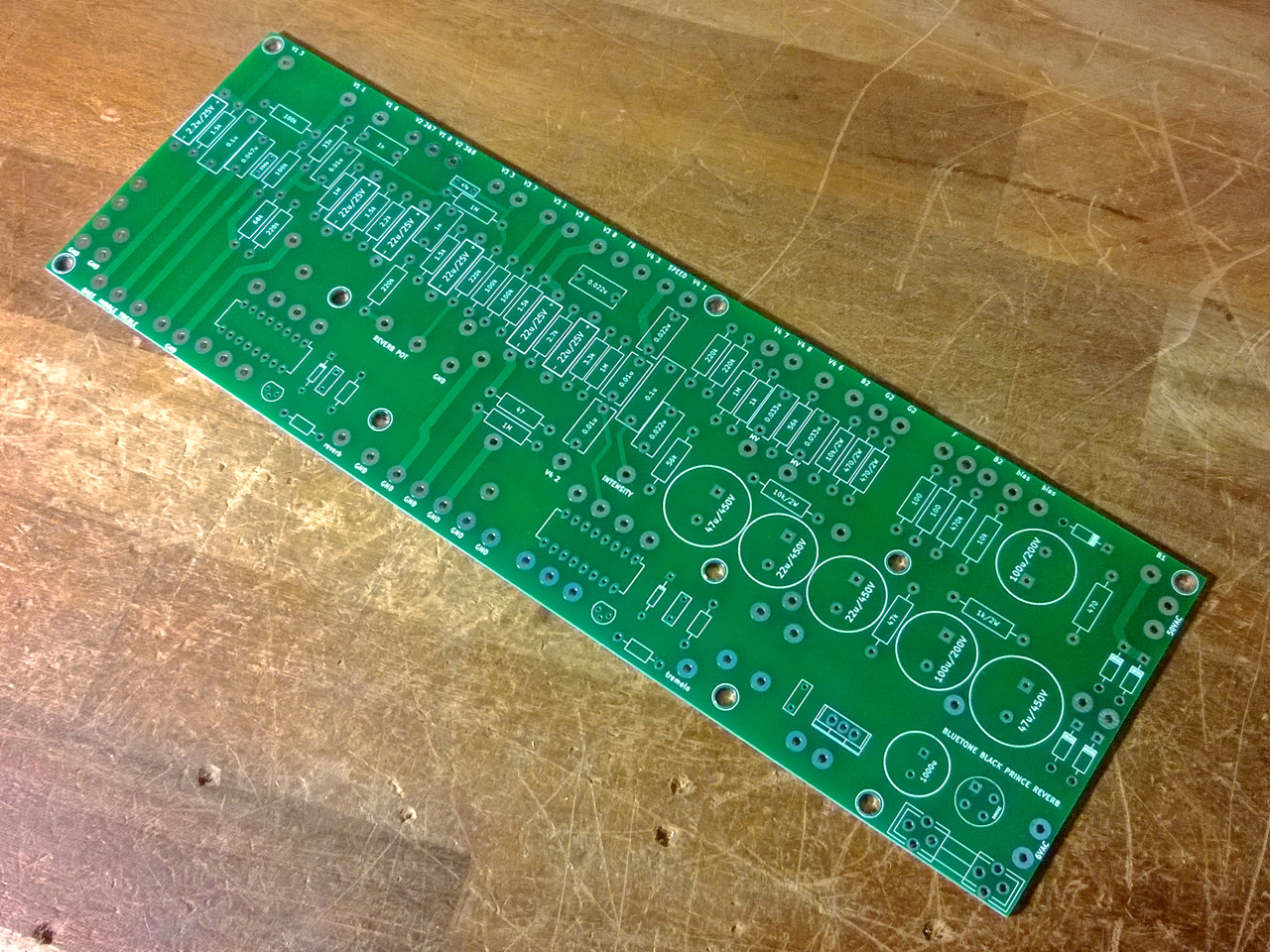
Bluetone’s dynamic duo – Harry Kneckt and Matti Vauhkonen – have recently decided to launch a second model range alongside their strictly custom-made amps. The new range will include a few models that will be made and sold ”as is”, with only very limited options to choose from.
These new amps will be made using so-called hybrid boards.
Bluetone’s hybrid boards are very sturdy PCBs made of fibreglass, and are of a considerably higher quality than what you’d find in mass-produced valve amplifiers. Each component’s place on the hybrid is clearly labelled, and some of the ”wiring” is already incorporated into the board itself. In contrast to many mass-produced affordable amps, Bluetone’s new range will see all tubes and transformers mounted securely to the metal chassis (like on their custom-made amps, too), and not directly on the PCB (like on many affordable Far Eastern designs).
The rest of the building process is virtually identical to the more costly custom-made amplifiers – the components are fitted to the hybrid board by hand (from the top) and hand-soldered to the board. Thanks to the hybrid board the new amplifier range will be much easier and faster to produce, which will be reflected in the pricing of the new hybrid amps vis-à-vis the point-to-point custom orders.
****
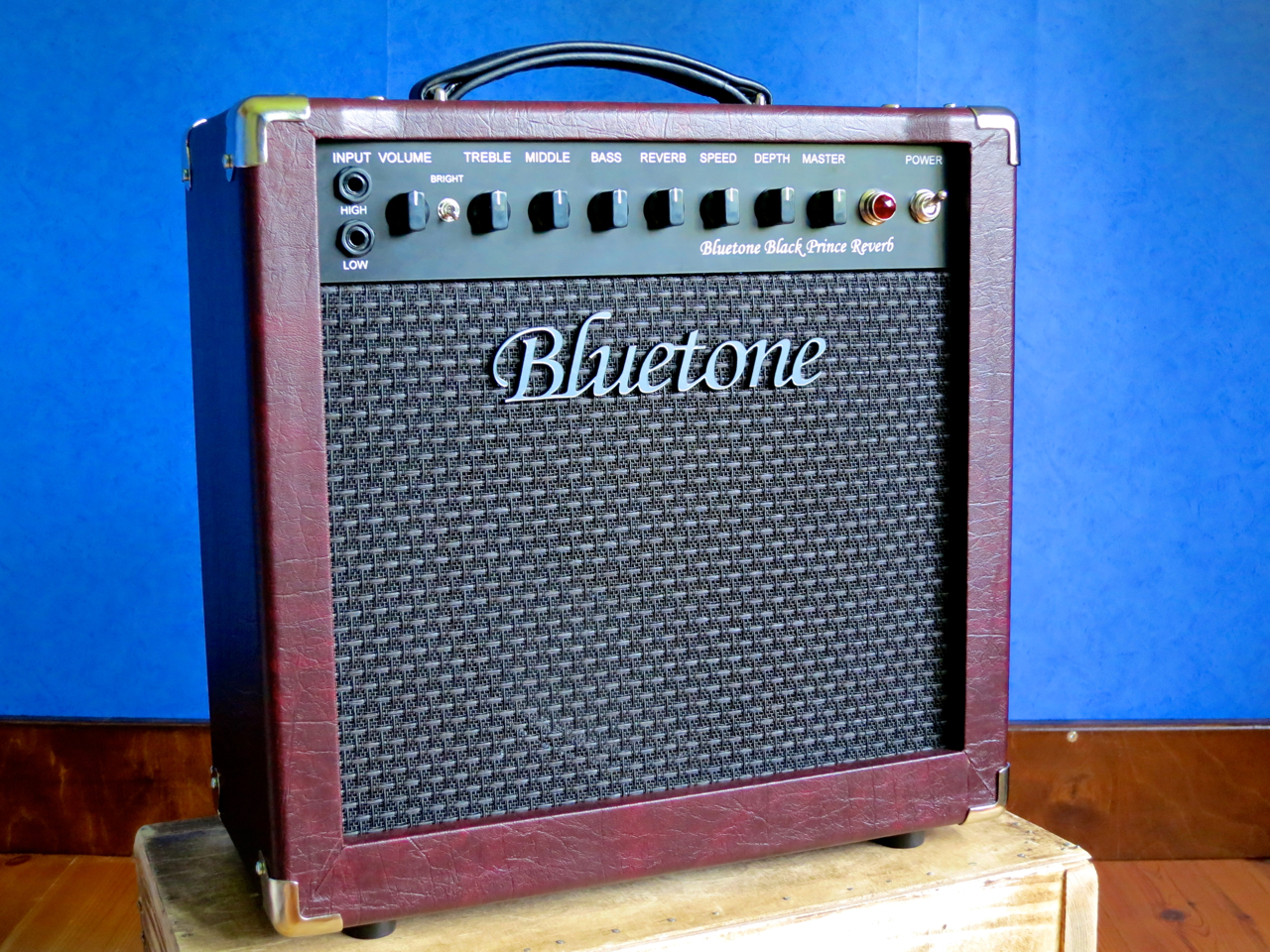
The first new Bluetone-combo is called the Bluetone Black Prince Reverb (approx. 1.500 €).
This compact and handy combo takes a lot of inspiration from Fender’s legendary ”Blackface” Princeton Reverb (version AA1164), but due to the Bluetone’s many refinements you can’t really call the Black Prince a straight copy.
In addition to the basic version in wine red tolex, you can also order the Black Prince Reverb in genuine tweed, or with an oiled cabinet made from mahogany (both at extra cost).

I very much like the businesslike and sober look of the Blacktone’s front panel. Everything is clearly labelled, which can be a great plus on a dimly lit stage.
The Bluetone Black Prince Reverb offers two different inputs for singlecoil and humbucker-equipped guitars (High and Low). The EQ-section is a three-band affair, with an additional Bright switch to liven up dull sounding pickups.
Even though the Black Prince Reverb is such a compact combo, it still featured both a genuine, valve-driven spring reverb and a tube tremolo.
Bluetone uses a post phase-inverter master volume in most of their designs, because it has the least negative impact on an amp’s tone and feel.
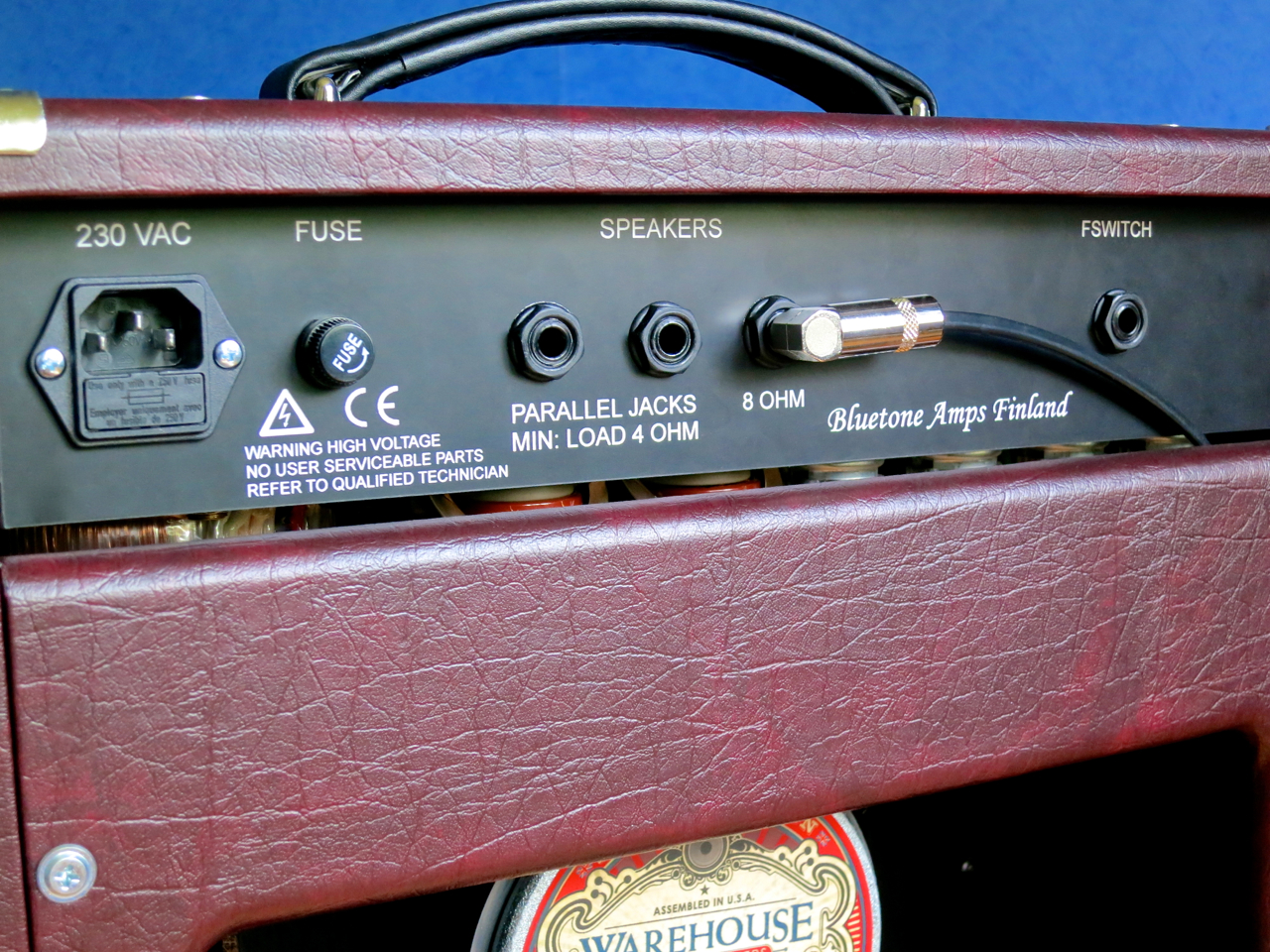
There’s a Fender-style open back on the Black Prince.
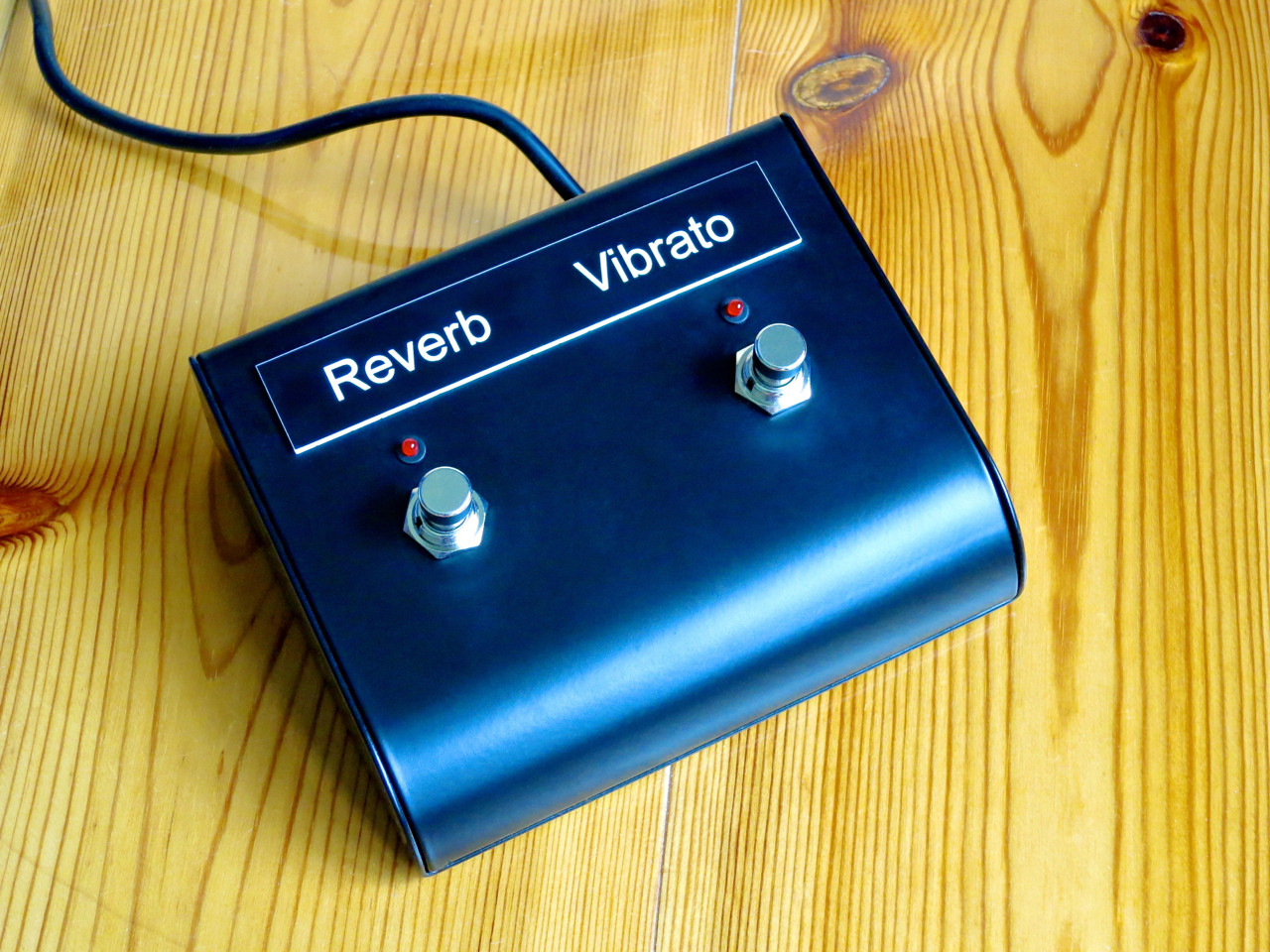
The back panel sports outputs for additional speakers, as well as the jack for the combo’s two-button footswitch unit (included).
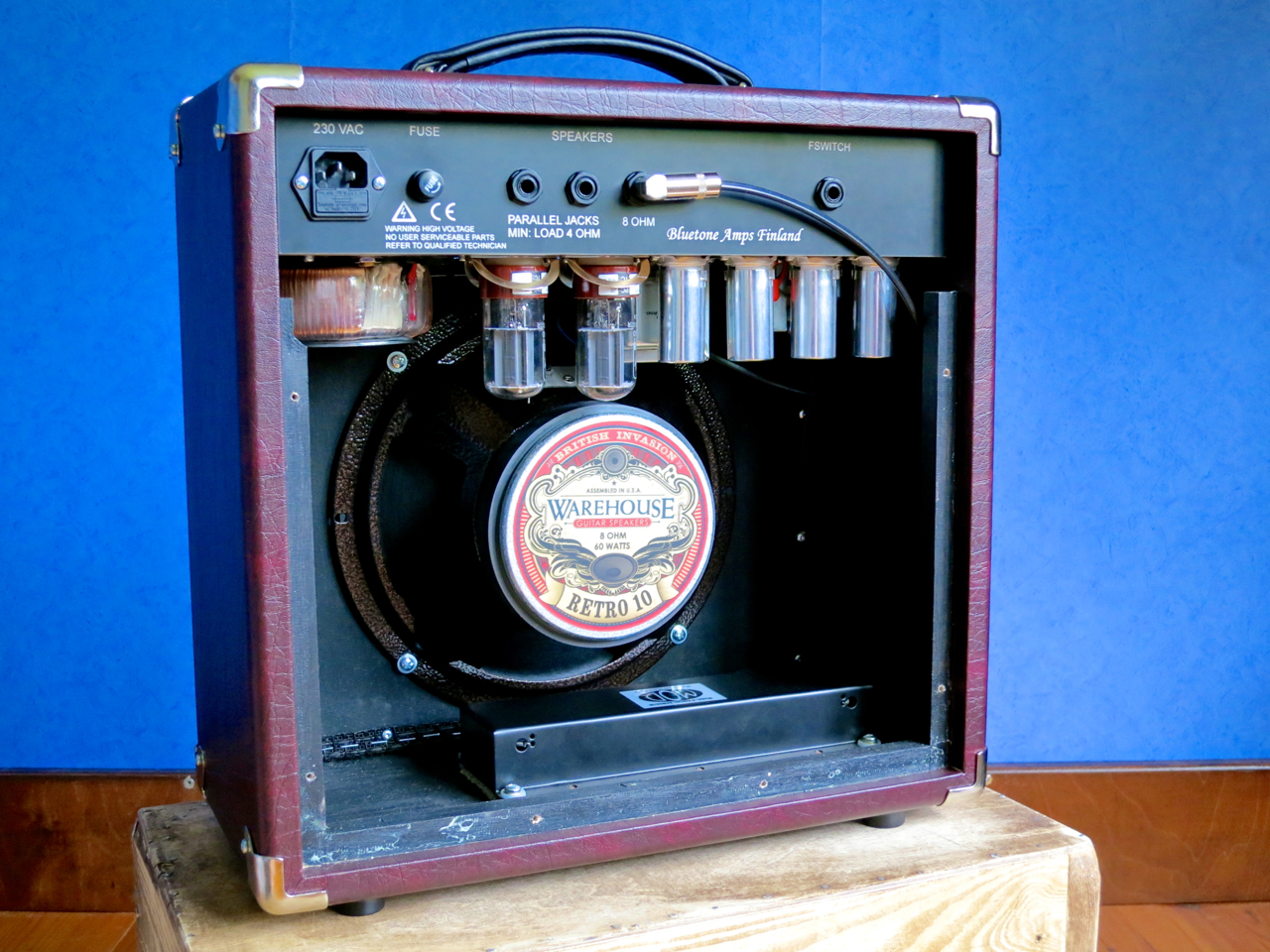
This is what the Bluetone looks like with the open back removed.
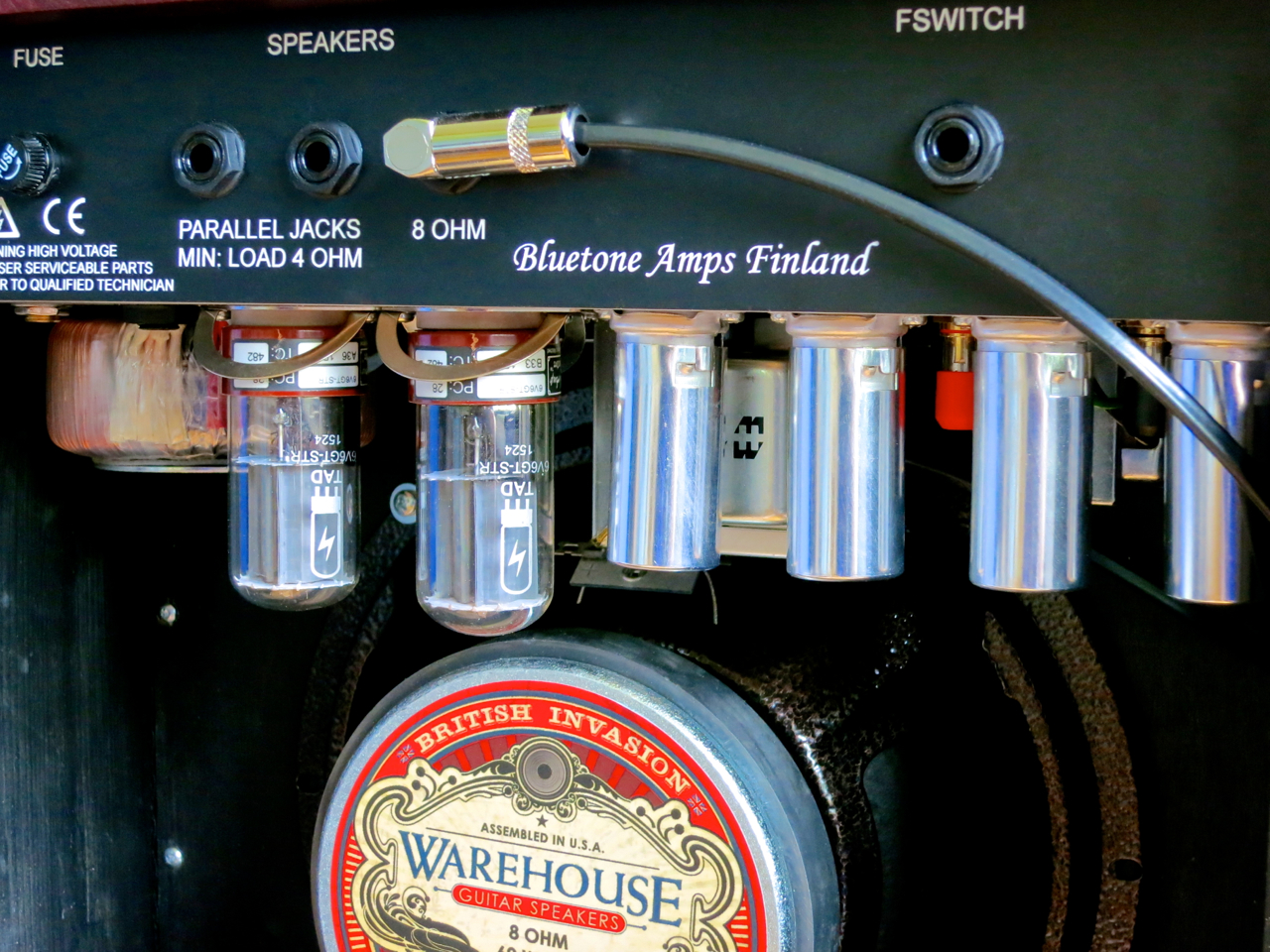
The Black Prince Reverb combo is an all-valve machine, loaded with the following tube types (from right to left):
The first 12AX7 is the combo’s preamp valve. The spring reverb circuit uses a 12AT7 and a 12AX7 valve. The 12AX7 works as the amp’s phase-inverter and tremolo tube.
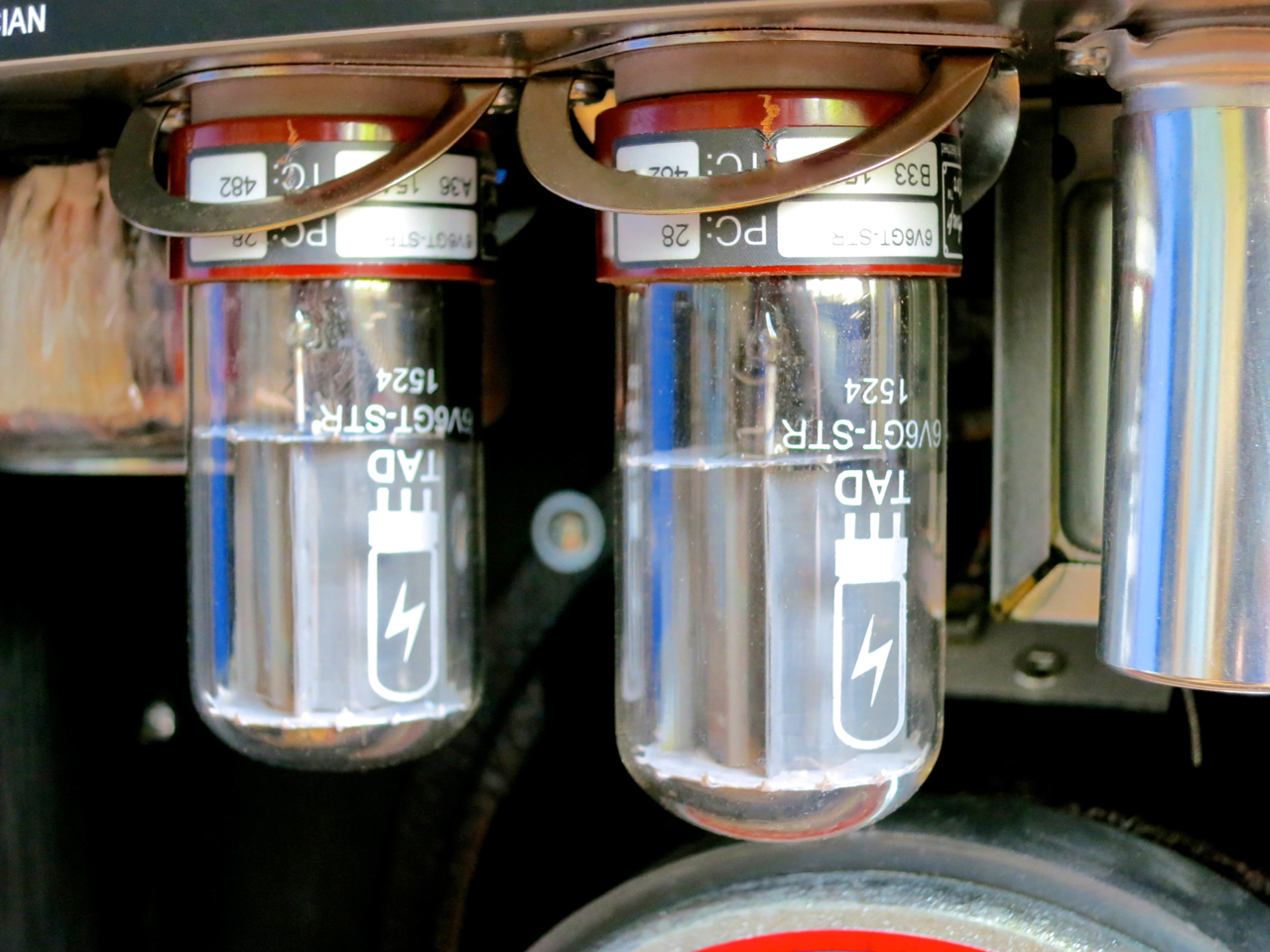
The Black Prince leaves Bluetone’s workshop equipped with a pair of 6V6GT power valves, which will translate to about 20 watts of output. You can also re-bias this amp for a pair of 6L6GCs, which would boost the output to almost 30 watts.
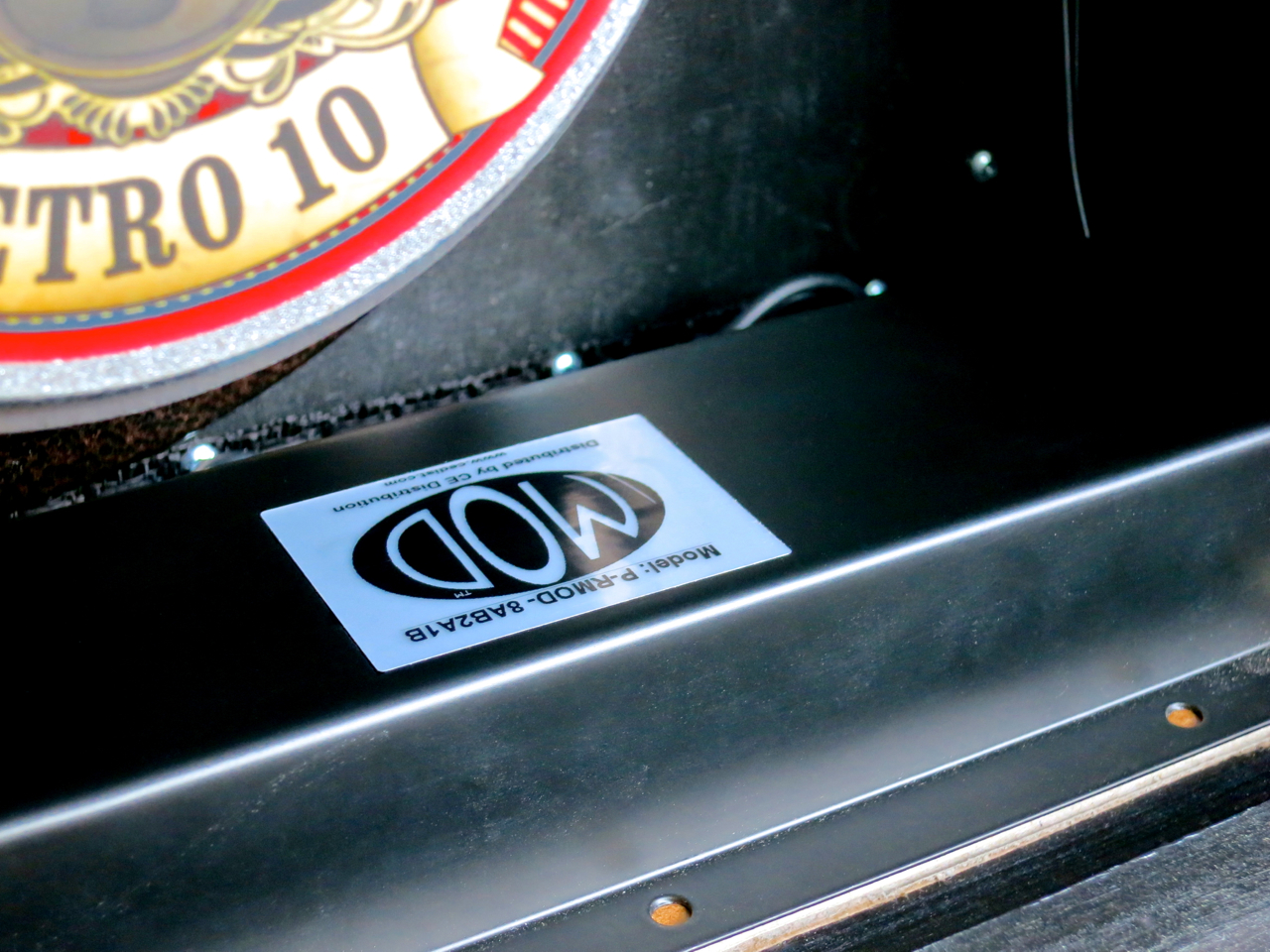
This combo’s short reverb tank is supplied by MOD.
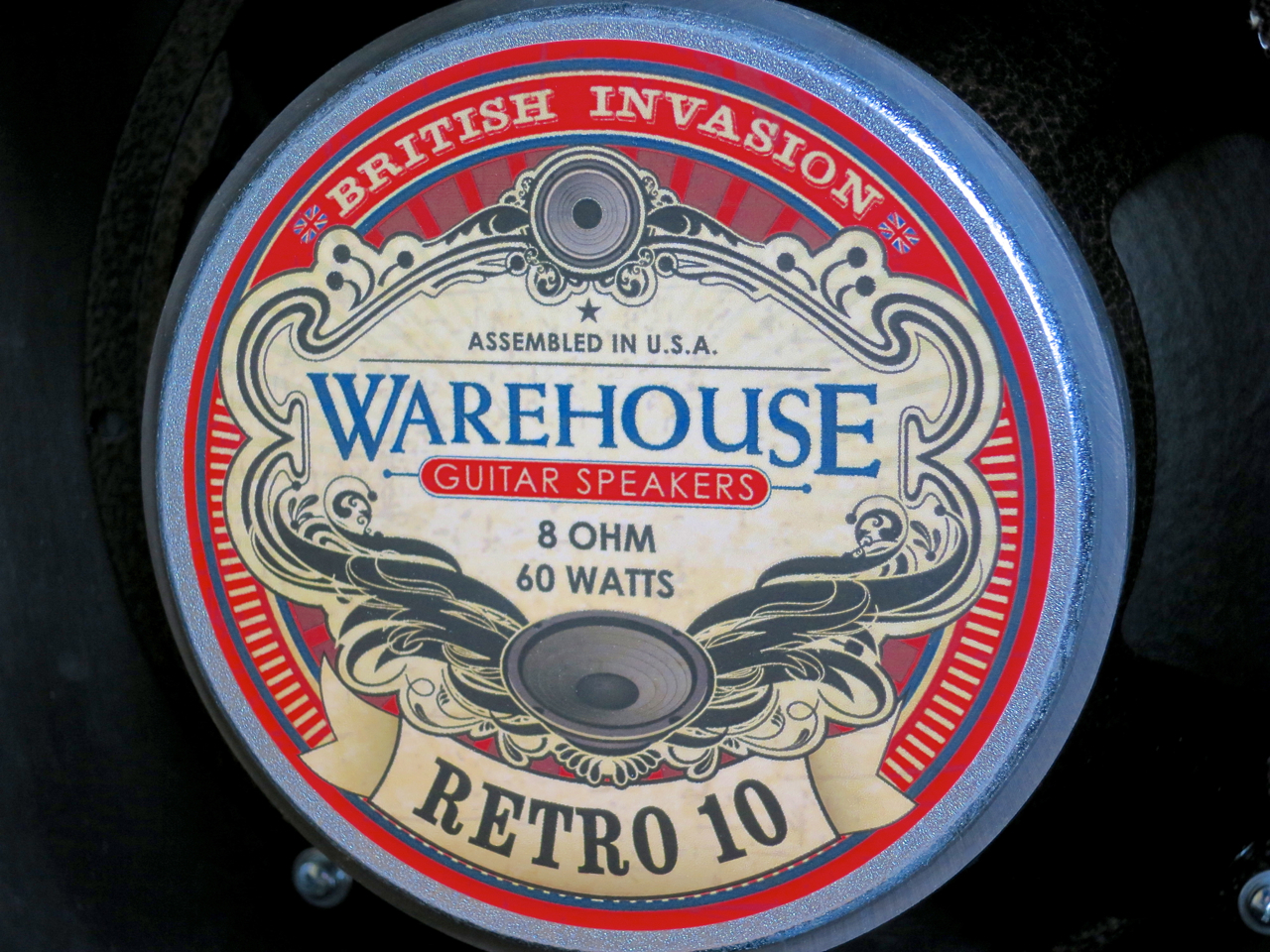
Bluetone have chosen a Warehouse Guitar Speakers Retro 10-speaker for their new combo, even though this model is distinctly different from the old Jensen speakers in vintage Fender designs.
This choice is, of course, deliberate and based upon many listening tests:
The WGS Retro, which is made to withstand far more output than this combo can deliver, keeps the Black Prince Reverb’s tones clean and dynamic under all circumstances. This speaker’s British character also makes the Bluetone-combo sound larger and fatter than you’d expect.
****
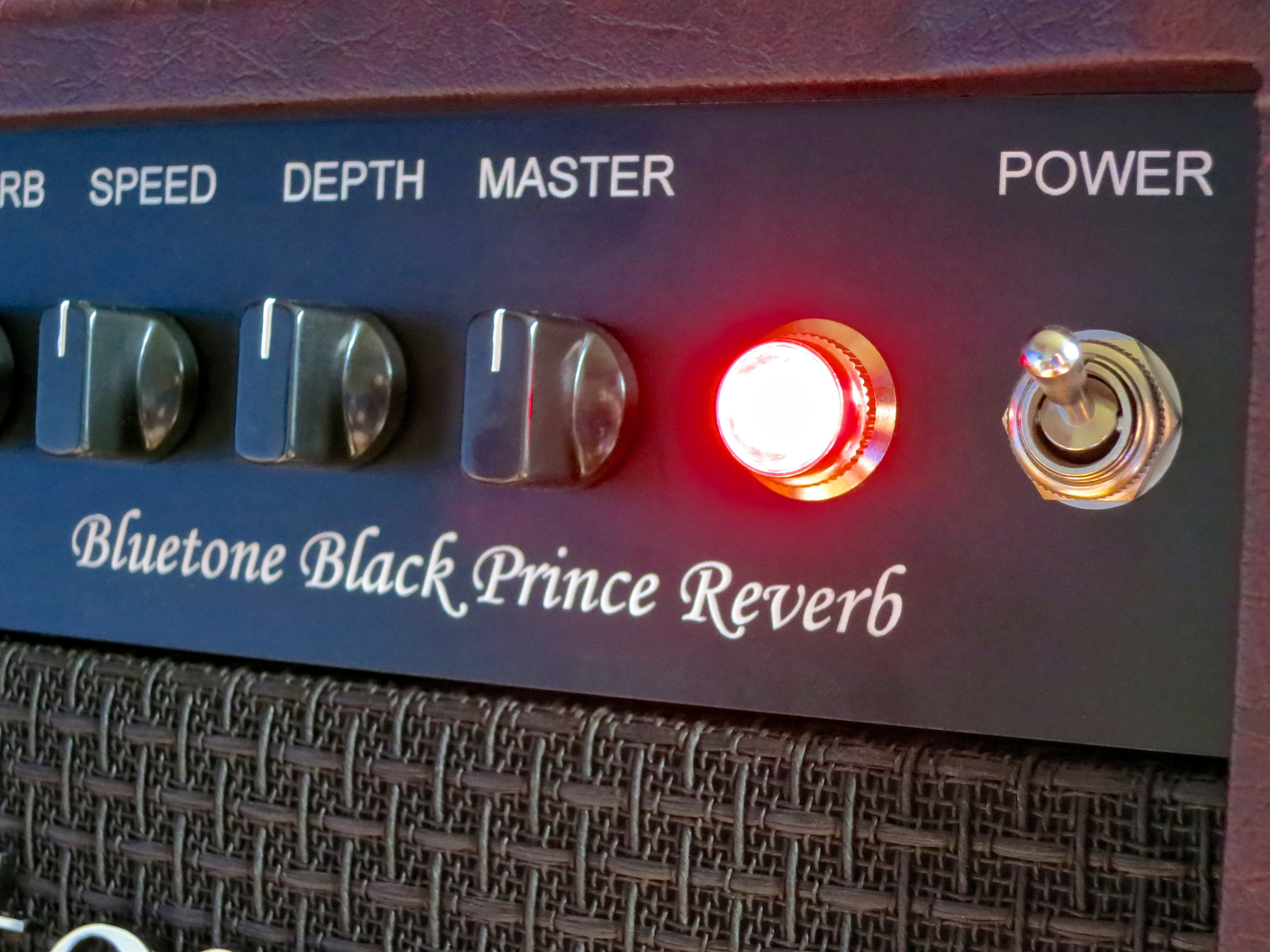
Oh, boy, this is a sound you cannot get enough of! At least in my case only a minute or two of playing the Black Prince was enough to make me consider getting myself in debt.
It’s hard to put into words what that special ingredient is, but this is what a clean electric guitar should sound like! This combo sounds clean, fresh and dynamic, but never clinical, cold or brittle. There a good dose of chime, but it doesn’t hurt your ears. The bass strings sound big, but never mushy.
The sound of the short MOD reverb tank is surprisingly dense and complex, and there’s more than enough of it to satisfy Surf Music fans. The Black Prince Reverb’s tremolo works like a treat, too, offering you anything from slow and soft to machine-gun mania.
Here’s a clip, recorded with a Fender Telecaster, gives you an idea of the Bluetone Black Prince Reverb’s dry tone, as well as its spring reverb and tremolo effects:
The Black Prince also excels in keeping your guitar’s own character intact. These three clips feature a Fender Telecaster…
…an Epiphone Casino…
…and a 1970s Japanese ”lawsuit” copy of a Gibson ES-335:
This combo’s fantastic clean tone is a fantastic platform for pedal addicts. The demo track was recorded using an analogue chorus pedal, a tube screamer-type overdrive, as well as the amp’s built-in reverb and tremolo.
The rhythm parts were played on a Fender Stratocaster, while the lead was played on a Hamer USA Studio Custom:
****
In my view, Bluetone’s Black Prince Reverb is a top-drawer choice as a combo for use at home or in the studio. It’s also great for smaller gigs, when too much noise on stage can be a problem, or you can mike it up for larger venues.
The Black Prince Reverb is a nicely compact boutique-grade valve combo offering fantastic cleans, as well as fine reverb and tremolo effects.
This amp hasn’t been spoiled by unnecessary ”tube voodoo” or distracting graphic. I’m all for the clean and understated looks this Bluetone has to offer!
This is a handmade, Finnish boutique combo, offered at a very fair price.
****
Bluetone Black Prince Reverb
1.500 €
Contact: Bluetone Amps
****
Pros:
+ value-for-money ratio
+ handmade in Finland
+ workmanship
+ fine spring reverb and valve tremolo
+ sound
+ master volume-control
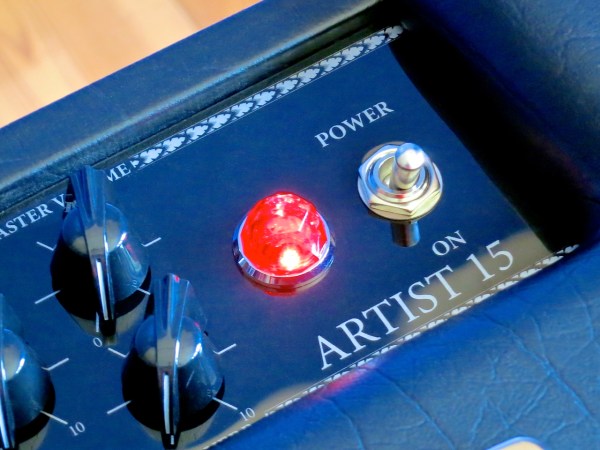

In a way Blackstar Amplification’s new Artist Series breaks new ground for the British amp maker.
Until now most of Blackstar’s designs were based on the typically British tones of EL34 and EL84 power tubes, often associated with Marshall designs.
The new Artist combos feature power amps built around 6L6 valves, as used in many of Fender’s classic designs. According to Blackstar the new Artist amps are designed to combine the best bits of the typically British Class A tone (with two ECC83s in the preamp section) with the dynamic range and chiming top end of a 6L6 power section.
Kitarablogi.com was given the opportunity to take the smaller Artist model – the Blackstar Artist 15 (current price in Finland: 799 €) for a spin.
****

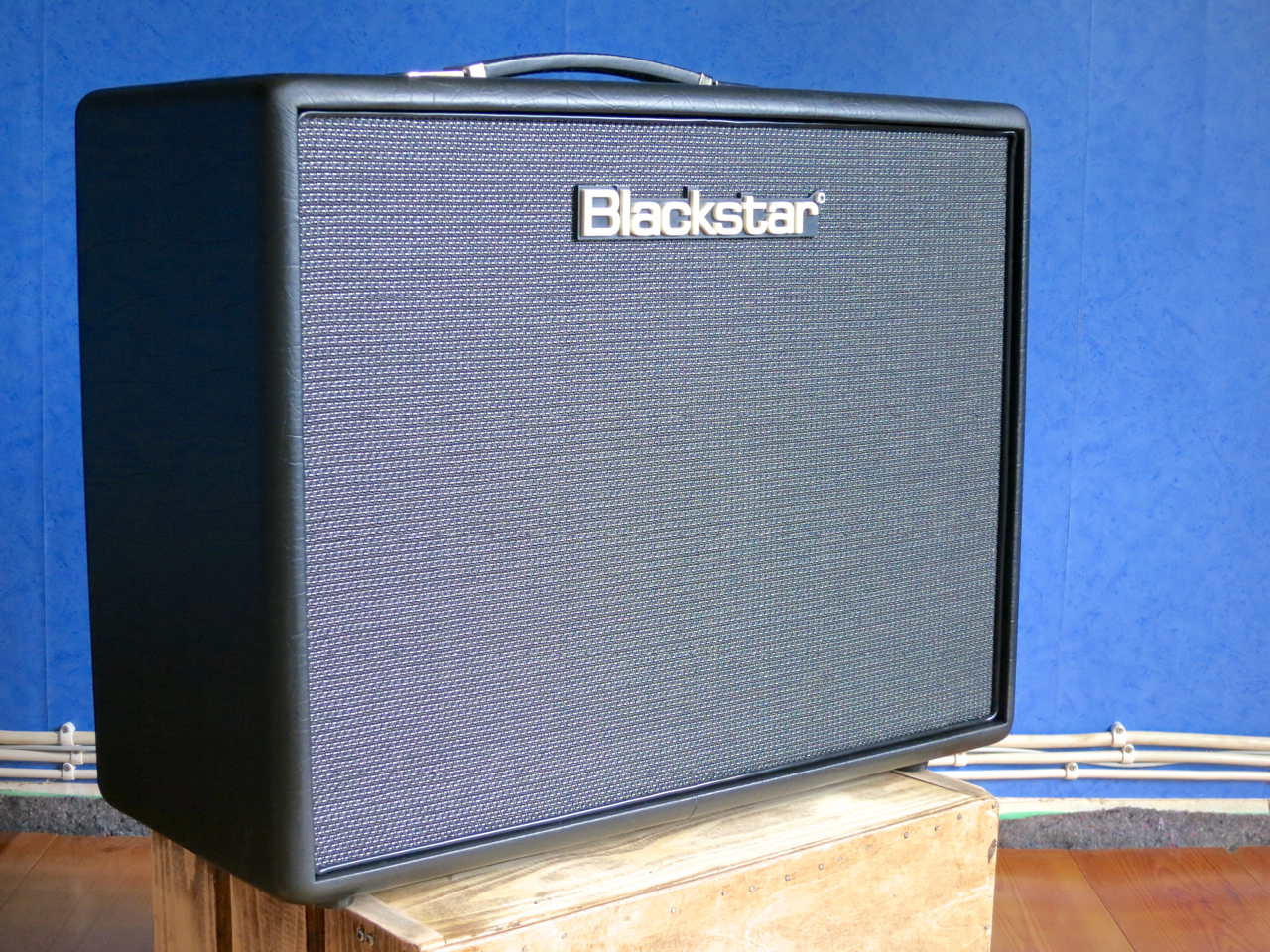
The Blackstar Artist 15 looks like a typical Blackstar combo – black vinyl covering and a dark grey grille cloth.
For a combo that comes equipped with a single 12-inch speaker the amp’s cabinet is rather large. The reason for the cabinet’s size becomes clear when you look at the Artist 15 from behind.
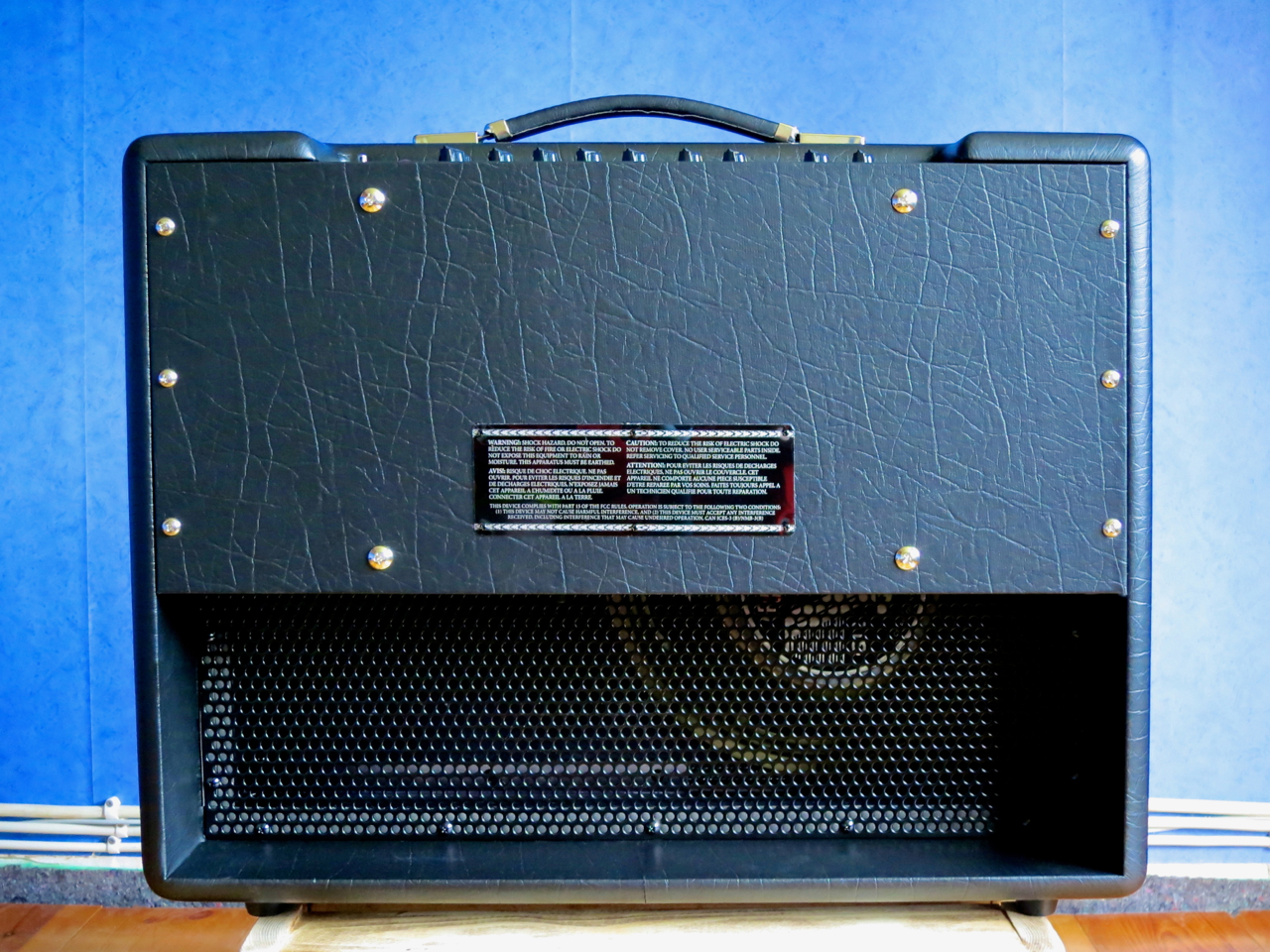
The combo’s Celestion V-Type G12-speaker has been placed deliberately to one side of the combo. Blackstar doesn’t tell us exactly why this configuration has been chosen, but I’d wager that the idea behind this is to harness the benefits of a large, stiff front baffle and a larger cabinet – namely: a crisp attack, and a warm, full bottom end.

Celestion’s V-Type comes loaded with a ceramic magnet. According to Celestion this speaker combines a classic tonality with a modern power rating.

The Blackstar’s back panel sports a whole array of connectors for things such as external speaker cabinets, a speaker-emulated line out, an effects loop, as well as the channel footswitch that comes with the amp.
****

Blackstar’s Artist 15 is rated at 15 watts of output and features two preamp channels:
Channel 1 is the so-called boutique channel, designed to put the least possible amount of components between your guitar and the speaker. This channel sports only two controls – Volume and Tone – before the signal is sent on to the master section.
Channel 2 gives you the full Blackstar-experience – you’ll find separate Gain and Volume knobs, a three-band EQ section, as well as Blackstar’s proprietary ISF-control. Setting the ISF knob to zero will result in bright and sinewy Fender Blackface-style sounds, while ISF at full on will give you muscular, Marshall-type tones from this channel.
In addition to the Master Volume control, the Artist 15’s master section also includes the level control for the combo’s very nice digital reverb.
Channel 1 clearly has a much rounder and warmer basic tonality than the (more versatile) second channel. With clean settings Channel 1 will give you a fuller mid-range compared to the more Fender-like, chimey Channel 2.
Here’s what Channel 1 sounds like played clean with an Epiphone Casino (first clip) and a Gibson Melody Maker SG (second clip):
…and here’s Channel 2 played with the same guitars:
The Artist 15’s channels also differ in the amount of gain they offer:
Channel 1 will take you from clean all the way to Rockbilly-style breakup and traditional Blues overdrive, while Channel 2 offers more than enough dirt for chunky Rock tones.
Here’s Channel 1 at full gain (Casino and Melody Maker SG):
…and here are two clips of Channel 2 with Gain full up:
The rhythm guitar tracks on the demo song have been recorded with a 1970s Japanese ES-335 copy (made by Kasuga; left channel) and a maple-necked Fender Stratocaster (right channel). The lead is played on the Kasuga:
****
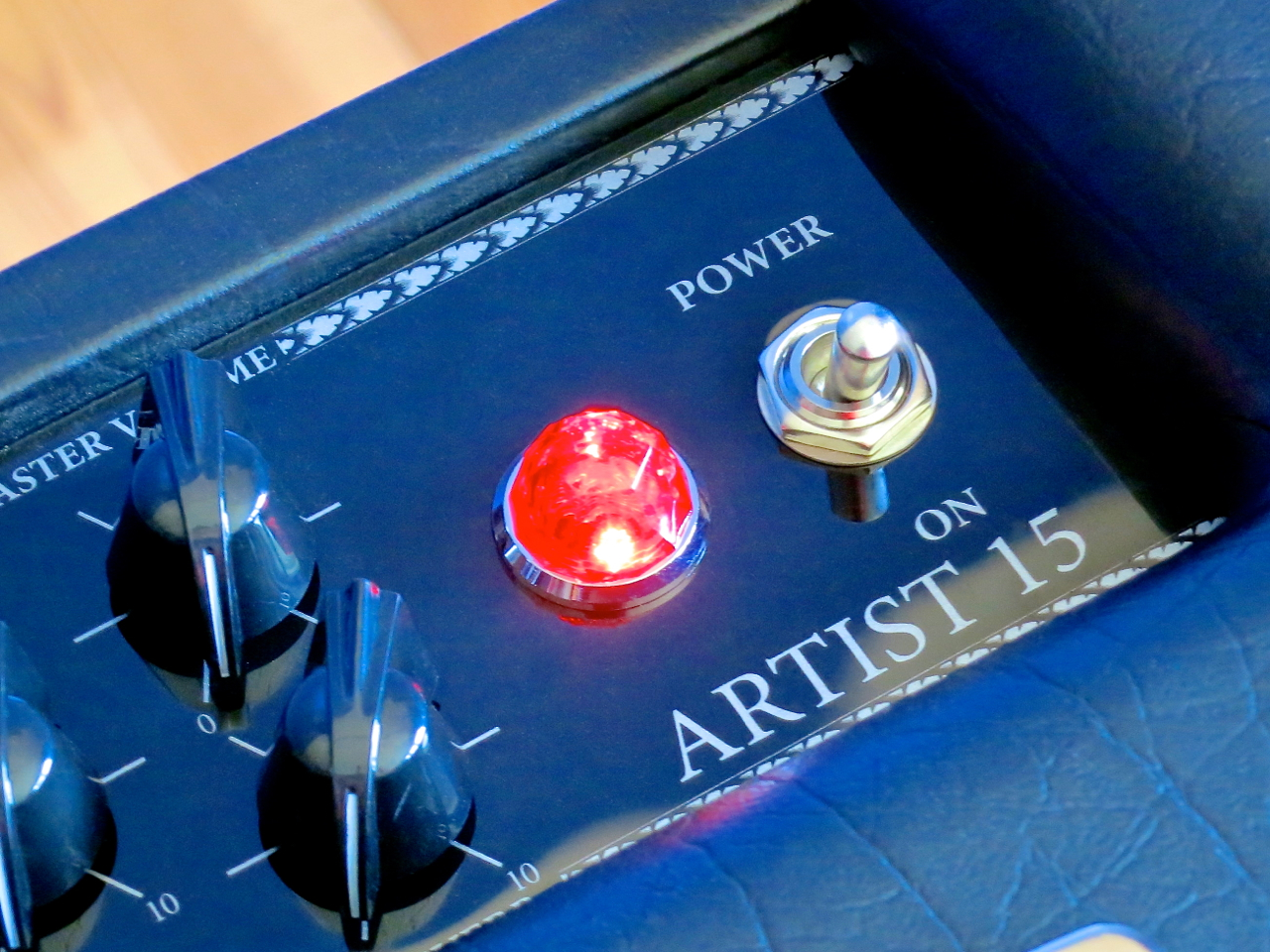
The new Blackstar Artist 15 isn’t your typical two-channel combo, which offers you a clean channel and a dirty channel. This is a valve amp that’s all about choices and flexibility.
Blackstar have noticed that pedalboards are becoming en vogue again, which is why their new Artist combos offer enough headroom for clean tones in both of their two channels.
For pedal users the big advantage of the Artist 15’s architecture lies in the fact that the combo offers two high-quality clean variants in the same amp. Channel 1 is a back-to-basics boutique-/AC30-style channel, while Channel 2 offers a much broader range of clean tones, all the way from Fender to modern Marshall.
Of course, you’re free to use the Blackstar Artist 15 in the traditional channel-switching fashion, too, which will give you a top-notch clean sound from Channel 1, and a very versatile array of quality overdriven and distorted tones from Channel 2.
Either way – the Blackstar Artist 15 hits bull’s-eye, in my opinion, and I can only recommend checking one out for yourselves.
****
Blackstar Artist 15
799 €
Finnish distribution: Musamaailma
Pros:
+ workmanship
+ clean headroom
+ versatile amp sound
+ great reverb


”Suuri USA-kiertue” – se kuulostaa monen muusikon korviin todella houkuttelevalta. Yksityiskoneita, limusiineja, glamouria, kauniita naisia, helppoa elämää, paljon rahaa…
Väärin meni!
Vaikka olisitkin maailmankuulun bändin kitaristi, silloin kun olet sivuprojektisi kanssa liikenteessä, tulet Yhdysvalloissa aloittamaan (lähes) nollasta, nimittäin pelkkänä lämmittelybändinä.
Kimmo Aroluoman uutuuskirja ”Jenkkirundi – seitsemän viikkoa kiertue-elämää” seuraa aitiopaikalta Mikko ”Linde” Lindstömin (HIM) ”soolobändin”, Daniel Lioneyen, ensimmäistä USA-kiertuetta, jolla Aroluoma toimi bändin teknikkona.
Aroluoman kirjasta selviää millaista se on, kun suomalainen bändi lähtee Jenkkeihin support-bändinä äärimmäisen tiukalla budjetilla. Glamour on joka tapauksessa todellisuudesta hyvin kaukana.
”Jenkkirundi – seitsemän viikkoa kiertue-elämää” ei ole opas kiertueelle lähteville bändeille, vaikka kirjasta selviää esimerkiksi miten kiertuebudjetti laaditaan, vaan se on rehellinen katselmus USA-kiertueella vastaan tulevista koettelemuksista.
Toisena juonena tässä erinomaisessa kirjassa toimii kirjoittajan oma henkinen (ja fyysinenkin) kärsimys- ja kasvutarina täydellisen burnoutin ja avioeron partaalla.
Tästä syntyy lukemisen arvoinen kokonaisuus, joka kertoo siitä miten bändi ja heidän taustavoimat saivat käännettyä rundin ulkoisista paineista, teknisistä vaikeuksista ja henkilökohtaisista ongelmista huolimatta tärkeäksi menestykseksi.
”Jenkkirundi – seitsemän viikkoa kiertue-elämää” (130 sivua; 16,90 €) ilmestyy 01.09.2016. Kirjan voi tilata ennakkoon TÄÄLTÄ.


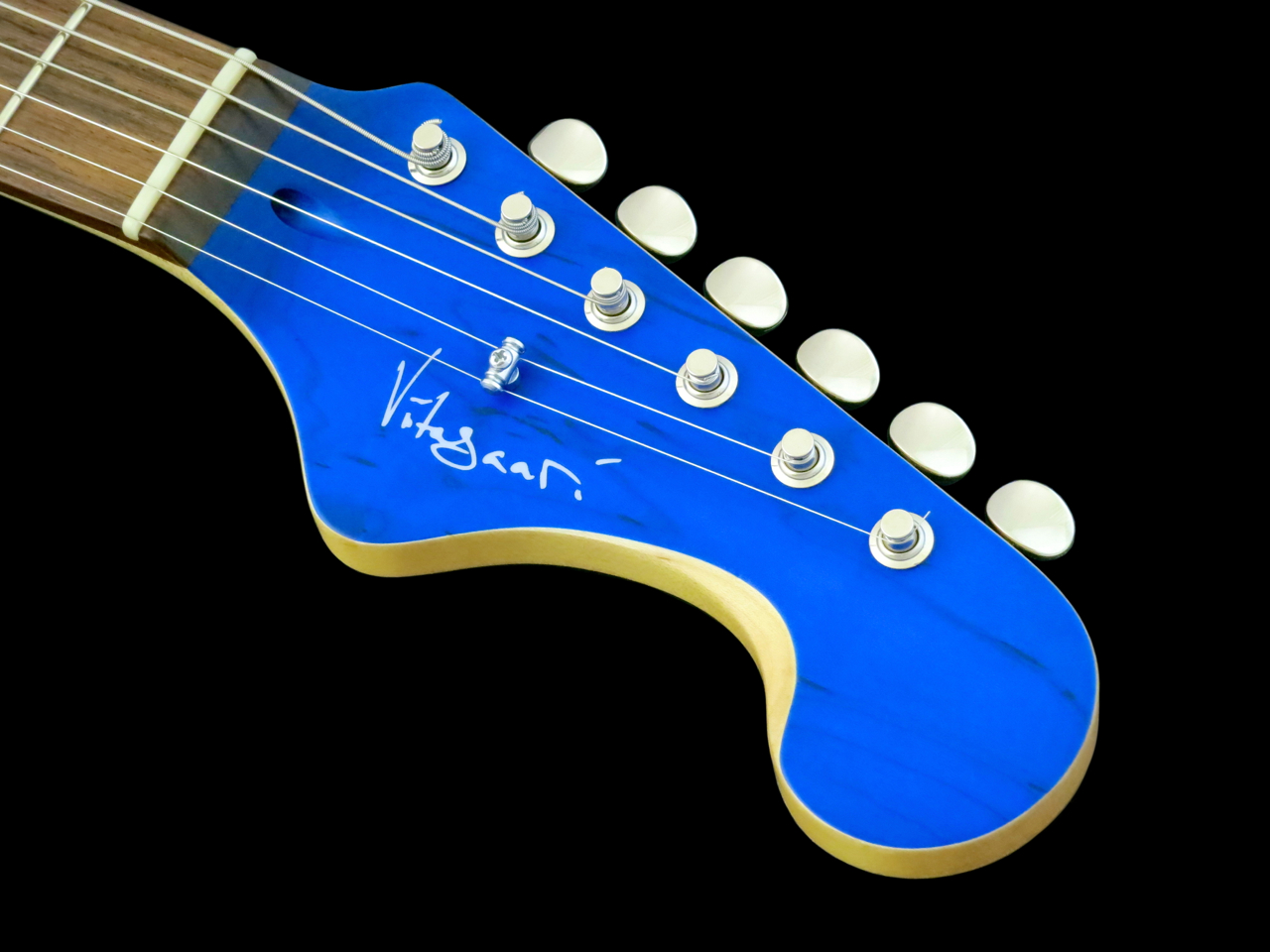
Olli Viitasaari is a young luthier from Järvenpää in the south of Finland.
After completing his training at IKATA, Olli has been working on his own electric guitar model (in addition to doing repairs and customising jobs), which he since displayed at Fuzz Guitar Show (Gothenburg, Sweden) and Turenki Tonefest (Finland).
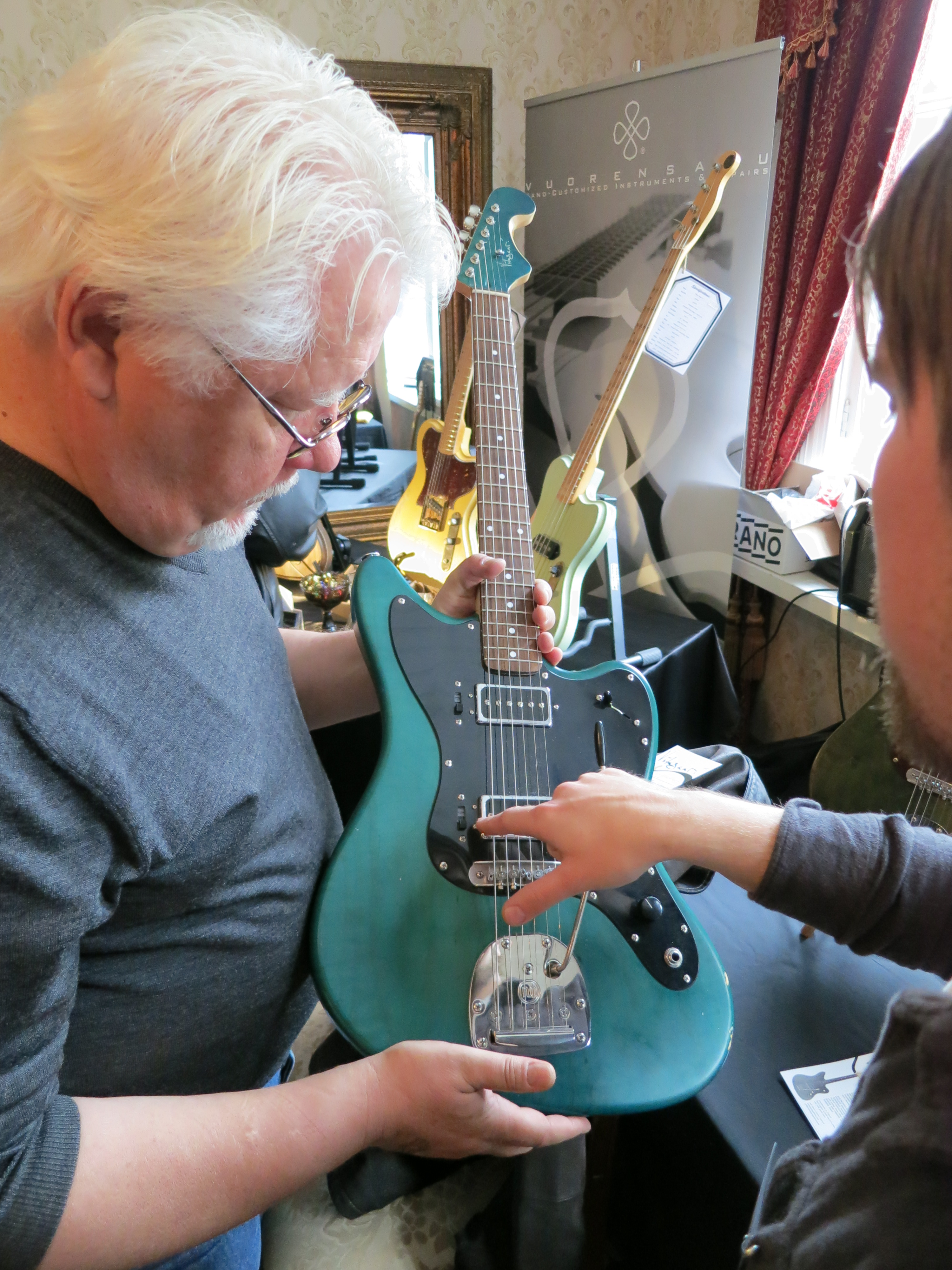

Olli’s guitar model is called the Viitasaari OM (OM = Offset Model, prices starting from 2,500 €; a Hiscox case is included), and it represents Olli’s vision of the perfect Jazzmaster-style guitar. Guitarists have reacted very positively to the Viitasaari OM, and there are already a few guitars in active use by Finnish and Swedish guitarists.
Kitarablogi.com would like to thank Mr. Juha Pöysä for the loan of his personal guitar!
****
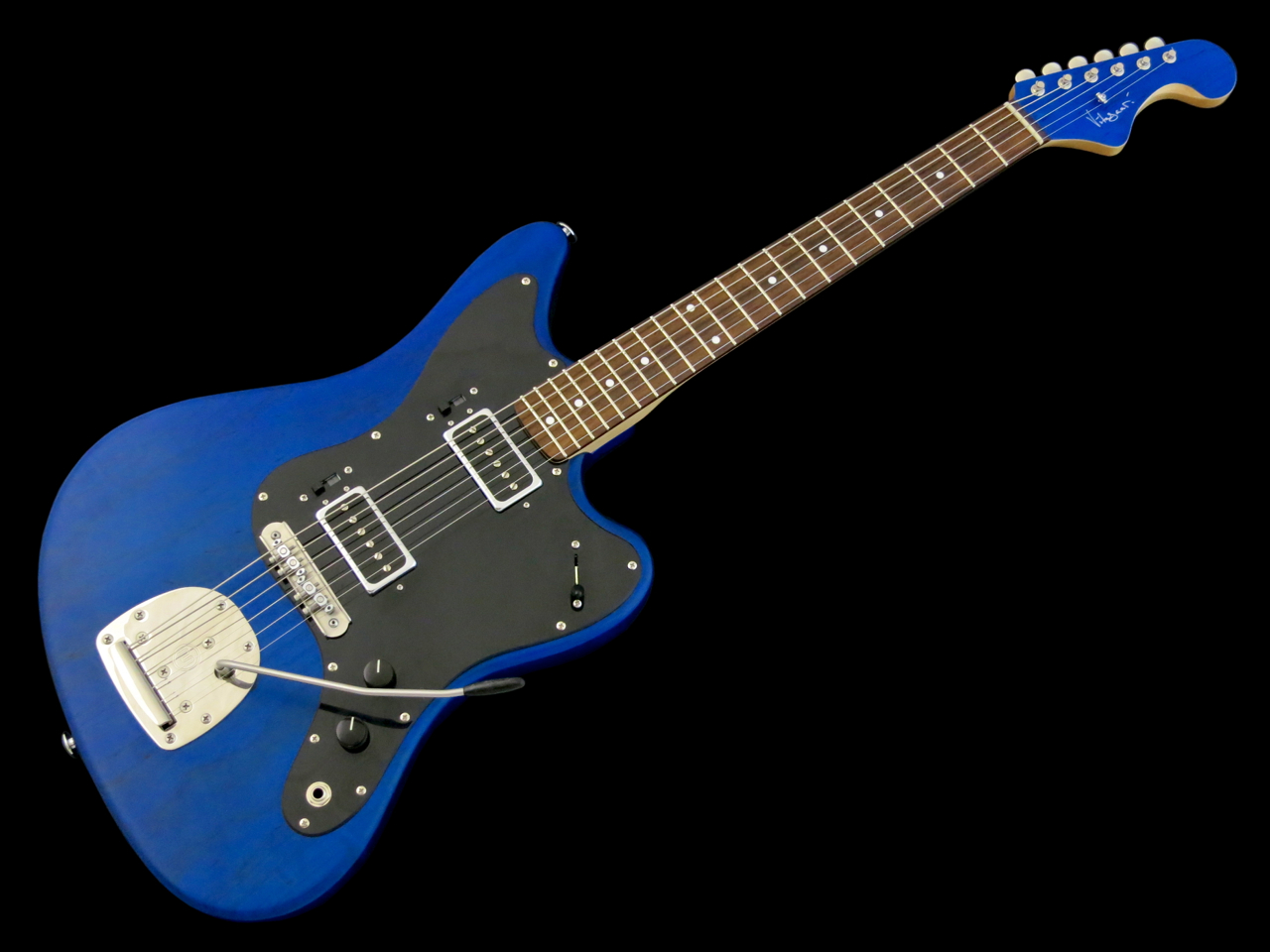
The basic building blocks of the Viitasaari OM use the tried and trusted recipe of its 1950s forefather:
The OM’s body is made from alder, while the bolt-on neck has been carved from hard rock maple. The fretboard is rosewood.
The first indication that this isn’t your run-in-the-mill Fender-clone lies in the scale length. Olli has chosen 25 inches for his model, which places this guitar’s scale length in the same territory as a PRS – right in the middle between traditional Fender and traditional Gibson.
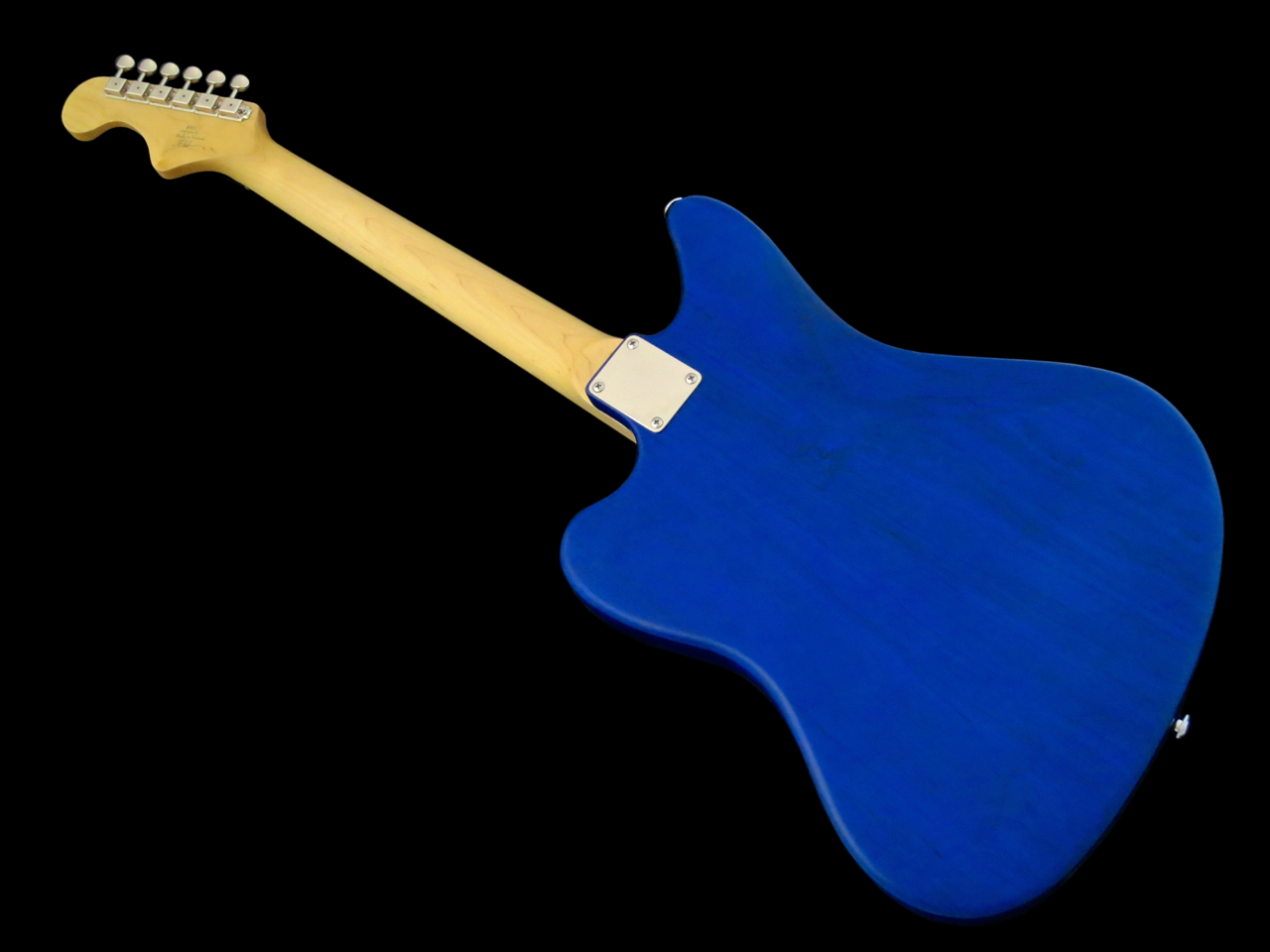
As Viitasaari Guitars is a true boutique builder there’s plenty of options for the customer to choose from, both in terms of pickups and electronics, as well as the guitar’s finish.
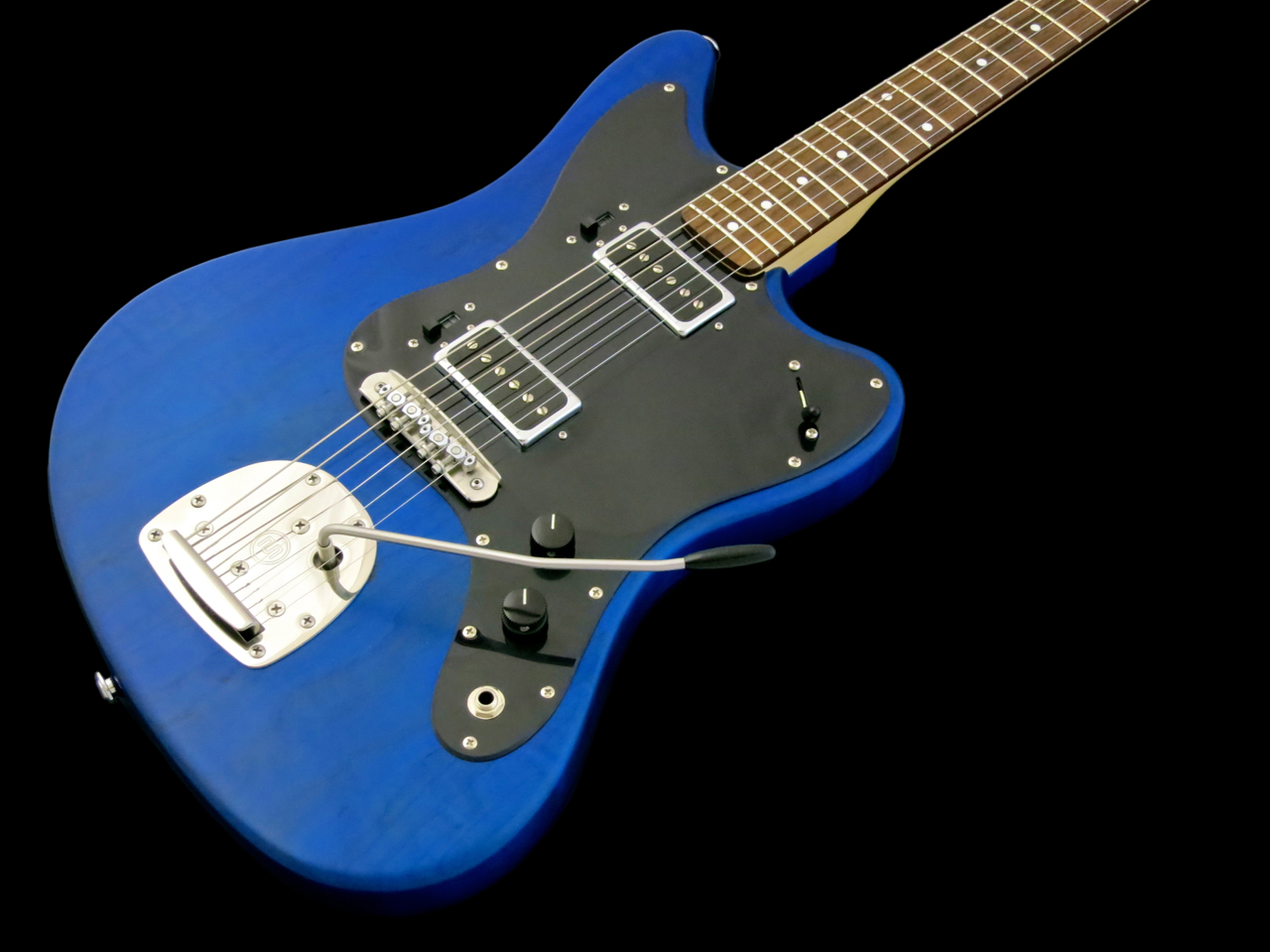
Juha Pöysä’s OM comes in a very fetching blue satin finish for the body, and a natural satin finish for the neck. The customer can also specify gloss finishes or oil-based finishes for his (or her) own guitar.
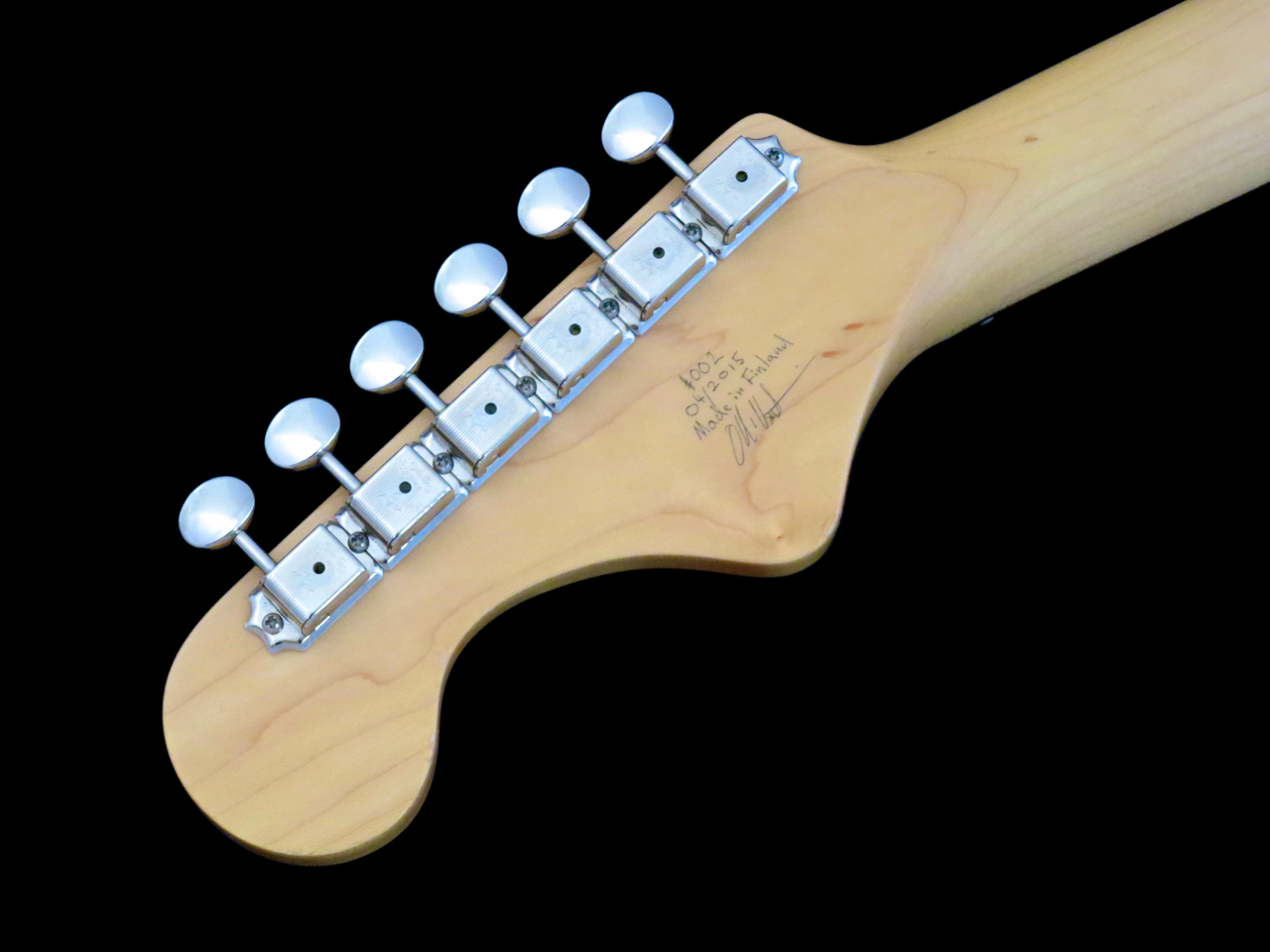
This guitar sports a set of Gotoh HAP-tuners, which combine vintage looks with height-adjustable tuner posts.
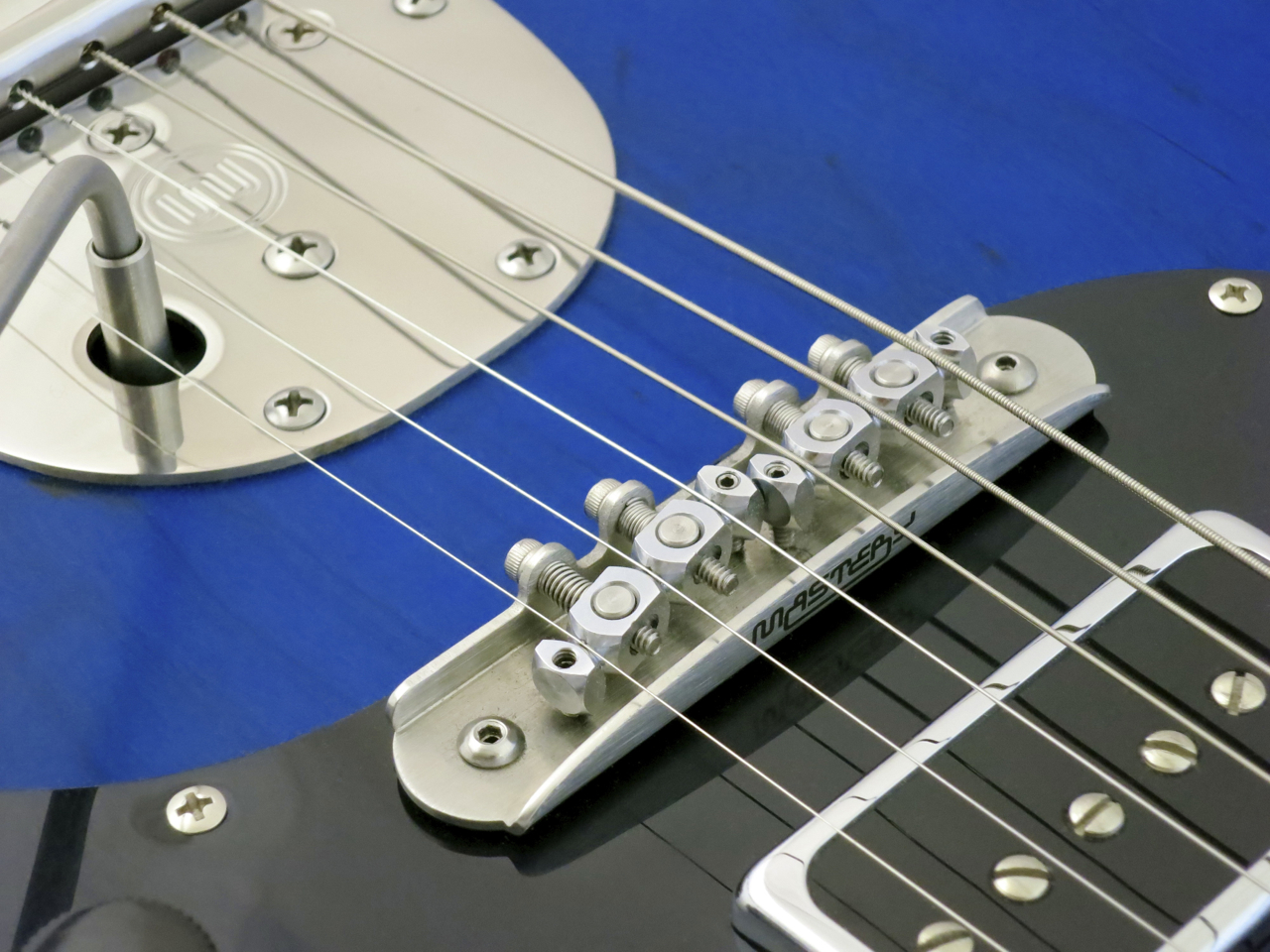
Leo Fender’s original Jazzmaster/Jaguar-vibrato is both loved and loathed among guitarists. Players tend to love the soft and slightly spongy action, but often tend to find the original design’s many quirks and idiosyncrasies extremely annoying.
Fender’s original design features tiny grub screws for the height-adjustment of the bridge’s separate bridge saddles. These screws often tend to work loose during playing, causing rattles and involuntary changes in string action. Additionally, there’s only a relatively shallow string angle over the bridge, exacerbating the string rattling, and sometimes even causing a string to jump out of position, especially with modern light gauge strings. In extreme cases, a bridge saddle may even turn upside down in the middle of a solo.
US-based hardware company Mastery has put a stop to all these problems by redesigning the Offset Bridge from the ground up. Naturally, this fantastic system has been chosen for the Viitasaari OM.
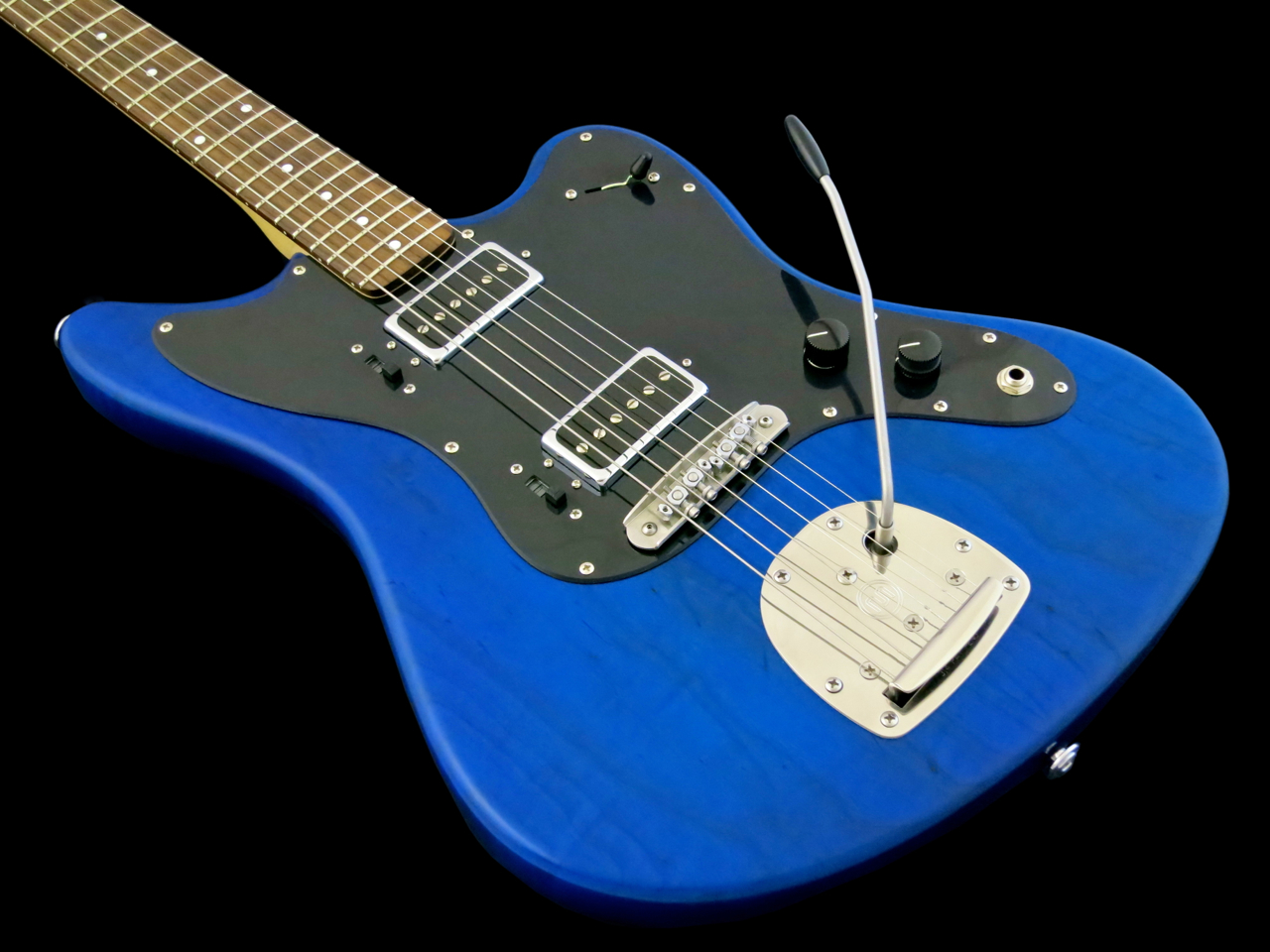
The OM’s 9.5-inch radius and fatter-than-vintage frets give the Viitasaari a modern playing feel.
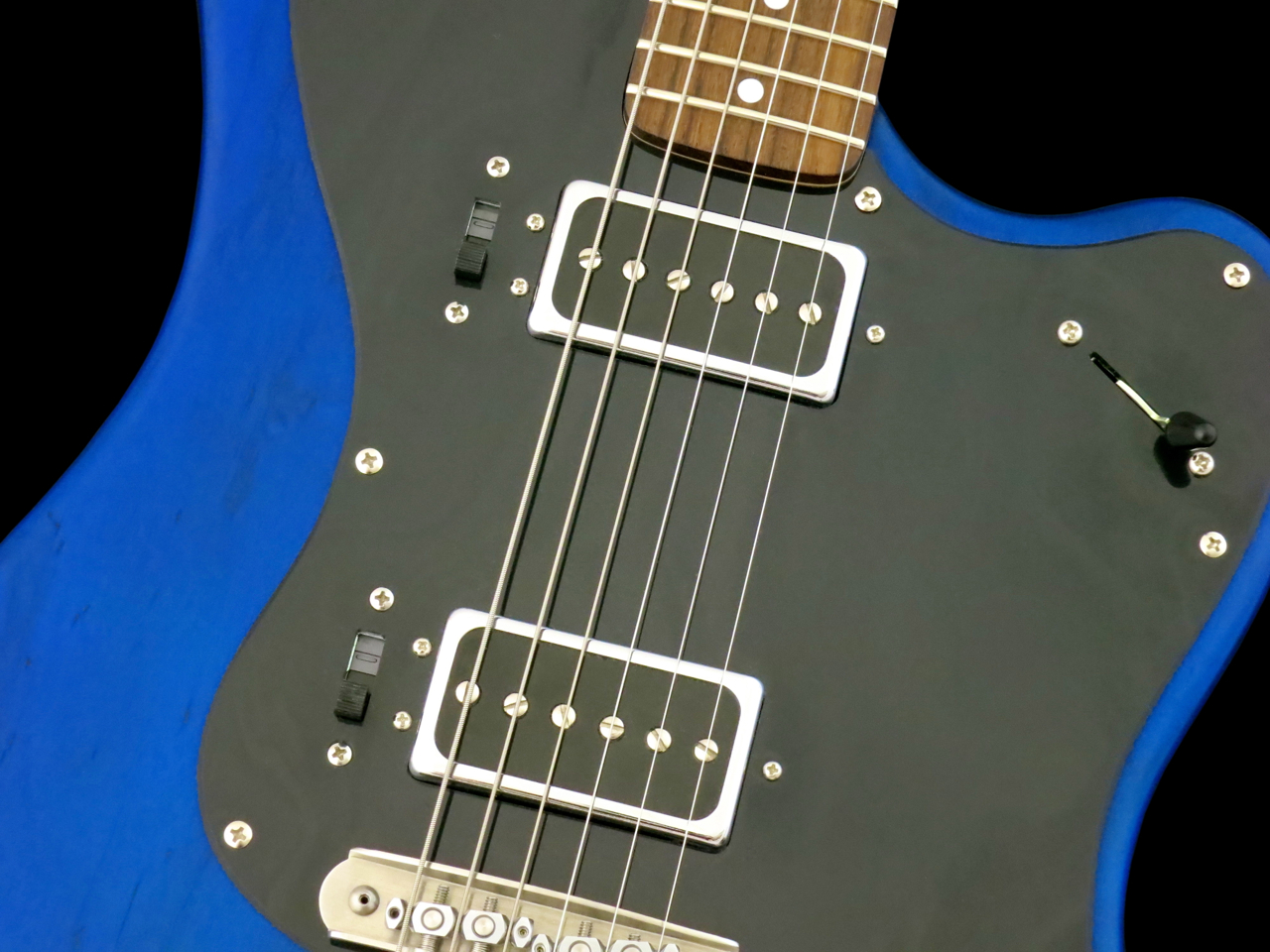
The two P-90-type pickups have been developed especially for the Viitasaari OM by Olli and Finnish pickup maker Jarno Salo.
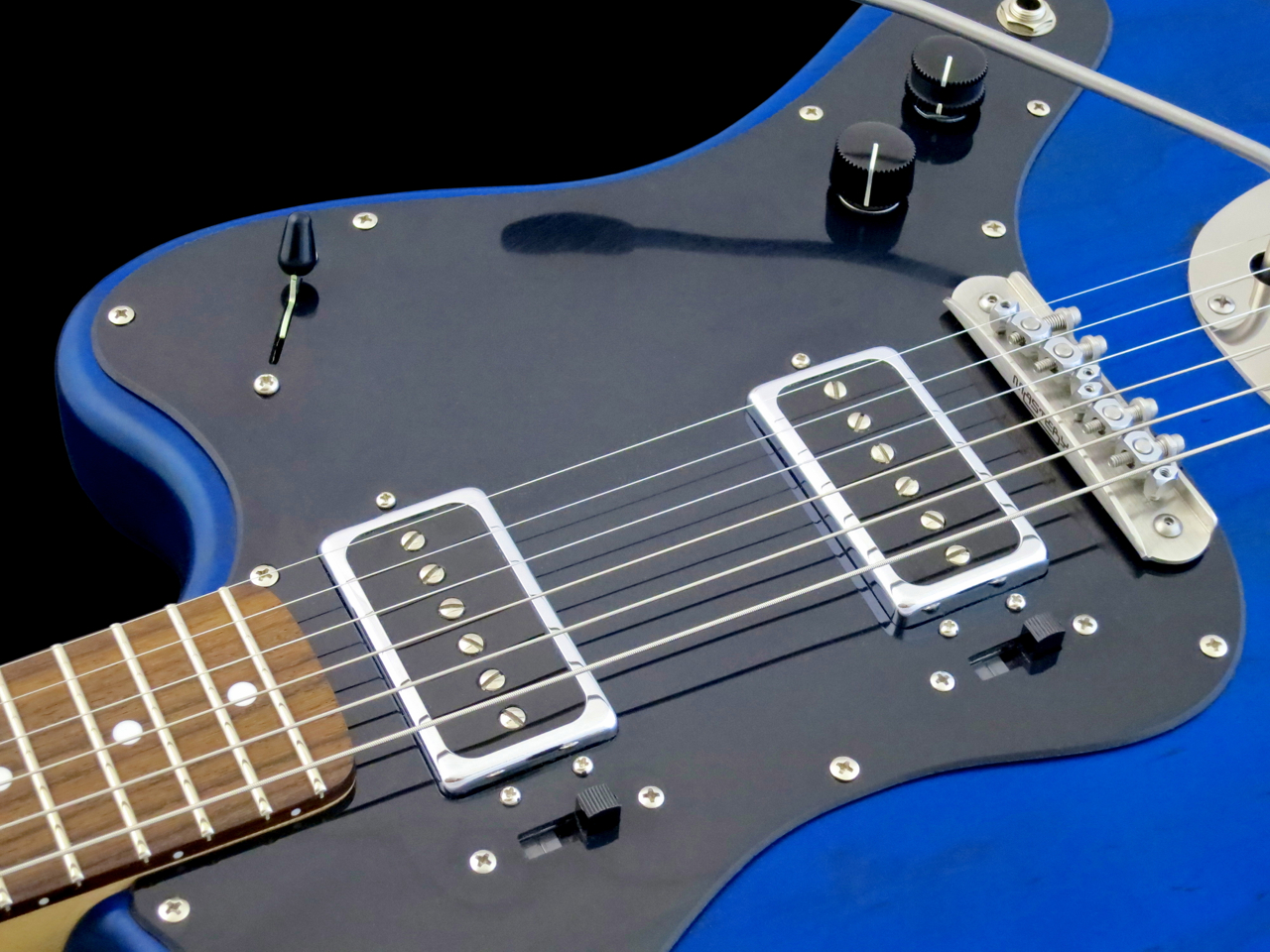
The special feature of these Viitasaari/Salo-pickups are their dual coil taps, giving you three different basic sounds (and output levels) per pickup. A slide switch above each pickup lets you select between the full coil and the two coil tapped variations.
You can choose between a three-way blade switch (as on the reviewed instrument) or a three-way rotary for the pickup selector.
The controls are master volume and master tone. You can also specify a built-in fuzz effect as an option, which is then activated by a push/pull-switch inside the tone control.
****
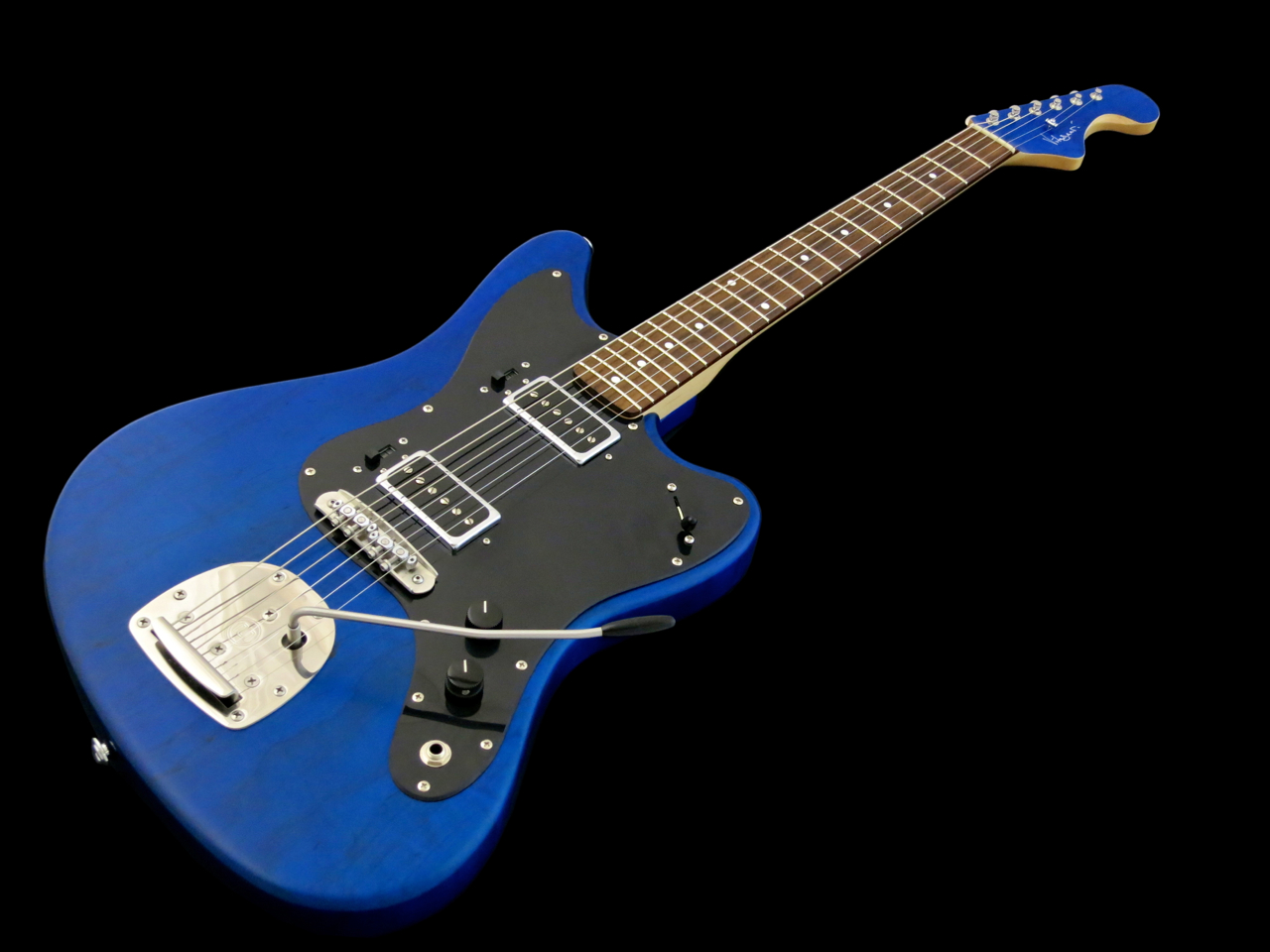
The Viitasaari OM is a top-drawer boutique guitar; it is lightweight and easy to play.
Comparing a Viitasaari to a mass-produced guitar makes the differences blatantly obvious – even though the Jazzmaster/Jaguar-shape is already a very ergonomic design, Olli Viitasaari’s craftsmanship takes the smoothness to new levels. The OM feels like a natural extension of the player’s body.
The workmanship and finish on this guitar couldn’t possibly be any neater – you could call t exemplary. The playing feel with the 0105 [sic!] set of strings is precise and bendy at the same time.
Mastery’s Offset vibrato system really is the best that has happened to the offset-vibrato since its inception in 1958. This is how the bridge and vibrato should have been designed right from the start! The Mastery Offset takes all the whammy abuse you can throw at it without any untoward side effects – no tuning problems, no strings jumping about. No wonder so many Jazzmaster and Jaguar-players have already updated to the Mastery Offset-system.
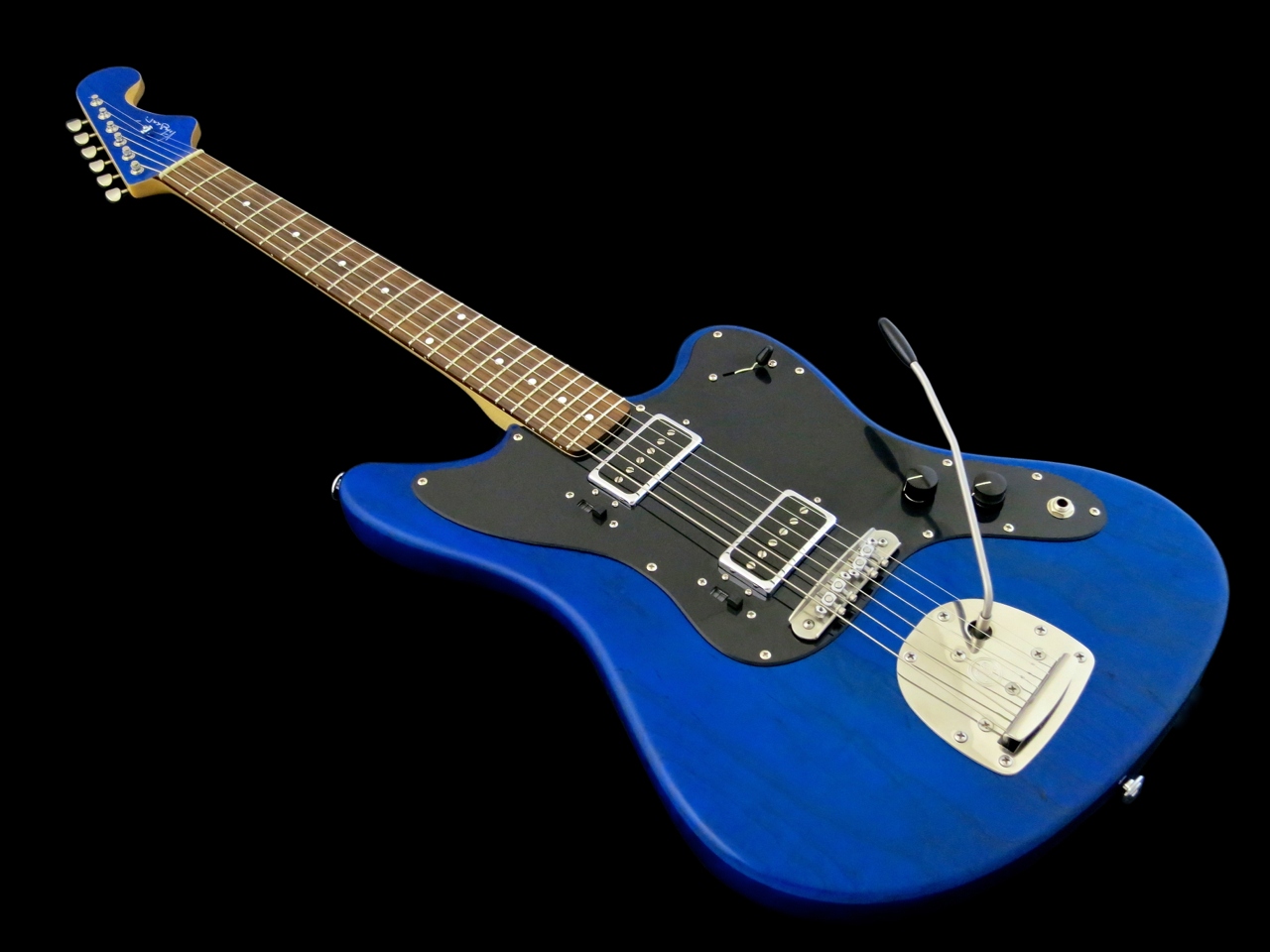
The clean sound of the Viitasaari OM is Fender-ish in its fresh brightness and clean midrange, even though these P-90s are slightly more powerful than Fender Jazzmaster pickups. We get a high quality version of the Jazzmaster-tone with clearly less hum and buzz, thanks to the fine Viitasaari/Salo-pickups.
Using the coil taps will give you two quieter and slightly more rounded versions of the full pickup tone.
Here are the neck pickup’s three variations:
And the same for the bridge pickup:
As we all know, P-90s love chunky overdrive sounds, which opens the Viitasaari OM up to all sorts of tasty crunch tones:
I feel the coil taps are especially useful in distorted Rock/Blues-settings, making it possible to go from rhythm to lead playing without having to step onto an effects pedal. The shorter coil variations cool things down nicely, while the full coil gives you a ”boost” in volume and bite for lead guitar parts.
Here are the neck pickup’s three variations:
And the same for the bridge pickup:
In recorded the demo track’s guitar parts using a T-Rex Replicator analogue tape delay:
****
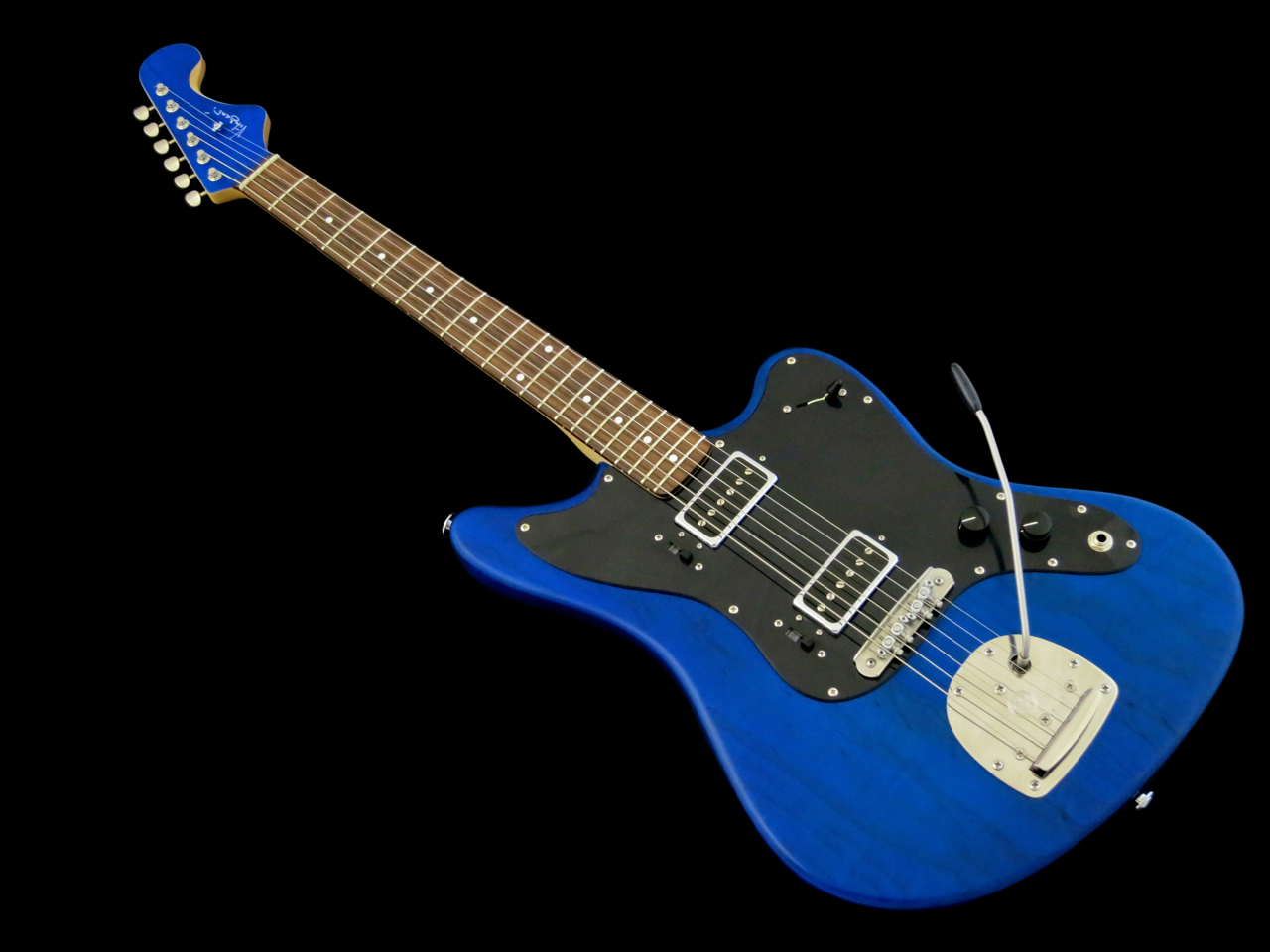
What a gorgeous guitar! To me the Viitasaari OM is simply the best Jazzmaster-type guitar I have ever played.
The workmanship is boutique grade and the OM plays like a dream. The Master vibrato is the icing on the cake, taking this design to new levels.
In my view the best thing about the OM, though, is the way Olli has incorporated double coil taps in his design. The OM takes the lead/rhythm idea of the original Jazzmaster, but transforms it into something that actually works much better in a modern context.
****
Viitasaari Guitars OM
from 2,500 €
Contact: Viitasaari Guitars
Pros:
+ handmade in Finland
+ workmanship
+ finish
+ Finnish pickups
+ Mastery-vibrato
+ sound


 Kitarablogi.com – Finland's premier Guitar and Bass blog