
Löydät Kitarablogin Musikmesse 2014 -gallerian TÄSTÄ.
Click HERE for Kitarablogi’s Musikmesse 2014 photo gallery.




Kitarablogi.com – Finland's premier Guitar and Bass blog
Juttuja kitaroista ja bassoista


Kitarablogi vierailee Frankfurtin Musikmessessä 12. – 14.03.2014.
Messun aikana löydät tuoreimmat kuvat Kitarablogin Facebook-sivulta.
****
Kitarablogi will be at Musikmesse Frankfurt March 12th through 14th.
During the Musikmesse-fair you’ll find regular picture updates on Kitarablogi’s Facebook page.


****
Rotosoundin loistava 1960s Reissue Fuzz -pedaali on nyt saanut kuusi efektiveljeä, jotka ovat kaikki efektiguru John Oramin käsialaa:
• The Wobbler on optinen tremolo pedaali, jolla on kaksi rinnakaista, silikoni- ja germanium-transistoreilla toteutettuja vahvistuspiiriä, joiden signaalia voi miksata portaattomasti.
• Phaser-pedaalin nimi on King Henry. Rotosound lupaa efektille erittäin maukasta soundia, jonka voi hienosäädellä Peak-nupilla.
• The Pusher on firman uusi kompressori, jota on varustettu omalla tone-säätimellä (Bite).
• Rotosoundin The Crusader maustaa soundisi syvällä ja lämpimällä choruksella.
• Analogiviiveen ystäville tarjotaan The Aftermath -nimistä pedaalia.
• Viimeinen efekti katrasta on kolmialueinen EQ-pedaali The Leveller.
****
Lisätiedot: F-Musiikki
****

****

Voxin 1960-luvun Mark III- ja Mark V -kitarat – jotka tunnetaan myös nimillä Teardrop (Mark III) ja Phantom (Mark V) – ovat jälleen saatavissa musiikkikaupoista. Brittiboomi-mallien tunnetuimmat käyttäjät olivat 1960-luvulla Rolling Stonesien Brian Jones (Mark III) ja Hollies-yhtiön Tony Hicks (Mark V).
Todella ilahduttavaa on, että uusi Vox-kaksikko on saatavilla erittäin maltillisella hinnalla.
****

Vox Mark III (355 €) muistuttaa symmetrisellä rungollaan hieman kreikkalaista busukia.
Uusintapainos valmistetaan lyhyellä 22-tuuman (610 mm) mensuurilla, minkä ansiosta se sopii hyvin myös nuorten soittimeksi.

Lehmusrunkoon ruuvattu kaula on veistetty vaahterasta, ja Teardropin otelauta on palisanteria.

Legendaarinen Vox-lavan uusi versio on hieman pienempi kuin alkuperäinen ja mielestäni paljon alkuperäistä kätevämpi.

Nykyaikaisissa suljetuissa virittimissä on valkoisia muovinuppeja.
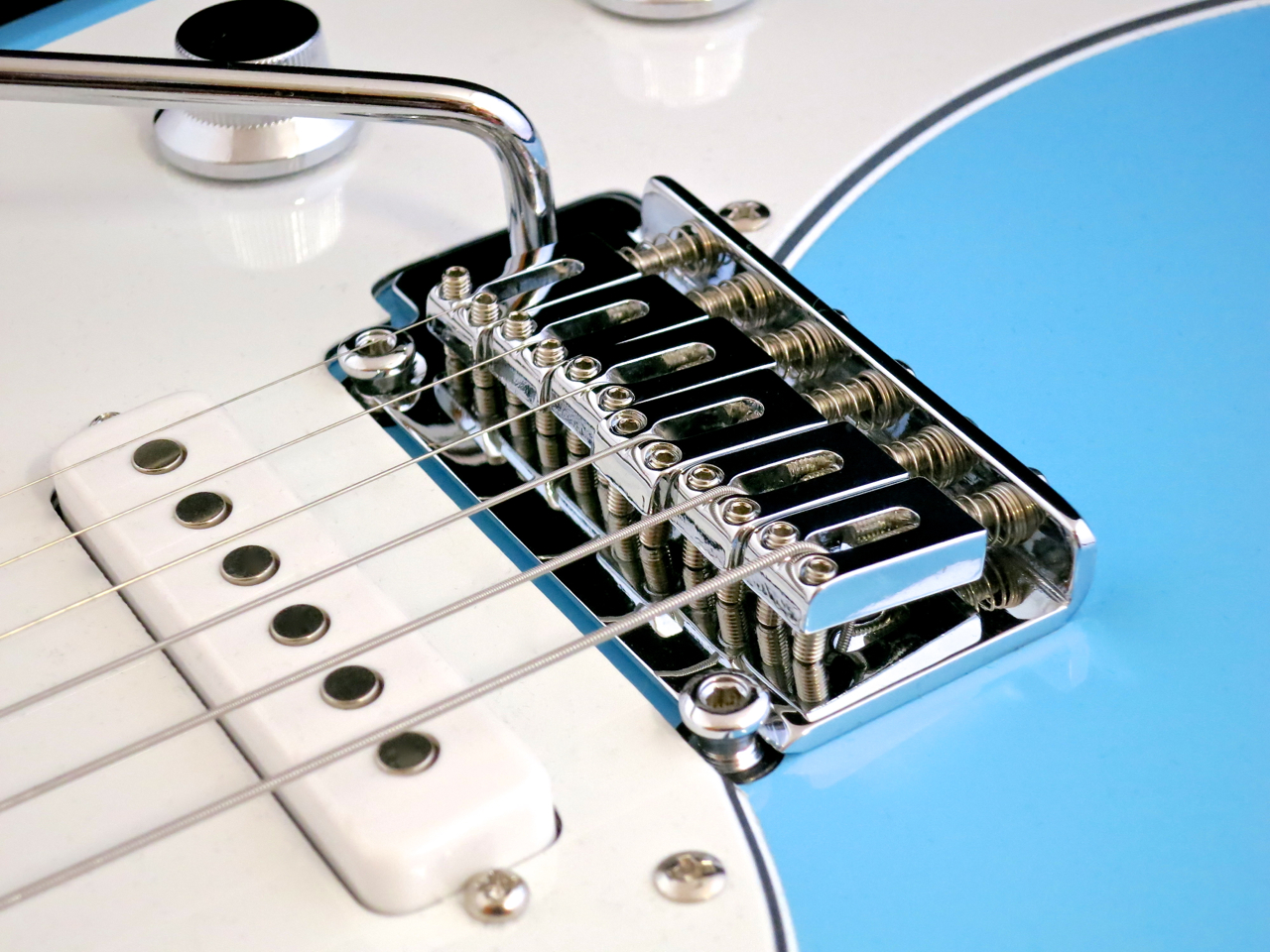
Vox Mark III on varustettu nykyaikaisella vibratallalla.

Tehtaalta Mark III ja Mark V lähtevät kolmella jousella varustettuina, mutta topatussa pussissa on pakattu vielä yksi jousi mukaan.
Vintage-snobit eivät luultavasti tykkää tämän vibran ohuesta blokista, koska sanotaan, että sustainin kannalta massiivisempi on parempi. Toisaalta myös Floyd Rose -vibroissa käytetään vintagea ohuempaa blokkia.

Vox-mallin kolmesta yksikelaisista voi varmasti odottaa raikasta soundia kuuskytluvun hengessä.
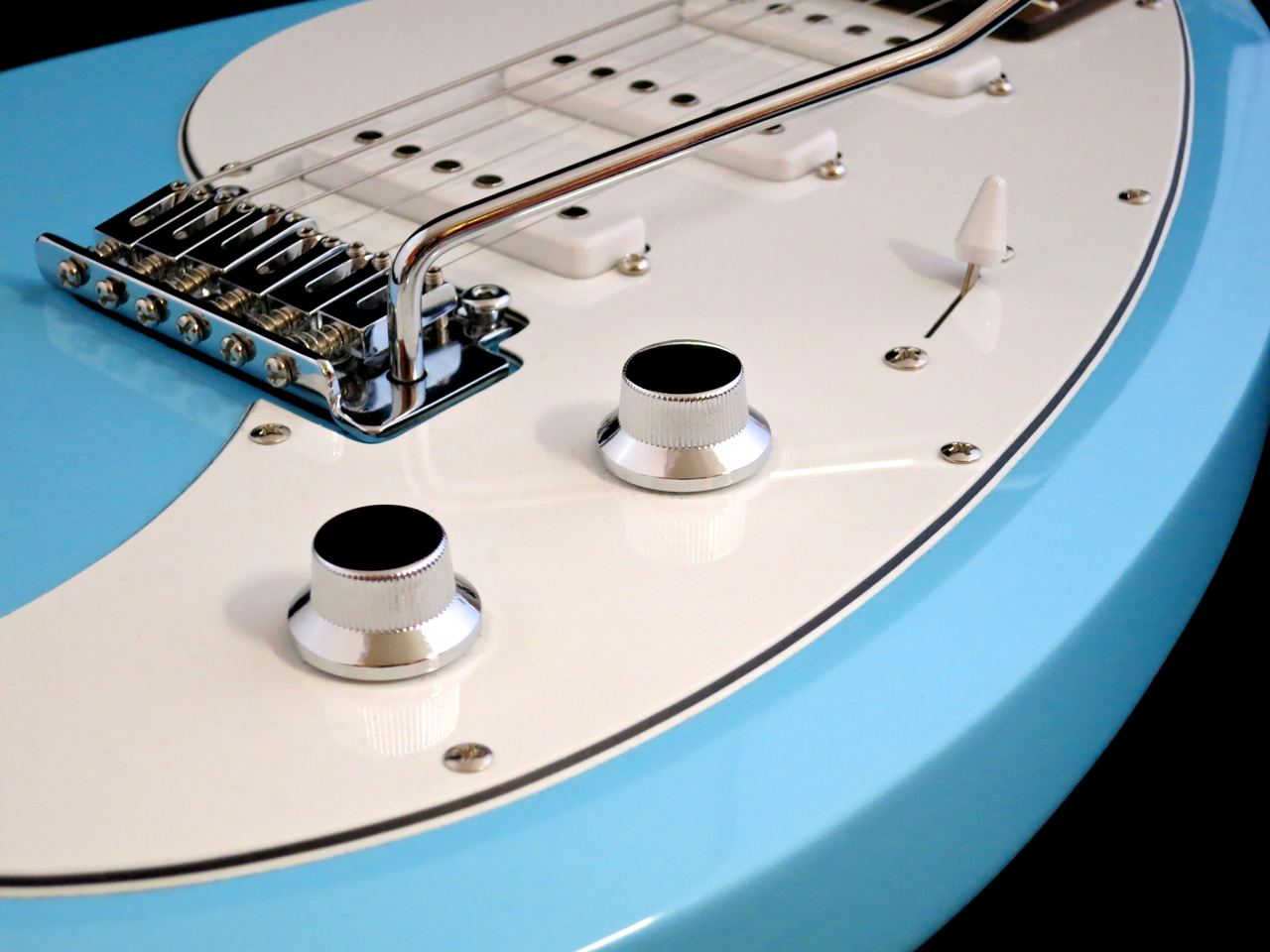
Elektroniikka koostuu yhdestä viisipykäläisestä kytkimestä, sekä master tone- ja master volume -säätimistä.
****

Kulmikkaan Vox Mark V:n (355 €) perusresepti on periaatteessa sama kuin Mark kolmosessa.

Myös Fantomin lehmusrunkoon on lisätty mukavuusviiste soittajan kylkiluita/vatsaa varten.
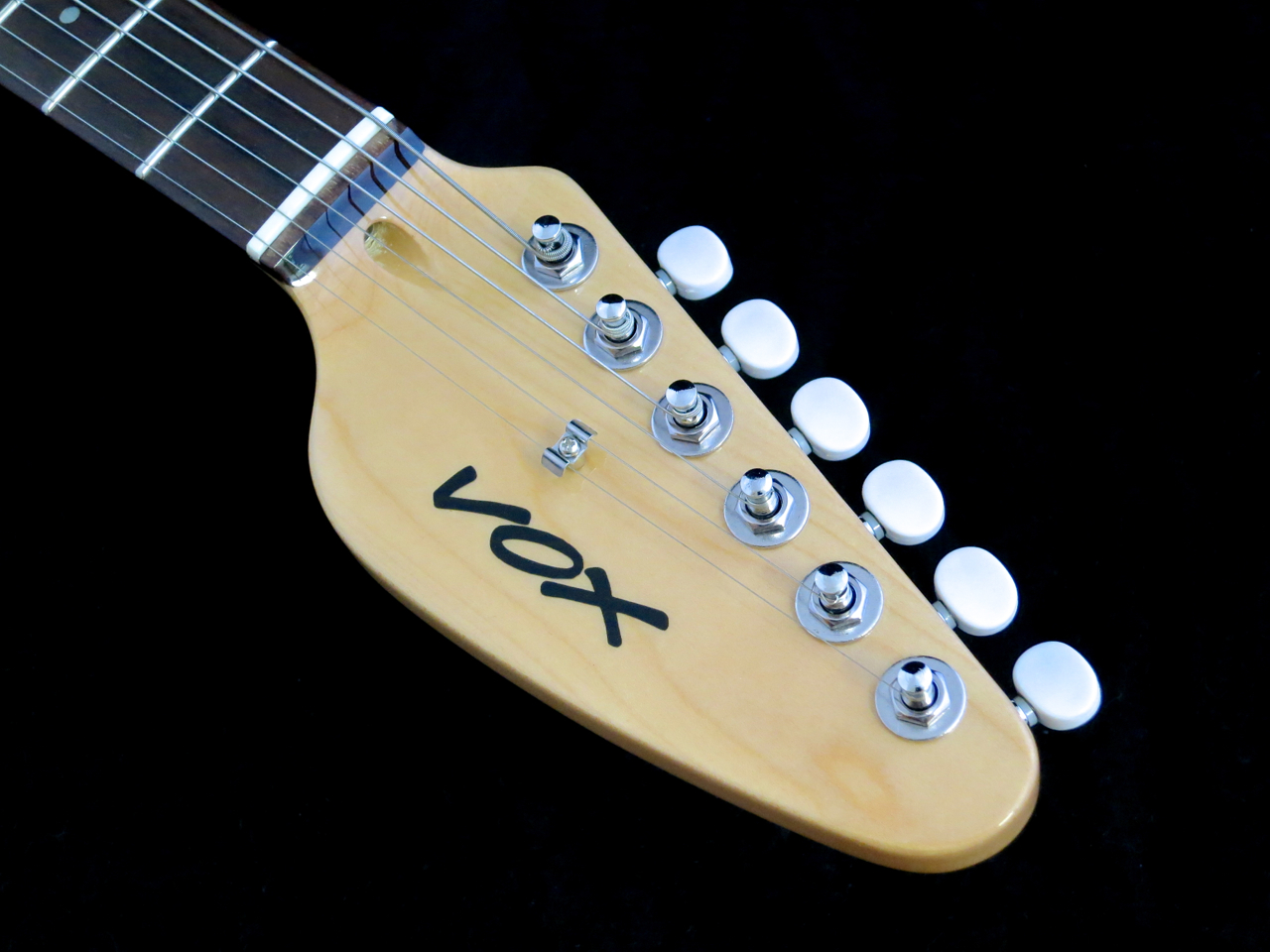
Mark-mallien kaulat ovat samanlaisia, aina kiiltävää viimeistelyä myöten.

Mark V:ssa kolmikerroksinen pleksi ympäröi kitaran vibratallaa.
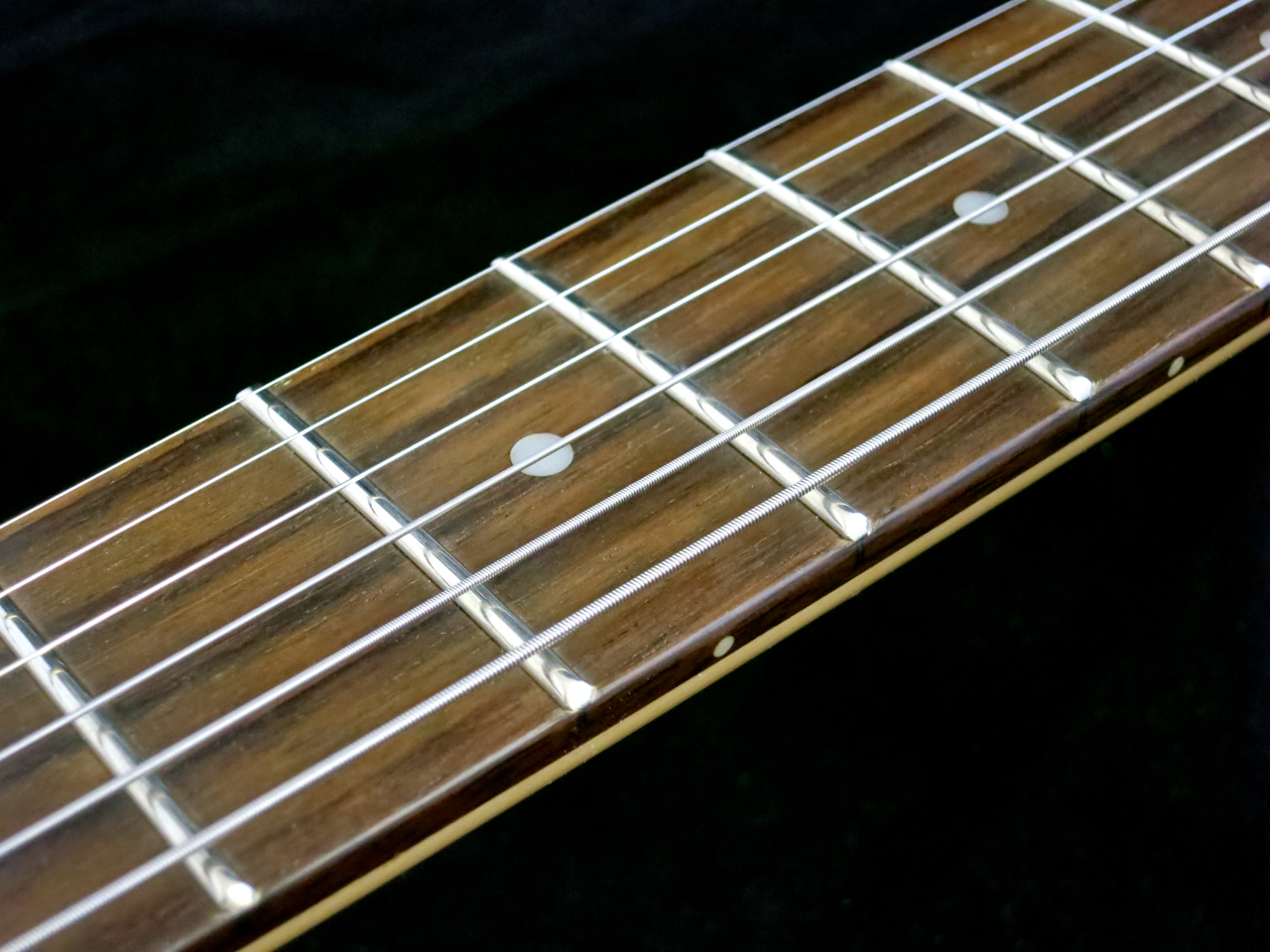
Vox-soittimien nauhatyö on yllättävän laadukasta, kun katsoo Mark-mallien hintalappuja. Nauhat on kiillotettu ja niidet päät on pyöristetty huolellisesti.
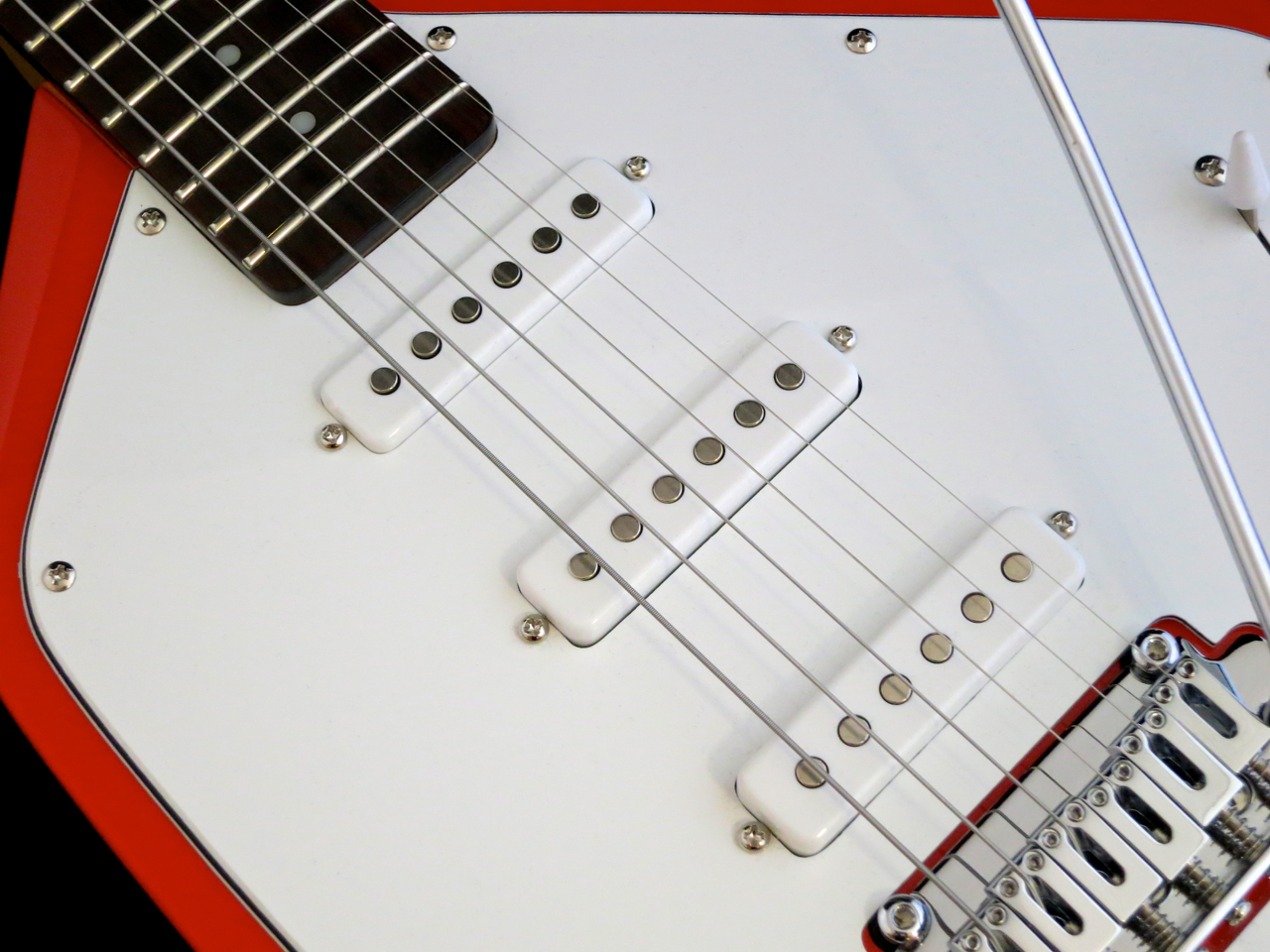
Vox Mark V Phantom -kitarassa käytetään samoja mikrofoneja…

…sekä samaa elektroniikkaa kuin Mark III Teardropissa.
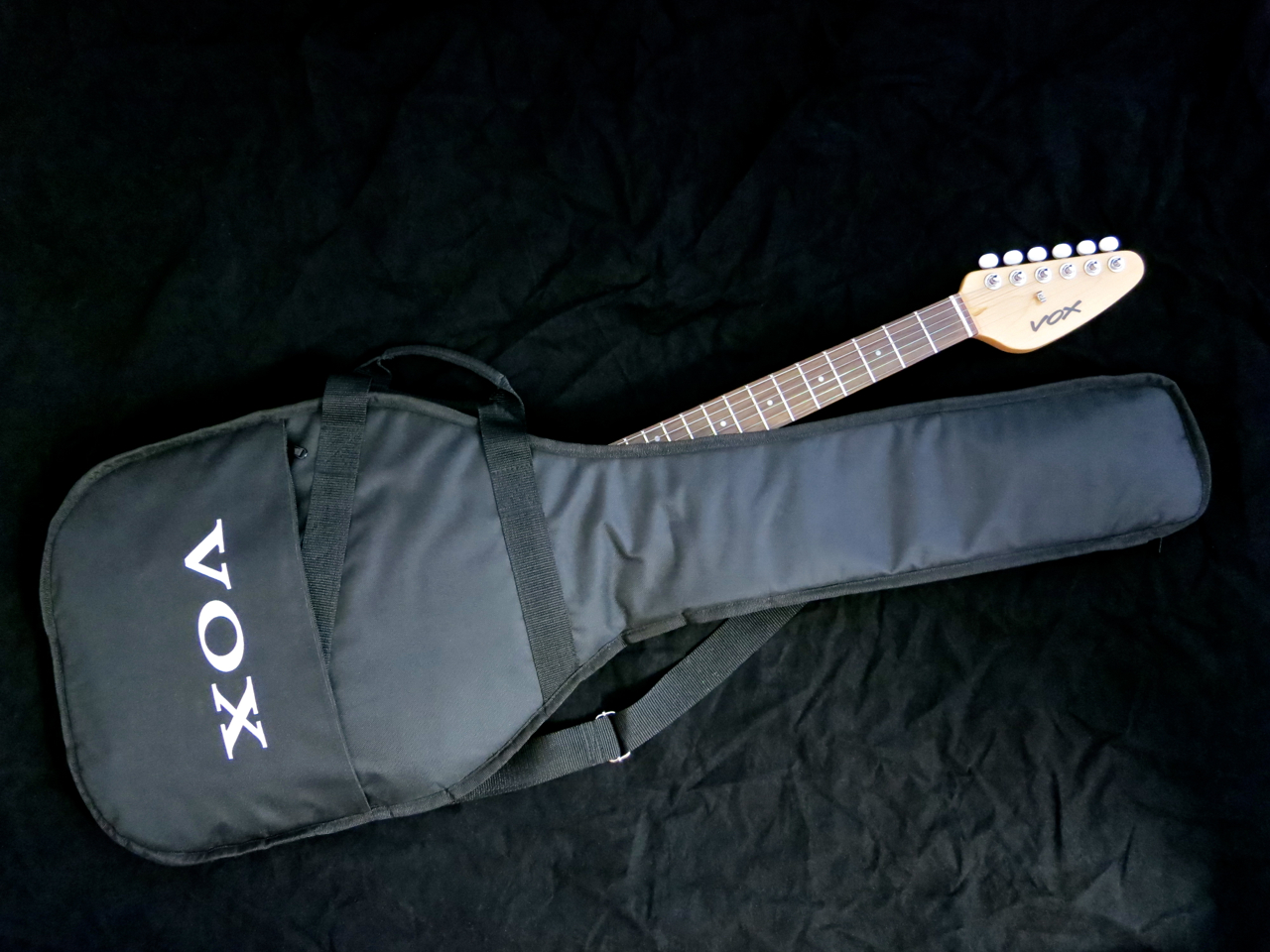
Topattu pussi kuuluu Mark-malleissa hintaan!
****
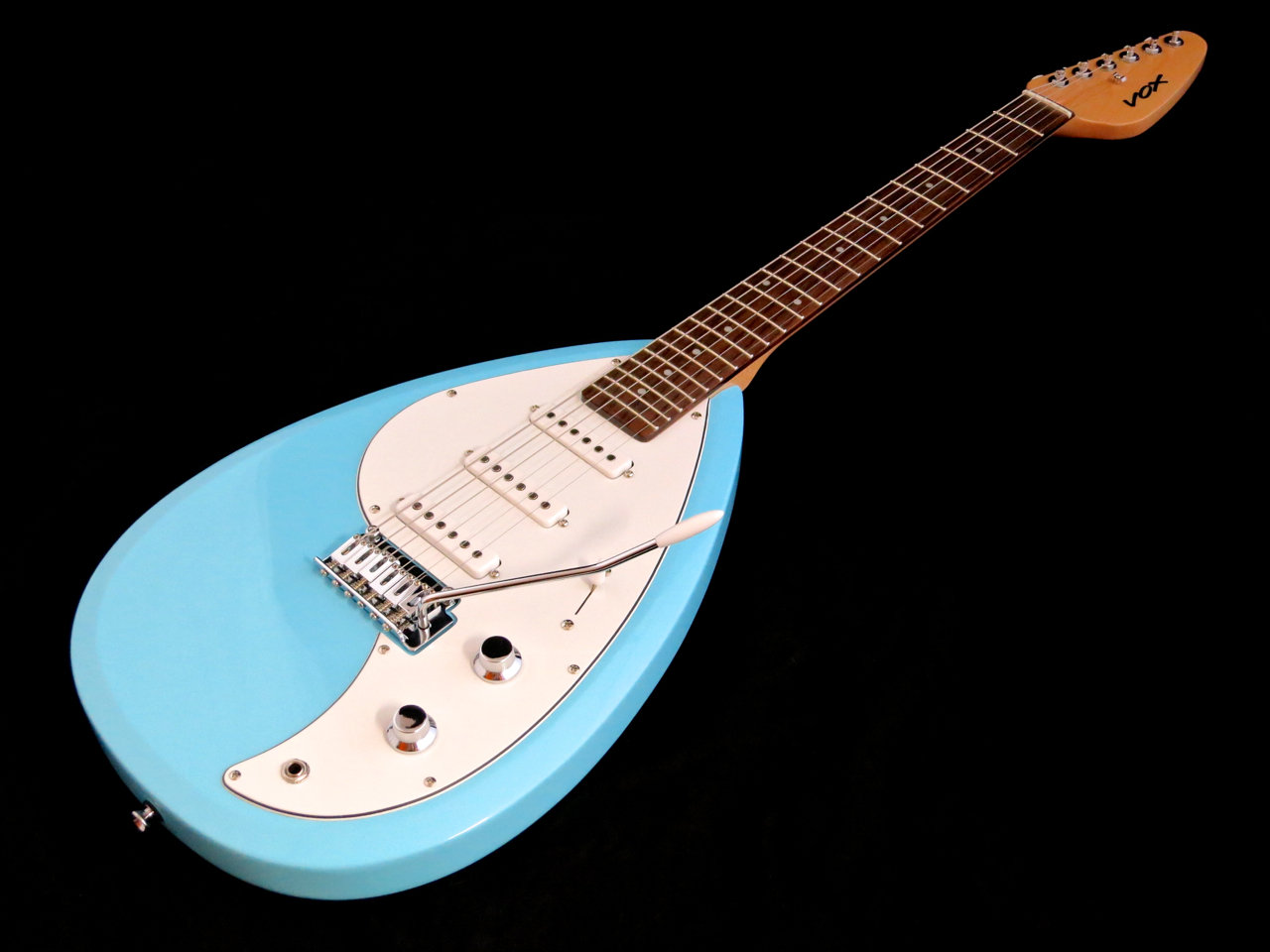
Vox Mark III on erittäin kompakti kitara, ja testissä käynyt yksilö mukavan kevyt. Rungon pyöreän muotoilun takia Teardrop ei ole ehkä maailman luontevin ”sohvakitara”, mutta hihnan varressa kitaraa on hyvin mukava kantaa.
Lyhyen skaalan ja kiiltäväksi lakatun, pyöreällä D-profiililla varustetun kaulan ansiosta tällä Voxilla on samantyyppiset vibat kuin esimerkiksi Fenderin Mustang-mallissa, ja tehdaskieliä (010-satsi) on erittäin helppoa venyttää. Vaikka kielet oli säädetty hyvin lähelle otelautaa (E: 1,6 mm/e: 1,3 mm), Mark III Teardrop soi puhtaasti ja rämisemättä. Vibratalla toimii maltillisesti käytettynä hyvin, mutta Floyd Rosen haastajaksi sitä ei tietenkään ole.
Vox Mark III:n akustinen ääni on hyvin Fender-mainen, mutta samalla kauniin lämmin.
Vox Teardrop -mallin puhdas soundi sopii vaikkapa rautalankaan tai funk-musiikkiin:
Säröpuolella homman nimi on Vintage Rock:

****

Vox Mark V on sylissä hieman vastahakoinen tapaus, ja hyvän soittoasennon löytämiseen menee tovi. Kevyt testiyksilö roikkuu kuitenkin hihnassa todella hyvässä tasapainossa.
Phantomin soittotuntuma on erittäin lähellä Teardrop-mallia, nimittäin vintage-tyylinen ja mukava. Testiyksilössä intonaatio oli säädetty kahdelle kielelle hieman nuotin vierestä, mutta homma hoitui nopeasti ristiruuvarilla. Kitaran tatsi oli säädetty myös Vox Mark V:ssa hyvin kevyeksi (E: 1,6 mm/e: 1,1 mm). Jos haluaa soittotuntumasta vielä kiinteämmän, suosittelisin pykälän paksumman 011-satsin käyttämistä.
Molemmat Vox-kitarat kuulostavat miltei samalta, sekä akustisesti että vahvistimen kautta soitettuina.
Tällainen on Mark V Phantomin puhdas soundi pienen Marshall-kombon kautta soitettuna:
Mark V:n Rock-soundista löytyy mukavasti karkeutta ja asennetta:

****

Vox Mark -mallien erikoisten runkomuotojen takia voisi helposti erehtyä lokeroimaan Teardrop- ja Phantom-kitarat pelkiksi ”musiikkivideo-kitaroiksi”.
Totuus on kuitenkin, että sekä Mark III että Mark V toimivat ilahduttavan hyvin Pop-, Beat-, Blues- ja Classic Rock -genreissä. Uudet Voxit tarjoavat roimasti vastinetta rahalle, koska niiden soitettavuus ja soundi ovat enemmän kuin kohdillaan. Suosittelen!

****
Vox Mark -sarjan kitarat
Vox Mark III Teardrop – 355 €
Vox Mark V Phantom – 355 €
Maahantuoja: EM Nordic
Suuri kiitos DLX Musiikille testisoittimien lainaamisesta!
****
Plussat (molemmat mallit):
+ ulkonäkö
+ työnjälki
+ soitettavuus
+ soundi
+ topattu pussi kuuluu hintaan
Miinukset (molemmat mallit):
– eivät istu kovin luontevasti sylissä


The humble ukulele’s popularity has been on the rise over the last few years, not least because these instruments are easy to carry around and plenty of fun to play.
This fact hasn’t gone unnoticed by British brand Tanglewood, who have recently broadened their range of ukes.
****

The quartet of ukes we’ve received for testing – the TU-1CE, the TU-3, the TU-3E and the TU-5 – are all part of Tanglewood’s mahogany-bodied Union-series.
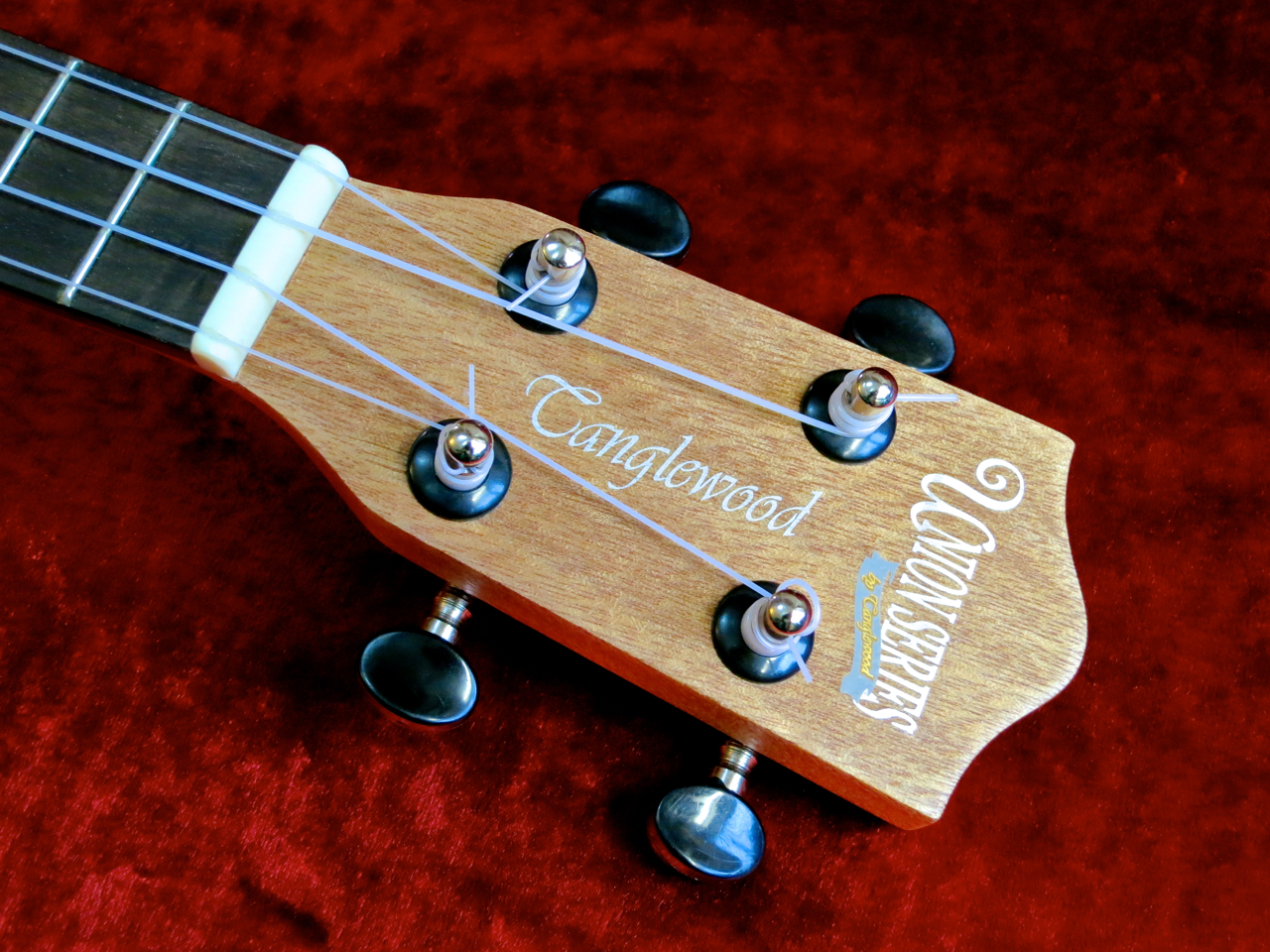
All Union-series ukuleles have mahogany necks with glued-on neck heels and headstocks.
The fingerboards have been crafted from rosewood.

Tanglewood’s geared, open tuners work very well.
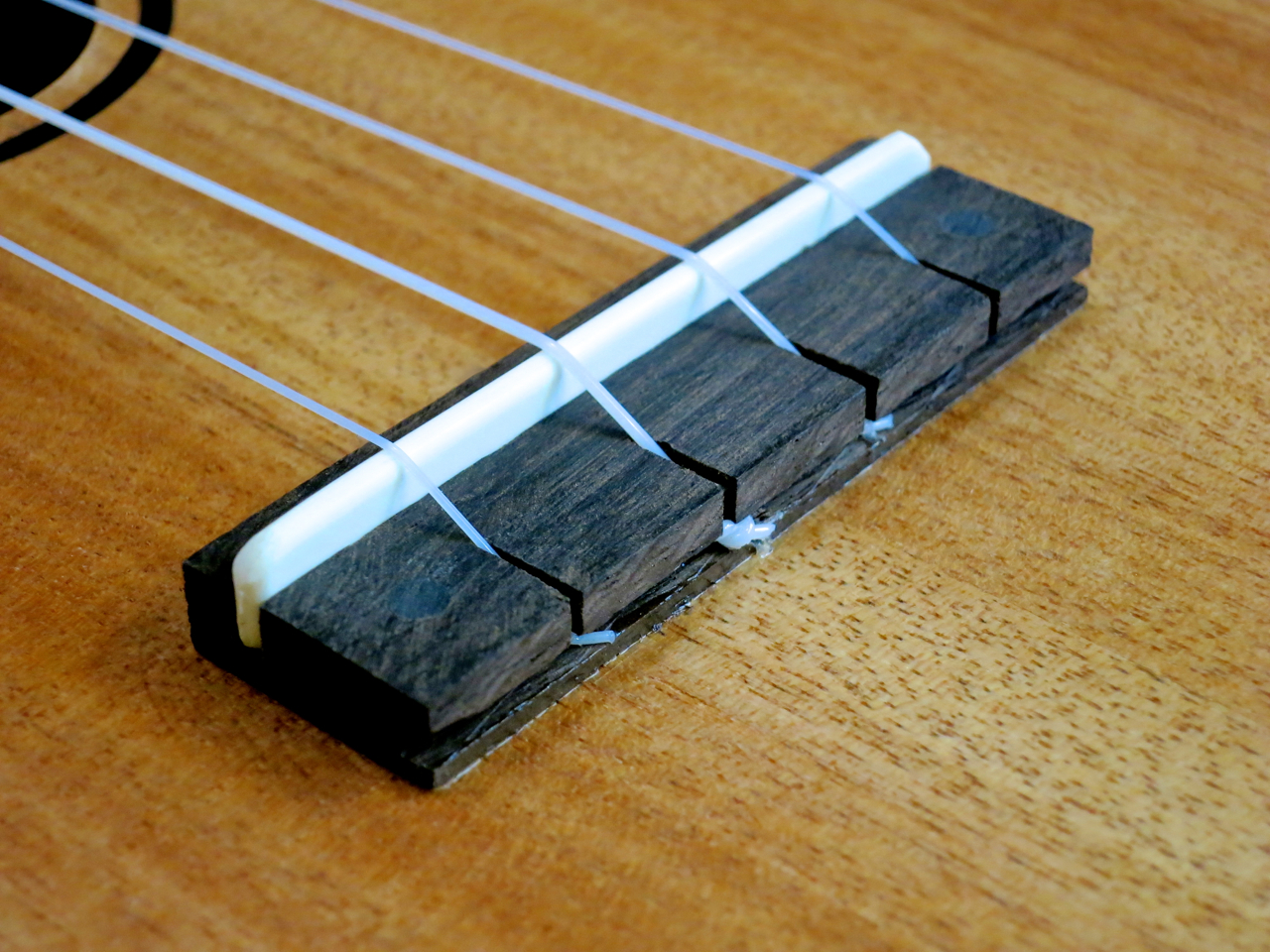
Ukuleles come with one of several different bridge designs, depending on the manufacturer.
Tanglewood has chosen the most practical ukulele bridge, which anchors the knotted string ends in little slots cut into the top of the bridge.

All Union-series ukuleles have a sound box made from laminated mahogany.
The instruments have received a clear satin finish.
****

Tanglewood’s TU-1CE (current price in Finland 116 €) is a soprano ukulele with a deep cutaway. It comes with a pickup and preamp installed.
The soprano is the smallest of the common four ukulele sizes. The TU-1CE has a scale of only 34.5 cm.
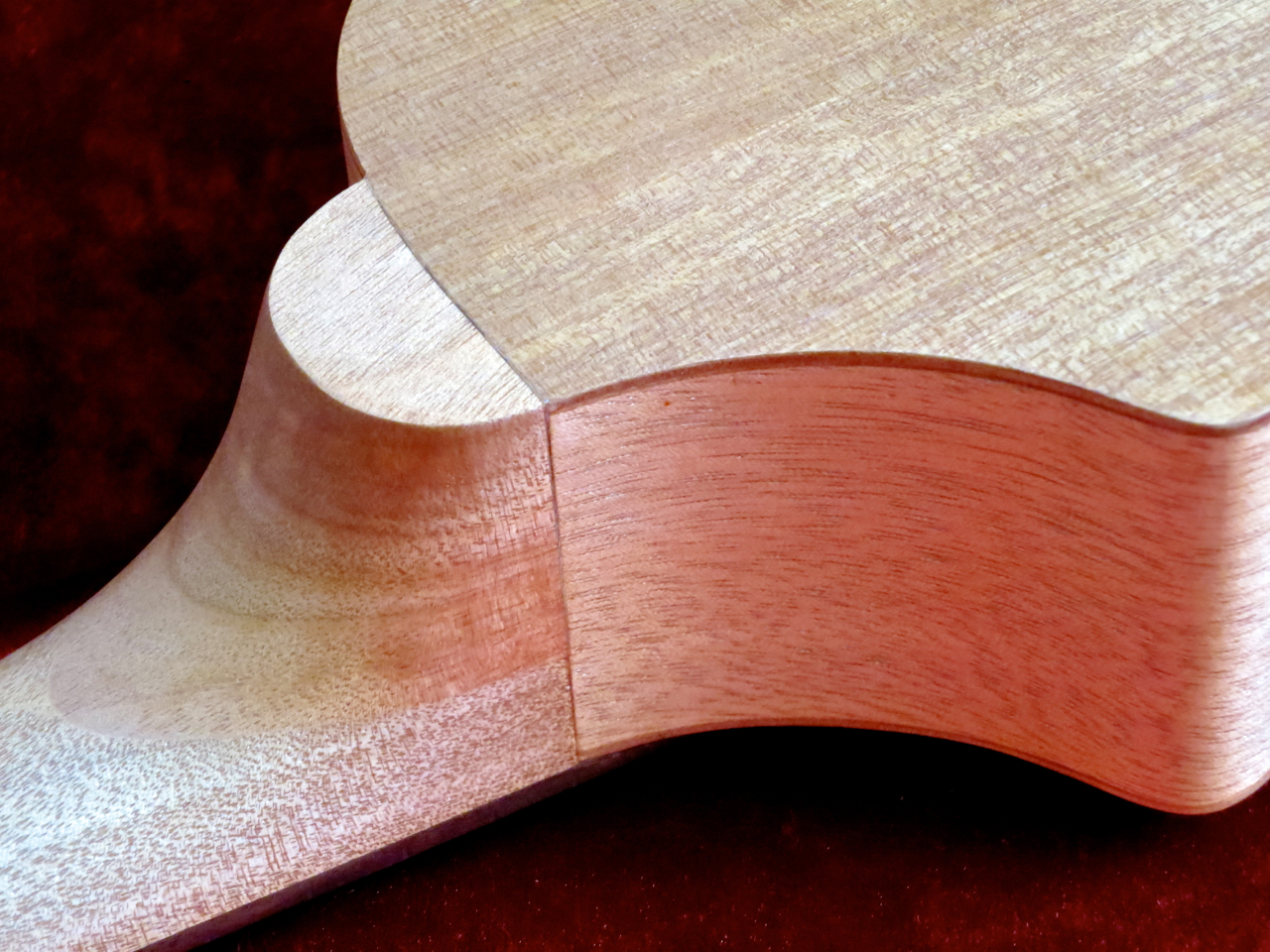
The workmanship on this Tanglewood (built in the Far East) is very good in relation to its low price. Look at that clean neck joint!

The TU-1CE sports 16 small frets, as well as dot position markers.
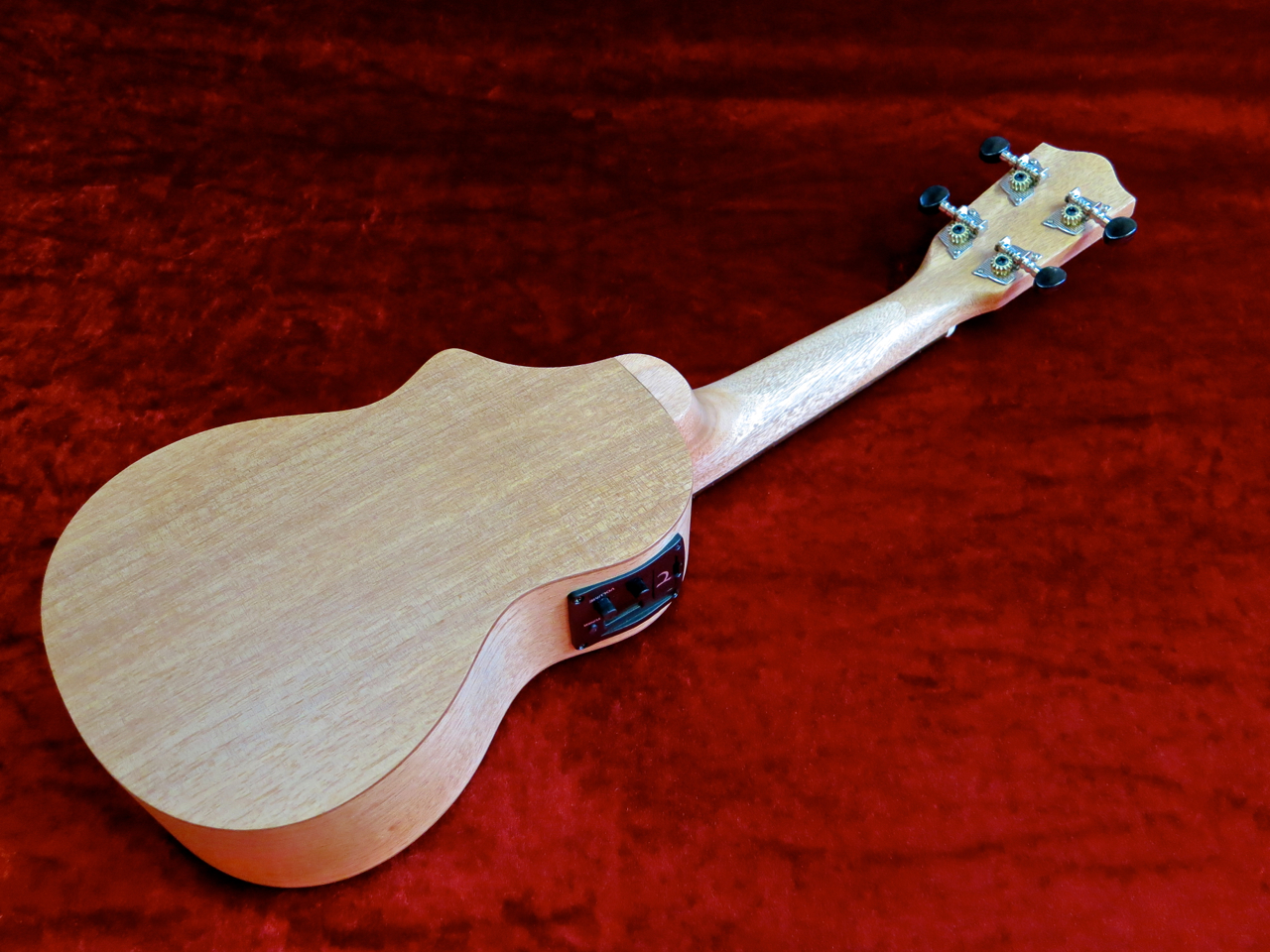
This soprano comes factory-equipped with top quality Aquila Nylgut strings.
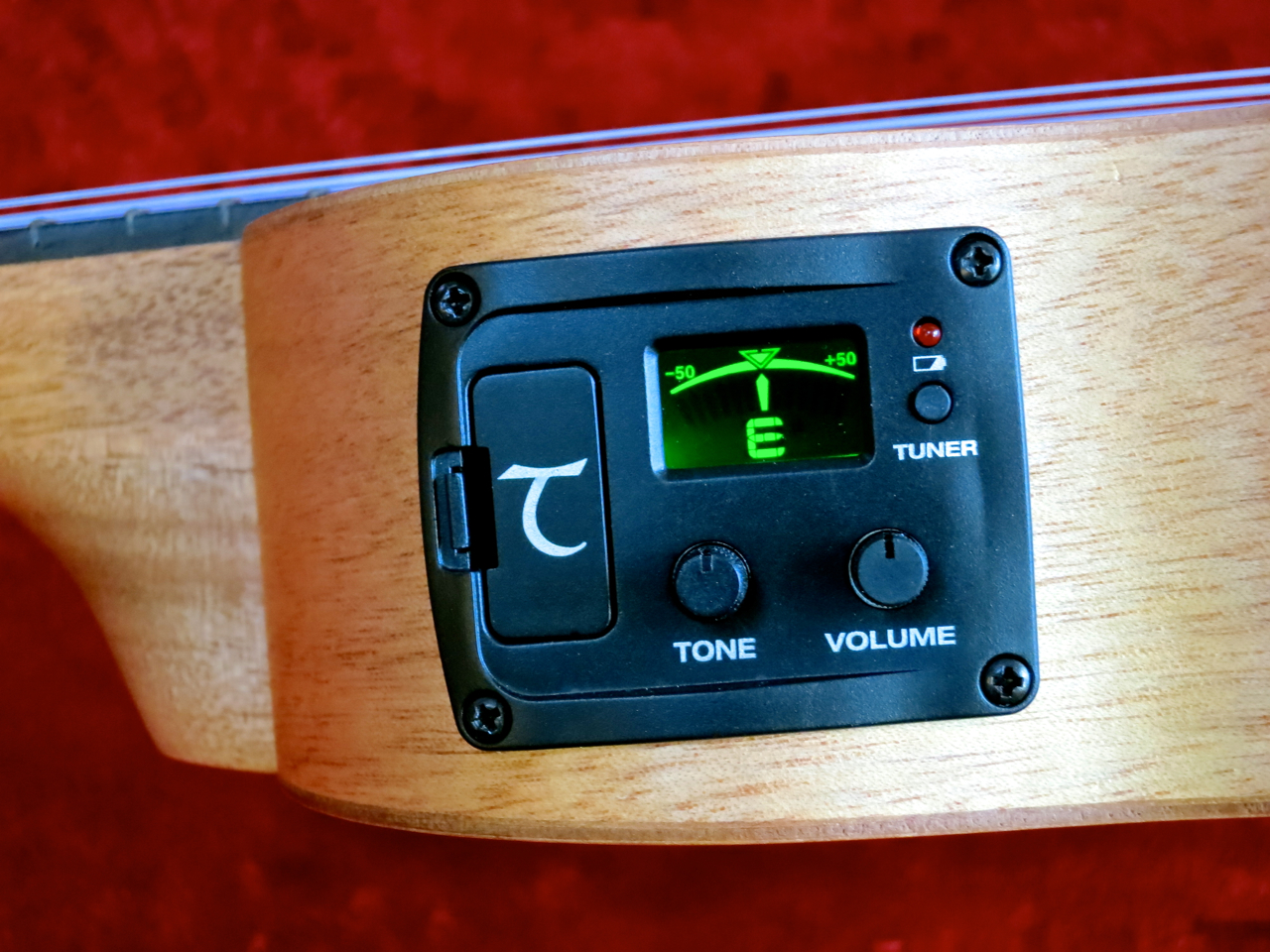
The Tanglewood’s preamplifier is powered by a button cell and offers controls for volume and tone, as well as a chromatic tuner.
****

The Tanglewood TU-3 (119 €) is a concert-sized uke. A stylish hardcase is included in the price.
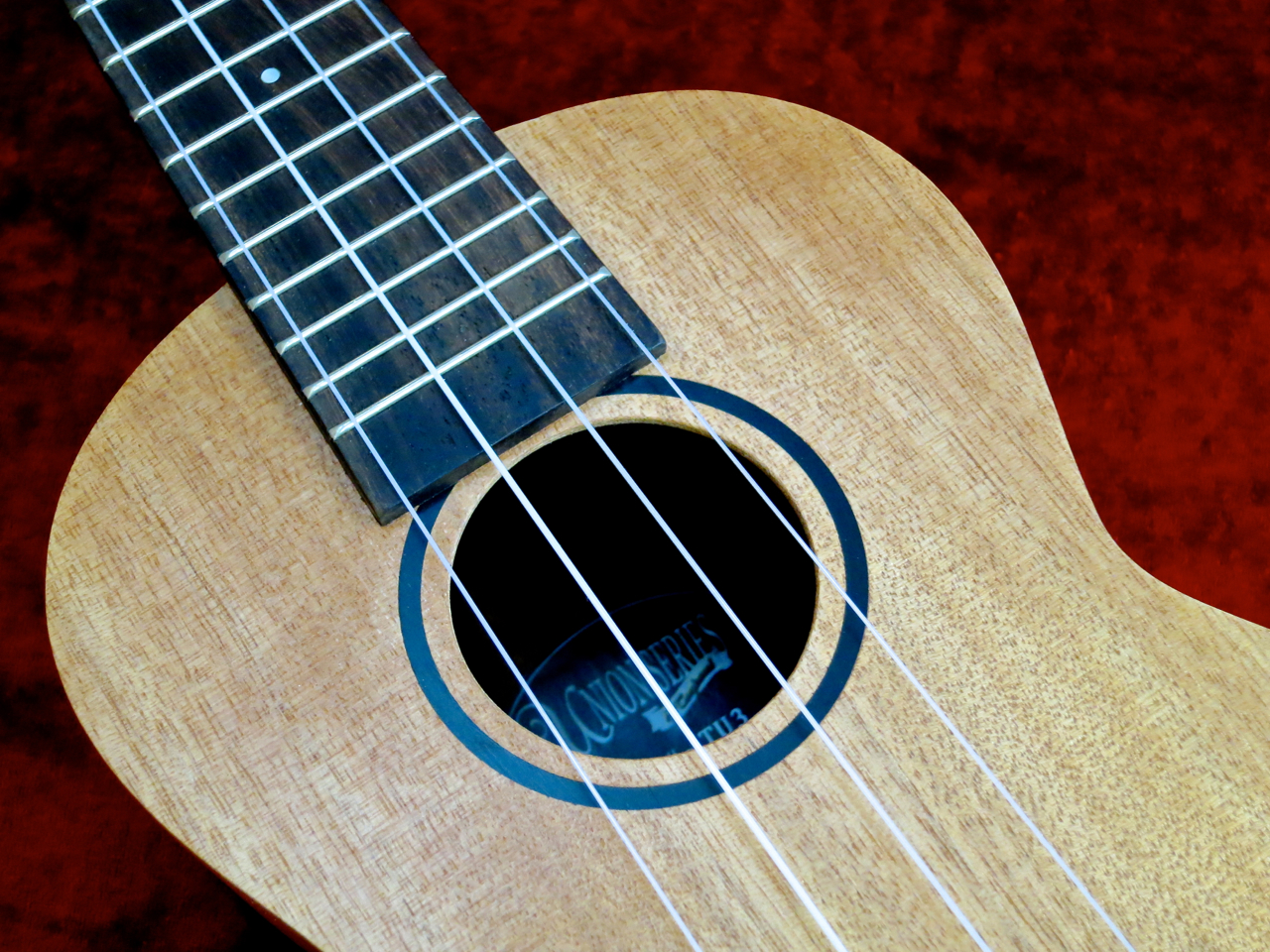
A Concert-ukulele is the next bigger size to a soprano.
This model has a 37.5 cm scale.

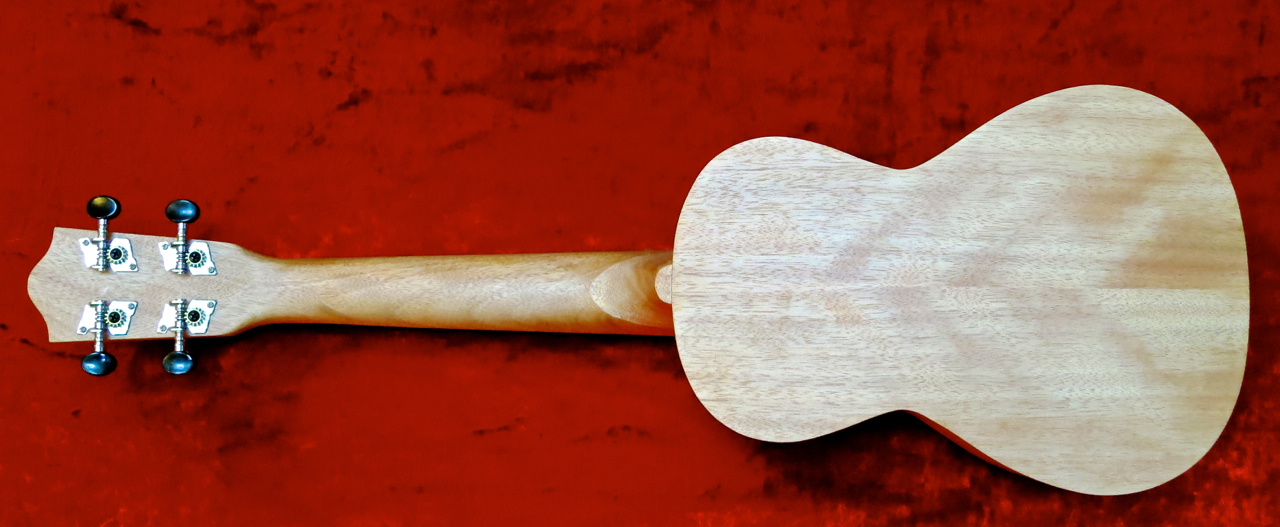
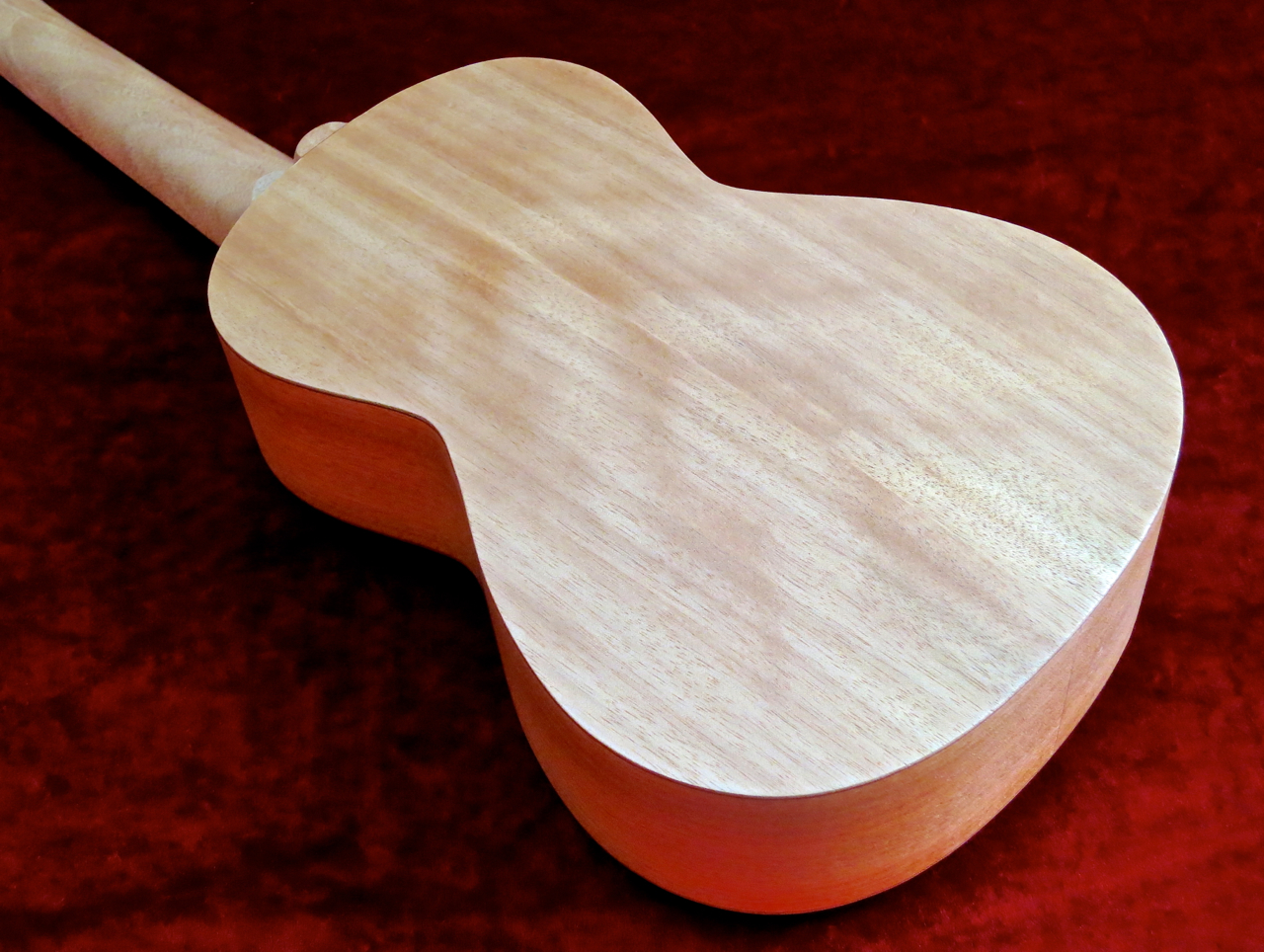
This TU-3 has an exceptionally nicely grained body…
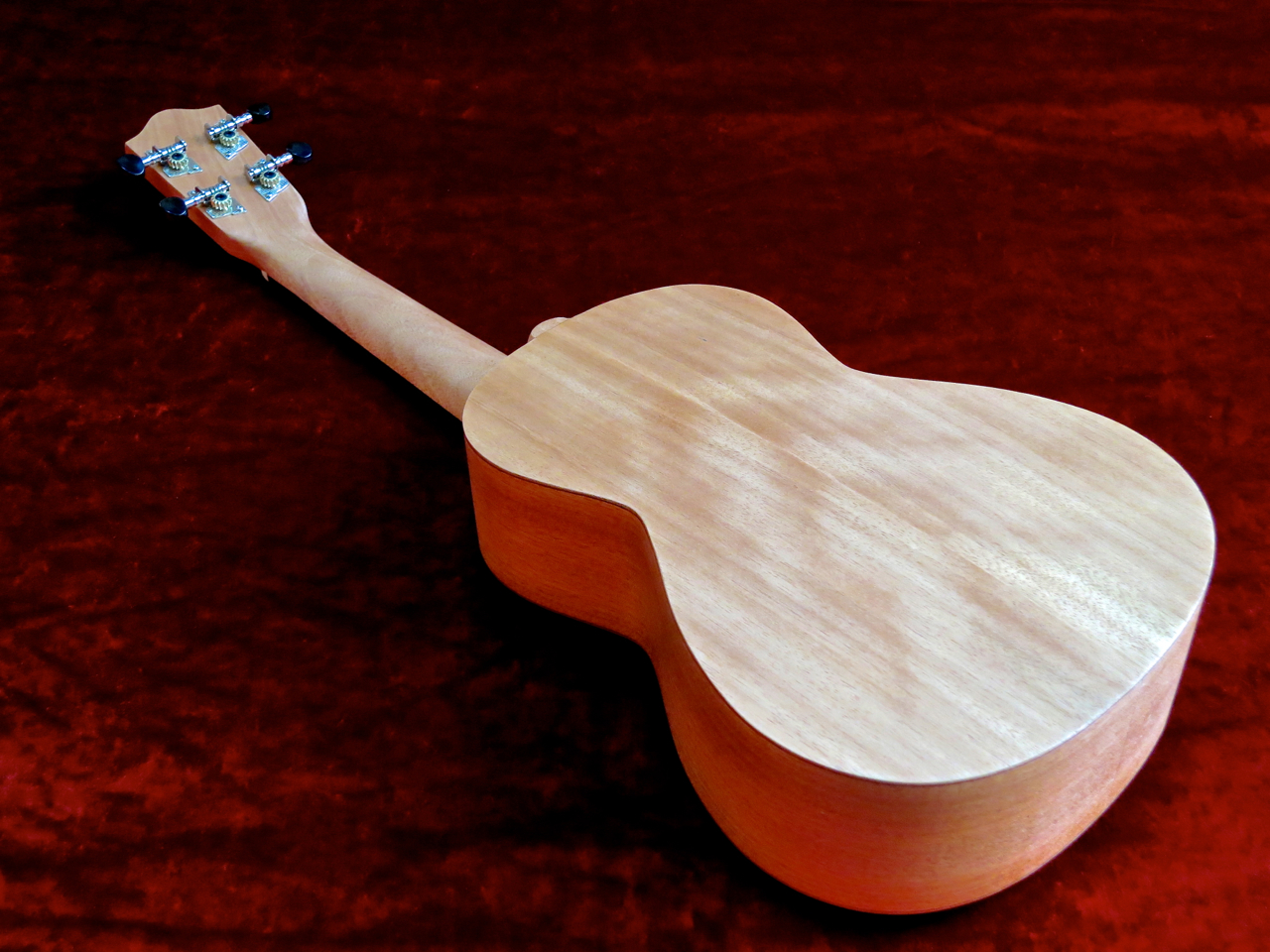
…with a highly figured back.
****

The TU-3’s electroacoustic version – the Tanglewood TU-3E (129 €) – comes equipped with the same preamp model we’ve already seen on the TU-1CE.
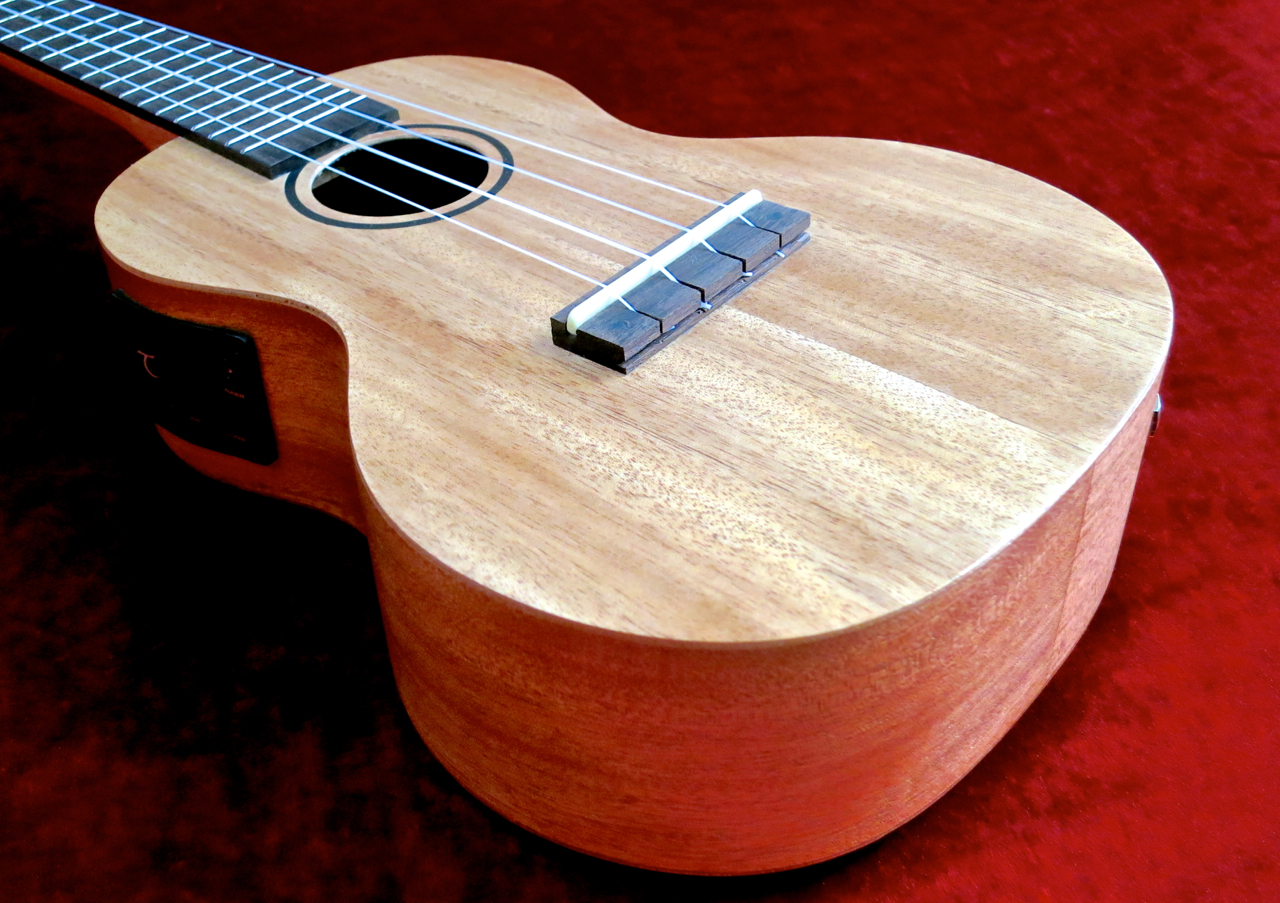
The TU-3E’s fingerboard offers you 18 small frets.

The simple rosette found on all Union-series ukuleles complements the organic, woody look of the instruments very well.

The output jack is situated on the lower rim.
****
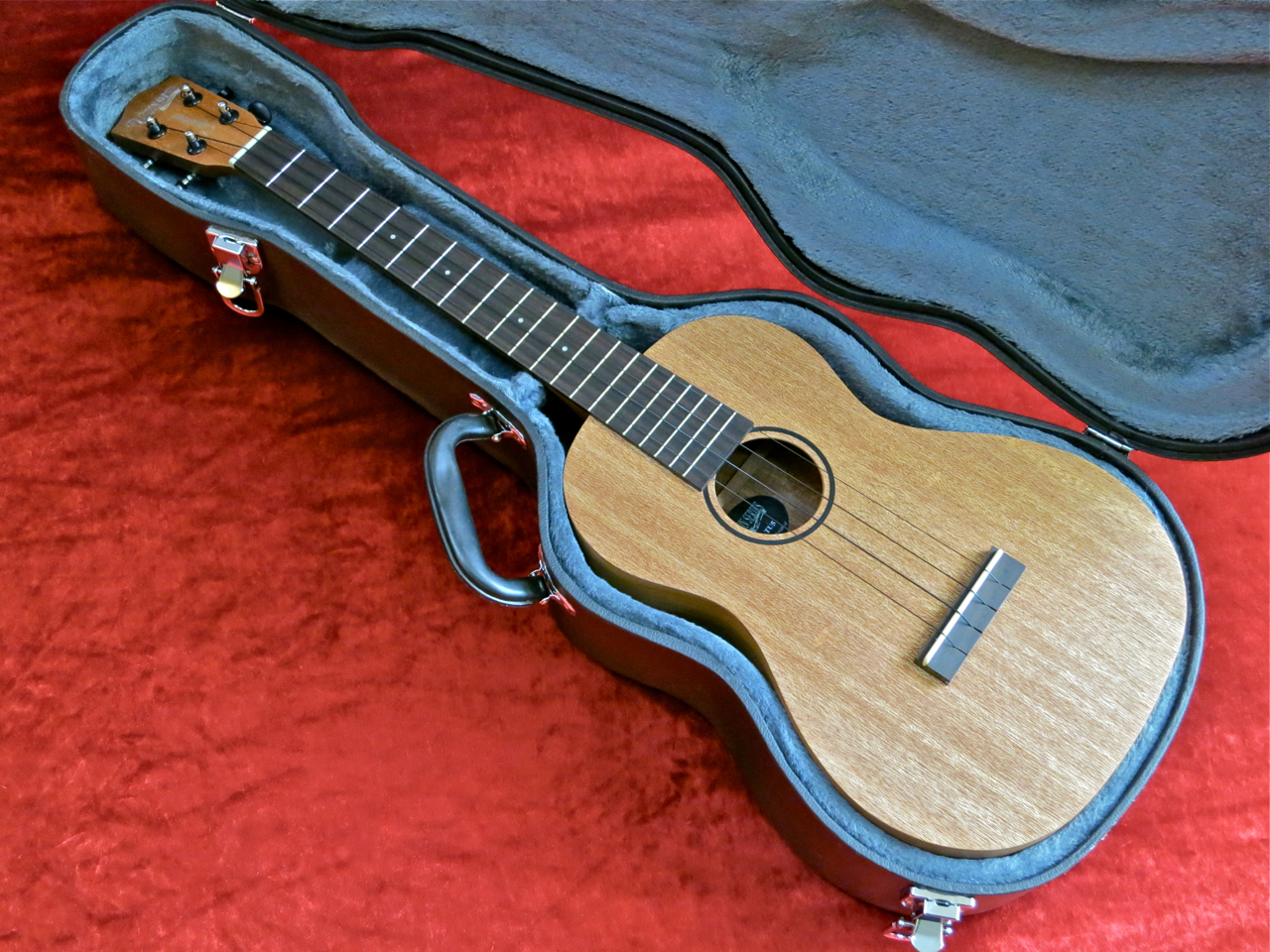
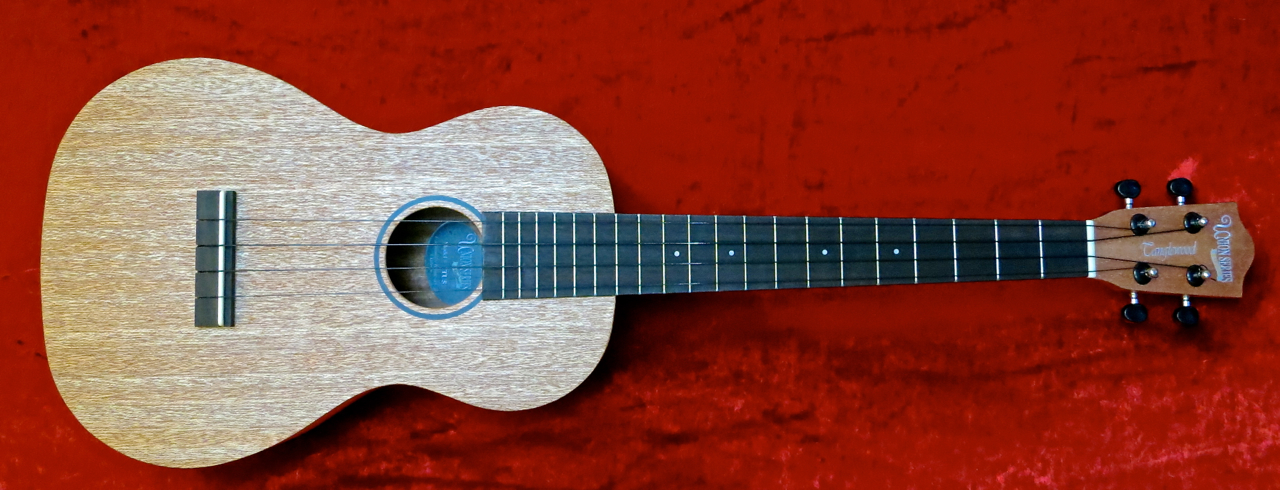
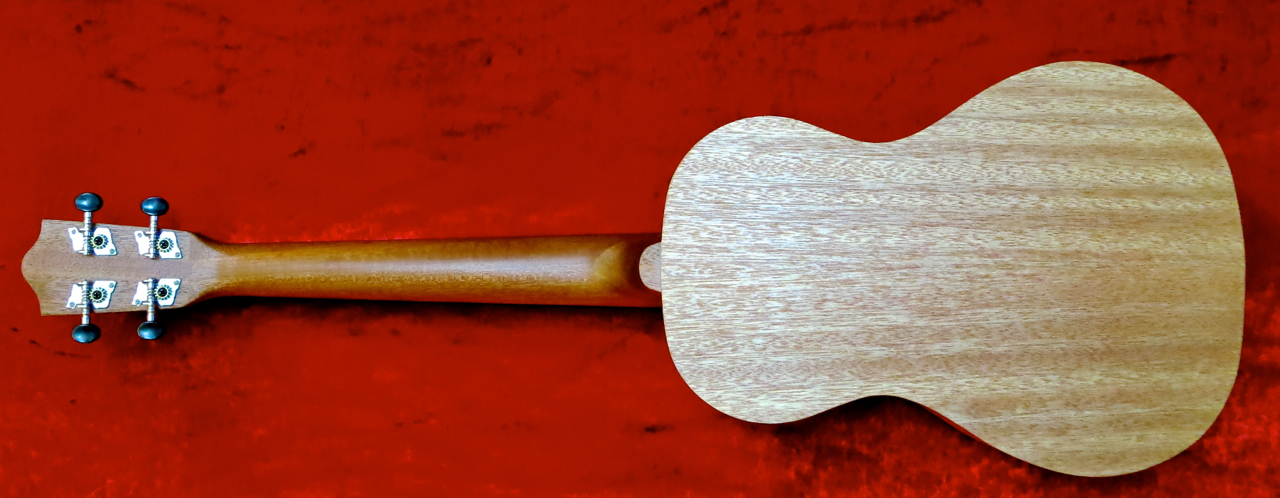
Just like the two Union concert-ukuleles, Tanglewood’s baritone uke, the TU-5-ukulelessa (149 €), also comes in its sturdy case.

The baritone is the largest traditional ukulele size, with the TU-5’s scale length measuring 51.2 cm.

The TU-5is equipped with 20 small frets. Our test sample came with a set of black nylon strings tuned to High-g-tuning (d4-g3-h3-e4), meaning that the fourth string is one octave above a regular guitar string.

****
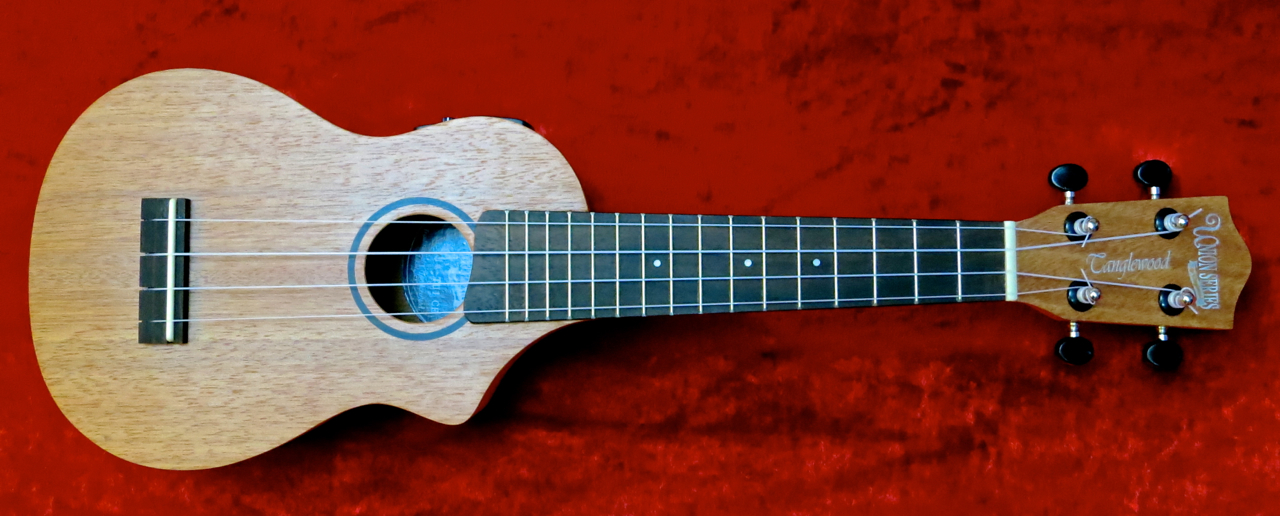
This is what the TU-1CE sounds like when recorded with a condenser microphone:
The built-in piezo system results in a very decent direct sound:
This clips mixes the microphone with the piezo output:

****
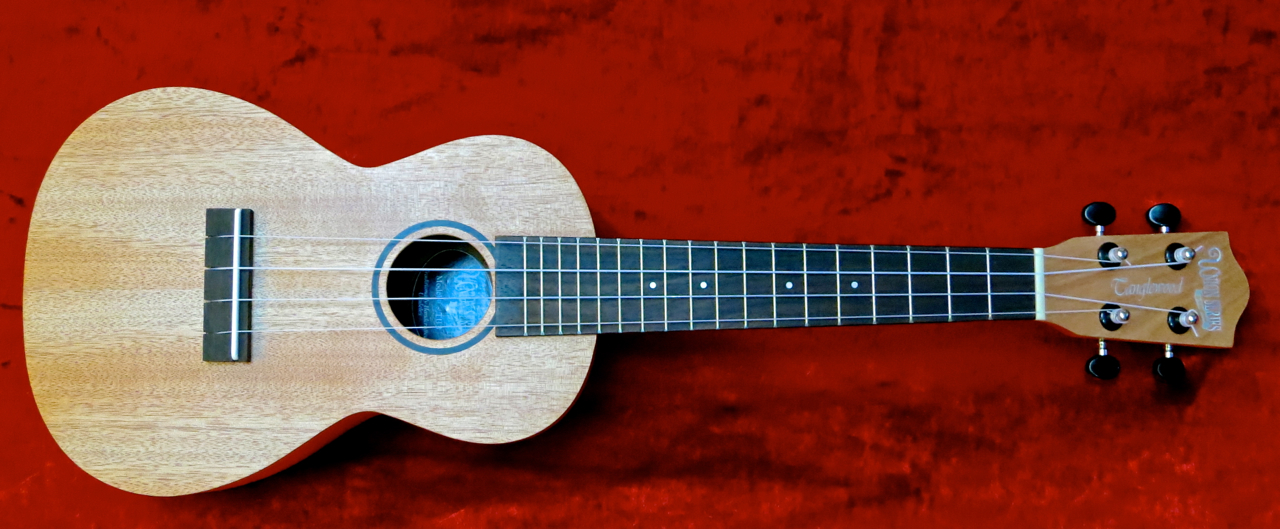
I recorded the concert-sized Tanglewoodin TU-3 with an AKG C3000 and a Shure SM57:
****

Acoustically, the piezo-equipped TU-3E sounds virtually indentical to the all-acoustic TU-3:
Sadly, our test sample displayed some sort of trouble with its under-saddle transducer (probably an uneven bridge slot), which rendered the pickup sound rather useless, because the middle pair of strings was much louder than the two outermost strings:
Here’s a mix of the TU-3E’s electric and acoustic signals:

****
I recorded Tanglewood’s TU-5 baritone uke using an AKG C3000 condenser microphone and Shure’s dynamic model SM57:
****

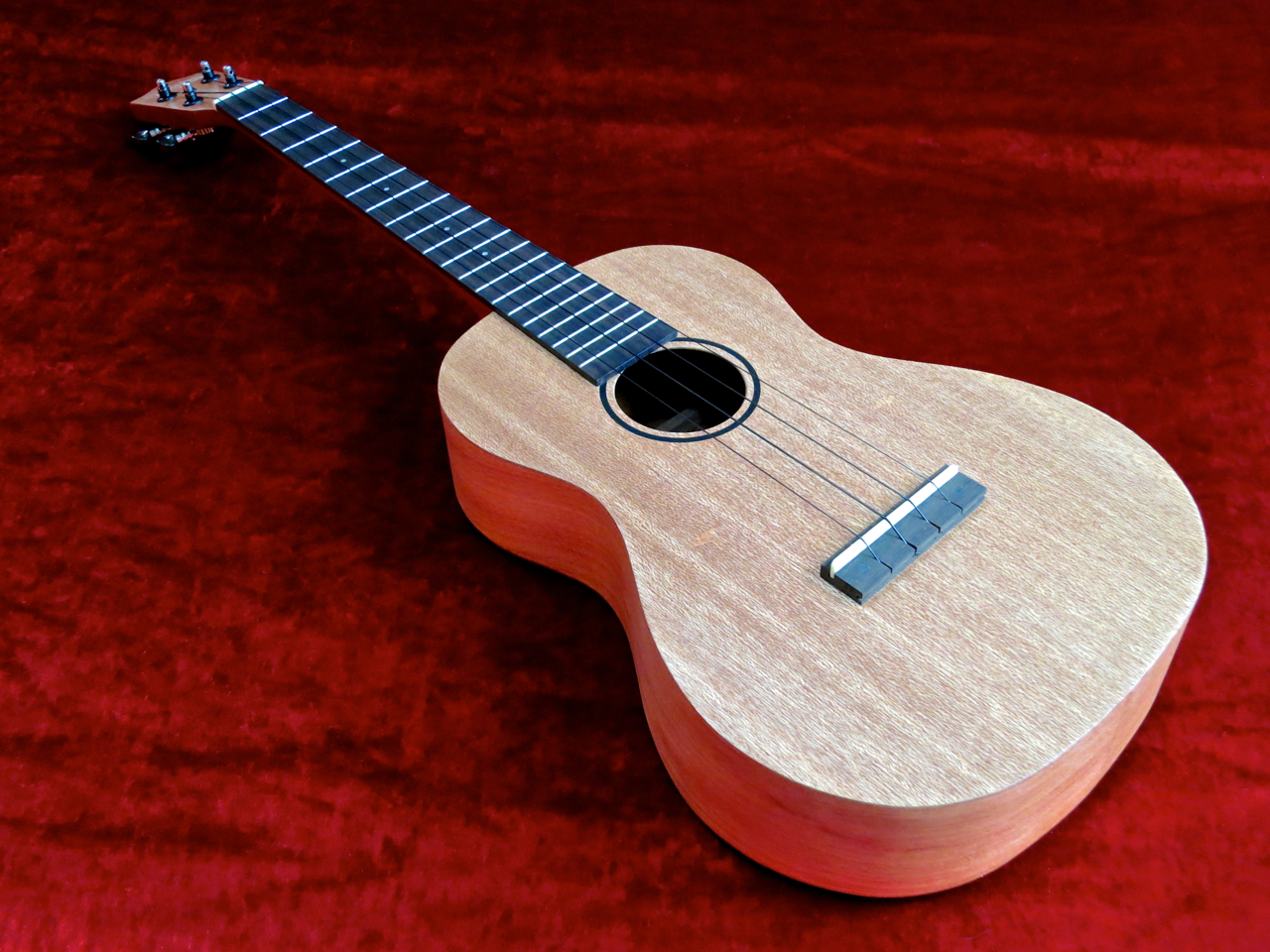
Tanglewood’s Union-series ukes are well-made, lightweight instruments with a very down-to-earth charm.
Regardless of their low price tags these ukes are decent musical instruments, not toys!
I must say I enjoyed Tanglewood’s fat neck profiles a lot. These are neck a grown-up man can hold on to!
Judging by the fine performance of the TU-1CE’s pickup system, I’m willing to believe that the TU-3E’s underwhelming pickup sound is just a one-off oversight in quality control.
Still, the whole picture is really very positive, both in terms of workmanship and sound. The inclusion on classy-looking hard cases in the price of the three ”bigger” models on test makes these Tanglewoods even more enticing. In my view, Tanglewood’s Union-series ukuleles are a great, and affordable, way to get to know the Hawaiian cousin of the guitar.
****
Tanglewood Union-sarja ukuleles
Finnish distributor: Musamaailma
TU-1CE – 116 €
TU-3 – 119 €
TU-3E – 129 €
TU-5 – 149 €
****
Pros (all models):
+ workmanship
+ satin finish
+ fretwork
+ Aquila-strings (except for TU-5)
+ case included (not with TU-1CE)
+ TU-1CE: good-sounding piezo system
Cons:
– TU-3E: piezo system’s performance in review sample
– TU-5: spongy feel of factory-installed strings
****

****

Finnish boutique amp company Bluetone is yet to become a household word. Nevertheless, Bluetone’s dynamic duo of Harry Kneckt and Matti Vauhkonen have already garnered lots of praise with their all-valve designs, and the word keeps on spreading steadily.
Custom Sounds in Helsinki have recently started to stock Bluetone-amplifiers, and they were kind enough to supply Kitarablogi with a Bluetone Princeton Reverb combo for testing.
****

The Bluetone Princeton Reverb (current price in Finland approx. 1,600 €) is Bluetone’s handwired – and slightly updated – version of a 1960s Fender Princeton Reverb (in its AA1164 guise). Bluetone’s improvements over the original issue include a post phase-inverter master volume (PPIMV), a larger speaker, as well as an external bias point. The Bluetone Princeton Reverb is rated at 15 Watts.
Bluetone’s Princeton is factory-equipped with a 12-inch WGS Black Hawk Alnico speaker, but you can order yours with a different speaker, if you wish.

Bluetone’s cabinets are made from 15 millimetres thick Finnish birch plywood, resulting in a very sturdy, yet lightweight combo.
The level of workmanship displayed on the Princeton Reverb really doesn’t leave anything to be desired – this combo is the real boutique deal!

True to form the cabinet is open-backed.

Bluetone’s Princeton uses three 12AX7-valves and one 12AT7 in its preamp.
A 5AR4-valve deals with the combo’s tube rectification, while the output section employs two 6V6s.
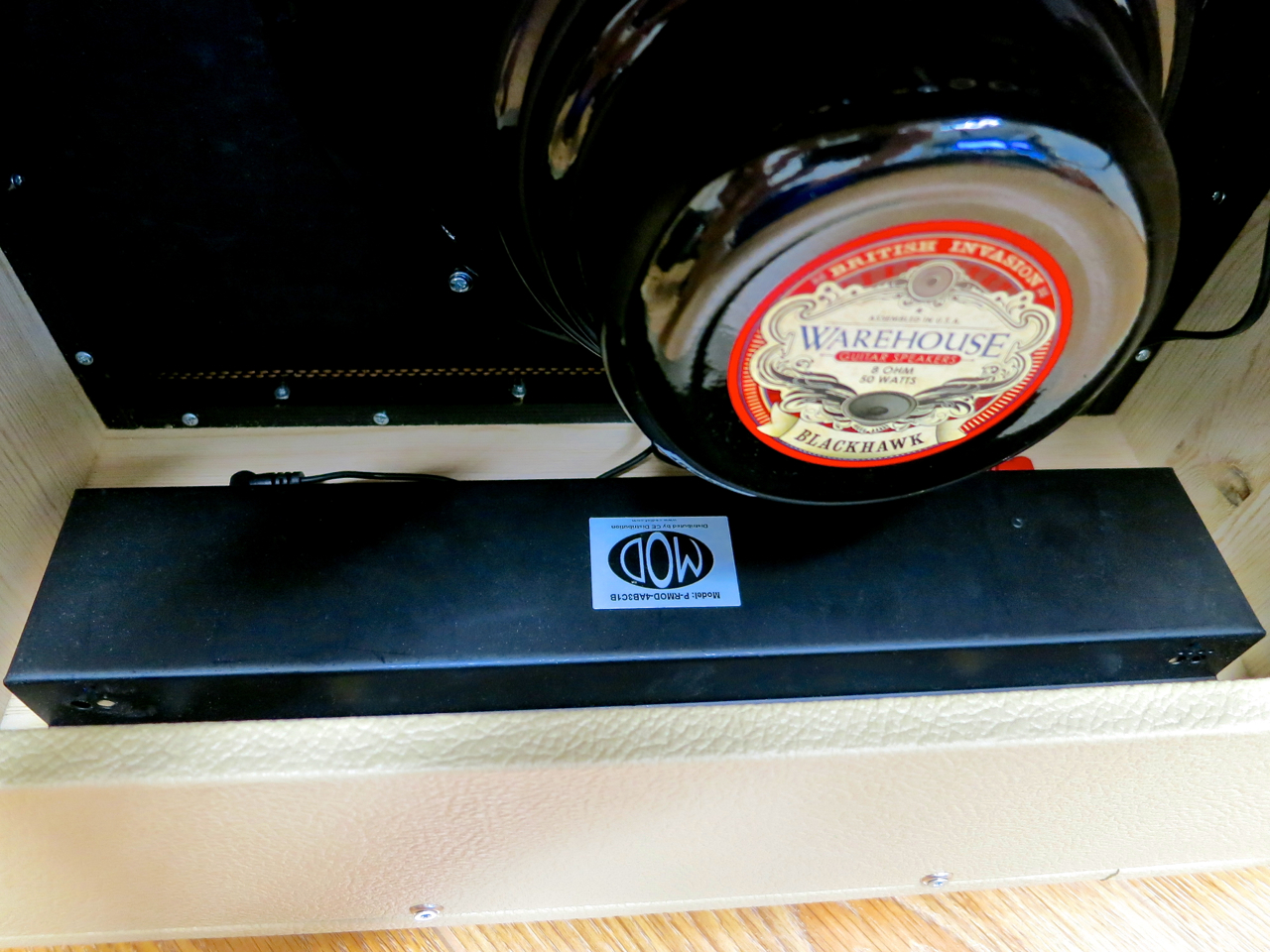
The amp’s full-length spring reverb comes from MOD Kits.

The 50 W WGS Black Hawk speaker has originally been designed with Vox AC30-type tones in mind, and seems like a strange choice for a small Fender-style combo.
****

This Bluetone is a single-channel combo equipped with a three-band EQ-section, reverb and tremolo. Thanks to its master volume control you can drive the combo’s preamp hard while keeping the volume levels down.
Our test sample was one of the last pre-production models; the final series has all the front panel lettering placed below the controls for improved visibility.

On the back panel you’ll find two speaker outputs, plus a jack for the footswitch.

This rugged footswitch comes included with the amp.
****
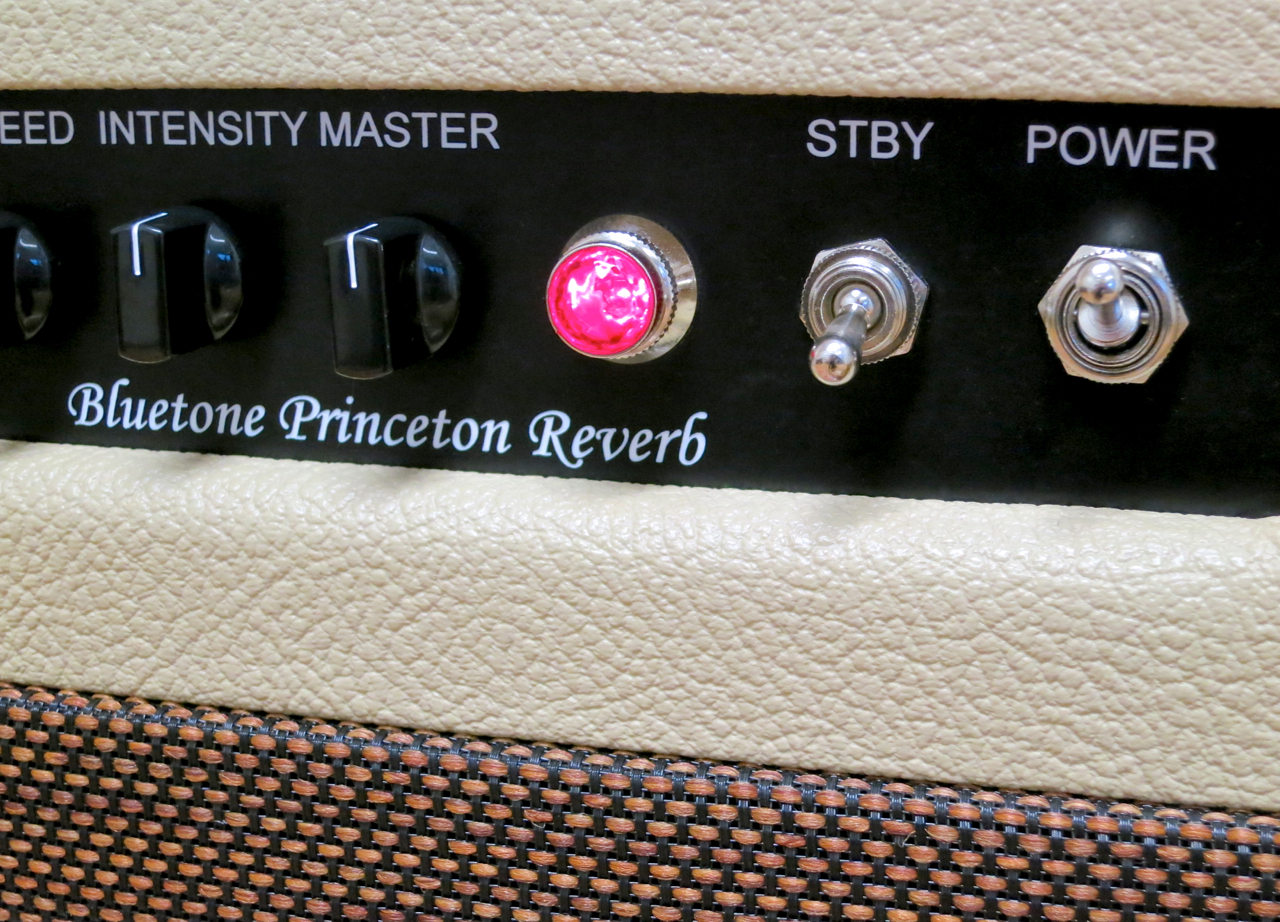
For a mid-sized valve amp Bluetone’s Princeton Reverb is quite lightweight, yet it feels very sturdy.
Switch the combo on, and you’ll be surprised at the absence of mains hum and noise in general. This beauty is really quiet – great!
Many original Blackface and Silverface Fender Princetons have been modified along the way with a larger speaker. The original 10-inch Jensen sounds OK, but many find the tone to be a little too thin for their taste.
The Bluetone Princeton sounds much bigger and fatter from the get-go, thanks to its larger, 12-inch speaker.
This is what my Fender Telecaster sounds played through the Bluetone with clean amp settings:
Bluetone’s tremolo circuit sounds very tasty:
If you use the Low input there’s plenty of headroom to be had from the Princeton Reverb for clean humbucker tones (played on a Hamer USA Studio Custom):
But this little combo can also bare its fangs if you add some gain. Soundwise you’ll get just the type of distortion you’d expect from a low-powered, Fender-style amp. There’s plenty of bite with a healthy dose of compression and an open-sounding mid-range. Don’t expect oodles of cream from this combo, but if you’re after a gritty Sixties and early Seventies Blues- and Rock-vibe, the Bluetone Princeton Reverb is just the ticket.
Here’s the Telecaster, plugged into the High input, with Gain turned up all the way:
Plugging the double-humbucker Hamer into the combo’s Low input resulted in these sounds:
The Bluetone reacts very nicely to your guitar’s volume control, allowing you to turn down for clean-ish tones and turn up for overdrive:

****

In my view Bluetone’s Princeton Reverb offers genuine Finnish boutique quality at a very fair price. The workmanship is outstanding and the combo sounds fantastic. The Bluetone Princeton Reverb could be described as the ultimate Blackface-combo.
****
Bluetone Amps Princeton Reverb
Current price in Finland approximately 1,600 € (Bluetone amp cover: 50 €)
Contact: Custom Sounds Finland
****
Pros:
+ genuine custom shop quality
+ point-to-point-wiring
+ Master Volume control
+ high-quality, 12-inch speaker
+ fine reverb and tremolo-effect
+ footswitch included


+++++++
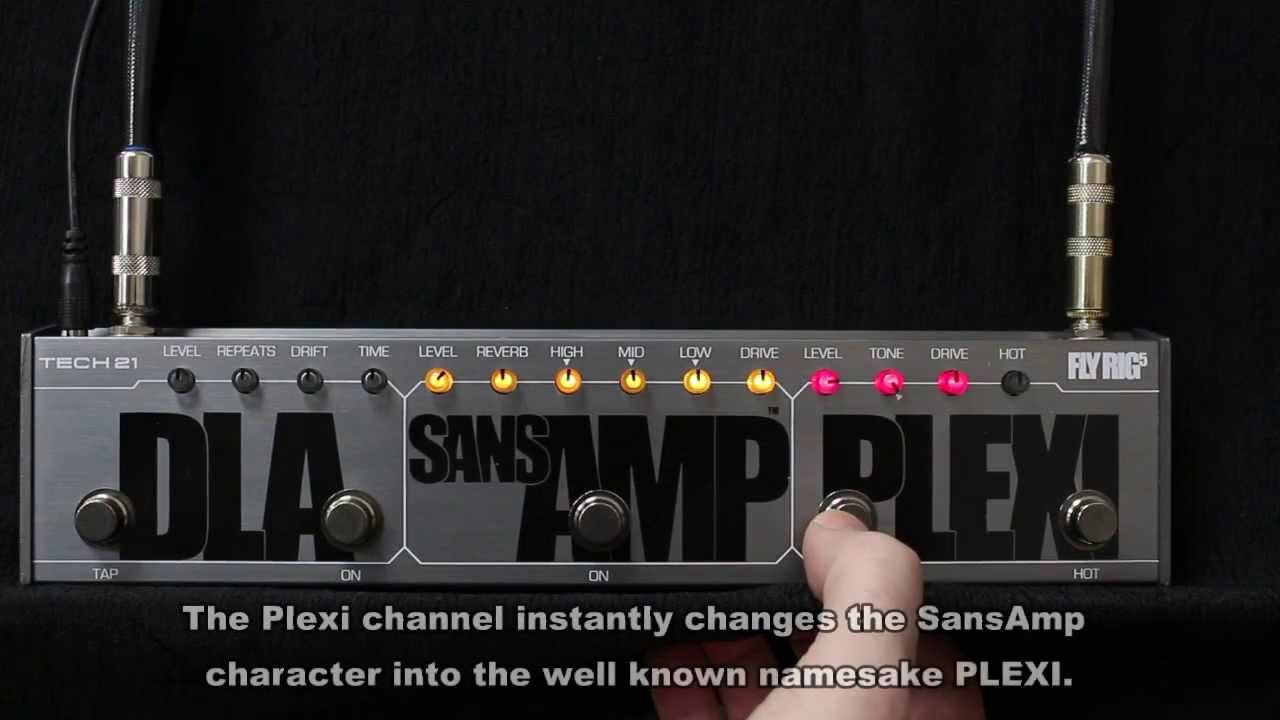
Tech 21 NYC:n upouusi Fly Rig 5 on minikokoinen multiefekti ja vahvistinmallintaja. Legendaarisen puhtaan SansAmp-soundiin on lisätty kaiku, boosteri (Hot), viive-efekti tap tempolla, sekä Marshall-tyylinen särökanava (Plexi).
****
Maahantuoja: Musamaailma




 Kitarablogi.com – Finland's premier Guitar and Bass blog