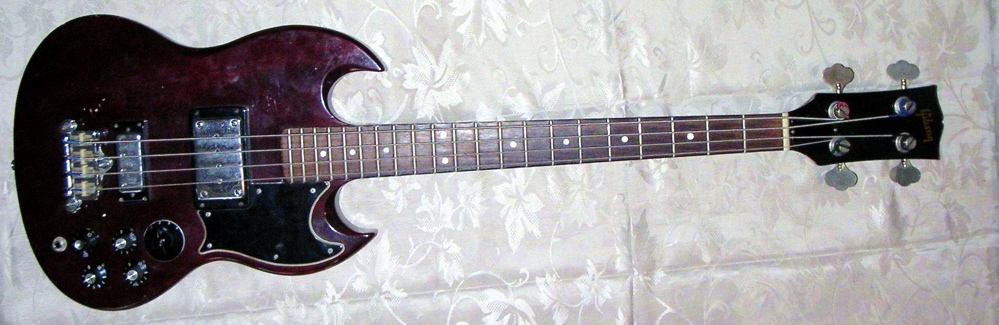
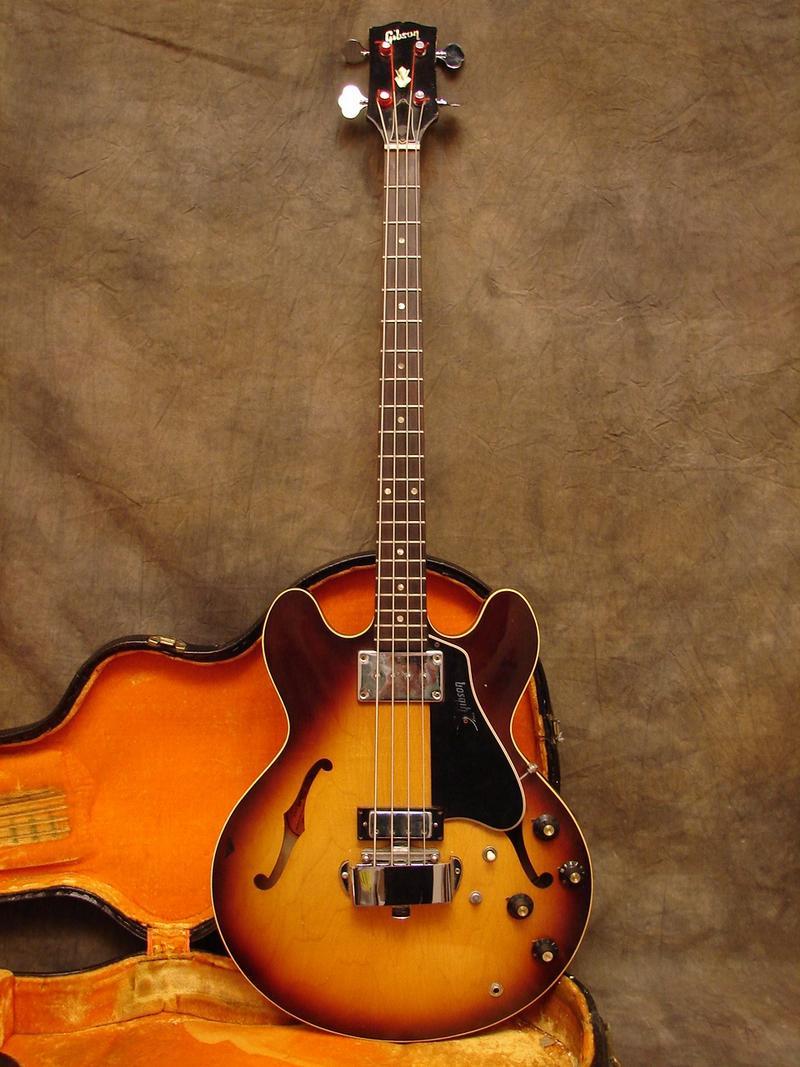
I don’t quite know why, but the GibsonEB-3 has long seemed very exciting to me.
Probably, this is because it was the first electric bass I ever played.
I was only 14 years old, and played with architecture students – all the guys were much older than me. But I had two trump cards, which were my door into this band: a) I could play the piano and b) I was rather good at transcribing songs off records (or tape machines). The bassist was the band’s leader, and he played a genuine Gibson EB-3, which I was allowed to play a few times – wow! 🙂
In its day the Gibson EB-3 was the company’s most popular bass by far. The now legendary Thunderbird, for example, was a complete and utter flop, and only in production for six years (1963-1969). The EB-3, on the other hand, was in continuous production from 1961 all the way to 1979.
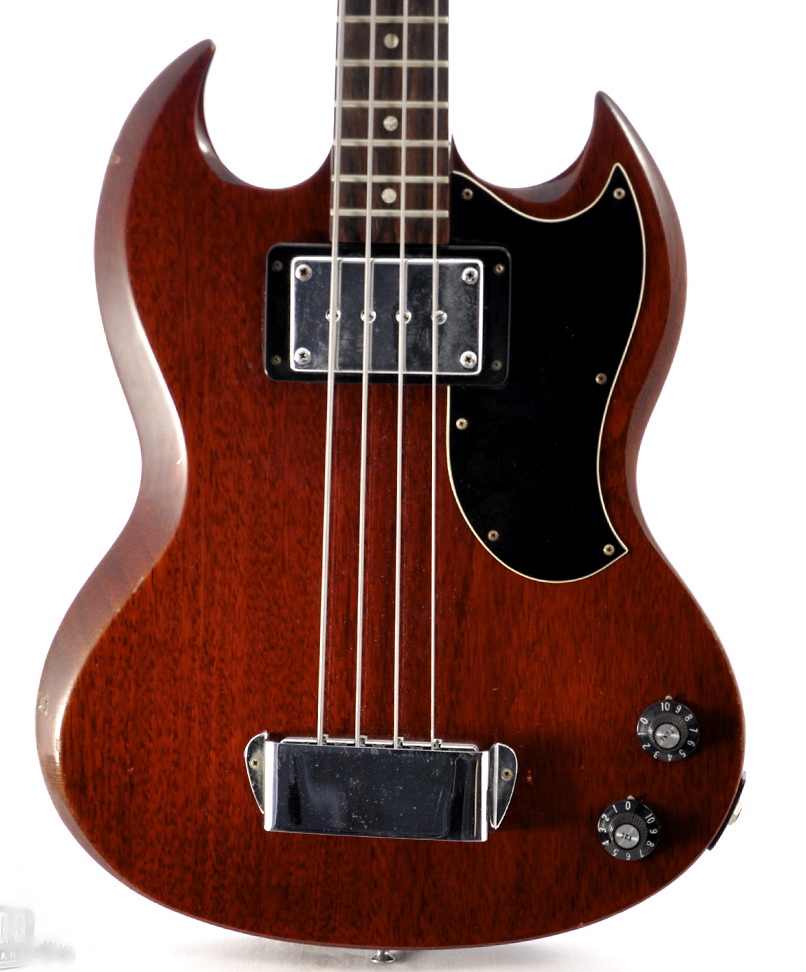
The EB-3 shared the same mahogany body, as its SG-cousins, and because it was a short-scale bass, the whole package was comfortably compact and light.
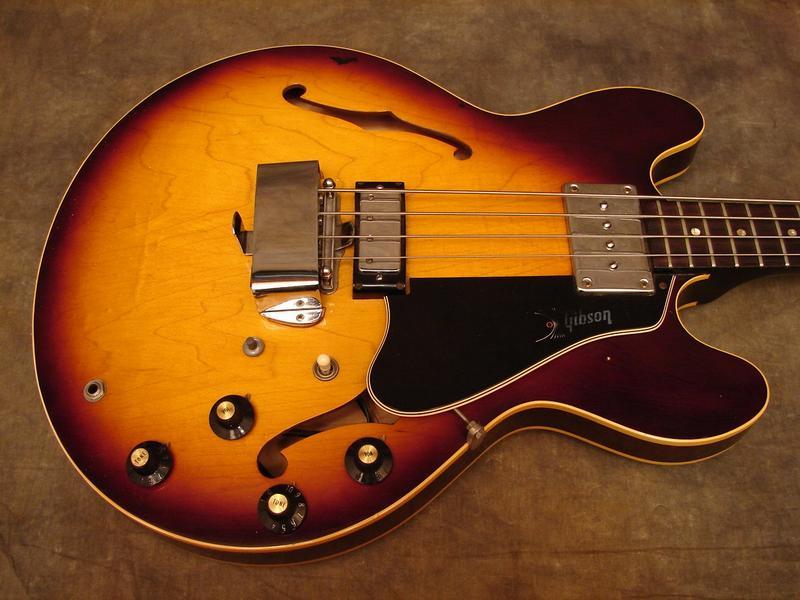
The neck pickup is a huge mother of a humbucker, with a much smaller companion mounted close to the bridge. The very first instruments had a black plastic cover on the front pickup, which was painted silver-metallic, but soon Gibson introduced a proper metal cover on the neck humbucker. The four-way rotary selector gives you each pickup on its own, both pickups together, as well as the rather strangled-sounding baritone-variant.
At the start of the Seventies the neck material was changed to maple for added strength, with the neck humbucker’s position moved to halfway between the end of the fingerboard and the bridge pickup.
During the years 1969-74 Gibson also offered a long-scale version – the EB-3L – most of which featured a spanish-style headstock (see below). Because of its longer neck the EB-3L was noticeably neck-heavy, though.
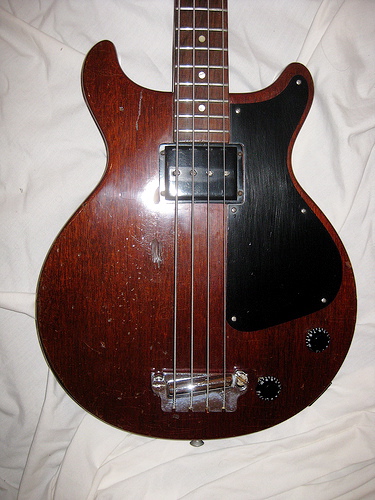
The EB-3’s kid brother is actually the model’s predecessor: the EB-0 was first introduced in 1959 with a double-cutaway Les Paul Junior -style body (see above).
In 1961 the EB-0 was changed to conform to the SG-look. In the mid-Seventies the EB-0’s single pickup was also moved closer to the bridge. From 1962 to ’65 a fuzz-equipped version was also available (the EB-0F).
****
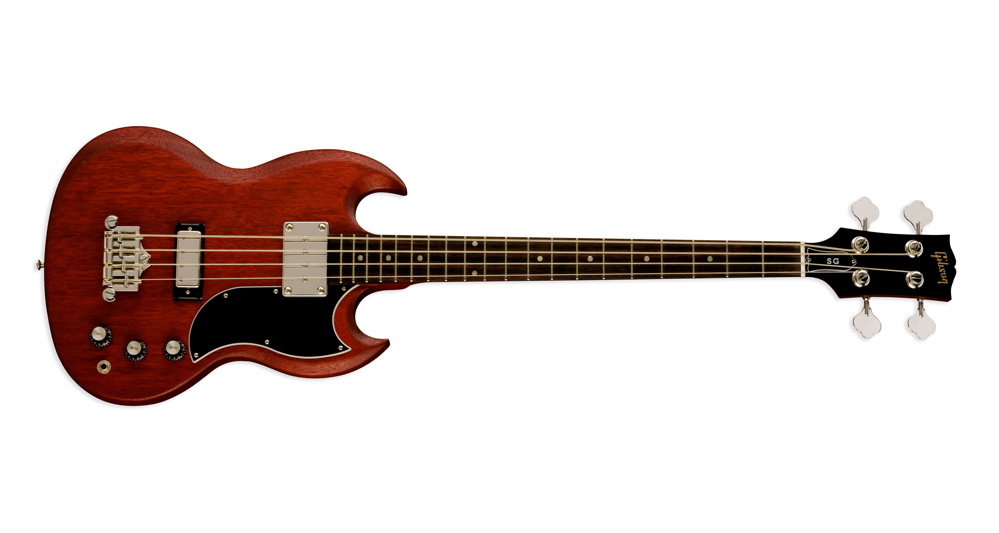
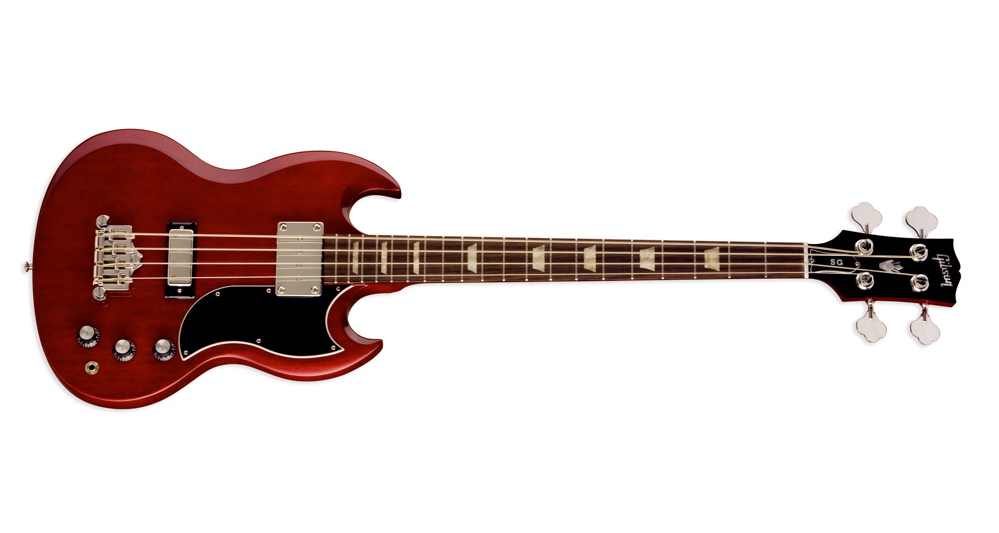
At the moment Gibson offers two USA-made SG-basses: The SG Standard Bass Faded comes in Gibson’s faded finish and sports dot inlays in the fretboard. The SG Standard Bass is gloss-finished and features crown-style inlays. Both basses use a Jazz Bass -style volume-volume-tone-setup in place of the original four controls plus rotary switch.
****
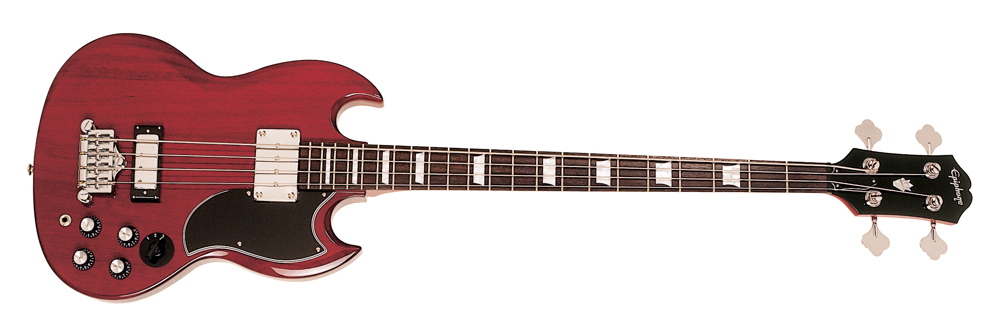
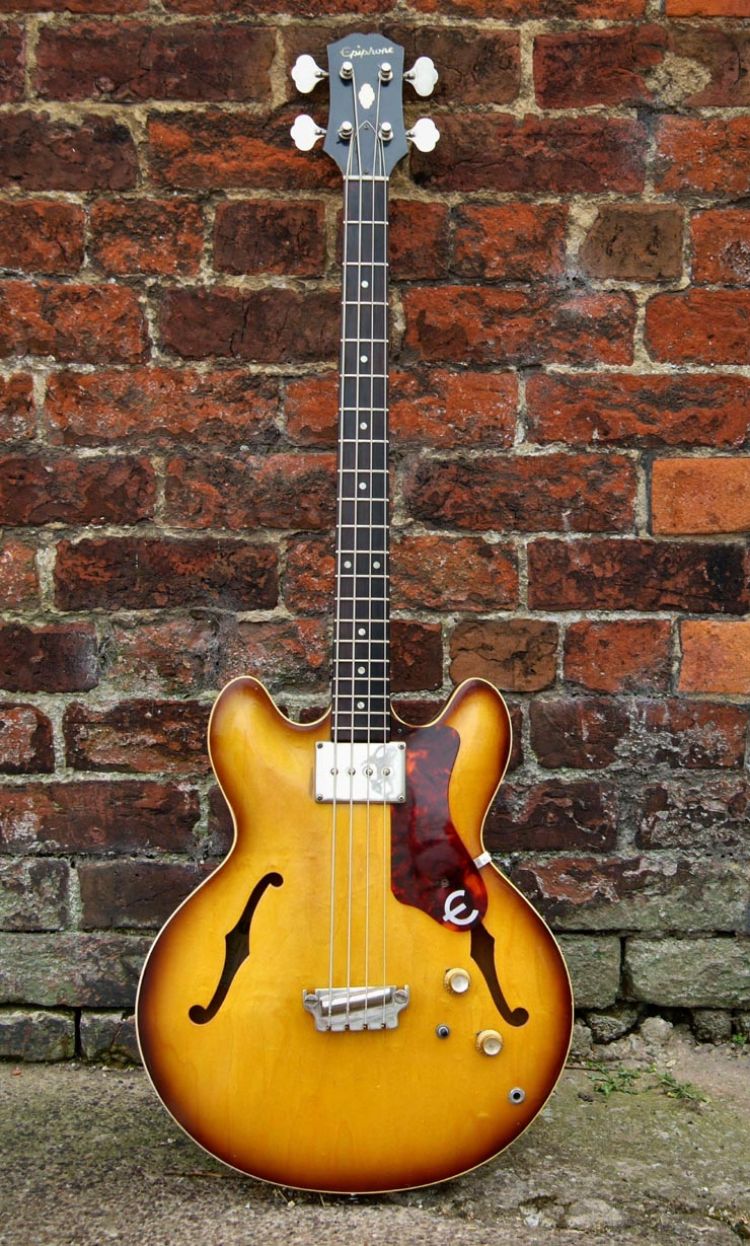
Epiphone’s cost-conscious EB-3 is only offered as in a long-scale version.
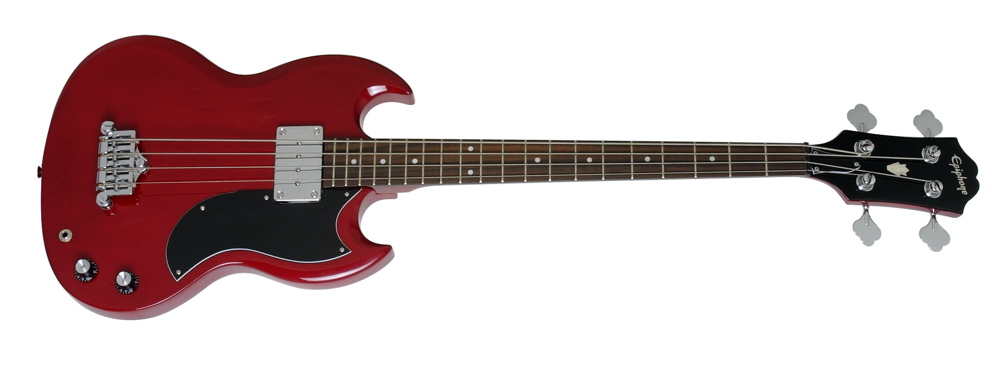
The Epiphone EB-0 is an even more affordable, bolt-on short-scale bass.
****
The fat and flexible tone of the EB-3 (as well as the EB-0) was well received by many Blues and Rock bassists in the late-Sixties and early-Seventies.
The best-known EB-3-users have been The Cream’s Jack Bruce and Free’s bassist Andy Fraser.
Here are Gibson’s own sound examples for the SG Standard Bass:
The Gibson EB-2 was the company’s bass counterpart to its classic ES-335/345/355-range of semiacoustic guitars. This short-scale bass was built with the same body as the guitars: steam-pressed maple plywood (4-ply) with a maple centre block to suppress feedback. The neck was crafted from mahogany and rosewood was used for the unbound fingerboard.
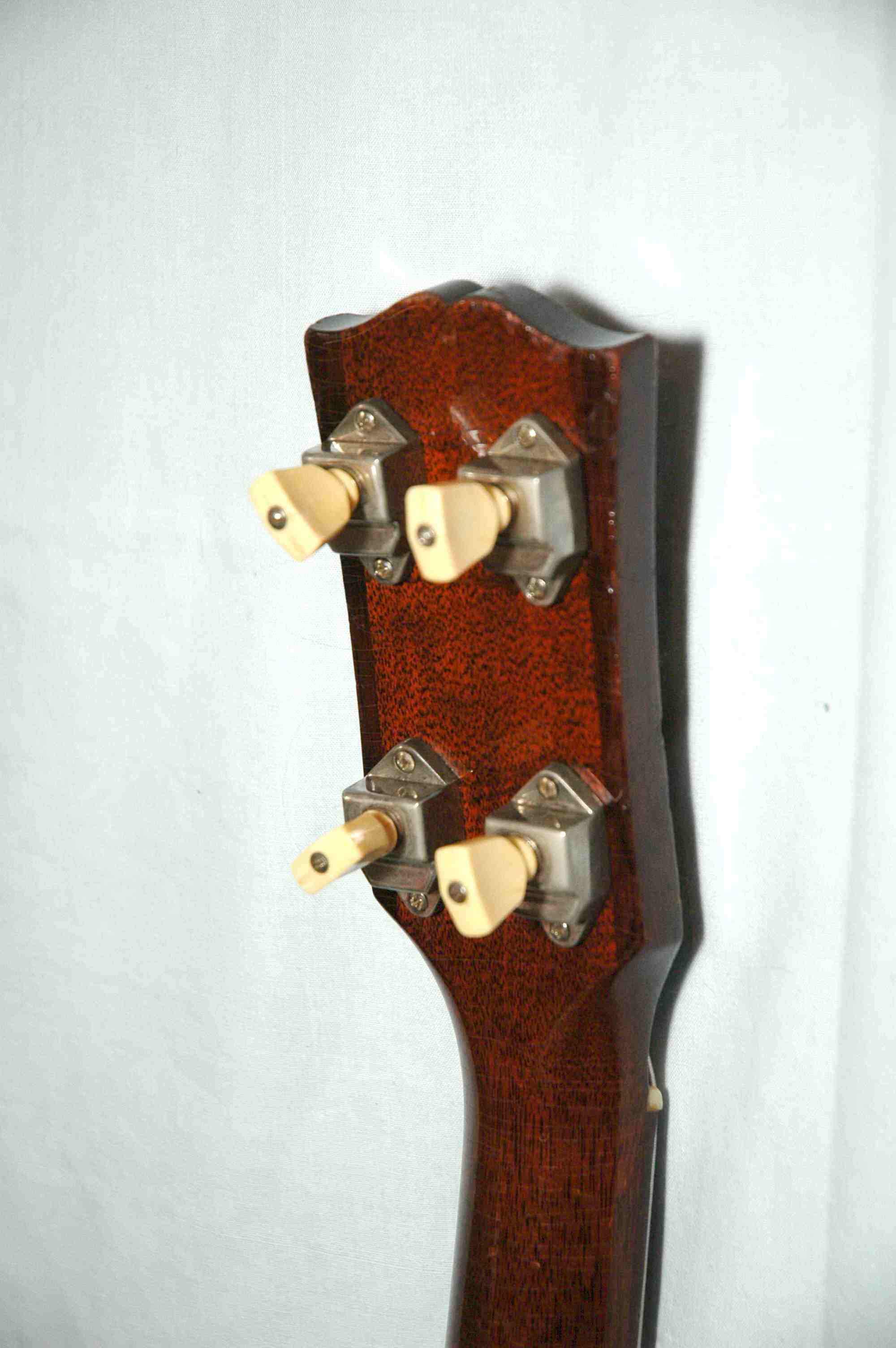
The first run of EB-2-basses (1958–’61) was equipped with back-facing, banjo-style tuning machines (until 1960), as well as a large neck humbucker with a black plastic (Bakelite) cover. A pushbutton next to the pre-compensated one-piece stud bridge engaged the ”baritone”-filter.
****
After a short break in production the EB-2 was reintroduced in 1964, now with the same metal-covered pickup as used on the EB-0/EB-3 solid-body bass.
In 1966 Gibson came out with the EB-2D – a version equipped with two pickups.
Starting in 1960, all Gibson-basses had a (detachable) mute attached to their bridges (on the photo below you can see the mute between the bridge and the bridge pickup).
Production of the Gibson EB-2 was phased out at the end of 1970, while the EB-2D stayed in production until 1972.
****
Between 1960 and 1970 Gibson also produced an alternative version of the EB-2 – the Epiphone Rivoli EBV-232.
Both the Gibson EB-2 as well as the Epiphone Rivoli were especially popular among British Blues Boom bands in the Sixties (famous users include the Yardbirds’ Paul Samwell-Smith, as well as the Animals’ Chas Chandler).
Gibson EB-2 oli ES-335/345/355-mallistoon kuuluva basso. Lyhytskaalaisella bassolla oli samankokoinen runko kuin kitaramalleissa. Runko tehtiin muotoon prässätystä vaahteravanerista (neljä kerrosta), ja sen sisällä oli vaahterasta veistetty keskipalkki, joka vähensi feedbackia. Kaula oli mahonkia ja otelauta palisanteria.
Ensimmäisissä EB-2-bassoissa (1958–’61) oli taakse osoittavat, banjo-tyyliset virittimet (vuoteen 1960), sekä kaulahumbuckerilla musta muovikansi. Yksiosaisen tallan vierellä olevalla kytkimellä voi valita ”basso-” ja ”baritonisoundin” välillä.
****
Lyhyen tauon jälkeen EB-2 tuotiin takaisiin mallistoon vuonna 1964, nyt uudistetulla, metallisella mikrofonin kannella.
Kaksi vuotta myöhemmin Gibson esitteli EB-2D-version kahdella mikrofonilla.
Vuodelta 1960 kaikkiin Gibson-bassoihin asennettiin sordino, joka oli kiinnitetty suoraan tallaan (näkyy kuvassa tallan ja mikrofonin välillä).
Gibson EB-2:n tuotanto lopetettiin vuonna 1970, kun taas EB-2D pysyy mallistossa vuoteen 1972 saakka.
****
Gibson möi EB-2:lta 1960-’70 välisenä aikana myös rinnakkaisversion – Epiphone Rivoli EBV-232.
Gibson EB-2 ja Epiphone Rivoli olivat suosittuja soittimia useissa Brittiläisissä bluesbändeissä 1960-luvulla (esim. Yardbirds – Paul Samwell-Smith, Animals – Chas Chandler).
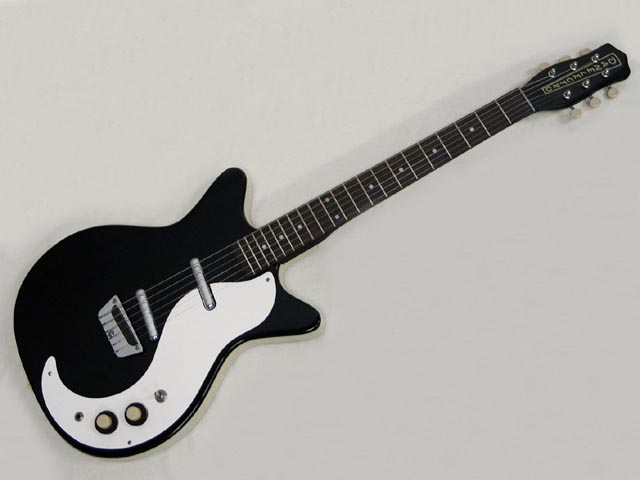
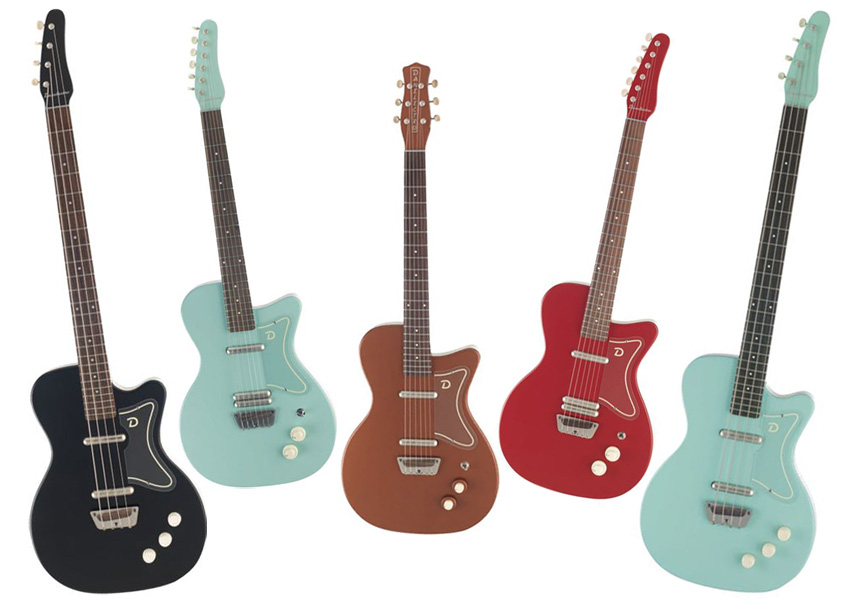
The original Danelectro guitars and basses were built in the USA.
The company’s founder – Nat Daniel – started building guitar amps as early as the 1930s (for example Epiphone’s first Electar-series was Daniel’s brainchild), and right after the end of WWII, Danelectro started supplying large mail-order companies Montgomery Ward and Sears with amplifiers.
Instrument production at Danelectro started in 1954, with guitars carrying both the company’s own logo, as well as the house-brands of mail-order companies, like Silvertone.
Nat Daniel had an unbelievable knack for creating astonishingly well-playing and well-sounding instruments cheaply and effectively: Danelectro’s bolt-on necks were fixed to a body made from a plywood frame with fibreboard glued on as the material for the top and back. The top nut was made from aluminium and screwed to the top end of the fingerboard, while the bridge featured an uncompensated rosewood saddle atop a metal plate.
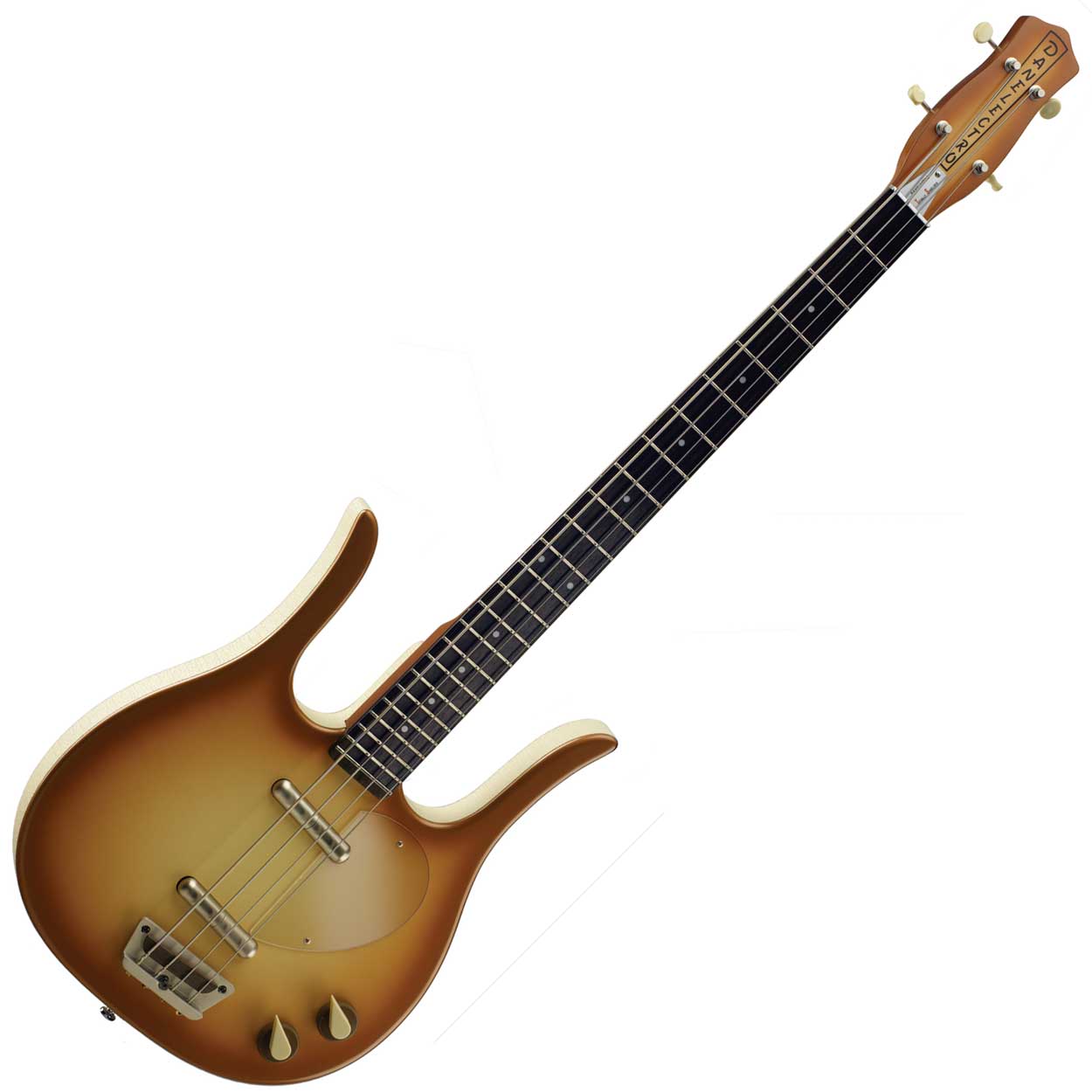
Danelectros are most famous for their special pickups, though, which feature a long bar magnet wound with coil-wire and stuffed into two lipstick tubes. Height adjustment is from the back of the body.
Danelectros have a special, bright and gnarly tone – wiry and edgy, but never brittle or weak.
The Danelectro Longhorn-bass’ clicky attack, often augmented by slapback tape echo, was a major ingredient in the Nashville Country-sound of the late Fifties into the Sixties.
And the 1960s also saw not only one, but two electric Danelectro-sitars (the more elaborate design carried the Coral-logo).
Nat Daniel died 1994, but the Danelectro-marque is still going strong with Far Eastern replicas and reissues, as well as new ”wacky” models.
Alkuperäiset Danelectro-kitarat ja -bassot rakennettiin 1950- ja 60-luvulla USAssa.
Firman perustaja – Nat Daniel – rakensi jo 1930-luvulla varhaisia kitaravahvistimia (esimerkiksi ensimmäinen Epiphone Electar -sarja oli hänen kehittämä), ja heti toisen maailmansodan jälkeen Danelectro rakensi Montgomery Ward- ja Sears-postimyyntiyrityksille soitinvahvistimia.
Vuodesta 1954 Danelectro on rakentanut myös omia kitaroita ja bassoja, sekä omalla nimellä varustettuina että postimyyntiyrityksille näiden brändinimeillä (esimerkiksi Silvertone).
Nat Danielilla oli kyky tehdä erittäin pelkistettyjä, mutta samalla tehokkasti toimivia soittimia hyvin edullisesti: ruuvikaulat liitettiin runkoihin, joilla oli vanerista tehty kehys, johon päälle on liimattu kuitulevystä tehty kansi ja pohja. Satula oli alumiinista ja ruuvattu otelaudan päähän, kun taas talla oli kasattu metallilevystä sekä yhtenäisestä tallapalasta palisanterista.
Suurin erikoisuus ovat kuitenkin Danelectron yksikelaiset mikrofonit: tankomagneetin ympäri on käämitty kela ja koko helahoito on upotettu kahteen metallisiin huulipunahylsyjen sisään. Korkeuden säätö tapahtuu rungon takapuolelta ruuveilla.
Danelectro-soittimien soundi on hyvin kirkas ja hieman pureva, muttei kuitenkaan ohut tai ponneton.
Danelectro Longhorn -basson naksahteleva atakki oli – usein slapback-delayllä höystettynä – tärkeä ainesosa 1950- ja 60-luvun Country-musiikissa.
Ja 1960-luvun psykedeelisissä hiteissä kuului usein yksi Danelectron kahdesta sähkösitarmalleista, joista yksi kantoi Coral-logon.
Nat Daniel kuoli vuonna 1994, mutta merkki elää ja voi hyvin uusissa sekä uusvanhoissa soittimissa, joita kaikki rakennetaan Kauko-Idässä.
HUOM: Videossa ei mainita, että vanhoissa 4001-malleissa (sekä niiden uusintapainoksissa) tallamikrofonin suoja ei ole pelkästään suoja, vaan se on mikrofonin magneetti. Näistä malleista suojan/magneetin luonnollisesti ei saa poistaa!
PRS Guitarsilta saa nyt Kauko-Idässä valmistetun version Singlecut-kitarastaan.
Löysin hyvin tehdyn esittelyvideon You Tubessa:
Les Paul -faneille tarkoitettu PRS SE 245 on paksumpi kuin muut tähän mennessä ilmestyneet SE-sarjan soittimet, ja sillä on Gibson-tyylinen (24,5 tuumaa/62,2 cm) mensuuri, mikä on hieman lyhyempi kuin PRS:n perinteinen mensuurin pituus (25 tuumaa/63,5 cm).
Tämän jutun otsikko olisi voinut olla ”Firebird: suuri tuntematon”, Gibson Firebird kun on jostain syystä firman klassikkomalleista vähiten laajasti tuttu. Syitä tähän ilmiöön ovat alkuperäisen malliston lyhyt tuotantokausi, sekä todella nimekkäiden soittajien puuttuminen Firebirdin käyttäjälistalta.
Firebird/Thunderbird-mallisto oli vuoden 1963 versio Gibsonin yrityksistä luoda moderneimman kitaran kuin Fender. Yritykset alkoivat jo vuonna 1958 Explorer- ja Flying V -malleilla. Gibsonin silloinen toimitusjohtaja, Ted McCarty, halusi luoda pramean soittimen, joka todistaisi kaikille, että firma ei ollut vanhanaikainen pitkäveteisien soittimien valmistaja. Firebird oli Gibsonin vastaus Fender Jazzmasterille.
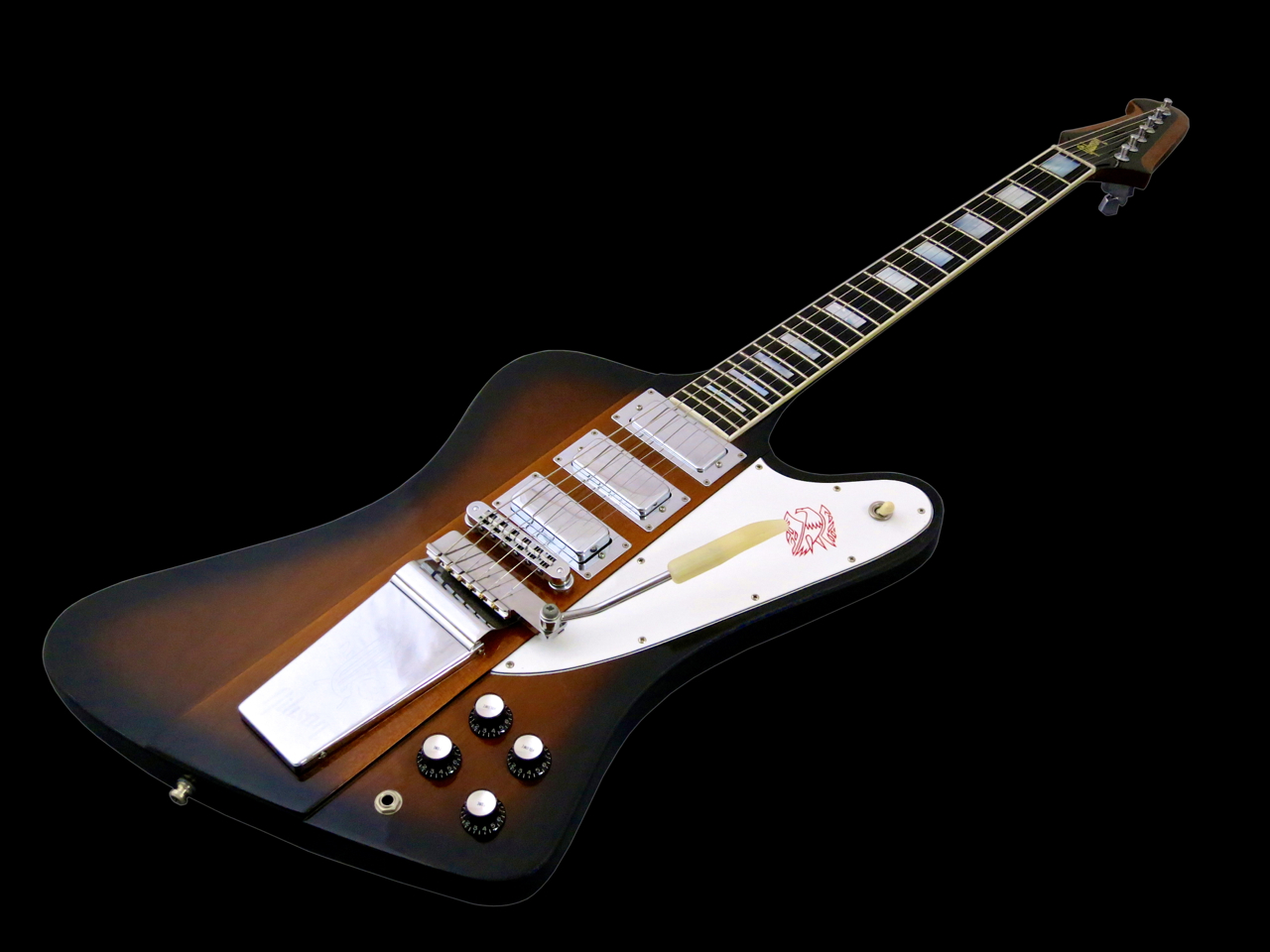
Tällä kertaa McCarty haki ulkopuolista apua: autoteollisuudesta tuttu suunnitelija Ray Dietrich sai tehtävän luoda soittimen designerin näkövinkkelistä. Dietrichin innovaatio oli ensimmäinen Firebird/Thunderbird-sarja (kuva yllä), jonka kutsutaan nykyään reverse-runkoiseksi (reverse = käänteinen), koska sen runko näyttää vähän kuin oikeankätinen kitara, joka on vasenkätisen kitaristin käytössä.
Gibson päätti kokeilla firmalle uutta rakennustapaa: reverse-Firebirdeillä kaula jatkuu yhtenäisenä koko soittimen pituudella (through-neck). Tähän mahongista ja pähkinäpuusta veistettyyn keskiosaan lisättiin mahonkiset runkosiivet. Sarjan toinen erikoisuus ovat banjo-tyyliset virittimet, joissa nupit ovat samassa linjassa viritystappien kanssa.
Alkuperäinen reverse-sarja (1963–’65) koostui neljästä mallista:
• Firebird III: kaksi mini-humbuckeria, reunalistoitettu palisanteriotelauta, pyöreät otemerkit, wraparound-talla, yksinkertainen vibrato
• Firebird V: kaksi mini-humbuckeria, reunalistoitettu palisanteriotelauta, Les Paul Standard -tyyliset otemerkit, pitkä Gibson Vibrola lyyra-kaiverruksella
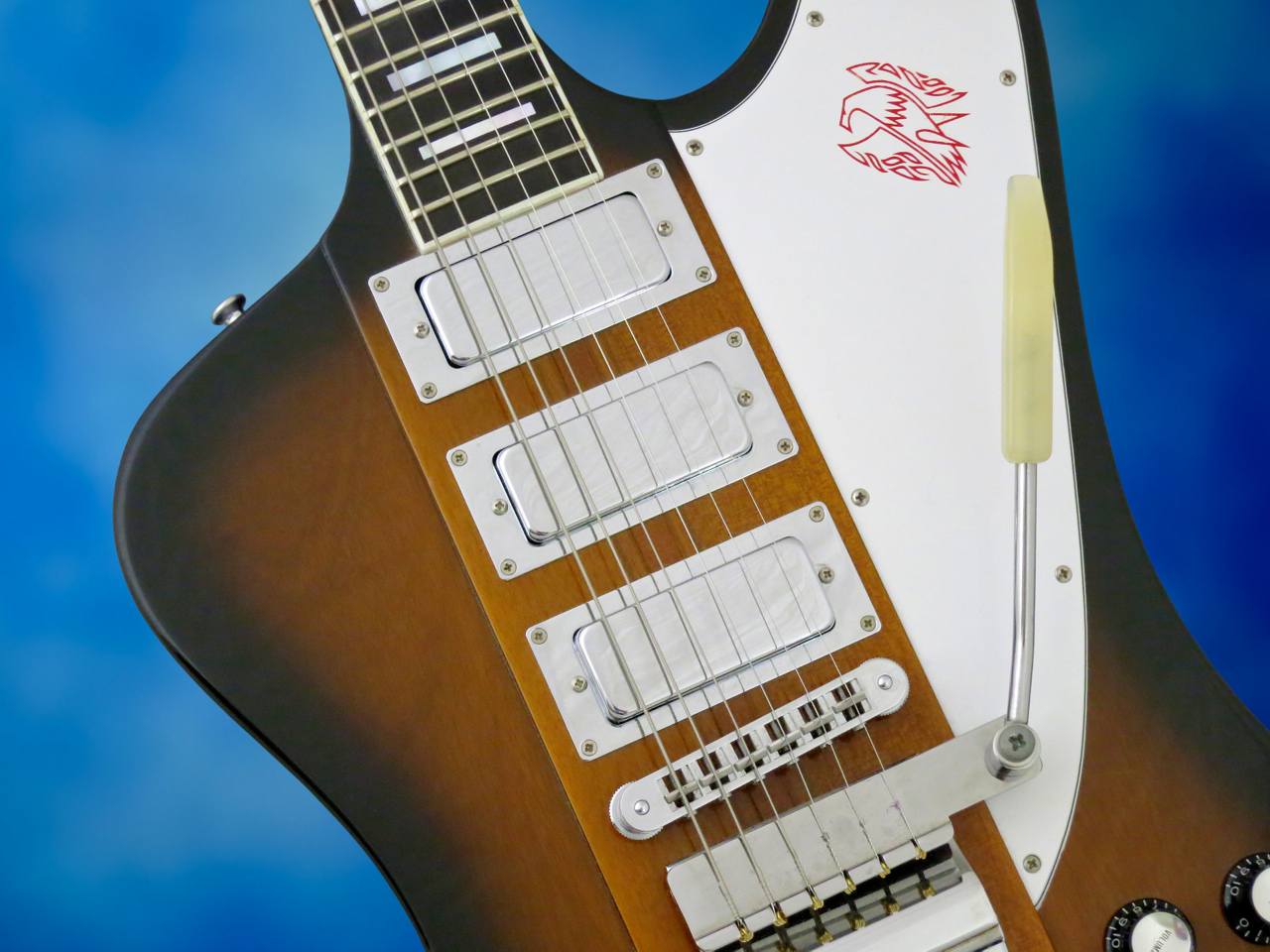
• Firebird VII: kolme mini-humbuckeria, reunalistoitettu otelauta eebenpuusta, neliskulmaiset otemerkit helmiäisistä, pitkä Gibson Vibrola lyyra-kaiverruksella, kullanväriset metalliosat
Standardiviimeistely oli kaikissa malleissa sunburst-liukuväritys, mutta ensimmäistä kertaa Gibson tarjosi asiakkailleen myös Fender-tyyliset, standardisoidut custom-värit optiona.
****
Valitettavasti Firebirdin alkuperäinen painos ei ollut kovin suosittu. Pienten myyntilukujen lisäksi Fender alkoi valittaa, että Firebirdin ulkomuoto oli rikkomus omaa Offset-waist-patenttia vastaan, ja uhkasi oikeustoimilla. Seikat johtuivat koko sarjan muuttamiseen tällaiseksi:
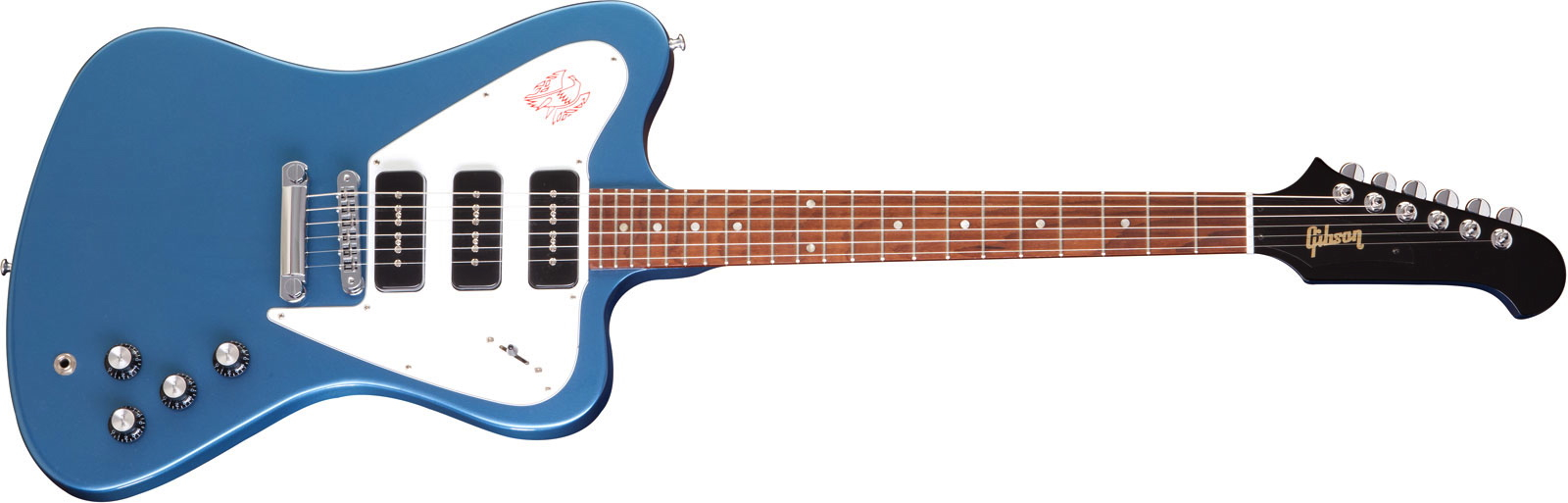
Kummallista kyllä, mutta non-reverse Firebirdit (1965–’69) näyttivät jopa enemmän Fender-kitaroilta kuin reverse-runkoiset vastineet. Non-reverse Firebirdeissä kaulaliitos oli muutettu takaisin Gibsonin perinteiseksi liimaliitokseksi. Firebird I- ja III-malleissa oli nyt P-90-mikrofonit – kaksi kappaletta I:ssä ja kolme III:ssa – kun taas Firebird V- and VII-malleilla oli yhä käytössä edeltäjänsä mini-humbuckerit. Otelauta oli kaikissa non-reverse Firebirdeissä palisanteria pyöreillä otemerkeillä, mutta ilman reunalistoitusta.
Firebirdin tuotantoa lopetettiin vuonna 1969 huonon myyntimenestyksen takia.
****
****
Sitemmin Firebirdit on otettu aina välillä uudelleen tuotantoon, mutta silti näitä kitaroita näkee edelleen suhteellisen harvoin.
Gibson Firebirdien tunnetuimmat soittajat ovat/olivat Johnny Winter, Phil Manzanera (Roxy Music), Brian Jones (Rolling Stones), Clarence ”Gatemouth” Brown, sekä Allen Collins (Lynyrd Skynyrd).