

Kitarablogi.com – Finland's premier Guitar and Bass blog
Juttuja kitaroista ja bassoista

****

Vuorensaku is a guitar maker from the Finnish town of Jyväskylä. Luthier-Artisan Saku Vuori repairs and builds all types of string instruments. Vuorensaku also winds his own brand of custom pickups.
When it comes to handcrafted instruments, Vuorensaku isn’t relying on any specific range of models, instead this is a true custom workshop which makes one-offs according to its customers’ wishes.
Saku Vuori is a member of The Guild of Finnish Luthiers.
****

Saku sent us a recently finished solidbody electric for review – a very cool crossbreed of a Seventies Fender Telecaster Deluxe and a Fifties Gibson ES-5 Switchmaster. Vuorensaku’s guitars usually are designated by their serial number only, but for the sake of simplicity I will name this instrument the ”Vuorensaku T-Style Custom”.

The T-Style Custom has been crafted from quality tonewoods:
The bolt-on neck has been carved from a piece of lightly flamed Canadian hard rock maple, and it features an Indian rosewood fretboard. The bound-top body consists of two pieces of very lightweight African mahogany. The centre glue line is virtually impossible to make out, thanks to Vuorensaku’s extremely crisp workmanship.

The Vuorensaku’s nut is crafted from genuine moose bone.
The fretboard comes with a modern, bend-friendly radius (9.5″) and sports 21 medium-sized stainless steel frets.
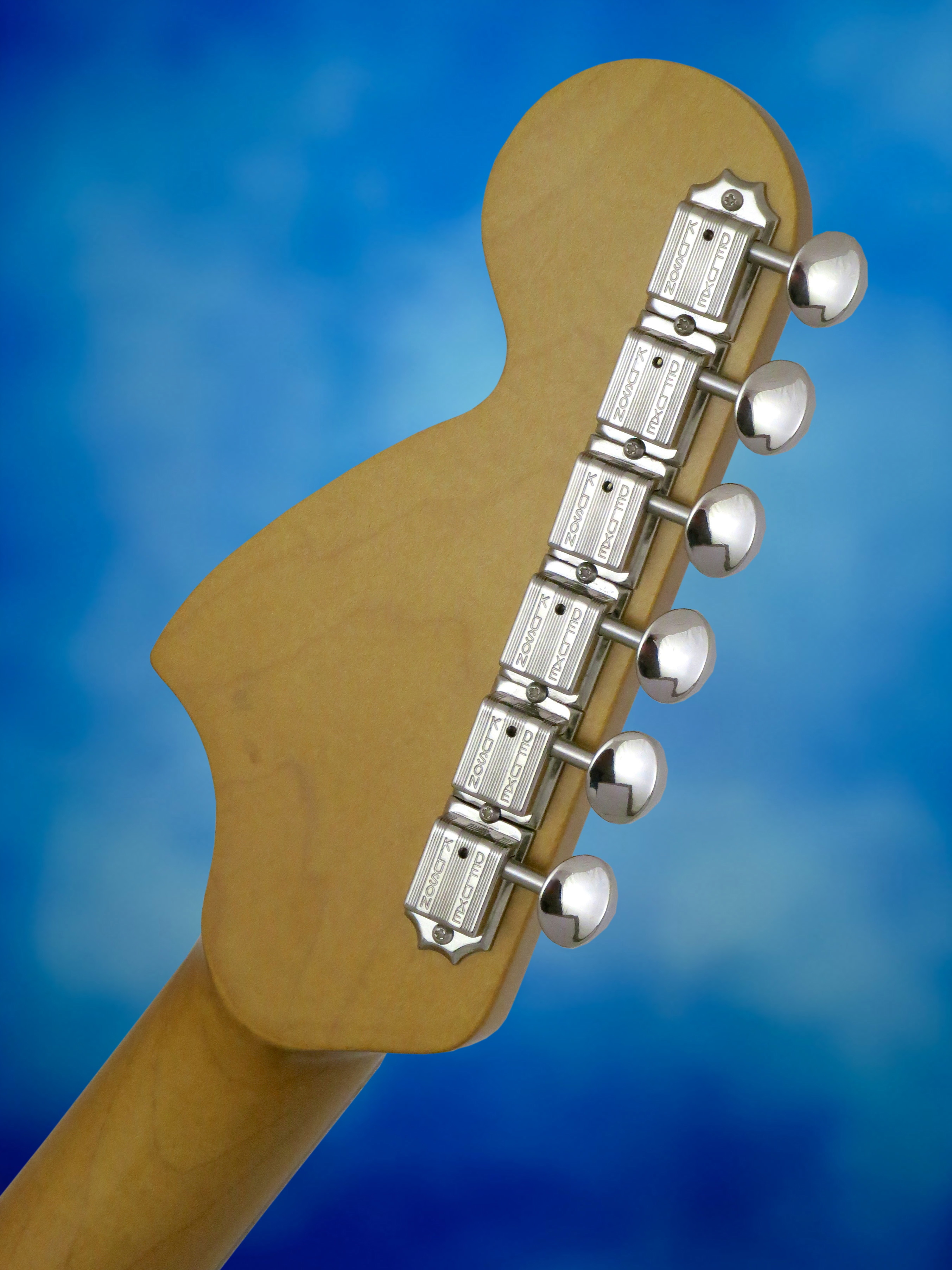
The T-Style Custom’s updated Kluson Deluxe-tuners may have that famous vintage look, but they work much more smoothly than their forebears from the 1950s.

The neck joins the body in time-honoured fashion, using four wood screws and a rectangular steel plate.
Thanks to the T-Style Custom’s satin nitro-finish this instruments simply oozes with natural elegance, feeling very friendly to the touch.

Kluson’s fantastic Half-Size Tele-bridge is a clever way of bringing genuine Tele Twang to non-Tele guitars, as well as making it possible to use this type of bridge in combination with different bridge pickups.
Many guitarists still favour the (almost archaic) three-saddle Telecaster-bridge for its gorgeous tone, especially when it comes with three brass saddles (like this Kluson does). The threads for the intonation screws on the T-Style Custom’s bridge have been deliberately cut at an angle to improve the guitar’s intonation.
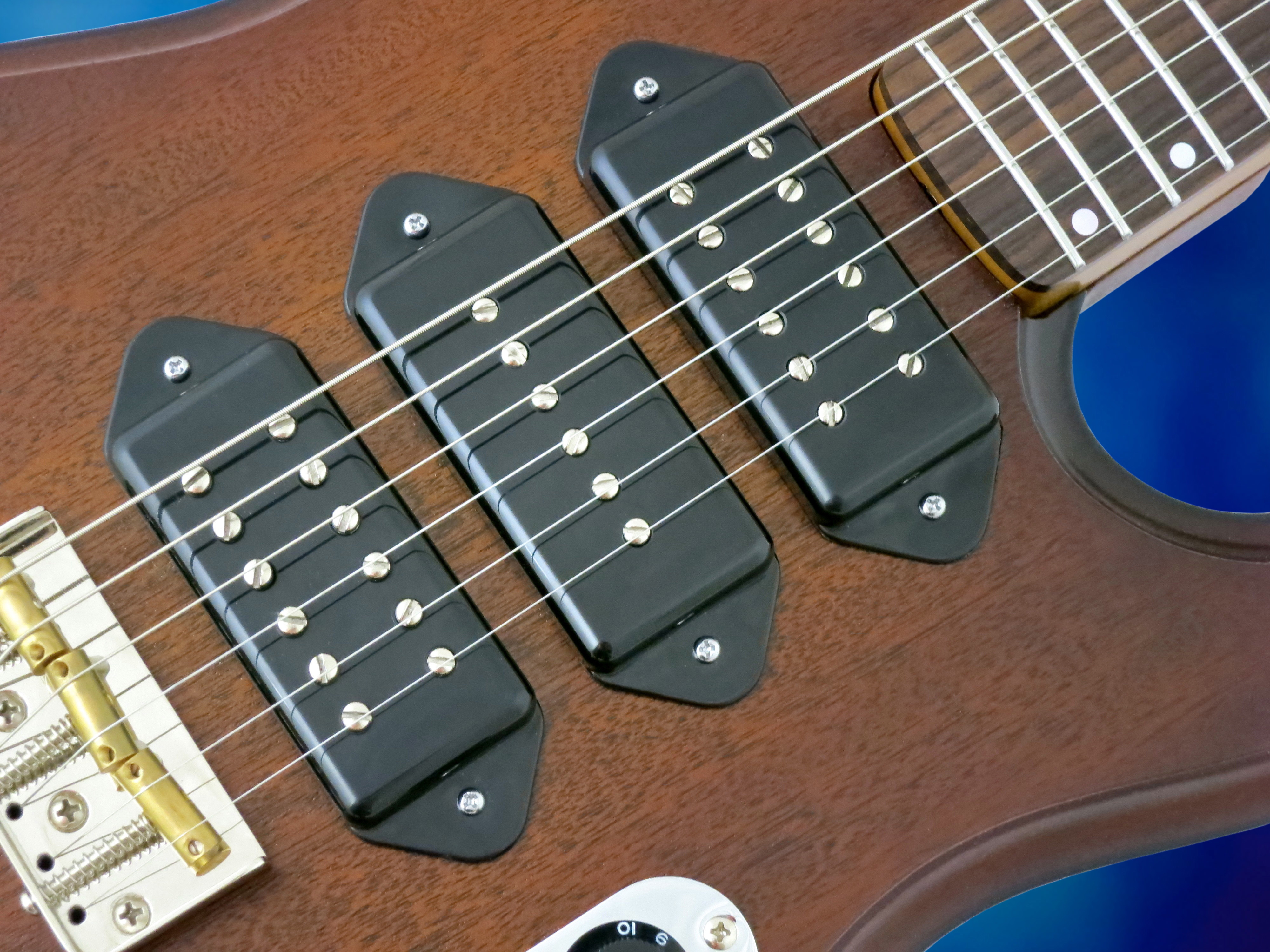
Vuorensaku’s customer specified three Dog Ear-pickups for his dream guitar, so a set of said pickups was sourced from another Finnish maker – Rautia Guitars from Joensuu.
Veijo Rautia’s Dog Ear-set comprises a pair of splittable humbuckers for the neck and bridge positions, as well as a P-90-type singlecoil in the middle.

The control panel has been turned the ”wrong” way around to facilitate easy master volume access.
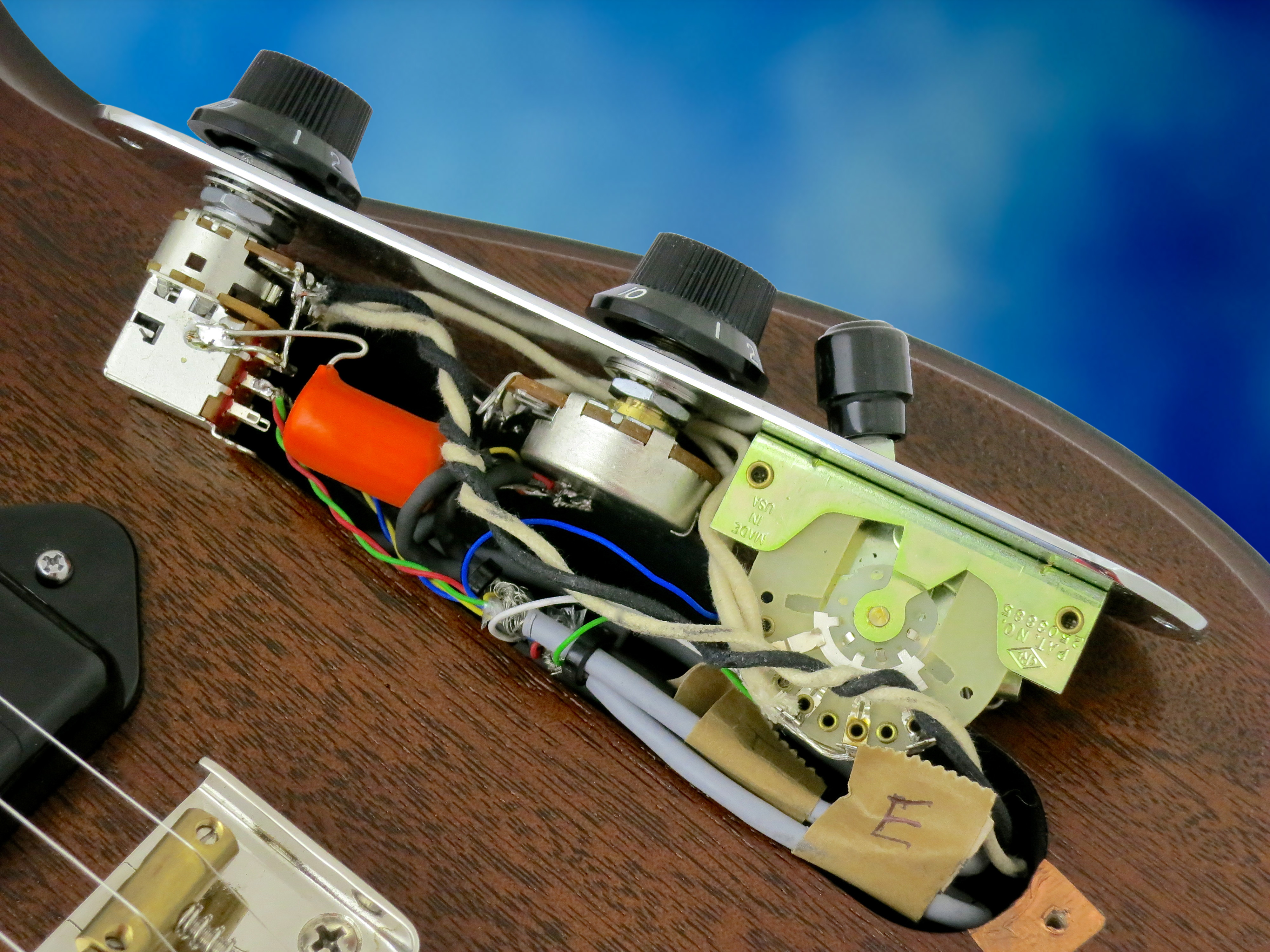
Ingeniously, Saku Vuori has managed to fit all the necessary components into the guitar’s small traditional Tele control cavity:
The volume control comes equipped with a push/pull-switch for splitting the humbuckers. The five-way blade switch works like on a Fender Strat. As you can easily see from the photo the workmanship is very clean and the components are of top quality.
****
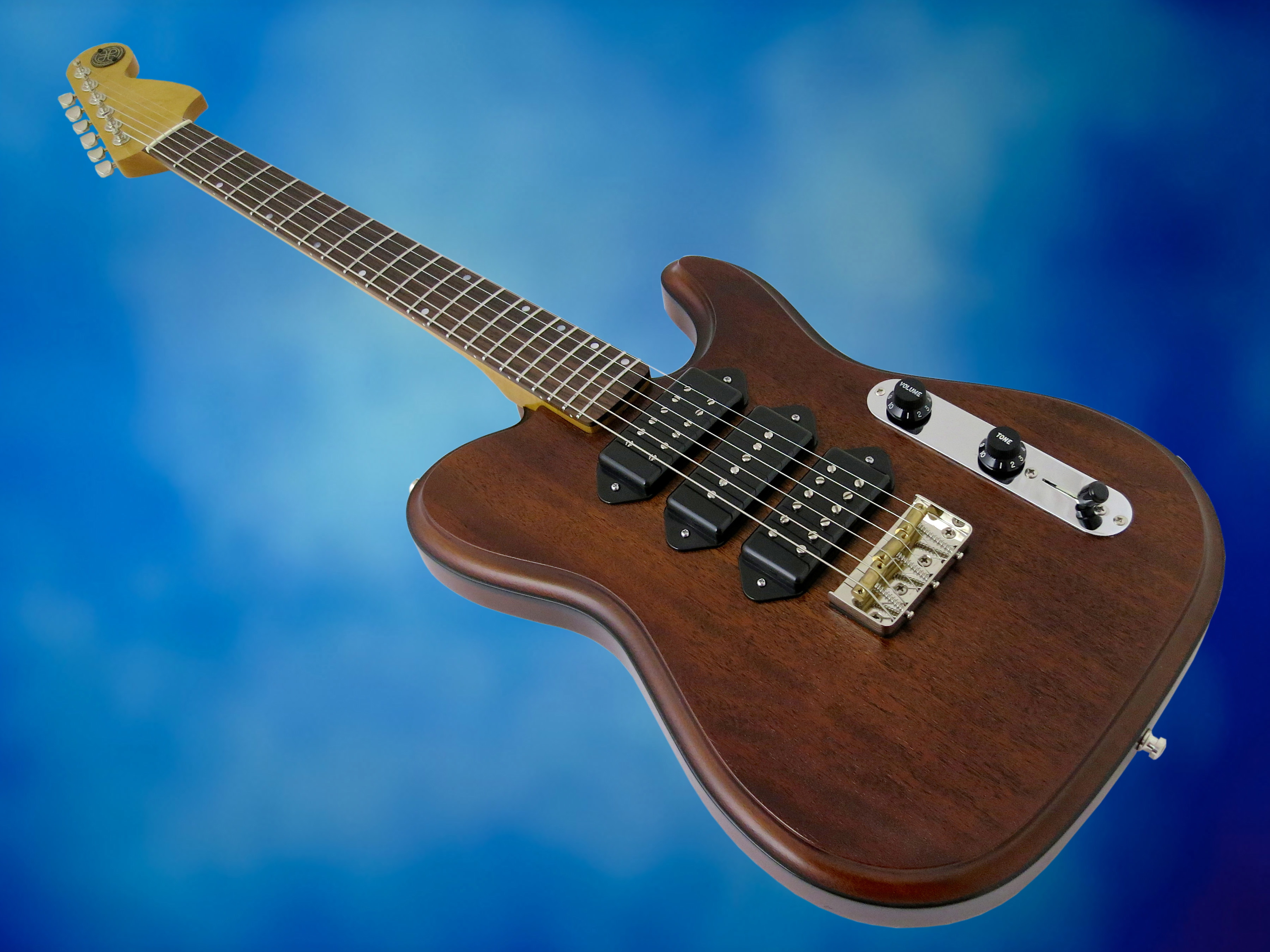
The Vuorensaku T-Style Custom scores top marks for workmanship and playability! Handmade instruments of such high calibre always possess that little something extra, a special feel that is nigh on impossible to find in a mass-produced guitar.
The T-Style Custom is a lightweight instrument. With a slippery nylon strap you might even notice a hint of neck-heaviness, but nothing a nice leather strap couldn’t get to grips with easily.
The fat C-profile of this Vuorensaku’s neck is just what the doctor ordered. The combination of this profile with the modern fretboard radius and the gorgeous fretwork, makes for a fantastic playing feel that’s fast and easy to control. The setup was superb with a set of 010s and a low action (low-E: 2.1 mm/high-e: 1.5 mm).
Acoustically, the Vuorensaku sounds just like the prime exponent of a Fender-type guitar it is – open and ringing.
Played amplified, the T-Style Custom offers a broader, much more diverse picture, which isn’t really surprising, as the Vuorensaku comes equipped with a completely different set of pickups, compared to your run-of-the-mill Tele. The guitar’s three pickups, five-way switch, and humbucker split gives you a very cool selection of different Gibson- and Fender-style tones.
I love this Vuorensaku to bits, but I found a small point to moan about, too. The bridge pickup’s signal level is noticeably weaker than that of the neck pickup. This isn’t due to any shoddy workmanship, though, but rather down to the Dog Ear-type of pickup mounting, and a phenomenon many Gibson- and Epiphone-owners are well aware of. It’s very hard for a reviewer to criticise a custom-ordered guitar, because there’s always the possibility that the guitar was meant to perform in this way. Still, if this were my instrument, I’d ask Saku Vuori to add a small plastic shim (1.5-2 mm) beneath the bridge pickup to raise it closer to the strings.
The Rautia Guitars Dog Ear-set sounds fantastic. Thanks to the moderate output of the humbuckers, there’s never any danger of the sound getting mushy or ill-defined. The ’buckers also sound great in split-mode, and combining the two humbuckers with a rude-sounding P-90 in the middle position can only be described as a stroke of genius.
This clip gives you an idea of the guitar’s sounds with the humbuckers split (starting with the neck pickup):
Here we have a similar clip featuring the full humbuckers:
And to round it off, here’s the audio from the You Tube-video:
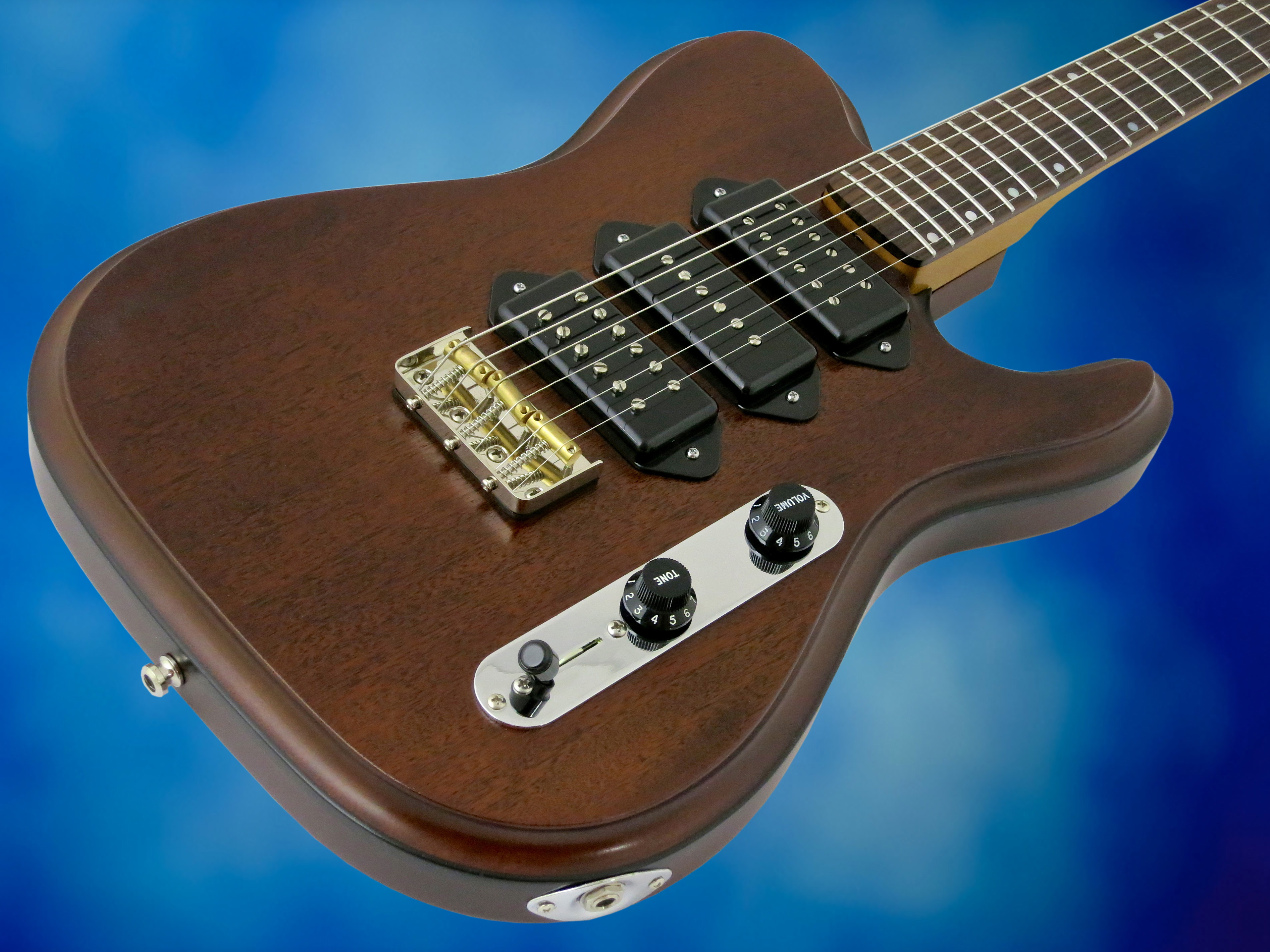
What a guitar! The Vuorensaku T-Style Custom is another excellent example of the fantastic quality of Finnish guitar-making. Too bad the owner wants his guitar back…
****
Vuorensaku T-Style Custom
Price range for a similar guitar: 2,500 – 3,000 €
A big ”thank you” goes to the promoter of the Rockkaamo Festival, Mr Jani Savolainen, for the loan of his guitar!
Pros:
+ Made in Finland
+ handcrafted
+ workmanship
+ playability
+ sound
Cons:
– balance between neck and bridge pickup


****
Vuorensaku on yhden miehen soitinpaja Jyväskylästä. Kielisoitinartesaani Saku Vuori korjaa ja rakentaa kaikenlaisia kielisoittimia. Tämän lisäksi Vuorensakulta saa myös käsintehtyjä kitaramikrofoneja.
Vuorensakulla ei ole valmista mallistoa, vaan yritys on aito custom-paja, jossa soittimet syntyvät käsityönä asiakkaiden toiveiden mukaan.
Saku Vuori on Suomen Soitinrakentajien Killan jäsen.
****
Sain Sakulta testiin hiljattain valmistuneen sähkökitaran, joka on erittäin puoleensavetävä yhteentörmäys 1970-luvun Telecaster Deluxesta ja 50-luvun Gibson ES-5 Switchmasterista. Soittimella ei ole virallista nimeä (vaan ainoastaan sarjanumero), mutta kutsun sitä tätä testiä varten Vuorensaku T-Style Customiksi.
T-Style Customin perustana toimivat laadukkaat soitinpuut:
Ruuvikaula on veistetty miedosti liekehtivästä kanadalaisesta vaahterasta, ja otelauta on intialaista ruusupuuta. Kitaran reunalistoitettu runko taas on tehty hyvin kevyestä afrikkalaisesta mahongista. Runko on tehty kahdesta vierekkäisestä palasta, mutta liimasaumaa on miltei mahdoton havaita – erittäin tarkkaa työtä siis.
Vuorensakun satula on valmistettu aidosta hirvenluusta.
Otelaudan radius on nykyaikainen (9,5 tuumaa), ja siihen on asennettu 21 keskikokoista nauhaa ruostumattomasta teräksestä.
T-Style Customin nykyaikaisissa, kromatuissa Kluson Deluxe -virittimissä on vintage-tyylinen ulkonäkö, mutta ne toimivat huomattavasti sulavammin kuin 1950-luvun alkuperäiset painokset.
Tässä kitarassa käytetään perinteistä Fender-kaulaliitosta neljällä puuruuvilla ja suorakulmaisella teräslevyllä.
T-Style Customin mattapintaisen nitrolakkaviimeistelyn ansiosta soitin näyttää (ja tuntuu) erittäin orgaaniselta ja aistikkaalta.
Klusonin loistava Half-size Tele -talla mahdollistaa perinteisen Telecaster-tallan yhdistämistä muihin soitintyyppeihin tai mikrofoneihin.
Monien kitaristien mielestä alkuperäinen Telecaster-talla kolmella messinkitallapalallaan on soundillaan yhä paras talla sähkökitaralle. T-Style Customin Kluson-tallassa tallapalojen kierteet on leikattu tahallaan vinosti, mikä auttaa kitaran intonaatiossa.
Vuorensakun asiakas toivoi omaan kitaraansa kolmen mikrofonin Dog Ear -setin, ja sellainen löytyi toisen suomalaispajan, joensuulaisen Rautia Guitarsin, valikoimasta.
Veijo Rautian mikrofonisettiin kuuluu kaksi puolitettavaa humbuckeria (kaula- ja tallamikki), sekä yksikelainen P-90 (keskimikki).
Käännetty paneeli helpottaa pääsyä volume-potikkaan.
Saku Vuori on onnistunut mahduttamaan kaikki komponentit perinteisen (ahtaan) Tele-koloon:
Volume-potikkaan on piilotettu nostokytkin humbuckerien puolitusta varten. Viisiasentoinen kytkin taas toimii Strato-tyylisesti. Kuten kuvastakin näkyy, työnjälki on erittäin siisti ja käytetyt osat erittäin laadukkaita.
****
Vuorensaku T-Style Custom -kitaran työnjälki ja soitettavuus on ensiluokkaista. Huippulaadukkaassa käsintehdyssä soittimessa on aina ”se jokin”, mikä on miltei mahdoton löytää suuren sarjatuotannon kitaroista.
T-Style Custom on hyvin kevyt soitin. Erittäin kevyen mahonkirungon takia on jopa huomattavissa lievä taipumus kaulapainoisuuteen liukkaan nylonhihnan kanssa. Nahkahihna tekee tästä taipumuksesta kuitenkin tehokkaasti lopun.
Tämän Vuorensakun lihaksikas kaulaprofiili (iso C) on juuri minun makuun. Yhdessä 9,5-tuumaisen otelautaradiuksen ja huipputrimmattujen teräsnauhojen kanssa, tästä muodostuu erittäin nopea ja tarkka soittoalusta. Kitara saapui testiin hyvin mukavassa trimmissä (matala E-kieli: 2,1 mm/korkea e-kieli: 1,5 mm).
Vuorensakun akustinen klangi on – yllätys, yllätys – hyvin Fender-mainen ja avoin.
Vahvistimen kautta soitettuna T-Style Custom -kitaran luonne eroaa luonnollisesti rivi-Telestä, koska Vuorensakun mikrofonivarustus on erilainen. Kolmen mikin, viisiasentoisen kytkimen ja humbuckerien puolituksen yhteispelistä saa yhdeksän hienoa laatusoundia Gibsonin ja Fenderin soundimaailmoista.
Pidän tästä Vuorensakusta kovasti, mutta löysin kuitenkin myös yhden kritiikkikohdan – tallamikrofoni on hieman hiljaisempi kuin kaulamikki. Tämä ei kuitenkaan ole laatuvika, vaan dog ear -kiinnitykseen liittyvä – ja monelta vanhalta Gibsonilta ja Epiphonelta tuttu – ongelma. Asiakkaan toiveiden mukaan tehtyä custom-soitinta on hyvin vaikea kritisoida tällaisissa asioissa, koska voi hyvinkin olla, että kitaraa on tarkoitettu juuri tällaiseksi. Jos tämä olisi minun soitin, pyytäisin kuitenkin tallamikrofonin alle noin kahden millin paksuisen muovilevyn, jolla koko tallamikrofonia saisi nostettua lähemmäs kieliä.
Rautia Guitars Dog Ear -setin soundi on vallan mainio. Humbuckereiden maltillisen tehon ansiosta soundi ei mene koskaan tukkoon. Mikrofonit kuulostavat hyviltä myös puolitettuina. Yksikelainen P-90-mikrofoni sopii soundiltaan ja teholtaan loistavasti settiin.
Tässä on audiopätkä kitaran soundivaihtoehdoista, silloin kun humbuckerit on puolitettu (alkaa kaulamikrofonilla):
Ja tässä samankaltainen pätkä täysillä humbuckerilla:
Lopuksi vielä You Tube -videon ääniraita:
Oli todella suuri ilo saada tutustua tähän Vuorensaku-kitaraan. Tämä soitin on jälleen yksi loistava esimerkki suomalaisen soitinrakennustaidon erittäin korkeasta tasosta. Valitettavasti minun on pakko palauttaa tämä kitara…
****
Vuorensaku T-Style Custom
hintaluokka noin 2.500 – 3.000 €
Suuri kiitos Rockkaamo-festivaalin pääpromoottorille Jani Savolaiselle kitaran lainaamisesta!
Plussat:
+ kotimainen
+ käsintehty
+ työnjälki
+ soitettavuus
+ soundi
Miinukset:
– kaula- ja tallamikrofonin keskenäinen balanssi

JAM Pedals is a Greek maker of boutique effect pedals, whose products are now available in Finland, too (distributed by R-Jam Group).
JAM Pedals’ products are all-analogue, built by hand from first-rate components. Some models even rely on hard to come by NOS-chips and -transistors for their sound.
Most JAM-models can also be ordered in point-to-point versions, or with customised specifications and/or artwork.
All JAM Pedals come in hand-painted, unique designs, and are delivered with a cloth sack for storage, as well as a JAM-logo’d plectrum.
All the effects tested in this review run on a nine volt battery or a (Boss-type) power supply (not included).
****
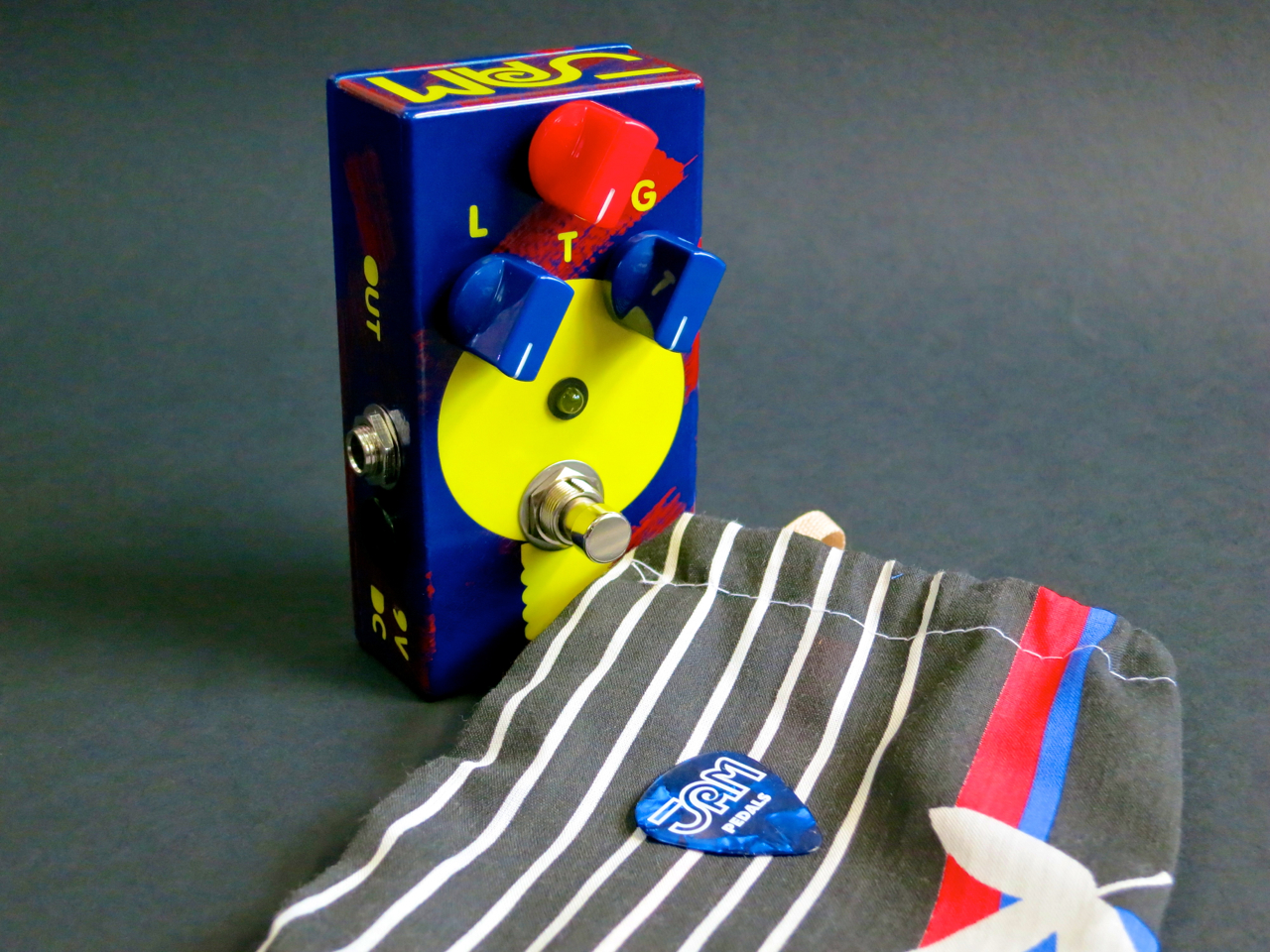
JAM Pedals offers four different versions of its Tube Dreamer overdrive pedal.
Their compact Tube Dreamer 58 is the company’s take on the ultimate Ibanez Tube Screamer 808 pedal. The circuit is built around an original JRC4558D-chip.

The JAM Tube Dreamer 58 (current price in Finland: 185 €) wins you over with a healthy dose of that classic, creamy Tube Screamer mid-range. The TD58’s forte, though, is the vastly improved dynamic range of the JAM-model, and the more organic, amp-like overdrive structure, achieved by using three diodes for asymmetrical clipping.
This sound clip – like all the others in this review – has been recorded using a Fender Stratocaster and a Blackstar HT-1R valve combo:

****

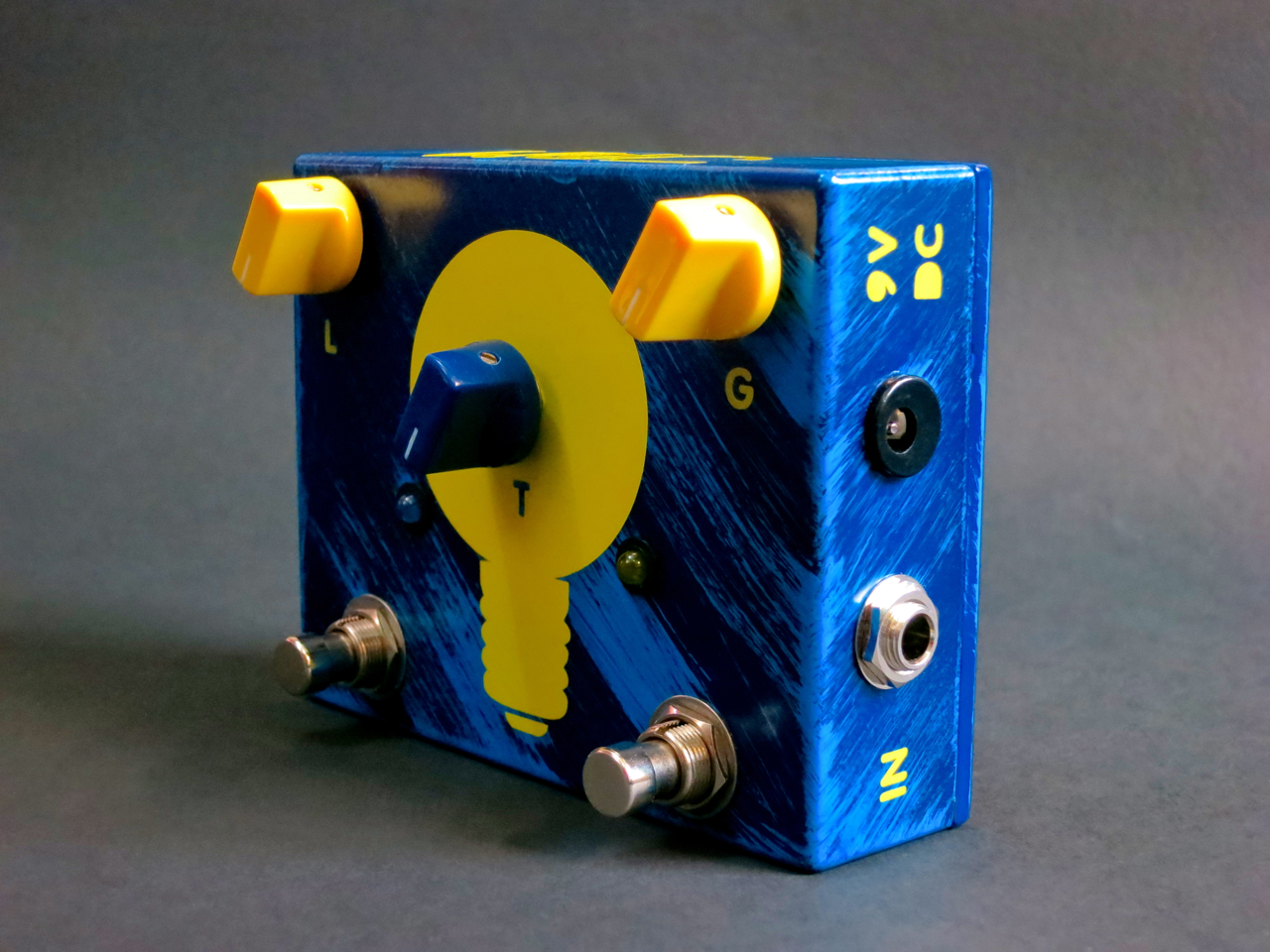
The flagship model Tube Dreamer pedal is called the JAM Tube Dreamer+ (current price in Finland: 225 €), and is the deluxe version of the JAM Tube Dreamer 72, which is designed a ”secret chip”.

The Plus-version adds a high-gain-/boost-circuit (left footswitch) on top of the moderate-gain overdrive section (right footswitch).
The Tube Dreamer+ is shipped with the high-gain circuit adding only more gain to proceedings, but you can also adjust the high-gain circuit’s internal trimmer to deliver copious amounts of signal boost, whenever it is switched on.
In terms of its sound, the Tube Dreamer+ gives more than a passing nod to 1970s Blues Rock and Heavy Metal. Despite its high-gain boost, this JAM-model hasn’t been designed for contemporary Thrash Metal.
****

JAM Pedals’ stompbox fuzz is called Red Muck, and it comes in a Soviet-inspired colour scheme, complete with hammer and sickle graphics.
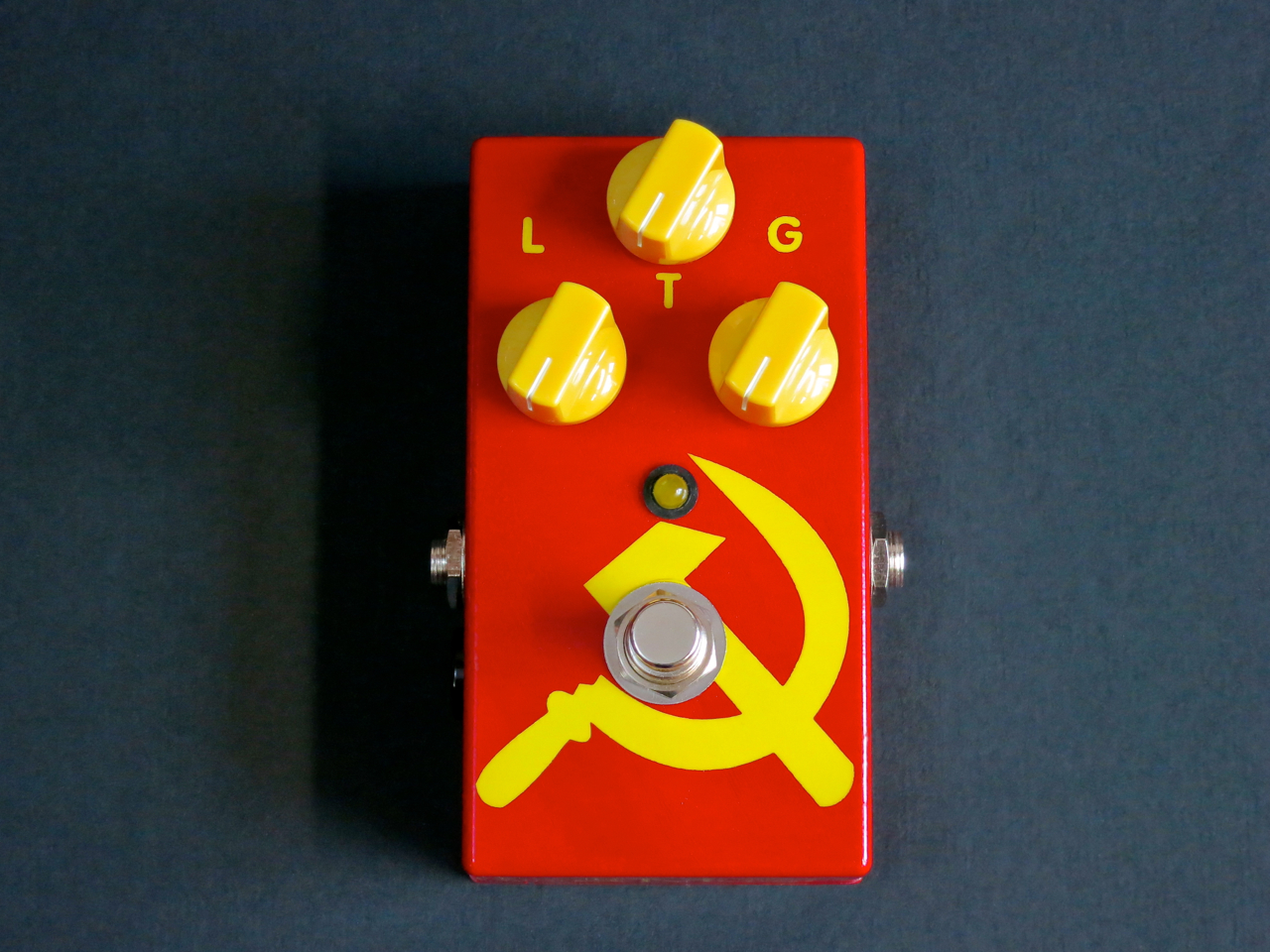
The starting points for the Red Muck fuzz’ (current price in Finland: 209 €) tone were the classic, early Big Muff -sounds.
JAM has refined the original fuzz character to come up with a much more versatile pedal. JAM’s Red Muck reacts extremely well to changes in the guitar’s volume knob settings, while the overall delivery is noticeably fatter and creamier, when compared to many other fuzz-effects. This pedal also takes well to full chords, and doesn’t mush up so quickly.
I have to admit that JAM’s Red Muck has quickly become my favourite fuzz box.
Listen for the tonal changes, as I slowly raise the volume control at the beginning of this clip:

****

The JAM WaterFall (259 €) is a dual-function effect pedal, offering chorus and vibrato in one compact package.

The two effects in the WaterFall have been designed around two legendary Panasonic-chips (the MN3101 and the MN3007), on which some of the earliest Boss modulation effects were also based.
The mini-switch on the right is for selecting the effect – chorus or vibrato (v) – while the switch on the opposite side lets you choose between a milder, vintage (-) version of the chosen effect, or its more drastic, modern counterpart.
The WaterFall’s chorus is simply superb, sounding very natural and musical:
Vibrato may not be the most-commonly used effect, but the WaterFall’s reading must surely be one of the sweetest-sounding there is:

****

JAM Pedals’ The Ripple (199 €) is an easy-to-use phaser. There’s only a single Speed-control for the effect, and that’s all.

This is one lush-sounding phaser – you can’t get more musical than this! The Ripple has a rich and organic tone, broadening your guitar sound, yet it never seems to usurp the show or hog the limelight.

****

The Delay Llama?! The guys at JAM HQ sure do have a sense of humour!
JAM’s Delay Llama (265 €) is an analogue, lo-fi delay pedal in the spirit of the early Eighties.

The Delay Llama features a classic bucket-brigade circuit, which uses an updated version Panasonic’s legendary MN3205-chip. The maximum delay time offered is approximately 600 ms. An internal trim port allows you to adjust the maximum number of repeats available from the Repeats-control.
The Delay Llama will bring sonic fulfilment to fans of the BBD-sound – there’s plenty of grease on tap, and each new repeat degenerates noticeably from the one before. Factory settings even allow for the Repeat-control to cause infinite and distorting feedback loops, something for the fans of psychedelic and experimental music.

****

In my opinion, these JAM Pedals offer the genuine boutique pedal experience at fair prices! They sound great, they look cool, their noise floor is low, and the pedals consume surprisingly little (battery) power. Give them a try!
****
JAM Pedals
effect pedals from Greece
Tube Dreamer 58 – 185 €
Tube Dreamer+ – 225 €
Red Muck – 209 €
WaterFall – 259 €
The Ripple – 199 €
Delay Llama – 265 €
****
Pros:
+ handmade
+ hand-painted
+ sound
+ low power consumption
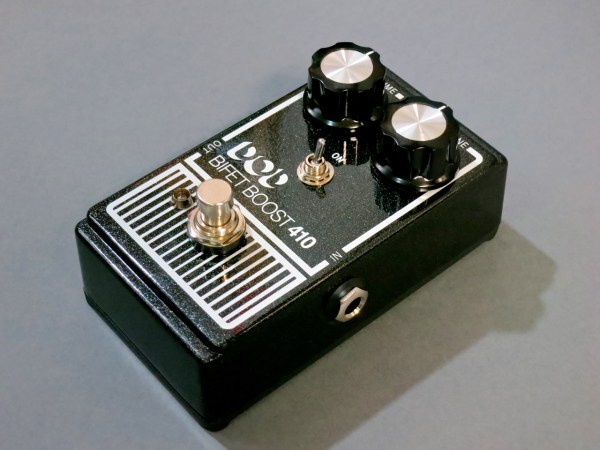
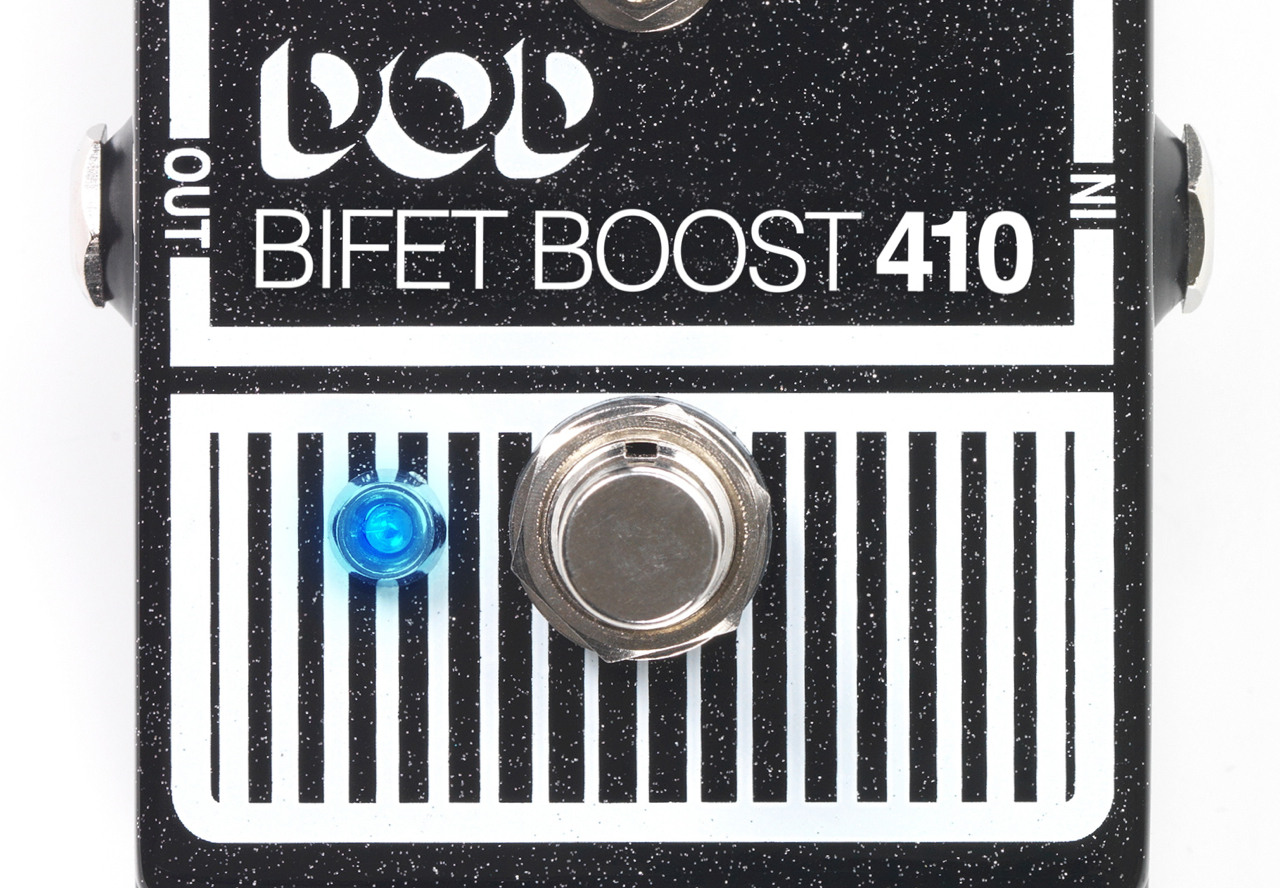
DOD has introduced an updated version of its Bifet Boost 410 pedal this year – the 2014-version adds a switchable buffer to the circuit.
****
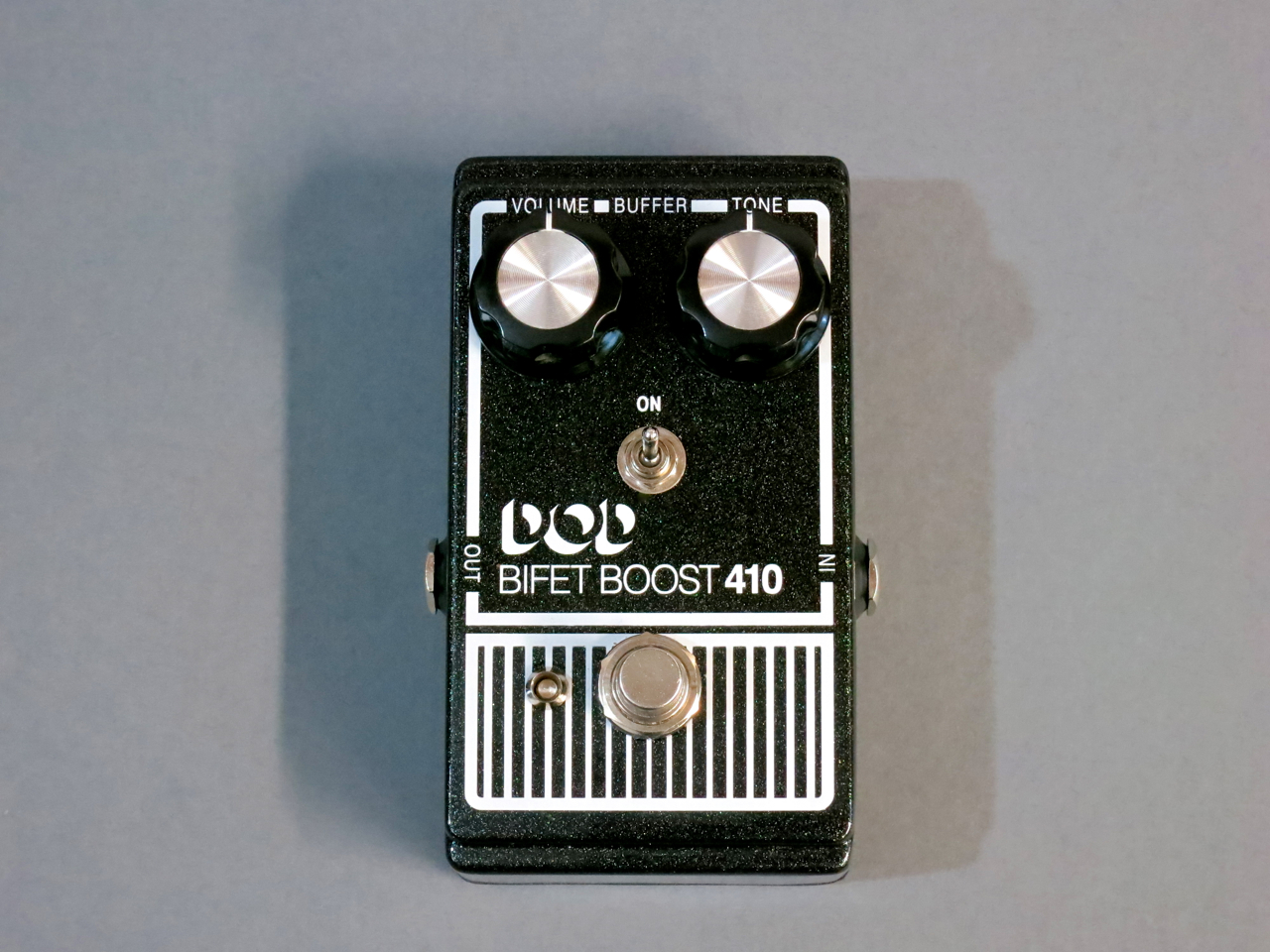
The DOD Bifet Boost 410 (current price in Finland: 99 €) is a signal level booster, giving you up to a whopping 20 dB of amplification.

The booster sports two controls – one for volume and one for tone.
Over the last few years, the term ”true bypass” has become the new marketing buzzword, bandied about frequently to ”prove” one pedal’s superiority over another. In reality there’s no mystique attached to true bypass – it simply means that when the pedal is switched off the input is hardwired straight to the output, without passing through any of the effect’s circuitry. If a pedal’s manufacturer doesn’t state true bypass in the spec list, chances are the pedal in question has an internal buffer, which stays in the signal chain even when the effect is off. A buffer is a small amplifier, whose main purpose lies in changing the signal’s impedance from high to low. Most buffer amps don’t amplify the signal level at all (= a gain ratio of 1:1), while some add a tiny bit of treble boost. A high impedance signal suffers from far greater degradation, when fed through a long signal chain (or very long guitar leads), than a low impedance signal. This means that a buffered bypass can come in handy, if you’re using a lot of effect pedals in series. True bypass is usually preferable in smaller set-ups, or if the effect in question sits in front of a fuzz pedal (fuzz pedals generally need a high impedance signal to function properly).
The updated DOD Bifet Boost 410 pedal offers a switchable buffer, so you can decide whether you want to use a buffer or not. You get the buffer in the mini-switch’s On-position, or true bypass with the switch turned off.

The Bifet Boost 410 can be run using a 9 volt battery or a (Boss-type) power supply (not included).
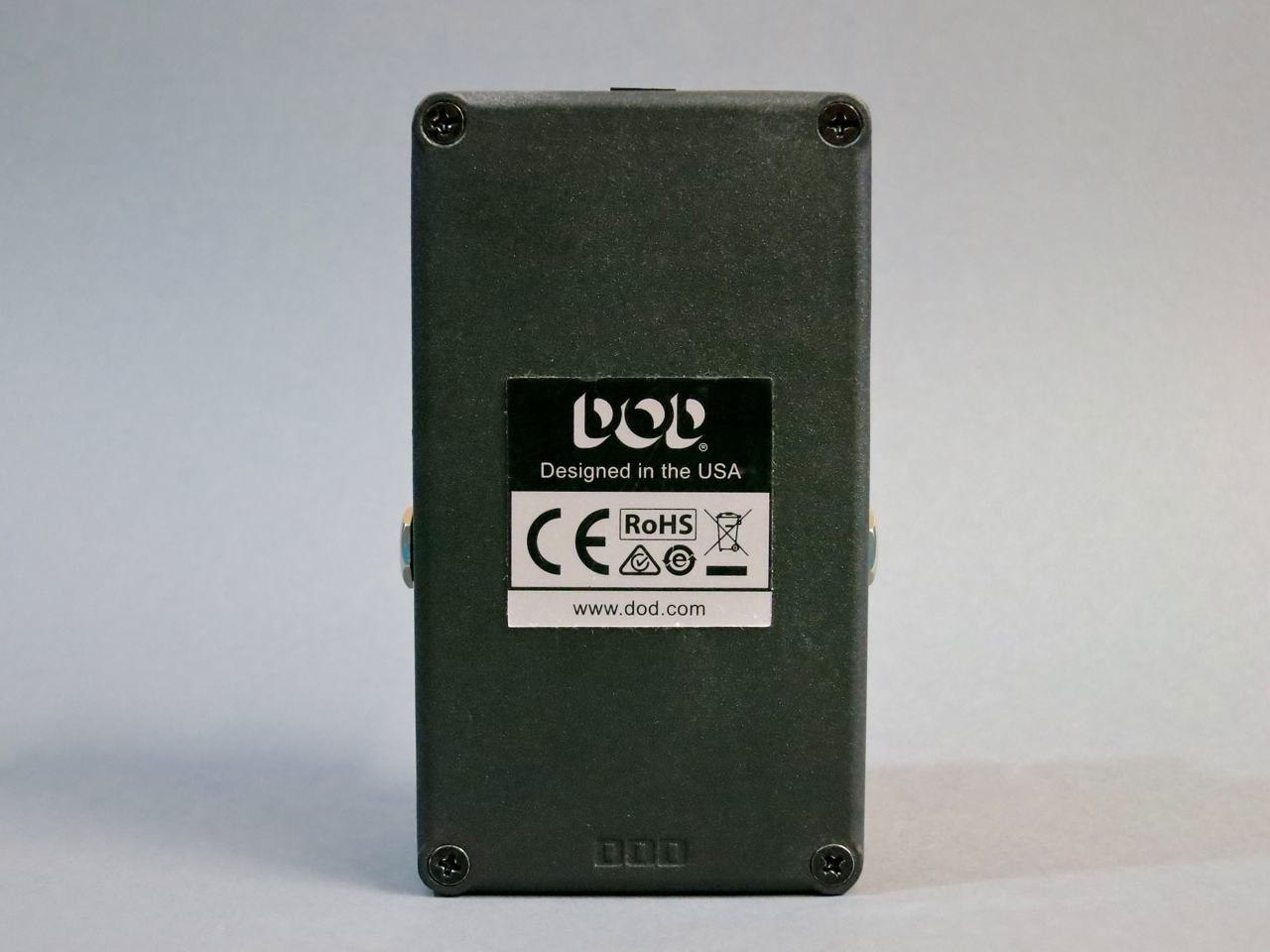
You need to take off the pedal’s metal base plate to change batteries.
The package includes four small stick-on rubber feet, which you can use when the pedal’s not used on a pedalboard.
****
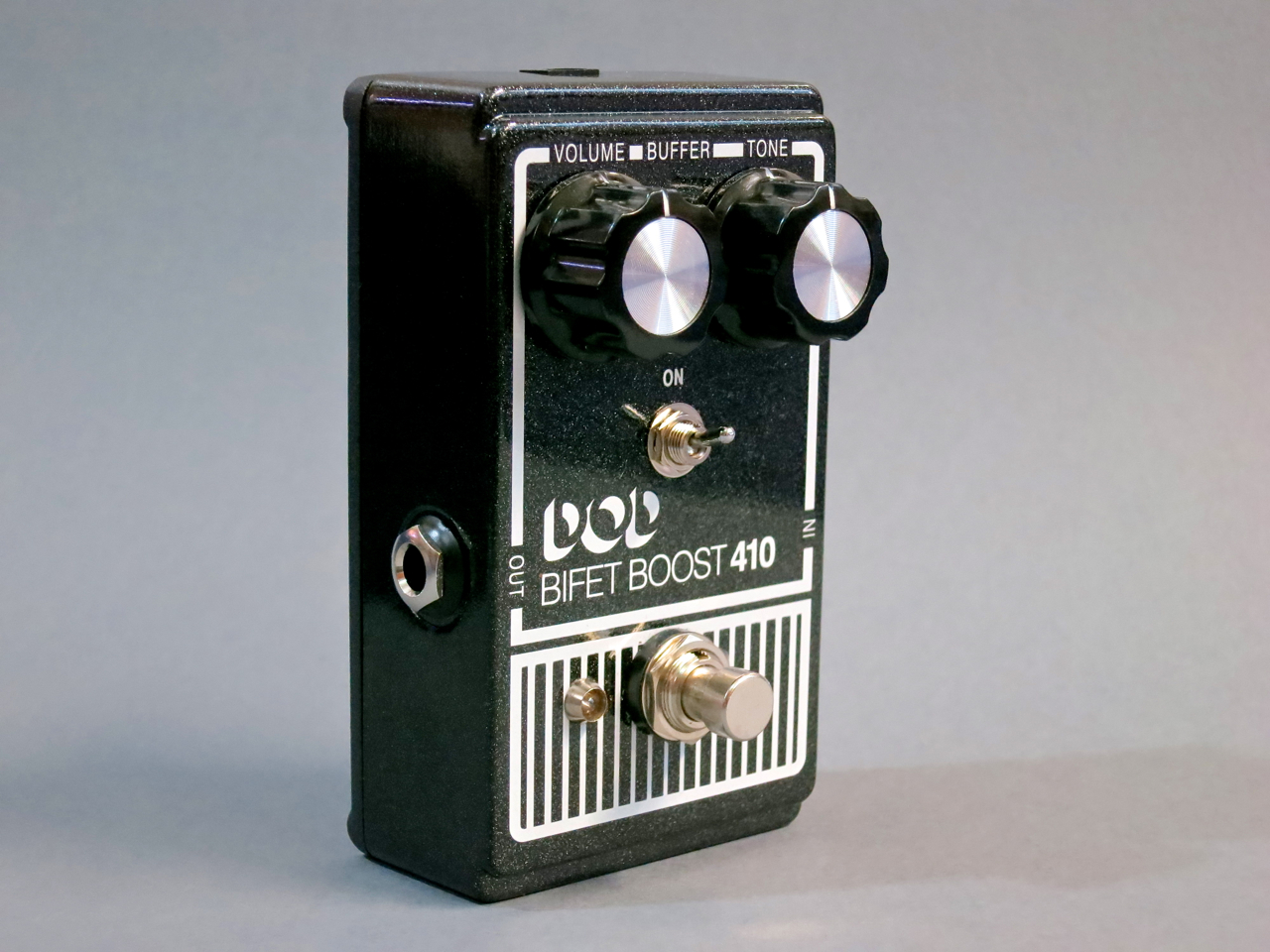
Usually, boost pedals can be divided into two categories: Those who provide a completely clean and neutral boost, and those who add a little colour and/or grit to the signal. The DOD Bifet Boost 410 belongs in the latter category, adding a little extra character to the mid-range frequencies, along with the raise in signal level.
Using the booster on a clean amp channel may push the guitar signal into overdrive, depending on the amount of headroom offered by the amp used. In this example you can clearly hear the Blackstar HT-1R’s sound break up and distort:
Used into a crunchy channel, the DOD-booster will add more chunky gain to to your tone:
You can use the tone control to add quite a lot of top end to your sound. You have to remember, though, that the sheer amount of gain on tap in this pedal will also boost any noise (hiss, hum) in your signal chain:

****
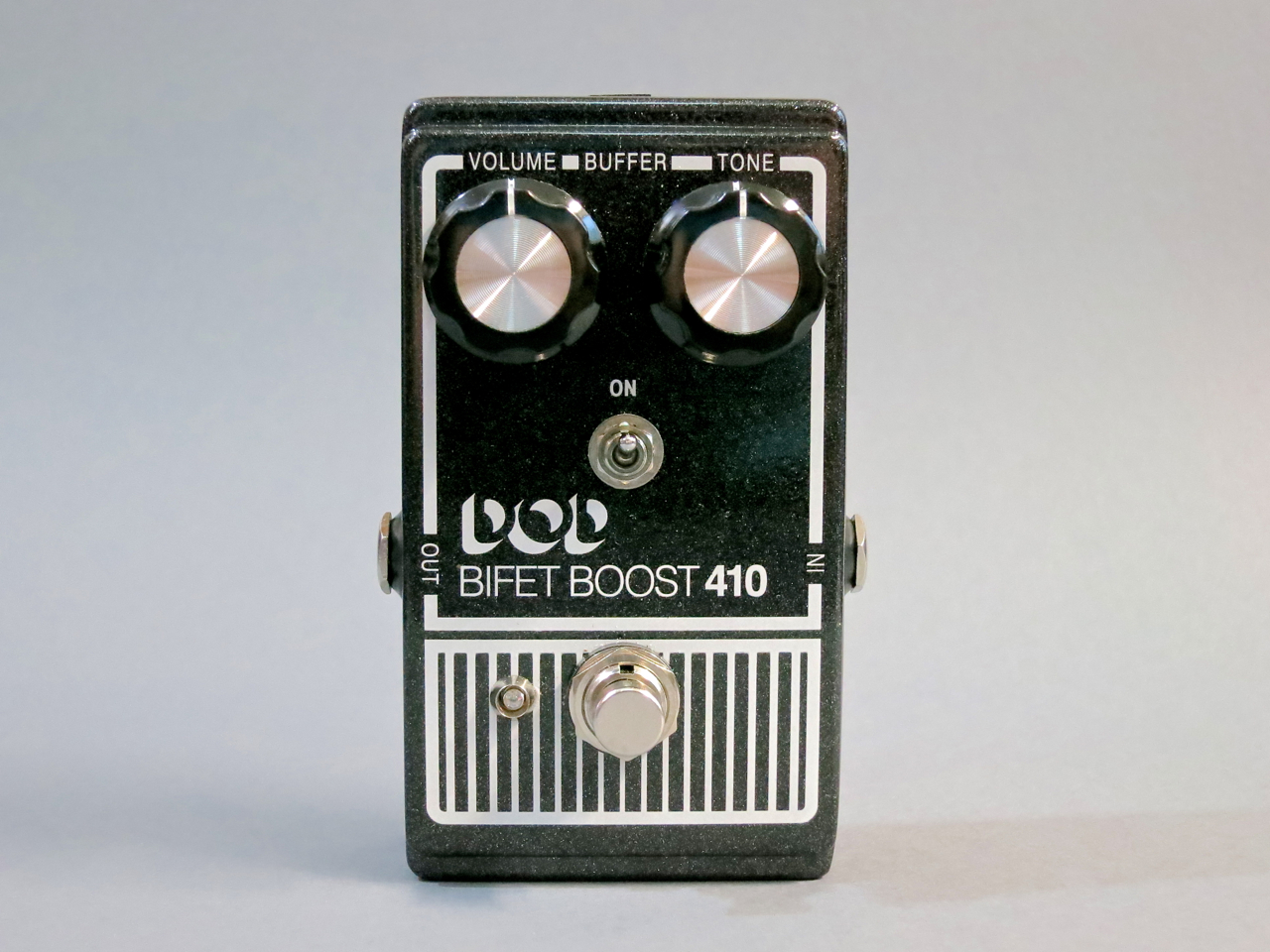
DOD’s Bifet Boost 410 is a pro-quality boost pedal and very easy to use. The added buffer switch lets you decide for yourself, whether you need a bypass buffer or not.
****
DOD Bifet Boost 410 (2014)
Current price in Finland: 99 €
Finnish distributor: EM Nordic
Thanks to DLX Music Helsinki for the loan of the review sample!
****
Pros:
+ up to 20 dB boost
+ tone control
+ switchable buffer

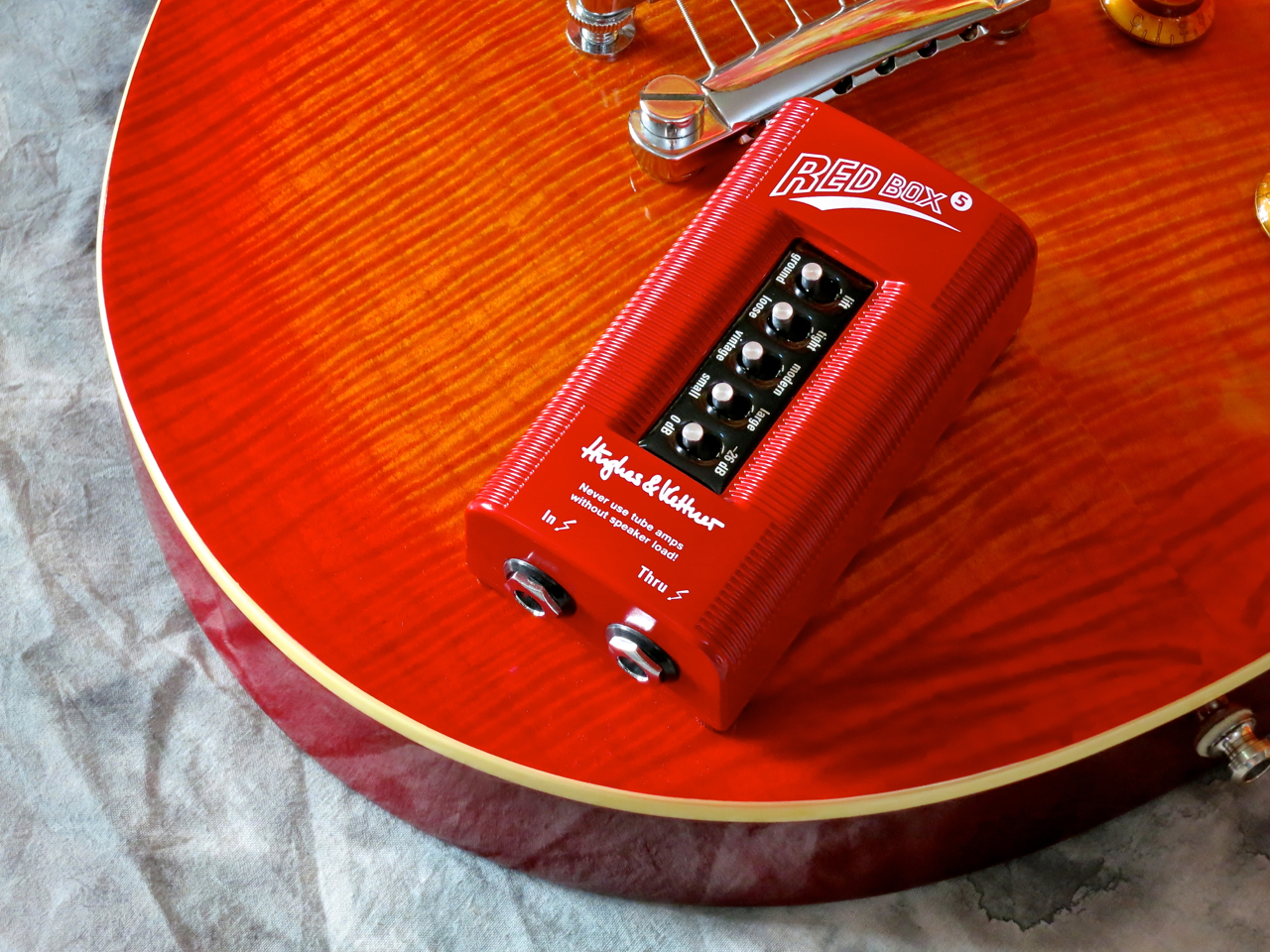
Hughes & Kettner’s Red Box has been a runaway success, ever since the first version was introduced in the late Eighties.
The Red Box is a specialised DI-box for your guitar amp. Traditionally, DI-boxes are meant to transform the high impedance signal of an electric guitar (or bass) into a low impedance signal fit for direct connection to a recording (or PA) console.
The Red Box, on the other hand, is inserted between the amp’s speaker output and the speaker (cabinet). Hughes & Kettner’s analogue cabinet modelling then makes it possible to send the sound of a miked up guitar speaker to the mixing desk (or sound card) without having to actually put a microphone in front of the amp’s speaker.
Hughes & Kettner haven’t been resting on their laurels, though. They have updated and improved the Red Box every once in a while, with the most recent version being the Red Box 5 tested here.
****
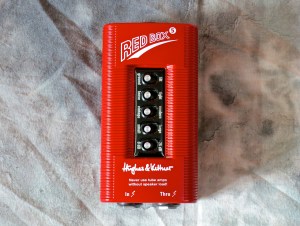
The Hughes & Kettner Red Box 5 (current price in Finland: 89,90 €) feels like a sturdy little blighter in its very compact cast-metal casing.
The Red Box’ switch panel has been sunk into the unit’s face, keeping the switches secure from mechanical damage or accidental changes to the settings.

Guitarists and guitar techs will rejoice in the fact that this little helper isn’t finicky when it comes to its power supply:
The Hughes & Kettner works just as well running on an internal 9 volts block, as it does powered by phantom power off the mixer, an external PSU. The Red Box will work with voltages from 9 to 12 V DC (centre negative) or even AC. So, finding a wall wart for this device should be a piece of cake!
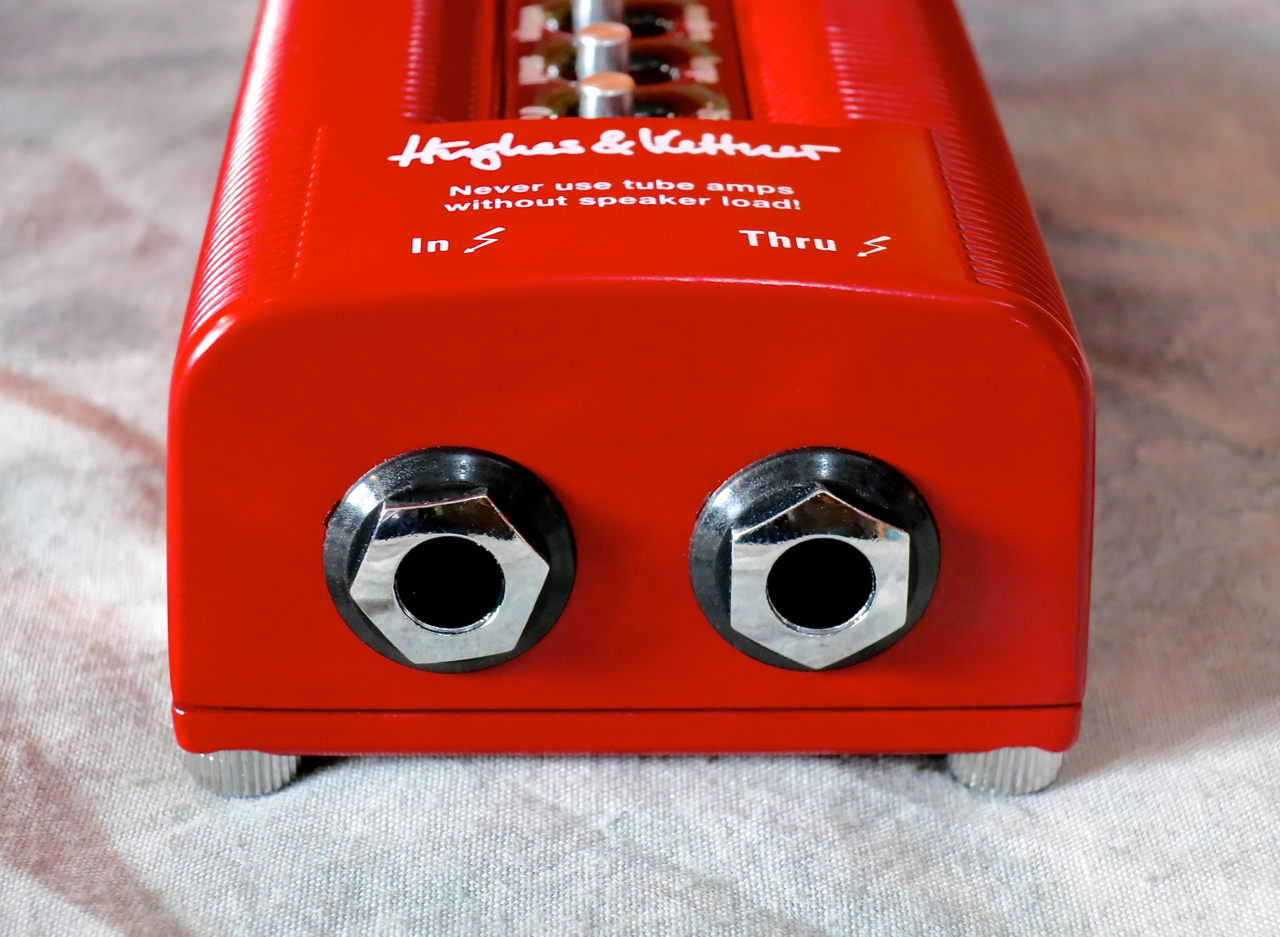
The speaker connectors have been placed at the Hughes & Kettner’s bottom end:
The amp’s speaker output is connected to the Red Box’ In-jack, while the Thru-jack will send an unadulterated signal to your speaker (cabinet).
It is very important that you don not confuse the Red Box – which is a DI-box – with a dummy load! If you’re using a valve amplifier (or a hybrid with a tube power amp) you really have to make sure to have the correct speaker load (in ohms) connected, whenever you use the amp. Using the Red Box without a speaker or dummy load will fry your amp’s power section or audio transformer!

The Red Box’ top end holds the balanced XLR DI-output, as well as the power supply (not included) connector.
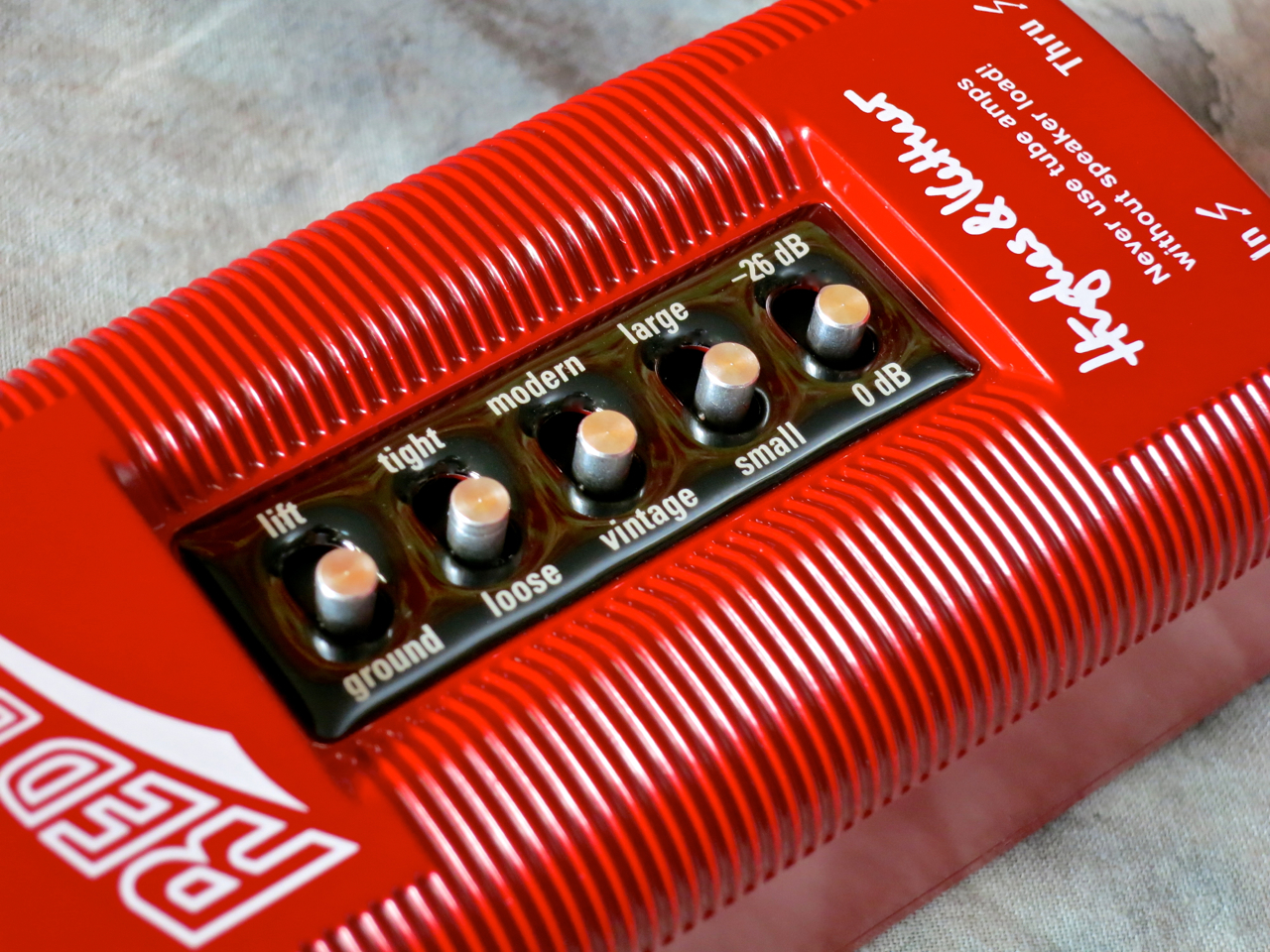
The Hughes & Kettner unit offers you five switches to tailor the DI-box’ output to your specific requirements:
There’s a ground lift switch (to cut any humming ground loops), a bass response switch, modern or vintage pre-EQ, a switch for the size of the virtual cabinet, as well as a 26 dB pad to prevent the DI-signal from overloading the console’s input.

A black velvet bag is also thrown in with the Red Box.
****

A ”great guitar sound” is probably one of our universe’s most subjective matters. Any guitar signal chain offers plenty of different variables. When you throw in the chosen cabinet, as well as the microphone and its placement relative to the speaker, the options available are virtually infinite. Nobody in their right mind can demand that a small DI-box, such as the Red Box 5, can actually offer any and all of the tonal options theoretically possible.
The Hughes & Kettner Red Box 5 raison d’être is to offer a handful of ”Best of” miked cabinet sounds, straight off of the amp’s speaker output to the mixing console (or sound card), without the hassle of having to set up a physical microphone, or having to account for the different sound characteristics of different rooms (for example on a tour). And in this the Red Box 5 truly excels.
To give you an idea of how well the Red Box 5’s sound stands up to a physical microphone, I have recorded a few clips simultaneously using a Shure SM57 and the Red Box. I used a Blackstar HT-1R running into an Änäkäinen Rumble speaker. The Red Box 5 was set to ”loose”, ”vintage” and ”large”.
Here’s a clean example, close-miked with the Shure:
And here’s the same example recorded direct with the Red Box:
Next I went for a crunchy amp sound; here’s the close-miked version:
And this is the same example DI’d through the Hughes & Kettner:
****
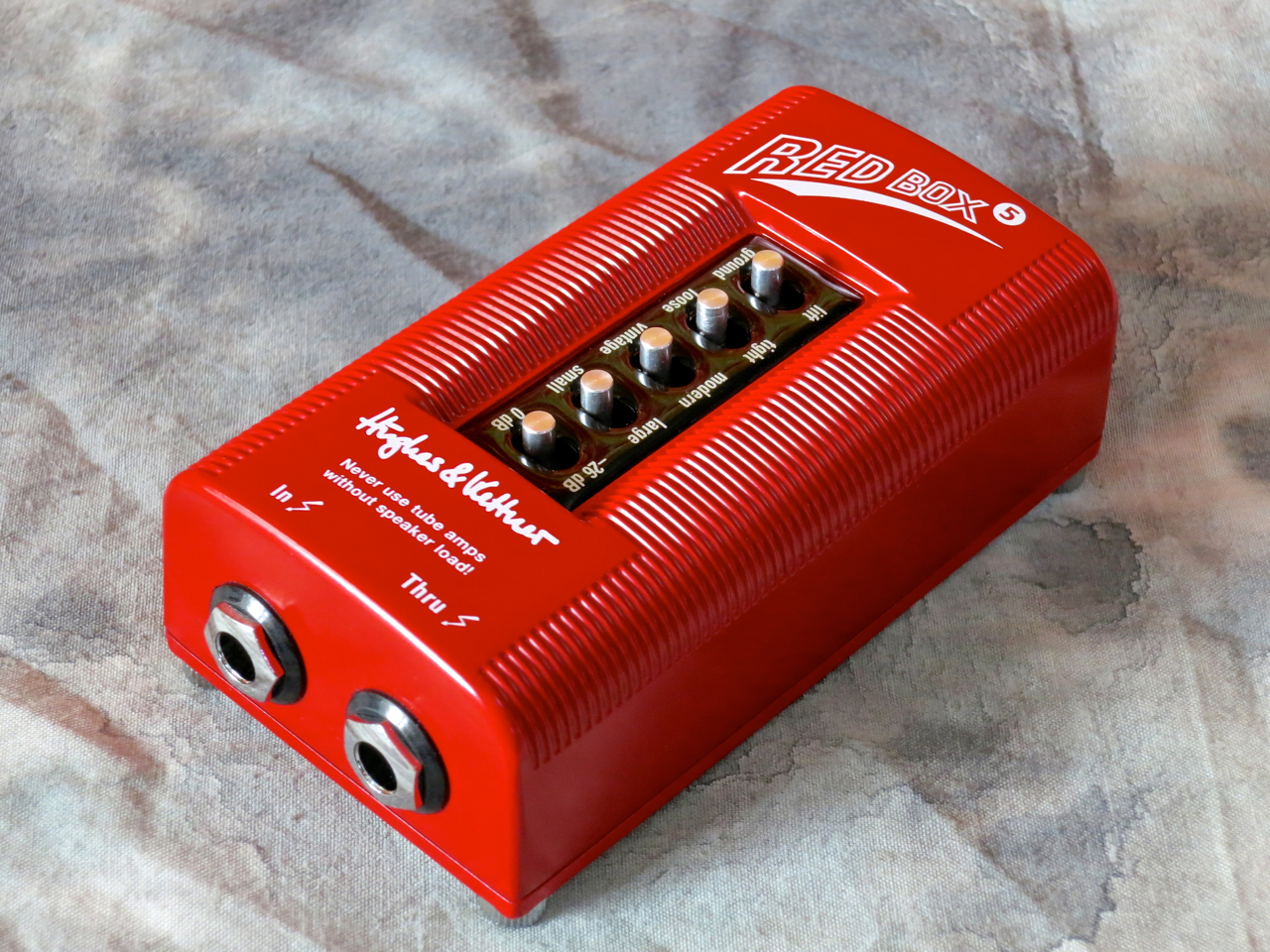
Hughes & Kettner’s Red Box 5 is a fabulous tool, especially for onstage use. No need to put up a mic anymore, which means no more feedback and bleed problems. The Red Box 5 will give you consistently excellent DI’d guitar amp tones with the least amount of hassle.
****
Hughes & Kettner Red Box 5
Current price in Finland: 89,90 €
Finnish distribution: F-Musiikki
****
Pros:
+ very compact size
+ multiple means of power supply
+ different tonal options
+ pro-quality cabinet modelling
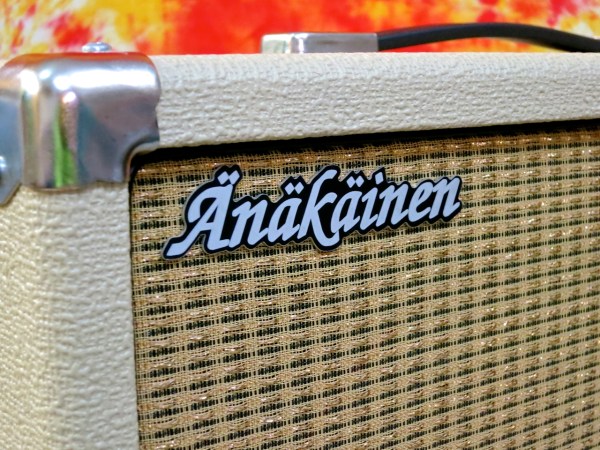

Puuverstas Änäkäinen’s Rumble 1 x 12 -cabinet (prices in Finland start around 580 €) offers a few fresh ideas on how to come up with a cracking guitar tone.
The fathers of the Rumble-concept are cabinet maker Kari Änäkäinen (try saying: Curry ANNA-kay-nun), who is also gigging as a guitarist and bassist, and Kuusankoski’s very own tube amp guru, Triodipaja’s proprietor Lassi Ukkonen (LUSS-cee OO-cow-nun). The guys hit upon the basic idea for the Rumble cabinet, when Kari asked Lassi to calculate the correct cubic content for a lightweight bass cabinet he was building for himself. The bass cabinet turned out very well and set the duo on the path to coming up with the Rumble.
****

When it comes to the cosmetics of his Rumble cabinets, Kari Änäkäinen is a dyed-in-the-wool vintage fan.
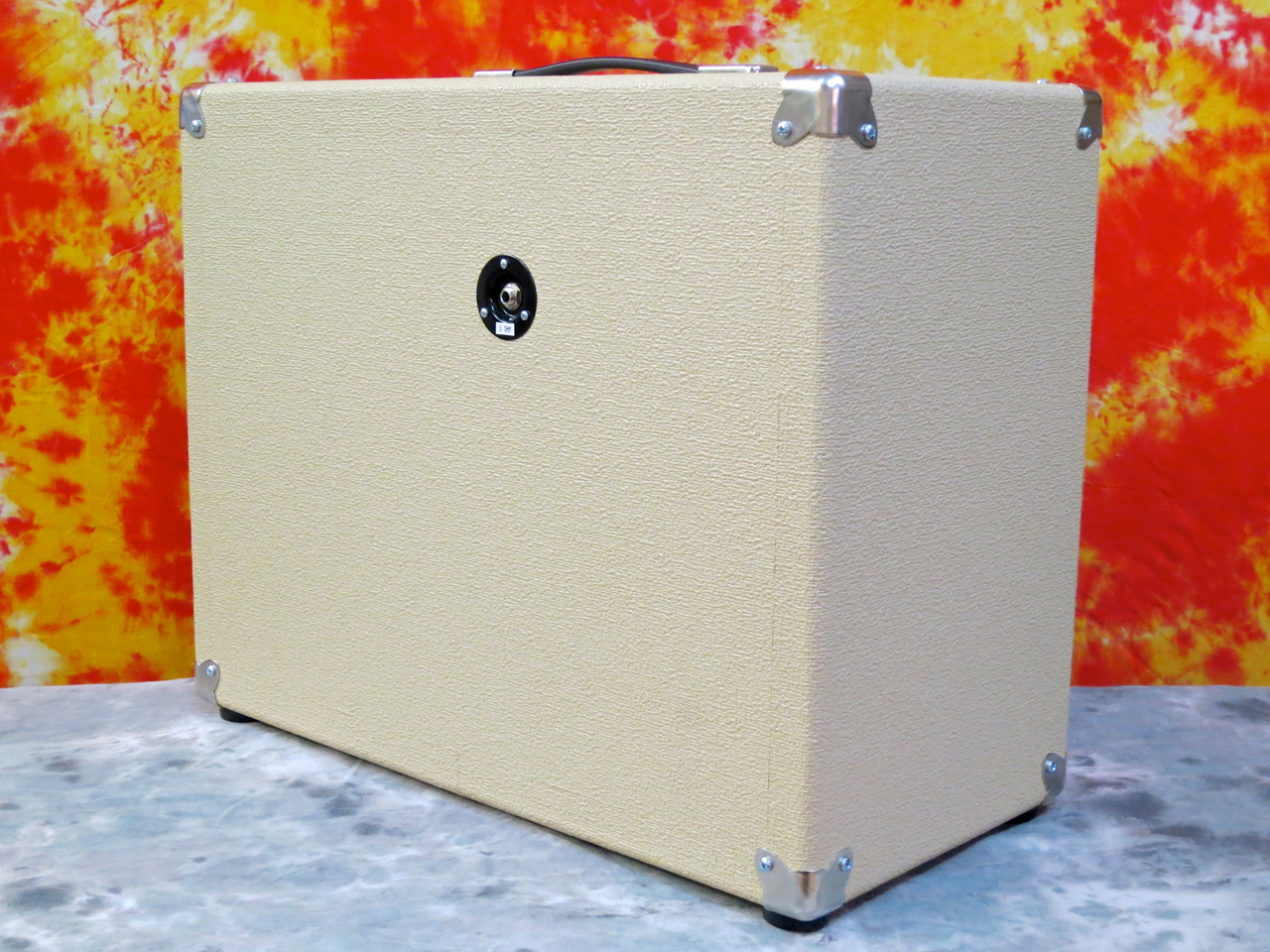
We received two different Rumble 1 x 12 cabinets for this review – one comes in a fetching ”Fender Blonde” look…

…while the other clearly points in the direction of moody Marshall-ness.

The Rumbles sport metal corner protectors.

Here you can see the impedance sticker affixed to the sturdy jack plate.
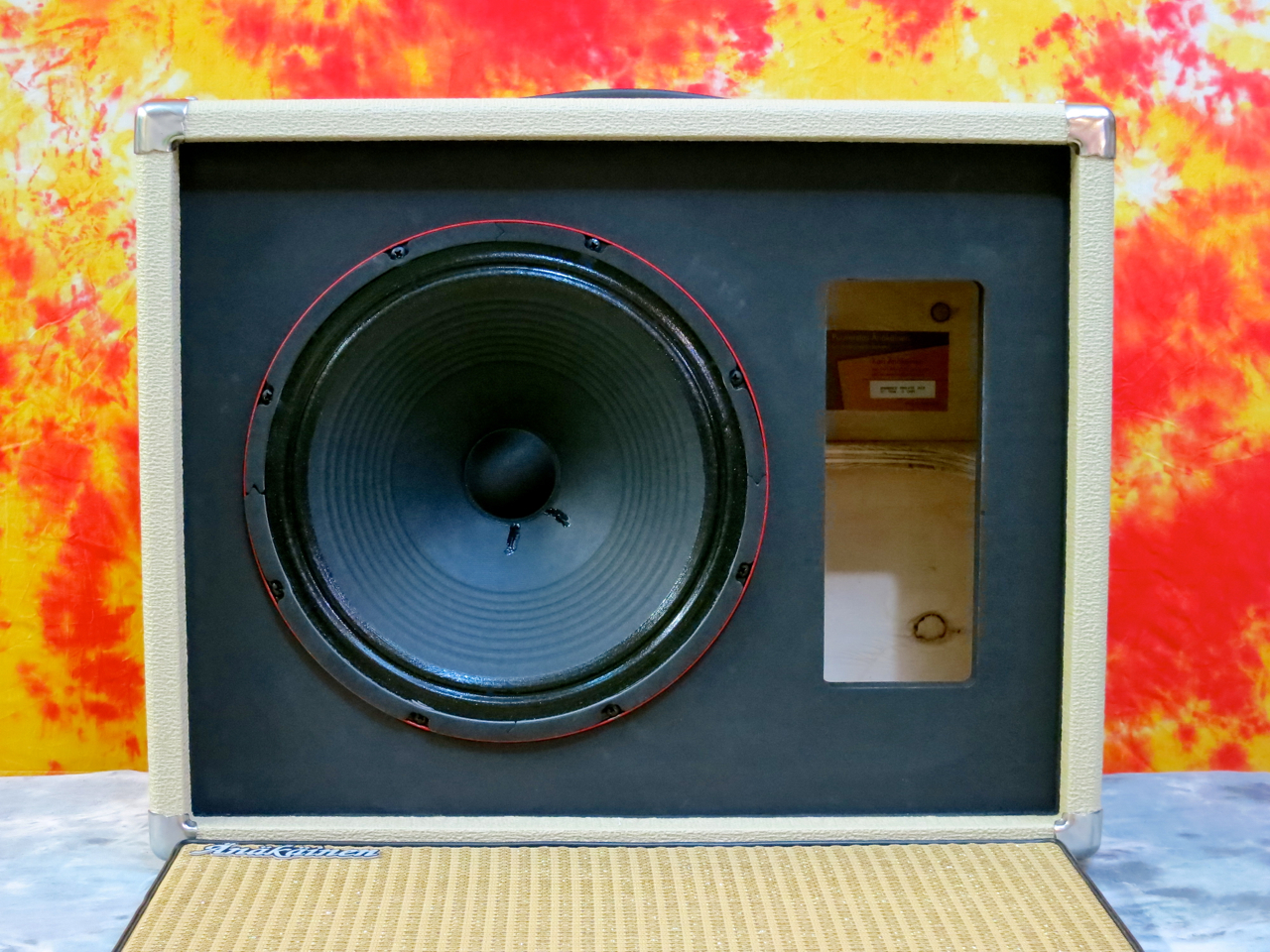
Currently, Kari Änäkäinen gives you a choice of five different speaker models for your personal cabinet.
The cream-coloured Rumble came equipped with an Eminence Private Jack -speaker (50 W/8 Ω).

A WGS:n Reaper (30 W/8 Ω) was chosen for the black counterpart.
As you can see in these pictures, one of the special features of all Rumbles is the large rectangular port on one side of the cabinet. The basic idea has been borrowed from bass-reflex speaker, which are often used in Hifi- and bass (amp) cabinet designs. In the Rumble the opening is mainly used for sound dispersion, as the speaker doesn’t feature any internal reflectors, tunnels or a ”tuned” bass port.

The details of the cabinet build is also a little bit different to your run-of-the-mill guitar cab. The cabinet itself is crafted from Finnish conifer plywood with a thickness of 15 millimetres.
The advantages of conifer plywood are its quality, abundance and light weight. Most other cabinet makers will claim that this type of plywood is too soft and pliable for cabinet-making, but Kari has found his own solution to this problem: He uses internal struts and supports made from the same material.
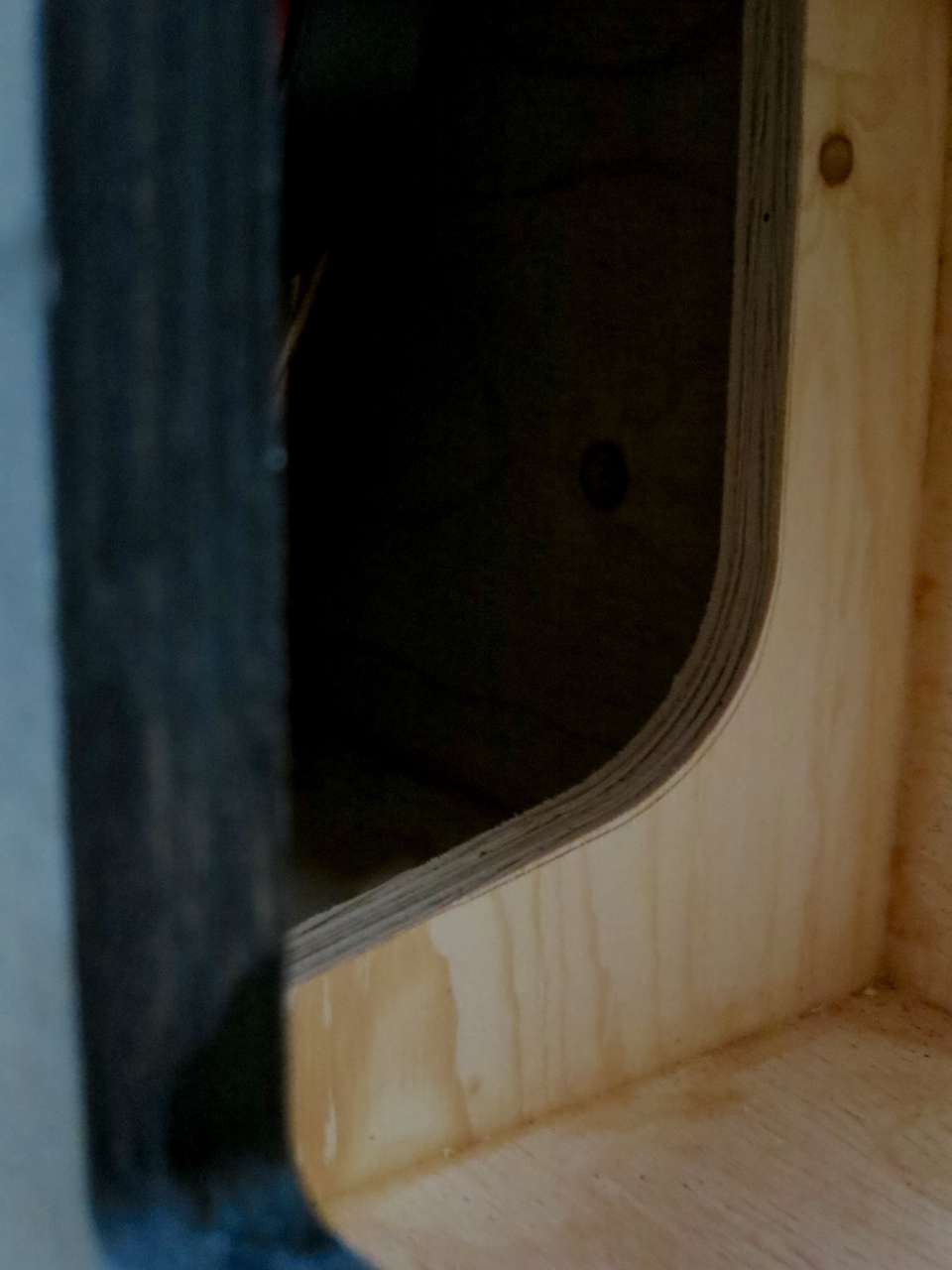
The speaker baffle, on the other hand, is made from very sturdy, 18 millimetre thick Finnish birch plywood.
The whole speaker cabinet is constructed using only glue joints and wood dowels. The only screws in an Änäkäinen Rumble are those keeping the speaker, the jack plate and the corner protectors in place.

The Rumble’s low weight of approximately 12 kilos is easy to lift by the cab’s top handle.
****
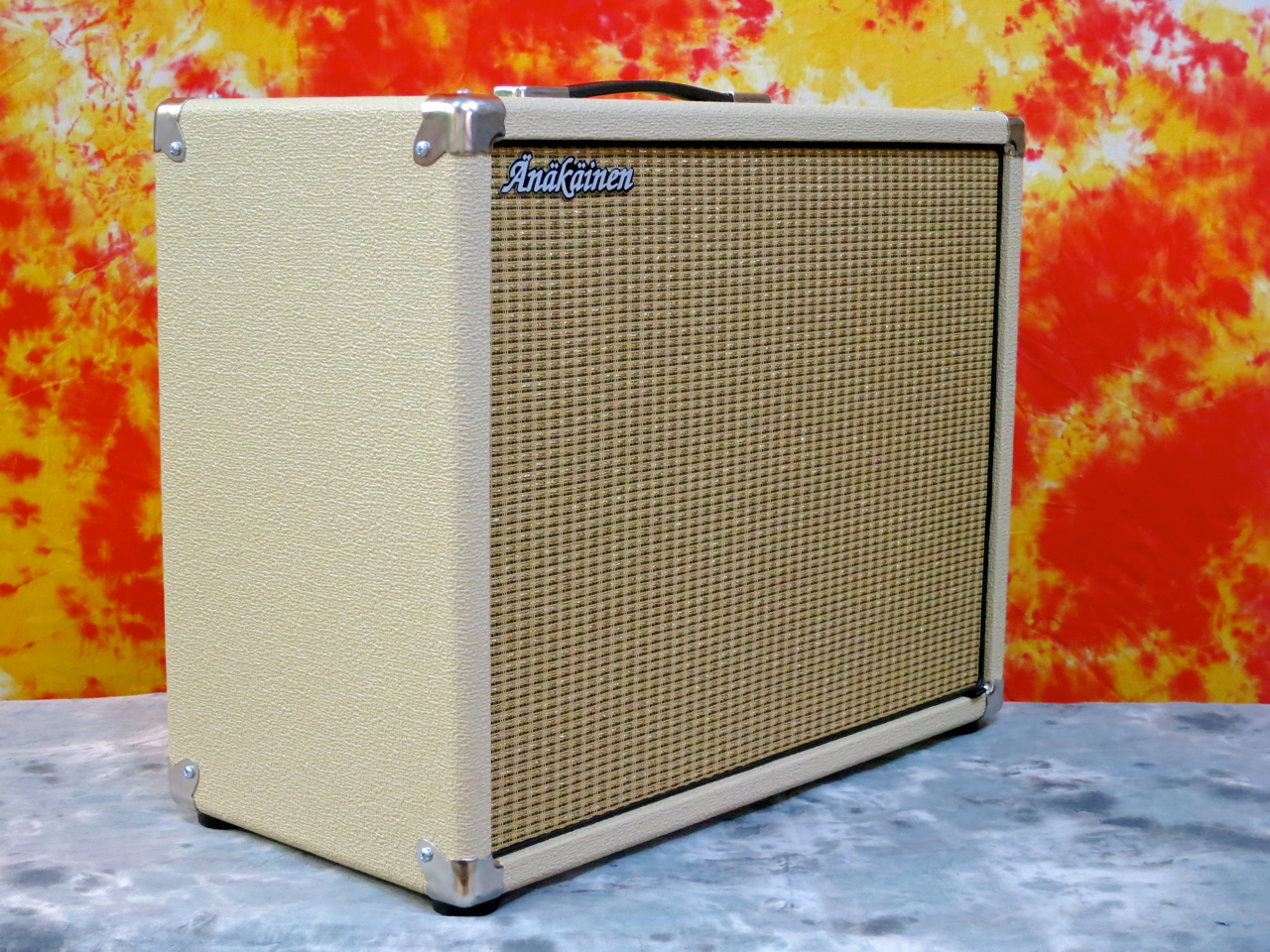
The first – completely subjective – impression I got from using the Rumble 1 x 12 was of a ”loud”, ”big” and ”musical” sounding cab. The Änäkäinen even made my tiny Blackstar HT-1R sound like a full-size tube amp.
The Rumble gets across a healthy shot of warmth and transparency – just like many other quality cabinets – but its special, front-ported construction adds an amazing amount of spread and directivity to the sound that is all its own. The sound dispersion is neither too narrowly focussed, nor is there any sound getting ”lost” behind the cab. Thanks to its front port, the Rumble delivers a larger-than-life, Cinemascope-style sound.
The Eminence-loaded blonde Rumble sings beautifully with a warm and creamy voice:

Thanks to the WGS Reaper -speaker inside the black-clad Rumble 1 x 12, this cab has a somewhat more aggressive British accent. This added bite isn’t quite as pronounced when you stick to clean amp settings, but it will help your Rock riffs to cut through more easily:
****

I must say I really like these Änäkäinen Rumbles a lot! They deliver excellent, boutique-class tones at a very fair price. If you need a relatively compact guitar cab with a big sound, you should really consider going for a Rumble!
****
Änäkäinen Rumble 1 x 12
Finnish prices starting around 580 €
Made by Puuverstas Änäkäinen
****
Pros:
+ workmanship
+ a functional, non-mainstream concept
+ wide, yet focussed sound
+ rich bottom end
+ different speaker options



 Kitarablogi.com – Finland's premier Guitar and Bass blog