
****


Kitarablogi.com – Finland's premier Guitar and Bass blog
Juttuja kitaroista ja bassoista

****

Orange Amplification have a long and illustrious tradition in the building of guitar and bass amplifiers, a fact that shows in many of the company’s current products.
But that doesn’t mean that Orange are a backward-facing company – far from it. The brand-new Terror Bass combo, for example, is very much a contemporary product – a compact, yet powerful valve-hybrid amp.
****

The Orange Terror Bass TB500C-212 (current RRP in Finland: 994 €) melds the company’s 500-Watt BT-500H-head with their 2 x 12″ SP-212-cabinet.
The Orange TB500C is a valve-hybrid amplifier, which in this case means that its preamp section is powered by two 12AX7 valves. The tubes imbue the combo with a warm basic tonality, nicely seasoned with mild and organic compression. I’d also wager that a bit of overdrive will be on the menu at some point.
The power amp, on the other hand, uses modern technology to its best advantage: A Class D amplifier manages to produce lots of volume in a very energy efficient way. Because this technology cuts down drastically on heat dissipation as a byproduct of amplification, manufacturers are now able to build smaller and lighter amps.

Orange’s Smart Power bass cabinets are built according to the isobaric principle.
An isobaric speaker cabinet basically uses two identical speakers – in the TB500C’s case two 12-inch neodymium speakers – mounted one behind the other in a straight line, resulting in fatter tones and more sound pressure than you’d expect from a relatively compact design.
Take a look at Orange’s own video to get more of an insight into their Smart Power cabinets:

But we bassists needn’t trouble ourselves with too much theory, we only have to use the combo.
The front panel is typical of Orange-amps: There are the famous pictograms above the clearly labelled controls for gain and master volume, as well as the three-band EQ section, which make it even easier to know your way around the amp.

The amplifier section is connected to the combo’s speaker using the provided Speakon-lead.
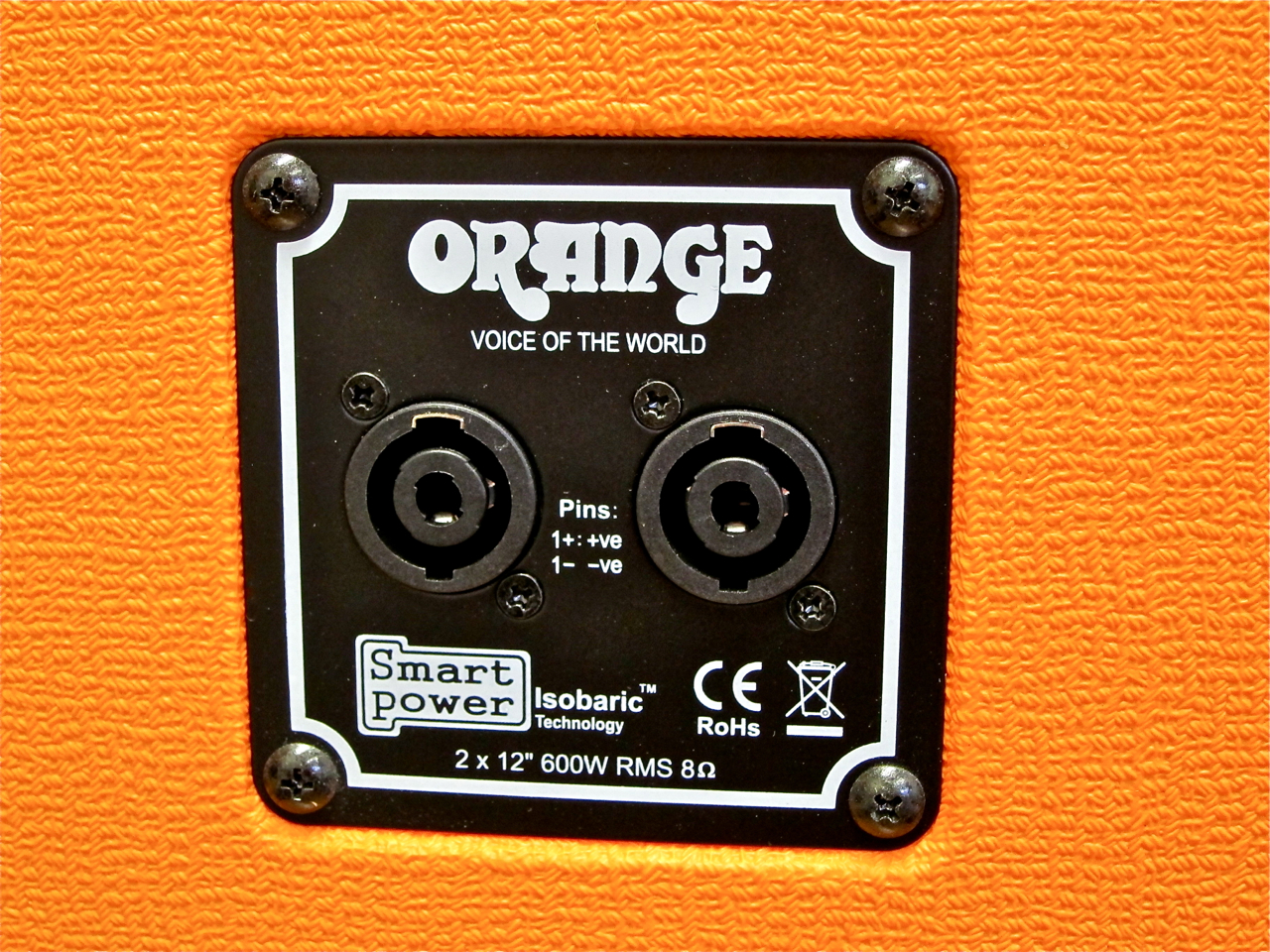
Because the amplifier allows you to daisy-chain two cabinets…
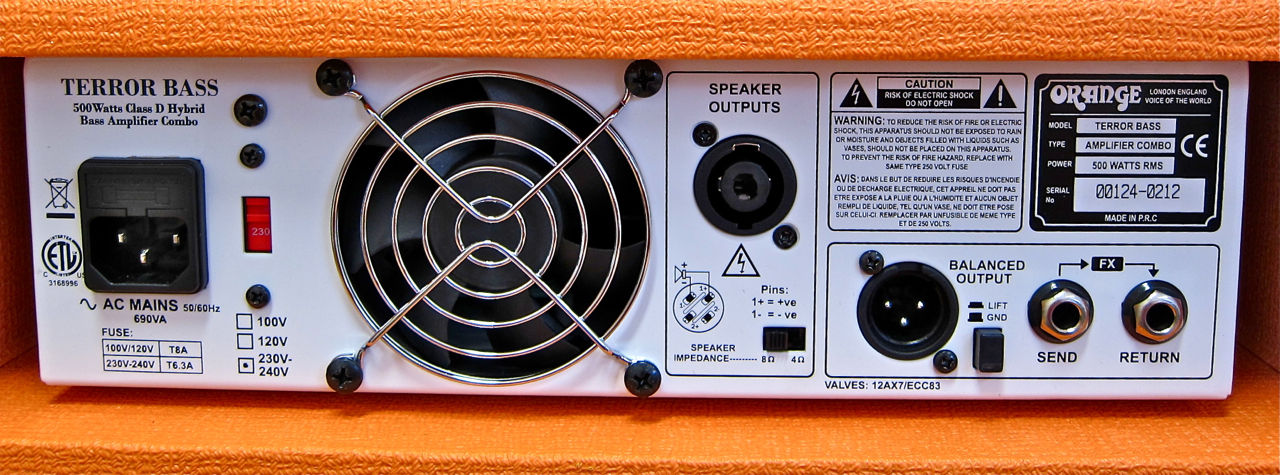
…you will find the necessary impedance switch on the back panel underneath the Speakon-jack.
The other connectors on the back panel are for the effects chain and the balanced DI-output.
****

Whoa, watch out – this combo is a real shouter!
I’ve got to admit right away that I tend to dislike the use of single 12-inch speakers in bass amps. More often than not I find these designs to lack real bottom end and transparency in their tonal delivery.
But this isn’t a thing that you could accuse the Orange Terror Bass of, by any stretch of the imagination! The isobaric Smart Power cabinet is quite a different beast, sounding large and muscular, with more than enough clarity and punch for most applications.
In terms of its basic sound the Orange TB500C is clearly a dyed-in-the-wool, card-carrying member of the Orange-family: If you’re looking for extreme clarity and hi-fi-style response, this isn’t really the right amp for you. We’re talking about earthy and muscular bass tones here. Dialling in more gain gradually adds delicious grit and graininess to proceedings. Above 3 o’clock on the gain control any bass will drive the Orange well into classic, glorious overdrive.
Even though the Terror Bass combo is part of Orange’s cost-conscious Terror-range, I am rather sure this powerful and compact bass amp will find its way into many professional backlines.
I recorded the audio clips using my trusty Japanese 1985 Squier Jazz Bass and my own P-Man bitser equipped with a MM-humbucker and passive controls:
****
Orange Terror Bass TB500C-212
current RRP in Finland: 994 €
Finnish distributor: Musamaailma
Pros:
+ size
+ power
+ valve preamp
+ sound
+ weight
****

****
Orange Amplificationilla on hyvin pitkä perinne kitara- ja bassovahvistimien valmistuksessa, ja se näkyy monissa firman nykyisissä tuotteissakin.
Se ei kuitenkaan tarkoita, ettei Orange olisi avoin myös uudelle teknologialle. Esimerkkinä kelpaa hyvin upouusi Terror Bass -kombo, joka on kompakti, mutta silti tehokas nykyaikainen putkihybridivahvistin.
****
Orange Terror Bass TB500C-212 (994 €) yhdistää firman 500-wattisen BT-500H-nupin ja kahdella 12-tuumaisella varustetun SP-212-kaapin yhdeksi kombovahvistimeksi.
Orange TB500C on putkihybridivahvistin, mikä tarkoittaa Bass Terrorin tapauksessa, että sen etuvahvistin on rakennettu käyttäen kahta 12AX7-putkea. Putkilla saa aikaiseksi lämpimän perussoundin, joka on valmiiksi höystetty miedolla ja orgaanisella kompressiolla, ja myös aitoa putkisäröä voi odottaa tästä kombosta.
Päätevahvistin taas käyttää huipputehokasta, mutta kevyttä nykyteknologiaa: D-luokan päätevahvistin pystyy tuottamaan paljon ääntä – tässä tapauksessa 500 wattia (rms) – hyvin kompakteilla komponenteilla ja energiatehokkaasti vähällä hukkalämmöllä.
Orangen Smart Power -bassokaapit rakennetaan isobaarisen toimintaperiaatteen mukaisesti.
Isobaarisessa kaapissa käytetään kahta samanmallista kaiutinta – TB500C:n tapauksessa kaksi 12-tuumaista, kevyttä neodyymi-kaiutinta – asennettuna peräkkäin samassa linjassa. Lopputulos on syvempi bassotoisto ja isompi äänenpaine verrattuna samankokoiseen perinteiseen bassokaappiin.
Tässä on Orangen oma video, jossa Smart Power -kaappien isobaarista teknologiaa esitellään tarkemmin:
Mutta Orange Terror Bass -kombo ei vaivaa basistia lainkaan sen sisäisellä teknologialla.
Ulospäin näkyy vain varsin perinteinen Orange-etupaneeli, joka tarjoaa gain- ja master-säätimien lisäksi kolmialueisen EQ-osaston.
Vahvistimen- ja kaappipuolien liittäminen tapahtuu mukaantulevalla Speakon-johdolla.
Koska kaksi Orange-kaappia pystyy ketjuttaa…
…löytyy vahvistimen takapaneelista kaiutinlähdön alla myös impedanssikytkin.
Muut liittimet ovat efektilenkin lähtö- ja tulojakki, sekä balansoitu DI-lähtö mikseriin.
****
Whoa, watch out – tästä paketista lähtee rutkasti ääntä!
Täytyy myöntää, etten ole yksittäisellä 12-tuumaisella varustettujen bassokombojen suurin ystävä. Usein niiden soundi on melko honottava ja vähän puuroinen alhaisessa keskialueessa.
Orangen Terror Bass -kombo on kuitenkin ihan oma tapauksensa! Isobaarinen Smart Power -kaappi kuulostaa ilahduttavan isolta ja lihaksikkaalta, ja myös potkua löyttyy mielin määrin.
Soundillisesti Orangen TB500C kuuluu selvästi samaan perheeseen kuin muut Orangen bassovahvistimet: täällä ei hifistellä, vaan tarjolla on reilu annos maanläheistä bassottelua. Gain-namikan avaaminen lisää menoon aluksi vain hieman lämpöä ja särmikästä rosoisuutta, mutta liikeradan loppupuoliskolla astuu kuvaan myös herkullista putkisäröä.
Vaikka Terror Bass -kombo on osaa Orangen edullisemmasta Terror-sarjasta, olen melko varma, että tämä voimapesä löytää tiensä myös monen ammattibasistin backlineen.
Äänitin seuraavat esimerkipätkät japanilaisella Squier Jazz -bassolla, sekä passivisella MM-humbuckerilla varustetulla P-Man-bassollani:
****
Orange Terror Bass TB500C-212
994 €
Maahantuoja: Musamaailma
Plussat:
+ koko
+ teho
+ putkietuaste
+ soundi
+ paino
****

****
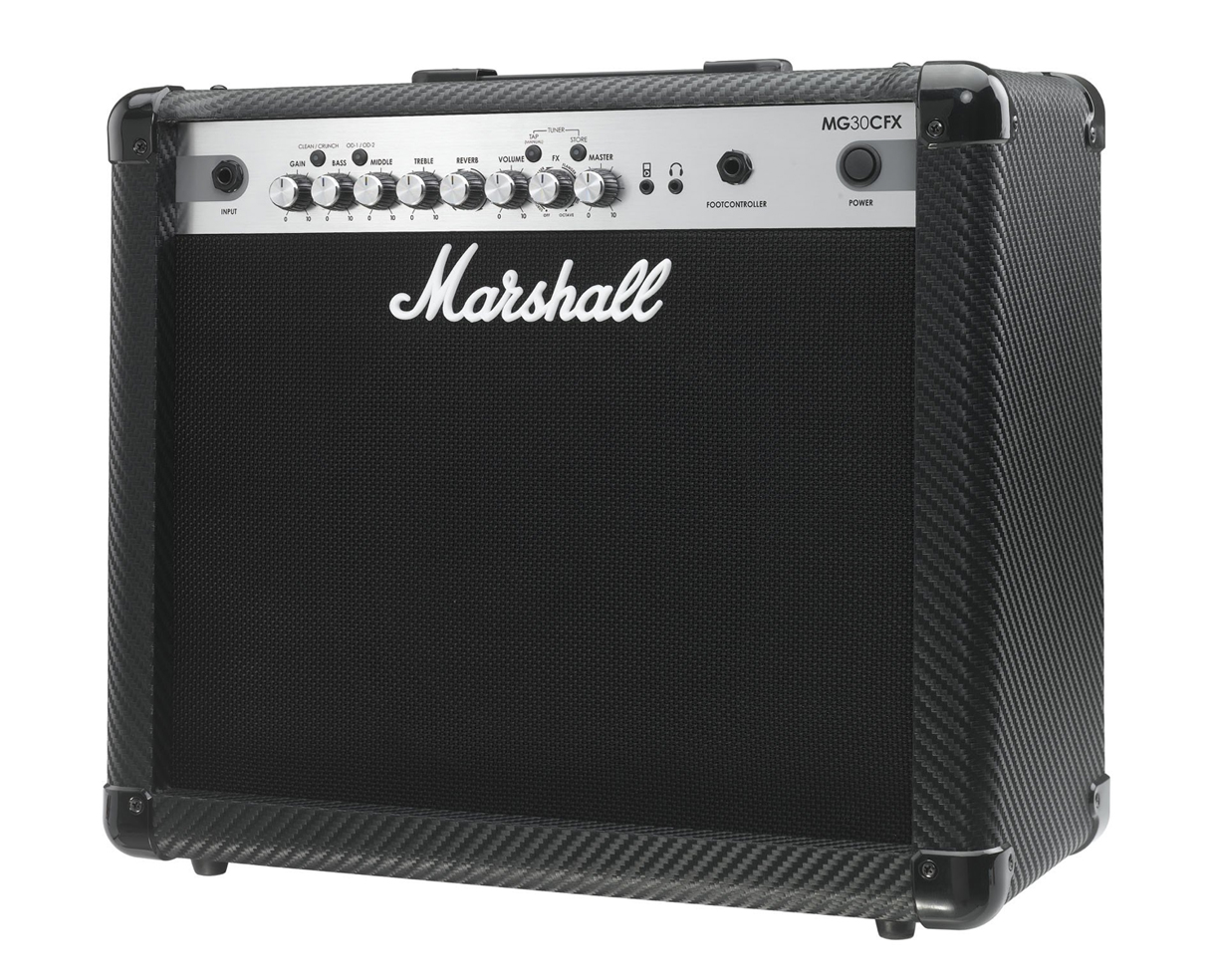
Marshall on hiljattain uudistanut MG-harjoitusvahvistinmallistoaan.
Vahvistimien ilme on nykyaikaistettu hyvin selkeillä etupaneeleilla ja grafiittikangansmaisella vinyylipäällysteellä.
Vahvistinosasto sinänsä on edelleen analoginen, mutta useissa malleissa on nyt myös digitaalisia efektejä (esim. chorus, flanger, oktaaveri, phaser ja delay) digikaiun lisäksi.
Mallisto ulottuu kaksiwattisesta MG2CFX-mallista ihan satawattiselle puolistäkille.
****
Lisätiedot: EM Nordic

****
At NAMM 2012 Ampeg introduced their second micro stack to the public – the Ampeg Micro-CL.
The company’s first foray into this market segment came in the guise of the very successful Micro-VR (currently still available), which is a 200 Watt miniature version of Ampeg’s classic 1970s SVT. The brand-new Micro-CL takes its starting point from the Eighties version of the venerable Ampeg bass stack (the SVT-CL), offering 100 Watts of bass tone.

Ampeg’s Micro-CL -stack (current RRP in Finland: 505 €) brings the company’s classic look down to an easily manageable size.
The solid-state head weighs in at only about six kilos, with the cabinet clocking in at a very moderate 15 kg. The whole miniature stack is only about 80 cm tall – making it a very easy fit with almost any car boot.
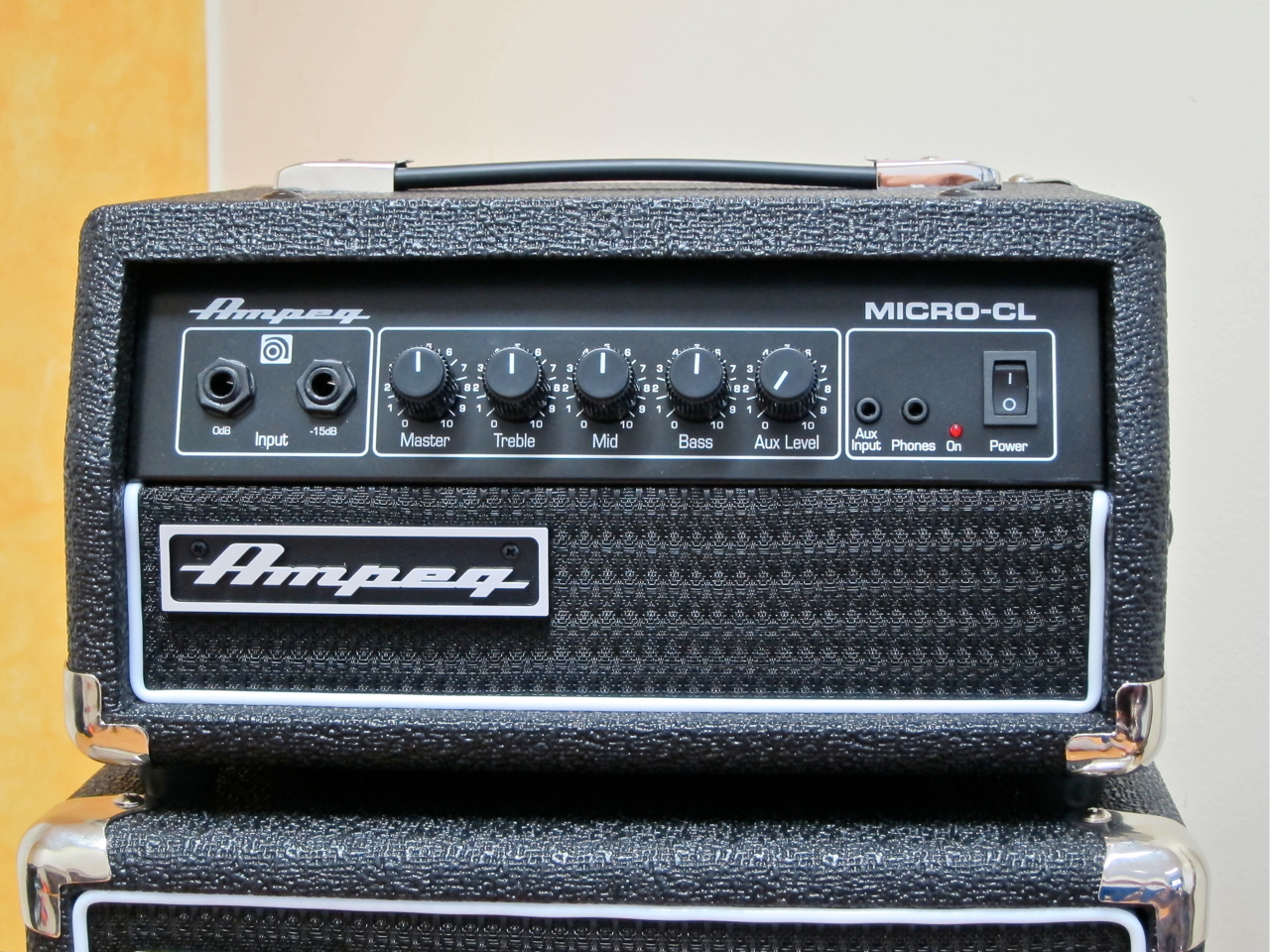
The Micro-CL-head comes equipped with two inputs – one for passive and the other for active bass guitars – as well as a three-band EQ-section.
Because this amp is also very handy as a practice amp at home, Ampeg have added an Aux-input (with its own volume control) and a headphones output to the front panel.
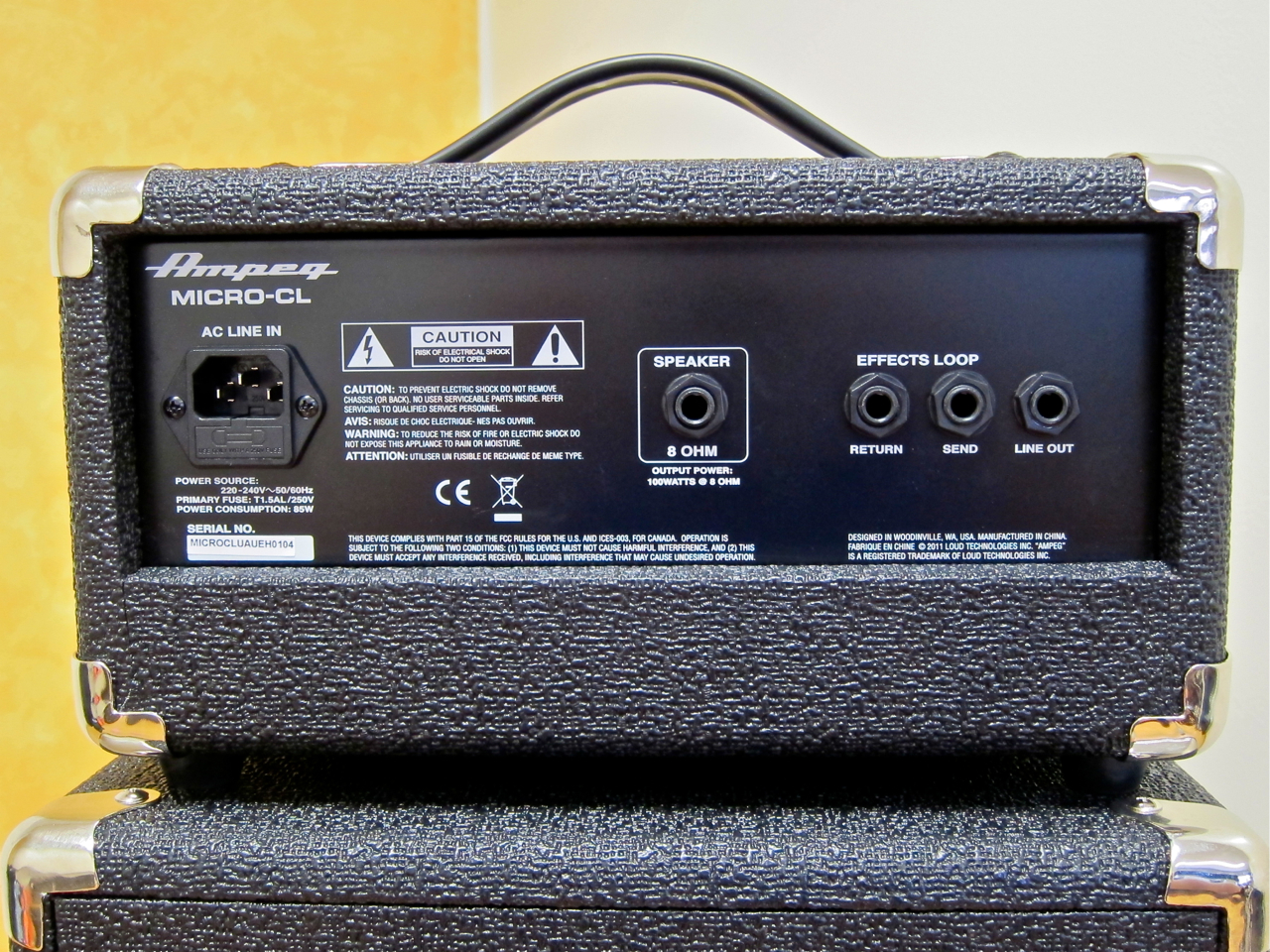
On the head’s flip side you’ll find the speaker output, as well as phone jacks for the effects loop and the line-level output.

The stack’s cabinet – called the Ampeg MC-210E – is built using the same Infinite Baffle -principle also applied to the company’s famous (and huge) 8 x 10″ cabinets.

The completely enclosed cab comes loaded with two 10-inch speakers. The front grille is attached in the traditional way using velcro.
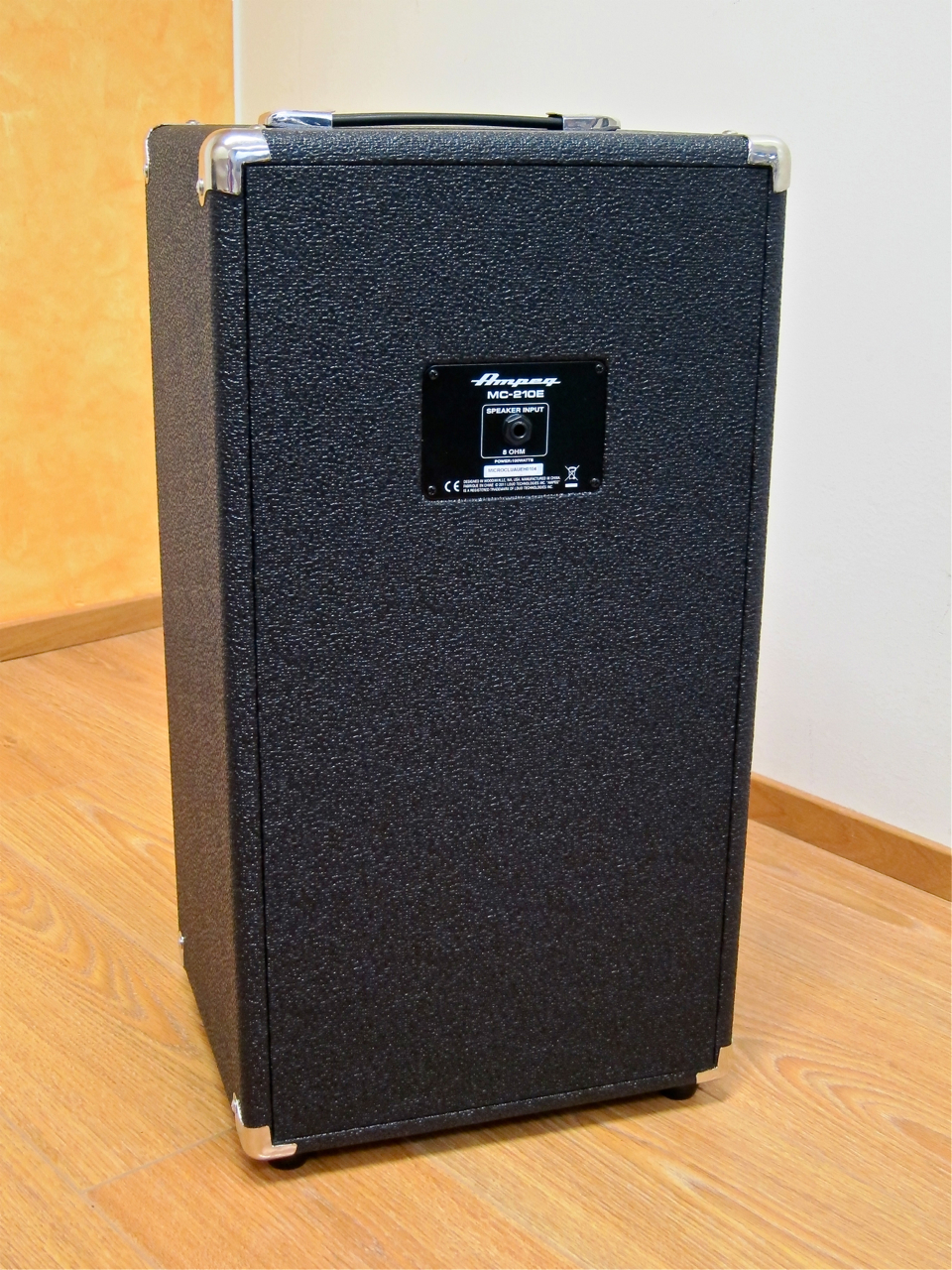
The workmanship seems spot on, with the miniature cabinet exuding the same air of rugged roadworthiness that its big brothers are known for.

The speaker input sits on its own metal plate.

Just to put things into perspective for you: Here’s the stack and a regular bass guitar case – yup, this stack really is small…
****

The amp may be small and cuddly, but don’t forget we have a genuine 100 W Ampeg system here!
I was positively surprised by the sound levels this small bass amp dishes out. Using it at home I wouldn’t recommend turning the master volume anywhere above number three, if you want to stay on good terms with your neighbours.
In the rehearsal studio – where I also recorded the audio clips for this review – the Micro-CL left me in no doubt that it would be fully up to its task at rehearsals and even smaller gigs.
With regard to its sound the tiny stack proved to be a thoroughbred Ampeg: The tones on offer are fat and juicy, with the raunchy midrange growl this company’s bass amps are famous for.
With the master volume approaching 10 you will also be able to coax some tasty, tube-like overdrive from the Micro-CL – but I’d suggest using earplugs then.
Granted, the Ampeg Micro-CL -stack is something of a cutie, but this isn’t a fancy toy, it’s a real bass amp with a lot of Ampeg-tone to boot.
The audio clips have been recorded using my ’87 Rickenbacker 4003 (starting with the neck pickup):
****
Ampeg Micro-CL -stack
current price in Finland 505 €
Finnish distributor: Soundtools
****
Pros:
+ size
+ weight
+ sound
+ output levels
+ workmanship
+ authentic looks
****

****
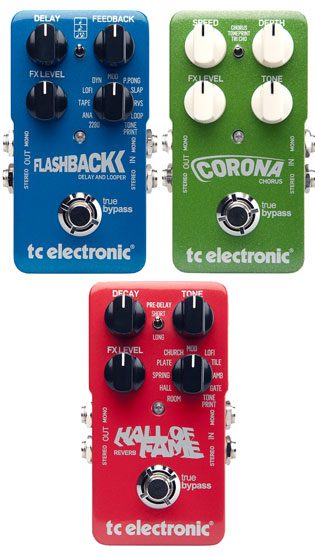
TC TonePrint -pedaaleihin on nyt saatavilla uusia, Metal- ja Thrash-painotteisia TonePrinttejä, joiden takana ovat Scott Ian (Anthrax), Bill Kelliher (Mastodon), Michael Paget (Bullet For my Valentine), James ’Munky’ Shaffer (Korn), sekä Jona Weinhofen (Bring Me The Horizon).
****
****
****
Lisätiedot: Soundtools

There’s surprisingly little information available on the net when it comes to classical/nylon-string guitars.
Now Kitarablogi.com comes to the rescue:
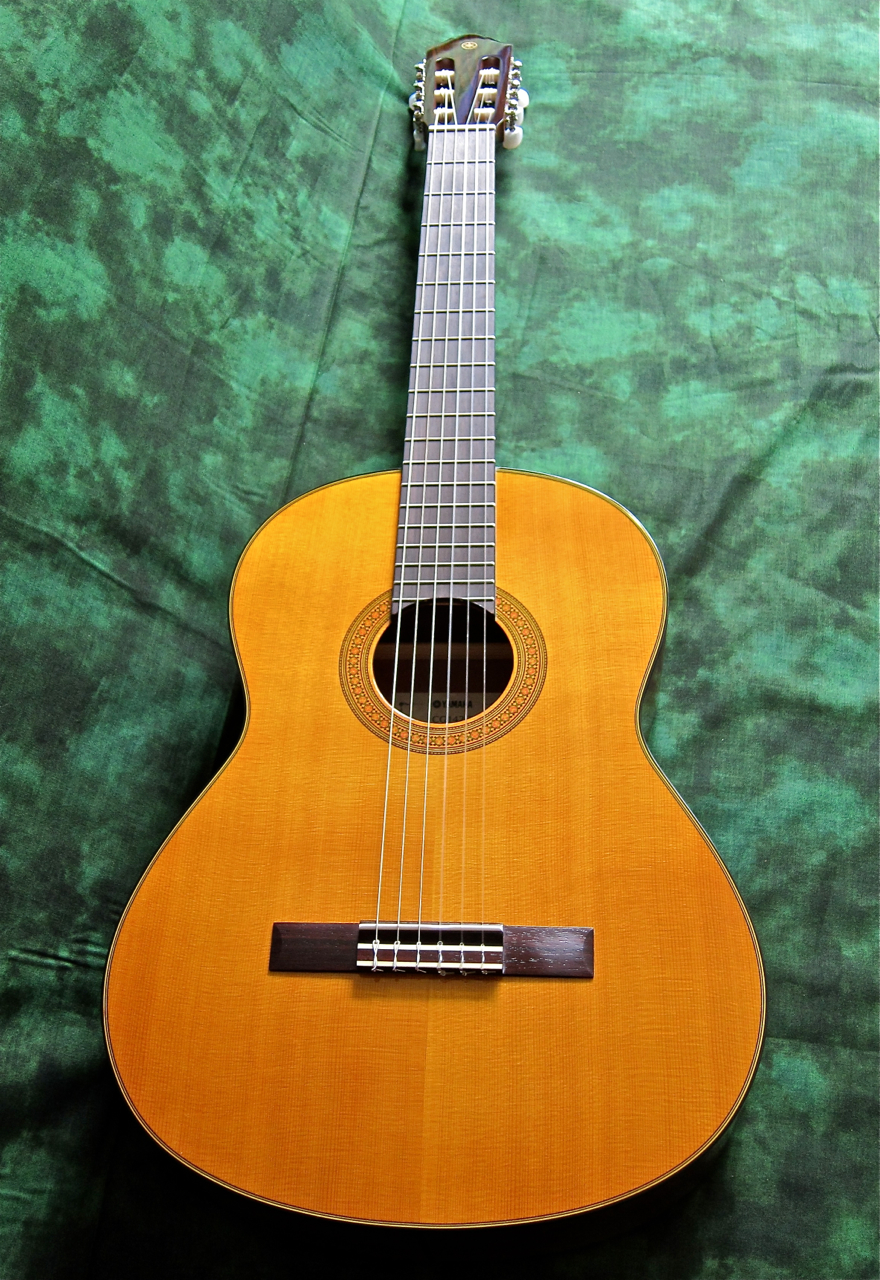
Yamaha’s C- and CG-series instruments are the best-selling classical guitars in Finland. We selected a solid cedar -topped Yamaha CG142C for this review.
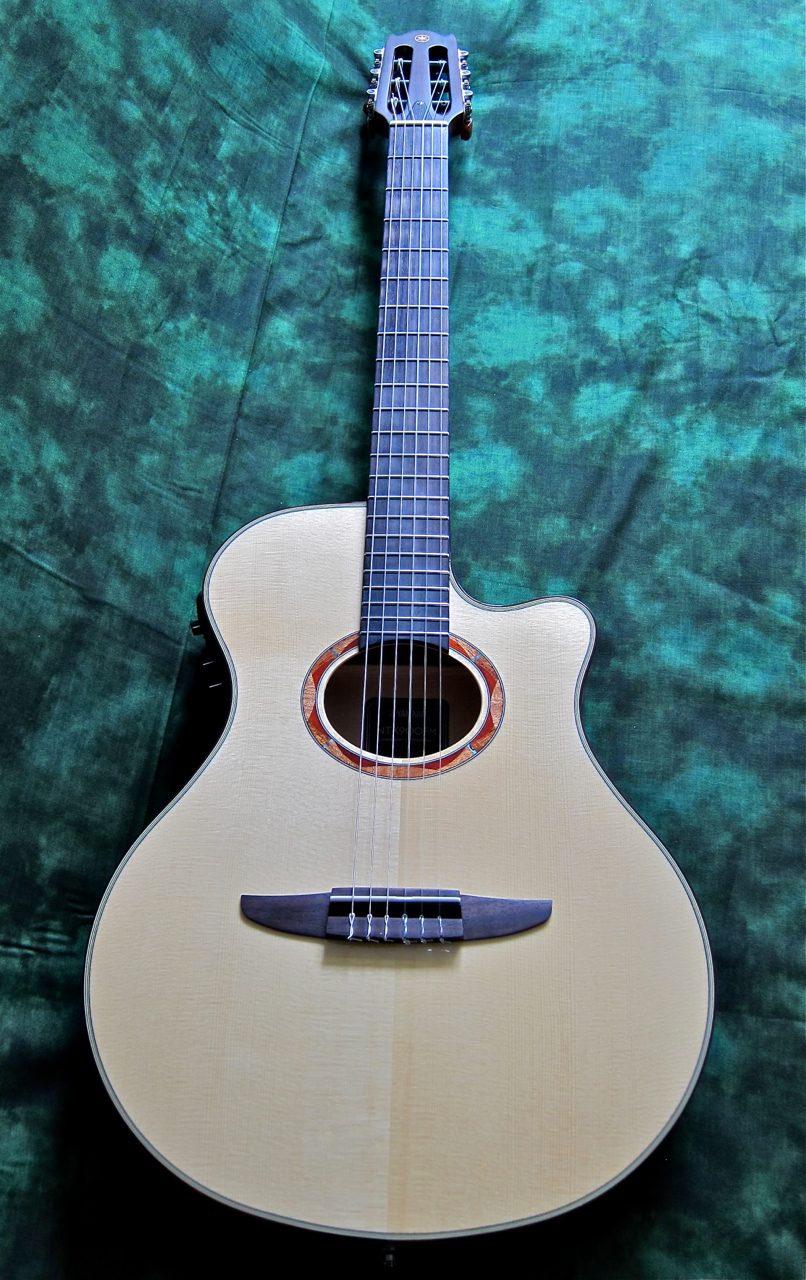
The Yamaha NTX900FM is a very interesting hybrid model – a nylon-string with a pickup and preamp system, as well as a narrower-than-classical nut width.
****

Typical of the company’s output, Yamaha’s CG142C (current street price in Finland approx. 300 €) is an extremely clean piece of work with the understated charm of a classical guitar. All CG-series guitars are build with solid tops – spruce-topped models have an ”S” suffix to their name, while cedar models are denoted with a ”C” at the end of their model name.

The neck, as well as the body’s back and rims, has been crafted from nato-wood. Nato is a South-East Asian tree species (lat. Palaquium) which looks and sounds similar to mahogany. The neck is solid wood, while the body (apart from the top) uses nato-plywood.
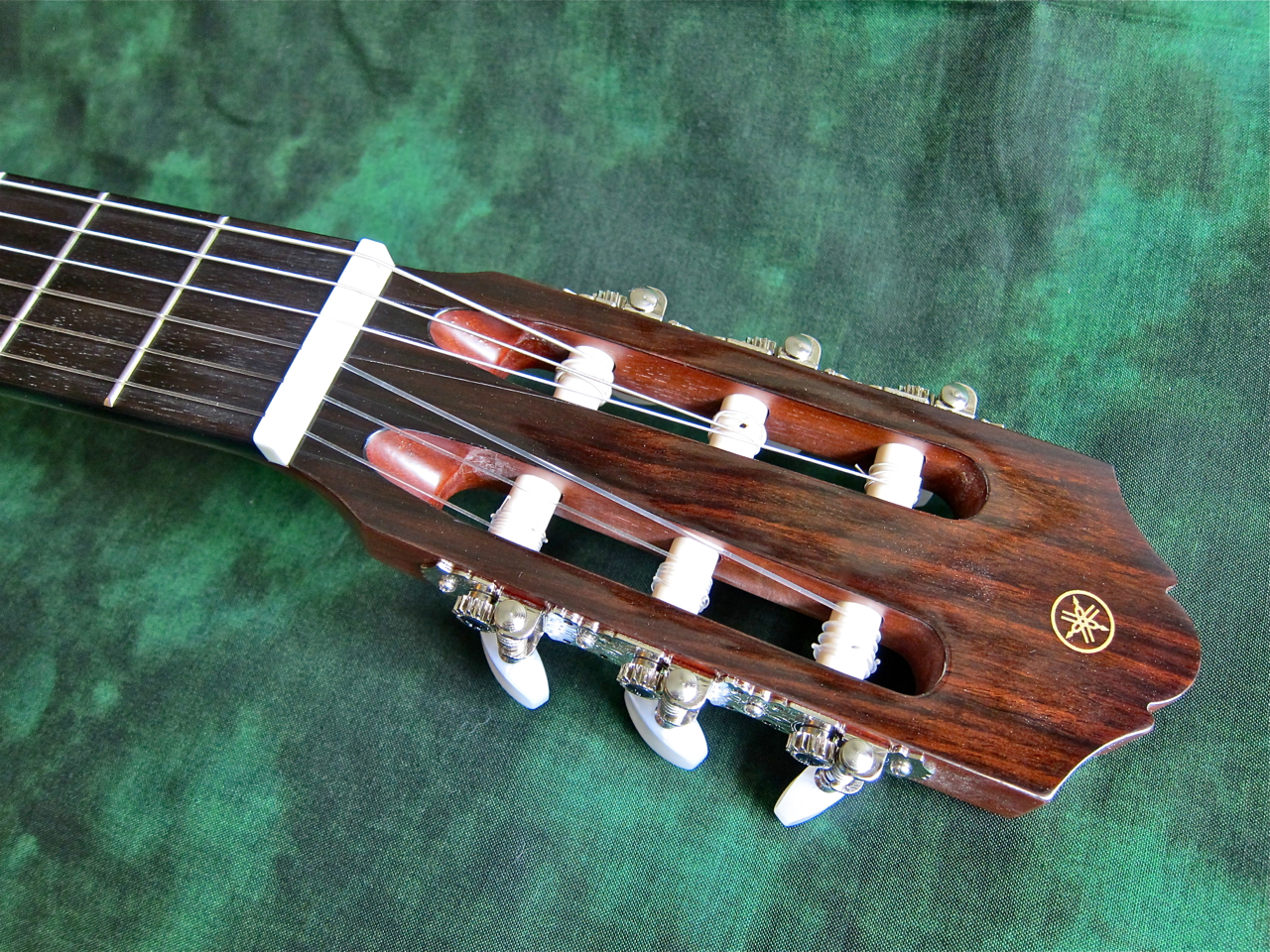
The headstock sports a beautiful rosewood veneer.
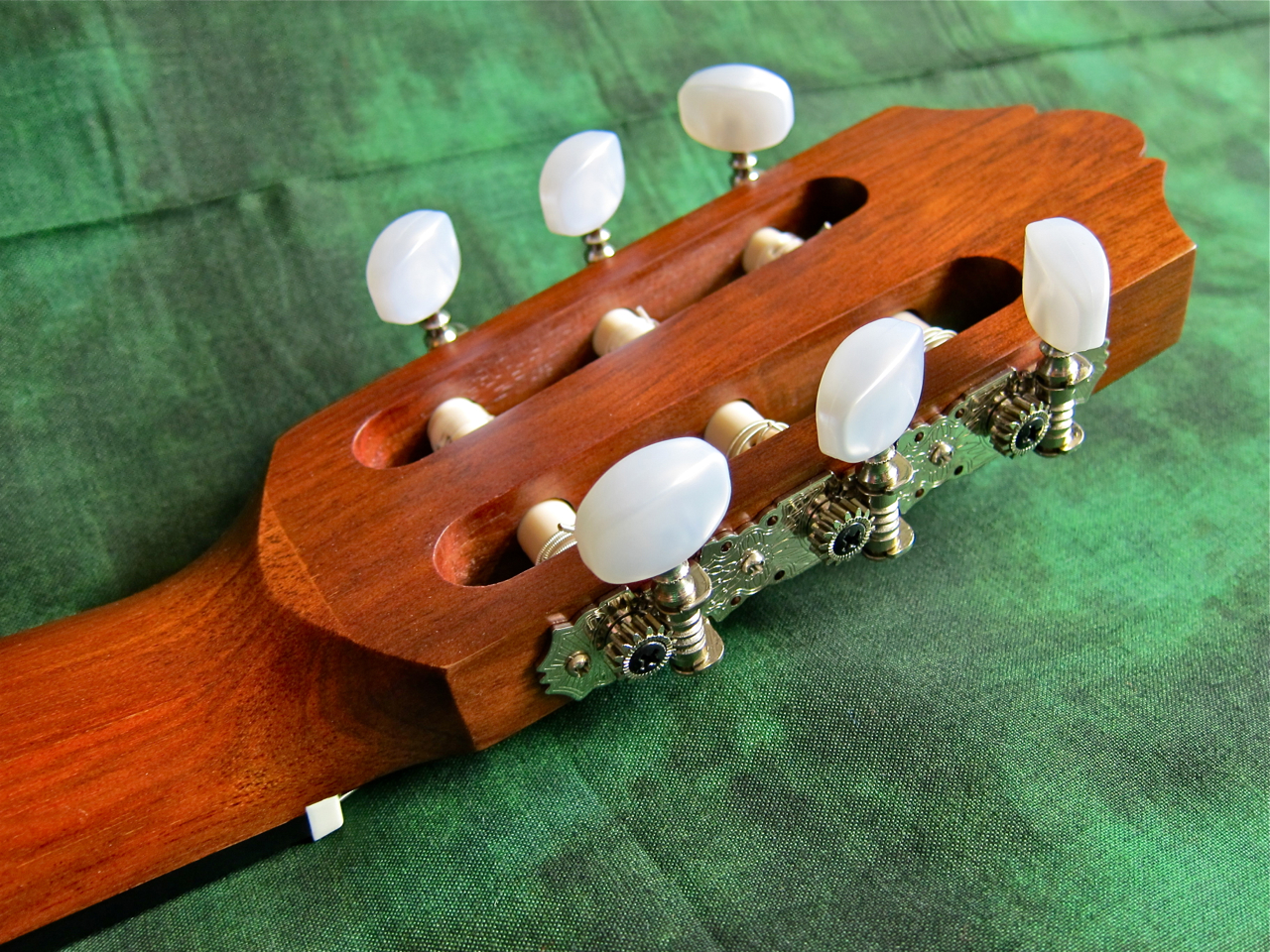
The CG142C comes equipped with traditional, open tuners. The headstock has been glued to the main part of the neck right above the neck wrist.

The satin-finished neck has been made by gluing together three strips of nato side-by-side. Added onto this main part is the neck heel, built up from several pieces of nato. Using small cut-offs in this way not only keeps costs sufficiently low, but also helps to save natural resources.

The bound rosewood fretboard sports traditional small and narrow frets.
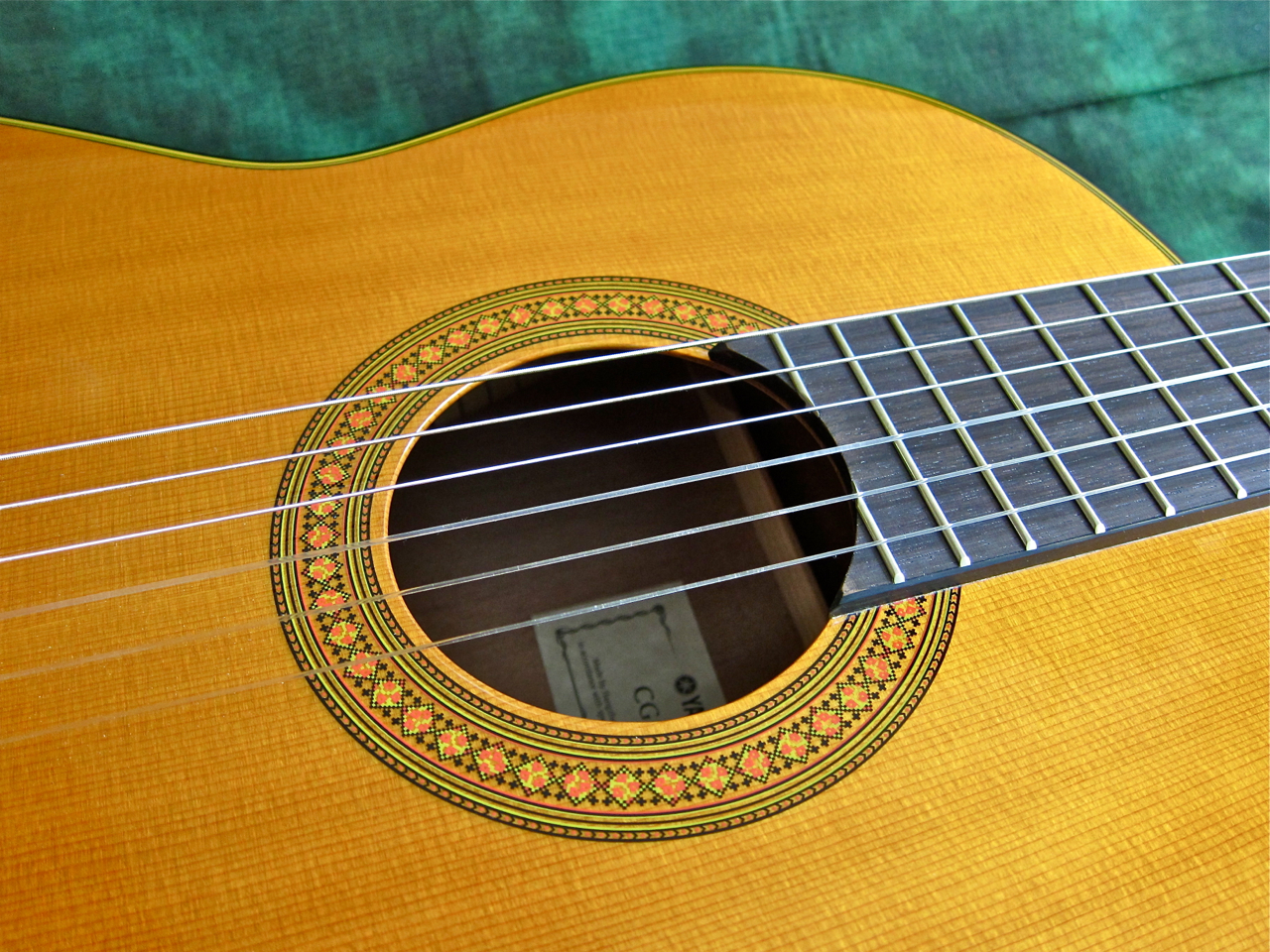
The CG142C’s beautiful rosette is actually a decal, stuck onto the top prior to lacquering, which is common practice on many budget classicals. Higher-priced models feature rosettes crafted from many small pieces of wood and other materials.

Here’s a close-up look at the top’s five-ply binding.
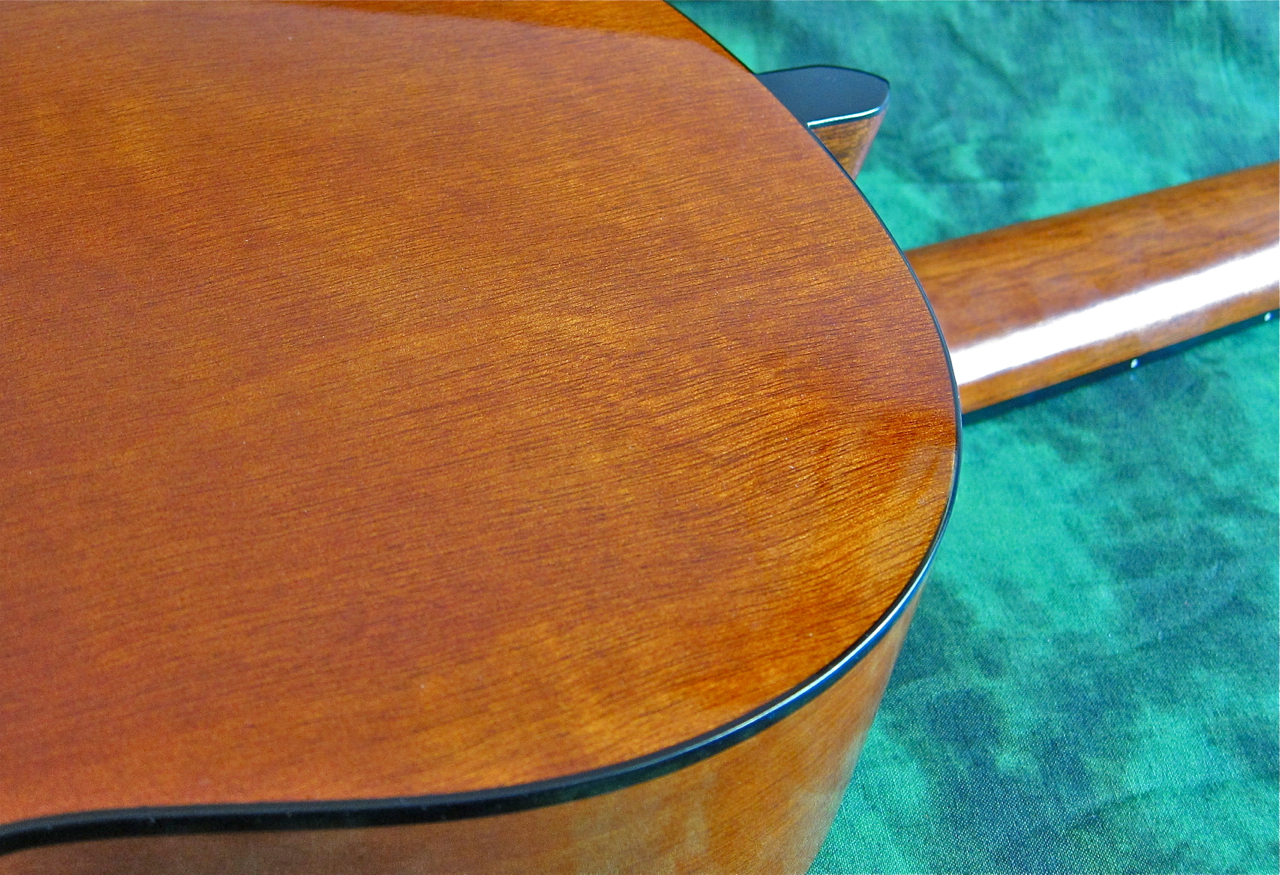
The back’s black binding is carried across to the heel cap.
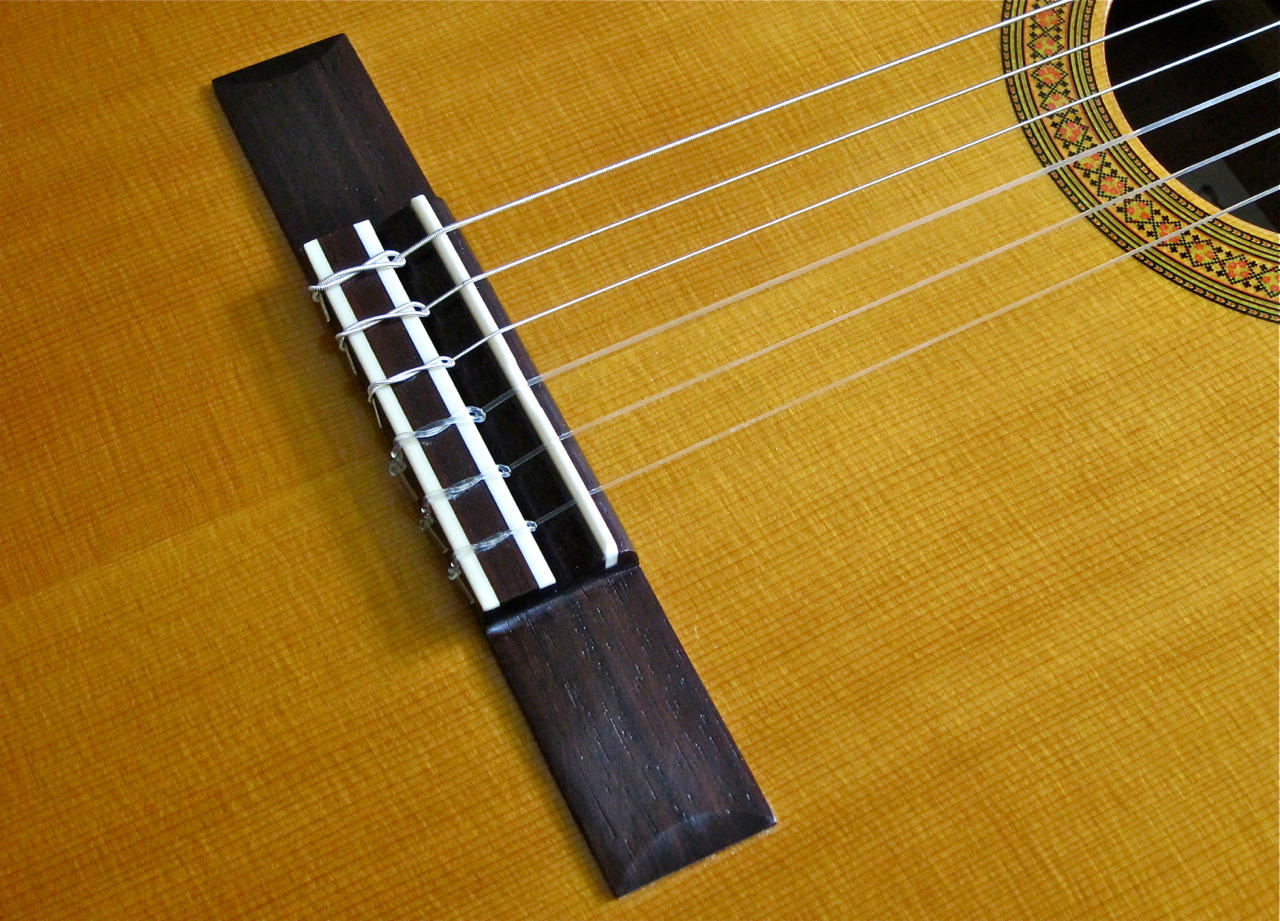
The Yamaha CG142C’s rosewood bridge is quite fetching in its poised simplicity.

Yamaha’s classical guitars tend to display clean workmanship on the inside also.
****

The Yamaha NTX900FM (current street price in Finland approx. 800 €) is the nylon-string cousin of the company’s APX-guitars. It has been designed for the guitarist who needs a quality pickup system, but doesn’t necessarily like the traditional wide and flat classical neck profile.
The NTX900FM’s top has been crafted from solid Engelmann-spruce.
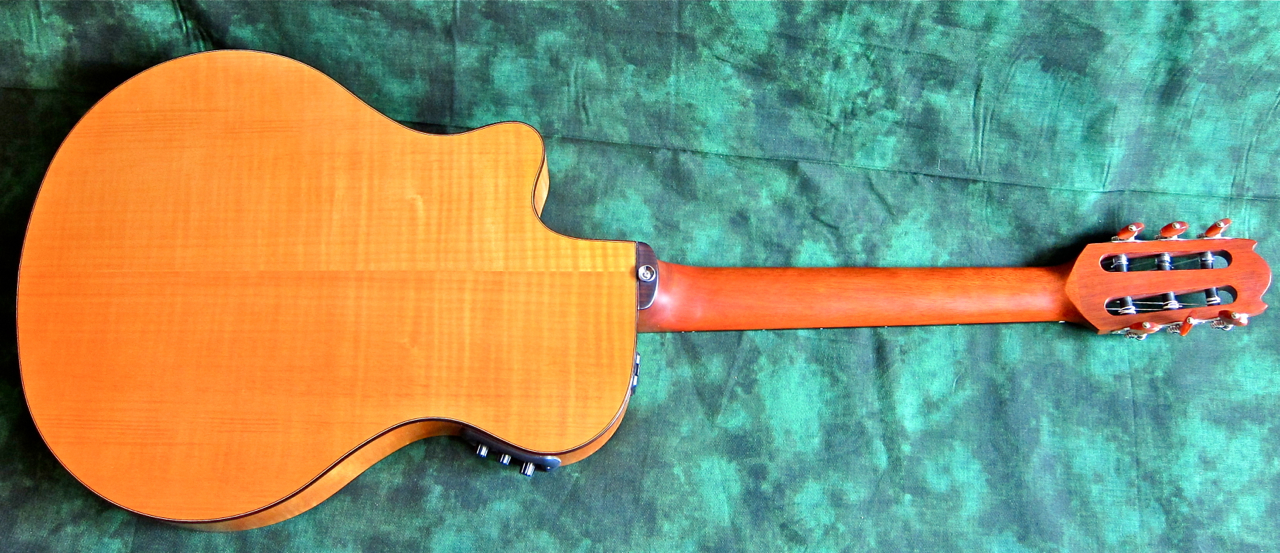
The nato neck has been glued to the maple body.
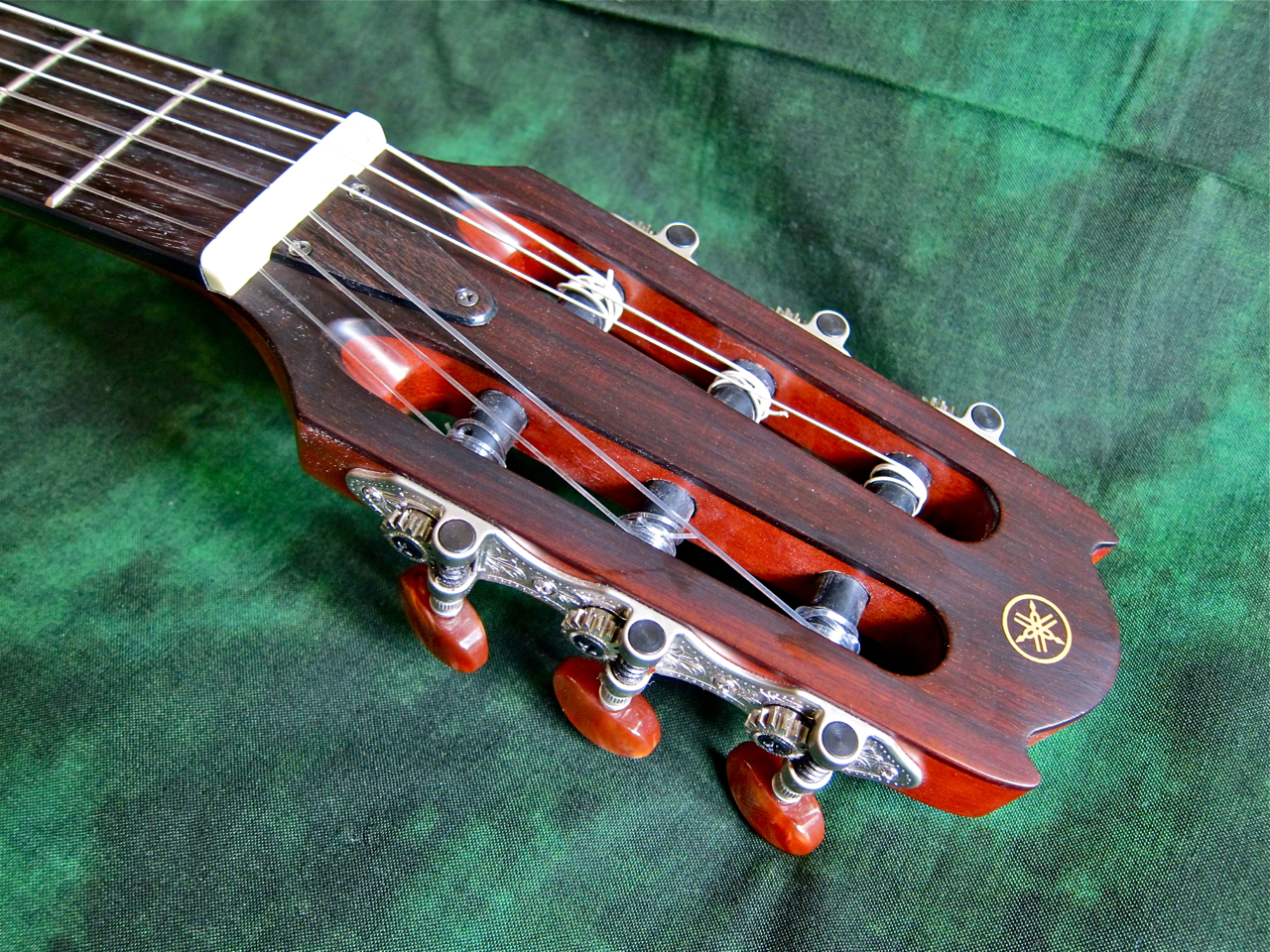
The headstock displays a cool and contemporary look…
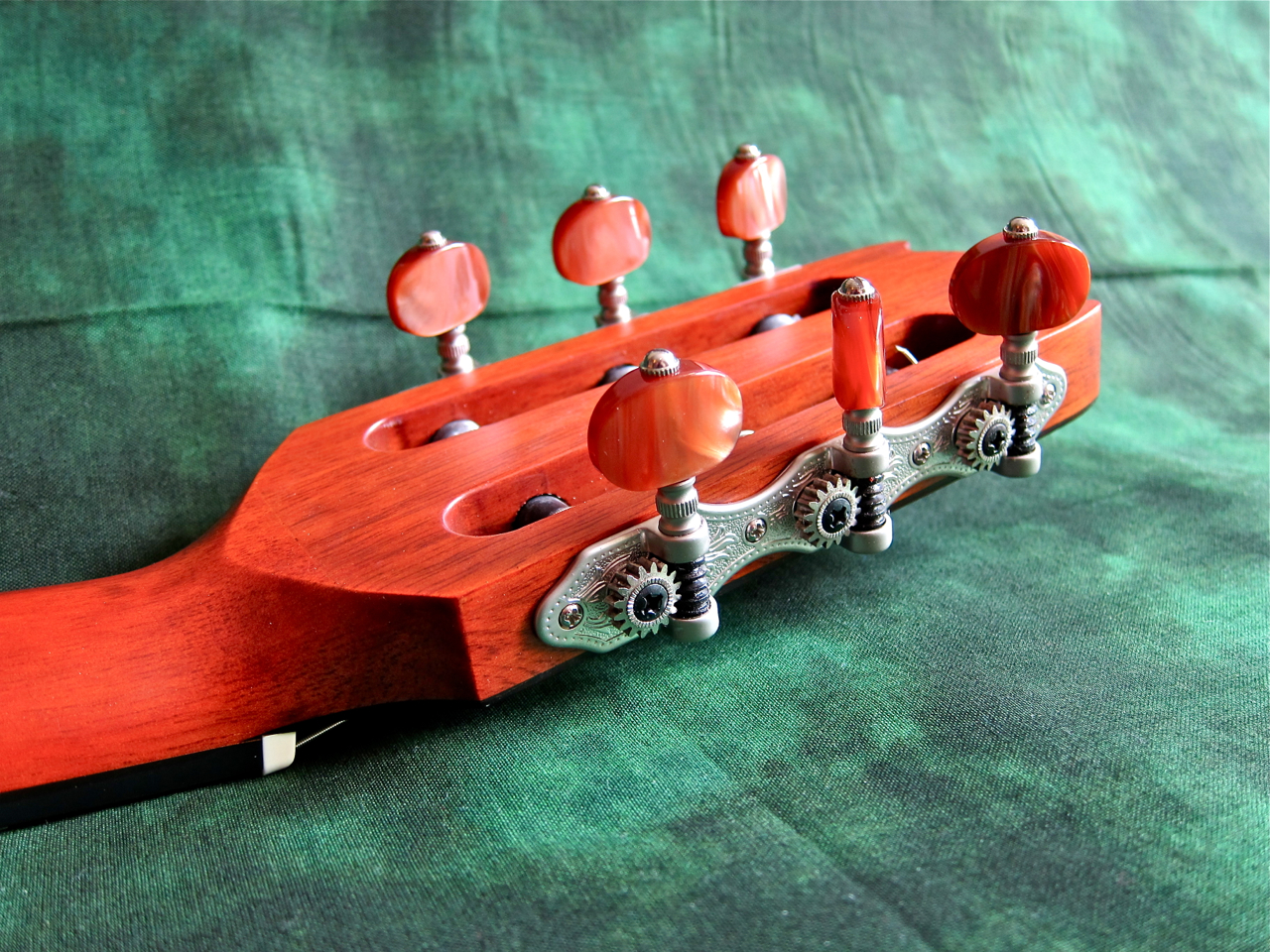
…which is complemented by the nice tuners.
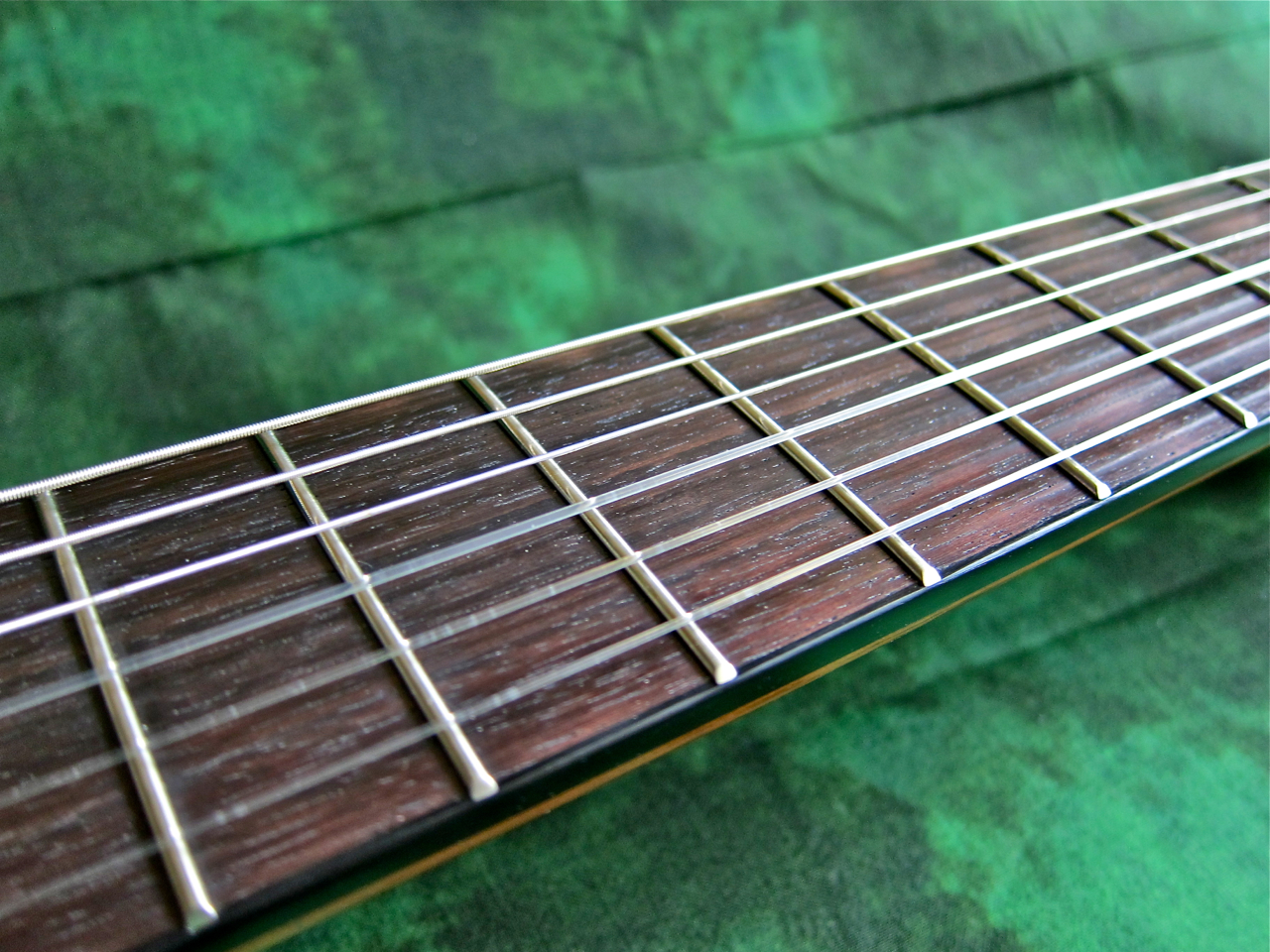
The NTX’ bound fingerboard is rosewood and comes with traditional frets.

NTX-guitars have the same type of body shape as their APX-brethren, and, just like the APX-guitars, the NTX-body is also shallower than what you’d expect from a classical guitar (with a depth of about 75 %).
The NTX900FM’s rosette has been beautifully crafted from various pieces of wood, as well as small bits of abalone.
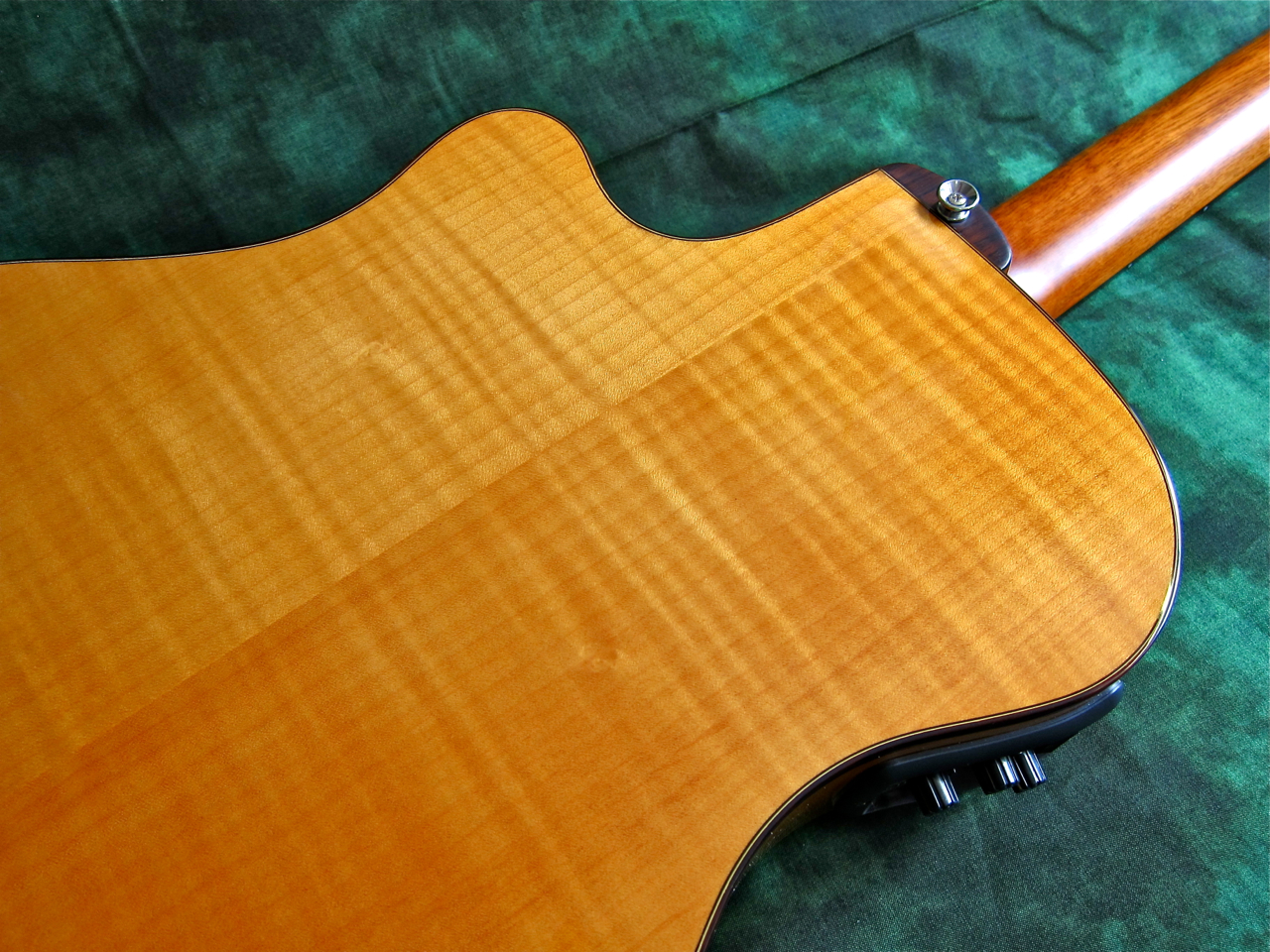
The honey-coloured finish of the flame maple soundbox looks good enough to eat.

Thes NTX900’s rosewood bridge also breaks with classical tradition in a stylish way.

This guitar’s preamp is Yamaha’s ART System 61, which is a two-band preamp with separate piezo transducers for the bass and treble string triplets. This enables you to adjust signal levels independently for the bottom and top halves. The ART System 61 preamp is equipped with a three-band EQ and a digital tuner.
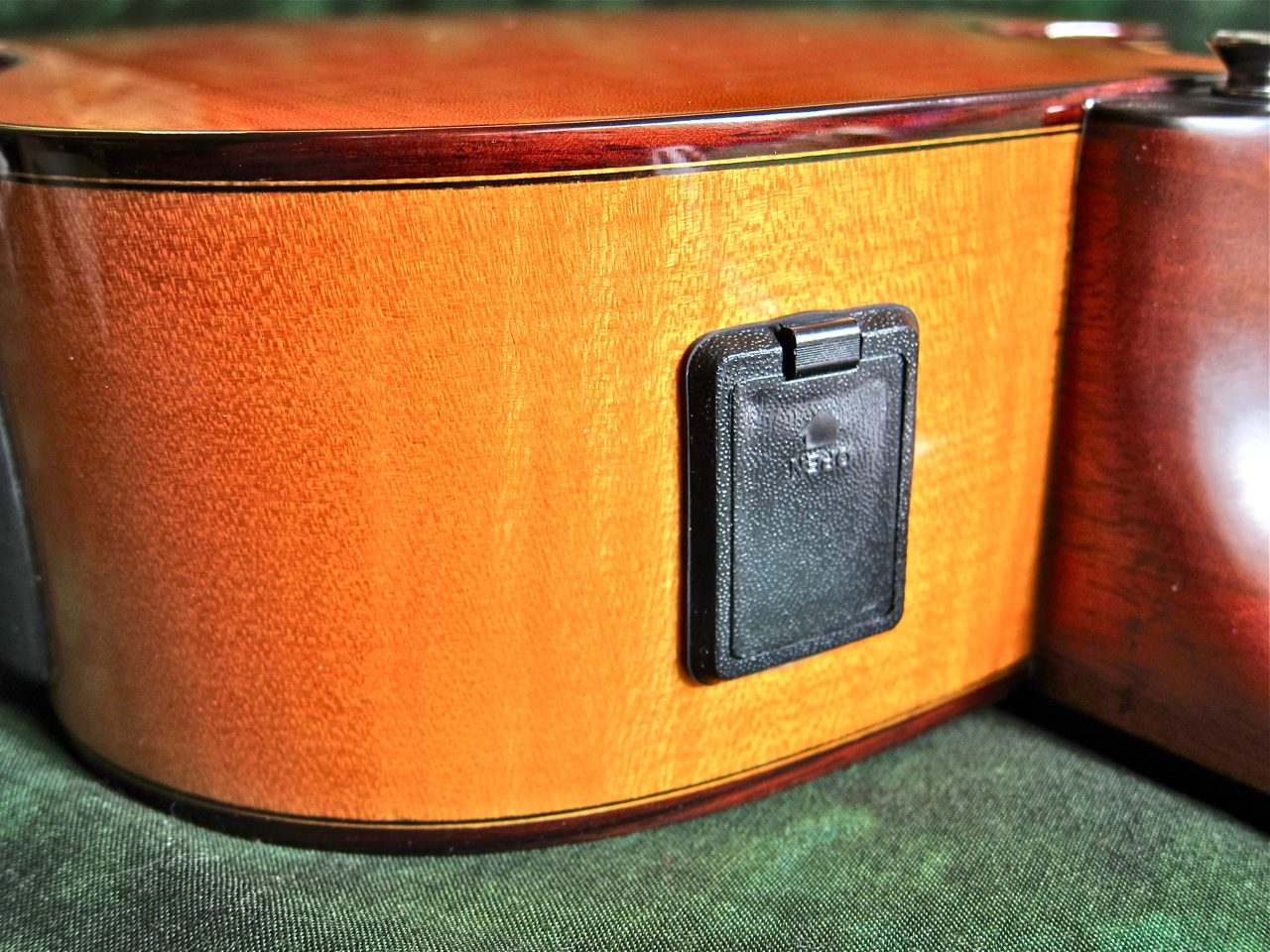
The battery compartment has been placed next to the neck heel.
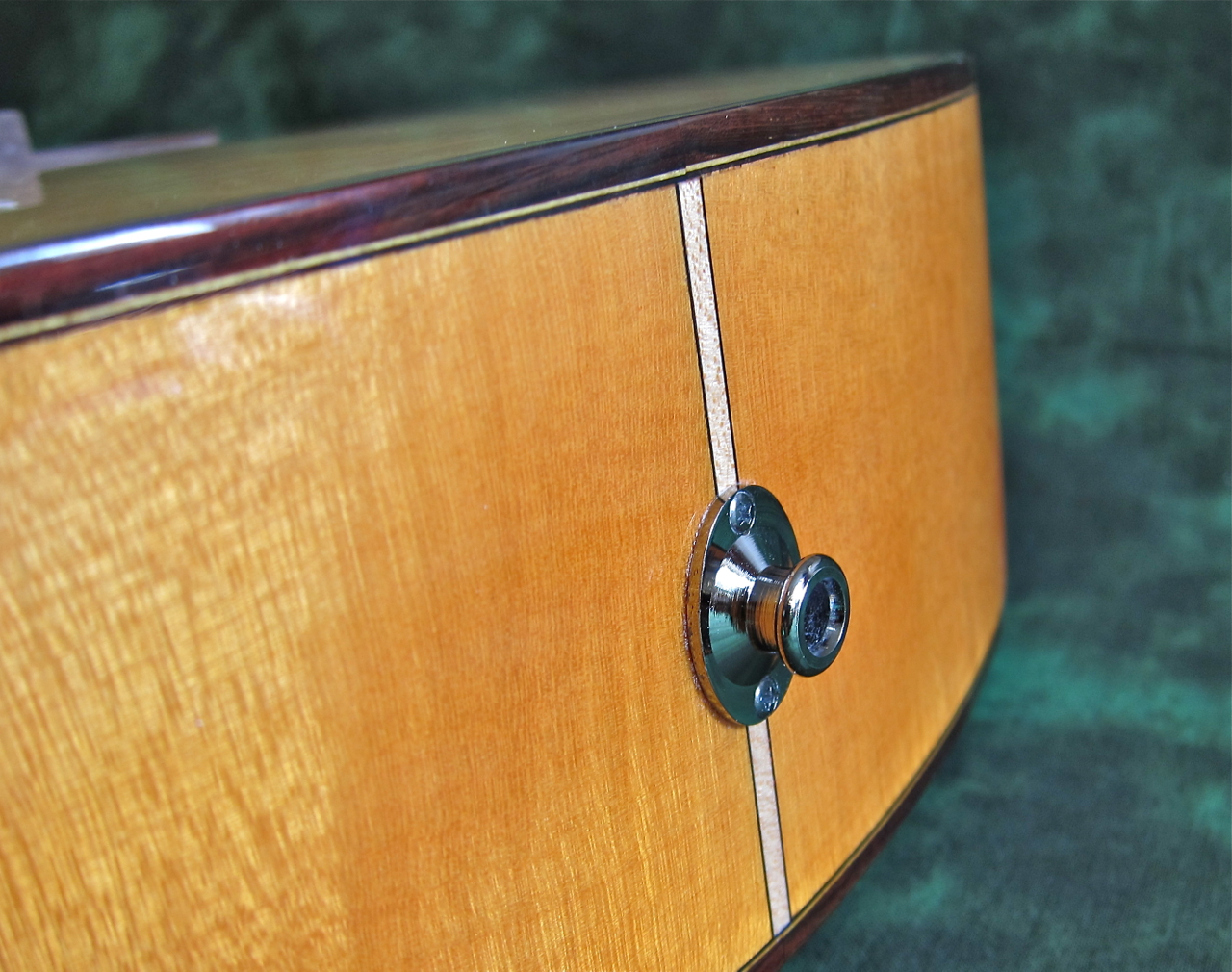
NTX900FM carries two strap buttons, with the bottom one doubling as the piezo system’s output jack.
The workmanship is clean and neat all around – inside and out.
****
****

Yamaha’s CG412C feels like a typical classical guitar: The nut width is a whopping two inches (52 mm) and the neck profile is true to style, namely flat and broad-shouldered. Such a traditional neck gives your left hand plenty of breathing room for complex fingerings, but barre chords require more attention and strength compared to a steel-string.
From an electric player’s standpoint a traditional classical set-up looks impossible, with the action at the 12th fret typically somewhere around 3.5 mm, but this is standard, comfortable fare on a nylon-string. Nylon strings are much softer than steel strings, and they also require a higher action to allow for their larger excursion.
Yamaha’s CG412C sings with a nice, full-bodied voice and an open tonal character. The guitar doesn’t project as well as an expensive classical does, but in its own price bracket the Yamaha CG142C clearly is a winner.
****

The nut width of the Yamaha NTX900FM’s neck lies halfway between a standard steel-string and a classical guitar, measuring 48 mm. The neck’s more tapered, slimmer and rounder D-profile makes for a much friendlier feel for the non-classical guitarist.
The NTX also comes with a lower string action (bottom-E: 3,1 mm/high-e: 2,6 mm at the 12th fret). This clearly narrows the guitar’s dynamic range, but also makes it easier to play for most of us.
Due to its shallower body and the use of maple for the soundbox, the NTX900FM isn’t particularly loud or full-bodied acoustically. The available volume is enough for practicing or song-writing, but this guitar doesn’t project in the way a traditional nylon-string does.
Yamaha NTX900FM – acoustically
Using the on-board pickup system changes things dramatically, turning the Yamaha NTX900FM into an interesting addition to your guitar arsenal. Yamaha’s ART-system works extremely well, and the separate volume controls for the bass and treble sides come in handy for fine-tuning your tone. The under-saddle transducers are also quite immune against handling noises, and the whole system is refreshingly low on hiss.
In my opinion the Yamaha NTX900FM is a good choice if you’re looking for nylon-string tones with a steel-string feel – or if you’re into juicing up your nylon with effects.
Yamaha NTX900FM – ART System 61
****
Yamaha CG142C + NTX900FM – nylon-string guitars
Finnish distributor: F-Musiikki
****
Yamaha CG142C
current street price in Finland around 300 €
Pros:
+ value-for-money
+ workmanship
+ traditional neck and action
+ sound
Cons:
– traditional neck requires different technique
****
Yamaha NTX900FM
current street price in Finland around 800 €
Pros:
+ value-for-money
+ workmanship
+ rounder and narrower neck profile
+ tone/pickup system
Cons:
– acoustically rather quiet
****


This time Kitarablogi.com takes a closer look at two Hagström models: The Viking Deluxe Baritone is a Far-Eastern-made baritone-guitar, made to please the friends of low riffage, while the brand-new Northen Swede is part of the company’s new high-end line, which is handmade in the Czech Republic.
****

The Hagström Viking Baritone (current street price in Finland approx. 600 €) is the newest addition to the Viking-line. This long-necked beauty features the same stylish curves and semi-acoustic body as the rest of the Vikings.
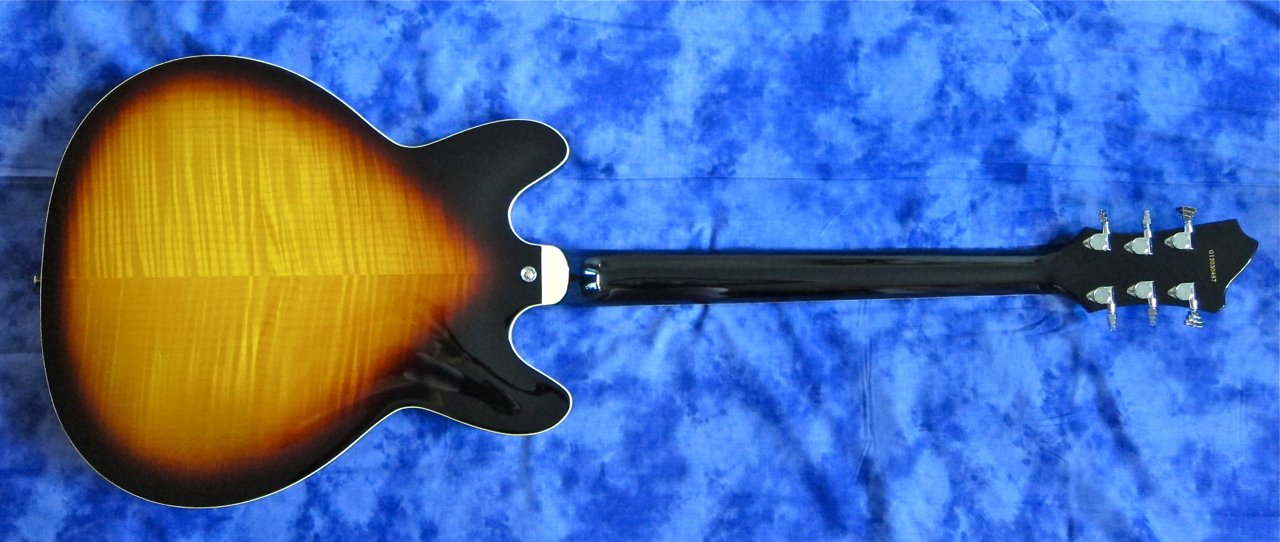
The Canadian hard rock maple neck is glued into the body, which is made from flame maple plywood.

Hagström’s headstock simply oozes 1950’s glitzy panache, with its ultraclean binding and inlay work.
The top nut, on the other hand, is up to date, using self-lubricating, man-made Black Tusq.
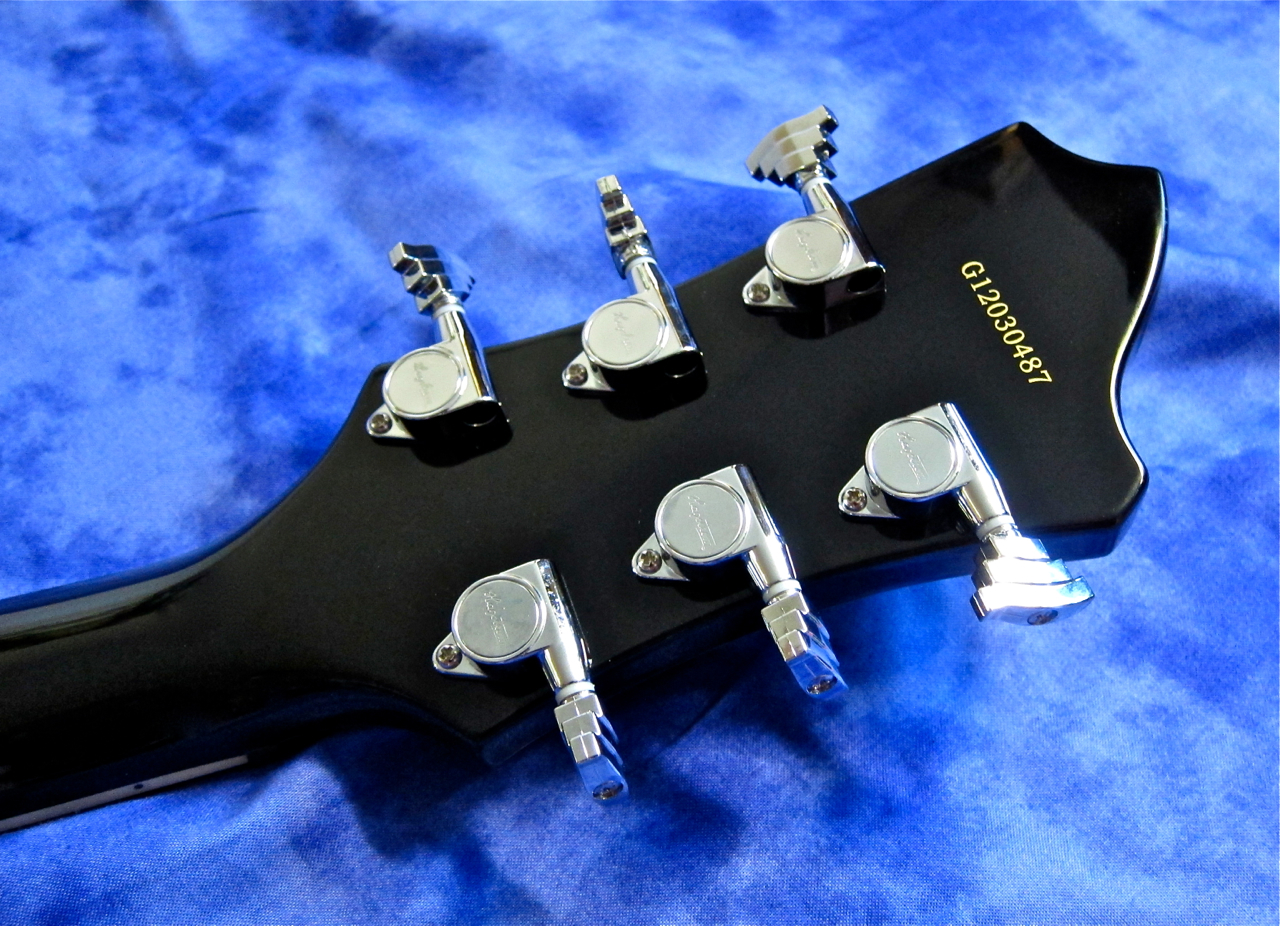
Modern sealed Hagström-tuners keep things steady.

One of Hagström’s special features is their Resinator-fingerboard. Resinator is a man-made alternative to ebony – in both looks and sound – and is made using wood fibres and resin.
The fretwork is rather good on our test sample, apart from a few fret ends, which felt a tiny bit sharpish in places.

Inside the plywood soundbox you can see the Viking Baritone’s full-length mahogany centre block.
The centre block is what turns a fully acoustic guitar into a semi. It improves attack and sustain, as well as greatly reducing the danger of howling feedback at higher volume levels.
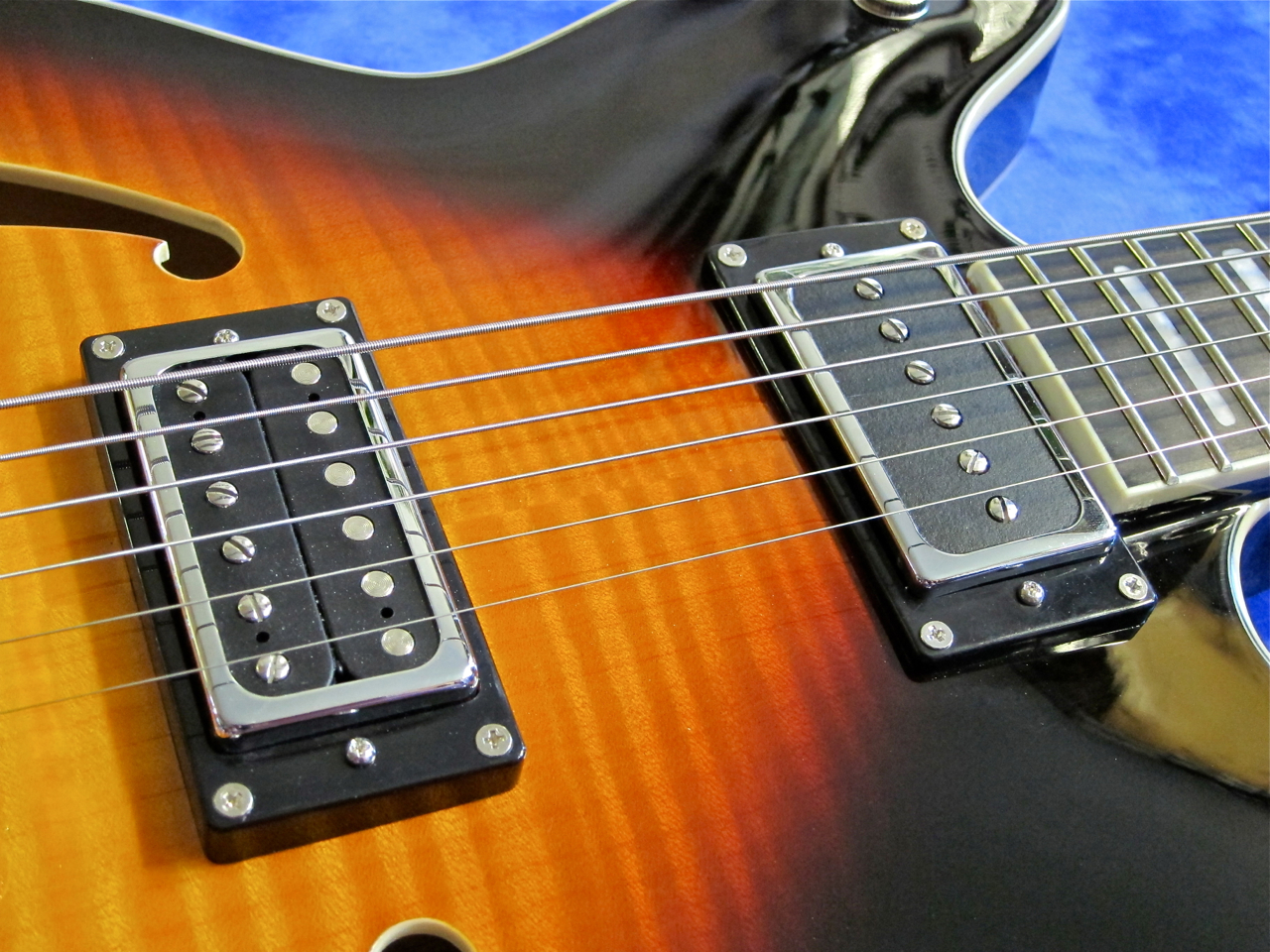
Hagström have optimised this Viking’s choice of pickups for use in a baritone-guitar:
The neck pickup is Hagström’s new P-Urified unit, which is a P-90-type singlecoil in humbucker-size. Employing a singlecoil in the neck position makes great sense, as it improves tonal clarity, while steering clear of any potential mushiness.
The bridge unit is Hagström’s great Custom 58 -humbucker, whose moderate output and nice dynamic range fit the P-Urified perfectly.
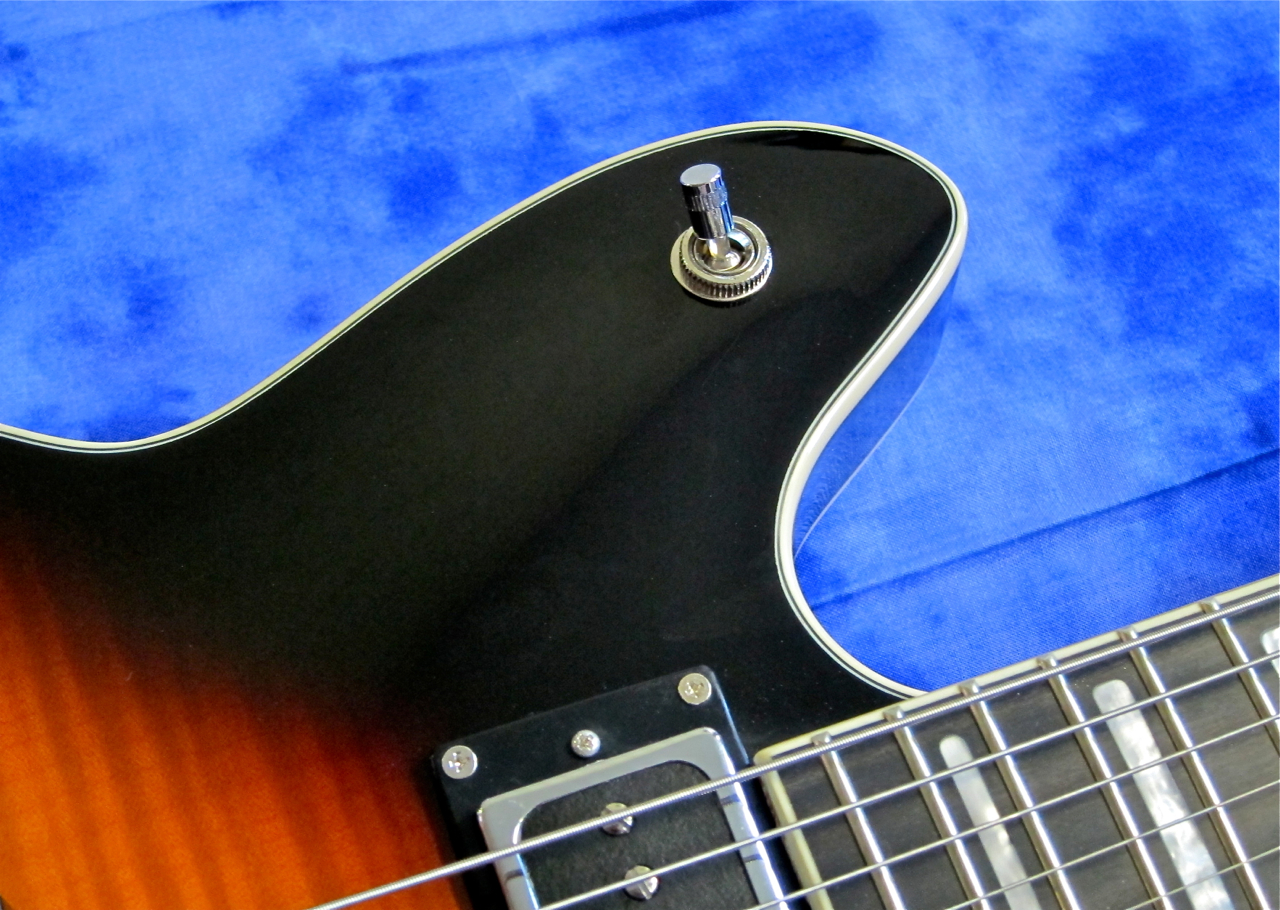
The three-way toggle sits on the Viking Baritone’s top horn.

It’s nice to see quality long-throw pots and clean workmanship inside the Viking.

The classic Gibson-type bridge and stopbar combination works fine on a semi like this.
****
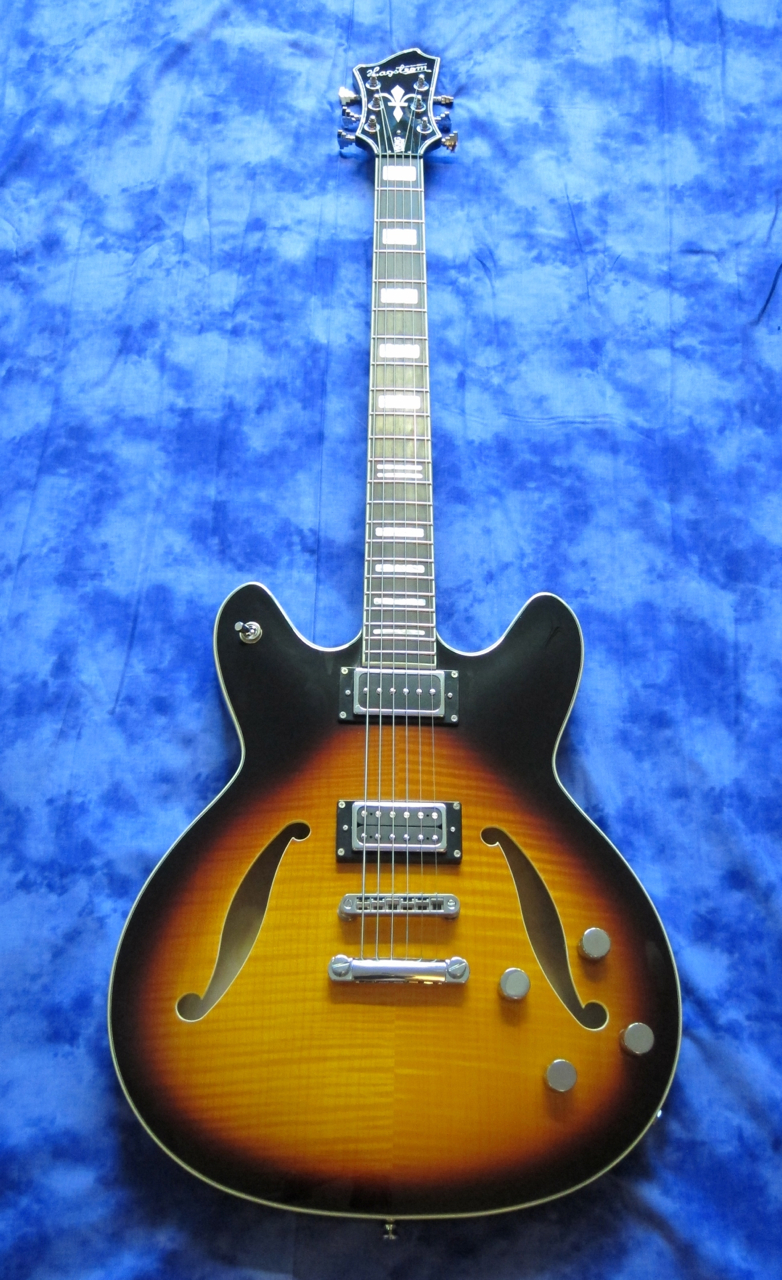
Thanks to its nice, moderate weight the Hagström Viking Baritone sits comfortably in your lap, with good strapped-on balance, too, regardless of a whiff of neck-heaviness due to its long neck.
The neck profile is a fleshy, but not too fat ”D”. Due to a baritone-guitar’s longer scale length (28″/71,1 cm) a newbie will need a little time to adjust his (or her) technique, but after a few minutes or so muscle memory will take the reigns without any problems.
The Viking Baritone’s choice of pickups really does it for me, fitting this guitar’s acoustic tone to a tee. The freshness of the neck pickup, together with its deliciously woody response, will keep even the lowest runs clear and punchy. And the moderately-powered bridge humbucker adds just the right amount of bite and grit to proceedings.
I feel that Hagström’s Viking Baritone is a fine baritone for all occasions and all styles of music (well, probably apart from the most massive of high-gain applications).
Listen to these two audio clips (the pickup order is: neck – both – bridge):
Hagström Viking Deluxe Baritone – clean
Hagström Viking Deluxe Baritone – crunchy
****
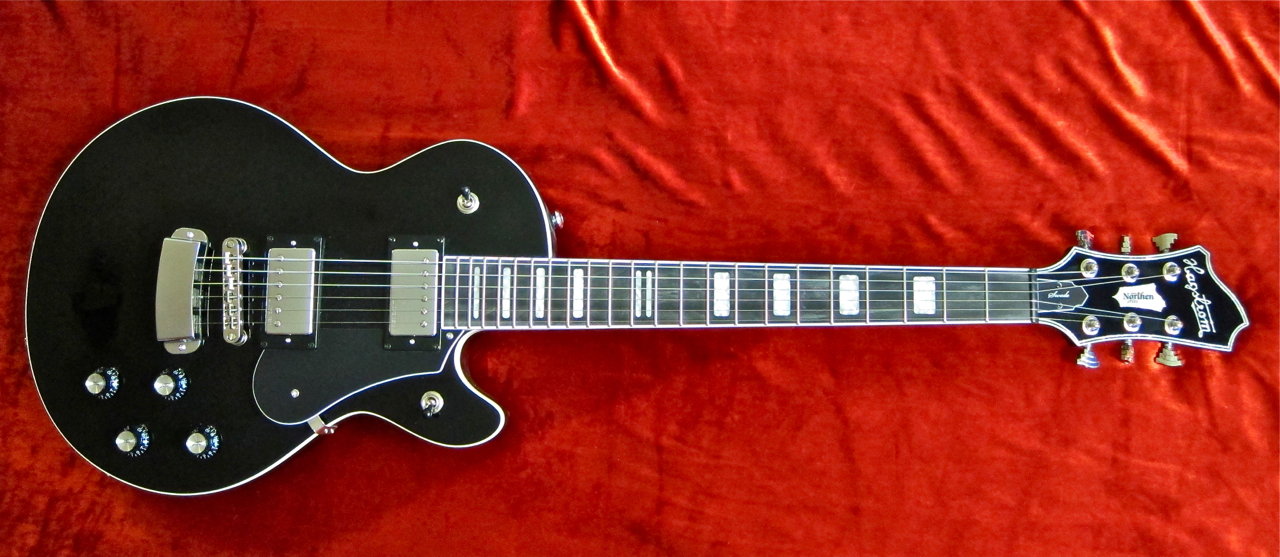
The Hagström Northen Swede (current street price in Finland approx. 1.200 €) is a high-quality, EU-made reissue of the classic Swedish model of yore.
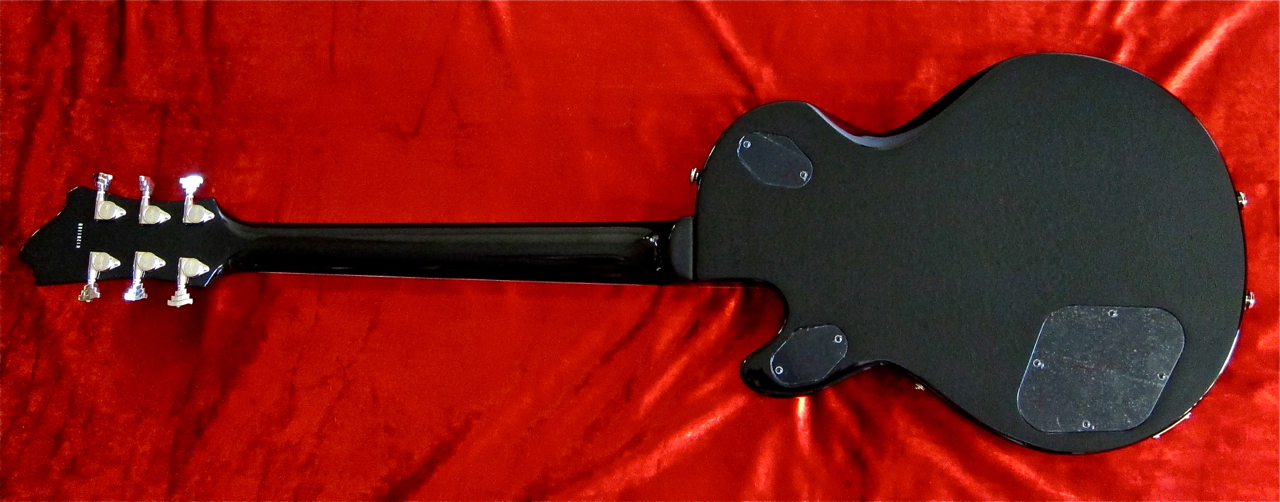
We’re talking about a set-neck solidbody, made almost completely from African mahogany (note: the cover plates look strange in this pic, because they still have their protective foils stuck on top).
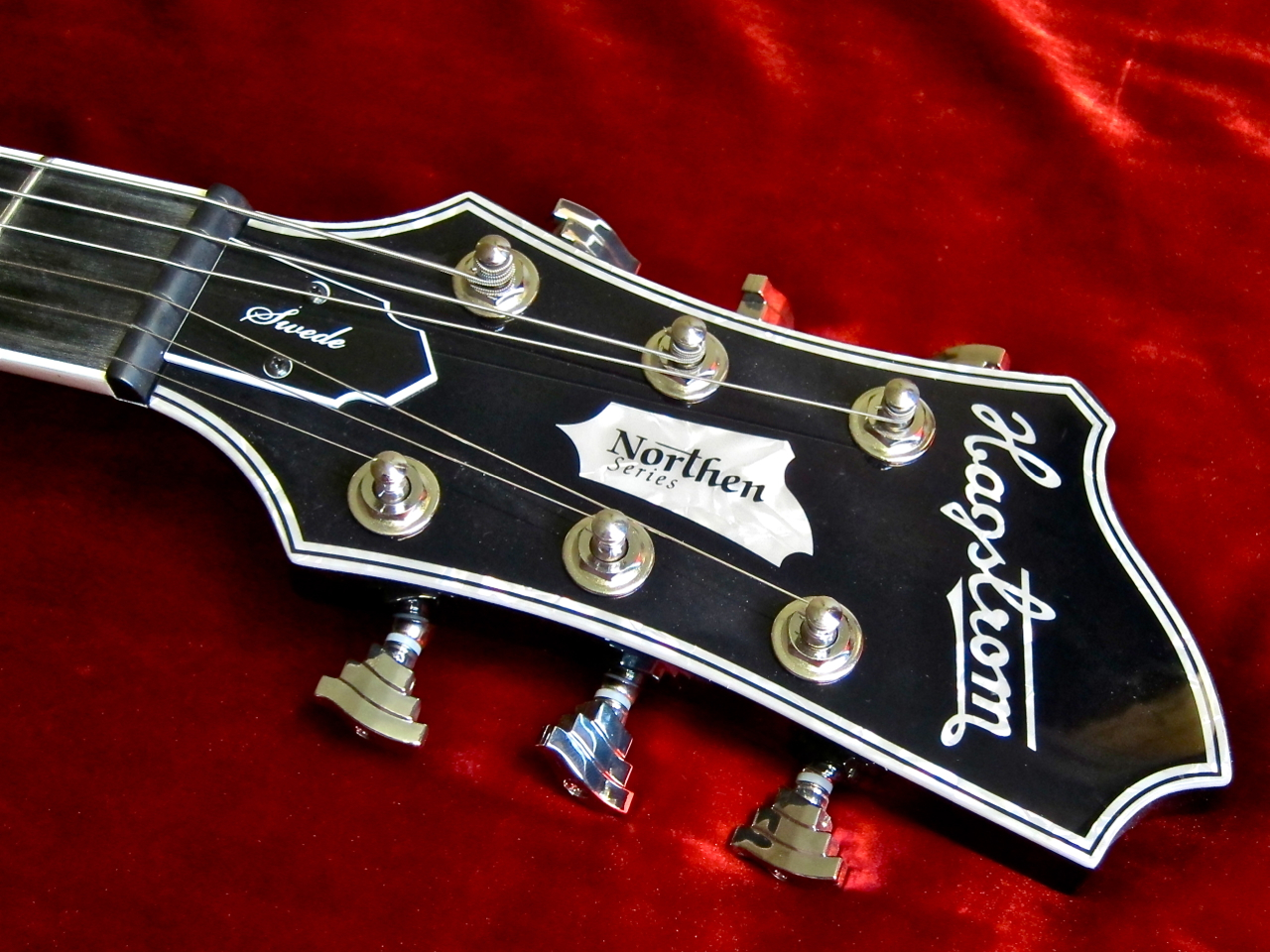
The large pearloid inlay proudly displays the Northen-series’ logo.

The Hagström-tuners have an 18:1 gear ratio and a smooth and precise feel.
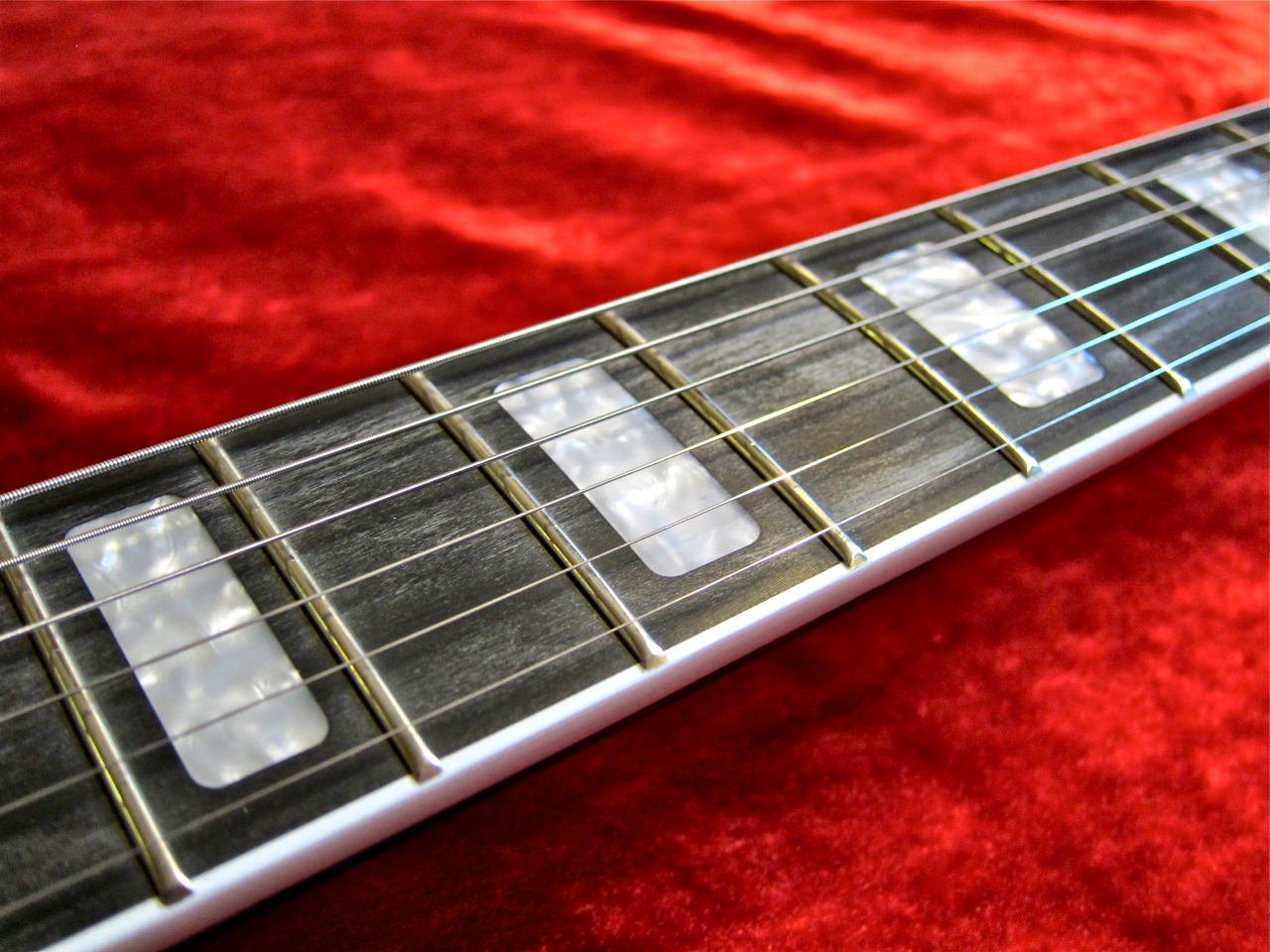
The Northen Swede’s Resinator-board looks more lively than its counterpart on the Viking Baritone. The fretwork is very good.
One special, time-tested feature of all Hagström necks is the H-Expander truss rod system. The H-Expander truss rod sits in a rigid aluminium bar with an H-shaped cross-section. The whole system is then mounted into a tight-fitting, profiled slot inside the the neck, resulting in greater rigidity and thus a better vibrational transfer than most other truss rod systems provide.
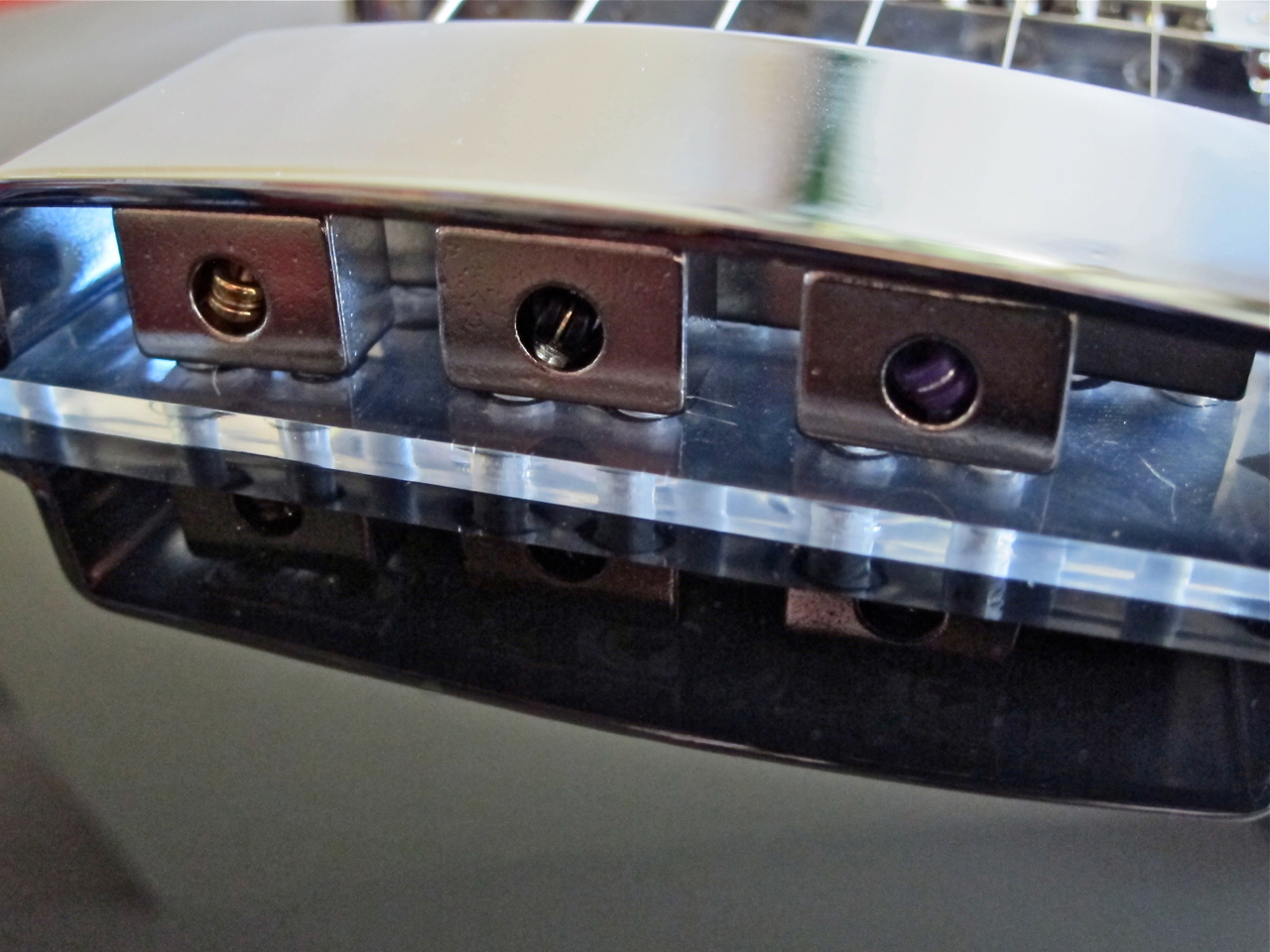
The Swede features Hagström’s idiosyncratic tailpiece, using individual string retainers mounted onto a perspex plate.

Swedish pickup-guru Johan Lundgren is the force behind the Northen Swede’s classy pickups. The guitar is equipped with a pair of No. 2 -humbuckers, which are powered by Alnico 2 magnets.
The Hagström Swede sports two three-way toggle switches: The switch on the guitar’s shoulder is your usual pickup selector, while the one on the treble-side horn is a tone filter -switch.
The tone filter’s middle position is off, with the ”up” selection giving you a mild presence roll-off, while the ”down” position results in a noticeably greater treble and high-mid cut.
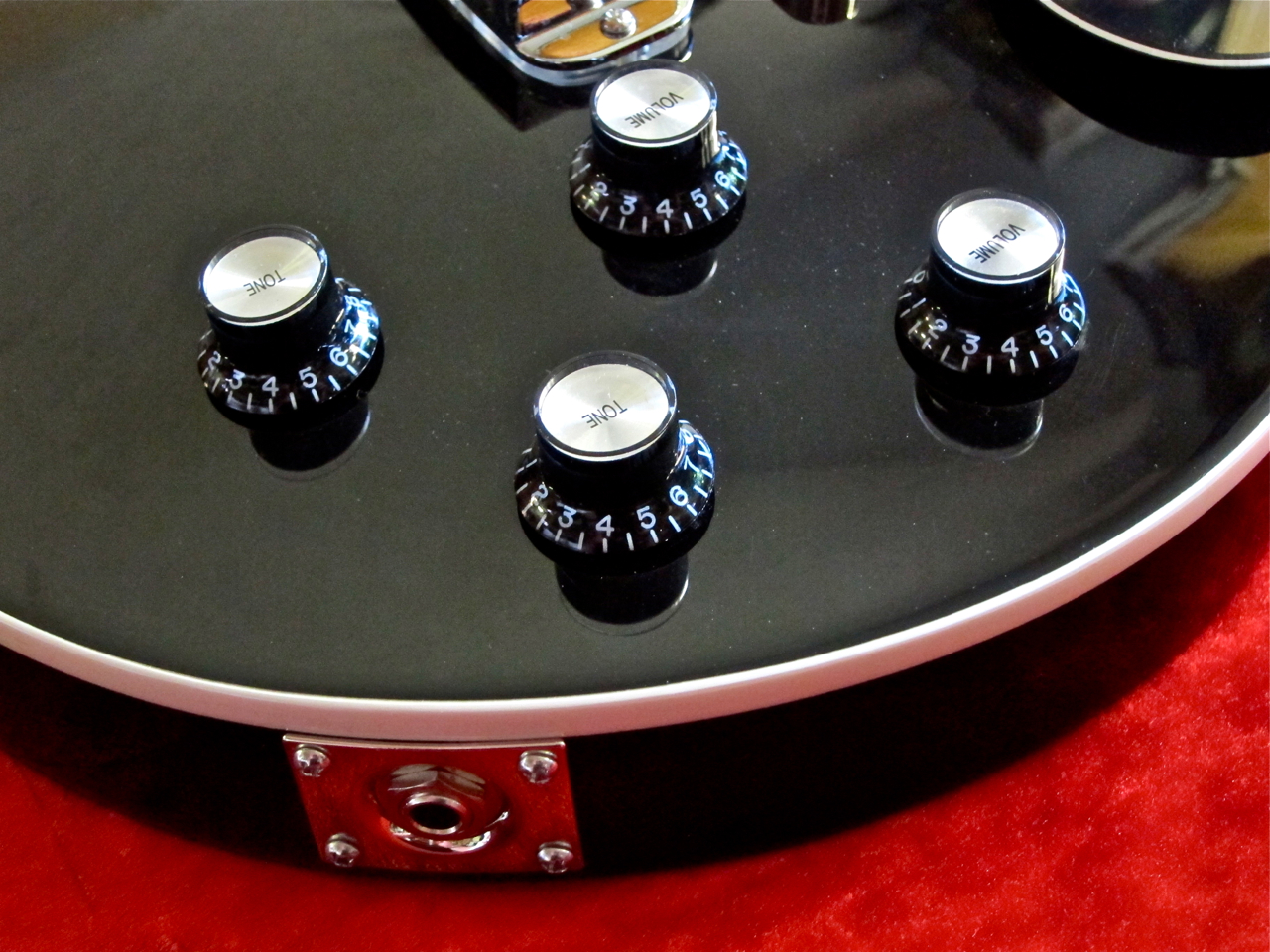
The control knobs work in the standard Les Paul -fashion, with each pickup being provided with its own set of volume and tone controls.
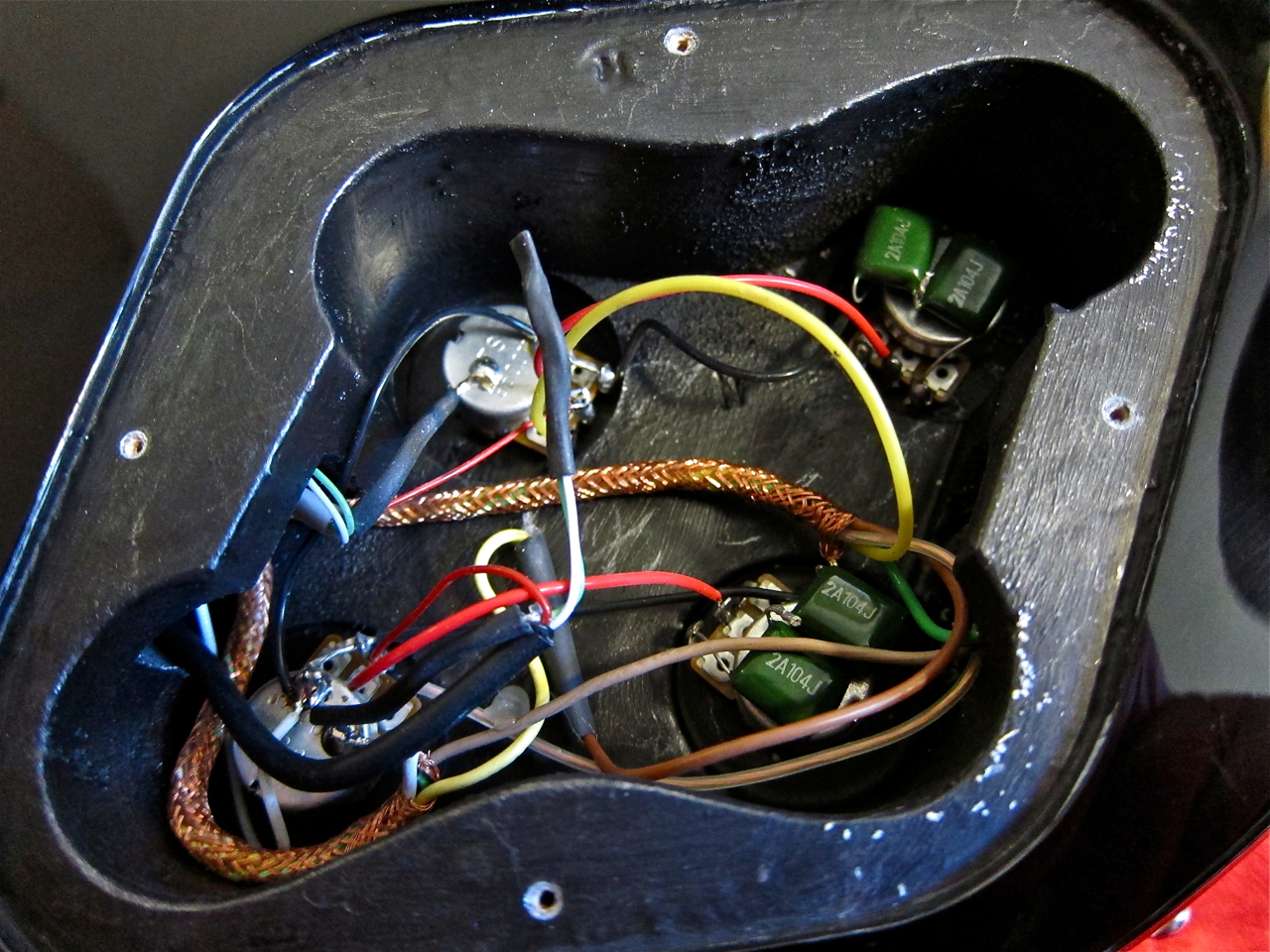
Quality components, clean soldering and thorough screening, using conductive paint and an aluminium-lined lid, get the thumbs up from this here reviewer.
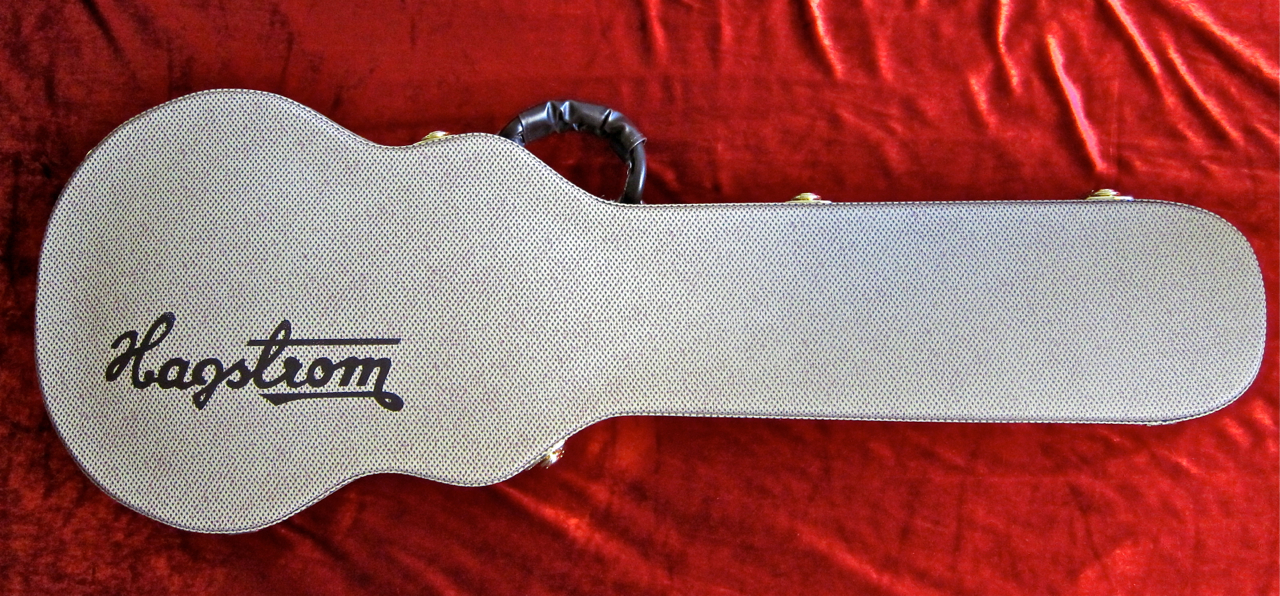
A sturdy and beautiful Hagström-case is included in the Northen Swede’s price.
****

The Hagström Northen Swede’s well-rounded neck profile feels great to me. The nicely polished frets and the ’board’s 12-inch camber make for a fast and effortless playing experience.
Thanks to the fantastic interplay between the tone filter -switch and the guitar’s controls, the tonal options afforded by this Swede are virtually limitless. The Lundgren-designed pickups have a very clear and clean basic tonal character, which enables you to make the most of the Northen Swede’s passive electronics.
In my opinion Hagström’s Northen Swede is a top-quality guitar offering a great deal of tonal variation to the discerning guitar connoisseur. In light of its Czech origin, I must say that the Northen Swede truly represents quality European workmanship at a very moderate price.
All the following audio clips have been recorded with the tone filter -switch starting at off, then going to moderate roll-off, with the last phrase using the full treble cut selection:
Hagström Northen Swede – neck pickup/clean
Hagström Northen Swede – both/clean
Hagström Northen Swede – bridge pickup/clean
Hagström Northen Swede – neck pickup/crunchy
Hagström Northen Swede – both/crunchy
Hagström Northen Swede – bridge pickup/crunchy
****
…and here we have both Hagströms in action:
Hagström Viking Baritone + Northen Swede – the video’s audio
****
Hagström-guitars
Finnish distributor: EM Nordic
A big thank you to DLX Music Helsinki for the loan of the review instruments!
****
Hagström Viking Deluxe Baritone
Current street price in Finland about 600 €
Pros:
+ sound
+ playability
+ workmanship
+ weight
+ pickups
Cons:
– fingerboard binding felt a tad angular on test sample
****
Hagström Northen Swede
current street price in Finland about 1.200 €
Pros:
+ made in the EU
+ sound
+ versatility
+ Lundgren-pickups
+ workmanship
+ playability
+ weight
****


 Kitarablogi.com – Finland's premier Guitar and Bass blog