Review: Ampeg Micro-CL -stack

****

At NAMM 2012 Ampeg introduced their second micro stack to the public – the Ampeg Micro-CL.

The company’s first foray into this market segment came in the guise of the very successful Micro-VR (currently still available), which is a 200 Watt miniature version of Ampeg’s classic 1970s SVT. The brand-new Micro-CL takes its starting point from the Eighties version of the venerable Ampeg bass stack (the SVT-CL), offering 100 Watts of bass tone.

Ampeg’s Micro-CL -stack (current RRP in Finland: 505 €) brings the company’s classic look down to an easily manageable size.

The solid-state head weighs in at only about six kilos, with the cabinet clocking in at a very moderate 15 kg. The whole miniature stack is only about 80 cm tall – making it a very easy fit with almost any car boot.
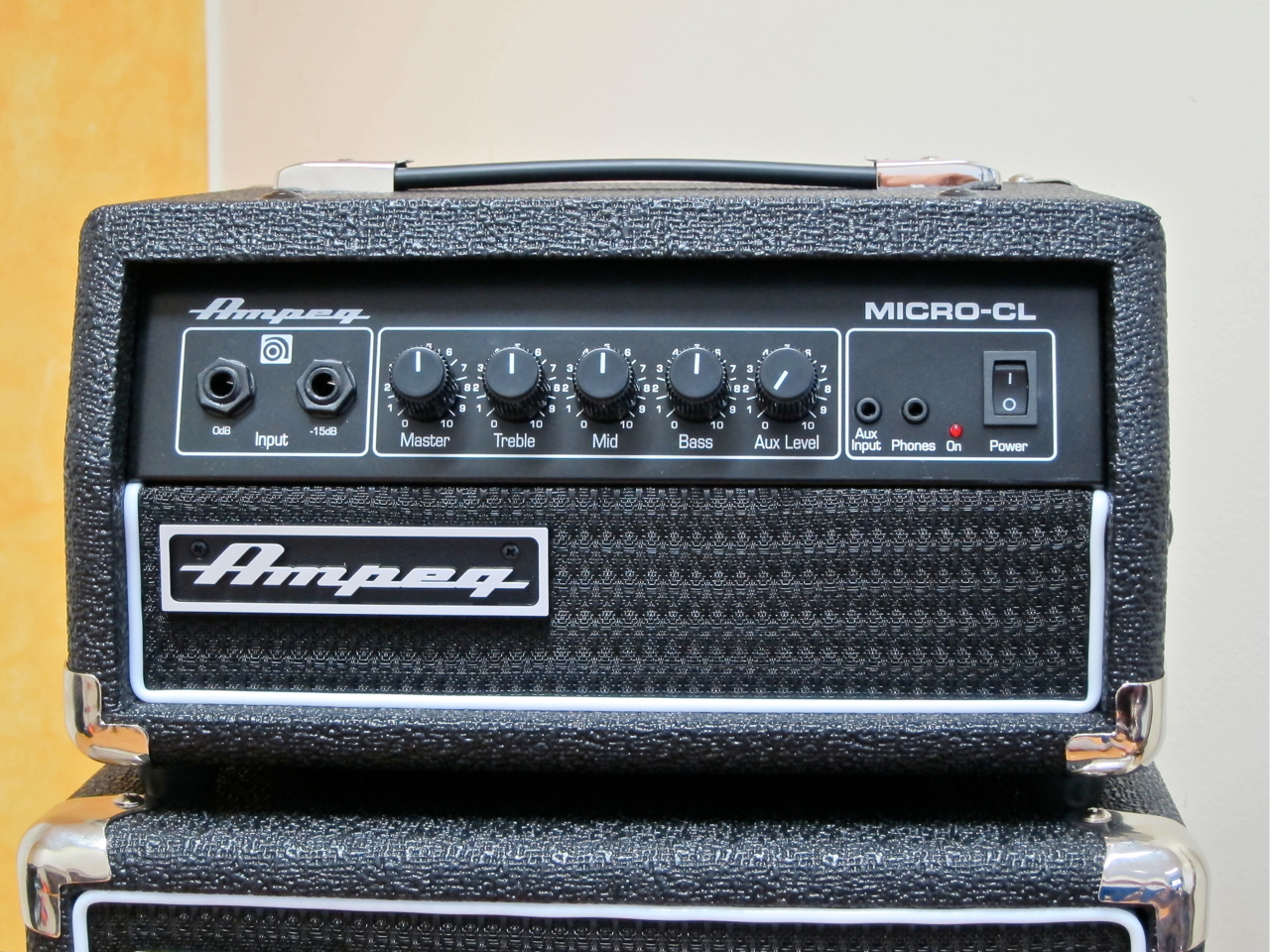
The Micro-CL-head comes equipped with two inputs – one for passive and the other for active bass guitars – as well as a three-band EQ-section.

Because this amp is also very handy as a practice amp at home, Ampeg have added an Aux-input (with its own volume control) and a headphones output to the front panel.
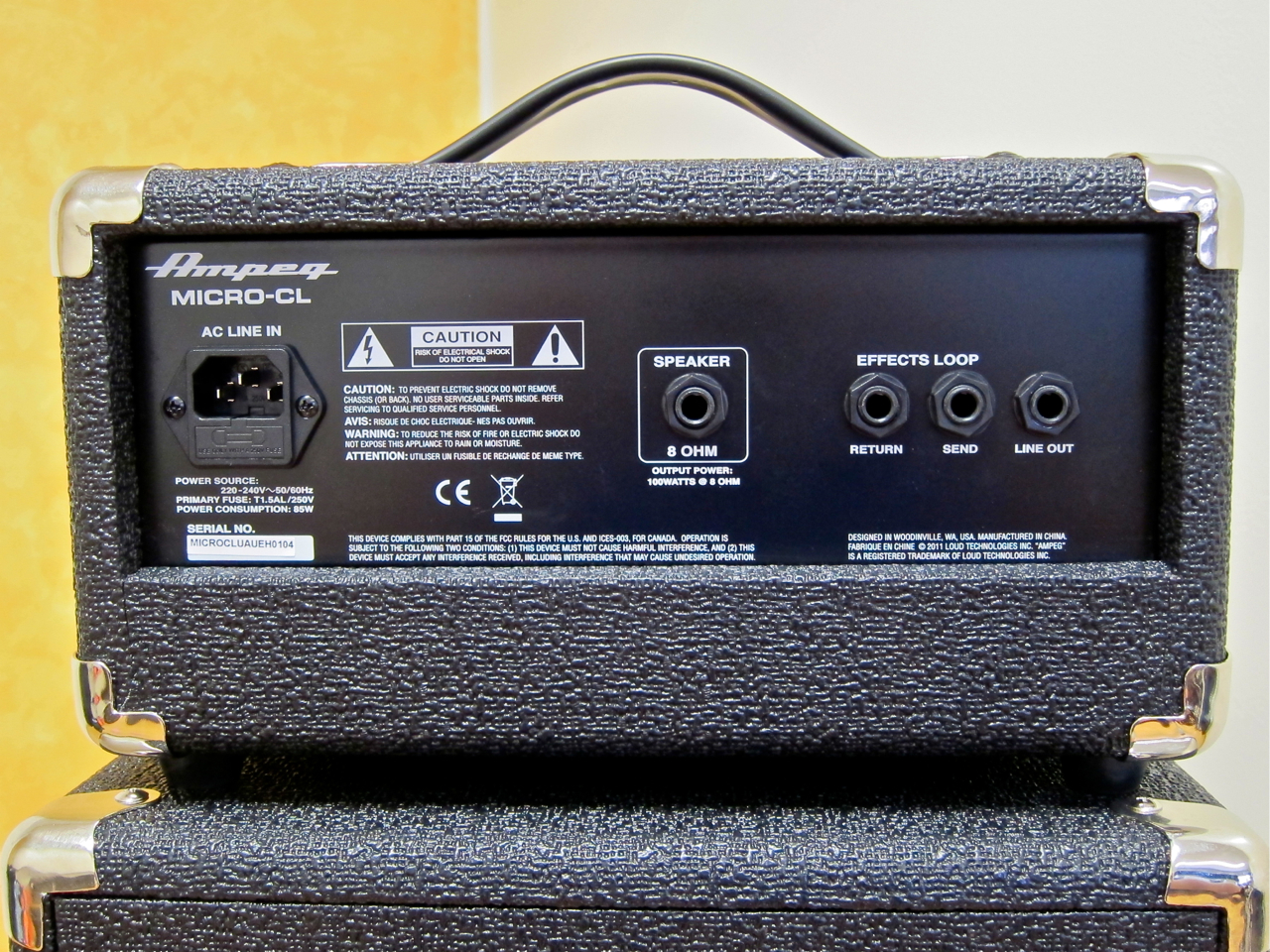
On the head’s flip side you’ll find the speaker output, as well as phone jacks for the effects loop and the line-level output.

The stack’s cabinet – called the Ampeg MC-210E – is built using the same Infinite Baffle -principle also applied to the company’s famous (and huge) 8 x 10″ cabinets.

The completely enclosed cab comes loaded with two 10-inch speakers. The front grille is attached in the traditional way using velcro.
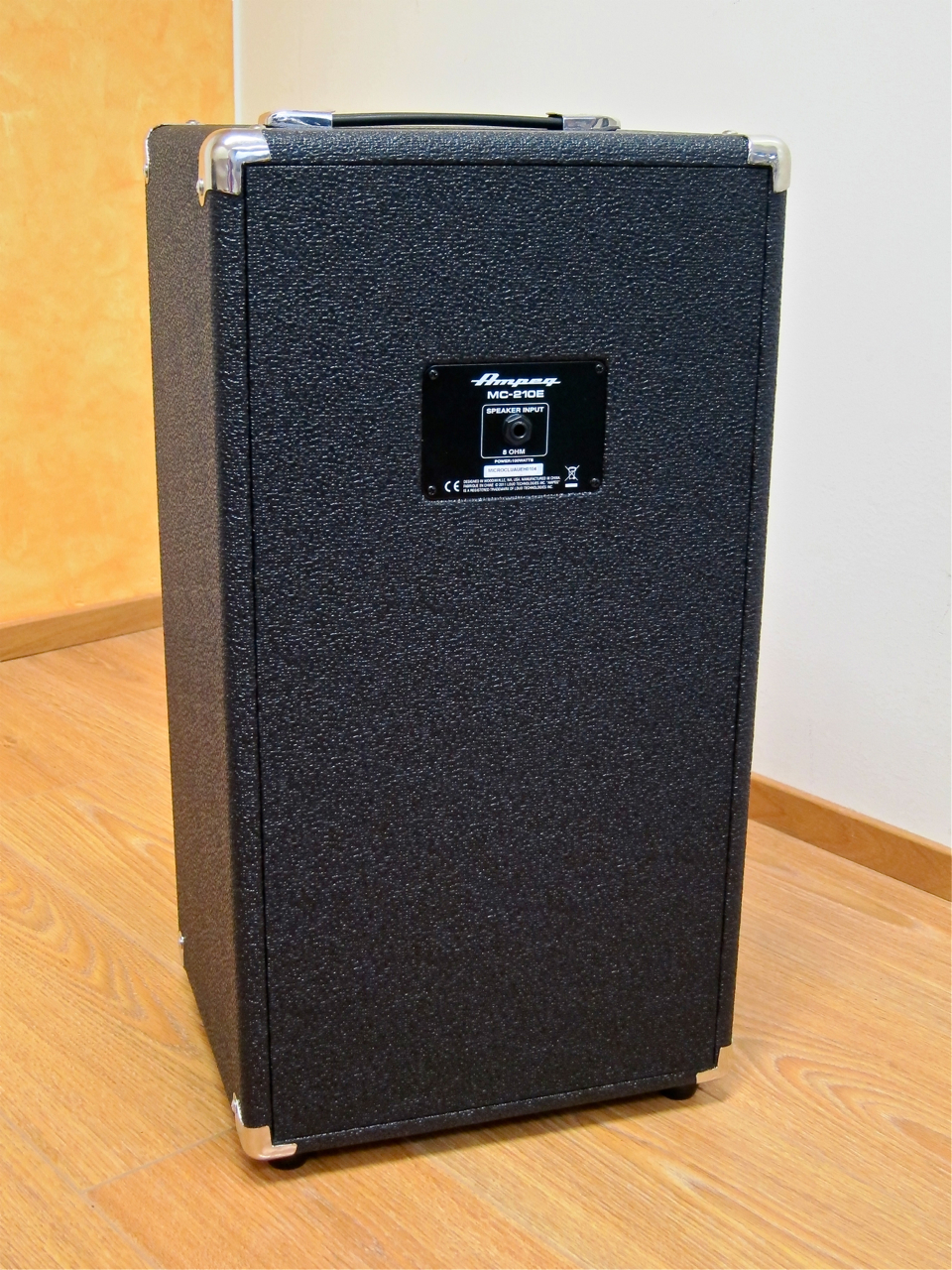
The workmanship seems spot on, with the miniature cabinet exuding the same air of rugged roadworthiness that its big brothers are known for.

The speaker input sits on its own metal plate.

Just to put things into perspective for you: Here’s the stack and a regular bass guitar case – yup, this stack really is small…

****

The amp may be small and cuddly, but don’t forget we have a genuine 100 W Ampeg system here!

I was positively surprised by the sound levels this small bass amp dishes out. Using it at home I wouldn’t recommend turning the master volume anywhere above number three, if you want to stay on good terms with your neighbours.

In the rehearsal studio – where I also recorded the audio clips for this review – the Micro-CL left me in no doubt that it would be fully up to its task at rehearsals and even smaller gigs.

With regard to its sound the tiny stack proved to be a thoroughbred Ampeg: The tones on offer are fat and juicy, with the raunchy midrange growl this company’s bass amps are famous for.

With the master volume approaching 10 you will also be able to coax some tasty, tube-like overdrive from the Micro-CL – but I’d suggest using earplugs then.

Granted, the Ampeg Micro-CL -stack is something of a cutie, but this isn’t a fancy toy, it’s a real bass amp with a lot of Ampeg-tone to boot.

The audio clips have been recorded using my ’87 Rickenbacker 4003 (starting with the neck pickup):

Ampeg Micro-CL – fingerstyle

Ampeg Micro-CL – slap

Ampeg Micro-CL – pleck

****

Ampeg Micro-CL -stack

current price in Finland 505 €

Finnish distributor: Soundtools

****

Pros:

+ size

+ weight

+ sound

+ output levels

+ workmanship

+ authentic looks

****

Testipenkissä: Ampeg Micro-CL -stäkki

****

Yksi Ampegin tämänvuotisista NAMM-uutuuksista on firman toinen pikkustäkki – Ampeg Micro-CL.

Suuren suosion saanut edeltäjä – Micro-VR (yhä saatavilla) – on pienennetty versio 1970-luvun Ampeg SVT -vahvistimesta, jolla on 200:n watin teho. Upouusi Micro-CL taas on satawattinen miniatyyri 80-luvun Ampegista (nykyinen SVT-CL).

Ampeg Micro-CL -stäkki (ovh: 505 €) tuo firman tyylikkyyttä helposti kannettavaan muotoon.

Transistorinuppi painaa vain kuusi kiloa, ja siihen kuuluva kaappi ainoastaan 15 kiloa. Koko ministäkki jää korkeudeltaan juuri ja juuri alle 80 cm – se mahtuu siis helposti tavallisen henkilöauton takakontiin.

Micro-CL-nuppi tarjoaa kaksi tuloa – yksi passiivi- ja toinen aktiivibassolle – ja kolmikaistaisen EQ-osaston.

Koska kyse on tässä myös harjoitusvahvistimesta, nuppiin on lisätty Aux-tulo (minijakki, omalla volyymisäätimellään) mp3-soittimelle. Myös kuulokelähtö löytyy etupaneelista.

Takapaneeliin on sijoitettu Micro-CL:n linjatasoinen lähtö, sekä efektilenkin liittimet.

Stäkin kaappi – Ampeg MC-210E – on rakennettu samalla Infinite Baffle -periaatteella kuin firman perinteiset, valtavankokoiset 8 x 10″ -kaapit.

Täysin suljetussa kaapissa on miniversiossa kaksi kymppituumaista kaiutinta. Etukangas on kiinnitetty autenttisesti tarranauhoilla.

Ampeg-kaappi vaikuttaa erittäin kestävältä, ja työnjälki on yhtä laadukas kuin Ampegin täysikokoisissa tuotteissa.

Takalevyltä löytyy MC-210E:n tulo.

Tässä näkyy Ampeg Micro-CL ja tavallinen bassokeissi – kyllä, stäkki on todella pieni…

****

Vaikka vahvistin onkin pienikokoinen, on syytä muistaa, että kyseessä on kuitenkin aito, satawattinen Ampeg!

Yllätyin kuinka paljon ääntä tästä pikkujärjestelmästä lähti. Olohuonekäytössä master-säädin pysyy varmasti jossain alkumetreillä (kolmosen tienoilla), muuten naapurisopu on vaarassa jäädä innokkaan bassosoiton jalkoihin.

Treenikämpässä – jossa äänitin myös tämän jutun esimerkkipätkät – kävi hyvinkin selväksi, että Micro-CL:n voimavarat riittävät mainiosti tavalliseen harjoituskäyttöön, ja jopa monille pienille keikoille.

Soundiltaankin Ampegin pienokainen on täysiverinen Ampeg: soundissa on mukana aimo annos lämpöä, ja firman vahvistimille tyyppillinen rouhea ja murea keskialue on tässäkin hyvin esillä.

Kun master-säädin on lähes täysillä, mukaan kuvaan astuu myös hyvin putki-tyylinen särö, mutta silloin korvatulppien käyttö on jo suositeltavaa.

Vaikka Ampeg Micro-CL -stäkki onkin ulkomitoiltaan erittäin söpö, se ei ole lelu vaan oikea bassovahvistin, joka tarjoaa aidon Ampeg-soundin kätevässä pakkauksessa.

Seuraavat esimerkkipätkät on soitettu Rickenbacker 4003 -bassolla (vuosimalli 1987, aina kaulamikki ensin):

Ampeg Micro-CL – sormisoitto

Ampeg Micro-CL – slap

Ampeg Micro-CL – plektralla

****

Ampeg Micro-CL -stäkki

505 €

Maahantuoja: Soundtools

****

Plussat:

+ koko

+ paino

+ soundi

+ teho

+ työnjälki

+ autenttinen ulkonäkö

****

Näin poistetaan Rickenbacker-bassosta tallamikrofonin suoja

Nykyään lähes kaikki soittajat poistavat Rickenbacker 4003 -bassosta tallamikrofonin suojan, koska se on yksinkertaisesti tiellä.

Tässä Gear Wiren mainio video-opas aiheeseen:

HUOM: Videossa ei mainita, että vanhoissa 4001-malleissa (sekä niiden uusintapainoksissa) tallamikrofonin suoja ei ole pelkästään suoja, vaan se on mikrofonin magneetti. Näistä malleista suojan/magneetin luonnollisesti ei saa poistaa!

Lataa Rickenbackerin pdf-tiedosto tallamikrofoneista tästä:

Rickenbacker 4003/4001 bridge pickup assemblies

Classic Basses, part 3: Rickenbacker 4001/4003

Rickenbacker was one of the first manufacturers to latch onto Leo Fender’s idea of an electric bass with a proper long scale.

In 1957 they introduced their first bass model, the 4000, which was the world’s first through-neck bass.

Rickenbacker’s two-pickup model – the Rickenbacker 4001 (introduced in 1961) – turned out to become one of the company’s most successful instruments.  Paul McCartney and Chris Squire are probably the bass’ best-known users – they played the 4001’s export version 4001S.

In 1979 Rickenbacker came up with a model updated for use with roundwound strings. The new bass was named the 4003 and it  featured new truss rods (Rickenbackers always have two!) and more powerful singlecoil pickups with the neck unit moved slightly closer towards the bridge.

My own Rickenbacker 4003 was built in 1987.

Except for the rosewood fretboard, a 4003 is crafted completely from maple. The neck goes all the way from the headstock to the end of the body (a so-called Through-Neck), while the body is formed by two pieces of maple glued to the neck’s sides.

Rickenbacker typically uses a reddish type of rosewood for their fingerboards, which are usually gloss-lacquered. Another typical company trait is the narrow binding, which leaves a visible gap between the binding and the neck’s finish.

The tuning machines have been made in Germany by Schaller.

Rickenbacker’s idiosyncratic bridge design includes an adjustable string mute mechanism. Setting the correct octave compensation is a little bit more complicated than it need be – you have to detune the strings to get to the adjustment screws.

Alongside the use of maple as the instrument’s main ingredient the 4003’s singlecoil pickups play a large role in this model’s throaty tone. Most users remove the bridge pickup’s metal cover, as it tends to get in the way of your right hand.

The silver metal finish is kind of rare, even though a similar bass appeared on the cover of Rickenbacker’s bass catalogue in the mid-80s. The most popular finishes are ”Fireglo” (a red sunburst), ”Jetglo” (black) ja ”Mapleglo” (natural gloss finish).

You can check out the sound of my 4003 here or here.

Klassikkobassot, osa 3: Rickenbacker 4001/4003

Rickenbacker tajusi melko nopeasti, että Leo Fenderin keksimä sähköbasso pitkällä mensuurilla ei ollutkaan niin hullu idea kuin monet väittivät.

Vuonna 1957 firma toi markkinnoilla ensimmäisen sähköbassonsa, jolla oli mallitunnus 4000 – se oli ensimmäinen basso, jossa kaula jatkoi yhtenäisenä koko rungon läpi.

Kaksimikrofonisesta sisarmallista tuli sitten oikea klassikko – Rickenbacker 4001 (tuotanto aloitettu vuonna 1961).  Paul McCartneysta ja Chris Squireistä tuli tunnetuimpia Rickenbacker-käyttäjiä – tosin he soittivat 4001:n brittiversiota 4001S.

Vuonna 1979 sai 4001 uudella kaularaudalla ja vahvemmilla mikrofoneilla varustetun rinnakaisversion nimeltään Rickenbacker 4003.

Minun oma Rickenbacker 4003 on vuosimallia 1987.

Palisanteriotelautaa lukuunottamatta 4003 on veistetty kokonaan vaahterasta. Kaula jatkuu rungon läpi (ns. Through-Neck), ja basson runko koostuu kahdesta vaahterapalasta, joita on liitetty kaulan sivuun.

Rickenbacker on aina käyttänyt hieman punertavaa palisanterilaatua otelaudoissaan. Perinteisesti firman otelautoja viimeistellään kiiltävällä kirkaslakalla. Tyyppillinen on myös otelaudan matala reunalistoitus, joka jättää osan palisanterista näkyviin.

Virityskoneistojen valmistaja on 1970-luvun loppupuolelta ollut saksalainen Schaller.

Rickenbackereissa on läheis aina firman oma, hieman omintakeinen talla, johon on integroitu myös säädettävä solukumisordino. Oktaavikompensaation säätäminen on hieman monimutkainen, koska kielet joutuu löystää sitä varten…

Korkean ”vaahterapitoisuuden” ohella on yksikelaisille mikrofoneille tärkeä rooli 4003:n jäntevässä soundissa. Monet soittajat poistavat tallamikrofonin metallisuojan, koska se on oikean käden tiellä (näin teki myös bassoni entinen omistaja).

Hopeanvärinen metalliviimeistelly on suhteellisen harvinen, vaikka juuri tämänvärinen soitin oli 1980-luvun keskivälillä Rickenbackerin bassokatalogin kannessa. Tavallisimpia väriä ovat ”Fireglo” (punainen liukuväritys), ”Jetglo” (musta) ja ”Mapleglo” (kirkaslakkaus).

Voitte kuunnella oman 4003:n sointia esimerkiksi tässä tai tässä.

Pidä blogia WordPress.comissa.

Ylös ↑