****
Lisätiedot: Amfisound
Kitarablogi.com – Finland's premier Guitar and Bass blog
Juttuja kitaroista ja bassoista

****

German maker Duesenberg is known for its high-quality guitars and basses, that combine seamlessly Art Deco-chic and ingenious improvements in many details, such as the hardware and electronics departments.
The Duesenberg D-Bass is a good example of this, promising both P- and J-style tones from a passive, one-pickup instrument.
****

The Duesenberg D-Bass (current price in Finland: 1.729,90 €) proves that you can build a bass from classic tonewoods without having to resort to copying others.
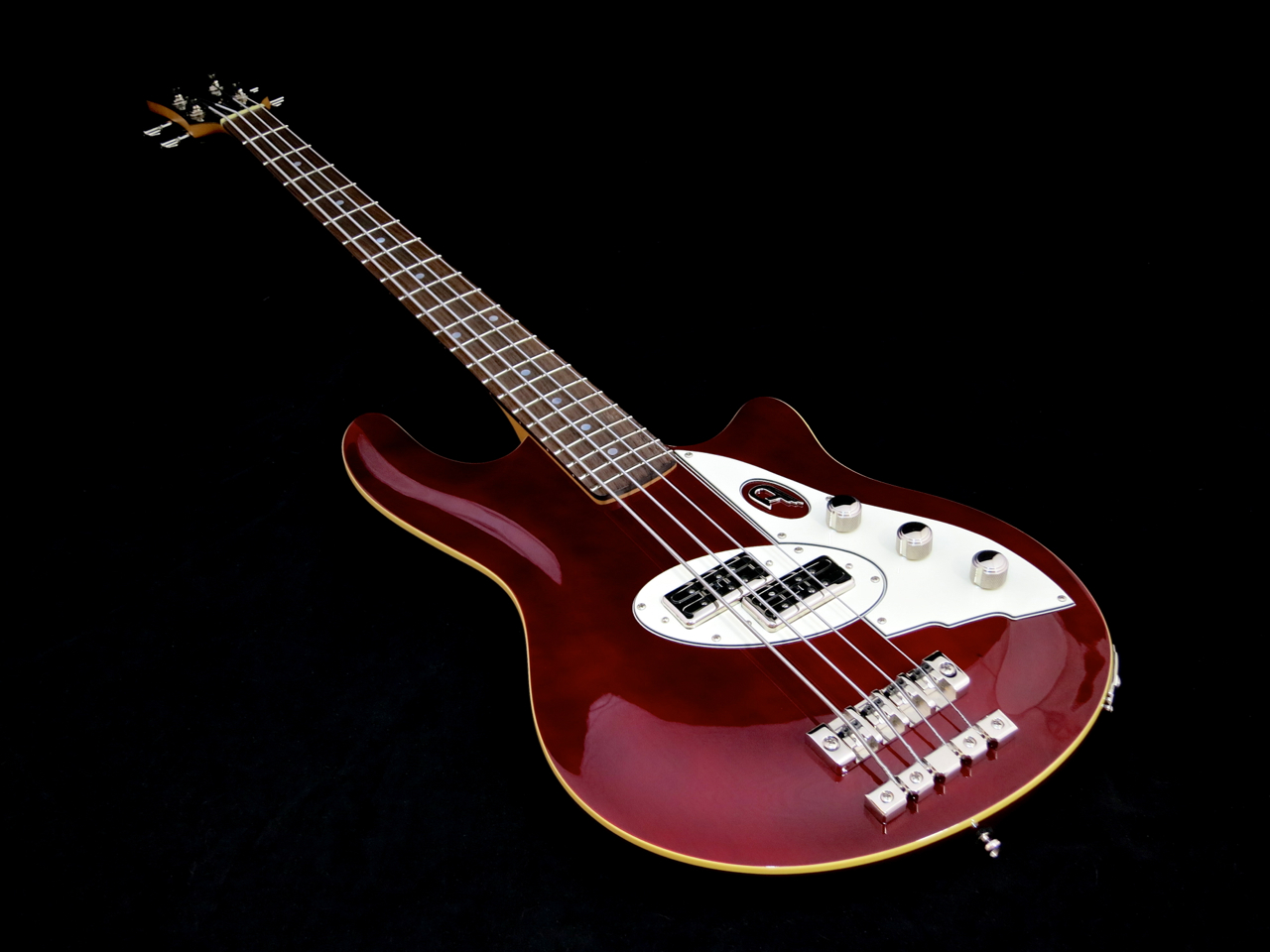
This is a four-string, passive bass, built using a bolt-on maple neck with a rosewood fretboard mated to a bound alder body. The top of the body sports elegant carving.

The generous rib cage bevel adds a great deal of comfort to the D-Bass.
The body comes in a fetching gloss finish, while the neck has received a thin, vintage-tinted satin finish.

I feel that Duesenberg’s three step headstock looks even better in its bass guise than the smaller guitar version.
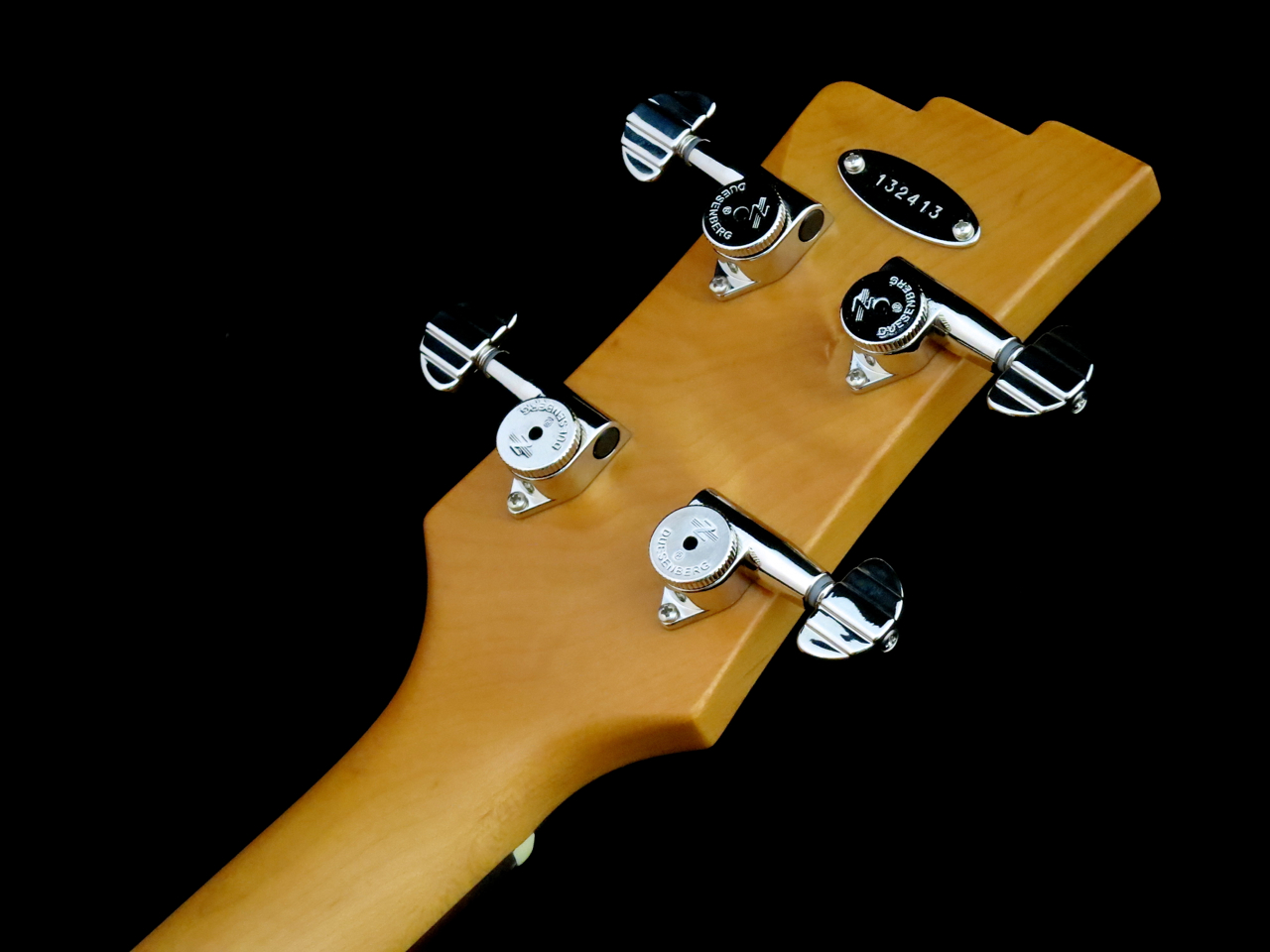
Duesenberg use their own locking Z-Tuners on the D-Bass. The string is first fed into a well in the tuning post until it comes out of a small hole in the tuning machine’s back. You cut off the surplus length of string, pull back the string by a couple of millimetres, lock it in place and tune up. Voila, a clean and uncluttered solution that leaves no sharp string ends.

Duesenberg employ a PLEK-robot to give all their instruments a perfect fret job and set-up.

Thanks to the angled neck joint an excursion to the dusty end of the fretboard is fast and easy on the D-Bass.

Duesenberg’s bridge and tailpiece combo are made of chunky bits of milled brass.
In addition to action and intonation the bridge also offers the adjustment of string-to-string distance. After adjustment you can lock everything in place with allen grub screws.

The D-Bass’ two-part pickup is situated on its own, oval pickguard.
Duesenberg’s Toaster-pickup may resemble a Fender Precision-pickup, but it really has its own thing going on in terms of construction. While the venerable P-Bass is equipped with two singlecoil pickups (one for each pair of strings), which are hooked up to form a humbucking unit, Duesenberg’s design uses two small humbuckers with open covers.

The passive controls are found on the bass’ larger pickguard and comprise a master volume, the Mid-Shift control and a master tone.

The Mid-Shift control uses a nifty bit of wiring voodoo:
When Mid-Shift is fully turned up, both coils of each pickup are used fully, but some of the top end signal is filtered by a capacitor. This is how the D-Bass achieves a P-style sound.
Turning the potentiometer counterclockwise fades out the signal of one of each humbucker’s coils, while lessening the capacitor’s effect on the signal. Fully counterclockwise, this gives you a brighter and more focussed, J-type tone.
You can find a similar wiring trick on Seymour Duncan’s web page, showing you how to wire up a humbucker in such a way that you can use a control pot for going from humbucking to singlecoil by feeding one of the pickup coils to earth.


The Duesenberg D-Bass comes in its own quality hard case.
****

Duesenberg’s bass is a beautiful instrument with a nice, medium weight and a great balance, both in you lap or hanging on a strap.
The neck profile is a Precision-style wide ”D”, but combined with the D-Bass’ larger fingerboard radius and its jumbo frets the playing feel is decidedly more modern and slinky than vintage.
My only small gripe is a strictly cosmetic one: I would like to see one or two screws added to the larger control scratchplate, as the current layout doesn’t make the plate fit snugly on top of the body’s top contour, leaving a few edges standing proud of the body surface.
This Duesenberg has a very healthy acoustic ring, completely devoid of any of the quirks often associated with vintage basses (like an over-enthusiastic low G or a dead spot around the high c).
Amped up you’re in for a real treat, as long as you’re not after that type of extreme EQ, only achievable with active preamps. Duesenberg’s Mid-Shift control is a really ingenious addition to the D-Bass, resulting in a much more organic palette of sounds than a mere coil-split could provide. The volume drop going from the P- to the J-variant is negligible, which is another positive effect of not using a straight coil-split.
I always play the same motif twice in each sound clip – first with Mid-Shift full on (P), then with Mid-Shift turned down fully (J).

****

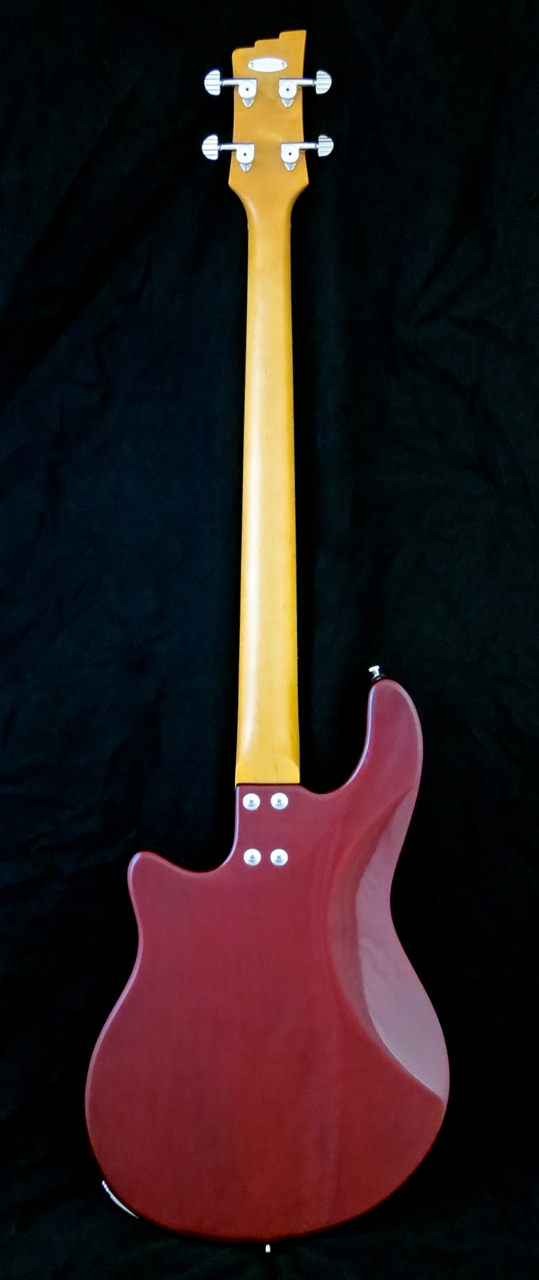
I must say, I liked the Duesenberg D-Bass very much. It is a great instrument for connoisseurs of passive bass tones. The Mid-Shift control isn’t ”in your face”, but still manages to provide you with an ingenious way of tailoring the bass’ sound to your needs.
****
Duesenberg D-Bass
1.729,90 €
Finnish distributor: F-Musiikki
****
Pros:
+ workmanship
+ Mid-Shift control
+ playability
+ design
+ sound
Cons:
– pickguard fit (read the review)
****

****
Saksalainen Duesenberg on valmistaja, joka on tunnettu laadukkaista kielisoittimista, joissa vintage-mainen tyylikkyys yhdistyy saumattomasti uusiin, kekseliäisiin ratkaisuihin yksityiskohdissa.
Duesenberg D-Bass on juuri tällainen soitin, sillä valmistajan mukaan bassosta saa irti sekä Presari- että Jazz-maisia soundeja firman passiivisella Mid-Shift-säätimellä.
****
Duesenberg D-Bass (1.729,90 €) on hyvä osoitus siitä, että hyväksi havaittuja perusaineksia voi yhdistellä tyylikkäästi kopioimatta muita soittimia.
Soitin on passiivinen nelikielinen basso, jolla on ruuvikaula vaahterasta ruusupuisella otelaudalla, sekä reunalistoitettu leppärunko kaarevalla etupuolella.
Rungon syvä viiste lisää D-Basson mukavuutta.
Soittimen runko viimeistellään kiiltävällä lakkauksella, kun taas kaulassa on ohut mattapintainen viimeistely.
Minun mielestäni Duesenbergin kolmiaskelmainen viritinlapa näyttää isona bassoversiona vielä paremmalta kuin firman kitaroissa.
D-Bassossa käytetään Duesenbergin omia, lukittavia Z-Tuner-virittimiä, joissa kieli ensin pujotetaan virittimen akselissa olevaan käytävään, ennen kuin kieli lukitaan paikoilleen.
Duesenbergin erittäin siisti nauhatyö viimeistellään PLEK-robotilla.
D-Basson 22. nauhaan pääsee vaivattomasti sulavan kaulaliitoksen ansiosta.
Duesenbergin messinkinen talla on erittäin lujaa tekoa.
Kielten korkeuden ja intonaation lisäksi voi säätää vapaasti myös kielten väliset etäisyydet. Säätämisen jälkeen tallapalat lukitaan paikoilleen kuusiokoloruuveilla.
D-Basson kaksiosainen mikrofoni on asennettu omaa ovaaliin pleksiin.
Duesenbergin Toaster-bassomikrofonin juju piilee siinä, että jokaisessa puoliskossa on kaksi kelaa. Tässä mallissa kytketään siis kaksi humbuckeria yhteen, kun taas vanhassa Presarissa käytetään kaksi yksikelaista puoliskoa, jotka vasta yhdessä muodostavat häiriöitä torjuvan yhdistelmän.
Duesenbergin passiivinen elektroniikka löytyy basson isommasta plektrasuojasta – master volume, Mid-Shift-säädin ja master tone.
Tässä Mid-Shiftin toimintaperiaate paljastuu:
Silloin kun Mid-Shift-säädin on täysin avattu, kummankin puoliskon molempia keloja käytetään soundin tuottamisessa, mutta signaalin diskanttia suodatetaan hieman kondesaattorilla. Tästä syntyy D-Basson Presari-tyylinen soundi.
Mitä enemmän säädintä käännetään vastapäivään, sitä enemmän kummankin mikrofonipuoliskon toisen kelan signaalista vaimennetaan potentiometrin omalla vastuksella, mutta samalla kondensaattorin vaikutus vähenee. Säätimen toisessa ääripäässä syntyy siis hieman kirkkaampi ja ohuempi J-tyylinen soundi.
Seymour Duncanin sivuilla löytyy samankaltainen kytkentä, jolla kitaran humbuckeria muutetaan portaattomasti humbuckerista yksikelaiseen kytkemällä toinen kela säätimen kautta maahan.
Duesenberg D-Bassoa myydään omassa kovassa laukussaan.
****
Duesenberg-basso on kaunis soitin mukavalla keskivertopainolla ja erinomaisella tasapainolla, sekä sylissä että hihnasta roikkuen.
Kaulaprofiiliksi on valittu hyvin Presari-mainen matala, mutta leveä ”D”. Soittotuntuma on kuitenkin hyvin nopea ja nykyaikainen, koska D-Basson palisanteriotelaudan kaarevuus on melko loiva, ja myös koska käytössä ovat jumbo-kokoiset nauhat.
Ainoa huomautukseni on kosmeettisesta seikasta: Näkisin kernaasti yksi tai kaksi ruuvia lisää säätimiä kantavassa pleksissä, jotta kolmikerroksinen muovi istuisi tiukemmin D-Basson kaarevaa runkoa vasten.
Duesenbergin akustinen soundi on erinomainen, eikä soittimesta löydy lainkaan monista vintage-bassoista tuttuja soundillisia ongelmakohtia (esimerkiksi ”yli-innokas” matala G tai nopeasti ”kuoleva” korkea c).
Vahvistettu soundi on loistava, jos ei haeta aktiivisoittimista tuttua äärimmäistä muokattavuutta. Mid-Shift-säädin toimii kiitettävästi, ja sen vaikutus on paljon orgaanisempi kuin raju päälle/pois-tyypistä kelojen kytkemistä. Koska kytkentä ainoastaan filtteroi ja vaimentaa osan signaalista, Mid-Shift-säätimen ääriasentojen välillä ei myöskään synny huomattavia eroja signaalitasossa, vaan ainoastaan äänen karakteri muuttuu hieman savuisemmasta P-basson soundista vähän kirkkaampaan J-tyyliseen sointiin.
Esimerkkipätkissä soitan aina saman kuvion kahdesti – ensin Mid-Shiftiä täysin avattuna (P) ja sen jälkeen säätimellä toisessa ääriasennossa (J).
****
Duesenberg D-Bass on mielestäni upea sähköbasso laadukasta passivisoundia etsiville. Soittimen Mid-Shift-toiminto on hienovarainen, mutta silti erittäin toimiva tapa räätälöidä Duesenbergin soundia itselleen sopivaksi.
****
Duesenberg D-Bass
1.729,90 €
Maahantuoja: F-Musiikki
****
Plussat:
+ työnjälki
+ Mid-Shift-säädin
+ soitettavuus
+ ulkonäkö
+ soundi
Miinukset:
– plektrasuojan kiinnitys (katso teksti)
****


We bassists owe a lot to Mr Leo Fender – Mr Fender was the father of the electric bass, which he introduced in 1951, as well as the man behind three of the most classic bass designs ever.
After inventing the Fender Precision and the Jazz Bass for the company that still bears his name, Leo Fender carried on designing and building instruments for Music Man, with the StingRay becoming a true classic. The StingRay wasn’t the first bass with active electronics, yet it was the design that brought the active bass into the mainstream.
Since 1984 Music Man is part of the Ernie Ball-company. The company’s current boss – Sterling Ball – is behind the more recent moves to also bring out affordable Music Man-instruments in the guise of a new brand – Sterling (by Music Man).
****

Sterling’s brand-new SUB-series offers even more affordable versions of Music Man’s classics.
The Sterling SUB Ray4 (approx. 360 €) is a made-in-Indonesia licensed copy of a four-string StingRay. The Ray4 is available either in gloss black (with rosewood fretboard), gloss white (maple ’board) or in a Seventies-inspired satin finish called Walnut (and with a rosewood ’board).
****

Sterling won’t go into detail with regard to the body woods used for the SUB-series – the spec sheet only says ”hardwood body”. On the other hand, genuine Music Man StingRays also feature different wood species, depending on availability and the respective model’s finish, using ash, alder, poplar or basswood.
The test sample sports a body made from four pieces, with their looks matched reasonably well.

The SUB Ray4’s maple neck comes with a tinted satin finish.

Six wood screws and a well-cut neck pocket make for a very strong joint.

The classic StingRay-headstock makes tuning easier, as well as cutting down on headstock weight, making for a better balanced instrument.
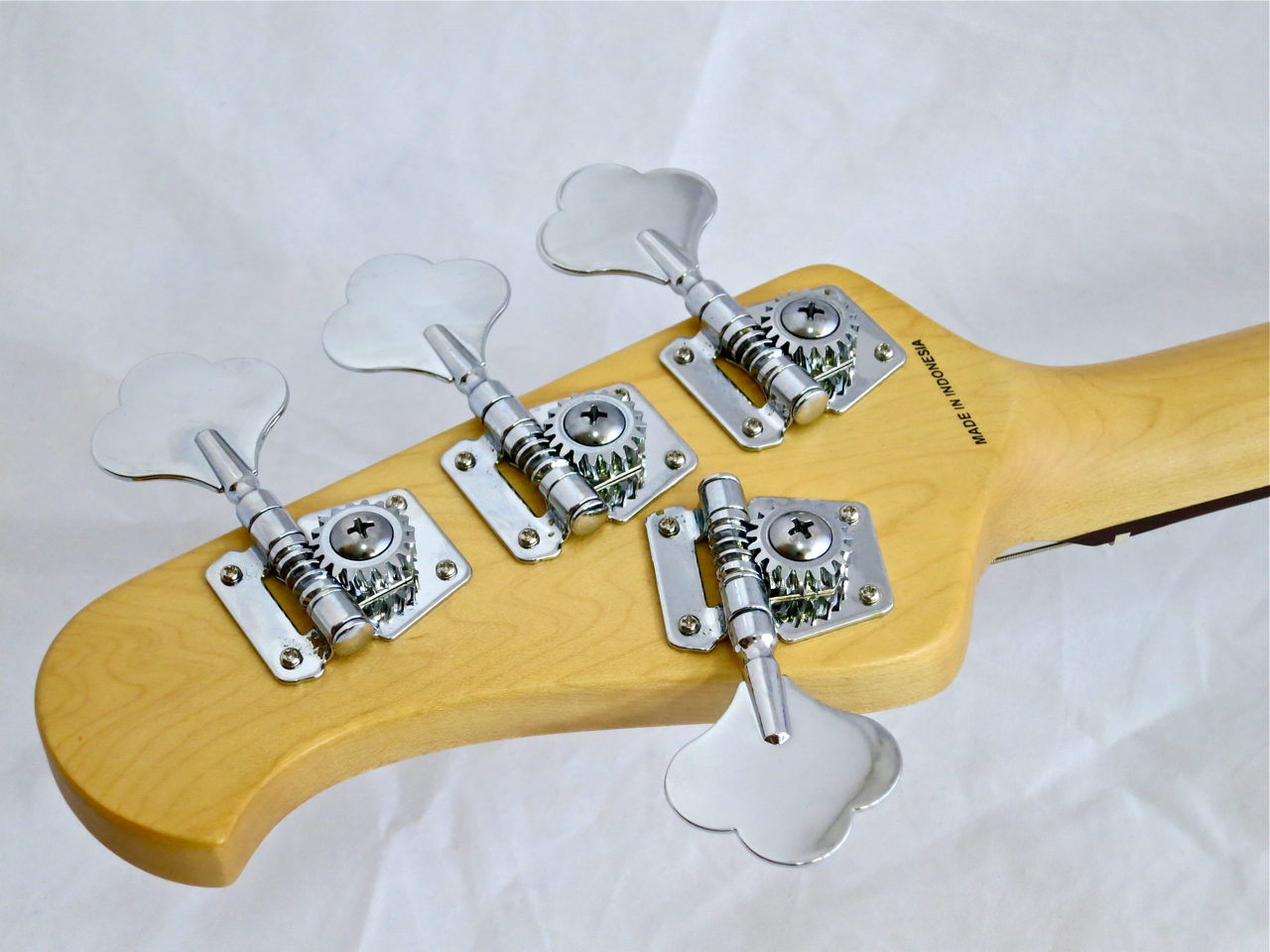
The Sterling comes equipped with a set of decent Asian Schaller-copies.

In light of its affordability the SUB Ray4 displays surprisingly well-dressed and finished frets. The rosewood fingerboard looks nice and sport clean inlay work.

Music Man’s nifty trus rod adjustment wheel has also been included in the Sterling SUB-series. Insert the small metal rod that comes with the bass (or any other suitable object) into the wheel and turn for adjustment. It’s quick, it’s clean, and no further tools are required!
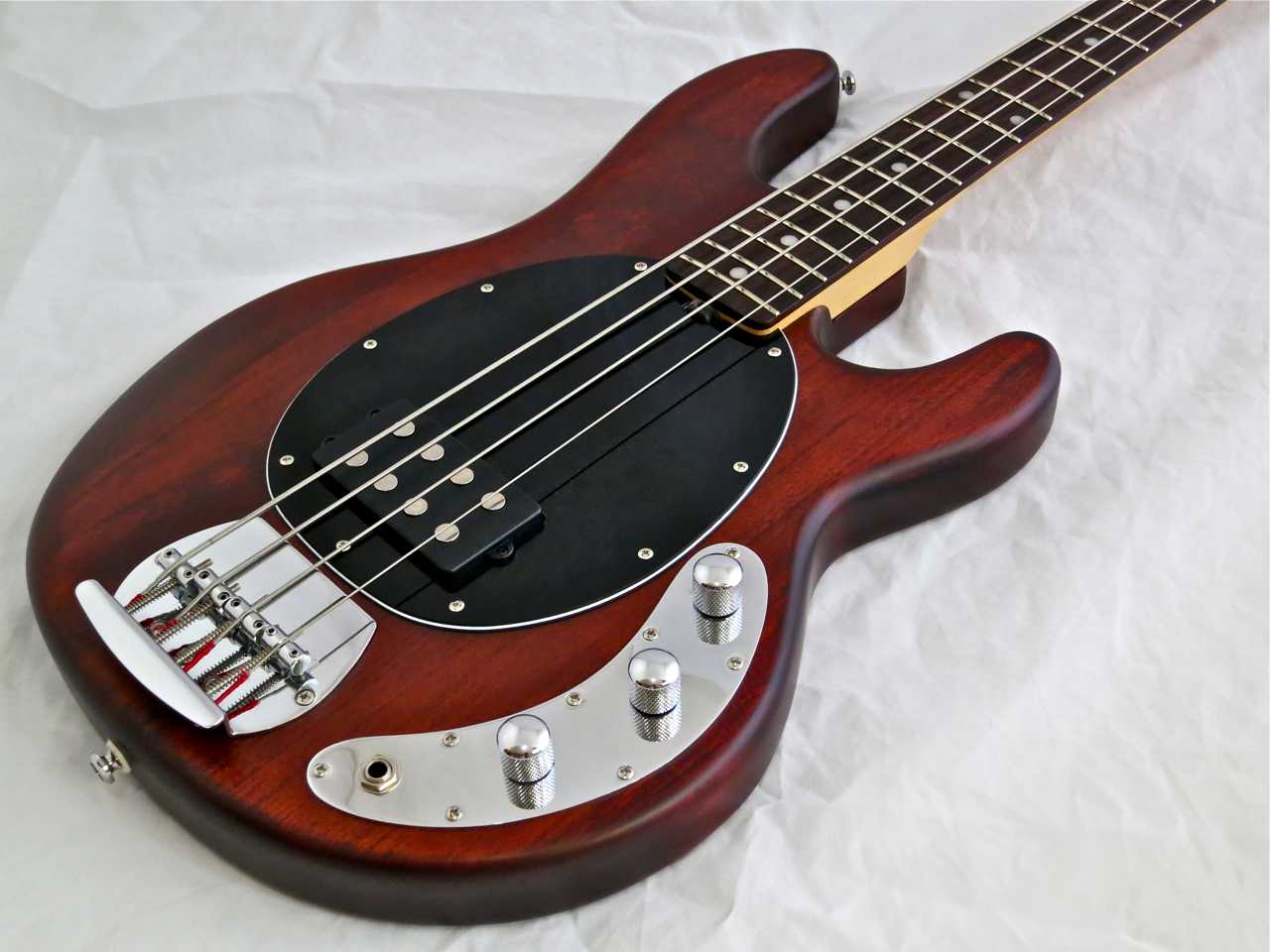
The StingRay was Leo Fender’s updated version of his Precision Bass, and the well-rounded body still looks great today.

The SUB Ray4 uses a version of the Music Man bass bridge that retains the large base plate, but does away with the original adjustable string mutes of yore. Current StingRays use a shortened bridge design.

The large humbucking pickup is the Sterling Ray4’s juice machine.
The pickup keeps hum and buzz at bay efficiently, while its placement near the bridge is crucial for obtaining a StingRay’s fat attack and vocal mid-range character.

It’s three controls on the Ray4’s metal plate – master volume, treble boost/cut and bass boost/cut.
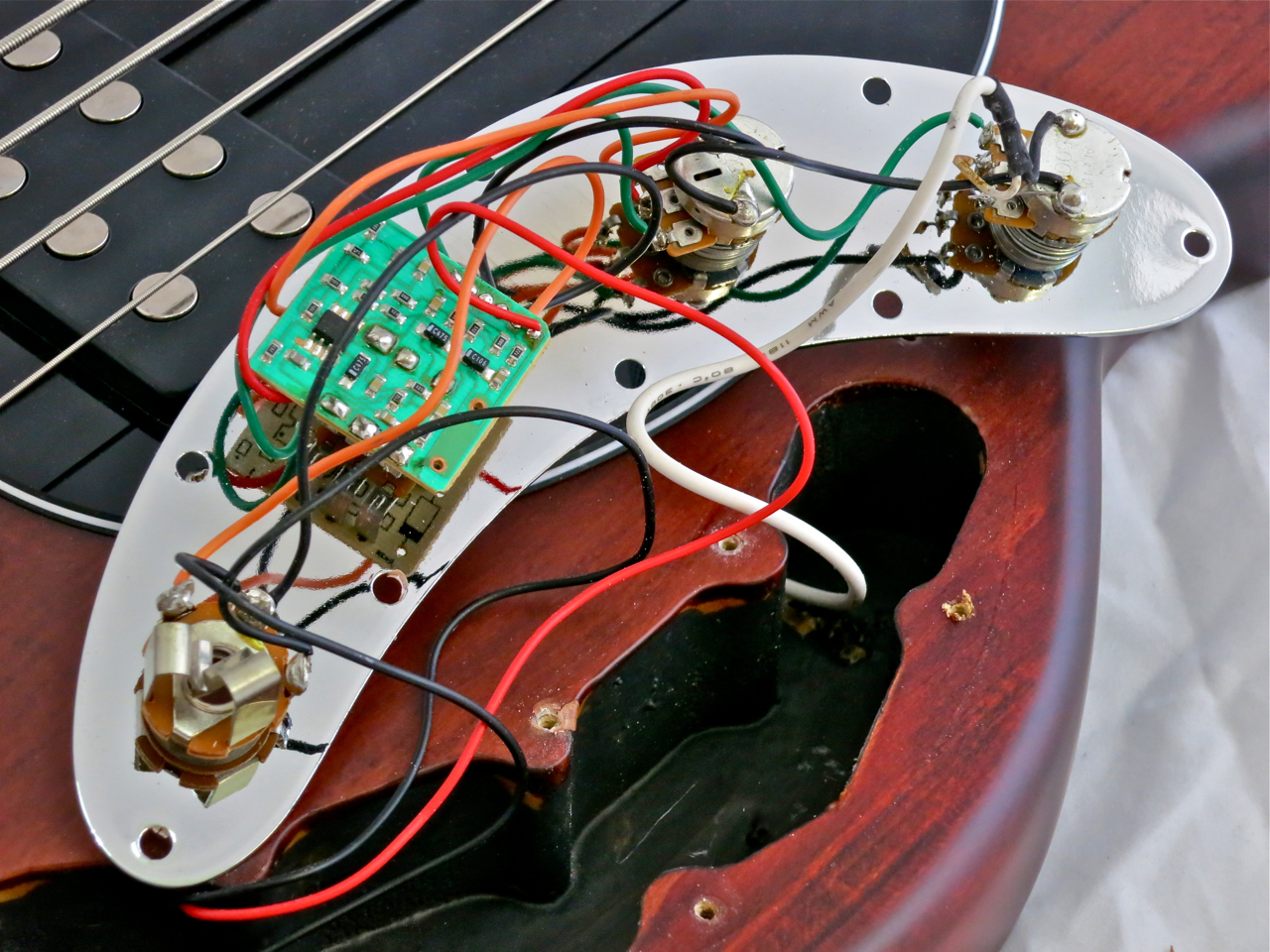
The Sterling SUB-basses come equipped with a very compact preamp that fits easily into the control cavity. The quality of the parts, as well as the workmanship on display, is quite decent.

The Ray4’s battery compartment is found on the back of the body.
****
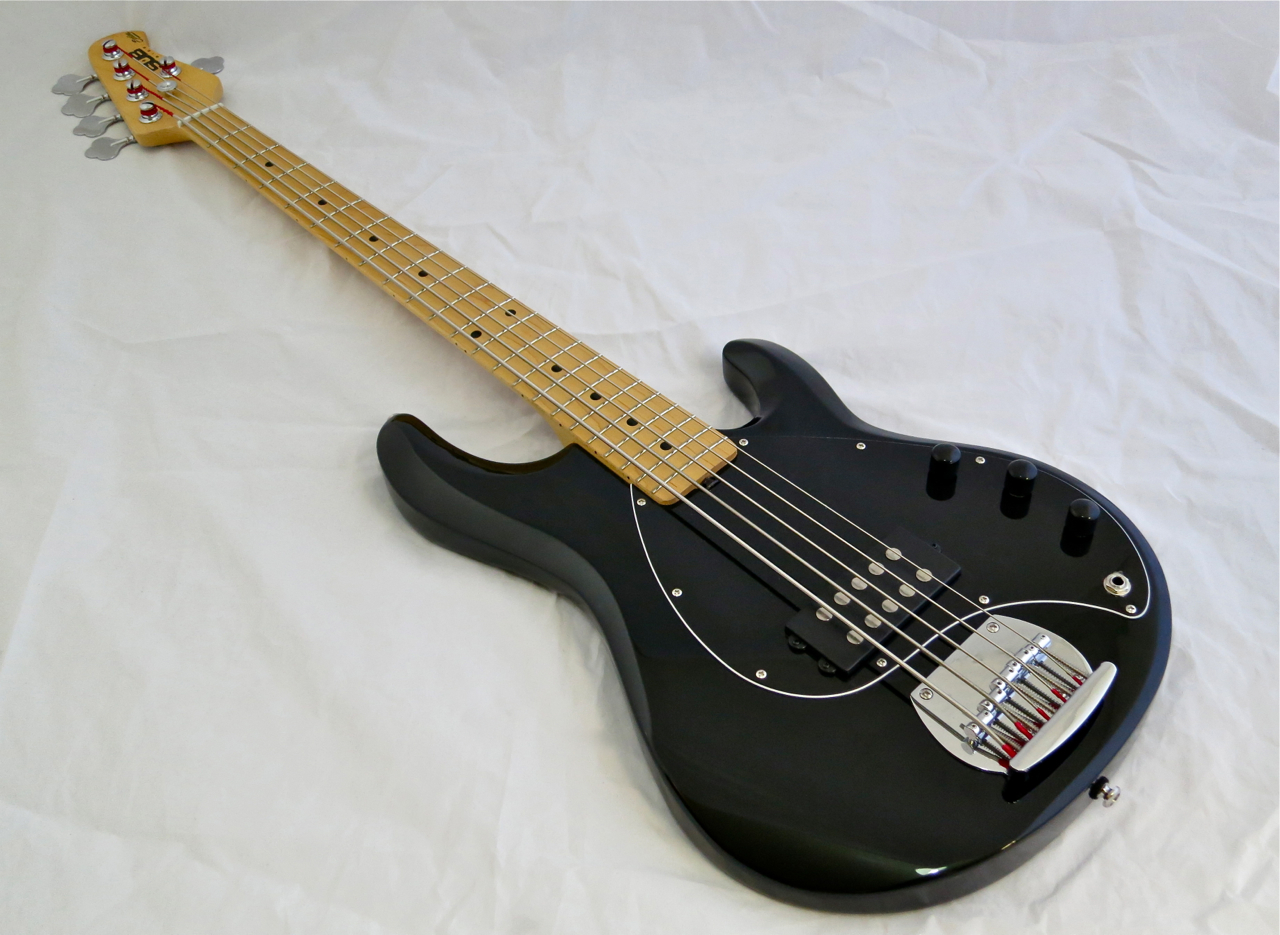
In 1988 Music Man broadened its StingRay-range with the five-string StingRay 5, which features a slightly different body design, as well as a much larger scratchplate.
****

Sterling’s SUB Ray5 (approx. 390 €) is available in gloss black (with a maple fretboard) or satin walnut (rosewood ’board).
The finish on our test sample looks great.

The five-string version also sports a tinted maple neck.

The SUB Ray5’s battery compartment has been placed near the treble horn.

The famous headstock in its five-string guise.

These Schaller-copies do a good job of keeping the bass in tune.

The fretwork Sterling Ray5 is surprisingly good, keeping in mind the bass’ low price.

The StingRay is one of my all-time favourite bass designs – timeless, classic beauty.

On the five-string the bridge saddles are somewhat smaller to accommodate the SUB Ray5’s narrower string spacing (compared to the Ray4).

A chunky pickup for a chunky sound…
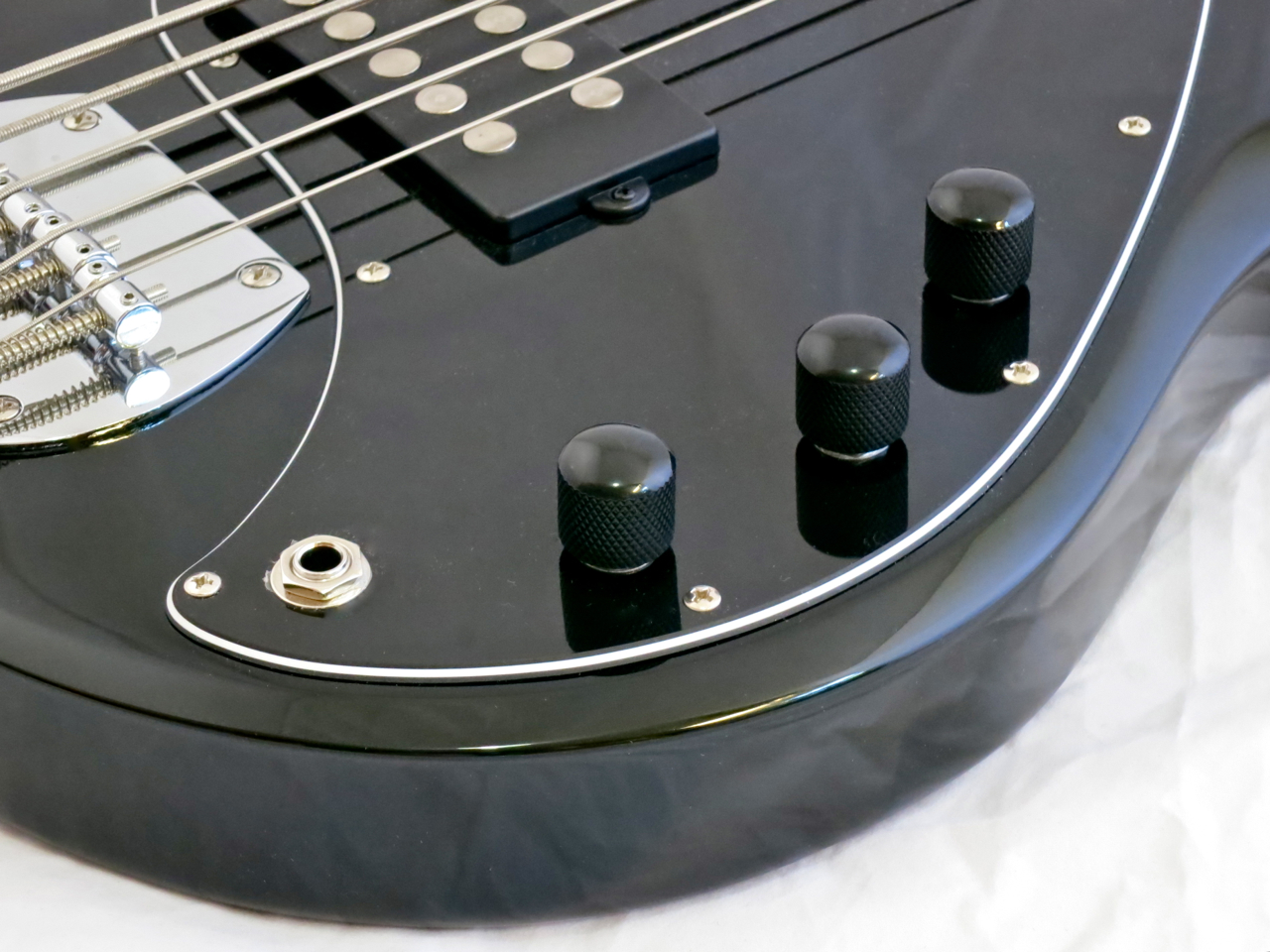
A genuine Music Man StingRay 5 usually comes equipped with a three-way blade switch, offering you series, parallel and coil-split switching, in addition to a three-band EQ.
To keep the price in check the Sterling SUB Ray5 offers you a more concise set of controls – a master volume and a two-band EQ.
****
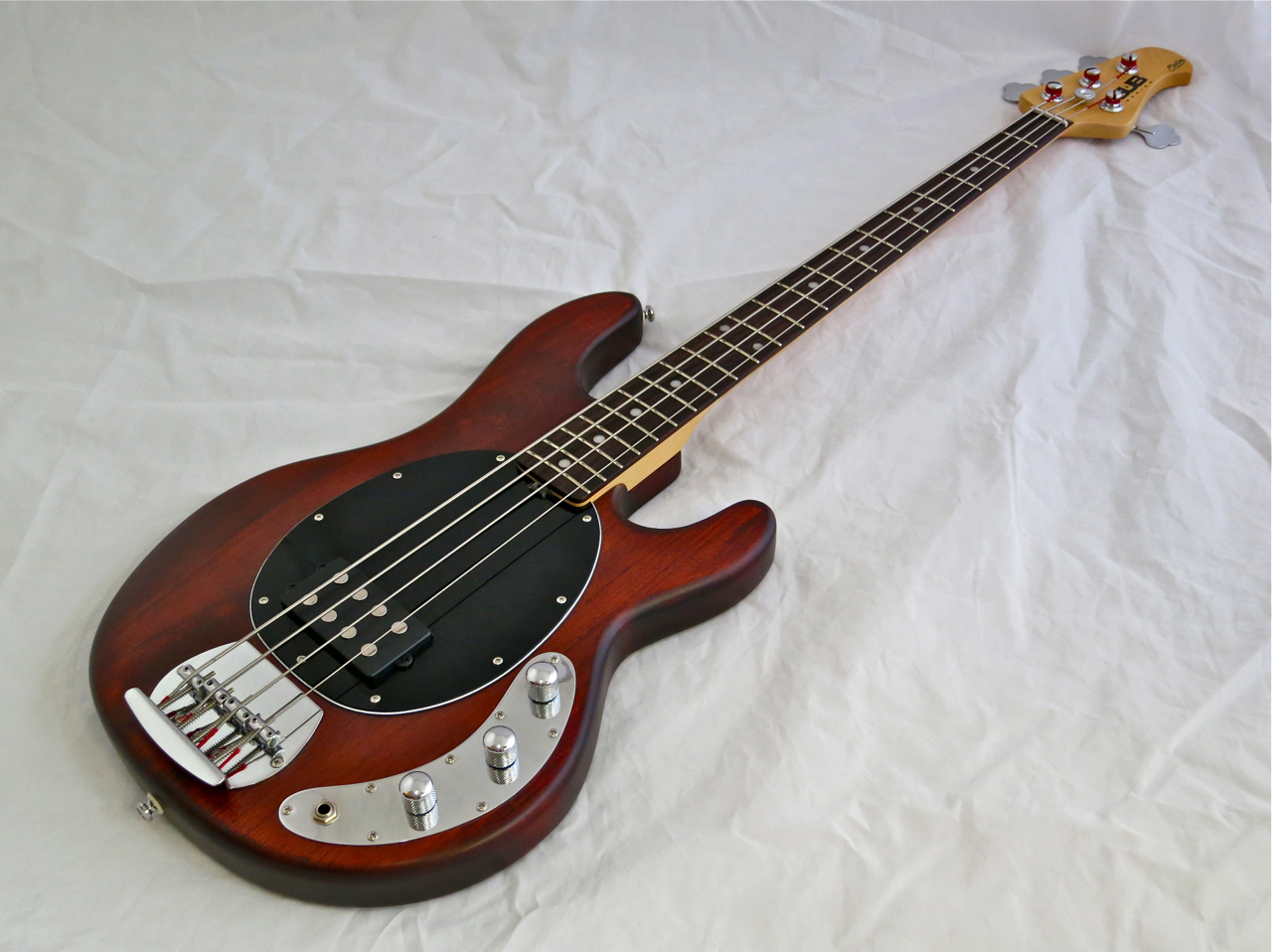

The Sterling SUB Ray4 is a cool bass, but the test sample we got weighed a ton – this is exactly the one feature from the 1970s that shouldn’t have been brough back. On the other hand, Sterling promise lightweight bodies on their website, so let’s hope that this was the one who slipped through quality control.
Apart from this, the Sterling Ray4’s ergonomics are great. Sterling have slightly changed the neck profile on its SUB-basses from the original, somewhat chunkier Precision-style profile, giving you a more tapered, Jazz-type shape.
Thanks to the good fretwork the factory set-up was comfortably low (E: 2,1 mm/ g: 1,9 mm).
Regardless of its weighty body (or because of the added heft?) the SUB Ray4’s acoustic delivery is stonking. I don’t know what wood species the body is, but the sound has a hefty dose of clear attack coupled with a good dose of ash-style growl and clarity!
This tasty combination translates into a very powerful and dynamic amplified tone. Sterling’s preamp displays a satisfying lack of hiss, and all of its controls work in a musical way (in fact better than on some, quite drastic-sounding 70s originals). This means you’re in for a real treat – genuine StingRay-character made very affordable.
Legendary bass player Tony Levin (Paul Simon, Peter Gabriel, John Lennon, King Crimson) is one of the most loyal StingRay-fans, which is why I chose to record the soundbites in his style as a tribute. The clips have been recorded straight from the bass into the sound-card without additional EQ’ing:


For a five-string bass our Sterling SUB Ray5 test instrument was refreshingly lightweight!
Just like on the original the Ray5’s neck profile gives your fretting hand something to hold on to. The rounded, moderately chunky D-profile is good news for the tone of the instrument, and it feels great, at least in my hands.
I had to give the neck a little more relief, and the intonation adjustment was off, too. But it only took me a couple of minutes to get this bass’ action and intonation up to snuff, after which the SUB Ray5 was a joy to play and listen to (low-B: 2,6 mm/g: 1,9 mm).
In a straight acoustic A/B between both Sterlings, the SUB Ray5 had a slightly rounder mid-range than the four-string counterpart
The big-sounding humbucker coupled to the instrument’s very decent preamp makes for a winning combination. The tone is pure Music Man – a fat, but precise bottom end, lots of mid-range character, and a dose of treble zing. It may not be as versatile as its famous big cousin, but the Sterling SUB Ray5 gives you most of the Music Man-experience at a pocket-friendly price.
****
Sterling (by Music Man) have managed to pack a lot of bass into their SUB-series. The Ray4 and Ray5 are fantastic value for money, offering you that sound at very player-friendly prices.
****
Sterling (by Music Man) SUB Ray4 + Ray5
SUB Ray4 – approx. 360 €
SUB Ray5 – approx 390 €
Finnish distributor: EM Nordic
A big thank you to DLX Music Helsinki for the loan of the review samples!
****
Pros (both models):
+ value-for-money
+ fretwork
+ playability
+ quality preamp
+ sound
Cons (only Ray4):
– review sample’s weight
****


****

Tokain Jazz Sound -bassoilla on – ansaittu – maine erinomaisina tulkintoina Fenderin klassikkomallista. Seymour Duncan taas on kiistämättä tunnetuin nimi kitara- ja bassomikrofonien maailmassa.
Molempien firmojen maahantuoja on Musamaailma, joka tarjoaa nyt kaksi uutuusmallia yhdistettyinä valmiiksi modatuksi paketiksi:
Japanilainen Tokai TJB-55 on varustettu Seymour Duncan Custom Shop ”Weather Report” mikrofonisetillä.
****

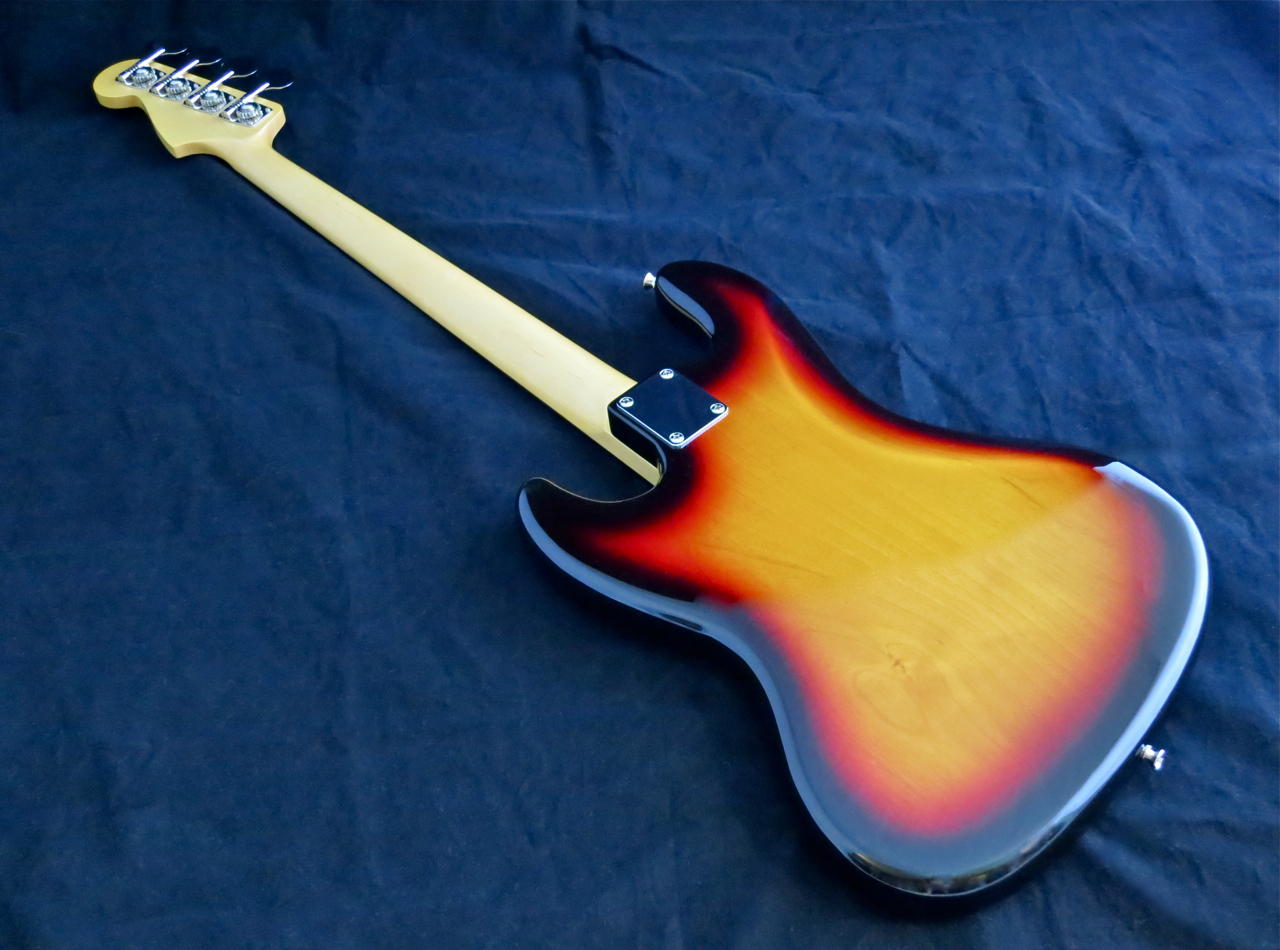
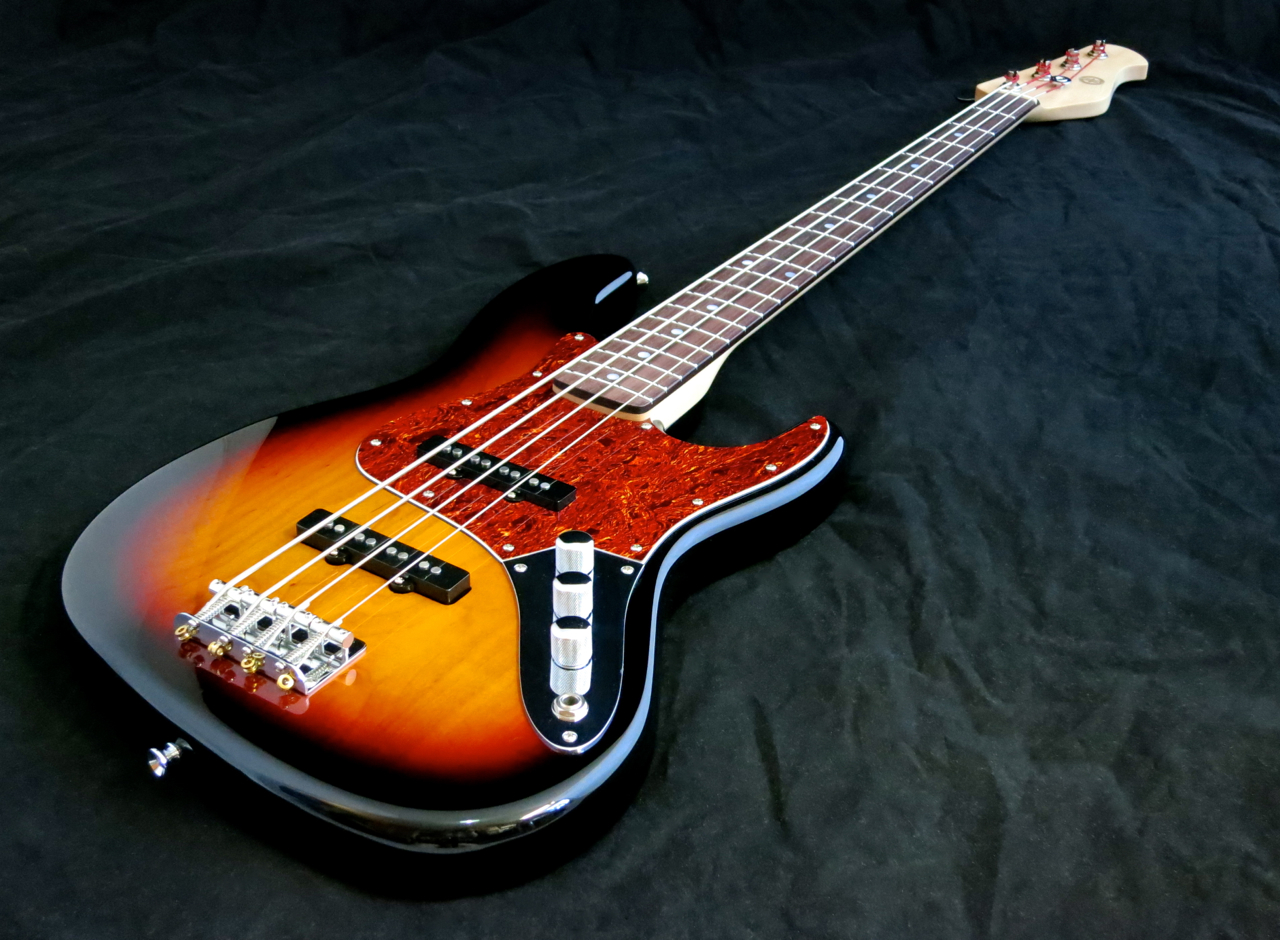
Tokai TJB-55 (hinta ”Weather Report” -mikrofoneilla: 1.177 €, perusversion hintaluokka noin 850 €) on firman kevyesti nykyaikaistettu versio 1970-luvun Jazz-bassosta. Tällä hetkellä malli on saatavilla joko mustana vaahteraotelaudalla (ja mustilla blokkeilla) tai kolmivärisellä liukuvärityksellä, jolloin basson otelauta on veistetty palisanterista.
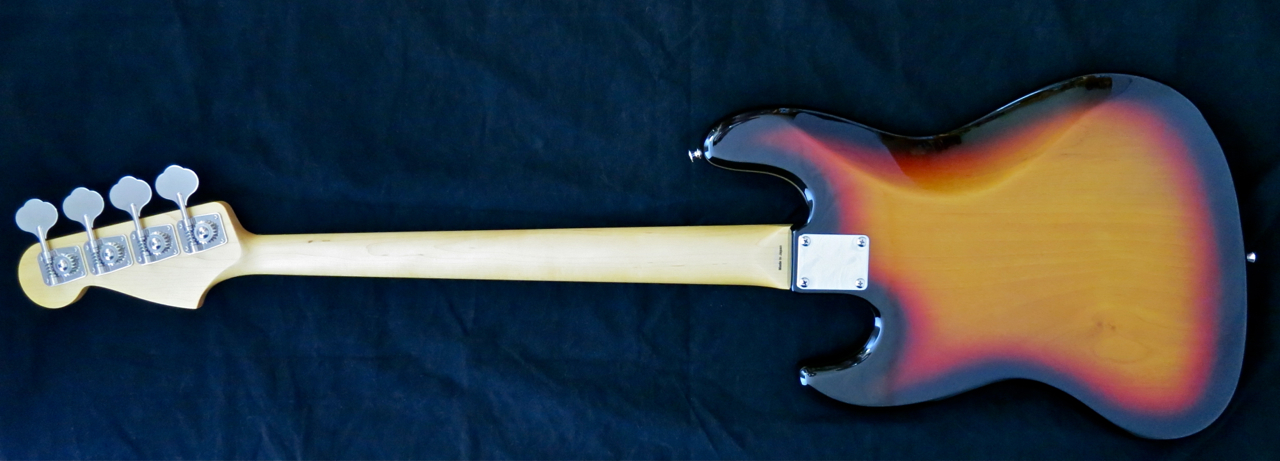
Rungossa on kiiltävä viimeistely, kun taas kaulassa on nykyaikainen, satiinipintainen lakkaus.

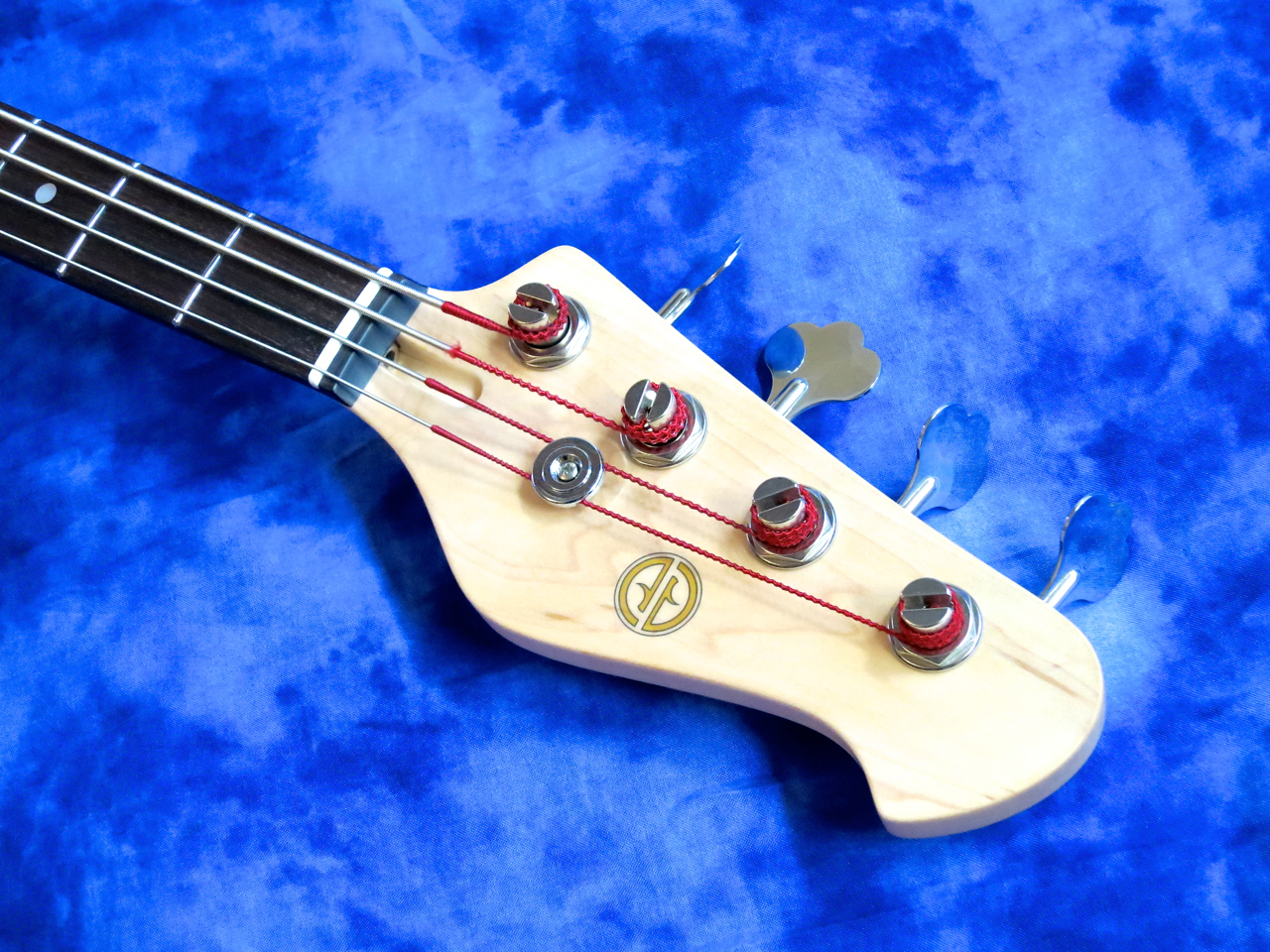
Ensisilmäykseltä TJB-55:n kromatut virittimet vaikuttavat vintage-kopioilta.
Todellisuudessa kyseessä on kuitenkin Gotohin kevyempi vastine, jolla on vintageen verrattuna hieman sirompi viritystappi…

…sekä pienempi pohjalevy.
Virityskoneistojen pienempi paino parantaa soittimen balanssia entisestään.

Tokai TJB-55 tarjoaa mielenkiintoisen variaation tutusta teemasta – vaikka otemerkit ovat 1970-luvun tyylisesti isot suorakaiteet, on jätetty palisanterilauta 60-luvun tavalla ilman reunalistoitusta.
Nauhatyö on kiitettävällä tasolla, ja otelautaan on asennettu 20 medium-kokoista nauhaa.

Vintage-tyylinen kaulaliitos on toteutettu hyvin tarkasti ja lujasti.

Perinteinen – ja monien mielestä ruma – metallinen maadoitusliuska tallan ja tallamikrofonin välillä on Tokaissa korvattu sisäisellä maadoitusjohdolla.

Leo knew best! Jostain syystä tämä vanha tallamalli ei lakkaa toimimasta, vaikka se onkin melko yksinkertainen designiltaan.

Testibasson salainen ase on Musamaailmassa jälkiasennettu Seymour Duncan Weather Report Jaco Jazz Bass -mikrofonisetti, joka on mikkigurun uusintapainos Jaco Pastoriukselle 1980-luvulla kustomoiduista kuuskytluvun Fender-mikrofoneista.
Kumpikin yksikelainen on kevyesti ylikäämitty (lue: soundiltaan tuhdimpi ja signaalitasoltaan voimakkaampi kuin vintagemikki), vaikkakin setin tallamikrofoni on vielä hivenen verran kuumempi kuin kaulamikki.
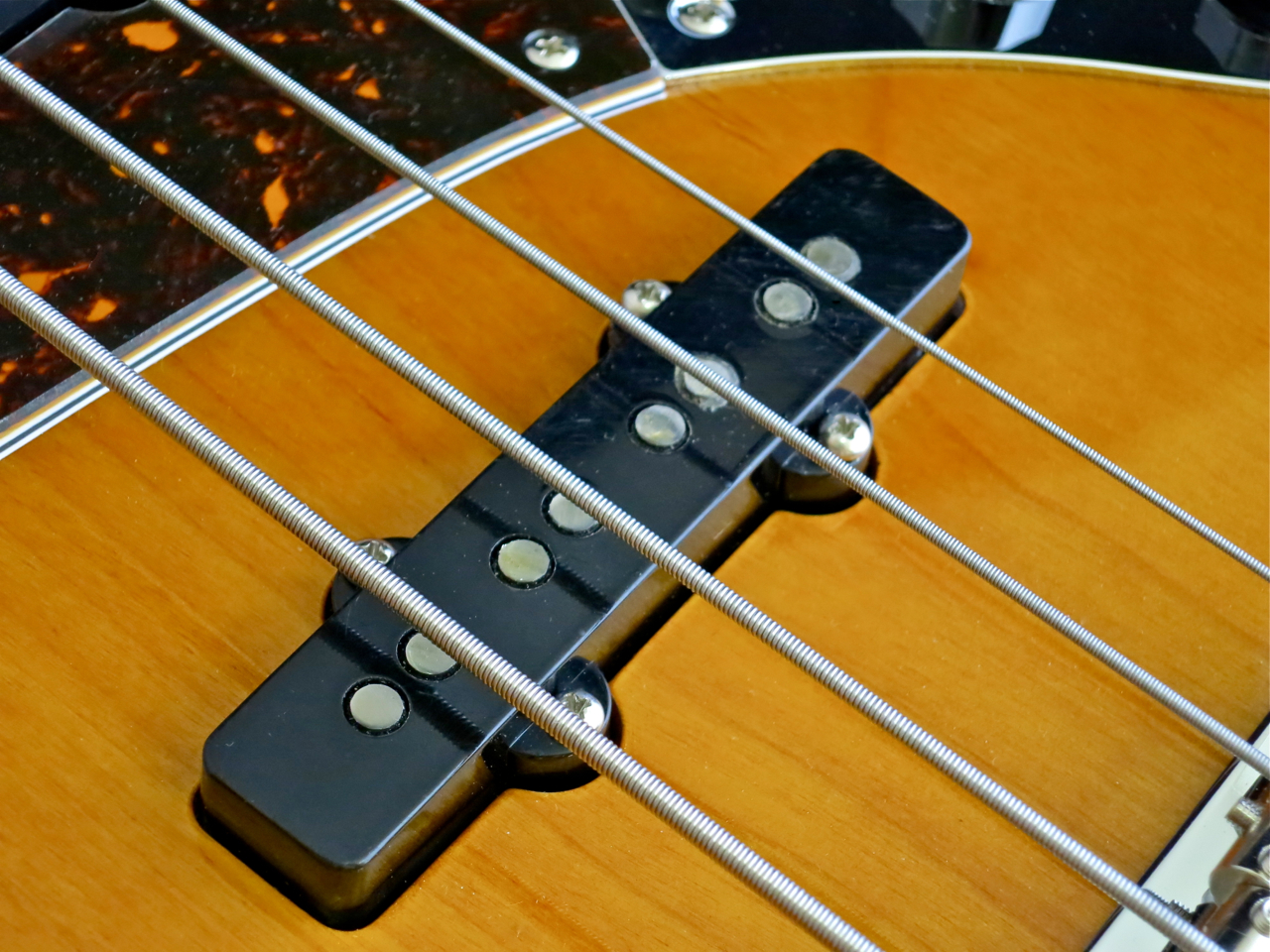
Mustat muoviset mikrofonikuoret on kevyesti esikulutettu, samoin kuin magneettien kirkaslakkapinta.
Vanhoissa Fender-bassoissa kuitulevyistä ja magneeteista koostuva kelarunko on saannut ylleen kirkaslakkakerroksen, ennen kuin käämilankaa alettiin kelata magneettien ympäri. Näissä Seymour Duncan Custom Shop mikrofoneissa käytetään alkuperäistä valmistusmenetelmää autenttisuuden nimessä.

Tokain TJB-55 tarjoaa klassista Jazz-basso passivisuutta – kummallekin mikrofonille oma volume-säädin, sekä yhteinen master tone.
Konepellin alta löytyy huolellista työnjälkeä ja laadukkaita osia.
****

Myönnän sen – olen aina ollut Jazz-basson suuri ystävä! Minusta tämä soitintyyppi on yksinkertaisesti kaunein, ergonomisesti parhaiten toimiva ja soundiltaan yleispätevin kaikista passiivisista klassikkomalleista. Se toimii mielestäni aina!
Tokain TJB-55 on erinomainen lajinsa edustaja, joka tarjoaa kaikki tälle soitintyypille ominaiset edut, kuten esimerkiksi hyvin solakan kaulaprofiilin.

Seymour Duncan Weather Report -mikkisetin tarkoitus ei tietenkään ole muokata soittimen JB-tyylistä soundia joksikin ihan muuksi, vaan tarjota laadukkaan version Jazz-basson soinnista Jaco Pastoriuksen maun mukaan.
Tarjolla on hieman ryhdikkäämpi ja myös pikkuisen tuhdimpi muunnelma aiheesta, joka maistuu ainakin allekirjoittaneelle. Etenkin tallamikrofonissa on mukana myös Jaco-soundille niin tärkeä lisäannos nasaalista keskialuetta.
Mikrofonisetin absoluutisesta autenttiuudesta en voi päätellä kovinkaan paljon, koska en ole koskaan soittanut Pastoriuksen bassoilla. Tämän testin perusteella voin kuitenkin todeta, että Weather Report -setillä varustetulla Tokai TJB-55 -bassolla pääsee lähellä mestarin soundia.
Rumpu- ja perkussioraitojen lisäksi tässä pätkässä soi vain ja ainoastaan testin Tokai-basso:
Testin päätelmä on minun mielestäni, että Tokai TJB-55 -basso ja Seymour Duncanin Weather Report -mikrofonisetti on erittäin toimiva yhdistelmä – myös monelle muulle basistille kuin pelkästään Jaco-faneille.
****
Tokai TJB-55 + Seymour Duncan Weather Report Jaco Pickup Set
1.177 €
Lisätiedot: Musamaailma
****
Plussat (Tokai):
+ hinta-laatu-suhde
+ työnjälki
+ soitettavuus
+ akustinen soundi
+ paino
****
Plussat (Duncan):
+ teho
+ soundi
+ kevyt relikointi
+ autenttinen valmistusmenetelmä
Miinukset (Duncan):
– korkea hinta
– relikointi ei kaikkien makuun







 Kitarablogi.com – Finland's premier Guitar and Bass blog