Testi on nyt julkaistu. Lue juttu TÄSTÄ.
Sire Marcus Miller D5 & P5 Alder-4 – nyt Rockway-blogissa
Kitarablogi.com – Finland's premier Guitar and Bass blog
Juttuja kitaroista ja bassoista
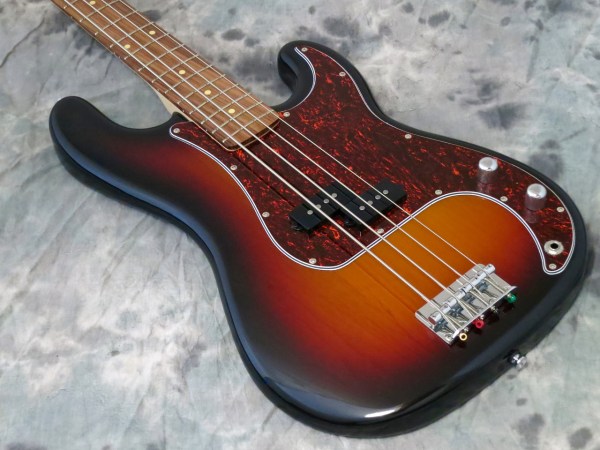
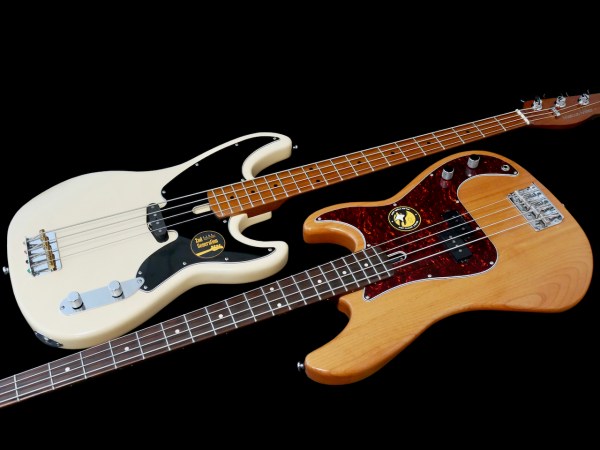
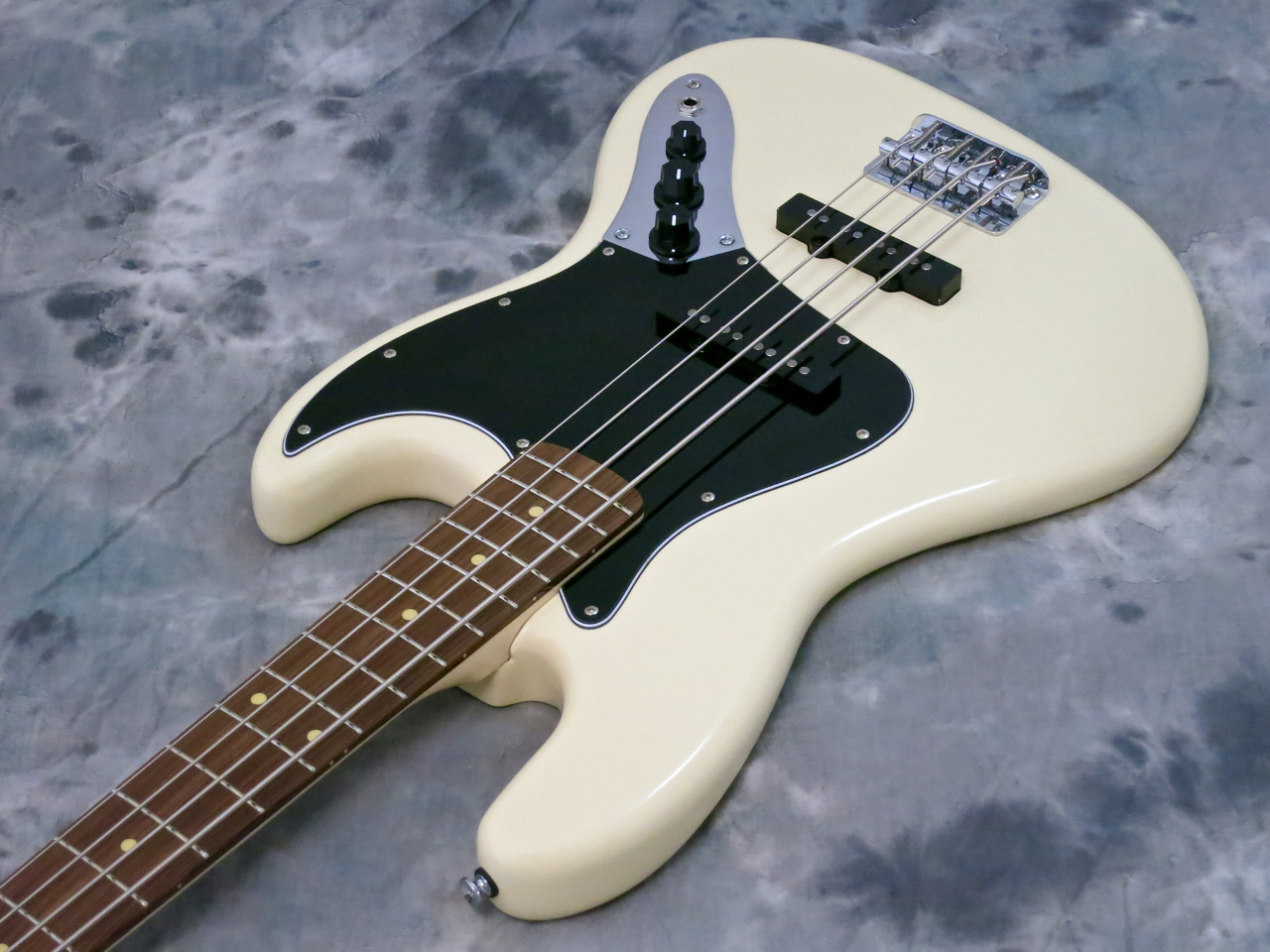
Here’s a cover version of the Smokey Robinson & The Miracles classic ”The Tears Of A Clown” featuring two GrassRoots (by ESP) basses – the PB-55R and the JB-55R.
Both basses were recorded using a Cranborne Audio Camden EC2 preamp with a little ”Mojo Thump” mixed in.

• basswood body
• hard maple neck
• rosewood fretboard
• 20 frets
• 34″ scale
• open cloverleaf tuners
• Kent Armstrong PB pickup
• 1 volume, 1 tone control
Finnish distributor: Nordsound


The Fuzz Guitar Show 2015 in Gothenburg (Sweden) runs May 9th and 10th, 2015.
Four Finnish brands garnered considerable interest at the show:

Juha Lottonen and Juha Rinne (Lottonen Guitars) are fast becoming the go-to guys for small-bodied Folk and Blues guitars off the beaten path.
Lottonen Guitars mostly use alder (!) for their necks, as well as birch for many of their backs and sides.

Lottonen employ different bracing patterns and bridge designs to achieve a multitude of different guitar timbres.
Eric Bibb is the most famous Lottonen user.

Fingerstylists and Blues-pickers simply can’t get enough of the Lottonen tone.

Tyyster Guitars’ dynamic duo and their mouth-watering metal-bodied guitars.
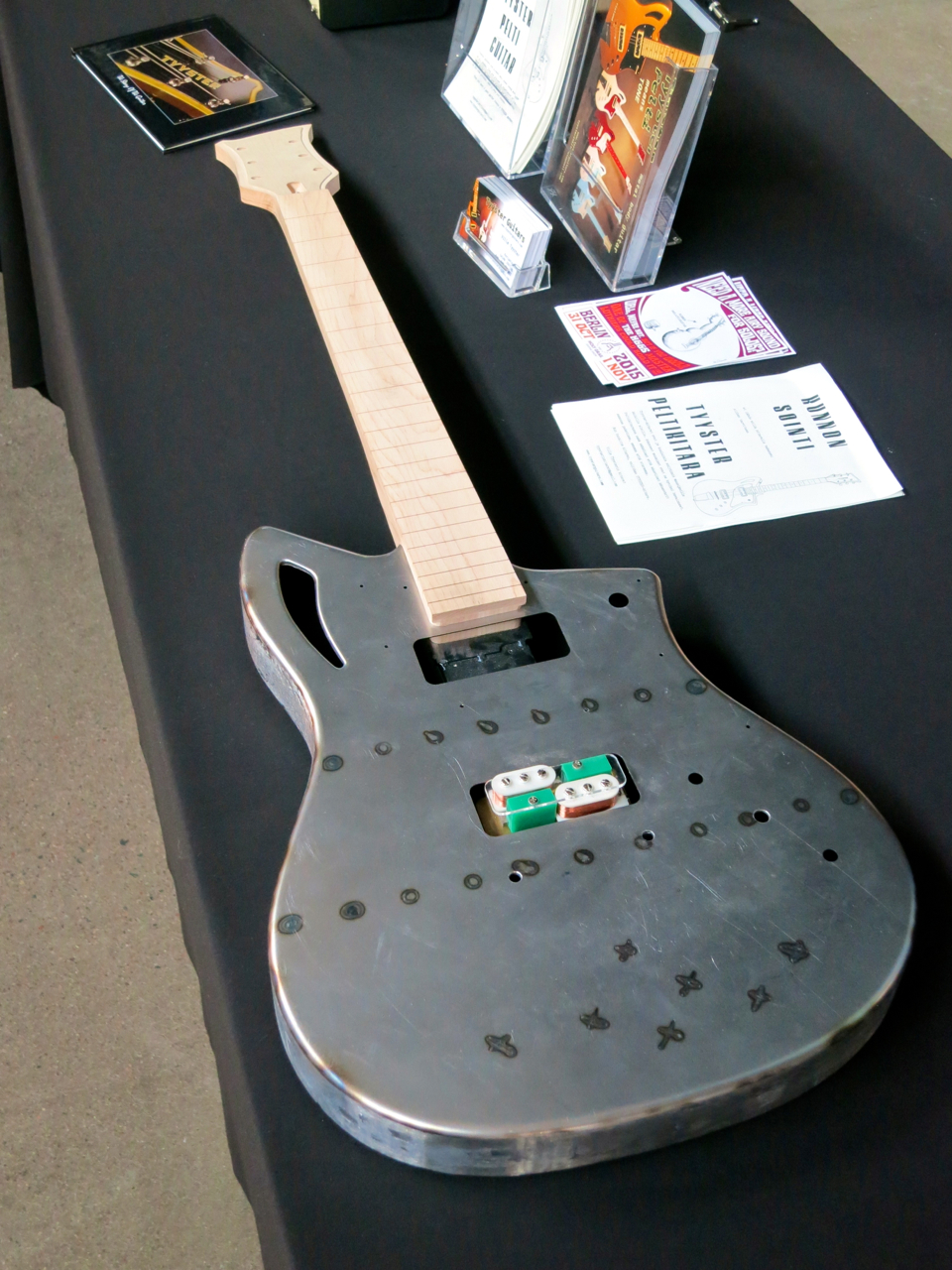
Ville Tyyster brought along an unfinished guitar to give you an idea of what goes into the making of a Tyyster Pelti.
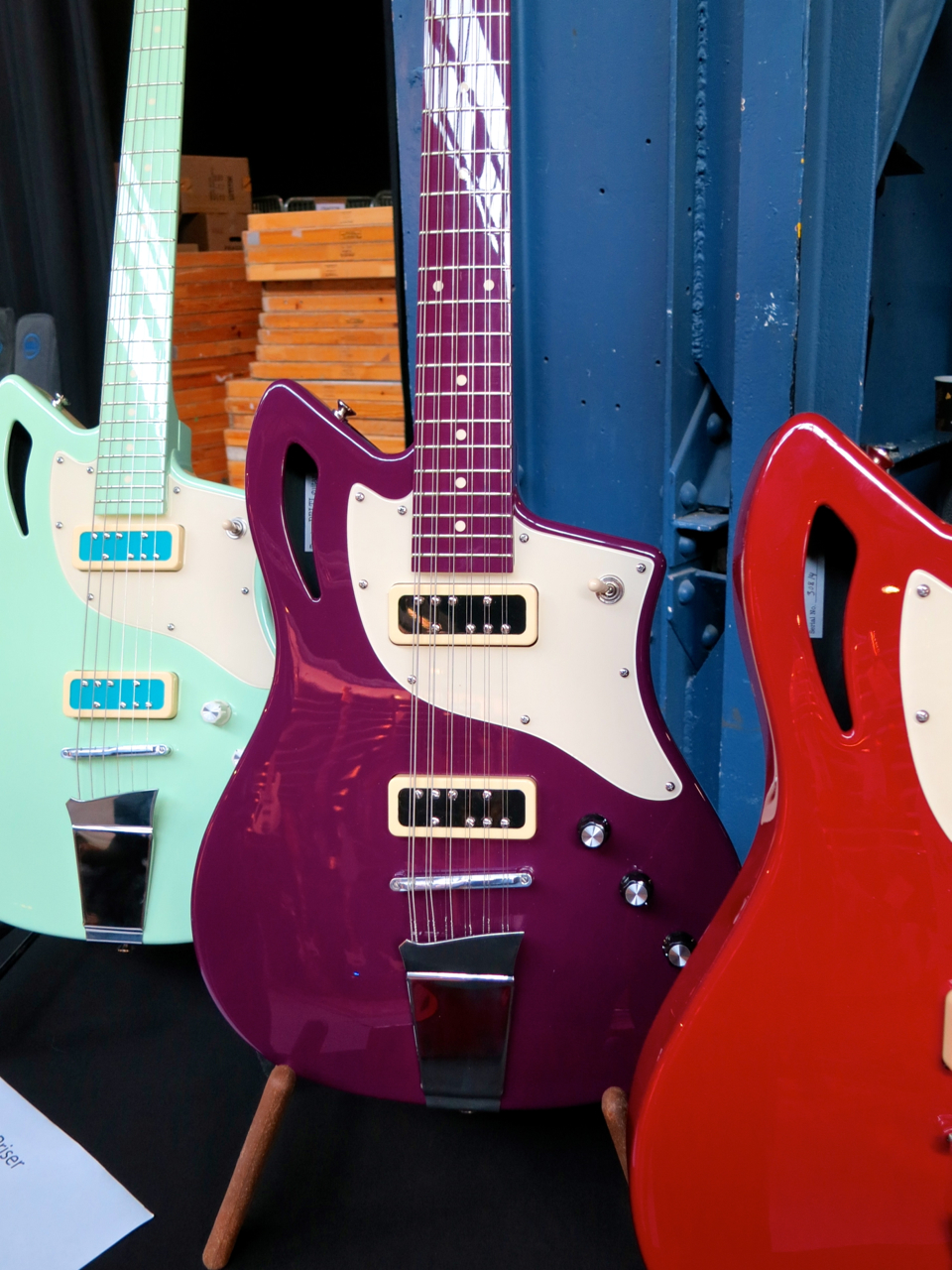
Tyyster’s clear lines and cool colours whet your appetite. Their playability and sound will make you want one!

Kari Nieminen’s tasteful Versoul Instruments have found their way into the hands of many serious guitar collectors and guitar heroes alike (Ron Wood, Billy Gibbons, just to name two in a long list).

This salmon skin-covered 4-watter was definitely one of the show stoppers at this year’s Fuzz.
The all-valve combo can be modified to the user’s requirements by changing the tube types.

…and if you have a salmon-skinned amp, you will need the matching, breathtakingly beautiful Versoul Guitar, too!


Amp and effect specialists Mad Professor were represented at Fuzz by their Swedish distributors.

For more Fuzz Guitar Show pictures visit Kitarablogi’s Fuzz 2015 page.


The good people of EBS Sweden are now bringing a healthy dose of fuzz to the bassist’s toolbox.
****

The EBS FuzzMo (current price in Finland: 169,90 €) is a fuzz-type high gain distortion developed especially for bass.
This stompbox is made in China to the EBS’ exacting standards. It’s a sturdy pedal with very positive feeling controls.
The FuzzMo can be powered in three ways:
If you use an EBS amp from the Drome-, Gorm-, HD- or TD-series, you can use a TRS-cable (aka a stereo cable) to feed phantom power from the amp to the effect pedal.

The FuzzMo pedal also runs off a standard 9 V battery, but you will need a screwdriver to take off the base plate first.

The third alternative is to employ a Boss-type power supply (9 V DC, centre negative) to fire up the stompbox.
****

Even though the EBS FuzzMo looks somewhat similar to the company’s Billy Sheehan -pedal, the controls on the fuzz work in a different way.
The FuzzMo doesn’t do ”nice and sweet” – the Gain control offers fuzz from medium-crunchy to balls-to-the-wall-fuzz. Shape adjusts the tone of the fuzz effect – not in the way a traditional tone control does, but rather by changing the waveform of the fuzz signal. At seven o’clock the sound is quite warm and organic with the waveform approaching a square, while five o’clock is far brighter and more aggressive with the waveform resembling a triangle.
The mini-switch underneath the FuzzMo-logo (called Character) also plays an important part in the stompbox’ sound:
Switched to the left no EQ’ing is applied to the signal (FLAT). In the middle position there’s a slight attenuation of the mid-range. SCOOP on the right side results in a very Metal-style scooped-mid tone with plenty of bite.
Modern bass effects often split the bass signal at the input. One half is fed through the effect, while the other half is kept dry and mixed into the wet signal before it reaches the output. The advantage of doing things this way is that it enables you to keep your bottom end and dynamic attack intact.
This is just the way EBS’ FuzzMo works, too:
You use the Volume knob to adjust the fuzz signal’s volume level, and then use the Blend control to add the desired amount of dry bass. This feature is especially important in fuzz pedals for bass, because the hard clipping of a fuzz effect practically negates all your playing dynamics by design. With the FuzzMo there will be no problems with your tone becoming mushy, clogged up and indistinct, because the Blend control lets you restore your bass guitar’s punch and low end.
Here’s a bit recorded with a Jazz Bass (both pickups on) and a relatively low Gain setting:
In this clip I added some more fuzz and bite to a Rickenbacker played with a plectrum:
Thanks to the ability to blend in the dry signal, the EBS FuzzMo also works extremely well with a five-string (in this case a Yamaha BB with active EMGs):
Note that on all these audio clips the Gain control stayed below one o’clock. If you want you can take things much, much further with this EBS-pedal!

The FuzzMo is a typical EBS-pedal – it’s a sturdy, pro-quality stompbox and it sounds great. If you’re a purveyor of sleazy, dirty and aggressive bass tones, you should definitely give this baby a spin!
****
EBS Sweden FuzzMo
169,90 €
Finnish distributor: F-Musiikki
****
Pros:
+ build quality
+ can be powered in three ways
+ sound optimised for bass
+ three-way EQ-switch
+ Blend control
+ offers a lot of gain
Cons:
– no quick access to battery

Amfisound Guitars is a small company from the northern Finnish town of Oulu. Run by two master luthiers, Amfisound offers a surprisingly wide variety of different guitar and bass models, as well doing a lot of customising and repair jobs. Kitarablogi visited Amfisound’s workshop late last year – read all about it HERE.
Amfisound have introduced a new bass model recently, called the Raudus Bass, which is the subject of this review.
****

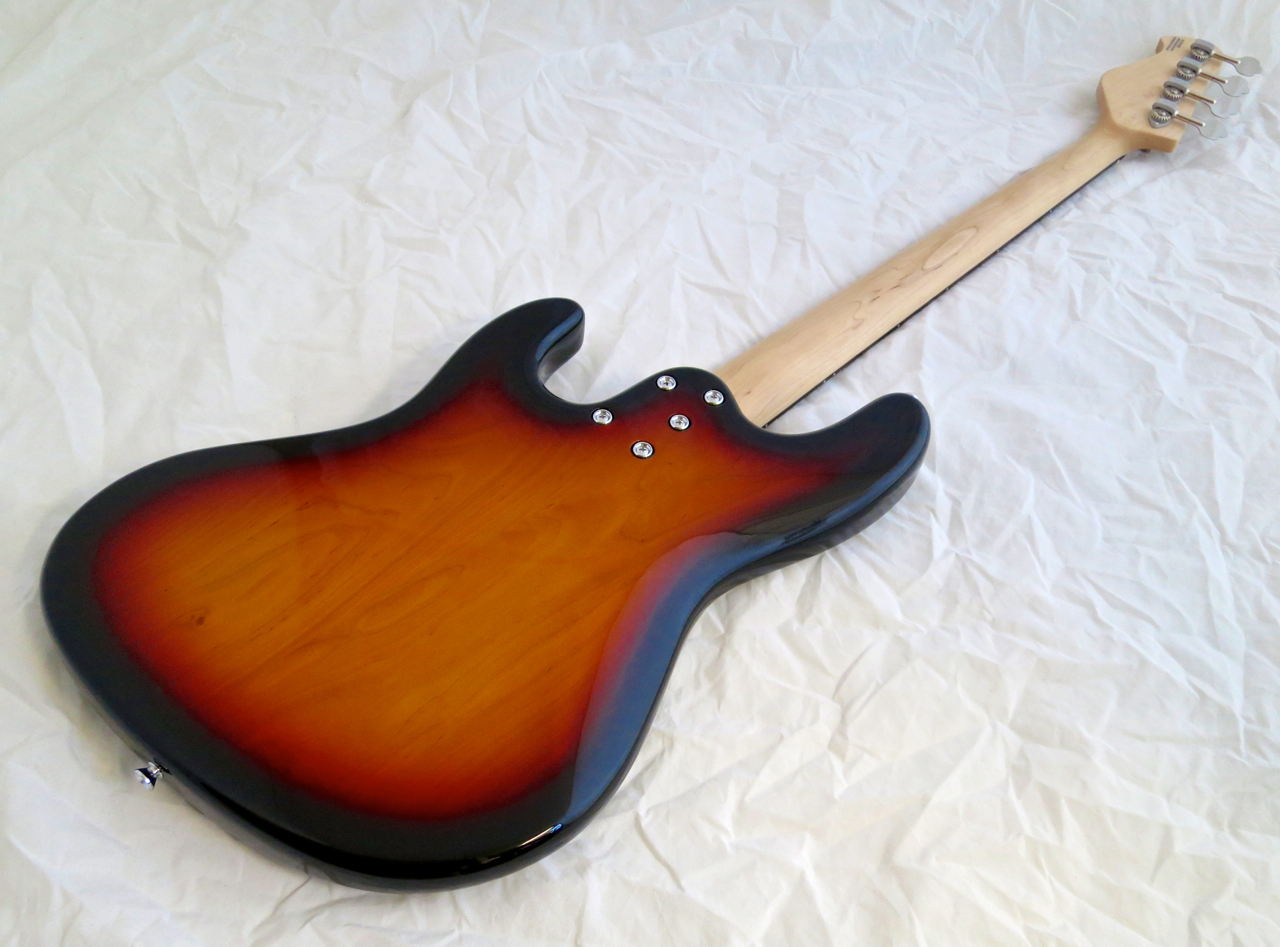
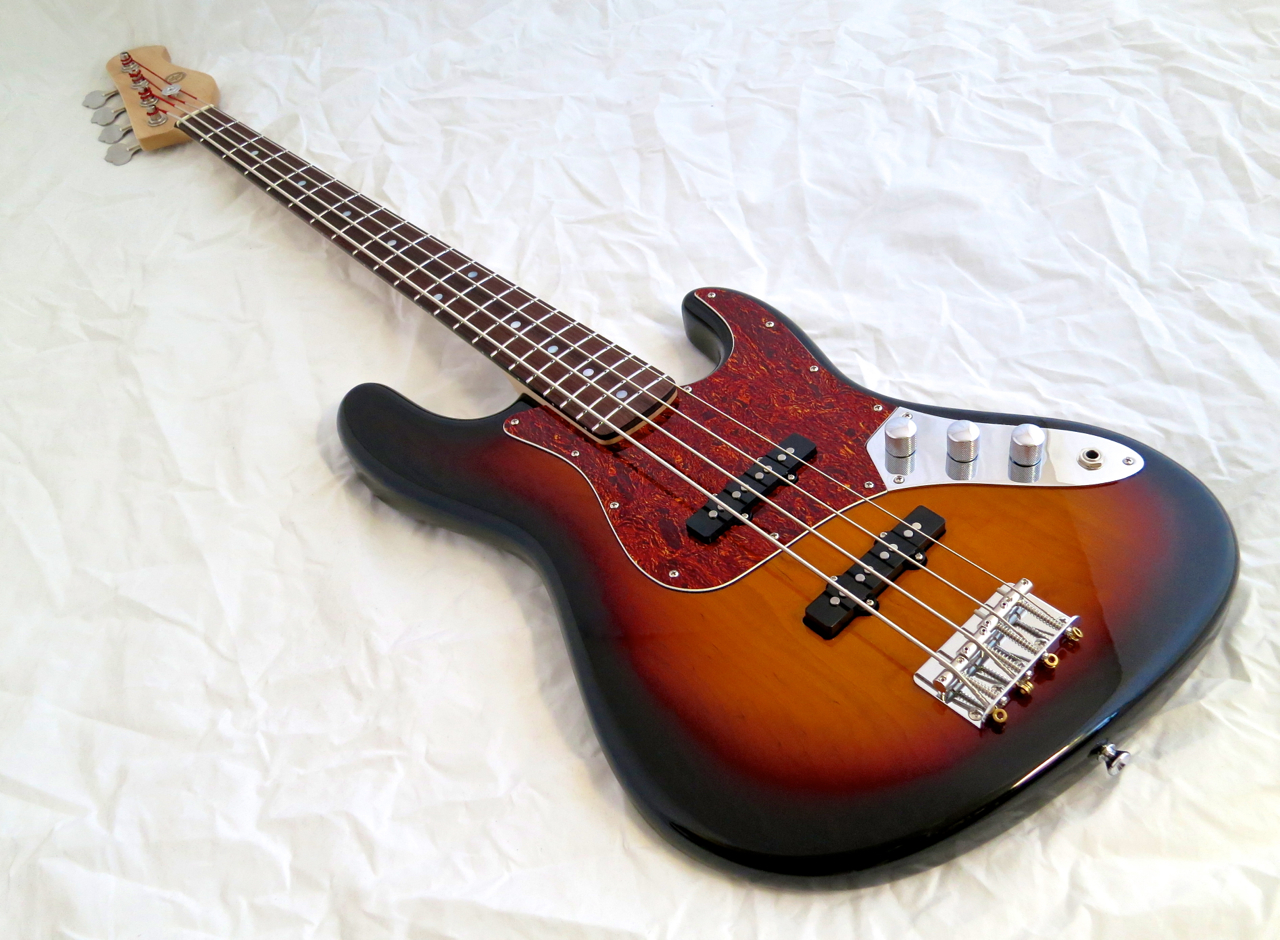
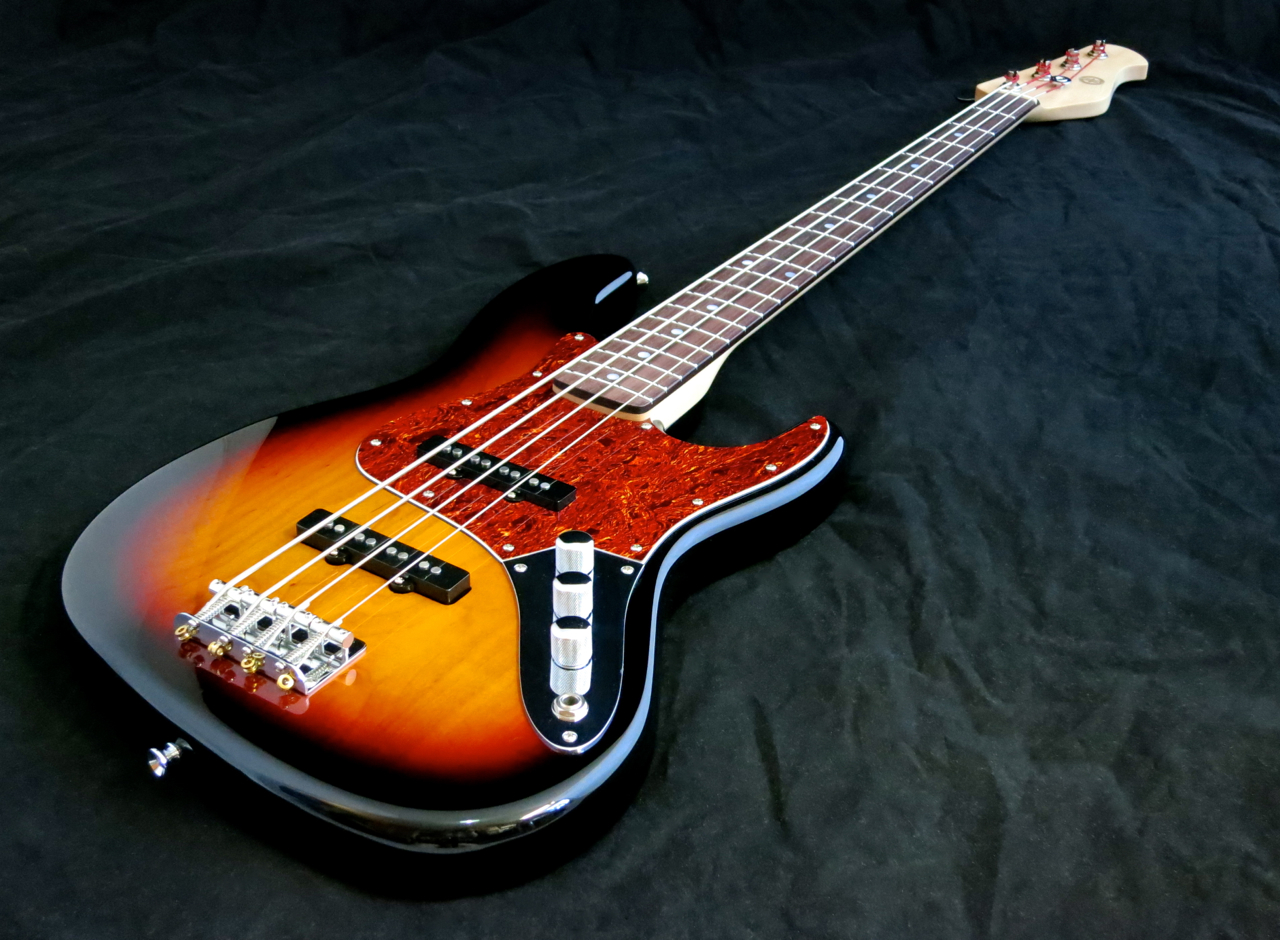
The Amfisound Raudus Bass (prices for EU-customers starting from 2,520 €) clearly takes its inspiration from Fender’s classic Jazz Bass, but this new Finnish (passive) bass offers a number of modern updates and improvements. The easiest things to notice on first sight are probably the added 21st fret and the much deeper cutaway.

The Raudus sports a body made from Finnish alder and a bolt-on maple neck.
The neck comes finished in a very thin satin lacquer, while the body is gloss finished in a glorious tri-colour sunburst.

Our review sample of the Amfisound Raudus features two differences to the basic model – different tuning machines and different pickups.

This Raudus comes equipped with a set of Hipshot’s UltraLite tuners (additional charge: 50 €), which are built from aircraft-grade aluminium. The UltraLite machines work extremely smoothly and precisely, and they efficiently cut down on surplus headstock weight, which is a good thing on such a traditionally-inspired long scale bass, such as the Raudus.
The two-way truss rod is accessed from the headstock side of the neck.

The outstanding standard of workmanship displayed in the Raudus-model’s fretwork, is but one of many points bearing clear testament to the world-class standard of Finnish luthiery! This is genuine custom shop quality.
The fretboard is made of Indian rosewood, and it’s sporting 21 medium-jumbo sized frets.
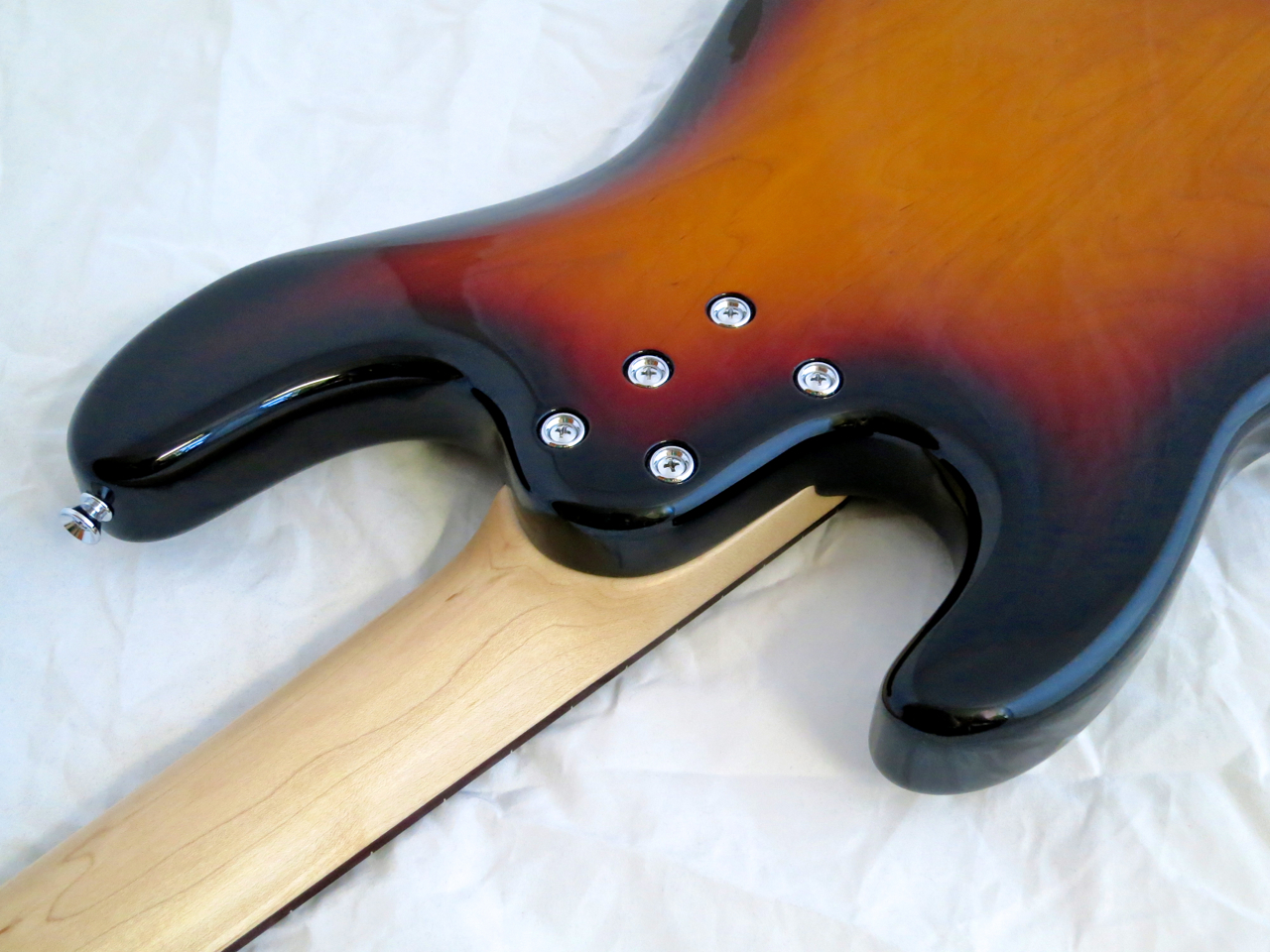
Amfisound’s rounded body heel makes excursions to the dusty end of the neck very comfortable, indeed.

The bridge is a quality copy of the original, late-Sixties Fender bridge – if it ain’t broken, don’t fix it.
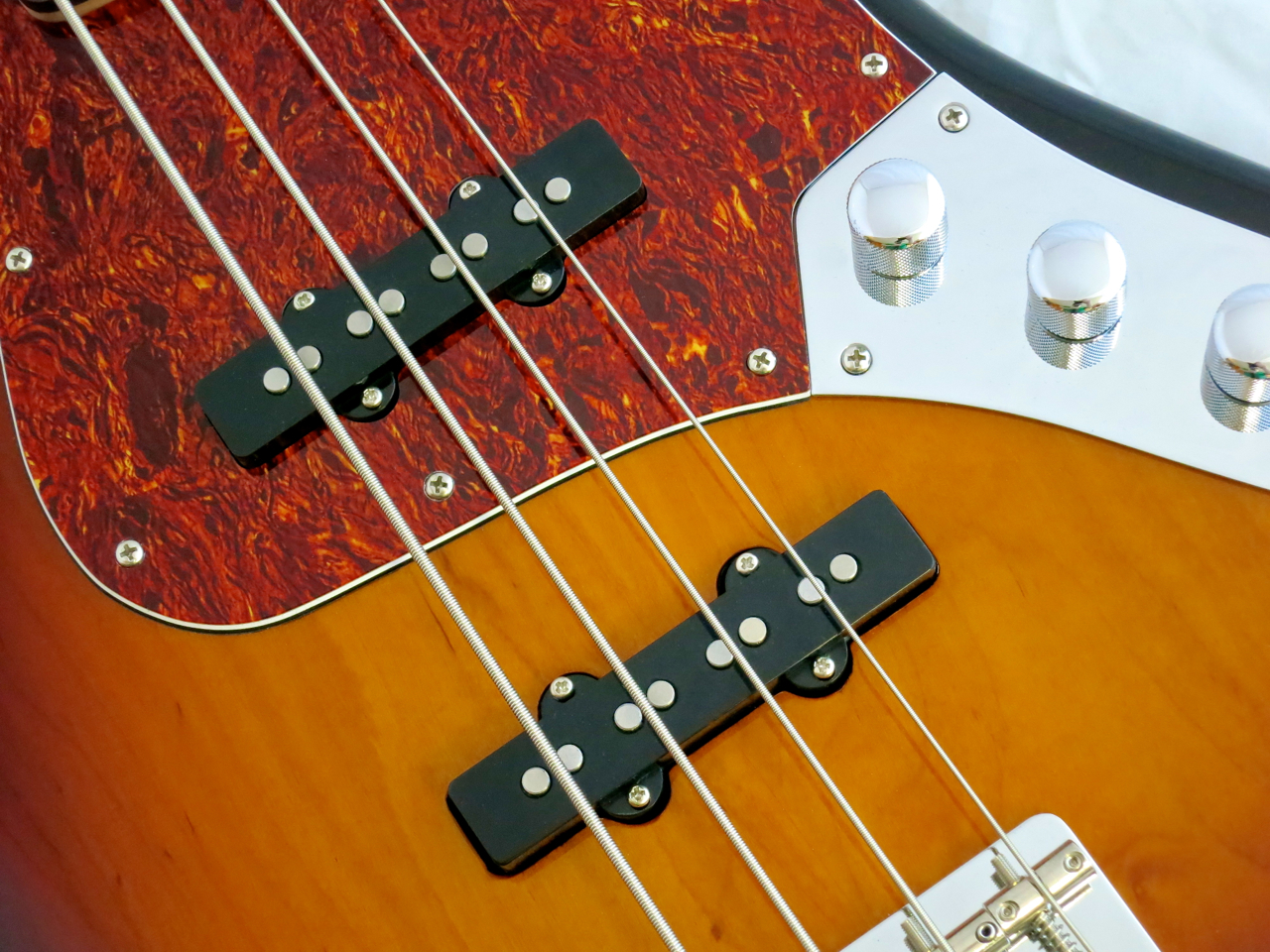
The review sample comes with a set of Jarno Salo Pickups from Finland. The basic version uses Swedish Lundgrens.

This instrument offers you Jazz Bass-type controls – separate volume-knobs for each pickup, plus a master tone-control.

Amfisound’s workmanship is spot-on and very crisp – even under the hood.
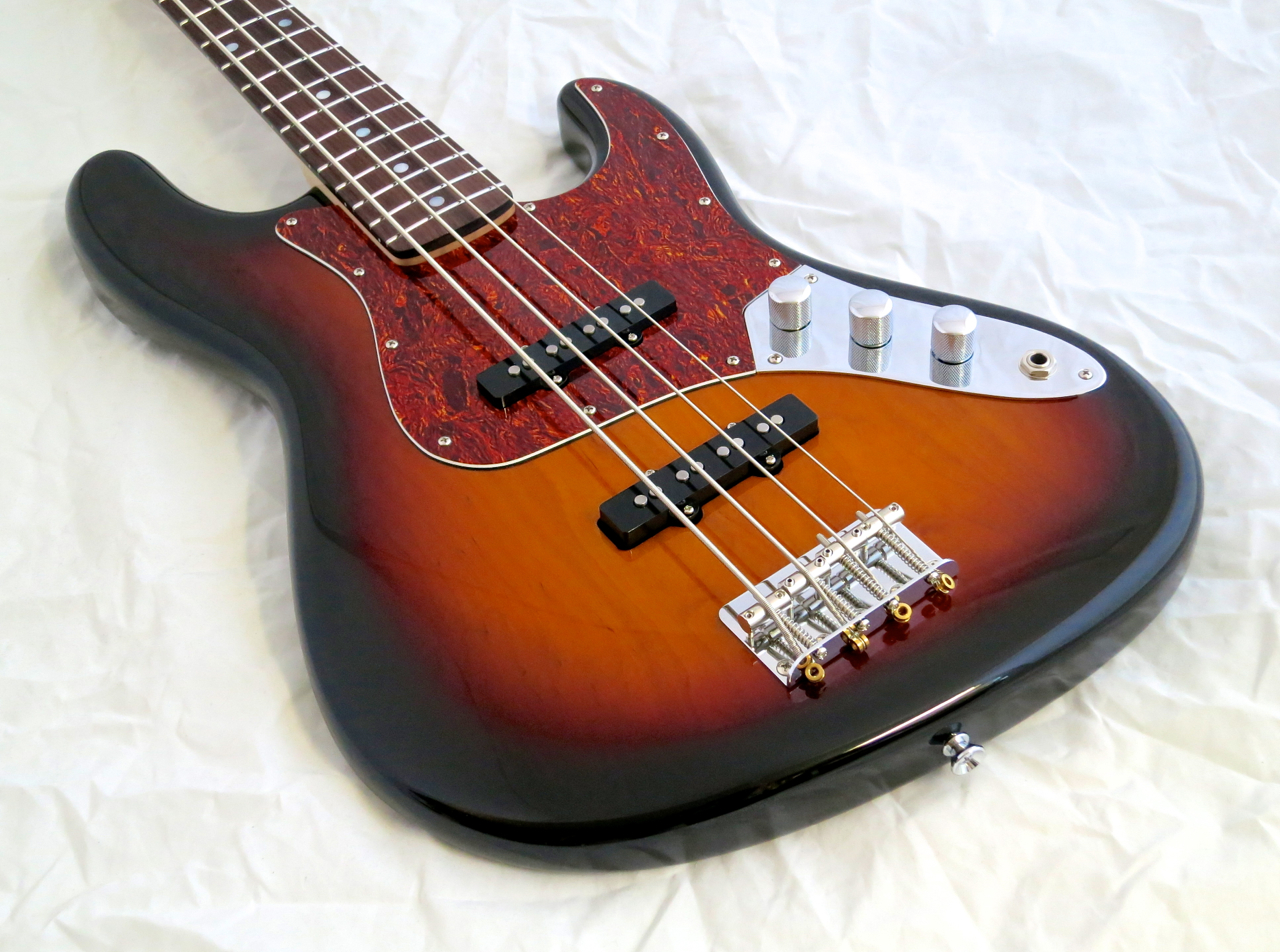
The list of available custom options from Amfisound is very long, and includes (in the Raudus-model’s case) an ash body, different bridges and/or tuners, as well as active Glockenklang-electronics (among other things). For more detailed information you should contact Amfisound’s Tomi or Sampo.
There’s also a five-string Raudus on offer, which is built with a longer scale of 35 inches.
****

Amfisound’s Raudus Bass is a real corker of an instrument, with its sound and playability second to none.
The flatter-than-vintage fingerboard radius (9.5″) gives the slender neck a suitably modern playing feel. Thanks to Amfisound’s exemplary fretwork, our review sample’s low action (E: 2.0 mm/g: 1.6 mm) was completely free of annoying fret buzz or string rattle.
I’m a devoted Jazz Bass-fan, which made me feel right at home playing the Raudus. Yes, it’s true that the Amfisound offers much better top fret access, but overall this new bass feels like a dear old friend.
And this bass’ sound is outstanding, too, dishing out oodles of classic, Jazz Bass-style tones.
Jarno Salo’s excellent pickups are singlecoil designs, with the bridge pickup being reverse-wound and reverse-polarity in relation to the neck unit. This means that using both pickups together gets rid of any possible electromagnetic hum and buzz (from transformers, lighting or displays).
In terms of sound, these Salo-pickups really give you all those classic tones you’d expect from a bass such as this.
Listen to these three audio clips. Each clip has the neck pickup first, followed by both pickups on, and the bridge pickup going last:
****
The Amfisound Raudus Bass is a very fine example Finnish luthiery, there’s no two ways about this. Finns must be very lucky to find such fine instruments right at their doorstep!
****
Amfisound Guitars Raudus Bass
Prices starting from 2,520 € (EU-customers) & 2,032 € (outside the EU)
Hard case included.
Contact: Amfisound Guitars
****
Pros:
+ Made in Finland
+ handmade
+ workmanship
+ playability
+ sound
Amfisound Guitars on kahden soitinrakentajamestarin yhdessä vetämä soitinpaja Oulun Haukiputaalta, joka tarjoaa erittäin laajan valikoiman omia soitinmalleja, sekä kattavat korjaus- ja kustomointipalvelut. Löydät Kitarablogi-jutun viime talven Amfisound-vierailusta TÄÄLTÄ.
Amfisoundilta on hiljattain ilmestynyt uusi bassomalli nimeltään Raudus Bass, jota on saatu nyt testiin.
****
Amfisound Raudus Bass -mallin (hinnat alkaen 2.520 €) lähtökohtana on nähtävästi toiminut Fenderin Jazz-basso, mutta tämä uusi suomalainen passiivibasso tarjoaa monia nykyaikaisia päivityksiä, joita on esikuvasta turha hakea. Helpoiten havaittavissa ovat varmaan rungon huomattavasti syvempi soololovi ja otelautaan lisätty 21. nauha.
Raudus-basson runko veistetään suomalaisesta lepästä ja sen kaula on vaahteraa.
Kaulaa viimeistellään ohuella, mattapintaisella lakkauksella, kun taas runko komeilee kiiltävässä, kolmivärisessä sunburstissaan.
Testattu Amfisound Raudus on hyvin lähellä mallin perusversiota, lukuun ottamatta testisoittimen virittimet ja mikrofonit.
Tähän Raudukseen on asennettu – maksullisena optiona (50 €) – Hipshotin höyhenenkevyet UltraLite-virittimet, joita valmistetaan lentokoneiden valmistuksessa käytetystä alumiinista. UltraLite-virittimet toimivat erittäin tarkasti, ja ne parantavat (alhaisen painonsa ansiosta) ergonomisesti rakennetun Raudus-mallin tasapainoa vielä entisestään.
Basson kaksisuuntaista kaularautaa säädetään kätevästi lavan puolelta.
Tämän Amfisoundi-soittimen esimerkillinen nauhatyö on vain yksi Rauduksen lukuisista kohdista, jotka kielivät suomalaisen soitinrakennustaidon huimasta tasosta! Tällaiseen laatuun massatuotetut soittimet yksinkertaisesti eivät yllä.
Otelauta on intialaista ruusupuuta, ja nauhojen koko on medium-jumbo.
Amfisoundin sulavaa ruuviliitosta käytetään luonnollisesti myös firman uudessa Raudus-bassossa.
Fenderin alun perin kehittämä bassotalla on monien mielestä yhä se paras vaihtoehto.
Testisoittimeen on asennettu suomalaiset Jarno Salo Pickups -mikrofonit. Perusversiossa löytyy ruotsalaisia Lundgren-mikkejä.
Säätimet toimivat Jazz-bassosta tutulla tavalla – kummallekin mikrofonille on oma volume-säädin, ja niiden lisäksi löytyy yhteinen master tone.
Amfisoundin erittäin laadukas ja siisti työ on nähtävissä myös elektroniikkalokeron kannen alta.
Amfisoundin mahdollisien custom-optioiden lista on erittäin pitkä, ja se tarjoaa Raudus Bass -mallin tapauksessa mm. saarnirunkoa, erilaisia talla- ja viritinratkaisuja, tai vaikkapa aktiivista Glockenklang-elektroniikkaa. Tarkempia tietoja optioista ja niiden hinnoista saa ottamalla yhteyttä suoraan Amfisoundin Tomiin tai Sampoon.
Raudus-basso on myös saatavilla viisikielisenä versiona pidemmällä 35-tuumaisella mensuurilla.
****
Amfisoundin Raudus on kyllä upea ja kevyt soitin, jossa soitettavuus ja soundi ovat mielestäni prikulleen kohdallaan.
Otelaudan hieman vintagea loivempi radius (9,5 tuumaa) antaa solakalle kaulalle sopivasti nykyaikaista tuntumaa. Amfisoundin esimerkillinen nauhatyö mahdollisti testibassossa hyvin matalan kielenkorkeuden (E: 2,0 mm/g: 1,6 mm) ilman minkäänlaista räminää.
Koska olen vanha Jazz-basson fani, Raudus tuntui heti ensikättelyssä vanhalta ystävältä. Totta, ylimpiin nauhoihin pääsee Amfisoundilla alkuperäistä paremmin, mutta muuten ergonomia ja soittimen tuntuma on hyvin lähellä vanhaa klassikkoa.
Eikä Raudus jätä soundiltaan lainkaan toivomisen varaa, vaan tarjolla on erittäin maukas kattaus erilaisia klassikkosoundeja.
Alkuperäisten tavalla myös Jarno Salon mikrofonit ovat yksikelaisia, jotka on kuitenkin käämitty toistensa nähden vastasuuntaan. Tämä tarkoittaa, että yksikelaisten poimimat hurinat ja sirinät katoavat aina täysin, kun molemmat mikrofonit ovat täysillä.
Soundillisesti Salo-mikrofoneissa löytyy juuri se oikea ”vanhan liiton” meininki, joka sopii erittäin hyvin tähän perinnetietoiseen Amfisound-bassoon.
Tässä kolme esimerkkipätkää (järjestys jokaisessa pätkässä: kaulamikrofoni –> molemmat –> tallamikrofoni):
****
Testin perusteella voin vain todeta, että Amfisoundin Raudus Bass todellakin edustaa suomalaista osaamista ja laatua parhaimmillaan. Miksi mennä merta edemmäs kalaan, kun tällainen, käsintehty laatubasso löytyy Suomessa?
****
Amfisound Guitars Raudus Bass
Hinnat alkaen 2.520 € (laadukas kova laukku kuuluu hintaan)
Lisätiedot: Amfisound Guitars
****
Plussat:
+ aitoa suomalaista laatua
+ käsintehty
+ työnjälki
+ soitettavuus
+ soundi

 Kitarablogi.com – Finland's premier Guitar and Bass blog