Here’s my acoustic version of the Beatles classic ”Here Comes The Sun” recorded using four dynamic Shure microphones – the Shure 545SD, 565SD, SM57, and SM58.
The mics were plugged into a Cranborne Audio Camden EC2 preamp with a little bit of Mojo Cream added. The signal then went to a UA Volt 2 audio interface and into Apple GarageBand.
Guitars used: Takamine N-20 (two tracks – right channel and centre), Tanglewood TW28-CSN (left channel)
Tech 21 NYC is known for its excellent analogue SansAmp amplifier- and speaker-simulations that have made playing guitar (or bass, for that matter) live without a physical amp possible, long before the advent of digital modellers or impulse response technology. Tech 21’s range of ultra-compact Fly Rig multi-effects builds on the company’s SansAmp technology to provide the gigging musician with a whole signal chain that fits in a gig bag’s side pocket.
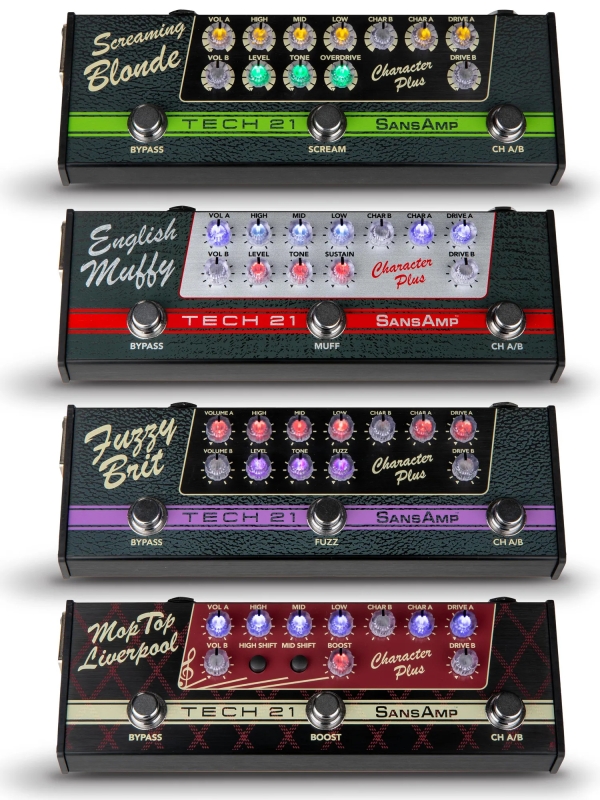
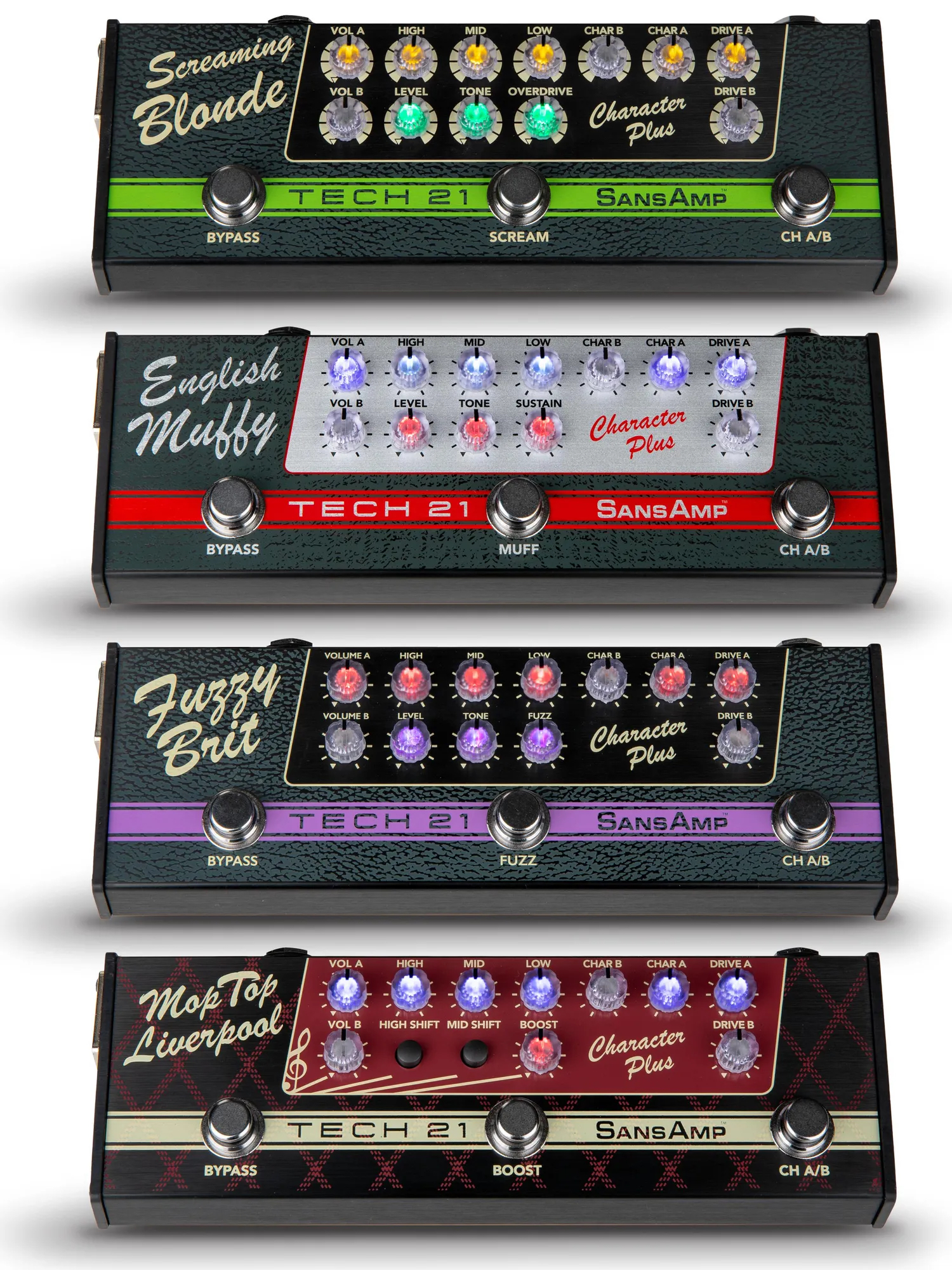
Tech 21’s new Character Plus range approaches a very similar theme from a slightly different angle. Each of the four Character Plus pedals (current price in Finland 369 € each) offers the guitarist a timeless, classic amp and stomp box combination. The Character-knob, which is what gives the four pedals their name, lets you swipe through a wide variety of different permutations of the chosen amp, and the twin-channel layout makes it easy to dial in, say, a rhythm and a lead sound to switch between.
The EQ section is shared between both channels of each pedal, which may look a little limiting on paper, but proved to be pretty unproblematic in real-life use.
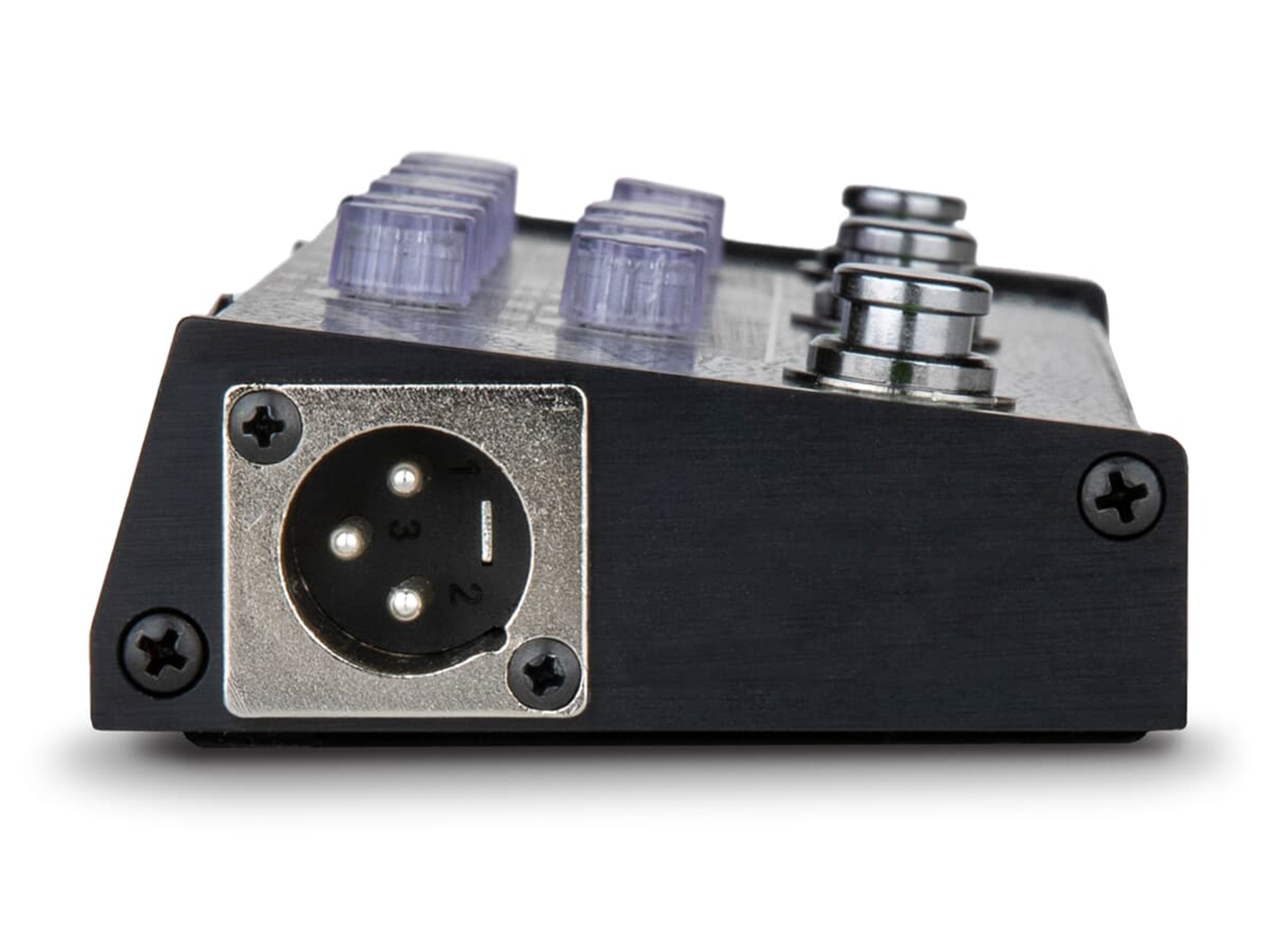
The Character Plus Series pedals each sport 1/4″ phone jacks for input and output, if you want to run the pedal as an effect in front of your physical amp, with a balanced XLR-output provided to connect the pedal to a mixing console or an audio interface.
****
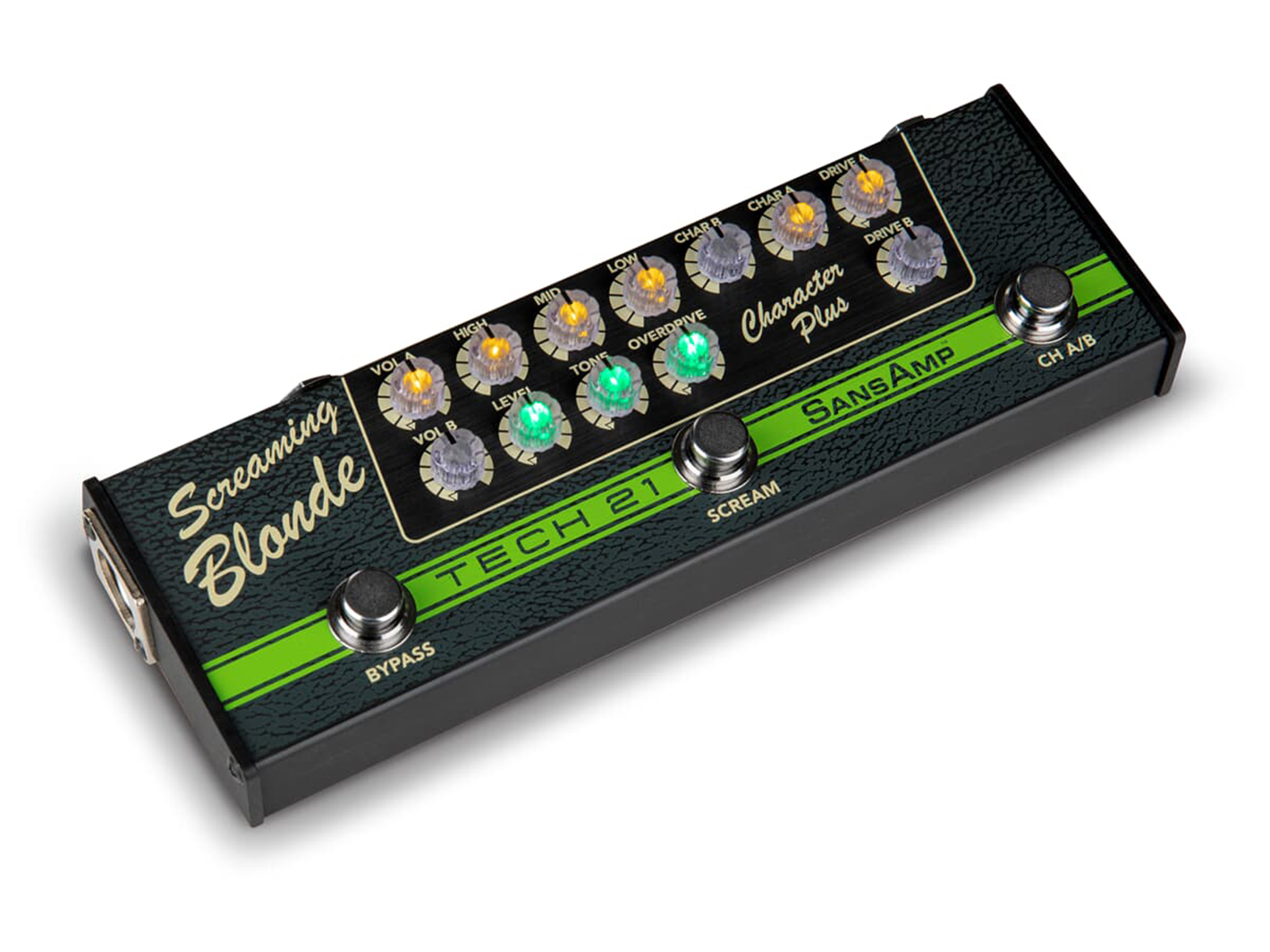
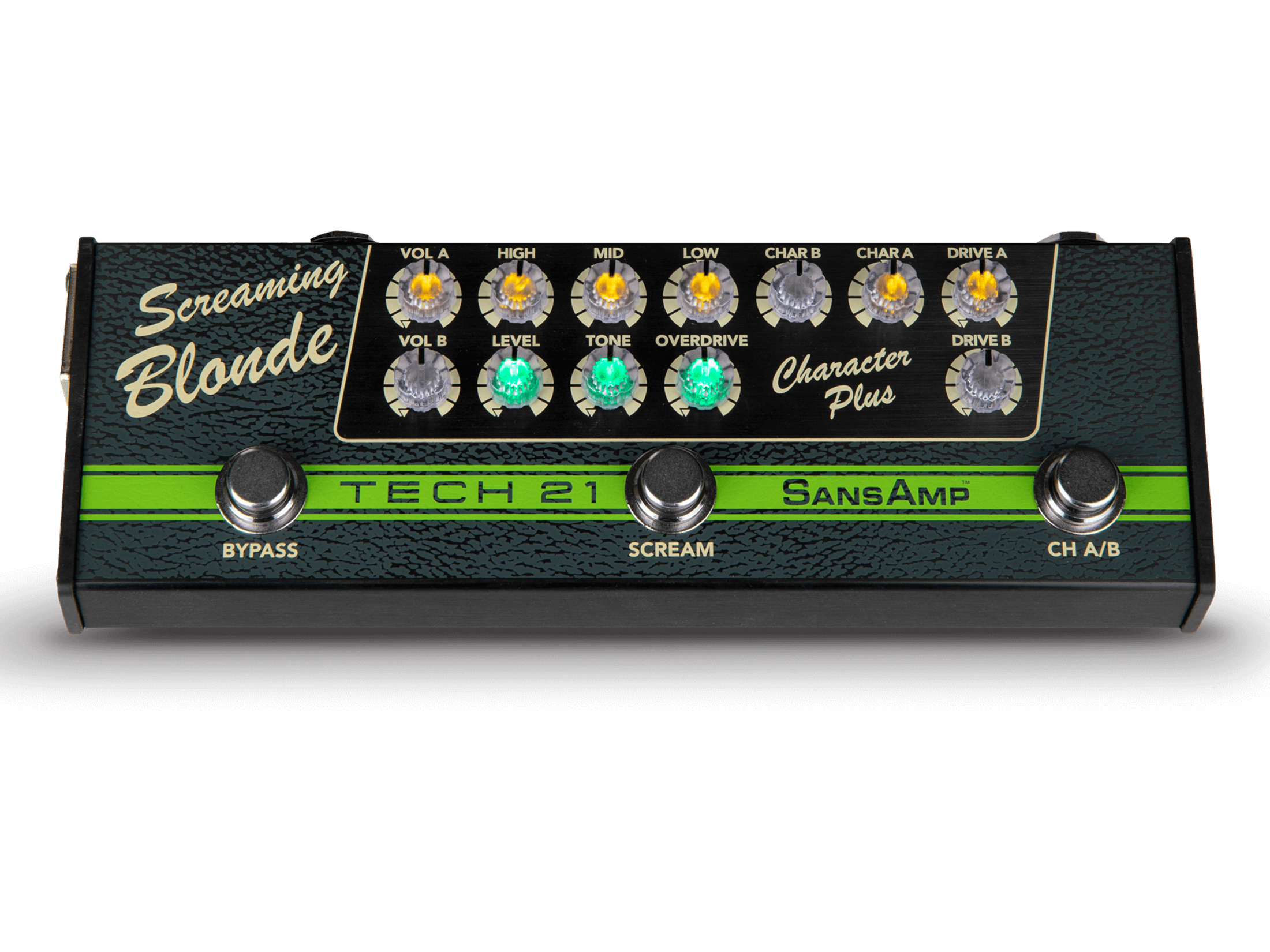
The Tech 21 Screaming Blonde is the series’ Fender-flavoured offering. The Character-control in each channel sweeps through different Fender-style sounds – from ”Tweed” to ”Blackface” – and also has a bearing on the channel’s gain structure.
The Scream switch activates a Tube Screamer-style overdrive that has been optimised to work seamlessly with the Screaming Blonde’s amp channels, making this pedal a great choice for anything from function bands to Texas or Chicago Blues.
****
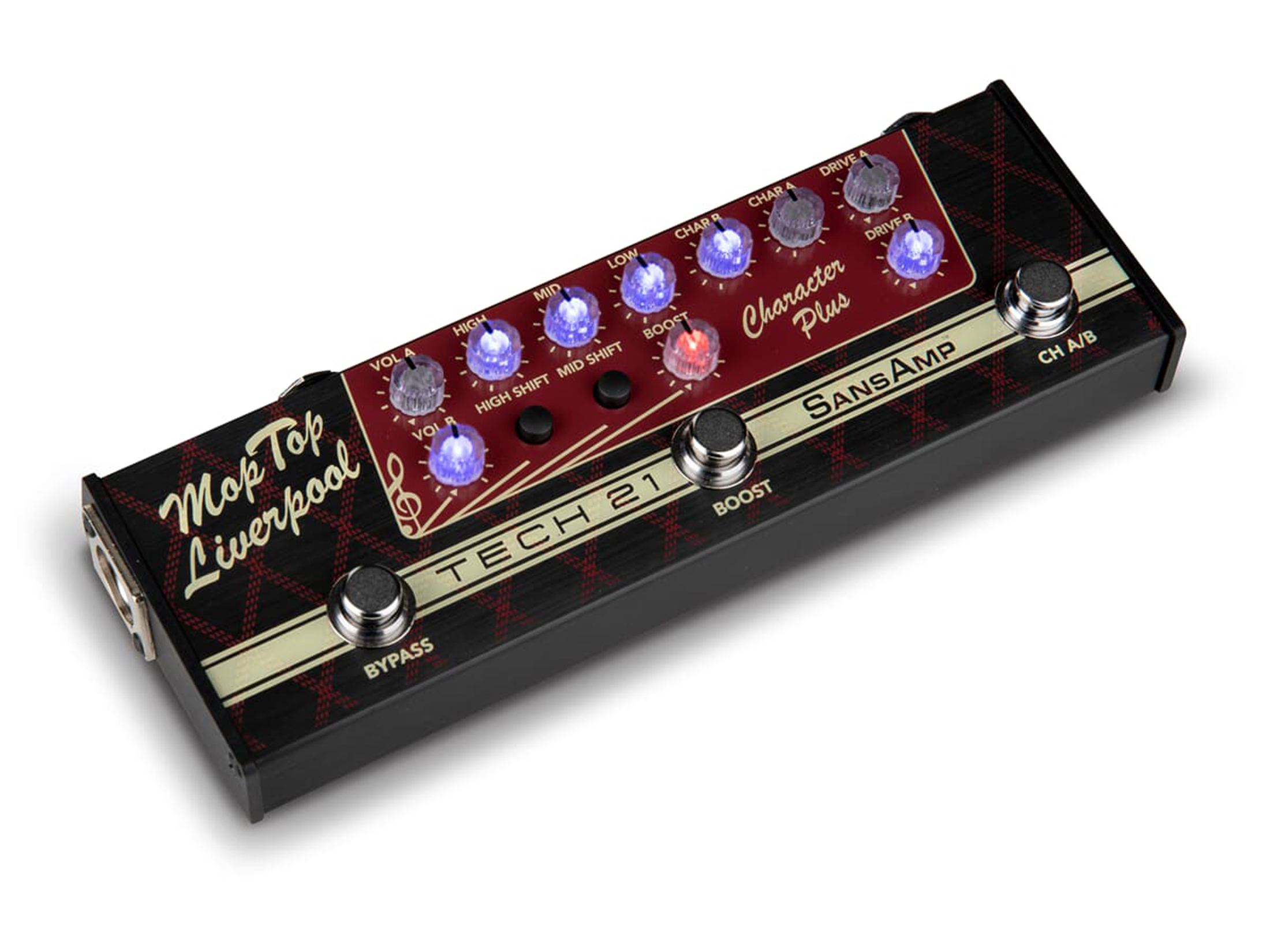
The Tech 21 Mop Top Liverpool references the Beatles in its name, and both the name as well as the diamond cloth pattern graphics hint at a Vox-style SansAmp-circuit. In contrast to the other three Character Plus pedals, the Mop Top Liverpool features two slightly differently voiced channels. This means that the pedal makes any typical AC30-sound available – from the Shadows all the way to Rory Gallagher or Queen – especially as the additional Boost-section is actually also two boosters in one.
Counterclockwise from 12 o’clock the booster adds a mid-range boost, while clockwise will add a treble booster to your circuit. A pair of frequency shift buttons makes the Liverpool Mop Top even more versatile.
****
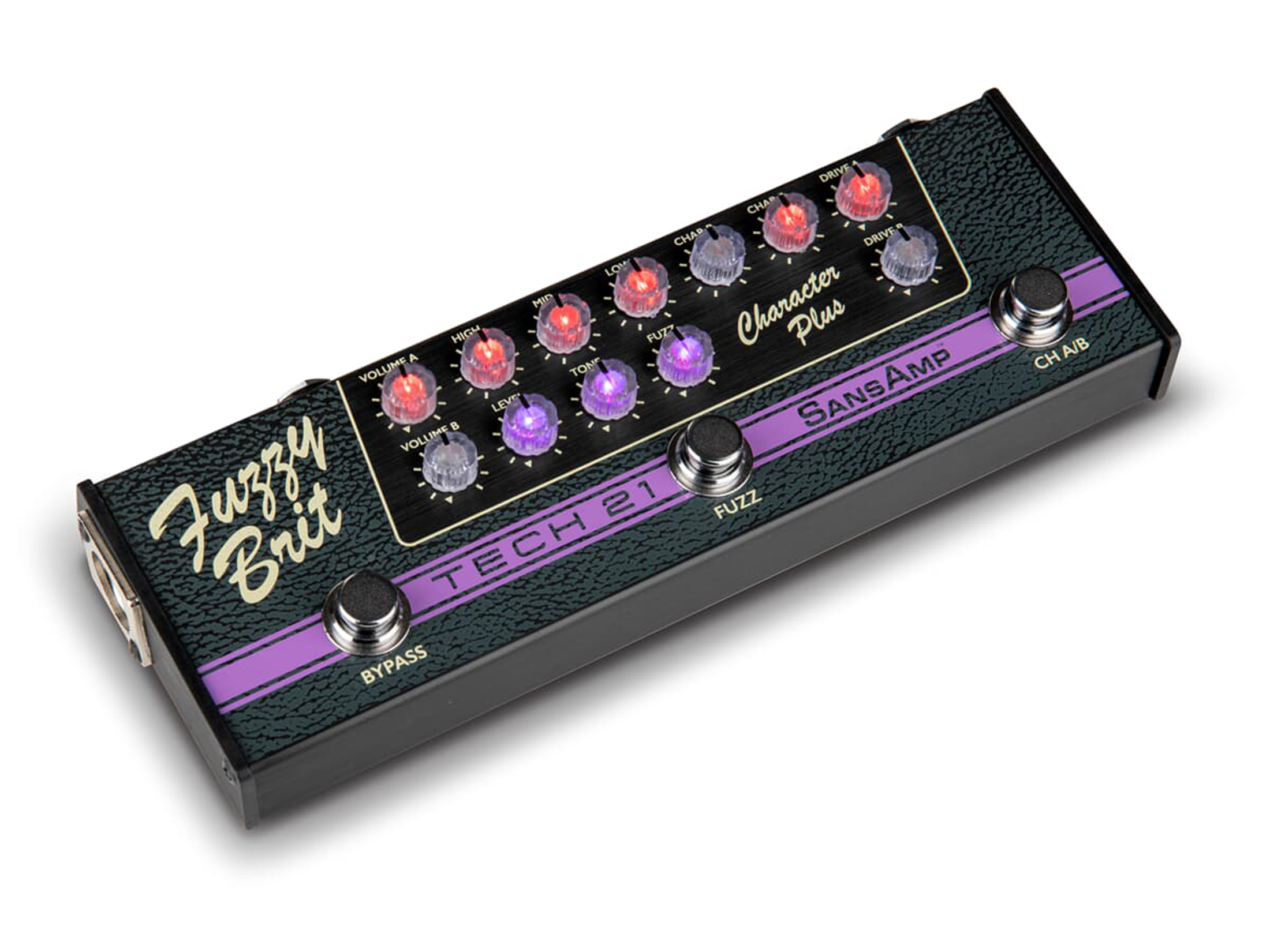
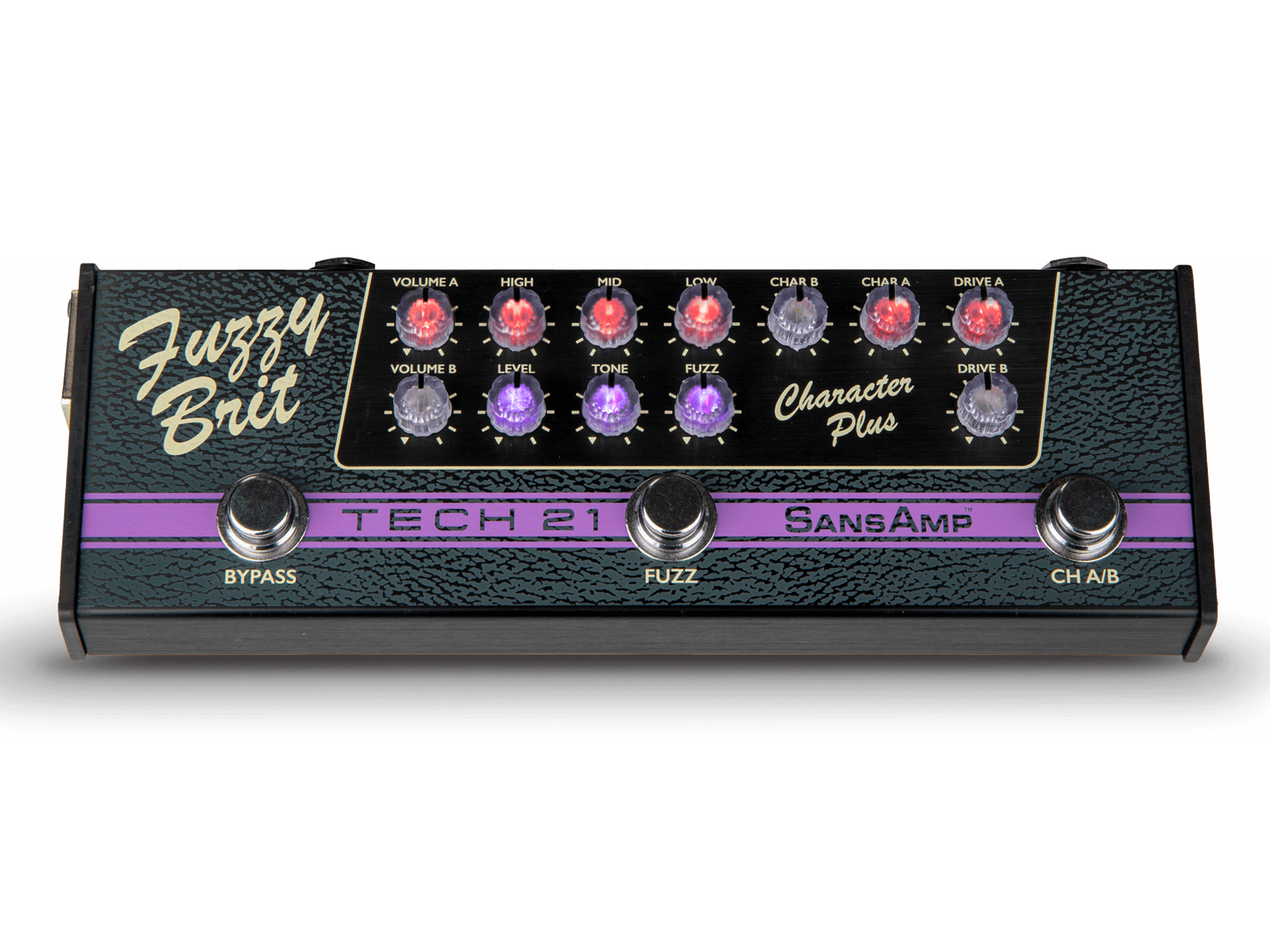
The Tech 21 Fuzzy Brit takes proceedings well and truly into classic Hendrix territory by bringing two channels of Marshall-style goodness and a switchable Fuzzface-type fuzz effect to the table.
Again, the Character control gives you a whole range of different, but equally classic, versions of Marshall-thunder from ”Beano” all the way to ”Ladyland”, and beyond.
The Fuzz-circuit is based on a silicon Fuzzface, but with the added advantage of a Tone-control, which lets you tame any excessive top end response.
****
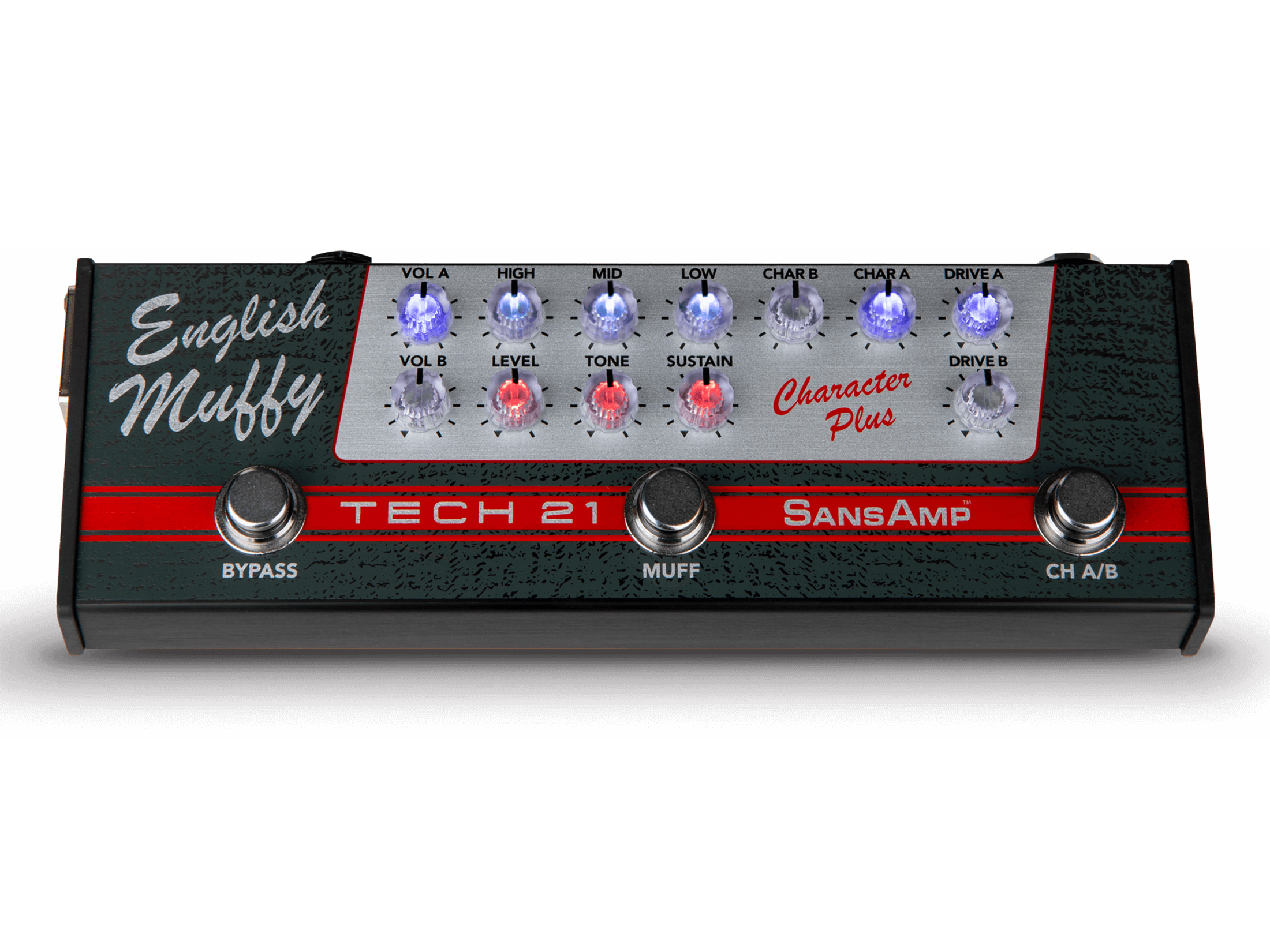
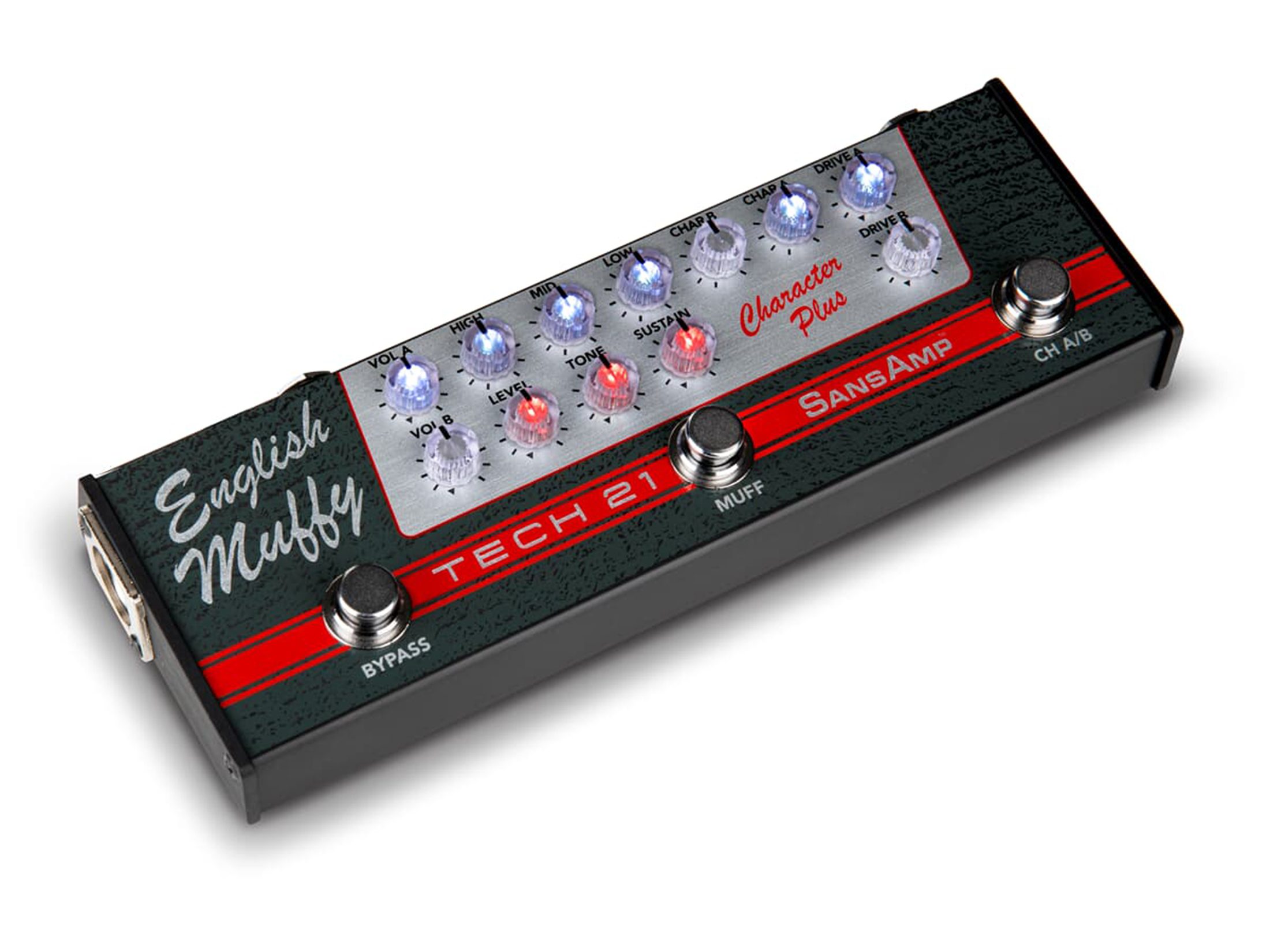
The Tech 21 English Muffy takes things firmly into 1970s Rock territory by featuring the classic combination of a Hiwatt-stack and a Big Muff Pi. Even though this combination is clearly aimed at David Gilmour fans, this hard rocking SansAmp also works a treat for Who-style power playing.
The Character-control takes you from clean tones (7-10 o’clock) to crunchy Rock tones (upwards of 11 o’clock) with the highest Character settings adding an upper-mid boost.
Different Big Muff iterations can vary quite considerably in sound, but the Tech 21 version sounds fat and creamy.
****
As a demo song for the Tech 21 English Muffy I played a short instrumental version of the Who’s classic track ”Won’t Get Fooled Again”:
• Rhythm guitar (left): Arvo Original (Finnish guitar brand), Channel A, no Fuzz • Rhythm guitar (right): Kasuga (ES-335 copy), Channel B, no Fuzz • Lick guitar (left): Kasuga, Channel B with Fuzz • Lick guitar (right): Fender Telecaster, Channel B, no Fuzz • Lead guitar: Hamer USA Studio Custom, Channel A with Fuzz • Bass: Rickenbacker 4003, Tech 21 Bass Driver DI • Reverbs and delays added during mix down
****
Here’s my version of Paul McCartney’s raga-influenced guitar solo on the Beatles track ”Taxman”:
• Rhythm guitar left (Fender Stratocaster): Channel B with Boost • Rhythm guitar right (Gibson Melody Maker SG): Channel A with Boost • Lead guitar (Epiphone Casino): Channel B with Boost • Bass guitar (Rickenbacker 4003): Tech 21 Bass Driver DI • Reverb added during mix down • Vocals recorded with a Shure SM57
****
I opted for a Shuffle Blues to feature the Screaming Blonde’s sound:
• Rhythm guitar (left): Arvo Original (handmade Finnish guitar), Channel B, no OD • Rhythm guitar (right): Kasuga ES-335-copy, Channel A, no OD • Lead guitar: Fender Stratocaster, Channel A with overdrive • Bass: Rickenbacker 4003, Tech 21 Bass Driver DI • Delays and reverbs were added during mix down
****
Here’s a short instrumental version of ”All Along The Watchtower” in the style of Jimi Hendrix:
• Rhythm guitar: Fender Telecaster, Channel A, no Fuzz • Cleanish lead: Fender Stratocaster, Channel B, no Fuzz • Slide lead: Strat, Channel B with Fuzz • Wah lead: Strat, Morley M2 Wah, Channel B with Fuzz • Bass: Rickenbacker 4003, Tech 21 SansAmp Bass Driver DI • Reverbs, delays and tremolos added during mix down
****
After spending some time with this quartet comprising Tech 21’s SansAmp Character Plus Series, I feel that the main point behind these pedals is how amazingly well they work. You get maximum useable sound with practically no fuss whatsoever. The Character Plus pedals put virtually no obstacles between hearing the sound in your head and committing this sound ”to tape”. A few little knob tweaks and you’re ready to roll.
Sure, if you want to experiment with different microphone types and placements, a physical amp or digital modelling software will let you do that, but there’s always the danger you might lose the ”creative spark” before everything is set up.
The Tech 21 SansAmp Character Plus Series is all about getting things done, smoothly and easily, without sacrificing your tone.
• Rhythm guitar (left): Arvo Original (Finnish guitar brand), Channel A, no Fuzz • Rhythm guitar (right): Kasuga (ES-335 copy), Channel B, no Fuzz • Lick guitar (left): Kasuga, Channel B with Fuzz • Lick guitar (right): Fender Telecaster, Channel B, no Fuzz • Lead guitar: Hamer USA Studio Custom, Channel A with Fuzz • Bass: Rickenbacker 4003, Tech 21 Bass Driver DI • Reverbs and delays added during mix down
• Rhythm guitar left (Fender Stratocaster): Channel B with Boost • Rhythm guitar right (Gibson Melody Maker SG): Channel A with Boost • Lead guitar (Epiphone Casino): Channel B with Boost • Bass guitar (Rickenbacker 4003): Tech 21 Bass Driver DI • Reverb added during mix down • Vocals recorded with a Shure SM57
• Rhythm guitar (left): Arvo Original (handmade Finnish guitar), Channel B, no OD • Rhythm guitar (right): Kasuga ES-335-copy, Channel A, no OD • Lead guitar: Fender Stratocaster, Channel A with overdrive • Bass: Rickenbacker 4003, Tech 21 Bass Driver DI • Delays and reverbs were added during mix down
• Rhythm guitar: Fender Telecaster, Channel A, no Fuzz • Cleanish lead: Fender Stratocaster, Channel B, no Fuzz • Slide lead: Strat, Channel B with Fuzz • Wah lead: Strat, Morley M2 Wah, Channel B with Fuzz • Bass: Rickenbacker 4003, Tech 21 SansAmp Bass Driver DI • Reverbs, delays and tremolos added during mix down
Yamaha has recently upgraded its very successful L-Series of steel-string guitars.
The most important update, at least in terms of sound quality, is the use of A.R.E.-treated spruce tops across the whole range of models. Yamaha’s proprietary Acoustic Resonance Enhancement is a wood treatment that uses heat, changes in humidity and pressure, to artificially age tonewoods. The aim is to produce brand-new acoustic instruments, which sound played-in from the get-go.
L-Series guitars come in three body sizes – LJ (Medium Jumbo), LS (Small Body = Folk-sized) and LL (Original Jumbo = Dreadnought-sized).
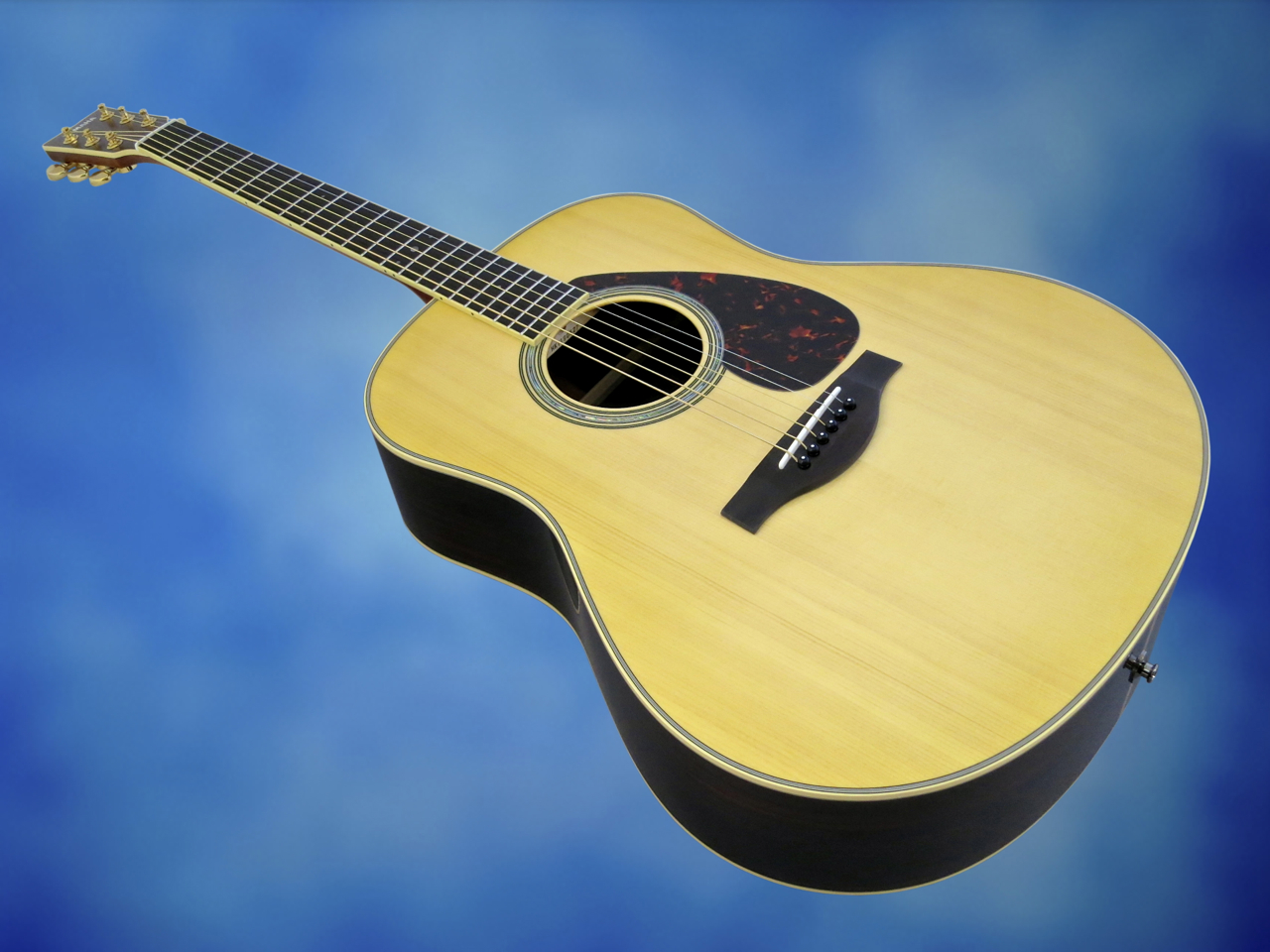
Kitarablogi had the pleasure to take a Yamaha LL6 ARE (current price in Finland:534,90 €) for a spin.
****
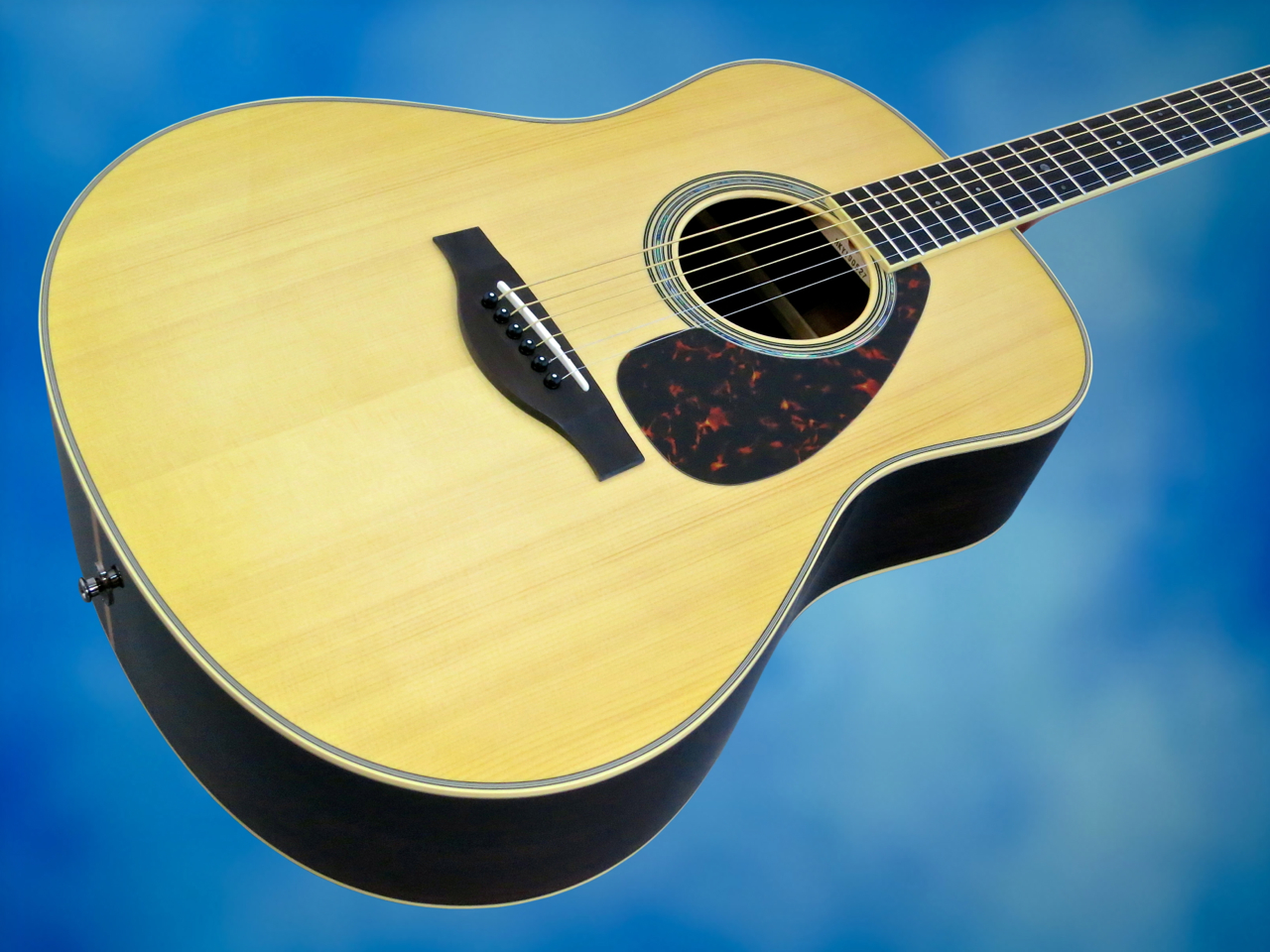
Yamaha’s Original Jumbo body style is the company’s own design, set apart from a traditional Dreadnought by its slimmer shoulders and its more rounded lower bout. The result looks nicely balanced.
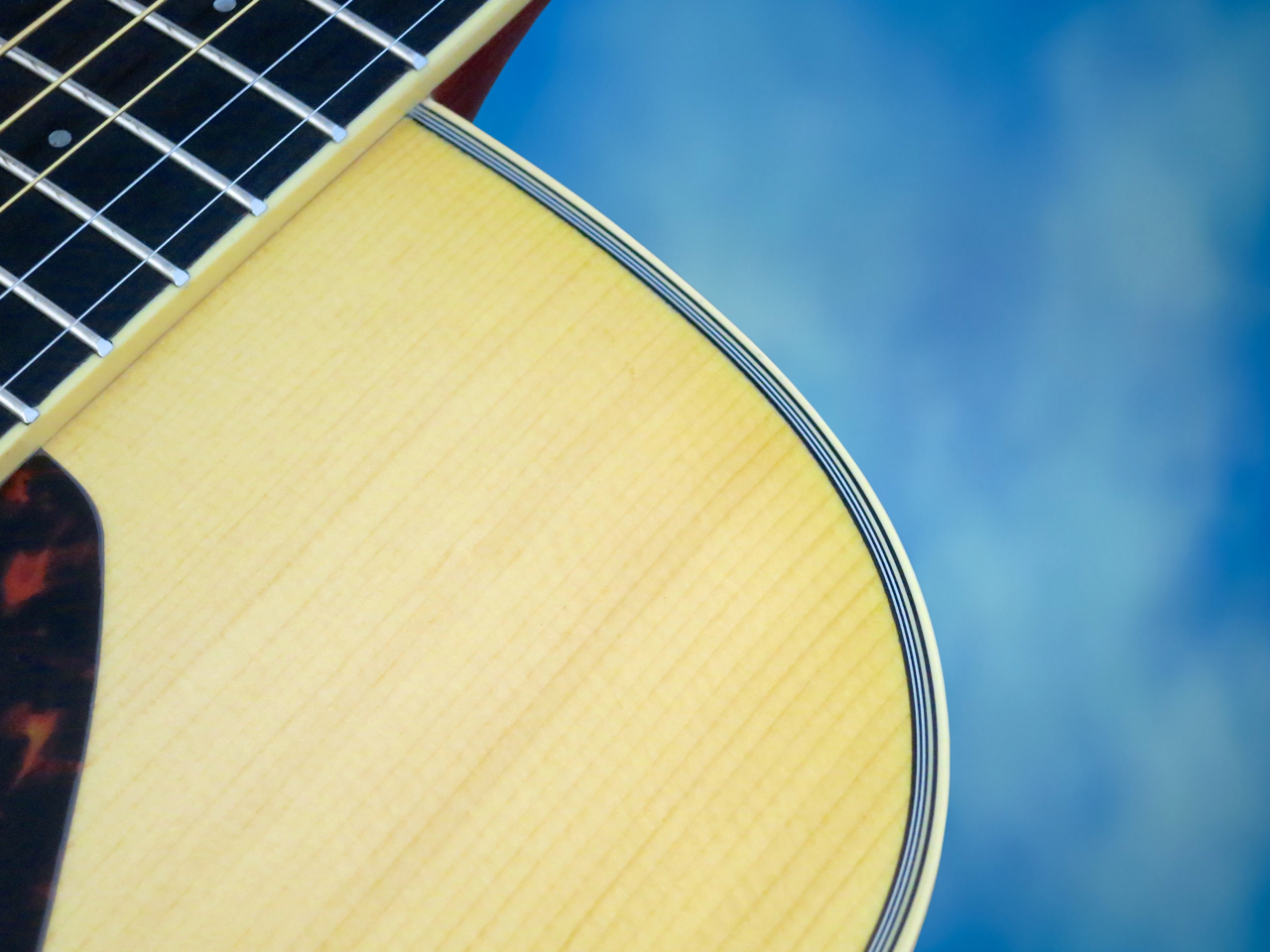
Yamaha uses solid Engelmann spruce for all of their L-Series tops. Engelmann spruce has a reputation for sounding warmer and less constricted, when compared to Sitka spruce.
The LL6 is available in four different finishes – natural, brown sunburst, black and Dark Tinted (a deep reddish-brown hue).
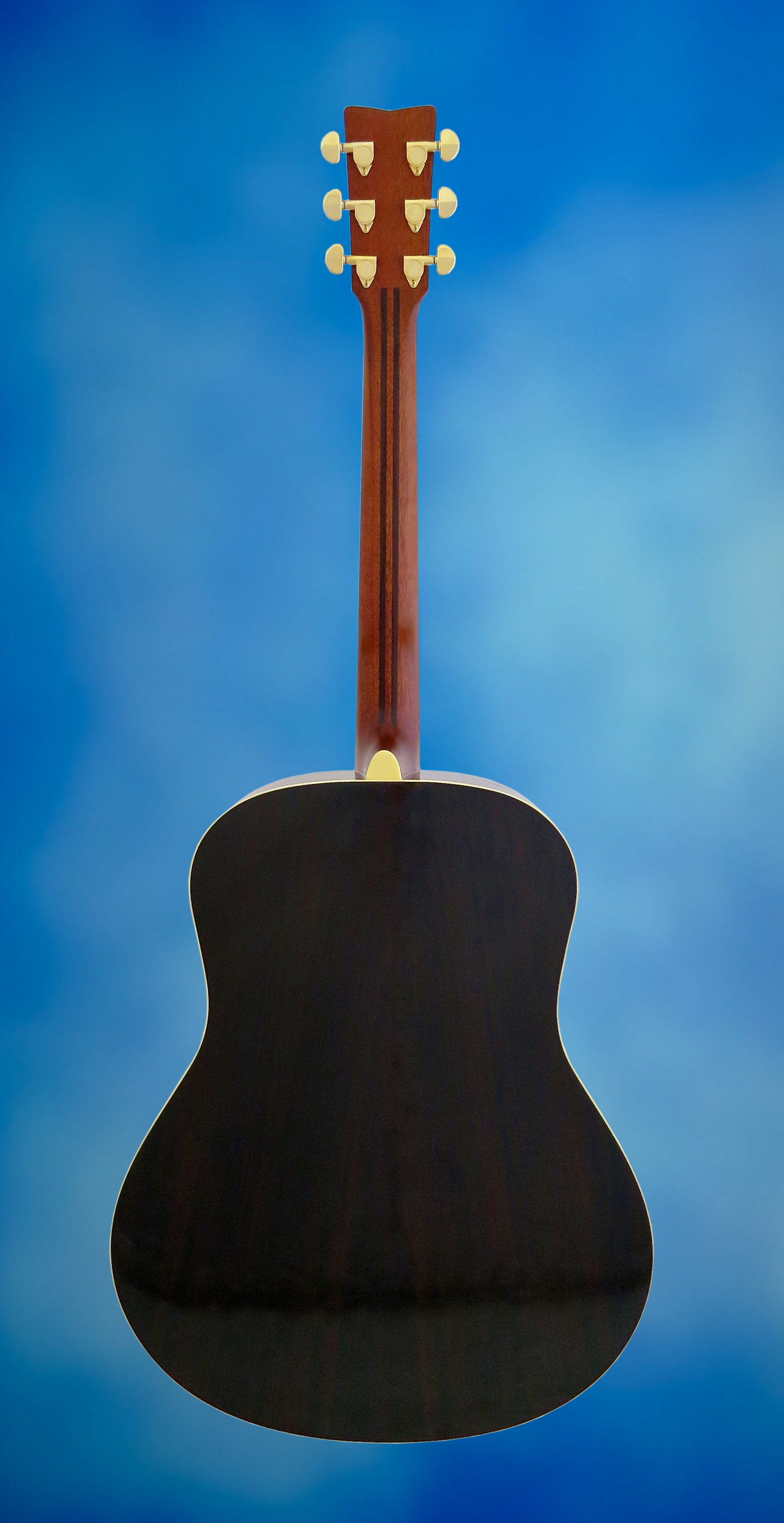
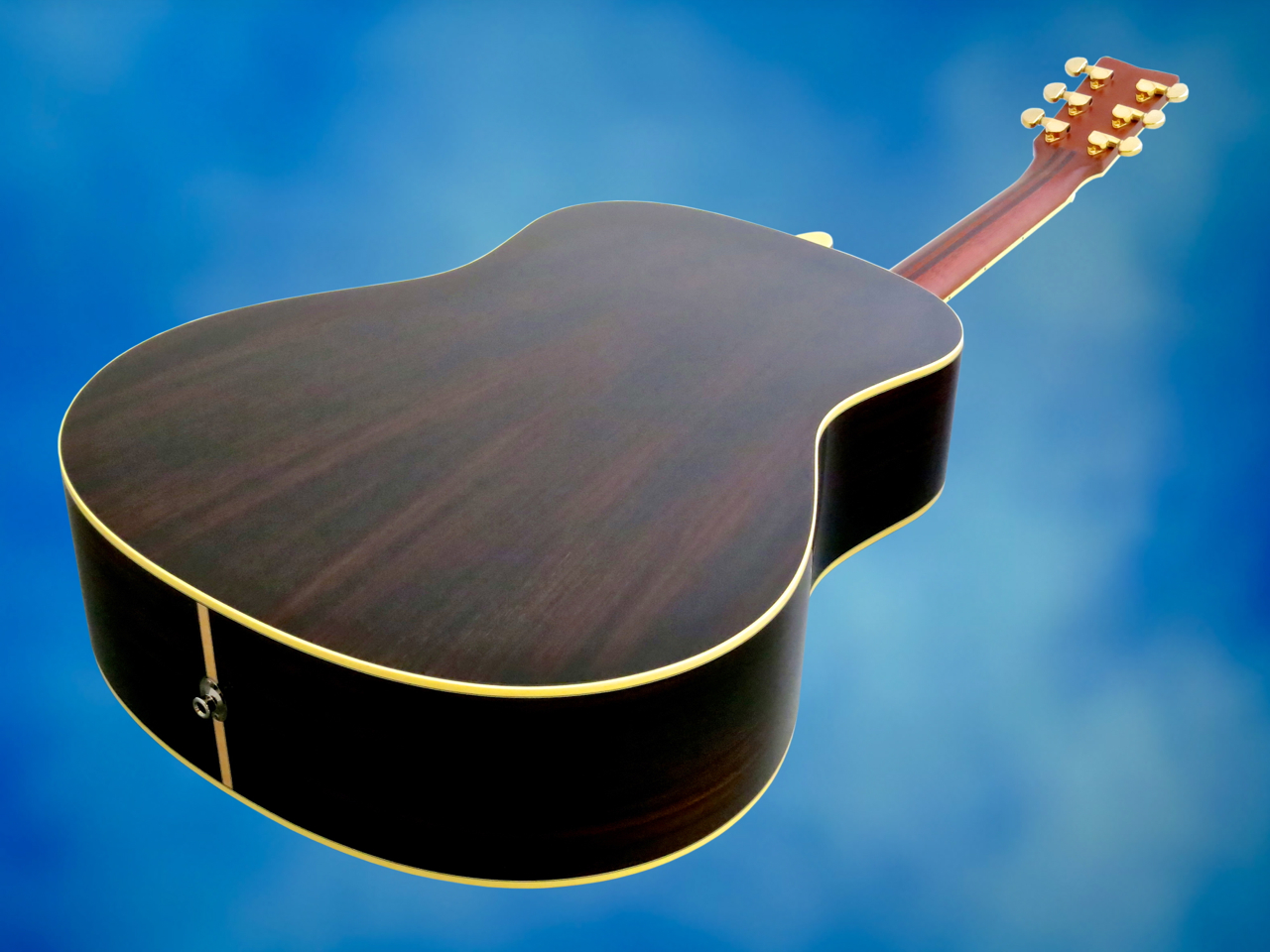
The Yamaha LL6’s sides and back are made from beautifully grained laminated rosewood. There’s a mahogany backed version available, too, the Yamaha LL6M ARE.
The guitar’s body has received a gloss finish, while the back of the neck sports a thin satin finish.
The bound headstock is home to a set of TM-29G tuning machines.
All new L-Series instruments come with five-piece necks. In the LL6’s case this means three pieces of mahogany with two strips of rosewood sandwiched between them. The idea behind this type of construction is to add stiffness to the neck, and thus sustain.
The LL6’s headstock and neck heel are crafted from separate pieces of mahogany, which are then glued to the main part.
The quality of the fretwork on this Yamaha is very good.
Another new feature across all L-Series models are rolled-in fingerboard edges for an even more comfortable playing experience.
Yamaha uses a modified type of non-scalloped X-bracing on all L-Series tops, which is meant to add a healthy dose of punch and warmth into the mix.
The centre ring of this beautiful soundhole rosette has been crafted from genuine abalone shell.
There’s multiple binding on the Yamaha’s top, as well as single ply cream binding around the back.
The LL6 comes with a Yamaha SRT Zero Impact piezo pickup hidden beneath its compensated bridge saddle.
As the main focus of the LL6 lies on its acoustic performance, Yamaha wanted an unobtrusive pickup system without the need for an on-board preamp or a battery compartment. This is why the LL6 comes equipped with a passive pickup that is wired directly to the output jack.
Yamaha’s LL6 ARE is sold in its own soft case, which is a nice hybrid of a gig bag and a hard case.
****
It speaks volumes about Yamaha’s high standards of craftsmanship, as well as the company’s stringent quality control, when the importer’s product specialist takes you to the warehouse, and simply hands you an untouched shipping carton, without even opening it. His only question was: ”Which colour would you prefer?”
And, judging from the review guitar, this trust in Yamaha’s quality control seems totally justified. When I opened the soft case I found a great instrument in fine fettle.
The neck’s new-and-improved oval C-profile feels fantastic, and the nut width of 44 mm offers enough room for complex fingerings. Yamaha have gone for a good working compromise at the bridge, too, with an E-to-e-string spacing of 55 mm, that most strummers and fingerpickers will get to grips with nicely.
The playability was first rate (remember this is a sub-600 € guitar):
The action with the factory-installed 012-gauge set was really comfortable (string height at the 12th fret: low E – 2.1 mm/high e – 1.6 mm), and the guitar played beautifully, without any rattles or buzzes whatsoever.
It’s virtually impossible to verify any claims that Yamaha’s A.R.E.-treatment makes the LL6 ARE sound like well played-in ”old ’un”, because no two vintage guitars are the same, and also because I didn’t have a ”non-A.R.E.” Yamaha to hand.
What I can say, though, is that the Yamaha LL6 ARE sounds very open, dynamic and mature, right out of the shipping carton. Many brand-new steel-string acoustics require a playing-in period to lose a certain restricted sense of dynamics and a spiky top end. The LL6 ARE sounds warm, well-balanced and open right from the start.
Fingerstyle playing comes across well-articulated. The LL6 has a clear top end and a rich bass register; it’s a warm tone, but the bottom end never gets overbearing.
The first example has been close-miked with an AKG C3000 microphone:
For a no-frills, passive piezo system the LL6’s SRT-pickup sounds rather nice:
Combining both signals works well, too:
Strumming the LL6 gives you great punch, a sparkling top end, and plenty of mid-range character (AKG C3000):
The piezo-powered version is a bit drier, but still work well in my view:
Using both signals together sounds like this:
The rhythm guitar tracks in this short Beatles-cover have been recorded with a Shure SM57, while the lead guitar parts have been recorded direct off the built-in pickup:
****
The Yamaha LL6 ARE might be the most-affordable member of the L-Series, but it most certainly is a thoroughbred example of its species. The improved neck profile is a real treat, and the A.R.E.-treatment seems to make a clear difference. This is a beautiful instrument with a voice to match. I also like the straightforward pickup system, which offers a decent sound with no fuss. I’d really recommend you try out one of these guitars, as the LL6 ARE punches well above its weight.











 Kitarablogi.com – Finland's premier Guitar and Bass blog