Huuliharppujen testi tulossa Rockway-blogiin.
Mukana ovat:
Kitarablogi.com – Finland's premier Guitar and Bass blog
Juttuja kitaroista ja bassoista
Find a longer version of this track HERE.
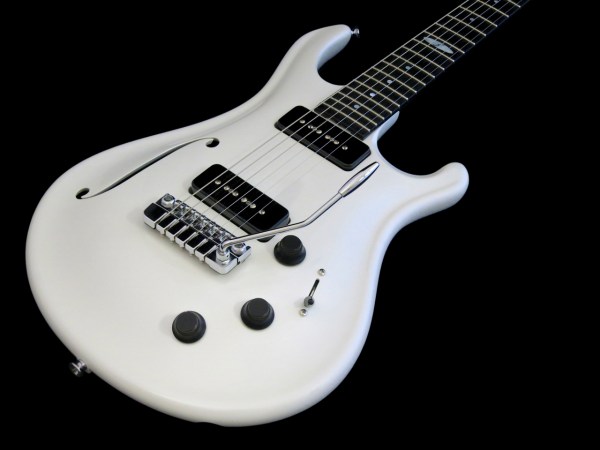
So, you want to buy an electric guitar? Let Kitarablogi.com help you find the guitar that’s ”the right one” for you.
There are a few things you should think through in advance, before setting out to your local guitar shop.
****
What guitar do I really want/need?
• The way you feel about a guitar’s looks and design can be an important factor in making a buying decision, and the same goes for the guitar your favourite artist plays. There’s nothing ridiculous in choosing an instrument for its looks, as there’s always a psychological component to how you approach a guitar. If you really dig the way an instrument looks, you will want to play it, and play it more often. This goes the other way, too – if you feel your guitar is ugly, playing it won’t be as much fun.

• Nevertheless, the most important criterion for buying your guitar should be the style of music you plan to use it for. Yes, theoretically you can play any guitar in any style – as Ted Nugent proves by playing loud Rock on an all-hollow archtop (a Jazz guitar) – but if you choose the ”right” instrument for a musical style, it will make things much easier.
Here are some examples of musical genres:
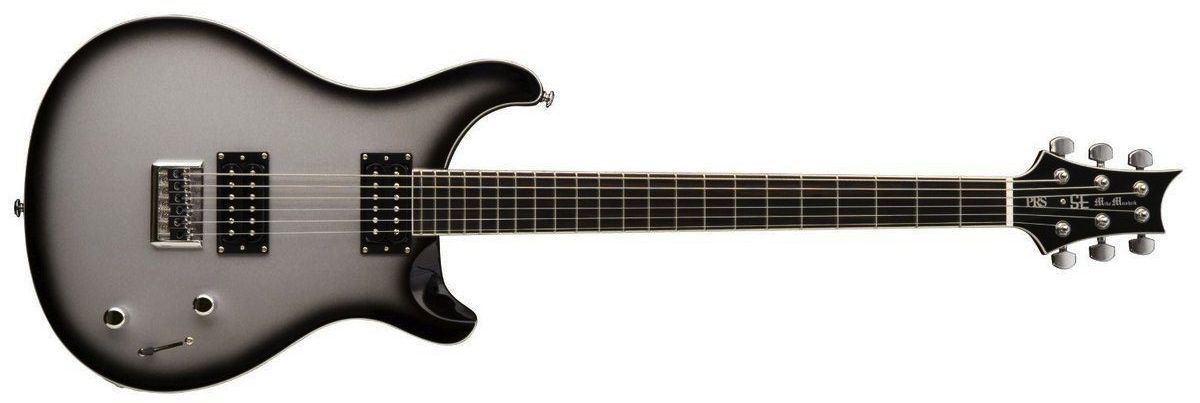
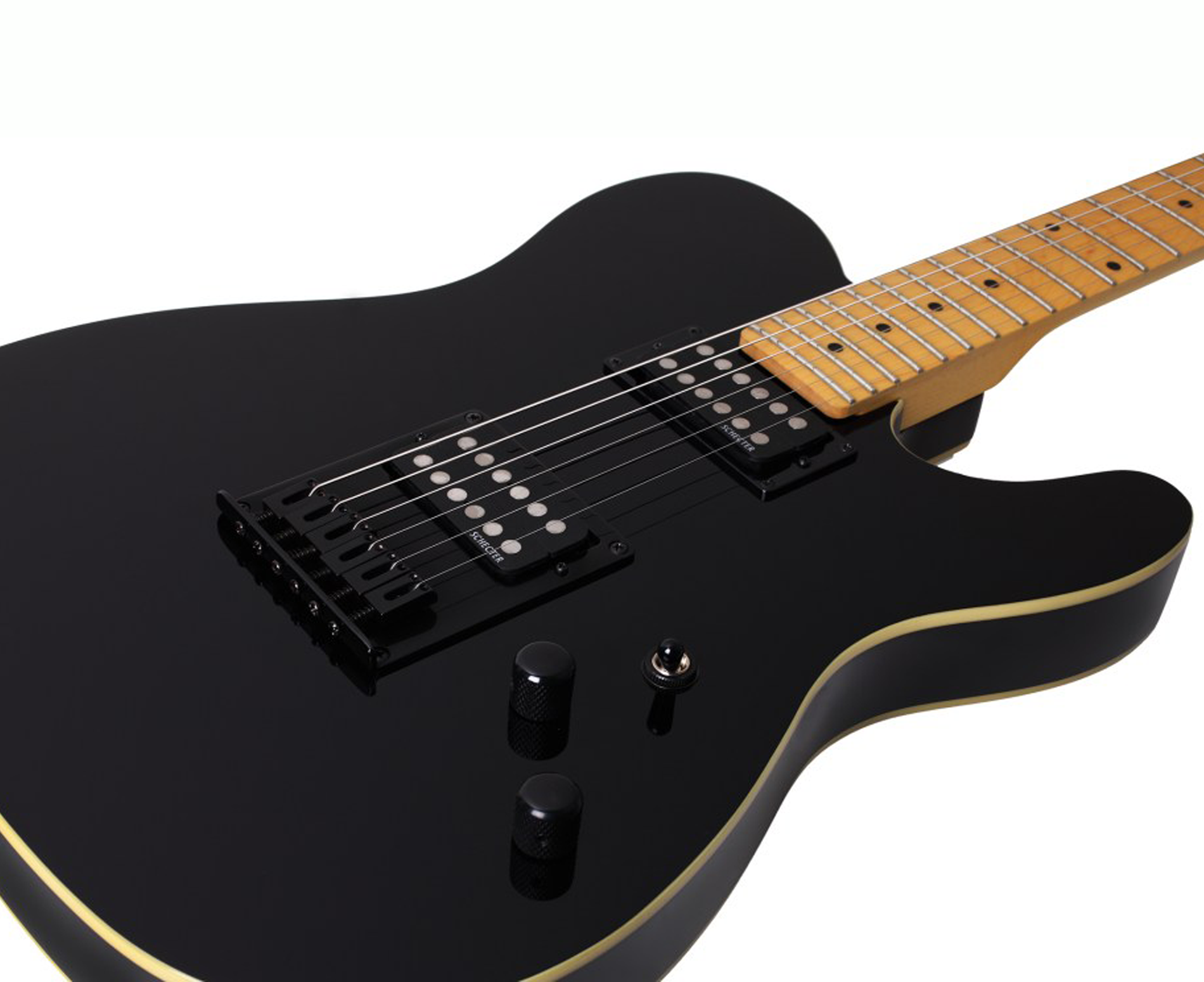
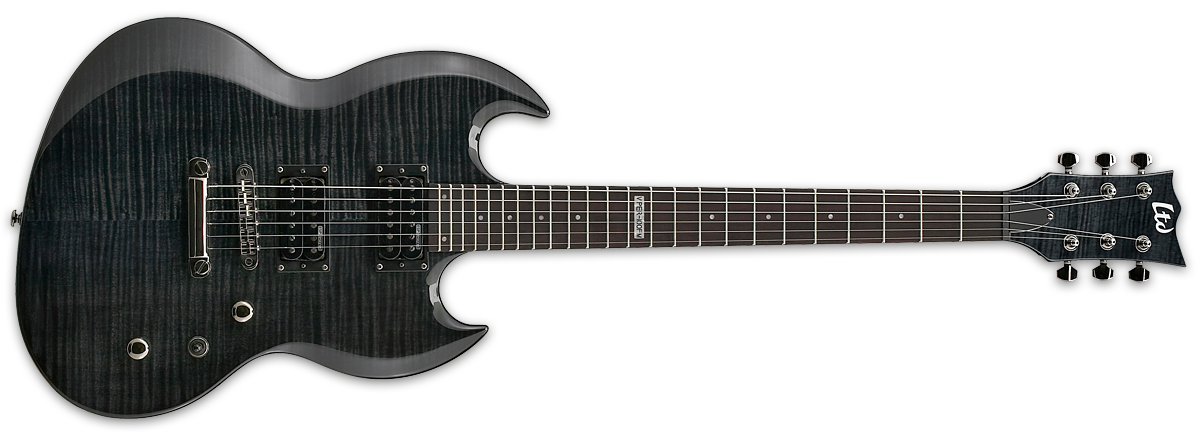
++ Modern Metal: As you’re dealing with large amounts of volume and gain, the best choice would be a solidbody guitar, equipped with humbuckers. Some prefer active pickups, while others like traditional passive designs more. Lead guitarists often go for a model equipped with a locking vibrato system, like a Floyd Rose.

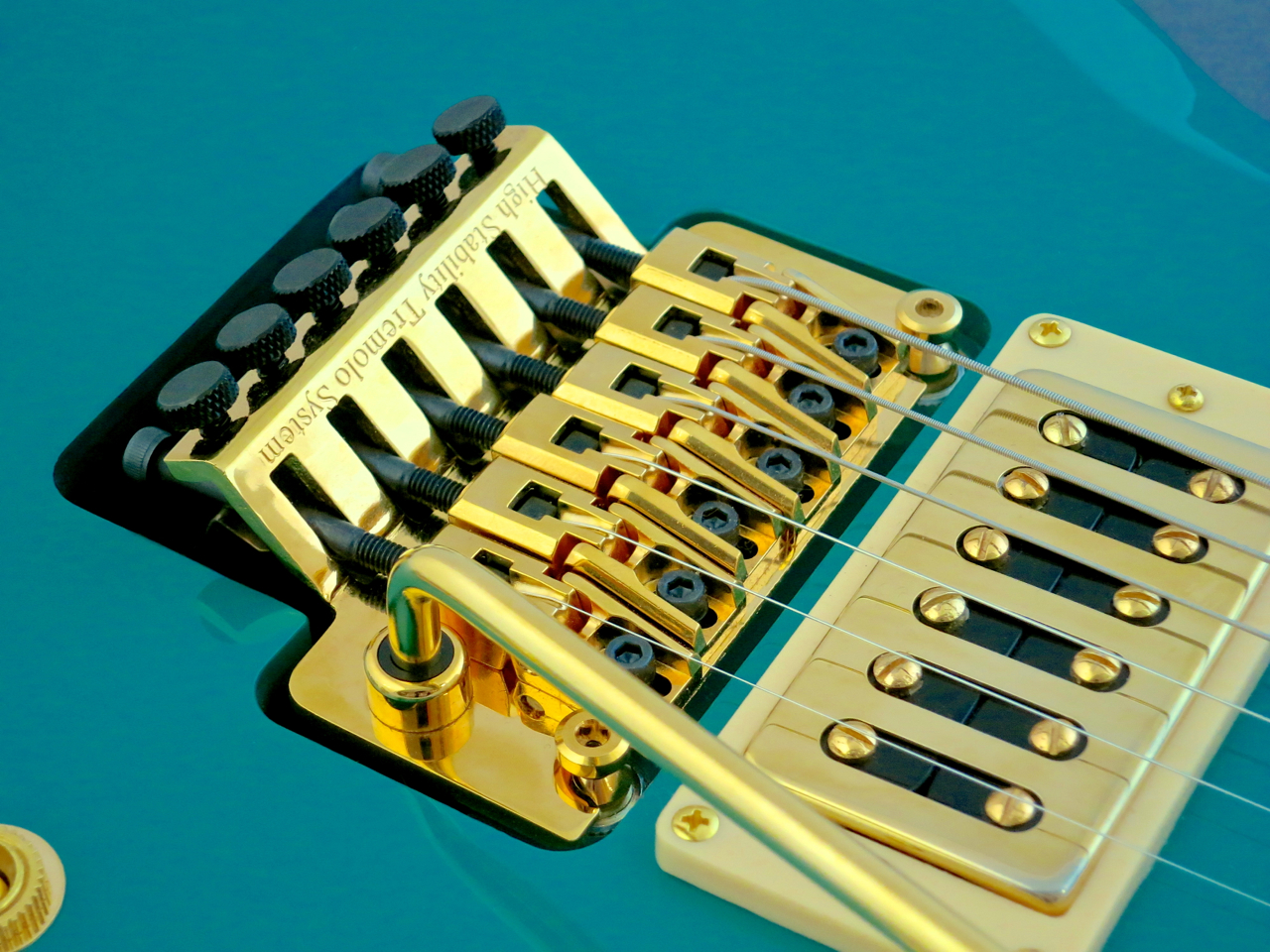
As many bands in this genre use lower than standard tunings, you could consider opting for a seven-string model (which offers an additional lower string), or even go full-out for a baritone electric.

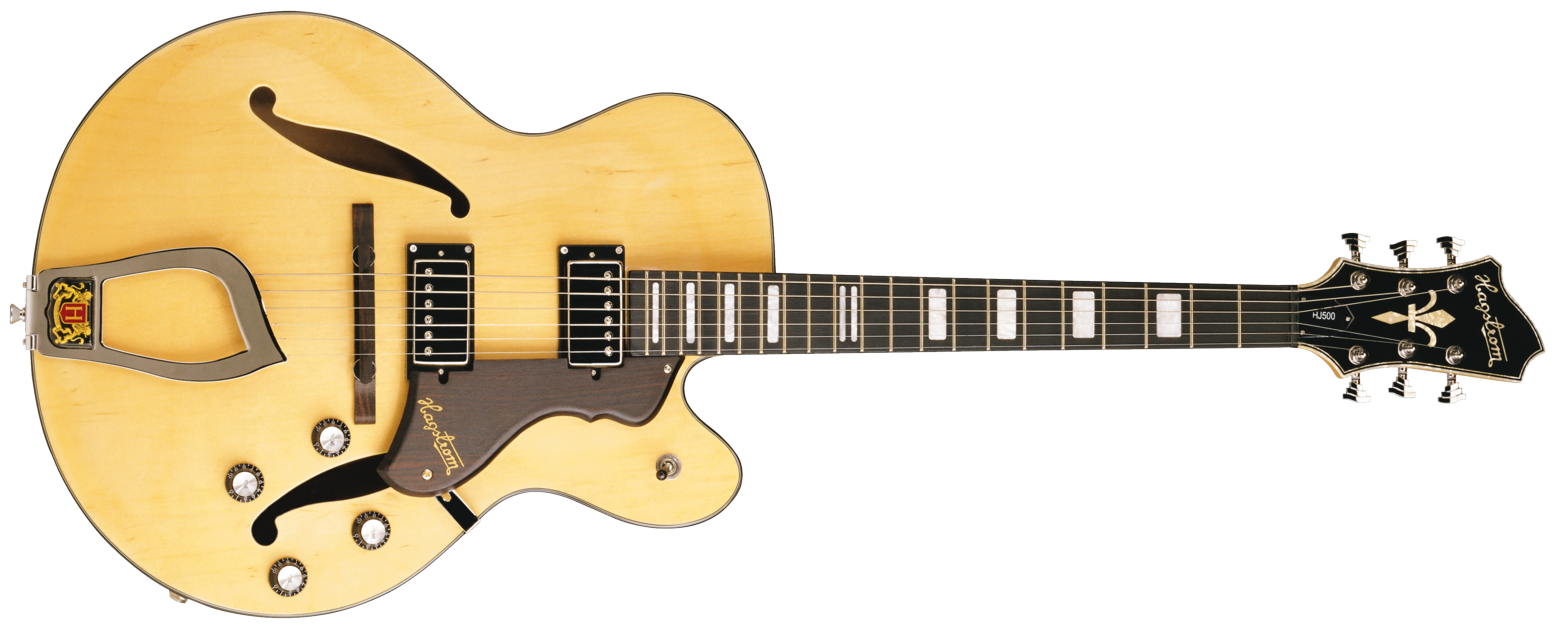
++ Jazz: Most Jazz guitarists like to stay in the traditional sonic space offered by all-hollow archtops or semi-solid ES-335-type guitars. The preferred pickup choices are humbuckers and P-90s.
++ Blues: Blues musicians use a wide variety of different guitars, depending on their personal taste. Here the most important thing is that you feel comfortable with your chosen instrument, in order to express your feelings without being hindered by your guitar. Locking vibratos and active pickups are very rarely seen in Blues music.

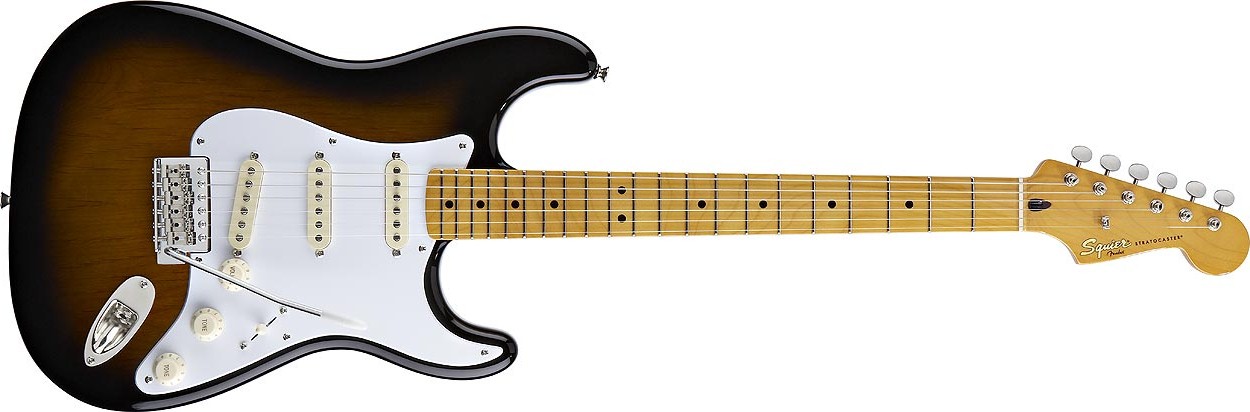
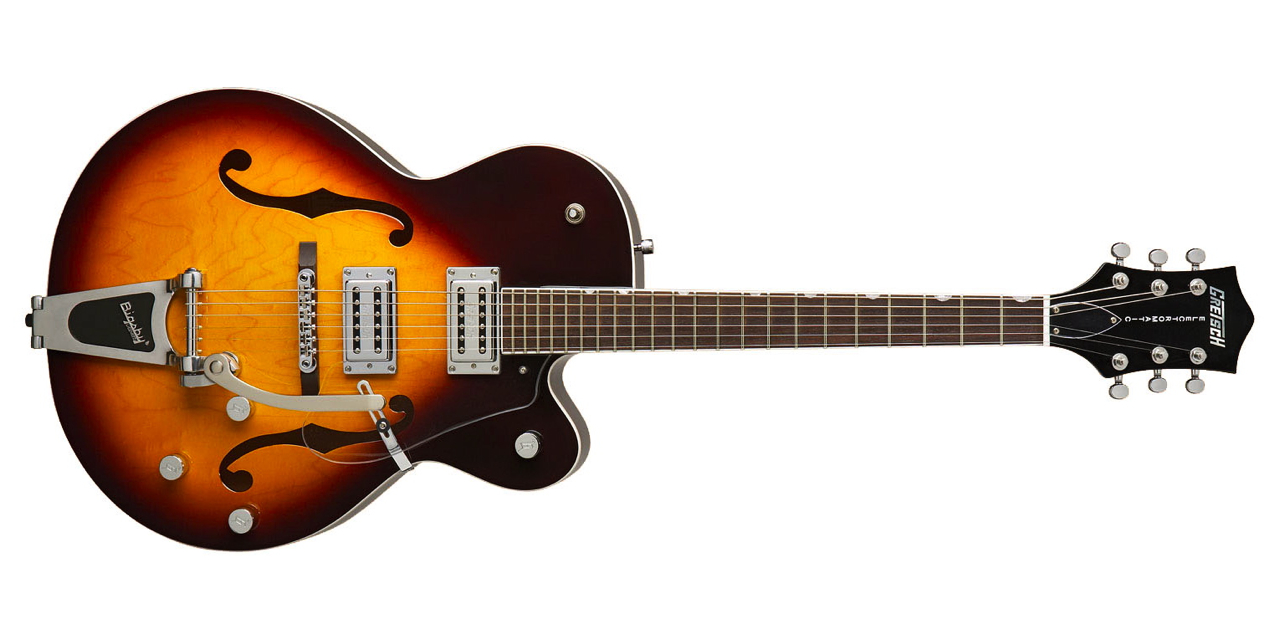
++ Country: Traditional Country guitarists tend to drift towards guitar models with a lot of chime and bite in their tone. Very often this means Fender-style single coils or a Gretsch guitar. Over the past couple of decades there’s been quite a lot of crossover from Rock into Country music, though, which has lead to more variety in the choice of instruments in this genre.
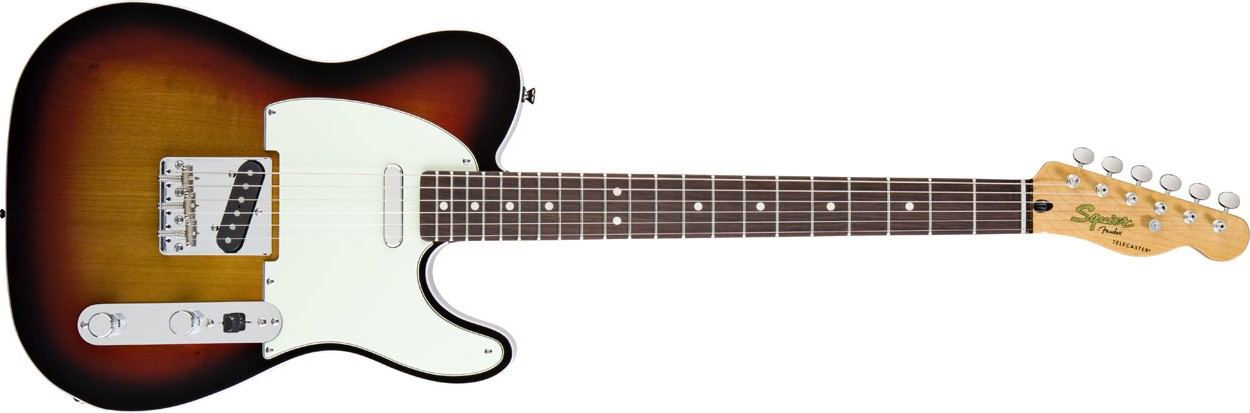
++ Classic Rock: Traditional 1970s Classic Rock is built upon humbucker-equipped solidbody guitars, which offer enough grit and output for this genre. Think Les Paul, SG or Telecaster Deluxe.
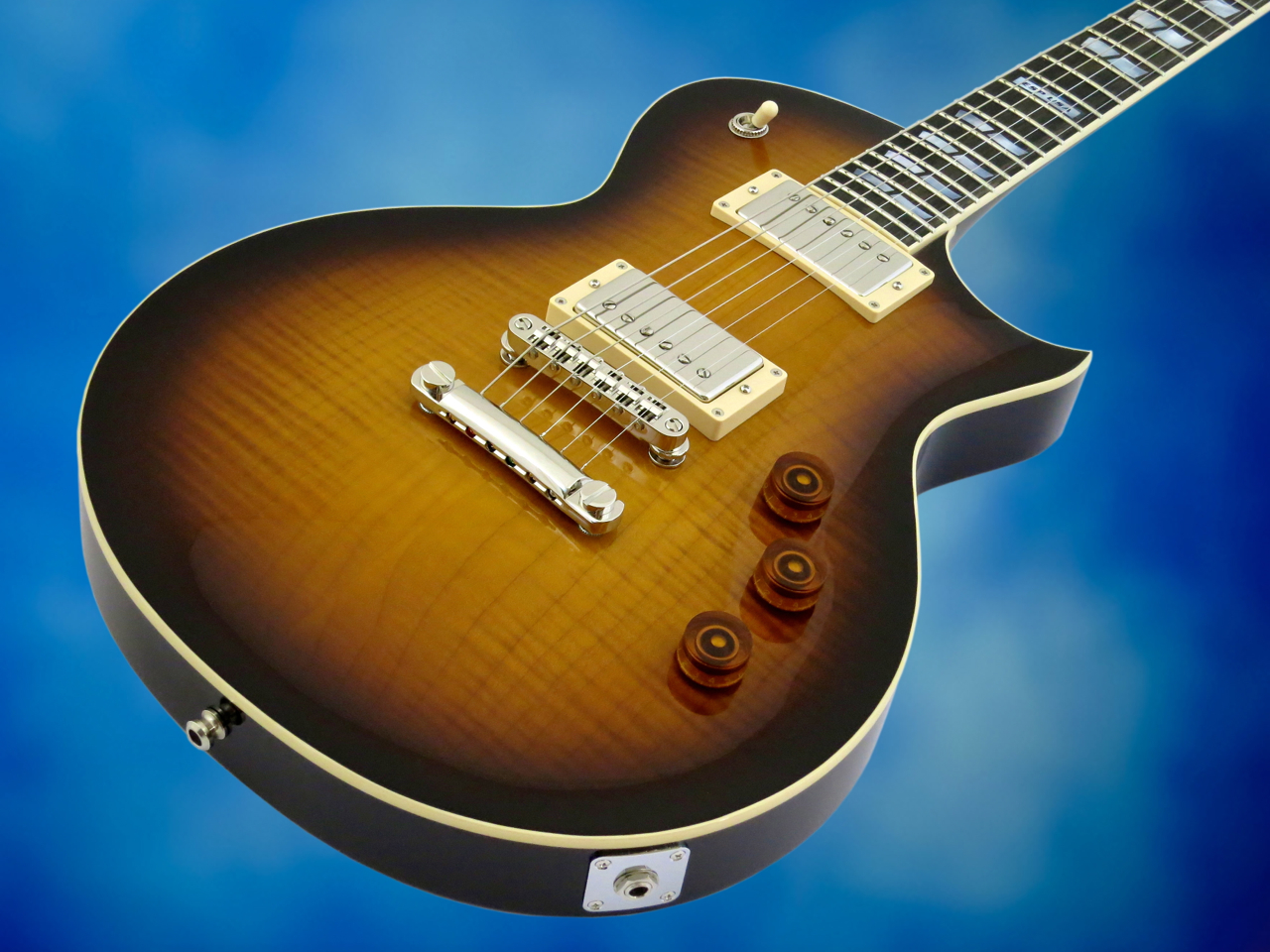

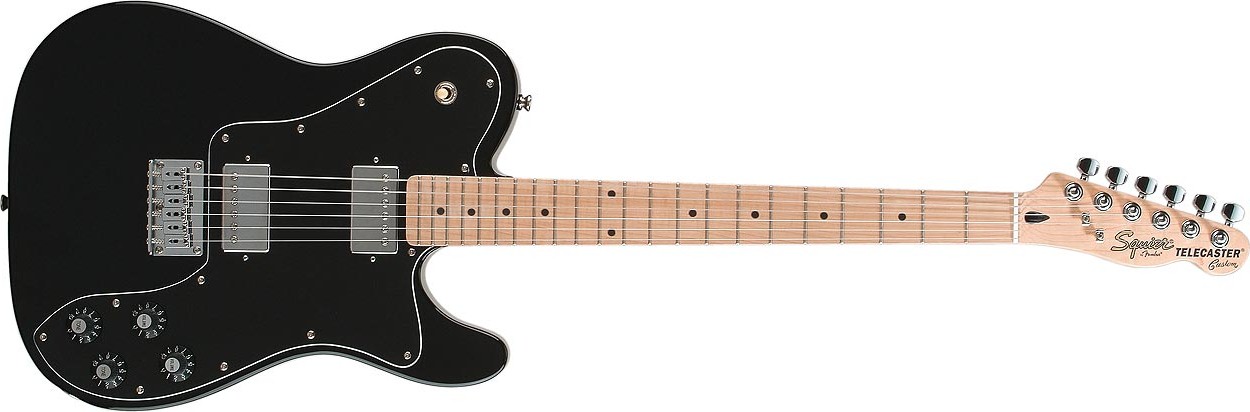
++ If this is going to be your first electric guitar: If you’re a beginner, we would suggest choosing a model that won’t confuse you with a large array of pickup- and switching-options. A non-vibrato bridge would also be a welcome feature, as vibrato bridges are generally harder to set up and keep in tune.
****
Set yourself a budget and stick to it!
• It is important that you set yourself a budget for your guitar shopping. If you have a good idea of your target price range, you will be able to sift through all the different guitars on offer much more quickly, by leaving out any models that are too expensive (or too cheap). This will make choosing your instrument a bit easier.


****

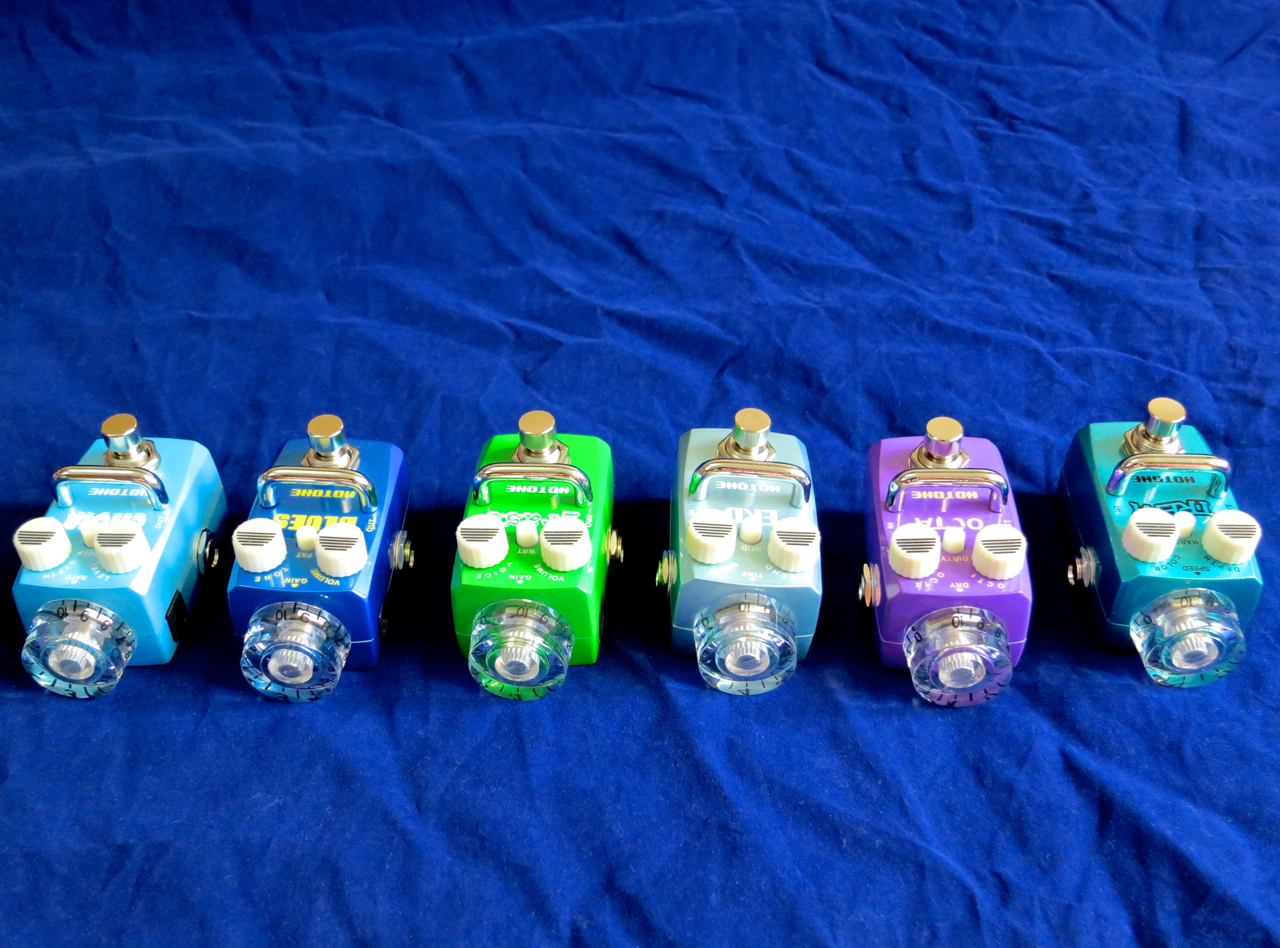
Some of the cuddliest pieces of equipment at this year’s Frankfurt Musikmesse came in the guise of Hotone Audio’s ranges of micro-sized effect pedals and amplifier heads.

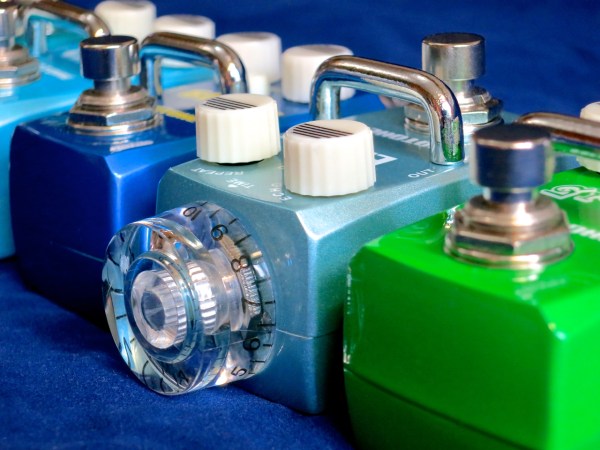
The special eye-catcher with the Skyline-series pedals is the transparent Gibson-style control at their front end.

Two coloured status-LEDs behind the transparent knob light up, whenever the effect is switched on.
Naturally, you cannot fit a nine volt battery inside such a tiny pedal, which is why Hotone Skyline pedals have to get their juice from a power supply (9 V, negative centre – not included).
****

The dark blue Hotone Blues (current price in Finland: 65 €) is an overdrive pedal specialised in producing juicy Blues tones by using a pair of overdrive circuits wired up in series.

The big knob is for gain adjustment, while the two noctilucent (meaning: they glow in the dark) knobs deal with tone and master volume, respectively.

Engaging the Fat-button adds a bigger bottom end to proceedings.
Listen to Hotone’s own demo of the Blues pedal:
****

Hotone’s Choir pedal (65 €) comes in a fetching baby blue colour scheme. This is the analogue chorus pedal of the Skyline series, built around a Panasonic BBD MN3207 bucket-brigade chip.

The Gibson-knob controls speed, while chorus depth and effect are controlled by the smaller knobs.

Depressing the Deep-switch will send you to the bubbly depths of psychedelia.
****

The Hotone Eko (65 €) is a delay offering you some analogue character.

The Eko’s maximum delay time is around 500 ms, which is long enough for most Rockabilly, Rock and Pop applications, but maybe just a bit too short for serious Brian May-style layering.

The Mod feature adds a sprinkle of tape-style wow and flutter to your delay sound.
****

The Skyline series also includes a Tube Screamer-inspired vintage overdrive, called the Hotone Grass (65 €).

The pedal offers you controls for gain, volume and Voice (tone).

The BRT-switch (for ”bright”) adds top end bite to your tone.
****

One of Hotone’s newest pedals – the Octa (80 €) – is an octaver that features both ”octave down” (OCT1), as well as ”octave up” (OCT2) signal in two different operating modes.

The regular Clean-mode is polyphonic, meaning you can play chords, too.

Octa’s Dirty-mode gives you a vintage-style, monophonic experience (you can only play single note runs), and sounds funky and greasy (in a good way).
And yes, you can use the Hotone Octa with your bass, too!
****
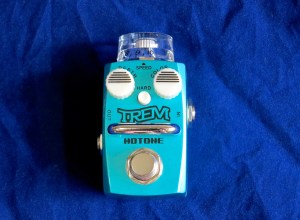
Hotone’s Trem (65 €) is an über-compact – yes, you guessed it – opto-tremolo pedal.

In addition to tremolo speed and depth you can also adjust the tone colour of the effect.

When choosing the Hard-mode the trem effect changes from a smooth, sine-style wobble to a harder on/off-type effect.
****

Despite their diminutive size Hotone’s Skyline-pedals aren’t toys, but grown up guitar effects!
Their zinc-alloy casing seems to be very sturdy, while the bent metal rod north of the footswitch works effectively in preventing your foot from hitting the pedal controls. Each pedal comes with two stick-on base covers – the non-slip rubber-type cover is for straight-on-the-floor use, while the velcro-style counterpart makes creating a micro-sized pedalboard possible.
The large control knobs aren’t just a visual gimmick, but also make it much easier to place three controls on such small pedals.
In terms of effect quality Hotone’s Skyline series is straightforward in the best sense of the word. Each of the six pedals I tried does exactly what you’d expect it to do, winning me over with a very decent sound. At these low prices you’d be crazy to expect esoteric boutique-quality effects, instead the Hotone Skyline pedals proved to be great guitar effects for your everyday needs.
I recorded a demo song with the review sextet:
• rhythm guitars: Hotone Choir (panned left), Hotone Trem (centre) and Hotone Eko (right)
• lead guitars: 1. Hotone Blues, 2. Hotone Octa, and 3. Hotone Grass
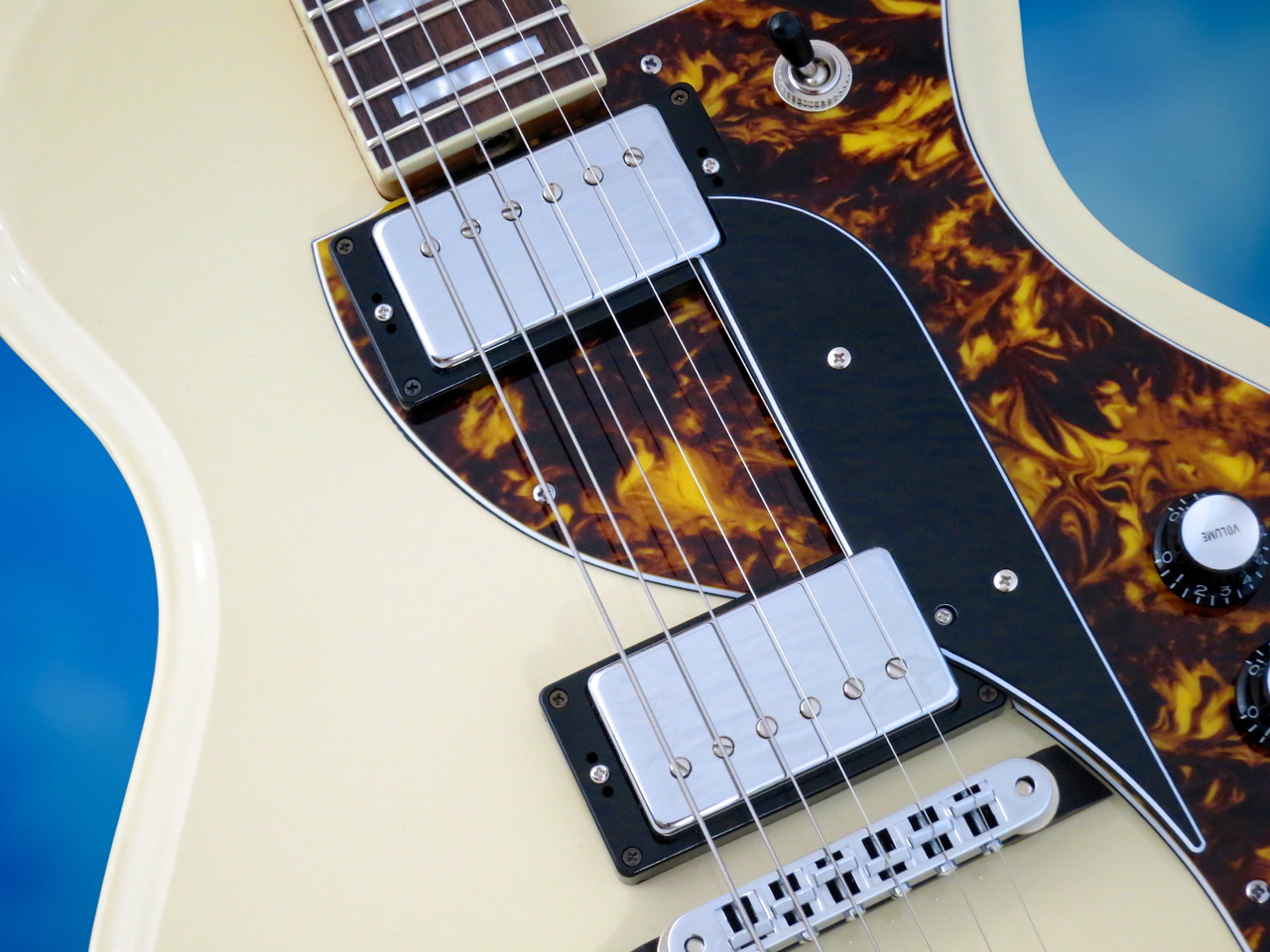
I used my Gibson SG Melody Maker for all of the guitar tracks, played through a Blackstar HT-1R valve combo:

****
Hotone Audio Skyline Series
Current prices in Finland: 65-80 €
Finnish distributor: R-Jam Group
****
Pros:
+ size
+ value-for-money
+ sound
****
Yksi todellinen valopilkku tämänvuotisessa Frankfurt Musikmessessä oli Hotone Audion mallisto mikrokokoisia efektipedaaleja ja vahvistinnuppeja.
Skyline-sarjan pikkupedaalien visuaalinen juju piilee niiden isokokoisissa, Gibson-tyylisissä säätimissä kotelon etupuolella.
Nupin takana on upotettu kaksi värillistä LEDiä.
Tällaisiin pikkulootiin ei luonnollisesti mahdu paristoja sisään, minkä takia Hotone Skyline -efektit toimivat Boss-standardia noutavalla virtalähteellä (9 V, miinus keskellä – ei kuulu hintaan).
****
Sininen Hotone Blues (65 €) on Blues-säröihin erikoistunut säröpedaali, joka saa kermaiset soundinsa kaksivaiheisesta overdrive-piiristä.
Isolla nupilla säädetään efektin gain-määrää, kun taas pienet valkoiset säätimet toimivat tonena ja master volumena.
Fat-kytkimellä saadaan lisää tuhtia alakertaa menoihin.
Tässä on Hotonen oma Blues-pedaalin demo:
****
Vaaleansininen Hotone Choir (65 €) on Skyline-sarjan analoginen choruspedaali, ja se perustuu Panasonic BBD MN3207 -”ämpäriketjuun”.
Gibson-nupilla määrätään vatkauksen nopeutta, kun taas pikkusäätimillä säädetään efektoidun signaalin voimakkuutta ja efektin syvyyttä.
Deep-kytkintä painamalla saa efektistä vielä syvemmän.
****
Hotone Eko (65 €) on firman analogimallinnuksella varustettu digitaalinen viive.
Ekon maksimaalinen viiveaika on noin 500 ms, mikä kattaa hyvin tyypilliset Rautalanka-, Pop- ja Rock-musiikin tarpeet.
Mod-kytkimellä voi lisätä viive-efektiin nauhakaiku-tyylistä huojuntaa ja modulaatiota.
****
Skyline-sarjan vintage-tyylinen overdrive-särö on nimeltään Hotone Grass (65 €).
Pedaalissa on säätimet gainea, äänensävyä ja lähtötasoa varten.
BRT-kytkimellä saa esiin lisää purevuutta.
****
Hotonen uusin pedaali – Octa (80 €) – on oktaaveri, joka tarjoaa sekä ala- (OCT1) että yläoktaavin (OCT2), ja sillä on sen lisäksi vielä kaksi eri toimintamoodia.
Puhtaassa ja polyfonisessa perusmoodissa on mahdollista soittaa jopa sointuja.
Dirty-moodissa pedaali muuttuu monofoniseksi, ja efektin soundista tulee – vanhan analogioktaaverin tavoin – herkullisen likainen.
Hotone Octa -pedaalia voi muuten käyttää myös basson kanssa!
****
Hotone Trem (65 €) on optotremolo erittäin kompaktissa koossa.
Tremoloefektin nopeuden ja syvyyden lisäksi pystyy Trem-pedaalissa säätämään myös efektin soundia.
Painamalla Hard-kytkimen sisään tremoloefekti muuttuu pehmeästä siniaalto-kaltaisesta soundista, enemmän on/off-tyyppiseen soundiin.
****
Pienuudesta ja hauskasta ulkonäöstä huolimatta Hotonen Skyline -sarjan pedaalit eivät ole leluja, vaan ihan oikeita kitaraefektejä.
Sinkistä valettu kotelo tuntuu hyvin kestävältä, ja jalkakytkimen yläpuolelle asennettu metallikaari suojaa pieniä säätimiä tehokkaasti polkaisujen voimalta. Jokaisen pedaalin mukaan tulee sekä paksu kumimainen pohja että tarranauhapohja – käyttäjä voi liimata sopivimman pohjan käyttötarkoituksen mukaan efektipedaalin pohjaan.
Kotelon etupuoleen sijoitettu säädin ei ole vain visuaalinen kikka, vaan se helpottaa myös tuntuvasti kolmen säätimien (ja yhden kytkimen) käyttöä näin pienikokoisessa paketissa.
Soundillisesti Hotonen Skyline-sarja on suoraviivainen ja mutkaton sanojen parhaassa merkityksessä. Jokainen kokeilemani pedaali teki juuri sitä mitä siltä odotin, ja pedaalimallisto vakuutti minut hyvillä soundeillaan. Tarjolla ei ehkä ole esoterista putiikkilaatua – ja olisi hullua odottaa sellaista näin edullisista efekteistä – mutta jokainen testaamani Hotone Skyline -pedaali on hyvin käyttökelpoinen ja inspiroiva ”jokapäivän efekti”.
Äänitin seuraavan demobiisin kaikki kitararaidat Hotone-pikkupedaaleilla:
• komppiraidat: Hotone Choir (vasemmalla), Hotone Trem (keskellä) ja Hotone Eko (oikealla)
• liidit: 1. Hotone Blues, 2. Hotone Octa ja 3. Hotone Grass
Käytin kaikissa raidoissa Gibson SG Melody Maker -kitarani, sekä Blackstar HT-1R -putkikombon:
****
Hotone Audio Skyline Series
Hinnat: 65-80 €
Maahantuoja: R-Jam Group
****
Plussat:
+ koko
+ hinta-laatu-suhde
+ soundi



 Kitarablogi.com – Finland's premier Guitar and Bass blog