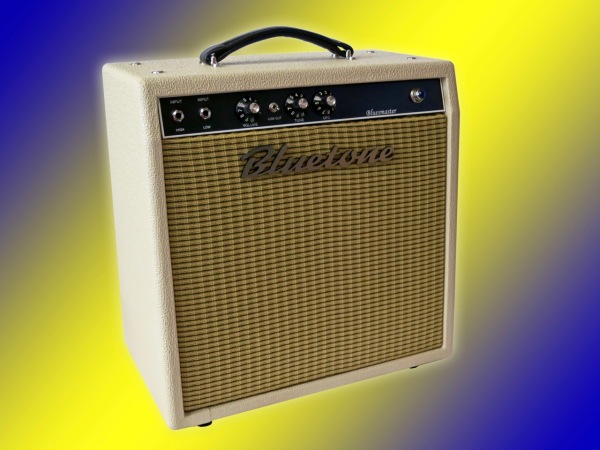
Review: Bluetone Bluesmaster – Straightforward and to the point

No effect pedals were used on the guitar parts in this demo.
The original Fender Musicmaster Amp is a practice bass amp from the 70s and early 80s.

Fender’s original Musicmaster Bass amplifier was an odd concoction. The Musicmaster Amp was meant as a practice amplifier for beginning bassists – and sometimes even sold in a pack with the starter bass guitar of the same name – but it fell strangely flat of expectaions. The amp was underpowered and sounded flabby and uninspiring as a bass amp.

More recently, though, guitarists on the hunt for good bargains have come to realise that the Musicmaster Amp is a relatively inexpensive way to buy a genuine ”silverface” Fender. It’s a stripped-down valve amp for sure, but it still deliveres a lot of character, when used with an electric guitar. And because it isn’t a collectable Fender model, people feel free to modify the original for their own purposes.

This is where it starts to get interesting:

Finnish boutique amp maker Bluetone has released its own handcrafted and improved version of the Fender Musicmaster a few weeks ago, meant expressly for guitarists. This new guitar combo is called the Bluetone Bluesmaster, and it will set you back between 960 to 1,190 euros, depending on your chosen options and finish.

The signal path closely follows that of the original, but the Bluetone Bluesmaster adds such handy features as a Low Cut switch and the company’s own three-way rotary OPC-switch. The OPC-circuit (Output Power Control) enables you to drop the Bluesmaster’s output power from its full 10-12 watts down to something like 2 watts, virtually without any negative impact on the amplifier’s tone.

The original Musicmaster amp had been designed to reflect its low price tag. Fender’s engineers got rid of any components that weren’t strictly necessary to get the audio signal from the input to the speaker. Their most interesting – and quite unique, as it turns out – decision was to use an audio transformer for phase inverter-duties, instead of the much more common option of using a valve.

As you can see in the photo above, Bluetone has used the same basic design for the new Bluesmaster combo. Next to the three tubes – a single 12AX7 for the preamp, and a pair of 6V6GTs for the power amp – there are three (!) transformers. Two small ones for phase inversion and signal output, respectively, as well as a larger toroidal transformer for the combo’s power requirements.
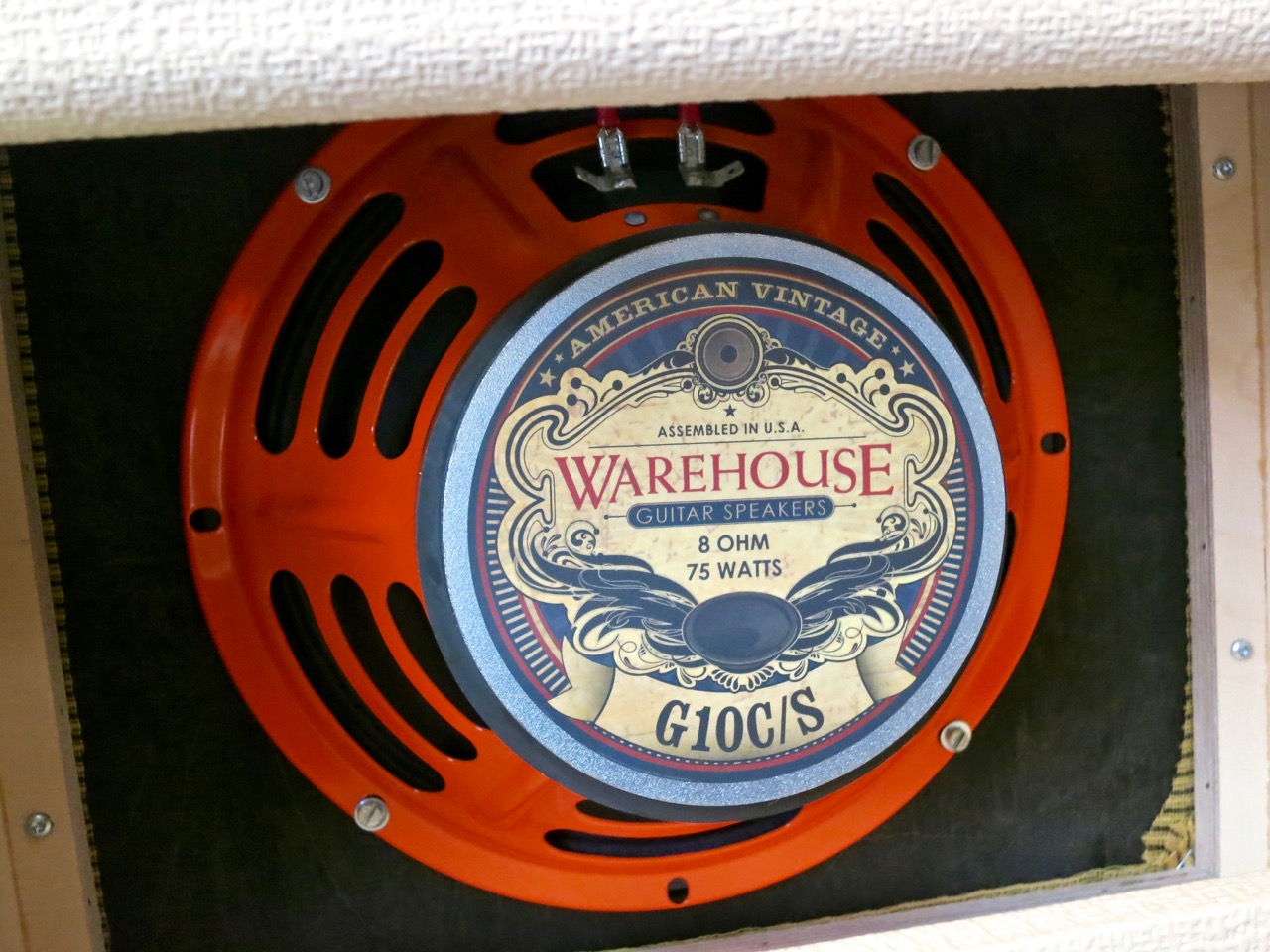
The favourite modification on old Musicmasters is swapping the weedy-sounding original Fender for a beefier speaker.

The Bluetone Bluesmaster does this for you and comes workshop-equipped with a 10-inch Warehouse Guitar Speaker G10C/S. The G10C/S is part of WGS’s American Vintage range and is known for its clear, but round top end, as well as for its pedal-friendliness and smooth breakup. Other speakers are available as an option, too (see Bluetone’s website).
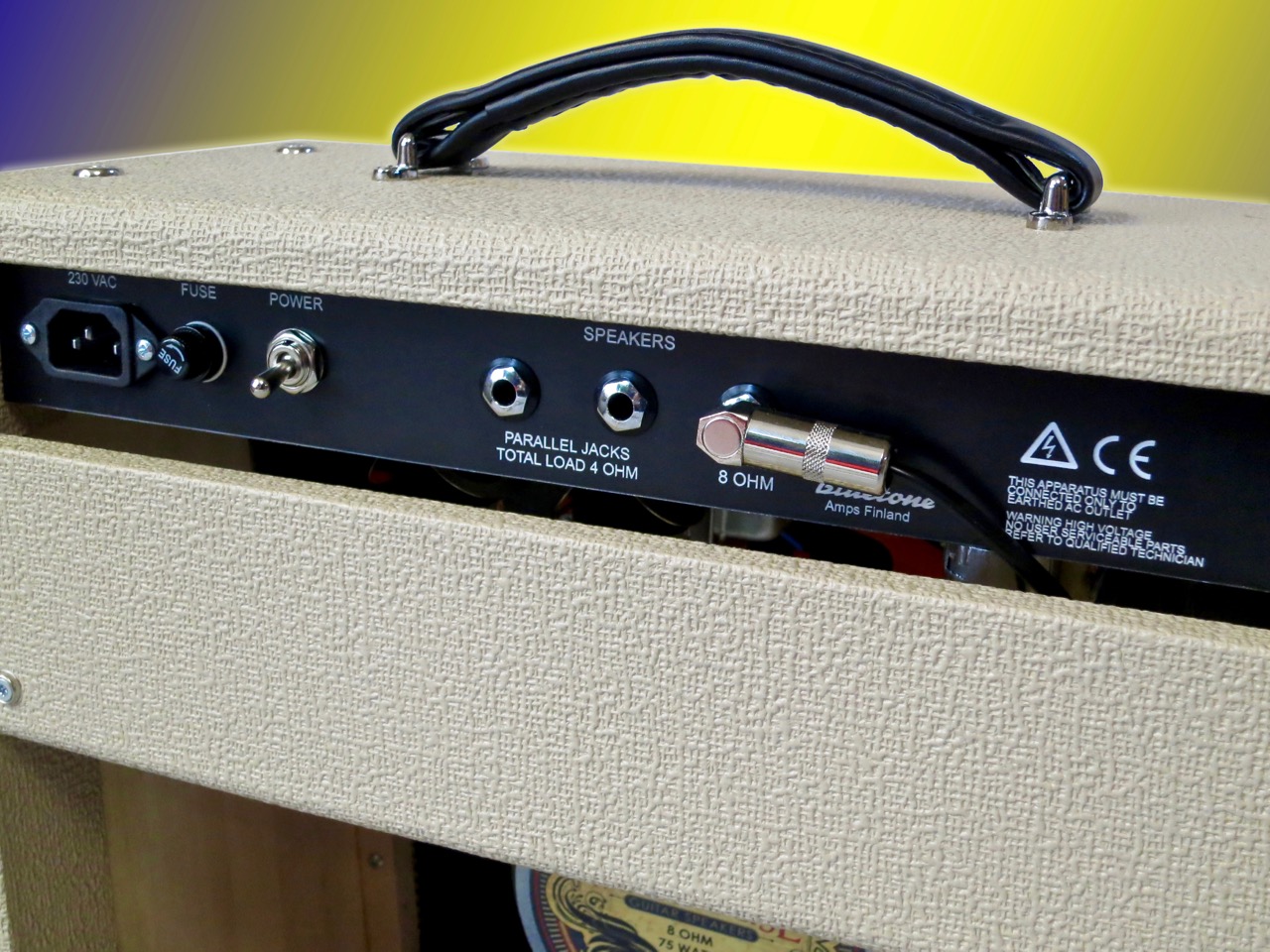
Apart from the power switch, the back panel offers a trio of speaker outputs.

****

Although the Bluetone Bluesmaster seems very straightforward and upfront at the beginning, there really is some sort of magic tone thing going on with this all-valve combo.

The sound may seem a bit dryish at first, but you will quickly notice a very enticing dose of juicy compression, even on very clean tones. This compression isn’t the ducking type, well known from many master volume amps and distortion pedals, which ducks the note attack and squashes the whole signal. Here we have a Country- and clean Blues-friendly type of compression that seems to lift the sustain phase of each ringing note.

Because this is a relatively low-powered tube combo without separate gain and master volume controls, it really makes sense to experiment with the Bluesmaster’s High- and Low-inputs and the combo’s volume control, to get the full picture of what sounds you can glean from which combination of guitar and settings.

The Bluetone Bluesmaster doesn’t offer tons of clean headroom, instead it has that magic clean-but-breaking-up tone zone down to a tee. The combo also works well with effect pedals.

There are also some chunky overdrive and distortion voicings available in the higher reaches of the Bluesmaster’s Volume-control. You should be aware, though, that, this being a non-master volume combo, running this amp at full tilt even at only 2 watts of output might get you into trouble with your neighbours in a block of flats.

All of the demo song’s guitar parts were played through the Bluetone Bluesmaster without any effect pedals. The guitar tracks were recorded with a Shure 545SD going into a Cranborne Audio Camden preamp.

• Rhythm guitars: Gibson Les Paul Junior (left), Fender Stratocaster (middle), Fender Telecaster (right)

• Lead guitar: Hamer USA Studio Custom

****

The Bluetone Bluesmaster does what it says on the proverbial tin. In my opinion, this is a very nice and straightforward silverface-inspired Blues amp for guitar. The excellent build quality and very sensible modifications and improvements result in a quality tube combo that will surely give you a lifetime of aural pleasure.

****

Bluetone Bluesmaster

Prices starting from € 960.

• Based on a Fender Musicmaster Bass Amp

• 10-12 W of all-valve power

• 1 x 12AX7; 2 x 6V6GT

• Volume, Tone, Low Cut-switch, and three-stage OPC rotary switch

• 1 x 10″ Warehouse Guitar Speakers model G10C/S

Bluetone Bluesmaster – now on You Tube!

All guitar parts played through the Bluetone Bluesmaster all-valve combo, straight without any effect pedals.

All guitar tracks recorded with a Shure 545SD going into a Cranborne Audio Camden preamp.

• Rhythm guitars: Gibson Les Paul Junior (left), Fender Stratocaster (middle), Fender Telecaster (right)

• Lead guitar: Hamer USA Studio Custom

****

Bluetone Bluesmaster

• Based on a Fender Music Master

• 10-12 W of all-valve power

• 1 x 12AX7; 2 x 6V6GT • Volume, Tone, Low Cut-switch, and three-stage OPC rotary switch

• 1 x 10″ Warehouse Guitar Speakers model G10C/S
Using the Volume Control to Adjust Distortion

Before the advent of channel-switching guitar amps using your guitar’s volume control(s) was the main way to adjust your gain level.

This works especially well with amps that have relatively low clean headroom and break up into distortion easily.

In this video I use an approximation of the Who’s live arrangement of ”Pinball Wizard” to demonstrate this way of adjusting your distortion levels.

Guitar: Arvo Guitar with 2 P-90s

Amp: Bluetone Shadows Jr combo (Vox AC15 style amp)

No effect pedals used!

Testipenkissä: Bluetone Bass 200

****

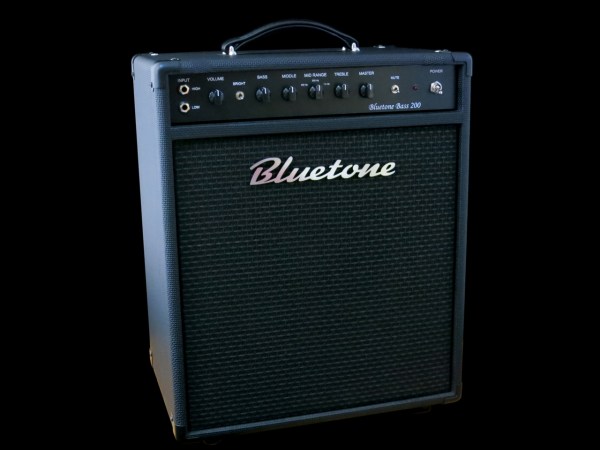
Suomalainen putkivahvistinvalmistaja Bluetone on hiljattain lisännyt uuden bassokombon valikoimaansa. Uutukaisen nimi on Bluetone Bass 200 (1.450 €).

Bass 200 on nykyaikainen hybridikone, joka yhdistää putkikytkennällä toteutetun etuvahvistimen pienikokoiseen ja kevyeen, mutta silti tehokkaaseen D-luokan päätevahvistimeen. Etuvahvistin pyörii neljän putken voimalla (2 x ECC82/12AU7, 1 x ECC83/12AX7 & 1 x EF86), kun taas D-luokan päätevahvistin ja kombon kevyt kotelo poppelivanerista pitävät kokonaisuuden painon hyvin maltillisena (vain 12 kg).

Viimeinen painoa vähentävä seikka on Bluetonen kaiutinvalinta, joka osui neodyymimagneettilla toimivaan Eminence Kappalite 3012HO -kaiuttimeen, joka tarjoaa 400 watin tehonkestoa (impedanssi: 8 ohmia).

Bluetone Bass 200:n kotelossa on kaksi bassoporttia takaseinässä. Kombon päällystemateriaali on kuvioitua vinyyliä.

Matalan painonsa ansiosta kombon päällä oleva kahva riittää mainiosti vahvistimen kantamiseen, ja Bass 200:n kompakti ulkomuoto (l = 42,5 cm, k = 52,5 cm, s = 29,5 cm) tekee Bluetonen sijoittamisesta auton takakonttiin helppoa.

Tykkään Bluetonen asiallisesta linjasta etu- ja takapaneeleissa, jolla varmistetaan, että Bass 200:n kaikki toiminnot on helppoa löytää.

Bluetonen Bass 200 tarjoaa erilliset säätimet sekä etuvahvistimen gainelle (Volume) että päätevahvistimen lähtötasolle (Master). Kolmikaistaisessa EQ-osastossa löytyy keskialueelle kolmiasentoinen taajuusvalitsin (300 ja 500 Hz, sekä 1 kHz), sekä lisäksi erillinen Bright-kytkin. Bluetonen kätevä mykistyskytkin olisi sellainen ominaisuus, jonka näkisin kernaasti myös muiden valmistajien bassovahvistimissa.

Uusi Bluetone Bass 200 on kompakti kombo, mutta silti avokätisesti varusteltu:

Takapaneelista löytyy kytkettävä efektilenkki omalla volume-säätimellä, säädettävä ja balansoitu DI-lähtö (XLR), sekä kaksi kaiutinlähtöä (Speakon ja jakki). Joissakin bassokomboissa on kaiuttimeen kiinni juotettu johto, mikä voi koitua ongelmaksi, jos johto tai plugi menevät esimerkiksi kuljetuksen aikana rikki. Bluetonen Bass 200:ssa asia on ratkaistu soittajien ja bänditeknikkojen iloksi oikein, erillisellä kaiutinjohdolla (takapaneelin ja takaseinän välillä), joka on tarvittaessa helposti korjattavissa tai vaihdettavissa.

****

Puhtaasta headroomista ei Bluetone Bass 200 -kombossa ole pulaa, mutta jos halutaan lisätä soundiin aitoa putkisäröä, erilliset Volume- ja Master-säätimet antavat siihen täydet mahdollisuudet. Särön luonne on Bass 200:ssa enemmän ”old school” -tyylisesti kermainen ja keskialuevoittoinen, niin kuin 1960- ja 60-lukujen Ampegeissa. Jos haetaan nykyaikaista Metal-säröä, kannattaisi mielestäni laittaa sopiva pedaali vahvistimen eteen.

Minun mielestäni bassovahvistimen EQ-osaston tarkoitus pitäisi olla soundin hiominen omaan musiikkityyliin – tai keikkatilanteeseen – sopivaksi, eikä vahvistimen omien soundillisien puutteiden korjaamiseen, niin kuin joissakin halpakomboissa tehdään. Täydet pisteet Bluetonelle, sillä Bass 200:n lähtösoundi – kaikilla EQ-säätimillä kello 12 -asennossa – on todella laadukas ja luonnollinen. Tämä kombo pitää myös jokaisen sähköbassomallin oman luonteen ehjänä, minkä ansiosta taajuuskorjaimet jäävät vapaaksi hoitamaan soundin lopullista hienosäätämistä.

Nimestään huolimatta Bluetone Bass 200 -kombosta lähtee todellisuudessa omalla Eminence-kaiuttimella jopa 250 wattia. Tällä teholla saa helposti hoidettua ison osan nykyisistä keikkapaikoista ja tilaisuuksista käyttämällä komboa sellaisenaan. Ja jos joskus tarvitaan vielä enemmän ääntä, on takapaneelin DI-lähtö valmis lähettämään vahvistimen laadukasta signaalia PA:n miksauspöytään.

Ensimmäisessä klipissä soi sormilla soitettu Jazz-basso:

Tässä esimerkissä soitan Rickenbacker 4003 -bassoani plektralla:

Ja lopuksi vielä esimerkki Bass 200:n särösoundista, soitettuna lyhytskaalaisella Squier Vista Musicmaster -bassolla:

****

Uusi Bluetone Bass 200 on loistava valinta, jos etsit kevyttä ja kompaktia ammattitasoista bassokomboa. Tässä on kyse Suomessa käsintehdystä kombosta, ja siihen nähden pidän Bass 200:n hintaa varsin maltillisena.

****

Bluetone Bass 200

1.450 €

Valmistaja: Bluetone Amplifiers

****

Plussat:

+ suomalaista käsityötä

+ kompakti koko

+ kevyt

+ ominaisuudet

+ soundiSave

Save

Save

Save

Save

Save

Save

Save

Save

Review: Bluetone Bass 200

****

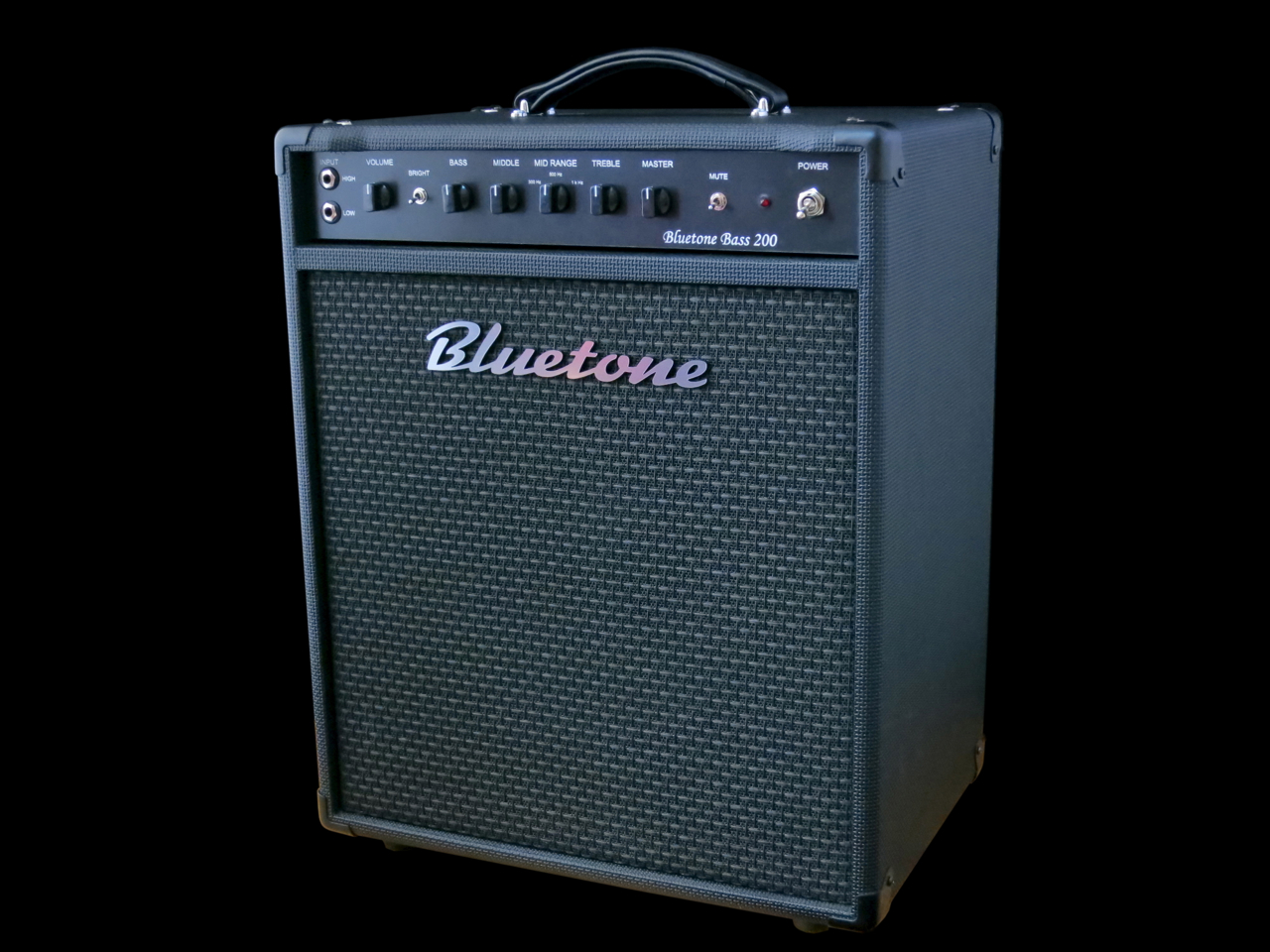
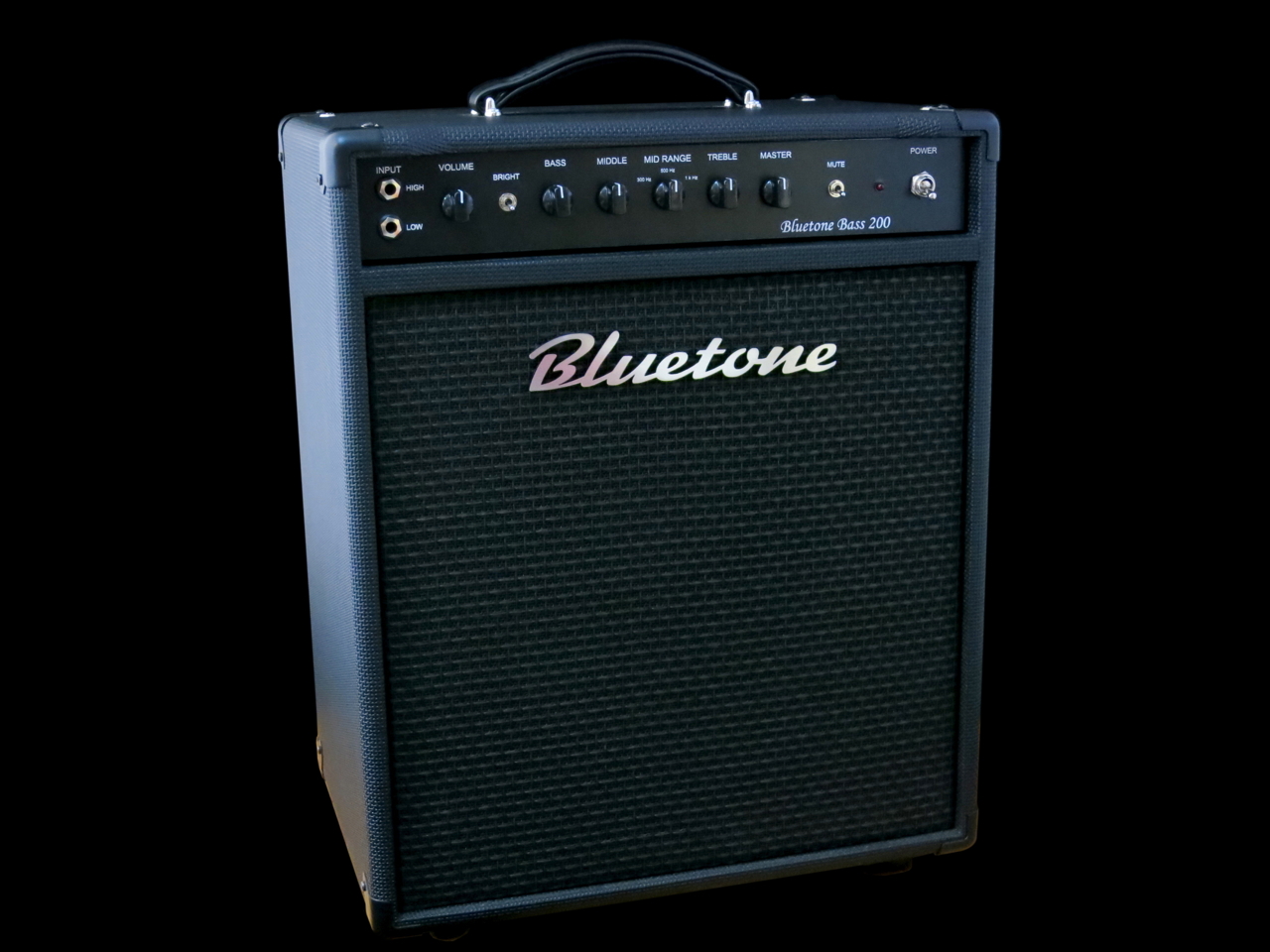
Finnish boutique amplifier makers Bluetone have recently introduced a compact bass combo – the Bluetone Bass 200 (1,450 €).

The Bass 200 is a modern hybrid bass amplifier that combines an all-valve preamp section with a compact and efficient Class-D power amp. The preamp’s architecture is based on four tubes (2 x ECC82/12AU7, 1 x ECC83/12AX7 & 1 x EF86), while the modern power amp section and the combo’s light poplar plywood cabinet result in a low weight of only 12 kilograms.

Another factor in keeping the combo’s weight player-friendly is Bluetone’s choice of speaker – a neodymium-powered Eminence Kappalite 3012HO, with a power handling of 400 W and an impedance of eight ohms.

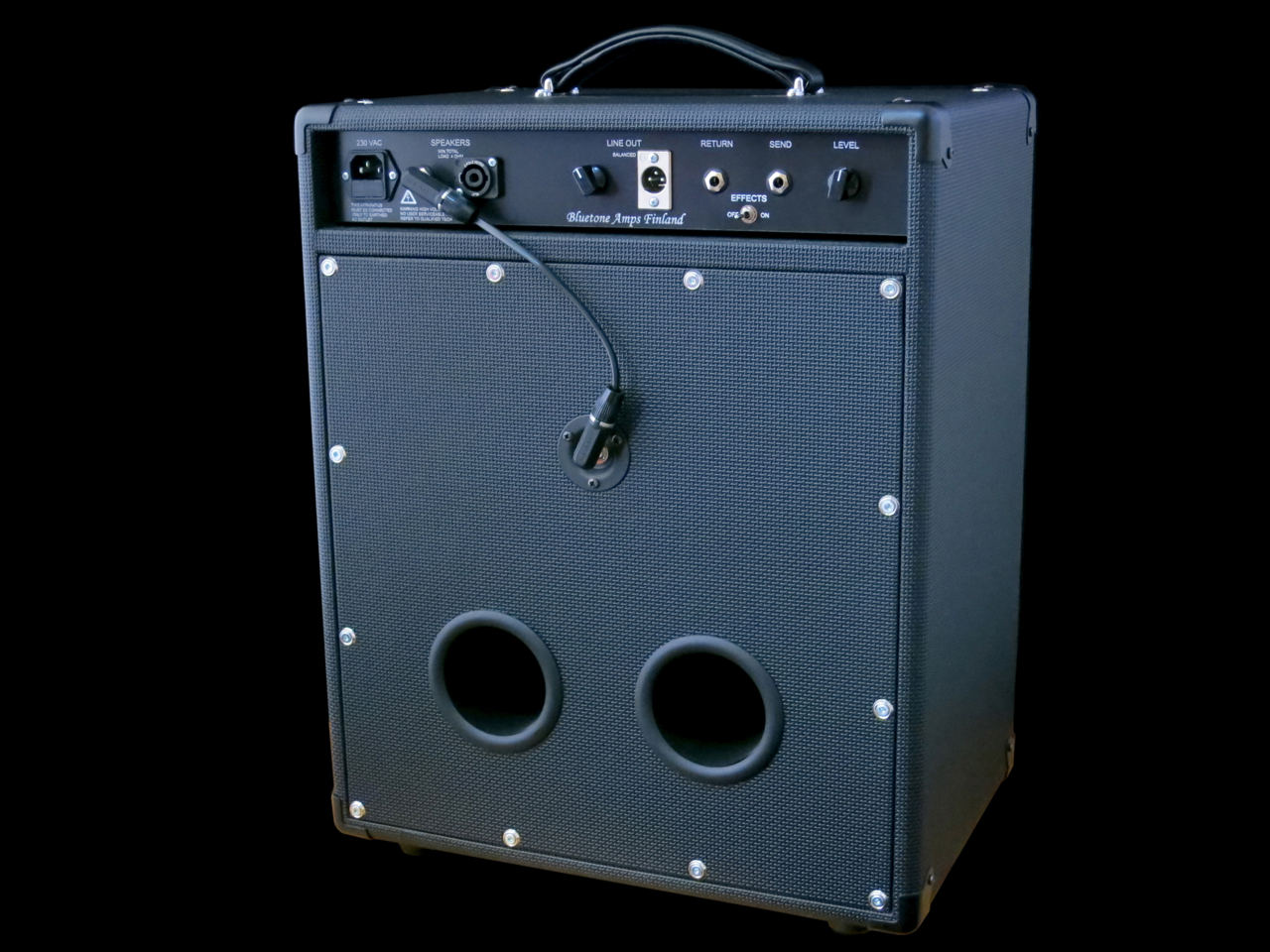
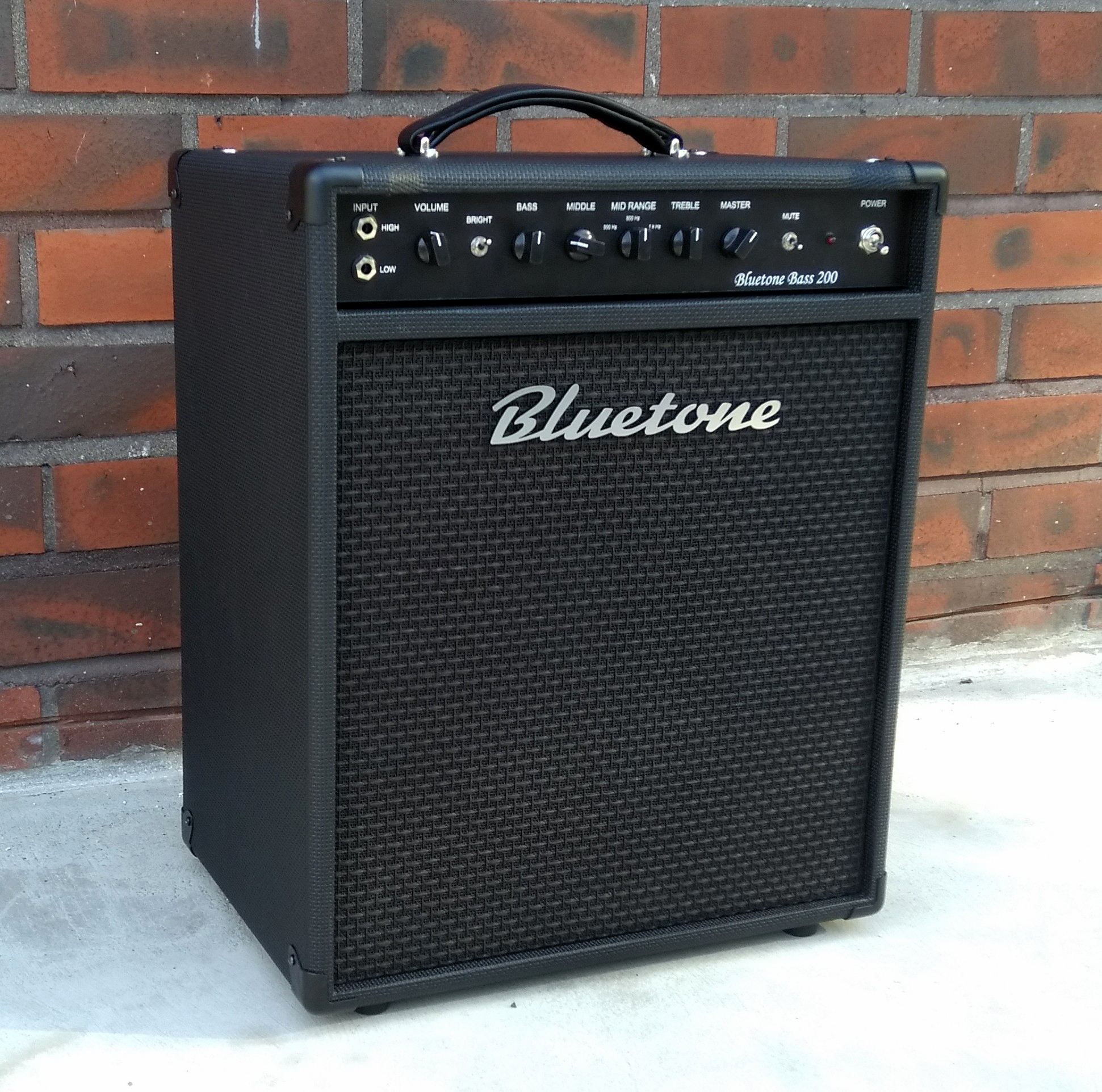
The combo’s cabinet features two ports in the back, and it comes covered in black textured vinyl.

Thanks to its low weight the amp’s top handle is all you need to move the combo around, and its compact size (W= 42.5 cm, H= 52.5 cm, D= 29.5 cm) means it will fit in a car’s boot easily.

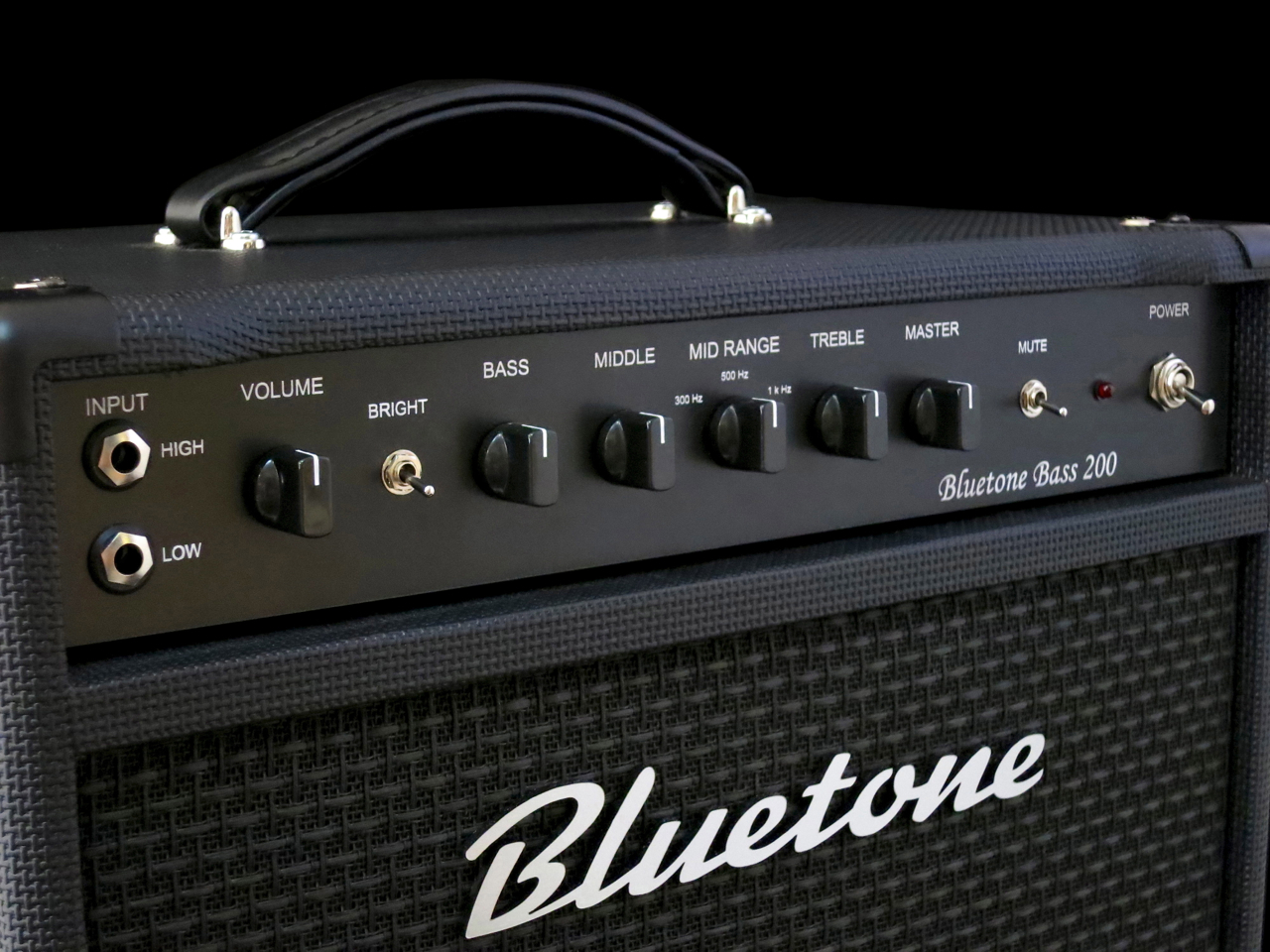
I very much like the business-like look of the Bass 200’s control panel, which means it’s very easy to find you way around the amp’s features.

The Bluetone Bass 200 offers separate knobs for preamp gain (Volume) and power amp output (Master). The active three-band EQ (plus Bright-switch) offers three-way selectable mid-band rotary switch, with centre frequencies of 300 Hz, 500 Hz and 1 kHz. The Mute-switch is a handy addition, which should be made a regular feature on any bass amplifier.

The Bluetone Bass 200 may be compact, but it is still fully spec’ed:

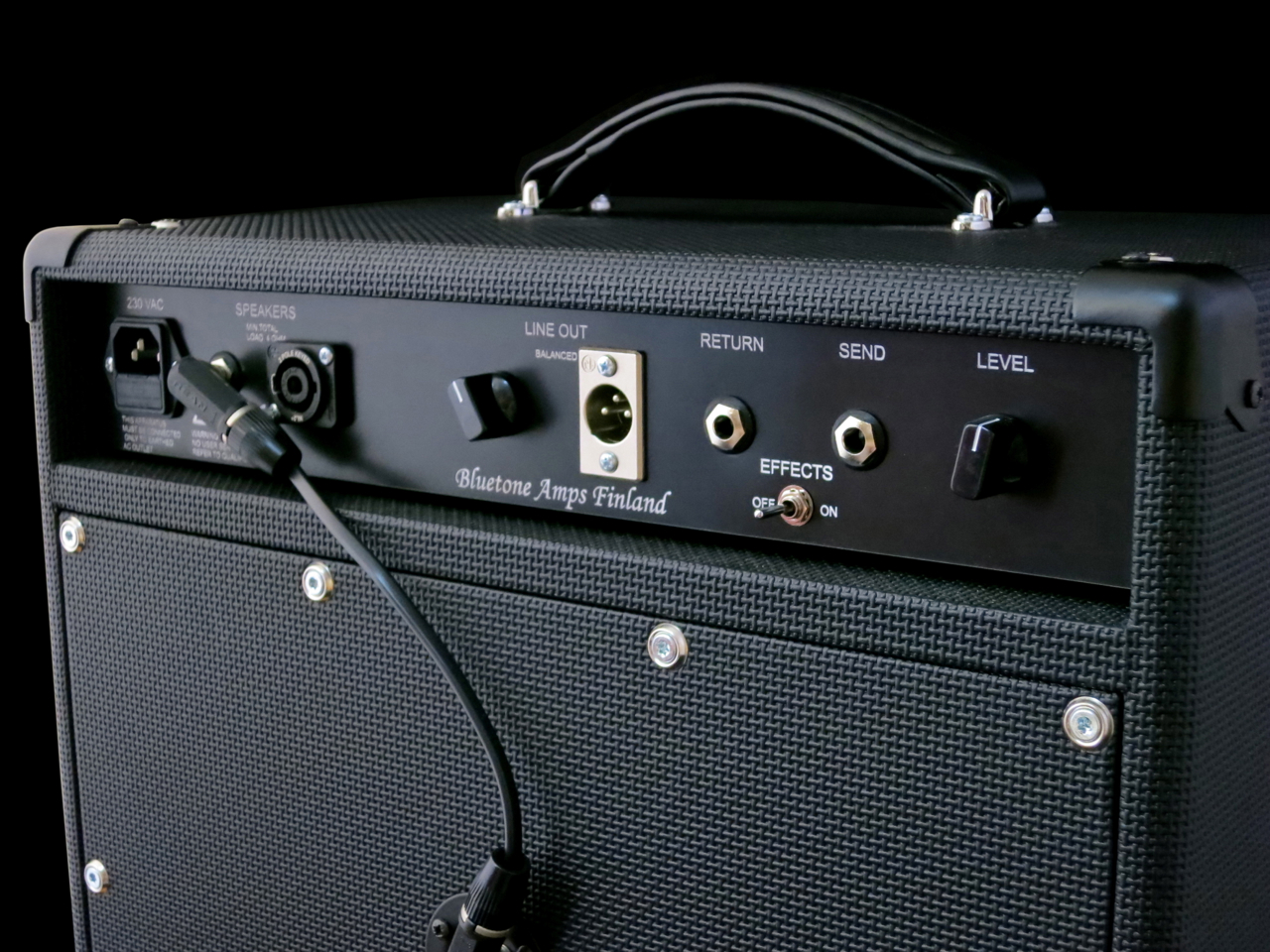
Around the back we find a switchable effects loop with its corresponding level control, an adjustable balanced, line level DI output (XLR), and Speakon and phone jack speaker outputs. Many bass combos have the speaker cable soldered to the internal speaker, which can be a real pain if the cable gets damaged. Bluetone’s Bass 200 goes the professional route, using a short high-quality speaker cable, which connects the back panel’s output to a sturdy phone jack on the combo’s back wall.

****

The Bluetone Bass 200 offers plenty of clean headroom, but should you desire a little overdrive or some genuine valve distortion the combination of the Volume and Master controls will happily oblige. In terms of the drive character the Bass 200 is clearly more of an ”old school” amp, dishing out plenty of Ampeg-style tube goodness. For modern metal tones I’d probably suggest you use an appropriate distortion pedal.

In my mind a bass amp’s EQ-section should be a tool to fine-tune the amp’s tone to your personal taste and/or the room and playing situation you’re faced with, and not, as in some lesser amps, to make up for the amplifier’s tonal deficiencies. Bluetone’s Bass 200 scores full marks in this respect – even with the three-band EQ’s controls set to 12 o’clock the bass sound is great and well-balanced. This combo keeps the different tonal characters of different bass models intact, freeing up the EQ-section for additional tweaking.

Despite its name, the Bluetone Bass 200 actually delivers 250 watts of output power connected to the combo’s own Eminence speaker. This is more than enough power to use the combo ”as is” for most of the smaller and medium-sized venues most working bassist play in these days. And if you need to be louder, the excellent DI output will send the combo’s signal to a PA system.

The first clip features a Jazz Bass played fingerstyle:

I used a plectrum to play my Rickenbacker 4003:

And here’s an example of the Bass 200’s distorted sound, played with a short scale Squier Vista Musicmaster Bass:

****

The Bluetone Bass 200 is a great choice if you want a compact and lightweight professional bass combo. No, this isn’t a cheap mass-produced bass combo from China, but I feel that for a handcrafted Finnish amplifier the price tag is really rather moderate.

****

Bluetone Bass 200

1,450 €

Contact: Bluetone Amplifiers

****

Pros:

+ handcrafted in Finland

+ size

+ weight

+ features

+ soundSave

Save

Save

Save

Now on Soundcloud: Bluetone Bass 200

Here are two demo clips of the Bluetone Bass 200 hybrid combo (valve preamp & Class D power amp).

• Jazz Bass (fingerstyle) – Based on the song ”Did I Hear You Say You Love Me” by Stevie Wonder

• Rickenbacker (plectrum) – Based on the song ”Silly Love Songs” by Paul McCartney & Wings

Amp recorded combining the built-in DI Output with the signal coming off a Shure SM57.

Contact: Bluetone Amps

Save

Review: Bluetone Amps Fried Eye & Bugaboo distortion pedals

Finnish valve amp specialist Bluetone Custom Amplifiers has broken new ground by releasing a trio of handmade pedal effects, comprising a delay/reverb-unit, called Echoes, as well as two different preamp/distortion boxes, the Fried Eye and the Bugaboo.

****

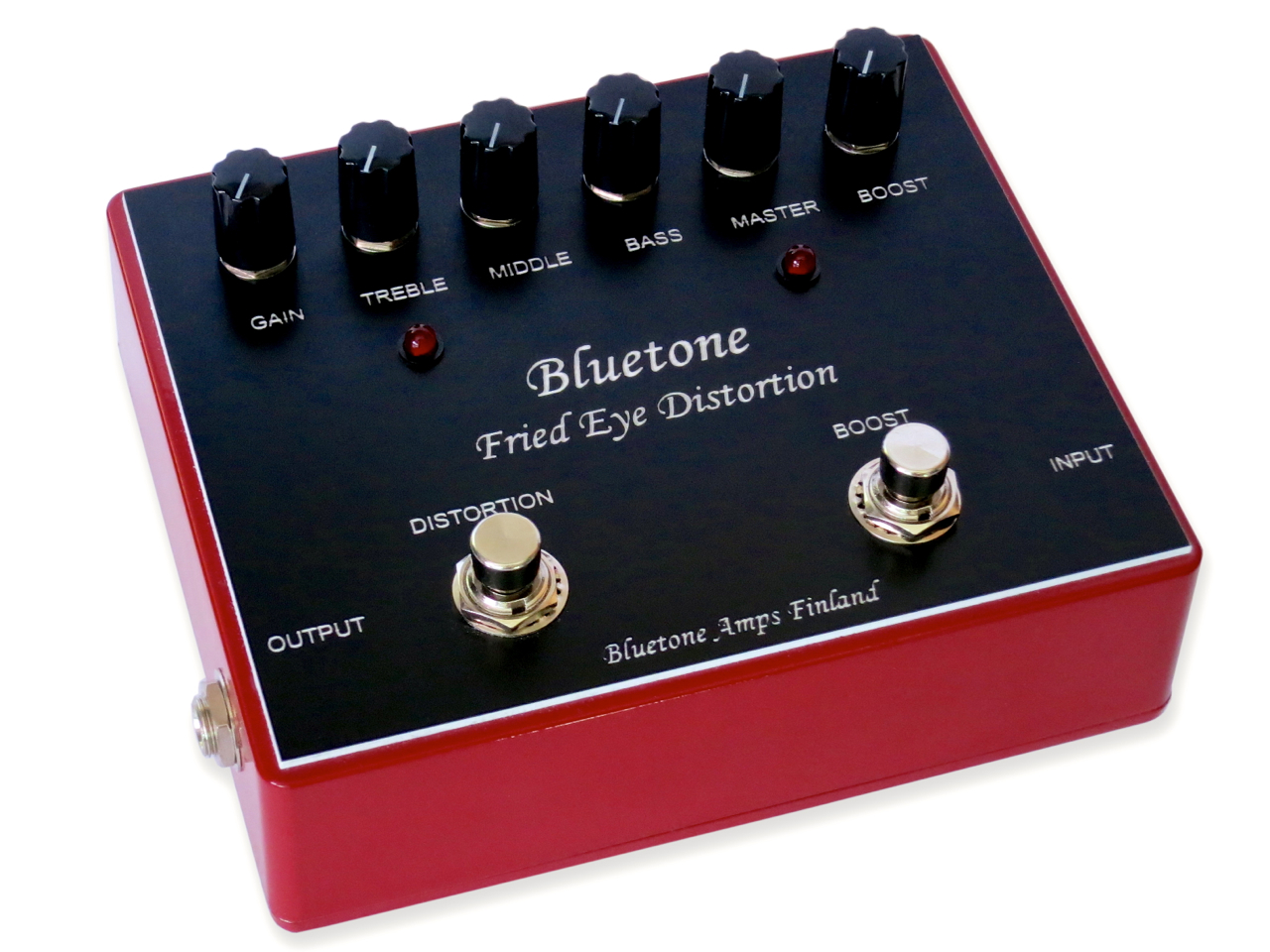
Bluetone’s Fried Eye Distortion (269 €) offers two high-quality effects in one box:

The boost circuit can be run separately from the pedal’s distortion side. It offers a considerable amount of boost (up to 12 dB), which is adjustable with the pedal’s Boost control.

But the Fried Eye Distortion’s main raison d’être is, of course, its comprehensive distortion section. The pedal’s distortion circuit is a solid-state version of the acclaimed Bluetone Fried Eye tube amplifier’s crunch channel. Its aim is to give you a wide range of Marshall-inspired crunch and distortion tones.

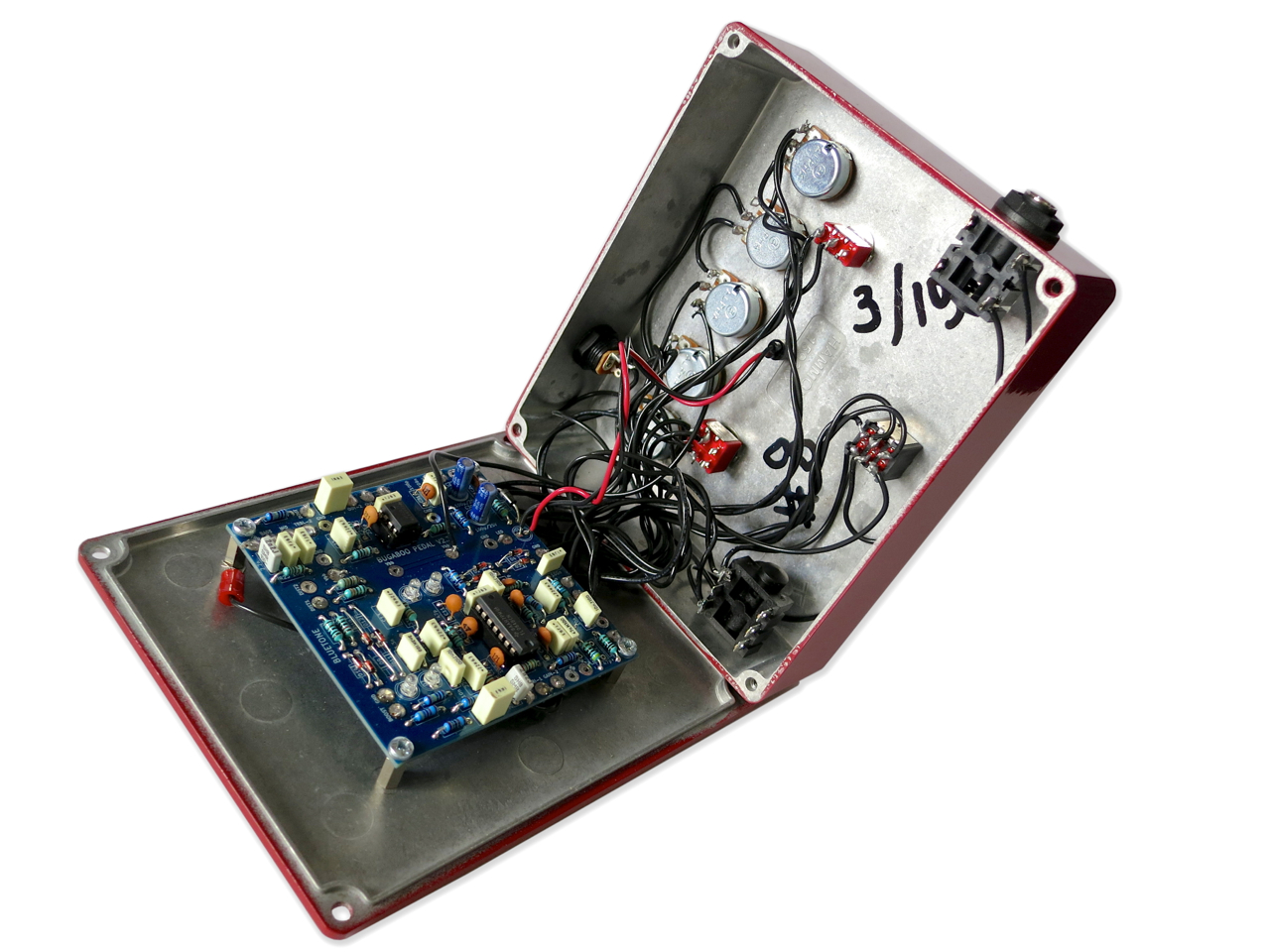
Bluetone’s Fried Eye Distortion pedal runs on nine to eighteen volts DC supplied by a PSU (not included) via a standard 2.1 mm plug (centre negative). A look under the hood reveals a large circuit board and clean and neat wiring.

Soundwise the Fried Eye pedal hits the bull’s-eye in my opinion, offering a wide range of Marshall-type tones from a light crunch to full blast. The effect’s three-band EQ works really well in tailoring the effects sound to your musical needs.

This short audio clip gives you an idea of the Fried Eye’s basic sound with the Gain control set to 12 o’clock. The first half showcases the distortion side on its own, with the boost kicking in for the second half. I used a Hamer USA Studio Custom with the bridge humbucker engaged. The clip was recorded direct off a Blackstar HT-1R’s speaker emulated output:

The Muse-inspired demo song shows you how the Fried Eye performs in a band mix. I used a Bluetone Shadows Jr. combo and a Shure SM57 to record all guitar tracks.

The demo features the following guitars:

• rhythm guitars – Hamer USA Studio Custom (left channel), Gibson Melody Maker SG (centre), Fender Stratocaster (right channel)

• reverse guitar – Gibson Melody Maker SG

• lead guitar – Hamer USA Studio Custom, Morley wah-wah

****

The Bluetone Bugaboo Distortion pedal (249 €) is based on the company’s none-more-Metal Bugaboo valve amplifier’s crunch channel.

The Bugaboo is aimed more squarely at the Hard Rock- and Metal-crowd, offering much more gain and a lot more juicy compression than the Fried Eye pedal.

The wiring inside our review unit looks a bit less tidy, due to the long wires going from the circuit board to the pots and switches. I’d like to stress, though, that this specific pedal is a very early production model that has been superseded by a more compact version (but with completely identical specs and features) recently!

The Bugaboo-pedal, too, runs on nine to eighteen volts DC supplied by a PSU (not included) via a standard 2.1 mm plug (centre negative).

Bluetone’s Bugaboo does exactly what is says on the tin:

This pedal turns any amp into a fire breathing thing of beauty, offering plenty of gain. The three-band EQ has been bolstered by two very nifty mini-switches. Bite offers a presence boost that will help your guitar to cut through even the densest mix, while Tight helps you keep the bottom end from becoming too boomy.

This short audio clip gives you an idea of the Bugaboo’s basic sound with the Gain control set to 12 o’clock, Bite engaged and Tight turned off. I used a Hamer USA Studio Custom with the bridge humbucker engaged. The clip was recorded direct off a Blackstar HT-1R’s speaker emulated output:

The demo song shows you how the Bugaboo performs in a band mix. All guitar tracks were recorded direct off a Blackstar HT-1R’s speaker emulated output. The song contains the following guitar tracks:

• Rhythm guitars – Fender Stratocaster (left) & Gibson Melody Maker SG (right)

• Lead guitar – Hamer USA Studio Custom

****

In my view, the clean, business-like look of the new Bluetone-pedals is a clear bonus, especially on stage. Sure, the Fried Eye and Bugaboo don’t sport any flashy paint jobs that scream ”Hey, man, I’m a weird boutique pedal”, but at least you can tell instantly what type of pedal you’re dealing with, and which knob (or switch) does what.

In terms of their sounds both units are winners, each offering a wide array of different shades of distortion, with the Fried Eye being a bit more ”Rock” and the Bugaboo a tad more ”Metal” in character. These are professional grade, handmade effect pedals at a fair price.Save

Save

Save

Save

Save

Pidä blogia WordPress.comissa.

Ylös ↑