
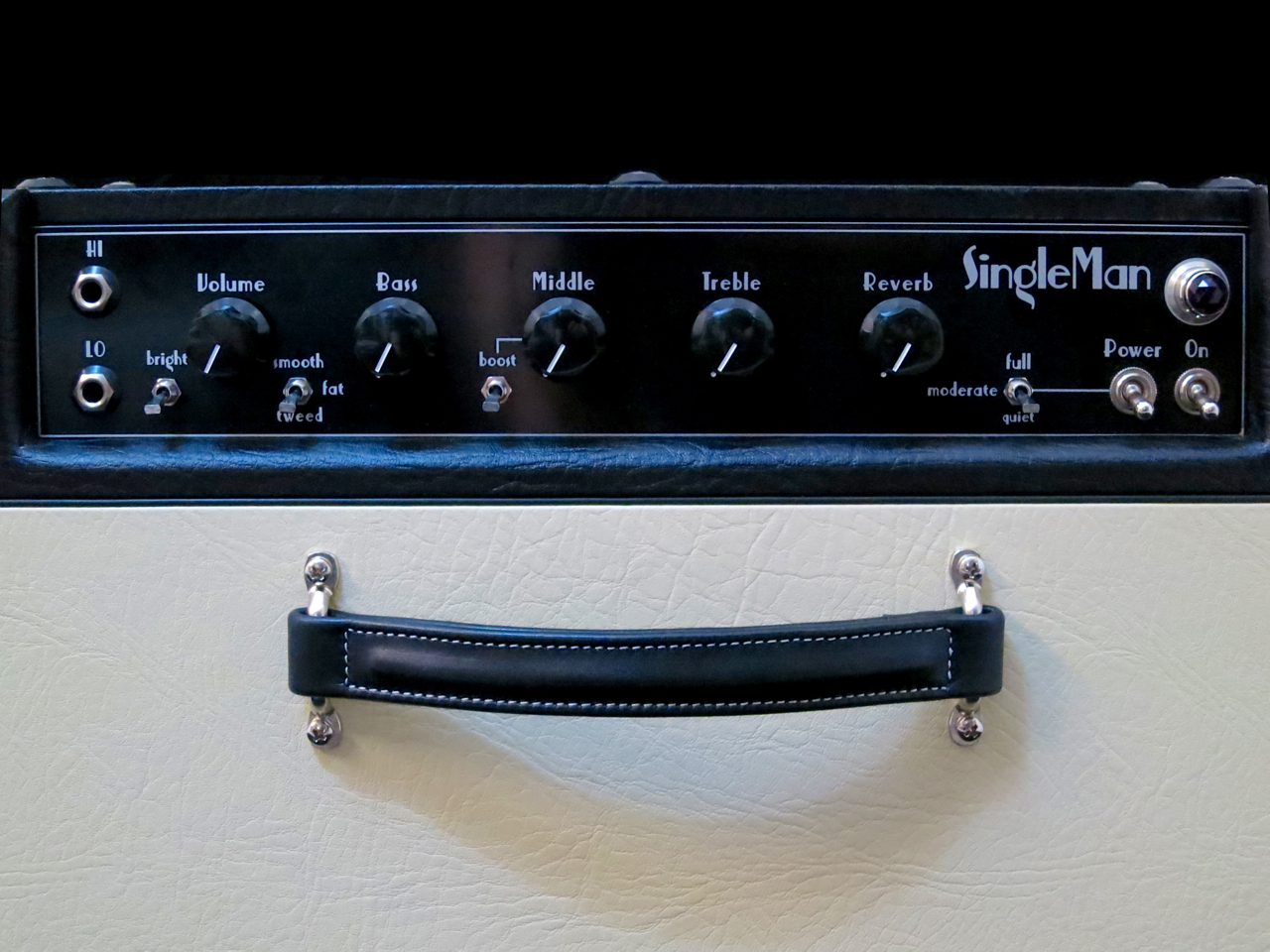
Contact: Nordsound
Kitarablogi.com – Finland's premier Guitar and Bass blog
Juttuja kitaroista ja bassoista


If you’ve always lusted for a hand-soldered guitar amp you were left with two options until quite recently:
You could either buy an expensive boutique/custom shop amplifier, or – if you’re handy with a soldering iron – opt for a DIY amp kit.
Now there’s a third choice for those of us neither well-heeled nor technically savvy:
British company Juketone offers a range of tasty Fender tweed inspired, hand-wired guitar amplifiers at very moderate prices, thanks to Chinese production and selling direct via the Internet.
****

The Juketone True Blood (250 £; introductory offer for a limited time only) is the company’s smallest combo.
The True Blood is based on Fender’s legendary 1950s Tweed Champ (specifically the 5F1 version), with a few small tweaks.
Tweed Champs have been built with several differently shaped cabinets over the Fifties, depending on their exact vintage. The True Blood comes in the all-straight cabinet seen on most mid-Fifties originals, while Fender’s current Custom Shop version features the later angled front.

The tweed covering on our review sample was very neat and crisp.
The combo’s cabinet is made of plywood, except for the back covers, which looked (and felt) like MDF-board.

The two most important differences between a vintage Champ and Juketone’s True Blood combo lie in the speaker-type and rectifier valve choices.
In addition to the two audio signal valves – a Ruby Tubes 12AX7 and a 6V6GT – Juketone has chosen a slightly less-known 6Z4 rectifier tube. The 6Z4 used in Juketone amps is a Chinese version (aka the Sino 6Z4) that is not compatible with the American rectifier valve of the same name.
Jensen has traditionally been the speaker brand of choice for vintage tweed amps, but their bass response very often sounds a bit flabby by modern standards. In my opinion, Juketone has made a very good decision in choosing a more British-voiced speaker for their True Blood combo. The eight-inch Celestion Super 8 could be described as an alnico-driven version of their popular Eight 15.

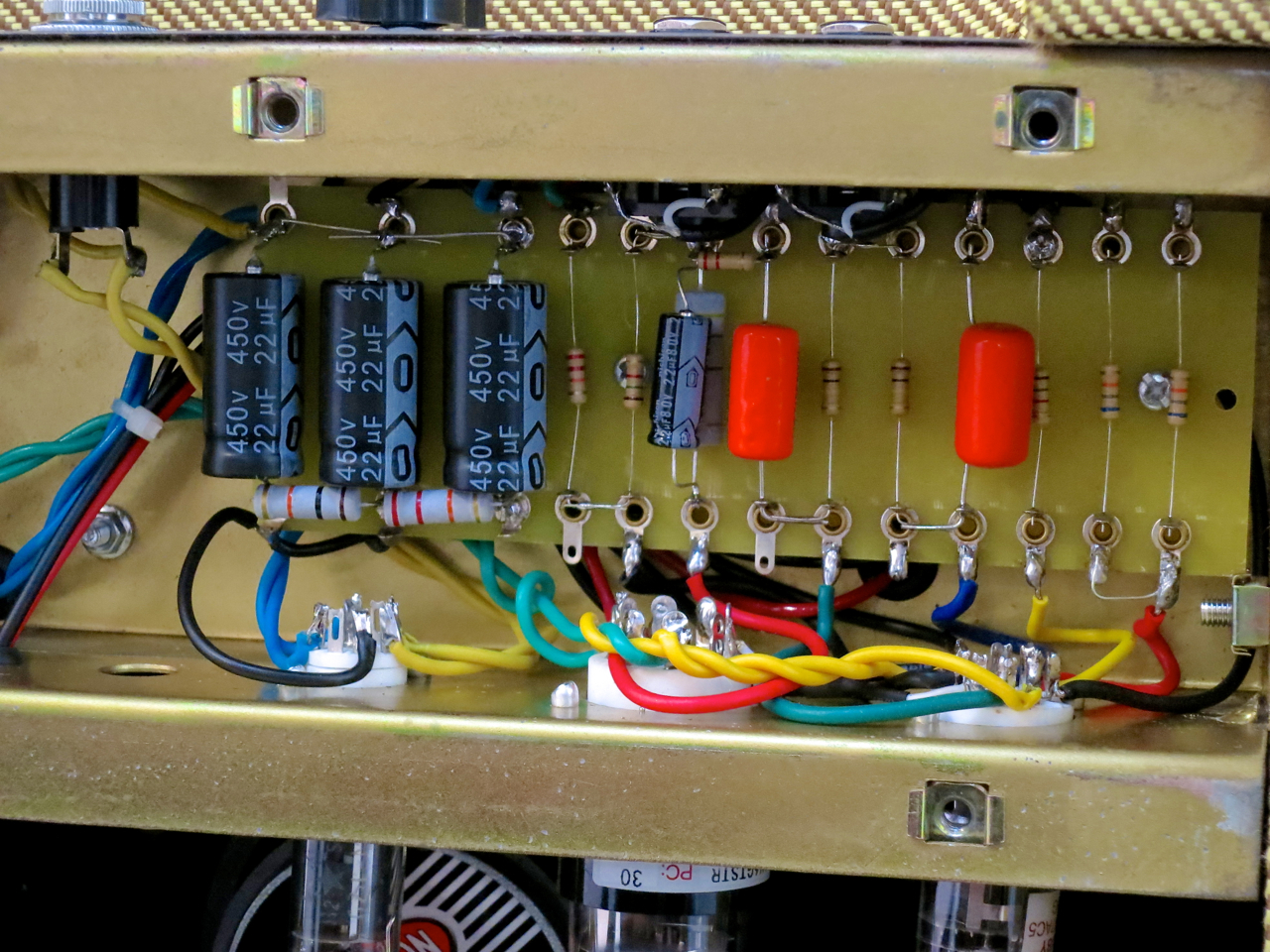
Inside the metal amp chassis you will be greeted by high quality components and clean workmanship. This is genuine hand-soldering using soldering lugs riveted to a fibreglass board.
You’d be foolish to expect the wiring to be on the same, insanely high level – in terms of its neatness – as generally seen on boutique-grade amps, but the True Blood is definitely in line with Juketone’s ”affordable boutique” ethos.
****

Maybe the most important part in the charm of a 5F1-type Champ (or Champ clone) is the directness of this small combo’s approach to tonal nirvana. There’s no master volume, no tone control, no effects – just a single volume control, and the straightest signal path from input jack to speaker known to mankind.
To some, this type of diminutive Fifties practice amp looks like it’s hopelessly ancient, but the Tweed Champ still has a lot of fans.
The Juketone True Blood’s secret to success lies in the combo’s interactive behaviour. The most traditional way to use the True Blood would be to dial in the maximum amount of volume (and distortion) needed, and then control the amp using the guitar’s own volume and tone controls. Thanks to the naturally rich compression this combo produces when pushed, turning down the guitar volume for cleaner sounds will result in less of a volume drop than expected. Here’s a short clip using a double humbucker guitar (Hamer USA Studio Custom):
If you need more clean headroom from your True Blood (Blues harpists, listen up) than what the factory 12AX7 has to offer, you could easily drop in one of a number of ”cooler” 12A_7-family replacements, such as a 12AU7 or a 12AT7.
Here are three clips of a Fender Telecaster, a Gibson Les Paul Junior and a Hamer Studio Custom, respectively, with their bridge pickups selected. Each clip has been recorded with the combo’s volume control set to ”6”, ”8”, ”10” and ”12”, using a Shure SM57:
The Juketone True Blood’s low volume and tasty compression make this combo an excellent choice for use in the (home-) studio. Just add a little EQ and compression, and season the result with a bit of reverb and/or delay during mixdown, and you’ll be surprised at how big this little chap really sounds:
****

I can only recommend Juketone’s True Blood warmly for use as a living room and recording amp.
Laying your hands on a hand-wired tweed-style combo has never been so easy or affordable. The warm, big bass response of the Celestion speaker is a definite improvement, at least in my book!
This Juketone combo is a serious alternative to your run-of-the-mill mass-produced practice. It sounds pure and sweet. A hand-soldered combo, such as this, is also far easier to repair (or modify) than a PCB-based design.
****
Juketone True Blood
250 £ (introductory offer)
Contact: Juketone
Pros:
+ affordable
+ workmanship
+ hand-wired
+ sound

Jos on halunnut itselleen uuden, käsinjuotetun putkivahvistimen, vaihtoehtoja on tähän mennessä ollut käytännössä kaksi – joko ostaa kallis boutique- tai custom shop –vahvistin, tai kasata vahvistin rakennussarjan pohjalta.
Brittiläinen Juketone tarjoaa kuitenkin kolmannenkin vaihtoehdon tweed-faneille – edullisia, Fender-henkisiä putkivahvistimia, jotka suunnitellaan Englannissa ja valmistetaan Kiinassa.
****
Juketone True Blood (250 puntaa plus lähetyskulut) on firman pienin kombo.
True Blood perustuu suurilta osin legendaariseen 1950-luvun Fender Champ -komboon (5F1-versio), johon Juketone on tehnyt pieniä muutoksia.
Tweed-Champeja on rakennettu 1950-luvun eri vaiheissa kolmella eri kaiutinkotelolla. True Bloodin kaiutinkotelo on kokonaan suorakaiteinen (niin kuin 1955/56-malleissa), kun taas Fenderin Custom Shop -versiossa pohja on syvempi kuin kansi (50-luvun lopun versio).
Tweed-kankaalla päällystetty kotelo on valmistettu lähes täysin vanerista, lukuun ottamatta takalevyjä, jotka ovat kuitulevyä.
Tärkeimmät erot vanhan Champin ja Juketonen True Bloodin välillä löytyvät tasasuuntaajaputkesta ja kaiuttimesta.
Audio-osaston Ruby Tubes 12AX7- ja 6V6GT -putkien lisäksi vahvistimesta löytyy hieman harvinaisempi kiinalainen 6Z4-tasasuuntaaja, joka ei ole yhteensopiva samannimisen amerikkalaisen putkityypin kanssa.
Vanhoissa tweed-Champeissa on yleensä Jensen-kaiutin, mutta Juketone on valinnut komboonsa selvästi brittiläisemman, kahdeksantuumaisen Celestion Super 8 -mallin, joka on alnico-versio saman valmistajan suositusta Eight 15 -kaiuttimesta.
Metallisen vahvistinkotelon sisältä löytyy kauttaaltaan laadukkaita komponentteja, jotka on juotettu siististi lasikuitulevyn juotoskorviin.
Työnjälki ei kuitenkaan (luonnollisesti) ole aivan samalla viivalla verrattuna esimerikiksi Bluetonen valmistamiin boutique -vahvistimiin, joissa styrkkarin sisälmykset näyttävät suorastaan taideteokselta. Juketone True Blood tarjoaa kuitenkin hämmästyttävän laadukkaan putkivahvistinelämyksen todella edullisesti.
****
Tärkeä osa 5F1-tyypisten Champien (ja Champ-kloonien) viehätystä on se, että ne tarjoavat soundille suorimman mahdollisen tien kitarasta kaiuttimelle. Ei masteria, ei taajuuskorjaimia, ei efektejä – yksi kanava, kaksi tuloa ja pelkkä volume-säädin, siinä kaikki!
Vaikka tämä 1950-luvun harjoituskombo vaikuttaakin monien silmistä muinaisesineeltä, on Tweed Champillä silti yhä monta ystävää.
Juketone True Blood -kombon salaisuus piilee vahvistimen interaktiivisuudessa. Luontevin tapa käyttää tällaista pikkukomboa on asettaa sen volume-säädin täysille (tai lähes täysille), ja hallita soundia soittimen omilla volume- ja tone-säätimillä. Vahvistimen tuottaman luontaisen kompression ansiosta saadaan eloisia ja täyteläisiä puhtaita soundeja myös pienelle säädetyillä humbuckerilla.
Jos kaipaa True Bloodilta hieman enemmän puhdasta headroomia (esim. huuliharppua vahvistettaessa), kannattaa etuasteessa kokeilla 12AX7-putken sijaan 12A_7-perheen hieman ”heikompia” malleja, kuten esimerkiksi 12AU7 tai 12AT7.
Tällä tavoin soivat Telecasterin, LP Juniorin ja Hamer Studio Customin tallamikrofonit True Blood -kombon kautta. Jokaisessa klipissä kombon Volume-säätimen asennot ovat ”6”, ”8”, ”10” ja ”12”. Taltiointiin on käytetty Shure SM57-mikrofonia:
Juketone True Bloodin pieni teho ja muhkea kompressio tekee kombosta myös oivan työkalun (koti-) studiossa. Hieman kaikua ja kompressiota, sekä pieni ripaus EQ:ta lisämausteiksi miksausvaiheessa, ja lopputulos kuulostaa paljon isommalta ja mehevämmältä kuin uskoisi:
****
Juketone True Blood on mielestäni oiva valinta suoraviivaista putkikomboa olohuoneeseen tai kotistudioon etsittäessä.
Se on helppo ja edullinen tapa saada itselleen aitoa tweed-tyylistä soundia. Celestion-kaiuttimen tuoma jäntevä keskialue ja muhkea basso ovat minun mielestäni ainoastaan plussaa!
Juketone-kombo on varteenotettava vaihtoehto tavallisille, massatuotetuille pikkukomboille – eikä vain hyvän soundinsa ansiosta. Käsinjuotetun elektroniikan etuja ovat myös helpompi huolto ja modifiointi.
****
Juketone True Blood -kombo
250 £ (+ lähetyskulut)
Lisätiedot: Juketone
Plussat:
+ hinta
+ työnjälki
+ käsinjuotettu
+ soundi

For many guitarists the Vox AC30 is the greatest guitar amp ever made – bar none.
The combo was originally designed for the instrumental group The Shadows, but it became known worldwide as ”The Beatles Amp”. Over the decades, many other guitarists have favoured Vox’ best known design. Users include people like Brian May (Queen), Rory Gallagher and U2’s The Edge. Many Finnish Shadows-/Ventures-style bands (”rautalankka”) also favour the AC30.
Despite their legendary status, vintage Vox AC30s also do have their issues:
This large 2 x 12″ combo weighs quite a lot, making it a little hard to carry alone. Old Voxes also are non-master volume amps, which means that attaining natural distortion comes at the cost of serious sound pressure levels – often too much for small clubs and function gigs. Old AC30s also have all their valves – yes, also the power amp tubes – placed inside an almost completely closed metal chassis. This has led to vintage-Voxes getting an infamous reputation as relatively prone to catching fire.
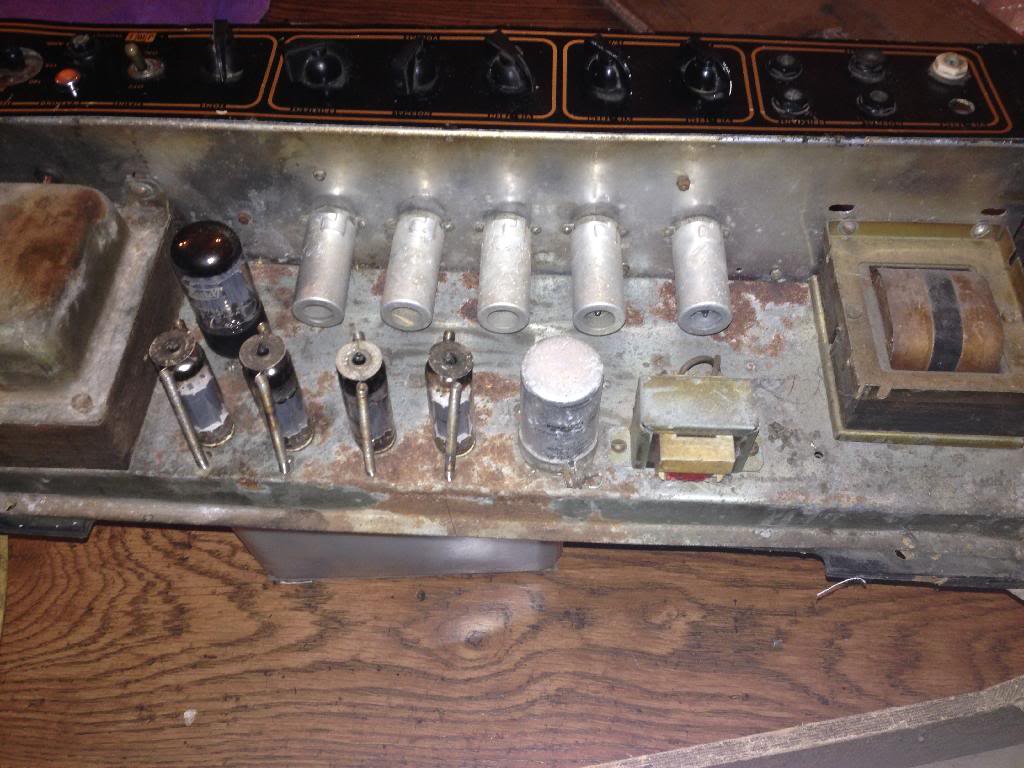
Boutique amp makers Bluetone (from Helsinki, Finland) have recently come up with their special take on the beloved classic combo. Their new amp is called Bluetone Shadows Reverb, and it comes with a whole number of welcome improvements and modern features.
****
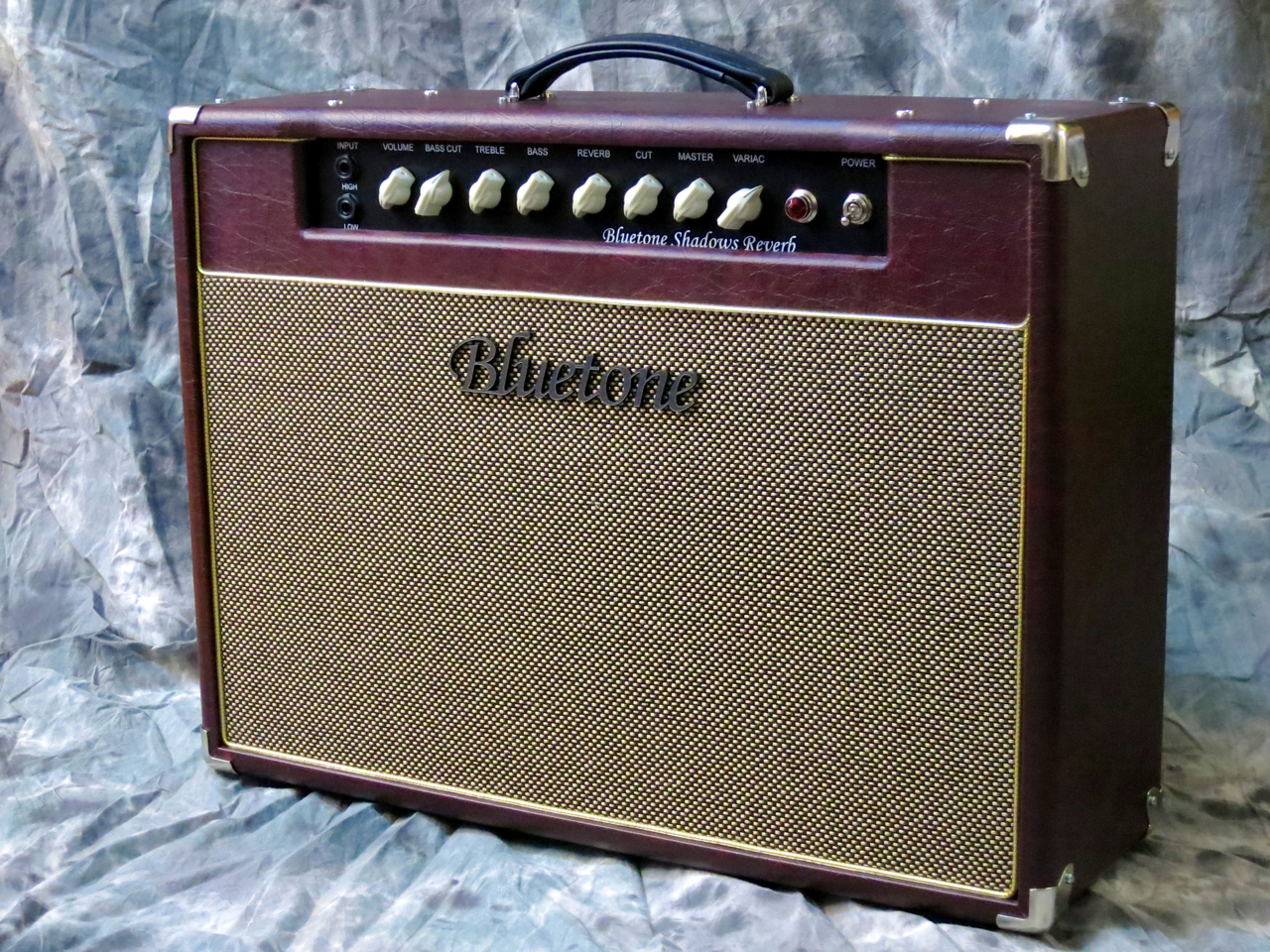
Bluetone’s Shadows Reverb (reviewed version: 1,950 €) is a single-channel all-valve amp loaded with a genuine spring reverb. The combo represents the company’s view of what constitutes a perfect Top Boost-channel tone, all presented in a much more compact format.
The Shadows Reverb is a class AB amp, and it offers between 15 and 30 Watts of output power, depending on the setting of its built-in Variac.

The combo’s cabinet is made from high-grade plywood. The Shadows Reverb is a good deal smaller and less deep than its classic forebear from the 1960s.

This reduction in heft is due mostly to the use of 10-inch Celestion Alnico Gold speakers in place of the AC30’s 12-inch speaker pair.
The speakers in the Shadows Reverb combo have been ”played in” for a number of hours (using an oscillator) to get rid of the typical tightness of brand-new Alnico Golds.

This Bluetone-combo uses three 12AX7-tubes, and a single 12AT7 in its preamp section.
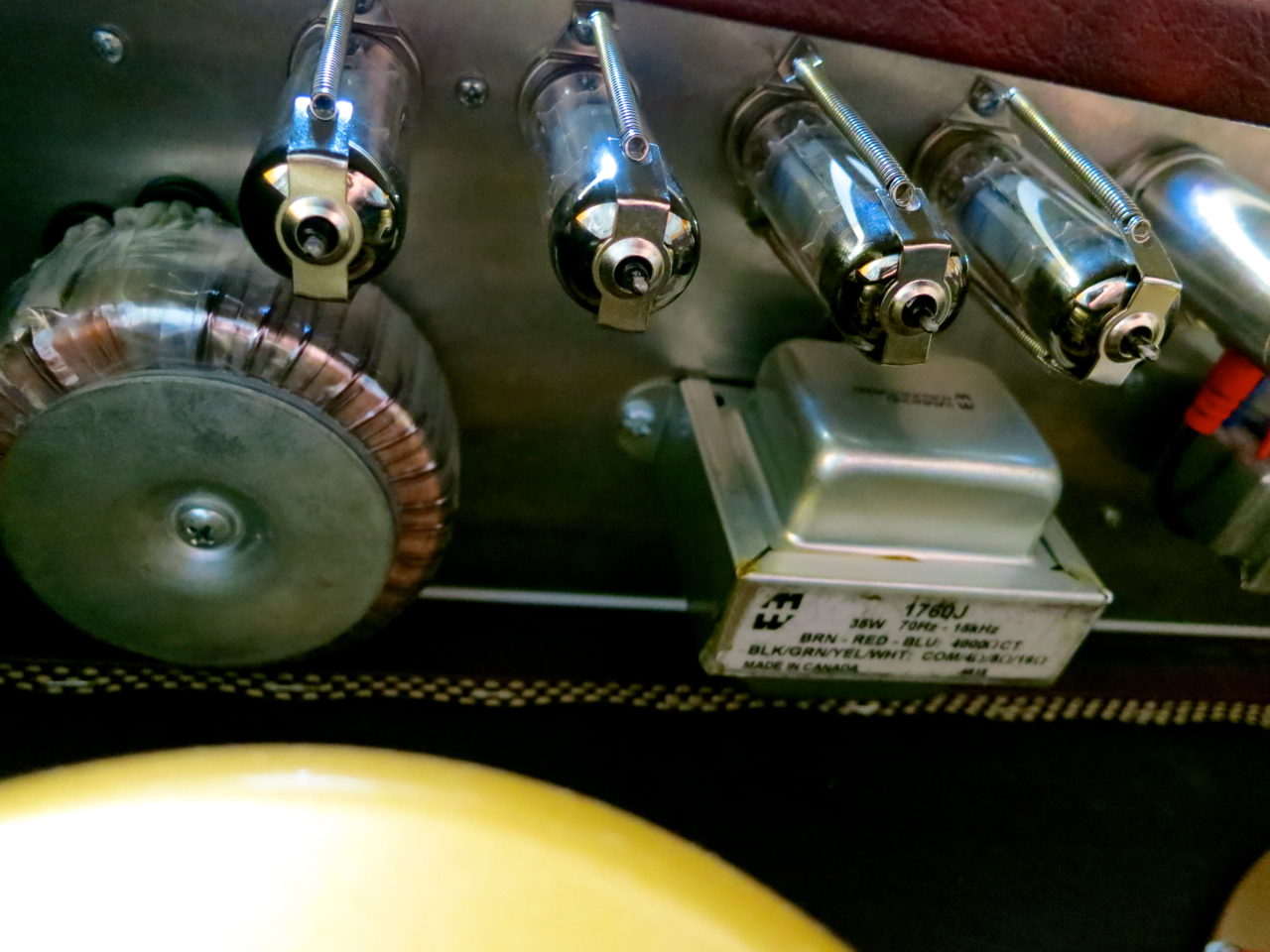
The power amp runs on a quartet of EL84 valves. The Shadows Reverb is a cathode-biased valve amp, which means that replacing the power amp tubes doesn’t usually necessitate any rebiasing.
****

Yes, the Bluetone Shadows Reverb is ”just” a single-channel combo, but it is far from a single sound guitar amplifier. In large part this is thanks to the brilliant modern features Bluetone has incorporated into this homage.
The Shadows Reverb offers you two guitar inputs – High and Low – for use with single coil- and humbucker-equipped instruments.
The preamp features a two-band Baxandall EQ-section – with typically interactive controls for Bass and Treble – as well as a three-stage Bass Cut rotary switch, which offers you two fatter alternatives to the famously bright and wiry Vox Top Boost sound.
The onboard spring reverb sounds fantastic and is a real treat to work with, giving you everything from completely dry tones to Surf Music antics.
The power amp section comes with three controls:
Cut allows you to make overall adjustments to the combo’s treble output.
Bluetone’s Master Volume-control is placed after the phase inverter, right at the end of the signal chain. This allows you to get juicy power amp distortion at low volume levels, and with only minimal changes in the amp’s tone.
As mentioned before, the Shadows Reverb comes with a built-in Variac circuit. Although the Variac also has a bearing on the combo’s output level, it works in a completely different way to the master volume, namely by dropping the voltage the power amp runs on. Turning the Variac down will result in a good deal less clean headroom and more power amp sag.
Due to large public interest, I had to return the Shadows Reverb much earlier than anticipated, but I still managed to record two different demo tracks with the Bluetone amp.
The first (clean) track features rhythm guitar tracks played on a Fender Telecaster (left channel) and a 1970s Japanese copy of a Gibson ES-335 (Kasuga; right channel). The lead guitar part was played on a Fender Stratocaster. All guitar tracks have been recorded with an AKG C3000 microphone placed approximately 80 cm from the combo’s front:
The second track (overdriven) has been recorded with a Stratocaster. The distortion comes from the Shadows Reverb (no pedals used), and all tracks have been close-miked with a pair of Shure SM57s:

****
Bluetone’s Shadows Reverb is an outstanding boutique amp take on the Vox AC30 motif. Like all other Bluetone amps, the Shadows Reverb is carefully handmade in Finland to the company’s strict quality standards. This results in reliable top-drawer tools for the musician, with extremely low levels of hiss and negligible AC hum.
I had a great time test driving this combo. The Bluetone Shadows Reverb simply delivers all it promises with style and panache. The combo weighs approximately half of the original classic (AC30s usually weigh between 31 to 36 kg, depending on their specific vintage and the speakers they come loaded with). The reduced size means you won’t be having any problems lifting this beauty into the boot of a small car, such as a Ford Fiesta.
Thanks to the additional features of this Bluetone combo – like the Bass Cut and the Variac – you will be able to enjoy the great sound of the Shadows Reverb anywhere you want, be it at home or on stage.
****
Bluetone Shadows Reverb
Prices starting at approx. 1,700 € (reviewed version: 1,950 €)
Manufacturer: Bluetone Amps
****
Pros:
+ handmade in Finland
+ size
+ weight
+ valve-powered spring reverb
+ Variac- and Master Volume-controls
+ sound
Monelle kitaristille Voxin AC30-kombo on se yksi ja ainoa varteenotettava kitaravahvistin.
Alun perin brittiyhtye The Shadowsia varten kehitetty AC30 tuli kuuluisaksi The Beatles -vahvistimena, mutta se on löytänyt tiensä monien erityylisten kitaristien backlineen. Tunnetuimpiin käyttäjiin kuuluvat mm. Brian May (Queen), Rory Gallagher sekä U2:n The Edge. Myös Suomen rautalankabändien keskuudessa AC30 kuuluu vakiovarustukseen.
Suosiosta huolimatta vanhoilla AC30-komboilla on myös huonot puolensa:
Isokokoinen, kahdella 12-tuumaisella kaiuttimella varustettu putkikombo on melko painava ilmestys. Vanhoissa Voxeissa ei myöskään ole master volume -säädintä, mikä tarkoittaa sitä että vahvistimen omaa säröä pystyy hyödyntämään asianmukaisesti vain isoissa keikkapaikoissa. Lisäksi vintage-Voxeissa kaikki putket – kyllä, myös pääteputket – on sijoitettu lähes kokonaan suljettuun metallikoteloon, minkä takia vintage-AC30:t voivat (käyttötavasta rippuen) syttyä palamaan herkemmin kuin moni muu vanha kombovahvistin.
Helsinkiläinen vahvistinpaja Bluetone tarjoaa nyt oivan ratkaisun klassikkovahvistimen ongelmiin Bluetone Shadows Reverb -nimisen putkikombon muodossa.
****
Bluetone Shadows Reverb (testattu versio: 1.950 €) on yksikanavainen, jousikaiulla varustettu täysputkikombo, joka lupaa aitoa Top Boost -soundia selvästi pienemmässä paketissa ja nykyaikaisilla ominaisuuksilla höystettynä.
Shadows Reverb on AB-luokan vahvistin, joka tarjoaa 15-30 wattia tehoa, riippuen Variac-säätimen asennosta.
Shadows Reverbin kaiutinkotelo tehdään vanerista, ja se on selvästi pienempi ja litteämpi kuin 1960-luvun esikuvansa.
Pienempi koko on osittain mahdollistettu käyttämällä klassikkokombon 12-tuumaisten kaiuttimien sijaan 10-tuumaisia Celestion Alnico Gold -kaiuttimia.
Shadows Reverbin kaiuttimia on, siniaaltogeneraattoria käyttäen, ajettu sisään useamman tunnin ajan, minkä ansiosta on saatu vähennettyä uusille Alnico Gold -elementeille tyypillistä alkukireyttä.
Tässä Bluetonessa käytetään etuasteessa kolmea 12AX7-putkea, sekä yhtä 12AT7:ää.
Päätevahvistin tuottaa tehonsa neljän EL84-putken voimalla. Shadows Reverb on katodibiasoitu kombo, mikä tarkoittaa sitä, ettei pääteputkia yleensä tarvitse biasoida vaihdon yhteydessä.
****
Vaikka Bluetone Shadows Reverb on ”vain” yksikanavainen kombo, sen soundimaailma on selvästi laajempi kuin uskoisi. Kiitos siitä kuuluu Bluetonen monipuolisille ominaisuuksille.
Shadows Reverb tarjoaa kaksi kitaratuloa – High ja Low – single coil- ja humbucker-mikrofoneja varten.
Etuasteesta löytyy kaksikaistainen Baxandall-EQ – interaktiivisilla basso- ja diskanttisäädöillä – sekä kolmiasentoinen Bass Cut -bassoleikkuri, joka tarjoaa aidon Vox Top Boost -soundin lisäksi kaksi hieman muhkeampaa vaihtoehtoa.
Reverb-säätimellä hallitaan kombon putkivahvistettua jousikaikua. Kaiun soundi on erinomainen, ja säätimen skaala yltää täysin kuivasta kaikuisaan Surf-vatkaukseen.
Päätevahvistimelle on varattu jopa kolme säädintä:
Cut-säätimellä voidaan säännöstellä kombon kokonaisdiskanttia.
Bluetonen Master Volume -säädin on signaaliketjun loppupäässä (vaihekääntäjän jälkeen), ja sen ansiosta voidaan tuottaa päätesäröä myös pienillä volyymeillä.
Shadows Reverbissä on myös kolmiasentoinen Variac-tehonsäädin. Variac toimii eri tavalla kuin perinteinen master volume -säädin, se nimittäin muuttaa pääteasteen sisäistä jännitettä. Tehoa laskettaessa päätevahvistimen puhdas headroom ja putkikompressio muuttuvat.
Testikombon palautuksen suhteen tuli ylättäen hieman kiire, mutta ehdin kuitenkin äänittää kaksi erilaista demobiisiä Bluetone Shadows Reverbillä.
Ensimmäisessä kappaleessa komppikitarat soitettiin Fender Telecasterilla (vasen kanava) ja vanhalla japanilaisella puoliakustisella (Kasuga, oikea kanava). Soolokitarana toimi Fender Stratocaster:
Toisessa biisissä särösoundi tulee pelkästään kombosta itse. Kaikki raidat on soitettu Stratolla:
****
Bluetone Shadows Reverb -kombo on erinomainen boutique-luokan muunnelma Vox AC30 -teemasta. Kuten muutkin Bluetone-vahvistimet, Shadows Reverb rakennetaan kokonaan käsin Suomessa tiukkojen laatustandardien mukaan, mistä kielivät mm. kombon erittäin alhainen kohinataso, sekä käytännössä olematon verkkohumina. Vahvistimen laatuun suhteutettuna pidän Shadows Reverbin hintaa erittäin reiluna.
Testikokemuksen perusteella voin vain todeta, että Bluetone Shadows Reverb lunastaa lupauksensa avokätisesti ja tyylikkäästi. Bluetone-kombo painaa lähes tarkalleen puolet vanhan klassikon painosta (AC30 painaa noin 31-36 kg, vuosimallista ja kaiutinvarustuksesta riippuen), ja sen pienempi koko tarkoittaa, että Shadows Reverb mahtuu helposti esimerkiksi Ford Fiestan takakonttiin (kokeiltu on).
Bluetonen lisäominaisuuksien – kuten bassoleikkurin ja Variacin – ansiosta Shadows Reverbin tarjoama soundikattaus on yllättävän laaja, ja kombon erinomaisista soundeista voi nauttia sekä omassa olohuoneessa että keikkalavalla.
****
Bluetone Shadows Reverb
Hinnat alk. 1.700 € (testattu version 1.950)
Valmistaja: Bluetone Amps
****
Plussat:
+ käsintehty Suomessa
+ koko
+ paino
+ jousikaiku
+ Variac ja Master Volume
+ soundi



 Kitarablogi.com – Finland's premier Guitar and Bass blog