Classic Guitars, part 9: Fender Jazzmaster and Jaguar

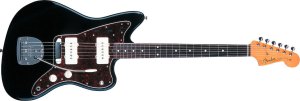
The Fender Jazzmaster was introduced in 1958 as a conscious effort to broaden Fender’s user base and appeal.

The company’s first efforts – the now legendary Telecaster and Stratocaster models – had already proven to be successful, but were then still widely perceived as bright-sounding guitars for Country & Western, as well as early Rock ’n’ Roll. Now Leo Fender and his team were aiming for the more ”serious” guitarists of the Jazz and Easy Listening genres.

Fender kept the standard long Fender-scale (25.5″), but – for the first time – added a rosewood fingerboard. The reasons for the rosewood board were both cosmetic – it looked classier than the lacquered maple of previous models – as well for tonal reasons, with rosewood imbuing the sound with a warmer timbre. The Jazzmaster was also the company’s first guitar with an enlarged version of the Strat-headstock, which was meant to combat dead spots and wolf-tones.

The body was a brand-new design premiering the company’s patented offset waist feature, meant to improve balance, especially when playing seated.

A new, front-mounted vibrato with a softer, spongier action (meant as a direct competitor to Bigsby’s models) was also devised. The vibrato – which worked with a separate, rocking bridge – was easy to adjust from the front, and also featured a locking mechanism for disabling the system (and keeping the guitar in tune even after a string breakage).

The most important changes took place in the electronics of the Jazzmaster: The pickups were clearly Fender’s attempt at getting a Gibson P-90 -type tonality, with the wide and flat coils. The controls featured two different circuits, with the normal circuit offering a 3-way toggle switch, as well as a master volume and tone control. A slide switch on the scratchplate’s upper shoulder engaged the so-called Rhythm Circuit, which switched on only the neck pickup going through its own set of volume and tone controls (above the neck pickup).

After a first wave of enthusiasm over Fender’s new top-of-the-line guitar, the Jazzmaster’s success sadly waned. Most conservative Jazz guitarists wouldn’t touch Fender’s ”plank” with a barge pole, and still considered the sound as too bright, while the company’s usual customers were perfectly happy with their more straightforward Strats and Teles.

The biggest genuine problem with Jazzmasters lies in their singlecoil pickups, which take in a lot of extraneous hum and interference (just like P-90’s do).

Modern players also tend to complain about the vibrato system’s flimsy bridge saddles, although, in fairness, one should note that this is mostly due to our modern light string gauges. The Jazzmaster-vibrato had been designed at a time when ”light gauge” meant an 012-set with a wound g-string.

Today the Jazzmaster’s appeal lies mostly in the alternative field, and not too many name players spring to mind:

Thurston Moore and Lee Ranaldo (Sonic Youth), J Mascis (Dinosaur Jr.), as well as British songwriter Elvis Costello are the most well-known Jazzmaster players.

****

In 1962 Fender took the Jazzmaster as the basis for a brand-new model, geared towards Surf and Pop guitarists – called the Fender Jaguar.

The Jaguar was Fender’s first guitar with 22 frets, and it featured a relatively short scale of 24″ (even shorter than Gibson’s usual 24.75″). The general look stayed in place, but the Jaguar was adorned with glitzy chrome control plates.

Fender took the criticisms over the Jazzmaster-pickups to heart and designed new pickups for the Jaguar. The new units are reminiscent of Strat-pickups, but feature slightly higher coils, as well as metal shielding plates that enclose most of the pickups’ bottom and sides.

The normal/Rhythm-circuit set-up stayed in place, but the normal circuit now featured three slide switches – an on/off-switch for each pickup, plus a ”strangle” switch that cuts all bottom end from the output signal.

The Jaguar originally also came equipped with a detachable mechanical string mute, which wasn’t well-received by guitar players.

Sadly, the Jaguar’s fate followed along the Jazzmaster’s lines – after a first wave of success sales dwindled in the wake of the British Invasion.

The most famous names associated with the Fender Jaguar are Carl Wilson (The Beach Boys), Kurt Cobain (Nirvana) and Johnny Marr (The Smiths, Modest Mouse).

As with the Jazzmaster, the Jaguar has seen a resurgence of sorts over the past few years, with many new and modified versions springing up, such as the Fender Blacktop Jaguar HH.

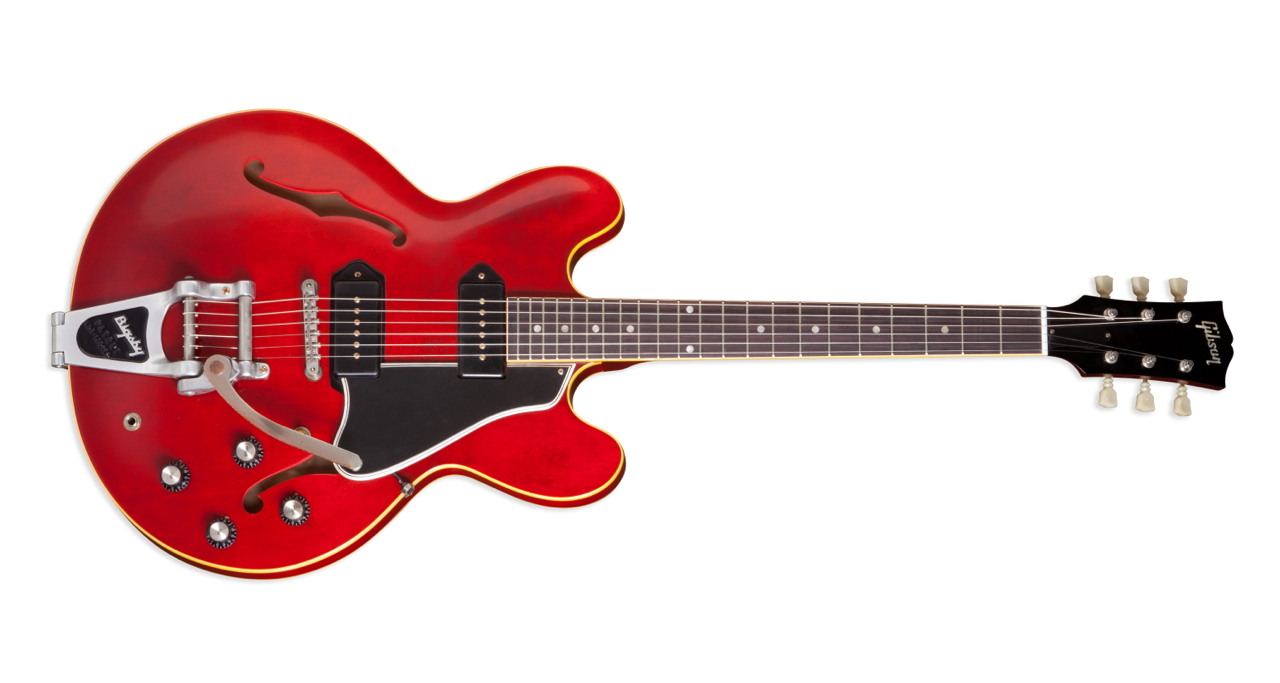
Makea uusinta Gibsonilta // Sweet reissue from Gibson – ES-330

Gibson on laittanut vanhan klassikkonsa ES-330 uudelleen tuotantoon.

ES-330:lla on sama ohut vanerirunko kuin esimerkiksi ES-335, mutta ilman keskipalkkia, minkä takia kaulaliitos on tässä jo 16. nauhan kohdalla.

Mikrofonivarustus on sekin klassinen: kaksi Alnico II -magneetteilla varustettua P-90-mikkiä.

Malli on saatavilla sekä Bigsbyllä että tavallisella trapetsilla varustettuna.

****

Maahantuoja: Into-Luthman

Gibson has chosen to re-release its classic ES-330-model.

The ES-330 shares the ES-335’s thinline plywood body, but is fully hollow (no centre block), which is why the neck joint is already at the 16th fret.

The pickups in this reissue are a pair of Alnico II -equipped P-90s.

The models is available with a Bigsby or with a trapeze tailpiece.

****

Klassikkokitarat, osa 8: Gibson Firebird

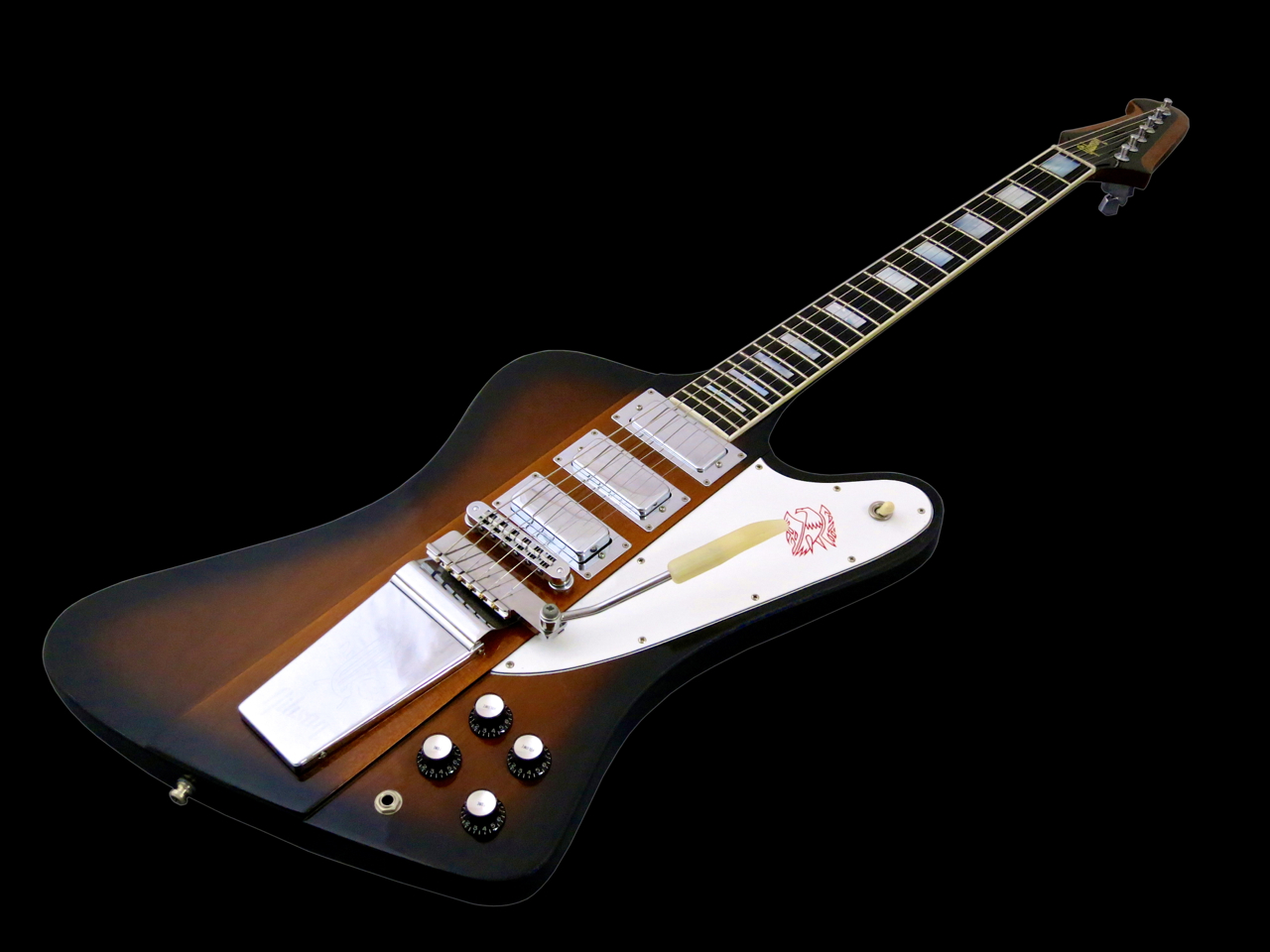
Gibson Firebird VII – beauty shot 1 – black

Tämän jutun otsikko olisi voinut olla ”Firebird: suuri tuntematon”, Gibson Firebird kun on jostain syystä firman klassikkomalleista vähiten laajasti tuttu. Syitä tähän ilmiöön ovat alkuperäisen malliston lyhyt tuotantokausi, sekä todella nimekkäiden soittajien puuttuminen Firebirdin käyttäjälistalta.

Firebird/Thunderbird-mallisto oli vuoden 1963 versio Gibsonin yrityksistä luoda moderneimman kitaran kuin Fender. Yritykset alkoivat jo vuonna 1958 Explorer- ja Flying V -malleilla. Gibsonin silloinen toimitusjohtaja, Ted McCarty, halusi luoda pramean soittimen, joka todistaisi kaikille, että firma ei ollut vanhanaikainen pitkäveteisien soittimien valmistaja. Firebird oli Gibsonin vastaus Fender Jazzmasterille.

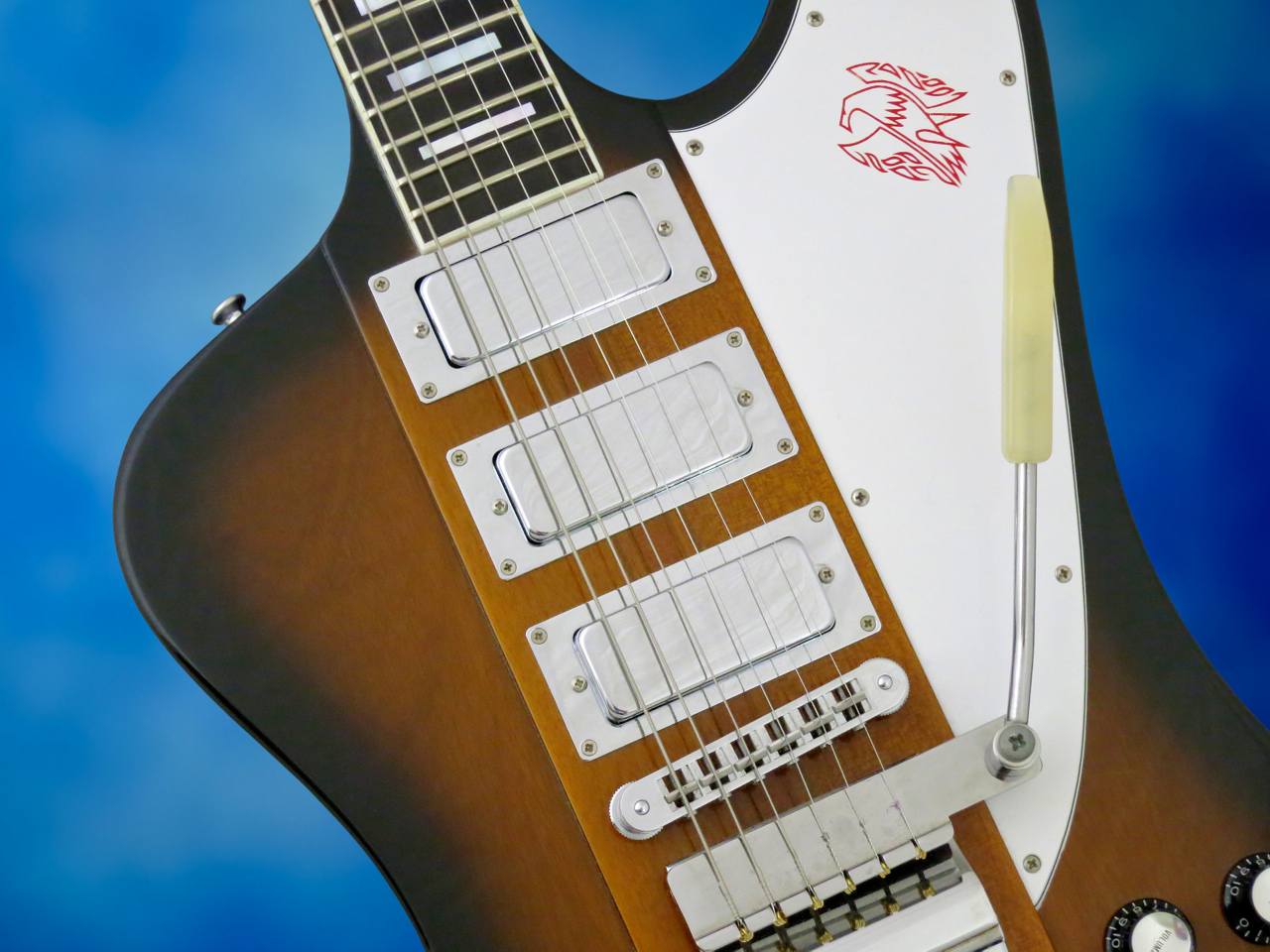
Gibson Firebird VII – pickups and Maestro

Tällä kertaa McCarty haki ulkopuolista apua: autoteollisuudesta tuttu suunnitelija Ray Dietrich sai tehtävän luoda soittimen designerin näkövinkkelistä. Dietrichin innovaatio oli ensimmäinen Firebird/Thunderbird-sarja (kuva yllä), jonka kutsutaan nykyään reverse-runkoiseksi (reverse = käänteinen), koska sen runko näyttää vähän kuin oikeankätinen kitara, joka on vasenkätisen kitaristin käytössä.

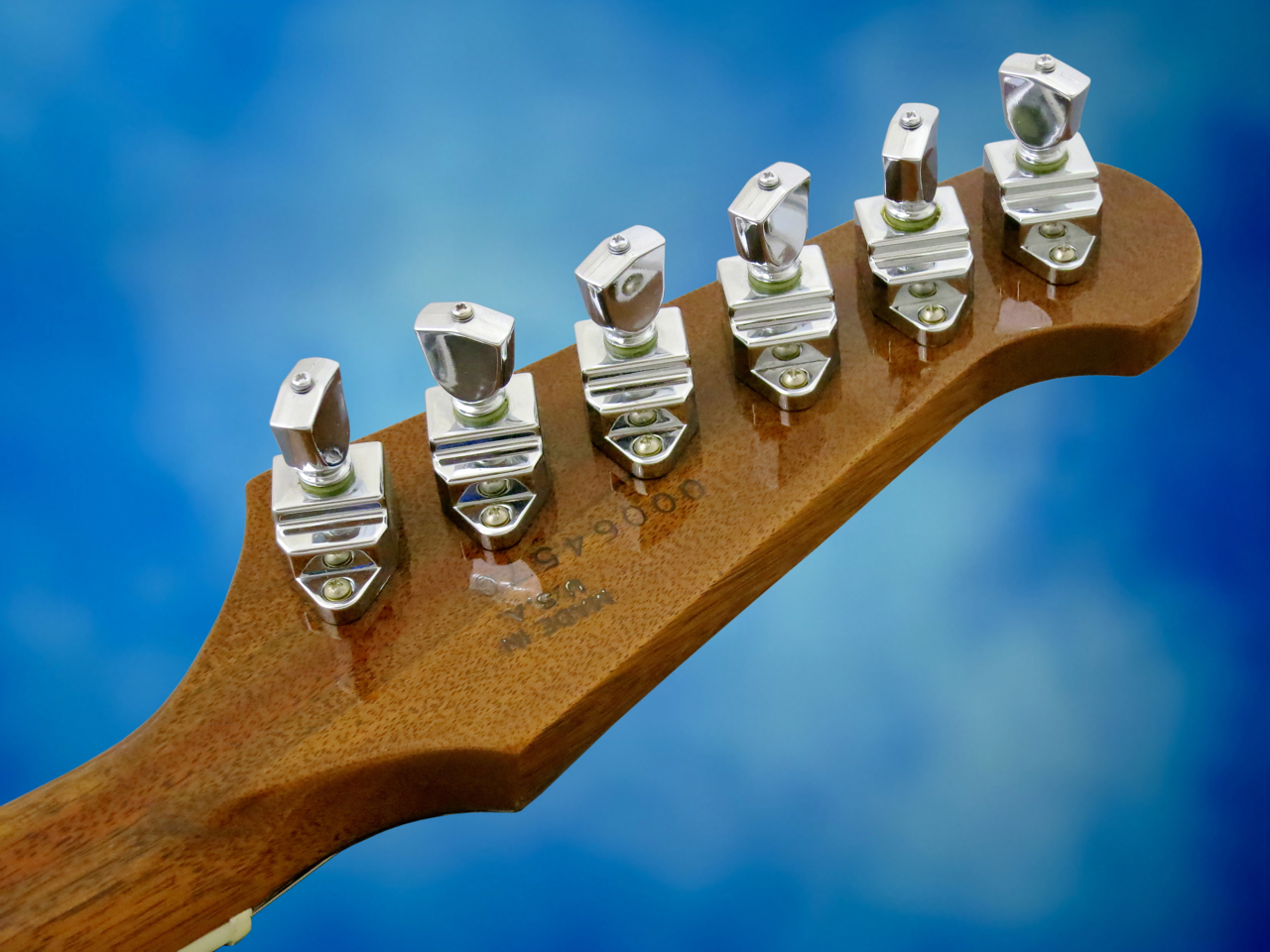
Gibson Firebird VII – tuners

Gibson päätti kokeilla firmalle uutta rakennustapaa: reverse-Firebirdeillä kaula jatkuu yhtenäisenä koko soittimen pituudella (through-neck). Tähän mahongista ja pähkinäpuusta veistettyyn  keskiosaan lisättiin mahonkiset runkosiivet. Sarjan toinen erikoisuus ovat banjo-tyyliset virittimet, joissa nupit ovat samassa linjassa viritystappien kanssa.

Alkuperäinen reverse-sarja (1963–’65) koostui neljästä mallista:

• Firebird I: yksi mini-humbuckeri tallan lähellä, palisanteriotelauta, pyöreät otemerkit, wraparound-talla

• Firebird III: kaksi mini-humbuckeria, reunalistoitettu palisanteriotelauta, pyöreät otemerkit, wraparound-talla, yksinkertainen vibrato

• Firebird V: kaksi mini-humbuckeria, reunalistoitettu palisanteriotelauta, Les Paul Standard -tyyliset otemerkit, pitkä Gibson Vibrola lyyra-kaiverruksella

• Firebird VII: kolme mini-humbuckeria, reunalistoitettu otelauta eebenpuusta,  neliskulmaiset otemerkit helmiäisistä, pitkä Gibson Vibrola lyyra-kaiverruksella, kullanväriset metalliosat

Standardiviimeistely oli kaikissa malleissa sunburst-liukuväritys, mutta ensimmäistä kertaa Gibson tarjosi asiakkailleen myös Fender-tyyliset, standardisoidut custom-värit optiona.

****

Valitettavasti Firebirdin alkuperäinen painos ei ollut kovin suosittu. Pienten myyntilukujen lisäksi Fender alkoi valittaa, että Firebirdin ulkomuoto oli rikkomus omaa Offset-waist-patenttia vastaan, ja uhkasi oikeustoimilla. Seikat johtuivat koko sarjan muuttamiseen tällaiseksi:

Kummallista kyllä, mutta non-reverse Firebirdit (1965–’69) näyttivät jopa enemmän Fender-kitaroilta kuin reverse-runkoiset vastineet. Non-reverse Firebirdeissä kaulaliitos oli muutettu takaisin Gibsonin perinteiseksi liimaliitokseksi. Firebird I- ja III-malleissa oli nyt P-90-mikrofonit – kaksi kappaletta I:ssä ja kolme III:ssa – kun taas Firebird V- and VII-malleilla oli yhä käytössä edeltäjänsä mini-humbuckerit. Otelauta oli kaikissa non-reverse Firebirdeissä palisanteria pyöreillä otemerkeillä, mutta ilman reunalistoitusta.

Firebirdin tuotantoa lopetettiin vuonna 1969 huonon myyntimenestyksen takia.

****

****

Sitemmin Firebirdit on otettu aina välillä uudelleen tuotantoon, mutta silti näitä kitaroita näkee edelleen suhteellisen harvoin.

Gibson Firebirdien tunnetuimmat soittajat ovat/olivat Johnny Winter, Phil Manzanera (Roxy Music), Brian Jones (Rolling Stones), Clarence ”Gatemouth” Brown, sekä Allen Collins (Lynyrd Skynyrd).

Gibson Firebird VII – full front

Classic Guitars, part 8: Gibson Firebird

Gibson Firebird VII – beauty shot 1 – sky

This piece could also have been titled ”The Firebird: A famous enigma”, as the Gibson Firebird is the least well-known of the company’s classic solid body electrics. The reason for this relative lack in interest is down to the short production run of the original series, as well as the fact that only a few famous guitarists have used a Firebird as their main axe.

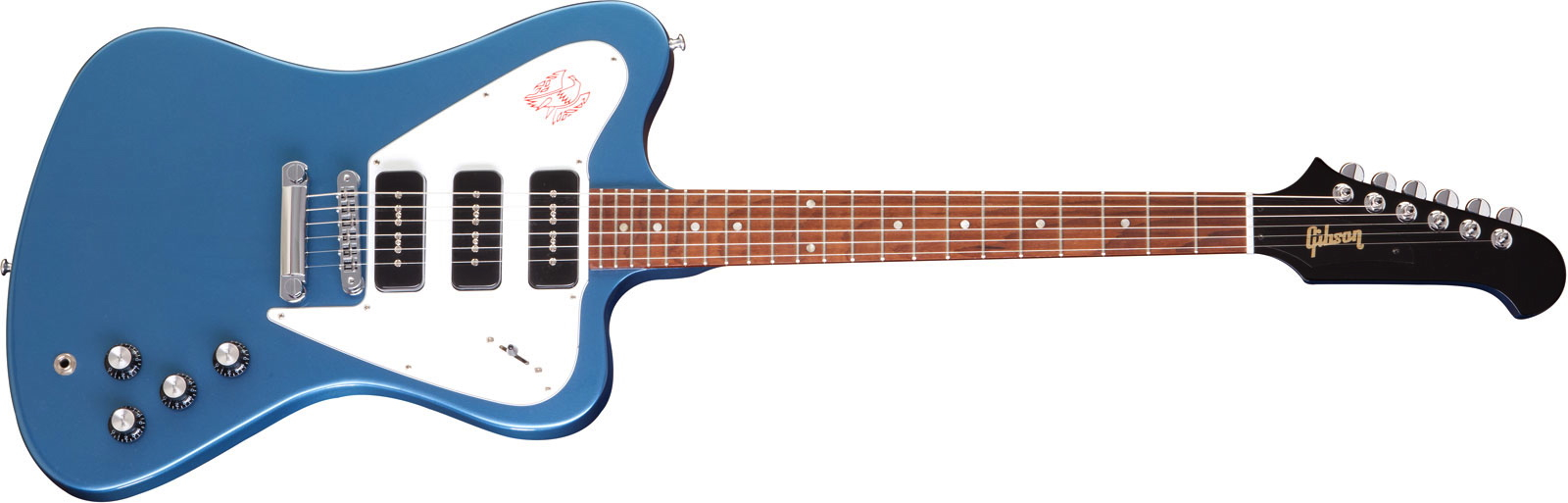
The Firebird/Thunderbird-line of guitars and basses was the 1963-version of the ”Let’s beat Fender”-game that Gibson started in 1958 with the Flying V and the Explorer. Gibson’s then-president Ted McCarty wanted to come out with a snazzy guitar that proved that a) Gibson wasn’t a behind-the-times, old-fashioned company of old farts, and b) could compete with Fender’s current glitzy offerings (the Jazzmaster and the Jaguar) in the looks stakes.

Gibson Firebird VII – body

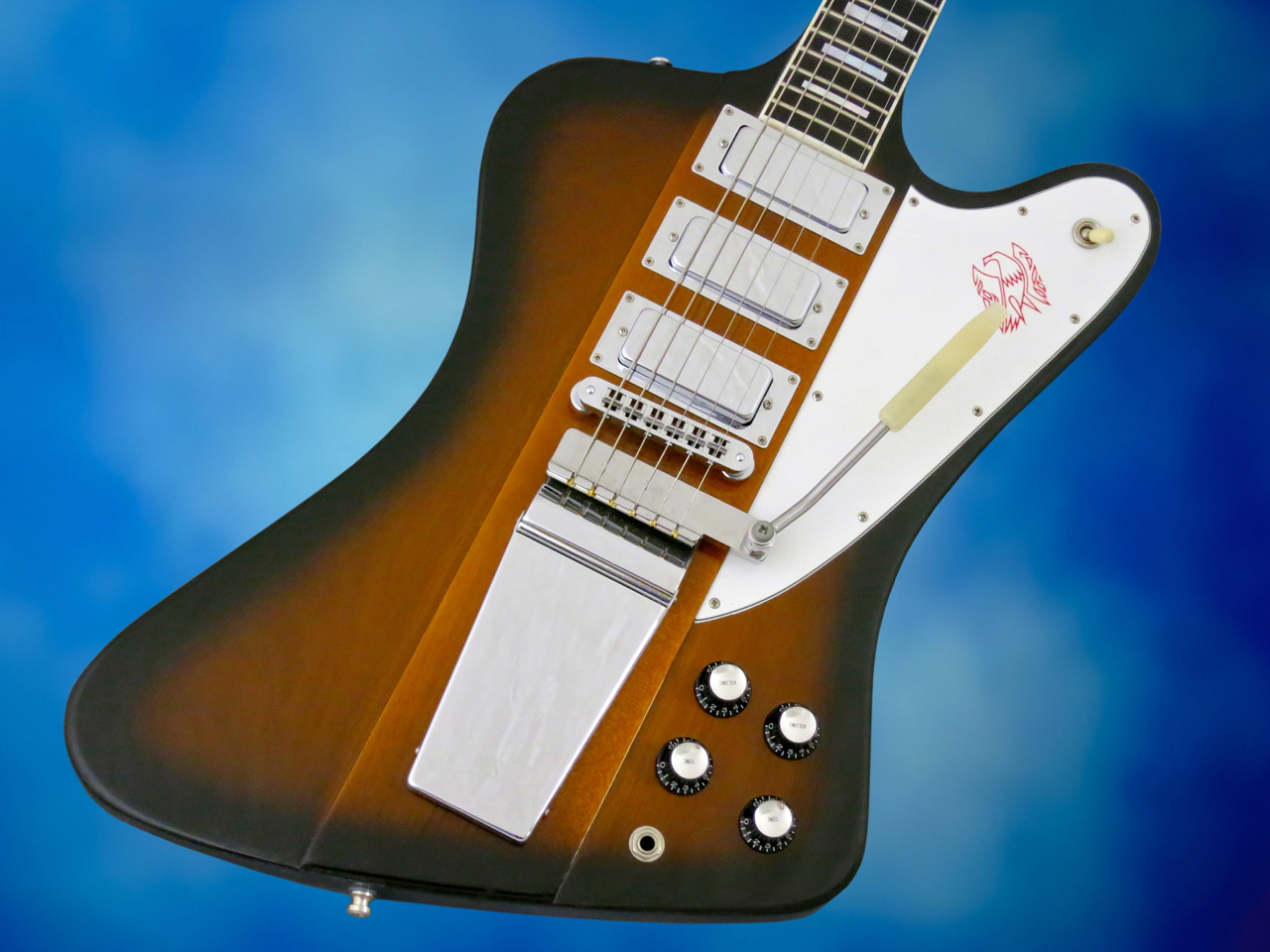
This time McCarty looked for help from outside the guitar industry. He hired renowned car designer Ray Dietrich to design a guitar purely from a designer’s viewpoint. What Dietrich finally came up with is now known as the ”reverse-body” Firebird-line (see picture above). These guitars (and their Thunderbird bass-brethren) are called ”reverse”, because, contrary to tradition (and ergonomical logic), the bass side of the body leans away from the neck, while the treble side is longer on the neck-facing side.

Gibson Firebird VII – tuners

Gibson decided on a novel way (for them) of building the guitar: reverse Firebirds feature a through-neck construction, with the neck and the body’s central section being crafted from the same laminated mahogany/walnut blank. The body wings are made from mahogany, while the tuners are very interesting back-facing machines.

The original run (1963–’65) of reverse Firebird-guitars comprised four models:

• Firebird I: one mini-humbucker in bridge position, unbound rosewood fretboard, dot inlays, wraparound bridge

• Firebird III: two mini-humbuckers, bound rosewood fretboard, dot inlays, dot inlays, wraparound bridge, simple vibrato

• Firebird V: two mini-humbuckers, bound rosewood fretboard, trapezoid (crown) inlays, long engraved Gibson Vibrola

• Firebird VII: three mini-humbuckers, bound ebony fretboard,  pearl block inlays, long engraved Gibson Vibrola, gold-coloured hardware

The standard finish was sunburst, but as as a Gibson-first, the Firebirds were also offered in a range of custom finishes, which weren’t very popular with the dealers, though.

****

Sadly, the reverse Firebirds weren’t selling very well. And then, when Fender started claiming Gibson had infringed on their ”offset waist”-patent and threatened a law suit, McCarty’s team decided on a swift redesign, which looked like this:

The non-reverse Firebirds (1965–’69) looked even more like a Fender-design, and abandoned the through-neck in favor of Gibson’s conventional set neck-joint. The Firebird I and III now sported P-90-pickups – two on the I and three on the III – while the Firebird V and VII stuck to their mini-humbuckers. All non-reverse models featured unbound rosewood fingerboards with dot inlays.

The non-reverse ’Birds didn’t set the guitar-playing world on fire either, so the company axed the series in 1969.

****

****

Since the mid-70s there have been plenty of reissues, as well as updated Firebird-models, but these clear-sounding guitars still tend to find favour with only a small clientele, compared to the rest of Gibson’s classics.

The best known users of Gibson Firebirds were/are Johnny Winter, Phil Manzanera (Roxy Music), Brian Jones (Rolling Stones), Clarence ”Gatemouth” Brown and Allen Collins (Lynyrd Skynyrd).

Gibson Firebird VII – full front

Klassikkokitarat, osa 7: Gibson ES-175

Pisin jatkuvassa tuotannossa ollut Gibson-sähkökitara on Gibson ES-175.

Kun sitä esiteltiin ensimmäistä kertaa vuonna 1949 malli oli varustettu ainoastaan yhdellä P-90-mikrofonilla, joka sijaitsi lähellä kaulaa. Koska ES-175 oli alusta asti tarkoitettu sähköistettuksi jazzkitaraksi, runkoa rakennettiin muottiin prässätystä vaahteravanerista, eikä kokopuusta. Kitaran kaula on mahongista ja reunalistoitettu otelauta on palisanteria.

Ensimmäisinä vuosina kitaran talla oli kokonaan puusta, mutta 1950-luvun loppupuolesta lähtien on käytetty lähes aina Tune-o-matic-tallaa.

ES-175-mallissa esintyvät kaksi erilaista kieltenpidinmallia: ensimmäisissä tuotantomalleissa oli trapetsin muotoinen kieltenpidin (katso Gibsonia ylhäällä), myöhemmin kitara sai ihan oman mallinsa, jonka näkyy Epiphonen ES-175-versiossa. Molemmat versiot käytettiin vaihtelevasti 1970-luvusta lähtien.

Vuonna 1953 syntyi se varsinainen klassikko – kahdella mikrofonilla varustettu ES-175D. Vuodelta 1957 lähtien humbuckerit kuuluvat molemman mallin vakiovarusteisiin.

Vuonna 1971 lopetettiin yksimikrofonisen version sarjatuotantoa, ja kaksimikkisesta mallista tuli ES-175, ilman D:tä.

ES-175 on orkesterikitaroiden klassikko – kitara, joka on yhä monen orkesterikitaran esikuva.

Yes-yhtiön Steve Howe on rock-piireissä mallin tunnetuin käyttäjä.

Vuosina 1952-’58 oli ES-175:lla myös hieman näyttävämpi sisarmalli, nimeltään ES-295:

ES-295 on periaatteessa sama kitara kuin ES-175, paitsi että se on kokonaan kullanvärinen, muoviosat ovat valkoisia, ja alussa ES-295:llä oli alkuperäisen Les Paul -mallin pitkä trapetsitalla.

Monien mielestä ES-295 on se ”Elvis-malli”, koska Presleyn alkuperäinen kitaristi, Scotty Moore, käytti tätä soitinta usein.

Save

Classic Guitars, part 7: Gibson ES-175

The Gibson ES-175 is the Gibson guitar, that has been in continuous production for the longest.

When it was first introduced in 1949 it was a single-pickup model, with a P-90 in the neck position. The ES-175 was meant to be an electric Jazz-guitar from the start, so the body was constructed from laminated, pressed maple, instead of featuring a solid carved top. The neck is mahogany and the bound fingerboard made from rosewood.

For the first few years the guitar was equipped with a pre-compensated ebony bridge, later models feature a tune-o-matic bridge.

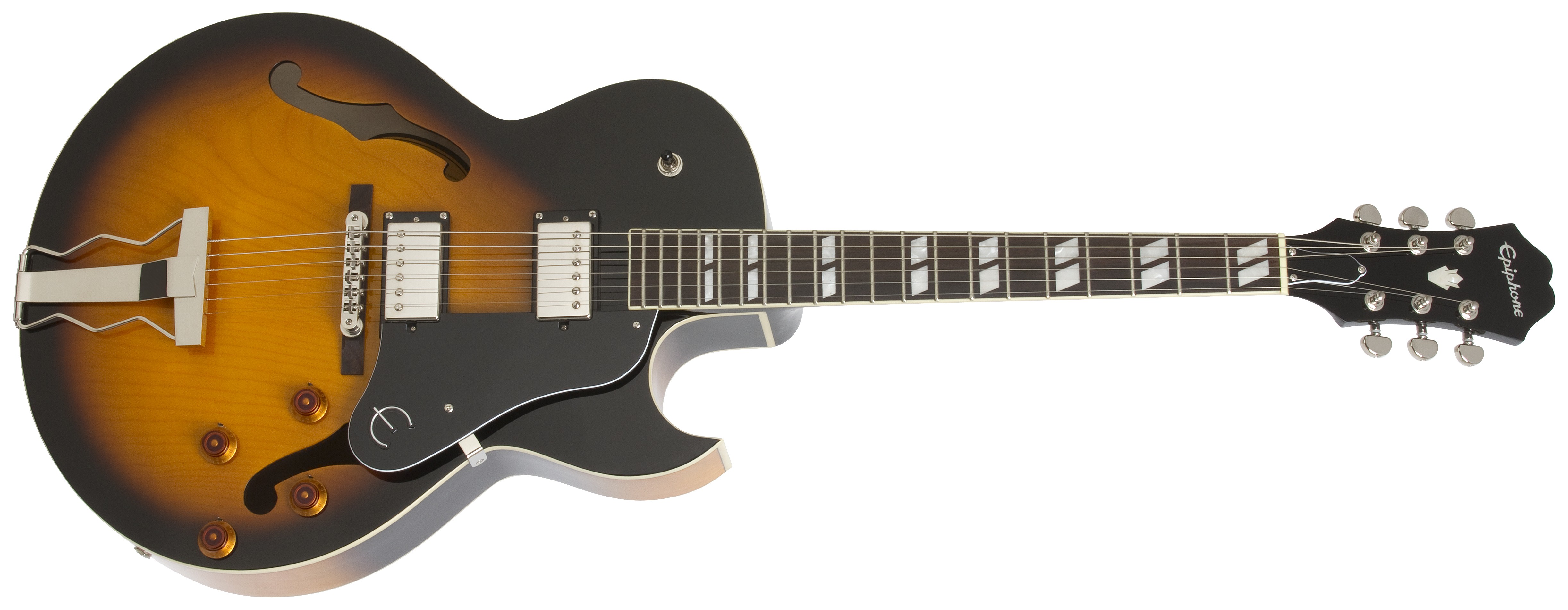
Two different tailpieces can be found on an ES-175: at first it featured a trapeze, like the Gibson at the top, later models were equipped with the special T-shaped tailpiece of the Epiphone below, but since the 1970s both types have been used on and off.

In 1953 the original ES-175 was joined by the now classic two-pickup model, the ES-175D. From 1957 onwards both models have been equipped with humbucking pickups.

In 1971 the single-pickup model was deleted from Gibson’s range, and the two-pickup model’s designation thus changed to ES-175 without the ”D”.

The ES-175 is an absolut classic among full-body Jazz-guitars, and its has become the yardstick most newcomers have to live up to.

In Rock-circles Steve Howe of Yes is by far the most famous user.

From 1952 to ’58 the ES-175 also had a foxier sister, called the ES-295:

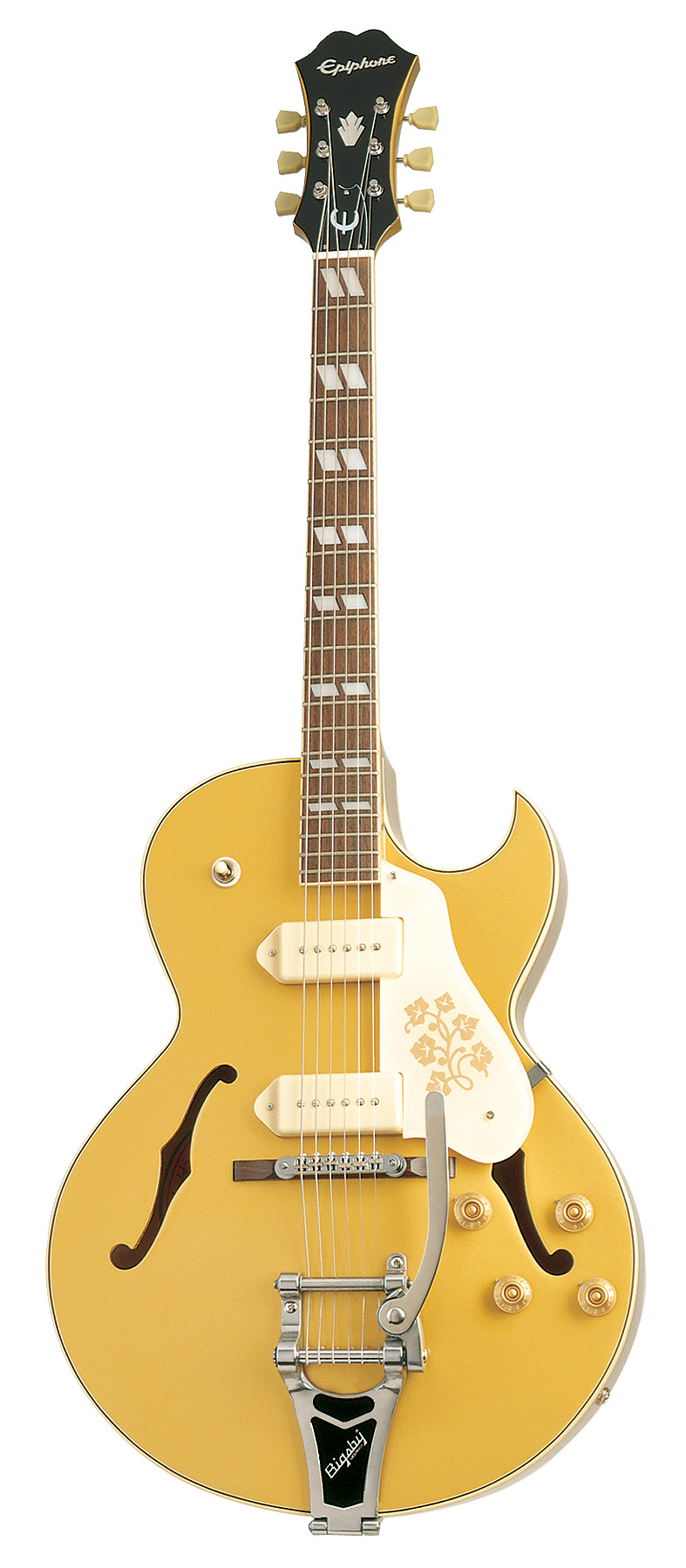
The ES-295 is built exactly like an ES-175, except for the all-gold finish, the cream pickguard, and the fact that the original incarnation featured the long Les Paul -trapeze-bridge.

Most people associate this model with early Rock’n’Roll as well as Country-music. Elvis Presley’s original guitarist, Scotty Moore, was often spotted with an ES-295.

Save

Epiphone-uutuudet syksylle 2011 ****** New Epiphone gear for autumn 2011

Epiphonelta on tulossa uusia malleja, joita pitäisi olla saatavilla lähiaikoina – juuri oikealla hetkellä joulutoiveitamme varten:

Epiphone will be releasing some tasty new models – just in time for your Christmas wish-lists:

****

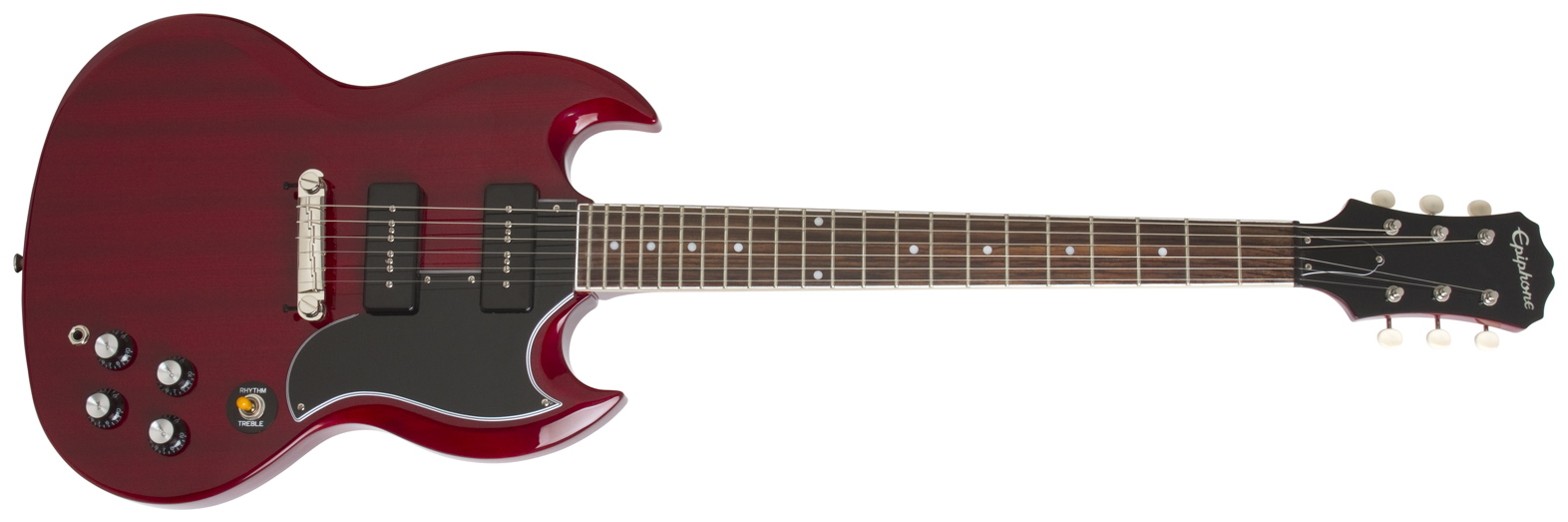
Pete Townshend -faneille tarjotaan viimein kunnon Epiphone-versio vanhasta SG Special -kitarasta. Reunalistoitettu, liimattu kaula, kaksi P-90-mikrofonia sekä kiinteä talla – todella jeeeeees!

At last Epiphone is releasing a Pete Townshend -style SG Special with a bound fretboard, a glued-in neck, two P-90s and a wraparound bridge – Who-tastic!

****

Les Paul Ultra III on päivitetty versio Ultra kakkosesta. Ultra III:lla on vielä paremmat humbuckerit sekä USB-lähtö (NI:n Guitar Rig LE -ohjelmapaketti kuuluu hintaan).

The Les Paul Ultra III is a further improvement on the Ultra II. The Ultra III has even better humbuckers, as well as a USB-port (NI’s Guitar Rig LE is included in the package).

****

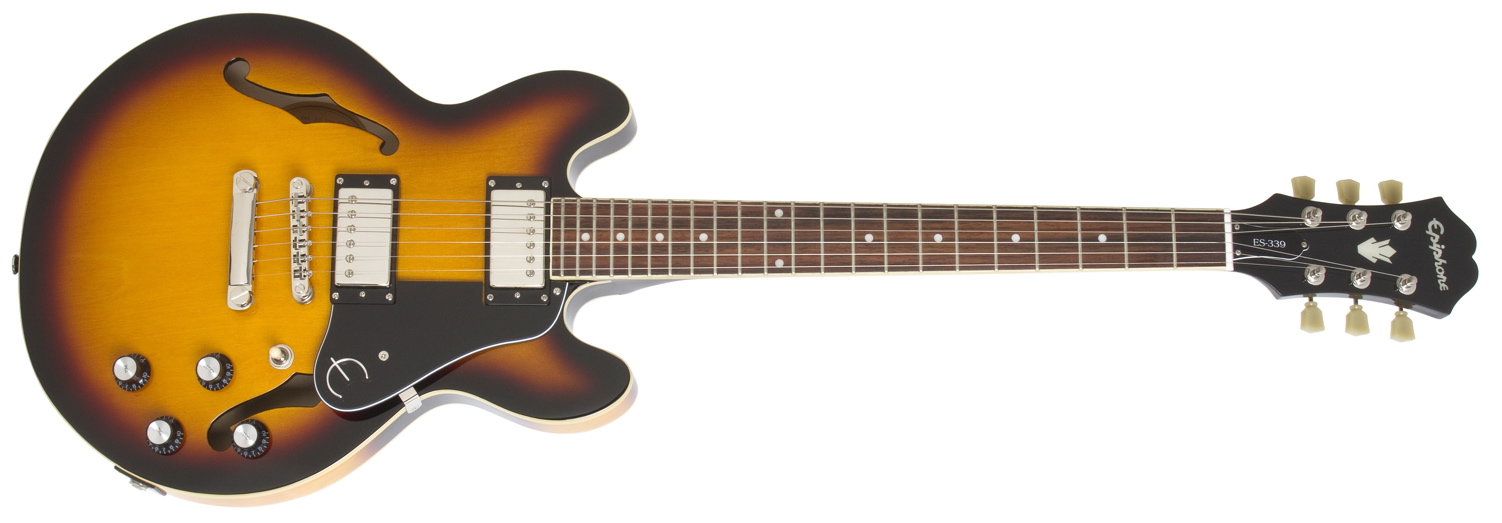
Ja puoliakustisen kitaran ystäville on tarjolla Epiphonen oma versio ES-339-mallista, jolla on ES-335:n rakenne, mutta pienemmällä kopalla klassikkoon verrattuna.

Friends of semis are treated to the Epiphone ES-339, which is basically an ES-335, only with a smaller body.

Classic Basses, part 3: Rickenbacker 4001/4003

Rickenbacker was one of the first manufacturers to latch onto Leo Fender’s idea of an electric bass with a proper long scale.

In 1957 they introduced their first bass model, the 4000, which was the world’s first through-neck bass.

Rickenbacker’s two-pickup model – the Rickenbacker 4001 (introduced in 1961) – turned out to become one of the company’s most successful instruments.  Paul McCartney and Chris Squire are probably the bass’ best-known users – they played the 4001’s export version 4001S.

In 1979 Rickenbacker came up with a model updated for use with roundwound strings. The new bass was named the 4003 and it  featured new truss rods (Rickenbackers always have two!) and more powerful singlecoil pickups with the neck unit moved slightly closer towards the bridge.

My own Rickenbacker 4003 was built in 1987.

Except for the rosewood fretboard, a 4003 is crafted completely from maple. The neck goes all the way from the headstock to the end of the body (a so-called Through-Neck), while the body is formed by two pieces of maple glued to the neck’s sides.

Rickenbacker typically uses a reddish type of rosewood for their fingerboards, which are usually gloss-lacquered. Another typical company trait is the narrow binding, which leaves a visible gap between the binding and the neck’s finish.

The tuning machines have been made in Germany by Schaller.

Rickenbacker’s idiosyncratic bridge design includes an adjustable string mute mechanism. Setting the correct octave compensation is a little bit more complicated than it need be – you have to detune the strings to get to the adjustment screws.

Alongside the use of maple as the instrument’s main ingredient the 4003’s singlecoil pickups play a large role in this model’s throaty tone. Most users remove the bridge pickup’s metal cover, as it tends to get in the way of your right hand.

The silver metal finish is kind of rare, even though a similar bass appeared on the cover of Rickenbacker’s bass catalogue in the mid-80s. The most popular finishes are ”Fireglo” (a red sunburst), ”Jetglo” (black) ja ”Mapleglo” (natural gloss finish).

You can check out the sound of my 4003 here or here.

Klassikkobassot, osa 3: Rickenbacker 4001/4003

Rickenbacker tajusi melko nopeasti, että Leo Fenderin keksimä sähköbasso pitkällä mensuurilla ei ollutkaan niin hullu idea kuin monet väittivät.

Vuonna 1957 firma toi markkinnoilla ensimmäisen sähköbassonsa, jolla oli mallitunnus 4000 – se oli ensimmäinen basso, jossa kaula jatkoi yhtenäisenä koko rungon läpi.

Kaksimikrofonisesta sisarmallista tuli sitten oikea klassikko – Rickenbacker 4001 (tuotanto aloitettu vuonna 1961).  Paul McCartneysta ja Chris Squireistä tuli tunnetuimpia Rickenbacker-käyttäjiä – tosin he soittivat 4001:n brittiversiota 4001S.

Vuonna 1979 sai 4001 uudella kaularaudalla ja vahvemmilla mikrofoneilla varustetun rinnakaisversion nimeltään Rickenbacker 4003.

Minun oma Rickenbacker 4003 on vuosimallia 1987.

Palisanteriotelautaa lukuunottamatta 4003 on veistetty kokonaan vaahterasta. Kaula jatkuu rungon läpi (ns. Through-Neck), ja basson runko koostuu kahdesta vaahterapalasta, joita on liitetty kaulan sivuun.

Rickenbacker on aina käyttänyt hieman punertavaa palisanterilaatua otelaudoissaan. Perinteisesti firman otelautoja viimeistellään kiiltävällä kirkaslakalla. Tyyppillinen on myös otelaudan matala reunalistoitus, joka jättää osan palisanterista näkyviin.

Virityskoneistojen valmistaja on 1970-luvun loppupuolelta ollut saksalainen Schaller.

Rickenbackereissa on läheis aina firman oma, hieman omintakeinen talla, johon on integroitu myös säädettävä solukumisordino. Oktaavikompensaation säätäminen on hieman monimutkainen, koska kielet joutuu löystää sitä varten…

Korkean ”vaahterapitoisuuden” ohella on yksikelaisille mikrofoneille tärkeä rooli 4003:n jäntevässä soundissa. Monet soittajat poistavat tallamikrofonin metallisuojan, koska se on oikean käden tiellä (näin teki myös bassoni entinen omistaja).

Hopeanvärinen metalliviimeistelly on suhteellisen harvinen, vaikka juuri tämänvärinen soitin oli 1980-luvun keskivälillä Rickenbackerin bassokatalogin kannessa. Tavallisimpia väriä ovat ”Fireglo” (punainen liukuväritys), ”Jetglo” (musta) ja ”Mapleglo” (kirkaslakkaus).

Voitte kuunnella oman 4003:n sointia esimerkiksi tässä tai tässä.

Classic Basses, part 2: Fender Jazz

It took quite some time for the electric bass to really catch on. Fender introduced the Precision Bass in 1951, but had to wait for almost a whole decade, before they felt that the market was ready for a second bass guitar from the company.

In 1960 Fender released its deluxe update – the Jazz Bass.

Leo Fender listened to the most common complaints made by players and sampled their suggestions for improvements, and he addressed these issues with the new model. The Jazz has a more slender neck profile, a more ergonomic body shape and it offers a wider sound palette (thanks to its two singlecoil pickups) compared to its forebear.

The very first batch of Jazz Basses was equipped with stacked concentric controls, which offered separate volume and tone controls for each of the two pickups (see the sunburst bass above).

But already in 1961 the electronics were updated to the less fussy combination now widely known as the Jazz Bass -set-up – separate volume controls with one master tone.

The pickups are reverse wound/reverse polarity, which means that when used together they defeat transformer hum and electromagnetic buzz effectively.

While the standard version was offered in three-tone sunburst only, the Jazz Bass was ordered in Custom Color -finishes quite regularly in the 1960s, often with matching headstock faces.

From the end of the ’60s and all through the ’70s the fretboard was bound and featured large block inlays. Maple fingerboards were quite common during the ’70s.

Despite the changes in its looks the Jazz Bass’ sound always stayed excellent. Its sound is slightly more slender and transparent than that of its equally famous stablemate. The front pickup is full, but less throaty than a P-Bass’ split-coil unit. The bridge pickup has a nice, nasal timbre, and the combination is slightly hollowed out with a fresh zing, which made funky slap bass styles so fashionable.

________________________________________________________

Check out the sound of my own Squier Jazz Bass (Made in Japan, 1985) here.

Pidä blogia WordPress.comissa.

Ylös ↑