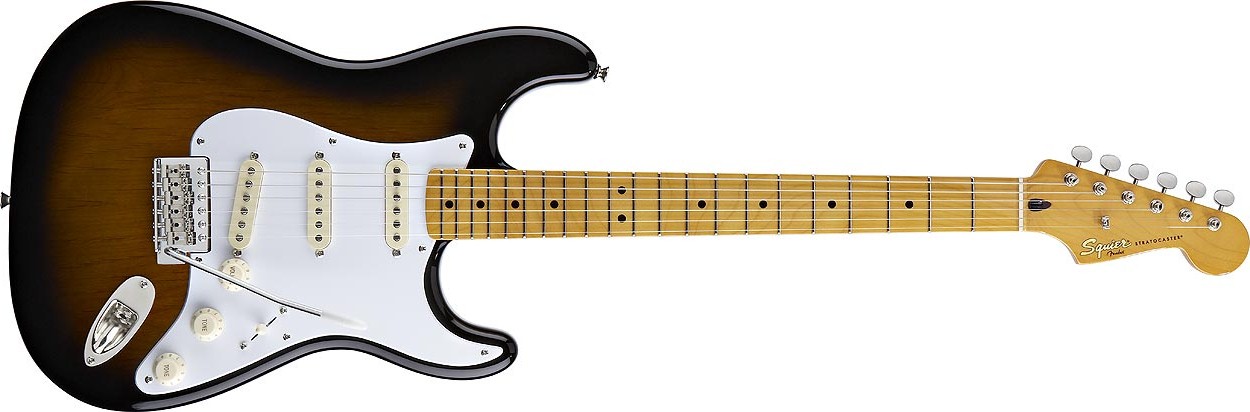
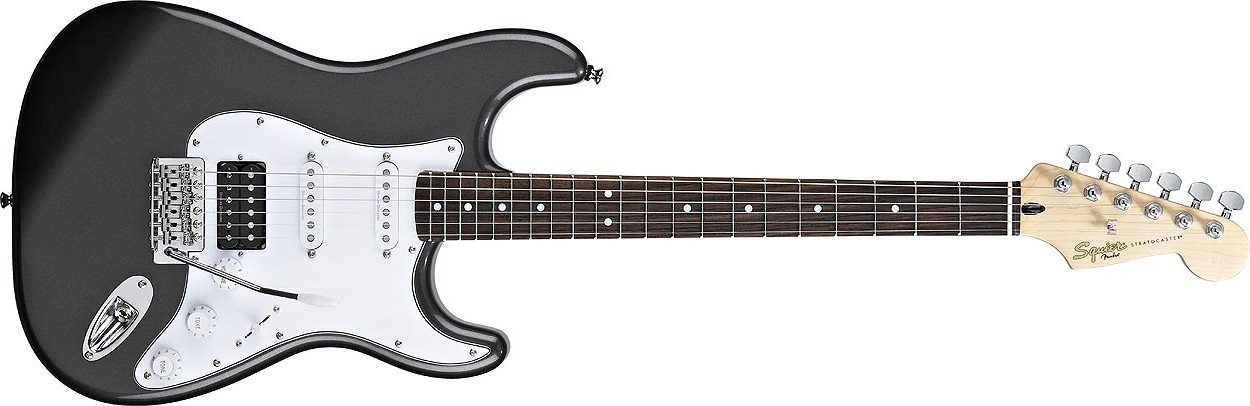
Classic Basses, part 1: Fender Precision

Leo Fender’s and George Fullerton’s Precision Bass was the world’s first electric bass guitar. It was introduced to the puzzled public in 1951.

Tony Bacon and Barry Moorehouse quote Fender’s old production chief from the 50s and 60s, Forrest White, on the initial impact the new-fangled instrument had (in their well-written ”The Bass Book”):

”Those who were not sure if Leo was crazy when he brought out the solidbody guitar were darn sure he was crazy now, since he came up with an electric bass. They were convinced a person had to be out of their mind to play that thing.”

Leo and George took the Telecaster-concept and adapted it for a bass instrument. At the same time they hit upon some standards – almost by mistake – that are still valid these days. The most important ones are the body’s additional long upper horn, which helped in balancing such a long-necked instrument, as well as the scale length of 34 inches (84,6 cm).

Initial problems in the project were the total lack of appropriate strings, which had to be custom-ordered from V.C. Squier, as well as tuning machines. At first they used sawed off double bass tuners, before they were able to order Kluson-machines, manufactured to Fender’s own specifications.

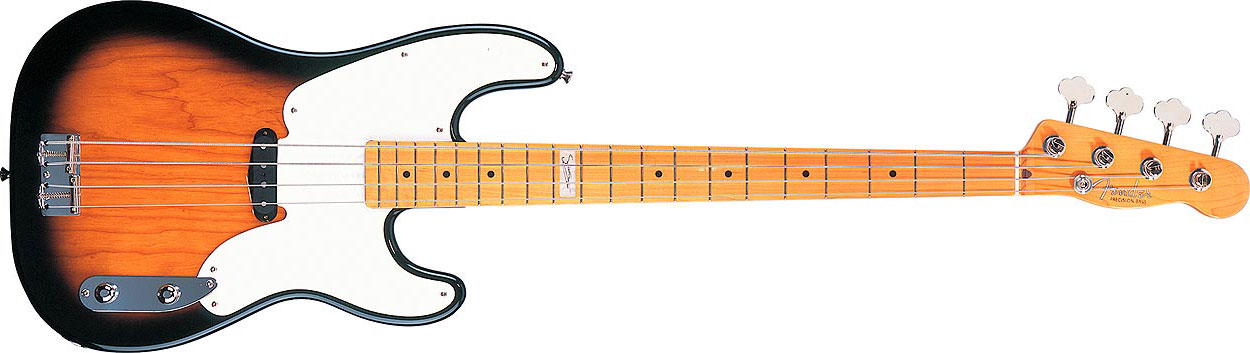
The first edition of the Precision Bass, made between 1951 and 1954, had a yellowish, semi-opaque-finished (blonde) slab ash body, a black Bakelite scratchplate, a Telecaster-style single coil pickup and a one-piece maple neck with a Telecaster-headstock. The simple bridge had only two saddles, which were first made from plastic and later from metal.

When the Stratocaster was introduced in 1954 the P-Bass received a slight make-over: the body gained Fender’s comfort contours, the scratchplate changed to single-ply white plastic and the standard finish became two-tone sunburst.

The Sting Signature Precision is based on a ’54-’56 P-Bass:
But Leo Fender still wasn’t quite satisfied with his creation: the pickup was picking up too much buzz, and its spiky signal tended to trash a lot of Bassman-amp speakers. Adding to this the Precision’s intonation wasn’t really very precise, because of the spartan bridge. And lastly it seemed that the small headstock had something to do with some dead notes on the g-string around the 5th fret.

All these problems were addressed in the major overhaul (in 1957), which turned the Precision into the classic we all know today: with a large Strat-style headstock, a bridge with four individual saddles and a brand-new split-coil pickup.

This new pickup consisted of two halves, one each for the E- and A-string as well as the D- and g-string, wound reverse and with opposing magnetic polarities. Once hooked up in series the split-coil pickup produces a humbucking signal with a singlecoil sound. Placing each string between its own pair of magnets (in contrast to the single magnet below each string in the old design) also smoothed out the attack phase of each note, which in turn resulted in a signal that was much easier on a bass amp’s speakers.

The very first ”new and improved” Precisions also featured a gold-coloured aluminium scratchplate.
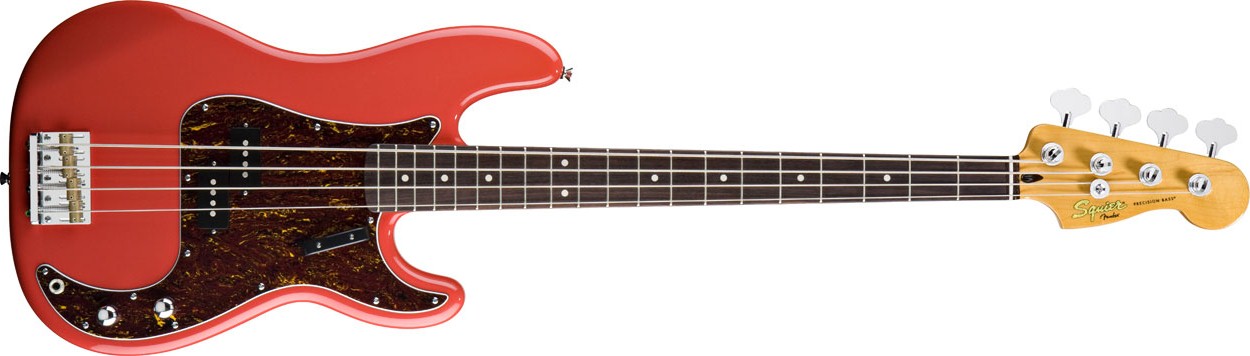
In 1959 Fender switched to rosewood fingerboards on all of their string instruments. Since the end of the 60s the P-Bass has been available both with a one-piece maple neck as well as with a rosewood fretboard.
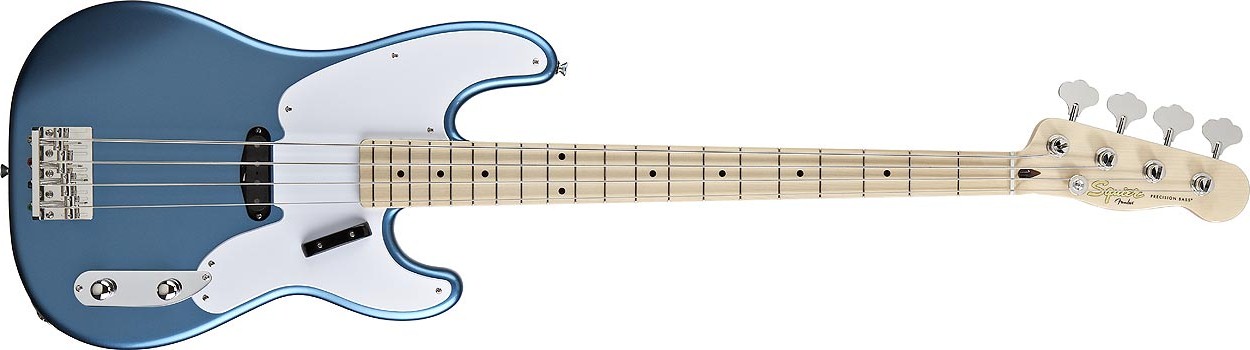
Nowadays Squier and Fender offer a Precision-model for all seasons and budgets, from vintage replicas to modern updates.

___________________________________________________________

You can listen to the sound of a 1976 fretless Fender Precision here.

The song was written by my late friend Pauli Rissanen, who also sings on the recording.

Klassikkobassot, osa 1: Fender Precision

Leo Fenderin ja George Fullertonin kehittämä Precision Bass oli maailman ensimmäinen sähköbasso, ja se ilmestyi vuonna 1951.

Tony Baconin ja Barry Moorehousen loistavassa kirjassa ”The Bass Book” Fenderin 1950/60-luvun tuotantopäällikkö Forrest White kertoi musiikkimaailman reaktioista uuteen soittimeen:

”Ne ihmiset, jotka eivät olleet Telecasterin ilmestymisen yhteydessä ihan varmoja, oliko Leolla muutama ruuvi löysällä, olivat nyt täysin varmoja siitä, että ukko on hullu!”

Leo ja George ottivat Telecasterista mallin ja laajensivat konseptin bassosoittimelle sopivaksi. Samalla ne keksivät lähes ”vahingossa” muutamia sähköbasson standardia, jotka ovat vielä tänä päivänäkin voimassa. Tärkeimmät ovat rungon pitkä yläsarvi, jonka ansiosta basson pitkä kaula ei vaikuta negatiivisesti soittimen balanssiin, ja mensuurin pituus (34 tuumaa/84,6 cm).

Isoja hankaluuksia aiheutti sopivien kielien puuttuminen (ensimmäiset tilattiin juuri P-bassoa varten V.C. Squierilta), ja virittimetkin piti kustomoida itse sahaamalla kontrabasson virittimia poikki, ennen kuin Klusonilta saatiin tilattua Fenderin speksien mukaisia kapistuksia.

Vuodelta 1951-1954 Presarilla oli (Telecasterin lailla) kellertävän viimeistelty suorakantinen saarnirunko, iso musta pleksi, Telecaster-tyylinen yksikelainen mikrofoni, sekä kitaralta lainattu lapa. Tallassa oli vain kaksi tallapalaa (ensin muovista, sen jälkeen metallista).

Kun Stratocaster-kitara saatiin valmis (1954), muutettiin P-bassoa hieman Straton mukaiseksi: rungolla oli nyt mukavuusviisteet, viimeistelly oli sunburst ja pleksi valkoinen.

Stingin nimikkomalli on sellaisen Precisionin (1954-56) uusintapainos:

Leo Fender ei kuitenkaan ollut vielä ihan tyytyväinen luomukseensa: mikrofoni oli häiriöherkkä ja sen tuhti potku rikkoi herkästi Bassman-vahvistimen kaiuttimia. Intonaatiokin ei ollut aivan kohdallaan, ja pieni lapa aiheutti selvästi kuolleita kohtia g-kielellä (4-5:n nauhan kohdalla).

Uudesta päivityksestä tuli meille kaikille tuttu Presari, jossa on Stratocaster-lapa, neljällä tallapaloilla varustettu talla ja uusi splitcoil mikrofoni.

Uudessa mikissä on erilliset puoliskot E- ja A-kielille ja D- ja g-kielillä, jotka ovat sekä magneettisesti että kelojensa suhteen vastavaiheessa toisiaan. Kun puoliskot kytketään sarjaan tulee niistä käytännössä humbucker yksikelaisen mikrofonin soundilla. Uudessa mikrofonissa on myös aina kaksi magneettia jokaisen kielen molemmin puolin, minkä ansiosta atakista tulee hieman miedompaa (kun vertaa aikaisempaan mikrofoniin).

Ensimmäisissä ”uusissa” Presarissa oli myös alumiinista valmistettu kullanvärinen plektrasuoja.

Vuonna 1959 kaikki Fender-kitarat ja myös Precision saivat palisanteriotelaudan. 1960-luvun loppupuolelta taas alkoi P-bassoissa valinnanvapaus otelaudan suhteen, ja myös tänä päivänä saa oman maun mukaan vaahtera- tai palisanteriotelaudalla varustetun mallin.

Squierilta ja Fenderilta saa jokaiselle budjetille sopivan version Presarilta – vanhojen mallien uusintapainoksista nykyaikaiseen päivitykseen.

___________________________________________________________

Oman nauhattoman Presarin (vuodelta 1976) soundia voi kuunnella esimerkiksi tässä.

Biisin on kirjoittanut edesmennyt ystäväni Pauli Rissanen, joka myös laulaa siinä demossa.

Classic Guitars, part 5: Gibson ES-335

Gibson’s ES-335, which was introduced in 1958, is one of the all-time bestselling models in the company’s history, and has been in production ever since, making it the Gibson model with the second longest uninterrupted production run (only the ES-175 has been in production longer, since 1949).

Ted McCarty, Gibson’s president from 1948 to 1966, has always stated that, looking back, he thought the ES-335 was his finest achievement.

The ES-335 has a thinline body made from steam-pressed maple plywood. Although the guitar does remind you of a classic Gibson hollow-body Jazz-box, this model is actually halfway solidbody in terms of its build.

This is because a semiacoustic electric guitar has a solid wood centre block running the length of the body from the neck joint all the way down to the back strap button. The centre block gives a semi a longer sustain, while keeping howling feedback at bay.

The block also allows the use of Gibson’s typical solidbody hardware – namely the Tune-o-matic-bridge and the stop bar – which add some clarity to the mix.

For their part, the ES-335’s hollow wings bring a bit of air to the mid-range, making the guitar sound more open and airy than a Les Paul for example.

Due to its relatively large body, a semi isn’t probably the best model for a small beginner (of less than 160 cm height), but as long as size isn’t an issue this lightweight and well-balanced ergonomic style of guitar is a fine choice.

Gibson’s subsidiary Epiphone has produced many of its own variants in the 335-style since the 1960s – from the glitzy Sheraton (the natural-coloured guitar in this post) to the minihumbucker-equipped Riviera, with its own, slightly brighter tone.

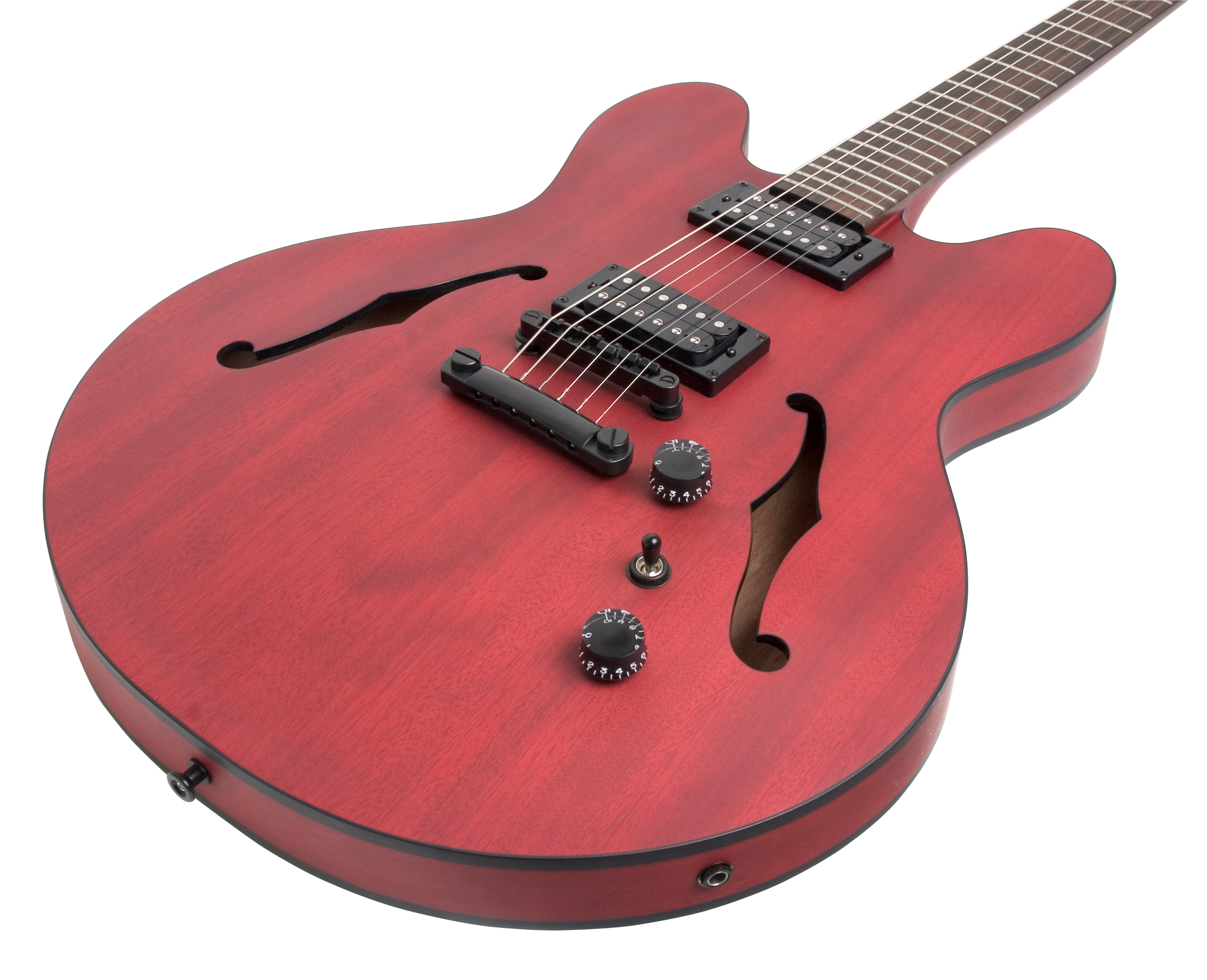
The relatively new Epiphone Dot Studio gives you superb bang-for-the-buck, with its pared down, no-nonsense looks. Here the body is made from mahogany plywood, with the controls streamlined to one master volume and one master tone.

____________________________________________________________

I’m an avid fan of the semi-style body.

Here’s a snapshot of my Epiphone Casino and a late-70s/early-80s ES-335-copy made in Japan by Kasuga:

Listen to both guitars here

Save

Save

Classic Guitars, part 4: Gibson SG

At the moment the Gibson SG is extremely popular – the trendiest model on the block.

Unbelievable as it may seem with hindsight, the SG was designed in 1961 as the Les Paul’s replacement. Ted McCarty and his team were eager to come out with a sexier, lighter and more practical electric guitar, in place of the then somewhat unpopular Les Paul.

Les Paul himself wasn’t overly enthusiastic about the new model, so he decided not to renew his endorsement deal in 1963. From that moment on the ”new and improved Les Paul Standard” became the Gibson SG Standard (SG = solid guitar). By the way, Gibson brought back the original Les Paul in 1969.

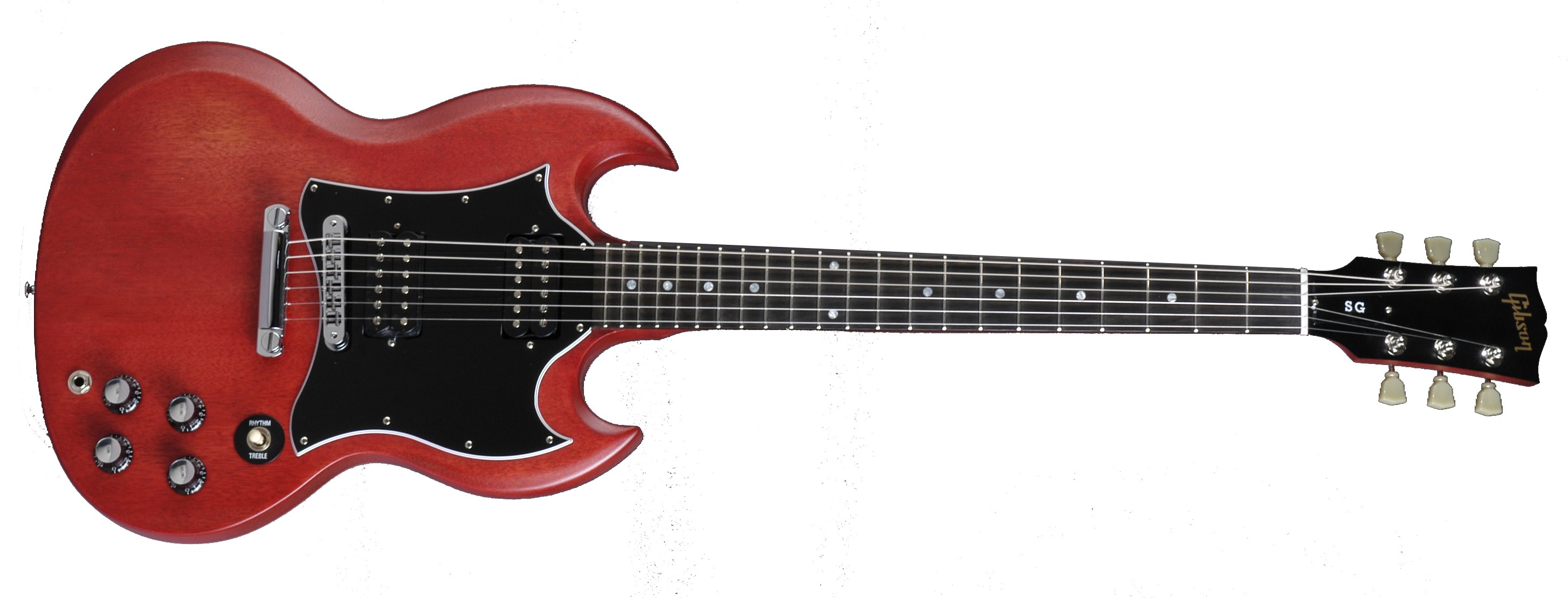
The main new feature of the SG was its sleek and curvy body, crafted entirely from mahogany. The glued neck joint was moved so that all of the guitar’s frets were easy to access.

Due to the new neck joint the front humbucker had to be moved a little towards the bridge for added stability, which in turn slightly thins out the pickup’s sound.

The SG’s thin and light body results in a fresher, more resonant and transparent tone, when compared to a Les Paul.

Thanks to its thin body, light weight and (normally) fixed bridge the SG is a fine choice for a first guitar. Only its very slight tendency towards neck heaviness can sometimes mar the nigh-on perfect picture.

As with all Gibson models, I’d advise anybody to purchase a quality gig bag or case with an SG-style guitar, to protect it against neck or headstock breakage.

Gibson’s Faded-series offers amazing value for money. These USA-made models offer less bling by doing away with the fingerboard binding, the large crown inlays and the regular gloss finish. But apart from the more modest visuals, the Faded-instruments are thoroughbred Gibsons.

Klassikkokitarat, osa 4: Gibson SG

Gibsonin SG on viime aikoina ollut kovassa suosiossa – se on tällä hetkellä trendikkäin sähkökitara.

Uskomatonta kyllä, mutta SG syntyi vuonna 1961 uutena Les Pauli -mallina. Ted McCartyn tiimi halusi kevyemmän ja ergonomisemman kitaran, silloin epämuodikkaan, raskaan Les Paul -mallin tilalle.

Les Paul itse ei kuitenkin pitänyt uudesta nimikkosoittimesta kovinkaan paljon, eikä uusinut endorsement-sopimuksensa vuonna 1963. Silloin ”uudesta Les Paul Standardista” tuli Gibson SG -malli (alkuperäinen Les Paul -kitara tuotiin takaisin vuonna 1969).

SG:llä on ohut ja kurvikas mahonkirunko. Kaulan liimaliitos on muutettu niin, että kitaran kaikki 22 nauhat ovat rungon ulkopuolella, minkä ansiosta myös korkeisiin nuotteihin on helppo päästä.

Toisenlaisen kaulaliitoksen takia kaulahumbucker sijaitsee noin puolitoista senttimetriä lähemmäs tallaa, mikä ohentaa hieman mikrofonin soundia.

Ohuemmasta rungosta johtuen SG:n soundi on hieman raikkaampi, notkeampi ja jäntevämpi kuin Les Paul -mallin sointi.

Ohuen rungonsa, kevyen painonsa ja kiinteän tallansa ansiosta SG sopii hyvin ensikitaraksi. Ainoastaan lievä taipumus kaulapainoisuuteen voi joidenkin mielestä olla häiritsevä.

Suosittelen – niin kuin kaikkien Gibson-tyylisien kitaroiden kanssa – myös SG:n tapauksessa laadukkaan kuljetuspussin tai kovan laukun hankkiminen, ettei taakse kallistuva viritinlapa vahingoittuisi kuljetuksen yhteydessä.

Gibsonin Faded-sarja tarjoaa muuten USA:ssa valmistettuja soittimia yllättävän edullisesti. Gibson SG Special Faded – mallista puuttuu otelaudan reunalistoitus, upotukset ovat vaatimattomampia ja kitarassa on ohut mattalakkaus, mutta soitin on kuitenkin täysverinen SG.

Classic Guitars, part 3: Fender Telecaster

The Fender Telecaster is the model that put the solid body electric guitar on the map. Although quite a few inventors had dabbled with the concept of an electrically amplified solid body guitar from the 1930s onwards, Leo Fender and George Fullerton succeeded in starting a huge industry back in 1950.

The guitar we now know as the Fender Telecaster first saw light as a one-pickup guitar – the Esquire. The first Esquires had a small pushbutton next to the volume and tone controls, enabling the player to switch quickly between the normal bridge pickup tone and a boomy sound with the treble removed. A few weeks later the pushbutton was replaced with a three-way lever selector, which gave you the boomy tone, the normal pickup sound with tone control and a setting with the bridge pickup routed directly to the output jack for more treble.

At first the two-pickup counterpart retained the Esquire-moniker, before Fender hit upon a new name – the Broadcaster. In February 1951 Fender got a telegram from Gretsch – then a much larger company than Fender – informing them that they already had a trademarked drum-series called Broadkaster, and asking Fender to stop infringing on their trademark.

Time for a name-change, again. In the meantime Fender used up the old logo decals, modified by clipping off the Broadcaster-script. These guitars are now affectionately called ”Nocasters”.

In August 1951 the two-pickup Fender model finally became the Telecaster.

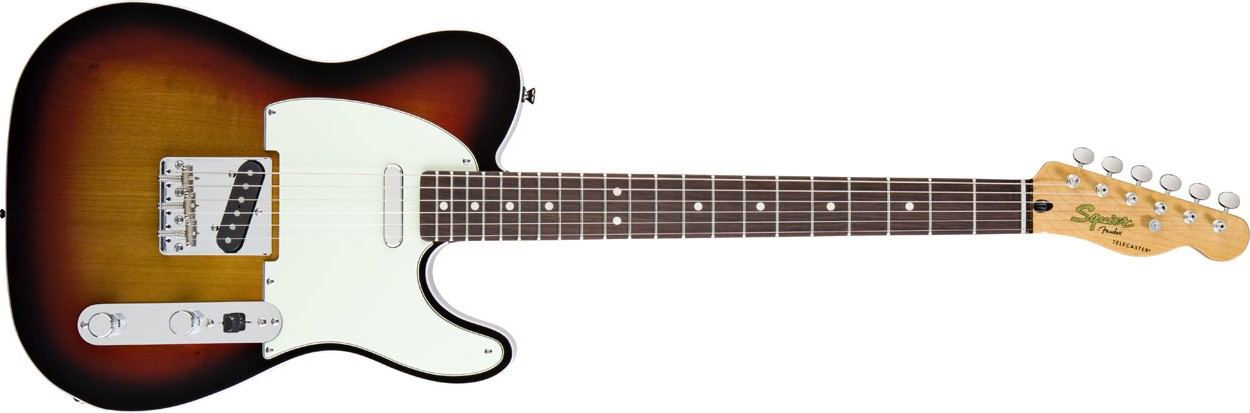
The Tele is a really straightforward instrument, put together from a slab body (no comfort contours here) and a bolt-on maple neck, sometimes augmented by a rosewood fingerboard.

The neck pickup has its own metal cover, while the bridge pickup is suspended in the box-like bridge.

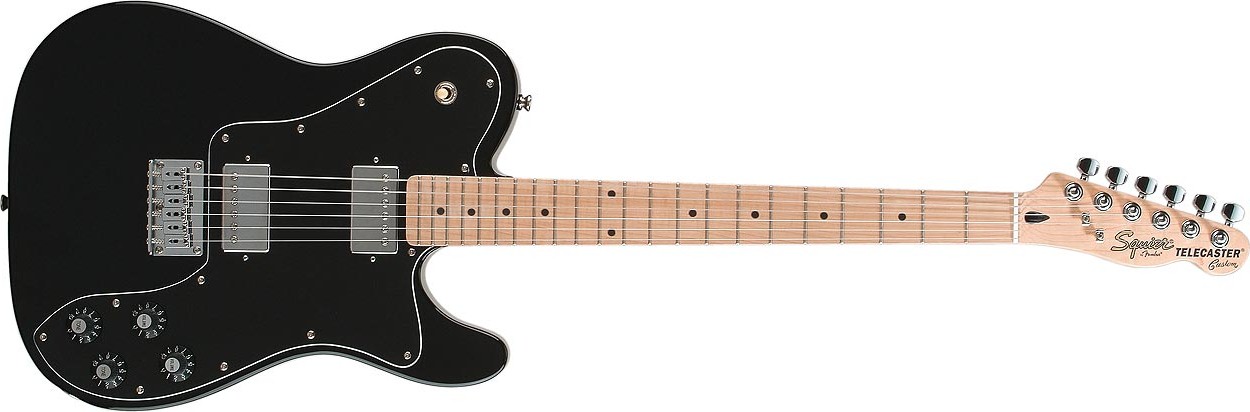
The vintage-style Tele bridge is equipped with only three saddles, but these days many of the model’s versions feature modern six-saddle bridges. Anoraks can discuss one bridge type’s ”superiority” over another for ages on end – let me just state that the bridge saddles of different versions can either be made from brass, steel or die-cast metal, which all have differing influences on the respective guitar’s tone.

Since 1967 the three-way switch gives you either the warm neck pickup, the nicely broad and slightly hollow mix of both units, or the nasal, twangy and sinewy bridge pickup on its own. The bridge pickup sound quickly became the Tele’s calling card and it’s one of the mainstays in Country music. But this guitar is much more versatile than ”just” Country, and it is widely used in many music styles from Blues to Rock. Even some Metal guitarists have been spotted sporting a Tele, even though they usually have the original pickups exchanged for humbuckers.

In my opinion, the Telecaster is a fantastic guitar for a novice, if you can live with the edgy slab body. Leo Fender wanted to create a guitar that was easy to manufacture, easy to service and easy to repair. He envisaged a sturdy workhorse-instrument for the working musician.

Only very seldom does an inventor succeed so completely, as Messrs Fender and Fullerton have.

Save

Classic Guitars, part 1: Fender Stratocaster

The Fender Stratocaster, in production since 1954, is without doubt the world’s best-selling, most copied and most versatile classic electric guitar.

Traditionally the Stratocaster features a bolt-on (screwed on, actually) maple neck. The very ergonomically designed solid body has originally been made of alder or ash, but these days woods like poplar, basswood or agathis are also widely used.

The Strat’s versatility is due mostly to it being a three-pickup guitar. The five-way blade switch offers each of the guitar’s three pickups on their own, or combinations of bridge-plus-middle and neck-plus-middle for more hollow, glassy sounds. The list of Strat-users is sheer endless, with name players such as Buddy Holly, Jimi Hendrix, John Mayer, Dave Murray, Eric Clapton or Ritchie Blackmore. There don’t seem to be any stylistic boundaries for this guitar model.

From a beginner’s viewpoint the Stratocaster’s wide availability – in original versions, licensed copies and other ”permutations” – as well as its modular nature make for a pocket-friendly price.

But there are also a couple of catches for the rookie guitarist, stemming from the model’s vibrato bridge. Most Strats leave the factory set up with a slight tip-up of the bridge plate. This enables experienced guitarists to use the vibrato to pull notes up as well as push them down. But this type of ”floating” set-up makes tuning an arduous process, and almost impossible for the inexperienced beginner to accomplish.

I’d advise any budding guitarist to ask the shop assistant for a quick change of set-up, before parting with their money. This should be a fast and (most likely) free-of-charge part of every instrument retailer’s service. Have them adjust the bridge so it lies flat on the body, and ask them to readjust the string action (string height) accordingly. This will make tuning noticeably easier.

Some players also complain, that a Stratocaster’s volume control is too close to the picking hand, leading to accidental changes in volume mid-song. On the other hand, others think the position of the volume control is perfect – horses for courses.

If you plan on using the Strat mostly for playing hard and heavy music, you might want to consider one of the models factory-equipped with one or more humbuckers.

Pidä blogia WordPress.comissa.

Ylös ↑