Review: Tech 21 Fly Rig 5

****

Tech 21 Fly Rig 5 – with Strat

Tech 21 NYC is the company behind many groundbreaking products, such as the SansAmp range of amp modelling stomp boxes, the Bass Driver DI or the all-analogue modelling guitar amps of the Trademark series.

What all these products have in common is that they’re no-nonsense tools to make the life of the gigging and recording guitarist (and bassist) easier.

Tech 21’s newest product is designed to do away with the need to hire a guitar amp for fly-in gigs. It’s an ultra-compact and sleek, pedalboard-style device called the Fly Rig 5.

****

Tech 21 Fly Rig 5 – full top

As you can see from the picture at the start of this review, the Tech 21 Fly Rig 5 (current price in Finland: 299 €) is extremely compact. It will fit in the pouch of a gig bag, as well as in the accessories compartment of many guitar cases. Just pack your guitar, the Fly Rig, a couple of cables and your tuner – and you’re ready to roll!

The Fly Rig 5’s sturdy housing is completely made from metal, and its brushed fascia gives it a cool modern look.

Tech 21 Fly Rig 5 – with PSU

The unit runs on 12 Volts of DC-power (150 mA/centre negative) and the power supply unit is (naturally) included.
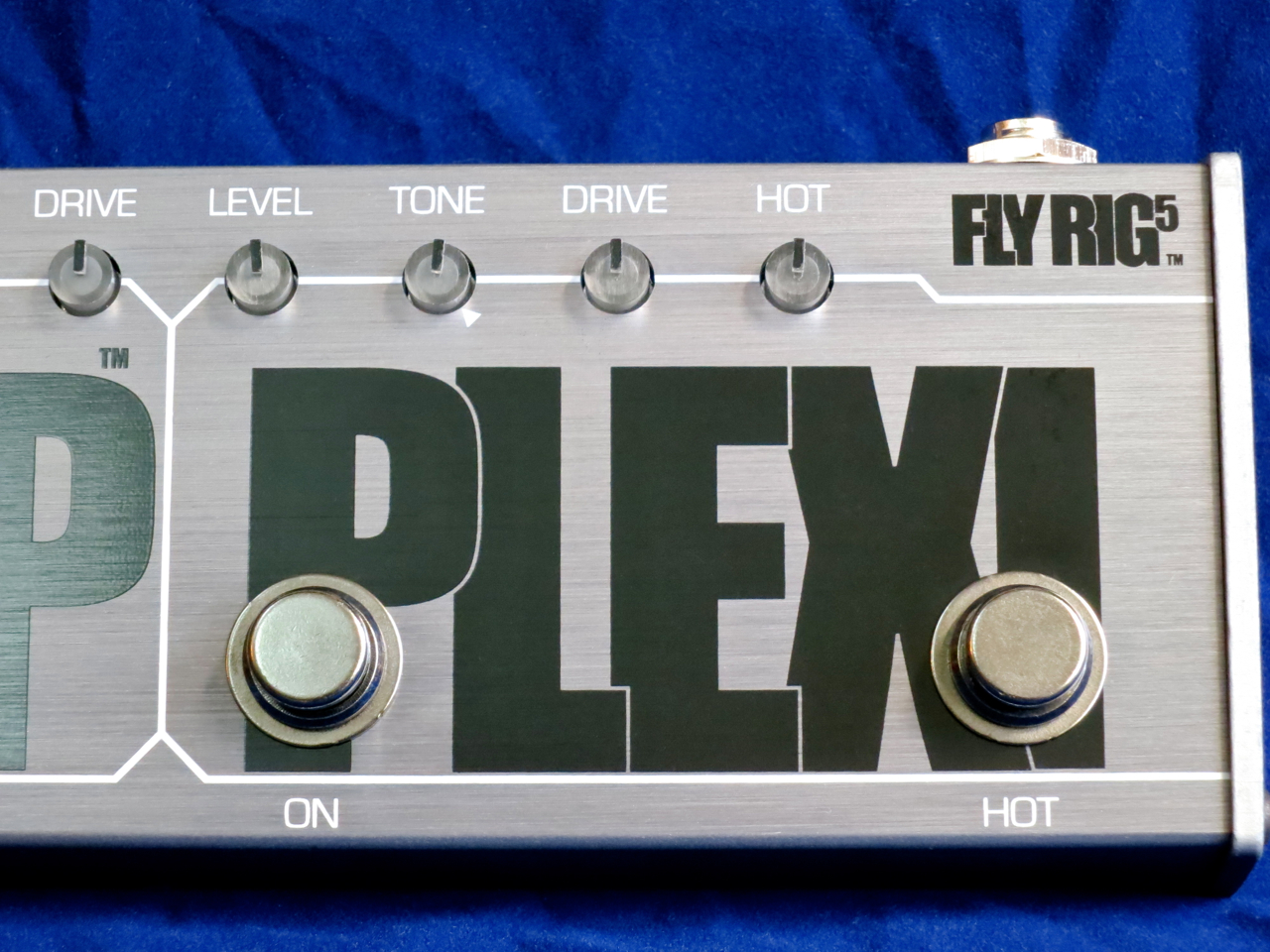
Tech 21 Fly Rig 5 – Plexi + Hot

Tech 21 call their new creation the Fly Rig 5, because it features five different main functions/effects.

Two of these functions are grouped together under the Plexi banner. The first one, labelled Hot, is an adjustable clean boost of up to a whopping 21 dB. Secondly, you will find an analogue model of a Marshall Plexi head (based on the Hot-Rod Plexi pedal), with its controls comprising Drive, Tone and Level.

Tech 21 Fly Rig 5 – SansAmp

The next section is called SansAmp and includes Tech 21’s legendary analogue amp (and miked up cabinet) emulator (with three-band EQ), as well as a reverb effect.

Tech 21 Fly Rig 5 – DLA

The last section is labelled DLA (short for delay) and offers you a delay effect with tap tempo. Thanks to the Drift-control you can also dial in grungy tape echo-type wow and flutter.

Tech 21 Fly Rig 5 – front panel

****

Tech 21 Fly Rig 5 – Tech 21 logo

Tech 21’s Fly Rig 5 is really very easy to use: All the controls and footswitches are clearly labelled, and the control knobs of each section light up in a different colour to give you an easy to read visual clue as to which sections are currently on and which are turned off.

There’s one very minor trade-off due to the über-compact nature of this ’board, and that’s the small, slightly fiddly nature of the control knobs. On the other hand, you’re hardly likely to make major adjustments to your settings in the middle of a gig – and gigging is what the Fly Rig was conceived for.

In terms of its sound and performance, Tech 21’s newcomer easily fulfills the high standards guitarists have come to expect of the products of this company. The Fly Rig 5 sounds awesome and does exactly what it says on the tin. This combination of SansAmp, Plexi-style overdrive, booster, delay and reverb delivers the goods for the large majority of guitarists – be it Jazz, Blues, Rockabilly, Pop or Rock, the Fly Rig delivers! Metal and Thrash guitarists will most probably demand more gain and the inlusion of a noise gate, but I’d reckon that the metal crowd aren’t really the intended target group for this type of ’board.

Here’s a run-through of all of the Fly Rig 5’s effects, played on a maple-necked Fender Stratocaster. The clip starts with the Fly Rig turned off:

Here’s a similar run-through using a humucker-equipped Hamer USA Studio Custom, adding a bit more overdrive and a longer delay time:

The Delay-section’s Drift-control makes it easy to simulate tape echo effects:

A ”hidden” feature of the Fly Rig 5 is the possibility to use the Delay-section as a chorus effect. Because a chorus is basically nothing more than a slightly wobbly, very slightly offset doubling of the guitar signal, you can achieve this effect by setting the Delay-section’s Time-control to something very short, and using the Drift-control to adjust the chorus’ depth. Here’s an audio clip of a chorus setting, played with a Strat:

Tech 21 Fly Rig 5 – angle 2 + lights

****

Tech 21 Fly Rig 5 – all on

If you play a lot of fly-in gigs, and have neither the budget nor the manpower to lug a large guitar rig across the globe, Tech 21 NYC’s Fly Rig 5 is a true godsend.

It offers the most important features and effects a guitarist needs on stage or in the studio. And — most importantly – it sounds really great and inspiring.

True, using a device like the Fly Rig may not be as ”authentic” as using a real amp in the eyes of some anoraks, because Tech 21’s brand-new tool doesn’t have the ”kudos” of a mythical vintage amp. But if you’re after a pro-quality, lightweight, no-nonsense solution that will get your sound to the audience with the least amount of fuss and hassle, Tech 21’s Fly Rig 5 is hard to beat!

****

Tech 21 NYC Fly Rig 5

299 €

Finnish distributor: Musamaailma

****

Pros:

+ sturdy, all-metal construction

+ size

+ weight

+ features

+ sound

+ value for money

Cons:

– tiny control knobs

Tech 21 Fly Rig 5 – angle 1

Review: EBS FuzzMo

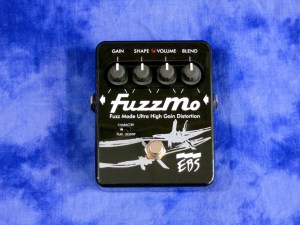
EBS FuzzMo – top

The good people of EBS Sweden are now bringing a healthy dose of fuzz to the bassist’s toolbox.

****

EBS FuzzMo – angle 1

The EBS FuzzMo (current price in Finland: 169,90 €) is a fuzz-type high gain distortion developed especially for bass.

This stompbox is made in China to the EBS’ exacting standards. It’s a sturdy pedal with very positive feeling controls.

The FuzzMo can be powered in three ways:

If you use an EBS amp from the Drome-, Gorm-, HD- or TD-series, you can use a TRS-cable (aka a stereo cable) to feed phantom power from the amp to the effect pedal.

EBS FuzzMo – battery

The FuzzMo pedal also runs off a standard 9 V battery, but you will need a screwdriver to take off the base plate first.

EBS FuzzMo – angle 2

The third alternative is to employ a Boss-type power supply (9 V DC, centre negative) to fire up the stompbox.

****

EBS FuzzMo – controls

Even though the EBS FuzzMo looks somewhat similar to the company’s Billy Sheehan -pedal, the controls on the fuzz work in a different way.

The FuzzMo doesn’t do ”nice and sweet” – the Gain control offers fuzz from medium-crunchy to balls-to-the-wall-fuzz. Shape adjusts the tone of the fuzz effect – not in the way a traditional tone control does, but rather by changing the waveform of the fuzz signal. At seven o’clock the sound is quite warm and organic with the waveform approaching a square, while five o’clock is far brighter and more aggressive with the waveform resembling a triangle.

The mini-switch underneath the FuzzMo-logo (called Character) also plays an important part in the stompbox’ sound:

Switched to the left no EQ’ing is applied to the signal (FLAT). In the middle position there’s a slight attenuation of the mid-range. SCOOP on the right side results in a very Metal-style scooped-mid tone with plenty of bite.

Modern bass effects often split the bass signal at the input. One half is fed through the effect, while the other half is kept dry and mixed into the wet signal before it reaches the output. The advantage of doing things this way is that it enables you to keep your bottom end and dynamic attack intact.

This is just the way EBS’ FuzzMo works, too:

You use the Volume knob to adjust the fuzz signal’s volume level, and then use the Blend control to add the desired amount of dry bass. This feature is especially important in fuzz pedals for bass, because the hard clipping of a fuzz effect practically negates all your playing dynamics by design. With the FuzzMo there will be no problems with your tone becoming mushy, clogged up and indistinct, because the Blend control lets you restore your bass guitar’s punch and low end.

Here’s a bit recorded with a Jazz Bass (both pickups on) and a relatively low Gain setting:

In this clip I added some more fuzz and bite to a Rickenbacker played with a plectrum:

Thanks to the ability to blend in the dry signal, the EBS FuzzMo also works extremely well with a five-string (in this case a Yamaha BB with active EMGs):

Note that on all these audio clips the Gain control stayed below one o’clock. If you want you can take things much, much further with this EBS-pedal!

EBS FuzzMo – angle 3

The FuzzMo is a typical EBS-pedal – it’s a sturdy, pro-quality stompbox and it sounds great. If you’re a purveyor of sleazy, dirty and aggressive bass tones, you should definitely give this baby a spin!

****

EBS Sweden FuzzMo

169,90 €

Finnish distributor: F-Musiikki

****

Pros:

+ build quality

+ can be powered in three ways

+ sound optimised for bass

+ three-way EQ-switch

+ Blend control

+ offers a lot of gain

Cons:

– no quick access to battery

Testipenkissä: Mooer

****

Mooer teaser

Musamaailma on hiljattain alkanut tuoda maahan Mooerin erittäin kompakteja kitaraefektejä.

Mooerin tapauksessa kyse on suhteellisen edullisista pedaaleista, joille valmistaja lupaa kuitenkin laadukasta soundia. Koska kitaristin pedaalilaudassa on aina liian vähän tilaa, ja soittajan kukkarossa aina vain rajoitetusti rahaa, Mooer-pedaalien kokeilu luonnollisesti kiinnosti.

****

Mooer Pure Boost – top

Aloitetaan Mooer Pure Boost -boosterilla (54 €), joka tarjoaa 20 dB:n verran puhdasta signaalivahvistusta.

Tämän lisäksi Pure Boost on varustettu hyvin tehokkaalla kaksikaistaisella EQ:lla (+/- 15 dB), sekä Gain-säätimellä, jolla voi lisätä signaaliin pikkuisen putkimaista lämpöä.

Mooer Pure Boost – front

Kaikki Mooer-pikkupedaalit saavat virtansa vain ja ainoastaan Boss-standardin (miinus keskellä) mukaisesta 9V-virtalähteestä, ja vain 6 mA kuluttava Pure Boost on varsinainen energiapihi (mikä on aina hyvä asia).

Pure Boost on true bypass -pedaali – niin kuin kaikki tässä testatut efektit – mikä tarkoittaa, että signaali kulkee suoraan tulosta lähtöön, silloin kun boosteri on kytketty pois päältä.

Mooer Pure Boost – left

Kestävänoloinen Mooer Pure Boost on erittäin kätevä apulainen, kun halutaan nostaa signaalitasoa, kenties myös hieman maustettuna EQ:lla.

Pure Boostilla saa myös nostettua putkivahvistimen puhtaan kanavan särölle tai lisättyä boostaamisella pikkusärölle vielä aimo annoksen lisää säröä.

Ääninäytteessä Fender Stratocasterin signaali menee Mooer Pure Boost -pedaalin kautta Blackstar HT-1R -komboon:

****

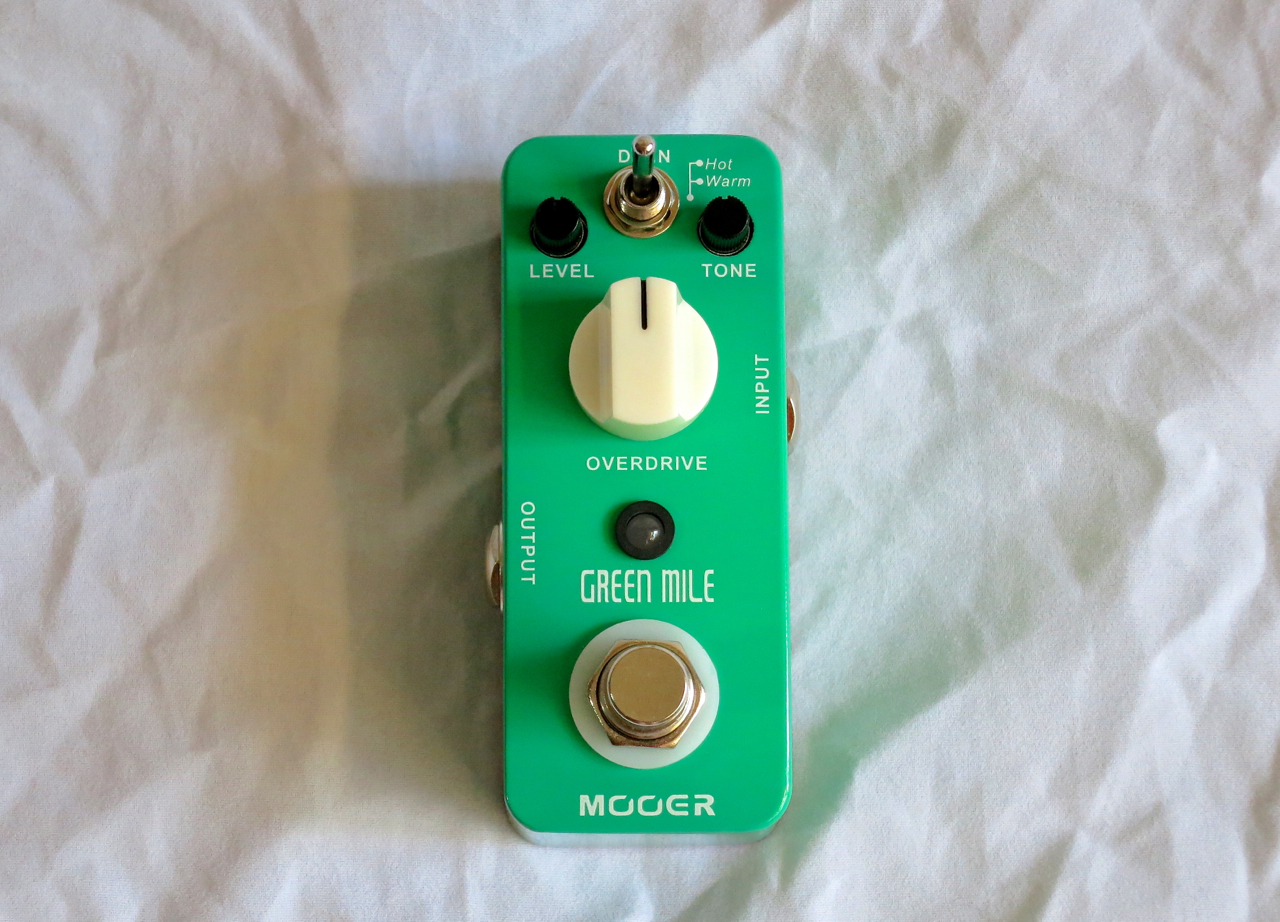
Mooer Green Mile – top

Mooer Green Mile (54 €) on firman Tube Screamer -tyylinen overdrive-särö.

Perinteisten Overdrive- , Tone- ja Level-säätimien lisäksi Green Mile tarjoaa vielä kaksipykäläisen moodikytkimen.

Warm-moodissa Green Mile -pedaali toimii tavallisena TS-tyylisenä särönä, jolla on kermainen keskialue ja maltillinen kompressointi. Hot-moodissa lisätään signaalitielle vielä tehokas boosteri.

Green Mile käyttää virtaa hyvin säästeliäästi (7 mA).

Mooer Green Mile – right

Kyllä, hyvin toimii!

Tässä pätkässä Mooer Green Mile on Warm-moodissa. Soitan ensin Stratocasteria puhtaaseen kanavaan, ja sen jälkeen särökanavaan:

****

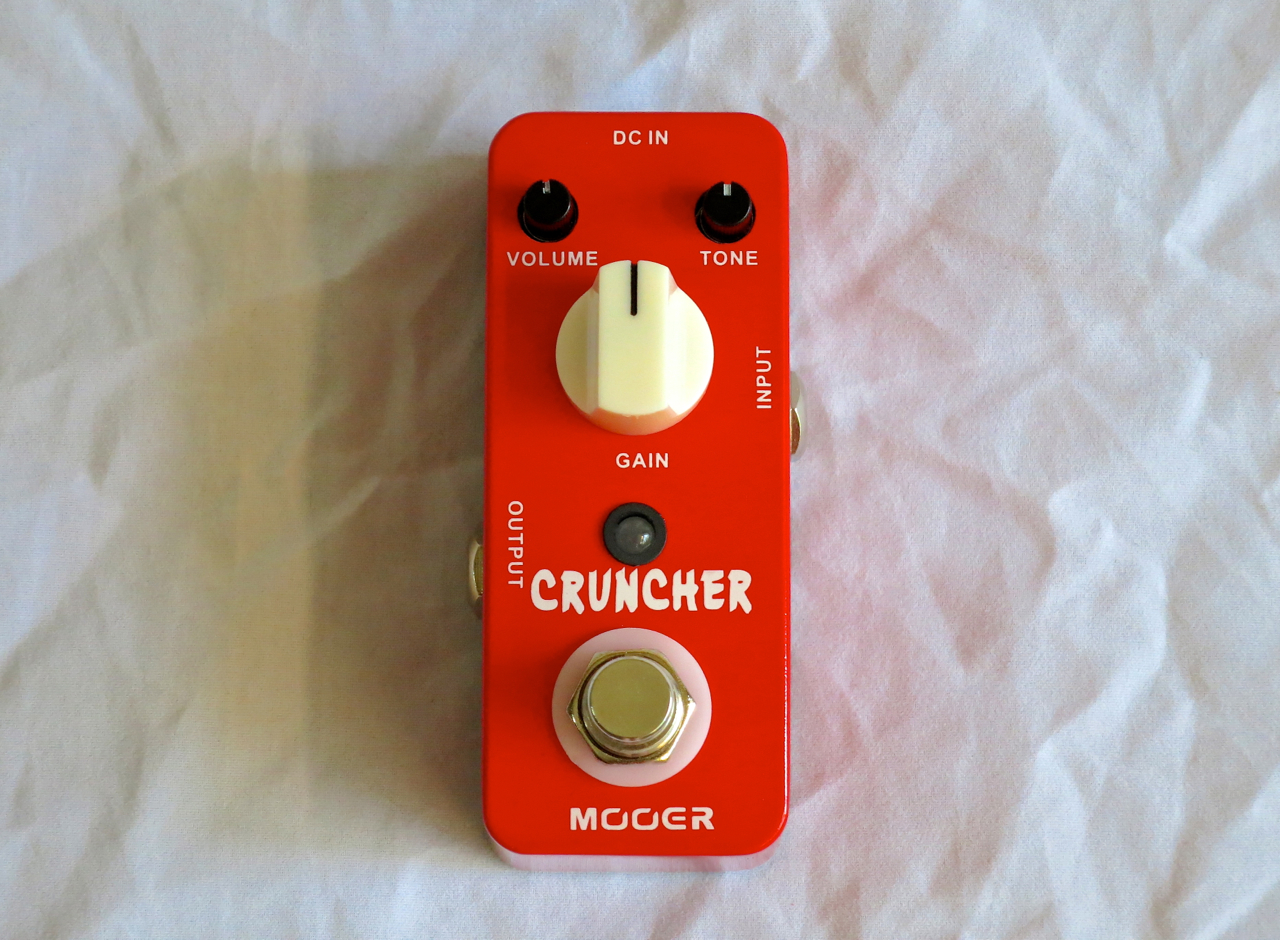
Mooer Cruncher – top

Punainen Mooer Cruncher (54 €) on distortion-tyyppinen särörasia.

Cruncherin käyttö on hyvin helppo, sillä efekti keskittyy olennaiseen tarjoamalla ainoastaan perinteiset Gain-, Tone- ja Volume-säätimet.

Mooer Cruncher – left

Mooer Cruncher kuulostaa mielestäni varsin herkulliselta. Tästä säröstä lähtee sopivasti potkulla ja purevuudella höystetty Rock- ja Metal-soundi.

Jällen kerran audiopätkässä kuulaan ensin HT-1R:n puhtaan kanavaan menevä vaihtoehto, ennen kun Cruncher soitetaan särökanavaan:

****

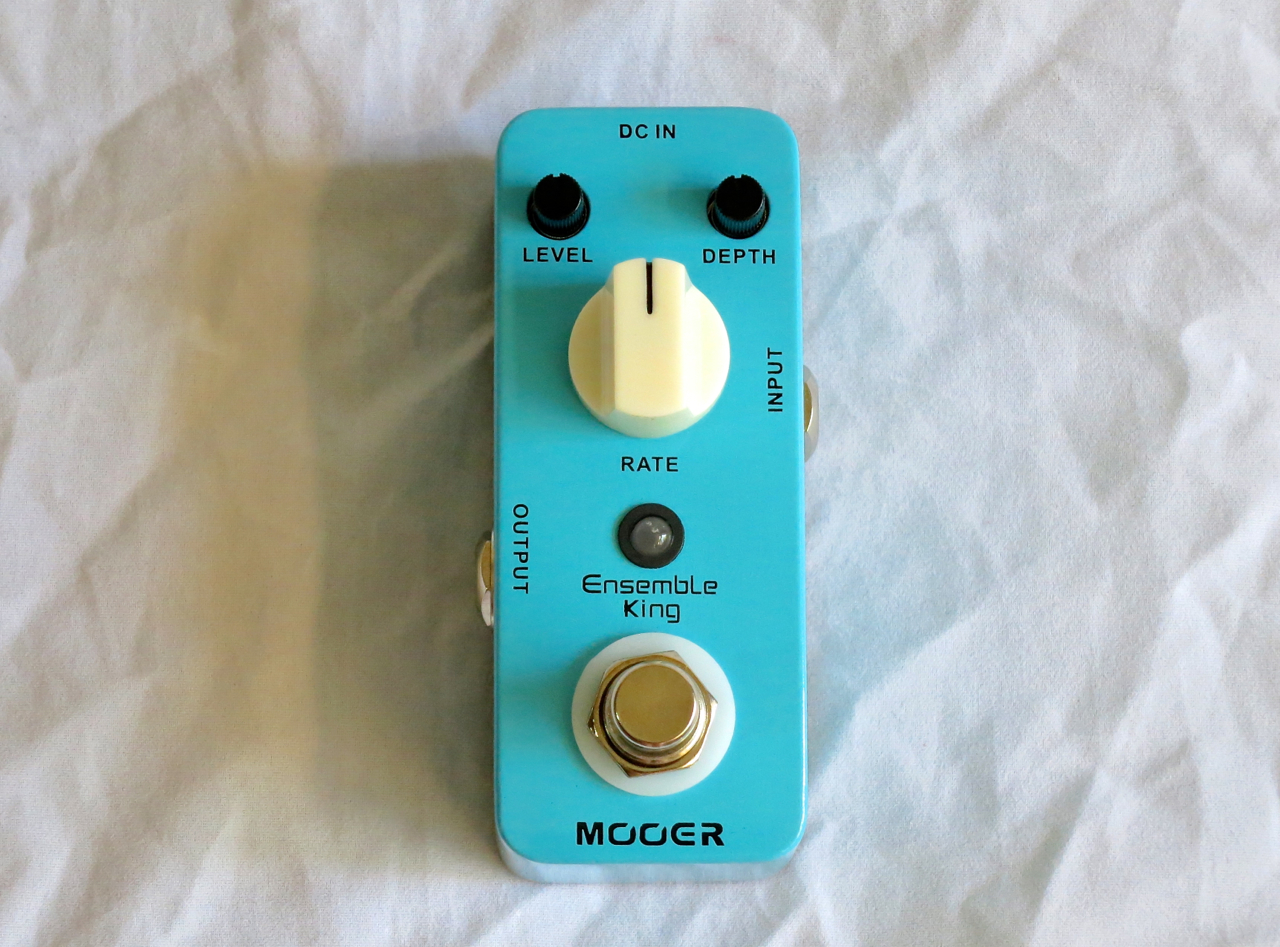
Mooer Ensemble King – top

Se on vaaleansininen, sen täyttyy siis olla chorus.

Ensemble King (59 €) on Mooer-pikkuspedujen helppokäyttöinen chorus-pedaali.

Niin kuin kaikkien muiden firman pedaaleissa, myös Ensemble Kingin kotelo on valmistettu kokonaan metallista, ja sen pohjassa on paksu, liukumista estävä kumikerros.

Mooer Ensemble King – right

Pikku-Mooerista lähtee kauniisti tiheä, klassinen chorussoundi, joka sopii mainiosti joka lähtöön. Ensemble Kingin oma kohina on kiitettävän alhainen:

****

Mooer Mod Factory – top

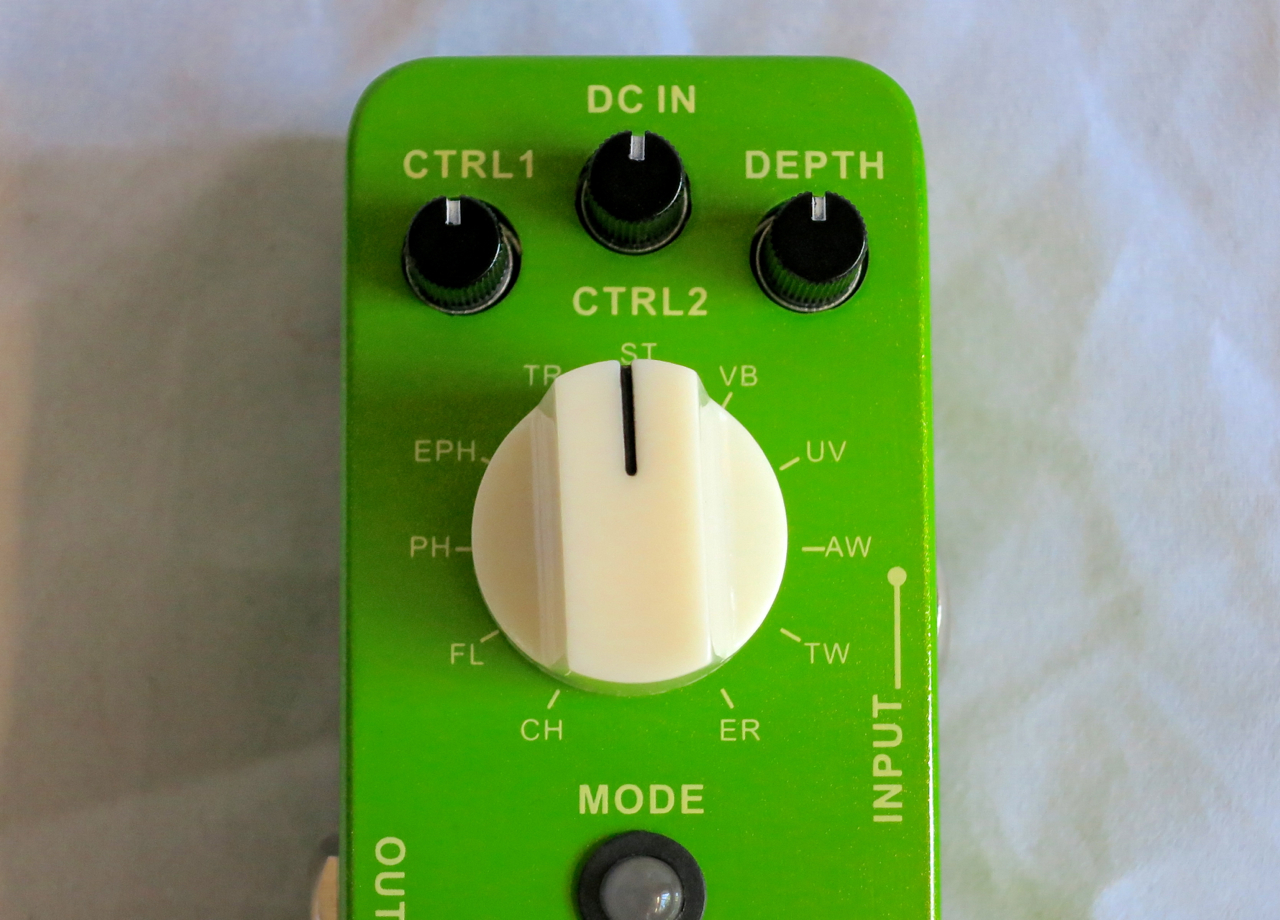
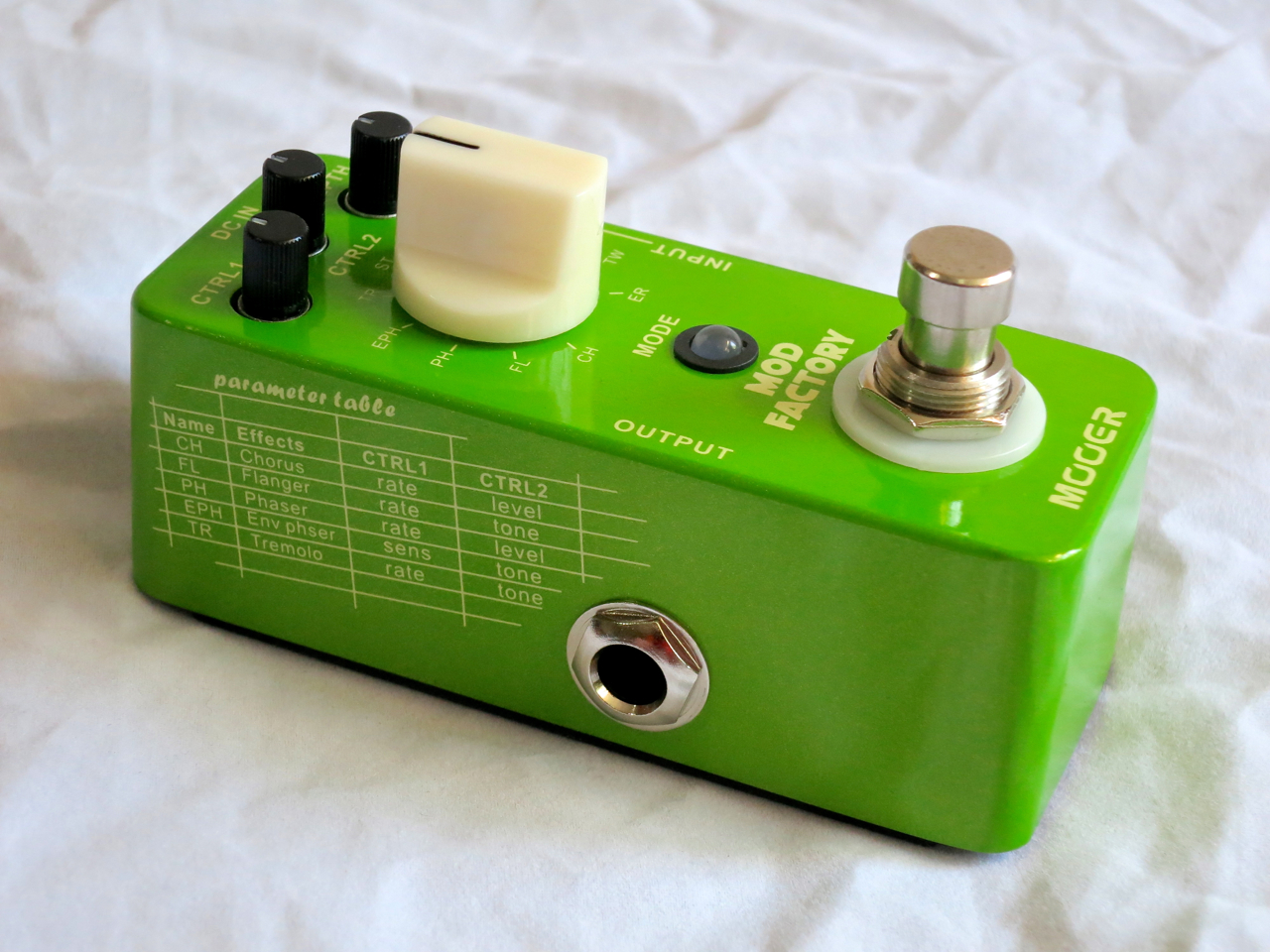
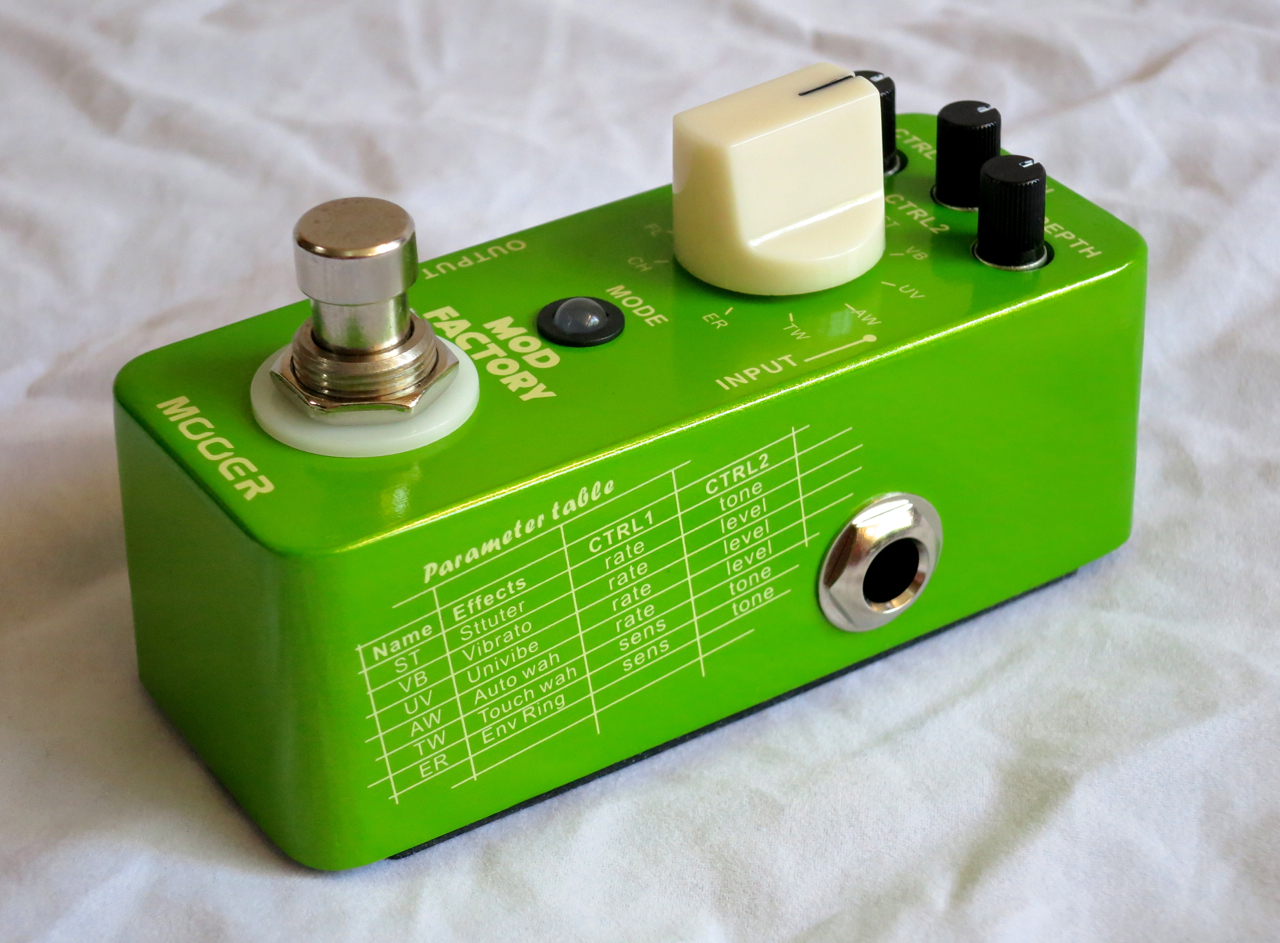
Mooer Mod Factory (75 €) on tämän efektisarjan moniosaaja, joka pystyy tuottamaan peräti yksitoista eri modulaatioefektiä!

Mooer Mod Factory – mode switch

Isolla Mode-kytkimellä valitaan Mod Factoryn efekteistä sen, jota haluaa käyttää.

Mooer Mod Factory – left

Tarjolla ovat chorus, flanger, phaser, envelope phaser, tremolo…

Mooer Mod Factory – right

…stutter, vibrato, Univibe, auto-wah, touch-wah, sekä kehämodulaattori.

Omat suosikkini ovat Mod Factory -pedaalin molemmat phaserit, sen tremoloefekti, sekä tämän Mooerin auto-wah. Olen kuitenkin melko varma, että jokainen kitaristi löytää Mod Factorysta muutaman mielenkiintoisen efektin omaan käyttöön.

Tässä esimerkissä soitan kaikki efektit läpi (aloitan choruksesta):

****

Mooer ShimVerb – top

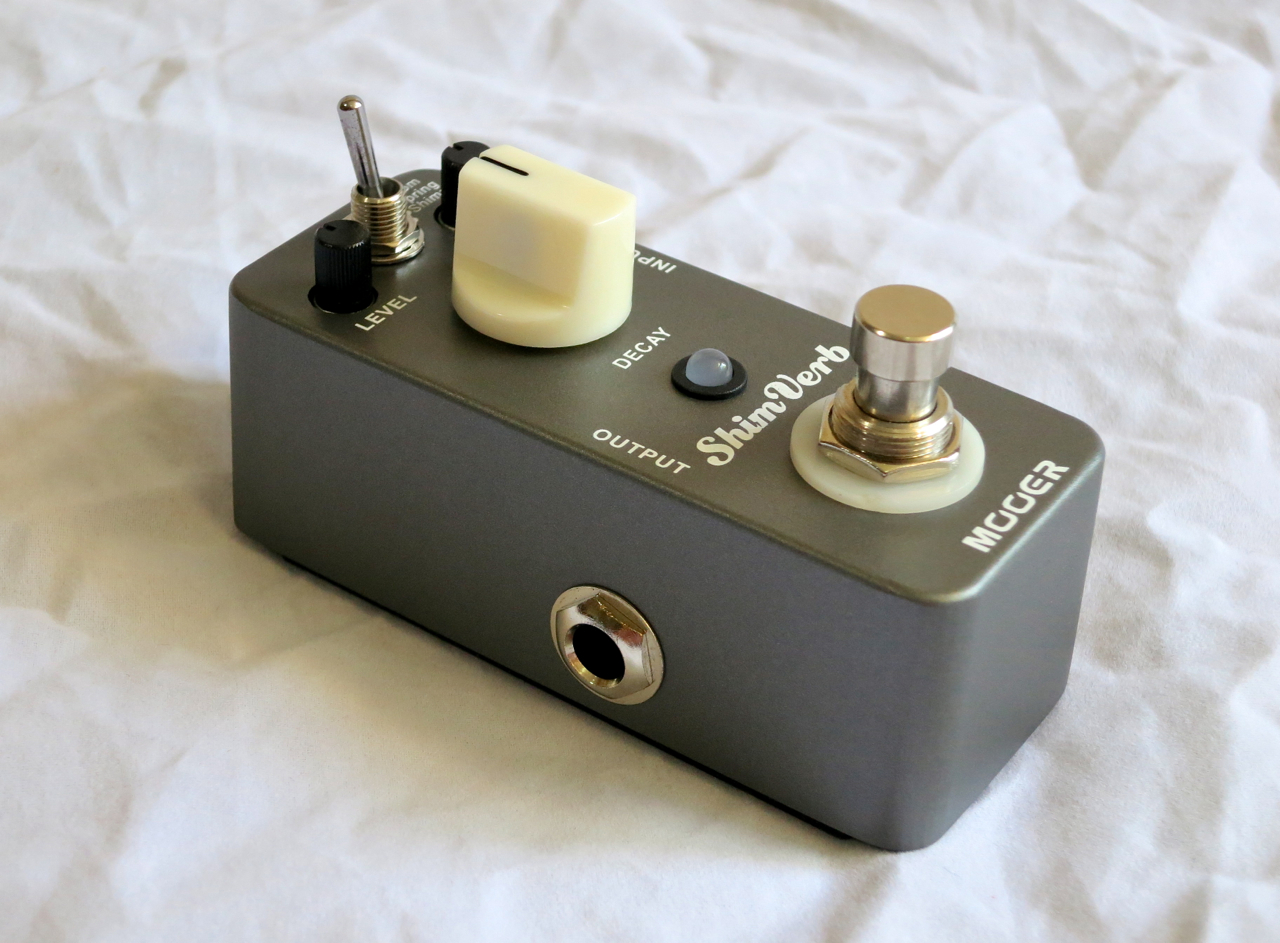
Mooerin ShimVerb -kaiku (66 €) tarjoaa kolme erilaista kaikutyyppiä:

Room on huonetta (tai studiotilaa) muistuva kaikusoundi, kun taas Spring-vaihtoehto on digitaalinen näköispainos jousikaiusta. Shimmer on ShimVerbin erikoiskaiku, jossa tuodaan kaikuun hieman metallista hohdetta lisäämällä signaaliin kvintin verran ylöspäin nostettua ääntä.

Mooer ShimVerb – left

ShimVerb on tästä kattauksesta ehkä se pedaali, joka puhuttelee minua henkilökohtaisesti vähiten. Ainakin omiin korviini Room on pikkusen liian honottava, eikä Spring-kaiusta löydy niin selvää jousimaista klangia ja pärskettä kuin odotin. Mooerin Shimmer-kaiku on kuitenkin mielenkiintoinen valinta kokeiluhaluiselle kitaristille.

Aloitan äänipätkässä Room-kaiulta:

****

Mooer Reecho – top

Mooer Reecho (75 €) on viivepedaali, joka tarjoaa kolme erilaista delay-tyyppiä:

Analog on Mooerin versio vanhasta analogisesta viivepedaalista, Real Echo on nykyaikainen digitaalinen delay-efekti, ja Tape Echo matkii vanhan nauhakaiun soundia.

Mooer Reecho – right

Mooerin Reecho-pedaalin Time-säätimellä voi säätää viiveajan viiden ja 780 millisekunnin välillä.

Mielestäni Reecho on ilahduttavan suoraviivainen, mutta silti melko monipuolinen delay-pedaali. Analog-moodi soi juuri oikealla tavalla suttuisesti, kun taas Real Echo tarjoaa orgaanisen lämmintä viive-efekiä. Pitkillä viiveasetuksilla Tape Echolla on ehkä hieman liian voimakas nauhahuojunta, mutta Rockabilly- ja Rautalanka-meininkiin soundi sopii kuin piste iin päällä.

Esimerkki alkaa Analog-vaihtoehdosta, sitten tulee Real Echo, ja sitten Tape – viimeisinä toinen Analog-viivellä soitettu pätkä:

****

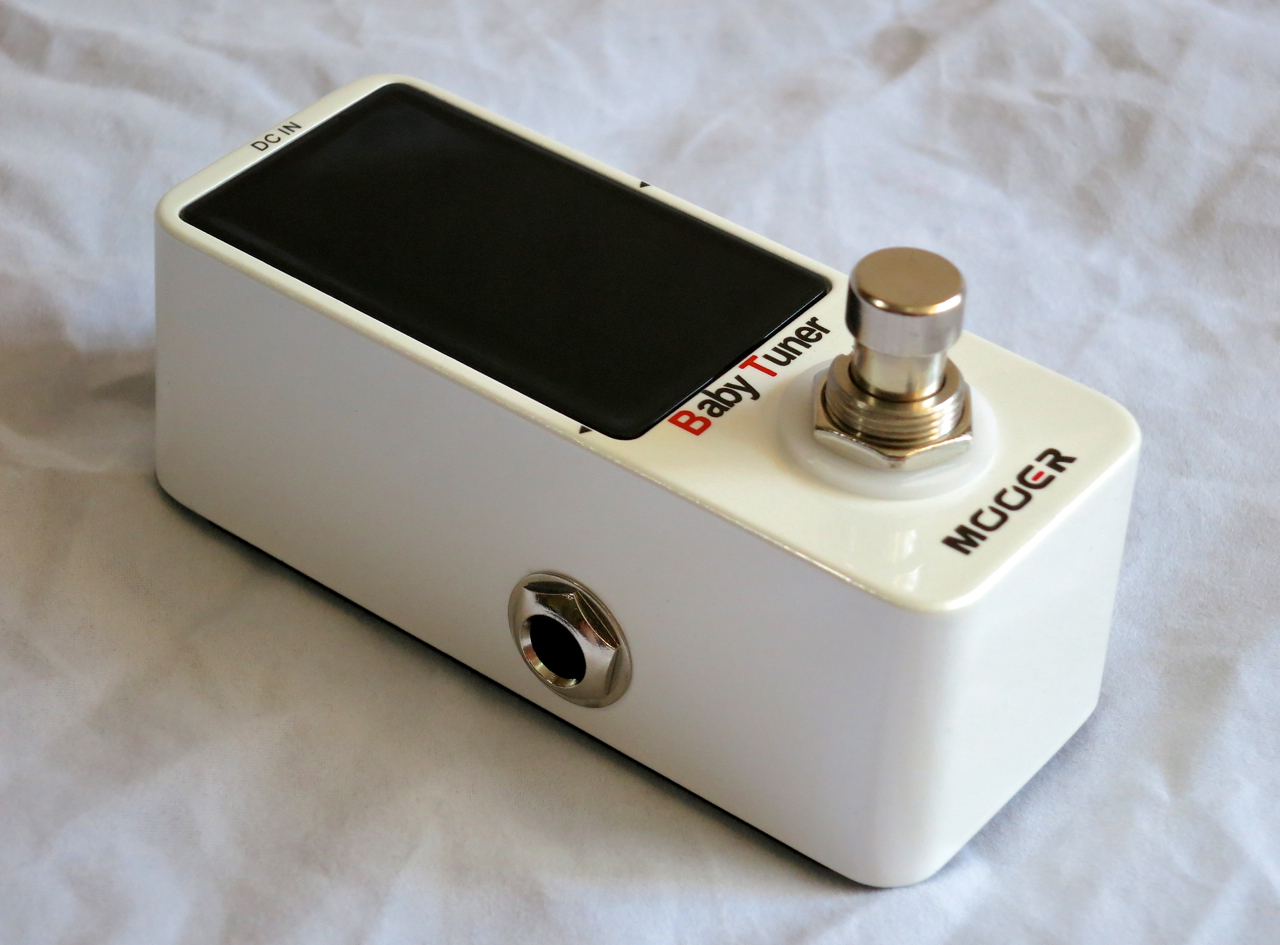
Mooer Baby Tuner – left

Baby Tuner (49,90 €) on tämän Mooer-sarjan digitaalinen viritysmittari.

Vaikka Baby Tunerin ulkonäkö muistuttaa erästä polyfonista viritysmittaria, tämä pikku-Mooer on kuitenkin perinteinen viritinmittari.

Ison, kirkkailla ledeillä varustetun näyttönsä ansiosta Mooer Baby Tuner on erittäin helposti luettavissa, ja viritysmittari on optimoitu toimimaan moitteettomasti myös seitsenkielisillä kitaroilla ja viisikielisillä bassoilla.

****

Mooerin mikrokokoiset efektipedaalit kyllä tarjoavat roimasti vastinetta rahalle! En väitä, että nämä pikkulootat olisivat boutique-luokan peliä, mutta Mooer-pedaalien soundi on kuitenkin niin hyvässä mallissa, että näitä löytävät varmasti tiensä myös monen ammattimuusikon pedaalilaudalle.

Nyt kokeiltujen pedaalien lisäksi löytyy vielä runsaasti lisää Mooer-efektejä, joihin kannattaa varmasti myös tutustua lähemmin.

****

Mooer  – minikokoiset efektipedaalit

• Cruncher – 54 €

• Ensemble King – 59 €

• Green Mile – 54 €

• Mod Factory – 75 €

• Pure Boost – 54 €

• Reecho – 75 €

• ShimVerb – 66 €

• Baby Tuner – 49,90 €

Maahantuoja: Musamaailma

****

Plussat:

+ hinta-laatu-suhde

+ metallikotelo

+ pieni koko

+ soundi

Review: Boss OD-1X + DS-1X

od-1x + DS-1x

Boss unveiled two Special Edition pedals at NAMM 2014. These new stompboxes are updates on two classic Boss-models, and are called the OD-1X Overdrive and the DS-1X Distortion. These deluxe versions promise more gain, a tighter attack, and an even more versatile EQ-section.

****

od-1x_back_angle_gal

What is the difference between a fuzz, an overdrive and a distortion?

The fuzz pedal is the granddaddy of everything ”brang”, and it works in a rather neanderthal way, by means of brutal transistor overload. The resulting tone of transistors clipping sounds quite edgy and fuzzy (hence the name), and tends to work much better on solos and riffs, than it does on chords. A good early example would be the memorable riff on the Rolling Stones’ hit ”Satisfaction”.

The terms ”overdrive” and ”distortion” describe effects that try to mimick the way tube amp distortion sounds. In the beginning both terms were used as general descriptions of valve distortion-type stompboxes, but thanks to Boss’ way of labelling their pedals, the use of the terms has now become standardised: An overdrive effect usually offers moderate gain and less compression, resulting in a more dynamic tone, while a distortion pedal will give you more gain, more bite and more squashy compression.

od-1x_top_gal

Early on, Boss also came up with the idea of giving specific colours to specific effect types – an overdrive pedal, for example, is always yellow.

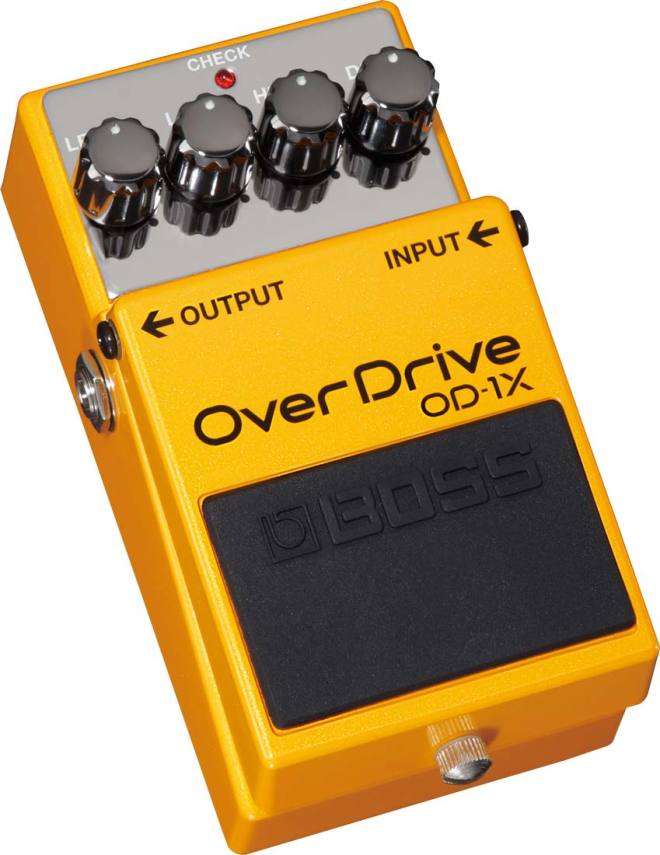
The brand-new Boss OD-1X Overdrive (155 €) represents the next generation of overdrive stompboxes, with its much more versatile range of sounds. In addition to the Drive- and Level-controls, you will find a very powerful two-band EQ-section.

****

ds-1x_back_angle_gal

Both new Special Edition-pedals are based on Boss’ patented digital MDP-technology (Multi-Dimension Processing). MDP allows for the lightning-fast, multi-band processing of the guitar signal that is needed to keep the attack tight and chords free from sonic mud. There’s added clarity and note separation, even at the higher gain levels these new pedals provide.

ds-1x_top_gal

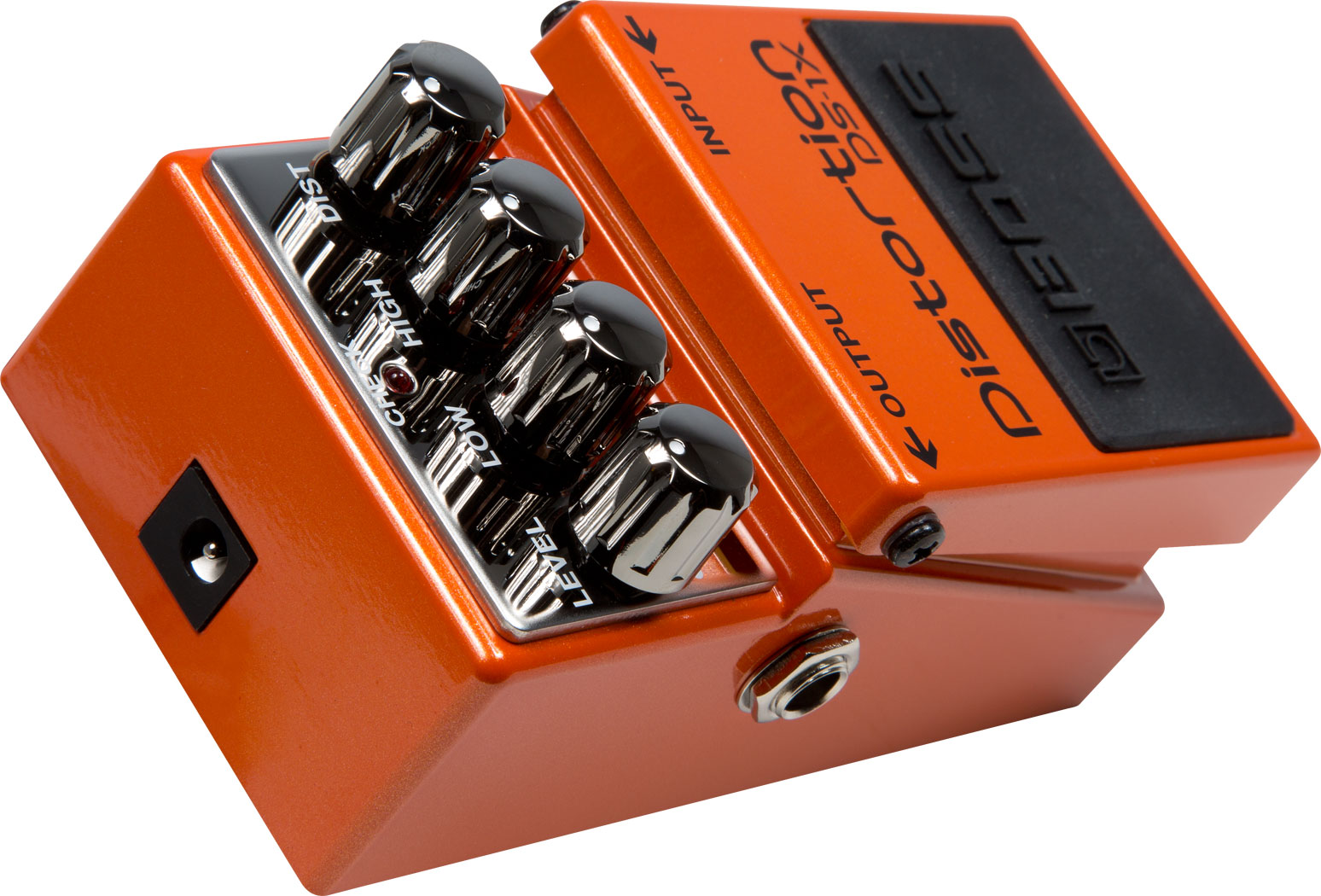
The tangerine-coloured Boss DS-1X Distortion (155 €) offers you four control knobs – Distortion, High, Low and Level. Its sound has been optimised to also work fabulously with seven- or eight-string guitars.

Both pedals can be run either using a 9 V block (an alkaline battery will give you about nine hours of continuous playing time) or a power supply (not included).

****

od-1x_angle_3_gal

You can get all the legendary Boss-overdrive sounds (think SD-1 and OD-3) from the OD-1X, too. The difference here is the much more versatile EQ-section, which gives you way more scope for fine-tuning your tone, and a bit more overdrive at the extreme end of the Drive-control. This leads to a very tasty and dynamic overdrive sound that is more open than what your traditional, mid-range focussed overdrive pedal has to offer.

Here’s anice example of the OD-1X’s lush bass register (Vox Mark III, Drive 9 o’clock, High 10 o’clock, Low 2 o’clock):

A bridge humbucker will surely benefit from a sprinkle of added top end (Hamer USA Studio Custom, Drive 9 o’clock, High 11 o’clock, Low 12 o’clock):

Turn up Drive to full, and even a small Marshall-combo’s clean channel will sound like a stack. I used the Vox-guitar for this:

And here’s the Hamer with a similar setting:

****

ds-1x_angle_3_gal

Boss’ new DS-1X broadens the sound palette of a traditional DS-1 in a very appealing way. There’s oozes of the type of tasty, chewey compression heard on so many great tracks. The DS-1X adds a much deeper low end, better note separation, a tighter attack and a more versatile two-band EQ to proceedings.

It’s clear right from the start that the DS-1X offers much more gain than its overdrive-sibling (Vox Mark III, Dist 9 o’clock):

Using humbuckers you will clearly notice the nice and creamy compression setting in (Hamer, Dist 9 o’clock):

Even though the pedal’s Distortion-control is on full in this clip, almost all of the hiss you can hear comes from the amp’s clean channel, not the DS-1X (Vox Mark III):

The DS-1X’s deep, but tight bass register is just the ticket for playing low Metal-riffs (Hamer, Dist full):

****

od-1x_ds-1x_boxes_gal

It’s a known fact that a guitarist can never own too many overdrive and distortion pedals! But thanks to these new Boss Special Edition-pedals you might be able to cut down the number of pedals on your pedalboard, after all, because the OD-1X and DS-1X cover such a large amount of musical ground. Regardless of whether you’re after a mild Blues-overdrive or insanely distorted, ultra-low Thrash-riffs, these two pedals will do it all in style.

****

Boss OD-1X + DS-1X – Special Edition -säröpedaalit

OD-1X: 155 €

DS-1X: 155 €

Finnish distributor: Roland

****

Pros (both pedals):

+ sound

+ larger gain reserves

+ two-band EQ

+ very precise attack

+ low levels of hiss

Testipenkissä: Boss OD-1X + DS-1X

od-1x + DS-1x

Bossin kuumimmat uutuudet NAMM 2014 -messuilta ovat kaksi erikoispainosta firman suosituimmista säröpedaaleista. Uusien mallien nimet ovat OD-1X Overdrive ja DS-1X Distortion, ja ne lupaavat entistä enemmän gainea, tiukempaa atakkia, sekä huomattavasti monipuolisempaa EQ-osastoa.

****

od-1x_back_angle_gal

Vaikka kaunis Suomen kieli tuntee laajan sanavalikoiman kuvaamaan eri luonnonilmiöitä, kuten metsiä tai niittyjä, käytetään audiosignaalin yliohjaamisesta johtuvista muutoksista ainoastaan yhtä sanaa – särö – kun taas englanninkielisissä maissa puhutaan overdrivesta, distortionista ja fuzzista.

Fuzz-särö on näistä kolmesta tyypeistä se vanhin, ja tietyllä tavalla myös rankin vaihtoehto. Perinteistä fuzz-säröä saadaan aikaiseksi ajamalla signaalia rankkaan transistoriklippaamiseen. Lopputulos on melko aggressiivinen ja raastava, ja se toimii usein parhaiten riffeissä ja soololinjoissa (hyvä esimerkki tästä on Rolling Stones -yhtiön biisi ”Satisfaction”).

Overdrive- ja distortion-säröjen tarkoitus taas on tuottaa putkivahvistimia muistuttavia särösoundeja. Alun perin molempia sanoja käytettiin särön yleistermeinä, mutta juuri Boss-pedaalissa käytetyn systeemin ansiosta overdrive- ja distortion-sanojen käyttö on nykyään standardisoitu: Overdrive-särö on miedompi ja huomattavasti dynaamisempi kuin selkeästi enemmän kompressiota tarjoava, purevampi distortion-särö.

od-1x_top_gal

Boss keksi aikoinaan myös sen, että eri efektityypejä voisi erottaa toisistaan kätevästi värijärjestelmällä – overdrive-säröpedaalit ovat esimerkiksi aina keltaisia.

Upouusi Boss OD-1X Overdrive (155 €) on uuden sukupolven säröpedaali, joka tarjoaa huomattavasti monipuolisempaa soundia kuin sen esi-isät. Drive- ja Level-säätimien lisäksi on tarjolla erittäin tehokas kaksikaistainen ekvalisointi.

****

ds-1x_back_angle_gal

Uudistuksien perusteena on molemmissa Special Edition -pedaaleissa ollut Bossin patentoima digitaaliteknologia nimeltään MDP (Multi-Dimension Processing). Vasta MDP-teknologia mahdollistaa kitarasignaalin huippunopeata, monikaistaista prosessointia, jonka ansiosta jokaisen nuotin atakki säilyy ehjänä ja soinnut eivät puuroudu. Samalla on saatu pedaalien kohina vähennettyä rutkasti myös gain-säätimien ääripäässä.

ds-1x_top_gal

Tummanoranssi Boss DS-1X Distortion -pedaali (155 €) tarjoaa neljä säädintä – Distortion, High, Low ja Level – ja sen soundi on optimoitu toimimaan myös nykyaikaisilla seitsen- tai kahdeksankielisillä sähkökitaroilla.

Molemmat pedaalit toimivat tutulla tavalla joko yhdeksän voltin paristolla (alkaaliparisto antaa noin yhdeksän tuntia soittoaikaa) tai virtalähteellä (ei kuulu hintaan).

****

od-1x_angle_3_gal

SD-1:stä ja OD-3:stä tuttu, legendaarinen Boss Overdrive -soundi on vahvasti esillä myös uudessa OD-1X-pedaalissa, mutta uusi erikoispainos tarjoaa huomattavasti enemmän säätövaraa EQ-osastossaan, sekä hieman enemmän gainea. Lopputuloksena syntyy erittäin maukas ja dynaaminen särösoundi, joka on selvästi laajempi kuin mikä sen keskiäänivoittoisemmat edeltäjänsä pystyvät tarjoamaan.

OD-1X:n erittäin lämmin bassorekisteri soi mielestäni kauniisti tässä klipissä (Vox Mark III, Drive klo 9, High klo 10, Low klo 2):

Tallahumbuckeriin saa lisättyä myös annoksen purevuutta (Hamer USA Studio Custom, Drive klo 9, High klo 11, Low klo 12):

Drive täysille, ja jopa pienen Marshallin puhdas kanava soi stäkin lailla. Tässä on Vox-kitaralla soitettu pätkä:

Ja tässä käytetään kahdella humbuckerilla varustettua Hameria (Drive täysillä):

****

ds-1x_angle_3_gal

Boss DS-1X laajentaa perinteisen DS-1-pedaalin soundivarastoa erittäin mehevällä tavalla. Uutuuspedaali kompressoi tutulla, maiskuttavalla tavalla ja sen perussoundikin on meille kaikille tuttu tuhansista biiseistä. On kuitenkin helppo havaita DS-1X:n syvempi bassokaista, parannettua erottelevuutta, selkeämpää atakkia ja monipuolisempaa EQ:ta.

Jo Distortion-säätimen alkumetreissä on hyvin selvää, että DS-1X-pedaali tarjoaa enemmän säröä kuin sen Overdrive-veli (Vox Mark III, Dist klo 9):

Humbuckereilla soitettuna astuu jo tässä vaiheessa kuvaan uutuuspedaalin kermainen kompressointi (Hamer, Dist klo 9):

Vaikka Distortion-säädin on avattu tässä klipissä täysille, kohisee tässä klipissä pienen kombon puhdas kanava enemmän kuin Boss-uutuus (Vox Mark III):

Ja Metal-kitaristit iloitsevat varmasti myös DS-1X:n isosta, mutta tiukasta bassorekisteristä (Hamer, Dist täysillä):

****

od-1x_ds-1x_boxes_gal

Kitaristeilla ei voi koskaan olla liian monta kitaraa tai liian monta säröpedaalia – se on yksinkertaisesti niin! Boss Special Edition -pedaalien ansiosta voisi kuitenkin vapautua hieman tilaa soittajien pedaalilaudoissa, koska OD-1X:llä ja DS-1X:llä saa katettua näin laajan spektrin erilaisia särösoundeja. Riippumatta siitä, etsitäänkö perinne-Bluesille sopivaa kevytsäröä tai jotain paljon rankempaa matalaa Thrash-riffailua varten, olen melko varma, että tällä kaksikolla homma hoituu laadukkaasti.

****

Boss OD-1X + DS-1X – Special Edition -säröpedaalit

OD-1X: 155 €

DS-1X: 155 €

Lisätiedot: Roland

****

Plussat (molemmat pedaalit):

+ soundi

+ enemmän gainea

+ kaksikaistainen EQ

+ erittäin tarkka atakki

+ alhainen kohinataso

Pidä blogia WordPress.comissa.

Ylös ↑