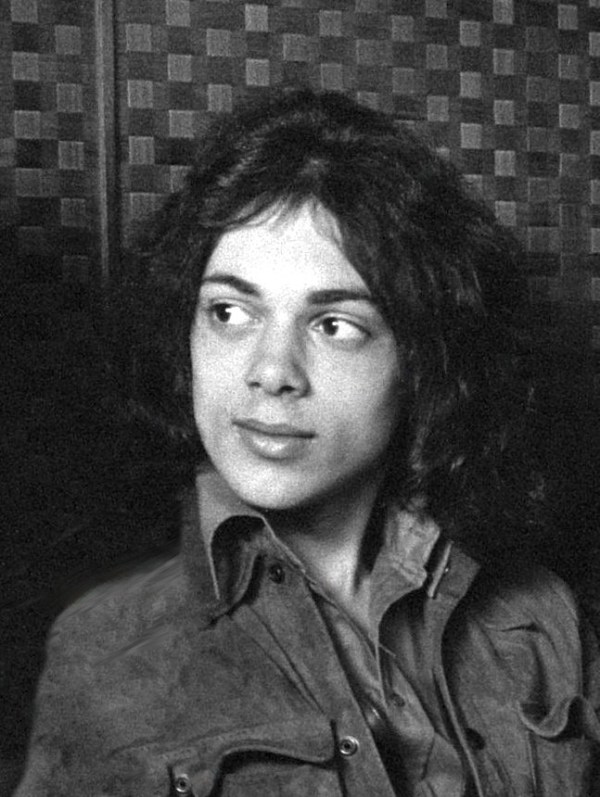
Free’s Andy Fraser – a man of tone and taste

Tämän jutun alkuperäinen suomenkielinen versio löytyy TÄÄLTÄ.

****

In 1970 it looked very much like the band Free would become the ”next big thing”. The band was talked about in the music press as the ”new Rolling Stones” and the ”next Led Zeppelin”.
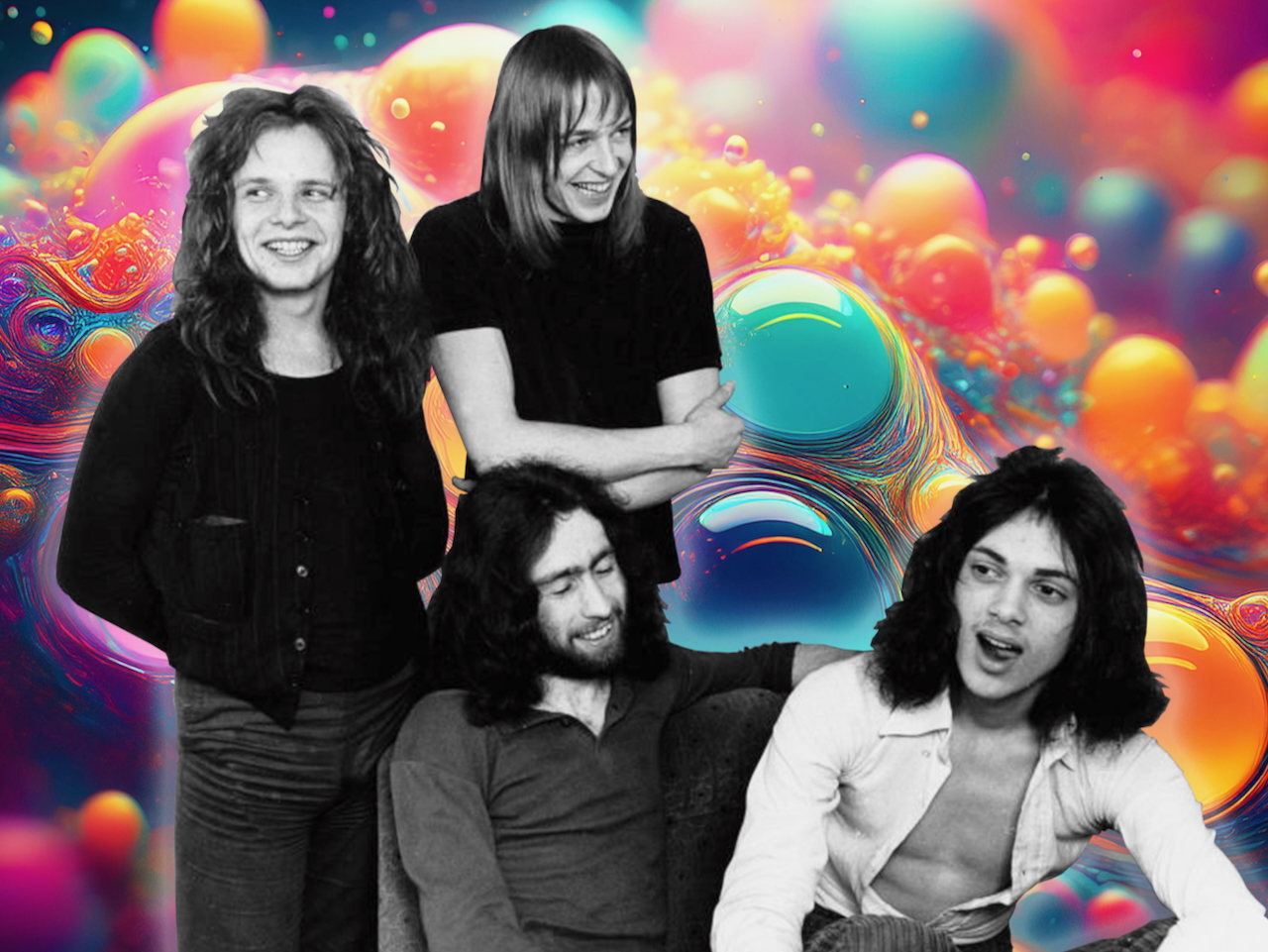
Free (left to right): Paul Kossoff (guitar) and Simon Kirke (drums) – standing; Paul Rodgers (vocals, keyboards) and Andy Fraser (bass guitar, piano) – sitting; *** CC BY-SA 4.0; Wikipedia; Simon Kirke ***

Free’s third LP ”Fire and Water”, and especially their single ”All Right Now, were smash hits, and the band played the Isle of Wight Festival to great success. Their musical mix was very enticing:

Singer Paul Rodgers had (and still has) a magnificently soulful voice that’s just made for Blues Rock. Drummer Simon Kirke followed a strict ”less is more” approach, which was very rare among his peers in the late Sixties and early Seventies. Paul ”Koss” Kossoff’s ability to wring every last drop of raw emotion from his guitar quickly turned him into a bona fide Gibson Les Paul-hero. Despite his tender age of only 18 years, bassist Andy Fraser was the man behind the majority of Free’s songs; his tasteful playing and fat tone glued the band’s arrangements together.
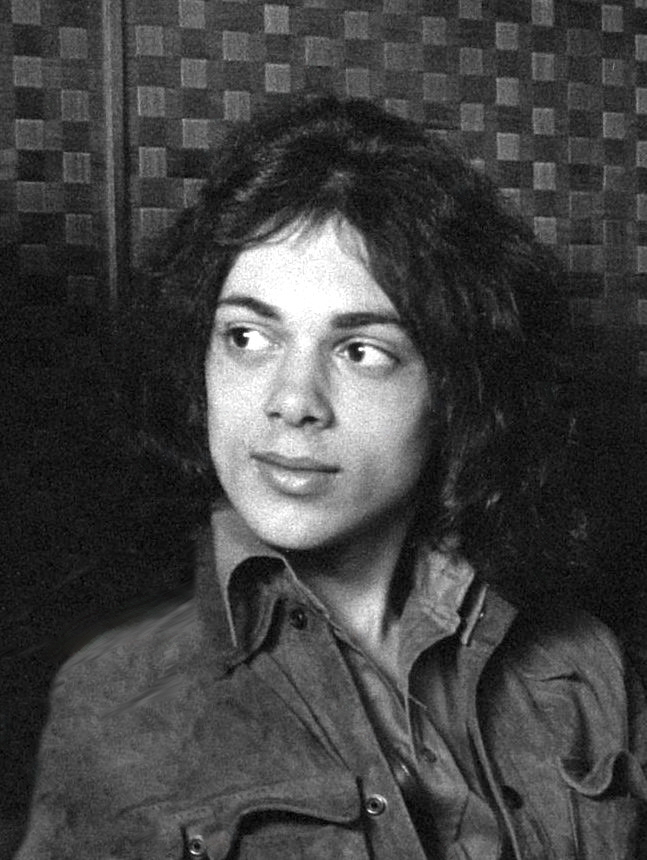
*** CC0; Wikipedia; Nationaal Archief NL ***

Sadly, Free’s story came to a premature end. Their follow-up records didn’t measure up to the success of ”All Right Now”, and the band started looking increasingly rudderless and without a clear musical outlook. Adding to this, Paul Kossoff descended further and further into alcohol and drug dependency, making the situation ever harder to bear for his bandmates. After a few starts and stops Free finally broke up in 1973.

Rodgers and Kirke started the band Bad Company, which found greater success and had a much longer run. Kossoff, too, started his own band, called Back Street Crawler. Sadly, Koss Kossoff died from a lung embolism at only 26 years old in 1976 during a flight from Los Angeles to New York City.

Andy Fraser tried to continue his success in a number of different line-ups, but finally moved to the USA in 1976, and started concentrating on songwriting. Robert Palmer’s hit single ”Every Kinda People” is a fine example of Fraser’s post-Free output. Fraser died in 2015 from a heart attack; he was only 62.

Andy Fraser’s ”less is more”-approach to bass playing

In a way, it seems that many people have forgotten to include Andy Fraser in the list of all-time great bassists, despite the fact that most of his basslines were vitally important to Free’s songs and arrangements.

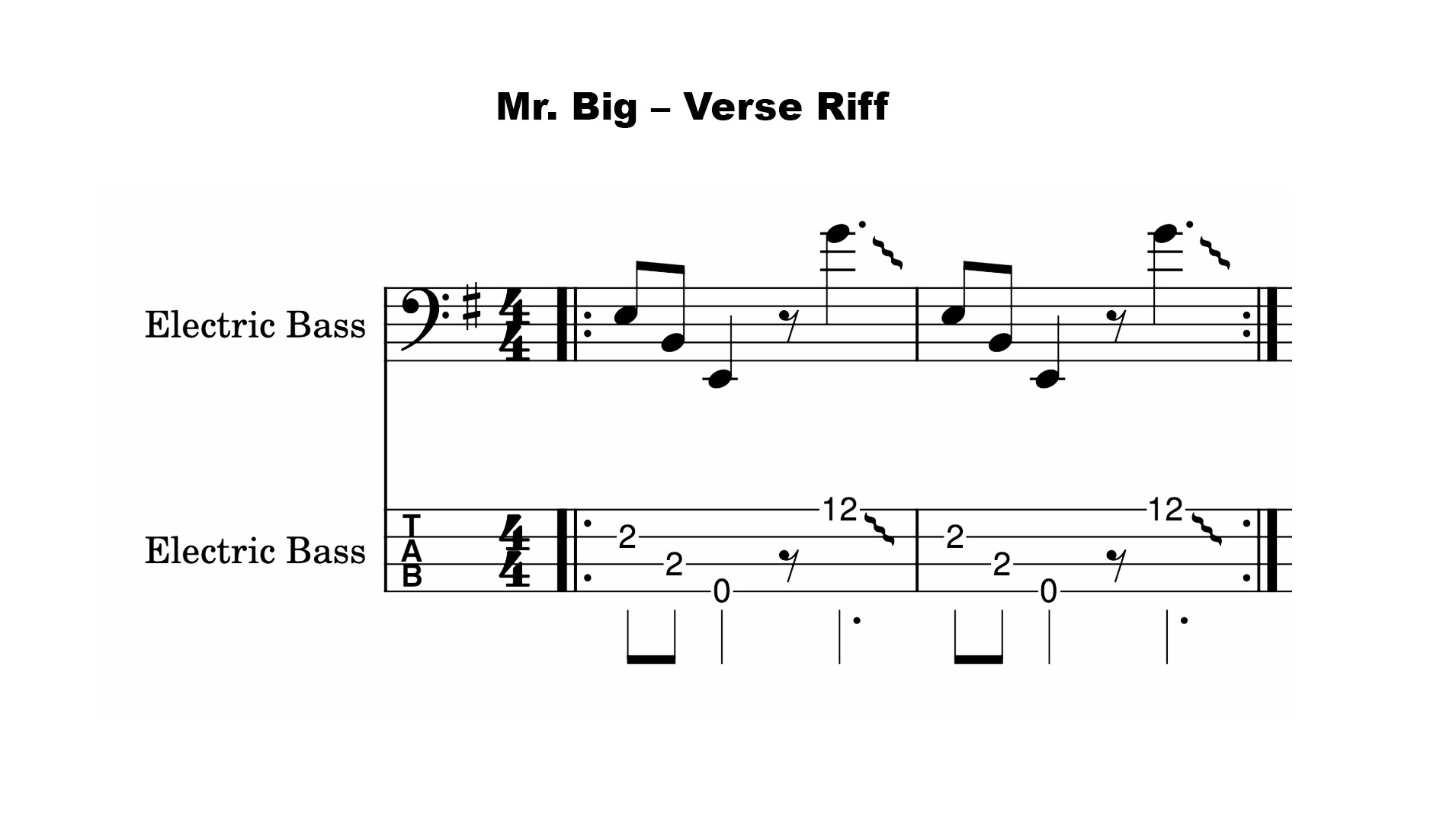
Despite his youth, Fraser never overplayed. He could be very fast and flashy, when required – listen to the bass solo in the song ”Mr. Big”, for example – but most of the time he deliberately held back to make Paul Rodgers’ voice and Koss Kossoff’s guitar playing shine. Andy Fraser thought more like an arranger than like a bassist, always looking for the best way to serve the song.

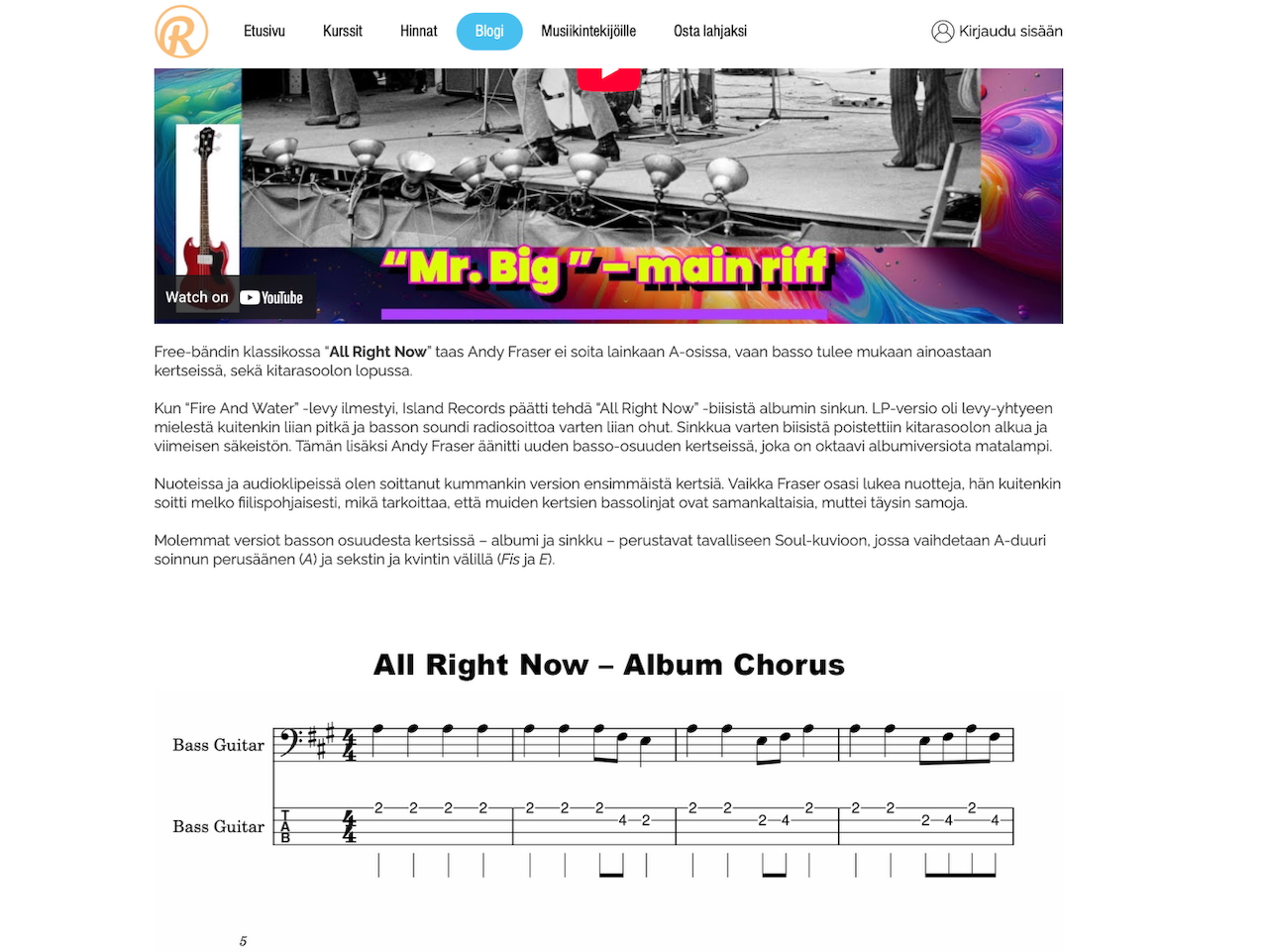
One of the best examples of Fraser’s approach is the main riff/vamp on the song ”Mr. Big”. The sparse drum pattern is interlocked with Fraser’s bassline and Kossoff’s guitar stabs. Although this song is relatively slow (82 BPM) the musical backing approaches you like a relentless mechanical beast.
****

****

In Free’s all-time classic ”All Right Now” Andy Fraser doesn’t even play in the verses, joining the band only for the choruses and (the end of) the guitar solo.

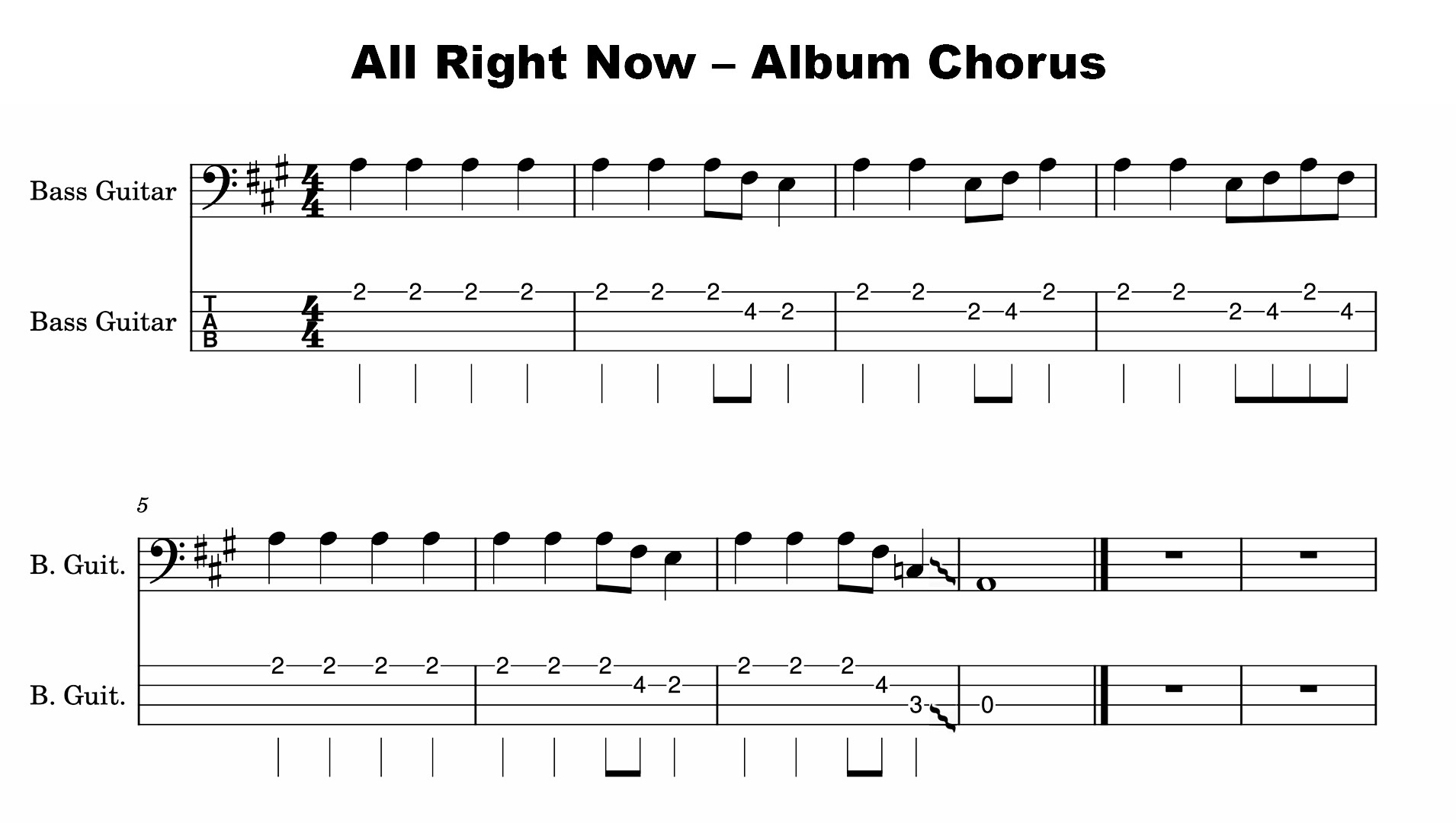
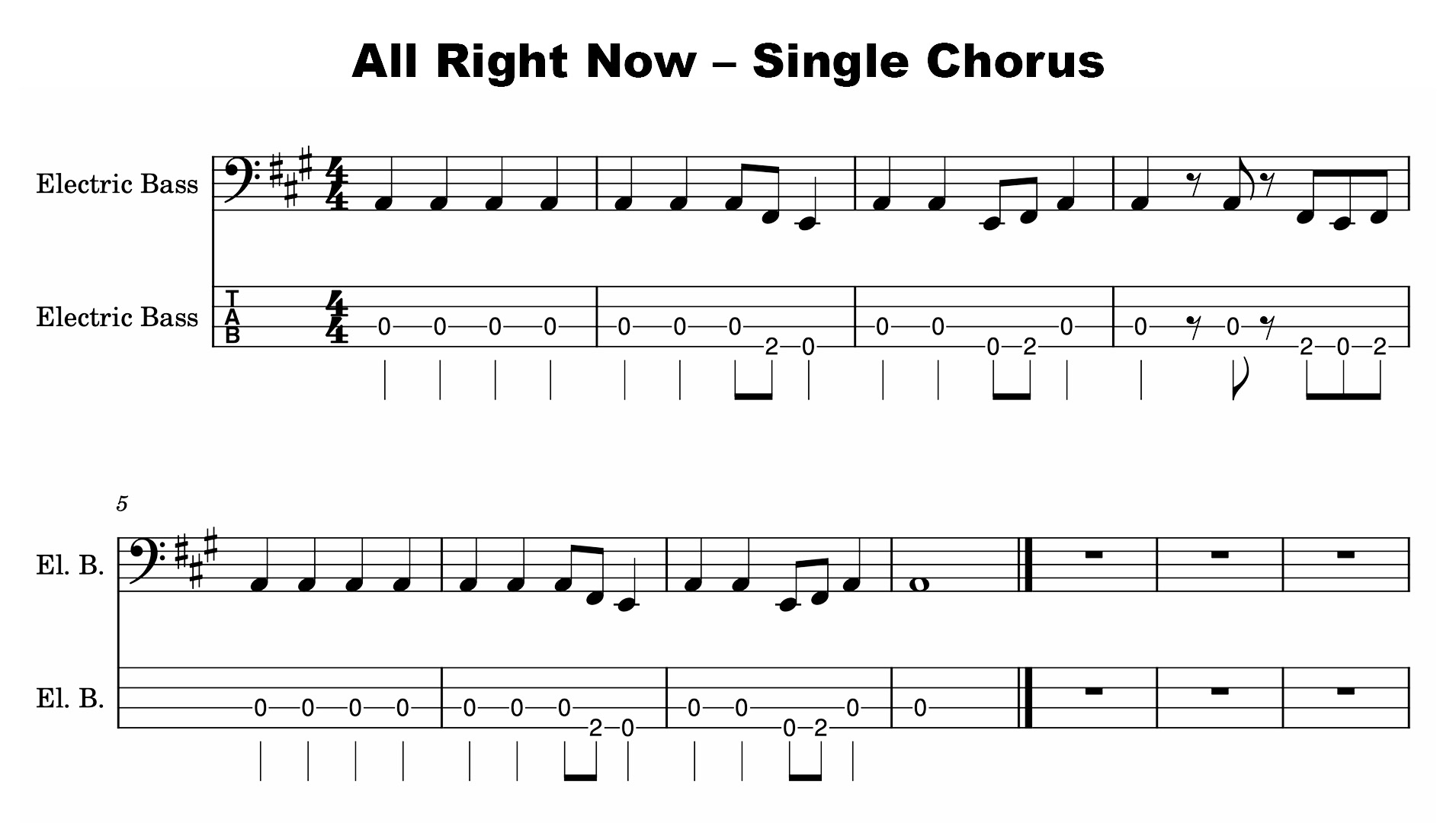
When the ”Fire and Water” LP was released, Island Records chose ”All Right Now” as the obvious single. Island felt, though, that the song was too long in its album form, and they also wanted a deeper, more radio-friendly bassline. This is why the single version edits out the first part of the original guitar solo, and also why the bass parts in the choruses differ from the LP version. Andy Fraser recorded a new bass part, one octave down from the original recording, and the record company was satisfied.

Here are both versions of the first chorus:
****
****

****

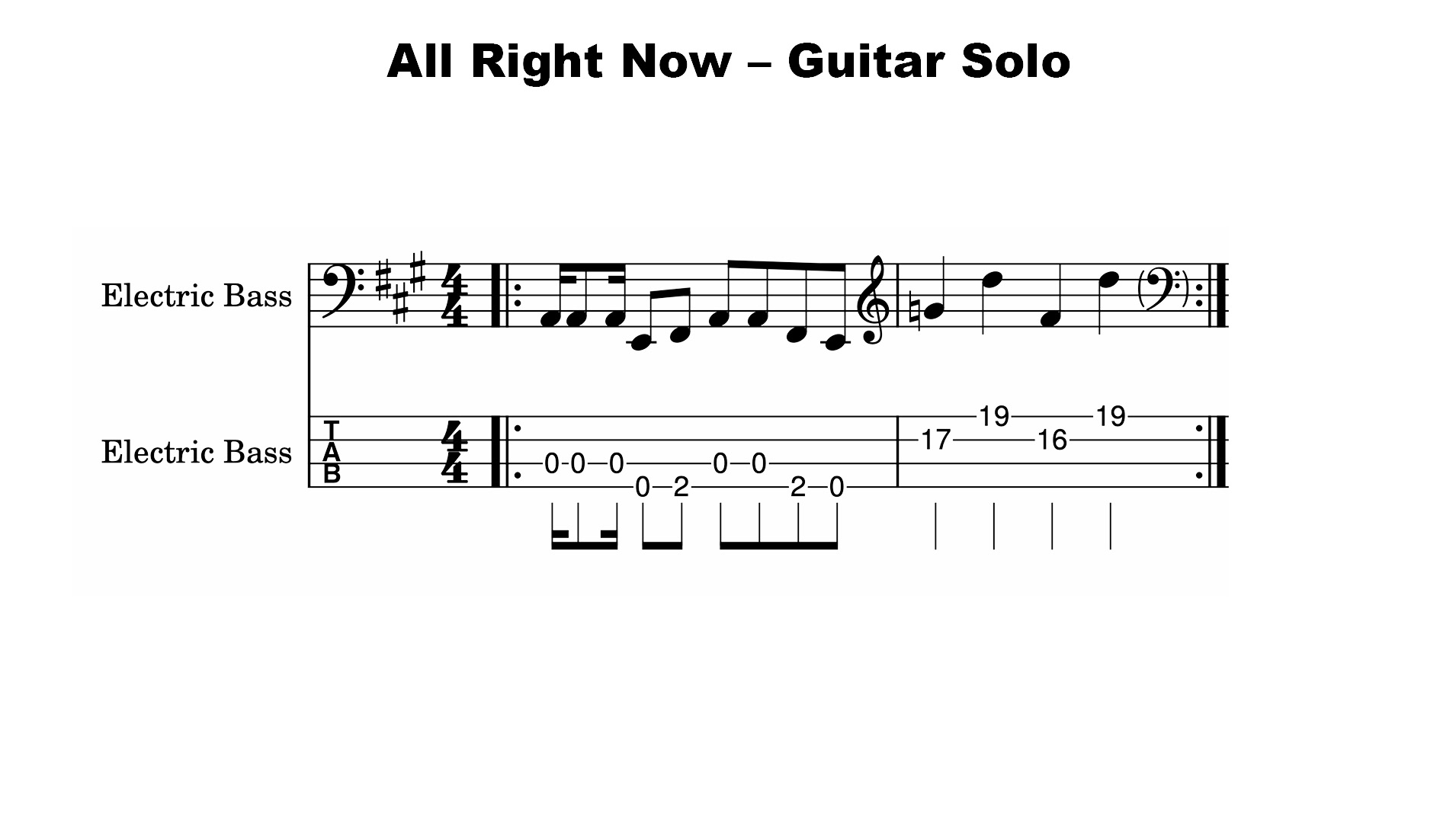
Andy Fraser plays an interesting vamp over the latter part of the guitar solo, which is included in both the album and single versions. The vamp starts off with a low motif over an A-major chord, before jumping way up high over the G- and D-chords. He actually plays the high notes together with the open A-string on his bass, but I’ve simplified this for the notation.
****
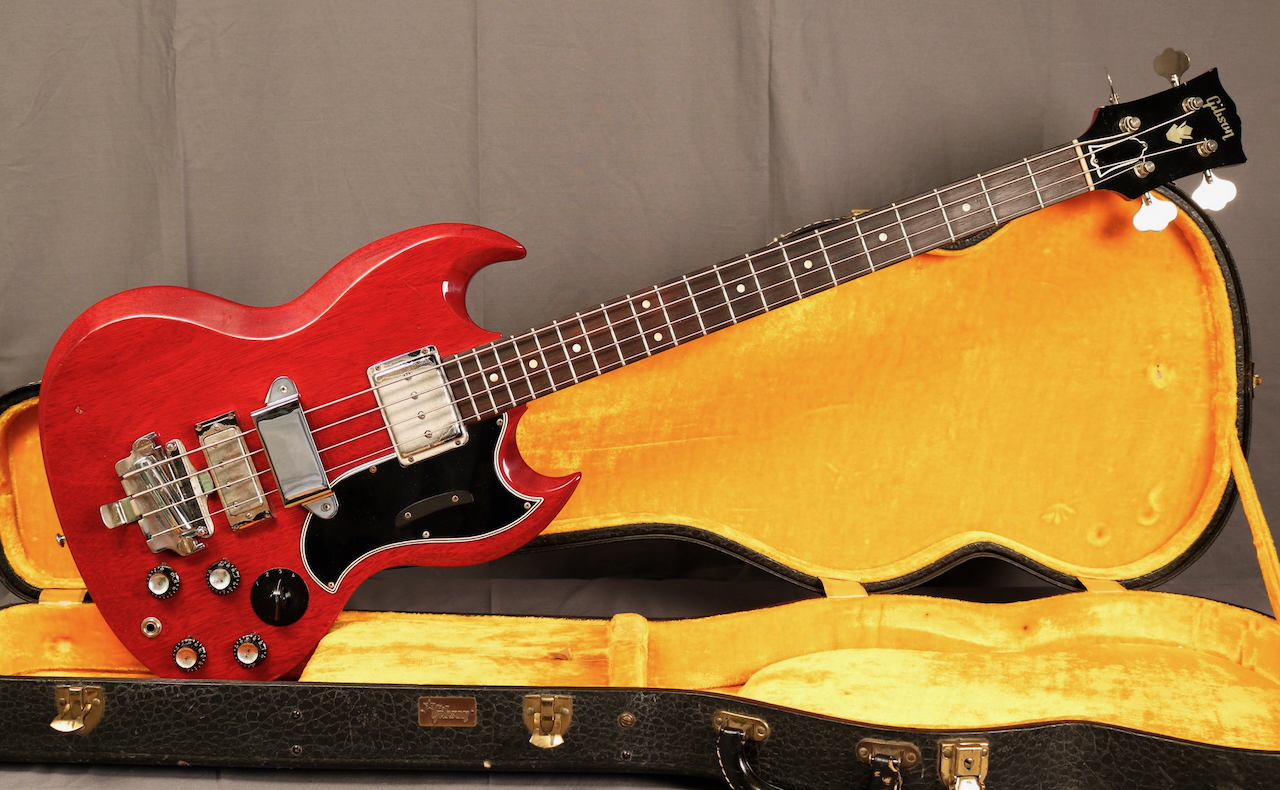
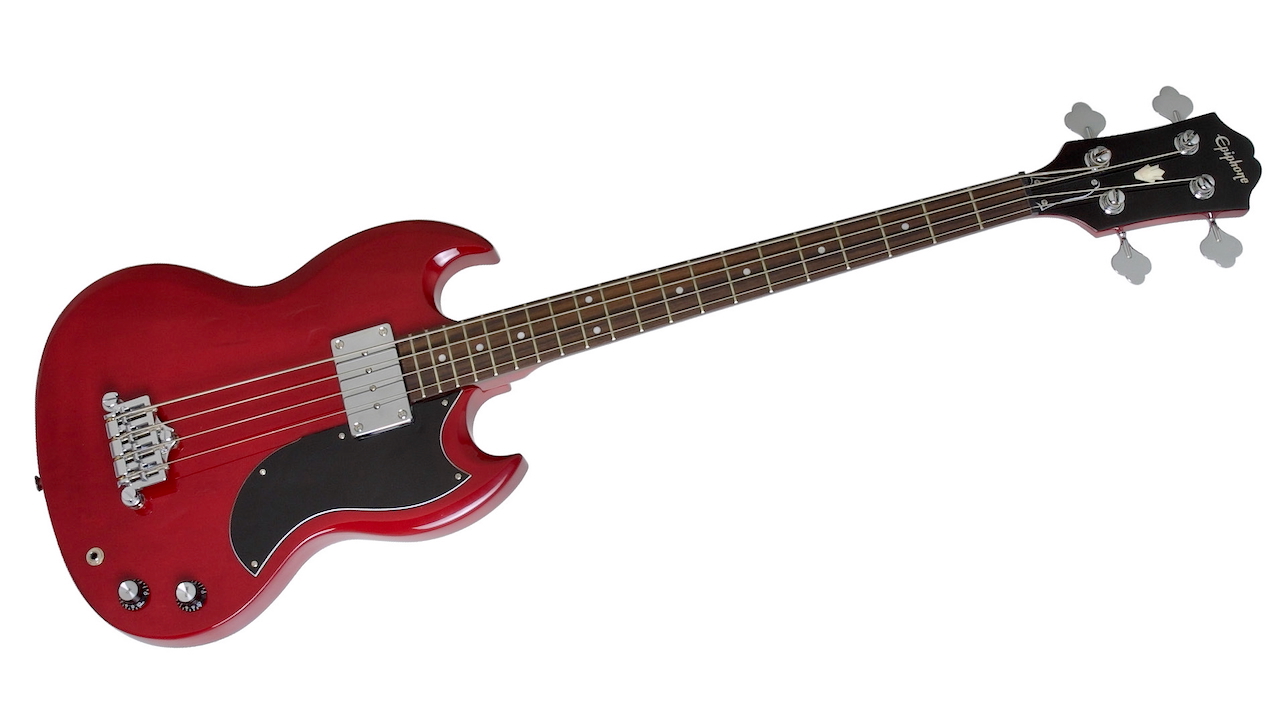
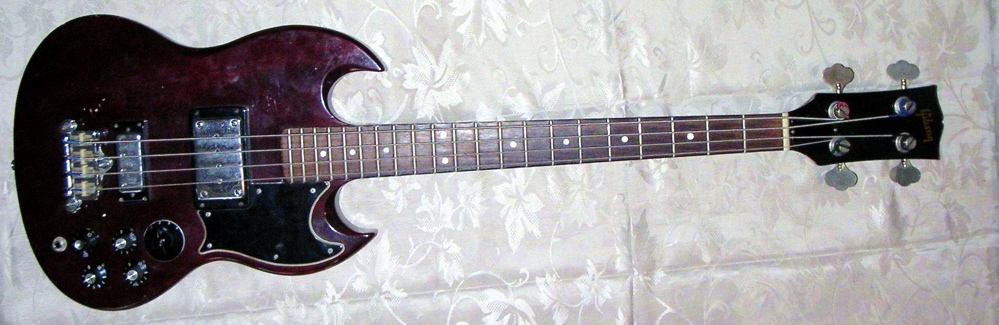
Andy Fraser achieved his fat mid-range-centred sound by playing a short-scale Gibson EB-3 bass, that sports a huge humbucker next to the fretboard and a mini-humbucker by the bridge. Some call this model the ”SG Bass”. I’ve used my inexpensive Epiphone EB-0 for the audio clips.

****

****

Classic Basses, part 5: The Gibson SG-bass (EB-0/EB-3)

I don’t quite know why, but the Gibson EB-3 has long seemed very exciting to me.

Probably, this is because it was the first electric bass I ever played.

I was only 14 years old, and played with architecture students – all the guys were much older than me. But I had two trump cards, which were my door into this band: a) I could play the piano and b) I was rather good at transcribing songs off records (or tape machines). The bassist was the band’s leader, and he played a genuine Gibson EB-3, which I was allowed to play a few times – wow!  🙂

In its day the Gibson EB-3 was the company’s most popular bass by far. The now legendary Thunderbird, for example, was a complete and utter flop, and only in production for six years (1963-1969). The EB-3, on the other hand, was in continuous production from 1961 all the way to 1979.

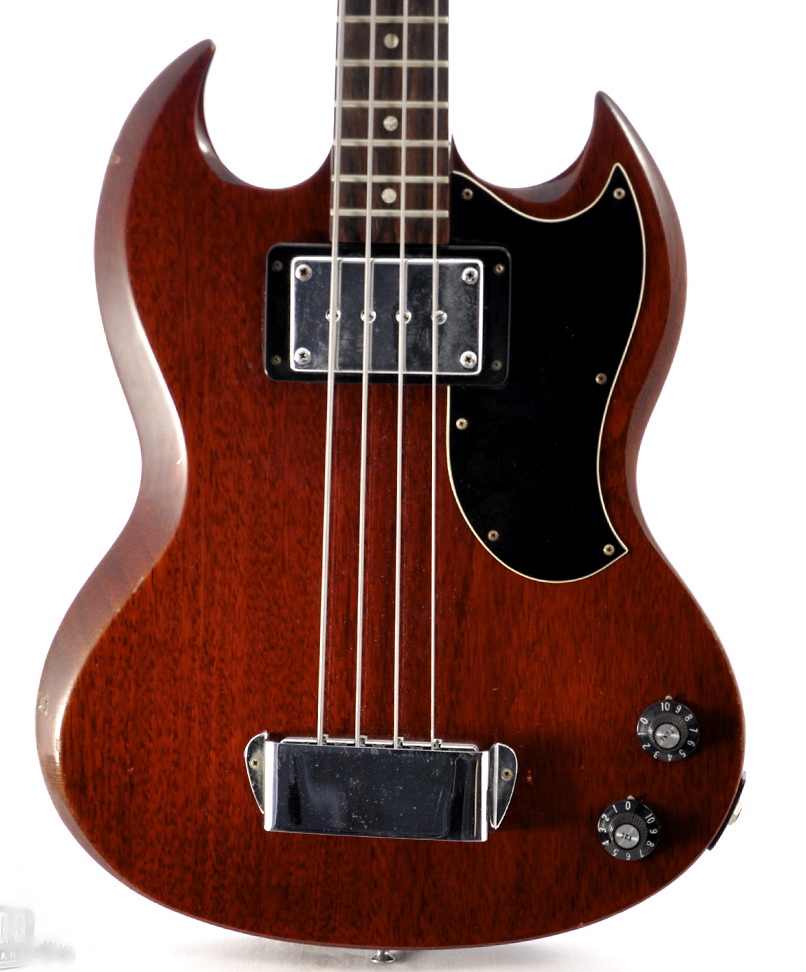
The EB-3 shared the same mahogany body, as its SG-cousins, and because it was a short-scale bass, the whole package was comfortably compact and light.

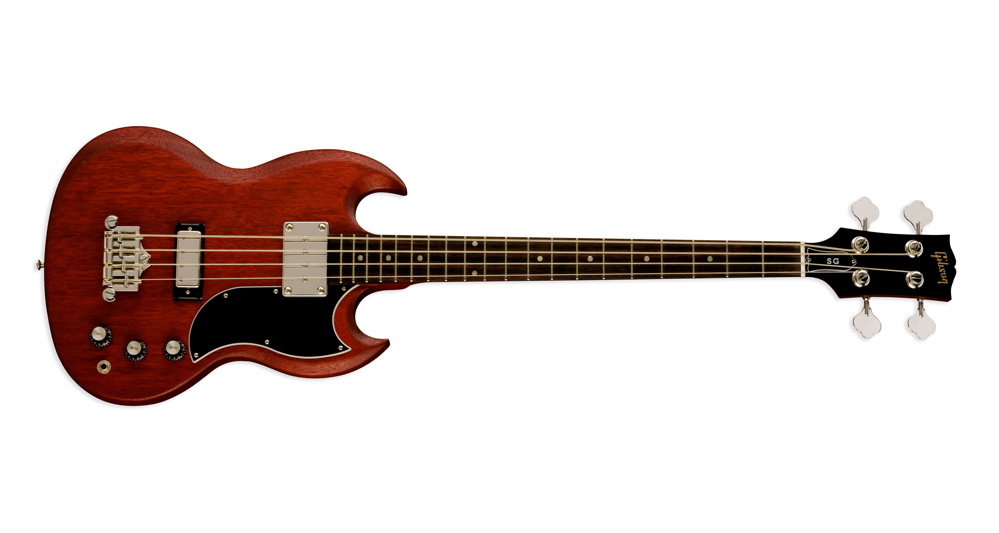
The neck pickup is a huge mother of a humbucker, with a much smaller companion mounted close to the bridge. The very first instruments had a black plastic cover on the front pickup, which was painted silver-metallic, but soon Gibson introduced a proper metal cover on the neck humbucker. The four-way rotary selector gives you each pickup on its own, both pickups together, as well as the rather strangled-sounding baritone-variant.

At the start of the Seventies the neck material was changed to maple for added strength, with the neck humbucker’s position moved to halfway between the end of the fingerboard and the bridge pickup.

During the years 1969-74 Gibson also offered a long-scale version – the EB-3L – most of which featured a spanish-style headstock (see below). Because of its longer neck the EB-3L was noticeably neck-heavy, though.

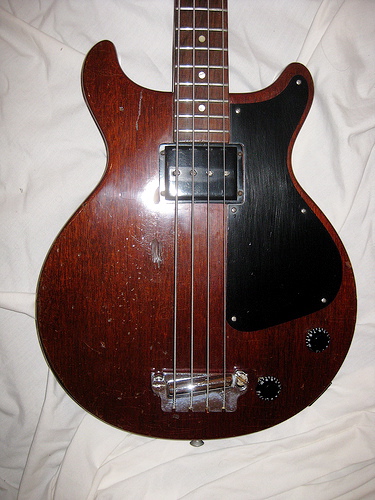
The EB-3’s kid brother is actually the model’s predecessor: the EB-0 was first introduced in 1959 with a double-cutaway Les Paul Junior -style body (see above).

In 1961 the EB-0 was changed to conform to the SG-look. In the mid-Seventies the EB-0’s single pickup was also moved closer to the bridge. From 1962 to ’65 a fuzz-equipped version was also available (the EB-0F).

****

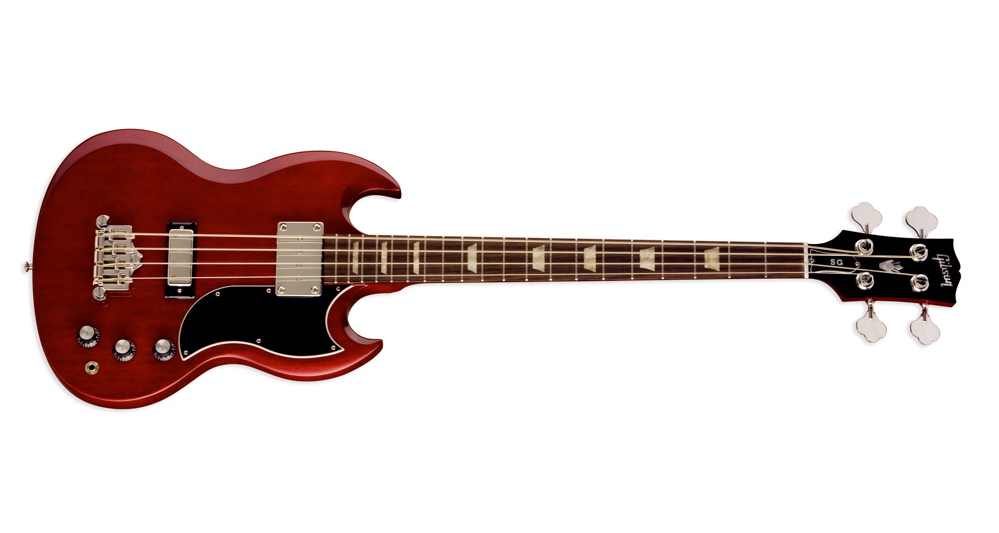
At the moment Gibson offers two USA-made SG-basses: The SG Standard Bass Faded comes in Gibson’s faded finish and sports dot inlays in the fretboard.  The SG Standard Bass is gloss-finished and features crown-style inlays. Both basses use a Jazz Bass -style volume-volume-tone-setup in place of the original four controls plus rotary switch.

****

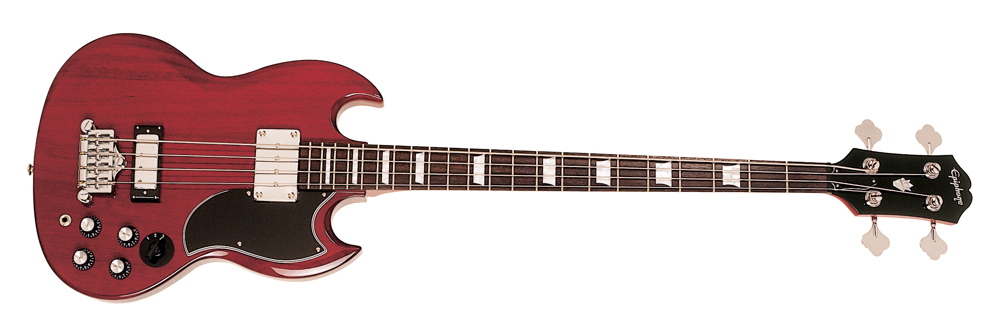
Epiphone’s cost-conscious EB-3 is only offered as in a long-scale version.

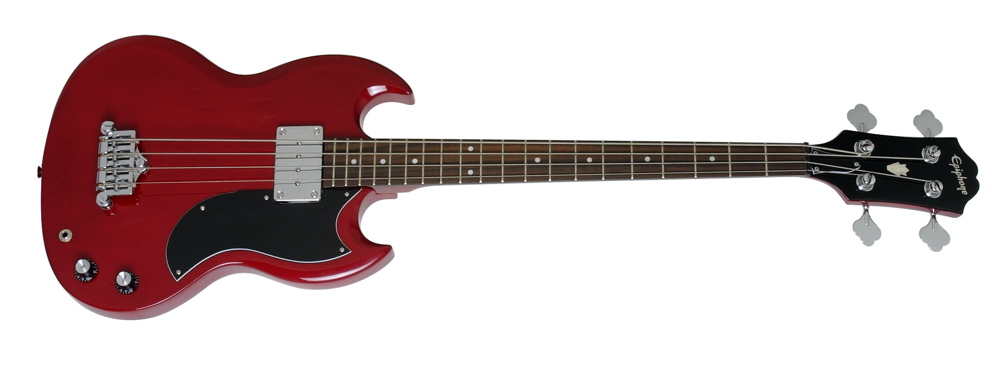
The Epiphone EB-0 is an even more affordable, bolt-on short-scale bass.

****

The fat and flexible tone of the EB-3 (as well as the EB-0) was well received by many Blues and Rock bassists in the late-Sixties and early-Seventies.

The best-known EB-3-users have been The Cream’s Jack Bruce and Free’s bassist Andy Fraser.

Here are Gibson’s own sound examples for the SG Standard Bass:

bridge pickup

both

neck pickup

Klassikkobassot, osa 5: Gibsonin SG-basso (EB-3/EB-0)

En tiedä miksi, mutta Gibsonin EB-3 on ollut jo pitkään kiehtova soitin minulle.

Voi olla, että se johtuukin siitä, että se oli ensimmäinen sähköbasso, jonka soitin.

Olin neljätoista, ja soitin yhdessä opiskelijabändissä, jossa kaikki muut olivat luonnollisesti 20 v ja päälle. Mutta minulla olikin kaksi ässää hihassa: a) soitin pianoa ja b) olin melko taitava transkriboimaan biisejä suoraan levyiltä (tai kelanauhalta). Bändin basisti (ja keulahahmo) omisti EB-3:n ja sillä sain muutaman kerran soittaa – wow!  🙂

Gibson EB-3:llä on firman historiassa kunnia olla ainoa suhteellisen suosittu basso. Esimerkiksi tänä päivänä niin suosittu Thunderbird oli täysi floppi, ja sen tuotanto lopetettiin jo kuuden vuoden jälkeen (1963-1969). EB-3 taas oli tuotannossa vuodesta 1961 vuoteen ’79 saakka.

Bassossa oli sama mahonkirunko kuin SG-kitarassa. Koska alkuperäinen EB-3 on lyhyellä mensuurilla varustettu, soitin on hyvin kompakti ja kevyt.

Etumikrofoni on iso humbucker ja tallan vieressä on minihumbucker. Neliasentoisella kiertokytkimellä sai valittua kummankin mikrofonin yksitellen, molemmat yhdessä ja viimeinen valinta oli kummallisen kuristettu baritoni-vaihtoehto.

1970-luvun alussa kaulamateriaali muuttui mahongista vaahteraan, ja pian tämän jälkeen kaulamikrofoni siirrettiin lähemmäksi tallaa.

Vuosina 1969-74 myytiin myös täyspitkällä mensuurilla varustetun version – EB-3L – jolla oli lähes aina myös avoin viritinlapa. Pitkän kaulan takia EB-3L oli aika kaulanpainoinen.

EB-3:n pikkuveli on itse asiassa isoveli: EB-0 tuli markkinoille vuonna 1959 Les Paul Junior -rungolla.

Vuonna 1961 EB-0 muutettiin sitten SG-sarjan yhteensopivaksi. Myös EB-0:n mikrofonin sijainti siirrettiin 1970-luvulla hieman lähemmäksi tallaa. Vuosissa 1962-65 myytiin myös säröllä varustetun version (EB-0F).

Tällä hetkellä Gibsonin mallistossa on kaksi SG Bass -nimistä mallia. Faded-sarjan vaihtoehdossa on pyöreät otemerkinnät ja ohut mattalakkaus, kun taas Standard-bassossa on tavallinen kiiltävä viimeistelly, sekä otelaudassa crown-upotukset. Molemmissa on kytkimen sijaan Jazz-basson kaltainen elektroniikka – kaksi volumea ja master tone -säädin.

Edullinen tytärbrändi Epiphone tarjoaa jostain syystä EB-3:n ainoastaan pitkällä mensuurilla.

Manner-Euroopassa ja Englannissa saatava Club Edition on sekin EB-3L:n kopio, mutta se pääsee kuitenkin kosmeettisesti jo lähempää Gibsonia.

Epiphonen EB-0 on vaatimattomampi otus ruuvikaulalla, mutta sillä on ainakin lyhyt mensuuri.

EB-3:n (ja EB-0:n) leveä soundi ja notkea soitettavuus olivat 1960/70-luvun taitteessa hyvin suosittu bluesin, heavyn ja hard rockin piireissä.

Tunnetuimmat mallin soittajat ovat selvästi Cream-yhtiön Jack Bruce ja Freen basisti Andy Fraser.

Jos haluatte tietää lisää näistä malleista, kannattaa tilata Riffi 3/2000 (Epiphone EB-3 -testi) ja Riffi 3/2007 (Gibson SG Reissue Bass -juttu) täältä.

Tässä ovat Gibsonin omat esimerkkisoundit SG-bassosta:

tallamikrofoni

molemmat

kaulamikrofoni

Pidä blogia WordPress.comissa.

Ylös ↑